



Thick hair can make a bob look sharp, or it can make it balloon out at the sides by lunchtime. That’s the whole game. A good boys’ bob on dense hair is not about taking everything shorter and hoping for the best. It’s about keeping enough weight to hold the shape, then trimming the bulk from the right spots so the cut falls instead of puffing.
I’ve always liked bobs for boys with thick hair because they do something a lot of short cuts can’t: they keep the hair looking intentional while still being easy to live with. A blunt edge gives structure. A little internal weight removal keeps the outline from turning into a helmet. And when the cut is done well, it still looks decent after a rough night’s sleep, a hoodie, and a school day.
The tricky part is that thick hair has opinions. It pushes outward at the ears, crowds the neckline, and loves to show every bad layering decision you make. So the best bob styles don’t fight the hair. They work with it. Short enough to stay tidy. Long enough to keep the line. Smart enough to avoid the mushroom effect. That balance is where the good cuts live.
Why These Bobs Work on Thick Hair
Less bulk at the wrong places: Thick hair tends to swell at the jaw, ears, and nape, so the cuts here keep those zones cleaner without stripping away the whole shape.
Easy morning routine: Most of these bobs need a quick mist of water, a comb-through, and a small dab of matte cream or light paste.
Better grow-out: A bob usually grows into a shaggy mid-length cut instead of collapsing into a messy boxy shape two weeks later.
Works with more than one texture: Straight, wavy, and slightly curly hair can all wear a bob if the length and weight lines are chosen well.
School-friendly without looking severe: The right bob keeps hair out of the face and off the collar while still leaving movement and softness.
What Thick Hair Changes About the Bob Line
A bob on fine hair can look neat with almost no effort. Thick hair is different. The same length can feel twice as heavy, and that weight changes the silhouette fast. If the perimeter is too blunt in the wrong spots, the hair sticks out like a shelf. If it’s too thinned out, the cut can fray and lose its shape before the month is over.
The perimeter carries the look
On thick hair, the outer line is doing a lot of work. A clean, blunt perimeter makes the cut read as deliberate. A choppy perimeter can work too, but only if the barber removes bulk inside the shape first. Otherwise the ends get wispy while the body stays heavy, and that mismatch looks awkward.
Weight removal has to be precise
The best bob cuts for dense hair take out weight where the head needs room: behind the ears, at the nape, and sometimes just under the top layer. A little point cutting helps the hair sit closer to the head. Too much thinning near the ends, though, is a mess waiting to happen. The top looks thin, the bottom still bulges, and the whole cut starts fighting itself.
Texture decides the finish
Straight thick hair behaves differently from wavy thick hair. Straight hair often needs more internal debulking and a stronger outline. Wavy hair can carry a softer edge and still stay tidy. Coarse hair needs careful texturizing, not aggressive slicing. If you remember nothing else, remember this: thick hair likes shape more than it likes force.
1. Chin-Length Blunt Bob
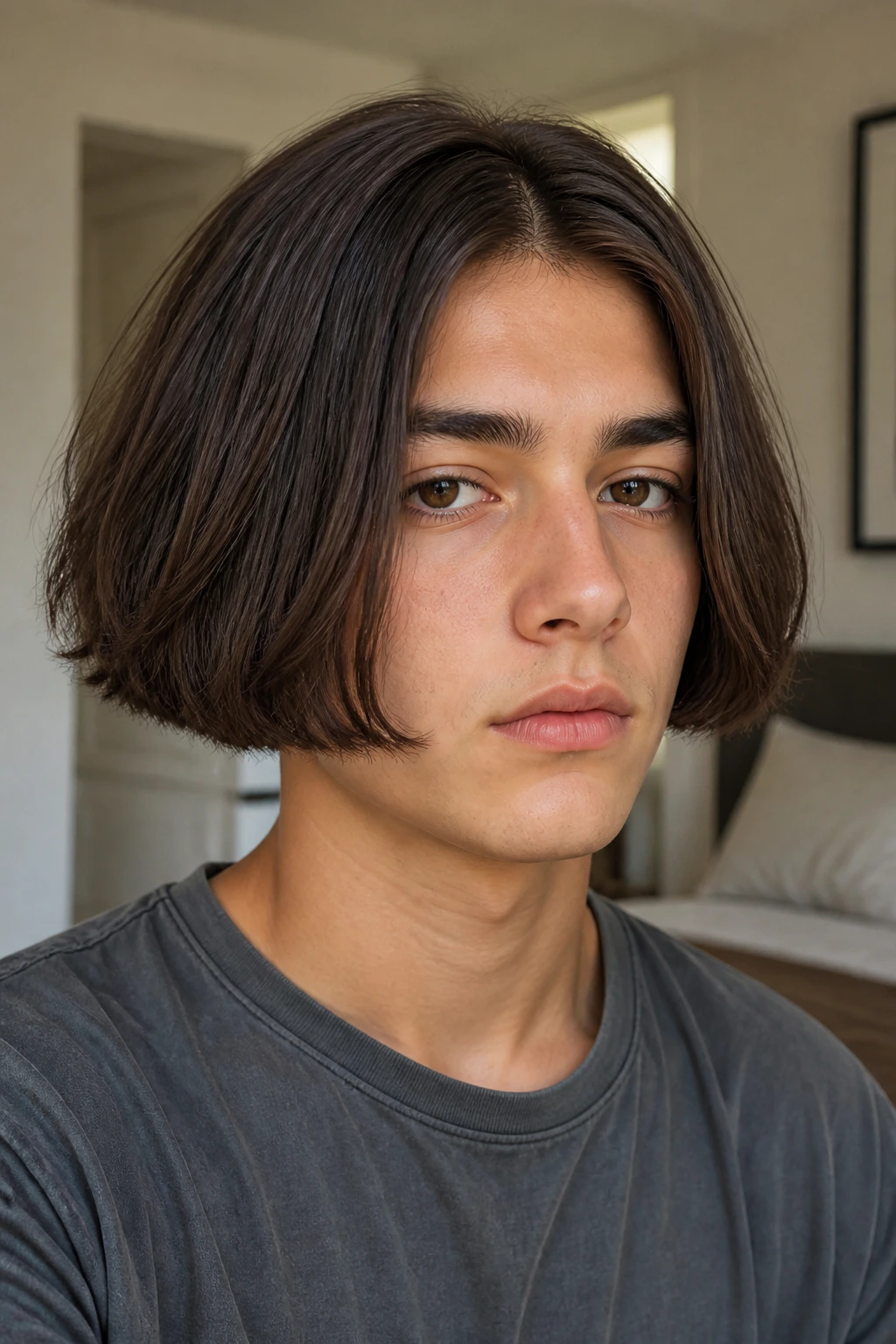
A chin-length blunt bob is the cleanest place to start. The line sits right around the jaw, which gives thick hair a clear edge instead of a puffy one. It’s one of those cuts that looks calm even when the hair underneath is dense and stubborn.
Why it works
The blunt perimeter keeps the haircut from exploding outward. On thick hair, that edge does the heavy lifting. There’s also less need for daily styling because the shape is already doing the job. If your boy’s hair has a lot of body but not much natural bend, this is one of the easiest cuts to keep under control.
Ask for the ends to be kept even and the bulk to be reduced inside the shape, not at the perimeter. That small detail matters. A barber who simply hammers the ends thinner can leave the cut looking stringy. You want weight control, not a shredded line.
A dab of lightweight cream and a quick comb-down is usually enough. If the hair flips at the jaw, blow-dry it forward with a nozzle attachment for 30 seconds. That often settles the edge better than another round of product.
Good for boys who want
- A neat line that doesn’t need much fuss
- Hair off the neck without going too short
- A cut that still looks tidy after a hat comes off
Best ask: “Keep it blunt at the chin and take bulk out from the inside.”
2. Jawline Bob with Soft Fringe
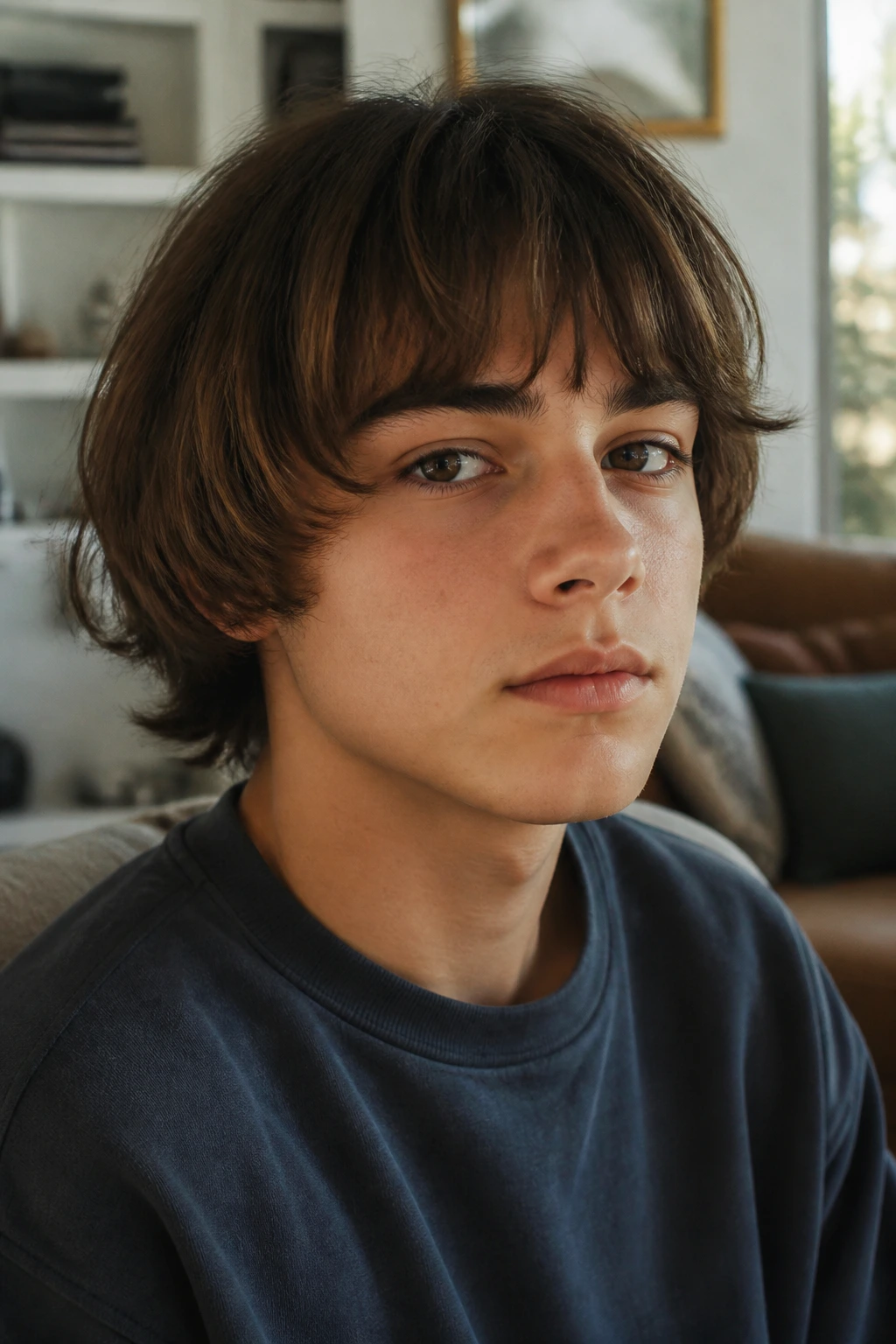
What if the goal is to keep hair out of the eyes without losing the bob shape? This is the version I’d point to first. The jawline bob with a soft fringe keeps the front light enough to move, but not so short that it turns into a regular crop.
The fringe should land just above the brows or barely touch them when dry. That’s the sweet spot. Thick hair shrinks up when it dries, so cutting the fringe too high usually backfires. A soft, piecey fringe also helps break up the density in the front. You get movement without the heavy curtain effect.
This cut works well when the hair naturally wants to fall forward. It also plays nicely with straight-to-wavy hair, because the fringe can be styled with fingers instead of a brush. If the hair has a strong cowlick at the front, the barber should leave a touch more length there. I’d rather trim a fringe twice than spend weeks watching it spring up like a bad compromise.
How to wear it
A small amount of matte paste on dry hair is enough. Rub it between the palms, then pinch the fringe lightly from the center outward. Don’t rake it straight back. That tends to separate the front too much and makes thick hair look stringy.
Best for
- Boys who hate hair in their eyes
- Thick hair with a little natural wave
- Parents who want a cut that can survive sports and school
Best ask: “Keep the bob at the jaw and leave a soft fringe that can sit just above the brows.”
3. Collarbone Bob with Hidden Layers
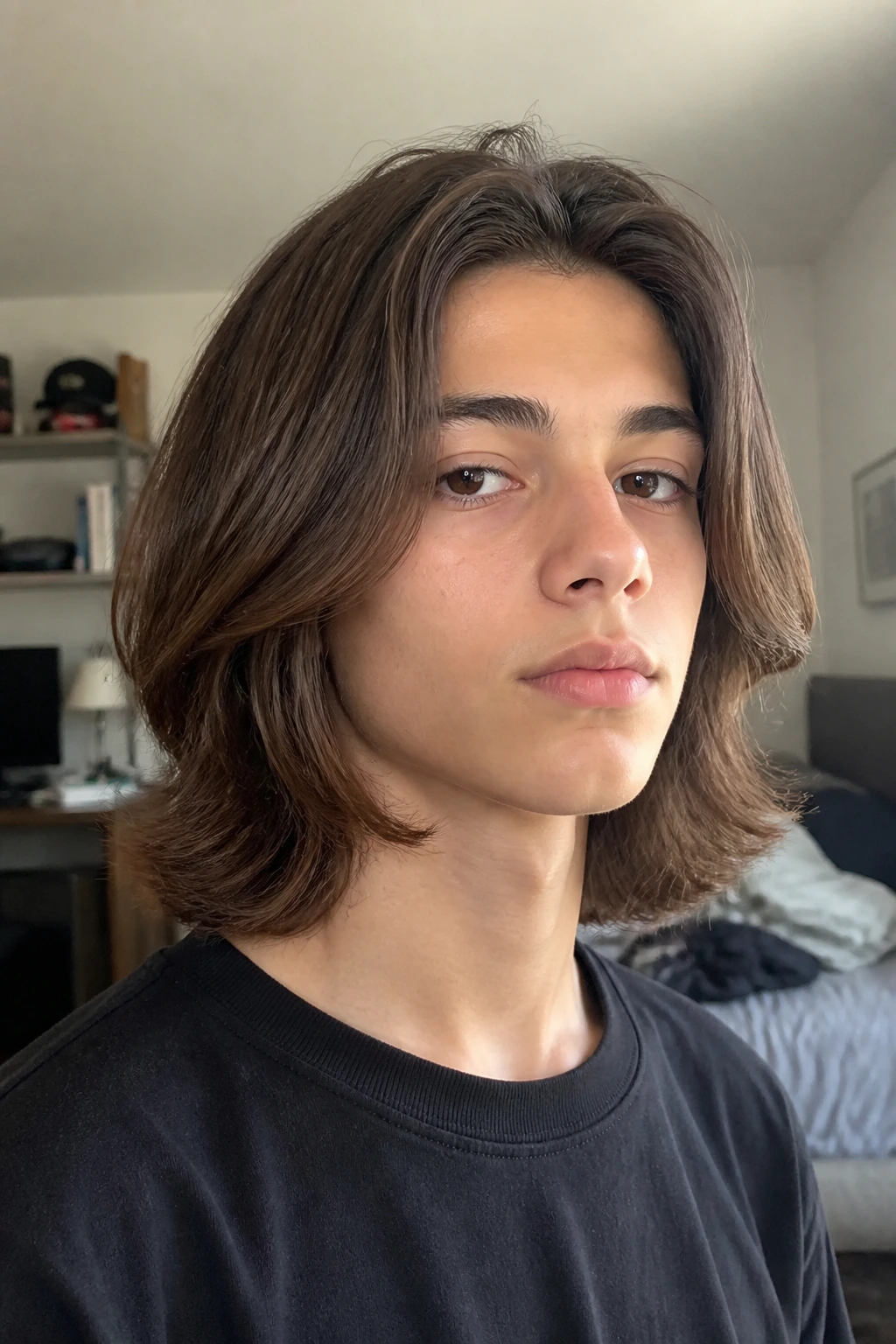
If you want the cut to last longer between trims, this is a smart one. A collarbone-length bob gives thick hair room to move, and the hidden layers keep it from feeling like a brick. You still get the bob shape, only with less bulk at the bottom.
The trick is keeping the outer line clean while sneaking the weight out underneath. That way, the top layer still lies neatly, but the inside doesn’t build a triangle around the shoulders. This is one of the better choices for boys who don’t want a super short cut and aren’t ready for constant styling.
I like this length on hair that already has a slight bend. The movement keeps the cut from feeling stiff. Straight hair can wear it too, but the barber needs to be careful not to over-layer the ends. Hidden layers are the point. Visible choppiness is not.
A useful detail to ask for
Tell the barber not to thin the ends too much. Ask for internal weight removal under the top layer and a blunt-looking outline from the outside. That’s how you keep the haircut looking full but not bulky.
Who should look at this version
- Boys growing out a shorter cut
- Thicker hair that puffs at the shoulders
- Anyone who wants a bob that shifts into a flowier shape later
Best ask: “Keep the line near the collarbone, with hidden layers underneath so it doesn’t sit heavy.”
4. Graduated Bob with a Tighter Nape
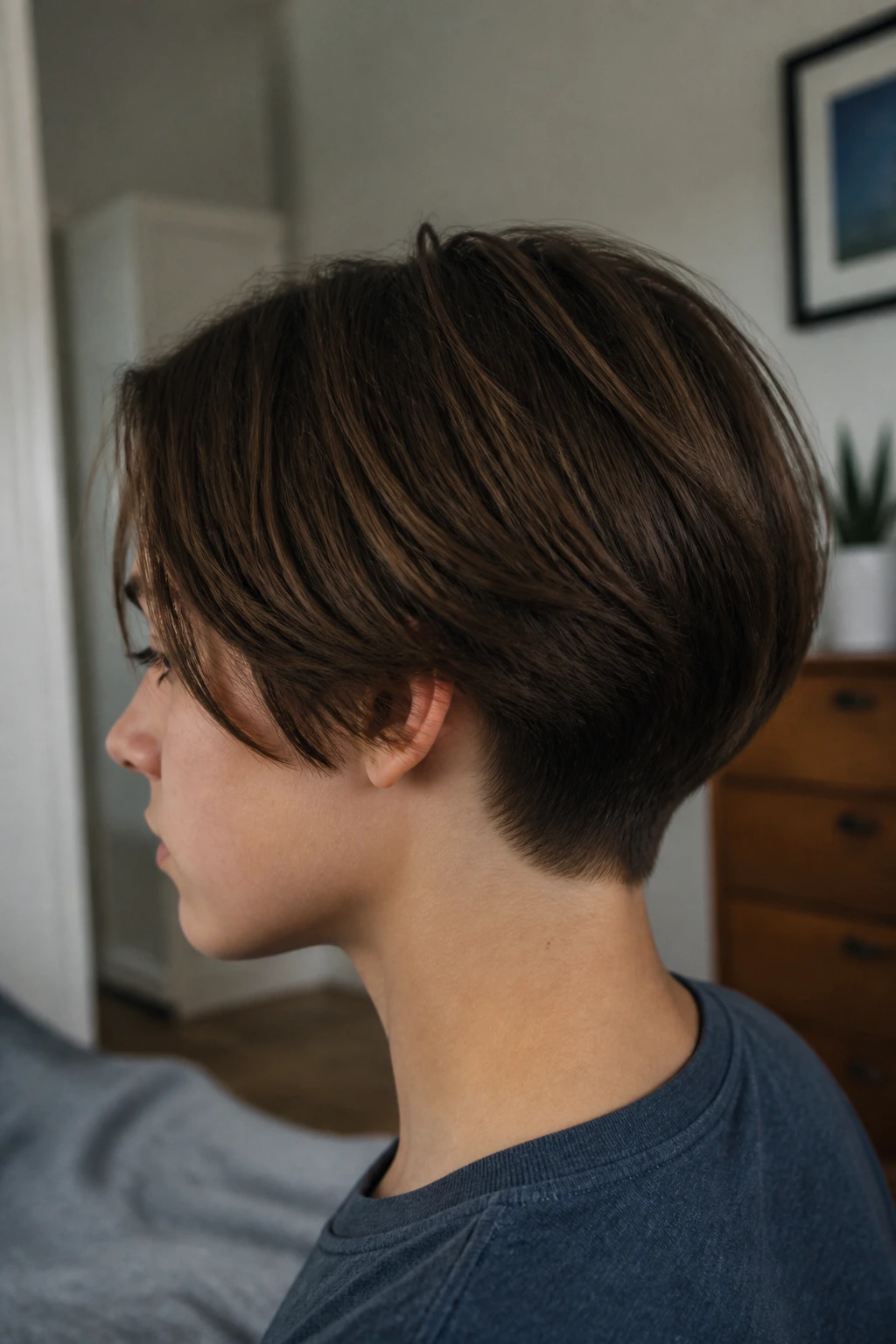
This is the neatest version on the list. A graduated bob sits a little shorter in the back and a little longer in the front, which helps thick hair collapse inward instead of flaring out at the neckline. When it’s done right, the nape looks tidy for weeks.
The back should hug the head. That’s the whole point. Thick hair at the nape can stick out like a brush if it’s left too heavy, and graduation solves that by building a soft slope. The front stays long enough to keep the bob feel, while the back does the practical work of staying clean around collars and sports jerseys.
I especially like this cut for boys with strong necklines or thick hair that grows down instead of out. It keeps the back from feeling bulky. If the hair has a stubborn cowlick low on the crown, the barber should leave enough length there to let it lie flat. Too short, and the cowlick wins.
Why it’s easy
The shape keeps itself. You don’t need much styling, because the graduation already gives the hair a place to sit. A quick blow-dry at the nape can make a big difference, but even air-dried, this cut stays more orderly than a one-length bob on heavy hair.
Best ask: “Shorter in the back, slightly longer in the front, and clean through the nape.”
5. Side-Part Bob with Weight Removal
A side part changes everything. Thick hair often piles up right down the center, and that can make the head look broad. A side-part bob shifts some of that weight over, which instantly softens the shape. It also helps if one side of the hair naturally falls better than the other. Use that to your advantage. Don’t argue with it.
Why this version works
The side part breaks up symmetry, which is useful on dense hair. Instead of both sides flaring equally, the hair falls with a little more direction. That makes the cut read as cleaner without needing a ton of product. It’s also a good fix for boys whose hair wants to split in a weird spot and stand up in the middle. A side part usually gives that cowlick less room to misbehave.
The barber should take some weight out from the heavier side, especially if the hair grows thick near the temple. A small taper around the ears helps too. You want the part to guide the haircut, not just sit there as decoration.
How to style it
Comb the hair over while damp, then dry the roots in the direction of the part for about a minute. After that, use a pea-sized amount of paste. No more. Thick hair can swallow product and still look flat if you overdo it, so start small.
Best ask: “Give me a side part, keep the bob around jaw length, and take bulk off the heavier side.”
6. Center-Part Curtain Bob
A center-part bob can look tricky on thick hair, but when the balance is right, it’s one of the cleanest shapes you can get. The curtain effect opens the face and keeps the whole cut from looking too boxy. This version depends on a little more softness around the front, especially near the cheekbones.
The center part works best when the hair falls naturally in both directions. If the hair already splits down the middle, good. If it fights that part every morning, don’t force it. Thick hair never forgets a bad parting choice. The front pieces should skim the cheekbone and taper down toward the jaw, not hang in one solid curtain.
I like this cut on boys who want a softer look without going full shag. It reads a little modern, a little retro, and it doesn’t need much more than fingers and a comb. If the front feels too heavy, the barber can remove just enough weight near the part to keep it from collapsing into the eyes.
Styling note
Use a middle part on damp hair, then blow-dry the front pieces away from the face for 20 to 30 seconds. That tiny bit of direction keeps thick hair from folding in on itself.
Best ask: “Keep a center part, let the front fall like curtains, and thin only the heavy spots near the front.”
7. Undercut Bob with a Full Top
This is the boldest cut here, and it solves a real problem. When thick hair is very dense, the sides and nape can bulk up so much that the bob loses its line. An undercut bob fixes that by cutting the sides and back shorter while keeping the top at bob length. Clean underneath. Full on top. Simple, and effective.
The undercut gives the haircut room to breathe. Instead of piling weight all the way around the head, the barber removes the heavy stuff below the visible line. That creates a neat edge with a strong shape on top. It’s a good move for boys who want length without the helmet effect.
But there’s a catch. Grow-out needs attention. If the undercut grows too far, the whole cut can start to look disconnected. So this is a smart style for families who don’t mind cleanup every few weeks.
Who it suits best
- Boys with very thick, straight hair
- Kids who like a clear shape and minimal daily styling
- Parents willing to book regular trims on the nape and sides
Best ask: “Keep the top at bob length, but clip the sides and nape shorter underneath.”
8. Textured Bob with Razor Ends
Some thick hair needs bluntness. Some needs a little air. This cut sits in the second camp. A textured bob with razor ends softens the perimeter, which can help thick hair sit closer to the head. Done right, it looks relaxed rather than messy.
Why it works
Razor work can take the edge off dense ends and stop the cut from feeling blocky. That said, this is not the place for heavy-handed razor work. Coarse thick hair can fray if it’s over-texturized, and then the ends stick out in odd little wisps. The barber should use the razor lightly, or better yet point-cut the ends and leave the outline intact.
This style is best when the hair has some natural movement. A little bend makes the texture look deliberate. Straight, stubborn hair can still wear it, but the cut needs a careful hand. Too much texturizing on thick straight hair gives you a top layer that looks airy and a bottom layer that still feels dense. Not a good trade.
How to wear it
Dry it with fingers instead of a brush, then add a tiny amount of matte cream. Scrunch the ends lightly. You’re aiming for separation, not spikes.
Best ask: “Keep the bob shape, but soften the ends with light texturizing so it doesn’t feel bulky.”
9. French Bob with Heavy Fringe
The French bob is short, a little chic, and surprisingly useful on thick hair when the fringe is handled well. The cut usually sits around the cheekbone or just under the ear, with a fuller fringe across the front. On boys, it can look sharp and a little playful at the same time.
The fringe is where thick hair either behaves or misbehaves. Keep it heavy enough to frame the face, but not so heavy that it blocks the eyes. A good French bob has enough fullness to feel intentional and enough texture to avoid a solid wall of hair. That balance is especially important with straight thick hair, which can look severe if the front is cut too straight across.
I’d pick this for a boy who likes a more fashion-forward cut and doesn’t mind regular fringe trims. It’s not the lowest-maintenance style on the list, but the shape is clean and memorable.
Best ask
“Keep the bob short and full around the front, with a heavy fringe that’s softened at the edges.”
10. Asymmetrical Bob
A small difference in length can do a lot. An asymmetrical bob leaves one side a little longer than the other, which breaks up the bulk and gives thick hair a more interesting line. The difference does not need to be dramatic. Half an inch can be enough. Maybe an inch if the hair is very full.
This cut helps when thick hair grows unevenly or flips more on one side. Instead of fighting that imbalance, the haircut uses it. The result is cleaner than a perfectly even shape that keeps trying to puff out in the wrong direction. I also like it on boys who want something a little less ordinary without drifting into a high-maintenance cut.
Keep the longer side near the jaw or just below it. The shorter side can sit slightly above the jawline. That difference gives the bob movement, and movement is what stops thick hair from looking like a block.
A small warning
If the asymmetry is too extreme, the haircut can start to look accidental. You want a shape with intention. Not a side that looks like it got lost on the way to the barber chair.
Best ask: “Keep one side a little longer, but make the difference subtle enough to stay tidy.”
11. Internal-Layer Bob
This is the quiet workhorse of the whole bunch. An internal-layer bob keeps the outside line clean while removing weight inside the haircut. To my eye, that’s one of the smartest choices for boys with thick hair who want the bob shape without the bulk sitting on the shoulders or ears.
The reason it works is simple: thick hair needs room inside the cut. If you only trim the perimeter, the hair still feels heavy. Internal layers create that room without chopping the outline apart. The result is a bob that still looks full from the outside, but feels lighter when you run your hand through it.
This is a good choice if the hair has to stay neat for school or family photos. It reads polished, but not stiff. If the barber gets too enthusiastic with the layers, though, the shape can lose its clean line. Ask for soft internal layering, not a stacked, obvious layer pattern.
Who should choose it
- Boys with heavy hair that sits flat on top but puffs at the sides
- Parents who want less daily styling
- Anyone who likes a clean outline with softer movement inside
Best ask: “Keep the outside blunt and remove weight underneath with hidden layers.”
12. Side-Swept Bob with Tapered Sides
A side-swept bob is for the kid who wants hair off the face without looking like he tried hard. The sweep gives direction, and the tapered sides keep the cut from getting too wide around the temples. On thick hair, that matters. A lot.
The side-swept front softens the forehead line and gives the haircut a little motion. The taper near the sides reduces bulk where glasses, hoodie strings, and collar seams tend to snag the hair. It’s a practical fix, not a flashy one. Good.
What I like here is how forgiving it is. If the hair dries a little messy, the sweep still looks intentional. If it lays flat, the taper stops it from looking heavy. It’s one of the better everyday cuts on this list.
Styling note
Push the front across with your fingers while the hair is damp, then let it dry that way for a few minutes before touching it again. A little paste at the ends of the sweep helps hold direction without making the hair crisp.
Best ask: “Give me a bob with a side-swept front and lightly tapered sides so it doesn’t spread out.”
13. Tapered-Neck Bob
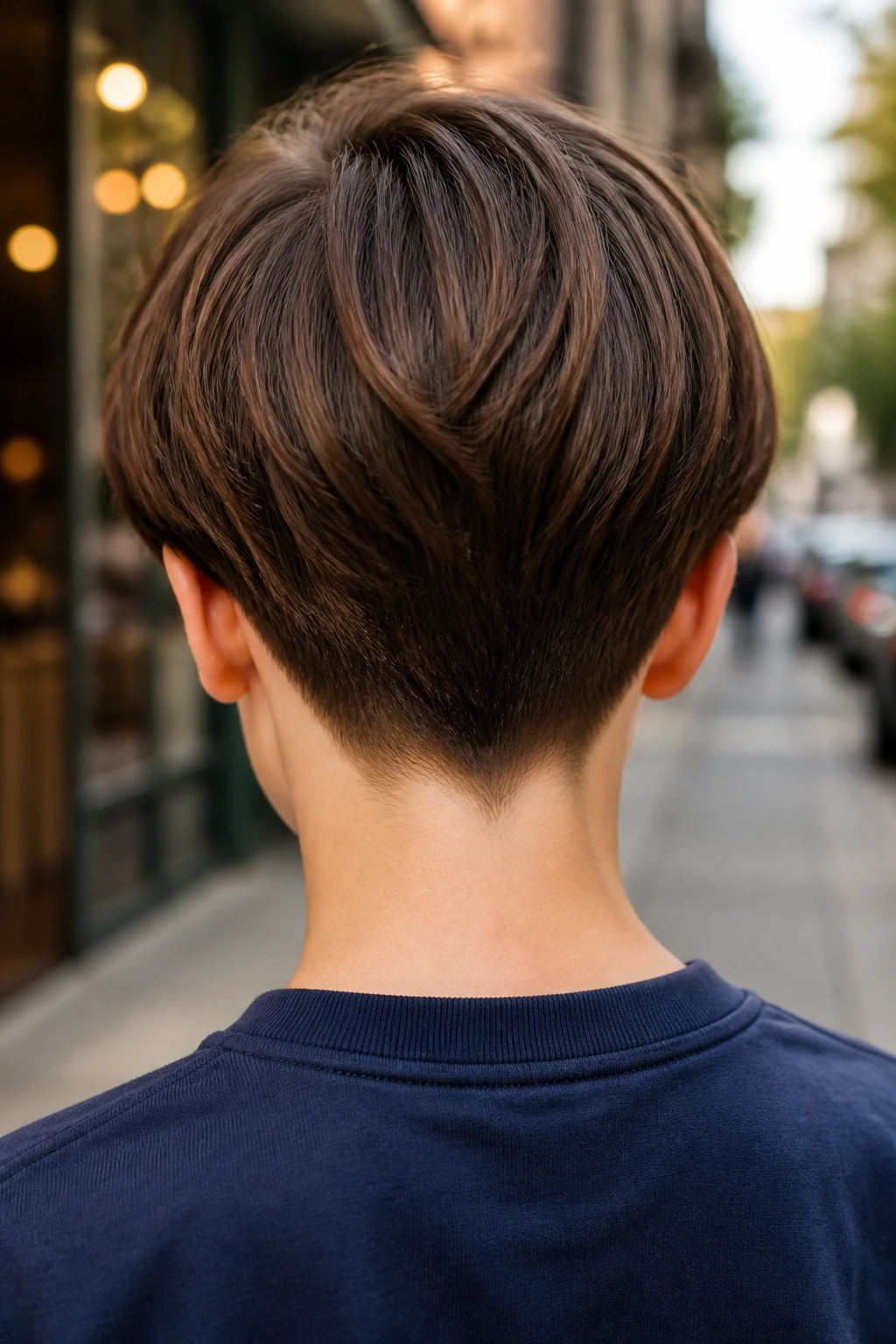
This cut is all about the back of the head. Thick hair loves to bulk up at the neckline, and a tapered-neck bob cleans that up fast. The taper removes the heavy, fuzzy bottom edge while the longer top keeps the bob shape intact.
It’s one of the most practical options for active boys. Jerseys, jackets, and backpack straps tend to mess with the nape first. A clean taper handles that better than a heavy, square finish. It also makes the haircut feel cooler and lighter around the neck, which matters more than people think.
The top can stay one length or carry a little hidden layering. The important part is the transition into the neckline. If the taper is too aggressive, the bob starts to lose its shape. If it’s too soft, the back still balloons. The sweet spot is a gradual change, not a hard fade.
Best ask
“Keep the top as a bob, but taper the neckline so the back sits cleanly.”
14. Mop-Top Bob with Soft Ears
This one has a laid-back feel that thick hair wears well. The mop-top bob with soft ears keeps enough length to brush around the ears instead of sitting stiffly on top of them. It’s a looser cut, and that looseness is the point.
The soft ear area matters. Thick hair that’s cut too square around the ears can stick out in an obvious shelf. A little extra softness there helps the cut settle. The hair still has shape, but it doesn’t look like it was cut with a ruler. That’s often the difference between a kid looking comfortable and looking boxed in.
I’d choose this for wavy thick hair more than for dead-straight hair. The wave gives the cut some movement. Straight hair can still wear it, but it needs careful texturizing so it doesn’t fall into a solid shape.
How it behaves
This bob usually looks best when it’s a little messy. Not wild. Just lived-in. A damp comb-through and a small amount of cream is enough to keep the edges from puffing.
Best ask: “Keep the bob loose around the ears and soften the edges so it doesn’t sit boxy.”
15. Bro-Flow Bob

The name is a little casual, but the cut has a real place. A bro-flow bob sits longer, usually grazing the collar or touching the top of the shoulders. On thick hair, that extra length gives the cut weight, which helps it fall instead of float. It’s the version for boys who want movement more than neatness.
This style works especially well when the hair already has a bit of bend or wave. The flow keeps it from feeling severe, and the longer sides can tuck behind the ears when needed. It’s not a short cut, so if you need something that stays off the collar for sports or strict dress codes, this one may be too relaxed.
Still, there’s something nice about a thick-haired bob that moves. It feels less like a helmet and more like a shape. If the ends are kept clean and the bulk is removed under the top layer, the cut can look easy without looking sloppy.
Best ask
“Keep it longer with enough weight to flow, but clean up the ends so it doesn’t look shaggy by default.”
16. Ear-Length Sport Bob

Here’s the practical one. An ear-length sport bob keeps the cut short enough to stay out of the face, while still giving thick hair a bob shape instead of a buzzed look. For boys who play hard and move around a lot, this cut makes sense.
The length around the ears is the part that saves it. Thick hair there can puff out fast, and an ear-length bob trims that weight before it becomes a problem. The neckline should be neat too, but not shaved down so far that the cut starts looking disconnected.
This is a good cut when the goal is simple: tidy, quick, durable. It doesn’t need much product. It usually doesn’t need a blow-dryer either. A quick finger-comb and maybe a light spray bottle refresh in the morning is enough.
Who should pick it
- Boys in sports or active schedules
- Thick hair that spreads around the ears
- Parents who want a trim that grows out fairly cleanly
Best ask: “Keep the length around the ears and neckline clean, but leave enough top length to keep the bob shape.”
17. Box Bob with Clean Edges
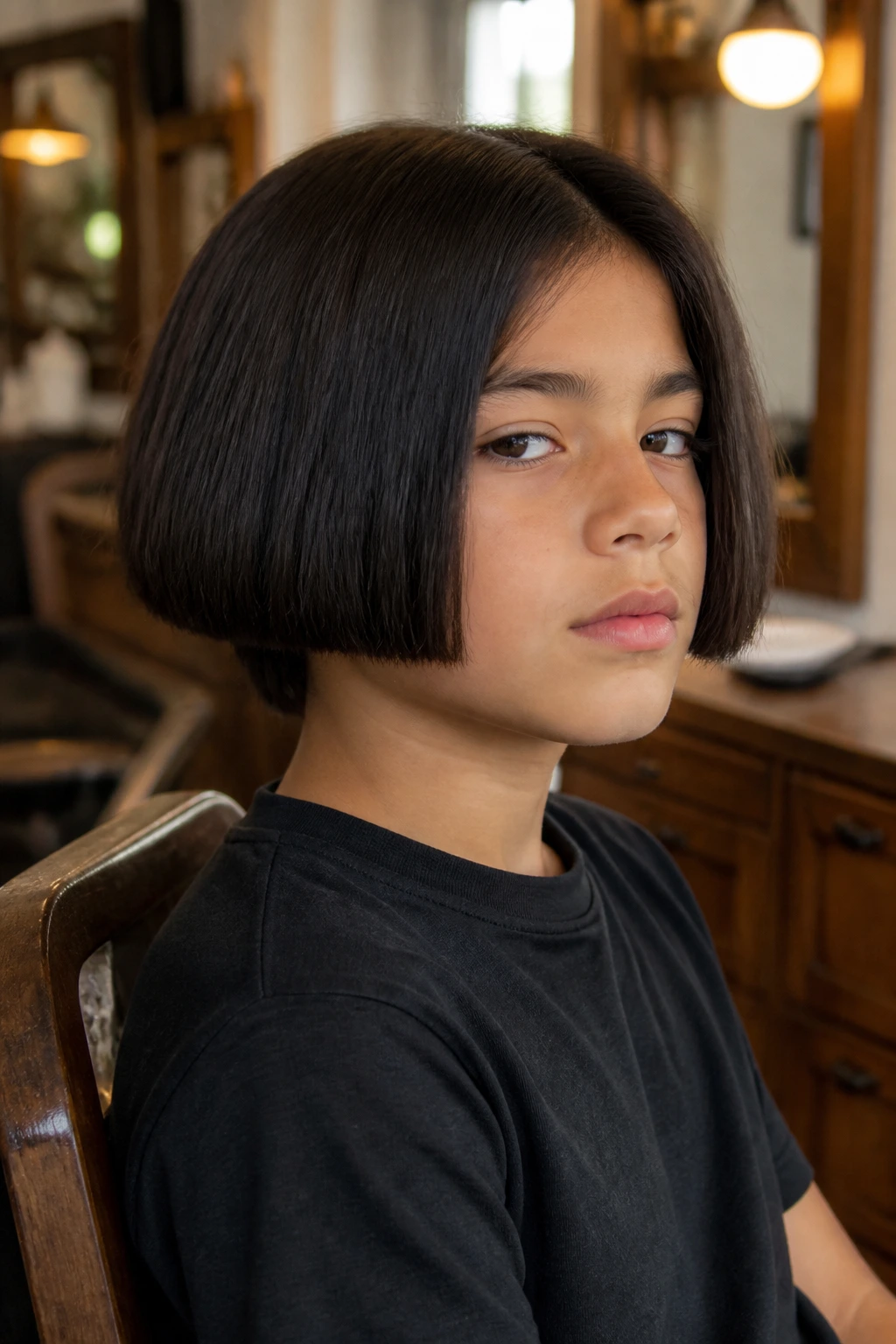
The box bob is blunt, squared, and confident. On thick hair, that can be a very good thing. The straight edges make the density look deliberate, not accidental. If the hair is straight and heavy, this is one of the strongest shapes you can choose.
The corners matter. A box bob should feel crisp through the sides and bottom, but not so hard that it looks like a helmet. The barber may need to soften the interior a little so the shape sits flat. The outer line stays clean. The inside does the quiet work.
This cut is not for someone who wants lots of movement. It’s for boys who like structure. It looks best when the hair is kept brushed or combed in the same direction every day. The payoff is low drama. The downside is that it can look too square if the ends are cut badly or the sides are left heavy.
Best ask: “Give me a blunt box shape, but take enough weight out inside so it lies flat.”
18. Shaggy Bob with Lift at the Crown

The shaggy bob is the loosest version here, and I wouldn’t hand it to every head of thick hair. But when the hair has natural wave or a stubborn crown cowlick, it can be the right answer. The lift at the crown keeps the cut from sitting flat and heavy, which is a common problem with dense hair.
This style uses layers for movement, not for drama. The crown gets enough lift to stop the bob from clinging to the scalp, and the ends stay soft so the hair doesn’t look chopped to bits. A little texture at the top can make the whole thing feel lighter.
The biggest mistake with a shaggy bob is overdoing the layers. Then it stops being shaggy and starts being messy. Ask for movement, not thinning. Ask for a shape that still has a clear outline. If the hair is especially thick, the barber should keep the crown light and the perimeter controlled.
Best ask
“Keep the bob shape, add soft lift at the crown, and don’t over-layer the ends.”
Why a Bob Holds Shape Better on Dense Hair
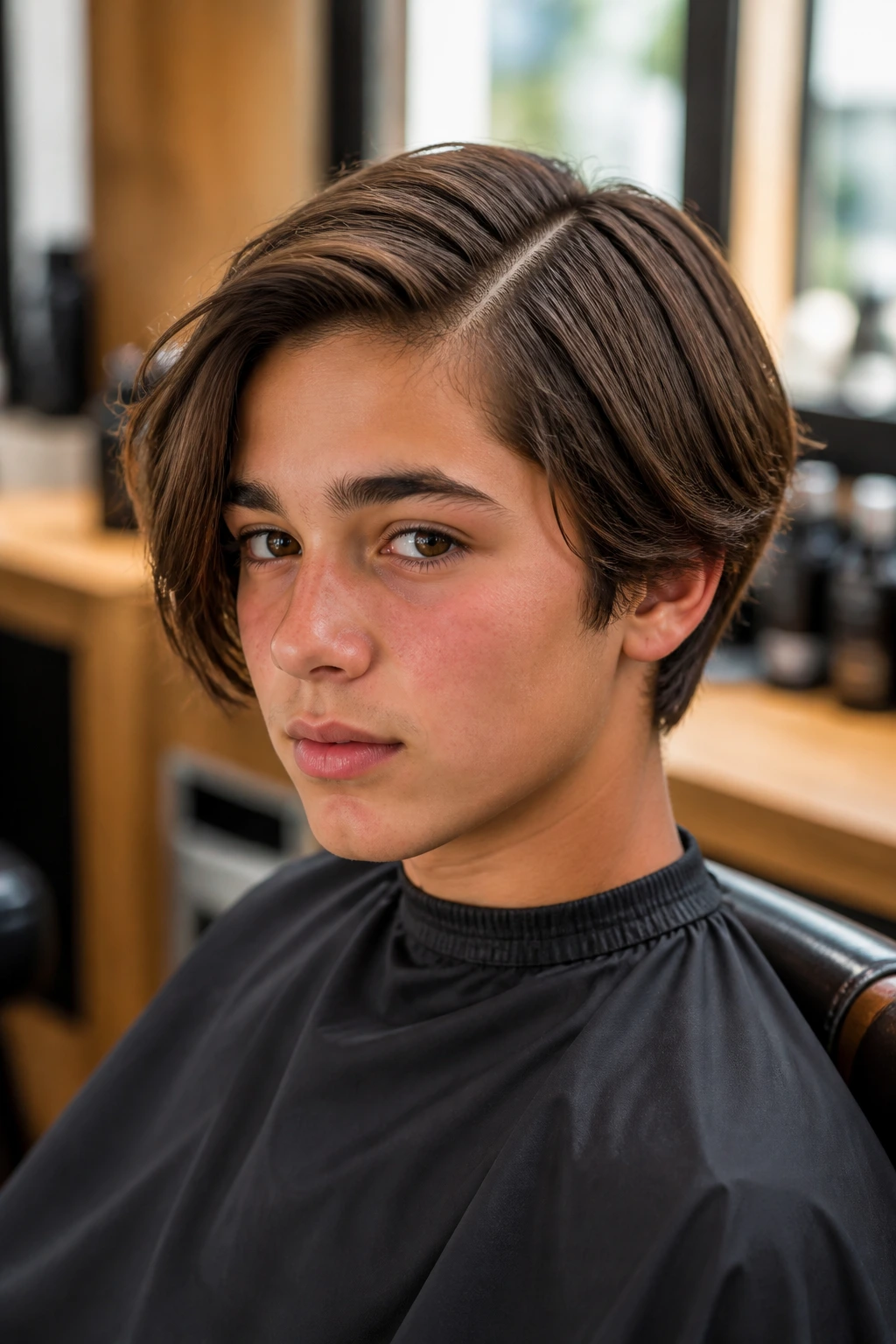
Thick hair has enough body to support a bob without collapsing. That’s one reason I keep coming back to this cut. Fine hair often needs more product or more blow-drying to stay in place. Dense hair already has the raw material. The job is to sculpt it, not bully it.
The best bob shapes on boys with thick hair use the hair’s own weight. A blunt edge can sit clean and controlled. Hidden layers can remove bulk without making the ends see-through. A tapered neck can keep the back neat for weeks. When those pieces line up, the cut almost takes care of itself.
And yes, some boys will still push the hair every five minutes. That’s life. But a good bob makes that much less of a problem. It doesn’t fight the hair’s density. It uses it.
Tools That Make These Cuts Easier to Live With
- Sharp haircutting shears: Dull scissors crush thick hair and leave the ends frayed.
- Thinning or texturizing shears: Useful only for controlled bulk removal; overuse turns dense hair wispy.
- Fine-tooth comb: Helps section thick hair cleanly and keeps the line even.
- Spray bottle: A few misted sections make thick hair much easier to cut and style.
- Clips: Thick hair falls everywhere; clips keep the top out of the way while you work.
- Blow dryer with a nozzle: Lets you direct the hair flat at the roots and smooth the bob line.
- Matte cream or light paste: Enough hold for control without making thick hair look greasy.
- Wide-tooth comb or detangling brush: Handy for wet hair and for keeping the ends from snagging.
How to Choose the Right Bob Length for Thick Hair
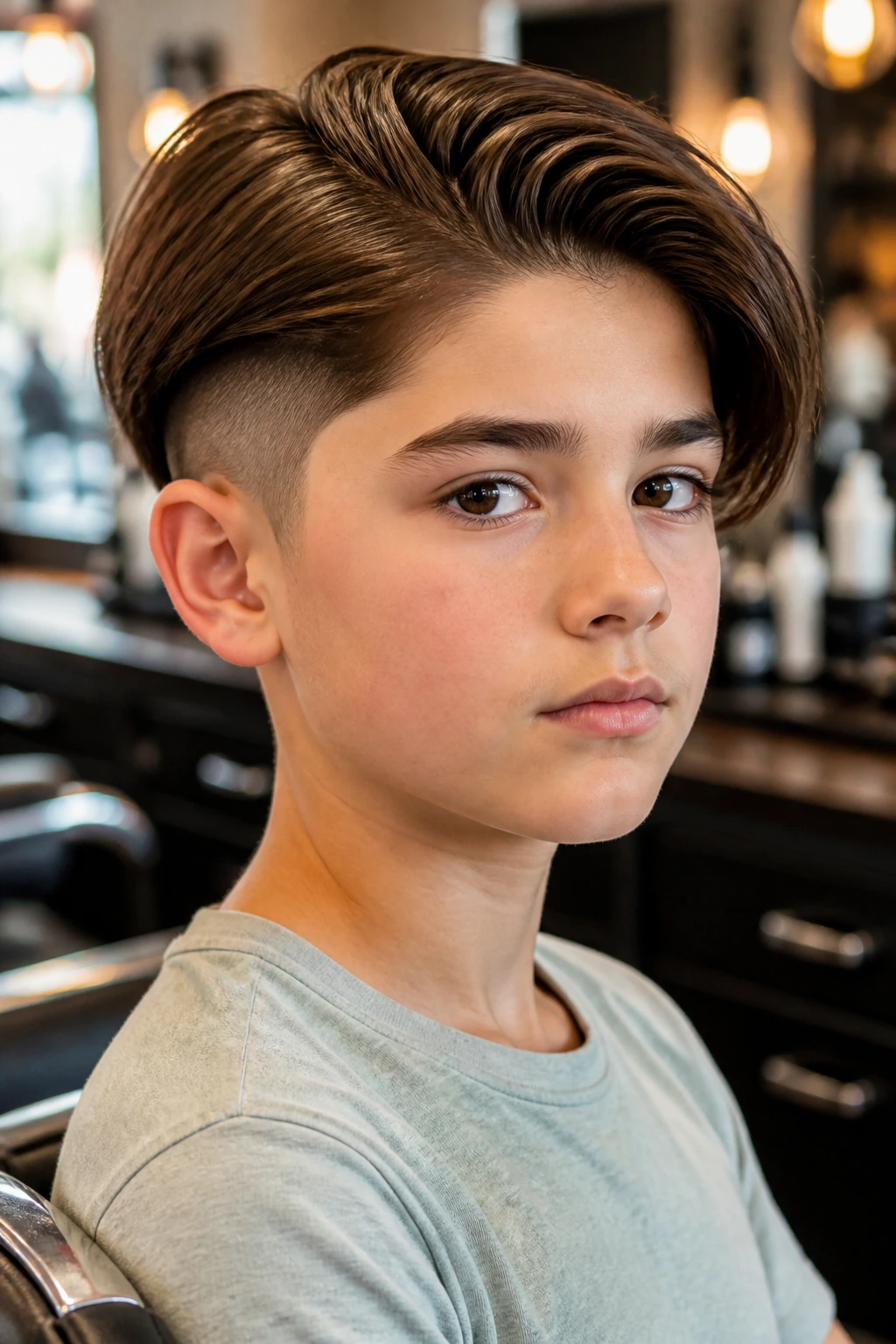
Length is not a small detail here. It changes everything. On thick hair, even half an inch can decide whether the cut looks sleek or blows out at the sides. Shorter bobs sit cleaner around the jaw and ears. Longer bobs carry more weight and often lie flatter, which helps if the hair has a strong wave or a lot of spring.
Match the length to the hair’s behavior
If the hair sticks out at the sides, don’t go too short too fast. Keep enough length for the weight to pull it down. If the hair hangs flat and needs shape, a chin-length or jaw-length bob usually gives it better structure. And if the hair grows fast, leaving a little extra length can save you from weekly complaints about the cut looking too small too soon.
Think about the neckline and ears
The neckline is where thick hair turns fussy first. If you want easy maintenance, keep the bob just above or around the nape and ask for a tidy taper there. Around the ears, the cut should either sit cleanly above them or soft-sweep around them. Hair that lands right on the ear with no shaping tends to stick out in a way nobody likes.
The rule I trust most
Leave the length where you want movement. Remove weight where you want control.
That’s the balance. And it works far better than trying to force thick hair into a shape that belongs to fine hair.
How to Style These Bobs Without a Fight
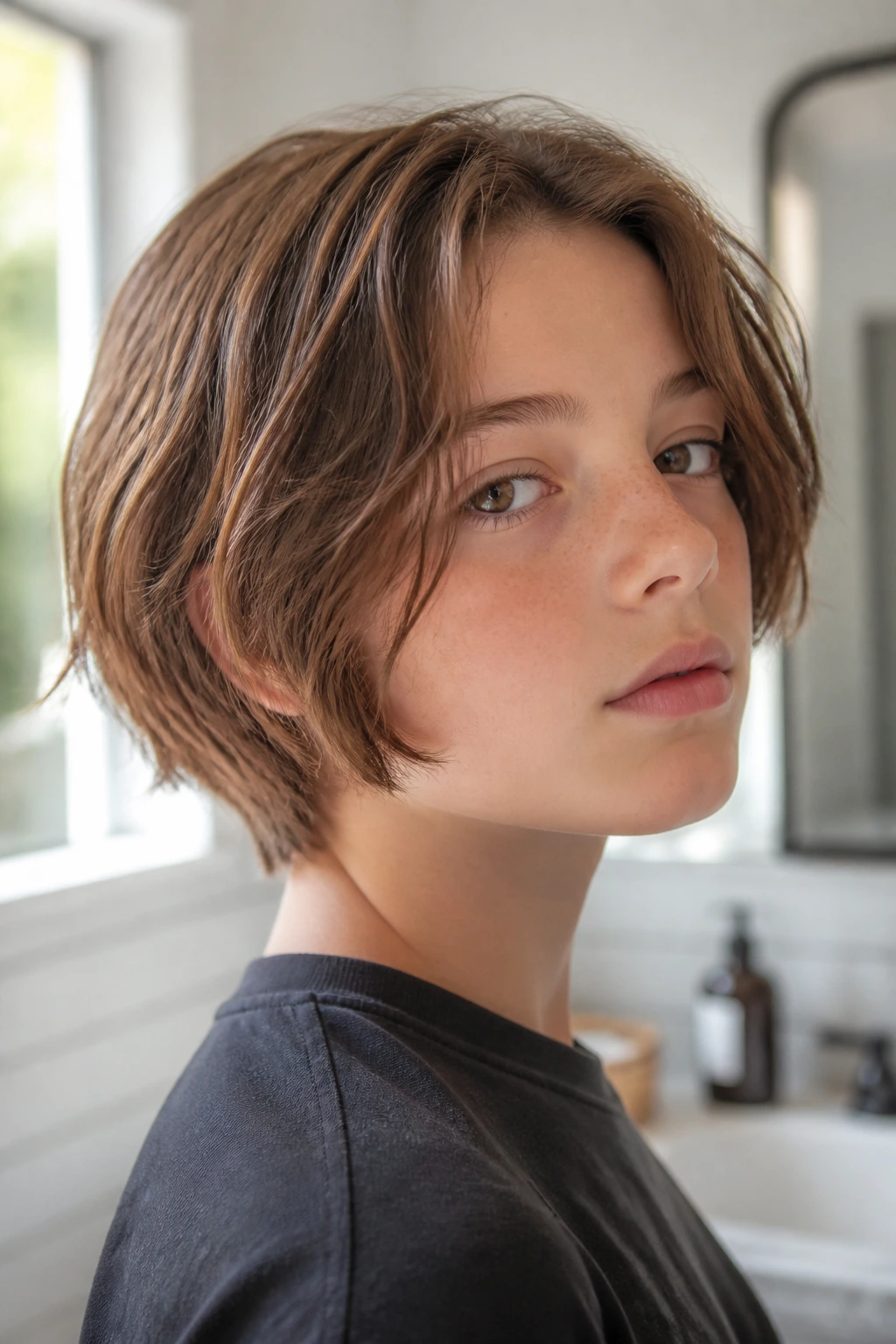
A boys’ bob on thick hair does not need a complicated routine. It needs direction. Start with damp hair, not dripping-wet hair. Thick hair holds too much water and takes forever to set if it’s soaking. A towel squeeze first saves time and keeps the cut from puffing while it dries.
Use a comb or fingers to decide where the part lives. Then dry the roots in that direction for a minute or two. That tiny bit of effort does more than people expect. Once the roots know where to go, the rest of the hair follows with less drama.
For product, less is safer. A pea-sized amount of matte paste, rubbed well between the palms, is enough for a short bob. For a longer bob or one with more wave, a light cream or leave-in can help the hair sit smooth without looking coated. If the hair gets frizzy at the ends, a touch of leave-in on the fingertips works better than loading the whole head with product.
Additional Tips for Better Texture and Shape

Shape Boost: Blow-dry the sides down and slightly forward for 20 to 30 seconds. Thick hair tends to lift at the temples, and that small move keeps the bob cleaner.
Fringe Control: If the front grows too fast, trim only the center fringe first and leave the corners slightly longer. That keeps the shape from getting chopped into a straight line.
Low-Fuss Finish: A tiny amount of matte cream on dry hair gives thick strands enough grip to stay put without becoming shiny or crunchy.
Crowd Control: If the crown sticks up, mist the roots, press them down with the comb, and dry that spot first. Crowns decide a lot. Ignore them and they get louder.
Make-It-His-Own: For boys who hate anything fussy, keep the perimeter simple and use texture only where the hair truly needs help, usually at the nape and around the ears.
Common Mistakes That Make Thick Hair Look Worse
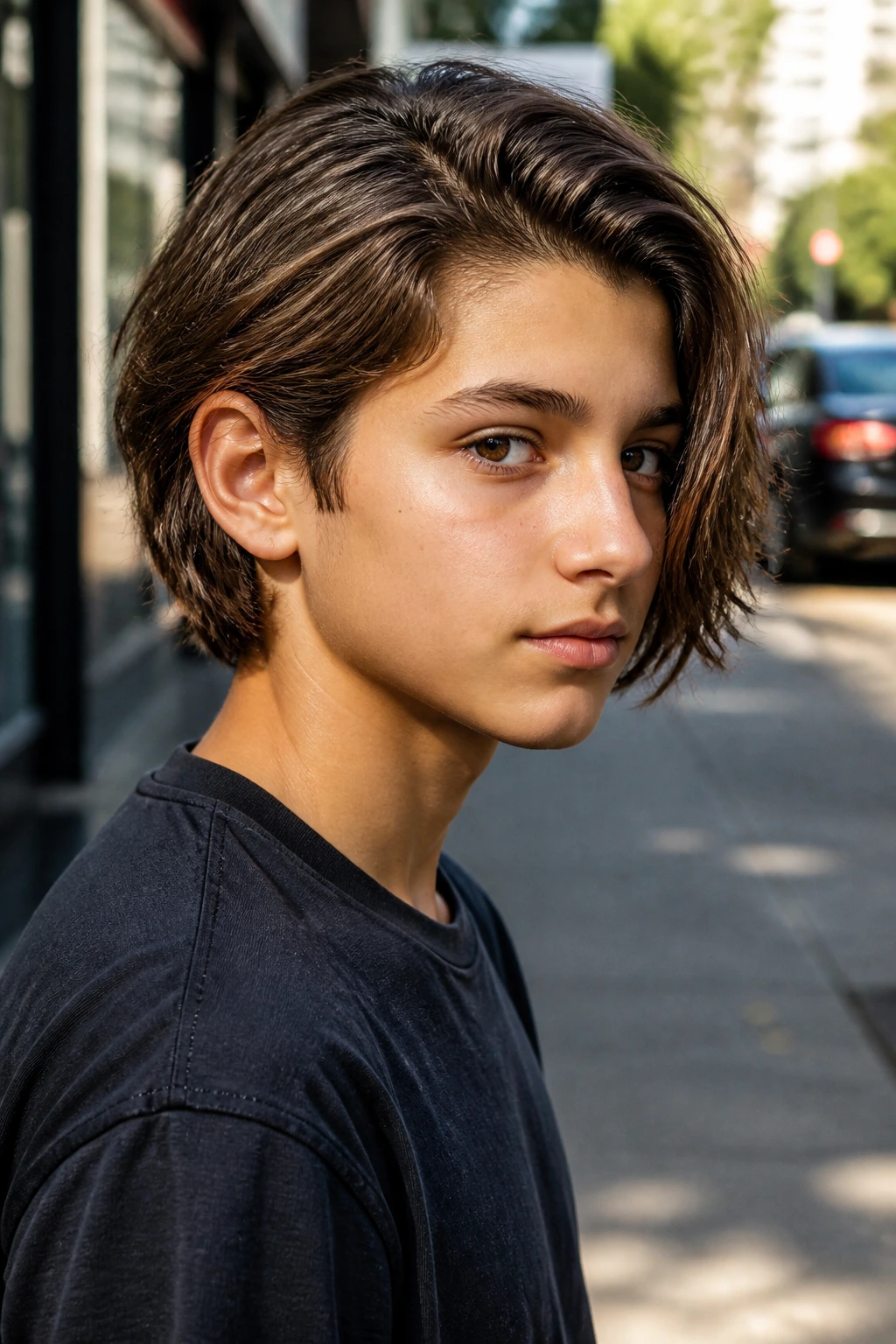
Over-thinning the ends: This is the classic error. The bottom goes wispy while the body stays heavy, and the haircut starts to look hollow. Fix it by keeping the outline blunt and removing weight inside the shape instead.
Cutting the fringe too short: Thick hair bounces up more than people expect. A fringe cut to the brows wet can end up far above them when dry. Leave more length than you think you need, then adjust.
Ignoring the ears and nape: Those two spots collect bulk fast. If they’re left square and heavy, the whole bob looks wider than it should. A soft taper or careful cleanup there makes the cut feel finished.
Using too much product: Thick hair can handle some product, but too much only makes it heavy and sticky. Start with a tiny amount. Add more only if the hair still refuses to settle.
Forgetting the cowlicks: A crown or front cowlick can wreck a cut that looked great in the chair. If the barber cuts too short over a stubborn swirl, the hair will kick up every morning. Leave extra length where the swirl fights back.
Trying to force the wrong part: A middle part is not mandatory. If the hair naturally wants a side part, let it have one. Hair that sits naturally always looks more relaxed than hair that’s been argued into place.
Variations and Adaptations to Try
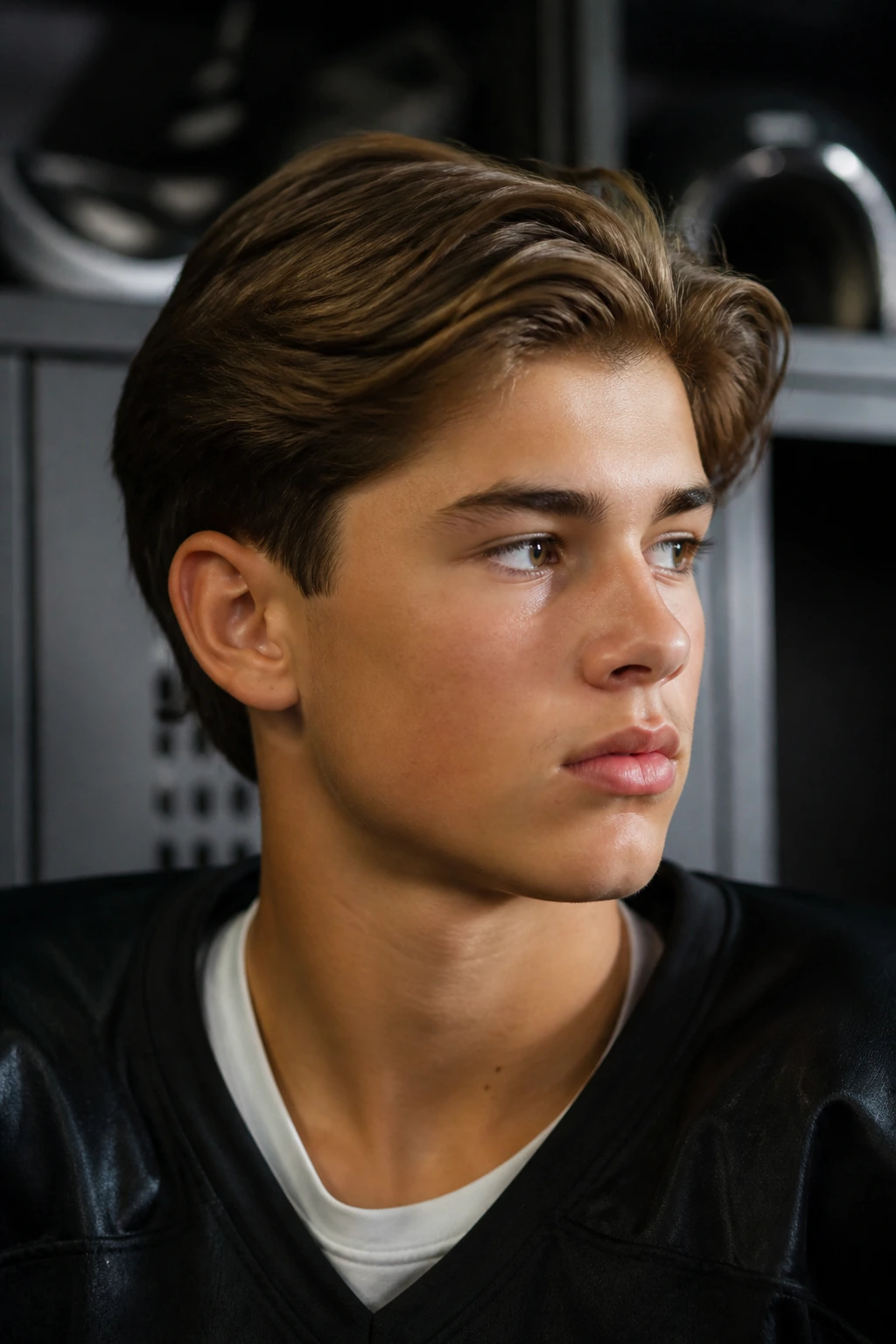
The School-Ready Bob: Keep the length just below the ears, with a soft fringe and a neat neckline. This version stays tidy under a cap or hoodie and doesn’t need much morning effort.
The Curly-Control Bob: Leave an extra half-inch through the perimeter and use gentle internal layering. Curly thick hair shrinks when it dries, so the extra length keeps the shape from jumping too high.
The Sport Trim Bob: Taper the nape, clean up around the ears, and keep the top long enough to sweep back. It’s the safest choice for boys who live in helmets and sweatbands.
The Grow-Out Bob: Ask for a collarbone-length bob with hidden layers. It grows into a shaggy medium cut instead of a puffy in-between stage, which saves everyone a headache.
The Soft-Fringe Bob: Keep the front piecey and loose, with just enough length to brush sideways or forward. This helps boys who don’t want the feel of hair hanging into the eyes.
The Heavy-Line Bob: For very straight, dense hair, keep the perimeter blunt and use almost no visible layering. It gives a strong shape and needs the least daily correction.
How to Talk to the Barber Without Losing the Shape
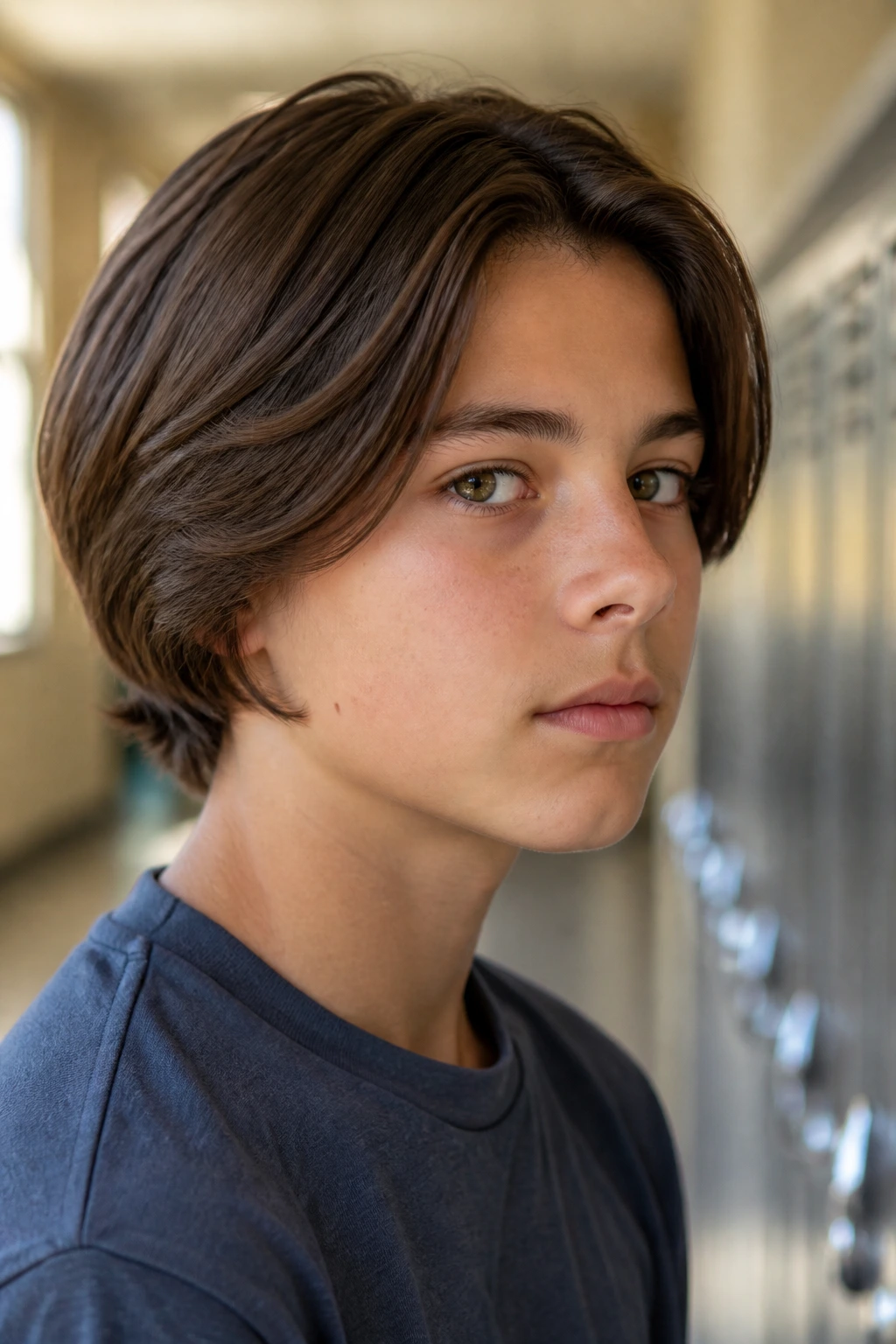
Bring a picture, but also bring one sentence about what bothers you. That second part matters more than the photo. A good bob for thick hair is not just about length; it’s about where the bulk sits. Tell the barber if the hair puffs at the ears, flips at the nape, or falls in the eyes by noon.
Say the shape, then the problem
Try this order: length first, trouble spot second, finish last. Something like, “Keep it around the jaw, take weight out near the ears, and leave the fringe soft.” That gives the barber a real map.
Ask for the right kind of removal
Use phrases like internal weight removal, light texturizing, soft taper, or blunt perimeter. Those words help clarify what should stay and what should go. What you do not want is a vague “make it lighter” instruction. That often leads to the ends getting shredded instead of the bulk being handled properly.
Be honest about upkeep
If you’re not booking trims often, say so. Some bobs, especially the undercut and French versions, need more frequent cleaning around the nape and fringe. A barber can steer you toward a shape that grows out better if they know the family schedule is tight.
Maintenance and Grow-Out Between Cuts
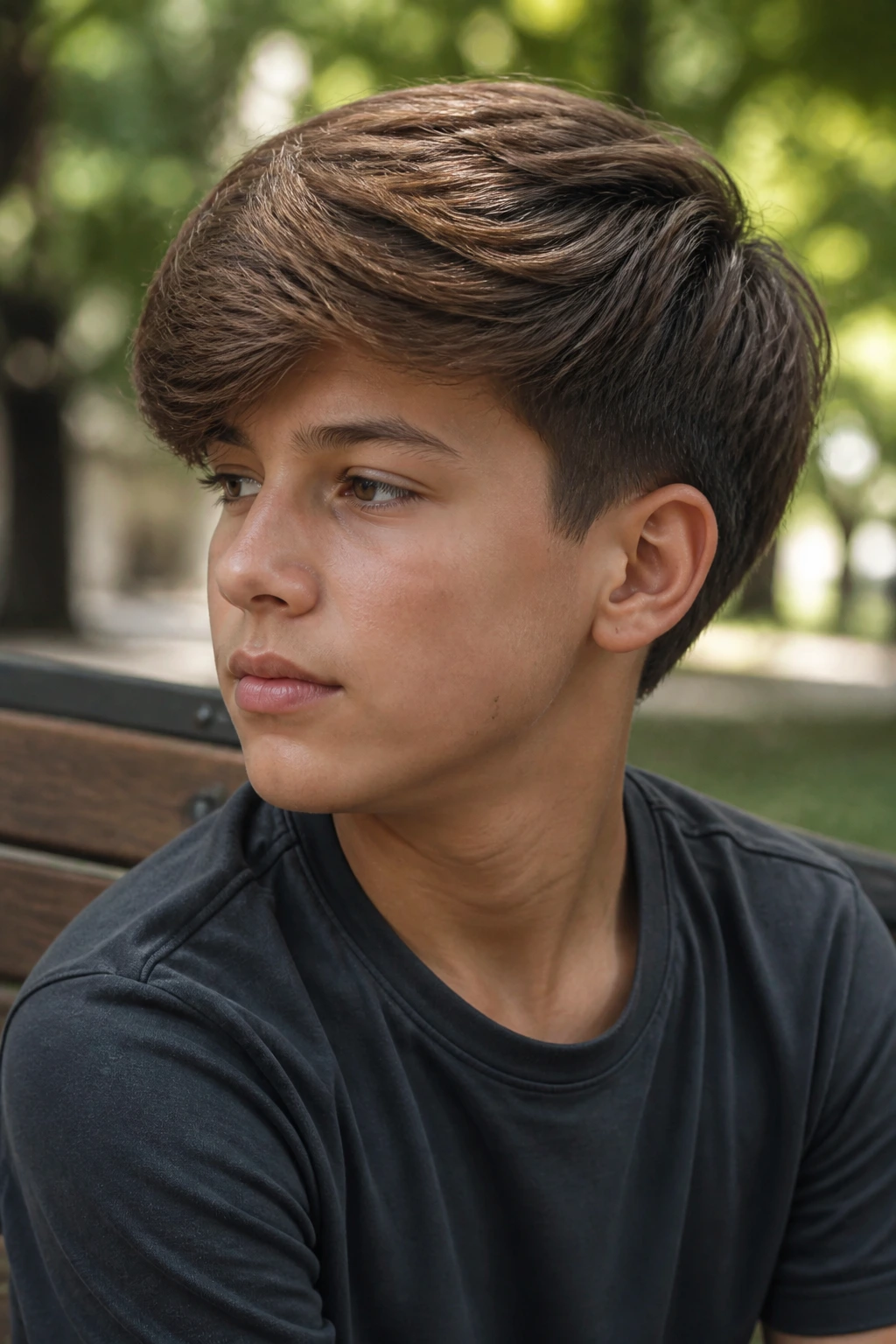
Thick hair grows in with authority. That’s the nice way of putting it. The less nice way is that an ignored bob turns boxy fast. For most of these cuts, a trim every 4 to 6 weeks keeps the outline clean. The shorter, sharper styles may need cleanup closer to 3 to 4 weeks, especially around the fringe and neckline.
The nape usually shows wear first. Around the ears comes next. If those spots start puffing, the whole cut can look two weeks older than it is. A quick neckline cleanup or ear trim can buy you time between full haircuts.
At home, a weekly wash-and-condition routine usually keeps thick hair easier to control. Use conditioner on the mid-lengths and ends, not the roots, unless the hair is very dry. If the hair tangles overnight, a satin pillowcase can help more than another product bottle. Simple fix. Good payoff.
For dry ends, a tiny amount of leave-in conditioner on damp hair keeps thick strands from going rough and frizzy. Don’t coat the whole head. A little goes a long way, especially near the front where heavy product can make the fringe droop.
Frequently Asked Questions
How short can a bob be on boys with thick hair without looking puffy?
Usually around jaw length or slightly above works well. Go too short, and thick hair can flare out like a mushroom. A blunt edge with some internal weight control is safer than a short, heavily layered cut.
Can boys with wavy or curly thick hair wear a bob?
Yes, but the length needs to be left a touch longer because the hair will shrink as it dries. A wavy bob looks best with soft layers and a cleaner perimeter. Curly hair usually does better with less obvious texturizing and more shape control.
Should thick hair be thinned out with thinning shears?
Sometimes, but not everywhere. Thinning shears are useful near the ears, nape, or inside the top layer when the hair is bulking up. If they’re used on the ends, the haircut can start looking see-through and frizzy.
How often does a bob need trimming?
Most boys’ bobs need a cleanup every 4 to 6 weeks. Shorter or more structured versions, like the undercut bob or French bob, may need touch-ups sooner because the neckline and fringe show growth fast.
What if the hair flips out at the ends?
That usually means the cut is too short for the hair’s weight or the perimeter is fighting the natural growth pattern. Leave a little more length at the ends, and ask for a blunt finish with only light internal shaping.
Is a bob hard to manage for school and sports?
Not if the shape is chosen well. The ear-length sport bob, tapered-neck bob, and side-swept bob are all easy to tuck under a cap or keep off the face. The longer versions need a bit more attention, but they still stay manageable with the right trim schedule.
Can a side part or middle part change how thick hair sits?
Absolutely. A side part breaks up bulk and helps if the hair naturally wants to push one direction. A middle part can look clean, but only if the hair already falls that way without a fight.
What product works best for these cuts?
Light matte paste, soft cream, or a leave-in conditioner are the safest choices. Heavy gel tends to make thick hair stiff and shiny in a way that can exaggerate the bulk. Start light and add only if the hair still needs help.
Why does the back of the bob stick out after a few weeks?
The nape is usually growing faster than the rest of the cut or sitting too blunt against the neck. A tapered neckline or a quick cleanup at the nape usually fixes it. Ignore it too long and the whole shape loses its line.
The Cuts That Stay Easy

A good bob on thick hair does not ask for much. That’s the beauty of it. Once the line is right, the haircut does a lot of the work on its own. The shape holds. The bulk stays where it belongs. The daily routine gets shorter.
I’d lean toward the chin-length blunt bob, the tapered-neck bob, or the internal-layer bob if you want the safest, cleanest options. If the boy likes more personality, the side-part, French, or asymmetrical versions bring that without turning the haircut into a project. Thick hair can handle all of them, as long as the weight is placed with a little sense.
And that’s the real trick with boys’ bobs for thick hair: don’t treat density like a problem to erase. Treat it like material to shape. When you do that, the cut looks better in the chair, better at school, and better after a full week of being a kid.