



A center part on short hair is blunt in the best possible way. It doesn’t hide a weak cut, a heavy crown, or a front section that was chopped too high. It shows everything. And that is exactly why long middle part hairstyles for short hair can look so sharp: the line through the middle pulls the eye down, the longer front pieces soften the jaw, and the whole cut reads more deliberate than a side-part style that’s trying a little too hard to be agreeable.
Short hair with a middle part has a certain honesty to it. If the cut is good, it looks expensive without needing much fuss. If the cut is off by half an inch, you’ll know in the mirror before coffee. That sounds unforgiving, but it’s actually useful. The center line tells you what your hair is doing, where it falls, how much density sits at the temples, and whether your front sections need more length or less weight. For anyone living with a bob, bixie, pixie, or cropped shag, that feedback is gold.
The sweet spot is usually longer around the face and tighter through the back. That contrast keeps the style from reading like an overgrown cut. It also gives you room to tuck, bend, flip, or wave the front pieces without losing the shape. Some of these looks are polished. Some are messy on purpose. A few are so easy they barely count as styling, which is exactly the point.
Why These Cuts Keep the Center Line Working
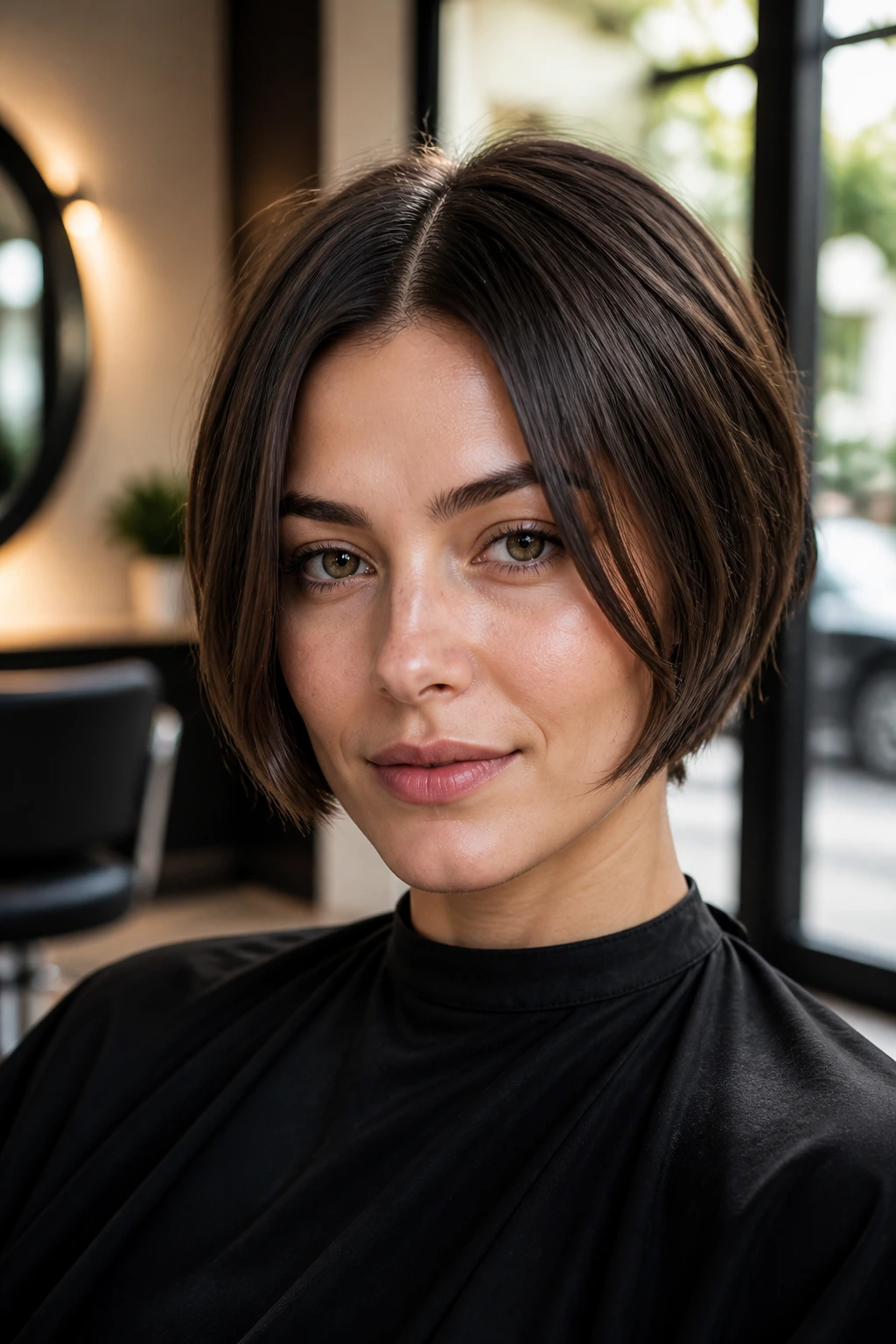
A middle part on short hair does three jobs at once: it lengthens the face, balances the silhouette, and makes shorter cuts feel more intentional. When the front pieces graze the cheekbone, jaw, or the top of the lip, they break up the roundness that short cuts can sometimes create. That matters a lot on bobs and pixies, where every inch changes the whole mood.
Face-framing length matters more than top length. If the front is too short, the center part can look stiff and exposed. If the front is long enough to skim the cheekbones, the part starts to feel like part of the design instead of a line you drew because you had to.
Texture changes everything. Straight hair shows the part in a crisp line. Wavy hair softens it. Curly hair turns it into a shape-shifter, because the split at the top can look clean while the ends stay loose and springy. That’s why a center part can work on a pixie, a French bob, and a shaggy crop without looking repetitive.
The cut has to earn the part. A short style with no internal shape can fall flat fast. Add a tiny bevel, some cheekbone layers, or a bit of weight removal around the temples, and suddenly the middle part has room to breathe. The hair falls instead of hanging.
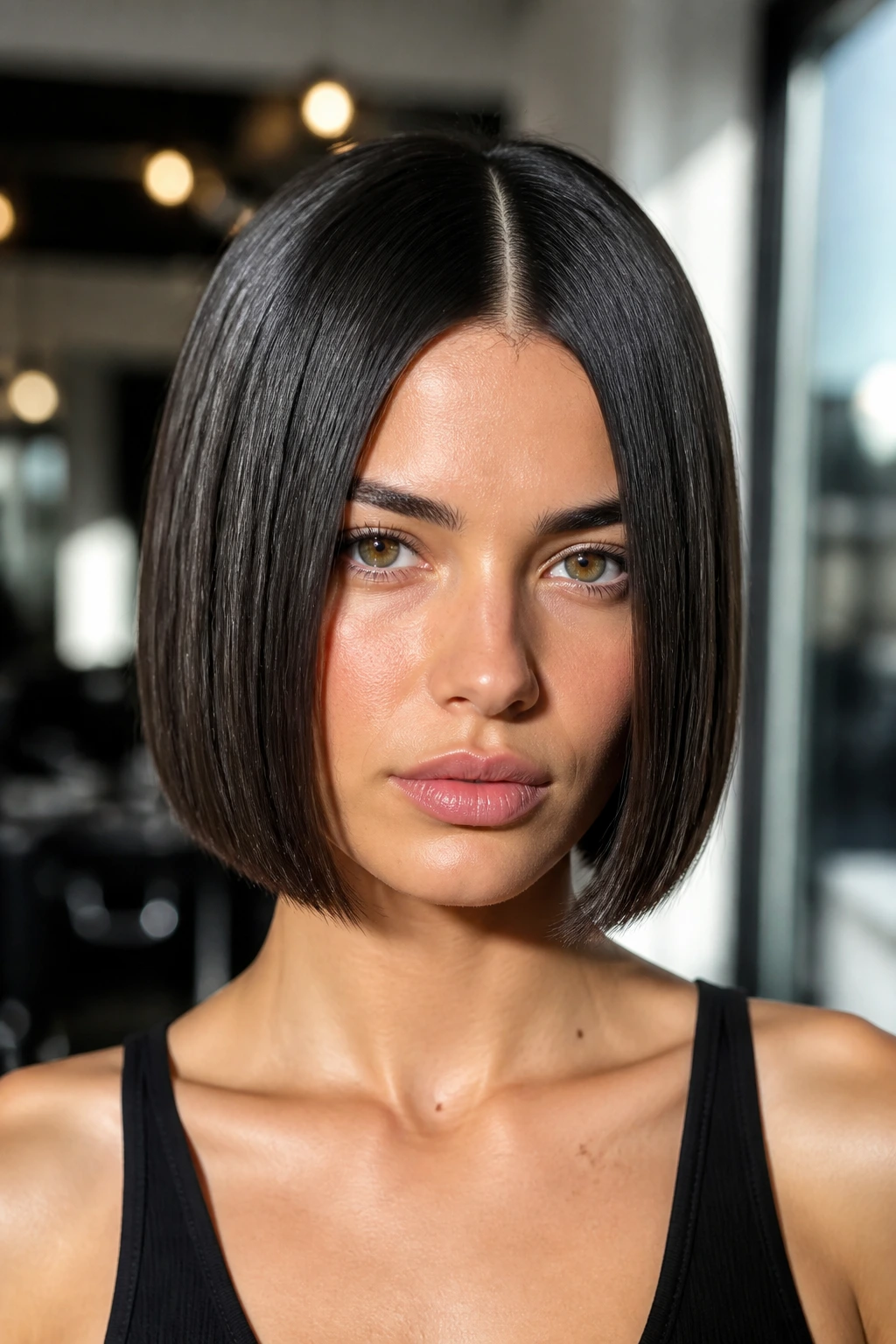
1. Sleek Blunt Bob with a Sharp Center Part
A blunt bob and a center part are a little bossy together, and I mean that as praise. The straight edge at the bottom gives the style its structure, while the middle part keeps it from looking too severe. When the ends are cut clean at chin length or just below, the whole shape looks dense, glossy, and surprisingly modern on short hair.
Why it works
This cut works because the line of the part and the line of the perimeter echo each other. That repetition creates a neat, almost architectural look. It’s especially strong on straight or lightly wavy hair, where the ends can sit smooth without much coaxing. If your hair is fine, a blunt bob can also make the mid-lengths look fuller than a layered cut ever will.
A few details that matter
- Ask for a blunt perimeter with barely any internal layering so the bottom edge stays full.
- Keep the part precise with a tail comb and set it while the hair is damp.
- A light smoothing cream on the mid-lengths helps the bob fall like a sheet instead of puffing at the sides.
- If your ends flick out, a 1-inch flat iron bend at the last half-inch cleans them up fast.
Best for: straight, fine, or medium-density hair that needs a stronger outline.
2. French Bob with Curtain Pieces
Why does a French bob feel softer than a blunt bob? Because the length usually sits a touch higher, the edges aren’t chopped with the same hard line, and the front pieces are allowed to curve around the cheekbones. Add a middle part, and those curtain pieces act like a frame instead of a fringe. The result is short hair that still has a bit of swing.
A French bob works well when you want the part to feel relaxed rather than strict. The cut has enough shape to stand alone, which means you can air-dry it with a touch of cream and let the pieces do the talking. On thick hair, a little internal debulking keeps the shape from ballooning. On fine hair, the shorter perimeter builds body without making the crown look sparse.
How to style it
- Scrunch in a pea-sized curl cream or light mousse.
- Part the hair while it’s damp, not bone dry.
- Twist the front sections around your fingers as they dry so they bend away from the face.
- Finish with a matte texture spray if you want that slightly undone finish.
This is one of those styles that looks like you meant to be interesting. Useful quality.
3. Grown-Out Pixie with Long Front Panels
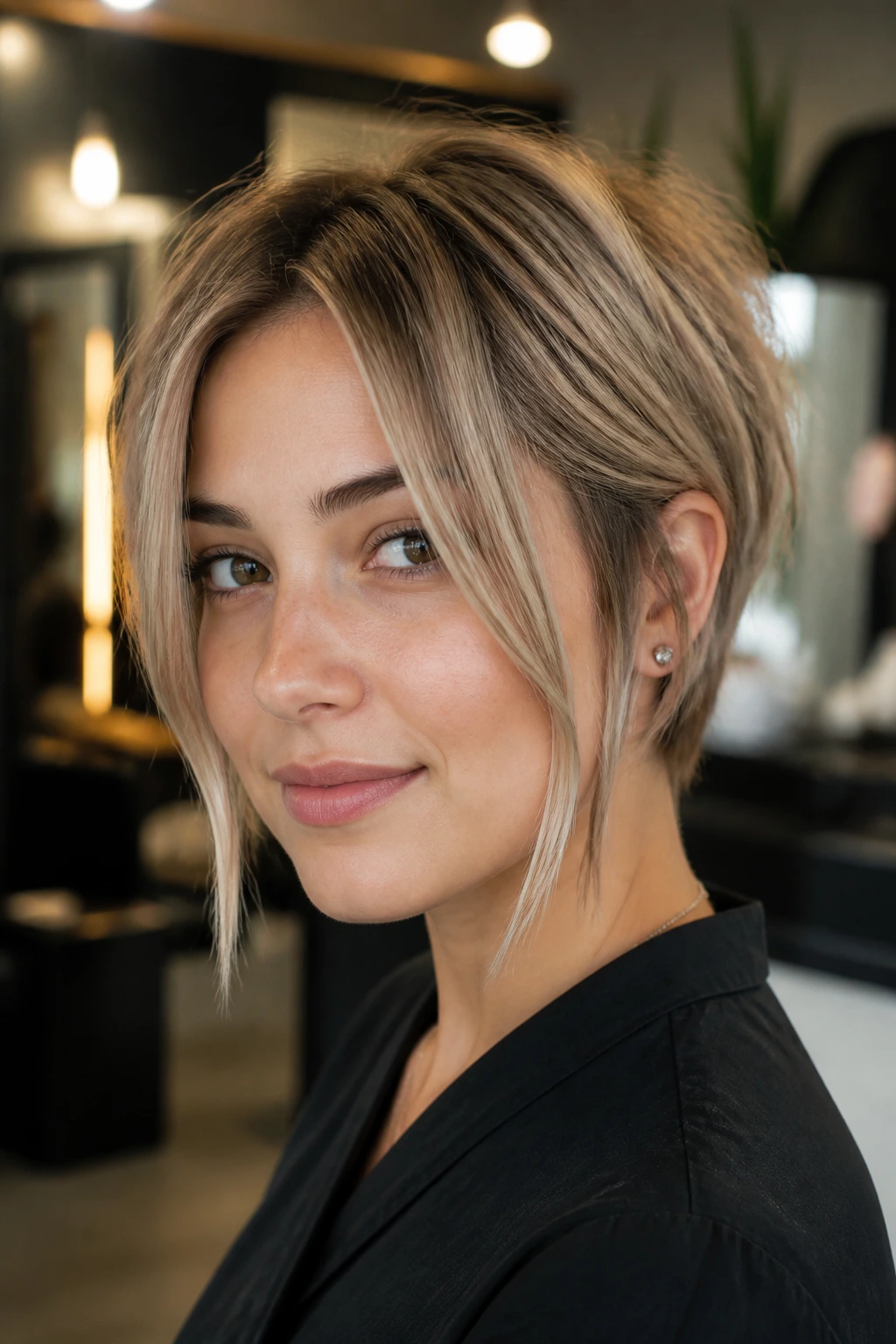
A grown-out pixie can look awkward if the top is too puffy and the sides are too short. Give it long front panels, though, and the whole thing turns into a smart little shape that sits between pixie and bob. The center part keeps the front from collapsing into a helmet. Instead, the longer bits fall on either side of the forehead and taper toward the cheekbones.
This cut is strong when you want short hair without the commitment of a tight crop. It also buys you a few weeks between trims, because the longer front pieces still look intentional as they grow. Ask your stylist to leave length at the temples and around the front hairline, then add softness through the crown with point-cutting. Too much thinning at the top is a mistake here; it can make the part open up and expose the scalp in a way that feels accidental.
How to style it
- Blow-dry the roots upward with a small round brush or your fingers.
- Work a light paste through the ends, not the roots.
- Push the front panels forward first, then split them cleanly in the middle.
- If the crown falls flat, a texturizing powder at the roots gives quick lift.
Best for: people who want the clean line of a center part without losing the easy shape of a pixie.
4. Curly Chin-Length Bob with a Middle Split
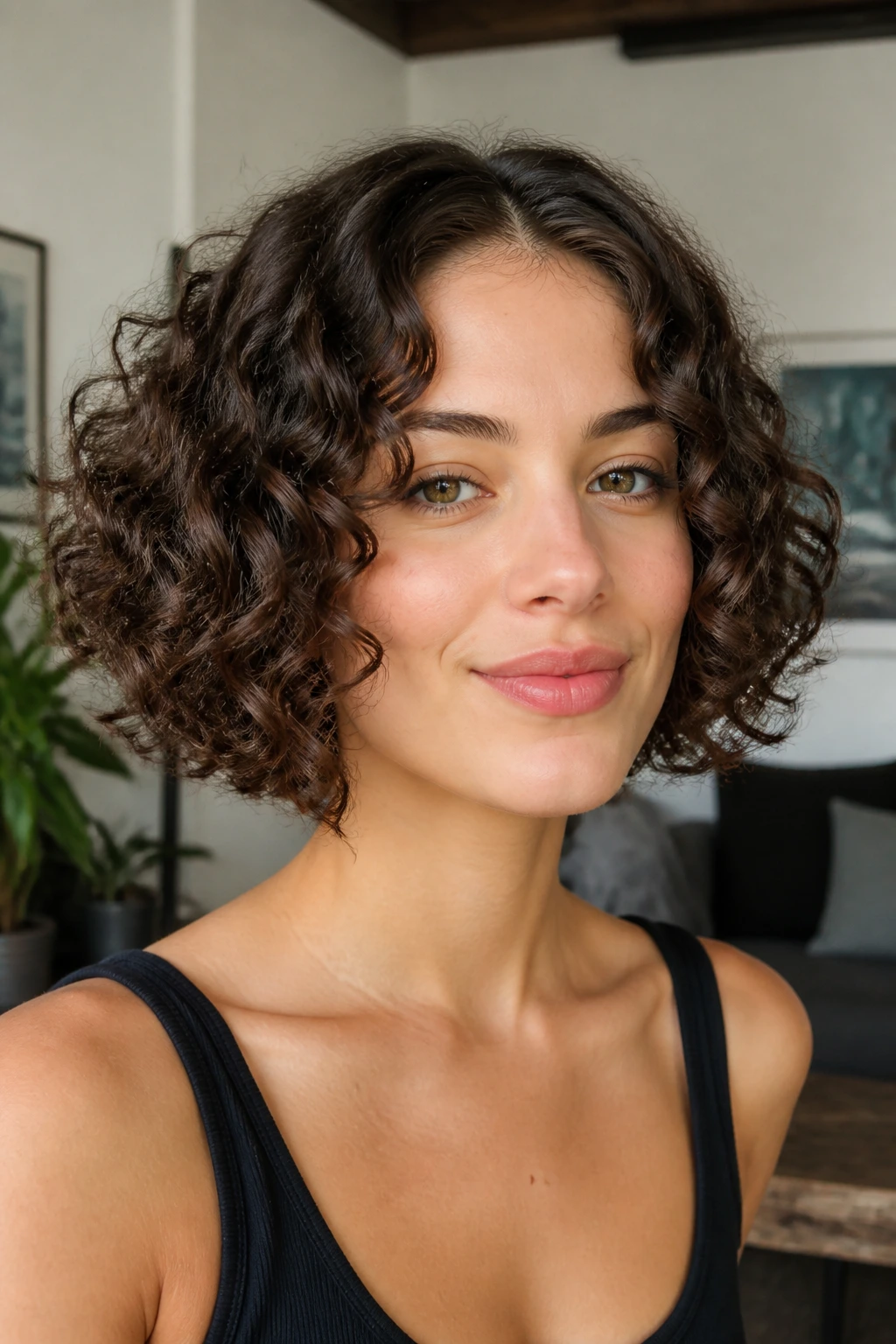
Curly hair does not need to be tamed into silence. A chin-length bob with a middle split lets the curls keep their spring while still giving the face a clean frame. The center part opens the style up at the top, and the curl pattern fills the rest. When the cut is done well, the ends should land somewhere around the chin or just below, with enough length in the front to curve past the cheeks.
The biggest mistake with curly short hair is cutting it too dry around the face and then taking away another inch because the curls bounced up. Leave space. Curls shrink, and a middle part on short hair needs a little length to keep from looking cramped. Diffusing upside down can help with volume, but don’t blast it so hard that the part disappears. You want separation at the top and shape at the bottom.
How to style it
- Part wet hair with a wide-tooth comb or your fingers.
- Apply curl cream from mids to ends, then a small amount of gel on top.
- Diffuse on low heat until the roots are dry and the curl clumps hold.
- Don’t touch it until it’s fully dry. Seriously.
This one looks best when the curls are soft, not crunchy.
5. Textured Mini Shag with Cheekbone Layers
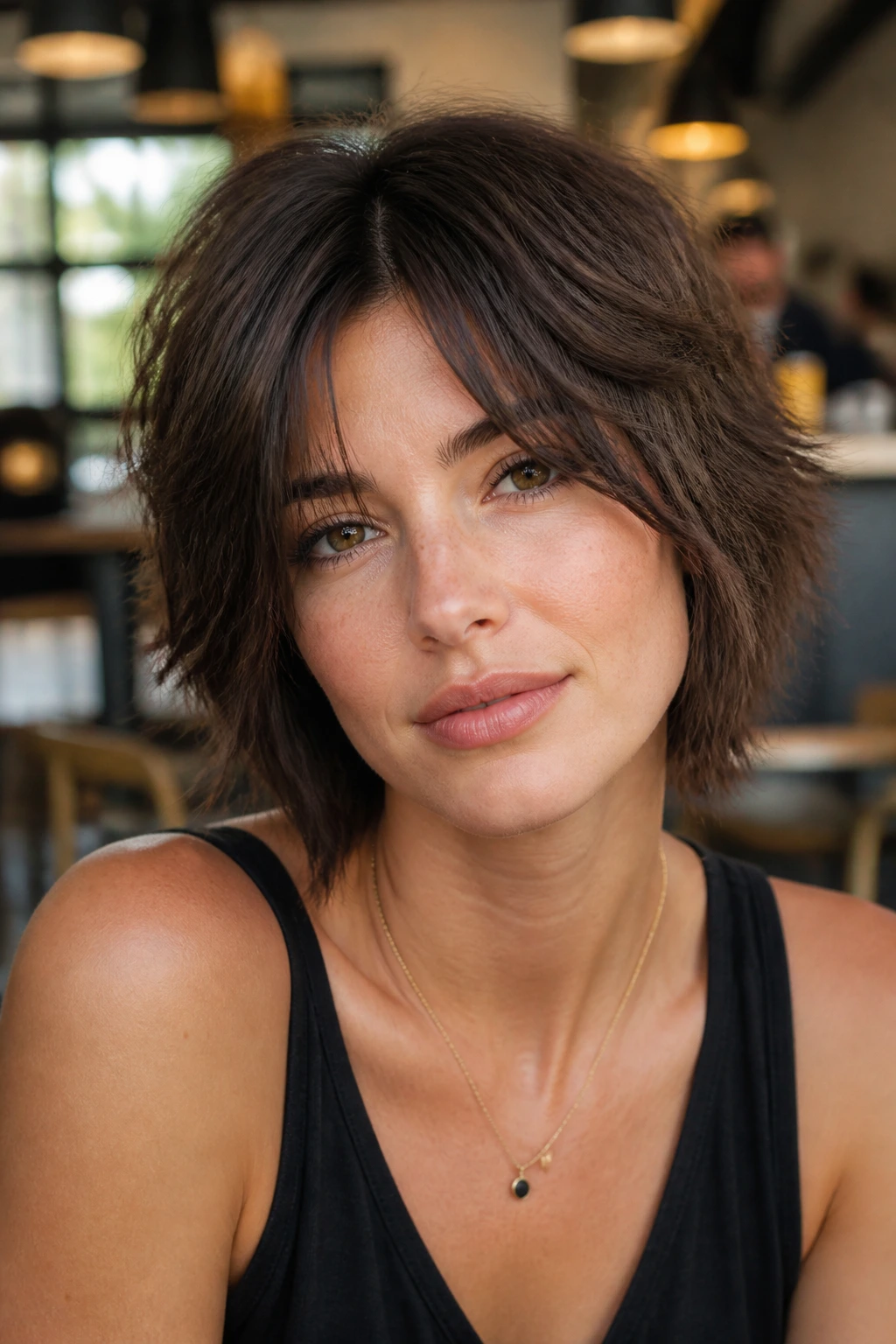
A mini shag is for people who like their hair a little untidy on purpose. The center part gives the cut a clear starting point, then the cheekbone layers break it up so it doesn’t read as too neat. On short hair, that balance is useful. You get movement near the face, some lift at the crown, and enough edge that the cut still has a pulse even after a long day.
What makes it different
Unlike a blunt bob, the mini shag builds shape through broken layers instead of one hard outline. That means it can flatter thick hair that wants to poof out or wavy hair that goes flat at the top. The cheekbone layers are the part to watch. If they’re too short, the style can mushroom. If they’re too long, you lose the shag effect and end up with a softened bob that doesn’t quite know what it is.
A little mousse at the roots and a scrunch through the ends is usually enough. Let some pieces dry where they want to live. The point is not perfect symmetry. The point is controlled mess.
Good for: wavy, thick, or slightly coarse hair that gets too heavy in a single-length cut.
6. Tucked Ear-Length Crop with Glassy Ends
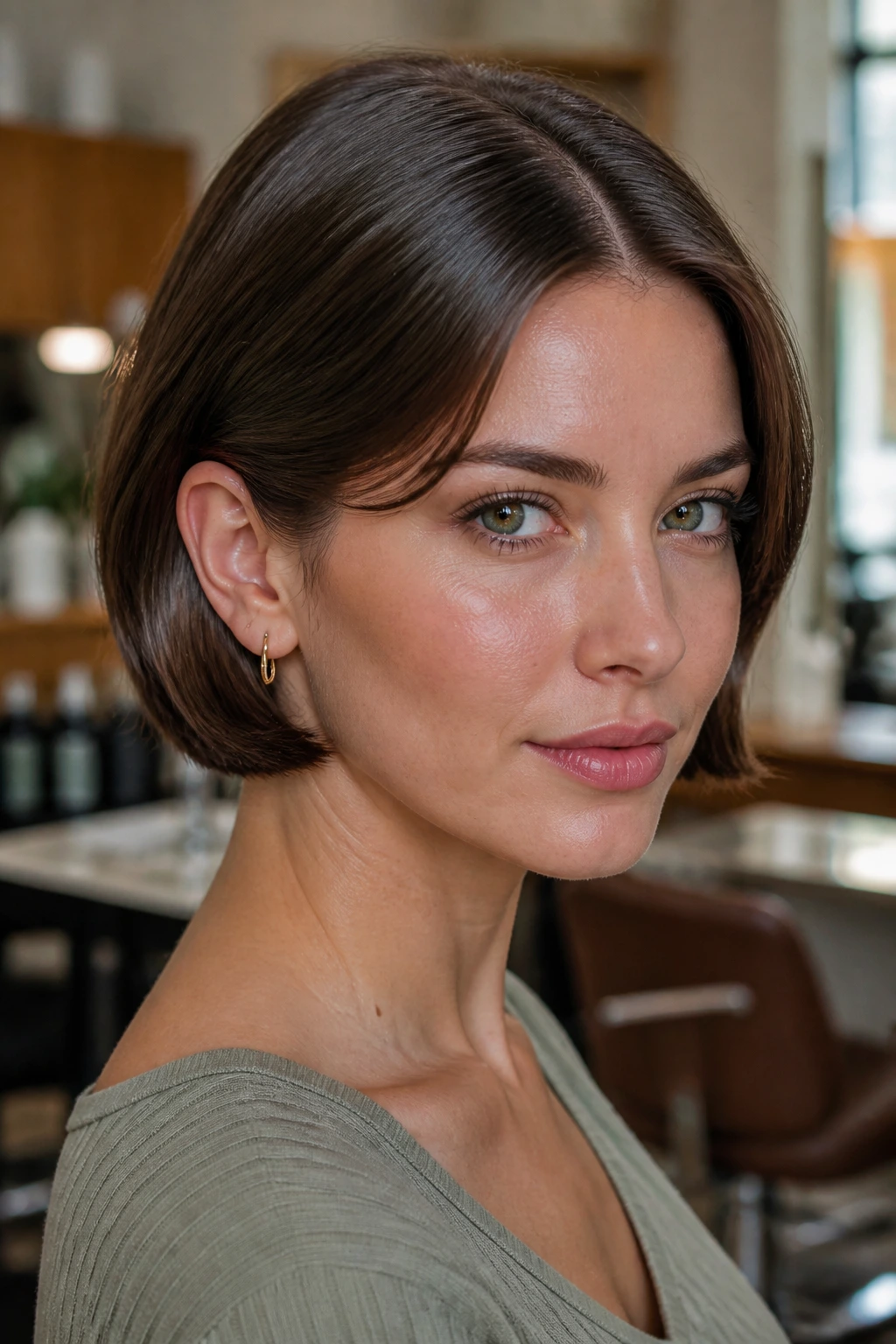
Ear-length hair can look severe very fast. Tuck one side behind the ear, keep the ends glossy, and the whole cut becomes cleaner and more interesting. The middle part is doing a subtle job here — it’s not shouting, it’s organizing the front so the crop doesn’t feel random. The tucked side also opens up the jaw and makes earrings part of the styling.
This is a strong option if you like short hair but don’t want height on top. It works best when the ends are sharp and smooth, because frizz around the ear line can make the style look unfinished. A flat brush and a blow-dryer nozzle go a long way. So does a tiny bit of serum, but only on the last inch of the hair. Too much and the crop starts to look greasy instead of polished.
Key details to ask for
- Ear-skimming length at the sides so the tuck has somewhere to land.
- Slightly longer front pieces, which keep the center part from exposing too much forehead.
- A clean outline around the nape.
- Minimal layer breaking, so the ends lie flat.
This one looks best with a strong neck line and one good earring. Sometimes that’s all you need.
7. Feathered Bixie with Split Fringe

A bixie is the sweet spot between a bob and a pixie, and feathering it changes the whole mood. The split fringe gives the middle part a soft opening, while the feathered layers stop the cut from sitting like a block around the head. If you’ve ever wanted short hair that still feels airy, this is the lane.
The front matters most here. Ask for a little length through the fringe so the split falls around the brow and cheekbone instead of snapping straight across the forehead. The crown can carry some lift, but not so much that it becomes a mini pompadour. A round brush or hot brush gives this cut a quick polish, though I’d avoid over-smoothing it. The charm is in the movement.
How to wear it
- Blow-dry the fringe forward, then split it with your fingers.
- Use a light volumizing spray at the roots.
- Finish with a dab of paste on the ends to keep the feathers visible.
- Let the back stay a little lived-in; that contrast makes the front look sharper.
If you like a style that can be dressed up or down without much effort, this one earns its keep.
8. Air-Dried Wavy Bob with Soft Bend
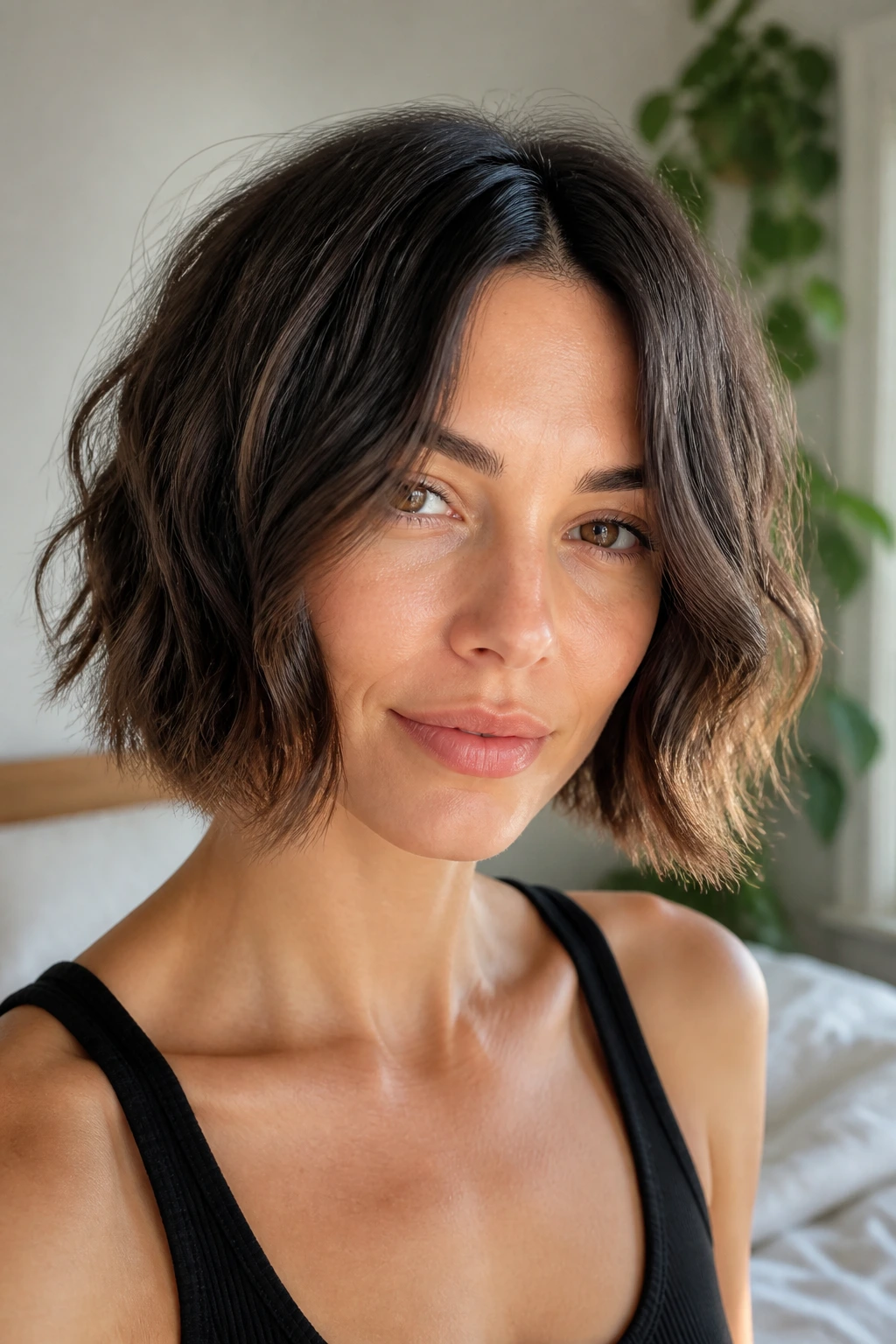
Some cuts are made for heat styling. This one isn’t. An air-dried wavy bob with a center part works because the part gives the hair a clean anchor, then the bend through the mids and ends does the rest. The result is relaxed, but not lazy. There’s a difference.
The trick is in the length and the product. You want enough hair in front to bend around the jaw, and enough light hold to keep the wave from puffing into fuzz. A cream mixed with a little mousse works better than heavy oil here. If your hair is naturally wavy, scrunch and leave it alone. If it’s more straight than wave, twist two-inch sections around your fingers while it dries, then separate them once fully dry.
Practical notes
- Don’t comb the hair straight after you part it.
- Pin the front pieces behind each ear for 10 minutes if they refuse to stay curved.
- A few bends from a small iron can clean up the ends without making the style look overdone.
- This is one of the easiest styles to refresh with a spray bottle the next day.
Good hair shouldn’t need a lot of apologizing. This cut agrees.
9. Flat-Iron Flip Bob with Center Part
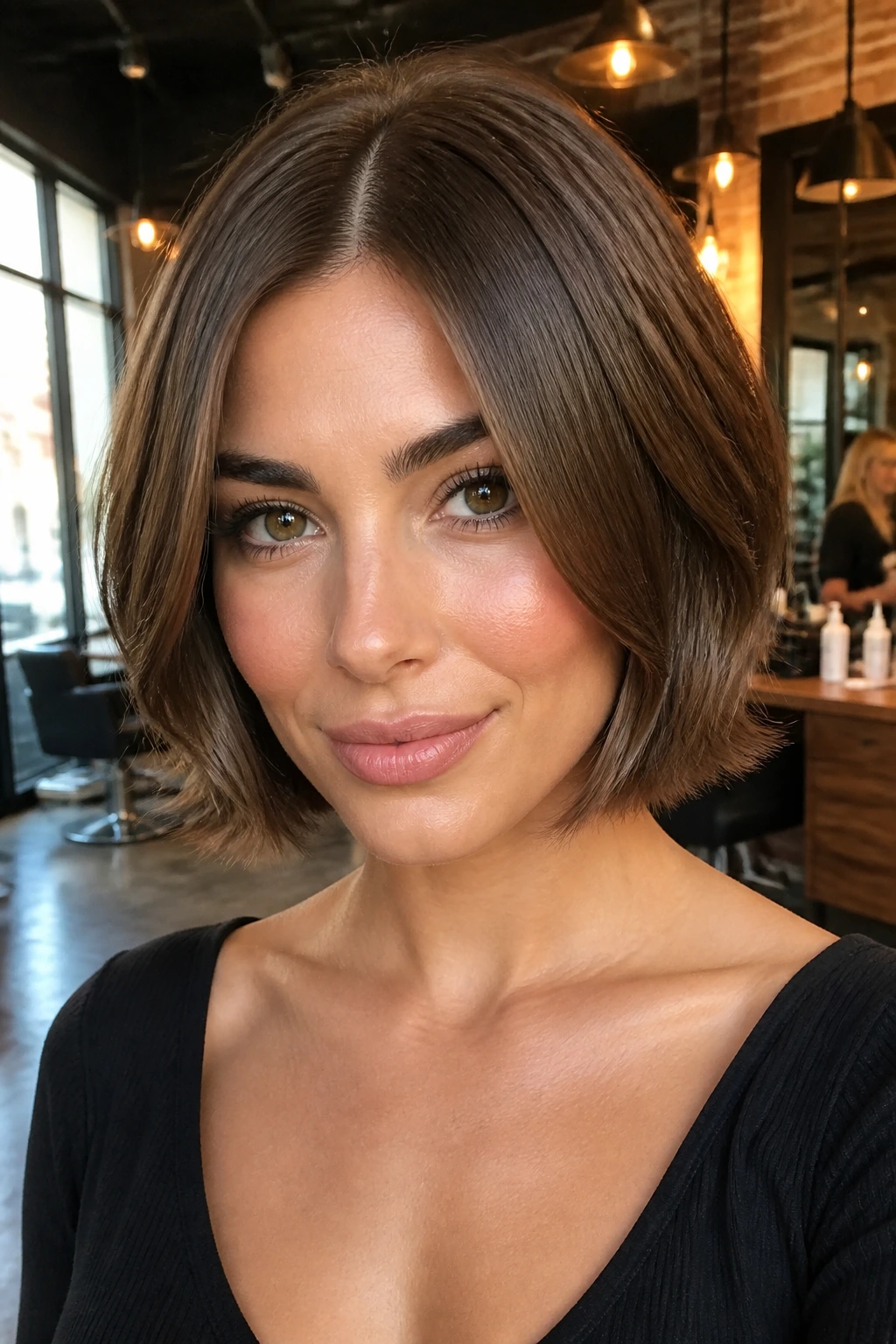
A flat-iron flip bob has a little retro attitude, and the center part keeps it from sliding into costume territory. The roots stay sleek. The ends flick outward just enough to give the cut some shape. On short hair, that flip at the bottom can make the neck look longer and the jaw look more defined.
Use a one-inch or 1.25-inch flat iron, and don’t clamp too hard. You’re not pressing the hair straight into submission. You’re guiding the last inch or so outward with a slight wrist turn. A heat protectant is non-negotiable here, because short hair gets crisp fast when you keep going over the same section. One pass is usually enough if the cut is good.
What to watch for
- Too much flip makes the bob look dated.
- Too little flip makes the ends cave in.
- The sweet spot is a soft, outward turn at the last half-inch.
This style flatters rounder faces especially well because the flipped ends widen the line at the bottom without adding bulk at the cheeks. A center part keeps the crown neat, which stops the whole thing from drifting into pageant hair. Good. We do not want that.
10. Rounded Bob with Curtain Fringe

A rounded bob sits close to the head and curves under at the ends, which makes it a calmer cousin to the blunt bob. Add a curtain fringe split in the middle, and the cut gets a gentle opening through the front. The effect is soft around the eyes, neat along the jaw, and tidy at the nape.
This shape works especially well on square or long faces, where a little curve at the bottom helps balance stronger angles. The fringe should not be too heavy. If it hangs like a sheet, it will swallow the center part and flatten the face. Ask for a light curtain fringe that starts around the brow and softens into the front sections. Blow-dry the fringe forward first, then sweep it to each side so the split doesn’t collapse.
A useful habit
Use a medium round brush and roll the ends under just enough to form a curve. Not a curl. A curve. That distinction matters. The bob should feel plush, not helmet-like.
This is one of the most wearable looks in the group, partly because it behaves well and partly because it doesn’t scream for attention. It just sits there looking expensive.
11. Razor-Cut Crop with Piecey Sides
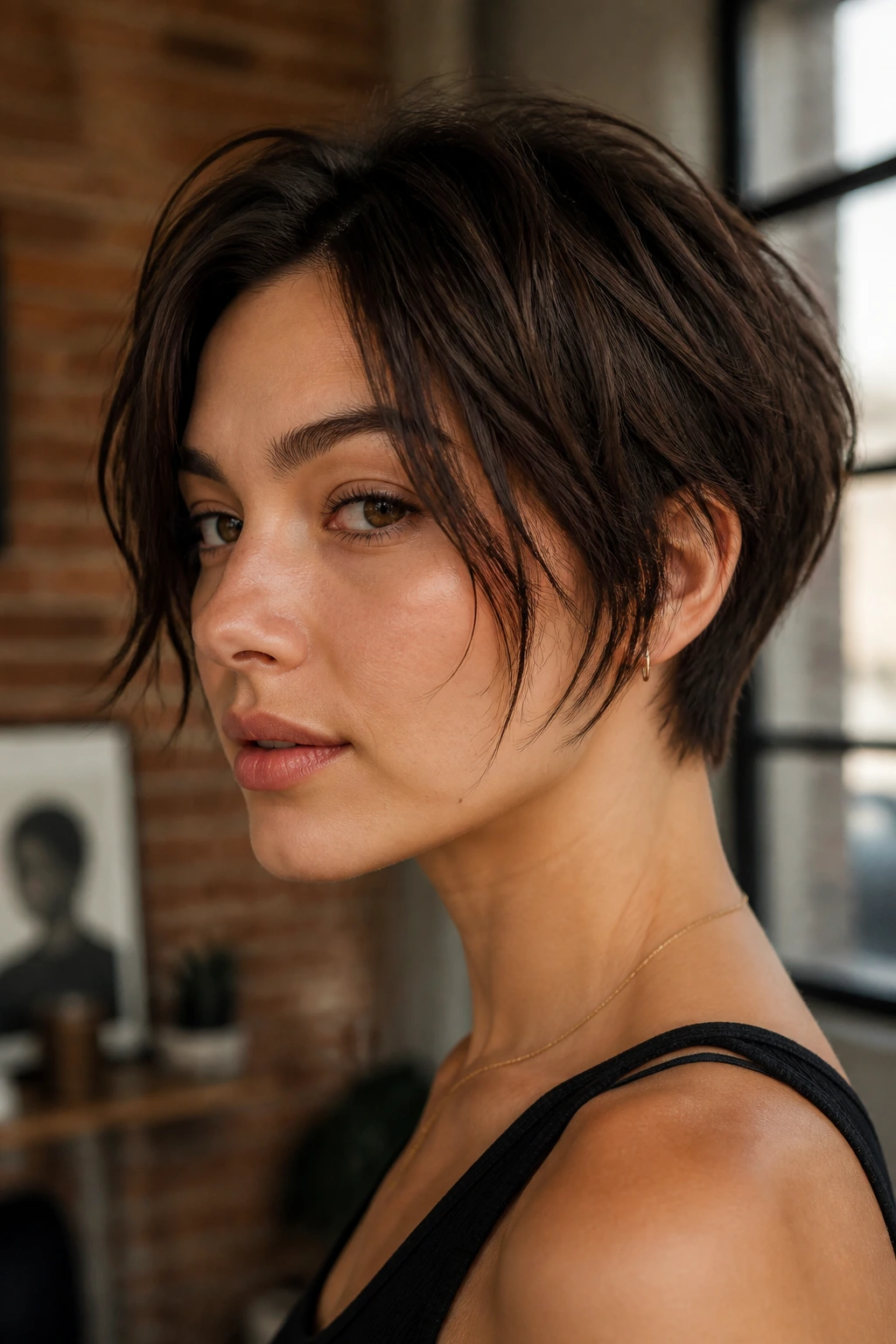
Razor-cut hair moves differently. The edge feels softer, the ends separate more easily, and the center part gets a little more breathing room. On a crop with piecey sides, that matters a lot. A blunt edge can make short hair feel heavy around the temples. A razor cut breaks that mass apart.
This look has more attitude than polish, which is exactly why it works on short hair. The front pieces should be long enough to skim the cheekbones, then taper into the sides. A small amount of wax or paste is enough to define the ends. Too much and the pieces clump. Too little and the crop falls into a fuzzy blur. Somewhere between those two is the sweet spot.
Best for
- Thick hair that needs internal softness.
- Wavy hair that wants more separation.
- People who don’t want a cut that looks too neat by lunchtime.
If you like your short hair with a bit of bite, this is the cut that gives it.
12. A-Line Bob with Longer Front Corners
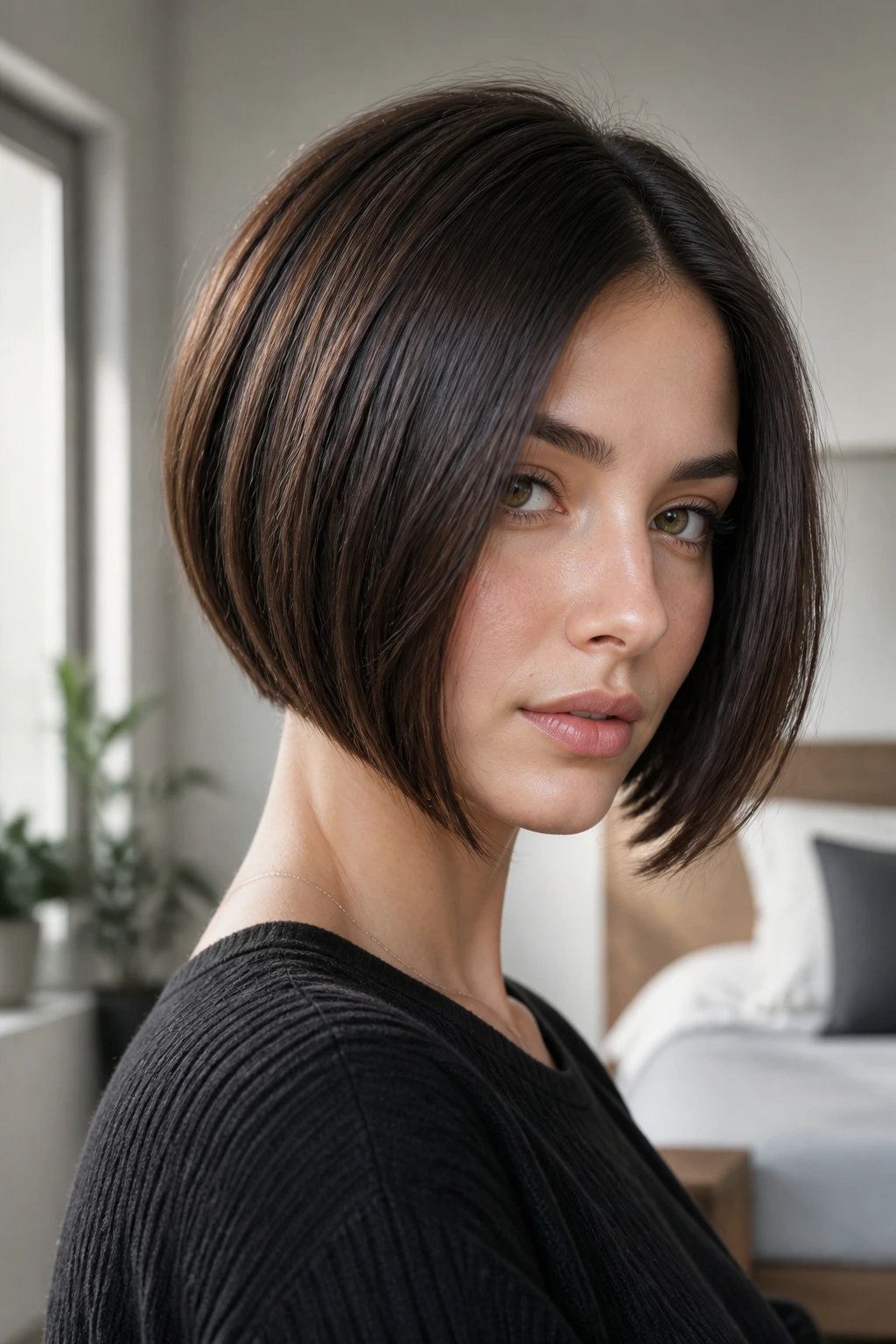
An A-line bob looks longer in the front and shorter in the back, which means a center part has somewhere to travel. The front corners become the focal point. They pull the eye down past the cheeks, and that can be useful if your face is round or your jawline feels soft and you want a little more shape.
The angle needs to be clean. If the back is stacked too high, the style can feel dated fast. Ask for a subtle A-line rather than an extreme one. The front should graze the jaw or sit just below it, depending on how much length you want. Smoothing cream helps the line stay visible, especially if your hair has a wave that tries to kick the front pieces outward.
My bias: I like this cut best when the front corners are just a little longer than you expect. Not dramatic. Just enough to make the part feel purposeful.
13. Wet-Look Pixie Bob with Face-Framing Length
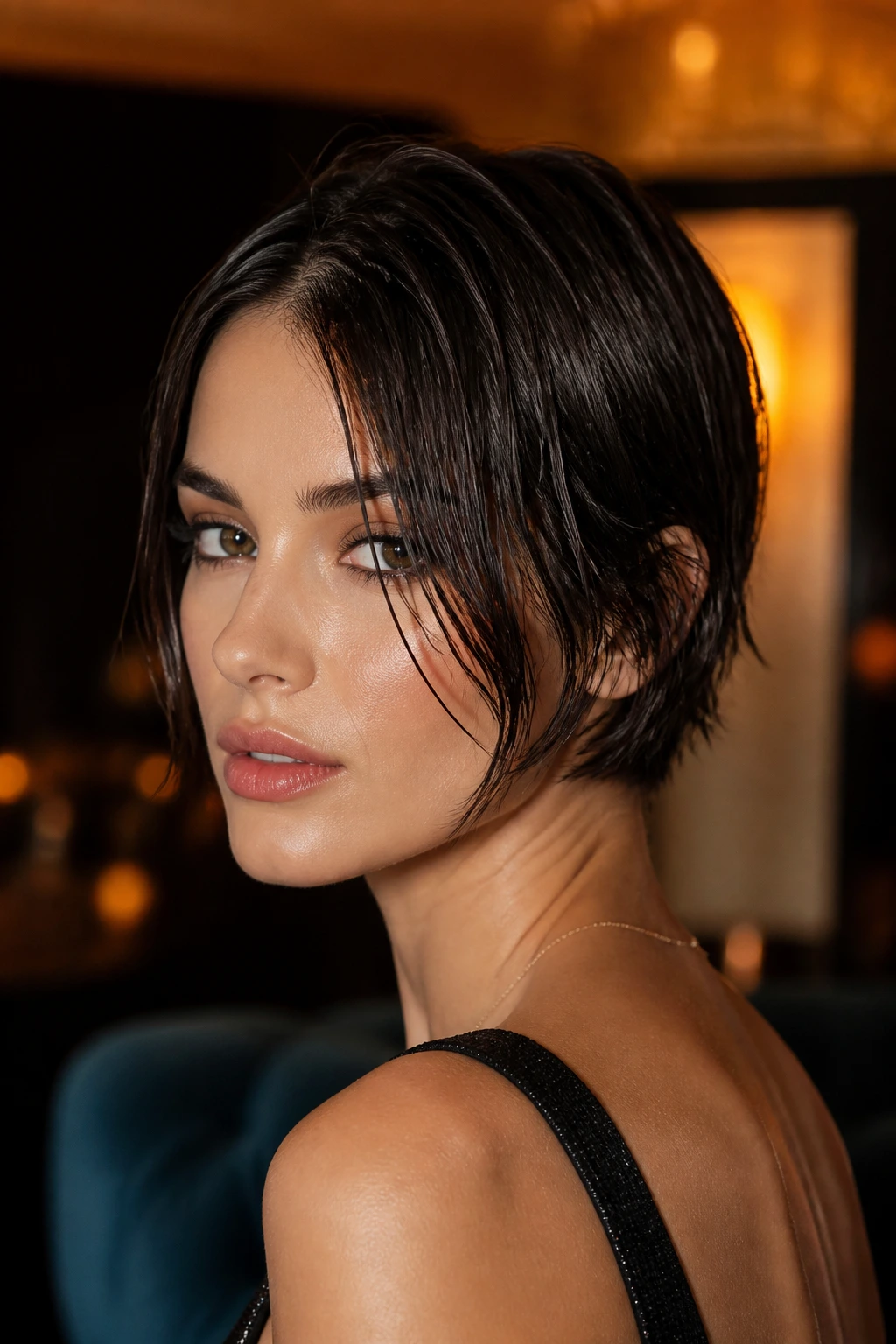
A wet-look finish can make short hair feel deliberate in a way almost nothing else can. On a pixie bob with face-framing length, the center part becomes part of the styling, not just the setup. The hair is combed into place, the front pieces stay separated, and the shine turns every line into a feature.
This style is strongest for nights out, humid weather, or days when you want the haircut to do all the talking. Use a strong-hold gel at the roots and a fine-tooth comb to create the part while the hair is still damp. Then smooth the front sections down and slightly back so they frame the face instead of clinging to it. The trick is restraint. Too much product and the hair looks lacquered in the wrong way. Too little and it puffs out.
How to keep it clean
- Work the gel through damp hair in small amounts.
- Re-comb the part once after 2-3 minutes so it stays crisp.
- Leave the ends a touch softer than the roots.
- Avoid touching it once it starts to set.
This is a slick style, yes, but it still needs some breath in the front. Otherwise it turns severe fast.
14. Chin-Skimming Wolf Cut with a Center Part

The wolf cut on short hair is a little rebellious, and the center part gives it structure so it doesn’t look like a haircut that forgot to finish. Chin-skimming layers at the top, cheekbone pieces in front, and a soft tail at the nape create that lived-in shape people keep trying to fake with a curling wand. The part straight down the middle keeps the chaos organized.
This cut is best when the hair has some wave or natural bend. If your hair is pin-straight, it can still work, but you’ll need a little more product and a diffuser or texture spray. Ask for layers that are cut to move, not chopped just for drama. A wolf cut can go from cool to sloppy fast if the top is too short and the sides are too thin.
A small warning
If your hair is very fine, keep the layers moderate. Too much removal and the front loses weight, which makes the center part split open like curtains with no fabric.
That said, when the shape lands right, it has real personality.
15. Curly Shag Bob with a Soft Middle Part
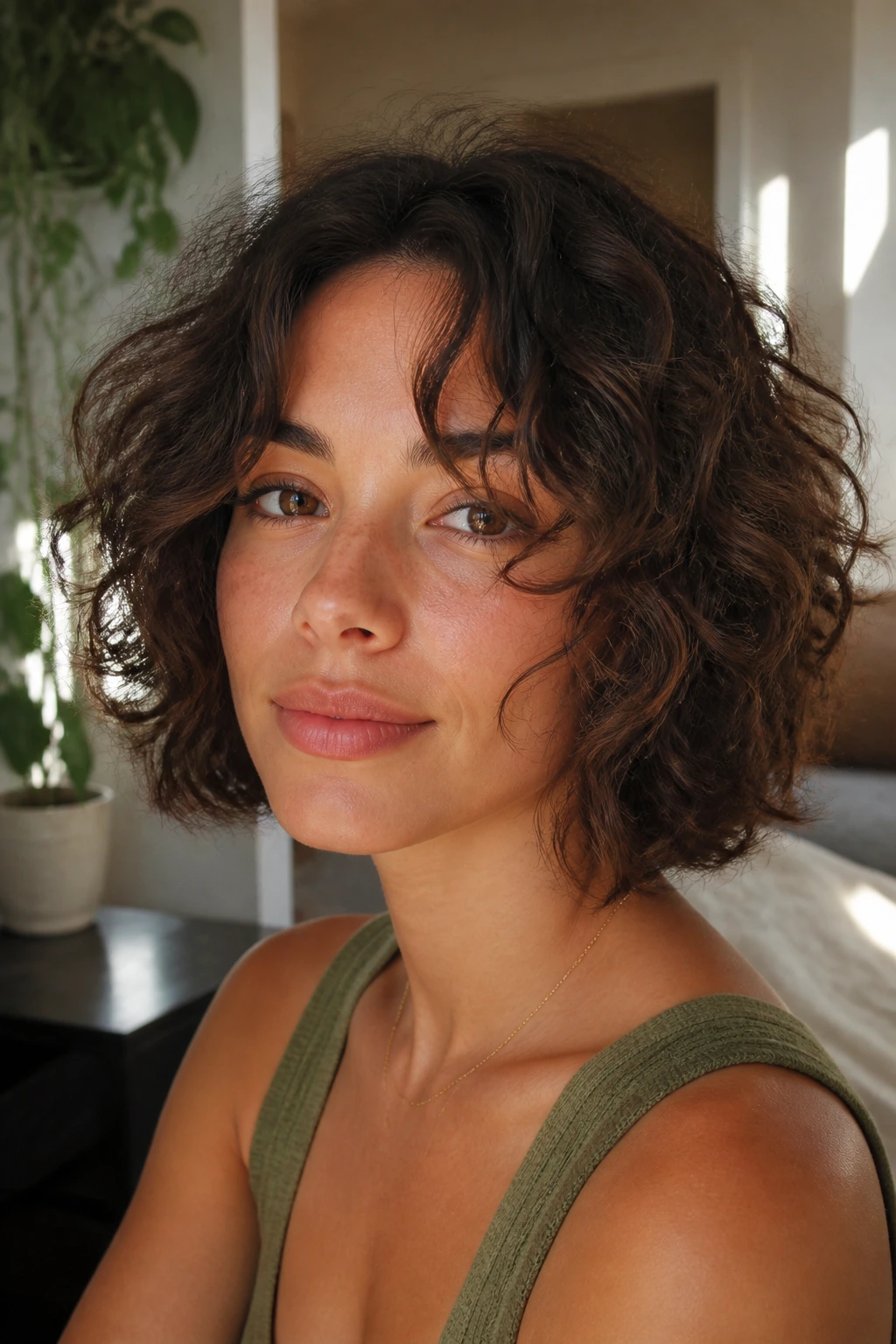
A curly shag bob is the sort of cut that rewards people who don’t want to fight their texture. The middle part gives the curls a clear starting point, then the layers let them spring around the face instead of piling into one solid shape. The result is loose, buoyant, and a little wild in a good way.
This is one of the better short styles for curls that need volume without bulk. A dry cut usually works better here because it lets the stylist see how each curl sits when it’s fully awake. In styling, a cream alone may be enough if your curls are soft. Tighter curls may want cream plus gel, then a gentle scrunch and diffuser. Skip the urge to stretch the part out with a brush. That just wrecks the shape and makes the top frizzy.
What helps
- Part the hair while it’s soaking wet.
- Clip the front curls away from the face if they want to shrink unevenly.
- Use a microfiber towel or cotton T-shirt, not a rough bath towel.
- Refresh with water and a pea-sized bit of curl cream between washes.
Curly hair and center parts get along better when the cut is built for movement. This one is.
16. Asymmetrical Bob with Balanced Front Pieces
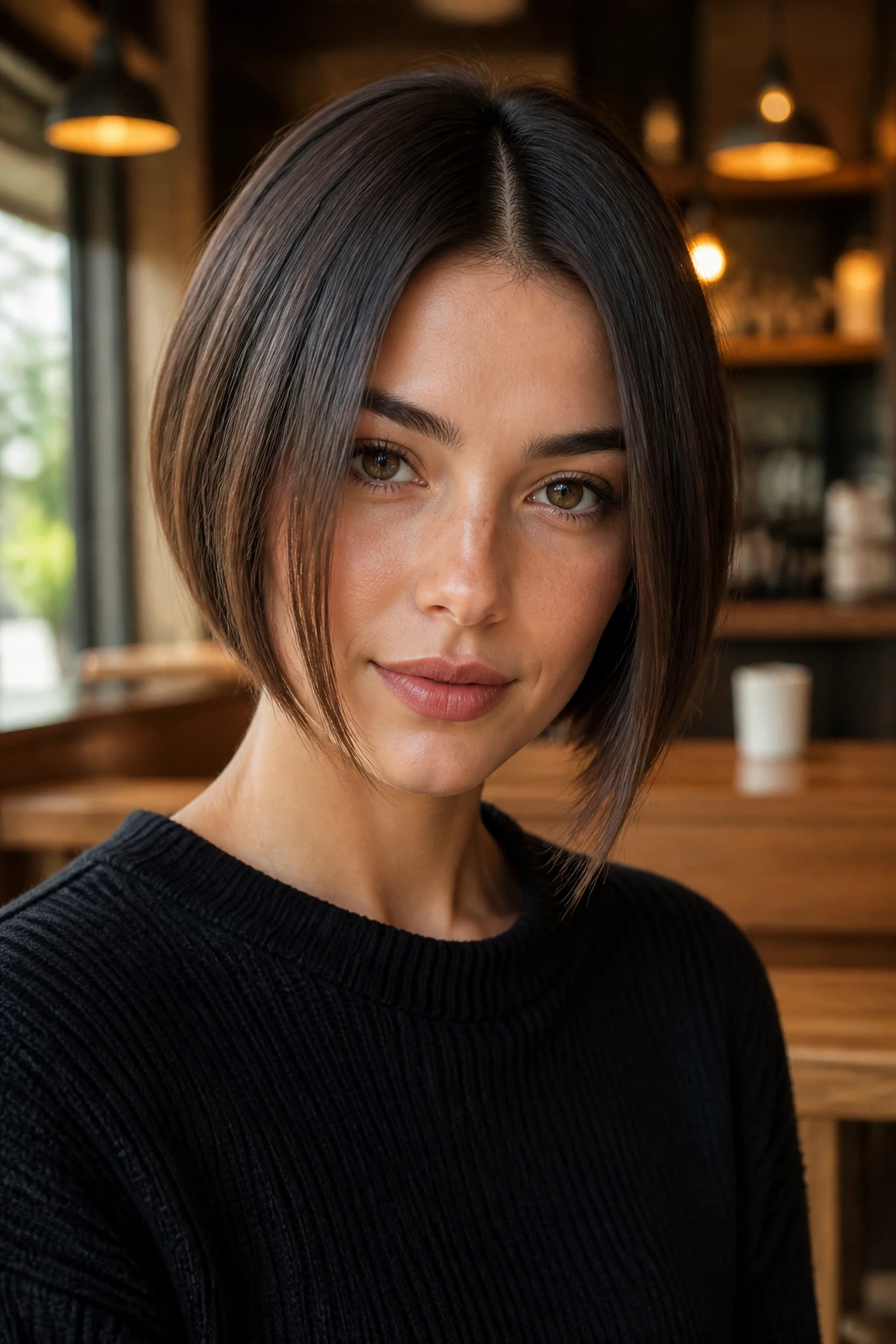
An asymmetrical bob sounds like it should fight a middle part, but that’s exactly why it’s interesting. The front pieces are cut with one side slightly longer than the other, yet the center part keeps the top grounded. You get a little tension, a little edge, and a shape that doesn’t look borrowed from every other bob in the room.
This style works best when the asymmetry is subtle. If the difference is too sharp, the center part loses its job and the eye starts wandering. A soft imbalance is enough. The longer side can skim the jaw while the shorter side hits just above it. Use a flat iron or round brush depending on whether you want sleek or bent ends. Both work.
Who it suits
- People bored with perfectly even bobs.
- Straight or softly wavy hair.
- Anyone who wants a center part but not a calm, predictable shape.
It’s a good cut when you want the hair to look intentional without feeling precious.
17. Micro Bob with Long Front Corners
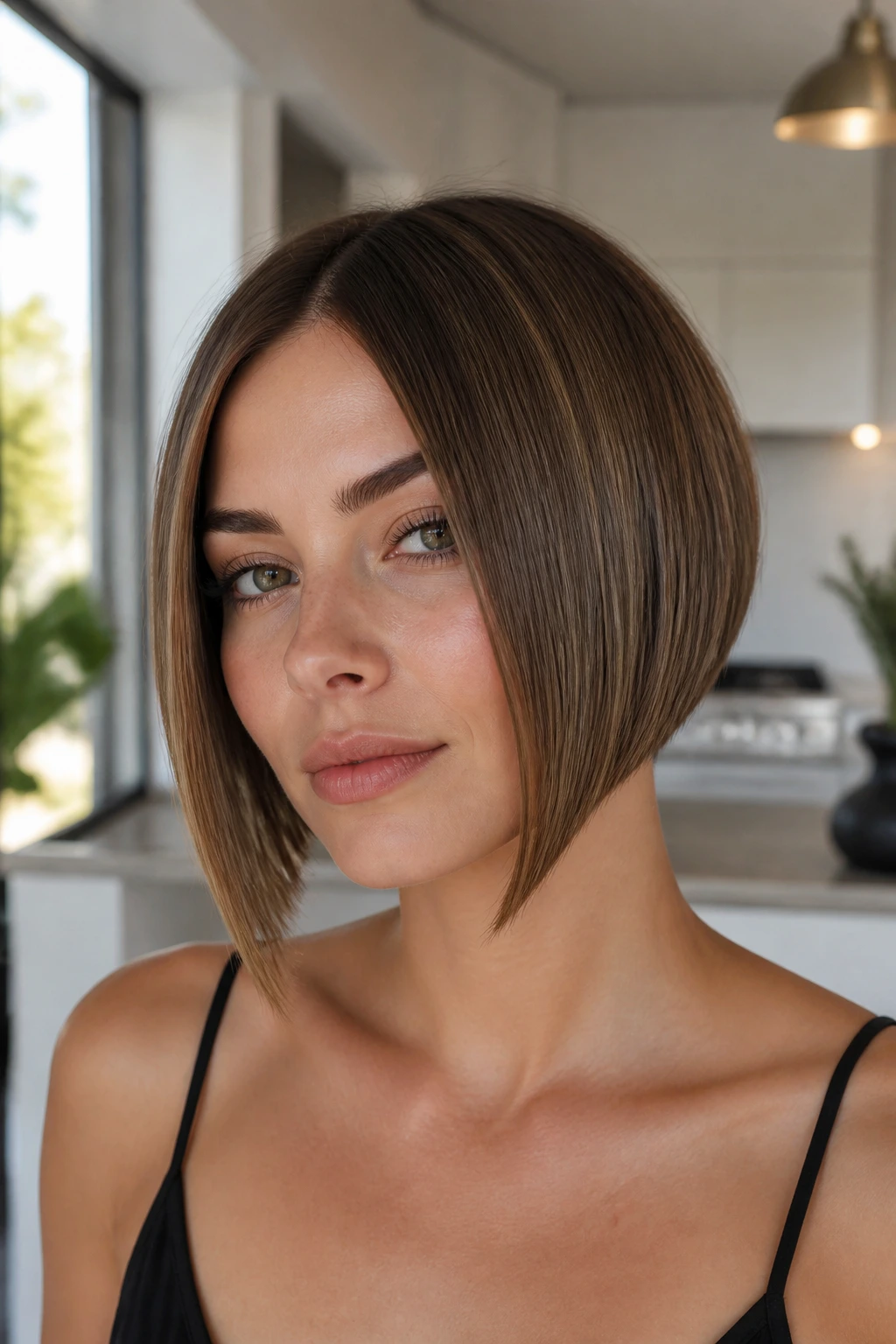
A micro bob is short enough to feel crisp, but the long front corners keep it from looking too severe. The center part gives the cut a bit of length through the face, which is useful when the back sits close to the neck. Without those front corners, a micro bob can read flat. With them, it looks lean and controlled.
This cut is a smart choice for fine hair because the short perimeter often makes the ends look fuller. It also has a nice way of showing off jawlines, collarbones, and earrings without trying too hard. Ask for the front corners to stay just long enough to graze the jaw, then keep the back tidy and compact. A soft bend at the ends can help if you don’t want the cut to look too boxy.
Tiny but important
This is not the place for heavy layering. The cleaner the outline, the better the part holds.
If you like short hair that feels sharp and graphic, this one delivers that in a very direct way.
18. Graduated Bob with a Floating Center Part
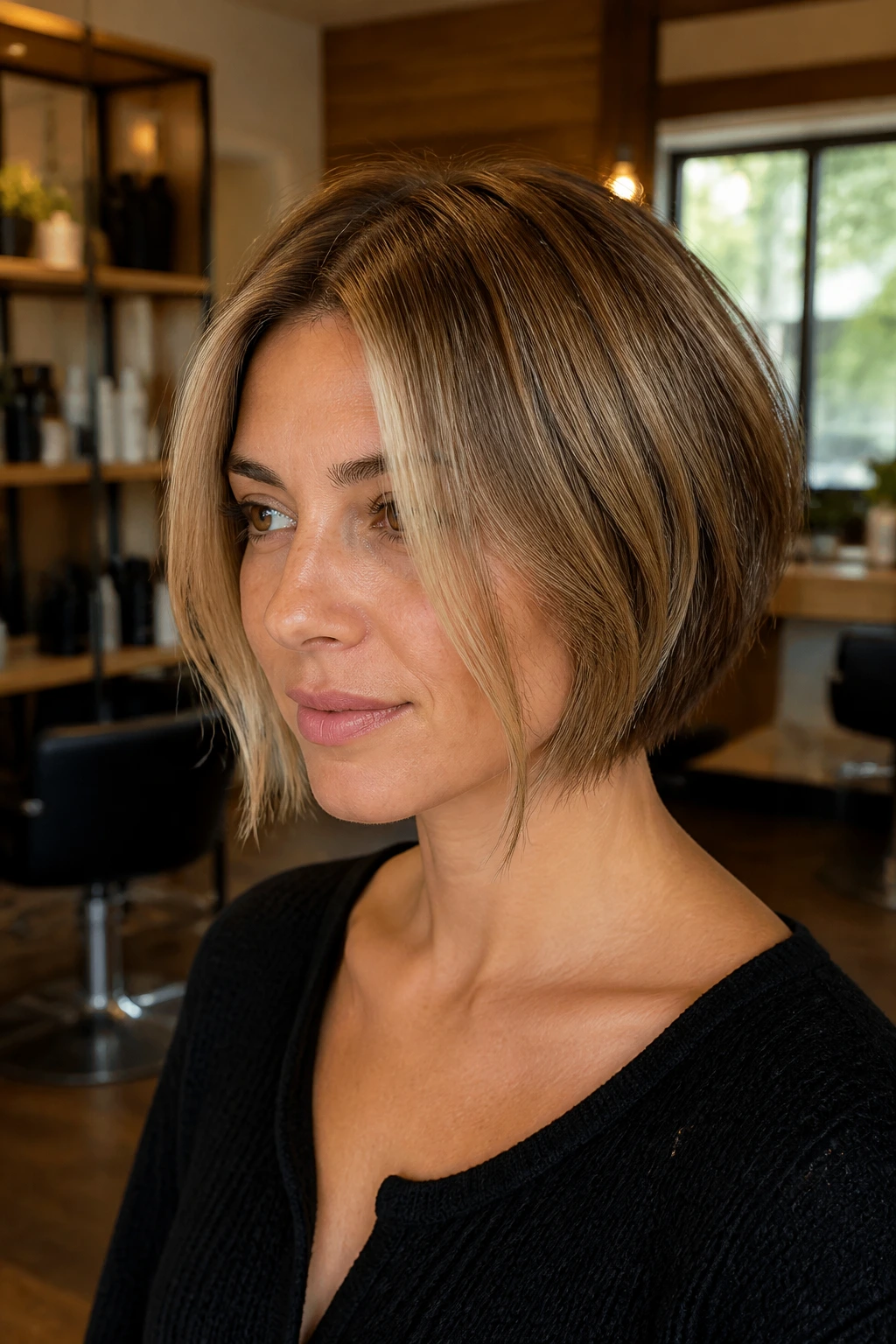
A graduated bob brings lift through the back and a softer fall through the front, which gives the center part a little movement instead of a hard stop. The front pieces should hang long enough to frame the face, while the back gets stacked or graduated just enough to support the shape. That balance is the whole trick.
The part can feel almost “floating” because the hair around it has body. It doesn’t cling flat to the scalp, and it doesn’t collapse into a line that looks pasted on. A root spray at the crown and a round brush at the sides help the shape stay lifted. If your hair is thick, this cut can remove bulk without making the ends look thin. If your hair is fine, keep the graduation soft so you don’t lose too much weight.
My take
This is one of the most underrated ways to wear a center part on short hair. It gives you height in the back, length in the front, and enough structure that the style still looks good on day two.
Why Long Middle Part Hairstyles for Short Hair Work So Well

The best thing about a center part on short hair is not symmetry. It’s control. Short cuts have a habit of looking either too blunt or too fluffy if the shape isn’t managed well, and the middle part gives you a clean axis to build around. That axis makes bobs longer in the face, pixies less severe, and shaggy cuts a little less chaotic.
The line matters more than people think. A well-placed middle part can shift the whole mood of a cut by moving the volume outward and letting the front pieces fall where they should. On a round face, that can make a difference in how open the features feel. On a square jaw, it can soften the corners without hiding them. On fine hair, it stops the head from looking wider than the cut actually is.
The other thing a center part does well is show off texture. Smooth hair looks sleek. Wavy hair looks easy. Curly hair looks intentional. That’s why so many long middle part hairstyles for short hair keep coming back in different forms: the part is simple, but the shape around it can do a lot of work.
And the truth is, a good center part on short hair usually starts at the cut, not the mirror. If the front pieces are too short or the crown is too heavy, no amount of styling cream will rescue it. That’s the part most people skip, and it’s the part that matters most.
Essential Tools for These Looks
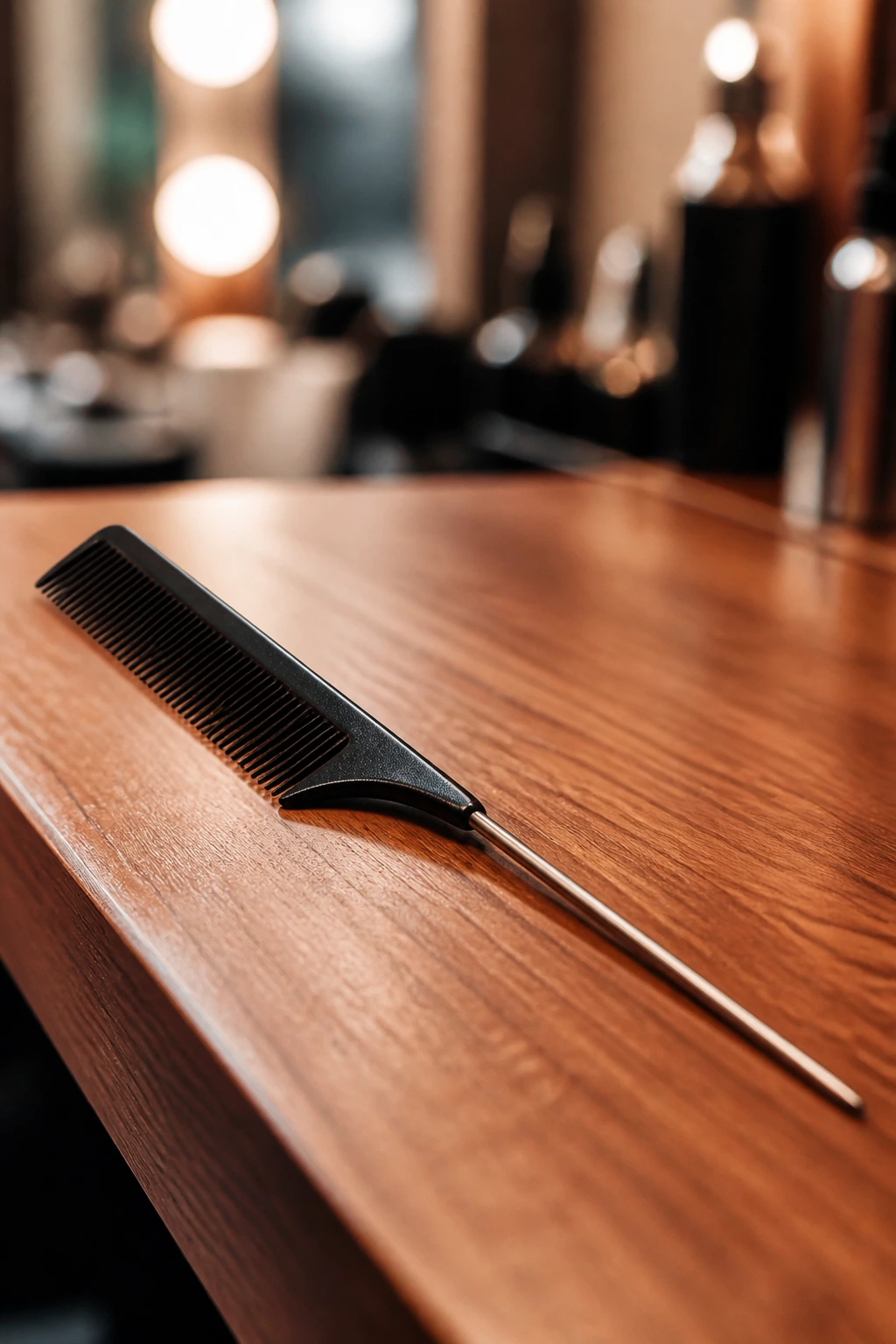
You do not need a suitcase of styling gadgets to make these cuts work. You need a small set of tools that help the part stay clean and the front pieces fall where they should.
- Tail comb: Best for drawing a precise center part on damp hair, especially if your crown likes to drift.
- Blow-dryer with nozzle attachment: Directs airflow so the roots lay where you want instead of puffing in every direction.
- Small round brush: Handy for bending bob ends under, flipping them out, or adding lift near the cheeks.
- Flat iron, 1 inch or 1.25 inch: Useful for glassy bobs, flipped ends, and quick smoothing on short lengths.
- Diffuser: Worth using on curls and waves when you want the center part to stay intact.
- Light mousse or volumizing spray: Helps the crown lift without making short hair sticky.
- Curl cream or leave-in conditioner: Gives wave and curl styles enough slip so the front pieces don’t frizz.
- Texture spray or light paste: Best for bixies, shags, and piecey crops that need separation.
- Heat protectant: Non-negotiable if you use a flat iron or hot brush. Short hair burns faster than most people expect.
- Clips: Useful for setting the part, pinning the front while it dries, or holding one side tucked behind the ear.
A mirror with decent light matters too. Bad bathroom lighting makes good styling choices look wrong.
Smart Cut and Product Notes
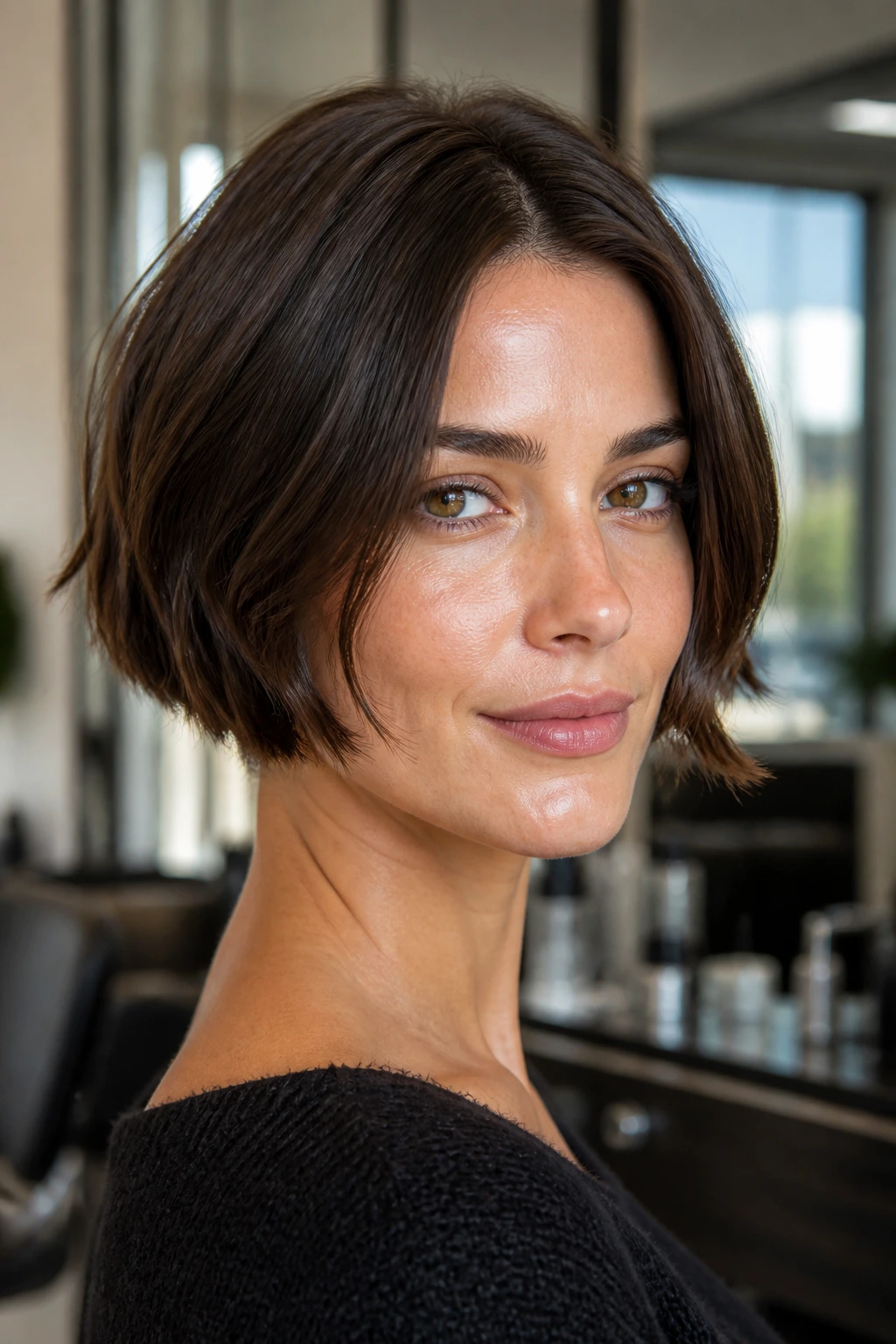
If you’re asking for one of these looks at the salon, lead with the shape, not the trend name. Say where you want the front pieces to fall — cheekbone, jaw, lip, or chin — and tell your stylist whether you want the back compact or airy. A lot of the success in long middle part hairstyles for short hair comes from leaving enough length in the front to frame the face while keeping the back tidy enough that the whole cut still feels short.
Ask for point cutting or soft texturizing if your hair is thick and tends to sit like a block. Ask for minimal layering if your hair is fine and you want fullness. If your hair has a strong cowlick at the crown, mention it before the cut begins. That tiny swirl can make a center part slide left or right all day, and it’s easier to work around when the shape is built with it in mind.
Product choice should match density, not just texture. Fine hair does better with lightweight mousse, root spray, and a touch of paste at the ends. Thick hair often needs smoothing cream or a soft gel to keep the center part from puffing. Curly hair usually wants moisture first, hold second. Heavy oil tends to flatten the root area and make the front pieces stringy, which is a bad look on short hair. Save the rich stuff for the ends, and even then, use less than you think.
How to Wear These Looks From Coffee Run to Night Out

A good short style can change its mood with almost no effort, and the center part helps that happen. The same bob can look polished at 8 a.m. and a little rebellious by dinner if you change the finish rather than the cut.
Everyday: Air-dried waves, a soft tuck behind one ear, or a clean blunt bob with a light smoothing cream. Keep it simple. The cut should do the work, not the bathroom counter.
Work or formal settings: Go sleeker. Use a blow-dryer nozzle, a round brush, or one pass of a flat iron through the front pieces so the part stays crisp and the ends sit neatly. If you wear glasses, a tucked side or a softer fringe helps keep the frames from fighting the hair.
Night out: Flip the ends, add shine, or go wet-look. That’s where short hair gets a little swagger. A center part with glossy roots and piecey front sections can look sharper than a long style with twice the effort.
Second-day hair: Dry shampoo at the root, a quick re-bend on the front pieces, and a little water mist to reset the part. Don’t overwork it. Short hair tells on you when you keep touching it.
Small Moves That Make the Part Look Intentional
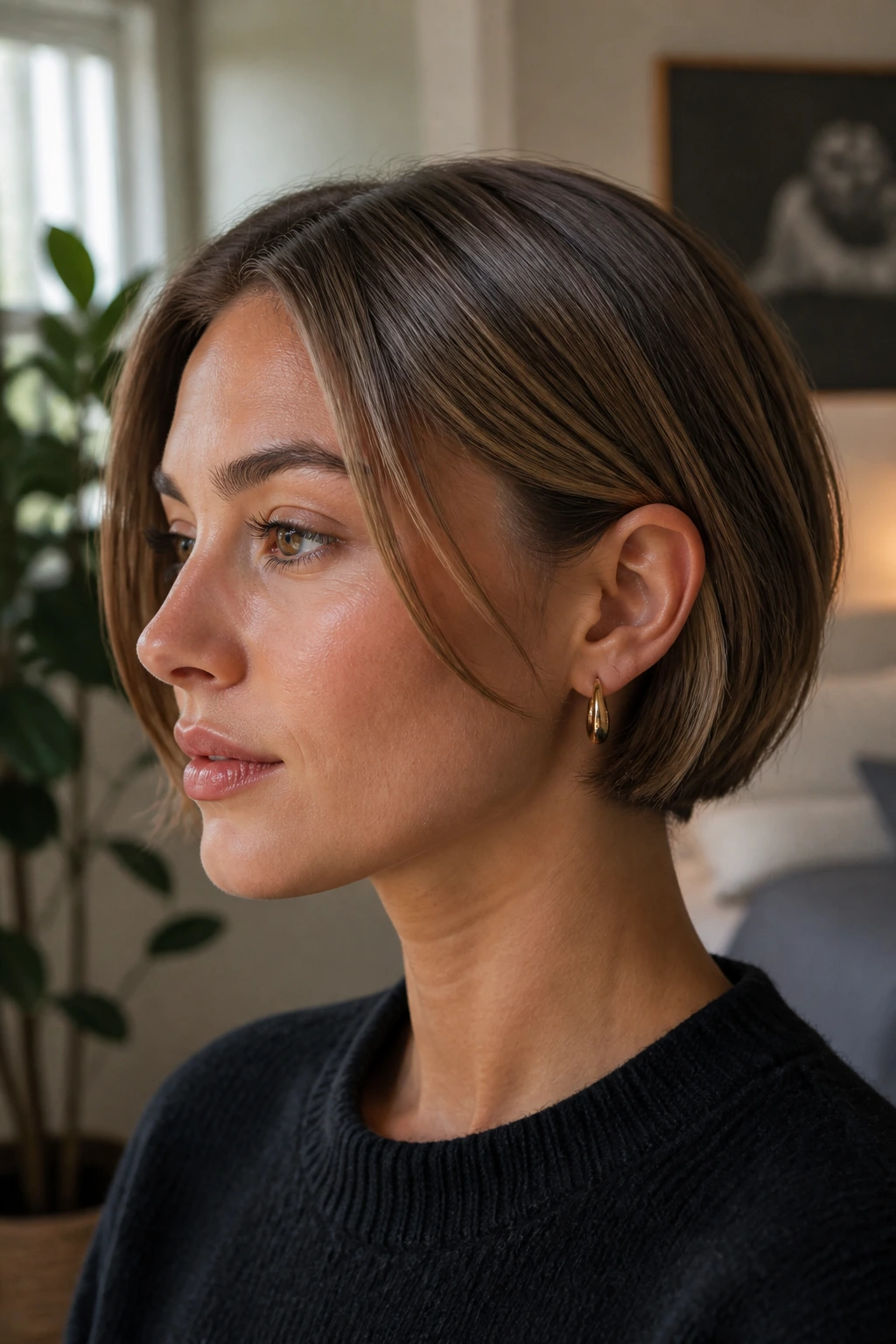
A center part can look elegant or accidental. The difference is usually in the first five minutes of styling. Set the part while the hair is damp, and use the tip of a comb to make the line crisp from forehead to crown. If the part starts to wander, clip the front sections away from each other for a few minutes while they dry. It sounds fussy. It works.
Volume Boost: Lift the roots at the crown with your fingers or a round brush before the hair fully dries. If you wait until everything is dry and flat, you’ll spend twice as long trying to fix it.
Clean Line: Put the tiniest bit of smoothing cream on the top layer only. Too much product near the roots collapses short hair fast.
Texture Control: On bobs and bixies, use a light paste on the ends instead of spraying the whole head. Short hair needs separation, not a helmet of hold.
Make-It-Yours: A soft bend at the cheekbone, a tucked side, or a single barrette can change the read of the whole style. Tiny adjustments matter more here than on long hair.
Common Mistakes That Make the Style Collapse
The first mistake is cutting the front too short. When the face-framing pieces sit above the cheekbones, the middle part can feel exposed and narrow the face instead of balancing it. The fix is simple: leave more length around the front than you think you need, especially if your hair shrinks when it dries.
The second mistake is flattening the crown with too much product. Short hair has less weight to keep it grounded, so heavy cream or oil near the roots makes the whole style slump. Use product where the hair needs help — usually mids and ends — and keep the root area cleaner.
A third issue shows up with curls and waves: trying to brush the texture straight before it dries. That leaves the top fuzzy and the ends confused. Part it once, set it, and leave it alone long enough for the shape to form.
Over-layering is another common mess. A shag or bixie can handle it. A blunt bob or micro bob usually cannot. Too many short layers around the temples make the part split open in an unhelpful way, and then the haircut starts looking thin even when the hair isn’t.
Finally, don’t ignore the cowlick. If your part keeps drifting, it’s not a moral failure. It’s a growth pattern. Work with it, not against it.
Variations and Adaptations to Try
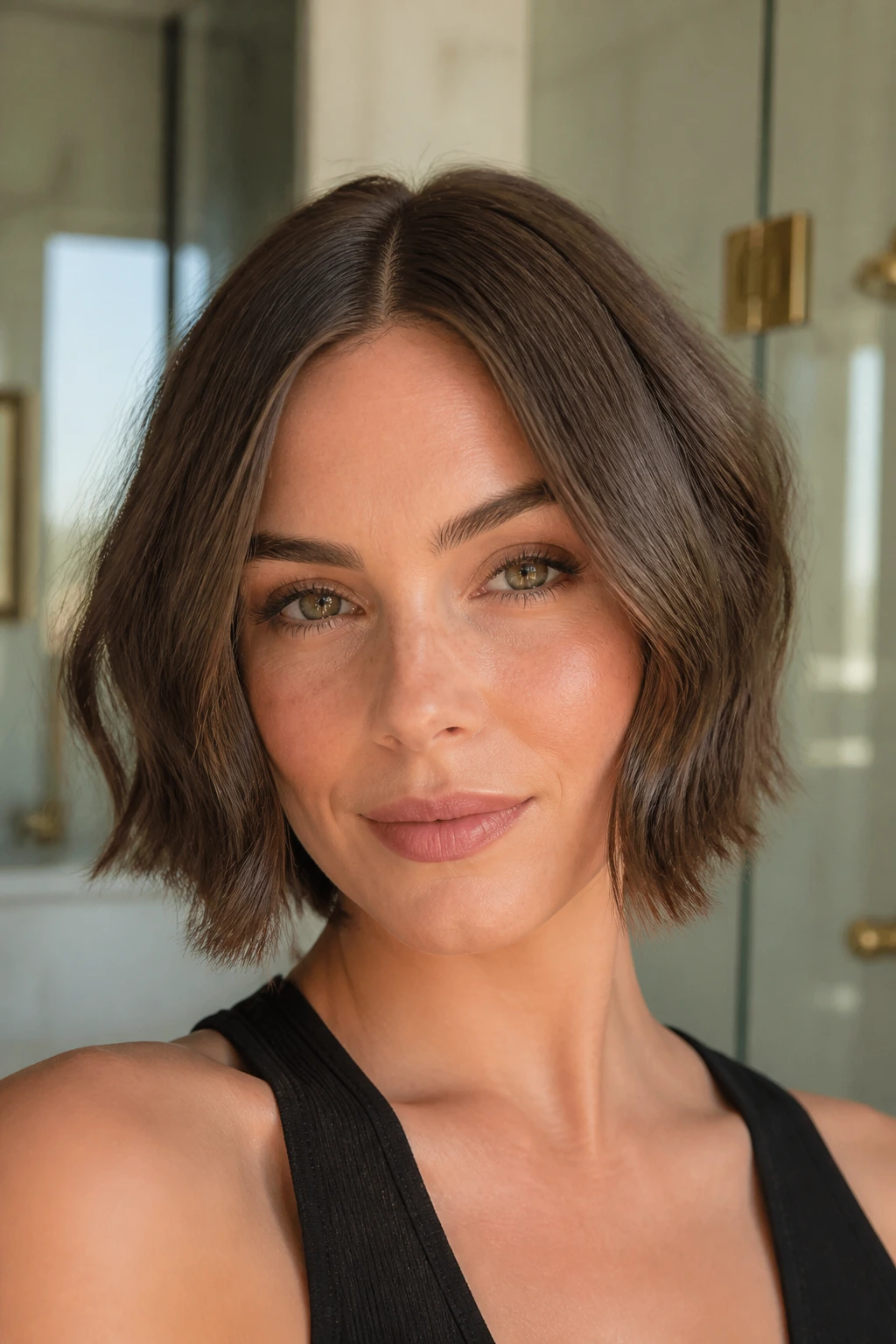
Fine-Hair Float: Keep the perimeter blunt and the layers minimal, then use root spray and a quick blow-dry to make the center part appear fuller. This version works well when you want density more than texture.
Curly-Coil Version: Leave the front longer, cut the shape dry, and let the curls spring around the face. A middle part on curly hair looks best when the cut respects shrinkage instead of trying to flatten it.
Heat-Free Air-Dry Version: Choose a soft bob, French bob, or mini shag and lean on cream plus mousse. This adaptation is for hair that already has a little wave and for anyone who’d rather not touch a hot tool before breakfast.
Sleek Glass Finish: Keep the cut blunt or graduated, then use a blow-dryer and a flat iron for a smooth, reflective surface. This version loves straight hair and strong lines.
Grow-Out Friendly Shape: A bixie or soft A-line bob keeps the front pieces long enough that the style still looks thoughtful even when it’s past its salon date. Handy, because not every haircut behaves well between trims.
Keeping the Shape Fresh Between Washes
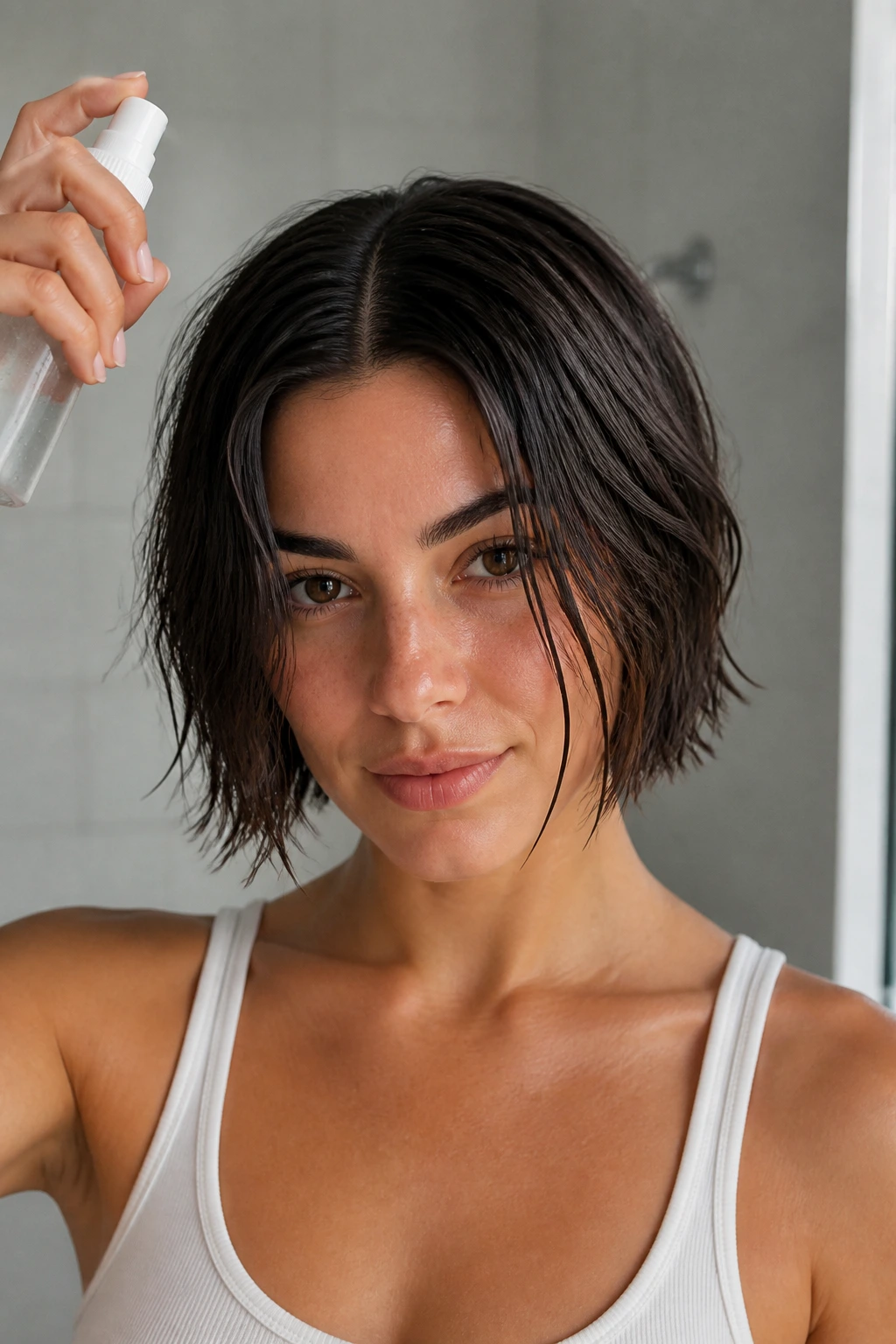
Short hair with a center part holds up better when you reset it often instead of piling on product. A quick mist of water at the front, a thumb-sized dab of cream or paste, and a comb through the part can revive the shape in under five minutes. For bobs and bixies, dry shampoo at the roots works best when you apply it before the hair gets oily enough to flatten.
The trim schedule matters too. Pixies and bixies usually need shaping every 4 to 6 weeks if you want the front pieces to stay clean. Bobs can often stretch to 6 to 8 weeks, sometimes a touch longer if the cut has soft layers. Once the front corners start hitting an awkward point on the cheek or jaw, the center part stops looking sharp and starts looking like grow-out.
Sleep changes the part more than people expect. A silk pillowcase helps, but a loose clip at the crown can keep the front from being mashed into a strange angle overnight. If you wake up with a bend you hate, dampen just the front sections and re-set the part before you touch the rest of the hair.
Frequently Asked Questions About Middle Parts on Short Hair
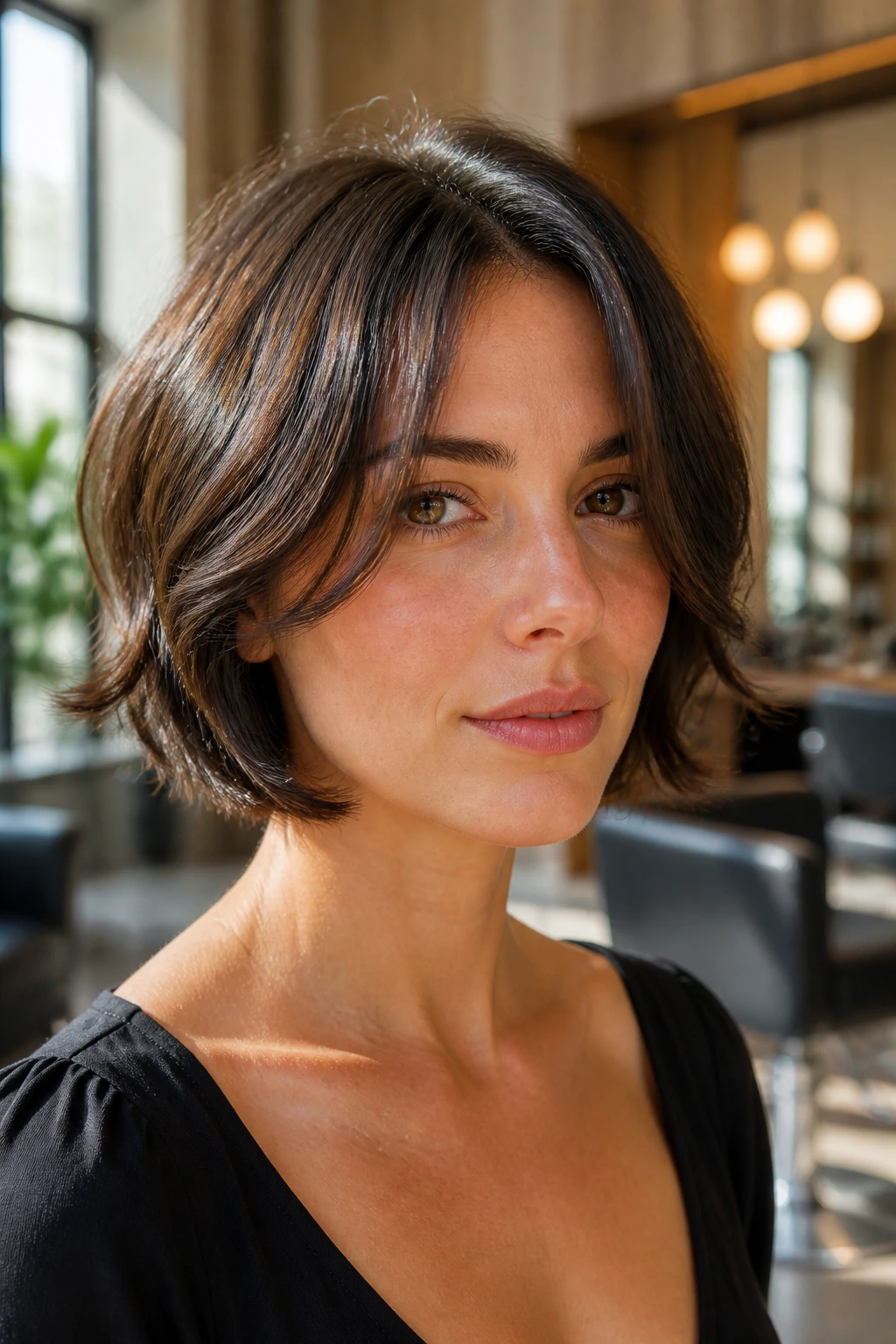
Will a middle part work if I have a strong cowlick?
Usually, yes — but you may need a cut that respects the growth pattern. A stylist can soften the crown, leave more weight near the part, or shift the exact line by a few millimeters so it looks centered without fighting the swirl.
What face shapes do these styles flatter most?
A center part can help round, square, heart, and oval faces in different ways because the front pieces frame the cheeks and jaw. The real variable is length: cheekbone-grazing pieces soften broad cheeks, while jaw-length fronts help balance a stronger jaw.
Can short hair with a middle part be worn without heat tools?
Absolutely. French bobs, mini shags, and curly bobs often look better air-dried anyway. You’ll still want product that matches your texture, though — cream for curl, mousse for lift, and a bit of paste for separation.
How do I keep the part from looking flat at the crown?
Set the part while the hair is damp, then dry the roots upward with a nozzle or lift them with clips for a few minutes. If the crown is naturally flat, a root spray or a puff of texture powder can help, but the haircut needs enough internal shape too.
Do bangs ruin a middle part?
Not necessarily. Curtain bangs, split fringe, and long face-framing pieces work beautifully with a center part because they keep the top opening soft. Straight-across bangs are a different story; they turn the whole look into a fringe-first haircut.
What if my hair flips out at the ends?
That’s fixable. A quick pass with a flat iron or round brush can bend the ends under or out depending on the style you want. On bobs, a small outward flip often looks intentional; on blunt cuts, a soft under-bend keeps the line cleaner.
Can thick hair pull off these looks without looking bulky?
Yes, but the cut has to remove weight in the right places. Internal debulking, point cutting, and a little softness around the temples keep thick hair from ballooning while still letting the center part show.
Which styles grow out the best?
Bixies, French bobs, and soft shags tend to age the most gracefully because the layers and front pieces still look deliberate as they lengthen. A very blunt bob or micro bob needs a cleaner trim schedule.
The Shape That Keeps Its Edge
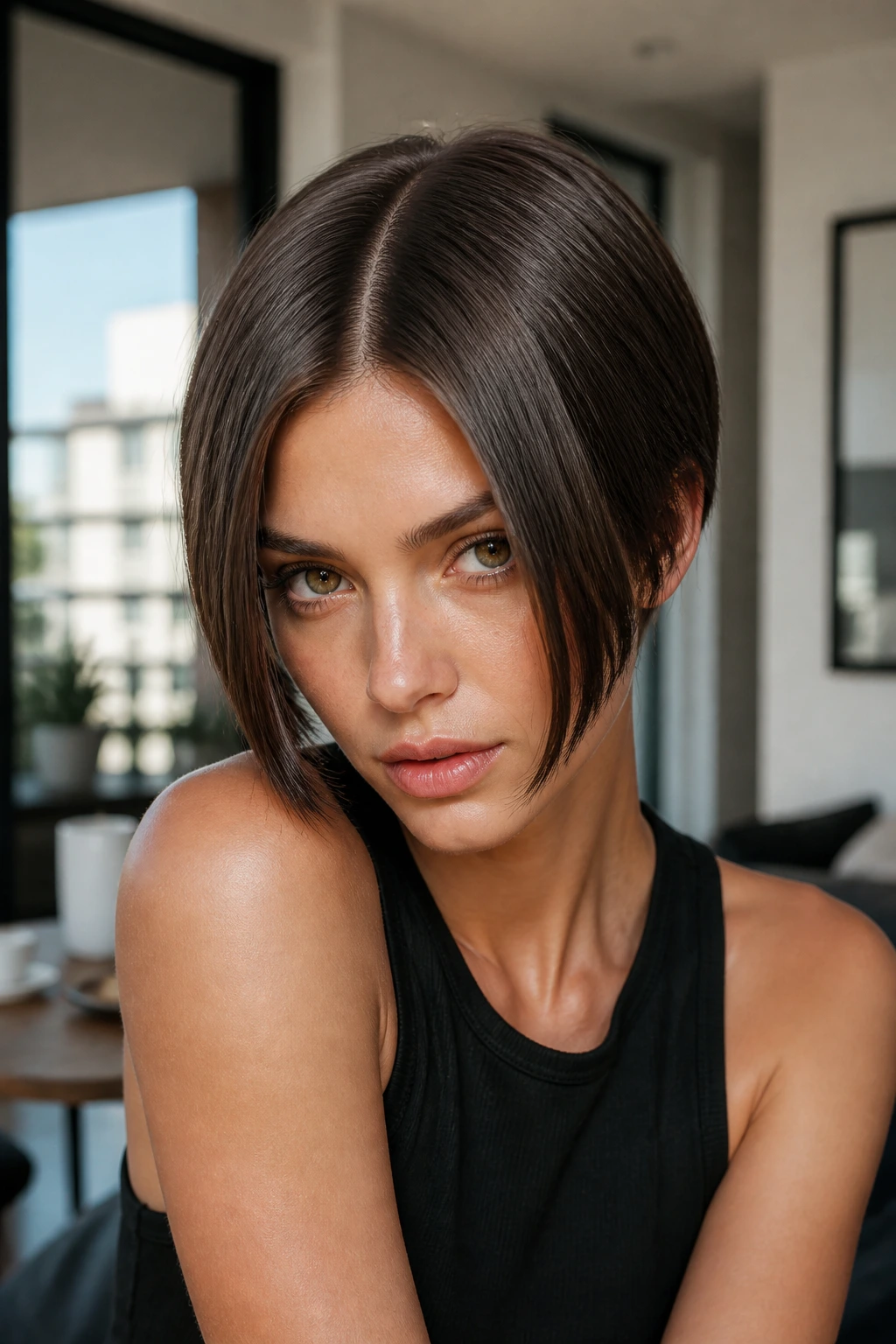
A middle part on short hair is not about being severe for the sake of it. It’s about giving the cut a spine. Once the front pieces are long enough to frame the face and the back has enough shape to support them, the whole style starts doing that neat little trick where it looks simpler than it is.
That’s the part I keep coming back to: these cuts are only easy when the foundation is right. Get the length in the front, the weight in the right places, and the finish that suits your texture, and you end up with a haircut that can be sleek, messy, soft, or sharp without changing its bones.
Bring a photo, yes. Bring a comb and a few product ideas too. Better yet, bring a clear opinion about how much forehead you want to show, because that one choice shapes the whole look far more than most people expect.