



Off-shoulder dress hairstyles for short hair live or die by proportion. If the neckline is wide open, the hair has one job: frame it without crowding it. That sounds simple until you try to make a pixie feel polished, or a bob feel intentional instead of like you ran out the door with half a plan.
Short hair gets underestimated here. People act like you need long lengths for formal styling, but that’s usually a sign they haven’t spent enough time with a good side part, a clean tuck, or a smart bit of texture at the crown. Short hair can look sharper than long hair with an off-shoulder dress because it keeps the collarbone line visible. And that line matters. A lot.
What works best is rarely the style with the most moving parts. It’s the one that gives the dress room, adds a little shape near the face, and holds up when you turn your head, laugh, or lean in for photos. That is the game here: clean lines, the right amount of softness, and no stray ends fighting the neckline.
Why These Off-Shoulder Looks Work So Well on Short Hair
- The neckline stays visible: Short hair keeps the shoulders and collarbones from disappearing under a curtain of length, which makes the dress read as the main event.
- The face gets a stronger frame: A tucked side, lifted crown, or side-swept fringe directs attention upward instead of flattening everything into one shape.
- Short hair holds structure faster: You can build lift, texture, and shine in minutes instead of wrestling with curls that fall before the evening starts.
- Accessories have room to breathe: Earrings, hairpins, and a bold lip look cleaner when the hair is not competing for space.
- The finish can match the dress: Sleek, soft, vintage, romantic, or sharp—short hair changes tone fast, which is a gift when the dress already has a strong neckline.
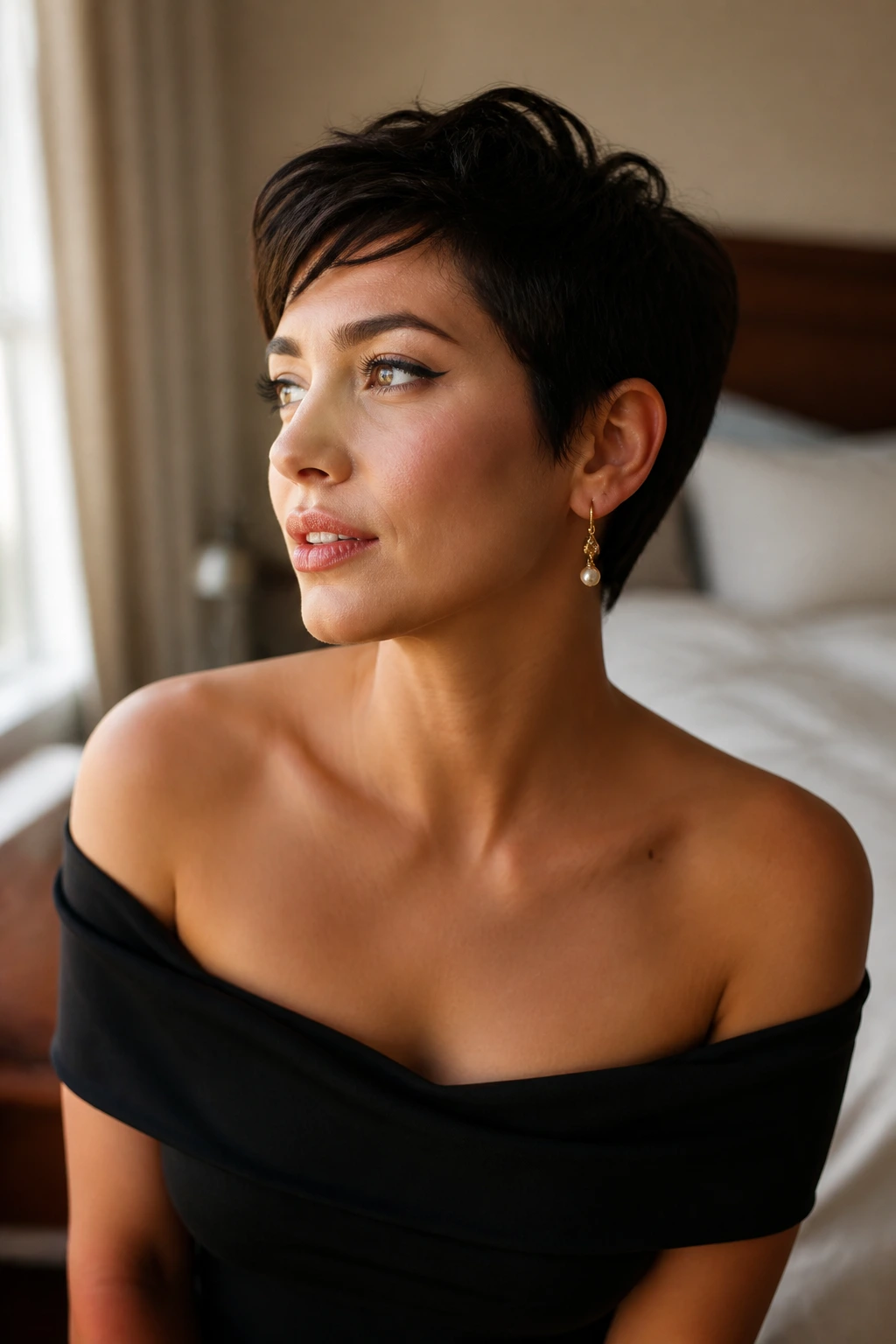
1. Sleek Side-Part Pixie Tucked Behind One Ear
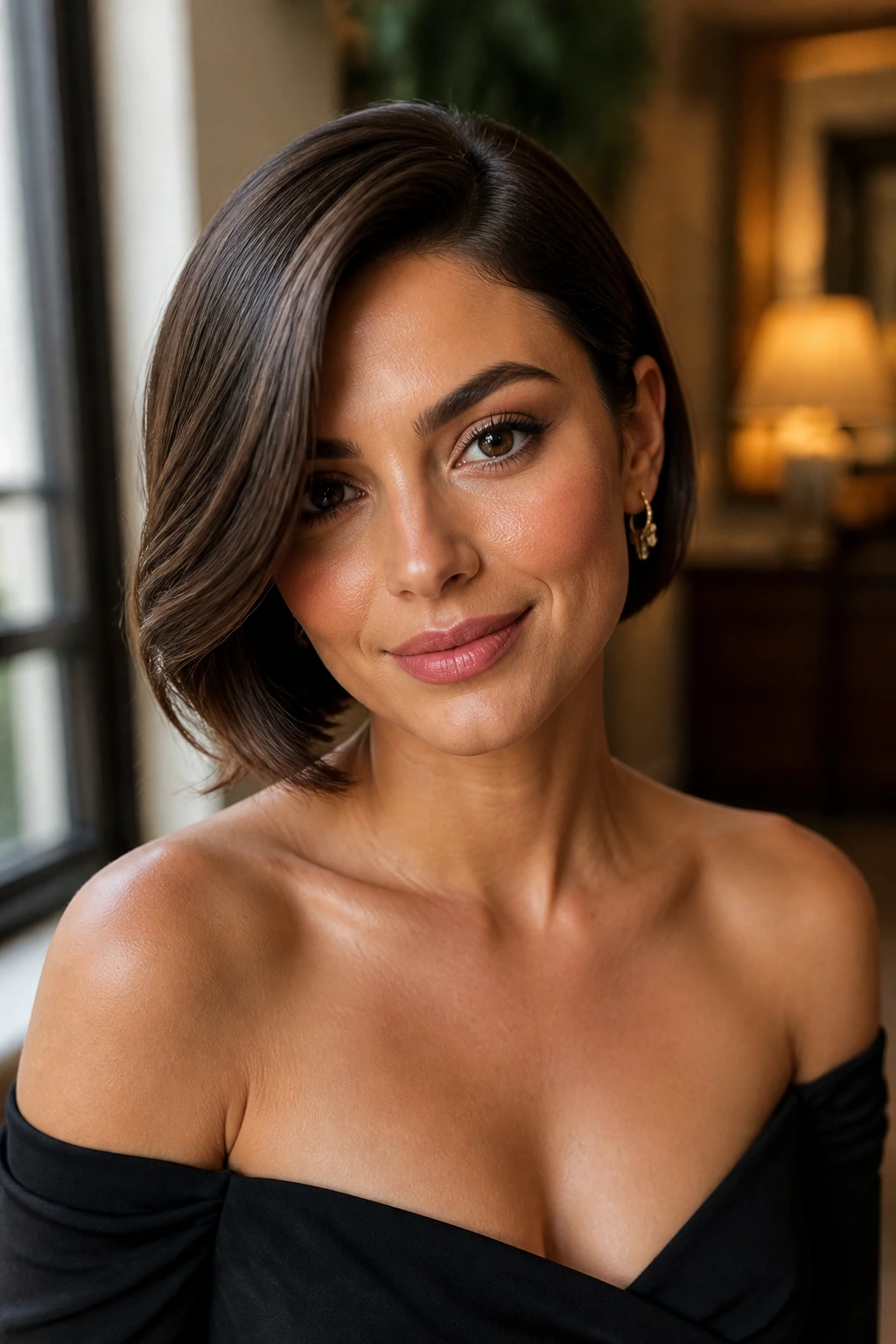
A side-part pixie tucked behind one ear is one of the cleanest off-shoulder dress hairstyles for short hair because it gives you a sharp line right where the neckline opens up. The shape feels deliberate, not fussy. It also lets a single earring do real work, which is handy if the dress has lace, ruffles, or a strong neckline detail.
Why It Works
The tuck creates negative space around the neck and shoulder, and that space is doing half the styling for you. A little shine cream or pomade keeps the front smooth, while the opposite side can stay slightly lifted so the cut doesn’t look flat. If the pixie is close-cropped, the trick is not volume everywhere; it’s clean direction.
Best for: Straight or lightly wavy pixies that already have a defined side part.
Styling note: Smooth the front with a pea-size amount of cream, then pin the tucked side behind the ear with a hidden bobby pin.
Watch for: Heavy product at the crown can make the whole style slump by the second hour.
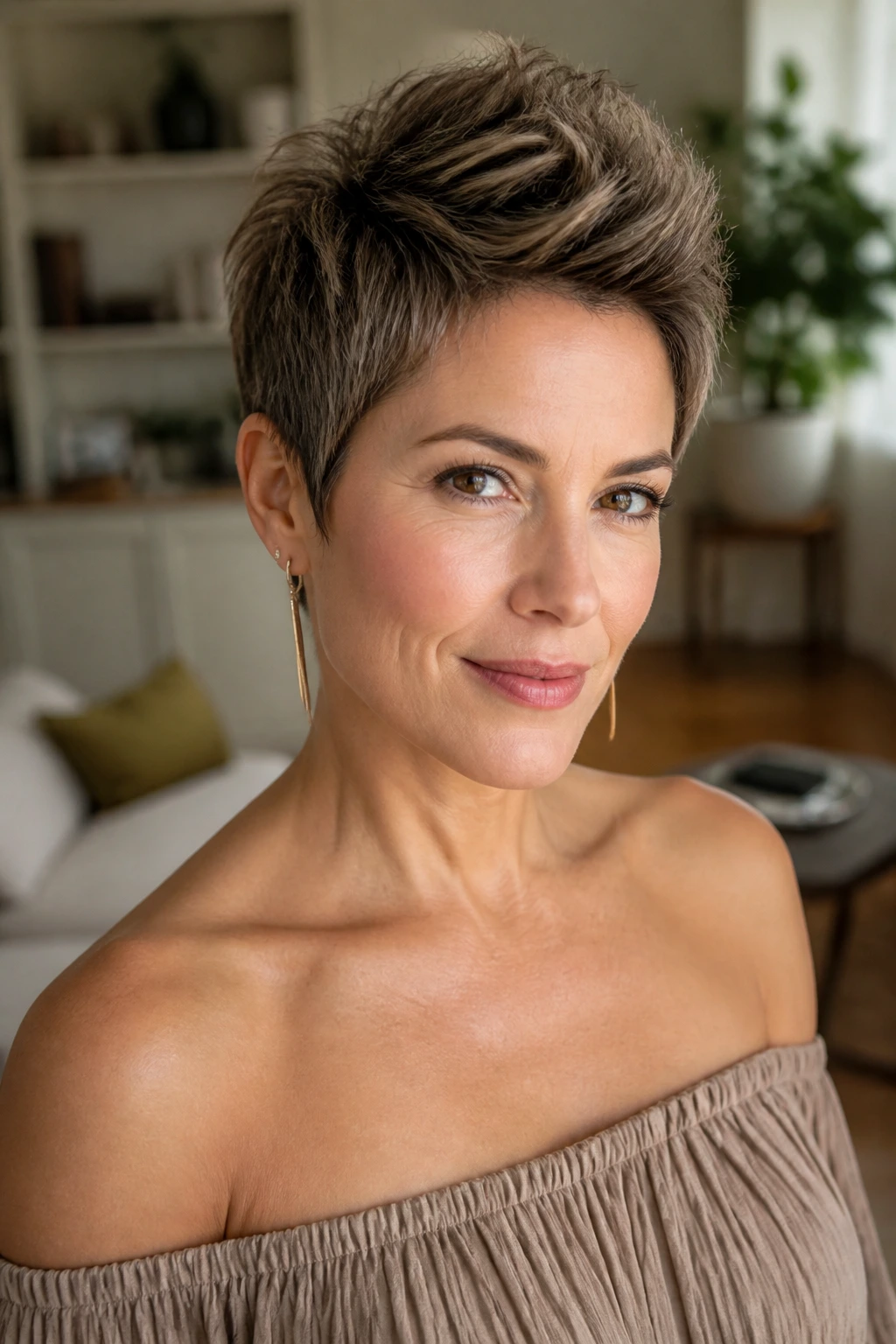
2. Textured Pixie With a Lifted Crown
If you want a little height without making the look feel formal in a stiff way, this is the one. A textured pixie with a lifted crown gives the dress the open shoulder line it needs, while the top keeps the eye moving upward. It’s neat, but not precious.
The Shape That Makes It Work
The crown is the money spot. Blow-dry the roots forward first, then back, so they stand up instead of lying in one direction. A matte paste worked through the top pieces creates separation without turning the hair crunchy. The sides should stay closer to the head; that contrast is what makes the cut look styled.
H3: When to choose it Pick this if the dress has a straight-across neckline and you want balance instead of more softness. The lift prevents the hair from disappearing against the dress fabric.
Quick tip: Finish with a light mist of flexible hairspray from 10 to 12 inches away. Closer than that, and you start building helmet territory.
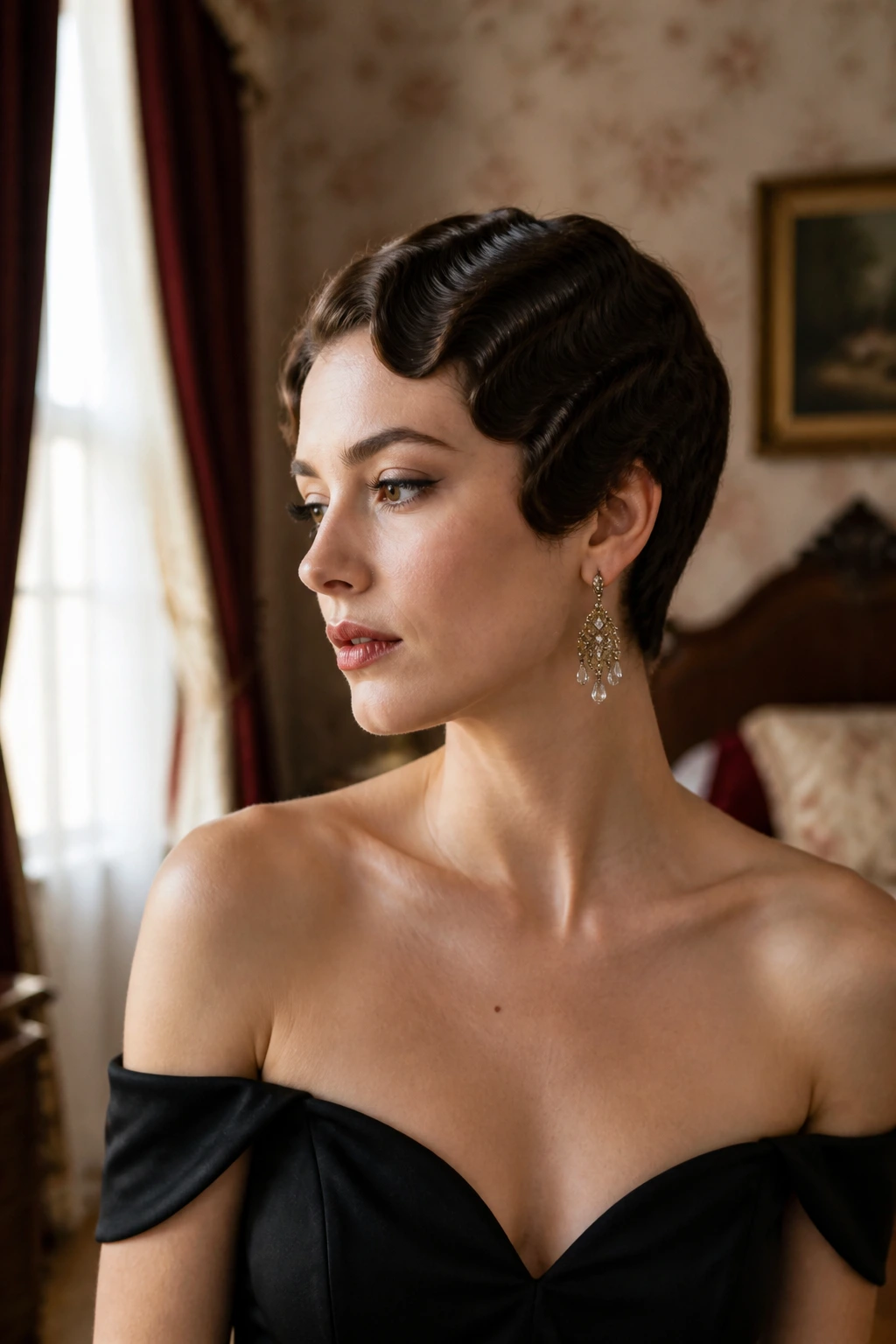
3. Soft Finger Waves on a Short Crop
Finger waves on short hair can look like a nod to old Hollywood without turning the whole outfit into costume. Paired with an off-shoulder dress, the shape feels polished and a little expensive-looking in the best possible way. The waves hug the head, so the neckline stays open and clean.
You do need patience. No shortcut really replaces the pressed, sculpted effect that makes finger waves sing. But on a short crop, the payoff is huge because the waves sit close to the face and collarbone instead of swallowing them. I like this best with satin, velvet, or a structured bodice.
A small curling iron can help set the bends before you mold them. Use clips while the hair cools, then brush only the surface. If you break up the wave too much, you lose the whole point.
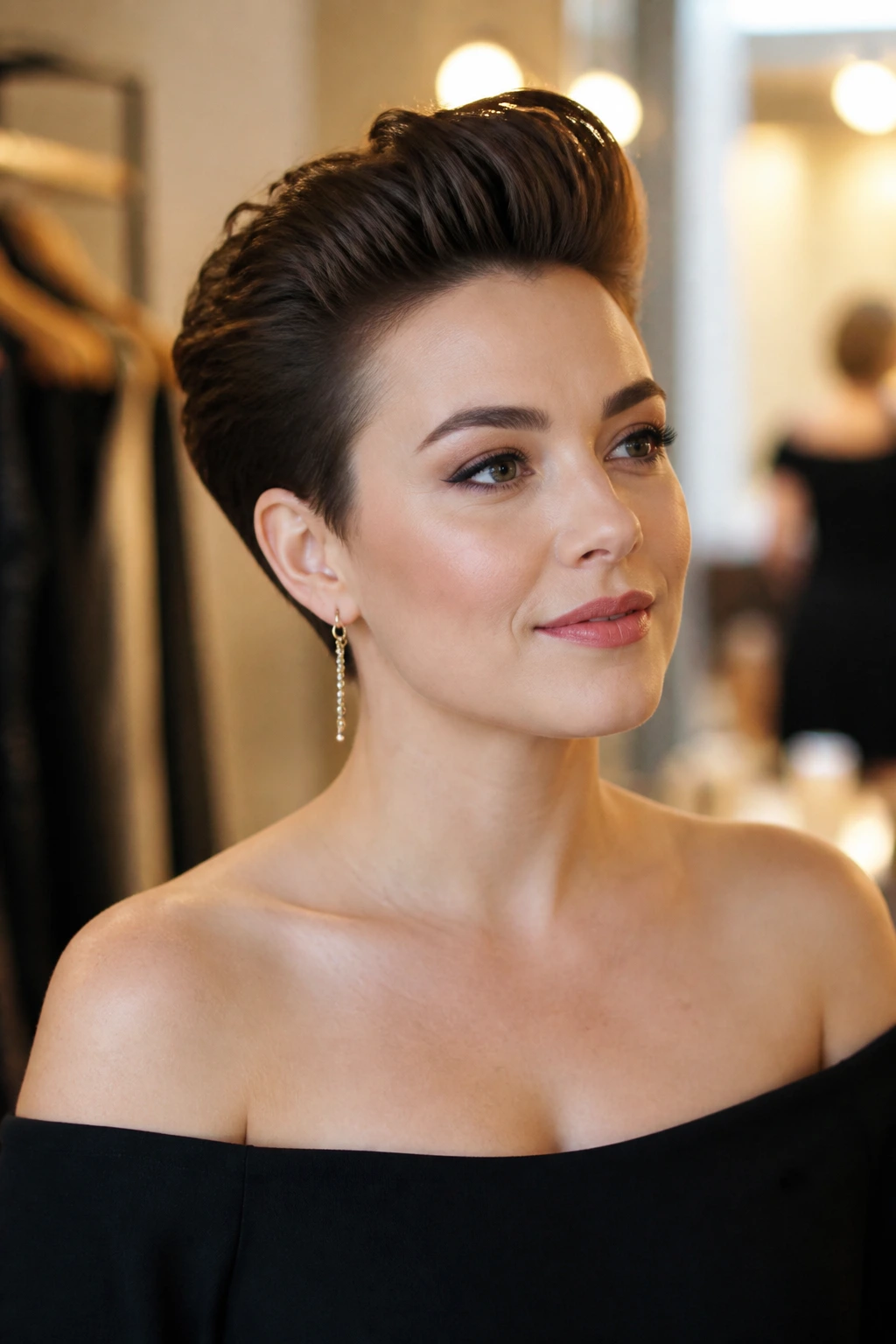
4. Mini Pompadour With Bare Shoulders
A mini pompadour is a blunt little power move. It lifts the front just enough to create drama, then leaves the rest of the cut neat so the shoulders stay visible. With an off-shoulder dress, that little bump of height can change the whole read of the outfit.
What Makes It Stand Out
The pompadour works because it makes a short cut feel intentional from the front and side at the same time. Use a blow-dryer and round brush or simply backcomb the roots lightly, then smooth the outer layer over the top. A dry, paste-like product usually works better than wet gel here because you want shape, not shine that slides.
H3: Good dress pairings This style likes dresses with simple lines—think clean crepe, narrow straps removed, or a plain neckline that needs a bit of tension up top. If the dress already has a lot going on, the pompadour can start to feel crowded.
One real warning: Keep the front lift modest. A huge pompadour under a delicate off-shoulder dress can look like the hair arrived in a different outfit.
5. Deep Side-Part Bob With Satin Shine
A deep side-part bob is one of those styles that looks expensive because the shape is so clear. The hair falls in one clean sweep, the shoulder line stays open, and the shine makes the whole thing look pressed rather than puffy. It’s especially good with dresses that have a smooth neckline and a fitted bodice.
The trick is keeping the bob glossy, not greasy. Use a flat iron only if you need it, then finish with a light mist of shine spray through the mid-lengths and ends. Tucking the shorter side behind one ear gives the neckline even more room. That tiny adjustment matters more than most people think.
If your bob ends around the jaw, this is a very forgiving option. If it hits the collarbone, even better. The length creates a nice echo of the dress edge without competing with it.
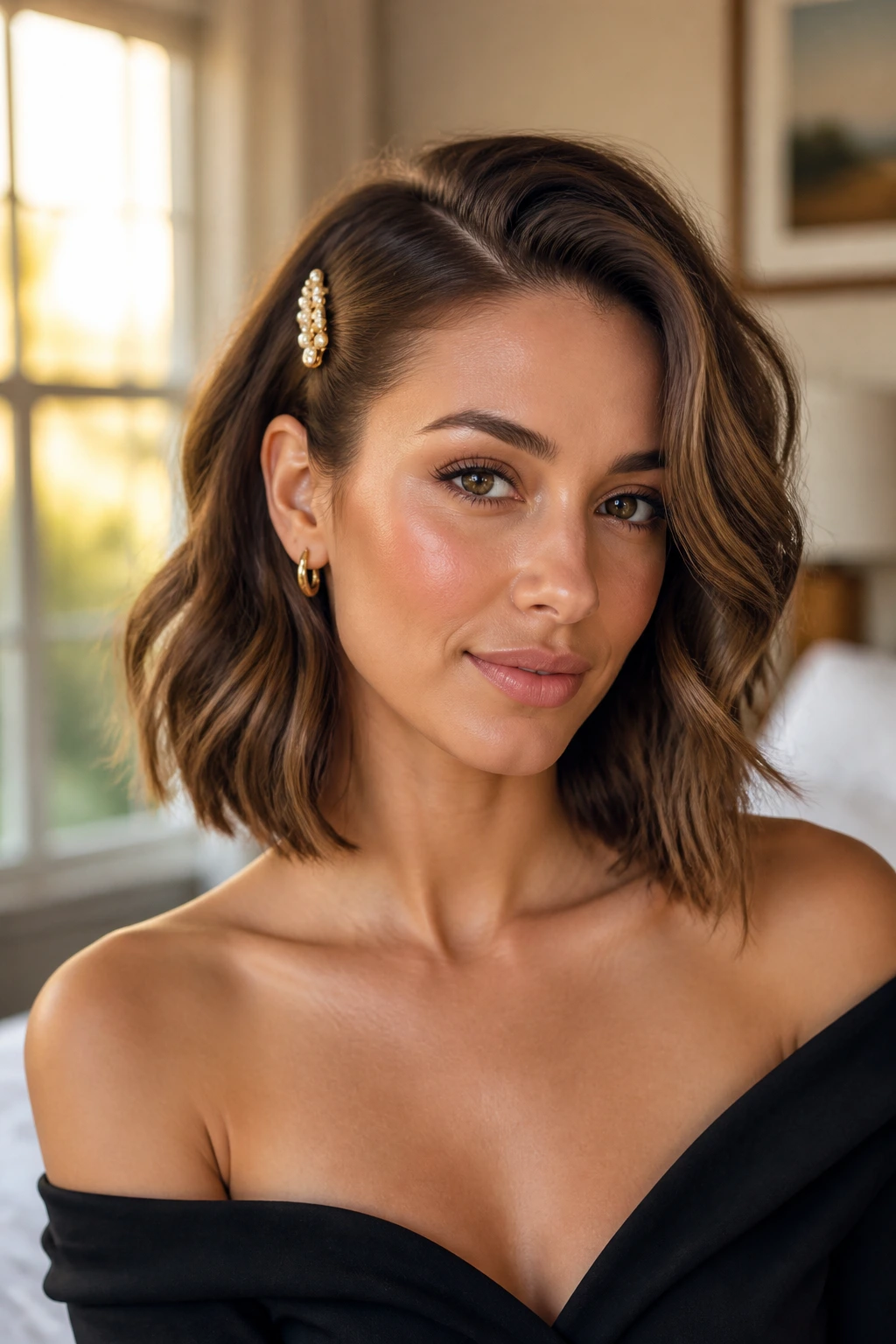
6. Wavy Lob Pinned on One Side
A wavy lob pinned to one side gives you the softness of loose hair with the structure of a planned style. It’s one of the safest choices when you want movement without letting the hair blanket the shoulders. The pinned side opens the neckline, and the waves keep the look from going severe.
Here’s the part that gets missed: the pin should be visible enough to feel chosen. A plain bobby pin can disappear, which is fine if you want stealth, but a pearl pin, crystal clip, or a matte gold bar can become part of the outfit. Just don’t stack too many pieces on the same side. That turns into hair jewelry clutter.
The wave itself should be loose, not spiraled. A 1-inch iron usually gives the right bend. Leave the ends a little straighter so the lob still looks modern.
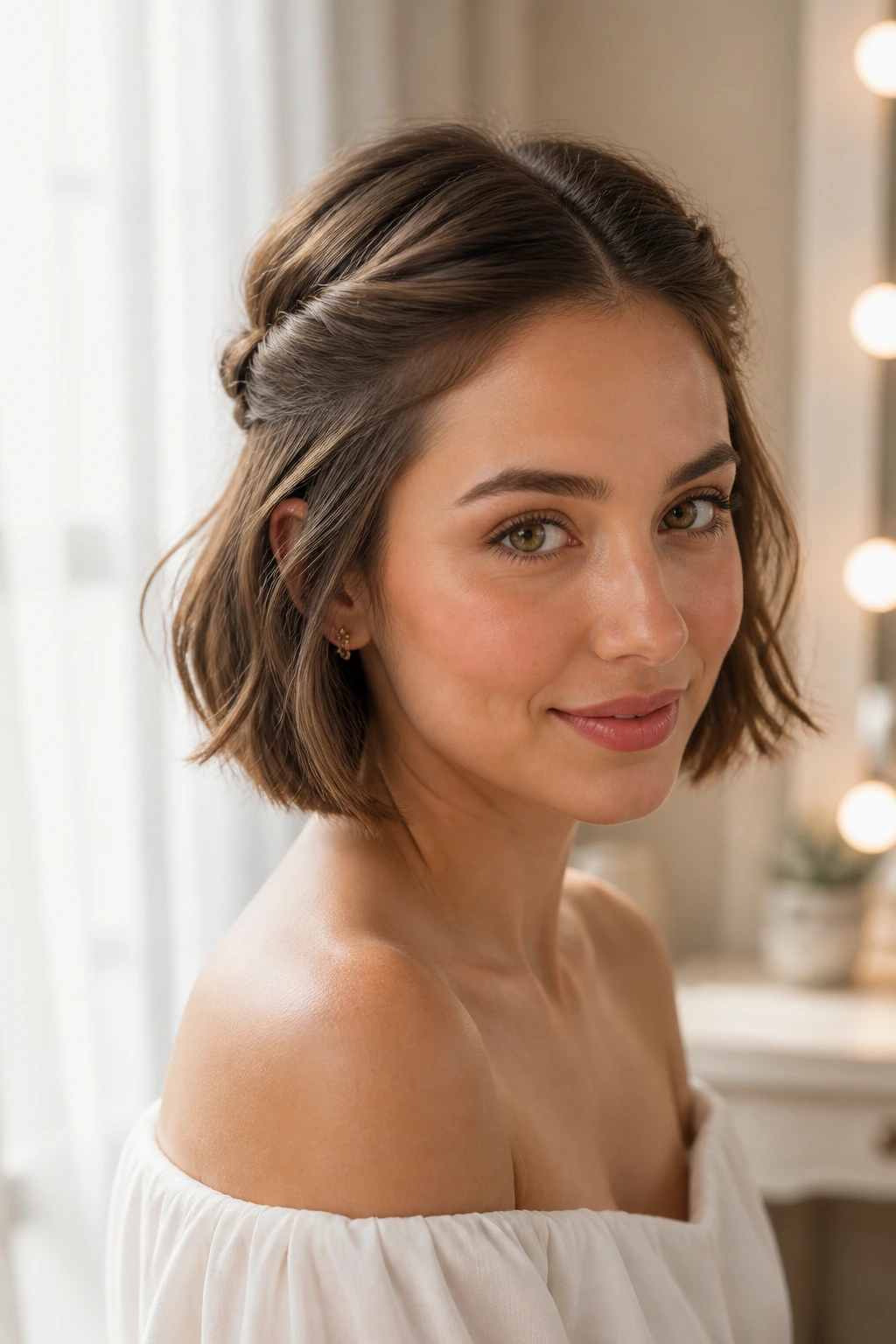
7. Half-Up Twist for a Chin-Length Bob
A half-up twist on a chin-length bob is one of the best answers to the “What do I do with hair that’s too short to fully pin?” problem. Two small twisted sections pulled back from the temples create lift and keep the face open, while the rest of the bob stays soft around the jaw.
Why It Works
The twist doesn’t fight the haircut. It uses the length that’s already there and turns it into direction. That’s the whole trick with short hair styling: stop asking it to behave like long hair. Pin the twists low and slightly back, not high and tight, so the dress neckline still gets room.
Good for: Textured bobs, hair with a slight bend, and dresses with soft shoulders or sleeves that need a gentle hairstyle to match.
Skip the heavy clip if: Your bob is fine and slippery. Two hidden pins often hold better than one decorative barrette.
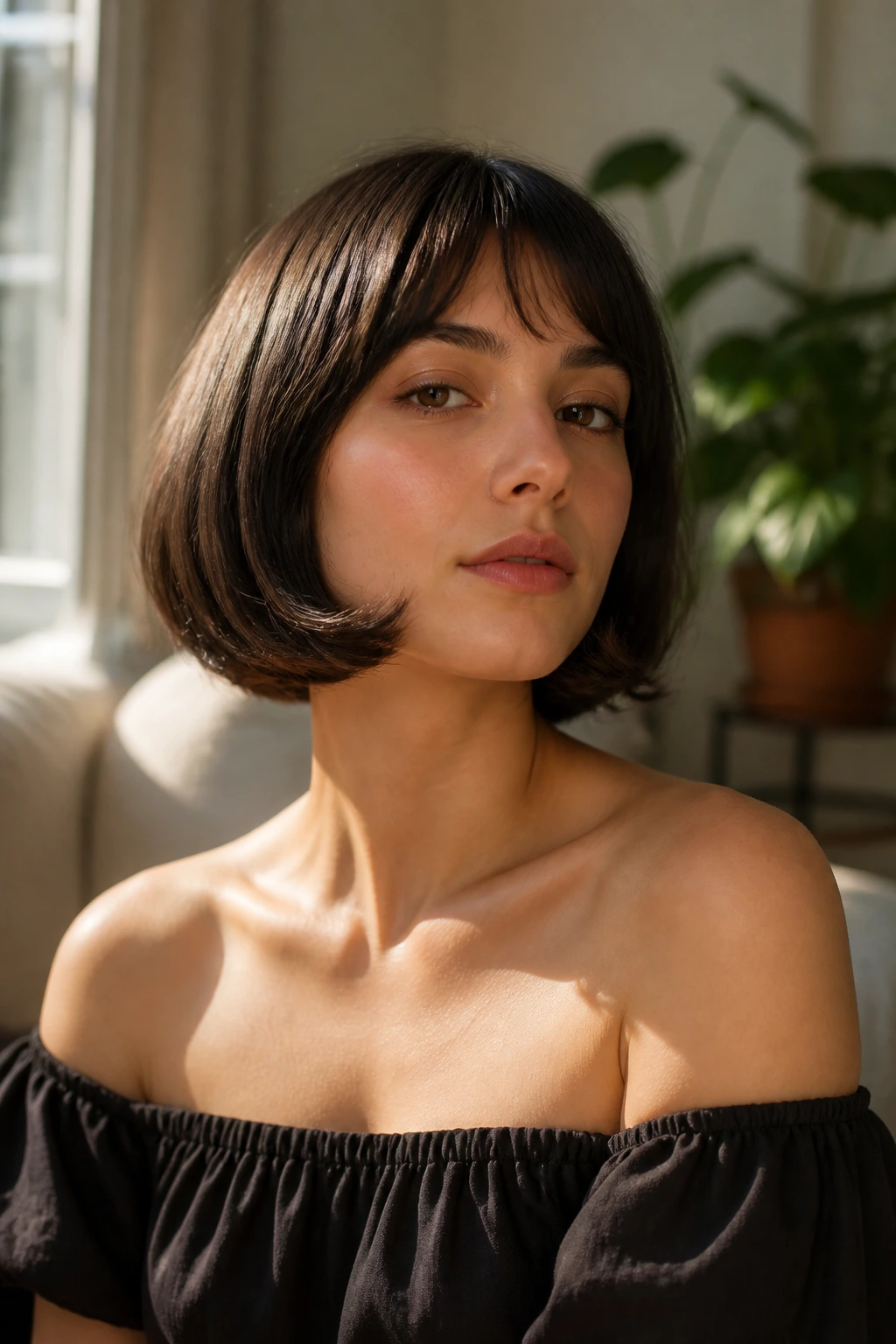
8. Curled Under French Bob
A French bob curled under at the ends has a neat, old-world shape that sits beautifully with bare shoulders. The outline is compact, which lets the dress do the dramatic work. The effect is clean at the jaw and soft at the cheeks, which is a very flattering place for short hair to live.
You can get this look with a round brush and dryer, or with a flat iron turned under at the tips. The key is not over-bending the ends. A slight inward curve is enough. If the bob has fringe, keep it airy rather than heavy; full blunt bangs plus an off-shoulder dress can crowd the top half of the face.
This style is good when the dress has lace, embroidery, or a sweetheart neckline. It keeps things refined without going stiff.
9. Tousled Curtain-Bang Bob
Curtain bangs are excellent with off-shoulder dresses because they soften the top of the face while the neckline stays exposed. A tousled bob with curtain bangs feels relaxed, which is useful if the dress is already romantic or has a lot of texture in the fabric.
What makes this work is the separation. Don’t flatten the bangs into one smooth sheet. Blow-dry them away from the center, then add a little bend with your fingers or a large barrel brush. The bob itself can stay slightly undone. In fact, it often looks better that way.
I’d reach for this style with chiffon, linen blends, or dresses that move a lot when you walk. The hair and fabric can share the same soft energy without competing.
10. Slicked-Back Wet Look Pixie
The slicked-back pixie is bold, simple, and a little unforgiving—which is exactly why it looks so good when it’s done right. There’s nowhere for the hair to hide, so the neckline gets all the attention, and the whole look feels sharp. If your dress has sparkle, cutouts, or a dramatic shoulder line, this style belongs in the conversation.
Use a strong gel or styling cream on damp hair, comb it back, and let the front lie close to the scalp. A fine-tooth comb gives a cleaner finish than fingers. The wet look should read glossy, not drippy. That distinction matters.
This is not the style for a dress with lots of ruffles around the top. Too much detail on both the hair and the neckline can feel busy. Keep the clothes and the hair from yelling over each other.
11. Halo Braid Crown on Short Hair
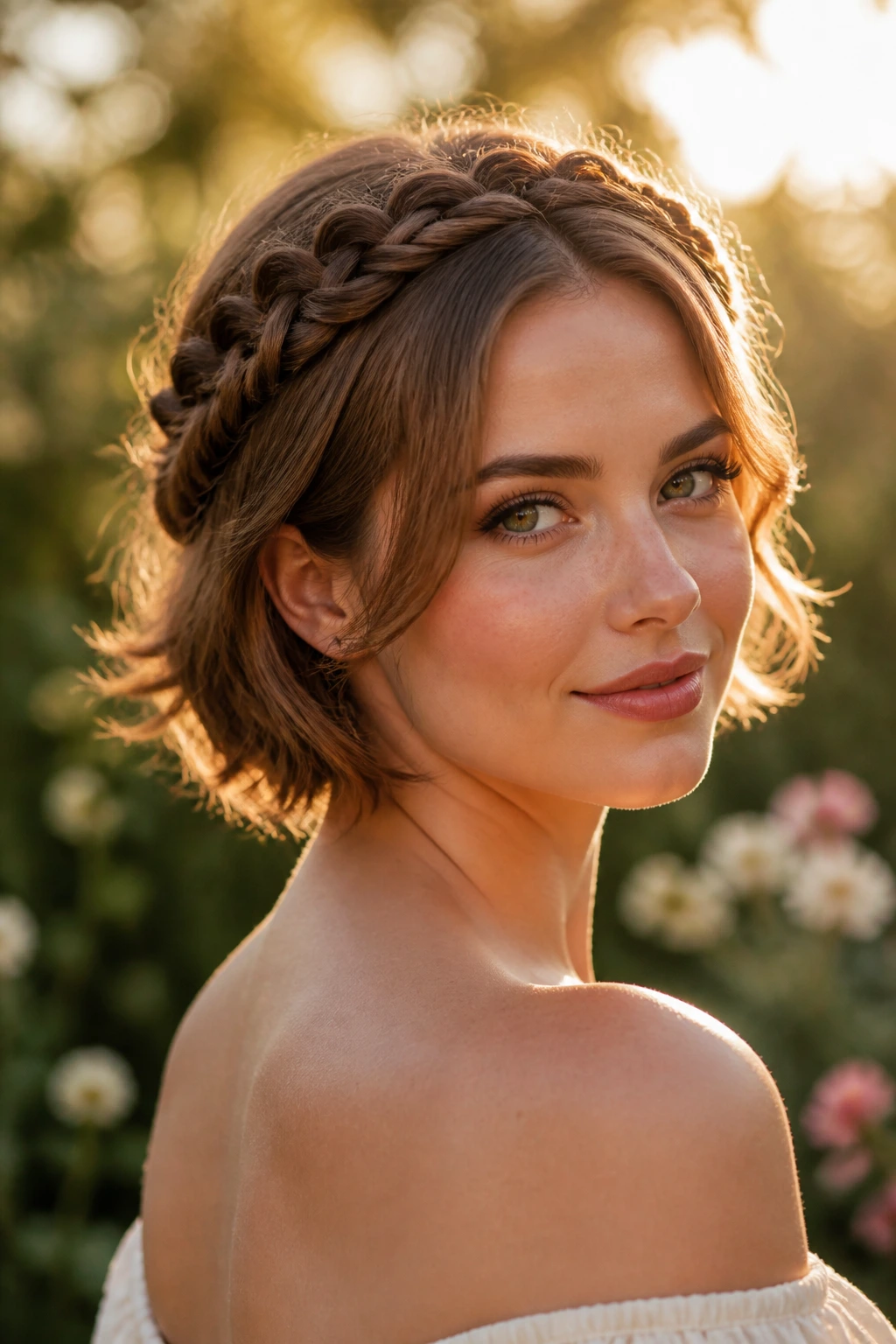
A halo braid on short hair sounds ambitious until you realize it doesn’t need to be a full braid wrapped around the head. On bob-length hair, you can braid each side from the front hairline and pin the ends so they cross behind or at the crown. The result still gives you that halo effect without needing waist-length hair.
The braid line lifts the eye above the shoulders, which is exactly what a good off-shoulder style should do. It also keeps shorter pieces from falling forward every time you move. For fine hair, a bit of texturizing spray before braiding helps the sections grip. For thick hair, smaller braid sections keep the shape neat.
Best pairings
This works especially well with floral dresses, embroidered fabrics, or anything with a soft, romantic shape. If the dress is very sleek, the braid can feel a touch too sweet unless you keep it tight and polished.
12. Pinned-Back Twists With Loose Ends
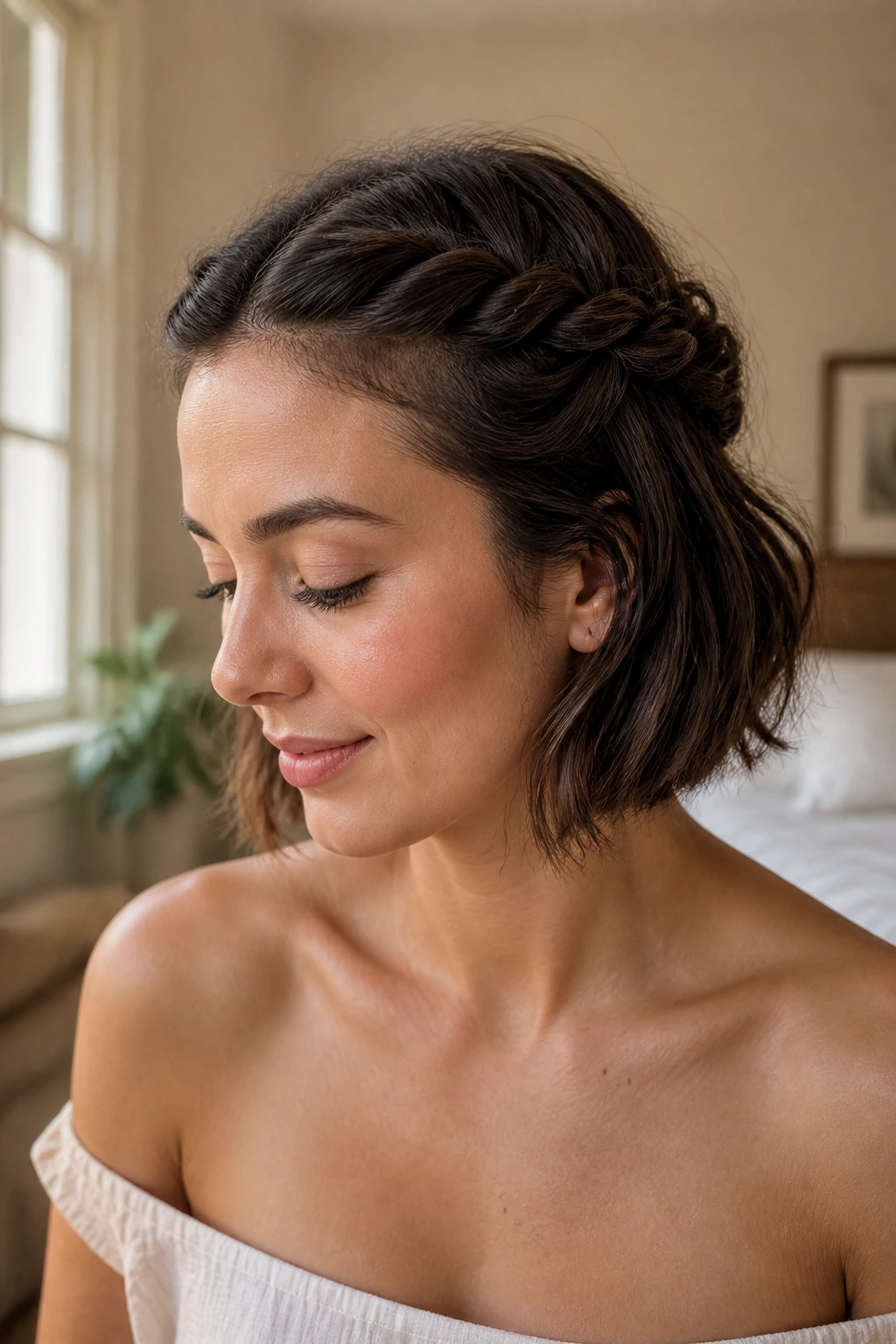
Pinned-back twists are the answer when you want your hair to feel touched, not overdone. Twist two small sections from the temples, pin them back, and leave the rest loose. On short hair, that tiny change clears the shoulder line while keeping movement at the back and sides.
The style reads casual at first glance, then more polished once you notice how the front has been controlled. That’s why it works so well with off-shoulder dresses. The neckline gets space, but the hair still feels like hair, not architecture.
If your texture is naturally wavy, this is even easier. You can mist the sides with light hold spray, twist, pin, and go. Straight hair benefits from a slight bend first so the twists don’t slide out after twenty minutes.
13. Voluminous Blowout Bob
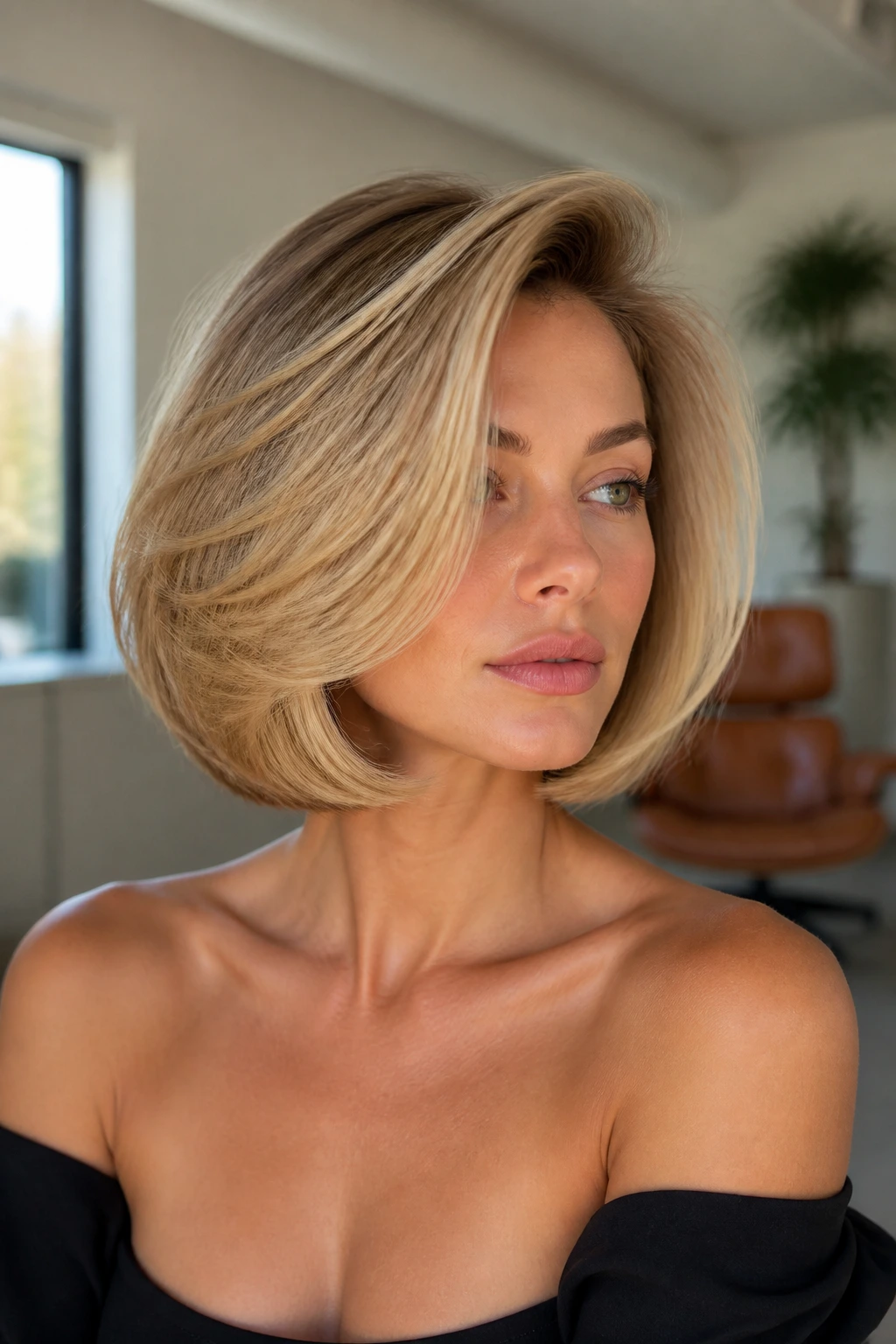
A bouncy blowout bob can look very strong with an off-shoulder dress because it keeps volume where the eye wants it—at the crown and mid-lengths, not right at the shoulders. The shape is soft but not floppy. It gives you movement without creating a curtain across the neckline.
Blow-dry with a round brush, lifting the roots and curling the ends under just enough to keep the outline neat. If you want extra fullness, set the top sections in large rollers while they cool. That old trick still works. A side part can make the whole shape feel richer, especially if the dress has a straight neckline.
This is one of the better choices for thicker hair because the cut can carry weight without collapsing. Fine hair can use a root-lifting mousse first so the style doesn’t fall flat by dinner.
14. Side-Swept Pixie With Statement Earrings
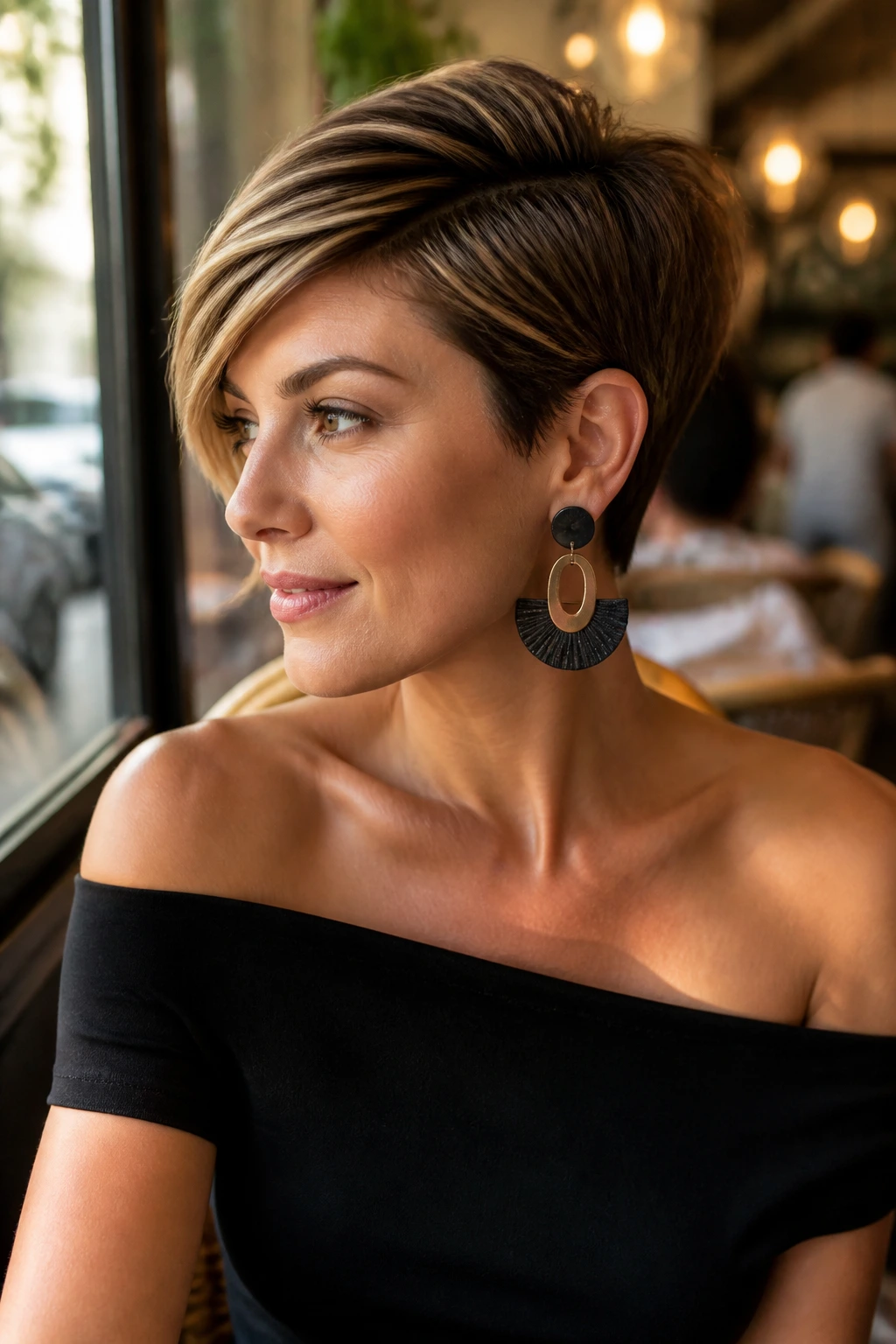
A side-swept pixie and statement earrings are a very good pair. The hair keeps one side open, the necklace line stays clean, and the earrings get the spotlight instead of fighting fringe. If the dress is bare at the shoulders, that balance feels clean from across the room.
The sweep should look intentional, not like the hair got caught in a breeze. Use a little flexible cream and direct the top toward one side while keeping the root lifted. The longer side can skim the forehead or brow. Either way, it should move, not stick.
I’d choose this for a dress with a plain neckline and one strong accessory. If the earrings are large, skip a necklace. The open neckline and the earrings are already doing enough.
15. Short Shag With Airy Texture
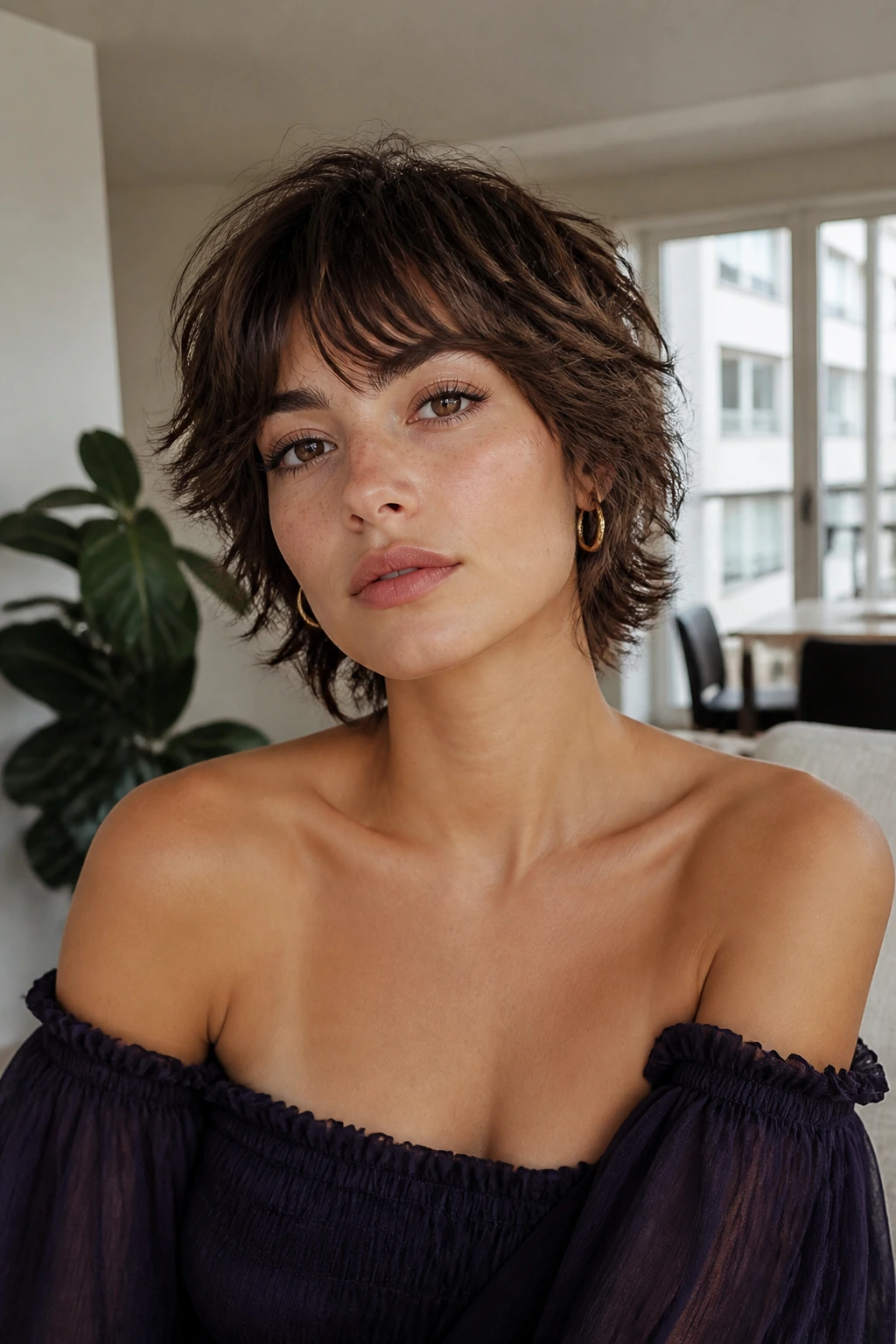
The short shag is a little messier than the polished styles here, and that’s the point. Off-shoulder dresses can handle a bit of edge, especially if the fabric is soft or the neckline is romantic. The layers give movement around the face while the shorter lengths keep the shoulders visible.
Use a diffuser or air-dry with texture cream, then pinch the ends lightly to keep the layers separated. The shag should feel feathery, not puffy. That’s a fine line, but a real one. Too much mousse and you get a helmet. Too little and the layers collapse into nothing.
This is one of the best choices if you want the dress to feel less formal. It also works well with boots, bold lipstick, or anything that leans slightly cool.
16. Retro Flip Bob
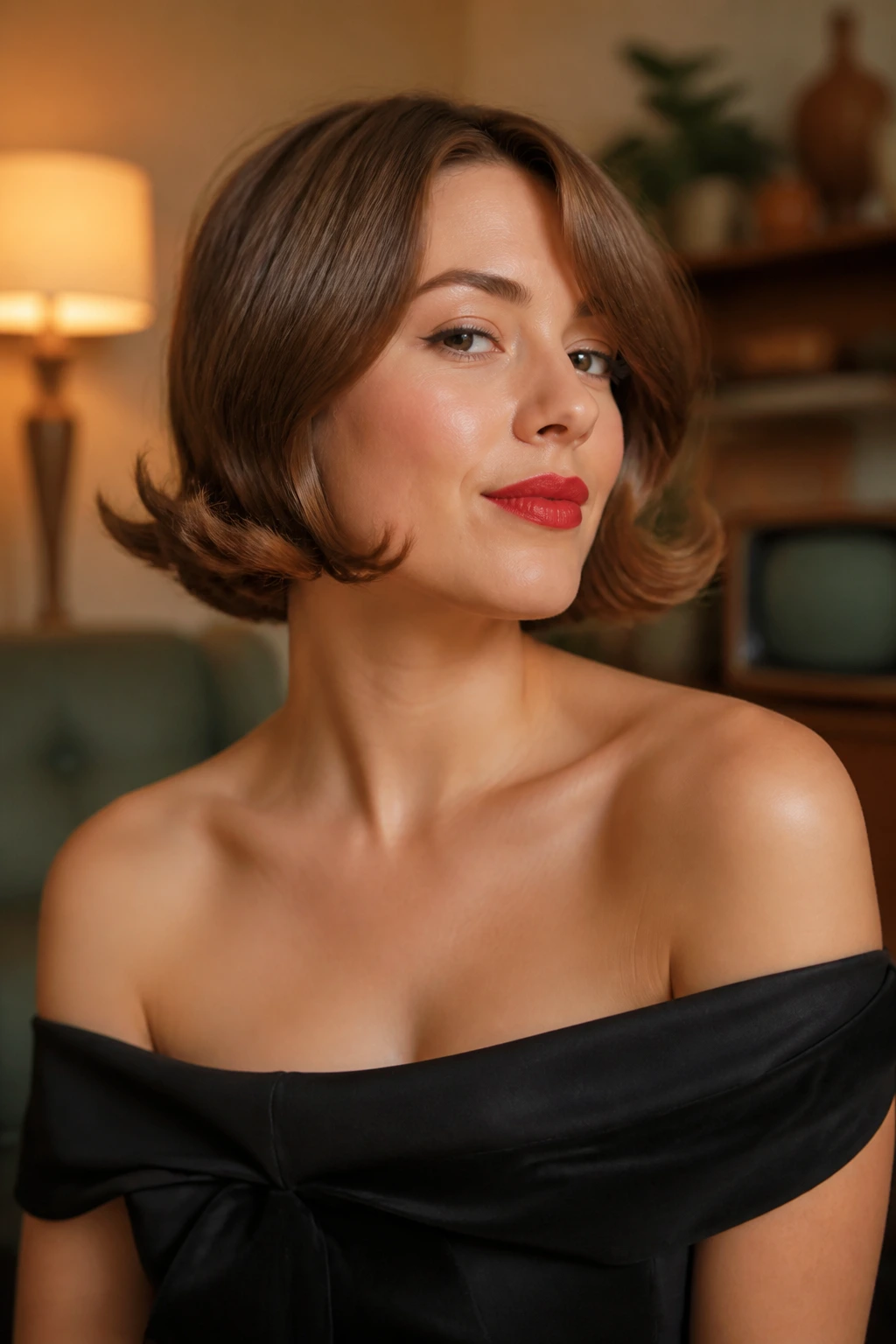
A retro flip bob gives the neckline a playful lift. The ends turn outward, which keeps the style from feeling too serious or too flat. With an off-shoulder dress, especially one with a vintage shape, the flipped edge ties the whole outfit together in a way that feels clear and deliberate.
A flat iron can create the flip quickly if you rotate it outward at the ends. A round brush does the same job with more softness. The trick is keeping the base smooth and the bend only at the bottom inch or so. If you flip too high, the bob starts looking unfinished rather than styled.
I like this with a fitted bodice or a dress that already nods to retro lines. The hair should echo that shape, not compete with it.
17. Soft Curly Bob With Defined Ends
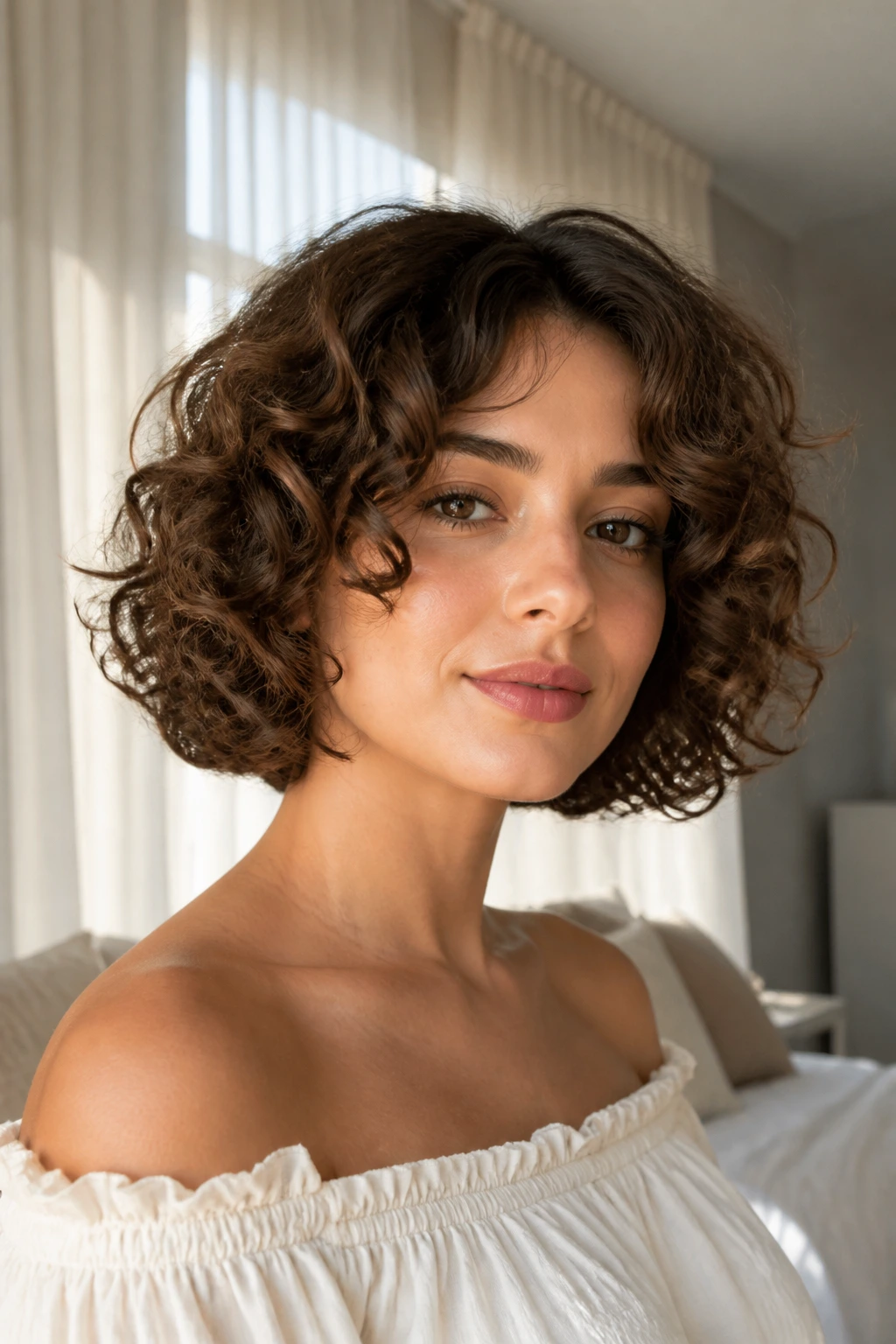
A soft curly bob works beautifully when the curls are defined enough to look cared for but still loose enough to move. The off-shoulder neckline gives the curls room to sit around the face without spilling over the dress too heavily. That balance is the whole appeal.
Use a curl cream or gel on damp hair, then scrunch and diffuse until the curls hold their shape. A few pieces around the face can be finger-coiled for extra definition. If the ends frizz, a tiny bit of serum goes a long way. Tiny. More than that, and the curls lose spring.
This is especially good for dresses that are simple in the bodice but rich in fabric or color. The curls supply the texture the dress does not need to provide.
18. Accessory-Loaded Bob With Pearl Clips
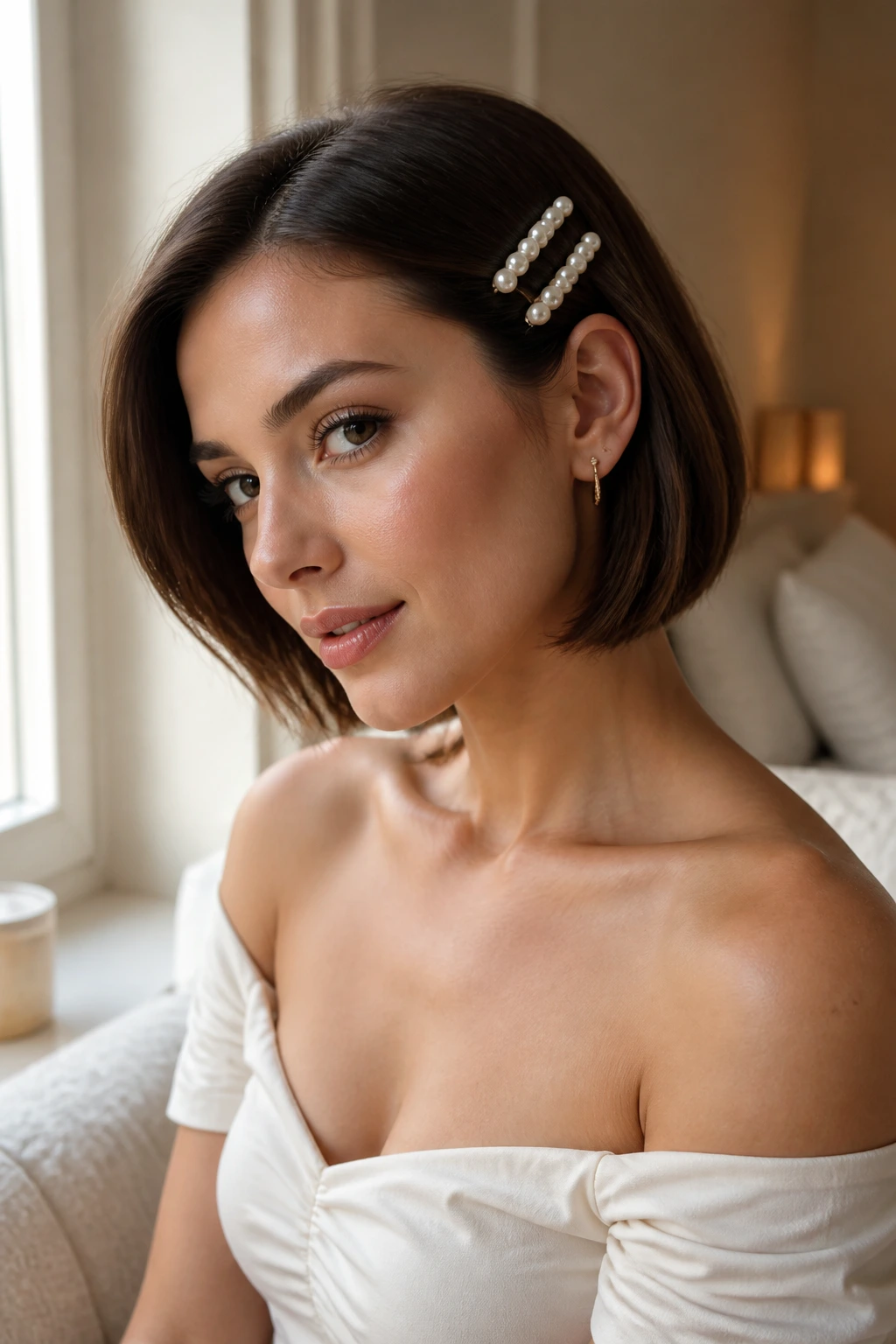
A bob with pearl clips is the easiest way to make short hair look dressed up without forcing it into a style it does not want. The clips create structure, the neckline stays open, and the rest of the hair can stay softly tucked or wavy. Short hair loves a good accessory. It just wants the scale to be right.
Place the clips where the hair naturally wants to hold back—usually one side above the ear or near the temple. Don’t scatter them everywhere. Two well-placed clips beat five tiny ones, every time. If the dress already has pearl details or a beaded edge, echoing that finish in the hair makes the outfit feel coordinated without being matchy.
This style is a lifesaver for second-day hair. A little dry shampoo at the roots, a brush-through, and the clips do the rest.
19. Sculpted Faux Hawk for Short Hair
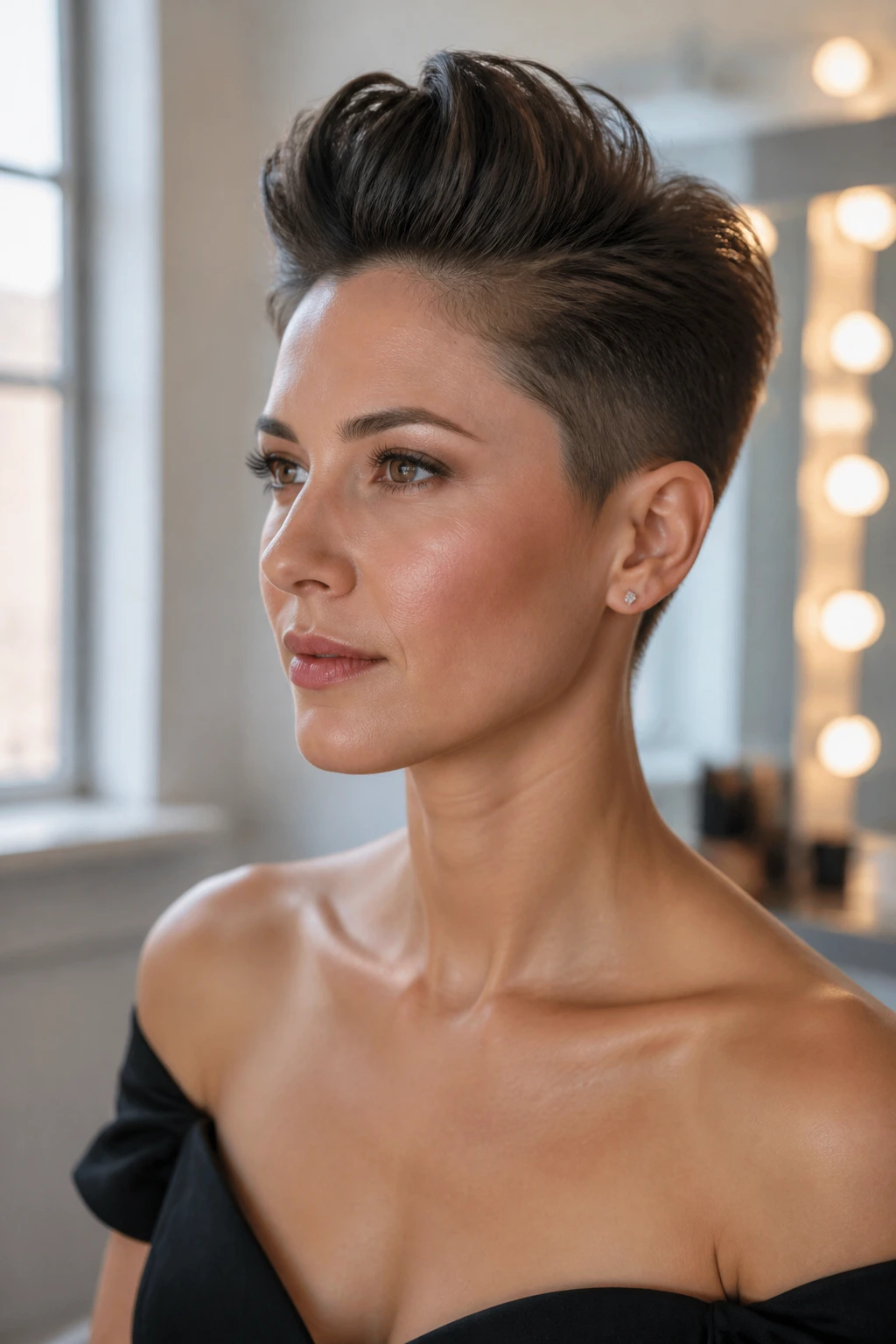
A faux hawk on short hair gives the neckline room and adds a sharp line of energy through the center. The sides stay sleek, the middle gains lift, and the shoulders remain visible. It’s a strong choice, and it looks best when the dress can keep up with it.
Use paste or strong-hold cream through the top, then push the center upward with your fingers or a comb. Pin the sides down if needed. The style should feel controlled, not spiky for the sake of being spiky. A little height in the middle is enough.
This is a good pick for edgy dresses, satin with structure, or anything with asymmetric lines. If the dress is very soft and ruffled, the faux hawk can feel like it wandered in from another outfit.
20. Side-Tucked Waves With a Middle Part
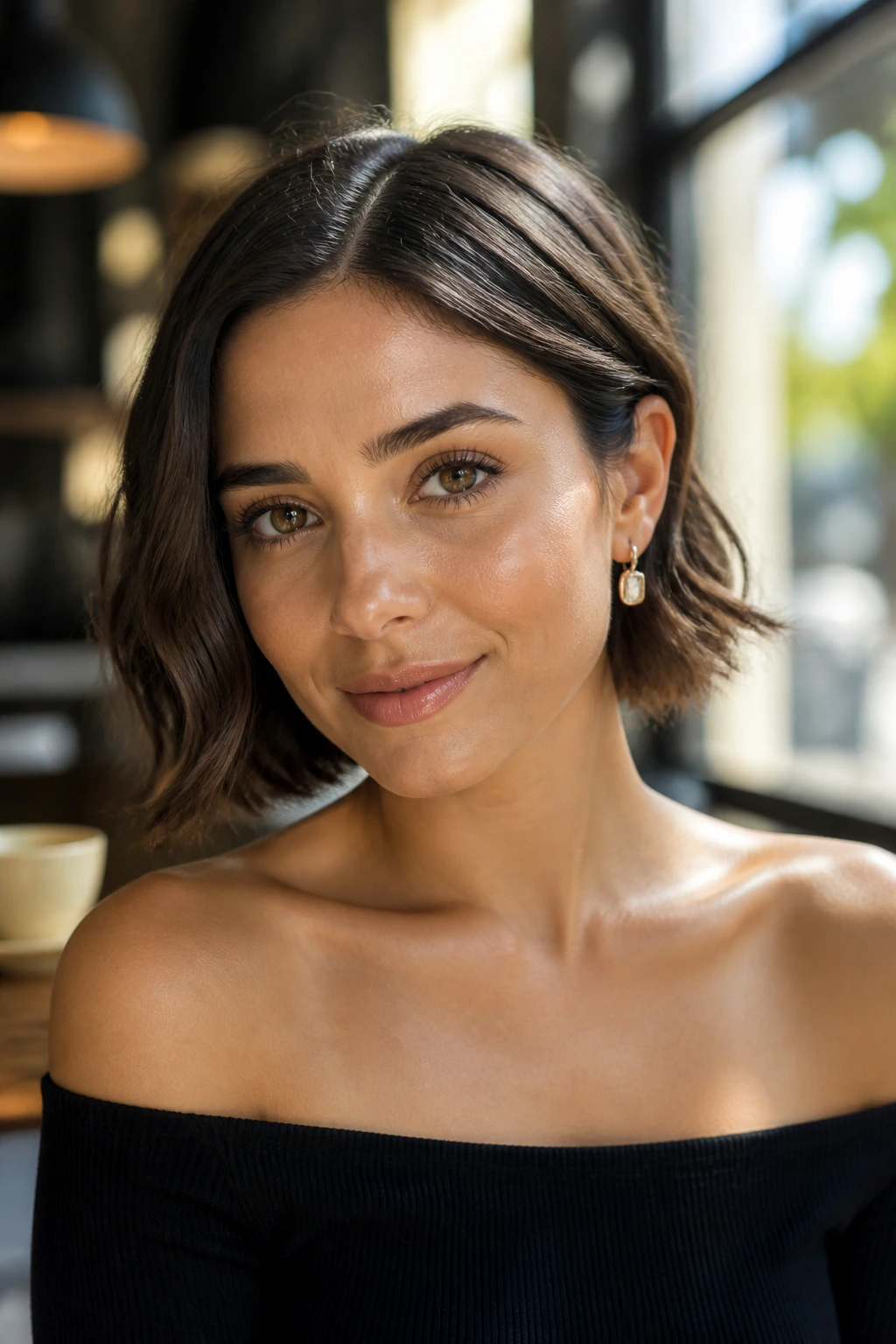
Middle parts and short waves can look quietly modern with an off-shoulder dress, especially when one side is tucked and the other falls softly toward the cheek. The shape feels balanced without being rigid. It’s a good choice if you want movement but not a full wave cloud around the shoulders.
Start with a center part, then create soft bends with a wand or flat iron. Tuck one side behind the ear and let the opposite side graze the cheekbone. That asymmetry keeps the neckline from feeling boxed in. It also gives you an easy place for an earring to show.
If the dress has a clean, minimal shape, this style keeps the whole outfit from looking overworked. Clean hair, clean neckline, done.
21. Braided Headband on a Pixie or Bob
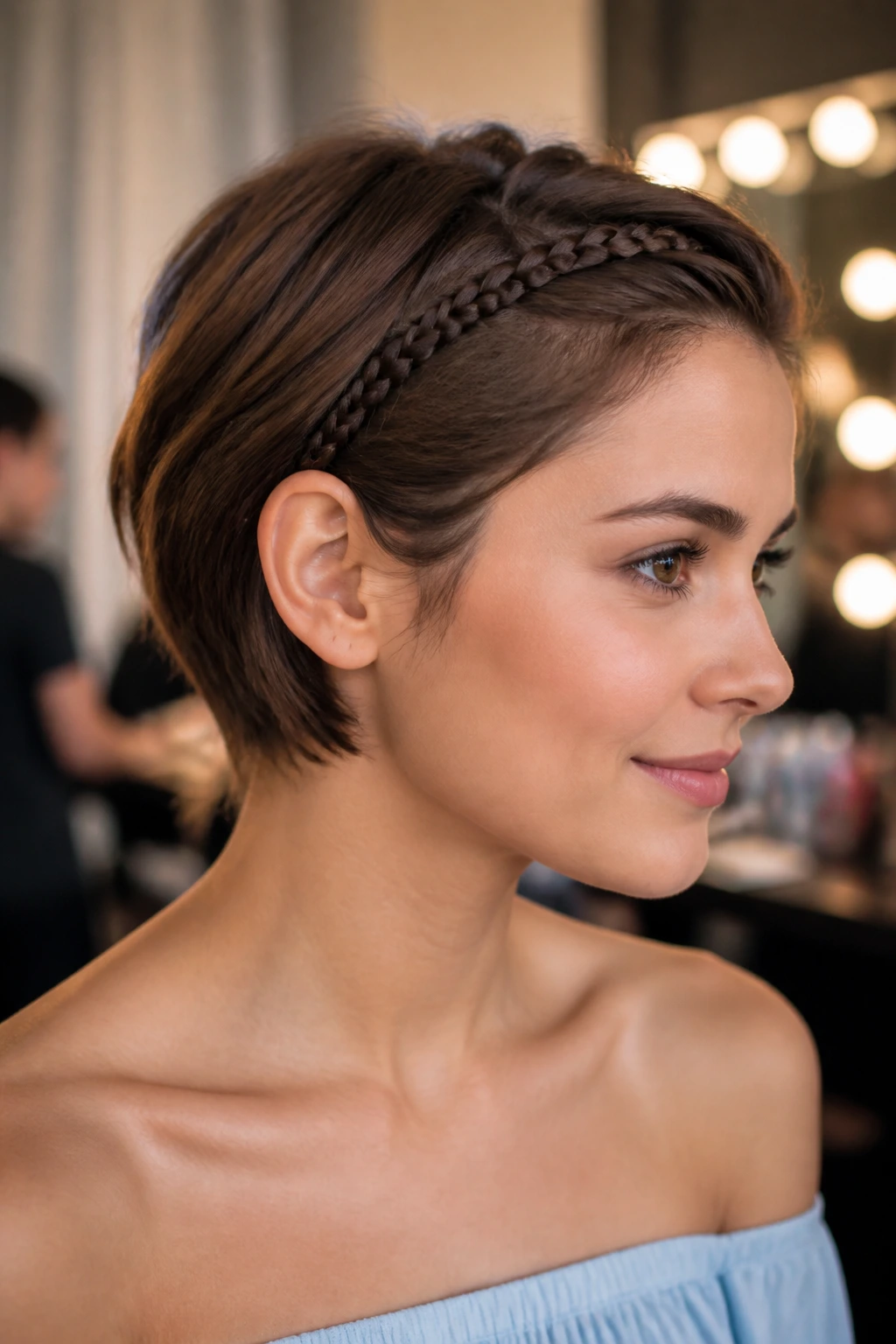
A braided headband effect is one of the smartest short-hair tricks around. It gives you a touch of detail at the hairline without taking volume away from the crown or crowding the shoulders. On a pixie, a tiny braid across the front can act like a built-in accessory. On a bob, it can become a proper style detail.
Use a little styling wax so the sections grip, then braid or twist only the front-most pieces. Pin the ends behind the ear or just above the temple. The braid should sit close to the head, almost like a line drawn across the face, not like a chunky rope sitting on top of it.
This is lovely with dresses that have softness around the arms or a romantic cutout at the shoulders. It adds just enough structure to keep the neckline from feeling too bare.
22. Face-Framing Ringlets for Natural Curls
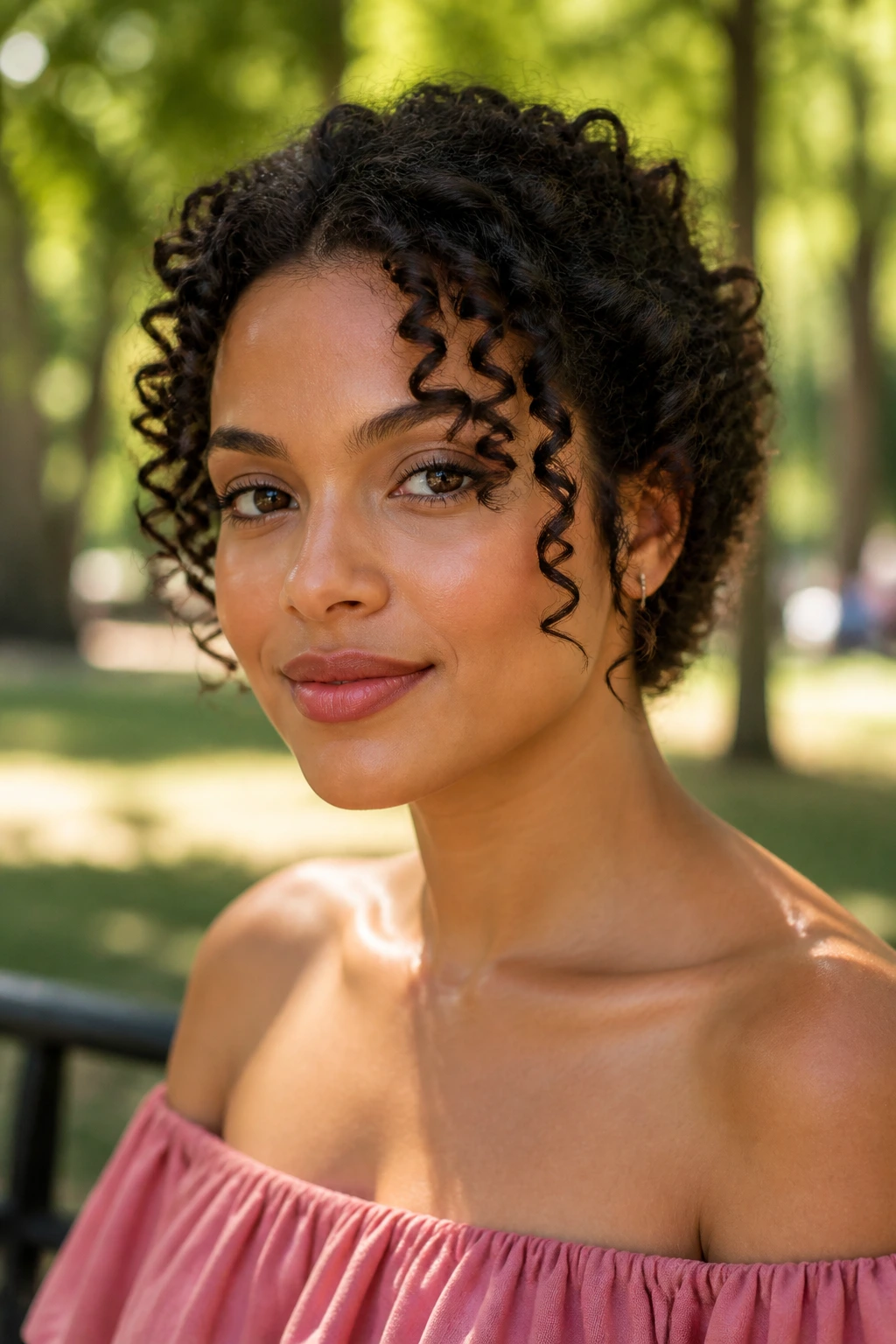
Natural curls and off-shoulder dresses are a better match than people give them credit for, especially when the hair is short enough to frame instead of overwhelm. Face-framing ringlets can sit around the cheeks and temple while the neckline stays visible. The dress gets its space, and the curls get to do their thing.
Define the curls with cream or gel, then separate only a few pieces near the front if they need more shape. Don’t stretch everything out. The power of this look is the curl pattern itself. A little side pin can open one shoulder if the hair is dense.
This style is especially good when the dress is simple. Let the curls supply the texture and energy. The key is to keep the roots from puffing too wide near the shoulders.
23. Tapered Cut With Glossy Finger-Coiled Fringe
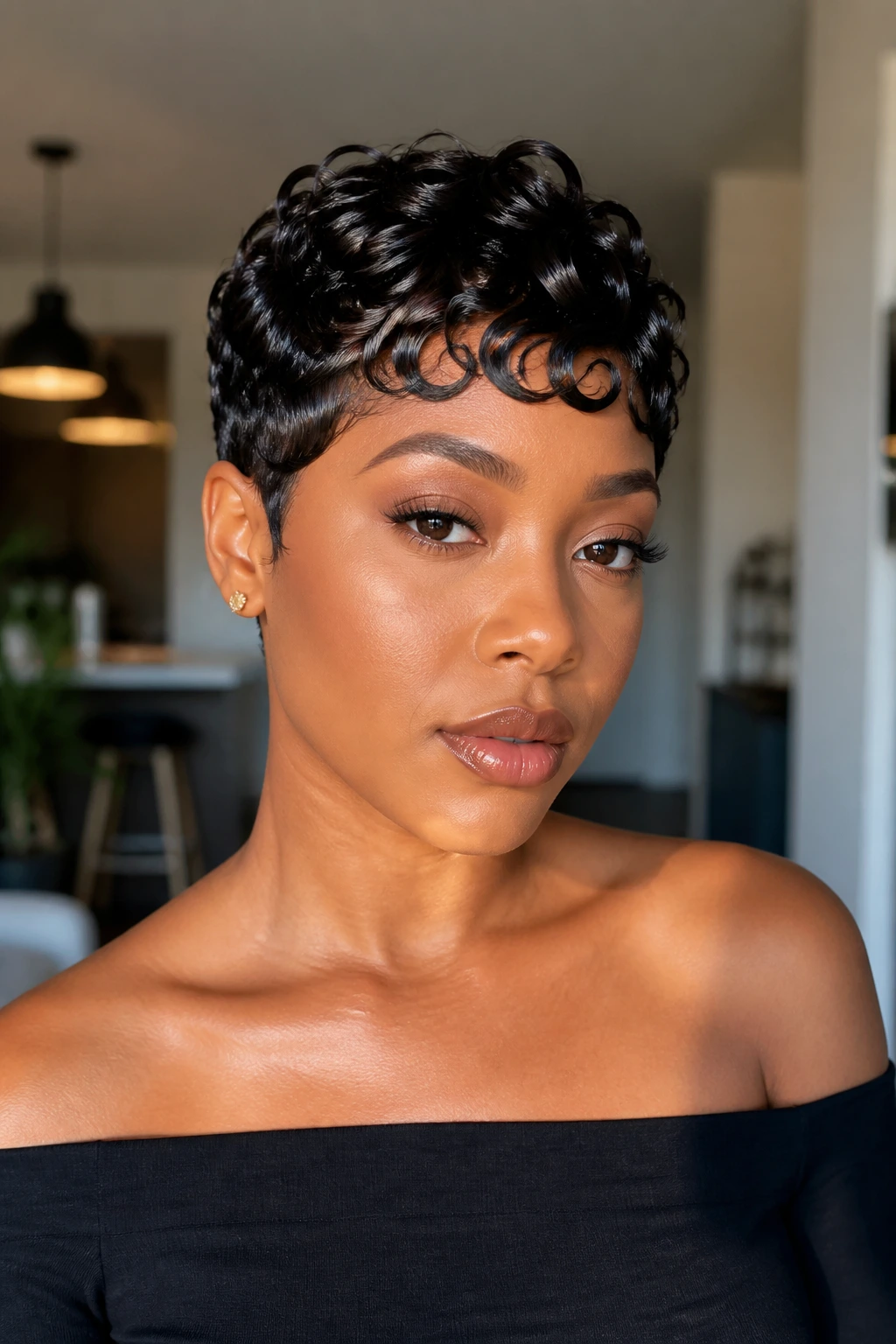
A tapered cut with a glossy finger-coiled fringe gives you precision and softness at once. The close sides keep the shoulders clear, while the front coils add detail where the eye lands first. If your hair is naturally coily, this is one of the sharpest pairings for an off-shoulder neckline.
Finger-coiling the fringe or front section gives the front a polished finish without flattening the rest of the cut. Use a curl-defining cream, then seal with a little oil or glossing serum once the coils are dry. The shine matters here. Without it, the style can look dry before the event even starts.
I’d choose this for a dress with clean tailoring or dramatic earrings. It’s a strong silhouette, and it doesn’t need much else.
24. French Twist-Inspired Roll for Short Hair
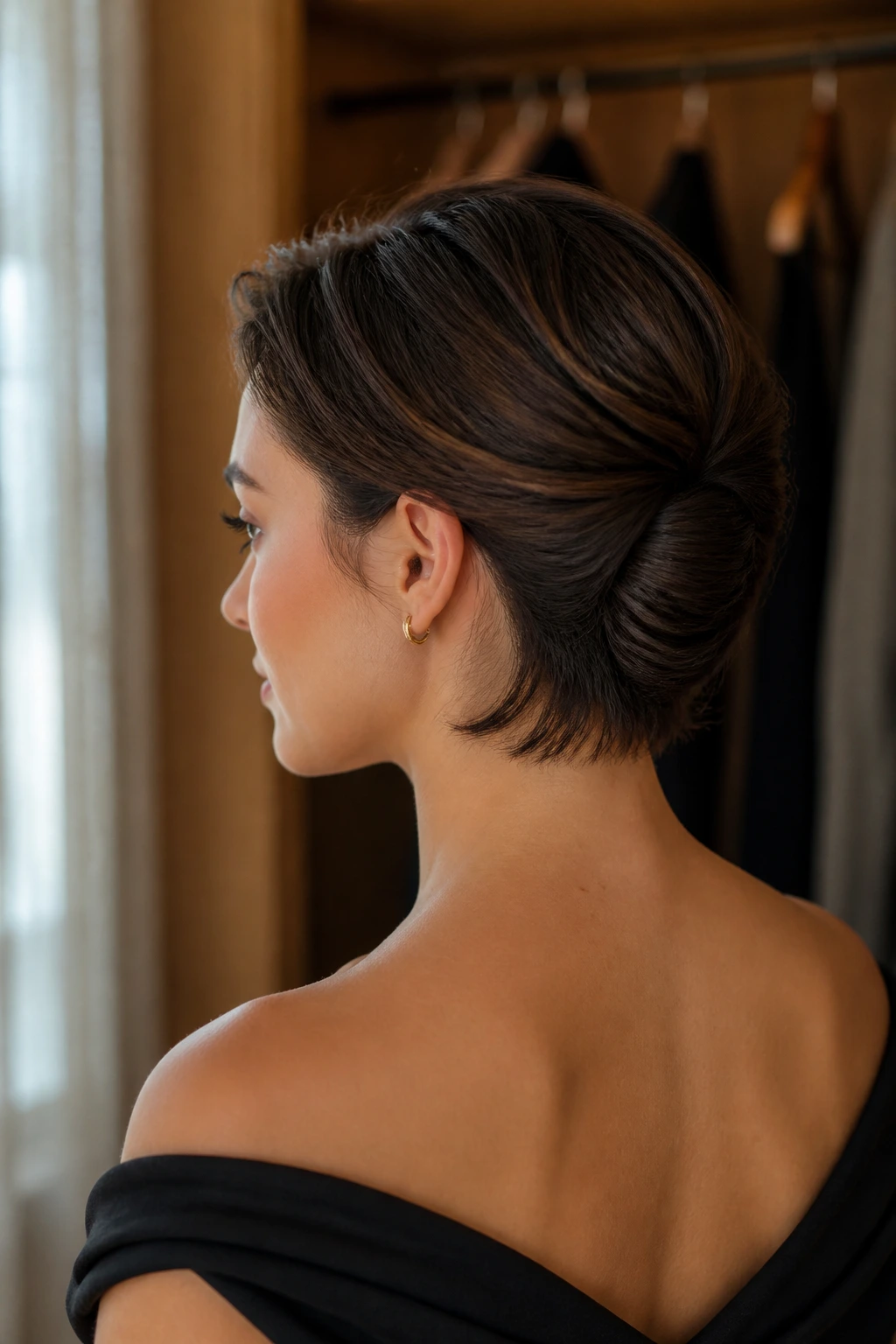
A short-hair roll at the nape can give you the feel of a French twist without needing long lengths. The hair is tucked upward and pinned in place so the neckline stays clear, while the shape at the back adds just enough interest to look formal. It’s a clever style, not a loud one.
The roll works best on bob-length hair or a layered lob that can be tucked under and pinned. Use hidden pins and don’t chase perfection on the first try. The shape should be secure, smooth, and a little compact. If a few ends peek out, that’s fine as long as the silhouette holds.
This is a strong choice for weddings, galas, or any dress with a polished bodice. It keeps the front quiet and lets the dress lead.
25. Asymmetrical Bob With One-Sided Volume
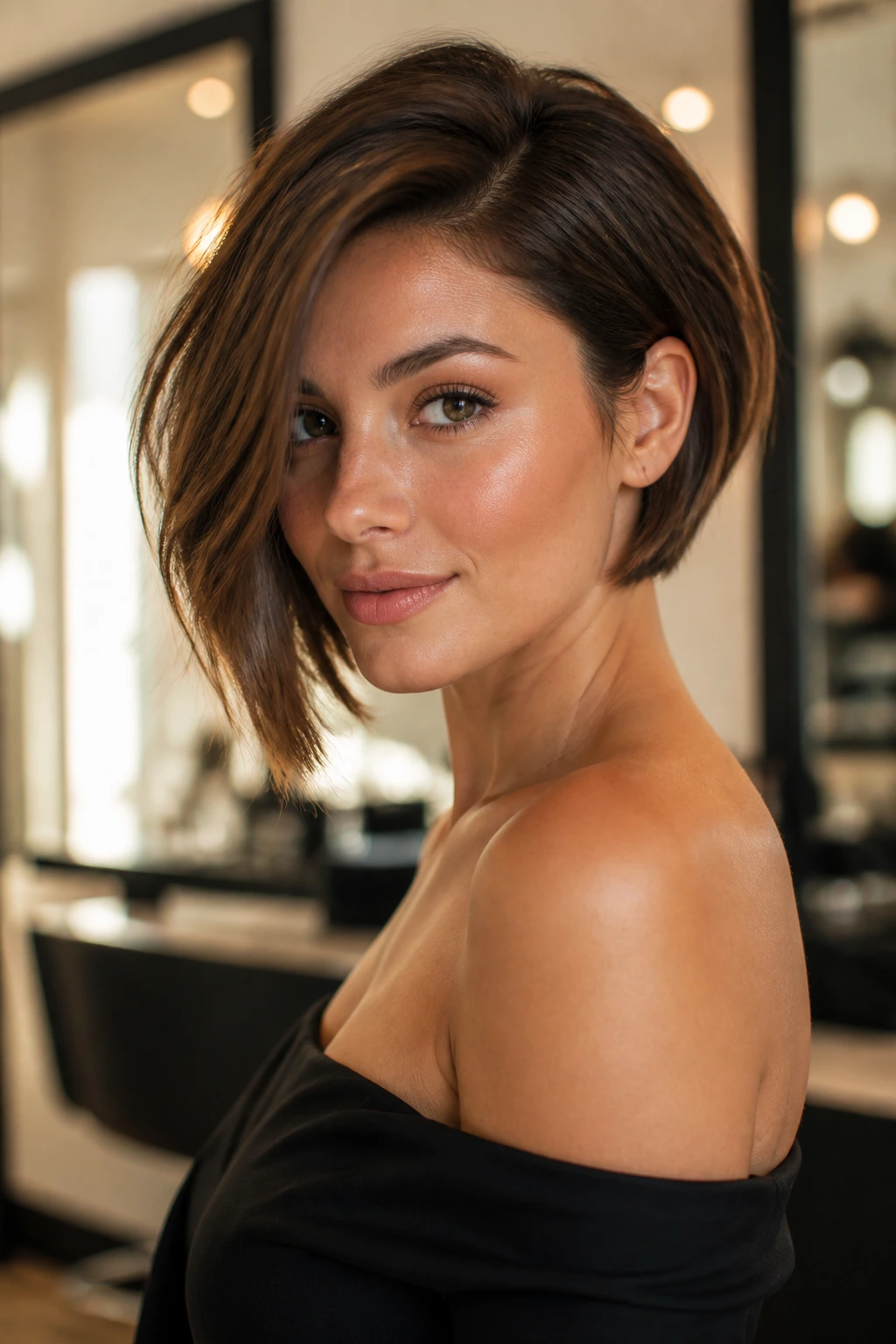
An asymmetrical bob is almost made for off-shoulder dressing. One side can carry a little extra volume, while the other side stays tucked and close, which gives the neckline a nice slant. The look is dynamic without trying too hard.
The longer side should feel intentional, not accidental. Add a bend or wave to that side and keep the shorter side smoother. A deep side part can amplify the effect, but even a soft off-center part helps. This style is good when you want movement and structure in the same haircut.
If the dress is plain, the asymmetry adds interest. If the dress is already detailed, keep the bob more restrained so the whole outfit doesn’t turn into a tug-of-war.
What Off-Shoulder Necklines Ask of Short Hair
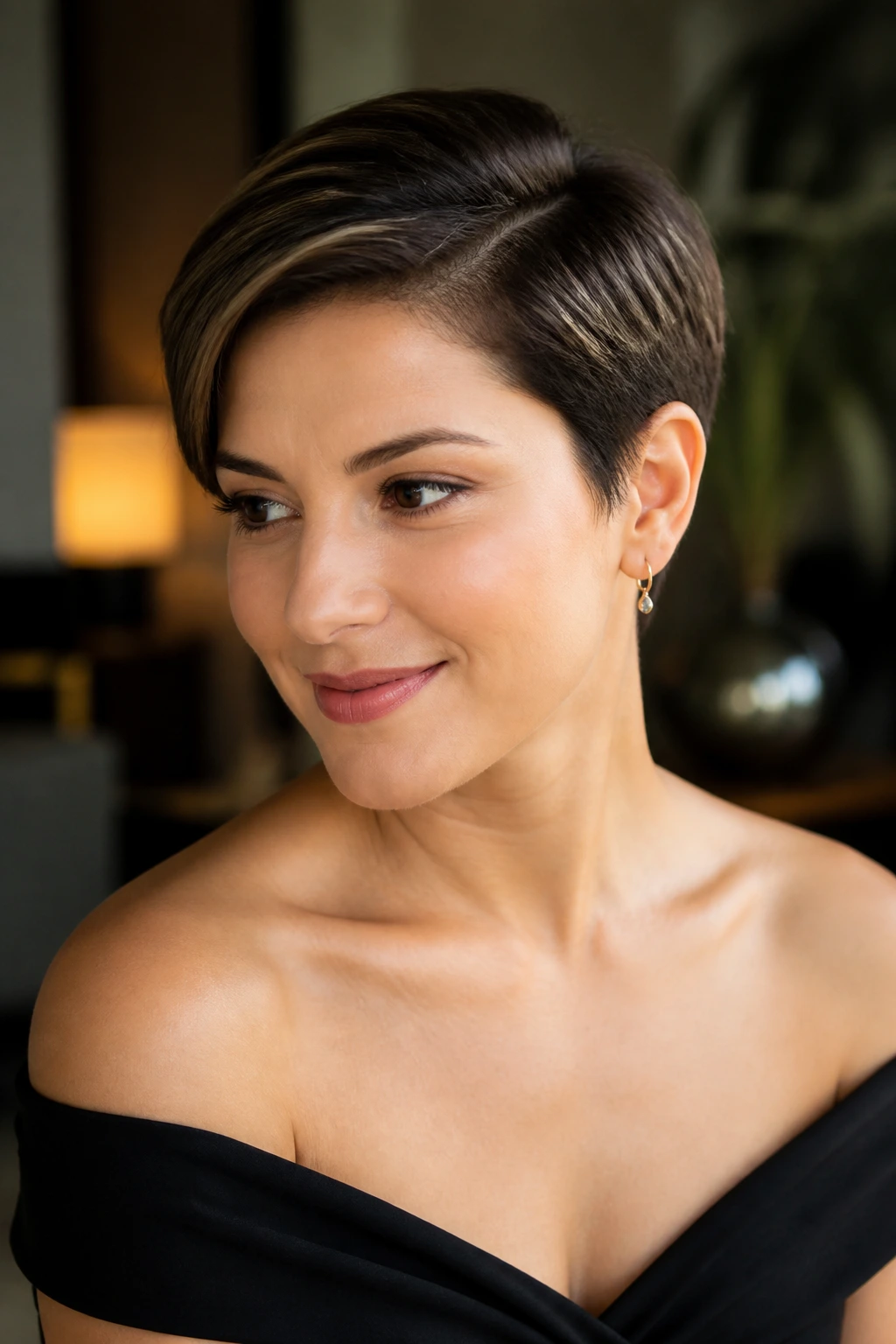
Off-shoulder necklines expose a lot of skin in one clean shape. That means the hair can’t just sit anywhere and hope for the best. It needs a job. On short hair, that job is usually one of three things: open the face, hold the eye upward, or keep the shoulder line clean.
A wide neckline makes side volume look bigger than it is. That’s why the difference between a tidy tuck and a fluffy side puff matters so much. A little lift at the crown can be useful. Too much width at the temples, not so much. The eye should travel up toward the face, then back down to the dress edge. If it gets stuck in the hair, the styling has lost the thread.
Short hair has a real advantage here because it can make the dress feel intentional fast. One ear tucked. One pin visible. One curl bent toward the cheek. That’s often enough. You do not need a complicated updo to make the neckline work.
Essential Tools for Styling Short Hair With Off-Shoulder Dresses
- Tail comb: Clean parts matter a lot with short hair, and a tail comb gives you better control than fingers alone.
- Bobby pins in two shades: Match both light and dark hair if you can; hidden pins disappear better that way.
- U-pins or small sectioning pins: Useful for rolls, twists, and faux French shapes that need grip without bulk.
- 1-inch curling iron or wand: The safest all-purpose size for short waves, bends, and soft definition.
- Flat iron with rounded edges: Better than a sharp-edged straightener for creating flips and tucked-under ends.
- Blow dryer with a nozzle: Directs roots where you want them instead of blowing them into chaos.
- Small round brush: Handy for bobs, crowns, and inward or outward bends at the ends.
- Flexible-hold hairspray: Keeps the style movable instead of stiff.
- Texturizing spray or dry shampoo: Gives short layers something to hold onto.
- Shine serum or cream: A small amount smooths flyaways and makes a sleek neckline look finished.
- Sectioning clips: Keep the top layers out of the way while you work.
- Satin scarf or bonnet: Useful if you need the style to survive overnight or a long wait before the event.
Smart Product Picks and Prep That Make Short Hair Cooperate
Short hair can be fussy about product. A little too much, and it collapses into a greasy shape that hugs the scalp in the wrong way. Too little, and the style slips out before you’ve even left the house. The sweet spot depends on how fine, thick, curly, or coarse your hair is, but the logic stays the same: prep the cut so it has grip, then finish only the pieces that need polish.
Fine hair usually needs lift at the root before anything else. A lightweight mousse or root spray on damp hair gives the crown some memory, which matters a lot with off-shoulder styles because flat roots make the whole look sag. Thick or coarse hair usually wants smoothing cream and a heat protectant first, then a small amount of texture product at the end. Curly hair tends to do best when you define first and disturb later. The more you keep hands off once the curls are set, the cleaner the shape stays.
Day-old hair often behaves better than freshly washed hair for these looks. Freshly washed strands can be too soft and slippery, especially if you’re trying to pin, tuck, or twist them. If you do wash the same day, rough-dry the roots and let a little natural body stay in the hair. That roughness is not a flaw; it’s often what keeps the style from sliding away.
Heat protectant is non-negotiable if you’re using a wand, flat iron, or blow dryer. It does not have to be heavy or scented to work. It just needs to coat the strands evenly before heat touches them. And if the dress is satin or silk, go easy on oily serums near the hairline. Those fabrics remember smudges.
How to Balance Hair, Jewelry, and the Neckline
Silhouette: The neckline should remain the main shape people notice first. That means hair can frame it, but it should not wrap around it from both sides unless the style is very sleek or very small. A clean tuck, a side sweep, or a lifted crown keeps the line open.
Accessories: Short hair and off-shoulder dresses are unusually kind to earrings. Studs, drops, hoops, pearls—most of them read well because the hair does not hide them. If you choose a dramatic necklace, keep the hair quieter. If the earrings are the showpiece, skip the necklace and let the shoulders stay open.
Balance: Dresses with lace, ruffles, rouching, or heavy detail near the bust usually pair better with smoother hair. Plain dresses can carry more texture, wave, or accessory detail. That trade is worth making because it keeps the outfit from feeling noisy. One focal point per zone is enough. Hair, neckline, jewelry. Pick two to lead, not all three.
Best Pairing: A straight-across off-shoulder neckline tends to love asymmetry in the hair. A sweetheart neckline can handle softer volume or waves. A structured satin dress likes cleaner lines. A romantic, floaty dress can take more movement in the hair. Those combinations are not rules carved into stone, but they save you from the common problem of hair and dress doing the same exact thing in the same exact way.
Extra Styling Tips That Make Short Hair Look Intentional
Texture Boost: If your hair is too smooth to hold shape, mist a little texturizing spray at the roots, then rough it up with your fingertips before using a curling iron or pin. Short hair needs some grit to stay put.
Volume Trick: Clip the top section at the crown while you finish makeup or get dressed. Even 10 to 15 minutes in a lifted position can give the roots a bit of memory, especially on finer hair.
Polish Move: Run a tiny amount of shine cream over the outer layer only. You want the ends to catch light, not the whole head to look coated. A pea-size amount is usually enough for a bob or pixie.
Make-It-Yours: For a softer dress, leave one face-framing piece out on purpose. For a sharper dress, pin everything back and keep the line cleaner. For natural texture, define the front and let the back stay a little freer. That contrast feels more human than a style that’s too symmetrical.
Common Mistakes That Pull Attention Away From the Dress
The easiest way to miss the mark is by making the hair too wide on both sides. When the dress already opens the shoulders, adding a lot of bulk near the temples can make the whole top half feel crowded. Keep the sides cleaner and put any volume higher, not wider.
Another common issue is over-smoothing short hair until it looks lifeless. Sleek is good. Flat is not. If the style has no root lift, no part, and no texture, the dress can start looking like it’s doing all the work while the hair sits there. Add a bend, a tuck, or a touch of lift so the cut has shape.
Heavy accessory clutter causes trouble too. A big clip, a statement necklace, and oversized earrings can fight one another fast. Pick one dominant accessory and let the neckline breathe. Short hair is excellent at showing off jewelry; it does not need to wear the entire jewelry box.
Humidity is another sneaky one. Short hair can puff at the sides or collapse at the crown in damp air. If the weather is sticky, start with a stronger base—root spray, flexible hairspray, and a style that is pinned or tucked somewhere. Loose looks can work, but they need more prep than people think.
And finally: don’t force short hair into a shape it refuses to hold. If your bob keeps flipping out, use that. If your pixie naturally wants lift, build around it. The best style usually begins where the haircut already wants to go.
Variations and Adaptations to Try
Fine-Hair Lift Kit: Use mousse at the roots, then choose styles with crown height, side parts, or tiny pinned sections. Fine hair looks fuller when the support stays near the scalp and the ends stay light.
Curly-Hair Definition Edit: Keep curls defined with cream or gel, then open one side with a clip or tuck. The off-shoulder neckline gets balance from the defined curl shape without losing its softness.
Ultra-Short Pixie Solution: Lean into sleek side parts, wet looks, pompadours, and tiny accessories. When the cut is very short, the style reads best through direction and finish rather than length.
Soft-Romantic Version: Choose waves, twists, or a halo braid effect and keep the finish airy. This version works well with chiffon, lace, and dresses that already feel light around the bodice.
Sharp Evening Version: Go for glossy shine, deep parts, slick sides, or asymmetry. This is the route for satin dresses, bold earrings, and a neckline that wants a cleaner edge.
Humidity Backup Plan: If the air is heavy, choose pinned styles, tighter bends, and products with more hold. Loose curls may still look fine, but they need more guarding than most people want to spend time on.
How to Keep the Style Fresh Before, During, and After the Event
Most short styles look best within a few hours of being done, especially if you want clean roots and a deliberate shape. If the event is later in the day, style the hair after makeup or after dressing, not the night before. Short hair tends to lose the crispness that makes it look polished.
For second-day wear, dry shampoo at the roots and a quick touch with a blow dryer on cool air can bring the style back. If you’ve pinned the hair, keep a few spare bobby pins in your bag. They’re tiny, cheap, and worth their weight when one side starts drifting loose. A travel-size hairspray and a small comb help too.
If you need to preserve a sleek look overnight, wrap the hair with a satin scarf or sleep on a satin pillowcase. That keeps the surface from roughing up too much. Wavy or textured looks often survive well if you leave the pins in place and protect the shape with a loose wrap. By morning, a light mist of water or a small dab of cream can wake the pieces back up.
After the event, let the hair cool down before brushing out strong product. If you used gel or paste, work in a little cleansing shampoo the next wash and focus on the roots and hairline, where product tends to build first. Hairpins, clips, and combs should be wiped clean and tossed back together in one spot so you’re not hunting for the same pearl clip next time.
Frequently Asked Questions About Off-Shoulder Dress Hairstyles for Short Hair
What hairstyle is best for an off-shoulder dress with short hair?
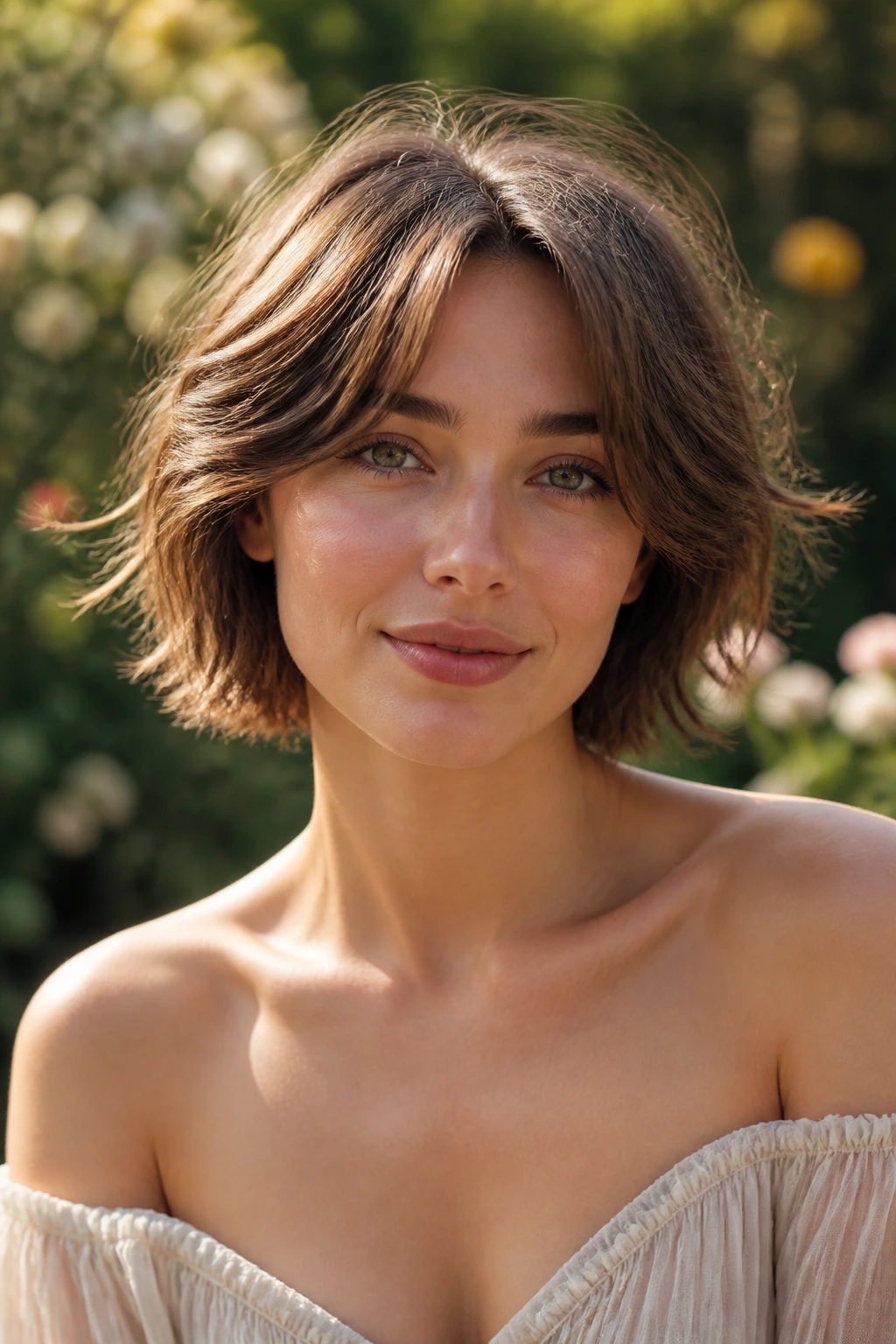
A tucked side, soft wave, or sleek pixie usually works best because it keeps the neckline open. If the dress is dramatic, a cleaner hairstyle often looks stronger than something overly full on both sides.
Can I wear a necklace with an off-shoulder dress and short hair?
Yes, but be picky. A short necklace can work with a very simple dress and a quiet hairstyle, yet many off-shoulder looks are better with earrings only because the neckline already gives you a built-in focal point.
Will these styles work on a pixie cut?
Absolutely. Pixies can do side parts, wet looks, mini pompadours, textured crowns, and small accessories especially well. The trick is to work with direction and finish instead of trying to create length that isn’t there.
How do I keep my short hair from puffing up around the shoulders?
Start with product that gives hold near the roots, then keep the sides either tucked, pinned, or smoothed down. If the ends are naturally puffy, a flat iron or round brush on the bottom inch or two usually helps more than piling on spray.
What if my hair is too short to pin back?
Use accessories that clip to the hairline, or choose a style that relies on texture and parting instead of pins. Tiny braids, sleek side sweeps, and finger waves can all work on very short cuts without forcing a full updo.
Can I do these looks with curly or coily hair?
Yes, and many of them look better with natural texture than with forced straightness. The main thing is to define the front and keep the neckline open with a tuck, clip, or controlled shape at the sides.
Should I wash my hair the same day I style it?
Not always. For many short styles, hair that’s one day old behaves better because it has more grip. If you do wash it the same day, add texture product and let the roots dry fully before you start pinning or shaping.
How do I keep the style looking good through photos and dancing?
Choose a base that has hold—pins, spray, or a good smoothing product—and then bring a few extras with you. A comb, two spare bobby pins, and a tiny hairspray can rescue a side that starts slipping after a long evening.
The Hair That Leaves the Neckline Open
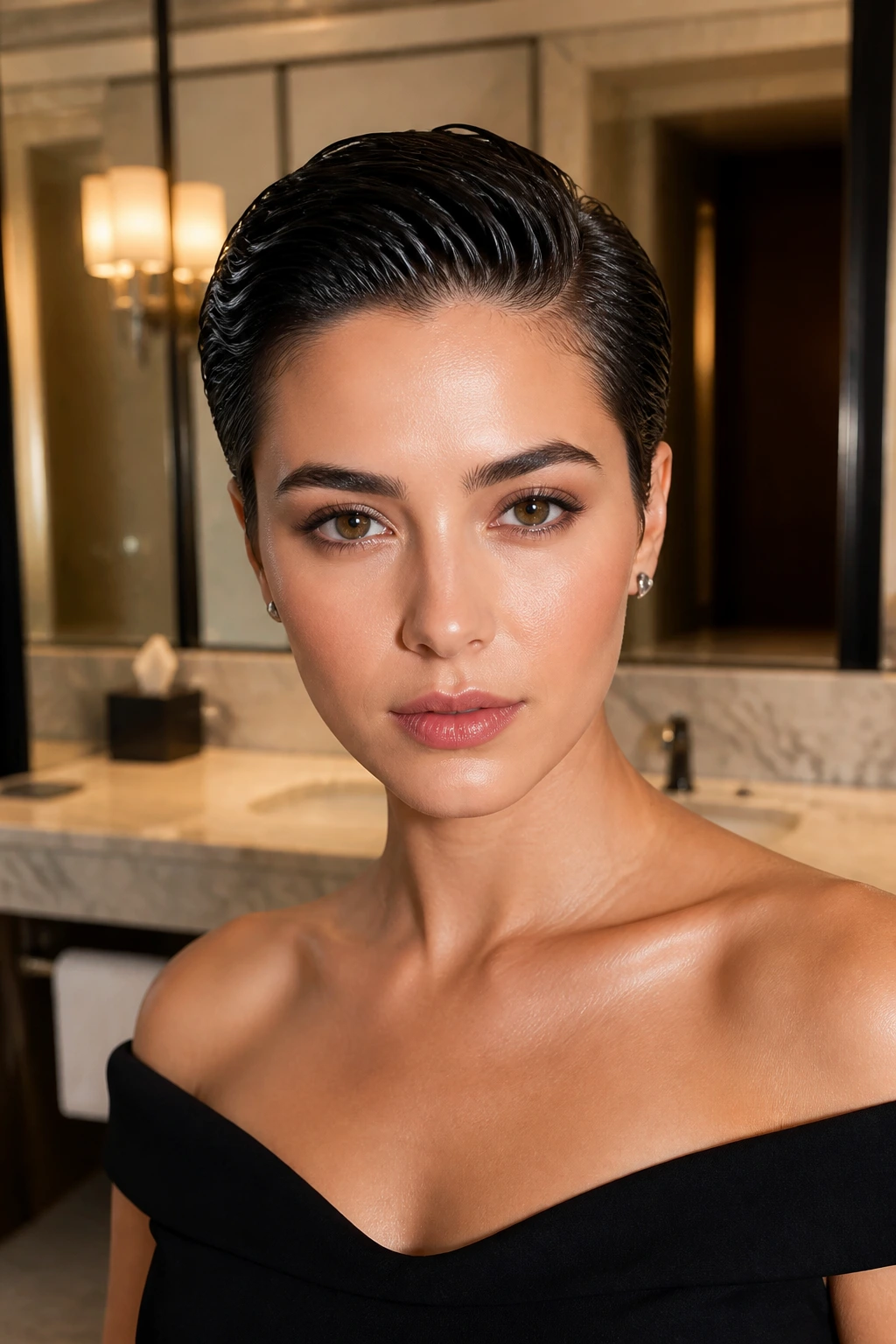
Short hair and off-shoulder dresses are a better pair than people think, mostly because the haircut has the nerve to leave space where the dress needs it. The styles that work best are the ones that respect the neckline first and decorate it second. Tucks, parts, waves, lifts, and tiny accessories can do more than a complicated updo ever will.
What I keep coming back to is this: if the shoulders are the star, the hair should frame the stage, not block the view. A clean side tuck or a little crown lift can change the whole reading of a dress in seconds.
Pick the style that matches the fabric, the jewelry, and the kind of energy you want to bring into the room, then stop before it gets overworked. That last bit is the trick. Leave the neckline open, let the short hair stay sharp, and the whole outfit settles into place.