



A heart-shaped face loves a short cut that knows where to stop. Too much lift at the crown, and the forehead starts doing all the talking. Too much blunt width at the jaw, and the whole face can feel boxed in. The sweet spot is narrower than most people think, which is exactly why hairstyles for short hair and heart-shaped faces need a little more thought than a random crop from a photo board.
The good news: you do not need to hide your face shape. You need to work with it. A good short cut on a heart-shaped face usually bends the eye diagonally, softens the temples, and gives the lower half a little more visual weight — nothing dramatic, just enough so the chin doesn’t disappear under a heavy top section. That’s the whole game.
And yes, texture matters. A fine-haired pixie behaves differently from a thick, wavy bob. A curly crop needs different shaping than a sleek French bob. The cuts below cover that spread, because real hair doesn’t sit still long enough to be flattened into one tidy category.
Why These 18 Cuts Work on a Heart-Shaped Face
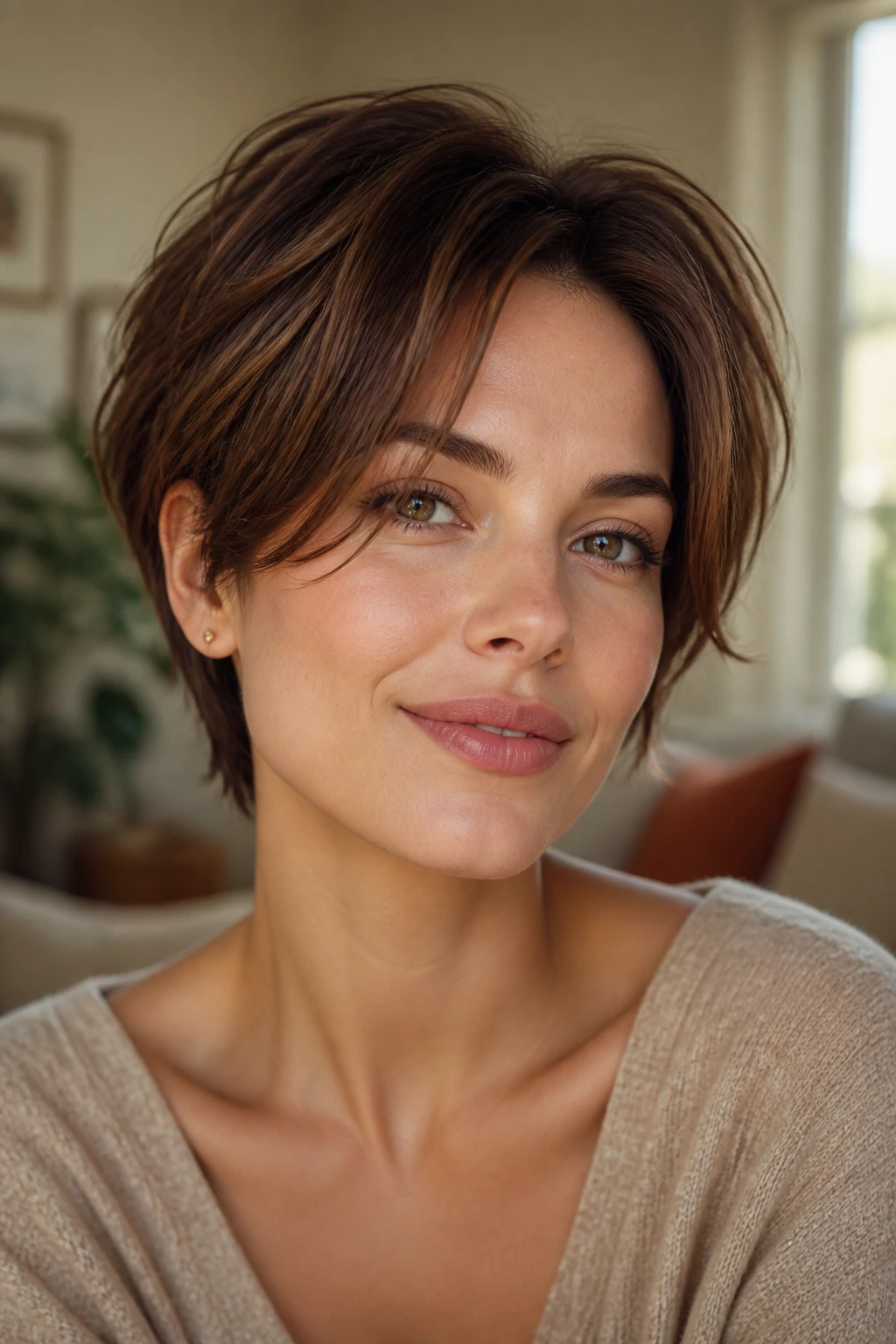
-
Temple softness matters: The widest part of a heart-shaped face is usually the forehead, so styles that leave a hard edge at the temples can make the top half feel even broader.
-
Diagonal lines do more than volume: A side-swept fringe or asymmetrical part pulls the eye across the face instead of straight up and down, which tends to soften strong angles.
-
Jaw length can be your friend: Cuts that end right at the chin or just below it can give the lower face a little more presence, especially when the top stays close to the head.
-
Texture changes the mood: A piecey pixie, a curved bob, and a curly crop can all balance the same face shape, but they do it in completely different ways.
-
Short doesn’t have to mean severe: The nicest versions here keep some movement around the cheeks or ears, so the haircut feels lived-in instead of helmet-like.
-
Grow-out should be part of the plan: A short cut that looks decent at week five is worth more than a perfect cut that collapses after ten days.
1. Side-Swept Pixie With a Long Fringe
A long fringe is doing a lot of work here, and I mean that in the best way. It crosses the forehead diagonally, breaks up width at the top, and gives a heart-shaped face a softer front edge without hiding the bone structure under a curtain of hair.
Why It Works
The magic is in the angle. A fringe that falls from a deep side part and skims one brow draws the eye away from the widest part of the face and toward the cheekbones. Keep the sides close, but not shaved tight, or the contrast gets too sharp.
- Best on fine to medium hair that needs direction.
- Ask for the fringe to land just below one eyebrow when dry.
- A little root lift at the crown keeps the cut from looking flat.
- Works well with a bit of bend in the front, not a stiff swoop.
Pro tip: Have the stylist point-cut the fringe instead of cutting it blunt. Blunt bangs can sit like a shelf, and that’s not the look you want here.
2. Feathered Textured Crop
If your hair tends to collapse by lunchtime, this is the cut that wakes it up. The shape is short and close, but the top is sliced with feathered movement, so the finish looks light instead of tight.
You want the texture to live mostly through the upper third of the head, with the sides softened just enough to avoid a blocky outline. On a heart-shaped face, that keeps attention moving around the face rather than sitting hard at the forehead.
What Makes It Different
The best version is choppy, not shredded. Ask for short internal layers and a little pieceiness around the temples. Then work in a pea-sized amount of matte paste with your fingers, pinching ends instead of smoothing them down. That bit of mess gives the haircut its shape.
3. Tapered Pixie With Lifted Crown
Can a pixie be short and still feel balanced? Absolutely — if the crown is lifted a little and the sides are kept clean and tapered. The point is not height for its own sake. The point is keeping the top from spreading outward where the forehead is already the widest part.
A tapered nape also helps the cut sit neatly against the neck, which makes the whole shape feel lighter and more deliberate. This is one of those cuts that looks better after a quick finger-dry than after a lot of fuss.
How to Style It
Use a dab of light mousse at the roots, blow-dry with your fingers lifting the crown, then finish with a small round brush only if you need direction at the front. If your hair grows fast on the sides, this one needs a trim sooner than a bob does. No mystery there.
4. Asymmetrical Pixie Bob
One side longer, one side tighter — that simple imbalance changes the whole face. On a heart-shaped face, an asymmetrical pixie bob creates a diagonal line that cuts across the forehead and shifts attention toward the mouth and jaw.
It’s a nice middle ground if you want the crispness of a pixie but you’re not ready to give up a little length. The longer side can graze the cheekbone or tuck behind the ear, and that little bit of movement keeps the style from feeling boxy.
Key Details to Ask For
- One side should sit closer to the cheek.
- The longer side should not drag past the jaw unless you want a fuller bob effect.
- Keep the nape neat so the shape stays intentional.
- Add soft texture at the ends, not chunky layers through the middle.
This cut looks best when the asymmetry is obvious enough to notice, but not so dramatic that it starts looking engineered.
5. French Bob at the Cheekbone

The French bob works on a heart-shaped face because it meets the face where the structure is already strongest: the cheekbone area. That gives the cut a clean, tidy frame without leaving the forehead exposed in a way that feels too stark.
What I like most about this version is the restraint. The line sits around the cheekbone or just under it, the ends are soft rather than blunt, and the whole thing can be worn with a slight bend. That bend matters. Straight-down ends can get harsh fast, especially if your jaw is narrow.
A middle part can work here if the fringe is soft. A side part often feels easier. Either way, the bob should move a little when you turn your head — not swing, just shift. That small motion stops the shape from turning rigid.
6. Layered Bixie With Soft Ends

A bixie sits between a bob and a pixie, and that in-between length is useful when you want short hair without the commitment of a cropped top. On a heart-shaped face, the soft ends matter more than the exact length.
The extra layers keep the top from looking flat, while the slightly longer sides create a narrow frame that does not shout at the forehead. It’s especially good if your hair has a little wave. Straight hair can wear it too, but it benefits from a touch of bend at the front.
What Makes It Different
This is the cut for people who want movement around the head, not just volume on top. Tell your stylist you want the front piecey, the nape clean, and the top lightly layered so it can fall forward instead of puffing up. That last part is the difference between airy and awkward.
7. Curtain-Bang Bob

A curtain-bang bob works because it opens the center of the forehead just enough while still breaking up the width of the face. The bangs slide outward from the middle, which gives a heart-shaped face a softer top half without covering everything.
The bob itself should sit around chin length or a touch above it. Any shorter and the shape can start to fan outward at the sides. Any longer and it drifts away from the short-hair category entirely. The clean part here is not a flat center part; it’s a loose opening that lets the fringe fall into the face.
How to Wear It
Blow-dry the bangs first, side to side, so they don’t split in odd places. Then use a round brush only on the ends of the bob if they need a bend. The haircut lives or dies on the fringe, honestly. Get that right and the rest is easy.
8. Mini Shag With Feathered Temples
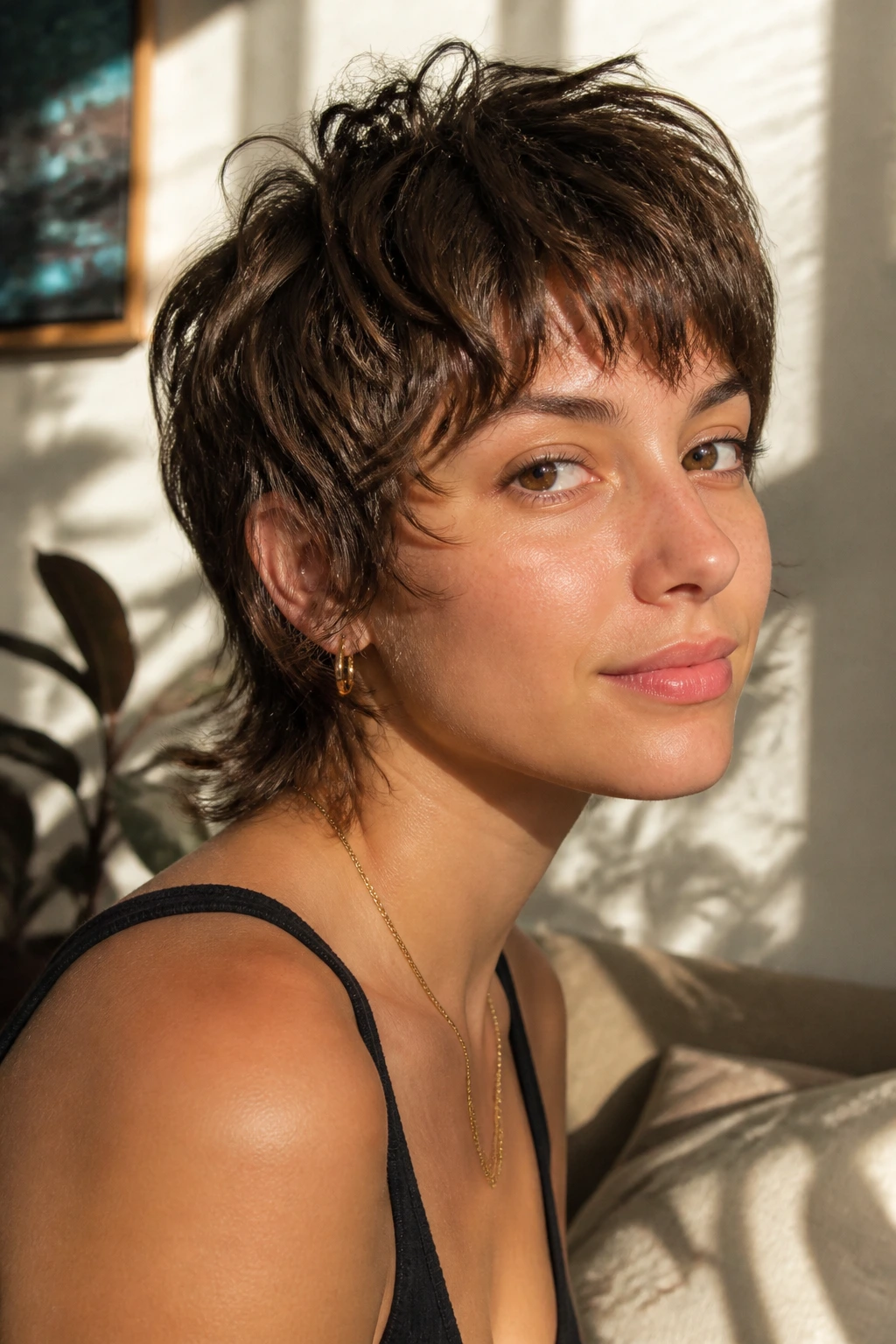
A mini shag is short hair with a little attitude, but the good version doesn’t go ragged. On a heart-shaped face, feathered temples keep the cut from widening the forehead while the layered crown gives you a bit of lift and movement.
This is one of the better choices if you like an air-dried finish. The layers fall into each other instead of sitting in a strict line, which means the style keeps some shape even when you’re not fighting it with a brush. It’s not polished. That’s the point.
- Best for wavy hair or straight hair with a slight bend.
- Ask for soft layering around the temple area.
- Keep the nape tidy so the shag doesn’t turn shaggy in the wrong way.
- A light texturizing spray is usually enough; heavy wax can weigh it down.
9. Slicked-Back Pixie for Strong Features
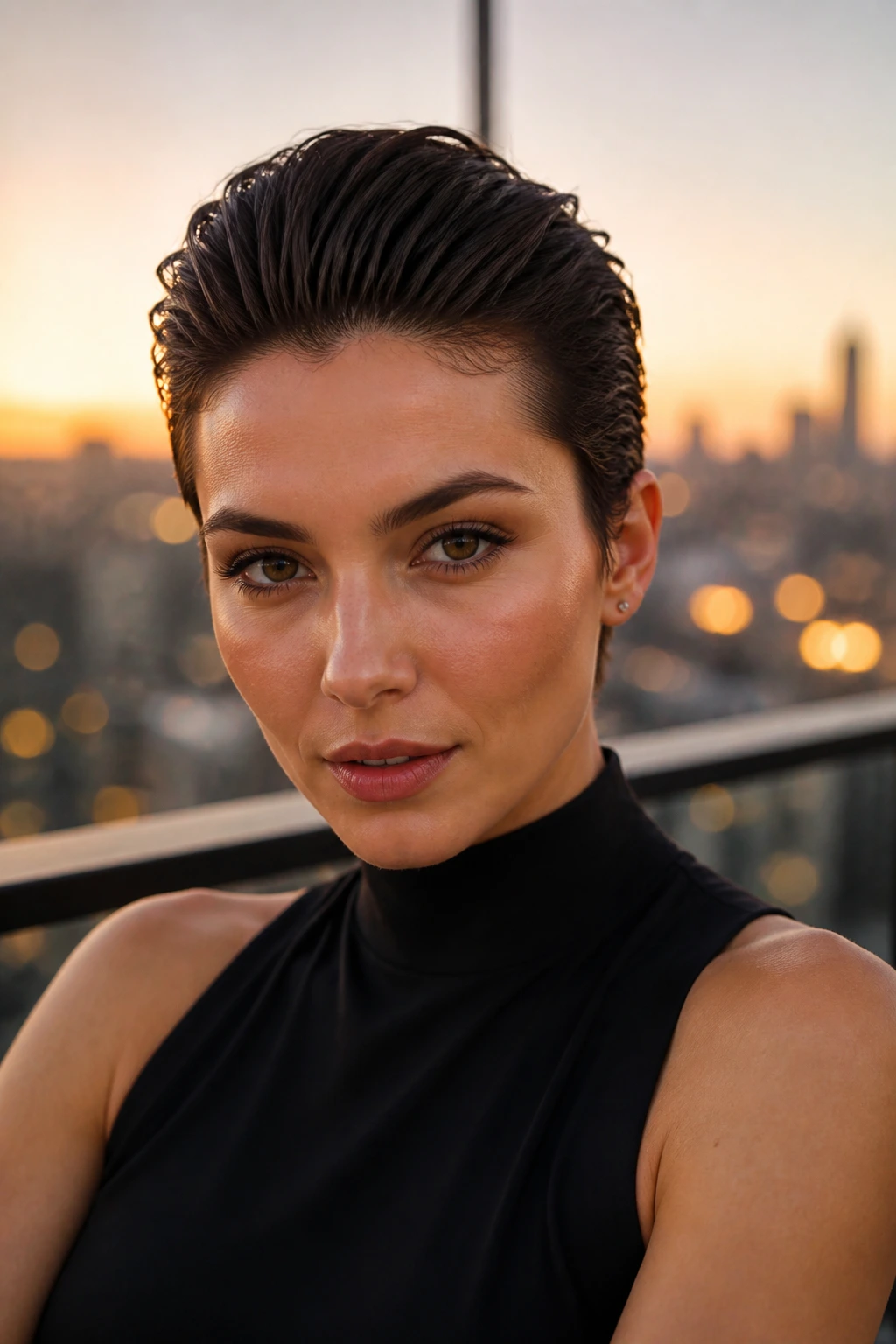
This one is for the days — or the people — who like a sharper line. A slicked-back pixie shows the forehead on purpose, which can sound risky for a heart-shaped face, but it works when the cheekbones and jaw are doing enough work already.
The trick is not to pile height on top. Keep the silhouette close to the skull and sweep the front back with a small amount of gel or cream. That gives the face a clean outline and lets the bone structure do the talking.
It’s not a cut for every day if you hate product. Fine. But for evenings, sharp jackets, or a face that can carry a strong line, it’s hard to beat.
10. Rounded Crop With a Side Part

A rounded crop softens the top of the face without flattening it. The outline curves gently around the head, which is useful when a heart-shaped face needs less width at the forehead and more softness near the temples.
The side part matters because it breaks the symmetry. A center part can sometimes feel too strict on this face shape, especially when the crop is short. A side part lets one side fall a little heavier, which gives the lower half of the face more visual weight.
If your hair is dense, ask for internal thinning only where needed. Too much can make the top flimsy, and that’s a fast way to lose the clean curve that makes this cut work.
11. Ear-Tucked Jaw-Length Bob
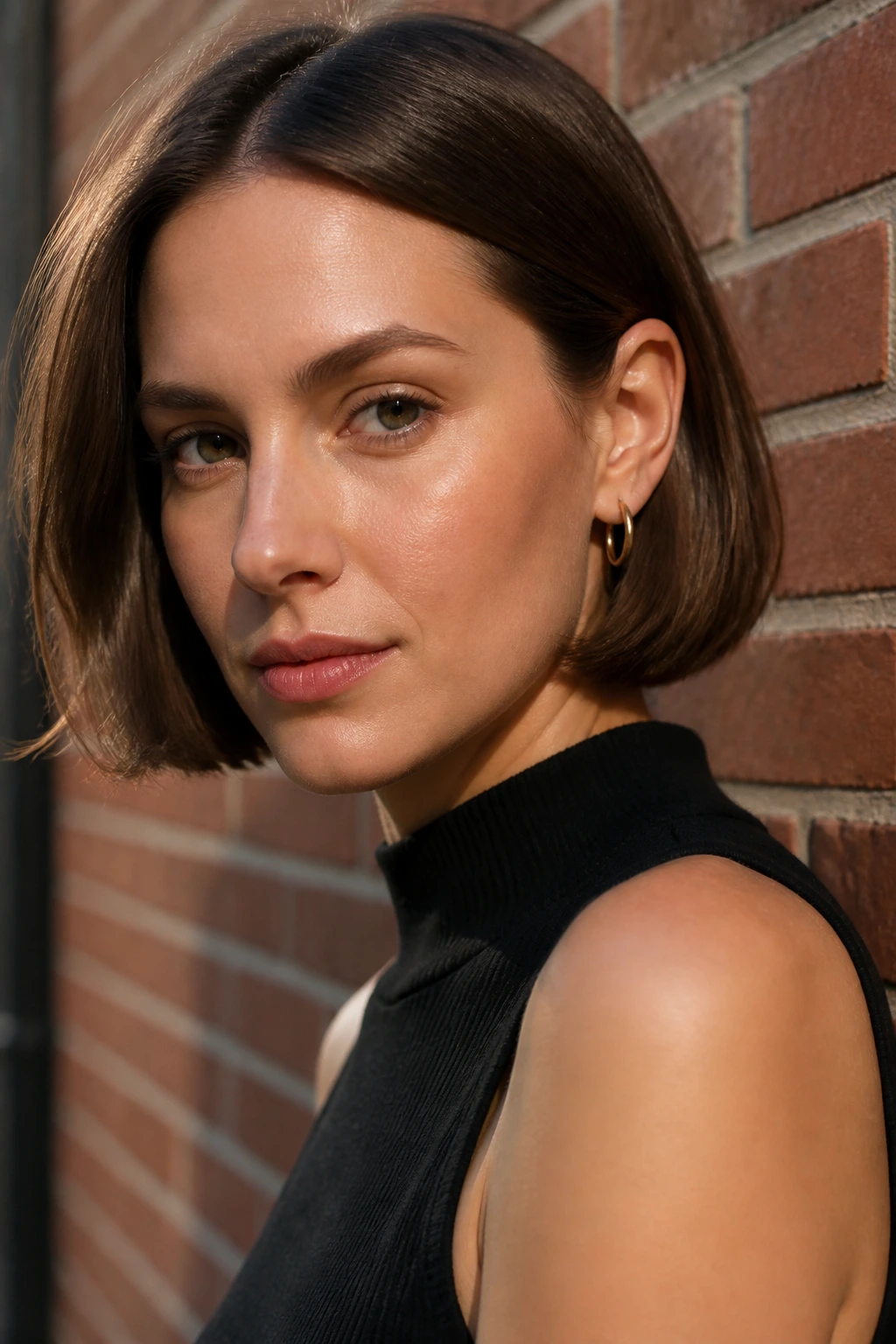
What happens when the bob lands right at the jaw and can be tucked behind the ear? The face gets framed in a way that feels deliberate, and the jawline gets a bit more presence, which heart-shaped faces often need.
This is a practical cut, not a precious one. It sits close enough to the head to feel neat, but the slightly longer front sections can move around the cheek and chin. That movement is what keeps it from turning severe.
I like this shape best on straight or softly wavy hair. If your hair flips out at the ends, ask for a tiny bit of beveling so the bob bends under instead of kicking out like it has somewhere better to be.
12. Piecey Crop With a Deep Side Part
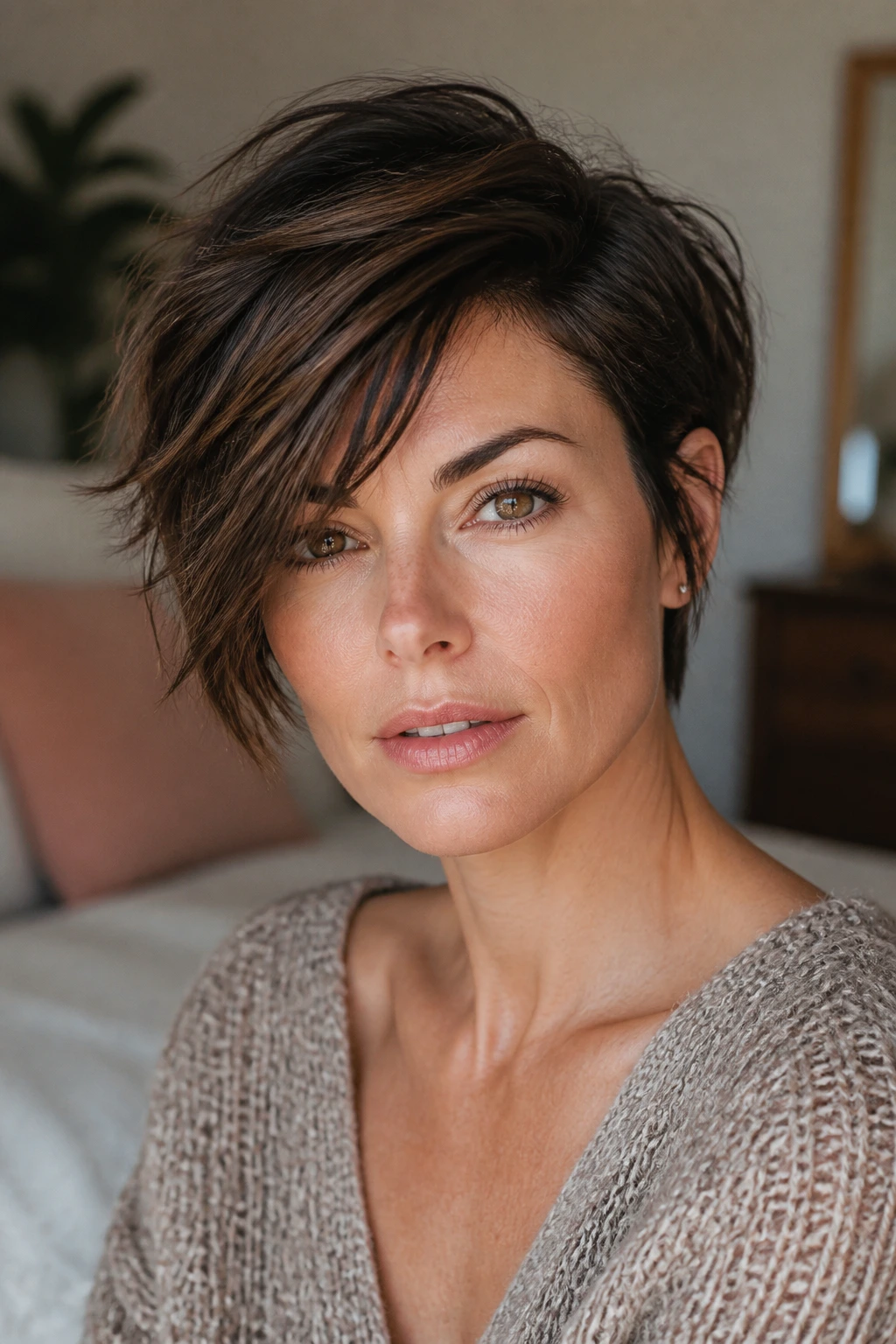
A deep side part changes everything. It pulls the front weight to one side, breaks up forehead width, and gives a heart-shaped face a clean diagonal that feels a little more relaxed than a center line.
The crop itself should stay short and separated, not smooth and helmet-like. Use a little paste, work it through dry hair, and pinch small sections apart. You do not need every strand behaving. A few loose pieces around the temple make the shape look softer and more human.
Why It Works
The deep part creates movement; the piecey texture prevents bulk. Together, they keep the haircut from sitting square on the head. That’s the whole point.
13. Wavy Boyish Cut With Temple Fringe
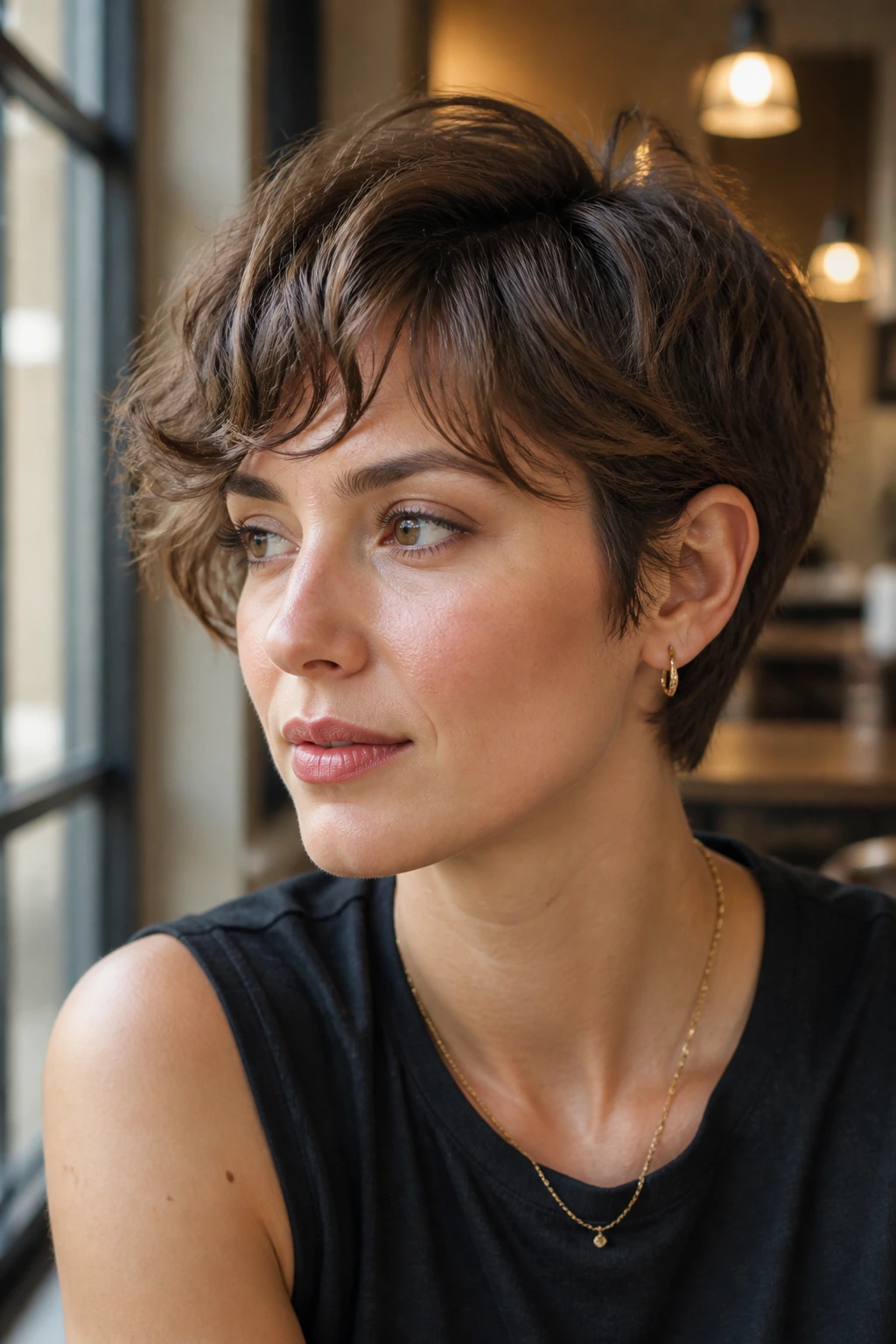
There’s something especially good about a boyish cut that keeps one soft edge. On a heart-shaped face, that soft edge usually belongs at the temple, where a little fringe can blur the transition between forehead and cheek.
This cut is short, casual, and not trying too hard. The wave does the styling for you, which means the haircut needs to be shaped to the hair’s natural bend instead of fighting it. If the wave is encouraged, not flattened, the result is easygoing rather than messy.
Ask for a little length in the front pieces and shorter sides that still have movement. If the temple fringe is too sparse, it can disappear. Too heavy, and it starts to swallow the face. Small adjustments matter here.
14. Micro Bob With an Under-Cheekbone Curve
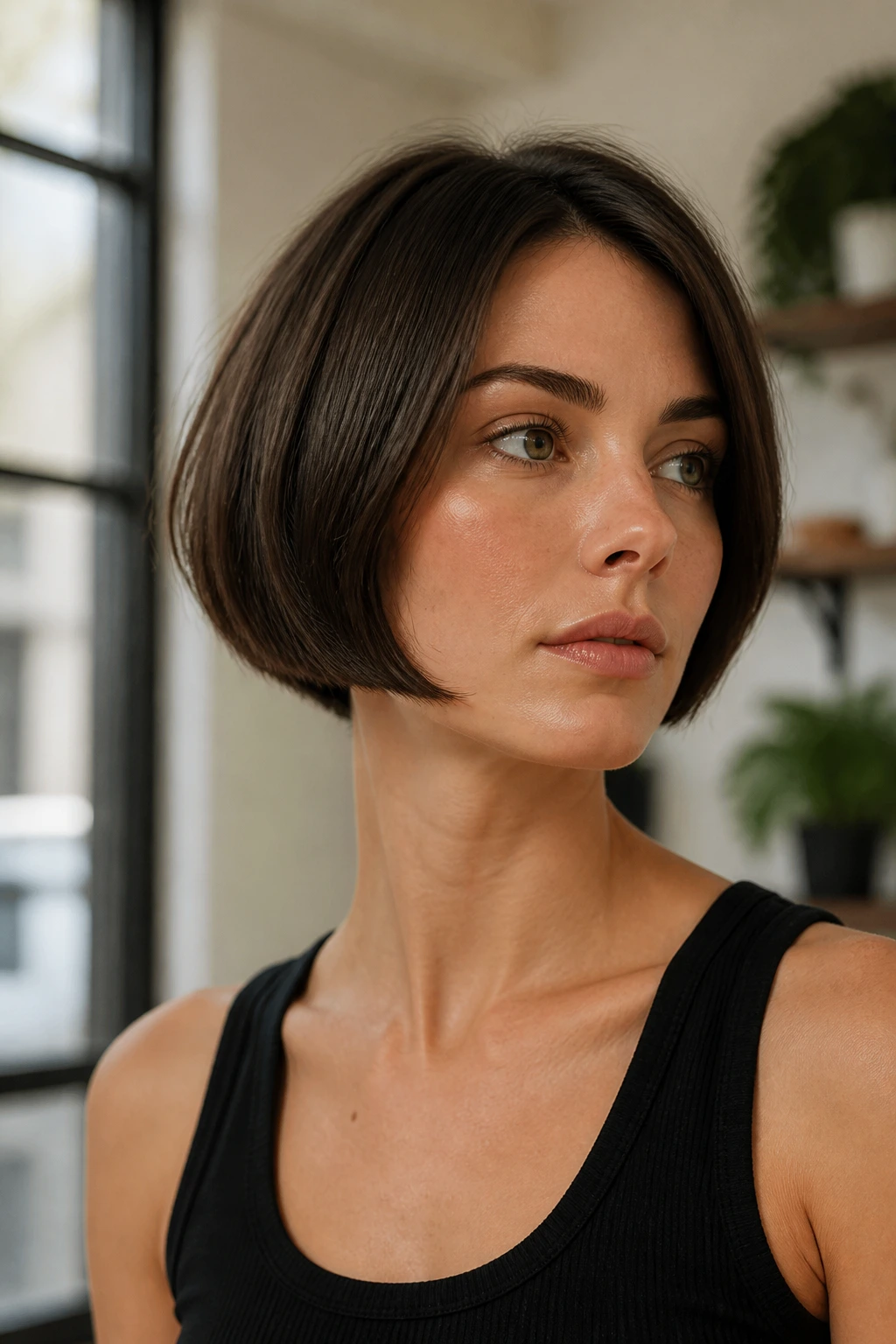
A micro bob can be a smart choice on a heart-shaped face when the line sits just under the cheekbones. That placement matters. It gives the lower face a bit more visual width without cutting straight across the widest part of the forehead.
The ends should curve under slightly, not flip out. That soft bend makes the shape feel more polished, and it keeps the bob from turning into a hard geometric block. If your hair is very straight, a quick pass with a small round brush or flat iron bend usually does the trick.
This cut is more severe than a French bob, so it suits people who like structure. If you prefer softness first, move on. If you like a crisp outline, this one has a nice edge.
15. Undercut Pixie With a Soft Top Sweep
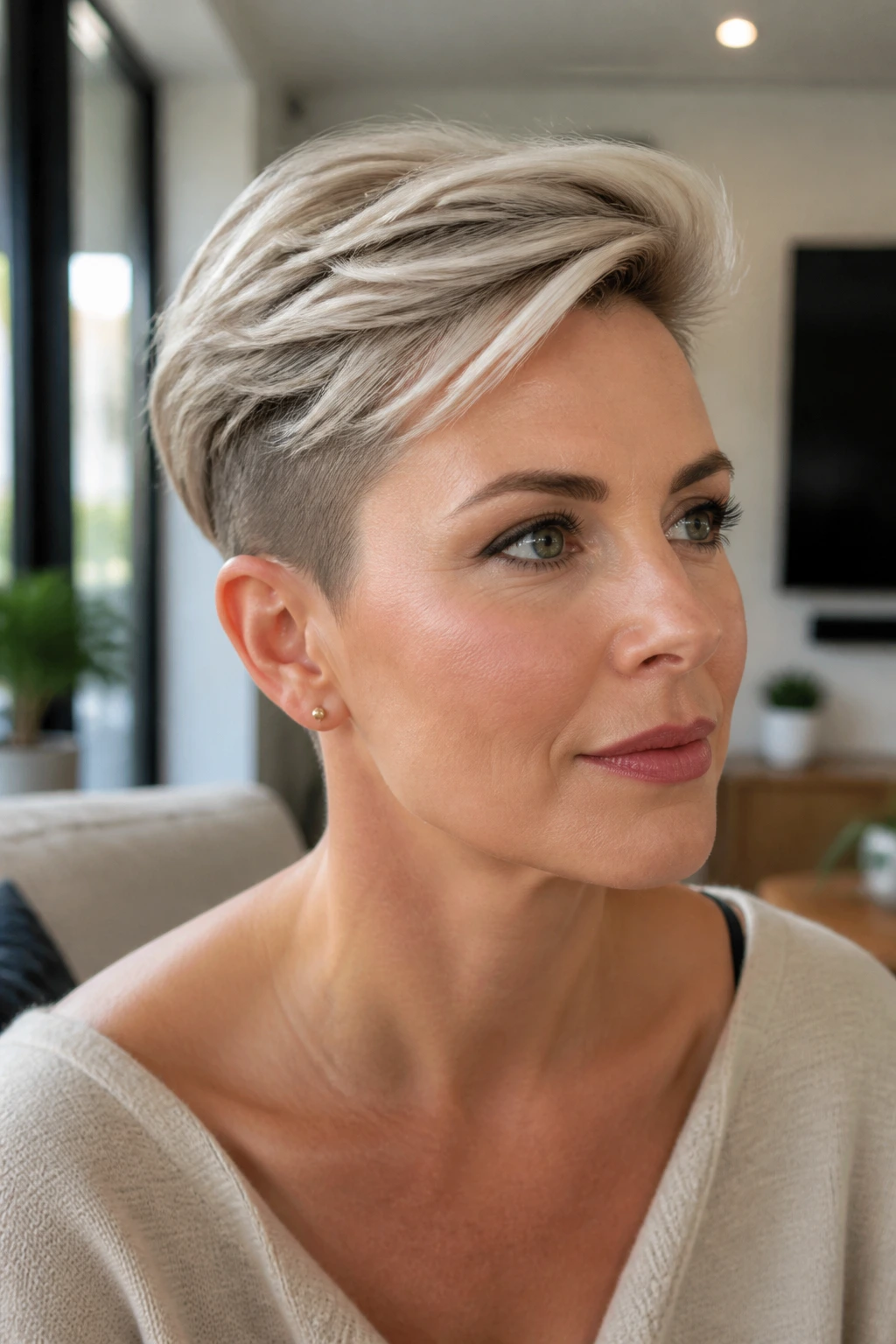
Thick hair can make short cuts feel bulky fast. An undercut pixie solves that by removing weight where you do not need it, usually through the nape or the lower sides, while leaving the top long enough to sweep softly across the head.
That top sweep is the face-shape saver. It redirects attention away from the forehead and gives the eye a diagonal path. The undercut keeps the silhouette neat so the cut doesn’t puff outward like a mushroom. Harsh word, but accurate.
This one feels especially good if you want short hair that dries quickly and sits close without looking flat. The top should still have bend. Flat and undercut together can look too bare on a heart-shaped face.
16. Curly Short Cut With Crown Lift
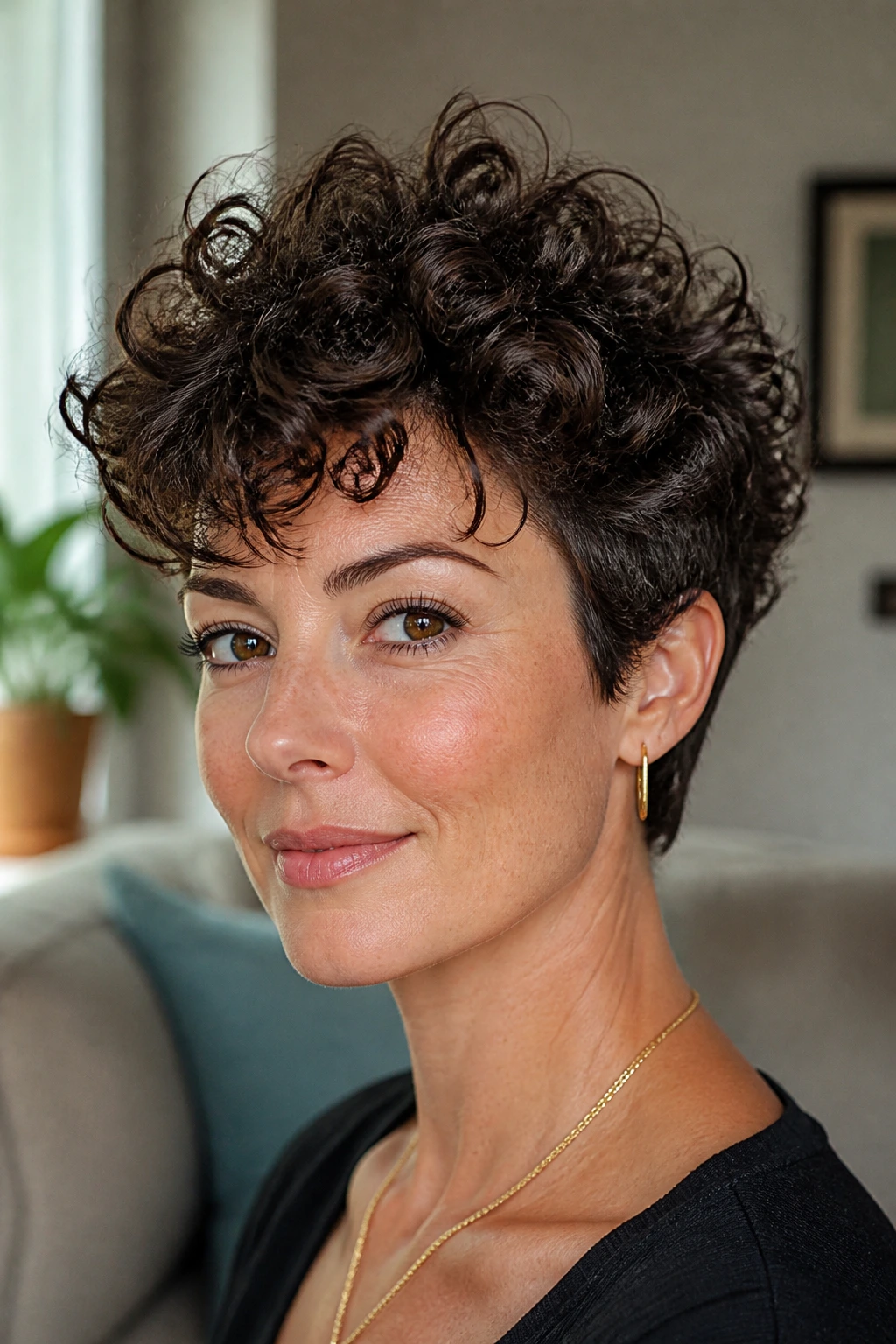
Curly hair changes the math. A curl pattern naturally adds width, so on a heart-shaped face the shape has to be controlled near the temples and encouraged upward at the crown, not out to the sides.
A good curly short cut keeps the curls layered enough to spring, but not so thinned-out that the shape frizzes away. The top can carry a bit of lift while the sides stay softer and more compact. Shrinkage matters here. Always. What looks chin length wet may land well above the jaw dry.
Ask for the cut to be shaped on dry curls if possible. That gives the stylist a real read on where the volume lands. Wet-cut curls can be a gamble, and with a heart-shaped face, the wrong guess shows fast.
17. Choppy Bowl Cut With Soft Breakup
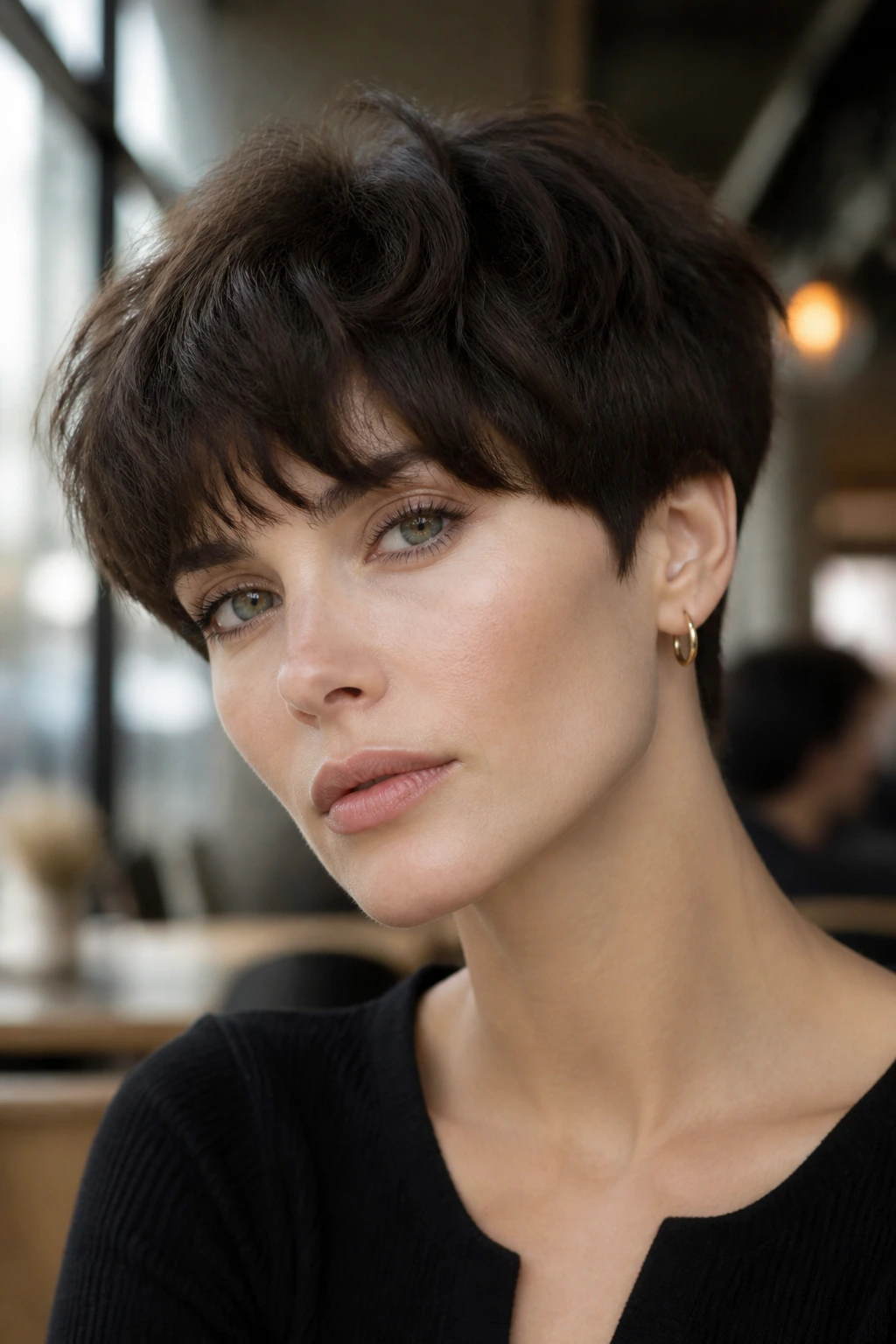
A bowl cut can sound brutal if you’re thinking of the old mushroom shape from childhood photos. The modern version is different. It’s choppy, broken up, and softened so the line no longer sits like a helmet.
On a heart-shaped face, the trick is to keep the fringe and side pieces light enough to avoid widening the forehead too much. The round shape should be interrupted with texture. That breakup keeps the cut from feeling too perfect, which is exactly what makes it wearable.
If your stylist talks about slicing out weight around the temples and adding tiny internal gaps through the top, pay attention. That’s the version that works. The sealed-up, glossy bowl is a harder sell unless your face shape is very strong elsewhere.
18. Sleek Jawline Bob With a Long Front Piece
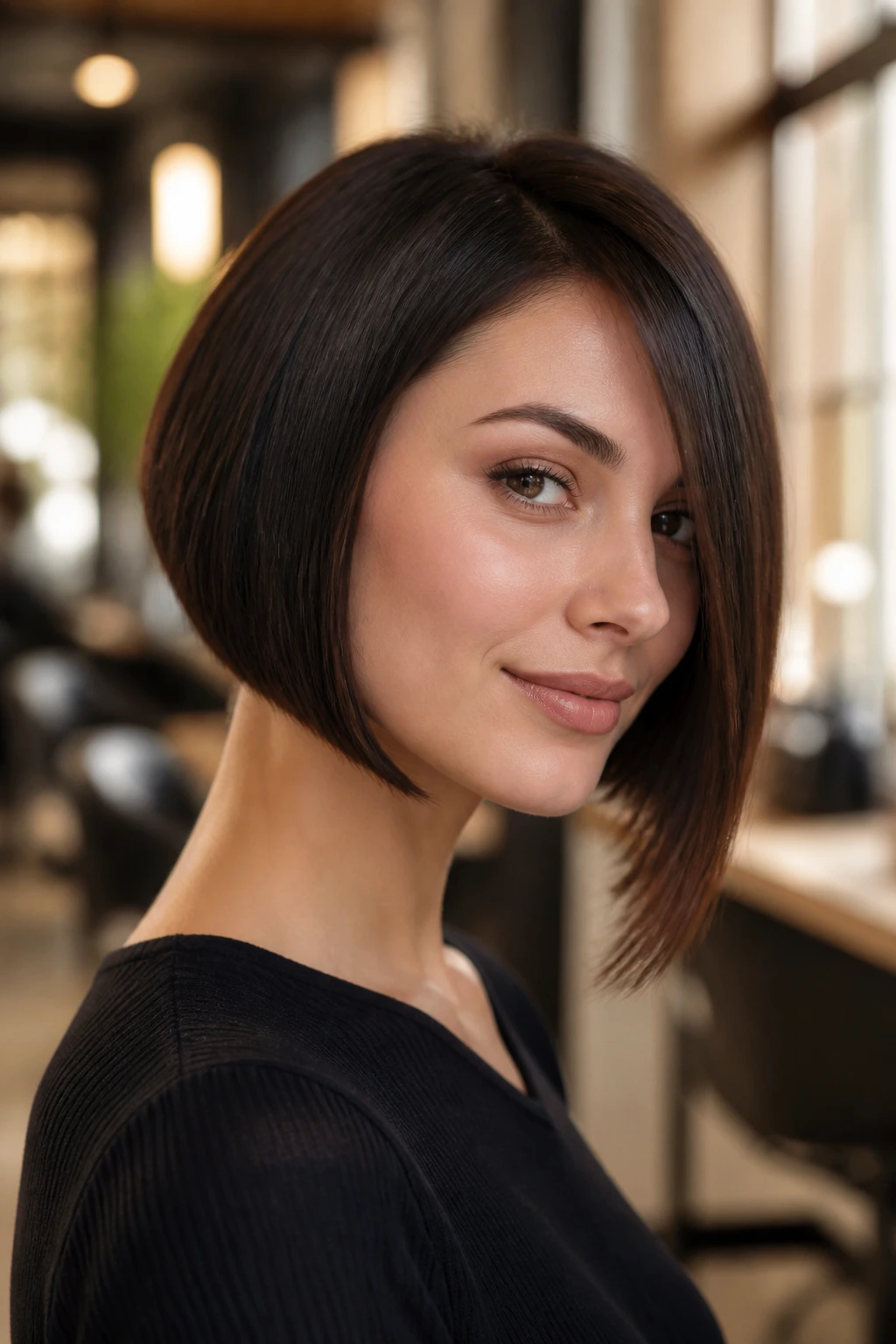
A sleek bob that lands at the jawline can be very good on a heart-shaped face, provided one front piece stays a little longer. That longer front section gives the lower face a vertical line, and vertical lines are your friend when the forehead is the widest point.
Keep the finish smooth but not pin-straight to the point of severity. A slight inward bend at the ends makes the bob feel cleaner and less sharp. If the line is too blunt, the face can look cut off. If it’s too wispy, the shape loses its shape, which sounds obvious until you see it in a mirror.
This is the cut for someone who likes polish and doesn’t mind a comb. It looks crisp with a side part, but a soft middle part can work if the front piece has enough length to do its job.
What a Heart-Shaped Face Needs From a Short Cut
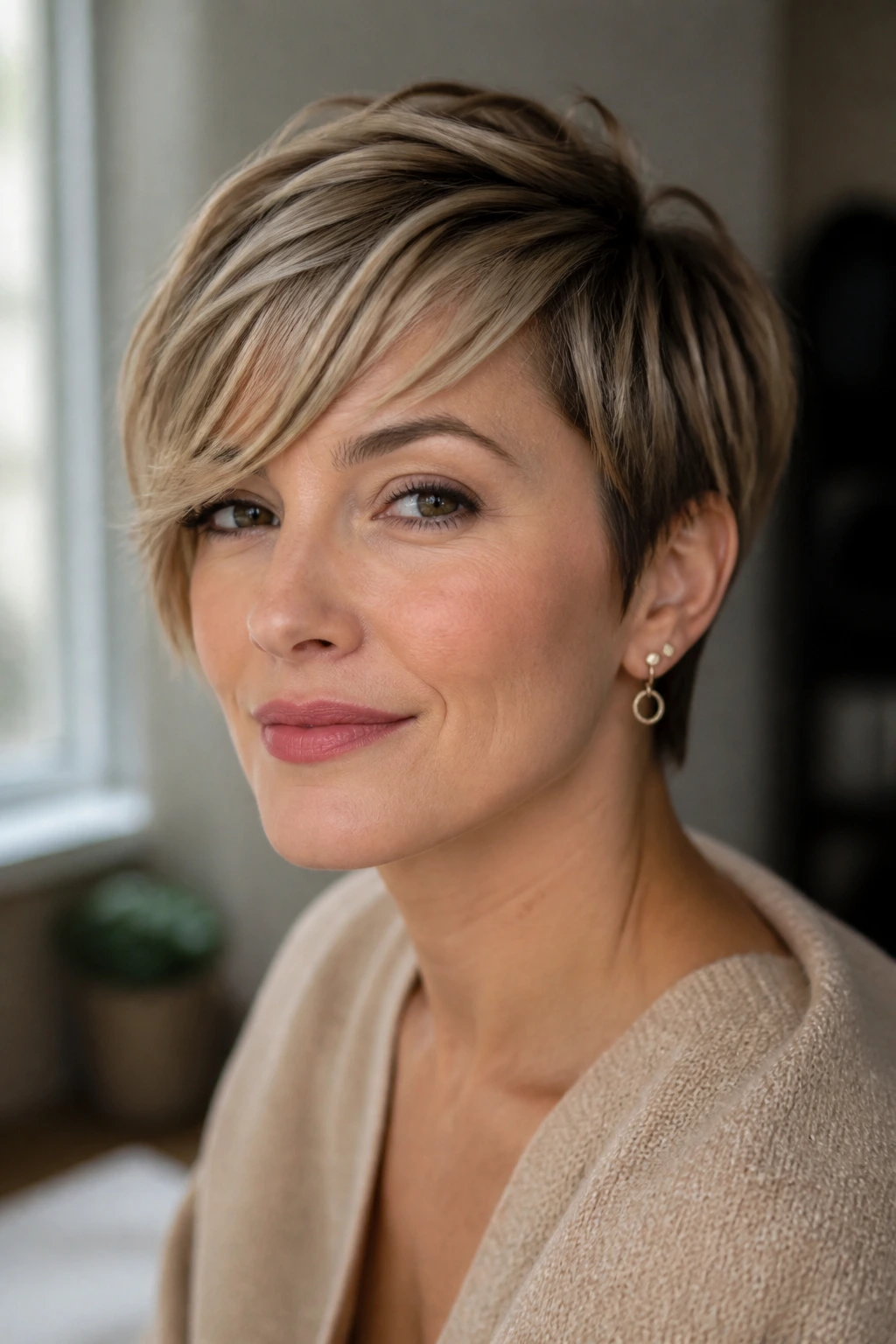
A heart-shaped face asks for balance, not disguise. The forehead is usually the widest point, the cheekbones sit high, and the chin narrows out below. That means a short cut should either soften the top third or give the lower third a little more visual weight. Ideally both.
A lot of people go wrong by chasing volume in the wrong place. More height at the crown can look cute in a photo and odd in motion. More width at the cheekbones can be lovely, but if the line stops dead at the temples, the face can feel wider on top than it actually is. The cut should guide the eye, not trap it.
The shape you’re really building
Think in diagonals. Side-swept fringe, asymmetry, tucked sides, cheekbone-grazing ends — those are the moves that help. Blunt horizontal lines are not banned, but they need softness around them or they take over the face.
And if your hair is dense, especially around the crown, the stylist needs to remove weight in the right spots. Not all thinning is good thinning. A lot of people ask for “texture” and end up with frizzed-out ends and a hollow top. Different thing entirely.
How to Choose the Right Fringe, Part, and Length
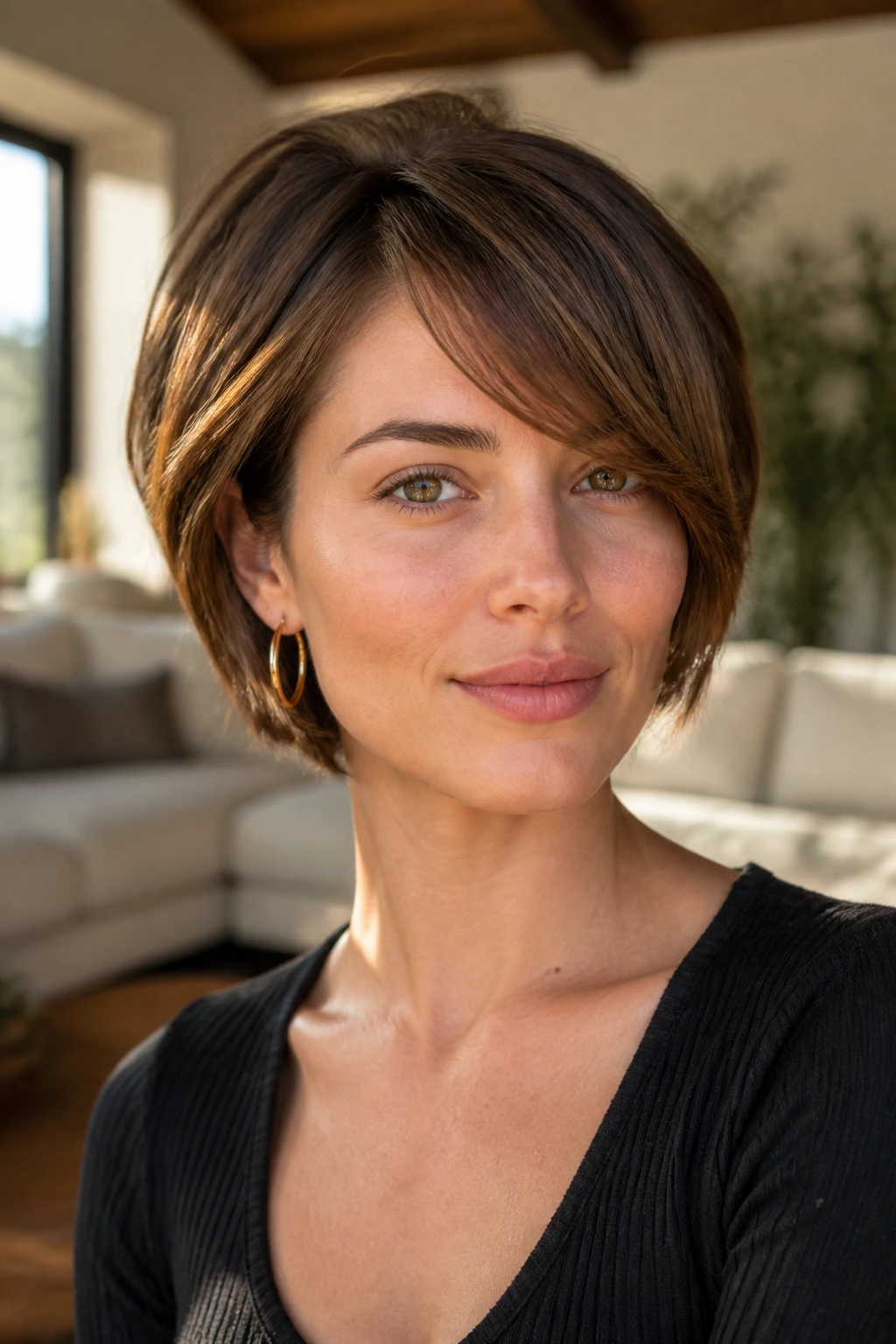
The fastest way to make a short cut work on your face shape is to get the front section right. Fringes and parts do more visual correcting than most people think, and a heart-shaped face lives or dies by that first line across the forehead.
If your forehead feels prominent, a side-swept fringe or curtain bang usually softens it without hiding it. If your forehead is not the part you want to play down, a center part with softer front pieces can work fine — just keep the sides from bulking out. Length matters too. Chin-level bobs and cheekbone-level pixies sit in the sweet zone for many heart-shaped faces because they restore a little weight below the face.
Bring this phrase to the stylist: “I want softness at the temples and a little more balance through the jaw.” That sentence says more than “I want something cute,” and it gives the cutter a real target.
Texture changes the answer
Fine hair likes lightweight shaping and maybe a touch more fringe. Thick hair needs debulking in the right places. Curly hair needs curl-by-curl awareness, not a one-length shortcut. Straight hair can get away with cleaner edges, but it often needs a little bend so the cut doesn’t look flat and over-planned.
Daily Styling Moves That Keep the Shape Intact
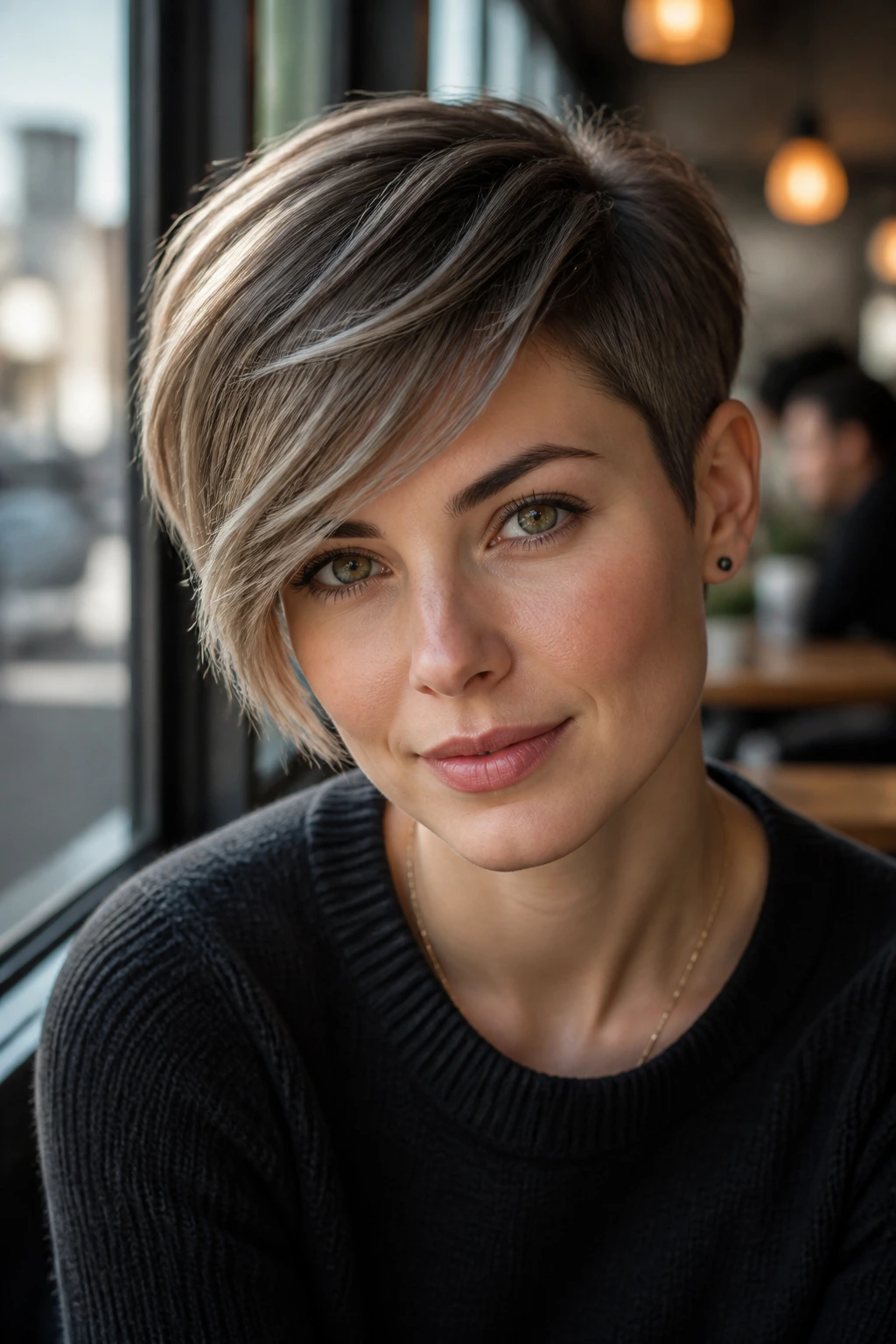
Short hair on a heart-shaped face usually looks best when the styling is quick and slightly messy around the edges. Not sloppy. Just not overworked. If you spend fifteen minutes forcing every piece into place, the haircut starts looking hard instead of balanced.
Root lift first: A small blow-dry at the crown, using your fingers or a narrow brush, gives enough lift to keep the top from collapsing. Stop once the roots are dry. You do not need helmet volume.
Shape the front while it’s damp: Fringe and front pieces are where the face shape is corrected, so give them attention before the rest of the head dries. A side sweep or soft bend is easier to set early.
Use less product than you think: One pea-sized dab of paste, cream, or wax is usually enough for a pixie or crop. More product can make the top piecey in the wrong way — sticky instead of separated.
Finish with fingers, not a brush: A brush can flatten the softness you just built. Fingers keep the texture airy and a little imperfect, which is usually the better look on short hair anyway.
Common Mistakes That Make Heart-Shaped Faces Look Top-Heavy
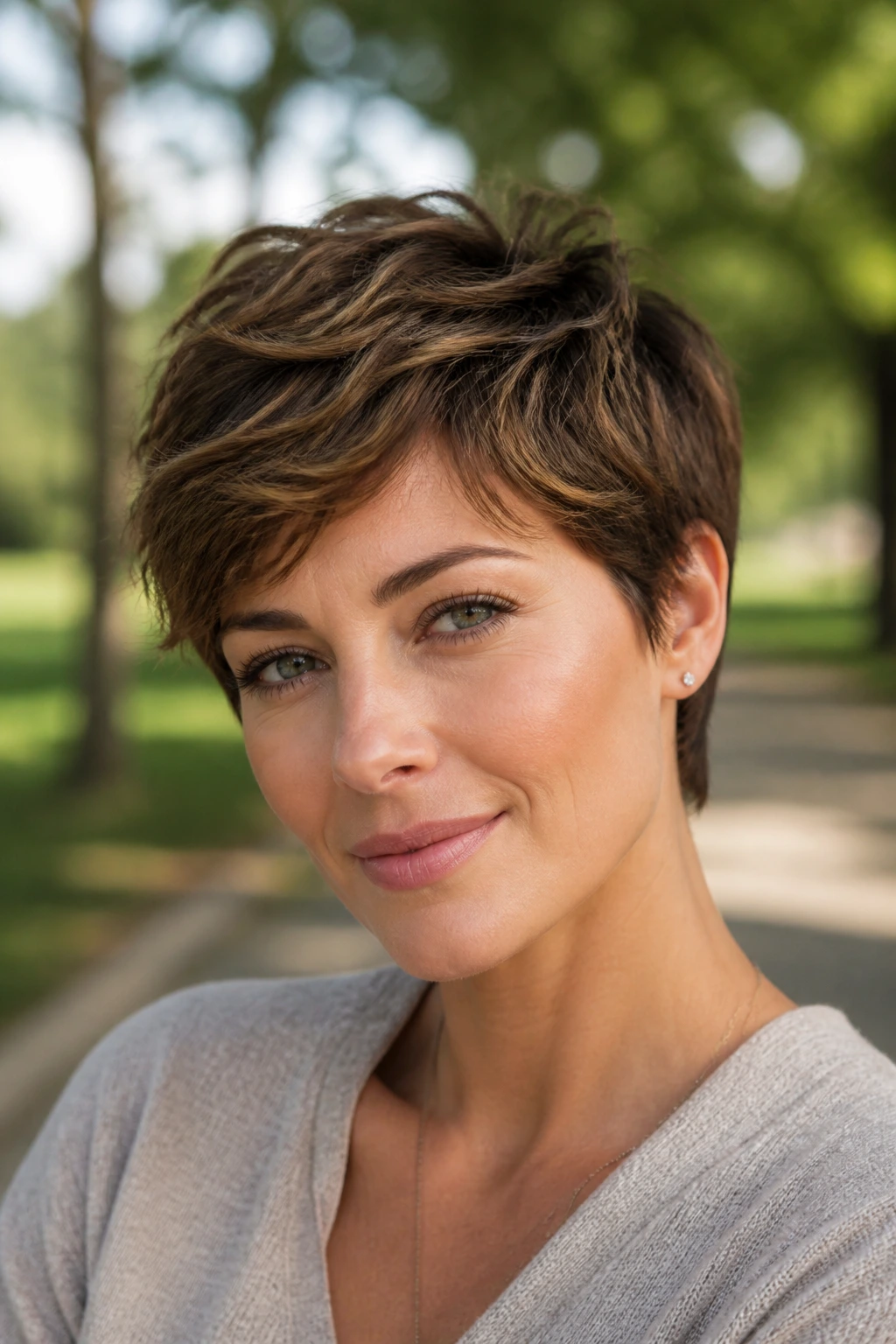
The most common problem is too much height at the crown. You see it in cuts that look chic from the front and odd from the side, because the eye keeps going upward instead of settling on the face. The fix is simple: keep the crown lightly lifted, not stacked.
Another mistake is a blunt, short fringe that ends straight across the forehead. It chops the face in half and can make the forehead feel broader than it is. A softer edge, side sweep, or curtain break usually works better.
Then there’s the over-thinned pixie. If the ends are shredded too much, the haircut loses its shape and starts frizzing instead of moving. The fix is to remove weight where the hair is bulky, not everywhere at once.
- Too-bare sides: If the temple area is shaved too close on an already broad forehead, the contrast can feel harsh. Leave some softness.
- Ignoring shrinkage: Curly and wavy cuts often look shorter once dry. Plan the length with that in mind.
- Skipping trim appointments: Short hair shows growth fast. A clean outline can turn fuzzy in three or four weeks.
Variations and Alternatives to Try

The Soft-Forehead Version
Choose a longer side fringe or a curtain piece if your forehead is the area you want to soften most. This works across pixies, bobs, and bixies, and it’s the easiest change to make if you like everything else about the cut.
The Air-Dry Wave Version
If your hair has natural bend, ask for layers that encourage it instead of forcing a polished finish. This keeps the style relaxed and saves you from daily heat styling.
The Debulked Thick-Hair Version
For dense hair, keep the nape tighter and ask for internal weight removal through the sides. That gives the haircut a lighter line and stops it from ballooning around the temples.
The Curly Halo Version
Curly hair can wear these shapes beautifully when the cut is shaped to preserve curl clumps. The goal is controlled width, not flattened sides. Good curl cuts on heart-shaped faces are often a little longer than people expect.
The Grown-Out Bixie Version
If you want less maintenance, let the layers stay slightly longer and blur the line between bob and pixie. This version grows out more cleanly and gives you a softer silhouette between salon visits.
Tools and Products That Actually Help Short Hair Behave
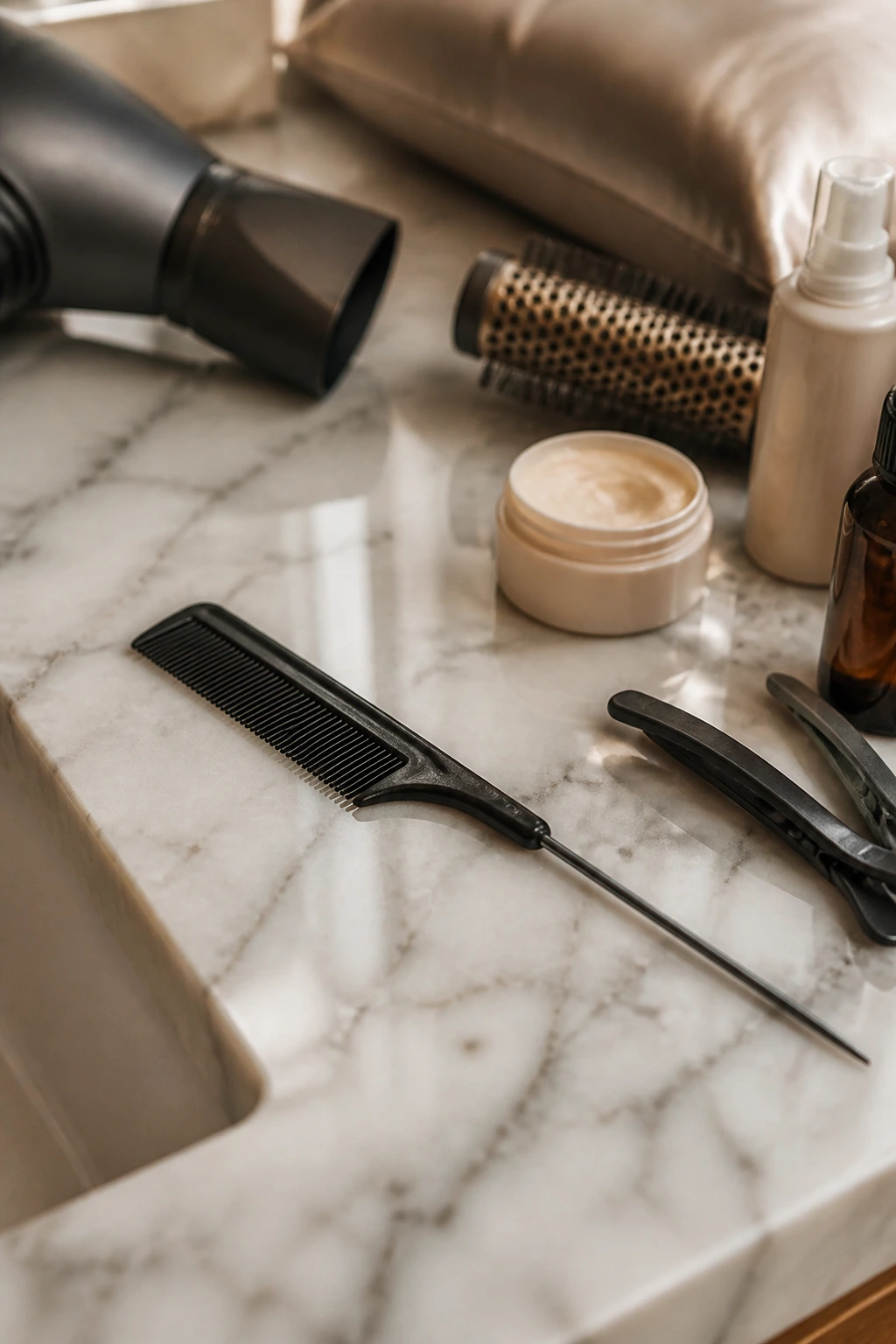
- Tail comb: Useful for creating a clean side part and lifting small sections at the root.
- Blow dryer with a nozzle: Directs airflow where you want it; a cheap dryer without control tends to puff hair in the wrong places.
- Small round brush: Best for shaping bangs, front pieces, and a slight bend at the ends of a bob.
- Matte paste or styling cream: Helps short styles stay piecey without looking greasy.
- Light mousse: Good for fine hair that needs root support before blow-drying.
- Texturizing spray: Adds grip to feathered crops and pixies without making them stiff.
- Duckbill clips: Handy for setting the front section or clipping fringe in place while it cools.
- Silk or satin pillowcase: Cuts down on friction, which matters more with short hair than people think.
- Dry shampoo: Useful between washes, especially for keeping crown lift alive.
How to Talk to Your Stylist Without Getting a Surprise
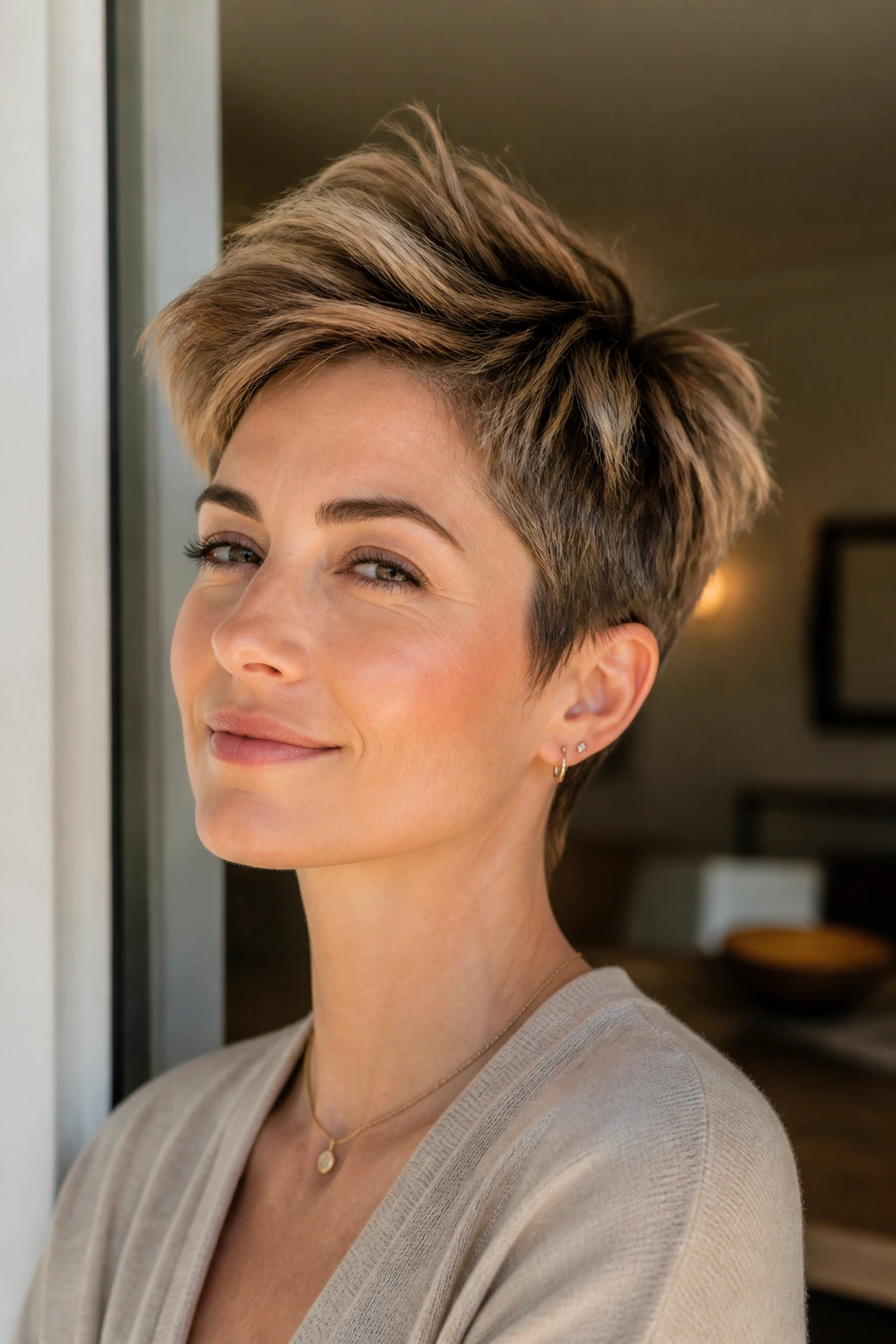
Bring a photo, but bring words too. A good photo shows length and texture. Your words should describe where the weight should sit. For a heart-shaped face, that means saying things like “soft around the temples,” “not too tall on top,” “length at the jaw or cheekbone,” and “fringe that sweeps, not sits straight.”
Tell the stylist how you wear hair on your worst day. Air-dry only? Heat style once a week? Need it to tuck behind one ear for work? Those details matter more than vague style labels. A pixie on someone who uses a flat iron is a different animal from a pixie on someone who washes and goes.
And say this out loud if it’s true: “I don’t want a haircut that needs a full restyle every morning.” That sentence saves time, money, and a lot of irritation.
Maintenance and Grow-Out Between Trims
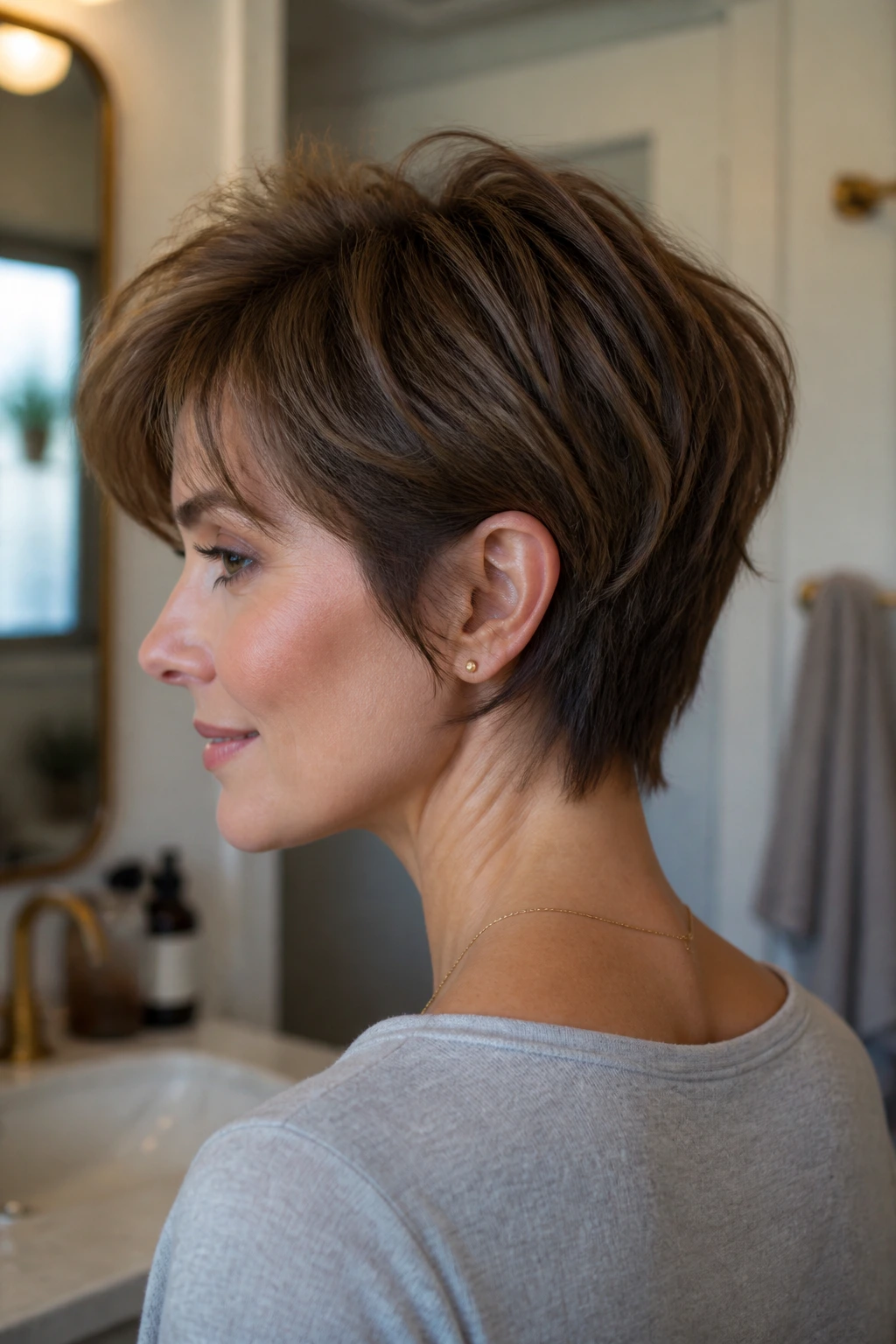
Short cuts are honest about growth. A pixie can start losing its shape in four to six weeks, especially around the nape and ears. Bobs usually buy a little more time — six to eight weeks if the line is forgiving — but the front fringe still needs attention sooner if it falls into your eyes.
At home, a little maintenance goes a long way. If the crown starts flattening by day two, refresh only the roots with dry shampoo and a quick finger-lift, not a full wash. For a fringe, a damp comb and a 30-second blow-dry can reset the whole front. That tiny effort is usually enough.
If you’re growing a short cut out, don’t trim everything equally. Let the nape soften first, keep the top pieces controlled, and ask for shape preservation rather than a hard reshaping every visit. That lets the cut move from pixie to bixie to bob without hitting the awkward stage all at once.
Frequently Asked Questions
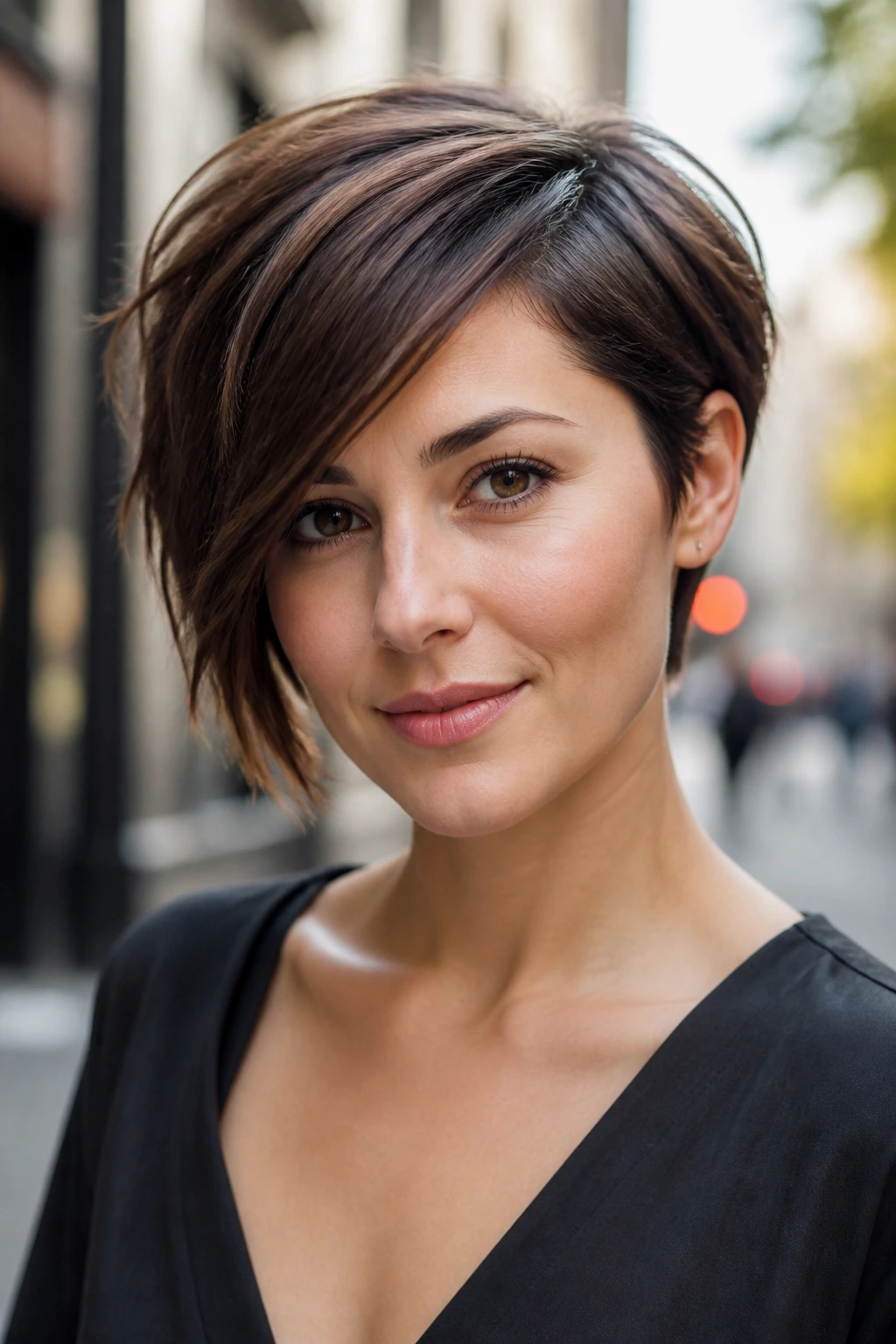
Can a heart-shaped face wear a very short pixie?
Yes, if the pixie keeps some softness at the front or side. The shortest versions work best when the crown is not over-lifted and the temples aren’t shaved too tight.
Do heart-shaped faces need bangs?
Not always, but some kind of front softness usually helps. Side-swept fringe, curtain pieces, or a long front section can all balance the forehead without covering it.
What’s the best short cut if my hair is fine?
A textured crop, a side-swept pixie, or a soft bixie usually gives fine hair the most shape without weighing it down. Avoid over-thinning, because fine hair can go wispy fast.
What if my hair is curly?
Ask for the cut to be shaped with shrinkage in mind. Curly short styles need enough length to show the curl pattern after drying, and the sides should stay soft enough to avoid a triangle shape.
How often should I trim short hair on a heart-shaped face?
Pixies usually need shaping every 4 to 6 weeks. Bobs and bixies can stretch a little longer, but the fringe or front line often needs a touch-up before the rest does.
Is a center part bad for a heart-shaped face?
Not bad, just less forgiving in some cases. If you use one, keep the front pieces soft so the part doesn’t create too much width across the forehead.
What should I ask for if I want low maintenance?
Ask for a cut that grows out cleanly, with soft edges and a shape that still works when it’s slightly longer. A good phrase is: “I want this to still look intentional in six weeks.”
Can these cuts be styled without heat?
Yes, especially the textured crop, mini shag, and many curly versions. The trick is choosing a cut that follows your hair’s natural bend instead of forcing it into a straight shape every day.
The Cut That Sits Right
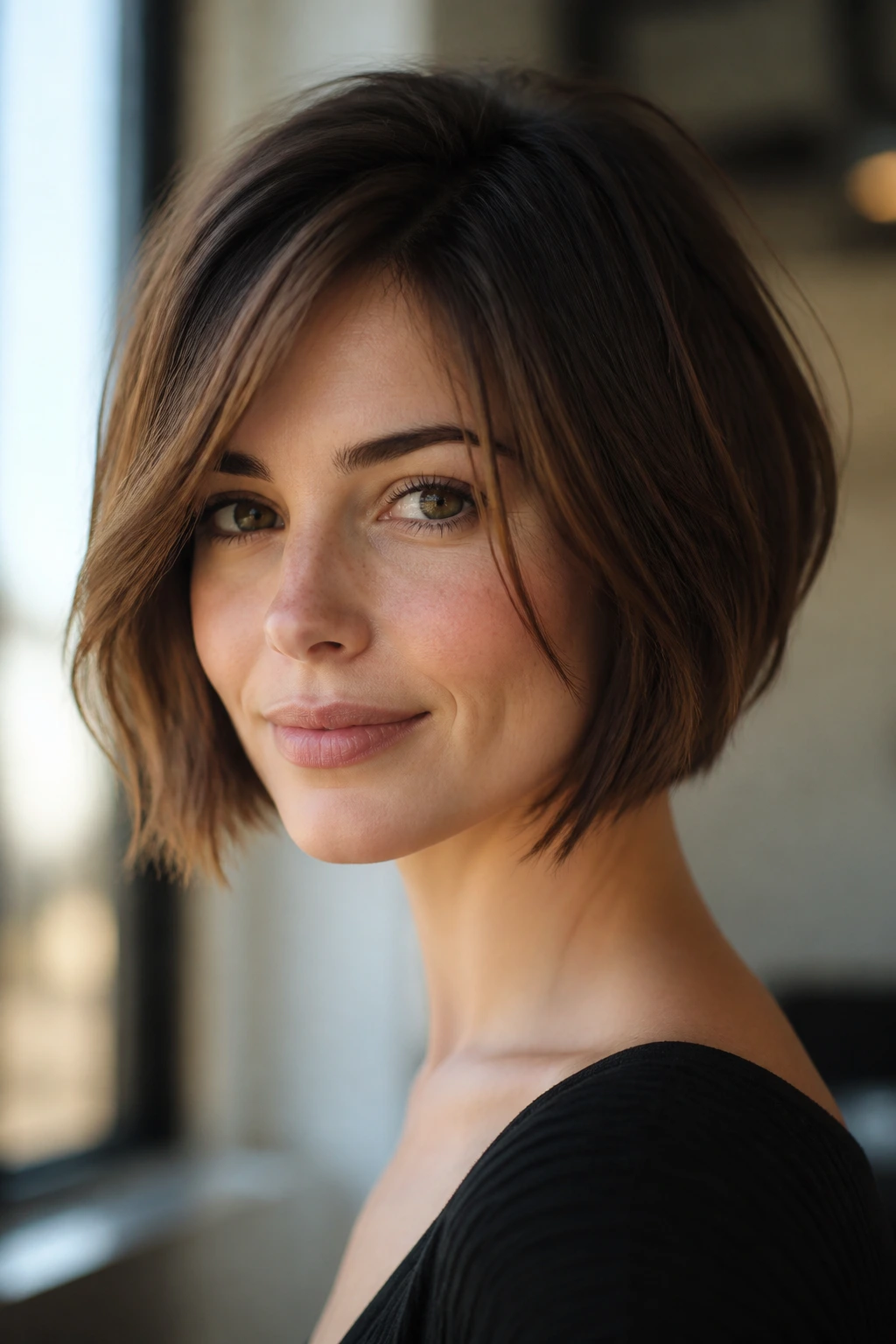
The best short haircut for a heart-shaped face is not the one that hides the face. It’s the one that makes the forehead feel a little less dominant, gives the cheekbones room to breathe, and lets the jawline finish the sentence. That balance can look soft, sharp, playful, or polished — all depending on the cut you choose.
If you keep one thing in mind, keep this: shape matters more than length. A cheekbone-skimming bob, a side-swept pixie, or a carefully broken-up crop can all do the job if the weight lands in the right places. The next time you sit in the chair, ask for softness where the face is widest and a little presence where it narrows.
That’s the trim worth repeating.