



Platinum pixie cuts can look razor-clean on square faces with thick hair, or they can go boxy fast. The difference usually comes down to one thing: where the weight sits. A blunt side line lands very differently on a jaw that already has structure, and dense hair will keep every mistake with almost insulting honesty.
So the trick is not to hide the face. It’s to redirect it. A diagonal fringe, a narrow nape, a lifted crown, a little softness around the temples — those details do the real work. And platinum brings its own personality to the party: the color shows every layer, every notch of texture, every piecey edge, which is exactly why a strong cut matters here.
Square faces usually have a broad forehead, strong jawline, and a fairly even width through the face. Thick hair adds body, but it also adds bulk at the wrong spots if the cut is too blunt or too symmetrical. That’s why the best platinum pixie cuts for this face shape don’t all look the same. Some soften. Some sharpen. Some do a little of both, and those are the ones worth your time.
Why These Platinum Pixie Cuts Work So Well on Square Faces and Thick Hair
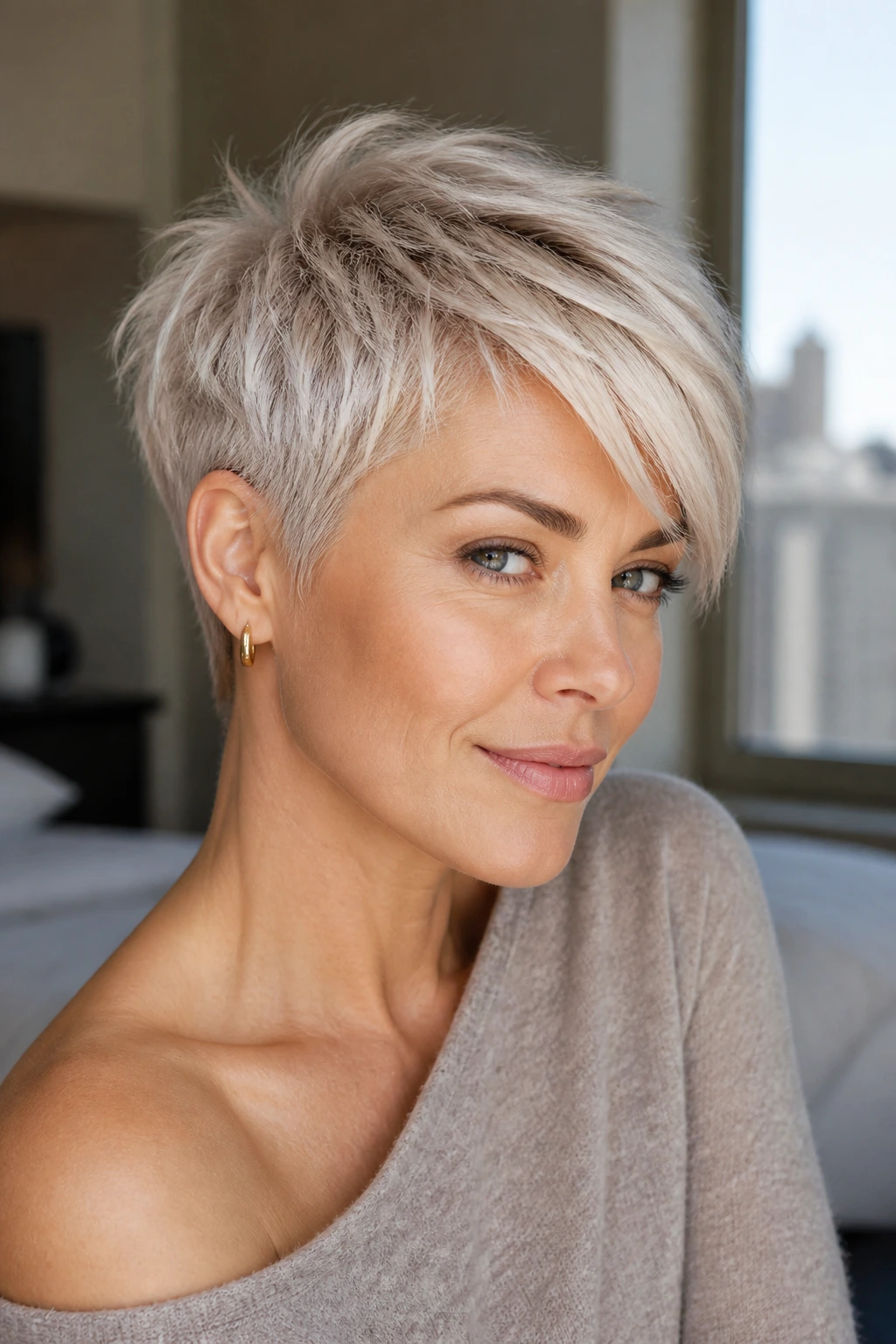
-
Diagonal lines soften the jaw: A side-swept fringe or off-center part breaks up the straight vertical-and-horizontal lines that can make a square face feel even more angular.
-
Internal layering controls bulk: Thick hair needs weight removed from the middle, not just the ends. That keeps the silhouette close to the head instead of puffing out like a helmet.
-
Platinum makes texture visible: On darker hair, small cuts can disappear. On platinum blonde, every choppy edge, feathered tip, and hidden layer shows up, so the shape reads more clearly.
-
Height belongs at the crown, not the sides: Lift on top lengthens the face a little. Width at the temples or cheekbones does the opposite, and thick hair can accidentally create that width if the cut isn’t planned well.
-
Short napes keep the back neat: A clean nape stops thick hair from flipping into a mushroom shape. That one detail changes the whole haircut.
-
These cuts grow out in stages, not disasters: The best versions turn into a short bob or a longer pixie with a bit of shape left behind, which matters when you’re stretching time between color appointments.
1. Feathered Platinum Pixie With a Side-Swept Fringe
This is the version I reach for when someone wants softness without losing shape. The fringe sweeps diagonally across the forehead, and that angle does a lot of quiet work on a square face. Thick hair gets feathered through the top so it doesn’t sit as one solid slab.
Why It Flatters the Shape
The side sweep interrupts the straight lines that square faces already have. Feathered ends keep the cut airy, so the blonde looks light instead of carved into one block. You still get structure, just not the hard, helmet-like kind that makes people regret a pixie by week three.
Key Details to Tell Your Stylist
- Keep the front longest at one brow level, then taper it shorter toward the crown.
- Ask for soft point-cutting through the top so thick hair moves instead of stacking up.
- Leave enough length around the ears to bend the silhouette inward.
- Use a light root-lift mousse at the crown and blow-dry the fringe side to side for bend.
Best note: this one looks especially good when the blonde is icy but not stark white; a little pearl tone keeps the feathers from looking dusty.
2. Tapered Platinum Crop With a Soft Nape
A tapered crop is blunt in the right places and tidy where it needs to be. The nape is clean and narrow, the sides hug the head, and the top keeps just enough lift to keep a square face from reading too wide. It’s neat. It’s brisk. It doesn’t waste time.
The reason it works on thick hair is simple: the shape removes bulk from the bottom first. That stops the back from ballooning and lets the top carry the visual weight. If you hate fiddling with a round brush every morning, this is one of the smarter options.
This cut is also forgiving when the platinum starts to grow out. The tapered edges still look intentional at four or five weeks, which is more than I can say for a lot of pixies.
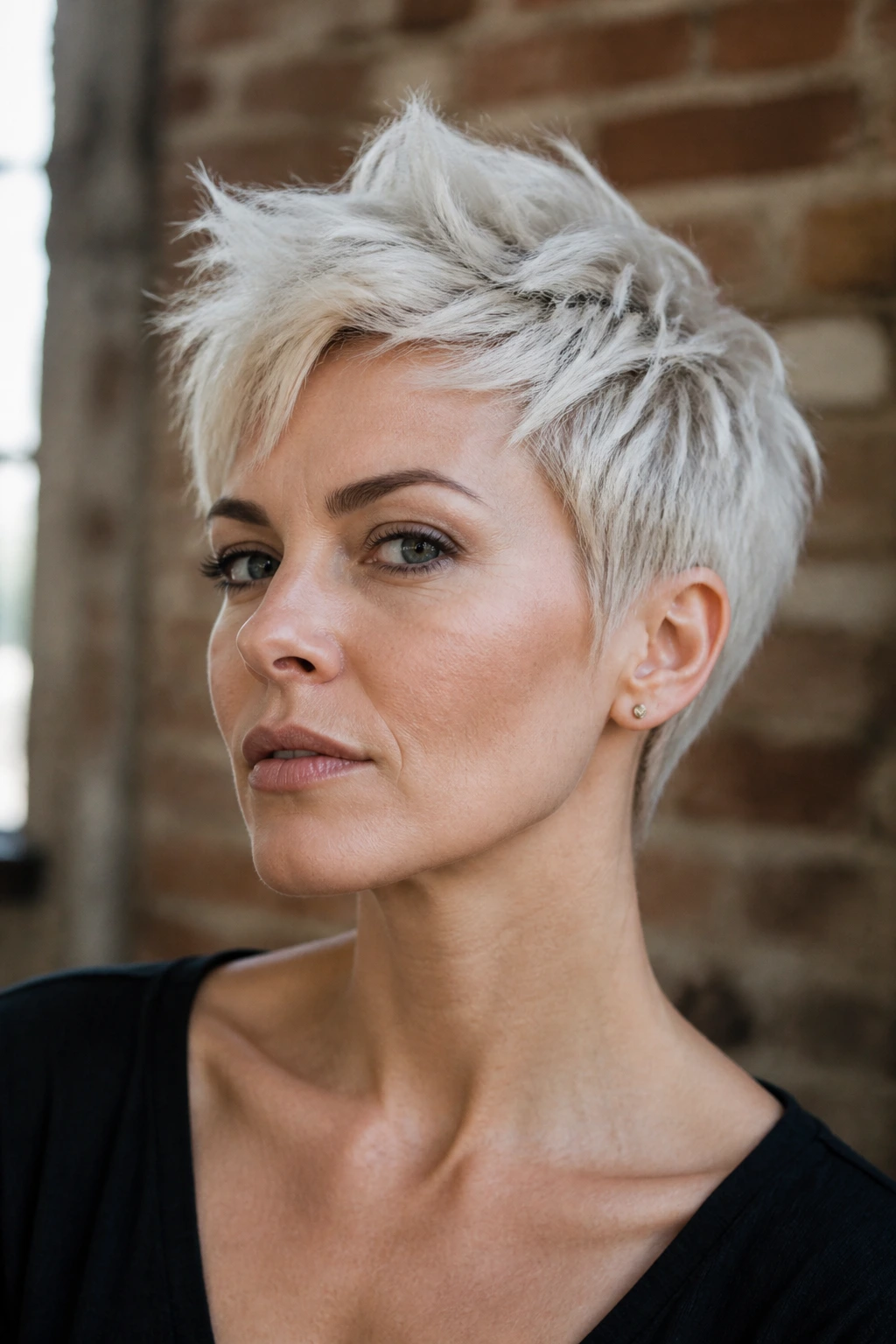
3. Choppy Platinum Pixie With a Piecey Crown
Why does this one look so easy? Because it isn’t trying to be smooth. The crown is broken into small, irregular pieces, and that texture keeps thick hair from sitting as a single shiny helmet of blonde. On a square face, those little broken lines soften the overall outline.
How to Style It
- Work a pea-sized amount of matte paste through dry hair.
- Pinch the crown pieces upward, not sideways.
- Keep the sides close and neat so the top has somewhere to live.
- If the cut starts feeling too round, mist the roots with water and re-push the pieces with your fingers.
This is the pixie for someone who likes their hair to look touched, not overworked. It’s also a good match if your thick hair has a stubborn cowlick at the crown — the uneven texture hides it instead of fighting it.
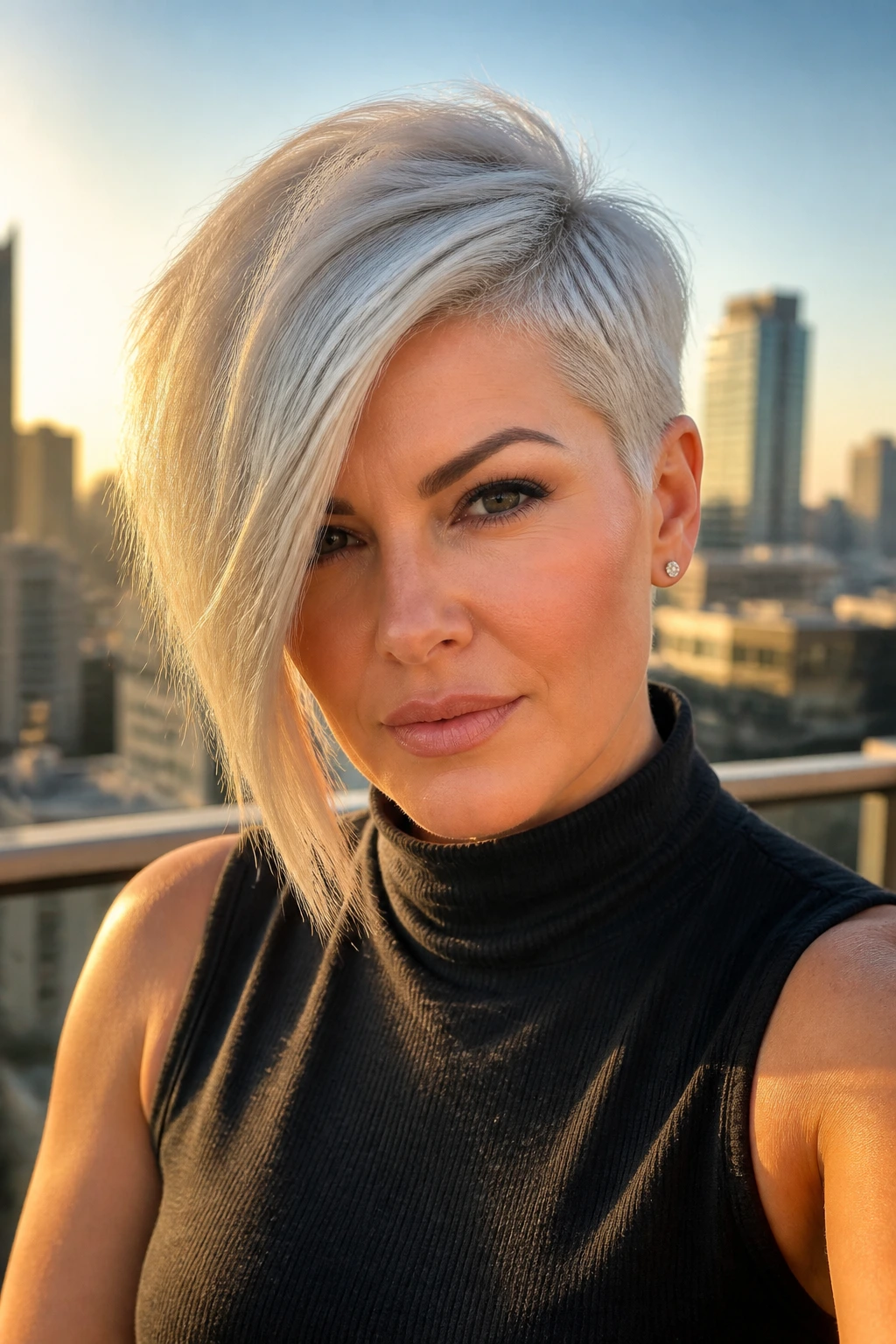
4. Asymmetrical Platinum Pixie With a Long Front
Picture one side skimming the cheekbone while the other side stays shorter and cleaner. That asymmetry is the whole point. Square faces often look stronger when the haircut leans in one direction instead of balancing everything too evenly across the face.
Thick hair actually helps here. The longer front section has enough weight to fall in a clean line, and the shorter side keeps the rest of the head from puffing out. You get contrast without chaos.
A good asymmetrical pixie should feel deliberate, not like a section was missed. Ask for a longer front that lands just below the cheekbone on the fuller side, then keep the opposite temple more tucked in. That shape gives the face a diagonal line to follow, which is exactly what a square shape likes.
5. Platinum Pixie With a Micro Fringe
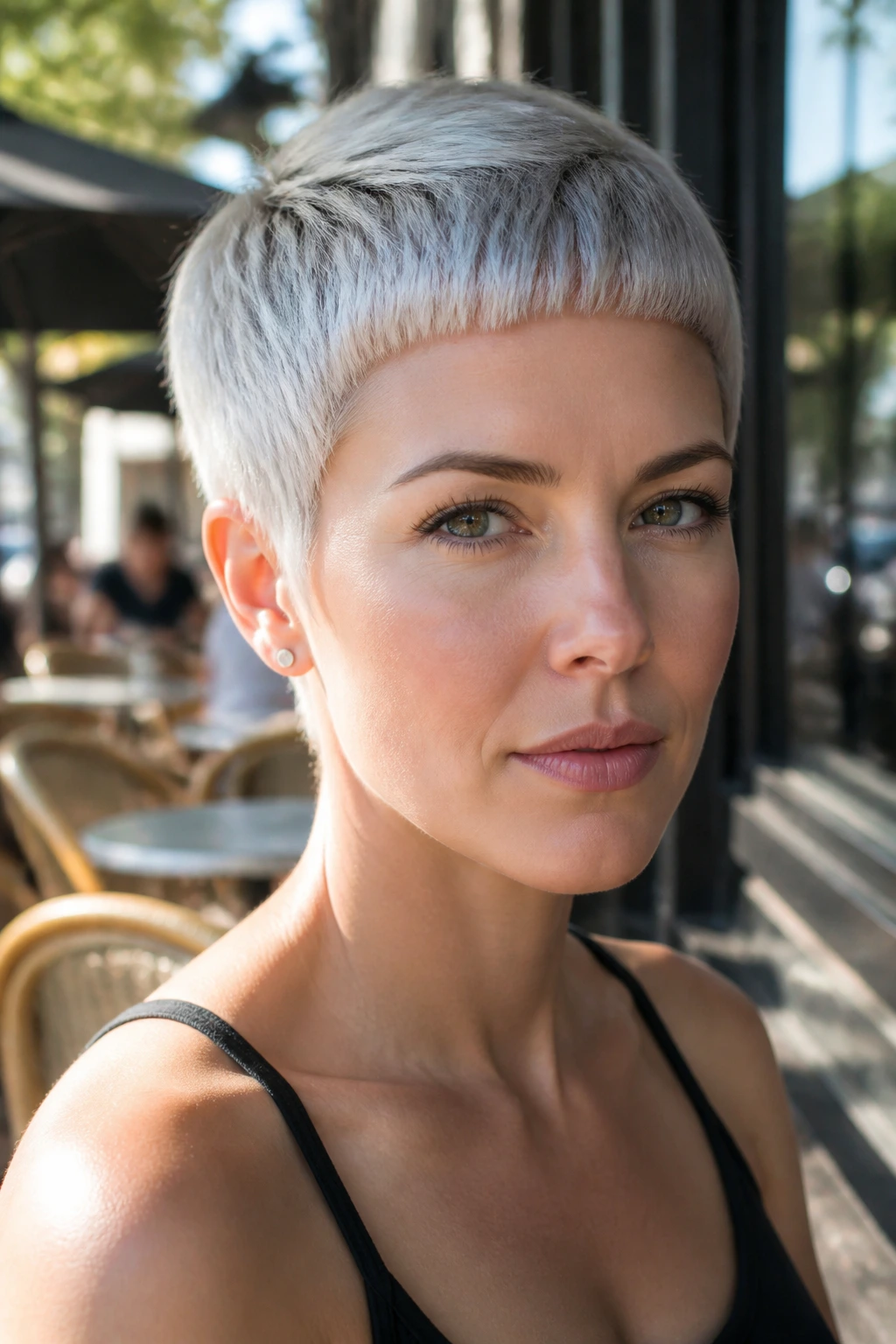
Short bangs can be brave or ridiculous, and the difference is usually the cut and the face they’re paired with. On square faces, a micro fringe works when the rest of the haircut stays soft and close. It pulls the eye upward, which can make the jaw feel less dominant.
This version is sharp. I’m not going to pretend otherwise. But on thick hair, the fringe has enough body to sit cleanly without collapsing into the forehead, and platinum color makes the tiny edge feel crisp rather than severe.
The key is restraint around the temples. Leave a whisper of softness there so the haircut doesn’t turn into a hard rectangle. If your brows are strong, even better. A micro fringe loves a good brow line.
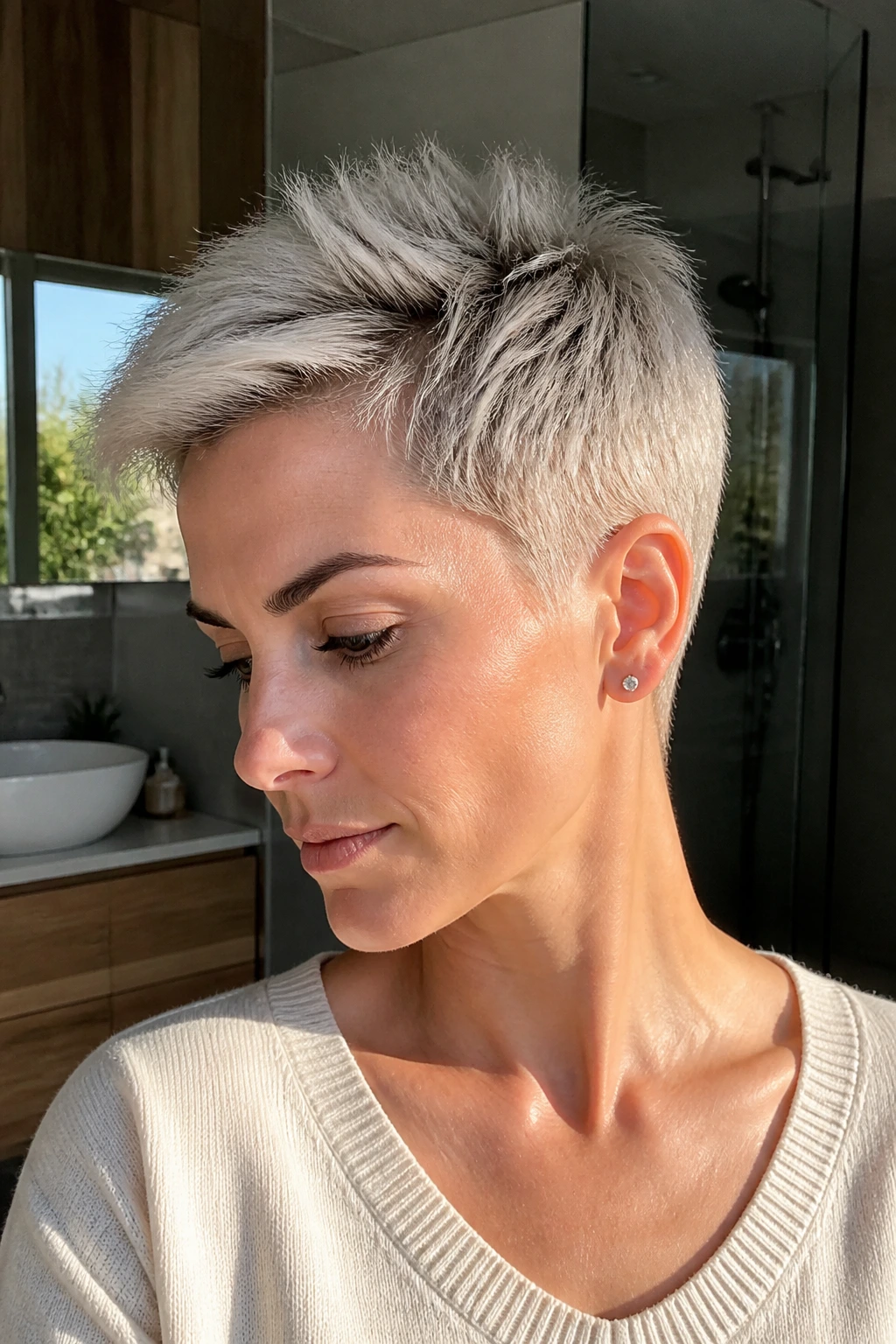
6. Platinum Undercut Pixie
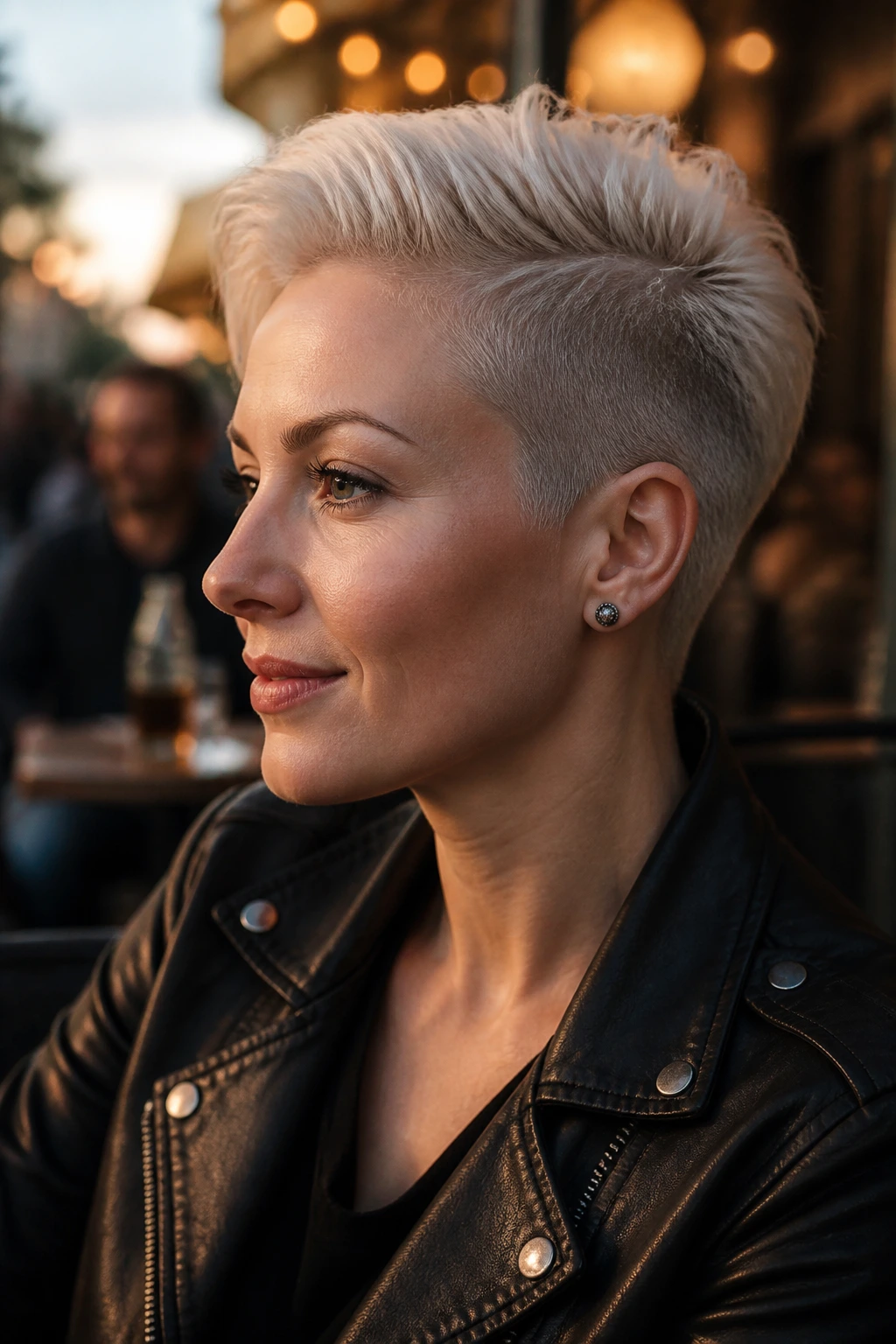
This is the haircut for dense hair that refuses to lie flat. The undercut removes the hidden mass underneath, which means the top can stay fuller without the whole shape going wide. On a square face, that cleaner side profile is useful because it keeps the width away from the jaw.
The contrast can be dramatic, and that’s the appeal. You get a plush top and tight sides, which makes platinum blonde look almost carved. If you want a pixie with a little attitude but not a full punk moment, this lands in the sweet spot.
7. Curly Platinum Pixie With Airy Layers
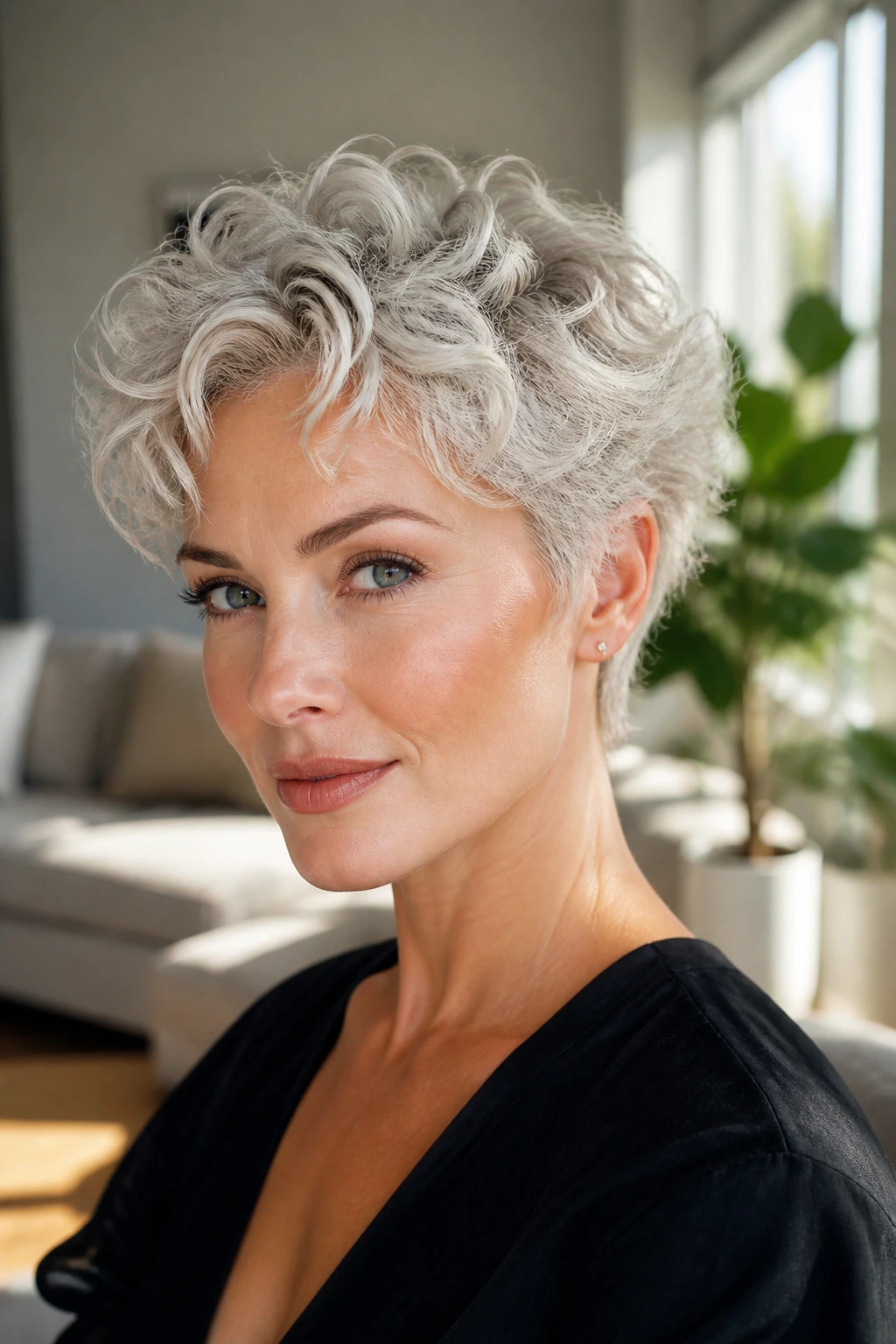
Can thick, curly hair go platinum without turning into a triangle? Yes — if the layers are placed properly and the top is left with enough length for the curl to settle. The trick is airy layering, not thinning everything to death.
A square face benefits from the movement around the temples and forehead. Curl breaks up the geometry in a way straight hair sometimes can’t, and platinum makes the pattern of the curl visible instead of hiding it. Use a diffuser on low heat, stop when the hair is about 80 percent dry, and let the rest air-dry. Over-drying is how curls get fuzzy and wide.
What to Watch For
- Ask for curl-by-curl shaping if your texture is strong.
- Avoid heavy side volume near the cheekbones.
- Use a light cream, not a thick butter, or the platinum will look greasy.
- Let a few face-framing curls stay longer than the rest.
8. Slicked-Back Platinum Pixie
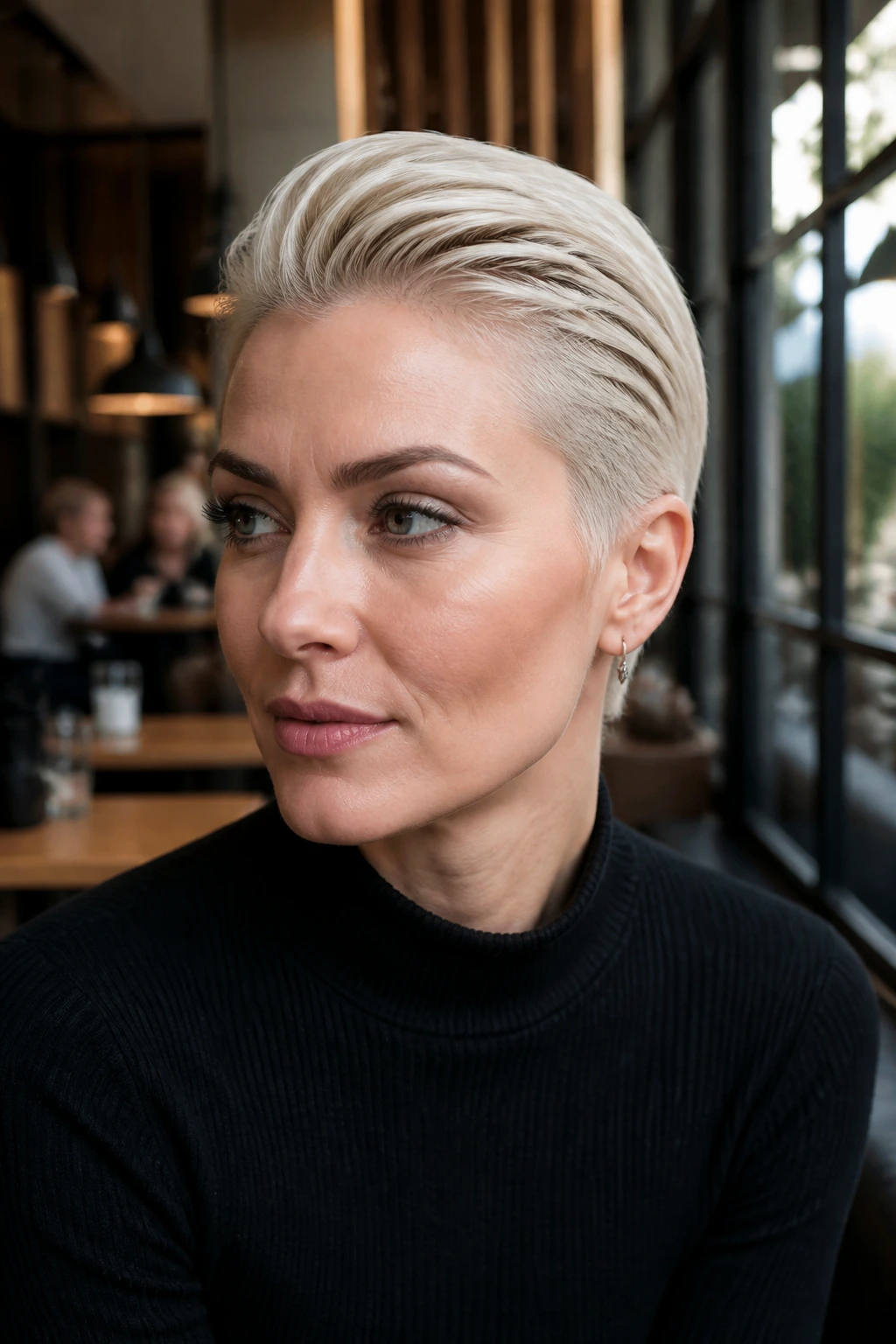
Slicked-back hair can look severe, so the cut underneath needs to be smart. On a square face, that means clean sides, a controlled crown, and enough length on top to push the eye vertically instead of outward. Thick hair helps because it holds the shape once it’s set.
This is the pixie you wear when you want the face to do the talking. The platinum shows the bone structure, the jawline, the eyebrows, all of it. Wet-look gel gives a sharper finish, while a cream-and-pomade mix keeps things softer and less shiny.
The cut itself shouldn’t be too blunt around the temple. That’s the mistake. Keep the edges close, but not boxy.
9. Razor-Cut Platinum Pixie Bob Hybrid
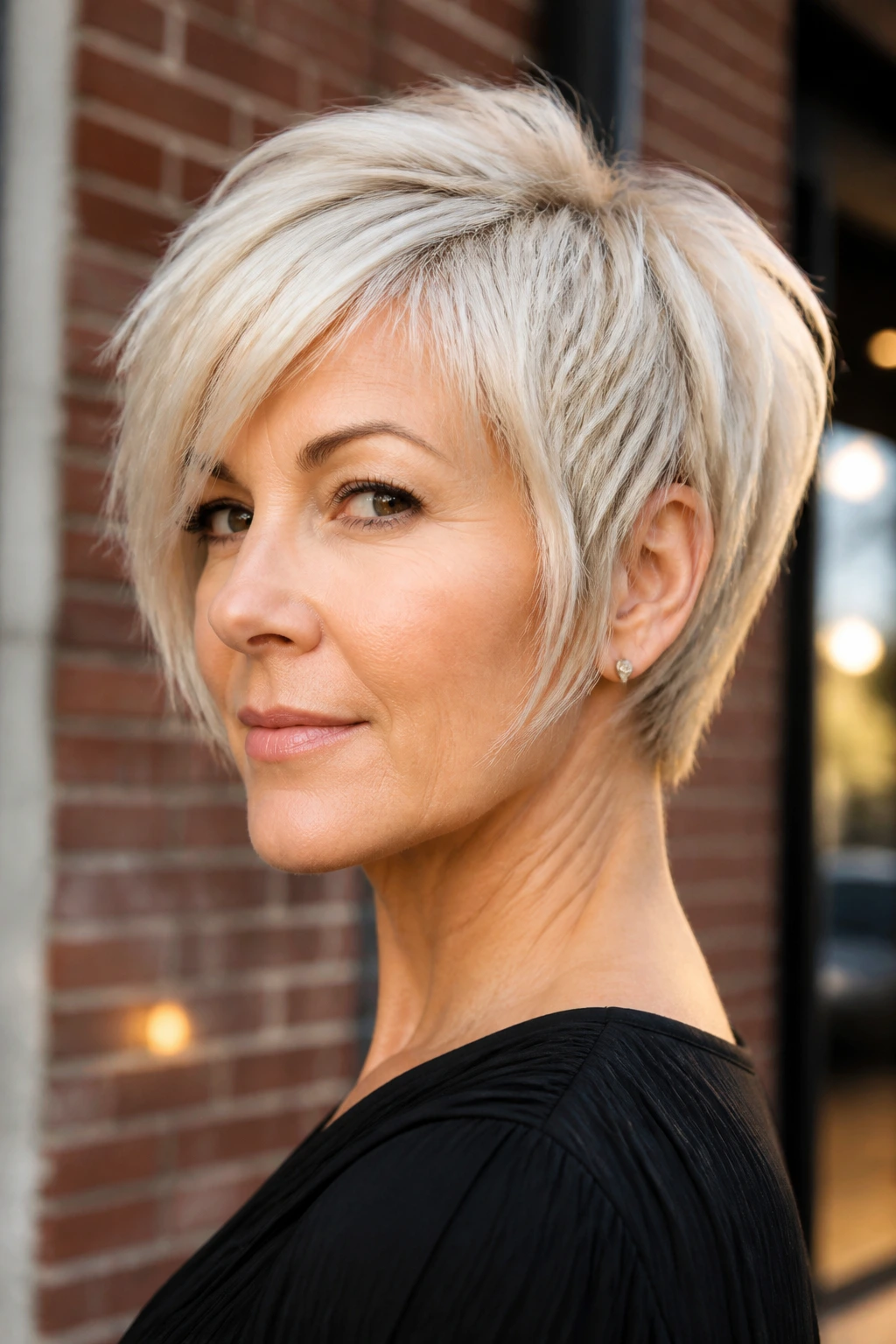
This one sits between a pixie and a short bob, and that in-between space is useful if you’re nervous about going too short. The razor cutting softens thick hair so the ends move instead of stacking up. On a square face, the slightly longer front helps blur the jaw without hiding it.
I like this shape because it grows out gracefully. A lot of short cuts get awkward halfway through; this one just turns into a chic little crop with more cheekbone length. That’s handy if your color appointments take planning, which platinum usually does.
It’s also one of the easier cuts to style with a round brush. Bend the front under just a touch, leave the crown lifted, and let the ends look piecey instead of polished.
10. Modern Bowl-Inspired Platinum Pixie
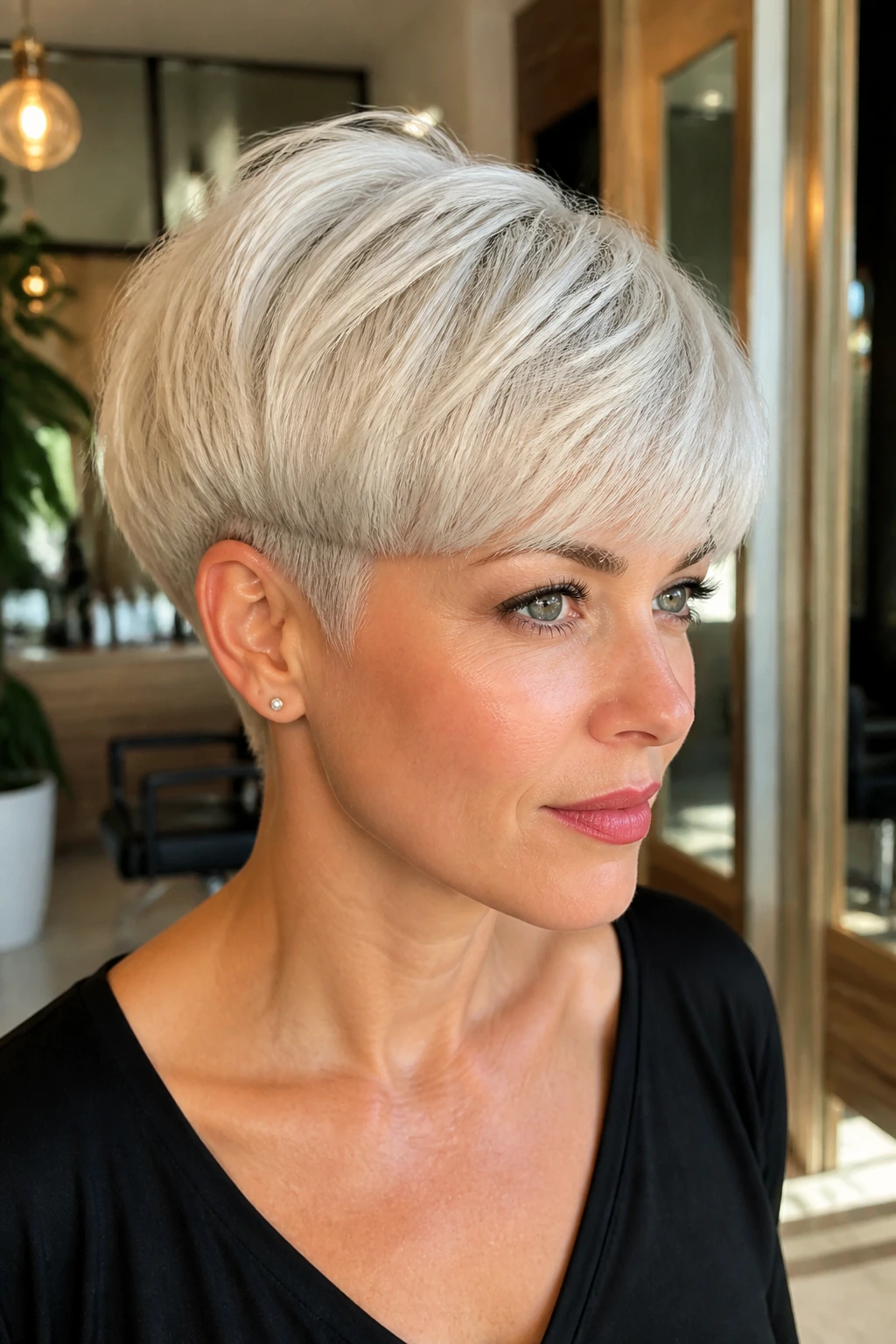
Not the old bowl cut. Not even close. This is a rounded, sculpted shape with hidden removal of bulk inside the cut, so the outline stays soft and close instead of puffing outward. On square faces, the curved perimeter helps take the edge off the jawline.
Thick hair is the reason this style works at all. You need enough density to hold the shape, but the internal layering has to be precise or the whole thing gets heavy. Platinum blonde makes the curve obvious, which is useful if you want the haircut to look intentional from every angle.
Best styling habit
- Blow-dry with a small round brush and keep the airflow directed downward at the sides.
- Don’t overload the crown with product.
- Ask for soft, rounded graduation at the back, not a blunt shelf.
- Keep the fringe light so the shape doesn’t close in on the face.
11. Platinum Pixie With a Lifted Crown
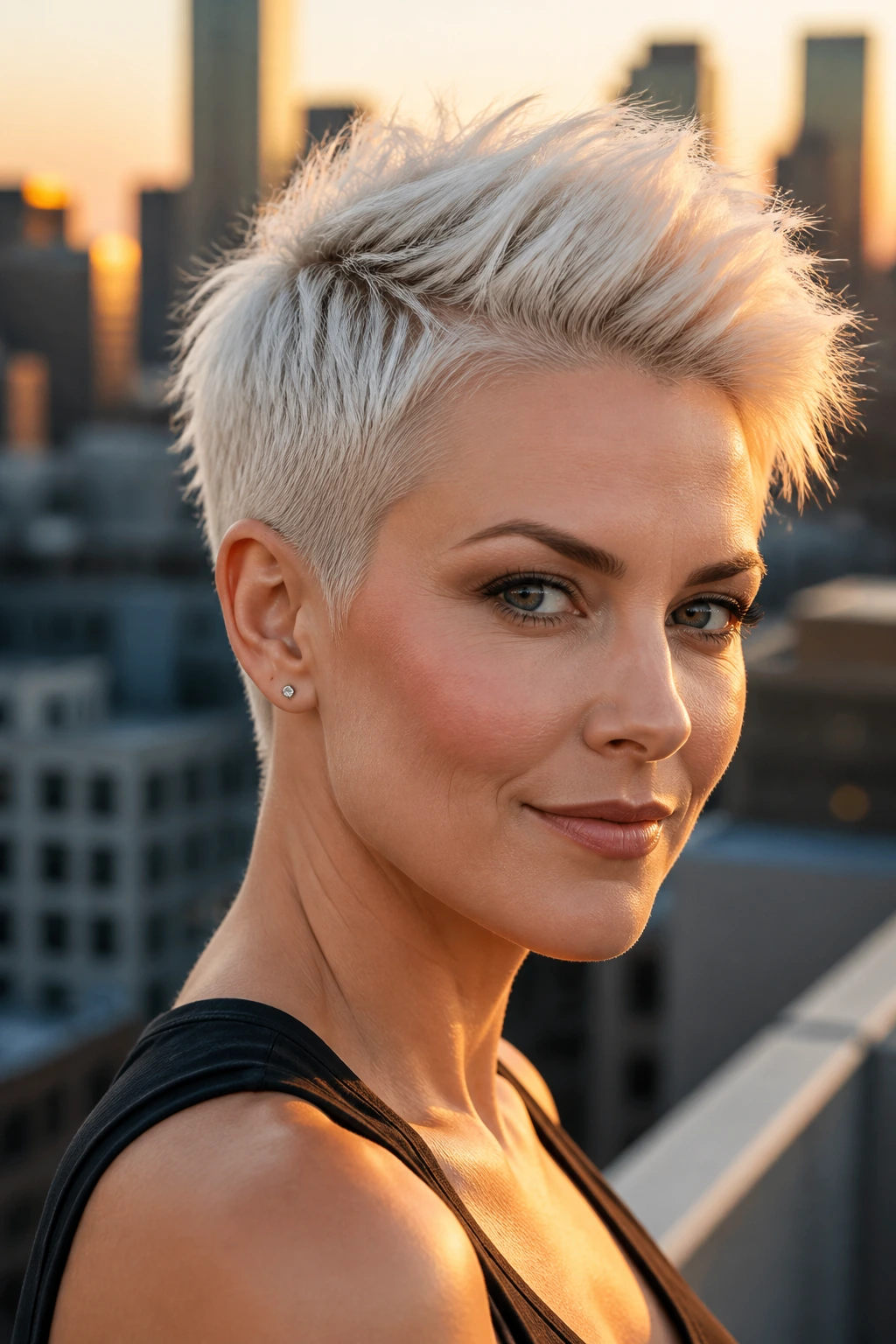
This cut lives and dies by the top section. The sides stay narrow, the nape is controlled, and the crown is built with height so the face looks a touch longer. That’s one of the smartest tricks for square faces, because it changes the balance without needing extra length.
A lifted crown also gives thick hair a place to go. Instead of letting all that density widen the head, you steer it upward. A root-lift spray, a quick blast with a dryer, and a round brush can make a big difference here. Not a dramatic, salon-only difference. A real one.
Why It Works
- Height at the top draws the eye up.
- Narrow sides keep the face from feeling broader.
- Short back sections keep the nape from flaring outward.
- Platinum color exaggerates the shape, so the lift reads clearly.
12. Platinum Pixie With Temple Length
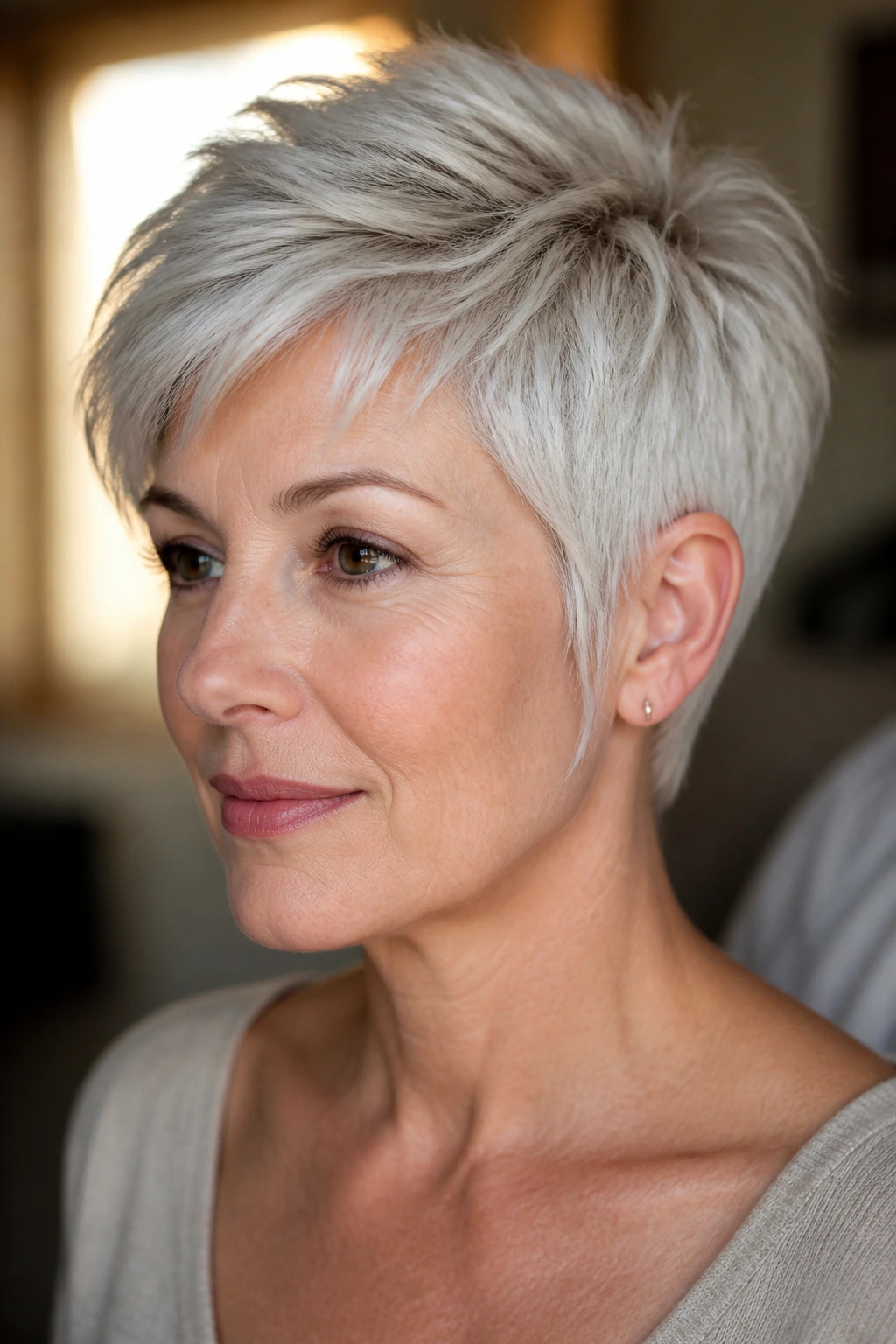
If your square face feels a little sharp around the corners, keep some softness at the temples. That’s the whole point of this cut. The sides aren’t shaved tight; they hover just long enough to blur the outline near the widest part of the face.
Thick hair makes that kind of softness look expensive in the best sense — the strands have enough body to drape instead of collapsing. Ask for wispy temple sections that are longer than the sideburn area, then keep the top lightly layered so the shape doesn’t go flat.
This is one of my favorite options for people who want a feminine finish without losing the confidence of a short cut. It doesn’t shout. It eases.
13. Silver-Platinum Pixie With a Shadow Root
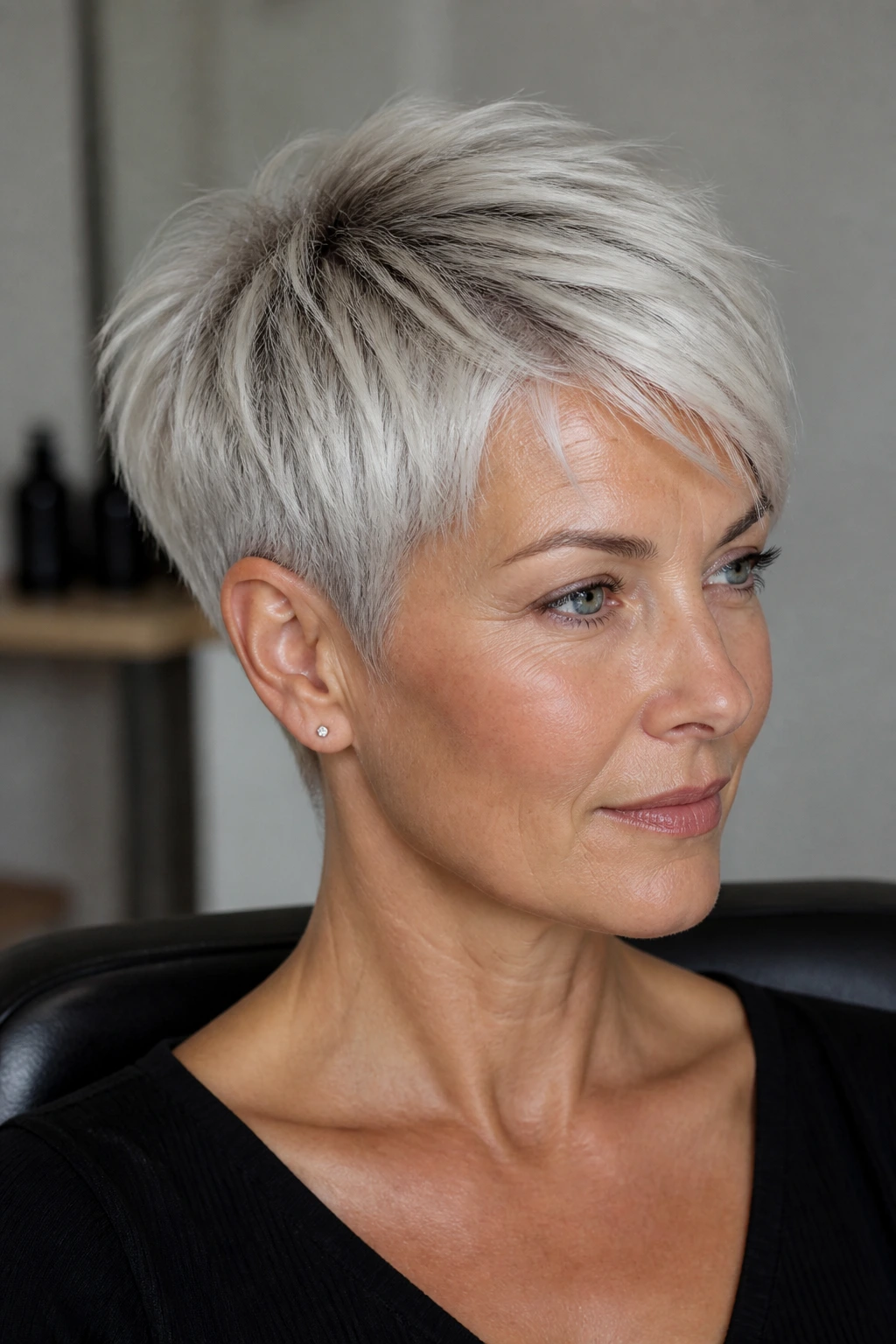
A shadow root is useful because platinum can be high-maintenance, and there’s no reason to pretend otherwise. A deeper root gives you a little stretch between touch-ups and stops the regrowth line from looking like a hard stripe. On thick hair, that softer root also gives visual depth, which keeps the cut from reading one-dimensional.
Square faces usually look better when there’s a bit of softness near the forehead. A shadow root does that without needing a longer fringe. It’s a smart trade: less salon panic, less visual harshness.
Styling note
- Use purple shampoo only when the blonde starts to yellow, not every wash.
- Keep the root area slightly softer with a blow-dry brush or fingers.
- If the ends look too pale, ask for a toner that leans pearl, not icy-blue.
14. Spiky Platinum Pixie With Texture
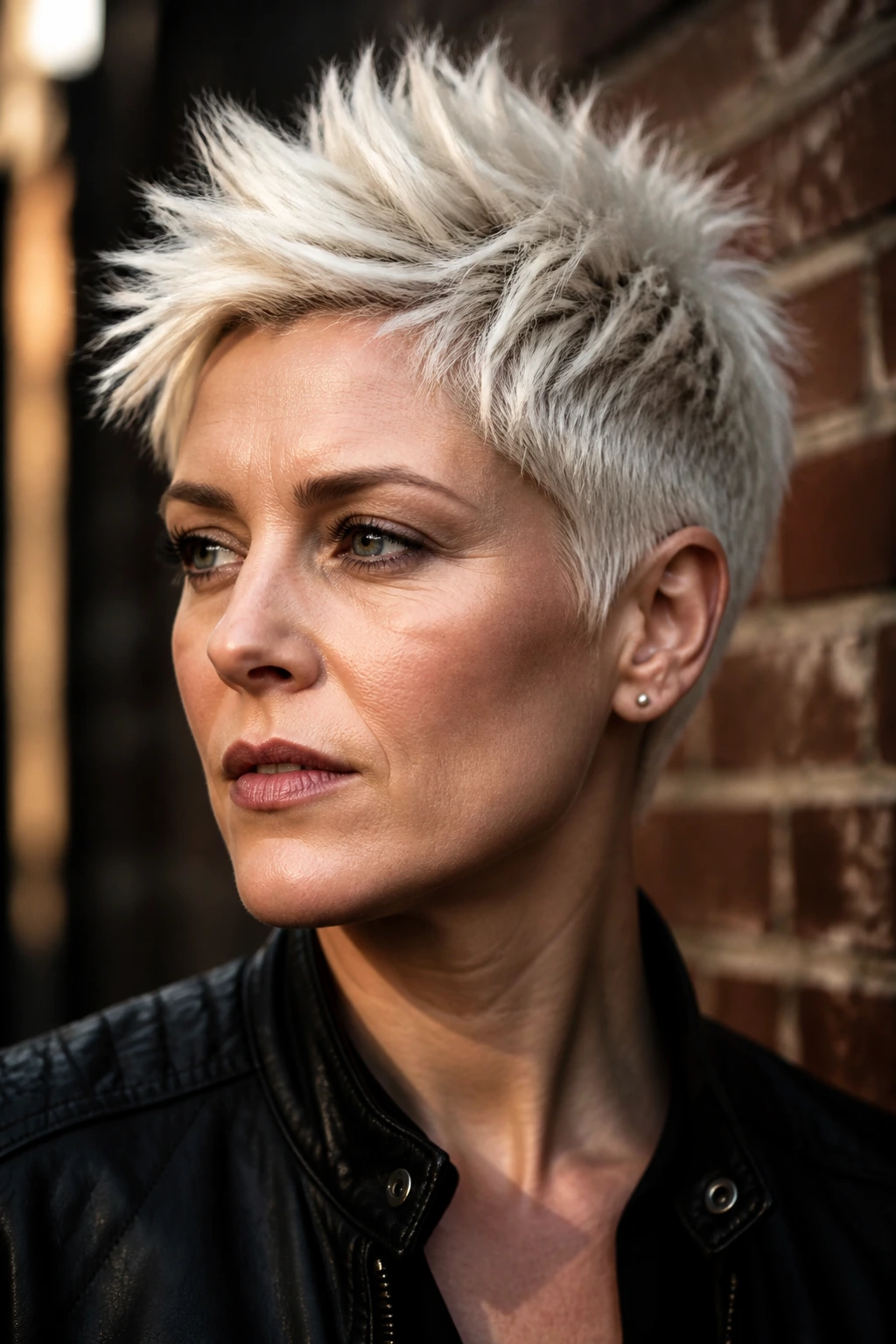
This is the one that looks a little rebellious in the best way. The spikes are short, separated, and built with paste or clay on dry hair. Thick hair is perfect for this because the density holds the upright pieces without needing a ton of product.
Square faces can wear spikes if the sides stay narrow. Too much width at the temples and it turns into a block; too much length on top and it starts looking like a mini mohawk from the wrong decade. The trick is broken texture, not stiff points.
It’s a good cut if you like to change the mood of your hair with your hands. Push it up one day, flatten it the next, and leave the platinum to do the rest.
15. Grown-Out Platinum Pixie With a Soft Nape
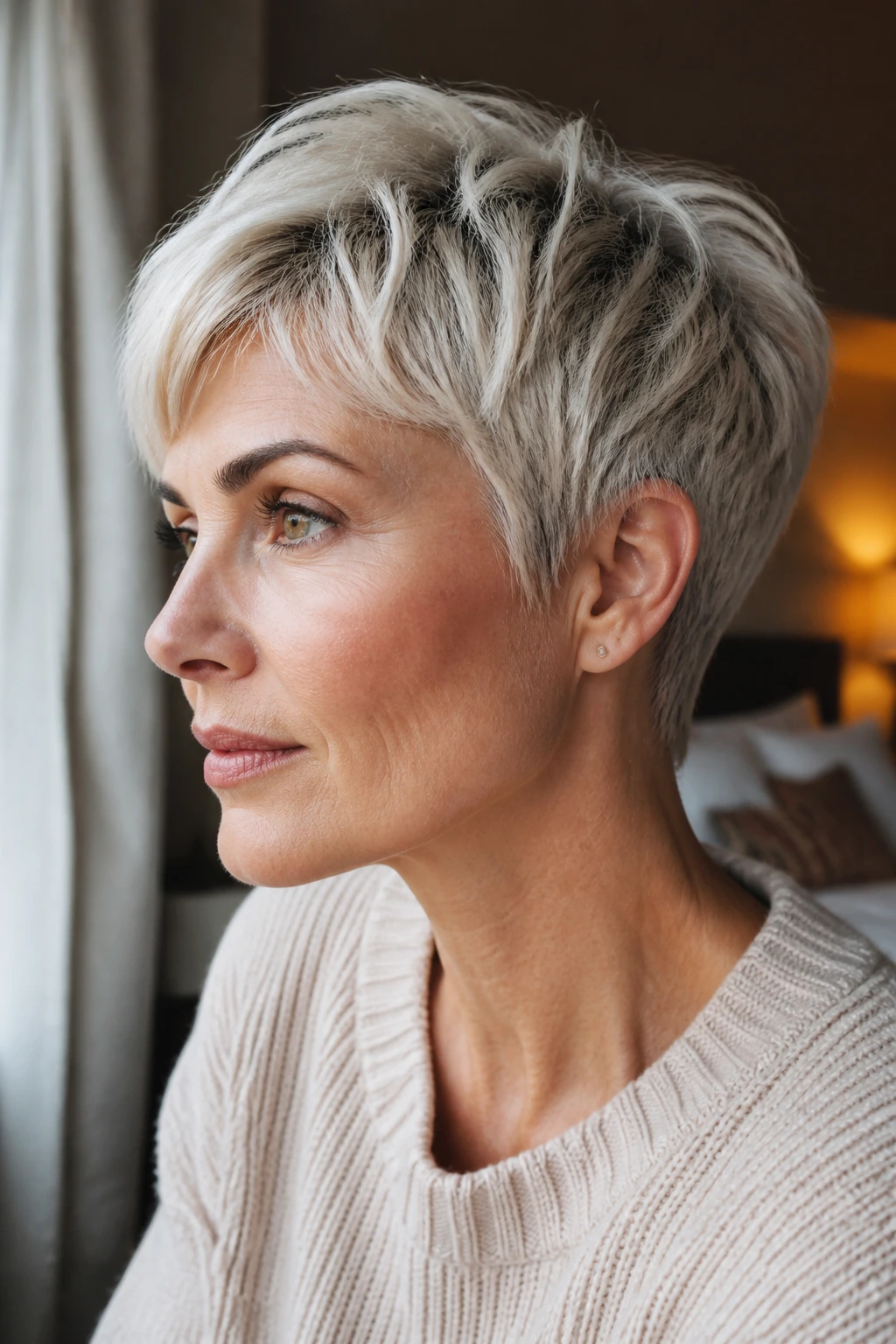
Some pixie cuts feel awkward as soon as they start growing. This one doesn’t. The nape stays soft, the top keeps enough length to sweep back or forward, and the side shape transitions into a short bob faster than you’d expect. For thick hair, that’s a relief.
Square faces often benefit from this in-between stage because the added length around the ears softens the jaw just enough. You still look intentional. You just look a little less severe than a fresh crop.
If you’re not sure whether you want a short cut for the long haul, this is a sensible place to start. Not boring. Sensible.
16. Side-Part Platinum Pixie With a Long Ear Sweep
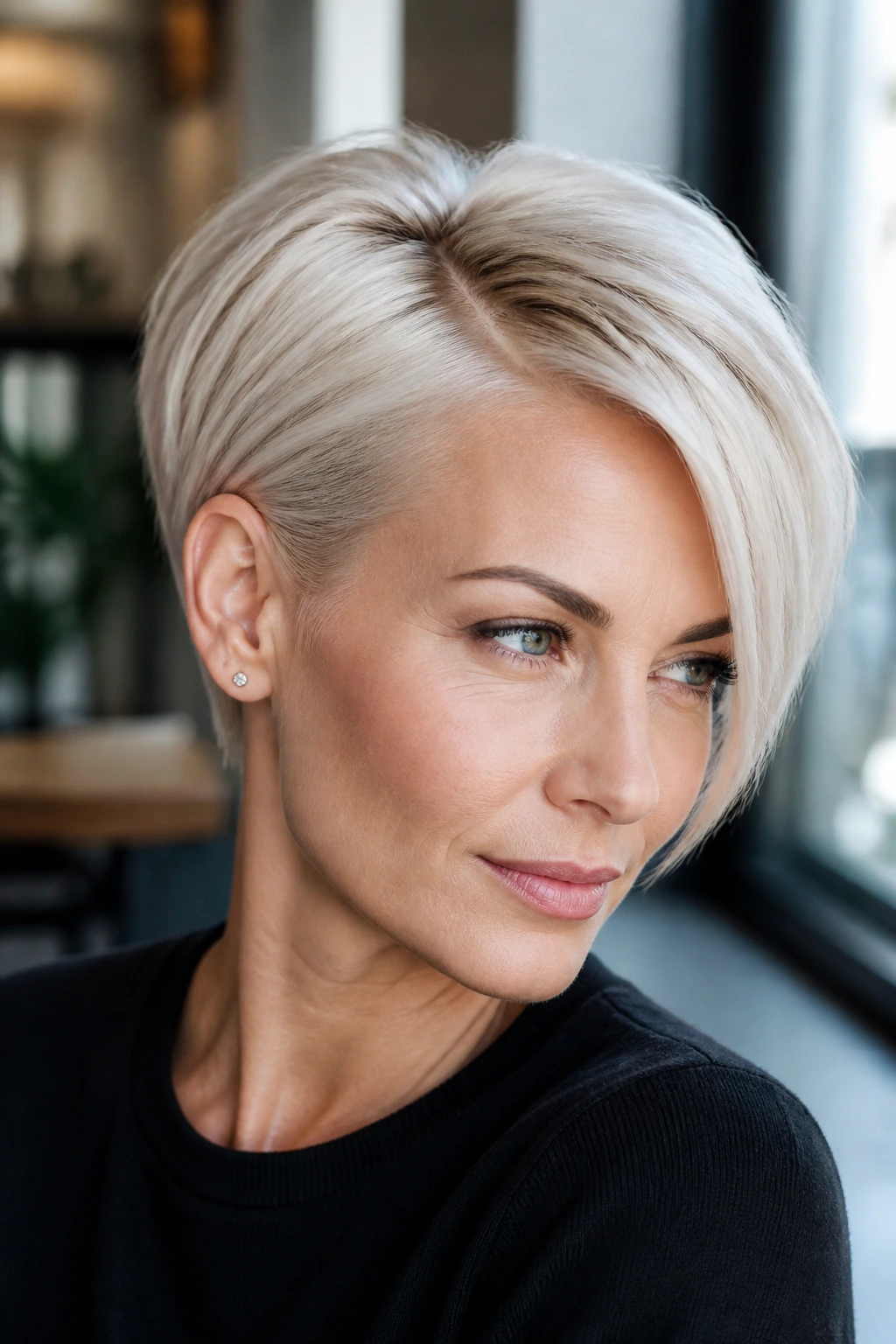
A deep side part changes the whole mood of a pixie. One side falls with a bit of length over the ear, the other sits close, and the diagonal line stops the face from reading too symmetrical. That matters on square faces, where symmetry can sometimes sharpen the edges instead of softening them.
The long ear sweep is doing real work here. It gives thick hair a direction and lets the platinum catch the line of the cut instead of the width of the head. If you want something polished for work but not stiff, this is a strong option.
17. Wispy Platinum Pixie With Soft Layers
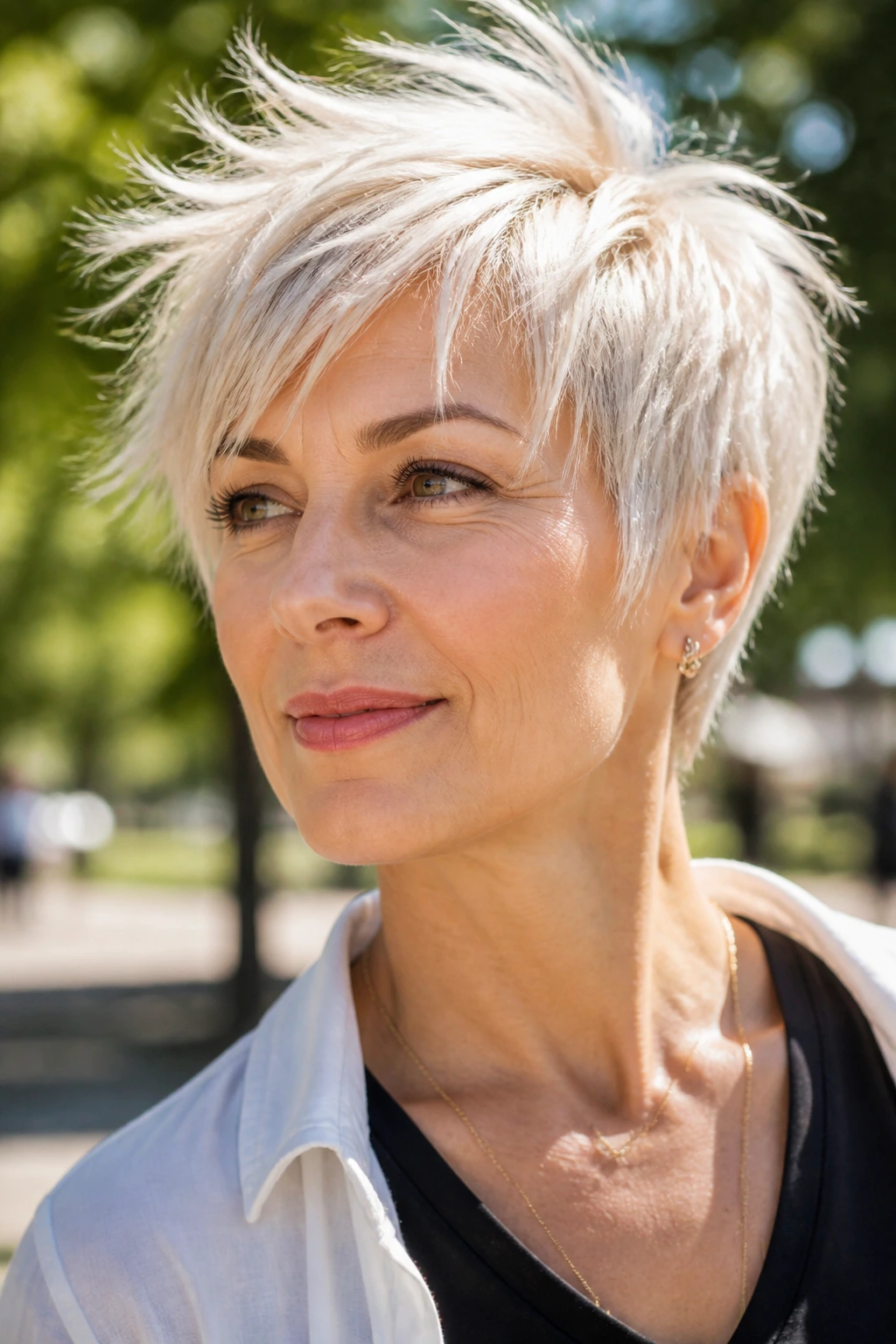
This cut is all about air. The layers are soft enough to keep thick hair from puffing, but wispy enough that the ends don’t feel blunt. On a square face, that gentleness around the perimeter matters. It keeps the jaw from feeling boxed in.
The best thing about this shape is how it behaves when you move. It never looks frozen. A little wind, a scarf, a collar — the whole cut shifts in a way that keeps it alive. Platinum blonde can make wispy layers look almost translucent at the tips, which is a nice bonus if you want the haircut to feel lighter than the actual hair density.
18. Disconnected Platinum Pixie With Clean Sides
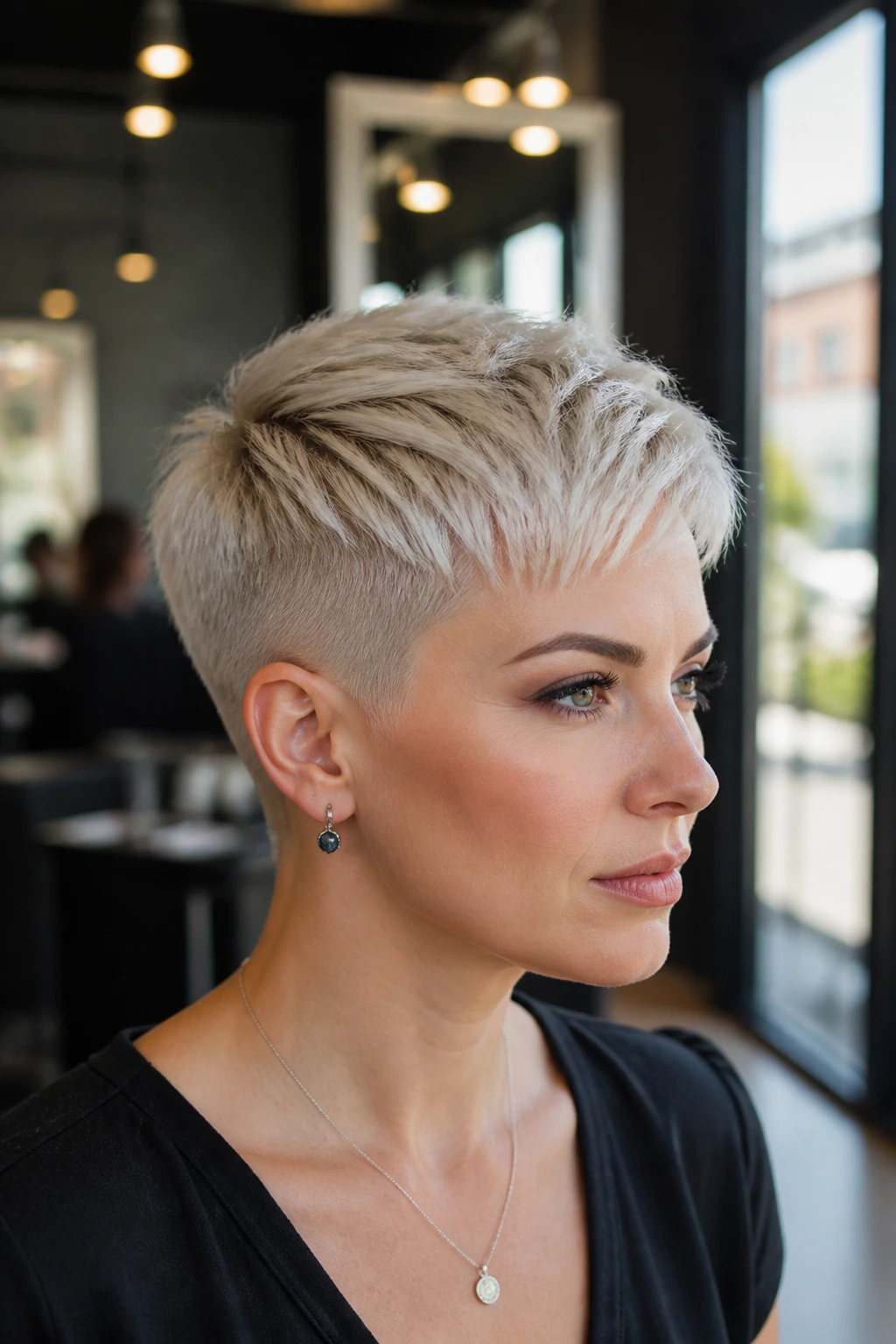
This one has contrast, and contrast can be flattering when it’s placed with purpose. The sides are neat and close, while the top is left longer and more visible, so the eye goes upward instead of outward. Square faces get that extra vertical line, and thick hair gives the top enough substance to make the disconnect clear.
It’s a strong-looking cut, not a soft one. That said, strong is not the same as harsh. If the top is textured and the sides are tapered properly, the result looks sharp rather than rigid. Use a little paste on the ends, keep the crown piecey, and let the clean sides do the quiet work.
Best tip: ask your stylist to show you where the disconnect begins. If it’s placed too low, the whole haircut can look bottom-heavy. Too high, and you lose the balance that makes the shape work.
Why These Cuts Work on Square Faces and Thick Hair
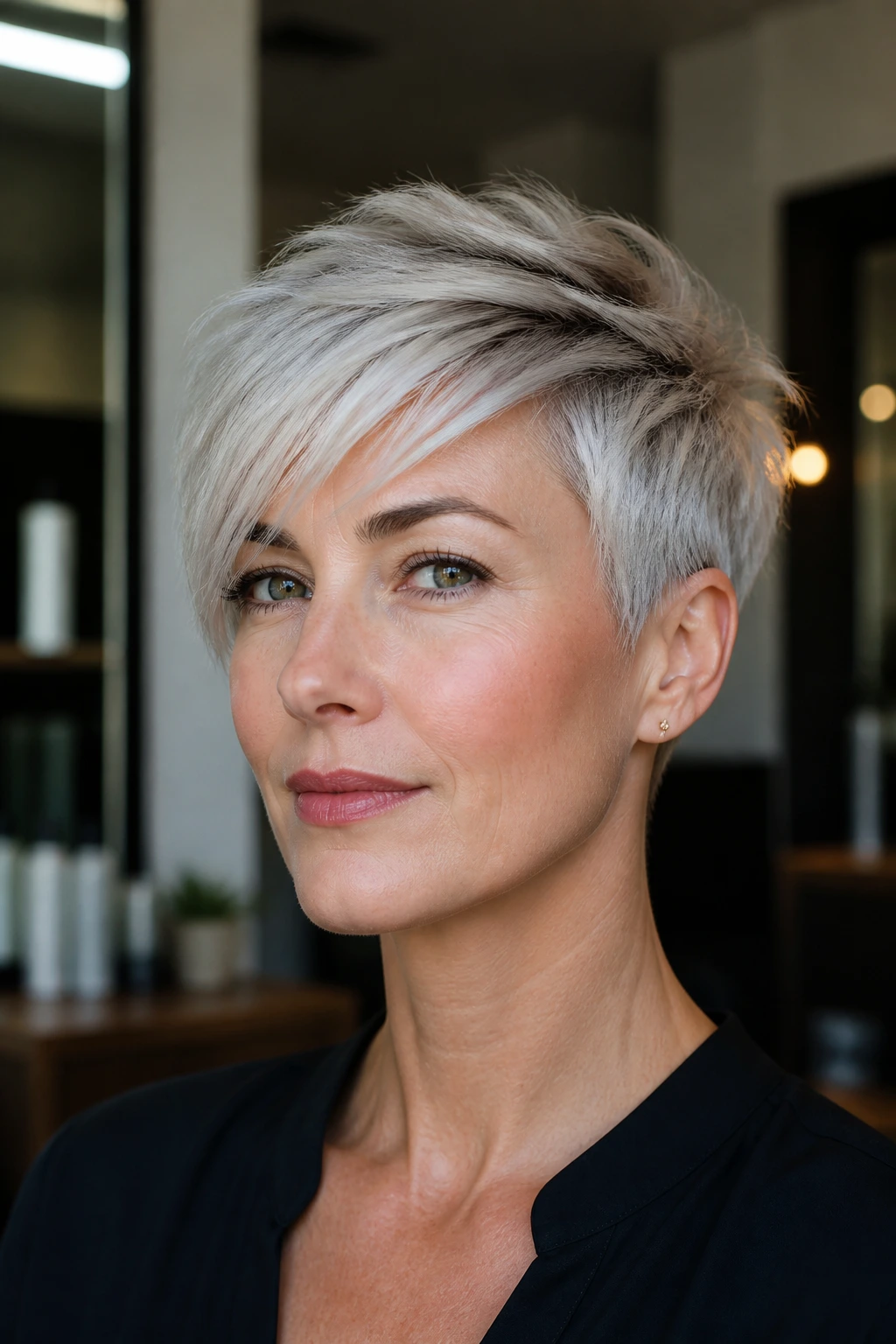
Square faces need line control more than they need hiding. That’s the distinction a lot of haircut advice misses. You do not need to cover your face; you need to bend the lines a little so the jaw doesn’t dominate the entire silhouette.
Thick hair helps here, but only if the cut removes bulk in the right places. Internal layering, point-cutting, nape tapering, and asymmetry all do different jobs. One trims weight. Another softens the edge. Another adds motion at the top so the eye moves vertically instead of out toward the cheeks. A good platinum pixie uses all of that on purpose.
Platinum color makes those details obvious. That’s the upside and the trap. A weak cut looks bulky in icy blonde. A smart cut looks crisp, almost tailored, because the light tone shows every line. If you’ve ever wondered why some short blondes look sharp and others look puffy, that’s usually the answer.
Essential Tools for These Pixie Cuts
-
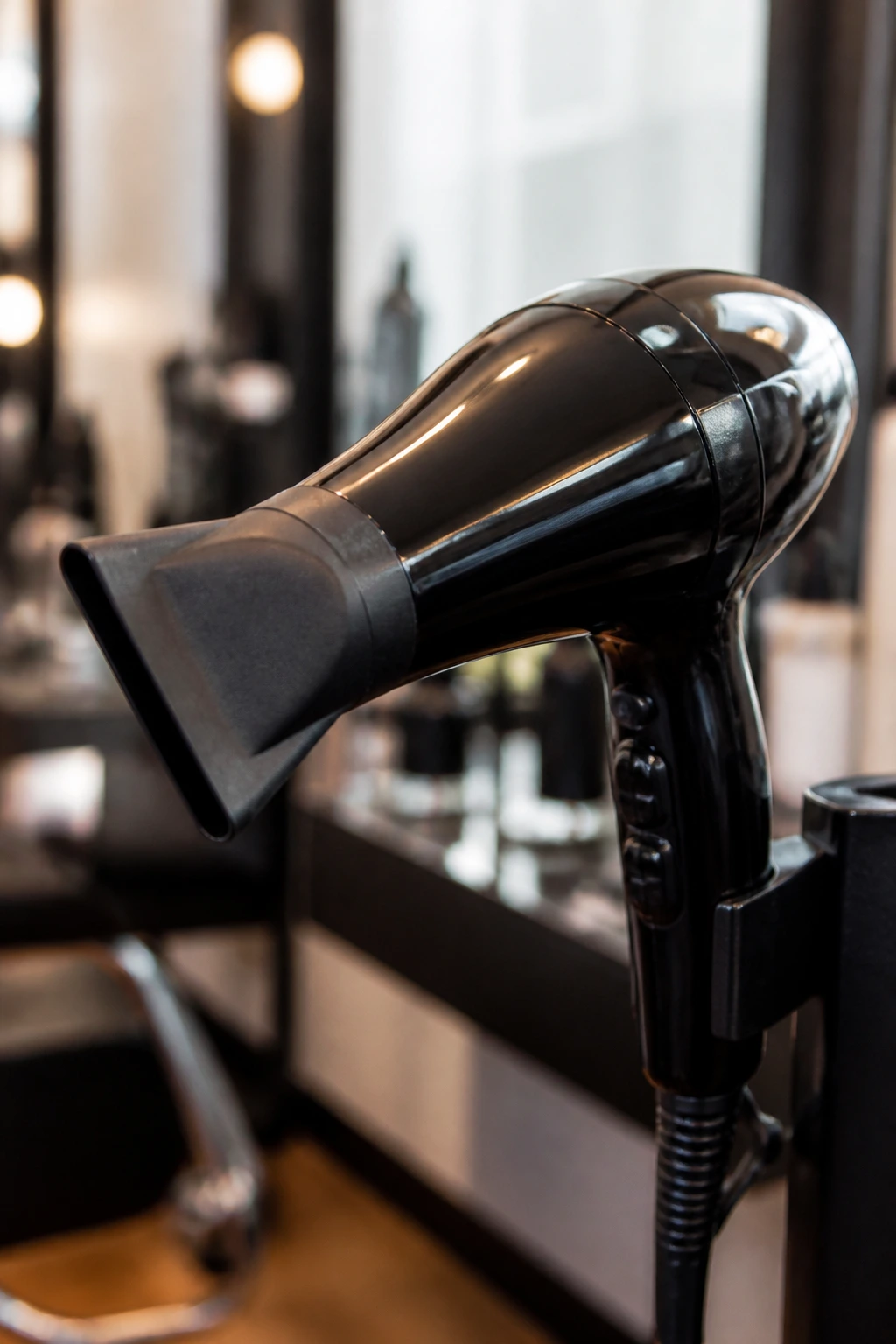
Blow dryer with a concentrator nozzle: Directs air where you want lift and helps keep the sides smooth.
-
Small round brush, 1 to 1.5 inches: Useful for bending the fringe, crown, and temple pieces without making them look too blown-out.
-
Matte paste or styling clay: Best for choppy, spiky, or piecey finishes on dry hair.
-
Lightweight mousse or root-lift spray: Gives thick hair some push at the crown without turning it stiff.
-
Heat protectant spray: Platinum hair is already stressed from lightening; don’t cook it again with a bare blow-dryer.
-
Purple shampoo: Keeps yellow tones from taking over the blonde, but it should be used sparingly.
-
Fine-tooth tail comb: Handy for clean parts, precise direction, and smoothing the front sections.
-
Flat iron with rounded edges: Optional, but useful for soft bends at the fringe or cheekbone area.
Choosing the Right Platinum Shade and Cut Geometry
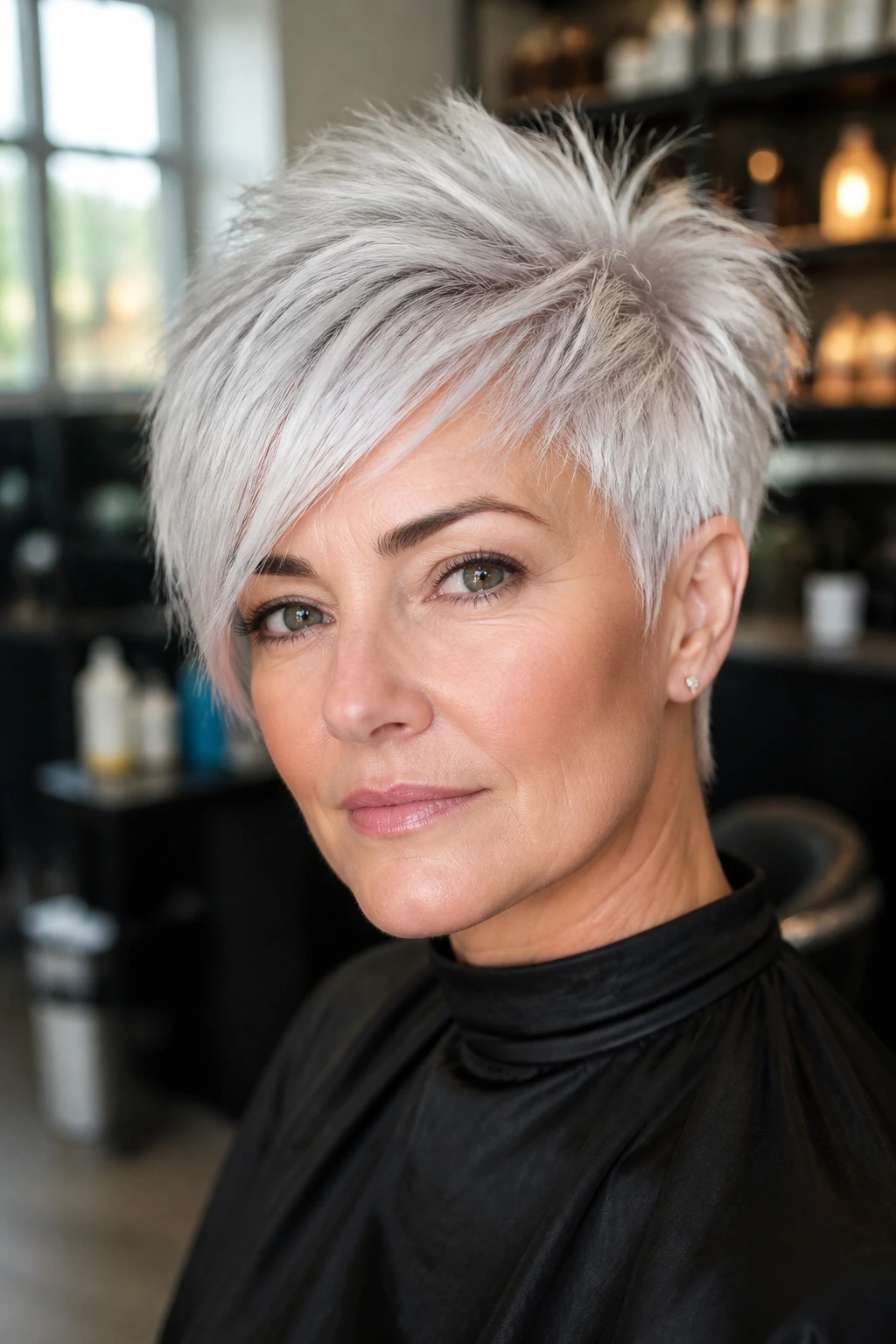
Color choice matters more than people think. A cool, icy platinum can look dramatic, but it also puts every line of the cut on display. A pearl blonde or soft silver-blonde often gives a little more breathing room around the face, especially if your skin has warmth or your brows are dark.
Thick hair also changes the color story. Dense hair often needs more lift to reach a pale platinum, and that can mean more time in the chair and more care at home. A good colorist will usually talk through strand strength, previous dye, and whether the lift should happen in one sitting or over a few visits. If someone waves all of that away, walk.
The cut geometry is the other half. Square faces usually read best with diagonal fringe, lifted crowns, or softened temple zones. If the plan is too blunt from temple to jaw, the shape will fight the face. If the plan is too layered everywhere, thick hair can spread out and lose its purpose. The sweet spot lives between those two mistakes.
How to Wear and Style These Pixies
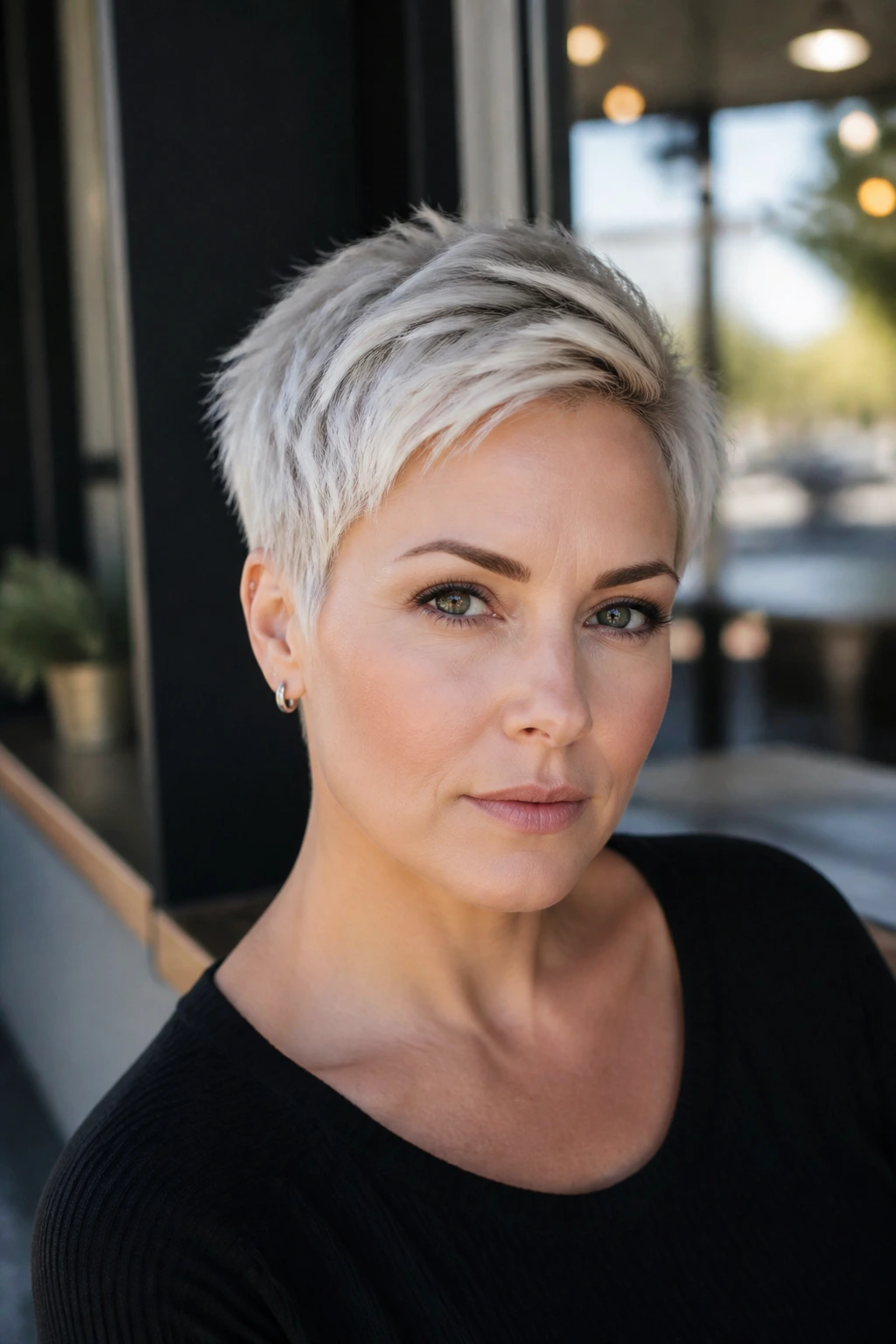
Silhouette: Keep the widest part of the cut above the cheekbones, not beside them. That usually means a little crown lift, narrow sides, and some movement through the top.
Styling: Use mousse or root spray on damp hair if you want volume, or a touch of paste on dry hair if you want separation. Thick hair usually needs less product than you think; start with a pea-sized amount and add only if the ends are too loose.
Wardrobe Pairing: High necks, open collars, and simple earrings all work well because they leave room for the haircut to sit cleanly. A very busy neckline can fight with a short, bright blonde cut. Let the hair have one clean visual job.
Face Finish: Square faces look especially nice with a little softness in the brows and a blush placement that sits slightly above the apple of the cheek. That’s not makeup theory for its own sake; it matches the directional lines of the hair.
Additional Tips and Texture Boosters

Color Enhancement: Ask for a root shadow or smudge if you want the platinum to last longer between appointments. It softens regrowth and gives the cut more depth, especially at the hairline where thick hair can otherwise look too bright and flat.
Time-Saver: If your hair behaves well, rough-dry the crown, then let the front pieces air-dry into place. The side sections on a pixie rarely need as much attention as people give them.
Pro Move: Point-cut the ends around the temples and fringe instead of snipping them blunt. That tiny detail keeps thick hair from forming hard corners, which square faces do not need more of.
Make-It-Yours: If your texture is wavy, use a light cream and a diffuser. If it’s pin-straight, use a bit more paste and fewer brushes. If it’s coarse, a smoothing balm on the ends can stop the platinum from looking frayed.
Keeping the Cut Fresh Between Appointments
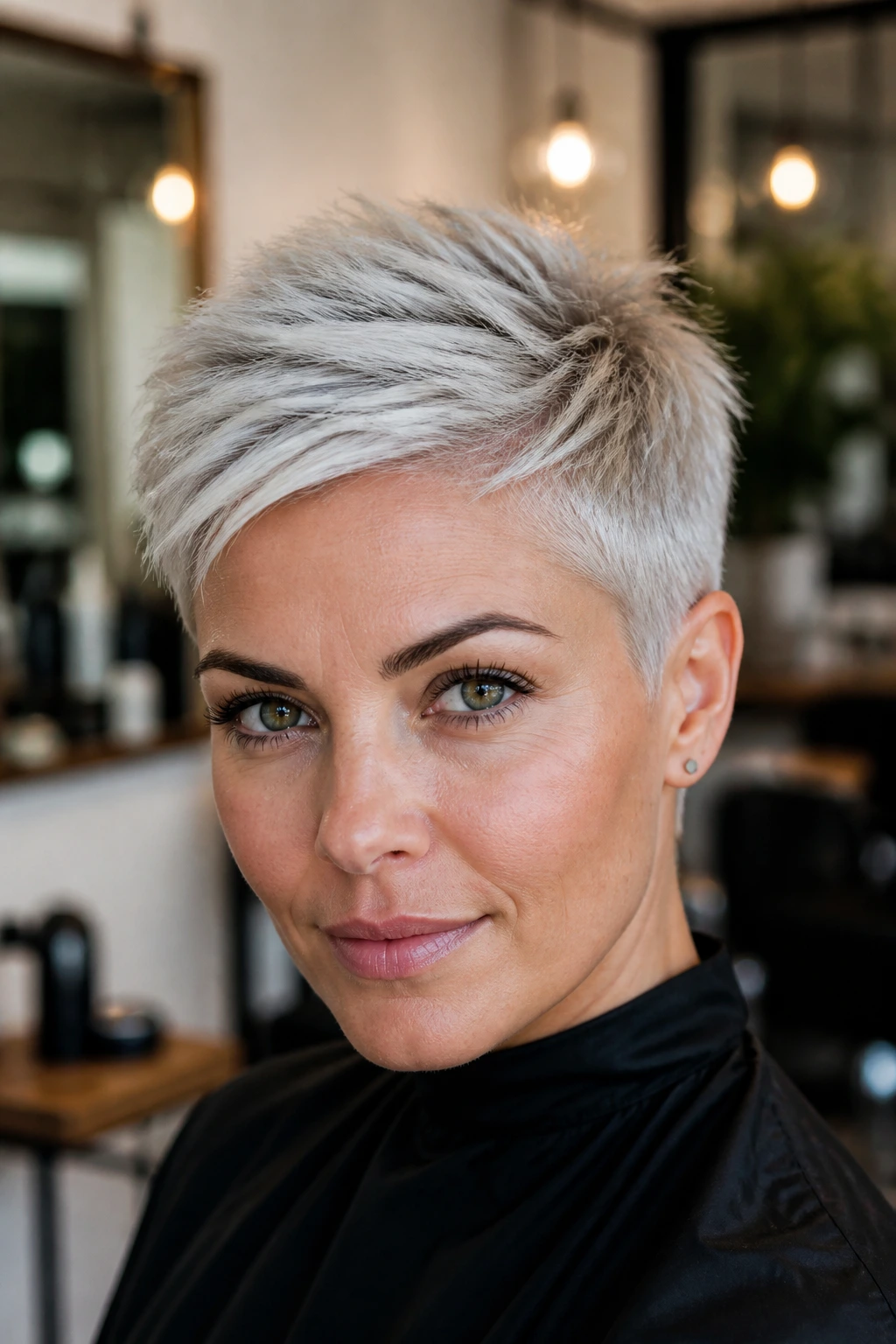
Short platinum hair asks for maintenance, but not constant drama. Most pixie shapes need a trim every 4 to 6 weeks if you want the neckline and sideburns to stay crisp. If you’re happy with a softer grow-out, you can stretch a bit longer, though the nape will usually tell on you first.
Color is its own schedule. A toner or gloss every 4 to 8 weeks helps keep the blonde from turning yellow or dull, and purple shampoo works best as a light correction, not a daily habit. Once a week is usually enough for most people; twice a week if your water is hard or your blonde leans warm fast. More than that and the hair can start to feel chalky.
Platinum hair also needs a real conditioning plan. A moisturizing mask once a week keeps the ends from feeling rough, and a small amount of bond-supporting treatment can help after lightening sessions. Sleep on a satin pillowcase if your hair tends to snag, and mist the front pieces with water or a leave-in spray before re-styling in the morning. A pixie can look fresh in three minutes if the cut is sound. If it can’t, the cut needs work.
Variations and Adaptations to Try
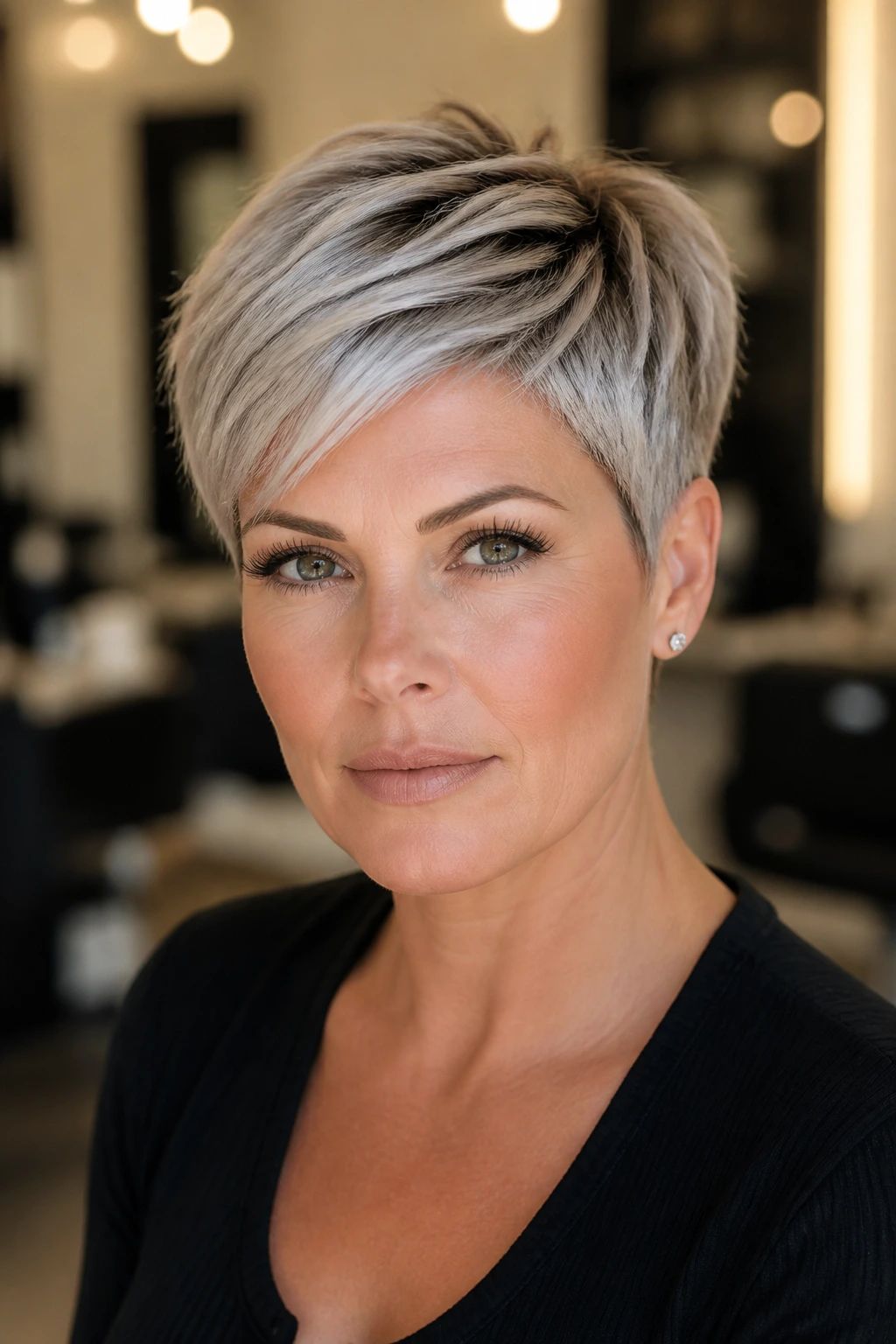
Soft Shadow Platinum: Keep a darker root and a pale mid-length to end section. This is the easiest version to maintain because regrowth fades instead of shouting.
Ice-White Editorial Crop: Push the blonde as pale and cool as your hair can safely take it. Pair it with a sharp, narrow silhouette and a little crown lift so the whole thing looks intentional, not washed out.
Smoky Silver Blend: Add a cooler silver toner over a platinum base for a foggy finish. It flatters strong brows and square jawlines because the tone feels less severe than flat white.
Curly Platinum Pixie: Keep more length on top and around the temples so curls can spring without widening the face. This works best with a light curl cream and a diffuser on low heat.
Grow-Out Pixie Bob: Leave the front and crown longer, then taper the nape cleanly. It’s a smart choice if you want the haircut to move toward a bob without an awkward middle stage.
Common Mistakes to Avoid
A lot of platinum pixies go wrong for the same five reasons.
Too much width at the sides: If the hair flares at the cheekbones, a square face looks broader. Ask for tapering or undercutting near the temples so the silhouette narrows where it matters.
A blunt, heavy fringe: Thick hair can make bangs sit like a curtain. If the fringe is straight across and dense, it will crowd the face. Feather or side-sweep it instead.
Over-toning the blonde: Purple shampoo used too often can leave a flat, dull cast. The hair can start looking dry and a little dusty. Use it only when the yellow starts to show.
Skipping the nape cleanup: The back grows fast and shows it fast. Once the neckline starts to puff, the whole pixie feels old. A quick cleanup can save the shape.
Lightening without enough prep: Thick hair may look tough, but it still breaks if it’s pushed too hard. A strand test and an honest chat about previous color can save you from snapping the ends off.
Frequently Asked Questions
Can a square face wear a very short pixie without looking harsher?
Yes, but the shape needs softness somewhere — usually in the fringe, crown, or temple area. A short cut with no diagonal line can make the jaw feel stronger than you want.
Is platinum a bad idea for thick hair?
Not at all. Thick hair can actually hold a sculpted pixie better than fine hair, but the lightening has to be done carefully because dense hair still gets dry and rough if it’s overprocessed.
What kind of fringe looks best with a square face?
Side-swept, feathered, or lightly shattered fringe usually works better than a blunt block. The diagonal line softens the face and keeps the forehead from looking too boxy.
How often will I need trims?
Most pixies need attention every 4 to 6 weeks if you want the shape to stay tight. If you’re growing it out, you can push longer, but the nape and sides will start to lose their clean line.
Can I wear this haircut if my thick hair has a wave or curl?
Yes, and the movement can be a big advantage. You’ll want a curl-aware cut with more internal shaping and less blunt weight at the bottom, or the sides can spread out.
What if my platinum starts turning yellow?
That’s usually a toner or water issue, not a haircut issue. Use a purple shampoo sparingly, switch to cooler rinsing water if your scalp can handle it, and book a gloss when the blonde starts to look tired.
Should I ask for thinning shears?
Sometimes, but not always. With thick hair, aggressive thinning shears can leave the ends fuzzy. Point-cutting and internal layering are often cleaner, especially on platinum hair that shows frizz easily.
What’s the easiest version to style in the morning?
A tapered crop or a shadow-root pixie is usually the least fussy. Those shapes keep their outline even when you only use a bit of mousse and finger-drying.
Short Hair, Sharp Logic
The best platinum pixie cuts for square faces with thick hair don’t try to outsmart the face shape. They work with it. They soften where the jaw needs it, lift where the eye should go, and remove bulk where dense hair likes to misbehave.
That’s what makes the whole family of cuts worth considering. Some versions are sleek, some are shaggy, some are blunt in a very controlled way, and some lean almost edgy. But the good ones all do the same job: they turn strong features into a shape instead of a problem.
If you’re taking this to a stylist, bring a few options that match the kind of balance you want — softer, sharper, or somewhere between the two — and keep your eye on the same three things: crown height, temple softness, and nape shape. Get those right, and platinum stops being high-maintenance theater and starts looking like a haircut that knows exactly where it’s going.