



A curly lob can go wrong in a hurry. Cut it too blunt and the hair sits like a helmet. Cut it too short and the curls bounce up around the jaw, which is where oval faces can start to look longer than you meant them to. Long bobs for oval faces and curly hair with soft layers sit in a much better place: long enough to keep the curl pattern hanging, short enough to keep the shape from dragging, and soft enough around the edges that the whole cut moves instead of wobbling.
The trick is in the layer placement. Soft layers are not the same as a choppy shag or a heavily thinned shape. They should remove bulk where the hair bends outward, not carve holes through the middle of the curl. On oval faces, that matters because the face already has balance; the haircut does not need to “correct” much. It needs to support the curl, keep the perimeter clean, and let the front pieces fall where they frame the cheekbones instead of brushing the mouth in a strange, triangular way.
There is also a very practical reason this length keeps showing up in curly salons: shrinkage. A lob that lands at the collarbone when dry can sit a few inches higher once the curls spring up, and that is a feature, not a flaw. The best versions account for that bounce from the start. They leave enough weight at the bottom to keep spirals defined, then use soft internal layering so the back does not puff out like a mushroom.
Why This Collection Works So Well on Oval Faces
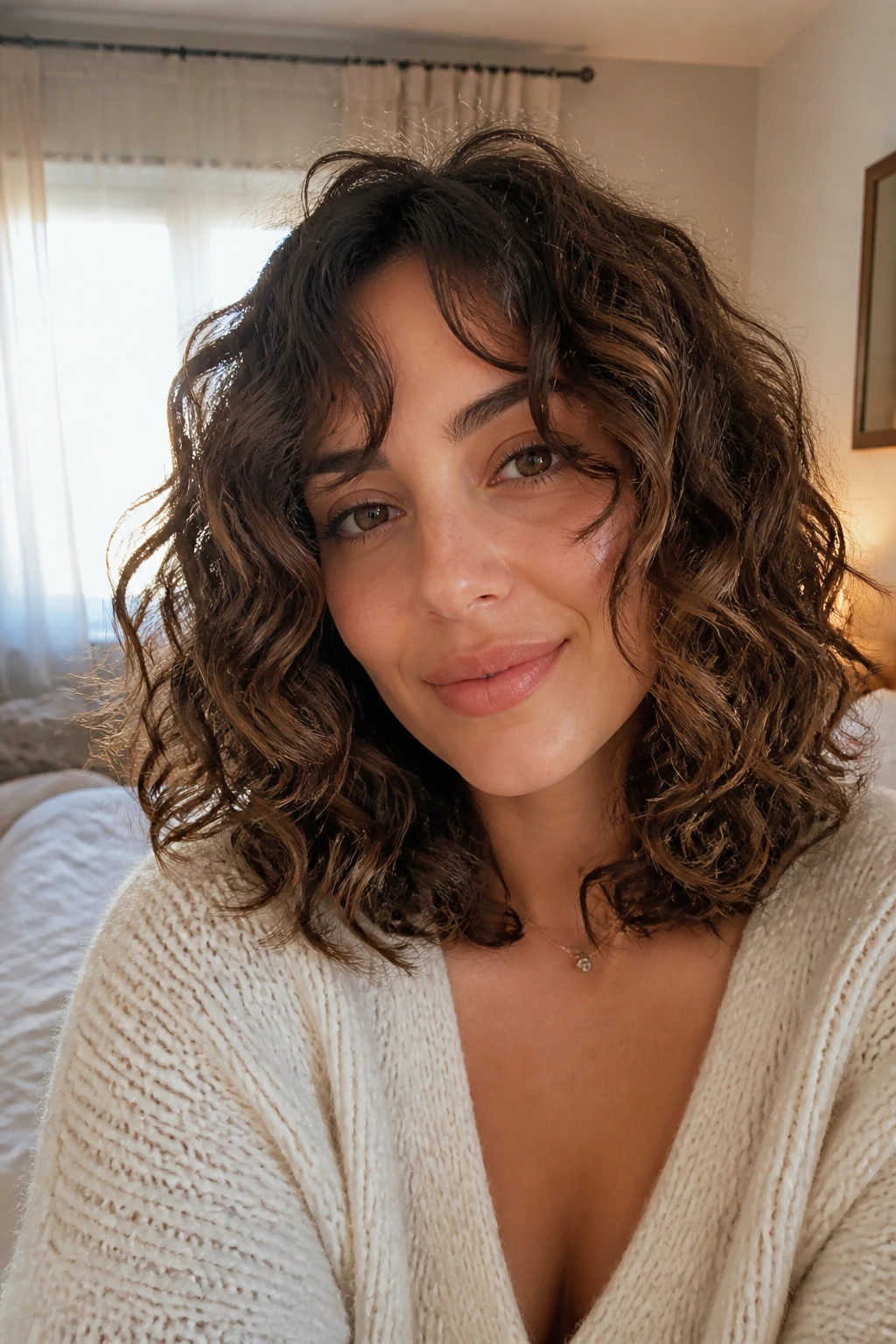
-
The length stays in control: A collarbone-to-upper-chest lob keeps curls from bouncing straight up to the jawline, which is where shape starts to get fussy on many oval faces.
-
Soft layers keep the curl clumps intact: The best layers remove bulk in small, careful sections, so the curl pattern still reads as one shape instead of a bunch of frayed ends.
-
You can change the part without wrecking the cut: Oval faces can wear a middle part, deep side part, or a soft off-center part, and each one shifts the vibe without needing a new haircut.
-
It grows out cleanly: A good lob does not look accidental after six to eight weeks. The line simply drops a little lower and the curls keep doing their thing.
-
Volume stays where it belongs: These cuts let you keep lift at the crown and movement through the mids, instead of forcing all the puff out at the sides.
-
Styling stays flexible: You can air-dry, diffuse, or set the front pieces with a quick twist, and the cut still holds its shape the next day.
1. Collarbone Lob with Soft Face-Framing Ribbons
If you want the easiest place to start, this is it. The hair falls right around the collarbone, which gives curly ends enough room to spring without sitting directly on the jaw. Those front pieces should be a little shorter than the back—usually about 1 to 2 inches—so they bend inward and frame the face instead of hanging there like a curtain.
Why it flatters
Oval faces already have balanced proportions, so the point here is not correction. It is control. The collarbone length keeps the curl mass below the widest part of the face, and the soft face-framing ribbons draw the eye to the cheekbones without stealing all the attention.
Ask for the layers to start low. Really low. If your curls are loose, that might mean just below the cheekbone. If they are tighter or denser, the first layer can sit closer to the chin, but it should still feel gradual, not chopped.
A side part makes this cut feel a little more undone. A middle part makes it calmer and cleaner. Both work.
2. Rounded Curly Lob with a Center Part
A rounded lob is the style I reach for when a client wants shape without drama. The perimeter stays soft and almost oval itself, which is a nice echo for an oval face. The middle part keeps the look symmetrical, and the roundness in the sides stops the curl stack from jutting outward at the cheekbones.
What makes it different
This is not a flat cut. It just looks quiet. The layers are tucked inside the shape so the outside line stays smooth, which helps curls fall in a neater halo instead of expanding into a wide triangle.
If your hair tends to separate into big, chunky sections, this shape can help those pieces blend. If your curl pattern is finer, though, keep the layers subtle. Too much interior removal and the ends lose weight fast.
A diffuser helps, but don’t blast the roots upward for ten minutes straight. That’s how a rounded lob turns into a puffball. Dry the crown first, then let the mids and ends air-finish for a softer edge.
3. Deep Side-Part Lob with Lift at the Roots
A deep side part changes the whole conversation. One side drops closer to the cheekbone, the other opens the face and gives the crown a little lift, which is a smart move if your curls flatten at the top and flare at the bottom.
This cut works especially well when your hair has medium to high density. The deeper part creates a natural sweep, and soft layers keep the heavier side from collapsing into your cheek. That diagonal line can make an oval face feel sharper without making the hair look severe.
How to wear it
Use a lightweight mousse at the roots and a curl cream through the mids. Too much cream at the top will make the part sink by lunchtime.
If you like a little edge, tuck the heavier side behind one ear and let the opposite side fall forward. That tiny move changes the silhouette more than people expect.
4. Soft Shag Lob with Hidden Internal Layers
This is the lob for anyone who likes movement. The outer line still reads as a long bob, but the inside has more action: soft internal layers, a little lift around the crown, and ends that fan out instead of hanging in one solid sheet.
The word “shag” scares some people because they picture choppy, over-textured hair that loses its shape fast. That is not what this should be. The layers should be enough to release bulk, not enough to make the haircut look torn apart.
This cut does a nice job with dense curls that need air between the pieces. It is also good for hair that gets flat at the back of the head. A few low layers can keep the curve alive without forcing the front to be much shorter than the rest.
5. Blunt-Edge Lob with Invisible Layers
A blunt-looking lob can be gorgeous on curly hair if the perimeter is handled with restraint. The trick is to keep the outside line clean and let the soft layers live inside the haircut where they reduce weight without changing the outline too much.
That hidden layering is useful on oval faces because the eye sees a polished frame, not a choppy one. If your curls are loose enough to clump well, this style gives you that tidy edge with a little movement underneath.
It also grows out gracefully. After several weeks, the bottom line will blur a bit, but it will not suddenly lose its shape. If you hate haircuts that look “too done,” this is a good candidate.
6. Bottleneck-Bang Lob
Bottleneck bangs are one of the few fringe shapes that can play nicely with curls without turning into a constant repair job. They open slightly in the center, then soften and graze the temples, which means the front of the haircut stays light instead of dense.
On an oval face, that little opening can be enough. You get frame around the eyes and cheekbones without covering up the whole forehead. The long bob length keeps the rest of the shape grounded, so the fringe does not take over.
This cut needs a stylist who knows how curls settle dry. If the bangs are cut too short wet, they will spring up and sit in the middle of your face like punctuation marks. Leave a little extra length, then trim once the curl pattern shows itself.
7. Angled Lob with Longer Front Pieces
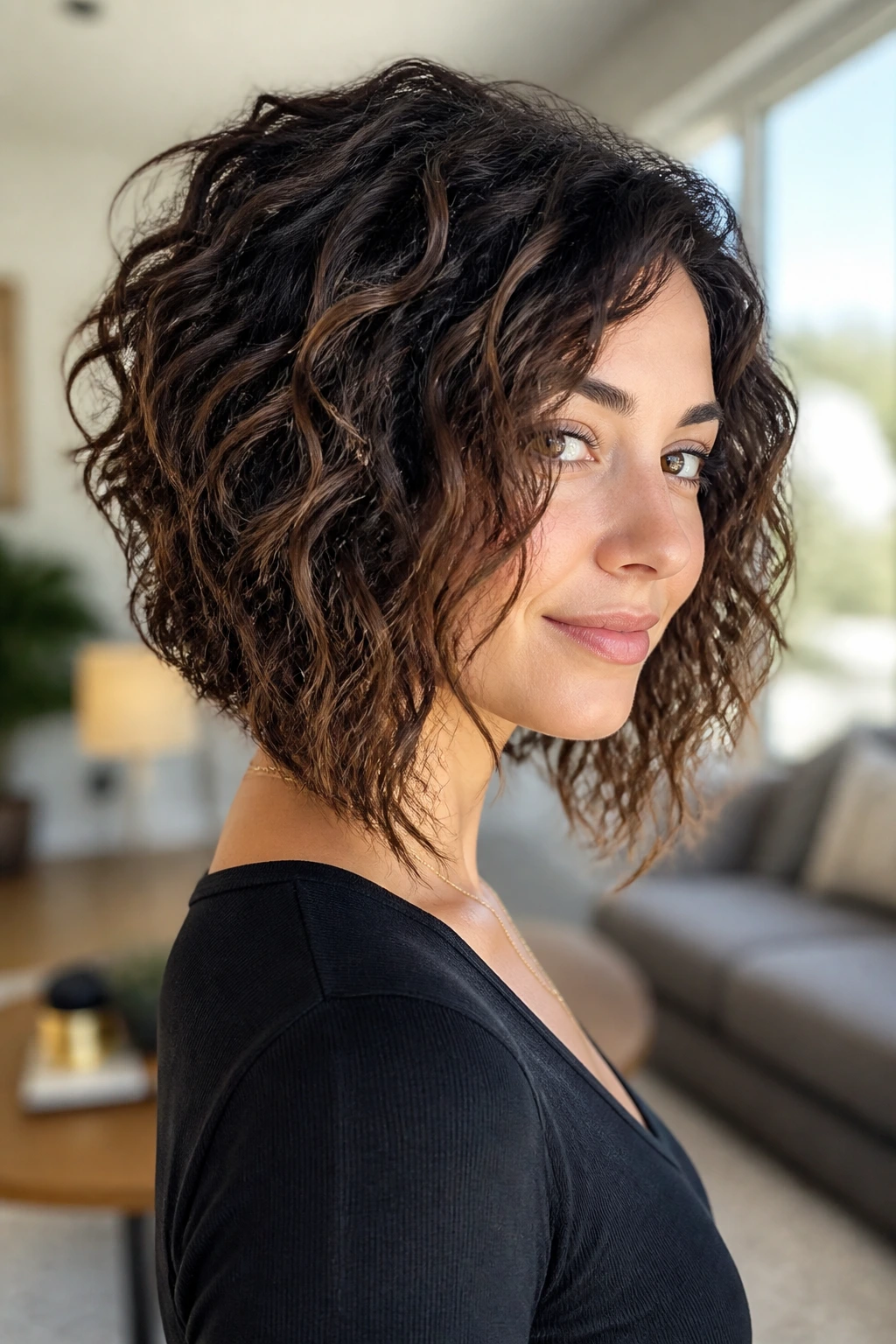
A subtle angle gives the haircut a line you can actually see. The back sits a touch shorter, the front drops longer, and the whole shape points downward in a way that makes oval faces look a little more sculpted.
The angle should be quiet, not sharp. If the difference between back and front is too dramatic, curly hair can start to look uneven once it dries. Two to 3 inches of length difference is usually enough to show the shape without making the front feel disconnected.
I like this version on curls that fall in loose spirals or chunky S-waves. The longer front pieces keep the style soft around the chin, while the shorter back stops the volume from spreading too far down the neck.
8. Center-Part Lob with Cheekbone Layers
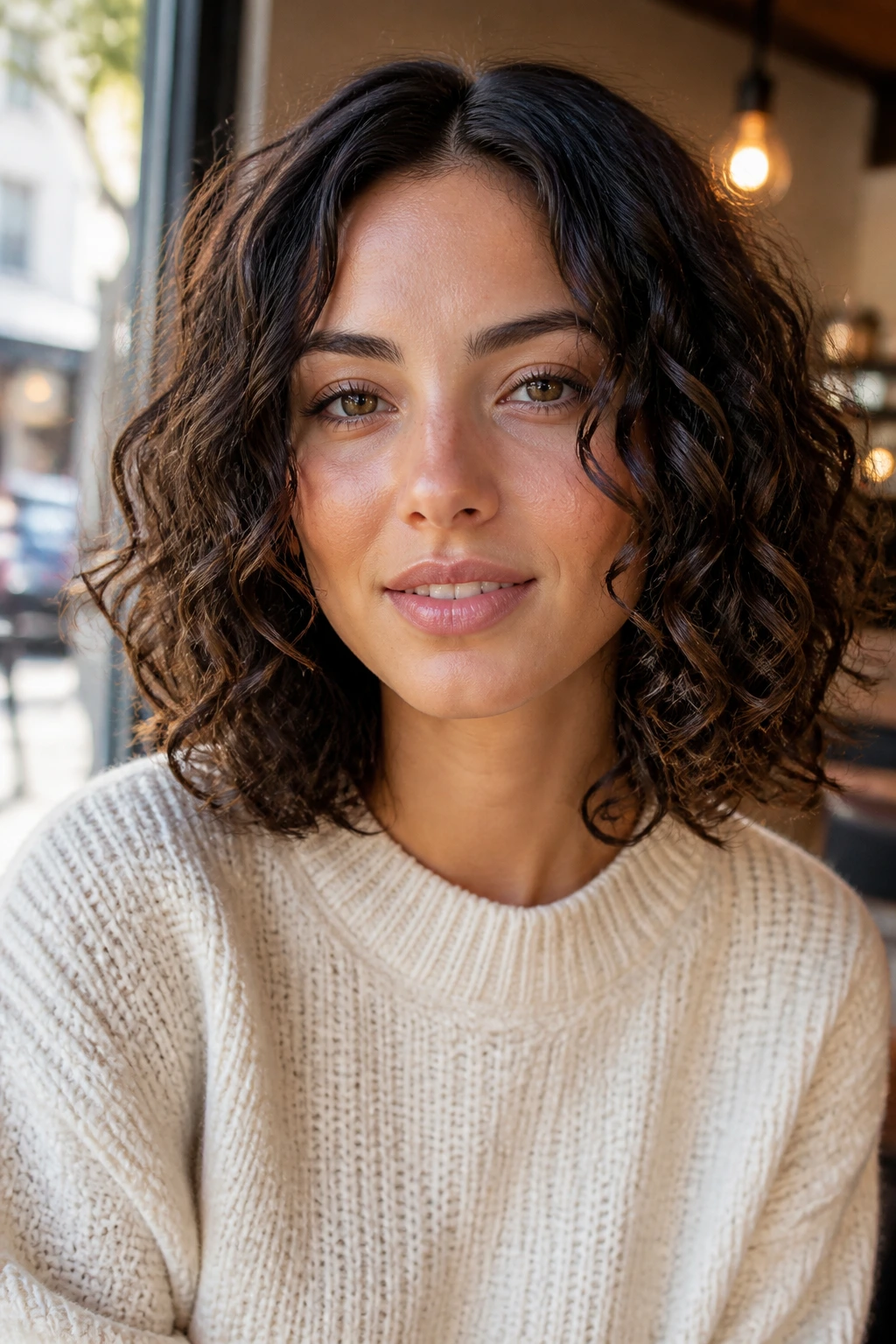
A center part does not have to feel severe. On an oval face, it can actually be one of the easiest ways to show off curl definition, because the symmetry gives the eye a clear path and lets the layers do the rest.
Here, the soft layers should start around the cheekbone or just below it. That placement pulls attention upward without making the face look heavy on the sides. If your curls want to puff right at the cheek, ask for a little more length in the front and less in the upper side sections.
This cut is best when you like your curls defined rather than brushed out. A small amount of gel at the ends keeps the pieces separate. No rake-through at the roots. That only breaks up the top and makes the part look fuzzy.
9. Air-Dried Lob with Tapered Ends
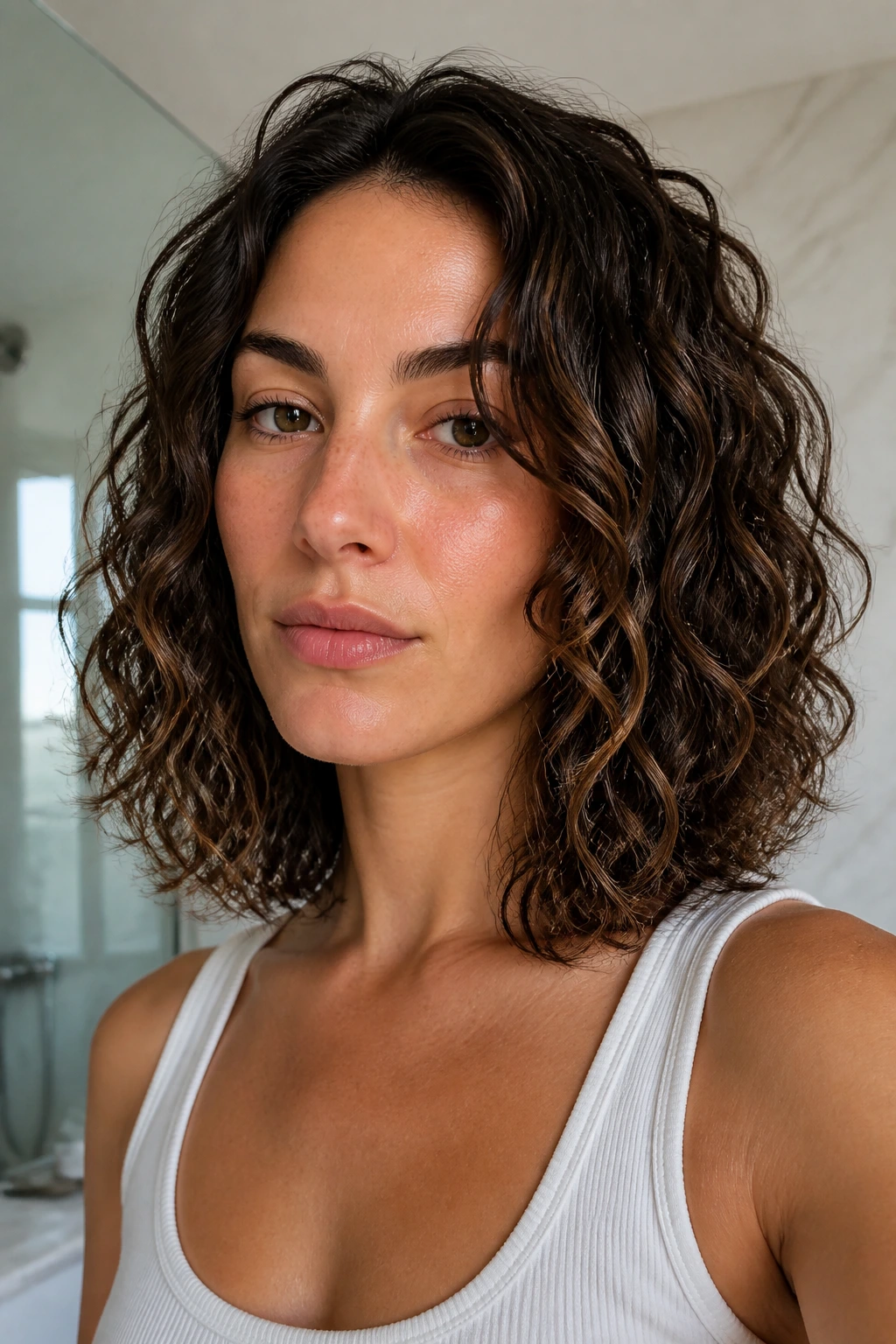
Some cuts need a perfect blowout to behave. This one does not. A tapered lob with soft layers can look excellent air-dried, especially if your curls naturally separate into clean clumps.
The taper should be subtle. The ends get slightly lighter as they move toward the face and shoulders, but the bottom still holds enough weight to keep the outline readable. That weight matters. Without it, curly hair can fan out and lose the clean long-bob shape.
If you are low on time, this is one of the easiest styles in the set. Scrunch in a light mousse, flip once while drying, and leave it alone. Touching curls too much while they set is how you end up with frizz that looks like static from a sweater.
10. Crown-Volume Lob with Lifted Roots
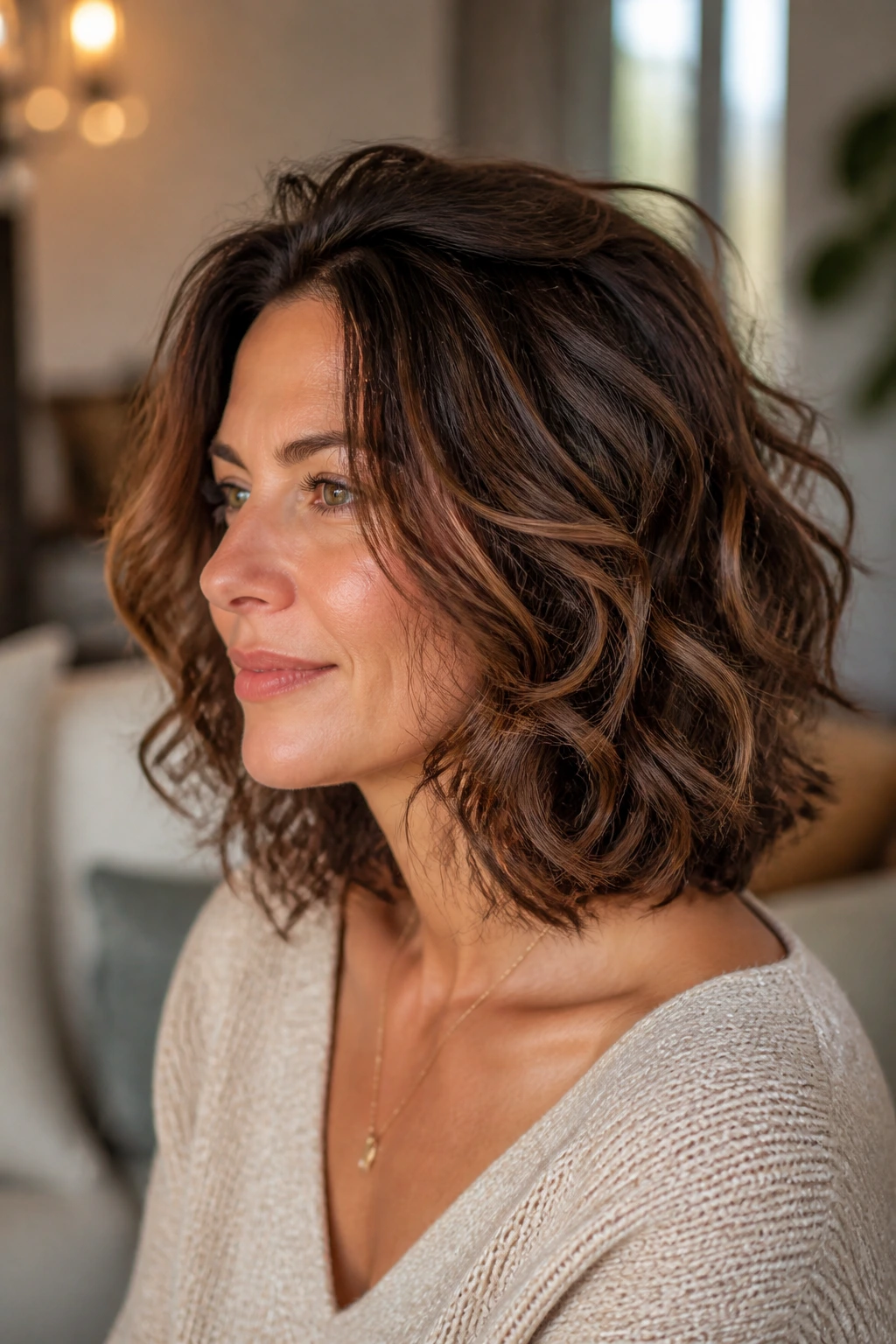
Flat roots can make a lob look shorter and wider than it is. Crown volume fixes that. By keeping a little lift at the top and allowing the layers to release around the crown, the haircut appears longer and more balanced on an oval face.
This shape is especially useful if your curls are dense and heavy. Instead of all the weight sitting at the sides, the hair rises a little at the top and then drops in soft waves around the shoulders. That vertical line is flattering without feeling formal.
The catch is product. If you pile on cream at the roots, the lift disappears fast. Use a root-friendly mousse or foam, then dry with the diffuser angled upward only at the crown. Stop when the scalp feels dry and the curl pattern still has a bit of softness left in it.
11. French-Girl Lob with Piecey Fringe

This is the cut for people who want a little character. The fringe is light and broken up, the lob stays loose, and the overall effect feels lived-in rather than polished to death. On curly hair, that piecey front can be especially nice because it keeps the eye moving.
The fringe should not sit bluntly across the forehead. It needs small variations in length so the curls can separate naturally. Think of it as a soft frame, not a curtain. On an oval face, that frame adds interest without changing the proportions too much.
This style looks best when the curls are defined but not stiff. A curl cream plus a small amount of gel usually gets there. If the fringe starts to clump too much, separate the pieces with damp fingers while the hair is still a little soft.
12. Side-Swept Bang Lob
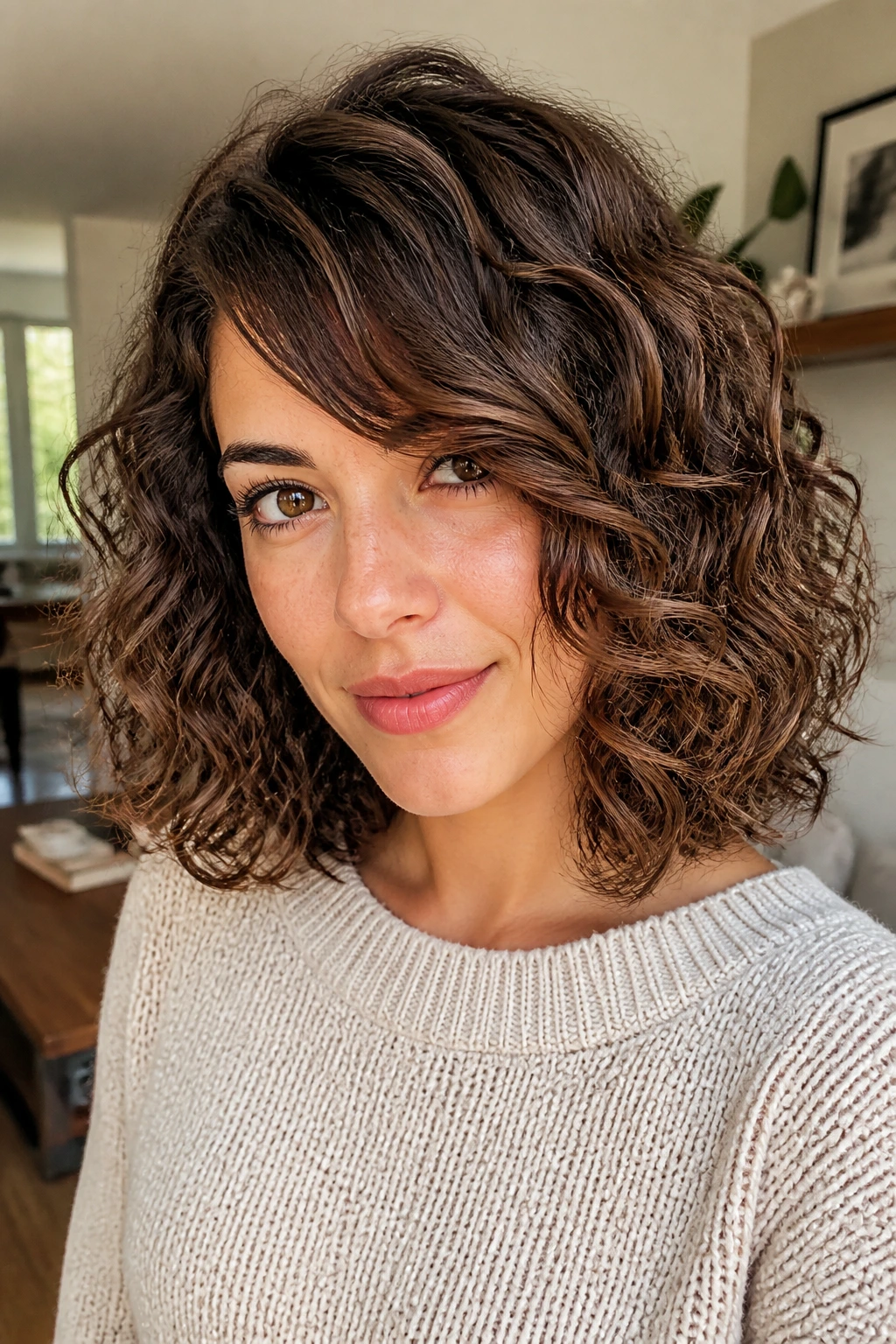
A side-swept bang can rescue a lob that feels too symmetrical. The diagonal line breaks up the face in a flattering way, and curly texture keeps the bang from looking flat or too formal.
The bang should be long enough to sit around the cheekbone when dry. Shorter than that, and the curl spring makes it hard to manage. Longer than that, and it starts to disappear into the rest of the cut unless you style it on purpose.
This is a good option if one side of your curls naturally behaves better than the other. Let that side lead. Pull the fringe across, pin it while damp if needed, then release once it has set. A quick adjustment like that can change the whole haircut for the day.
13. Carved-Out Curl Lob
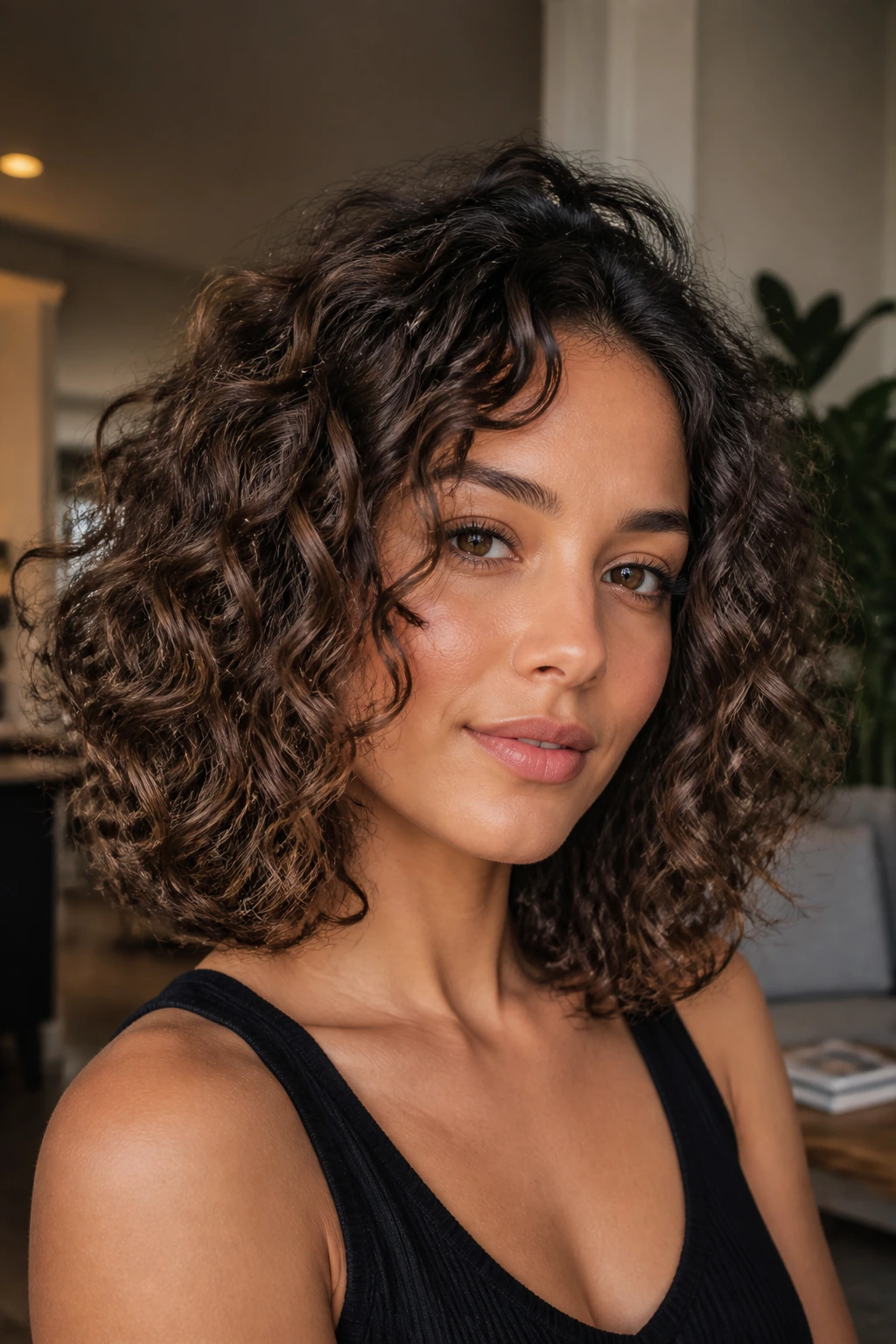
Some curls need a little more shape carved into them, especially if the ends feel heavy. This lob uses soft layers to make room between the curl groups so the shape looks intentional instead of packed from root to tip.
The best version leaves the perimeter full enough to hold, while the interior gets just enough removal to stop the bulk from building at the jaw and shoulders. That’s the sweet part of the haircut: the shape still looks substantial, but the curls can breathe.
It’s a strong choice for thick hair that usually needs a lot of drying time. Less bulk means less time under the diffuser. That alone can make this cut feel easier to live with.
14. Tucked-Behind-Ear Lob with Weight at the Bottom
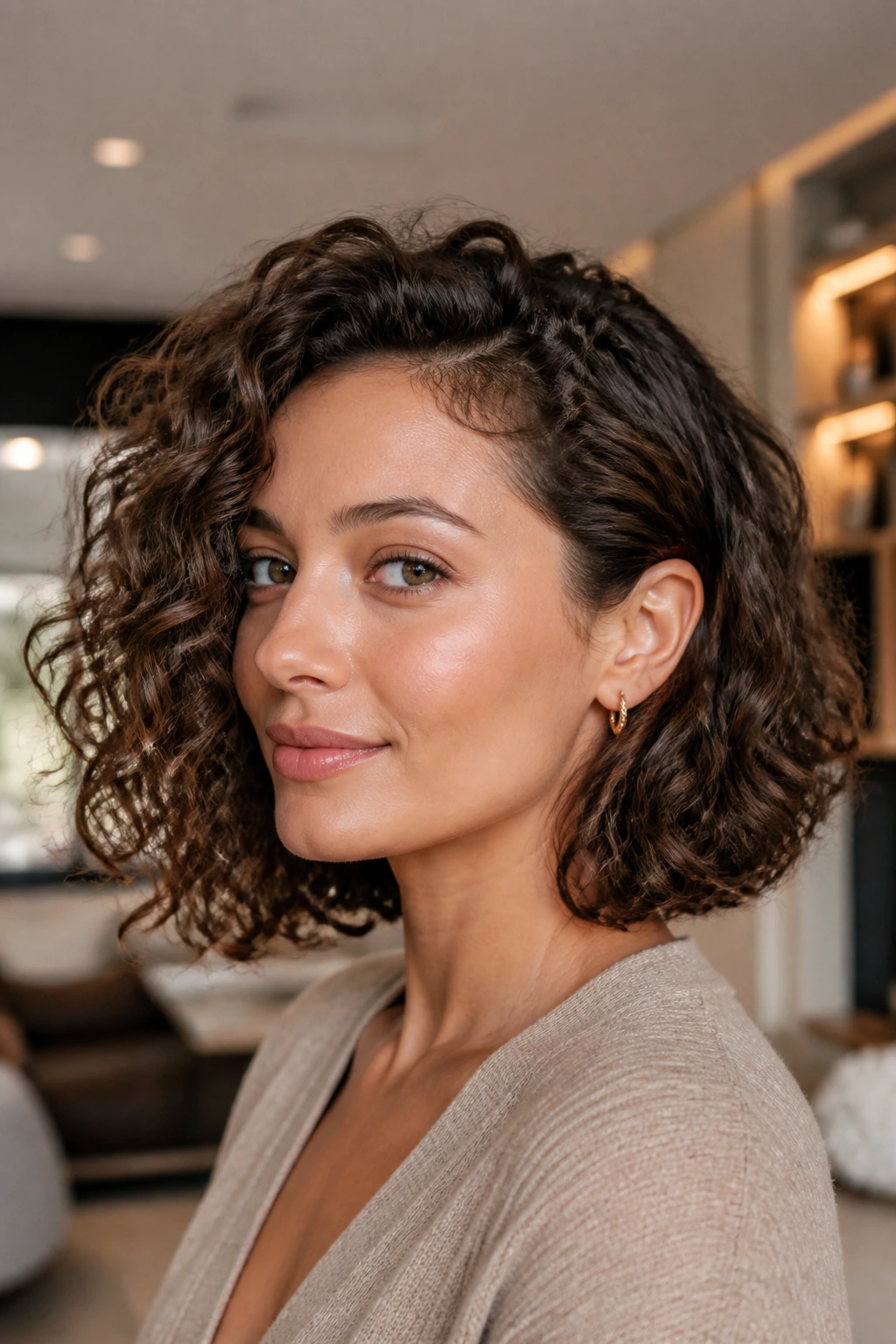
This one has a clean, slightly dressed-up feel. The lower ends stay weighted, which helps the haircut look smooth when one side is tucked behind the ear. On an oval face, that tucked effect opens space around the cheek and makes the neck look longer.
The style depends on a solid bottom line. If the ends are too wispy, the tuck looks accidental. If they are too blunt, the tuck can seem stiff. Soft layers near the front keep the shape from feeling boxy.
It’s especially good for evenings or for anyone who likes to wear one side pinned back. A tiny barrette or clip works fine. You do not need a fancy accessory; the shape itself is doing the work.
15. Deep Side-Sweep Lob with Soft Curtain Layers
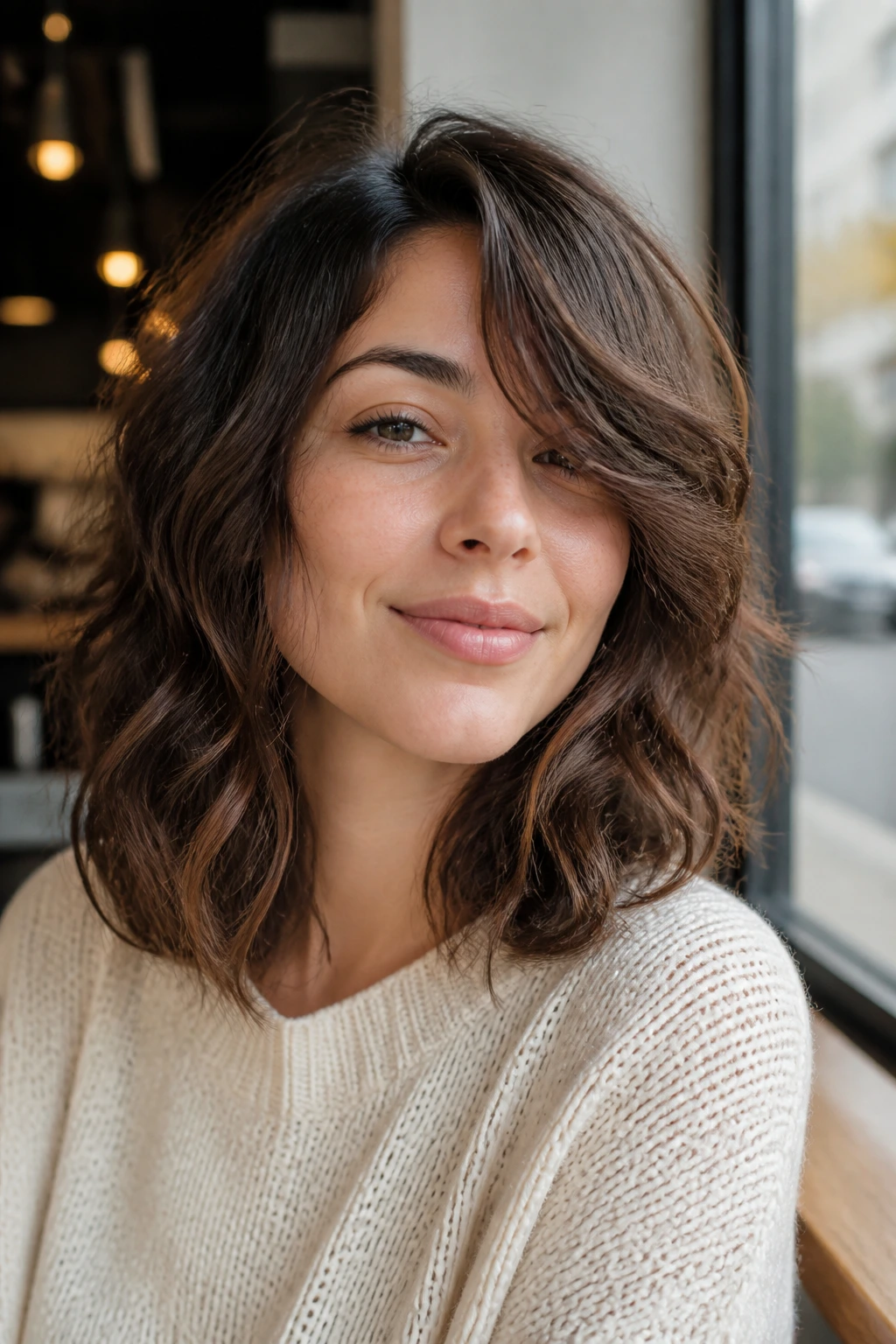
There’s more softness here than drama, which is the point. The side sweep bends the front sections across the face, and the curtain-style layers open them back out just enough to keep the shape airy.
This style helps when curls fall flat around the temples. The side sweep gives you instant lift, while the soft curtain pieces stop the front from collapsing into one heavy slab. It can make an oval face look a touch shorter in a nice way, especially if the hair is very long in the front.
Use this cut when you want movement that still feels easy to maintain. It takes a little styling on wash day, then settles into a flexible shape for the next two or three days.
16. Grown-Out Lob with a Rounded Perimeter

Not every lob needs to look freshly cut. A grown-out version with a rounded edge can be one of the best ways to wear curly hair on an oval face, especially if you like softness more than precision.
The perimeter should still have a plan. It just needs to be looser and a little longer, usually brushing the upper chest. That length gives curls room to settle, and the roundness keeps the sides from jutting out at the shoulders.
This is the cut I’d pick for someone who hates hard lines. It has enough shape to look deliberate, but not so much that you feel trapped maintaining it every morning.
17. Rounded A-Line Lob

A mild A-line gives the haircut a forward lean without turning it into a sharp angle. The front sits a bit longer than the back, and the rounded outer line softens the change so it still feels like a curly lob, not a geometry exercise.
On an oval face, that forward lean can be useful. It draws attention to the cheekbones and jawline in a gentle way, while the shorter back keeps the neck area from looking buried under hair.
The shape needs a good dry cut or a very careful curl-by-curl approach. If the back is overcut, the front can seem too long once the hair dries. I would rather leave the back a touch heavy and refine later than hack it too short and regret it for six weeks.
18. Glossy Wet-Look Lob
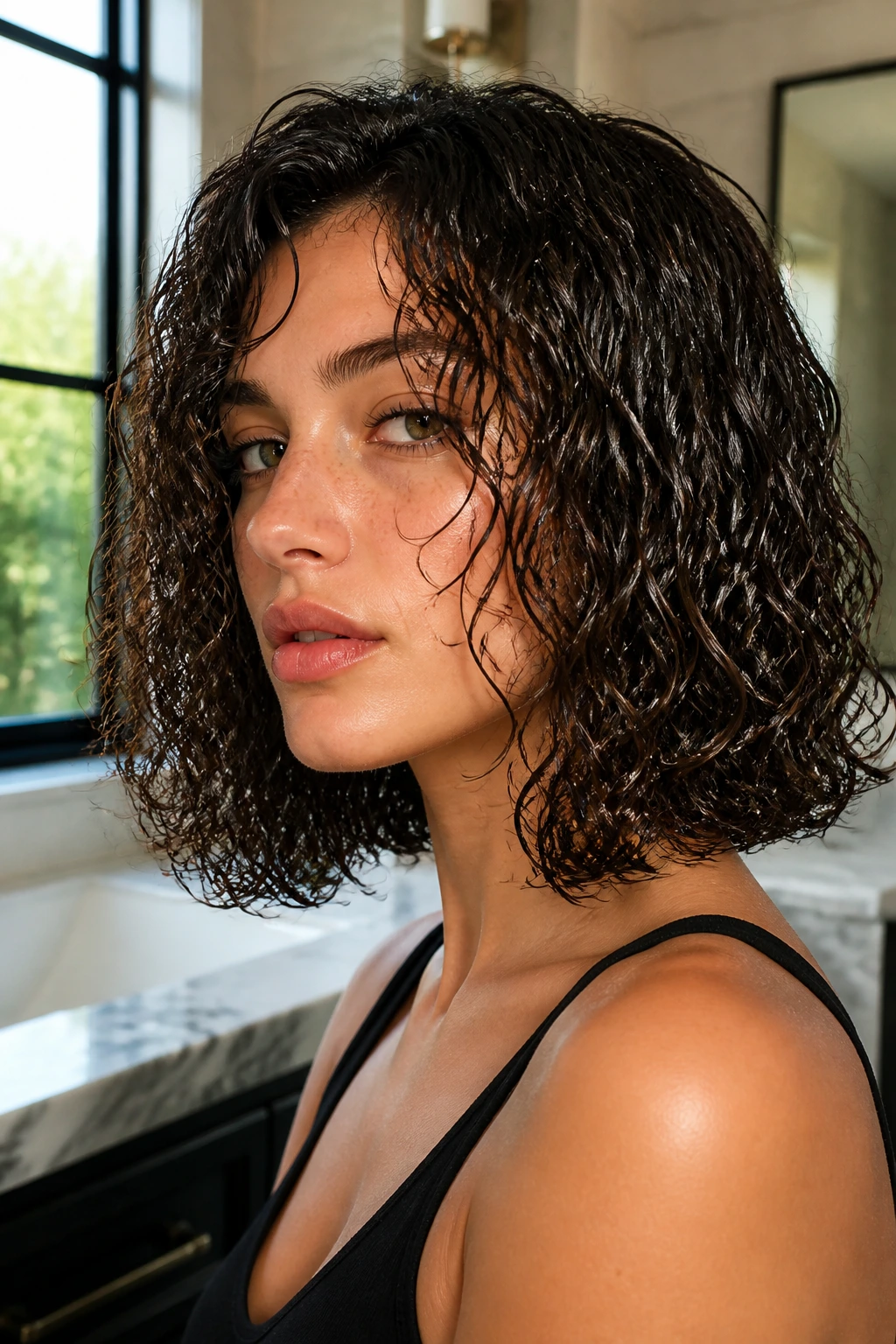
A wet-look finish is not for everyone, but it makes curly texture look sculpted instead of airy. The soft layers become more visible because the product separates the curls, and the lob itself takes on a smooth, polished line.
This is more finish than cut, which is why I like it at the end of the list. It works on a lob that already has good shape, especially one with a strong perimeter and controlled layering. The face stays open, the curls look deliberate, and the whole style reads cleaner than a frizzier air-dry.
Use a strong-hold gel on damp hair, rake it through with your fingers, then scrunch out the cast once the hair is fully dry. If the cast never forms, the gel is too weak for your curl pattern.
What Makes a Curly Lob Sit Right on an Oval Face
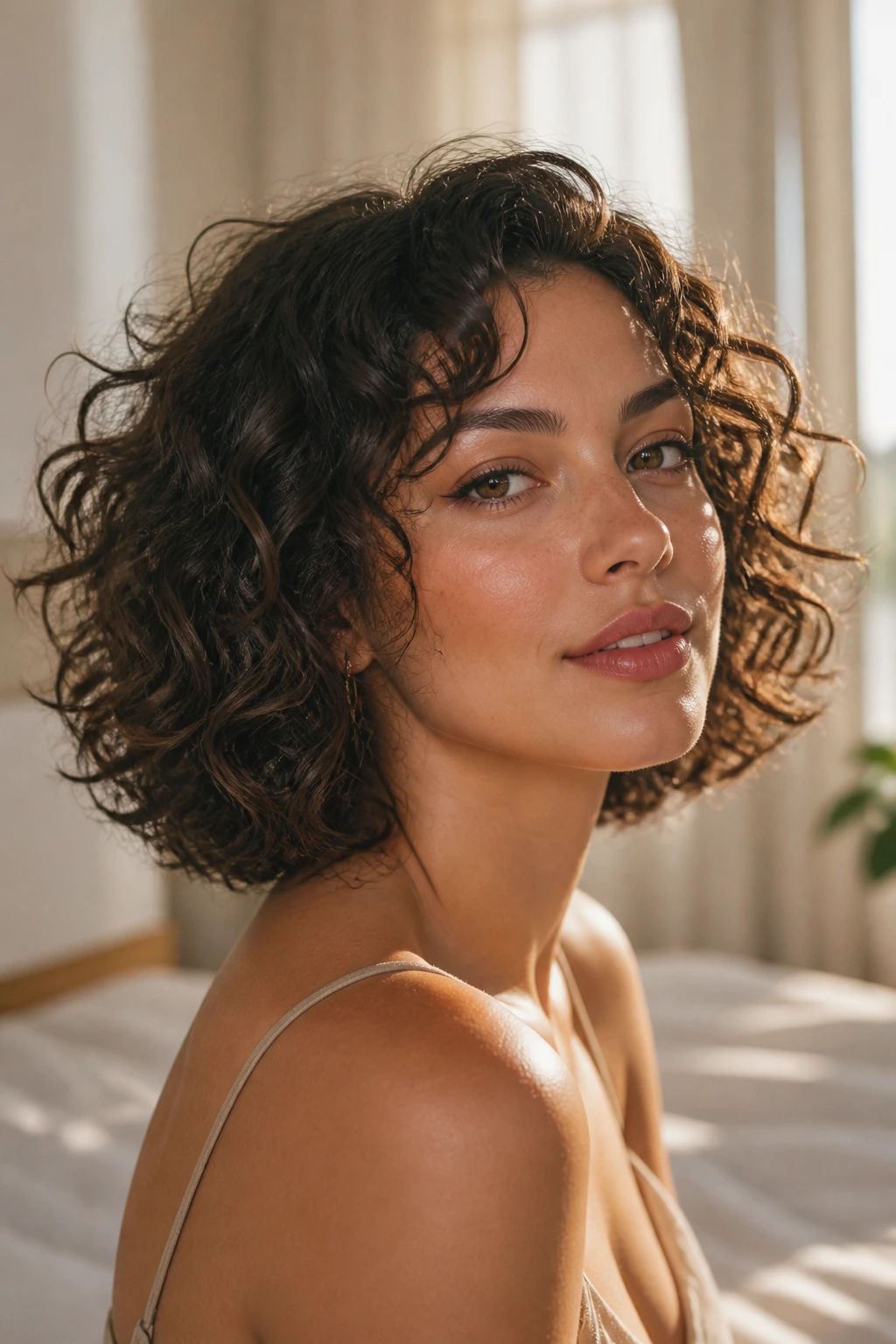
The best versions all share the same idea: keep the length long enough to respect shrinkage, then place the layers where they help the curl fall instead of forcing it. That usually means starting lower than people expect. If the layers open too high, the haircut can swell around the cheeks and lose the clean long-bob line.
Oval faces are forgiving, but that does not mean every cut is equal. A lob that ends right at the cheekbone can make the face feel busier than one that ends around the collarbone. The difference is only a few inches, yet the silhouette changes a lot once the curls dry and lift.
The line matters more than the label
A “lob” can mean a blunt shape, a rounded shape, a shaggy shape, or a subtle A-line. With curls, the line you see at the salon chair is never the line you see after air-drying. That is why the dry finish matters more than the wet cut.
If your curls shrink a lot, ask for the perimeter to land lower than you think you need. If your curls are loose and heavy, you can get away with a shorter shape. Either way, the haircut should feel balanced before product, not after three layers of styling cream.
How to Ask Your Stylist for the Right Shape
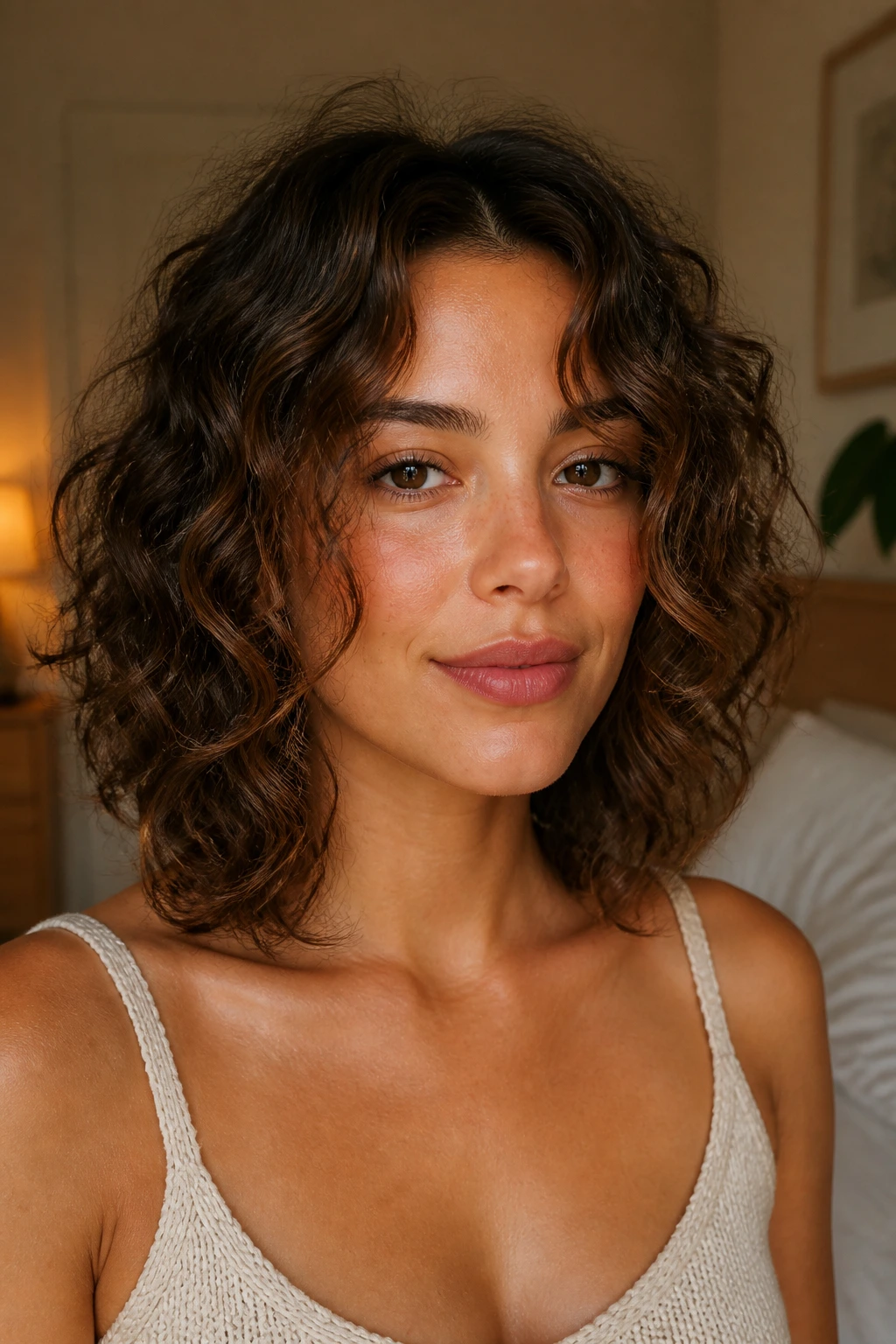
Bring photos, sure, but bring a sentence too. Say where you want the shortest point to land when dry, where the front pieces should hit on the cheek or chin, and whether you want the shape rounded, angled, or a little shaggy. That one conversation saves a lot of “well, it looked different on the screen” disappointment.
Be direct about your curl pattern. A stylist cannot read your spirals just by looking at them in a ponytail. If your hair springs up 2 inches, say that. If your crown falls flat while the ends puff, say that too. Those details change the layering plan.
Ask for these specifics
- Dry length target: Tell them where you want the cut to sit after your curls shrink.
- Layer start point: Ask for soft layers below the cheekbone if you want the face to stay open.
- Perimeter shape: Decide whether you want round, blunt, or angled edges.
- Internal weight control: If your hair is thick, ask for bulk removal inside the shape, not at the outer line.
- Bang plan: If you want fringe, agree on how much curl bounce it needs before the first snip.
Essential Tools for Styling These Cuts
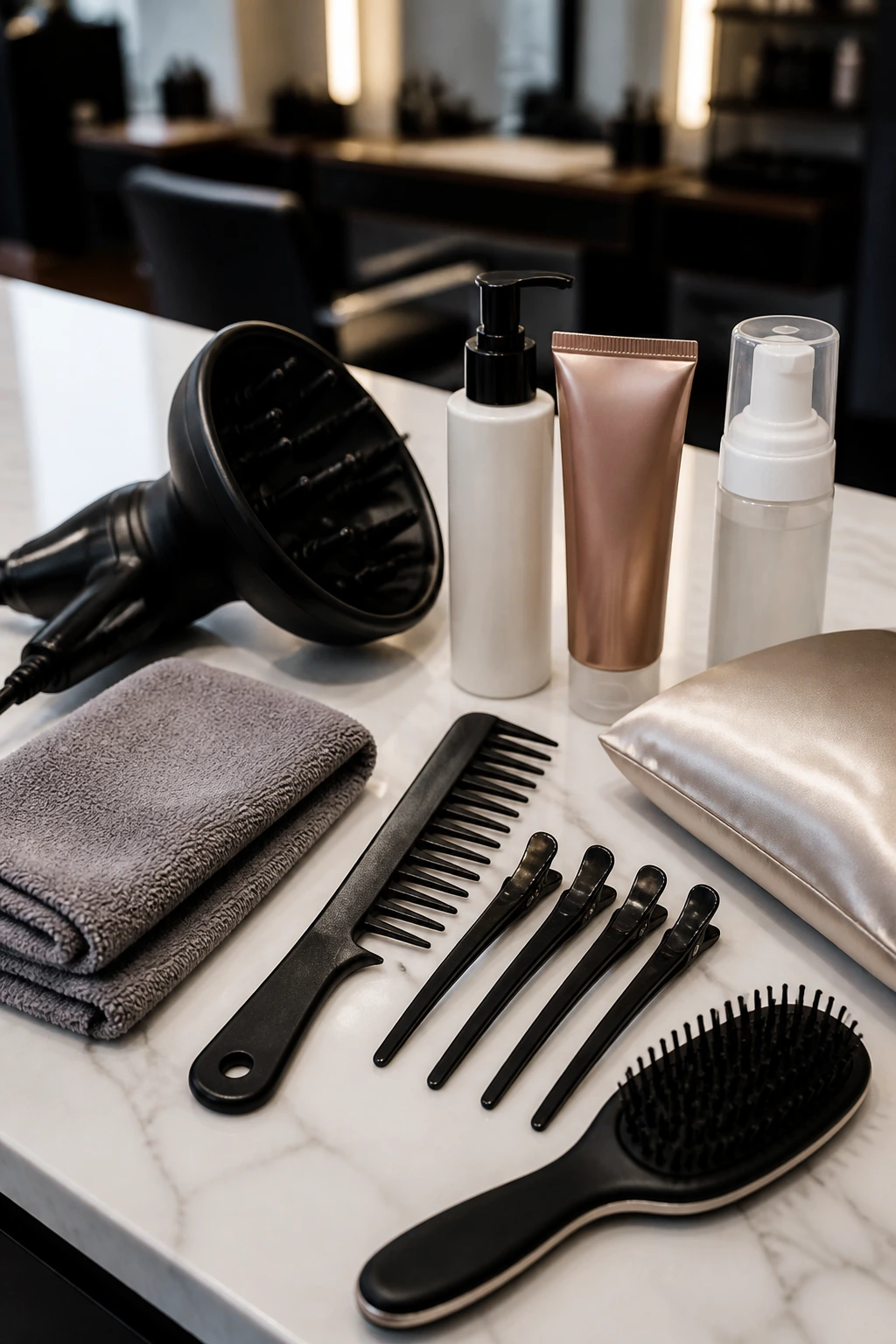
- Diffuser attachment: Helps dry the curl pattern without blasting the shape apart.
- Microfiber towel or cotton T-shirt: Cuts down on friction and frizz when you squeeze out water.
- Wide-tooth comb: Good for distributing leave-in or curl cream without breaking clumps.
- Sectioning clips: Useful when you need to dry the top separately from the sides.
- Curl cream or lightweight leave-in: Adds slip and definition without making the lob droop.
- Gel or mousse: Gives hold so the soft layers do not puff out as they dry.
- Silk or satin pillowcase: Keeps the ends from roughing up overnight.
- Small round brush or Denman-style brush: Optional, but handy if you like to shape the front pieces on purpose.
What to Look for in Curl Products
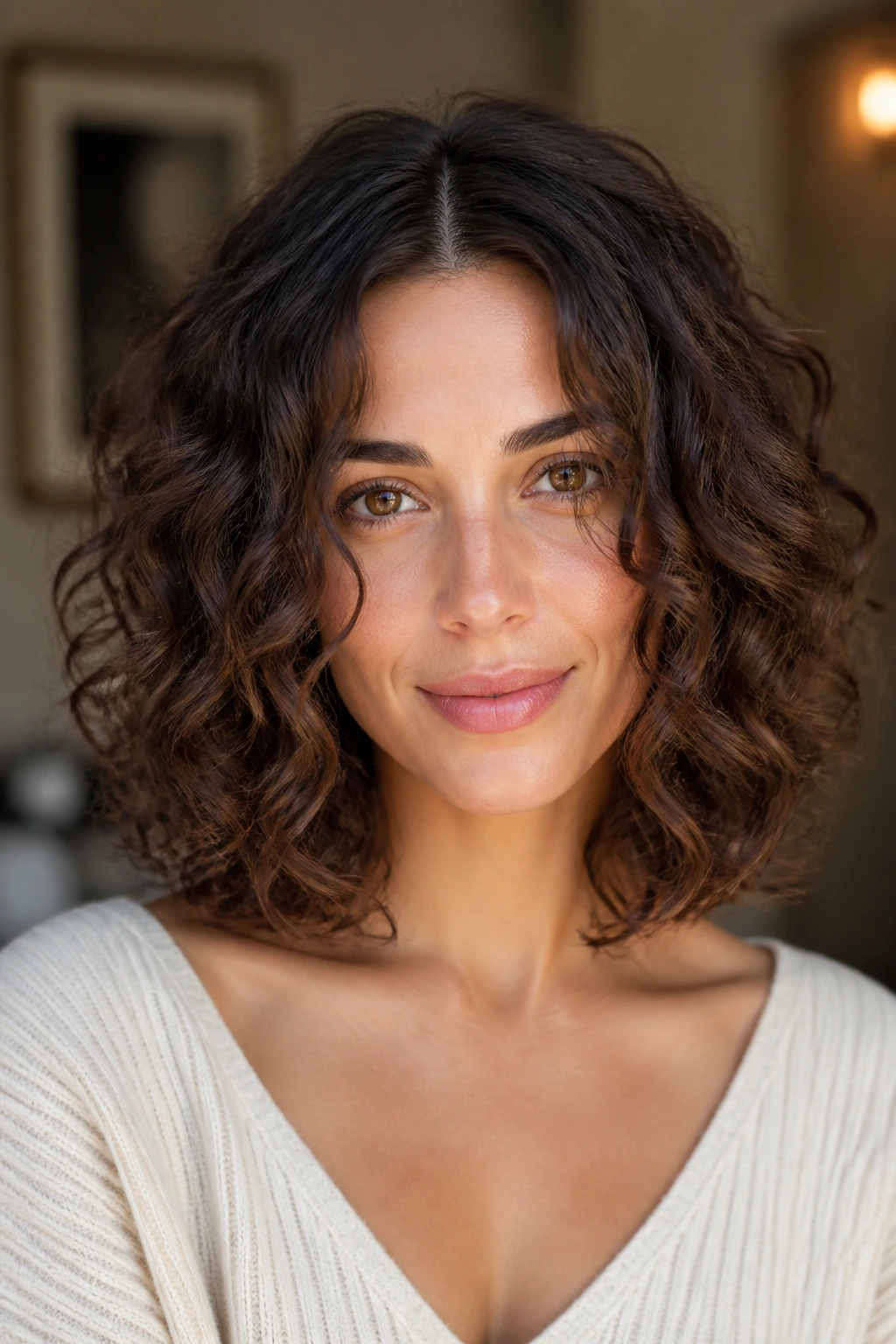
Heavy butters can be a trap on a lob. They feel rich in the hand and look promising in the bottle, then they flatten the crown and blur the layer work by midday. If your hair is fine or medium, start with lighter creams, foams, or gels and move upward only if the curls look dry.
If your curls frizz at the top and stay defined at the ends, focus on hold near the roots and mids. If the ends puff, choose something with slip and a little seal. Protein can help curls that feel limp and stretchy, but too much of it makes some textures stiff, so don’t build a whole routine around it unless your hair actually likes it.
Silicone is not the villain some people make it out to be. On curly lobs, a light serum with a smoothing silicone can be useful on the outer layer of hair, especially if the ends fray in humid air. The point is not to coat everything. The point is to keep the silhouette tidy enough that the layers still read as soft.
How to Wear These Long Bobs on Real Days

Wash day gets the most attention, but the second and third day are where this haircut earns its keep. A curled lob with soft layers should be able to change shape a little without falling apart. That means you do not need to rewet the whole head every morning.
On wash day, set the front first. Those face-framing pieces decide the mood of the whole cut. If they sit well, the rest of the style usually feels easier to live with. On day two, a mist bottle, a little gel on the palm, and a few scrunches at the ends can wake the shape back up fast.
Easy daily styling rhythm
- Fresh wash: Apply product on soaking-wet hair, then scrunch and diffuse until the roots are dry.
- Next day: Mist the mid-lengths, smooth the front pieces with damp fingers, and let the ends reactivate.
- Busy mornings: Tuck one side behind the ear and pin the other with a small clip. It looks deliberate, not rushed.
- High-frizz days: Add a pea-sized amount of serum only to the outer layer and the bottom inch of hair.
Practical Tips for Keeping Soft Layers Looking Soft
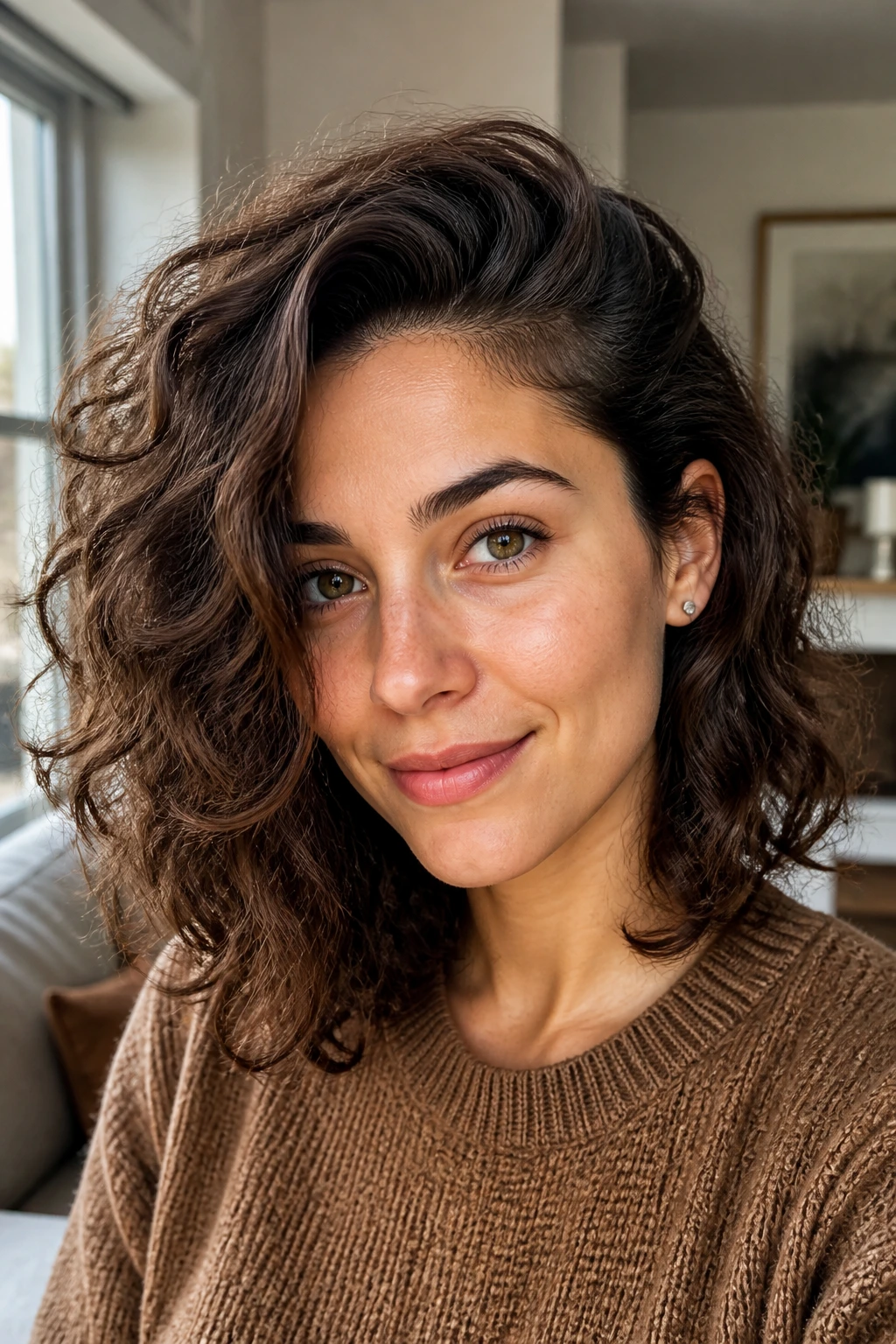
Start longer than you think. Curls shrink, and a lob that looks cautious in the chair can feel short once it dries. If you are between two lengths, choose the longer one.
Keep the top light, not feathered to death. You want lift at the crown, not see-through gaps that leave the scalp exposed in weird spots. Soft layers should blend, not flash.
Use less product at the roots. Most of the shape lives in the mids and ends. Put your hold there and keep the crown cleaner so the haircut does not collapse.
Refresh the front pieces separately. Those are the parts people notice first. A quick twist with damp fingers can fix them without redoing the whole head.
Common Mistakes That Flatten or Puff the Cut
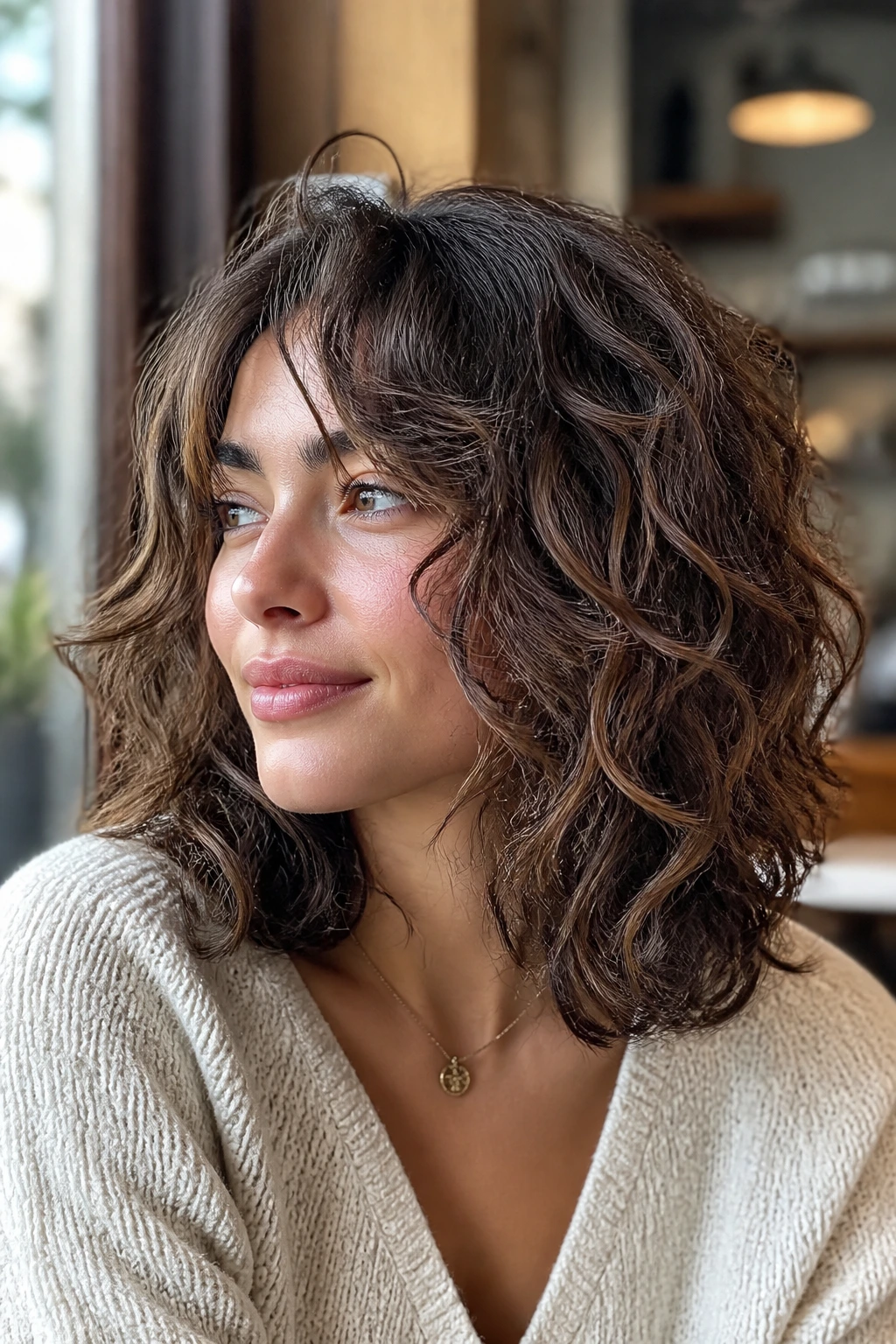
The biggest mistake is cutting curly hair as if it were straight. Straight hair reveals the line immediately; curly hair hides and then reveals it later, which means a wet cut can lie to you. If the stylist ignores shrinkage, the finished lob may bounce up too high and sit at the jaw.
Another one is over-layering dense curls. It feels like the answer when the hair is heavy, but too much removal leaves the ends wispy and the crown frizzy. The fix is slower, smaller layer placement, especially near the face.
Three problems I see most often
- Layers starting too high: The hair balloons around the cheeks.
- Too much thinning shear work: Ends look fuzzy and refuse to clump.
- Using heavy cream at the roots: The shape falls flat and the lob loses its swing.
If the cut already happened and it feels off, do not panic after one wash. Sometimes the answer is a better styling pattern, not another haircut.
Variations and Adaptations to Try
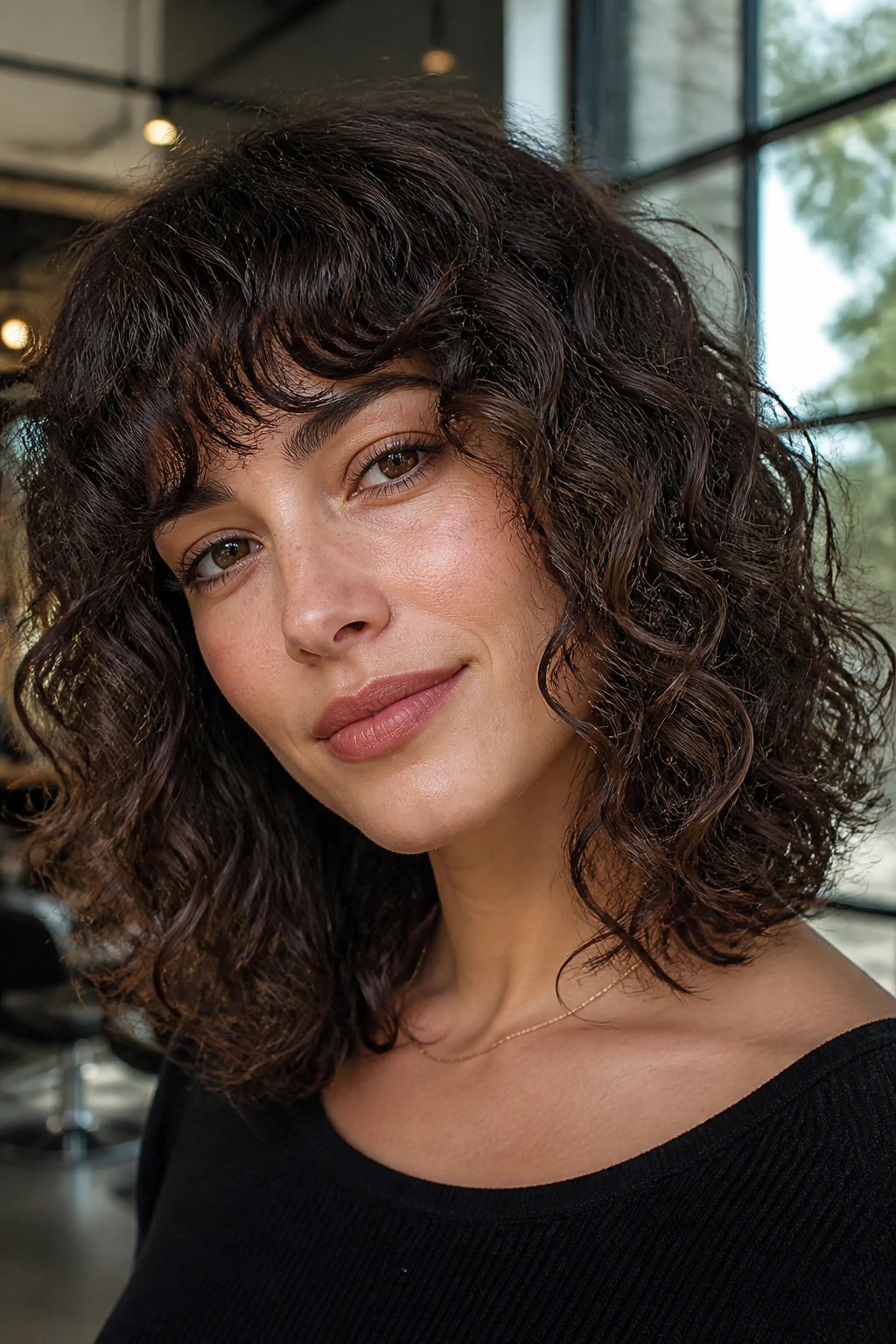
The Fine-Curl Edit: Keep the layers minimal and the perimeter a little stronger. Fine curls need weight to stay visible, so avoid a heavily carved interior.
The Dense-Curl Edit: Add internal layers below the crown and around the sides, but protect the outer line. This keeps the bulk from turning into a wide shelf.
The Fringe-First Version: Choose bottleneck bangs or a side sweep if you want the face framed harder. Keep the fringe long enough to shrink and separate.
The Low-Maintenance Air-Dry Version: Use a light mousse, scrunch, and walk away. This works best on curls that already clump well without much help.
The Glossy Defined Version: Add gel, dry fully, then break the cast with a drop of serum. The layers show more clearly, and the outline looks cleaner.
Keeping the Shape Between Salon Visits
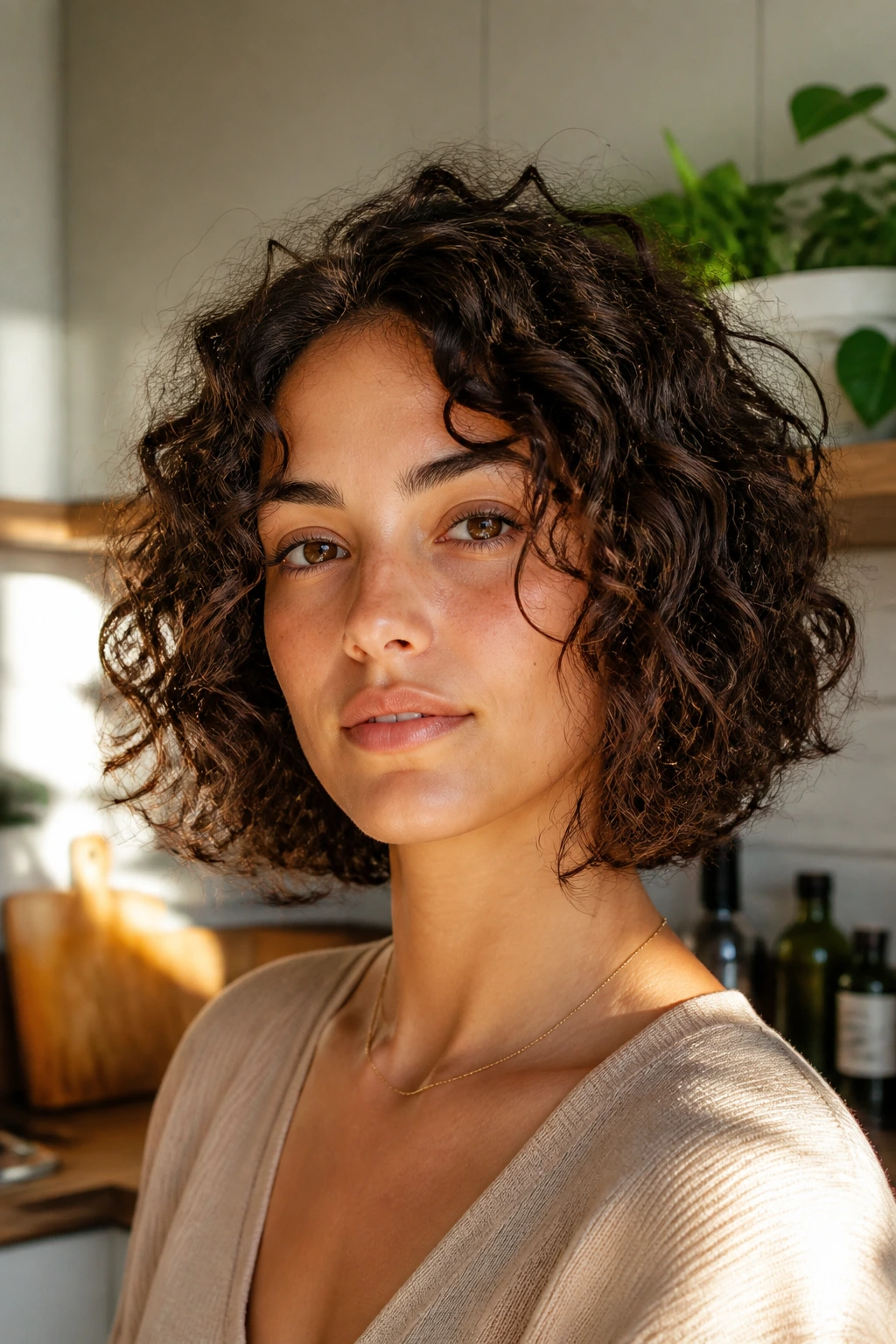
A curly lob usually needs a trim every 8 to 10 weeks if you want the outline to stay neat. If you like a softer grow-out, you can stretch that to 12 weeks, but the front pieces will start to blend into the rest of the hair sooner than the back.
The bangs, if you have them, are the part to watch first. They usually need a dusting every 4 to 6 weeks because curl bounce makes them climb faster than you think. The perimeter can wait longer.
At home, treat the ends gently. Satin at night helps. A quick refresh with water and a little hold product helps more. And if the cut starts to feel bulky at the neck, that is usually your sign that it is time for a shape trim, not a full redesign.
Frequently Asked Questions

Will a long bob make an oval face look longer?
It can, if the shortest point lands too close to the chin and the layers are pushed high. Keeping the perimeter around the collarbone and letting the front pieces skim the cheekbone usually keeps the face balanced.
Should curly hair be cut dry or wet for a lob?
Dry cutting is often safer because you can see how much the curls spring up and where the weight sits. Wet cuts can work, but only if the stylist knows your shrinkage and checks the shape after it dries.
What if my curls are fine and flat at the top?
Ask for fewer internal layers and more root lift from styling rather than from the haircut alone. Too much layer work on fine curls can leave the ends stringy and the crown too see-through.
Can I wear this cut without heat styling?
Yes, and many of the best versions are built for air-drying. Use a lighter product, scrunch on wet hair, and let the front pieces set naturally or with a small twist if they refuse to behave.
What if my hair is dense and puffs out at the sides?
That usually means the interior needs bulk removal, not the perimeter. Soft internal layers below the cheekbone help reduce the width without destroying the clean outer line.
Which part looks best on an oval face?
All of them can work, which is the annoying and useful answer. Middle parts feel clean, deep side parts add drama, and soft off-center parts tend to be the easiest to live with on curly lob lengths.
How do I stop the ends from flipping out weirdly?
It usually means the bottom line is too light or too short for your curl pattern. Ask for a little more weight at the perimeter and use less scrunching at the very tips when styling.
Can I grow this cut into a longer style later?
Yes. A good lob grows out into a mid-length shape without a hard transition, especially if the layers are soft and the front pieces are not cut too aggressively.
Soft Length, Better Shape
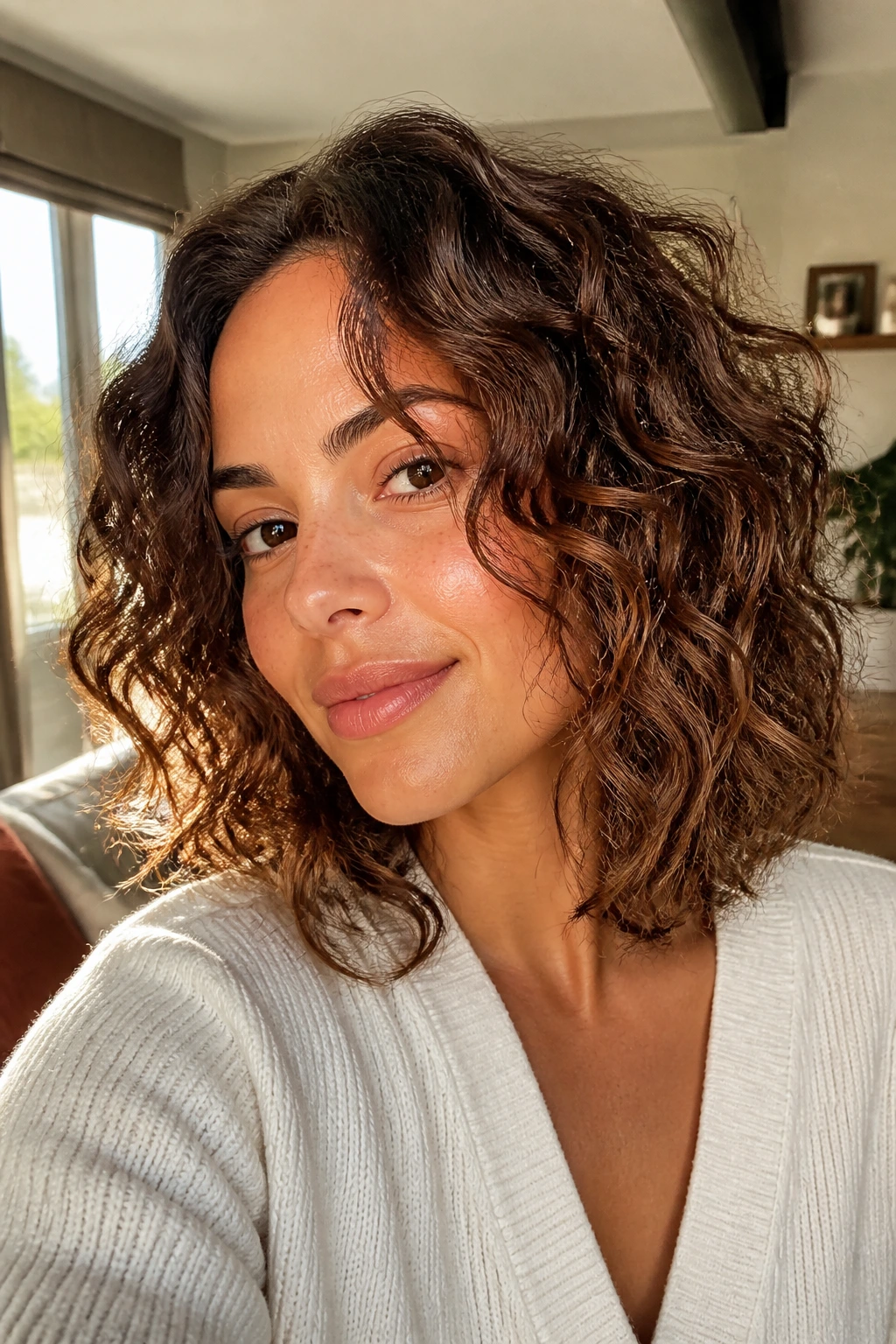
The reason these cuts keep working is simple: they respect the curl pattern instead of fighting it. A good long bob on an oval face does not chase a fake sleekness or pile on layers just to look styled. It gives the curls enough room to move and enough structure to stay readable.
That mix matters more than people admit. A lob that is too short or too layered can feel high-maintenance in three days. A lob with soft layers, a sensible perimeter, and the right front pieces can look like it belongs on your head, not like it arrived from a mood board.
Choose the shape that matches how much time you want to spend with a diffuser, a mirror, and your own patience. The right one will make the morning easier, and that is the kind of haircut worth keeping around.