



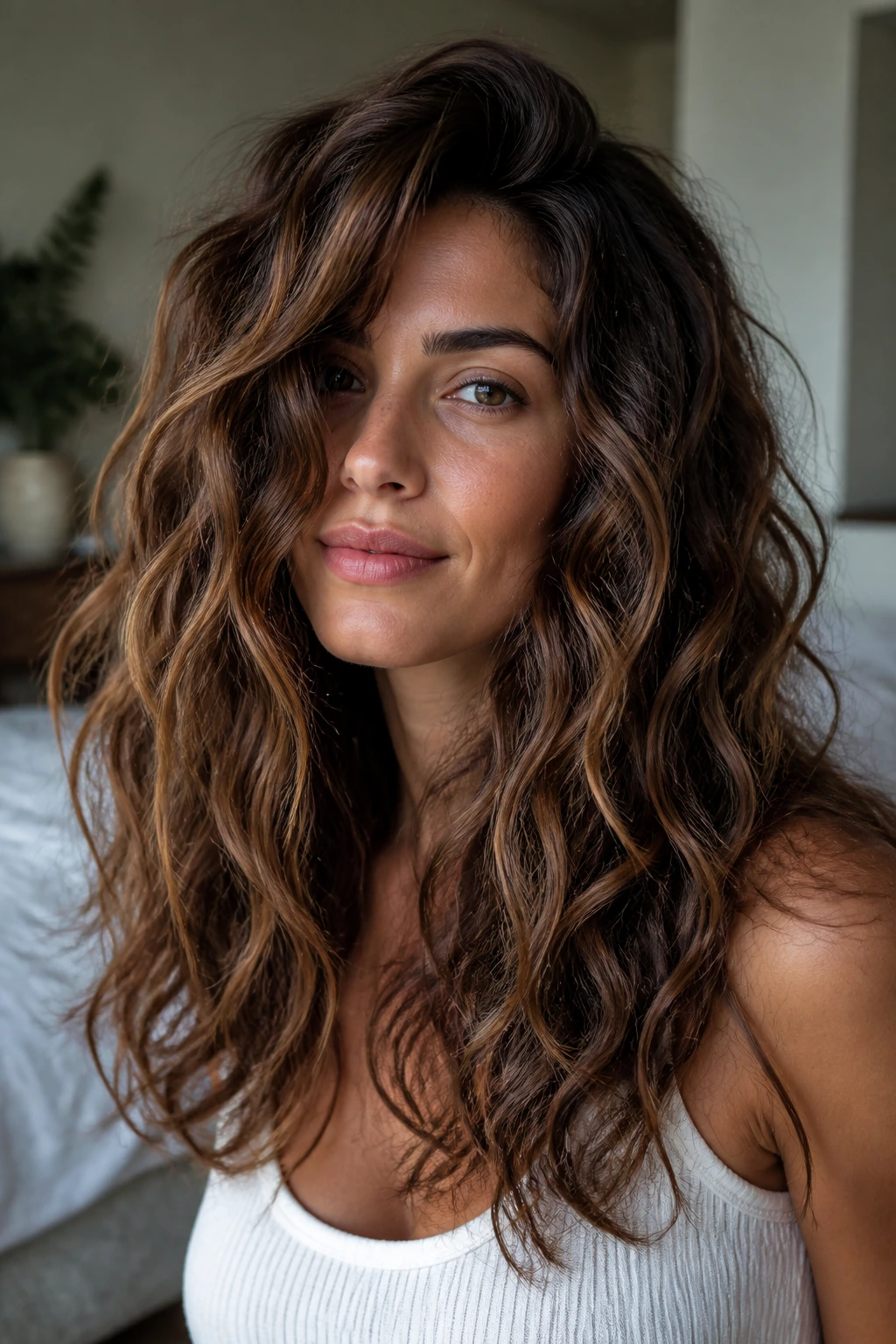
Thick dense hair has its own rules. It does not fold the way fine hair does, and it does not forgive flimsy pins, tiny elastics, or a weak little twist that looks cute on a mannequin head and gives up on real hair five minutes later. Beachy waves help because they break that solid wall of hair into movement, bends, and soft edges, which means the style can look finished without being overworked.
There’s a reason this texture keeps showing up in real life instead of only on salon mood boards. A loose wave gives thick hair grip. It gives a braid shape. It keeps a bun from collapsing into a flat knot. And when the hair is dense enough to have some natural weight, the wave pattern does half the visual work for you.
The trick is not making the hair smaller. That never ends well. The trick is choosing styles that let the density become part of the shape — clipped, twisted, braided, or gathered in a way that still leaves those soft, undone bends around the face and through the lengths. A style that looks polished on thick hair usually survives because it respects the bulk instead of trying to crush it.
Why Thick Dense Hair Loves Beachy Waves
-
The weight gives styles structure: Dense hair already has body, so a loose wave pattern helps buns, braids, and ponytails hold their shape instead of turning stringy.
-
Pins grip better on textured hair: Beachy bends give bobby pins and claw clips something to catch, which matters when the strands are slick or heavy.
-
The styles look fuller with less effort: A braid on thick hair reads chunky and intentional fast, even when the technique is simple.
-
Day-two hair usually behaves better: A little natural oil at the roots and a soft bend through the lengths gives you more hold than squeaky-clean hair.
-
You can leave more hair down: That matters on dense hair. A half-up style can remove the bulk from the face while still showing off the length.
-
Humidity is less of a disaster here: Loose waves already have a relaxed finish, so a bit of frizz often reads as texture, not failure.
1. The Low Claw-Clip Twist
A low claw-clip twist is one of those styles that looks almost too easy to count as a hairstyle, which is exactly why I like it. On thick dense hair, the twist gives the clip a mound to grab, and the wave pattern keeps the whole thing from looking stiff or boxy.
Why it works on dense hair
The hair’s own weight helps the twist sit flat at the nape instead of popping off the back of the head. Use a large 4-inch claw clip if your hair is past the shoulders; tiny clips tend to slide or crack under pressure. Leave a few wave pieces loose around the ears, because that softens the shape fast.
How to do it
- Gather the hair at the nape as if you’re making a low ponytail.
- Twist it upward once or twice until it starts folding in on itself.
- Tuck the ends under and clip the twist in place.
- Pull a few face-framing pieces free and pinch the crown lightly for lift.
Best for: errands, work-from-home days, and humid weather that makes loose hair act unreasonable.
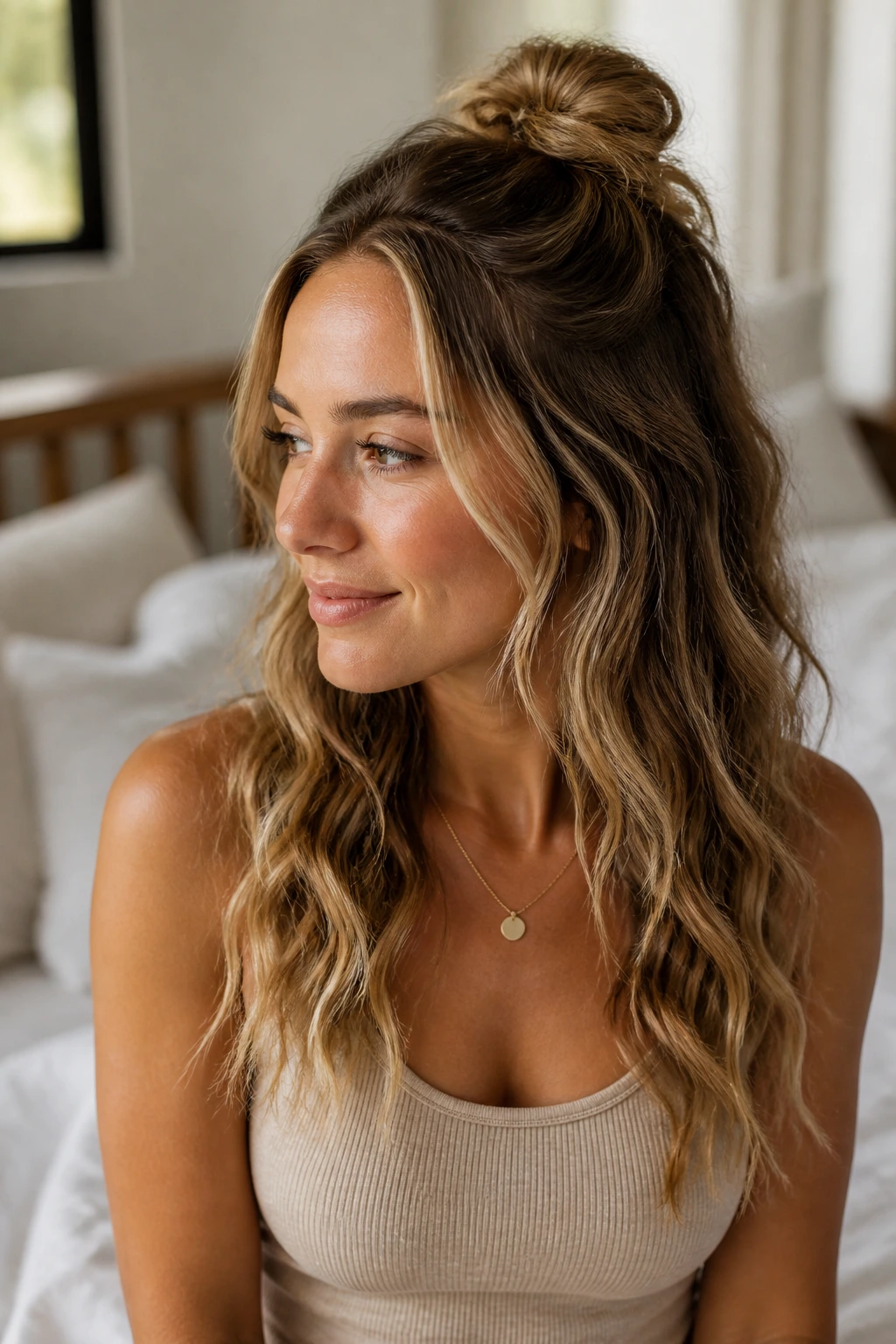
2. The Half-Up Top Knot with Soft Ends
This is the one I reach for when I want the hair off my face but I do not want to lose the shape of the waves. The top knot keeps the crown clean, and the lower half stays loose enough to show off the bend through the ends.
Thick dense hair makes this style better, not harder. You can take a decent-sized section from temple to temple, twist it into a knot, and still have enough weight left underneath for the rest of the style to look balanced. That matters. A skinny half-up knot on dense hair can look underfed. A fuller one looks deliberate.
Use one elastic to secure the section first, then wrap the knot and pin it with two or three bobby pins. If your ends are coarse or layered, let them spill a little. That rough edge makes the whole style look softer.
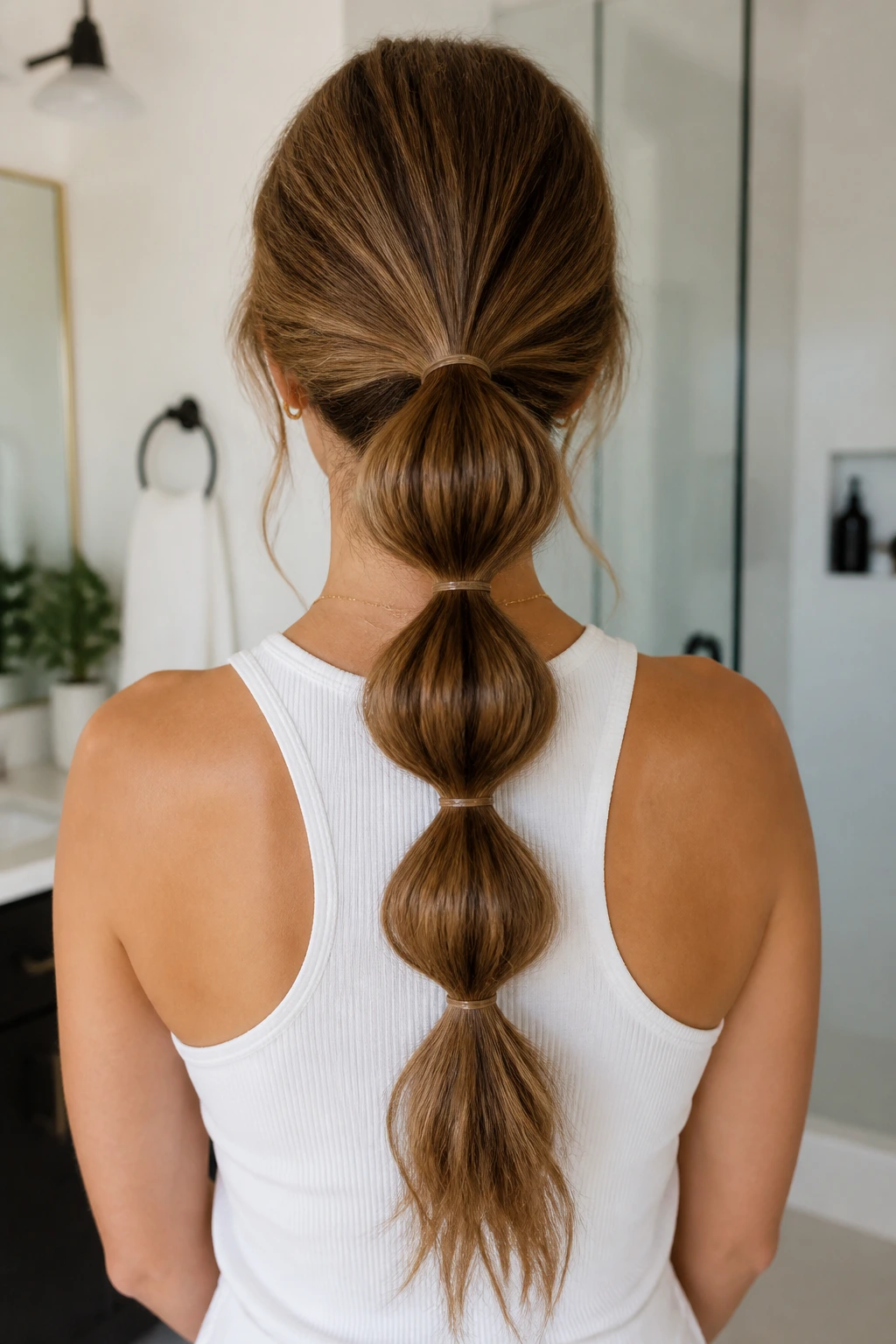
3. The Bubble Ponytail That Actually Stays Puffy
Bubble ponytails are a gift to dense hair because volume is built in. You are not trying to make the tail look bigger. It already is. You’re only shaping the thickness into sections so the whole thing reads as intentional instead of heavy.
How to space the bubbles
Start with a low or mid-height ponytail secured with a strong elastic. Add another elastic every 2 to 3 inches, then tug each section gently outward with your fingers. On thick hair, don’t make the spacing too tight; the bubbles need room to round out.
A little texture spray on the lengths helps each section hold the shape. If the hair is freshly washed, a tiny bit of dry shampoo at the crown gives the base more grip. And yes, this style looks better when the wave is imperfect. A few bends that are slightly off make it feel less stiff.
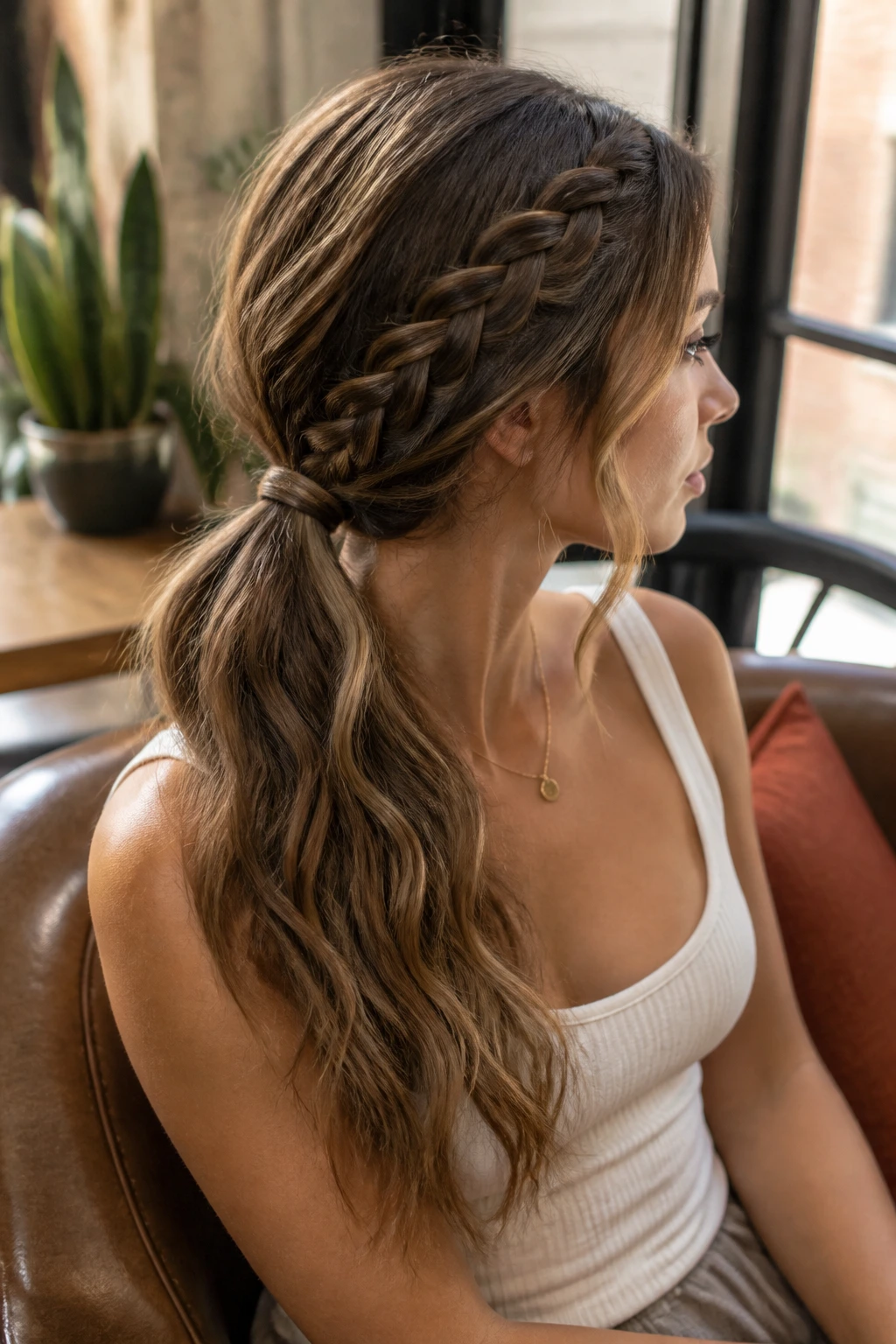
4. The Side Braid Into a Low Ponytail
A side braid into a ponytail is one of the easiest ways to manage density without hiding it. The braid controls the bulk near the face, then the ponytail lets the wave pattern stay loose through the rest of the hair.
I like this style for hair that’s full but not razor-straight, because the beachy bend keeps the braid from looking too neat. Start the braid just behind one ear, keep it loose, and stop once you reach the nape. Then gather the rest into a low ponytail and secure it with a fabric elastic.
A little tug on the braid edges makes a huge difference. On dense hair, that puffing-out step should be gentle, not aggressive. You want width, not a frizz halo.
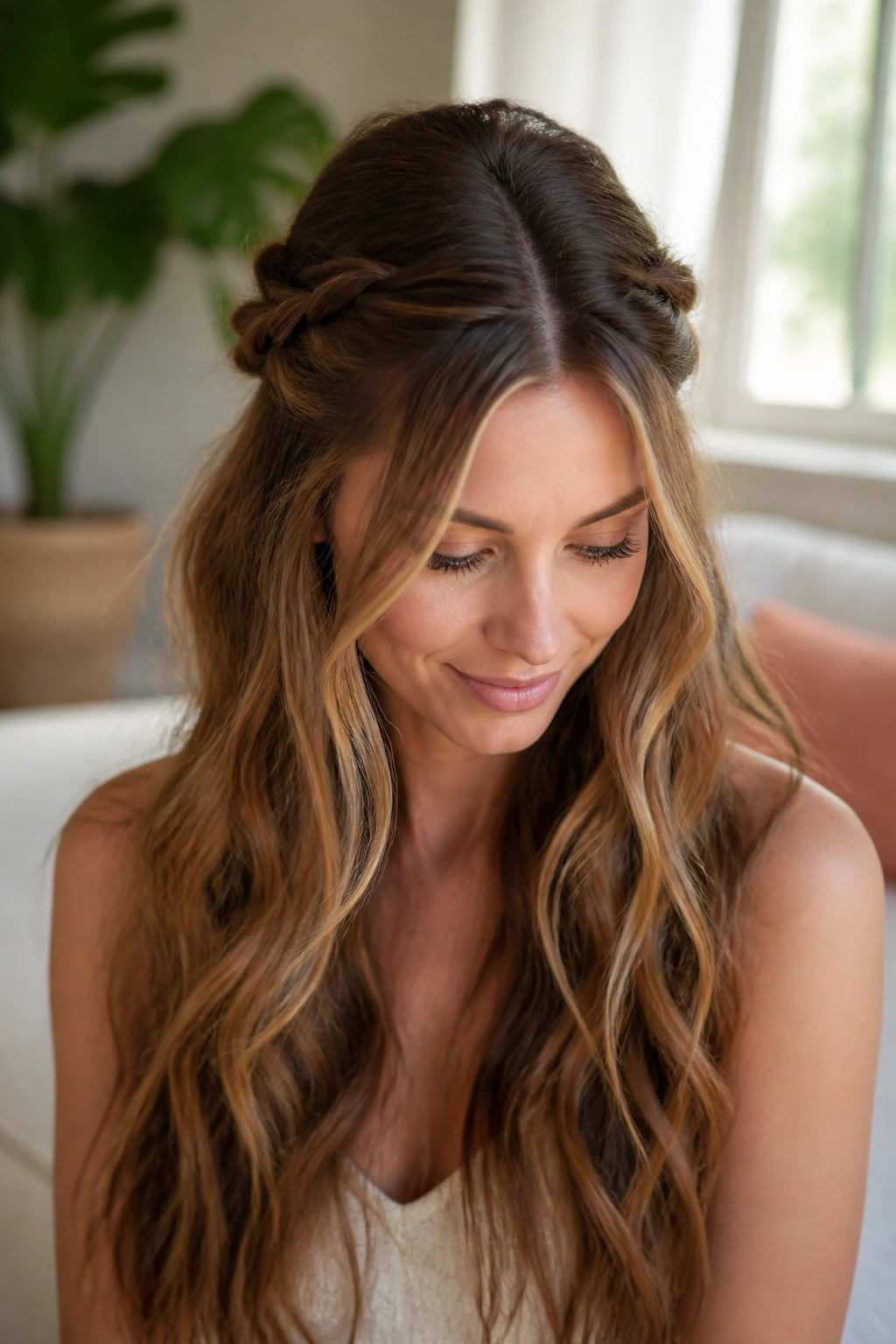
5. The Twisted Crown Half-Up
Two twists at the temples can do a surprising amount of work. This style clears the hairline, keeps bangs or shorter face pieces under control, and leaves the rest of the waves loose enough to move.
Use your fingers instead of a comb if the wave is already set. That stops the crown from looking too smooth, which can make thick hair puff outward later. Twist each side back toward the center and pin them under a small section of hair so the pins disappear.
This one is good on days when you want the hair to look finished without spending more than five minutes on it. The shape is soft, but not sloppy.
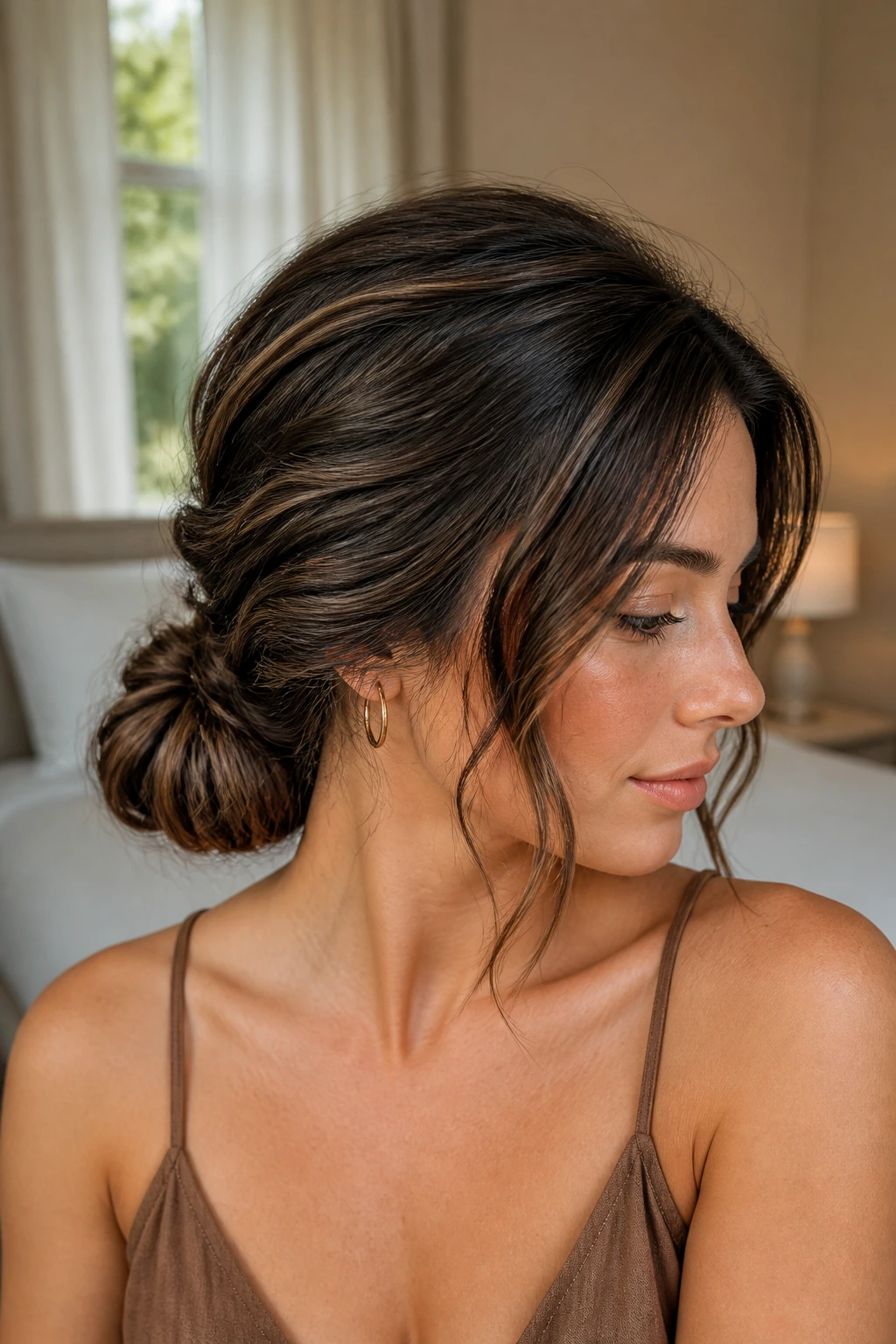
6. The Textured Low Bun
A low bun on thick dense hair has a lot going for it, but only if you stop trying to make it tiny. Dense hair wants a bun with volume. Let it have one.
Wrap the hair into a low ponytail first, twist the length loosely, and coil it into a bun at the nape. A set of U-pins or long bobby pins holds this better than one giant elastic pull. If the hair is very long, leave the last inch or two out so the ends can peek from the bun; that stops the shape from looking too perfect.
This is a quiet, solid style. It feels secure. And because beachy waves keep the texture rough enough, you don’t need much teasing to make it hold.
7. Double Dutch Braids
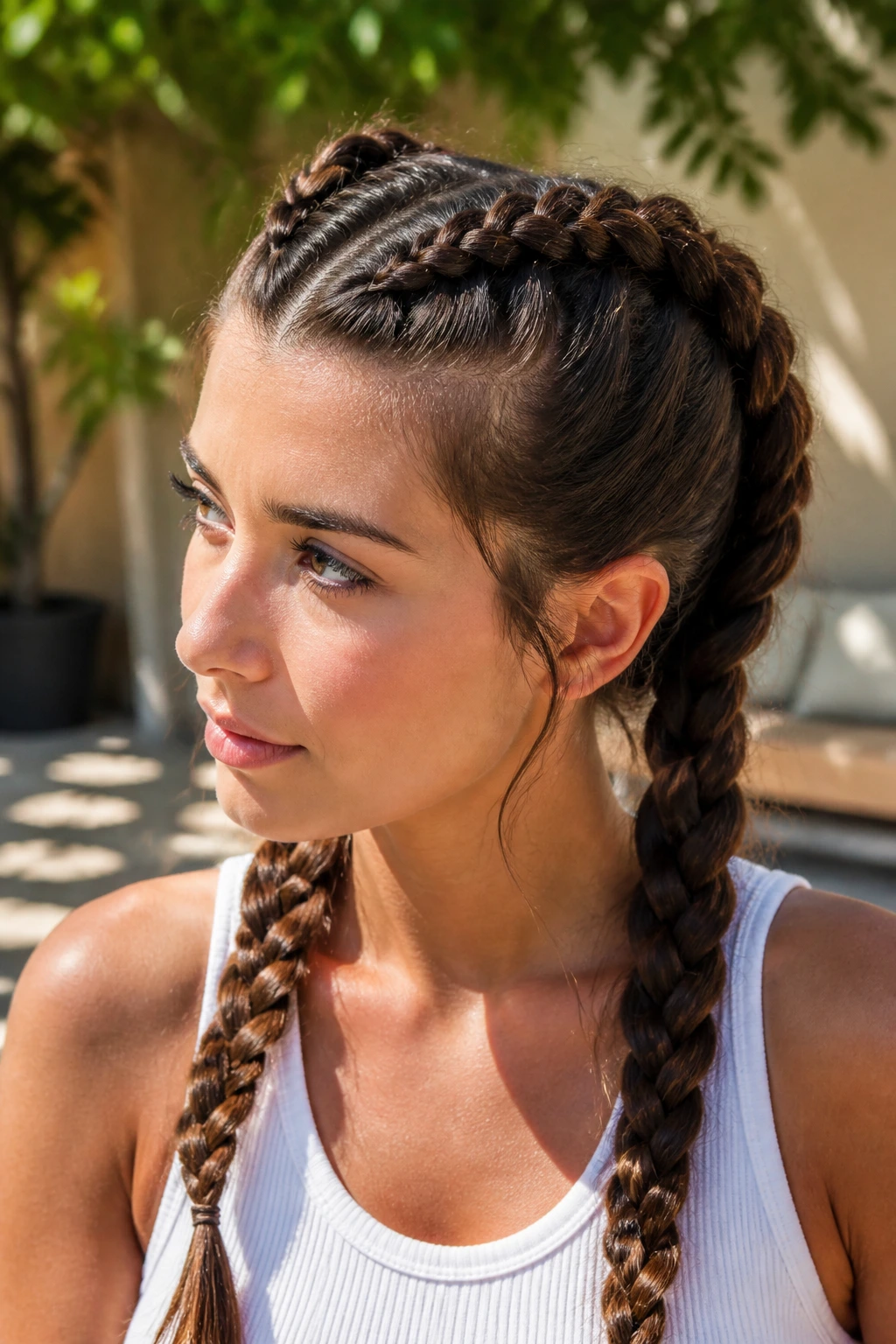
Double Dutch braids are one of the few braided styles that can actually tame dense hair without flattening it. The braid sits high on top of the hair, which means the texture reads clearly even when the strands are thick and full.
What to watch for
If the hair is extra smooth, mist the roots with a texturizing spray before you start. That prevents the braid from slipping. Keep the sections clean and even for the first three crossings, then relax your hands a little once the braid is anchored. Dense hair will fill in the braid naturally.
You can stop the braids at the nape and tie the ends together, or continue them into loose tails. The second option looks less severe and works better with beachy waves.
8. The Knot-and-Pin Half-Up
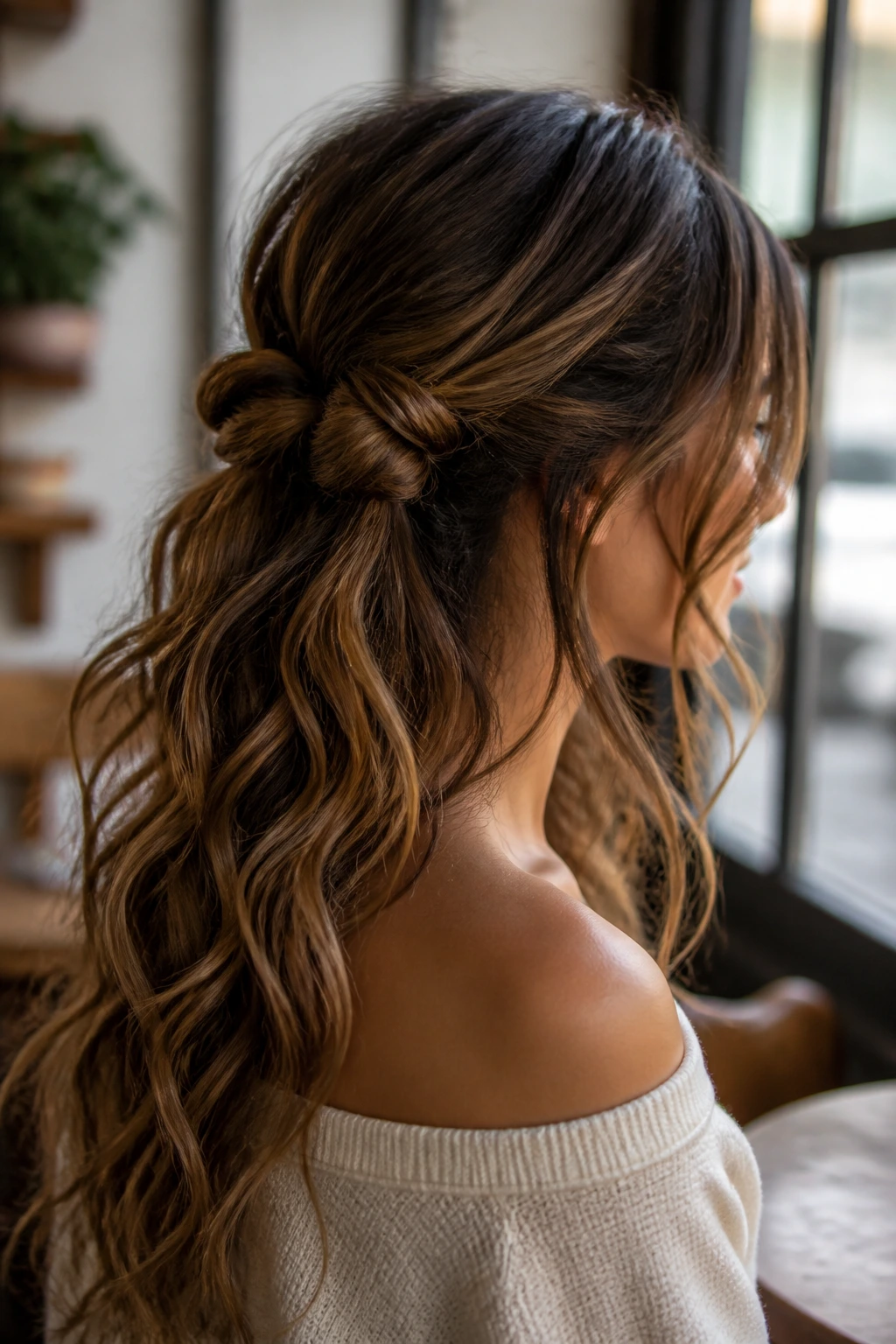
This one is all about making the hair look more complicated than it really is. Take two small sections from each side, tie them into a loose knot at the back, and pin the knot flat. That’s it. Seriously.
The charm here is the texture. Beachy waves keep the knot from looking polished in a stiff way, and thick hair gives it enough body to stay visible. The style lands somewhere between casual and finished, which is why it works for days when you want your hair to do a little more than just hang there.
If your hair is layered, let a few ends fall free. The uneven pieces make the knot look better, not worse.
9. The Sleek Crown, Waved Tail Ponytail
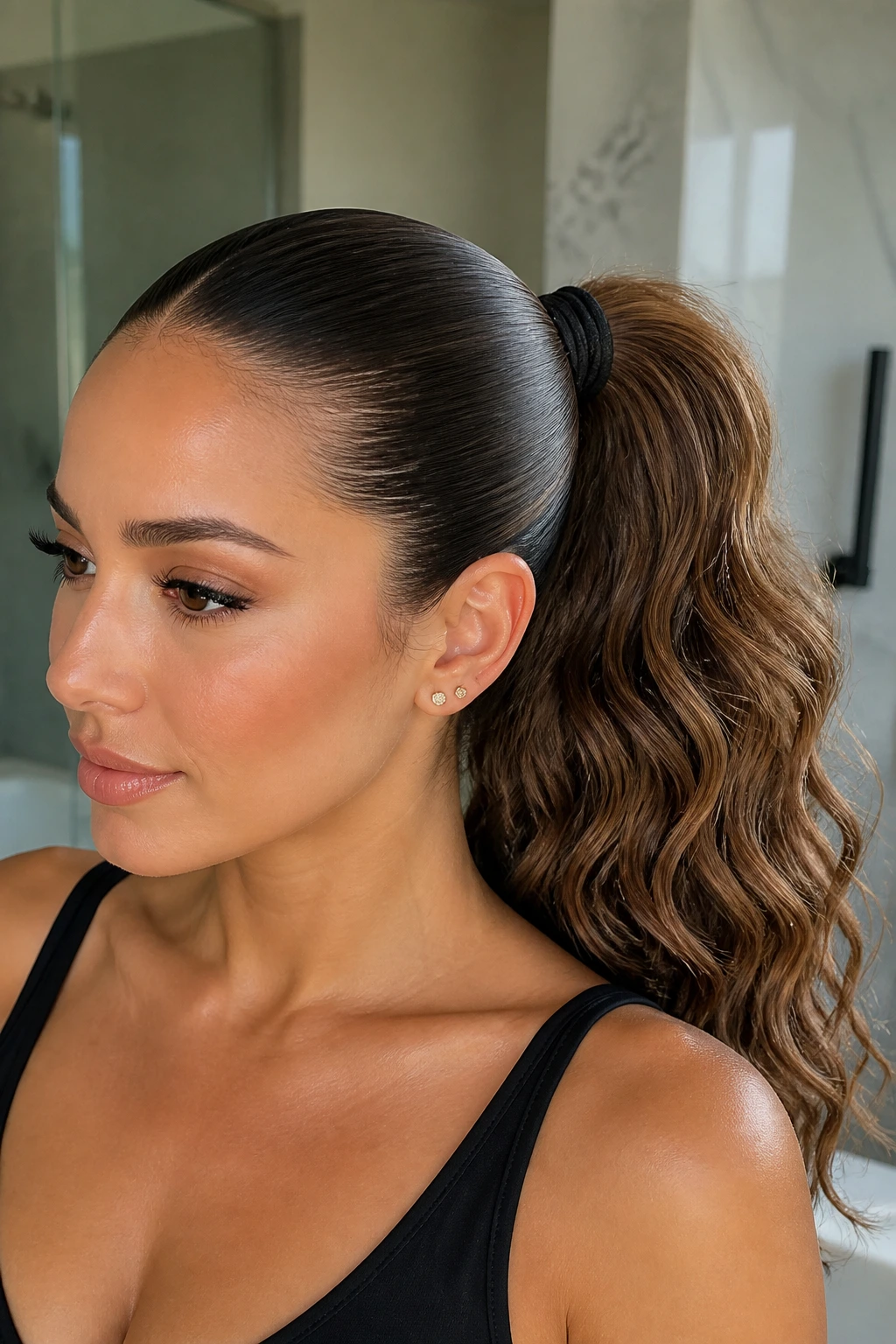
This style is all contrast. The top is brushed smooth and held close to the head, while the tail stays full and wavy. On thick hair, that contrast keeps the style from turning into a giant cloud of volume.
Start with a light gel or pomade just at the crown, then brush hair back into a high ponytail. Don’t overload the lengths with product. The tail should still move and show the bends. If the crown is neat and the tail is textured, the whole look feels sharper.
How to make it hold
Use a strong elastic, wrap a small strand around the base, and pin it under the ponytail. That small detail makes a big ponytail look cleaner. It also keeps the hair from swelling around the base as the day goes on.
10. The Rope-Braid Ponytail
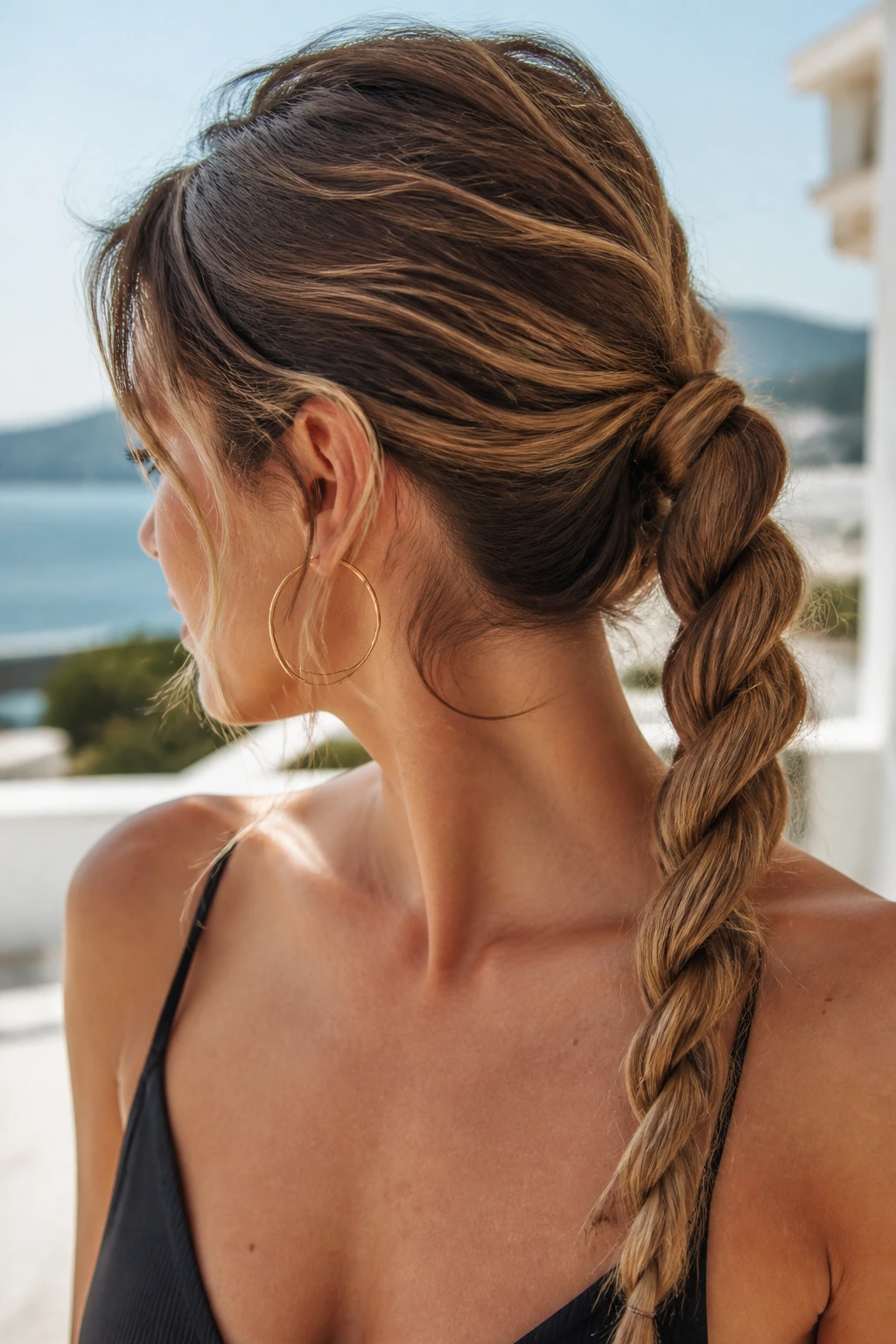
A rope braid is faster than a regular braid and often holds better on thick dense hair because the twist pattern grips the hair as it wraps. Put the hair into a ponytail first, split it into two sections, twist each section in the same direction, then wrap them around each other in the opposite direction.
The result is thick, clean, and a little nautical in the best way. Beachy waves help because the tail doesn’t need to be pin-straight for the rope braid to look neat. In fact, a little irregularity makes it less severe.
If the hair is heavy, secure the ends with a snag-free elastic and add a tiny spritz of flexible hairspray. You do not need helmet hold here. You need enough hold to keep the rope shape.
11. The Mini Claw Clip Row
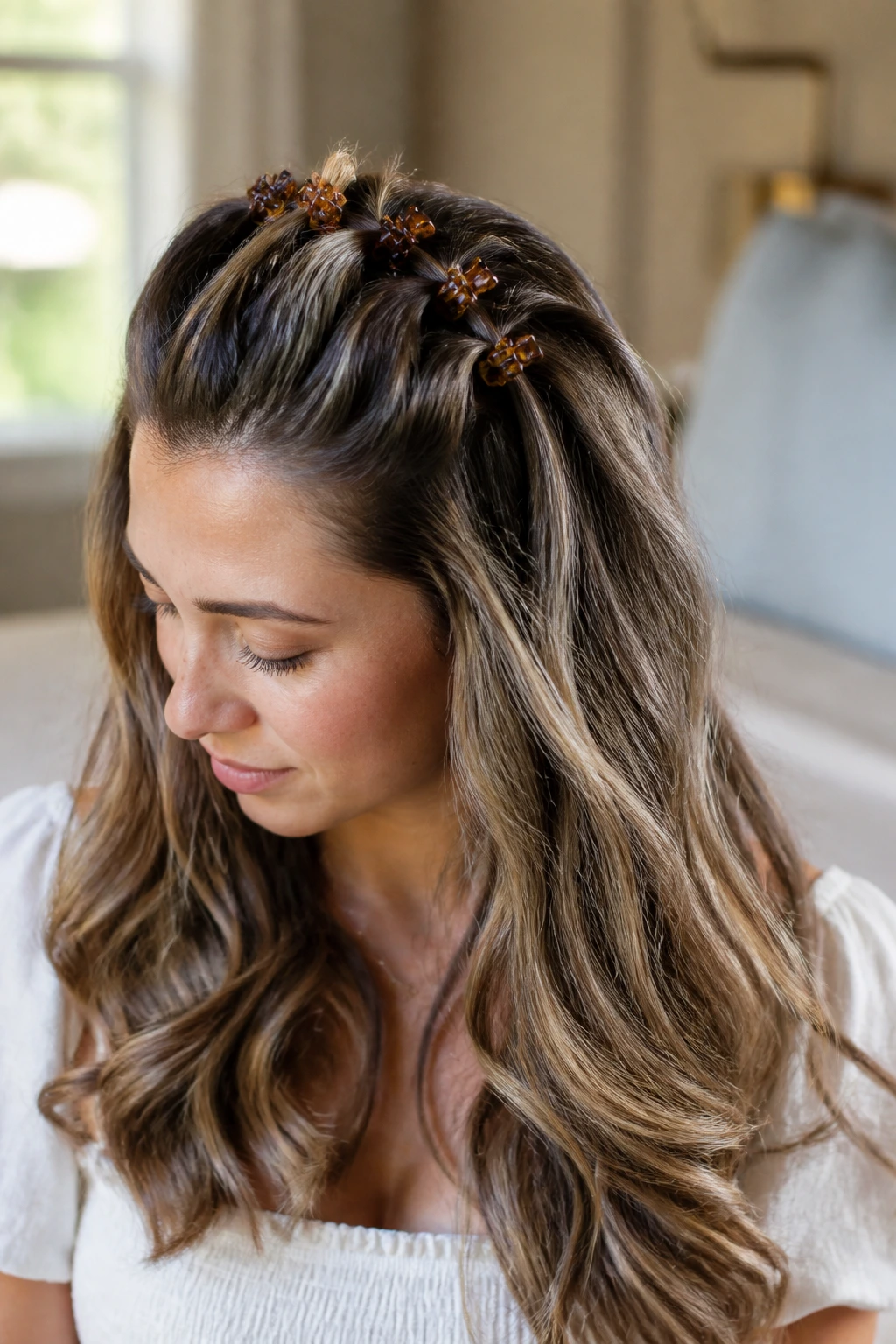
Mini claw clips are useful in a way people underestimate. A row of two, three, or four clips across the crown can control a lot of thick hair while leaving the lower waves free.
This is especially good if your hair has too much bulk for one small clip but you don’t want a full updo. Take small sections from the front, twist them back slightly, and clip them in a staggered line. The style works because each clip handles a little less weight, which is easier on thick hair than asking one clip to do everything.
Choose clips with teeth that are a little longer and firmer than the decorative kind. Cute matters less than grip here.
12. The Headband Tuck
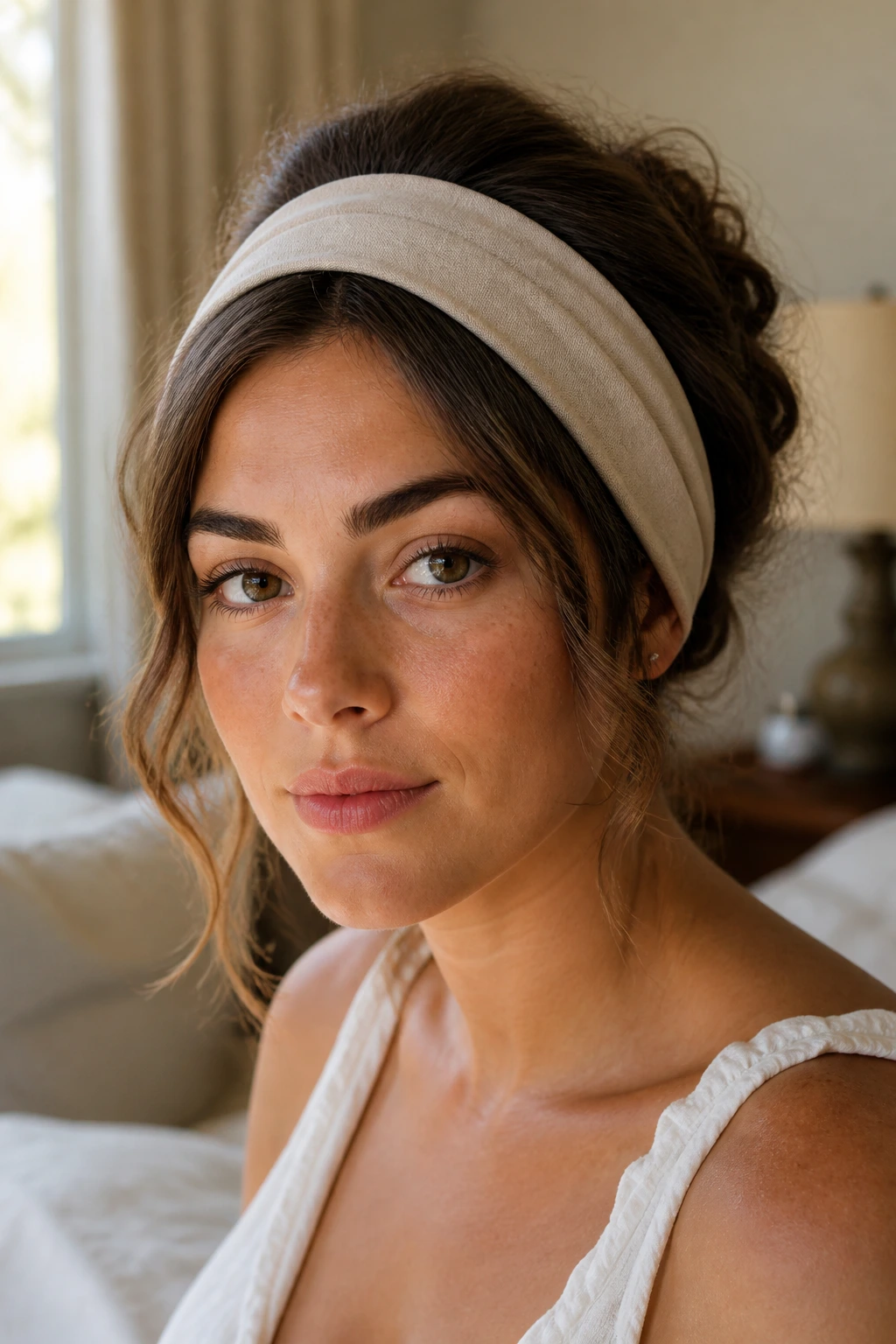
A headband tuck gives you a soft, retro shape without much skill. It’s one of the easiest ways to make beachy waves look styled when you’re short on time and patience.
Slip on a wide, flexible headband, then tuck the lengths up and under the band so the ends disappear at the back. Thick hair fills the shape fast, which means you get a fuller finish than someone with finer hair usually would. That’s the upside.
The only catch is balance. If the crown is too tight and too smooth, the style can start to look rigid. Leave a little lift at the top, and pull a few wave pieces free near the temples.
13. The Messy French Twist
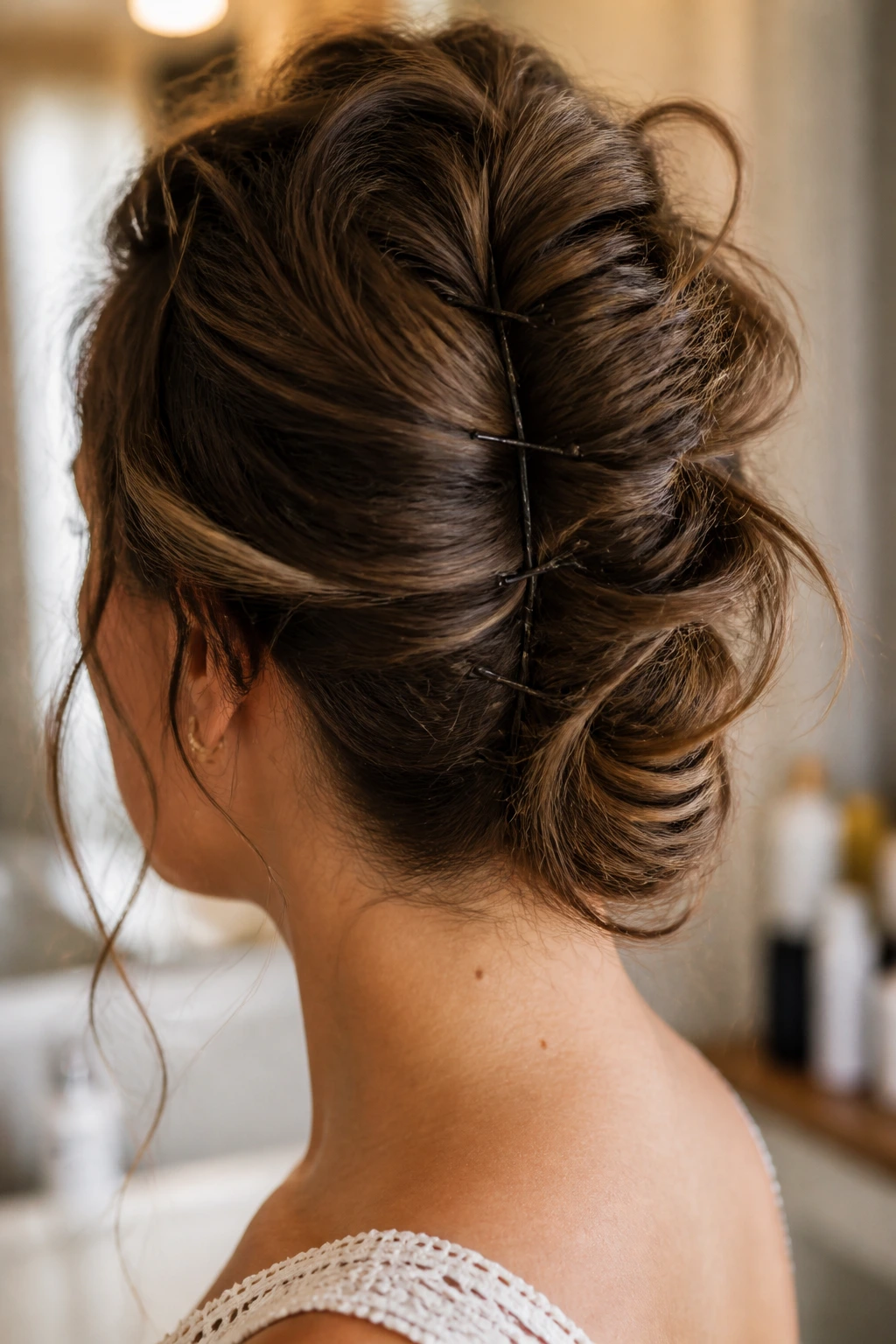
A French twist on thick dense hair sounds fancier than it is. The trick is not chasing perfection. You roll, tuck, pin, and let the texture do the rest.
Beachy waves keep this style from looking too formal, which I like. Instead of a shiny, shellacked finish, you get a soft, lived-in shape with a bit of body at the back. Use several bobby pins along the seam of the twist, crossing them like little X’s so they bite into the hair.
If your hair is longer or especially heavy, secure the lower section first with a small elastic before you start twisting. It saves the pins from fighting the whole weight of the hair at once.
14. The Side-Swept Clip-and-Go
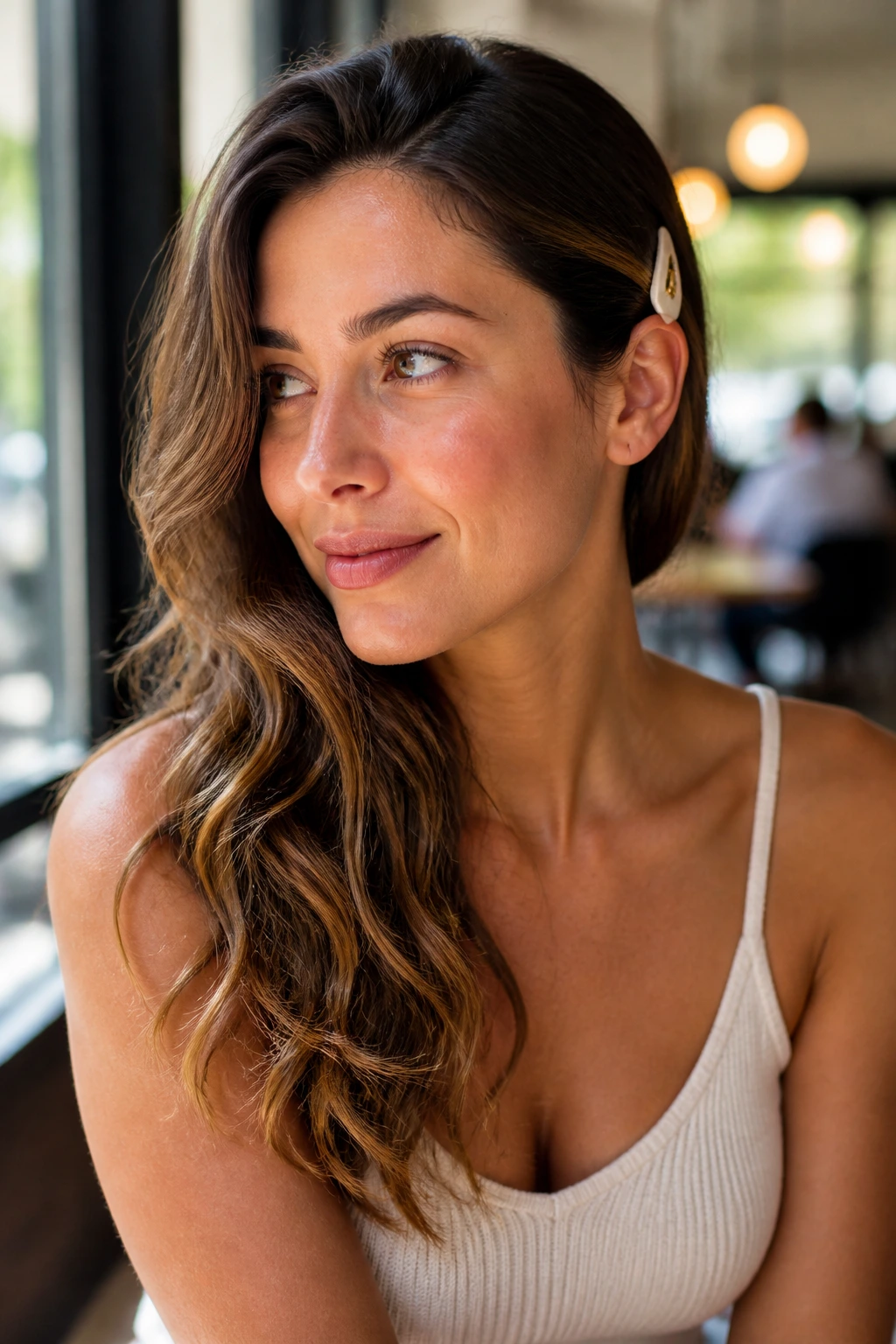
Sometimes the simplest answer is the one that makes the most sense. Sweep all the hair to one side, secure it behind the ear with a decorative clip or two hidden pins, and let the waves fall over one shoulder.
This style flatters dense hair because the weight has somewhere to go. Nothing is being forced upward. Nothing is being compressed into a shape that can’t hold. It’s one of the fastest ways to look intentional with minimal effort.
A side part helps here. So does one good statement earring, if that’s your thing. The rest of the look can stay plain.
15. The Braided Halo
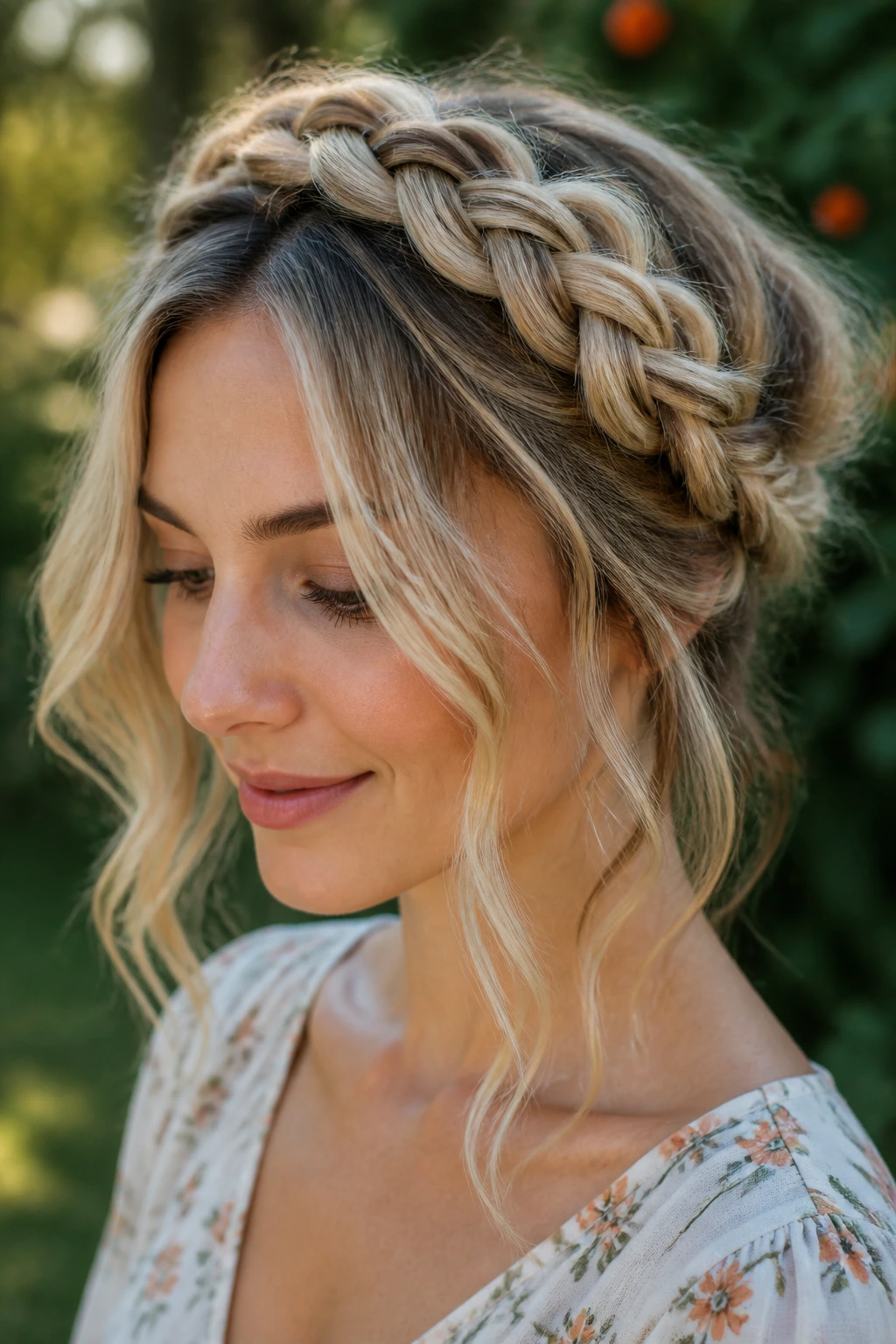
A halo braid on thick hair gives you a lot of braid without the braid looking skinny and lost. That’s the whole appeal. Dense hair makes the braid look full and textured, and beachy waves stop the style from looking too formal.
You can braid all the way around the head if the hair is long enough, or braid two sections and pin them across the crown if that is easier. I prefer the second approach for heavy hair because it puts less strain on the roots.
A halo braid is useful when you want the hair off the face but still want movement around the neckline and back. It reads soft. It stays put. And it doesn’t need perfect part lines to work.
16. The Half-Up Fishtail
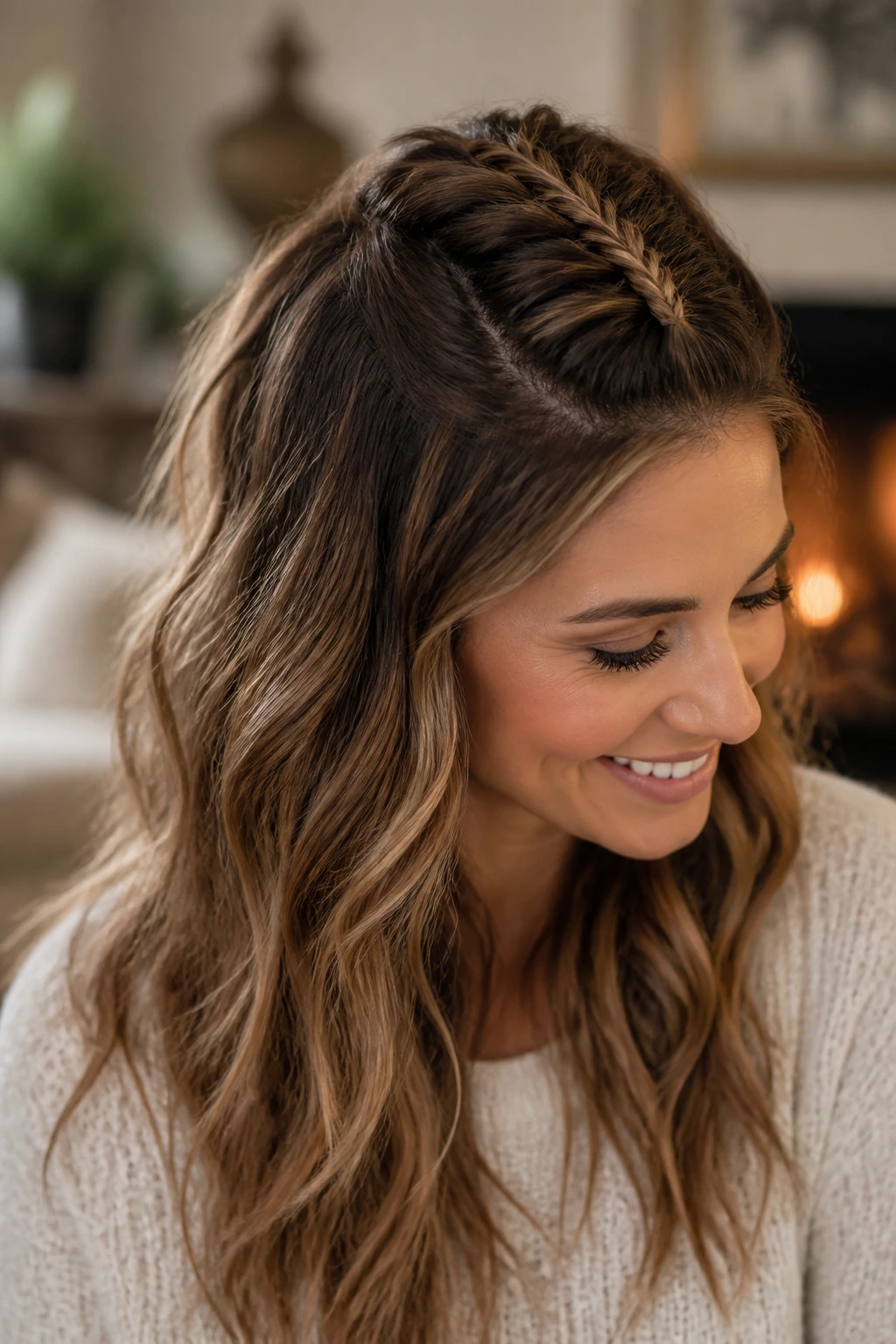
Fishtail braids can look complicated, but a small half-up version is one of the easiest ways to make thick dense hair look detailed. The structure of the braid is visible even when the hair itself is full and textured.
Take a section from each side near the temples, bring them together at the back, and fishtail just that top piece. Let the rest stay loose. The wave pattern underneath gives the braid a relaxed backdrop, which keeps it from looking too stiff or precious.
If your hair is very thick, keep the braid small and neat. A huge fishtail can eat time fast. The little one gives you the same feeling with far less effort.
17. The High Messy Bun
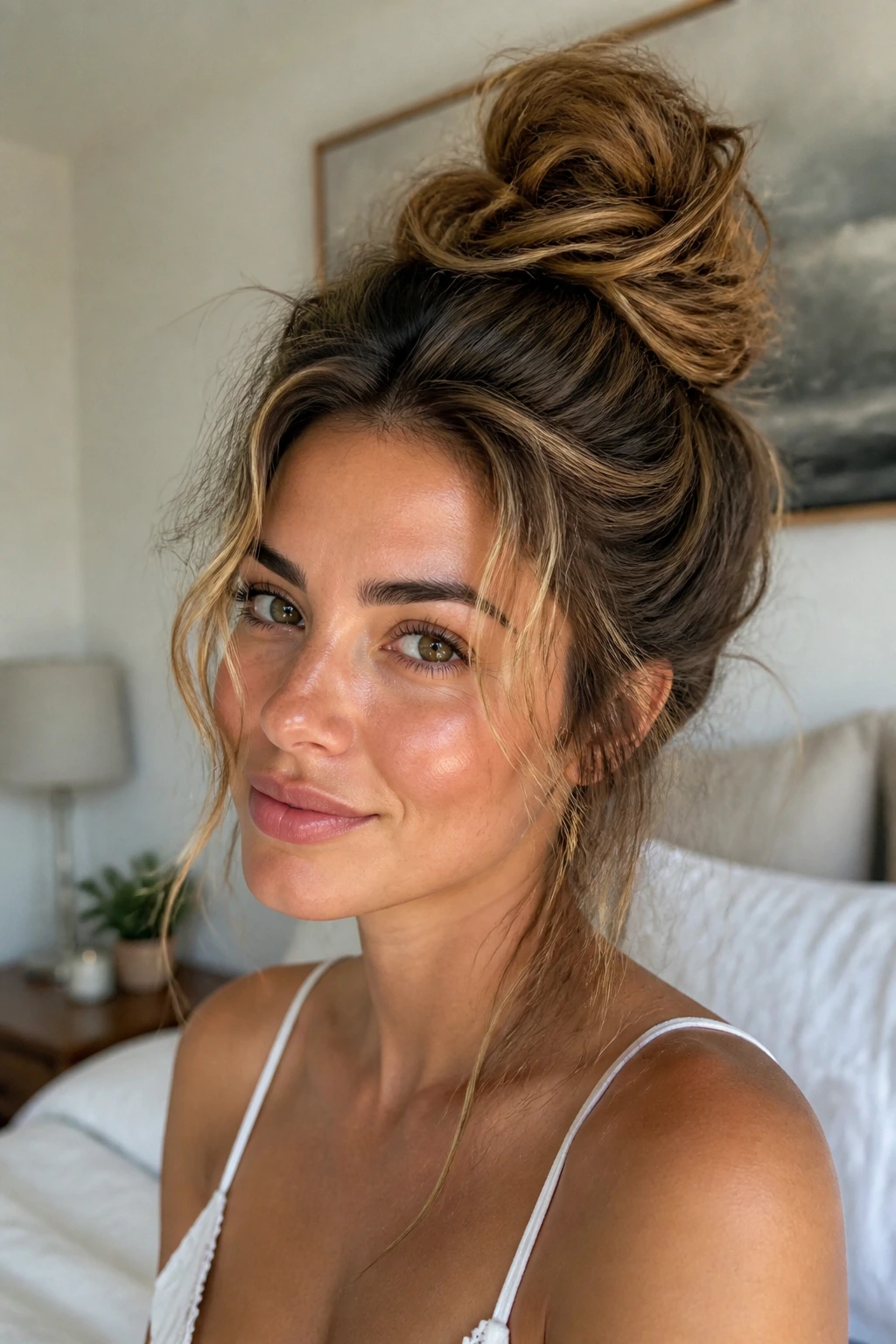
A high messy bun is where thick hair gets to be useful in an obvious way. The hair has enough volume to create a bun that looks full even when it is loosely pinned, and the beachy waves give the edges a soft, broken finish.
Gather the hair high, twist it once, and coil it loosely. Don’t smooth every strand down. Let a few pieces spill around the bun and at the nape. Those loose ends are what keep the style from feeling too stiff.
Use two elastics if one doesn’t feel secure enough. Heavy hair can pull a single tie loose. That is not a personal failure. It just means the hair is doing what thick hair does.
18. The Low Braid Bun
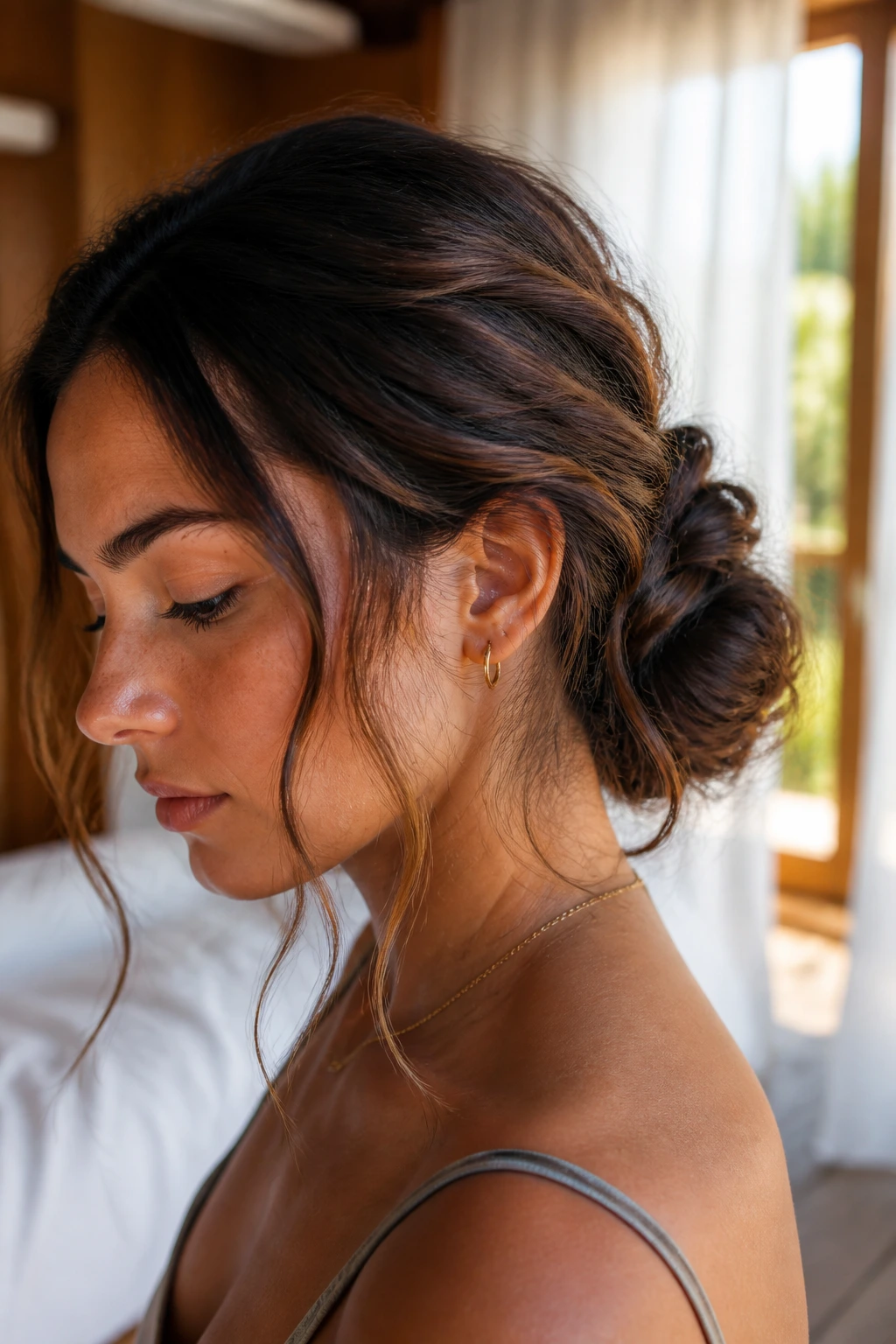
This one is a little more secure than a plain bun because the braid gives the base extra control. Tie the hair into a low ponytail, braid the tail, then wrap the braid into a bun and pin it down.
On thick dense hair, the braid adds a nice ridged texture that keeps the bun from looking like a smooth ball. Beachy waves make the braid feel less strict, especially if you pull the edges out a little after you secure it.
It’s a good choice for days when you need the style to stay in place for hours. Not fancy. Just reliable.
19. The Pigtail Braids
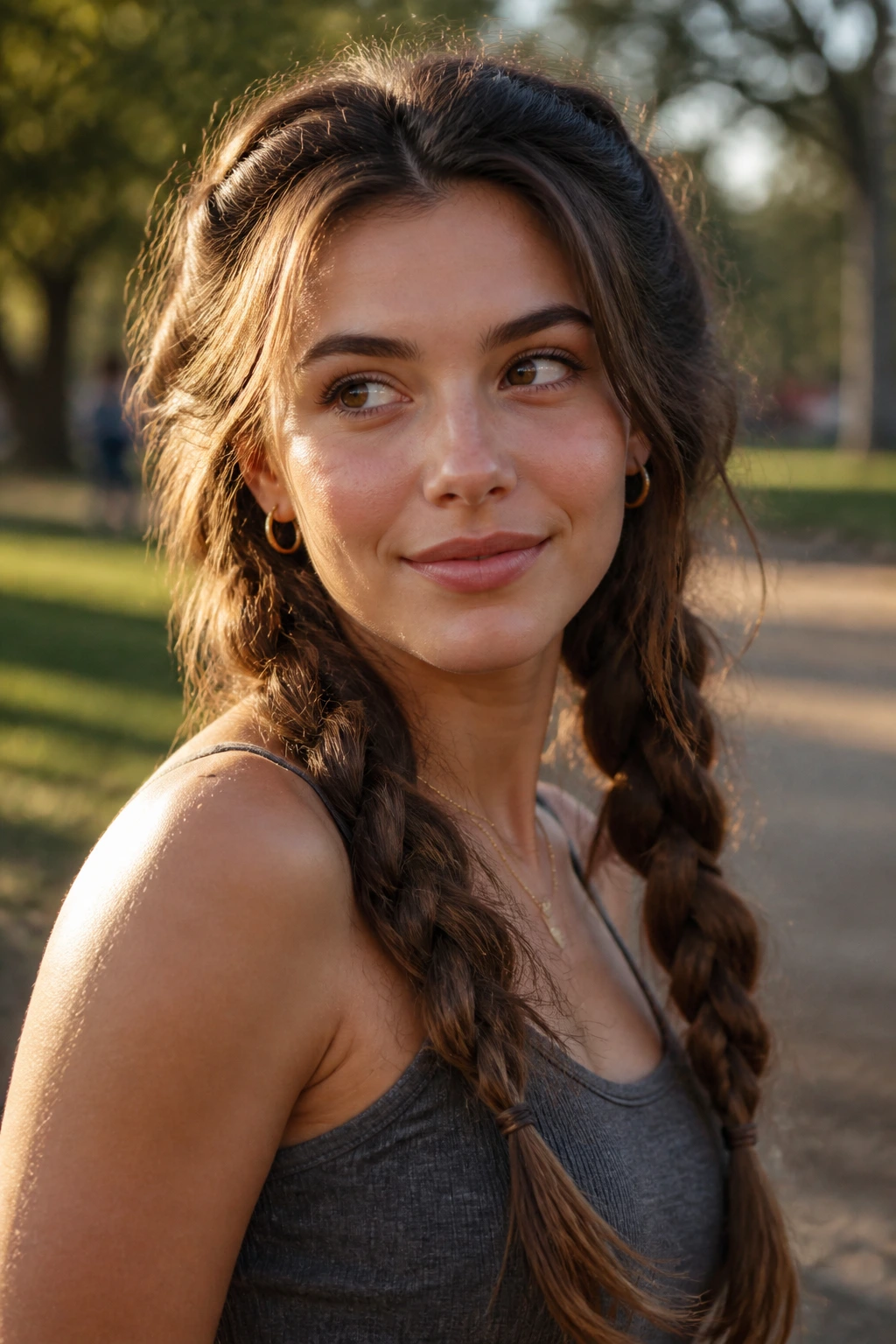
Pigtail braids can look playful, but on dense hair they also solve the problem of too much bulk in one place. Splitting the hair into two braids makes each braid easier to handle, and the wavy texture keeps them from looking too stiff.
Start low for a softer finish, or start at the temples if you want a stronger shape. Keep the sections loose near the face. If the ends are very thick, stop braiding a few inches before the bottom and tie off the rest with small elastics. That keeps the braids from turning into tiny, tight ropes at the ends.
This style works well on second-day hair. In fact, a little lived-in texture helps more than clean slip ever would.
20. The Voluminous Side Ponytail
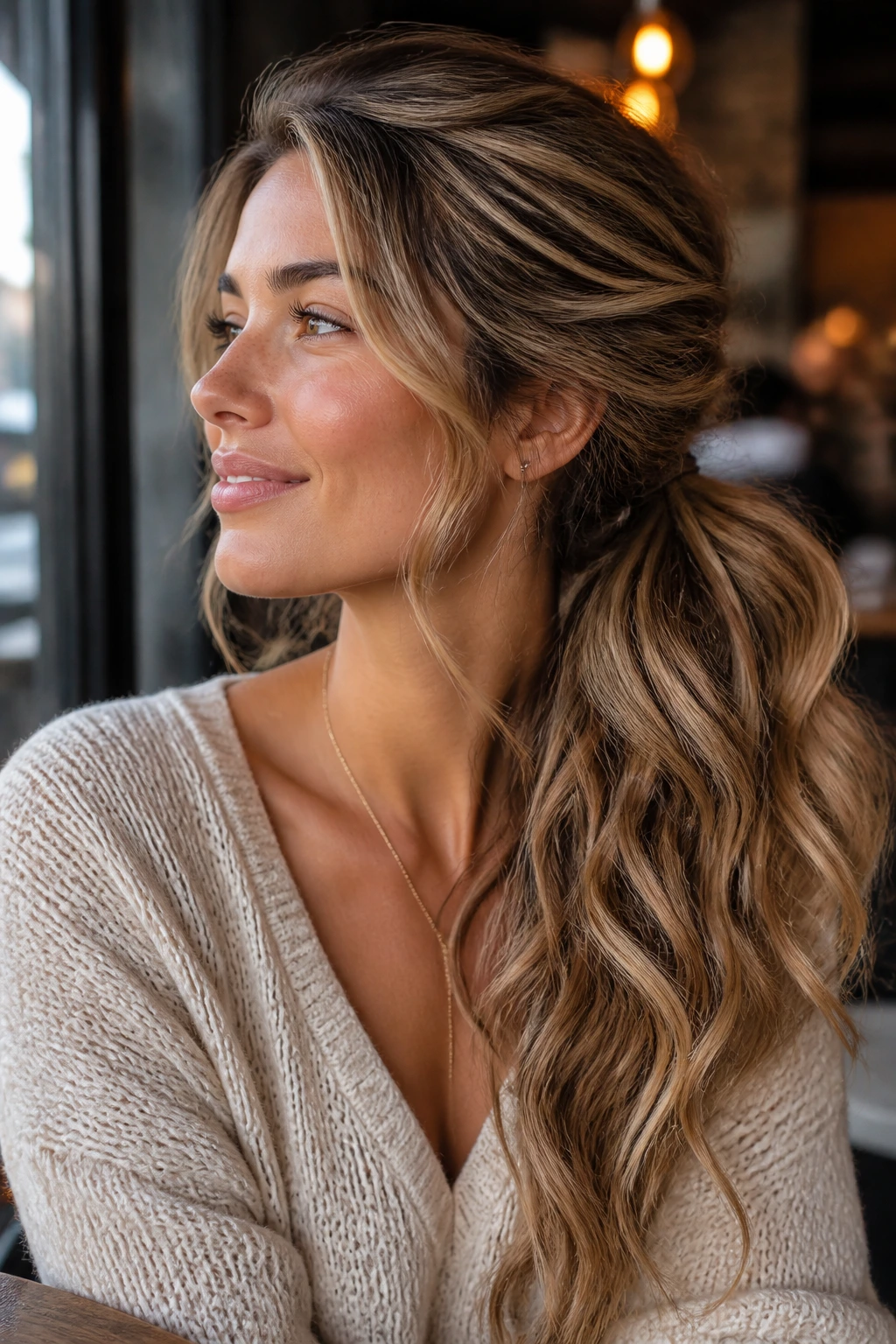
A side ponytail is one of those styles that sounds simple because it is simple, but thick hair makes it look far more styled than the name suggests. Pull it low and to one side, near the shoulder, and let the waves fall in a soft sweep.
This is a good option when you want the density to show. The ponytail becomes part of the silhouette instead of being hidden at the back. A slight lift at the crown helps the style avoid looking weighed down.
You can wrap a section of hair around the elastic if you want it cleaner, or leave the tie visible if you’re leaning casual. Either way works.
21. The Twisted Half-Up Knots
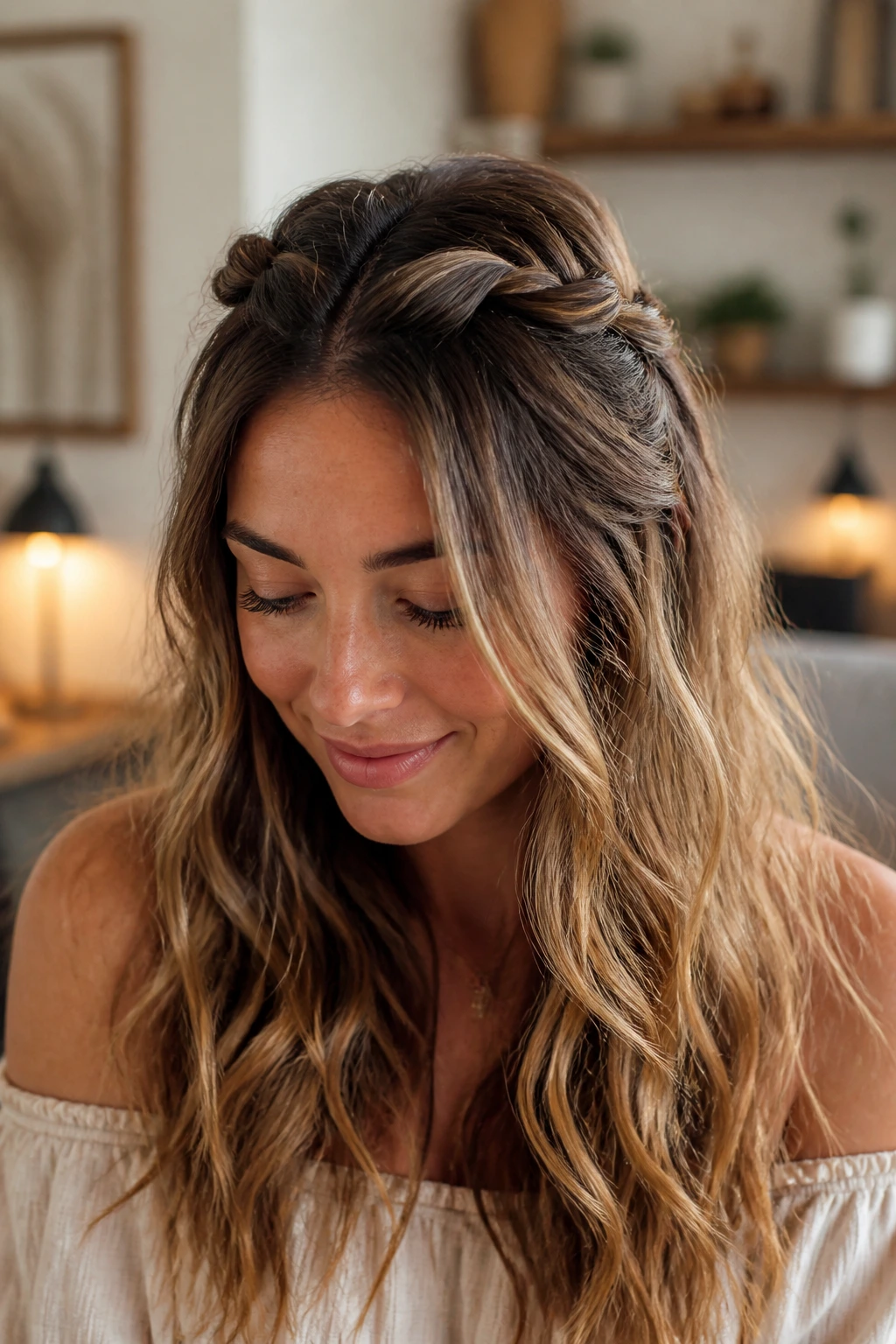
Two small knots across the crown can hold a surprising amount of hair. Twist a small section on each side, tie them together in the middle, and pin the ends under the wave pattern.
This style is nice for thick hair because the twist itself keeps the knot from slipping, while the rest of the hair stays loose. It’s a good compromise when you want the face framed without making the style too serious.
Where to place the knots
Keep them just above the ears if you want softness. Push them higher if you want more lift at the crown. That little shift changes the whole mood of the hairstyle.
22. The Scarf-Tied Ponytail
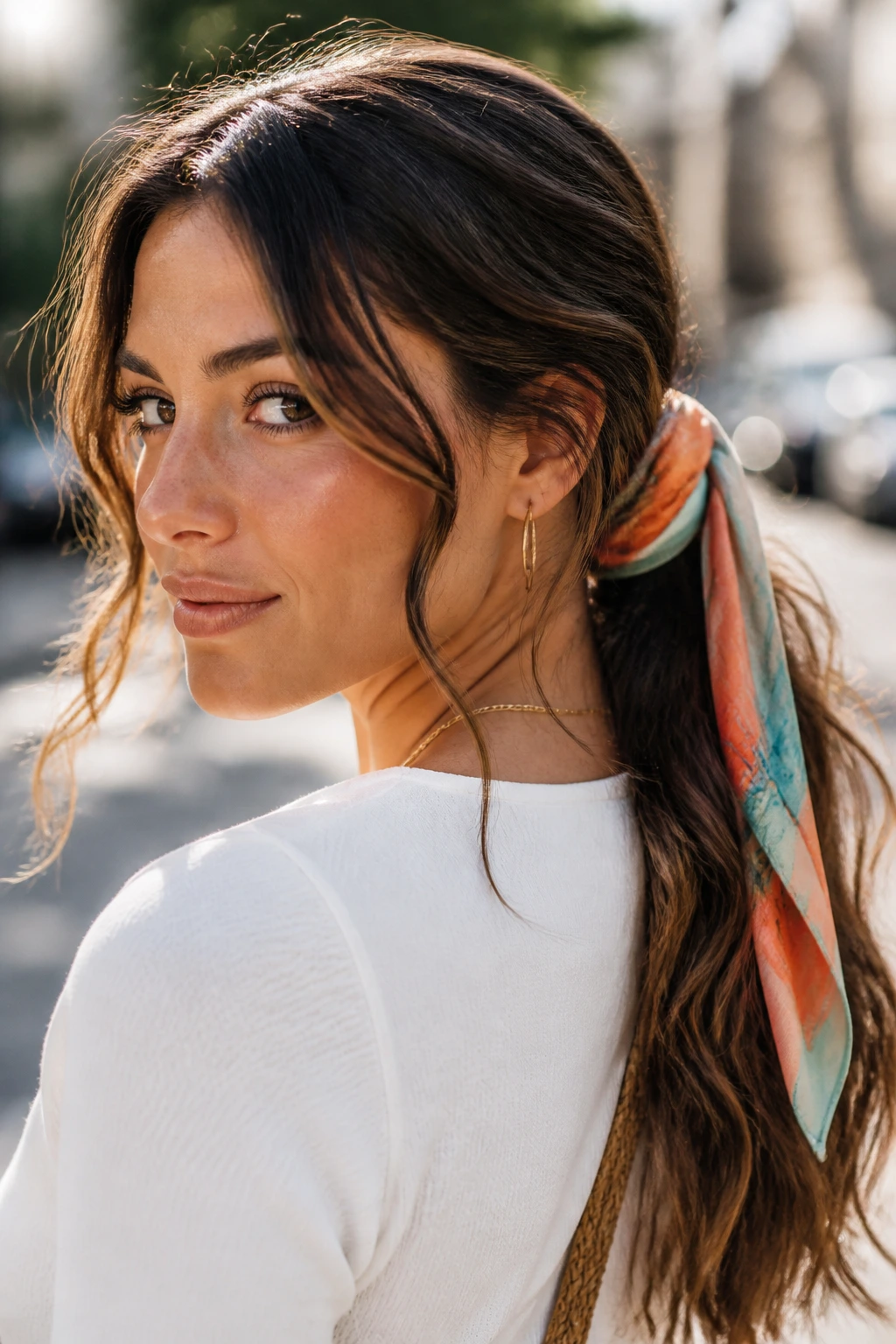
A scarf tied around a ponytail base can do more than people think. It hides the elastic, adds color, and keeps the style from feeling heavy, which matters on dense hair.
Tie the hair into a mid or low ponytail first, then wrap a silk or cotton scarf around the base once or twice. Let the ends of the scarf hang free or tie them into a bow if you want more shape. The wavy lengths underneath keep the ponytail loose and soft.
This is one of the easiest ways to make a plain ponytail look like you planned the whole outfit. The scarf should do some work. If it’s flimsy and tiny, it disappears.
23. The Waterfall Braid
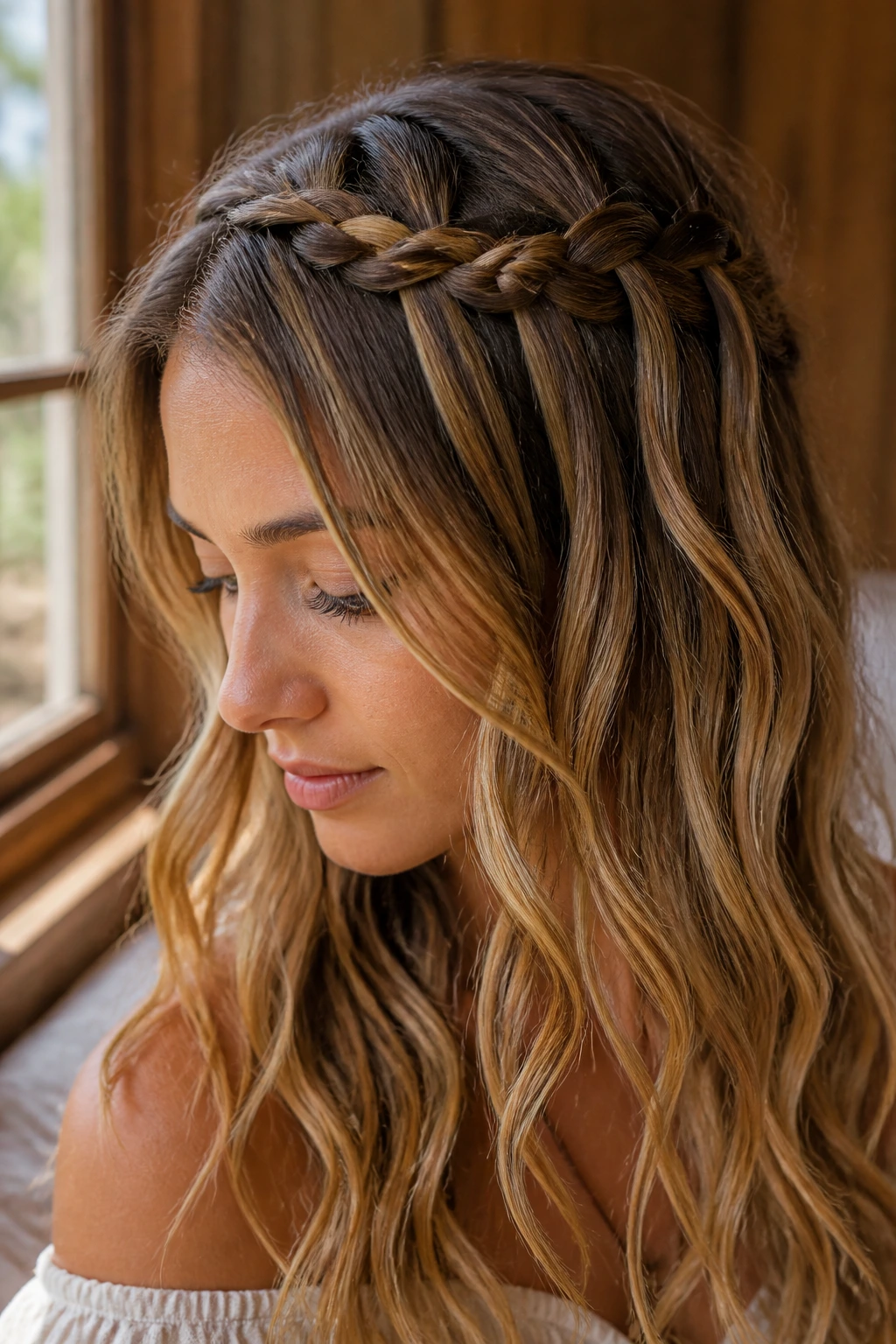
A waterfall braid is one of the prettiest ways to show off beachy waves because the loose strands keep dropping through the braid and blend right into the texture below.
It works especially well on thick hair that has enough length to hold the pattern. The braid sits across the crown or upper side of the head, then releases pieces as it moves along. Those pieces fall into the waves and make the whole style feel soft instead of carved.
Don’t over-tighten the braid. If you pull it too neatly, you lose the waterfall effect and the hair starts looking packed down. Slight looseness is the point here.
24. The Flip-Through Ponytail
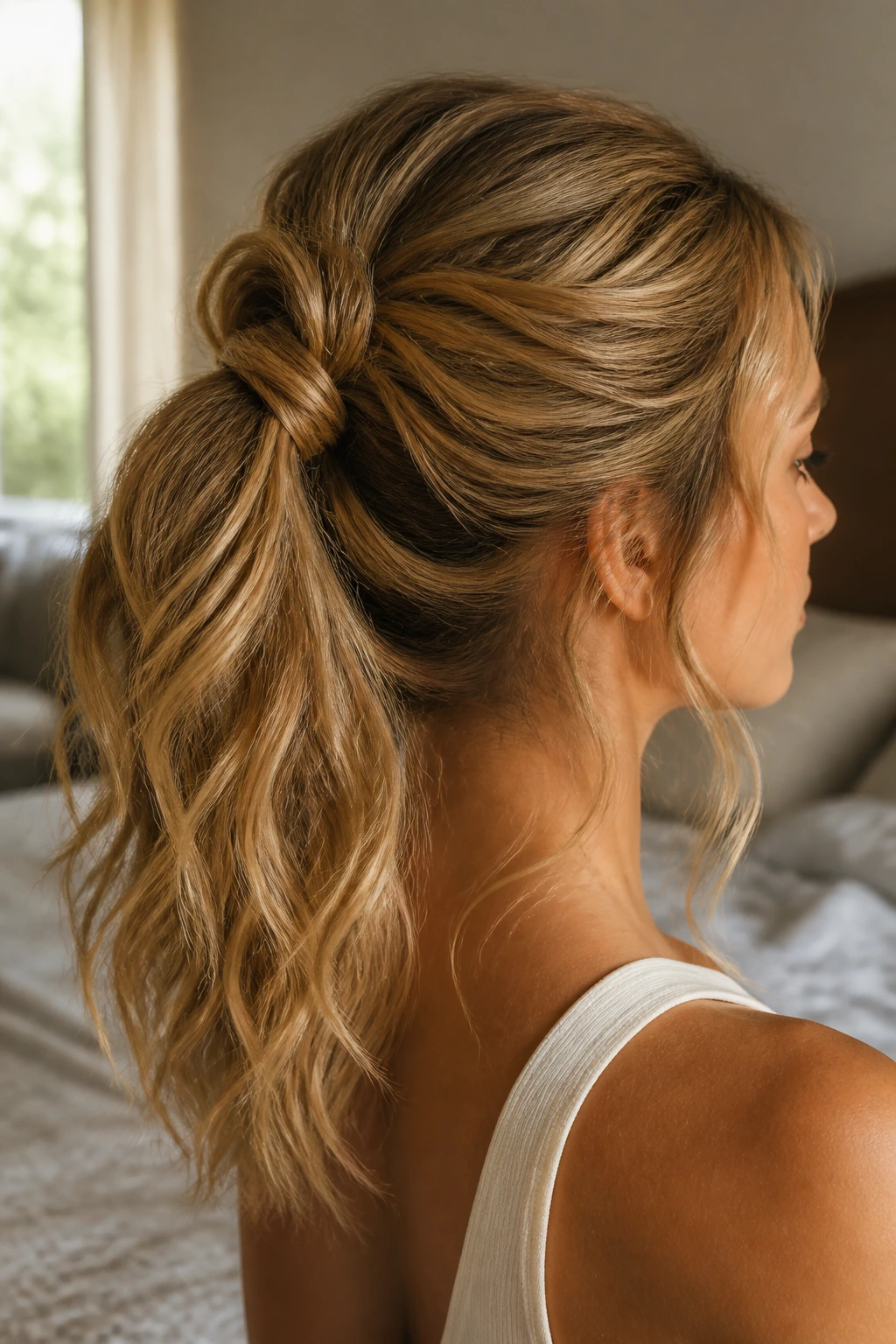
A flip-through ponytail is one of the fastest tricks for thick hair because it adds shape without adding more pieces. Make a ponytail, split a hole above the elastic, and pass the tail through it. That’s the flip.
The beachy wave texture gives the ponytail movement, while the twist at the base makes the style look more done than a standard pony. On dense hair, the technique also helps distribute weight, which can make a heavy ponytail feel less like it is pulling on the scalp.
If your hair is long enough, do the flip twice. That creates more shape and keeps the tail from looking too heavy at the bottom.
25. The Sectioned Mini Buns
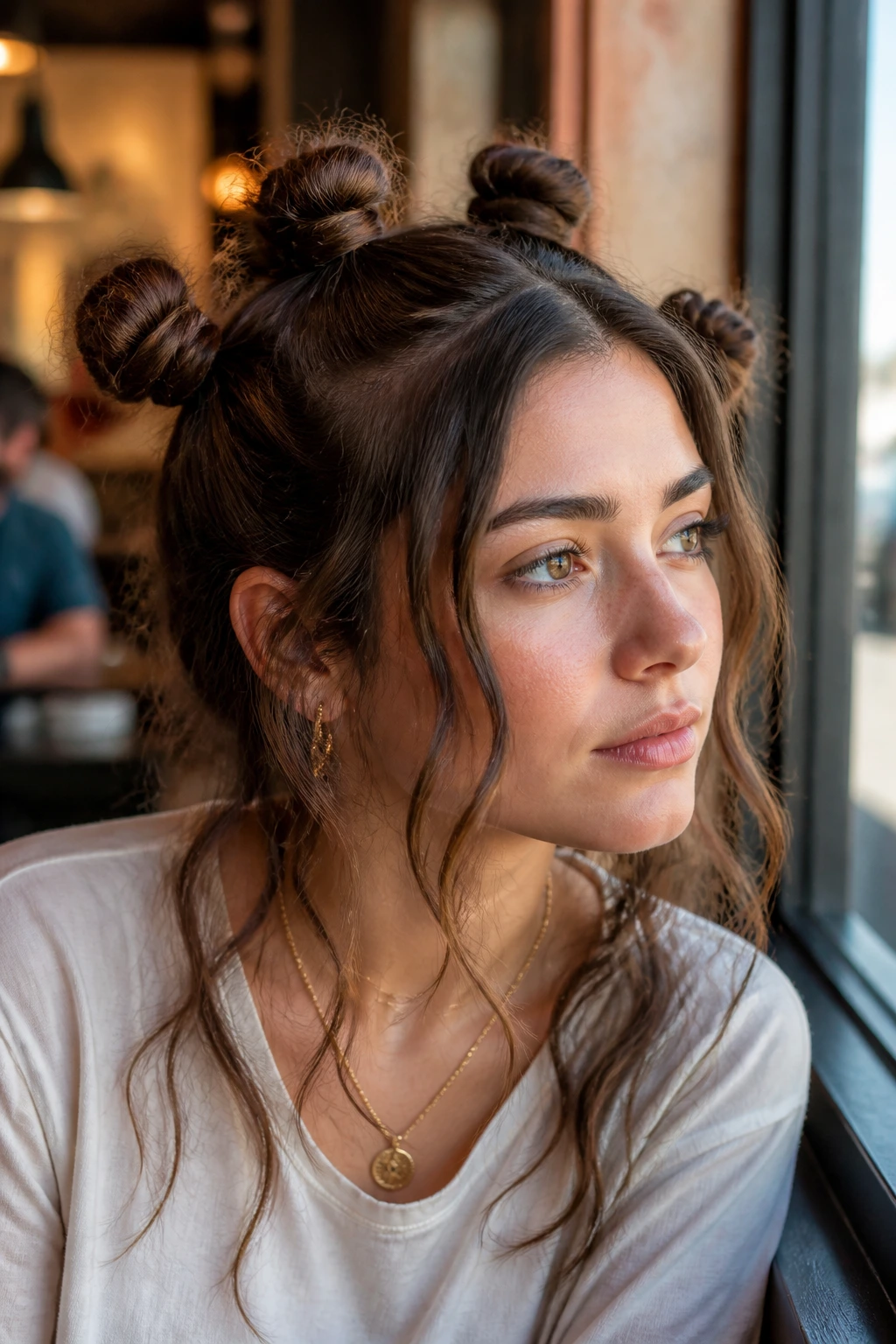
Mini buns are a smart answer when thick hair feels too bulky for one big updo. Split the hair into two, four, or even five sections and twist each one into a small bun.
The style looks playful, but there’s a practical side to it. Smaller buns are easier to pin securely, and they spread the weight across the head instead of loading all of it onto one spot. Beachy waves help the sections look soft and not too severe.
I like this for casual days, concerts, and any moment when you want your hair out of the way but still visible. It also works if your layers are being difficult and refuse to stay in one clean shape.
26. The One-Sided Pinned Waves
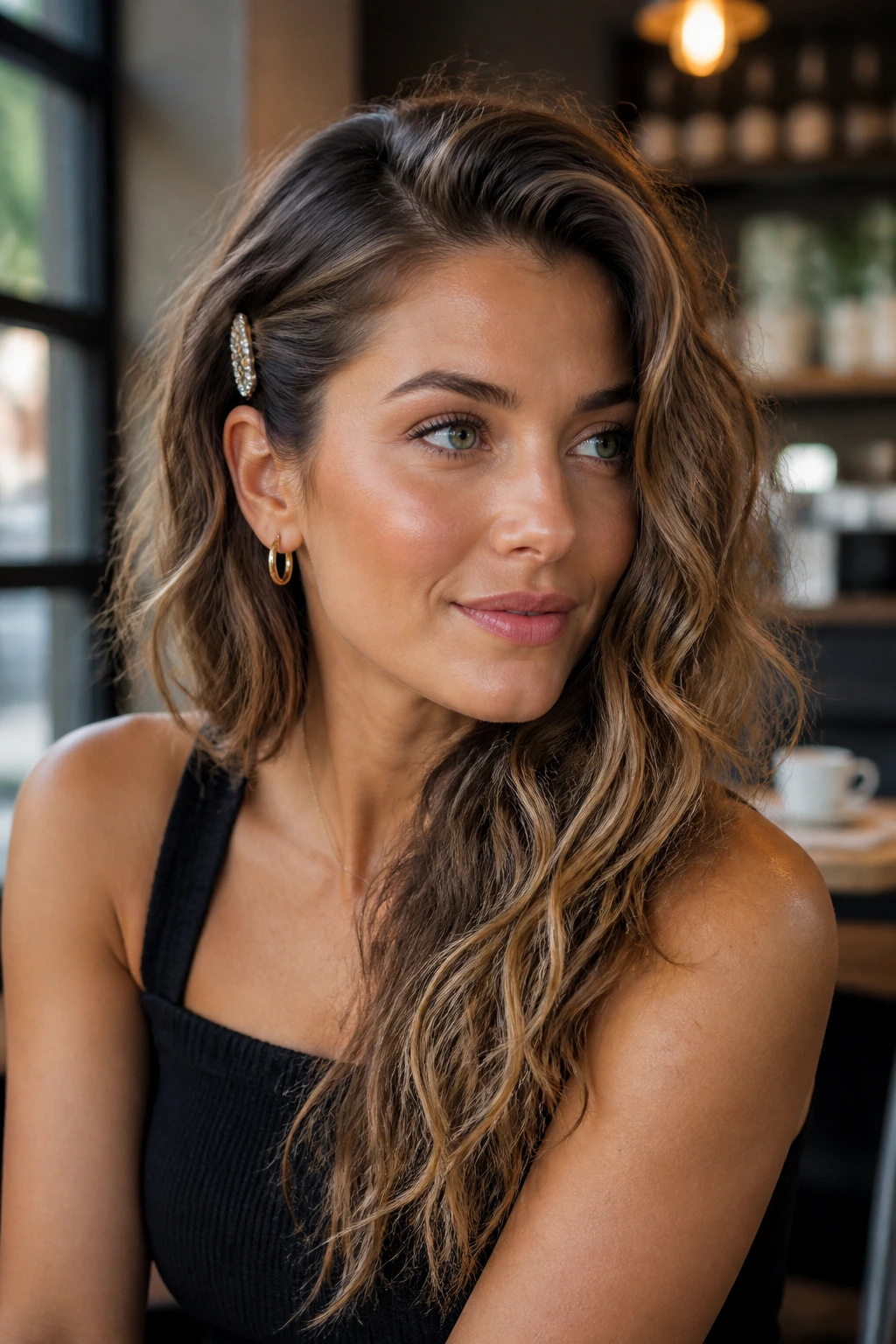
A single-sided pin-back is easy in the best sense of the word. Sweep one side behind the ear and pin it with a decorative clip, then leave the rest of the waves loose.
On thick dense hair, that tiny move changes the whole face shape. It opens one side, keeps hair off the cheek, and leaves the rest of the volume where it can move. You don’t need a dozen bobby pins. You need one good clip that can bite into a section without sliding.
This style works when you want the hair down but slightly controlled. Good with earrings. Good with a turtleneck. Good when the hair is too good to hide.
27. The Space-Bun Half-Up
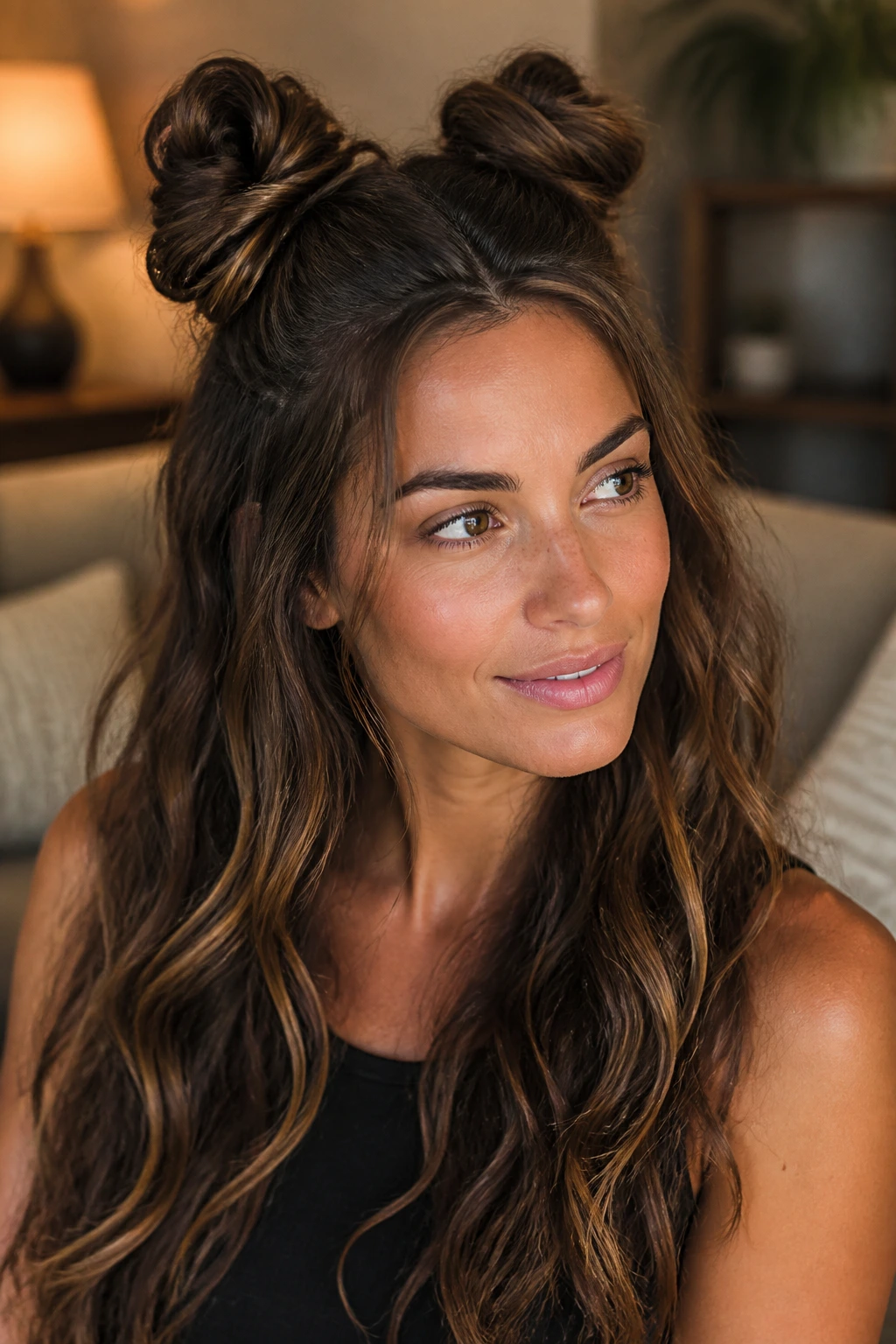
Space buns can feel loud, so the half-up version is easier to wear. Take the top half of the hair, split it into two sections, and make two small buns high on the head while leaving the lower waves free.
Thick hair gives the buns enough fullness to read clearly, and the loose lengths underneath keep the style from looking like a costume. That balance matters. If the buns are too big, the look gets heavy. If they’re too small, they disappear into the density.
Keep the buns slightly uneven and soft around the edges. That is what makes the style feel modern instead of rigid.
28. The Soft Braided Chignon
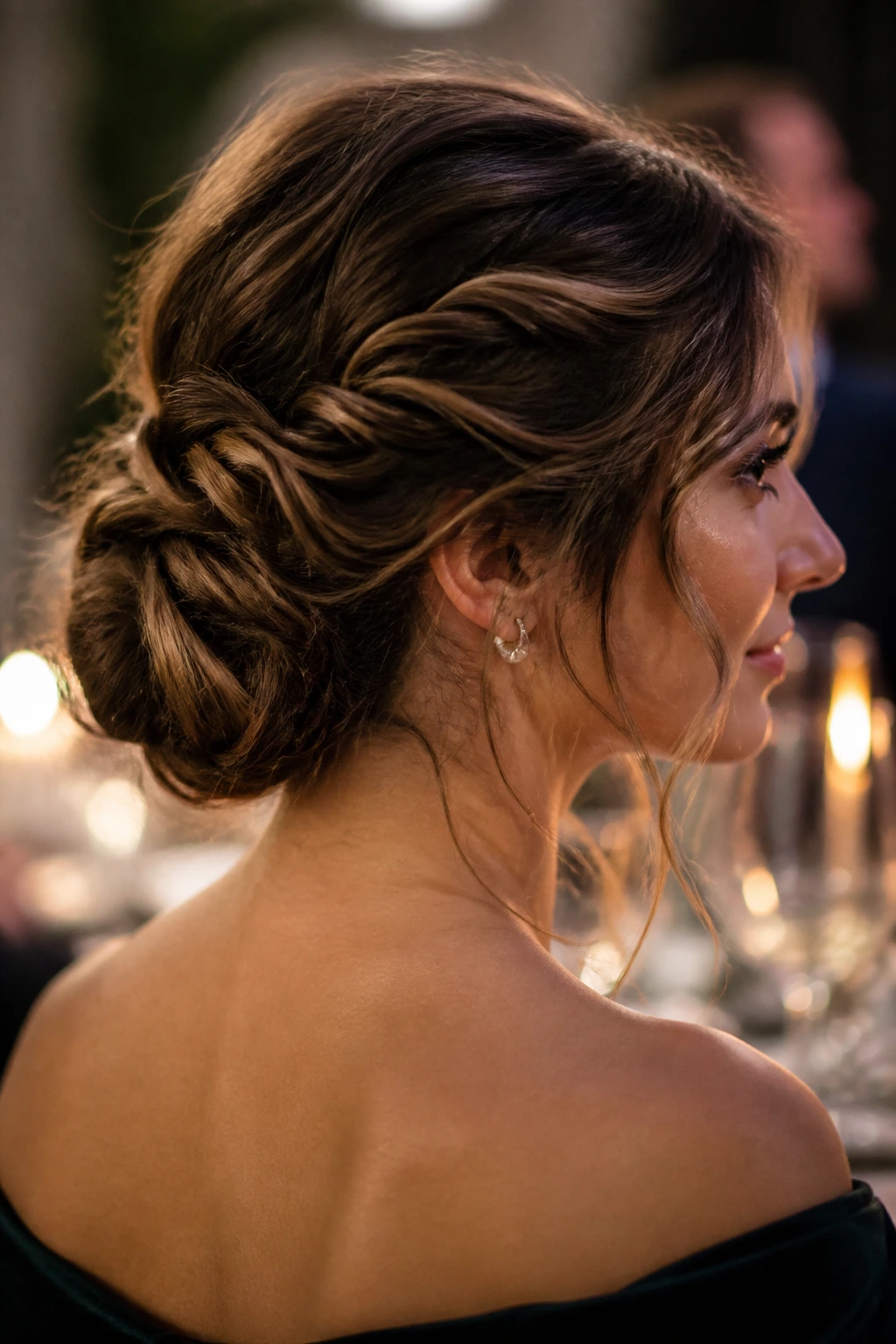
A soft braided chignon is the style I’d pick if I wanted the most polished finish in this whole set. Braid the hair loosely, wrap the braid into a low chignon, and pin the shape flat at the nape.
The braid keeps the bun from slipping, which dense hair tends to make a problem. The beachy wave texture keeps the chignon from looking too formal, and a few wispy pieces around the temples soften the face fast. If your hair is long, tuck the ends under carefully so nothing pokes out from the base.
This one holds up well for dinners, events, and any day when you want the hair out of the way but still want the wave texture to read.
Why Thick Dense Hair and Beachy Waves Work So Well Together
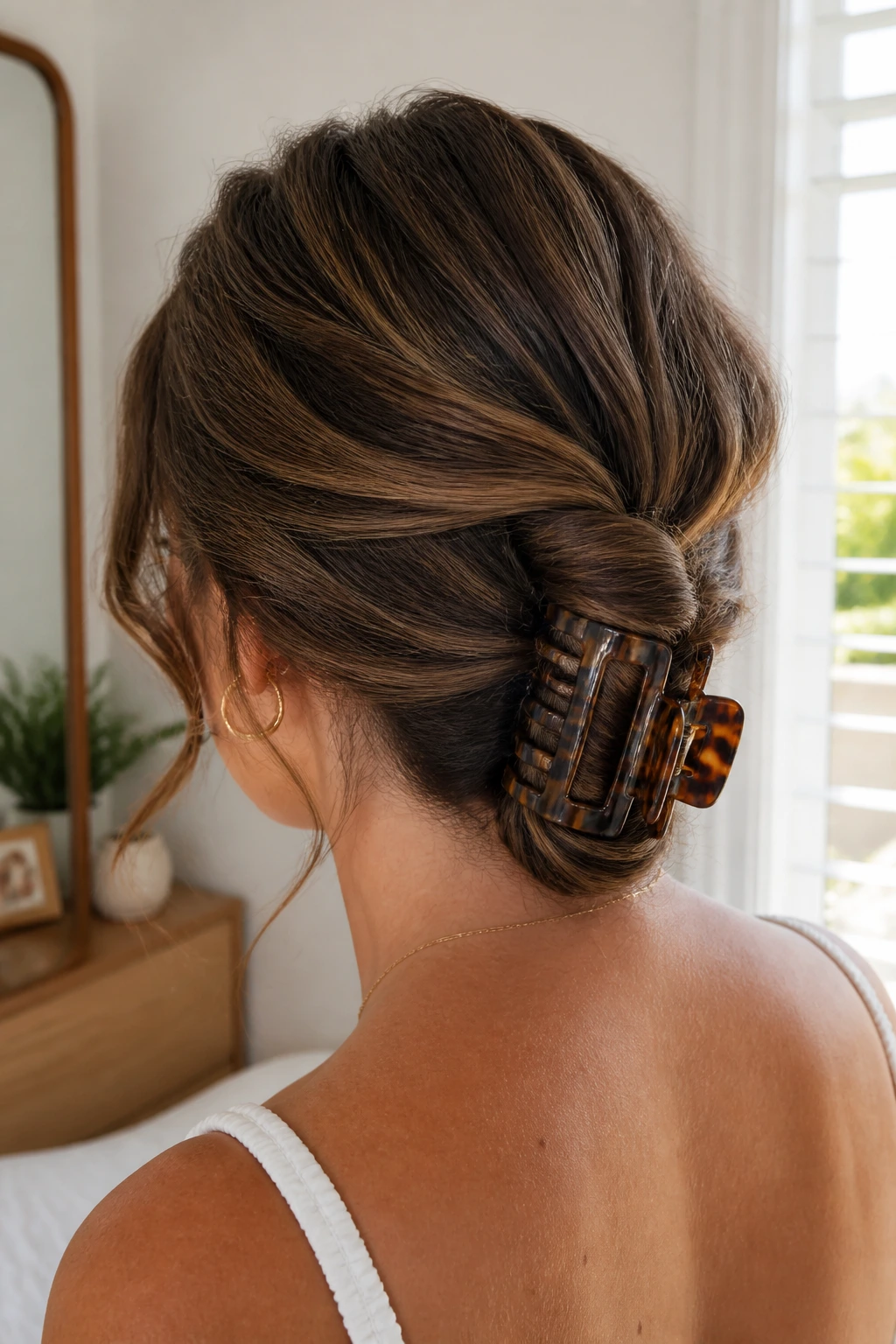
Dense hair behaves best when it has a little grit. Beachy waves give it that grit without turning the hair crunchy or overdone. The wave pattern breaks up the bulk, which makes pins catch, braids hold, and clipped styles stay where you put them.
What I like most is the range. You can go from a single clip at the nape to a braided chignon and never feel like the hair is being forced into something tiny. That’s the real win here. Thick hair doesn’t need to be tamed into submission. It needs a shape that respects the amount of hair you actually have.
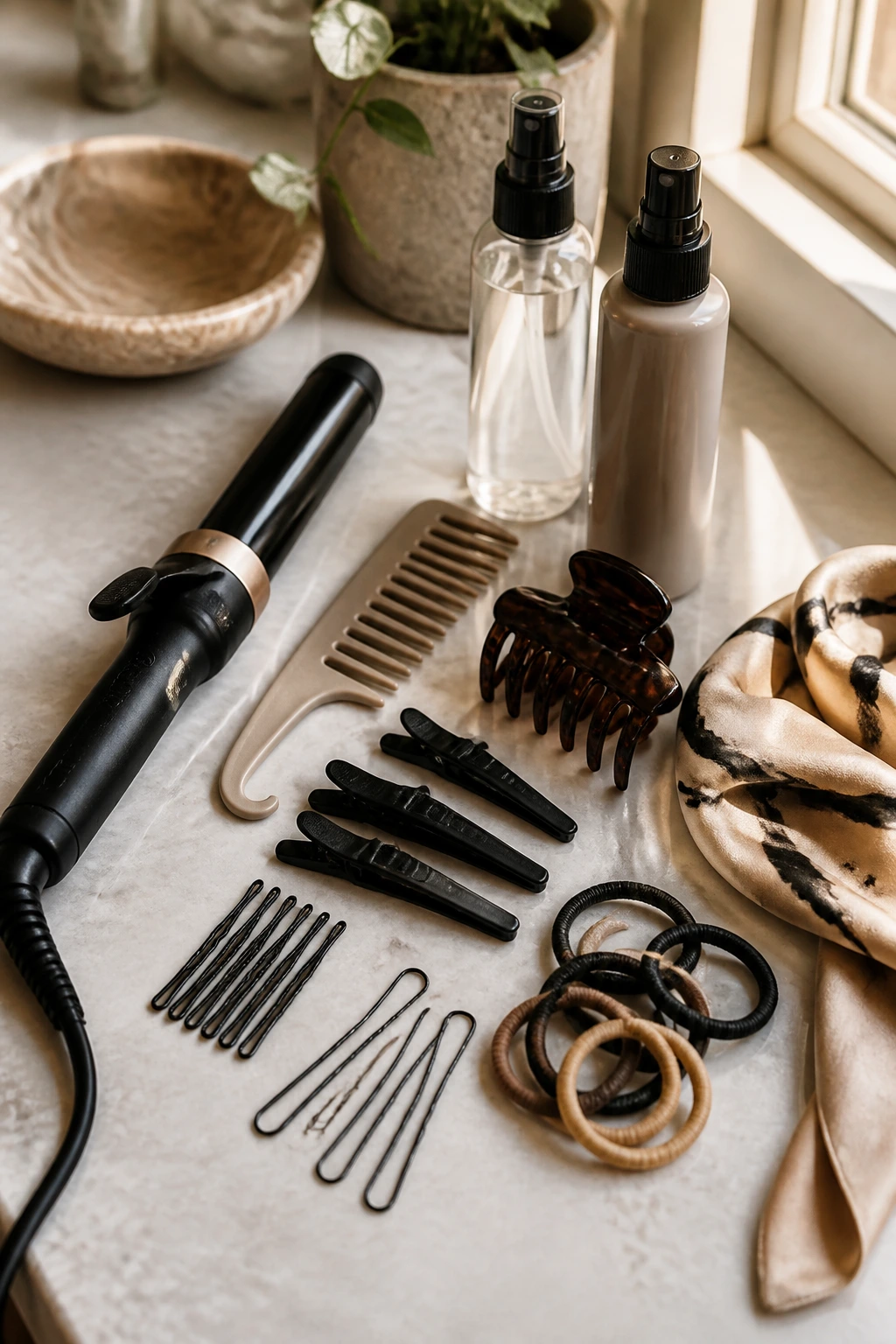
Essential Tools for These Hairstyles
-
1.25-inch or 1.5-inch curling wand: Best for building loose bends that still look relaxed on dense lengths.
-
Wide-tooth comb: Helps separate waves without stretching them into frizz.
-
Sectioning clips: Keep the top layers out of the way while you braid, twist, or pin.
-
Large claw clips, 4 inches or more: Small clips fail fast on heavy hair; bigger clips grip better.
-
Long bobby pins and U-pins: Better for buns and twists because they anchor across more hair.
-
Snag-free elastics: Strong enough to hold a ponytail without chewing up the ends.
-
Texturizing spray or dry shampoo: Gives roots grip and keeps the style from slipping.
-
Lightweight hairspray: Holds the shape without turning beachy waves stiff.
-
Silk scarf or satin scrunchie: Useful for overnight protection and softer ponytails.
Smart Prep and Product Tips for Dense Waves
The base matters more than most people admit. Thick dense hair can carry a lot of style on its own, but it still needs a little help at the roots and a little restraint on the ends. If you load the whole head with heavy cream, the hair goes flat near the scalp and puffy everywhere else. That’s the bad trade.
Start with a grippy root. A little dry shampoo or texturizing spray at the crown gives clips and pins something to hold. If the hair is freshly washed, rough-dry the roots until they’re about 90% dry before adding shape. Glassy-clean hair slides.
Keep products light through the lengths. A pea-sized amount of lightweight oil on the ends is enough for most thick hair. More than that, and the beachy waves stop reading as waves and start looking greasy.
Use heat with restraint. If you’re building the waves from scratch, a medium barrel around 1.25 inches gives a bend that works for almost every style in this collection. Curling every piece in the same direction can look too neat, so alternate directions on the mids and ends.
Let the wave cool fully. Warm hair forgets its shape fast. That is one of the most annoying things about dense hair, and also one of the easiest to fix. Pin, clip, or braid only once the bend has set.
Common Mistakes to Avoid
-
Using clips that are too small: They dig in, slide out, or snap under the weight of dense hair. Switch to larger claws or multiple pins.
-
Over-smoothing the crown: When the top is too sleek and the lengths are too full, the style can puff outward in a weird shelf shape. Leave a little texture where the roots meet the rest of the hair.
-
Pulling every style too tight: Tight braids and tight ponytails on thick hair create tension fast and can make the face look wider, not slimmer. Leave a little give at the hairline.
-
Forgetting pin direction: Bobby pins hold better when the wavy side faces down toward the scalp and the ridged side grips the section. Crossing pins in an X helps even more.
-
Using too much cream or oil: Dense hair needs control, not coating. Heavy product kills the beachy look and makes the style slip.
Variations and Adaptations to Try
-
Heat-Free Waves Version: If you already have natural bend, scrunch in a light mousse and let the hair air-dry before styling. The shapes in this list work especially well when the wave is soft rather than perfectly set.
-
Humidity-Shielded Version: Swap airy creams for a stronger texturizing spray at the roots and a flexible hairspray at the finish. That keeps styles like the twist, bun, and braid from swelling out too fast.
-
Shorter Length Fix: For hair that sits at the shoulders or just below, choose the half-up knot, side clip, mini claw row, and twisted crown styles. These need less length and still show off the wave pattern.
-
Extra-Long Hair Version: Use stronger anchors: two elastics for ponytails, U-pins for buns, and bigger clips for twists. Long dense hair benefits from dividing the weight into smaller sections.
-
Office-Ready Version: Keep the front smooth, the accessories simple, and the braid or bun low at the nape. A neat side part or tucked ear piece makes the style feel cleaner without losing texture.
Overnight Care, Refreshing, and Long-Wear Maintenance
Dense hair will hold a shape overnight better than fine hair, but it still needs help if you want to wear the style again the next day. The easiest move is a loose braid, low bun, or silk scarf before bed. A satin pillowcase helps, too. It cuts down on the rough friction that makes beachy waves turn frizzy around the ends and at the crown.
If the style is still in place the next morning, don’t brush it out right away. Shake the roots first. Then mist the lengths lightly with water or a wave refresh spray and scrunch them with your hands. If the hair feels stiff, warm a tiny bit of cream between your palms and skim it over the frizzy sections only.
For ponytails and buns, replace the elastic if it’s stretched. For braids, loosen the edges with your fingers instead of trying to rebraid from scratch. The goal is not to make the hair look identical to yesterday. The goal is to make it look on purpose again.
Frequently Asked Questions About Beachy Waves on Thick Dense Hair
Which hairstyle lasts longest on thick dense hair?
Low buns, braided chignons, double Dutch braids, and the low claw-clip twist usually last the longest because they anchor the hair near the neck or scalp. Styles that rely on one weak elastic or a small clip tend to fail faster under the weight.
Do I need layers for these hairstyles to work?
No, but layers can soften the finish and make the waves move more easily. One-length dense hair still works well in braids, buns, and ponytails; it just needs firmer pins and a little more shaping around the face.
Can I do these styles with natural waves instead of heat-styled waves?
Yes, and a lot of the time that looks better. Natural waves usually have more grip, which helps braids and clips stay put. If the texture is too soft, a small amount of mousse or texturizing spray gives it a bit more body.
Why does my claw clip keep sliding out?
Usually the clip is too small, the section is too smooth, or the hair is too heavy for that particular clip shape. Use a larger clip, twist the hair tighter before clipping, and make sure the hair isn’t overly coated with oil or leave-in product.
How do I keep the crown from puffing up?
Don’t brush the whole top flat. That often causes the hair to expand later. Use your fingers to place the crown lightly, then pin or clip the section where it naturally wants to sit.
Which styles are best for humid weather?
Low buns, side twists, braids, and the clip-and-go options handle humidity best because they keep the hair controlled without needing a perfectly sleek finish. A little wave frizz blends into the texture instead of fighting it.
Can these work on short dense hair?
Yes, but choose the styles that rely on sectioning instead of length: mini claw clips, side-swept pin-backs, twisted crown pieces, and small half-up knots. Full braids and chignons need more length to sit neatly.
What if my waves fall flat halfway through the day?
Flip your part, mist the roots with dry shampoo, and re-pin one section instead of rebuilding the whole style. On dense hair, one fresh anchor point near the crown can change the shape more than touching every strand.
The Styles That Earn Their Keep
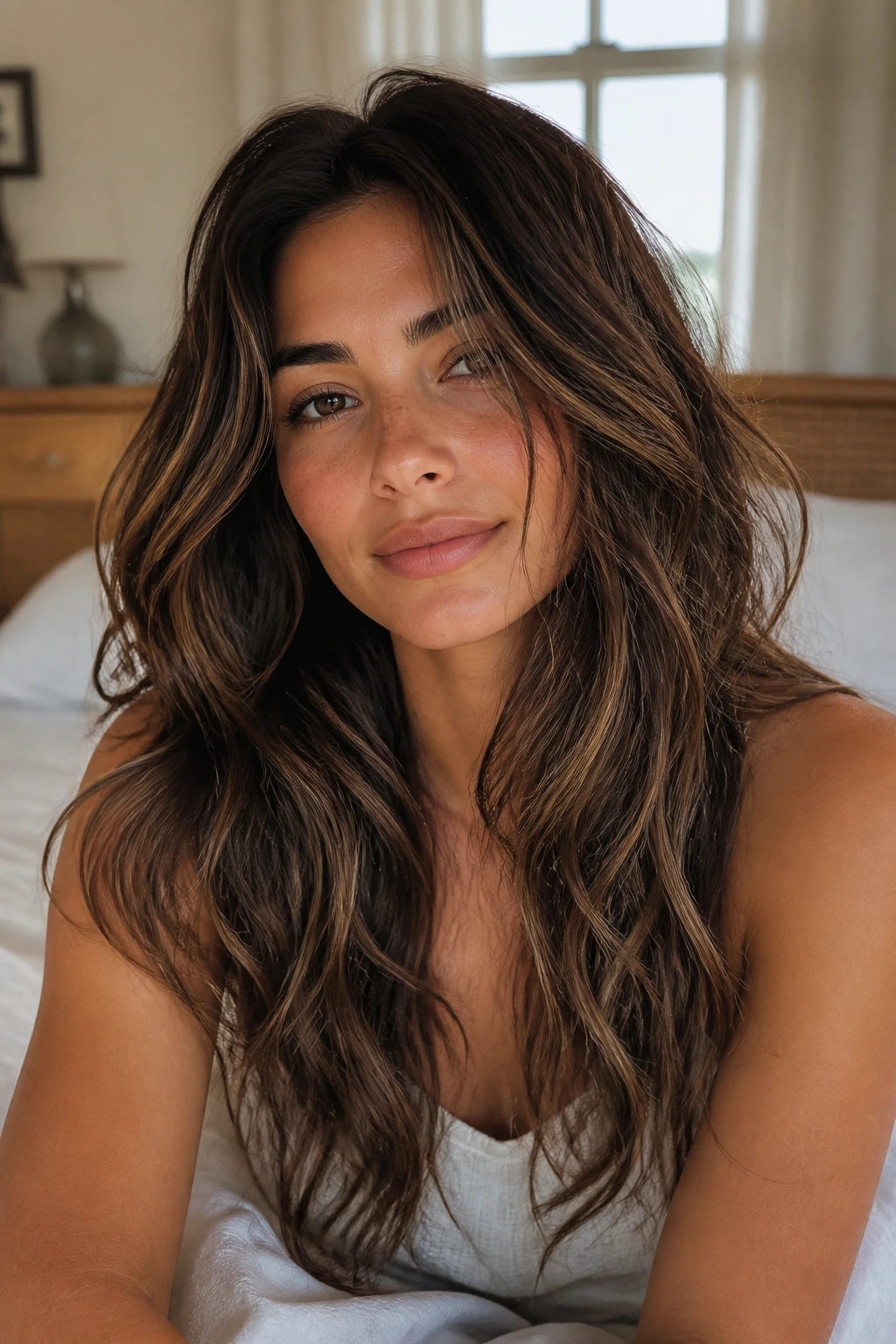
Thick dense hair does not need to be forced into tiny, delicate shapes to look finished. It needs a style that understands weight, volume, and texture, then uses all three on purpose. That’s why these beachy-wave looks work: they keep the hair moving while still giving it a clear outline.
The best part is that none of them depend on perfection. A few loose pieces, a slightly rough wave, a clip that shows, a braid that isn’t mathematically identical on both sides — that is the good stuff here. Thick hair usually looks better when it’s allowed to stay thick.
Pick the style that fits the day, pin it with a little more conviction than you think you need, and let the wave pattern do the rest.