



Long curly hair can look spectacular on a heart-shaped face, and it can also go sideways fast if the shape is wrong. Put too much volume at the temples and the forehead starts to look broader. Leave the ends too blunt and the whole silhouette tips into a triangle. That’s the annoying part. The useful part is that curls give you more control than straight hair ever will, because every bend, coil, and ringlet changes where the eye lands.
Long hairstyles for curly hair and heart-shaped faces work best when they do one simple thing: keep the eye moving downward or diagonally instead of letting all the attention sit high on the head. That usually means layers that start around the cheekbones, not the hairline; parts that are slightly off-center; and face-framing pieces that touch the jaw or chin instead of stopping at the widest point of the forehead. A cut can look timid when it’s wet and then bloom into something far better once it dries. Curly hair does that. You have to respect the shrinkage.
The styles below range from soft and low-key to dressy and dramatic, because heart-shaped faces don’t need the same solution every day. Some days you want a cut that behaves in humidity. Some days you want a braid that keeps the front quiet. Some days you want the curls to do the talking and the forehead to take a back seat. The good shapes are the ones that make that balance feel easy.
Why These Long Curly Shapes Work for Heart-Shaped Faces
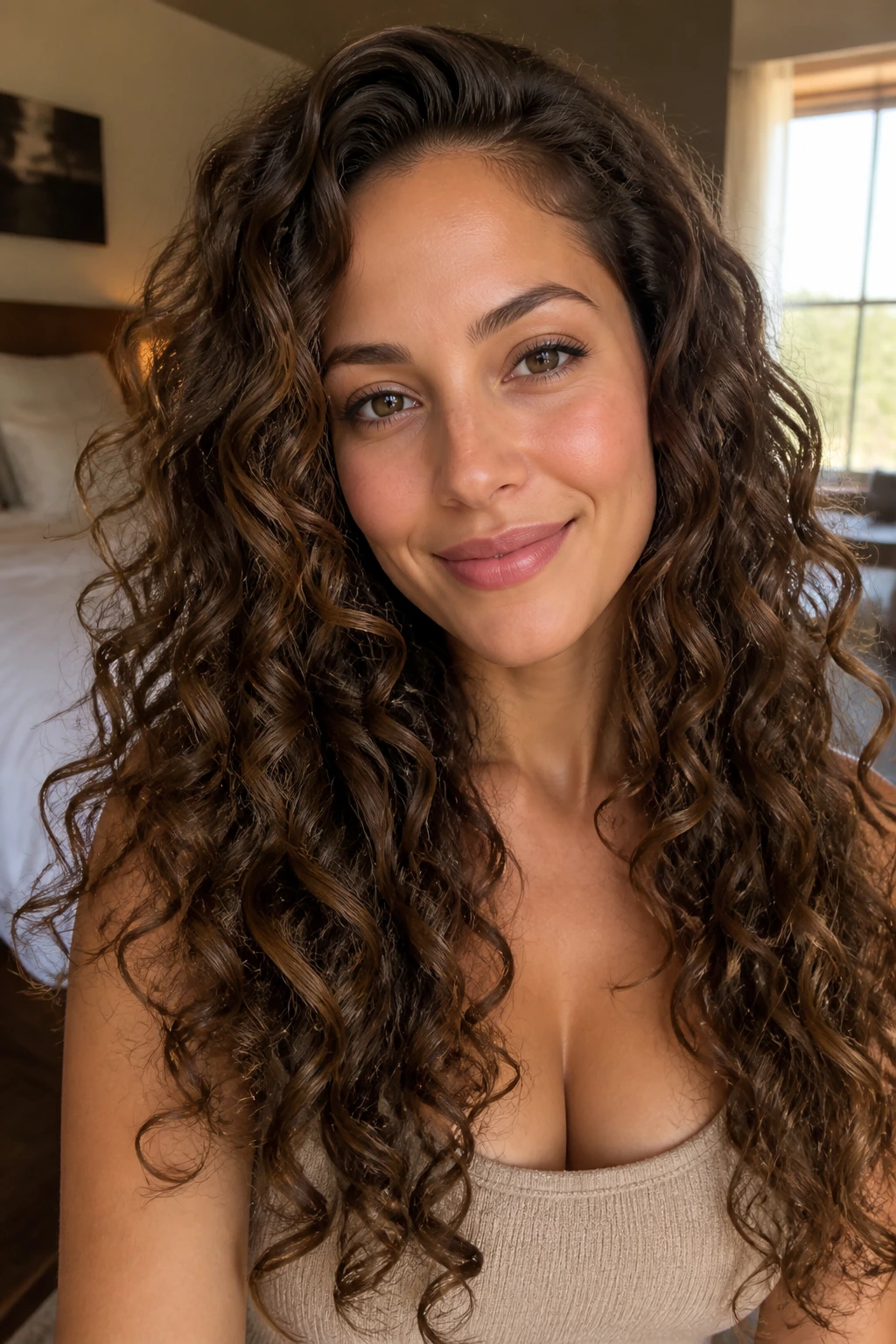
-
They soften the widest point: Pieces that start around the cheekbone or brow break up the strong horizontal line across the forehead instead of adding more width there.
-
They keep weight lower: Curls that land around the jaw, collarbone, or chest pull the eye down, which keeps the face from looking top-heavy.
-
They respect shrinkage: A long curly cut that looks “too long” when wet is often the one that lands in the right place once the curls spring up.
-
They leave room for movement: Long layers stop thick curls from turning into a triangle, but they do not strip away so much bulk that the shape gets stringy.
-
They give you parting options: A center part can work, but a soft side part or off-center part often does more for a heart-shaped face because it breaks the forehead line.
-
They play nicely with volume: Heart-shaped faces usually look best when the volume sits around the cheekbones, lower sides, or ends—not as a helmet at the crown.
1. Long Curly Layers with Curtain Bangs
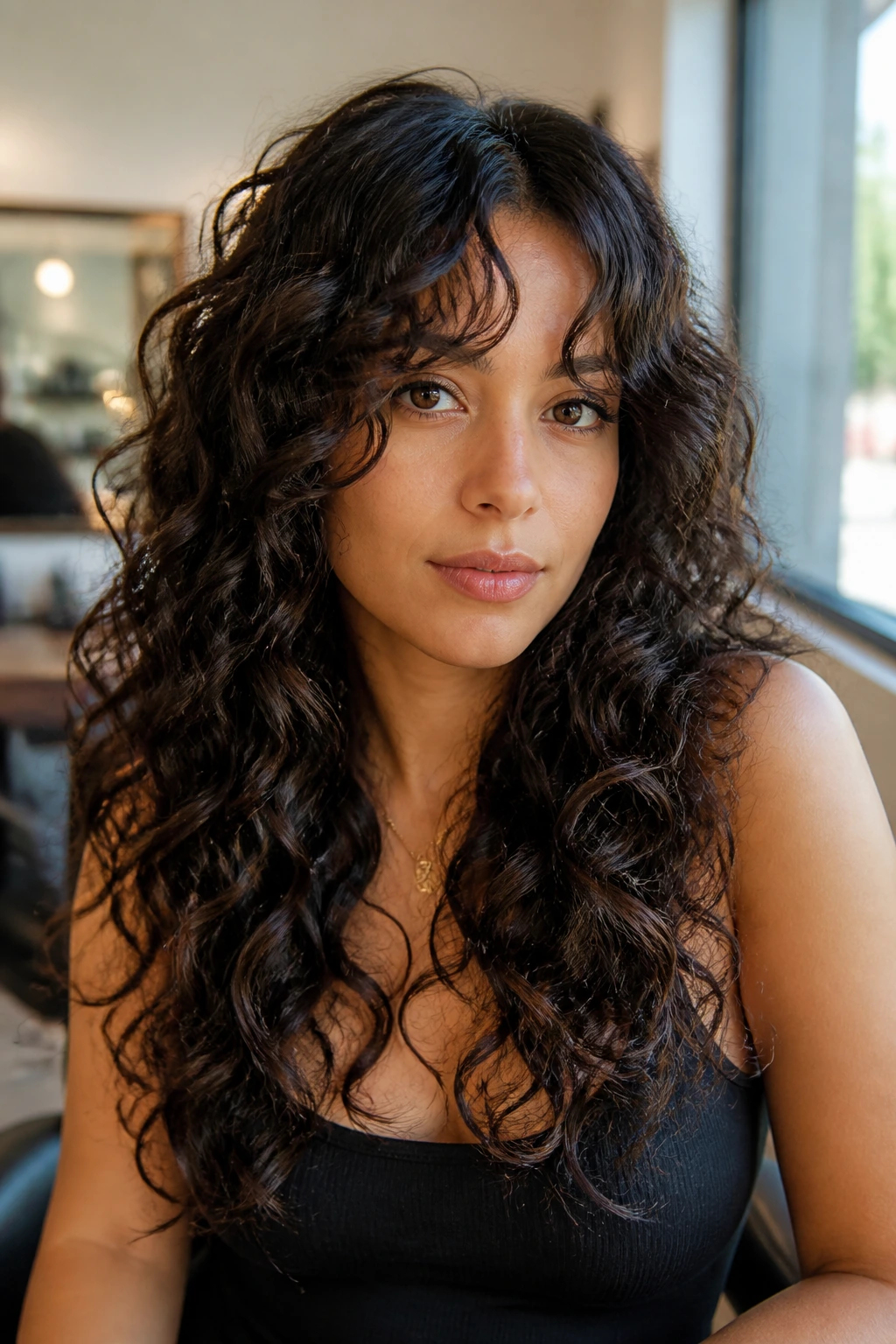
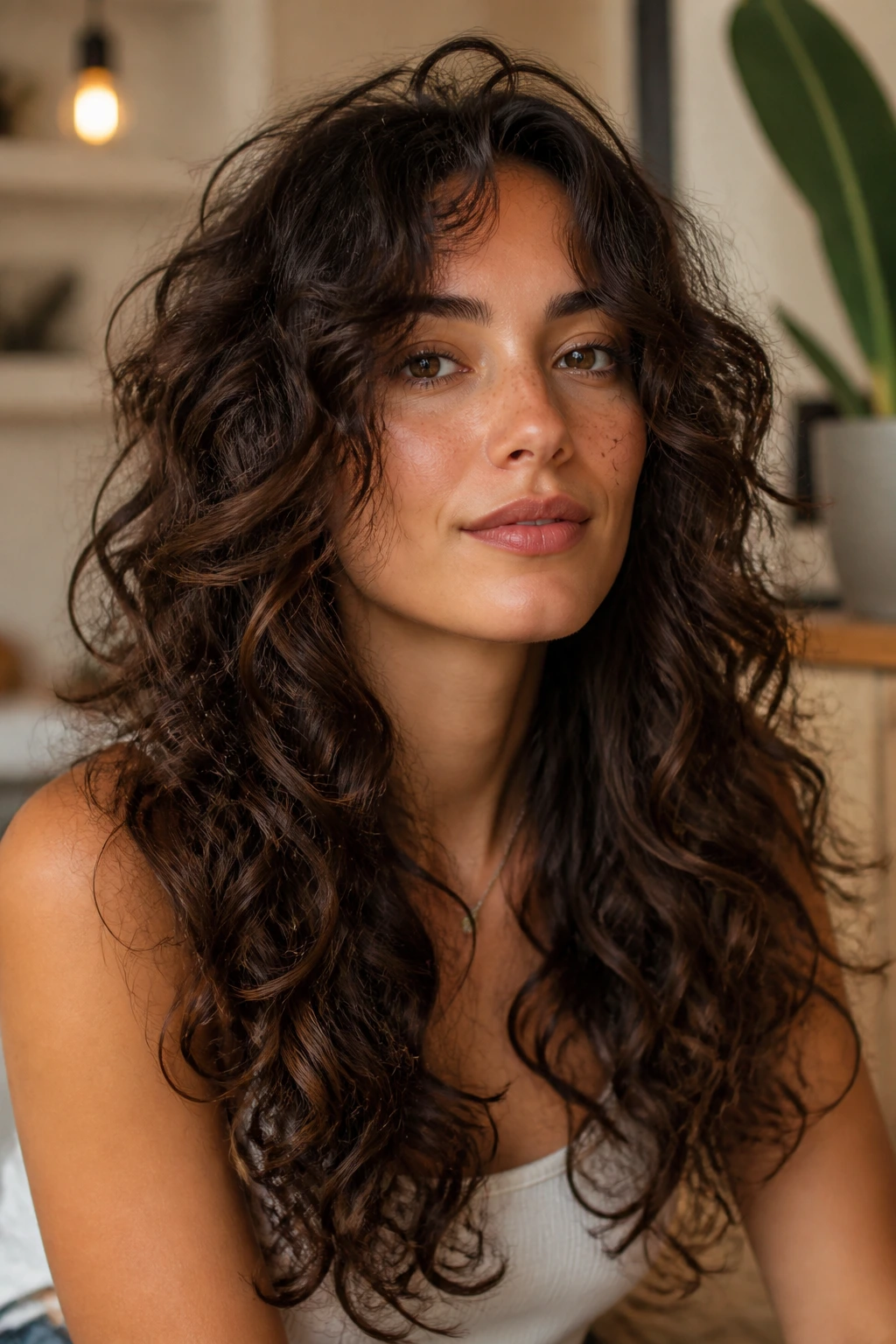
This is the one I recommend most often when someone wants a safe choice that doesn’t feel boring. Long curly layers with curtain bangs give the face a soft frame without chopping the length too aggressively, and the bangs split in the middle so the forehead never feels boxed in.
The trick is placement. You want the shortest front pieces to start around the cheekbone or just above it, then melt into longer layers that keep the curl pattern moving. If the bangs sit too high, the whole cut can puff at the temples. Too low, and they stop doing the job. Somewhere around brow to cheekbone is the sweet spot.
Ask for the bangs to be cut with your curl pattern in mind, not stretched straight like a ribbon. Curly bangs spring higher than most people expect. They also behave better when they’re left a touch longer and shaped dry.
2. Deep Side Part and Jaw-Framing Ringlets
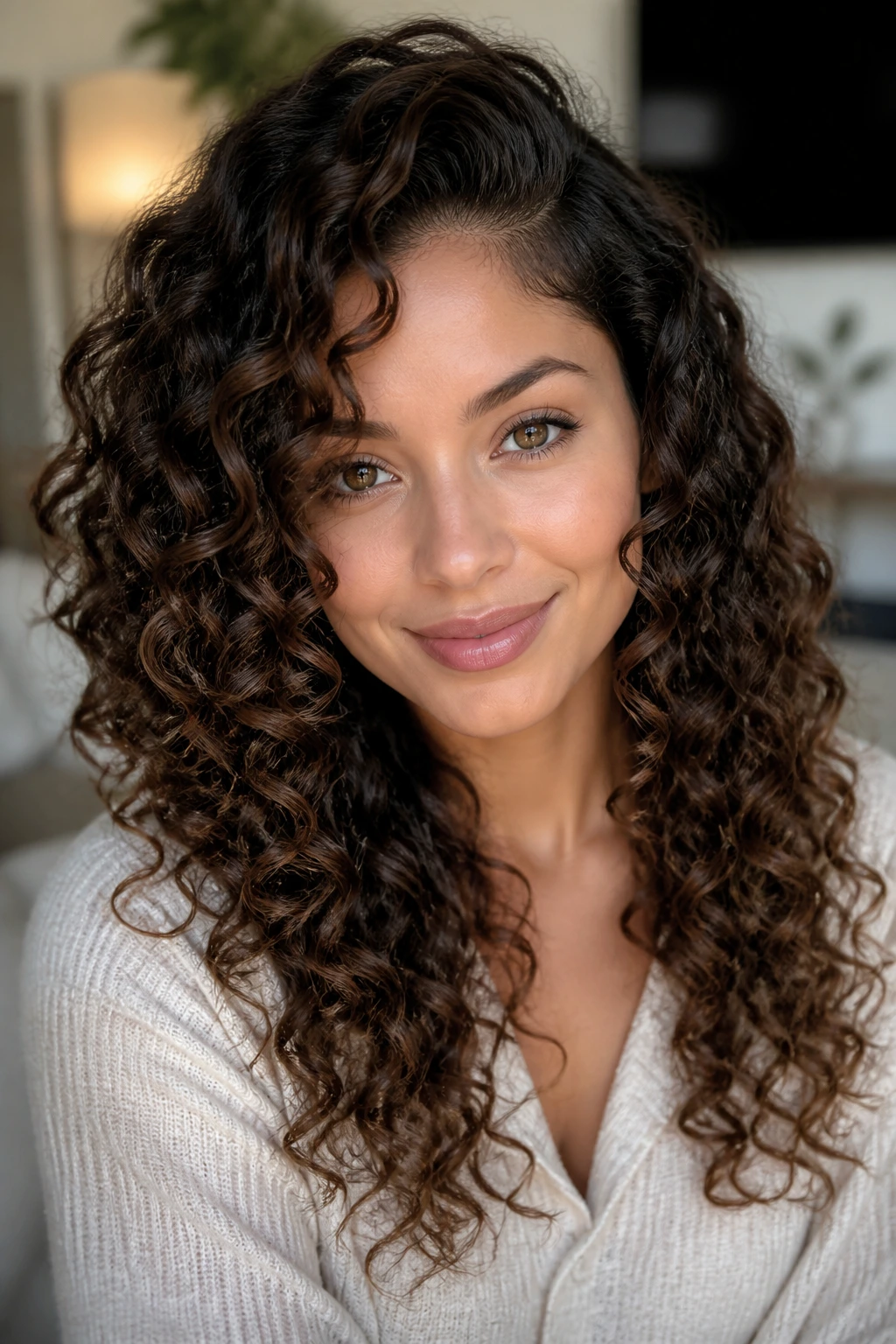
Why does a side part matter so much on a heart-shaped face? Because it breaks up that strong, wide forehead line in one clean move. A deep side part also gives curly hair a little asymmetry, which is flattering in a way that blunt symmetry often isn’t.
The best version leaves two or three ringlets near the jaw and cheek, where they can widen the lower half of the face just enough to balance the top. I like this on looser curls and springy ringlets because the shape reads polished without looking stiff. If your curls fall flatter on one side, all the better. The part will work with that instead of against it.
Best way to wear it
- Keep the part just off the arch of the eyebrow, not halfway back on the head.
- Let the front pieces fall forward first, then tuck one side behind the ear if you want more cheekbone definition.
- Use a light gel on the roots so the part stays where you put it.
Pro tip: a side part looks best when the crown has a little lift, not a lot of height.
3. Rounded Deva Cut with a Soft Halo
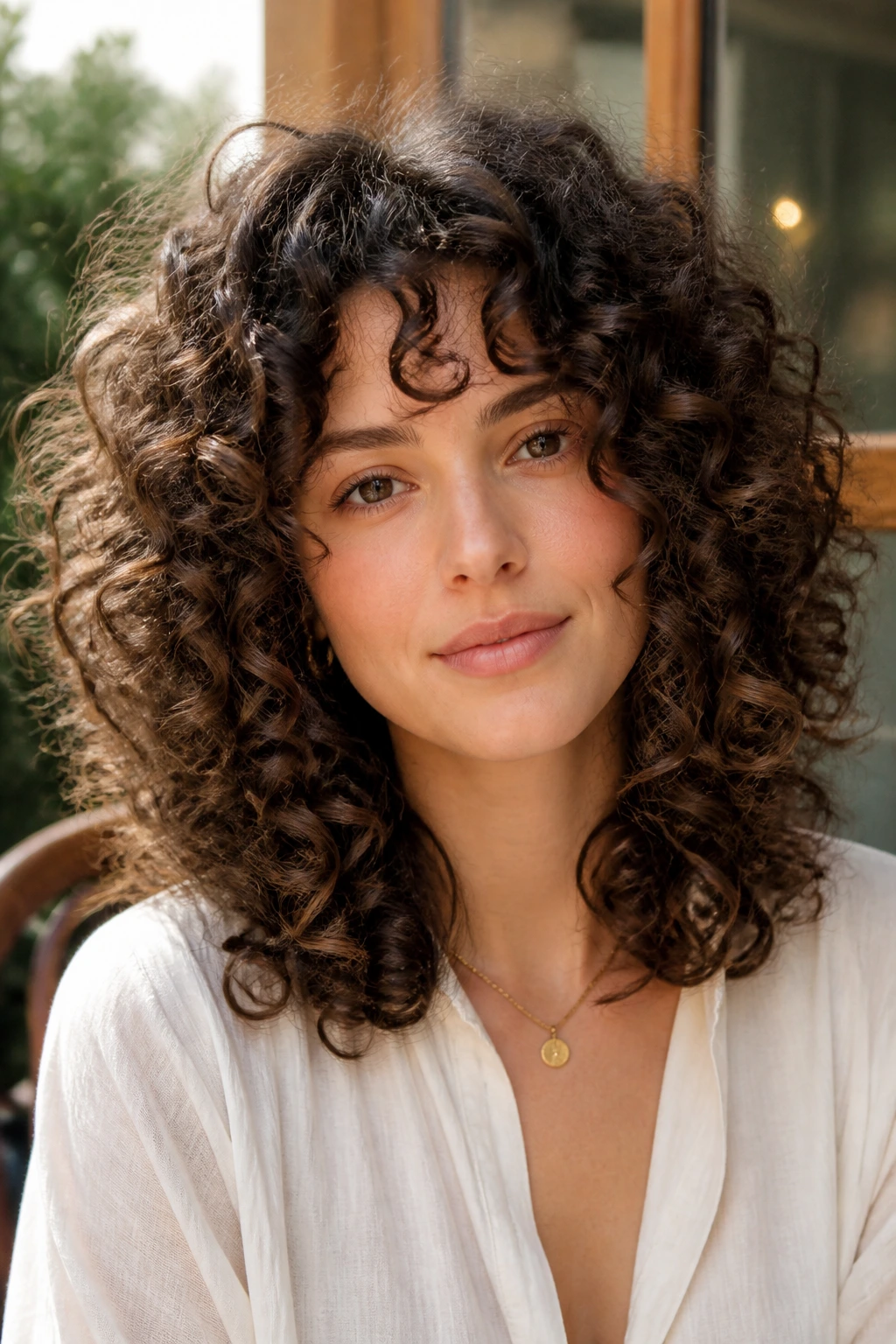
This is the shape for someone who wants the curls to look like they grew that way on purpose. A rounded Deva-style cut removes bulk where it causes puffiness and keeps a soft halo around the head instead of a sharp point at the bottom. On a heart-shaped face, that rounded perimeter is useful because it keeps the chin from feeling overly narrow.
A dry cut matters here. Wet curls lie. They shrink, twist, and sometimes separate in ways that hide the real shape. Cutting them dry lets the stylist see where the volume actually sits and where the face needs breathing room.
Why it flatters
- The round outline avoids the pointy look that can exaggerate a narrow chin.
- Internal shaping keeps the crown light without making the ends thin.
- The style works especially well if your curls are dense and springy.
If you like a cut that still looks tidy on day three, this is a strong pick. It doesn’t need much drama. The shape does the heavy lifting.
4. V-Shaped Cascade Layers
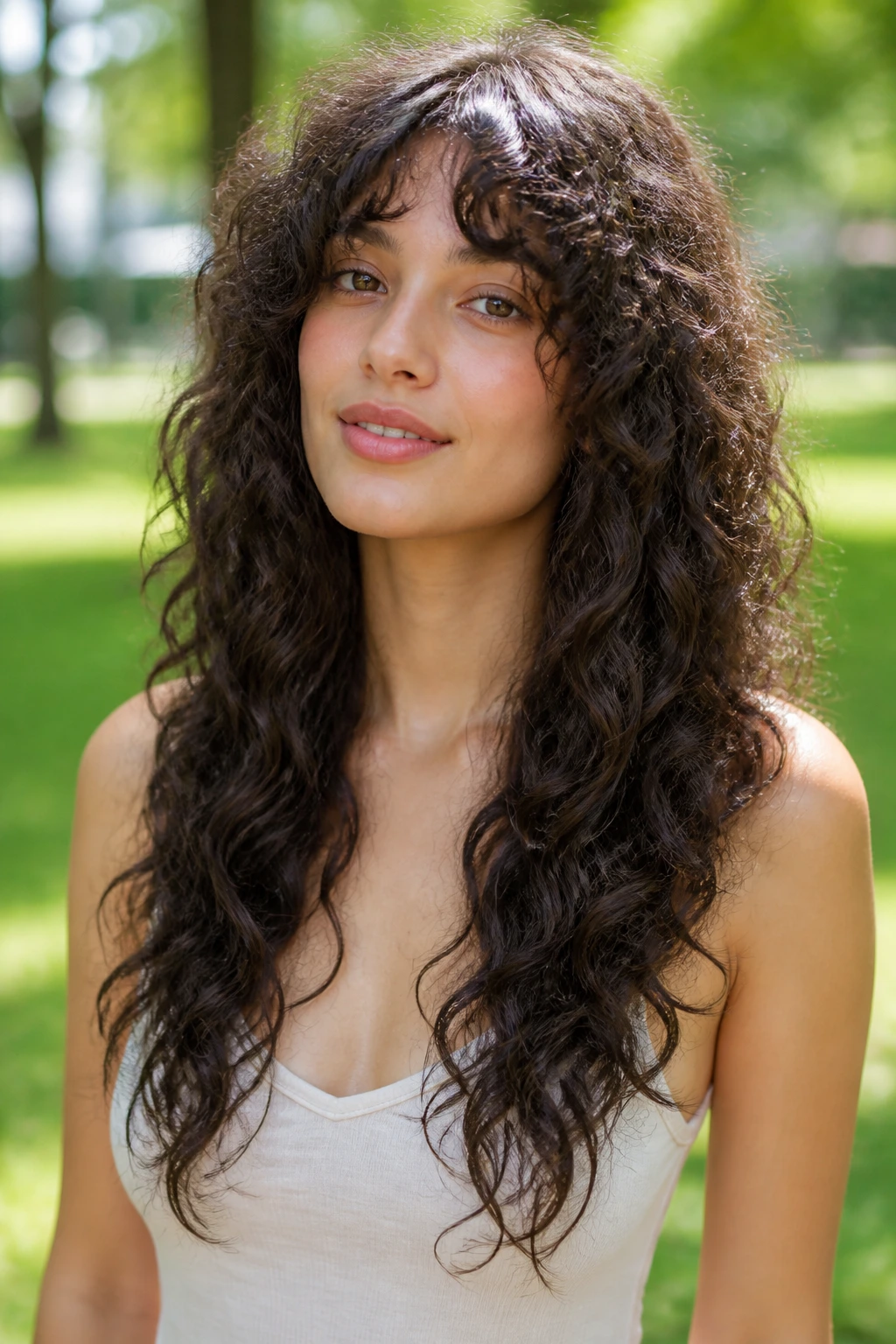
A V-cut gives long curly hair a little length at the center back while softening the sides. That diagonal line is useful on a heart-shaped face because it pulls attention downward and away from the forehead. Done badly, though, it can look pointy and outdated.
Done well, it’s all movement. The longest point should sit below the shoulders, with layers starting low enough that the top doesn’t explode into extra width. I usually like this when the curls are thick enough to hold shape but not so fine that they disappear into wisps. It’s especially good if you want to keep chest-length or waist-length hair without feeling like you’re wearing a curtain.
The warning is simple: don’t let the V get too sharp. The face is already tapered at the chin. You do not need the haircut to echo that too loudly.
5. Curly Shag with a Light Fringe
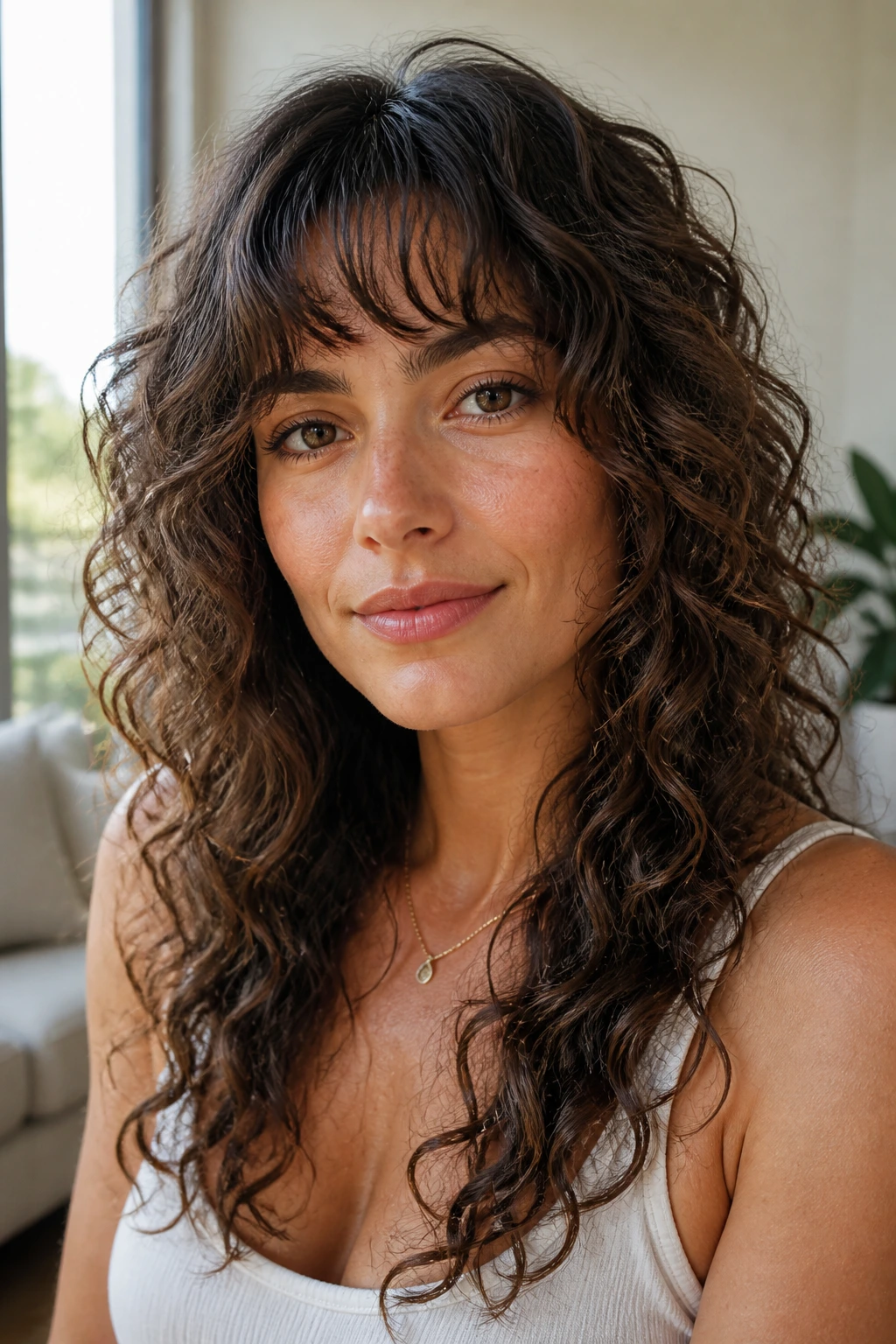
A curly shag can be magic on a heart-shaped face because it gives the top some texture without building a hard line across the forehead. The light fringe keeps the eyes busy, and the layers make the curls look airy instead of stacked.
This is not the heavy, feathered shag people remember from old salon photos. The modern curly version should feel loose and touchable, with the shortest pieces sitting around the cheekbones and the fringe staying soft enough to split when you want it to. If your hair is dense, the shag prevents the sides from turning into a wide triangle. If your hair is finer, it gives the illusion of volume without forcing it.
I like this cut on people who do not want to spend fifteen minutes sculpting every wash day. Scrunch, diffuse, leave it alone. The shape is the point.
6. U-Cut with Invisible Interior Layers
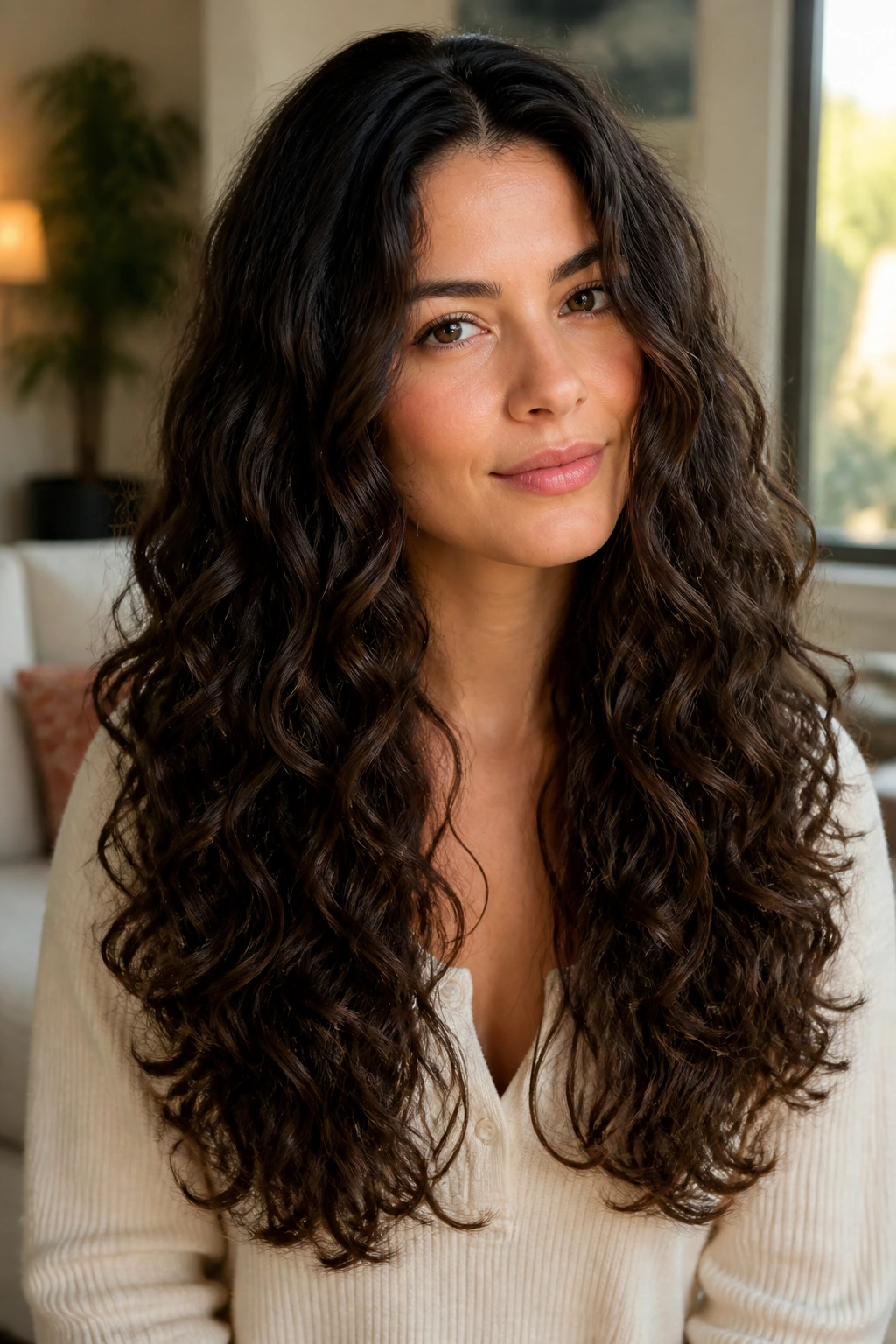
A U-shaped cut is a quiet answer, and I mean that as a compliment. It keeps the outline softer than a blunt cut, but not as pointed as a V, which makes it useful if your face already narrows quickly toward the chin. The curve at the back keeps the hair looking full and lush.
The best part is the invisible interior layers. They take weight out of the middle without leaving obvious shelves, so the curls still fall in a smooth sheet. On heart-shaped faces, that matters because you want shape, not chop marks. A U-cut gives you shape that feels expensive in the old-fashioned sense: careful, not flashy.
This is the style I suggest when someone says, “I want my hair to look long, but I don’t want it to look flat.” That’s the brief. This cut gets it.
7. Side-Swept Volume with Tucked Temple Pieces
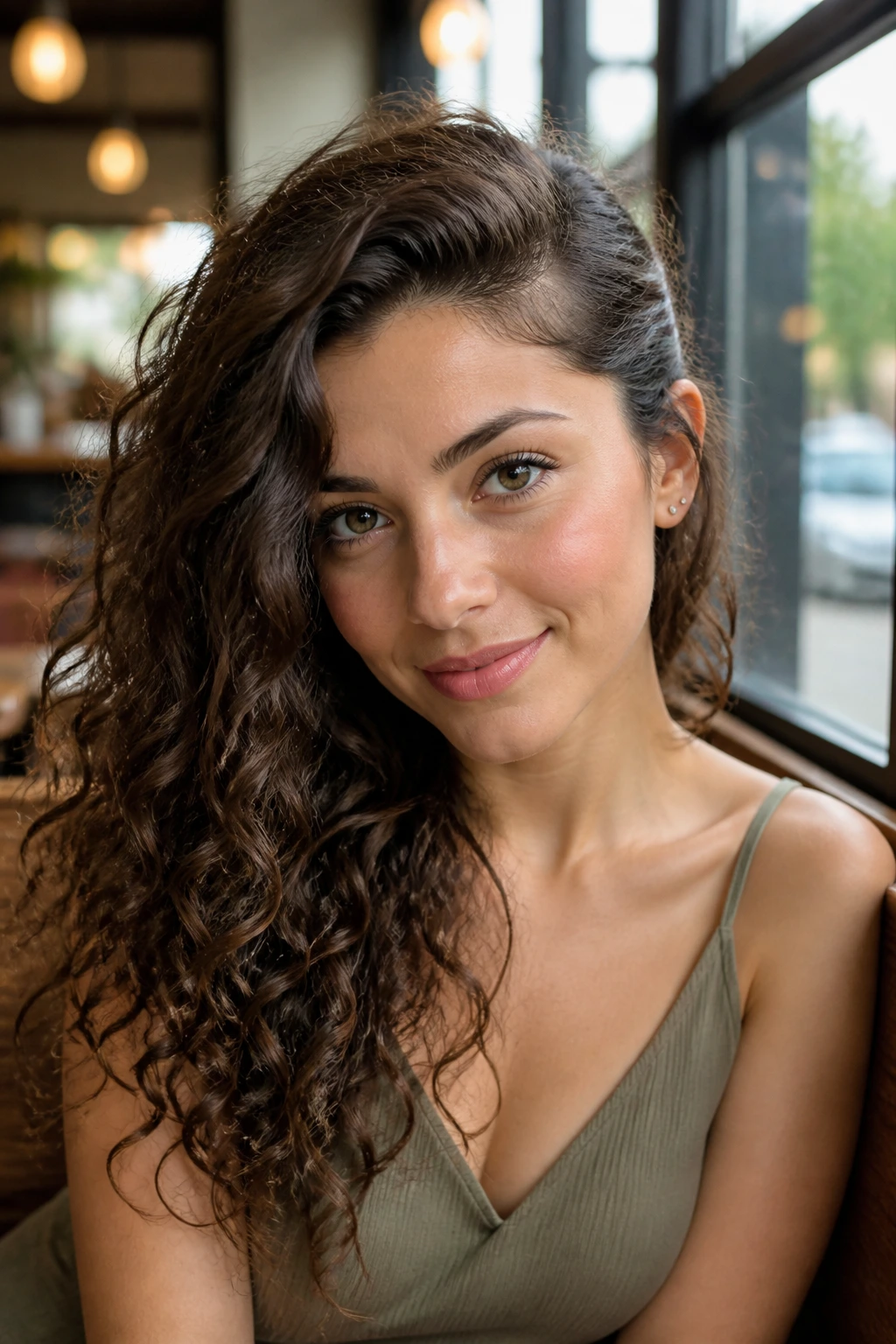
Not every flattering style has to be a haircut. Sometimes the answer is a styling move that changes the whole balance of the face in two minutes. A side-swept finish with tucked temple pieces gives a heart-shaped face softness where it needs it most and keeps the upper third from feeling too wide.
The trick is to keep the sweep loose. You’re not slicking the hair over. You’re guiding it. Let the part stay low, then clip or pin one side behind the ear while leaving a couple of ringlets forward at the temple. That tiny bit of curl movement near the face stops the style from looking severe.
This works well when the curls are freshly refreshed and still have some spring. On second- or third-day hair, a little water and leave-in on the front pieces will bring it back to life fast.
8. Bottleneck Bangs and Long Spirals
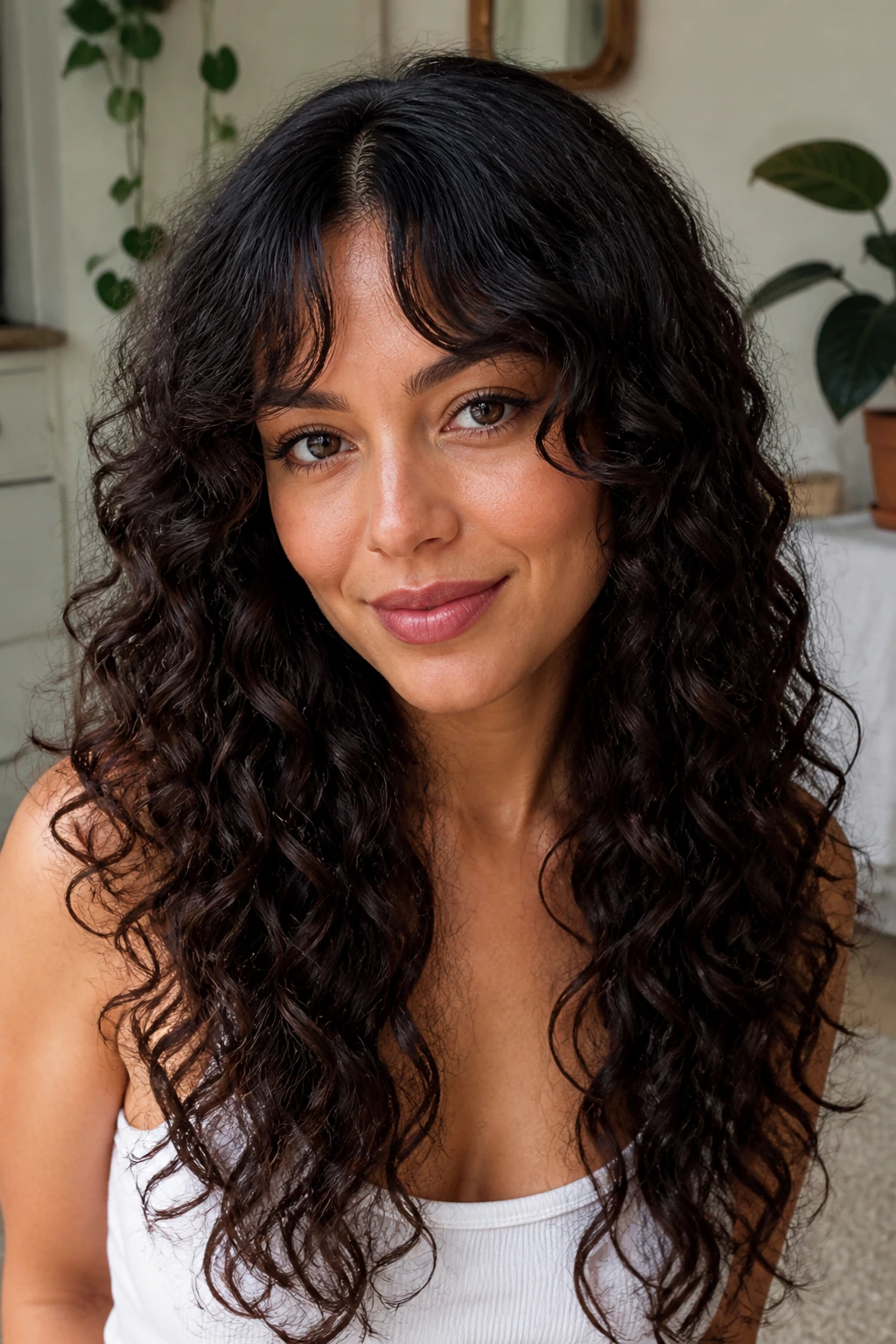
Bottleneck bangs sound fussy, but they’re one of the nicest fringe shapes for a heart-shaped face. The center is shorter and narrower, then the sides flare out and blend into the rest of the curls. That creates a soft funnel effect across the forehead instead of a blunt curtain.
On long spirals, the result is beautiful in a very practical way. The bangs give the face a focal point near the eyes, and the long sides keep the whole look grounded. I like this most on curl patterns that hold a defined bend—2C through 3B, usually—but it can work with tighter curls if the fringe is left long enough to shrink.
What to ask for
- Keep the center bang slightly longer than you think.
- Blend the sides into the first layer, not into a hard shelf.
- Cut them dry if possible, because curl shrinkage changes everything.
Small warning: bottleneck bangs need trimming more often than a face frame. They grow out fast.
9. Half-Up Crown Lift with Loose Length
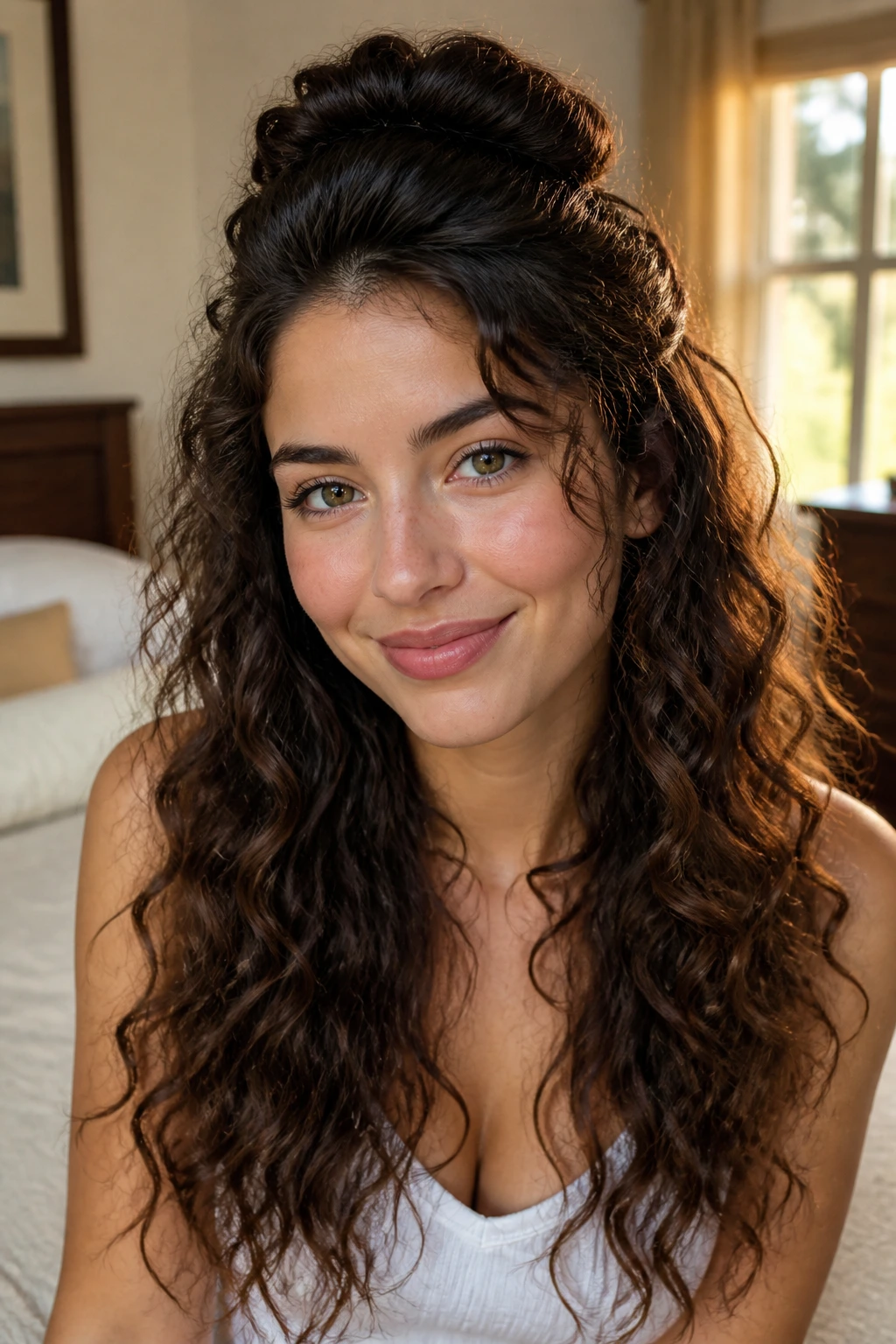
Some styles solve the forehead problem by simply getting the hair off it. A half-up crown lift does that while leaving the rest of the length in play, which is exactly why it works on heart-shaped faces. The top gets a little height, but the crown does not balloon if you keep the lift modest.
The style looks best when the top section is pulled back loosely and secured with a small clip, a scrunchie, or two bobby pins crossed underneath. Leave a few curls loose around the temples and ears. That prevents the face from reading too open and keeps the lower half from feeling empty.
I reach for this when a cut is growing out and the front pieces are behaving like they have opinions. It turns a slightly messy day into a shape on purpose.
10. Low Curly Ponytail with Soft Front Pieces
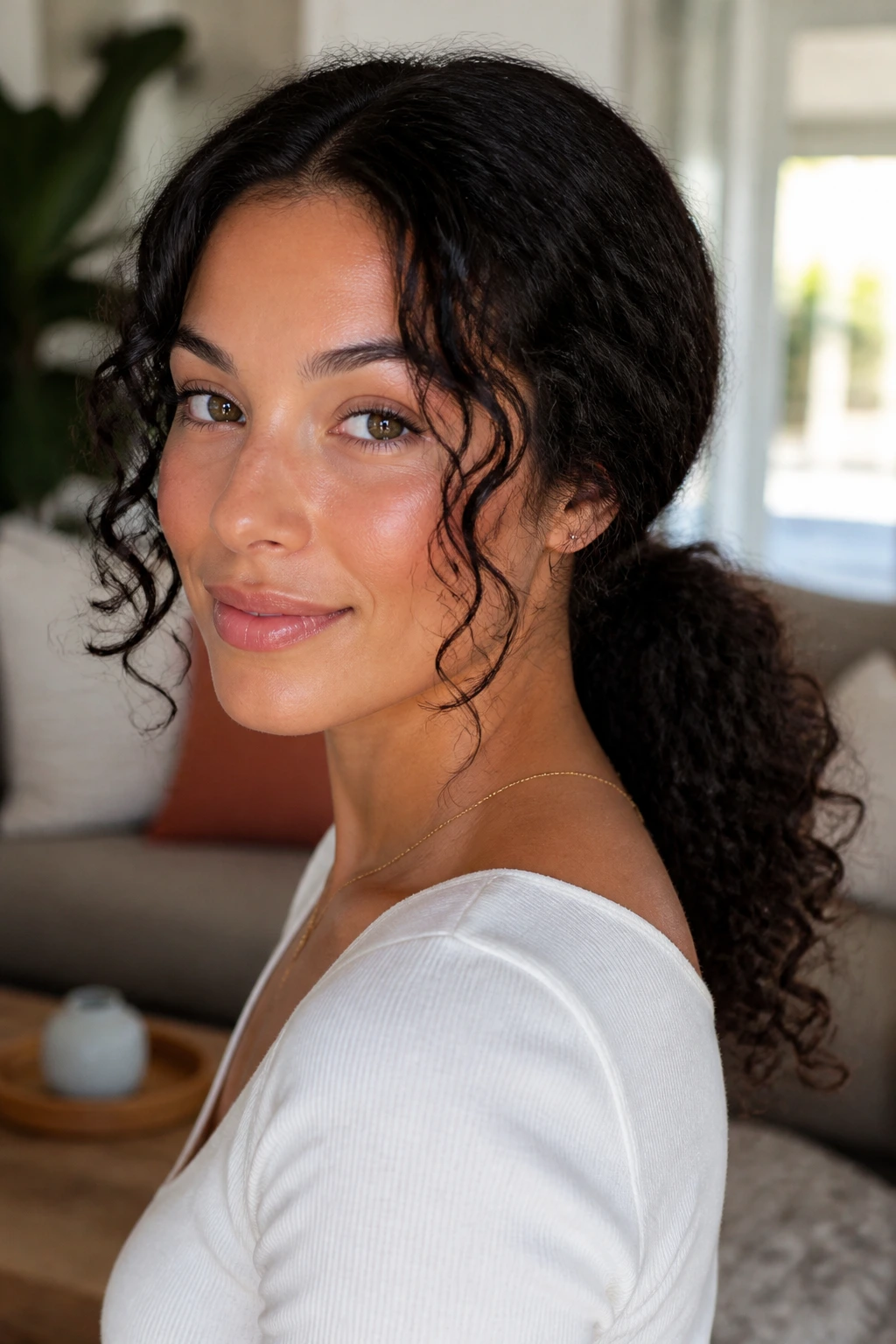
A low ponytail on curly hair can be plain in the wrong hands and elegant in the right ones. For a heart-shaped face, the low placement matters. It keeps the weight near the nape and jaw instead of lifting everything toward the forehead.
Leave two front pieces out, even if they’re short. They do more than decoration. They soften the temples, give the cheekbones some company, and stop the face from looking too pointed. If the curls at the ponytail base are dense, wrap a small section of hair around the elastic so the style looks finished instead of rushed.
This is one of those styles that pays rent. It works for errands, long workdays, and humid weather when the hair needs to stop fighting you.
11. Romantic Side Braid and Loose Ends
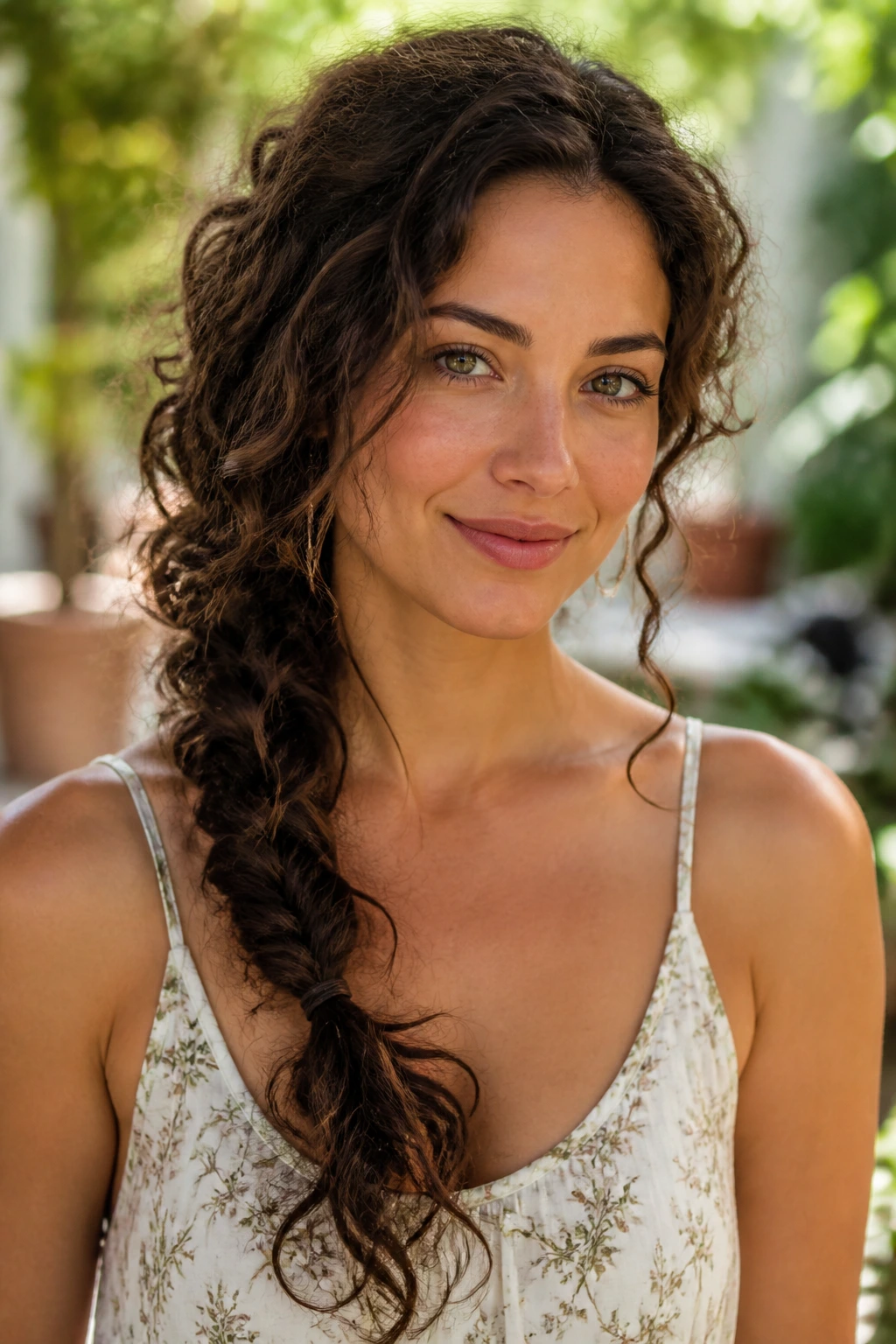
A side braid gives long curly hair a diagonal line, and diagonal lines are kind to heart-shaped faces. They move the eye away from width at the top and into the softer lower half of the face and shoulder line. A braid also tames curl volume without crushing it flat.
The braid does not need to be perfect. In fact, it should not be. A slightly loose braid with a few curls slipping out looks better than a tight one that fights the natural texture. Let the tail remain curly and imperfect. That contrast is the part that feels modern.
This style is especially nice when the hair has a little frizz or the curls have stretched out. The braid uses that texture as part of the look instead of treating it like a problem.
12. Bubble Braid on Thick Curls
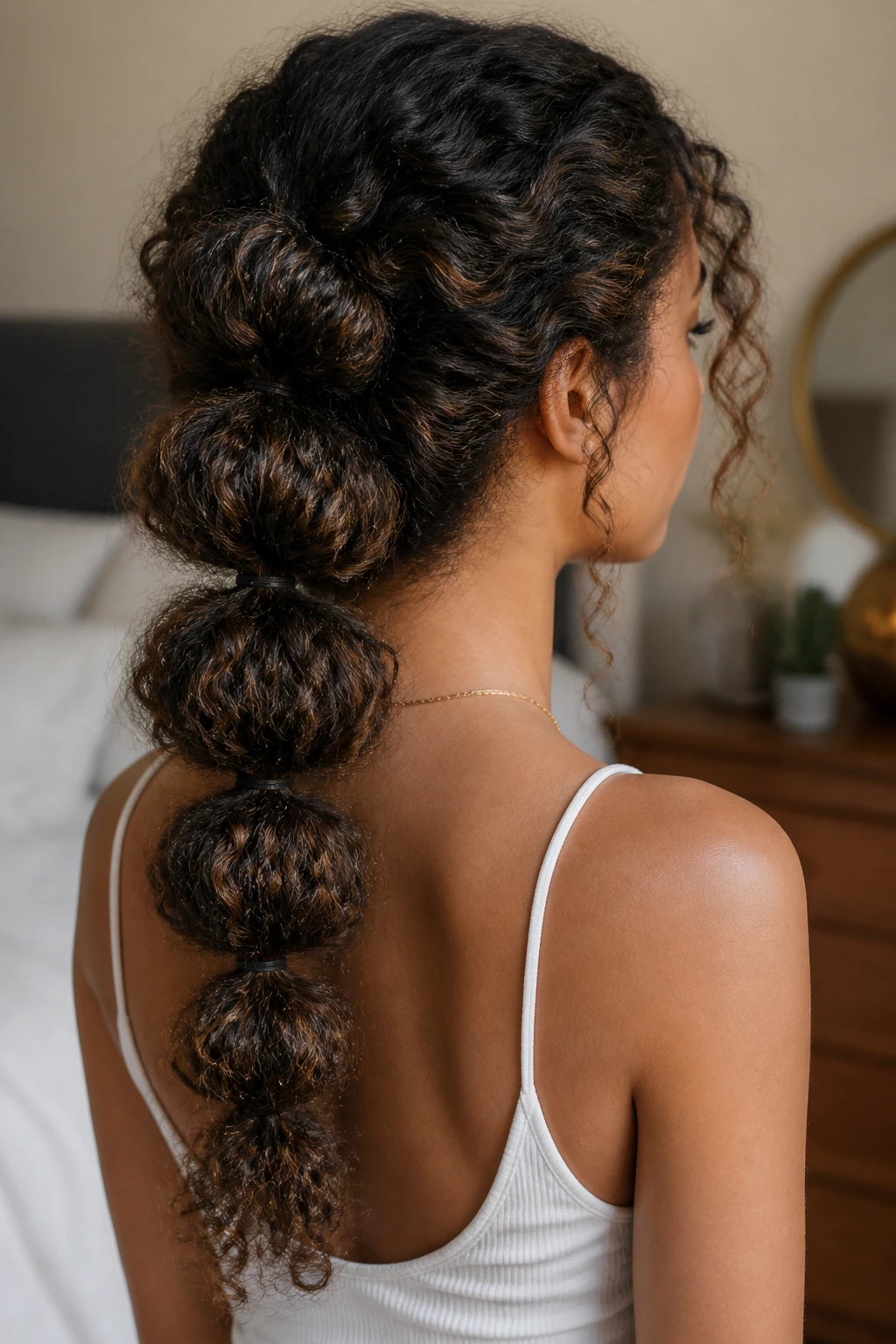
If your curls are dense, a bubble braid can be a lifesaver. It keeps length visible, controls bulk, and creates a series of rounded sections that echo the shape of the curl pattern without squashing it. On a heart-shaped face, it also shifts attention downward and away from the forehead.
Here’s what makes it different from a regular ponytail: each section is tied off every few inches with a small elastic, then gently puffed out between ties so it looks full. That spacing matters. If you set the elastics too far apart, the braid goes slack. Too close, and it loses the rounded effect.
This style is one of the few that can handle truly thick curls without turning into a heavy lump at the back of the head. It has structure. It has personality. It also survives a long day better than most styles that pretend they’re effortless.
13. Curly Pineapple with Face-Framing Tendrils
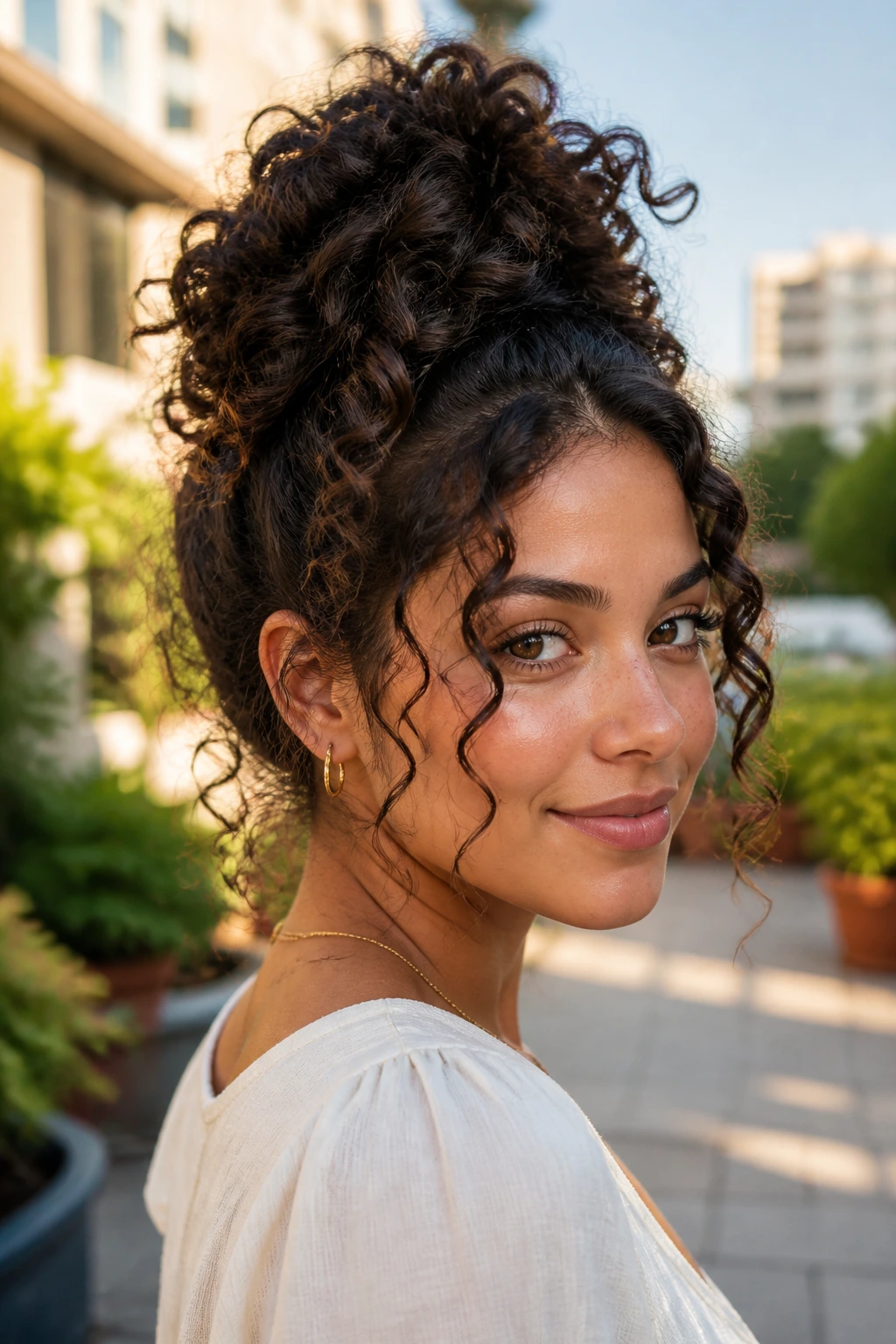
The pineapple gets used mostly as a sleep style, but it can be worn out in the world too if you’re careful with the front. For a heart-shaped face, the top knot or high gather should stay loose enough that the crown doesn’t get too tall. The real fix is the tendrils left around the face.
Those tendrils matter because they pull attention to the eyes and cheeks instead of the forehead. If your curls are coily or springy, let the front pieces fall in their natural pattern. Don’t force them straight. That is where the style starts to look accidental.
Best for
- Second-day curls that still have definition
- Hot weather when you need the neck clear
- People who like big curl volume but want the face to stay soft
It’s not the most formal shape on this list. It doesn’t have to be. Sometimes the answer is a style that gets out of the way and lets the curls breathe.
14. Mermaid-Length Waves with Long Internal Layers
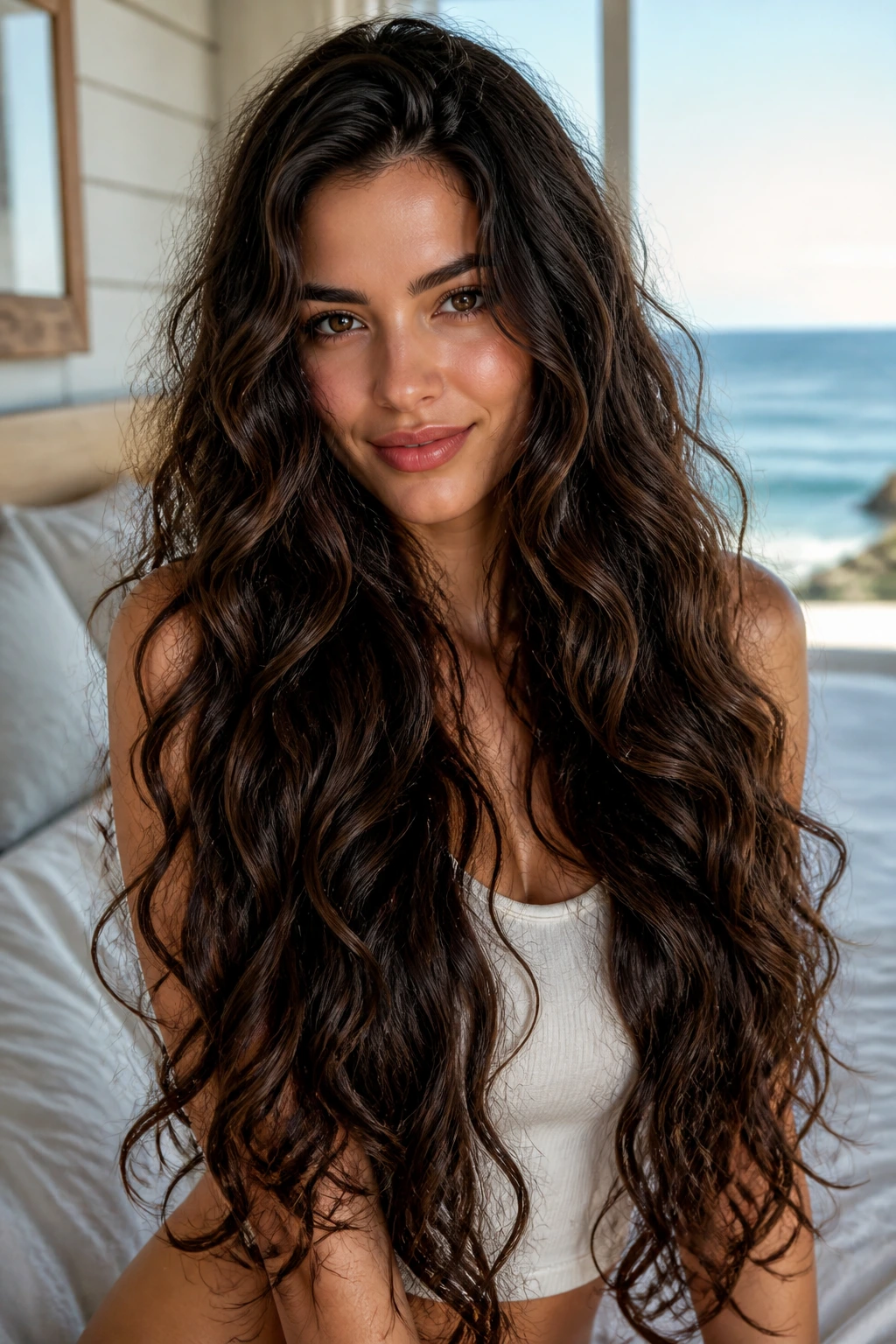
Mermaid-length curls can be gorgeous on a heart-shaped face when the layers are hidden inside the cut instead of carved into the surface. That keeps the length dramatic while stopping the ends from turning into a thick shelf.
The look works best with looser curls and wave-curl mixes, the kind that stretch into long spirals and fall over the chest. Long internal layers keep the hair moving and prevent the sides from flaring out too much at cheek level. That’s the important part. You want the width lower than the forehead, not equal to it.
This is one of the styles where shine matters. A small amount of lightweight leave-in or glossing serum on the ends gives the length a cleaner line. Too much product, though, and the hair goes limp fast. Use less than you think.
15. Long Ringlet Halo with a Center Part
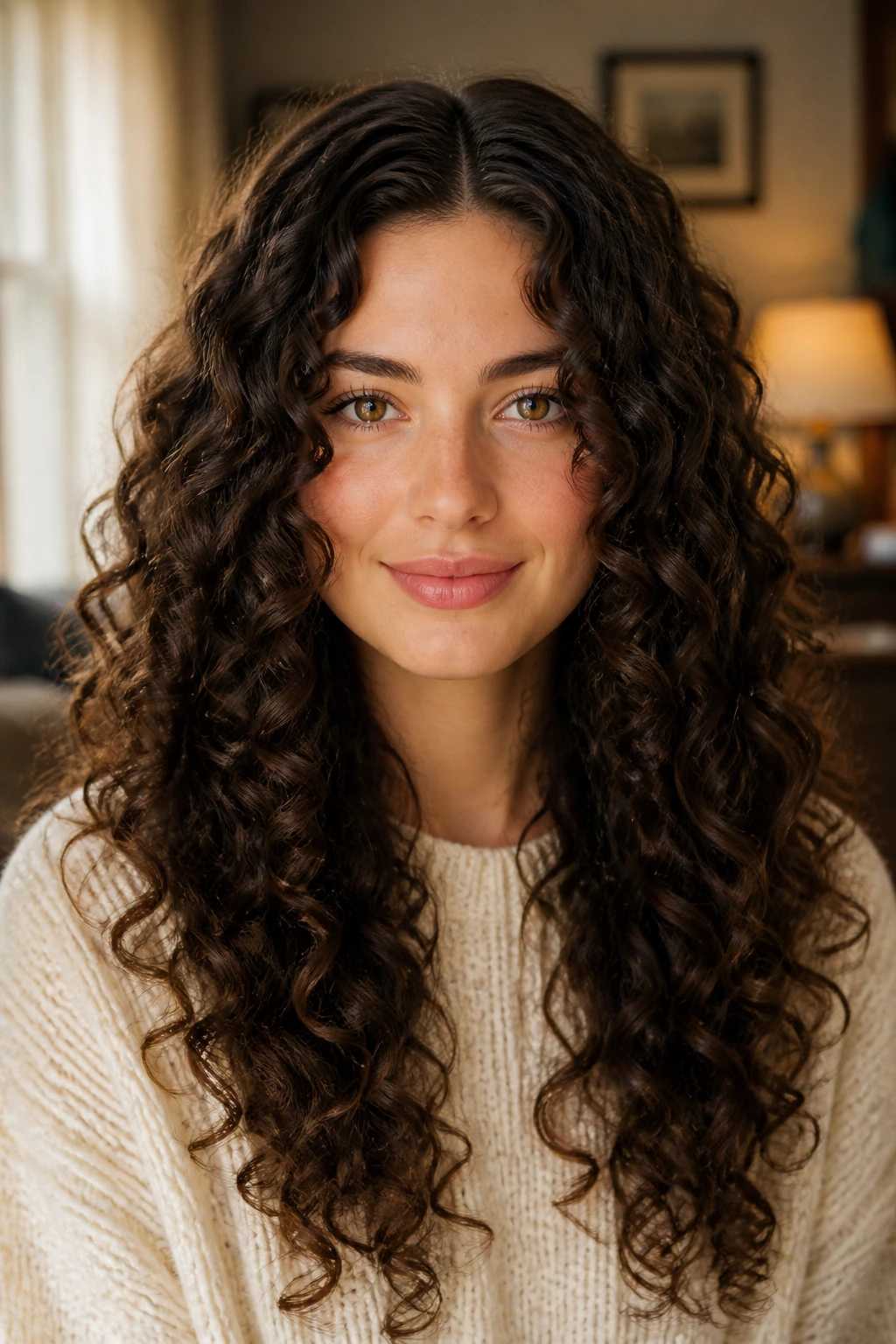
A center part gets a bad reputation on heart-shaped faces, but it can be excellent when the curls themselves provide softness. A long ringlet halo gives the face balance by creating even volume on both sides while keeping the narrow chin area from feeling exposed.
The secret is the lower length. The curls should fall past the cheekbones and keep going toward the chest, so the face doesn’t sit inside a tight circle of volume. If the front pieces are cut well, they’ll frame the forehead without drawing a hard line across it.
Why this one works
A ringlet halo is especially good for tighter curl patterns because the shape reads lush instead of fluffy. It also looks better on hair that wants to expand evenly rather than collapse at the crown.
If you like symmetry, this is your style. If you do not, skip it and move on. Heart-shaped faces can wear center parts, but they need the right curl density to support them.
16. Soft Wolf Cut for Curly Length
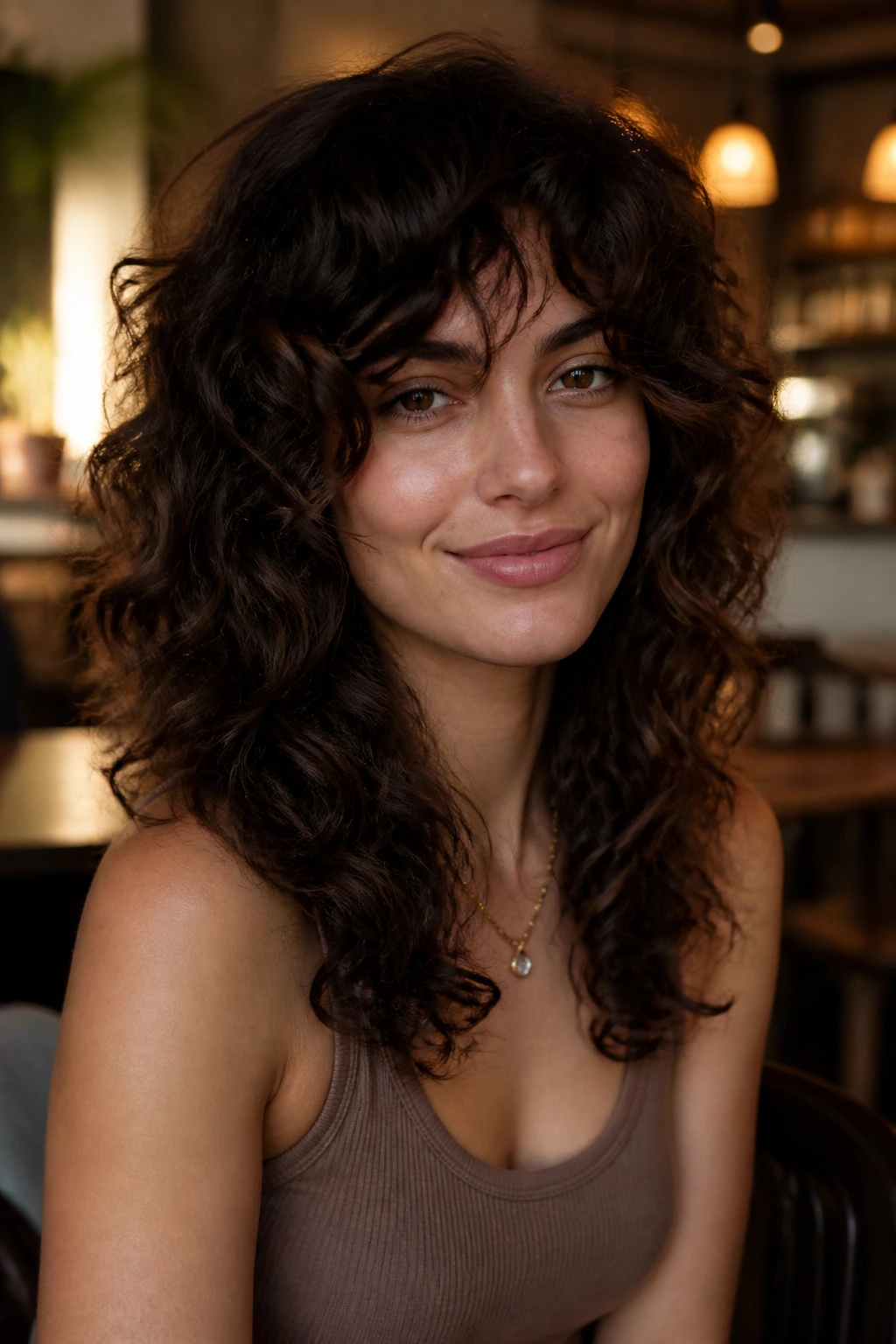
A wolf cut sounds aggressive. The soft version is much friendlier. It keeps the edgy layered movement people like, but the layers are blended enough that the hair still feels long and wearable. On a heart-shaped face, that softness matters because the top of the head already carries a lot of visual weight.
The best curly wolf cut starts with cheekbone layers and loosens as it drops down the length. That keeps the upper third light without making the ends sparse. It works well on thicker curls that can take a lot of shaping, though I’d be cautious with finer hair unless you want the texture to look more shredded.
This is a good choice if you like a little attitude in your haircut. Not every face needs romance and curtain bangs. Sometimes a curl cut should have a little teeth.
17. Tapered Ends with Floating Layers
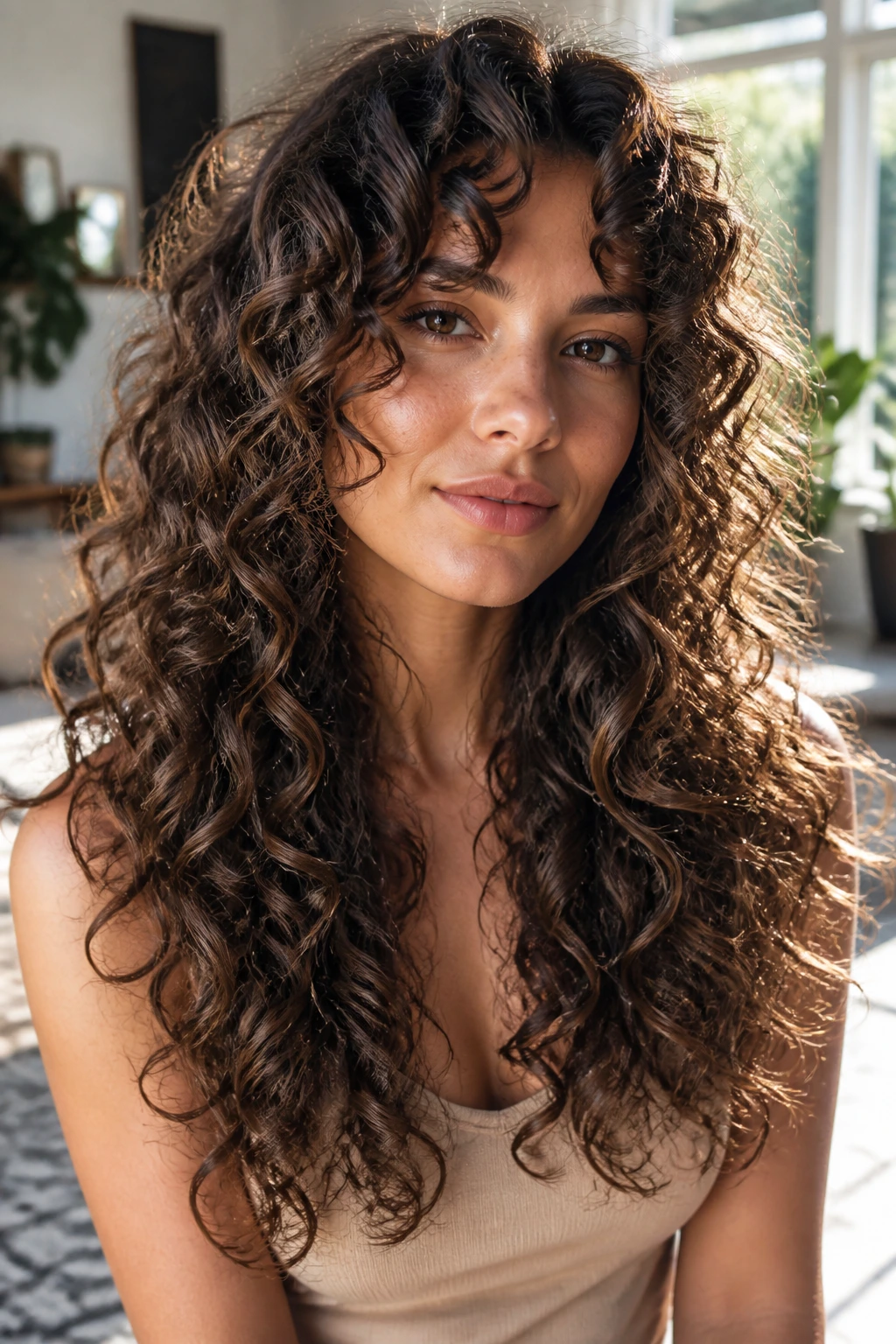
Tapered ends are one of the most underappreciated ways to keep long curly hair from looking bottom-heavy. Instead of a blunt edge, the hair narrows gently at the ends, which stops the silhouette from turning into a box. On a heart-shaped face, that taper helps the lower half feel more open and less crowded.
Floating layers are the companion piece. They sit inside the cut and move with the curls without announcing themselves every time you turn your head. That gives the shape life. A cut like this can look casual, but it needs careful handling. If the taper is too aggressive, the ends look wispy. Too little, and the bulk sits exactly where you don’t want it.
This is one of those haircuts that improves the overall head shape rather than drawing attention to itself. I’m a fan of that.
18. Side Bang Sweep Past the Cheekbone
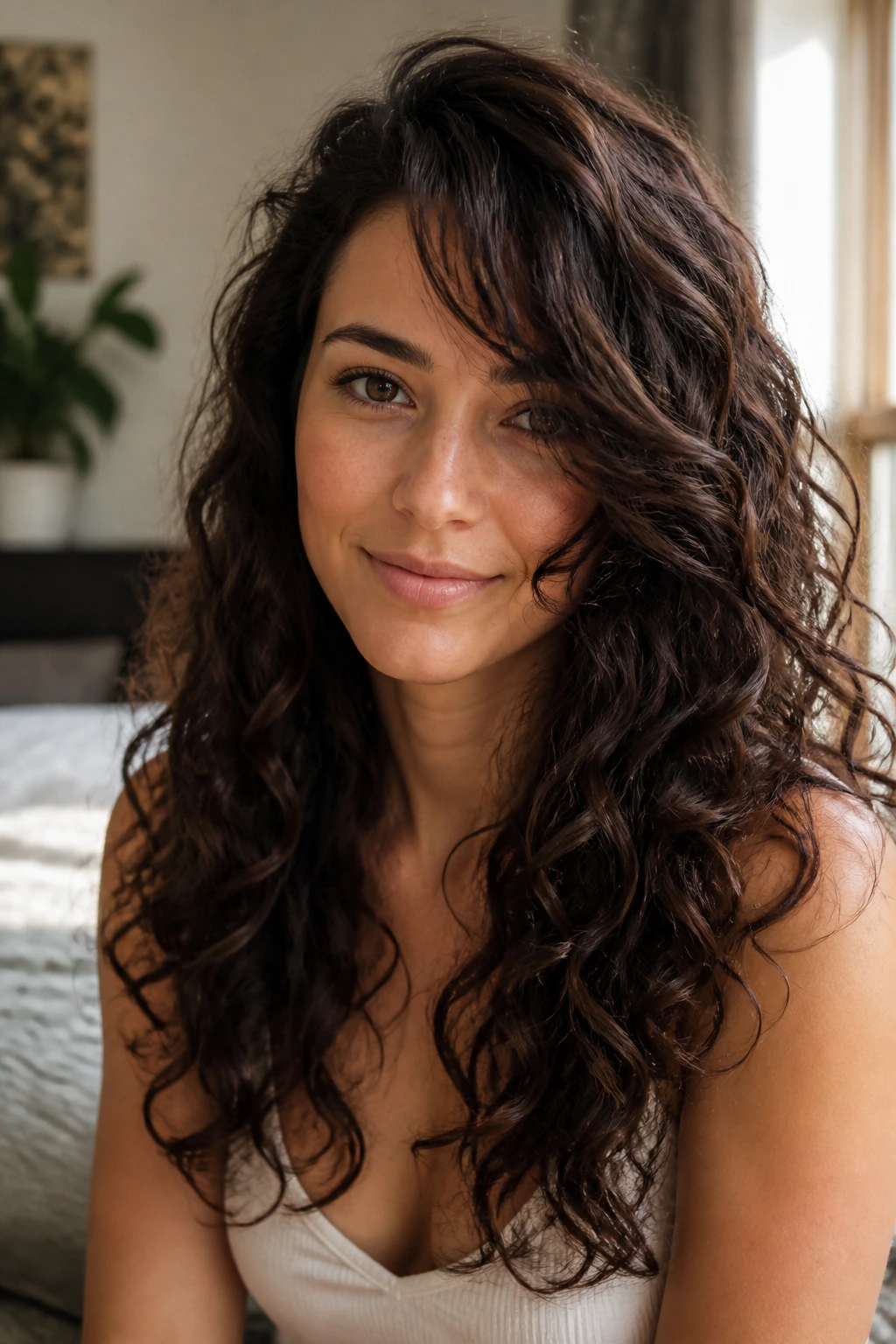
A long side bang sweeping past the cheekbone is the easiest way to soften a broad forehead without committing to full bangs. The bang creates a diagonal line that flatters heart-shaped faces almost on instinct, because it cuts across the width instead of echoing it.
The important part is length. The bang should not stop right at the brow if you want it to blend naturally into curly hair. Leave it long enough to tuck, twist, or let fall across one eye when the mood hits. That flexibility matters on a style this lived-in.
It pairs well with long layers, but it can also rescue a plain one-length cut by giving it shape at the front. Small change. Big payoff.
19. Braided Crown with Loose Back Curls
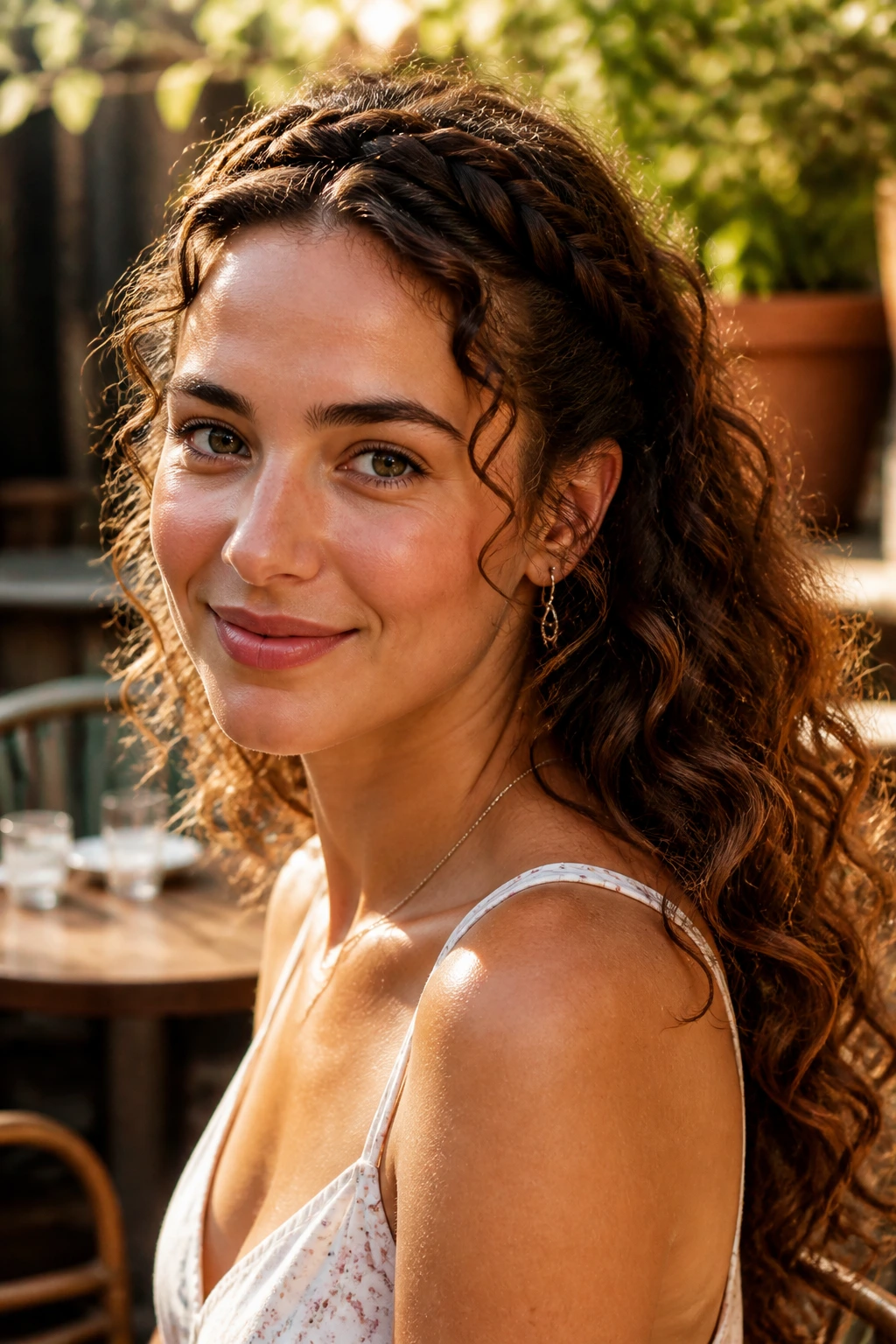
A braided crown is the kind of style that looks more complicated than it is. You braid or twist sections around the hairline, then leave the length down in curls. The braid keeps attention near the top edges of the head, while the loose curls underneath keep the shape from getting too severe.
For a heart-shaped face, I like this because it frames the forehead without crowding it. The braid acts like a soft border. The curls below add weight where the face needs it. It’s a balanced structure, and that’s the whole game.
This is a strong choice for dressy days, outdoor events, or any time you want the hair to feel finished without pinning everything up. It also photographs well in person, which is rare enough that I’m happy to say it out loud.
20. Twisted Half-Up Knot and Open Length
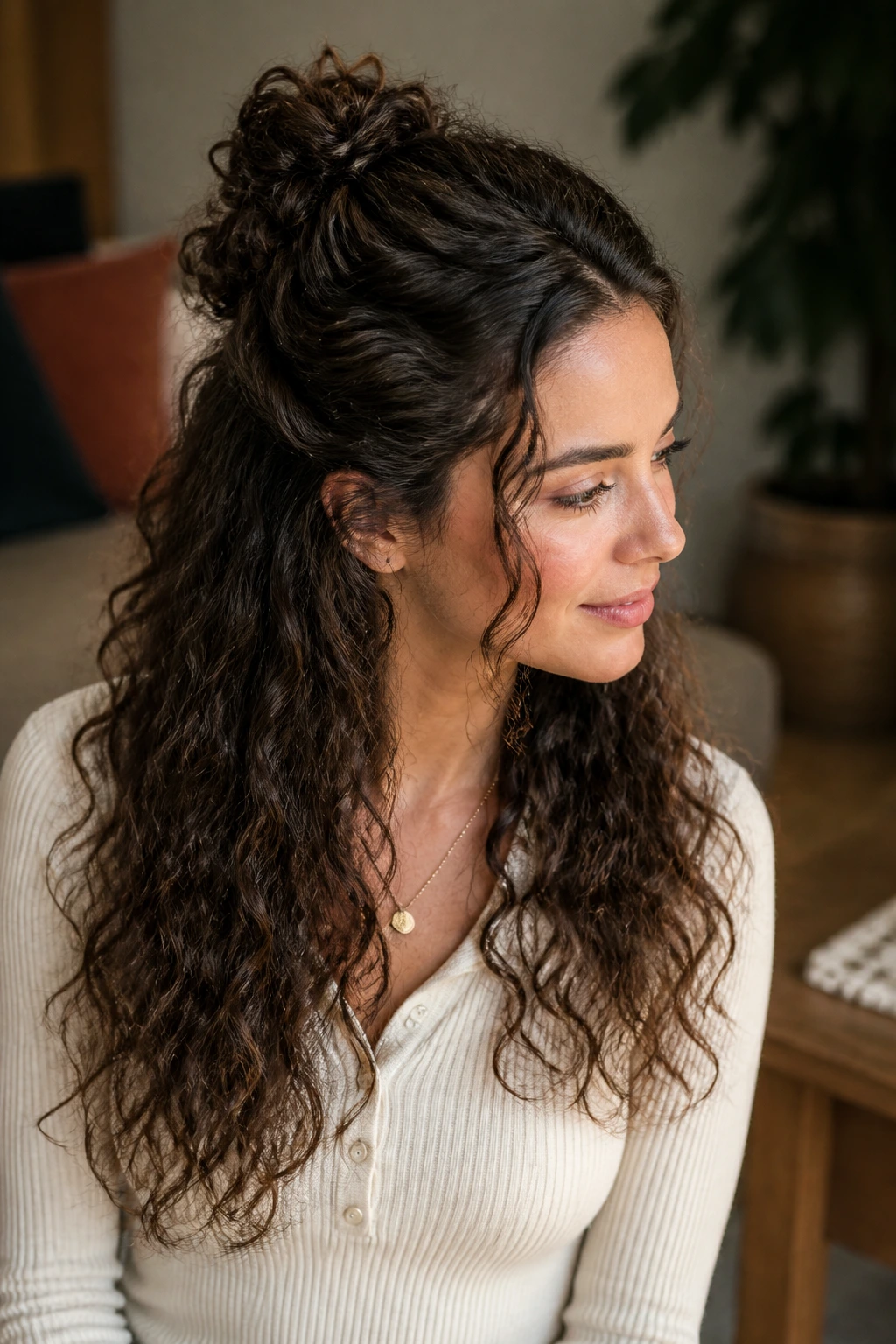
The twisted half-up knot lives in the same family as the half-up crown lift, but it’s a little more playful. Two front sections twist back and meet at the crown, then the rest of the curls stay loose. On a heart-shaped face, the knot pulls the eye upward just enough while the open length keeps the lower face from disappearing.
The style works best when the front pieces are left soft. If you twist them too tightly, the forehead becomes the center of attention. That is the opposite of what you want. Keep the twists loose, then let a few curls escape around the temples and ears.
This is a quick fix for days when your curls are fresh but not perfect. It looks deliberate even when you did it in a hurry.
21. One-Shoulder Curly Sweep
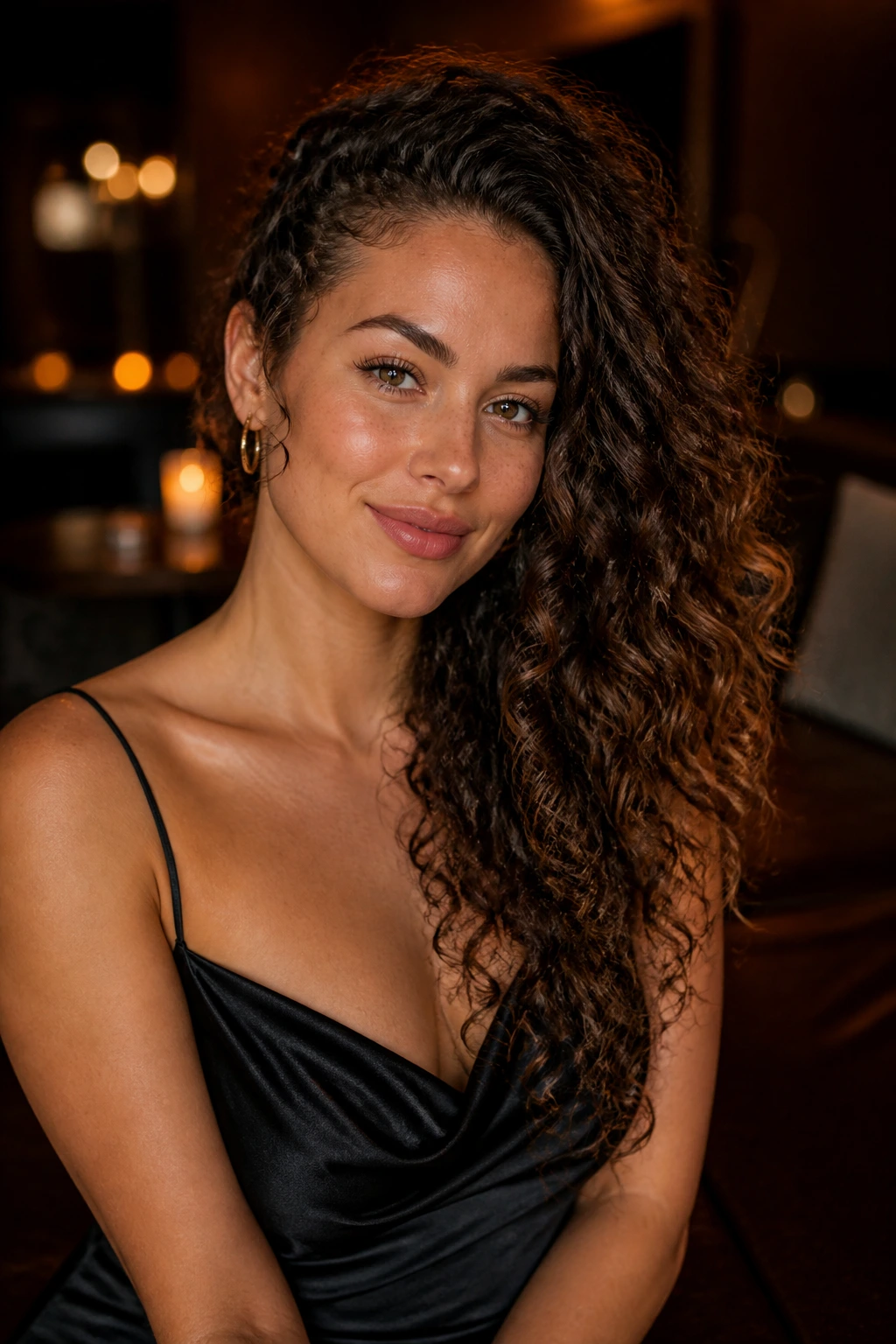
A one-shoulder sweep is simple, but it does a lot of work. By moving the mass of the curls to one side, you create a diagonal shape across the body and face. That diagonal line takes pressure off the forehead and draws the eye to the lower half of the silhouette.
It’s especially good for long hair that has a bit of bounce at the ends. The curls pile over one shoulder, the front stays open on the other side, and the whole look reads softer than a straight-down curtain. I like this for evenings because it gives the hair a purpose without turning it into a formal updo.
A couple of hidden pins at the nape can keep the sweep in place. That little trick keeps the style from sliding back to center.
22. Long Layers Starting at the Cheekbone
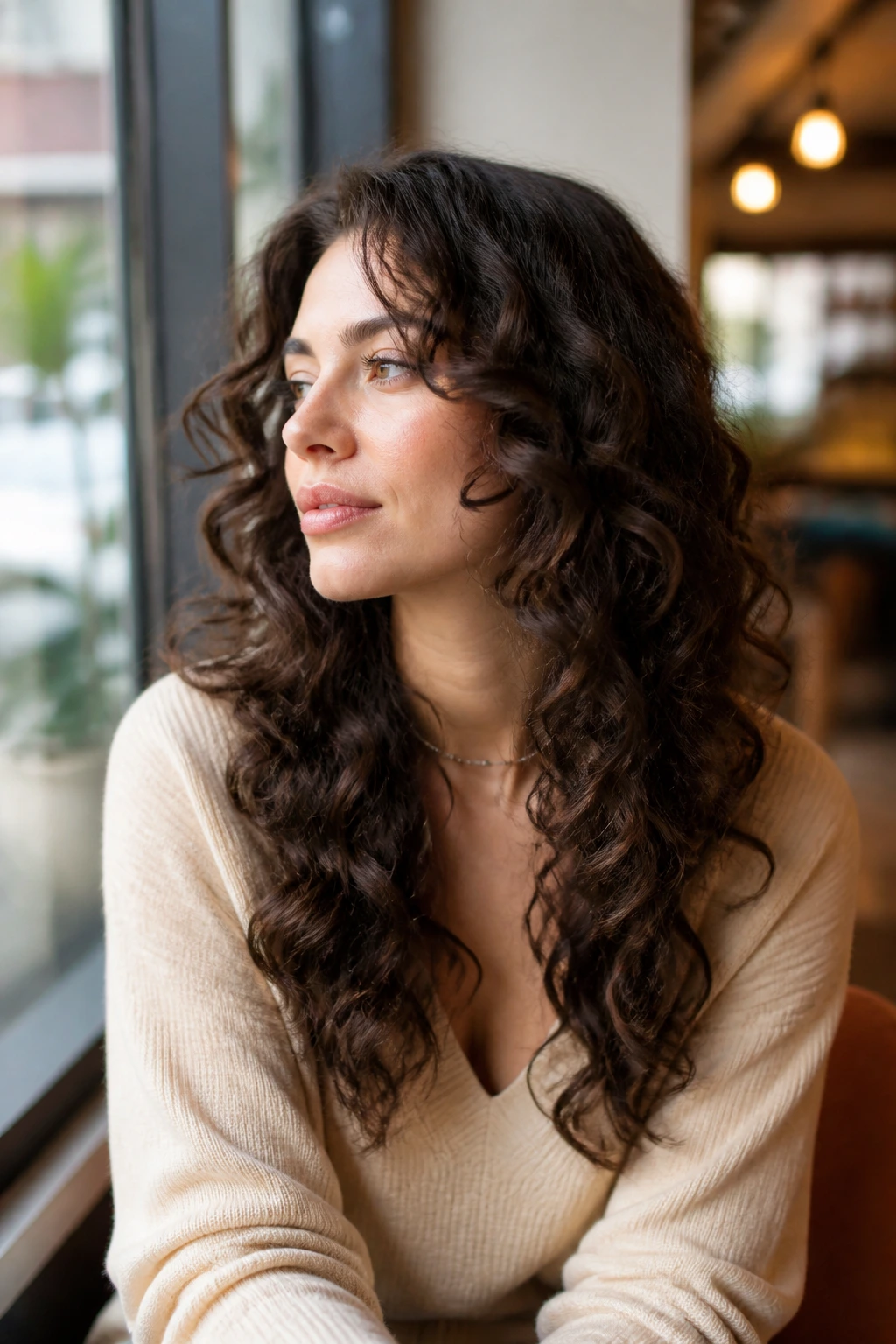
If you want a haircut rather than a style, this is one of the smartest places to start. Cheekbone-length layers are high enough to frame the face, but not so high that they blow up the forehead area. For heart-shaped faces, that exact placement is money.
The layers should be visible when the hair moves, not hacked into the surface. Think of them as paths for the curls to follow. They help the front pieces fall around the face, and they give the lower length enough breathing room that it doesn’t turn bulky.
Best fit
- Medium to thick curls that need movement
- People who wear their hair down most days
- Anyone who wants face framing without bangs
I like this cut because it’s practical. It solves a shape problem without making a style statement that gets old fast.
23. Defined Spiral Set with Air-Dried Finish
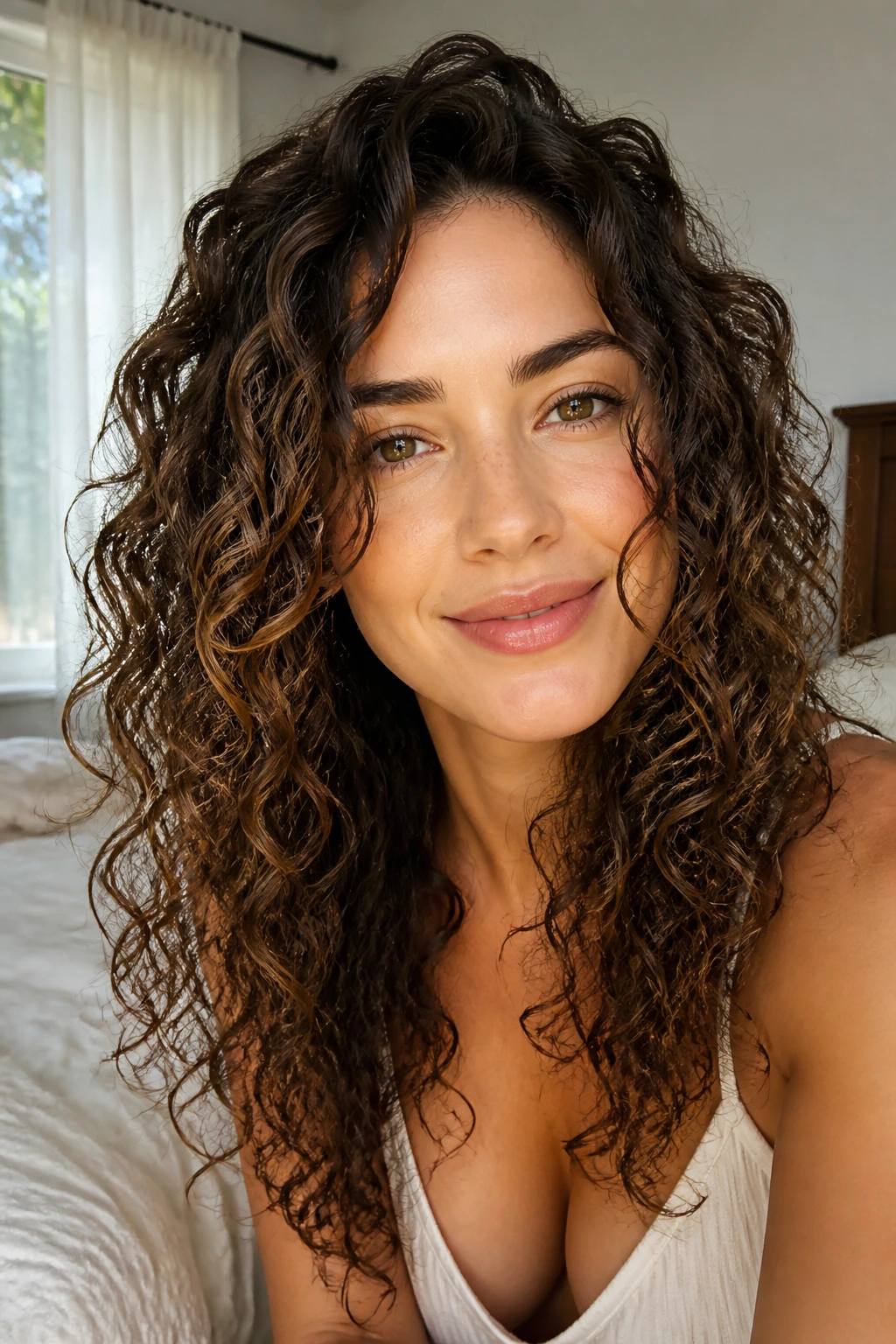
A defined spiral set looks polished because the curls clump on purpose. On a heart-shaped face, that definition helps the style read clean instead of fuzzy, which keeps the focus on the face rather than on the width of the hair mass.
The air-dried finish matters here. You can diffuse if your curl pattern needs help, but letting the hair dry slowly after you’ve applied gel or mousse often gives cleaner spirals. The roots should stay lifted enough to avoid a flat helmet effect, while the ends keep their shape. If the product cast feels crunchy, scrunch it out once the hair is fully dry.
This style is one of the best for people who like seeing the curl pattern in full detail. It does not hide much. That’s the point.
24. Stretch-and-Curl Shape for Extra Length
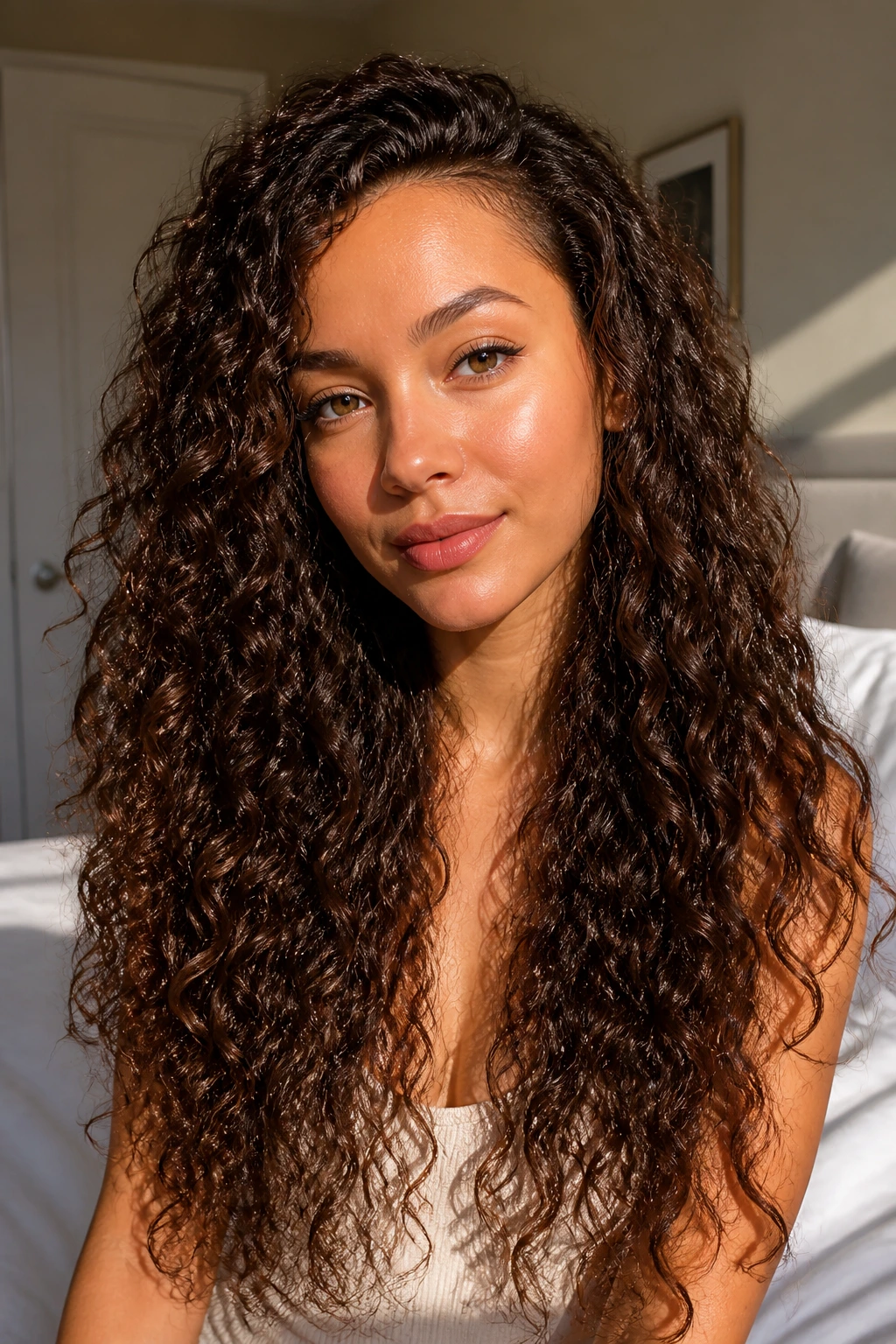
What if you love your curls, but you want to see more of the length? A stretch-and-curl approach solves that without forcing the hair straight. Banding, twisting, or gently stretching the curls while they dry can give you a longer-looking silhouette, which is useful on a heart-shaped face because it keeps the proportions from bunching at the top.
The trick is not to overdo it. A little stretch is enough. Too much and the hair loses the texture that makes it interesting in the first place. You want the curls to keep their bend, just with less shrinkage at the root and crown.
This is one of my favorite choices for people who feel like their curls disappear the second the wash is done. They don’t disappear. They just need a little coaxing.
25. Sleek Crown, Full Ends, and a Deep Side Sweep
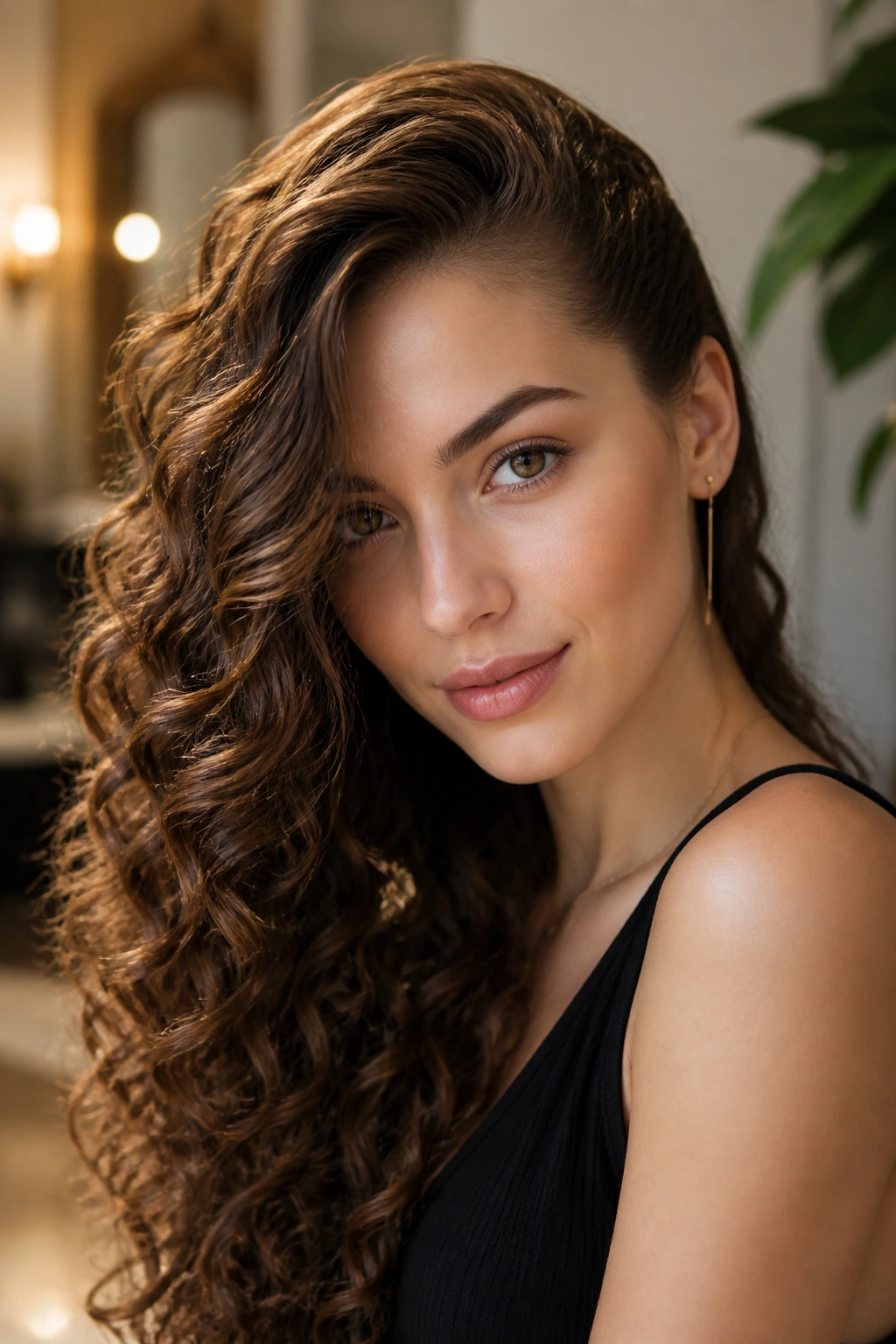
This one is all about contrast. Smooth the crown so the top stays close to the head, then let the ends stay full and curly with a deep side sweep across the forehead. On a heart-shaped face, that combination is sharp in a good way: the crown does not add extra width, and the ends keep the face from tapering too hard.
It works especially well for formal events or any day when you want long curly hair to feel controlled without being stiff. A light smoothing cream or gel on the roots keeps flyaways down, but the ends should stay touchable. That split between polished top and fuller bottom is what gives the style its strength.
If you’ve been fighting your curls for years, this is the style that makes peace with them. Not surrender. Peace.
What a Good Curl-Friendly Cut Needs from the Start
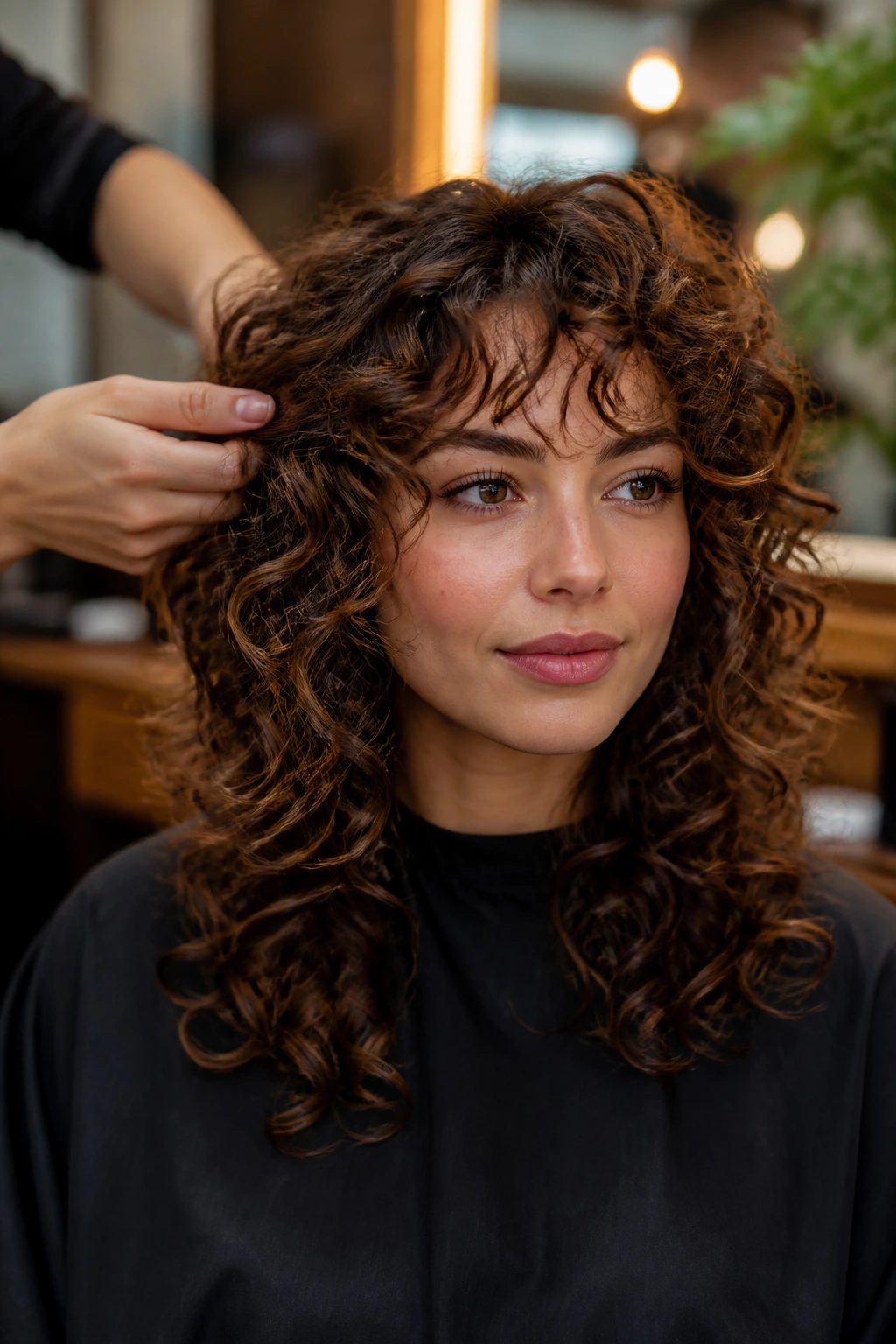
A flattering style starts before the first snip. Curly hair changes shape as it dries, and on a heart-shaped face that matters even more because the whole point is to place volume in the right places. The wrong cut doesn’t just look a little off. It changes the proportions of the face.
The biggest mistake I see is people cutting curly hair as if it were straight hair with a memory problem. It isn’t. A dry cut or curl-by-curl approach lets the stylist see where the hair actually lands, where it stacks at the temples, and where the chin needs more balance. If your hair is dense, interior layers are often more useful than a dramatic surface layer because they control shape without exposing every mistake.
Shrinkage deserves a real conversation too. Some curl patterns bounce up 2 inches. Some jump 4 or more. That is not a small detail. If the shortest pieces are cut too high, the forehead area can end up looking crowded once the curls dry. The safest move is to cut a little longer than you think, then refine after the hair falls into its natural pattern.
Essential Tools for These Styles
-
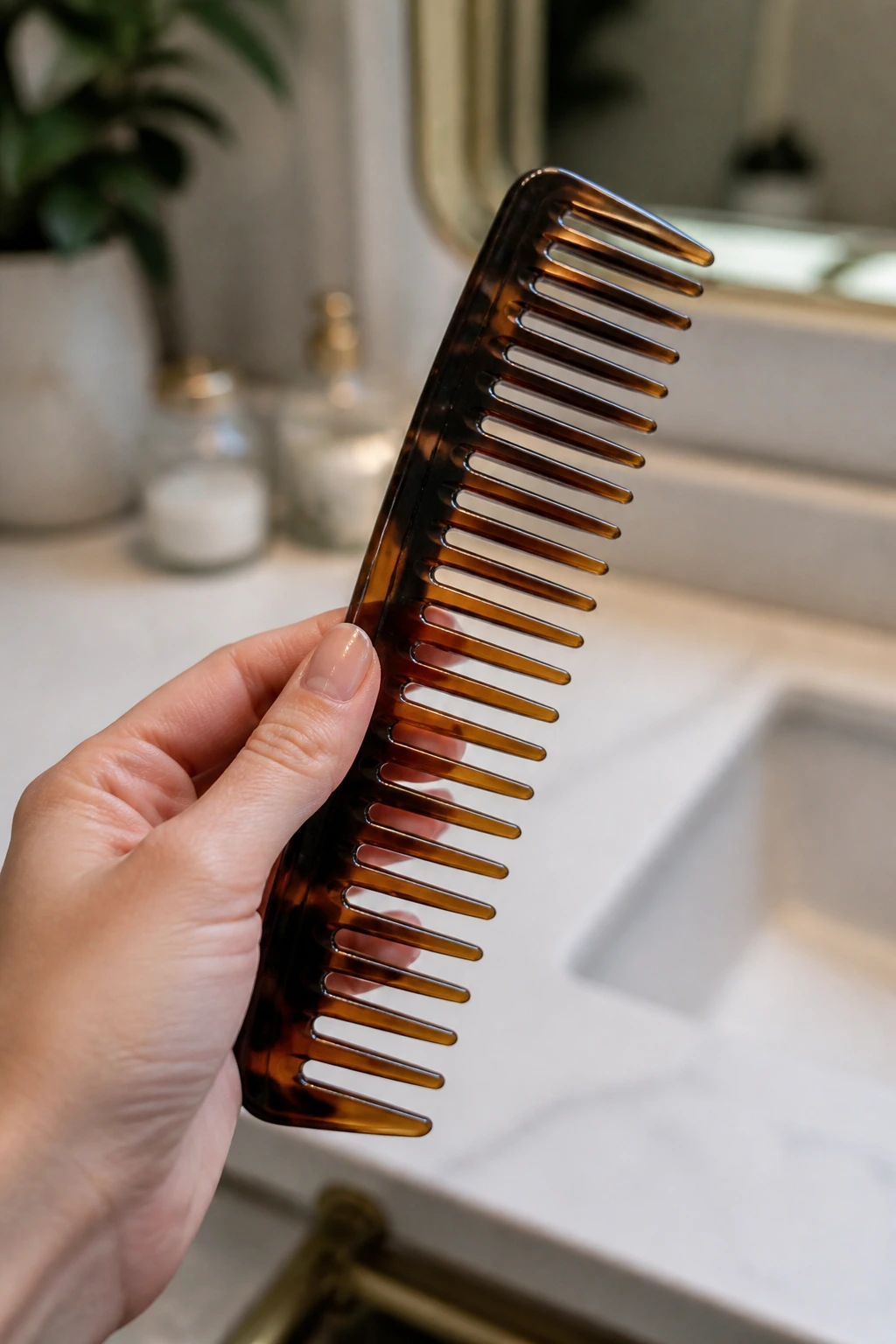
Wide-tooth comb: Detangles wet curls without ripping apart the curl clumps that give these styles their shape.
-
Microfiber towel or cotton T-shirt: Cuts down on frizz when you blot water out of the hair after washing.
-
Diffuser attachment: Helps set the crown and front pieces without blasting them flat under one hot stream of air.
-
Sectioning clips: Useful for parting, pinning, and setting half-up looks without breaking up the curl pattern.
-
Small snag-free elastics: Keep ponytails, bubble braids, and half-up styles secure without snapping the hair.
-
Light leave-in conditioner: Softens the front pieces and helps bangs or face-framing layers stay defined.
-
Gel or mousse with hold: Keeps the curl shape from collapsing at the crown and helps styles last longer.
-
Silk or satin pillowcase: Reduces friction overnight so the front pieces and ends don’t wake up bent in weird directions.
How to Style Long Hairstyles for Curly Hair Without Flattening the Crown
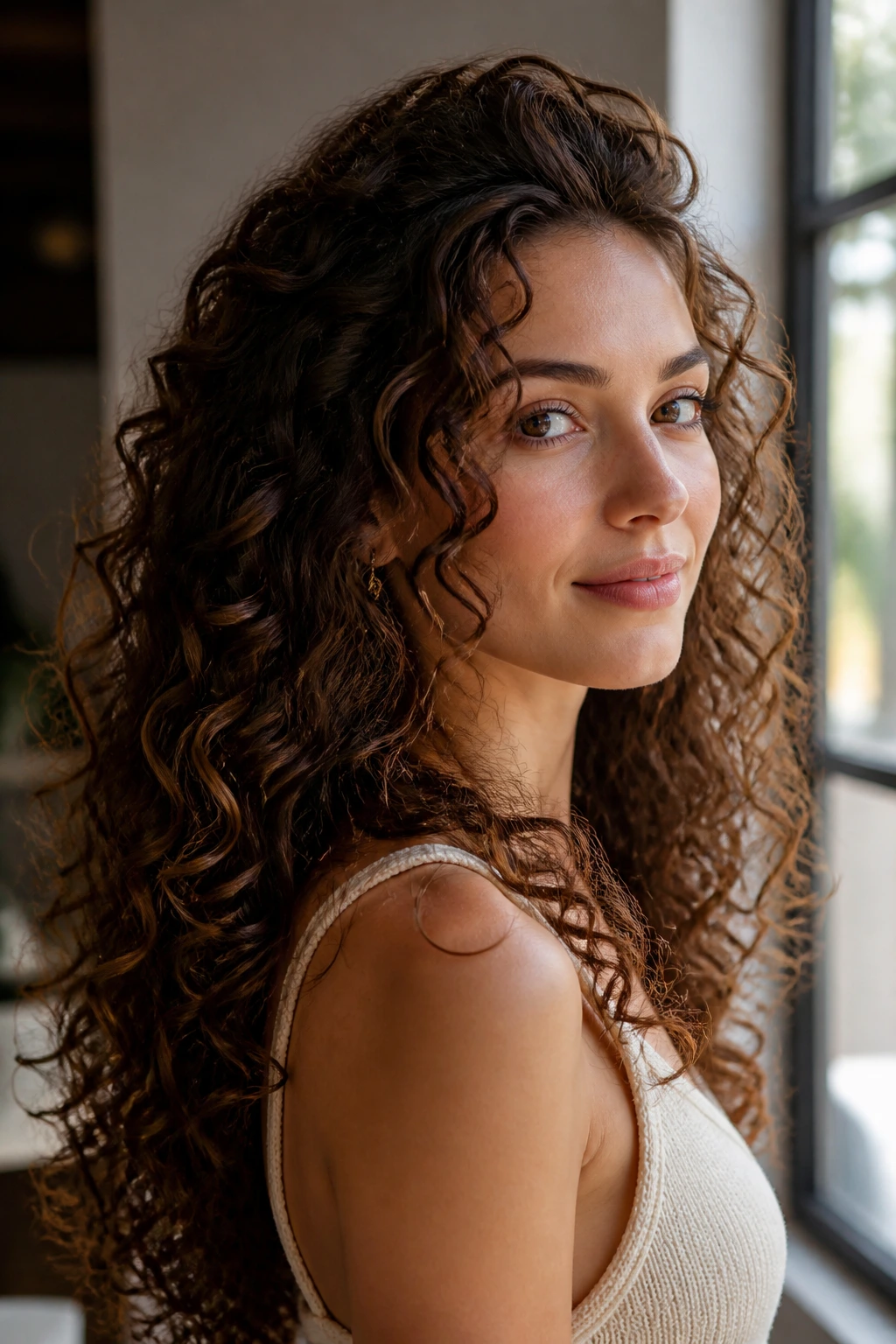
Parting:
Choose the part based on where your face needs the least width. A soft off-center part is the easiest win for heart-shaped faces because it breaks the forehead line without forcing a severe asymmetry. If a center part works for you, keep the curls full and soft around the cheeks so the shape doesn’t go too straight down the middle.
Root Lift:
Put lift at the crown only when the style needs it. A little clip at the roots while the hair dries can help, but a giant puff on top is the wrong move for this face shape. You want height to be subtle, not architectural.
Fringe and Face Frame:
Keep bangs or front pieces longer than your first instinct. Curly hair retracts when it dries, and a short fringe can turn into a tiny fringe very fast. Let the front pieces sit around the cheekbone, brow, or jaw depending on the style.
Finish:
Use enough hold to preserve the outline, but not so much that the curls get stiff and helmet-like. The best finish still moves when you turn your head.
Refresh:
A fine mist of water, a dab of leave-in, and a light scrunch can wake up day-two curls in under five minutes. If the front is the only part that looks tired, refresh just the front. No need to soak the whole head.
Smart Salon Notes for Heart-Shaped Faces
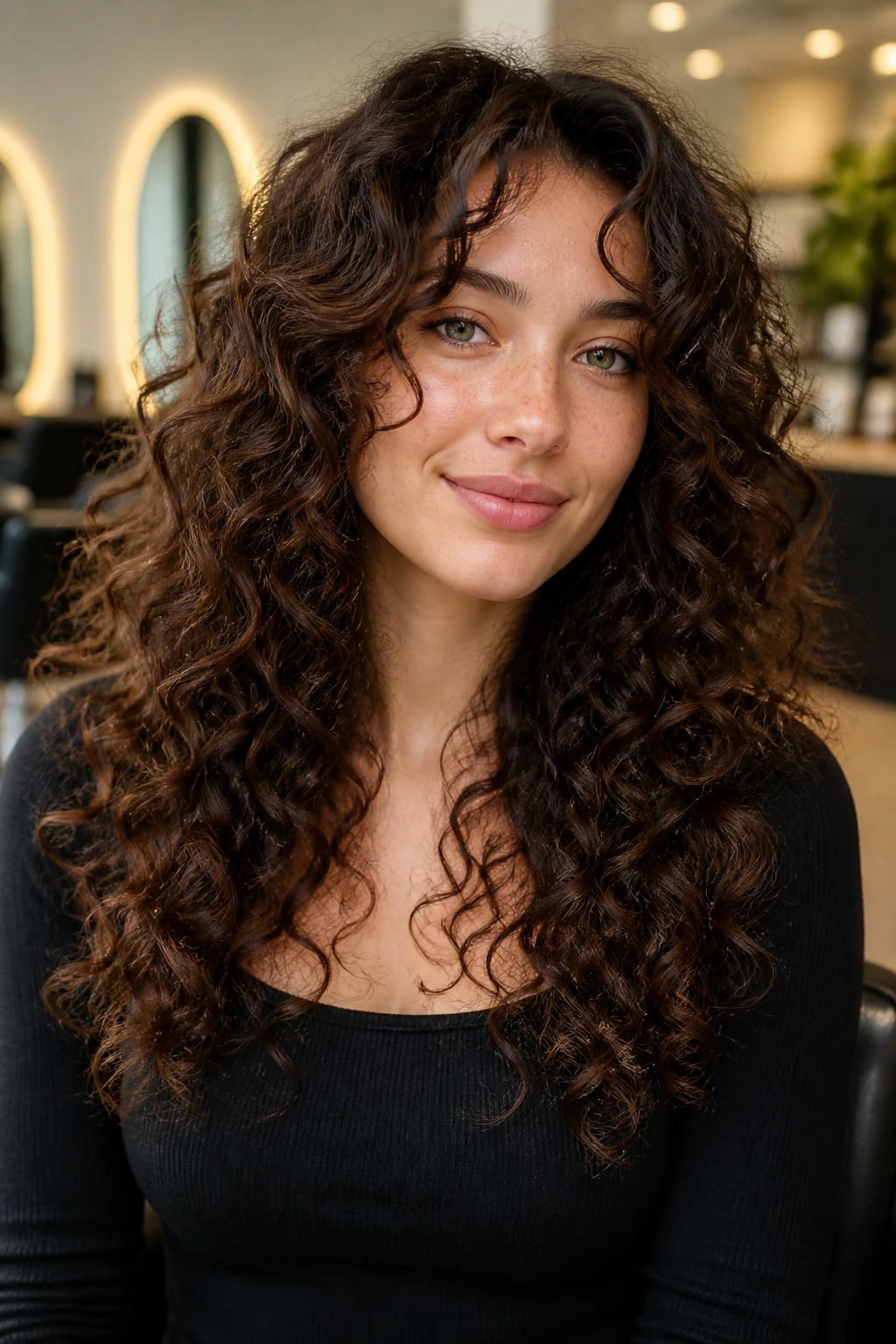
If you’re booking a cut, don’t just say “long layers.” That phrase is too vague to be useful. Bring photos that show the front, side, and back of the style you want, and make sure at least one of them has similar curl density to yours. A picture of glossy spiral curls on fine waves can set everyone up for disappointment.
Tell the stylist where you want the widest point of the shape to live. That sounds technical, but it’s the whole point. For a heart-shaped face, you usually want the width to sit around the cheekbones or lower, not at the temples. If you wear your hair with a side part, say so. If you love a center part, say that too. The part changes the whole architecture.
Ask how the cut will look dry, not just wet. That question saves you from a lot of vague salon language. You can also ask whether the layers are being placed to reduce bulk or to create lift. Those are not the same thing, and the answer tells you a lot about whether the cut will work on your face.
Small Moves That Make the Shape Look Intentional
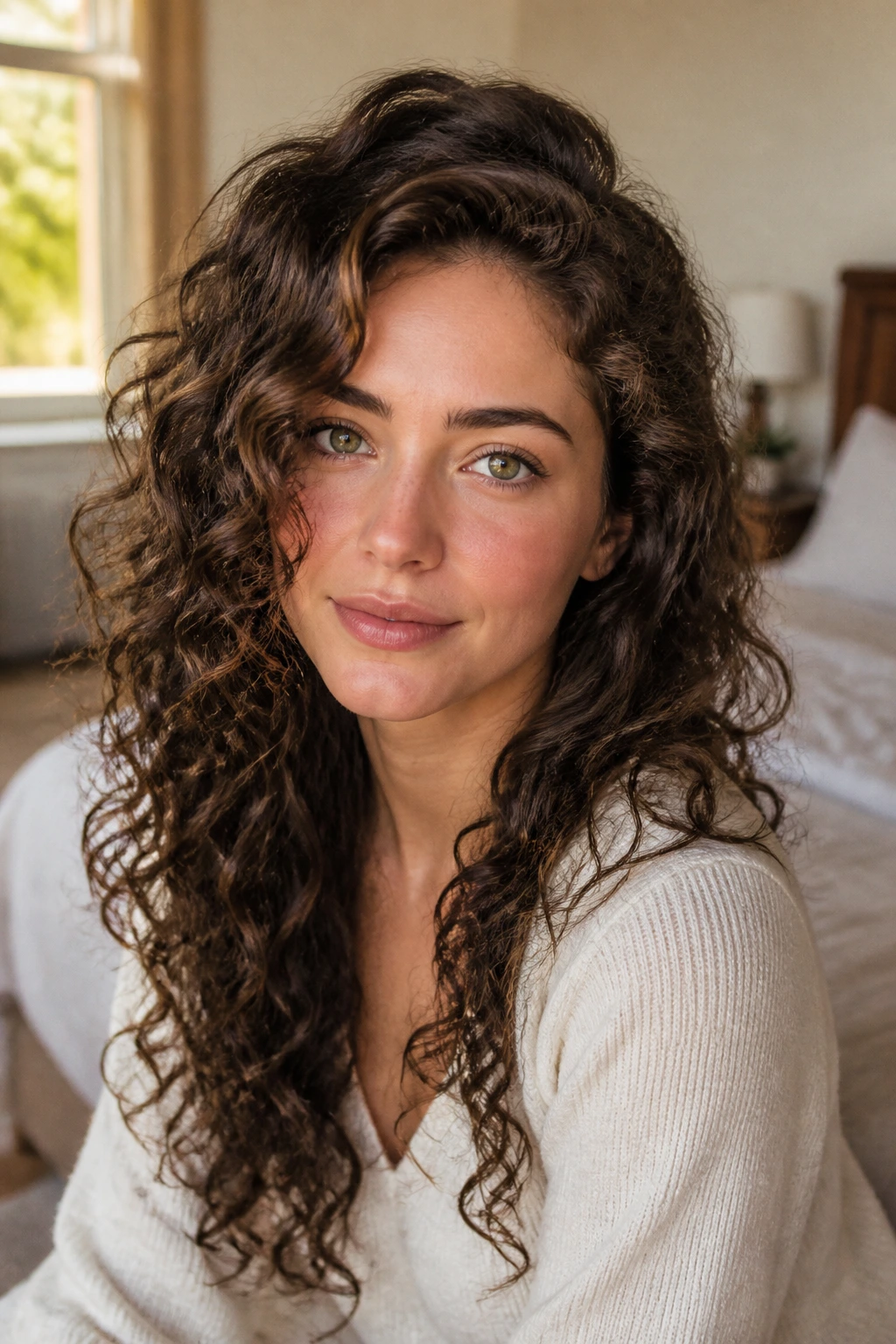
Parting:
Shift the part half an inch off center if the hair keeps puffing up on one side. That tiny change can make the whole cut settle better around the forehead.
Volume Placement:
If the top is too full, dampen only the roots, clip them down for ten minutes, then let them dry again. You do not need to restart the whole styling process.
Fringe Control:
Keep a small round brush or finger-coil technique just for the front pieces. The front does not have to match the back exactly. It just has to sit well.
Night Care:
A loose pineapple, loose braid, or silk bonnet keeps the length from getting crushed. For very long curls, a low loose braid is often safer than piling everything high.
Fast Refresh:
Mix water and leave-in in a spray bottle, mist the outer layer, scrunch the ends, and leave the crown alone unless it actually needs help. Over-refreshing is a real thing. It makes curls frizzy and tired-looking.
Common Mistakes That Throw the Face Balance Off
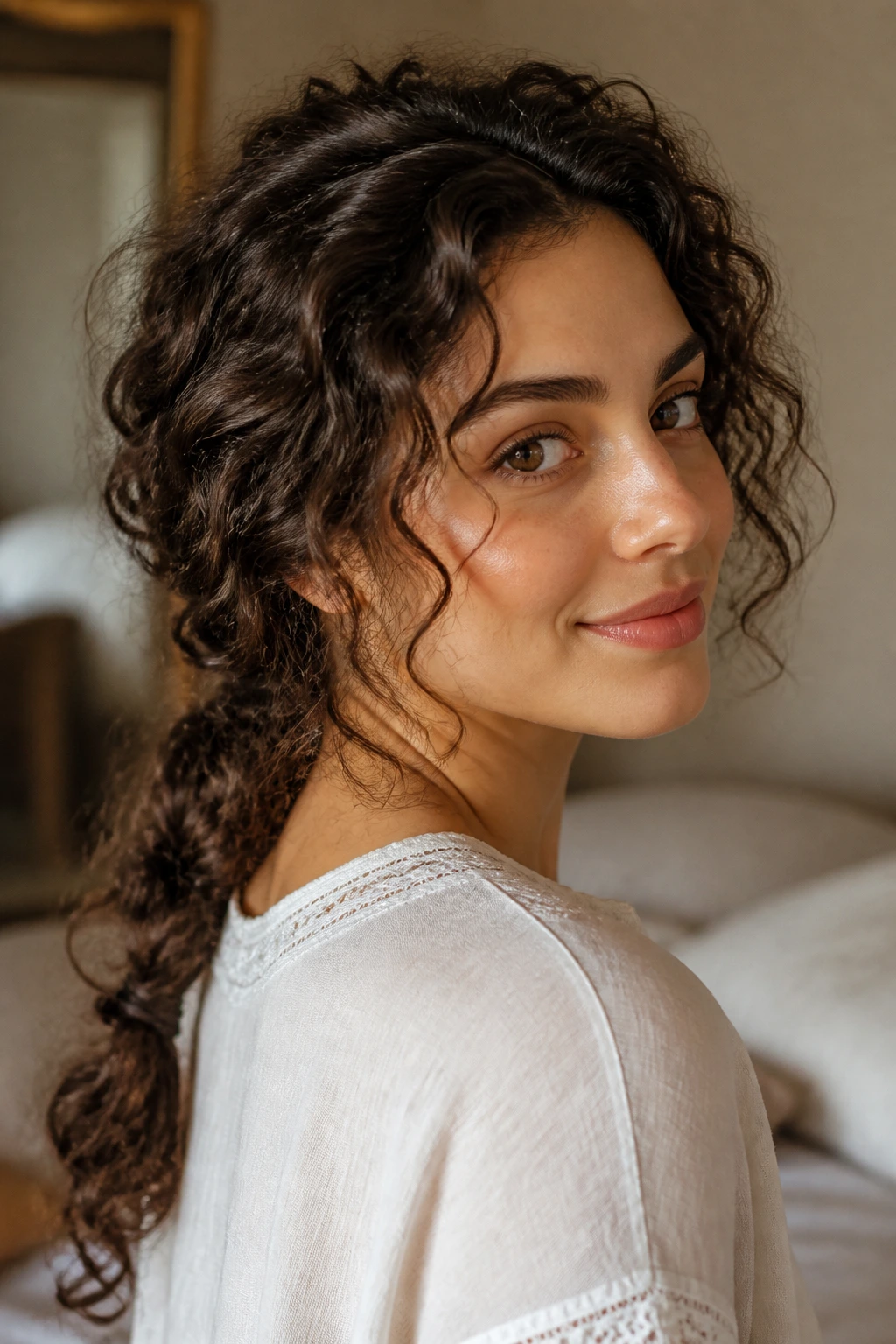
The first mistake is cutting the front too short. On a heart-shaped face, a too-short front can make the forehead look even broader and leave the curls sitting in the wrong place. The fix is to keep the shortest pieces long enough to brush the cheekbone or graze the jaw once they dry.
The second mistake is taking too much weight out of the sides. That sounds good in theory, but the result is often a fluffy top and thin ends. The hair gets wider where you least want it and narrower where you want support. Ask for interior shaping instead of aggressive thinning if your hair is already fine.
The third mistake is ignoring shrinkage. People see a long wet curl and assume it will stay that length. It won’t. If the cut feels a little too long in the chair, that’s often a good sign. If it feels perfect when wet, it may be too short once dry.
Finally, don’t force every style to sit high on the head. A high puff or lifted crown can be cute, but if you wear it that way every day, it can exaggerate the width of the upper face. Sometimes the simplest fix is to move the volume lower.
Variations and Face-Shape Tweaks to Try
For Fine Curls: Feather-Light Layers
If your curls are fine, keep the layers soft and the ends fuller. Too much internal cutting can make the hair look see-through by day two. Ask for shape, not shredding.
For Dense Curls: Controlled Bulk Removal
Thicker curls can handle a stronger cut, especially around the lower back and inside the shape. The goal is to keep the hair from blooming outward at the temples and ribs of the face.
For Tight Coils: Longer Front Pieces
Tighter textures usually shrink more, so leave the front pieces longer than you think you need. That gives the face frame room to land at the cheek or chin instead of springing above the brow.
For Loose Waves: More Face Framing
If your texture is looser, the style can use more explicit framing near the front because the wave won’t create as much natural width on its own. Center parts can work better here than with denser curls.
For Low-Maintenance Routines: U-Cut or Half-Up Styles
If you do not want to restyle every morning, stick to shapes that hold their outline with minimal effort. U-cuts, low ponies, and soft half-up styles are easier to revive than heavily layered cuts.
Frequently Asked Questions
Which long curly style is most flattering for a heart-shaped face?
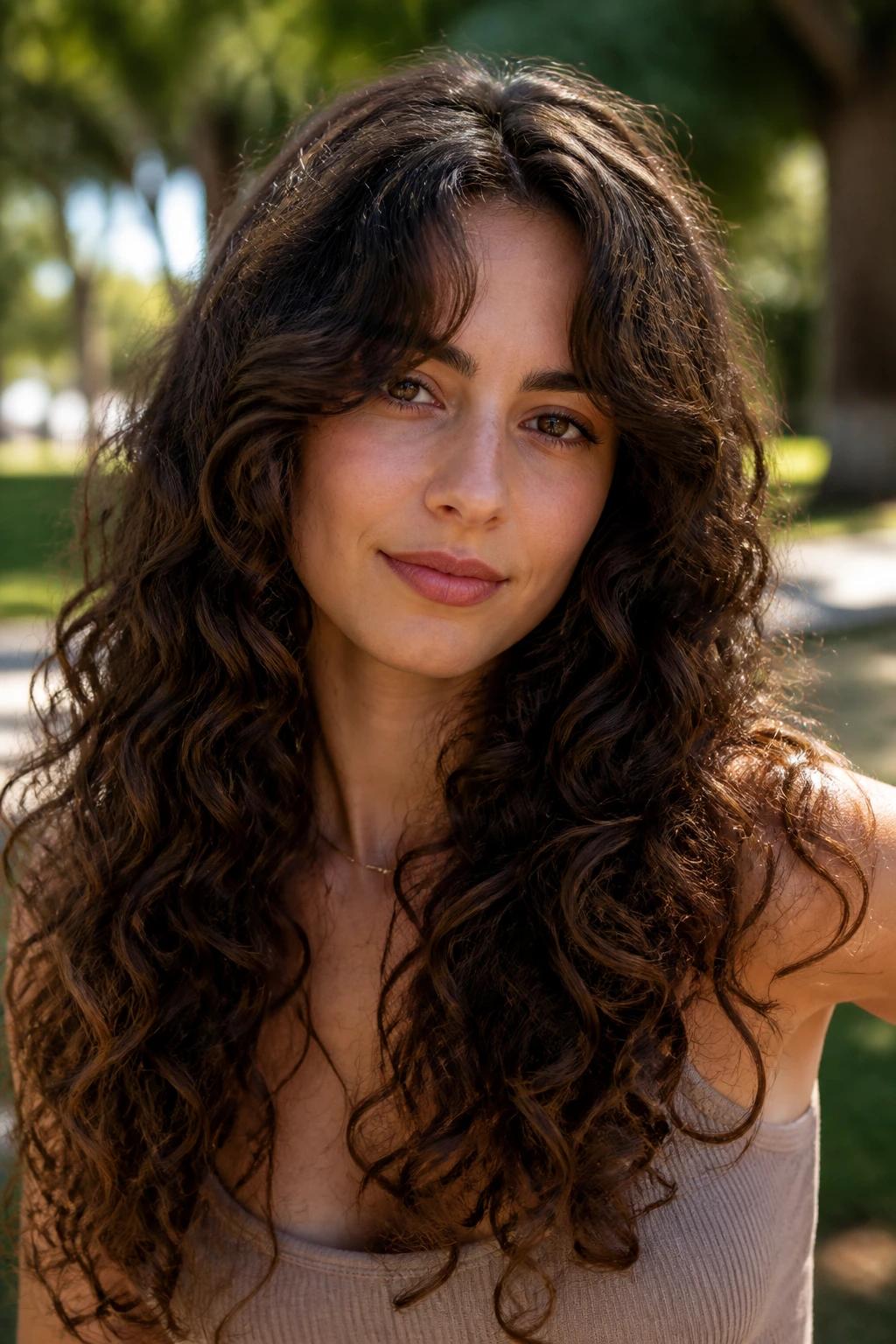
Long layers with curtain bangs or a deep side part usually give the easiest balance. They soften the forehead and keep the eye moving toward the jaw and chest, which helps the face read more even.
Are bangs a bad idea on curly hair and heart-shaped faces?
Not if the bangs are cut for curl shrinkage and left long enough to move. Curtain bangs and bottleneck bangs work especially well because they break up the forehead without trapping the face in a hard frame.
Should I wear a center part or side part?
A side part is the safer pick if your forehead is the widest part of the face. A center part can still work if the curls are full and soft through the lower half, especially in rounder halo shapes.
What if my curls are very thick and puffy at the sides?
Choose a cut with internal layers or a rounded shape that reduces bulk at the sides without thinning the ends too much. A Deva-style cut or soft wolf cut usually handles that best.
How often should long curly layers be trimmed?
Most long curly cuts need a shape refresh every 8 to 12 weeks if you want the front pieces and layers to keep their line. If you wear the style more casually, you can stretch that a bit longer.
Can I make these styles work if I air-dry only?
Yes, and several of them actually look better that way. Use enough product to keep the curl clumps intact, then leave the hair alone until it’s fully dry. Touching it too early turns a clean shape into frizz.
What should I ask a stylist if they don’t specialize in curls?
Ask for the layers to start around the cheekbone, for the cut to be checked in the hair’s natural dry state, and for the front pieces to be kept long enough to soften the forehead. Those three things prevent a lot of bad outcomes.
What if the style feels too wide after I dry it?
Focus on the sides and crown, not the ends. A little moisture and light hold at the roots can bring the shape back in without rewriting the whole style. If the cut is consistently too wide, the layer placement is probably too high.
Keeping the Shape in Balance Between Wash Days
Curly hair on a heart-shaped face needs maintenance that is calm, not complicated. The style usually holds best when you protect the crown overnight and refresh only the parts that need it. That means a loose pineapple, a low braid, or a silk bonnet depending on length and curl density. I prefer a low braid for very long hair because it protects the ends and keeps the front from getting weird dents.
Between wash days, resist the urge to keep spraying the whole head. A small spray bottle with water and a bit of leave-in is enough for the front and ends. The crown only needs help if it has lost shape. If the roots still have lift, leave them alone. Over-wetting makes the curl pattern collapse faster than people expect.
Trim the shape before it looks obviously overgrown. That sounds obvious, but most people wait until the front pieces hang in the wrong place. By then, the cut has already started to lose the balance that makes heart-shaped faces look softer. For most long curly styles, a touch-up every 2 to 3 months keeps the line honest.
The Shapes That Fix the Face Without Fighting the Hair
The best long curly styles for heart-shaped faces do not force the forehead to compete with the rest of the hair. They move the weight, soften the top, and let the length do its job. That is why curtain bangs, side parts, rounded layers, and low-slung styles keep showing up in different forms. They solve the same problem from different angles.
Pick the shape that matches your curl pattern first, then adjust the front for your face. That order matters. A style that flatters the face but refuses to hold your texture will annoy you by lunch. The one that works with your curls and keeps the widest part of the face visually quiet is the one you’ll wear again and again.
And if you’ve been stuck between “too much hair” and “not enough shape,” start with the cut that lets the curls fall lower, softer, and a little more deliberately. That’s where the good stuff lives.