



Wavy hair on boys has a funny habit of looking neat in the mirror, then puffing, bending, or flipping in a new direction by lunchtime. That’s not a flaw. It’s the pattern doing its thing. If the cut respects the wave instead of fighting it, the hair falls with a little movement and shape that straight hair has to be bullied into.
Cute on boys doesn’t have to mean fussy or overstyled. The best looks with wavy hair usually sit somewhere between polished and lived-in: a fringe that skims the eyebrows, a taper that cleans up the ears, a top that keeps its bend instead of turning into a flat helmet. When the shape is right, mornings get easier. The hair does half the work.
And that matters more than parents usually expect. A good cut can calm the crown swirl, keep the sides from exploding outward, and make the front behave after a rinse, a nap, or a helmet. A bad one can turn the same head of hair into a triangle by 3 p.m. The difference is usually a few inches, a better fade line, and knowing where to leave the weight alone.
Why These Cuts Work So Well on Waves
-
The bend is already there: Wavy hair does not need to be forced into shape; it needs length and layering in the right places so the movement reads as texture instead of frizz.
-
Short sides help the top breathe: A clean taper or fade keeps the ears and neckline neat, which stops the wave pattern from looking bulky and mushroom-shaped around the edges.
-
A little length changes everything: With waves, an extra half-inch on top can be the difference between soft, floppy movement and hair that sticks straight up.
-
Product stays light: Most of these cuts look best with a small amount of cream, mousse, or matte paste, not a thick gel shell that turns the hair crunchy and stiff.
-
They grow out better than blunt cuts: A wave-friendly shape usually still looks fine two or three weeks after the trim, which is a small mercy when schedules get busy.
-
They can be dressed up or left loose: The same haircut can look school-neat with a side sweep and weekend-casual with fingers through the top and a towel-dry finish.
1. Textured Wavy Crop
A textured wavy crop is one of those cuts that looks tidy without acting precious. The top stays short enough to sit flat when you need it to, but the waves still show through, which keeps the whole thing from looking stiff. It’s especially good if the front tends to stick up in one stubborn spot.
Why It Works on Wavy Hair
The crop keeps the length controlled around the forehead, so the wave pattern doesn’t collapse into a heavy fringe. A barber usually leaves about 1.5 to 2.5 inches on top and works the sides into a low taper or soft fade. That gives the hair enough room to bend while keeping the silhouette clean.
What to Ask For
- Short textured top with the weight removed in small sections
- Low taper around the ears and neckline
- Slightly longer fringe if the front grows fast
- Point-cut ends instead of a blunt, squared-off line
Styling Note
A pea-size amount of matte paste rubbed between the palms and pushed through damp hair is enough. Finger-style the front forward, then pinch a few pieces at the ends so the texture looks deliberate instead of puffed up.
Best for: boys who want short hair that still has some movement.
Pro tip: if the crown whorl is strong, leave a touch more length there than you think you need. Waves at the crown shrink when they dry.
2. Side-Swept Taper
This is the haircut parents reach for when they want something neat that still looks like hair, not a buzzed compromise. The side-swept taper lets the wave pattern sit softly across the forehead and over to one side, which gives the cut a calm, easy shape.
The trick is not making the side part too severe. Wavy hair looks better when the part line is loose, almost implied. If the top is brushed too hard, the waves separate weirdly and the hair starts to fight back by the afternoon.
Best Features of This Cut
- Works with a natural cowlick better than a stiff comb-over
- Keeps the sides clean without taking everything down to the skin
- Looks neat even after a little helmet time or hat wear
- Doesn’t need much product, which matters for sensitive scalps
The top usually needs about 2 to 3 inches. Enough to sweep. Not enough to flop in the eyes every ten minutes. A light cream or mousse helps the bend stay in place, but the real job belongs to the cut.
Best for: school days, family photos, and boys who need one haircut to do a lot of jobs.
3. Curtain Bangs with Soft Edges
Curtain bangs are a smart choice when the front of the hair has a soft wave and falls in different directions. Instead of forcing the fringe straight down, the cut lets it split and frame the face a little, which can look sweet in that relaxed, lived-in way parents tend to love.
Do the bangs too short and they lose the charm. Too long and they land in the eyes every five minutes. The sweet spot is usually around eyebrow level when dry, with the corners a touch longer than the center. That shape gives the hair a natural bend and keeps it from looking boxy.
How It Usually Looks Best
- Soft middle part or gentle off-center part
- Longer front sections than the sides
- Light layers around the cheekbone area
- Tapered edges so the cut grows out without a harsh line
A tiny amount of leave-in conditioner can help if the waves get fuzzy after washing. If the hair is thick, blow-drying the front for 20 to 30 seconds with fingers or a vent brush keeps the bangs from clumping too tightly.
No helmet hair here. That’s the appeal.
Best for: boys with loose to medium waves who don’t mind a little fringe.
4. Mini Bro Flow
A mini bro flow is basically the kid-friendly version of letting the hair move back and away from the face without making it look like a grown-up style. It’s soft, a little sporty, and honestly pretty charming when the ends curl slightly at the ears and neckline.
It works because the length is left intact just long enough to show the wave pattern. The front can be swept back or to the side, and the sides stay scissor-cut instead of buzzed too tight. That keeps the shape from getting harsh. If you go too short on the sides, the flow loses its balance and the top starts looking like it’s floating.
What Makes It Work
- Length on top usually sits around 3 to 5 inches
- Ends are point-cut for movement, not chopped bluntly
- A soft taper around the ears keeps it from looking shaggy
- Looks especially good when hair air-dries halfway and then gets finger-combed back
This cut grows out well, which is handy because it doesn’t start looking messy the second it passes the barber-chair stage. A dab of cream or even a little water can reset it after a nap.
Best for: boys who want movement, but not a full long-hair commitment.
5. Wavy French Crop
The wavy French crop is tidy in a way that still leaves the hair some personality. The fringe sits low and forward, but the texture keeps it from looking like a flat rectangle. That’s the difference between a heavy crop and one that actually works on waves.
A lot of people ask for a French crop and end up with the front cut too blunt. On wavy hair, that can look boxy fast. Better to leave the top slightly broken up with small, uneven pieces so the fringe settles naturally. The result looks neat without looking severe.
A Few Details That Matter
- Keep the fringe short enough to sit above or at the brows
- Leave texture through the top so the waves show through
- Use a low or mid taper, not a high fade that steals the shape
- Keep the neckline clean so the cut stays sharp as it grows
This is a strong choice for boys whose waves get puffy when the top is too long. The crop brings the shape closer to the head and cuts down on the side bulk.
A little styling cream on damp hair is usually enough. Too much product makes the front look oily, and that ruins the clean line.
6. Messy Fringe with Low Fade
If the hair has a natural bend in the front, a messy fringe is one of the easiest ways to make it look intentional. The key is in the word messy. Not sloppy. Messy in the good sense: soft, separated, touchable, with a fringe that falls a bit different each day.
A low fade keeps the ears and sides neat while the top stays loose and playful. That contrast is what makes the style work. Without the fade, the fringe can feel too heavy. Without the fringe, the fade can look a little too grown-up for younger boys.
What to Tell the Barber
- Keep the fringe textured and slightly uneven
- Blend the sides low, not halfway up the head
- Leave enough length on top for wave movement
- Thin out bulk only where the hair puffs around the corners
A blow dryer can help here, but you do not need a full styling session. Dry the fringe forward, then push a few sections apart with your fingers. If the waves want to split on their own, let them. That’s the point.
This cut has a good, easy energy. It looks best when the hair is allowed a little freedom.
7. Wavy Ivy League
The Ivy League is the polished cousin in the group. Shorter than a flow, neater than a shag, and still friendly to waves, which is why it keeps showing up in barber chairs. On wavy hair, it doesn’t read as stiff or old-school. It reads as controlled.
The top is long enough to side-part and sweep, but short enough that the wave pattern doesn’t balloon out. Sides are usually tapered or faded low. The front can sit a little longer if the child likes a fringe, or it can be brushed lightly up and over if you want a cleaner profile.
Where It Lands Best
- School uniforms and dressier events
- Boys with medium-density wavy hair
- Families who want a trim that stays neat for weeks
- Kids who dislike hair hanging over the eyes
A little cream or light pomade works fine, but avoid anything sticky. The Ivy League should move when he moves. If it looks shellacked, the whole thing gets too formal and starts fighting the wave pattern instead of using it.
It’s a tidy haircut with enough looseness to avoid looking severe. That’s harder to pull off than it sounds.
8. Surfer Shag
The surfer shag is where wavy hair stops apologizing and starts looking like itself. Longer layers, softer edges, and a shape that hangs around the cheeks and neck just enough to feel relaxed. It’s the style that says the haircut is not the whole point; the movement is.
This one works especially well on thicker waves because the layers keep the bulk from ballooning. The top and sides blend into each other more gradually than they do in a fade or crop, which gives the hair that wind-blown shape kids somehow manage to wear better than adults.
A shag needs some trust. If you cut it too aggressively, you lose the swing. Leave enough weight through the back and around the ears so the waves have something to sit on. Then let the ends do their own thing.
Ask for:
- Medium layers throughout
- Soft fringe that hits around the brows or just below
- Tapered neckline, not a hard block
- Point-cut ends for movement
Best when air-dried and finger-fluffed. A small amount of leave-in can stop the ends from getting fuzzy.
9. Wavy Undercut
A wavy undercut can look sharp in the right hands, but it does not forgive sloppy proportions. The top needs enough length to show the bend and enough contrast to make the undercut make sense. If the top is too short, the style loses its whole reason for existing.
What makes this cut interesting on boys is the clean break between the sides and the top. The waves become the feature. Everything else gets stripped down around them. That can look fantastic if the hair on top is thick, because the movement sits right on top of those close-cut sides and pops a little.
Who It Works For
- Boys with strong, defined waves
- Thicker hair that tends to puff at the sides
- Older kids who like a sharper look
- Hair that can handle a little product and a little blow-drying
What to Watch For
- The fade must sit low or medium if you want the style to stay age-appropriate
- Keep enough length on top for the waves to bend
- Don’t over-thin the top or it starts to separate weirdly
A matte paste gives the top shape without making it shiny. Use less than you think. Under a strong fade, even a small amount goes a long way.
10. Tapered Quiff
Can a quiff work on wavy hair? Absolutely. It just needs a softer hand than the stiff, high-volume versions you see on straight hair. On waves, the quiff should look like it was lifted naturally, not forced into a cone.
The top usually needs 3 inches or more, depending on how strong the bend is. Blow-drying helps here. Lift the front with your fingers or a small brush while the hair is damp, then shape it upward and back just a little. If you try to skip the dryer, the quiff may collapse into a side wave by noon.
Why It’s a Good Match
- Gives height without looking stiff
- Works with medium-density hair
- Lets the front stay soft instead of helmet-shaped
- Can be polished for events or relaxed for weekends
Keep the sides tapered low so the front doesn’t overpower the head shape. A matte product or lightweight mousse is usually enough. Glossy product turns a kid quiff into something that looks like it belongs in a catalog.
This cut is best for boys who don’t mind a tiny bit of styling in the morning. Tiny. Not a production.
11. Brushed-Forward Mop Top
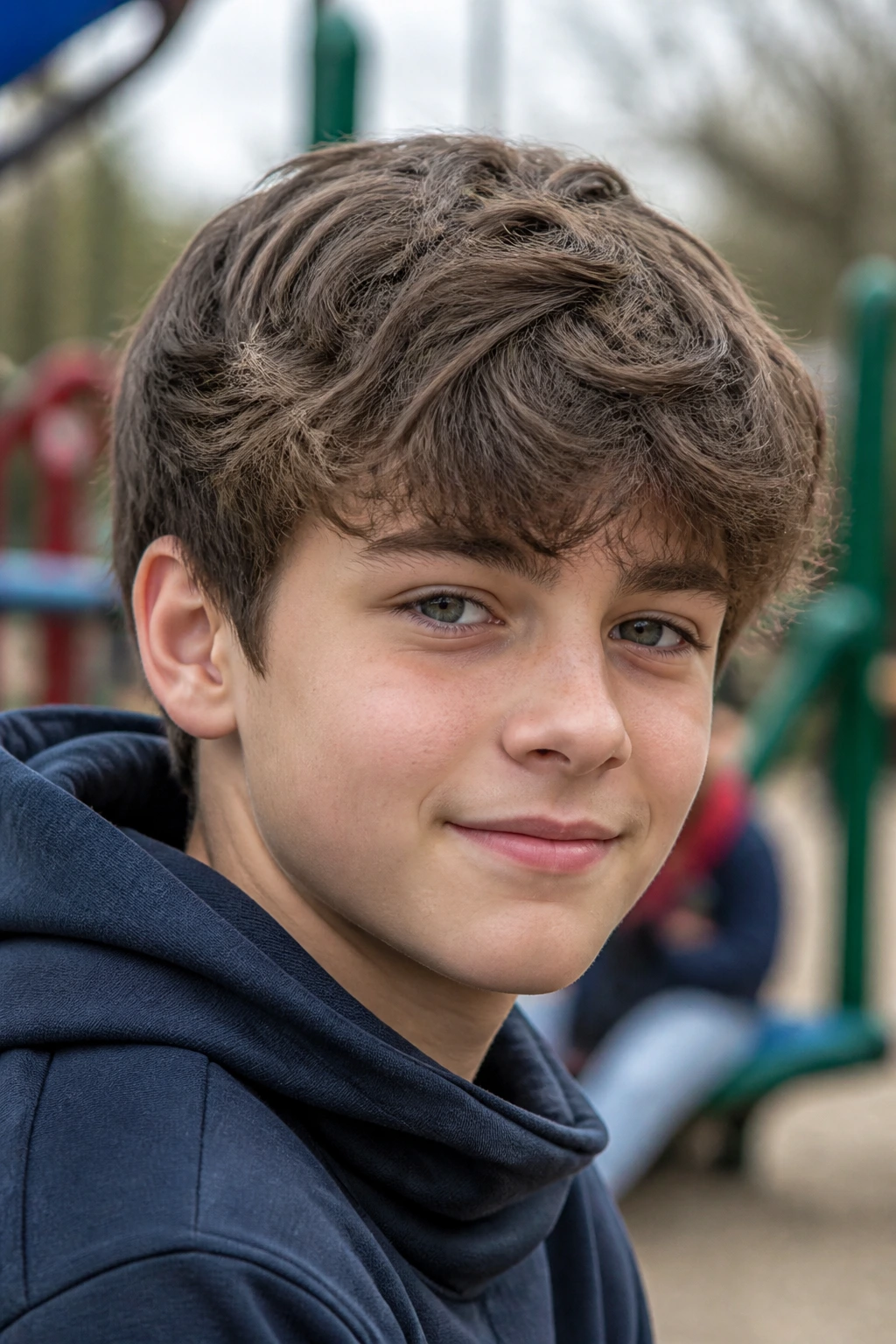
There’s a reason the brushed-forward mop top keeps coming back. It suits wavy hair that wants to fall over the forehead without needing a perfectly straight fringe line. The style has a soft, friendly shape, and that makes it feel especially kid-appropriate.
The best version is not shaggy in a neglected way. It’s controlled shaggy. The top sits forward, the sides stay soft, and the edges around the ears are cleaned up enough that the whole thing looks deliberate. The wave pattern creates the texture for you, which is probably why this cut works better than people expect.
A good mop top needs movement around the brow, so don’t over-cut the front. If the fringe sits too high, the style loses its charm. If it sits too low, the eyes disappear. There’s a narrow lane here, and it’s worth staying in it.
Best for: boys with loose waves who like their hair a little longer in front and a little softer all around.
One pass of water and a finger-comb is often enough to reset it after sleep.
12. Side Part with Soft Taper
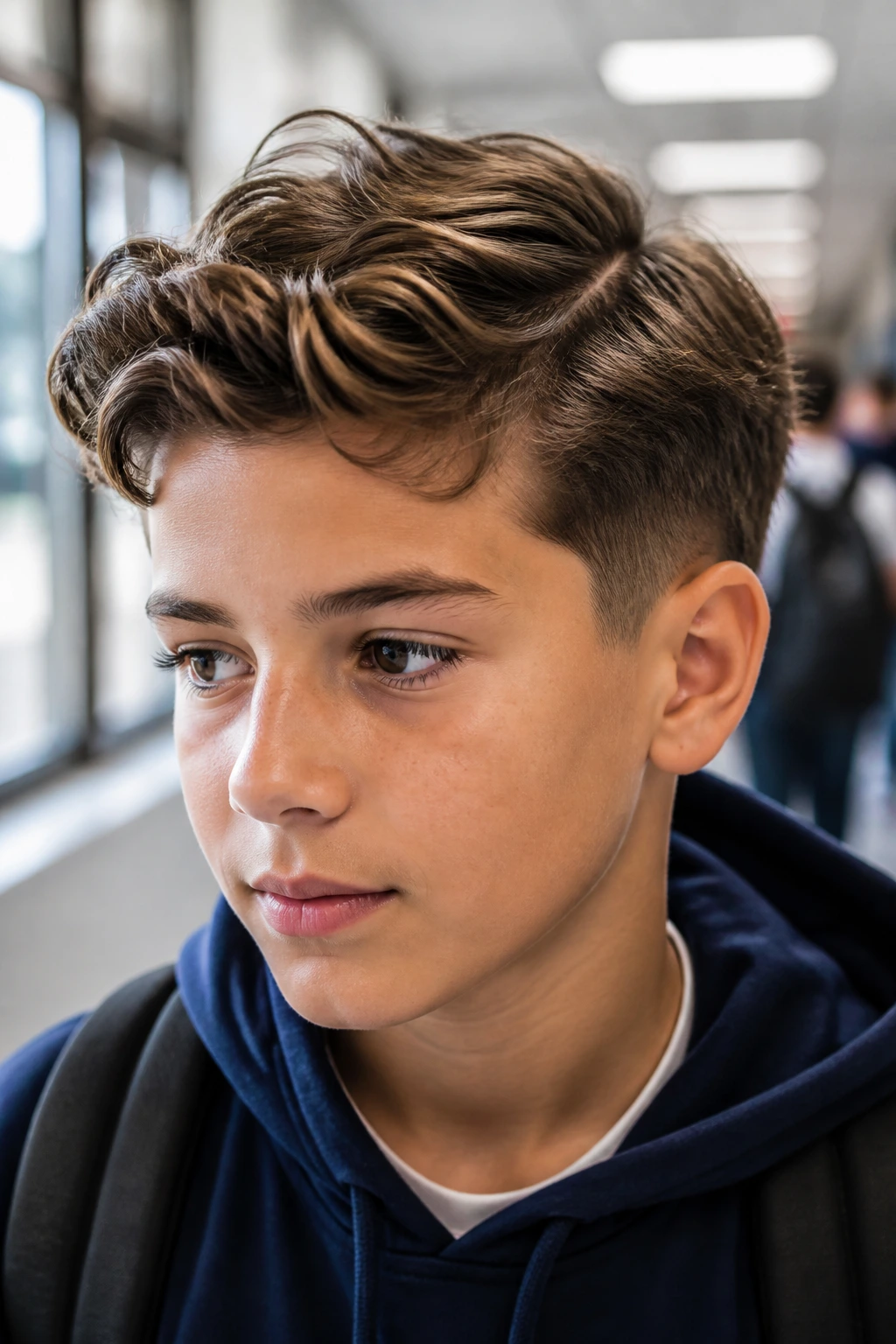
A side part on wavy hair can look either charming or overly formal depending on how hard the line is cut. The softer version wins here. It uses the natural bend of the hair to keep the top from looking slicked flat, which is the mistake a lot of people make.
The trick is to part the hair where it already wants to split, then let the top sweep over with just enough direction to stay in place. The sides should be tapered cleanly, not shaved up high. That keeps the shape balanced and makes the top feel fuller.
A Style That Fits Many Days
- Good for school pictures
- Good for church, recitals, and family events
- Good for boys who like a neater shape without losing wave movement
- Good for medium or fine wavy hair that needs a little direction
A small touch of cream or light pomade on damp hair helps the part hold. Don’t comb the top too hard. Wavy hair likes a gentle push, not a hard command.
This is one of those cuts that looks more expensive than it is, mostly because the shape is clean and the wave pattern does the rest.
13. Long Layered Waves
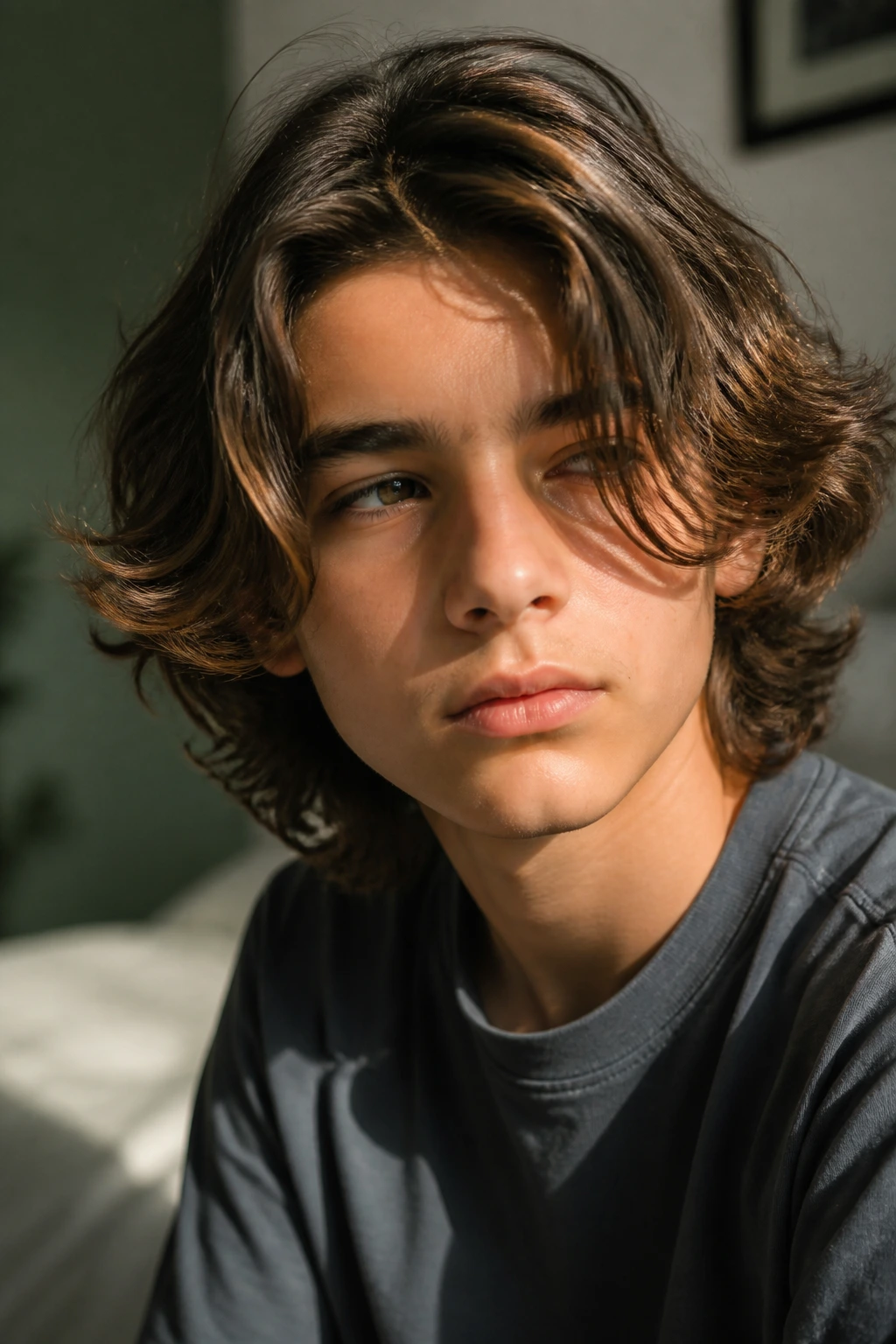
Long layered waves are for the kid who wants the hair to move. Not in a dramatic way. Just in a real, soft, tousled way that looks better the more the layers grow in. If the ends are left blunt, the length can get heavy and triangle-shaped. Layers fix that.
The barber should keep the weight from building up around the bottom and through the sides. That makes the waves fall in ribbons instead of one thick block. Around the face, the longest pieces can graze the cheekbones or jaw, which gives the cut a gentle frame.
Where the Layers Matter Most
- Around the crown, to stop puffing
- Around the temples, to keep the sides from flaring
- Through the back, so the length doesn’t drag downward
- Around the face, to shape the fringe and cheeks
This style takes patience. It looks better after a little growth. If you want a clean, finished cut the same day, this isn’t the one. If you want movement and a soft shape, it’s excellent.
A leave-in spray or light cream helps the hair dry without frizzing. Let the waves air-dry partway, then scrunch once and stop touching it.
14. Wavy Faux Hawk
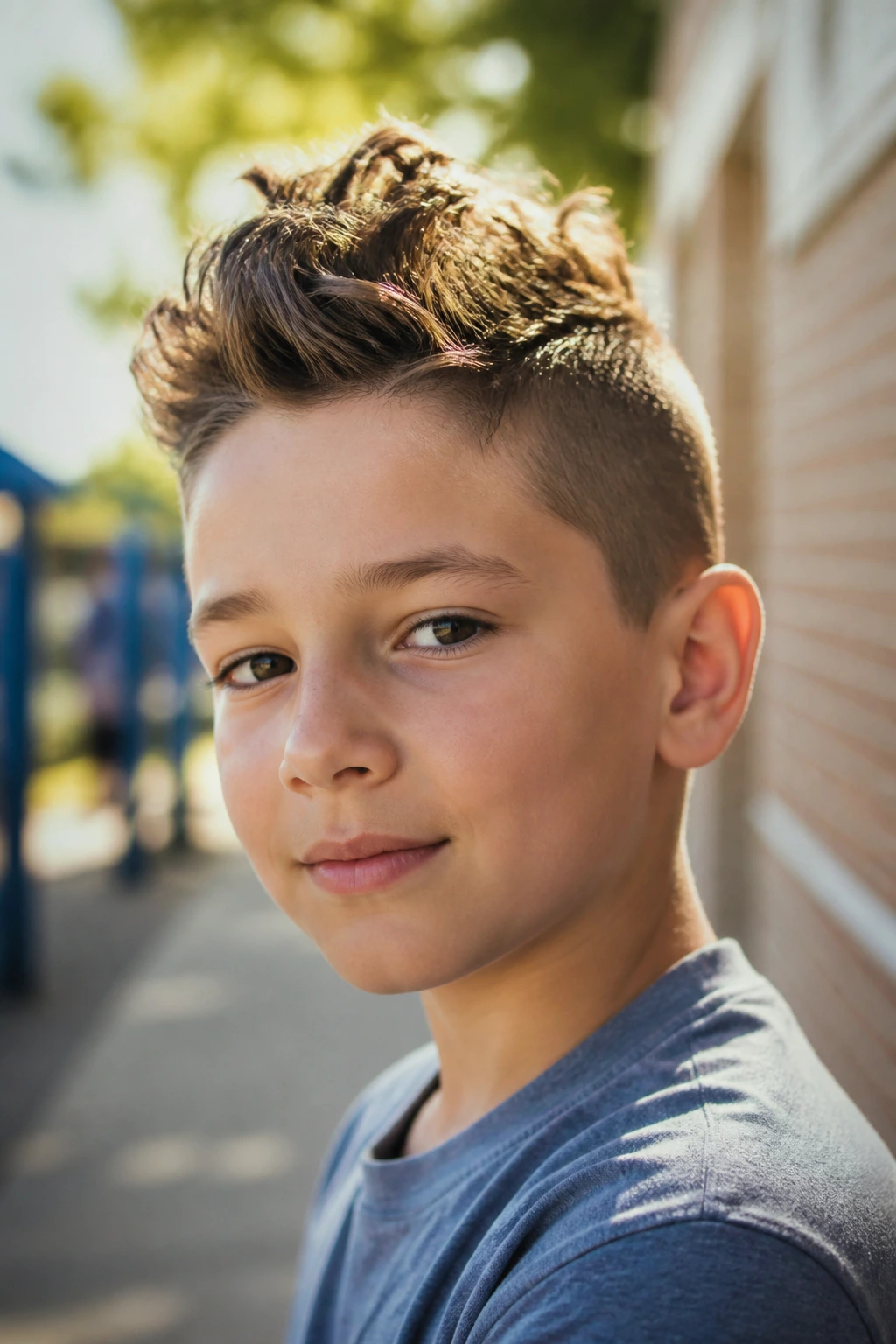
A wavy faux hawk is playful without crossing into costume territory. The waves already help create the ridge down the middle, so the cut does not need to be extreme. A gentle taper on the sides and a slightly longer strip through the center are enough.
What keeps this style from looking too sharp is softness. The transition from the sides into the top should be gradual, and the middle should stay touchable. If the strip is cut too narrow or the sides too high, it starts looking like a teenager’s experiment instead of a kid’s haircut.
Good Signs This Style Fits
- Hair has medium to strong waves
- The child likes a little height on top
- You want something more playful than a side part
- The crown doesn’t split in too many directions
Styling is straightforward. Dry the top by pushing it gently toward the middle, then use a tiny amount of matte paste to separate a few pieces. Don’t spike it into hard points. The waves are the whole point.
It’s a cheerful cut. That’s probably the best word for it.
15. Short Scissor Cut with Movement
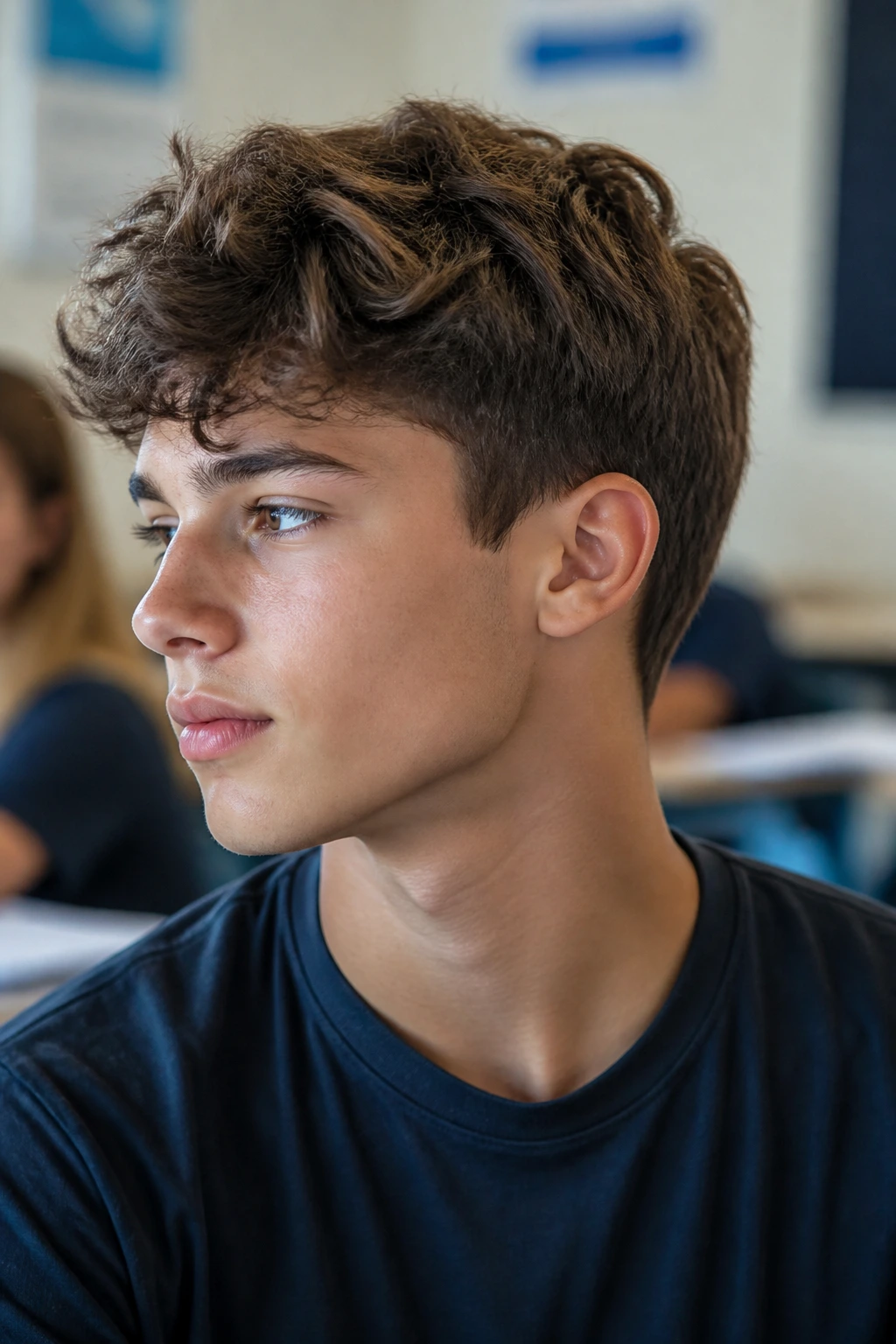
Can a short cut still look soft on wavy hair? Yes, if the barber works with scissors instead of taking everything down with clippers. A short scissor cut leaves enough difference in length across the top for the waves to show, but it keeps the outline neat and easy.
This is one of the more underrated choices for boys who dislike hair in their eyes but still need some personality up top. The movement comes from texture, not length. That means you can keep things short without ending up with a flat, military-looking finish.
The Shape to Ask For
- Scissor-cut top with broken-up ends
- Low taper around the neckline and sideburns
- Slightly longer front than crown if the hair tends to spring up
- No harsh line across the forehead
It’s a good practical cut. Air-dry it, pat it with a towel, and if the front starts to separate too much, smooth it with wet hands. That’s often enough. No cabinet full of products required.
16. Loose Layered Top
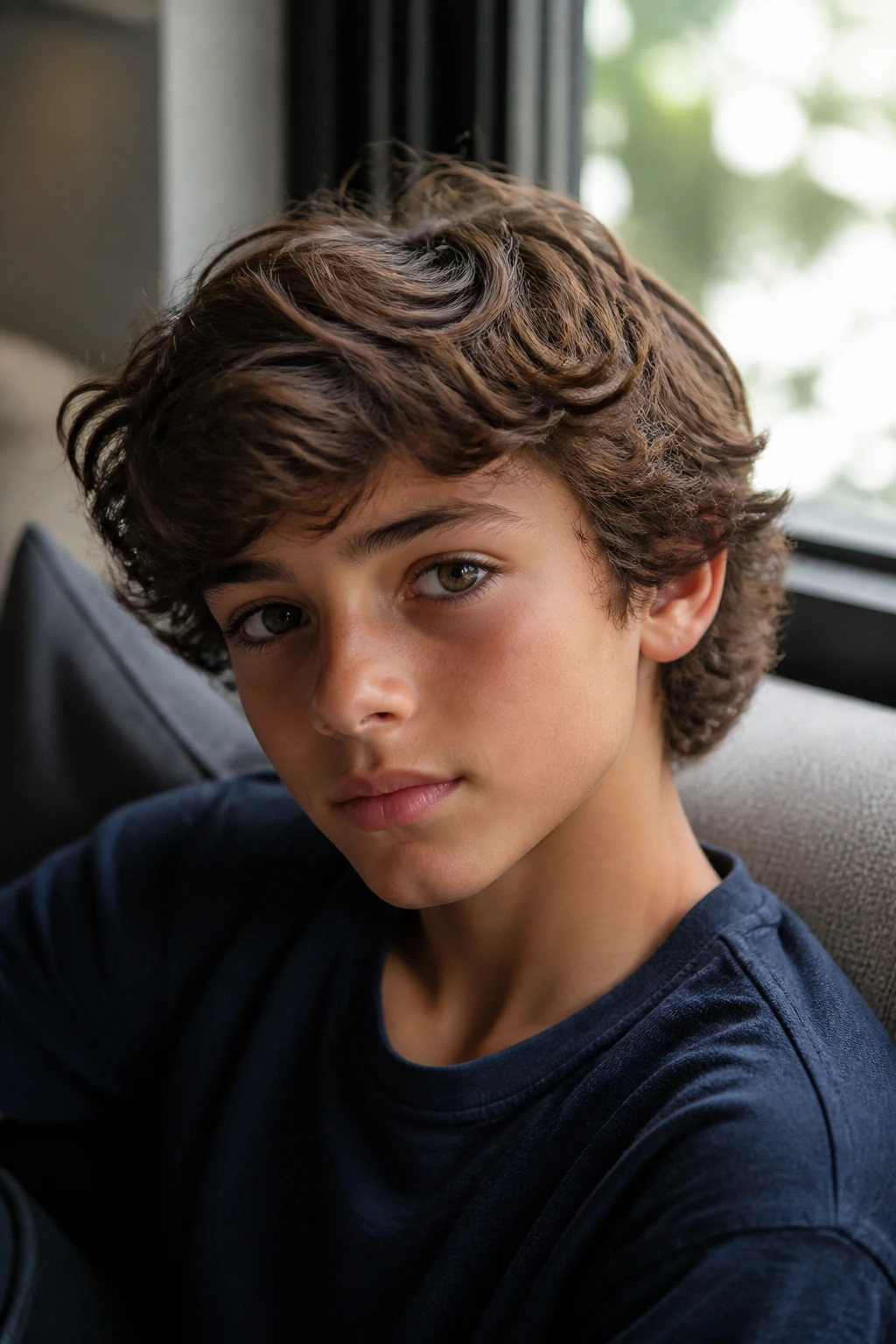
This one sits between a crop and a shag, which is part of why it works so well for wavy boys’ hair. The top stays loose and full of movement, but the layers keep the bulk from turning into a triangle. It’s the kind of cut that looks especially good when the hair has its own bend and doesn’t need much coaxing.
The sides are usually soft rather than clipped tight, and the top is left with enough length to flip a little at the ends. That makes the hair look lived-in in a good way. Not undone. Not overworked. Just natural.
Why Parents Like It
- Grows out without looking abrupt
- Works on medium and thick hair
- Needs only a light cream or leave-in spray
- Gives a softer outline around the ears and forehead
If the hair is dense, ask for some internal weight removal so the ends don’t sit like a block. That detail matters. Without it, the cut gets puffy and the wave pattern loses shape.
This is a good middle ground for families who want softness without long hair.
17. Swept-Back School Cut

The swept-back school cut is what you pick when you want clean lines and a little motion on top. It’s neat enough for uniforms and photos, but the waves still show, especially if the hair is brushed back while damp and allowed to settle naturally.
Unlike a slick-back, this version stays soft. That’s the whole point. A slick-back on wavy hair can get shiny and stiff fast, and then the bend starts breaking into odd chunks. A swept-back cut keeps the movement, which makes the style feel more relaxed and more wearable for kids.
Small Details That Help
- Keep the top medium short, not too long
- Taper the sides low so the shape doesn’t widen
- Use a light cream, not a hard gel
- Encourage the hair backward with fingers, not a tight comb line
It’s a solid everyday style for boys who need to look put together but still want hair that moves when they run.
18. Soft Wolf Cut
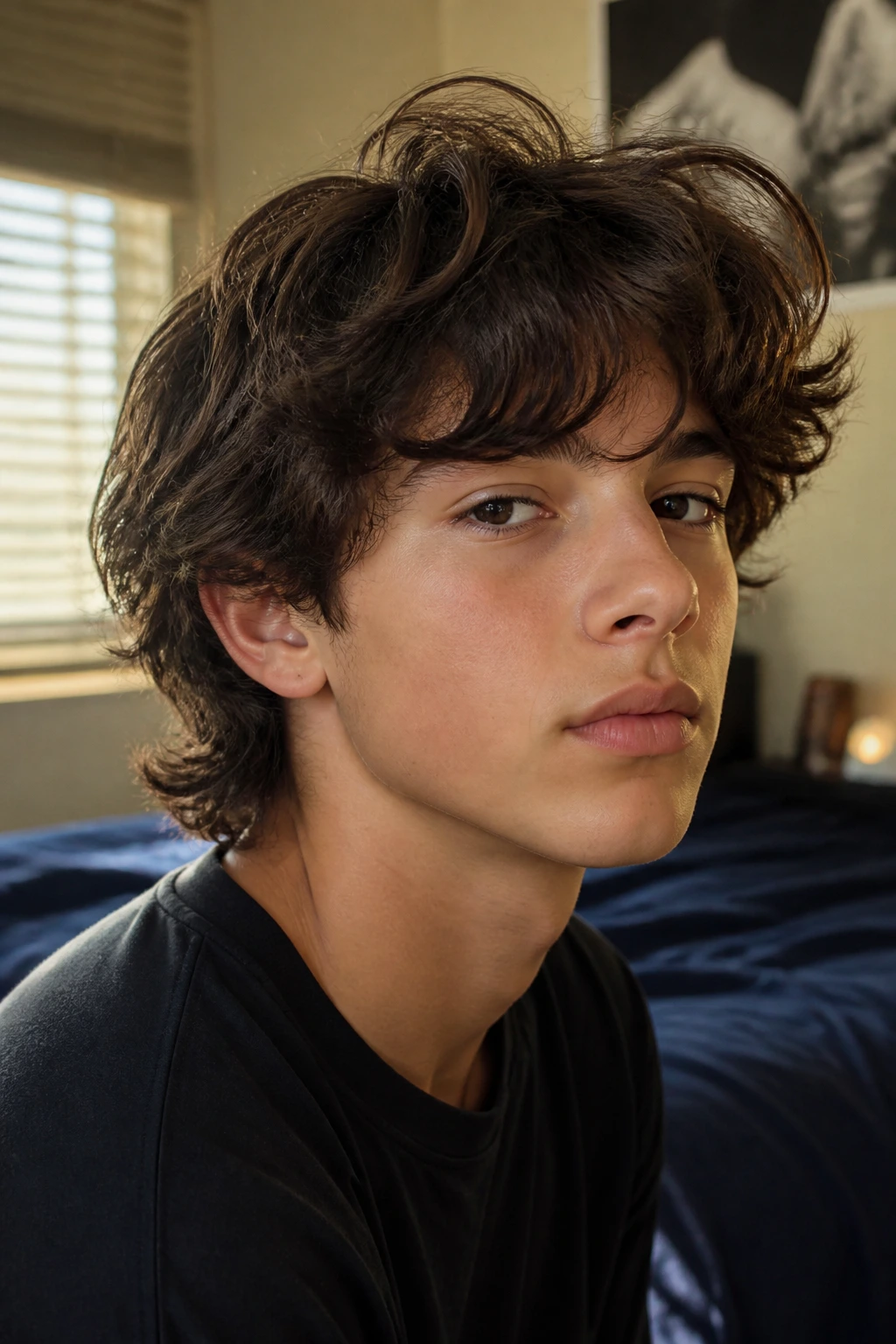
A soft wolf cut sounds a little wild, but on boys with wavy hair, it can be surprisingly wearable if the edges are kept gentle. Think layered top, slightly longer back, and a fringe that sits in that middle zone between messy and shaped. Not shaggy in a neglectful way. Just airy.
The reason it works is the contrast. Waves love layers, and the wolf cut uses that to make the shape feel loose instead of heavy. The back should not be left so long that it looks like an accident, though. The cleanest versions keep the nape controlled and the layers soft around the face.
When It Makes Sense
- The child has thick waves that need weight removed
- You want something with more personality than a crop or taper
- The fringe can sit a little longer without becoming annoying
- Regular trims are realistic, because the shape needs upkeep
This is one of the few styles here that needs a little confidence from both kid and parent. When it’s done right, it has a cool, easy shape. When it’s done loosely, it can start to look like the haircut got away from everyone.
Why Wavy Hair Looks Better When the Cut Follows the Bend
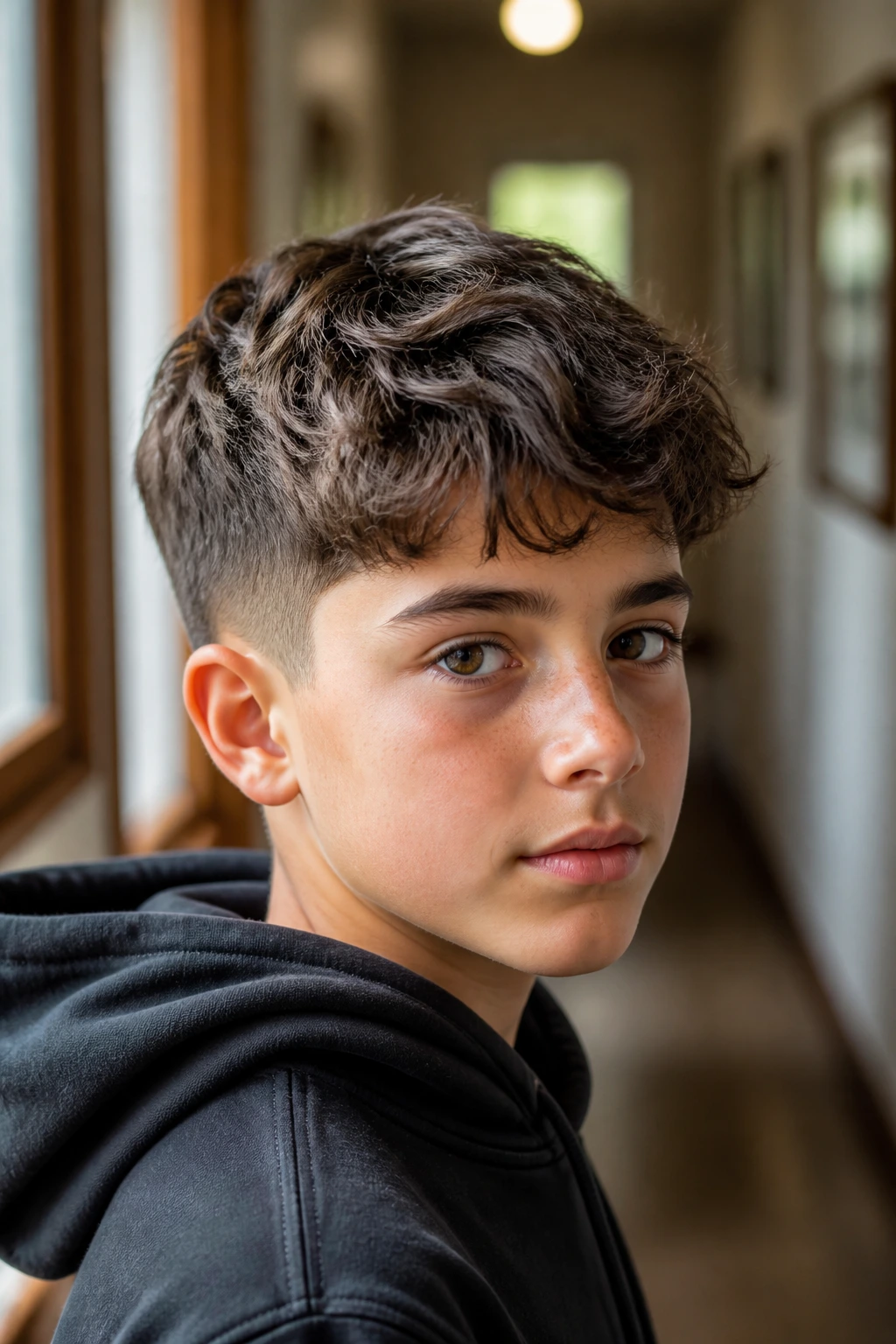
Wavy hair behaves best when the cut works with the bend instead of against it. That sounds obvious, but a lot of bad haircuts ignore the actual shape of the strand. A wave has movement, not just length, and the cut has to leave enough space for that movement to sit without turning into puff or frizz.
The crown matters more than people think. So does the front. If the crown is over-thinned, it can stick up like a little parachute. If the fringe is cut too blunt, the bend breaks at the wrong spot and the hair falls in odd chunks. That’s why scissor work and point cutting are such useful tools here. They leave the edge softer, which helps the wave roll instead of collapse.
There’s also a timing issue. Hair looks different wet, damp, and dry. Very different. A barber who only cuts to the wet shape can accidentally take off more than the parent expected, especially around the forehead. For wavy hair, a little caution goes a long way, and leaving half an inch too much is usually safer than chopping too hard in one go.
What to Tell the Barber So the Cut Lands Right
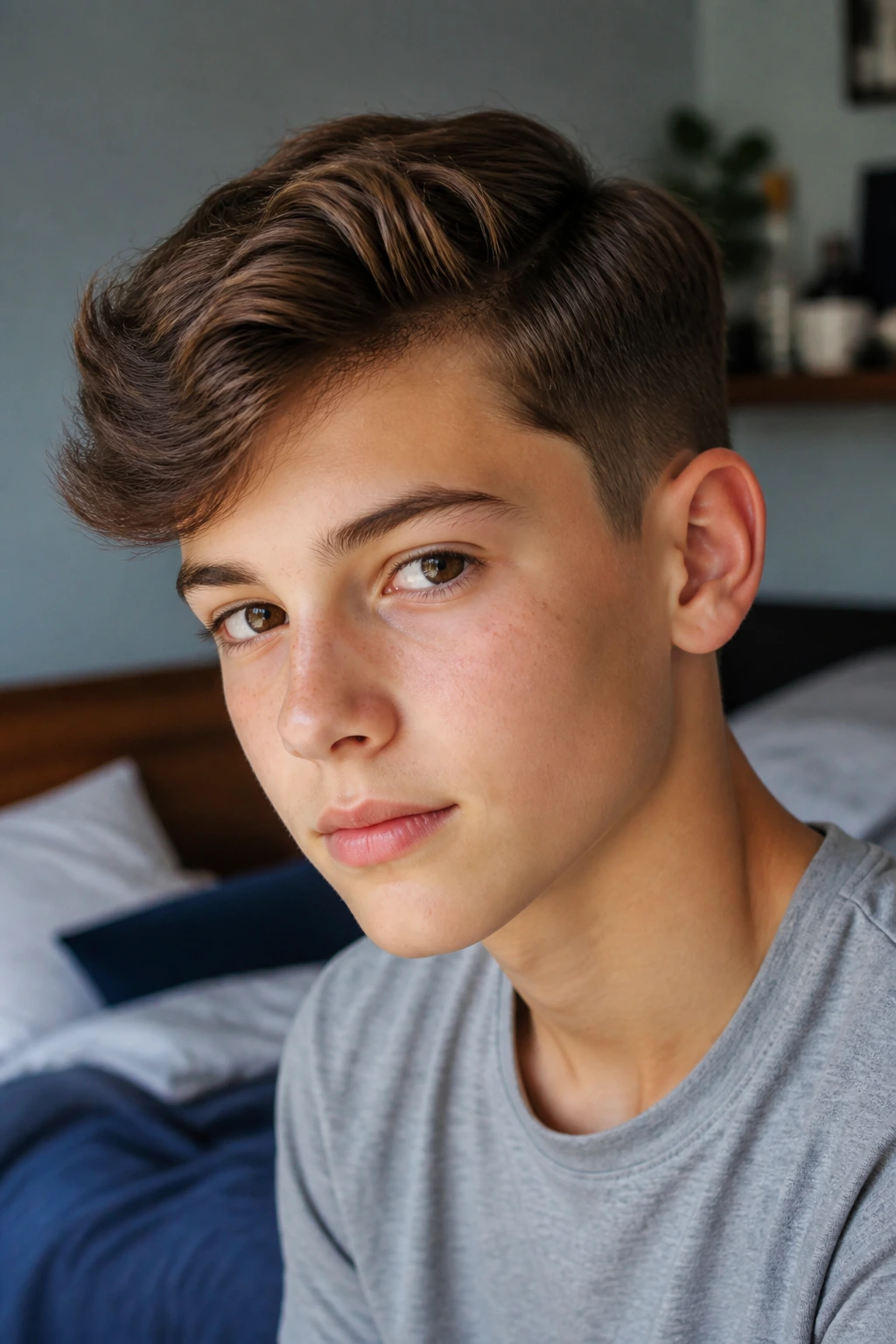
Bring a photo, yes. But bring a useful photo. Look for one that shows the front, the side, and the neckline, not just a dramatic studio angle. Then point to the parts that matter: how short the sides should be, where the fringe should stop, and whether you want the top to fall forward, sweep sideways, or stay loose.
Say how the hair behaves at home. That helps more than people expect. If the crown splits, say so. If the front sticks up after sleeping, say so. If the child hates hair touching the ears, say that too. A barber can work around real problems, but only if they know what those problems are.
A few phrases that help
- “Keep the top long enough to show the waves when it dries.”
- “Please don’t cut the fringe too short.”
- “I want the sides clean, but not too high.”
- “The crown gets puffy, so leave a little extra weight there.”
If you have the time, ask the barber to check the cut after it’s dry, or at least to leave the top slightly longer than it looks right away. Wavy hair shrinks on you. It always does.
Essential Gear for These Styles
-
Spray bottle: Handy for re-wetting the top in the morning so waves can be reset without a full wash.
-
Wide-tooth comb: Good for detangling after conditioner and for spreading product without pulling the wave pattern flat.
-
Fine-tooth comb: Useful for a cleaner side part or a neater front, but best used lightly so the hair doesn’t get too tight and poofy.
-
Light styling cream or leave-in conditioner: Helps waves sit softly and keeps the ends from looking dry.
-
Matte paste: Best for crops, fringes, and short textured styles where you want shape without shine.
-
Light mousse: Great for lift at the roots when the top needs a little body but not a crunchy finish.
-
Blow dryer with a nozzle attachment: Helps direct the hair before it sets, especially for quiffs, side sweeps, and brushed-back looks.
-
Microfiber towel or soft T-shirt: Better than rough towel rubbing, which can make the waves frizz out fast.
-
Photo reference on a phone: Not glamorous, but it saves a lot of explaining in a noisy barbershop.
How to Style These Cuts on School Mornings
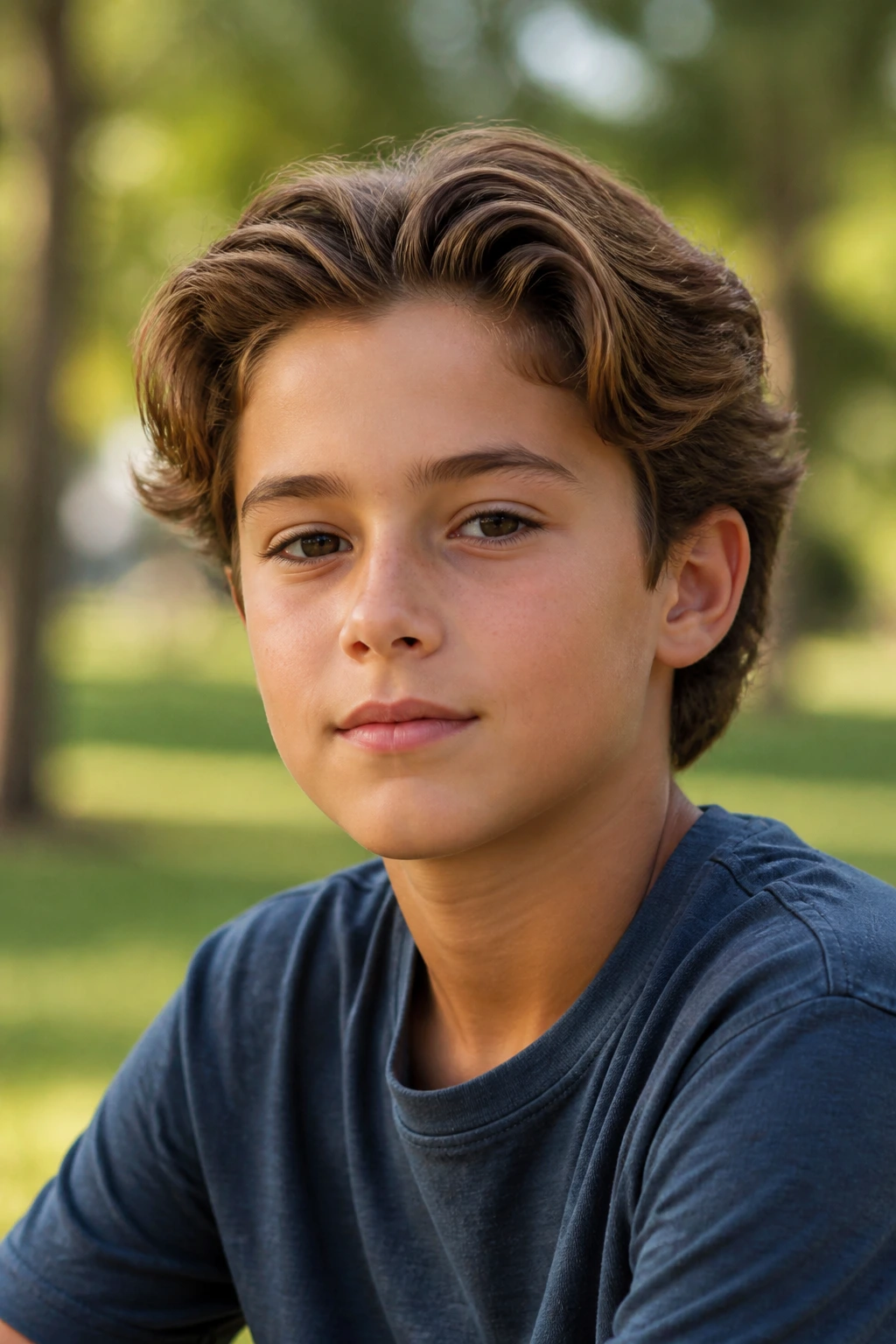
School Days: Start with damp hair, not soaking wet hair. A pea-size amount of cream or mousse is enough for most short-to-medium wavy cuts. Rake it through with fingers, then stop fussing. If the hair looks too polished, it probably has too much product.
Sports Practice: Keep product light or skip it. Sweat and helmets flatten waves anyway, so the goal is control, not perfection. A quick rinse or splash of water after practice usually resets the hair better than piling on more paste.
Picture Day: Use a blow dryer for 20 to 40 seconds on the front and crown. Direct the hair where you want it, then let it cool before touching it again. That extra minute is what keeps the style from falling apart when he moves his head.
Weekend Texture: Let the hair air-dry halfway, then scrunch the ends once or twice. Don’t keep touching it. That’s how waves turn fuzzy. If you want a more laid-back finish, a drop of leave-in conditioner on the palms can soften the shape without making it greasy.
Extra Tips and Small Tweaks That Make a Big Difference
Flavor Enhancement: If you want the waves to pop a little more, mist the hair with water, then apply product to damp—not dripping—hair. Product spreads more evenly that way and doesn’t clump at the front.
Customization: Thick hair usually needs weight removed with layers, while fine hair usually needs less thinning and a slightly shorter top. Those are opposite fixes, and mixing them up is how you get a puffy top or a cut that lies too flat.
Serving Suggestions: A clean neckline and a soft taper around the ears make almost every one of these styles look sharper. It’s a small detail, but it’s the difference between “grown out” and “finished.”
Make-It-Yours: For a softer look, leave the fringe longer and use fingers instead of a comb. For a cleaner look, ask for a low taper and keep the sides closer to the head. For an active kid, choose a cut that still looks decent after a hat or helmet.
Common Mistakes That Flatten or Puff Up Wavy Hair
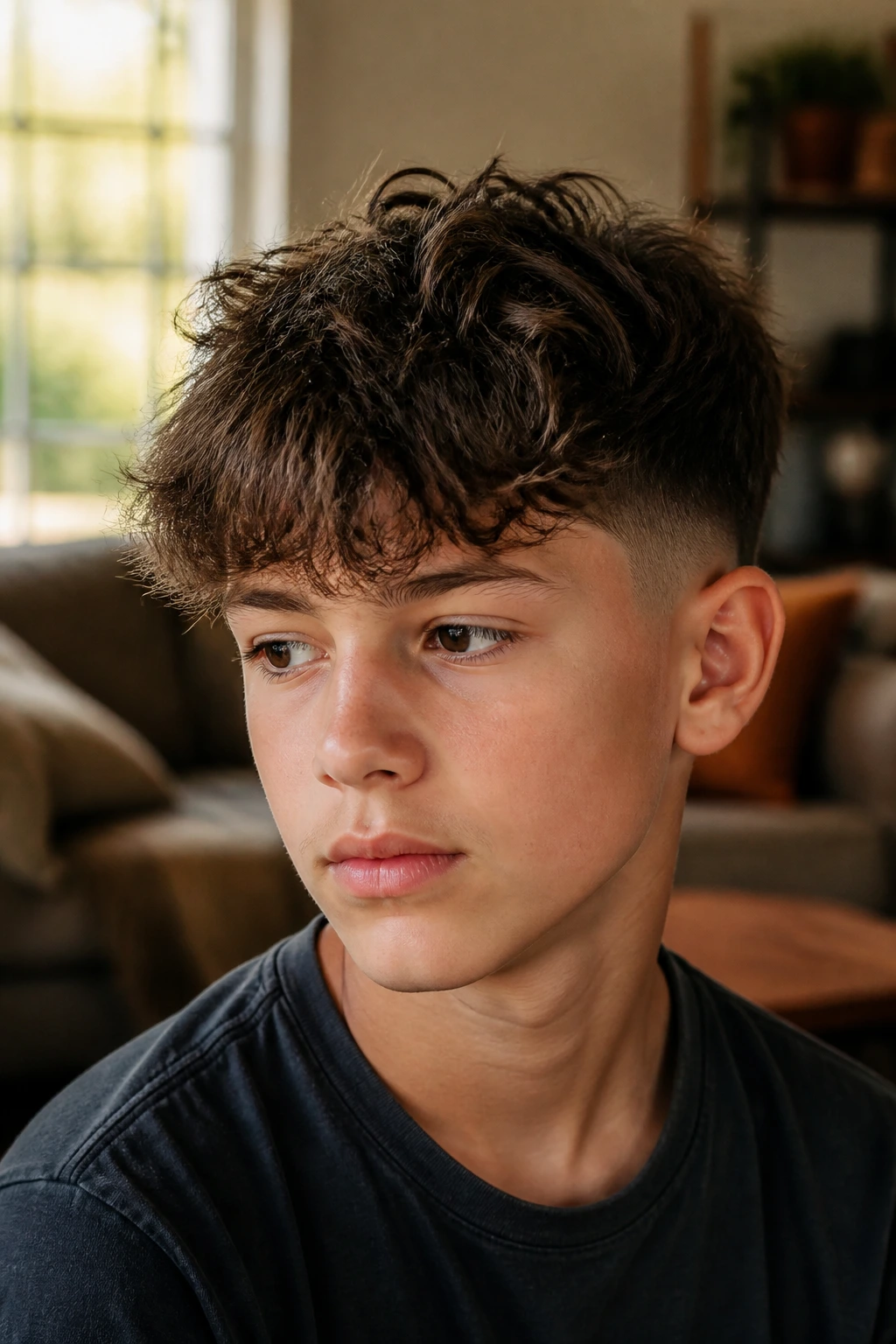
The biggest mistake is cutting the top too short because the hair looks longer when wet. Wavy hair shrinks dry, and a cut that seems fine in the chair can end up standing straight up the next morning. The fix is simple: leave more length than you think, especially at the front and crown.
Another problem is using heavy gel on dry waves. That gives you crisp pieces at first, then a stiff, stringy look once the hair starts to move. Use cream, mousse, or a light matte paste instead, and keep the amount small.
A third issue is ignoring the crown swirl. If the hair grows in a strong spiral and the cut doesn’t account for it, the top can split, puff, or stick out in one annoying patch. Ask the barber to leave a little more weight there and blend carefully around it.
People also over-brush wavy hair while drying. That pulls the strand straight, then the wave springs back in the worst way and leaves a frizzy halo. Finger-style, or use a very light touch with a comb.
Last one: taking the sides too high. A high fade can look sharp on some heads, but on many boys with waves it makes the top look wider and the shape less balanced. A low or soft taper usually sits better.
Variations and Adaptations to Try
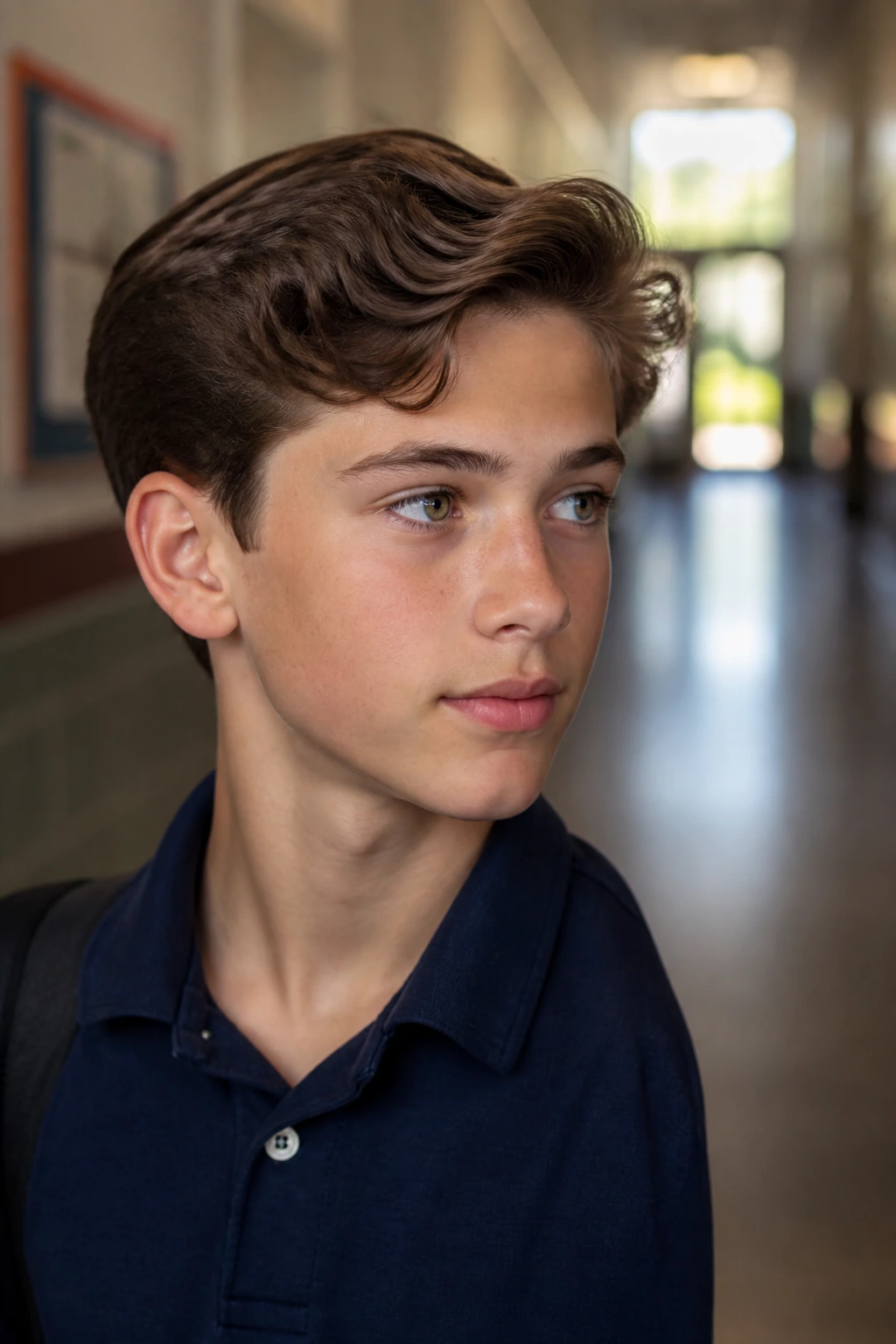
The Thick-Hair Fix: If the hair is dense and puffs out by noon, ask for internal layering and a lower taper. This keeps the sides from ballooning while preserving movement up top.
The Fine-Hair Version: Keep the top a little shorter and skip heavy creams. A light mousse or spray gives fine waves enough body without weighing them down.
The Low-Maintenance School Cut: Choose a side-swept taper or short scissor cut with movement. Both stay neat after sleep, sports, and a rushed morning.
The Dress-Up Version: A side part, Ivy League, or swept-back school cut gives the cleanest finish for events. These styles look sharp without needing a lot of product, which is a nice trade.
The Grow-Out Version: Mini bro flow, surfer shag, and long layered waves are the easiest styles to stretch between haircuts. They keep their shape even when the trim starts getting soft around the edges.
Keeping Wavy Hair in Shape Between Cuts
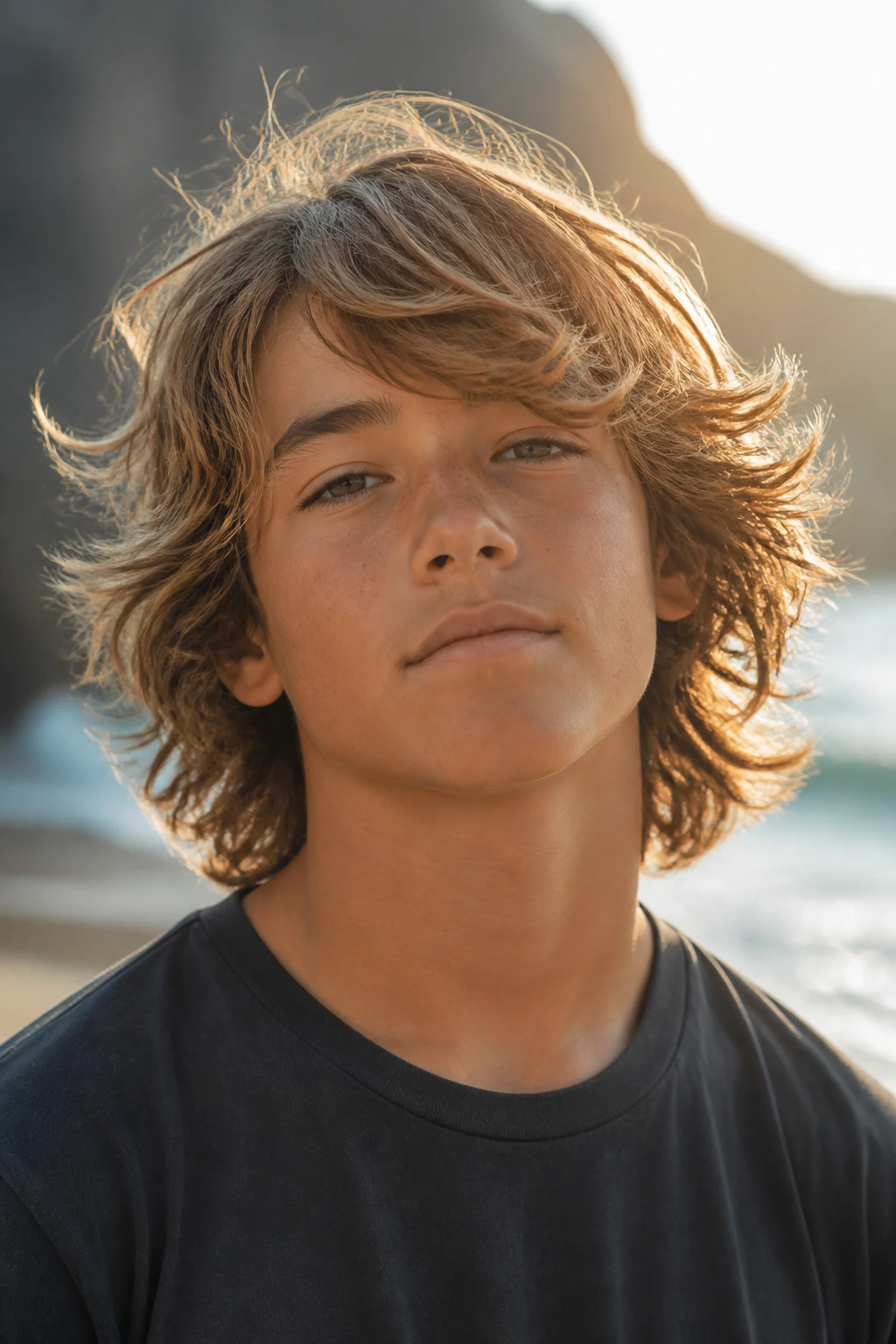
Wavy hair usually looks best with a wash routine that isn’t too aggressive. For most boys, two to four washes a week is enough, unless they’re drenched in sweat or have very fine hair that gets oily quickly. Too much washing can strip the natural shape and leave the waves dry and fuzzy.
Trims every four to six weeks keep the sides from swelling and the fringe from getting into the eyes. Longer styles can stretch a bit farther, but once the ends start flipping awkwardly or the crown gets puffy, it’s time.
After washing, pat the hair dry instead of rubbing it hard. Then use a detangler or leave-in on the ends if the hair tangles easily. Sleep matters too. A cotton pillowcase can rough up the surface, while a softer pillowcase keeps the wave pattern from getting wrecked overnight. Not magic. Just less friction.
If the cut starts looking flat, don’t reach for more product first. Try a quick water mist and re-shape the hair with your fingers. Waves often come back to life with less work than people expect.
Frequently Asked Questions
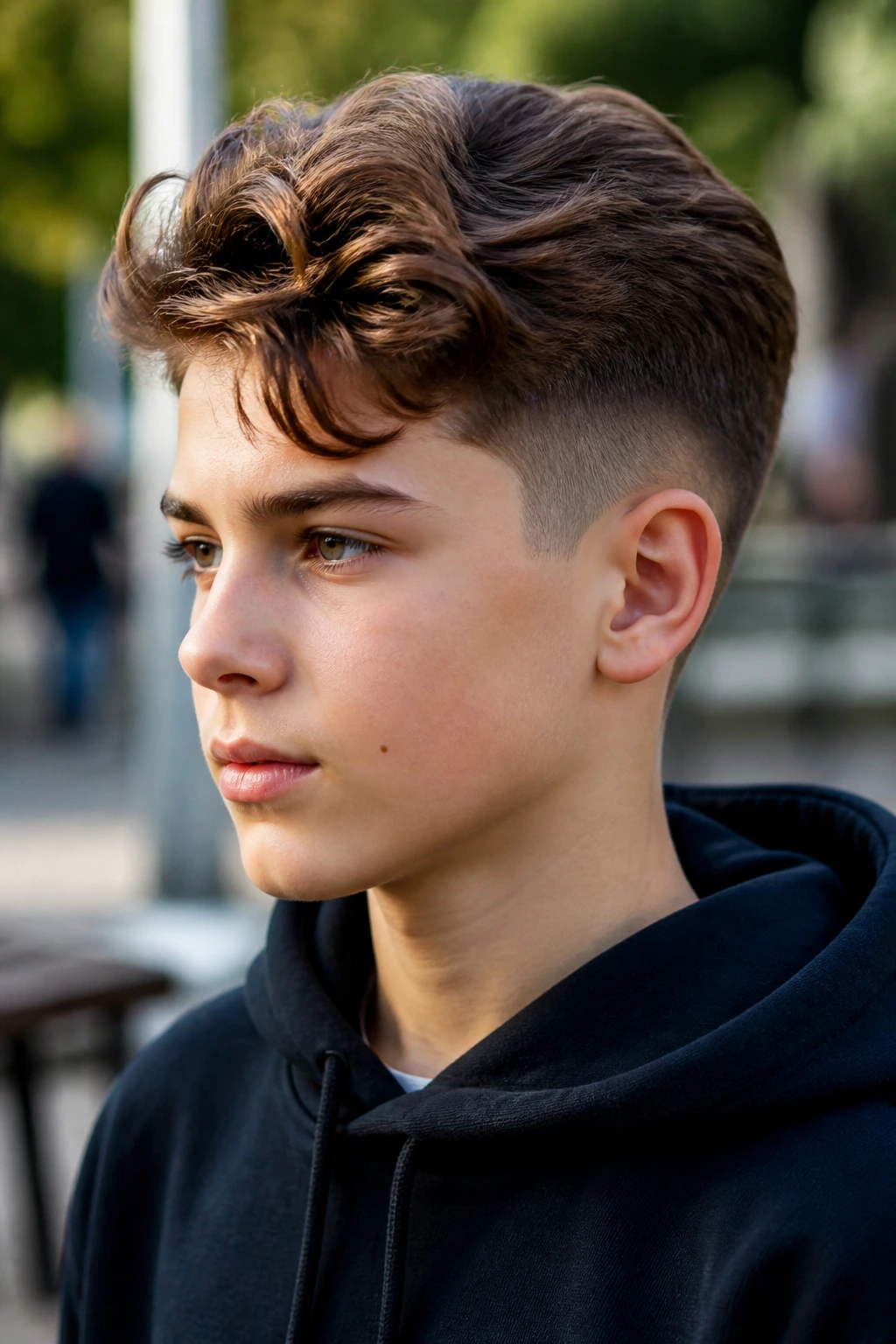
What is the best haircut for a boy with wavy hair?
The best haircut depends on how much time you want to spend styling, but textured crops, side-swept tapers, and soft Ivy League cuts are safe bets. They keep the hair neat without flattening the natural bend, which is the whole reason wavy hair looks good in the first place.
Should wavy hair be cut wet or dry?
A mix is ideal. Wet cutting helps with clean lines and sectioning, but dry checks are useful because waves shrink and change shape once they dry. If the fringe or crown is tricky, ask the barber to pause and look at it dry before taking off more length.
How often should boys with wavy hair get haircuts?
Most wavy cuts need a trim every four to six weeks to keep the outline clean. Longer styles can go a little longer, but the sides and neckline usually need tidying before the top does.
What product works best for wavy boys’ hair?
Light cream, mousse, or matte paste usually works better than hard gel. Cream keeps the hair soft, mousse gives lift, and paste adds shape to shorter styles without turning the hair shiny or crunchy.
How do I stop my child’s waves from puffing out after school?
Keep the sides tapered, leave enough weight at the crown, and avoid rubbing the hair dry with a rough towel. If the hair still puffs up, a little leave-in conditioner or a water mist can settle the bend again.
Can a fade work with wavy hair?
Yes, but the fade should usually stay low or soft so the top keeps enough balance. A high fade can make the top look wide or disconnected, especially if the waves are thick.
What if my child hates hair product?
Choose a cut that behaves well with water alone, like a side-swept taper, short scissor cut, or textured crop. Those styles need less help because the haircut itself does most of the shaping.
Does wavy hair need to be blow-dried?
Not always. Blow-drying helps for quiffs, brushed-back looks, and cleaner parts, but many wavy cuts look better air-dried halfway and then shaped with fingers. If you do use a dryer, keep the heat low and the nozzle moving.
A Cut That Lets the Waves Stay Wavy
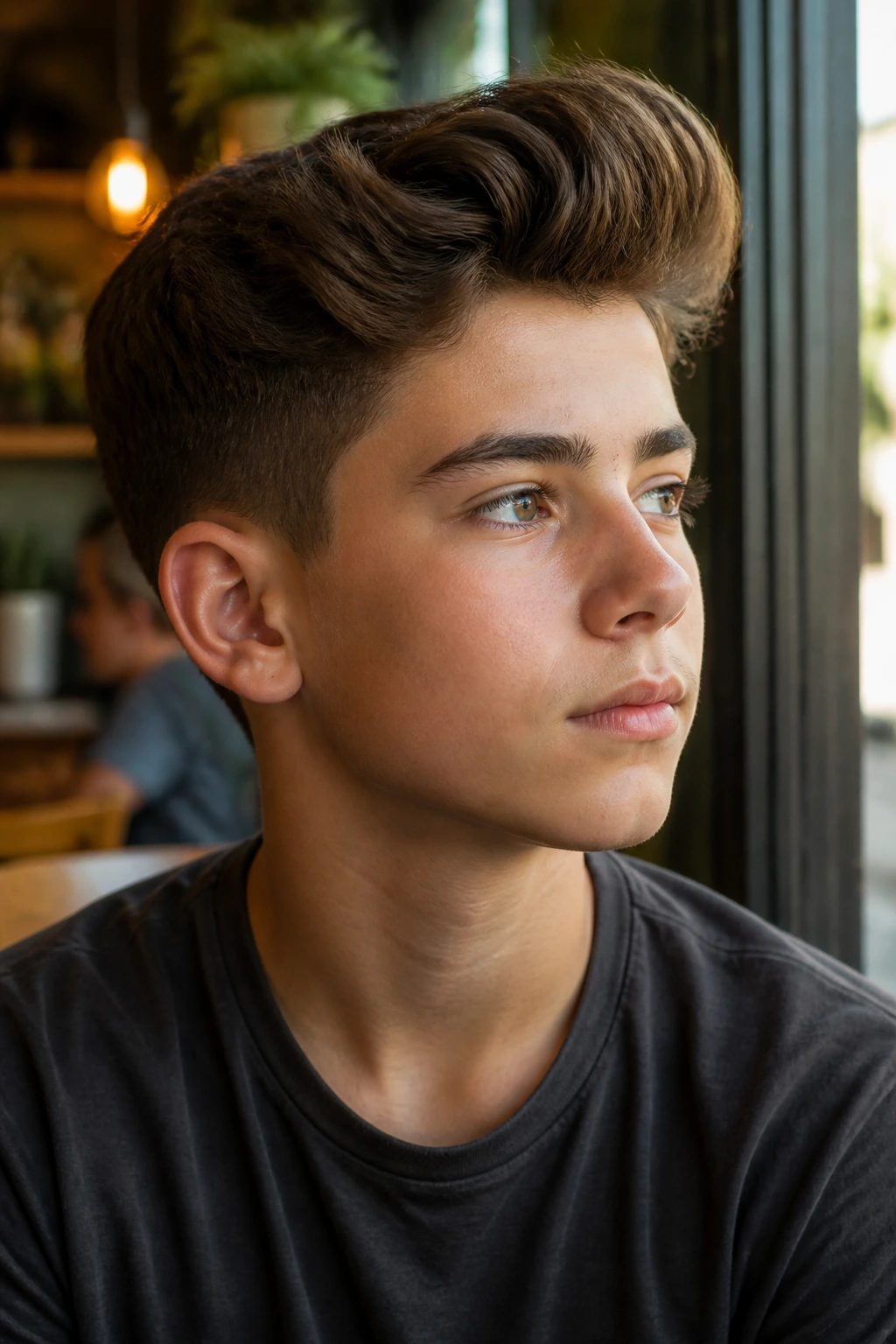
The nicest thing about wavy hair is that it already has personality. The haircut’s job is not to erase that. It’s to give it a shape that still looks neat when the morning is rushed, the car ride is bumpy, and the child has already tugged at it once or twice before school.
The styles that work best here all share the same idea: keep the sides controlled, leave enough length on top, and don’t fight the bend. That’s the part so many bad haircuts miss. Waves don’t need to be flattened into obedience. They just need a better frame.
If you choose one of these cuts, ask for a little more length than the photo might suggest, especially around the fringe and crown. Hair can always be taken off later. Putting it back is the annoying part.