



Going naturally grey on dark brunette hair can feel like the most visible hair change in the room. On a warm brown base, silver doesn’t drift in quietly; it shows up at the roots, around the temples, and along the part line like it has something to say. The wrong cut makes that contrast look blunt. The right one turns it into shape, shine, and a little bit of attitude.
Grey hair on brunettes also changes the texture conversation. The first few silver strands often feel wirier, a touch drier, and a little less obedient than the darker hair they’re living beside. That’s why one-length lengths, flat ends, and heavy blowouts can start behaving badly all at once. A cut that worked two years ago can suddenly feel too heavy, too blocky, or too needy.
The best grey-transition styles do one simple thing well: they give the silver a job. A blunt edge. A soft fringe. A bend through the ends. A lifted crown. A tucked-back shape that makes the temple grey look planned instead of provisional. Once that idea clicks, the whole process gets less fussy and a lot more interesting.
Why These Grey-Blending Hairstyles Work on Brunettes
-
Soft edges beat a hard stripe: A little movement around the face breaks up the line where brunette meets silver, so the grow-out looks designed instead of abrupt.
-
Layers control bulk: Grey hair often puffs in places darker hair used to lie flat, and the right layers keep that extra width from turning into a helmet.
-
Bangs change the eye line: Curtain bangs, side-swept fringe, or a clean micro-fringe pull attention upward and away from a stubborn root line.
-
Shorter shapes stretch the in-between stage: Bobs, pixies, and crops remove the heavy ends that make grey regrowth feel long and obvious.
-
Texture becomes part of the style: Coarse silver strands can look sharp, glossy, and expensive when the cut lets them move instead of forcing them into submission.
-
Length still has a place: Long brunettes do not have to chop everything off; they just need a shape that keeps the silver from sitting like a dark-to-light band across the head.
1. Collarbone Lob with Soft Layers
A collarbone lob is the safest place to start if you want the grey transition to look deliberate without giving up length. The ends sit low enough to keep the hair feeling feminine and easy to tuck behind the ears, but the layer work around the face stops the colour change from landing as one hard line.
I like this cut because it leaves room for movement. A soft bend through the mid-lengths makes silver strands catch light in different places, so the grow-out reads as texture, not damage. If your brunette base is still darker at the roots and lighter through the ends, this cut keeps that contrast from looking like a stripe.
It works best with a round brush blow-dry, a loose wave, or even a rough air-dry with mousse. If your hair is fine, keep the layers light and close to the bottom half; if it’s thick, ask for a little more internal weight removal so the ends don’t hang like a curtain.
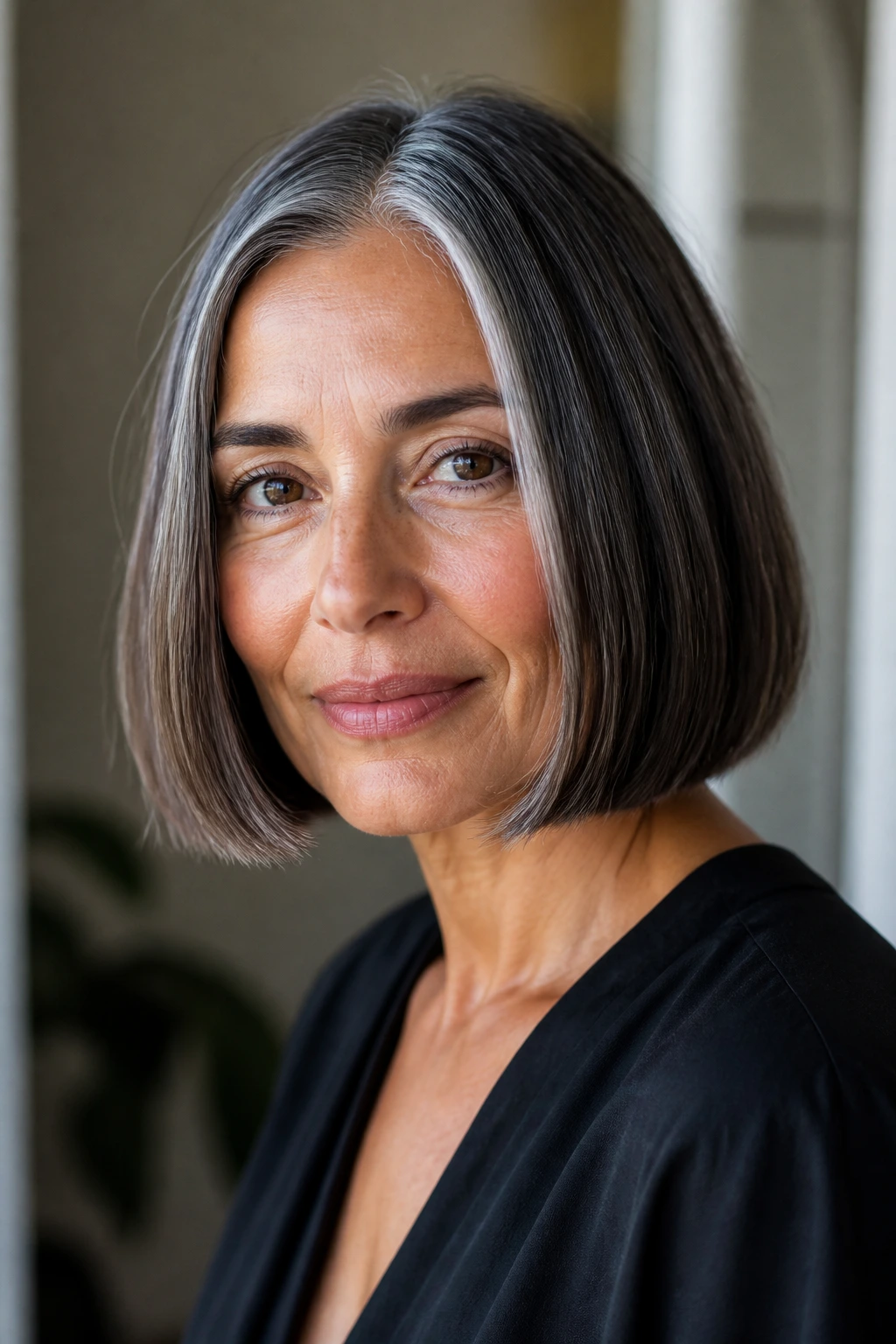
2. Blunt Chin-Length Bob with a Center Part
A blunt chin-length bob is the cleanest way to make silver regrowth look intentional fast. The straight perimeter gives the brunette-and-grey mix a graphic edge, which means the eye reads shape before it reads root line. That’s the whole trick.
This cut is sharpest on straight to slightly wavy hair. On dark brunettes, the silver at the temples often pops against the darker mid-lengths, and the blunt line keeps that contrast tidy instead of messy. A center part makes the whole thing feel modern and calm. A zigzag part can also soften a very clear grow-out line if your grey comes in patchy.
Best when: you want low drama, clean lines, and easy styling.
Watch out for: thick, wavy hair that turns triangle-shaped if the bob is cut too boxy.
Keep the ends polished with a flat brush or a quick pass of a flat iron, but do not press the life out of it. The shine matters more than perfect poker-straight hair here.
3. Curtain Bangs and Long Layers
Curtain bangs are a quiet lifesaver for brunettes growing grey at the front. They sit right where the silver often appears first, which means they disguise the harshest part of the transition without making you hide under a full fringe. Long layers keep the rest of the hair moving so the shape doesn’t look heavy.
What I like most is the way curtain bangs soften the face while the rest of the hair keeps its length. You get lift at the eyes, a little softness around the cheekbones, and less attention on any one root band. If your grey is clustered at the temples, this is one of the best ways to make it look like a style decision.
How to Style It
Blow-dry the bangs away from the face with a medium round brush, then bend the ends of the layers with a 1-inch iron or a large curling wand. The goal is a soft curve, not a pageant curl. If the bangs separate in the middle by noon, that’s fine; they should look lived in, not lacquered.
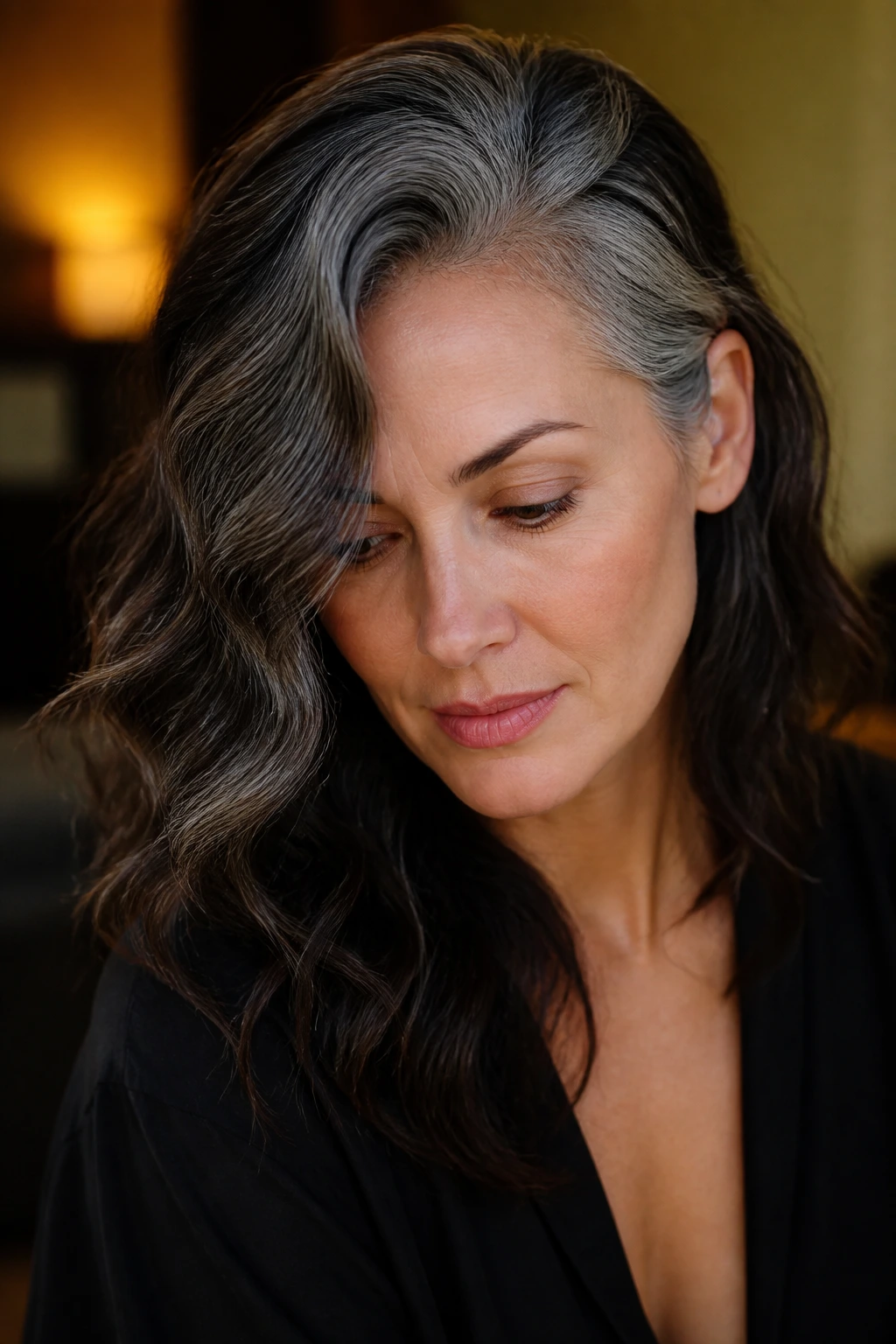
4. Deep Side Part with Loose Waves
A deep side part changes everything about brunette-to-grey hair. It moves the visual weight away from the center line, and that alone can make regrowth look softer. Add loose waves, and the silver starts to break up across the surface instead of forming one obvious border.
This is the style I’d pick for anyone whose grey comes in one dominant stripe or at one temple. The deeper part hides the most contrast-heavy section, then the waves blur what’s left. It’s especially good on medium-length hair that has enough weight to hold the part without collapsing.
The one catch: a deep side part needs a little commitment. If your hair has lived on the same center part for years, clip the new part into place while it’s damp and let it dry that way. That little bit of training helps the hair fall where you want it instead of wandering back home.
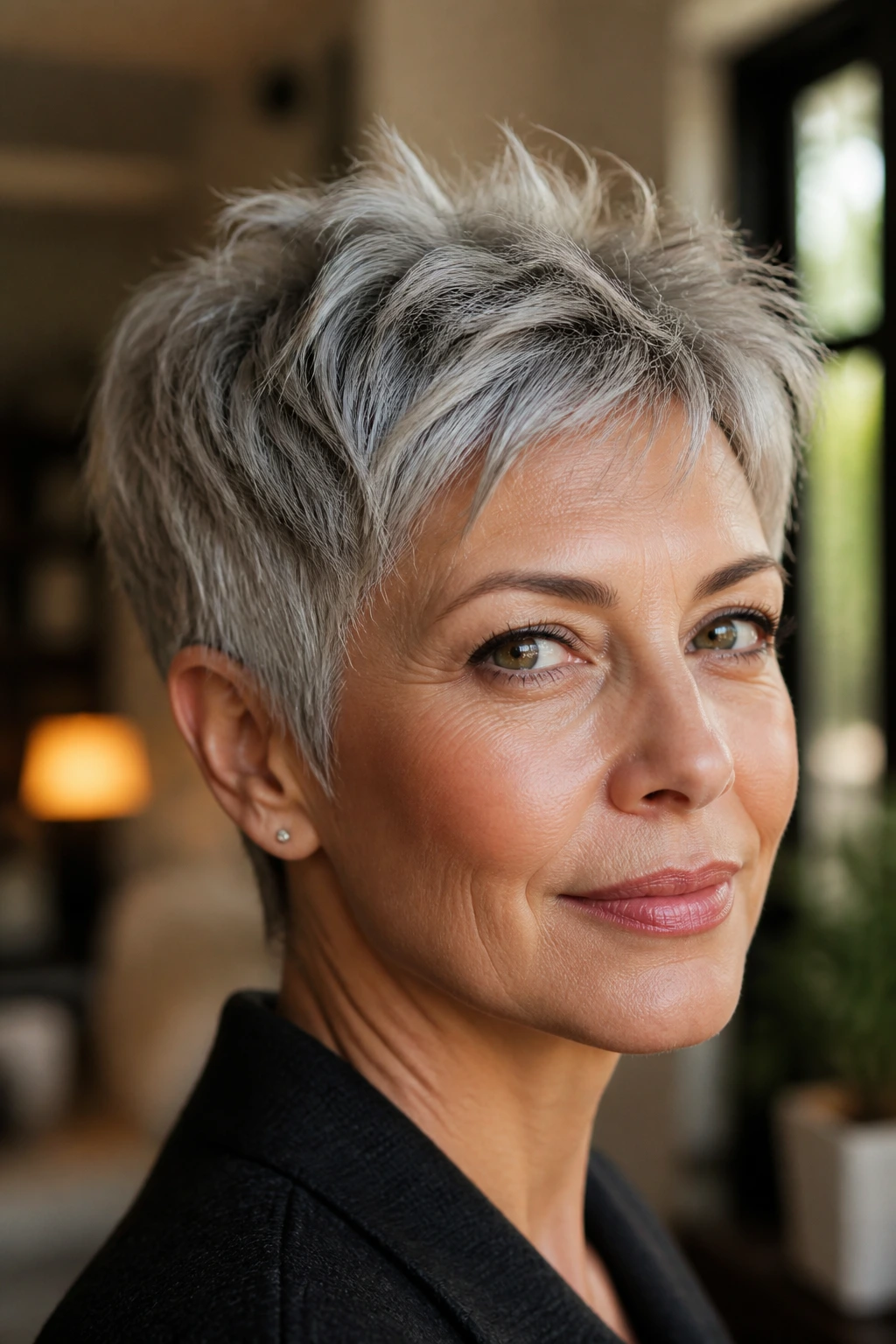
5. Textured Pixie with Piecey Top
A textured pixie is the cut that makes silver hair look crisp instead of soft and faded. Short hair shows sheen better than long hair, and grey strands often catch light with a satin finish that dark brown never quite gets. Piecey texture on top keeps the cut from feeling too formal.
This is a strong move if you’re tired of wrestling with the same old grow-out line every six weeks. The haircut shifts attention to the eyes, jaw, and cheekbones, not the roots. It also suits coarse hair well because the texture can work for you instead of against you.
Why it helps the transition
Short silver pieces tend to show their shape sooner, so the mix of brunette and grey feels intentional faster. You can rough it up with a dab of matte paste, or smooth the crown with a tiny amount of styling cream if you want it neater.
What to know
A pixie needs regular trims. Not occasional. Regular. If you hate salon appointments, this is not your happiest choice.
6. Choppy Shag with Airy Ends
A shag makes grey look like motion. That’s the simplest way to say it. The choppy layers and airy ends turn wiry silver strands into texture instead of trouble, which is why this cut often looks better at month four of the grow-out than it did on day one.
Dark brunettes do well with this shape because the layers keep the color mix from sitting in one heavy block. The silver catches on different lengths, especially around the crown and face frame, and the whole style feels alive. If your hair is already a little wild, the shag stops fighting it.
Best for: wavy and coarse hair that gets puffier when it’s left long.
Less ideal for: very fine hair that needs a stronger perimeter to feel full.
Use mousse at the roots and a diffuser if you want lift, or air-dry and scrunch if you prefer the bend to stay loose. The shag should look like it moved, not like you spent an hour trying to persuade it.
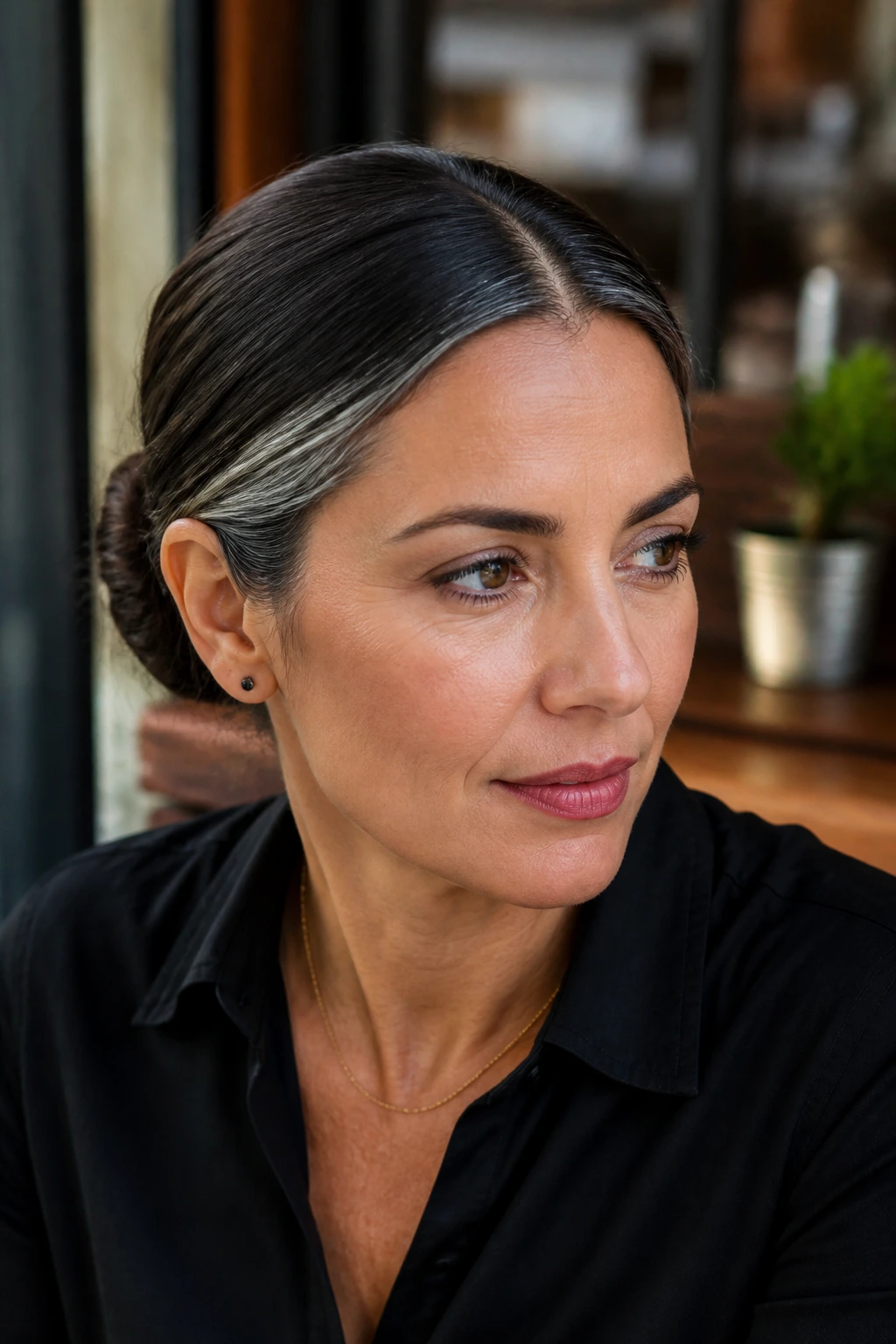
7. Sleek Low Bun with a Clean Part
A low bun is not boring when the part is neat and the hairline is doing something interesting. On dark brunettes going grey, a smooth bun puts the temple silver right out in the open, where it can look intentional instead of accidental. That contrast can be chic in a very plain, very useful way.
This style works especially well when the grow-out at the front is patchier than the rest. A middle part with a low bun makes the silver frame the face, while a deep side part gives the whole look more softness. Either way, the base needs to be tidy. Flyaways are fine. Frizz that looks unbrushed is not the same thing.
A light serum on the mid-lengths and a soft brush at the crown is enough. If you slick everything back too hard, the style starts to feel severe. Keep one or two small face pieces loose if you want the bun to read polished, not stern.
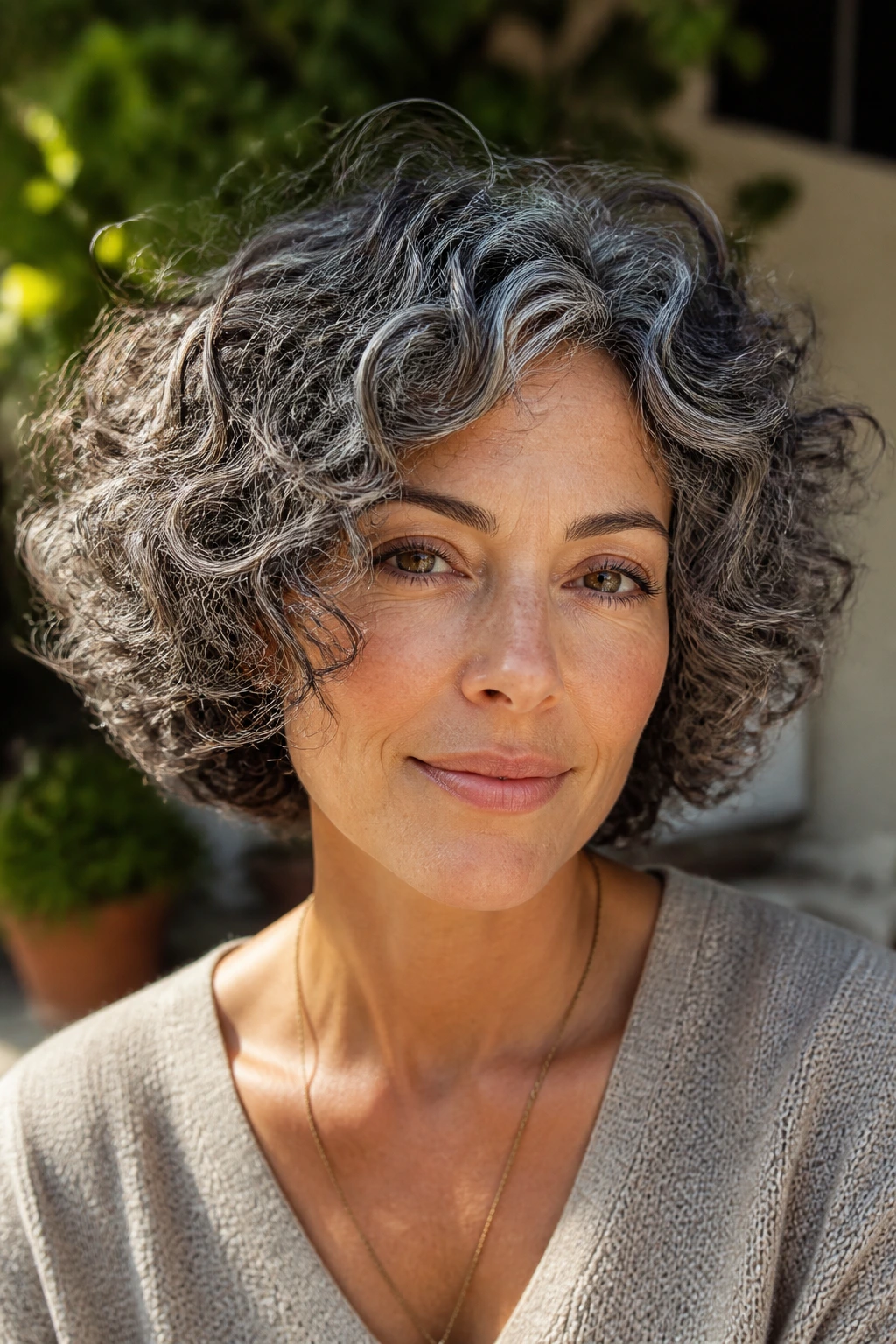
8. Curly Bob with Rounded Shape
Grey curls have a strange habit of looking both softer and louder at the same time. A rounded curly bob handles that well because it follows the natural shape of the curl pattern instead of trying to flatten it. The silver ends up looking like a halo, not a problem.
This cut is especially good when grey starts appearing unevenly through curly brunette hair. The shape keeps the volume balanced, so one bright section does not dominate the entire head. A rounded bob also gives curls enough room to spring without creating a triangle, which is a common annoyance when the hair dries and expands.
Styling note
Use a leave-in conditioner, then a curl cream or light gel, and diffuse until the roots are dry enough to hold the shape. Don’t rake through the curl once it’s set. That’s how you turn a nice bob into puff.
9. Feathered Shoulder Cut
Feathering sounds old-fashioned until you see what it does to grey grow-out. The soft, tapered ends keep the hair from sitting like one thick mass, which helps silver strands blend into the brunette base more gently. On shoulder-length hair, that movement matters.
This cut is a smart choice if you want length but not bulk. Feathered layers around the face and collarbone make the transition feel lighter, and they stop the ends from looking heavy once the darker colour starts to fade. If your hair has a bit of natural bend, even better. The cut loves motion.
The main thing to avoid is over-layering. Too much feathering can thin the ends and make grey strands look wispy in a bad way. Ask for softness, not shredding.
10. Long U-Cut with Face Framing
If you are not ready to cut off your length, a U-shaped cut is the long-hair answer that usually behaves best with grey coming in. The perimeter stays full, which keeps the hair from looking stringy, while the subtle U shape removes enough bulk to stop the ends from dragging everything down.
The face framing matters here. A few softer pieces around the cheeks and jawline stop the grow-out from becoming one uninterrupted wall of dark and silver. That little bit of shape makes a long brunette transition feel polished, even when you’ve done almost nothing else that morning.
A long U-cut is also a good match for natural waves. The shape keeps the hair from turning into a blunt blanket, and the grey strands scatter through the darker lengths in a way that looks calm instead of stripey. If your hair is very fine, keep the layers minimal or you’ll lose too much density.
11. Wavy Wolf Cut
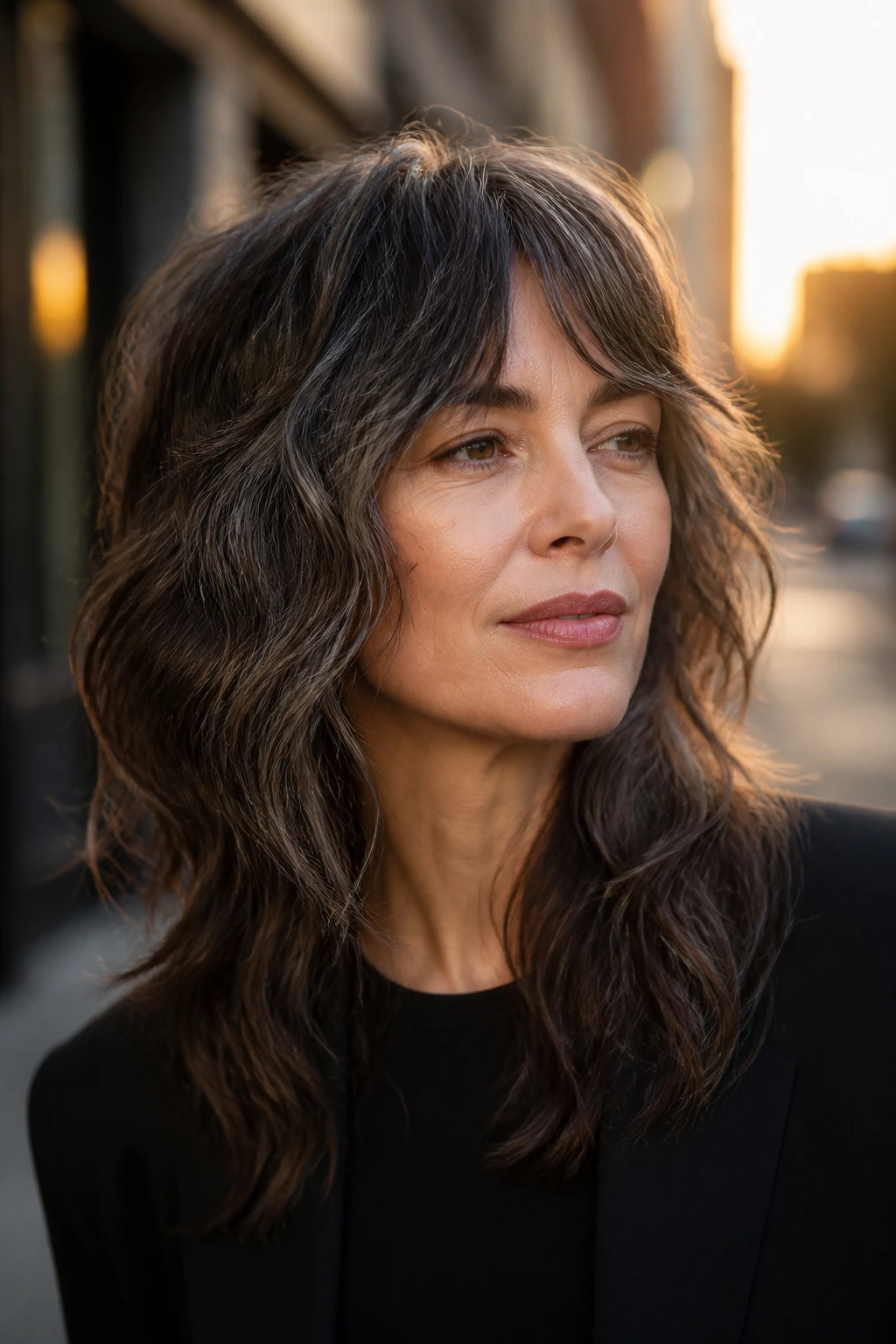
The wolf cut is the one that rewards a bit of mess. It’s choppy, it’s irregular, and it makes silver strands look like part of the texture story rather than a separate event. On brunettes, that can be a relief. The grow-out stops acting like a problem and starts behaving like dimension.
What gives this cut its edge is the contrast between shorter layers at the crown and longer pieces at the bottom. Grey at the top reads a little louder in that structure, which is exactly why the style works. The shape does the heavy lifting, so you do not have to blow-dry every day.
What to watch for
If your hair is very fine, the wolf cut can get too thin through the ends. If it is very thick, ask for the layers to be softened so the silhouette doesn’t look jagged. A little styling cream or texture spray is enough. The goal is movement, not grit.
12. Chin-Length French Bob
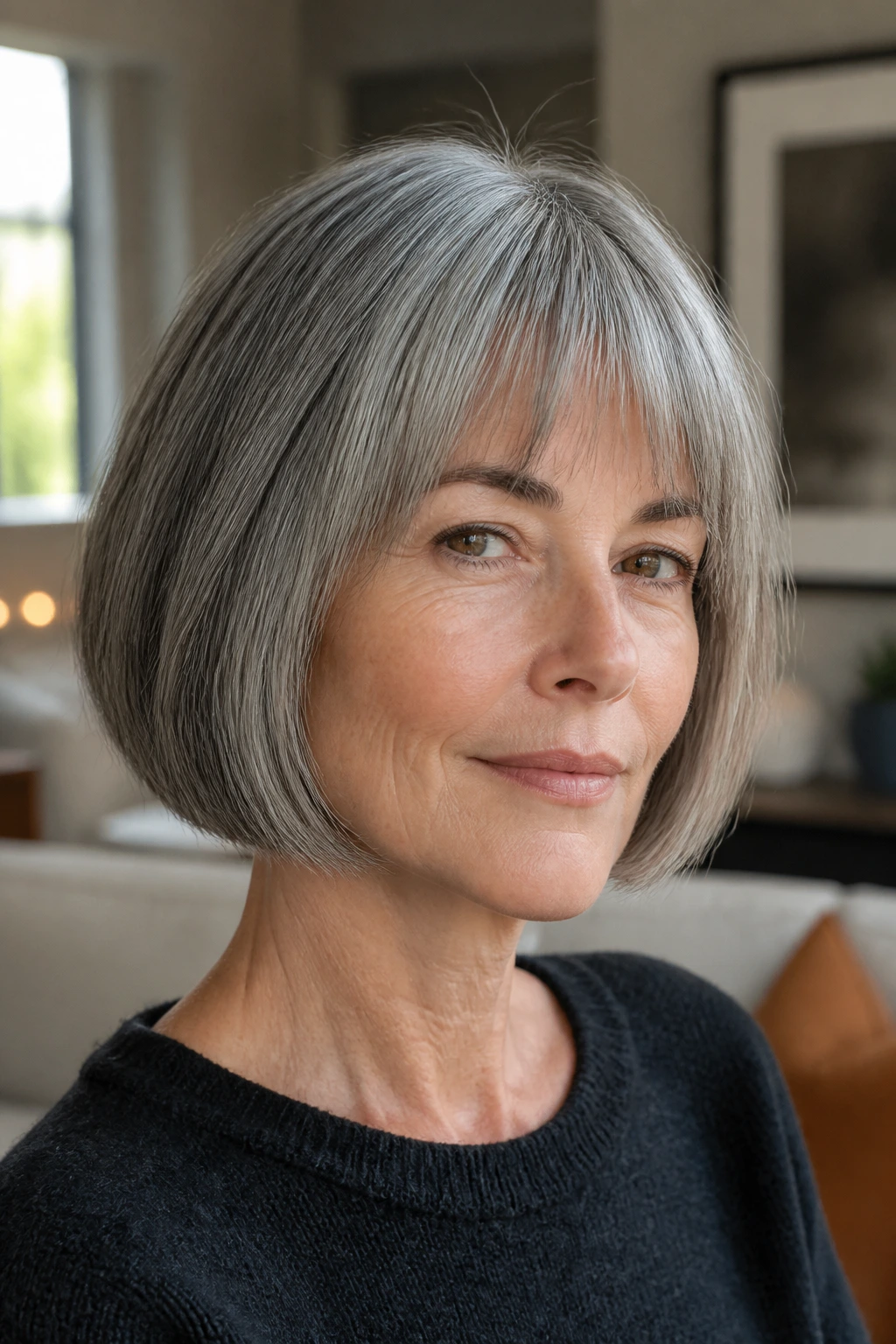
A French bob makes grey look deliberate because it leans into structure. The chin-length edge, usually paired with a fringe or a near-fringe, gives dark brunette hair a clean frame and keeps the silver from appearing as a random band at the roots. It has a real point of view.
This cut is especially good if your grey shows most clearly around the hairline. The shorter length brings the face into focus, while the blunt edge below the jawline makes the overall shape feel purposeful. You do need regular trims, though. A French bob loses its sharpness fast when it grows out too far.
Tip: If your hair is wavy, keep the bob a touch longer than chin length. That extra half-inch keeps the ends from flipping out in odd places.
13. Tapered Crop with Short Sides
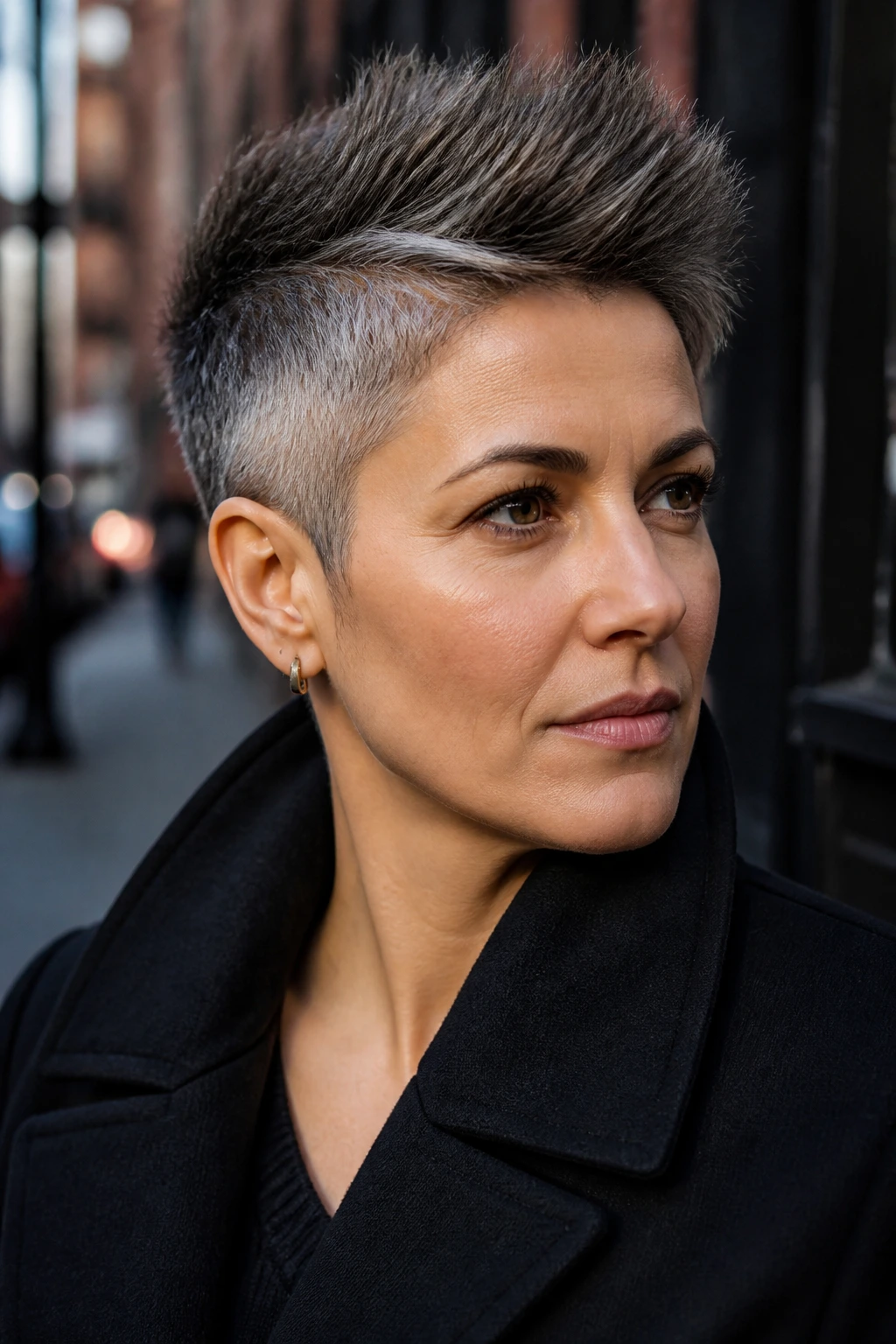
A tapered crop is one of the boldest ways to wear grey on dark hair, and I mean that in a good way. The short sides and lifted crown pull all the attention to the shape of the head, which means the silver at the temples suddenly looks architectural instead of inconvenient.
This cut is a gift for coarse, dense hair. It removes bulk where the hair usually fights back and keeps enough length on top for movement. If your grey comes in streaky through the sideburn area, this is one of the quickest ways to make it look like part of the design. It’s not a cut that asks permission.
A matte paste or soft wax works better than shine-heavy product here. Keep the top a little piecey. If you make it too neat, you lose the edge that makes the cut sing.
14. Angled Bob with a Longer Front
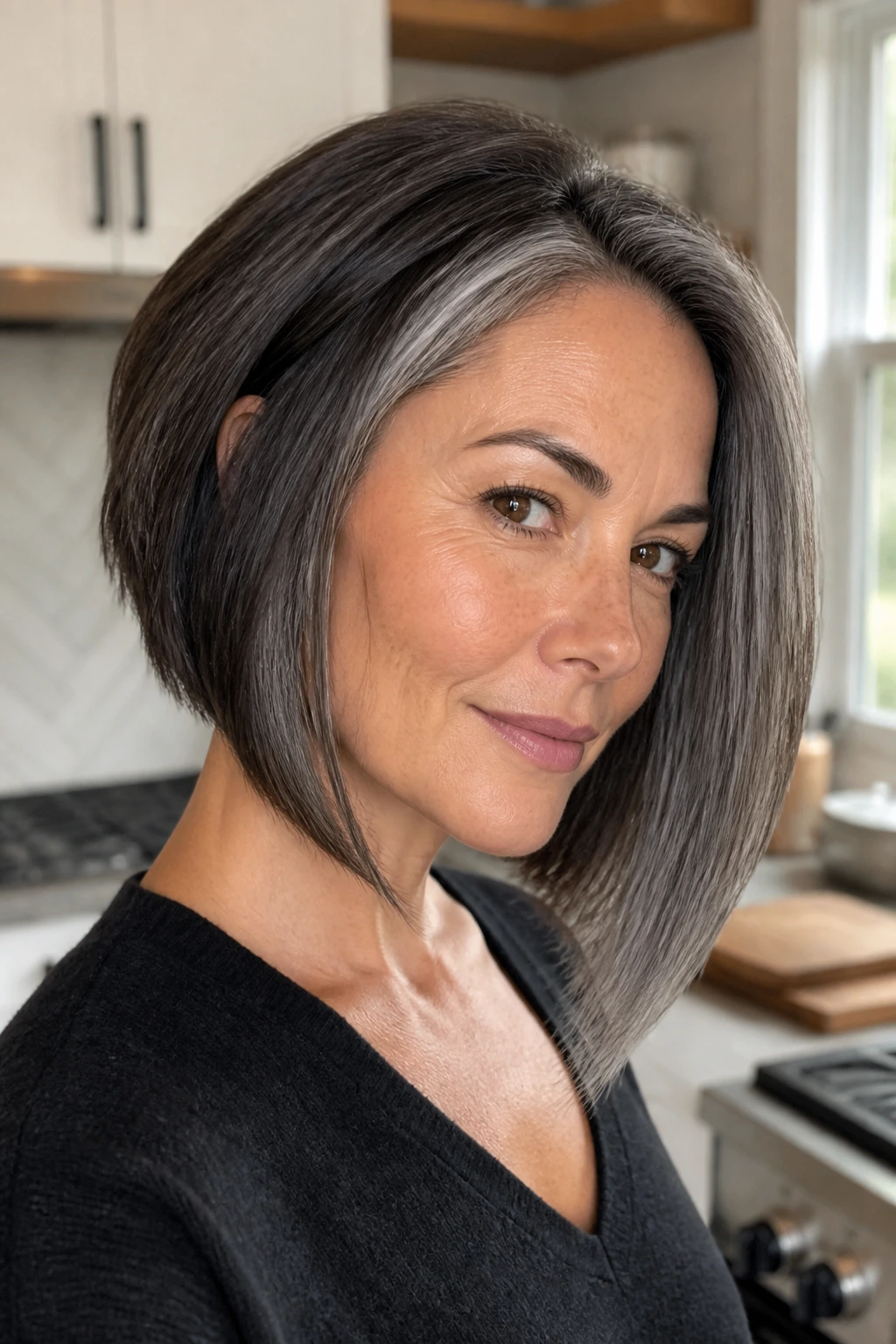
An angled bob gives grey hair a direction. The shorter back lifts the neck area, the longer front pieces frame the jaw, and the whole shape looks intentional even when the color transition is still uneven. It is one of the best cuts for a brunette who wants movement without losing that dark, anchored feel.
The angle also helps if your grey appears stronger on one side than the other. A longer front piece on the heavier side can soften the contrast, while the back keeps the whole shape neat. That’s a small detail, but hair is full of those little fixes.
Blow-dry with a round brush if you want the ends to curve under. Or flip them outward for a sharper finish. The angled bob can handle either, which is part of why it stays useful for so long.
15. Half-Up Twist with Loose Length
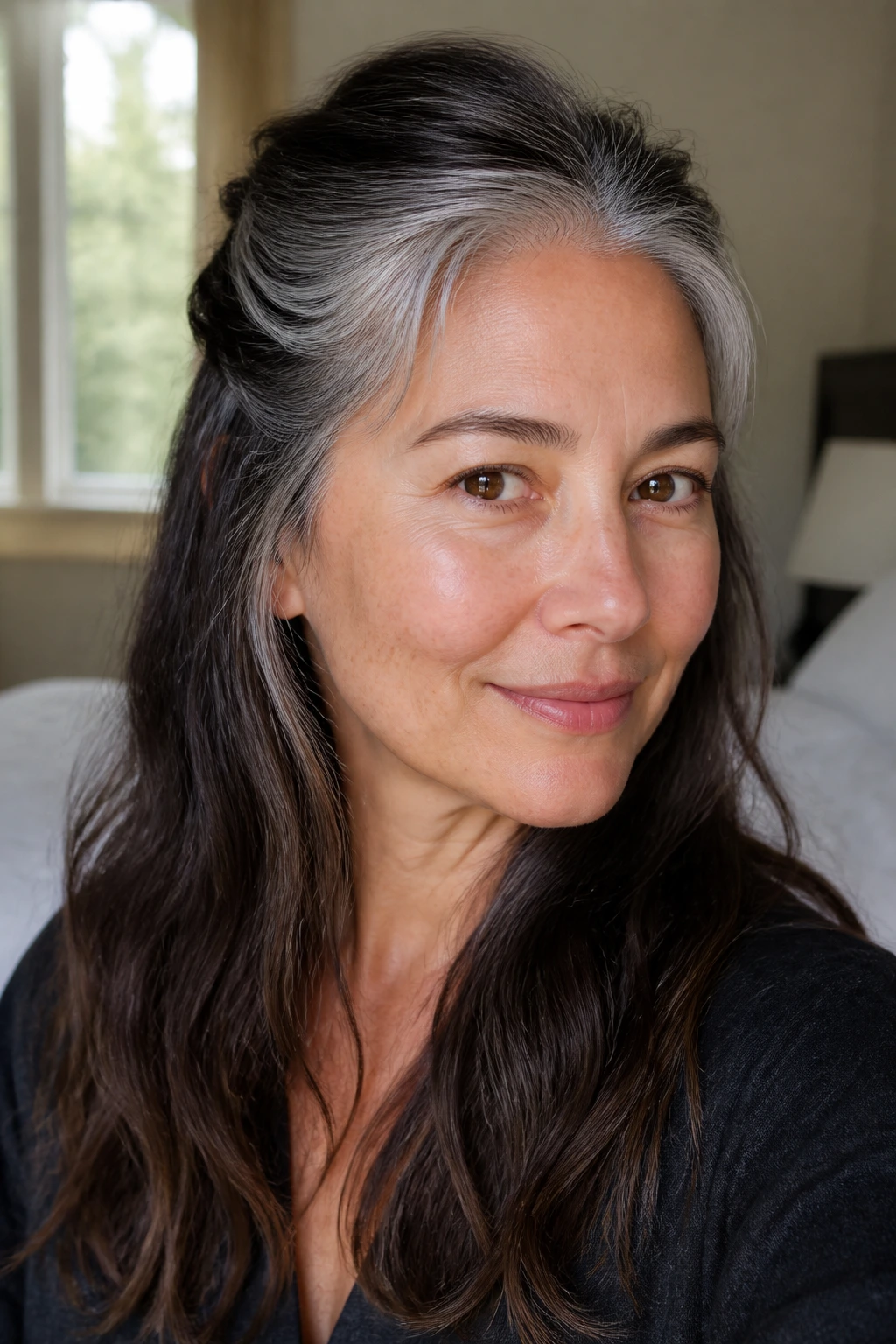
A half-up twist is the kind of styling move that looks fancier than the work it takes. On grey-transition brunettes, it keeps the temple area open and lets the mixed colour around the crown become part of the style. The loose length underneath keeps it from feeling too severe.
This is a good option for in-between washes or the days when your hair has lost the plot a little. Twist back a section from each side, pin it loosely at the back, and let the ends fall. The grey at the front stays visible, but the overall look feels controlled.
You can make this cleaner with a smoothing cream or softer with a few face pieces left out. If your hair is layered, this style also hides the awkward bits while the cut is growing out. Handy. No drama required.
16. Wrapped Ponytail with Lift at the Crown
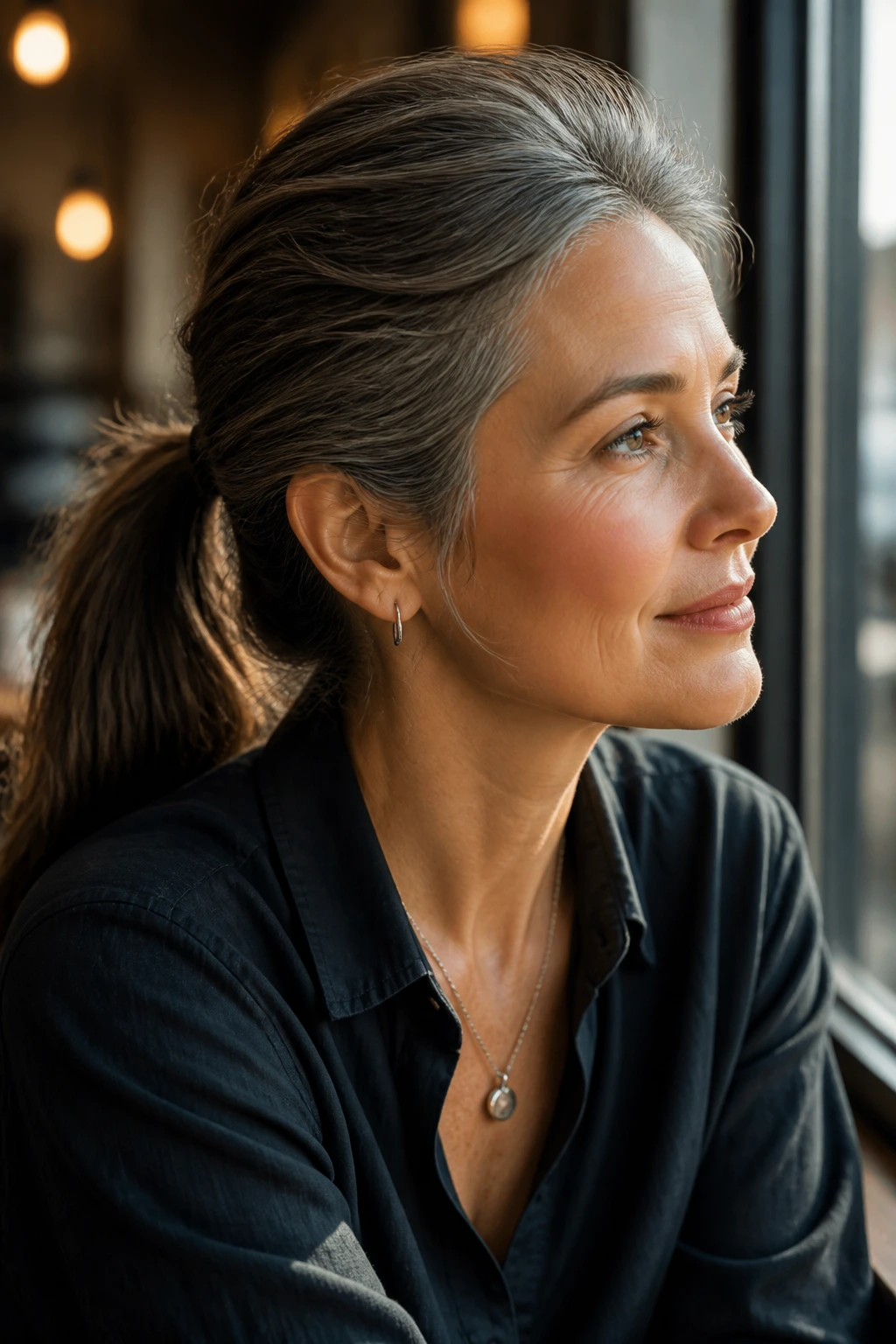
A wrapped ponytail is the opposite of an afterthought ponytail. The base looks finished, the crown has a little lift, and the silver around the hairline gets to do its own thing. For brunettes letting grey come in naturally, that can be a very sharp look.
This works best when the ponytail sits low or mid-height and the base is wrapped with a thin section of hair. The wrap hides the elastic, which makes the whole thing feel more deliberate. A touch of root lift at the crown keeps the style from flattening the face. If the hair is too tight at the temples, the grey line can look harsh. Keep some softness.
A wrapped ponytail is also one of the easiest ways to wear mixed-texture hair on a day when you do not want to fight it. Smooth the top, leave the tail a bit textured, and move on.
17. Braided Crown with Loose Ends
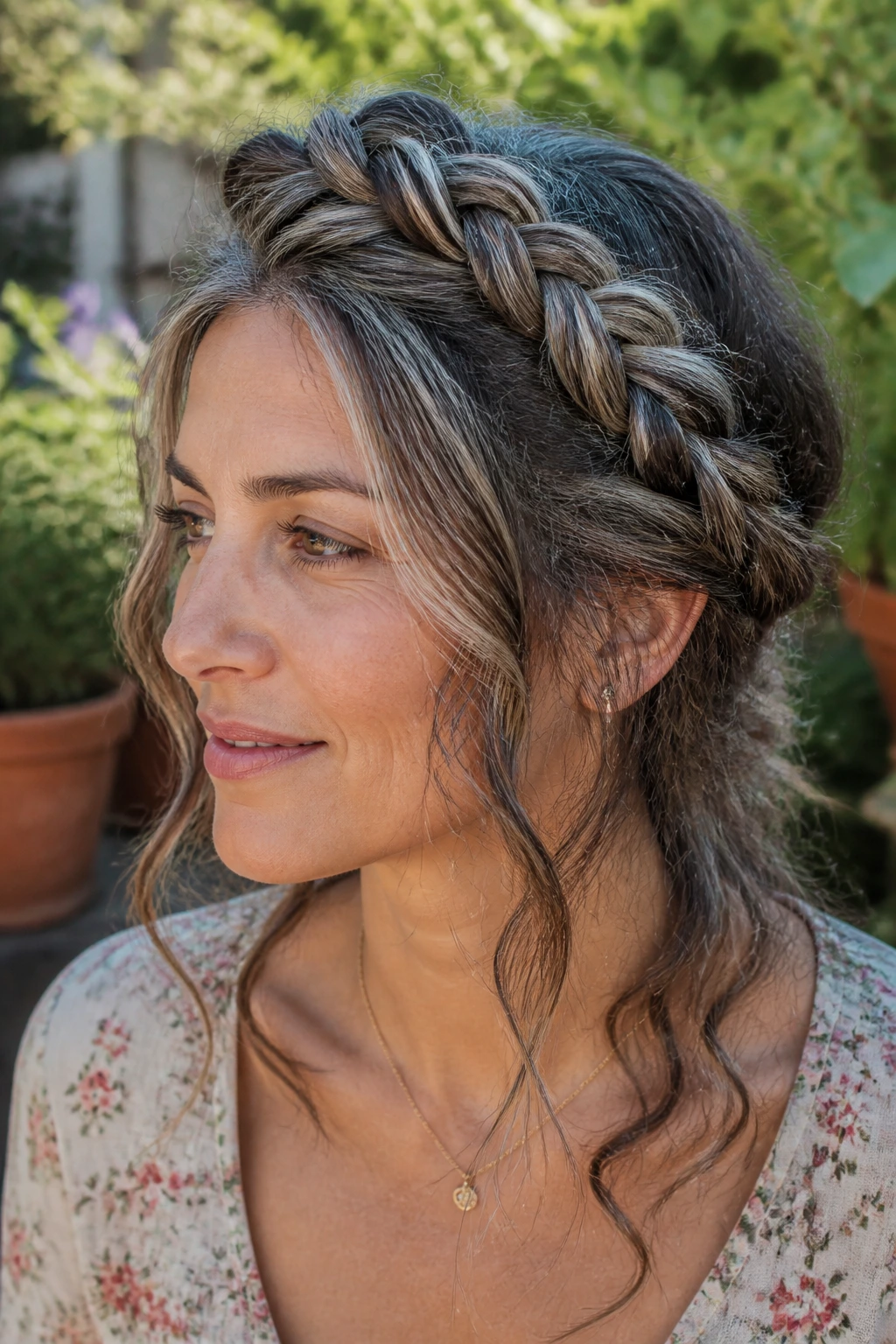
Braids can save a patchy grey grow-out from looking unfinished. A braided crown wraps the face with structure and turns uneven colour placement into a texture story. On brunettes, that’s useful because the braid picks up both the brown and the silver as separate threads.
This style is especially good if the grey is concentrated around the hairline or the temples. You braid back from the front, pin around the crown, and let the remaining length fall loose. The result feels romantic, but not in a sugary way. More practical than precious.
Best for
Long or medium hair with enough length to braid cleanly.
Not ideal for
Very slippery, freshly washed hair with no grip at all.
Use a bit of texture spray or dry shampoo at the roots first. Braids hold better when the hair has a little friction.
18. Collarbone Flip-Out Cut
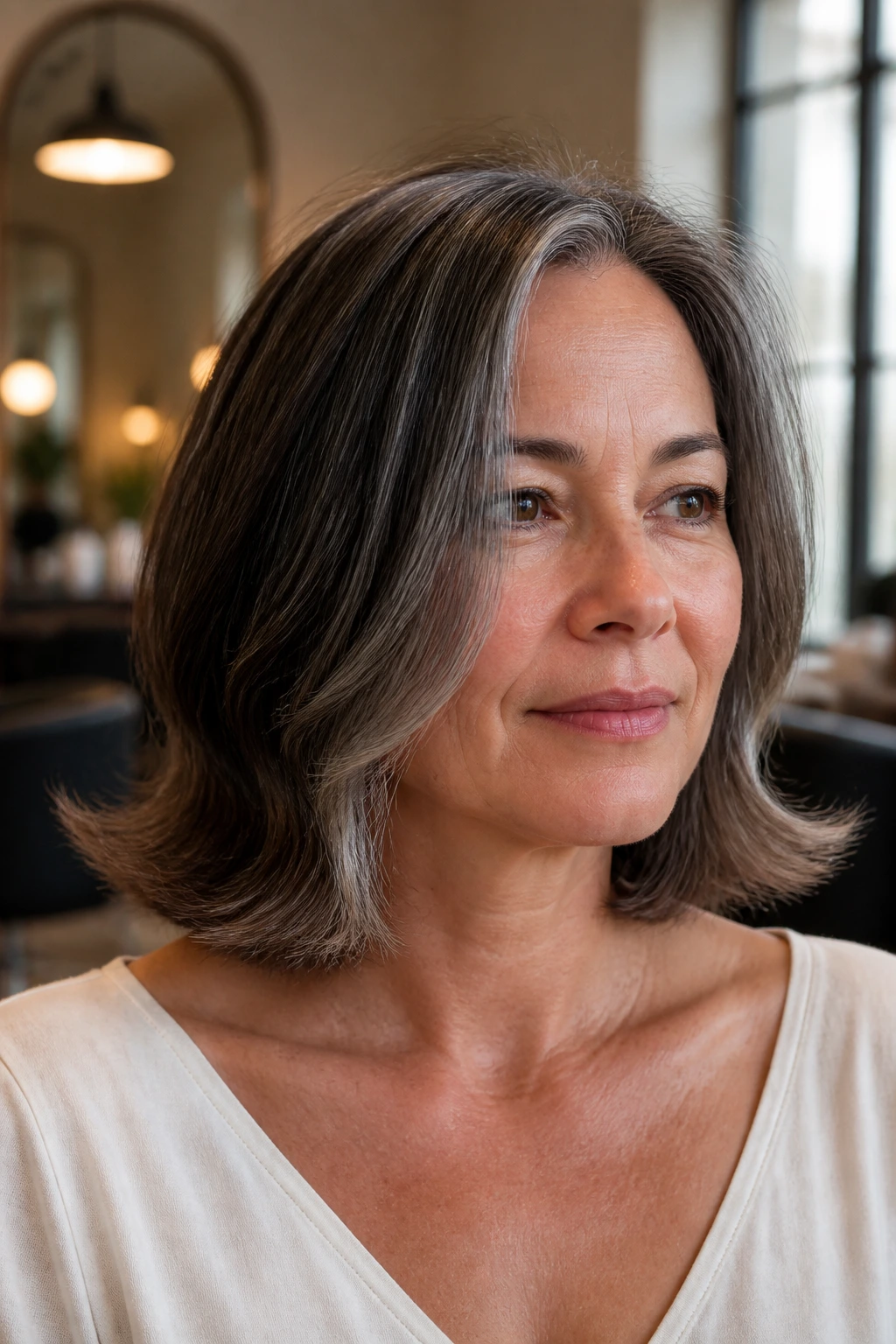
The flip-out ends give this cut its personality. A collarbone-length shape already works well for grey grow-out, but the subtle outward bend at the ends adds a retro lift that keeps the style from feeling plain. On brunettes, that movement helps the silver pieces scatter instead of sitting in one heavy block.
I like this one for medium-density hair that needs a little wake-up. The flip-out ends create width at the bottom, which balances a face that feels a bit long or narrow. If your hair tends to lay flat by the afternoon, the flip is also a nice way to cheat a little volume without a full blowout.
A round brush, a quick twist at the ends, and a light hold spray are enough. Don’t overdo the curl. You want a bend, not a ringlet.
19. Straight Cut with Soft Face-Framing Layers
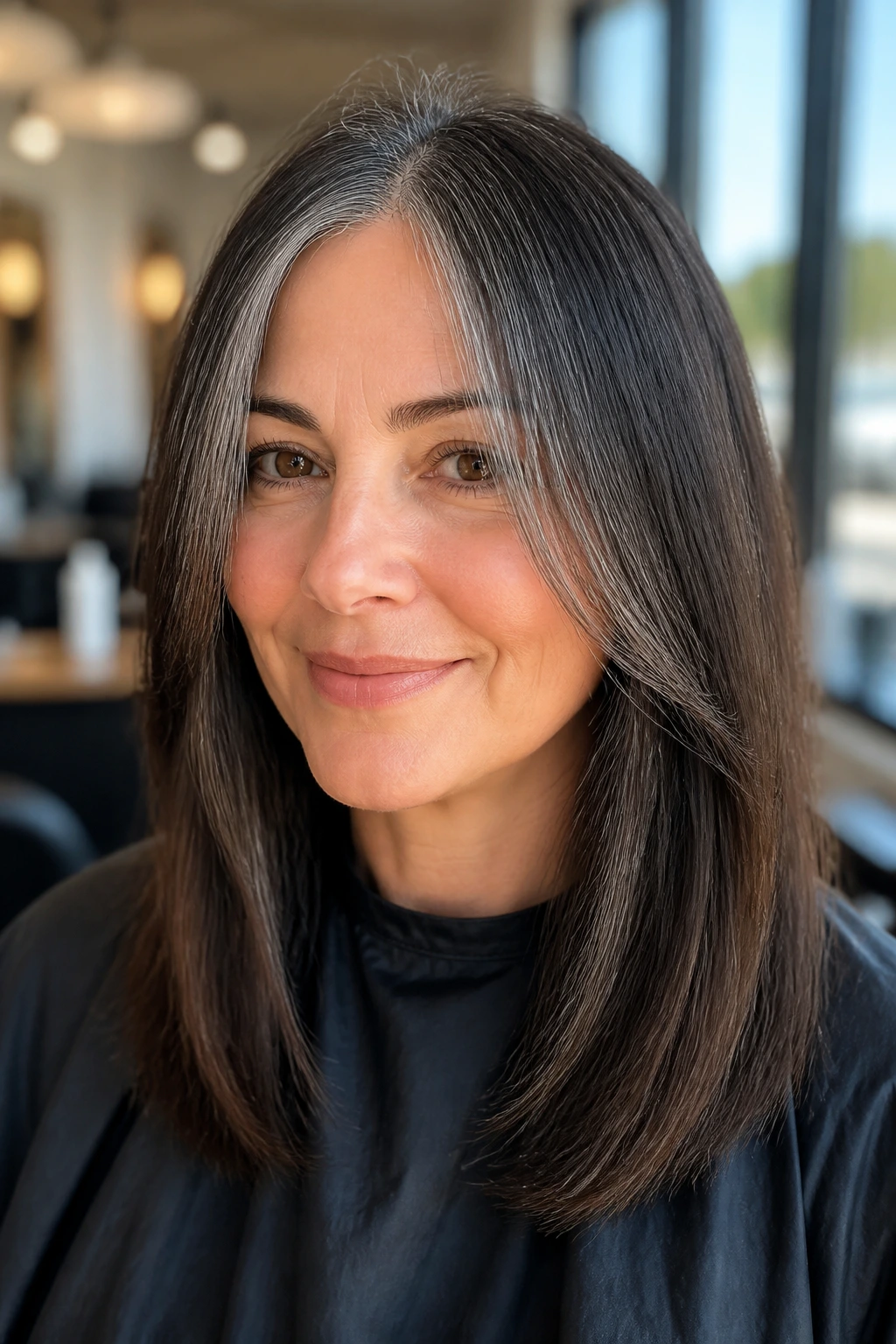
Straight hair can be unforgiving. It shows every line, every end, every root shift. That’s exactly why soft face-framing layers help brunette-to-grey hair so much. They break up the long vertical sheet and make the silver around the front look like part of the design.
This cut is a good fit if you like your hair smooth and controlled. The perimeter stays clean, while the layers around the cheekbones and jaw keep the whole thing from going flat. If you wear glasses, this is even better; the frames and the face-framing pieces echo each other in a nice, tidy way.
A flat iron can sharpen the ends, but keep the movement soft around the face. The trick is not perfection. It’s balance.
20. Voluminous Blowout with Side Fringe
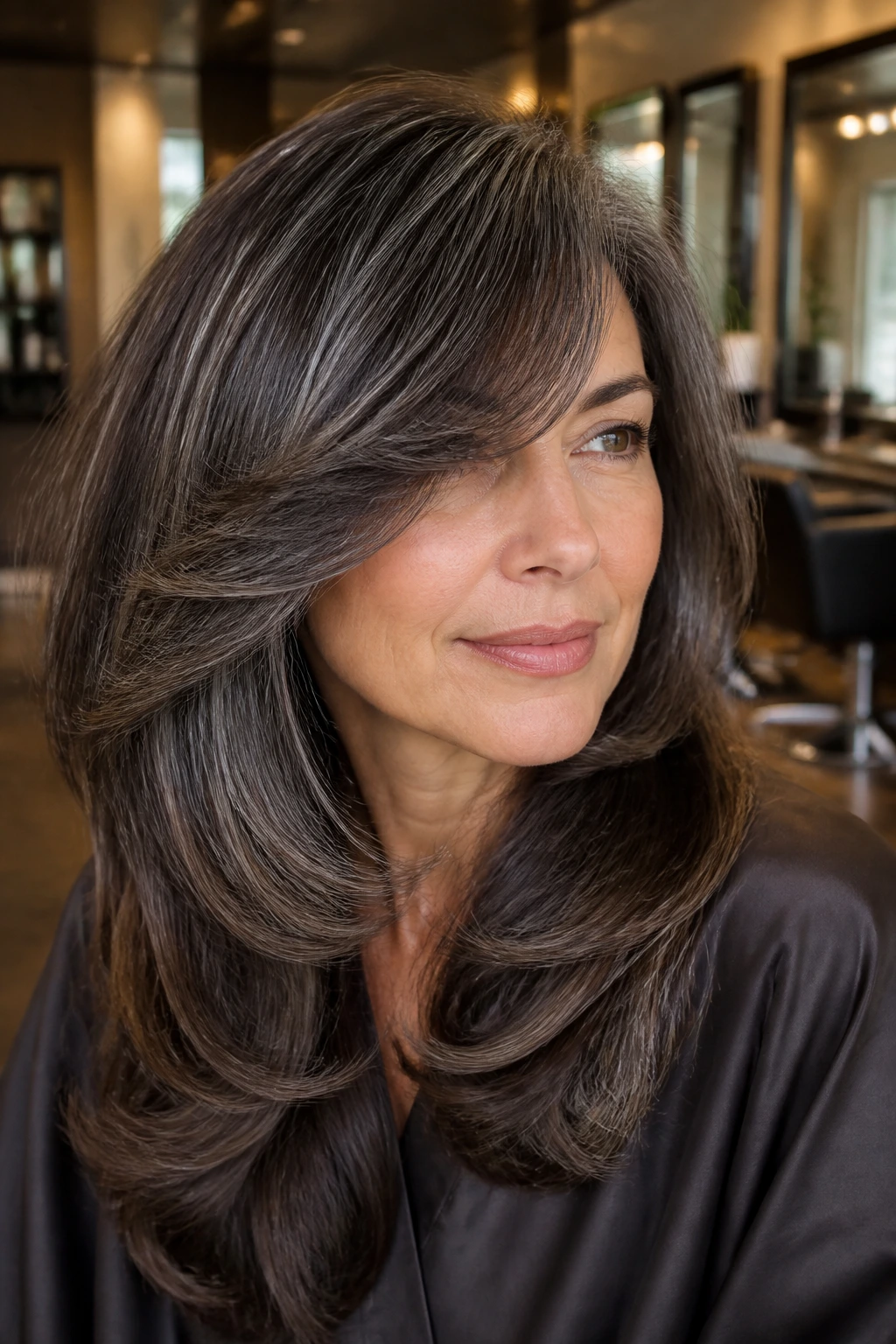
A big blowout makes grey look glossy in a way that flat hair rarely does. The smooth lift at the roots, the curve through the ends, and the side fringe all help the silver mix reflect light without looking patchy. On thick brunette hair, this can be a beautiful answer.
The side fringe matters because it softens the root area and pulls the eye away from any hard line of regrowth. If your grey comes in front-and-center, the fringe turns it into a feature. You do need a decent round brush and a bit of patience, though. This is not the fastest style on the list.
Best when: you like polished hair and do not mind heat styling.
Avoid if: your hair is already very dry and brittle, because too much heat can make the ends look dusty.
Use heat protectant. Every time.
21. Soft Mullet with Tapered Nape
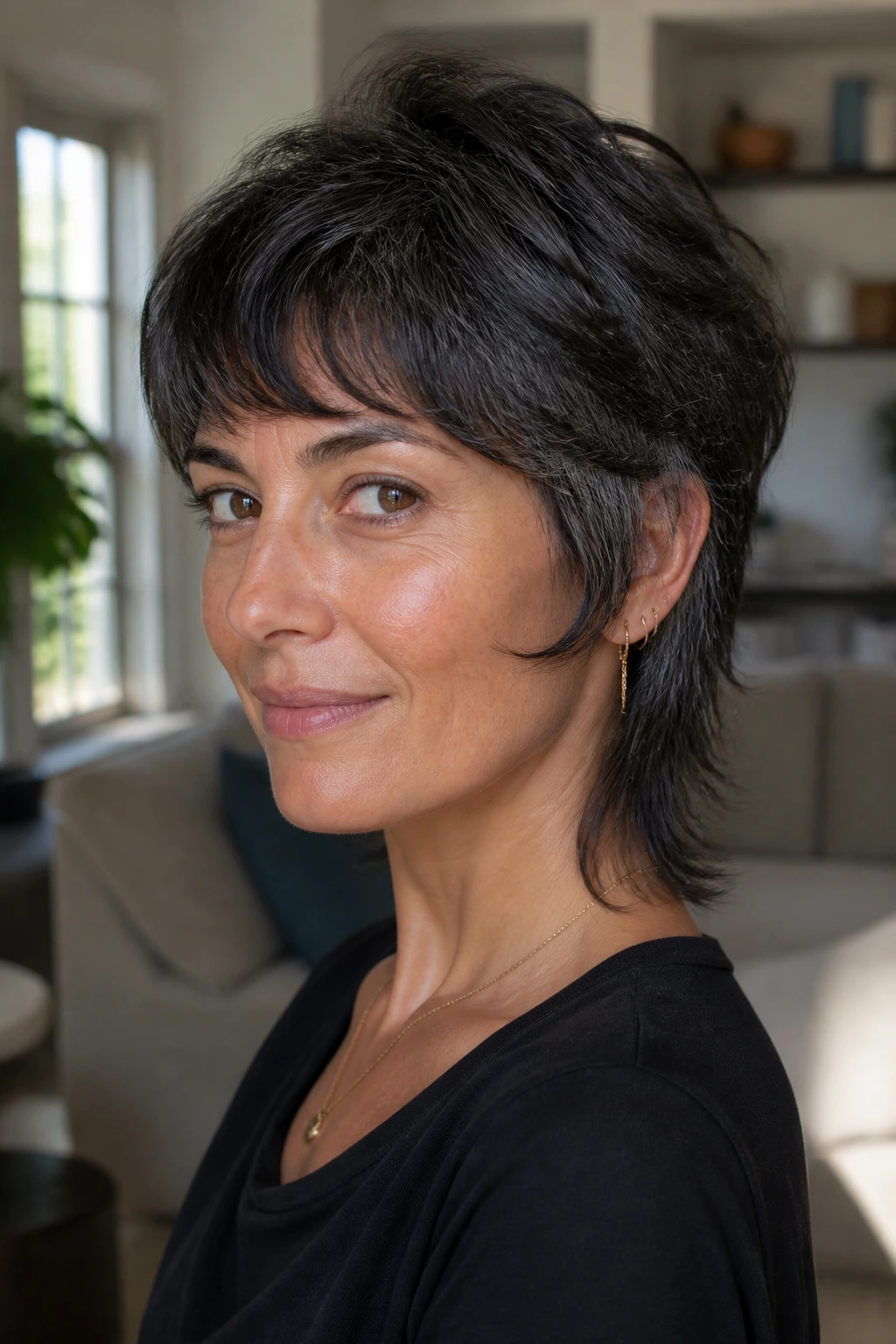
A soft mullet sounds more rebellious than it usually wears in real life. Done well, it has a gentle taper at the nape, a bit of fullness at the crown, and longer pieces around the front that keep the face open. On grey brunettes, that shape lets the silver appear as movement rather than a block of colour.
This is one of the best cuts for hair that has grown more textured over time. The layers make coarse silver feel modern instead of unruly, and the taper keeps the neck area neat. If you want hair that has personality without needing a round brush every day, this is worth a look.
A little texture cream or curl balm is enough for most versions. The soft mullet is not about perfect symmetry. It’s about giving the hair a shape that can hold a little chaos.
22. Rounded Curly Shape
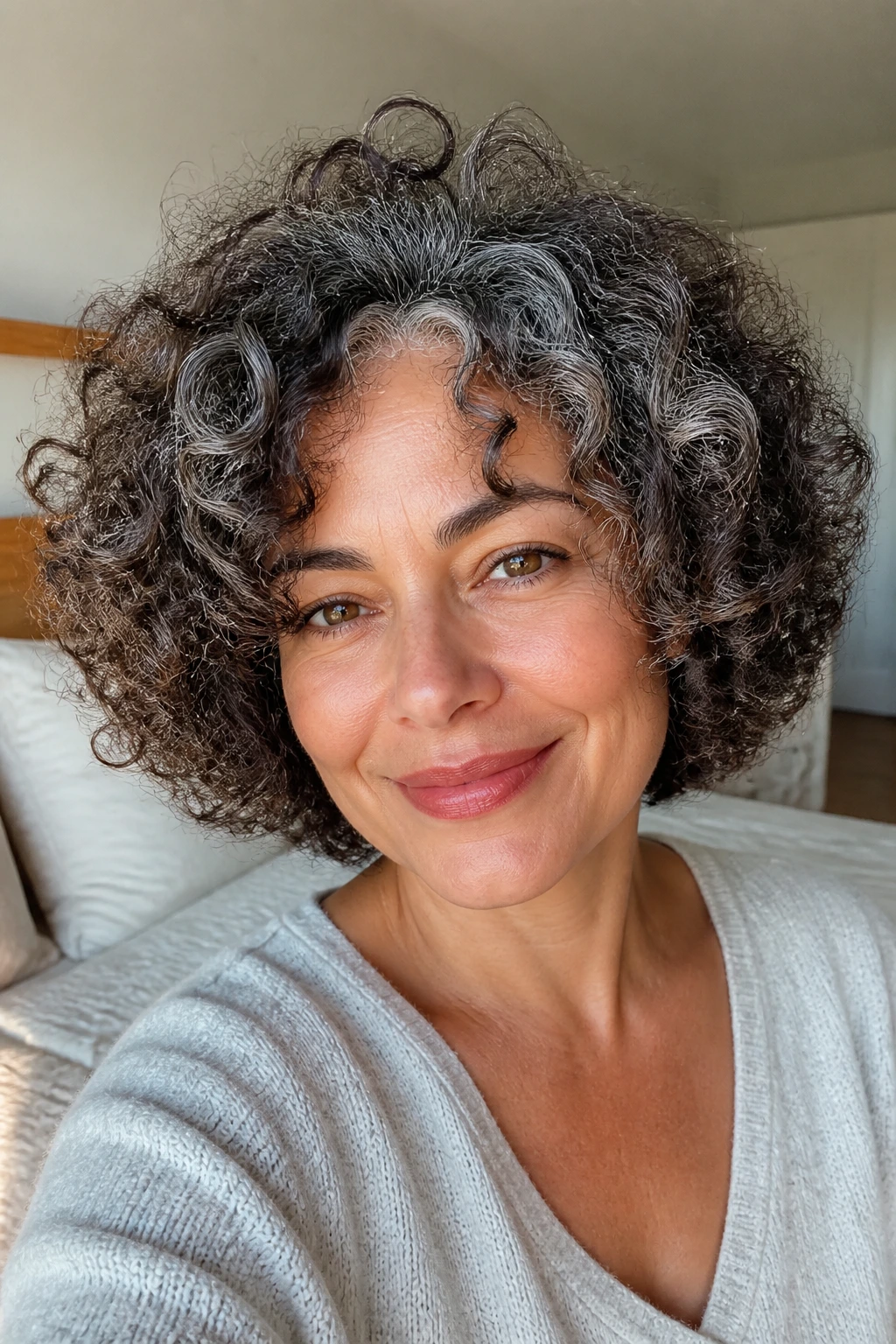
A rounded curly shape is the most generous haircut curly grey hair can get. It follows the curl pattern, keeps the silhouette balanced, and lets silver strands sit like a halo instead of a rough patch. For brunettes with natural curls, the transition often looks best when the cut respects the curl, not the calendar.
This shape also helps with shrinkage, which matters more than people expect. Grey curls can shrink differently from darker curls, and that unevenness can make a blunt cut look lopsided. A rounded shape keeps the whole head looking intentional as the colour shifts upward and outward.
Moisture matters here. So does a diffuser. If the curls are dry and frizzy, the grey will look duller than it really is, and that is a shame. The cut can only do so much if the hair is thirsty.
23. Low Chignon with Wispy Temples
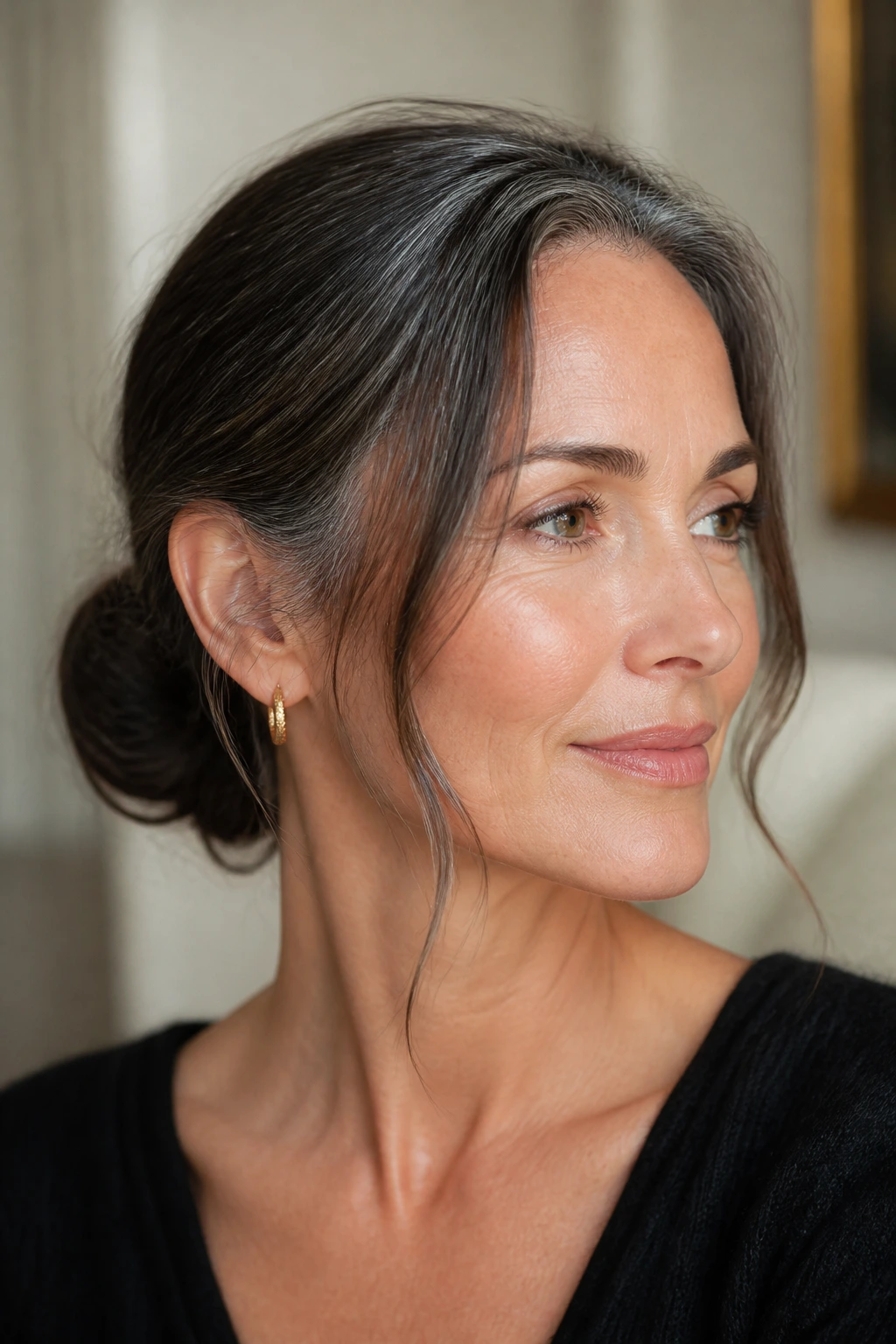
A low chignon gives grey-templed brunettes a very specific kind of polish. It gathers the length low at the nape, leaves the temples free, and lets the silver frame the face like part of the styling. That small detail changes the whole mood.
This is a strong choice for events, work, or days when you want your grow-out to look polished without fuss. The wispy temple pieces keep it from feeling severe, which matters when the bun itself is tight and low. If the hairline is the place where your grey is most obvious, this style actually puts that fact to work.
Pin the bun loosely if you want a softer finish. Tight buns can pull the eye straight to the part line. A little looseness reads better.
24. Side-Swept Pixie Bob
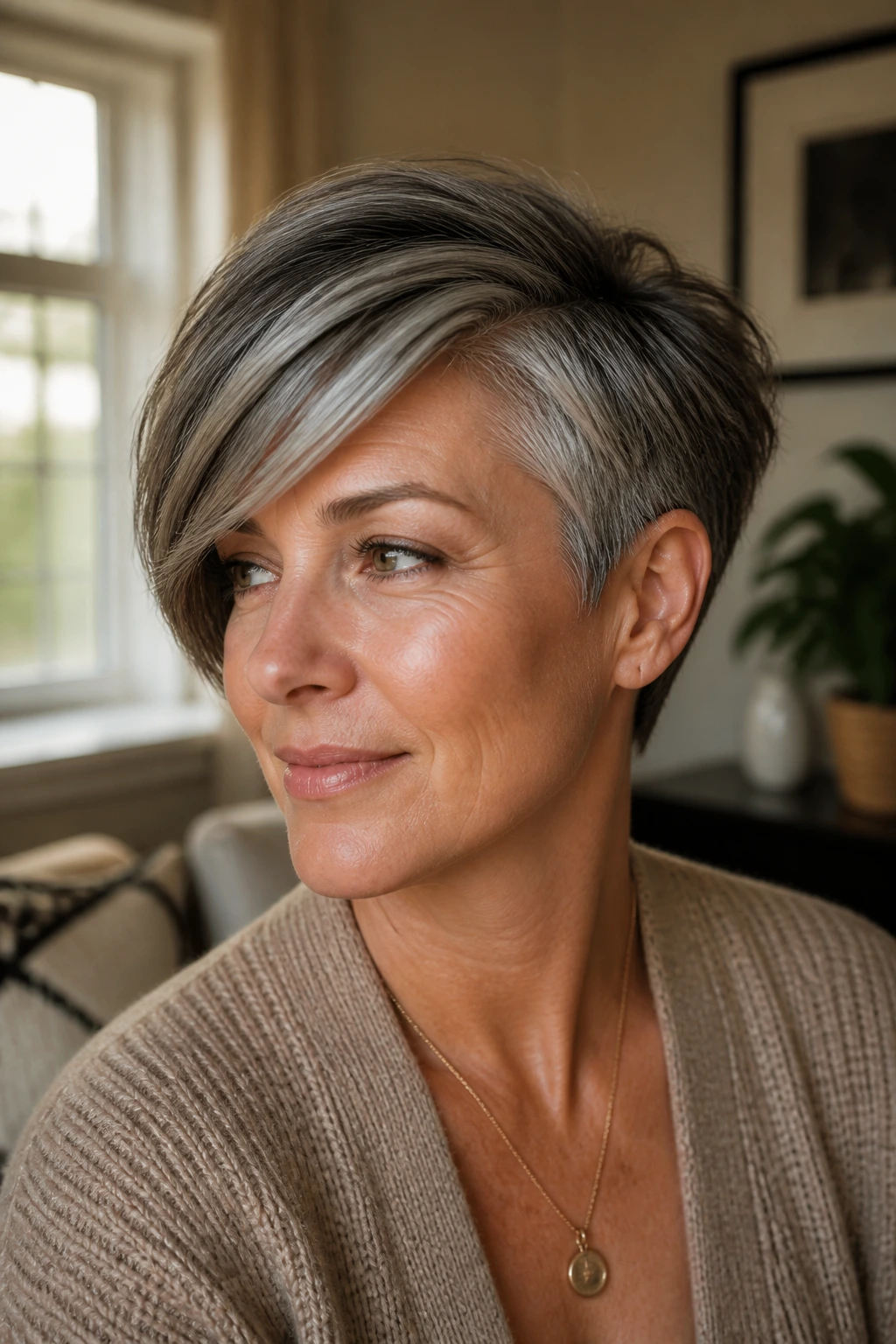
A pixie bob sits in the sweet spot between short and still-usable. The top keeps enough length for a side sweep, the back stays light, and the grey around the temples becomes part of the shape instead of a line you keep checking in mirrors.
This cut is useful if you’re ready for something shorter but not ready to live in regular pixie maintenance. The side-swept top gives you movement, while the bob length around the jaw keeps it feeling grounded. On dark brunettes, that balance is especially nice when the grey is arriving in streaks rather than evenly.
A side sweep also softens stronger features and makes the face feel a bit more lifted. It’s one of those cuts that quietly does a lot. No need to announce it.
25. Tousled Mid-Length Cut

Tousled mid-length hair is the hair equivalent of not trying too hard, but in a way that still works. The length sits safely below the shoulders, the texture keeps it from hanging flat, and the grey strands blend through the movement instead of forming a blunt ring around the head.
This cut is ideal for people whose hair changes personality depending on the weather. Straight one day, wavy the next, slightly frizzy after that. The tousled shape forgives all of it. Add a bit of sea-salt spray or a light texture mist, then let the hair live a little.
Why it helps
The loose texture stops the brunette-to-grey transition from looking like a hard line. It blurs the contrast. That’s the whole game.
26. Asymmetric Bob with a Sharp Line
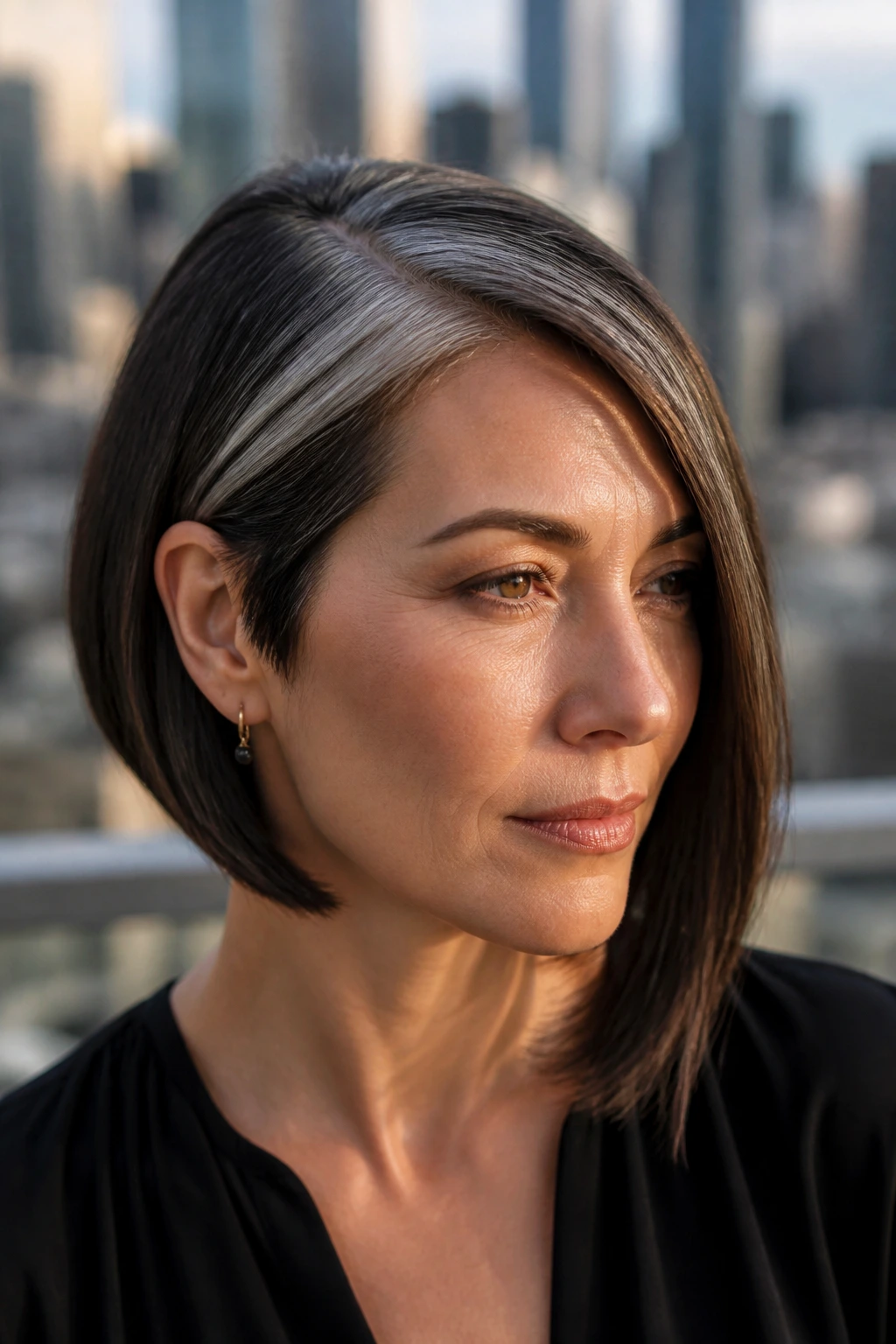
An asymmetric bob makes a silver streak feel like a feature strip, which is a very nice thing to say about a grow-out. One side sits a little longer, the other stays tighter, and the imbalance creates a deliberate visual line that can carry grey beautifully.
This cut is best for someone who likes a bit of edge. It can make a strong grey streak look almost graphic, especially if the longer side falls where the colour contrast is strongest. If your hair is straight, the line looks clean. If it’s wavy, the shape gets softer and less severe.
Be honest with yourself about upkeep. An asymmetric bob looks best when the line is fresh. If you let it grow too long, the effect fades fast and starts to look accidental.
27. Natural Spiral Layers
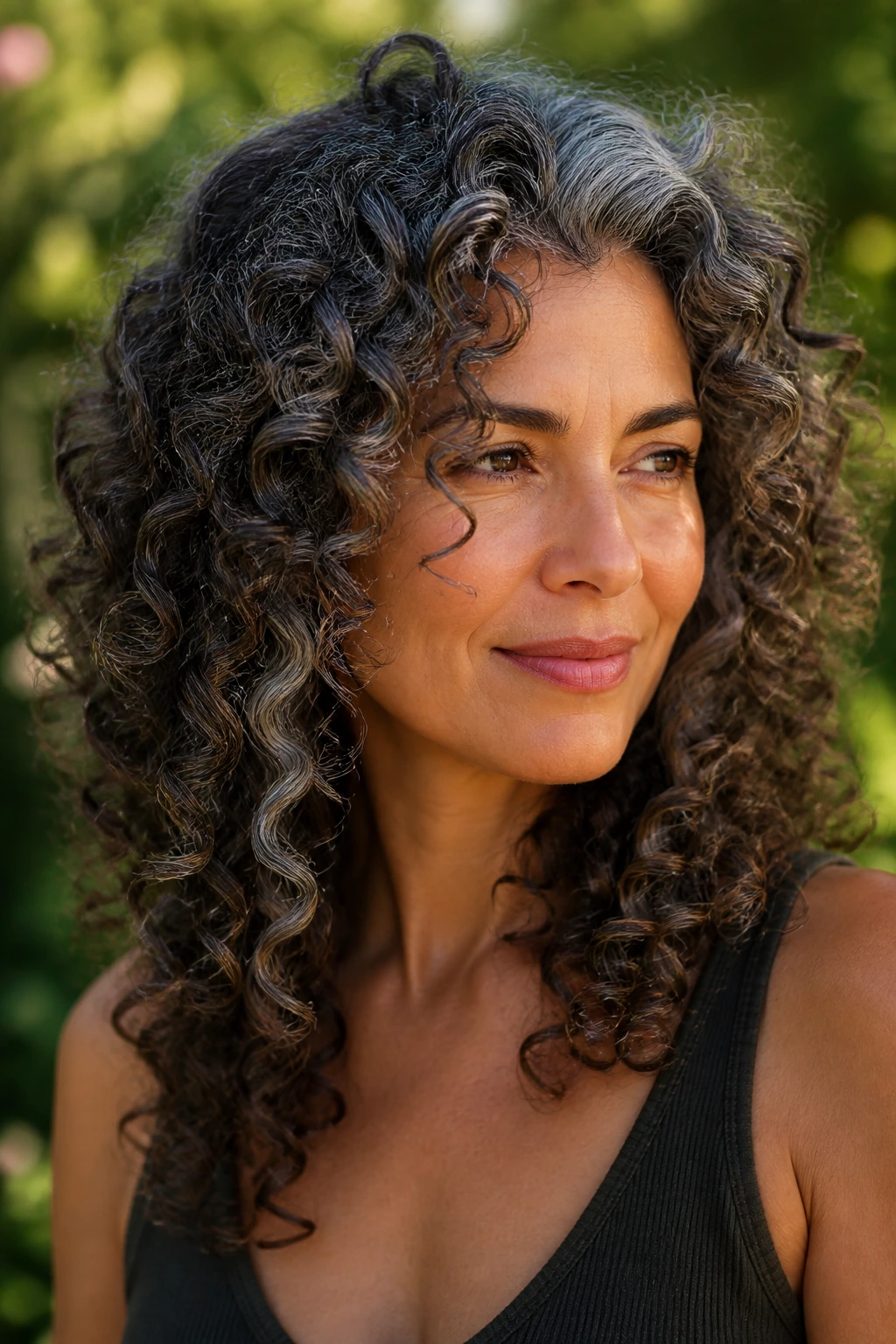
Curls and coils need a cut that follows the pattern already there. Spiral layers do that. They remove bulk where the curl needs space, keep the shape round, and let the grey shift through the hair in a way that looks woven rather than streaked.
This is one of the strongest options for naturally textured brunettes going grey because the cut respects how the hair actually behaves. Grey curls often feel a little looser, drier, or more porous than darker ones, and spiral layers give those changes room to exist without flattening them out. The silhouette stays clean while the texture stays honest.
Hydration is the make-or-break detail here. Leave-in conditioner, a good curl cream, and a diffuser all help the grey show up as silver, not frizz.
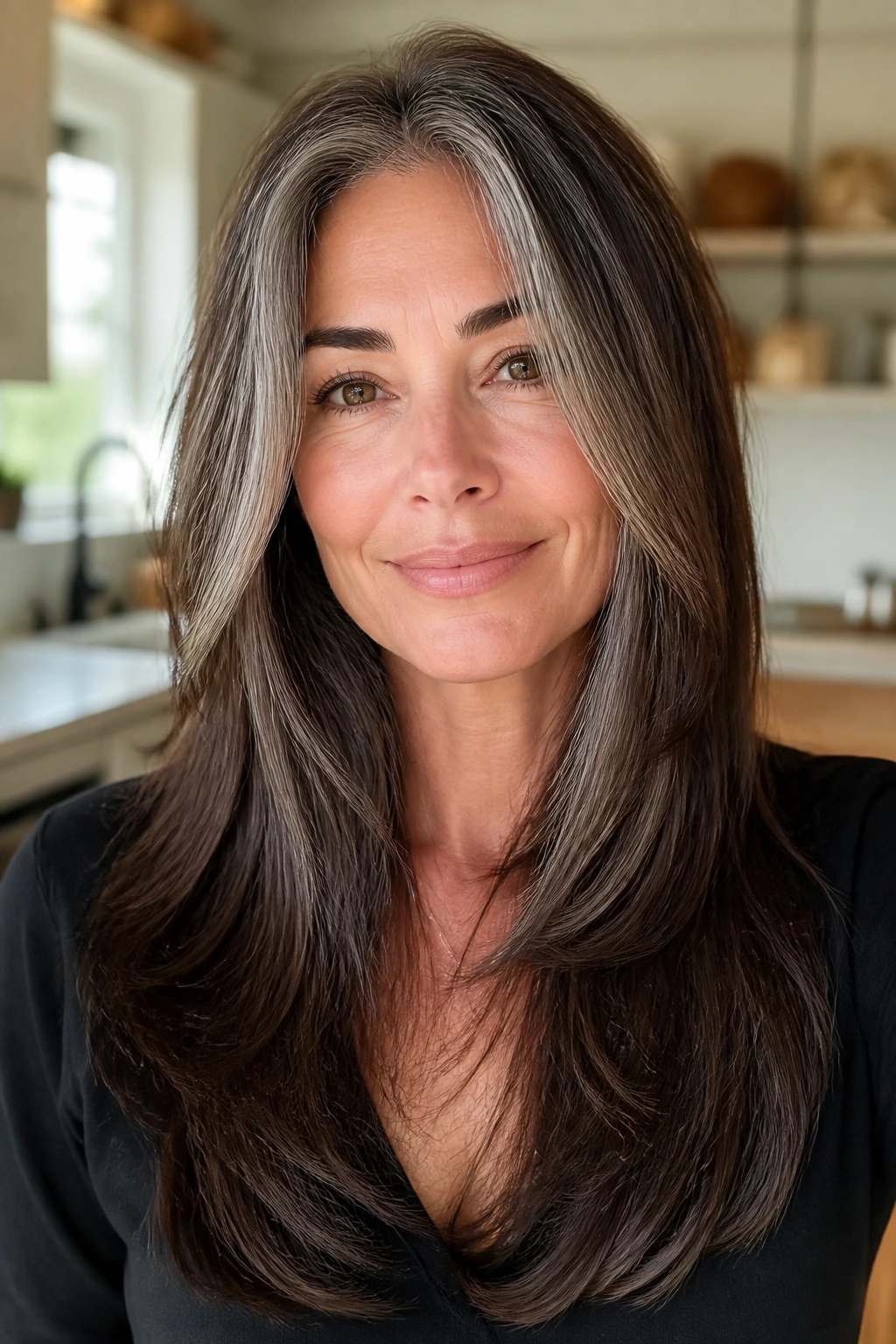
28. Glossy Long Cut with a Center Part
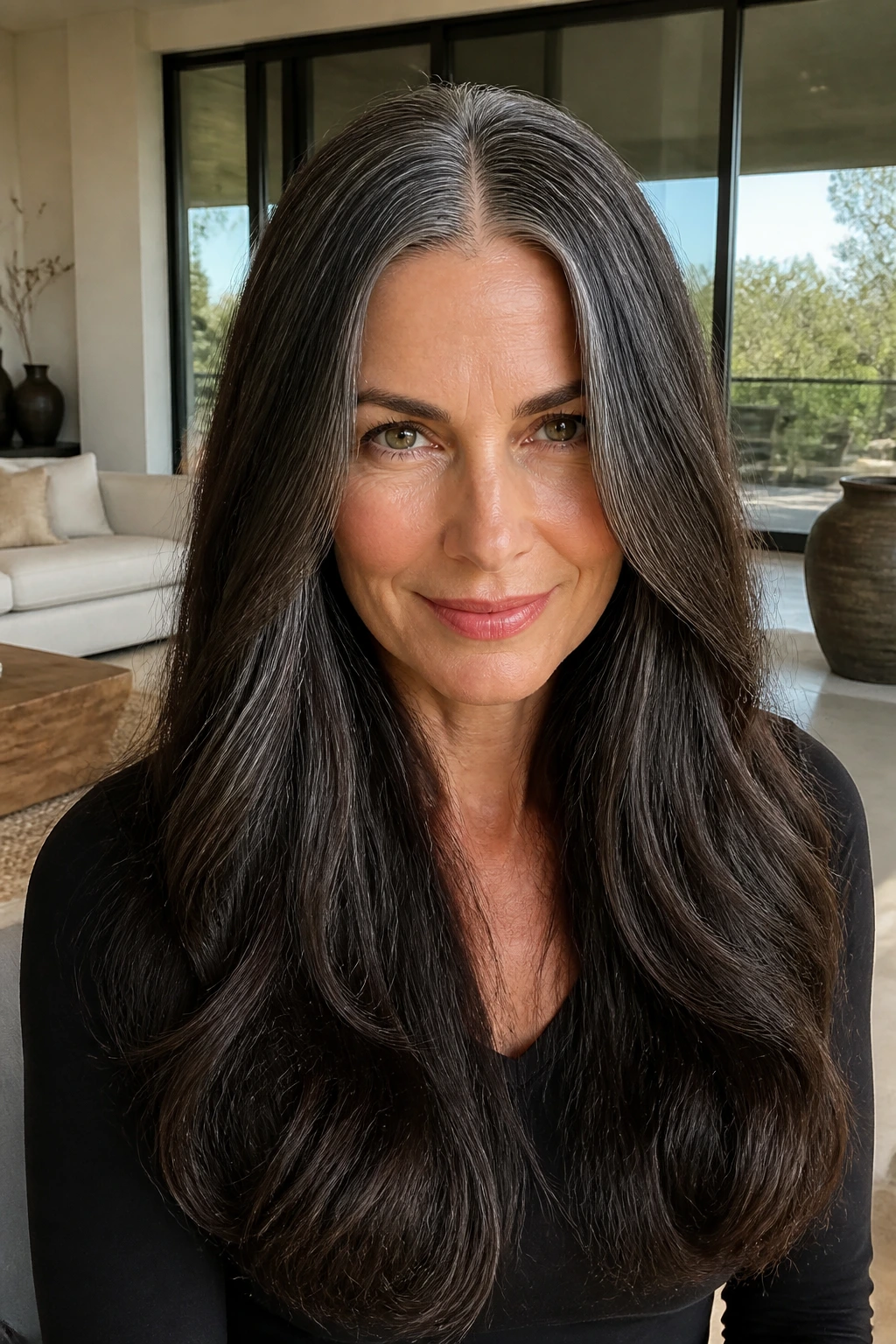
Long grey-transition hair can look gorgeous when the finish is glossy and the cut stays disciplined. A center part gives the hair a clean spine, and a long cut with subtly shaped ends keeps the brunette-and-silver mix from looking heavy or shapeless.
This style is for people who want to keep their length and still make the grow-out feel deliberate. The shine matters. Silver strands reflect light differently from brown ones, and a smooth finish lets that contrast read as depth instead of dryness. If the ends are scraggly, though, the whole look collapses. Long hair with grey needs trims more often than people think.
A smoothing cream or light serum on the last third of the hair can help. Stay away from greasy roots. You want satin, not slip.
29. Twisted Half-Halo Style
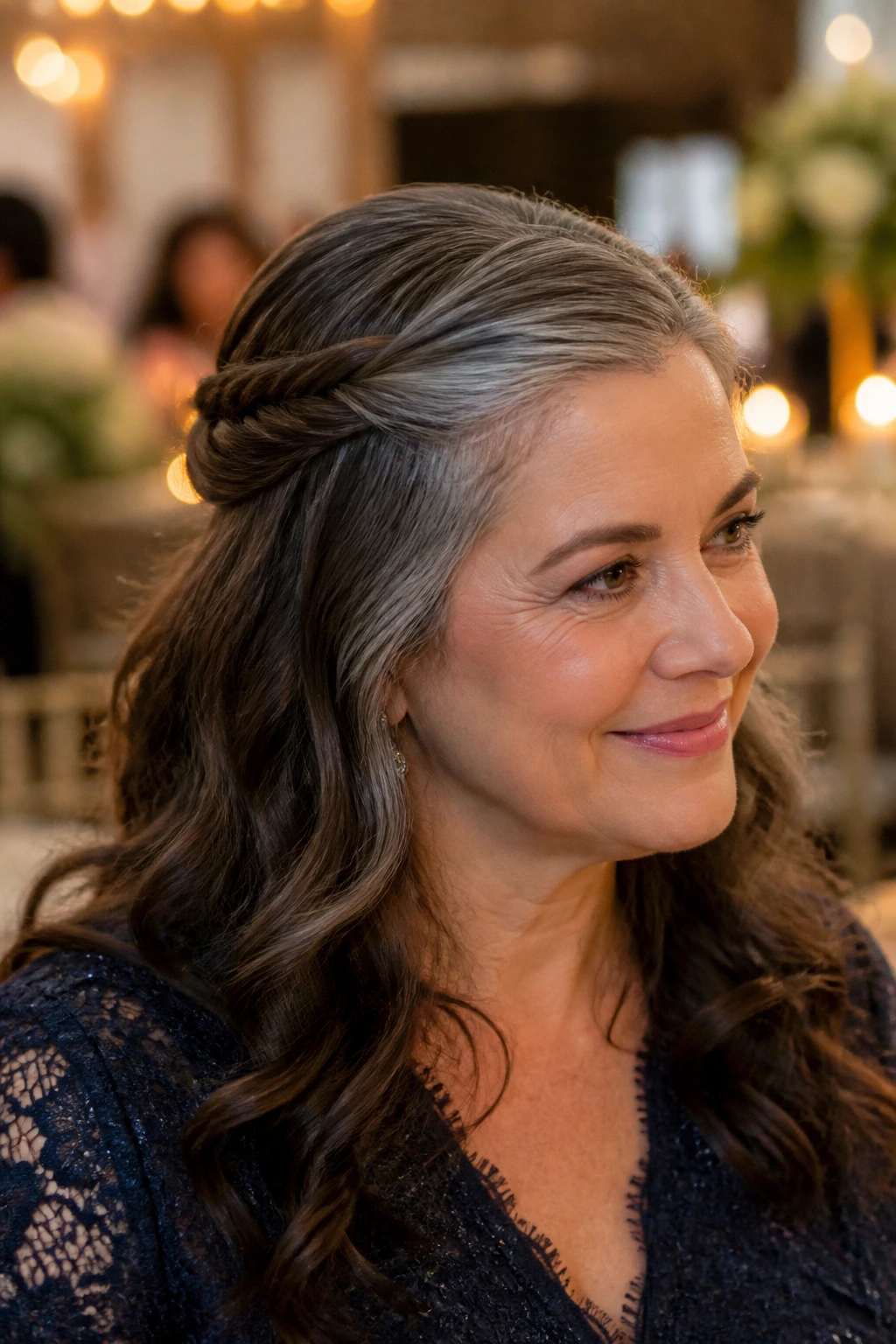
A twisted half-halo sits somewhere between a braid and an updo, and that middle ground is exactly why it works. It pulls the front sections away from the face, which helps the temple grey look intentional, while leaving enough length down to keep the style soft.
This is a strong choice for mixed-length hair or for the days when your grey is doing something slightly uneven. The twist disguises the in-between stage without hiding the fact that you’ve got silver coming through. It feels romantic, but it also feels practical. That balance is rare.
Best for: weddings, dinners, or the week when your hair refuses to cooperate.
Small warning: do not twist the hair so tightly that the crown goes flat. The style needs a little lift to stay pretty.
30. Short Stacked Crop with Soft Crown Lift
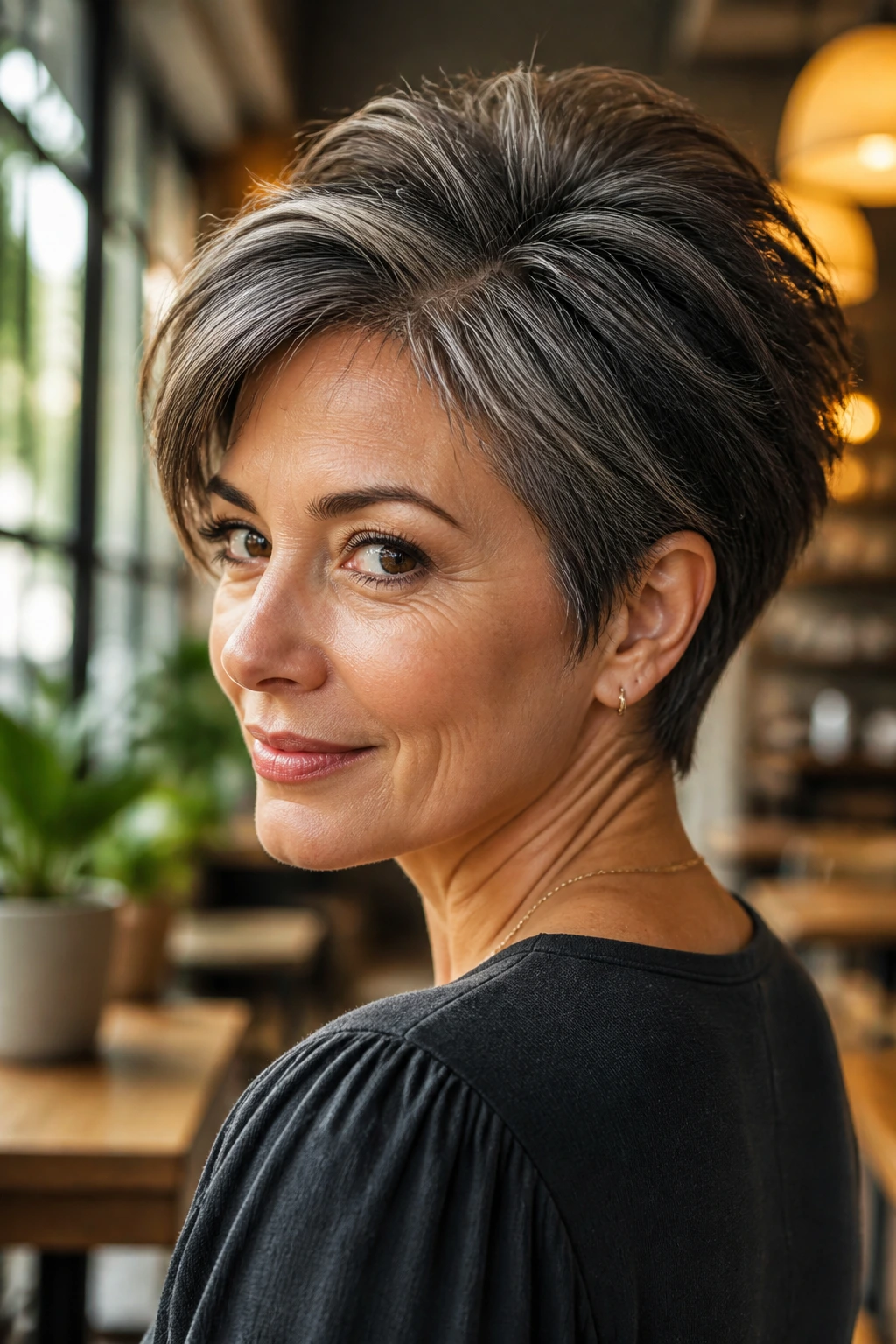
A stacked crop makes the back of the head look lifted, and that shape gives grey hair a clean, modern edge. The shorter nape removes bulk where dark brunette hair can sometimes feel heavy, while the slightly longer crown builds height and shows off the silver in a sharp, polished way.
This is a good cut for dense hair, especially if it’s gone a bit coarse with the grey change. The stacked shape keeps the silhouette neat and stops the hair from ballooning out at the sides. It’s also one of the easiest ways to make the transition feel like a style choice instead of a phase.
I’d call this the strongest short option on the list. It doesn’t hide much. It does, however, make the hair look finished almost all the time, which is the kind of convenience most people actually want.
Why the Cut Matters More Than the Colour Line
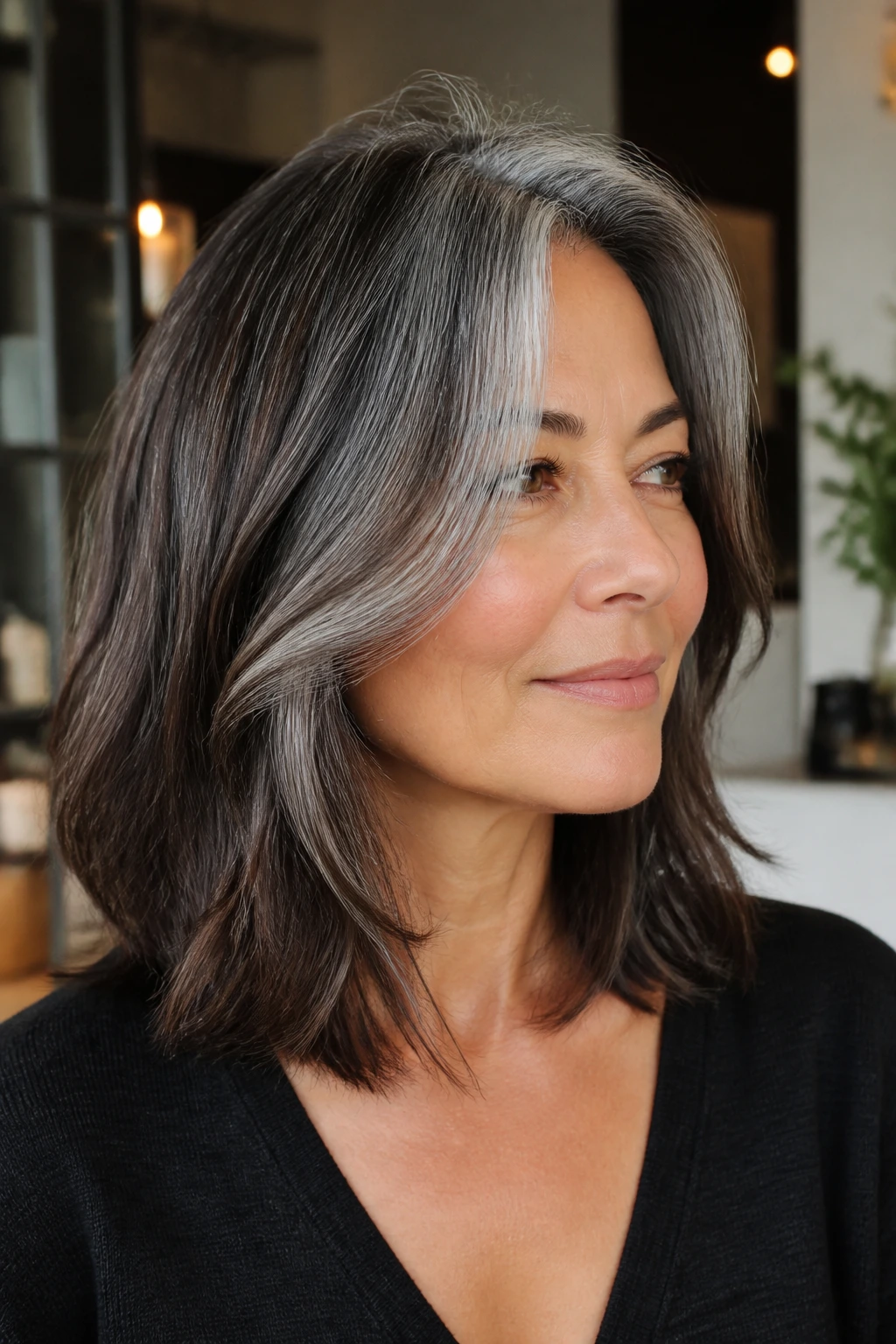
Grey grow-out on dark brunette hair is mostly a shape problem, not a colour problem. The colour shift gets the attention, sure, but the haircut decides whether that shift looks clean or chaotic. A blunt edge can make the contrast look graphic. A layered shape can make it feel soft. A fringe can redirect the eye so the root line stops running the show.
Grey hair changes texture
Silver strands often feel drier and a touch more wiry than the brunette hair beside them. That means they do not sit the same way in a cut that once behaved perfectly. If the shape is too heavy, the grey can puff. If it’s too thin, it can fray. The cut has to meet the hair where it is, not where it used to be.
The line at the root is not the whole story
A lot of people focus on the grow-out strip and forget the rest of the head. The temples, crown, and ends matter just as much. A style that moves the eye around the face makes the transition feel calmer, even if the silver is still coming in unevenly.
That little bit of shape changes everything.
Tools That Make Grey Grow-Out Easier
-
Tail comb: Clean parting makes a grey grow-out look more deliberate, especially if you’re shifting from a center part to a side part.
-
Duckbill clips: These hold curtain bangs, lifted roots, and twisting sections in place while they cool.
-
Blow-dryer with nozzle attachment: The nozzle keeps the air directional, which matters if you want shiny grey strands instead of fuzz.
-
Medium round brush: Best for bobs, flips, curtain bangs, and a clean bend through the ends.
-
Diffuser: A must for curly and wavy grey hair that frizzes if you blast it dry.
-
1-inch curling iron or wand: Good for soft waves on lobs, shags, and collarbone cuts without turning the style into a curl set.
-
Flat iron: Helpful for blunt bobs, sleek ponytails, and glossy long cuts, but use a low-to-medium heat setting if your hair is dry.
-
Wide-tooth comb: Detangles wet hair without stretching silver strands, which can feel more fragile than brunette ones.
-
Microfiber towel or T-shirt towel: Cuts down on roughness and frizz after washing.
-
Lightweight finishing cream or serum: Keeps flyaways tame without making grey look greasy or flat.
Smart Product Picks for Brunette-to-Grey Hair

Grey hair and brunette hair do not always want the same products. That sounds obvious until you see someone drench silver roots in heavy oil, then wonder why the hair looks limp and dusty. The better move is usually lighter and more targeted.
For tone
Purple shampoo helps when silver starts to look yellow or smoky. Blue shampoo is more useful if the brunette ends skew orange or brassy. Use either one sparingly—once every week or two is often enough—because over-toning can leave grey hair dull or slightly tinted.
For softness
Look for leave-ins and masks with things like ceramides, glycerin, panthenol, or fatty alcohols. Grey hair often needs moisture more than shine. A thick oil can sit on top of the strand and make it look coated instead of healthy.
For shape
Fine hair usually likes mousse, root spray, or texture mist. Coarse hair usually likes smoothing cream, a little serum, or a cream-based leave-in. If you need hold for a bob or a pixie, choose a light wax or paste, not a heavy gel that turns silver hair crunchy.
At the salon
Ask for a demi-permanent gloss or soft glaze if you still want some blending. It softens the contrast without making the grow-out line brutal. Permanent dark dye can be useful for some people, but if you are easing into grey, a softer finish usually grows out with less frustration.
How to Wear These Styles With Glasses, Earrings, and Necklines
Silhouette: Clean shapes and sharp frames get along well. A blunt bob, French bob, or side-swept pixie bob pairs especially well with glasses because the hairline and the frames make sense together instead of competing.
Accessories: Small hoops, studs, and sculptural earrings work with shorter styles because the hair is not stealing every bit of attention. Longer cuts and low buns can handle bigger earrings, especially if the grey is bright around the face and you want to echo that with a little shine below.
Proportion: A collarbone lob or long U-cut balances open necklines, while a cropped style sits nicely with higher collars and simple tops. If the haircut has strong movement, keep the clothing lines cleaner. If the haircut is neat and blunt, you can get away with more texture in the outfit.
Finish: Glossy hair likes crisp clothes. Softer waves like knits, denim, and relaxed collars. That mix keeps the whole look from feeling too staged. Grey hair can be very elegant on its own; it does not need a costume.
Small Tweaks That Make the Transition Feel Intentional
A great grey grow-out usually comes down to one or two tiny choices, not a full makeover. Shift the part half an inch. Add a face frame. Leave a little softness around the temples. Those small changes make the silver look designed instead of ignored.
Contrast control: If you still colour the brunette base, keep it one or two shades softer than your darkest natural level. Jet-black dye can make the silver look harsher than it is, especially around the hairline. A gentler brunette shade gives the grow-out room to blend.
Texture support: If grey hair has gone wiry, use moisture first and hold second. A leave-in conditioner, then a cream, then a touch of serum is usually better than piling on one heavy product. The hair needs softness before shine.
Face framing: A short sweep around the cheekbone can do more than a full set of layers. It puts the focus where you want it and keeps the temple silver from screaming for attention.
Part placement: Center parts make the transition look symmetrical. Side parts soften contrast. Zigzag parts can break up a very obvious line on thicker hair. Small move. Big payoff.
Keeping Grey Hair Soft Between Cuts

Grey hair does not need complicated care, but it does need regular care. The strand structure can feel drier and rougher than brunette hair, which means neglect shows up faster. Dull ends, puffed roots, and brass at the crown are all fixable if you stay on top of the basics.
Wash schedule matters. If your scalp gets oily fast, wash as needed and keep conditioner on the mids and ends. If your hair is dry, stretch washes a little and use a gentle shampoo. Once a week, a deep conditioner or mask for 10 to 15 minutes helps keep the silver from looking stiff.
Trim timing depends on the cut. Pixies and stacked crops usually need reshaping every 4 to 6 weeks. Bobs and lobs can go 6 to 10 weeks. Longer cuts often hold for 8 to 12 weeks, but the ends should still be checked before they start to look stringy.
Heat styling should not be a free-for-all. Use a protectant every time, and keep the iron or dryer as low as your hair will tolerate. Grey strands are not fragile in some dramatic sense, but they do show heat damage fast. That means a little restraint pays off.
Variations and Adaptations for Different Textures
Fine Hair Lift: Keep the perimeter blunt and the layers light. Fine grey-brunette hair usually needs shape more than it needs removal of weight, and a root-lift spray can make a collarbone lob or bob look fuller without teasing.
Coarse Silver Softening: Choose a cut with enough internal shaping to remove bulk, then pair it with a creamier finish. A pixie, shag, or soft mullet often works better here than a single heavy length that puffs outward.
Curly Halo: Round shapes and spiral layers let grey curls do what they already want to do. Diffuse, scrunch, and stop trying to force ringlets into neat little lines.
Long Grow-Out Saver: If you want to keep your length, stick with face-framing pieces, a U-shape, and occasional glossing. Long grey hair looks better when the ends stay disciplined.
Patchy Temple Grey: Side parts, curtain bangs, and low buns keep the most visible sections under control. These are the styles that make uneven growth look thoughtful instead of random.
Common Mistakes That Make the Grow-Out Look Harsh
-
Keeping a one-length cut for too long: The grow-out line sits on top of a heavy block, and the contrast looks much harsher than it needs to. Ask for layers, a shape, or a cleaner edge.
-
Over-toning the silver: Purple shampoo every wash can leave grey hair dingy or tinted lavender. Use it only when the silver starts to yellow.
-
Flattening the texture with too much oil: Grey strands need softness, not a greasy film. If the hair looks limp by midday, cut back on the heavy finish products.
-
Letting the ends fray: Split ends make the whole transition look tired. The grey shows up on the damaged parts first, which is annoying and common.
-
Ignoring the front: Temples and face-framing sections are where people notice the transition first. A fringe or a little front shape usually helps more than trying to hide everything under one long layer.
Questions People Ask About Brunette-to-Grey Hair

Should I cut my hair short when I start going grey?
Not necessarily. Short cuts make the transition cleaner faster, but long cuts can work if they have shape, movement, and regular trims. The wrong move is keeping a heavy, one-length style and hoping the grey will somehow behave politely.
What haircut hides the grow-out line best?
Curtain bangs, a side part, and face-framing layers do the most work. They break up the harshest part of the transition, especially around the temples and hairline where silver usually shows first.
Does grey hair need different products than brunette hair?
Usually, yes. Grey hair tends to need more moisture, less heavy oil, and occasional tone control with purple shampoo if it starts to yellow. Brunette hair can usually handle richer smoothing products, but silver often looks better with lighter finishes.
How often should I trim grey-transition hair?
Pixies and short bobs usually need attention every 4 to 6 weeks. Lobs and shoulder-length cuts can often go longer, around 6 to 10 weeks, while long hair may stretch to 8 to 12 weeks if the ends stay healthy.
Can I still colour my hair while I let the grey grow in?
Yes. A soft gloss, demi-permanent glaze, or subtle lowlight can smooth the contrast without locking you into a harsh regrowth line. Permanent dark colour works too, but it tends to make the transition more obvious.
What if my grey is only at the temples?
That’s where bangs, side parts, and face-framing pieces help most. You do not need a full overhaul for temple grey; you need a cut that keeps the eye moving.
Why does my grey hair feel wiry?
It often has more texture and less natural oil than the rest of the head. That does not mean something is wrong. It usually means the haircut and products need more moisture and a little less weight.
Is a blunt bob better than layers for grey hair?
For fine hair, a blunt bob often wins because it keeps density. For thicker or coarser hair, softer layers may behave better because they stop the grey from puffing out at the edges. The better cut is the one that matches how your hair actually falls.
Letting the Silver Take the Lead
Grey hair on dark brunettes looks best when the haircut stops trying to fight the change. That is the real pattern running through all thirty of these styles. Some use blunt edges. Some use bangs. Some use movement, lift, or a clean part. A few go short and sharp. Others keep the length and simply give it a better outline.
The silver is not asking to be hidden. It usually just needs structure. Once the cut does its job, the grow-out starts looking less like a waiting period and more like a style with a point of view.