



Fine hair on men has a funny habit: the moment you let it grow with no shape, it starts looking like it gave up. The strand diameter is small, so it bends, separates, and lies flat faster than thicker hair. That’s why the best hairstyles for men with fine hair do not chase length for its own sake. They build a frame around the hair so it looks fuller, cleaner, and far more intentional.
I’ve always thought the worst advice here is the usual “just grow it out.” Grow it out into what, exactly? A limp curtain that parts in the wind? No thanks. Fine hair usually looks better with shorter sides, smarter texture on top, and a finish that leaves a little movement in the strands instead of that wet, heavy shine that makes every gap obvious.
The good news is that fine hair gives you options if you stop fighting it. A French crop can make the front look denser. A soft side part can add direction without looking stiff. A short quiff can cheat a little height into the front. Even a buzz cut can look razor-sharp when the edges are handled well. The trick is matching the cut to the way your hair naturally falls, not the way a catalog photo wishes it would.
Why These Styles Work on Fine Hair
Shorter sides keep the eye where you want it. When the temples and nape are cleaned up, the top reads thicker because it isn’t competing with bulky side sections.
Texture beats uniform length. Choppy ends, point-cut layers, and a matte finish break up the surface so the hair doesn’t sit like a flat sheet.
A little fringe goes a long way. Forward movement at the front can hide a soft hairline, a crown that shows through, or that awkward “my hair just lies down here” problem.
Blow-drying changes the whole game. A minute or two of root lift with a dryer does more for fine hair than a fistful of wax ever will. Seriously.
The right taper looks cleaner than a hard chop. Fine hair can look sparse if the sides are taken too tight with no transition, so a soft taper often looks sharper than a skin-close fade.
1. Textured French Crop
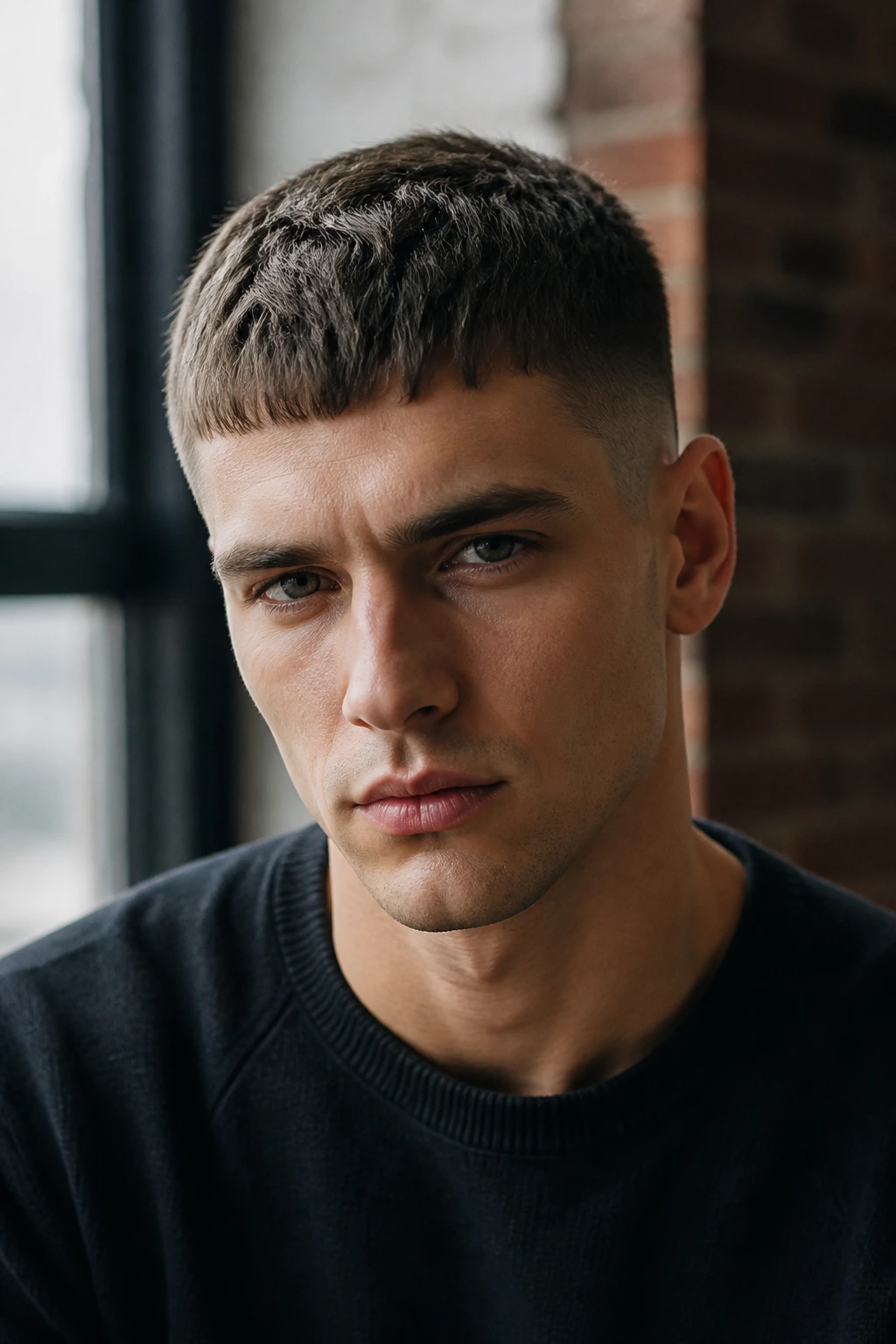
This is the haircut I reach for when a client wants the front to look fuller without pretending the hair is thicker than it is. The French crop keeps the top short, pushes some weight forward, and gives you a blunt-looking fringe that doesn’t need much styling to behave. On fine hair, that forward direction matters. It creates a little shadow line across the forehead, and shadows are your friend here.
Why it works on fine hair
The French crop works because it keeps the cut compact. If you leave the top too long on fine hair, the strands separate and the scalp starts peeking through in the wrong places. Keep the top around 1 to 2 inches, ask for the ends to be point-cut or lightly chipped, and keep the sides in a low taper or soft fade. That lets the top look dense without the sides stealing the show.
A good crop should feel slightly rough, not fluffy. If the fringe is cut with too much blunt heaviness, it can look like a helmet. If it’s too thinned out, it can look wispy. The sweet spot is a broken edge with enough weight to sit forward cleanly.
Best barber note: ask for texture on top, not aggressive thinning.
Best product: matte clay or a light texture paste.
Best fit: straight hair, slightly wavy hair, and men who want a tidy look without a lot of daily fuss.
Tiny tip: work product into damp-not-wet hair, then push the fringe forward with your fingers. That little bit of mess is what makes the crop look current instead of severe.
2. Classic Side Part with a Low Taper
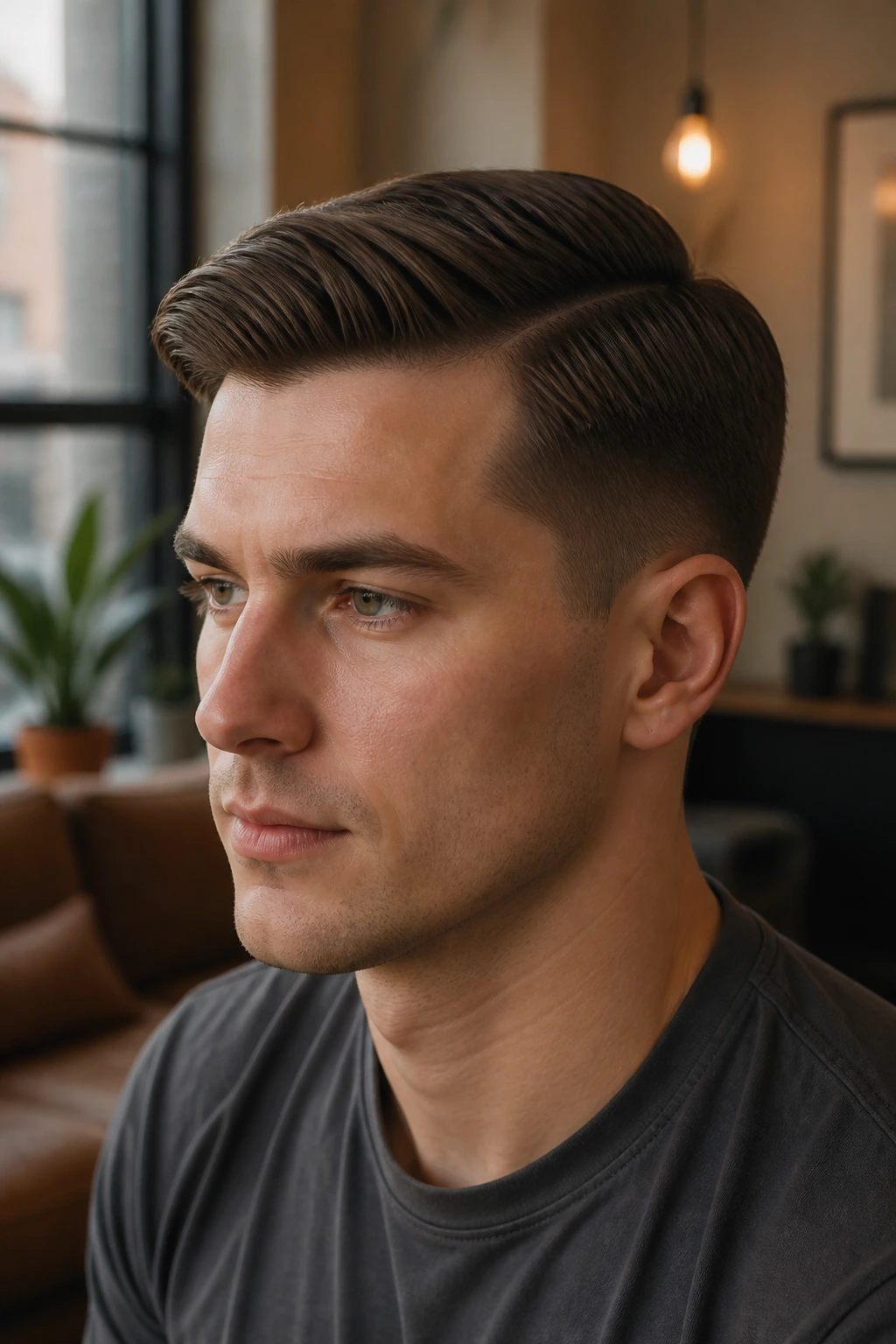
A side part is one of those cuts that gets written off too fast. On fine hair, a soft side part can be incredibly useful because it gives the top a direction to follow. The trick is to keep the part subtle. A harsh, shaved line can make fine hair look thinner by comparison, and that’s the opposite of what you want.
The low taper is what keeps this one chic rather than old-school. It removes bulk around the ears and neckline without blasting the sides down to the skin. That means the top still has something to sit against, which helps the whole style look balanced. If your hair falls naturally to one side, this cut is almost cheating.
I like this style on men who need something that can move between office, dinner, and weekend errands without changing shape every hour. It looks neat with a comb, but it doesn’t need to be shellacked. A light cream or a touch of low-shine paste is usually enough.
The useful part: you can part it, rake it, or let it fall more loosely, and it still reads as a deliberate cut.
What to ask for: a soft side part, 2 to 3 inches on top, taper at the sides, no heavy thinning shears.
What to skip: thick pomade and a razor-hard part line if your hair is very fine through the temples.
3. Short Quiff with a Clean Fade
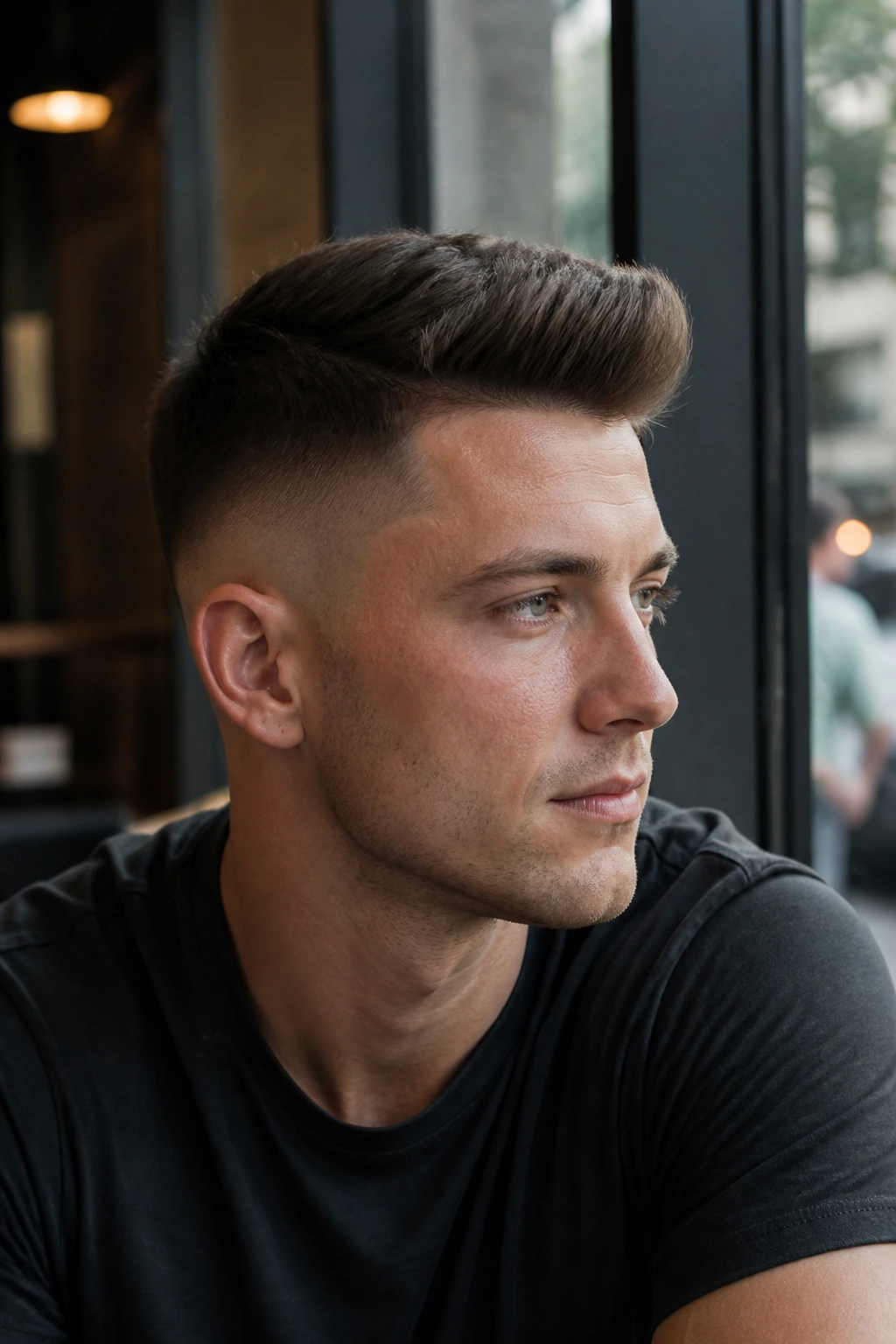
Can a quiff work on fine hair? Absolutely — if you keep the height modest and stop trying to build a skyscraper. A short quiff gives you lift at the front, a cleaner silhouette along the sides, and just enough movement to keep the hair from lying flat against the forehead.
How to get the lift without the flop
The style starts while the hair is still damp. A root-lifting spray or a light sea-salt mist goes on first, then you blow-dry the front section upward and slightly back with a vent brush or your fingers. Don’t overthink the shape. You’re not sculpting a movie-star pompadour. You’re teaching the roots to stand up for an hour or two.
A clean fade helps because it removes the visual bulk on the sides. The top only needs to be around 2 to 3 inches long. Any longer and fine hair starts to split under its own weight. I’d keep the finish matte, maybe with a pea-sized amount of clay spread fully through the hands before it touches the hair.
Best for: straight hair that falls flat by noon.
Best face shape: round and oval, especially if you want a little extra height.
Barber note: ask for a textured top with a low or mid fade, not a disconnected undercut unless your hair is actually dense enough to support it.
4. Ivy League with Natural Texture
The Ivy League is the haircut version of a well-made white shirt: simple, tidy, and hard to mess up when the proportions are right. On fine hair, it works because it keeps enough length on top for styling while never letting the cut become floppy. The sides stay neat, the top stays short enough to hold shape, and the whole thing looks calm rather than overworked.
What makes it especially useful is the flexibility. You can wear it with a soft side sweep, a slight lift at the front, or a more combed-down finish on days when you need to look polished fast. The cut doesn’t need a lot of product. In fact, too much makes it worse. A dab of lightweight cream is usually enough.
If you’ve got a strong forehead or a cowlick near the front, this cut gives you just enough room to control the shape without fighting your own hairline all morning. It’s one of the few fine-hair styles that can look neat without looking like you spent twenty minutes on it.
- Top length: about 1.5 to 2.5 inches.
- Sides: soft taper or low fade.
- Finish: natural, not glossy.
- Best for: school, office, weddings, and anyone who wants a cleaner version of “I just ran a comb through it.”
5. Buzz Cut with a Skin Fade
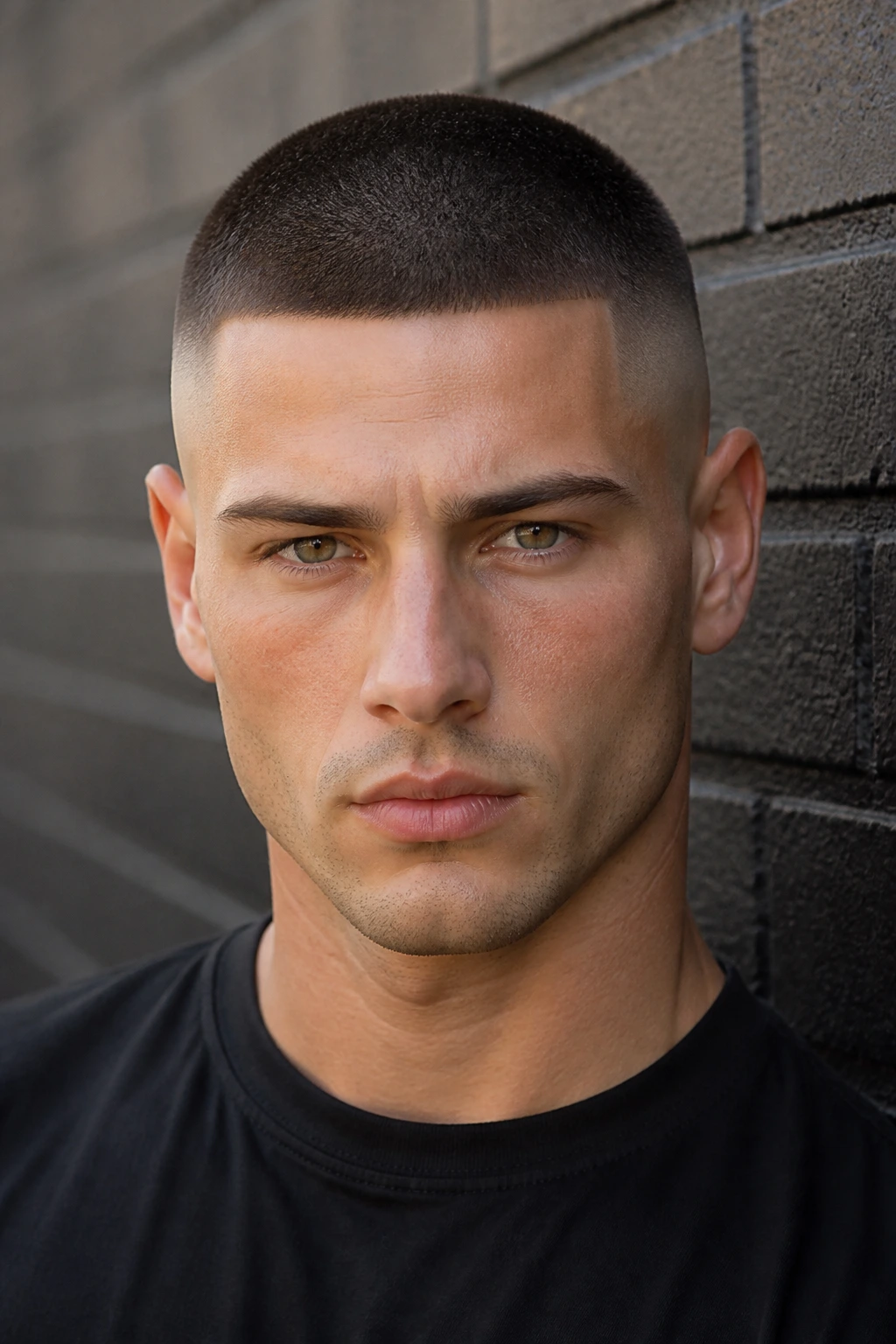
A buzz cut is the blunt answer to a very common fine-hair problem: if the hair won’t hold volume, stop asking it to perform gymnastics. A buzz cut strips the style down to shape, line, and proportion. On the right head shape, it looks crisp, confident, and far more deliberate than a longer cut that keeps collapsing.
The skin fade matters because it creates a clean frame around the head. Fine hair can sometimes look sparse when the top is left too long and the sides are only slightly shorter. The buzz cut avoids that awkward middle ground. Either commit to a close, even length on top, or use a higher contrast fade that makes the whole cut read as intentional.
I’d be a little careful if your scalp shows easily or your crown is especially light. In that case, a #2 or #3 guard on top is often smarter than taking it all the way down. You still get the clean shape, but with a bit more coverage.
This one is not about pretending you have thick hair. It’s about making the haircut look clean enough that the texture of the hair stops being the first thing people notice.
6. Caesar Cut with a Broken Fringe
The Caesar is one of the best cuts for fine hair that’s starting to thin at the front, and I say that without any hesitation. Unlike a comb-over, which tries to redirect the hair from one side to the other, the Caesar embraces a short fringe and keeps the top compact. That short forward line makes the front look denser because the hair isn’t being stretched across the scalp.
The version that works best today is a broken fringe, not a perfect straight shelf. A little texture in the front keeps it from looking severe. If your barber point-cuts the fringe and softens the top, the cut gets some movement and stops reading like a Roman statue. Good thing. You want structure, not costume.
This is a strong option if your hairline is changing or if the front section just won’t keep much lift. It also suits straight hair extremely well. The styling routine is almost insultingly simple: a touch of matte paste, then push the fringe forward and slightly downward with your fingers.
Best use case: when you want to minimize scalp show-through at the hairline.
What to avoid: a thick, heavy fringe that sits like a block.
What helps: keep the sides tapered, not bulky.
7. Messy Crop Fade
The messy crop fade is the French crop’s looser cousin, and it has a little more attitude. The reason it works so well on fine hair is that the uneven texture distracts the eye from strand-to-strand separation. You’re not trying to create one smooth surface. You’re building little pieces and letting them fall in different directions.
A good crop fade looks easy even when it isn’t. The top should be chopped with enough variation to catch light in a few different places, which makes the hair look fuller. The fade on the sides pulls the shape together and keeps the whole thing from growing outward into a triangle. That triangle shape is bad news for fine hair. It makes the top look flat and the sides look busy.
What to tell the barber
- Keep the top around 1.5 to 2 inches.
- Use point cutting or razor texturing lightly.
- Keep the fringe irregular, not blunt.
- Leave enough weight at the crown so the cut doesn’t collapse backward.
A matte paste or powder works better than shiny product here. Then use your fingers, not a comb, to break the top into small sections. That tiny bit of disorder is the whole point.
8. Brush-Up with Tapered Sides

This is the cut for men who want visible lift without going full pompadour. A brush-up gives the front some upward movement, but it stays shorter and softer than a classic pomp. On fine hair, that’s a smart trade. Less length means less droop. Less droop means the style survives more than twenty minutes.
The tapered sides are doing quiet work here. They keep the edges tidy so the top has room to look fuller. If the sides are left too heavy, the whole cut starts reading wide instead of tall. That’s a bad deal when you’re trying to add volume.
I like this look for hair that’s naturally straight or has only a slight bend. The styling part is simple enough: blow-dry the front section up and away from the forehead, then use a tiny amount of matte paste to keep the shape. No crunchy spikes. No overbuilt height. Just a firm lift that still moves when you touch it.
Best for: men who want a bit of height but hate stiff hair.
Length range: about 2 to 3 inches on top.
Finish: dry, textured, and touchable.
9. Crew Cut with Slight Length on Top

Why does the crew cut work so well on fine hair? Because it doesn’t depend on fullness to do the job. The shape comes from proportion. The top is left slightly longer than the sides, the front can be brushed forward or up, and the overall silhouette stays neat even when the hair itself is light.
A slightly longer top is the difference between a plain military buzz and a very sharp crew. You only need enough length to create a little shadow at the front. That tiny extra bit gives the hair something to catch and keeps the scalp from looking overexposed. I’d rather see a clean 3/4-inch top with a tidy taper than a longer top that falls apart by lunchtime.
This is also one of the easiest styles to live with. If you have straight hair, it’s nearly effortless. If your hair is fine and a bit wavy, the crew cut can tame the wave instead of fighting it. A small amount of paste or cream is enough to set the direction.
If you’re the kind of person who wants a haircut to be neat before coffee and still look decent after lunch, this belongs on the short list.
10. Curtain Fringe with Light Layers

Curtain fringe is a little risky on fine hair, but when it’s cut with light layers instead of heavy length, it can look very sharp. The key is movement. You want the front to fall apart just enough to create two soft panels, not one flat curtain that clings to the forehead like wet paper.
This cut works best on straight or slightly wavy hair that has a little natural bend. The middle part does some of the visual lifting by separating the hair and showing shape. The layers keep the sides from puffing out and help the front sit in a softer line. If your barber leaves too much weight in the fringe, though, it gets slippery fast. That’s the wrong version. Keep it airy.
Best way to wear it
Dry the front with a dryer on low heat, pushing each side away from the middle part. Use a light texture spray or a small amount of cream. Then leave it alone. The more you keep combing it, the flatter it gets.
This is a good pick if you want something less severe than a crop or crew cut. It feels relaxed, but it still needs a proper cut. Bad curtain fringe looks like you forgot to get a haircut. Good curtain fringe looks chosen.
11. Modern Comb Over with a Low Fade
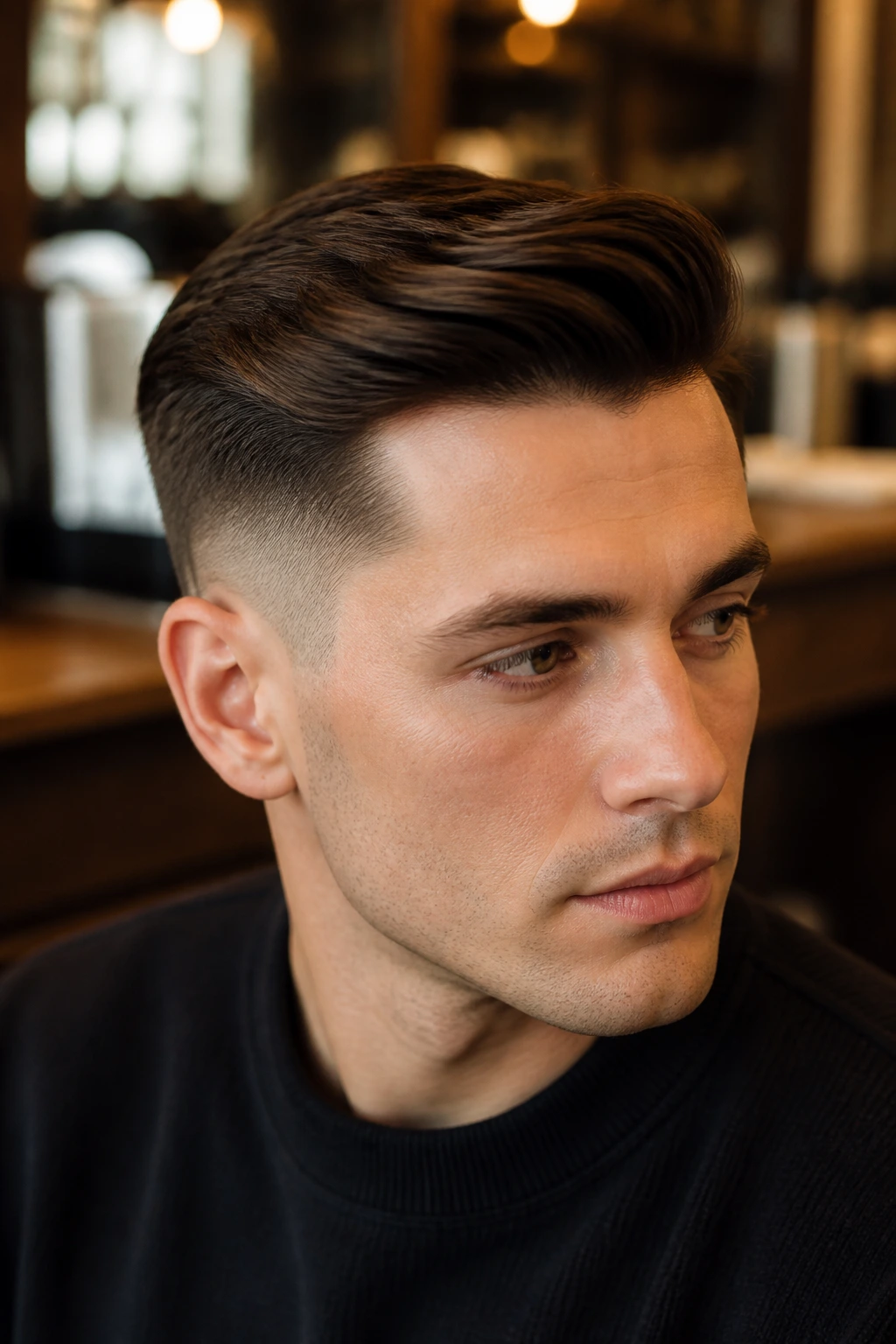
A modern comb over is not the same creature as the old-school version that tried to hide everything under a shiny sweep. Fine hair hates that old style. It shows separation, product build-up, and every suspicious line in the scalp. The modern version is lighter, shorter, and built around movement instead of camouflage.
The low fade helps because it keeps the sides neat without making the top look stranded. The top is usually left with enough length to part naturally, then combed with a wide-tooth comb or fingers so the line isn’t too rigid. You want a soft, directional sweep, not a lacquered wave. Matte cream is usually better than pomade here.
This cut suits men who need a little polish. It works with shirts and jackets, and it doesn’t read as overly trendy. If your hair is straight and your part is fairly obvious already, a modern comb over can look more like a deliberate style than an attempt to cover thin areas.
What makes it different: the sweep is gentle, the shine stays low, and the fade keeps the whole cut from looking puffy at the sides.
12. Short Pompadour with Matte Finish
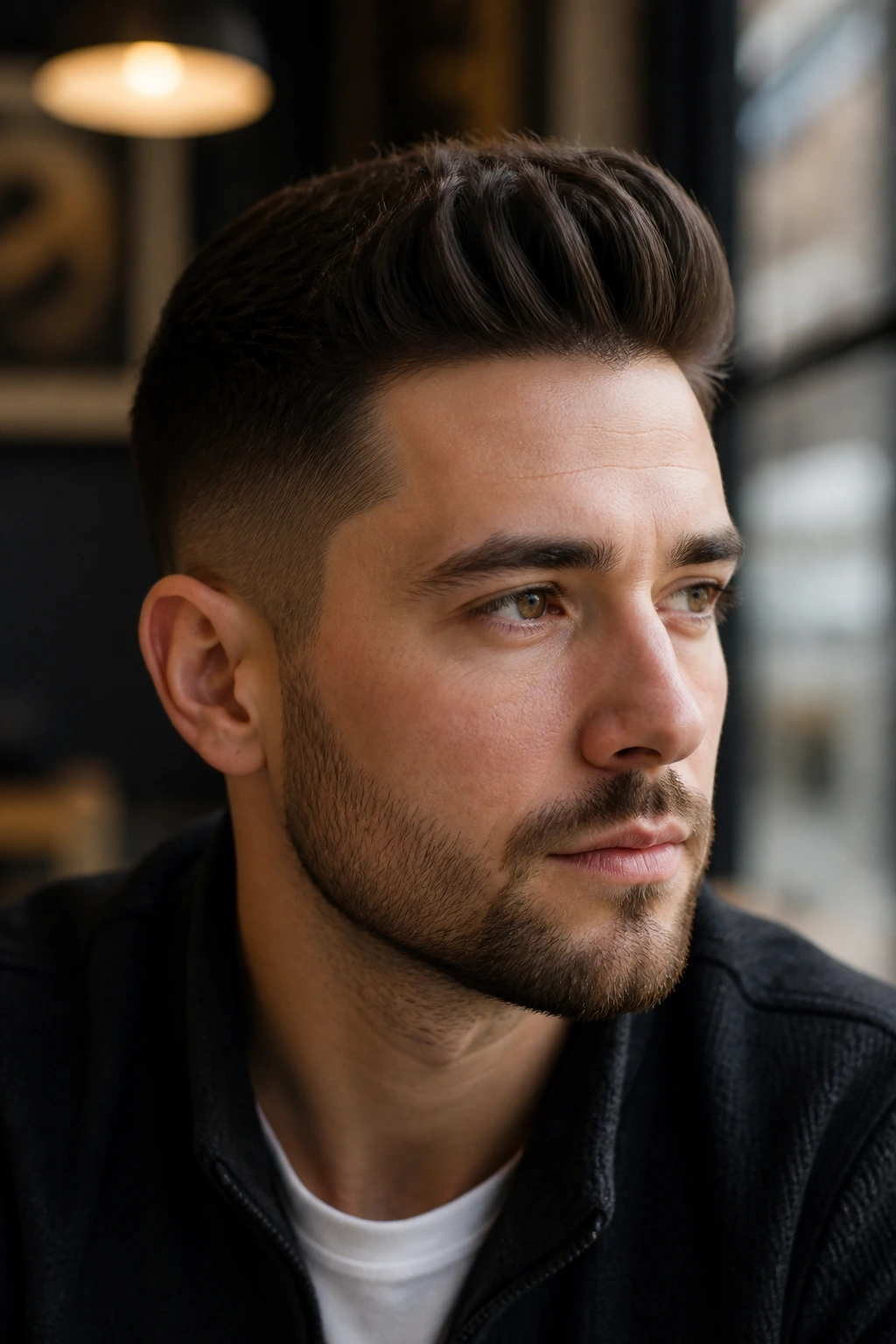
A pompadour sounds like a big commitment, but fine hair can pull off a short version if you keep your expectations sane. No giant rockabilly cloud. No helmet. The short pompadour is about a clean rise at the front, a smooth slope toward the crown, and enough structure that the hair doesn’t cave in halfway through the day.
The shortest versions work best because fine hair loses steam fast as it gets longer. Around 2.5 to 3 inches on top is usually the ceiling if you want to keep the shape light. Use a dryer and a small round brush or a vent brush to lift the front, then lock in the shape with a matte paste. If the finish is too shiny, the hair separates and the scalp starts showing through. That’s not a pompadour problem. That’s a product problem.
I like this style when you want a little dress-up energy without crossing into fussy territory. It looks especially good with a tapered side because the contrast makes the top appear fuller. And yes, it needs a little maintenance. That’s the trade. But if you want a polished shape that still feels modern, it’s a very useful one.
13. Slick Back with a Soft Taper
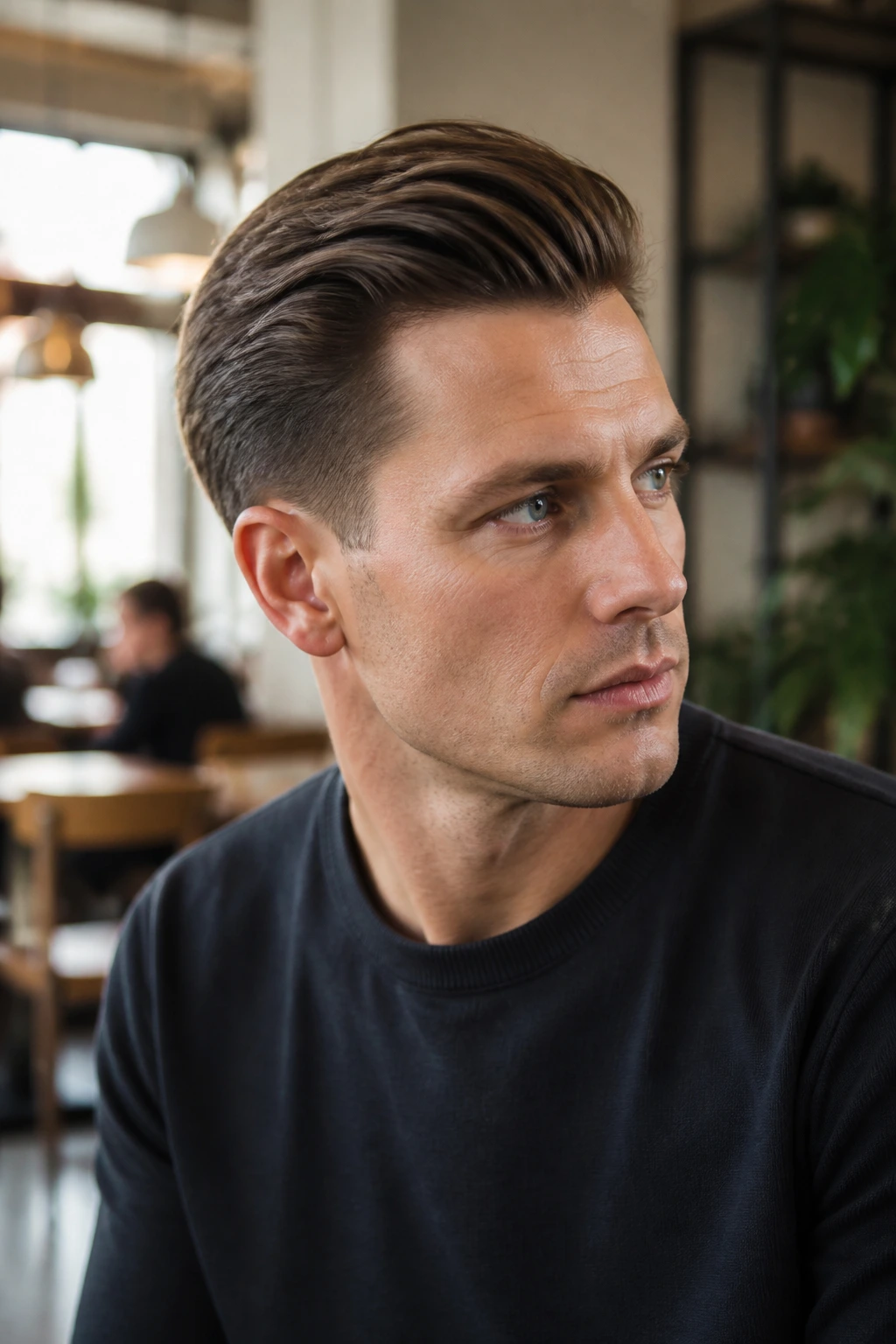
A slick back can work on fine hair, but only if you stop treating it like a wet, glossy wall. That old heavy version exposes every thin spot because the strands separate and cling together in the wrong places. The better version is softer. It has a matte or low-shine finish, a tidy taper at the sides, and just enough length on top to move backward without looking stringy.
Straight hair does best here. If the hair is too wispy, the style can look thin no matter what product you use. But if your hair is fine and fairly even through the top, a soft slick back can look polished in a way that’s hard to beat. It’s a strong choice for guys who want something a little grown-up without losing edge.
Use a small amount of cream or a very light pomade, then comb it back with your fingers first and a comb second. That order matters. It keeps the hair from lying too flat against the scalp. Leave a little texture near the front so the cut breathes. Full shine is the enemy here.
14. Spiky Texture Top
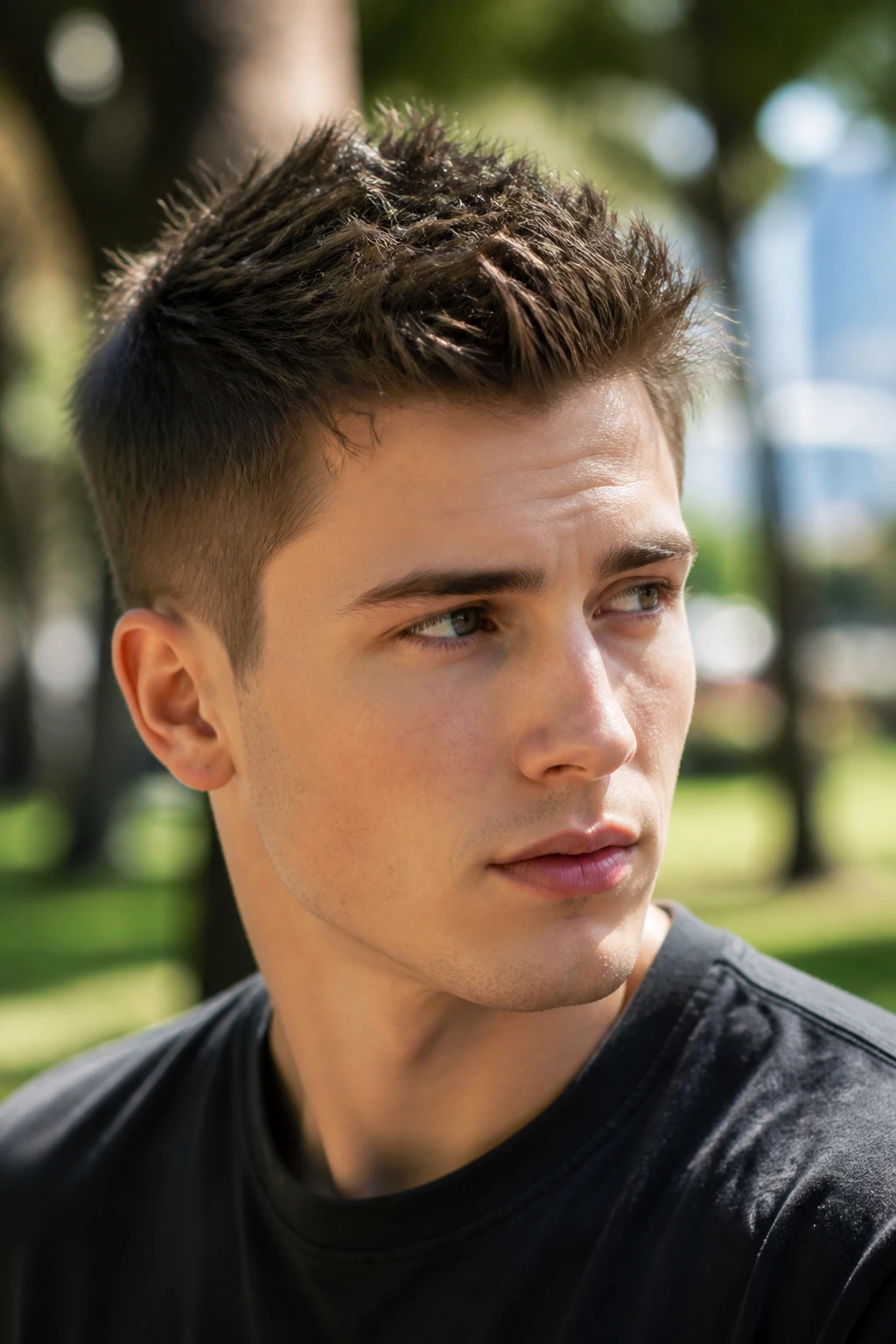
Spiky hair gets a bad reputation because everyone remembers the crunchy, helmet-like versions. The modern version is better. On fine hair, small separated spikes can add lift and visual texture without looking overdone. The trick is to keep the spikes short, soft, and irregular.
This cut works especially well when the top has enough texture to stand up in little pieces but not so much length that it turns floppy. Think of it as controlled roughness. You’re not building a forest. You’re just creating enough separation that the hair doesn’t lie in one flat plane. A matte clay or fiber paste is the right tool, and you only need a little.
How to style it
- Blow-dry the top upward until it’s about 80 percent dry.
- Rub a pea-sized amount of product between your palms until it disappears.
- Pinch the hair into small sections, especially at the front.
- Stop before it gets stiff. If the spikes feel crunchy, you’ve used too much.
This is a good option if you like a bit of edge but don’t want a messy crop. The finish is lighter and more separated, which can make fine hair look active instead of flat.
15. Side-Swept Layered Cut
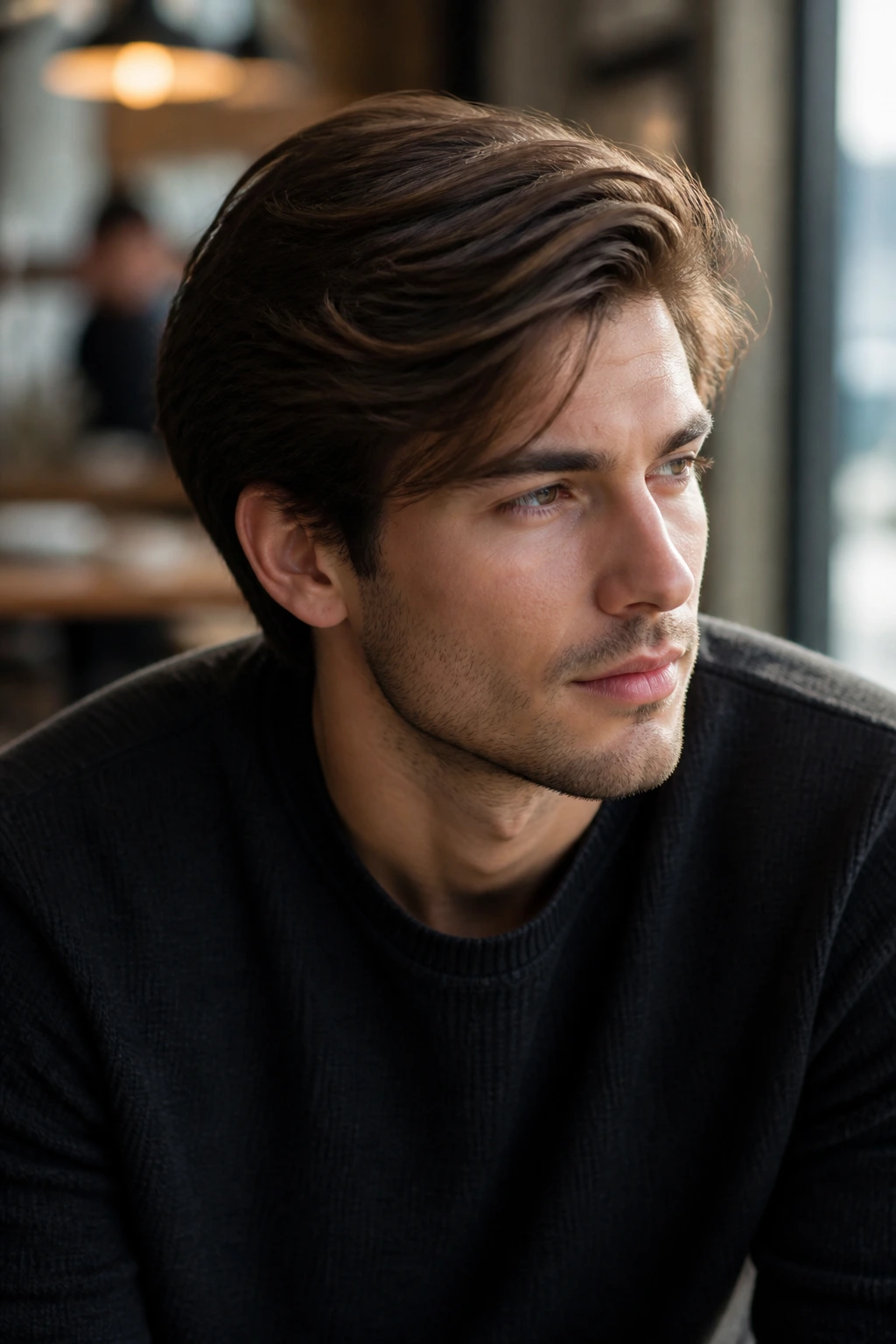
Some men want structure. Some want softness. The side-swept layered cut sits in the middle and does a nice job of not picking a fight with your hair. It’s especially useful if your hair naturally falls across the forehead or if one side has a stronger growth pattern than the other. The layers let the hair move instead of trapping it in one fixed line.
Fine hair loves a side sweep when the layers are cut with restraint. Too much thinning and the ends go wispy. Too much length and the whole thing droops. Keep the top long enough to sweep, but short enough that the hair still has some body. Usually that means somewhere around 2 to 4 inches depending on density and growth pattern.
I like this cut for men who don’t want a sharp, barbered look. It feels less formal than a side part and less sporty than a crew cut. It can also help hide a stubborn cowlick or a front area that wants to split on its own. A light cream and a quick blow-dry are enough for most days.
One quiet advantage: it grows out gracefully. That matters more than people admit.
16. Soft Shag for Medium Fine Hair

The soft shag is the one cut in this list that leans into looseness instead of control, and that’s why it works. If your fine hair has a little wave or you’re willing to wear it a bit longer, the shag creates movement through layers rather than bulk. It doesn’t try to pin the hair down. It lets the hair move around the face and neck in a way that can look surprisingly clean when the layers are cut well.
The important part is softness. This is not the hard, over-layered shag from some retro photo. It needs a gentle perimeter, broken ends, and enough weight around the front and sides that the cut doesn’t evaporate into frizz. If you cut too much out of the interior, fine hair can turn stringy fast. That’s the trap.
A soft shag suits men who want something a bit longer but still shape-driven. Use a texture spray on damp hair, scrunch it lightly, and let it dry with as little fuss as possible. If you blow-dry it straight, it loses some of its point. If you let it stay slightly messy, the layers do their job.
This is one of the few longer options that can make fine hair look fuller instead of thinner, and that alone makes it worth a look.
17. Disconnected Undercut with Textured Top
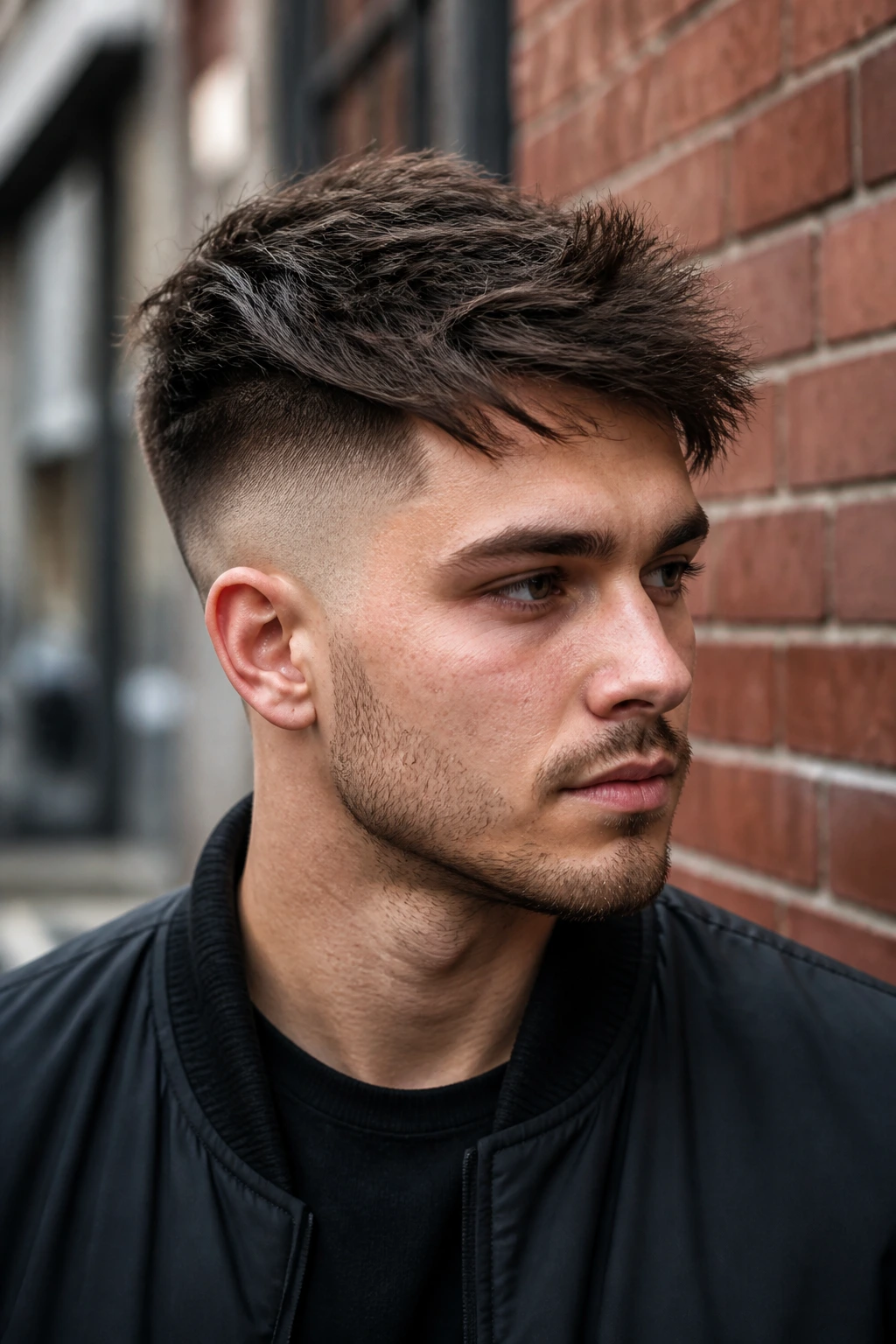
This one is a gamble, but on the right guy it looks deliberate and strong. A disconnected undercut puts a clear break between the short sides and the longer top, which can make fine hair look fuller on top because all the attention lands there. The contrast is the whole show.
The catch is obvious: if the top is too thin or too long, the disconnect can make the hairline and crown look exposed. So this cut is best when your hair still has decent density on top and you’re willing to keep the top textured and controlled. Don’t let it drift into limp territory. Keep the length moderate and the finish matte.
I prefer this style when the goal is a sharper, more fashion-forward look. It works well with a little forward lift, a loose quiff, or even a side-swept shape. The undercut gives the top permission to stand out, but it doesn’t do the hard work for you. You still need a good cut and a decent styling routine.
If you like clothes with strong lines, this haircut will feel familiar. It’s all contrast.
18. Tapered Buzz with Sharp Line-Up
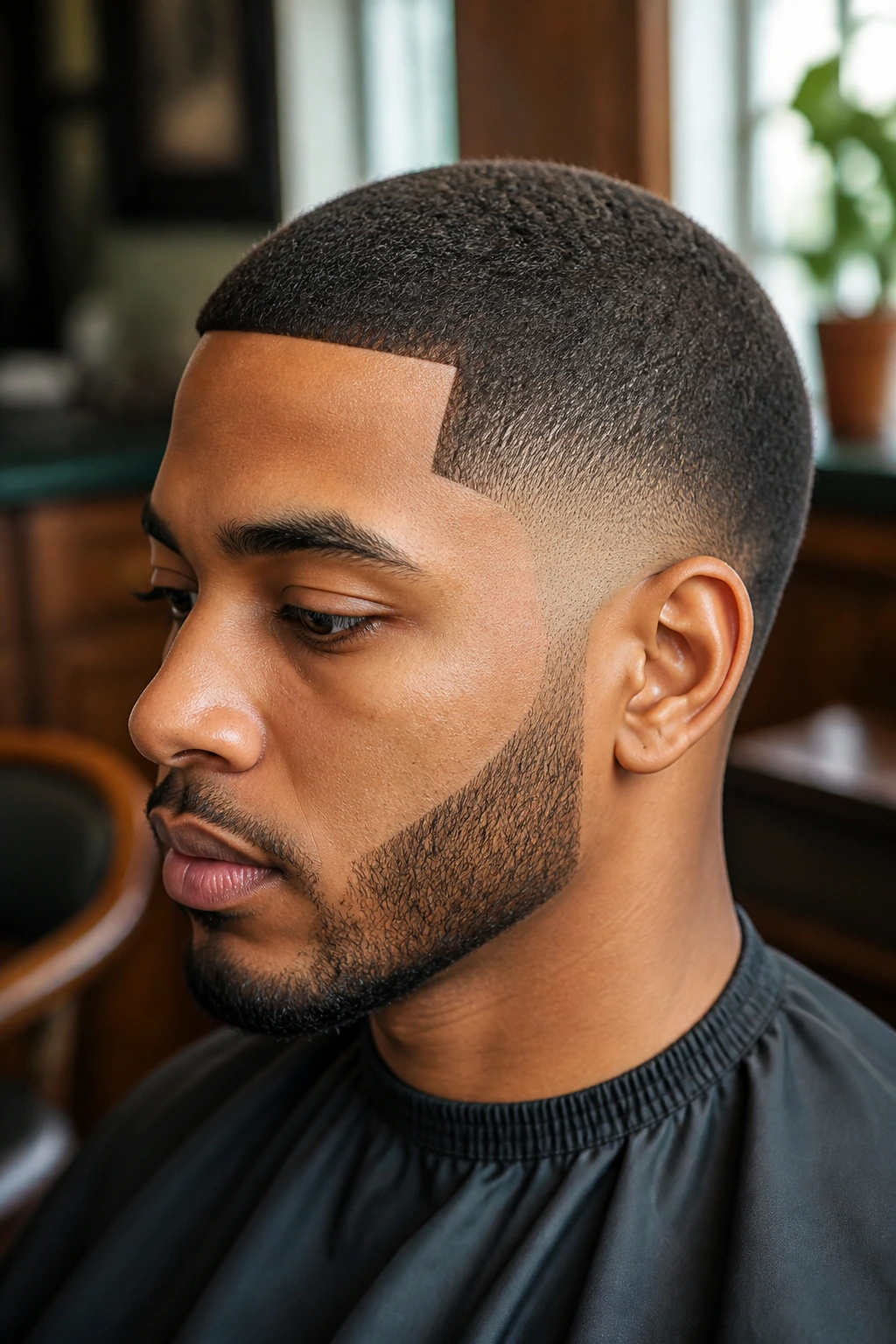
Want a haircut that needs almost no styling and still looks finished? The tapered buzz with a sharp line-up is the answer. It takes the ease of a buzz cut and gives it cleaner edges at the forehead, temples, and neckline. On fine hair, that kind of precision matters because the haircut itself becomes the detail.
The taper keeps the shape soft enough that it doesn’t feel harsh, while the line-up gives the front edge a crisp frame. If your scalp shows easily, don’t go too short on top. A #2 or #3 guard often gives a better balance than a skin-close buzz. You still get the low-maintenance feel, but with a little more coverage through the top.
When to choose it
- You want a cut that takes less than a minute to style.
- Your hairline benefits from clean edges.
- You prefer a neat, minimal look over visible texture.
- You don’t want to deal with product every morning.
The sharp line-up is what keeps this from looking unfinished. Without it, a plain buzz can blur into the face. With it, the cut reads as intentional from across the room.
What Makes a Fine-Hair Haircut Look Thicker
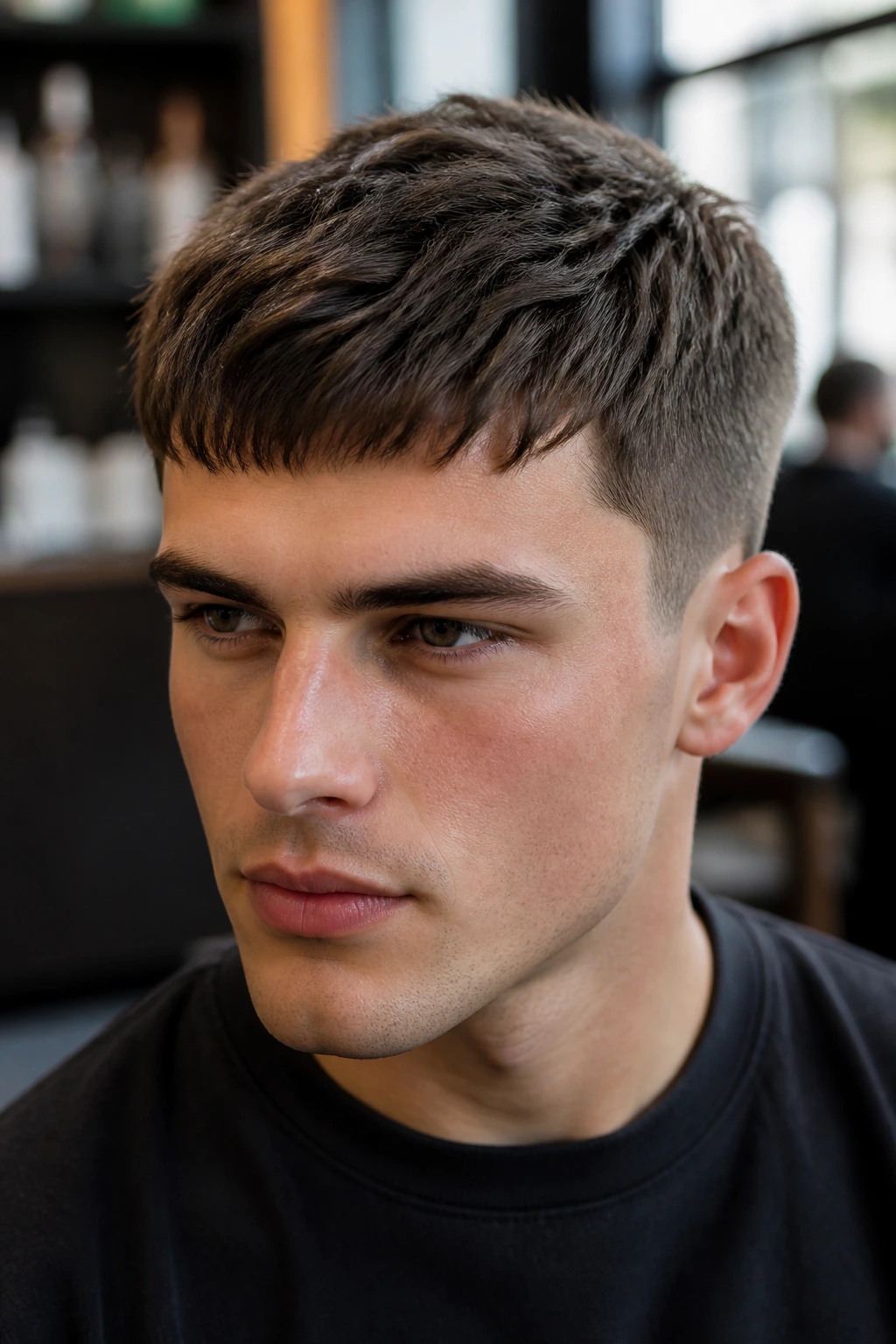
The shape matters more than the strand count. That’s the part people miss. Fine hair can have decent density and still look flat if the cut is too long, too shiny, or too uniform. A smart cut creates small shadows, breaks up the surface, and keeps the sides from swamping the top. That’s why texture, taper, and fringe show up again and again in the list above.
There’s also the crown to think about. Fine hair often lies close to the head at the top back section, and if the cut leaves too much weight there, the whole style starts to slump backward. A little internal texture can help, but I’m cautious with aggressive thinning. Too much of that and the hair gets airy in the wrong way. It starts to look feathery instead of fuller.
The best barbers usually do a few things well: they watch how the hair falls dry, they don’t over-remove weight, and they leave enough shape for the hair to sit in. That’s not flashy work. It’s just good work.
Essential Equipment for These Hairstyles
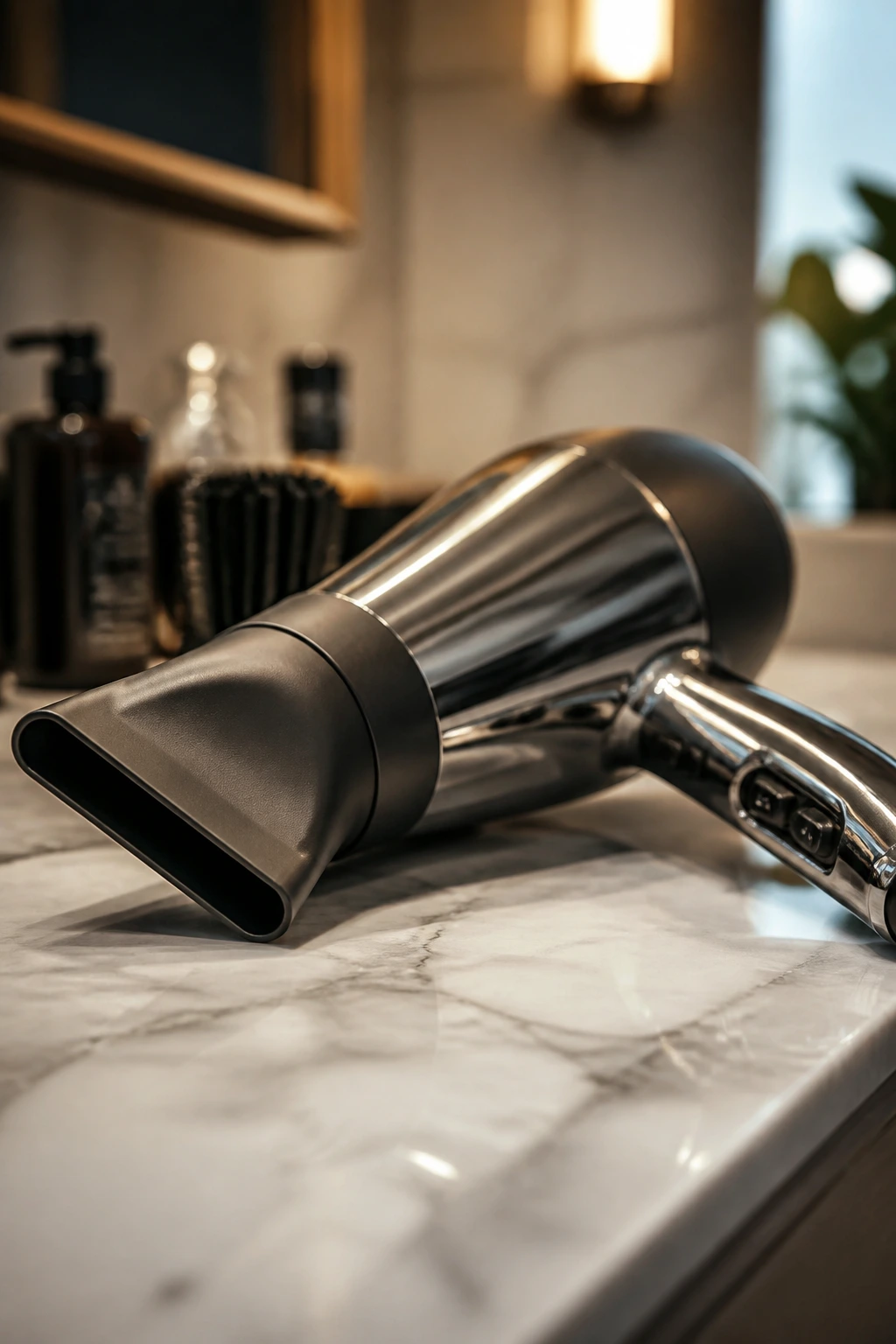
- Hair dryer with a concentrator nozzle — This helps push the roots where you want them instead of blasting the whole head flat.
- Vent brush — Handy for quick root lift on quiffs, brush-ups, and pomps without over-smoothing the top.
- Small round brush — Better for adding a little bend and height at the front than a big brush that drags fine hair down.
- Wide-tooth comb — Easier on fine hair than a tight comb, especially for side parts and soft slick backs.
- Matte clay or paste — Gives grip and texture without the oily shine that makes fine hair separate.
- Texture powder — Useful at the roots when you need a little extra lift before heading out.
- Lightweight shampoo and conditioner — Helps keep product build-up and limpness under control.
- Sea salt spray or root lift spray — A good pre-styler for messy crops, quiffs, and brush-ups.
- Detail trimmer or beard trimmer — Optional, but useful for keeping the neckline and sideburns tidy between cuts.
Smart Product and Styling Tips
Fine hair is unforgiving about product. A little goes far. Too much turns the style heavy, and the scalp shows through faster because the strands clump together instead of sitting with some separation. I like matte products for most of these cuts because they add grip without advertising every strand.
Pre-styling matters. On damp hair, a sea salt spray or light root spray gives the cut a head start before the dryer comes out. If you skip that step, you often end up using too much paste later to make up for it. That’s a bad trade. Start light, then build.
Conditioning should stay off the roots. Put it through the mid-lengths and ends, rinse well, and don’t leave a heavy film behind. If the hair feels slippery right after washing, it usually won’t hold shape well once it dries. A clean rinse matters more than a fancy bottle.
Powder is a tool, not a personality. One or two taps at the root can lift a flat front, but piling it on makes the hair chalky and dull. Same with clay: warm it in your hands first so you’re not dropping a clump into one spot and weighing that area down.
If you’re buying one product first, buy the thing that gives grip without shine. That solves more problems than almost anything else here.
How to Wear These Styles Without Fighting Your Hairline

Face Shape: Round faces usually look better with some height at the front, which makes quiffs, brush-ups, and short pomps useful. Longer faces often do better with crops, side parts, and fringe that stays a little forward instead of going straight up.
Hairline: If your temples are receding or uneven, a French crop, Caesar, or side-swept fringe can soften the front without making it obvious that you’re trying to hide it. Fine hair plus a dramatic hard part can look a little exposed, so keep the part soft when you can.
Styling Time: Buzz cuts, crew cuts, and tapered crops are the fastest wins. If you want a quiff, pompadour, or shag, you’re signing up for a dryer, a brush, and a few extra minutes. Not a crisis. Just a fact.
Barber Request: Ask for texture on top and a taper or fade on the sides. If the barber reaches for thinning shears by habit, stop them and say you want movement, not holes. Fine hair doesn’t need random extra thinning.
Dress Code: Ivy League, side parts, and slick backs sit well with jackets, button-downs, and cleaner outfits. Crops, shags, and spiky styles feel looser and work better if your clothes lean casual.
Small Tweaks That Make Fine Hair Look Fuller
Texture Boost: Dry the roots first, then pinch the ends with a matte paste once the hair is about 80 percent dry. That keeps the base lifted while the top stays piecey instead of flat.
Volume Boost: Blow-dry the front in the opposite direction of its usual fall for ten to fifteen seconds, then move it back. That little bit of resistance creates more lift than trying to force the hair straight up from the start.
Cleaner Finish: Keep the neckline and around the ears tight. Fine hair shows sloppy edges faster than thick hair, and a neat outline makes even a simple crew cut look more expensive.
Make-It-Yours: If your hair is very straight, use a little more texture. If it has a wave, lean into softer shapes like the shag, side sweep, or curtain fringe. If you wear glasses, a bit of extra height at the front can keep the haircut from disappearing behind the frames.
Keeping the Cut Sharp Between Barber Visits

Fine hair grows out in a sneaky way. The shape can look fine for a week, then the fringe starts drooping and the sides lose their crisp outline. For crops, buzz cuts, crew cuts, and Caesar styles, I’d book a trim every 3 to 4 weeks if you want the shape to stay precise. Side parts, Ivy Leagues, and comb overs can usually stretch to 4 to 6 weeks. Longer styles like curtain fringe, side-swept layers, and soft shags often hold up for 6 to 8 weeks if the ends stay healthy.
Wash frequency depends on how oily your scalp gets. Many men with fine hair do well with shampoo 2 to 4 times a week, with a lighter wash on the days between if needed. If your scalp gets oily fast, dry shampoo can buy you a day, but use it at the roots only and don’t let it build up for three straight days.
Between cuts, a quick neckline cleanup with a trimmer keeps the whole style from looking tired. Ten minutes is enough. If you wear a fade or taper, that tiny maintenance pass can make a haircut last noticeably longer. And if you blow-dry often, a heat protectant is worth the extra step. Fine hair burns and dries out faster than people expect.
Common Mistakes to Avoid
- Leaving the top too long. Fine hair that grows past its limit starts separating and collapsing instead of sitting with shape. If a crop or quiff is falling flat by noon, the fix is usually less length, not more product.
- Using shiny, heavy product. Wet-look gels and rich pomades make fine hair clump together and expose scalp in all the wrong spots. Matte clay, paste, or texture powder usually does the job better.
- Taking the sides too tight with no taper. A skin-close undercut can make the top look weak if the hair itself is sparse. A soft fade or taper often looks fuller because the transition is gentler.
- Skipping the blow-dryer. Air-dried fine hair tends to sit where gravity wants it. Dry the roots in the direction you want them to hold, then finish with cool air if you can.
- Over-conditioning the roots. Conditioner at the scalp makes the hair slippery and flat. Keep it through the ends, rinse well, and don’t leave residue behind.
- Choosing a style that fights your growth pattern. If your hair naturally pushes forward, a hard slick back is going to be a daily argument. Pick the cut that works with the grain, not against it.
Variations and Adaptations to Try
The Office Clean-Up: If you need something dressy and low-drama, the Ivy League, side part, and modern comb over are the safest bets. They stay neat, they grow out gracefully, and they don’t need a lot of product to look finished. Good for jobs where you need to look put together without looking fussy.
The Five-Minute Morning Version: Buzz cut, crew cut, and tapered buzz cuts are the fastest styles in the bunch. They take almost no styling, and a sharp neckline or line-up keeps them looking intentional. If your mornings are rushed, start here.
The Front-Forward Fix: French crop, Caesar cut, and messy crop fade all pull attention to the front in a smart way. That makes them useful if your hairline is soft or uneven. They also hold up well with straight hair, which can be a blessing and a curse, depending on the day.
The Extra Height Route: Short quiff, brush-up, and short pompadour create the most visible lift. They need a dryer and a product with grip, but the payoff is a stronger silhouette through the front. Keep the height moderate so the hair doesn’t split apart.
The Longer, Looser Route: Curtain fringe, side-swept layered cut, and soft shag are the options for men who don’t want to cut things too short. They work best when the hair has at least a little wave or texture. If your fine hair is very straight and slippery, these can still work, but the cut has to be tidy.
The Sharp Contrast Route: The disconnected undercut and skin-fade buzz are for men who like a bolder outline. They put the emphasis on shape and edge, which can make fine hair look cleaner from a distance. The risk is overexposure, so don’t overdo the length on top.
Questions People Ask Before Choosing a Fine-Hair Style
Is fine hair the same as thinning hair?
No. Fine hair describes the thickness of each strand, while thinning hair means you have less density overall. You can have fine hair with plenty of coverage, and you can also have thick strands with visible thinning at the scalp.
What haircut makes fine hair look thickest?
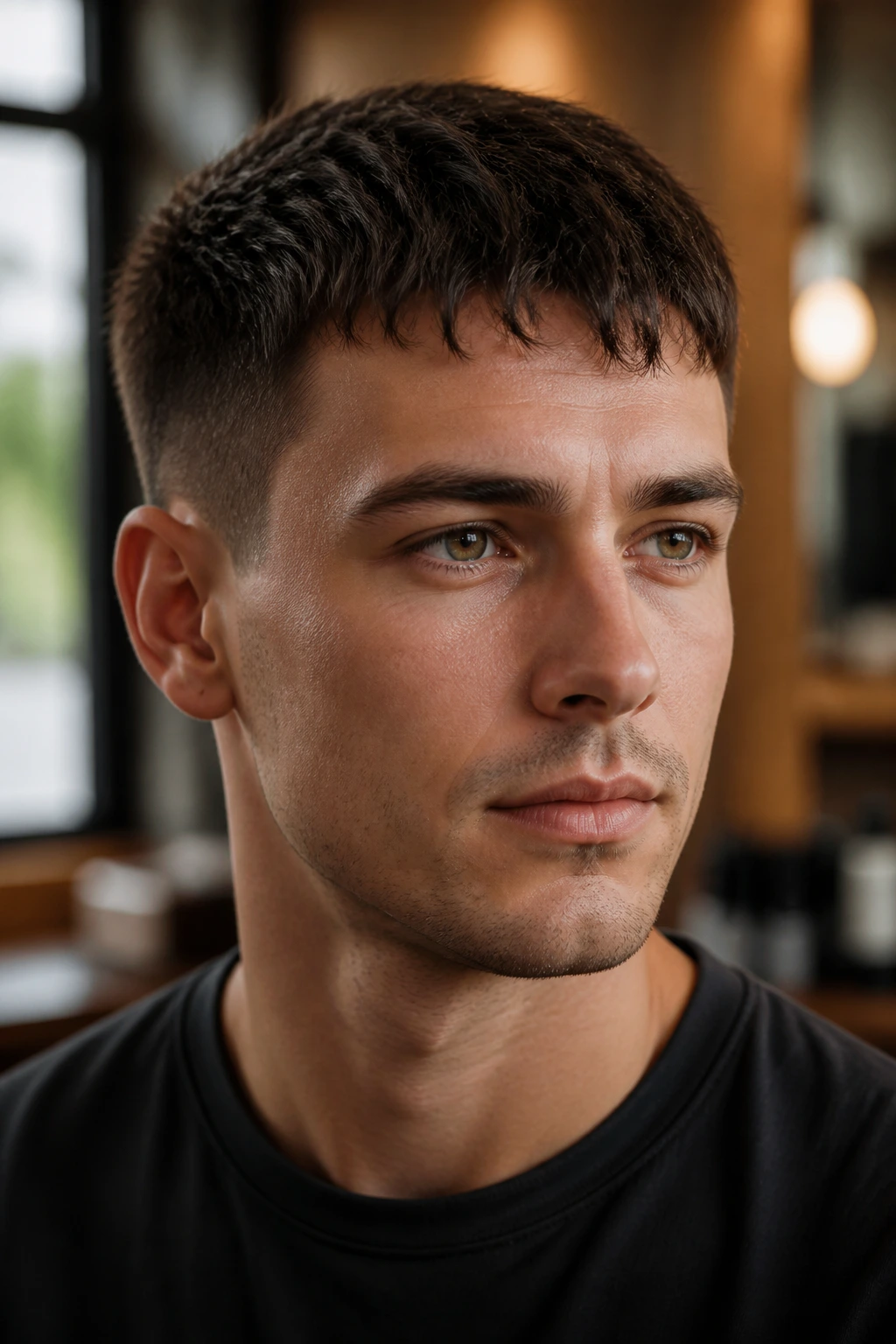
Short textured crops, French crops, Caesar cuts, and clean crew cuts are usually the safest bets. They keep the hair compact and stop the strands from separating into thin-looking wisps. If you want a longer style, a textured quiff can work, but the cut has to be disciplined.
Should men with fine hair avoid long hair?
Not always, but long hair is harder to manage when the strands are fine because the weight pulls the roots flat. If you want more length, choose layered shapes like curtain fringe, a soft shag, or a side-swept cut with some internal movement.
Does a fade make fine hair look thinner?
It can, if the fade is too severe and the top is left weak. A low taper or soft fade usually looks better because it keeps some balance between the sides and the top. High contrast can work, but only when the top has enough density to carry it.
What product should I use if I hate crunchy hair?
A matte cream or light clay is the safest place to start. Texture powder can help at the roots, but use it sparingly. If the hair feels stiff after product goes in, you’ve probably used too much.
How often should I cut fine hair?
Short styles usually need a trim every 3 to 4 weeks to keep the outline clean. Longer layered cuts can stretch to 6 to 8 weeks if the shape stays intact. Once the edges start blurring, the style loses its advantage.
Can I wear a slick back with fine hair?
Yes, but keep it soft and low-shine. The modern version works better than the old glossy version because it doesn’t separate the strands into obvious lines. If your hairline is very sparse, a side part or brushed-back Ivy League may be easier to live with.
What if my crown shows through a lot?
Keep the top shorter and add texture instead of length. A crop, crew cut, or Caesar usually handles a visible crown better than a long comb over or a tall pompadour. If the crown is a major concern, ask the barber to check the back in natural light before finishing the cut.
A Better Shape Beats More Hair
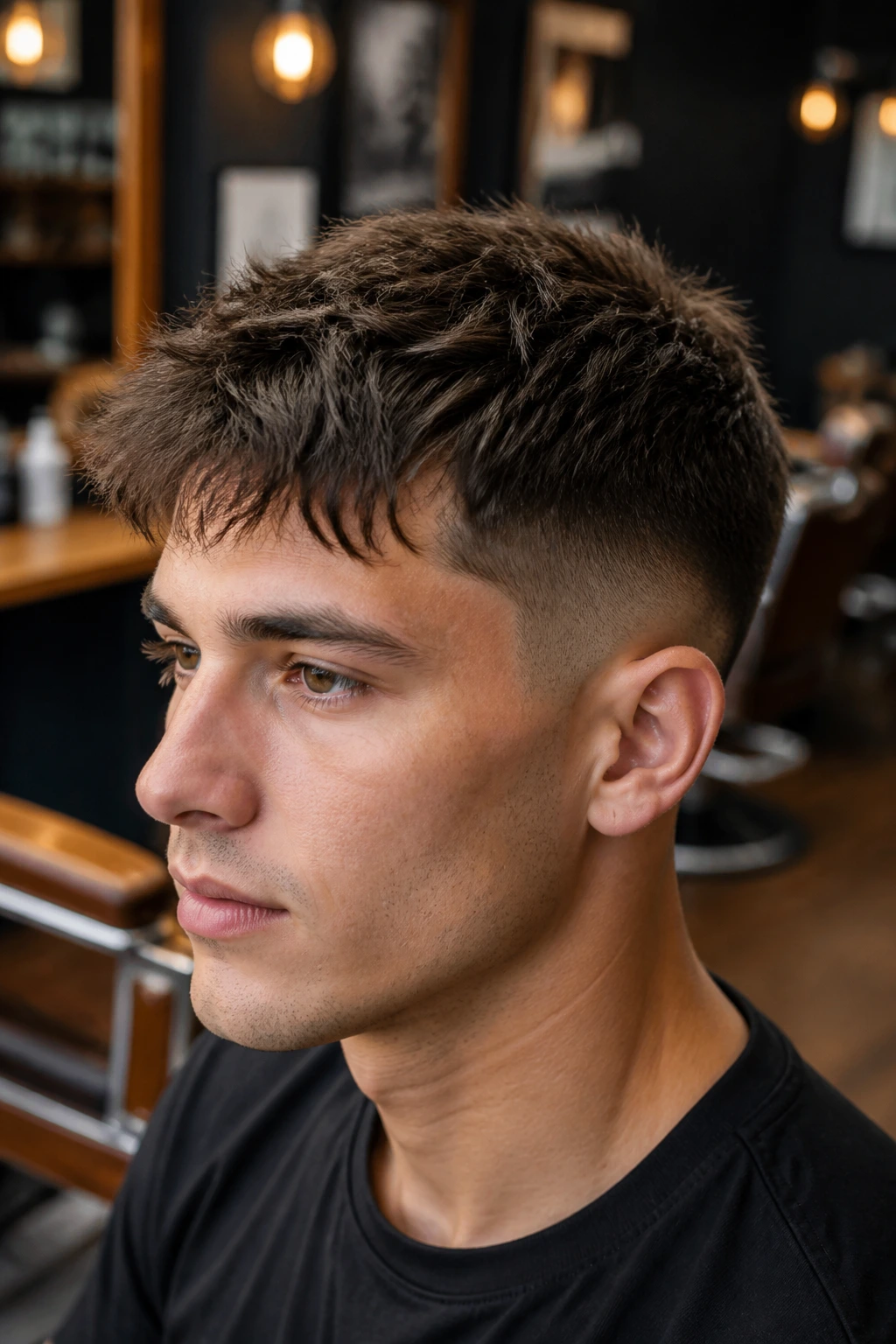
Fine hair doesn’t need to be hidden. It needs a shape that makes sense. That’s why the smartest cuts here are the ones that use texture, taper, and a little forward movement instead of piling length on top and hoping for the best.
If I had to narrow the advice down to one thing, it would be this: start shorter than you think, then add length only if your hair proves it can hold it. Fine hair is honest. It tells you fast when a cut is too heavy, too shiny, or too long for its own good.
Choose the shape that fits your hairline, your routine, and the amount of styling you’ll actually do on a weekday morning. That’s the haircut that keeps paying off.