



The best mother of the bride half up hairstyles do something sneaky: they keep the hair from sliding into the face during hugs, vows, and photos, but they still leave enough movement that the style doesn’t feel stiff or ceremonial in the wrong way. That balance is harder than it looks. Push the crown too high and you get a helmet. Leave too much hair loose and the whole thing can lose shape before the cake is cut.
Half-up styling has a real advantage at wedding events. It sits neatly between “formal enough for the front row” and “soft enough to feel like yourself,” which is exactly why it keeps showing up on women who want polish without looking overdone. The good versions use a few smart anchors—twists, braids, pins, a clean part, maybe one accessory—and then stop before the hair starts fighting back.
And that restraint matters. A mother of the bride is usually getting photographed from every angle, standing through a long ceremony, greeting guests, and moving through heat, emotion, and a lot of sudden leaning-in for cheek kisses. The right half-up style should handle all of that without demanding constant attention. That’s the sweet spot.
Why This Collection Earns Its Place at the Mirror
-
It stays soft around the face: A half-up shape lifts hair away from the eyes and cheekbones, but it still leaves movement at the sides and back, which reads better in daylight photos than a hard shell of spray.
-
It works with more dress necklines than a full updo: Bateau, scoop, off-shoulder, sweetheart, and even a high neckline can all sit comfortably with the right sectioning.
-
It gives you room for accessories: Pearl pins, a comb, small flowers, or a veil can sit in the pinned section without taking over the whole head.
-
It’s kinder to fine or layered hair: You don’t need enough density to build a full sculpted bun. A few well-placed twists can do the job.
-
It still looks finished from the back: That matters more than people think. Guests see the back of your head during the ceremony, photos, and the reception line.
-
It can be adjusted for your comfort level: If you hate tight styles, keep the crown soft. If you want more hold, build the base with a little texture spray and hidden pins.
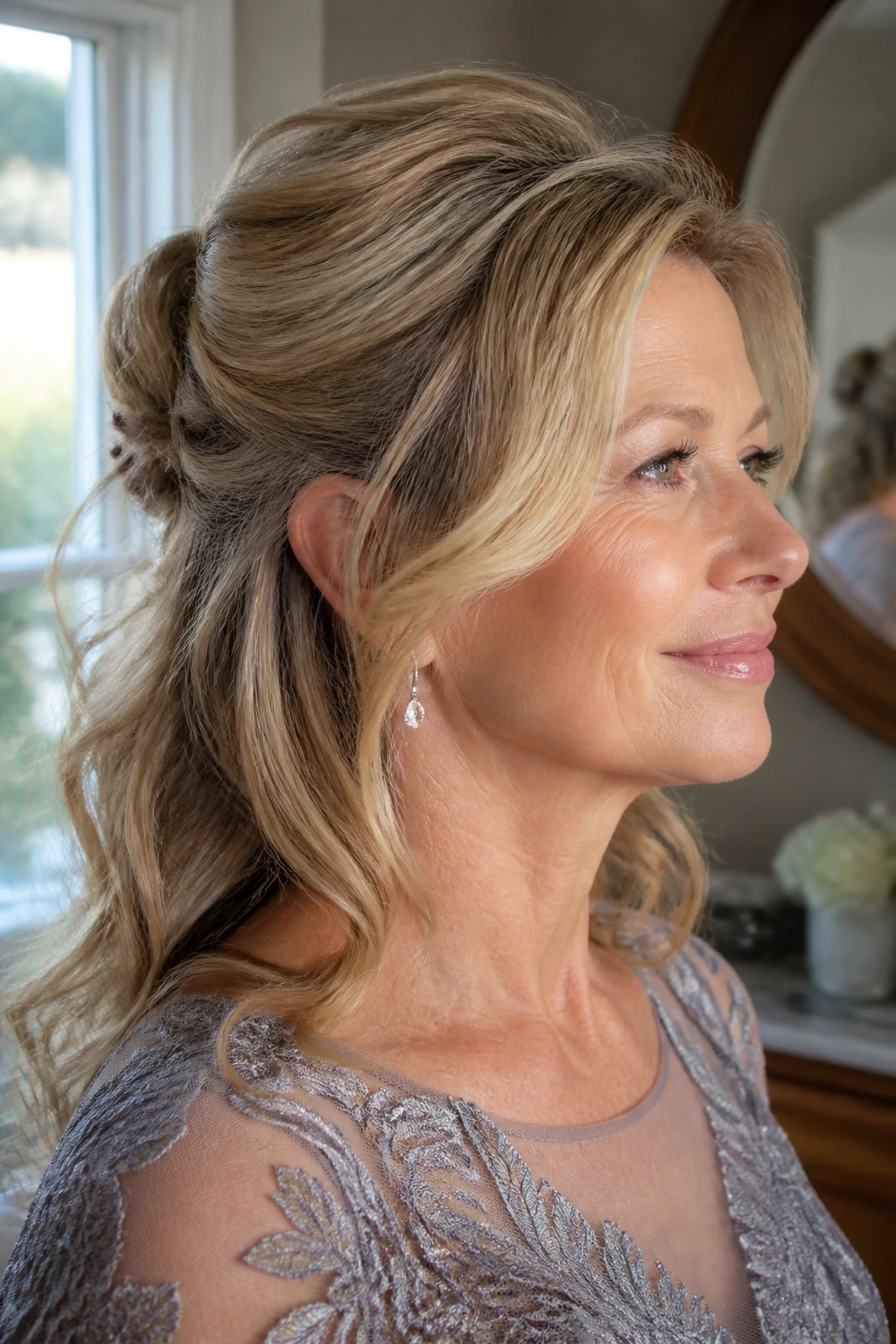
1. Soft Twisted Crown with Loose Waves
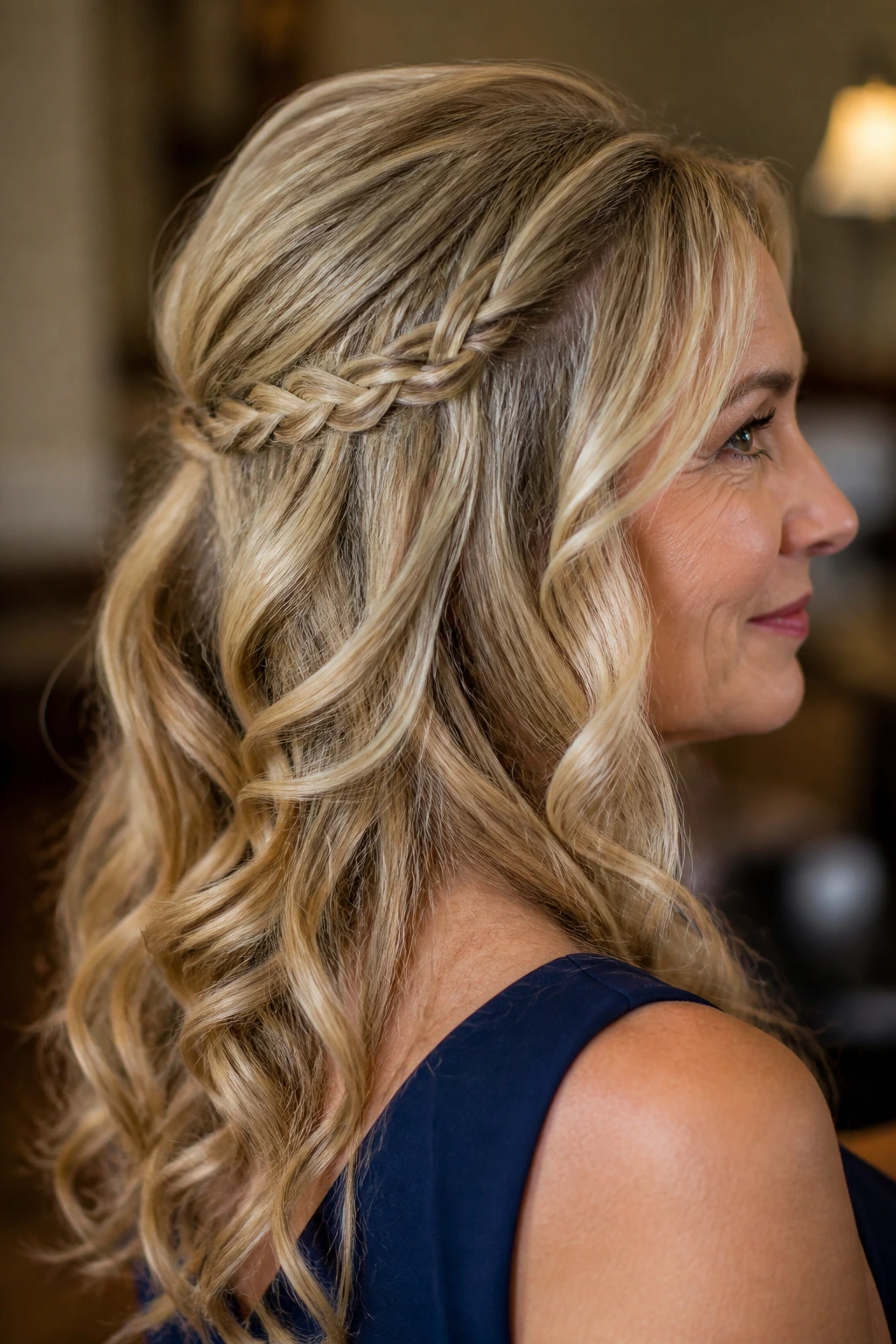
This is the style I reach for when the dress is elegant but not fussy. Two twisted sections start near the temples, meet at the back of the head, and let the rest of the hair fall in loose, brushed-out waves. It looks calm from the front and slightly romantic from the side, which is a very useful thing on a day full of cameras.
Why it works
The twist gives the front of the style structure without flattening the sides. Use a 1.25-inch curling iron for the ends and keep the waves soft; you want bend, not pageant curls. A little mist of texture spray at the roots helps the twists grip, especially if the hair is silky.
A pair of pearl pins or two small crystal clips is enough here. Don’t pile on more. The shape is doing most of the work.
Best for: medium to long hair, oval or heart-shaped faces, and dresses with lace or soft drape.
2. Pearl-Pinned Braided Half-Up
A thin braid on each side, pulled back and fastened with pearl pins, gives the hair a tailored look without making it severe. It’s one of those styles that reads quiet at first, then gets better the longer you look at it.
Pearl pins are doing some heavy lifting here. They soften the line where the braids meet and keep the back from looking too sporty. Keep the braids thin—about the width of a pinky finger—so they don’t dominate the head. Thick braids can make the style feel younger than you want.
I like this one with hair that has a little bend already. Day-old hair is fine. Freshly washed hair can be too slippery unless you rough it up with a dry texture spray first.
3. Polished Half-Up Chignon with Face-Framing Pieces
Want a style that looks refined from the front but still lets the hair move at the shoulders? This is the one. A small chignon sits low at the back, made from the upper sections only, while two face-framing pieces stay loose and polished.
What to ask for
Ask for a low, half-up knot rather than a full bun. That distinction matters. A true chignon can sit too low and collapse into the rest of the hair; this version should live at the upper nape, where it supports itself and doesn’t drag.
The front pieces should be curled away from the face with a 1-inch iron, then brushed into a soft curve. If the hair is very fine, a little backcombing at the crown gives the knot something to hold onto. If the hair is thick, keep the bun compact so it doesn’t stick out like a handle.
This one works well with clean, structured dresses. It has a neat backbone, which I like when the outfit already has embroidery, beading, or a dramatic neckline.
4. Side-Swept Half-Up Glamour Waves
A deep side part changes everything. The hair is swept to one side, pinned lightly behind the opposite temple, and left to fall in glossy waves that sit over one shoulder. It feels a little old-Hollywood, but not costume-y if the waves are brushed out properly.
Key details that matter
- Part: create it before curling, not after. The shape sits better that way.
- Wave size: use a 1.25-inch barrel and curl away from the face for the front sections.
- Pinning point: hide the pins just behind the ear on the lower side.
- Finish: a light serum on the ends keeps them from looking frayed in flash photos.
This is the style I’d pick for a one-shoulder dress or anything with an asymmetric neckline. The hair echoes the line of the garment instead of competing with it. And yes, it photographs in a very clean way from the side. That matters.
5. Crown-Lift Half-Up for Fine Hair
Fine hair can look a little too honest under wedding lights. This style fixes that by building lift at the crown, then keeping the pinned section narrow enough that it doesn’t eat up all the body. The lower half stays loose, which keeps the style from collapsing into the scalp.
The secret is section size. Don’t tease giant chunks. Lift one-inch sections at a time with a fine-tooth comb, spray the base, then smooth the top layer over the cushion. Big teasing collapses faster and leaves the ends looking thin.
If the hair is very slippery, rough-dry a root spray in first. If it’s already got some grit, skip the extra product. Too much will make the hair feel dusty. A small amount of shine spray on the ends is enough.
This is one of the most useful mother of the bride half up hairstyles for women who want fullness without the drama of a full bouffant.
6. Rope-Twist Half-Up for Medium Length Hair
Compared with a braid, a rope twist has a cleaner line and less visual bulk. Two twisted sections—each section divided into two strands and twisted over itself—meet at the back and pin into a neat center point. It’s tidy, secure, and good when the hair has layers that won’t stay in a traditional braid.
The neat thing about this style is how steady it feels. Rope twists grip hair well, so you don’t need a mountain of pins. Four to six bobby pins usually do it if they’re crisscrossed rather than shoved in parallel.
I’d use this for medium-length hair that sits just below the shoulders. On longer hair, the twist can get swallowed by the rest of the length. On shorter hair, it may not have enough room to look intentional.
7. Low Half-Up Knot with Soft Tendrils
This one feels calm. Two sections are pulled from above the ears, tied or looped into a low knot at the back, and left with a few soft tendrils around the face and neck. It doesn’t try to be precious. That’s why it works.
The knot should sit just high enough to be seen above the ends of the hair, not buried underneath them. If it disappears, the style loses its shape. If it sits too high, it starts looking like a topknot’s shy cousin.
I like this version for mothers who want movement but don’t want waves falling everywhere. The tendrils give softness near the jaw, while the knot keeps the top from getting messy in humidity. It pairs well with matte makeup and earrings that have a little swing.
8. Fishtail Accent Half-Up for Long Hair
A full fishtail braid can be too much for a formal event. But a narrow fishtail running across the back of the head—just enough to show texture—gives long hair something to do. The rest stays in loose curls or soft bends, which keeps the look from becoming heavy.
How to keep it from swallowing the style
Use a small section. Really small. About half an inch from each side is enough. If you make the braid too wide, it starts to dominate the whole head and the rest of the hair looks like an afterthought.
Long hair loves this shape because it gives the ends a place to land. Add a thin decorative pin where the braid meets the pinned section, then leave the rest clean. I’d skip heavy combs here. They can pull the braid down and flatten the crown.
9. Curly Half-Up with Defined Ringlets
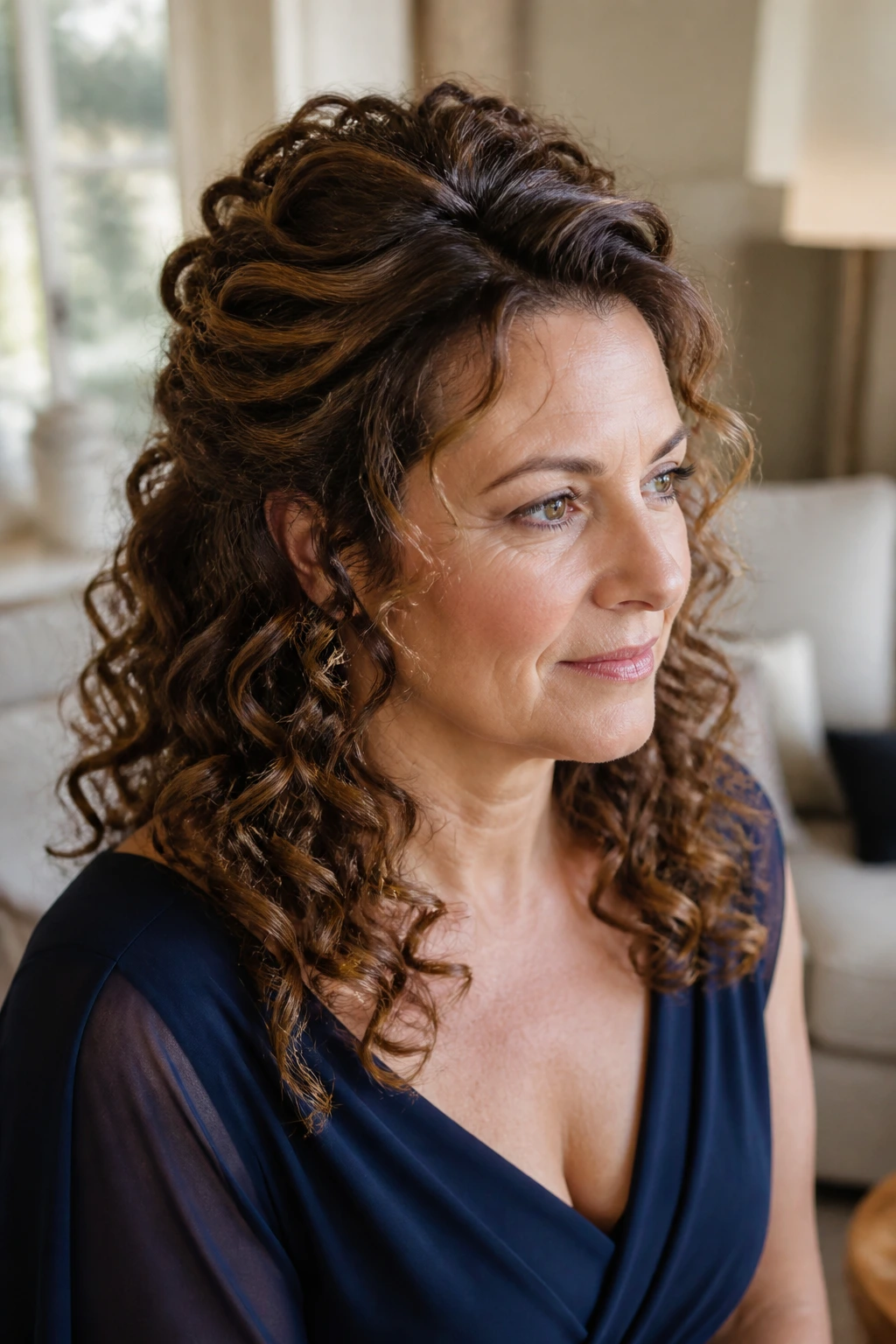
Curly hair has its own agenda, and that’s fine. The best half-up styles for curls work with the spring of the curl instead of forcing it into a smooth shell. The top section gets pinned back, usually from the temples to the crown, while the rest of the curls stay defined and free.
The trick is not to brush it out. Use fingers, a pick at the roots, and a little curl cream on the ends if they look thirsty. A diffused blow-dry or air-dry with a set shape gives the style more staying power than hot tools alone.
If you want the top to look cleaner, smooth only the surface with a small dab of styling cream on your palms. Don’t coat the whole head. That flattens the curl pattern and turns the finish limp. I’m firmly against that.
10. Sleek Center-Part Half-Up
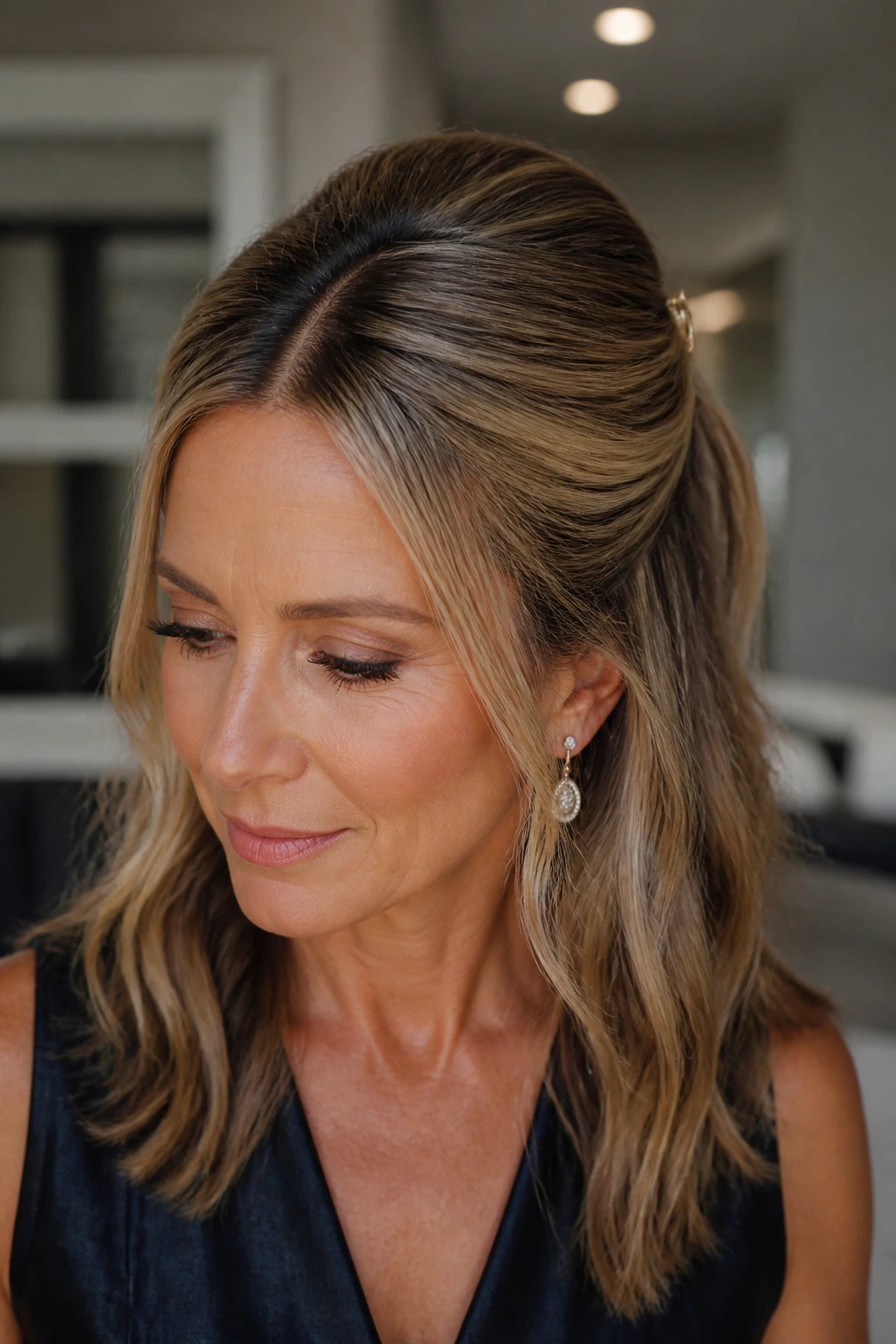
This is the most modern shape in the group. A clean center part, flat-ironed sections, and a half-up pin at the crown make the whole style look deliberate and sharp. There’s no fuzz around the edges. Every line is doing a job.
It’s best when the dress has a crisp shape: satin, crepe, tailored lace, or a structured neckline. The hair should echo that neatness. Use a heat protectant, then flat iron in small sections—about one inch wide—so the finish stays smooth instead of puffy.
A small barrette or narrow metallic clip works better than a large decorative comb. Keep the accessory slim. The entire point is control. If you add too much sparkle, the style starts to look like it’s trying too hard.
11. Vintage Bouffant Half-Up with Soft Ends
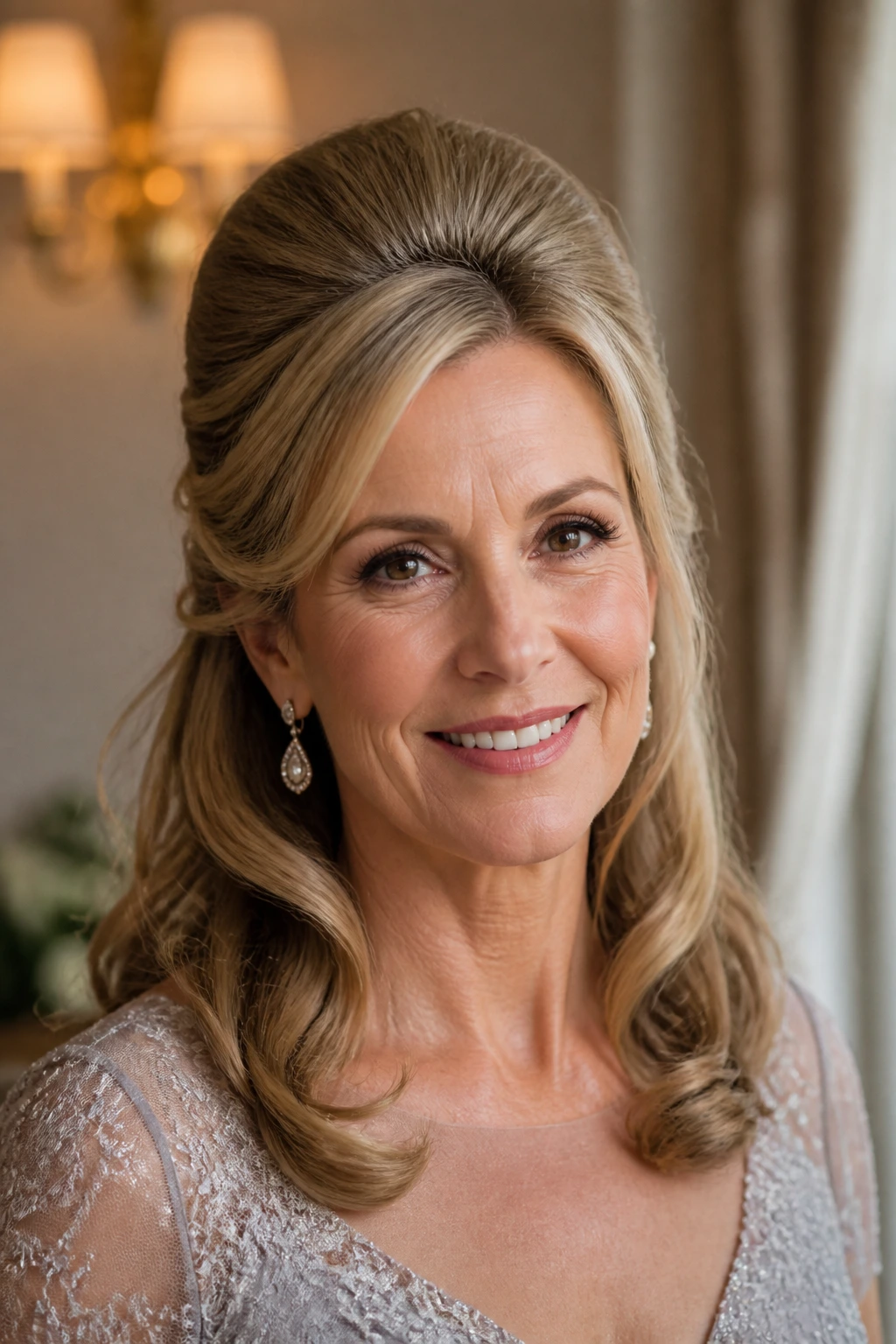
If the dress has a nod to old glamour, this one fits like it was made for it. The crown gets a gentle bouffant lift, the sides are smoothed back, and the lower lengths stay soft and curled. It’s structured, but not stiff.
Where the volume belongs
Put the lift at the crown, not the front hairline. That keeps the face open and avoids the hard triangle that happens when the teasing sits too far forward. A fine-tooth comb and light backcombing are enough. You do not need a giant cushion.
This style works especially well on medium-density hair because it has enough body to hold shape without becoming bulky. I like it with a simple earring and a dress that already has personality. If the outfit is busy, keep the hair quieter. If the dress is plain, this style gives it some theater.
12. Floral Half-Up for Garden Ceremonies
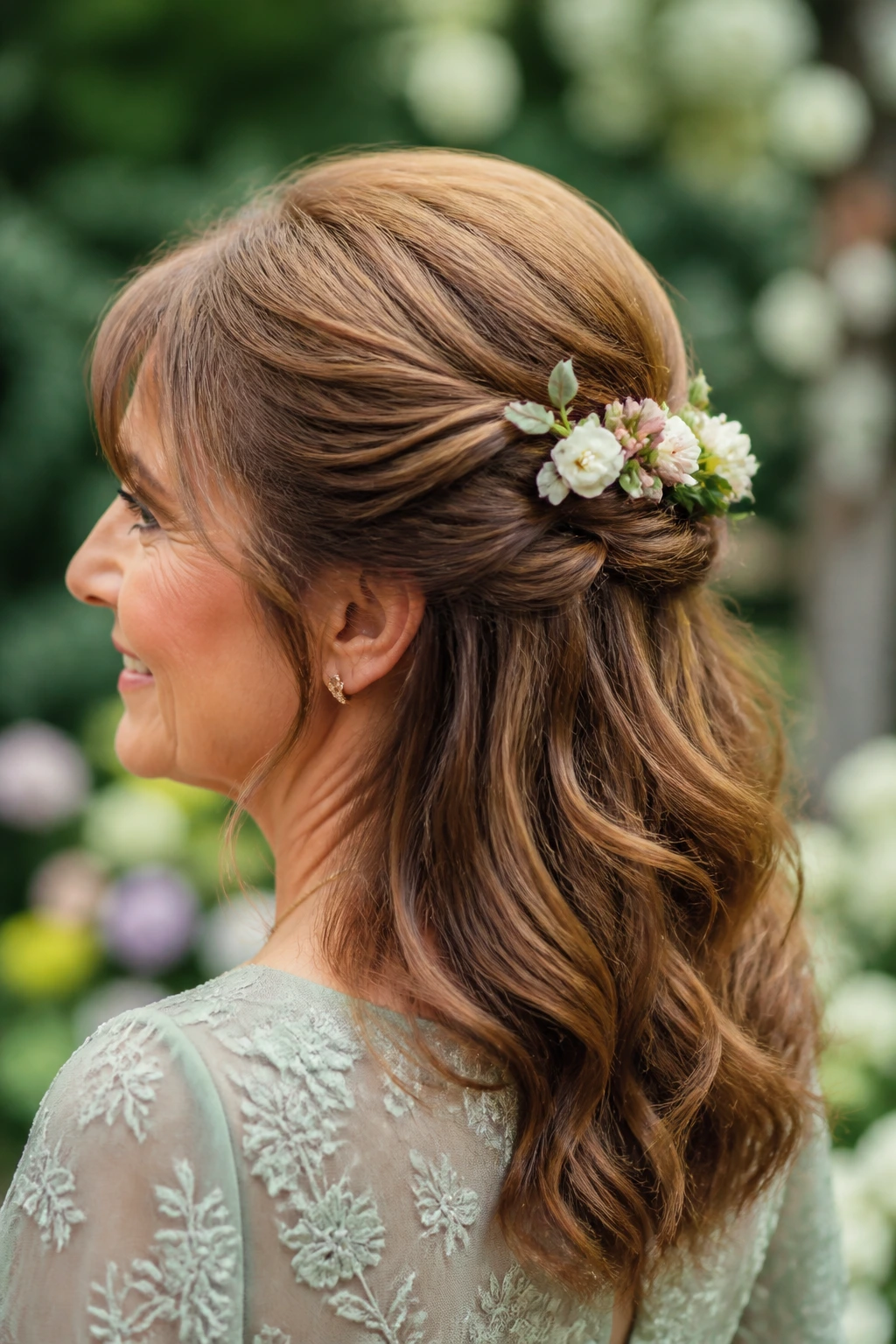
Fresh flowers in the hair can be lovely, but only if they’re placed with a little discipline. A half-up base gives you a secure spot to tuck in a small floral comb or a few wired blooms, and the loose lengths below keep the whole thing from feeling too formal.
The flowers should sit in the pinned section, not scattered across the head like confetti. I’d choose three to five small blooms rather than a bunch of large ones. Tiny roses, spray orchids, waxflower, or baby’s breath can work if they echo the bouquet.
A flower-heavy style needs a strong anchor. Use hidden pins first, then attach the floral piece. If you skip the hidden structure, the comb slides. That’s the part nobody sees, but it’s the whole reason the look survives past the ceremony.
13. Short Hair Mini-Twist Half-Up
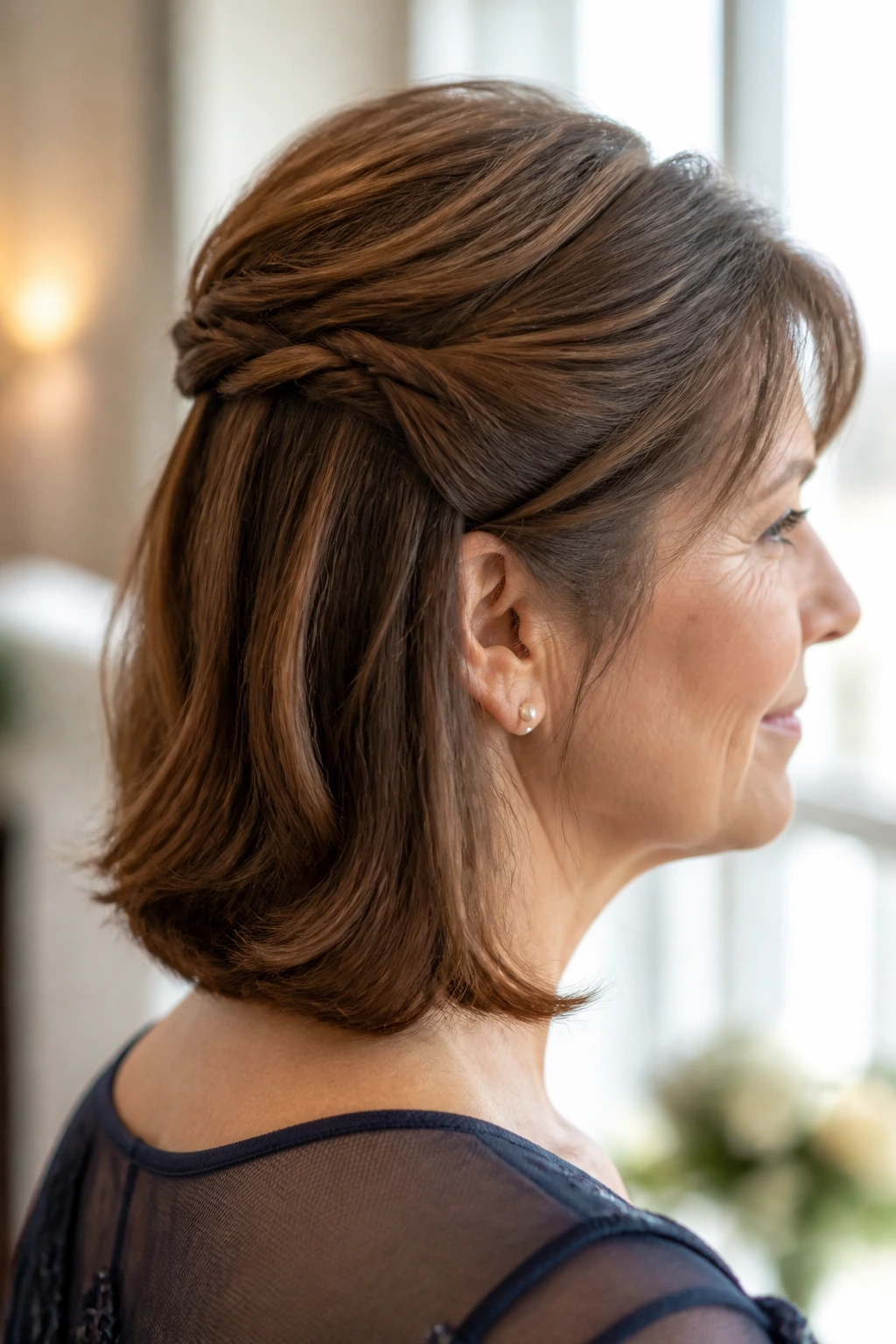
Short hair can absolutely do this. If the length brushes the shoulders or sits just below the jaw, a tiny half-up twist at the crown gives it shape without pretending it’s longer than it is. The goal is neatness, not volume theater.
What makes it work on shorter cuts
You only need enough hair to gather the top two or three inches back. Twist them, pin them low, and let the rest stay smooth or lightly bent. A small claw clip can work in a pinch, but I usually prefer bobby pins because they lie flatter.
This style is especially useful if the haircut has layers around the face. Those shorter pieces can stay out and soften the look instead of poking free from a full updo. Use a little texture spray at the roots, then pinch the twist once it’s pinned so it opens slightly and looks intentional.
14. Lob-Length Half-Up with Tucked Ends
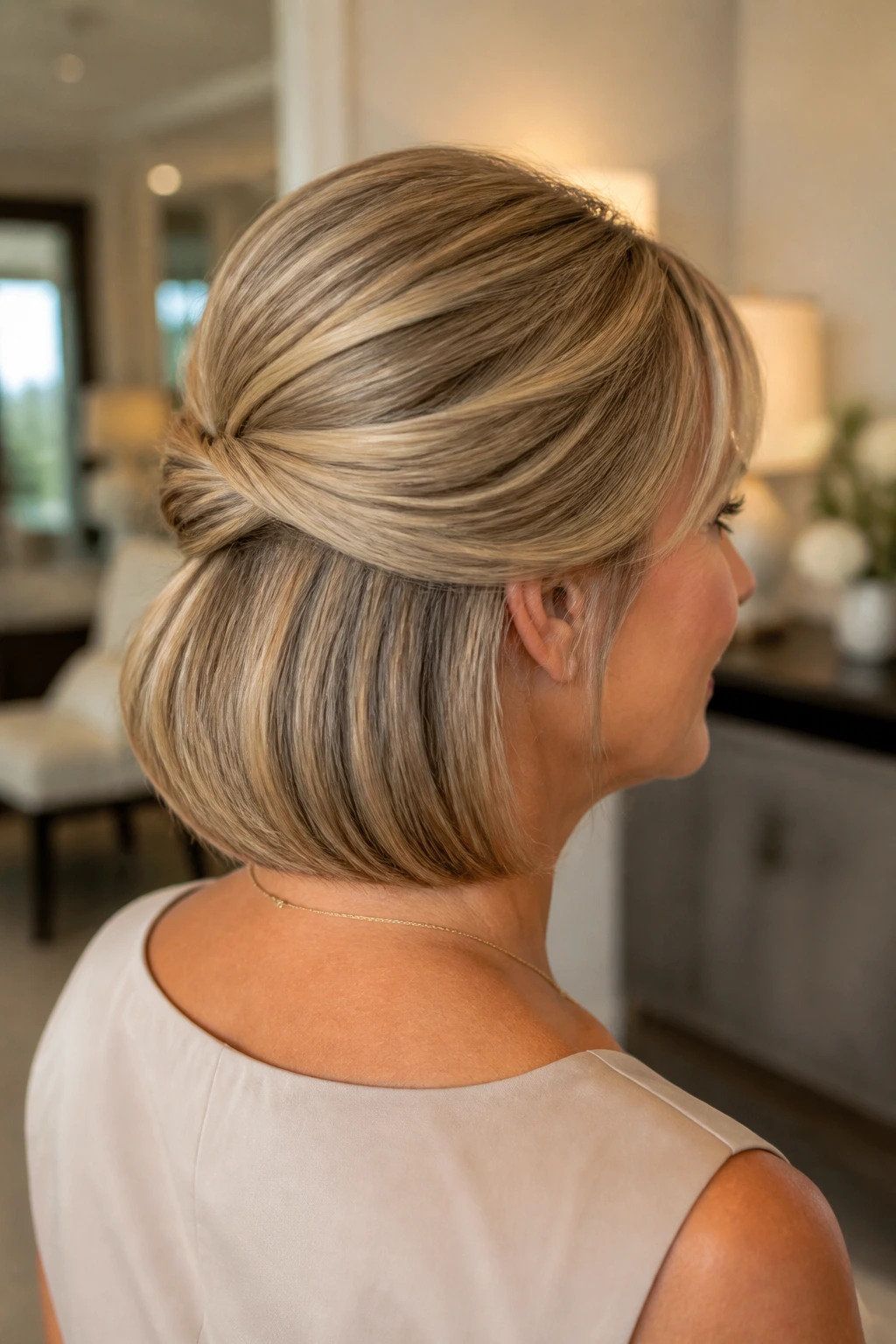
A lob can be tricky. Too much structure and it looks overworked; too little and the front falls flat. This version uses the upper half of the hair to create a small twist or knot while the lower lengths are tucked under at the ends, creating a clean rounded line.
The tucked finish matters. It makes the bob shape look deliberate rather than accidentally bent. If the ends flip out naturally, smooth them under with a round brush while blow-drying or bend them inward with a flat iron once the style is pinned.
I like this one for someone who wants polish without a lot of ornament. A side clip, a slim pearl bar, or nothing at all can work. The cut itself becomes the style, which is often enough.
15. Satin Ribbon Half-Up
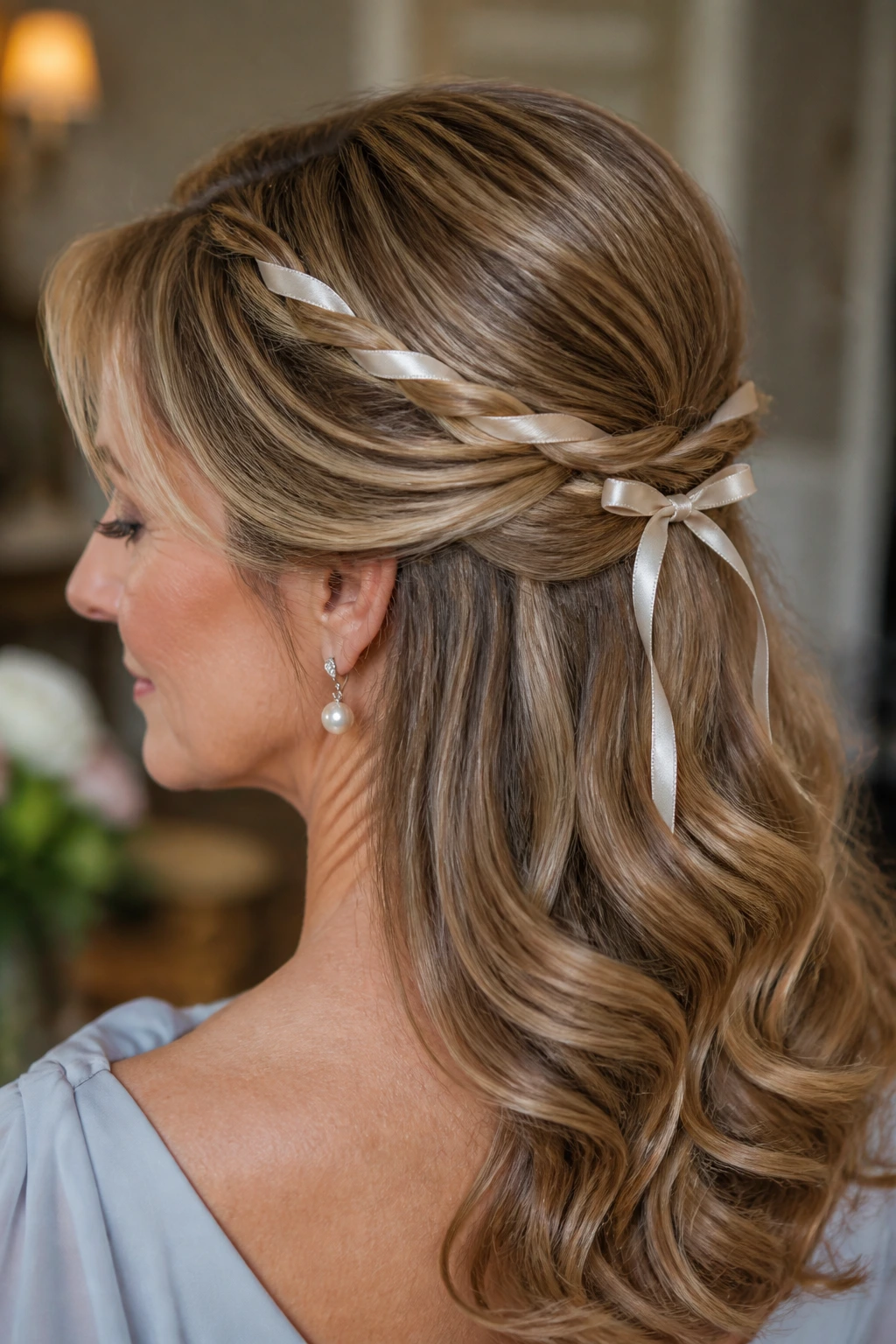
Ribbon sounds simple until you see it on hair. Then it looks almost annoyingly elegant. A thin satin ribbon can be tied around a twist, woven through a small braid, or wrapped around the pinned section in a bow that sits just below the crown.
Use a ribbon that’s narrow enough to sit flat—about ¼ to ½ inch wide. Wide ribbon can bulk up the back and make the style sit awkwardly. I prefer matte satin over shiny polyester because it photographs better and doesn’t flash in bright light.
This is a smart option if the dress already has a little softness in the fabric. Chiffon, satin trim, or lace can all pick up the ribbon detail without making the hair feel childish. The trick is keeping the bow small. One neat tie. Not a gift wrap situation.
16. Crystal Comb Half-Up
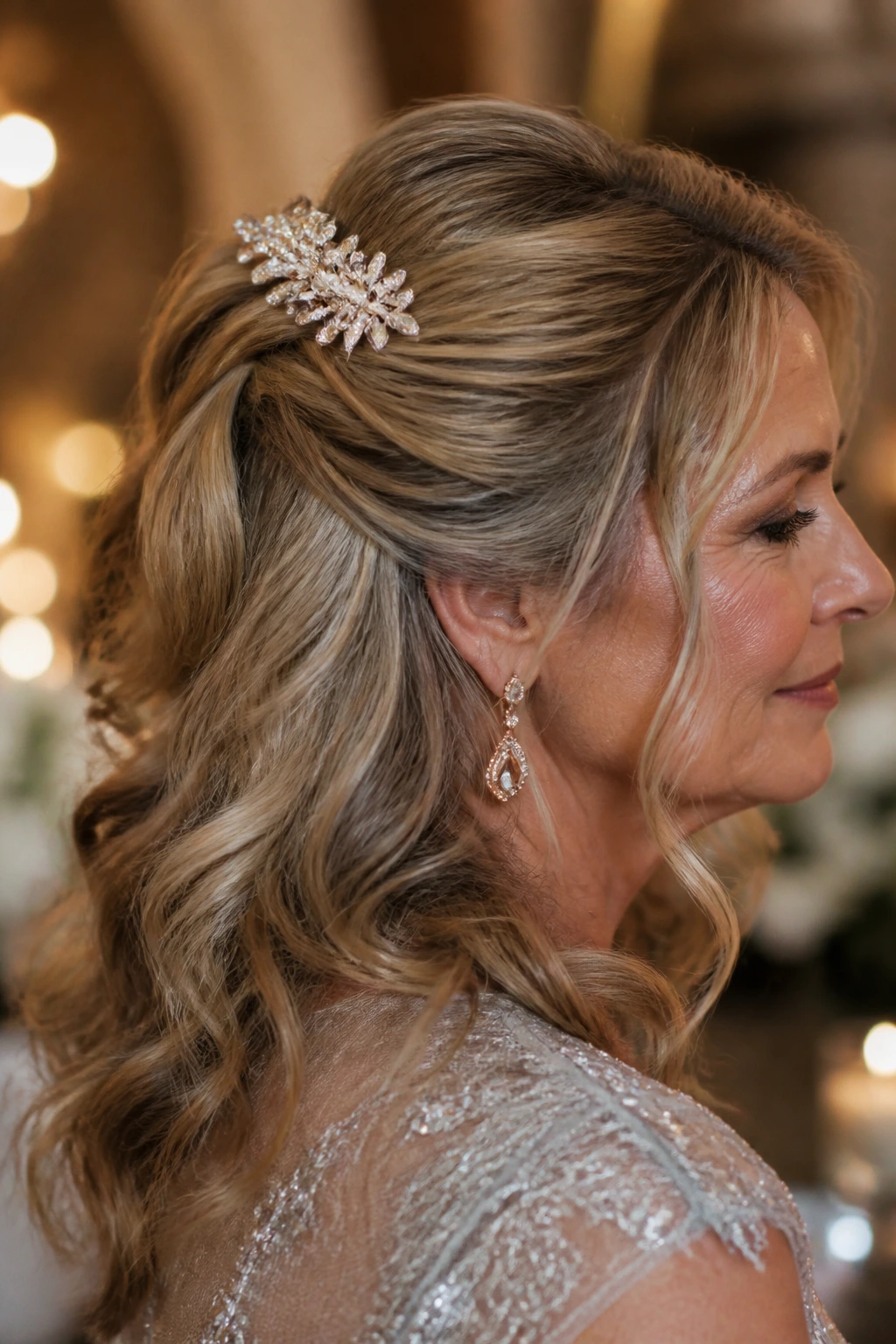
A crystal comb is one of the easiest ways to make a half-up style feel event-ready. The hair can stay otherwise simple—soft waves, a twist, a low knot—but the comb gives the whole back of the head a focal point.
Placement makes the difference
Set the comb into a slightly teased base so the teeth have something to grip. If you place it on smooth hair, it slides sideways the moment someone hugs you. That’s a bad look and an avoidable one.
I like this style with a simple dress and stronger jewelry, because the comb already provides sparkle near the face and crown. If the neckline is busy, choose a smaller comb with fewer stones. Big combs have a way of stealing the scene.
17. Silver-Haired Half-Up with Soft Wave
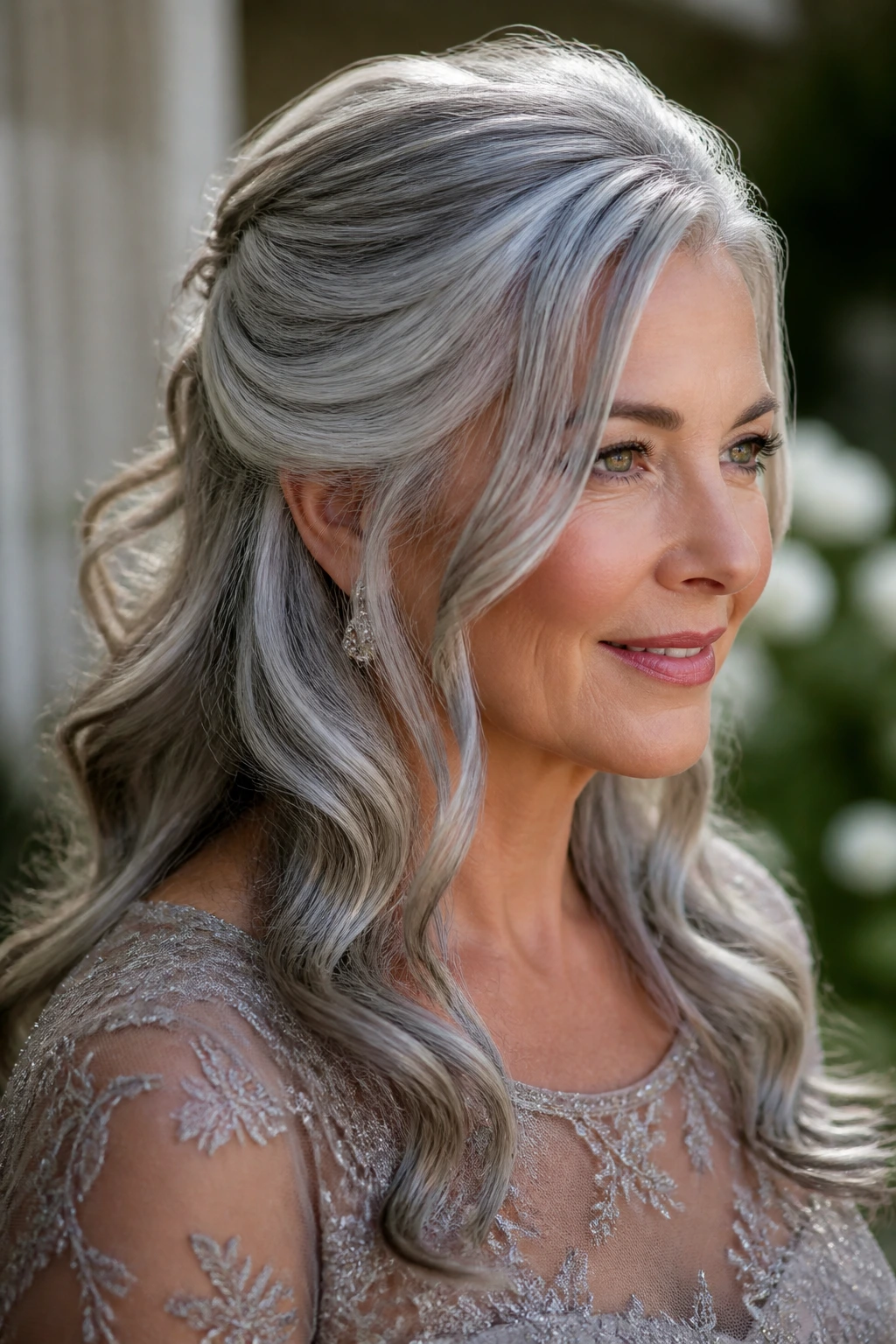
Gray, silver, and white hair looks especially good in a half-up shape when the finish keeps the shine intact. The hair is gently lifted at the sides, pinned loosely at the back, and left in wide waves that show off the color instead of hiding it under too much product.
The one rule here is not to dull the shine. Avoid heavy powders and overly dry texture sprays unless the hair is very slippery. A light glossing serum on the mid-lengths and ends is enough. The hair should still move when you turn your head.
This style has a nice honesty to it. It doesn’t try to hide the color shift. It lets the silver do the work, which often looks more polished than over-coloring or over-spraying the finish.
18. Half-Up with Blended Side Bangs
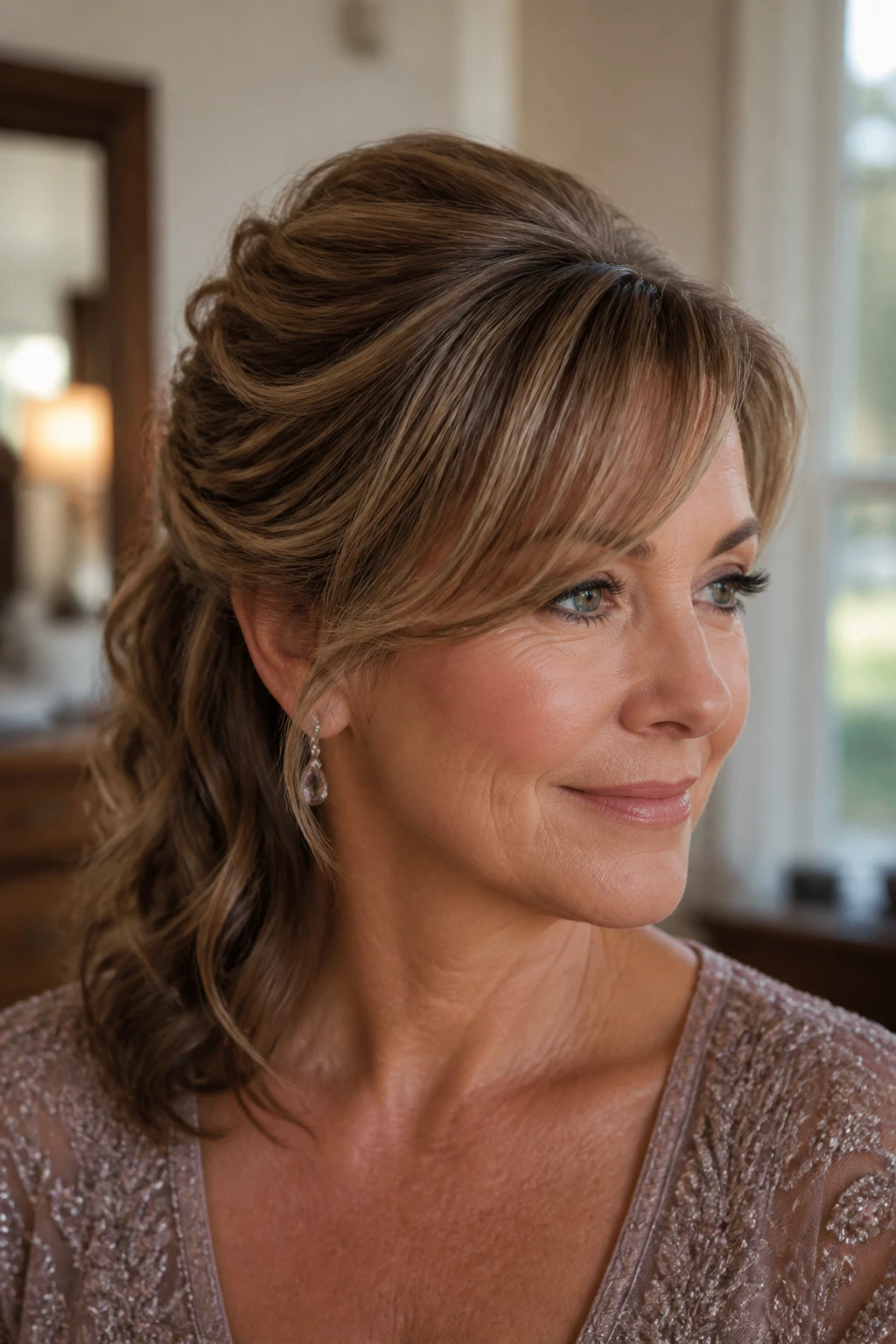
Side bangs can be awkward in formal styles if they’re forced straight back. This version solves that by blending the fringe into the pinned section so it sweeps naturally across the forehead and into the side lengths. The result is softer and more controlled.
The bang area should be dried with a round brush first, then guided into place before pinning. If the fringe is too short, use a tiny hidden pin crossed underneath rather than trying to jam it into the main twist. That usually creates the weird little bump nobody wants.
This is a smart pick when the face needs a little framing, especially with a high neckline or a dress that sits close to the throat. It gives shape without crowding the eyes.
19. Bubble Ponytail Half-Up
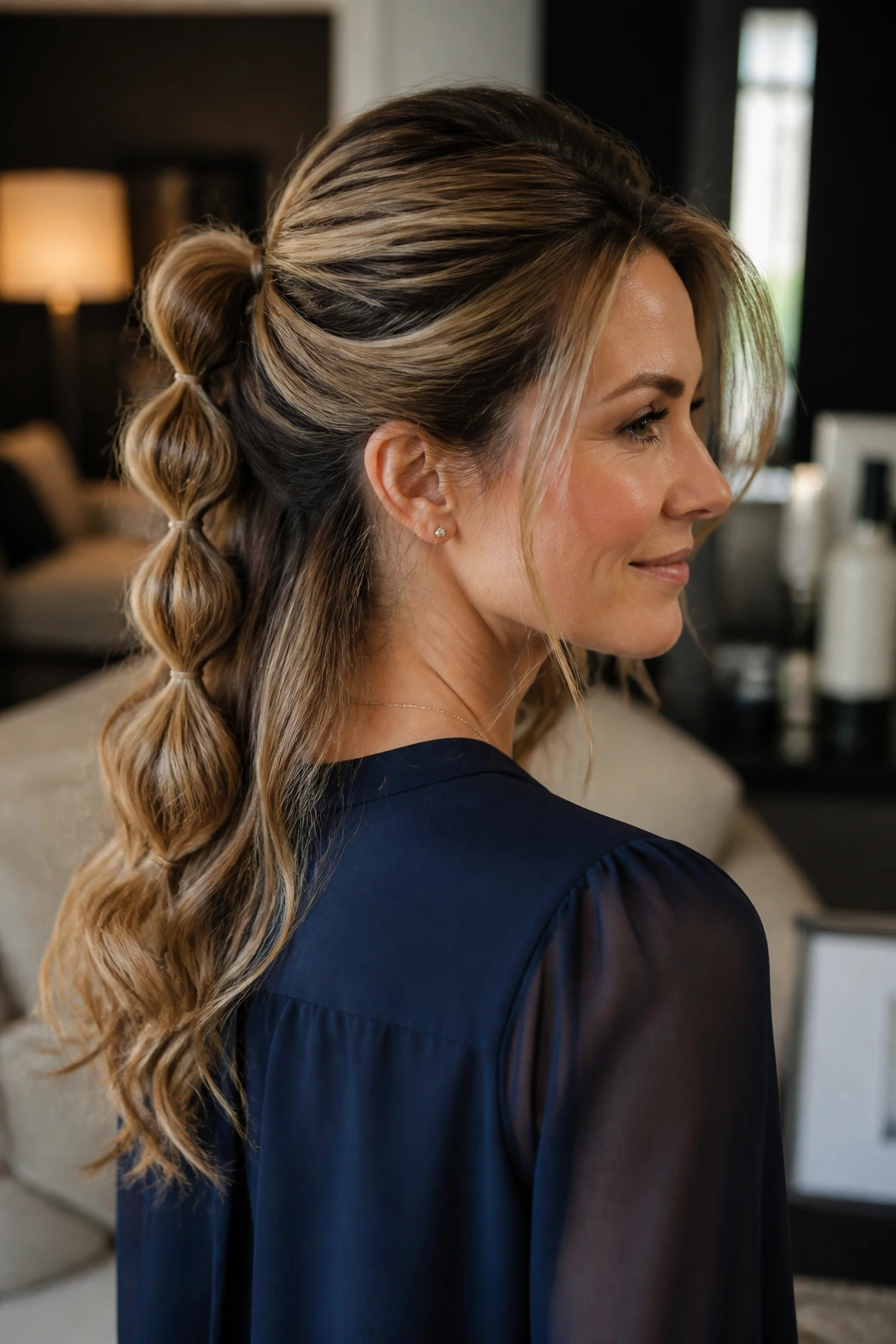
This one is modern, but it can still look polished if the bubbles are kept small and the top is smooth. The half-up section gets tied back, then spaced with tiny elastics every 1½ to 2 inches to create rounded bubbles down the length.
I like it best on thick hair, where the bubbles hold their shape instead of collapsing. If the hair is fine, use a bit of backcombing inside each section to fake more fullness. Wrap a small strand around each elastic if you want the finish cleaner.
This style has a lively feel. Not playful in a childish way—more like it knows the reception will be long and the hair should keep up.
20. Braided Halo Half-Up
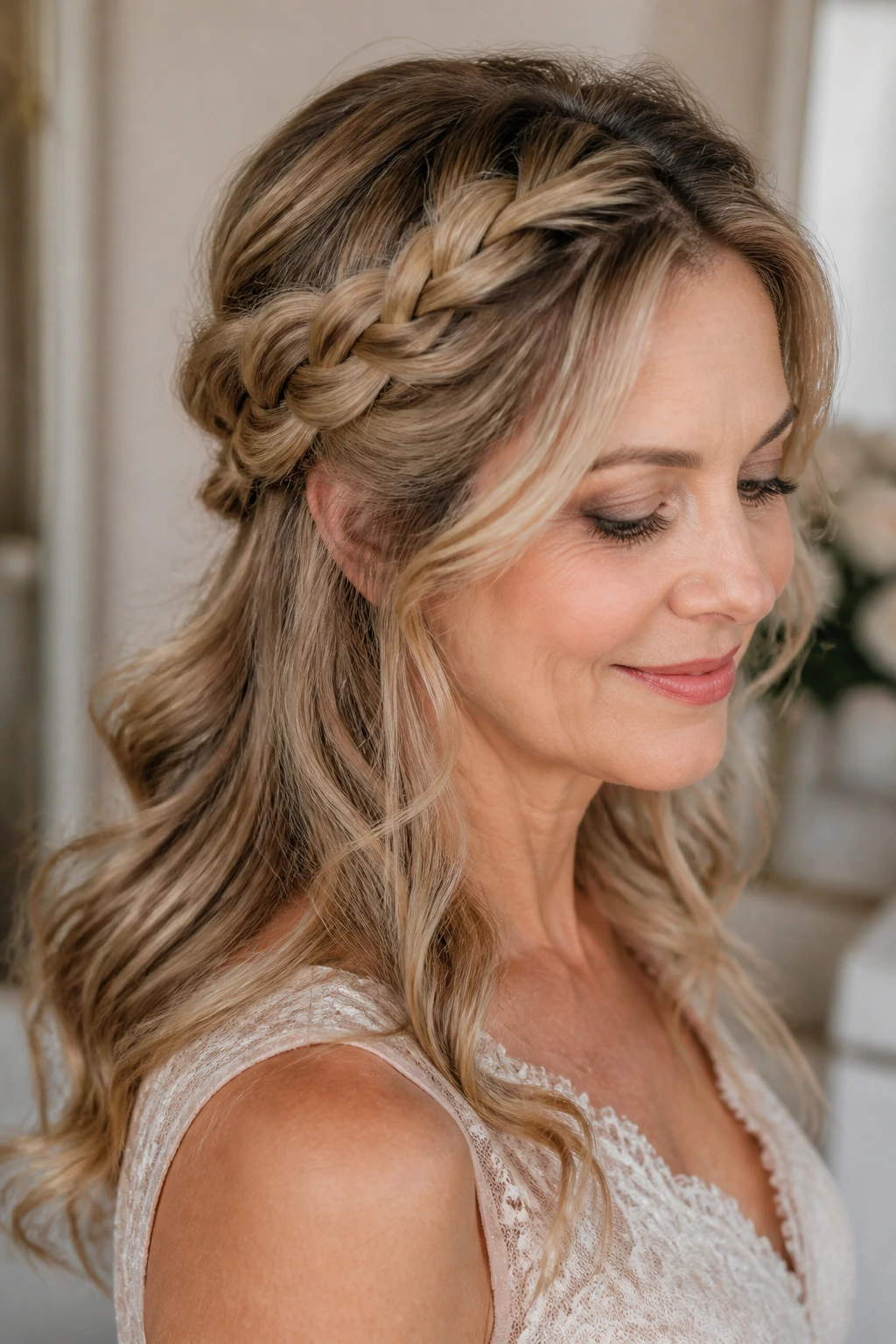
A braided halo can look too sweet if it’s overly perfect. The better version is slightly loose, with the braid running from one temple across the crown and into the opposite side. The rest of the hair falls below in soft waves or straightened ends.
What keeps it from looking fussy
Pancake the braid gently once it’s pinned. That means tugging the outer edges a little so the braid looks wider and flatter. Do it slowly. A rushed pancake job turns into frizz.
This shape pairs well with lace or embroidered dresses because the braid echoes the fine detail in the fabric. It also works for women who want coverage around the crown without losing softness at the back. I find it especially forgiving when the hair has a mix of layers and lengths.
21. Mini Low Bun Half-Up
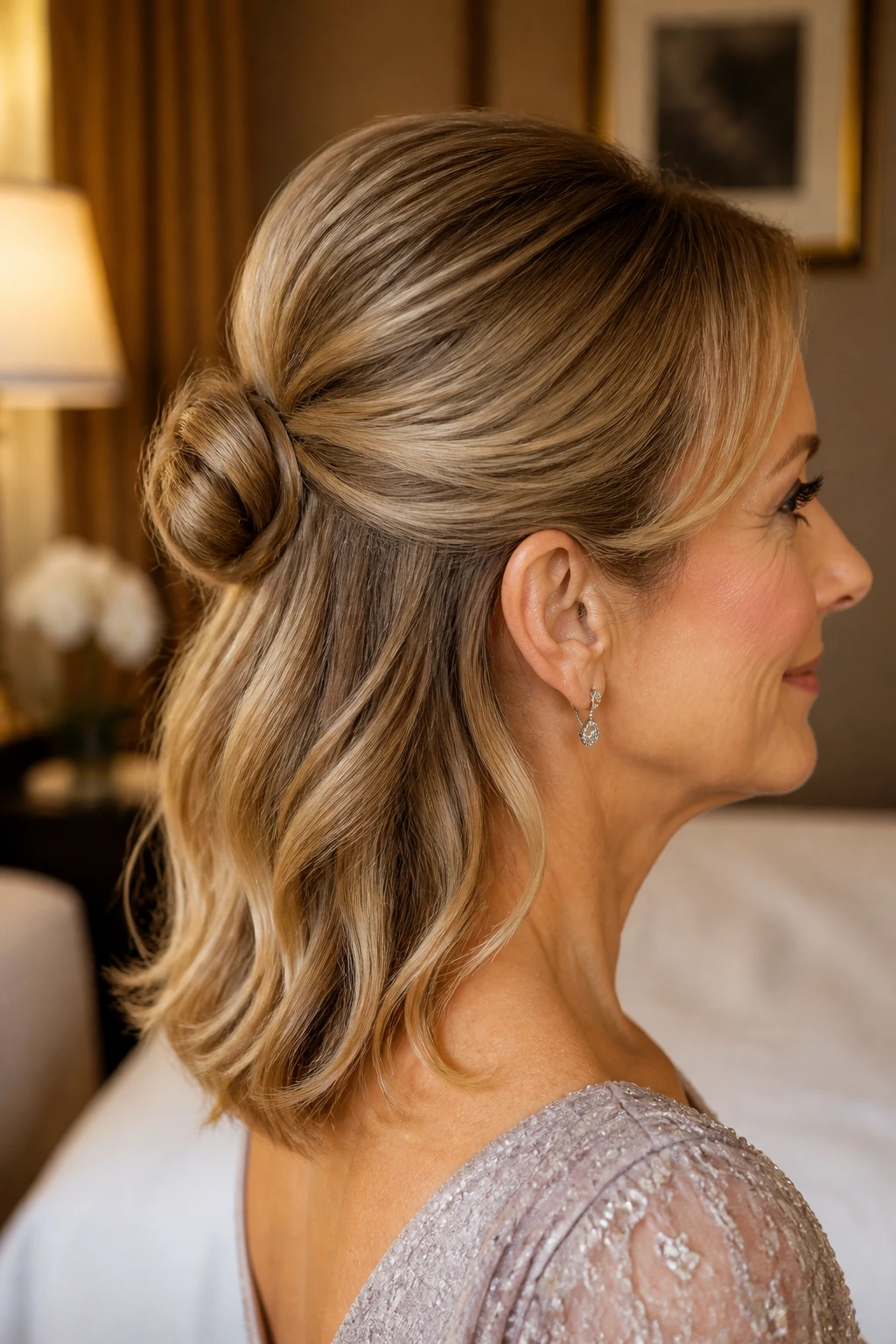
A half-up mini bun gives you the polish of a bun with far less weight on the head. The upper half of the hair is gathered into a small knot low on the back of the crown, then pinned tight enough to hold but not so tight that it lifts the whole style off the scalp.
This is one of the better options if the hair is long and heavy. A full updo can feel like it’s dragging on the temples by hour three. A mini bun gives some of that control while leaving the length down, which keeps the silhouette softer.
I’d use this with a dress that has strong shoulders or a lot of structure. It balances the outfit without competing with it.
22. Thick Hair Half-Up with Hidden Pins
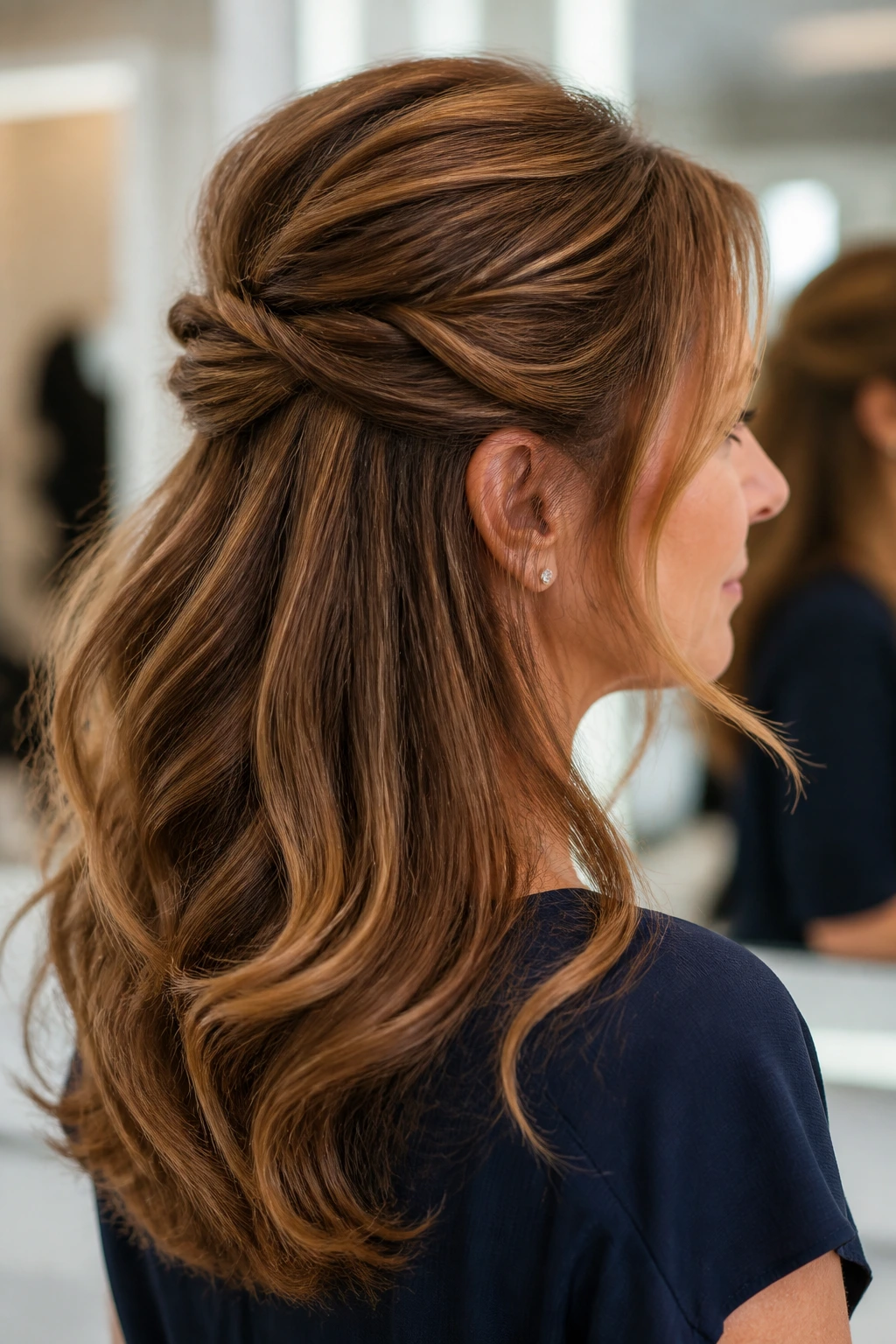
Thick hair needs a different kind of thinking. The main job is not adding volume. It’s removing bulk from the right places so the style doesn’t puff out in odd directions. This version uses two or three narrow twists, then hides the pins under the top layer so the finish looks smooth and controlled.
Don’t build the style with giant sections. Thick hair gets heavy fast, and large sections create a shelf at the back. Use smaller pieces, and pin each one as you go. You may need more bobby pins than you think—sometimes 12 to 16 if the hair is heavy and slippery.
A little anti-frizz cream on the ends helps, but only a little. Too much product turns thick hair into a limp rope. Not the goal.
23. Fine Hair Half-Up with Root Lift
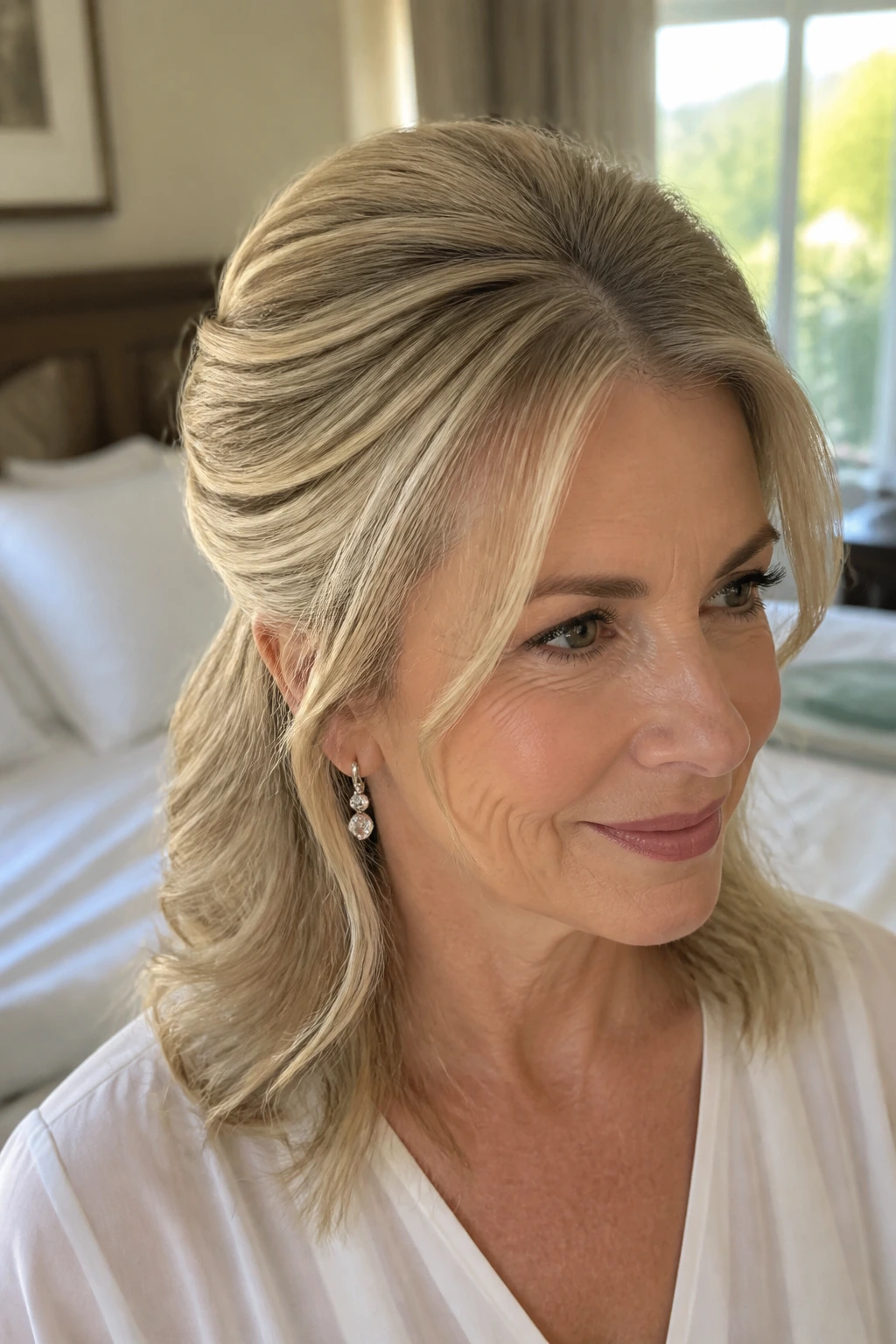
Fine hair benefits from a style that cheats a bit. The top gets a subtle lift at the roots, the sides are pulled back loosely, and the rest falls in softly bent lengths. The look should feel airy, not overbuilt.
The small tricks that help
Use dry shampoo or volumizing spray at the roots before styling, not after. It gives the hair grip. Then set the half-up section with two crossed pins so the shape doesn’t drift downward over time.
This is one of those styles where less curl can be better. A huge curl pattern makes fine ends look thinner by comparison. A soft bend, brushed out, makes the whole style seem fuller and more expensive than it really is. I know, that word again—what I mean is it looks carefully finished.
24. Veil-Friendly Half-Up Base
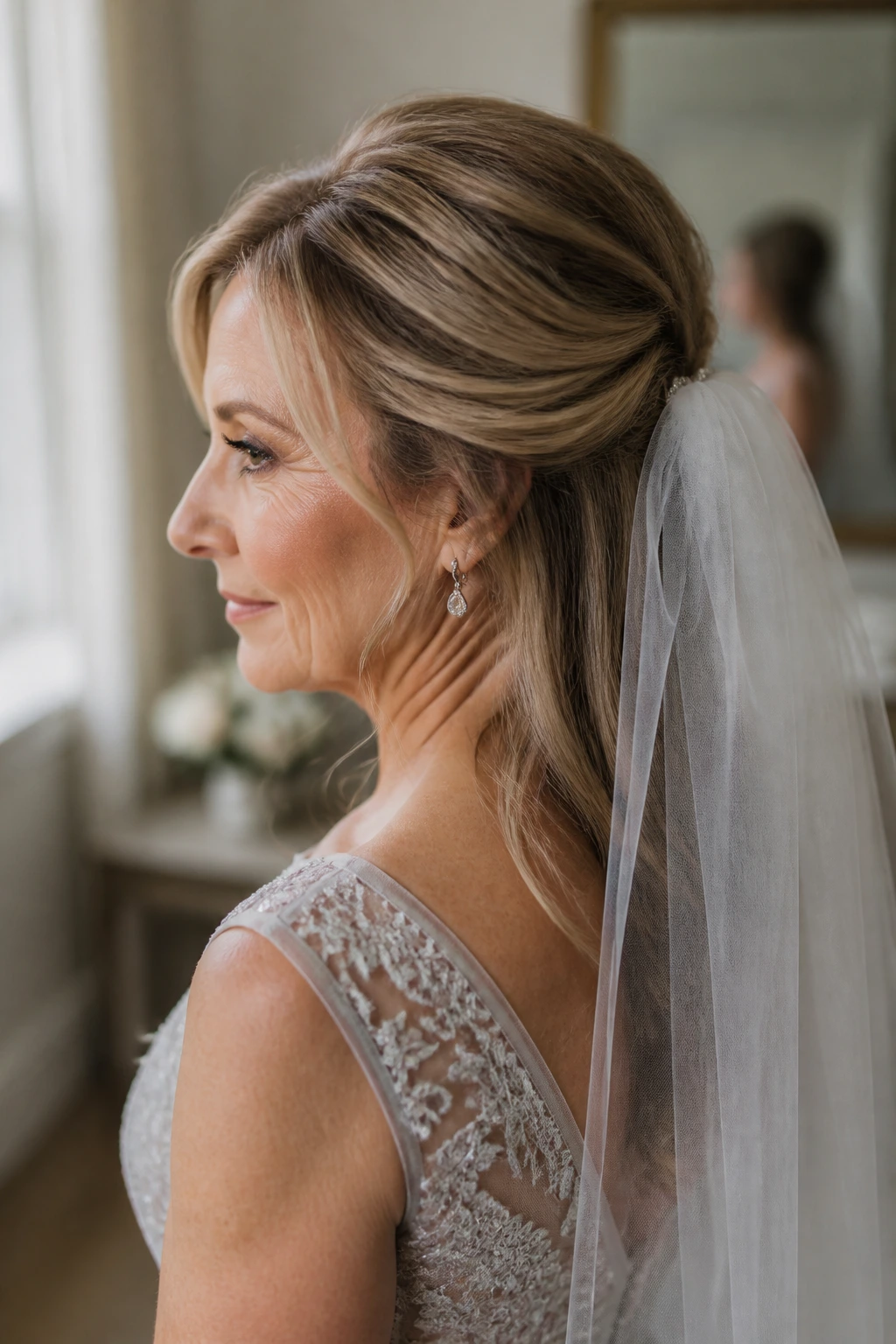
If a veil is part of the plan, the hairstyle should be built around it from the start, not added as an afterthought ten minutes before leaving. A veil-friendly half-up base places the anchor point exactly where the comb or pins can grip without crushing the crown.
The safest setup is usually a pinned section at the center back, slightly below the highest point of the crown. That gives the veil a stable base and keeps the front soft. Test the veil with the exact hairstyle during the trial, because a style that looks fine on its own can change once the comb is clipped in.
This is one place where a trial run pays for itself. You want to know whether the veil slides, whether it sits too high, and whether the back of the hair collapses once the weight is added.
25. Minimalist Clip Half-Up
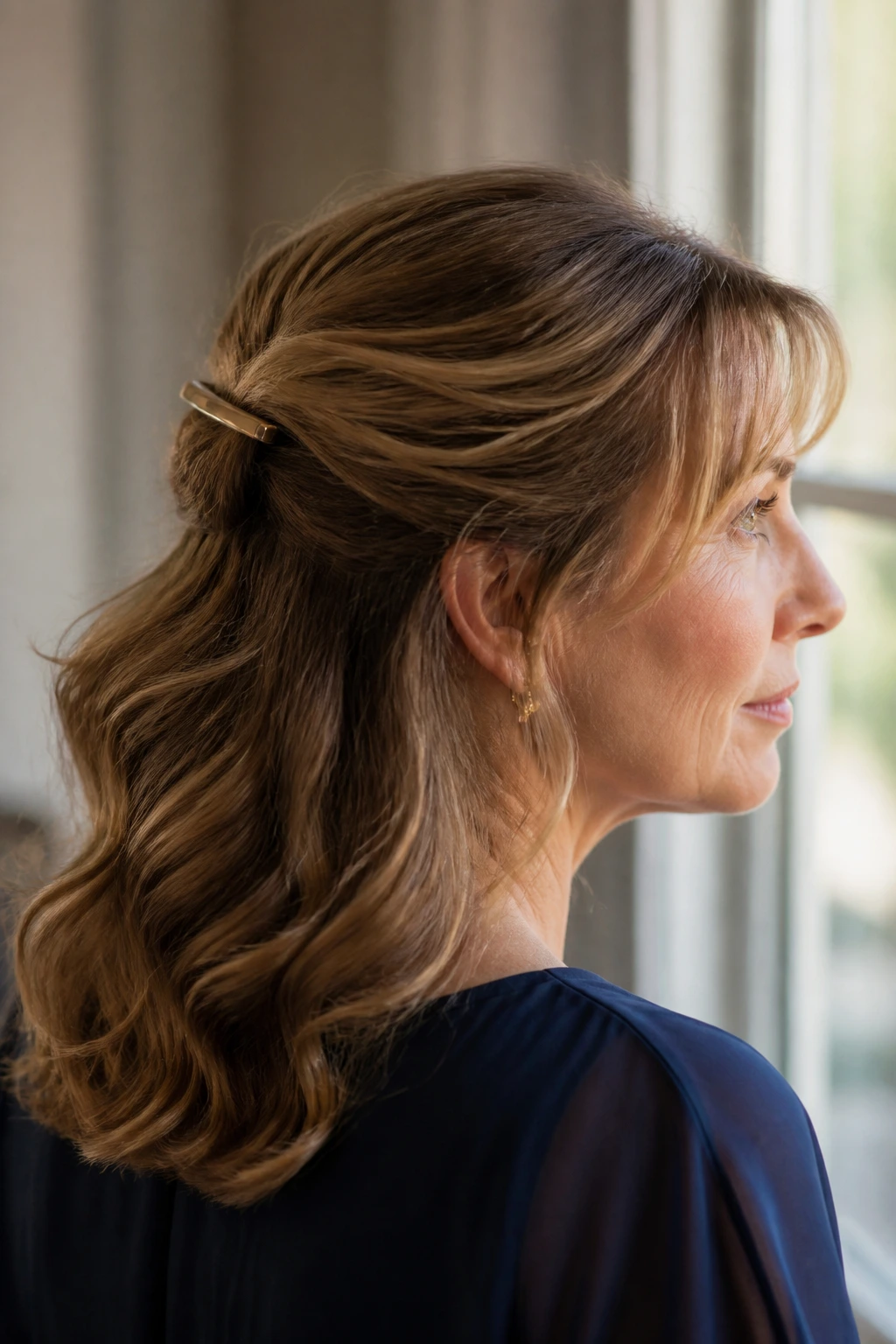
Sometimes the smartest half-up style is the one that looks almost invisible. Smooth the top section back, clip it with a clean metal barrette or matte tortoiseshell clip, and leave the rest of the hair in soft waves or straight lengths. That’s it. No ceremony for the sake of ceremony.
The clip should be sturdy and flat. Tiny decorative clips can skid if the hair is thick, and oversized clips can look like they belong on a casual lunch run. The sweet spot is a clip that feels deliberate but not loud.
This is a strong pick when the dress already carries the outfit. A beaded bodice, a statement necklace, or a detailed neckline often needs the hair to step back a little. This style does that without going limp.
Why Half-Up Styles Work on Wedding Days
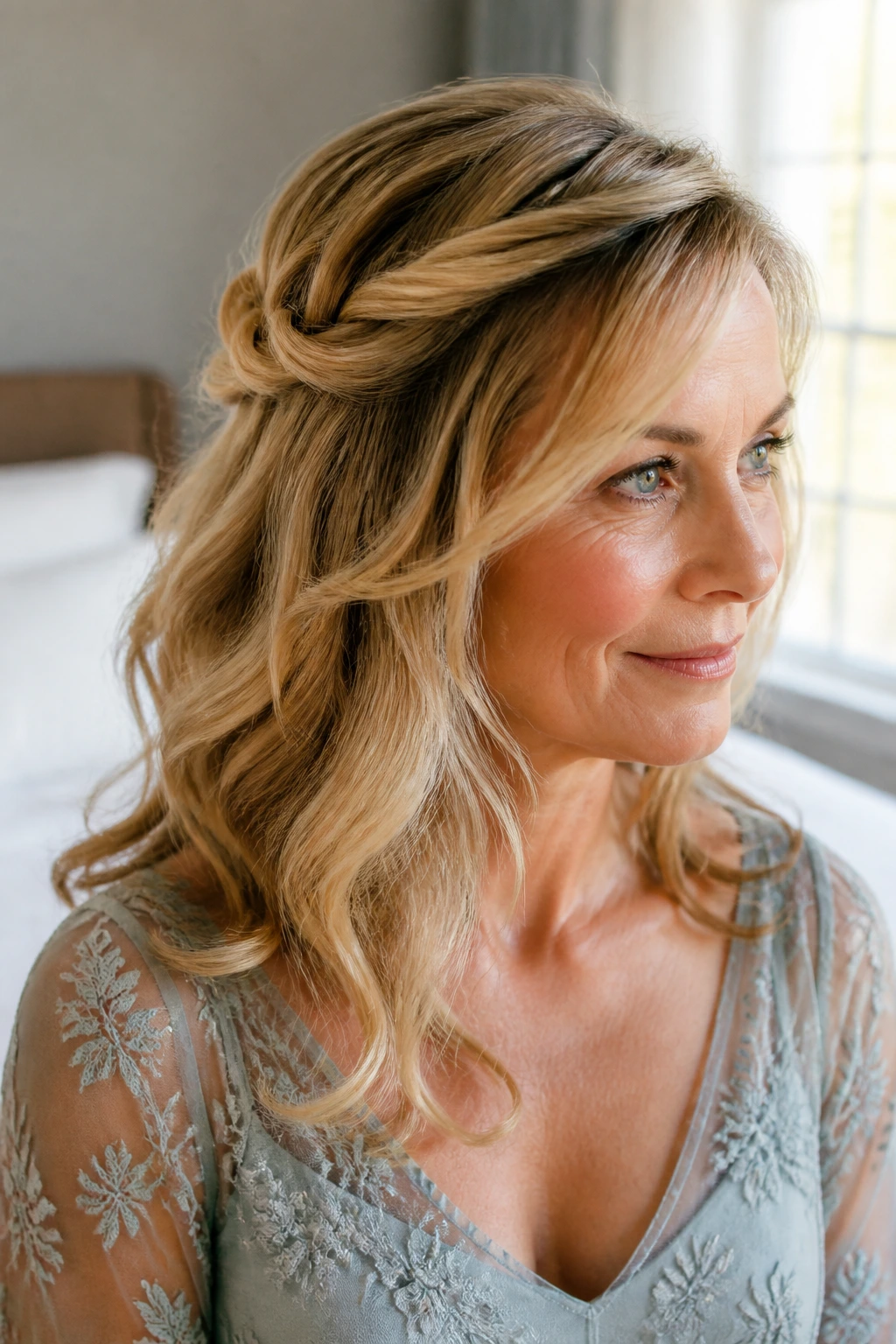
Half-up hair gets overlooked because it doesn’t shout. That’s the point. A full updo can feel formal to the point of stiffness, and loose hair can look lovely until the first hug or warm room ruins the shape. The middle ground is where most real wedding days live.
The structure gives you a little insurance. The softness keeps you from looking like you’re headed to a rehearsal for a court costume drama. I’m being blunt because this matters: wedding hair should survive movement. It should hold through the ceremony, the group photos, the reception line, and the moment someone squeezes your shoulders and forgets they just flattened one side.
Half-up styles also play nicely with different ages, hair textures, and dress choices. They don’t ask for one exact kind of face or one exact amount of hair. They can be dressed up with pins, or kept plain and elegant, which is why they show up again and again when mothers want something polished but not precious.
Essential Tools for These Styles
-
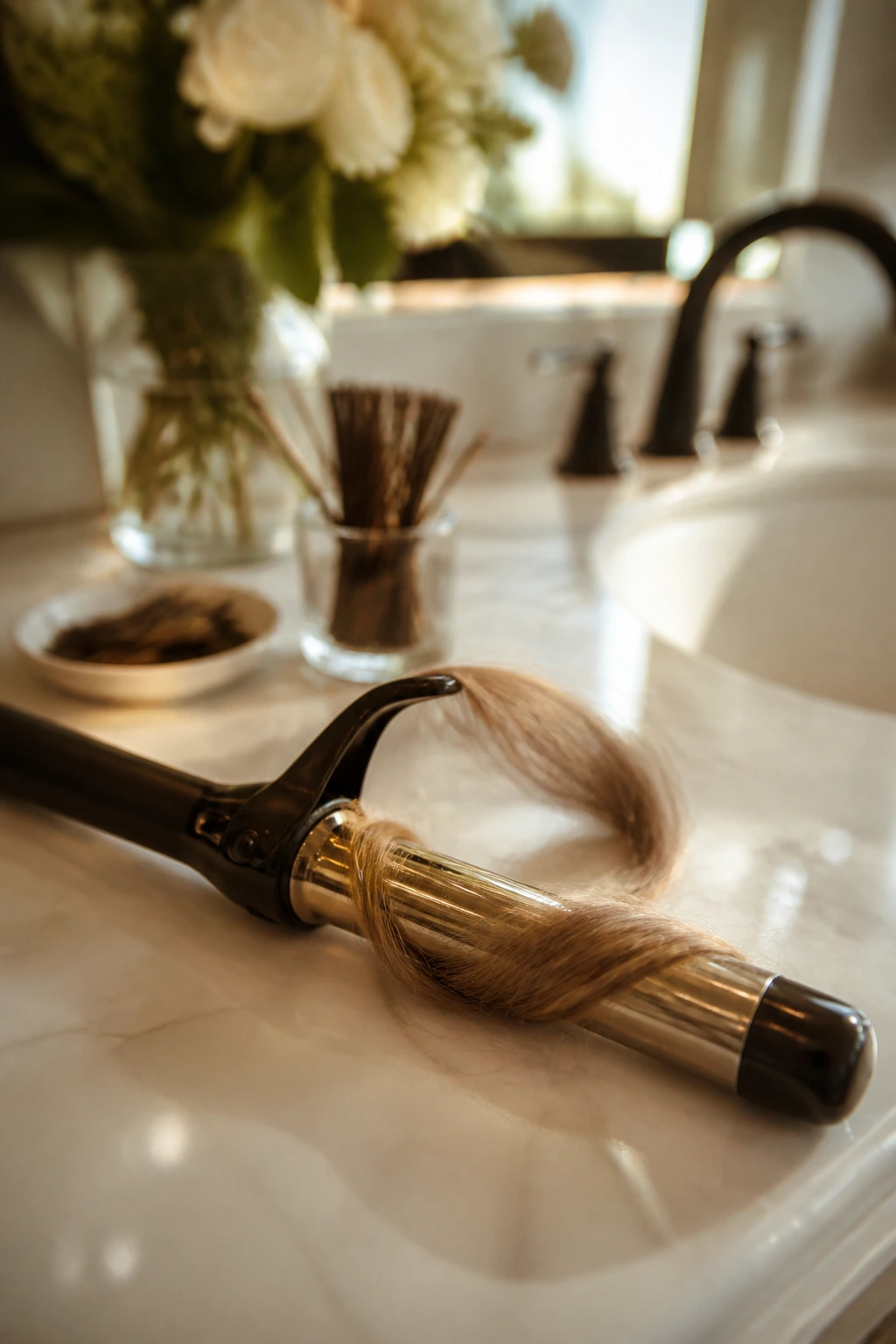
1-inch curling iron or wand: Best for defined bends, face-framing pieces, and smoother waves that don’t overpower the style.
-
1.25-inch curling iron: Useful for softer, brushed-out waves on medium to long hair.
-
Rat-tail comb: Gives you clean parts and neat sectioning at the crown.
-
Sectioning clips: Keep loose hair out of the way while you pin one side at a time.
-
Bobby pins in a hair-matched color: Brown, blonde, black, or silver pins disappear better and hold more neatly.
-
U-pins: Handy for buns, twists, and low knots that need extra hidden support.
-
Texturizing spray or dry shampoo: Adds grip at the roots so the style doesn’t slide.
-
Flexible-hold hairspray: Holds the shape without turning the hair into a crunchy shell.
-
Smoothing cream or serum: Tames flyaways and keeps the ends from looking dry under bright light.
-
Small boar-bristle brush: Useful for smoothing the surface layer after teasing.
-
Mini clear elastics: Great for bubbles, ribbon styles, and tiny braided accents.
-
Decorative comb, pearl pin, or floral piece: Choose one focal accessory unless the dress is very simple.
Choosing the Right Mother of the Bride Half Up Hairstyle for Your Hair Texture
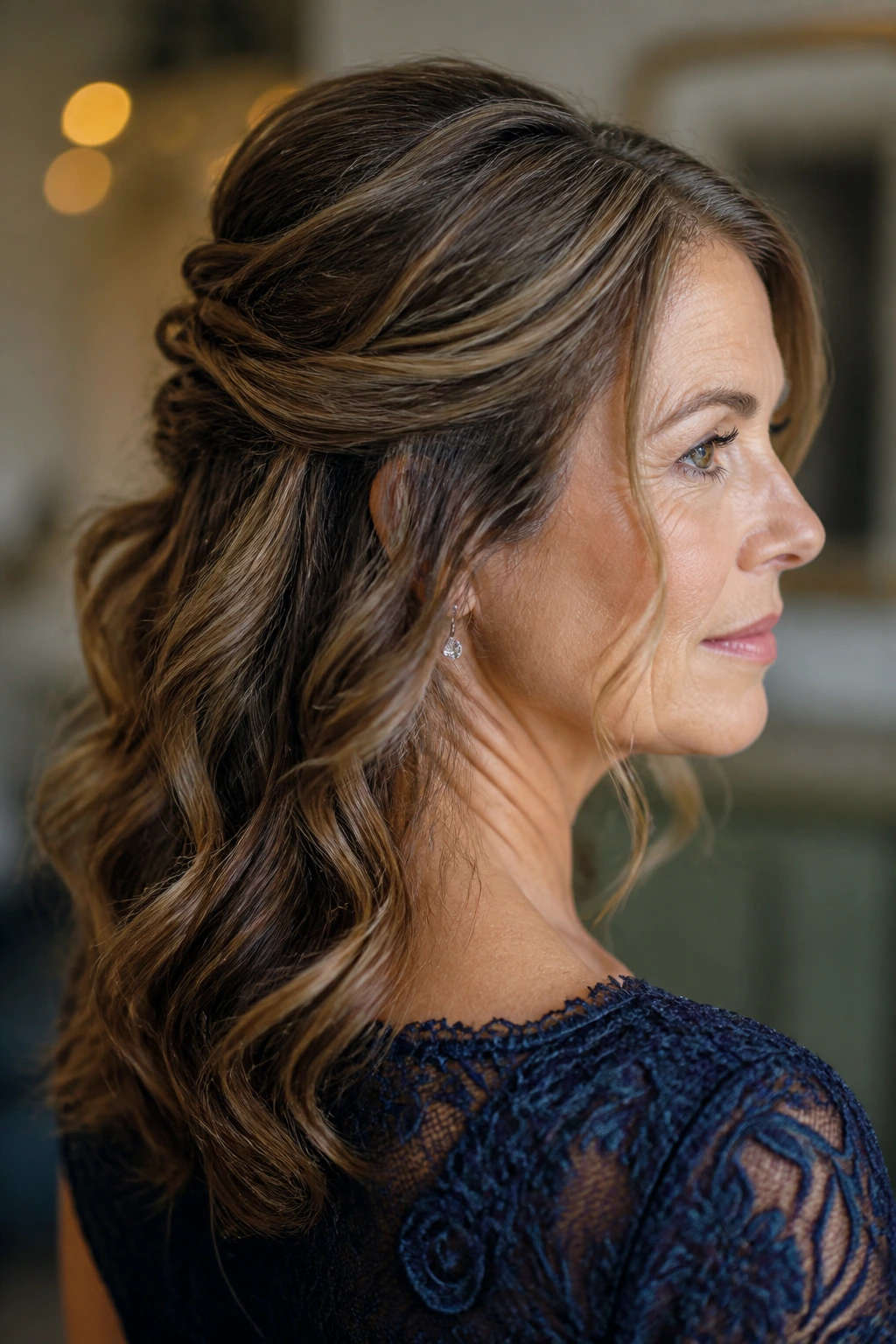
Hair texture decides more than people think. Fine hair likes lift and small sections. Thick hair needs smart sectioning and hidden support. Curly hair usually looks best when its natural shape is respected instead of brushed into submission.
If the hair is straight and slippery, the first move is texture. A little dry shampoo at the roots, then a curling iron set with a clip or two. Don’t overdo the serum. Straight hair can go flat fast if the products are too slick.
Layered hair needs more pins than long one-length hair. Those shorter pieces around the face can slip free, so twist them back into the style instead of trying to pin them as if they were the same length as the rest. They aren’t.
And if the hair is already wavy or curly, don’t chase perfection. Keep the crown neat, shape the pinned sections cleanly, and let the texture do the rest. The style usually looks better when it’s allowed to breathe a little.
Accessories, Veils, and Necklines That Change the Whole Read
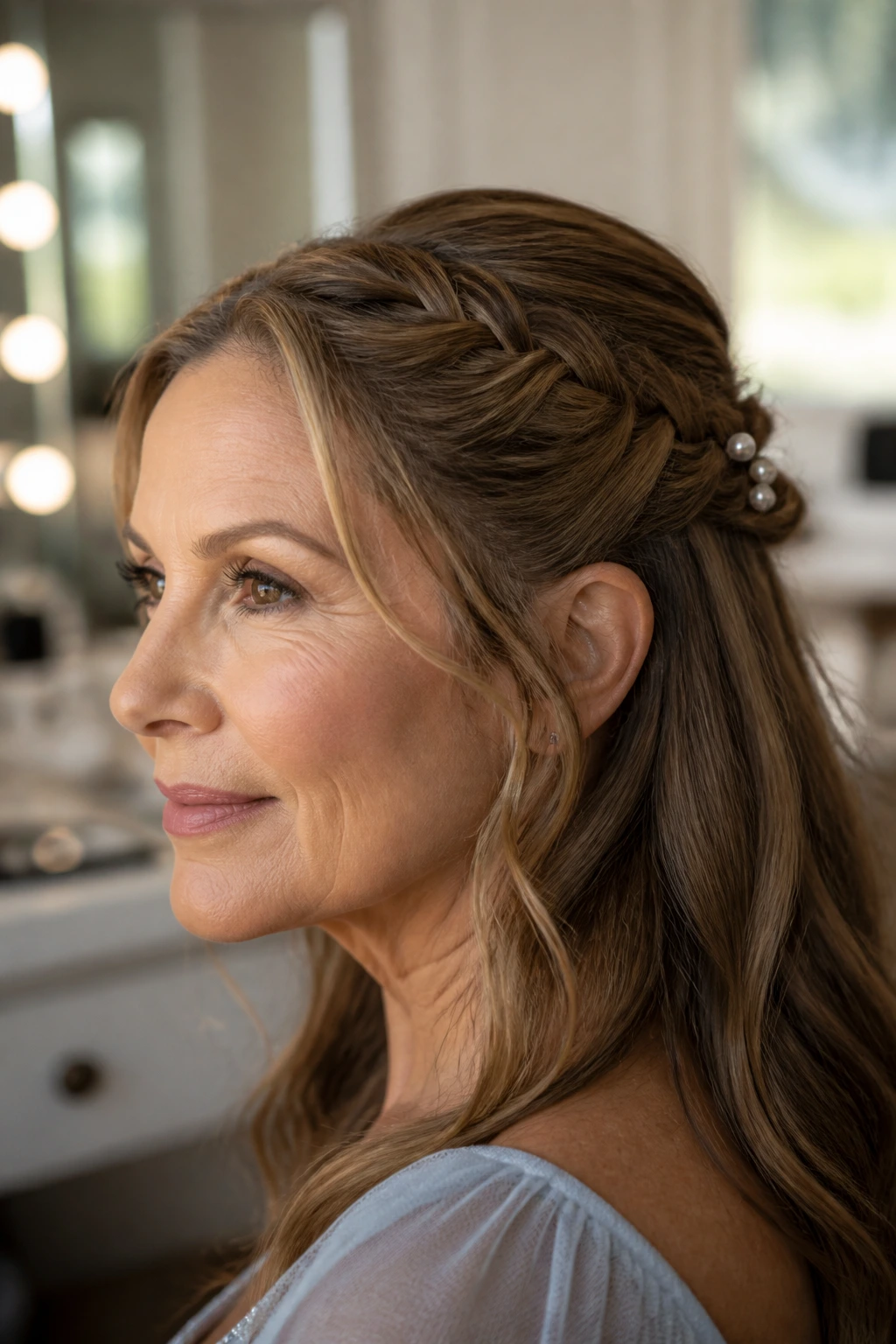
A half-up style changes once the dress enters the picture. A simple clip against satin looks formal. The same clip against a heavily beaded neckline can disappear. A veil changes the anchor point. Earrings change how high the crown should sit. All of it matters.
What pairs with what
-
Bateau or high necklines: Lower, softer half-up shapes work best. Keep volume modest so the neck doesn’t feel crowded.
-
Strapless or sweetheart necklines: You can afford more crown lift or a stronger accessory, because the dress leaves more visual space.
-
One-shoulder dresses: Side-swept half-up styles usually look best here because they echo the asymmetry.
-
Lace or embroidered bodices: Braids, twists, or pearl pins often fit better than hard, sleek shapes.
-
Veils: Test the veil with the hairstyle on. Don’t wait until the wedding day to find out the comb wants to sit on the twist itself.
I’d also be careful with earrings. Big chandelier earrings plus a crystal comb plus a dramatic wave can turn into competition. Pick one thing to lead.
How to Wear These Styles So They Last from Photos to Dance Floor
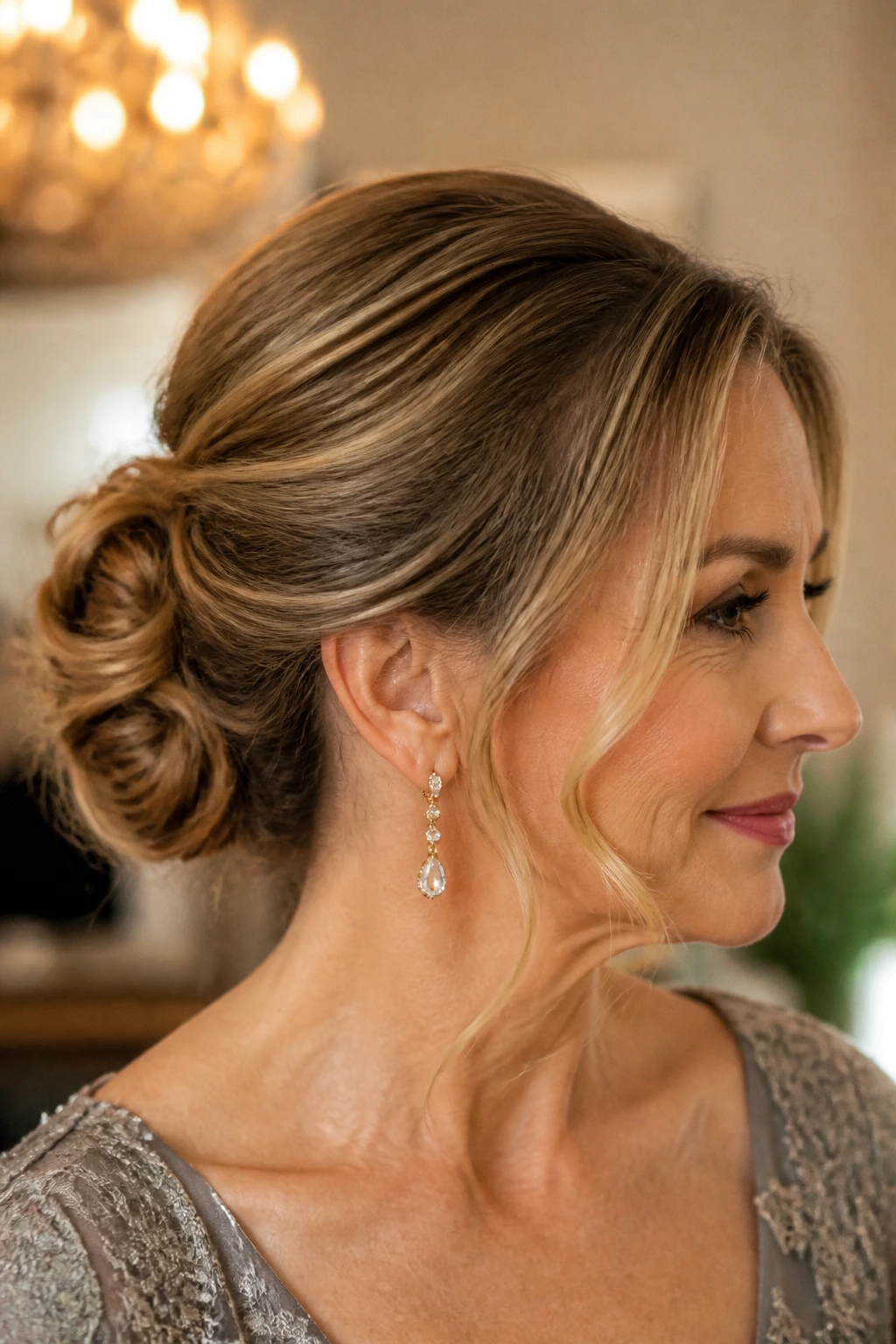
Presentation: The shape should read clean from the front and be just as tidy from the back. The pinned section should sit centered unless the dress calls for a side part or side sweep. If the back of the head looks random, the whole style looks unfinished.
Accompaniments: Match the hair to the dress rather than the other way around. A structured neckline likes cleaner hair. A softer dress can take braid detail, flower accents, or a ribbon. Earrings should be chosen with the pinned height in mind; long earrings and very high crown lift can start tugging the eye in too many directions.
Fit: Think about how much hair you actually have to work with. Fine hair usually looks better with smaller twists and a little extra root lift. Thick hair needs more hidden pins and smaller sections so it doesn’t balloon.
Finishing touch: Keep a tiny emergency kit nearby: 6 bobby pins, one travel hairspray, and a mini comb. If a piece starts to lift, fix it before it turns into a bigger problem.
Small Tweaks That Make a Big Difference
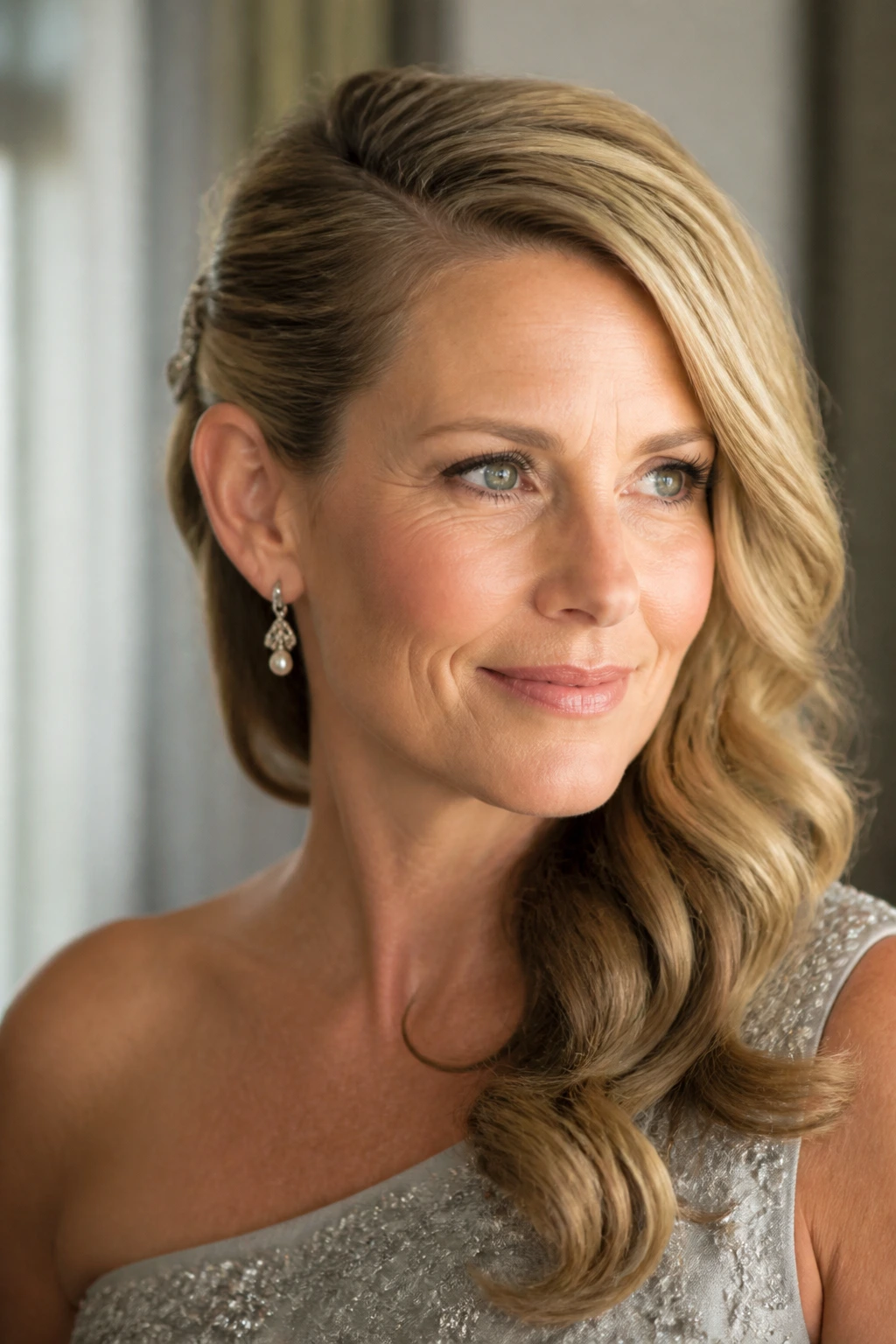
Lift at the crown: A half-inch of lift can change the whole mood. You do not need towering volume. You need enough height so the front doesn’t flatten against the head.
Texture at the roots: If the hair slides, add grit. Dry shampoo on clean roots, texture spray on freshly curled hair, or even a little powder at the crown can help the style hold.
Shape at the sides: Leaving the front pieces too tight makes the face look pulled. A soft bend around the cheekbone gives the style air. I prefer this almost every time.
Accessory weight: Heavy combs pull. If the accessory is big, anchor it with extra pins. Better yet, choose a lighter version and let the hairstyle do some of the work.
Trial in daylight: The mirror lies less than overhead bathroom bulbs, but daylight tells the truth. That’s where you’ll see if the twist is lopsided, if the curls need brushing, or if the crown is sitting too high.
Make the Style Last Through the Day
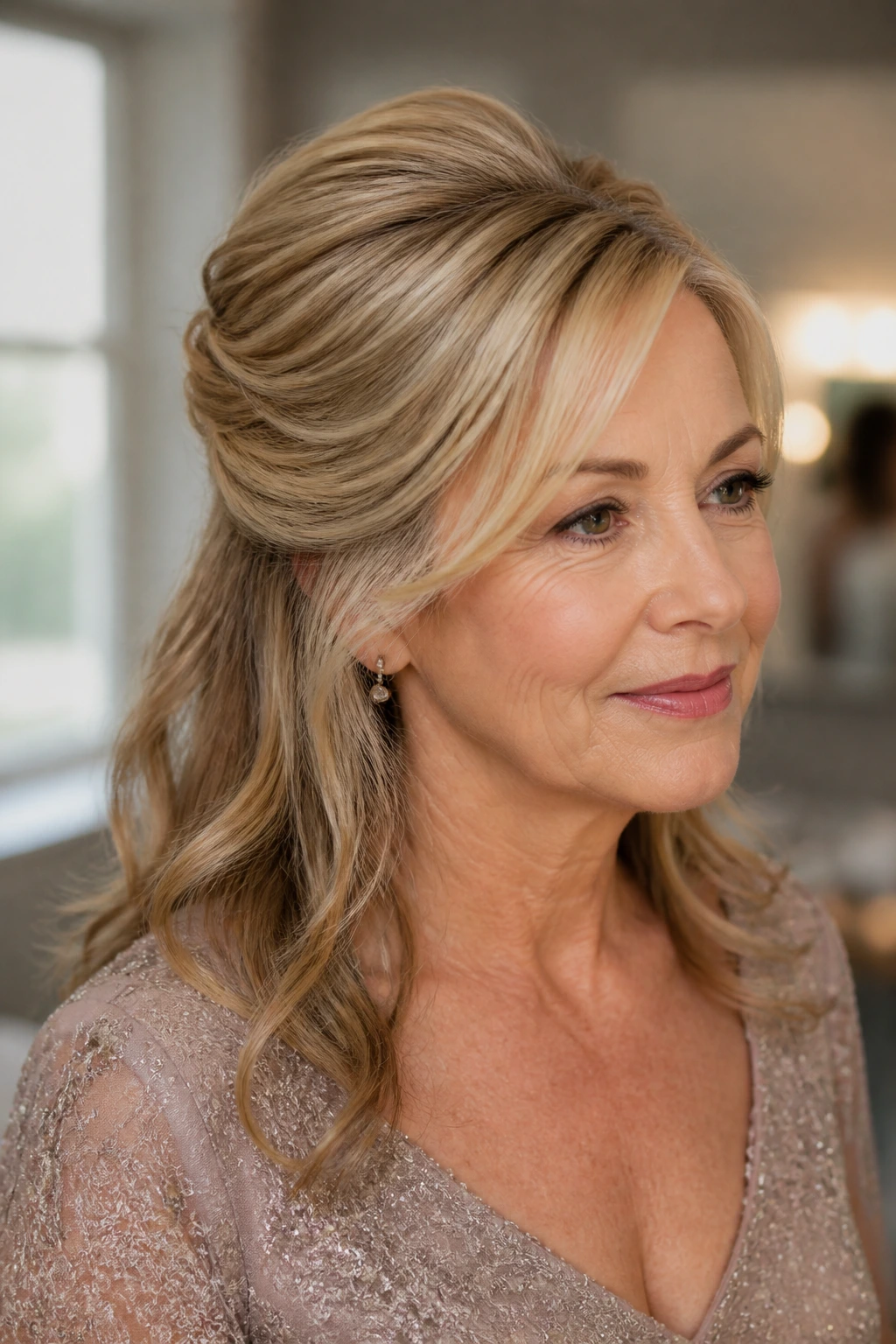
Hair doesn’t need to be stored like a sweater, but it does need a plan. If you’re getting styled before the event, keep the hair in clips or loose sectioning until the last possible moment so the shape doesn’t droop. Once it’s finished, avoid tossing your head around or tugging at the front pieces. That sounds obvious. People still do it.
If the ceremony and reception are long, tuck a small touch-up kit into a clutch or hand it to someone reliable. Include 4 to 6 bobby pins, a travel comb, a mini spray, and one spare accessory in case a pin snaps or a clip loosens. If you’re traveling to the venue, don’t put the head down against a car seat after styling. That’s how the crown gets dented.
For next-day care, remove pins carefully and brush out product before sleeping if you want the hair to survive as a wearable wave. Sleep on a silk pillowcase if the style is meant to last overnight. If it’s a one-day style, take it down fully and cleanse the hair normally. Don’t sleep in a stiff half-up shape unless you enjoy finding pins at 2 a.m.
Common Mistakes to Avoid
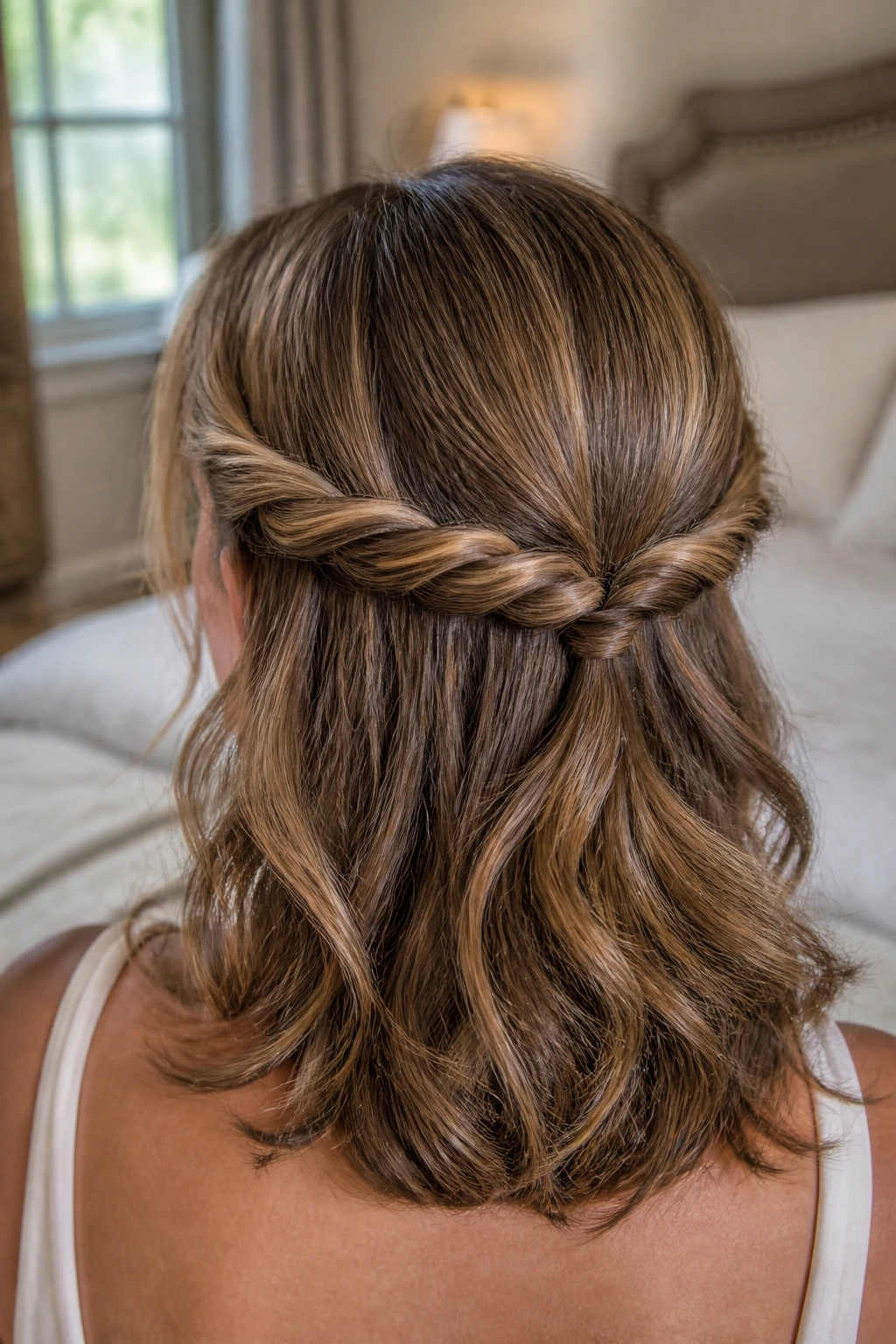
The biggest mistake is over-teasing the crown. It gives you height for about twenty minutes, then the hair sinks and the top starts looking shelf-like. Use just enough lift to shape the head, then smooth the outer layer over it.
Another common problem is using too much accessory weight. A heavy comb or large floral piece can drag the pinned section down, especially on fine hair. If the accessory keeps slipping, reduce the size or add hidden cross-pins under the anchor point.
People also tend to pull the front too tight. It seems neat in the mirror, then the face looks harsher than expected in photos. Leave a soft curve around the temples and cheekbones. That tiny bit of slack usually looks better from every angle.
There’s also the “clean hair panic” problem. Freshly washed hair can be too slippery for half-up styles unless you add grip. Day-old hair often holds pins better. If you must style clean hair, prep it with texture spray and let the roots cool before pinning.
Last one: skipping the dress trial. A style can look fine by itself and fail the minute you add a neckline, necklace, or veil. Try the whole look together. It saves headaches later.
Variations and Adaptations to Try
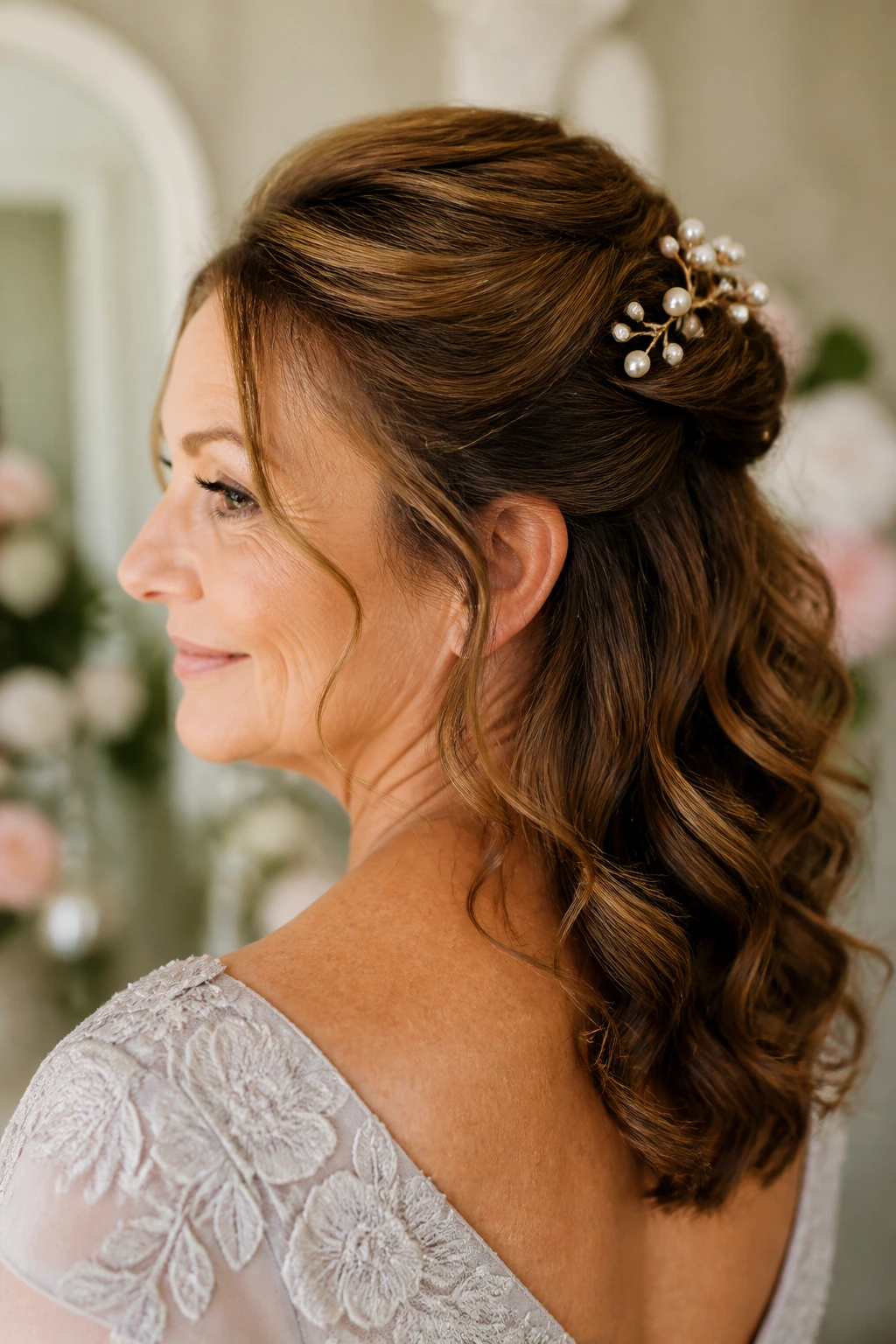
Pearl-Threaded Romance: Swap a plain pin set for a few tiny pearl pins placed along the twist or braid. This works best with lace dresses and soft waves, where the pearls can sit quietly instead of shouting.
Low-Gloss Modern Finish: Keep the hair smooth, center-parted, and pinned with a slim metal clip instead of soft curls. It suits clean, tailored dresses and looks especially sharp with straight or slightly bent lengths.
Garden Bloom Accent: Add two or three fresh or faux blooms into the pinned section, but keep the rest of the hair simple. This is a better move than scattering flowers everywhere, which can get fussy fast.
Curly-First Shape: For natural curls, skip the iron and let the texture stay intact. Pin the upper section back, define the front pieces with cream, and let the curl pattern supply the softness.
Short-Hair Shortcut: If the hair doesn’t reach past the shoulders, focus on a tiny twist or a half-back clip at the crown. The style reads polished because it is neat, not because it pretends to be longer.
Frequently Asked Questions
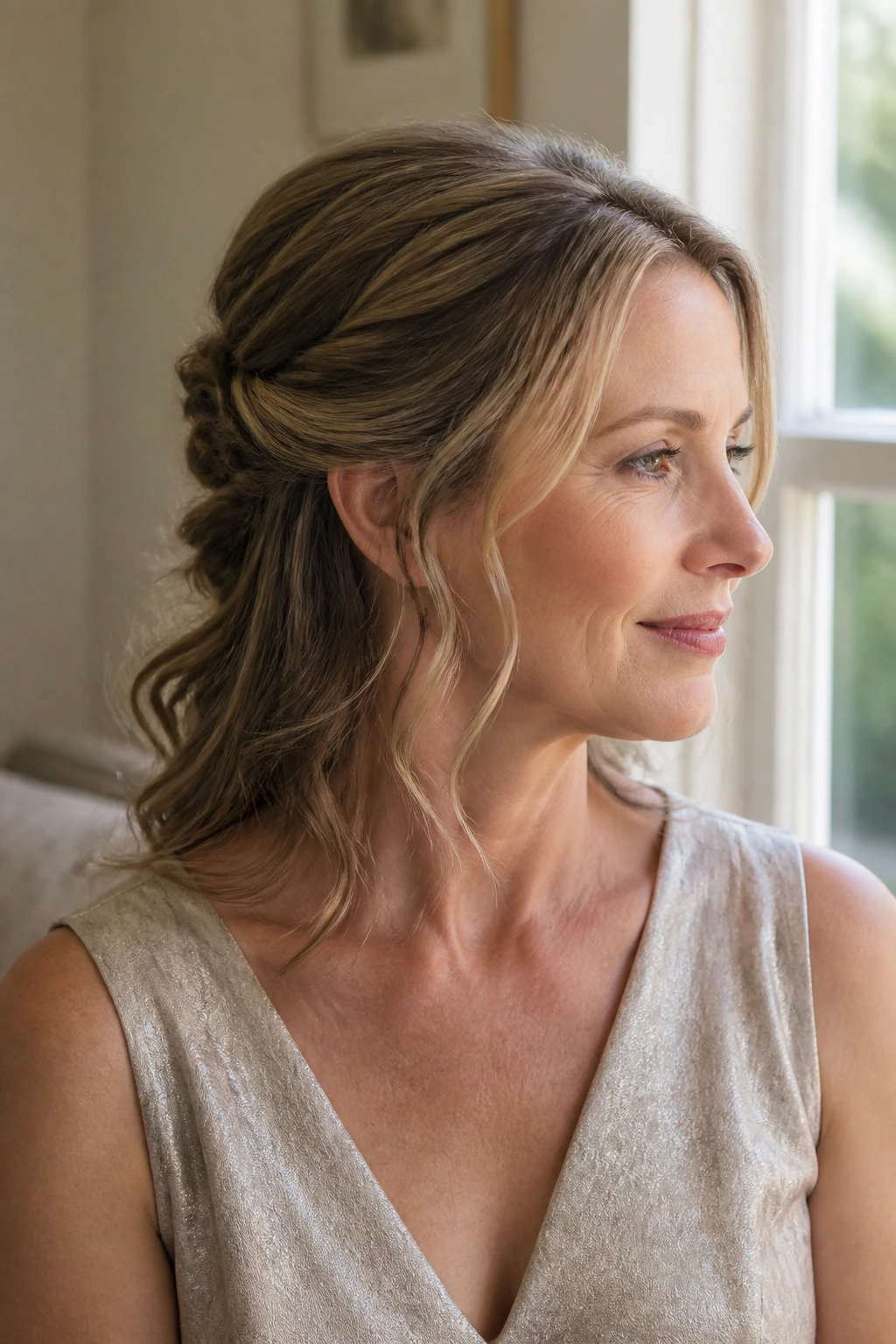
Can a half-up hairstyle look formal enough for the mother of the bride?
Yes, if the shape is clean and the finish is deliberate. A neat twist, a controlled wave pattern, or one well-placed accessory can look every bit as dressy as a full updo.
What’s better for half-up styles: clean hair or day-old hair?
Day-old hair usually holds pins and curls better because it has a little natural grip. If you prefer to wash the same day, use texture spray or dry shampoo at the roots so the style doesn’t slide.
Can I wear a veil with a half-up hairstyle?
Absolutely. The trick is placing the anchor point where the veil comb can grip without crushing the style. A trial run with the veil attached is the safest way to see if the base is strong enough.
Will these styles work on thin hair?
Yes, but keep the sections narrow and the accessories light. Thin hair usually looks best with crown lift, soft waves, and a few hidden pins rather than large braids or heavy combs.
What if my hair is very thick and keeps puffing out?
Use smaller sections and pin as you go instead of gathering too much at once. Thick hair benefits from hidden support and a little smoothing cream on the surface layer, but not so much that it turns limp.
Can I do one of these styles myself?
Some of them, yes. The minimalist clip, simple twist, or soft wave half-up can be done at home with a mirror and patience. Anything involving a veil, crystal comb, or tricky side sweep is easier with help.
What if curls fall flat before the reception?
Carry a travel spray and a couple of pins. A quick lift at the crown or a re-pin of the front sections usually fixes the shape faster than trying to re-curl the whole head.
Which styles work best with bangs or a fringe?
Styles that blend the fringe into the pinned section tend to look the cleanest. Side bangs can sweep into a twist or side part, while blunt bangs usually need more careful drying so they don’t separate.
A Style That Holds Its Shape
The nicest thing about half-up hair is that it doesn’t need to be the loudest thing in the room. It just needs to do its job: hold, soften, flatter, and stay put through the parts of the day nobody can predict. That’s a useful kind of beauty. Quiet, but not forgettable.
If you’re choosing between several mother of the bride half up hairstyles, start with the dress, then the hair texture, then the accessories. That order saves a lot of second-guessing. The right style is usually the one that looks like it belongs to the whole outfit, not one that arrived from a different event entirely.