



Dark blonde hairstyles for pale skin work best when the shade has a little shadow in it. Too light, and the face can go quiet. Too brown, and the hair takes over. The sweet spot sits around level 6 or 7 — ash, beige, mushroom, or a soft honey — where the cut can do its job without the color stealing the whole show.
That balance matters more than people think. Pale skin can look porcelain, pink, freckled, olive, or almost translucent in certain light, and the same dark blonde can read completely differently from one face to the next. Under fluorescent bathroom bulbs, a beige blonde bob may look soft and clean. Outside, the same shade can pick up wheat, taupe, or a smoky edge that makes the eyes look sharper. Tiny shifts. Big effect.
The looks below lean into that. Some are blunt and crisp. Some are lived-in and loose. A few are short enough to show off the neck line, which can be especially nice when the hair color is doing subtle work rather than shouting across the room. That’s the trick here: shape first, tone second, and a little restraint everywhere else.
Why These Dark Blonde Looks Work on Pale Skin
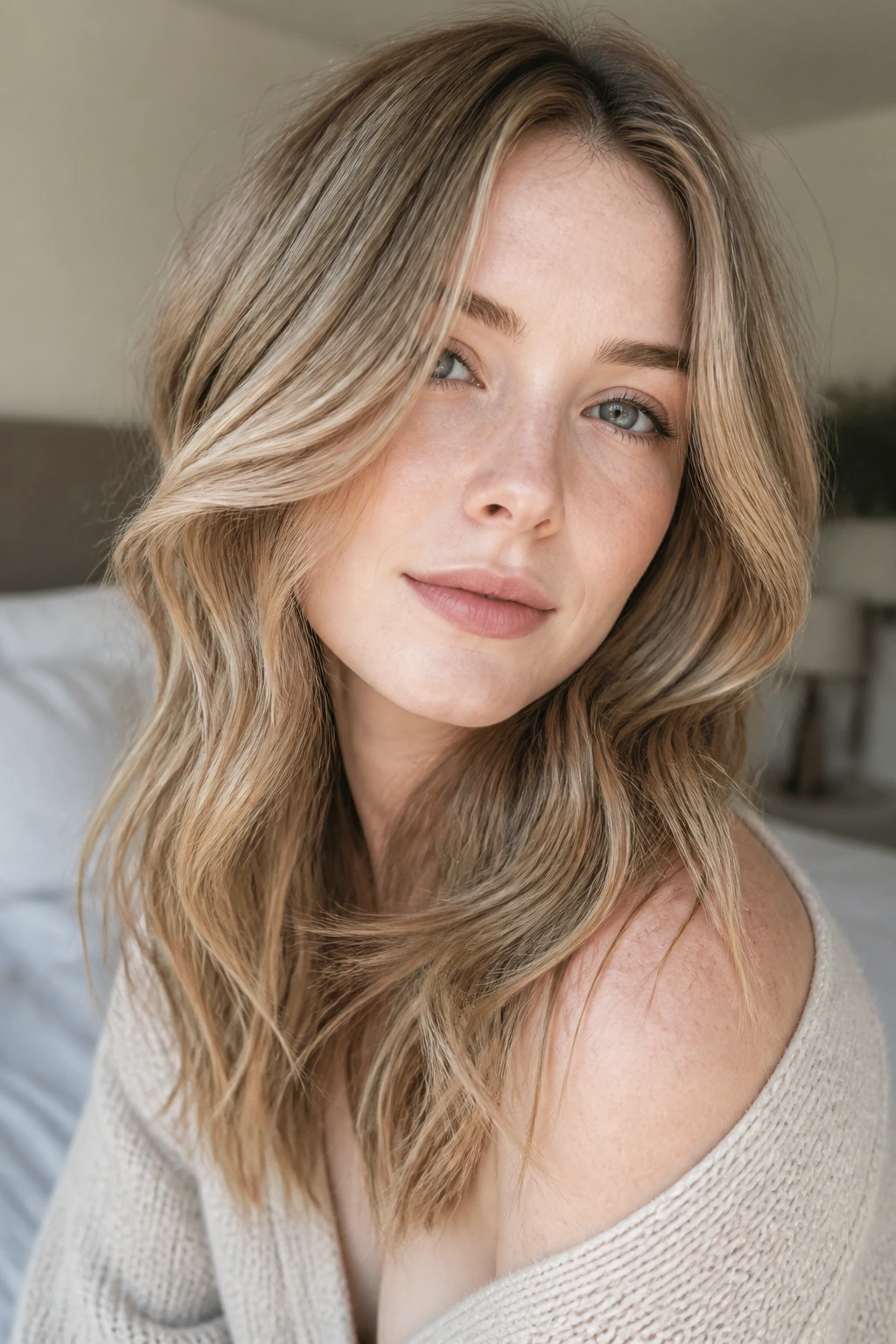
- Soft contrast matters: Dark blonde creates a visible frame around pale skin without the hard edge you get from very dark brunette or the washed-out effect of pale platinum.
- Undertone control changes everything: Ash, beige, mushroom, and honey versions all read differently, so you can cool down redness or warm up a flat complexion without changing the whole haircut.
- Texture makes the shade look richer: A blunt bob, a shag, and a wave set all catch light in different places, which keeps the color from looking one-note.
- Root depth keeps the face awake: A slightly deeper root or shadow melt stops the hairline from disappearing next to fair skin.
- These styles grow out with some dignity: That matters. A dark blonde bob with root shadow can still look deliberate six weeks later, which is more than I can say for plenty of high-contrast color jobs.
The Shade Map: Ash, Beige, Mushroom, and Honey for Fair Skin
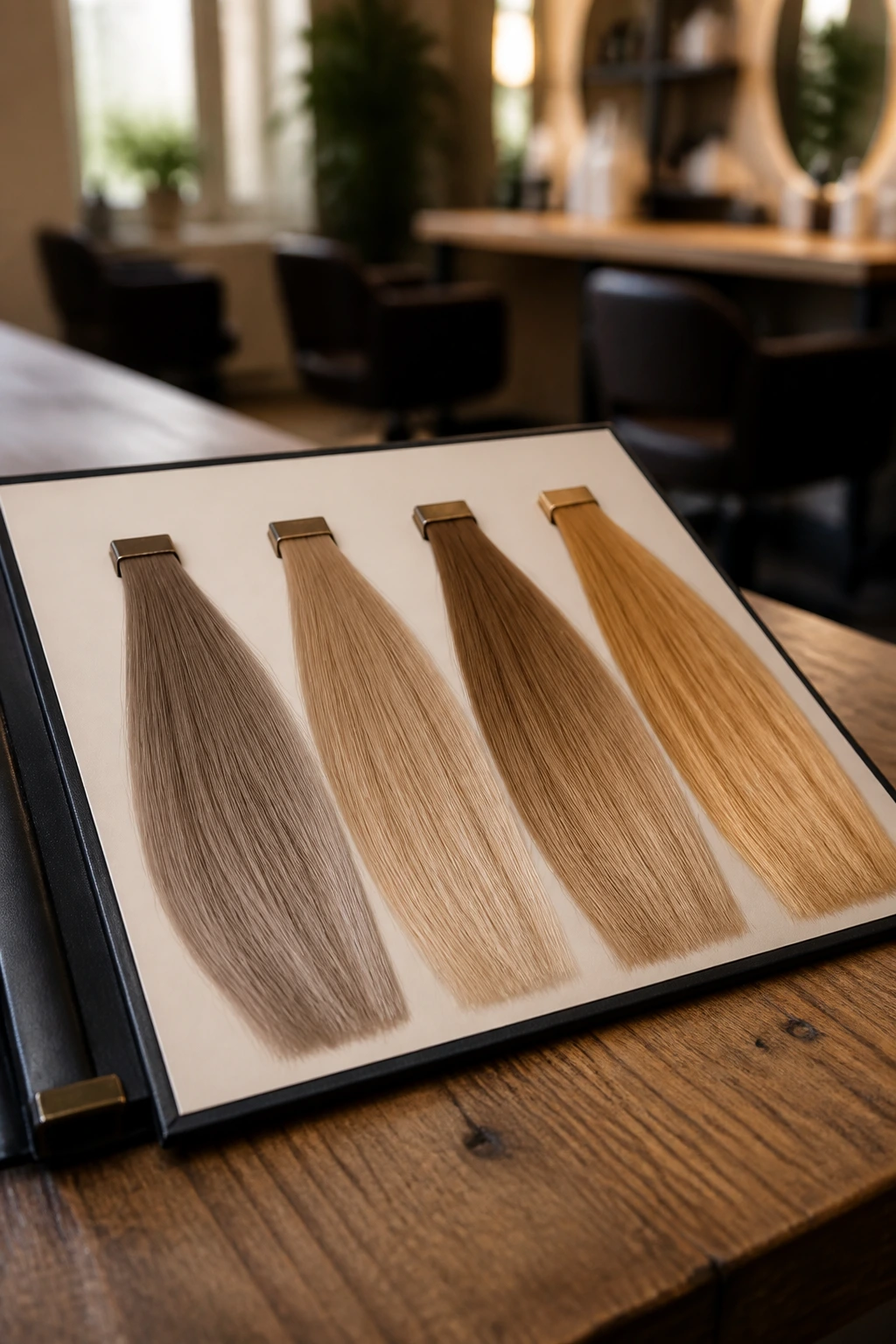
Ash dark blonde has a cool, smoky edge that works especially well on pale skin with pink or red undertones. It sits closer to taupe than gold, so the hair does not fight flushed cheeks or a cool jawline. If silver jewelry tends to look better on you than gold, ash is usually the first shade I’d test.
Beige is the middle lane. It has enough warmth to keep the face from looking drained, but it doesn’t swing yellow. Beige dark blonde is my favorite starting point for people who are unsure, because it plays well with most eyebrow colors and doesn’t make freckles disappear the way a very pale blonde can.
Where Mushroom and Honey Fit In
Mushroom dark blonde is quieter and more muted. It has that soft, earthy finish that looks especially good on very fair skin because it adds depth without brightness. Honey dark blonde is the warmer option, and it can be lovely on pale skin that has a peachy cast or a little sun on the cheeks. The catch is simple: if the shade gets too gold around the hairline, the skin can start to look pinker than it really is.
A good rule of thumb? Keep the root a shade deeper than the mids, then let the ends lift just enough to move in the light. That small shift keeps the whole look alive.
What to Tell Your Colorist Before the First Foil
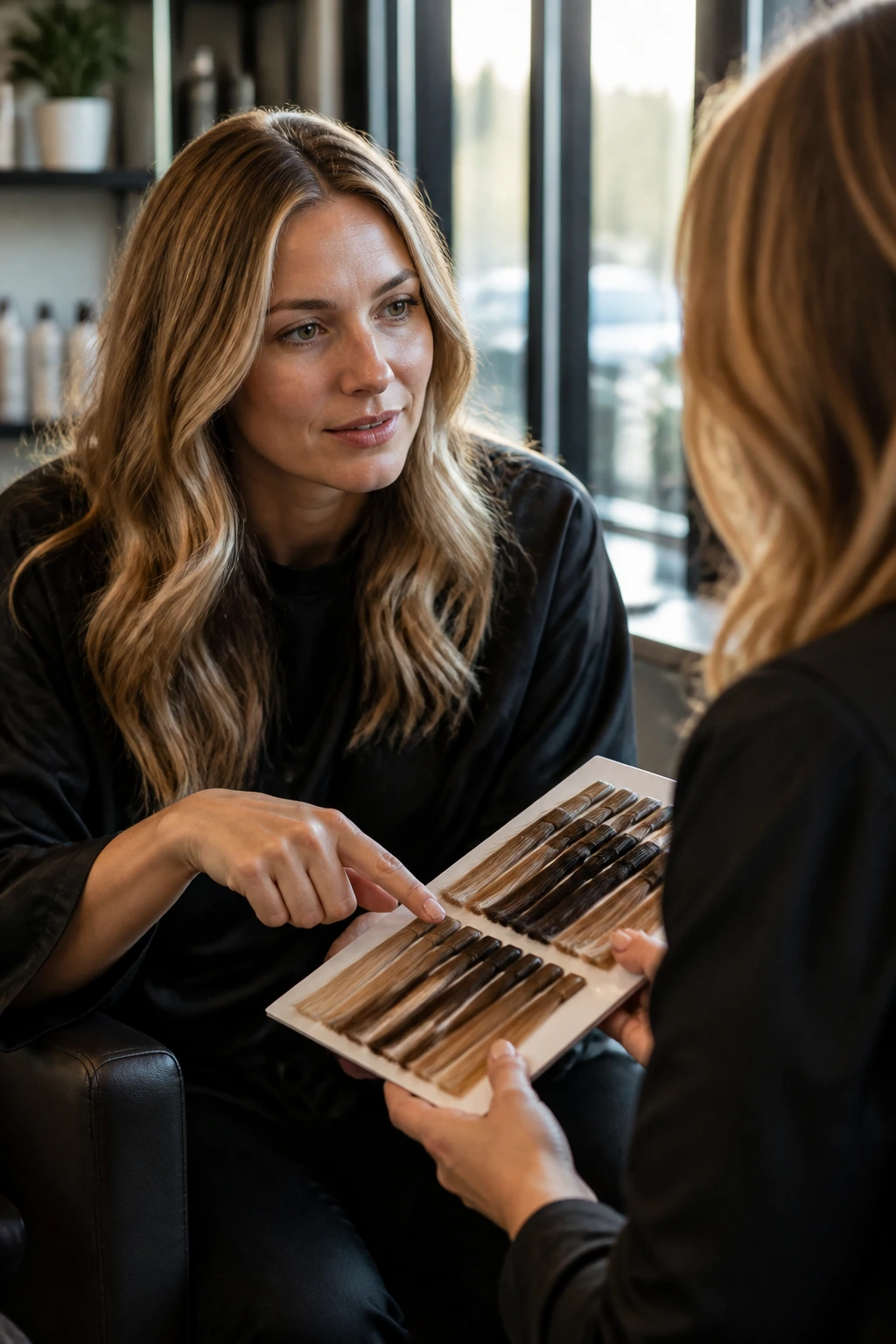
Bring photos shot in daylight, not under a dressing-room mirror. Light changes dark blonde fast, and a phone screen lying to you at arm’s length is how people end up with color that looks great online and oddly flat in real life.
Say the Level, Not Just the Vibe
Use numbers if your colorist speaks them. Ask for a level 6 to 7 dark blonde with either ash, beige, or soft honey reflect, then name the amount of contrast you want at the root. If you want low maintenance, say so plainly. A root shadow or melt makes more sense for most pale skin because it keeps the face framed instead of flooded with brightness.
Mention Your Hair History
If your hair has box dye, old highlights, or a porous mid-length, say it before the brush comes out. Pale skin can be forgiving, but uneven color is not. A toner that looks calm on virgin hair can grab too cool on porous ends and too warm at the root, which leaves you with two different blondes that don’t really talk to each other.
Ask for Dimension, Not a Solid Block
Solid dark blonde can look heavy. Dimension reads better. I’d ask for fine ribbons, a soft root stretch, and a few lighter threads near the face only if you want more brightness. That’s enough. You do not need a stripey money piece unless you want it.
1. Ash-Dark Blonde Blunt Bob at the Jaw
A blunt bob that sits just below the jaw gives pale skin a clean frame, almost like a line drawn under the face with a very sharp pencil. The ash-dark blonde should stay cool and a little smoky, not yellow. That keeps the cut looking crisp instead of heavy.
Why the Cut Helps the Color
The blunt edge gives the eye something to stop on, which matters when the skin is very fair and the hair color is only a few shades deeper than the face. I like this cut best when the ends are beveled inward by a half-inch, because that tiny curve keeps the bob from looking boxy.
- Best on straight or lightly wavy hair.
- Ask for a one-length line that lands just under the jaw.
- Use a beige-ash gloss, not a gold toner.
- Trim every 6 weeks if you want the shape to stay sharp.
Tip: Tuck one side behind the ear and leave the other full. That asymmetry gives the shade more movement.
2. Rooted Lob with Curtain Bangs
If you want movement without giving up a clean outline, this is the safe bet. A rooted lob gives pale skin a little depth at the part, and curtain bangs soften the forehead without dragging the whole face down. The color should stay darker at the root and lighter through the mids, almost like a slow fade.
What I like about this style is that it does not need perfection. A loose bend through the ends, a center part that breaks slightly off-center, and bangs that swing at cheekbone level — that’s enough. On pale skin, the fringe stops the face from looking too open, while the darker root keeps the look from floating away.
A 1.25-inch curling iron or a round brush works well here. Push the bangs back and away from the face, then let them cool in place before touching them. That keeps the curtain shape instead of turning the fringe into a helmet.
3. Beige-Dark Blonde Long Waves
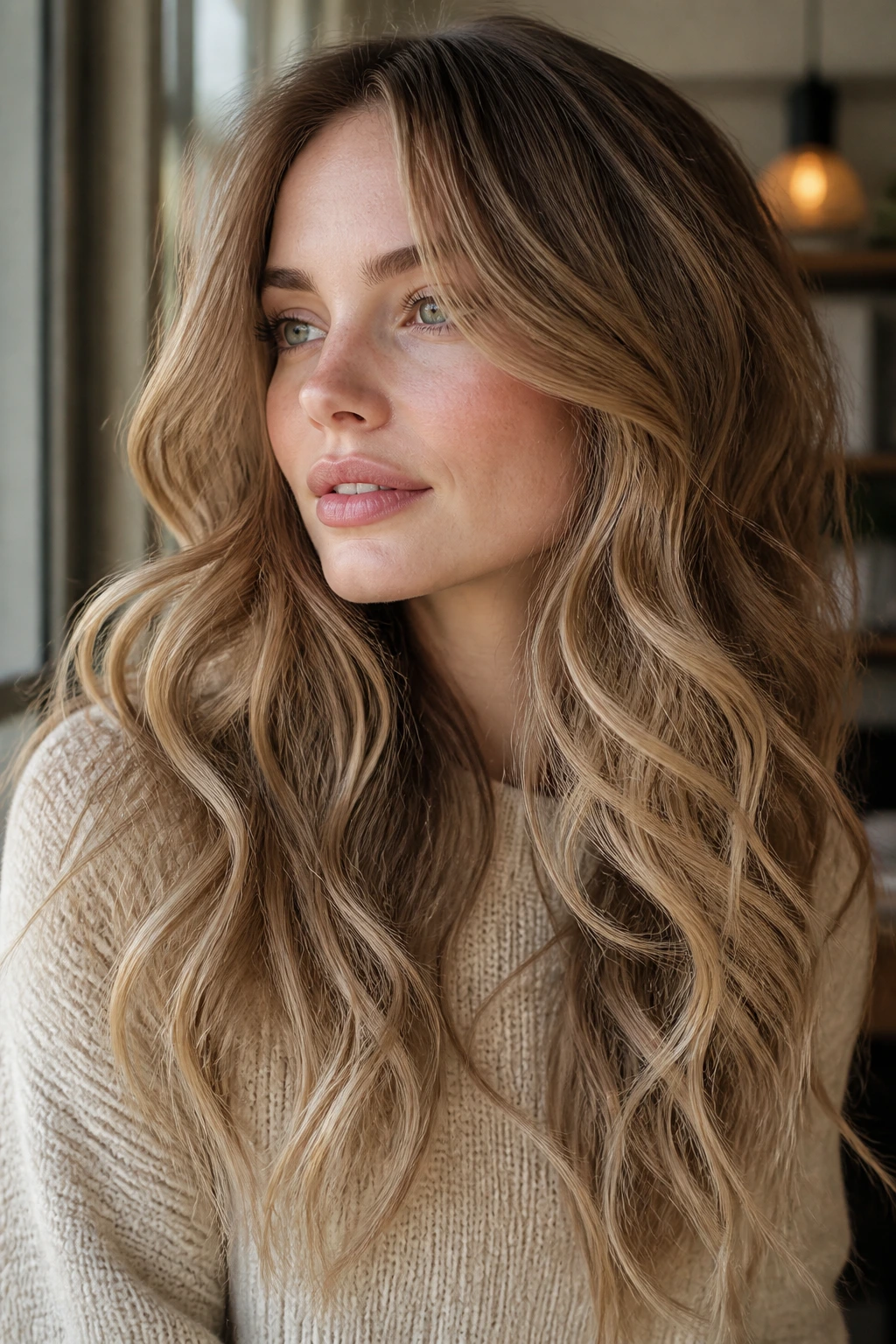
Why do beige waves look so soft on porcelain skin? Because beige sits between ash and gold, and that middle tone is kinder than either extreme. It gives pale skin a little warmth without turning the whole head brassy, and long waves let that color move in sheets instead of fixed blocks.
How to Style It
Use a 1.25-inch iron and leave the last inch of each section out. That unfinished end is what keeps the wave from looking dated. Brush it out with a wide paddle brush after it cools, then mist a light shine spray through the mids.
- Keep the top layers a touch darker.
- Add lowlights under the surface for depth.
- Curl away from the face on both sides if you want a softer frame.
- If your skin is very pink, stay closer to beige than gold.
Small opinion: long beige waves on pale skin look better when they are a little messy. Too polished and they can go flat. Too perfect and they lose the easy, airy thing that makes this shade worth wearing.
4. Textured Pixie with Soft Crown Volume
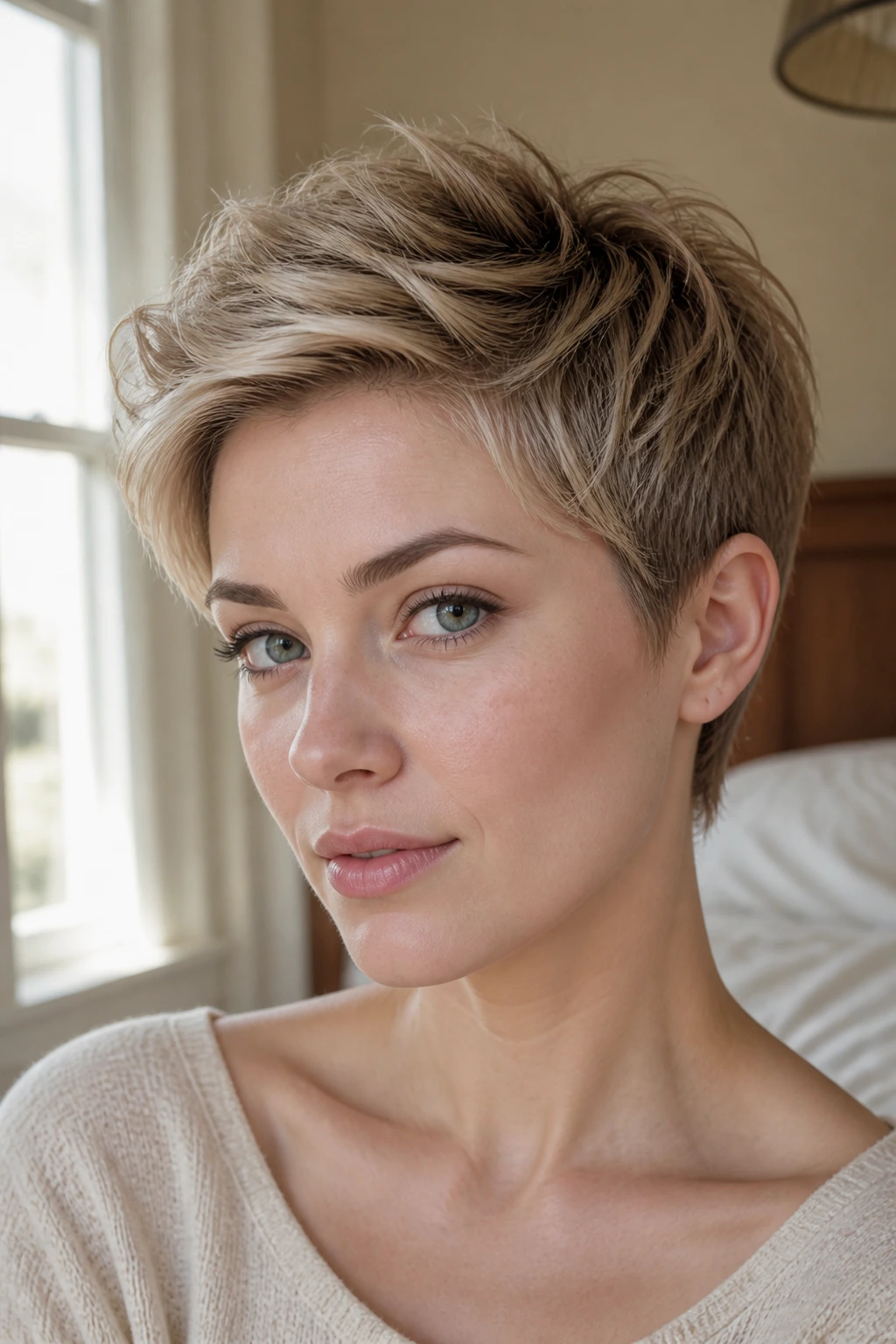
If your hair lies flat against the temple and makes your face seem longer, a textured pixie fixes the silhouette fast. The dark blonde should live a little lighter on top and slightly deeper on the sides, which keeps the cut from blending into pale skin around the ears and neck.
The crown matters here. A tiny bit of lift at the roots — even half an inch — gives the head shape. Without it, the style can look too close to the scalp, and that can make fair skin read washed out. A pea-size dab of paste worked through the top is usually enough.
Quick styling notes
- Blow-dry with fingers first, then pinch in texture.
- Keep the top pieces longer than the sides by about 1 to 1.5 inches.
- Choose a beige or wheat tone, not a high-gloss gold.
- Trim every 4 to 6 weeks if you want the shape to stay tidy.
This is a sharp, low-noise cut. No fuss. No fluff.
5. Collarbone Shag with Feathered Ends
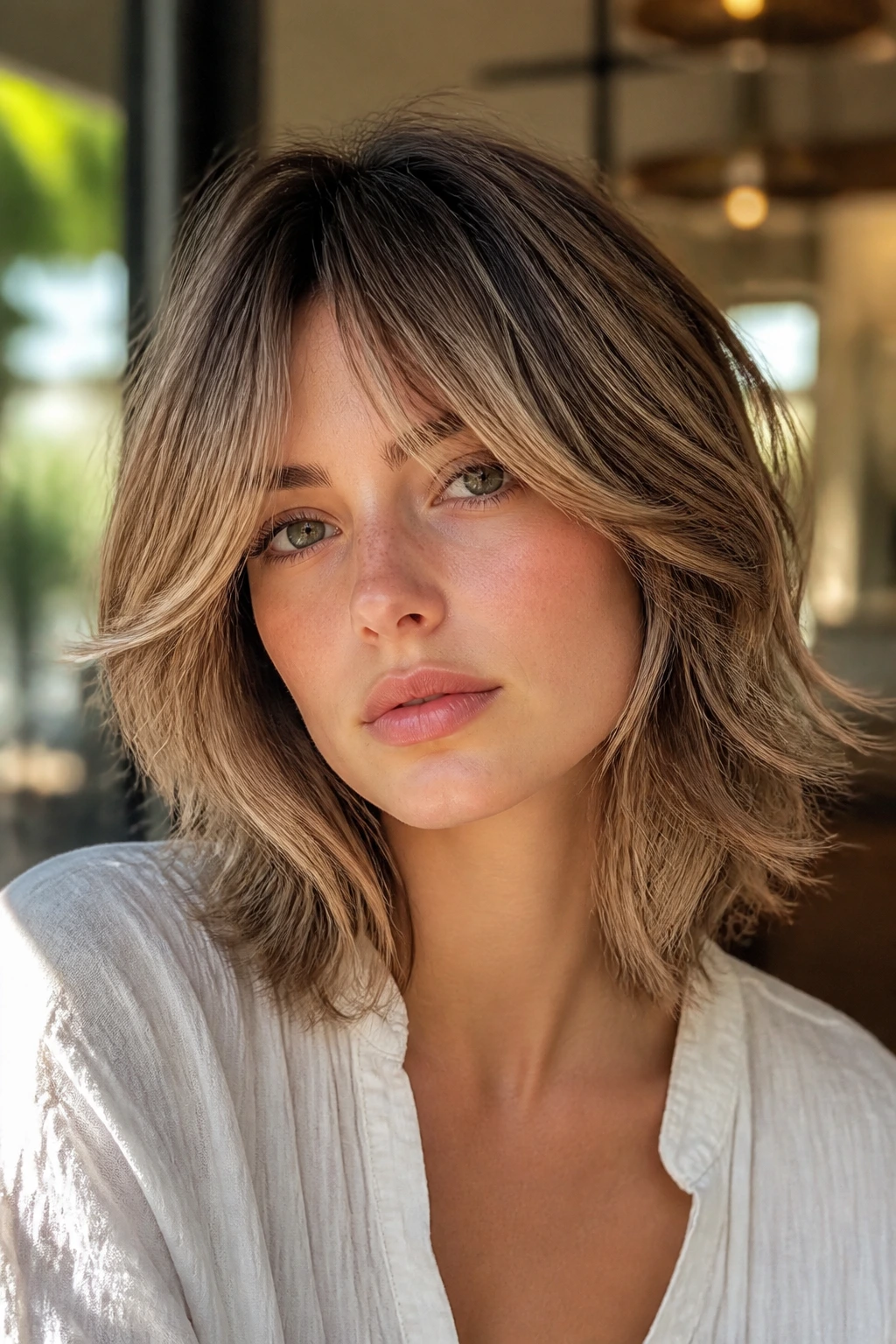
The collarbone shag is one of those cuts that looks even better when it is a little grown out. The feathered ends break up the outline, so the dark blonde can show small shifts of tone instead of sitting in one heavy slab. On pale skin, that movement keeps the face from disappearing into the hair.
I prefer this cut when the layers start around the cheekbone, not the chin. That gives the hair a lift where the face needs it most. The ends should feel soft and swingy, almost like they’ve been cut with a light hand rather than carved.
The styling is easy enough: a little mousse at the roots, diffuse or rough-dry until about 80 percent dry, then twist a few pieces around your finger while the hair is still warm. The point is texture, not curl pattern. A smoky beige or mushroom blonde makes the whole thing feel grounded.
6. French Bob with a Soft Side Part
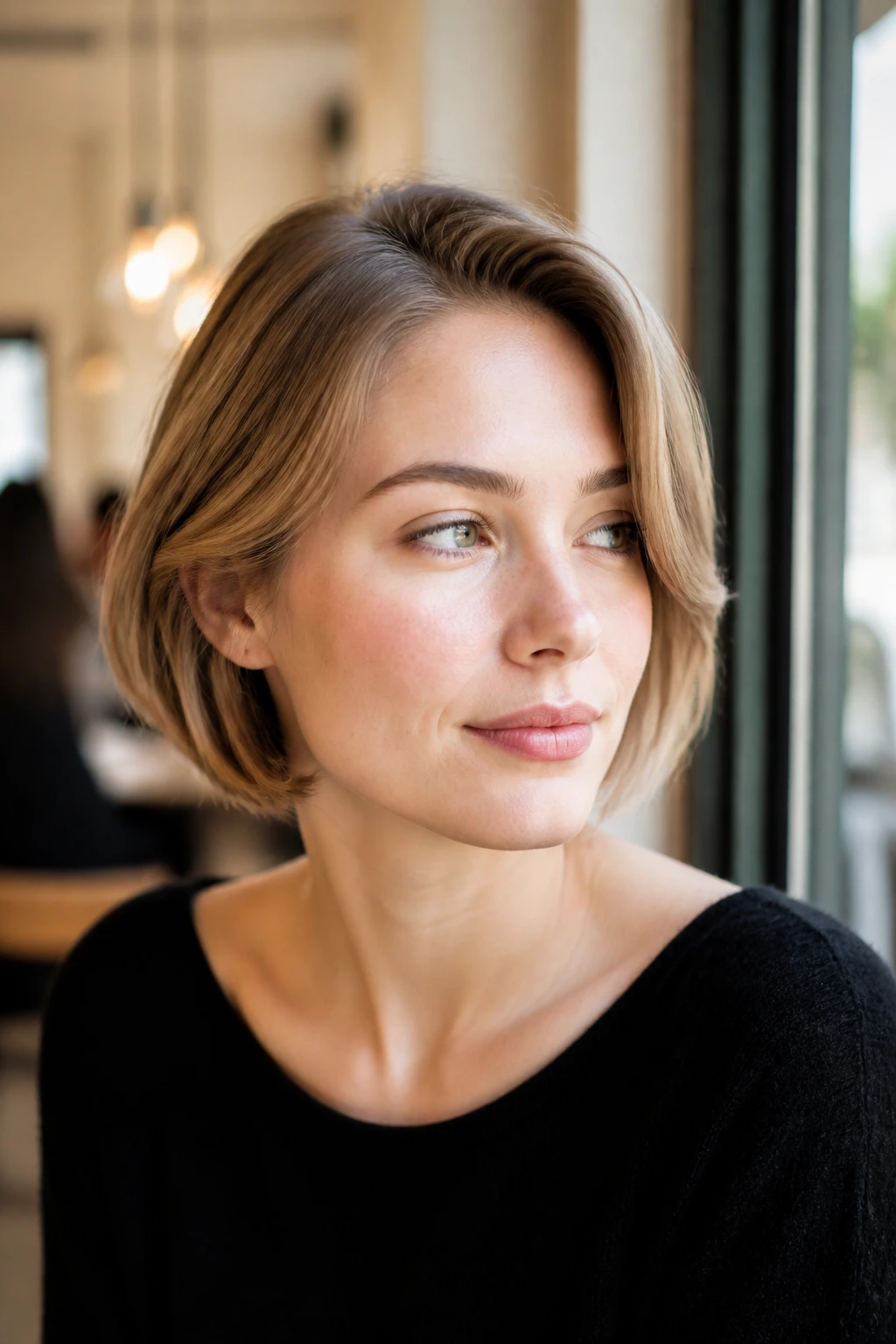
A French bob is a blunt idea with a softer personality than people expect. The side part matters here. It stops the look from feeling too graphic against pale skin, and it lets the dark blonde pick up light on one side while the other side stays quieter.
Unlike a stacked bob, this one keeps the nape gentle. That softness helps if your skin is very fair, because the haircut does not create a hard border around the jaw. I like it with a light bend at the ends and a tiny bit of texture cream worked through the surface, not underneath.
If your hair is fine, this is one of the easiest dark blonde styles to keep from collapsing. The cut does the heavy lifting. The color just needs to stay beige or ash, with a root that is a touch deeper than the mids.
7. Mid-Length Cut with Face-Framing Layers
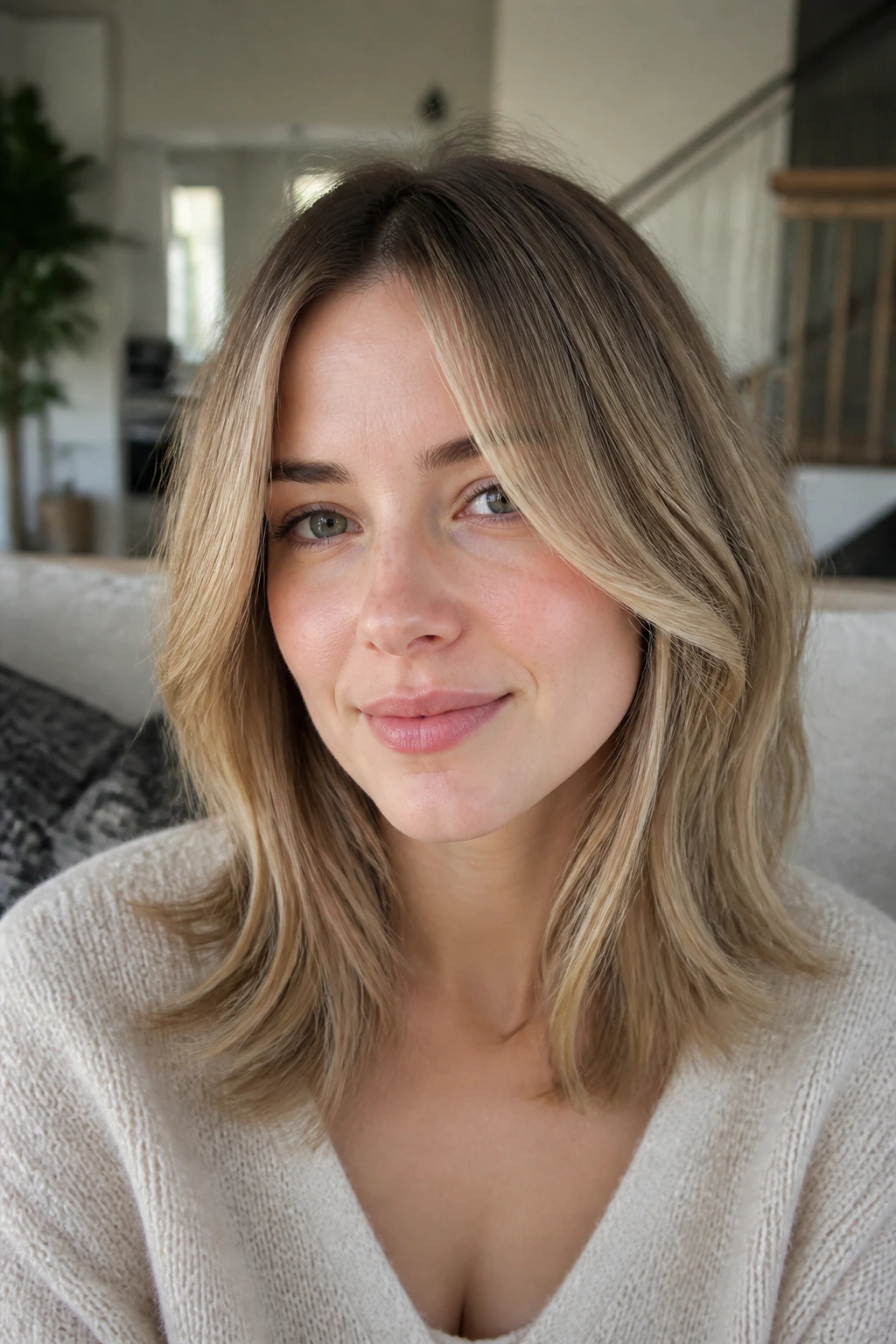
This is the haircut I reach for when someone wants brightness near the face without giving up length. Face-framing layers can start around the cheekbone or just below the chin, and on pale skin that small placement change matters more than most people think. Too short, and the front looks choppy. Too long, and the frame disappears.
What to ask for
Ask your stylist to keep the front pieces a little lighter than the rest, but not so light that they look pasted on. A soft dark blonde ribbon near the cheekbone can make the eyes look clearer and the skin less flat. The rest of the cut should stay dimensional, with enough depth under the surface to keep the shape from fading out in daylight.
This works especially well if you wear your hair loose most of the time. The layers move. The color follows. And the whole thing looks like it was built for everyday wear, not just a good mirror day.
8. Wispy Fringe with Loose Curls
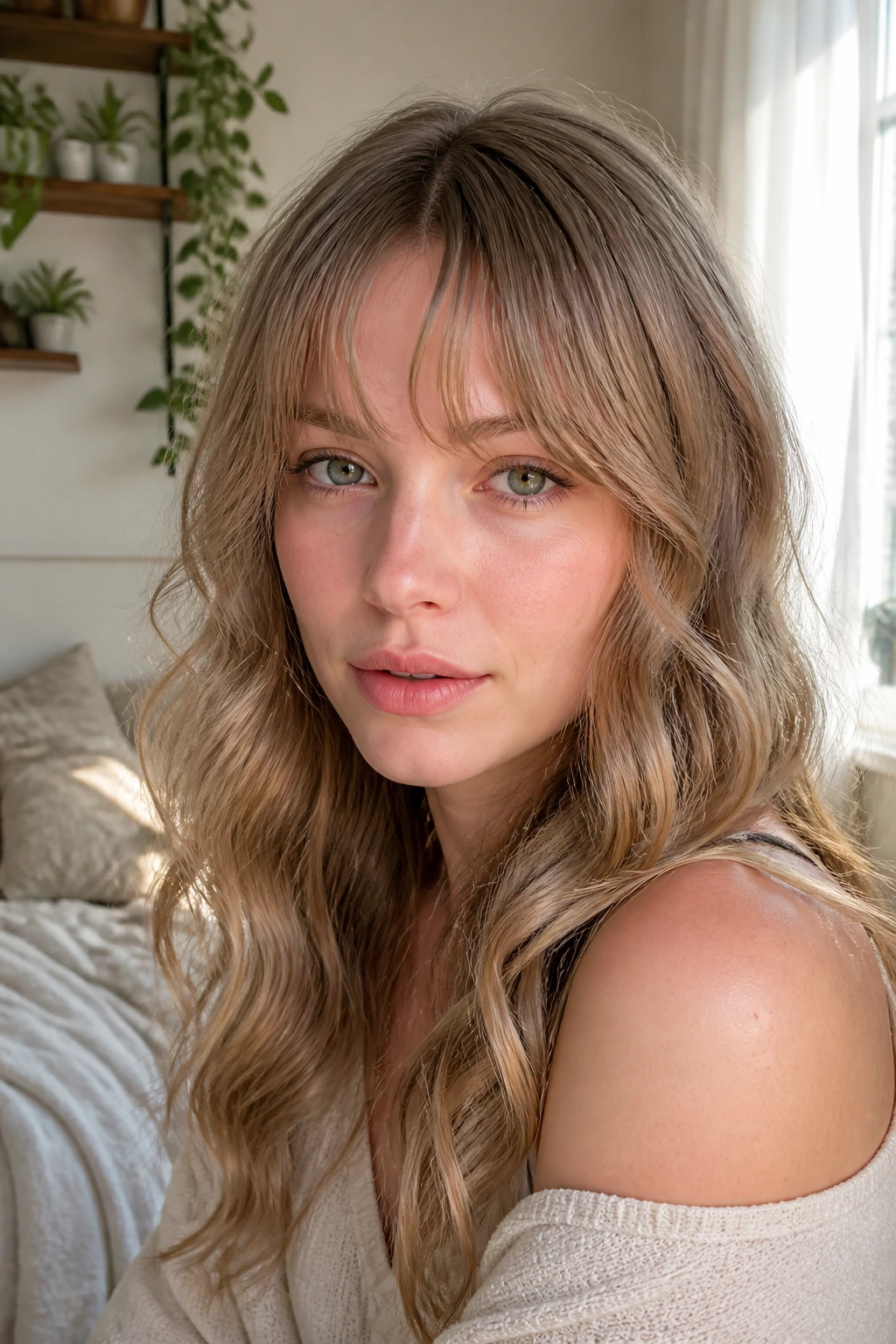
A blunt fringe plus pale skin can be a lot. A wispy fringe is easier. It breaks the forehead line without making the front of the face look boxed in, and loose curls keep the rest of the style from feeling too stiff or too finished.
If your brows are light, this combination can be especially nice because the fringe does not completely cover them. That matters. You want a little skin, a little brow, a little movement. Too much hair across the forehead can make the face read colder than it really is.
How to keep it soft
- Cut the fringe longer in the center and taper the sides.
- Curl the mids loosely with a 1-inch iron.
- Leave the ends out so the hair does not turn into spirals.
- Use a light-hold mousse rather than a heavy cream.
I like this look in a muted beige blonde. The curl shape keeps the hair from lying flat against the skin, and the fringe keeps the color from reading too broad across the forehead.
9. Dimensional Balayage on Long Straight Hair
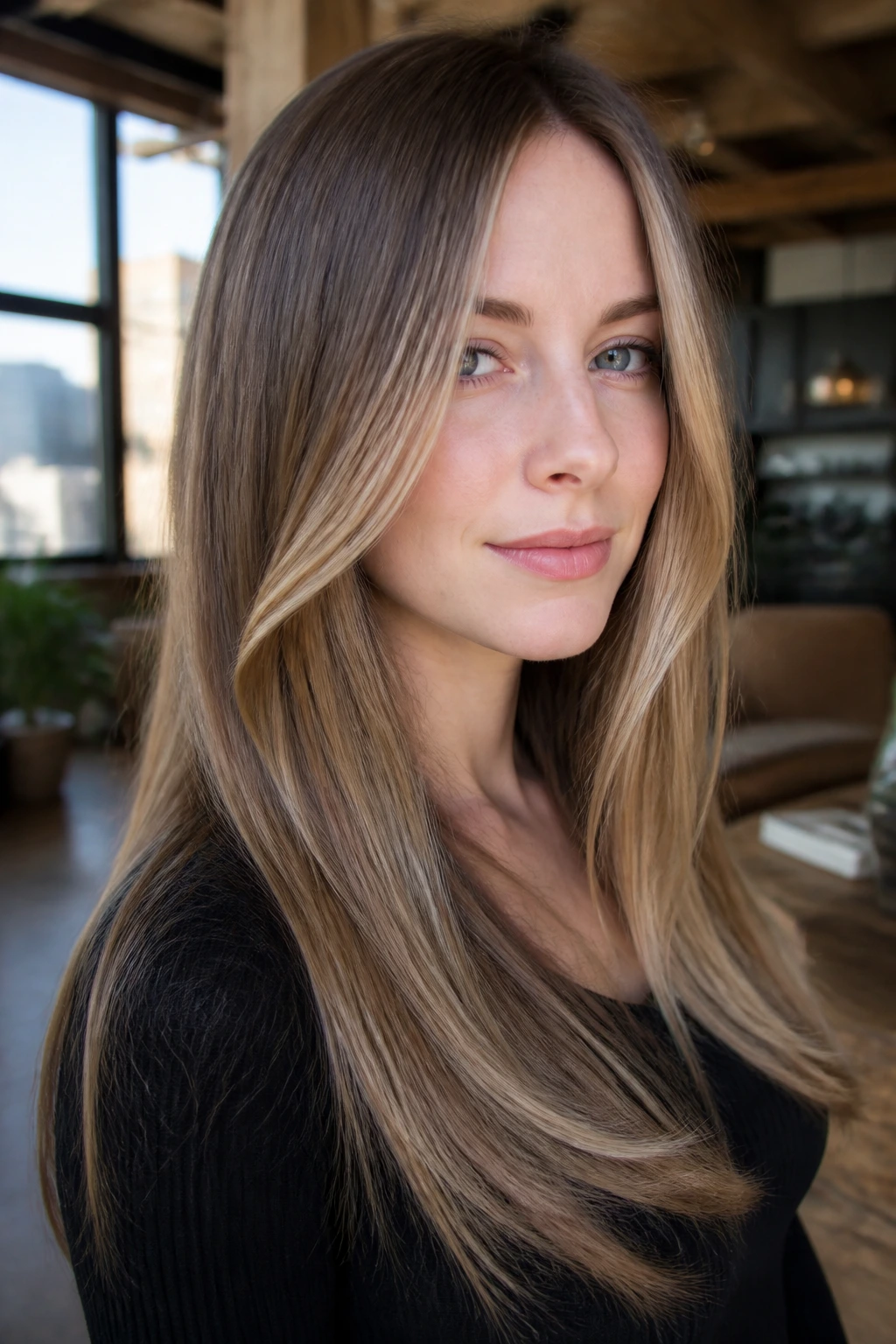
Straight hair can be brutally honest. Every flat stripe shows. Every yellow piece shows. Every bad tone shows. That is why dimensional balayage works so well on long, pale-skin-friendly dark blonde hair — it gives the length more than one note to play.
Why the dimension matters
A clean balayage placement keeps the front bright enough to frame the face while the underlayers stay deeper. On long straight hair, that contrast prevents the whole thing from looking like one long, faded curtain. I would keep the brightest pieces around the cheekbones and mid-lengths, not plastered around the entire hairline.
The finish should be smooth, not glassy. A little serum on the ends is good. Too much and the hair goes limp. If your skin is porcelain or very light, ask for beige or mushroom ribbons rather than platinum; the darker bands between them make the face look more alive.
10. Shoulder-Length Flip with a Deep Side Part
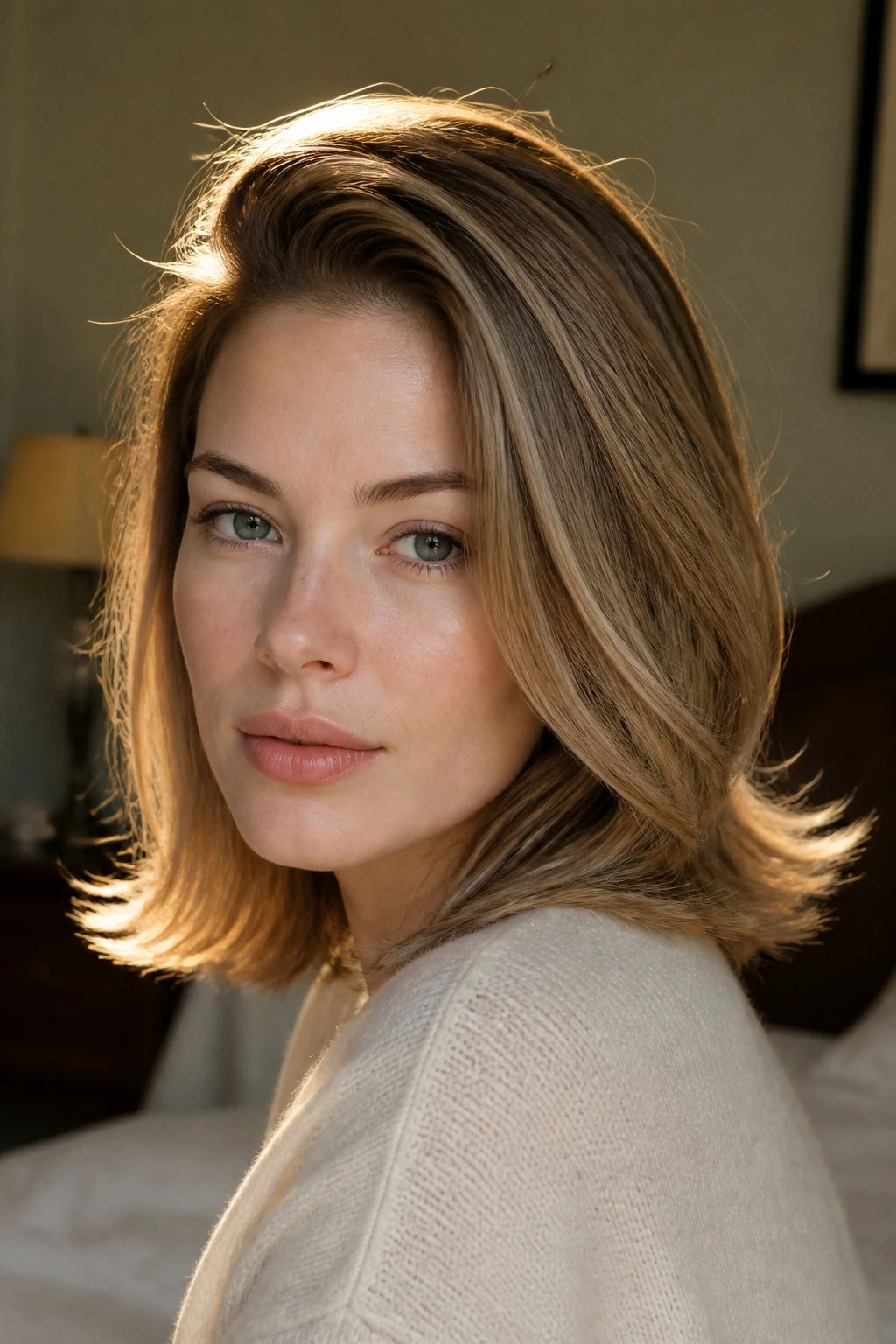
A deep side part gives pale skin a little shadow right where you want it. That dark line near the part breaks up the forehead and makes the whole style feel less exposed. Add a flip at the ends, and the cut takes on a bit of lift instead of hanging straight.
The best version of this style has a round-brush bend that flicks away from the jaw. That outward turn keeps the shoulders from swallowing the face. It also works nicely with dark blonde because the curve catches light along the top edge and leaves the underside a little quieter.
Use a medium round brush or a large-barrel brush on damp hair, then finish with a cool shot. The cool air is what locks the bend. Skip that, and the flip falls halfway to lunch.
11. Mushroom-Dark Blonde Wolf Cut
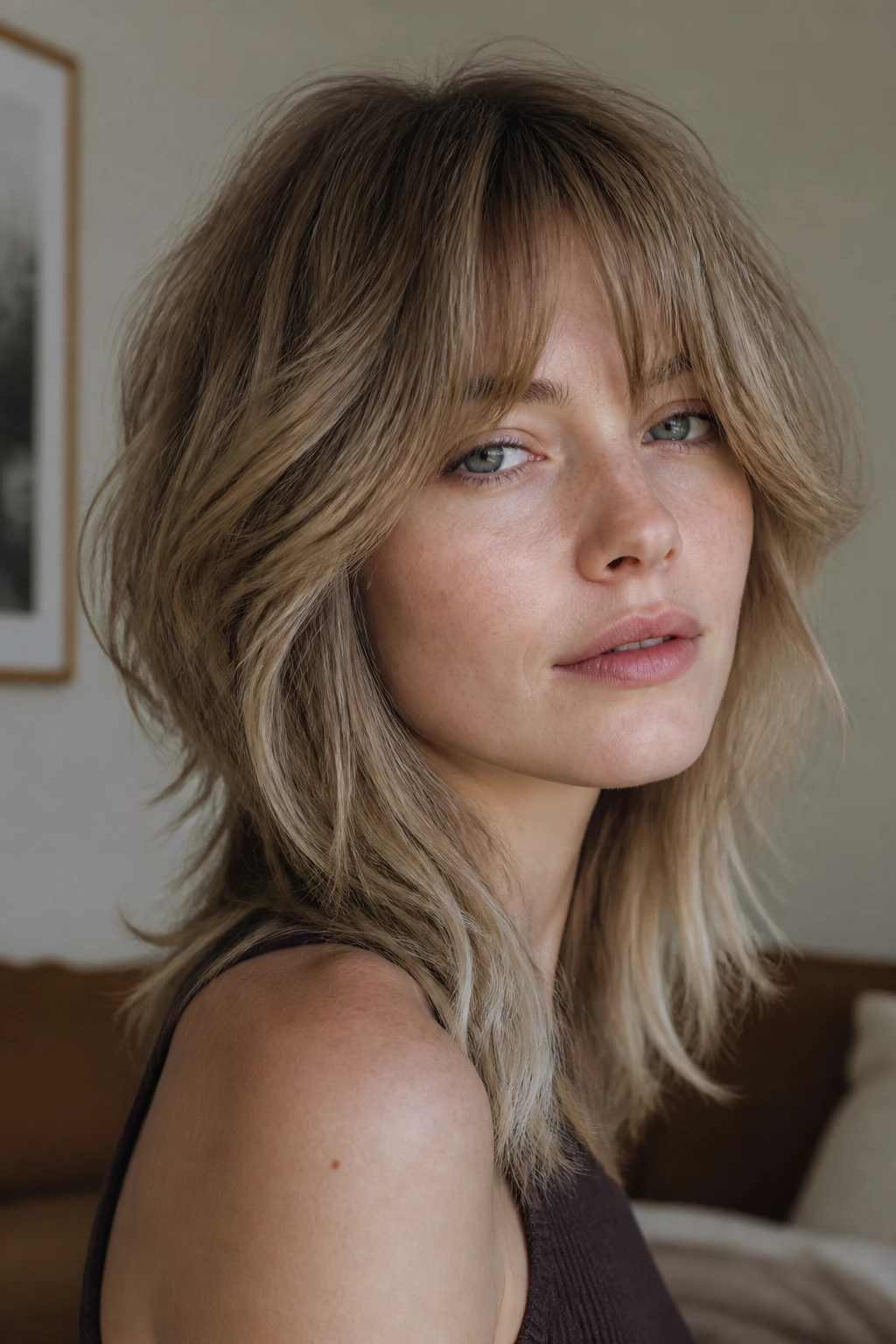
The wolf cut can go too loud if the texture is pushed too hard. Mushroom-dark blonde keeps it from tipping into chaos. The muted tone softens the choppy layers, which is useful on pale skin because the haircut already has enough attitude on its own.
If your hair is thick or naturally wavy, this cut gives you room to breathe around the crown and jaw. I’d keep the top a little heavier than the ends so the silhouette doesn’t frizz into a triangle. On very fair skin, the darker mushroom root helps the face hold its shape while the lighter ends move.
A dry texturizing spray at the roots and a tiny bit of matte paste through the bangs is usually enough. You want separation, not a bird’s nest. There’s a difference.
12. Sleek Low Ponytail with Glossy Length
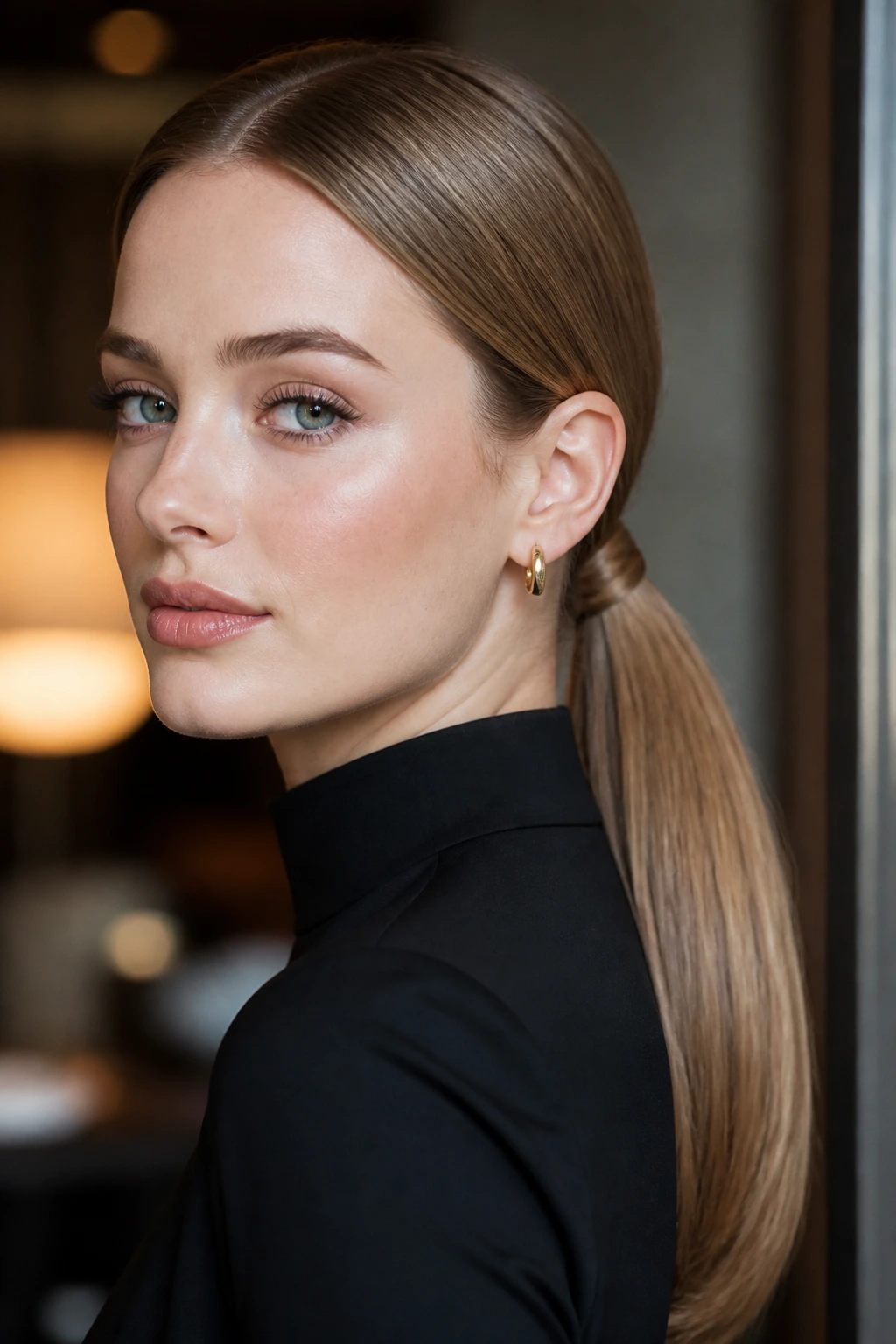
A low ponytail sounds plain until the color is good. Then it turns into a clean, almost severe line that looks excellent on pale skin, especially if the dark blonde has a glossy beige finish and a neat root. The key is polish. Not stiffness.
Brush the hair back with a boar-bristle brush, leave a small side part if your face needs softness, and wrap a strand around the elastic. That one small detail matters more than most accessories. It hides the hair tie and gives the style a finished edge.
This is a good one for evenings, interviews, or any day you want the face fully visible. Keep a few flyaways around the temples if your features are delicate. Too tight and the skin can look bare in a way that is less flattering than people expect.
13. Curly Lob with Tapered Layers
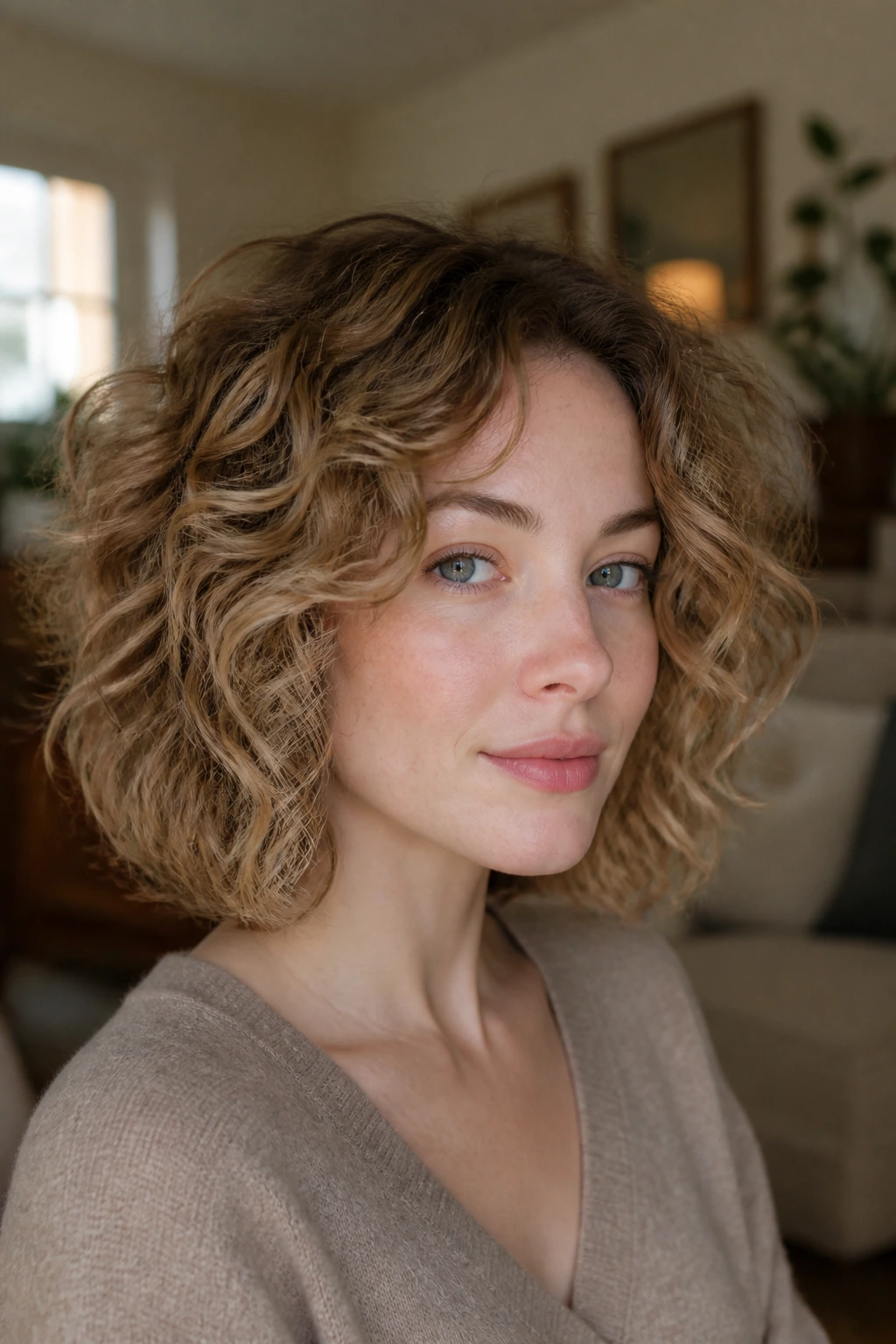
Curly hair needs room to move, and a lob with tapered layers gives it that without turning the shape into a pyramid. Dark blonde on curls is beautiful when the color lives inside the curl pattern instead of sitting only on the outside layer.
Best placement for pale skin
Keep the brightest pieces where the curls fall around the cheeks and temple. That small halo of brightness lifts the face without making the whole head look pale. A root that stays deeper for a little while helps the curls read defined rather than fuzzy.
Use a diffuser on low heat and stop touching the curls while they dry. Once they’re set, a dime-size curl cream scrunched into the ends is enough. If you pile on too much product, the shape goes flat and the dark blonde loses the texture that makes it interesting.
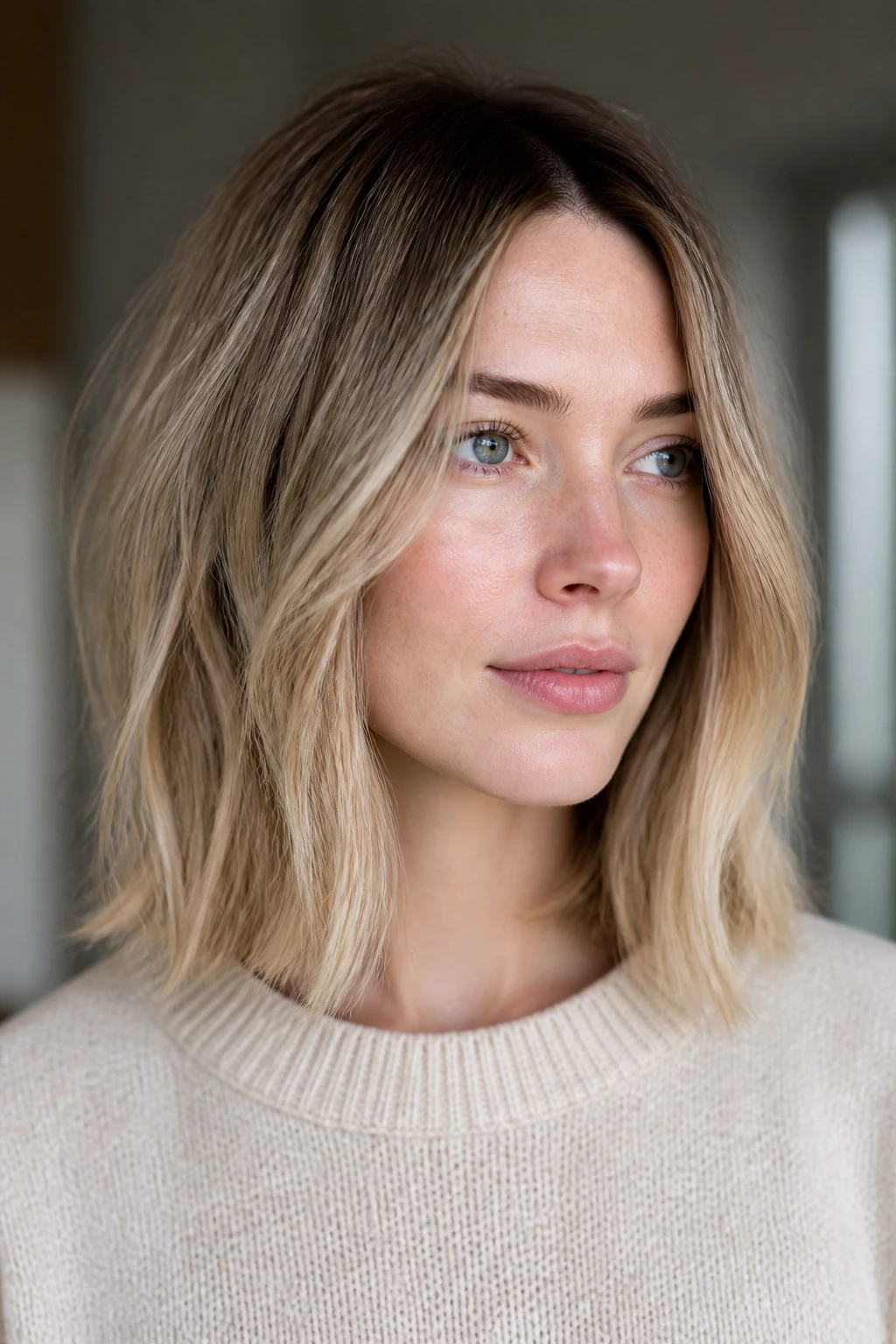
14. Root-Melt Bob with Soft Ends
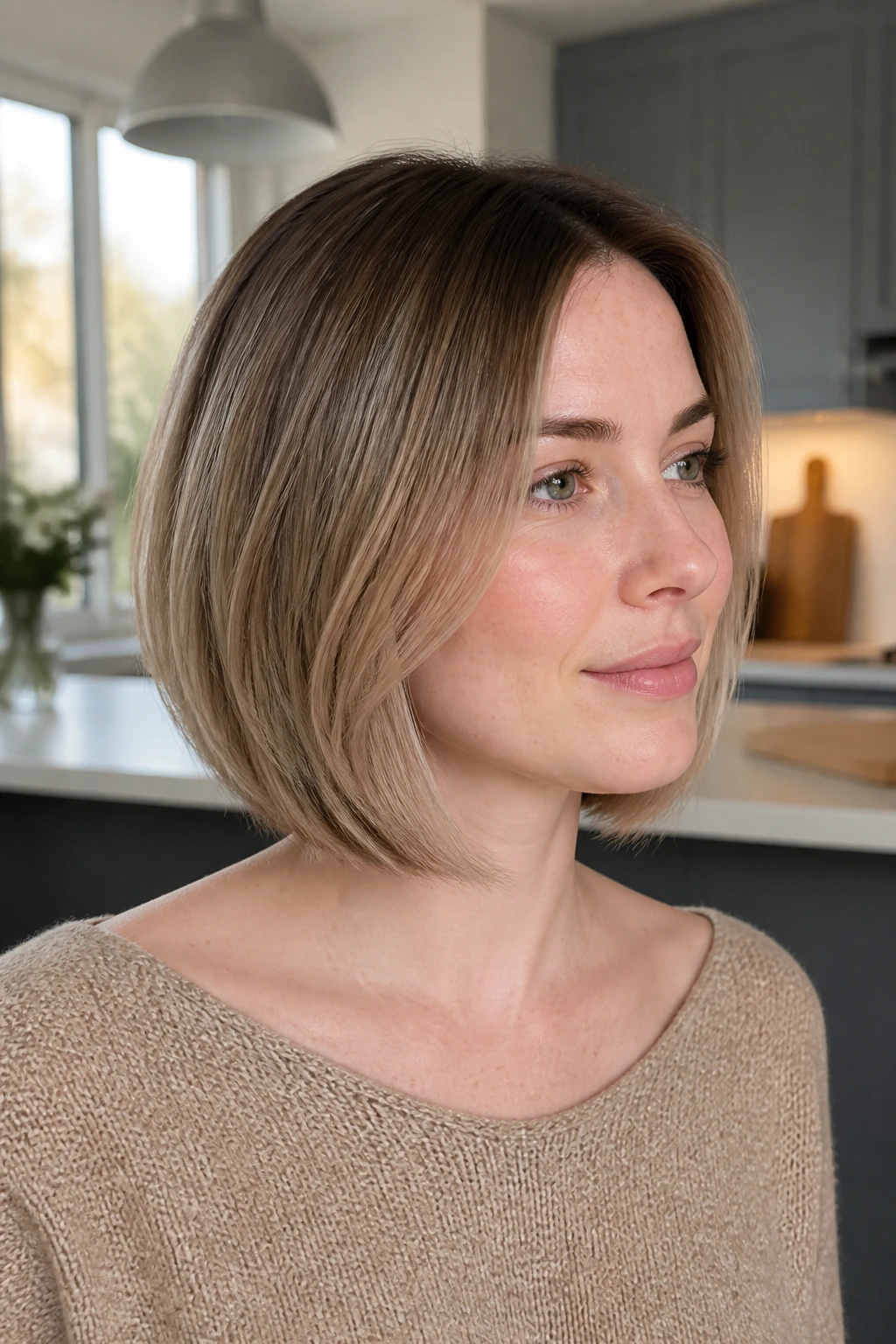
This is the bob for people who hate obvious grow-out. The root melt keeps the top a shade deeper, then slides into a softer dark blonde through the mids and ends. On pale skin, that gradient gives the face a neat outline without making the hairline look harsh.
I like the ends slightly broken up here, not razor straight. A soft perimeter lets the color blend better, especially if your skin has a cool cast. If the cut is too exact and the shade is too light, the whole thing can feel a bit sterile.
Ask for a demi-permanent gloss over the lengths if your hair tends to go brassy. The bob will look fresher for longer, and the root won’t scream for attention as it grows.
15. Piecey Midi Cut with Micro-Layers
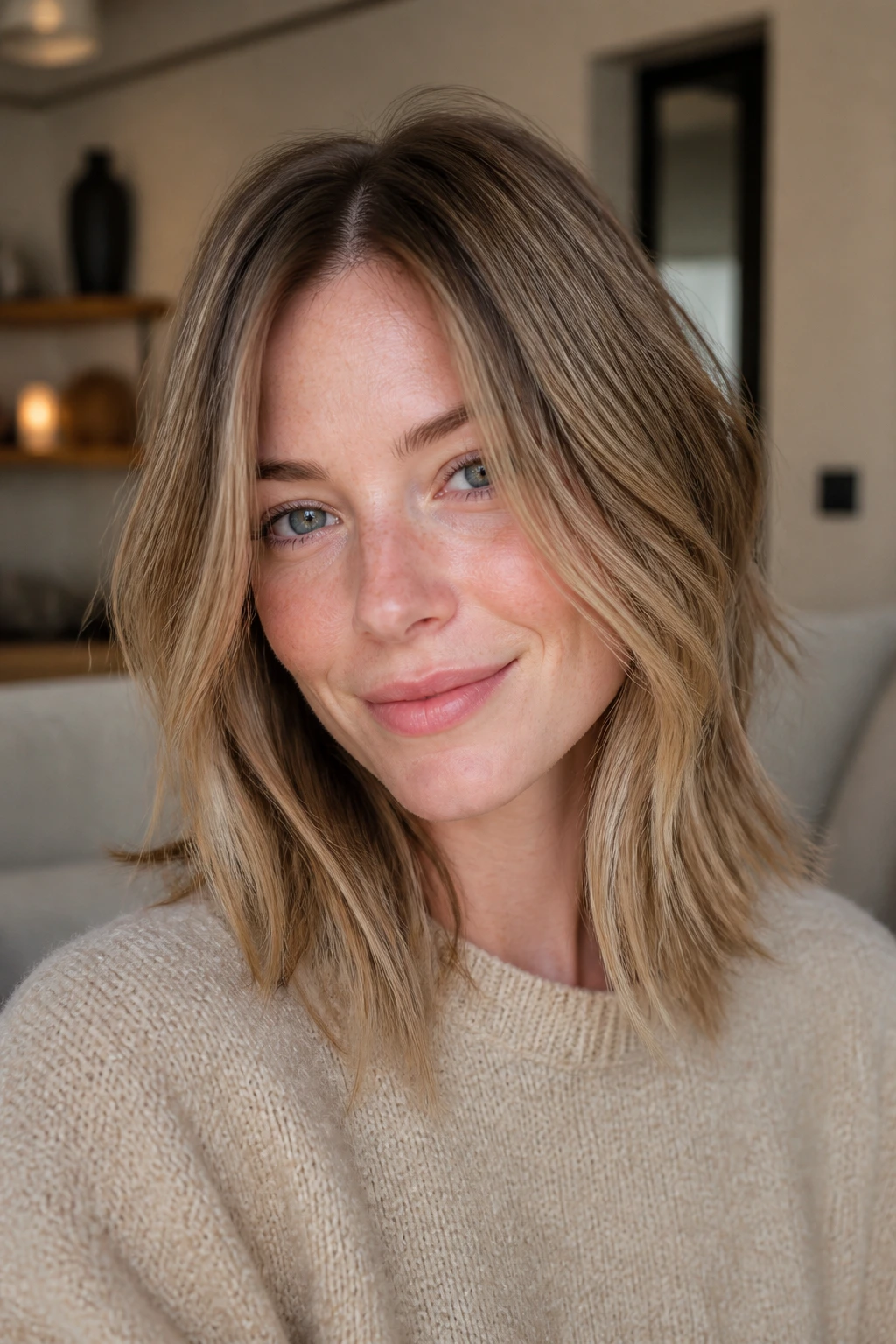
A piecey midi cut is a good answer when you want movement but not a lot of obvious layering. Micro-layers remove just enough weight to let the dark blonde show texture, which matters on pale skin because one flat surface can make the face look overly bright or washed.
The trick is in the ends. They should separate a little when you run your fingers through them, not hang as one solid sheet. A light matte cream works well here, especially if your hair is fine and wants to float away from the scalp.
This style feels modern without trying too hard. If you like a center part and a clean neckline, it’s a strong pick. I’d keep the color beige or ash with very soft lowlights underneath, so the cut has depth from every angle.
16. Braided Crown on Long Dark Blonde Hair
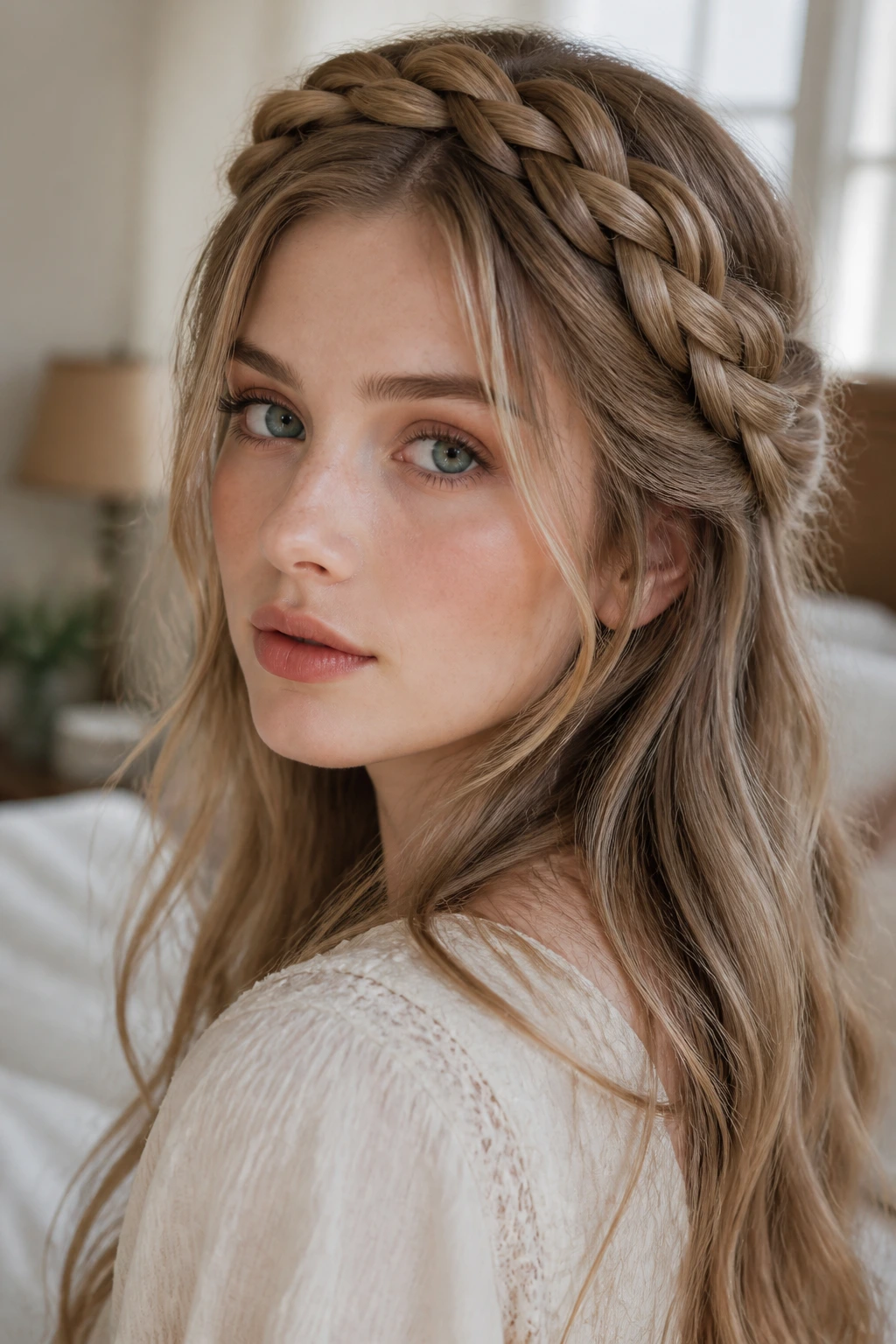
Long dark blonde hair in a braided crown has an old-world softness that reads beautifully on pale skin. The braid creates a woven frame around the face, and the shade shows tiny shifts of tone in each overlap — lighter where the braid bulges, darker where it tucks under.
Keep the braid loose. Tight braids can pull too hard on fine hair and flatten the silhouette. A soft, slightly undone crown gives the face room, which is the whole point if your skin is very fair and you want the hair to feel romantic rather than severe.
This is one of the few styles where I like a little warmth in the blonde. Not gold, exactly. More like wheat. It keeps the braid from disappearing into the hair itself, especially if your base color is naturally light.
17. Soft Mushroom Crop
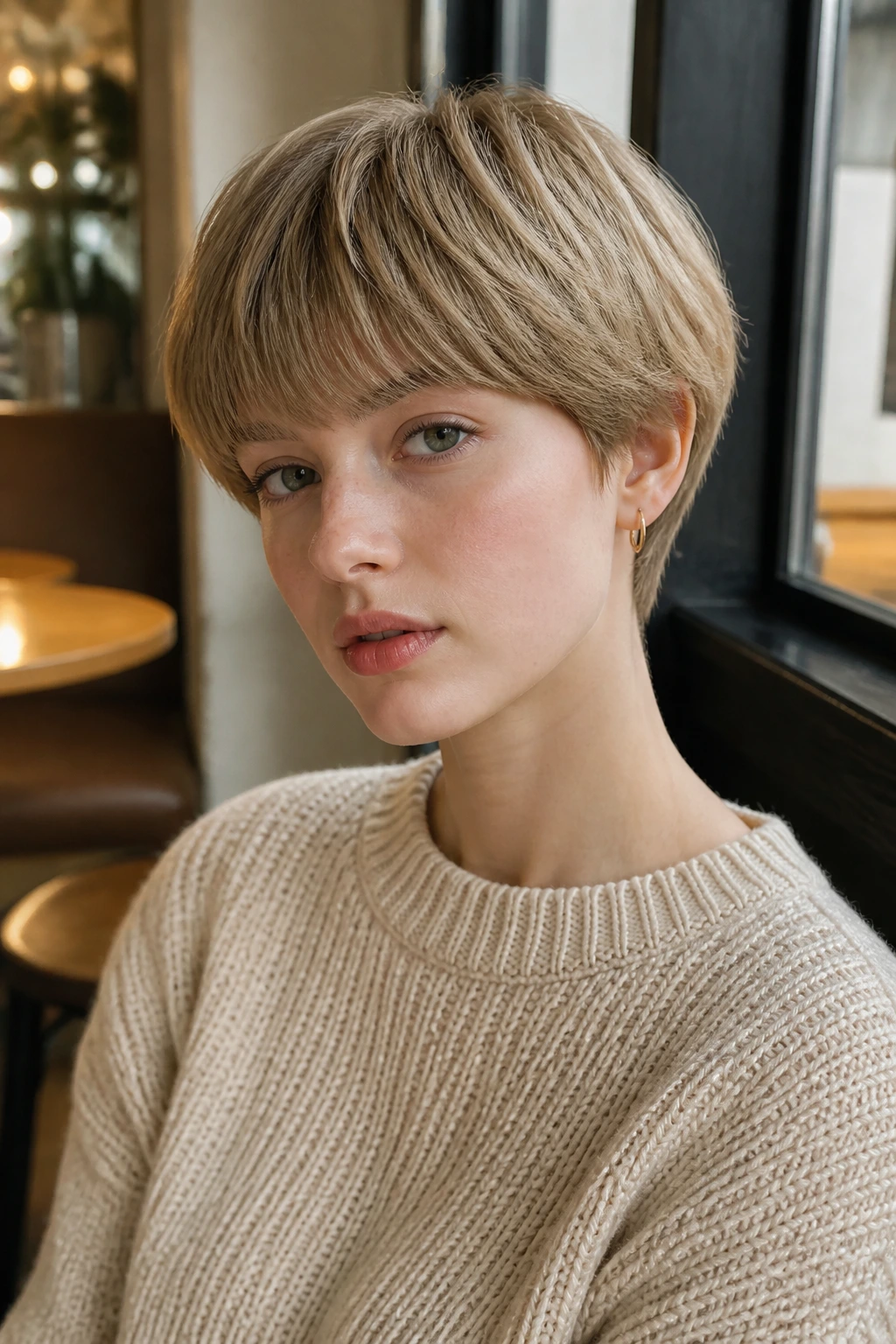
A soft mushroom crop is short, cool, and a little bit mischievous. The round shape sits close to the head, but the muted dark blonde keeps it from looking too severe against pale skin. Think soft edges, not helmet.
The reason this works is simple: the cut holds the shape, and the color keeps the shape gentle. If you go too light with a crop this short, the head can look overly bright and almost disconnected from the brows. Mushroom dark blonde avoids that by staying earthy and slightly smoky.
I would keep the fringe airy, maybe just brushing the brow line, and leave a little length around the ears. That softness matters. It keeps the crop from becoming a costume.
18. Big Blowout with Face Framing
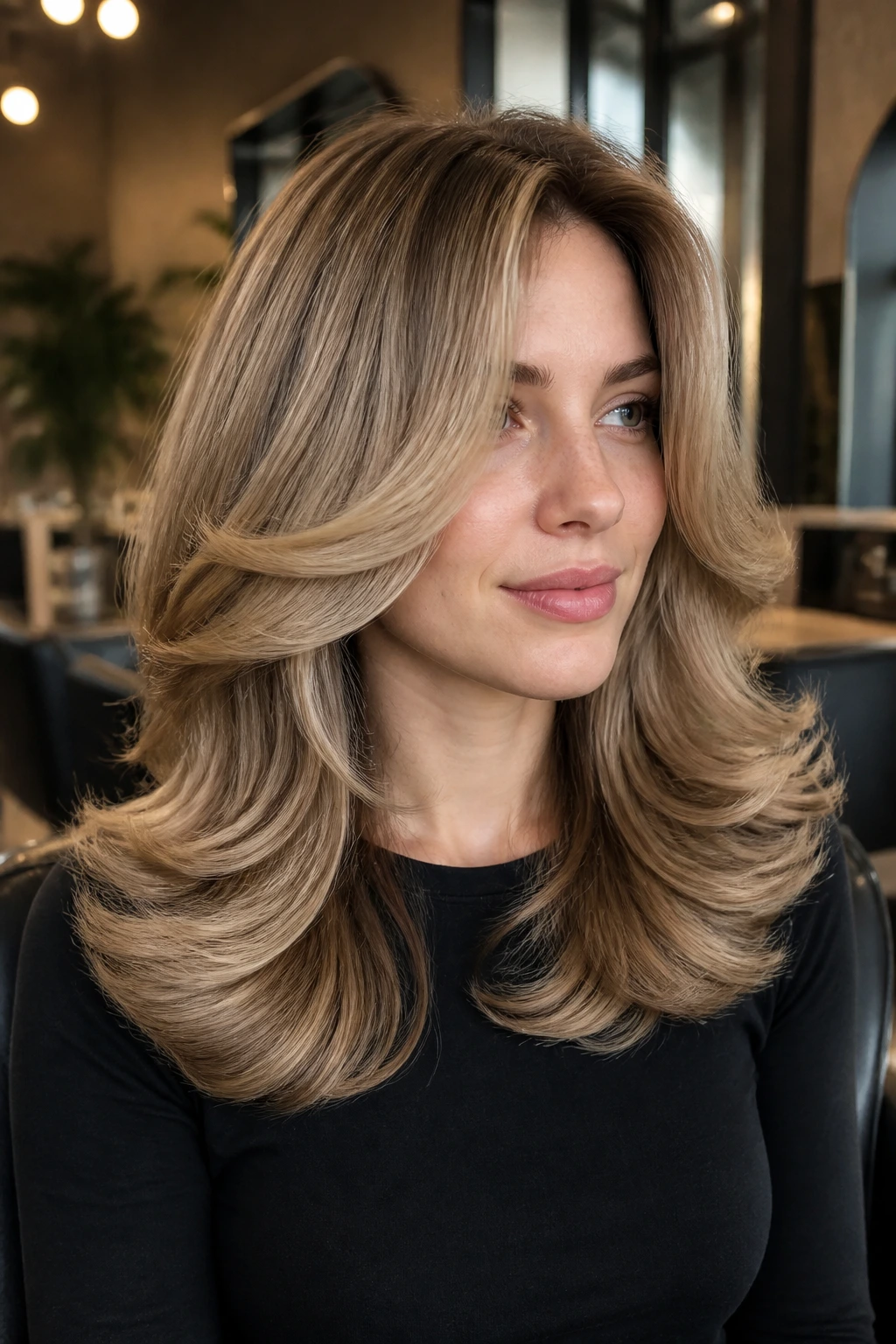
A big blowout gives dark blonde hair room to show off its lighter ribbons and deeper root. On pale skin, that movement around the face is useful. It breaks up the wide plane of the cheeks and lets the hair sit like a soft frame instead of a sheet.
The shape to ask for
Ask for internal layers, not shaggy ends. The outline should still feel clean, but the inside can be lighter so the blowout has lift. A 1.5-inch round brush works well for this if your hair is long enough, and the front pieces should curve away from the face in one smooth motion.
A soft beige-dark blonde works best here. I would not make the front pieces too bright, because the whole point is to keep the style looking airy, not stripey. Use a light volume spray at the roots and a cool shot at the end. That’s the boring part. It’s also the part that makes the blowout last.
19. Tousled Beach Waves on Medium Length
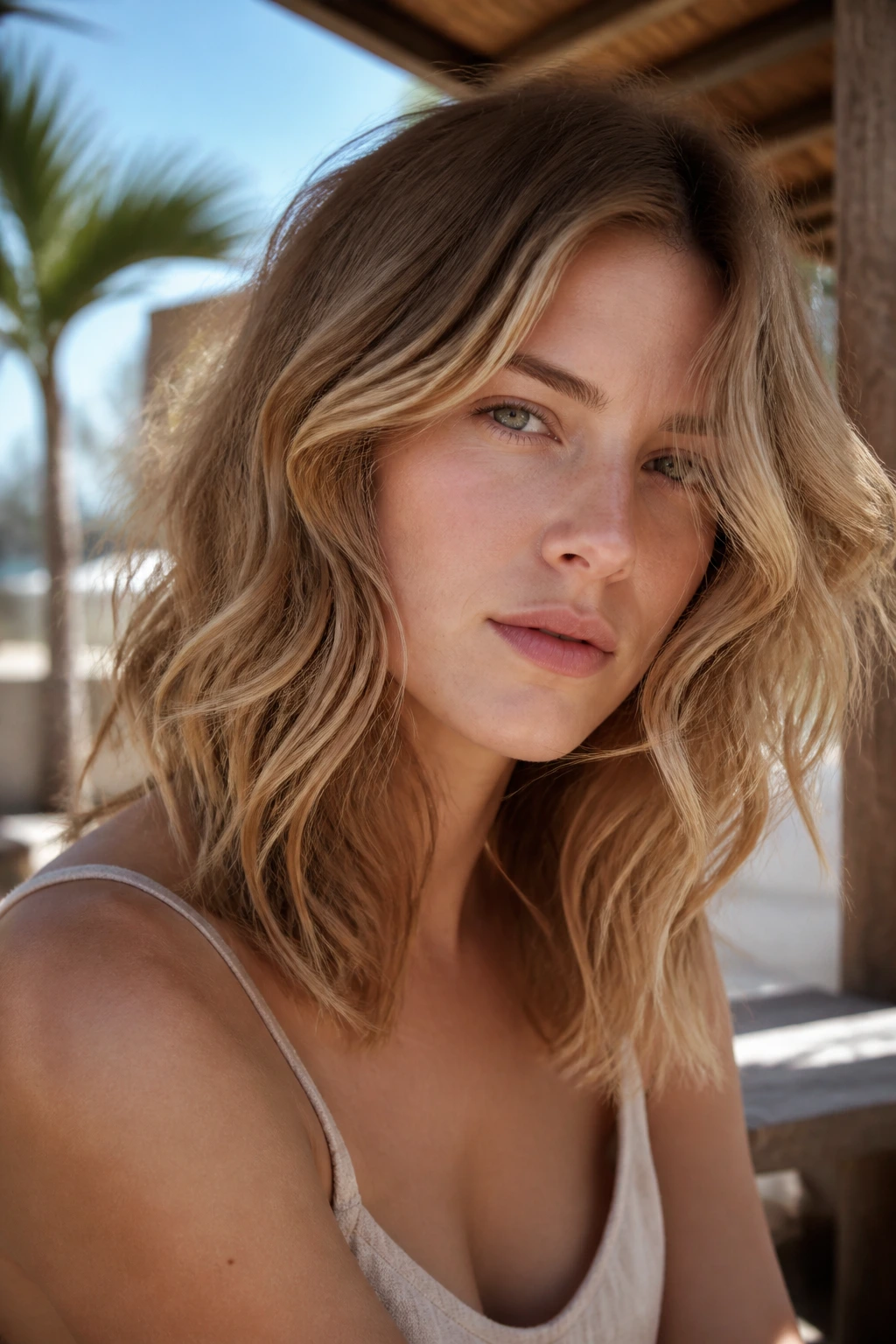
Beach waves can go stale fast if they’re too uniform. On medium-length dark blonde hair, the trick is to keep a few bends imperfect so the color has some places to sit dark and some places to flash lighter. That contrast looks good on pale skin because it keeps the style from flattening out next to the face.
Use a salt spray sparingly. Too much dries out the ends and makes dark blonde look dusty rather than dimensional. I’d start at the mid-lengths, scrunch once or twice, then rough-dry with your fingers. If you use a curling wand, alternate directions and leave the last inch loose.
This style does not need perfect curl memory. In fact, a little irregularity is the point. Pale skin often looks sharper when the hair has that kind of broken texture.
20. One-Length Cut with Baby Curtain Fringe
A one-length cut with a baby curtain fringe has a neat, architectural feel, but the tiny fringe stops it from looking severe. That’s the balance I like on pale skin: a firm shape with one soft detail to break the line.
The fringe should be short enough to show a little forehead, but not so short that it turns into a baby bang. The center can sit a touch shorter than the sides. That gentle drop creates a soft opening around the eyes and keeps the face from looking boxed in.
Dark blonde works here because the cut depends on outline, not layering. A cool beige gloss through the lengths gives the hair enough depth to stand off the skin without losing the clean shape.
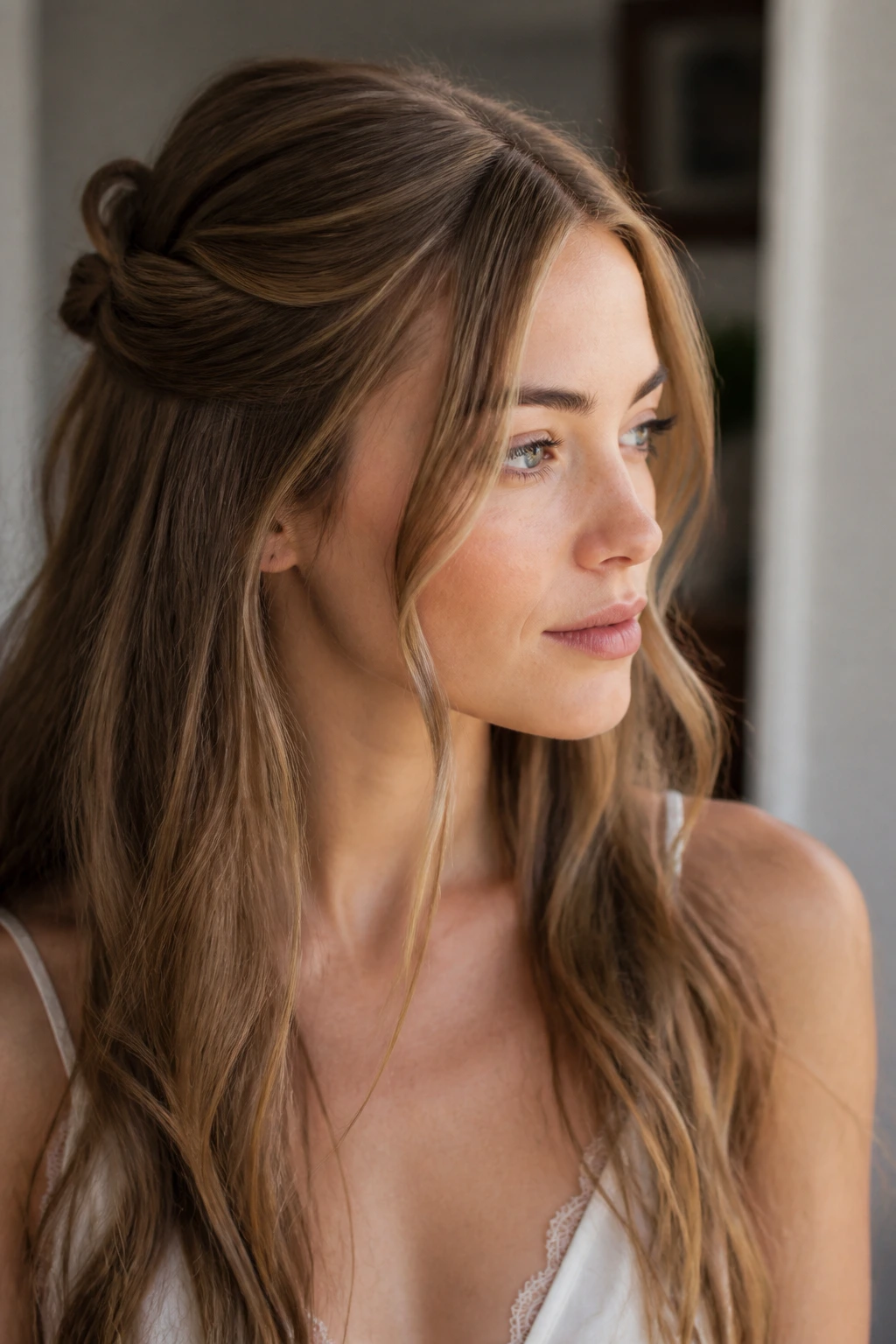
21. Romantic Half-Up Twist on Long Dark Blonde Hair
A half-up twist is one of those styles that looks more polished than it should for the amount of effort involved. On long dark blonde hair, it lets the color show in two directions at once: pulled back at the crown, loose around the shoulders. That contrast is lovely on pale skin because it opens the face without exposing everything.
Leave two slim face-framing pieces out. Not thick ones. Thick ones can look clumsy. The goal is a few soft strands around the temples and cheekbones, just enough to break the line of the pull-back.
A small clip, a few pins, and a bit of flexible spray are enough. If you want the twist to feel softer, curl the loose lengths first and let the top stay smooth. That mix of textures keeps the style from reading too bridal.
22. Choppy Shoulder Cut with Airy Ends
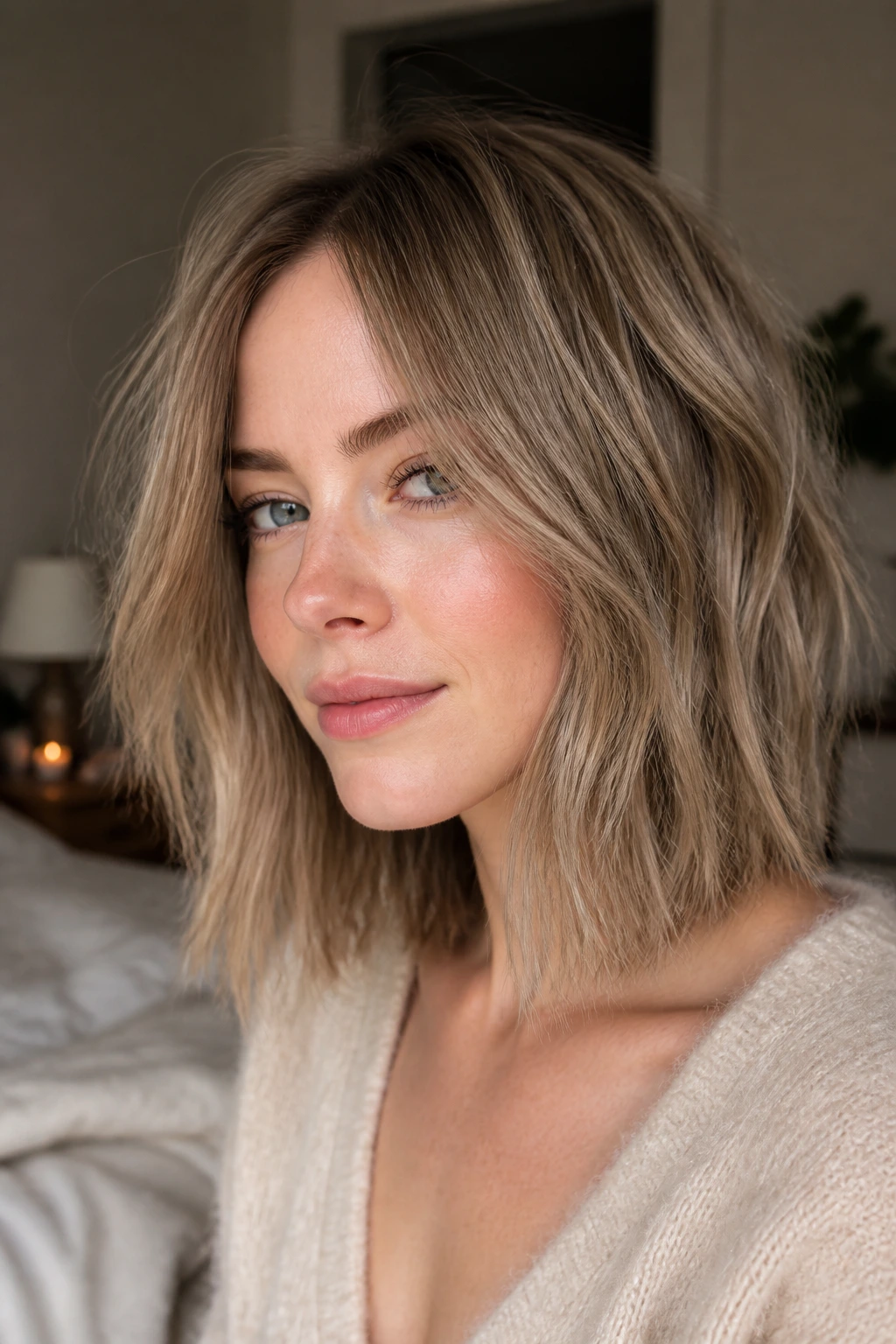
A choppy shoulder cut is a good choice when you want edge without going full shag. The airy ends keep the dark blonde from settling into one heavy mass, which is useful on pale skin because the face needs some breathing room around it.
The cut should be point-cut or softly razored at the ends, not thinned out aggressively. There’s a difference. Over-thinning makes the ends wispy in a cheap way; point-cutting gives movement without the broken, stringy look. Keep the top slightly smoother and let the texture live mostly in the lower half.
This style works best with an ash-beige finish. The muted tone gives the choppiness structure. Too warm, and the layers can read flat.
23. Deep Side-Part Hollywood Waves
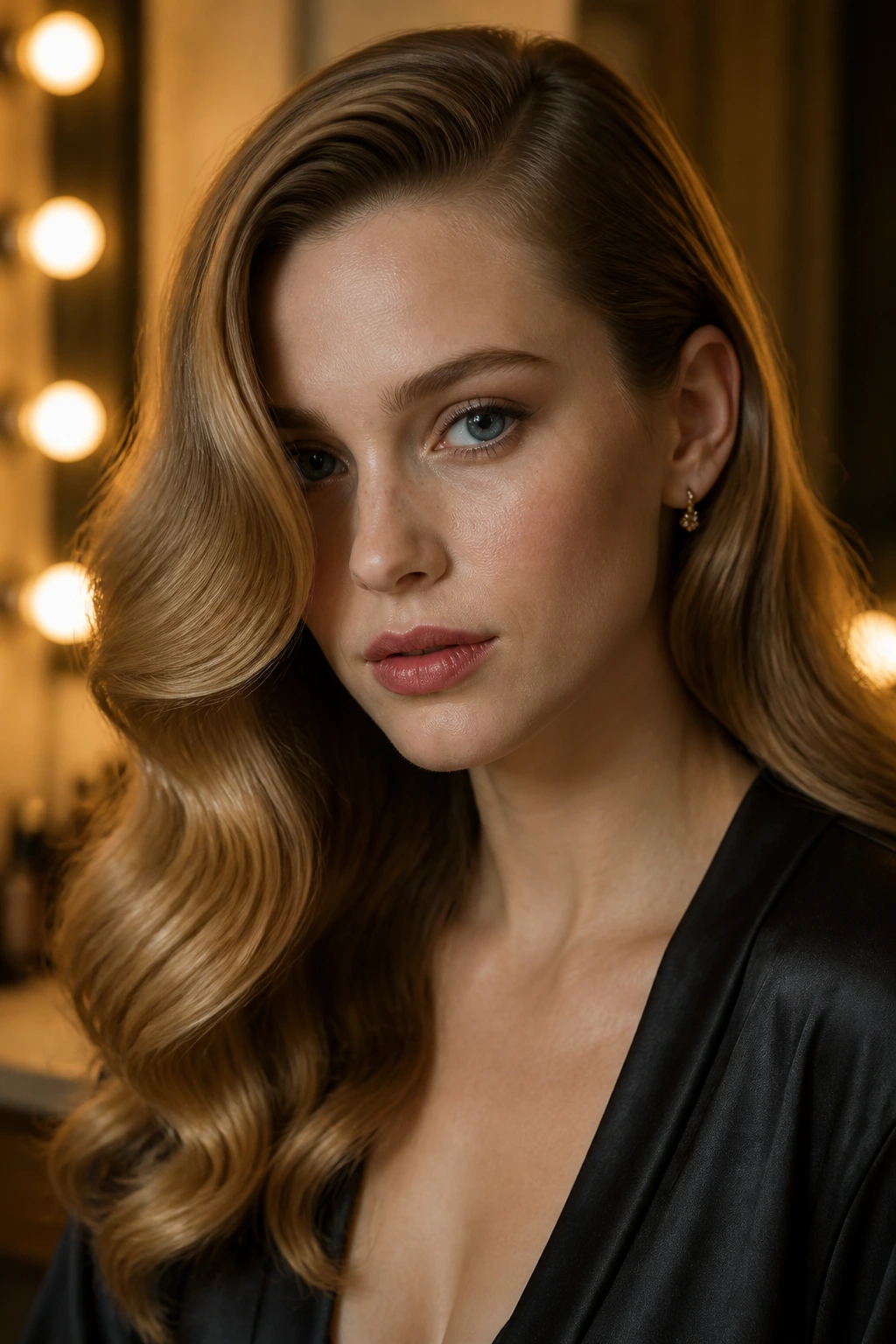
Hollywood waves and pale skin are a good pair when the tone is dark blonde rather than bright blonde. The deeper shade keeps the glamour from becoming costume-y, and the side part gives one side of the face a little shadow. That shadow helps. A lot.
How to keep the wave clean
Set the hair with a 1.25-inch iron, pin each curl flat while it cools, then brush everything into one polished wave. That cooling step is not optional. Skip it and the shape falls apart in an hour. Use a shine spray lightly, not heavily, or the waves turn greasy under indoor light.
I like this style when the color has a beige base with just a few lighter ribbons around the front. Enough to catch the wave. Not enough to compete with it. The result feels dressed up, but not loud.
24. Loose Dutch Braids with Dark Blonde Dimension
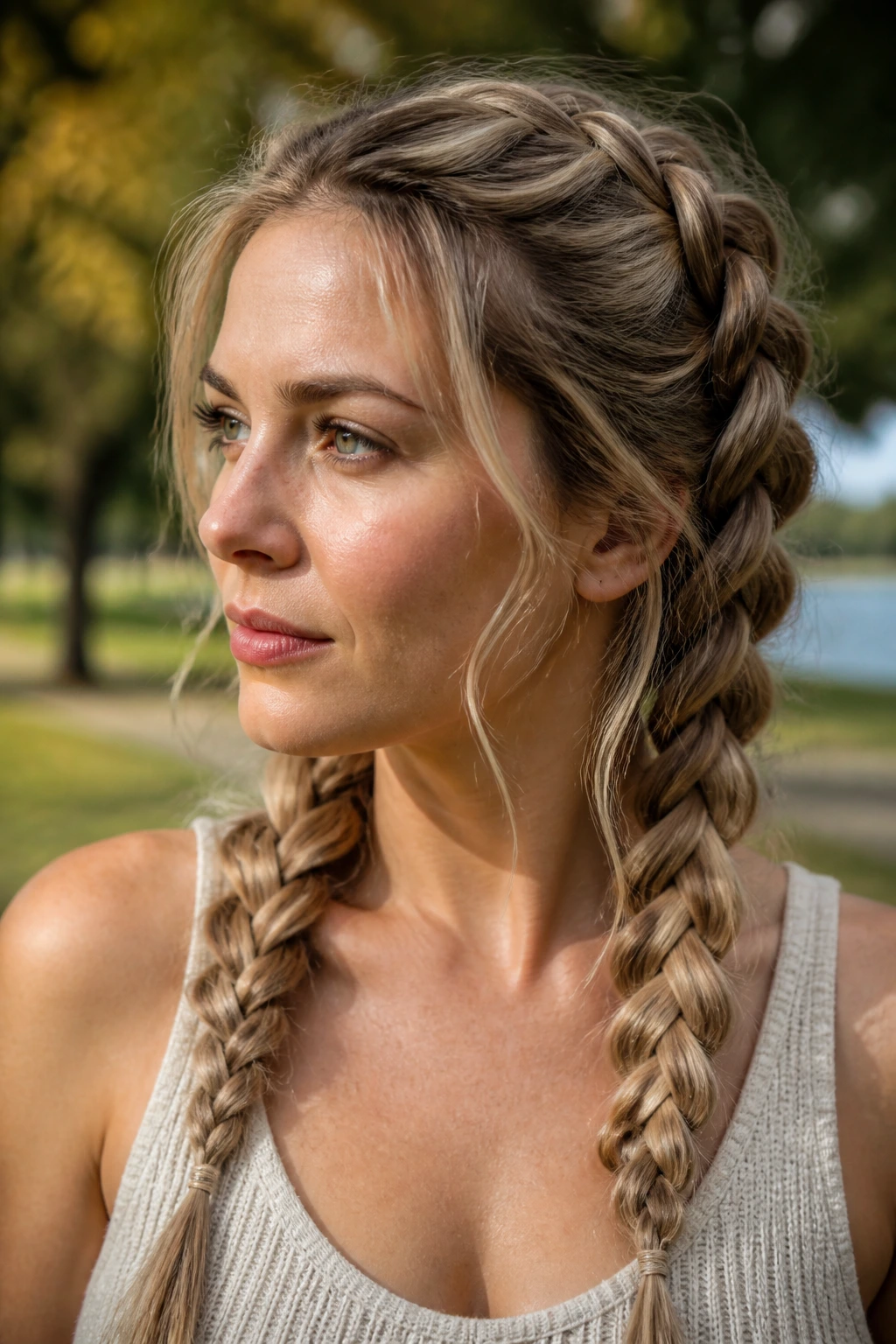
Braids are one of the easiest ways to show off dark blonde dimension on pale skin, because the plaits stack the color into visible ribbons. Dutch braids, in particular, pop off the scalp a little, which keeps the face from looking too flat beside light skin.
The braid should be loose enough that you can pancake the edges a touch. That widens the braid and lets the dark blonde threads show. If the braids are too tight, the color reads like one dark line instead of layered tone.
This is a good low-fuss option for days when you need your hair out of the way but still want a little shape. Use a texture spray first if the hair is too clean and slippery; braids hold better with a bit of grit.
25. Sleek Center-Part Lob
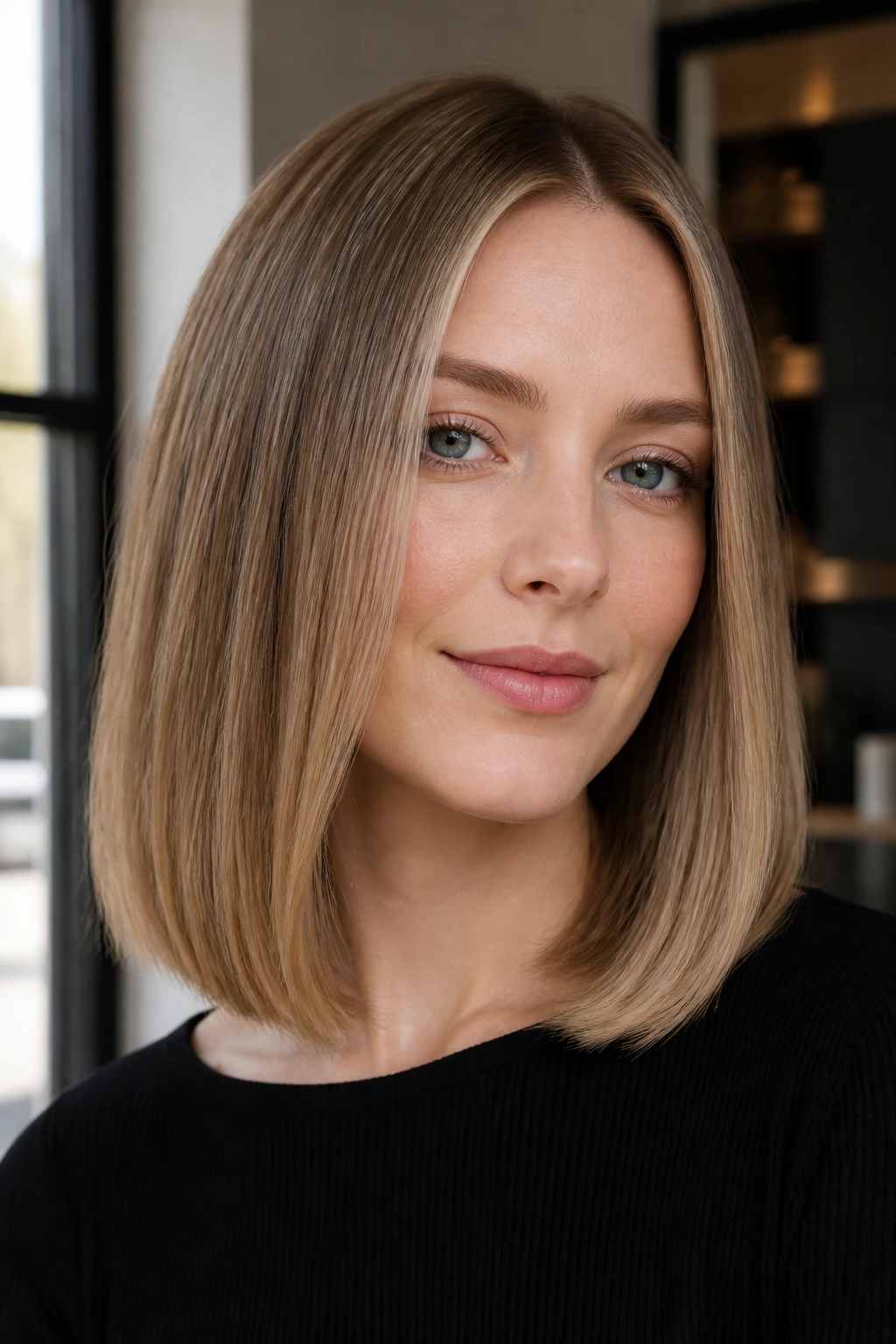
A center-part lob can look stark on pale skin if the color is too flat. With a good dark blonde base, though, it turns into a clean, modern line that frames the face without fuss. The middle part creates symmetry, and the lob length keeps the look grounded.
I prefer this style with a soft gloss rather than a hard shine. Too much shine and the hair starts to look plastic. A little serum through the mid-lengths, flat iron in small sections, and a bend at the ends is enough to keep it from looking severe.
If your face is narrow or long, keep a few front pieces slightly shorter around the collarbone. That prevents the center part from stretching the face further. Tiny adjustment. Big difference.
26. Layered Blowout with Internal Layers
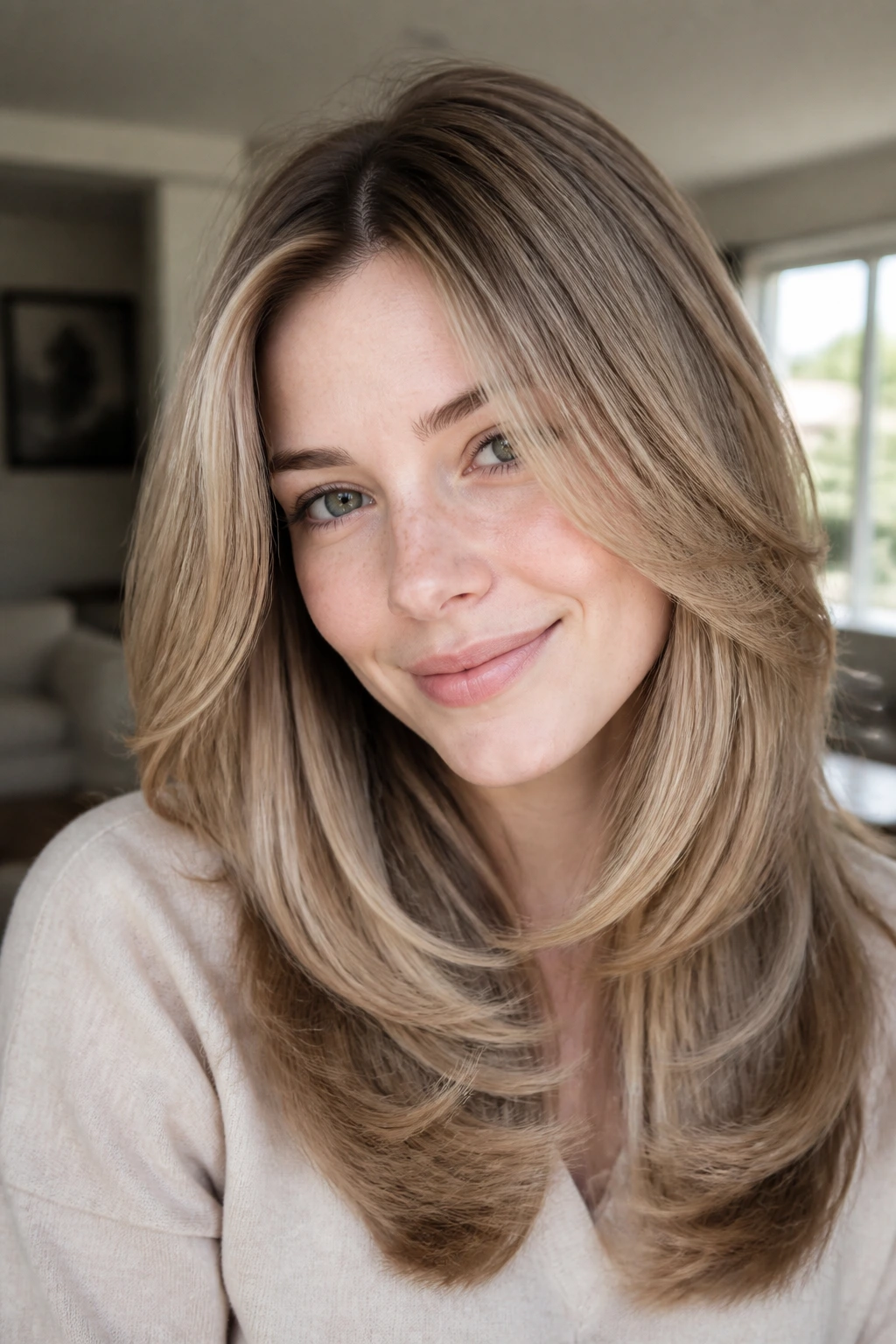
The layered blowout is for people who like movement but do not want the haircut to look obviously layered when it’s air-dried. Internal layers remove weight inside the shape, so the outer line stays smooth while the crown lifts. On pale skin, that lift helps the face look less washed out.
This style thrives on dark blonde dimension. A cool root, beige mids, and slightly brighter ends give the blowout places to catch the light. The result feels plush, not poofy. That’s the line to walk.
If you have fine hair, use root-lift spray before drying. If your hair is thicker, section it properly and use tension with a round brush. The brush work matters more than the product. Always has.
27. Mellow Shag with Bottleneck Bangs
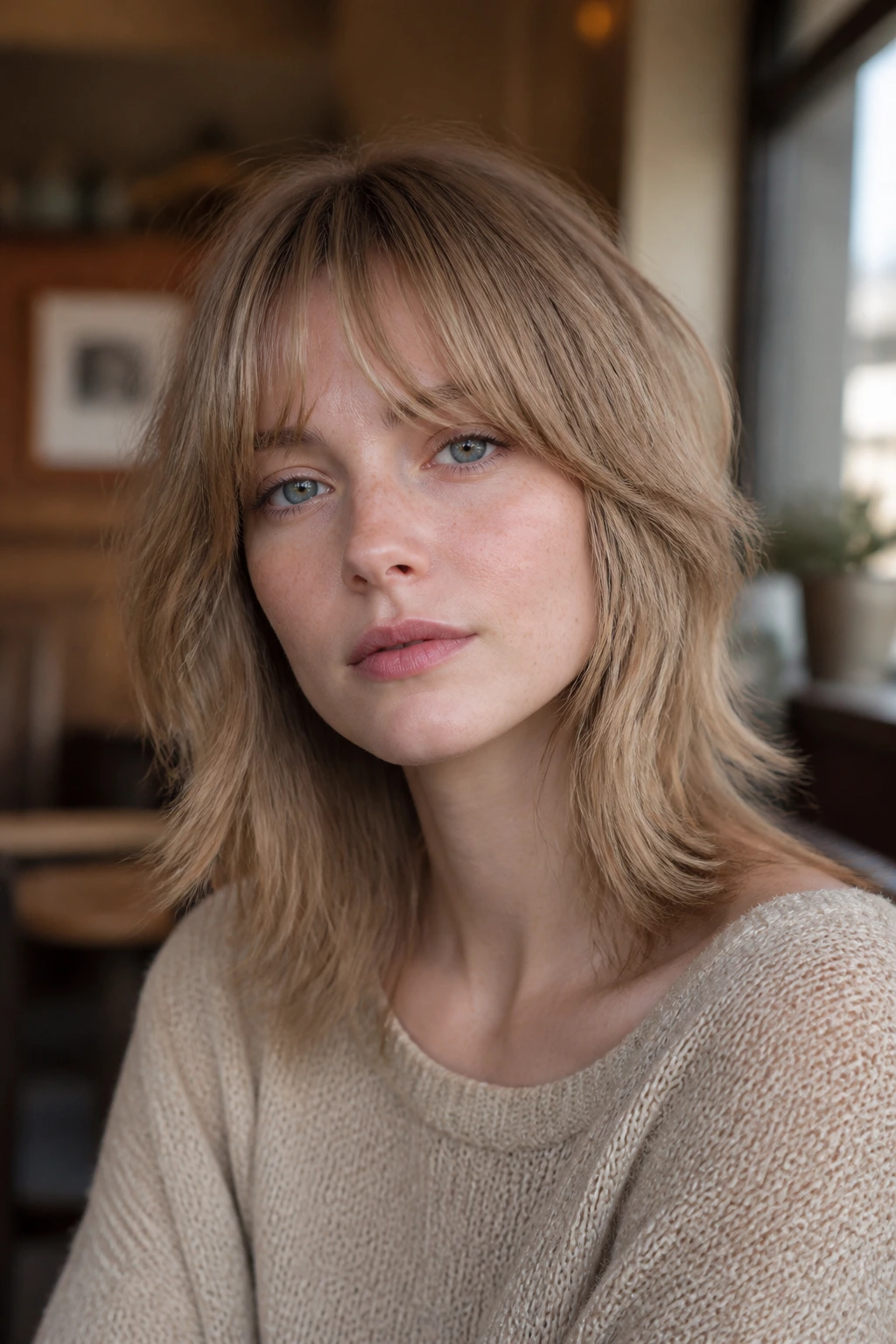
A mellow shag is the shag for people who like texture but not chaos. Bottleneck bangs — shorter in the center, longer as they move out toward the temples — open the face nicely on pale skin. They soften the forehead without drawing a harsh box around it.
Dark blonde gives the shag a quieter mood. Mushroom or beige works especially well, because the cut already has enough shape on its own. You do not need a loud tone competing with the layers.
I’d style this with a small amount of curl cream and a diffuser or air-dry with a bit of hand-scrunching. Let the bangs fall where they want, then separate them with your fingers. Overworking them makes the whole look stiff, and stiff shag hair is not the point.
28. Twisted Low Bun with Face-Framing Pieces
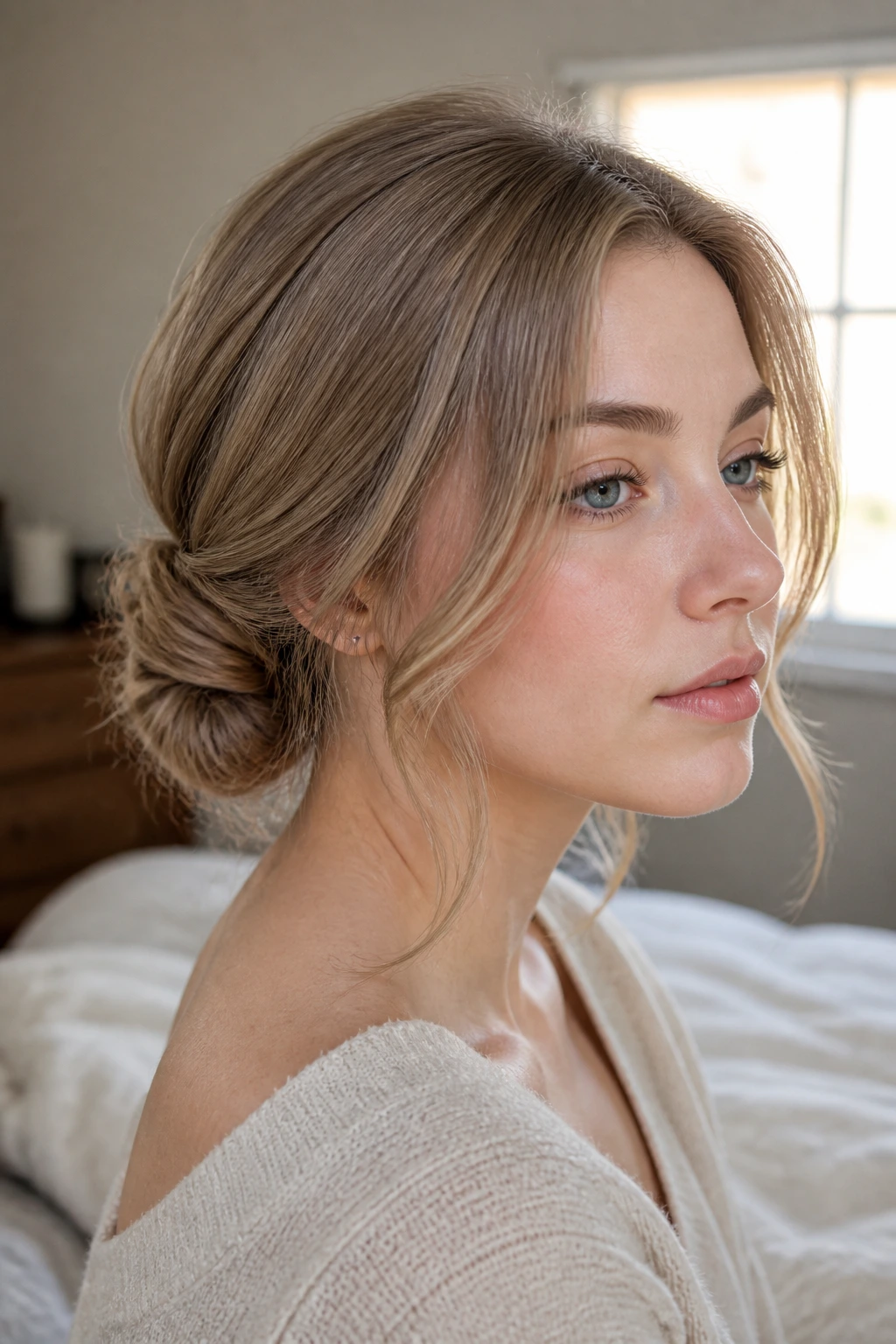
A twisted low bun is a strong choice when you want the hair up but not pulled too tight. On pale skin, the loose face-framing pieces keep the look from becoming harsh around the jaw and ears. The dark blonde adds softness to the twist itself, which can otherwise look like a plain knot.
Keep the bun low at the nape and twist the lengths loosely before pinning them in place. A few pins hidden under the bun are enough. If the bun sits too high, the face can look overexposed. Low and soft is better here.
This one looks especially good with a subtle ash-beige tone. The coolness keeps the bun from reading too warm or bridal, and the loose tendrils around the temples add that tiny bit of movement the style needs.
29. Feathered Long Cut with a Money Piece
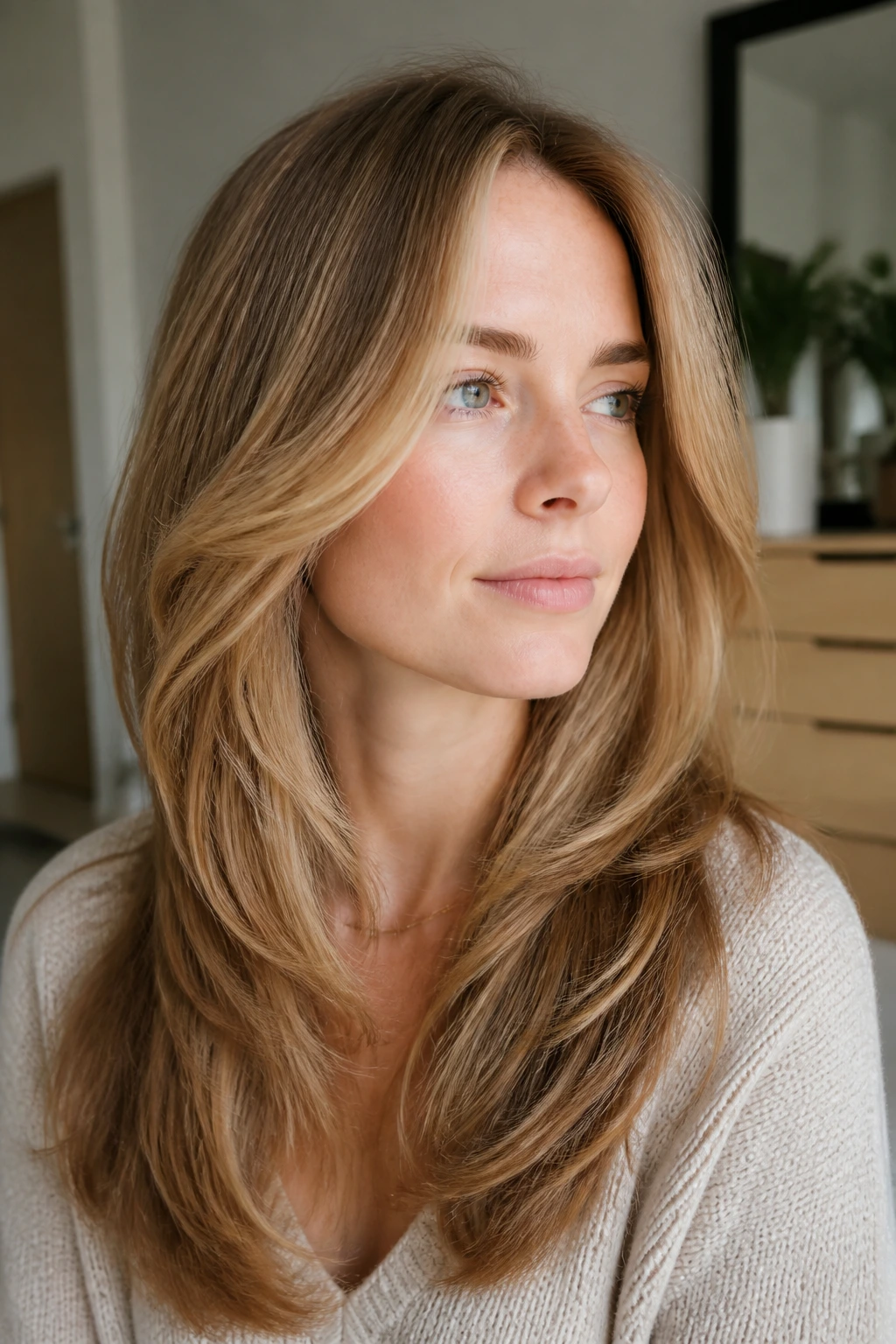
If long hair tends to sit heavy on you, feathered layers can break that weight up without sacrificing length. A money piece works here too, but keep it soft. On pale skin, the front highlight should be one level lighter than the rest, maybe two at most. Any brighter and it can look disconnected.
Keep the front pieces believable
I would keep the money piece beige or soft wheat rather than bright platinum. That keeps the face frame from shouting. The rest of the cut should be feathered away from the face, especially around the cheekbones and collarbone, so the hair moves instead of hanging like a curtain.
This style is one of the most versatile in the bunch. Wear it straight, wave it, or twist the front sections back. The color still has a job to do either way: give pale skin a gentle outline and keep the long length from flattening the face.
30. Polished Curl Set on Shoulder-Length Hair
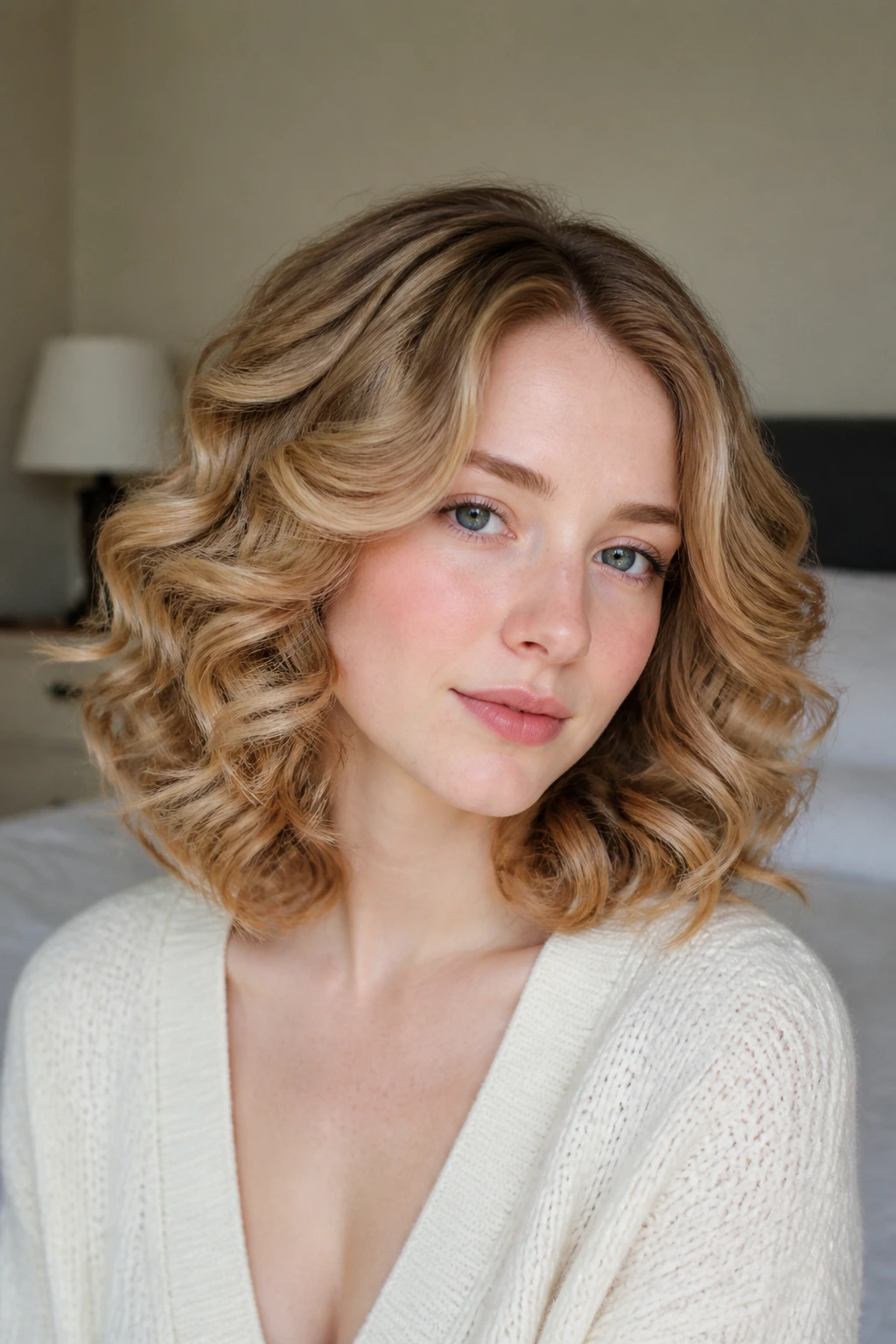
A polished curl set on shoulder-length dark blonde hair has a kind of old-school control that looks especially good against pale skin. The curls build structure around the face, and the color shines most at the bends, where the light catches the ridges and leaves the valleys a shade deeper.
Start with a setting mousse or light styling lotion on damp hair. Roll or curl in sections, let everything cool completely, then brush it out gently with a soft bristle brush. That last part matters. It softens the pattern and blends the tone into one smooth wave of movement.
I like this style in beige or honey-dark blonde, depending on your undertone. Beige if you want calm. Honey if you want a touch of warmth. Either way, the set should feel plush, not shellacked.
Why Dark Blonde Never Has to Look Flat
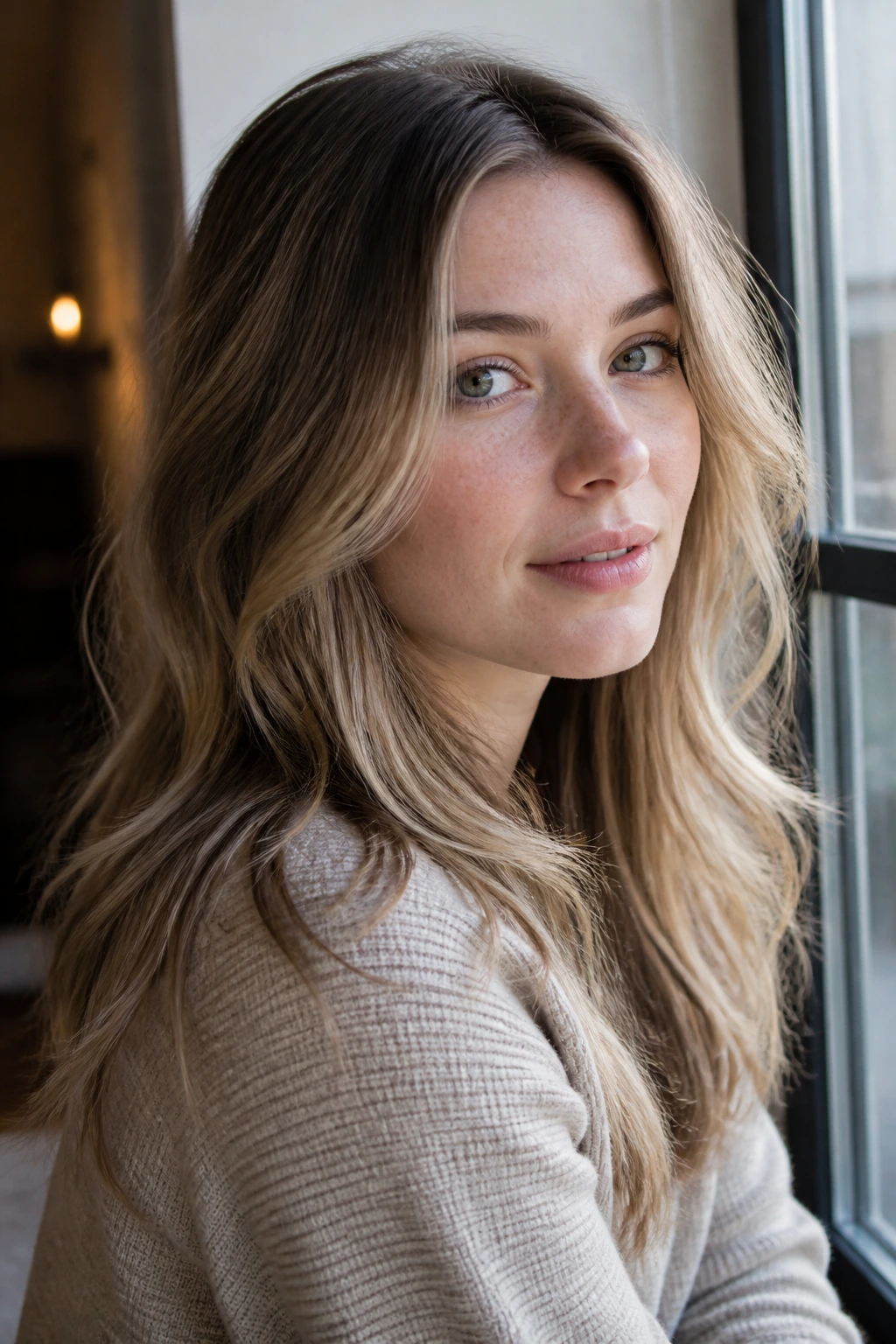
Dark blonde gets dismissed sometimes because it sits in the middle. Not platinum. Not brunette. Middle shades get treated like they are playing it safe. That is lazy thinking. On pale skin, middle shades often do the best work, because they give the face enough contrast to define it without swallowing the features.
The real trick is tone. If the shade is too yellow, fair skin can go pink. If it’s too smoky and the eyebrows are light, the whole face can lose shape. Beige usually lands first for most people. Ash and mushroom calm redness. Honey gives the hair a little glow. Pick the one that keeps your skin looking like skin.
Essential Tools for These Hairstyles
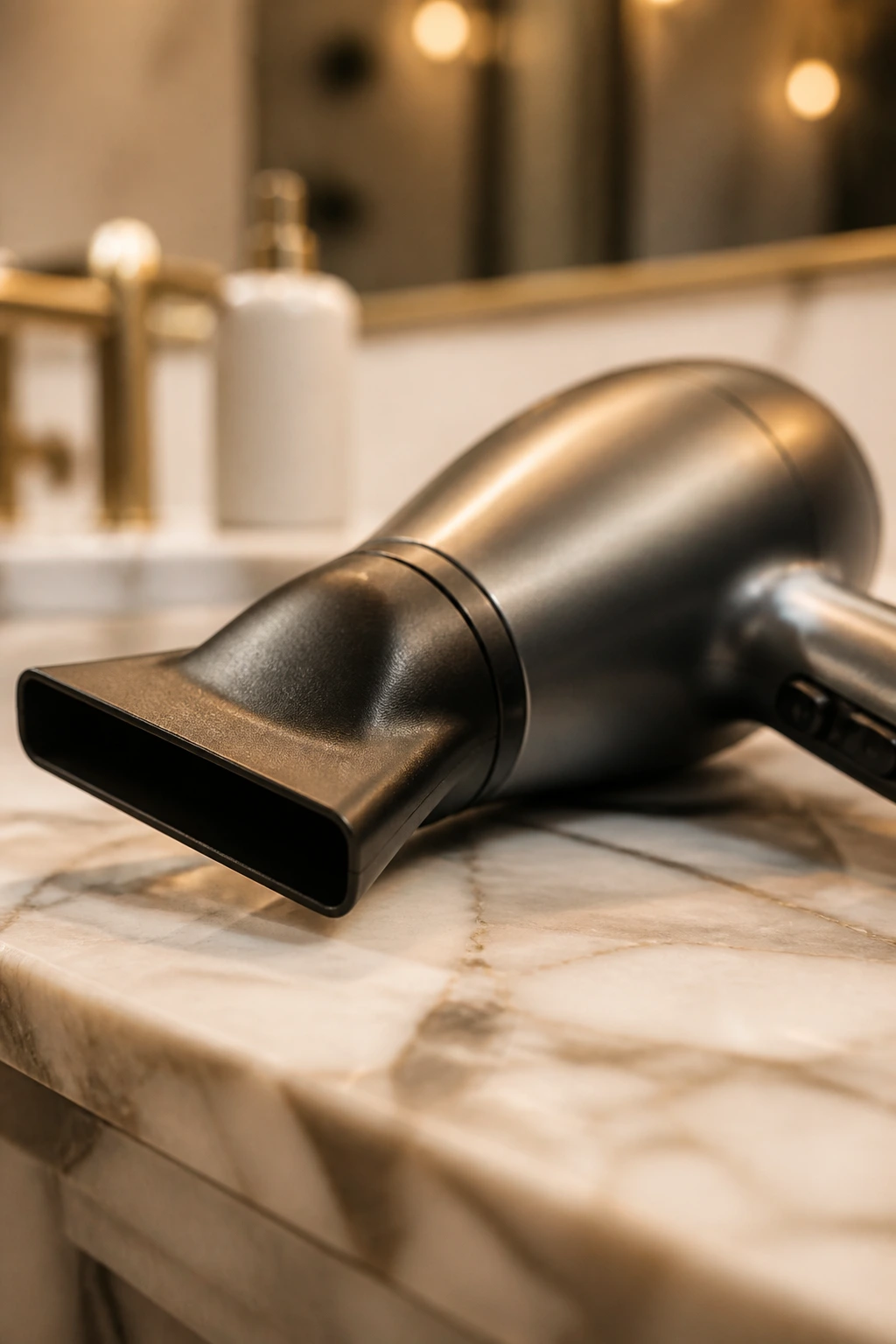
- Hair dryer with a nozzle attachment: Gives better control for bobs, lobs, blowouts, and bangs; the nozzle matters more than most people think.
- 1-inch curling iron or wand: Best for loose waves, Hollywood sets, shag bends, and polished curls.
- 1.25- to 1.5-inch round brush: Useful for flips, curtain bangs, blowouts, and root lift at the crown.
- Wide-tooth comb: Keeps waves and curls from turning into frizz when you separate them.
- Boar-bristle brush: Smooths low ponytails, buns, and sleek lobs without leaving obvious brush marks.
- Sectioning clips: Make bangs, braids, and blowouts much easier to handle.
- Heat protectant spray: Use it every time you touch hot tools; dark blonde ends show heat stress fast.
- Flexible-hold hairspray: Keeps movement in the hair instead of freezing it stiff.
- Texturizing spray or light mousse: Helps shags, pixies, and piecey cuts keep their shape.
- Color-safe shampoo and conditioner: Necessary if you want the tone to stay clean instead of turning muddy or brassy.
How to Style These Looks at Home
Straight Hair
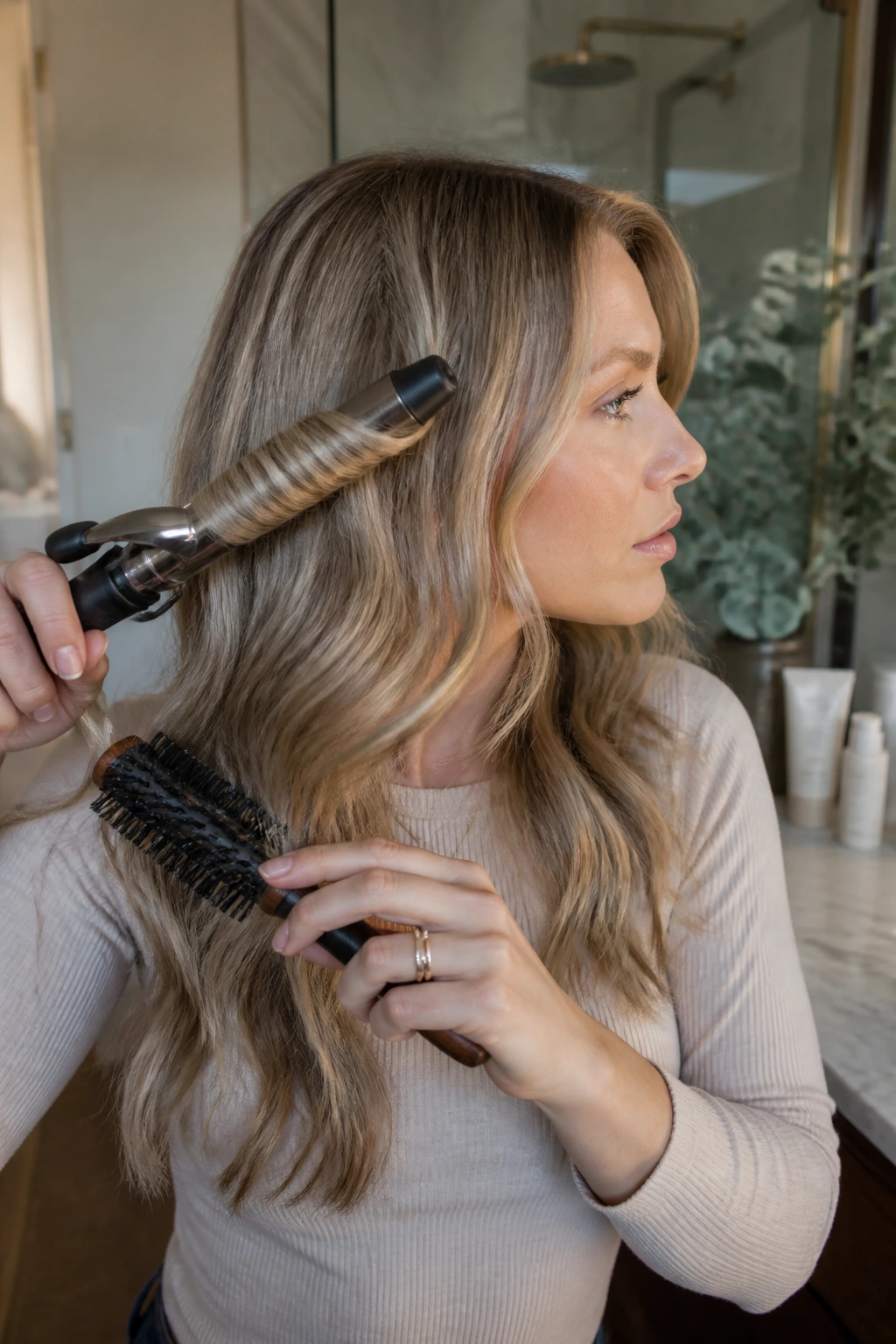
Straight hair needs a little bend or it can look too severe against pale skin. Keep the movement mostly at the ends and around the face. A soft underturn at the bob line, a slight flip at the lob, or one loose wave near the cheekbone is enough. You do not need a full curl pattern. That often gets busy fast.
Wavy Hair
Wavy hair is the easiest texture for most of these dark blonde looks, but it can also puff up if you overdo product. Use a light cream or mousse, scrunch from the ends upward, and let some pieces dry differently from others. That irregularity helps the color show depth. A perfectly uniform wave can make dark blonde look painted on.
Curly Hair
Curly hair wants shape first, gloss second. If the cut is too blunt at the bottom, the curls can sit like one heavy curtain beside the face. Layers cut for the curl pattern keep the front opening soft. Diffuse on low heat, then break any hard cast with a drop of serum only after the hair is dry.
Additional Tips and Little Upgrades
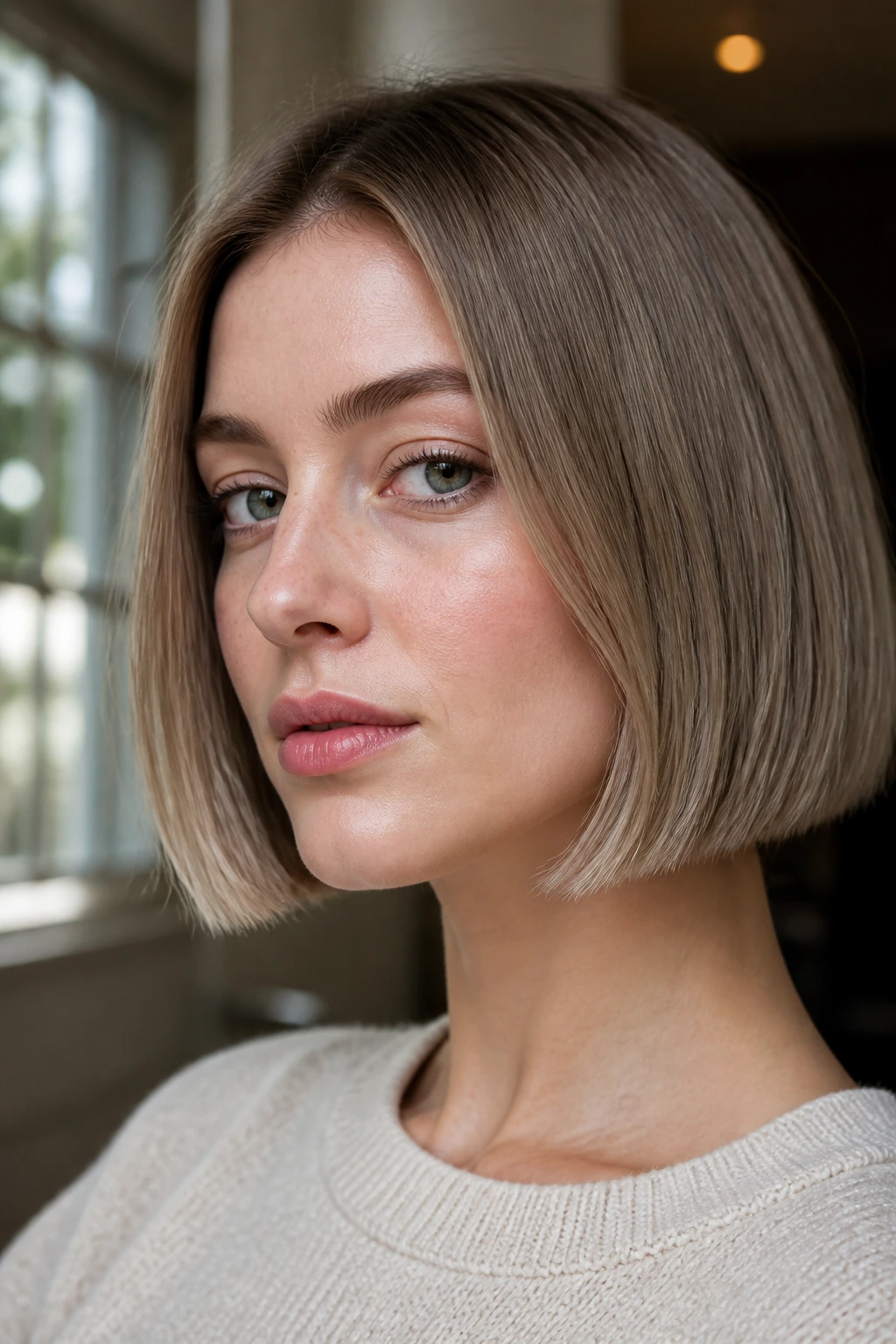
Shade control: If your skin leans pink, ask for ash or beige around the face and keep the golden tones farther back. If your skin leans peach, a little honey near the cheekbone can make the whole style warmer without turning brassy.
Shape control: Pale skin usually looks best when the hair has one clear line or one clear movement pattern. A blunt bob, a soft wave, or a well-cut shag works better than a shape that tries to do three things at once.
Texture control: Fine hair tends to need root lift and a cleaner outline. Thick hair needs internal layers and a little weight removal. Curls need space, not thinning scissors gone wild. Those are not the same problem, so the fix should not be the same either.
Wardrobe note: Charcoal, navy, forest green, soft black, and deep plum make dark blonde read cleaner against fair skin. Stark white can sometimes make the face feel washed out, especially if the blonde is very cool.
Common Mistakes to Avoid
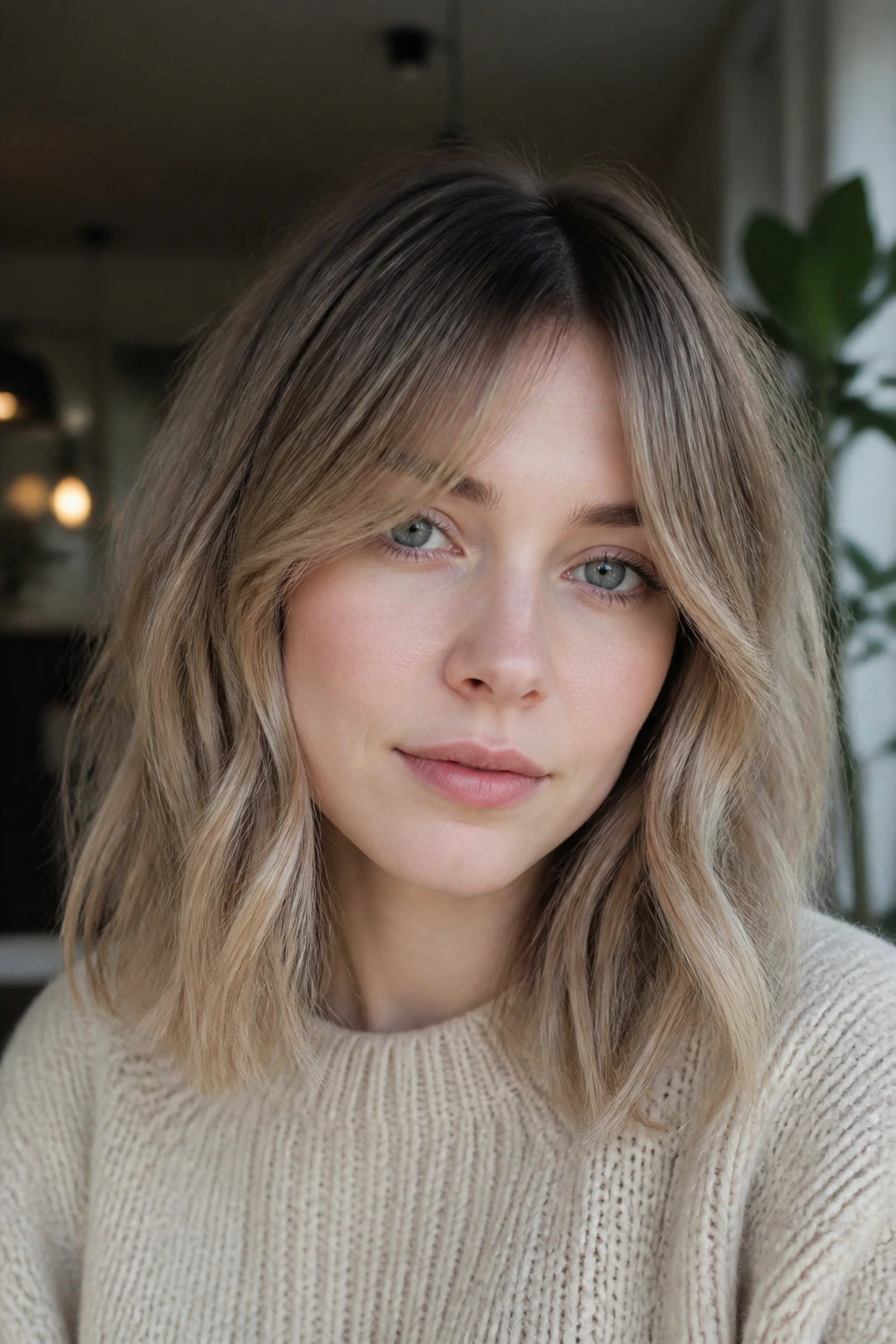
- Choosing the wrong tone for your undertone: A gold-heavy dark blonde on very pink skin can make the cheeks look redder than they are. Fix it with a beige or ash gloss at the hairline and keep warmth lower in the lengths.
- Making the front too light: Bright face-framing pieces can look disconnected on pale skin, almost striped. Keep the front one level lighter than the base, not three.
- Picking a cut with no movement: Dark blonde can look heavy when the shape is a one-piece block. Add layers, a bend, a fringe, or a root shadow so the color has places to shift.
- Using purple shampoo too much: Too much violet can make beige blonde go chalky. Use it only when the color starts to yellow, not as a daily habit.
- Ignoring the part line: A hard center part can expose too much scalp on very fair skin if the color is flat. Break it slightly off-center or add root depth.
- Copying a photo without matching texture: A wave set on thick hair will not behave like the same cut on fine hair. Ask for the shape, not the exact styling finish.
Variations and Adaptations to Try
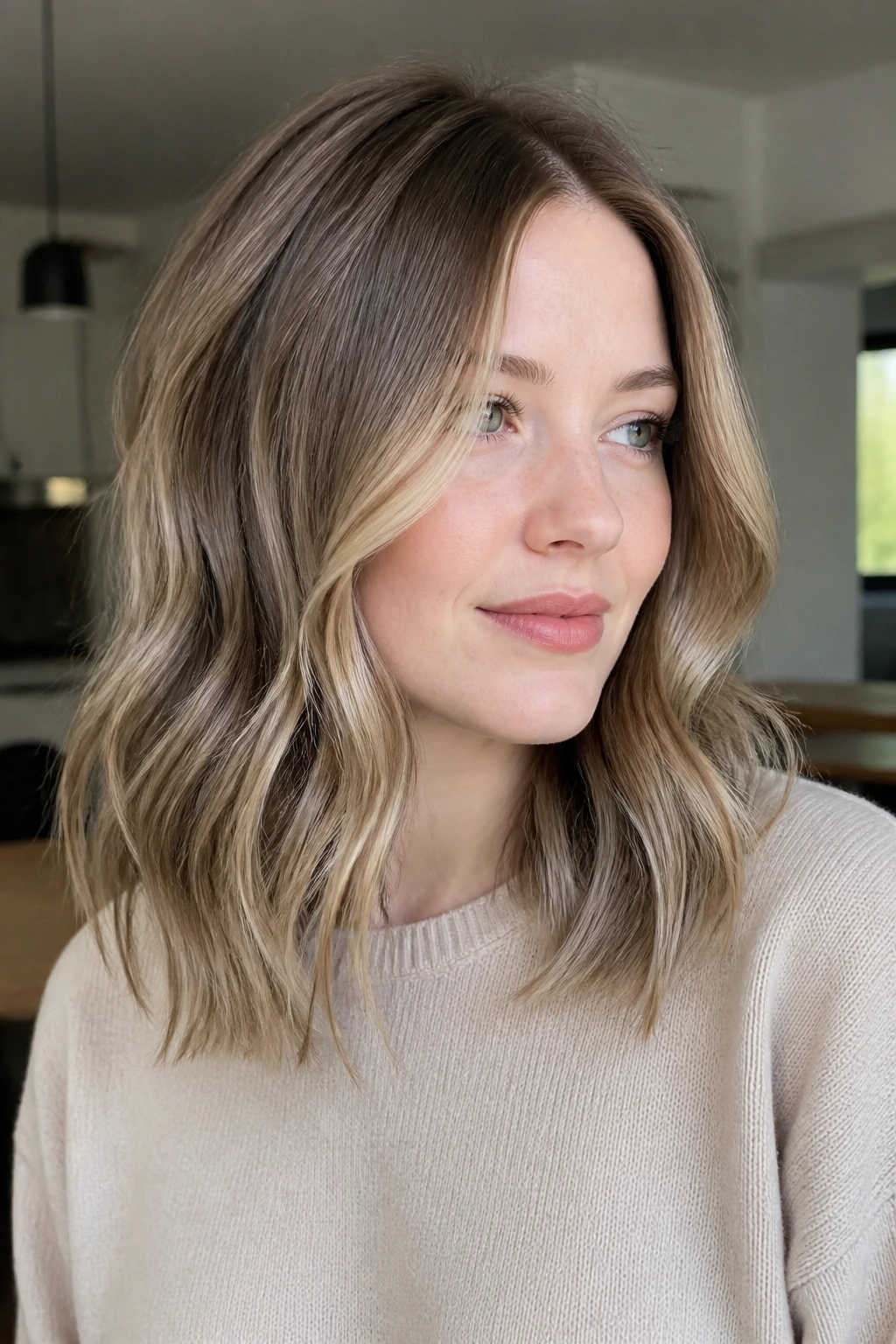
Cool Smoke Version: Keep the tone ash-heavy with mushroom reflections and a deeper root. This version suits pink or red undertones best, especially if your skin gets flushed easily in bright light.
Honey Veil Version: Add soft honey ribbons through the mids while keeping the root neutral. This works well on pale skin with freckles or peachy undertones, because the warmth lifts the face instead of overpowering it.
Low-Maintenance Shadow Root Version: Ask for a deeper root stretch and softer highlights through the ends only. The grow-out is kinder, and the color stays readable even when the salon visit stretches a little farther than planned.
Curl-First Version: Cut the shape for your natural curl pattern and place the lighter pieces inside the curl clumps, not only on the surface. That keeps the dimension visible from every angle instead of looking stripey.
Short-and-Sharp Version: Swap any longer cut for a bob or pixie with a clean edge and beige-dark blonde gloss. Pale skin often looks especially fresh with a shorter outline, because the face gets more visual space.
Maintenance, Toning, and Grow-Out
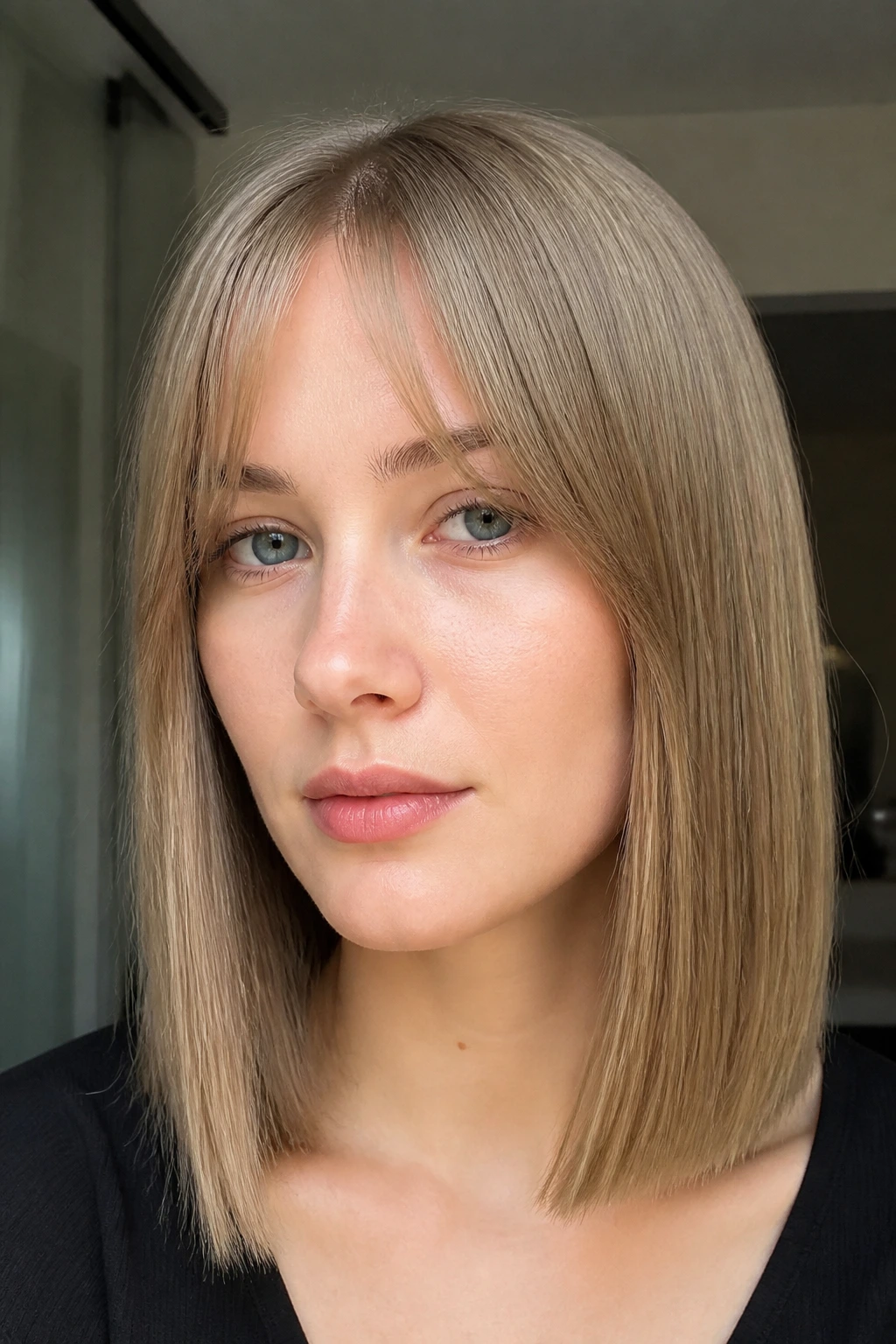
A dark blonde shade usually needs less babysitting than platinum, but it still needs care if you want it to stay clean. Short cuts like bobs and pixies usually want a trim every 4 to 6 weeks. Lobs and shags can go 6 to 8 weeks. Long layered cuts often hold their shape for 8 to 12 weeks, especially if the layers are soft rather than chopped.
Toning depends on the shade. Ash and mushroom tones can need a gloss or toner refresh every 4 to 6 weeks if your hair pulls warm fast. Beige and honey versions often stretch a bit longer, closer to 6 to 8 weeks, before they start looking too yellow or dull. Use color-safe shampoo most washes, and keep the water lukewarm. Hot showers strip tone fast. They also rough up the cuticle, which makes pale blonde ends look frayed sooner than you’d like.
Purple shampoo is useful, but it is not a personality. Once a week is usually enough for lighter dark blonde shades. If the hair starts looking flat or dusty, back off and switch to a hydrating conditioner for a few washes. A gloss between color appointments keeps the tone sane without forcing a full highlight session every time.
Frequently Asked Questions
Will dark blonde wash out very pale skin?
Only if the shade is too light and too even. A dark blonde with root depth, beige undertones, or a bit of ash usually frames pale skin better than a solid light blonde that sits too close to the skin tone.
Is ash blonde or honey blonde better for pale skin?
Ash is better for cool or pink skin because it calms redness. Honey is better for peachy or freckled skin because it adds warmth. Beige sits in the middle and is the safest first choice if you are unsure.
Can pale skin wear dark blonde without highlights?
Yes, but the cut matters more when the color is solid. A blunt bob, a French bob, or a sleek lob can still look balanced if the root has a little depth and the finish has shape.
How do I keep dark blonde from turning brassy?
Use color-safe shampoo, keep hot water off your lengths, and refresh with a beige or ash gloss before the tone goes orange. If the front pieces turn warm faster than the rest, ask for a slightly cooler money piece at your next appointment.
Do bangs work on pale skin with dark blonde hair?
They do, as long as the fringe has some softness. Wispy bangs, curtain bangs, and bottleneck bangs usually work better than a heavy straight fringe because they let the face breathe.
What if my eyebrows are very light?
Keep the root a touch deeper and avoid going too pale through the front. A little shadow near the part line gives the face more structure, especially if the brows are blond or sparse.
What’s the easiest low-maintenance option here?
A rooted lob, a root-melt bob, or a shag with soft layers usually gives the best grow-out. Those styles can look intentional even when the color has been in place for a while.
Can I wear these looks if my hair is fine?
Yes. Fine hair often looks best in blunt bobs, lobs, pixies, and one-length cuts with subtle texture. Heavy layering can make the ends look stringy, so ask for shape without thinning the life out of it.
Soft Contrast
Dark blonde has a way of making pale skin look more defined without turning the face into a high-contrast project. That is why these styles work. They do not fight your complexion. They frame it.
If you want the easiest place to start, choose a beige or ash lob with a slight root shadow. It gives you room to decide later whether you want more warmth, more smoke, more length, or more edge. That first step tells you a lot.