



Caramel blonde hair color ideas for brunettes work because they respect the base instead of fighting it. That sounds like a small thing, but it changes the whole result. A brunette with a little caramel woven through the mids and ends gets movement, warmth, and shine without the brittle, over-bleached look that can make hair feel thinner than it is.
The best versions don’t scream “highlights.” They look like melted sugar, toasted almond, honeyed coffee, or soft bronze catching the light as hair moves. And that movement matters. Brunette hair has a lot of underlying red and orange pigment, so if the lift is handled badly, the color can tip brassy fast. Caramel sits in that same warm family, only cleaner and more intentional.
I like caramel on brunettes because it gives you room. Room to go subtle. Room to go brighter around the face. Room to keep the root dark and rich, which is usually the part people want to keep anyway. You do not need a full blonde transformation for hair to look expensive and dimensional. A few well-placed ribbons can do more than a head full of stripes.
Why These Caramel Shades Work So Well on Brunette Hair
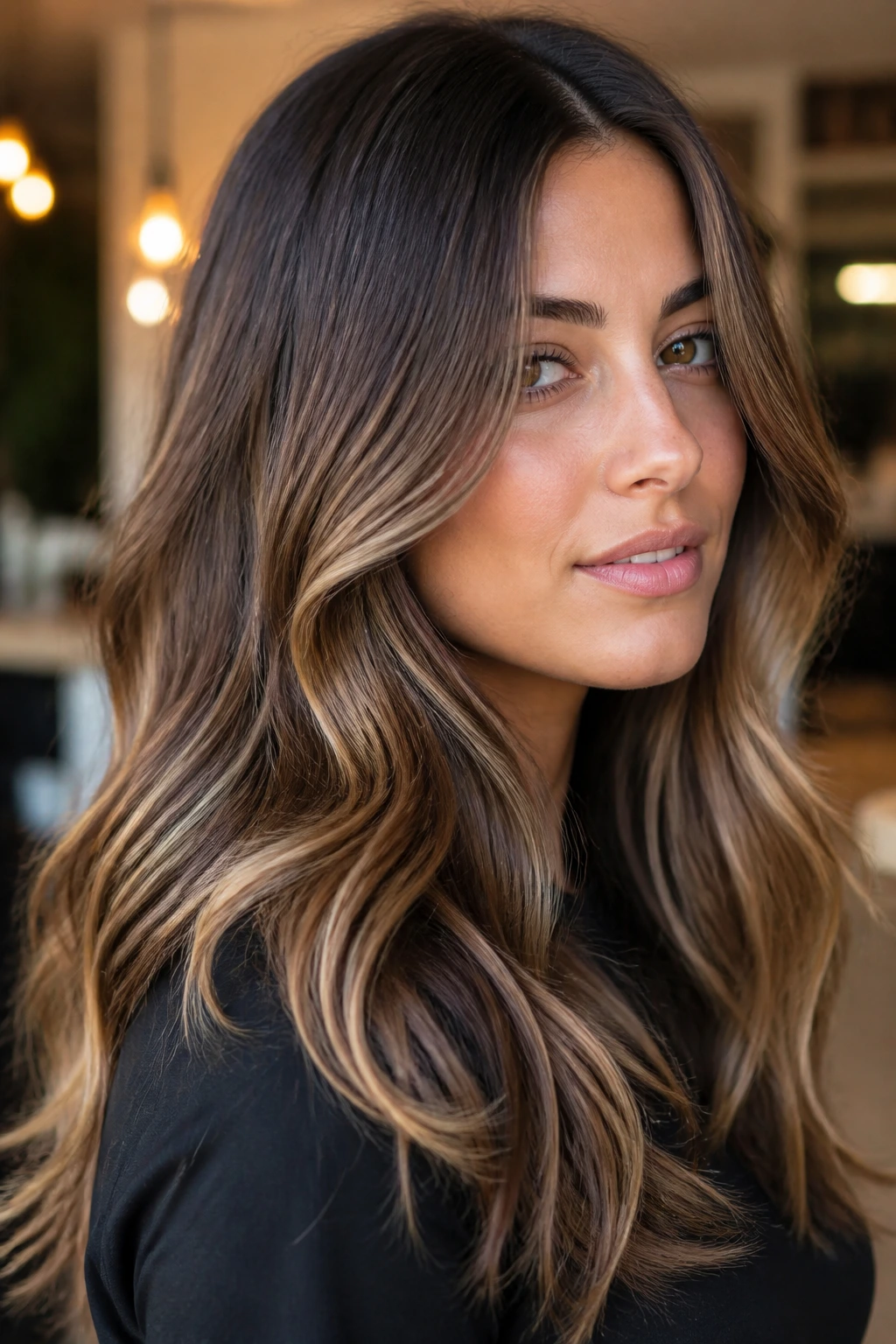
Built for dark bases: Most of these looks start with a level 3–6 brunette base, so the caramel reads as dimension instead of a random color block.
Lower-maintenance by design: Balayage, money pieces, shadow roots, and babylights grow out softer than all-over lightening, which means fewer harsh lines at the scalp.
Flexible tone range: Caramel can lean honey, beige, bronze, cinnamon, or even a little smoky, so you can steer the warmth without losing the richness.
Works with real haircuts: Long layers, blunt bobs, shags, curls, and pixies all take caramel differently; the placement changes more than the color name does.
Easier to personalize: You can ask for whisper-thin ribbons, chunky panels, or a soft melt depending on how bold you want the end result to feel.
1. Soft Caramel Balayage on a Deep Brown Base
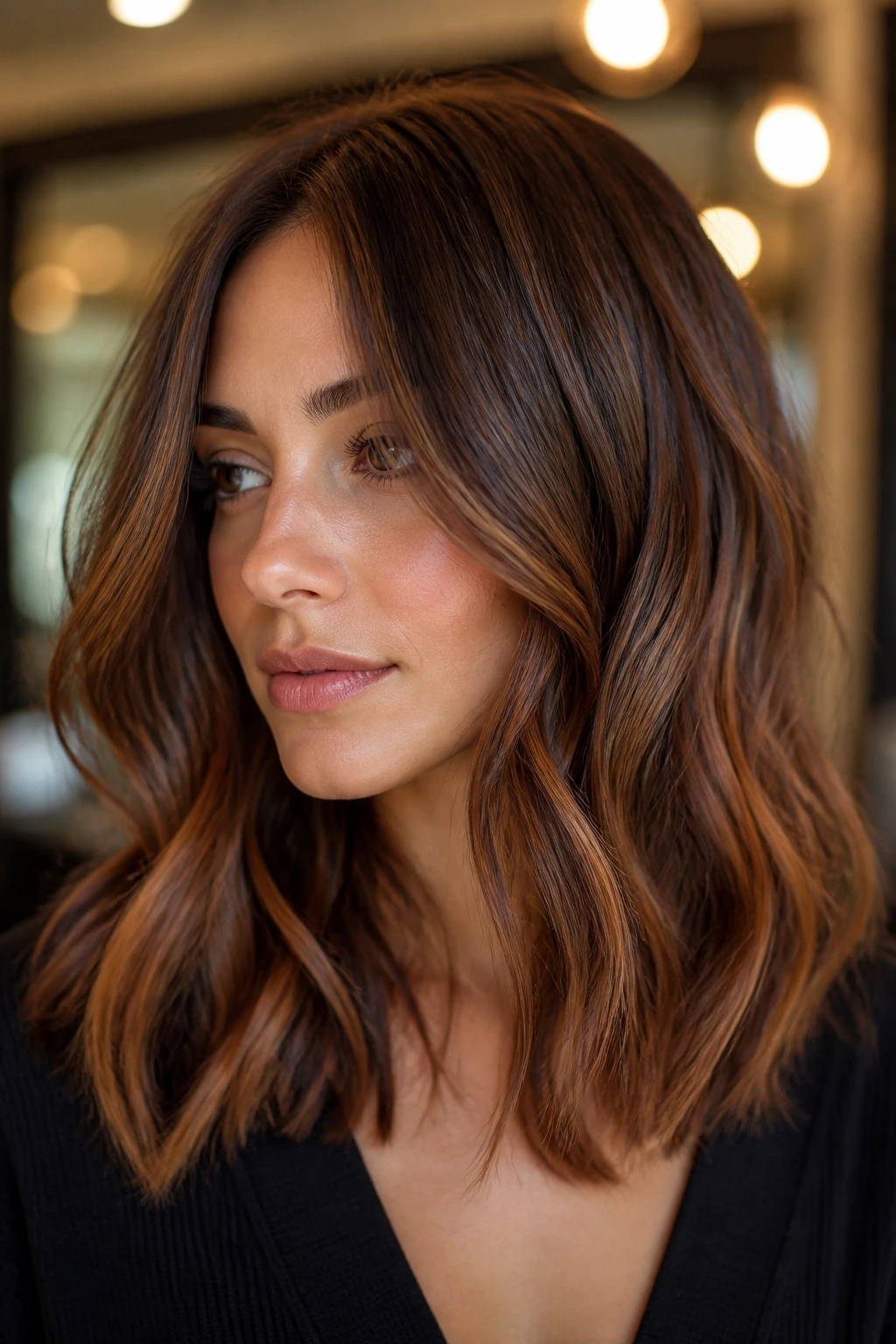
This is the look I recommend to brunettes who want dimension without a dramatic jump. The caramel lives mostly through the mid-lengths and ends, so the root stays dark and plush while the lighter pieces move like satin when you turn your head.
Why It Reads So Cleanly
Balayage works here because the hand-painted placement leaves some brown between the lighter pieces. That gap is what keeps the color from looking stripped or полоски-like. On medium to thick hair, the contrast is enough to show from across the room, but it still feels soft up close.
- Best for: shoulder-length and longer hair with layers.
- Ask for: face-framing pieces that start around the cheekbone, then scattered caramel through the lower half.
- Tone to request: beige-caramel or soft gold, not yellow.
- Styling note: loose waves make the ribbons show better than a pin-straight finish.
Pro tip: If your base is very dark, keep the lightest pieces no lighter than a warm level 8 at first. That keeps the grow-out civilized and the ends looking healthy.
2. Caramel Money Piece and Face-Framing Streaks
If you want a visible change without coloring half your head, put the brightness where people actually look first: the front. A caramel money piece gives the illusion of a brighter overall color because it opens up the face and catches light around the eyes and cheekbones.
The trick is not making the front too wide. A chunky stripe can look dated fast. A cleaner version uses two to four foiled or painted sections that start near the hairline and melt backward into the rest of the brunette base. That edge should be blurred, not boxed in.
This is one of the easiest caramel blonde ideas for brunettes to keep fresh between appointments. When the back grows out, the front still looks intentional, and you can often stretch the full color service a bit longer than you would with all-over highlights.
3. Toasted Caramel Ribbon Highlights Through the Mid-Lengths
Why do some highlights look rich and others look stripy? Usually it comes down to ribbon width. Ribbons are thin enough to move, but they’re not so fine that they disappear. They read like threads of light pulled through the hair, which is exactly what brunette bases need.
What Makes It Different
A stylist will usually weave or paint these ribbons through the middle third of the hair rather than packing them at the top. That keeps the root dark and the mids lively. On wavy hair, the ribbons fold into each other and look far more expensive than a standard set of foil stripes.
A good toasted caramel ribbon set works especially well on medium brown hair that leans neutral. It gives warmth without pushing orange. If your hair is thick, ask for more ribbons rather than wider ones; the density of the hair can swallow thin highlights if there aren’t enough of them.
Quick note: This is one of the best choices if you wear your hair half-up a lot. The ribbons show through the top layer instead of hiding underneath it.
4. Dark Root Melt into Honey Caramel Ends
Picture an espresso root that slowly softens into honey at the collarbone. That’s the whole point of a root melt. There’s no harsh line where the color changes, just a gradual fade that looks like the brunette base has been warmed from within.
This works because the deepest color stays at the scalp, where regrowth is the least annoying. The lighter honey caramel sits lower, where sun would naturally hit it. The result is more believable than a blunt transition, especially on medium and long hair.
A good root melt needs a good toner. Skip that, and the ends can go loud in a hurry. With the right beige-gold gloss, though, the melt looks buttery, not brassy. That one detail does a lot of heavy lifting.
5. Chocolate-Cinnamon Caramel on a Long Lob
A long lob gives caramel room to move, and that matters. On a cut that sits between the collarbone and the shoulders, the color is visible enough to notice but short enough that the lighter pieces do not get lost in endless length.
This version leans a little spicier than plain honey caramel. The tone sits between chocolate and cinnamon, which makes it a good fit for brunettes who like warmth but hate yellow. The effect is rich, a little autumnal, and not too sweet.
I prefer this on hair with a clean, bluntish edge and just a few soft interior layers. Too many choppy layers can break the color pattern into tiny fragments. A lob wants shape, not chaos. The caramel should look placed, not sprinkled.
6. Caramel Blonde with Curtain Bangs
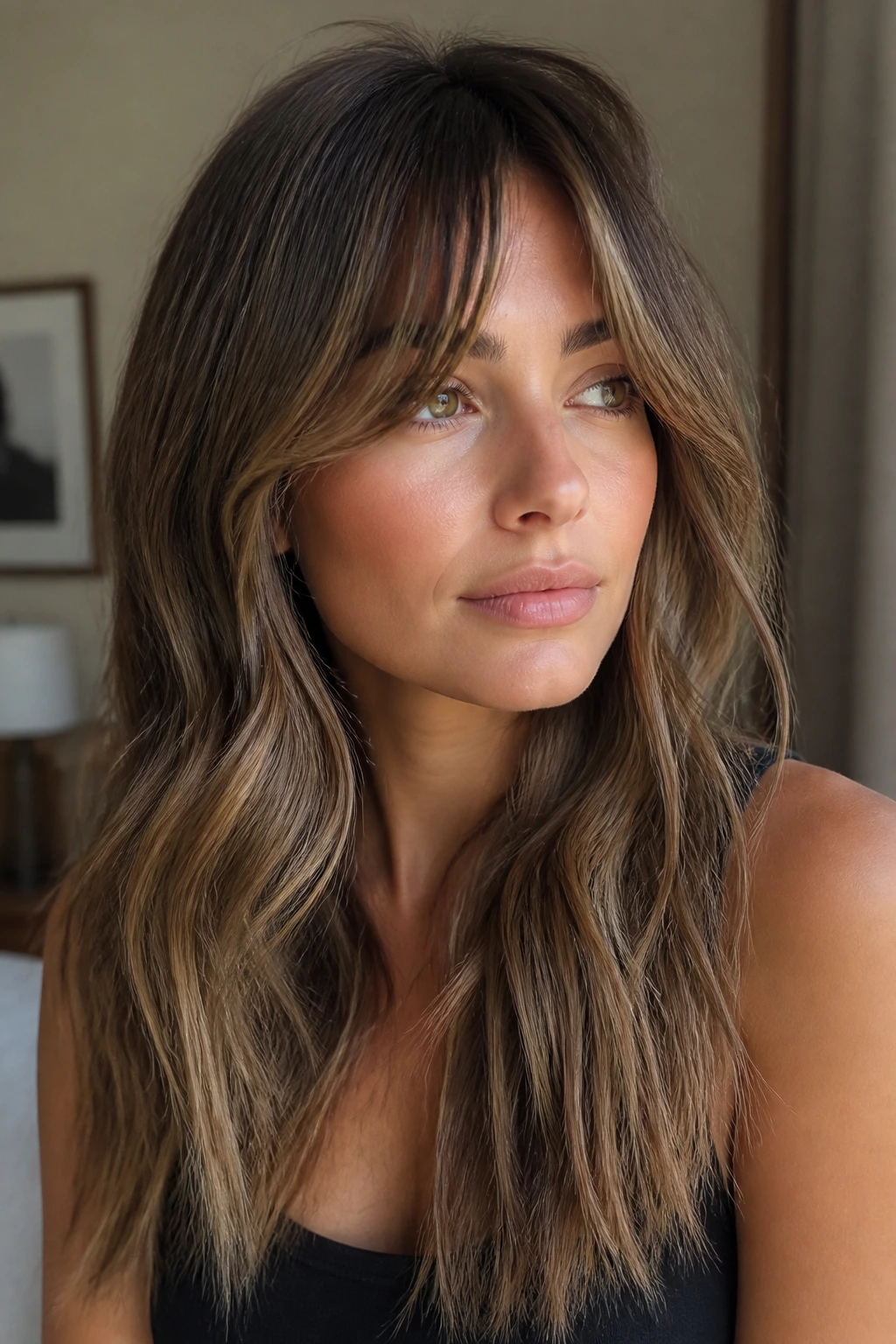
Curtain bangs change everything. They give the color a face-level job, which means the caramel does not have to do all the work through the ends. A few lighter pieces through the fringe and cheekbone area can make the whole cut feel brighter.
Unlike a heavy money piece, curtain bangs let the brightness spill into the rest of the front section. That makes the color read softer. It also helps if you hate seeing a harsh line when your hair is tucked behind your ears. The bangs cover the transition and let the caramel peek through in motion.
This is a good move if you want softness without losing brunette depth. The darker base under the bangs keeps the style grounded, and the lighter pieces around the face stop the look from feeling heavy.
7. Bronzed Caramel Babylights Over Brunette Hair
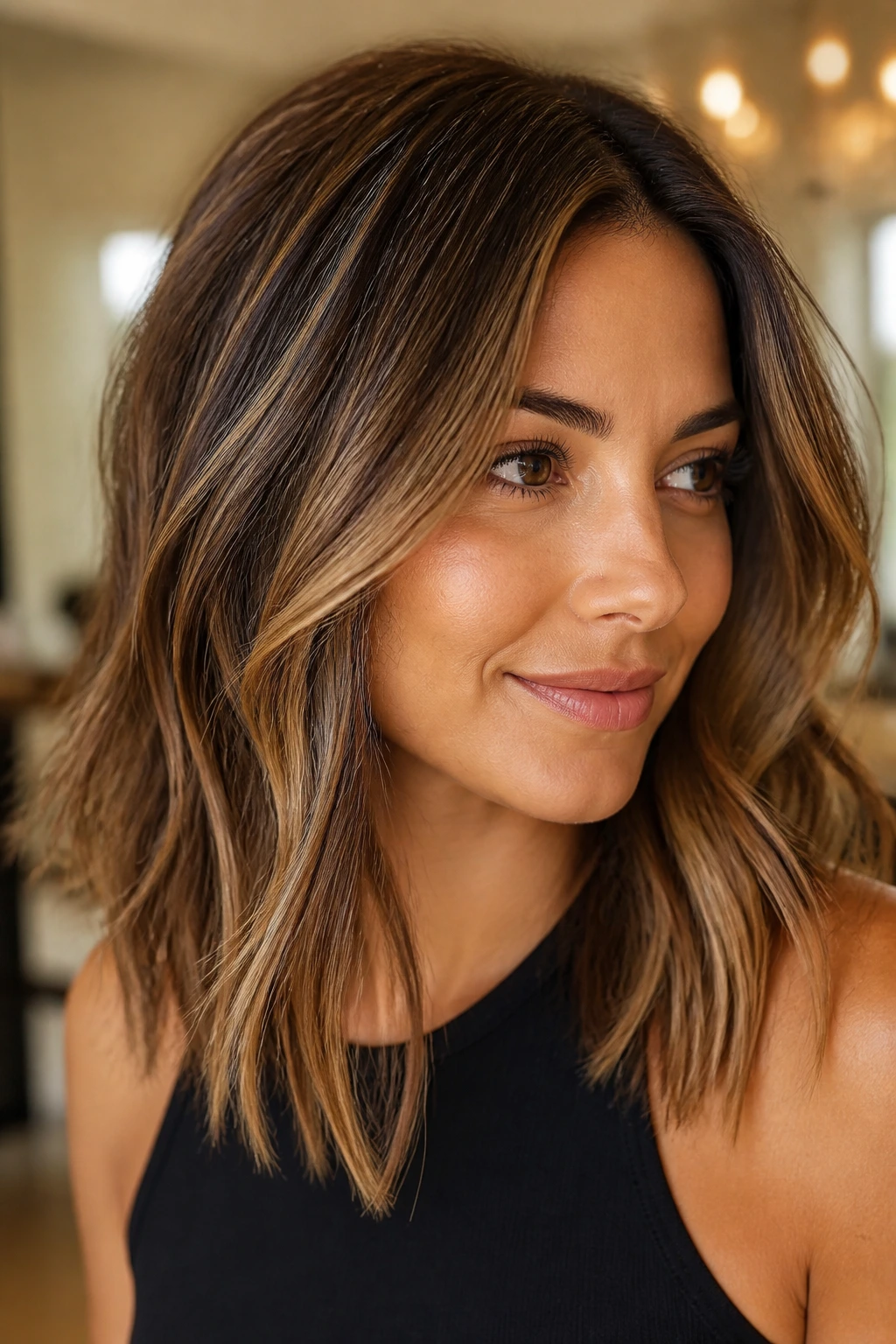
Babylights are tiny. That’s the whole charm. Instead of obvious blocks of color, you get a shimmer effect that looks like the hair has been kissed by light in a dozen little places.
Why Fine Placement Helps
On fine hair, chunky highlights can take over. Babylights do the opposite. They add movement without stealing the shape of the cut. If the hair is straight or slightly wavy, the bronzed caramel reads as a soft glow rather than obvious streaks.
- Ask for: ultra-fine weaving or micro-foils through the top half and around the face.
- Best tone: bronzed caramel with a beige or gold base.
- Works well with: shoulder-length cuts, soft layers, and blowouts.
- Avoid: a toner that is too ashy, which can make the warmth look muddy.
My take: This is one of the prettiest options for someone who wants the color to be felt more than seen. It’s quiet, but not boring.
8. Caramel Ombré on Long Layers
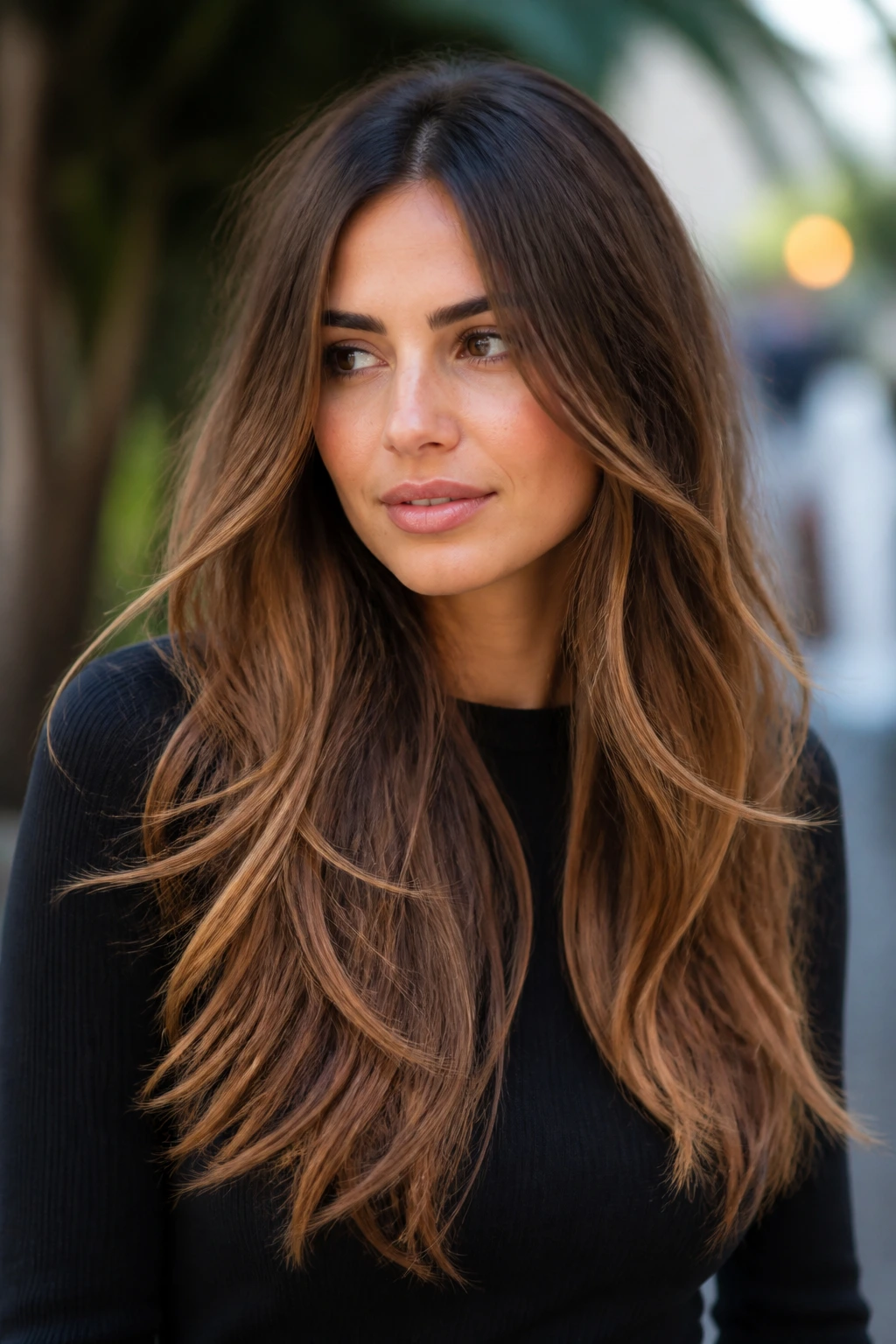
Ombré needs length to breathe. On long layers, the fade from brunette root to caramel ends can be slow enough that the eye can follow it. That slow fade is what makes the color feel polished instead of abrupt.
The best caramel ombré does not start halfway down the head like a hard dye job from years ago. It begins lower, often below the cheekbone, and gets richer toward the ends. The layers matter because they break up the gradient. Without layers, the fade can look like one long color block.
If your hair is long and thick, this is a good way to go lighter without committing the entire head to constant upkeep. The root stays grounded. The ends carry the light. And the whole thing has a bit of swing when you move.
9. Smoky Caramel with Ashy Beige Lowlights
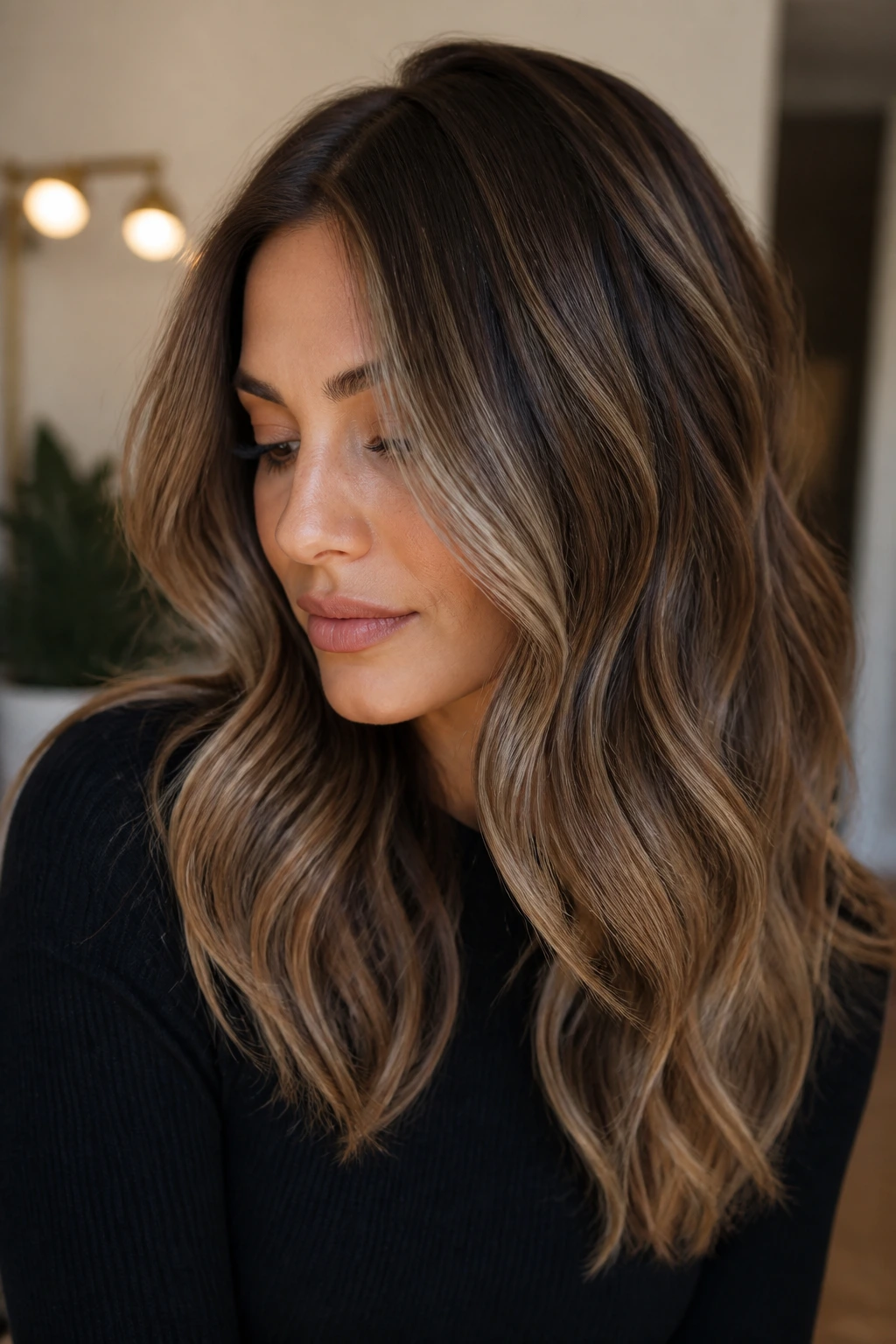
Can caramel be cool? Yes, if you stop treating it like honey. Smoky caramel uses beige and taupe lowlights to keep the warmth from turning orange, which makes the whole look feel softer and less sugary.
This is a smart choice for brunettes who pull red or gold very quickly. The lowlights bring back depth between the lighter pieces, so the color doesn’t flatten out after a few washes. I like it on medium brown hair that needs tone correction as much as brightness.
A beige gloss is usually the piece people forget. Without it, smoky caramel can turn muddy. With it, the color stays readable: warm enough to look dimensional, cool enough to keep brass in check.
10. Buttery Caramel Bob with Blunt Ends
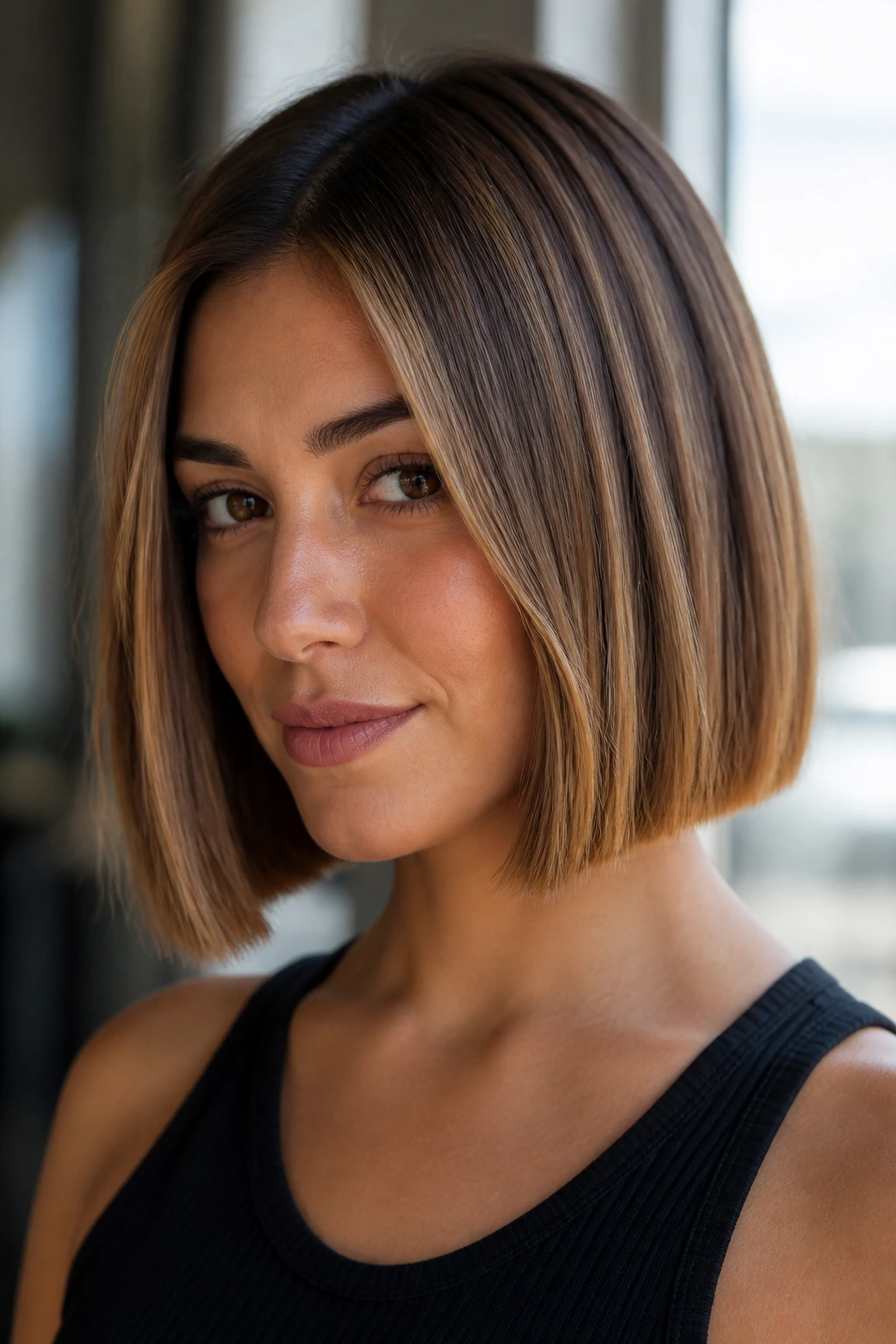
A blunt bob changes the rules. Because the cut is short and dense at the bottom, you don’t need lightening spread everywhere. A few buttery caramel pieces around the surface and front can be enough to wake the whole cut up.
The blunt line makes the color look fuller, so the lighter pieces should be kept clean and deliberate. I’d avoid soft, feathered streaks that vanish into the interior. On a bob, the color needs to sit closer to the surface where the eye can catch it.
This look is good for people who want polish without a lot of texture styling. Even if you air-dry it, the color gives the cut shape. Add a slight bend at the ends and the caramel seems to wrap around the bob instead of sitting on top of it.
11. Cinnamon Swirl Curls
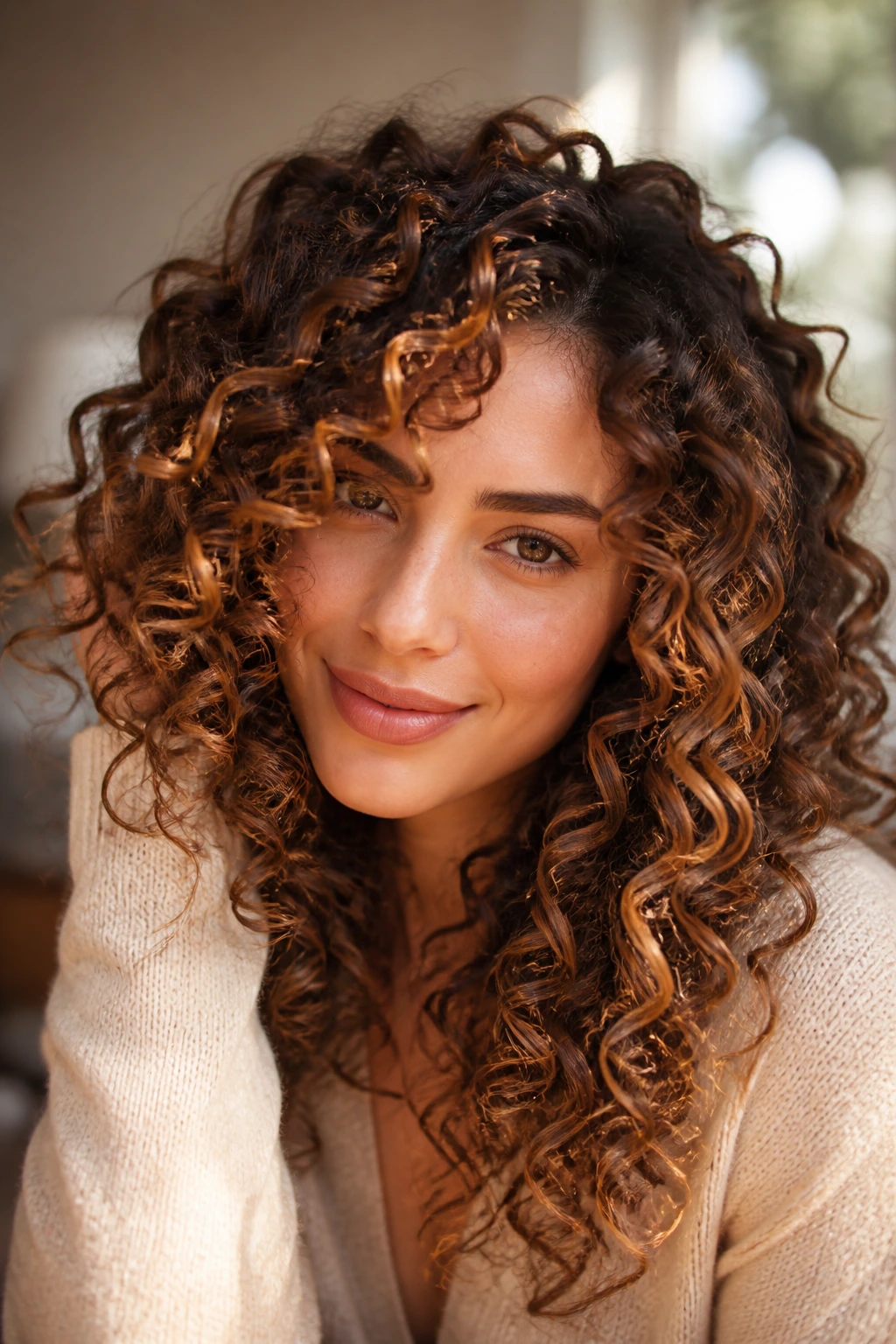
Curls handle caramel beautifully when the placement follows the curl pattern instead of fighting it. The lighter ribbons should sit on the outer curve of the curl clump, where daylight would naturally hit.
That matters because curly hair does not lay flat. A highlight placed for straight hair can disappear or look broken once the curl springs back. Painting the color where the curl opens keeps the swirl visible. The result looks like cinnamon and caramel mixed through the hair, not stripes wrapped around it.
I like this with a warm brown base and a gloss that leans gold-cinnamon. Too much ash drains the life out of curls fast. Keep the finish soft, and the ringlets will do the rest.
12. Espresso Base with Chunky Caramel Panels
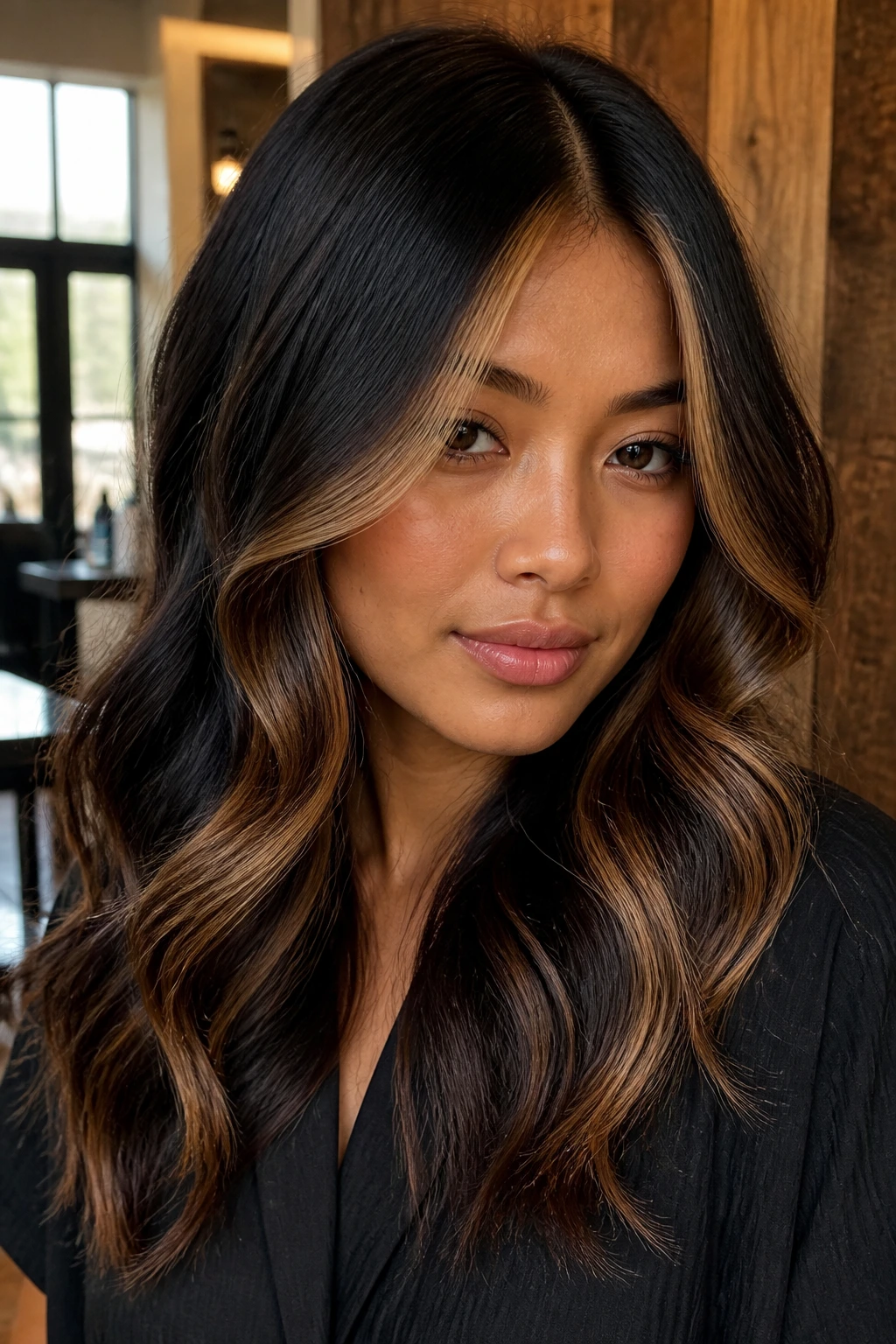
This is the bolder end of the spectrum. Instead of whisper-thin highlights, you get visible caramel panels against a deep espresso base, which gives the hair a more graphic feel.
The contrast is the point. On thick hair, chunky panels keep the color from disappearing inside the density. On straight or slightly wavy hair, they create a strong rhythm through the cut. It’s less subtle than balayage, but sometimes subtle is not the goal.
If you’re bringing this to a stylist, show a photo that has the brightness where you want it—usually around the face, crown, and lower layers—and make sure the panels are softened at the edges. Hard lines can look harsh. Soft edges keep the color current.
13. Golden Caramel on a Shag Haircut
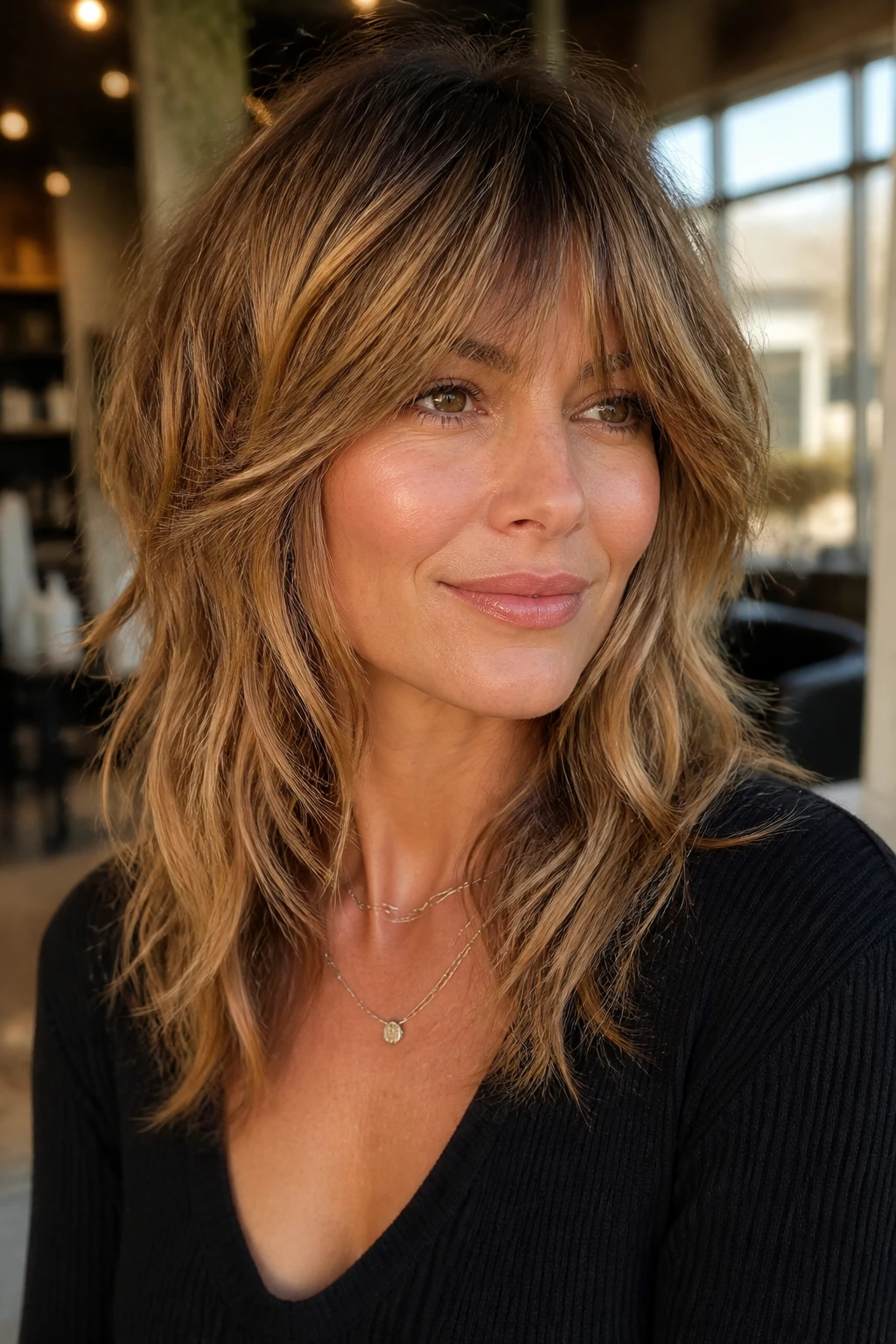
A shag loves movement, and golden caramel gives that movement a place to land. The choppy layers expose different parts of the color as the hair flips and bends, so a little brightness goes a long way.
Best Placement for a Shag
I’d keep the lighter pieces slightly stronger around the fringe and top layers, then soften them through the back. That keeps the haircut from looking heavy near the crown. The shag already has texture; the color should support that, not compete with it.
- Good match for: medium to thick hair with natural wave.
- Placement tip: put lighter pieces near the cheekbone and temple to make the fringe pop.
- Tone choice: golden caramel if your skin leans warm; beige caramel if you want less gold.
- Style note: a rough blow-dry or diffuser finish shows the layers better than a flat iron.
Small opinion: This is one of the few color choices that makes a shag look intentionally expensive instead of merely messy.
14. Mushroom Brown to Caramel Fade
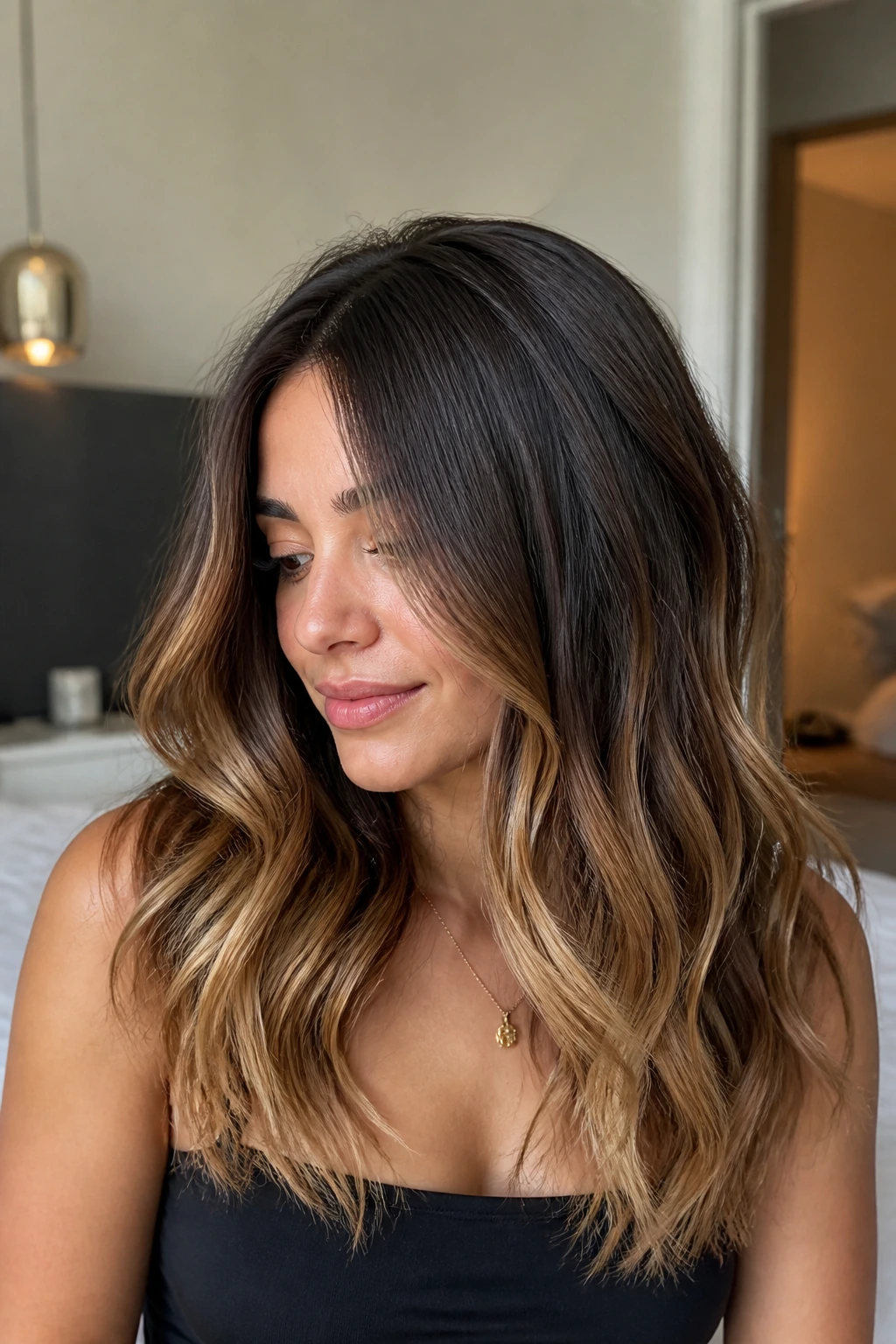
If you’re nervous about orange, start with mushroom brown at the root and fade into a muted caramel. The cooler base keeps the whole look grounded while the ends bring in the warmth.
This is a nice bridge for brunettes who want lighter hair but do not love obvious gold. Mushroom brown has that soft, earthy edge, so when the color shifts into caramel, it feels like a natural sun fade instead of a dramatic lift. The change is visible, but not shouty.
It also photographs nicely in real life because the contrast stays low. That makes the surface look smoother and the hair look thicker. You still get dimension, just in a quieter register.
15. Caramel Blonde Dip-Dye Ends
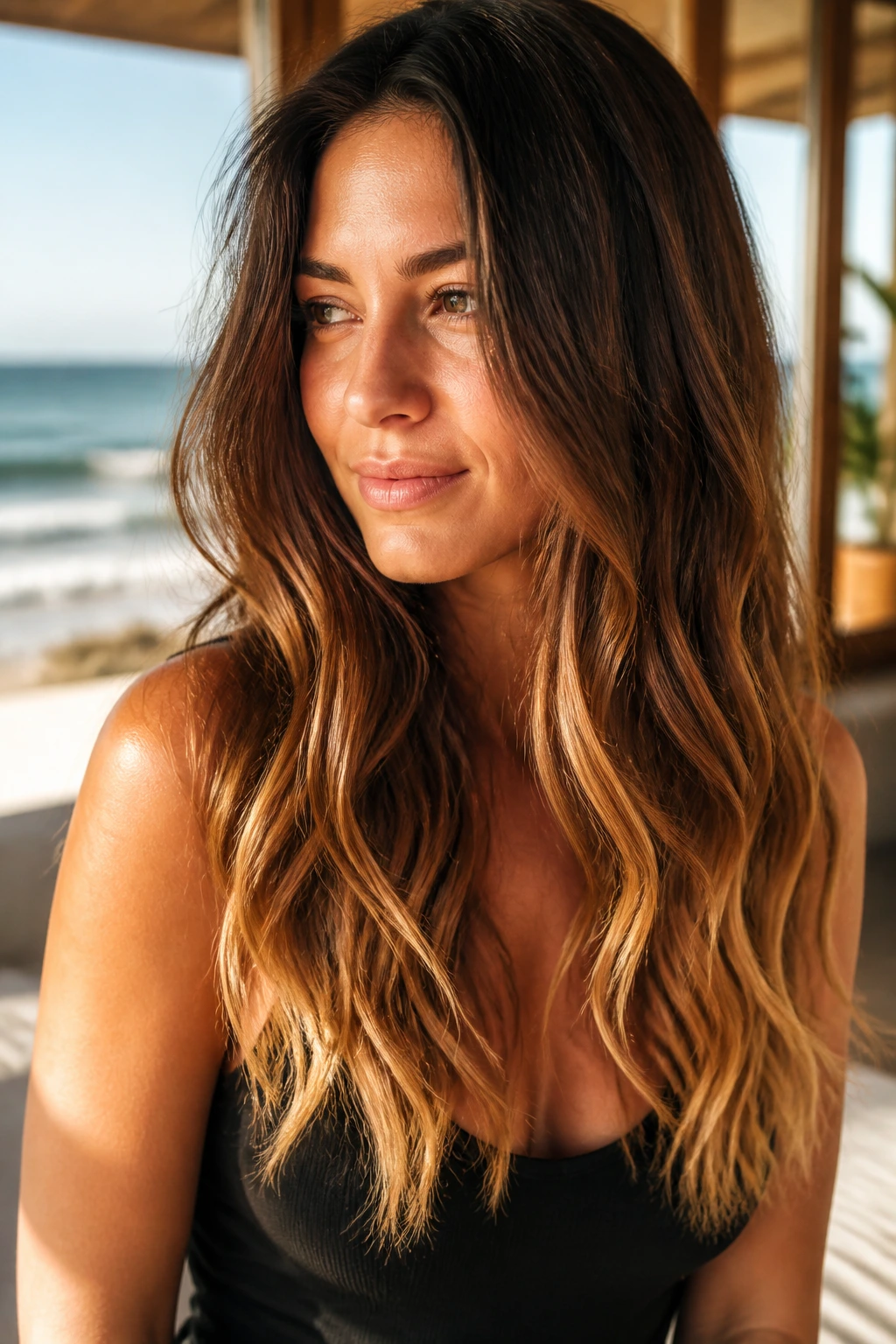
Dip-dye gets a bad reputation because it was often done too bluntly. But a softer version—where the ends are painted in caramel and the transition is smudged upward a little—can look fresh, especially on long hair.
This works best when the cut has shape at the bottom. A blunt hem or soft U-shape gives the lighter ends a clear destination. On waves, the caramel at the bottom catches light and gives the illusion of thicker length.
The maintenance is forgiving. If you like low upkeep and don’t mind a slightly more obvious color story, this is a strong option. It also lets you test lighter tones before committing to a full head of highlights.
16. Glossy Caramel Midlights on Medium Brown Hair
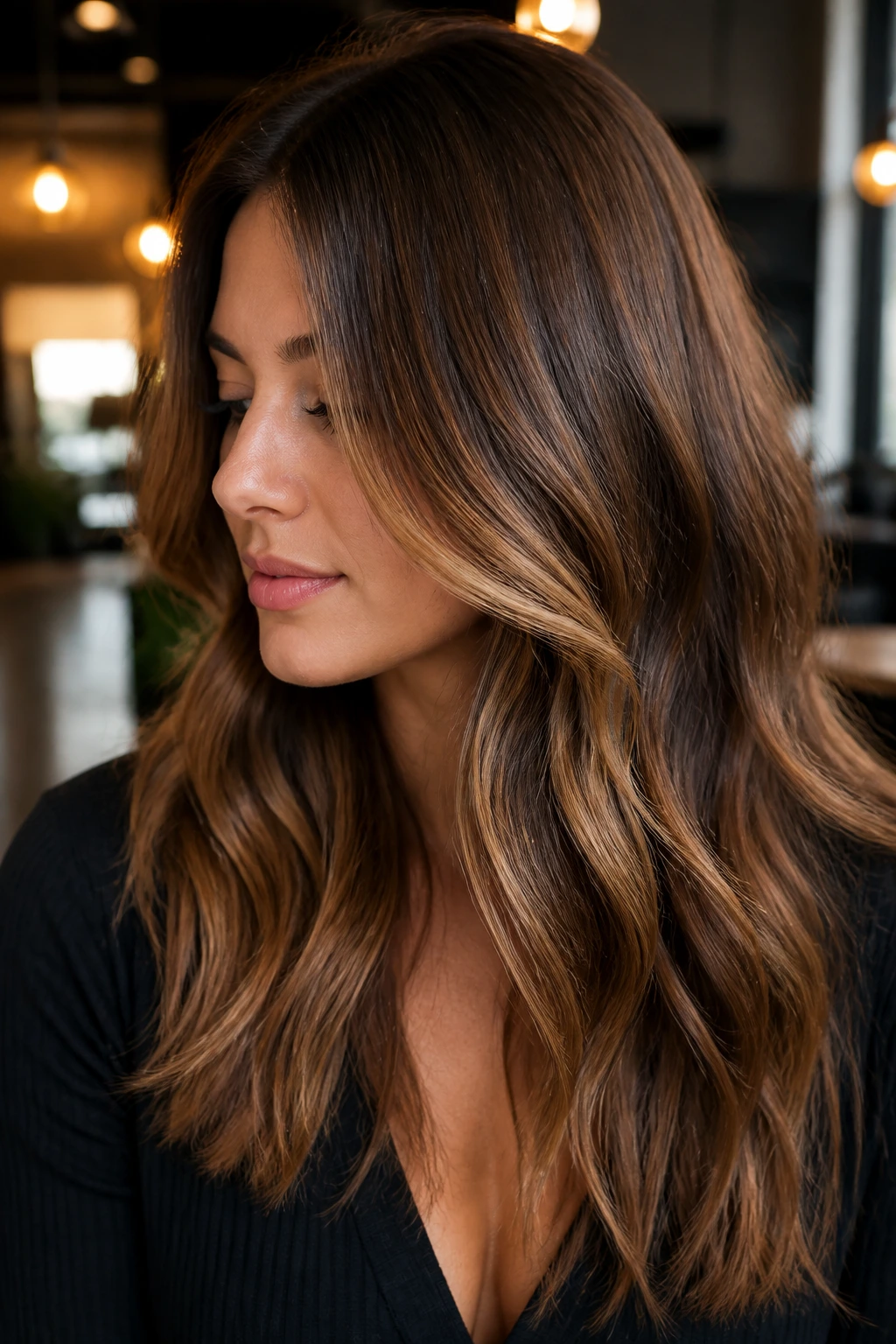
Midlights sit between highlights and the base. They’re the middle layer that people forget about, and they’re the reason some color jobs look rich instead of patchy.
On medium brown hair, caramel midlights add dimension without making the head look too blonde. They stop the light pieces from floating on top of the darker base. That layered effect gives the hair more depth from root to tip, which is especially useful if your hair is fine or naturally flat.
A glossy finish makes this look even better. A clear or lightly tinted gloss smooths the cuticle and gives the caramel a glassy surface. The color doesn’t need to be loud. It just needs to look expensive.
17. Warm Bronde with a Caramel Halo
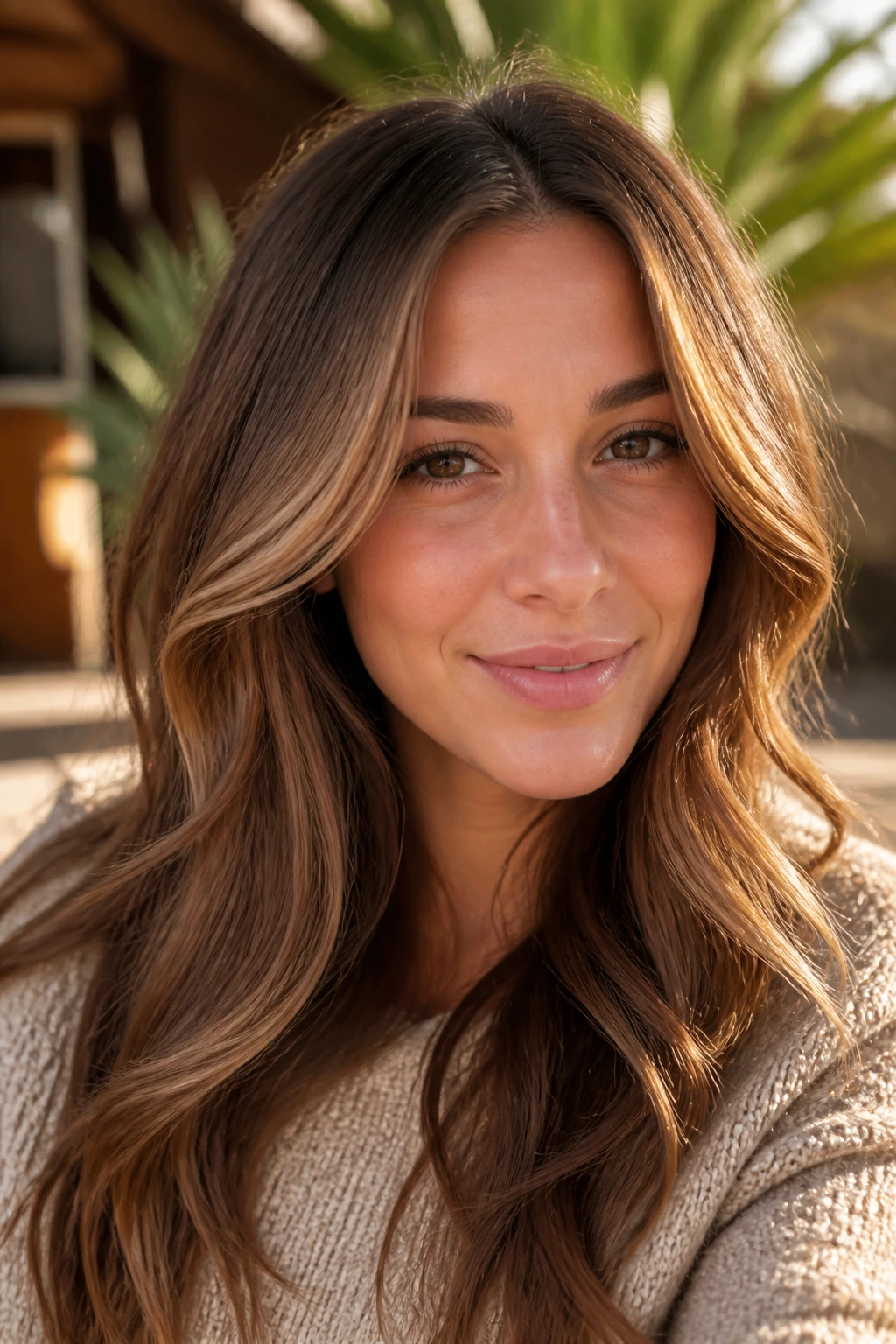
Bronde can get lazy if it’s done without structure. A caramel halo fixes that by placing brighter pieces around the crown and top layers, where they create the illusion of a sunlit outline.
This is not the same as a money piece. The halo wraps more broadly, so the brightness shows when the hair is parted, tucked back, or lifted into a ponytail. It’s a smart choice if you wear your hair up often and still want the color to read.
The best bronde sits between brunette and blonde without tipping too far into either. Caramel is the bridge. Too much gold and it turns brassy; too much brown and it disappears. A good halo keeps the middle ground alive.
18. Caramel Peekaboo Layers
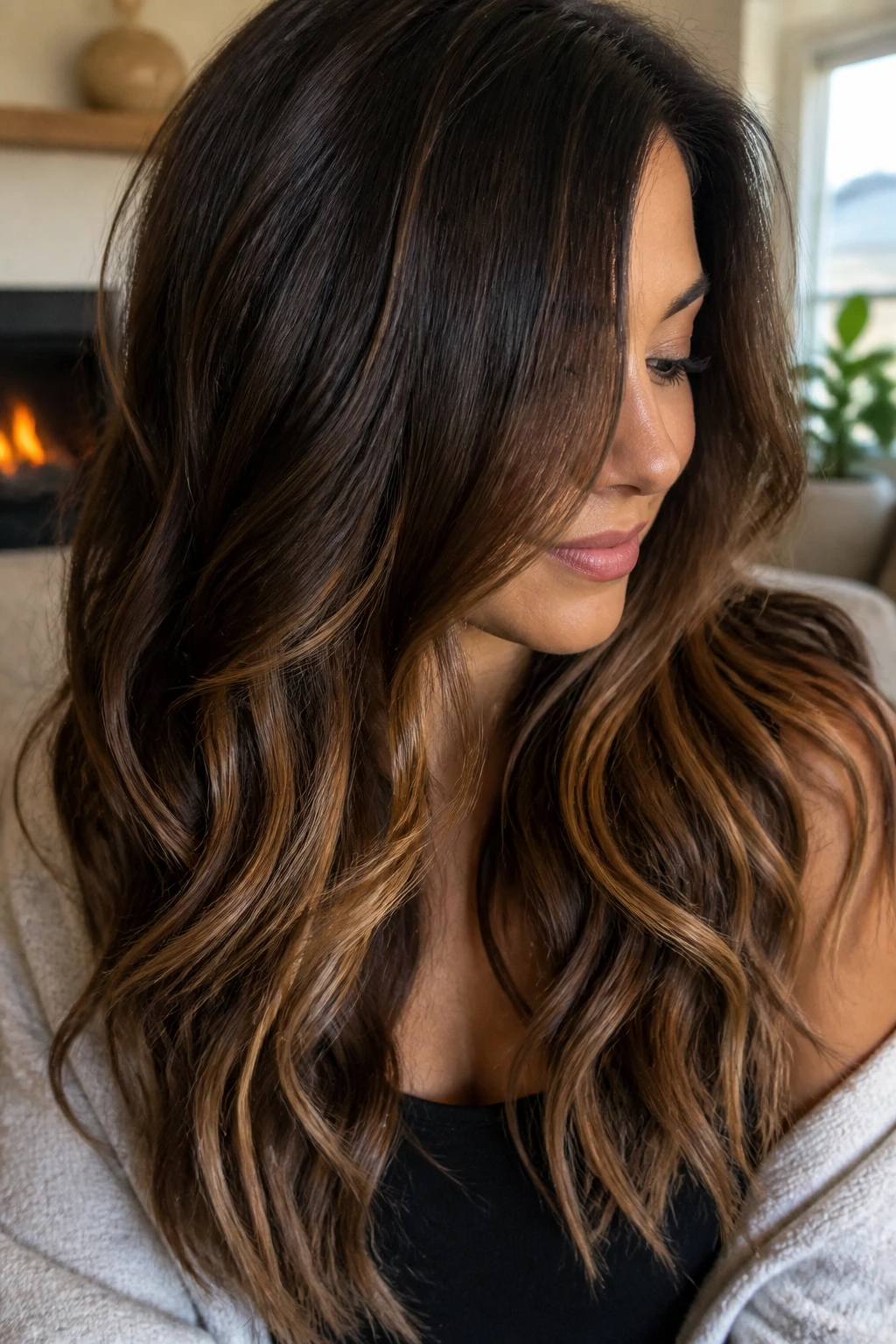
Peekaboo color has a little drama without being obvious all the time. The caramel hides under the top layer, usually through the interior or lower sections, then flashes out when the hair moves.
I like this for people who work in conservative settings but still want something fun. The top stays brunette, so the color feels controlled. The underneath pieces carry the surprise. When you curl or tuck the hair, the caramel shows up in a way that feels private, almost like a secret.
This also works well with layered cuts because the interior pieces have room to peek through. If the hair is all one length, the hidden color can be too buried to matter.
19. Copper-Caramel Hybrid for Warm Brunettes
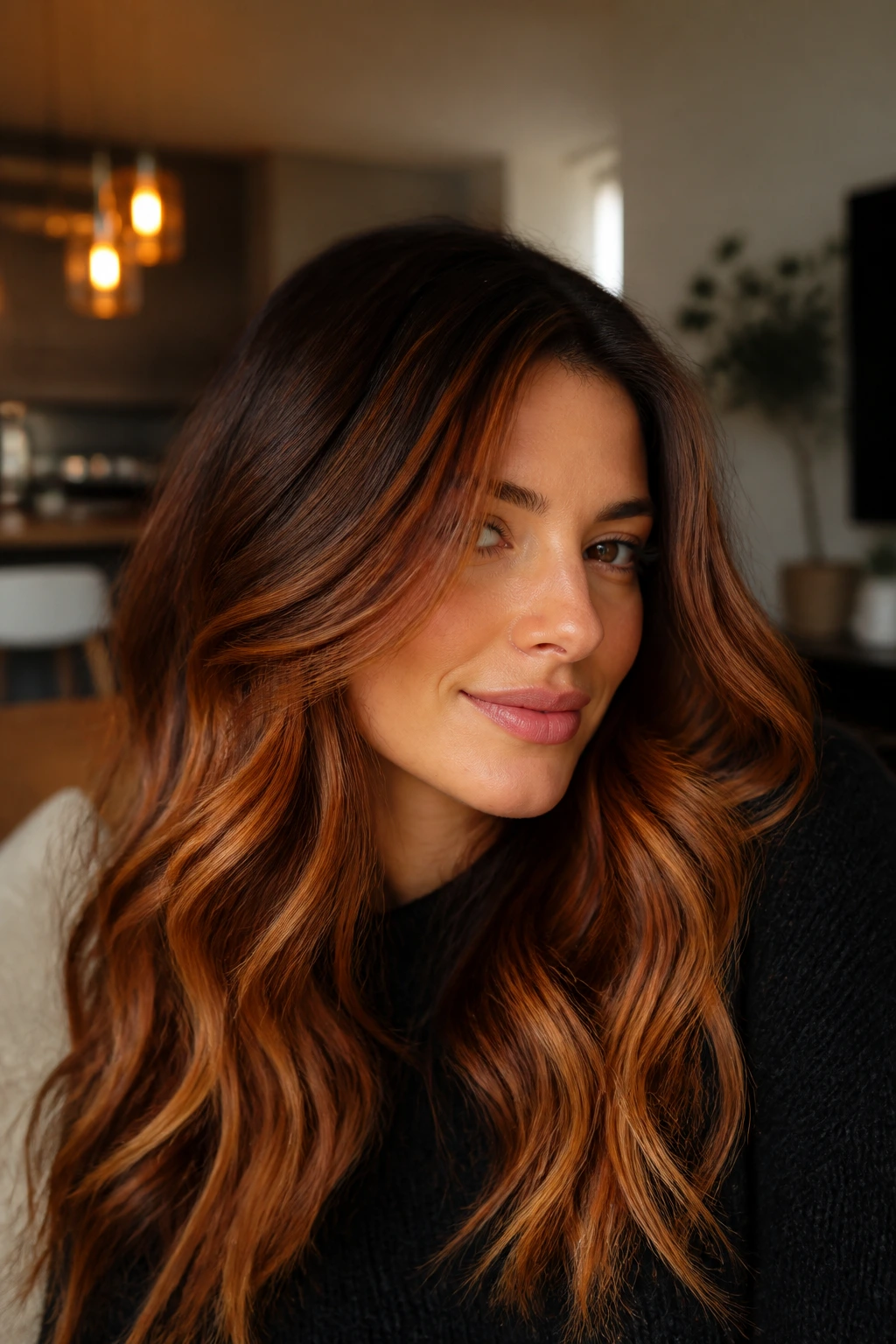
Some brunettes want caramel, but what they really want is more warmth. This is where a copper-caramel mix comes in. It keeps the sweetness of caramel but adds a redder, spicier edge.
That blend is especially flattering on chestnut and auburn-leaning brunettes. The color looks alive in indoor light, where pure gold can sometimes flatten out. Copper tones bring back that burnished look you see in well-kept red-brown hair.
Be honest about maintenance with this one. Copper fades faster than beige, and if you wash hot or use harsh shampoo, the tone can slip. Still, when it’s fresh, it has a gorgeous glow.
20. Sandy Caramel Waves
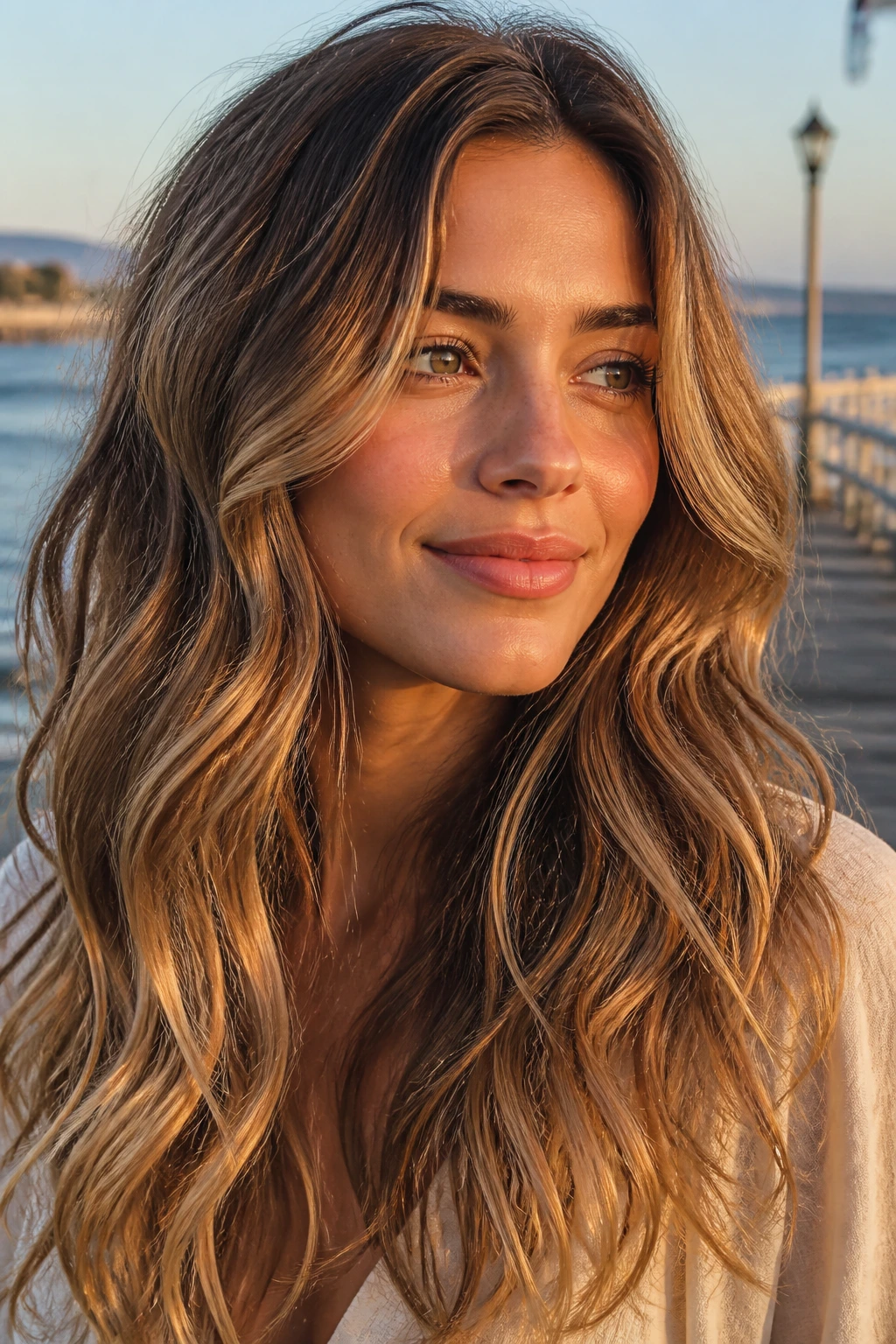
Sandy caramel sits in a softer zone than classic gold. Think beige, a little tan, a little warm cream. On waves, it gives a sun-faded look that feels gentle rather than bright.
Why It Softens the Whole Look
The beige tone cools down the warmth enough to keep the color from drifting too orange, but it doesn’t go so far ash that the hair looks flat. That balance is the whole game here. Brunettes who want lightness but hate yellow usually land here after a few reference photos.
It’s a nice fit for medium-length waves because the motion keeps the sandy pieces from looking static. If the hair is blunt and straight, you may need more texture in the cut so the color doesn’t read too even.
Useful note: This is one of the easiest caramel ideas to pair with neutral makeup—taupe, bronze, soft peach, done.
21. Lived-In Caramel with Shadow Roots
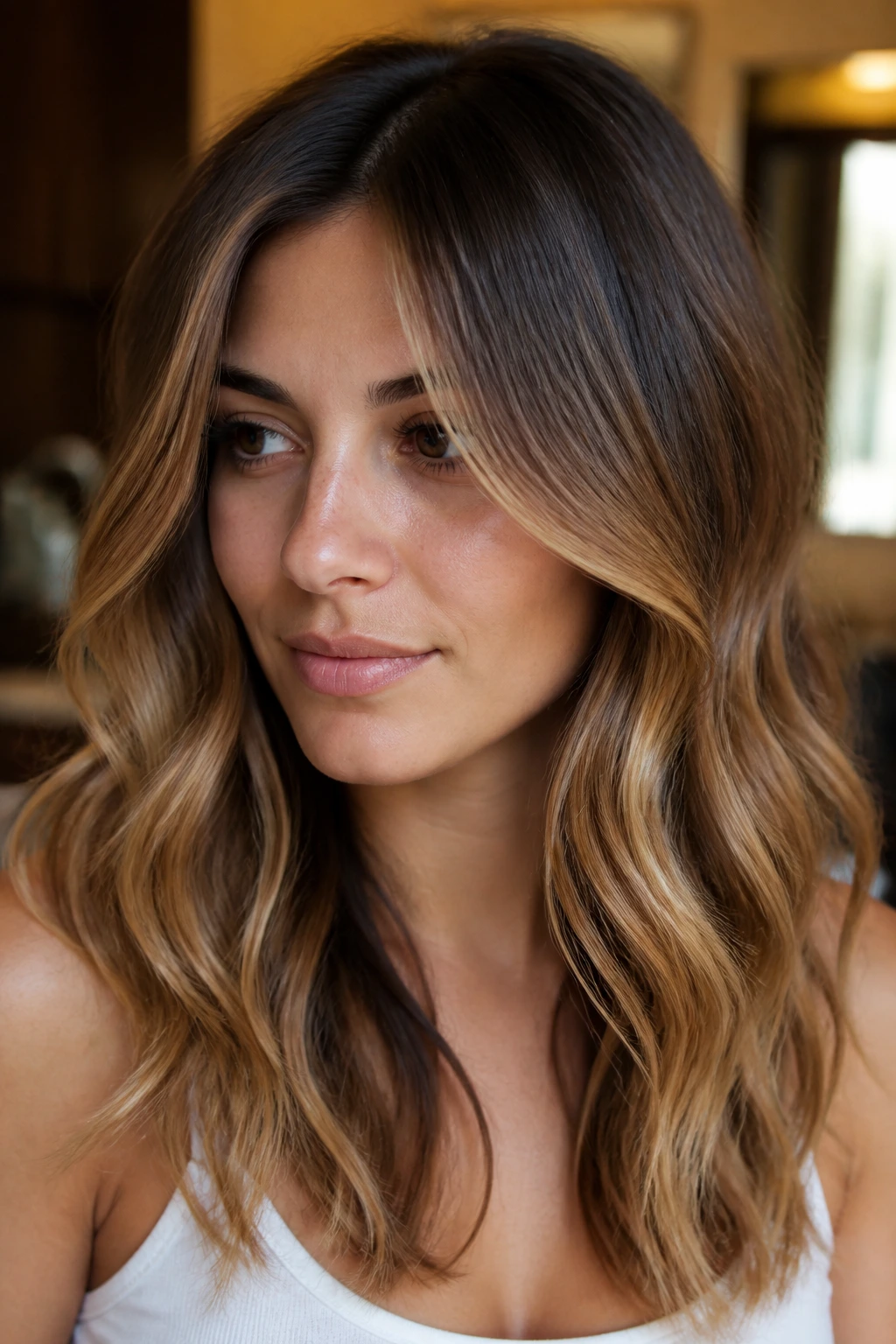
If low-maintenance is the goal, shadow roots are your friend. A darker root area means regrowth doesn’t announce itself every time you part your hair, and the caramel can live lower where it’s easier to refresh later.
This is a lived-in color, which means the ends and mid-lengths carry most of the brightness while the root stays blurred. That blur matters. It keeps the color soft for weeks and makes the grow-out look intentional instead of tired.
I’m a fan of this on almost every brunette base because it buys you time. You can go a little brighter on the lengths without signing up for monthly correction. The hair looks finished on day one and still looks sane when the root starts coming in.
22. Mocha Caramel Sombre
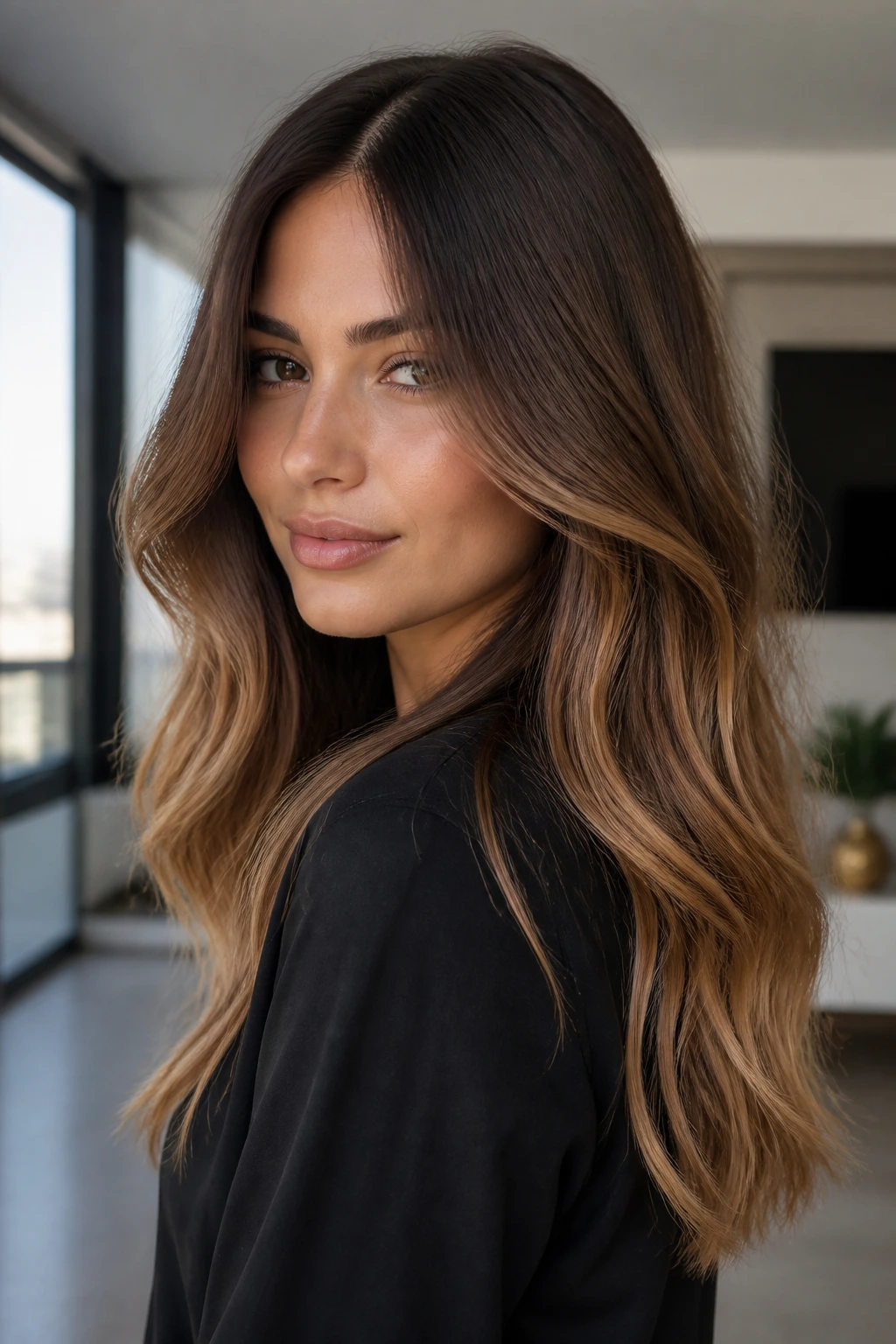
Sombre is the softer cousin of ombré, and mocha caramel sombré is one of the cleanest ways to wear caramel on brunette hair. The transition is gradual, the contrast is low, and the effect feels expensive because nothing is screaming for attention.
Unlike a high-contrast ombré, this version keeps the shift almost whisper-level for the first half of the hair, then lets the caramel open up toward the ends. That makes it a smart choice for people who want movement more than drama. You see it when the hair moves, not when it sits still.
It’s also kind to thick hair, which can swallow lighter tones if the fade is too abrupt. The soft gradient gives the cut room to breathe.
23. Caramel Highlights on a Pixie Cut
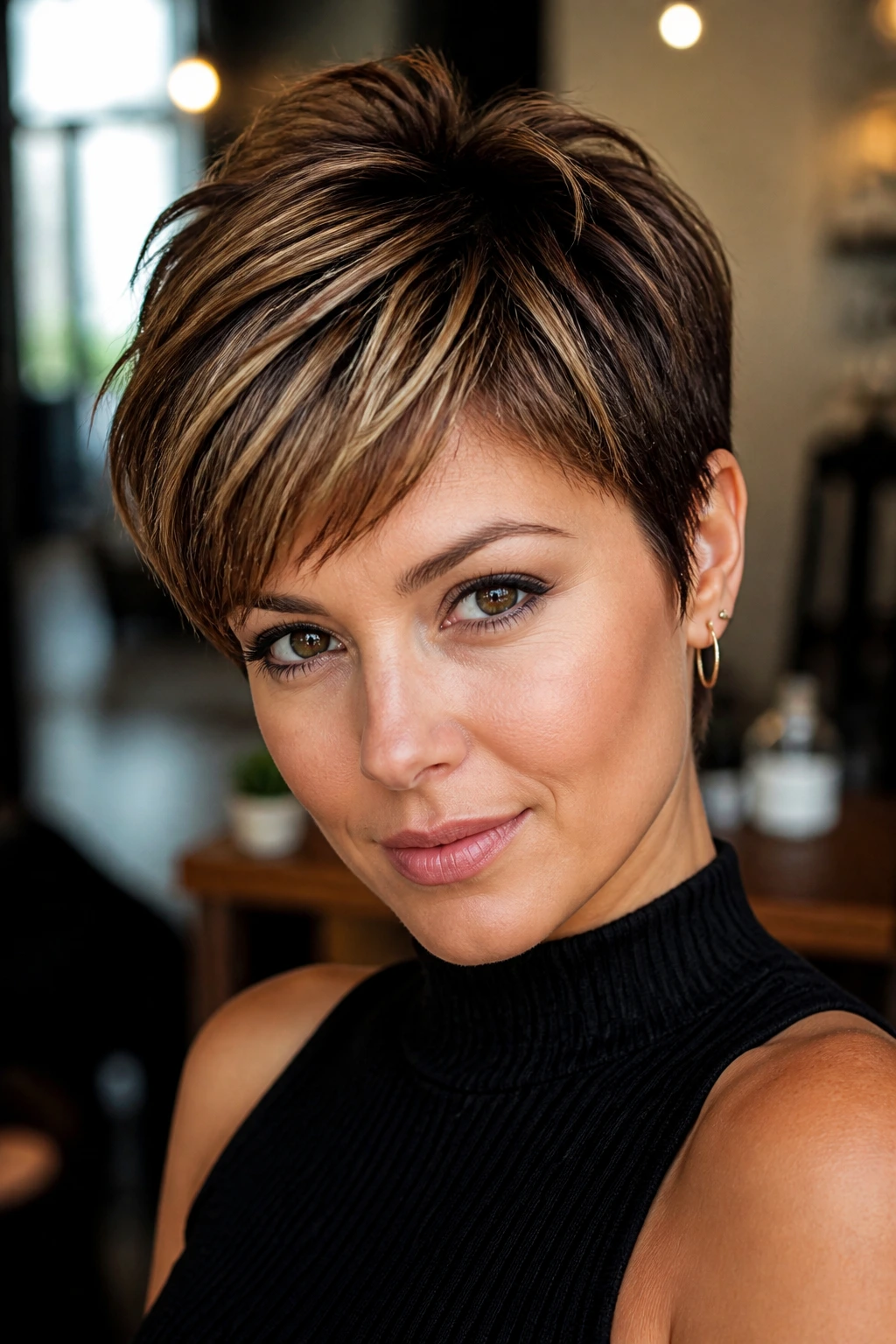
Short hair needs precise placement. On a pixie, a few caramel highlights through the top, fringe, and crown can change the whole shape of the cut. Too much lightening everywhere, though, and the style loses its sharpness.
The top is where the color matters most here. That’s the section people see first, and it’s also the area that gives the pixie height. A few brighter pieces at the fringe and around the crown create movement without making the haircut look puffy.
This is one of those situations where less really is more. A pixie with good color placement can look more modern than a much longer cut with careless highlights. Tiny canvas, big payoff.
24. Reverse Balayage with Caramel Dimension
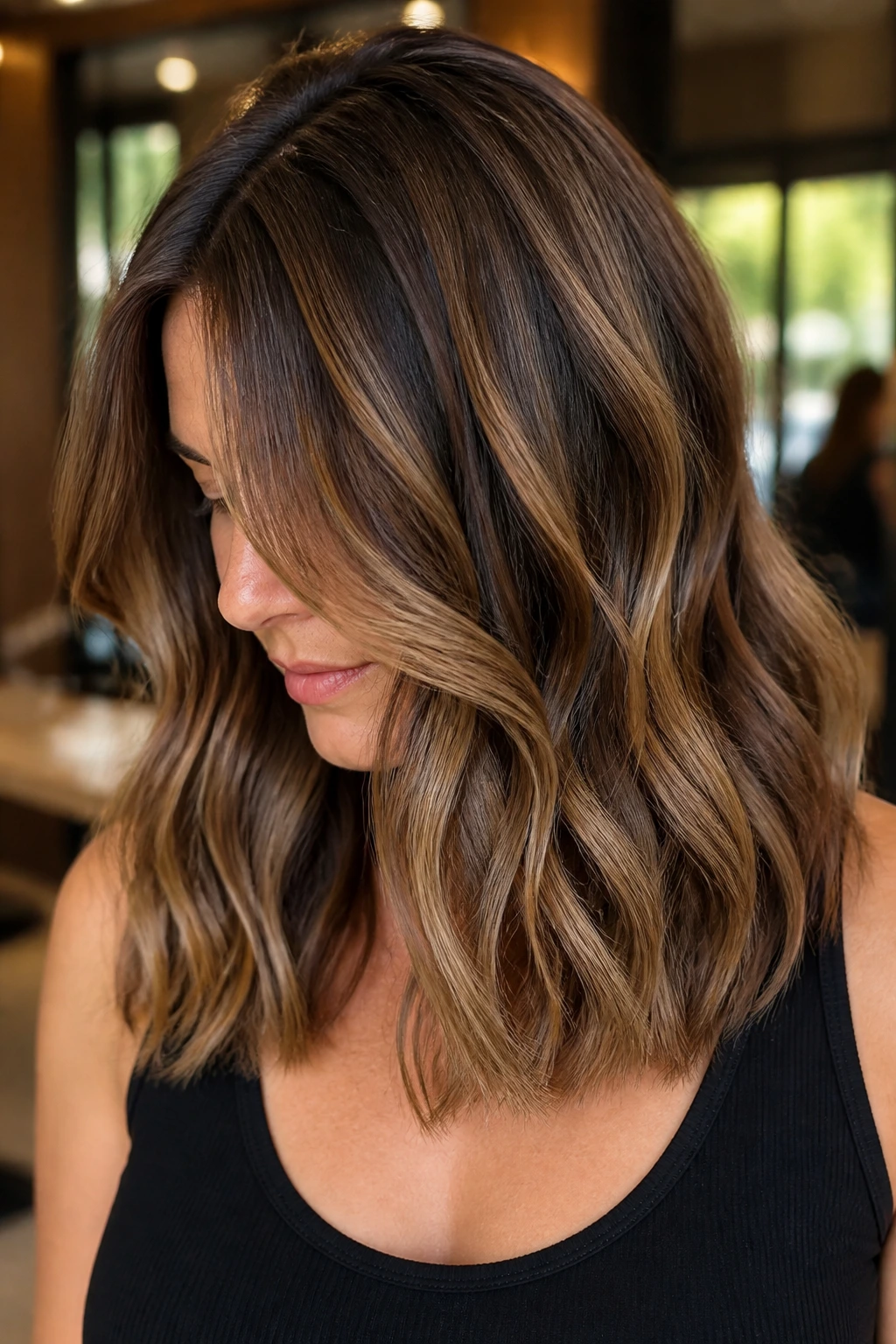
Reverse balayage sounds odd until you see it done well. Instead of lightening, the colorist adds deeper ribbons or lowlights to create contrast and ground the existing brightness. When caramel is involved, that extra depth can make the lighter pieces look richer.
This is a smart fix if the hair has gone too light or too flat. By dropping in mocha or chestnut tones, the caramel has something to sit against. The color reads more dimensional, and the lighter strands stop floating on top like they were pasted there.
I like reverse balayage on hair that already has highlights but needs structure. It’s part correction, part redesign. And it saves you from starting over from scratch.
25. Vanilla-Caramel Ends on Long Hair
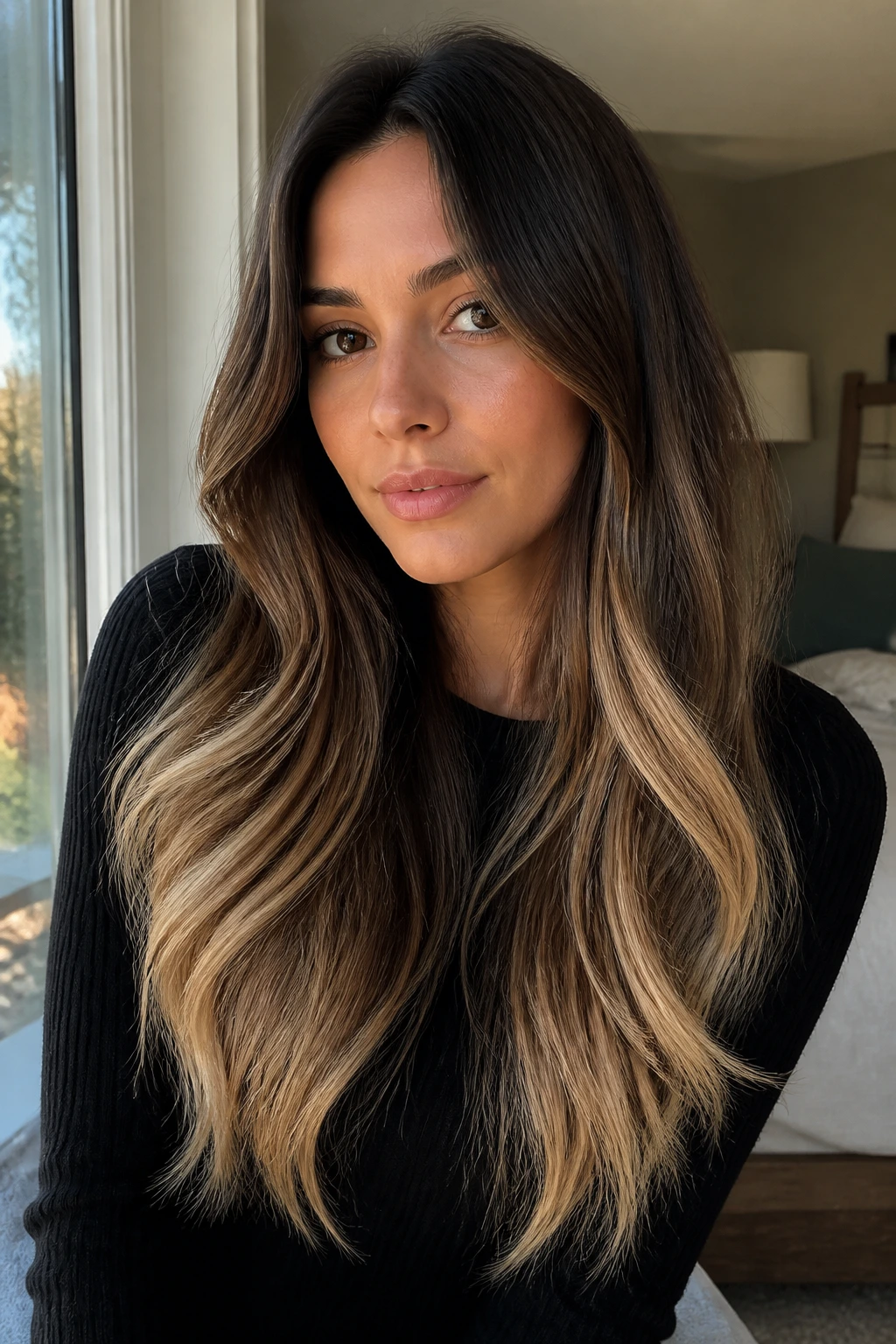
Vanilla caramel sits lighter and creamier than classic honey caramel. On long hair, it works best at the ends, where a softer pale warmth can look clean instead of stringy.
The important thing is keeping the root and mid-lengths brunette enough to support the lighter bottom section. If the whole head goes too pale, the color loses its contrast and starts to feel dusty. Long hair can carry this tone beautifully, but only if there’s enough depth above it.
This look suits people who like a brighter finish but still want their brunette identity intact. The contrast between dark root and vanilla caramel ends is what makes it interesting. Without that contrast, it’s just light hair.
26. Soft Caramel Streaks on Curly Hair
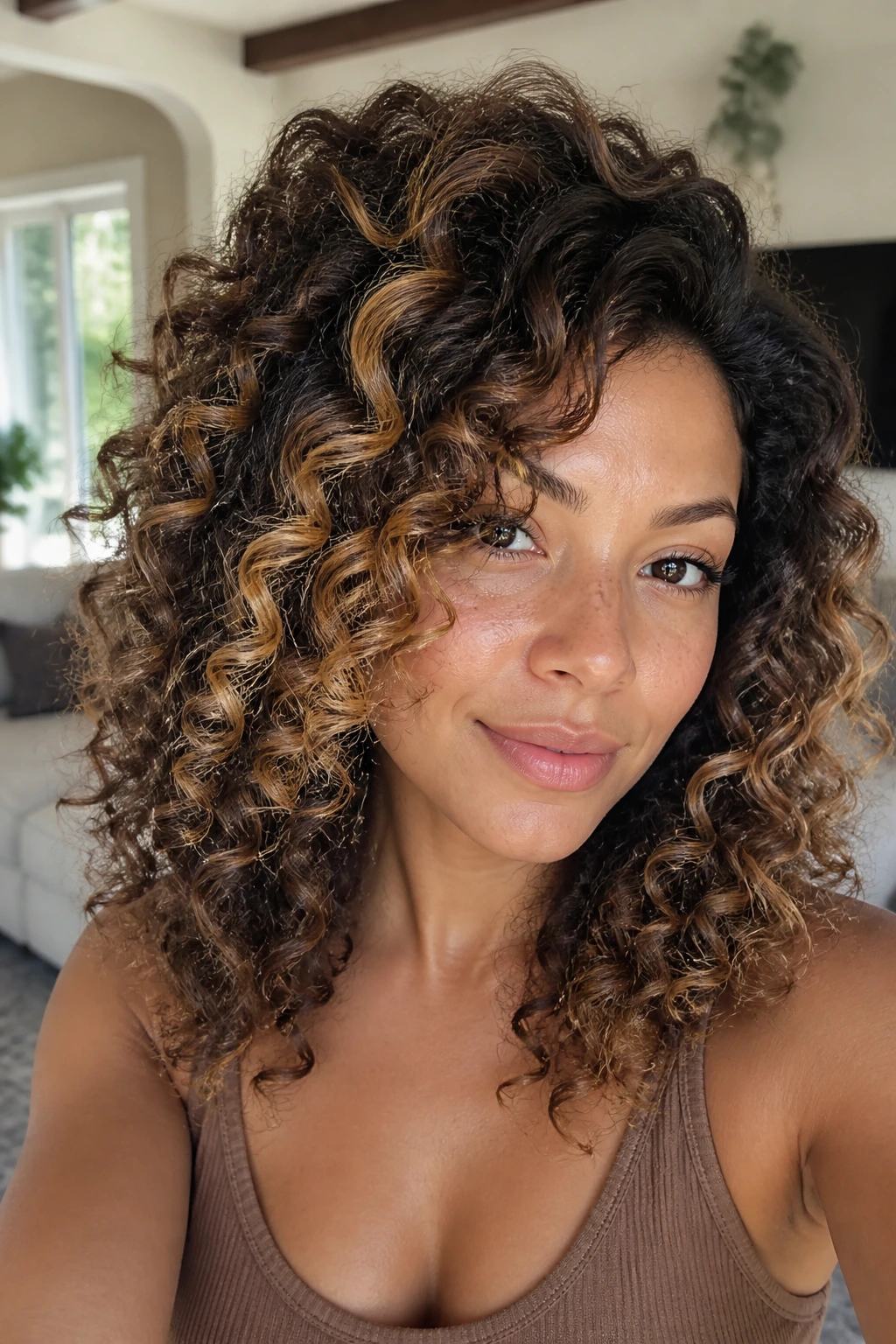
Curly hair needs streaks placed with the curl pattern in mind. The lighter pieces should sit where the curl opens and catches light—usually along the outer curve and on the higher points of each curl group.
How to Keep It From Looking Stripey
Fine, straight-up-and-down highlights can get lost in curls or turn into random pale lines. Broader painted sections work better because they wrap around the curl. That gives the color a more natural spread and keeps the hair from looking chopped up.
- Best placement: around the crown, face frame, and the outer layer of each curl section.
- Better tone choice: warm caramel with a beige gloss to prevent a harsh gold cast.
- Style match: diffused curls or soft air-drying show the dimension best.
- Watch out for: highlights placed too close together, which can make the curls look frizzy instead of rich.
My opinion: Curly hair deserves color that moves with it, not against it. Caramel does that when the placement is patient.
27. Caramel Blonde Melt on Straight Hair
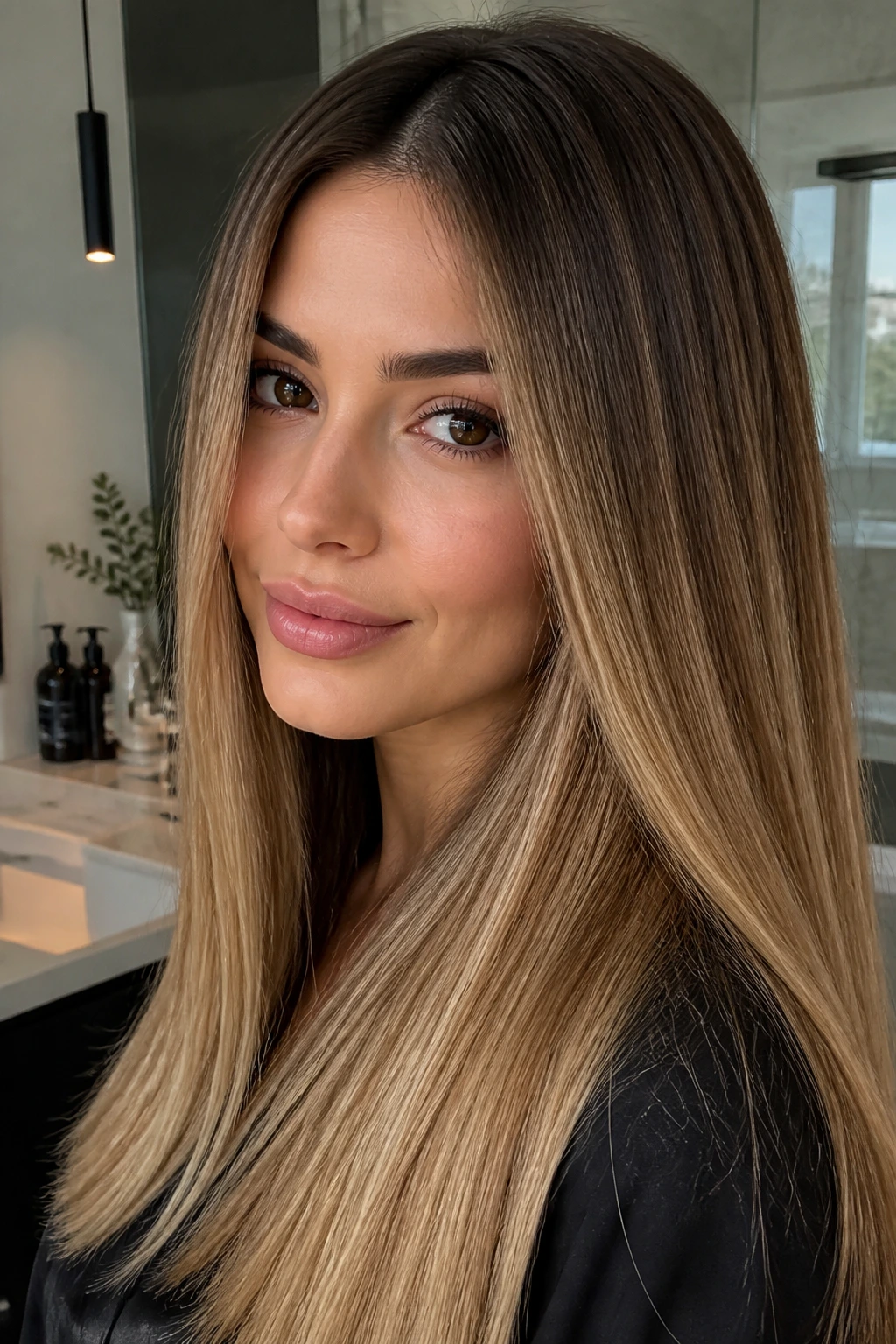
Straight hair can be unforgiving. There’s nowhere for sloppy placement to hide. That’s why a caramel melt on straight hair needs extra thought: the transition should be soft enough to avoid bands, but defined enough to show the color shift.
A root smudge helps a lot here. So does keeping the lightest pieces mostly through the mids and ends, where they create a gentle fade instead of a harsh shelf. Straight hair tends to expose everything, so the blend has to be cleaner than it would on waves.
If you want this look to feel intentional, ask for a little texture in the cut. Even a soft bevel at the ends helps the caramel read as movement instead of one flat surface.
28. Sunlit Caramel with a Clear Gloss Finish
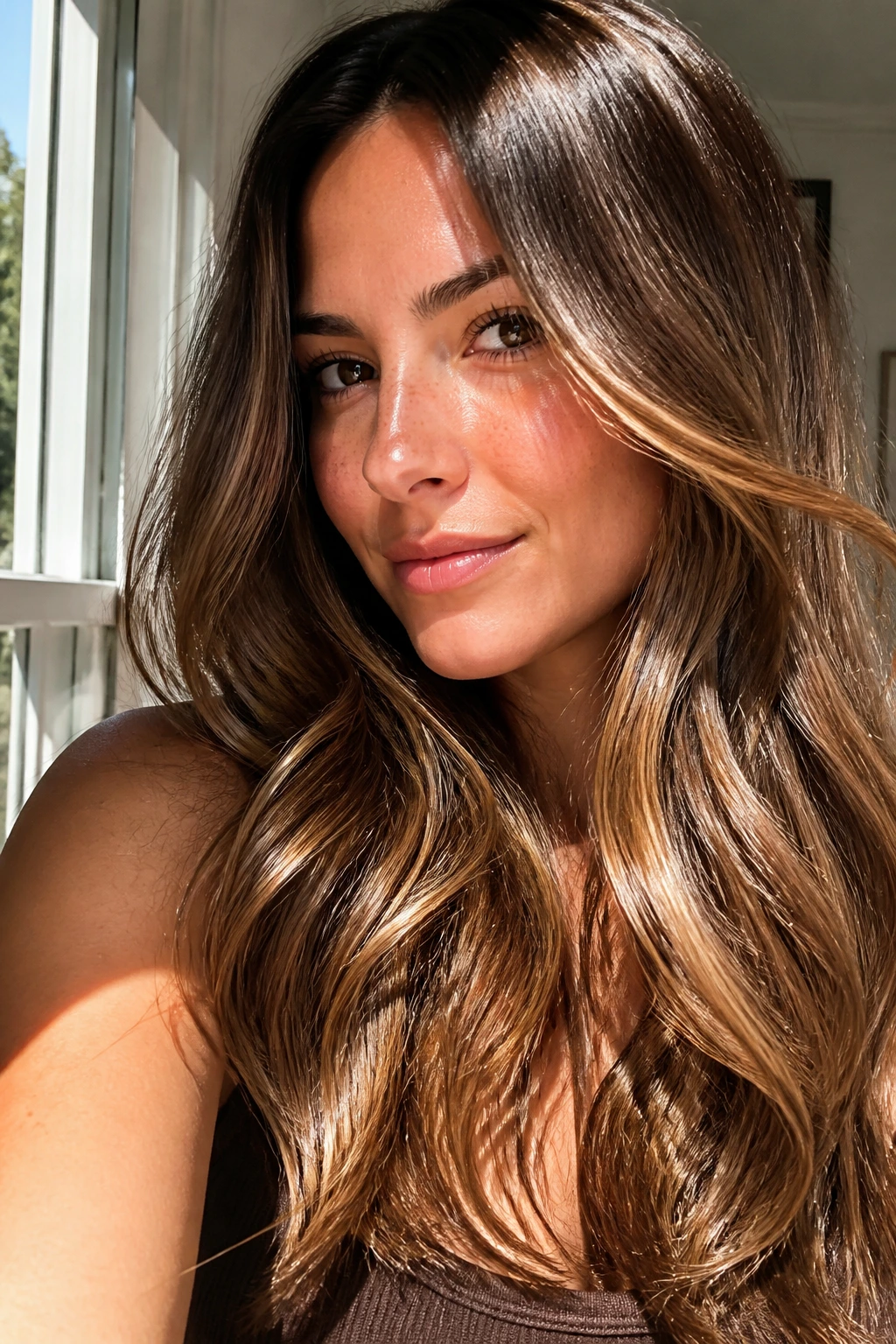
Sometimes the color doesn’t need more lightening. It needs more shine. A clear gloss on caramel-highlighted brunette hair can make the whole thing look fresher, smoother, and more reflective.
That’s because gloss seals the cuticle enough to give the surface a cleaner finish. The caramel pieces show up with more contrast against the brunette base, and the hair looks healthier than it did before the gloss. If the tone is already right, this is a much smarter move than adding more bleach.
I especially like this for hair that’s been highlighted a few times and needs polishing rather than more color. A clear gloss is the unsung hero of caramel shades. Quiet. Effective. No drama.
29. Cinnamon-Maple Caramel with Curtain Layers
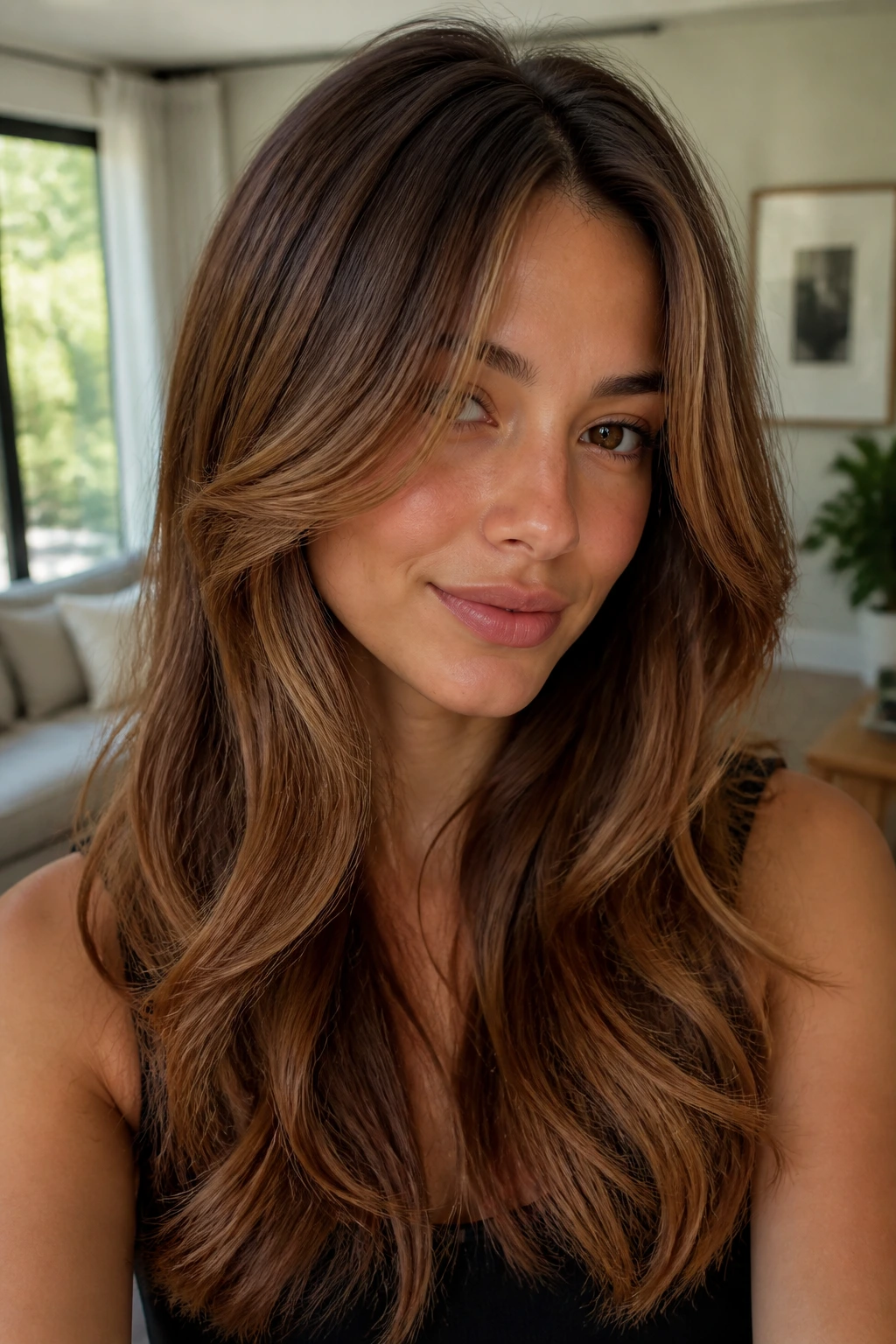
This shade leans warmer and a little spicier than beige caramel. Cinnamon-maple caramel has that sweet, toasted quality that looks especially good in layered hair around the face.
Curtain layers help because they split the brightness and let it taper away from the center part. That shape makes the face frame feel softer, and it also stops the color from sitting too heavily at the edges. The caramel should look woven into the haircut, not perched on top of it.
If you like warm makeup—bronze eyes, peach blush, a little gloss—this shade will feel natural fast. It has enough red and gold to read lively without wandering into copper territory.
30. Cool Caramel Beige for Brunette Hair
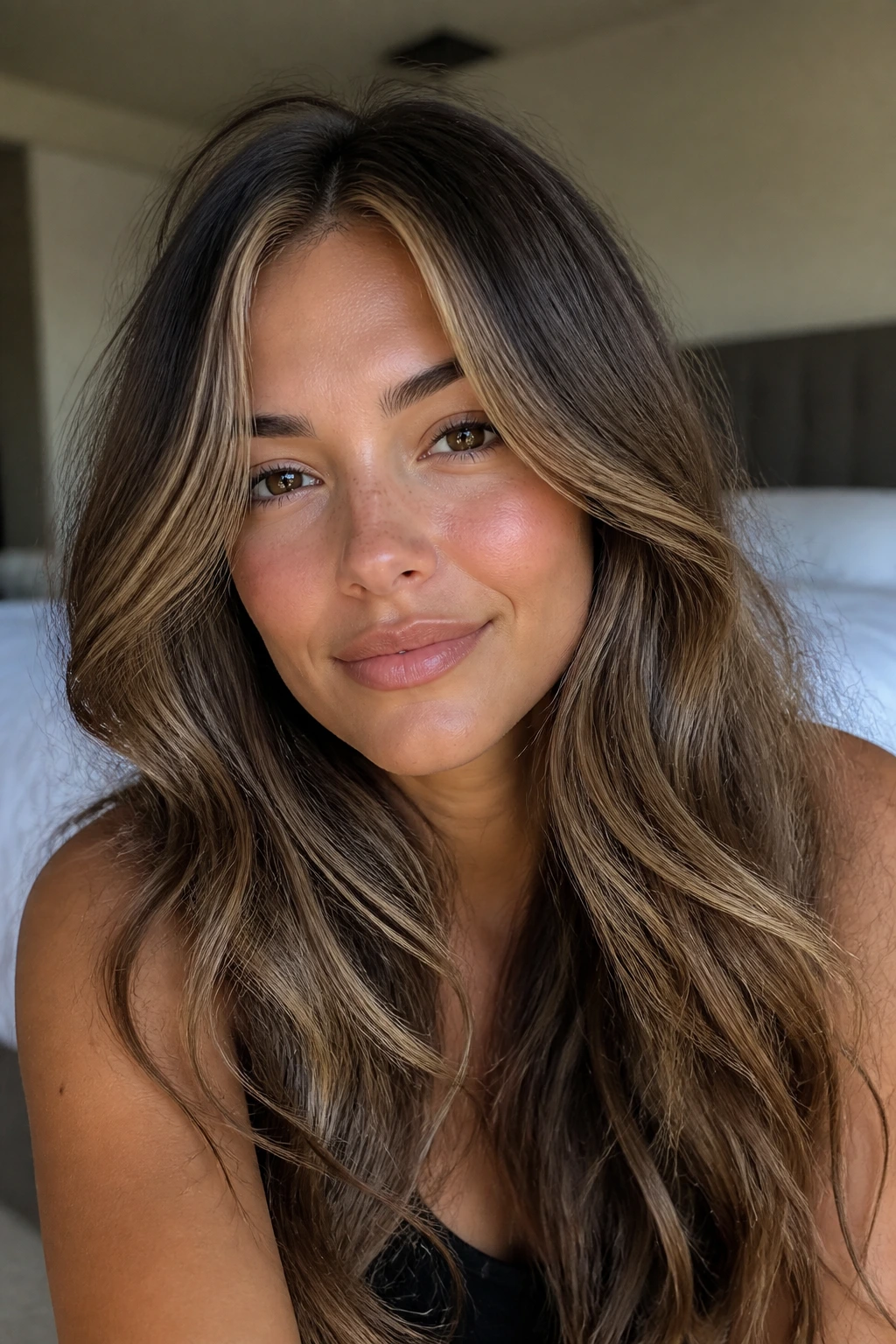
If gold makes you nervous, start here. Cool caramel beige keeps the warmth, but the tone is filtered through beige so the result feels softer and a little more restrained.
This is one of the easiest caramel blonde hair color ideas for brunettes who want a lighter look without the sunny, golden finish. The beige tone keeps the color from going orange, which is a common worry on darker bases. It’s especially useful if your skin leans neutral or cool and you want the hair to sit beside your face instead of competing with it.
A good beige caramel should still look warm in daylight. If it goes flat or gray, the toner went too far. You want softness, not ash soup.
Why Caramel Flatters Brunettes Instead of Fighting Them
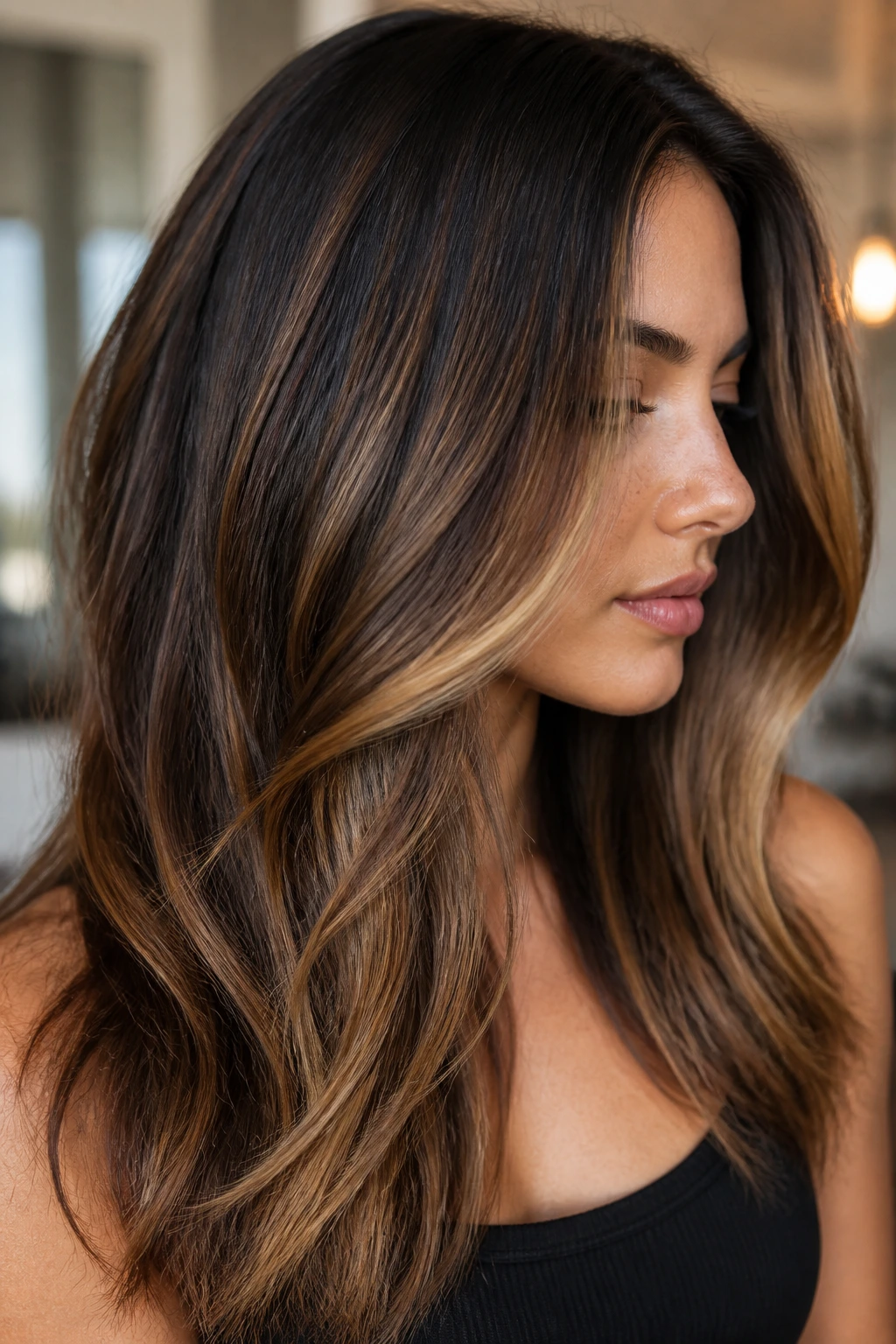
Brunette hair already has depth built in, and that is half the battle won. Caramel works because it borrows that depth and adds light only where the eye needs it most. You get movement at the surface while the darker base keeps the hair looking full.
That’s also why caramel is so forgiving on grow-out. The root stays close to your natural color, so the line between salon visits fades instead of shouting. A lot of blonde looks ask for perfect upkeep. Caramel is kinder. It looks better when it’s a little lived in.
The other reason it works: warmth is doing a lot of the heavy lifting. Brunettes often reveal red and orange pigment when lifted, so choosing caramel instead of icy blonde means you’re working with the hair’s underlying color rather than pretending it isn’t there.
What to Bring to a Color Appointment
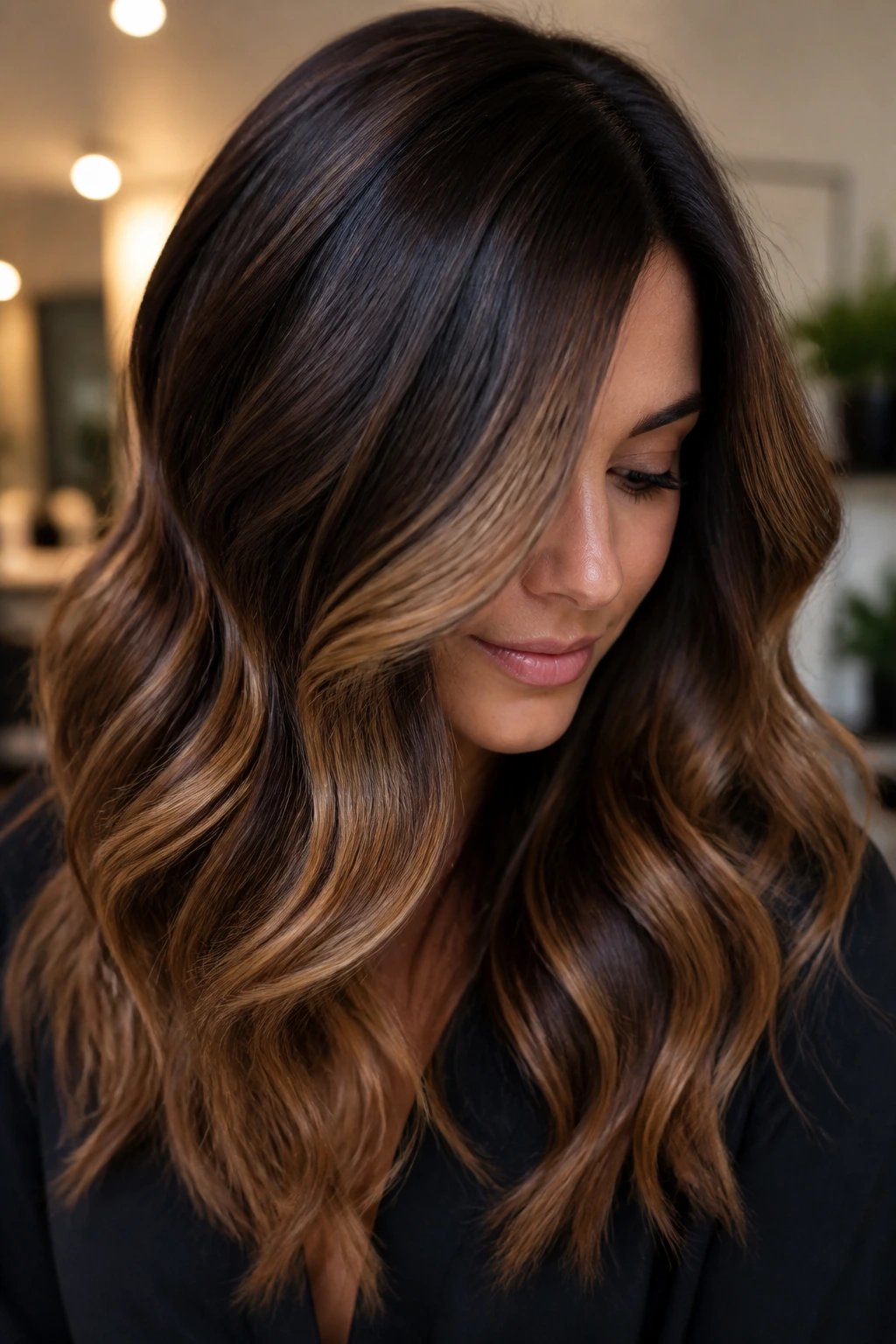
A reference photo helps, but two references are better. One should show the placement you like—balayage, money piece, ribbons, chunky panels. The other should show the tone. People mix those up all the time and end up with the wrong kind of caramel.
- Photos with similar base color: your brunette level matters more than the model’s haircut.
- A note on upkeep: say whether you want a six-week refresh or something that can stretch longer.
- Your hair history: past bleach, box color, keratin, and heat damage all change what’s realistic.
- A daylight photo of your current hair: indoor color hides brass and can fool everyone.
- Product list from home: shampoo, mask, heat protectant, and any toners you already use.
If you can, bring a photo of your hair pulled back, too. The color underneath matters more than people think.
Choosing Warm, Neutral, or Cool Caramel
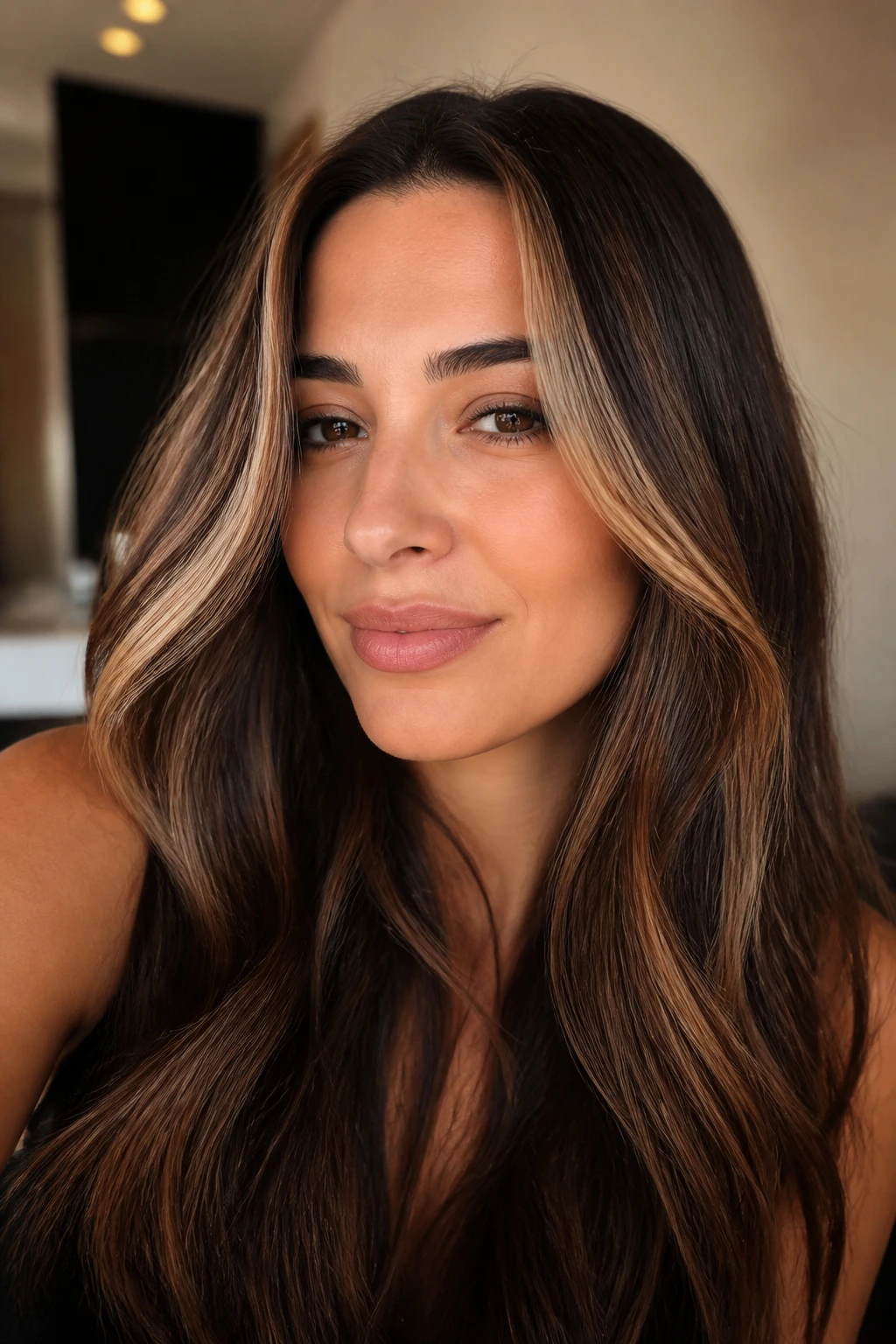
Warm Caramel
Warm caramel sits in the honey, bronze, and toasted gold range. It’s the best match for brunettes with golden or olive undertones who want the hair to look sunlit and rich. Ask for gold-beige or honey-caramel toner, and avoid anything that pushes yellow.
Neutral Caramel
Neutral caramel is the safest middle ground. It still reads warm, but it won’t swing too gold or too ashy. If you’re unsure what direction to take, this is the tone I’d pick first because it’s easier to adjust later than to fix an extreme.
Cool Caramel Beige
Cool caramel beige takes the heat down a notch. It suits people who get orange fast or who wear mostly cool-toned clothes and makeup. The trick is keeping enough warmth in the formula that the hair doesn’t look dusty.
Cinnamon or Copper-Caramel
This direction is for anyone who likes glow. It’s richer, redder, and more vivid in indoor light than beige caramel. Great on chestnut brunettes. Less forgiving if you hate warm tones.
How to Wear the Color So the Dimension Actually Shows
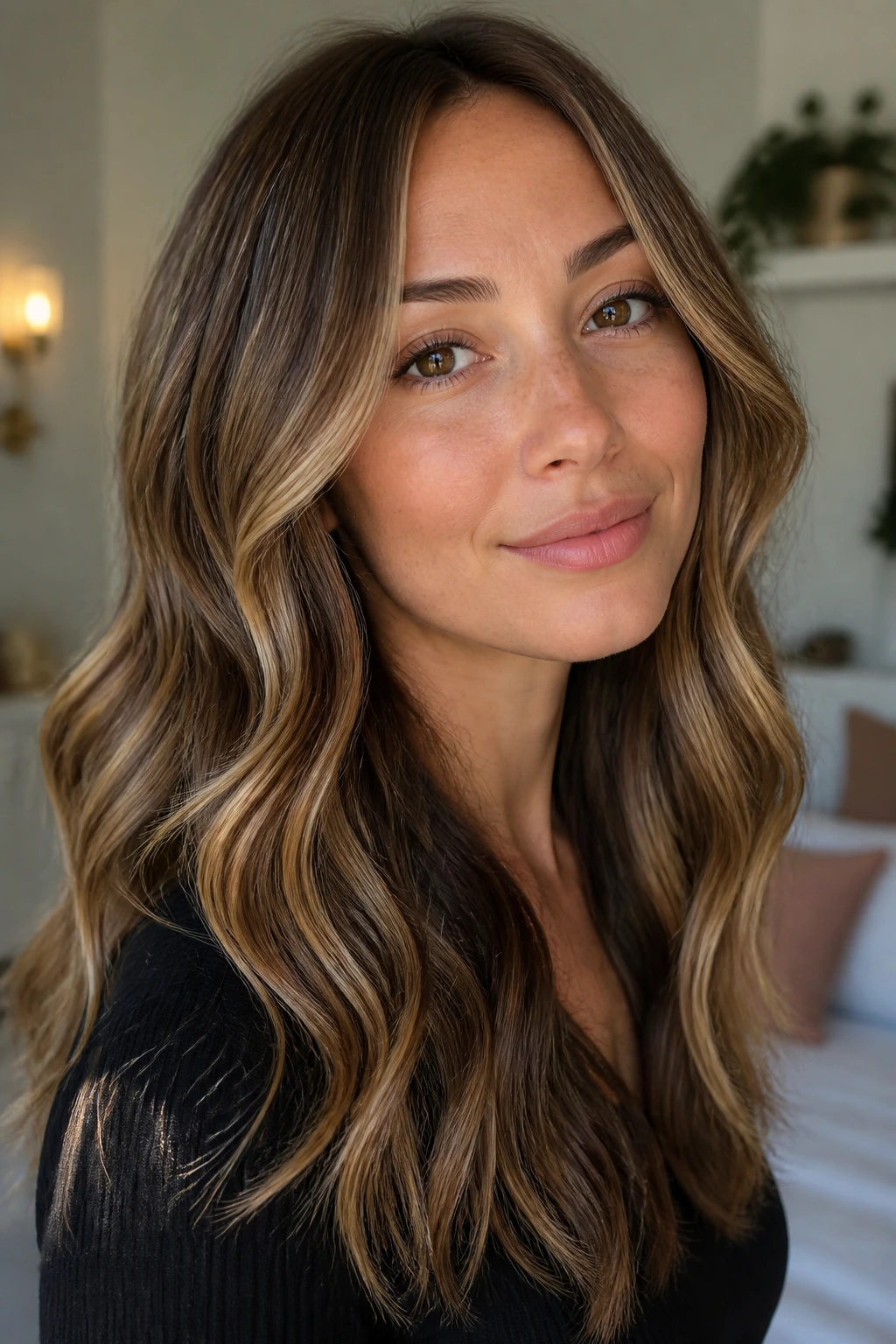
Presentation: Loose waves and a round-brush blowout show caramel ribbons better than bone-straight hair. The bend in the mid-lengths gives the light pieces something to catch.
Companions: Curtain bangs, long layers, and soft face-framing all help the color feel deliberate. If the cut is too blunt and the color is too subtle, the lighter pieces can disappear.
Fit: Shorter cuts need concentrated placement; longer hair can carry more of a fade. Fine hair usually looks better with thinner ribbons, while thick hair can handle a little more contrast.
Finish: A light oil on the ends and a heat protectant before styling keep the color from looking dry. Dry caramel looks flat. Glossy caramel looks like someone spent time on it.
Extra Tips and Tone Boosters
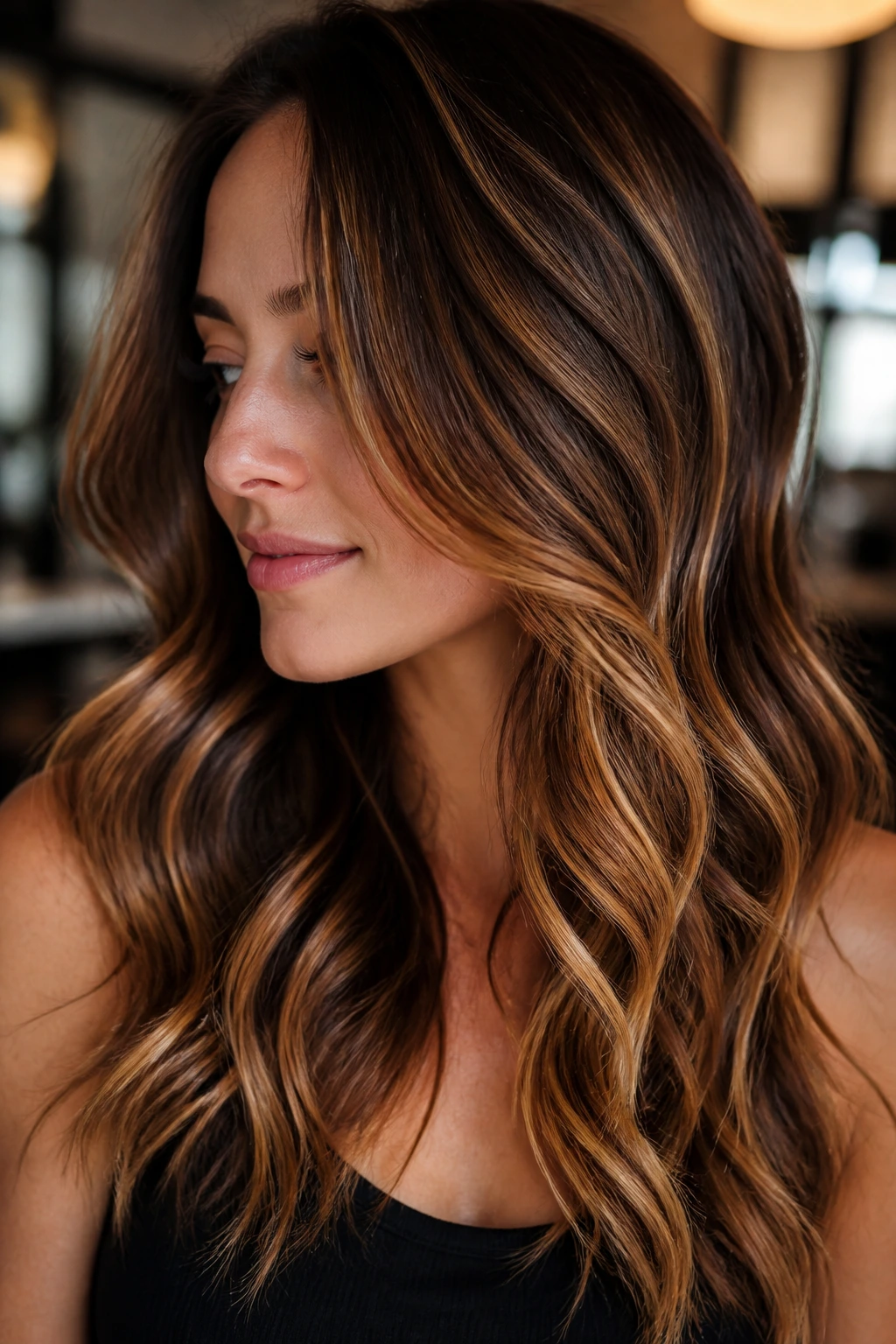
Tone Enhancement: A beige or honey gloss every 6 to 8 weeks keeps caramel from turning orange or dull. Ask for a demi-permanent gloss if you want shine without committing to more lift.
Time-Saver: A shadow root buys you breathing room. Even a half-inch of deeper root color softens grow-out and makes highlights look intentional longer.
Cost-Saver: Face-framing pieces and partial highlights can give you most of the visual impact without a full-head service. On brunette hair, those front pieces do a lot.
Make-It-Yours: Warm skin often likes gold and bronze caramel, while neutral or cooler skin can handle beige caramel better. The shade should sit beside your face, not argue with it.
Keeping Caramel Blonde Glossy Between Visits
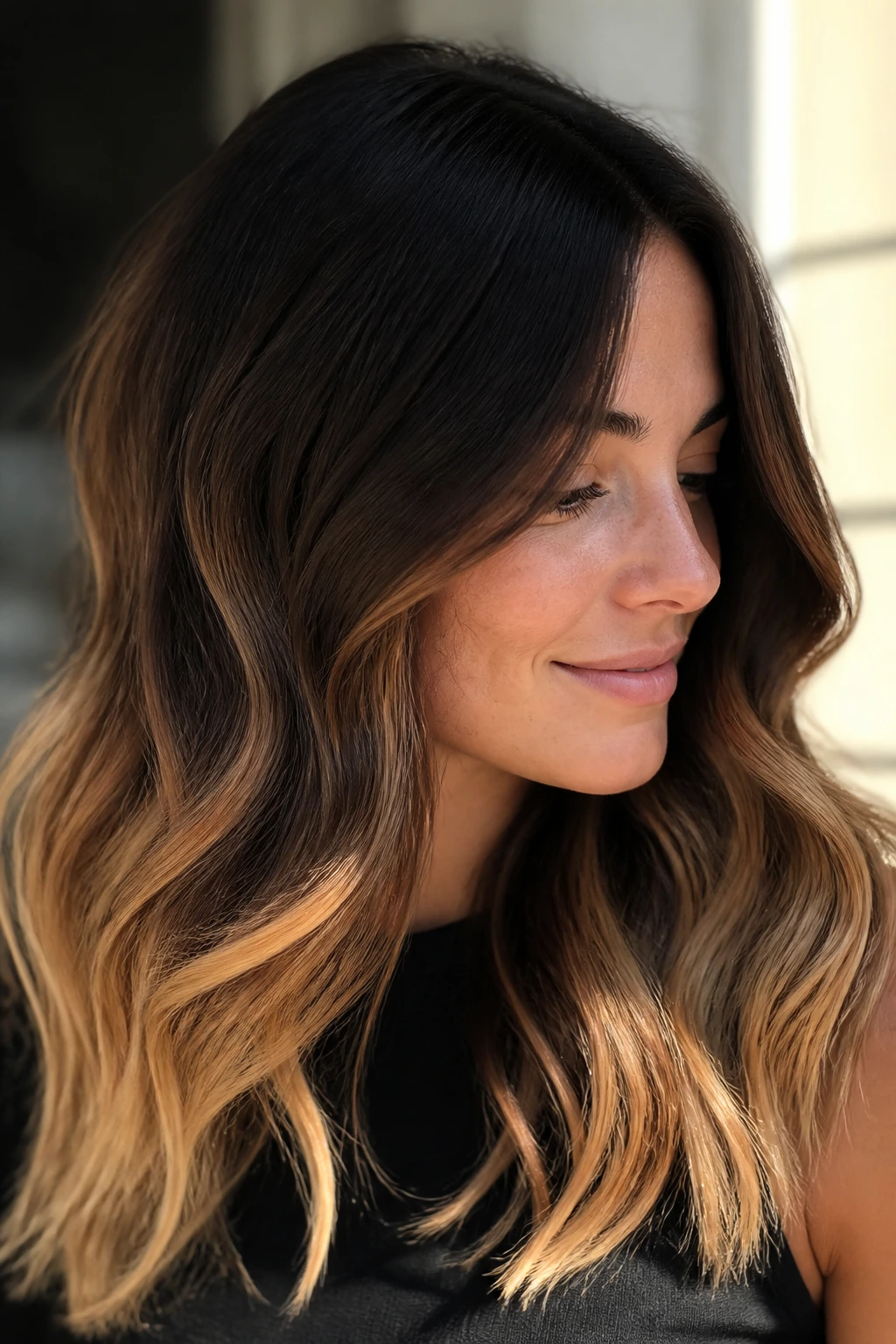
Color care is boring until the day your caramel turns flat and muddy. Then it becomes very interesting, very fast. The safest rhythm for most brunettes is to wait about 48 hours after coloring before the first wash, then shampoo two to three times a week with a color-safe formula.
A sulfate-free shampoo helps the tone last longer, but the bigger issue is water temperature. Hot water strips gloss faster than people expect. Use lukewarm water, rinse cool at the end if you can stand it, and keep a leave-in conditioner on the mids and ends so the lighter pieces do not dry out.
For toning, use a beige or purple shampoo only when needed, not every wash. Too much purple on caramel can make it look drab or slightly violet. A gloss refresh every 6 to 10 weeks is a nice middle ground for most balayage looks, while a full highlight retouch usually lands around 8 to 12 weeks if the root area needs it. If you have a shadow root or lived-in melt, you can often stretch the salon visit longer.
Heat is the other sneaky culprit. Flat irons and curling wands make caramel look gorgeous, but only if you use a 190°F–400°F heat protectant and keep the tool moving. Hold a hot tool in one spot too long and the lighter pieces can turn rough fast. Sun, chlorine, and hard water can also dull the tone; a UV spray and a swim cap sound fussy until they save your gloss.
Variations and Adaptations to Try
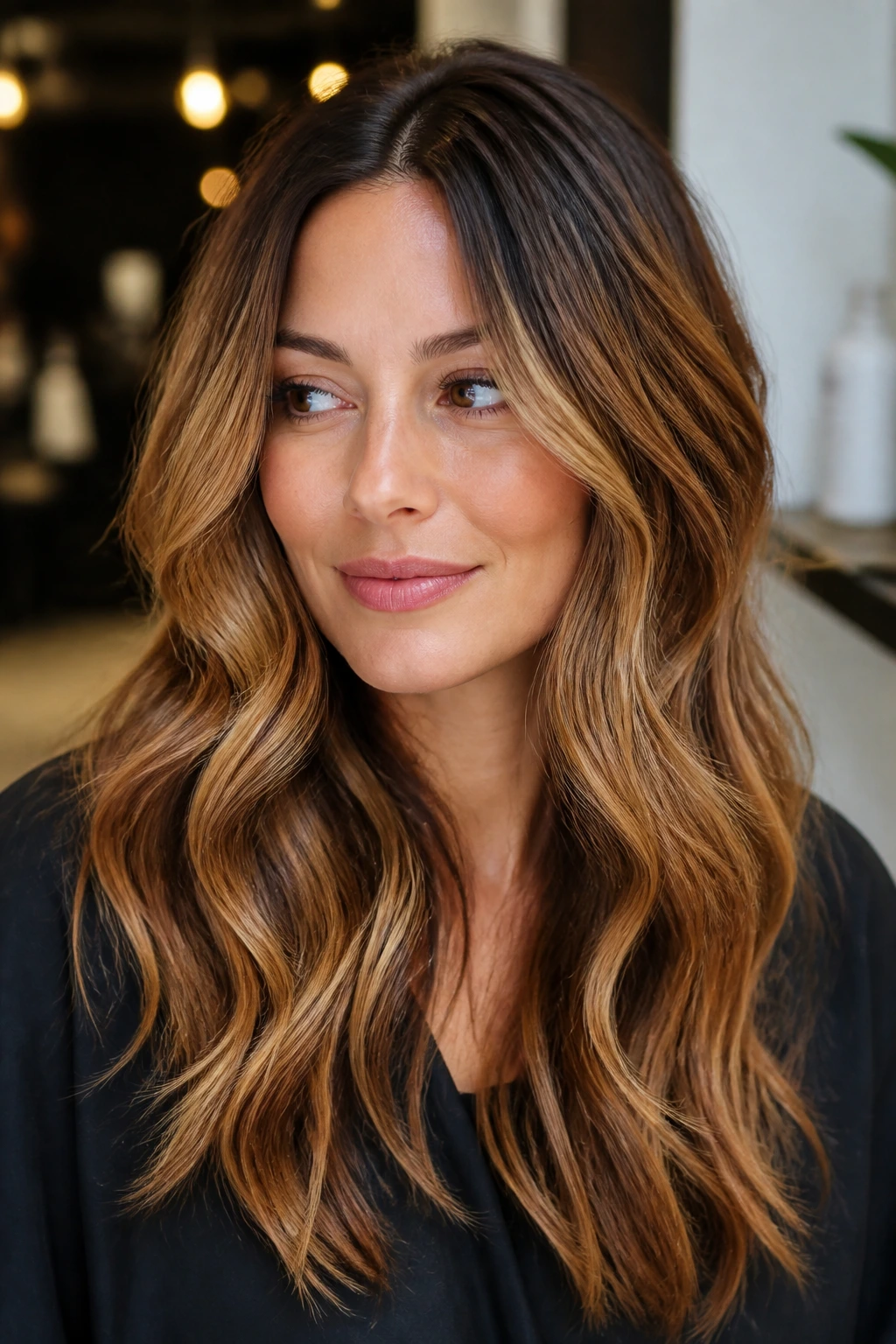
Soft Root-Smudged Caramel: Keep the root one to two levels deeper than the rest of the color and blur the transition with a demi-permanent smudge. This is the easiest version to maintain because the grow-out line disappears into the haircut.
Beige Caramel Refresh: If gold feels too loud, ask for a neutral-beige toner over lightened pieces. It keeps the dimension but takes the brightness down a notch, which is handy on cooler skin tones or very fine hair.
Copper-Kissed Caramel: Add a touch more red warmth through the mid-lengths and ends. This version works beautifully on chestnut brunettes who want the color to glow in indoor light.
Curly Caramel Halo: Concentrate the lighter pieces on the crown, face frame, and outer curl clumps. The curl pattern carries the color around, so you get lift without striping.
Money-Piece Caramel: Brighten just the front and leave the rest of the brunette base mostly alone. It’s a smart choice if you want a visual change without a full commitment.
Gloss-Only Caramel: If your hair is already highlighted, skip more bleach and do a caramel gloss instead. Sometimes the best move is polishing the color you already have.
Common Mistakes That Make Caramel Look Off
One flat shade everywhere: Brunette hair needs depth. If the caramel covers too much of the head, the result can look orange and one-note. Fix it by keeping at least two depths in the hair: a darker root or lowlight and lighter caramel pieces.
Lifting too far, too fast: Brunettes often expose red and orange when lightened. Push the hair too light in one session and the warm pigment can flare up hard. Safer lightening, followed by a good toner, usually gives a cleaner caramel.
Ignoring the haircut: A straight, heavy cut can swallow subtle highlights, while too many choppy layers can break a soft color into noise. Match the placement to the cut. Blunt bobs want cleaner surface brightness; shags want scattered ribbons.
Using the wrong toner: Caramel that turns ash-brown or muddy usually got toned too cool. Caramel that screams yellow went too warm. The fix is a tone check in daylight, not a guess under salon lights.
Skipping home care: Color-safe shampoo, heat protection, and a conditioning mask are not optional if you want the tone to last. Dry ends make caramel look cheaper. Healthy shine does a lot more than people admit.
Frequently Asked Questions
Can brunettes get caramel blonde without bleach?
Sometimes, yes, but only if the hair is already light enough or you’re aiming for a very subtle glaze. On darker brunettes, true caramel usually needs some lifting first. A gloss alone can warm things up, but it won’t create much brightness.
Is caramel blonde better as balayage or foils?
Balayage gives you softer grow-out and a more lived-in look. Foils give stronger lift and more precise brightness, which helps if your base is dark or resistant. Plenty of stylists mix both, and that’s often the smartest move.
What brunette base works best for caramel highlights?
Levels 4 to 6 are the easiest starting point because the warmth shows clearly without needing extreme lightening. Very dark bases can still take caramel, but the lift has to be handled more carefully so the hair doesn’t go coppery or flat.
How do I keep caramel from turning brassy?
Use a sulfate-free shampoo, avoid scorching hot water, and book gloss refreshes before the tone gets too orange. A beige or slightly cool toner can help, but don’t overdo purple shampoo or the caramel can lose its warmth altogether.
Does caramel make hair look thicker?
Often, yes. The contrast between darker base and lighter ribbons can create the illusion of more density, especially on layered cuts and bobs. Thin babylights or midlights work especially well for this.
What if my hair pulls red fast?
Ask for a neutral-beige caramel rather than a warm golden one. The cooler end of the caramel family keeps red undertones from taking over. A toner that’s a touch ashier at the first appointment can save you a lot of correction later.
Which caramel look is lowest maintenance?
Lived-in balayage with a shadow root is usually the easiest to live with. The root stays soft, the color grows out gently, and you can stretch touch-ups longer than with chunky face-framing or full-head foil work.
Can I wear caramel blonde on a pixie or bob, or does it only work on long hair?
Short hair can wear caramel beautifully, but the placement has to be tighter and more intentional. On pixies and bobs, the color should support the cut’s shape instead of covering every inch of it.
Soft Light Without the Striping
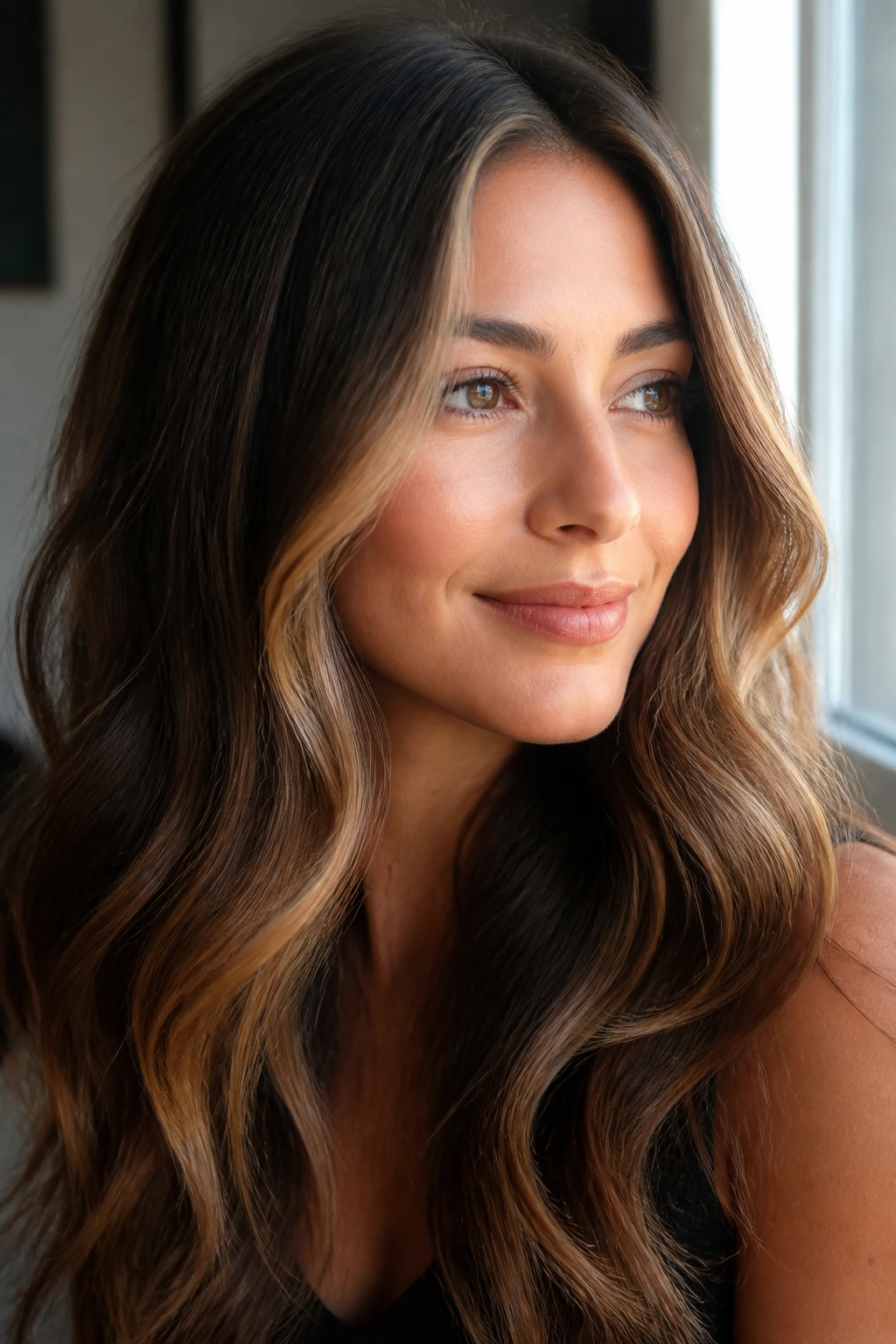
Caramel works on brunettes because it adds light where the hair can actually use it. Not everywhere. Not in one flat sheet. Just enough brightness to make the cut move and the base feel richer.
If you pick the tone with your undertones in mind, and you keep the placement tied to the haircut, caramel blonde stops looking like a trend and starts looking like a very practical choice. That’s the part I like most. It grows out well, it styles well, and it gives brunettes room to stay brunette.
A good caramel should look like it belongs there from the first wash to the last. Choose the version that matches how much upkeep you’re willing to live with, and the color will do the rest.