



Short curly hair has a way of exposing every bad haircut in a mirror and then some. The best hairstyles for short hair with curly hair don’t try to bully the curl into obedience; they use it. A cut that sits at the jaw when wet can land two inches higher after it dries, and that gap is where a lot of short curly styles go sideways.
The shape matters more than the length. Always. Short curls can look sharp and clean, or they can puff at the sides, cave at the crown, and hide your cheekbones under a little cloud of “almost right.” The difference usually comes down to a few small choices: where the part falls, how much weight gets removed near the ears, whether the top has enough lift to keep the silhouette open, and how much room the curl has to do its own thing.
Some of the looks below are cuts, some are styling tricks, and some are the sort of quick fixes that save a good hair day when the weather, sleep, or humidity has other plans. A few are sleek. A few are playful. A few are the kind of low-effort shapes that look better after they’ve been worn for a day. All of them work because they respect curl pattern instead of fighting it.
Why These Short Curly Styles Earn Their Place
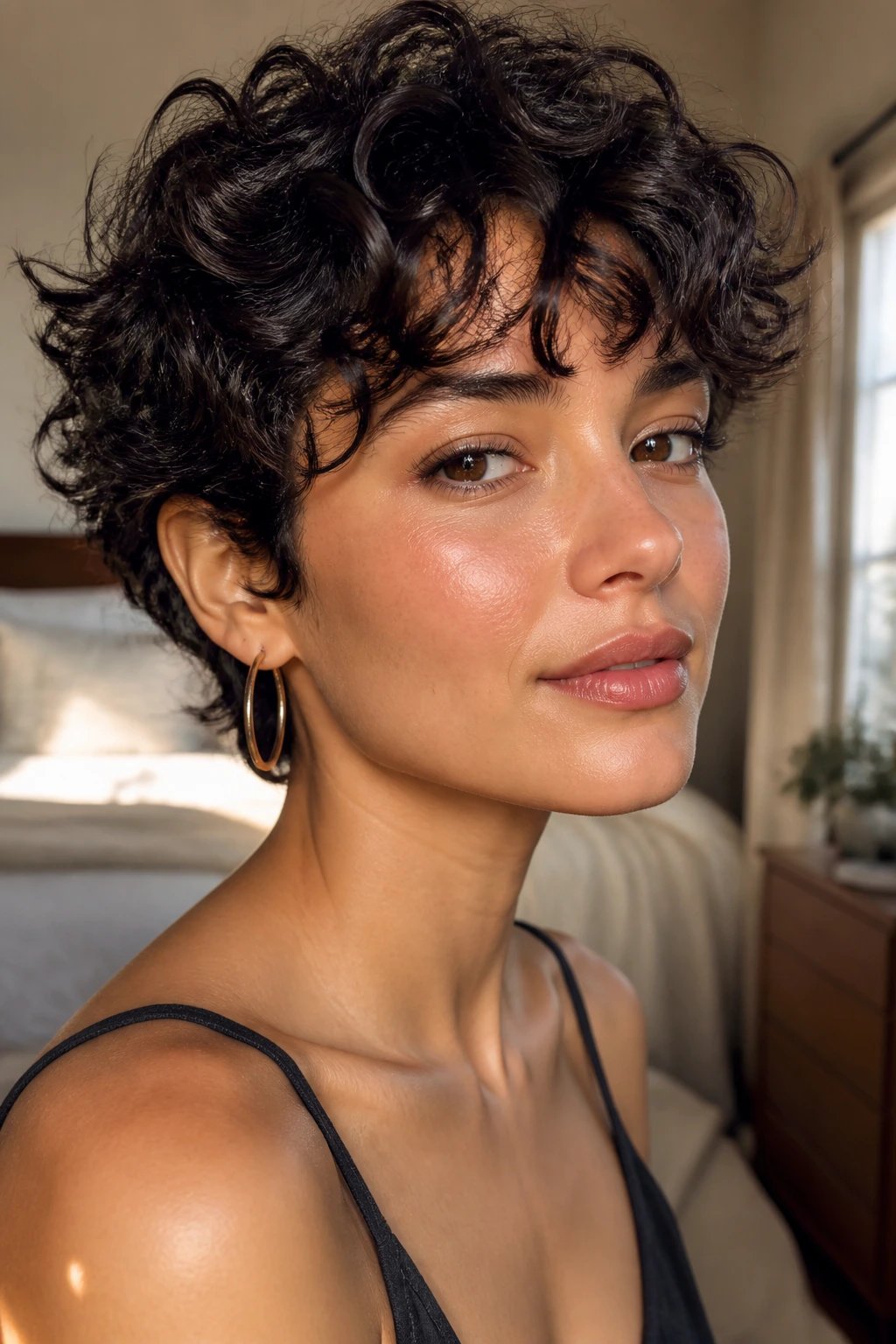
-
They plan for shrinkage: A good short curly style assumes the hair will spring up once it dries, which keeps the final shape from landing awkwardly high or boxy.
-
They keep the outline cleaner: Removing weight at the sides and building a little lift at the crown stops short curls from turning into a triangle.
-
They work on ordinary mornings: Several of these styles need nothing more than a mist bottle, a small amount of gel or mousse, and five minutes with a diffuser.
-
They make accessories useful: Clips, pins, scarves, and headbands stop looking decorative-only and start solving actual shape problems.
-
They grow out in a decent way: The better short curly cuts still look intentional when they pick up an inch, which saves you from that weird in-between stage.
-
They flatter different face shapes: A side part, a soft fringe, or a tapered nape can change the whole mood of a cut without asking for extra length.
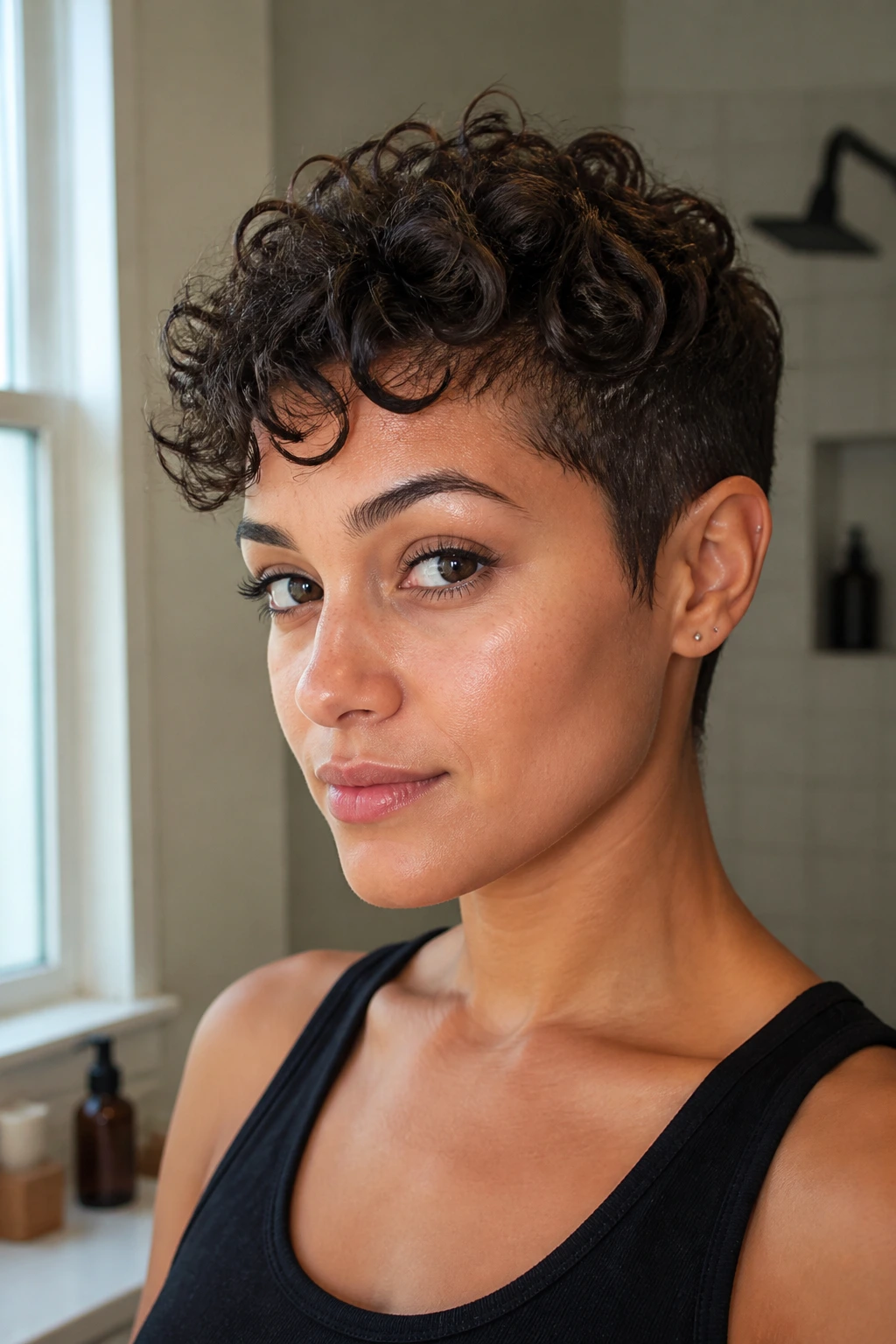
1. The Tapered Curly Pixie
A tapered curly pixie is one of those cuts that looks neat in a way straight hair can’t fake. The sides hug the head close, the nape stays clean, and the curls on top get enough room to pop instead of flattening into a wet-looking cap. If your curls get bulky around the ears, this is the shape that stops the whole cut from swallowing your face.
The trick is keeping the top long enough to show some coil, usually around 1.5 to 3 inches of visible curl, depending on density. Go too short up top and the style loses its bounce. Leave the sides too thick and the shape starts to drift into mushroom territory, which is not the mood here.
What makes it flattering:
The taper draws the eye upward. That matters if you want your cheekbones, brows, or earrings to do some work. It also keeps the nape from looking fuzzy the second the haircut starts growing out.
For styling, a light mousse on damp hair is usually enough. Scrunch, diffuse on low heat for 5 to 8 minutes, then let the rest air-dry. If your curls are tighter, a touch of gel at the crown helps lock in definition without making the whole cut stiff.
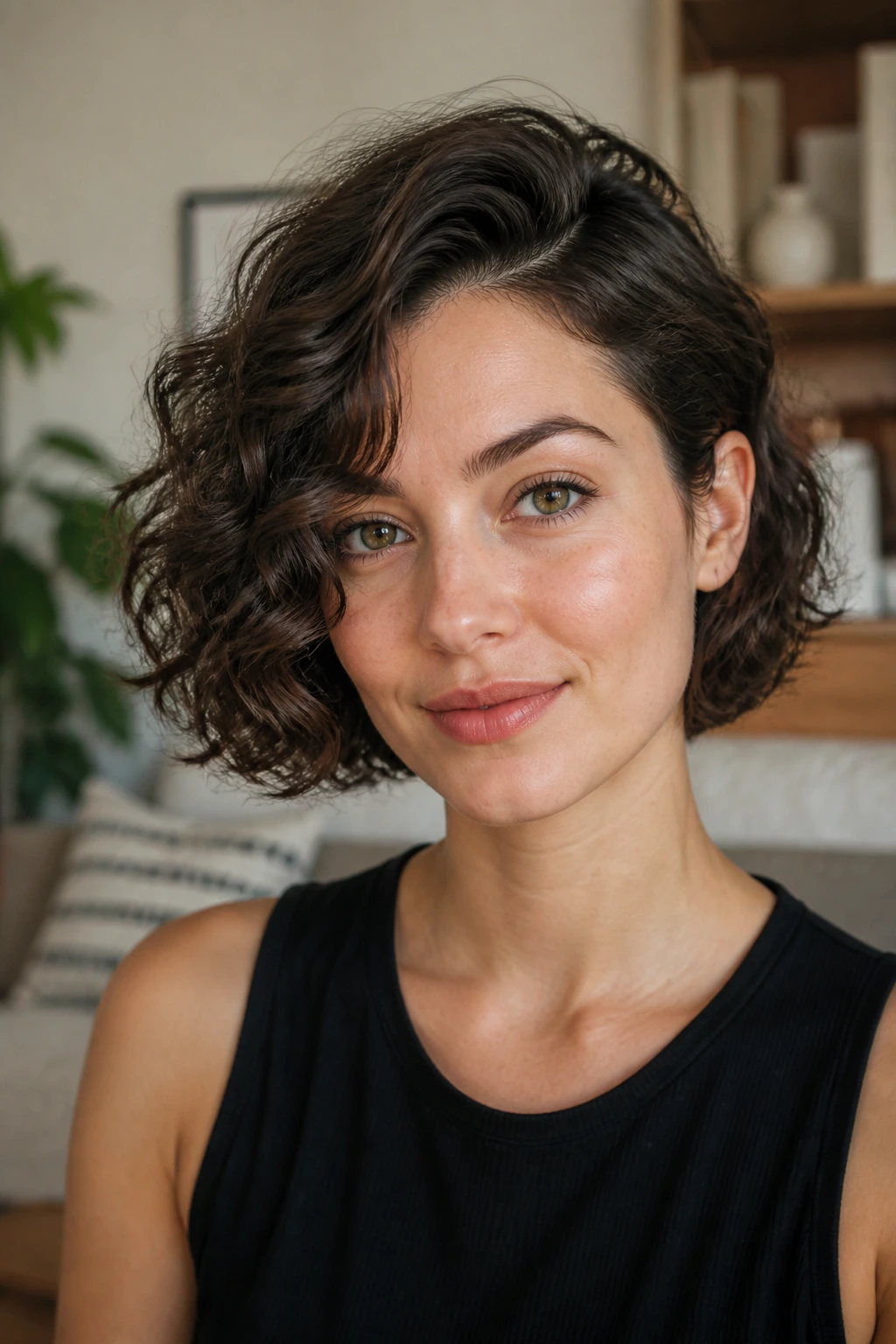
2. The Rounded Curly Bob
Why does a rounded bob work so well on curls? Because it gives the curl a shape to settle into. Instead of hanging straight down like a blunt shelf, the perimeter curves softly around the chin and cheekbones, which makes the whole haircut feel deliberate. On short curly hair, that rounded outline does a lot of the heavy lifting.
Ask your stylist to keep the corners soft and the layers subtle. Too many choppy layers in a bob can make the top piecey while the bottom goes wide, and that’s a nasty little shape if you’ve got dense curls. A rounded bob works best when the overall silhouette feels like a shallow arc.
The Shape That Does the Heavy Lifting
The magic sits in the balance. You want enough length in front to frame the face, but not so much weight at the bottom that the curls drag the whole cut down. If your face is round, the bob should skim the chin or sit just below it. If your face is longer, a bob that sits slightly higher can look fresh and clean.
A middle part makes this cut feel symmetrical and calm. A slightly off-center part gives it more movement. Either way, the key is not letting the sides puff out wider than the temples. That’s the part people often miss.
3. The Side-Parted Chin-Length Cut
A deep side part can save a curly bob that feels a little too even. It shifts the weight, gives the top a touch of lift, and lets one side fall in a softer, longer curve across the cheek. If your curls tend to sit flat at the root, this is one of the fastest ways to change the whole read of the haircut.
This style is especially good when the curls are cut to chin length or just below. You get enough length for shape, but not so much that the curl collapses into itself. A side part also helps if one side of your hair always wants to misbehave more than the other. Better to work with that asymmetry than fight it every single morning.
Best for:
- Round and square faces that need a little vertical lift
- Loose to medium curls that need direction
- Glasses wearers who want the hair off the frame line on one side
The finish should look soft, not stiff. If you use gel, keep it near the roots and around the part. Then rake the rest with wet hands and leave the ends alone. That little restraint keeps the curl from losing its natural swing.
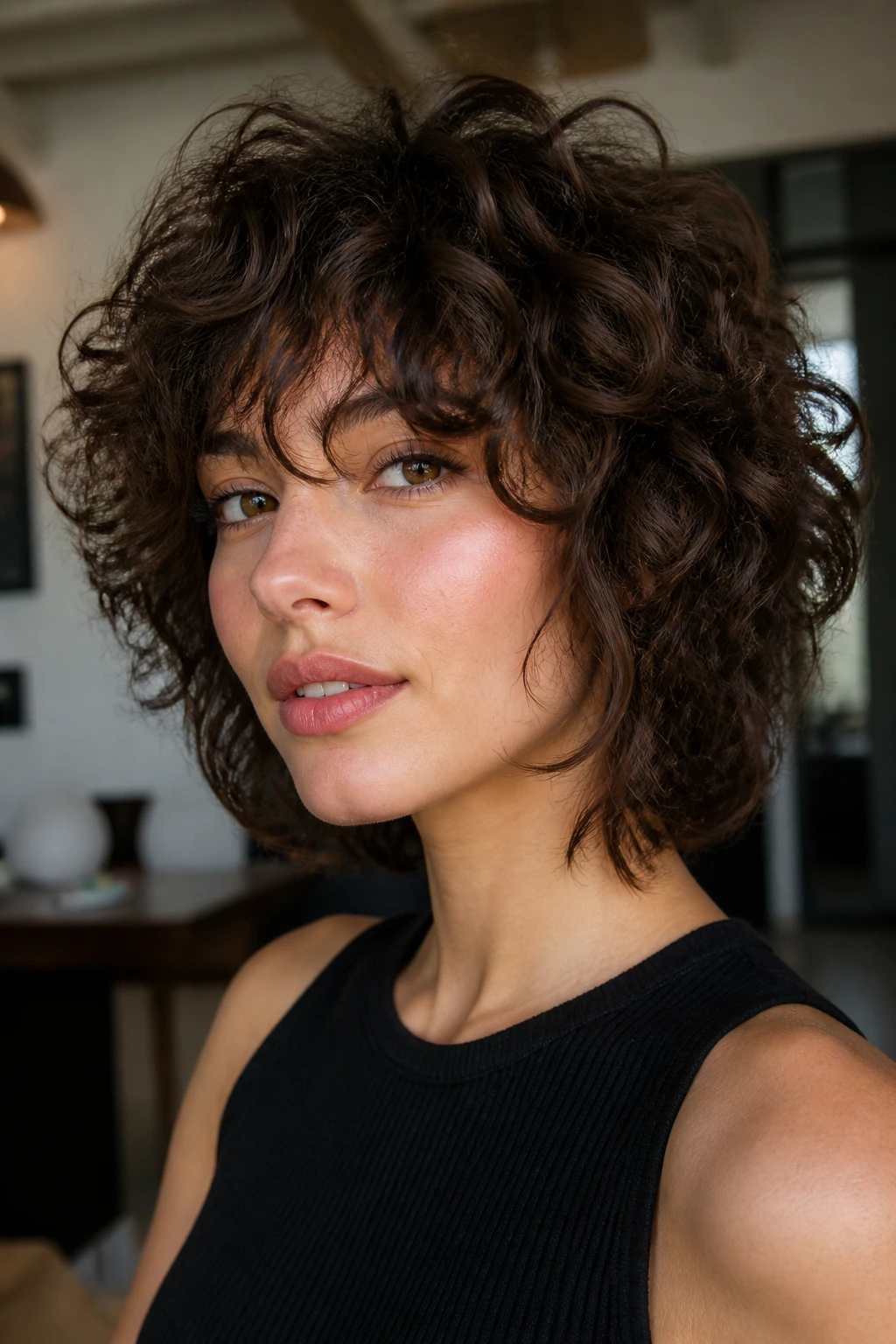
4. The Layered Curly Shag
The curly shag is the cut I’d hand to someone who says, “My hair always turns triangular.” That triangle is usually the result of too much weight sitting at the bottom and not enough structure through the top and sides. The shag changes that by adding internal layers that let the curls stack instead of balloon.
The best version of this cut is not random. It needs layers placed with a purpose. Shorter pieces around the crown create lift, while longer layers around the jaw keep the shape from getting frizzy and hollow. On short hair, that balance is everything. Too much layering and you get a fuzzy halo. Too little and the whole thing sits like a helmet.
Where the Layers Should Start
I like shag layers that begin around the cheekbone or just above the ear on curls that shrink a lot. That gives the top room without chewing up the perimeter. If your curl pattern is looser, the layers can start a little lower so the cut doesn’t lose too much weight.
A good curly shag also plays well with diffused volume. Flip the head upside down for a few seconds at the roots, then return upright before the curls fully dry. That keeps lift at the crown without making the sides explode. A little controlled mess is the point.
5. The Curtain-Bang Bob
Curtain bangs on curly short hair are a smart move when you want softness near the face without committing to a heavy fringe. The center opens a little, the curls part around the forehead, and the whole cut feels lighter. It’s a good option if you like your hair to do some framing without sitting right in your eyes.
The bangs should be cut longer than you think, because curls spring up. On most curl patterns, a fringe that looks a touch too long when wet ends up landing perfectly once dry. Cut them too short and they can bunch above the brow in a way that feels abrupt instead of relaxed.
Bang Length Matters
The sweet spot is usually somewhere between brow level and the top of the cheekbone when dry, depending on your texture. You want the bangs to skim, not stab. If the front pieces are too dense, separate them with your fingers while the hair is still damp so they dry in a softer shape.
A curl cream used only on the front can help these bangs stay defined. Don’t drown them. One small scoop spread through the fringe is usually enough, and it keeps the rest of the style from looking heavy.
6. The Deep Side Part Bob
A deep side part is the fast fix when your short curls need drama but not more length. It pushes volume to one side, opens the face, and gives the hair a little swing that a center part can sometimes flatten out. There’s a reason this looks good on just about every curl type: it changes proportion.
Short curly hair can get broad at the cheeks if all the volume sits evenly on both sides. The deep side part breaks that width. One side tucks close, the other side gets a soft pile of curls that sits over the brow or skims the eye line. That contrast is flattering in a very practical way.
You do not need a huge side sweep to make it work. Even moving the part a couple of inches off center can change the shape enough to matter. If your hair fights the part, use a fine-tooth comb and a little water at the root, then clip the lifted side up for 10 minutes while it dries.
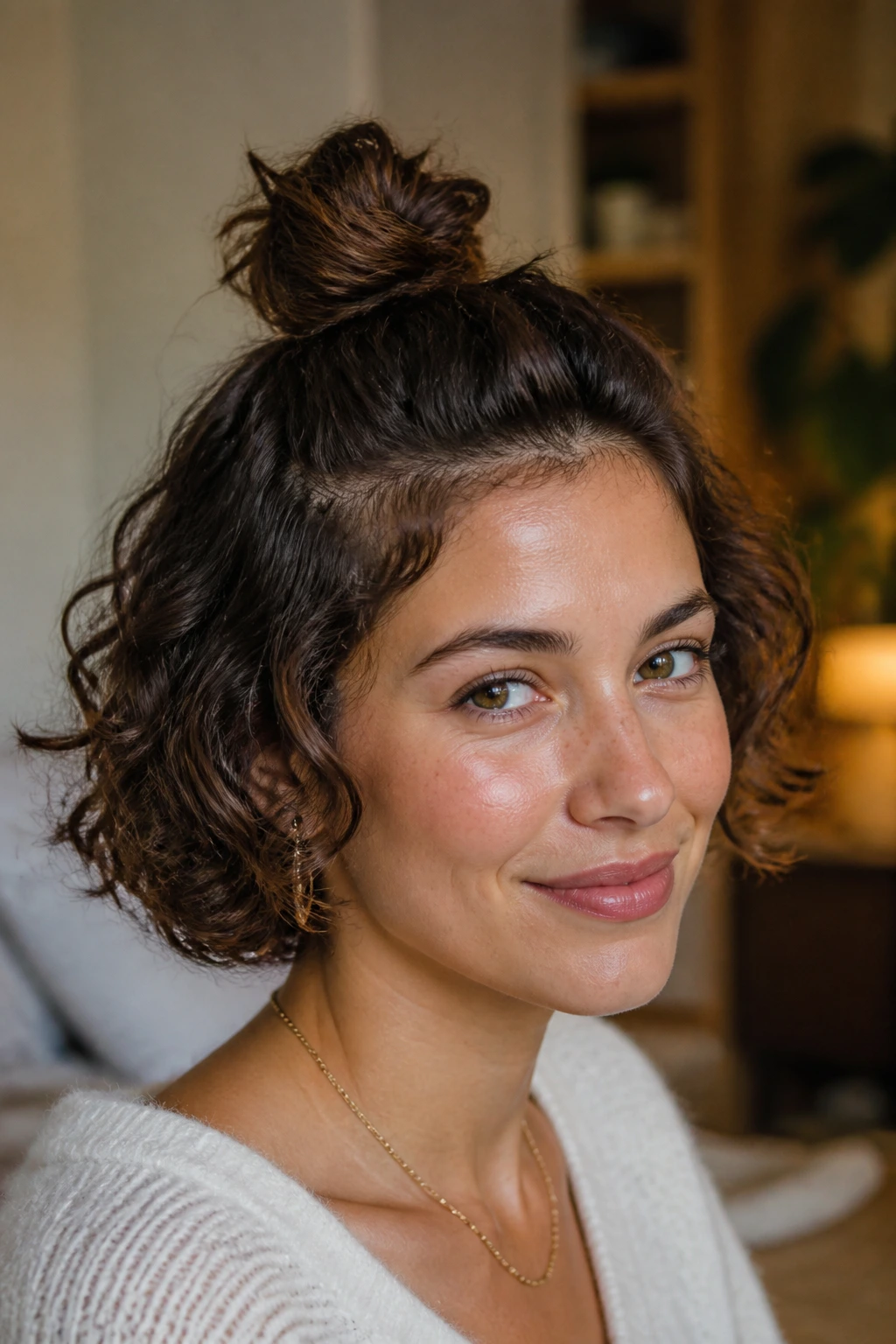
7. The Half-Up Mini Top Knot
Sometimes the problem with short curly hair isn’t the cut. It’s the top half of the head that keeps collapsing while the sides stay lively. A tiny half-up knot fixes that in about thirty seconds and gives the face a cleaner frame. It’s one of the easiest styles in this whole list, and it’s not pretending to be more complicated than that.
The key is taking just enough hair from the crown to lift the roots without robbing the rest of the curl pattern. Gather too much and the knot turns tiny while the loose curls underneath look thin. Gather too little and you lose the lift you were trying to get in the first place.
A spiral elastic or two bobby pins usually holds better than a thick scrunchie on short hair. Twist the top section once, coil it lightly, and pin it low enough that it feels secure but not flattened. Leave a few face-framing curls out at the temples if you want the style to feel softer.
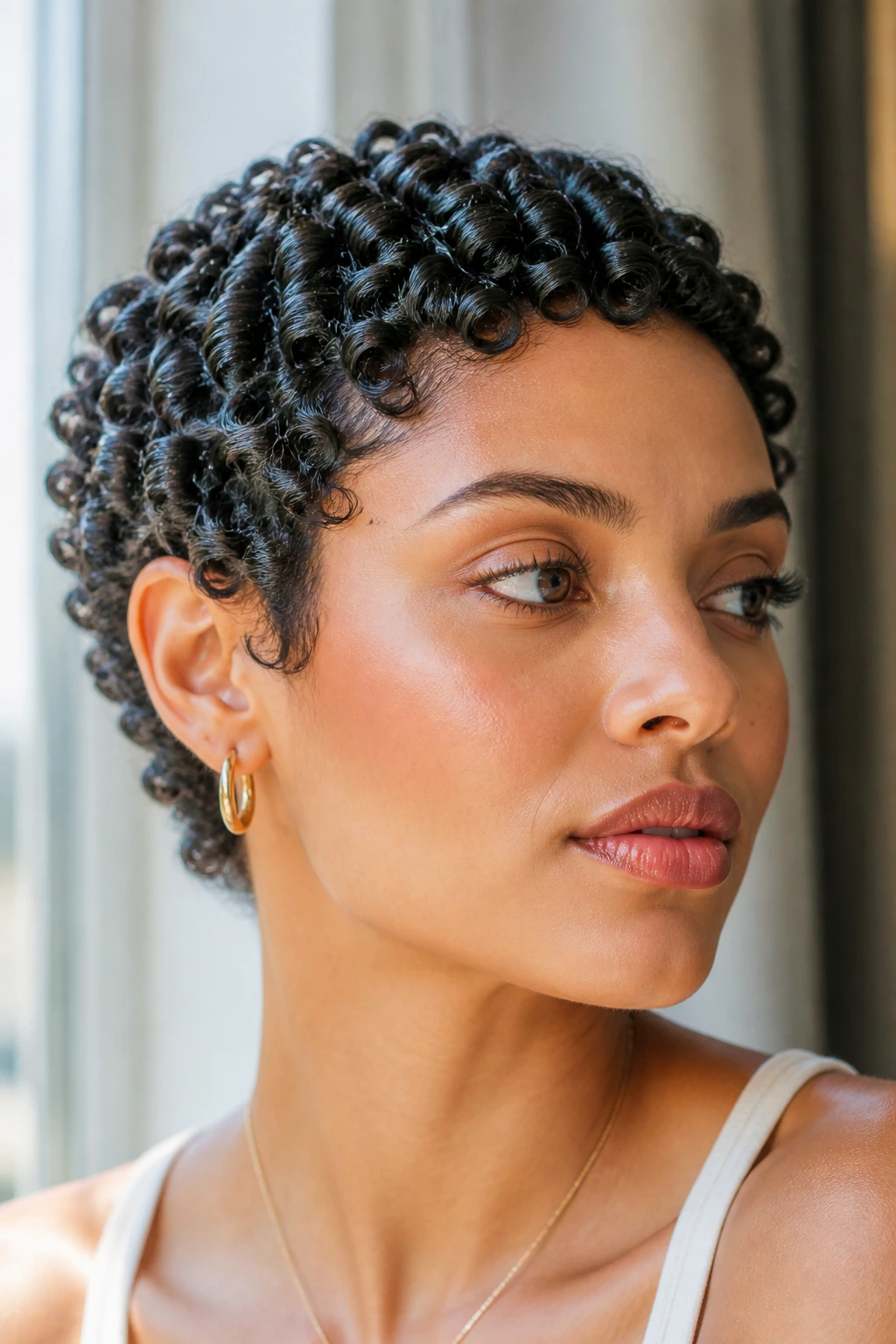
8. The Finger-Coiled Crop
A finger-coiled crop is for the days when you want every curl to look deliberate. The shape is compact, the definition is clean, and the texture reads almost sculpted. It’s especially good on shorter coils and tight curls that lose their pattern when they’re left to air-dry with no direction.
The process is simple, but it does take patience. Work on damp hair, use a small amount of styling cream or gel, and wrap each curl around your finger in the direction it naturally wants to turn. Don’t force the curl pattern into the same spiral everywhere. That’s how the style ends up looking stiff.
How to Keep the Coils Uniform
Start at the front and crown, where the eye lands first. Those curls should be neat and consistent. The back can be a little looser, because most people won’t see it as clearly unless the hair is very short.
A diffuser on low heat can help set the shape without blowing the coils apart. If you touch the curls before they’re fully dry, the coils lose that clean finish. Annoying, yes. Worth it, also yes.
9. The Soft Curly Wolf Cut
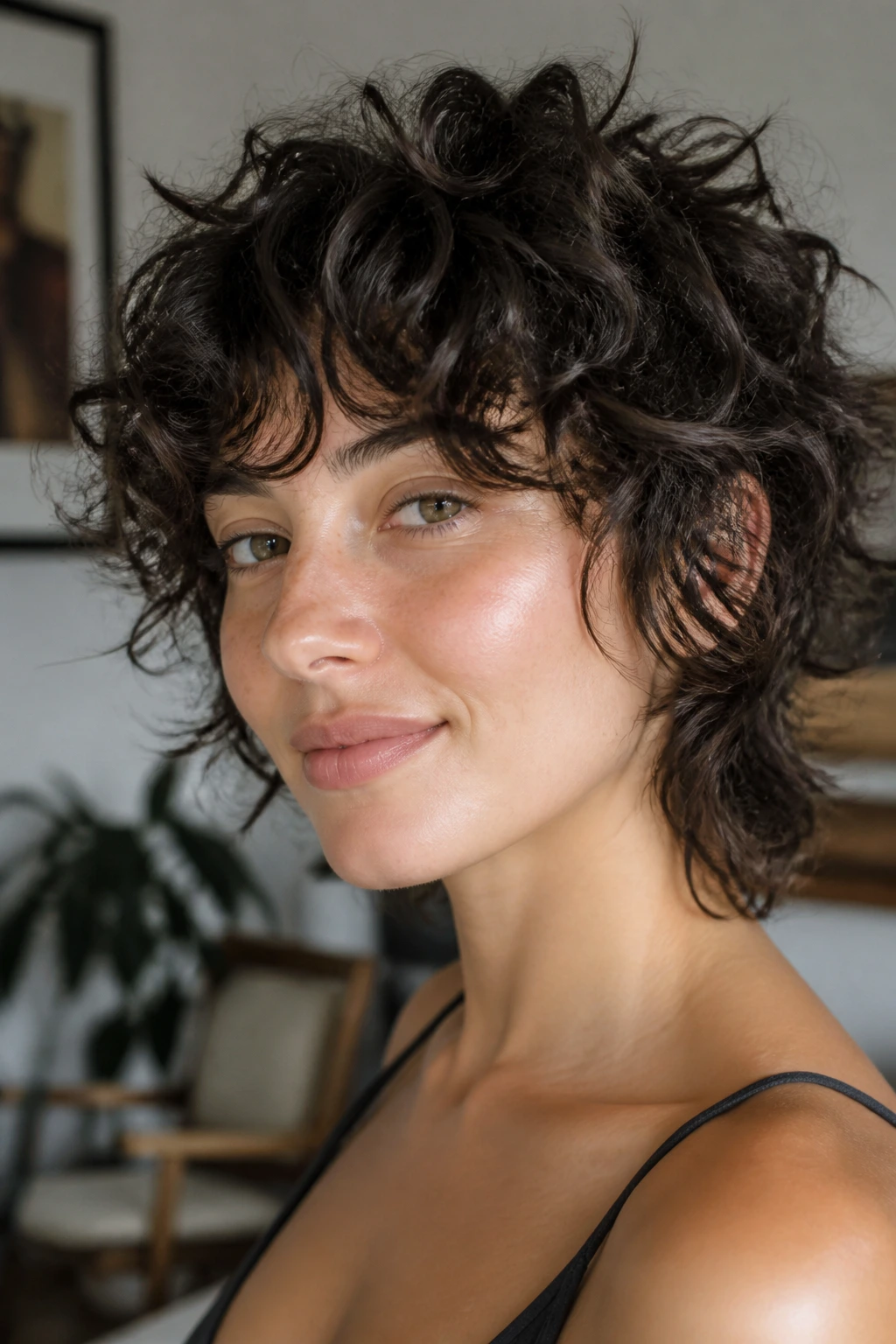
The wolf cut gets a bad reputation because people picture a choppy mess. On short curly hair, though, the softer version can be excellent. It keeps the crown fuller, takes weight out through the lower sections, and creates a lived-in shape that feels less formal than a bob and less fussy than a pixie.
The reason it works is simple: curls already have movement. The wolf cut leans into that movement with uneven layering that gives the top a little attitude while letting the ends stay airy. If your curls tend to clump heavily at the bottom, this cut opens the shape up.
Unlike a polished bob, the soft wolf cut can handle a bit of roughness. In fact, it usually looks better when it isn’t over-styled. A diffuse-and-go routine is enough for many curl patterns. Add too much cream and the layers can droop; keep the product light and the cut keeps its edge.
10. The Tapered Natural Cut
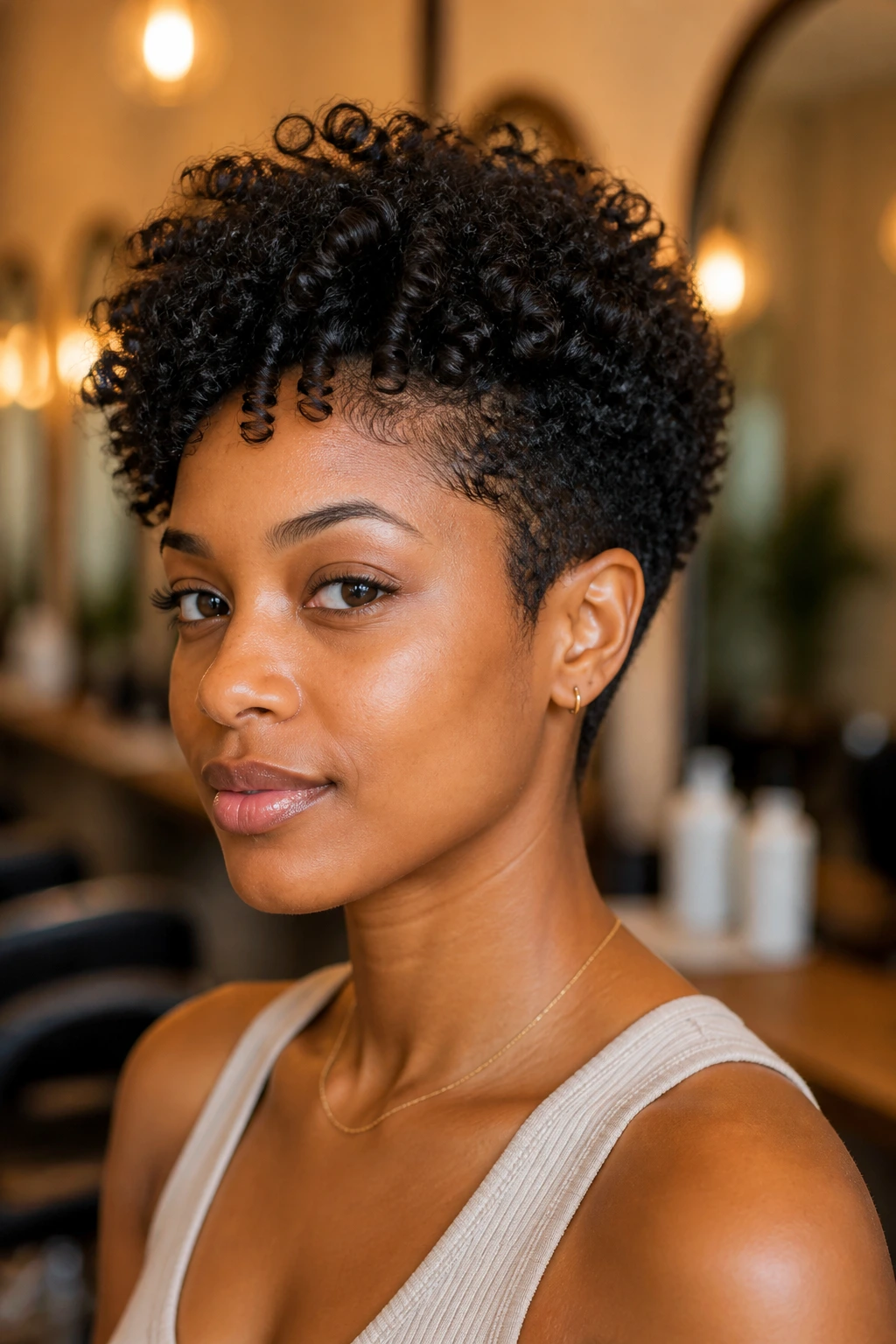
A tapered natural cut is one of the cleanest shapes for curly hair that needs structure without looking too engineered. The sides and back are cut shorter, the top stays fuller, and the silhouette feels intentional from every angle. If your curls are dense, this cut can take a surprising amount of bulk out without making the hair look thin.
The salon conversation matters here. Ask for the taper to stay soft around the temples if you want the look to feel feminine and less severe. If you like a sharper outline, the taper can come closer to the scalp at the nape and lower sides. Either version works; the difference is in how much edge you want.
What to Ask For at the Salon
- Keep the top long enough for curl definition, not just volume.
- Remove bulk through the lower sides, but avoid a hard shelf line.
- Shape the nape so it doesn’t puff out as it grows.
- Check the cut dry before you leave, because curls lie when wet.
This is one of those cuts that rewards a good trim schedule. Let it go too long and the taper loses its clean line. Keep it on a 6- to 10-week rhythm and the whole thing stays sharp.
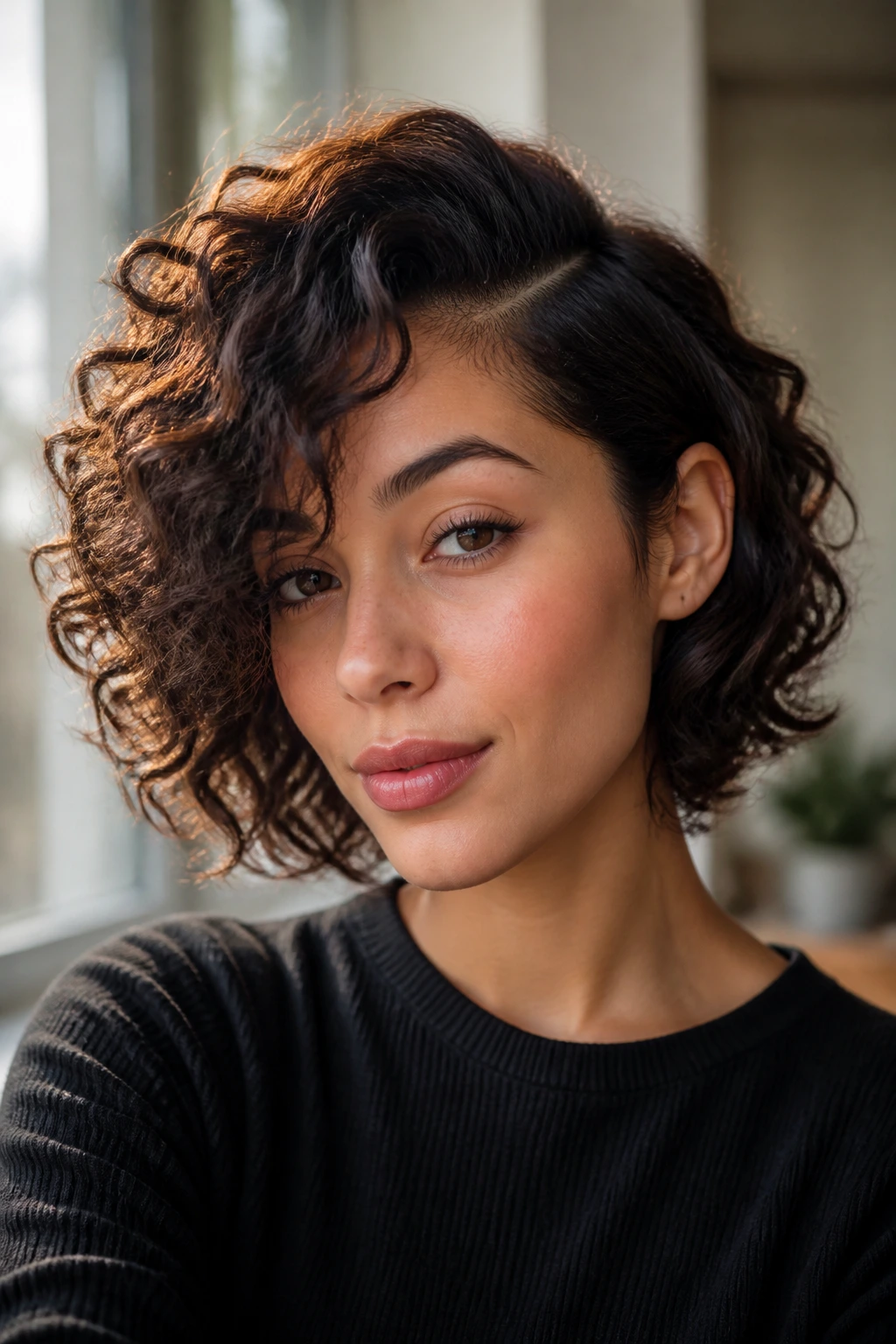
11. The Asymmetrical Curly Bob
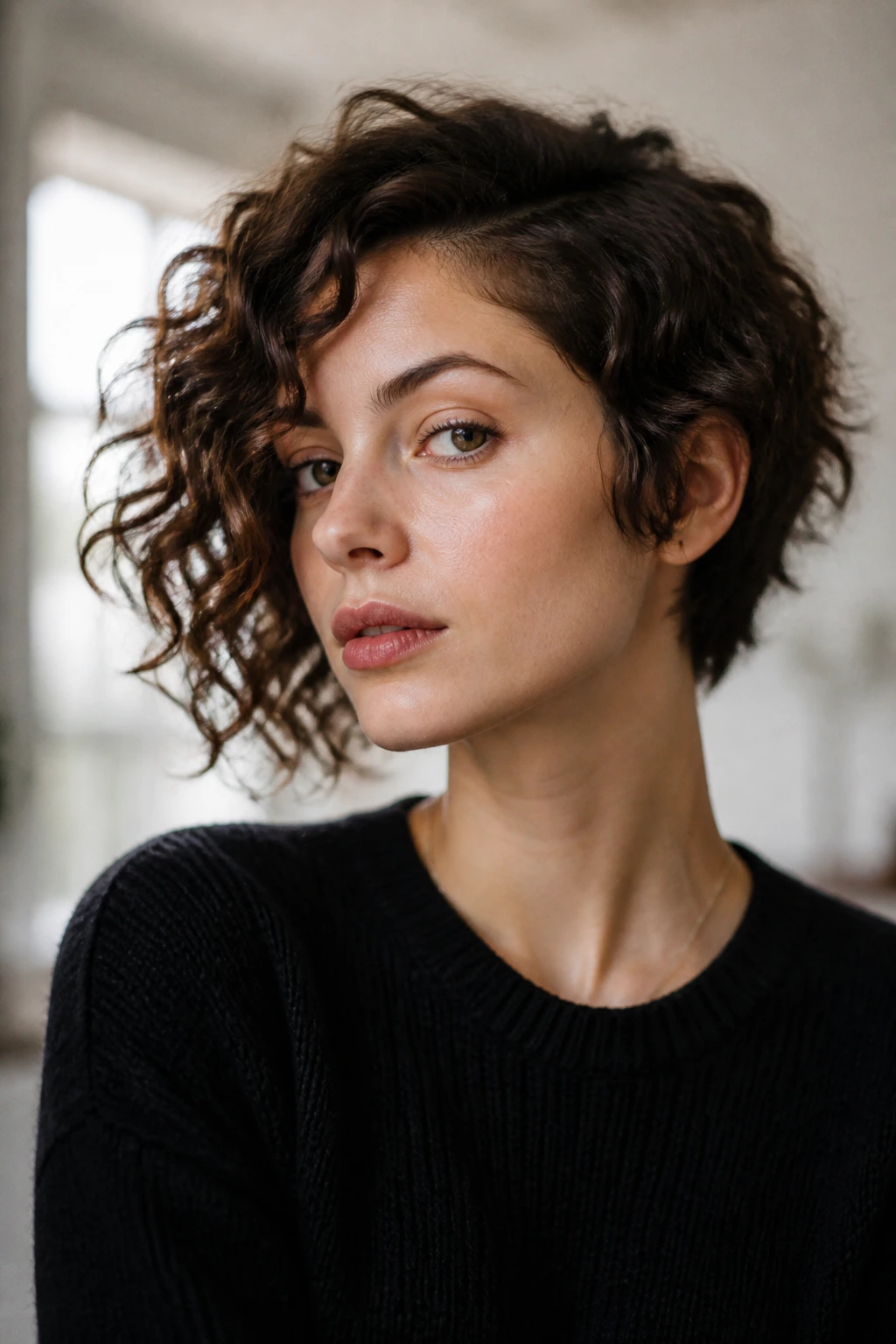
An asymmetrical bob gives short curly hair something straight hair sometimes struggles to fake: a shape that feels deliberate even when it’s slightly undone. One side lands a touch longer, the other sits a bit shorter, and that mismatch adds movement without asking for extra styling time.
I like this cut when the hair is thick or when one side naturally holds curl better than the other. Instead of trying to make both sides behave like twins, the asymmetry lets the stronger side carry a little more visual weight. That can make the face look narrower, especially when the longer side skims the jaw.
The trick is keeping the difference subtle. A dramatic angle can look sharp on paper but awkward in motion if the curls are springy. Usually, an inch or so of difference is enough. More than that, and the cut starts to feel like it’s trying too hard.
12. The French Bob for Curls
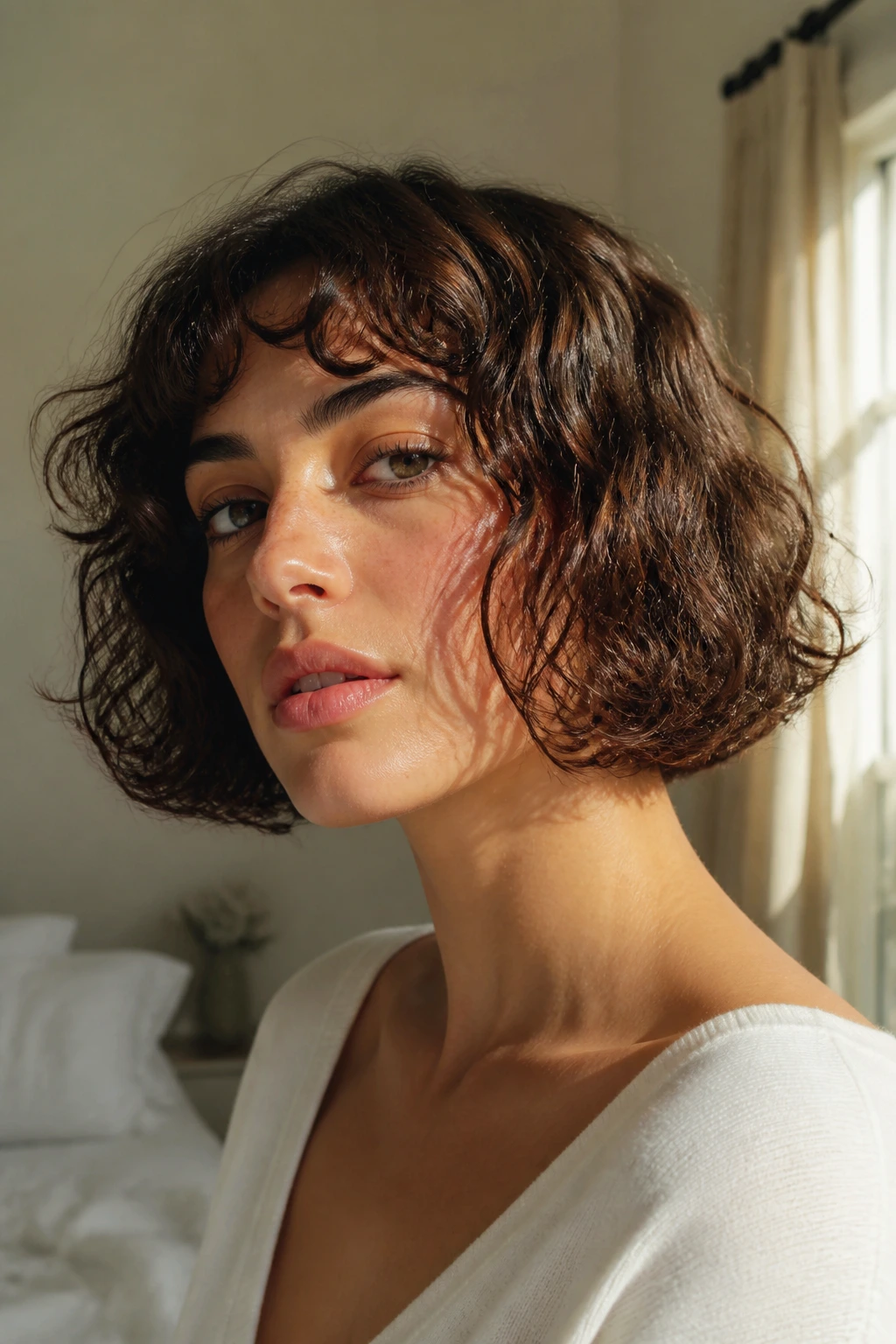
The French bob on curls is all about that lip-grazing, tucked-under shape that makes short hair look expensive without needing much polish. On curly hair, it reads softer than the straight-hair version, which is a good thing. The curl adds bounce where a straight line would just sit.
This cut works best when the ends are blunt enough to hold a shape but not so heavy that they drag the curls down. A slight bend at the ends can make the face look lifted, especially if the length hits around the mouth or just above the chin. The shorter you go, the stronger the attitude.
Why It Looks Best at Lip Level
That lip-level length frames the mouth and keeps the cut from overwhelming the forehead. It also makes earrings and necklines matter more, which sounds like a small thing until you see the whole outfit come together. Short curly hair does not live in isolation. It talks to everything around it.
If you want this look to stay neat, use a diffuser with the hair pointed downward for the last few minutes of drying. That keeps the perimeter tucked instead of flaring out like a bell.
13. The Wispy-Bang Crop
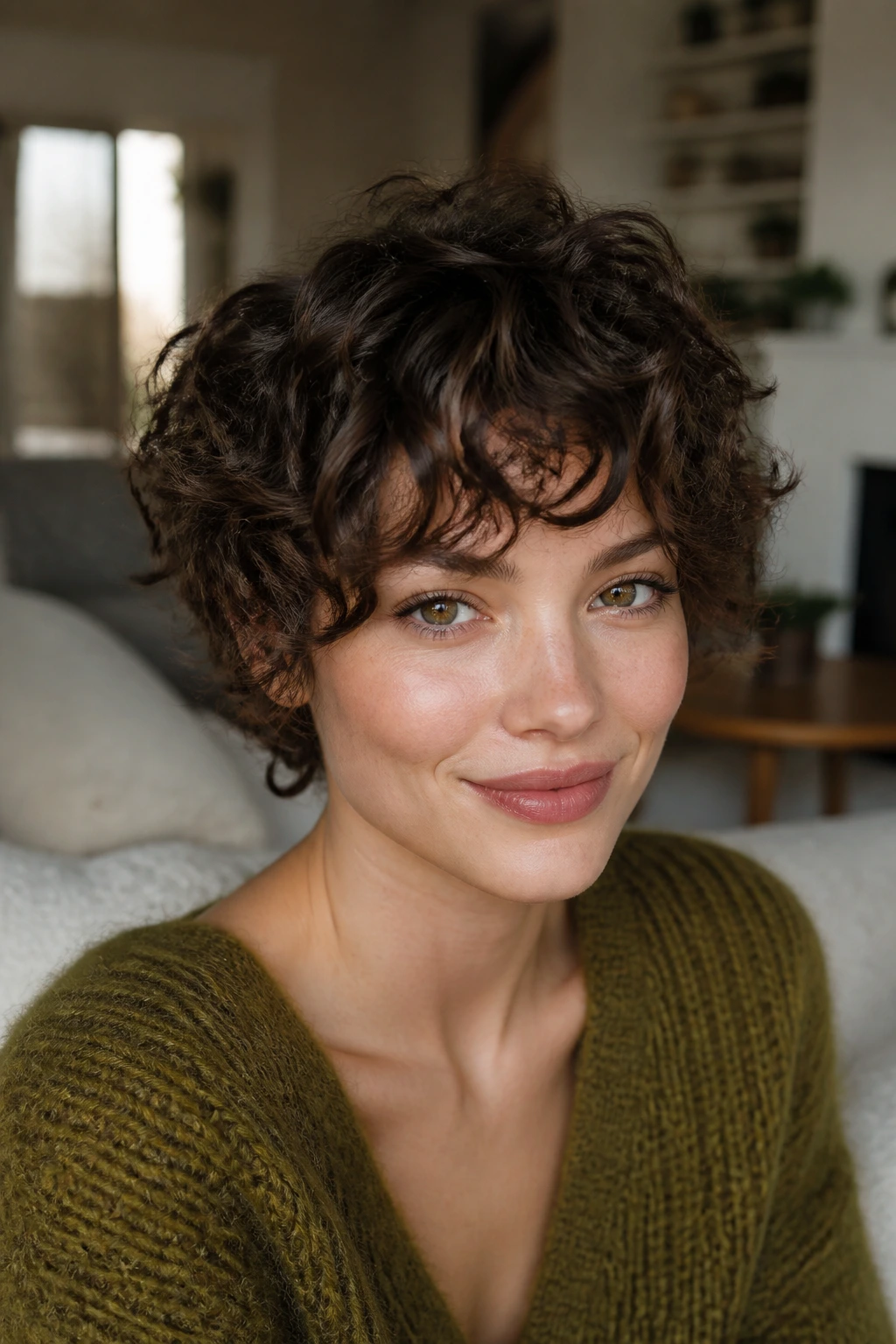
Wispy bangs on short curly hair can go very right, very fast, if the bangs are kept light. Heavy bangs tend to shorten the face in a blunt way, but wispy ones soften the forehead without choking the curl pattern. That little air gap between strands is what keeps the cut from feeling dense.
This is a good style for loose curls and soft coils, especially if your hair wants to fall forward on its own. The bangs should be cut longer at the sides and a bit shorter in the center, then allowed to separate naturally. Brushing them flat is usually a mistake. Use your fingers. Less control, better result.
The cut does ask for a bit of maintenance. If the bangs get too thick between trims, they can turn into a curtain by accident. A tiny trim every few weeks keeps the edges light and the forehead visible.
14. The Faux Hawk Curl Style
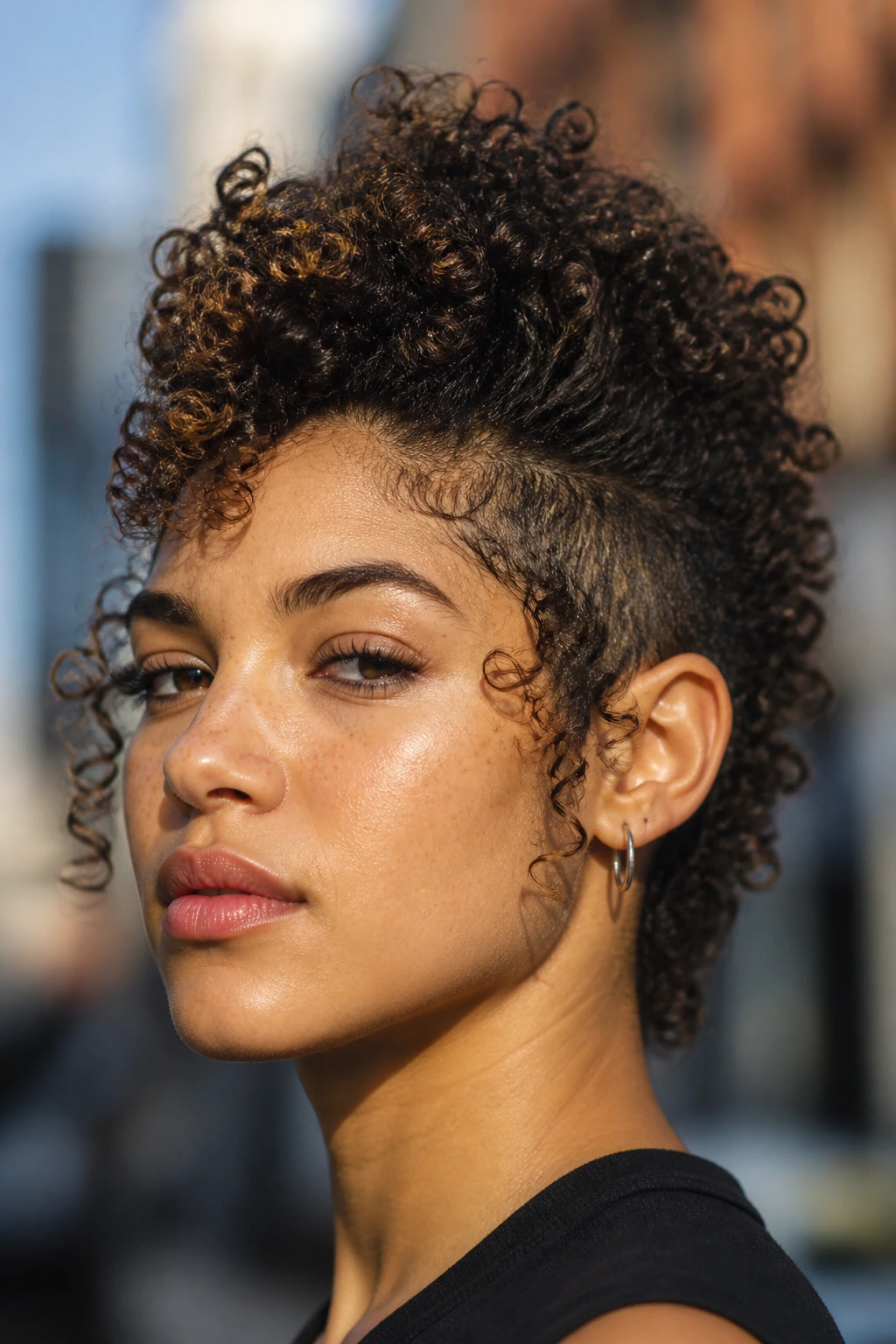
A curly faux hawk is what happens when short hair wants a little edge without a permanent commitment to an undercut. The center line gets lifted, the sides stay tighter, and the whole silhouette runs upward instead of outward. That upward pull is especially useful on curls that like to widen at the sides.
This style depends on root control. If the crown collapses, the faux hawk loses its shape fast. So a root clip, a little mousse, and a diffuser matter more here than they do on softer cuts. You want the center ridge to stand up enough that the side curls feel intentional, not accidental.
Why the Center Ridge Works
The center section creates a visible line, even if it’s made of soft curls rather than hard spikes. That line gives the eye somewhere to go. On rounder faces, it lengthens. On heart-shaped faces, it balances a narrower chin. It’s a strong look, but not a rigid one.
A nice detail: leave the temple curls a little looser than the crown. That contrast keeps the style from looking helmet-like, which is the fastest way to ruin a faux hawk on curls.
15. The Clip-Accented Side Sweep
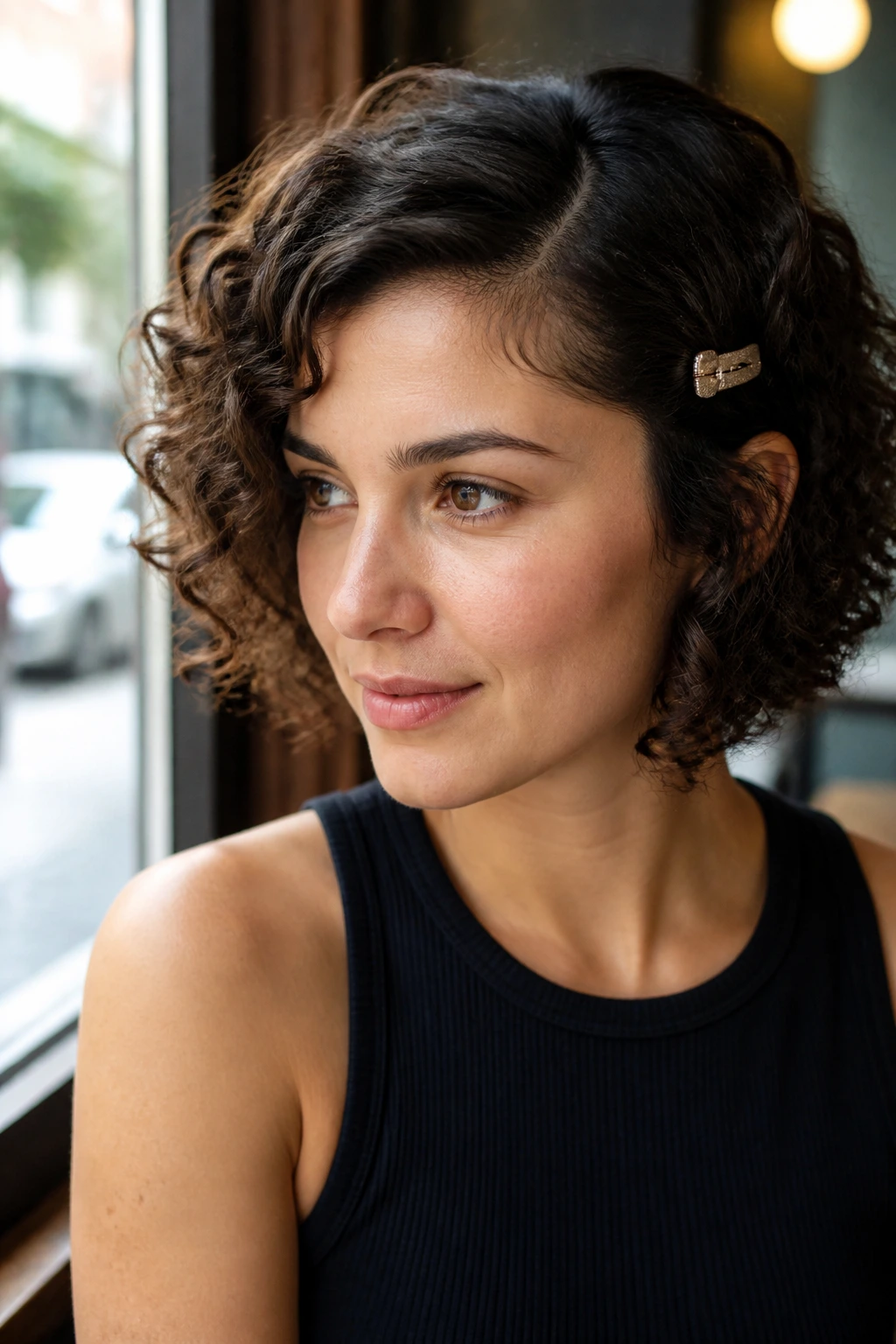
A side sweep with a clip is one of those styles that sounds basic and then ends up looking much better than it should. Pulling one side back lets the curl pattern show on the other side, and the clip adds a clean break in the silhouette. It’s fast. It’s useful. It also saves you from having to wash hair that isn’t ready yet.
The best clips here are small enough to disappear into the hair but strong enough to hold a section flat at the temple. A big claw clip usually overwhelms short curls. A matte barrette or a flat snap clip works better because it doesn’t fight the texture.
The Clip Does More Than Decorate
It keeps the front from falling into your eyes, sure. More than that, it shifts the visual weight away from the widest part of the face. If one side has more curl or more frizz than the other, the clip can make that imbalance look intentional.
Use the clip after the hair has mostly dried, not soaking wet. Wet curls stretch differently, and the section can spring back in a weird direction when you let it down later. Been there. Not fun.
16. The Wet-Look Curly Crop
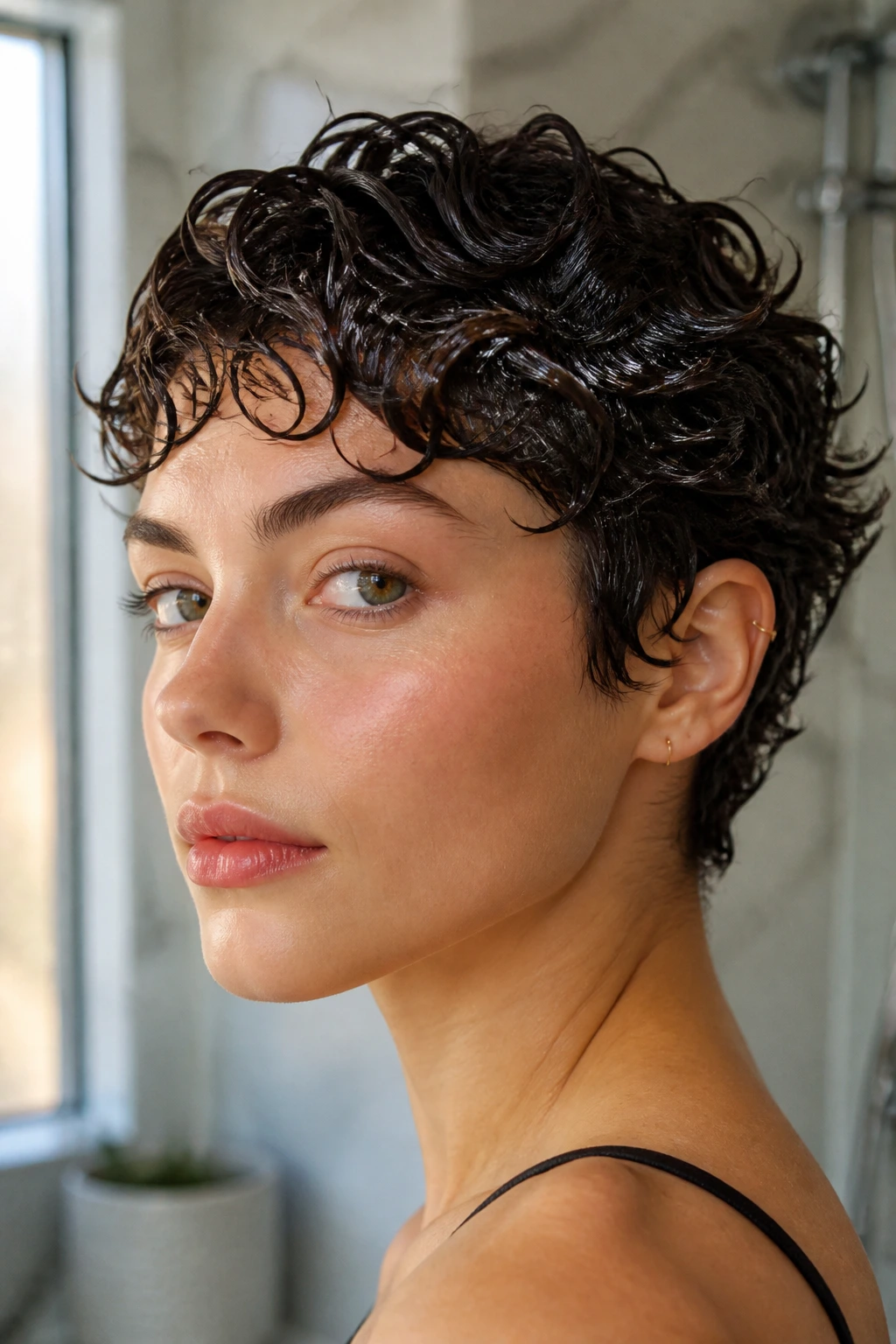
The wet-look crop is one of my favorite ways to make short curls feel sharp instead of fluffy. It uses gel to hold the curl pattern close to the head, keeps the shine high, and turns a messy morning into a deliberate style. On dense short curls, it can look almost architectural.
The product choice matters. You want a gel with enough hold to create a cast while the hair dries, but not so much alcohol that the ends go crunchy in a sad way. Apply it to soaking-wet hair, rake through once, then leave the clumps alone. The more you fuss, the less sleek it looks.
When the hair is dry, scrunch out any hard cast with clean hands and a drop of lightweight oil if you want more softness. Or don’t. A little firmness suits this style. The whole point is that the curls stay close and glossy rather than puffing into a halo.
17. The Double Space Buns
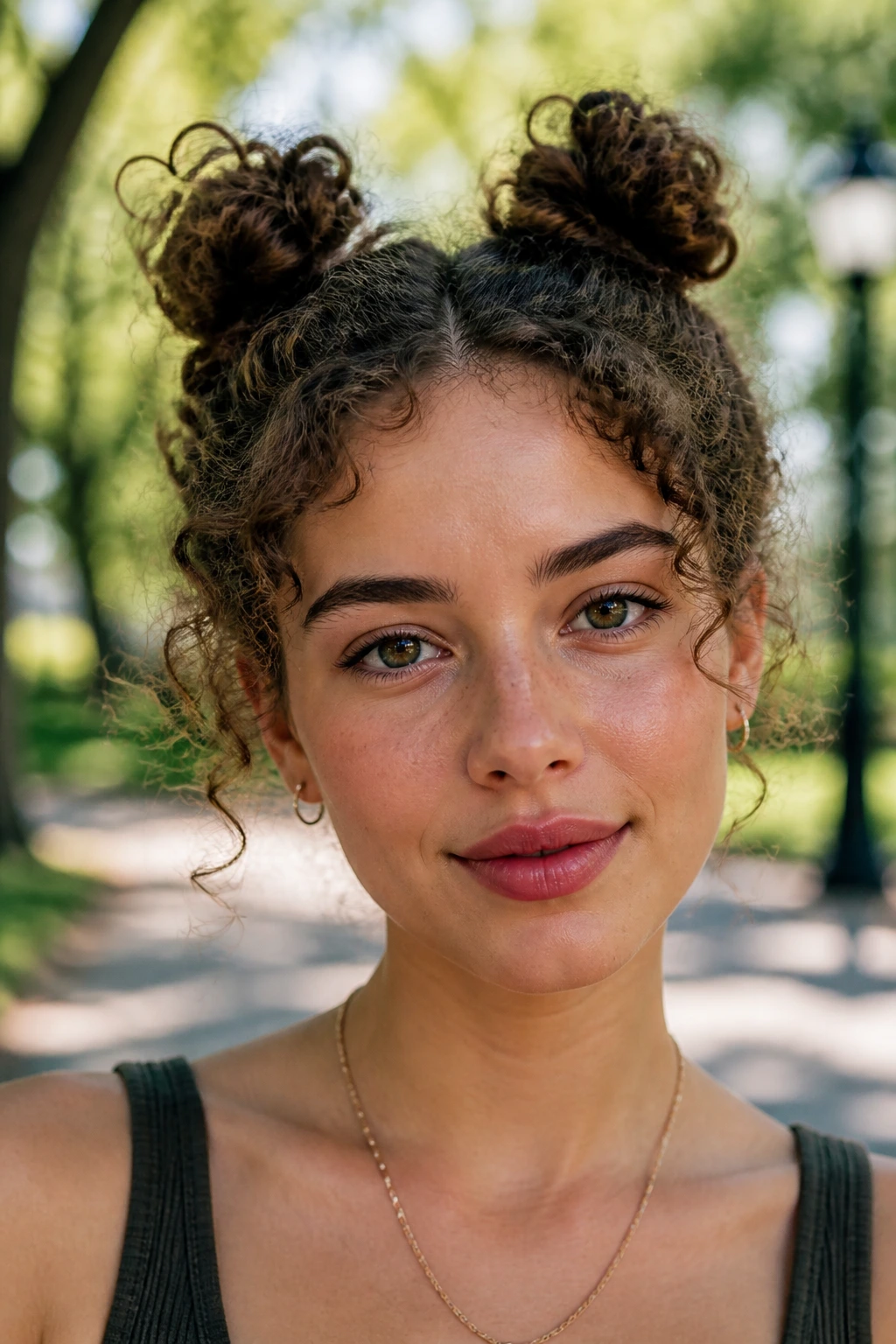
Short curly hair can absolutely do space buns, but the buns need to stay small and a little imperfect. That’s part of the charm. You’re not chasing perfect symmetry here; you’re creating two compact knots that sit high enough to keep the face open and the curls out of the way.
This style works best when the hair is long enough to gather into two small puffs or buns without stretching the roots too hard. If your hair is too short to wrap fully, mini knots with pins are better than forcing the ends to hide. A few loose curls around the hairline make the look feel soft instead of cartoonish.
The buns sit nicest when the part is clean and centered. If the scalp line is crooked, the whole style can feel off by just enough to bug you all day. Spend the extra 20 seconds on the part. It pays off.
18. The Collarbone Curl Lob
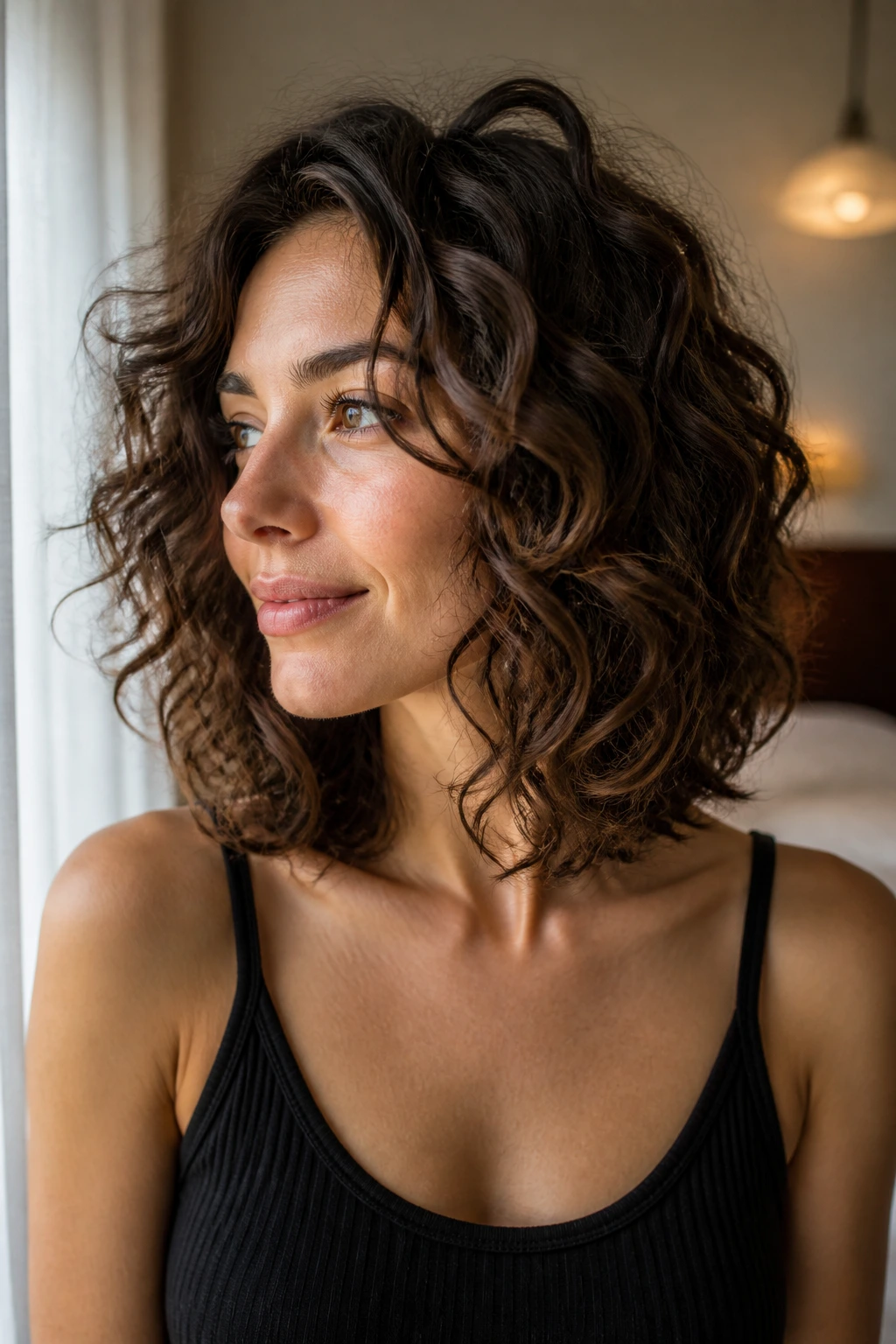
A lob may be the longest style in this list, but on curly hair it still reads as a smart short-to-medium cut. The collarbone length gives the curls space to stretch, which can be useful if your hair shrinks hard and you’ve gotten burned by “short” cuts that turned out far shorter than expected.
This length is a good compromise. You get enough hair for ponytails, clips, and half-up styles, but the shape still feels light. It’s especially nice for people growing out a shorter cut or for anyone who wants short-curly styling options without losing versatility.
What makes it flattering is the line around the collarbone. That area frames the neck in a way that feels clean and a little elegant, and the curls have room to fall in layered waves instead of puffing straight outward. If the ends start to look uneven, a very light dusting trim keeps the shape from getting stringy.
19. The Curly Undercut
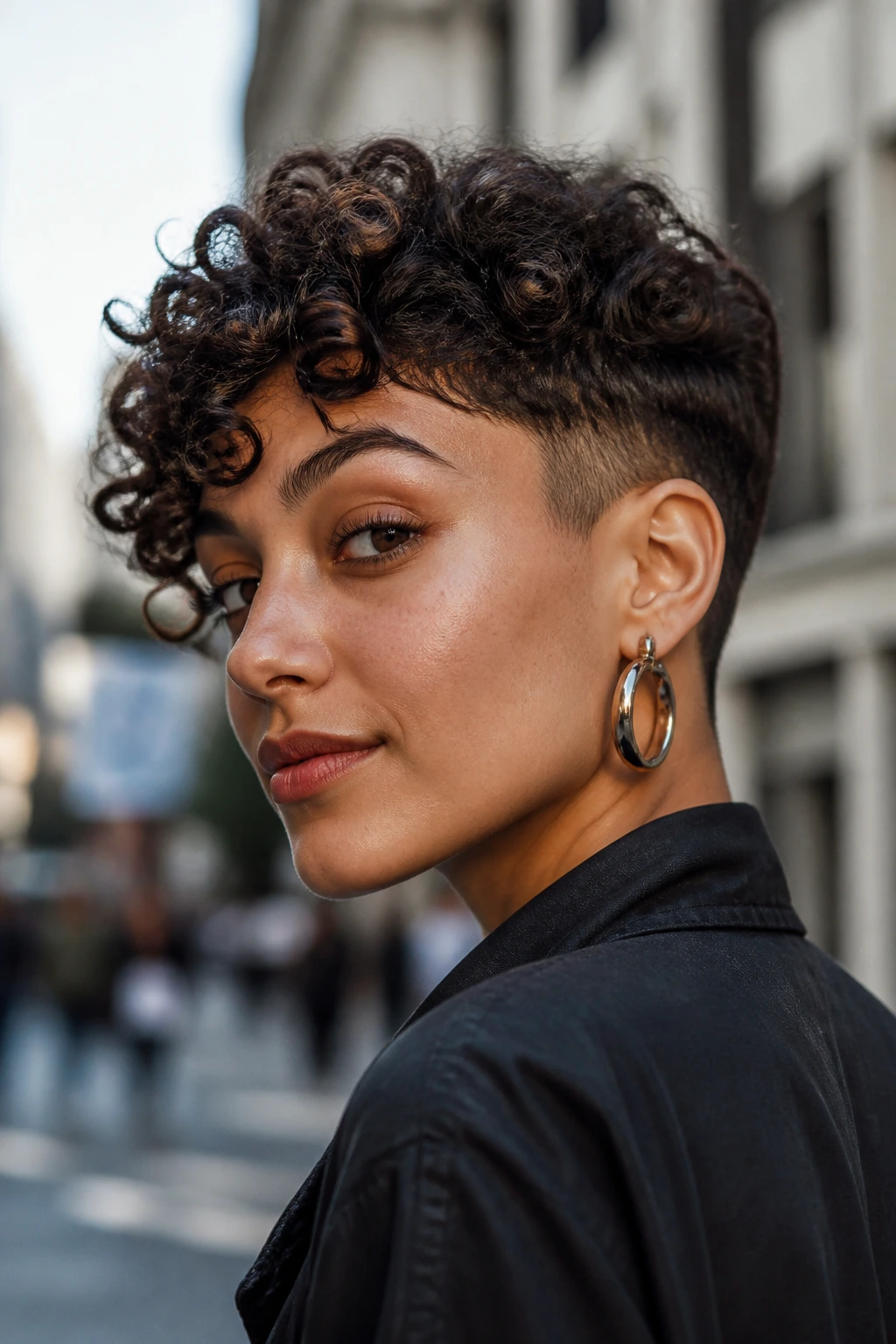
A curly undercut is the boldest way to remove bulk from short hair, and it works better than most people expect. The hidden short side or back takes the weight down, while the curls above stay fuller and more visible. If your hair gets hot, heavy, or triangle-shaped by noon, this cut solves a real problem.
The best version of the undercut is the one you don’t shout about. Keep it tucked under the top layers and let the visible curls carry the style. That way the cut feels edgy when you want it to and plain when you tuck the hair down over it.
Where to Hide the Short Side
Most people place the undercut at the nape or under one side panel near the temple. The nape version is easier to grow out. The side version gives more drama and can make one ear area sit flatter, which is useful if that side always seems bulkier.
This is the kind of cut that rewards a good barber or stylist with curl experience. A clumsy undercut line shows fast on short hair. A clean one just disappears until you need it.
20. The Side-Swept Ringlet Bob
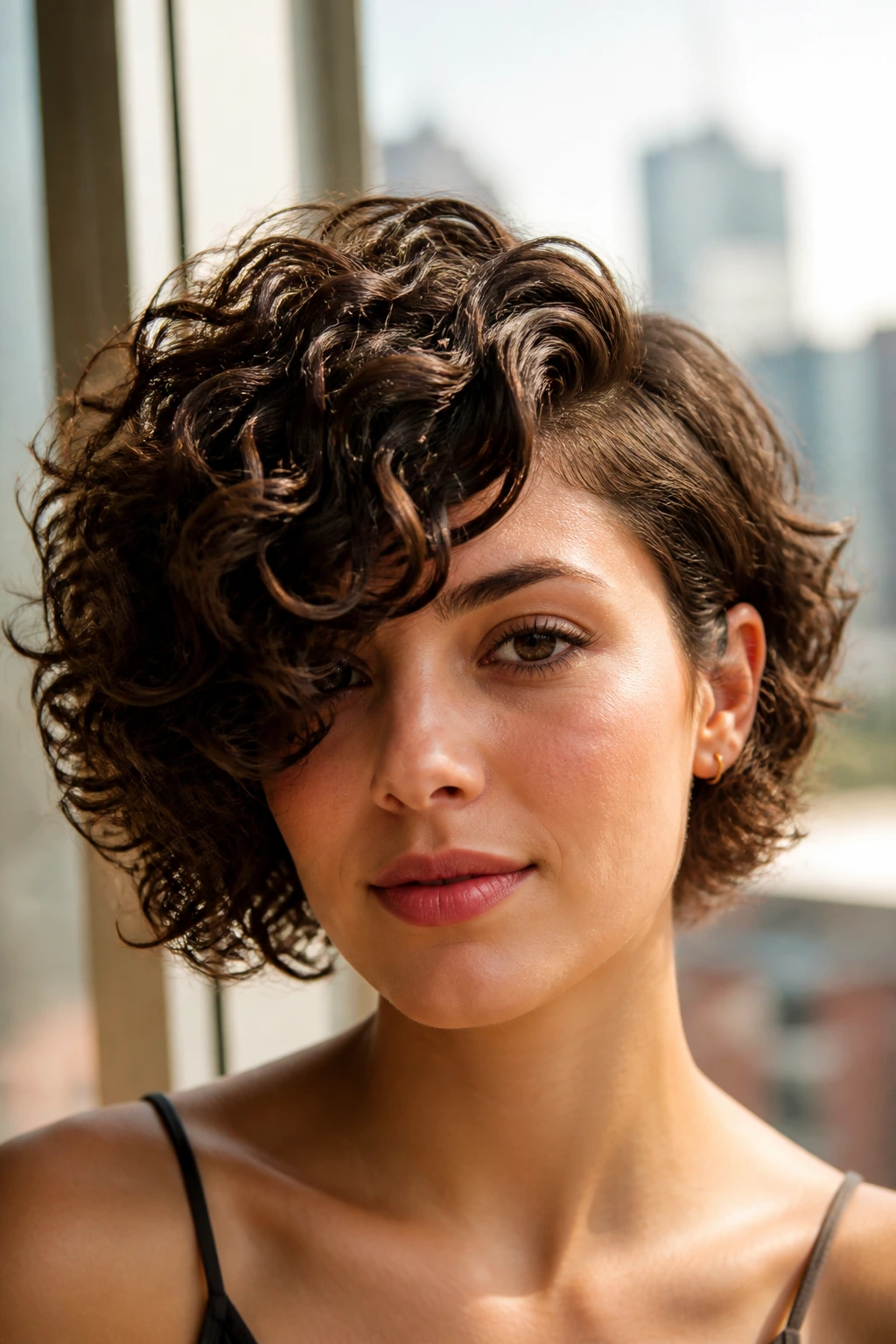
If your curls form actual ringlets, a side-swept bob can look almost romantic without turning fussy. The sweeping motion across the forehead softens the cut, and the ringlets keep the style from falling flat against the face. It’s one of those looks that feels polished without needing a lot of product.
The part should be deep enough to move the eye, but not so deep that one side gets crushed. Let the longer side sit near the cheekbone and the shorter side tuck lightly behind the ear. That little asymmetry is what keeps the bob from reading as stiff.
This style really likes a clean, defined finish. Use a light gel or cream through the lengths, then separate any giant clumps by hand before the hair dries. If the curls dry into one big rope on the swept side, you lose the soft ringlet effect that makes the cut work.
21. The Soft Bowl Cut
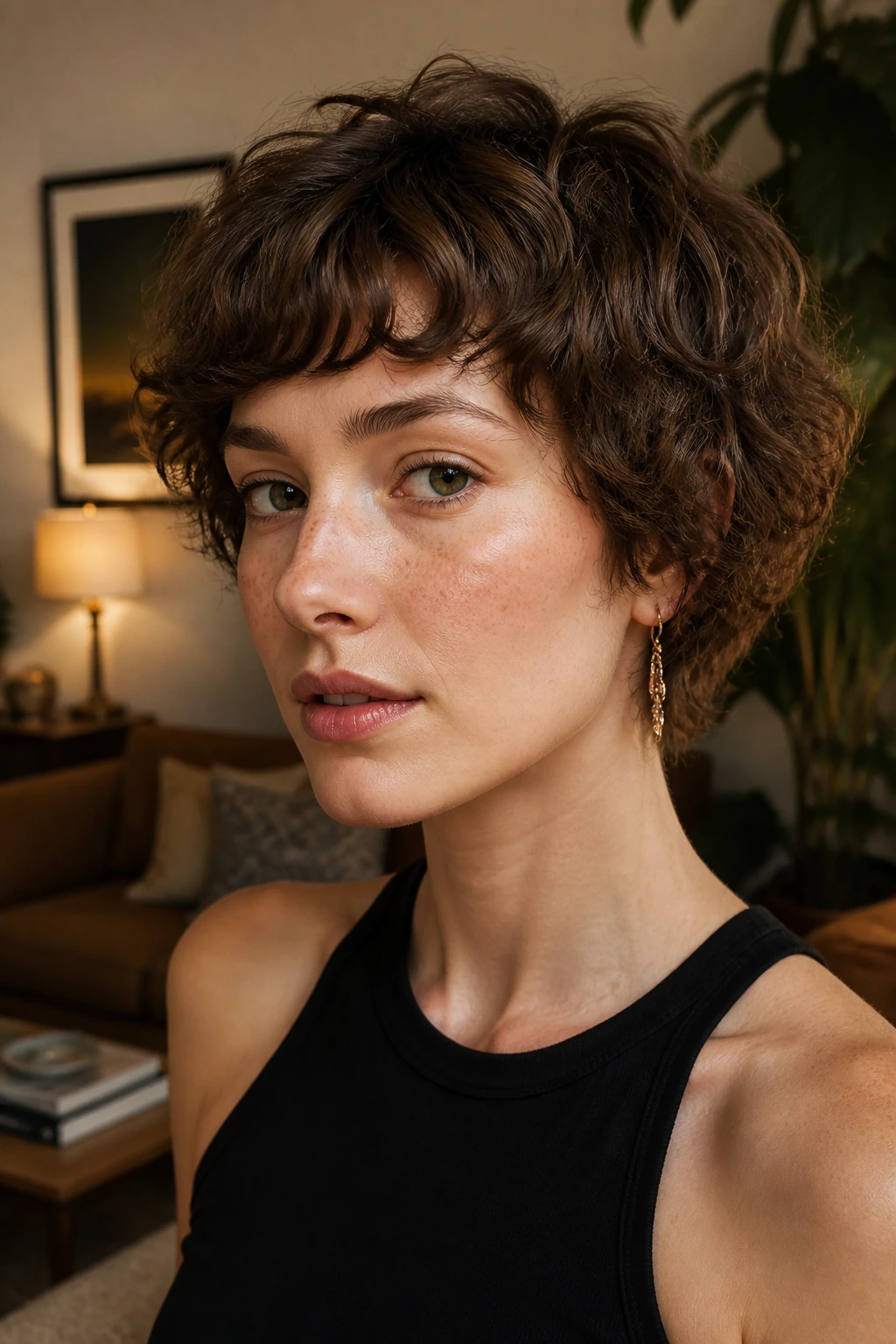
A bowl cut can sound like a joke, which is exactly why the soft version is so satisfying when it’s done well. On curly hair, the shape becomes less retro punchline and more rounded frame. The trick is keeping the perimeter soft and the interior layered so the curls don’t sit like a helmet.
The modern version is less blunt and more curved. The fringe can graze the forehead, the sides can hug the head lightly, and the curls can stack in a way that feels fresh rather than severe. If your curl pattern is loose, this style can be especially charming because it keeps the face open while still feeling compact.
How to Keep It Modern
Leave some length at the temples and soften the edge around the brow. A hard line here makes the cut look costume-like fast. A softer transition lets the curls break up the shape in a nicer way.
I’d avoid this cut if your hair is extremely dense and you hate product. It needs a little control. Without it, the bowl shape can go from cute to puffed-out in a hurry.
22. The Pineapple Puff
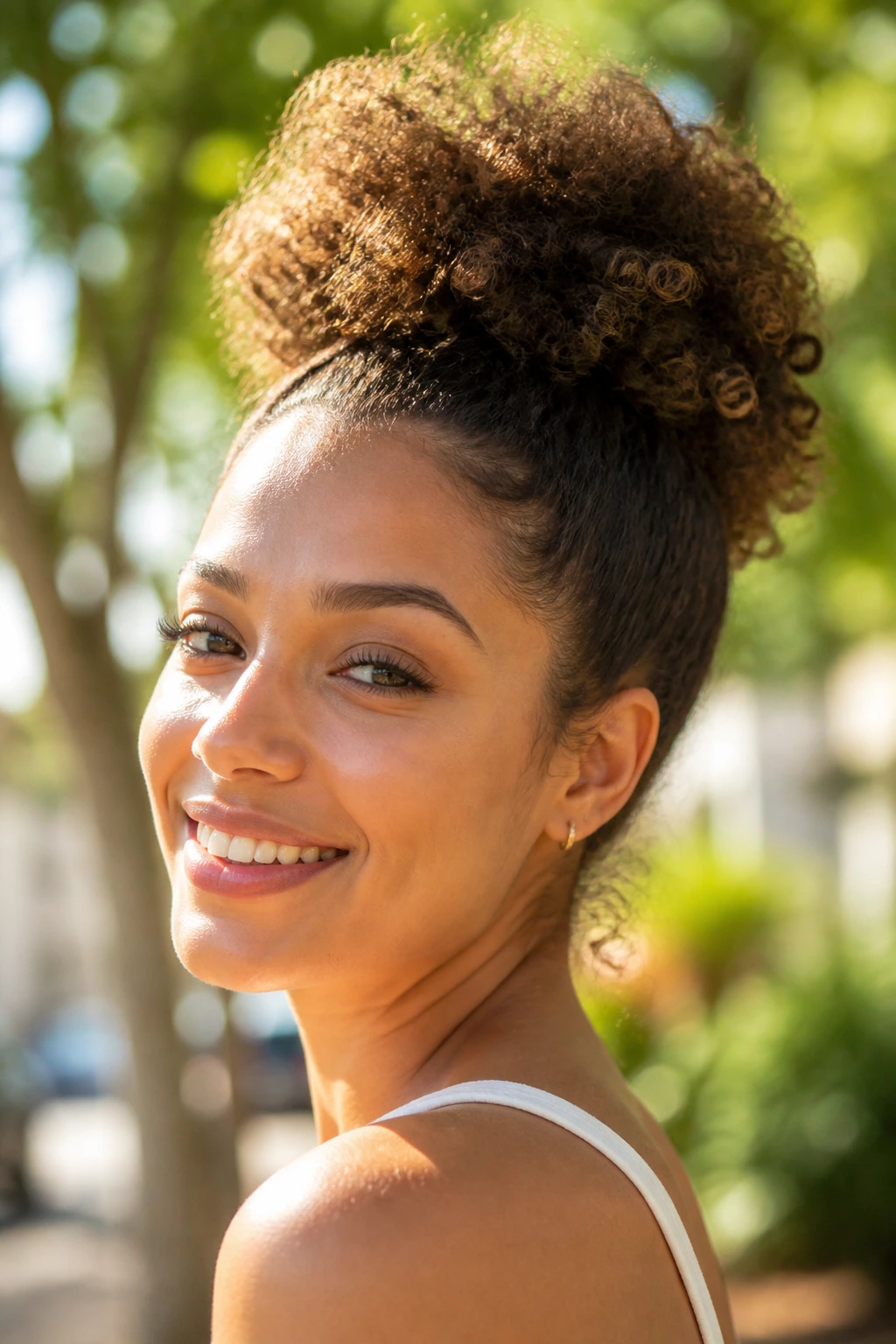
The pineapple puff is part styling trick, part survival tactic. Gathered high, it keeps the curls off the neck and gives short hair a lifted shape that works especially well on second- or third-day curls. It’s not a formal style. It’s a useful one, and there’s a difference.
The goal is to create a loose, high shape without pulling the roots flat. Use a soft elastic or a scarf, then let the curls fan upward a little. If the hair is too short to wrap fully, pin the front and sides upward and let the ends create the puff. That creates the same silhouette with less struggle.
This style is excellent on humid days because it keeps the curl pattern from getting crushed against the face. It also makes sleeping in your style easier when you’re stretching a wash day by one more day than you probably should.
23. The Braid-Trimmed Curly Bob
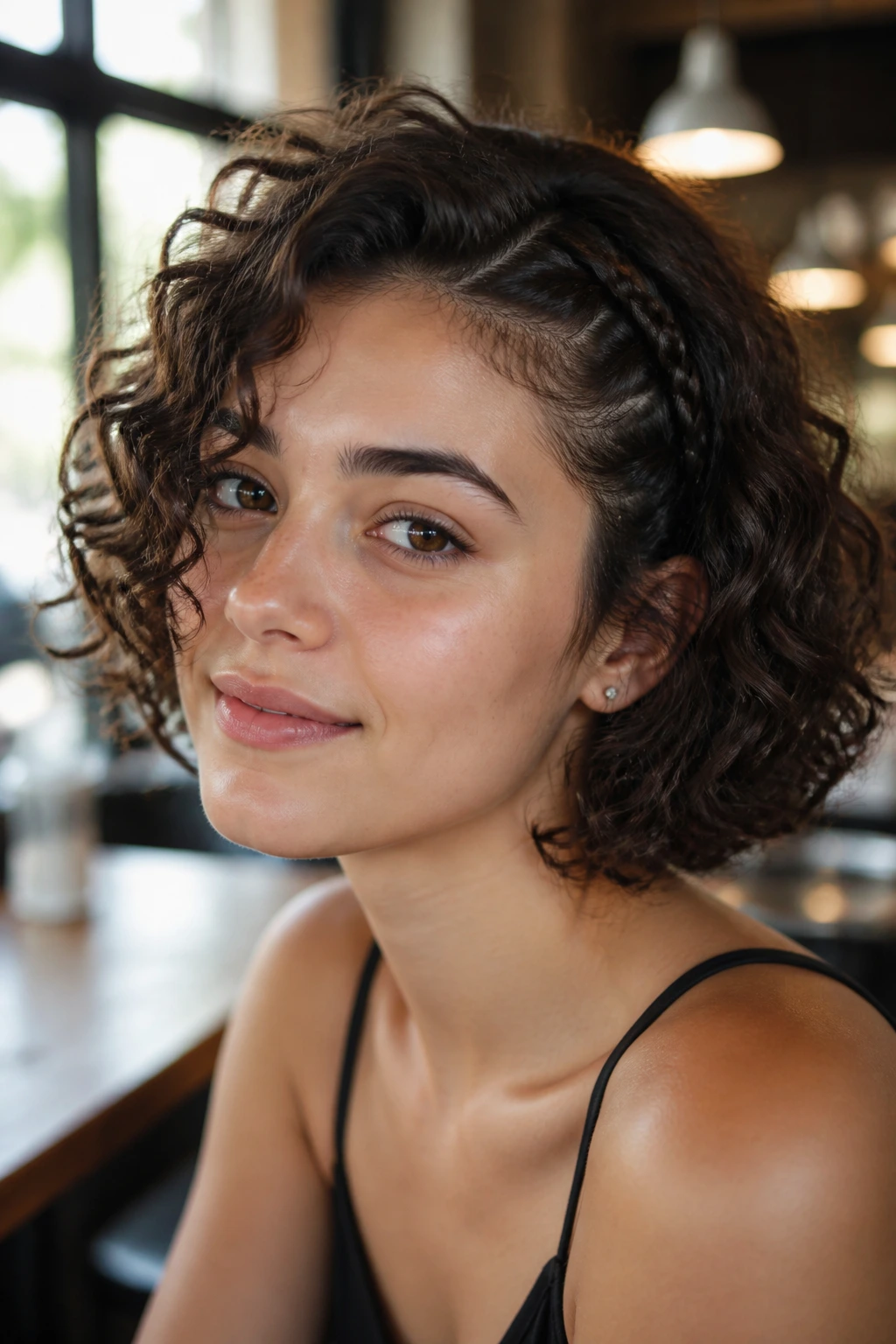
A braid accent can turn a plain short curly bob into something sharper without changing the whole haircut. One small braid along the hairline, near the temple, or tucked behind one ear gives the style structure and keeps one side controlled while the rest stays loose. It’s one of the best ways to add detail without adding heat or more product.
The braid should be thin. Thick braids on short curly hair can eat up too much length and make the style look overworked. A narrow braid keeps the curl pattern visible and gives the eye a place to land. If your hair is layered, braid from the denser section so the plait doesn’t unravel halfway through the day.
This is a good style when you want your curls to look intentional at work or dinner but don’t want to flatten them with clips. It also hides roots that are starting to frizz a little at the hairline. Which, honestly, is half the battle with short curls.
24. The Headband Tuck
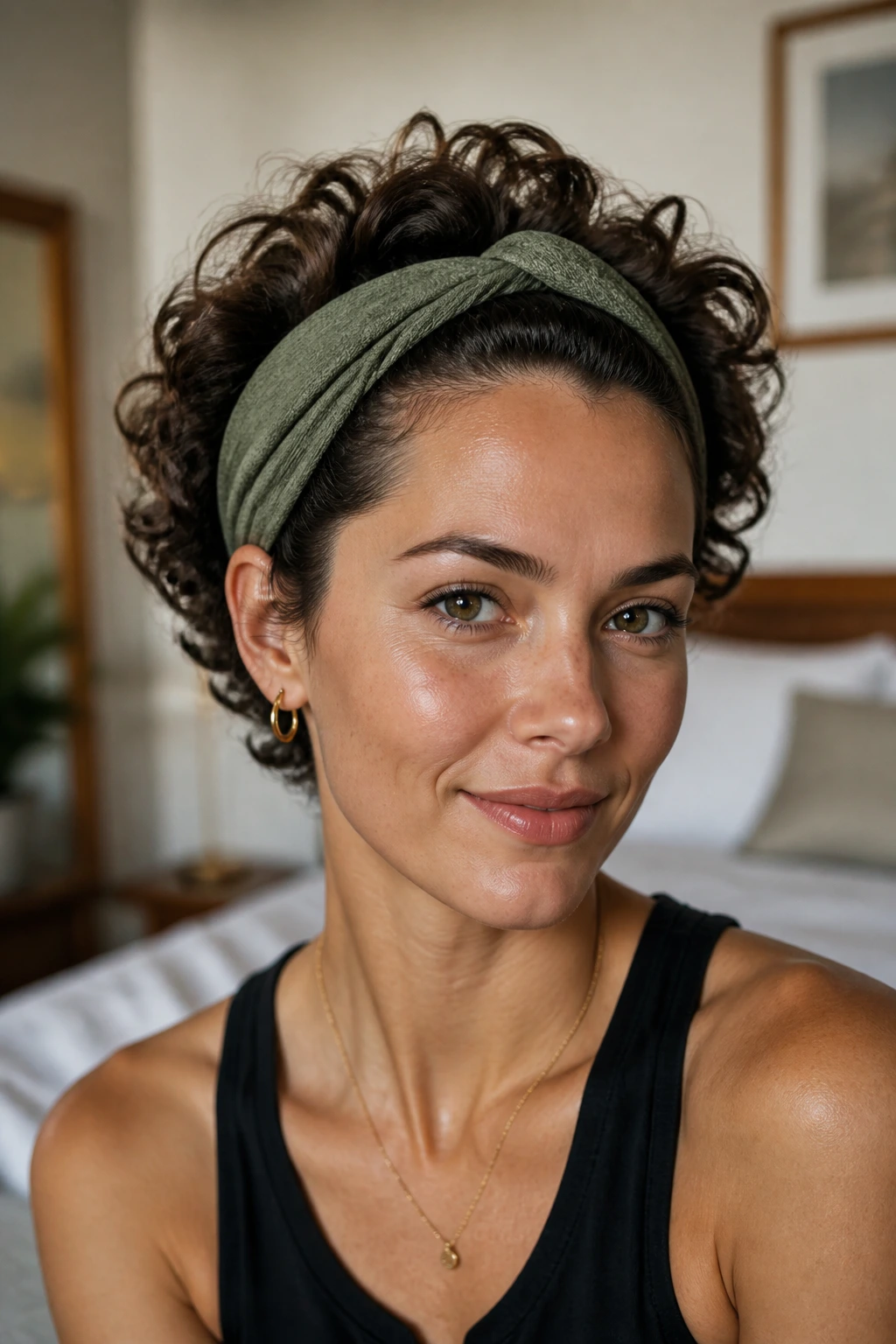
A headband tuck can make short curly hair look polished in about the time it takes to find your keys. The headband pushes the front curls back, creates a little lift at the crown, and leaves the ends to sit where they want. It’s one of the easiest ways to tidy the face without blowing out the whole texture.
The best headbands for curls are padded enough to stay put but not so tight that they dig into the scalp. If the band is too narrow, it can pinch the hairline and flatten the crown. Wider bands usually do a better job of holding the shape without making a dent.
The Quick Fix for Flat Roots
Slip the band in after the roots are dry enough to hold shape. If you use it while the hair is soaking wet, the crown may set flat in a way that’s hard to fix later. A tiny bit of lift at the top makes the whole style look brighter.
This is one of those styles that pairs well with earrings. The band clears the face, which gives the curls and jewelry a cleaner relationship. Small detail. Big difference.
25. The Pinned Curly Roll-Updo
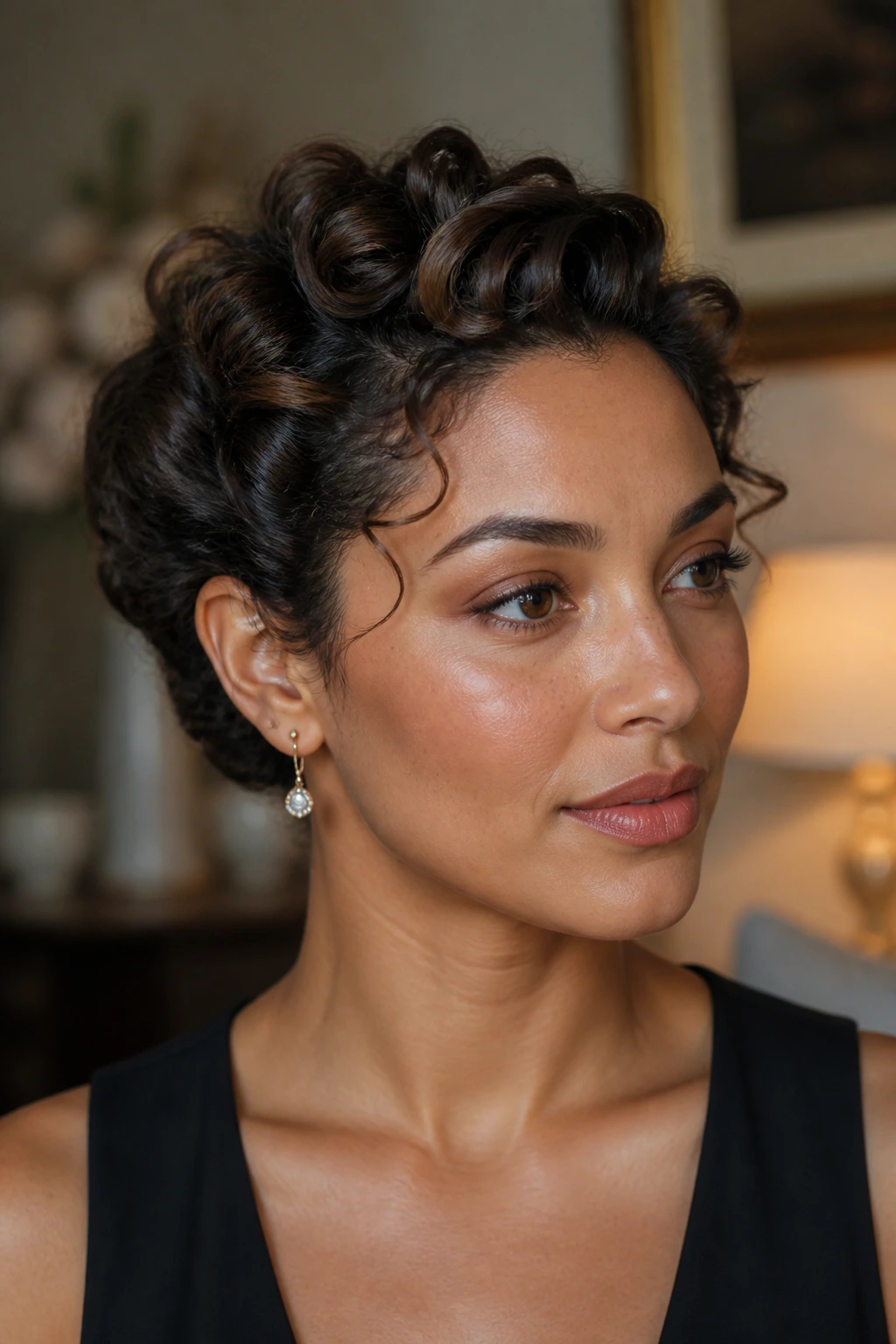
A pinned curly roll-updo is the dressiest style here, but it still works on short hair because curls hide the seams. Instead of trying to make a formal bun from too little length, you roll the curls inward and pin them flat against the head in soft sections. The result feels neat, but not frozen.
The shape works best when the curls have some definition already. A little product in the hair helps the pieces stay separate enough to pin without collapsing into one lump. If you need extra hold, cross two bobby pins in an X instead of relying on one pin alone.
This style is useful for weddings, dinners, interviews, and any moment when you want the haircut to disappear for a while and the face to take center stage. It’s also a nice answer for the “my short curls won’t stay up” problem, because the style doesn’t force them into one big knot. It lets them become a set of smaller shapes.
Why Short Curly Hair Needs Shape, Not Just Length
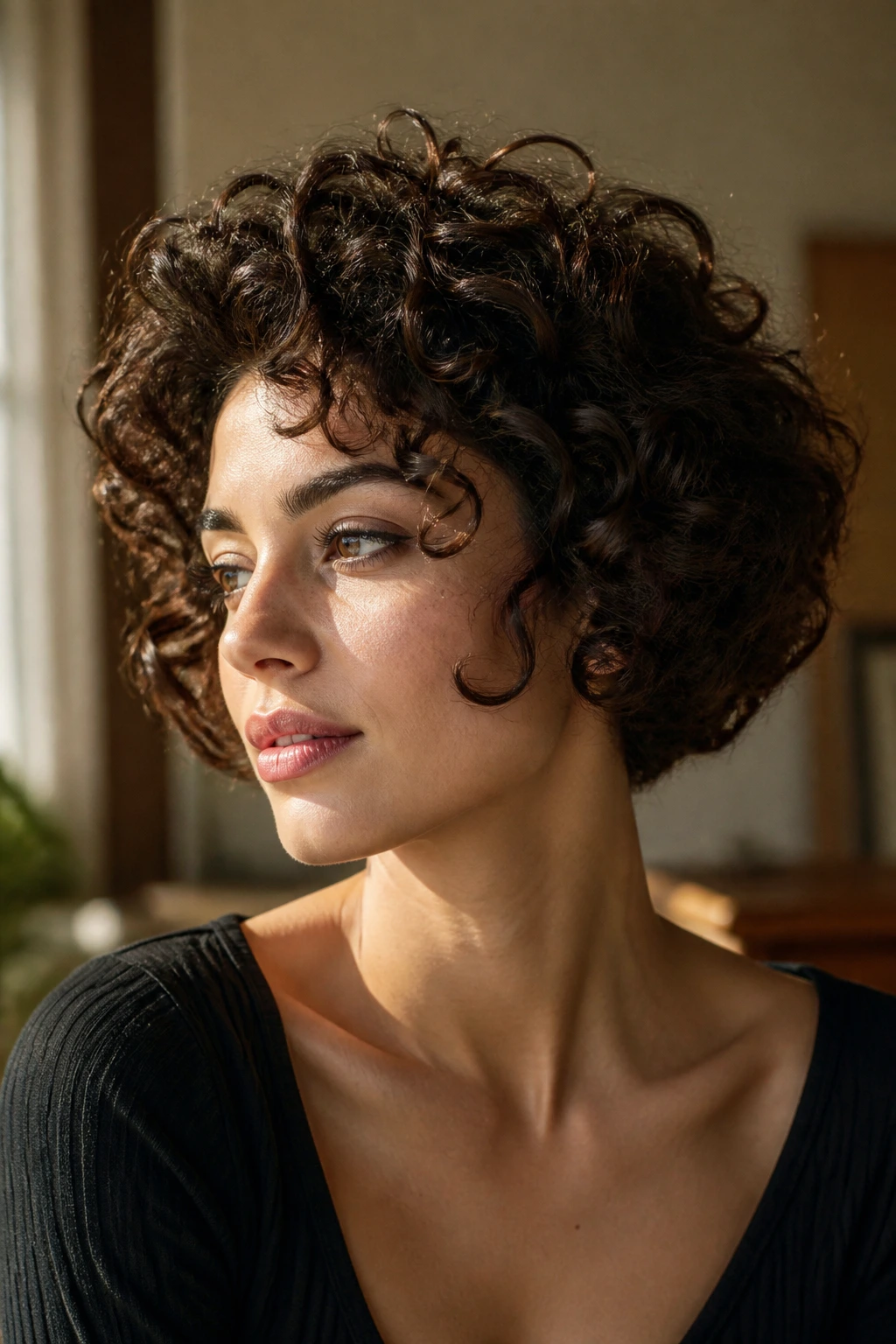
Short curly hair behaves like a little architecture problem. The length matters, sure, but the outline matters more. When the sides widen too much or the top sits too flat, the haircut starts to look like it belongs to someone else. A smart shape fixes that without asking the curls to stop being curls.
The strongest short curly styles usually keep some kind of tension between lift and control. A tapered side, a side part, a soft fringe, or a rounded perimeter gives the eye a path to follow. Without that path, you end up with a cloud where a haircut should be.
That’s why dry cutting is so common for curls. Wet hair can hide where the curl is going to land once it springs back. Dry hair tells the truth. Messy, sometimes. Honest, always.
Essential Tools for These Hairstyles
-
Spray bottle with water: A few spritzes reawaken short curls faster than soaking the whole head.
-
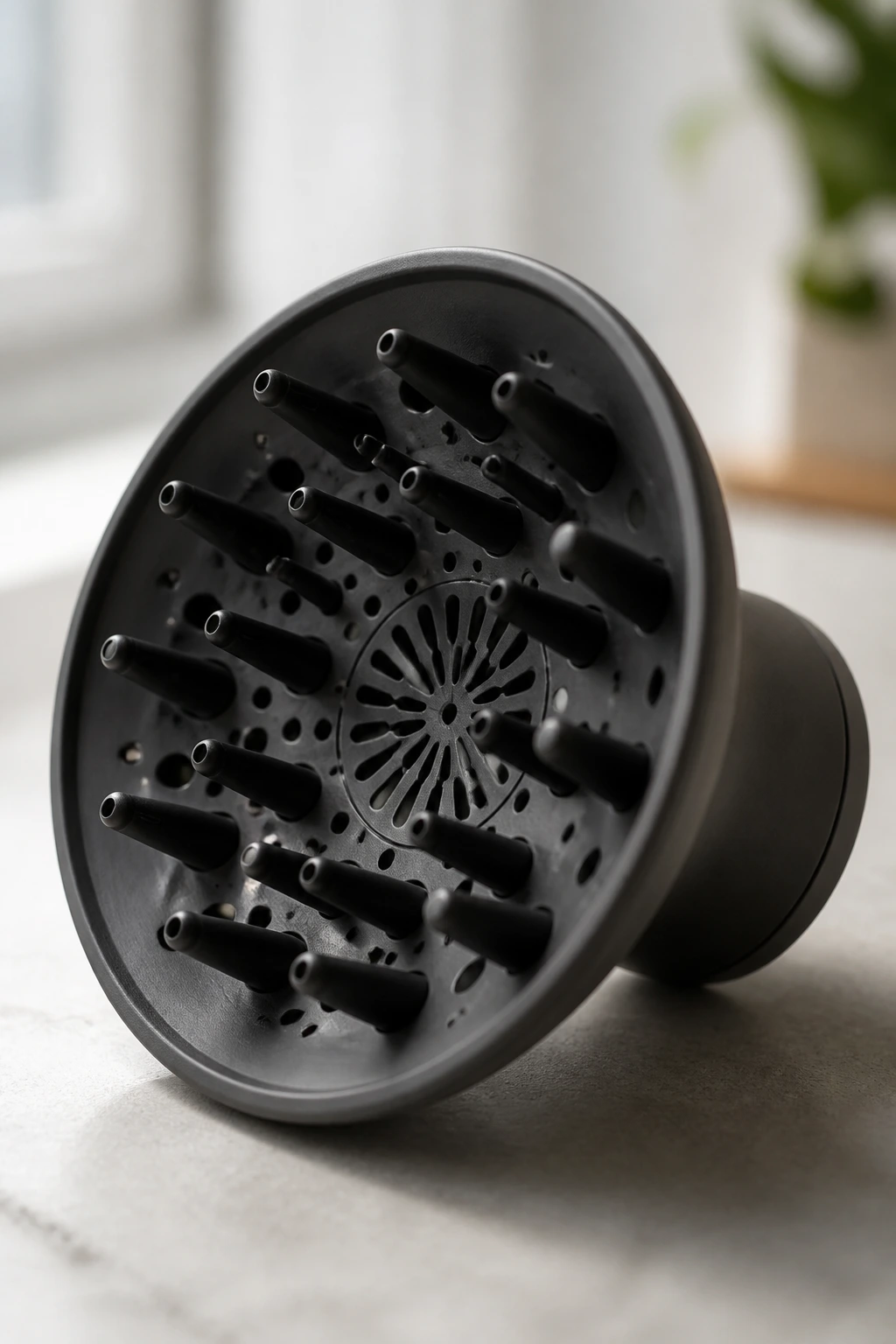
Diffuser attachment: Low heat and low airflow keep the curl pattern from frizzing apart while it dries.
-
Wide-tooth comb: Good for lifting roots and separating sections without shredding the curl clumps.
-
Pintail comb: Useful for clean parts, side sweeps, and tiny sections like bangs or braids.
-
Duckbill or alligator clips: Handy for root lift, half-up styles, and holding sections in place while they set.
-
Microfiber towel or soft T-shirt: Helps remove water without roughing up the cuticle too much.
-
Small elastics and bobby pins: Necessary for mini knots, puffs, braids, and pinned updos on shorter lengths.
-
Silk or satin bonnet/pillowcase: Keeps the shape from getting crushed overnight and cuts down on frizz at the edges.
Smart Product and Styling Tips for Short Curly Hair
Short curly hair usually needs less product than people think. A large handful of cream can weigh the roots down and make the cut sit heavy at the crown, especially on fine or medium-density curls. Start small. You can always add more to the ends.
Hold matters more than shine. If your curls lose shape by midday, use a foam or gel with a little more structure and keep it near the roots and mid-lengths. If your curls are dry or coarse, a light leave-in under the hold product can keep the ends from feeling brittle, but don’t stack three thick products on top of each other and hope for the best.
A diffuser on low heat for 5 to 10 minutes often does more for short curly hair than 40 minutes of air-drying in a wet towel. The root area sets faster with a little heat, and that is where the shape lives. Once the top has some memory, the rest tends to fall into place more cleanly.
For day-two refreshes, use water first, product second. A mist bottle until the curls feel damp is enough. Then smooth a pea-size amount of gel between your palms and press it onto the frizzy spots rather than scrubbing all over. You are resetting the shape, not starting from scratch.
How to Wear These Styles on Real Days

Presentation: Keep the outline visible. Tuck one side behind the ear, pin the fringe back, or let the crown sit a little higher so the shape of the cut reads clearly instead of hiding under your clothes.
Accompaniments: Small hoops, collar-friendly tops, and clean necklines work best with short curls because they leave room for the haircut to show. Big scarves and high collars can swallow the shape if you’re not careful.
Portions: If your curls are dense, keep the bulk concentrated either at the crown or the perimeter, not both. For finer hair, fewer layers and a lighter product load usually keep the style from looking stringy.
Beverage Pairing: A strong coffee, sparkling water, or a dry glass of something cold suits these looks because they match the same mood: low effort, clean shape, no fuss. Odd label, useful idea.
Additional Styling Boosters
Shape Enhancement: A root clip placed at the crown for 10 to 15 minutes while the hair dries can change a flat short cut into something that actually lifts off the scalp.
Customization: If your hair sits too wide at the cheeks, tuck the sides and let the top stay fuller. If your forehead feels overexposed, bring a few curls forward or add a wispy fringe.
Accessory Play: Flat clips, narrow headbands, and tiny braids are not decoration only. They’re shape tools. Use them when one side needs control and the other side wants freedom.
Make-It-Yours: Fine curls usually prefer mousse or foam, thicker curls usually like gel, and dry curls often want a small amount of leave-in before anything else. The product has to match the hair’s thickness, or the style will collapse in a weird way.
Finish: A pea-size drop of lightweight serum on the ends can smooth frizz without taking away curl separation. Too much, and the curls go limp. You’ll know the difference fast.
Keeping Short Curls Fresh Between Wash Days
Short curly hair tends to show its mood quickly. That’s part of the charm and part of the irritation. If the roots flatten or the sides start to puff, a quick refresh usually works better than waiting for the whole head to “fix itself.”
A good routine is simple: sleep on a satin pillowcase or in a bonnet, shake the curls loose in the morning, mist the flattened sections, and redefine only the pieces that need it. Short cuts often look best on day one or day two, but with a little care they can stretch to day three or four without looking sad.
If you use heavy creams or butter-based stylers, clarify the hair every 2 to 4 weeks so buildup does not weigh the short shape down. And keep trims on a 6- to 10-week rhythm if you want the perimeter to stay crisp. Short curly styles grow out fast in the wrong places. Around the ears first. Then the nape. Then suddenly the whole cut feels fuzzy.
For overnight care, a loose pineapple, a few flat pins, or a soft scarf tucked around the hairline can keep the front pieces from getting crushed. If the style is very short, a bonnet may work better than trying to tie the curls up. Short hair is not offended by practicality.
Variations and Adaptations to Try

Fine-Curl Lift Version: Use a mousse or foam instead of a heavy cream, and ask for layers that keep the crown airy. Fine curls can disappear under too much product, so lighter styling usually gives a better outline.
Thick-Curl Control Version: Keep the perimeter a little longer and remove bulk from the inside rather than the ends. That way the style stays full without turning wide at the cheeks.
Round-Face Balance Version: A side part, a little height at the crown, and a cheekbone-grazing front piece help lengthen the face without looking severe. Skip blunt width at the jaw if you want the shape to feel open.
Glasses-Friendly Version: Keep the side pieces shorter around the frame line and avoid bangs that sit directly on the lenses. A tucked side or a soft fringe is usually easier than a full curtain that keeps bumping into the glasses.
Grow-Out-Friendly Version: Choose soft layers and a rounded perimeter instead of a hard geometric edge. That way, when the cut gains an inch, it still looks intentional instead of shapeless.
Low-Maintenance Version: Aim for a style that can be revived with water, one styling product, and a diffuser for under 10 minutes. If it needs three hot tools and a prayer, it’s not low maintenance.
Common Mistakes to Avoid
The biggest mistake is cutting curls too wet and assuming they’ll behave the same way dry. They won’t. Wet curls stretch, and once they spring back, the line can jump up or shrink unevenly. That’s how people end up with bangs that are suddenly too short or sides that sit much higher than expected. A good curl cut should be checked in the dry state before you leave the chair.
Another common problem is too much product at the roots. Heavy cream, thick oils, or too much leave-in can weigh a short style down so the top goes flat while the bottom spreads out. The fix is boring but effective: keep richer products on the ends, and use lighter hold near the scalp.
Skipping shape around the ears is another trap. If the side panels are left too bulky, short curls can look wide even when the top is well cut. A little removal there goes a long way. Not a buzz cut. Just enough to keep the outline tidy.
People also over-brush short curls because they want the frizz gone. Brushing breaks up the clumps that give the cut its shape, and the hair can end up bigger, not sleeker. Fingers or a wide-tooth comb are safer. Less contact, more curl.
Finally, don’t ignore the nape. Short curly hair can grow out in the back faster than you think, especially if the cut is tapered. Once the nape gets fuzzy, the whole style starts to lose its clean edge. A quick trim there can rescue the shape long before a full haircut is needed.
Frequently Asked Questions
What is the most flattering short curly hairstyle for a round face?
A side-parted bob, a deep side sweep, or any cut with a little height at the crown tends to work well. The goal is to move some visual weight upward and away from the widest part of the cheeks.
Should short curly hair be cut dry or wet?
Dry cutting is often safer because it shows how the curl sits in its natural state. Wet cuts can still work, but only if the stylist knows how much shrinkage your curl pattern has and checks the shape as it dries.
How do I keep short curly hair from puffing out on the sides?
Ask for a bit of weight removal near the ears, use lighter product at the roots, and avoid over-diffusing the side sections. A side part can also break up the width fast.
Can I wear bangs with short curly hair?
Yes, but they usually need to be longer and softer than straight-hair bangs. Wispy bangs, curtain bangs, or side-swept fringe tend to behave better than a blunt, heavy fringe.
What’s the easiest style on this list for busy mornings?
The headband tuck, the clip-accented side sweep, and the half-up mini top knot are the quickest. They change the shape in under a minute and don’t require a full restyle.
How often should short curly hair be trimmed?
Most short curly cuts do best with trims every 6 to 10 weeks. If you have a very tapered shape or a sharp fringe, you may want a faster schedule to keep the outline clean.
What if my curls lose definition halfway through the day?
Use a light refresh with water and a pea-size amount of gel, then scrunch only the sections that have gone soft. If the whole style collapses, the cut may need more lift at the crown or less weight at the bottom.
Can these styles work for coily hair too?
Absolutely. In fact, some of the best versions of these cuts happen on tighter curls and coils because the shape can be sculpted cleanly. The only difference is that the product and the amount of length left on top may need adjusting.
How do I ask for the right short curly cut at the salon?
Bring a few photos, but also say what your hair does when it dries: whether it shrinks, widens, or falls flat at the crown. That description helps more than a picture alone because curl behavior matters as much as the visual shape.
The Shape That Makes Short Curls Work
Short curly hair is at its best when the cut does the organizing and the curl does the showing off. That’s the whole game. A smart pixie, a clean bob, a soft fringe, or a little asymmetry can do more for your face than a lot of length ever could.
The styles that last are the ones that leave room for real life. Humidity. Sleep. A long morning. A diffused five minutes. A clip shoved in at the last second. Short curls look best when they’re allowed to be a little imperfect and still hold their shape.
Pick one shape that feels close to your hair’s natural habit, wear it a few times, and pay attention to what it does at the crown, near the ears, and around the face. That feedback is gold. The next haircut gets easier from there.