



Fine curly hair has a funny little rule: the more you leave it alone, the better it often looks — until the cut stops supporting it and the whole shape sinks. That’s where short curly pixie cuts for fine hair with soft layers earn their keep. They remove the dead weight, keep the curl pattern visible, and stop the crown from turning into a flat little cap by noon.
The sweet spot is never one blunt idea copied onto every head. A good pixie on fine curls needs a lifted crown, a soft nape, and just enough internal layering to let the texture breathe without exposing every scalp line in bright light. Too much thinning, and the ends look frayed. Too much length, and the cut drifts into “trying to be a bob” territory, which is often where fine curls lose their nerve.
What makes this shape so useful is the balance. You get movement around the cheekbones, a cleaner neckline, and a silhouette that looks fuller because the hair is no longer dragging itself downward. And yes, the details matter — a half inch at the temple, an extra inch at the crown, a side part shifted just off center — those tiny decisions change the whole mood.
Why These Curly Pixie Cuts Work on Fine Hair
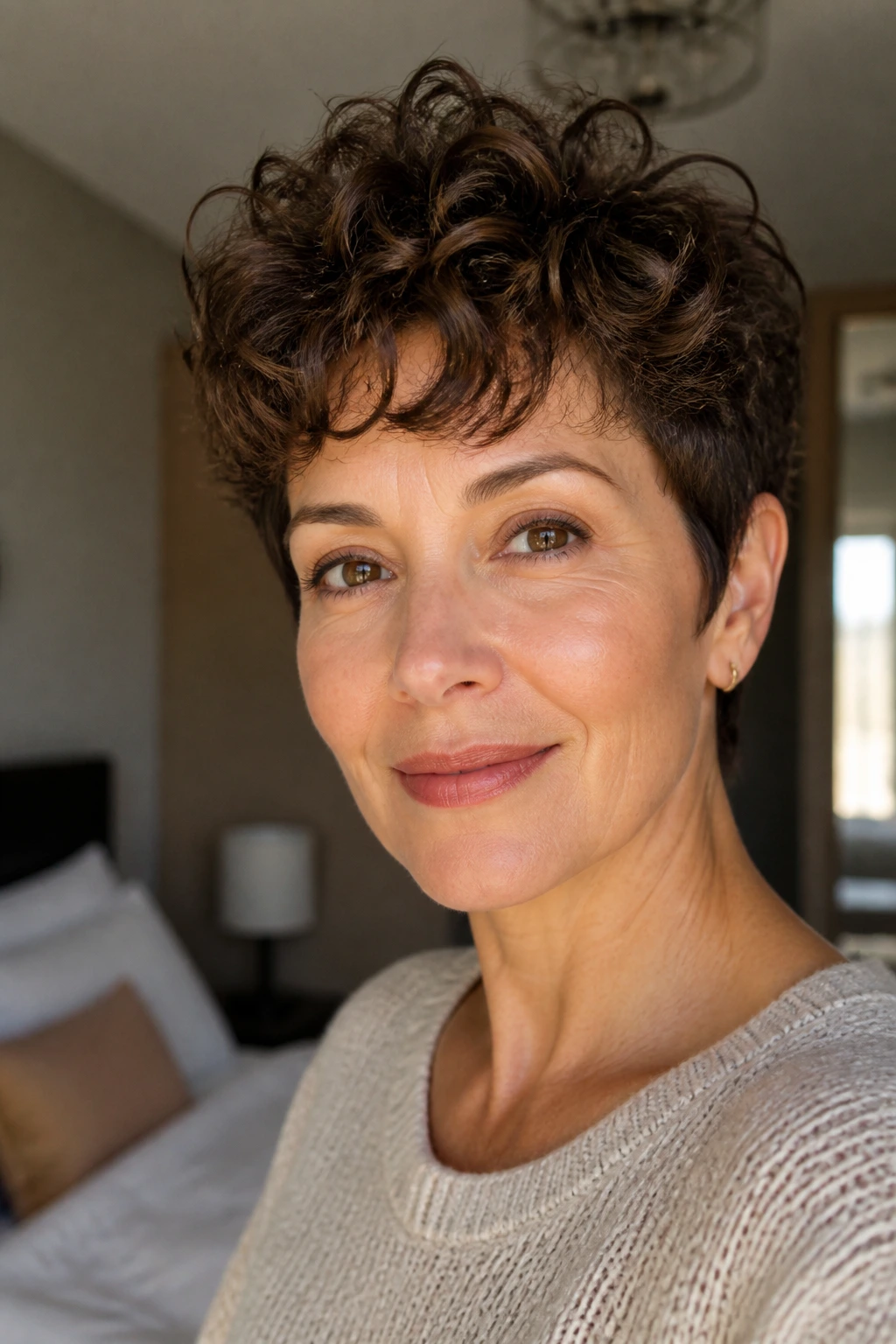
-
They remove the heavy part first: Fine curls collapse when the longest pieces hang too low, so taking the shape up above the jawline gives the curl pattern a better shot at staying lifted.
-
Soft layers add motion without striping the density: Instead of carving out harsh steps, the layers keep the outline rounded and airy, which is the difference between “cute texture” and “my hair looks eaten by scissors.”
-
The crown gets a chance to look fuller: A little extra length at the top — even 1 to 2 inches more than the sides — creates the impression of thicker hair because the curl can stack on itself.
-
The neckline stops stealing attention: A tapered nape pulls the eye upward, and that matters with fine hair because the back can go limp before the front does.
-
Styling gets faster, not louder: Shorter curls usually need less product, less drying time, and fewer tools. That’s not a marketing line. It’s what happens when you’re no longer trying to coax shoulder-length curls into behaving.
-
The cut can be shaped around your face, not against it: Side-swept fringe, baby bangs, or a soft rounded crown all change how the cut sits on the forehead, temples, and cheekbones.
1. Rounded Curly Pixie with Feathered Crown
This is the cut I reach for when the goal is density without bulk. The shape sits close at the sides, then opens up at the crown with light feathering so the curls don’t pile into a helmet. On fine hair, that rounded outline is doing real work. It gives the eye a full silhouette even when the actual hair count is modest.
Why It Works
The rounded shape keeps the curl pattern unified, which matters because fine curls often separate too fast at the ends. A feathered crown gives lift without chopping the top into visible layers that scream “I thinned this myself in bad bathroom light.” The best version leaves the top around 2.5 to 3.5 inches and the nape shorter, usually about 1 inch or less.
What to Ask for
- Keep the perimeter soft, not blunt.
- Build the crown with internal layers, not a choppy top layer.
- Taper the nape so the back doesn’t flare.
- Leave enough length at the temples to tuck or sweep.
Styling note
A small puff of mousse at the roots, then a diffuser held still at the crown for 20 to 30 seconds per section, usually gives this cut the right amount of lift. If you shake the curls too much while they’re damp, the rounded shape can turn fuzzy fast.
2. Tapered Nape Pixie with Side-Swept Fringe
The nape does half the work here. When the neckline is clean and tapered, the top reads fuller by comparison, even if the actual amount of hair hasn’t changed. Add a side-swept fringe that drops across one eyebrow, and the whole cut starts to feel intentional instead of merely short.
Why It Feels So Balanced
Fine hair can look sparse when every part of the cut is the same length. This one avoids that problem by giving the front a little diagonal movement. A side-swept fringe around 3 to 4 inches long adds softness near the forehead, while the back stays close and neat. The result is shape, not puff.
A cut like this works best when the stylist leaves the fringe with some bend rather than forcing it flat. Curl memory is helpful, but a fringe that sits too short can spring up and expose more forehead than you want.
Best for: longer faces, straight or slightly curved brows, and curls that naturally fall in one direction.
Watch for: a nape that’s cut too sharply. That can create a hard line, and hard lines are unforgiving on fine hair.
3. Shaggy Curly Pixie with Choppy Micro Layers
What if your curls need movement more than polish? Then this is the one. The shaggy pixie keeps the overall length short, but it uses tiny, soft layers to make the curl pattern break up in a good way. It looks a little undone, but not messy in the wrong sense. More like the hair has been allowed to have a pulse.
How It Reads on Fine Hair
This shape is best when the curls are loose to medium and the hair is fine but not flimsy. The micro layers help the top lift while the sides stay light. A stylist who knows curls will usually point-cut the ends instead of razor-cutting them, because razor work can leave fine strands frayed and see-through at the tips.
How to wear it
A dab of lightweight gel on soaking-wet hair, then a scrunch-and-diffuse routine, gives this cut its soft separation. If you want it a little calmer, skip the gel and use foam mousse instead. The shape survives either way, which is one reason I like it.
The shaggy pixie is the one that forgives a slightly lazy morning. You can push the front forward, tuck one side back, and it still looks like a cut with a plan.
4. Asymmetrical Curly Pixie with Deep Side Part
A deep side part changes everything. One side falls closer to the cheekbone, the other side stays shorter and tighter, and that offset makes fine hair look denser because the eye can’t measure it evenly. It’s a simple trick, but it’s a good one.
The mechanism
The asymmetry creates a stronger line than a center part ever could. On fine curls, a center part can split the top so neatly that the scalp starts to show through in the crown. Shift the part over by 1 to 2 inches, and the hair gathers itself into a fuller-looking mass. Keep the longest front pieces around 4 inches, with the shorter side closer to 1.5 or 2 inches at the temple.
Why it flatters
The cut keeps the softness of a pixie, but the uneven front gives the face more movement. It’s especially useful if one side of your hair naturally lies flatter than the other. Instead of fighting that, the shape turns the difference into style.
A tiny amount of root spray at the heavy side helps. Not a lot. Just enough to keep the longer side from gluing itself to the cheek by lunchtime.
5. Ear-Grazing Pixie with Soft Sides and Lifted Top
This is the in-between cut for people who want short hair but don’t want to feel exposed. The sides skim the ears, the top stays buoyant, and the layers are so soft that the whole thing reads as airy rather than cropped. It has a little swing when you turn your head, which is exactly what fine curls need.
The ear-grazing length matters because it gives the face a frame without weighing down the shape. Too much hair around the ears makes fine curls collapse outward. Too little, and the cut starts to feel severe. This lands in the middle, where the curl pattern can still show its shape.
It also photographs well in real life, not just in salon lighting, because the lifted top keeps the silhouette from going flat. If you’ve got soft cheekbones or want a bit of width around the eyes, this shape does the job without trying too hard.
6. Curly Crop with Wispy Baby Bangs
Baby bangs are not for everyone. I’ll say that plainly. But on the right forehead shape and with the right curl pattern, they can make a fine-haired pixie look sharper and more playful at the same time. The bangs sit higher than a classic fringe, so they don’t swallow the face, and the short length lets the rest of the cut keep its lift.
Why It Works
Wispy baby bangs work best when they’re cut soft, not straight across like a ruler. Keep them around 0.5 to 1 inch longer than your ideal finished length, because curls spring up once they dry. On fine hair, that tiny bit of extra length keeps the fringe from going too sparse or too spiky.
This cut is strongest on people who want the forehead visible rather than hidden. It also looks good when the rest of the pixie is kept close through the sides and slightly longer at the crown, so the bangs don’t become the only thing you notice.
Best styling move
Finger-style the bangs while they’re still damp, then leave them alone. Pushing them around after they start drying usually creates frizz at the roots, and that frizz shows first on fine hair.
7. Bixie-Style Pixie with Extra Crown Length
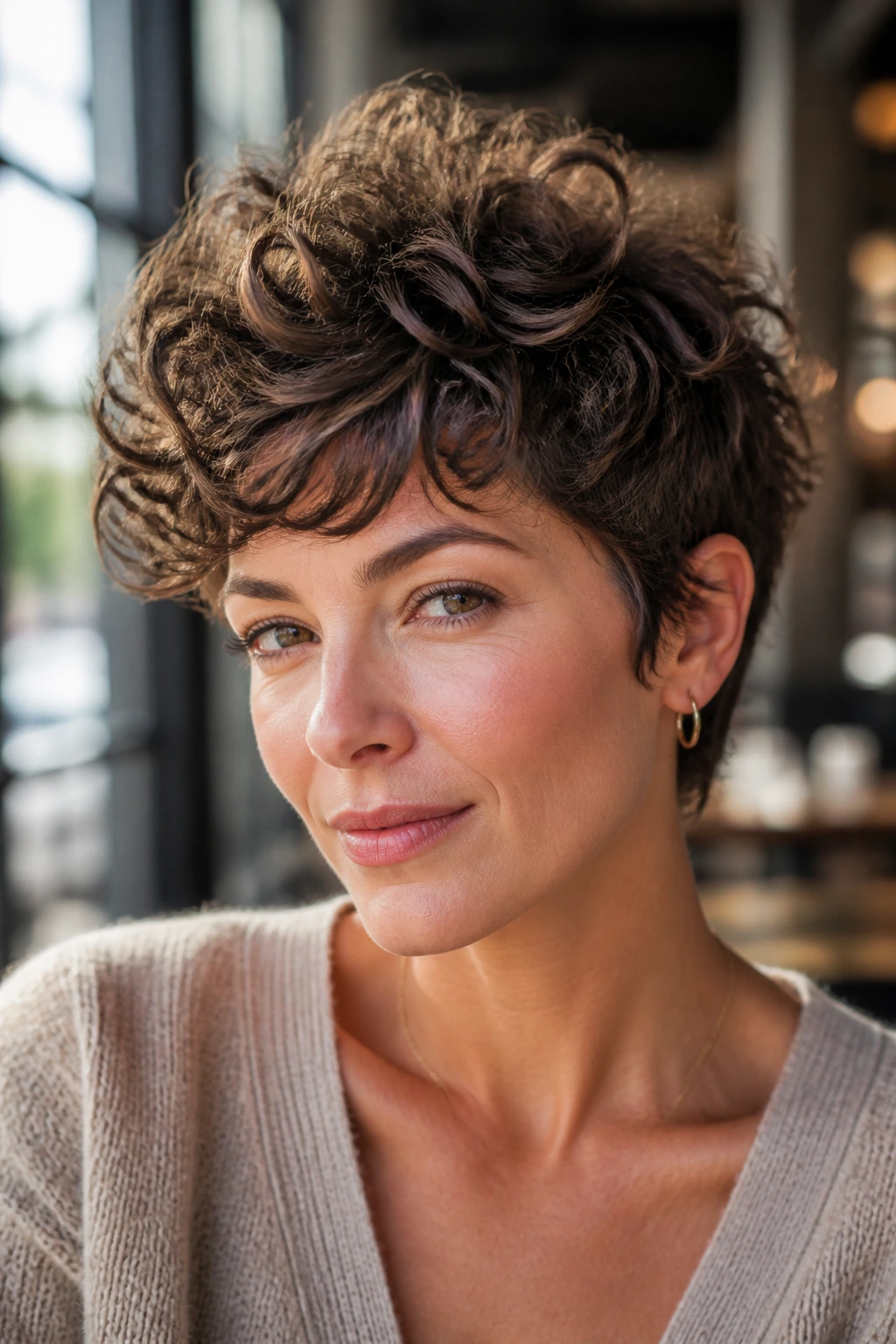
This is the compromise haircut for people who keep saying, “I want it short, but not that short.” A bixie leans between a pixie and a bob, and on fine curly hair that extra crown length can be a gift. It lets the curls stack a little higher, which gives the hair more visual body without forcing the sides to bulk out.
What makes it different
A classic pixie usually takes the nape and sides much shorter than the top. The bixie keeps more length at the crown and around the cheek area, often 4 to 5 inches on top and a bit less on the sides. That extra length lets the curls fall in a softer arc, which is useful if your hair gets puffy when it’s cut too close.
Who it suits
If you wear glasses, work with your hair often, or just like the idea of tucking the front behind one ear, this cut is easy to live with. It also grows out gracefully, which matters because fine curly hair can go from sharp to awkward very fast once the perimeter gets fuzzy.
I like this shape for anyone who wants movement but not a lot of scalp exposure. The soft layers are doing the flattering here. They’re the reason the cut feels light instead of sparse.
8. Undercut Pixie with Airy Curl Cap
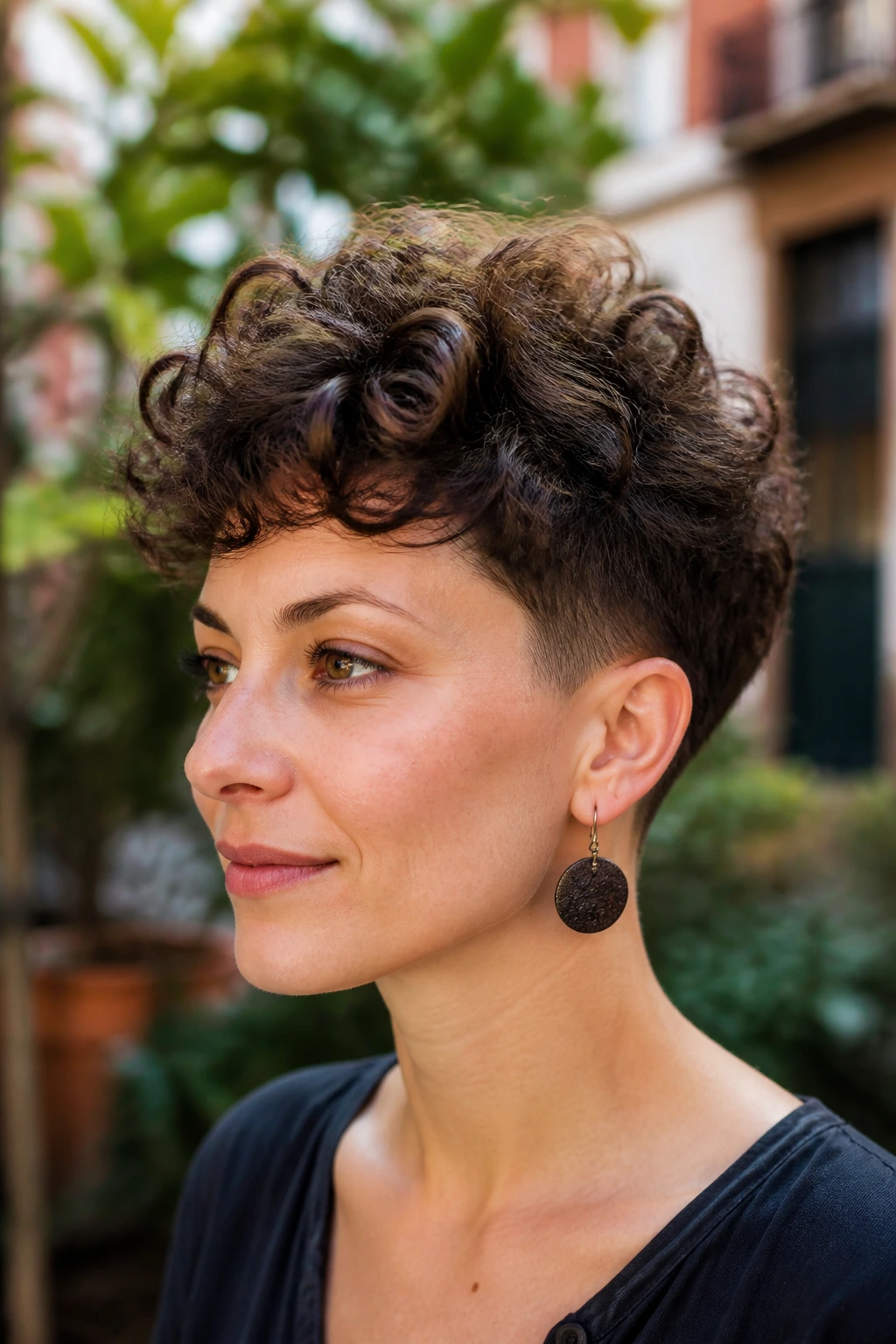
An undercut sounds harsh, but it doesn’t have to look harsh at all. On fine curly hair, a hidden or softly tapered undercut can remove the bulk that builds under the crown and at the nape, leaving the top curls free to puff up where they’re supposed to. That can be a lifesaver if your hair grows triangular at the back.
The trick is restraint. You do not want a shaved strip that shouts every time you tilt your head. You want a tight lower section and a soft, airy curl cap on top. The top can stay around 3 to 4 inches, sometimes a bit longer, while the underlayer stays clipped close enough to remove drag.
This shape has a little edge, sure, but the edge is hidden under the curl texture. It’s one of the few pixie variations that can make fine hair look both smaller and fuller at once — smaller in footprint, fuller in silhouette.
9. Swept-Back Pixie with Long Top Pieces
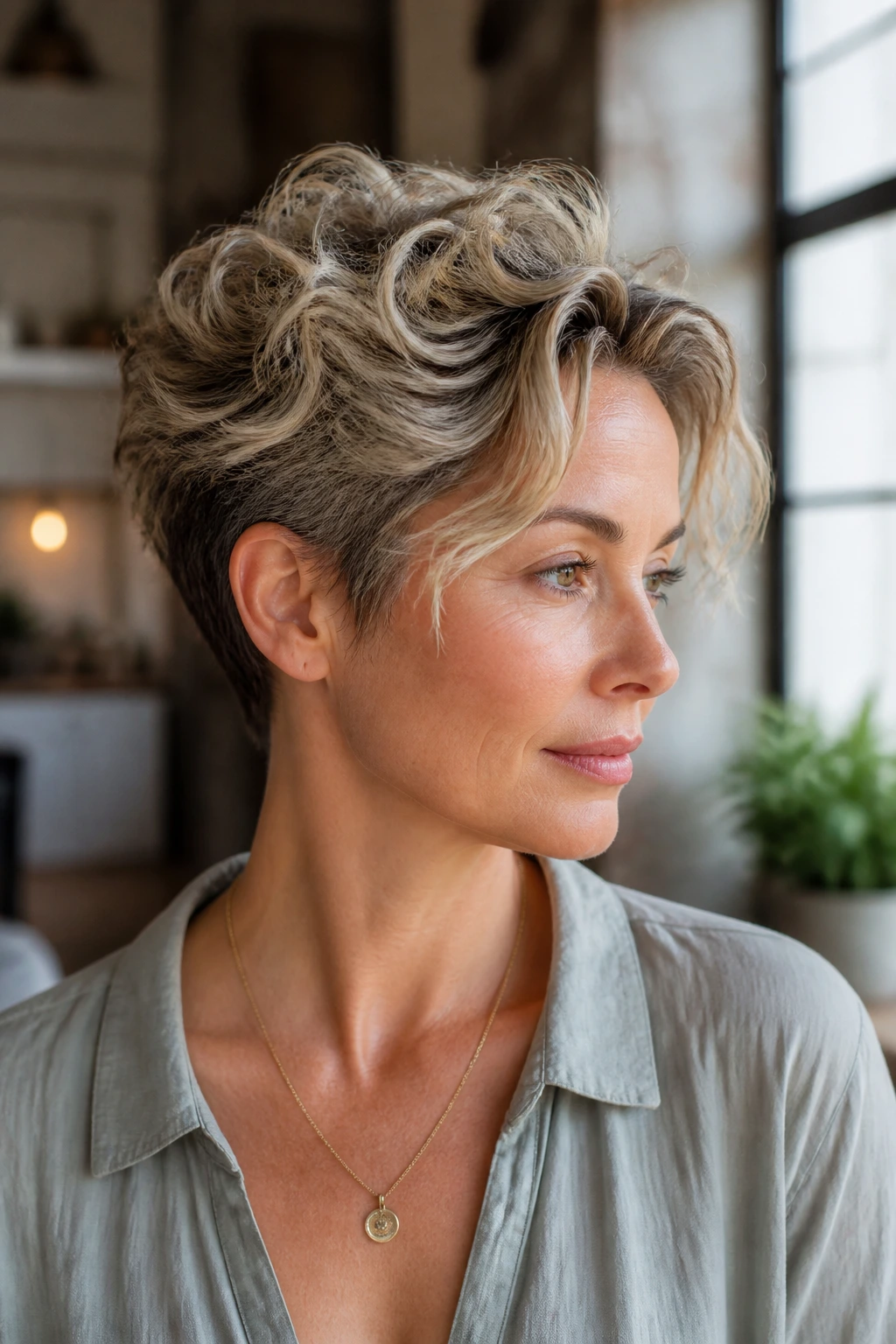
Can a pixie still feel soft around the face? Absolutely, if the top pieces are long enough to sweep back and the sides stay clean enough to support the shape. This version keeps the front and crown around 4 to 5 inches, then uses the roots for lift instead of dragging the hair forward.
Why It Helps Fine Curls
When fine curls are worn forward all the time, they can collapse onto the forehead and separate too much. Sweeping them back opens the face and lets the curl pattern sit on top of itself. The cut looks fuller because the root direction changes. That’s the whole trick.
If you like a little lift at the front, clip the top up while it dries and direct the roots backward with a diffuser. The hair doesn’t need to be perfectly slicked back. It just needs enough direction that the front doesn’t fall into a flat curtain.
This is a good cut if you want the pixie to feel grown-up rather than sweet. There’s a cleaner line to it. Less fluff. More shape.
10. Messy French-Girl Pixie with Piecey Fringe
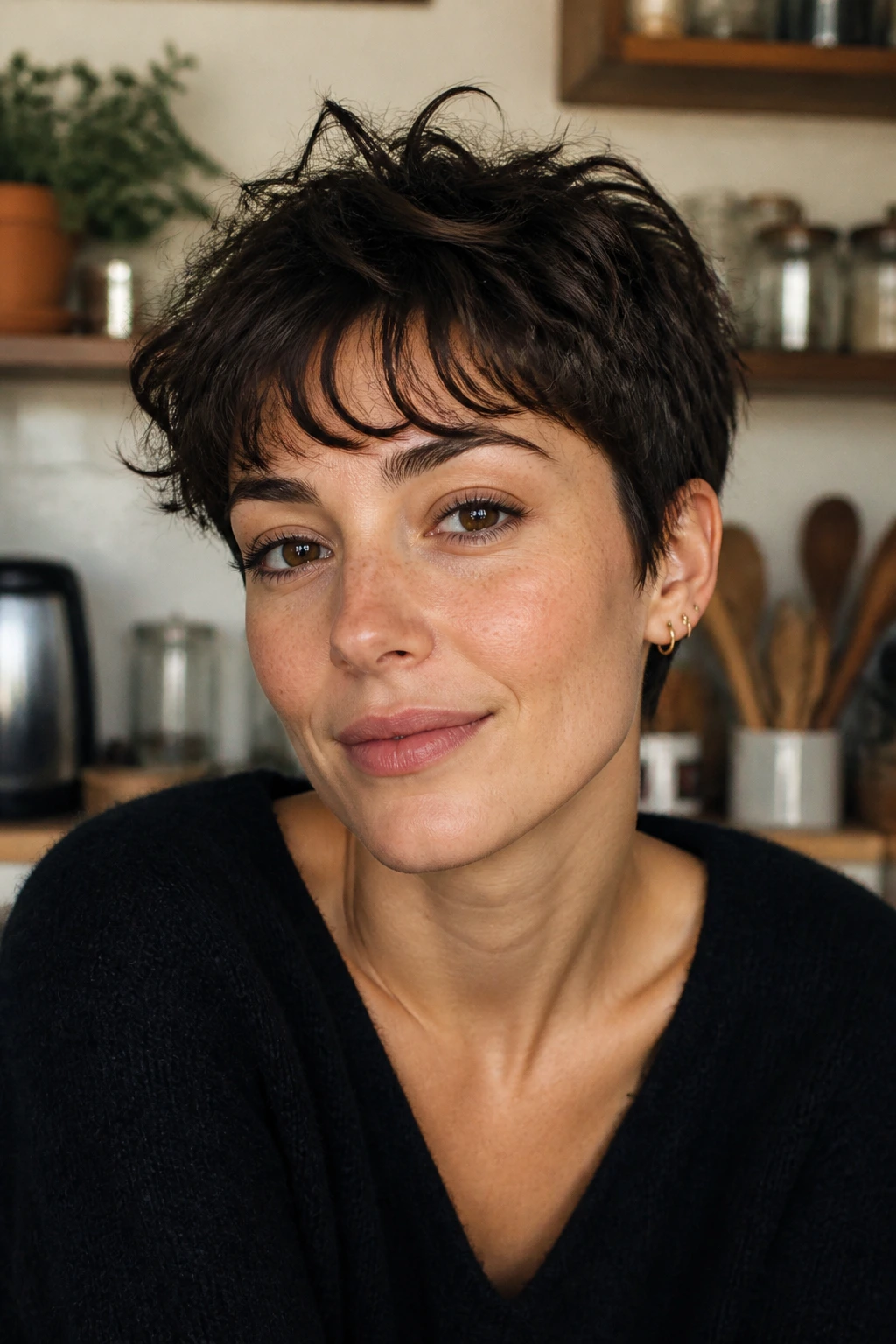
There’s a reason this shape gets copied so often: the messiness is doing real work. A piecey fringe and a slightly uneven top keep fine curls from looking too neat, which is often where they start looking thin. The charm comes from separation, not from perfect curl clumps.
The fringe should skim the forehead, not sit heavy on it. Think of it as small groups of curls falling in different directions, with just enough product to keep them from puffing into frizz. A lightweight cream or foam works better here than anything rich. Rich creams make the ends stick together and drag the whole look down.
I like this cut for people who don’t want to spend ten minutes making their hair look “done.” It already has some attitude built in. You usually need only a quick diffuser pass and a tiny touch of paste on the ends.
11. Bowl-Shape Curly Pixie with Soft Edge
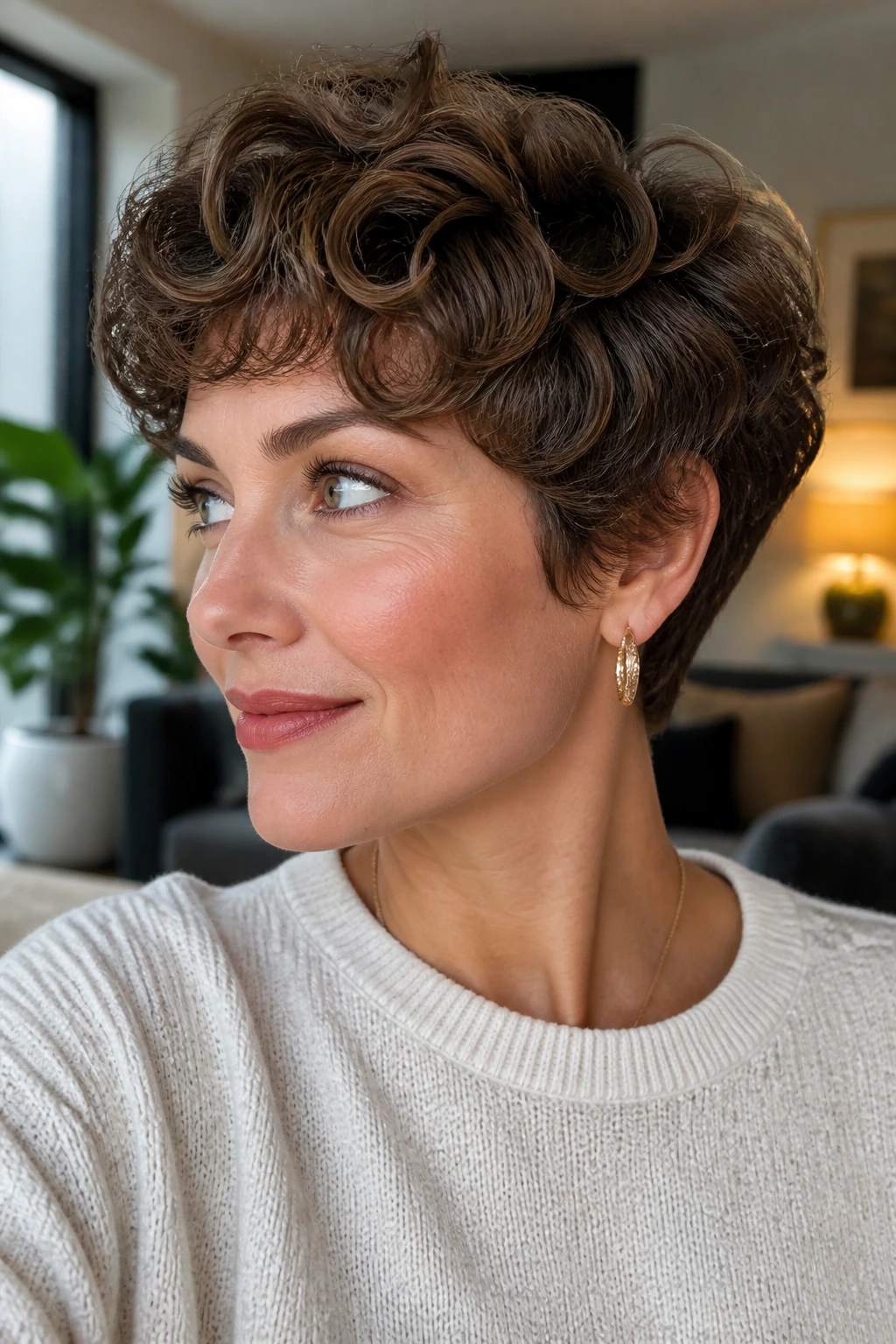
A bowl shape can sound severe, and honestly, if it’s cut bluntly, it often is. But soften the edge, round the corners, and let the curls sit just off the head instead of plastered to it, and the shape becomes sharp in a good way. Fine hair benefits from that controlled outline because it looks fuller when the perimeter is clean.
What changes the mood
The difference between a bowl-like pixie and a hard helmet is in the edge work. Keep the line around the ears and crown soft, not chopped flat. Let the curls create a rounded halo rather than a box. If the top is slightly longer than the sides, the cut gets that curved, sculpted shape without looking severe.
Best on
Oval and heart-shaped faces usually wear this well, especially when the brows are visible and the forehead isn’t completely buried. It also works for anyone who likes structure but doesn’t want the haircut to feel too precious.
A soft bowl pixie is one of those styles that looks expensive even when it’s being wildly practical. That’s a rare thing. Don’t overdo the product, though. The shape wants motion, not shine spray and regret.
12. Tapered Temple Pixie with Swooped Front
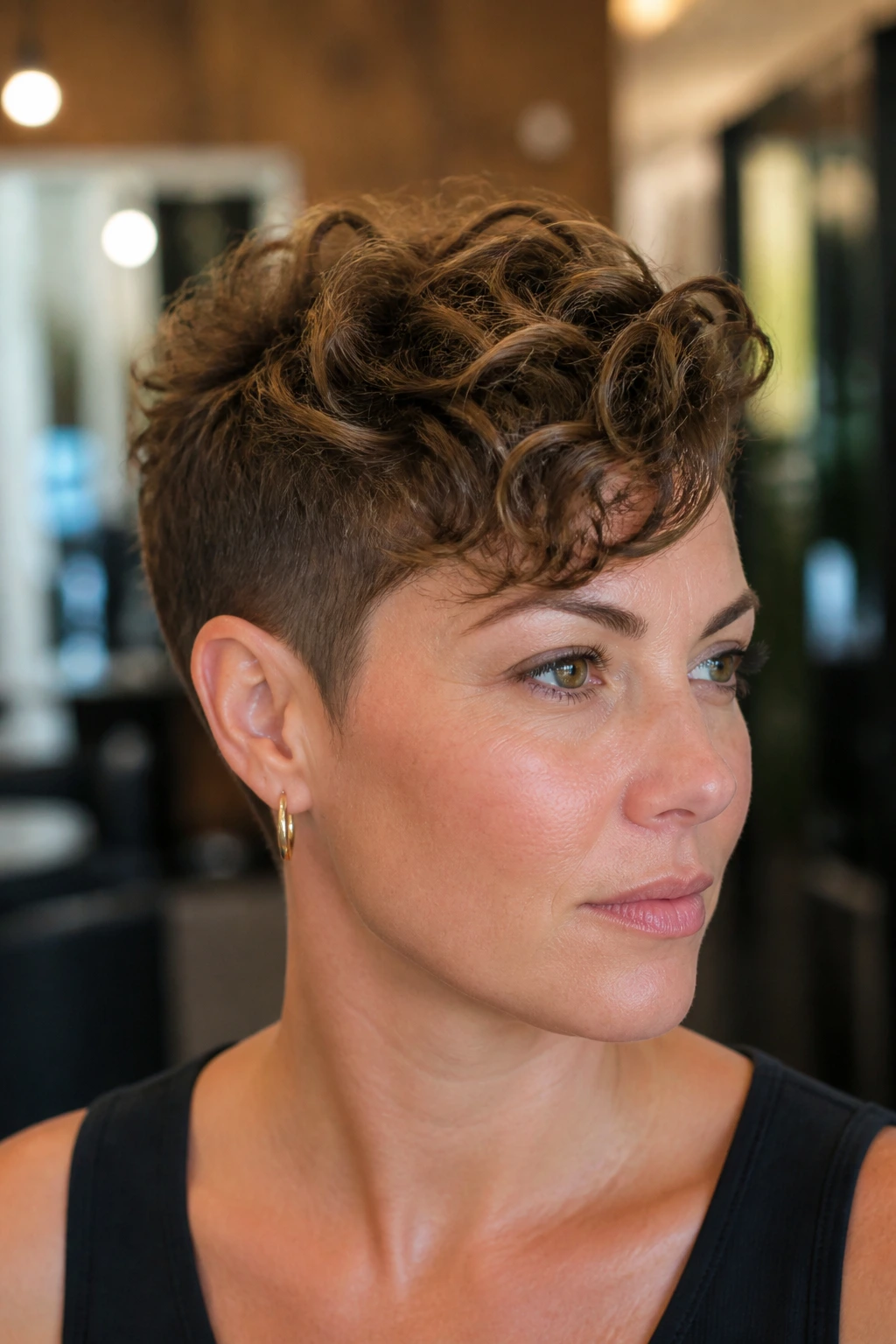
The temples matter more than people think. If that area is too bulky, fine curly hair can puff outward at the sides and widen the face in a clumsy way. Tapering the temples tight while letting the front swoop across the forehead gives the cut direction and a little drama without turning it into a hard undercut.
This shape is especially good if you want to soften a strong forehead or bring more attention to the eyes. The front piece can sit around 4 inches, sometimes a bit longer, and the temples can be clipped down close enough that the top looks lifted by comparison.
It’s a neat trick for people who wear earrings, too. The open temple area lets the ear and jawline show, which makes the face feel less crowded. Fine hair loves that kind of breathing room.
13. Layered Pixie Mullet with Gentle Length at the Neck
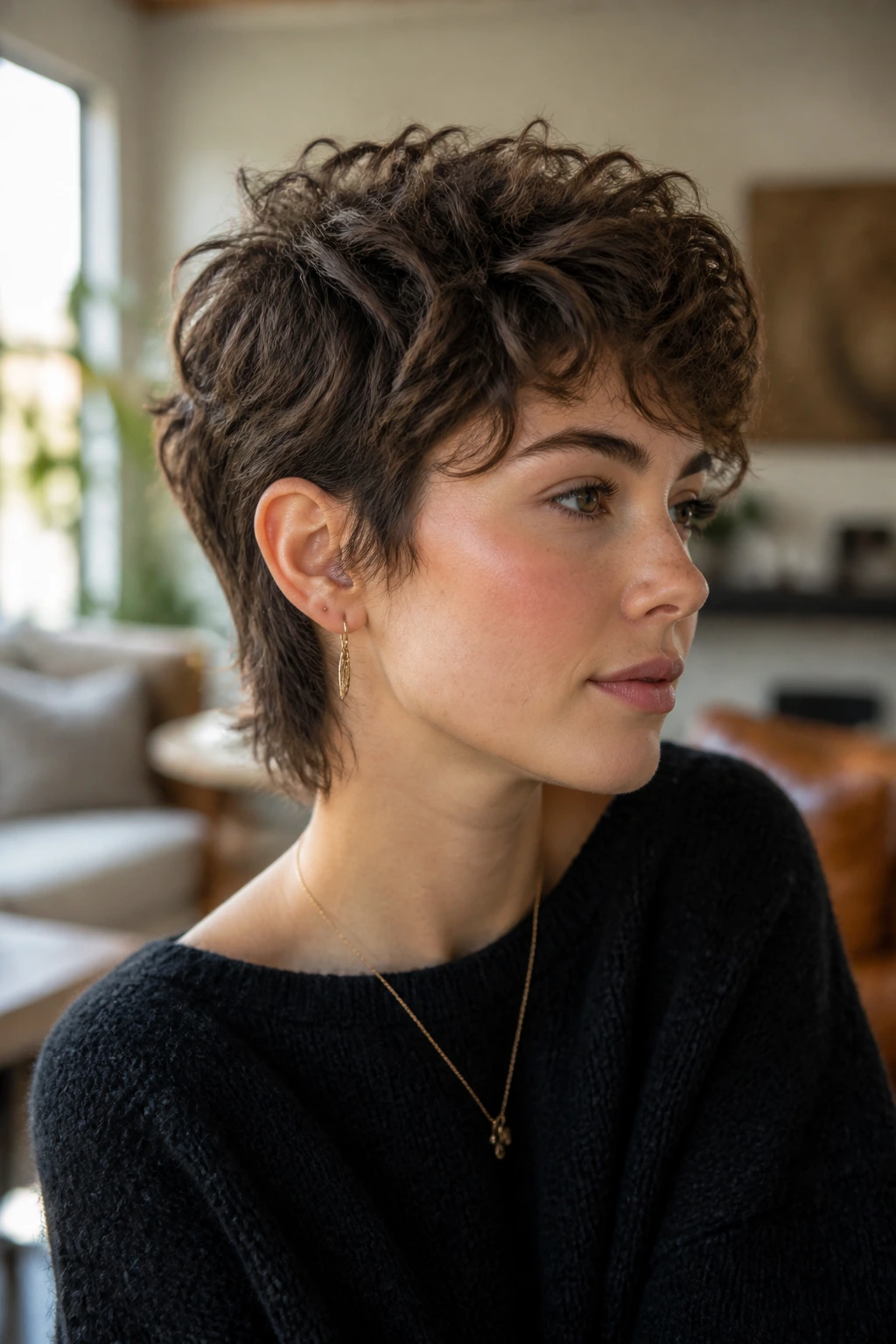
A pixie mullet sounds more aggressive than it usually looks in real life. When it’s cut with a soft hand, the extra length at the neck gives fine curls a tail of movement without making the whole head look thin. The top stays compact, the sides stay neat, and the nape gets just enough length to keep the silhouette interesting.
Why it works on fine curls
Fine hair often looks best when it’s not asked to do the same thing everywhere. A little neck length changes the outline and makes the cut feel fuller from the side view. The key is softness. You want gentle layering, not a jagged strip at the back.
If you like a cut that looks a bit more editorial and less “standard salon pixie,” this is the one. It has a touch of attitude, but it still reads as wearable. The nape should tuck rather than kick out. That’s the part that keeps it elegant, or at least not chaotic.
14. Side-Part Curly Pixie with Tucked-Behind-the-Ear Shape
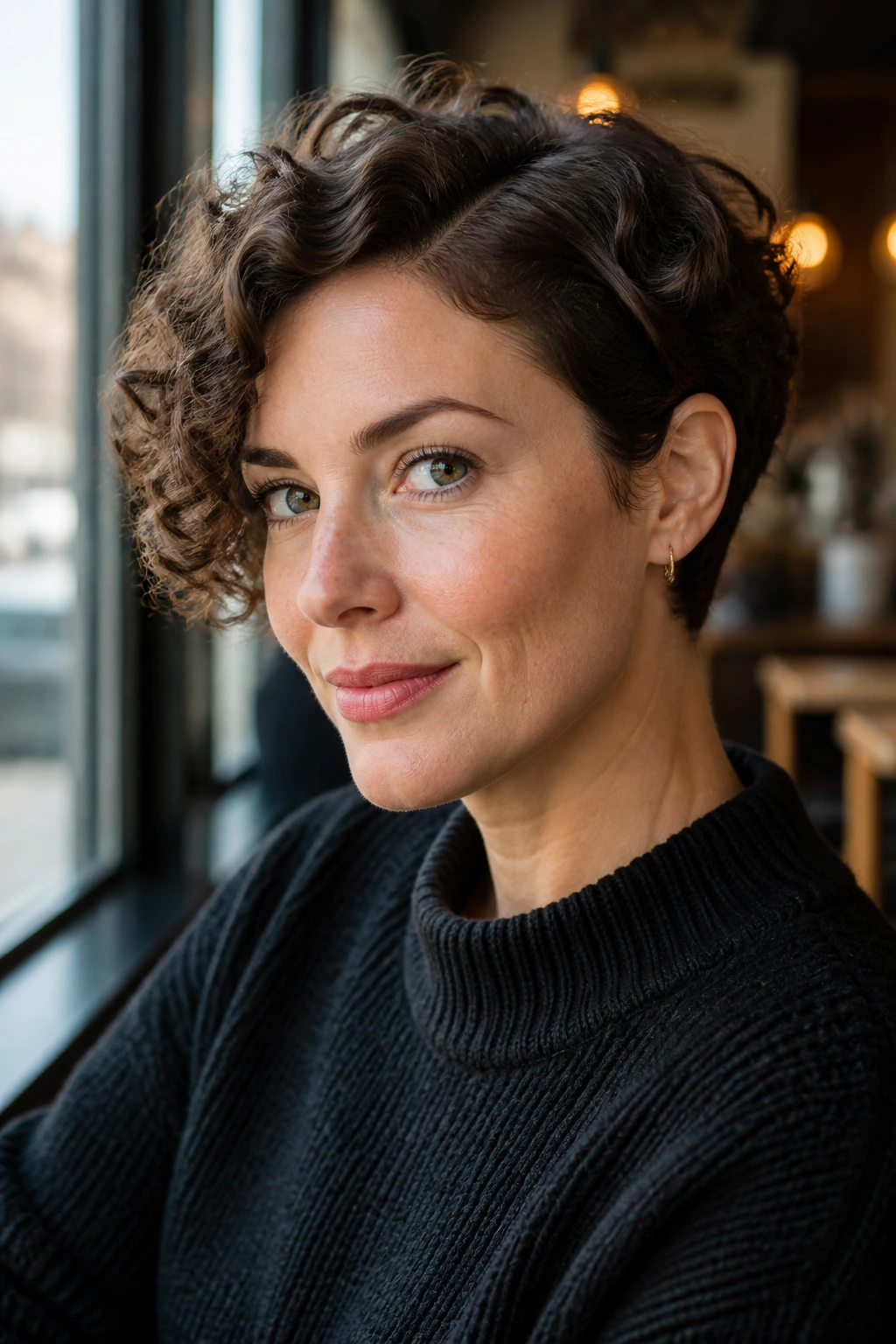
Sometimes the simplest shape is the smartest one. A side part, one side tucked behind the ear, and a little extra length on the opposite side can do more for fine curly hair than a dozen layers. The tuck creates clean negative space, which makes the remaining curls look fuller.
This style is especially nice if you wear glasses or like a clear line around the face. The tucked side shows off the jaw, while the looser side keeps the softness. Keep one side around ear length and let the other side fall closer to the cheekbone. That little imbalance keeps the style from feeling flat.
It also behaves well on days when your curl pattern is having opinions. If one side frizzes more than the other, tuck it back. Done.
15. Softly Spiky Textured Pixie for Fine Curls
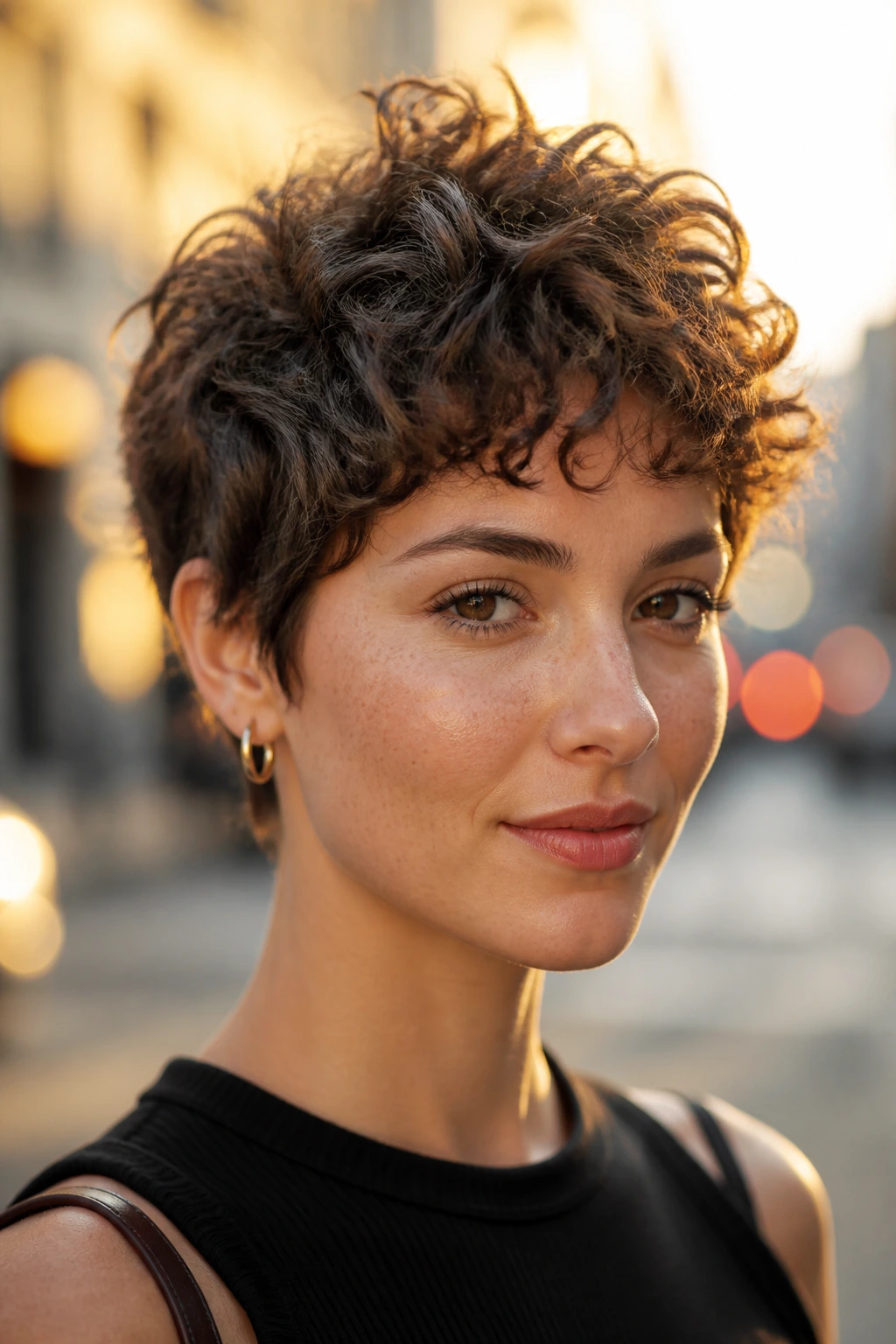
A tiny bit of lift can make the whole cut look thicker. That’s the appeal of a softly spiky textured pixie: the ends are lightly separated, the crown gets a little height, and the curl pattern is allowed to break up just enough to avoid looking limp. It is not punky. It is not crunchy. It is simply awake.
The best version uses point cutting rather than razor thinning, because you want soft ends, not shredded ones. A pea-sized amount of matte paste or light styling cream rubbed between the fingers can give the front pieces some direction. Push a few curls forward, lift a few upward, and leave the rest alone.
If your hair is so fine that it goes flat the second you look at it, this shape has a real advantage: it builds texture into the cut itself, instead of depending on a lot of product. That keeps the curls bouncy instead of heavy. And fine hair hates heavy.
How Soft Layers Change the Whole Silhouette
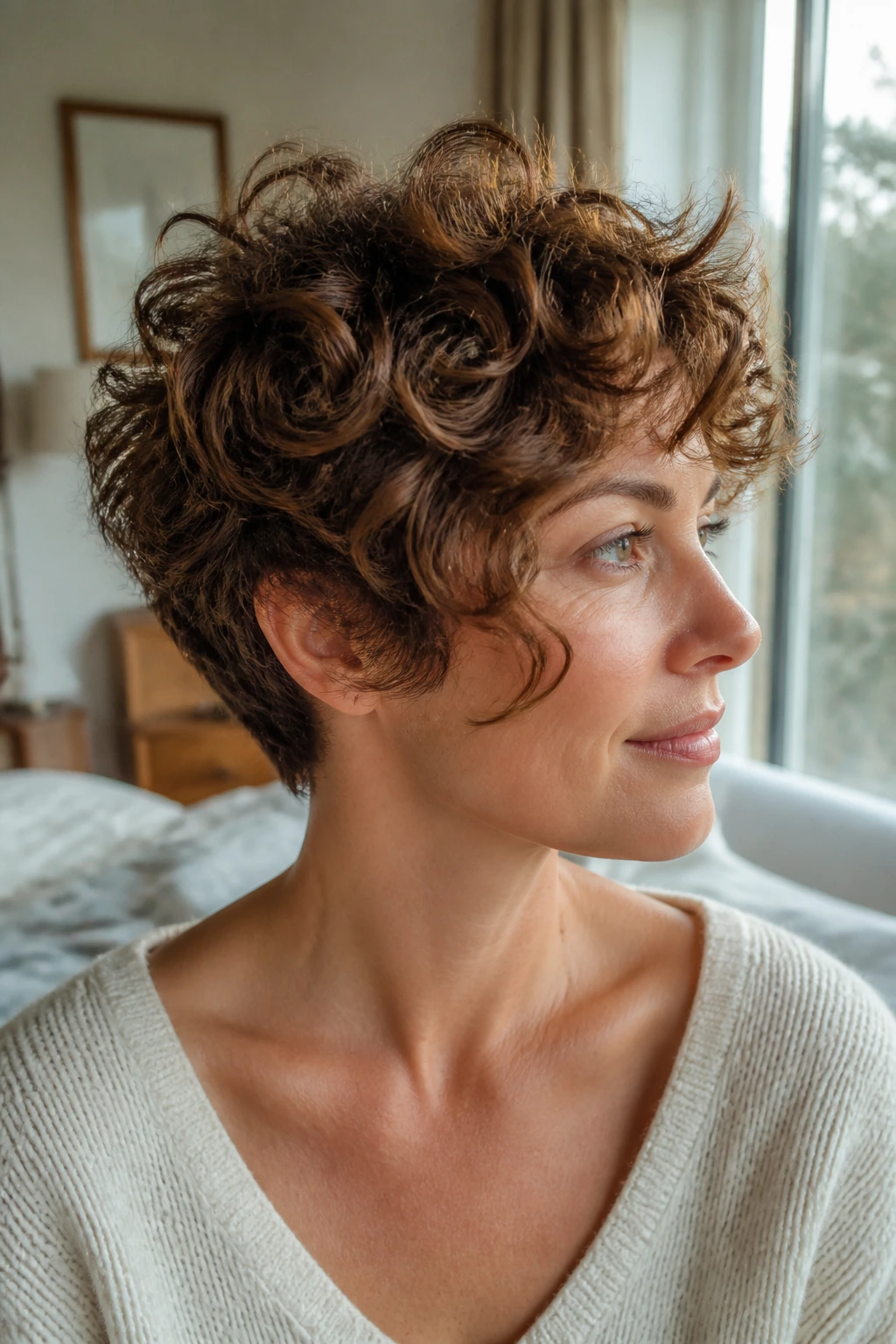
Soft layers are not there to “give movement” in some vague salon-poster sense. They’re there to control weight. On fine curly hair, weight is the enemy when it sits in the wrong place — usually at the crown, the sides, or the nape. A soft layer removes just enough bulk to let the curl spring up, but it leaves the outline intact so the hair still looks like it has shape.
The smartest soft layers are almost invisible when the hair is dry. You might see them in the way the curls stack at the top, or in the way the front falls a touch longer than the temple, but you should not see choppy shelves. That’s where pixies go wrong. A bad layer announces itself. A good layer quietly changes the whole head shape.
Crown, temple, nape
The crown needs lift. The temples need restraint. The nape needs enough tightness to keep the silhouette from ballooning. When those three zones are balanced, fine curls look denser because the cut is supporting the pattern instead of fighting it.
What soft layers are not
They are not razor strips. They are not a hacked-up top. They are not a reason to take a thinning shear to every inch of the cut. If a stylist says “we’ll just thin it out so it moves,” ask how they plan to keep the ends looking full. That answer matters.
Essential Tools and Products for Styling These Cuts
-
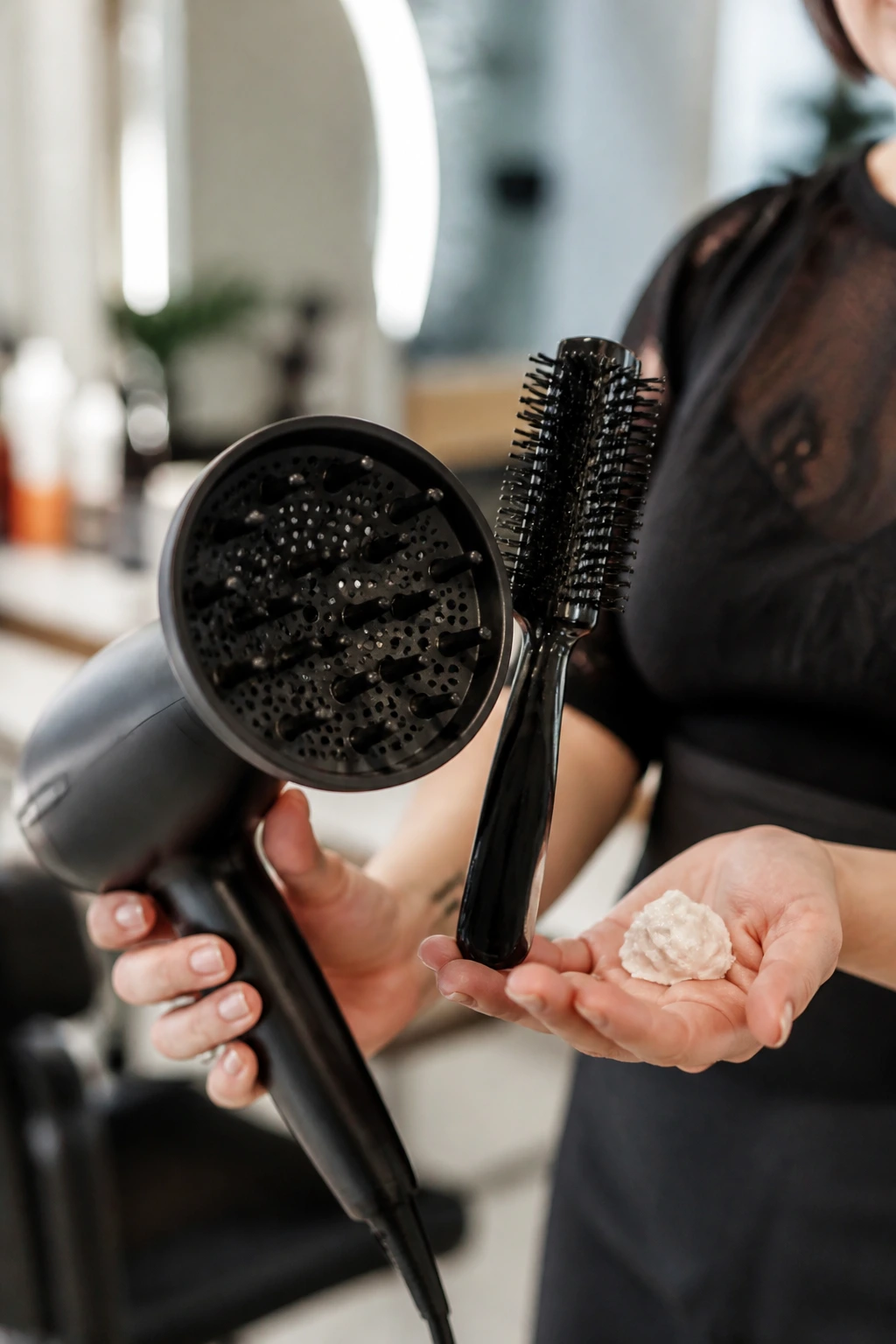
A diffuser attachment: Use it on low or medium heat to lift the roots without blowing the curls apart.
-
A lightweight mousse or foam: Fine curls usually need a product with air in it; thick creams can sink the crown fast.
-
A root-lifting spray: A few sprays at the crown and along the part can keep the top from collapsing by midday.
-
A narrow nozzle dryer: Helpful if you’re directing the fringe or the side part before diffusing.
-
A small styling brush or denman-style brush: Useful for shaping the front pieces and keeping the part clean.
-
A pea-sized amount of matte paste or light cream: Best for separating the ends without making them greasy.
-
Duckbill clips or sectioning clips: Handy when you want extra lift at the crown while the hair dries.
-
A satin pillowcase or bonnet: Not a styling tool in the strict sense, but it saves fine curls from getting crushed overnight.
What to Ask for at the Salon
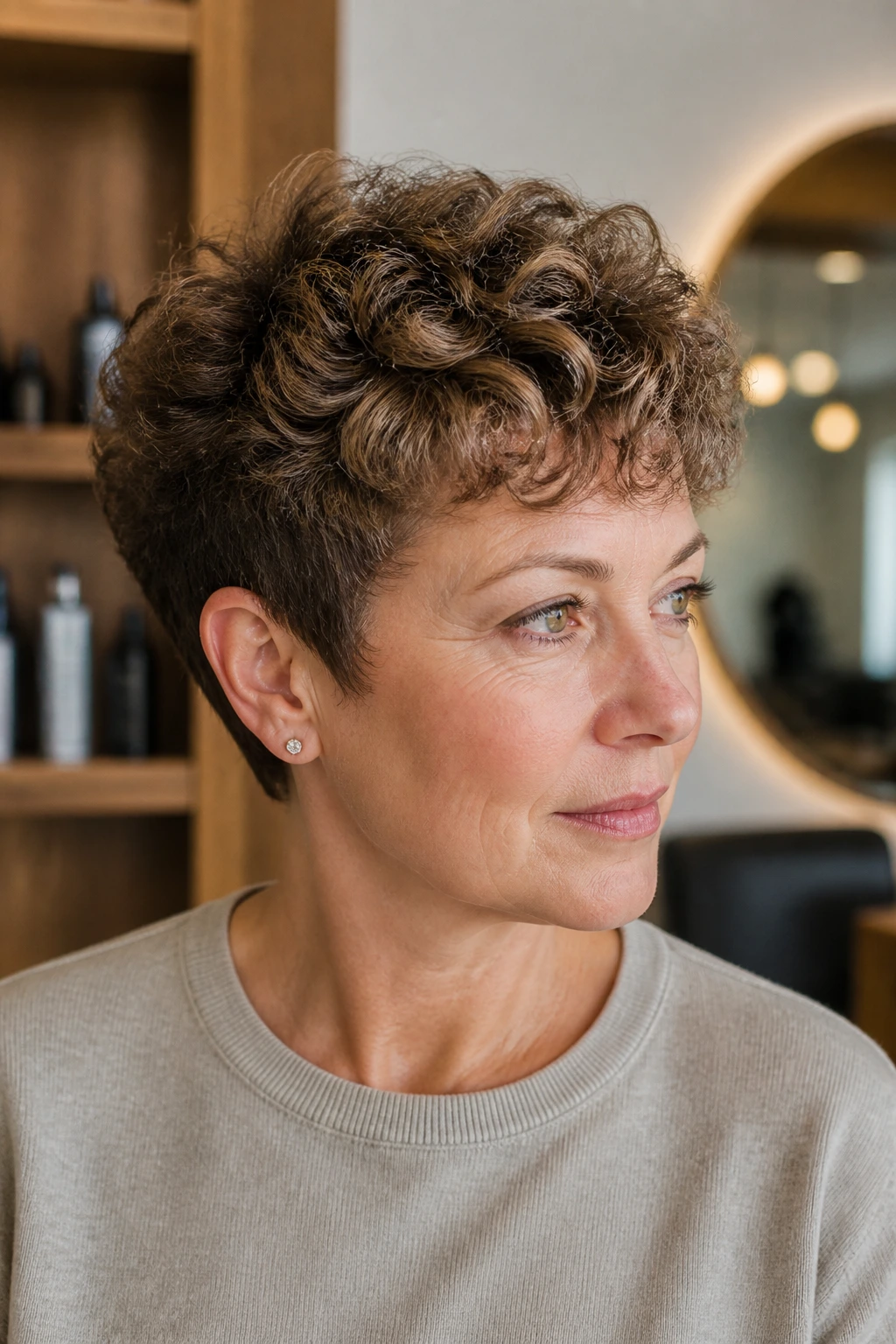
A lot of pixie regret comes from vague language. “I want it shorter” is not enough. A curly cut on fine hair needs shape words and length words. Bring photos, yes, but bring them of people whose curl texture actually resembles yours. A picture of a thick, springy 3C pixie will not help if your own curls are loose and fine. The silhouette may be right, but the behavior won’t be.
Ask for soft internal layers rather than heavy texturizing. Say you want the top to stay a little longer than the sides, with enough crown length to create lift. If you like fringe, say whether you want it side-swept, wispy, or micro-short. If the nape matters to you — and it should — say how clean you want it. A tapered nape and a shaved nape are not the same haircut.
Say the lengths out loud
- Top: about 2.5 to 5 inches, depending on the style.
- Sides: short enough to tuck or soften around the ears.
- Nape: tapered, not bulky.
- Fringe: long enough to curl, short enough to stay out of your eyes.
If your stylist wants to thin the hair aggressively, stop and ask why. Fine hair often needs shape control, not removal. That’s a big difference.
Smart Styling Moves for Fine Curly Pixies
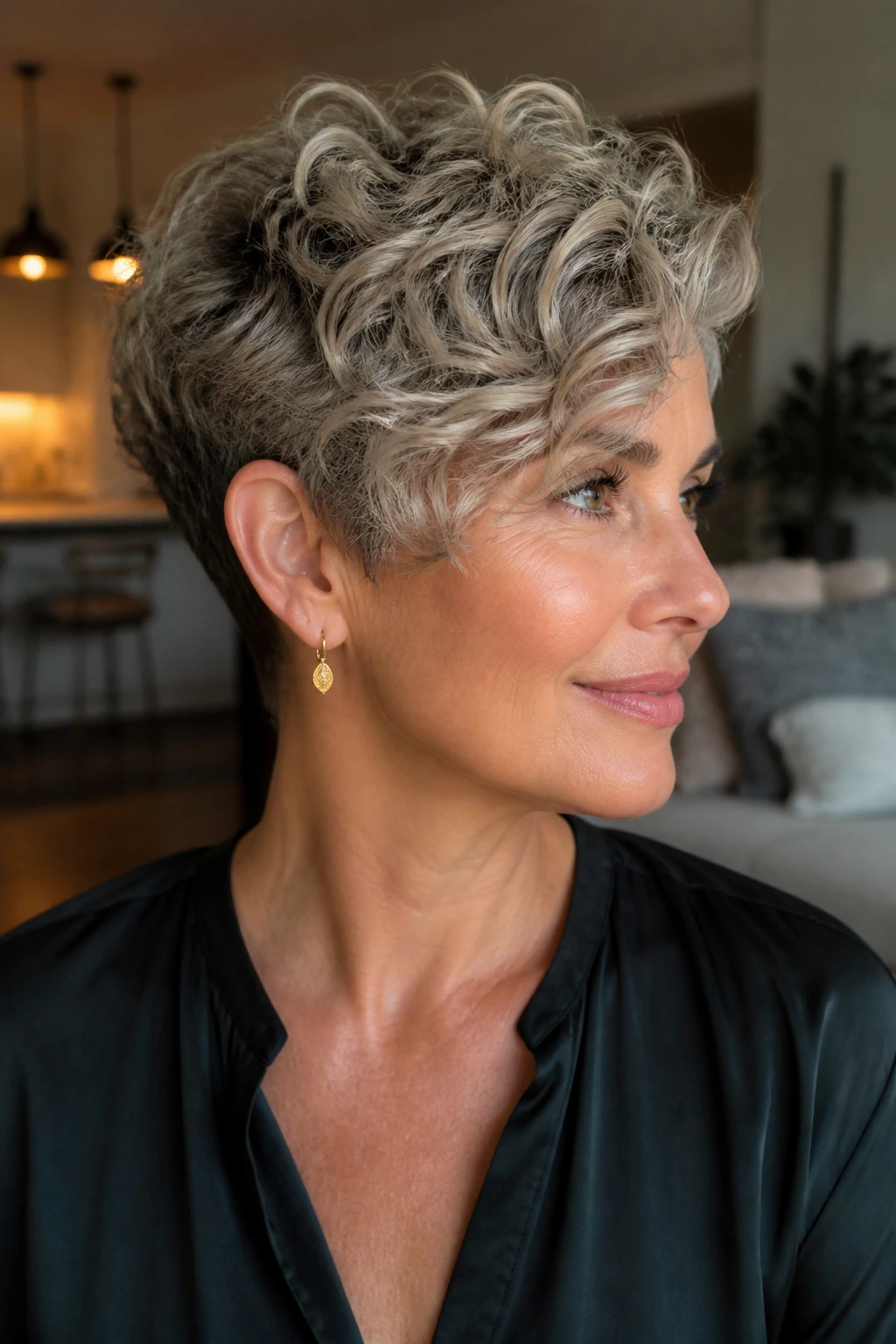
Root Lift: Start with product at the roots, not the ends. A light mousse or foam at the crown gives the cut structure where fine hair usually loses it first. Clip the crown up for a few minutes while it dries; that tiny habit can change the whole shape.
Product Load: Use less than you think. A nickel-sized amount is often enough for short curls. If the hair feels coated or sticky before it’s dry, you’ve gone too far. Fine hair shows overload fast.
Drying Direction: Dry the top first, then the sides. If you blast the sides flat before lifting the crown, the cut can collapse into a square little shape. Keep the dryer moving and let the curls set in the direction you want them to live.
Day-Two Refresh: Mist the cut lightly with water, then scrunch in a trace of foam or leave-in spray. Don’t soak it. Fine curls only need a damp restart, not a wash at the sink every morning.
Finish: Use your fingers, not a brush, once the hair is dry. Brushes separate fine curls too much and can leave the top looking sparse. Fingers let you nudge the shape without erasing it.
Common Mistakes That Flatten Fine Curly Pixies
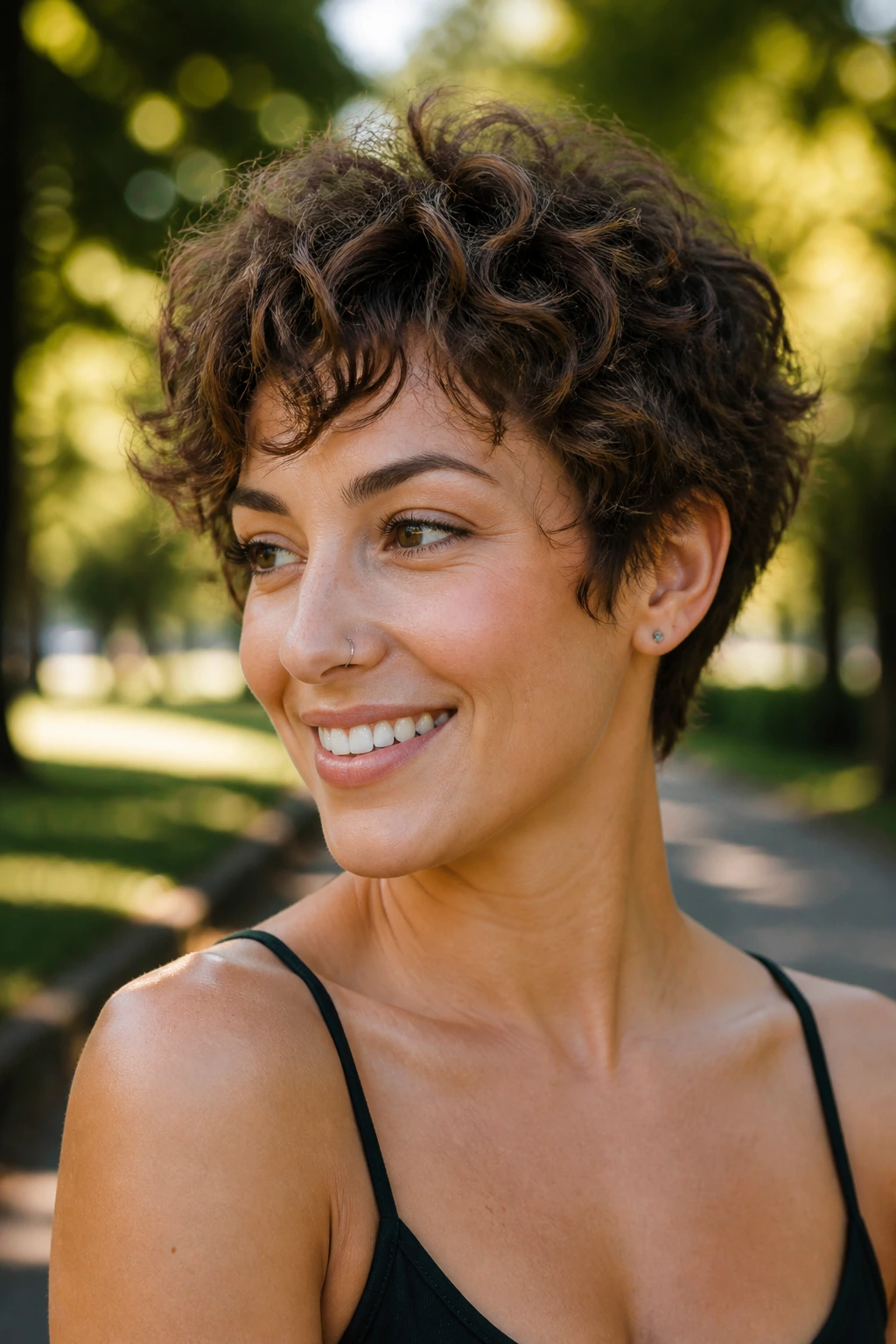
The first mistake is over-thinning the ends. The cut looks light in the chair, then two days later the tips look wispy and dry. Fine hair does not need to be aggressively texturized to move. The fix is a softer cut with controlled layering and, if needed, only minimal point cutting.
The second mistake is using cream-heavy curl products. They feel luxurious in the hand and disastrous on the head when the hair is fine. The curls get dull, the roots drop, and the whole cut loses its lift by lunchtime. Switch to mousse, foam, or a very light gel instead.
Another one: keeping the crown too short. People often ask for a short top because they want less maintenance, then wonder why the pixie lies flat. The crown needs enough length to stack on itself. If the top is too short, the style becomes a close crop, not a pixie with shape.
Ignoring the nape is a big miss too. If the back is left bulky, it makes the whole head look wider and flatter. A tapered neckline helps the rest of the cut look intentional.
And please, do not cut the fringe too short before it dries. Curly fringe springs up more than people expect. What looks like a neat eyebrow-grazer in the mirror can turn into a tiny curl ledge by morning.
Variations and Adaptations to Try
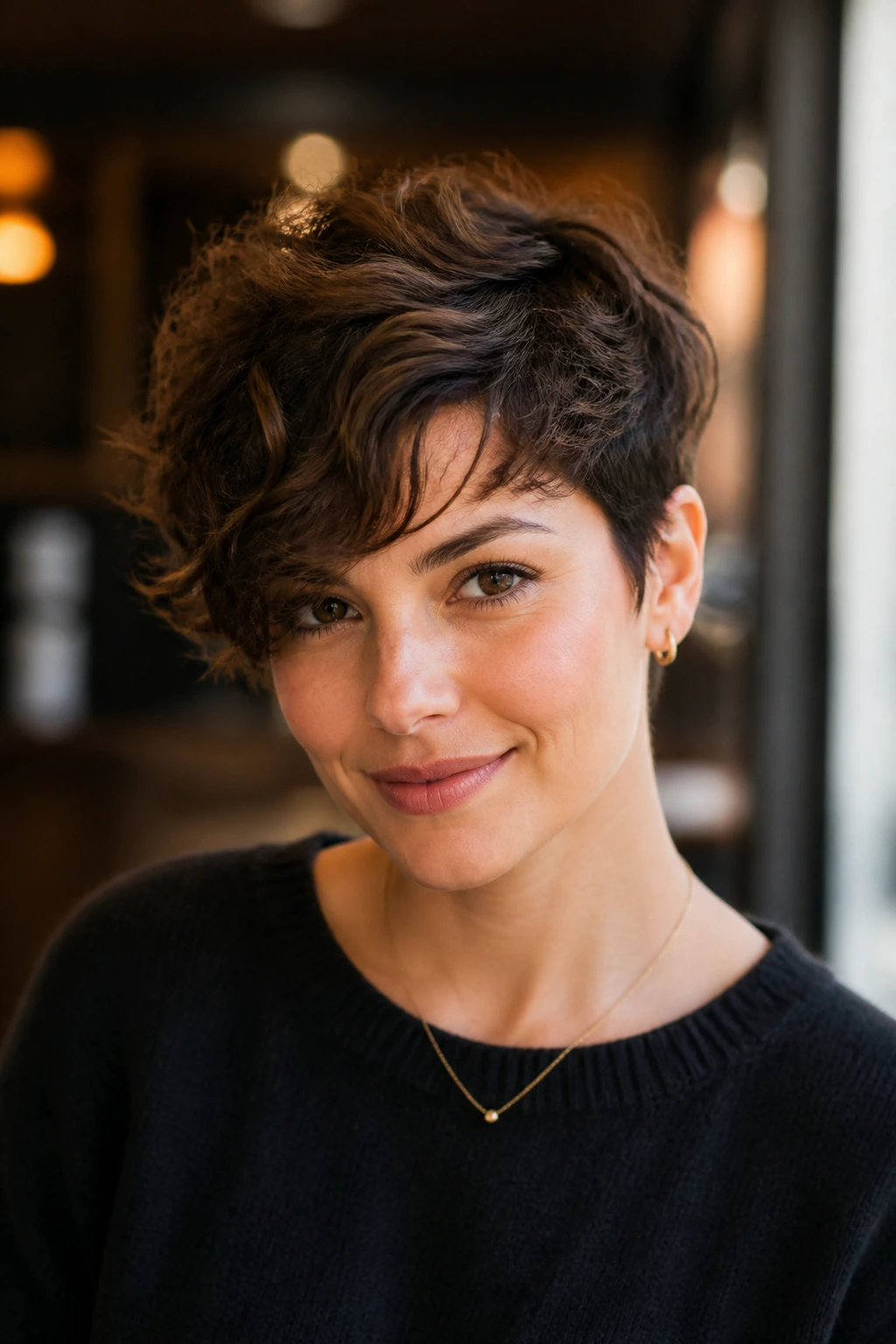
The Soft Side-Sweep: This version keeps the front long enough to sweep diagonally across the forehead, which softens the face and gives fine curls a little more visible density at the front. It works well if you want the pixie to feel feminine without looking fussy.
The Micro-Fringe Accent: Here the bangs stay short and wispy, but the rest of the cut is kept calm and rounded. The short fringe keeps attention on the eyes, while the sides stay close and neat. It’s a smart move if your forehead tends to dominate a face-framing style.
The Bixie Bridge: If you’re not ready to go full pixie, keep 1 to 2 extra inches through the crown and cheek area. That extra length softens the grow-out and gives fine curls a little more room to bend. It’s the easiest version to live with if you like to tuck hair behind your ears.
The Tapered Neckline Fix: This one is for anyone whose nape grows bulky fast. Ask for a softer taper through the back and leave the top alone. The shape becomes cleaner immediately, and fine hair looks fuller because the silhouette tightens up.
The Defined Evening Finish: Use a touch more gel or paste and let a few curl clusters form by hand. This creates a sharper, more polished version of the same cut without changing the actual shape. Handy for dinners, events, or any day you want the pixie to look deliberate.
Maintenance, Refreshing, and Grow-Out
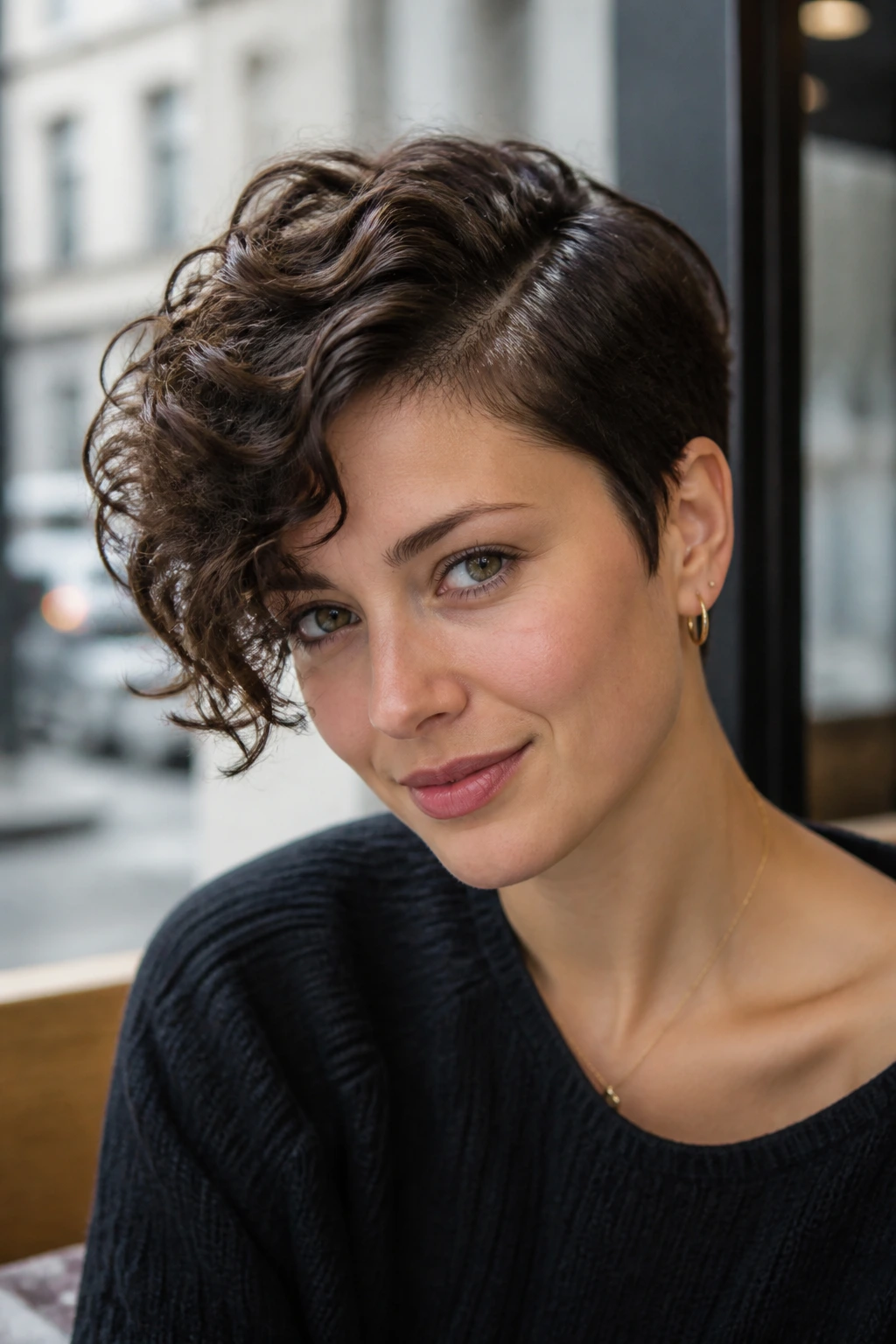
Short curly pixie cuts on fine hair need regular shaping. If you want the silhouette to stay crisp, plan on a trim every 4 to 6 weeks. If you’re wearing a softer bixie or a longer pixie, 6 to 8 weeks can work, but only if the nape and temples aren’t starting to puff out.
Night care matters more than people think. Fine curls get flattened fast by a rough pillowcase. A satin pillowcase or bonnet helps preserve the top shape, and it keeps the ends from fraying so quickly. In the morning, a light mist and a little finger scrunch are usually enough to wake the cut back up.
Grow-out is easier when the stylist leaves you some length at the crown and around the face. Once the shape starts to blur, ask for a cleanup rather than a dramatic reshaping. A 1/4-inch trim at the nape and a soft dusting around the ears can buy you another few weeks without changing the whole cut.
If you use dry shampoo, keep it at the roots and use a light hand. Fine curls can get chalky fast, and chalky roots make short hair look even thinner. Better to refresh with a mist and a little mousse than to bury the whole head under powder.
Frequently Asked Questions

Will short curly pixie cuts make fine hair look thinner?
Not if the cut is balanced. Fine hair only looks thinner when the ends are over-thinned or the crown is cut too short to support lift. A pixie with soft layers can make the hair read fuller because the shape sits higher and the curls stack closer together.
Are soft layers better than choppy layers for fine curls?
Usually, yes. Soft layers keep the outline rounded and protect the density at the ends, while choppy layers can expose too much scalp and leave the cut looking frayed. There’s a place for texture, but on fine hair the hand should be light.
How short can the sides go without exposing too much scalp?
That depends on how fine and how curly your hair is, but a good starting point is to keep enough side length to tuck behind the ear or lightly cover the temple. Going too close to the skin can work, but only if the top has enough volume to balance it.
Do I need a diffuser for this kind of cut?
It helps a lot, especially if the crown collapses when air-dried. A diffuser lets you dry the roots upward instead of sideways, which keeps the cut from going flat. If you never use heat, clip the crown up while it dries for a similar effect.
Can I wear a pixie if my curls are loose, like 2A or 2B?
Yes, but the shape needs a little more structure. Loose waves can go limp faster than tighter curls, so the top should stay long enough to show bend, not just lie there. A side part or a lifted crown usually makes the biggest difference.
How often should I wash or refresh the style?
Most fine curly pixies do well with washing every 2 to 4 days, depending on scalp oil and product use. Between washes, mist the hair lightly and reshape with your fingers instead of adding more and more product. That keeps the texture light.
What if my curls shrink a lot after the cut?
Tell the stylist your curl pattern shrinks more than it looks in the chair. Ask for the fringe and crown to be left a little longer than your target length. Shrinkage is not a problem if the haircut is planned around it.
What should I do if the cut starts puffing out at the sides?
That usually means the nape or temple area needs a cleanup. Use a tiny amount of product at the roots, then direct the sides downward with your hands while diffusing the crown upward. If it keeps happening, the cut probably needs a softer taper.
Small Shape, Big Payoff
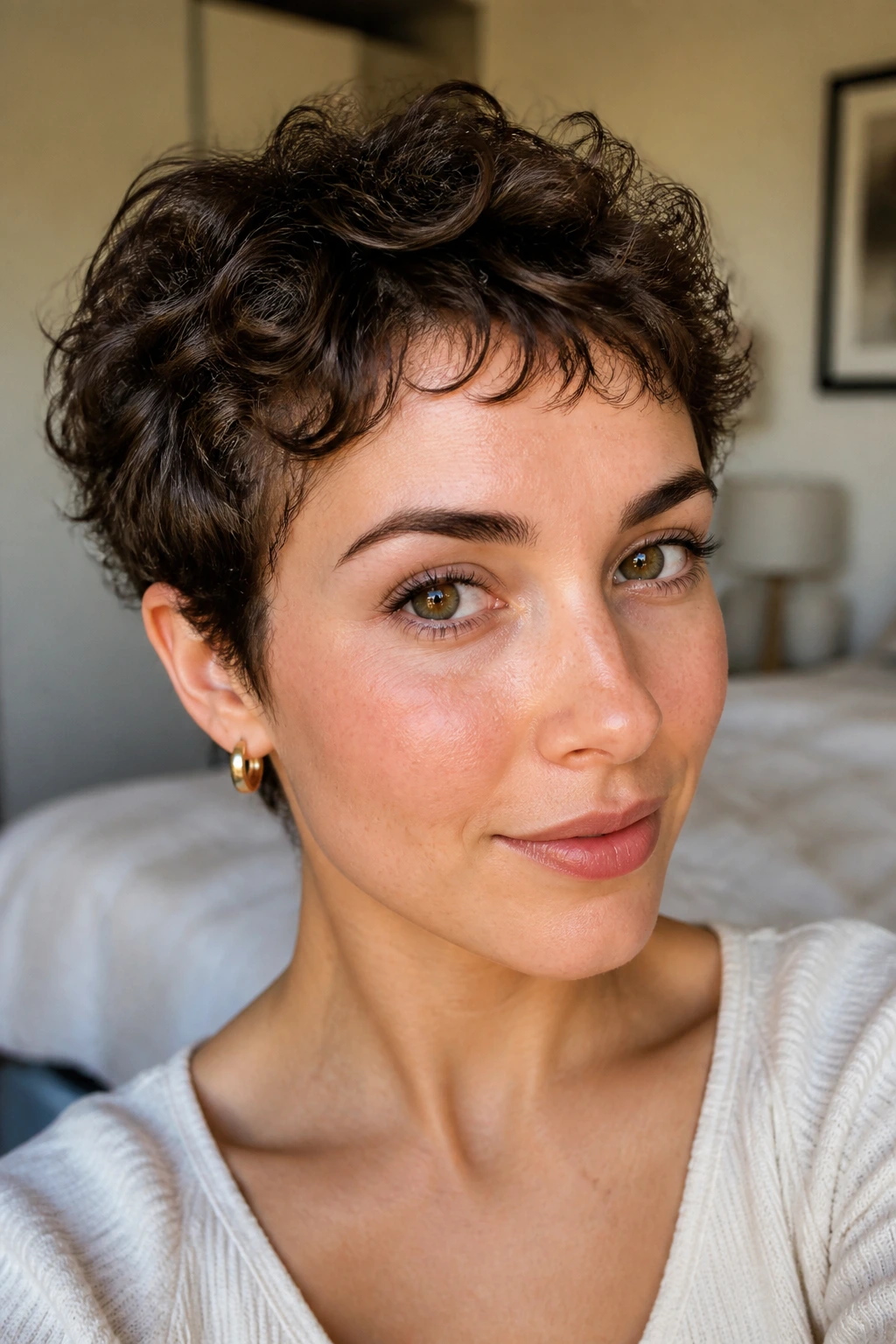
The best short curly pixie cuts for fine hair with soft layers don’t try to fake thickness. They work with what’s there, cut away the drag, and leave enough length in the right places for the curl pattern to do its job. That’s why the right pixie can look fuller than a longer style that’s been left to hang and hope for the best.
What matters most is control, not severity. Keep the crown alive, keep the nape honest, and keep the layers soft enough that the hair still looks like hair instead of confetti. If you get those three things right, the cut has a way of making the rest of your routine easier.