



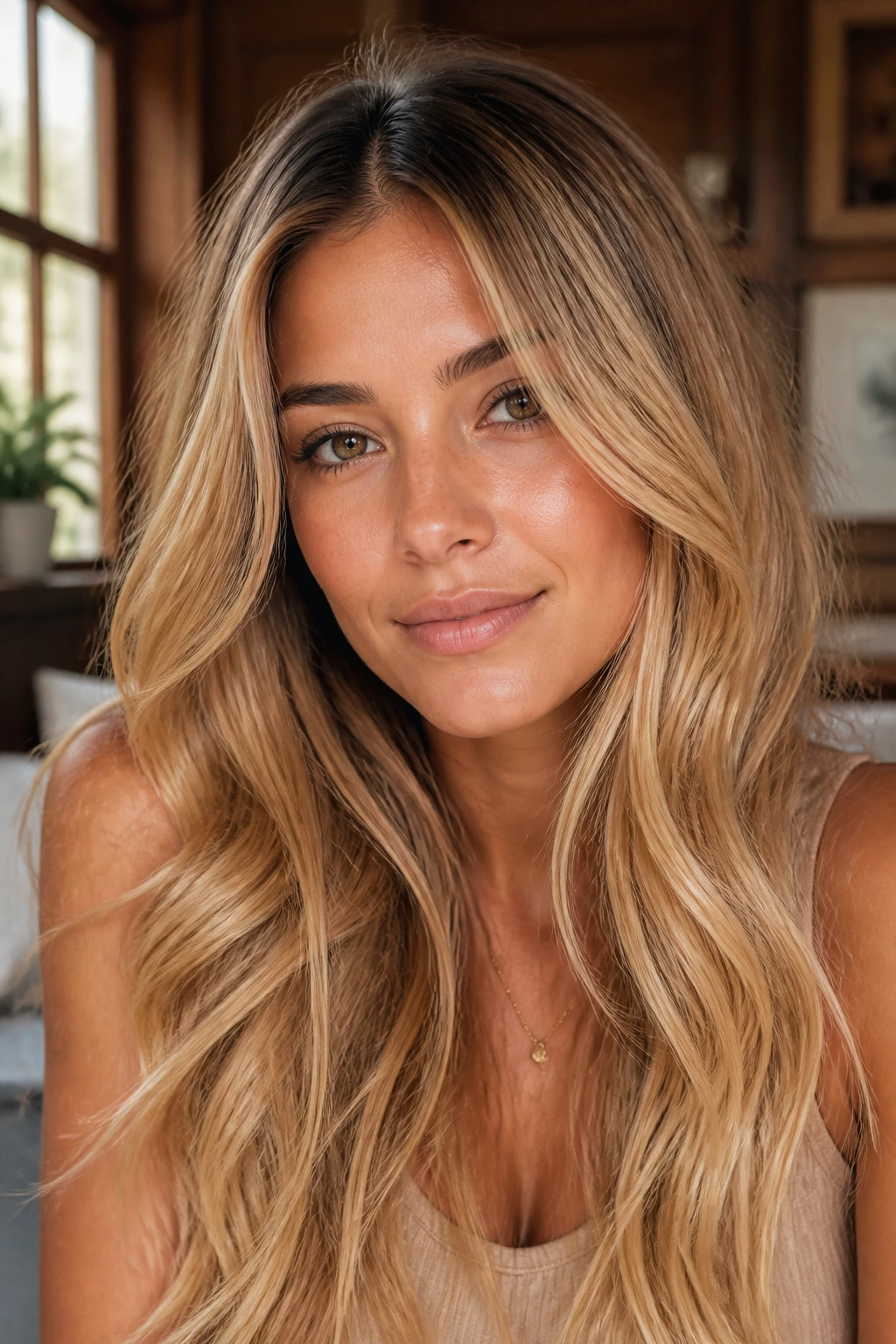
Warm blonde on olive skin can look sunlit, or it can look chalky and a little tired. The difference is rarely the cut alone. It usually comes down to tone: honey, beige-gold, caramel, butter, amber, and soft bronde sit in a zone that flatters olive undertones without pushing the hair into that flat, washed-out place that cooler blondes sometimes create.
Olive skin has its own rules, and they are not subtle once you’ve seen them in a mirror enough times. A blonde that is too icy can pull the color out of the face. A blonde that is too yellow can read brassy instead of warm. The sweet spot is the one that keeps some depth at the root, some softness around the face, and enough warmth to make the skin look alive without turning the whole head into a single, solid sheet of gold.
That is why these looks lean into beige-blonde lobs, honey balayage waves, caramel melts, bronde shags, peach-glaze bobs, and a few bolder warm blondes for people who want more edge. Some are polished. Some are undone. Some are low-maintenance and some need a gloss every so often. All of them make more sense on olive skin than a flat pale blonde ever will.
Why Warm Blonde Works So Well on Olive Skin
-
The warmth fights dullness: Beige, honey, and caramel keep olive undertones from looking gray, especially around the mouth and jawline.
-
Depth matters as much as lightness: A darker root or a soft shadow root gives the blonde somewhere to live, which keeps the color from looking pasted on.
-
Dimension flatters the face: Face-framing ribbons, lowlights, and balayage pieces break up the color so olive skin keeps its shape and contrast.
-
Not all warm blondes are yellow: The best versions sit in beige-gold, butter, amber, and soft honey rather than banana-yellow territory.
-
Grow-out looks better with warmth: When the root is blended, olive skin can wear the regrowth without the whole style looking unfinished.
How to Read the Tone Before You Book
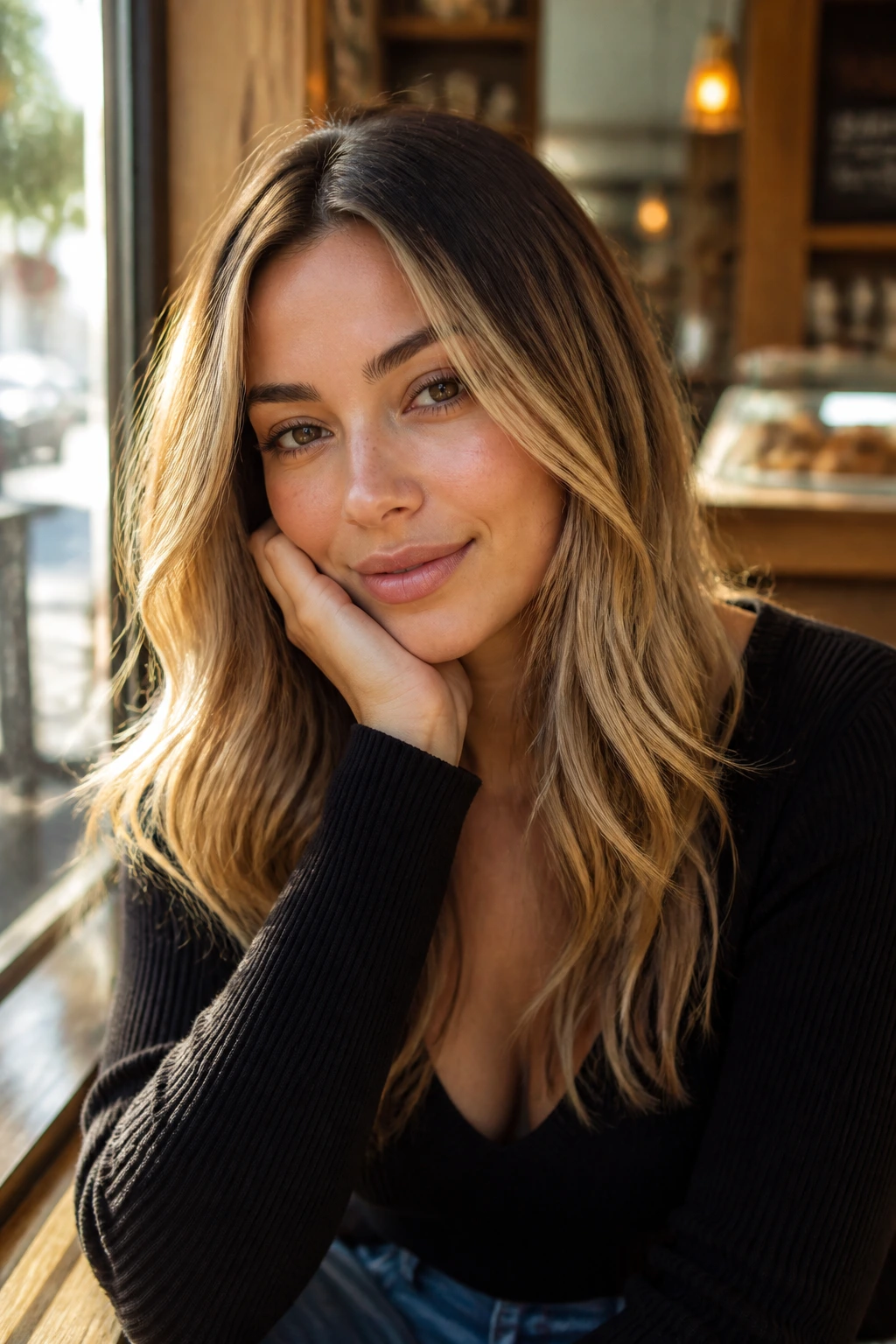
Olive skin is one of those undertones that can handle a lot, but it punishes lazy color choices. If the blonde is too ashy, the face can look flat. If the blonde is too bright and yellow, the skin can start to look sallow or even a little green around the edges. The trick is not “go blonde.” The trick is “go the right kind of blonde.”
A level 7 to 9 range usually gives you the most room to work. Level 7 caramel, level 8 beige-gold, and level 9 warm champagne-beige all have a different feel, and that matters. Lower levels keep more depth and softness. Higher levels bring more shine, but they also ask more from your toner and your hair health.
If your natural hair is dark brown, a root melt or bronde base usually looks cleaner than an all-over pale lift. If your hair is already light, you can push the face frame brighter and keep the ends a touch warmer. That little bit of contrast does a lot of work. More than most people expect.
1. Golden Beige Lob with Soft Ends
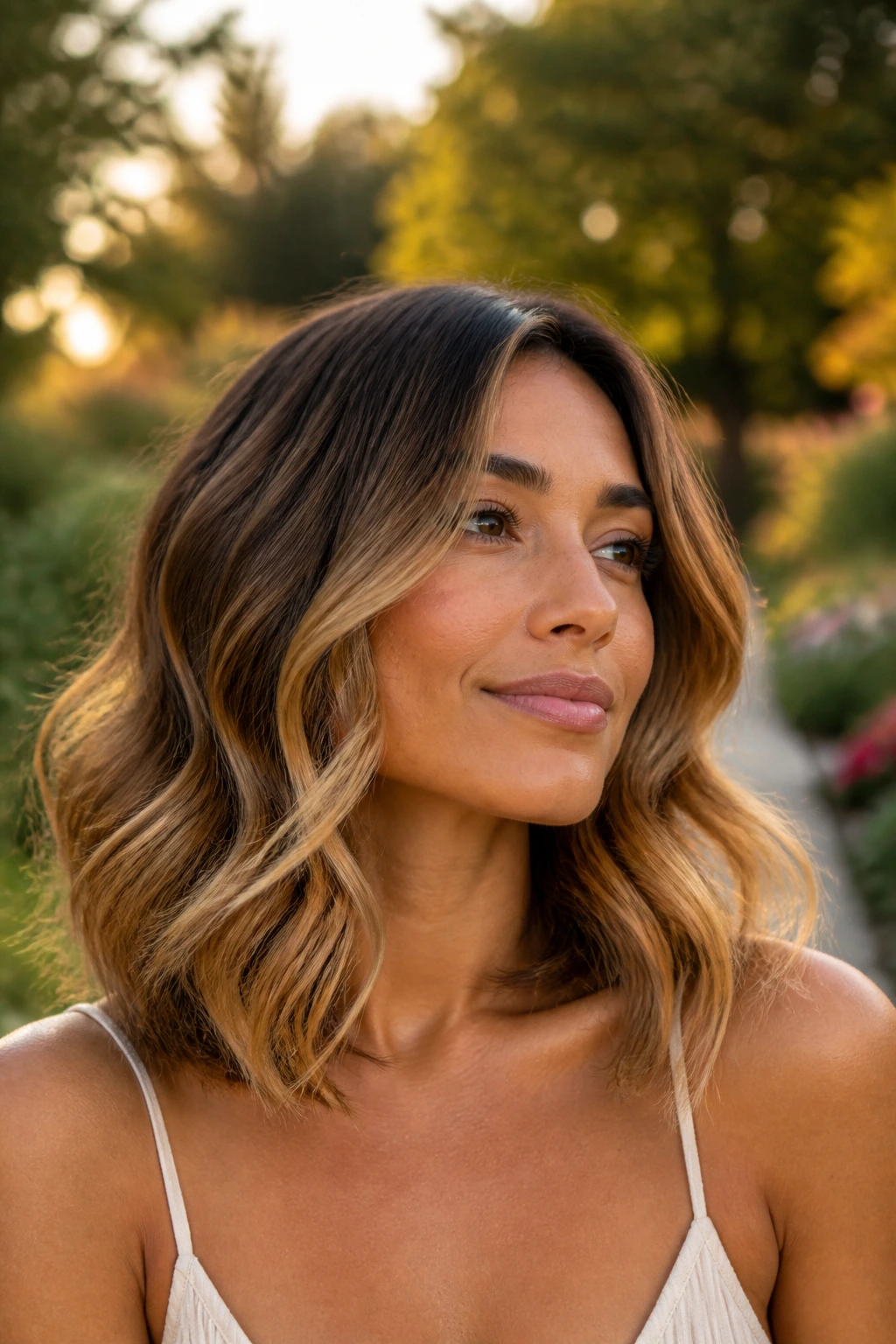
A golden beige lob is the safe starting point that doesn’t look safe at all. The cut sits right at the collarbone, so the warmth has room to move, and the soft ends keep the blonde from feeling blocky or heavy.
Why It Flatters Olive Skin
Golden beige sits in the middle lane: not too yellow, not too ash, not too brown. That middle zone is where olive skin usually looks its cleanest. Ask for a level 8 beige-gold gloss and keep the ends lightly bent with a flat iron or round brush so the color shows off that soft glow instead of sitting there flat.
- Best on medium olive skin with brown or hazel eyes.
- Ask for a shadow root one shade deeper than the mids.
- A center part makes this look calm; a side part gives it more lift.
Style note: If your ends tend to frizz, a half-drop of smoothing cream on damp hair keeps the beige tone from looking fuzzy.
2. Honey Balayage Waves
Honey balayage is the one I keep coming back to when someone wants blonde but refuses to look overprocessed. The ribbons are painted through the mids and ends, so the root stays deeper and the whole thing grows out without a hard line.
Honey is especially kind to olive skin because it brings warmth without turning the hair into one solid yellow note. The movement matters too. Loose waves catch the lighter pieces and let the darker base stay in the background, which keeps your complexion from getting swallowed by the color.
This works best on hair that falls below the shoulders, where the painted pieces can travel. Keep the waves broad, not tight. Tight curls can make balayage look stripey if the placement is too heavy.
3. Buttercream Curtain Layers
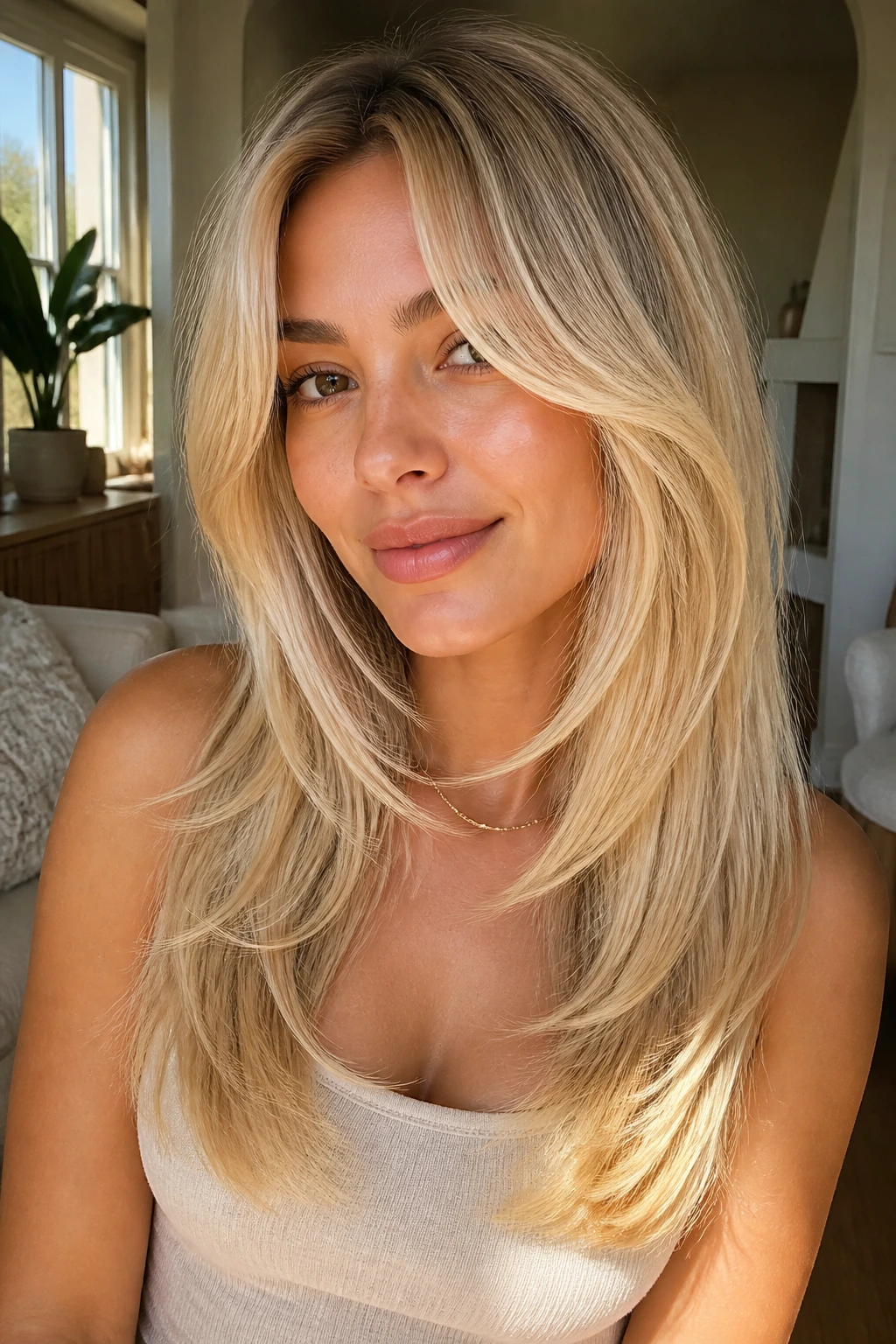
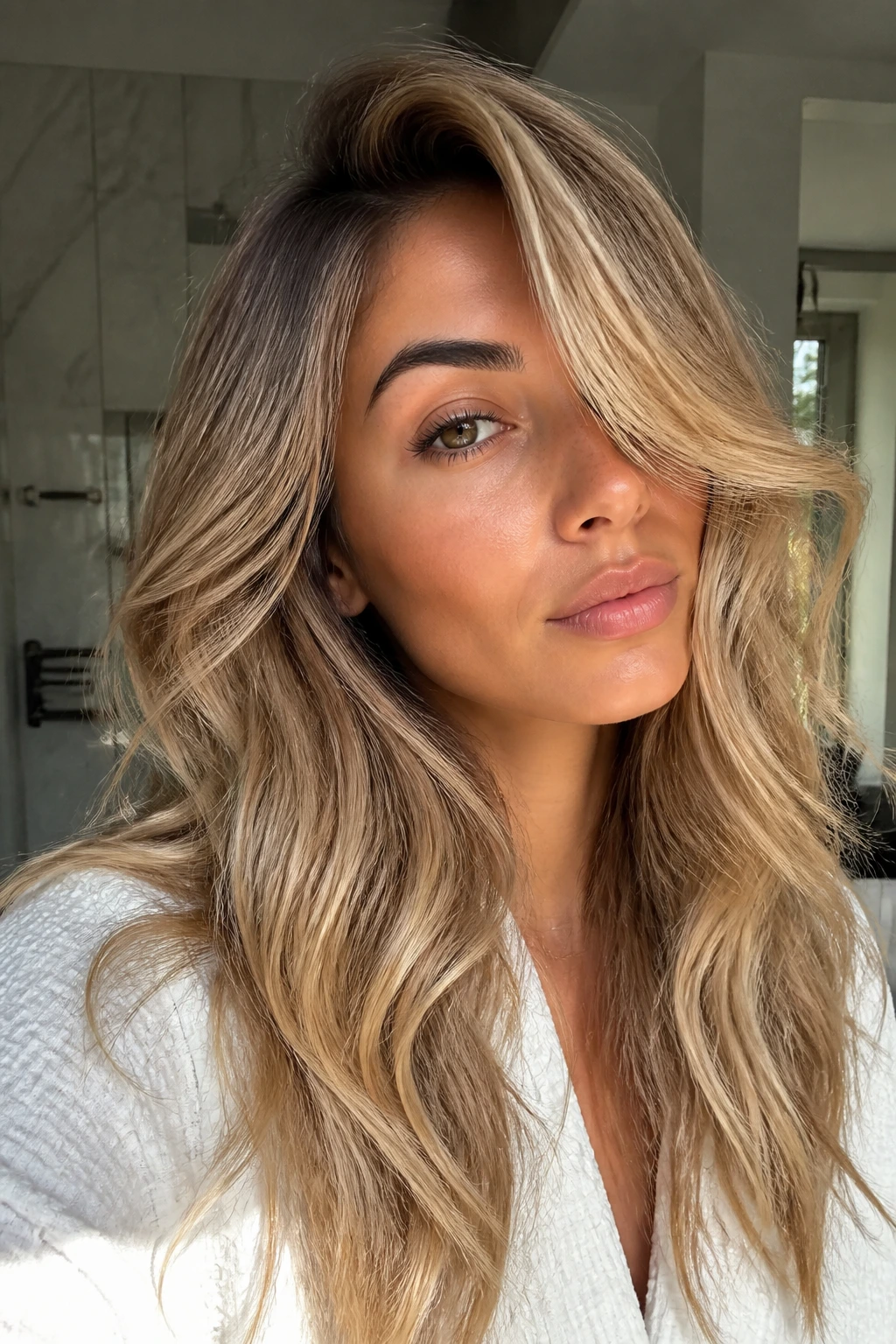
Buttercream blonde sounds soft for a reason. It is the kind of creamy, warm lift that works beautifully with curtain bangs and layered lengths because it brings light to the front of the face without screaming for attention.
The Shape Does Half the Work
Curtain layers open the cheekbones, and on olive skin that can make the whole face look more awake. The buttercream tone should sit on a beige base, not a bright banana one, and the front pieces can be a touch lighter than the rest so they frame the face instead of flattening it.
How to Wear It
Ask for long layers that start below the chin and a warm gloss that stays soft at the root. Blow-dry the bangs away from the face with a round brush. A little bend at the ends keeps the cut from looking too salon-perfect, which helps the color feel expensive instead of stiff.
4. Caramel Root Melt with Long Layers
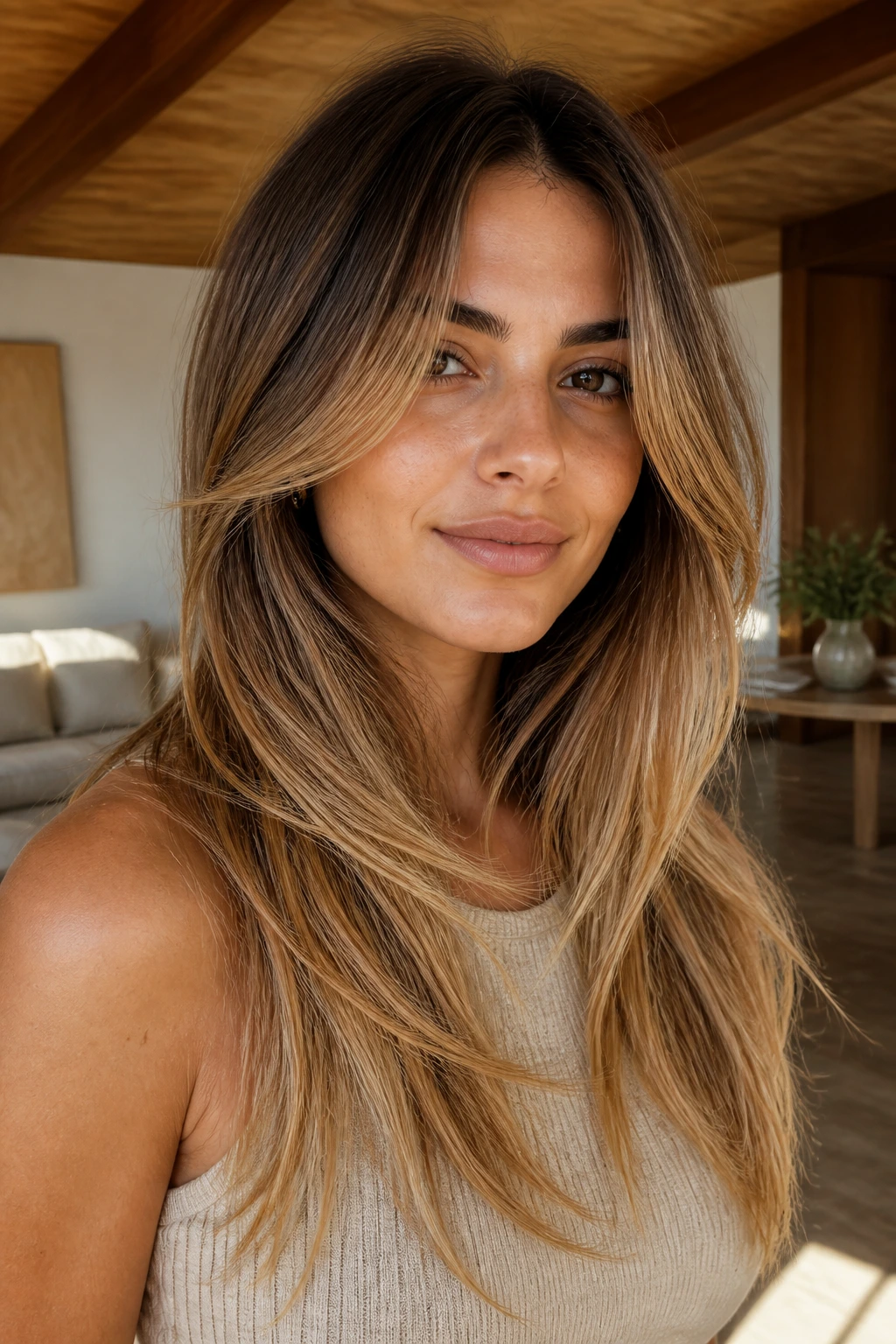
If you want blonde with the least amount of daily drama, this is one of the smartest choices on the list. A caramel root melt gives you depth up top and a warm blonde finish through the mids and ends, so the grow-out looks deliberate for weeks.
The long layers help the caramel and blonde tones blend instead of stacking into stripes. Olive skin usually loves this because the darker root keeps the face grounded while the lighter pieces still add shine. It’s the kind of blonde that looks better when it’s been lived in a little.
This is also a solid choice if your natural base is dark blond to medium brown. You do not need a high-contrast platinum stripe to make a point.
5. Toffee Blonde Blunt Bob
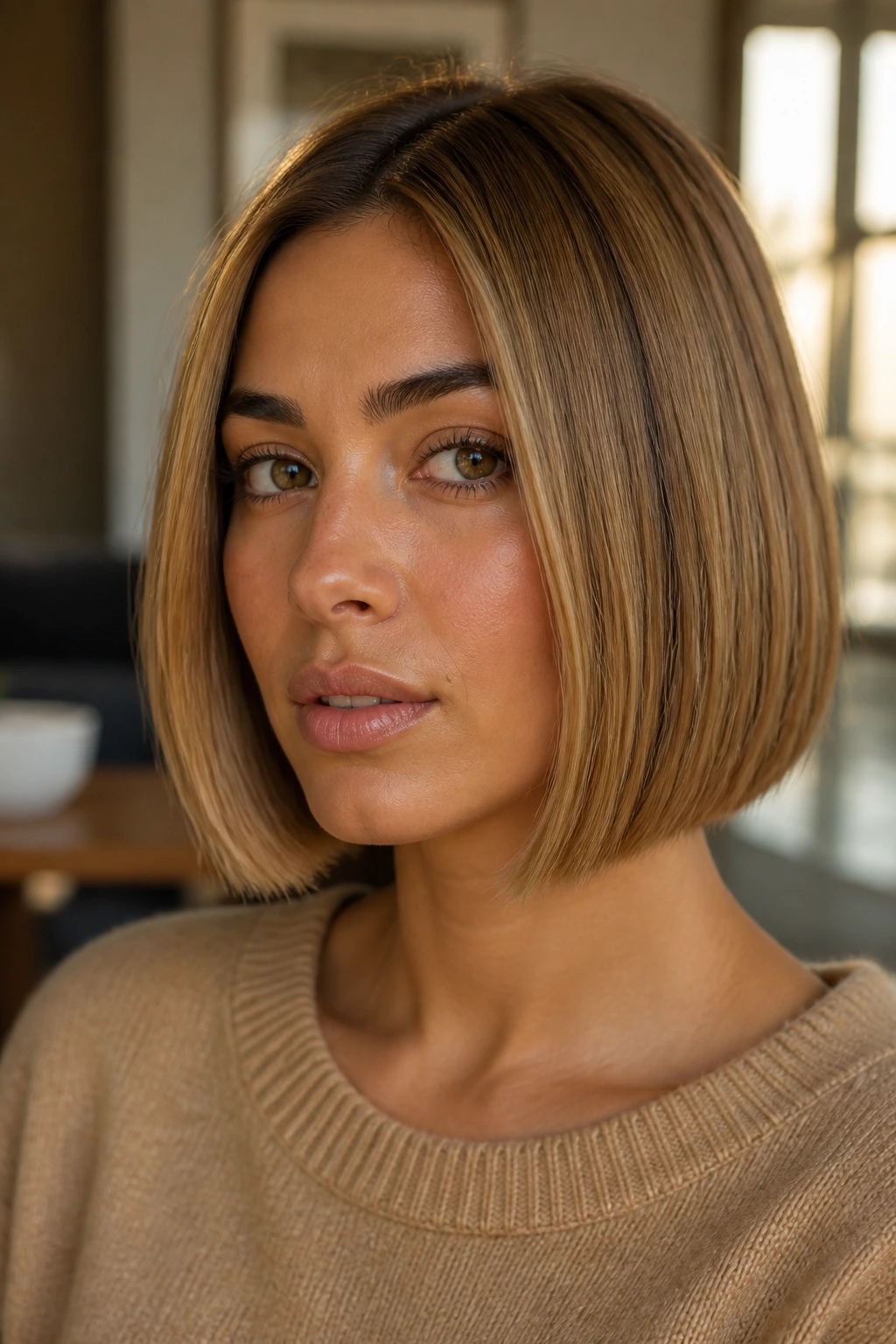
A blunt bob and a warm blonde tone make a stronger pair than people expect. The shape is clean, the ends are solid, and that toffee shade keeps the whole thing from feeling severe.
Toffee blonde lands in a rich beige-caramel lane, which means olive skin doesn’t have to work hard to support it. There’s enough warmth to soften the face, but the bob line keeps the style modern. If your hair is fine, this cut gives the color more presence. If your hair is thick, the blunt edge prevents the blonde from looking puffy.
Wear it straight for a sharp finish or tuck one side behind the ear for a more casual feel. Either way, the color has nowhere to hide, and that’s the point.
6. Maple Blonde Butterfly Cut
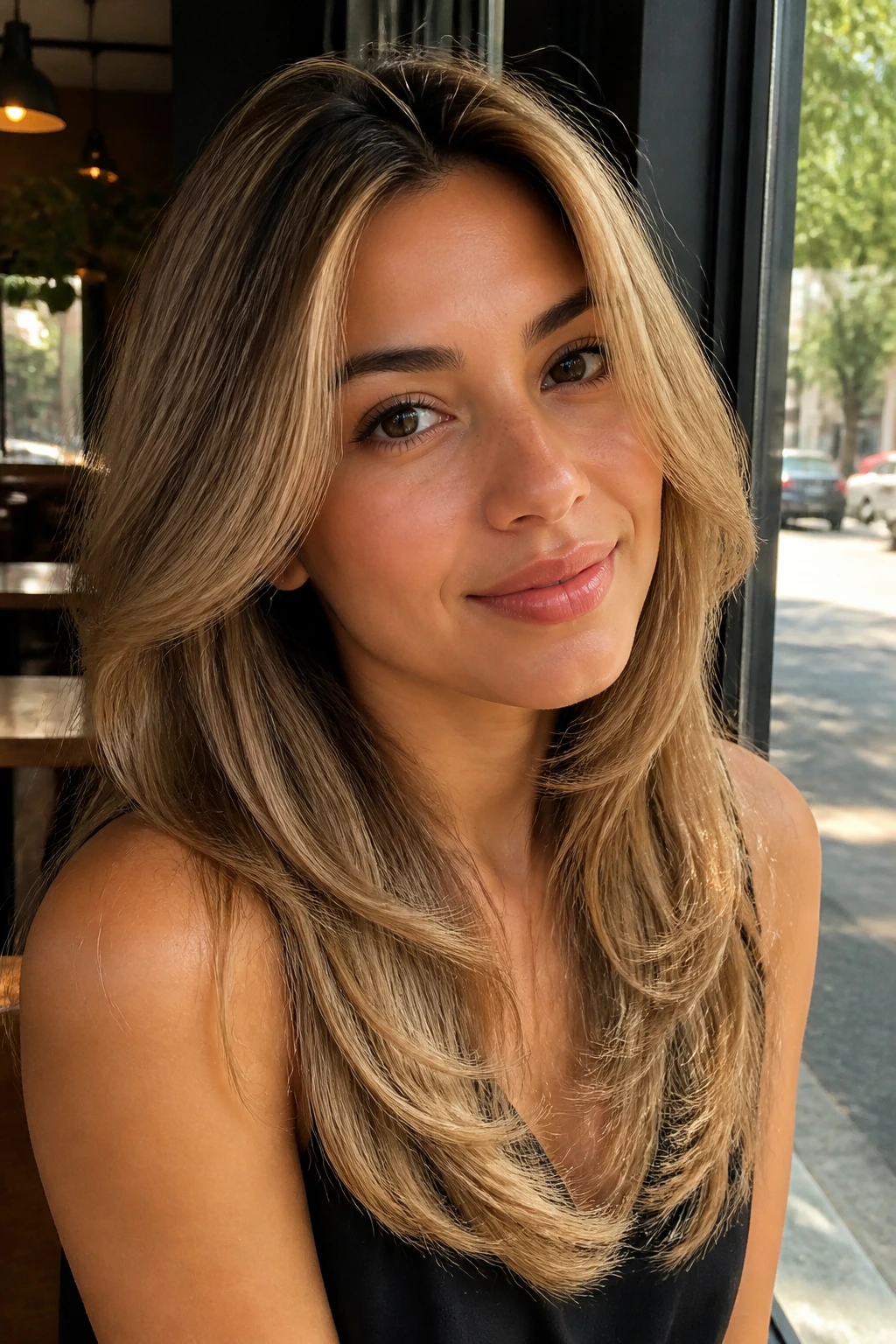
The butterfly cut and maple blonde are a strong match because both depend on movement. The layers around the face lift the color, and the longer lengths carry the warmer blonde pieces down through the body of the hair.
Maple blonde is richer than classic honey and a touch less golden than butterscotch. On olive skin, that balance keeps the hair warm without pushing it into orange territory. It also plays well with blowouts, which is useful because the butterfly cut looks best when the layers curve away from the cheekbones.
This is a good pick if you like volume but don’t want a shag. It feels lighter than a long layered cut, but it still has enough shape to show off the color in sections.
7. Honey Money Piece Shag
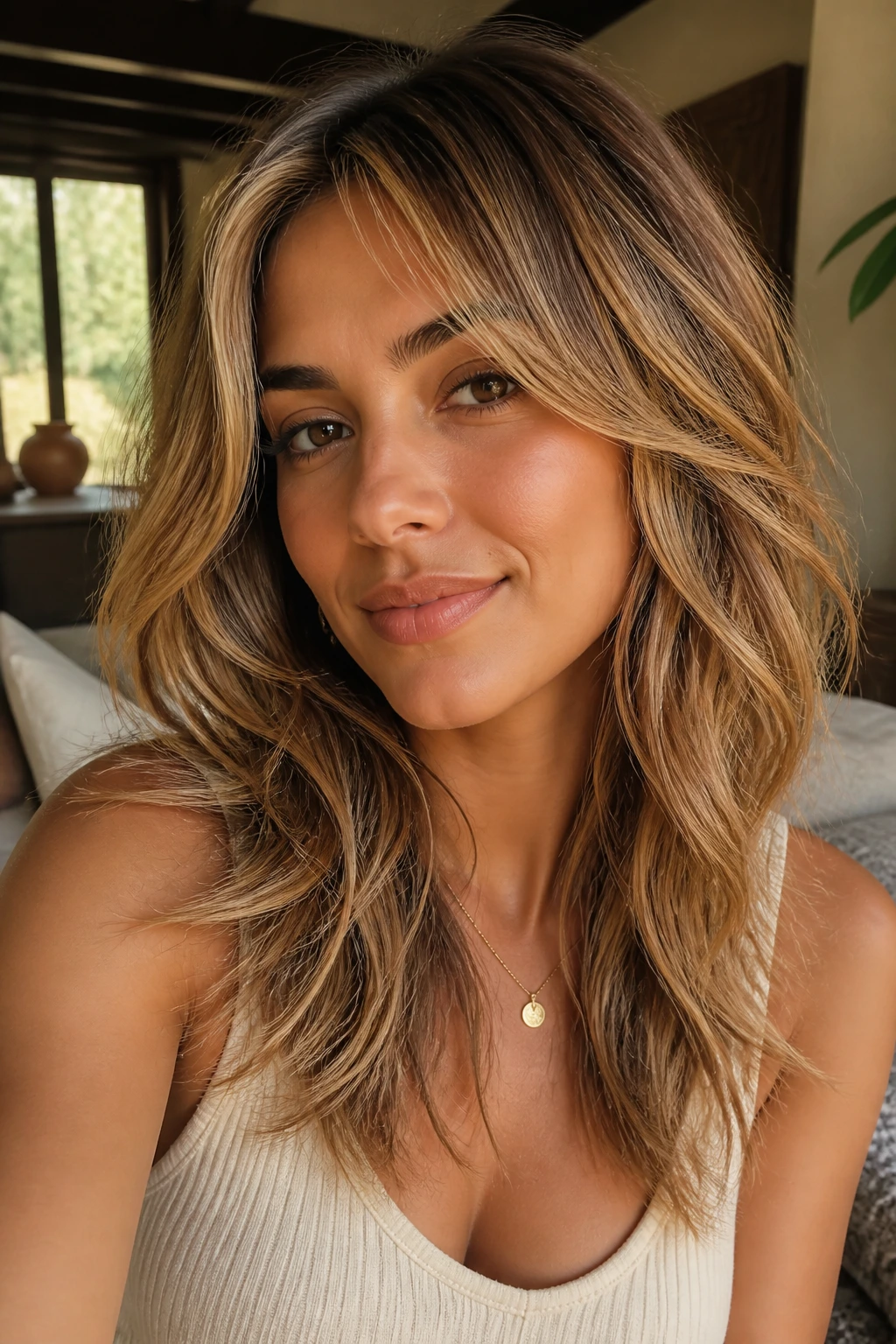
The money piece can go wrong fast if it’s too bright, but honey tones save it. A shag with warm front pieces gives olive skin a hit of brightness right where you want it, while the messier layers keep the blonde from looking overworked.
The shag texture matters here. Soft, piecey layers break the light up in a good way, so the blonde doesn’t sit in one flat sheet across the top of the head. Ask for a warm honey face frame with a slightly deeper shadow through the crown. That contrast stops the cut from looking too striped.
A little sea-salt spray can help, but not too much. Too much grit makes warm blonde look dry.
8. Butterscotch Curls
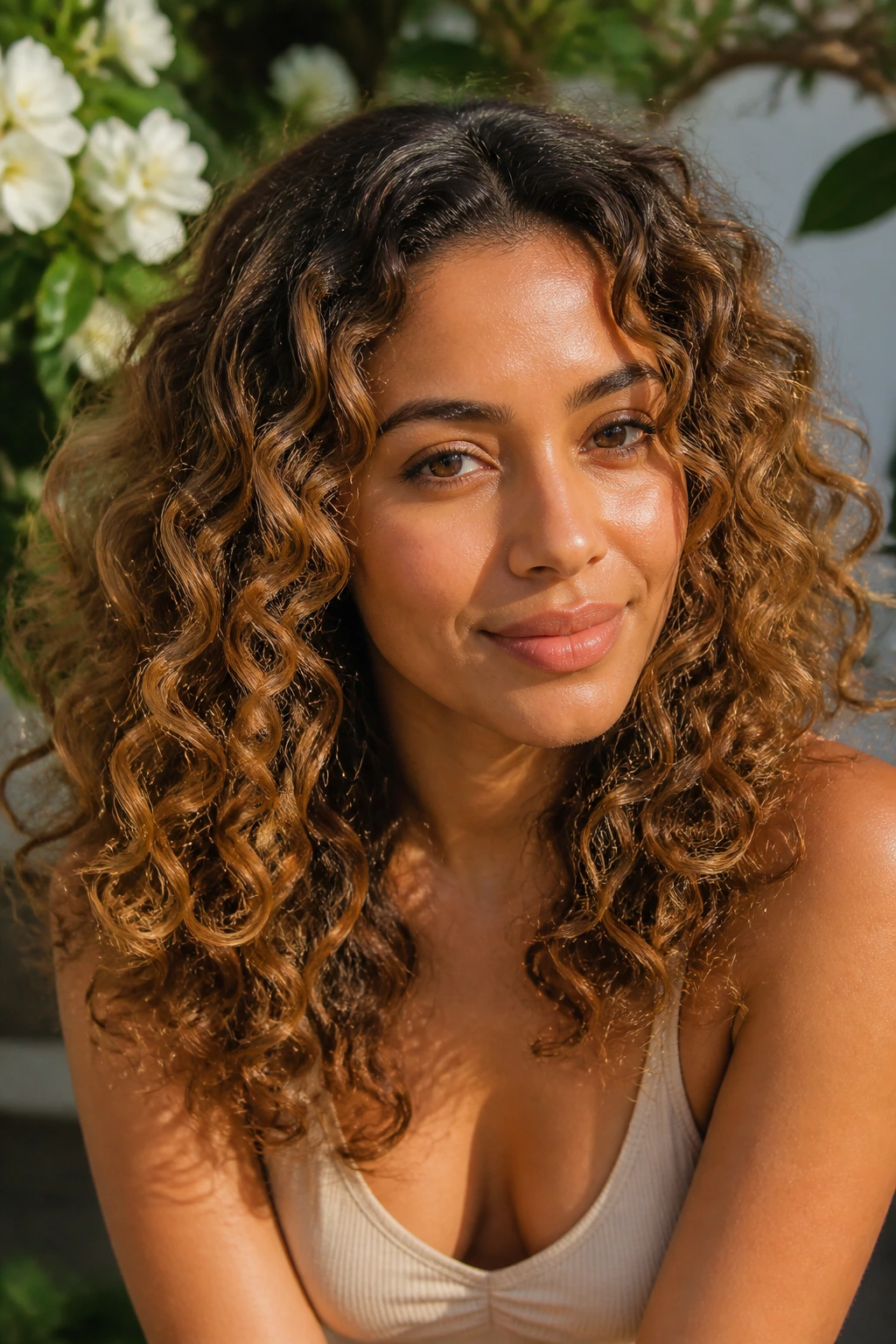
Butterscotch curls have a richer feel than a lighter honey blonde, and olive skin usually benefits from that extra depth. The warmth is creamy and a little decadent, but the curls keep it from looking heavy.
What makes this work is placement. The lighter pieces should follow the curl pattern, not fight it. When highlights are mapped onto the bend of the curl, the whole shape looks rounder and more polished. On tighter curls, keep the lightness a little softer near the root so the style doesn’t puff out at the scalp.
This is a good one if you love volume and want the blonde to show in motion. The shine on a well-moisturized curl does half the job.
9. Apricot Blonde Pixie
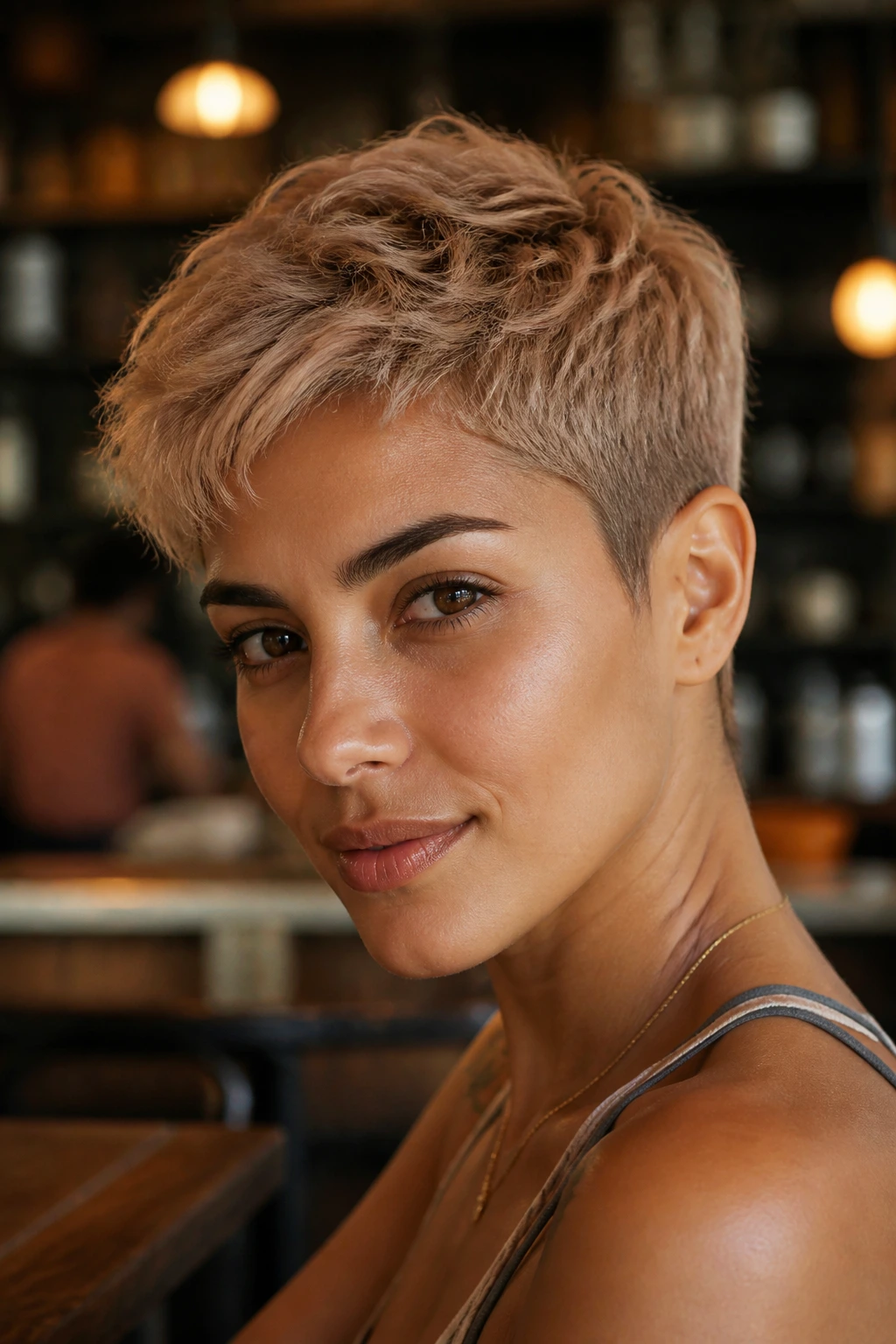
Short hair can carry more color than people give it credit for. An apricot blonde pixie puts warm peach-gold tones right up against olive skin, and the contrast can look surprisingly fresh when the cut is kept soft around the ears and crown.
The key is not to make it neon. Apricot should read as a muted warmth, the kind that feels kissed by sun rather than dipped in candy. Keep the sides tight and the top a little longer so you can sweep the texture forward or off the forehead. That movement keeps the color from feeling too fixed in place.
This one loves a matte styling paste. A tiny amount is enough.
10. Sandy Honey Beach Waves
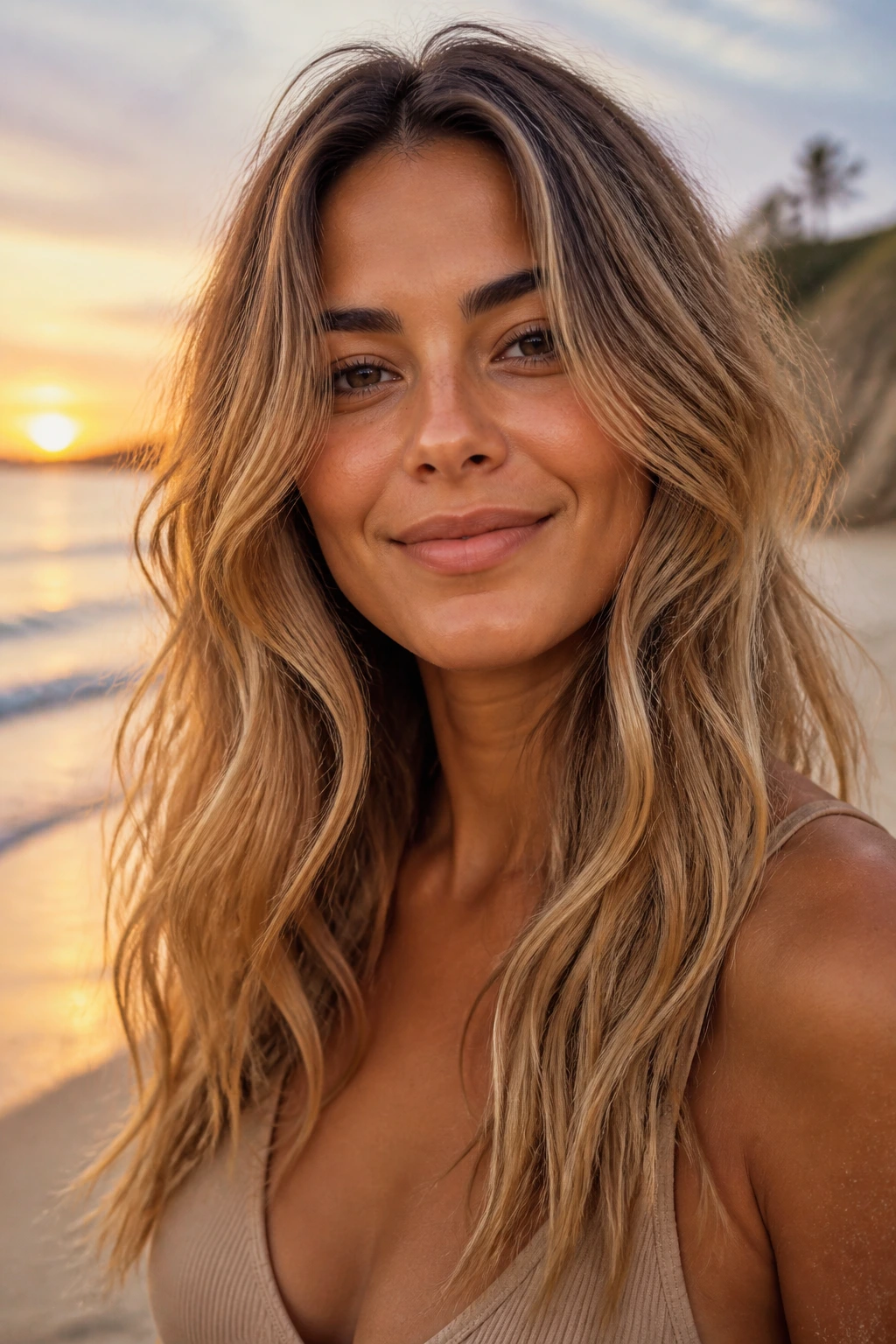
Sandy honey is the more muted cousin of classic honey blonde, and that restraint can be exactly right on olive skin. The sandier base keeps the warmth from turning brassy, while the honey ribbons add enough glow to stop the hair from fading into the background.
Beach waves work because they create soft bends instead of hard lines. The result is casual, but not sloppy. If your skin leans muted or slightly cool in the olive family, this tone keeps the face from looking overly yellow.
I like this best on hair that naturally holds a wave. If your hair is stick straight, use a 1.25-inch curling iron and alternate directions so the bends don’t all fall the same way.
11. Warm Vanilla Textured Bob
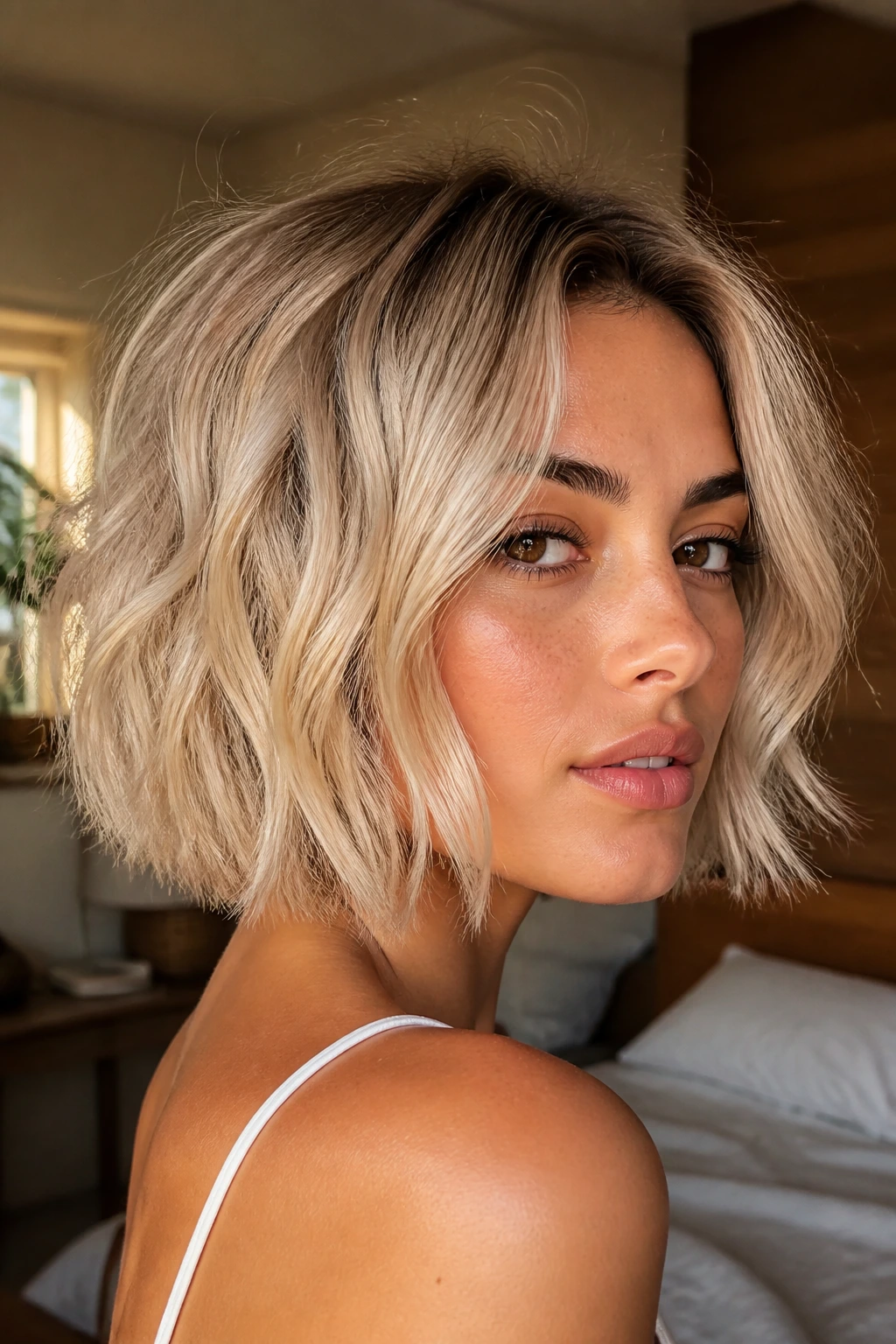
Warm vanilla sounds pale, but it should not be icy. The whole trick is a creamy blonde with enough beige in it to keep olive skin from going flat, especially when the cut has texture through the ends.
A textured bob gives the vanilla tone some movement, and the choppy finish stops the hair from looking like a helmet. That matters more than people realize. When blonde is too smooth and too even, the eye reads the color before it reads the haircut. A little texture reverses that, which makes the whole look easier on olive undertones.
This is a good option if you want something bright without going gold-heavy. Keep the makeup a touch warmer too. A peach blush helps the hair make sense.
12. Cinnamon Blonde Blowout
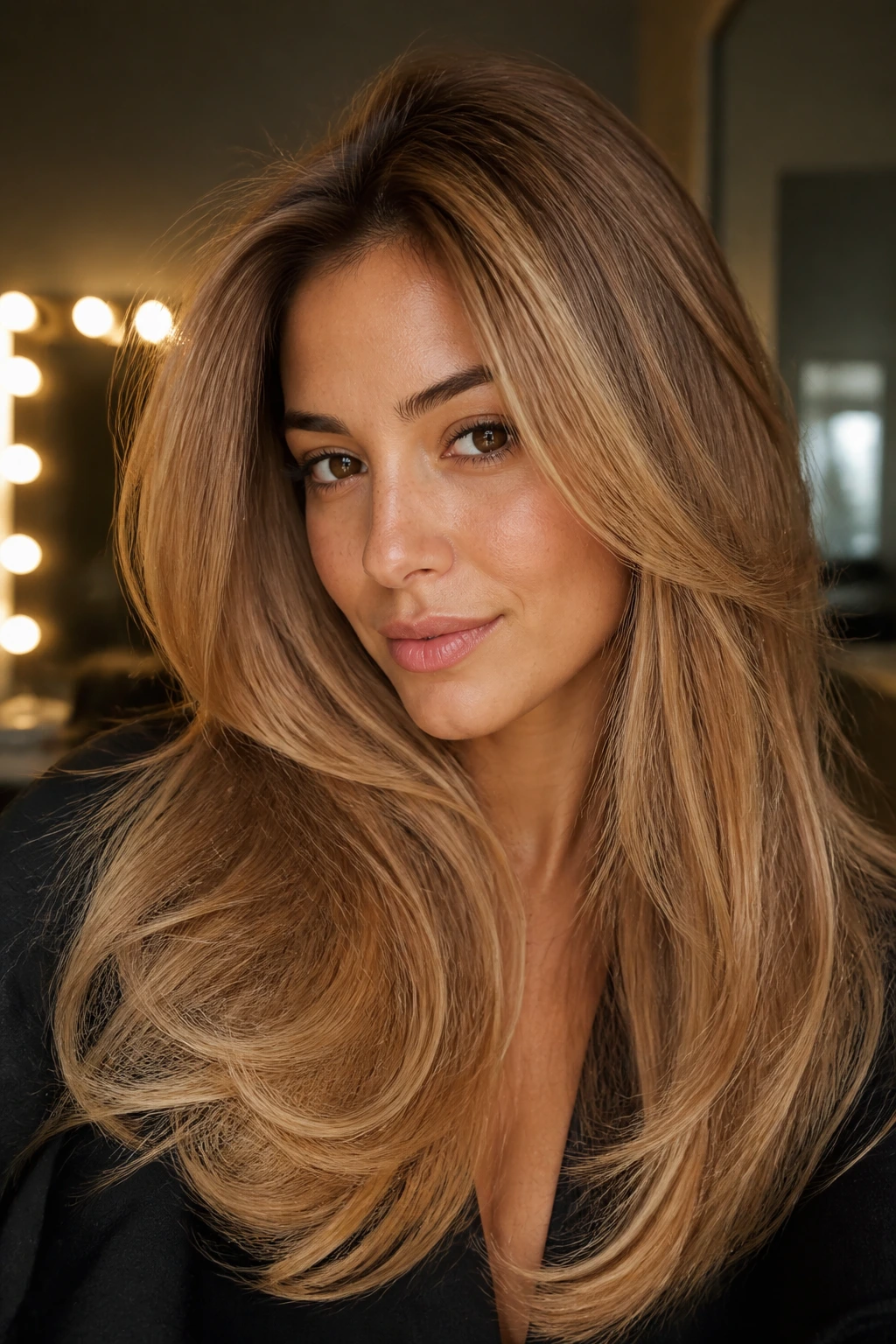
Cinnamon blonde is one of the warmer choices here, and it is not for the faint of heart. The reddish-gold note adds depth that can be gorgeous on olive skin, especially when the hair is styled into a glossy blowout with lifted roots and smooth ends.
The reason it works is simple: the warmth in the tone echoes the skin instead of fighting it. If your olive skin has a golden cast, cinnamon blonde can make your complexion look richer and the hair look more expensive. If your skin runs very muted, keep the cinnamon a little softer at the root and brighter only through the ends.
A round brush, some heat protectant, and a little shine spray go a long way here. The blowout should look smooth, not crunchy.
13. Bronze Bronde Midlength Layers
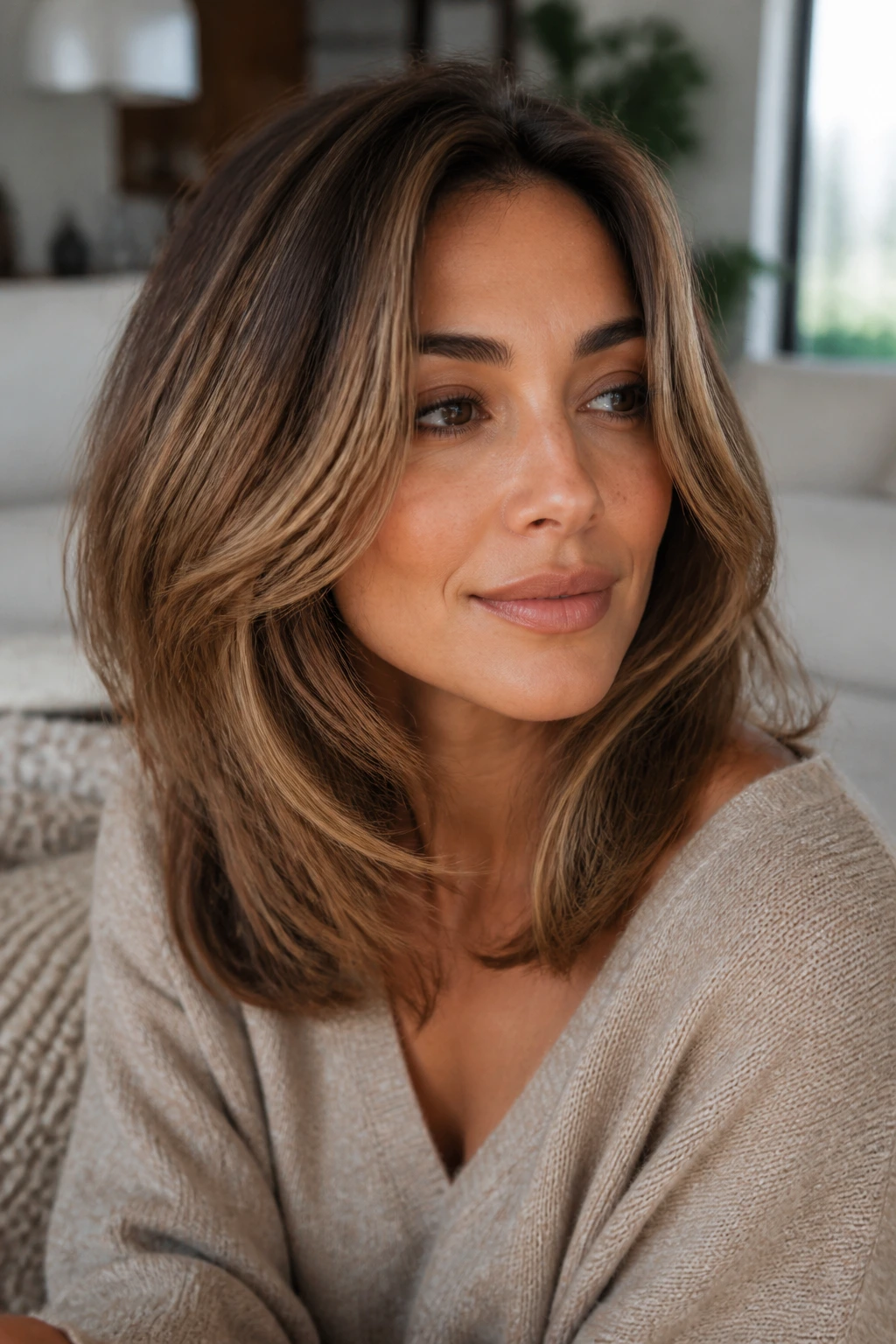
Bronze bronde is a smart choice if you want a blonde-adjacent look instead of a true blonde. On olive skin, that softness often lands better than going all the way pale because the bronze base keeps the color grounded.
Midlength layers give the bronze and blonde pieces somewhere to fall. That means the warm ribbons show when you move, but the whole style doesn’t demand constant styling to look good. It’s especially nice on thicker hair, where too much lightness can get bulky at the ends.
This is one of the best low-drama color families for people who like dimension but do not want a high-maintenance blonde schedule. It grows out cleanly. That alone is worth something.
14. Peach-Glaze Soft Wavy Lob
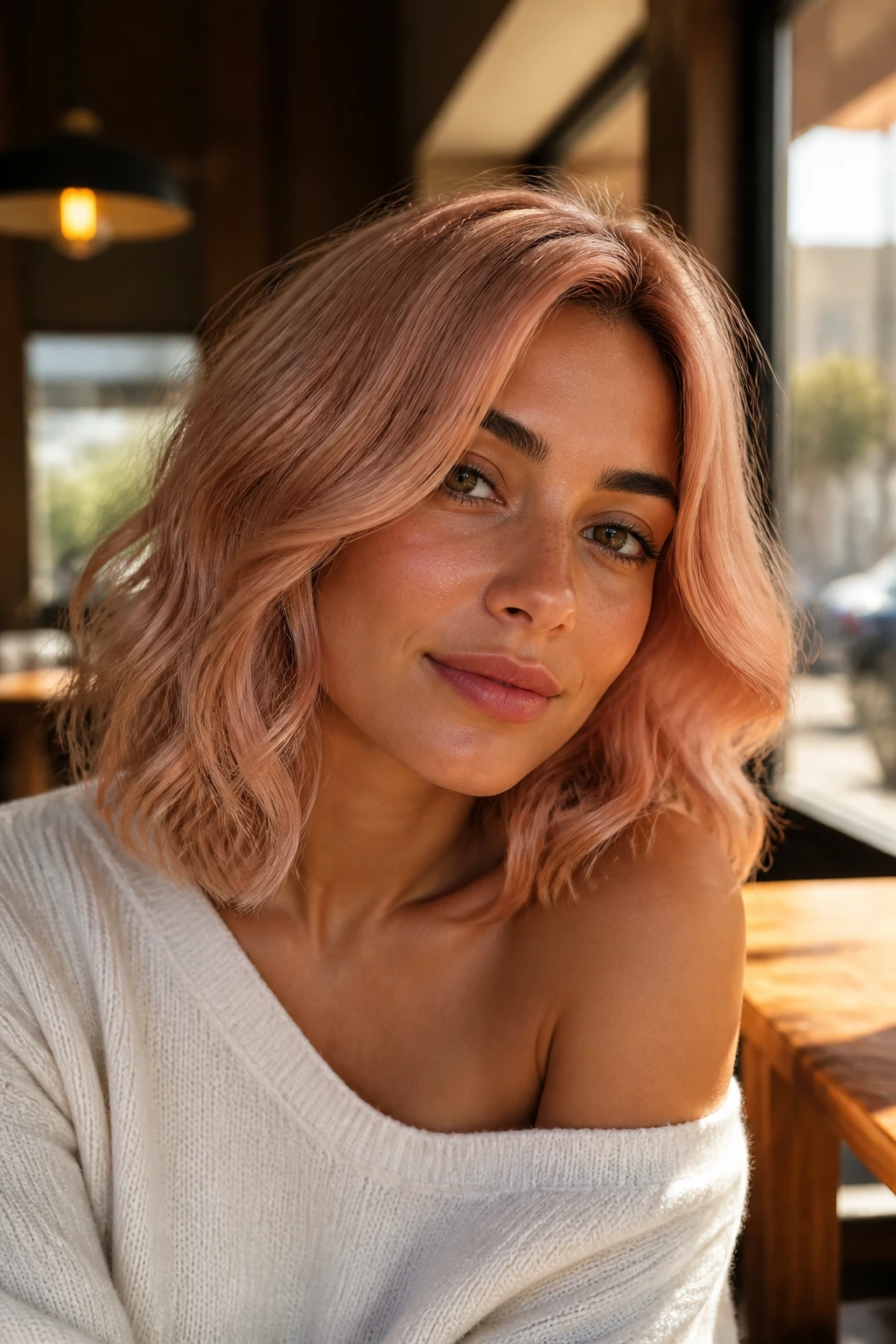
A peach glaze is the kind of tone that can look playful without tipping into costume. On a soft wavy lob, the peach-gold note sits right on top of the natural warmth in olive skin and gives the face a brighter edge.
The wavy lob keeps the color moving. If it were pin-straight, the peach could look louder than you want. With a loose wave, the tone becomes a glow instead of a statement. I’d keep the roots a touch deeper and the front pieces brighter, especially if your complexion tends to tan easily.
This one works best when the wave pattern is loose and brushed out. If you want it more polished, tuck one side behind the ear and let the other side fall forward.
15. Amber Blonde Long Layers
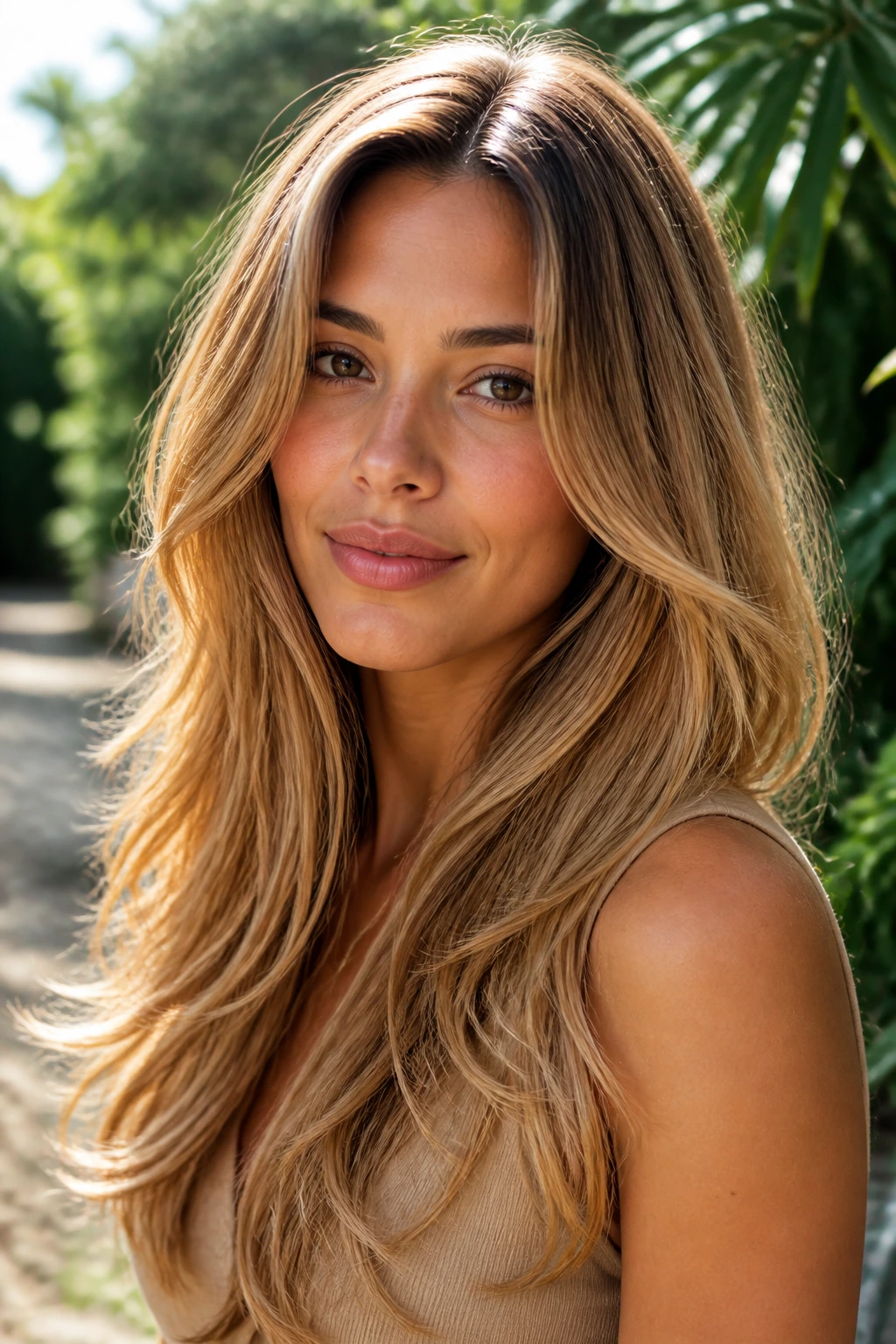
Amber blonde has a deeper, richer feel than most blondes, and that depth can be a real gift for olive skin. The color carries enough gold to lift the face, but enough shadow to stop the style from going hollow.
Long layers help because amber wants movement. You don’t want it sitting like a solid block. A few face-framing pieces cut around the cheekbones keep the whole look light, and the longer lengths let the color shift from warm gold to deeper honey as it moves through the light.
This is one of my favorites for darker natural bases. It doesn’t fight them. It works with them.
16. Toasted Almond Shag
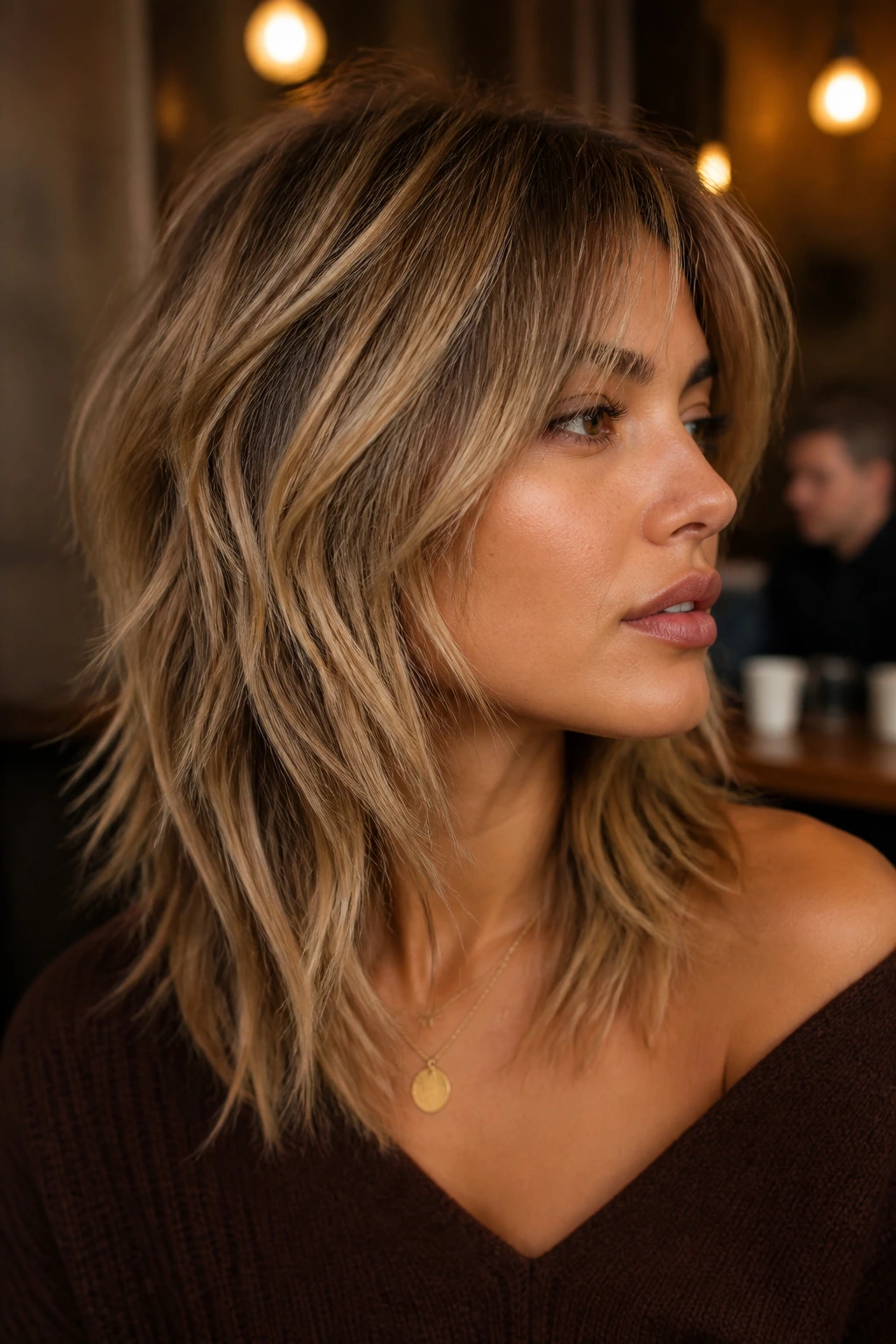
Toasted almond is a little earthier than honey and a little softer than caramel, which is why it makes so much sense on olive skin. The shag shape adds that lived-in texture that keeps the shade from feeling too tidy.
Why It Works
The warm almond tone brings just enough lightness around the face while leaving depth through the crown. That combination helps olive undertones look fresh instead of drained. The shag layers also make it easier for the color to catch light at different points, so the blonde doesn’t read as one flat block.
Best Detail
Keep the fringe or shorter front layers piecey. A solid, heavy fringe can swallow the warmth.
17. Golden Strawberry Bob
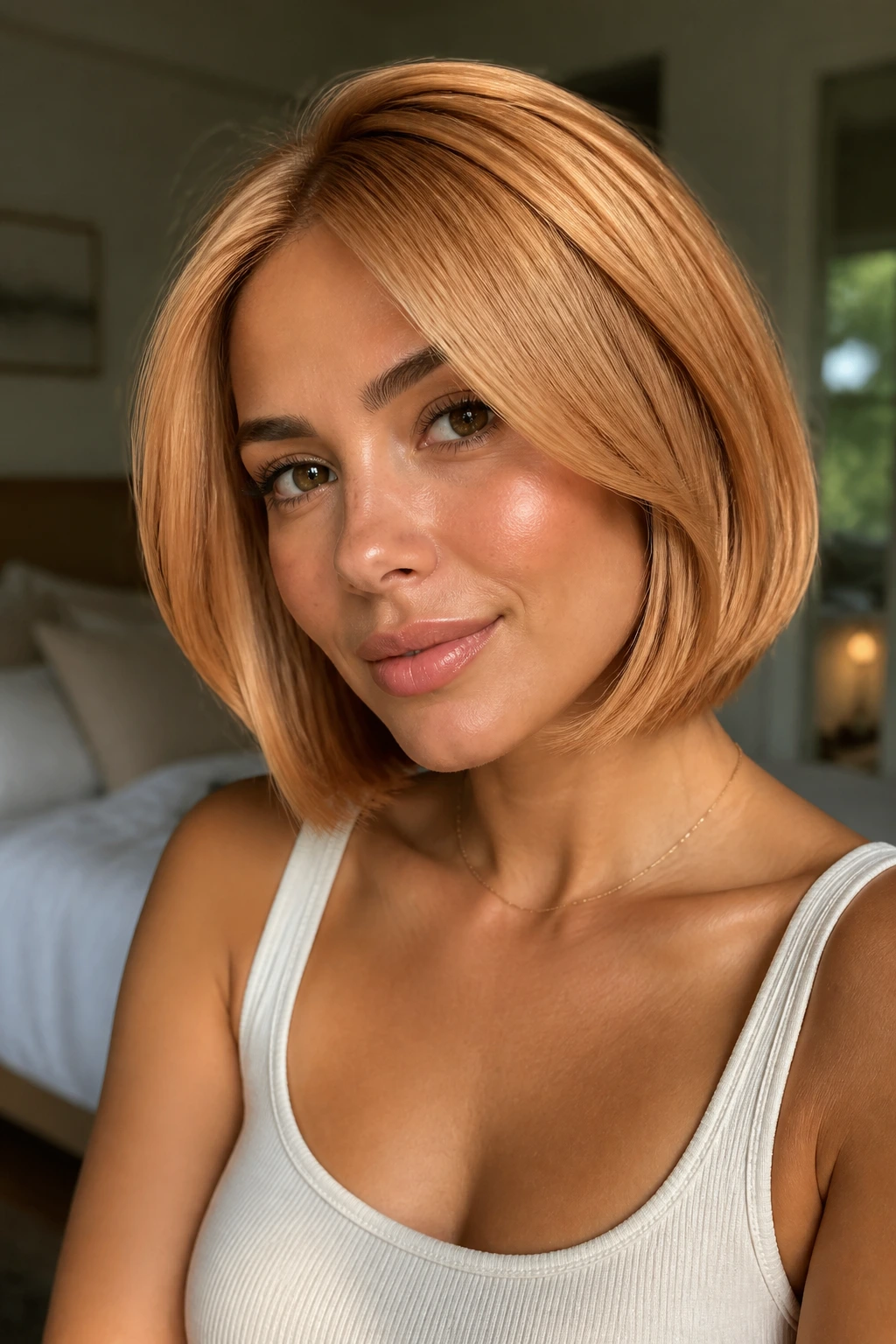
Golden strawberry blonde is a little flirtier than classic honey, but the gold keeps it wearable. On olive skin, that small shift toward strawberry can look especially good if your eyes have green or hazel in them.
The bob shape gives the color a crisp outline. Without that edge, strawberry tones can wander into fuzzy territory. Ask for gold to lead and strawberry to trail behind it, not the other way around. You want warm blush, not pink hair. There’s a difference, and it matters.
This cut looks strong with a soft side part and tucked ends. That kind of styling lets the color show in a neat frame instead of scattering everywhere.
18. Biscotti Blonde Bixie
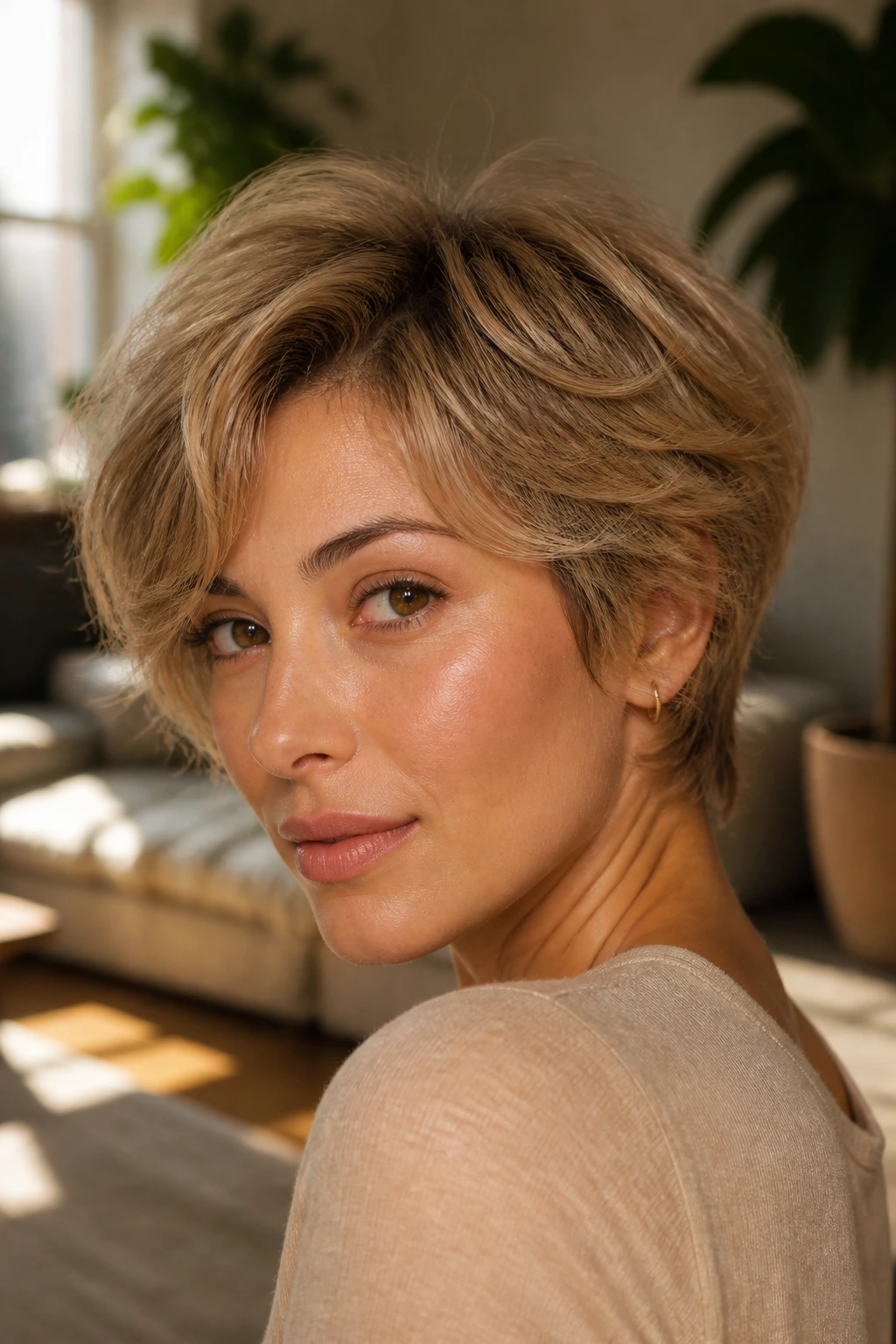
A bixie is already a little cool in spirit, and biscotti blonde warms it up just enough. The color sits between beige and light caramel, which keeps the short crop from looking harsh against olive skin.
The charm here is the contrast between the short shape and the soft tone. Too light, and the bixie can look over-bleached. Too dark, and you lose the point of the blonde. Biscotti lands in that middle zone where the texture still matters more than the color. It’s a good one if you like short hair but want something softer than a pixie.
Work a tiny amount of pomade through the ends and leave the crown loose. The movement is what keeps it from feeling stiff.
19. Warm Beige Rooted Curls
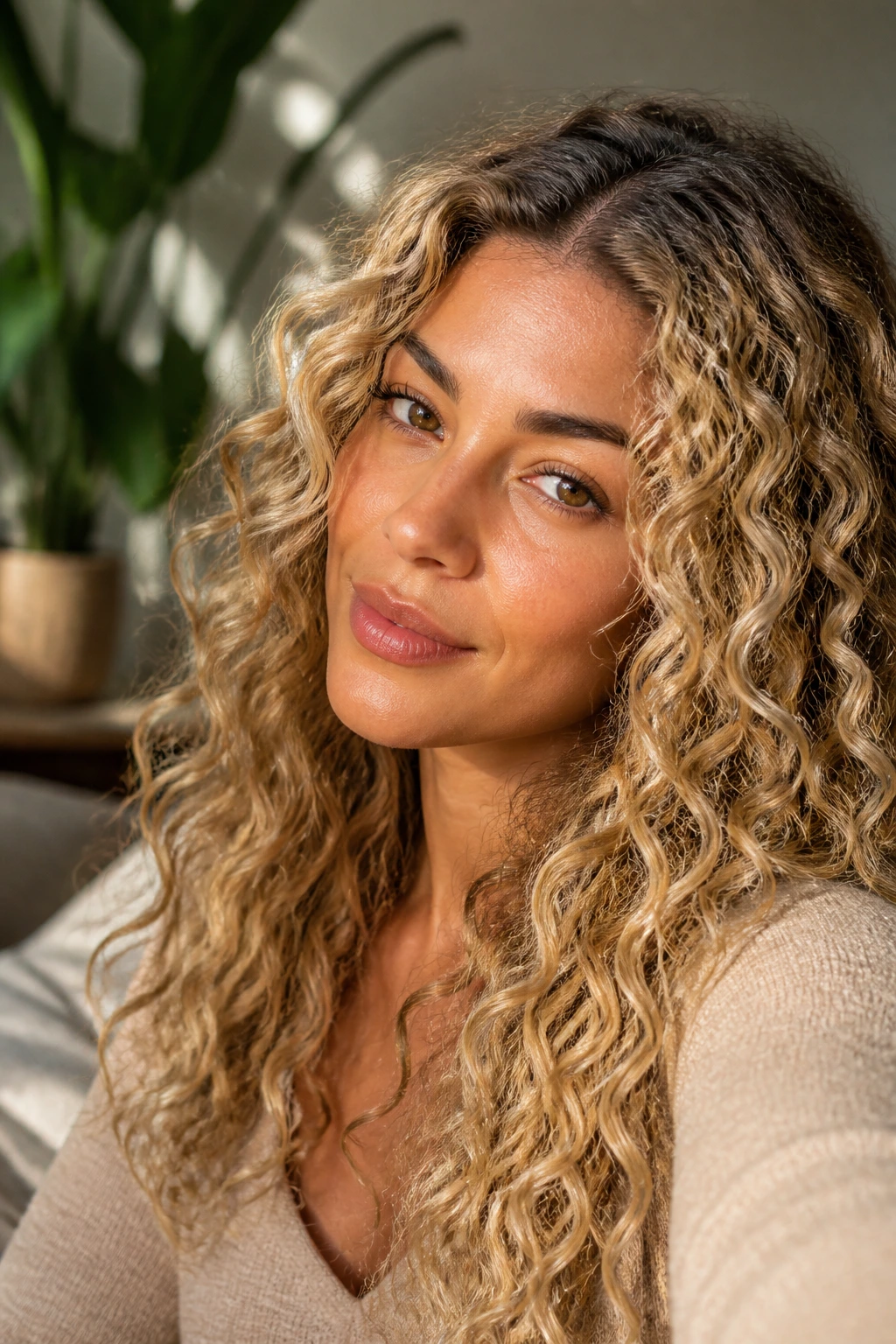
Rooted curls are almost always a good idea, and warm beige makes the case even stronger. The deeper root gives the curls shape near the scalp, while the beige pieces keep the ends bright enough to catch the light.
Olive skin usually likes this because the root shadow stops the face from looking washed out. Beige is a useful bridge tone here. It is lighter than caramel, softer than gold, and easier to wear than pure butter blonde. On curls, the tone shows up best where the ringlets open, so avoid over-lightening the top layer.
If you wear your curls defined, use a lightweight cream instead of a heavy mask. You want bounce. Heavy curls mute the color.
20. Honey Foilayage U-Cut
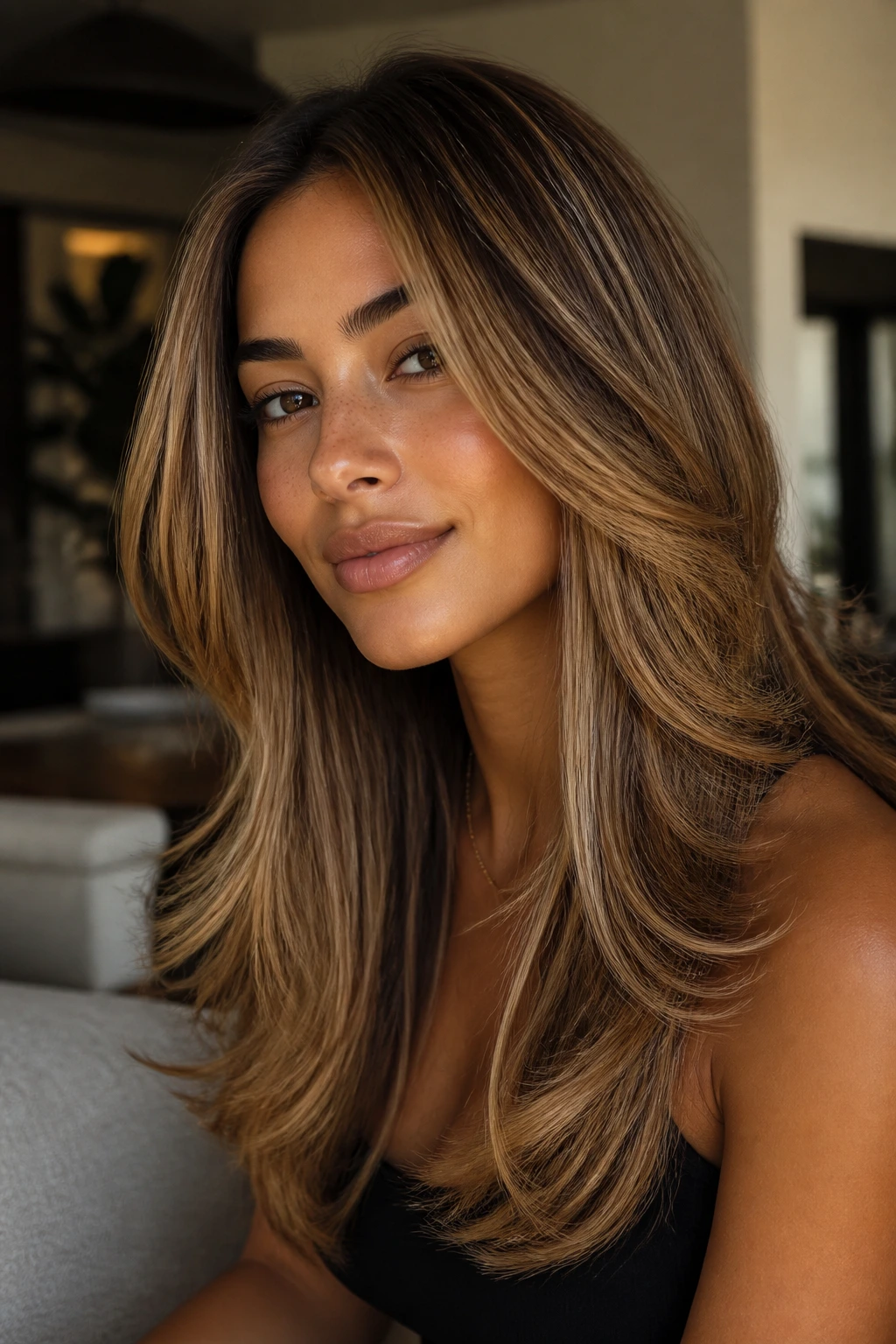
Foilayage gives you those bright, controlled ribbons that look polished without losing the softness of balayage. On an olive complexion, that matters because too much random brightness can pull the face out of balance.
The U-cut keeps the longest layers in the back, which lets the honey ribbons taper down beautifully. It is a better choice than a blunt line if you want the blonde to feel flowing. You can wear this air-dried, but it really comes alive with a smooth blowout and a few bends at the ends.
This is one of those styles that looks expensive because the dimension is so deliberate. Nothing about it feels accidental.
21. Buttered Bronde Straight Layers
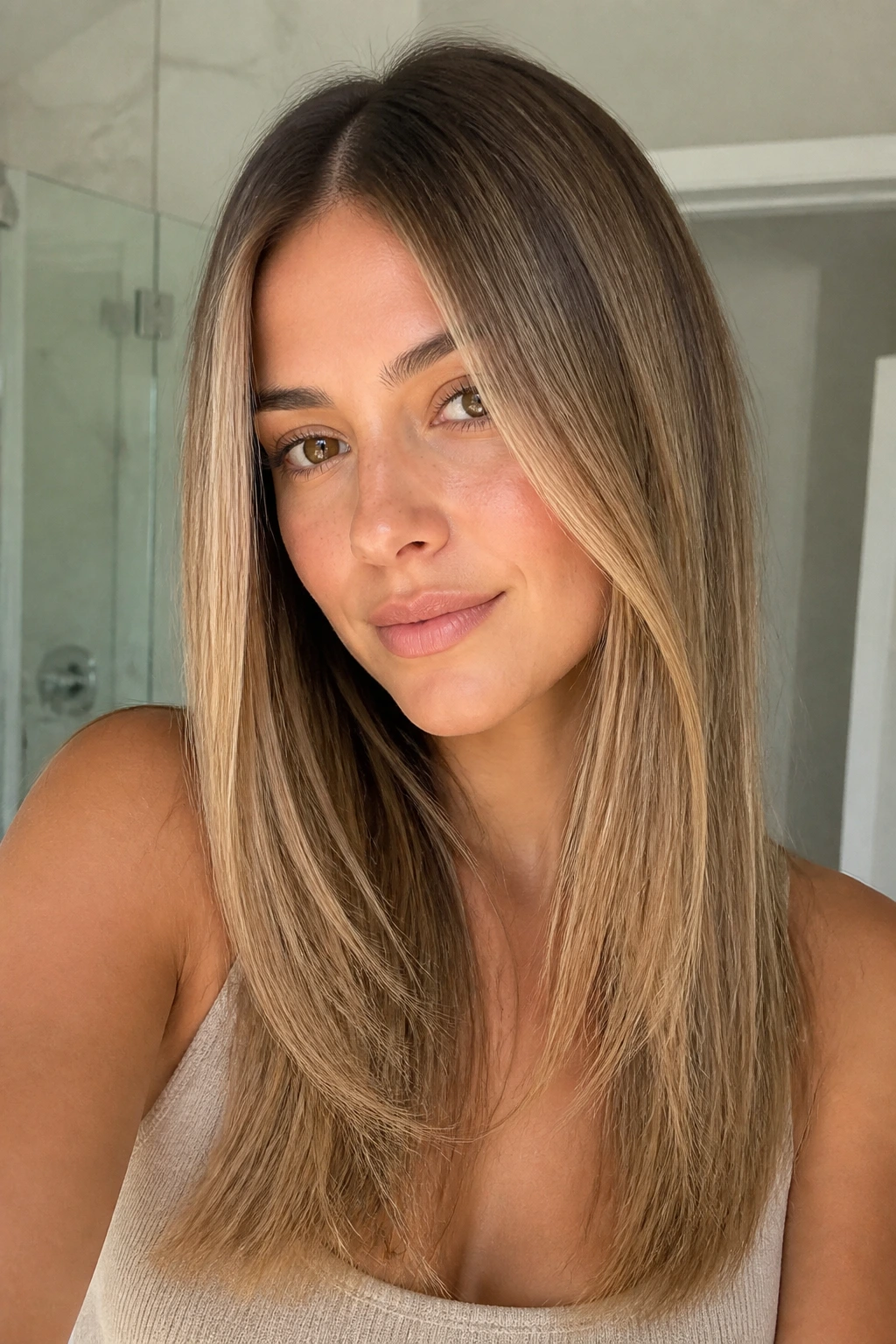
Straight hair can expose bad color fast. That is why buttered bronde is such a useful option. The brown-blonde blend keeps the look soft, and the warm butter glaze gives olive skin a little glow without forcing the hair into a bright blonde lane.
Straight layers are clean, so the color needs to do more of the visual work. Keep the roots a shade deeper and let the lighter pieces sit through the mids and around the front. That creates motion even when the hair is smooth. If the color starts too light at the root, the whole thing can look flat and high-maintenance.
This is a favorite for people who like sleek hair and hate overstyling. Fair enough.
22. Maple Honey Wispy Fringe
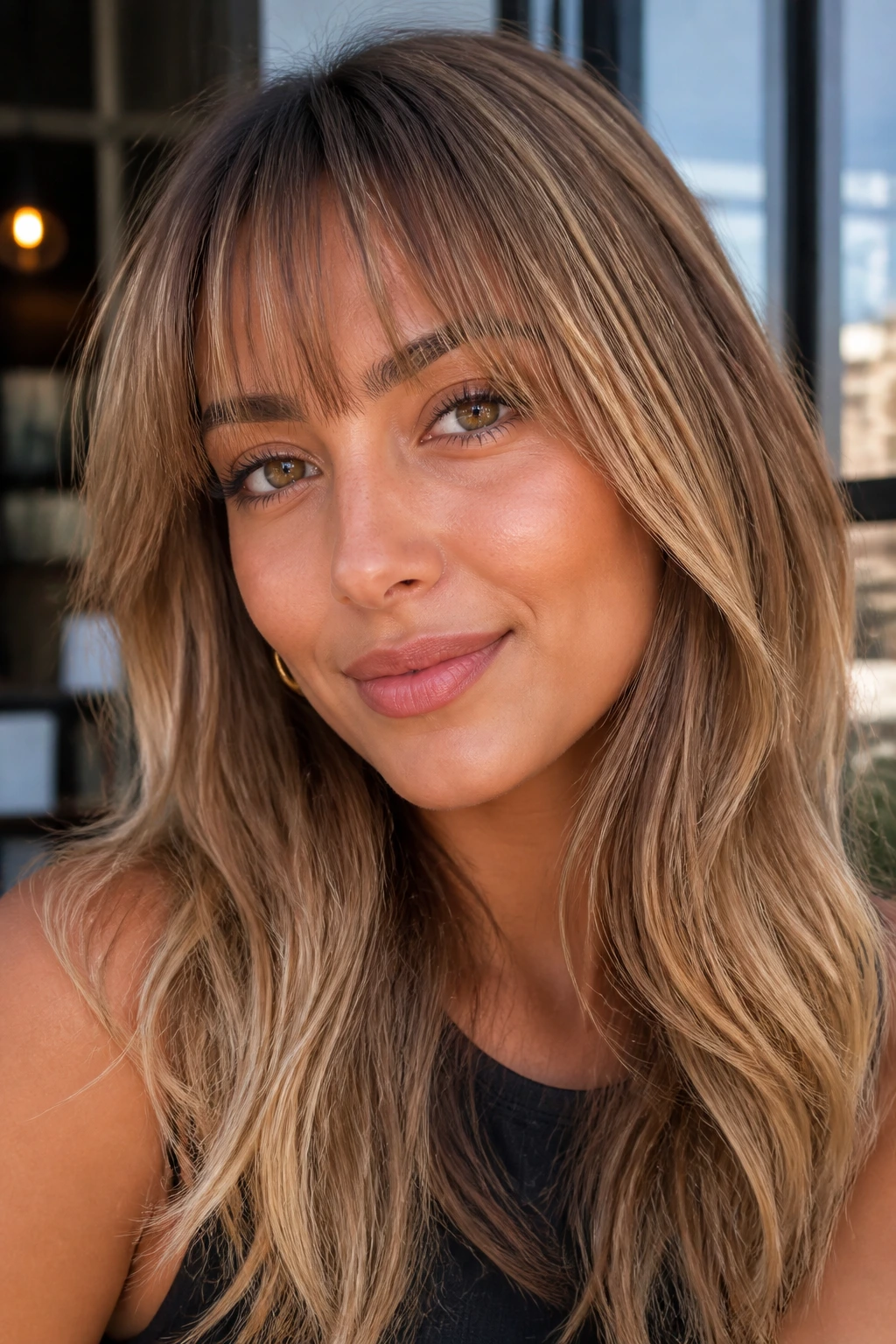
A wispy fringe can be a smart move on olive skin because it softens the forehead without boxing in the face. Add maple honey tones, and the whole look turns warm instead of heavy.
The fringe should stay light and airy. If it gets too dense, the blonde can disappear into the bangs. The rest of the hair can be layered or medium-length, but the front should keep a little lift so the maple and honey shades stay visible. This is one of those looks that benefits from a quick blow-dry with a small round brush. No need to overthink it.
Wear it if you want a softer, more youthful frame around the eyes. The warm tone does the rest.
23. Marmalade Blonde Curly Lob
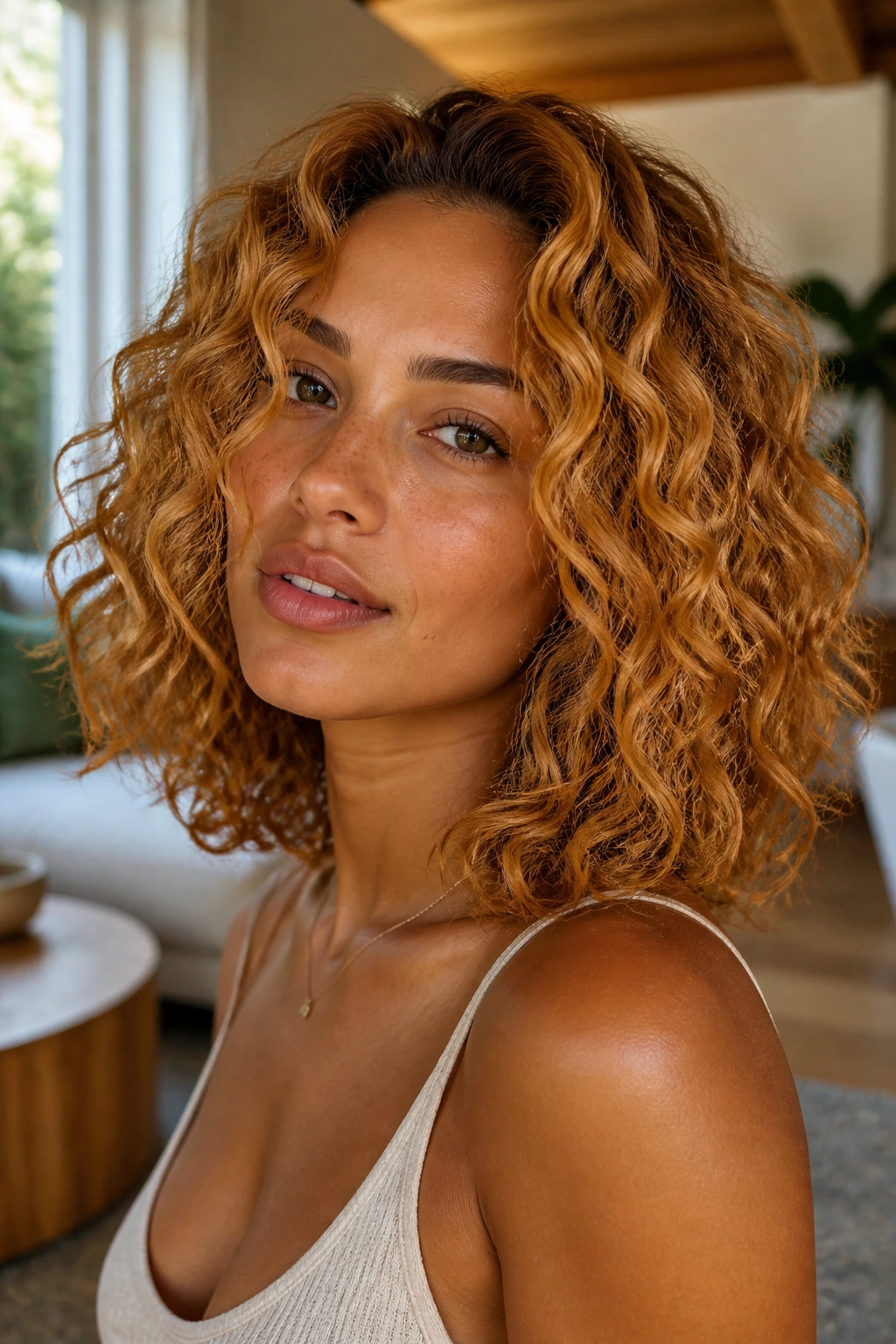
Marmalade blonde is bolder than honey and brighter than caramel. On olive skin, it can look gorgeous when the curls are the star and the tone is used with some restraint.
A curly lob keeps the color at a length where the warm orange-gold note reads as rich, not loud. The curl pattern should be defined enough to show the dimension but loose enough to keep the shade from clustering into one heavy mass. If your skin is deeper or more golden, this can be a standout choice. If your olive undertone is muted, soften the marmalade with beige lowlights.
This one is not shy. That is the point.
24. Goldleaf Balayage Low Bun
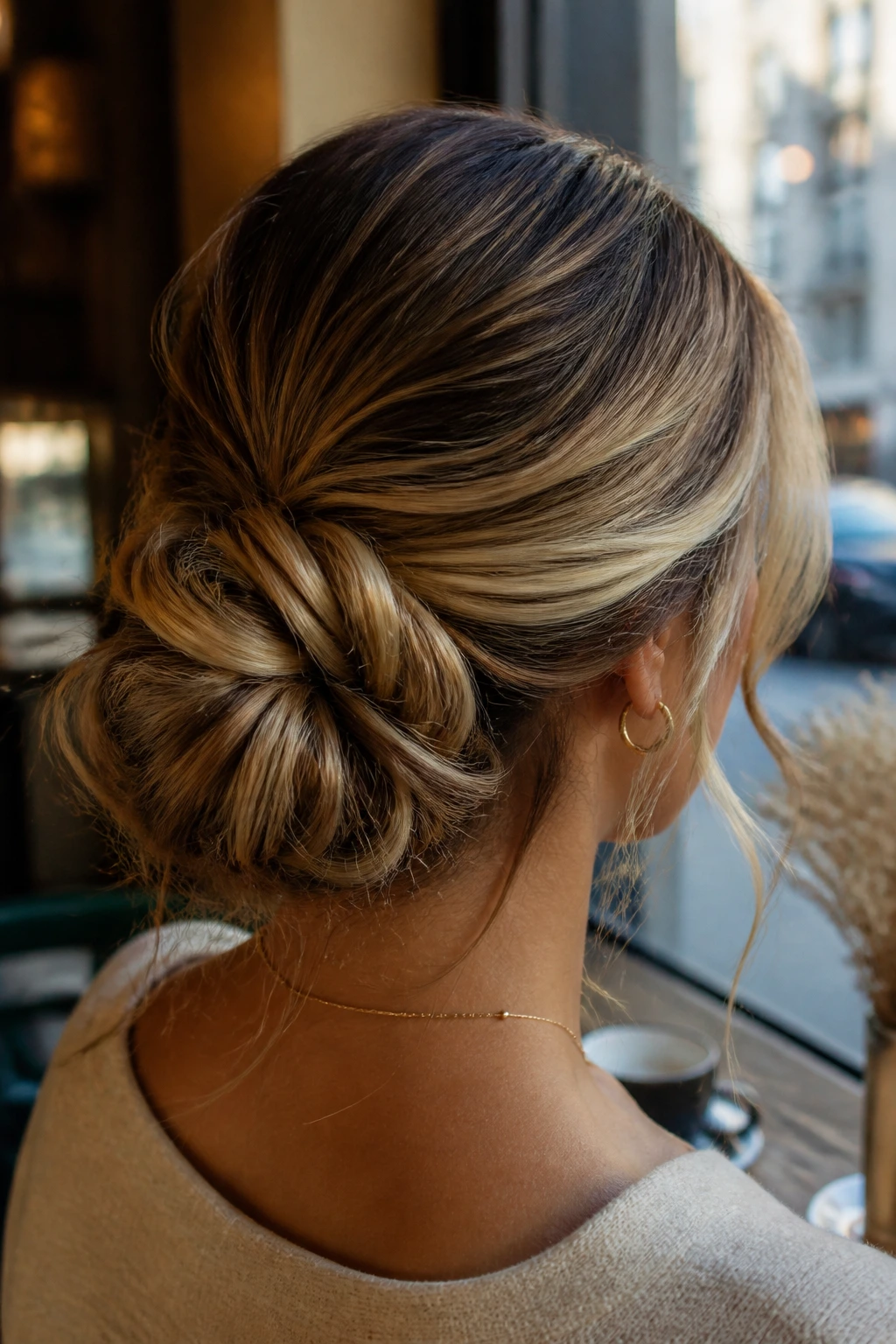
Not every blonde look has to live down around the shoulders. A low bun with goldleaf balayage lets the warm pieces show at the hairline, around the ears, and through the twist of the knot. That is enough to make olive skin look warmer without needing a huge color commitment.
The bun should stay soft, not tight. A sleek, hard bun can make the blonde disappear and put all the focus on the face shape. A looser bun with a few face-framing pieces lets the highlights do their job. This is especially good for events, workdays, or any moment when you want the color to look done without looking overstyled.
A few pins and a light mist of hairspray are enough. More than that and the finish gets stiff fast.
25. Chestnut-to-Blonde Melt
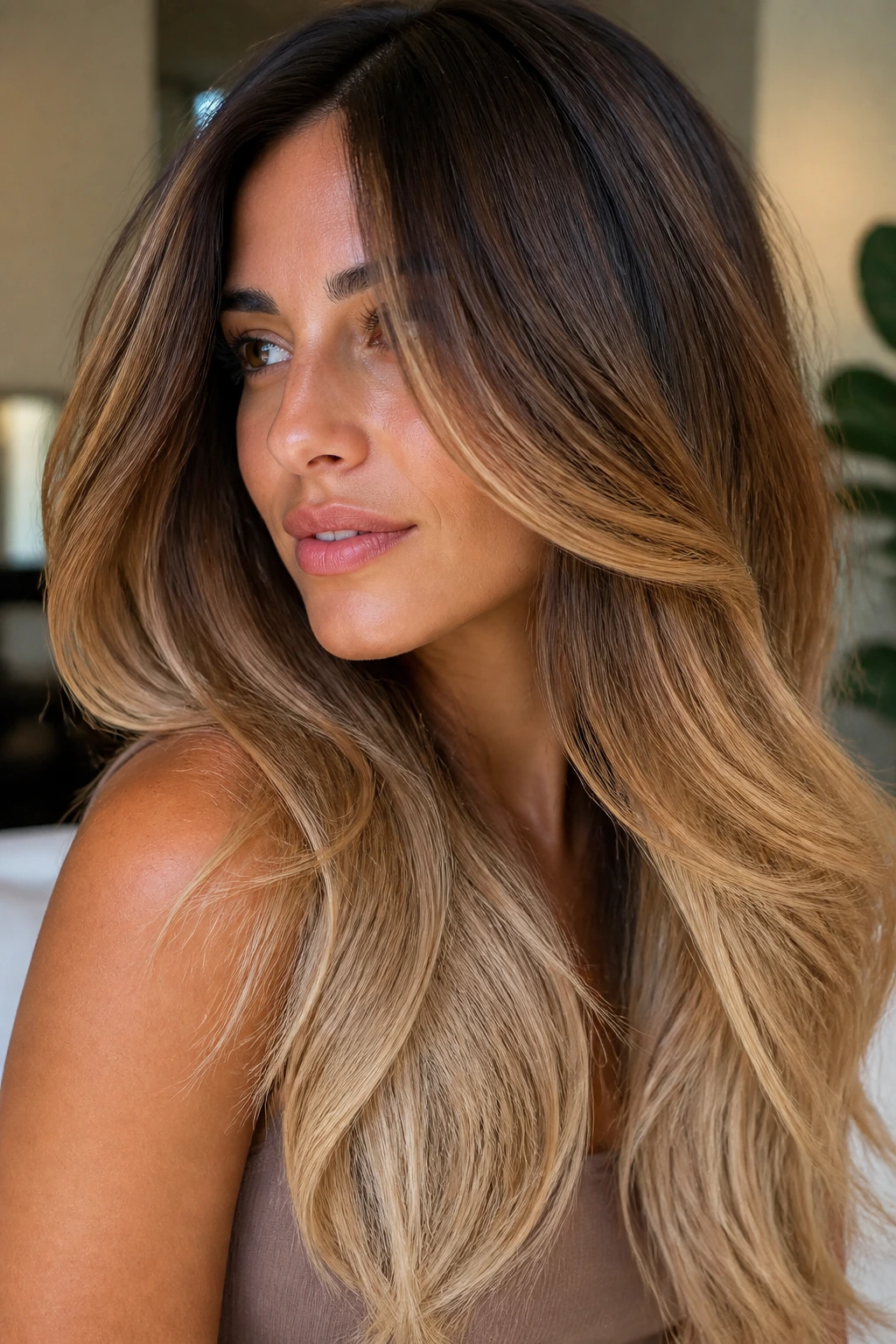
Chestnut at the root melting into blonde ends is one of the easiest ways to wear warm blonde on olive skin if your natural hair is dark. The darker base keeps the look believable, and the warm ends give you brightness without making the whole head high-contrast.
The melt should be smooth, not striped. That means the transition zone matters. Ask for chestnut, not flat brown, and blonde, not pale cream. The colors need to stay in the same warm family or they will fight each other. This looks especially good on long layers because the color shift has space to unfold.
If you are nervous about blonde, start here. It gives you the feeling of lightness without the maintenance shock.
26. Sunlit Bronde Shag
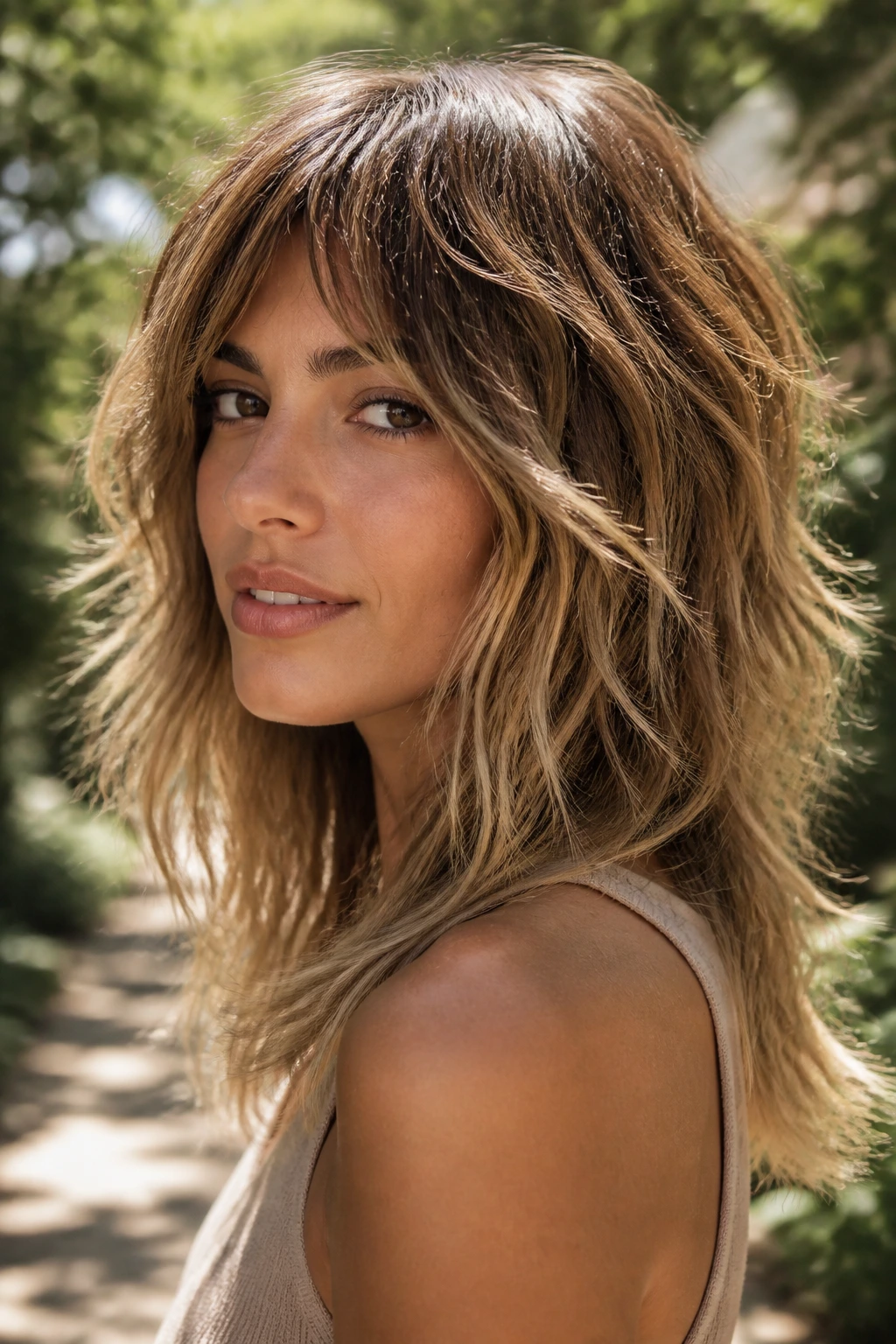
Bronde is one of those words people roll their eyes at until they see it on the right head. On olive skin, sunlit bronde can be the most believable kind of blonde because it keeps the brunette depth while slipping in lighter ribbons where the eye naturally goes.
The shag gives the bronde some attitude. Texture breaks up the color, and the warm pieces don’t sit in a straight line from root to end. That matters if your hair is thick or slightly wavy. A flat bronde can look bland; a shagged bronde looks alive. Keep the top a bit softer and the ends piecey.
This is a good one if you like hair that looks better after you’ve touched it a few times.
27. Saffron Blonde Waves
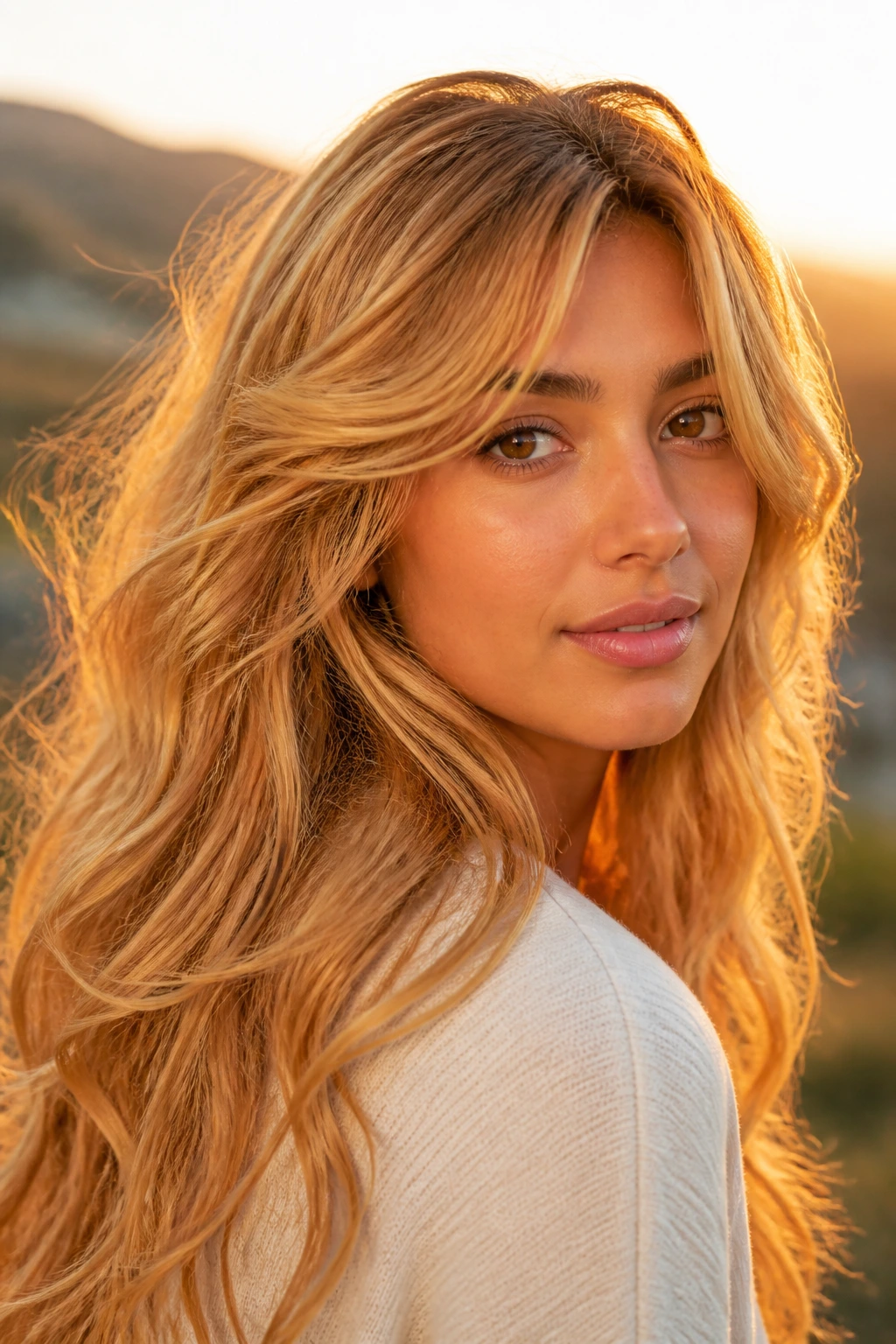
Saffron blonde is brighter and spicier than standard honey, and it suits olive skin best when the skin has a golden or sun-touched cast. The waves help soften the tone so it doesn’t feel too sharp.
The shade should stay in that warm gold range, not slide into copper. Saffron should glow, not shout. Loose waves are the best match because they let the color shift across the hair instead of sitting there all at once. If your eyebrows are dark, this can look especially strong in a good way.
I’d save this one for people who like a bit of edge. It has personality.
28. Honey Cream Flip Ends
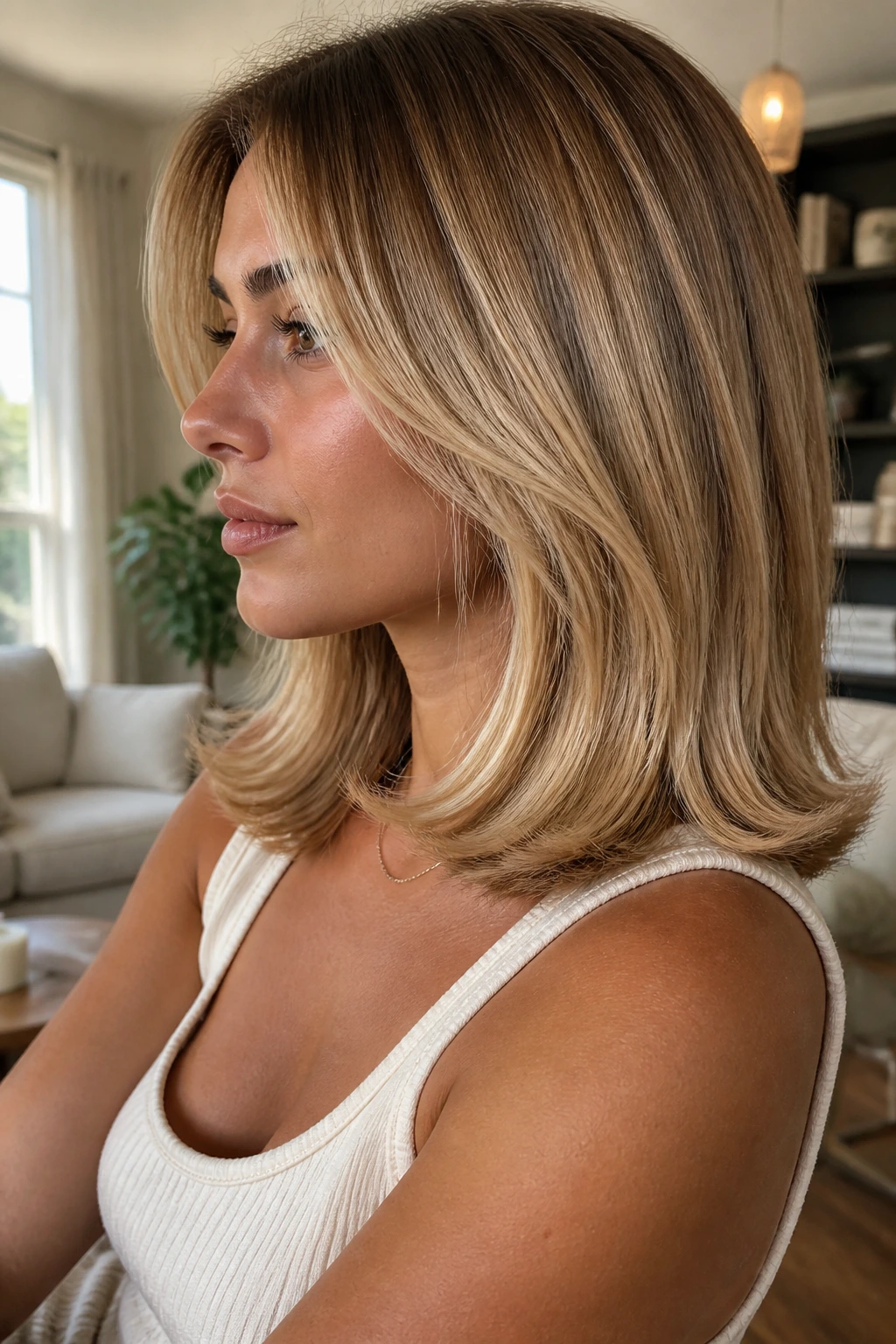
Flip ends bring a little retro energy to warm blonde, and honey cream is soft enough to keep that energy wearable. On olive skin, the creamy tone keeps the style from feeling too sweet, while the flips at the ends add movement and shape.
This cut works because the ends turn outward and catch light from underneath. That means the blonde shows in a different way than in waves or curls. It’s a subtle shift, but it changes the whole mood. If your hair is shoulder-length or just below, the flipped finish can make the color look lively without much effort.
A medium-barrel brush or a quick pass with a round brush is enough. Don’t flatten it out.
29. Caramelized Pixie Crop
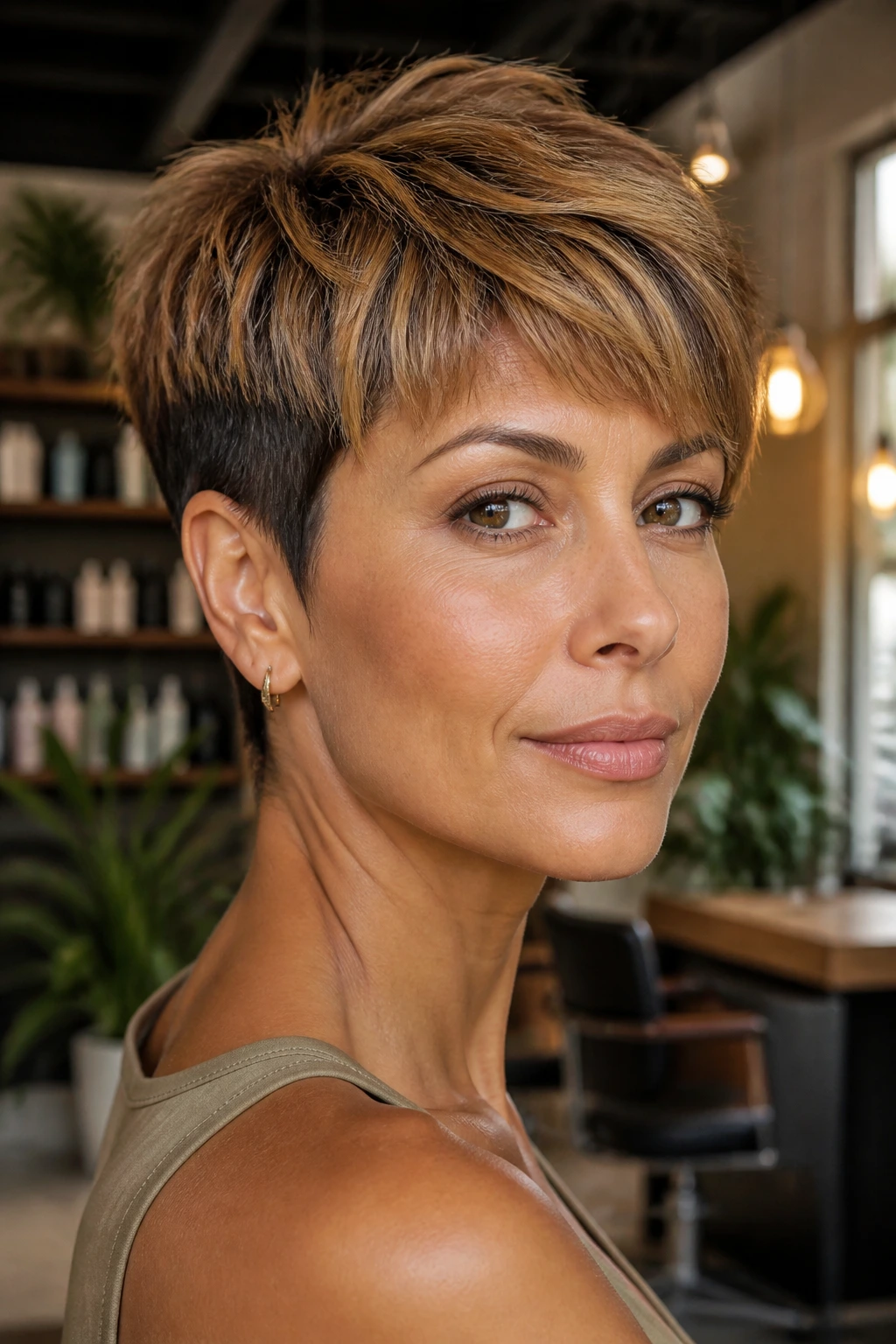
A pixie crop doesn’t need to be icy to make a statement. Caramelized blonde gives the cut warmth and depth, which suits olive skin better than a stark pale tone in many cases.
The trick is placement. Keep the caramel lights on the top and around the fringe, where they can catch movement, and leave some darker depth at the nape and sides. That stops the whole crop from looking too light or too busy. A pixie with too much blonde all over can lose shape. A caramelized crop keeps the structure visible.
This is a good option if you want short hair that still has softness around the face. It wears makeup well, too.
30. Golden Wheat Sleek Lob
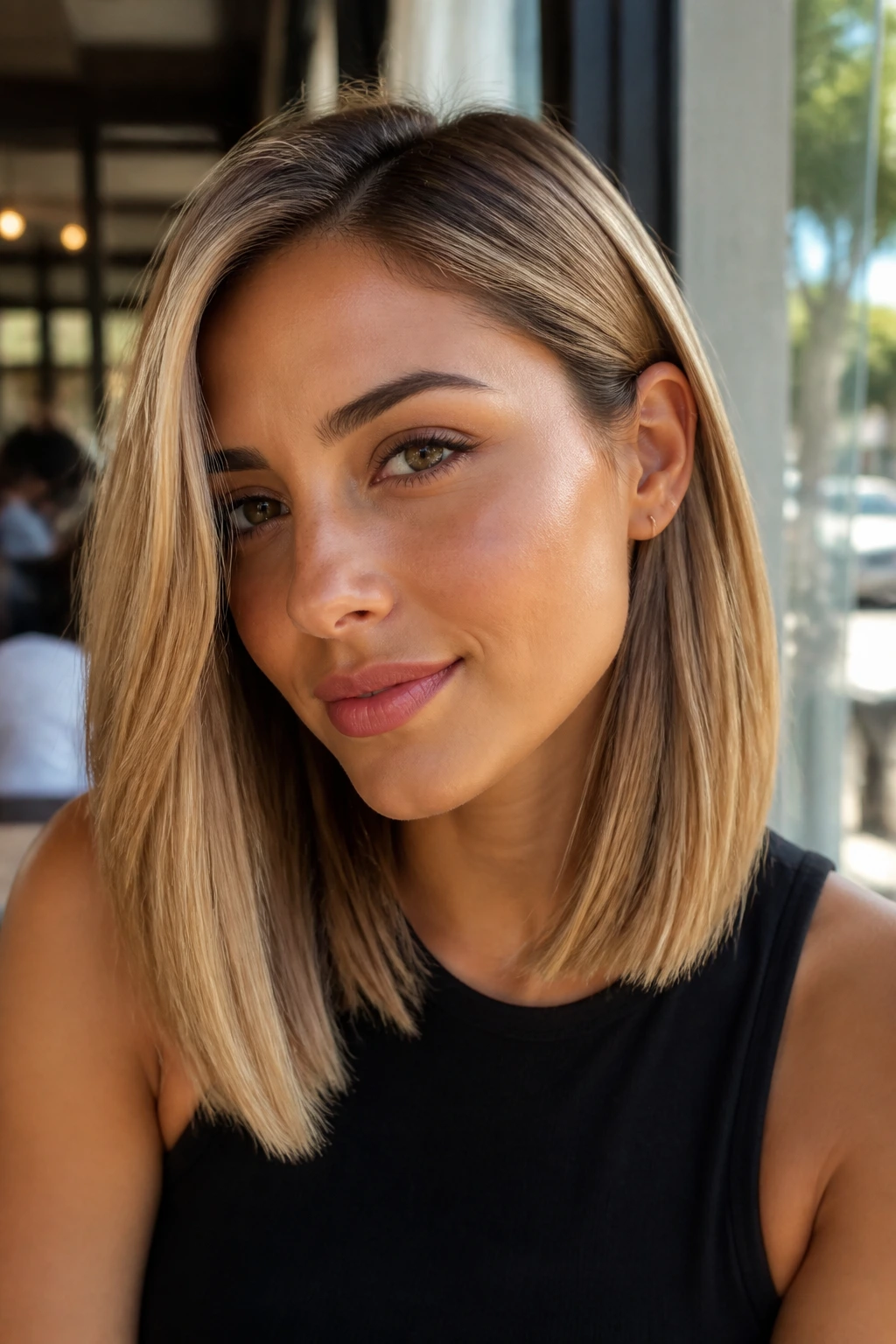
Golden wheat is one of the quieter warm blondes, and that’s part of the appeal. On olive skin, the tone can look clean and polished, especially when the lob is worn sleek and tucked behind one ear.
The key is shine. Sleek hair shows every choice, so the color has to stay balanced. Golden wheat should lean beige-gold, not yellow-gold. If the ends are too light, the style can drift into a flat highlight panel. Keep the root a shade deeper and the front pieces only a touch brighter. That gives the cut structure.
This is the kind of look that feels easy to wear to work and still holds up at dinner.
31. Toffee Ribbon Ponytail
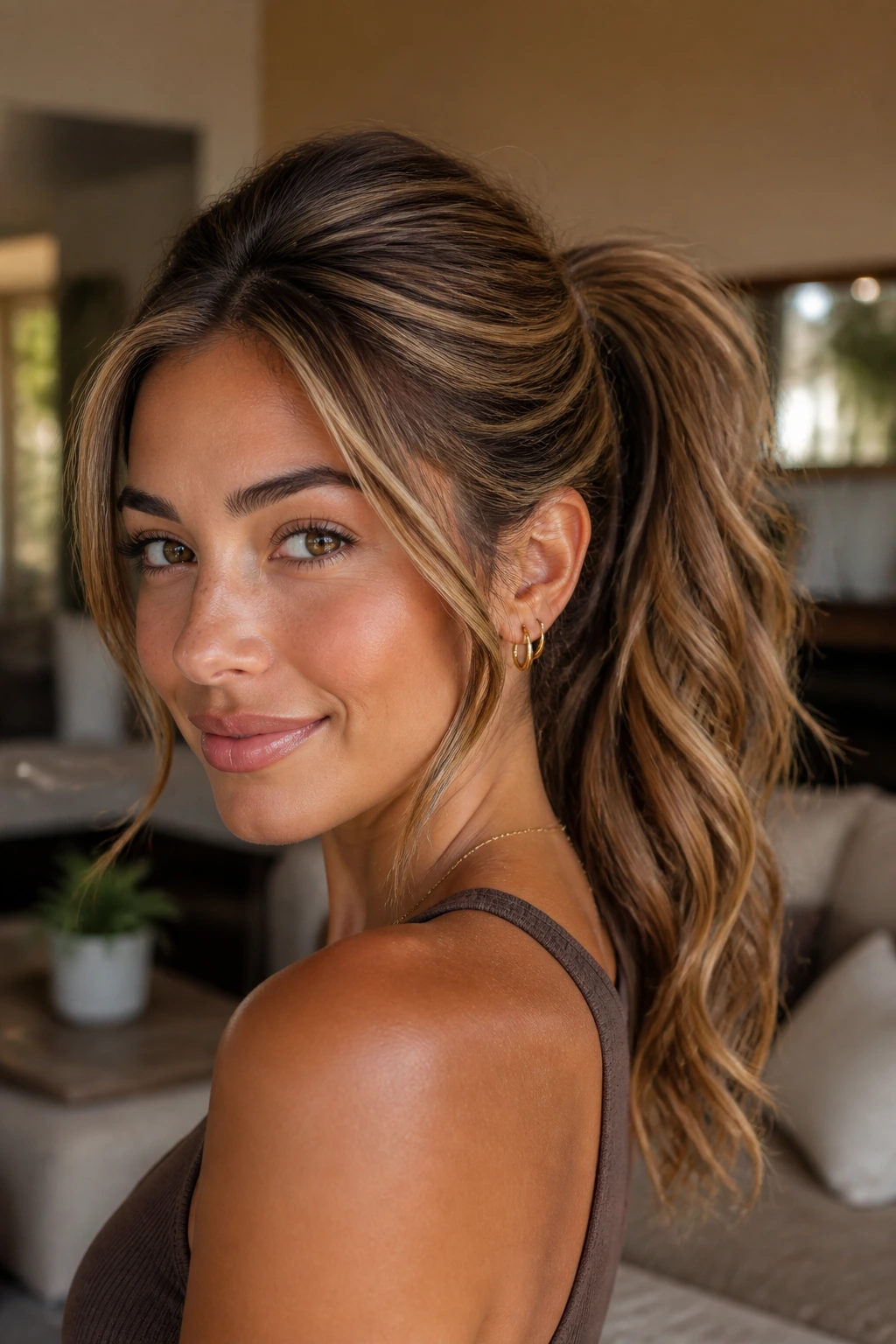
A ponytail sounds simple until you put ribbons of dimension through it. Toffee blonde works because it lets the tied-back style show depth instead of turning into one solid block of color.
Pull a few face-framing pieces loose and keep the ponytail a little loose at the crown. That shape shows the lighter ends and the darker root, which is useful on olive skin because the contrast keeps the face from getting washed out. If your hair is fine, a little teasing at the crown helps the toffee ribbons show more clearly.
This is one of the best “low effort but not plain” styles on the list. Good for errands, good for dinner, good for days when your hair has other plans.
32. Vanilla Chai Face-Framing Layers
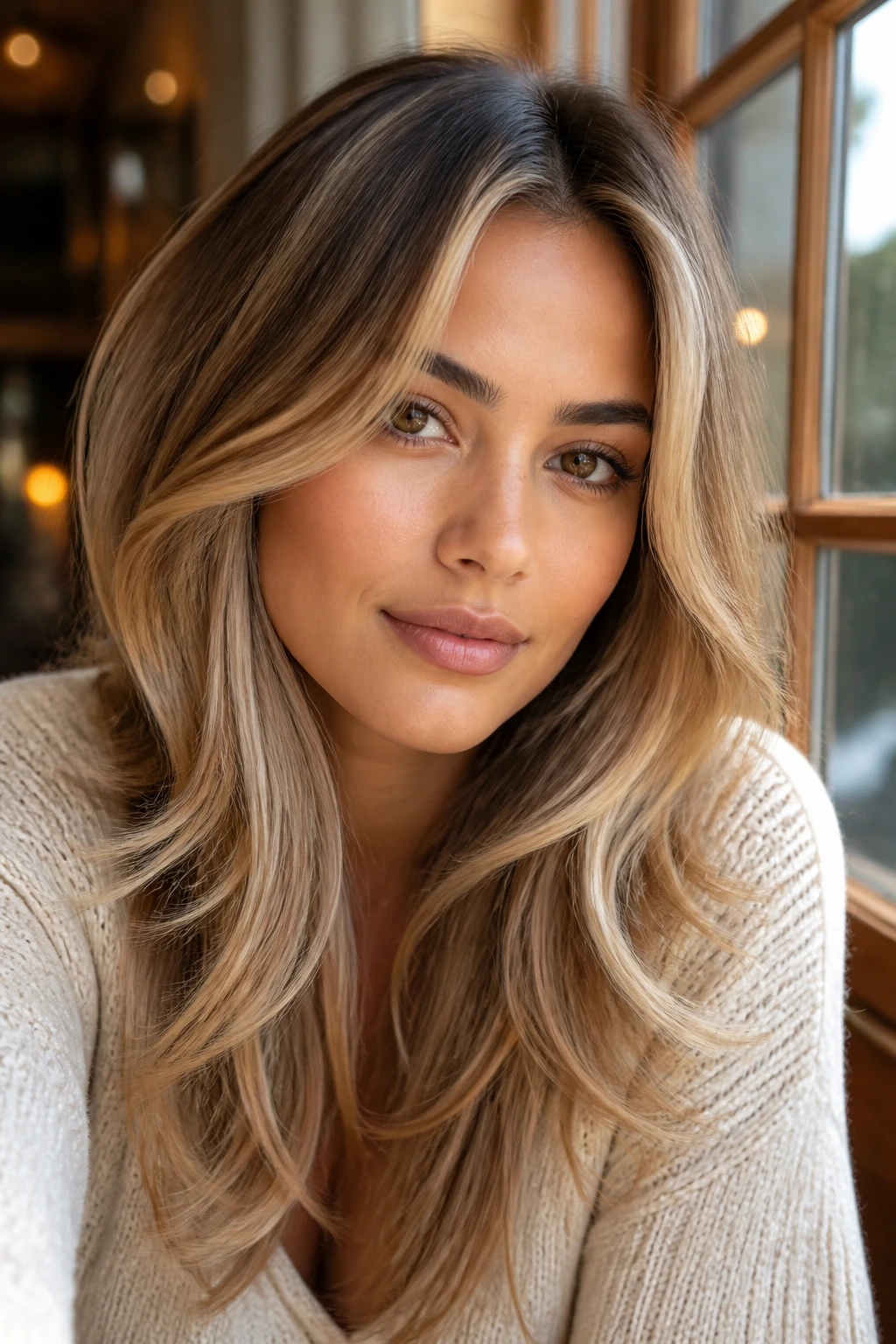
Vanilla chai is creamy, warm, and a little spiced around the edges. That makes it a strong choice for olive skin, especially if you want brightness concentrated near the face rather than scattered everywhere.
The face-framing layers should start around the cheekbones or jawline, depending on your features. The warmth in the front pieces adds lift, while the chai-beige base keeps the blonde from going too yellow. If your skin leans muted, this tone gives you glow without too much flash. If your skin leans golden, it still works because it has enough warmth to keep up.
A soft curl at the ends makes the face frame sit better. Straight is fine, but the bend makes the color feel more alive.
33. Warm Honey Hollywood Waves
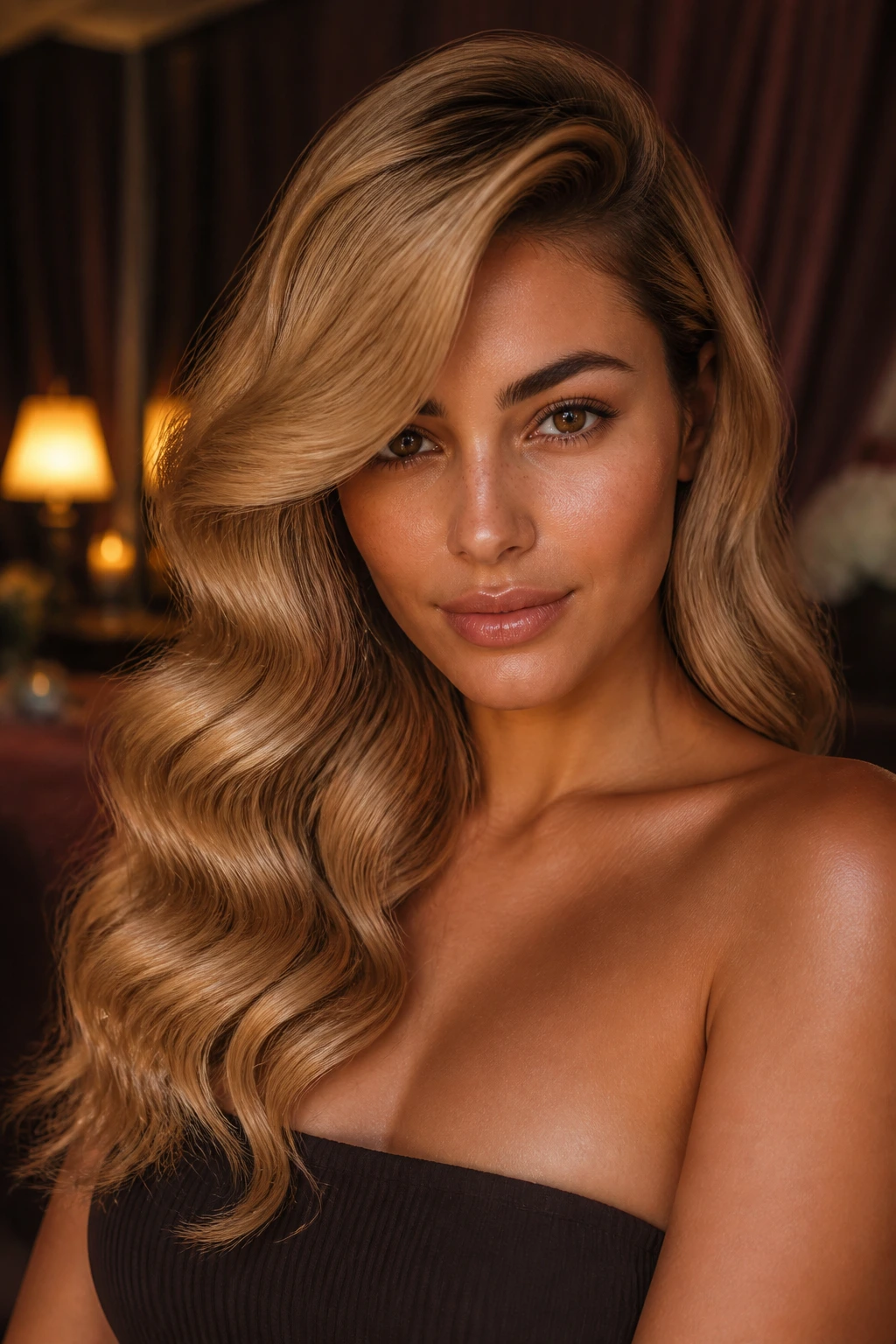
Hollywood waves are glamorous by nature, but warm honey keeps them from looking too formal or too cool. On olive skin, the warm tone gives the wave pattern a soft shimmer that flatters without going full old-school platinum.
The side part matters here. It creates a long sweep that lets the honey pieces move across the face. The waves should be brushed into one smooth pattern, not left too separated. That polished shape shows off the blonde in a way that feels rich rather than busy.
This is a strong pick for evening events, photo-heavy days, or anyone who likes hair with a bit of drama. It is not subtle. It does not need to be.
34. Citrus-Honey Braided Crown
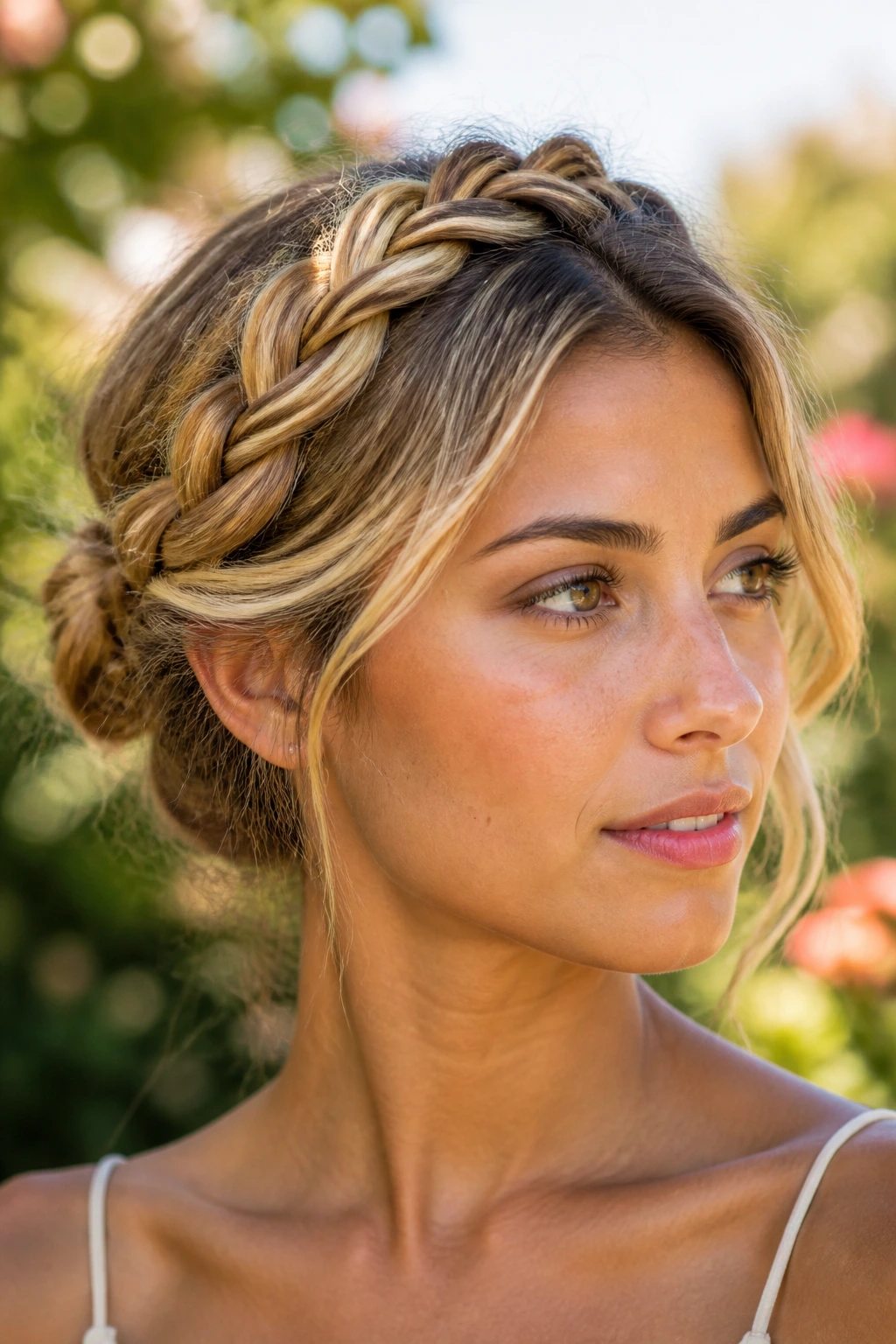
A braided crown is one of the easiest ways to show off warm highlights without needing much heat styling. Citrus-honey tones bring brightness around the face and crown, which helps olive skin look fresh and animated.
Braids expose the different blonde ribbons as they wrap around the head. That means the placement matters more than the length. You want warmth near the temples and around the braid’s outer edge, where the eye lands first. If the tone is too flat, the braid can disappear into the hair. If it has enough dimension, the whole style comes alive.
This works especially well for weddings, festivals, and days when you want your hair off your neck but not hidden away.
35. Gilded Sand Mermaid Layers
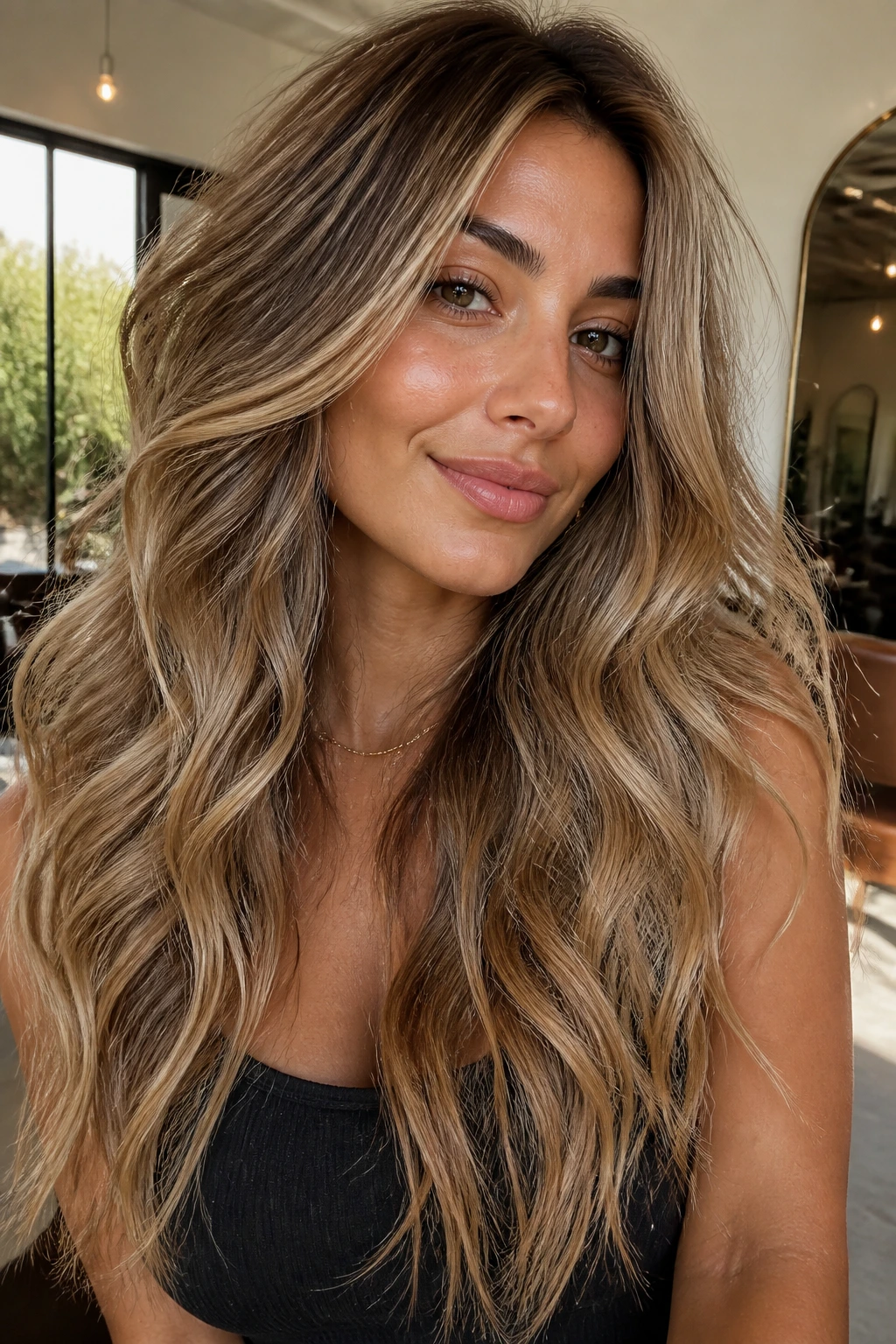
Gilded sand is the last stop for people who want long, textured blonde with warmth built in. The shade mixes golden beige with soft sand, which keeps olive skin from losing its shape under too much lightness.
Mermaid layers give the color space. The longer lengths let the warm pieces fall in sections, and the layers stop the hair from becoming one enormous blonde curtain. I like this with loose bends and a slightly deeper root. That contrast gives the hair an expensive-looking gradient, even if the styling is simple.
This is the kind of blonde that rewards movement. The more the hair sways, the better it looks.
How to Make Warm Blonde Look Rich, Not Brassy
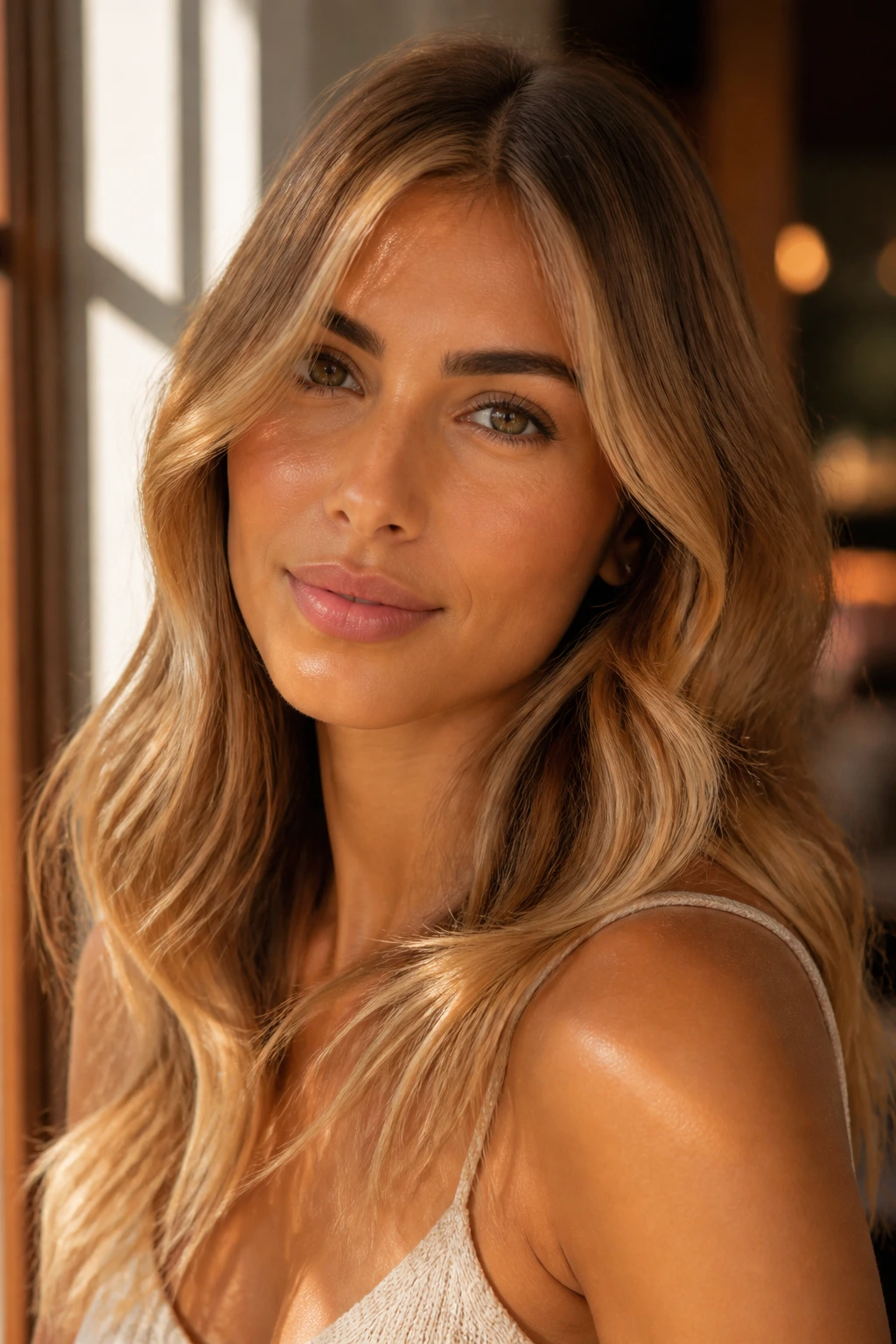
Warm blonde gets into trouble when people confuse “warm” with “yellow.” Those are not the same thing. On olive skin, the best version is usually beige-gold, honey, caramel, or amber — warm enough to brighten the face, soft enough to keep the hair from looking loud.
Ask for dimension at the root and around the face. A root shadow, lowlights, or a slightly deeper gloss can stop the color from going flat. If every strand is lifted to the same pale level, the hair starts to feel thin and the skin can look harsher next to it.
A good toner matters more than people admit. Beige-gold and honey glosses keep the warmth controlled, while a silver-heavy formula can shut the whole look down. If you already know your hair likes to go brassy, plan on gloss refreshes instead of waiting until the color turns orange and then panicking in the shower.
Tools and Products That Keep the Color Honest
-
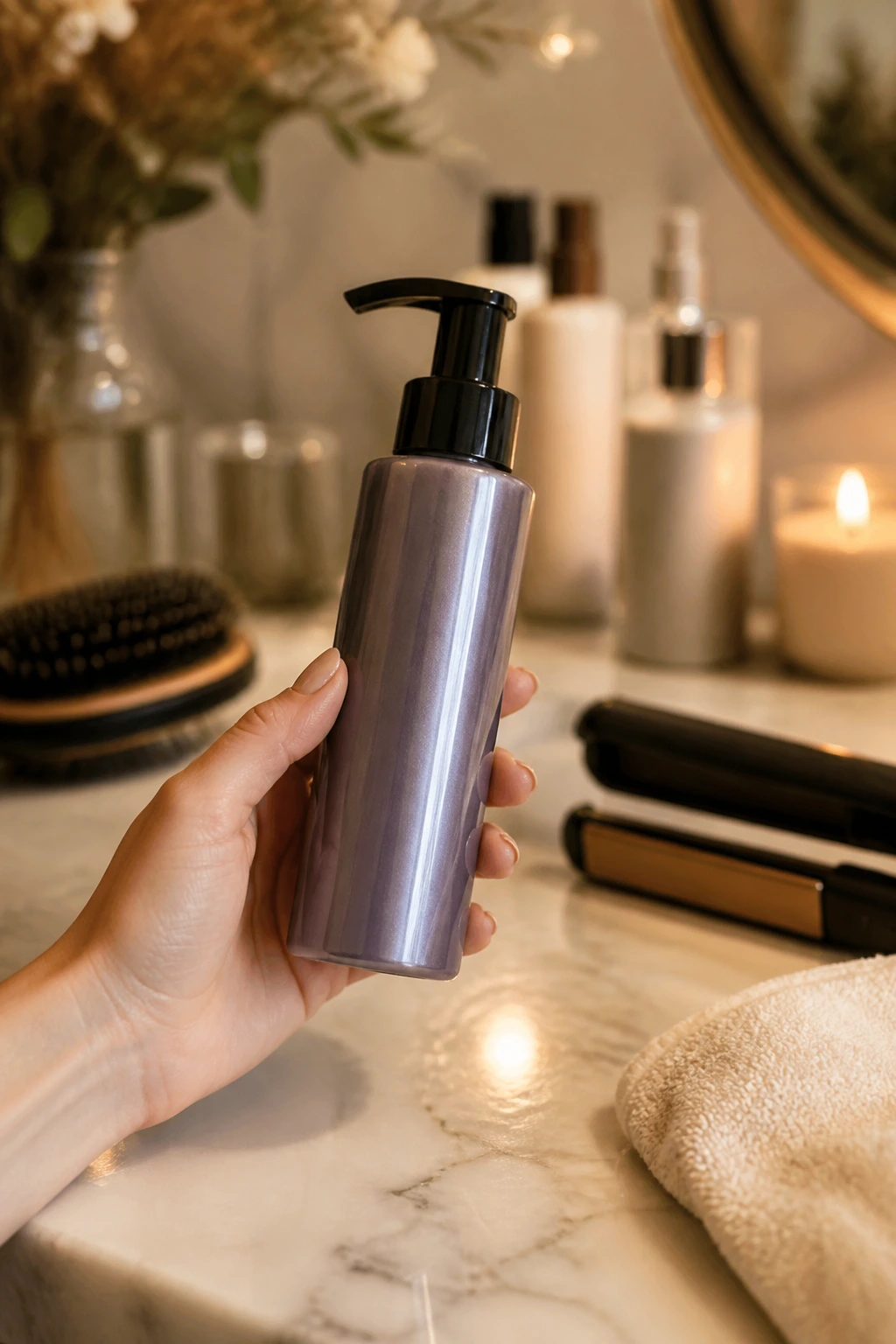
Color-safe shampoo: A sulfate-free formula helps warm blonde stay bright without stripping the gloss off in three washes.
-
Light conditioner or mask: Rich masks are useful, but too much moisture can make fine hair collapse and hide the dimension.
-
Heat protectant spray: Warm blondes show heat damage fast, especially around the face frame where you style most often.
-
Round brush: Great for lobs, curtain layers, and blowouts that need a little bend at the ends.
-
Wide-tooth comb: Better than rough brushing on curls, waves, and highlighted lengths.
-
Color-depositing gloss or toner: Handy if your blonde starts sliding too yellow between salon visits.
-
Clips and sectioning comb: Useful for styling and for anyone touching up face-framing pieces at home.
-
Microfiber towel: Less friction means less frizz, and less frizz means the warm tone looks smoother.
Common Mistakes That Flatten Olive Skin
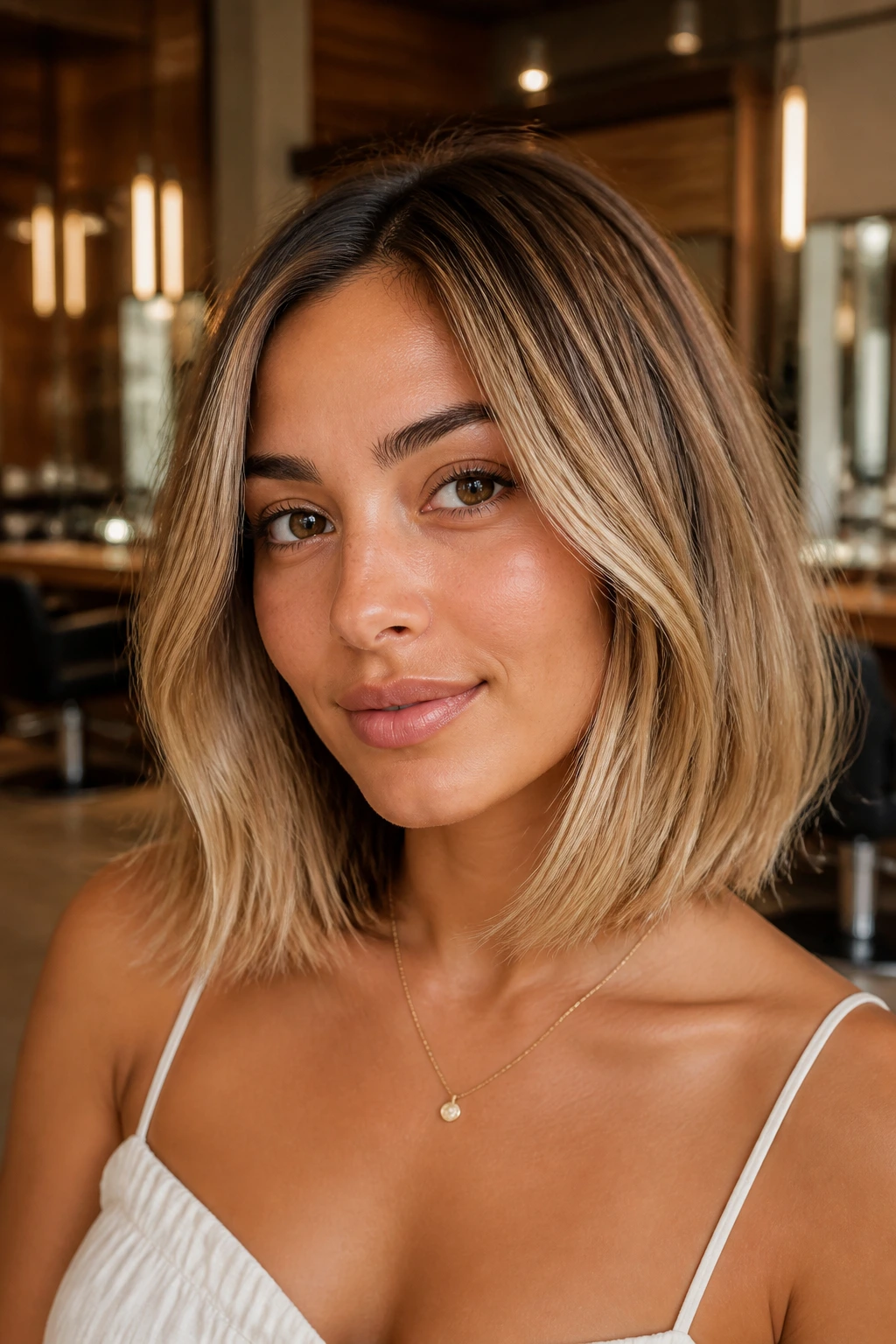
The first mistake is going too ash. Cool beige can work, but straight ash blonde on olive skin often drags the face down. The symptom is simple: the hair looks trendy in the chair and tired by the time you get home. A warmer gloss or a few golden lowlights usually fixes it.
The second mistake is lifting everything to the same level. Flat blonde kills dimension, and olive skin usually looks better when the roots or mids keep a little shadow. A one-tone blonde can look paper-thin near the scalp. Ask for root depth or ribbons, not a blanket.
The third mistake is skipping maintenance until the blonde turns brassy-brassy. At that point, the color is already shifting beyond warmth and into orange-yellow territory. A gloss every 6 to 8 weeks keeps the shade on track. So does using a gentle shampoo and not frying it with a hot iron every single day.
The last mistake is forgetting the brows. If your hair goes warm blonde but your brows stay very dark and very sharp, the face can feel disconnected. Softening the brow pencil a shade or two often helps more than people expect.
Variations for Different Olive Undertones and Hair Textures
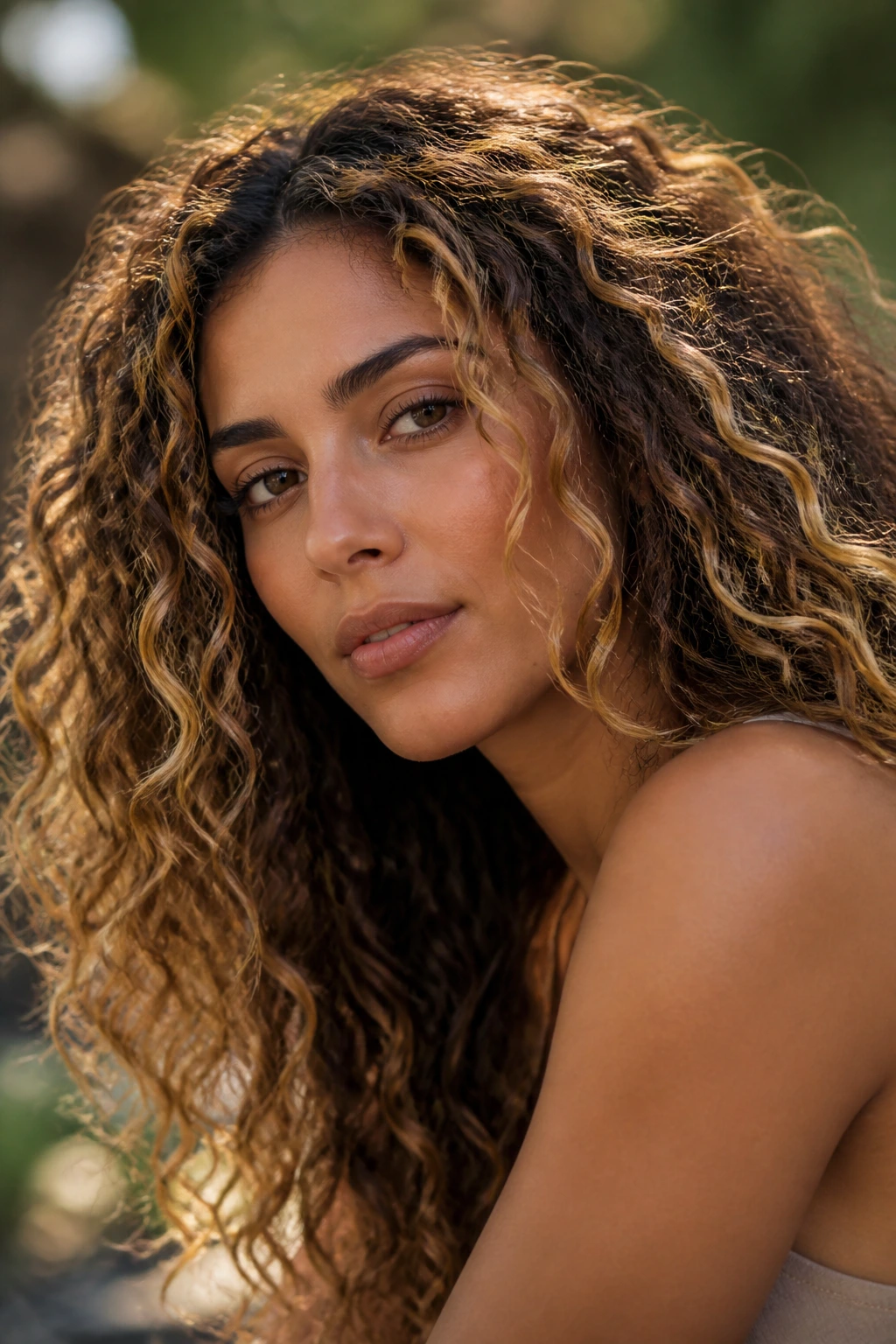
Golden Olive Glow: If your skin leans golden, push the blonde toward honey, amber, and saffron. These tones echo the warmth already in your face and make the hair look richer without needing extreme lightness.
Muted Olive Beige: If your undertone feels softer or more muted, beige-blonde, sand, and warm vanilla are safer bets. They brighten without making the complexion look shiny or overly yellow.
Deep Olive Dimension: Deeper olive skin usually looks best with more contrast at the root. Chestnut melts, bronze bronde, and caramel ribbons keep the color grounded while still giving enough lightness to show movement.
Curly Warm Blonde: On curls, place the warmth where the pattern opens, not all over the surface. Butterscotch, honey, and warm beige work best when the highlights follow the curl family instead of sitting in straight lines.
Low-Commitment Blonde: If you are nervous about upkeep, stay in the root-melt zone. Caramel melts, bronde shags, and rooted waves grow out with less drama than a bright all-over blonde.
How to Keep Warm Blonde Fresh Between Appointments
Warm blonde usually stays its nicest when you stop treating it like a daily shampoo project. Washing two to three times a week is plenty for most people, especially if the hair is highlighted. Between washes, a dry shampoo at the roots keeps the darker base from getting oily and dragging the color down.
Glossing every 6 to 8 weeks is a smart rhythm if your blonde tends to shift yellow or copper. If your hair is porous or heavily lightened, you may need it a little sooner. Root touch-ups often sit around 8 to 12 weeks for softer looks, while higher-contrast blondes may need a tighter schedule.
Heat is where a lot of warm blondes get wrecked. Use heat protectant every time, and keep hot tools in the 300°F to 350°F range unless your hair is very coarse and truly needs more. A lower heat setting with a slower pass usually leaves the tone shinier. Sun, chlorine, and saltwater can all dull warm blonde fast, so a leave-in with UV protection is worth the space it takes up.
Frequently Asked Questions
What blonde shade looks best on olive skin?
Beige-gold, honey, caramel, and soft bronde usually play nicest with olive undertones because they add warmth without turning the hair yellow. If your skin is deeper or more golden, amber and chestnut-to-blonde melts can look especially rich.
Is warm blonde better than ash blonde for olive skin?
Often, yes. Ash can work if the olive undertone is very muted, but straight ash blonde can make the skin look flat or a little green around the edges. A warmer gloss tends to keep the face more alive.
Will warm blonde make my skin look too yellow?
Not if the blonde is balanced with beige or a soft root shadow. The problem usually comes from overly bright yellow tones, not warmth itself. Beige-gold and honey are safer than banana-yellow.
Can brunettes with olive skin go blonde without looking striped?
They can, and a root melt or bronde base is usually the cleanest route. Starting with caramel ribbons, honey balayage, or chestnut-to-blonde blends keeps the hair dimensional and easier to grow out.
How often should warm blonde be toned?
Most people do well with a gloss every 6 to 8 weeks. If your hair pulls brassy fast, you may need a slightly tighter schedule, especially around the face frame where water and heat hit first.
What if my warm blonde turns orange?
That usually means the tone has drifted too far from beige and needs a cooler-beige gloss, not a harsh silver correction. If the orange is strong, a salon toner is the better fix than stacking purple shampoo on top of it.
Should my brows match warm blonde hair?
Not exactly. Brows usually look better a shade or two deeper than the hair, but the tone should soften a bit if the blonde gets lighter. Stark dark brows next to warm blonde can make the face feel disconnected.
Can I get a warm blonde look without bleaching all my hair?
Yes. Foilayage, balayage, face-framing highlights, and root melts can give you a warm blonde result while leaving a lot of your natural depth in place. That’s often the smarter choice for olive skin anyway.
The Shades That Stay Lively
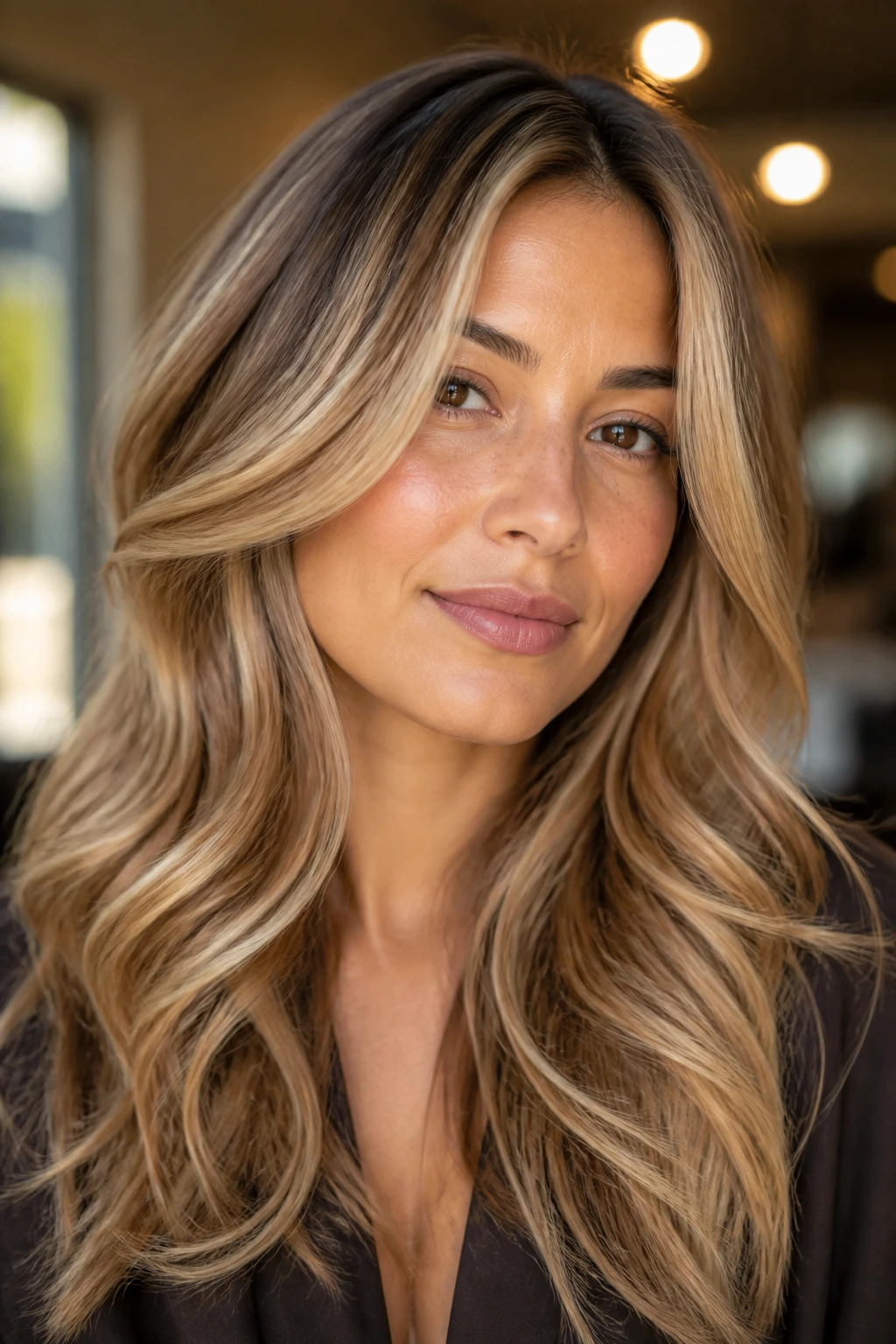
Warm blonde on olive skin works best when it looks like it belongs there, not like it was forced into place. The color needs some beige, some gold, and usually a little depth at the root. Once those pieces are in place, the haircut can go almost anywhere: blunt bob, soft lob, shag, curls, pixie, braid, blowout, ponytail.
That’s the part I like most. Olive skin does not ask for one rigid blonde formula. It asks for warmth with judgment. Get that right, and the hair stops fighting the face and starts doing something much better — holding its own.