



The best blonde red hair color ideas for deep skin tones do one thing most pale blondes never manage: they keep the face warm while still giving you that hit of light around the cheekbones. When the mix is right, the hair doesn’t look pasted on or over-processed. It looks expensive in the plain, old-fashioned sense of the word — rich depth at the root, reflective warmth through the mids, and a lighter ribbon where the light actually lands.
That balance matters more on deep complexions than a lot of trend boards admit. A flat, icy blonde can look disconnected next to melanin-rich skin. Copper, honey, apricot, amber, rose-gold, and strawberry-blonde blends tend to sit better because they echo the natural warmth already in the skin instead of fighting it. And if you keep some shadow at the root, the whole thing holds together.
I’m fond of shades that look alive in different light. Indoors, they can read soft and glossy; outdoors, the copper and gold catch and shift. That little movement is the whole point. So here are 35 blonde-red hair color ideas that understand the assignment.
Why These Warm Blends Suit Deep Skin Best
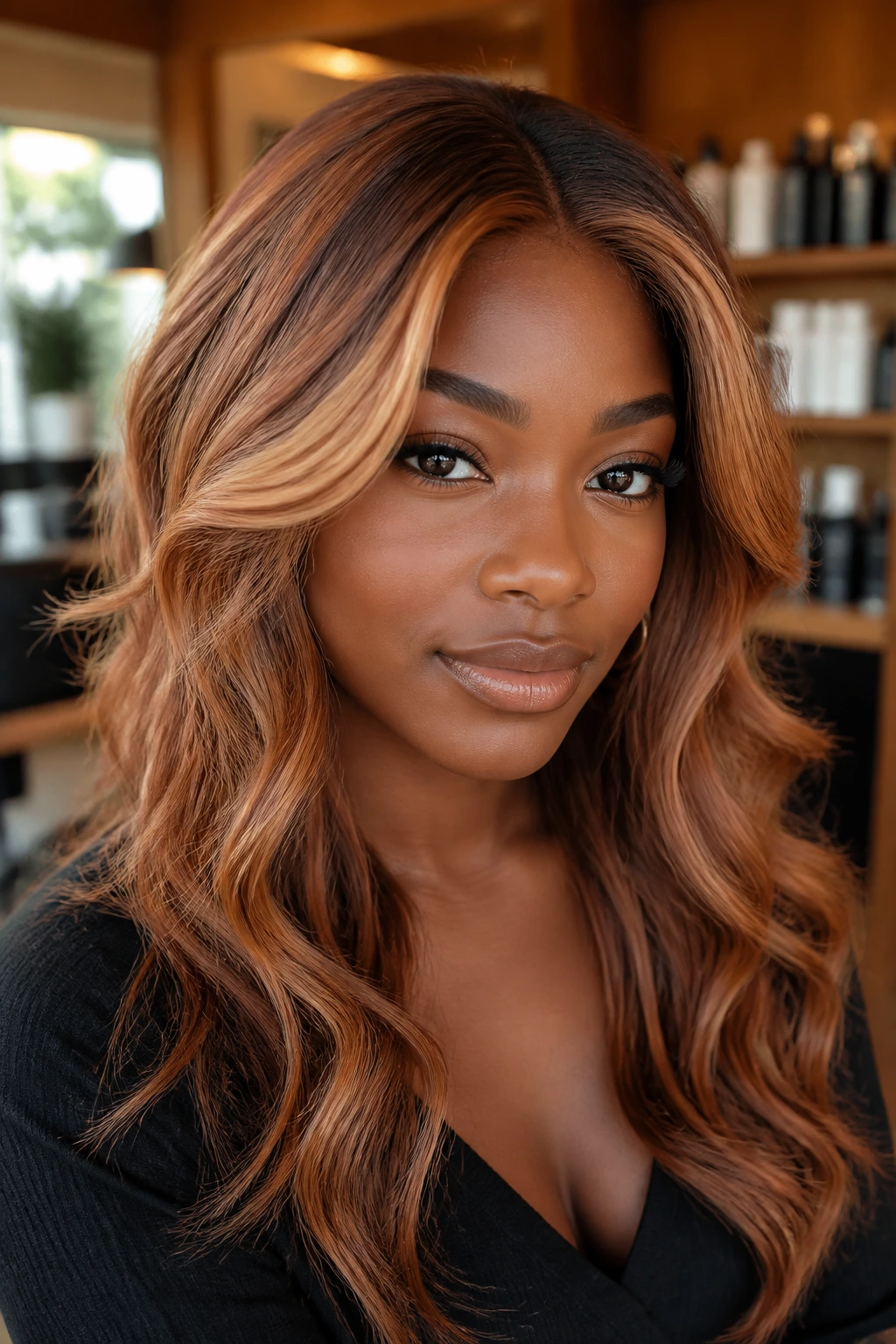
Root depth keeps the color grounded. A shadow root or darker base stops the blonde from floating on top of the hair like a sticker, which is the fastest way to make warm blonde-red hair look awkward on deep skin.
Copper and gold do the flattering. Those tones echo the warmth already present in deep complexions, so the color looks connected to the face instead of sitting beside it.
You can go soft or loud. Some of these ideas are just a gloss and a few ribbons; others need full lightening or bold placement. That range is useful because not everyone wants maintenance that feels like a second job.
Texture changes the read. On curls, coils, waves, and silk presses, the same shade can look completely different. Big, painted pieces show up better on textured hair. Tiny, scattered highlights often disappear.
The salon language matters. Words like balayage, money piece, shadow root, toner, melt, and babylights are not fluff here. They tell a colorist where the brightness should live and how hard the lightening needs to work.
1. Honey Strawberry Balayage
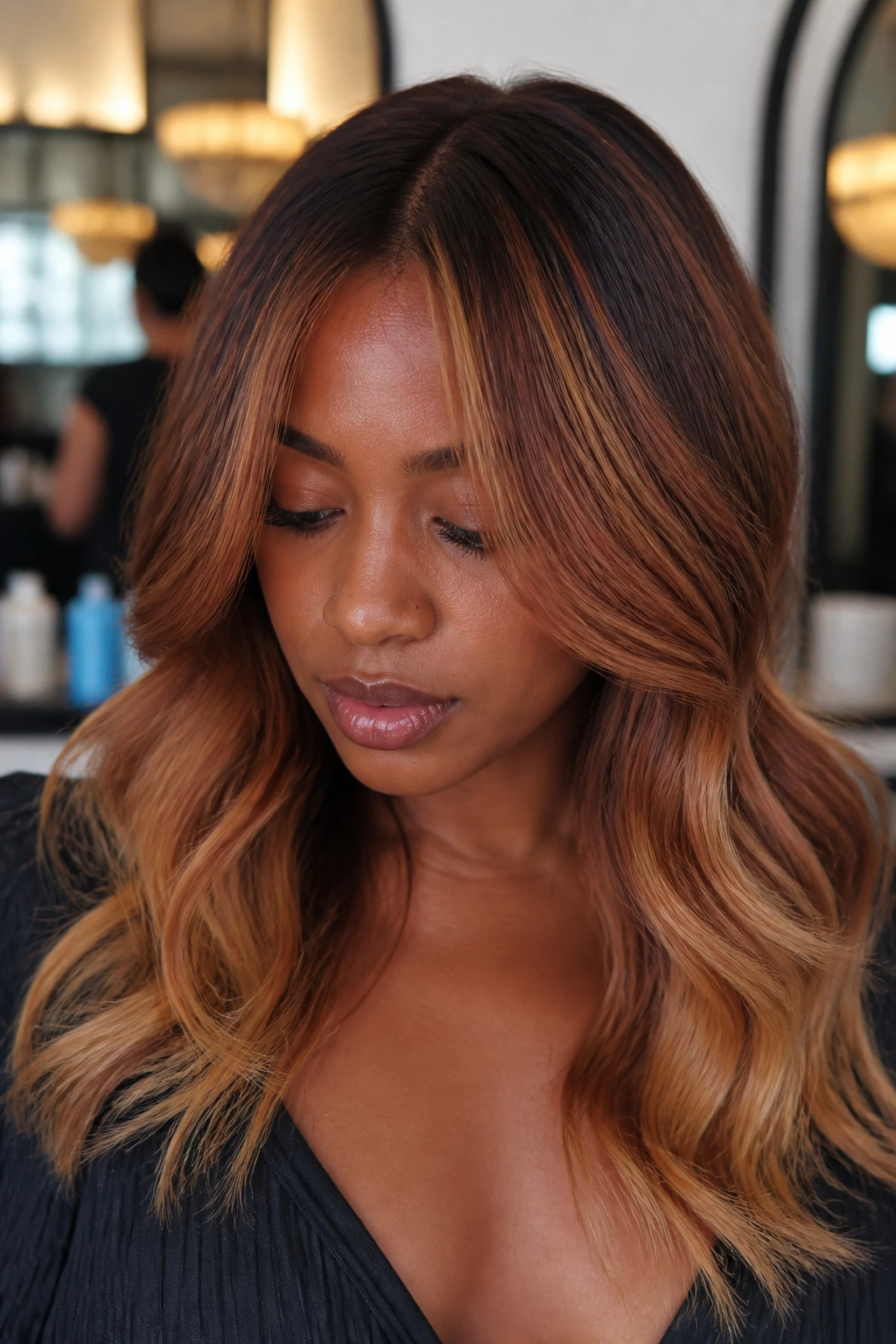
Honey strawberry balayage is warm without tipping into orange. The honey keeps it glossy, the strawberry keeps it from reading plain gold, and the hand-painted placement lets the color move through the hair instead of sitting in strips. On deep skin, that softness makes the face look lit from within rather than over-bleached.
Ask for a dark root with medium-length strawberry ribbons and lighter ends in the level 8 to 9 range. I like this on layered cuts, loose curls, and long blowouts because the color breaks up when the hair swings. It’s one of those shades that looks calm at rest and much richer once the light hits it.
2. Copper Money Piece on Dark Roots
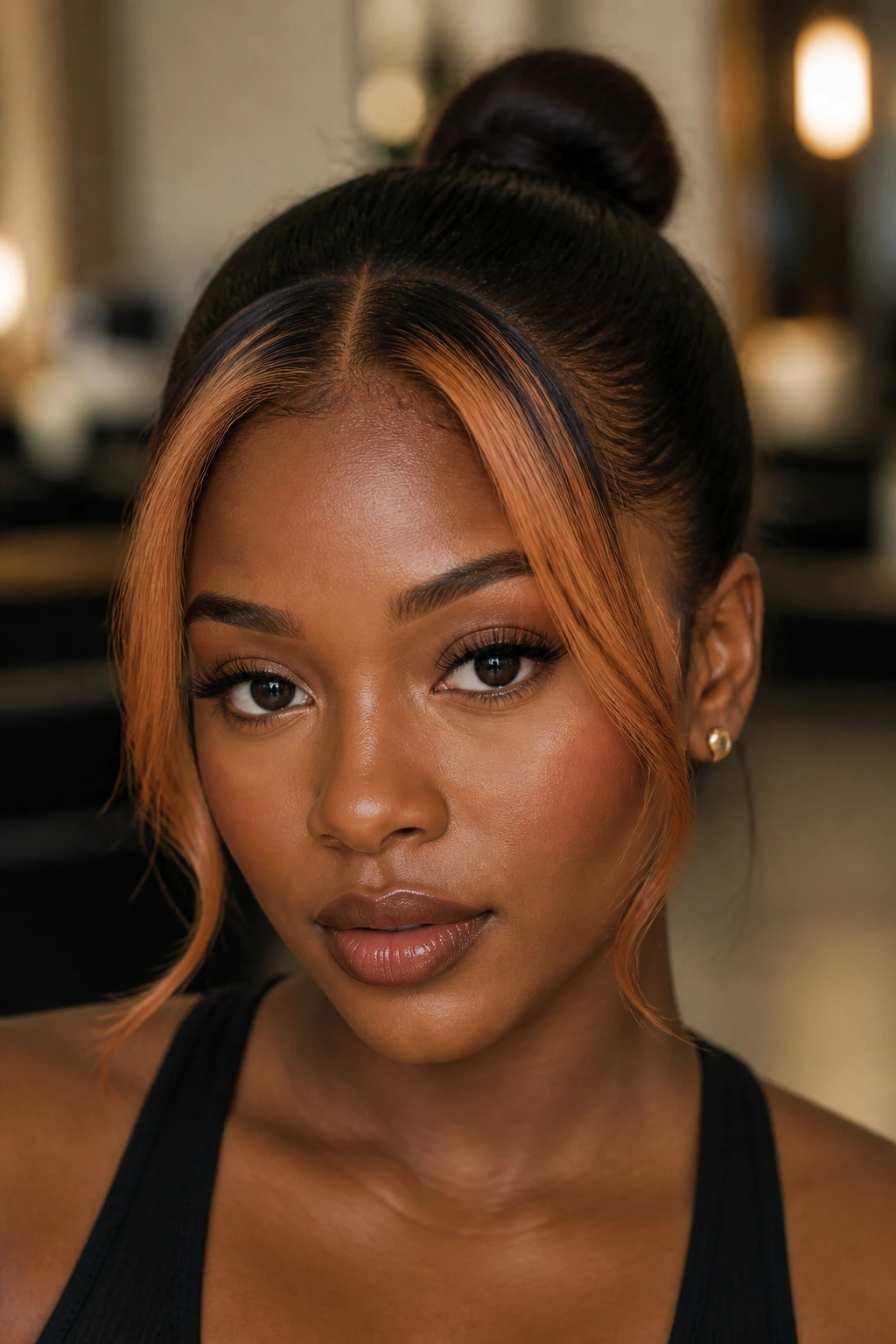
Put bright copper right at the front and leave the rest dark, and the whole look snaps into focus. That’s the appeal here. A copper money piece around deep brown roots gives you contrast without requiring a full-head blonding session, which makes the upkeep easier to live with.
This works best when the face-framing pieces are a shade or two lighter than the mids, not nearly white. Tell your colorist you want the front to read copper-blonde, not neon orange. It’s sharp, especially with a middle part or slick bun. Very little effort. A lot of payoff.
3. Peachy Rose-Gold Lob
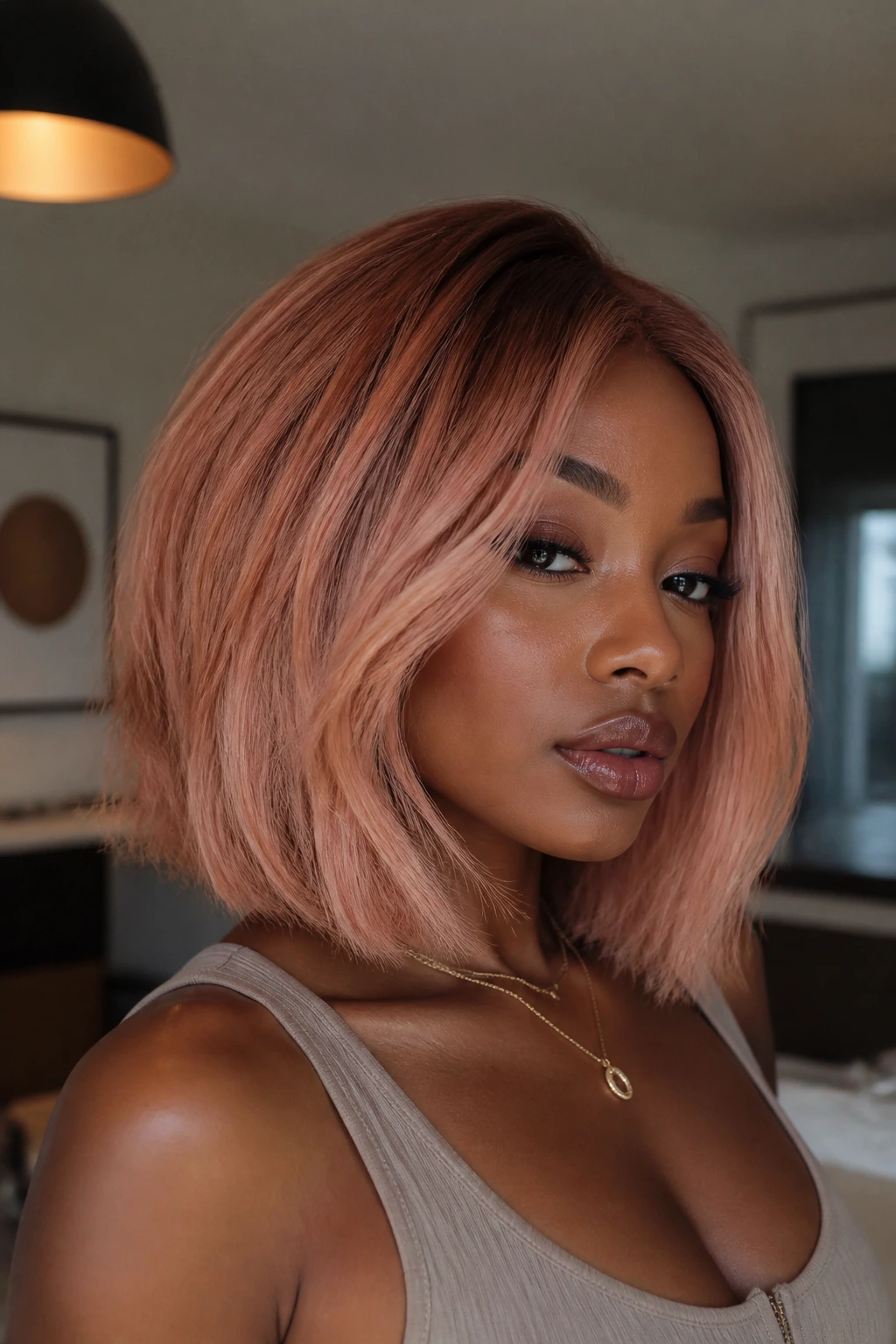
A lob gives peachy rose-gold room to breathe. On a longer bob, the color can shift between peach, champagne, and soft copper depending on the light, which keeps it from feeling flat. Deep skin makes the rosy warmth look intentional, not sugary.
I’d ask for a glossy rose-gold overlay with a touch more brightness through the ends than at the root zone. The cut matters here; a blunt line can make the color feel modern, while soft layers make it read airier. If you want warm color that still feels polished, this is a smart place to start.
4. Apricot Blonde Curls
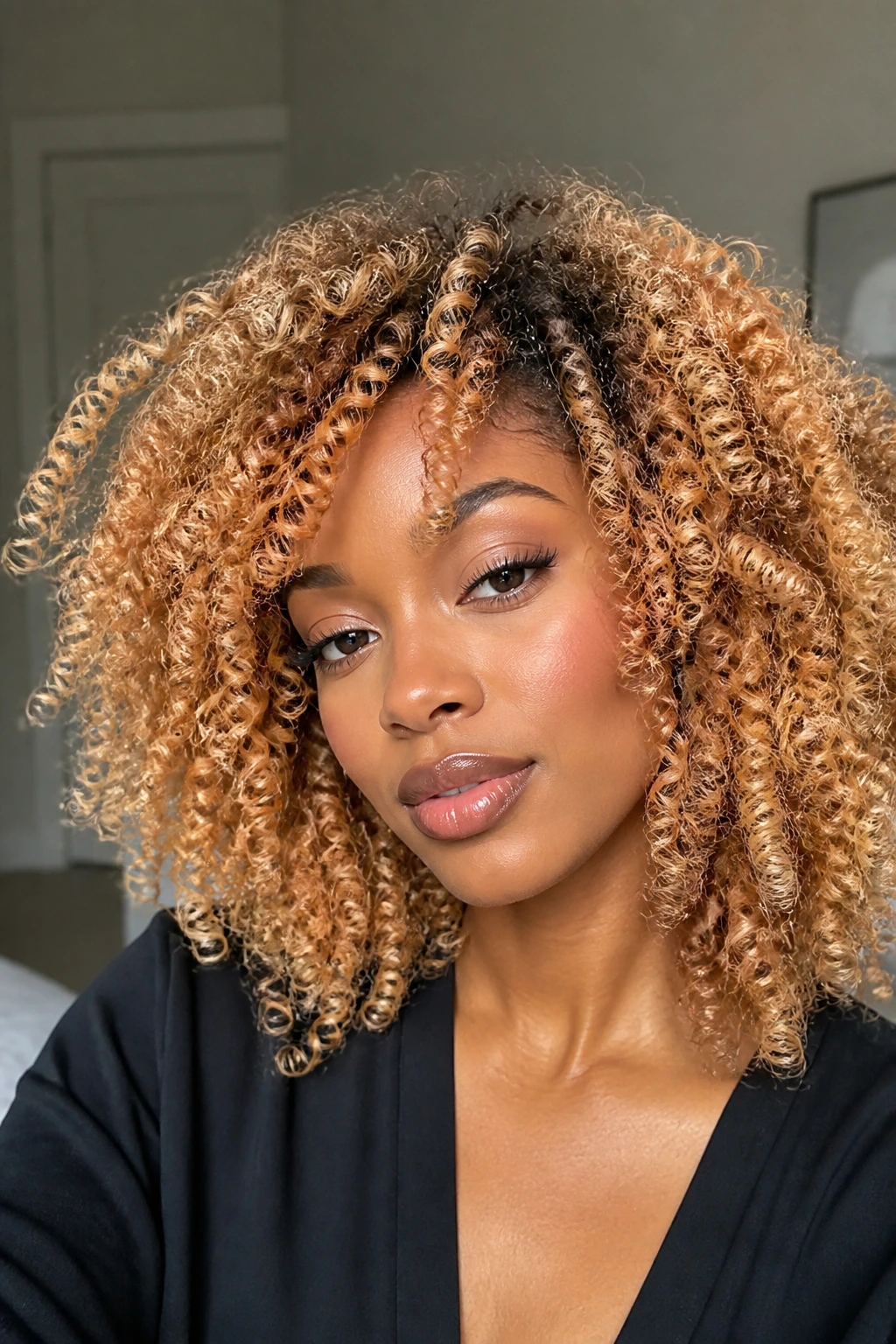
Apricot blonde curls need width. Tiny highlights get swallowed by the curl pattern, but wider painted sections show up beautifully as the hair bends and expands. The apricot note gives the blonde a soft orange-gold warmth that sits well on deep skin without going brassy.
Best for: coily and curly textures that need visible dimension.
Ask for: apricot ribbons painted in thicker sections, plus a soft root shadow.
Why it works: the lighter color lands on the outer curve of the curl, where the eye catches it fastest.
If you wear twist-outs or stretched styles, this one has real movement. The color doesn’t need to be loud to register.
5. Golden Auburn Ribbon Highlights
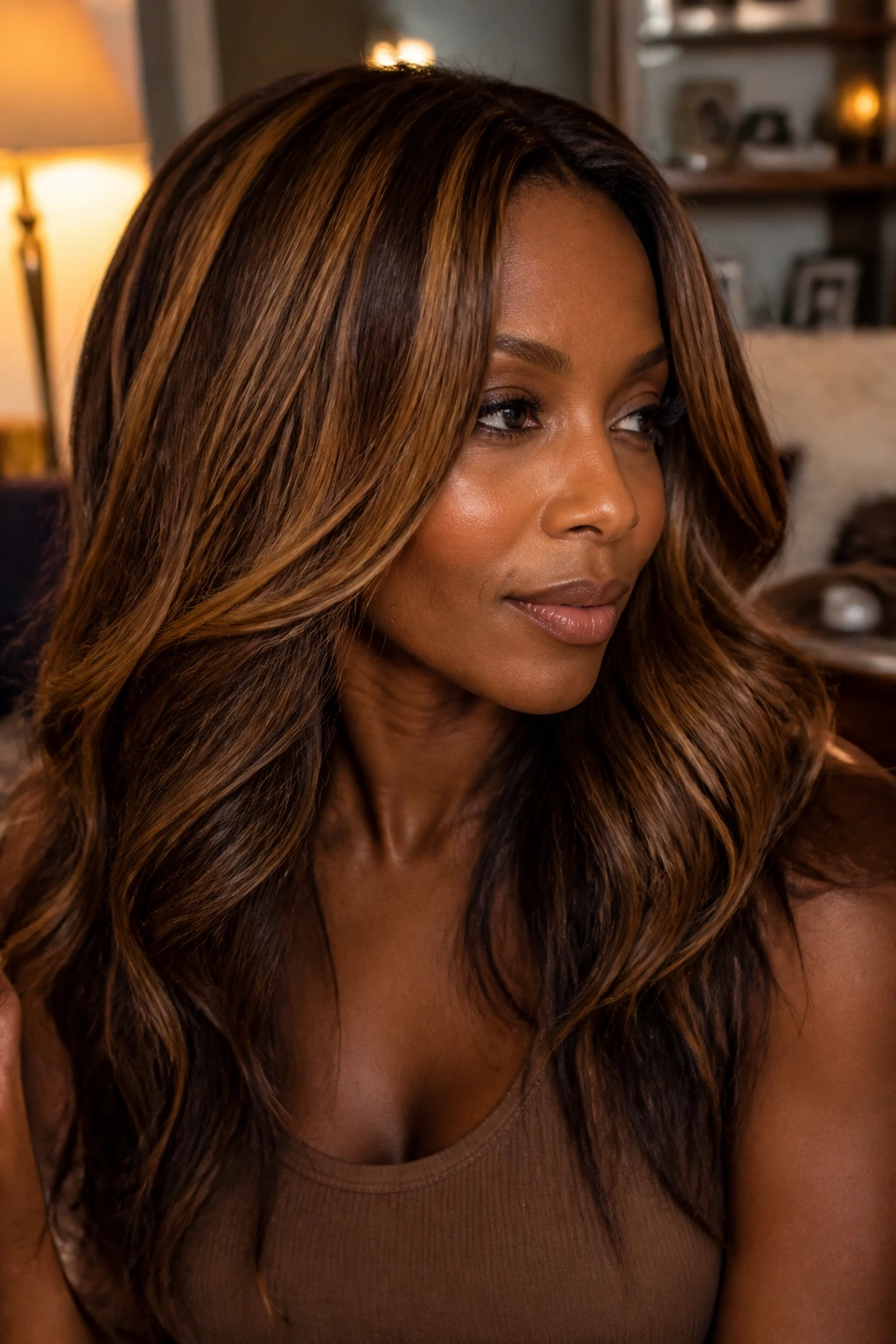
Golden auburn ribbon highlights are a good answer when you want something richer than strawberry blonde and lighter than traditional auburn. The gold keeps the red from feeling heavy, while the ribbons add lift around the crown and mids. On deep skin, that balance is what keeps the shade from looking muddy.
I like this on longer layers because the ribbons can fall in staggered waves instead of one chunky block. Ask for auburn pieces with golden lowlight support, not thin blondes that disappear after two shampoos. It has a classic feel, but not a dated one.
6. Cinnamon Bronze Bob
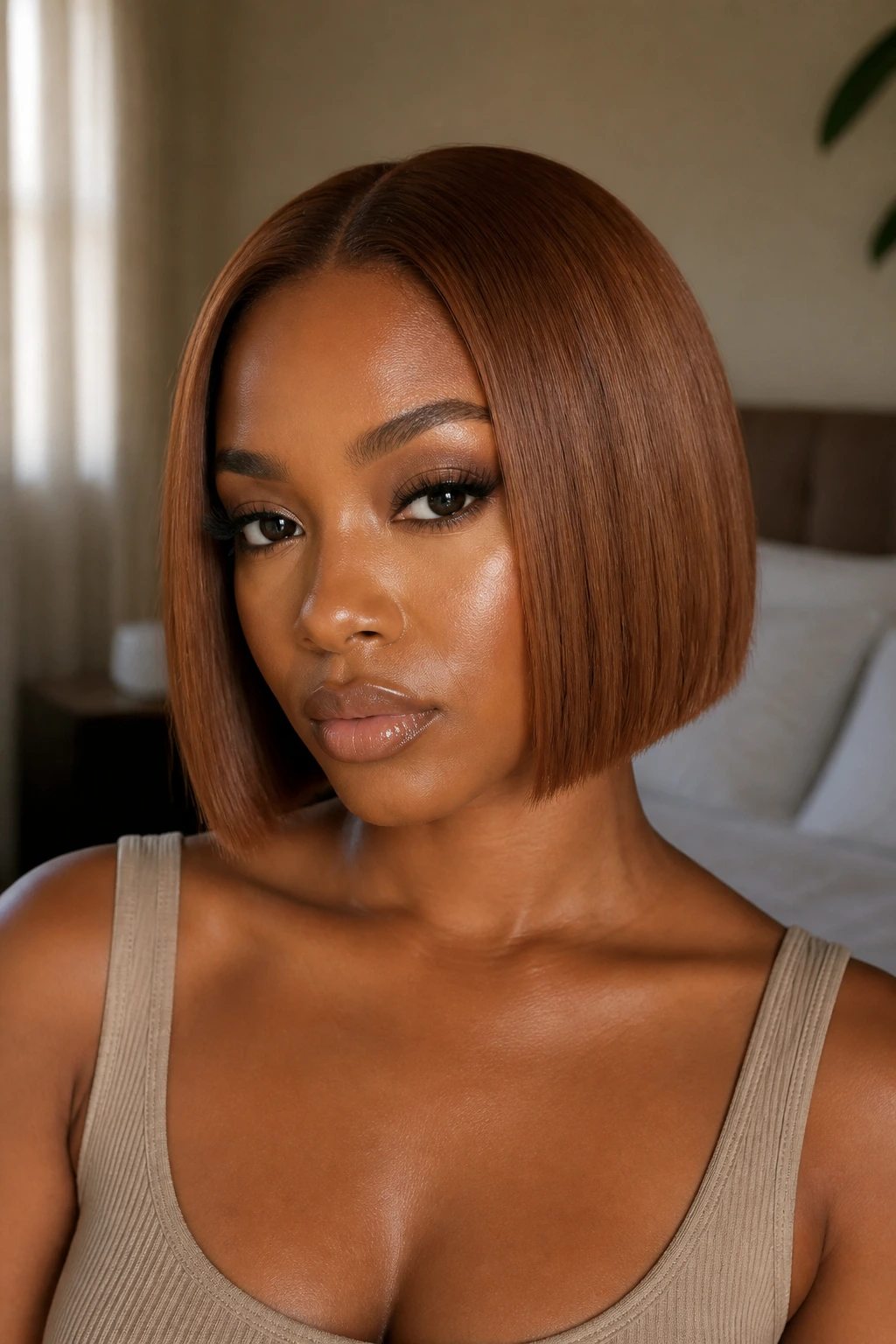
A blunt bob makes cinnamon bronze look sharp. Short hair shows edges, and bronze gives those edges depth without forcing the hair into a high-lift blonde lane. The cinnamon note keeps the tone warm enough to flatter deep complexions, especially if your undertone runs neutral or golden.
This is one of my favorite low-drama color ideas on this list. The bob shape does the heavy lifting, and the bronze glaze keeps the surface glossy. If you want color that reads immediately but doesn’t need huge sections of bleach, this one earns its place.
7. Champagne Copper Blend
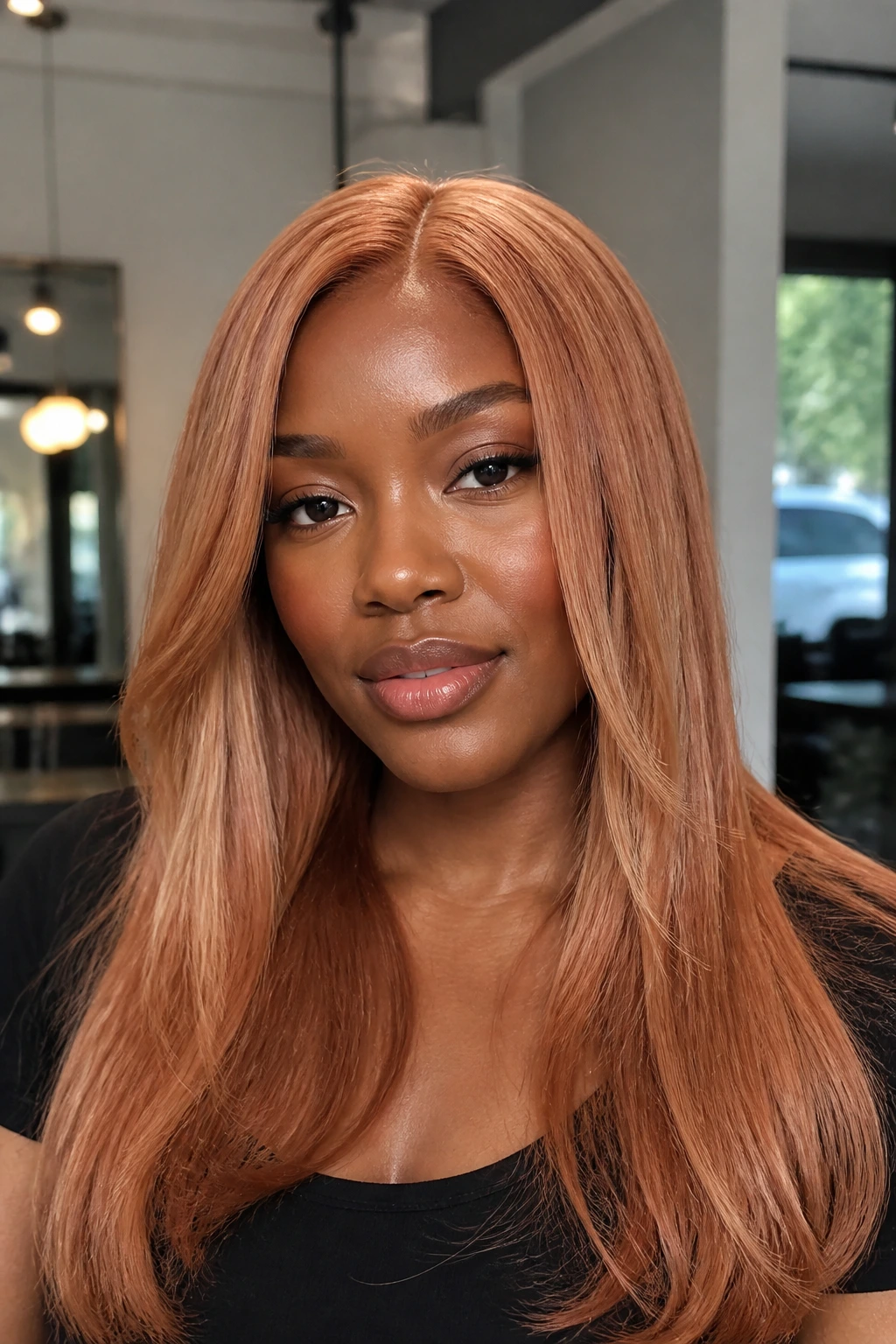
Why do champagne-copper blends work when icy blonde often doesn’t? Because the champagne keeps the finish soft and beige, while the copper gives it warmth and life. The result is lighter than brunette but not so pale that it starts looking chalky beside deep skin.
Tell your colorist you want a beige-copper gloss over lightened mids, with the root kept deeper. This shade is especially good if you like sleek styles, since straight hair shows every tonal shift. It’s bright, but the brightness stays civilized.
8. Peach-Blonde Face Frame
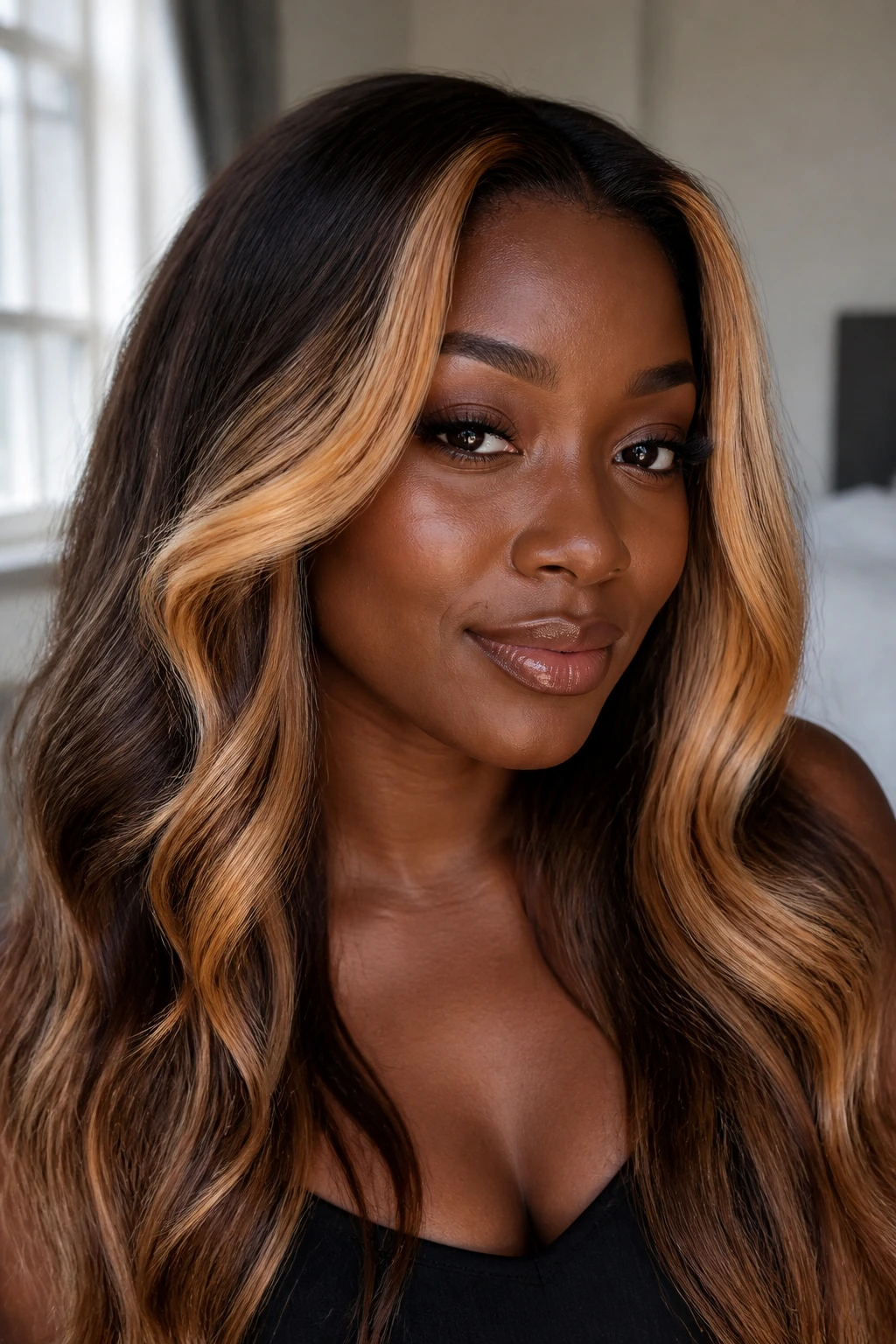
Two peach-blonde face-framing pieces can do more for your look than a full head of highlights if the placement is right. The trick is keeping them thick enough to show up and soft enough to blend into the rest of the hair. On deep skin, that cheekbone-side brightness acts like a built-in spotlight.
I like this if you wear textured hair, because the pieces still show when the curls puff out or the style gets tucked behind the ear. Ask for a little more lift around the face and leave the rest darker. It’s low commitment with a clean visual punch.
9. Amber Toffee Ombré
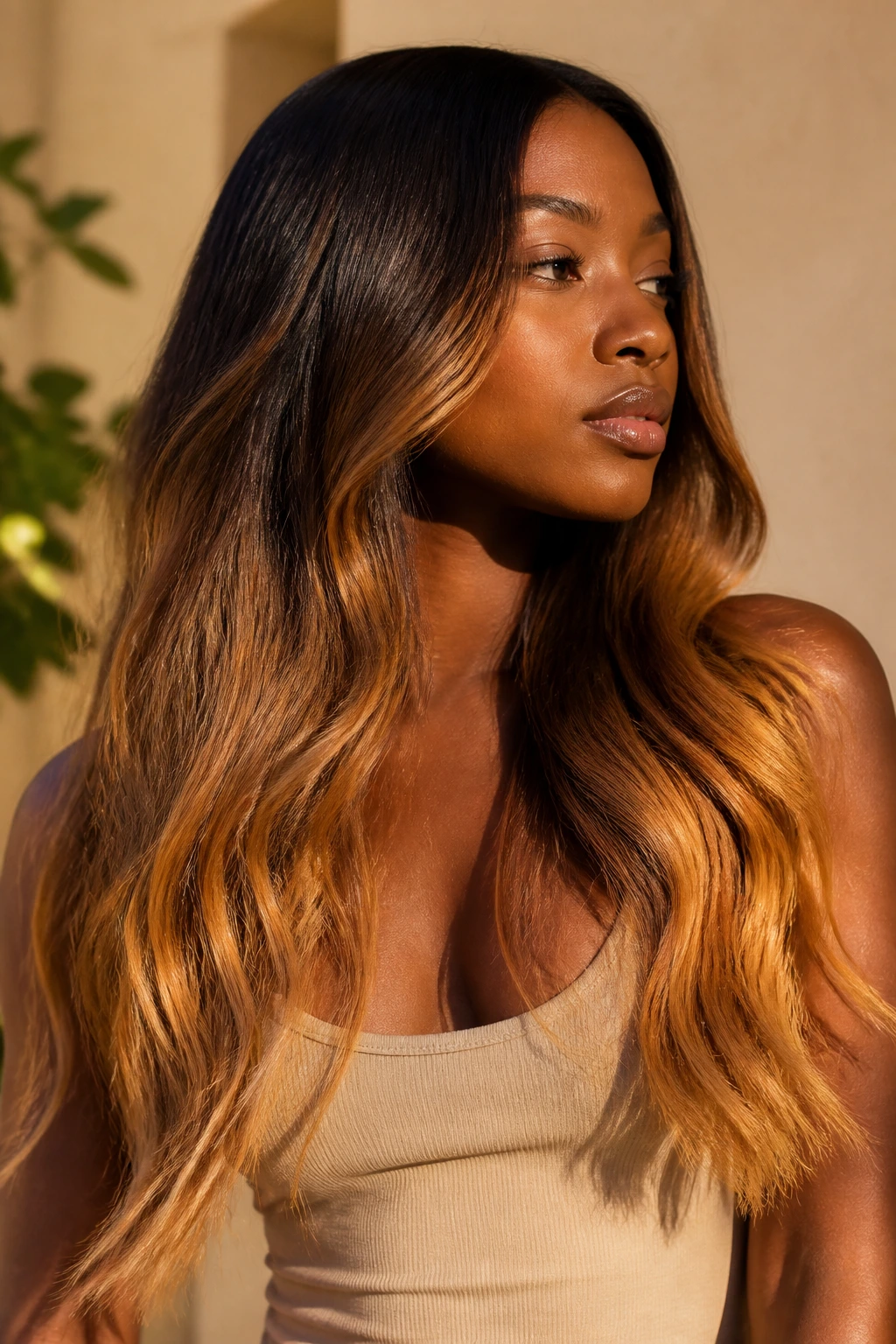
Amber toffee ombré is one of the easiest ways to get blonde-red energy without a fussy root situation. The shade starts darker and richer near the scalp, then eases into amber and toffee through the mids and ends. That long fade keeps deep skin looking framed, not washed.
This one likes long hair, soft waves, or layered curls. Ask for a melt rather than a hard line so the transition stays smooth. If you’re the kind of person who hates obvious grow-out, start here.
10. Sunkissed Gingersnap Layers
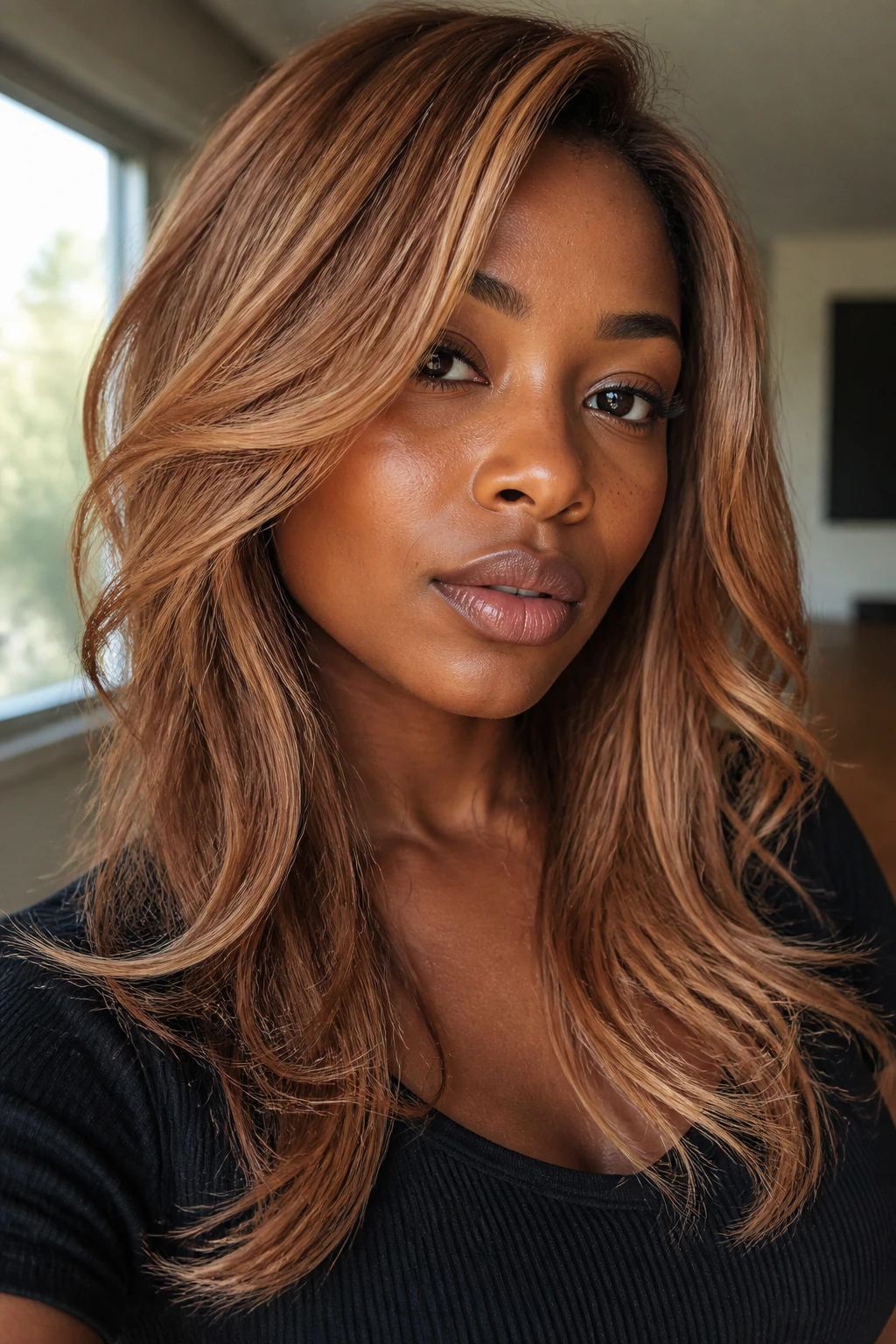
Sunkissed gingersnap layers have that warm, baked spice look that feels cozy without going dark. The color sits between ginger and light brown, with enough gold to keep it lively. On deep skin, it reads as warm, reflective, and just a little playful.
The layered cut matters because the lighter pieces need movement. A single-length cut can make this shade feel too heavy at the bottom. With layers, the color catches in the bends and flicks of the hair. Small change. Big difference.
11. Soft Apricot Afro Puff Highlights
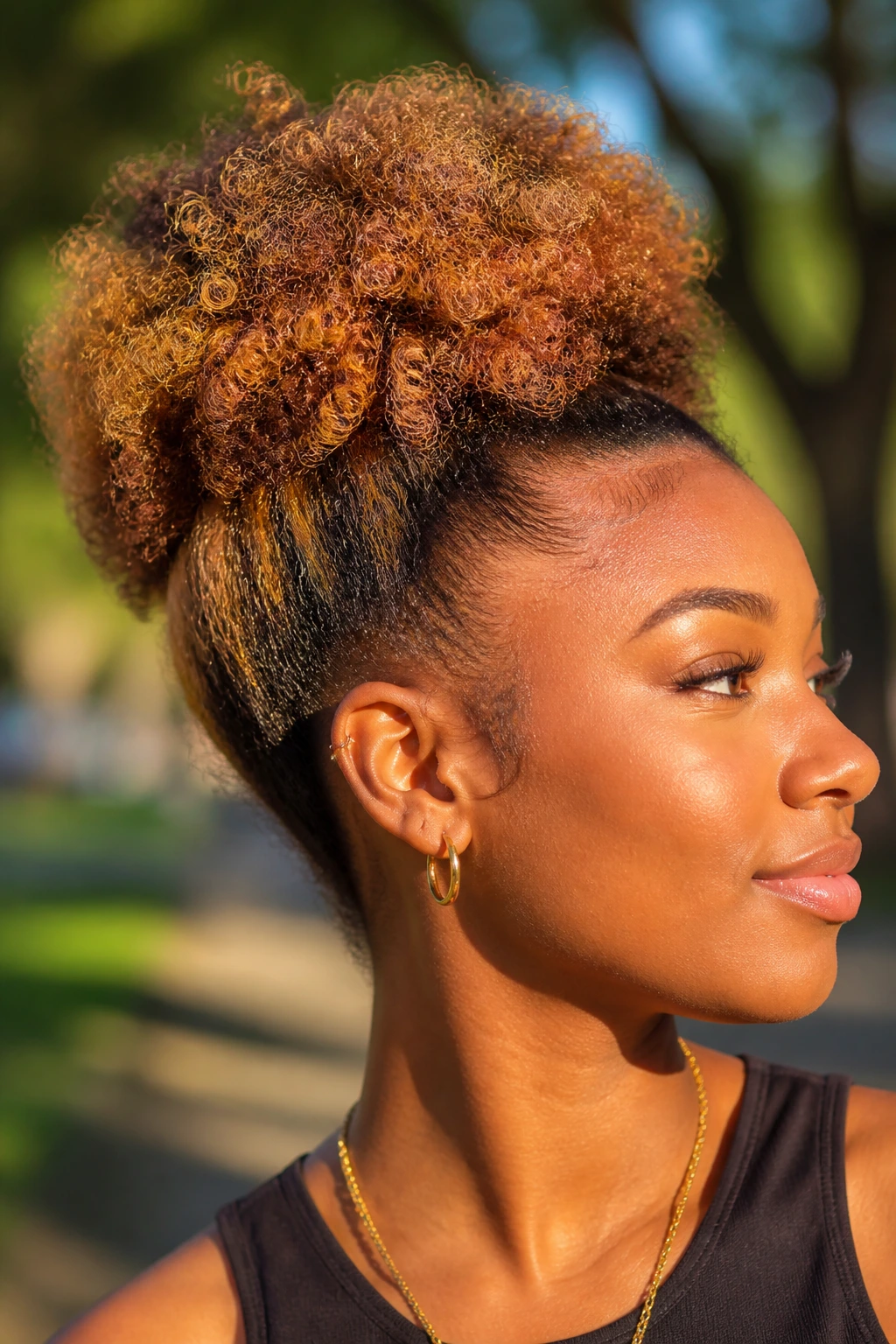
An afro puff is a shape first, color second. That’s why soft apricot highlights work so well here. They brighten the top and side of the puff without breaking the rounded silhouette, and the apricot note keeps the shade warm instead of pastel.
You do not need tiny threads of color here. Wider apricot sections show up better against the fullness of the puff and look richer when the hair is stretched a little. This is the kind of shade that makes texture the main event.
12. Strawberry Bronde Melt
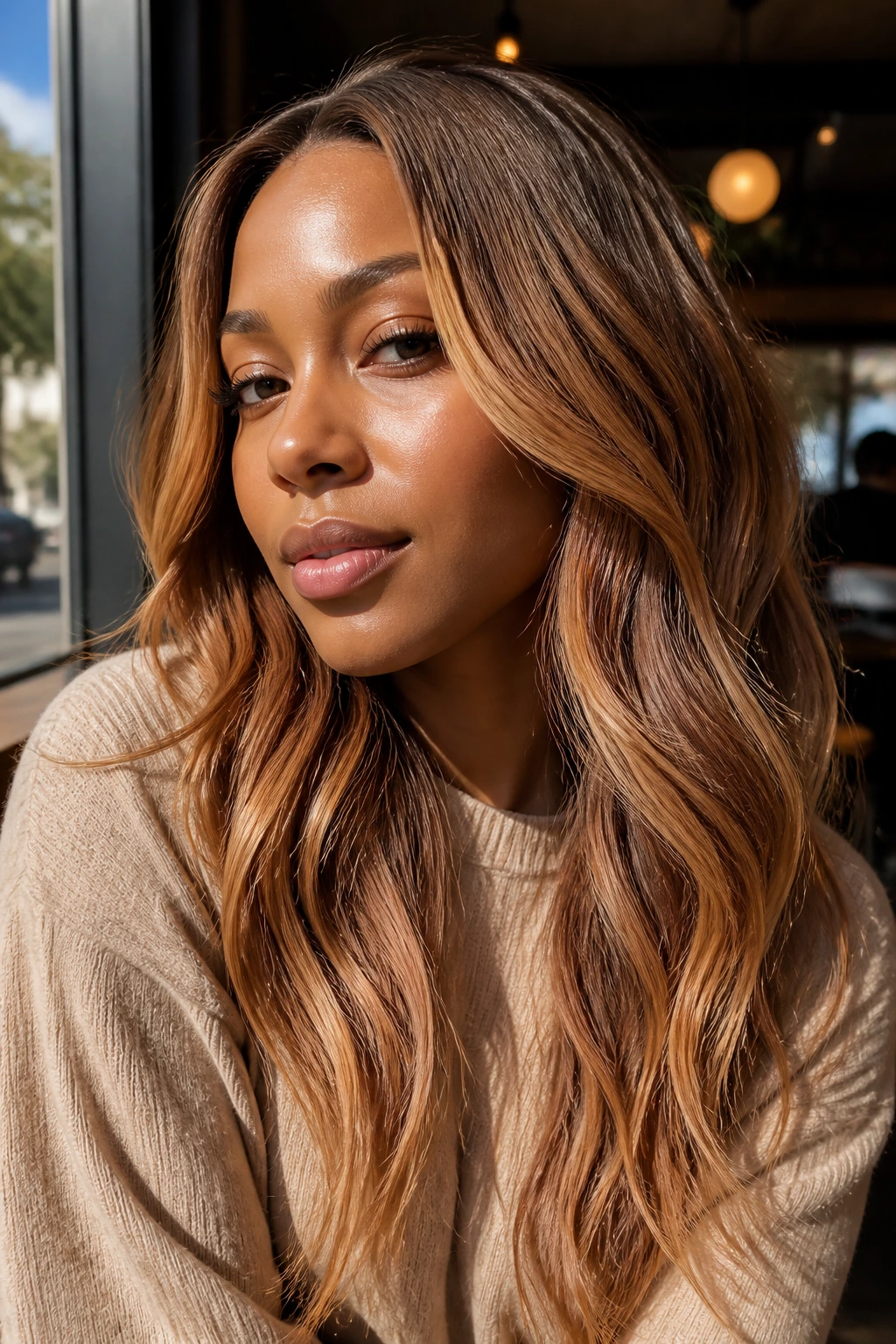
Strawberry bronde is for people who want a bridge, not a jump. The brown keeps the hair grounded, the strawberry adds warmth, and the blonde note lives in the lighter mids and ends. It’s a useful shade on deep skin because it never loses the base entirely.
If you hate harsh contrast, this is a strong pick. Ask for a bronde melt with strawberry warmth folded into the lighter pieces rather than a full copper overlay. It’s softer than red, brighter than brunette, and easier to wear than a full blonde.
13. Desert Rose Lob
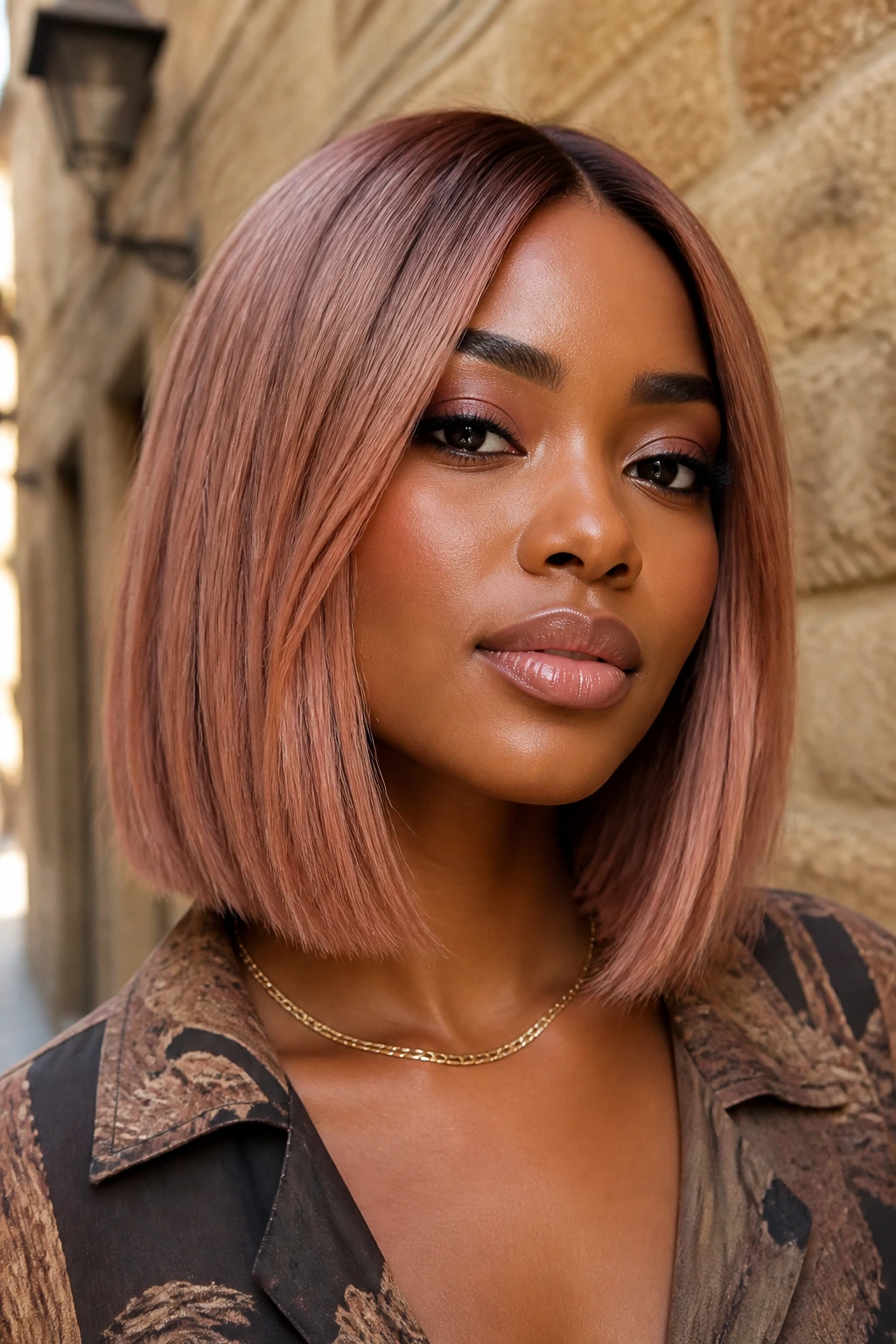
Desert rose sits in that muted space between rosy copper and dusty blonde. On deep skin, the muted quality is what makes it work; the color doesn’t need to shout to look expensive. A lob keeps the tone crisp and stops it from spreading too far down the body of the hair.
This is a clean choice if you like a sleeker finish and less orange in the mix. Ask for a rose-gold gloss with beige support, then keep the root slightly deeper. It’s one of the more polished reads on the list.
14. Burnt Caramel Copper Melt
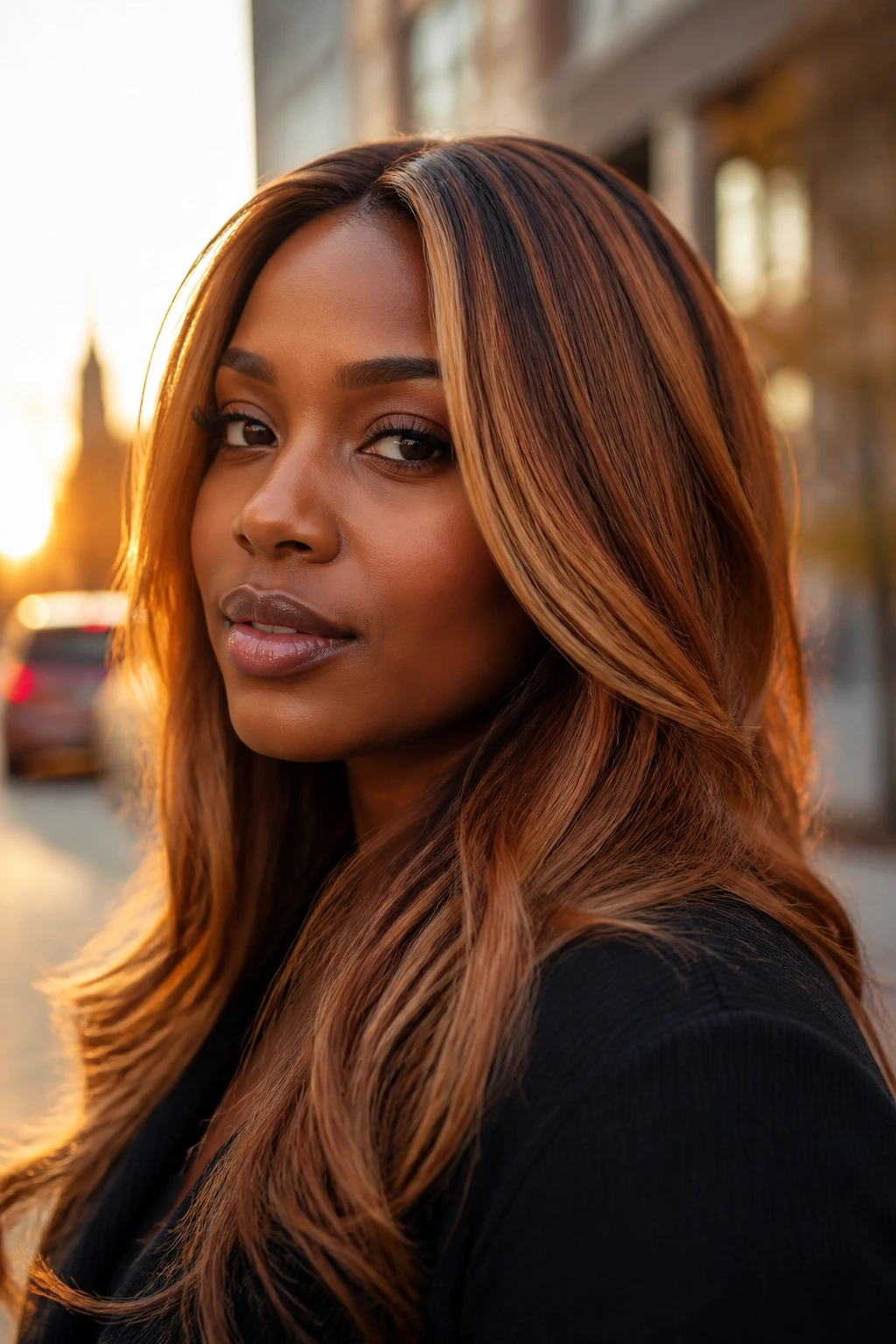
Burnt caramel copper melt is a richer, darker take on the blonde-red family. Instead of chasing brightness, it uses a caramel base and threads in copper where the light can find it. On deep skin, that depth keeps the hair looking full rather than bleached out.
I like this on long hair because the melt can move from root to end without any obvious break. If you want warmth but not a lot of upkeep, this is a safer lane than a lighter strawberry blonde. It’s glossy. That’s the whole game.
15. Honeyed Copper Pixie
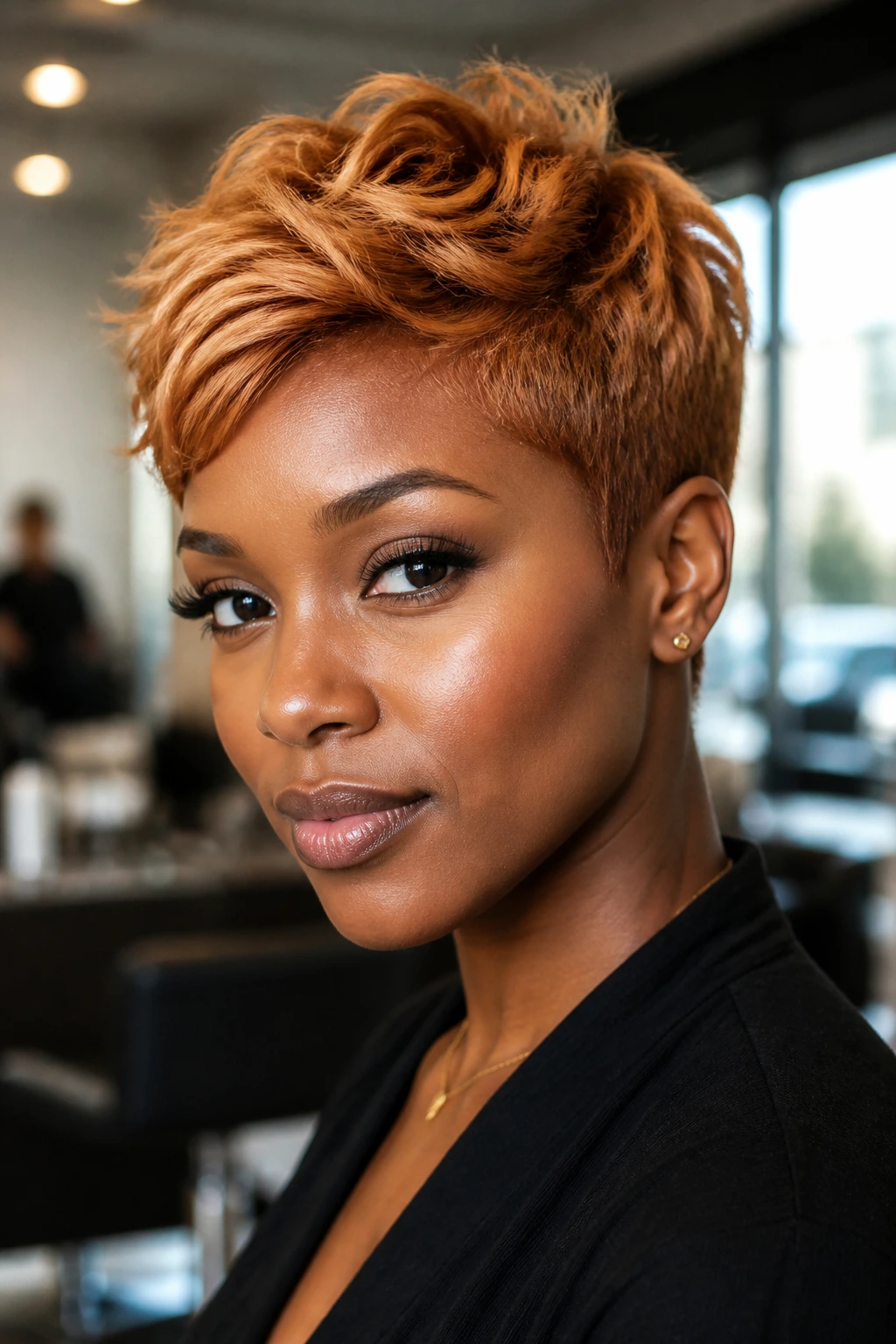
A pixie cut makes color feel direct. Honeyed copper on a cropped cut gives the hair a lot of personality without requiring big sections of lightener. The honey tone softens the copper, which matters when the style is short and every inch is visible.
This is a strong choice if you like a clean neckline and sharp edges. Tell your stylist you want the top slightly lighter than the sides so the shape has lift. Short hair and warm copper are a good pair, especially on deep skin.
16. Rose-Gold Silk Press
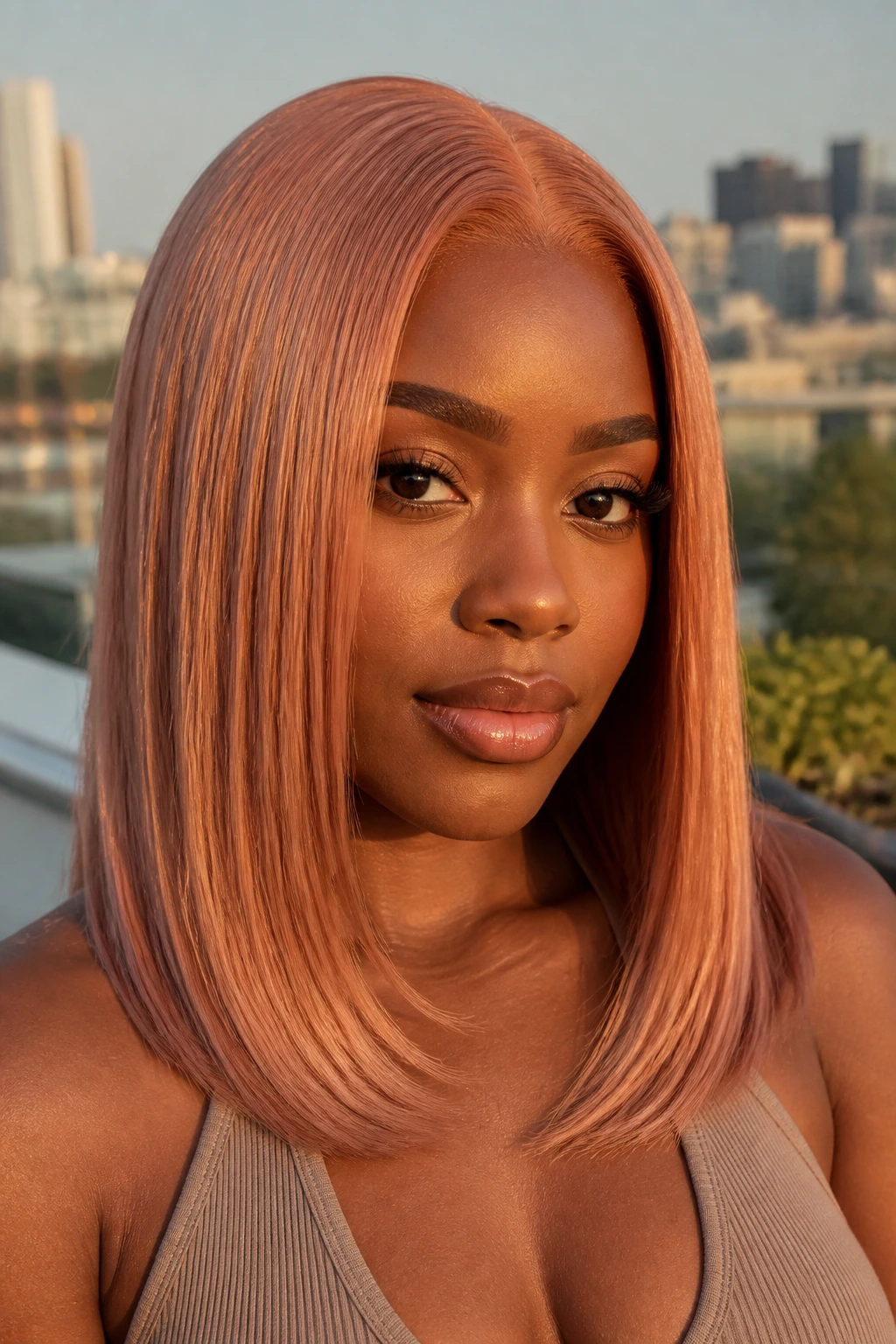
A silk press shows everything, so the tone has to be clean. Rose-gold works here because it looks smooth and reflective rather than stripy. On deep skin, the rose note keeps the blonde from becoming too pale, while the gold gives the press a bright, polished finish.
Heat protection is not optional with this one. If the press is sleek and the ends are healthy, the color looks elegant instead of dry. This is a good choice when you want a glossy finish that can move from workday neat to night-out sharp.
17. Paprika Blonde Peekaboo
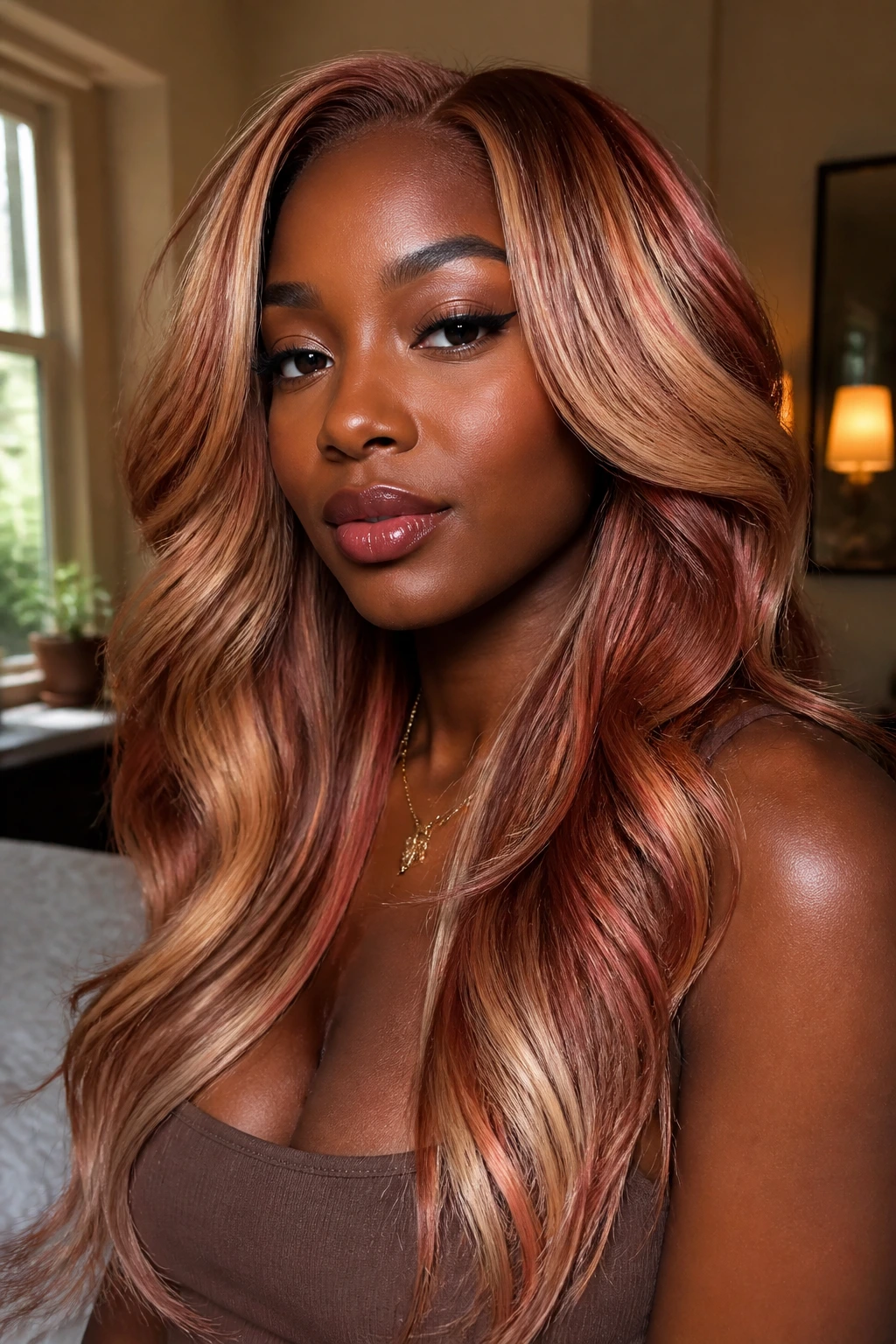
Paprika blonde peekaboo color lives under the top layer, and that hidden placement is part of the charm. The shade flashes when the hair moves, but it stays tucked away when you want a quieter look. Deep skin gives the paprika warmth a strong backdrop, so the lighter pieces pop without taking over.
This is a nice option if you need a more conservative surface color. Ask for hidden panels beneath the crown or around the nape, then keep the top deeper. It’s a good compromise when you want fun color and a stable grow-out.
18. Coral-Tinted Babylights
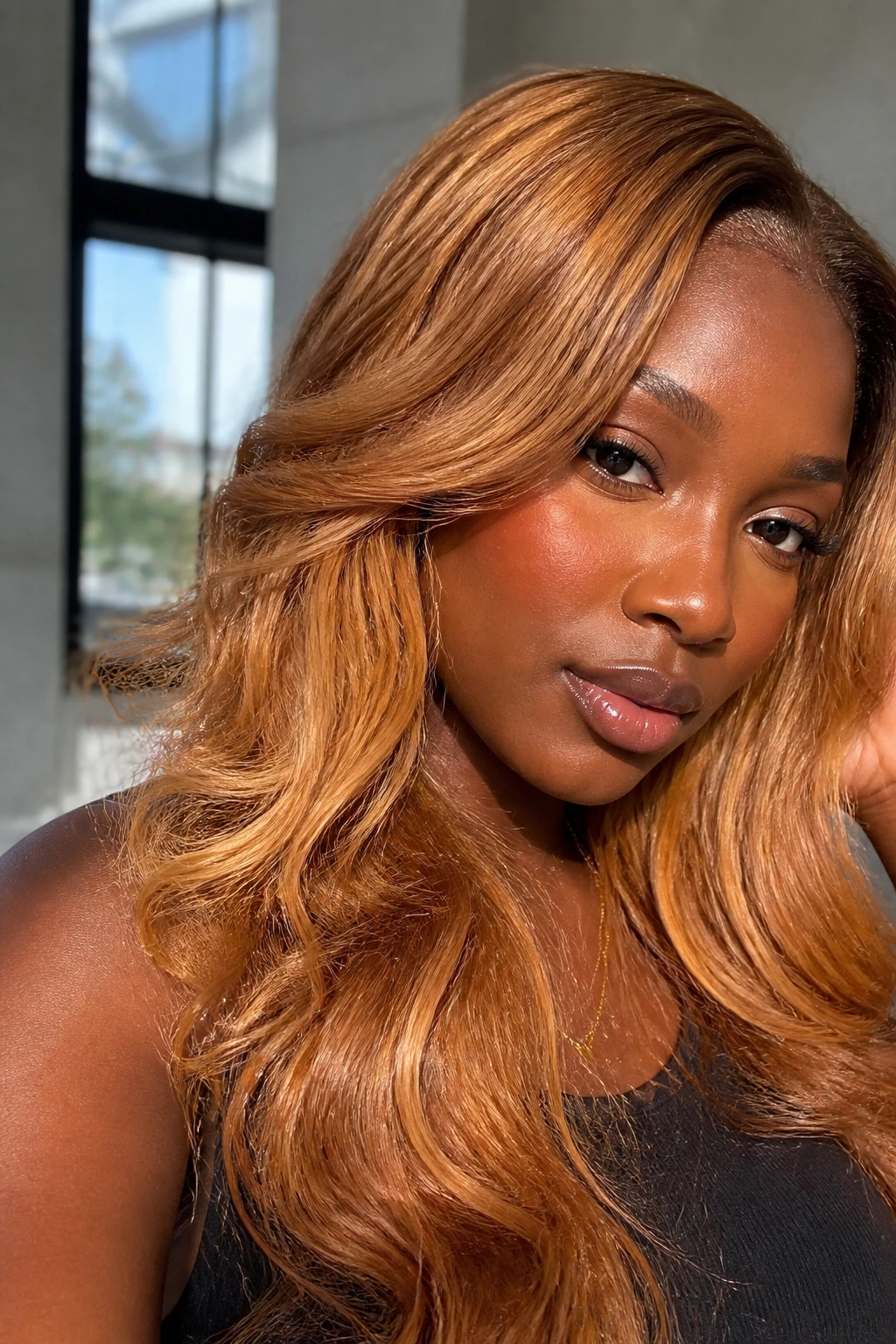
Babylights only work when they’re fine enough to look like shimmer instead of stripes. Coral-tinted babylights do that well. The soft coral warms the blonde, and the tiny placement creates a gentle glow over deep skin rather than a loud patchwork effect.
This is the most delicate look so far, and that’s why I like it. It suits people who want movement and reflection more than obvious color blocks. On curls, the tiny pieces catch around the edges of each bend and read like natural sunlight.
19. Tangerine Toast Balayage
Tangerine toast balayage is for the person who wants the warm side of blonde-red to show up from across the room. The orange-gold note is brighter than apricot and less sweet than strawberry. On deep skin, that high warmth reads intentional as long as the root stays anchored.
I’d ask for a rooted balayage with the brightest pieces around the face and through the top layers. The ends can carry more lightness than the mids, but don’t let the whole head drift into one flat orange band. This is color with a bit of attitude.
20. Cinnamon Honey Curls
Cinnamon honey curls are soft, dimensional, and easier on the eye than a true copper blast. The cinnamon keeps the warmth rich, while the honey lifts the curl pattern so the hair doesn’t disappear into the background. It’s especially good on medium to thick curls that need a little extra visual movement.
Best on: defined curl sets, wash-and-go styles, and layered cuts.
Ask for: warm cinnamon lowlights with honey-toned highlights painted in broader sections.
Why it works: curls reflect the lighter pieces at different angles, which makes the color look deeper than it really is.
This one feels lived-in from day one.
21. Bronze Strawberry Waves
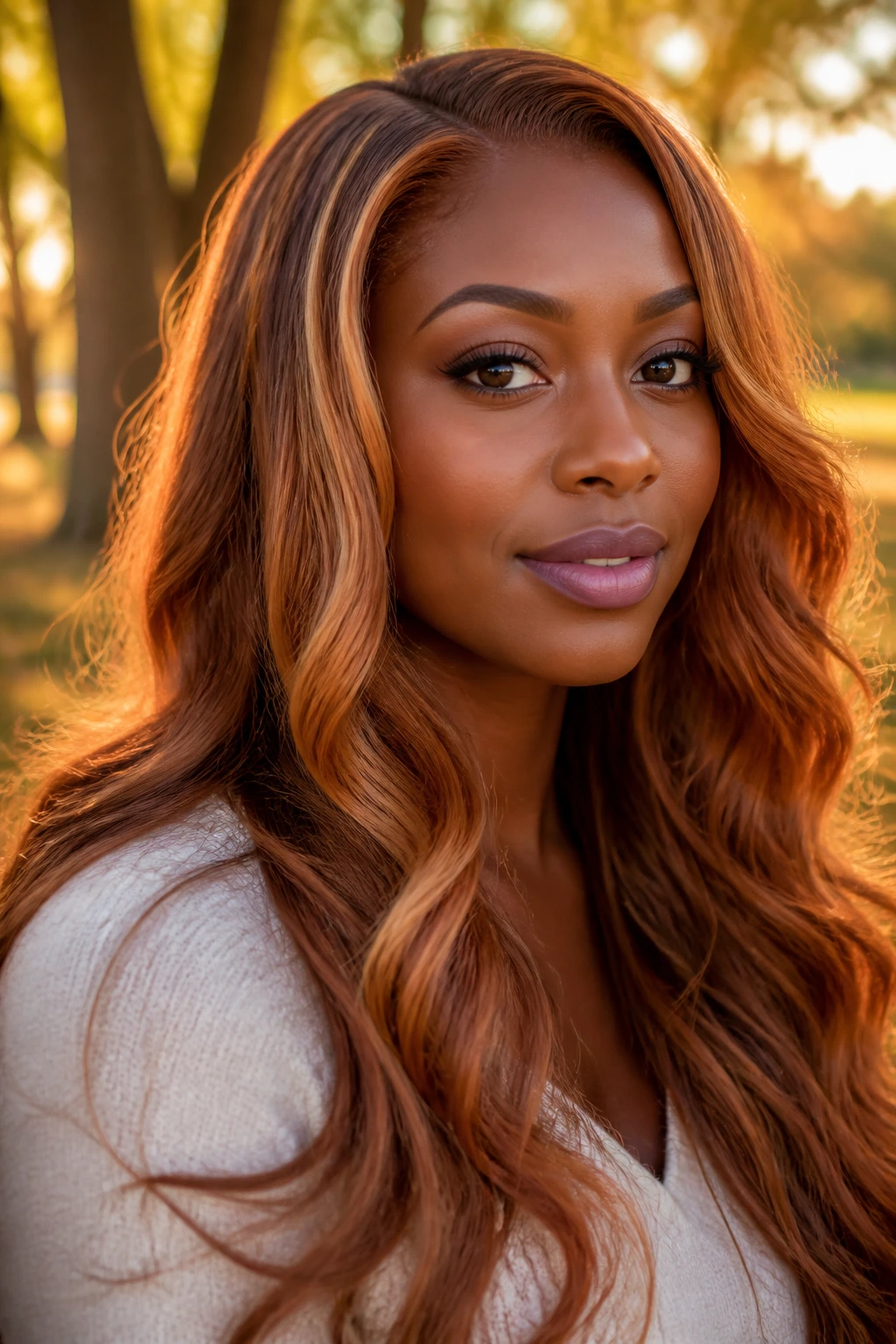
Bronze strawberry waves are a subtler sibling to classic strawberry blonde. Bronze gives the hair body, strawberry gives it warmth, and the waves make the entire mix look fluid instead of stamped on. On deep skin, bronze helps the lighter tones stay rooted in something richer.
I’d choose this if you want the blonde-red family but don’t want a bright, youthful red. There’s a softness to it that works well on long layers and side-swept styling. It looks grown-up without turning stiff.
22. Mahogany Champagne Blend
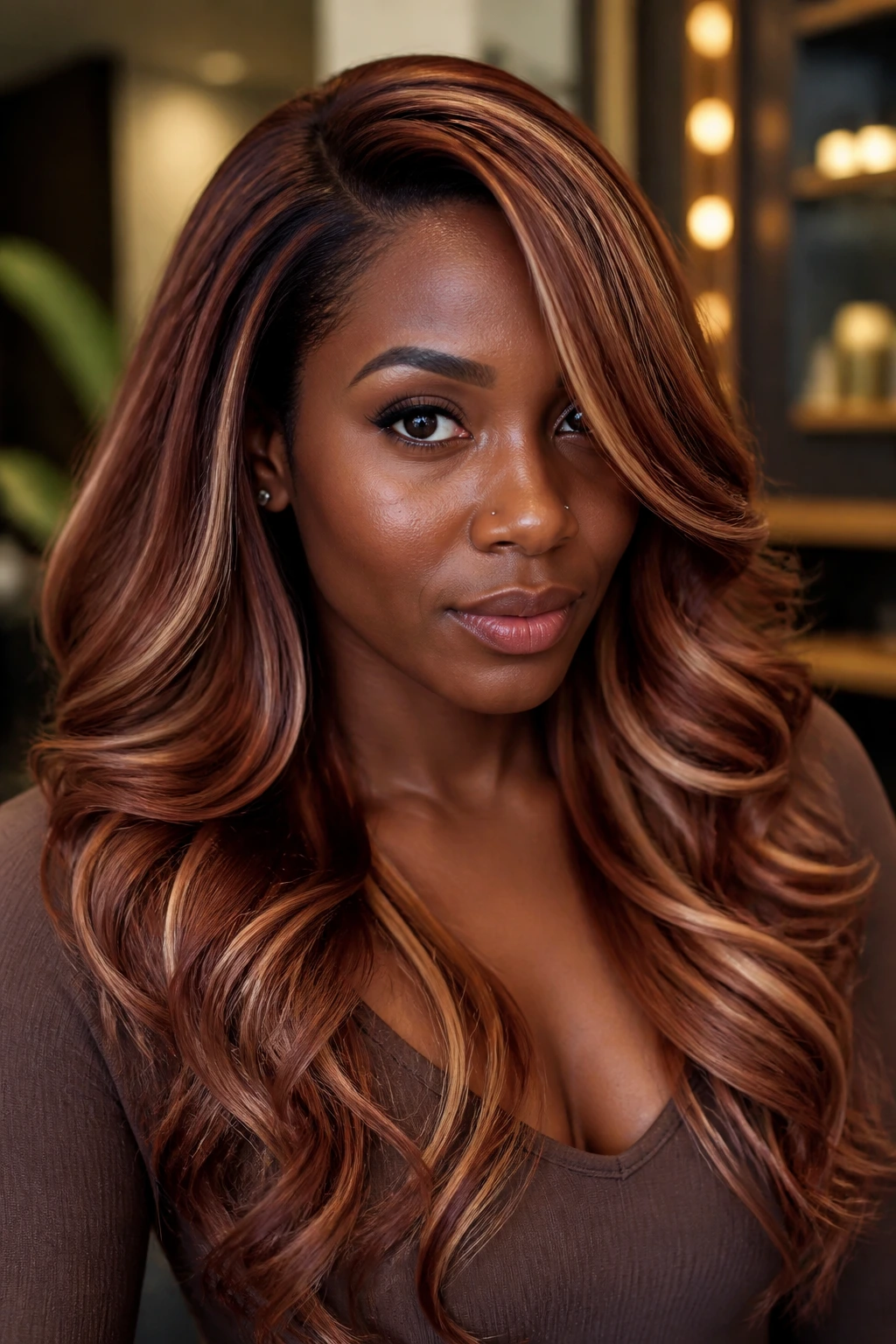
Mahogany and champagne sound like a strange pair until you see them together. The mahogany keeps the base deep and plush, while the champagne lightens the mids just enough to catch the eye. That contrast flatters deep skin because the lighter pieces are framed by color instead of sitting alone.
This blend works well when you want something elegant and not too sugary. Ask for a mahogany base with champagne ribbons rather than a full blonde lift. The result is rich, reflective, and easier to wear than a brighter golden shade.
23. Peach Copper Shag
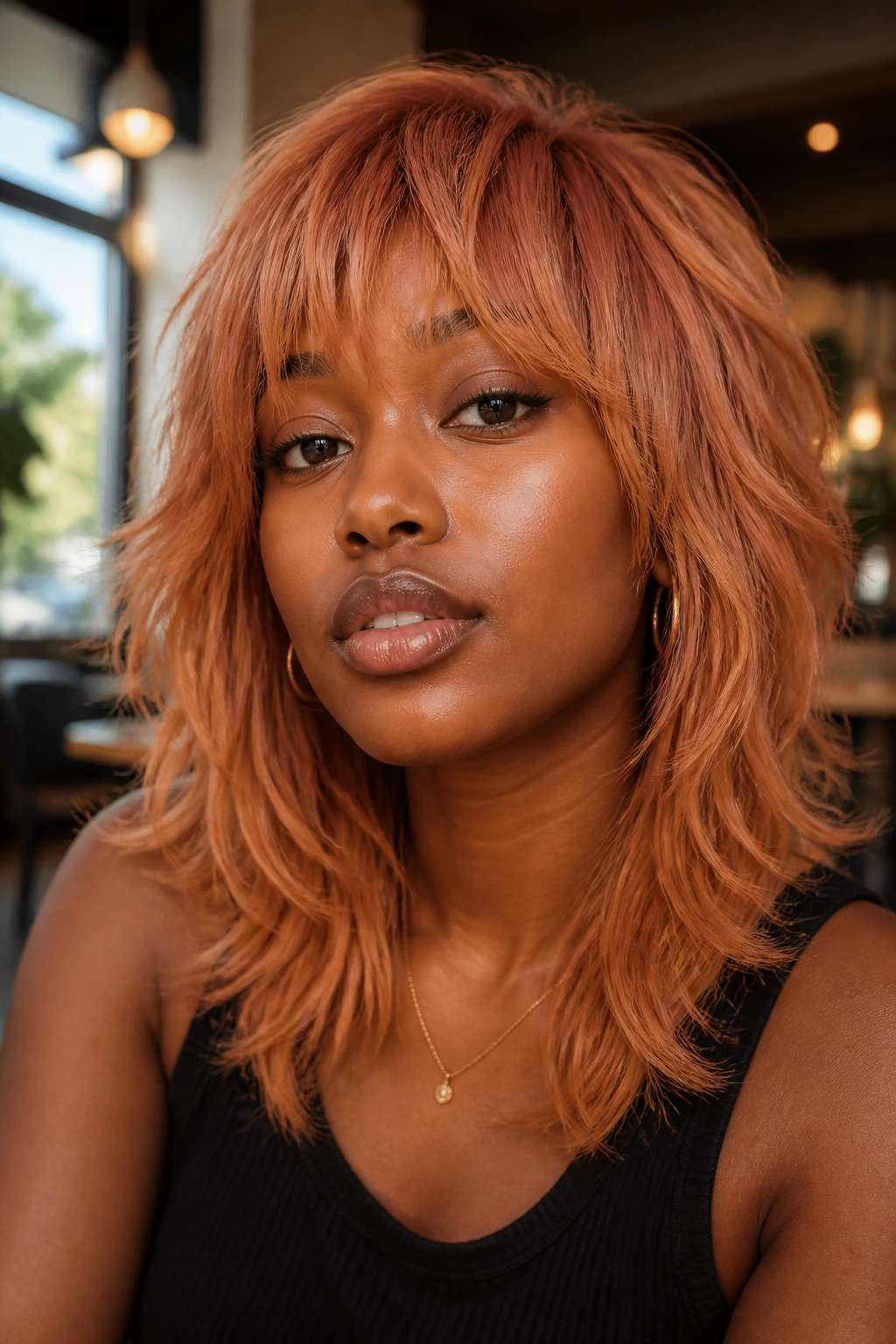
A shag cut loves movement, and peach copper gives it a tone that moves with it. The lighter pieces sit well around the fringe and layers, where the cut already creates separation. On deep skin, peach copper reads energetic without looking cartoonish.
If your hair naturally falls into loose waves, this is one of the more interesting options on the list. Ask for a soft root and brighter ends so the layers have contrast. The shag does not need much else. It already has attitude.
24. Golden Saffron Highlights
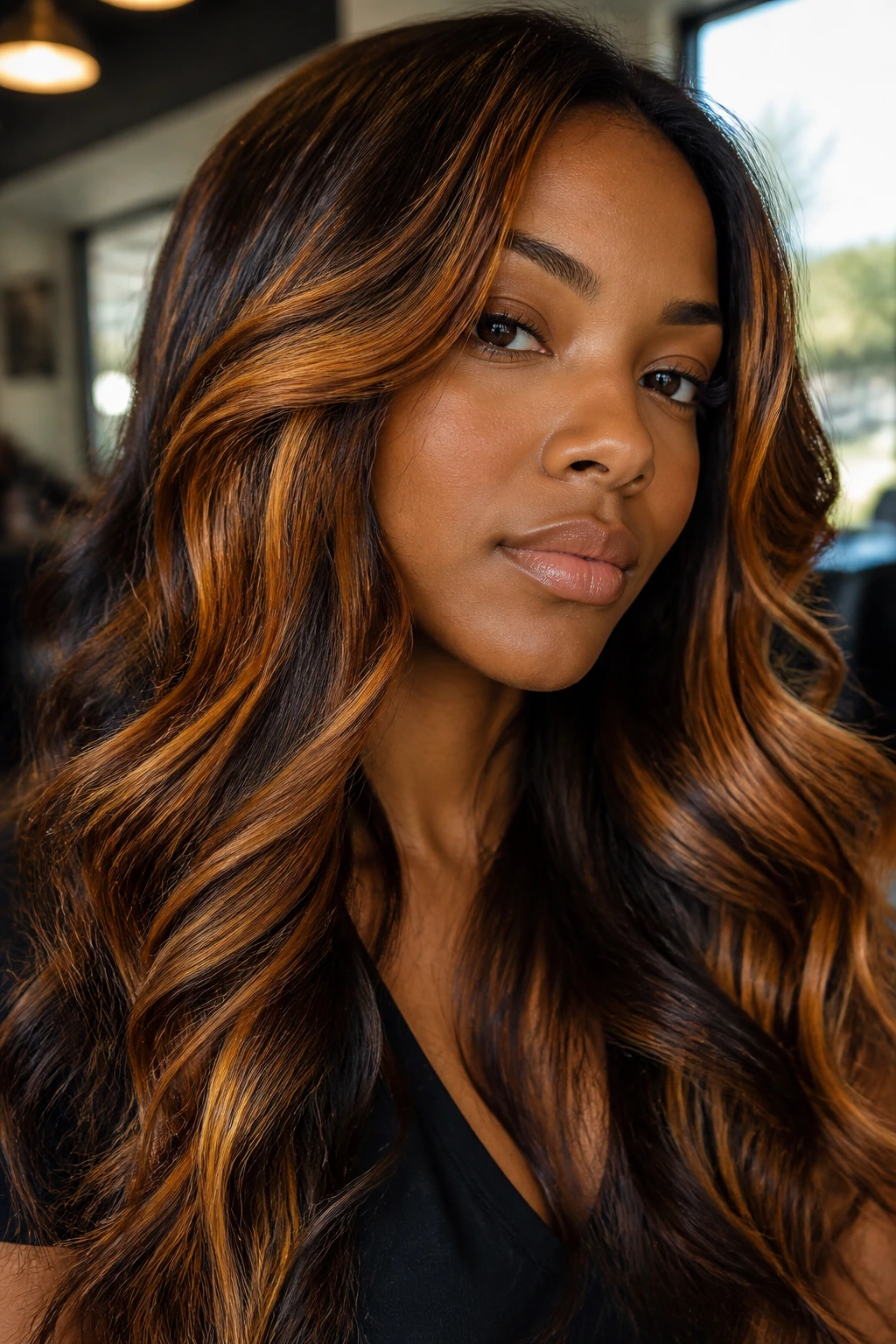
Golden saffron highlights sit in that spice jar zone between gold and amber. The color is warm, clear, and a touch exotic in the plain sense of the word — it has character. On deep skin, it gives brightness without the icy edge that can make lighter shades look unfinished.
This is a shade I like on dark brunettes who want light but not a total transformation. Keep the highlights broad enough to see, but not so many that the hair becomes busy. A few clear saffron streaks can do more than a full field of tiny foils.
25. Rusted Rose Ombré
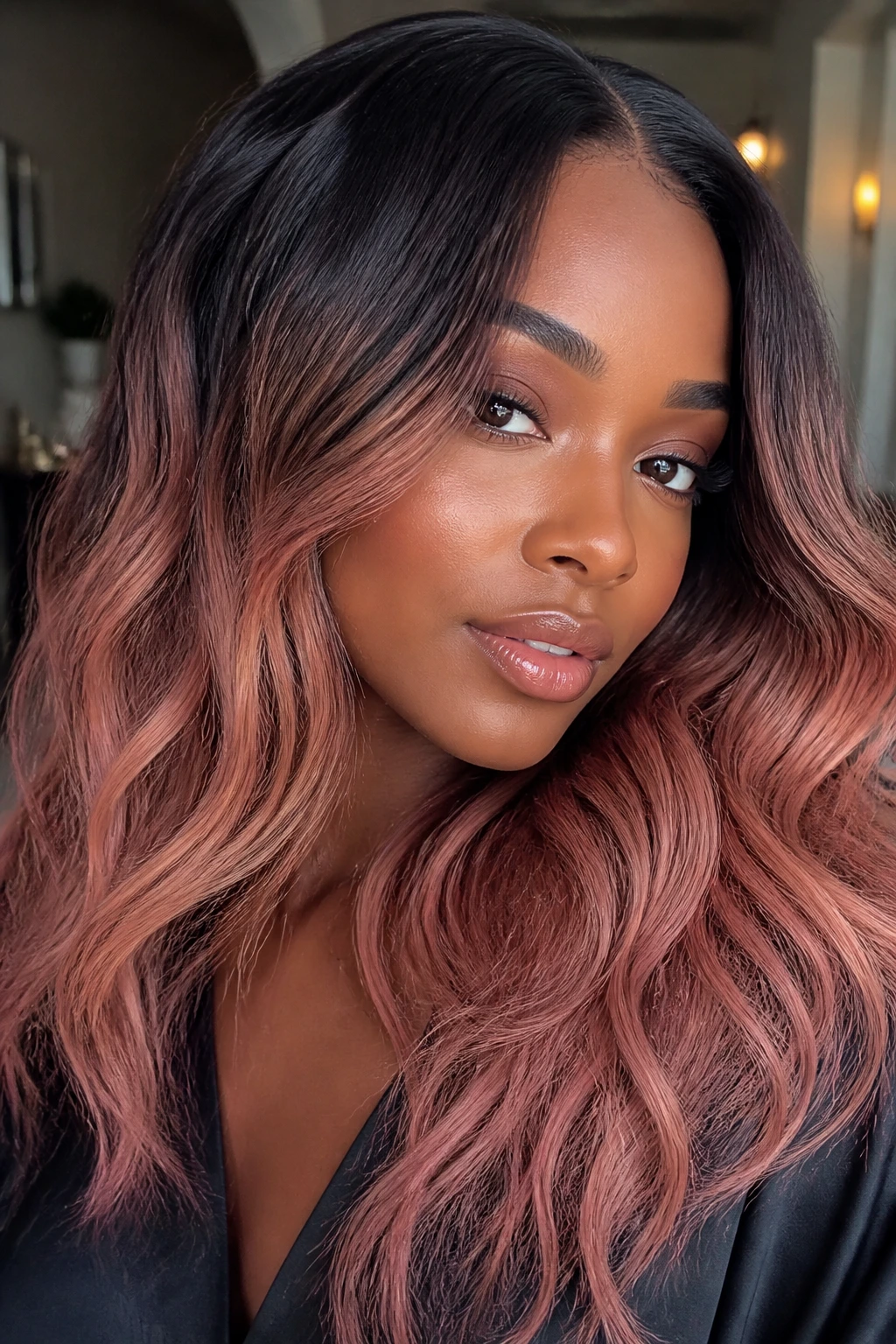
Rusted rose ombré leans moodier than strawberry blonde and more muted than coral. That rust note makes the color feel grounded, while the rose keeps it from reading flat. On deep skin, the darker transition near the roots is what makes this feel wearable instead of washed.
It’s a good fit if you prefer color that softens over time and still looks deliberate. Ask for a gentle fade from dark root to rose-gold ends, with no hard line between the two. This is one of the easiest ways to wear warmth without looking shiny in the wrong way.
26. Maple Blonde Tapered Cut
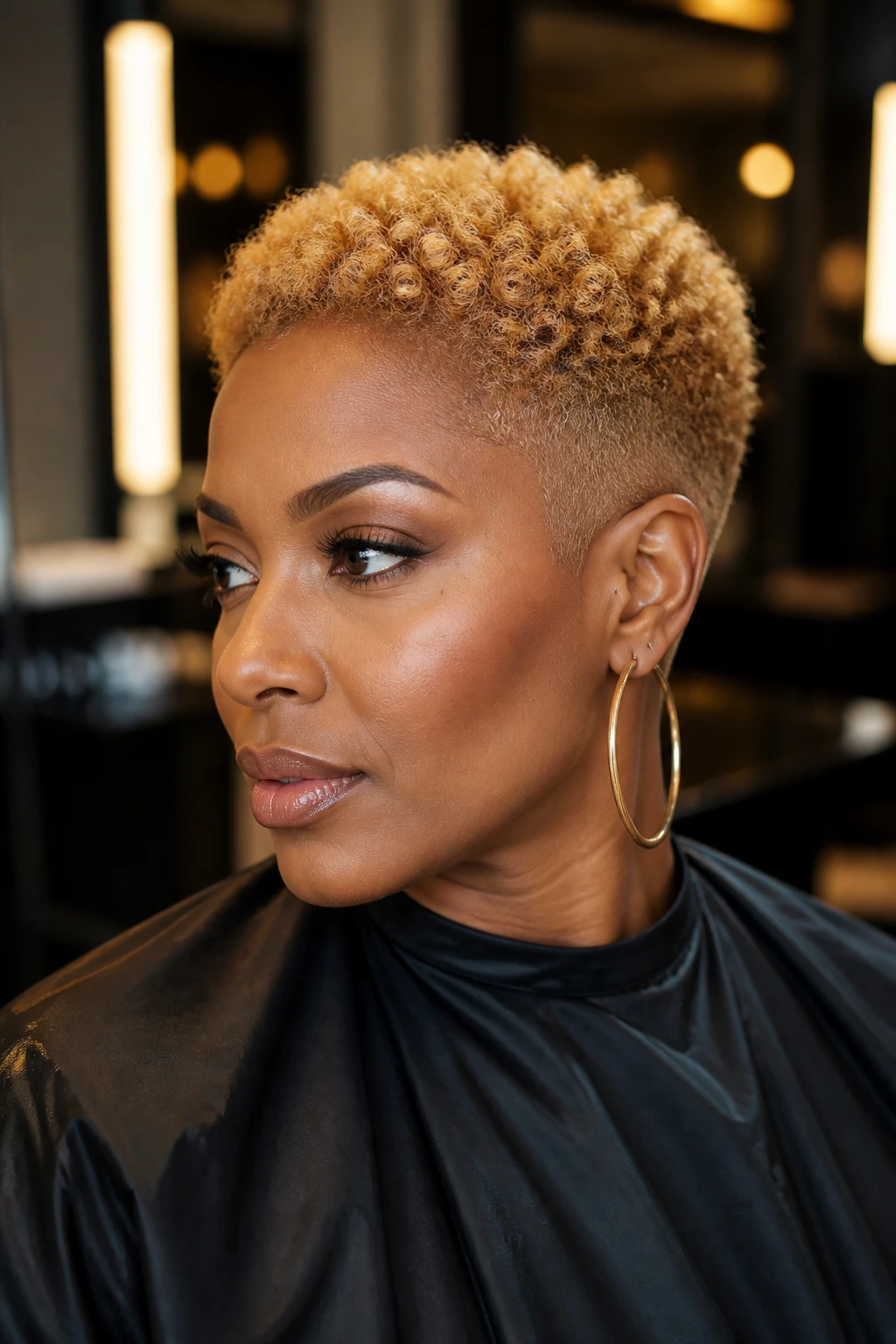
A tapered cut gives maple blonde a crisp frame. The shorter sides and fuller top let the color land where the eye looks first, and the maple tone keeps everything warm and clean. Deep skin handles this shade beautifully when the contrast is kept honest.
I like this on natural hair that’s been shaped into a sharp silhouette. The color should live on the top layers and maybe a little around the crown, not sprayed everywhere. That placement keeps the cut in charge and the shade from feeling busy.
27. Apricot-Glaze Silk Press
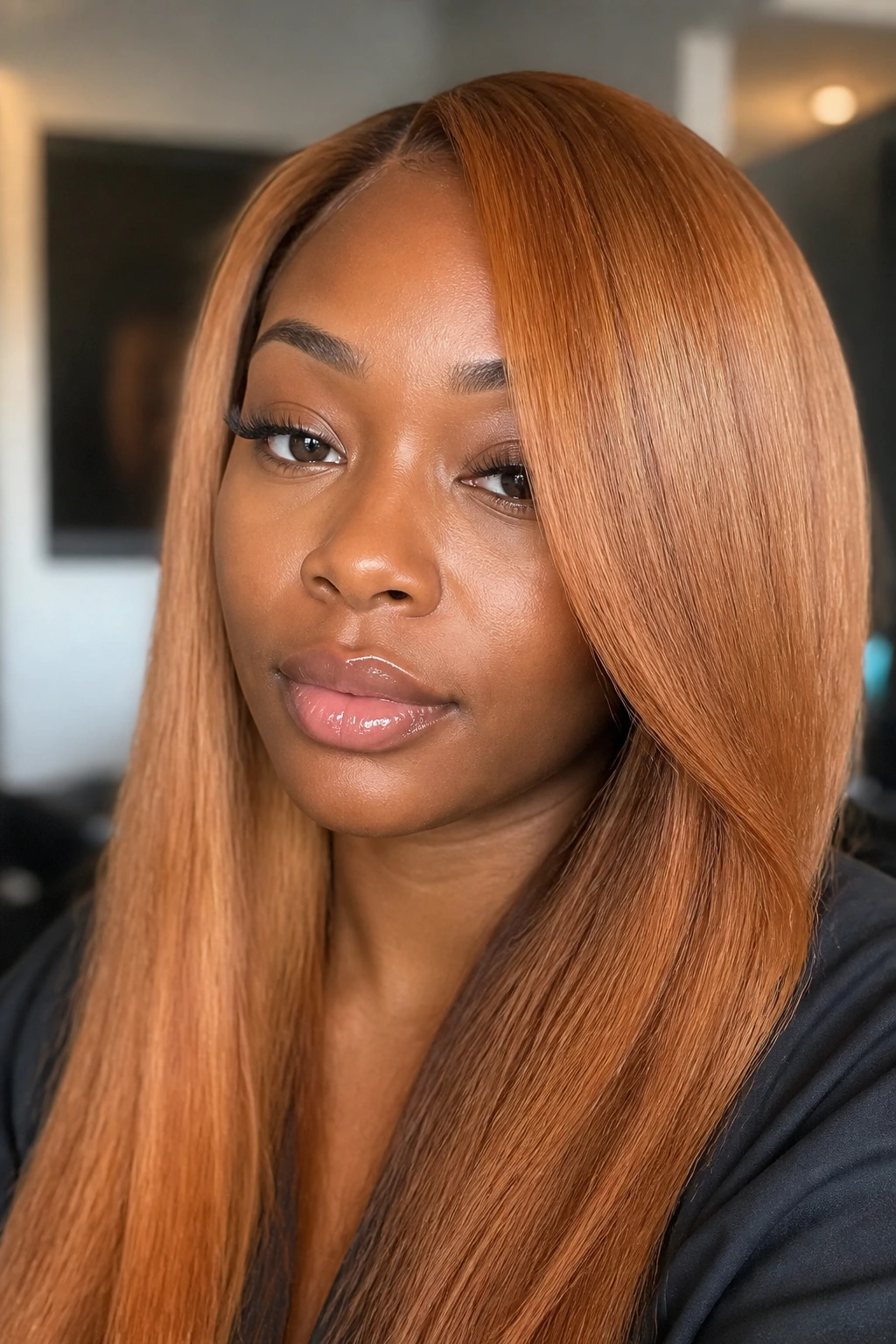
An apricot-glaze silk press is smoother and softer than a full lift. The glaze adds warmth and reflection, while the press gives it that glassy finish people notice from across the room. On deep skin, apricot is one of those tones that feels bright without going harsh.
This is a good route if you like shine more than drama. Ask for a gloss or demi-permanent glaze rather than heavy lightening, then keep heat use controlled so the press stays smooth. It’s refined, not loud. I like that.
28. Copper Buttercream Layers
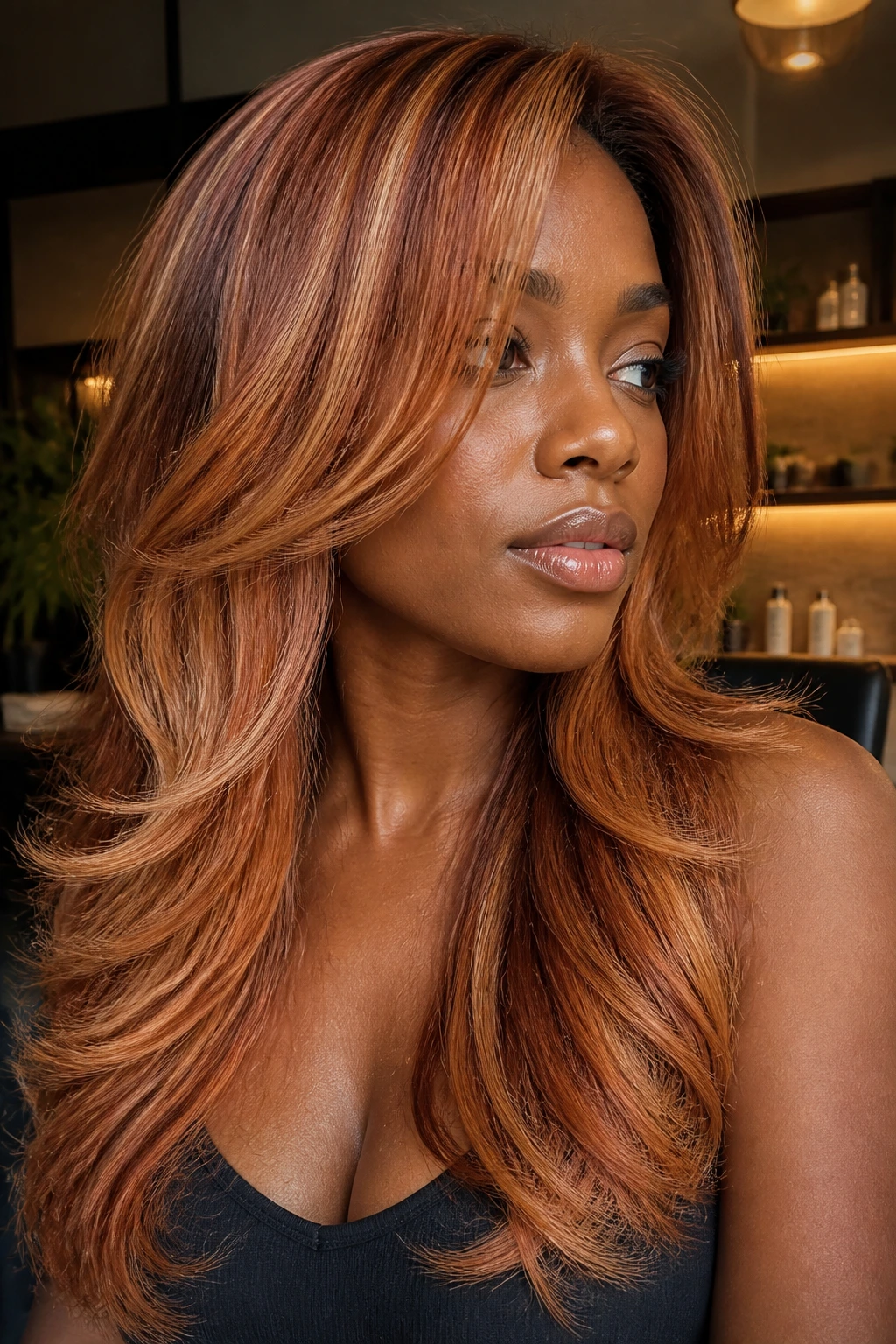
Copper buttercream has a creamy finish that sits between gold and red. On layered hair, the different lengths let the tone shift in and out of view, which makes the color look softer than a single flat copper. Deep skin tends to love that creamier warmth because it doesn’t get too orange.
This one is useful if you want a lighter look but don’t want the hair to feel dry or overly processed. Ask for dimensional copper with a beige or buttercream gloss over the top. The layers will do the rest.
29. Bronze Peach Knotless Tips
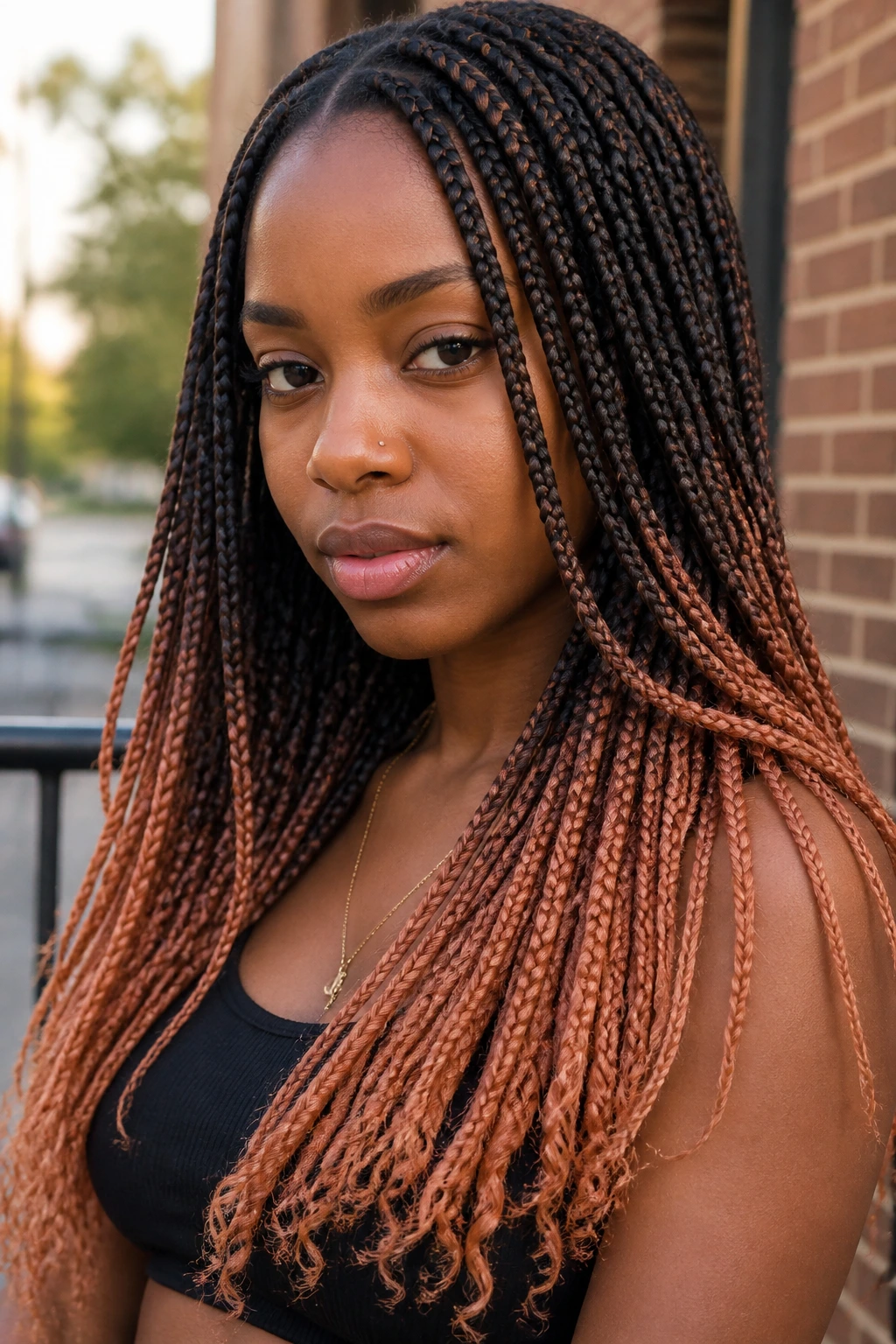
Color on knotless braids can be a headache if it’s too bright or too uneven. Bronze peach tips solve that neatly. The base stays dark and stable, while the ends carry enough warmth to show movement when the braids swing or are gathered into a bun.
That tiny bit of color at the tips keeps the style fresh without staining the whole head. I like this for protective styling because it gives you a warm blonde-red effect with far less maintenance than permanent dye. The ends do all the talking.
30. Strawberry Honey Afro Highlights
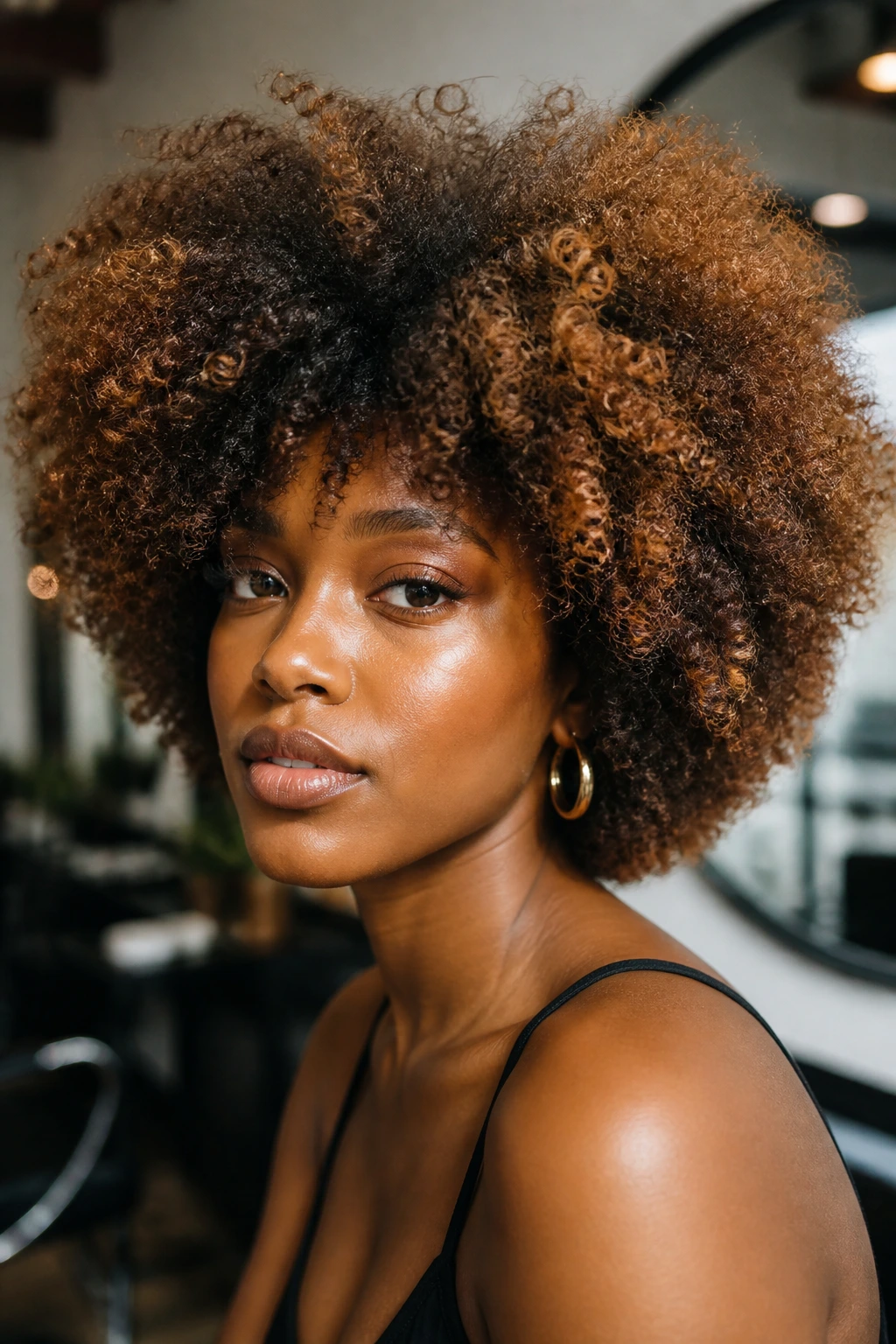
Strawberry honey highlights on an afro should look like light catching on the surface, not a set of stripes. Wider, strategic pieces around the top and outer curve of the shape work best. The strawberry warms the hair, and the honey keeps the tone bright enough to read in real life.
Best for: full afros, rounded shapes, and stretched coils.
Ask for: painted panels near the crown and perimeter, not tiny threads throughout.
Why it works: the shape stays round while the highlight placement adds lift where the eye already lands.
This is a strong choice if you want dimension without losing density.
31. Cayenne Caramel Crown
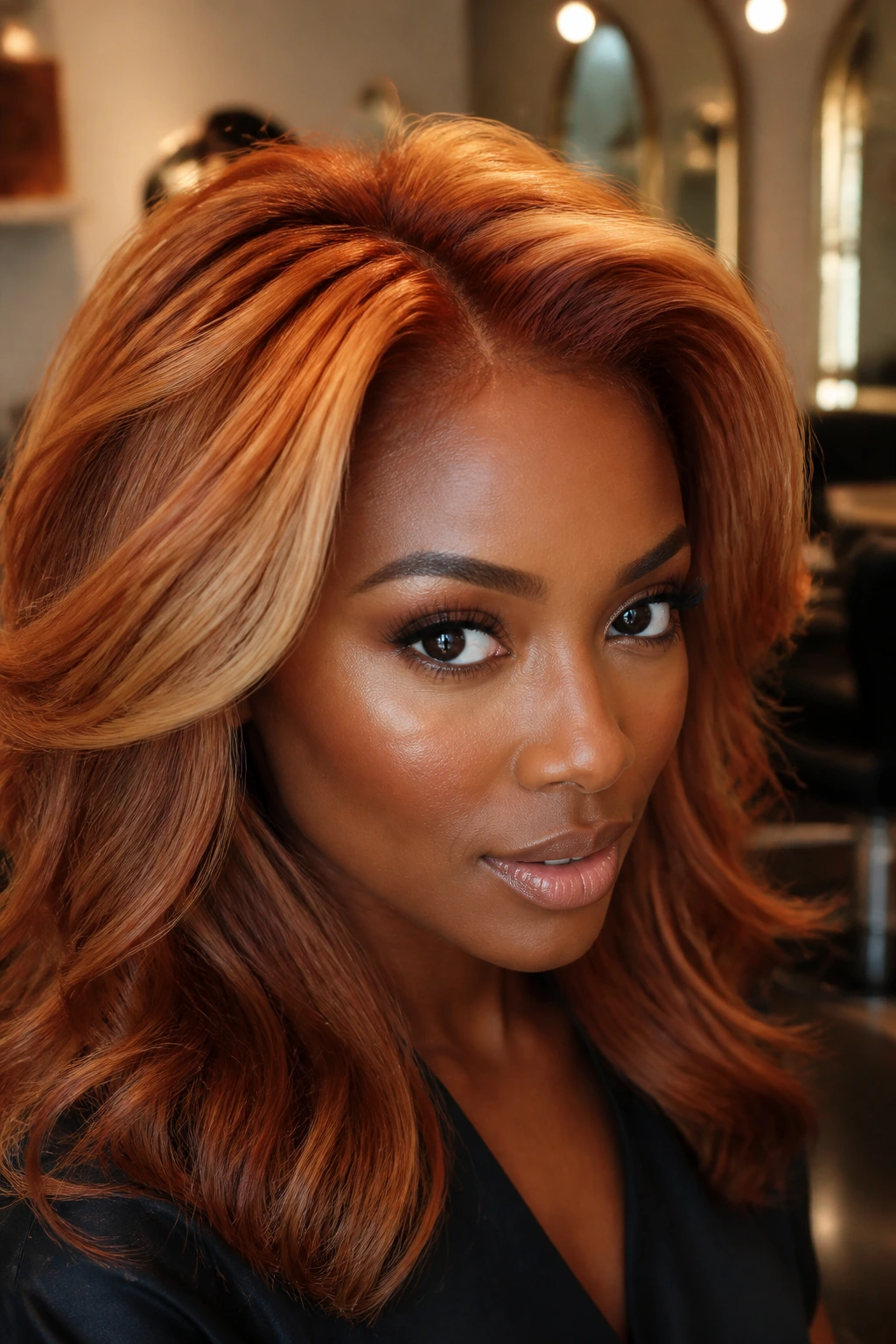
A cayenne caramel crown puts brightness where it matters most: the top and outer surface of the hair. The cayenne brings a red kick, and the caramel softens it so the color doesn’t feel too hot. On deep skin, the warmth has enough depth to look rich instead of artificial.
This is the one I’d pick if you want drama without a full-head commitment. Ask for the crown area to be lighter and the lower layers to stay darker, which gives the style height. It’s a clean visual trick, and it works.
32. Amber Rose Coils
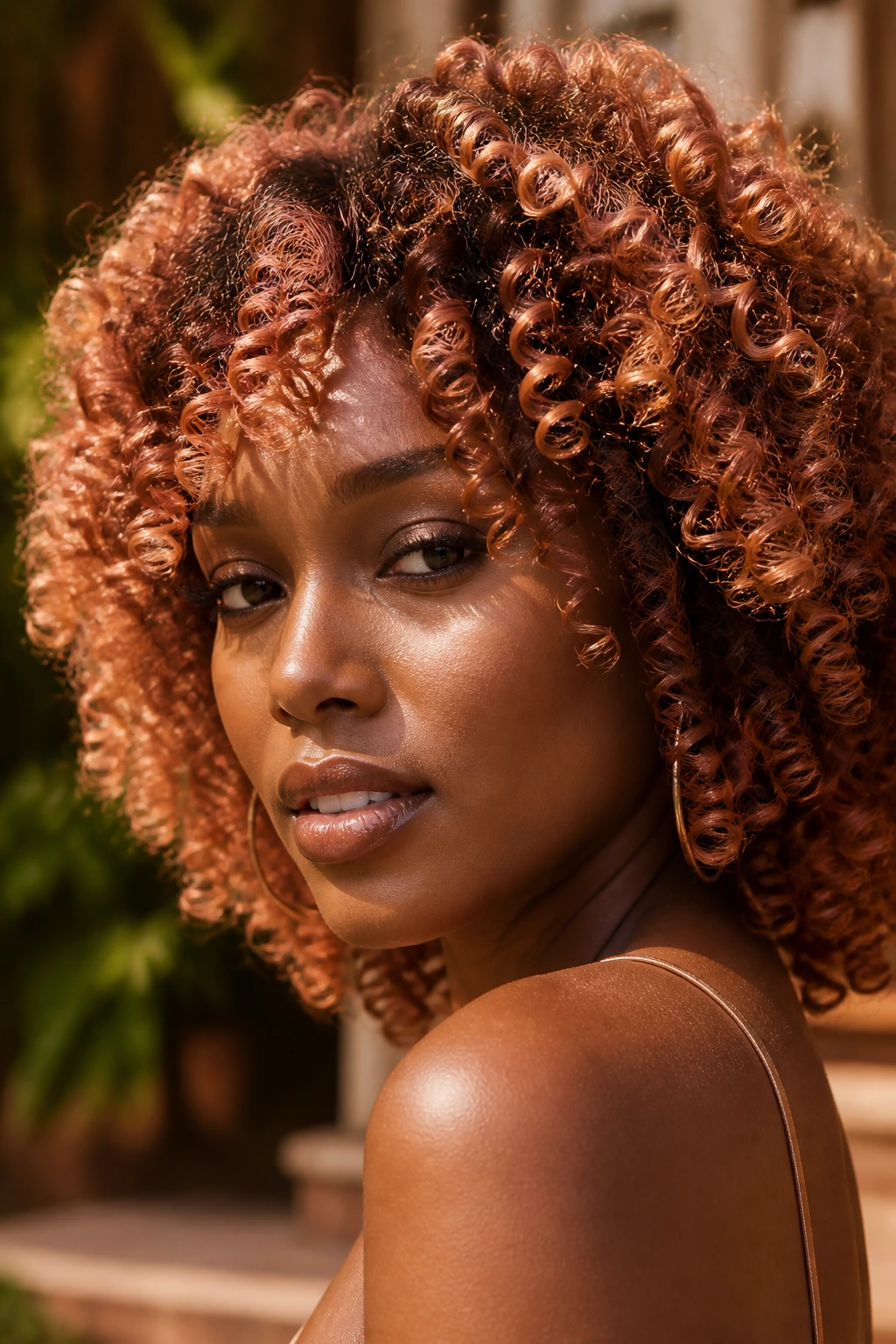
Amber rose coils are lovely because they respect the spiral. The amber gives the hair a golden base, and the rose note adds a little softness at the edges. On deep skin, that mix keeps coils luminous without making them look dry or pale.
You want the color placed where the coils naturally catch light, not packed into every strand. Wider sections and a good gloss are your friends here. This style has enough warmth to stand on its own, which is useful if you like wearing your hair out and unpinned.
33. Warm Sorbet Balayage
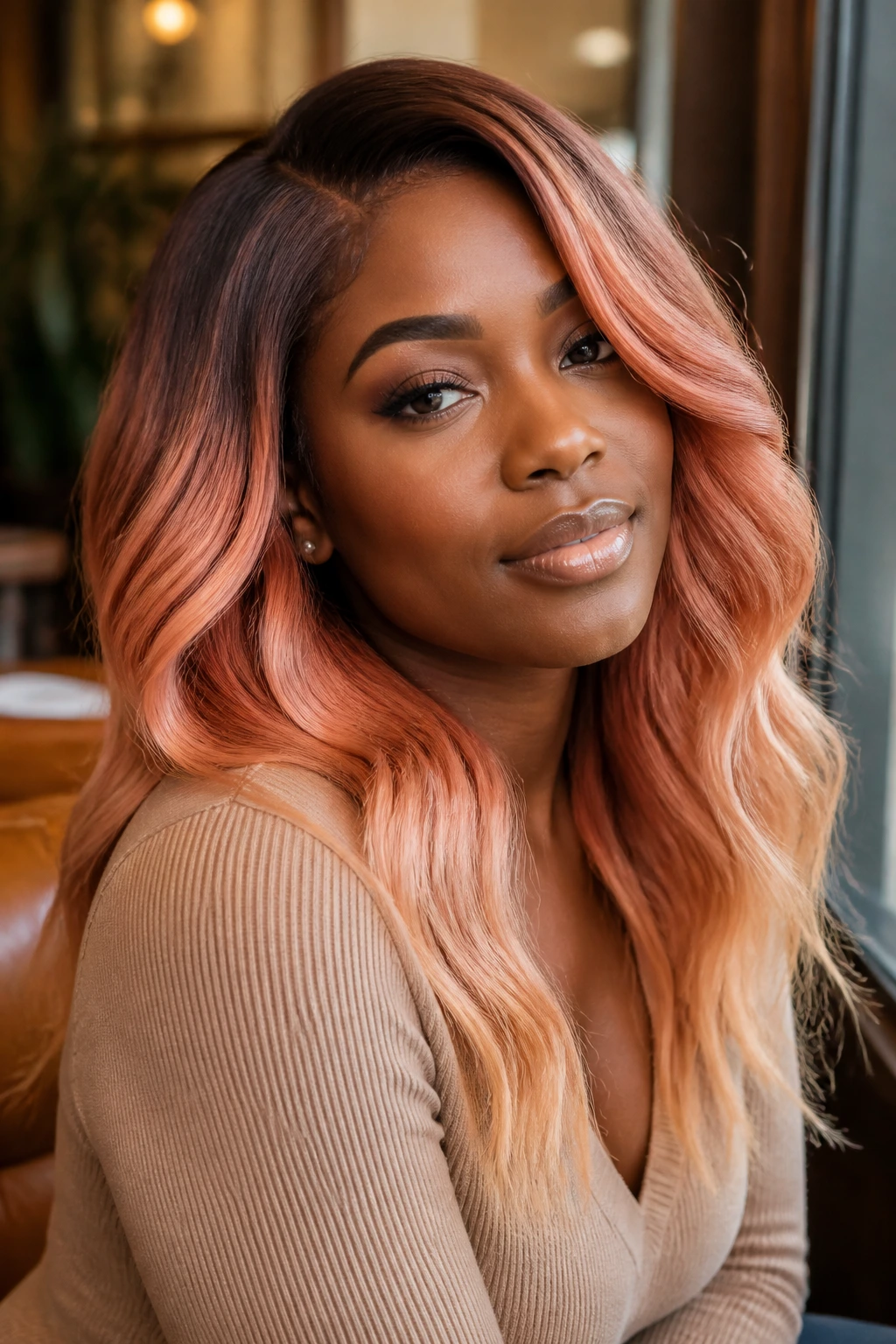
Warm sorbet balayage blends peach, coral, and gold in a way that feels playful but not childish. It’s brighter than amber and less orange than tangerine toast. On deep skin, the darker root is what keeps it from turning into noise.
This is a good choice if you like color that changes tone as you move. A loose wave or twist-out will show the shift best. Tell your stylist you want a soft melt, not a hard stripe. That matters here.
34. Copper Veil Underlights
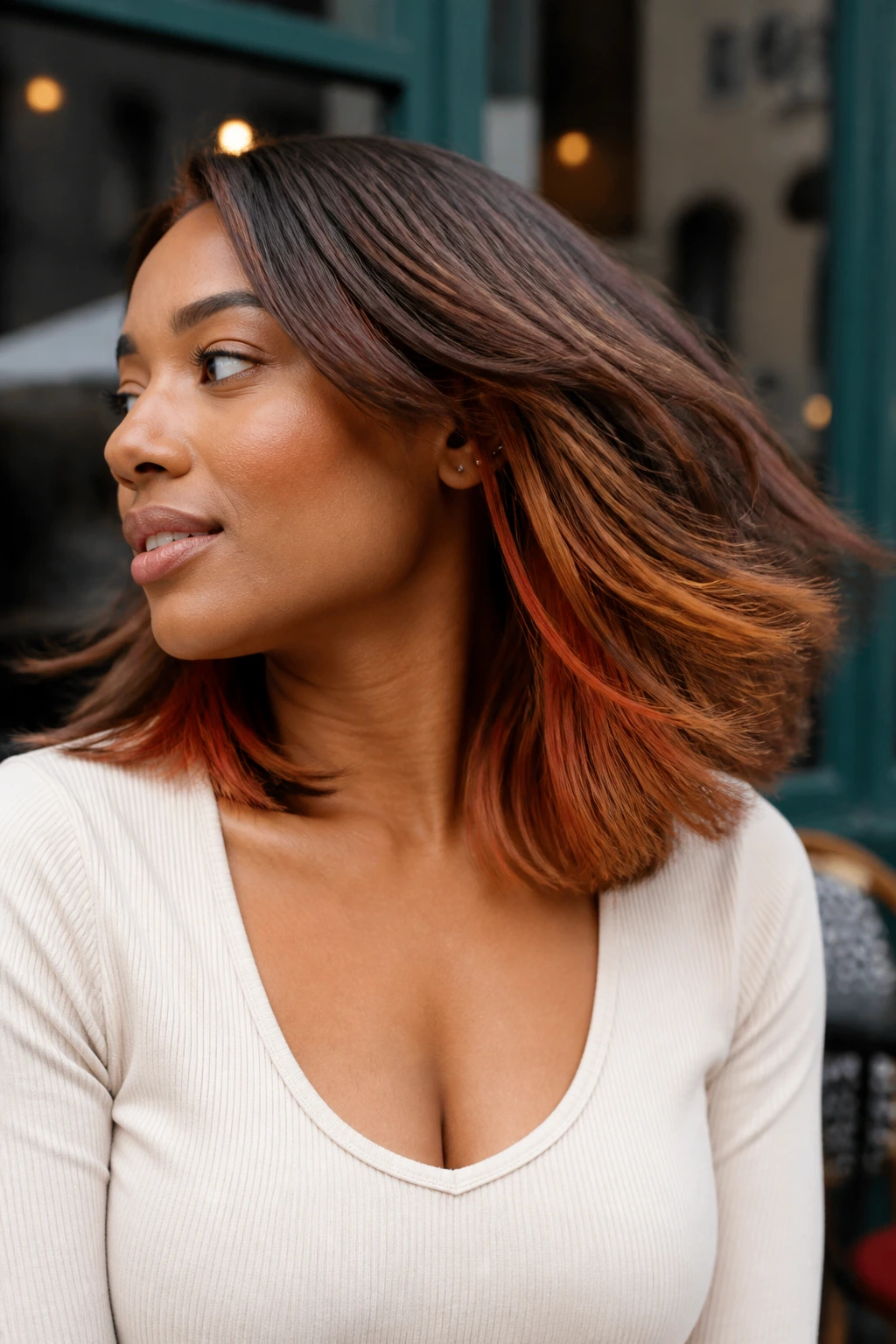
Copper veil underlights are subtle until the hair swings or gets tucked back. Then they flash. That hidden placement keeps the top layer darker and more work-friendly, while the copper underneath gives you the blonde-red note when you want it.
I like this for people who want color but don’t want to be “the hair person” every minute of the day. The veil effect is especially good on layered cuts and shoulder-length styles. It’s a quiet move. Still warm, still interesting.
35. Gingerbread Blonde Melt
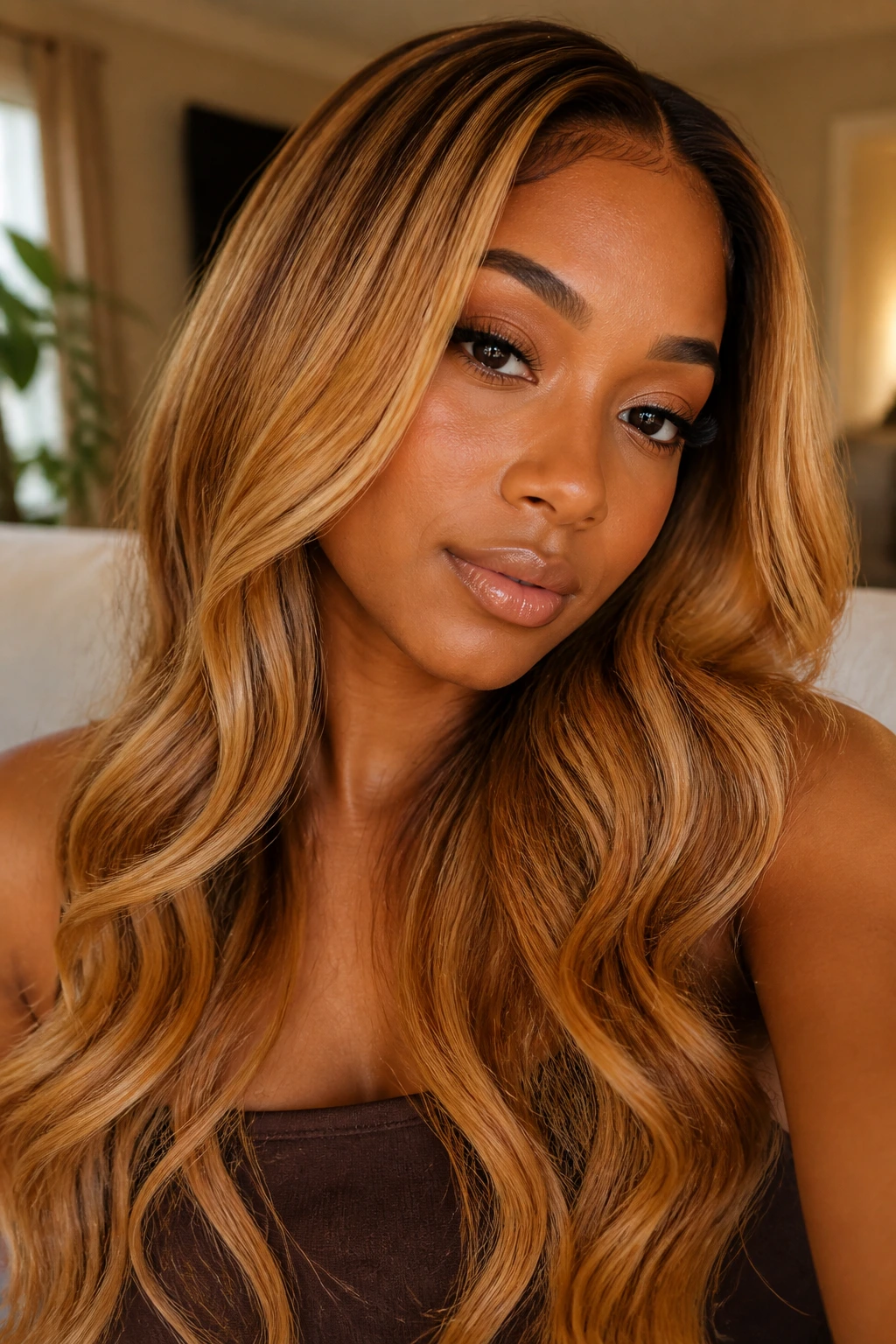
Gingerbread blonde melt is a strong closing note for this whole list. It keeps enough brown at the root to feel stable, then slides into ginger, honey, and soft blonde through the mids and ends. On deep skin, that layered warmth looks full and intentional.
This is the shade I’d hand to someone who wants one color family that can go from subtle to vivid depending on the style. Curl it, press it, pin it back — it still reads well. If you want a warm blonde-red blend that won’t fight your complexion, this is the one I’d take seriously.
How These Blonde-Red Shades Read on Deep Skin Tones
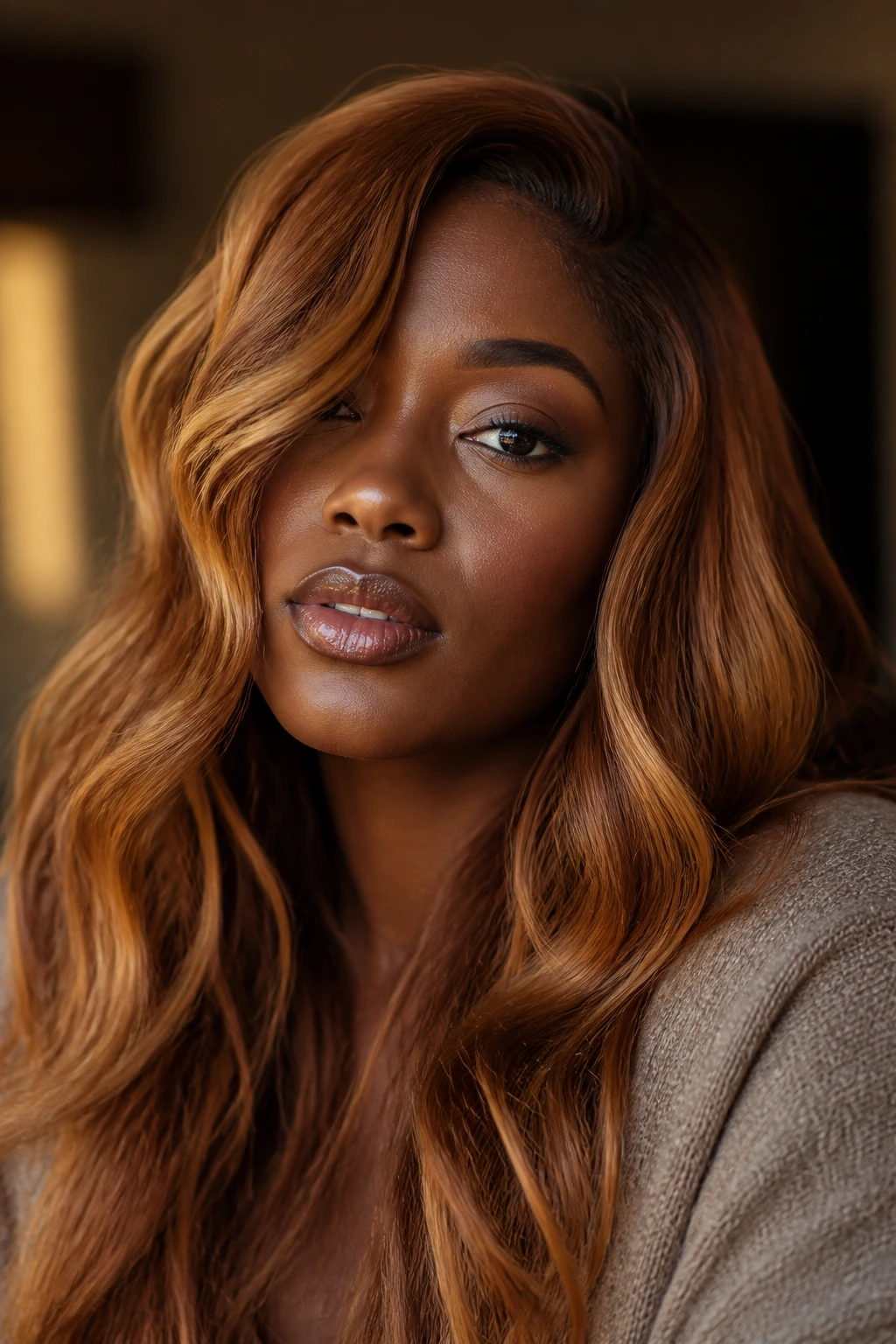
Warm blonde-red shades are not all doing the same job. Some are there to brighten the face, some to add shine, and some to give texture more definition. On deep skin, the real trick is keeping enough depth in the base so the lighter pieces have somewhere to land. Without that anchor, even a gorgeous shade can look disconnected.
Gold-rich and copper-heavy blends usually flatter warm or neutral undertones fastest. Apricot, peach, and rose-gold tones work well when you want the color to feel softer and less orange. If your undertone is cooler, you do not have to avoid warmth; you just need a little beige, champagne, or mahogany in the mix so the shade doesn’t feel shouty.
Warm undertones
Golden, copper, amber, and honey tones tend to sit naturally against warm deep skin. They echo what the skin already has going on, so the hair looks connected to the face. That is why so many of the stronger shades in this list still include some gold in the mix.
Neutral undertones
Neutral deep skin can carry a wider spread, including rose-gold, strawberry bronde, and dusty peach. The key is keeping the color dimensional. If everything is one flat tone, it loses interest fast.
Cooler undertones
Cooler deep skin can still wear blonde-red, but I’d keep one foot in warmth and the other in depth. Champagne copper, mahogany blends, rusted rose, and amber rose are better bets than pale beige blonde. The warmth softens the contrast and keeps the finish from looking hollow.
What to Bring to the Color Chair
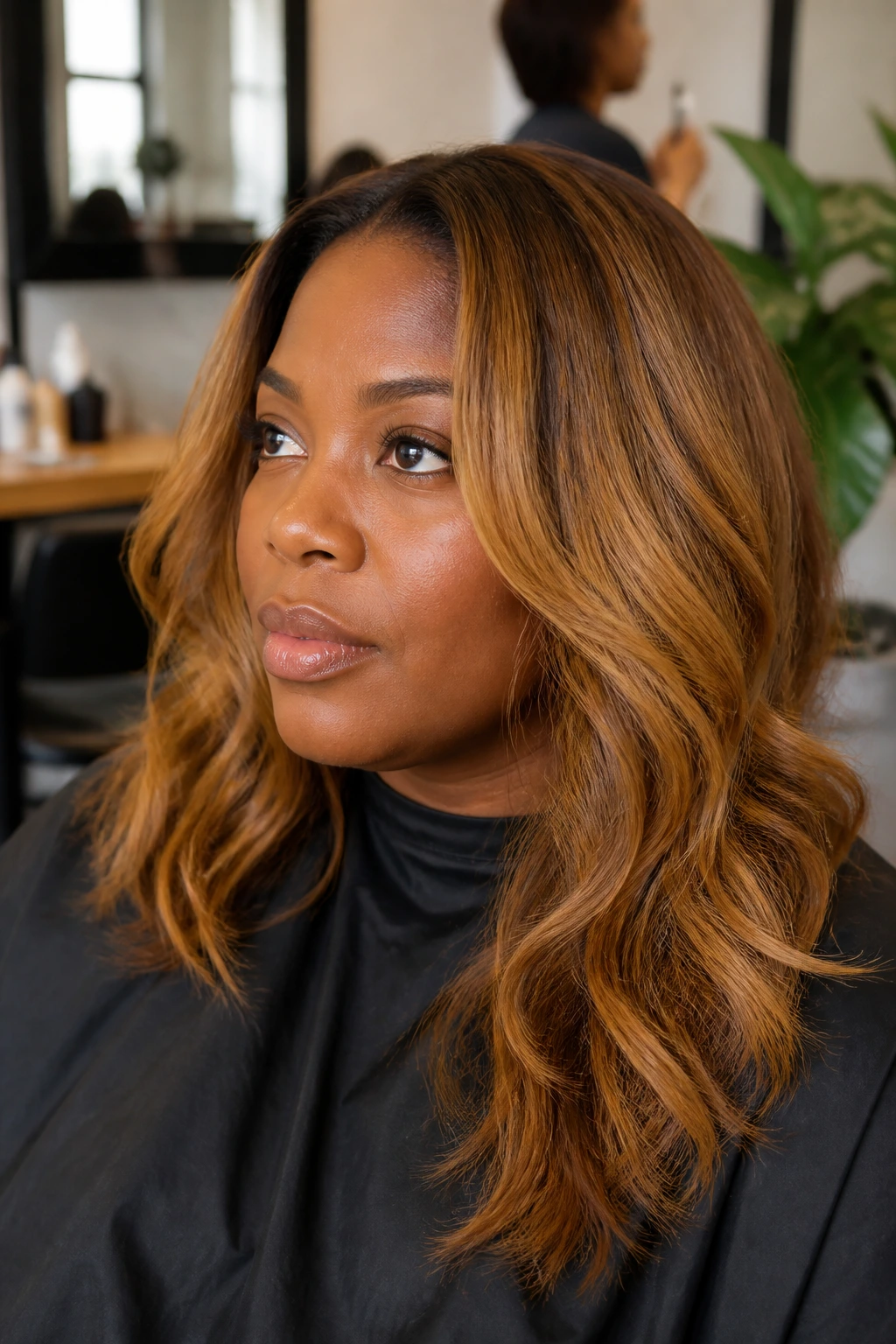
A good consultation saves money. A bad one can cost you months of grow-out regret. Bring photos, yes, but bring the right kind of photos — daylight shots, not filtered mirror selfies taken under yellow bulbs.
- Three reference photos: one of the tone you want, one of the placement you want, and one of a shade you do not want.
- A clean photo of your current hair: natural light, no heavy editing, no ring light hiding the brass.
- Your hair history: bleach, box dye, henna, relaxer, keratin, and any breakage spots need to be mentioned before anyone mixes color.
- A maintenance number: say whether you can live with 4-week glossing, 8-week root touch-ups, or a longer grow-out.
- A texture note: curls, coils, waves, silk press habits, protective styles, and how often you heat-style all matter.
- A simple sentence about your goal: “soft and warm,” “bright front pieces,” or “deep root with copper ends” is much better than “make it look good.”
If you do one thing, bring photos that show the hair in motion. Color behaves differently in curls than it does in a still shot, and that gap trips people up all the time.
Smart Shade Shopping and Product Picks
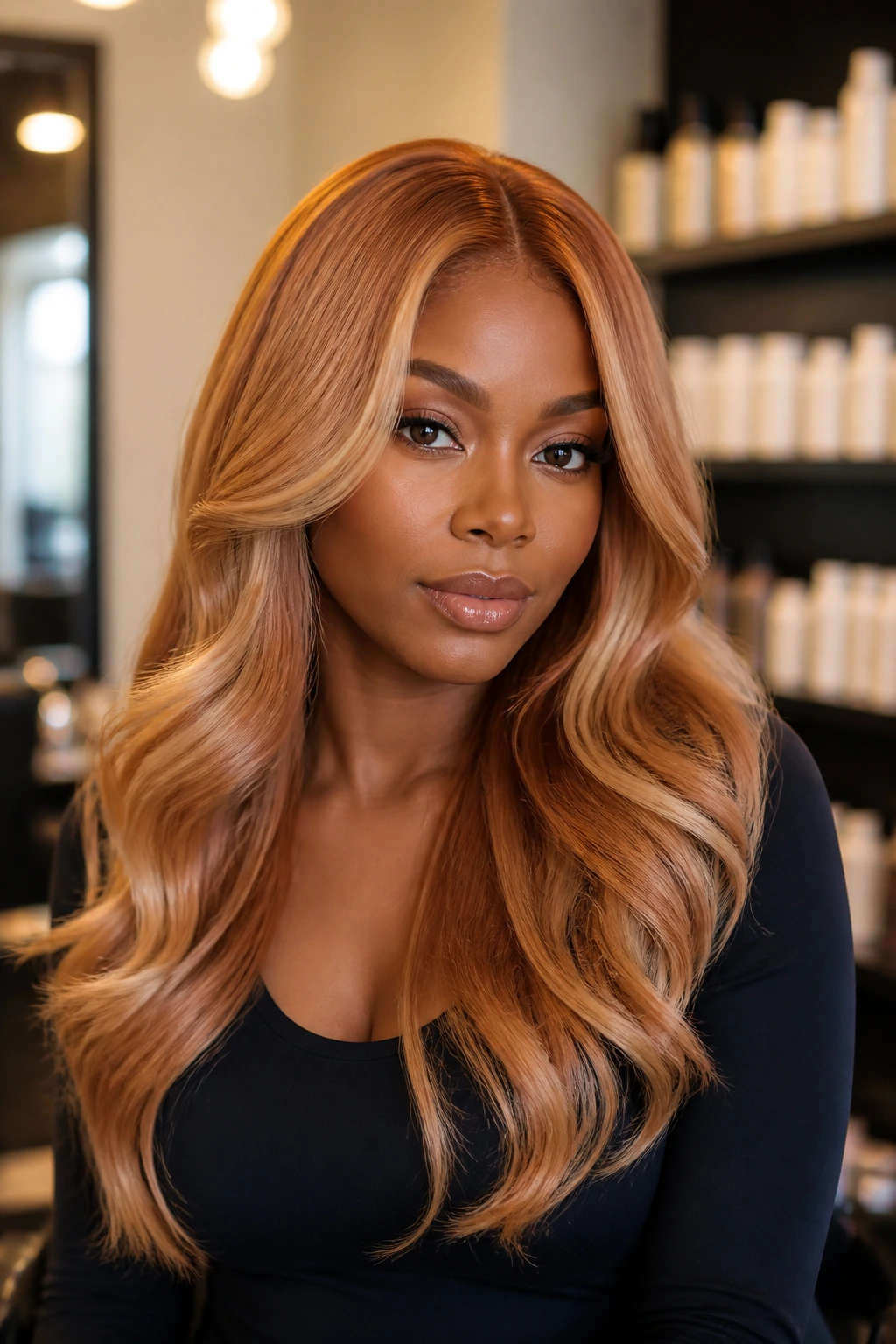
For this color family, the words on the service menu matter. Balayage, foilayage, root smudge, shadow root, gloss, demi-permanent color, lowlight, and toner all mean different things, and they lead to different results. If you want low maintenance, ask for a softer grow-out structure. If you want brightness, ask where the lightest pieces should sit and how deep the root should stay.
At the product shelf, look for sulfate-free shampoo, color-safe conditioner, a bond-building treatment, a heat protectant, and a color-depositing mask that matches the tone you chose. Copper and strawberry shades fade faster than brown, so a mask or gloss with warm pigment helps keep the color from going muddy. I would rather refresh warmth with a glaze than chase it with more bleach.
Purple shampoo deserves caution here. It can help if the blonde pieces drift too yellow, but too much purple on copper, apricot, or rose-gold can mute the warmth that makes these colors work in the first place. Use it sparingly and only on the lightest pieces if brass starts creeping in. If the tone is already rich, leave the purple bottle alone.
One more thing that saves headaches: if your hair is dark and resistant, one aggressive appointment is rarely the best route. Two gentler sessions with a gloss in between usually keep the hair in better shape and give the colorist room to adjust. Patience looks better than breakage.
How to Wear the Color So It Looks Intentional
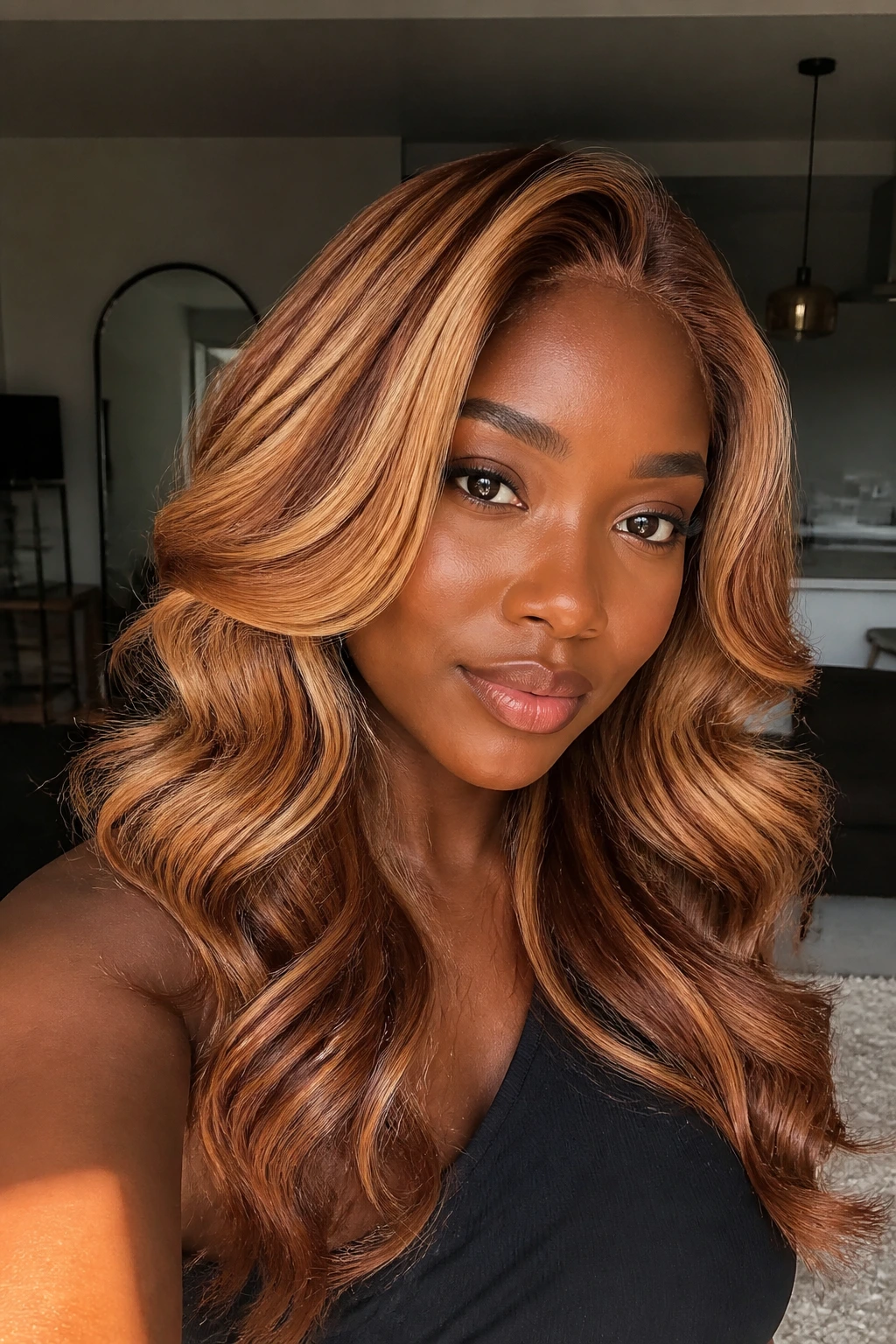
Placement: Keep the brightest pieces where the face and movement will catch them first — around the cheekbones, at the crown, through the top layers, or on the ends of a cut that already has shape. Random brightness all over the head can look busy. Thoughtful placement looks planned.
Styling: Curls, waves, twist-outs, and a soft blowout show dimension best because the lighter strands bend and separate. A silk press gives you the cleanest read on contrast, especially with rose-gold, champagne, or copper blends. Braids and locs can carry warmth too, but the color usually works best on the visible ends, added hair, or peekaboo sections.
Pairings: Warm blush, cocoa liner, bronze shadow, gold hoops, cream sweaters, rust tops, and deep berry lipstick all sit well beside these shades. Cool, ashy makeup can still work, but it tends to fight the warmth in the hair. I’d rather echo the color family than argue with it.
Intensity: If you want subtle, keep most of the hair dark and use the blonde-red only in the front, the ends, or hidden sections. If you want more drama, let the lighter pieces travel higher toward the crown. The same shade can live in two different worlds depending on placement. That’s the useful part.
Variations and Adaptations to Try
Gloss-Only Copper: If your hair is already a warm brown, a copper or rose-gold gloss can give you the color family without bleach. This works well when you want shine, not a structural change. It fades softer too, which is nice if you get bored easily.
Face-Frame First: Put the lightest pieces around the temples and leave the rest of the hair deeper. This is the easiest way to test blonde-red on deep skin without committing to a full transformation. If you like it, you can build from there.
Protective-Style Pop: Keep your natural hair darker and use colored extensions, braid hair, or tipped ends to carry the blonde-red note. That gives you the color without the repeated lift session. It also plays nicely with locs, knotless braids, and twists.
Muted Rose Finish: Push the blend toward beige, rose, and amber rather than bright orange. This version is calmer, easier to match with wardrobe colors, and often more forgiving as it grows out. It’s one of the quieter ways to wear the family.
High-Contrast Melt: Leave a deeper root and brighten the mids and ends more aggressively. This is the boldest route, and it looks strongest on layered cuts, waves, and textured styles where the contrast can move. If you want the color to be seen from across the room, this is the one.
Extra Tips for a Richer Finish
Gloss Boost: A clear or warm-toned gloss every 4 to 6 weeks keeps the color reflective. Copper, strawberry, and apricot shades lose their shine first, not their spirit. The gloss puts the shine back without demanding another round of lightening.
Texture Trick: Wider color sections show up better on coils and curls; finer sections suit straighter hair or sleek presses. If the pieces are too thin on textured hair, the warmth can disappear once the curl pattern shrinks back up. Make the ribbons visible enough to matter.
Make-It-Yours: Keep more depth at the root if you want lower maintenance. Keep the brightness higher toward the face if you want the color to read faster in selfies, mirrors, and daylight. That’s where the eye goes first.
Color Balance: If the blonde starts to look too orange, shift it back with beige or champagne toning rather than reaching for more bleach. If it turns too dull, add copper or honey in a glaze. Tone is easier to adjust than structure.
Keeping the Tone Fresh Between Appointments
Warm blonde-red shades need a little attention, especially once red pigment enters the picture. Red fades faster than brown, and lighter pieces show brass more easily than dark ones. That doesn’t make the color high maintenance in a bad way. It just means you need a plan.
Wash hair once or twice a week if you can get away with it. Use lukewarm water, not hot, because hot water strips pigment faster than most people expect. A sulfate-free shampoo and a good conditioner will stretch the color longer, and a color-depositing mask can keep copper or strawberry tones alive between salon visits.
Root touch-ups usually live in the 8- to 12-week range if you’ve kept a shadow root or melt. Gloss refreshes often land around 4 to 6 weeks, especially on lighter strawberry, rose-gold, or apricot shades. If the hair feels dry, put the heat tools down for a bit and lean on bond repair and deep conditioning instead.
At night, a satin bonnet or pillowcase saves the ends from rough friction. That sounds boring. It isn’t. Friction is one of the fastest ways to dull a bright tone and rough up the cuticle.
Common Mistakes That Make the Color Look Off
Going too pale too fast: The most common failure is chasing a level 10 blonde when the face would look better with a level 7 to 9 warm tone. The symptom is a washed-out finish that feels disconnected from the skin. The fix is depth — keep the root darker and let the blonde live in the mids and ends.
Skipping the shadow root: Without a shadow root or lowlight support, the lighter pieces can look stripey. It gets worse on deep skin because the contrast becomes too hard. Ask for a melt or smudge so the transition feels smooth.
Overusing purple shampoo: Purple shampoo can mute copper, apricot, and rose-gold faster than people expect. If the hair starts looking grayish or flat, that’s usually the culprit. Use it sparingly, and only on the pieces that are actually turning too yellow.
Ignoring the hair’s history: Box dye, henna, old bleach, relaxer, and heat damage all change how the lightener behaves. If those are not discussed first, the result can go brassy, uneven, or fragile. The fix is boring but necessary: tell the truth about the hair history and ask for a strand test.
Letting the ends dry out: Lighter ends show damage first. They fray, lose shine, and make even a good color look tired. Trim them when needed, deep condition them regularly, and stop pretending heat doesn’t matter.
Questions People Ask Before Booking
Will blonde-red hair color work on very deep skin tones?
Yes, if the shade keeps enough warmth and depth. The most flattering versions usually stay in the honey, copper, apricot, rose-gold, or amber range instead of going icy or washed pale.
Do I need bleach for these looks?
Not always. A gloss, demi-permanent color, or warm toner can give you a lot of the effect on lighter brown hair. Darker hair usually needs some lift if you want true blonde-red brightness.
What shade is easiest to live with?
Shadow-root balayage, amber toffee ombré, and copper underlights are the most forgiving. They grow out cleanly and don’t demand constant touch-ups at the scalp.
How do I keep copper from turning brassy?
Use sulfate-free shampoo, cool or lukewarm water, and a warm-toned gloss or mask when the color starts to fade. Don’t overdo purple shampoo; it can flatten the warmth you actually want.
Can I wear these shades with curls, coils, or braids?
Absolutely. In textured hair, the key is placement. Wider painted pieces, crown brightness, or colored tips show up better than tiny highlights that vanish inside the pattern.
What if my hair is already box-dyed dark?
Tell your colorist before anything else. Box dye can make lifting unpredictable, which means a strand test is a smart move and sometimes a single-session blonding is a bad idea.
What if the blonde looks stripey after the appointment?
Usually that means the placement is too narrow or the transition is too sharp. A gloss, lowlight, or shadow-root correction can soften it, but the best fix is to ask for a melt next time.
How often should I refresh the color?
Most warm red-blonde shades want a gloss every 4 to 6 weeks and a root refresh around 8 to 12 weeks, depending on how much lift you have. The brighter the shade, the more often it will need attention.
A Shade That Still Feels Like You
The best blonde-red shades on deep skin do not chase paleness. They use warmth, depth, and placement to make the hair look deliberate. That’s why the strongest ideas in this list keep returning to copper, honey, amber, apricot, and rose-gold instead of sliding into cold blonde territory.
Bring a daylight photo, keep the root honest, and choose the amount of brightness that fits your upkeep. That’s the part people skip, and it’s usually the part that makes the difference between “nice color” and a shade you actually want to live with.