



Tan skin can carry more hair color than people think, which is why hairstyle hair color ideas for tan skin are far more varied than the usual caramel-and-chocolate shorthand. The biggest mistake is treating tan as one flat category. It isn’t. Golden tan skin, olive tan skin, and neutral tan skin all react differently to warmth, ash, copper, beige, and red, even when the depth of the complexion looks similar at first glance.
A honey blonde that looks soft on one person can turn chalky on another. A smoky brunette that feels polished on olive skin can look a little dull on a warmer face unless the cut has movement or the gloss has enough shine. That’s the part people miss. Color is only half the story. The haircut, the placement, and the finish decide whether the shade sits on the face or fights it.
I care more about that than the label on the dye box. A root shadow, a money piece, a blunt bob, a shag, a silk press — each one changes how the color lands next to your skin. So these ideas aren’t just color swatches. They’re full looks, built around the way tan skin actually behaves in daylight, under indoor bulbs, and in the messy middle where most of us live.
Why These Shades Keep Working on Tan Skin
- Warm tones do the heavy lifting: Caramel, honey, copper, bronze, and chestnut echo the gold that already lives in tan skin, so the face looks brighter instead of faded.
- Cool tones can still work: Mushroom brown, beige blonde, and smoky brunette look strongest when they stay soft at the root and don’t turn flat through the mids.
- Placement matters more than volume: A bright money piece near the face can do more than an all-over lighter shade, especially if you want change without the grow-out headache.
- Texture changes the read: The same color looks richer on waves, sharper on a blunt bob, and deeper on curls or a silk press.
- Low-maintenance isn’t boring: Some of the best-looking options here are the ones with root depth, lowlights, or gloss, because tan skin often looks better with dimension than with one flat tone.
How to Read Your Undertone in Natural Light
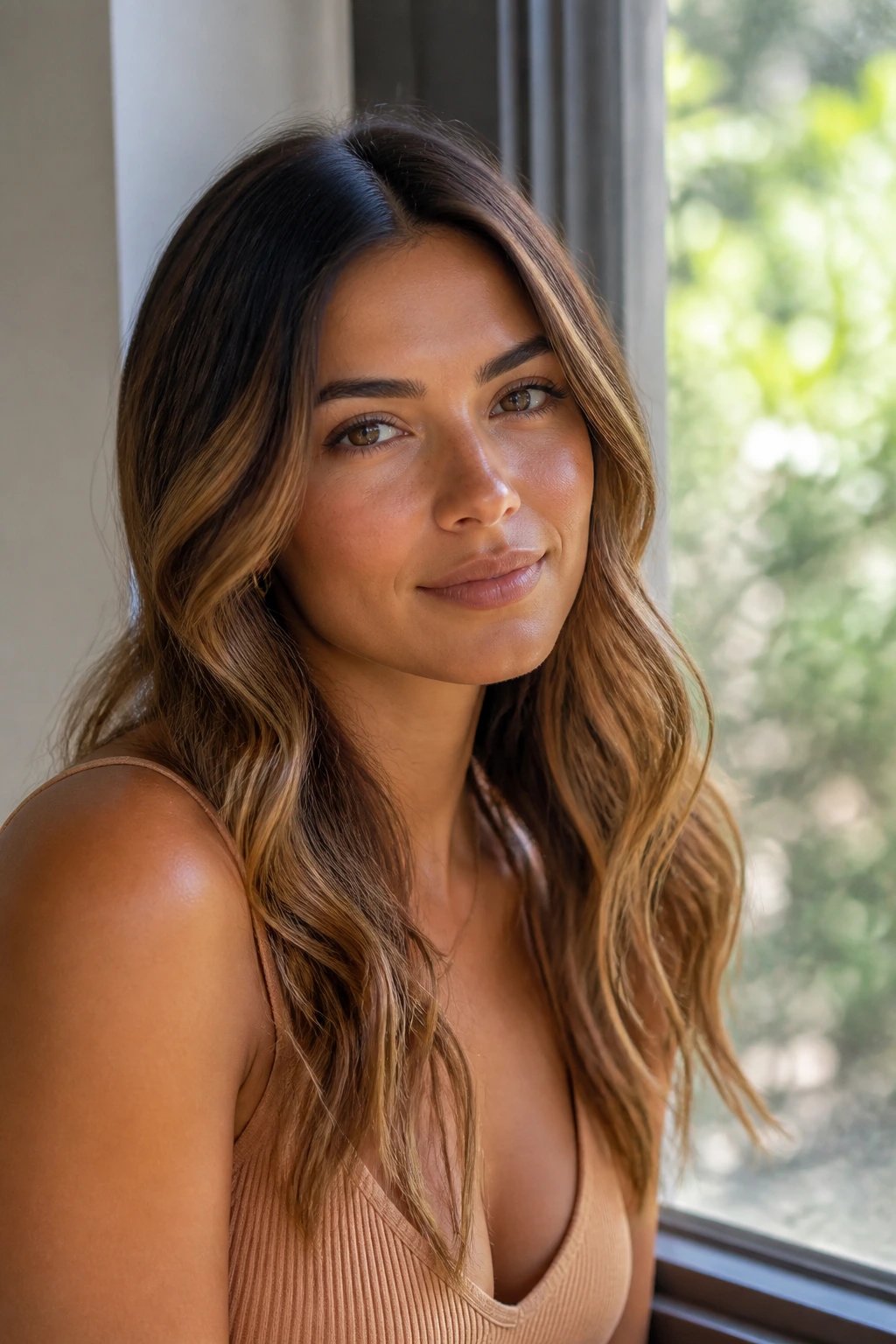
Stand by a window, not a bathroom mirror. That one move tells you more than a salon fluorescent ever will.
If gold jewelry looks at home on you and ivory doesn’t wash you out, you probably lean warm. That’s where caramel balayage, copper curls, honey blonde, and amber gloss tend to sing. If silver looks cleaner and gold feels a little loud, olive or neutral undertones may be in play, and mushroom brown, smoky brunette, or beige blonde will usually sit closer to the skin in a good way.
Neutral tan skin gets a wider lane. It can handle bronde, chestnut, soft auburn, and even rose gold if the tone is controlled. The trick is not to chase the brightest blonde on the wall. The trick is to choose a tone that mirrors one feature already on your face — your brows, your eyes, or the warmth in your skin after a day outside.
The Haircut Shapes That Change the Color Reading
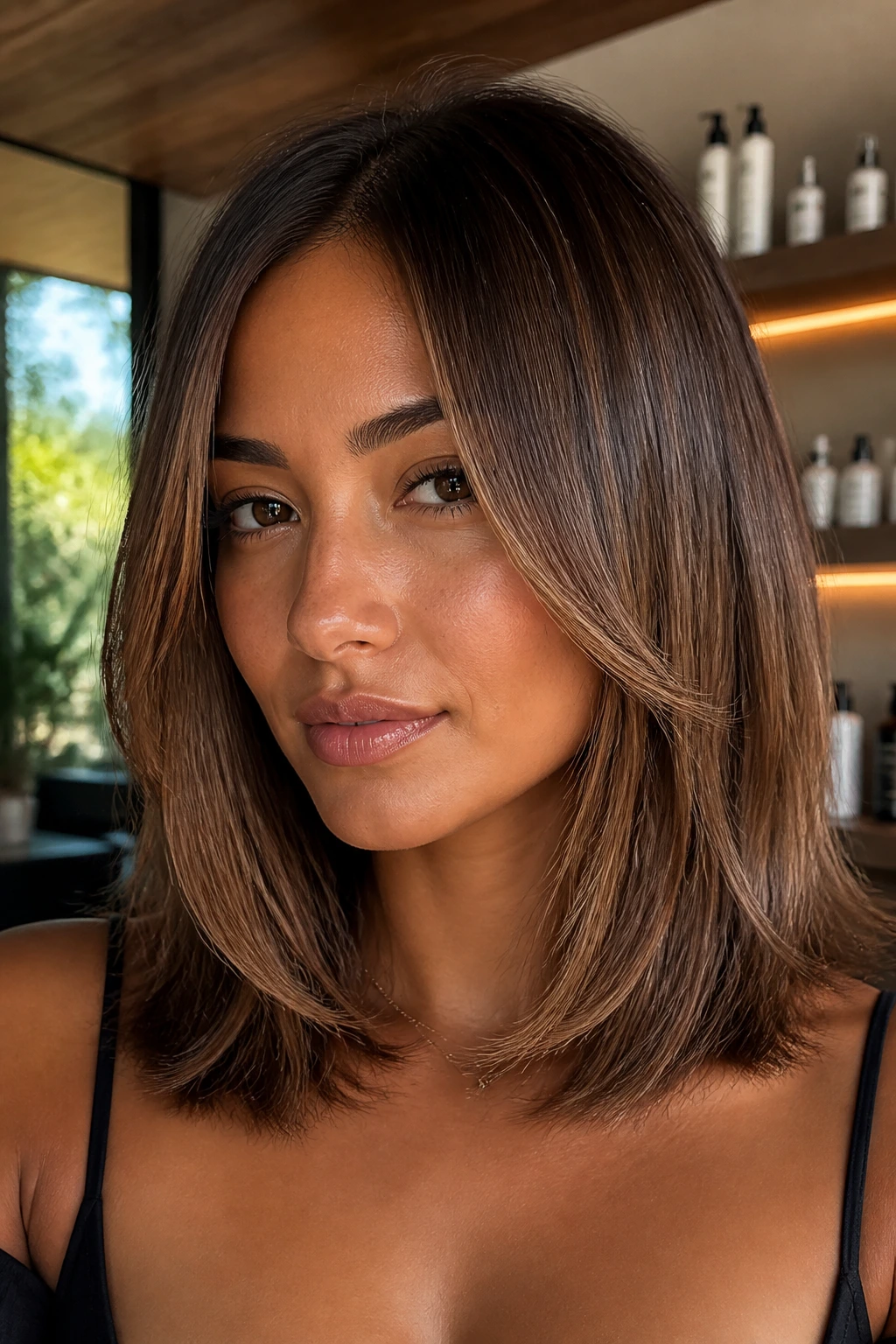
A blunt cut behaves like a frame around a painting. Every tone looks cleaner, sometimes a little stricter, and that matters if you want beige blonde, espresso, or jet brown to feel deliberate rather than heavy. Layers do the opposite. They break color into movement, which is why balayage, copper, and bronde look so alive on shags, butterfly cuts, and long waves.
Face-framing pieces are doing more work than most people give them credit for. Two bright sections around the cheekbones can pull light toward the face even if the rest of the hair stays dark. That’s why money pieces and soft highlights show up so often in flattering color plans for tan skin. They brighten the skin without asking you to go light everywhere.
Texture matters too. Curl pattern changes where the eye lands. On curls and coils, depth reads first and brightness reads second, so a rich cocoa or cinnamon tone often looks more dimensional than a pale blonde would. On straight hair, shine takes over, and glassy brunettes or sleek bobs can look sharper than any highlight-heavy style.
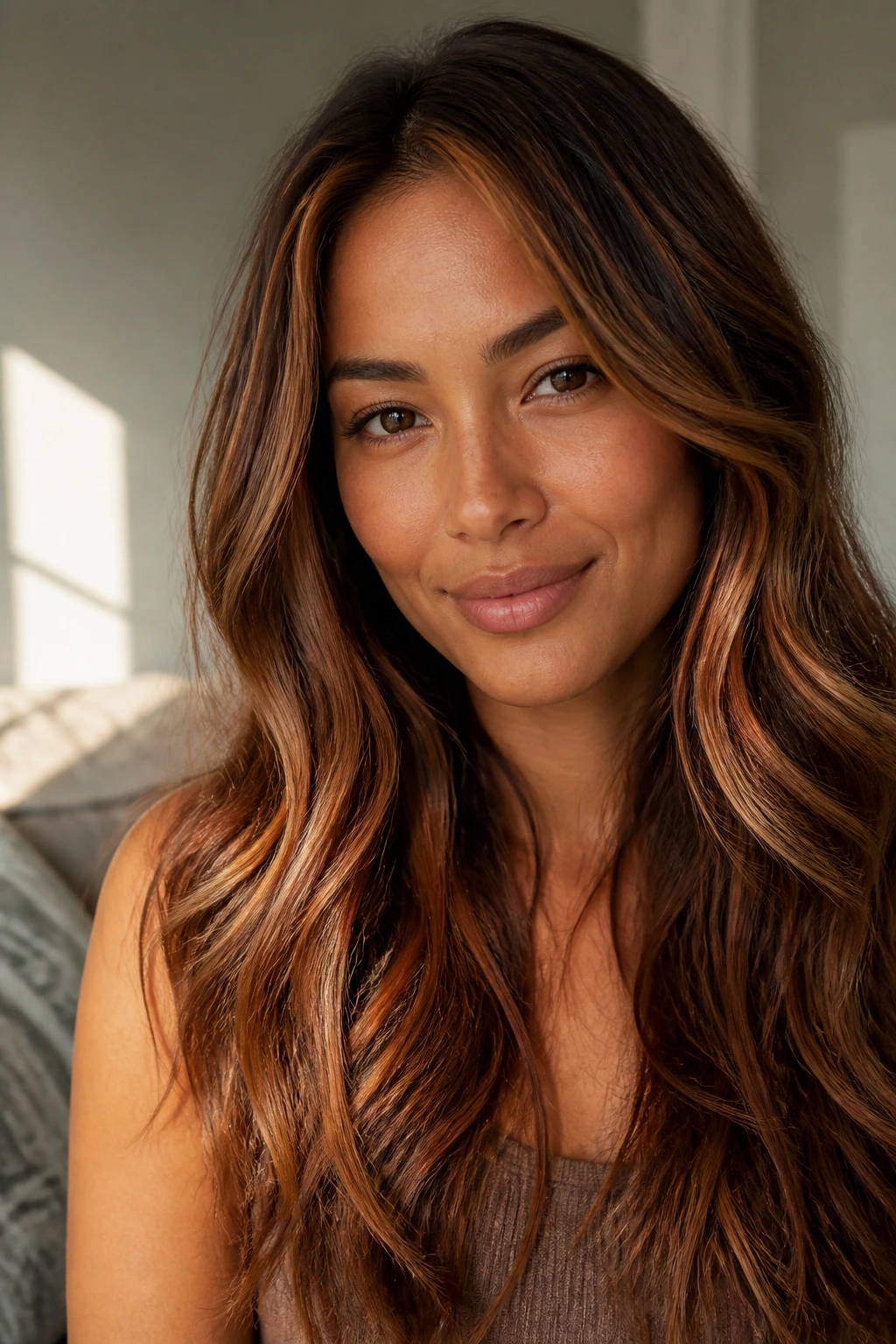
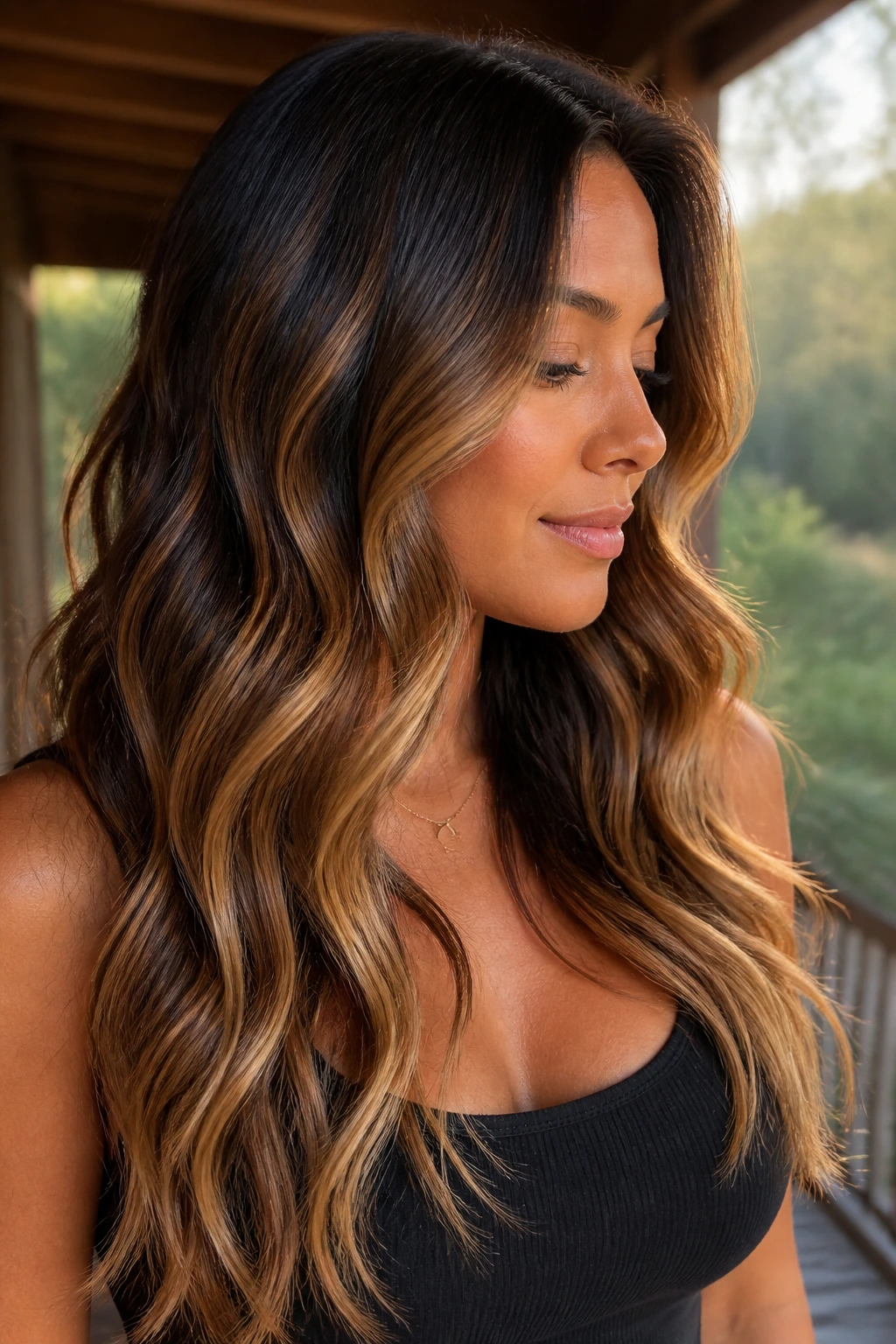
1. Caramel Balayage on Long Waves
Caramel balayage on long waves is one of those shades that rarely argues with tan skin. The warmth sits in the 7–8 level range, but the root stays a shade deeper, so the hair never turns into one flat sheet of light. It moves. That movement is the whole point.
Why It Flatters So Easily
Ask for painted ribbons through the mids and ends, then keep the first few inches near the root soft. That deeper base gives the complexion shape, especially if your tan skin leans golden or neutral. Brushed-out waves help the caramel catch in thin ribbons instead of shouting all at once.
A quick note: this is the kind of color that looks richer after a gloss. Not brighter. Richer. Those are different things.
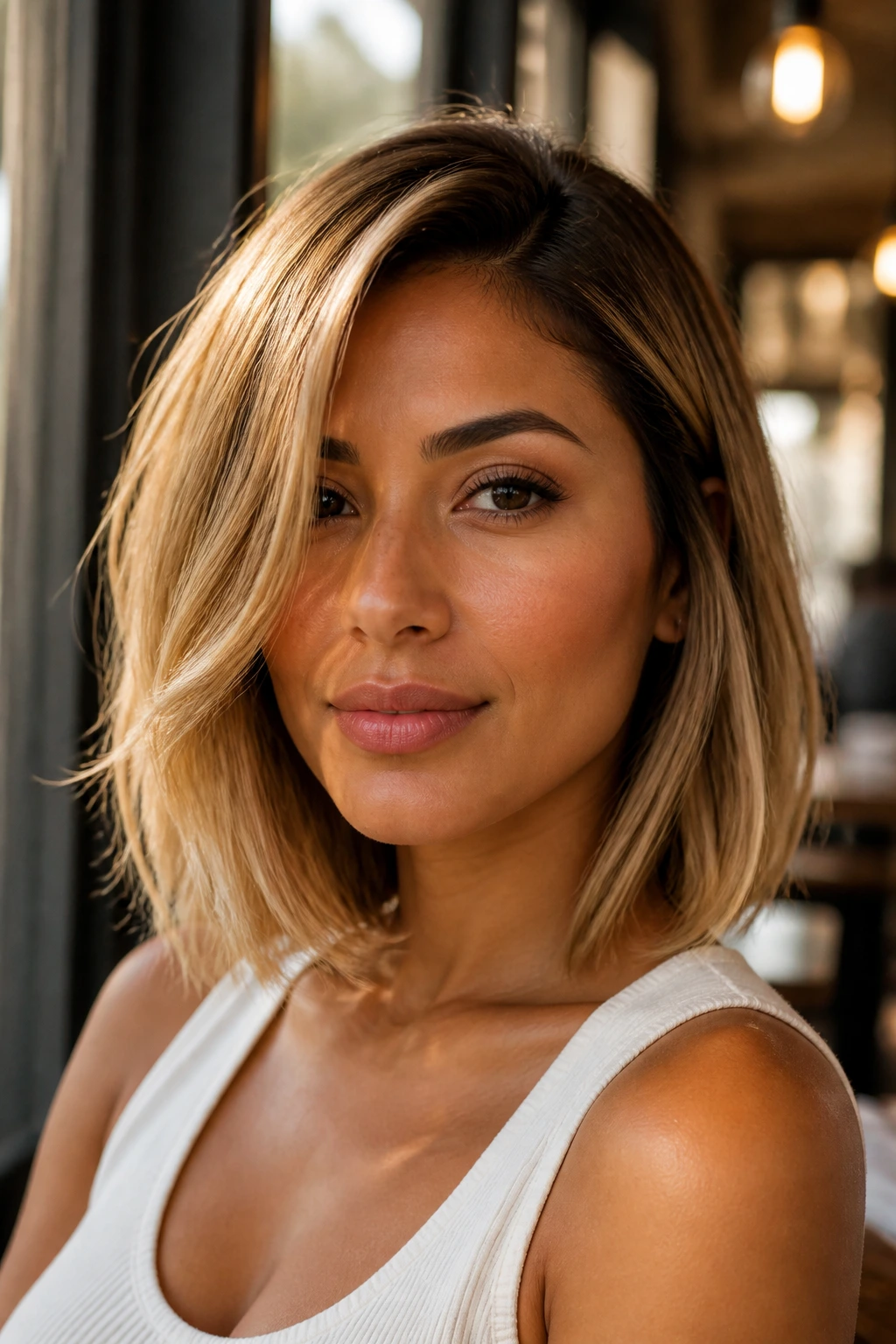
2. Honey Blonde Lob with a Soft Side Part
Why does honey blonde look better on tan skin than icy blonde? Because the tone sits closer to the warmth already in the face. A lob keeps that color near the jawline and collarbone, which is where it can actually change the way your skin reads.
The side part gives the honey dimension without needing heavy highlight work. I’d choose this for golden or neutral tan skin that wants brightness but doesn’t want to look overprocessed. A 1.25-inch bend through the ends keeps it from feeling too salon-perfect, which is a good thing here.
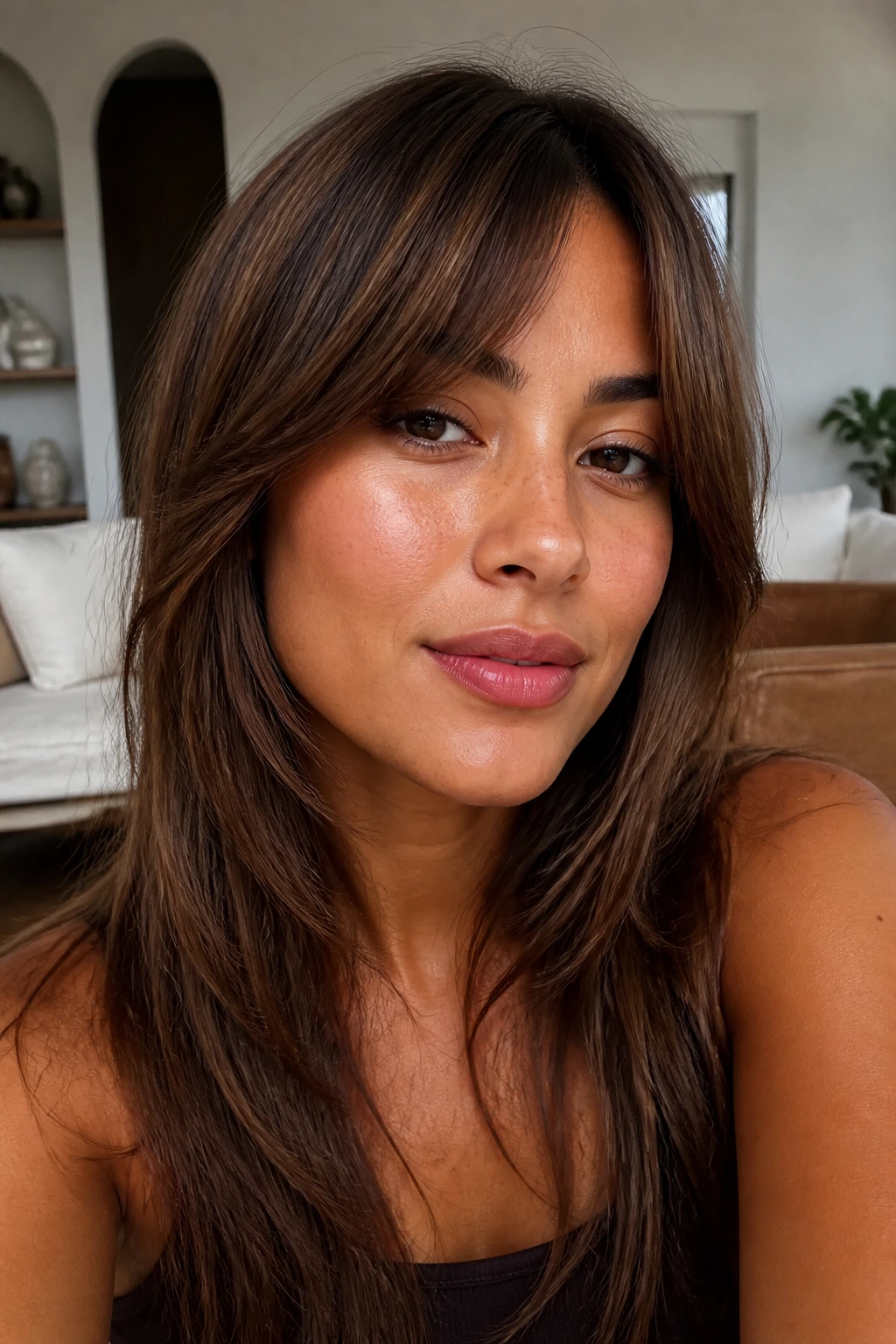
3. Chestnut Brown Curtain Bangs
Chestnut brown with curtain bangs is the brunette option that never feels lazy. The shade has enough red-brown warmth to wake up tan skin, but it stays grounded enough that it doesn’t drift into copper territory. That balance matters.
What to Ask For at the Salon
- Level 4–5 chestnut brown with a warm glaze, not a flat chocolate fill.
- Curtain bangs that graze the cheekbones and open at the center.
- Soft face-framing layers so the color doesn’t sit like a helmet.
This look works especially well if you wear your hair straight or with a loose bend. The bangs catch light first, and that quick hit around the eyes does more for the face than people expect.
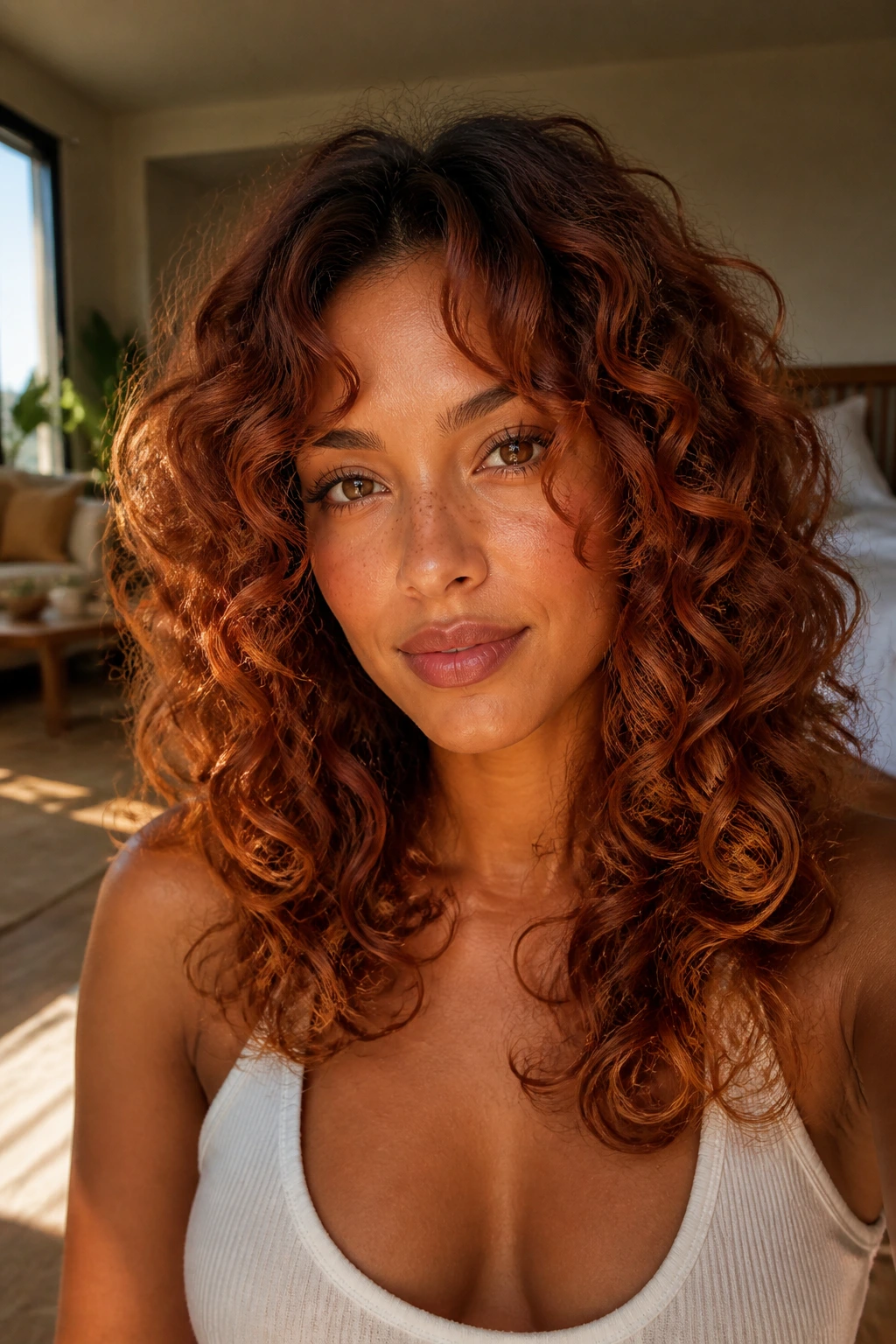
4. Copper Curls with Layered Ends
Copper curls are bold, but not reckless, if the red leans warm and dimensional instead of neon. On tan skin, especially skin with golden undertones, copper can look like heat in motion. The layered ends keep the curl pattern from forming one thick block of color.
The important part is depth at the root. If the base is too light, copper can look loud and a little costume-like. If the root stays one level deeper, the shade feels expensive and intentional. I’d keep the finish springy and hydrated, because copper gets dull fast when the hair is dry.
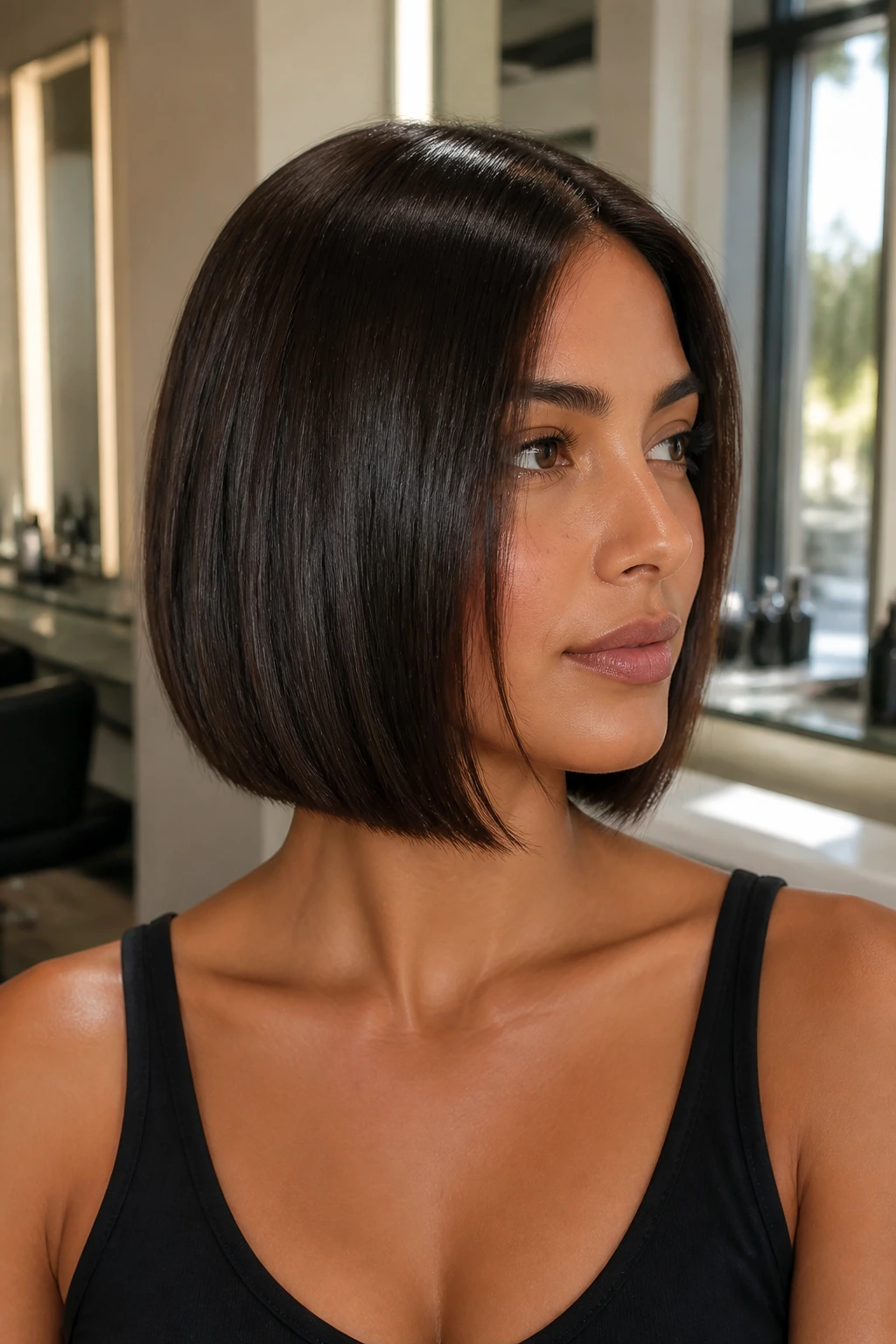
5. Espresso Bob with a Glassy Finish
Espresso is the shade people underestimate. It sounds simple until you see how much cleaner tan skin can look against a deep, glossy brunette bob. The contrast pulls the face forward without needing highlights at all.
Why It Works
A bob gives espresso a hard edge, which is the whole appeal. The cut sits at the jaw or just below it, so the dark color becomes a shape, not just a color. If your tan skin has warm or neutral undertones, the deep brown makes your features look clearer, almost sharper, in the best way.
Keep the finish shiny. Matte espresso can look flat. Glossy espresso looks deliberate.
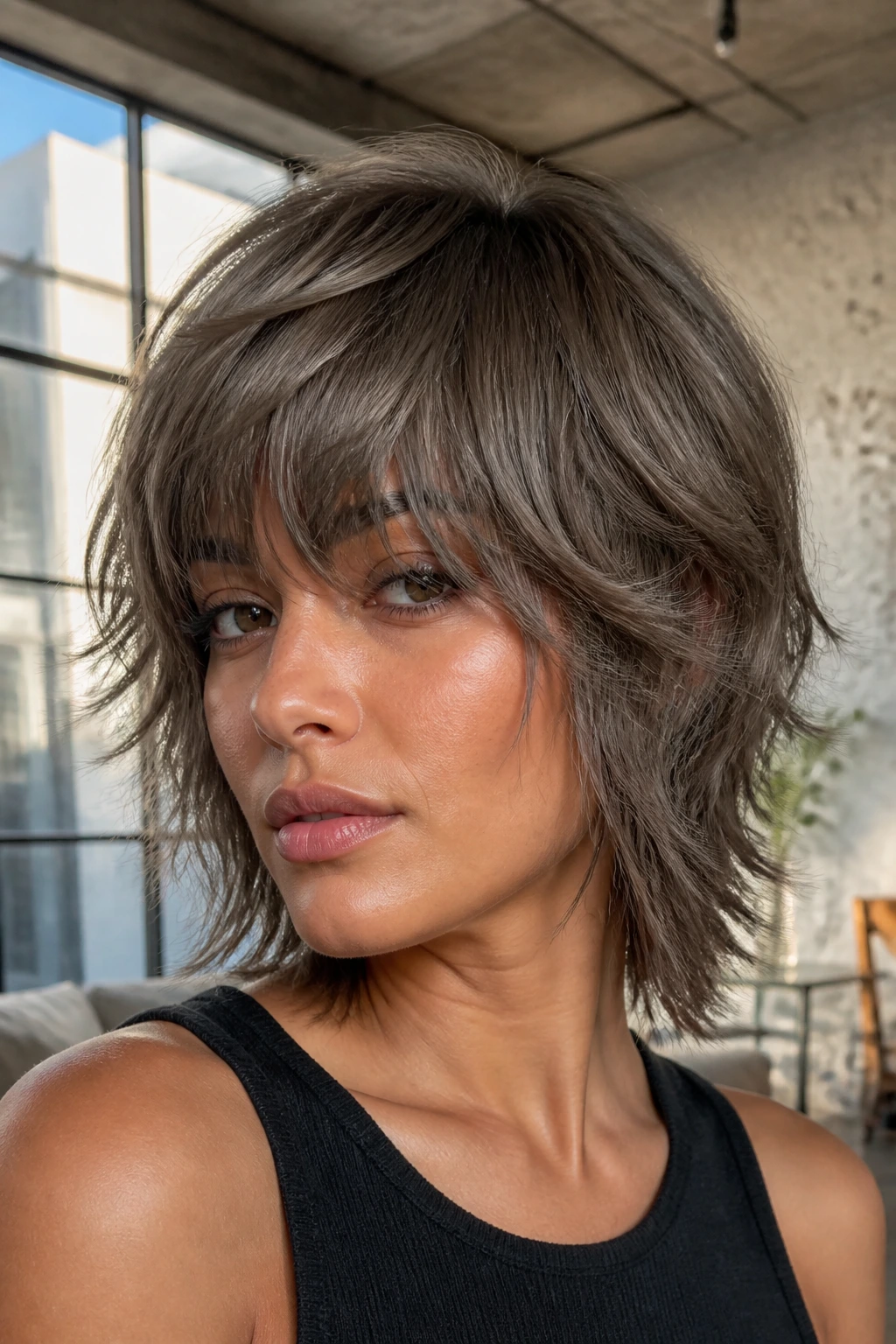
6. Mushroom Brown Shag
Mushroom brown is the answer for olive tan skin when warm brunette feels too orange and ash blonde feels too pale. It’s a cool-neutral brown with gray-beige softness, and on a shag it gets broken up enough to avoid that washed-out feeling people worry about.
The shag matters because the layers keep the cool tone from sitting as one heavy block. On this cut, the shade reads airy, not muddy. If your natural hair is dark and you want to stay close to home, this is one of the cleanest, least fussy options on the whole list.
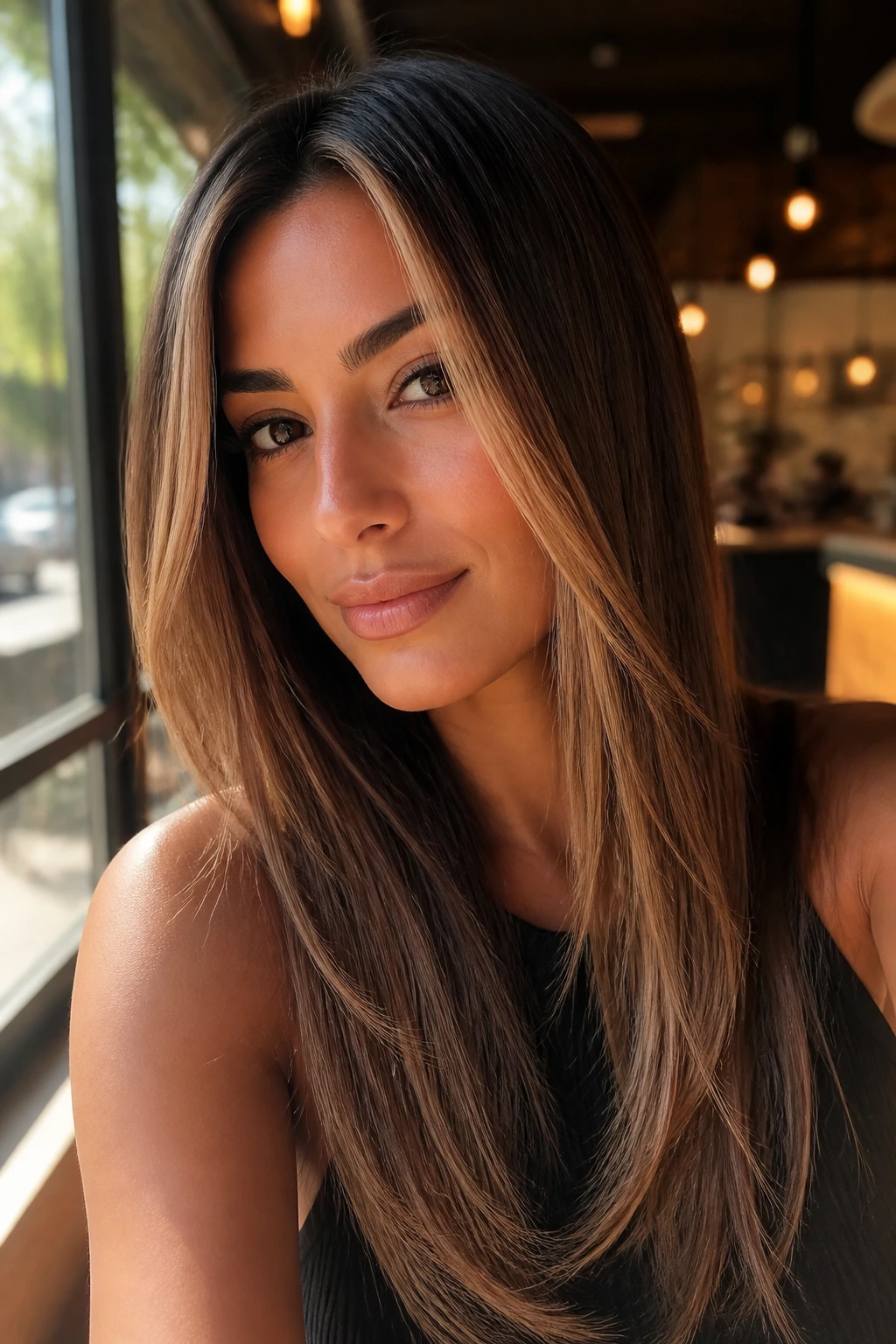
7. Golden Face-Framing Highlights on Straight Layers
A little brightness around the face can change everything. Straight layers don’t hide color in movement, so those golden front pieces become the whole story fast. That’s useful if you want a visible shift without lifting the rest of your hair.
How to Wear It
- Ask for two to four skinny face-framing pieces one to two levels lighter than your base.
- Keep the rest of the color deeper so the face frame has a job.
- Flat iron with a slight bend at the ends; pin-straight hair can make the highlights look harsher than they are.
On tan skin, gold works best when it looks like sunlight, not brass. That’s a narrow lane, but it’s a good one.
8. Cinnamon Auburn Pixie
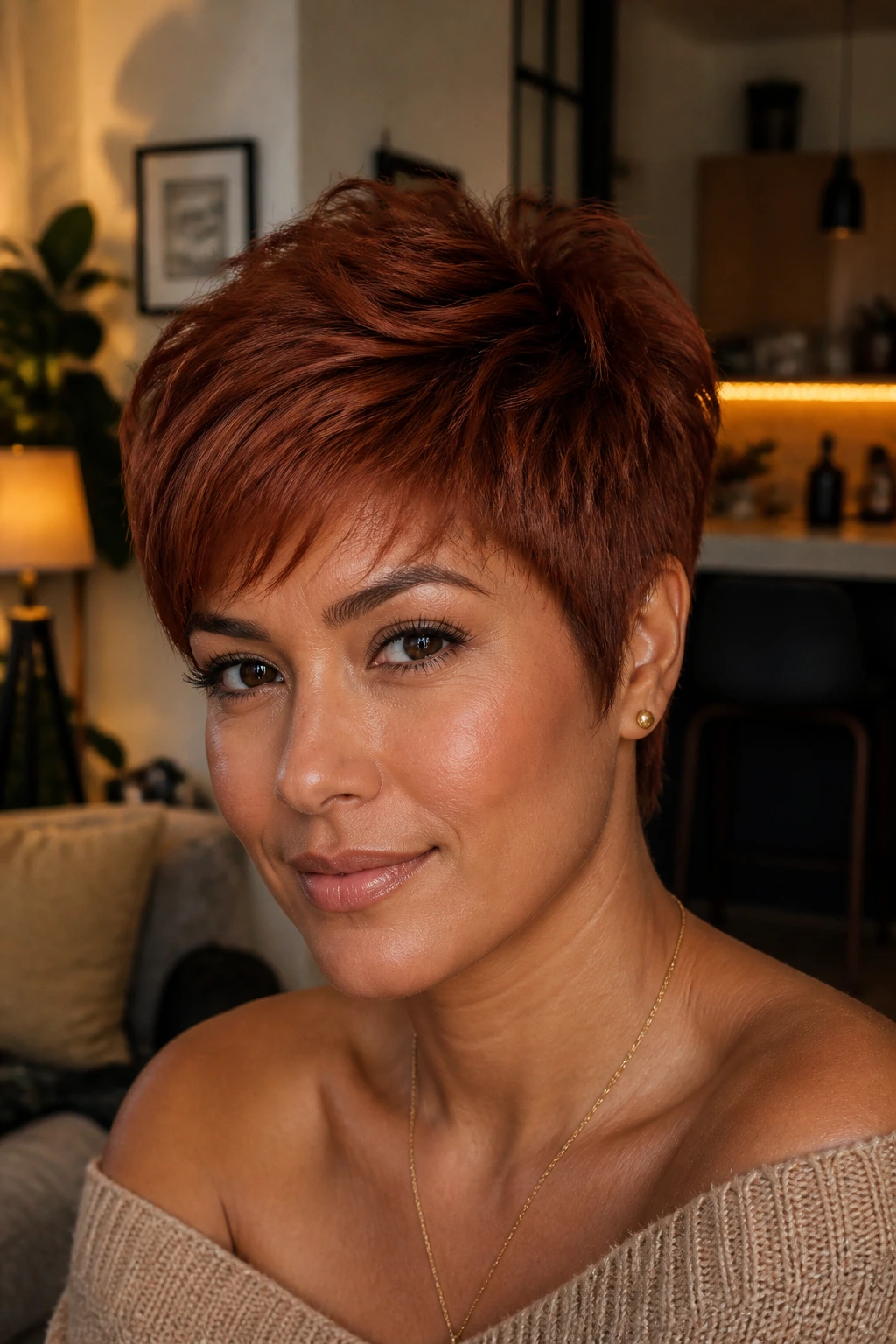
Short hair changes the rules. A pixie leaves nowhere to hide, which is exactly why cinnamon auburn works so well here. The color gives the crop warmth and depth, and the cut keeps it from feeling like a single block of red.
This is a strong choice for warm tan skin that can handle more saturation around the face. If you wear makeup, the color makes terracotta blush and brown liner look especially clean. If you don’t, the hair itself does the work. It’s an efficient kind of style. I respect that.
9. Mocha Money Piece on a Mid-Length Cut
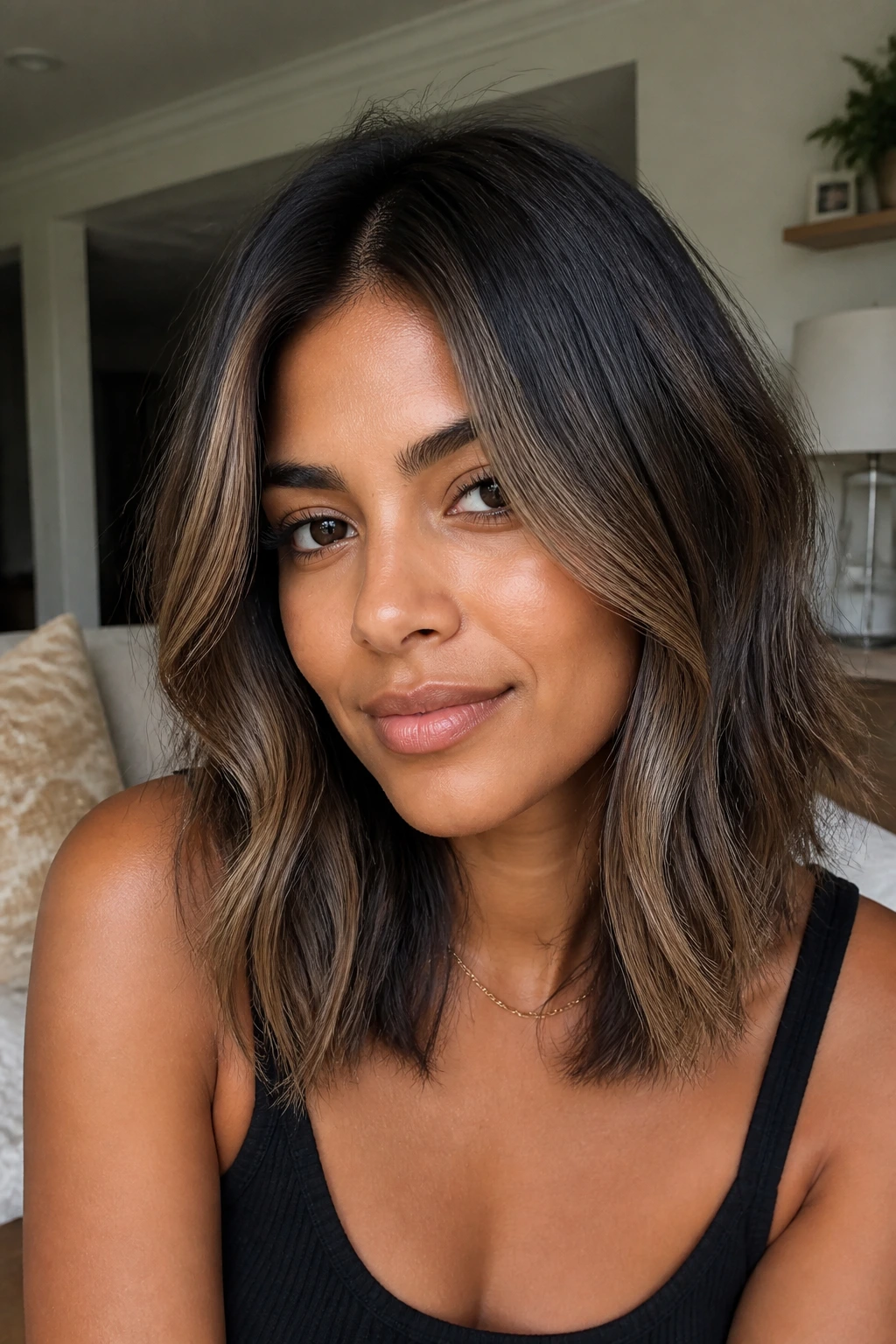
Mocha with a money piece sounds subtle because it is subtle, but subtle does not mean boring. A slightly lighter mocha ribbon around the face can soften tan skin without dragging the whole head into high-maintenance territory. Mid-length cuts are especially good at this because they give the front pieces room to show off.
The contrast should stay soft. You want maybe one to two levels of difference, not a stripe that shouts across the room. That restraint is what makes this idea so wearable for work, school, or anything where you don’t want your hair to become the main event.
10. Beige Blonde Textured Bob
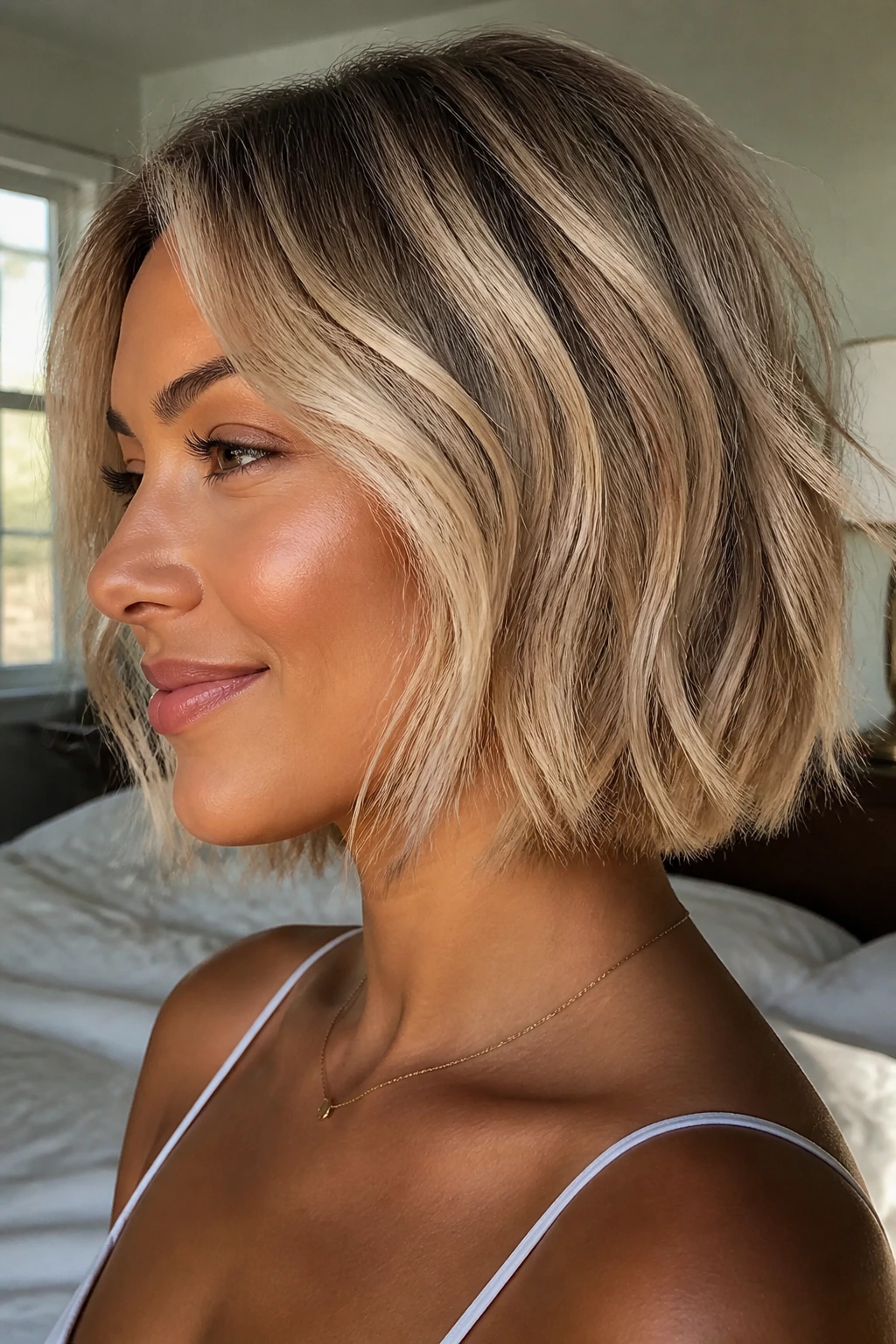
Beige blonde is tricky, and that’s exactly why texture matters. On a textured bob, the shade stops looking icy and starts looking airy. The little bends in the cut break up the cool tone so it feels light instead of chalky.
If your tan skin leans neutral or olive, this can be a very good move. The bob keeps the blonde close to the face, and the beige tone avoids the hard yellow cast that can happen with warmer blondes. I’d keep roots a shade deeper and ask for a soft toner rather than a hard, flat blonde.
11. Walnut Brown Sleek Ponytail
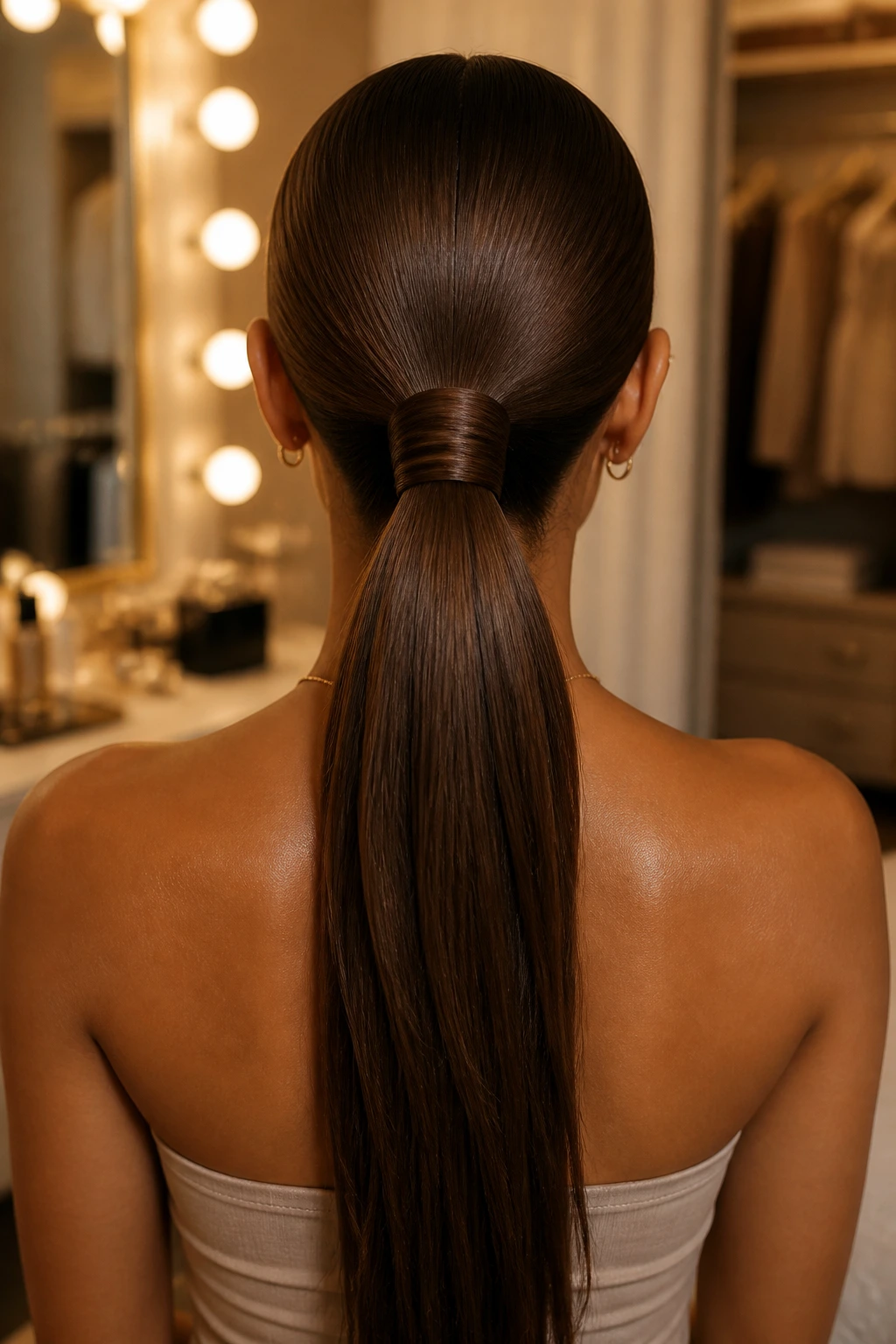
A sleek ponytail might sound plain until you put walnut brown on it. Then the shine starts doing the heavy lifting. Walnut is deeper than chestnut but softer than espresso, which makes it one of the easiest brunette shades for tan skin when you want polish more than drama.
This works because the smooth shape puts all the attention on tone and gloss. A clean middle part, a wrapped base, and edges laid neatly at the temples make the whole look feel intentional. It’s not the flashy option. It is the one that looks expensive in person.
12. Bronze Ombré on Beach Waves
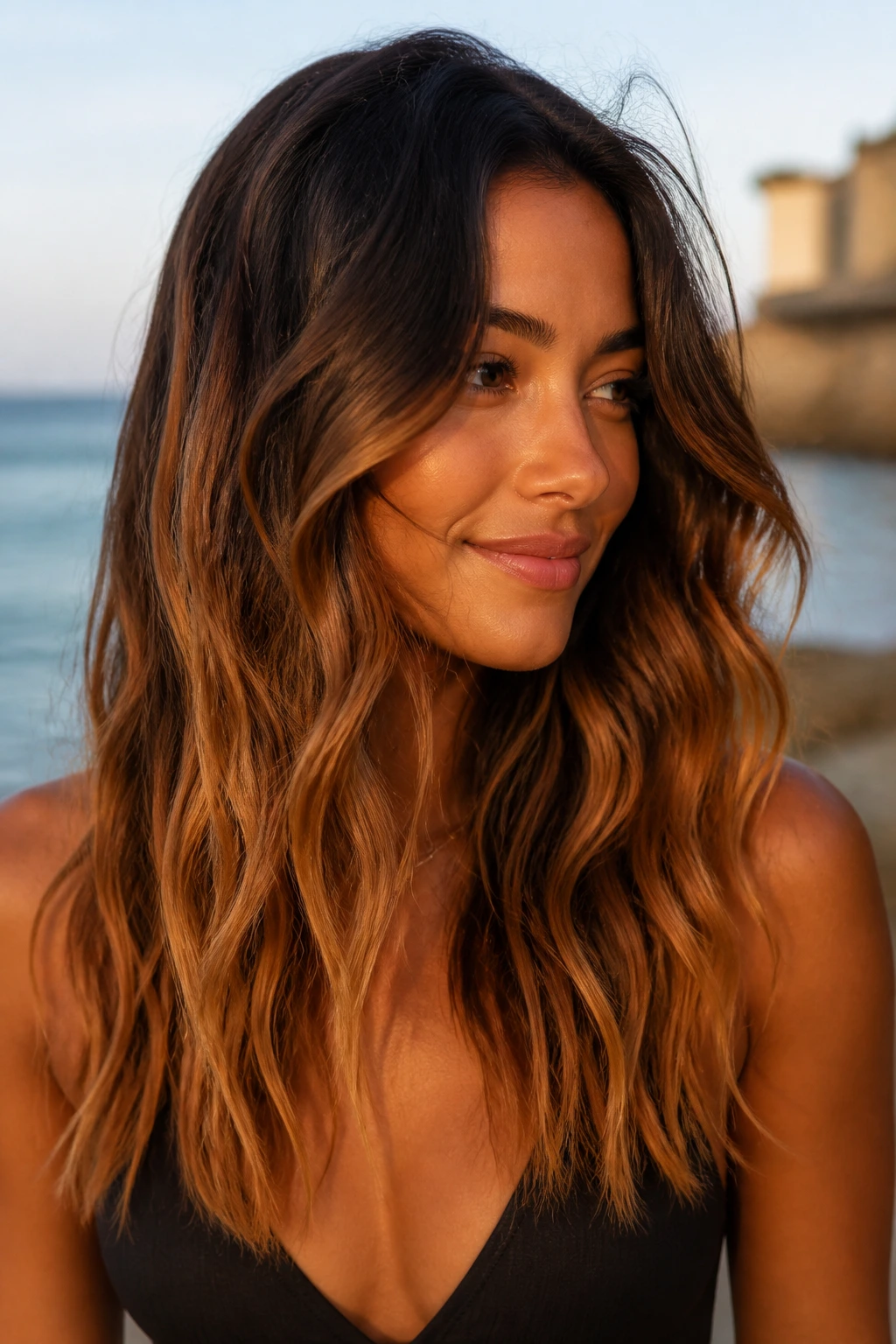
Bronze ombré is for the person who wants movement and warmth without committing to full brightness near the roots. The darker top melts into bronze ends, and beach waves keep the gradient soft instead of stripey.
That kind of fade flatters tan skin because bronze sits between brown and gold. It doesn’t fight warmth, and it doesn’t go too yellow. If your hair is medium brown to start, this can be a clean way to add interest without a huge color leap. A sea-salt spray and a diffuser make the finish feel natural, not overworked.
13. Rose Gold Wavy Lob
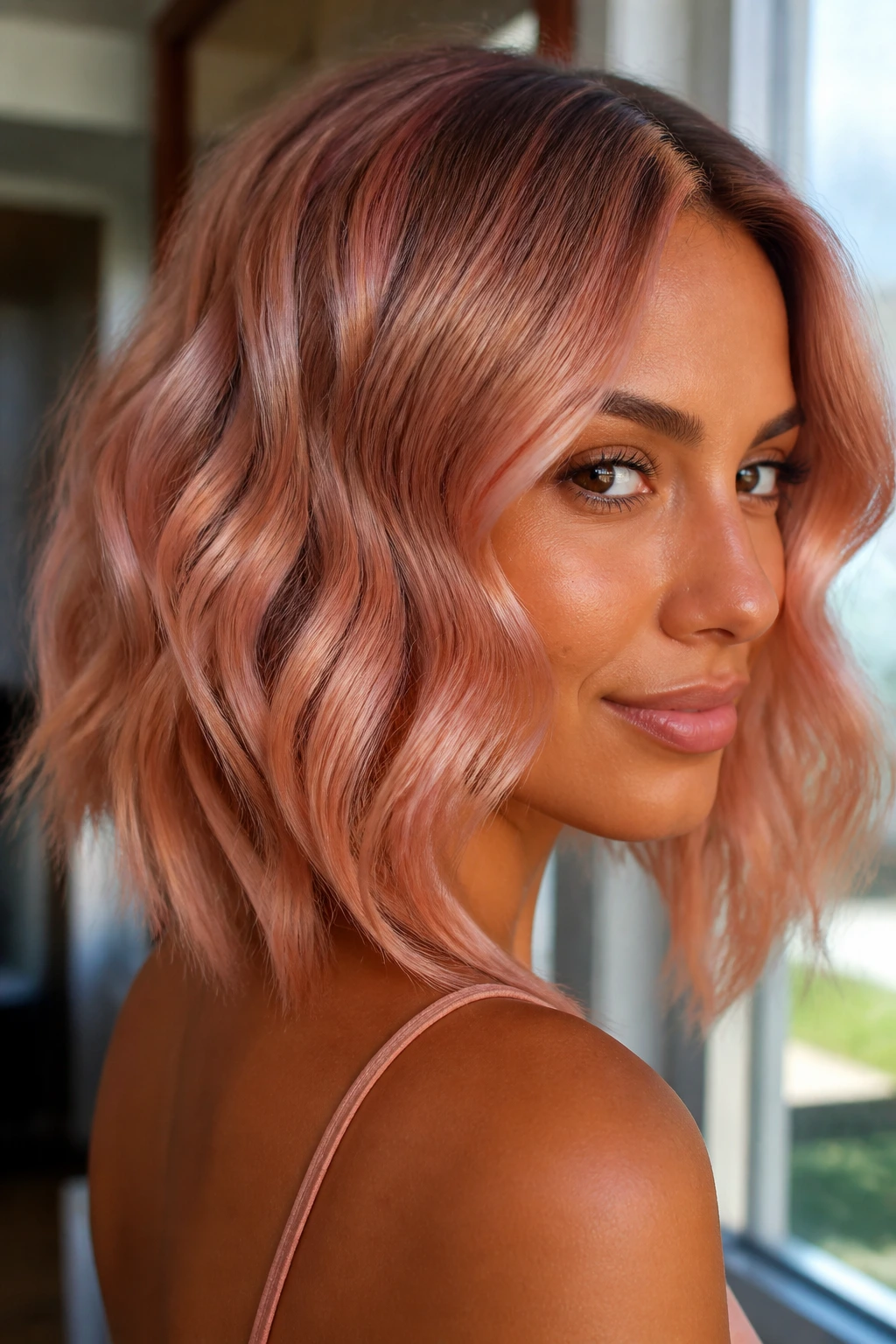
Rose gold can look gimmicky when it’s too pink, too pale, or too shiny in the wrong way. On tan skin, though, a muted rose gold lob can be stunning when the pink leans peach and the waves stay soft. It reads modern without turning cold.
The Softest Way to Wear Pink-Toned Hair
- Keep the base a neutral blonde or light brown, not a stark platinum.
- Ask for a peach-rose gloss rather than a hard pink dye.
- Add loose waves, because the color looks better when it shifts.
This is best for neutral tan skin or warm tan skin that already handles peach blush and bronze makeup well. It’s a playful color, but the lob keeps it grounded.
14. Toffee-Toned Butterfly Cut
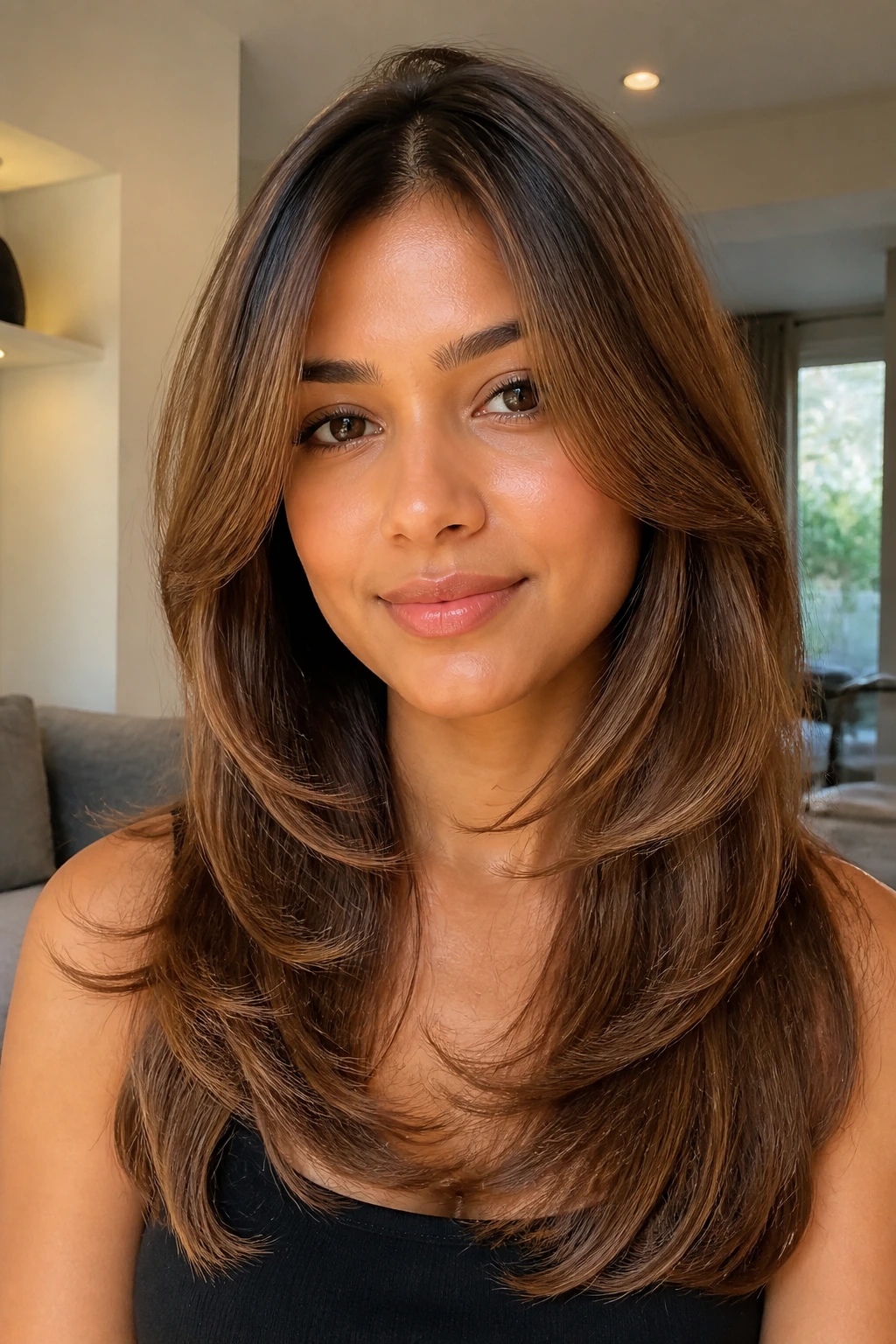
The butterfly cut loves dimension, which makes toffee an obvious fit. Long layers around the face and through the ends let the shade flicker instead of sitting still. On tan skin, that warmth looks soft, almost creamy, without going brassy.
What I like about this one is the scale. It looks full and airy at once. The longer layers preserve length, while the shorter face-framing pieces catch the light and make the color move. If you want a style that feels styled even on a normal day, this is a strong pick.
15. Smoky Brunette with Lowlights
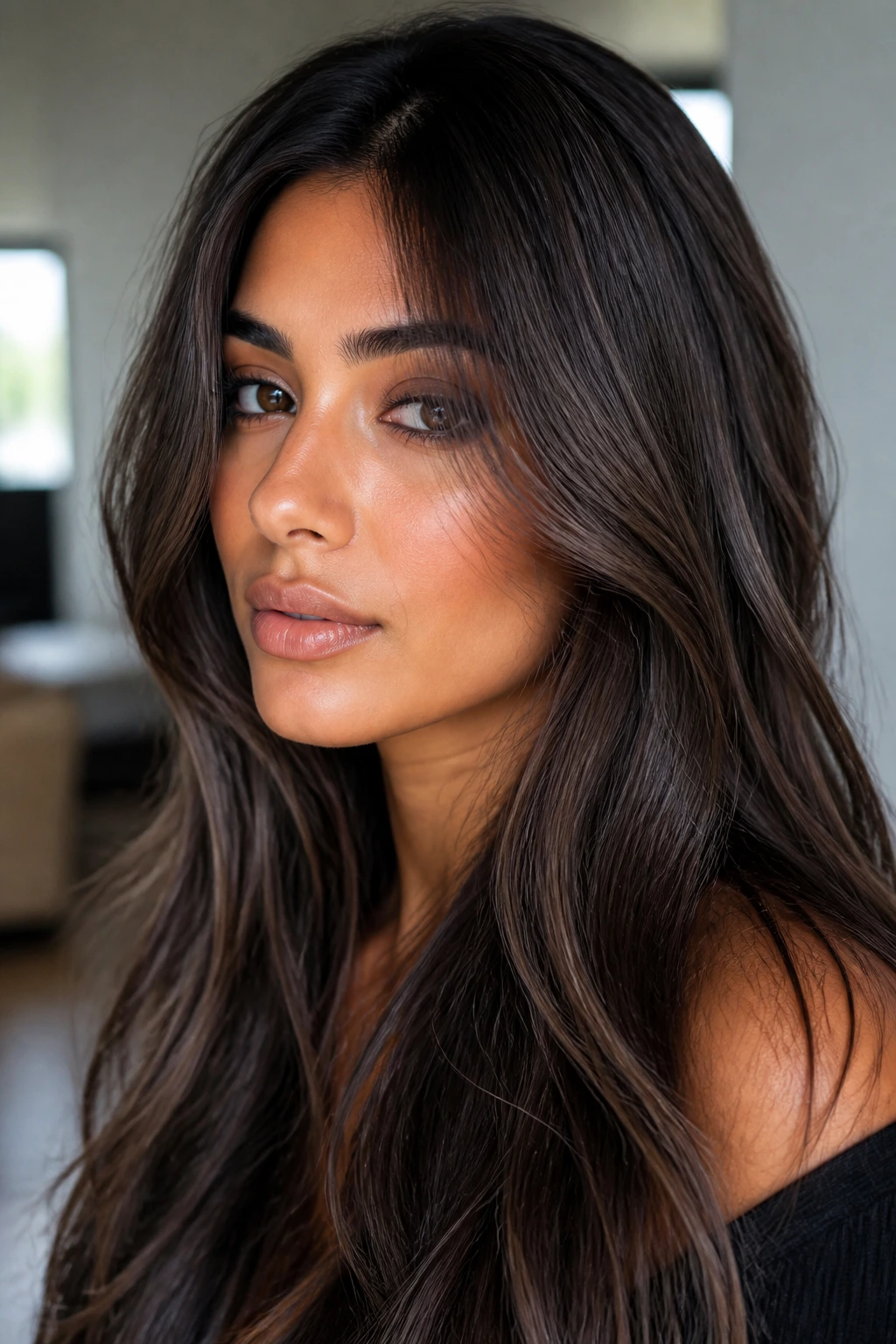
Smoky brunette is the brunette that wears a little shadow on purpose. It mixes deep brown with cool lowlights, which gives olive and neutral tan skin a smoother backdrop than warm brown sometimes can. The color doesn’t compete with the face. It supports it.
This is a smart choice if your natural hair is already dark and you want more depth than brightness. The lowlights create that quiet contrast that shows up best when hair moves, so long layers or soft waves help. It’s not flashy. It’s refined, and honestly, that suits a lot of tan complexions better than a too-bright blonde ever would.
16. Deep Auburn Curls
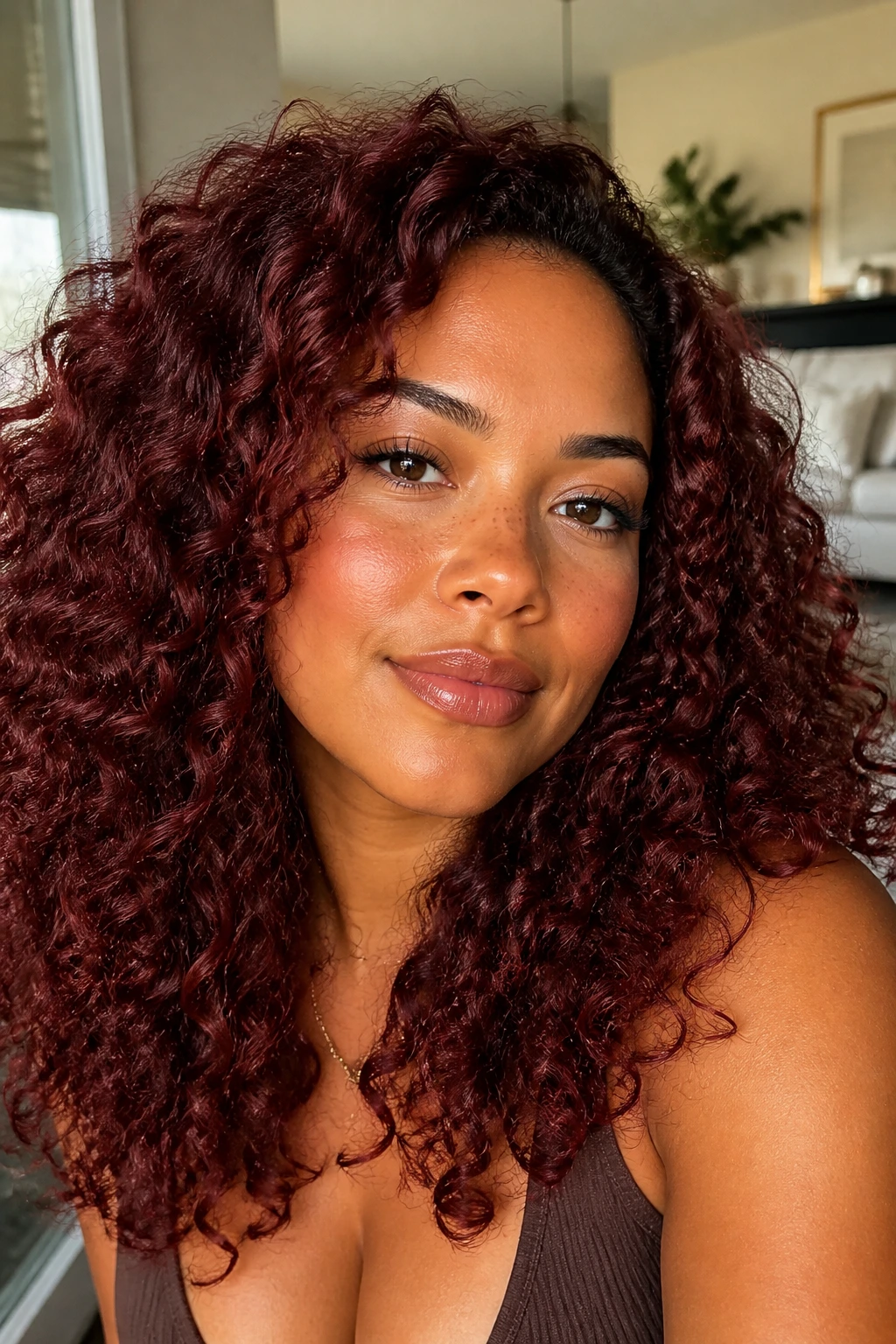
Deep auburn curls sit in that sweet spot between red and brown. They’re rich enough to look serious, but warm enough to flatter tan skin without needing perfect makeup or perfect lighting. The curls keep the color from reading flat, which is half the battle with red-brown shades.
If your complexion has golden depth, deep auburn can make the skin look livelier. If you lean neutral, it gives enough warmth to keep the face from going washed out. The shade does ask for upkeep, though. Reds fade, and curls can dry out color faster than straight hair. A color-depositing conditioner helps more than people think.
17. Sun-Kissed Bronde Layers
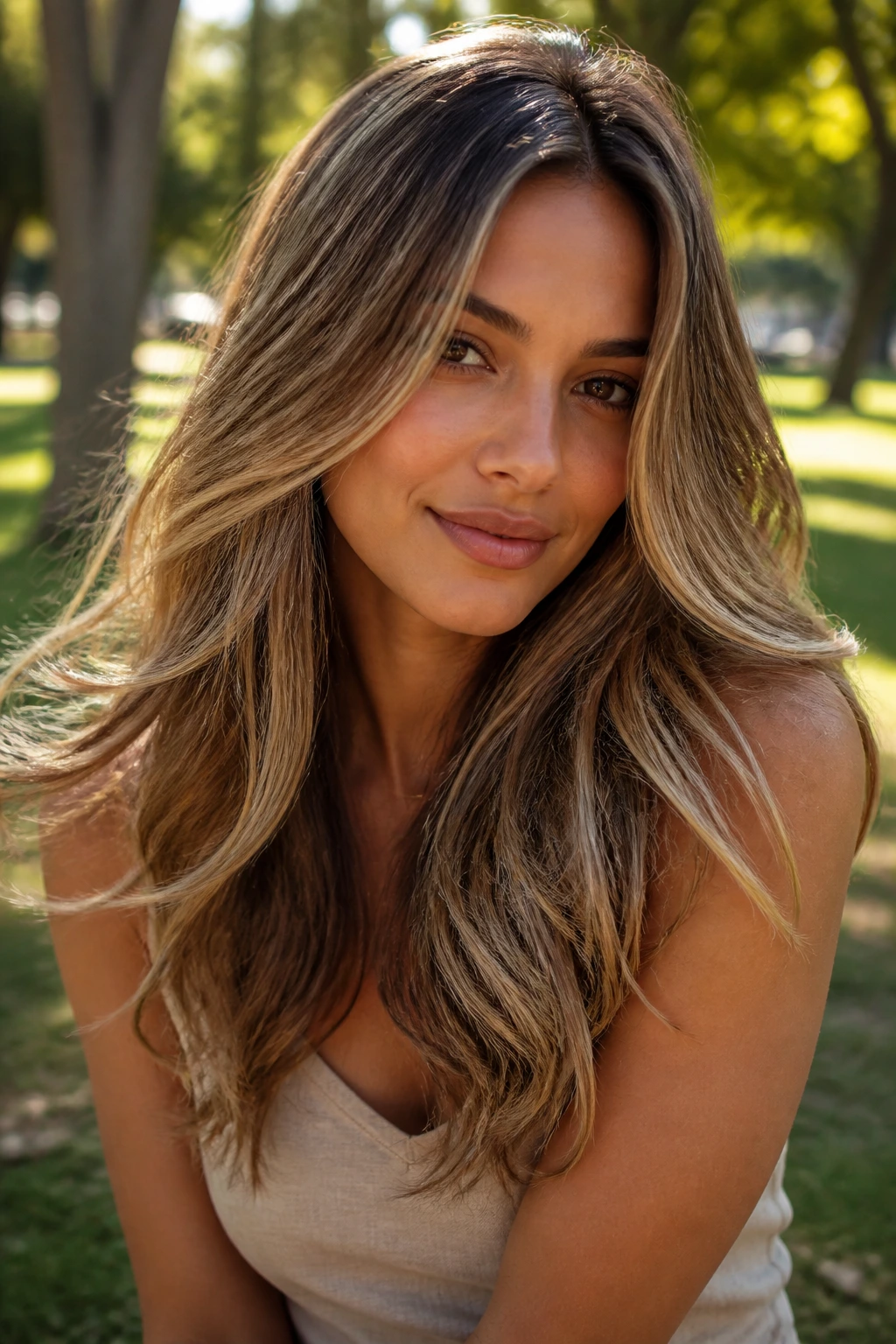
Bronde works because it refuses to pick a side. On tan skin, that middle ground can be a relief. The blend of brown and blonde reads soft and expensive, especially when layers break the color into ribbons rather than one solid mass.
This is one of the best choices if you want brightness but not a dramatic transformation. It’s also one of the easiest to grow out. Ask for a root that stays close to your natural shade, then paint the lighter pieces around the face and through the ends. The result looks lived-in, not lazy. Big difference.
18. Plum-Tinted Long Layers
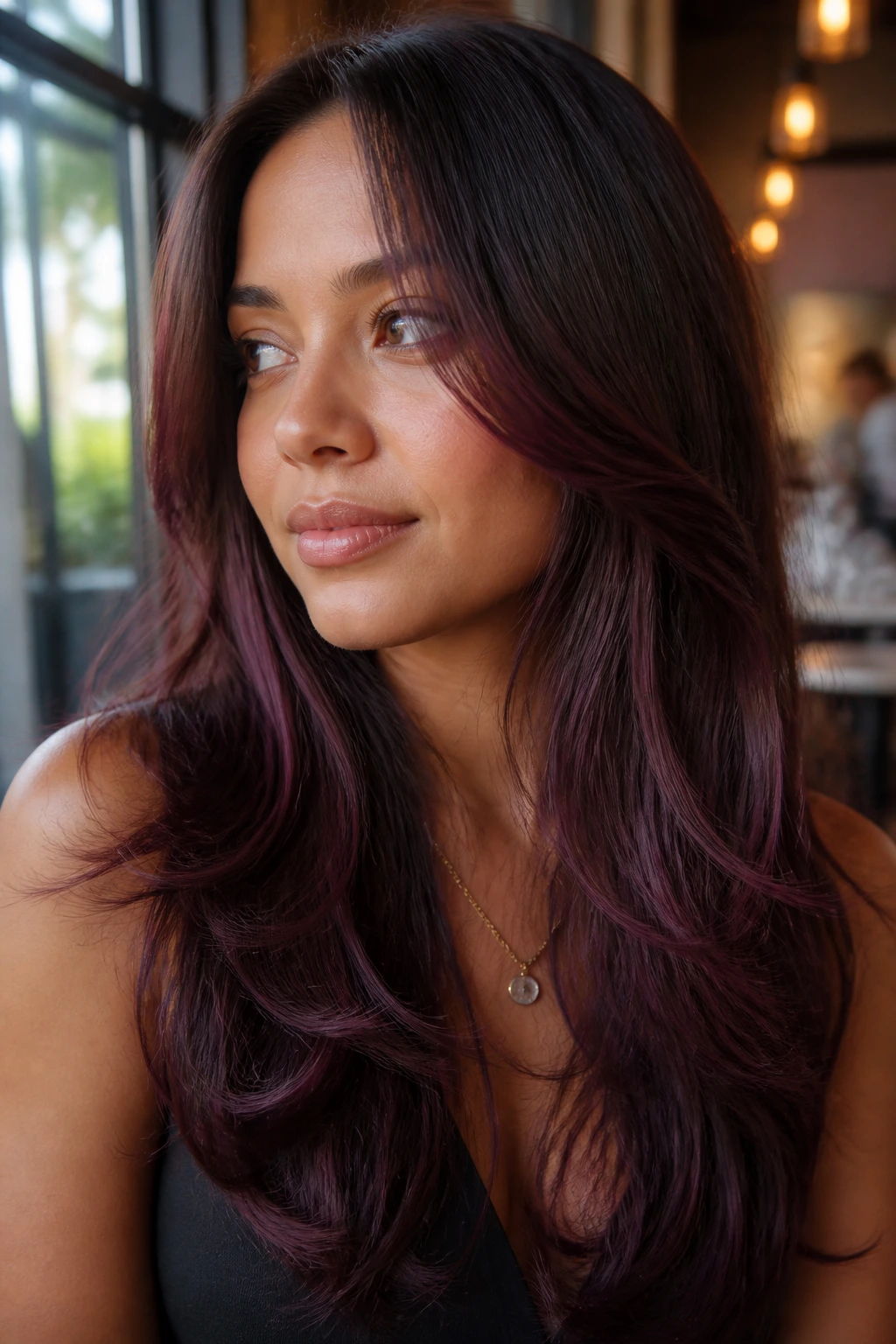
Plum is the dark horse here. If your tan skin leans neutral or a little cooler, a plum tint can add depth without turning muddy. The trick is keeping the purple muted and dark — think berry wine, not violet marker.
Long layers help plum move, which matters because darker fashion shades can disappear on long hair if the cut is too heavy. A soft gloss over the top keeps the tone looking smooth. I like this best on someone who wants a color with personality but not a neon moment. It’s moody, but not theatrical.
19. Honey Caramel Braids
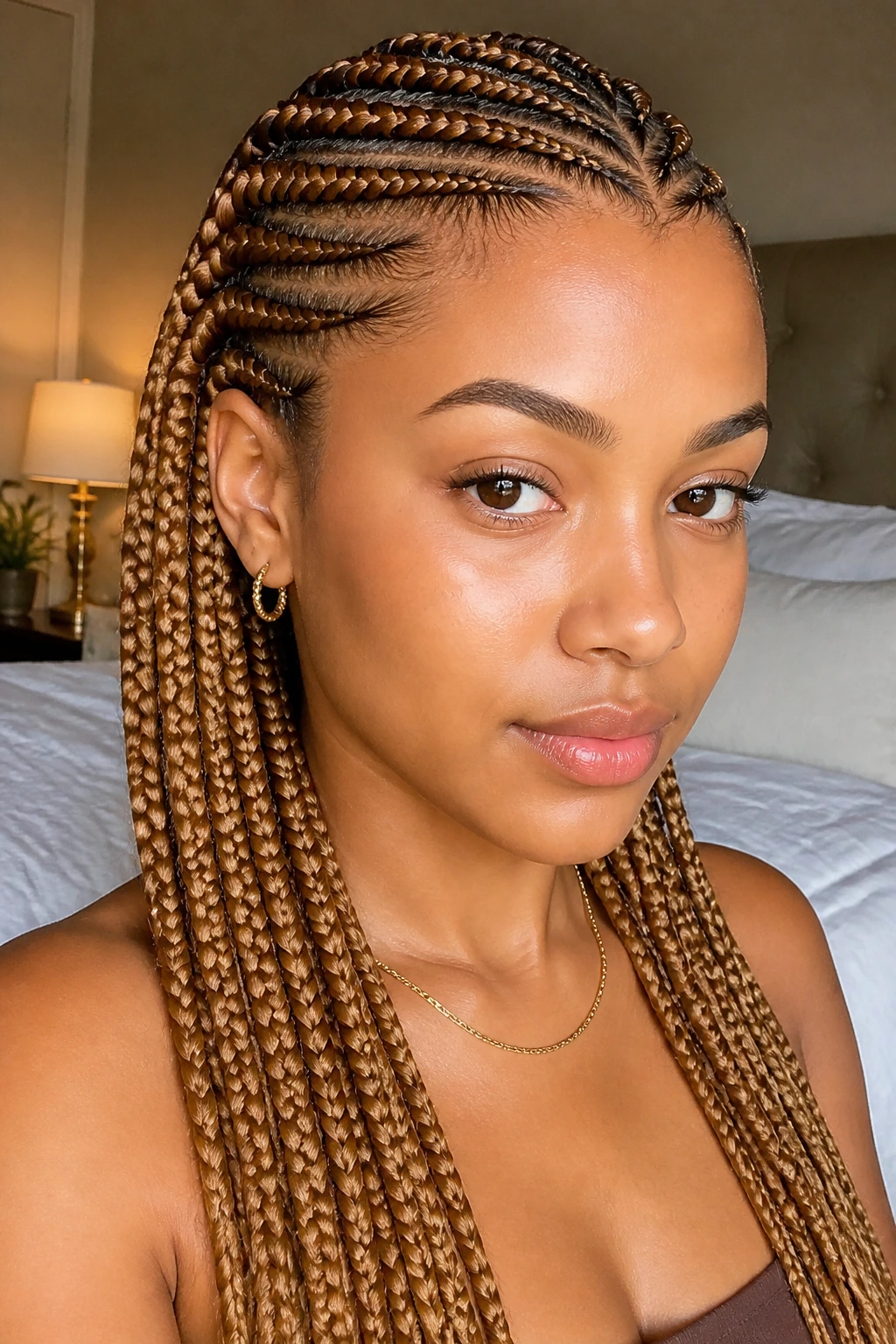
Braids show color in a different way. Instead of light catching broad waves, it hits in narrow lines and twists. Honey caramel braids use that to their advantage, especially on tan skin where warmth in the braid pattern can echo the skin’s own glow.
This is a good choice if you want a protective style that still reads bright. The caramel pieces can be woven through a darker base, or the whole braid can stay in a honeyed range for a softer look. Either way, the warmth keeps the style from feeling too heavy near the face. The details matter here — neat parts, clean scalp, and a fresh edge are what make the color read well.
20. Copper Balayage on a Wolf Cut
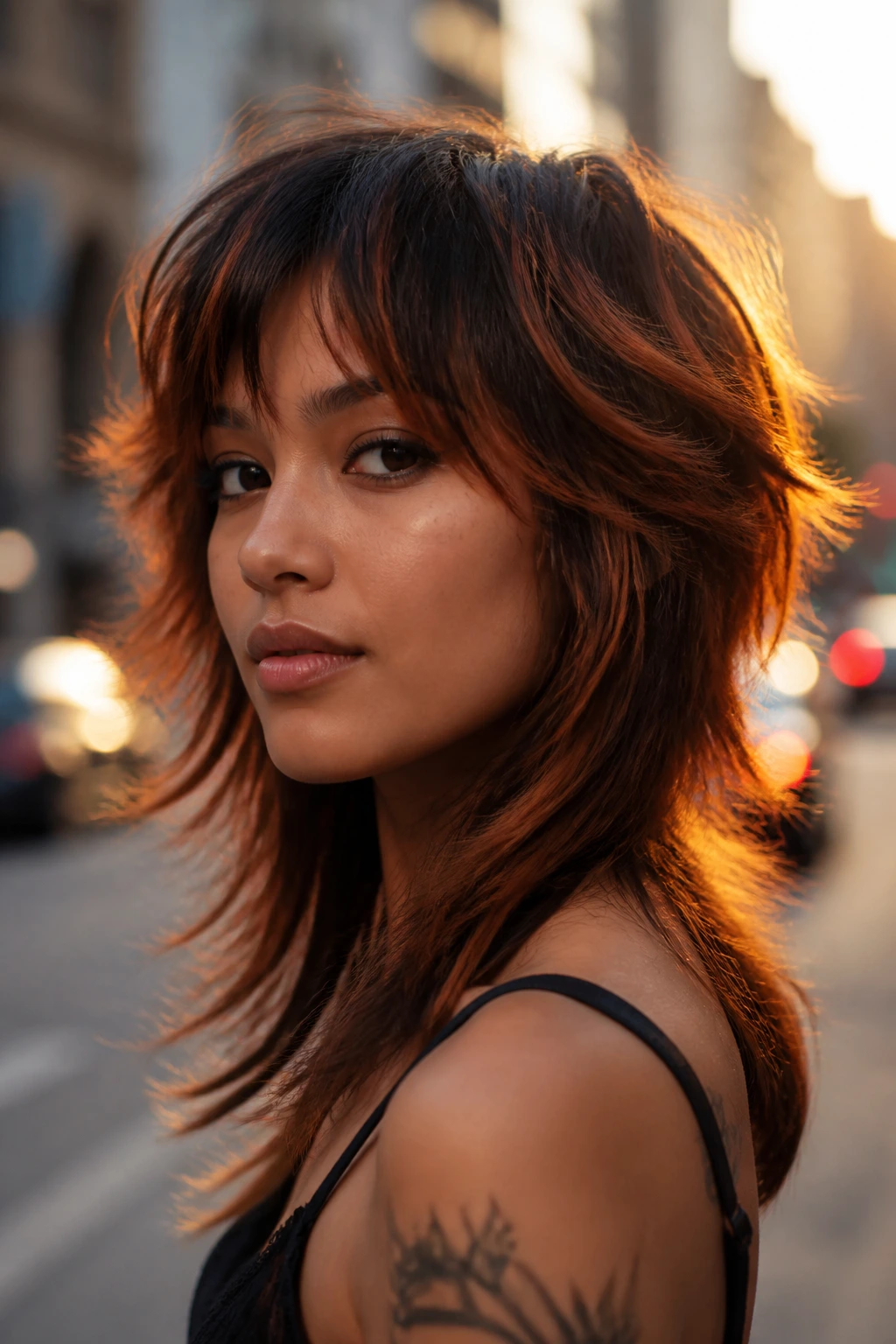
A wolf cut is already a little wild, so copper balayage fits it naturally. The layered, shaggy shape lets copper appear in flashes, not a single uniform sheet. That helps tan skin because the color feels scattered and alive rather than poured on.
Why This Pairing Works
Copper likes movement. The wolf cut gives it plenty. If the hair is medium to dark brown underneath, the balayage pieces show through the top layers and create that warm, imperfect edge people either love or wish they had tried sooner.
This one is especially good if you want edge without sacrificing warmth. The color says fire. The cut says don’t overthink it.
21. Vanilla Cream Highlights on a Blunt Bob
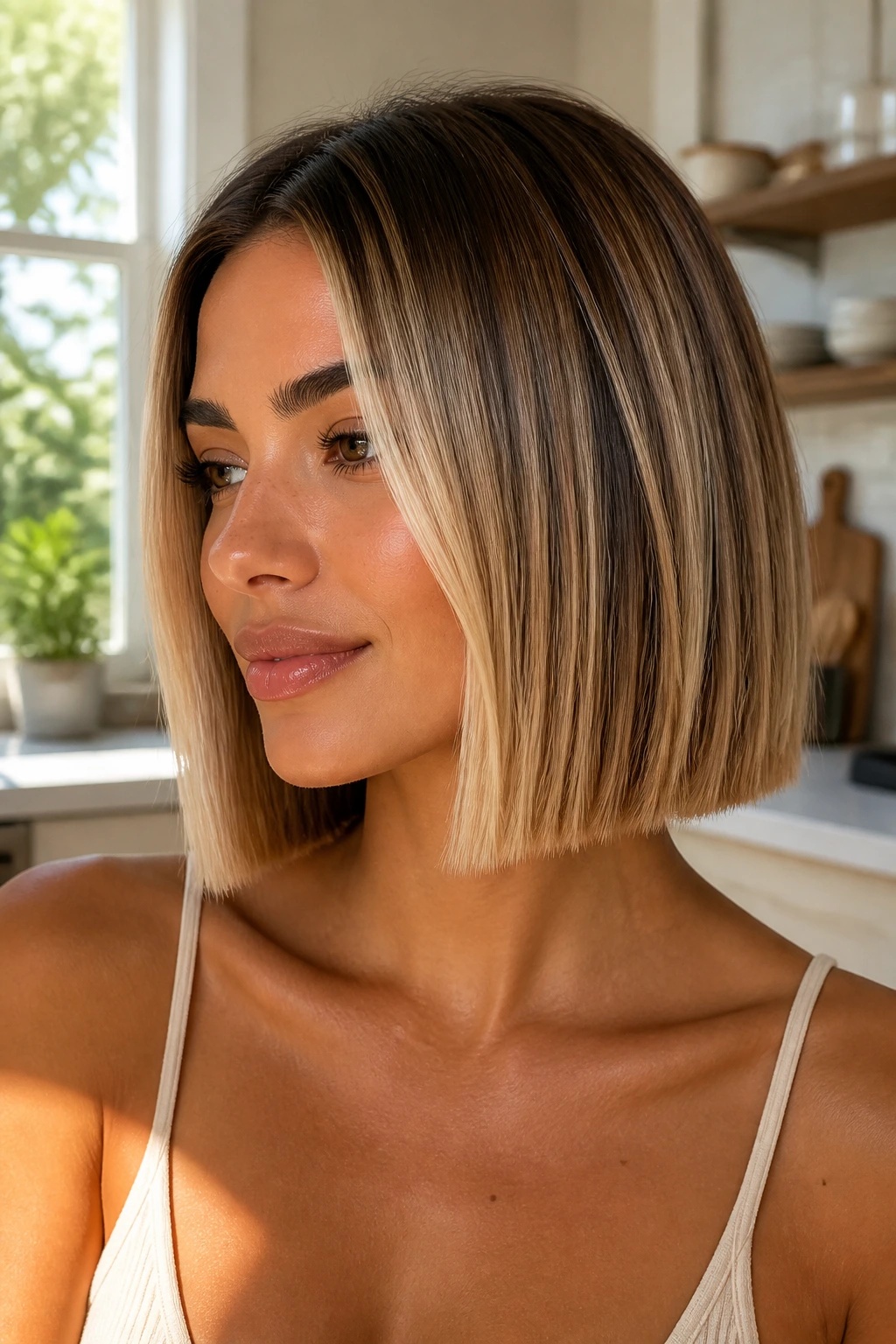
Vanilla cream highlights can go wrong fast if they lean yellow or too cool, which is why a blunt bob is such a useful shape. The cut keeps the color clean and graphic, and the cream tone should stay soft, not icy. On tan skin, that softness matters.
I’d choose this for neutral tan skin or warm tan skin that wants blonde but not beachy blonde. The bob gives structure, so the color doesn’t have to do everything. Keep the highlights fine and close together if you want a more expensive look; chunky sections can make the style feel dated faster than you expect.
22. Mahogany Silk Press
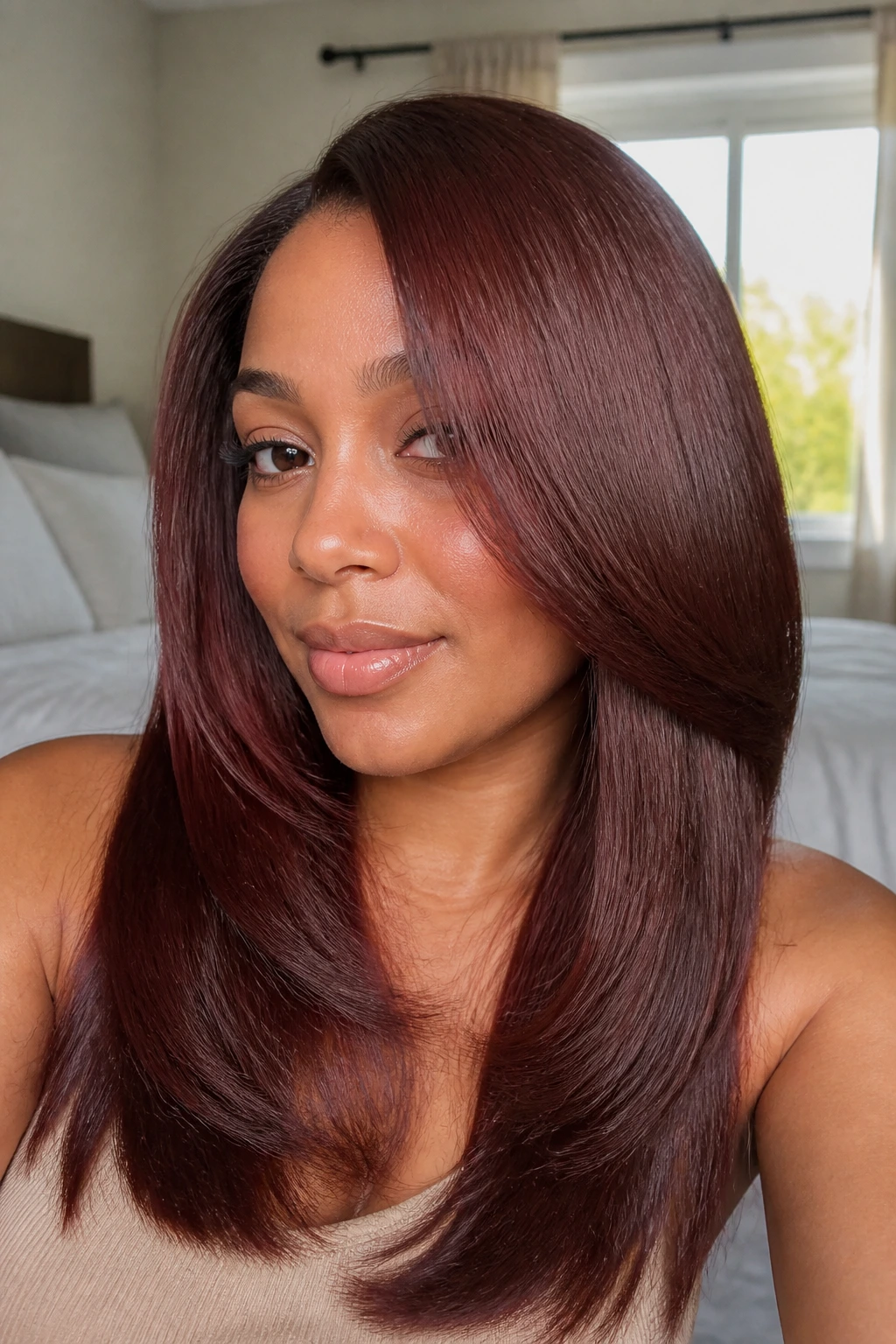
Mahogany and a silk press are a gorgeous combination because the color and the finish both lean polished. Mahogany has depth, red-brown warmth, and enough richness to keep tan skin from looking flat. The silk press makes the color shine in broad, glassy sheets.
This works especially well if you like dark hair but want the tint to be visible in daylight. The red-brown undertone shows up at the ends and around the face without needing heavy lightening. Keep the press crisp, and protect it from humidity. That part is unglamorous. Also necessary.
23. Sandy Beige Shag with Curtain Fringe
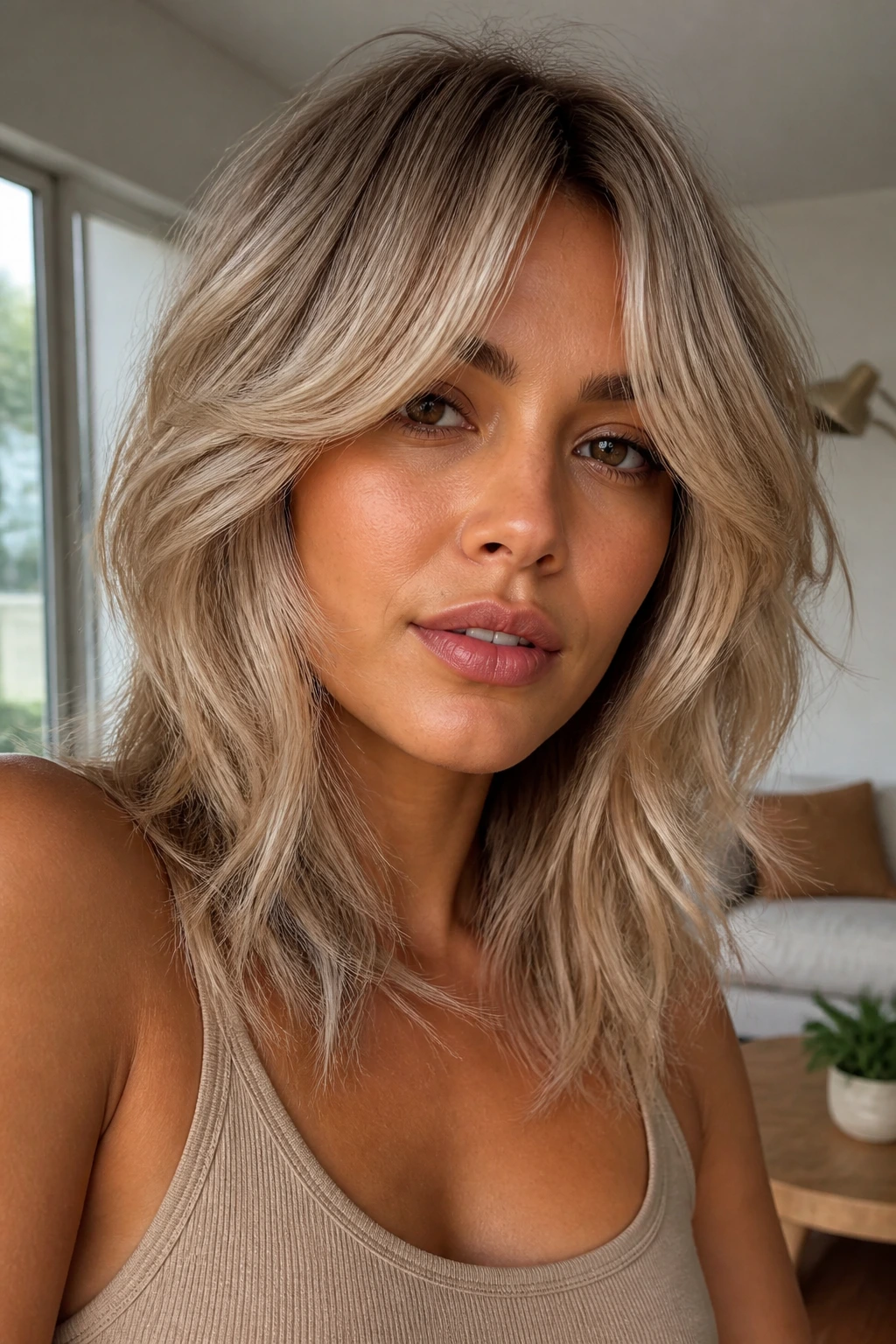
Sandy beige is one of the most wearable cool-blonde families for tan skin, but the cut has to help it. A shag with curtain fringe keeps the shade moving, so the beige doesn’t settle into a flat, dusty band. That’s the whole difference between “soft” and “washed out.”
This idea tends to work best on neutral or olive tan skin. The curtain fringe opens the face and gives the color a warm entrance, even when the blonde itself is more muted than golden. If you want an easygoing blonde that doesn’t scream for attention, this is a smart lane.
24. Golden Brown Twist-Out
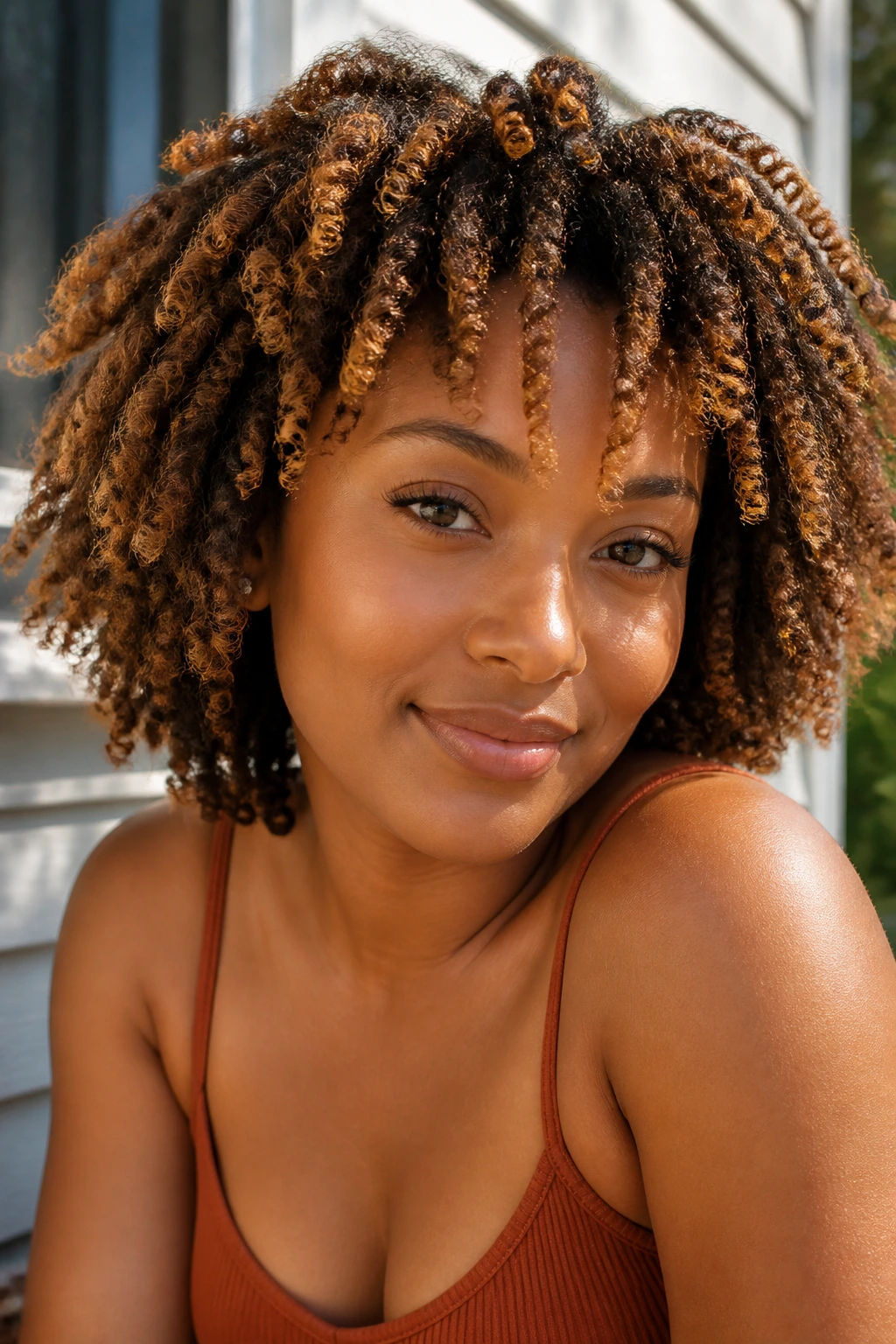
A twist-out gives golden brown a lot of texture to play with. Every coil and curve catches the color differently, which is why this shade reads so rich on tan skin. The brown stays warm, but the gold in the finish keeps it from looking flat or too dark.
I like this look because it honors texture instead of trying to fight it. The color follows the curl pattern instead of sitting on top of it. If you wear your hair natural and want something that brightens the face without a big bleach job, golden brown is a very good place to start. A light oil on the ends helps the tone look deeper and healthier.
25. Cherry Cola Layers
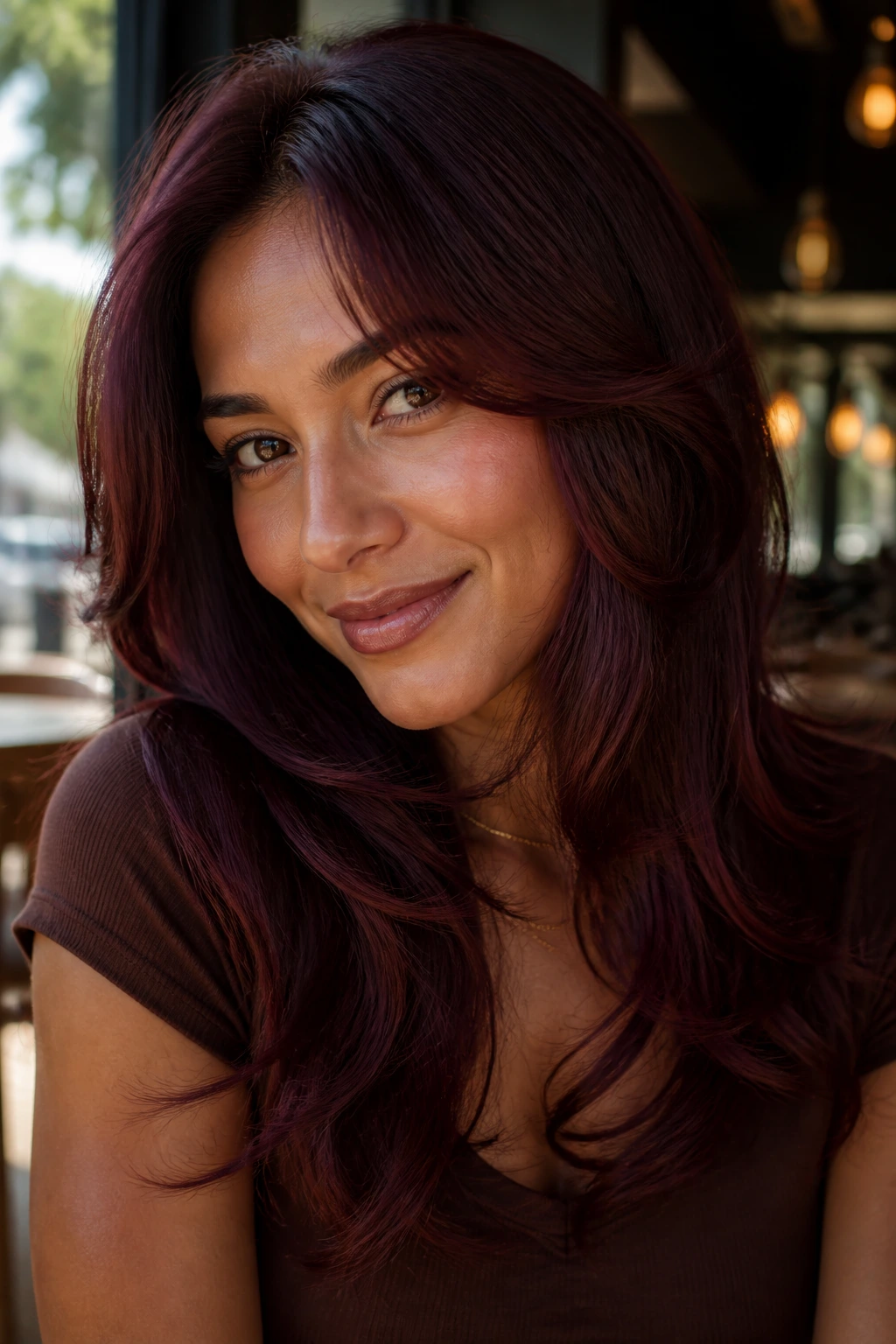
Cherry cola is a moody red-brown that flatters tan skin more often than people expect. The color has enough brown to stay wearable and enough red to keep the face from sinking into the shade. On layers, it looks especially good because the red shows up at different depths.
This is a nice middle ground if copper feels too bright and mahogany feels too dark. Cherry cola leans richer in low light and more red in daylight, which makes it a good choice for someone who wants a little shift without changing the whole mood of their hair. A gloss keeps the red from going dull.
26. Brushed-Back Jet Brown Crop
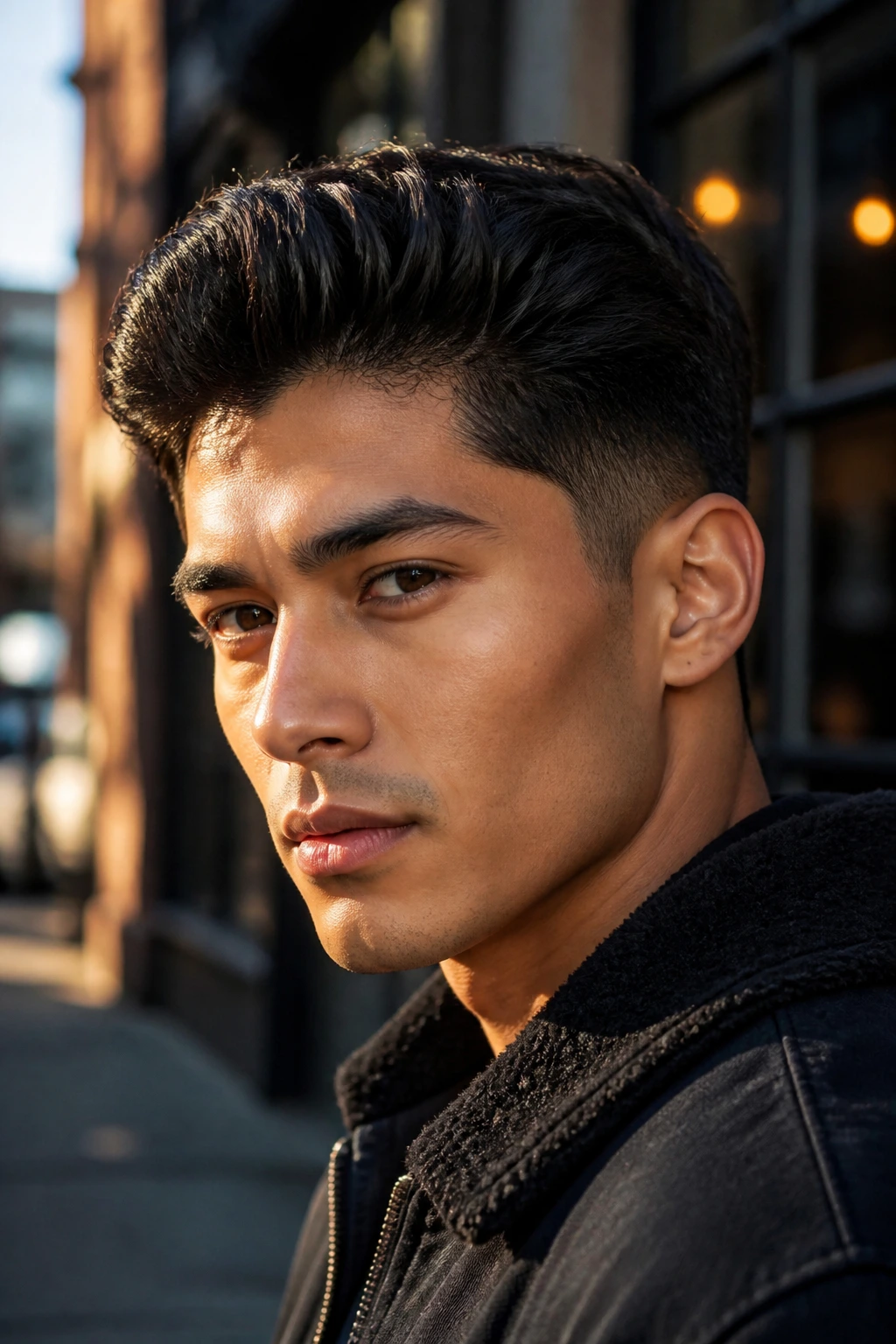
Jet brown is not the same as black, and that distinction matters on tan skin. Black can be stark. Jet brown has depth, but it still feels rich instead of flat. On a brushed-back crop, the color becomes all about shape and sheen.
This is a sharp look. Not soft, not tentative. The brushed-back styling opens the face, while the deep brown frames the skin with a clean edge. If you like strong brows, bronze makeup, and minimal fuss, this is one of the easiest dark styles to wear well. Keep the finish smooth and the edges neat.
27. Amber Gloss on Mid-Length Curls
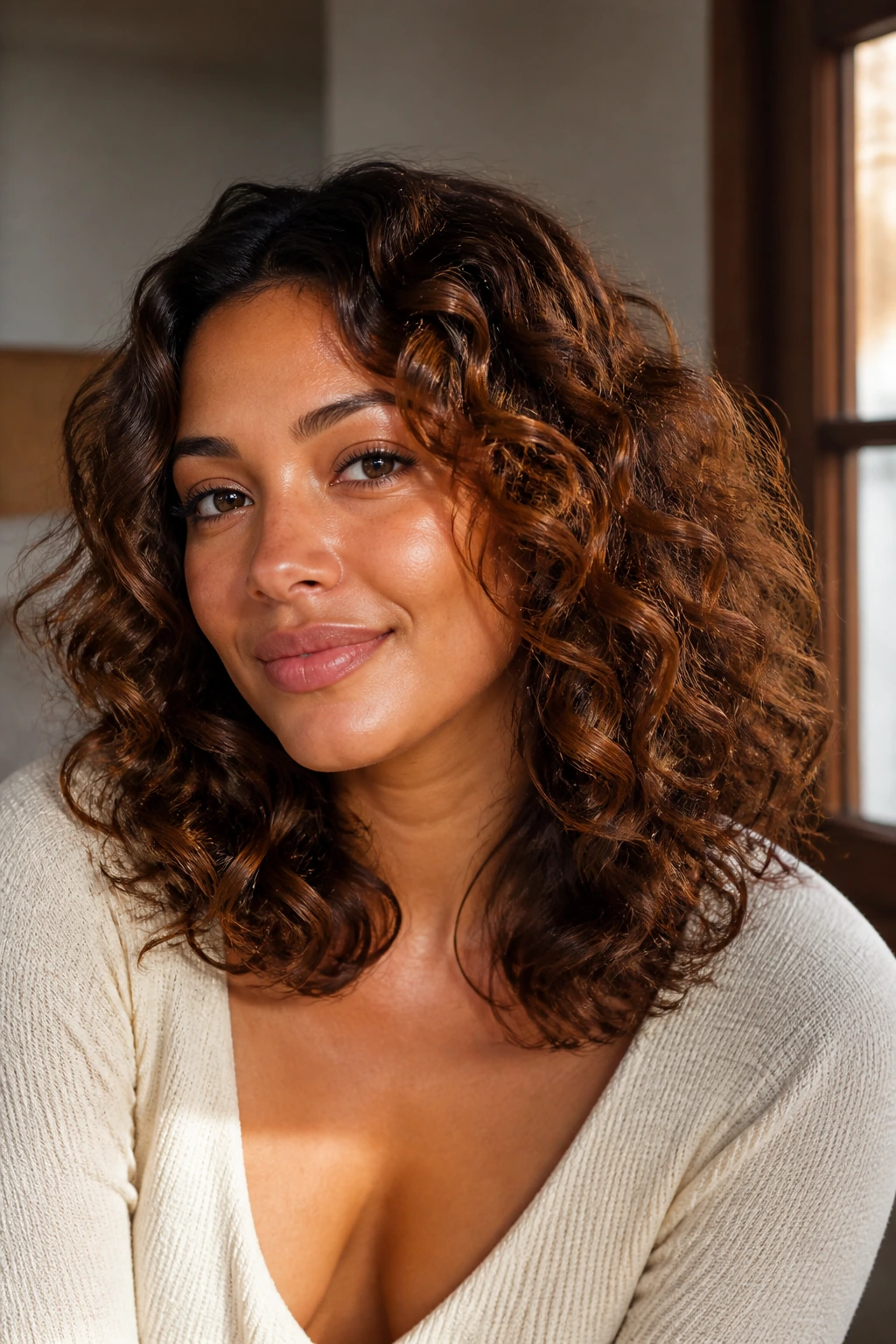
Amber gloss is a sneaky good option because it doesn’t demand a full color overhaul. It adds a warm, golden-red sheen over a brown or dark blonde base, and curls make that gloss ripple through the hair in a way that straight styles can’t quite match.
That warmth is flattering on tan skin because amber mirrors the same sun-warmed feeling without turning into a loud copper. I’d pick this if you want subtle change, not a dramatic dye job. It fades gracefully, too, which matters if you’re not interested in living at the salon every few weeks.
28. Soft Espresso with Subtle Auburn Ends
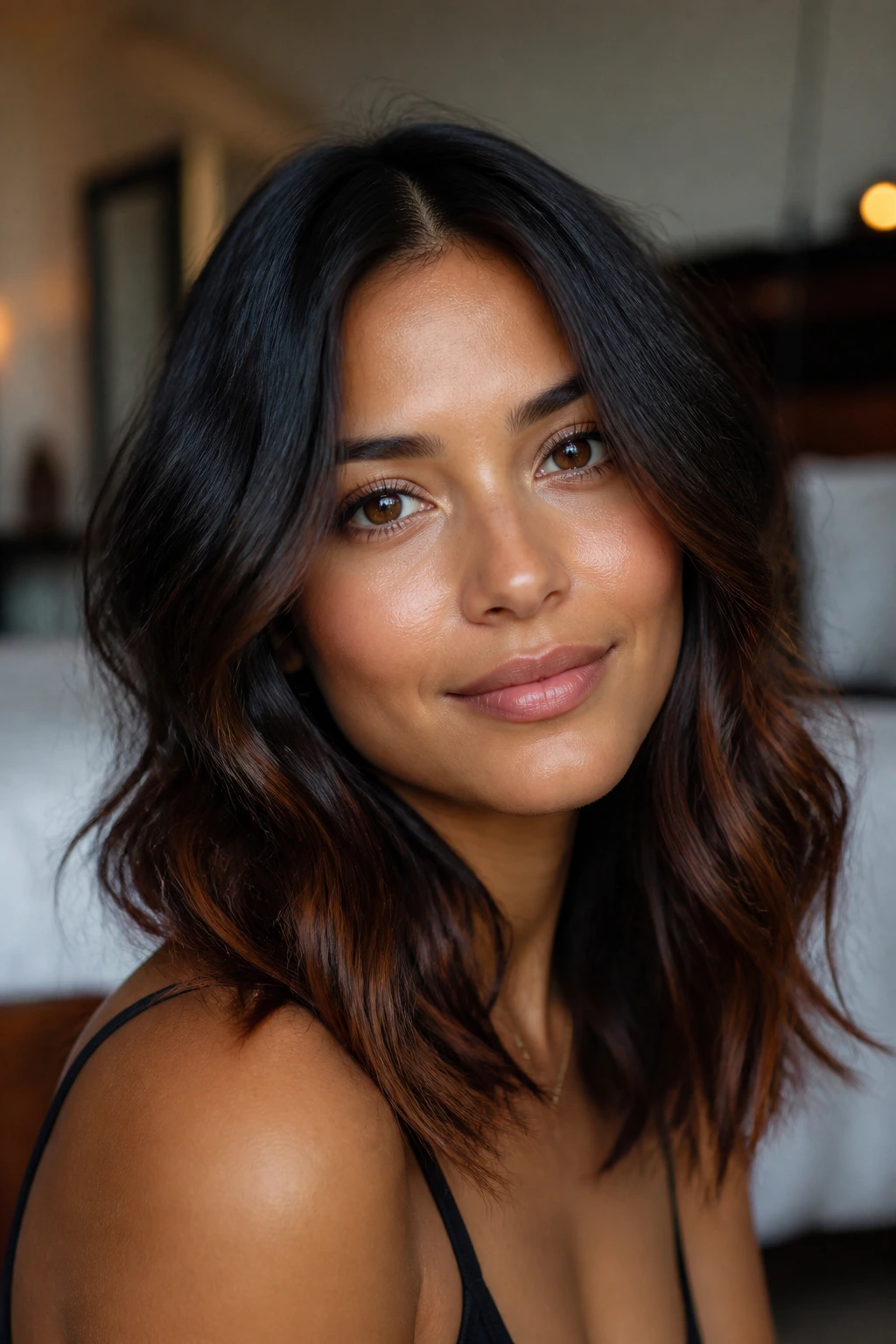
Soft espresso with auburn ends is for people who want dark hair with a small spark at the edges. The auburn doesn’t take over. It just warms the perimeter enough to keep the look from feeling heavy. On tan skin, that little shift near the ends changes the whole read.
The best part is that it feels intentional even when the styling is simple. A mid-length cut, a loose wave, or a straight blowout all work here because the color does the quiet work. If you’re nervous about red, this is the version that lets you test the water without jumping in.
29. Sandstone Blonde Shoulder Cut
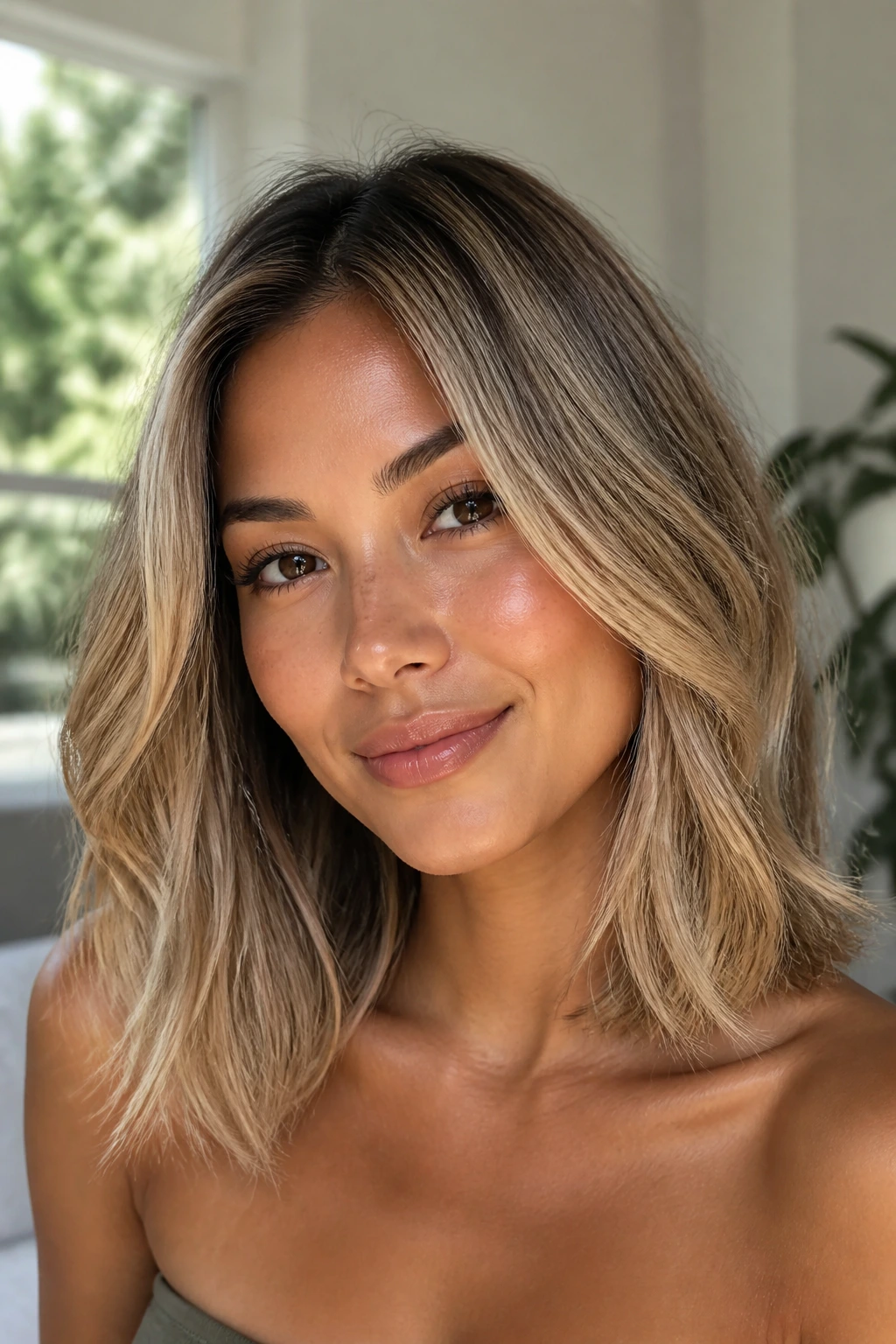
Sandstone blonde lives between beige and gold, which makes it one of the safest blonde families for tan skin that wants brightness without bleachy harshness. The shoulder cut helps because the length keeps the color close to the face and the ends from feeling too thin or dry.
This is a very daylight-friendly shade. Indoors, it can read soft and neutral. Outside, it catches a little sun and looks warmer. That versatility is why I’d choose it over a much paler blonde for most tan complexions. It’s easier to wear, and that matters more than sounding daring in a salon chair.
30. Rich Cocoa Curls with Face-Framing Pieces
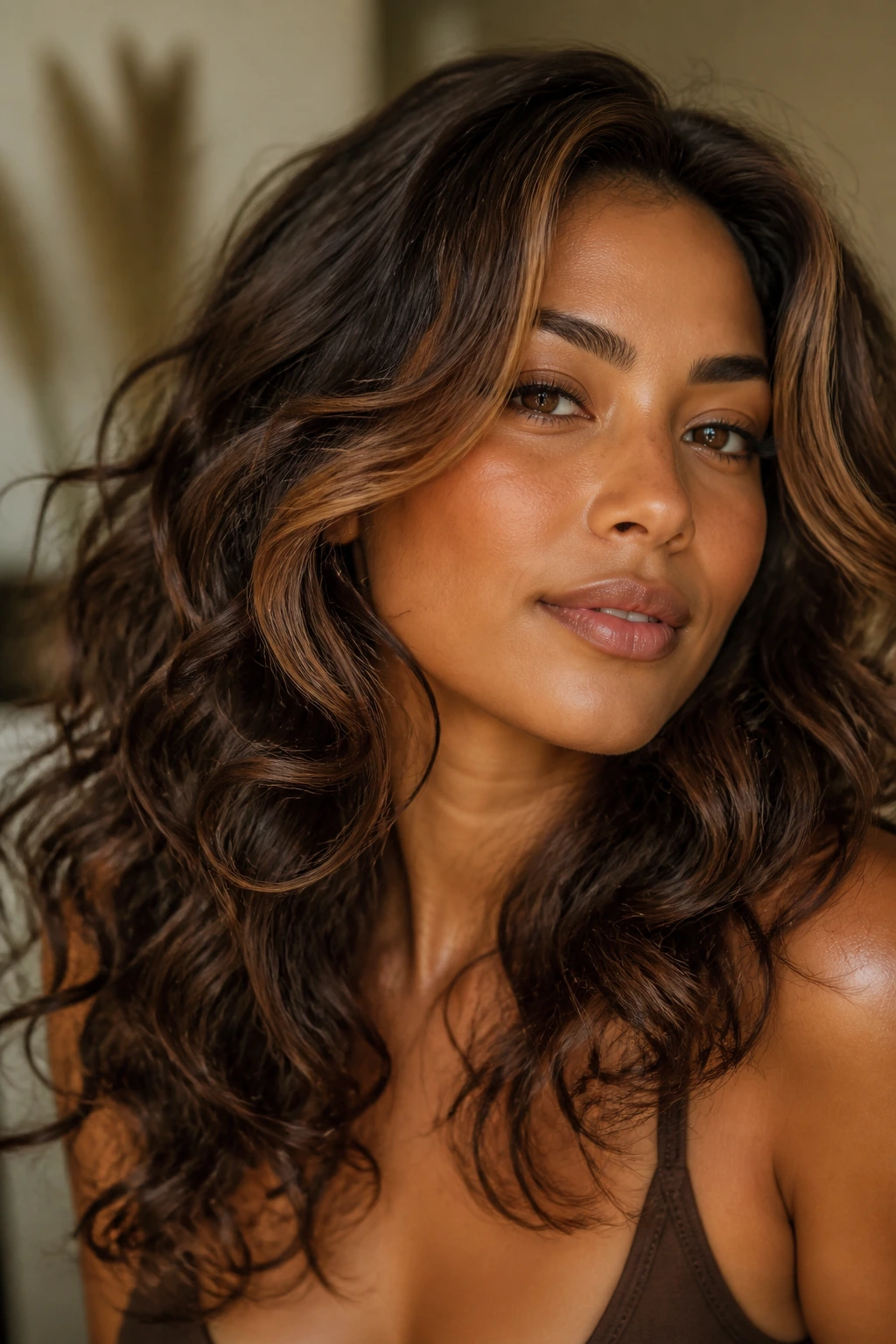
Rich cocoa curls are the kind of color that doesn’t need a big announcement. The depth is enough. Add a couple of lighter face-framing pieces — maybe just one shade up from the base — and the skin wakes up without losing the richness of the dark tone.
This is one of the strongest options for deeper tan skin or anyone who wants a brunette that feels plush instead of plain. The curls create movement, the cocoa base keeps everything grounded, and the front pieces stop the color from disappearing around the face. It’s a clean finish, and a smart one.
Why These Color Families Stay Kind to Tan Skin
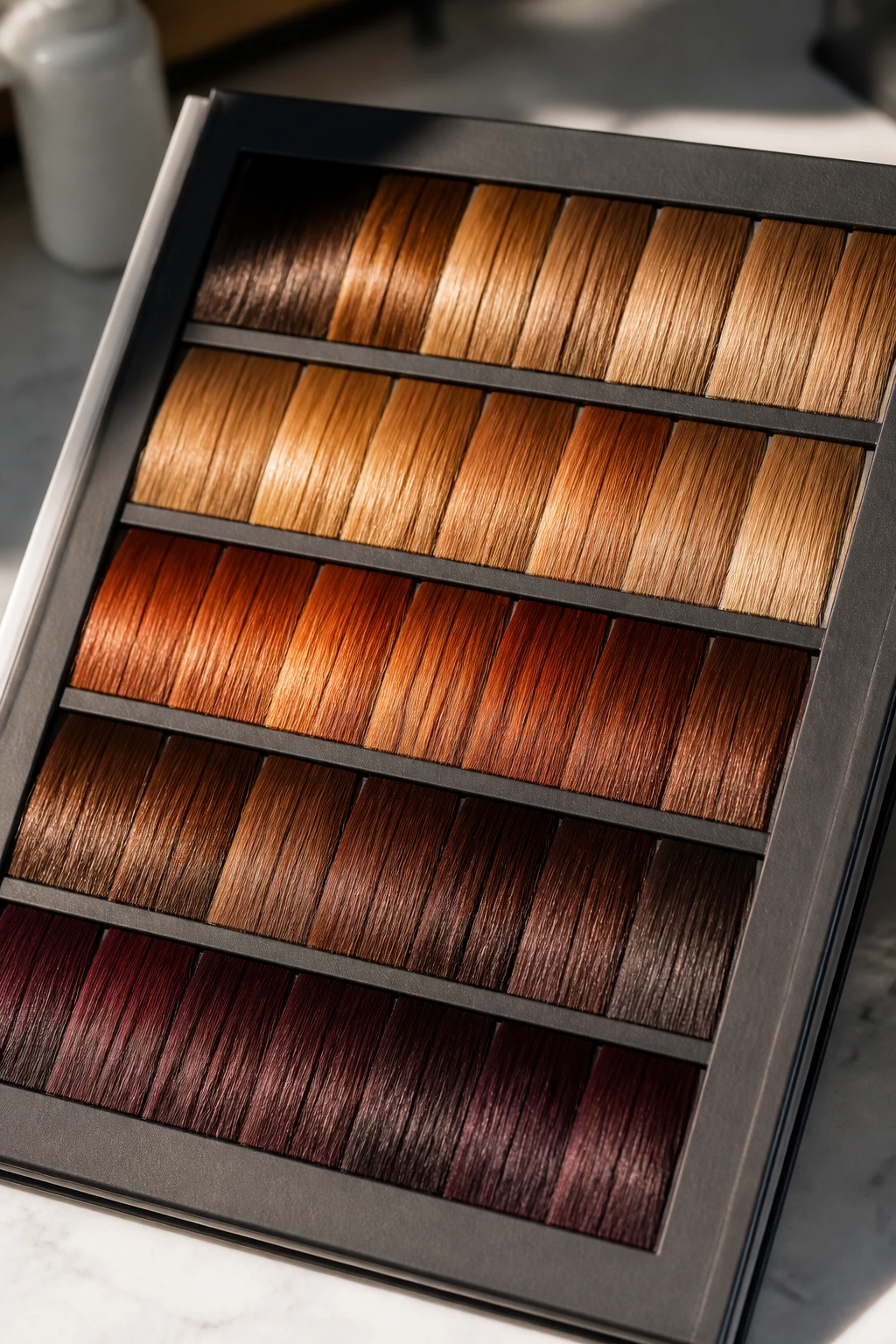
Tan skin usually looks best when hair color either echoes its warmth or creates a controlled contrast. That’s why caramel, honey, copper, bronze, chestnut, and mahogany keep showing up here. They don’t fight the skin’s undertone; they sit beside it and make it read clearer.
Cooler shades can work, but they need more help. Mushroom brown, smoky brunette, beige blonde, and sandy blondes usually need layered cuts, root depth, or a gloss so they don’t turn lifeless next to the face. That’s the difference between a shade that looks expensive and one that looks like it lost a fight with bathroom lighting.
I also think the haircut matters more than people admit. A blunt bob can make a soft blonde feel editorial. A shag can stop copper from going too loud. A silk press can turn mahogany into a sheet of shine. The color is not the only message. The shape is talking too.
Essential Tools for Coloring, Styling, and Maintenance
- Color-safe shampoo: Keeps brunette glosses, reds, and blondes from fading too fast.
- Sulfate-free conditioner: Helps keep copper, auburn, and caramel from drying out between washes.
- Purple shampoo: Useful for beige, sandy, and cream blondes, but use it sparingly so the hair doesn’t go dull.
- Heat protectant spray: Essential if you’re flattening curls, blowing out waves, or using a curling iron to show off dimension.
- Wide-tooth comb: Best for curls, twist-outs, and damp detangling without scraping the cuticle.
- Sectioning clips: Help if you’re styling face-framing pieces or doing a root touch-up at home.
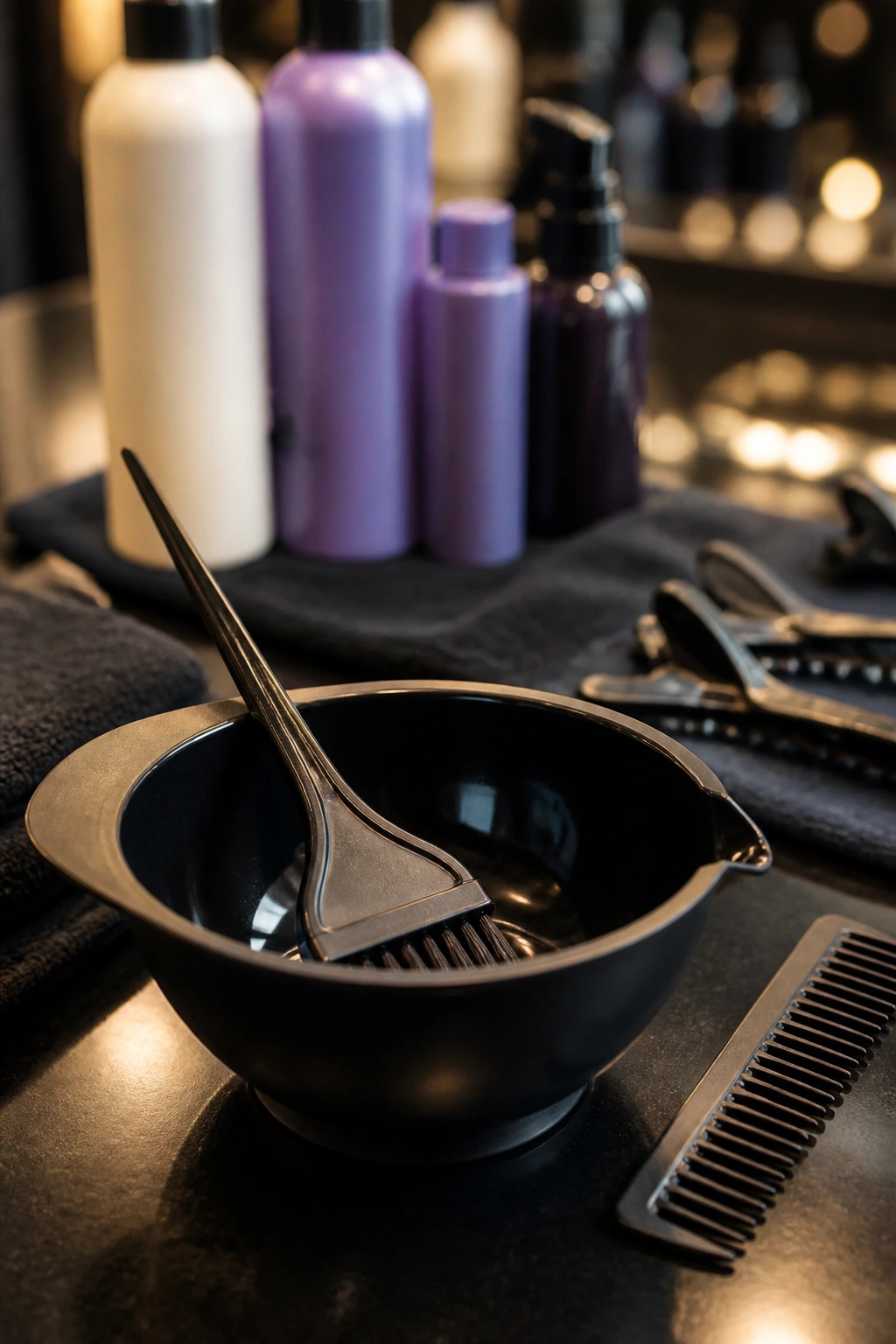
- Tint brush and bowl: Handy for glosses or toners if you work with a colorist or handle simple refreshes yourself.
- Microfiber towel or old T-shirt: Reduces frizz on curls and wave sets, which helps the color read cleaner.
Smart Salon Notes and Shopping Tips
Bring photos, but bring the right ones. A filtered picture saved from a social app is a bad reference because the filter changes the tone, the contrast, and sometimes even the undertone. Try to bring three photos that show the same color in daylight, and point out which one is closest to what you want around the face. A good colorist will care about that detail.
Ask for tone and placement, not just a color name. “Caramel balayage” can mean a lot of things. A level 7 ribbon through the mids, a slightly deeper root, and soft face-framing pieces around the cheekbone is specific. That kind of wording helps more than saying “make it lighter.” If you’re going blonde from a dark base, ask whether the hair can handle a 2–3 level lift in one session without turning dry or patchy.
At-home color is a different game. Demi-permanent glosses are safer when you want to test warmth first. Permanent dye has its place, but if you’re trying plum, amber, or rose gold for the first time, a gloss or conditioner-based refresh gives you more room to move. For reds and coppers, buy the upkeep product before you buy the dye. Otherwise the color fades and the hair looks tired faster than you planned.
How to Style and Wear These Shades Every Day
Styling: Match the finish to the color. Caramel, bronde, and bronze look best with soft waves or a loose bend. Espresso, jet brown, and mahogany need shine, so a smooth blowout or flat iron pass works better than rough texture. Copper and auburn usually benefit from a little bounce; flat ironed red can lose some of its warmth.
Makeup: Tan skin usually plays nicely with bronzer, terracotta blush, brown liner, peach lip color, and soft berry tones. If your hair is warm, keep the makeup warm. If your hair is smoky and cool, a neutral lip and a little more brow definition can make the whole look feel balanced.
Clothing: Cream, olive, chocolate, rust, black, and navy are easy pairings. I’d be cautious with overly cool grays if you’re wearing beige blonde or sandy blonde, because the combo can drain the face. A warm necklace near the collarbone can help, too, especially with short cuts or shoulder-length layers.
Lighting: Check the color in natural light before you commit. Hallway lighting lies. Salon mirrors lie. Your car mirror is usually closer to the truth than either of them.
Extra Tweaks That Make a Shade Look Intentional
Gloss Layer: A clear or tinted gloss every 4–8 weeks keeps caramel, copper, mahogany, and chestnut from going flat. It also makes the cut look healthier, which matters as much as shine itself.
Root Shadow: Leaving the root one shade deeper gives blonde and red styles a softer grow-out. It also keeps tan skin from losing contrast at the hairline, where flat light can be brutal.
Face Frame: If you want to keep things low-key, brighten just the front pieces by one level and leave the rest alone. That tiny move can change the whole face without asking for a full transformation.
Texture Choice: Straight hair shows tone more sharply; waves and curls show dimension. If you wear your hair one way most days, choose the color placement for that reality, not for the one day you might curl it someday.
Common Mistakes That Flatten Tan Skin
- Choosing the shade from one indoor photo: A warm blonde can look icy under fluorescent light and orange in sunlight. Always check daylight references before you say yes.
- Going too ash too fast: Ash can look chic on the right skin, but too much ash on tan complexions can read gray or dusty. The fix is a neutral or warm toner, not more lightening.
- Ignoring base depth: Lifting dark hair all the way to a pale blonde in one appointment is rough on the hair and often looks harsh on the face. A softer transition with root depth usually looks better.
- Making the front pieces too bright: A money piece should frame the face, not erase it. If it’s too wide or too pale, the contrast gets blunt fast.
- Skipping upkeep on reds and blondes: Copper, rose gold, beige blonde, and cream blonde all need toning or color-depositing care. Without it, the color fades into something less clean.
- Forgetting the haircut: The same color can look flat on a heavy cut and lively on layers or a shag. If the style feels off, the shade may not be the problem.
Variations and Alternatives to Try
Golden Hour Warmth: If your tan skin leans golden, build around caramel, honey, amber, and toffee. These shades keep the face warm without pushing it into brass, and they hold up well in waves, curls, and layered cuts.
Smoky Neutral Edit: For olive or neutral tan skin, mushroom brown, smoky brunette, and beige blonde are the safest cool-leaning choices. Keep the root soft and the finish glossy so the shade stays clean instead of chalky.
Low-Maintenance Grow-Out: If you don’t want constant salon trips, choose bronde, mocha money pieces, shadow roots, or lowlights. Those styles soften the grow-out line and keep the hair looking fresh even when the appointment window stretches.
Bigger Color Shift: Copper, cinnamon, rose gold, cherry cola, and plum give you a louder change without forcing the hair into flat neon territory. They’re more work, but the payoff is real if you want the color itself to be the statement.
Curl-First Placement: If your hair is curly, coily, or twist-out ready, place brightness where the curl pattern opens naturally. That keeps the color dimensional and protects the shape of the style, which matters more than a perfect swipe of highlight ever will.
Frequently Asked Questions About Tan Skin and Hair Color
What hair colors look best on tan skin?
Warm brunettes, caramel highlights, copper, honey blonde, chestnut, bronze, and deep auburn are the easiest places to start. If your undertone leans olive or neutral, mushroom brown, smoky brunette, and beige blonde can look clean as long as the finish has enough softness.
Can tan skin wear ash blonde?
Yes, but it needs balance. Ash blonde works better when the root stays deeper, the tone isn’t too gray, and the haircut has movement, because a flat pale blonde can drain the face faster than people expect.
What if my tan skin has olive undertones?
Lean toward neutral or smoky colors rather than pure gold. Mushroom brown, beige blonde, bronde, smoky brunette, and muted auburn usually sit well on olive skin because they don’t go too orange or too yellow.
Is balayage better than all-over color for tan skin?
Usually, yes, if you want dimension and easier grow-out. Balayage lets you keep root depth near the face while adding lighter ribbons where the hair moves, which tends to flatter tan skin more than one solid pale shade.
How do I keep copper or auburn from fading too fast?
Wash less often, use color-safe shampoo, and add a color-depositing conditioner or gloss every 1–2 weeks if the shade starts looking flat. Reds fade faster than brunettes, so a little upkeep goes a long way.
Can I go blonde without washing out my face?
You can, but the tone and placement matter. Beige, honey, and sandstone blondes are usually easier on tan skin than icy platinum, and a root shadow or face frame helps keep the color from flattening the complexion.
What’s the lowest-maintenance option in this list?
Mocha money pieces, bronde layers, walnut brown, smoky brunette, and rich cocoa curls are all relatively forgiving. They keep the roots darker, which means the grow-out is softer and the appointments can stretch farther apart.
Should I ask for highlights or lowlights?
If you want brightness around the face, ask for highlights or a money piece. If you want depth and a richer finish, lowlights are better. A lot of the best looks for tan skin use both, because that mix gives the hair shape without making it one-note.
The Shade You’ll Keep Reaching For
The nicest part about tan skin is that it can take direction. Warm, cool, soft, sharp — the face can handle more than people assume, as long as the tone and the cut are pulling together instead of fighting for attention.
That’s why the strongest hair color choices here aren’t just pretty pictures. They’re useful. They give you warmth when you need it, contrast when you want it, and enough detail at the root, around the face, or through the ends to make the color read like it belongs there.
Pick the shade that matches your undertone first, then the cut you actually wear, then the amount of upkeep you’re willing to live with. That order saves a lot of bad dye jobs, and it usually leads you to the look you keep circling back to anyway.