



Olive skin can make blonde look either expensive or a little off, and the difference usually comes down to warmth. That’s why honey and golden blonde hairstyles for olive skin tend to work so well: they echo the skin’s muted golden-green undertone instead of sitting on top of it like a cool filter. When the tone is right, the face looks brighter at the cheeks and softer around the jaw. When it isn’t, the whole thing can lean gray, brassy, or oddly flat.
There’s another detail people miss. A blonde shade by itself is never the whole story. The cut, the part, the amount of depth left at the root, and where the brightest pieces land all matter just as much as the color formula. A blunt bob with buttery ribbons behaves differently from long waves with amber ends, and both can be flattering on olive skin if the placement is smart.
The looks below lean into that idea on purpose. Some are polished, some are undone, some keep the base dark and let the face-framing pieces do the work. All of them stay in the warm lane, which is where olive skin usually looks its most alive.
Why These Looks Earn Their Spot
-
Warmth that suits the undertone: Honey, gold, amber, and caramel echo the muted warmth in olive skin, which keeps the face from looking washed out the way icy ash can.
-
Placement beats blanket lightness: Bright pieces around the cheekbones, part line, and ends pull the eye to the face instead of bleaching out the whole head.
-
Dimension keeps the blonde from going flat: Shadow roots, ribbons, and lowlights stop the color from turning into one single pale sheet under indoor light.
-
The cut changes the mood fast: A blunt bob, shag, or butterfly cut carries the same gold in a completely different way, which is why one shade family can look polished, edgy, or soft.
-
Grow-out is kinder here: Balayage, money pieces, and ombré styles leave room between appointments, so the regrowth doesn’t draw a hard line at the scalp.
-
It works on almost every texture: Straight, wavy, curly, and coily hair can all wear warm blonde well if the lightest pieces are placed with the shape in mind.
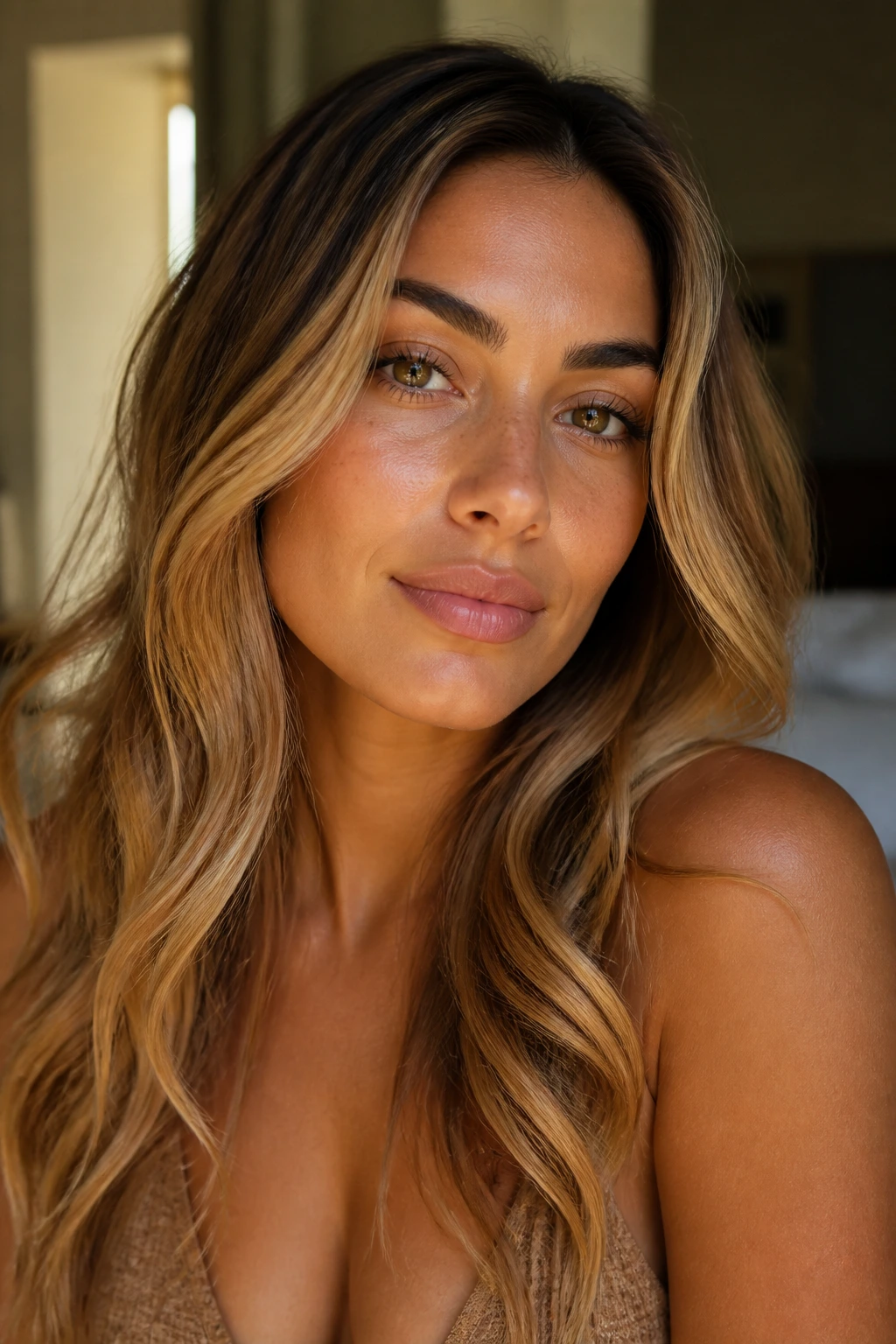
1. Honey Balayage Lob With Soft Bend for Olive Skin
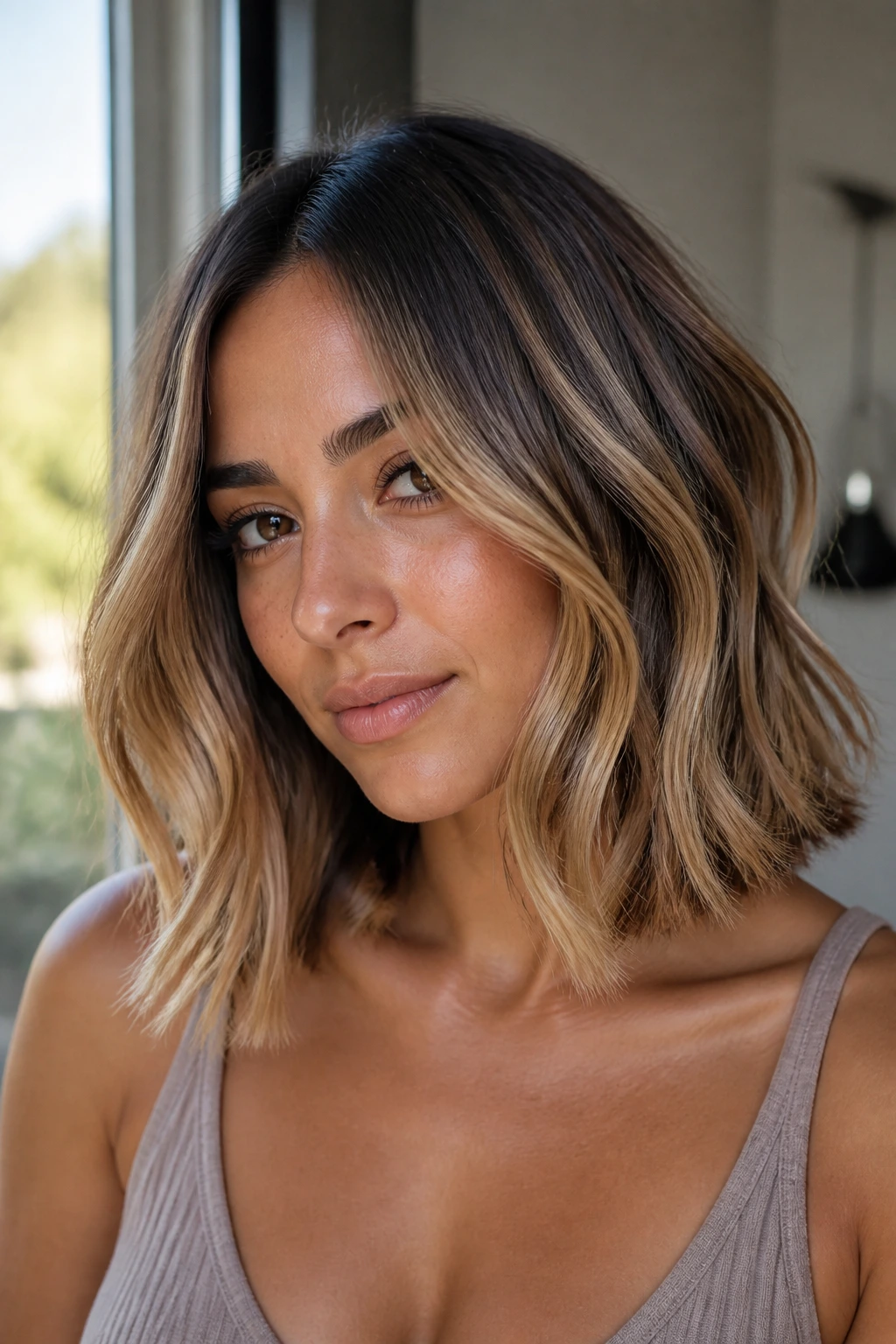
A lob gives honey blonde room to do its best work. The cut sits at the collarbone, so the warm pieces land near the jaw and neck instead of disappearing into a heavy curtain of length. That matters on olive skin because the brightness gets close enough to the face to lift it, but not so close that it wipes out your natural depth.
Why It Flatters Olive Skin
The soft bend keeps the color from reading stiff or stripy. Honey balayage has just enough warmth to echo olive undertones without tipping into yellow, and the lob shape keeps the whole thing tidy when the ends start to grow out. It’s one of those cuts that still looks like hair, not a color project.
What to Ask For
- A collarbone-length lob with a blunt but slightly softened edge.
- Hand-painted honey ribbons one to two shades lighter than your base.
- A shadow root so the top stays a little deeper than the mids.
- Brighter pieces starting around the cheekbone and jaw, not all the way at the roots.
Styling note: Use a 1¼-inch curling iron and alternate directions, then brush the bend out once it cools. The finish should look loose, not barrel-curled.
2. Golden Curtain Bang Layers
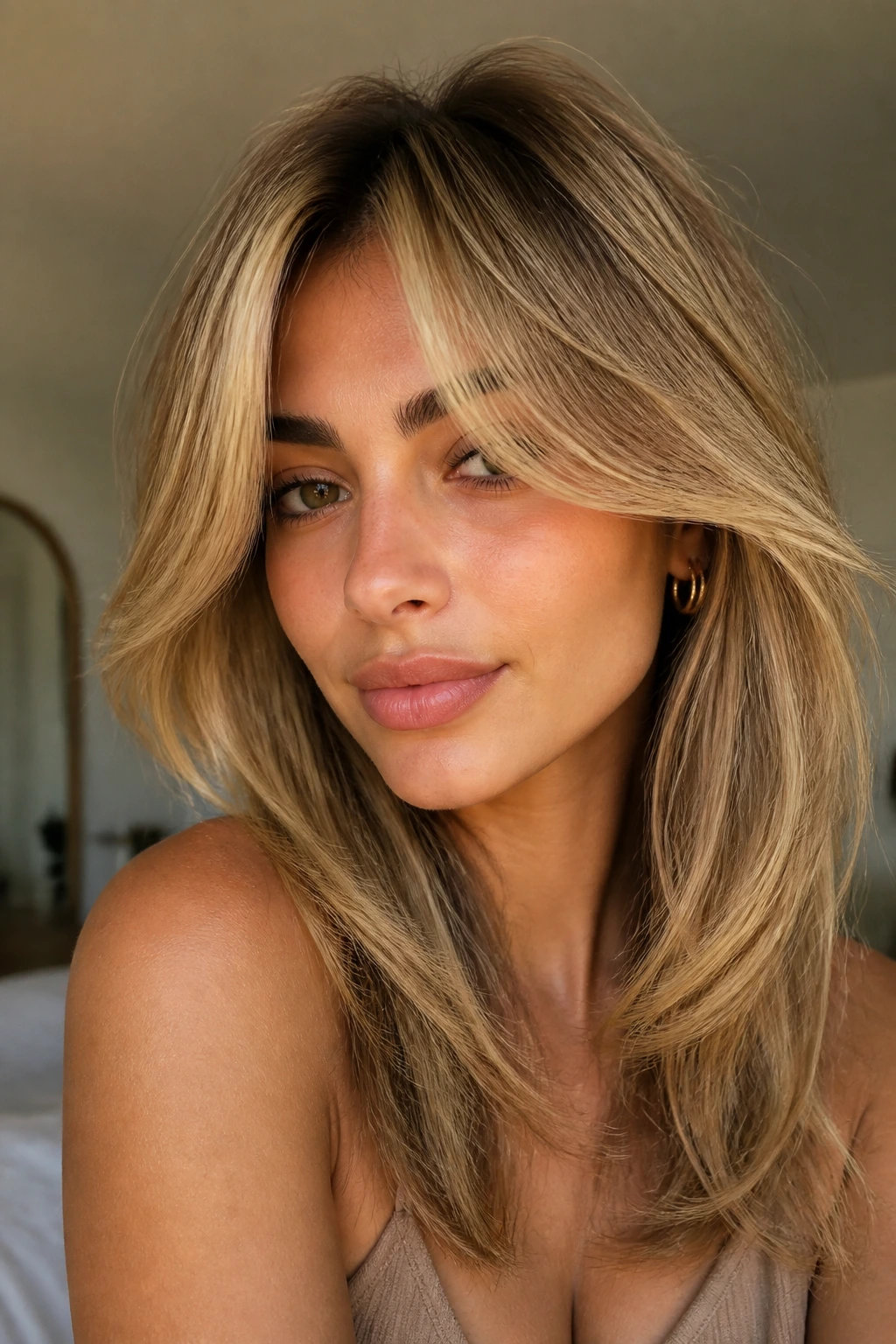
Curtain bangs are the quickest way to make golden blonde feel finished. They open the face before the rest of the hair even moves, which is useful on olive skin because a little light at the front can keep the complexion from reading muted indoors. Add feathered layers and the whole cut starts to breathe.
The trick here is contrast. Keep the bangs a touch lighter than the rest of the front sections, but not so pale that they break away from the haircut. Golden blonde works better than icy beige in this style because the fringe sits right beside the cheeks and forehead, where olive skin often needs warmth most.
Blow-dry the bangs away from the face with a medium round brush. A pea-sized bit of lightweight cream on the mid-lengths is enough; too much product makes the fringe collapse and steals the movement that gives this cut its charm.
3. Face-Framing Money Piece on a Deep Brunette Base
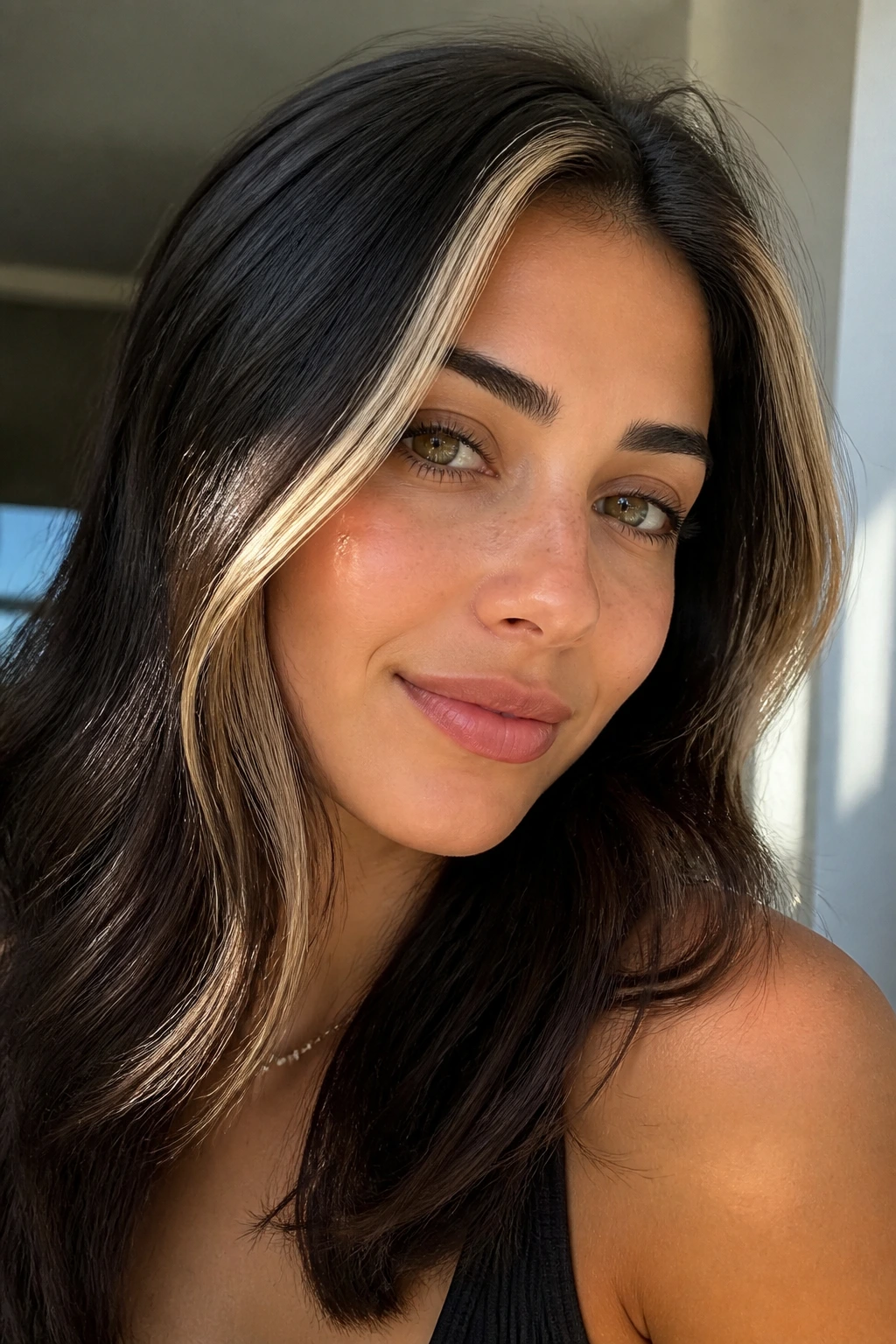
Why does one bright ribbon near the cheekbone matter so much? Because on olive skin, contrast is usually more flattering than full saturation. A warm money piece gives you that hit of brightness without making the whole head go pale, and the deep brunette base does a lot of the flattering work behind the scenes.
Keep the front pieces broad enough to show up, but not so wide that they look like thick stripes. One to one-and-a-half inches is the sweet spot for most faces. If you wear glasses or have a strong side part, tilt the brightest section slightly toward the temple so it doesn’t disappear under the frame.
How to Wear It
Style the front with a round brush or a large-barrel wand, then tuck one side behind the ear so the light piece catches the cheek. It’s a tiny move, but it changes how the whole face reads. A few drops of gloss serum on the ends help the blonde look warm rather than dry.
4. Beach Waves With Caramel Ends
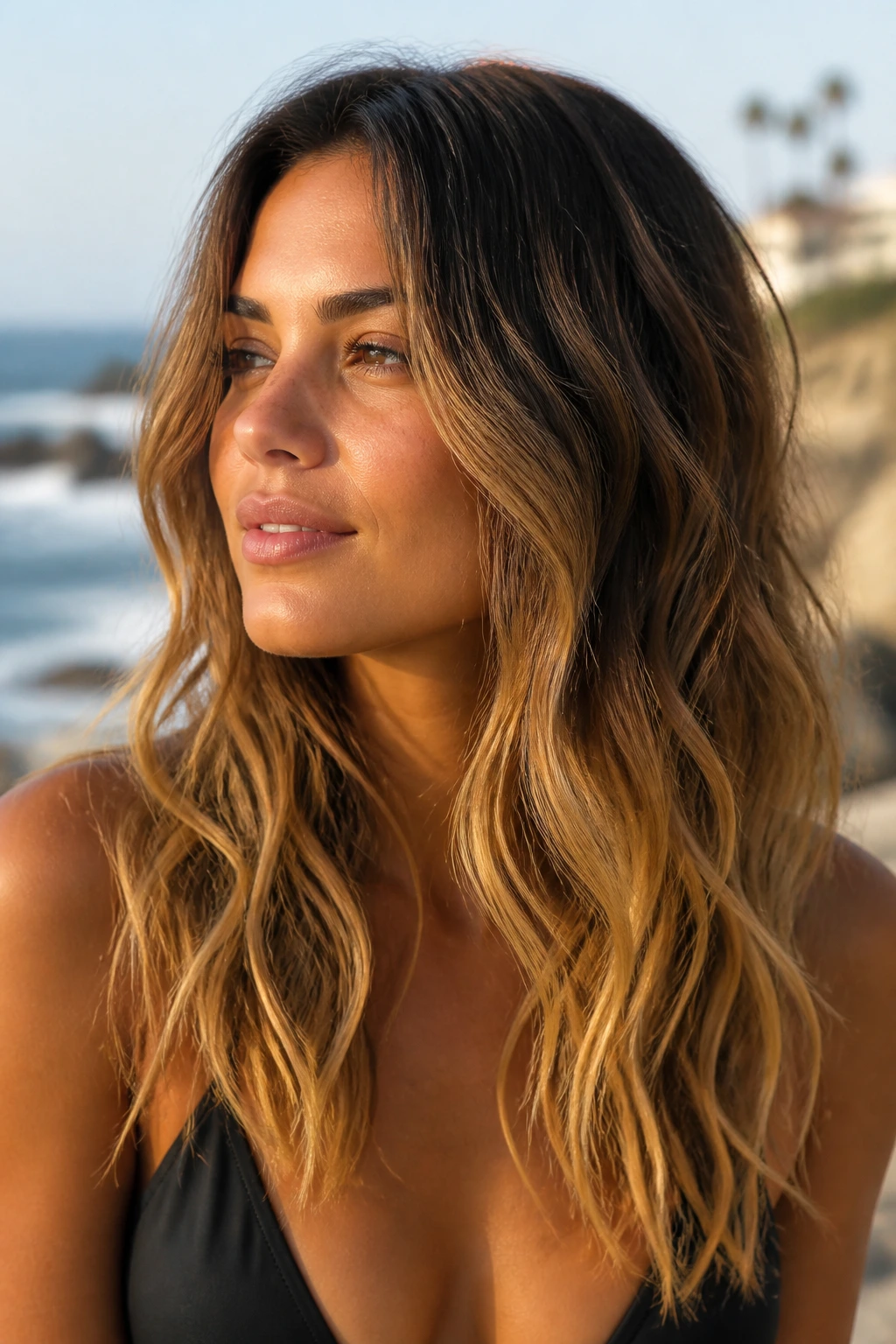
You can smell salt in your hair and still have it look composed. That’s the appeal of beach waves with caramel ends: they feel relaxed, but the warm ends keep olive skin from looking drained. The darker roots preserve depth, and the lighter ends do the sunlit part without needing an actual beach.
This style works best when the color shifts gradually. If the ends are a sharp jump lighter than the mids, the whole thing can read chunky. Caramel sits in a nicer middle ground. It has enough gold to brighten the skin, enough brown to stay believable, and enough softness to look expensive in motion.
- Best on shoulder-length or longer hair.
- Use a 1¼-inch wand and wrap away from the face.
- Keep the curl mid-length to ends so the root stays soft.
- Finish with texture spray, not heavy oil.
One extra tip: leave the last inch of the ends out when you curl. That little unfinished bit keeps the look loose instead of salon-spiral perfect.
5. Sleek Glass Bob With Warm Blonde Underlights
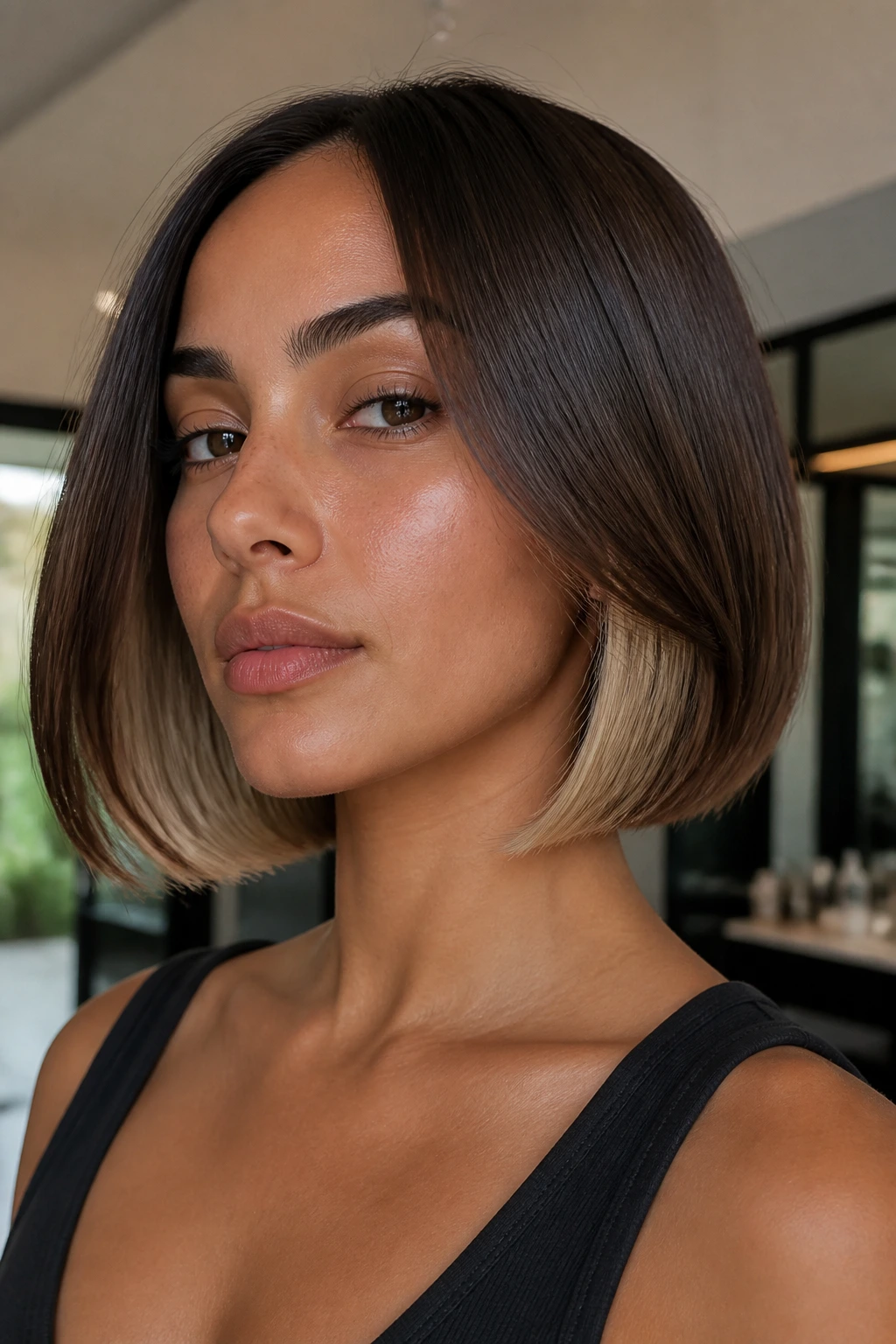
A sleek bob can look severe if the color is flat. Warm blonde underlights fix that. The hidden pieces flash when the head turns, and on olive skin the effect is cleaner than all-over lightness because the brunette or dark blonde top layer still holds the face together.
This is a very controlled look. The shine matters almost as much as the shade. Blow the bob smooth with a paddle brush, then pass a flat iron over the ends in a slight inward curve so the line stays sharp but not stiff. Warm blonde underlights work best when they’re tucked beneath a deeper surface layer; that way the color peeks out instead of shouting.
Use a light serum only on the outer surface. Too much product at the crown makes the bob collapse, and once that happens, the whole point of the cut is gone. The clean edge, the hidden gold, the shine — that’s the whole recipe.
6. Long Layered Cut With Ribbon Highlights
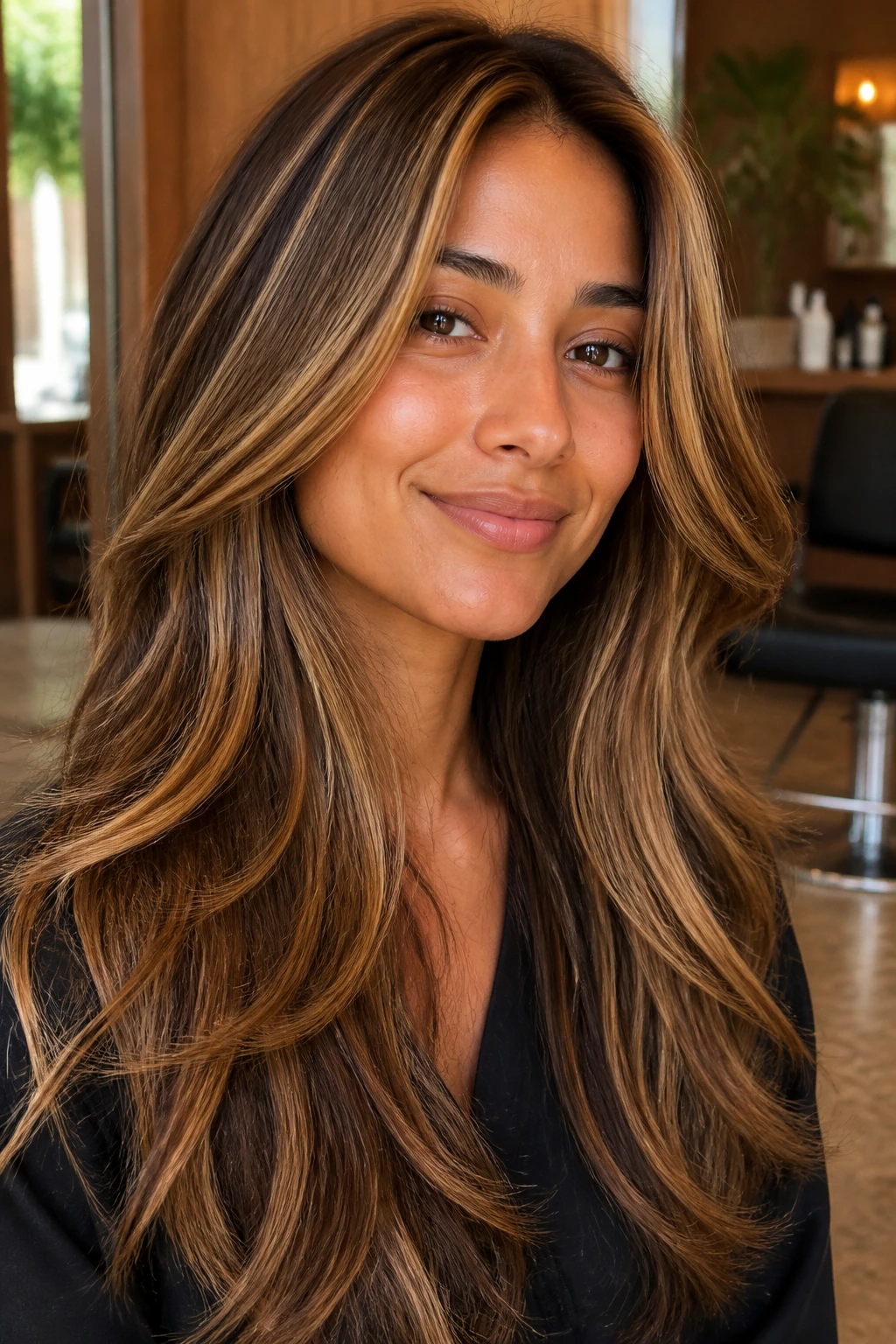
Ribbon highlights are the antidote to flat, all-over blonde. In long layers, they move like threads through the hair instead of sitting on top of it, which gives olive skin a softer, more natural brightness. The darker base is part of the look, not something to hide.
This cut is especially useful if your hair is thick or naturally heavy. The layers let the light pieces fall at different points, so the blonde doesn’t clump together. Ask for a handful of narrow, golden ribbons around the top layer, then a few softer pieces through the mid-lengths and ends. That mix keeps the color from looking striped when the hair is down.
Unlike a full bleach-out, ribbon highlights let the brunette depth do half the flattering. If you want a blonde that still looks like your hair on a good day, not a costume, this is usually the safer bet.
7. Textured Shag With Sunlit Ends
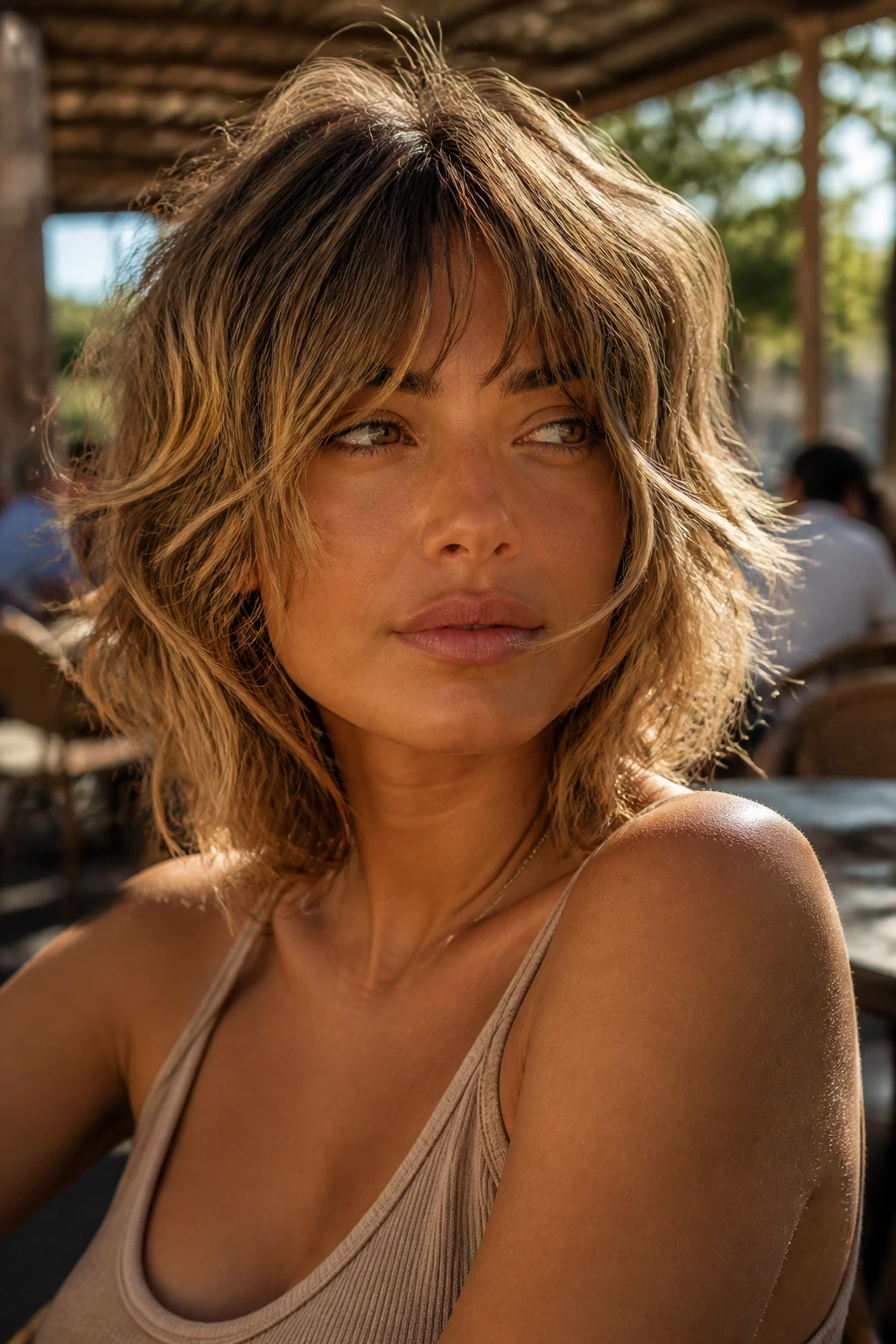
A shag needs movement, or it just turns into layered hair with a moody name. On olive skin, the rougher shape actually helps the warm blonde because it breaks the color into smaller pieces. Sunlit ends keep the cut from feeling too heavy near the jaw.
Why It Works
The shorter pieces around the crown create lift, which helps the face feel open. The ends carry the lightest tone, so when the hair swings, you get flashes of gold instead of one static blond panel. That motion is what keeps the shag from looking accidental.
Best Ways to Style It
- Mist the roots with volumizing spray before blow-drying.
- Use a diffuser if your hair waves or curls.
- Scrunch in a light texturizing cream on the ends.
- Let the fringe stay piecey; too much brushing kills the shape.
A shag with warm blonde is not tidy, and that is the point. It looks best when a few ends kick out and a few pieces sit slightly off-center.
8. Mid-Length Wolf Cut With Honey Paint
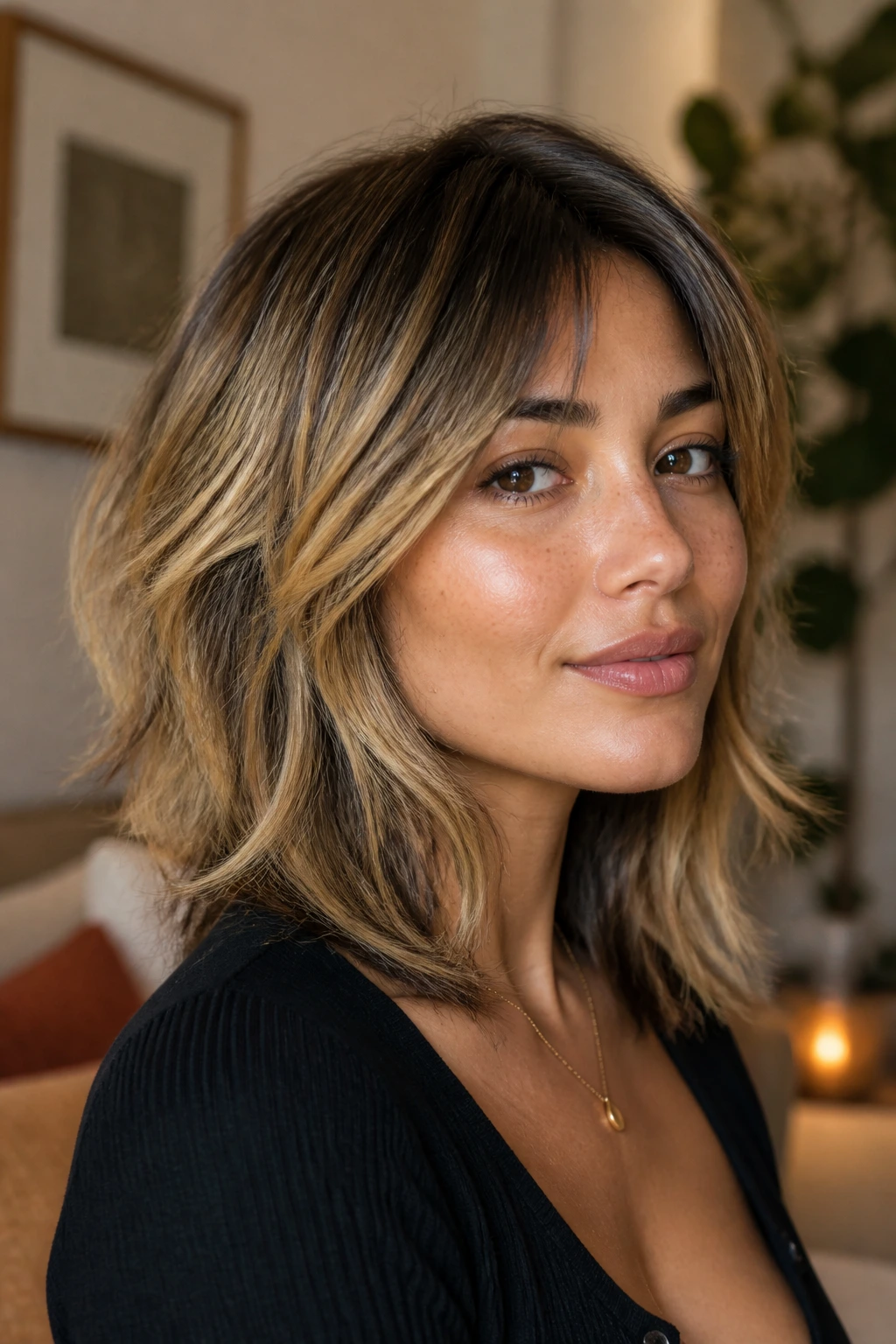
The wolf cut is not subtle, and that’s why it works. The heavy crown, broken layers, and rough ends give honey blonde something to cling to, instead of letting the color sit flat. On olive skin, the warm paint on the top layers keeps the face looking alive even when the cut gets a little wild.
Ask for the honey to stay concentrated on the outer layers and around the face. The internal layers can stay deeper, which keeps the style from turning over-bright. A wolf cut with too much lightness inside starts to look fuzzy; the better version has a darker core and golden edges that show up when the hair moves.
If your hair is medium to thick, this is one of the easier warm blonde styles to live with. The shape does the heavy lifting. The color just needs to follow it.
9. Golden Blowout With Feathered Layers
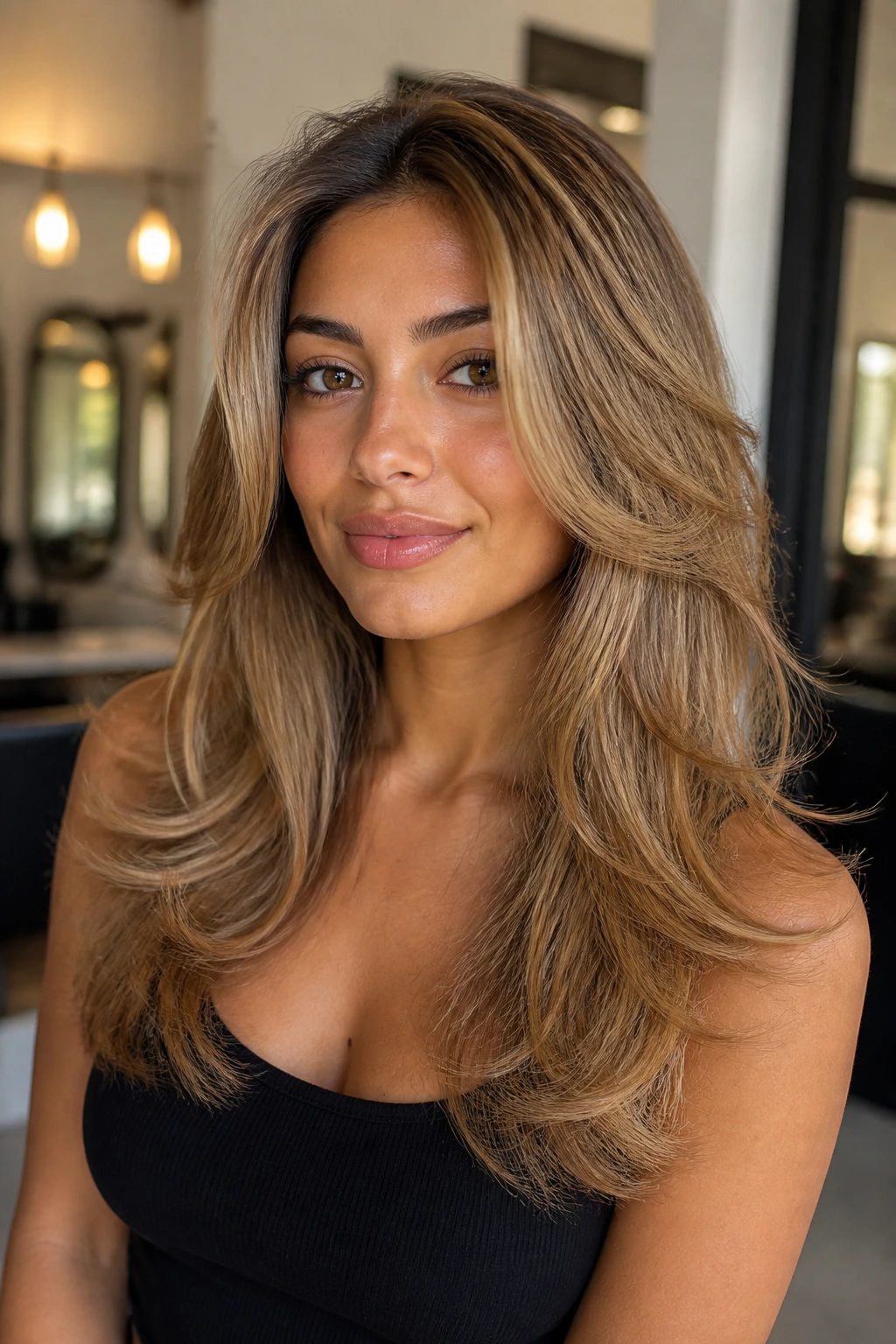
What happens when the blonde is warm but the cut does the drama? You get a blowout that looks polished without feeling stiff. Feathered layers catch the light at the ends and through the face frame, so olive skin gets that lifted effect around the eyes and cheekbones.
A round brush is doing real work here. Blow the front sections up and away from the face, then set the ends in a soft bend instead of a hard curl. Golden blonde looks especially good when the layers are feathered because the color lands on each ridge of the haircut and makes the shape easier to see.
How to Get the Most From It
- Use a 2-inch round brush for longer hair.
- Clip the crown while the rest cools so the lift holds.
- Finish with a light-hold spray, not a crunchy lacquer.
- Keep the front pieces a little brighter than the back.
This is the kind of style that looks expensive for three days if you sleep on a silk pillowcase and avoid overloading the roots with dry shampoo.
10. Low Ponytail With Blonde Face Frames
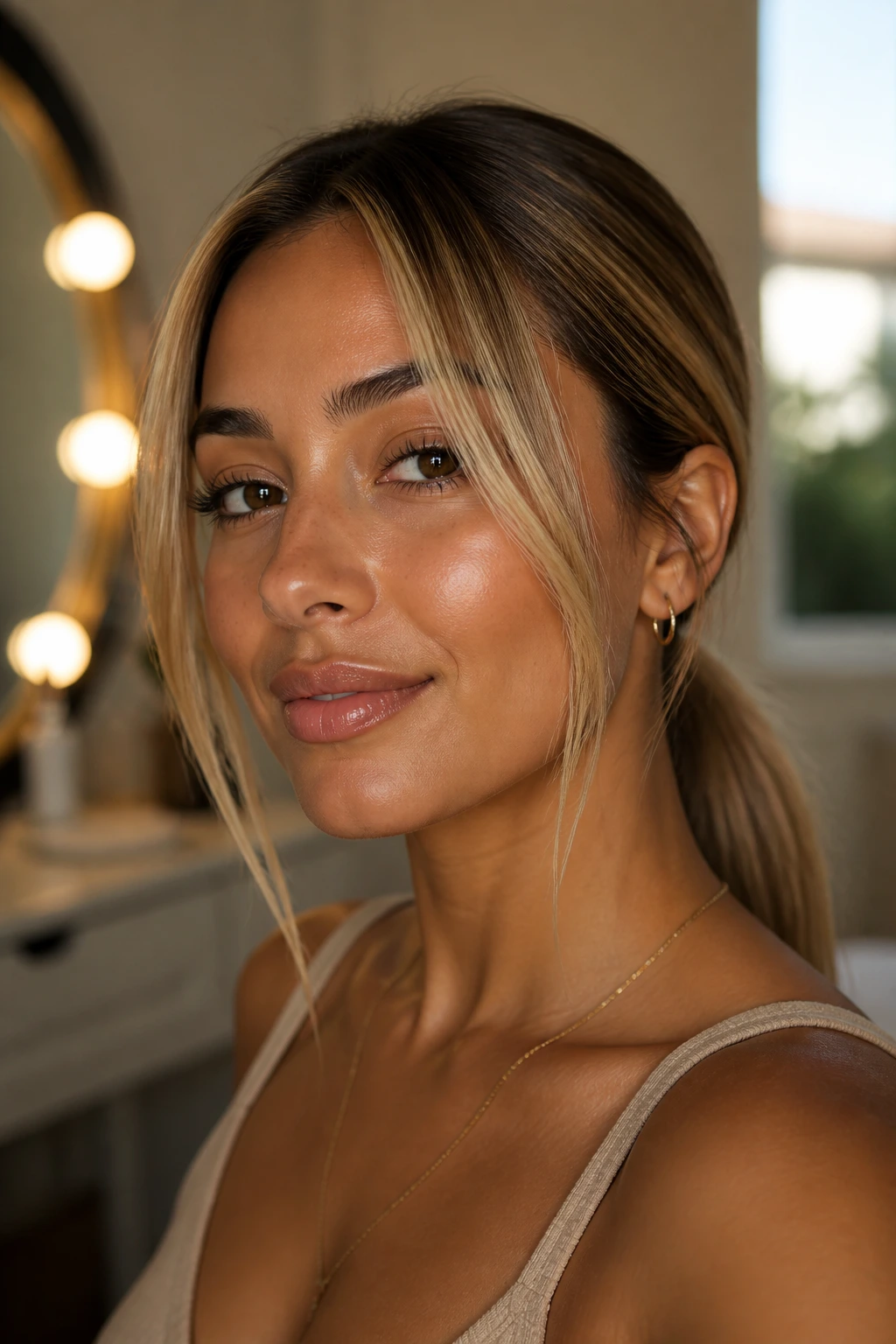
A low ponytail sounds plain until the face-framing pieces show up. Those warm blonde strands soften the hairline, and on olive skin they keep the style from feeling too sharp or severe. The ponytail itself can stay glossy and dark, which gives the light pieces all the attention they need.
This works best when the front pieces are curved slightly under the cheekbone. If they’re stick-straight, the look can feel accidental. A soft bend, a neat center part, and a bit of shine at the crown make the whole thing look deliberate.
Tie the ponytail low and snug, then loosen the top just enough to keep it from pulling the face. A dab of styling cream on the temples stops flyaways from fuzzing up the outline. Tiny details. Big difference.
11. Half-Up Claw Clip Twist With Honey Highlights
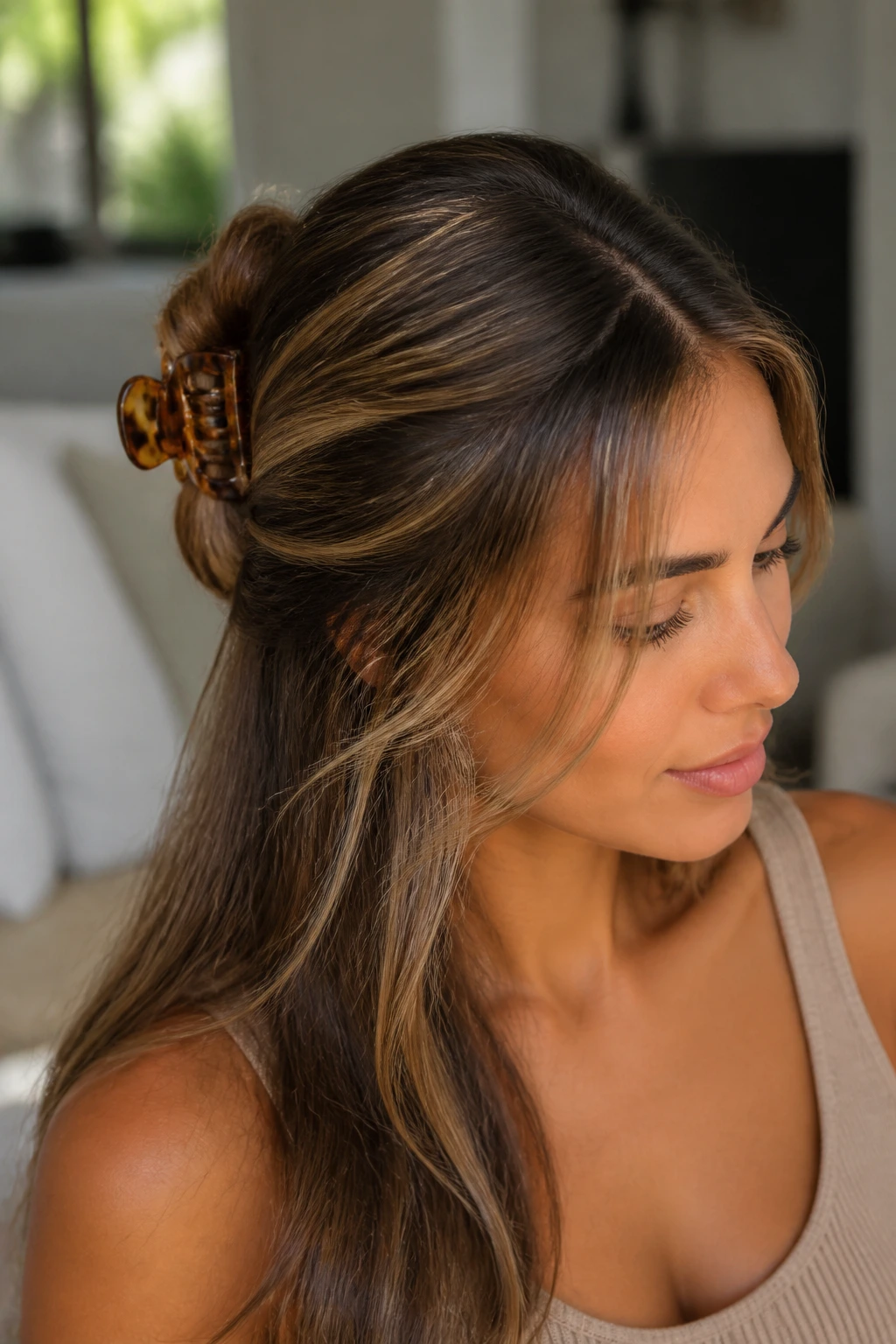
A claw clip is one of those things that feels lazy until the color starts catching in the right places. Half-up twists expose the top layer, so honey highlights show up at the crown and around the temples. That’s useful on olive skin because the warmth sits where it can actually brighten the face.
This style is also forgiving on second- or third-day hair. A little dry shampoo at the roots gives the clip something to grip, and the loose twist keeps the ends from looking fried. The trick is not to over-twist. If you pull the top too tight, the honey pieces disappear into the scalp area and the whole point of the look is wasted.
Let a few shorter pieces fall near the cheeks. Those stray strands soften the profile and stop the clip from looking like a grocery-run compromise.
12. Boho Braided Crown With Warm Blonde Threads
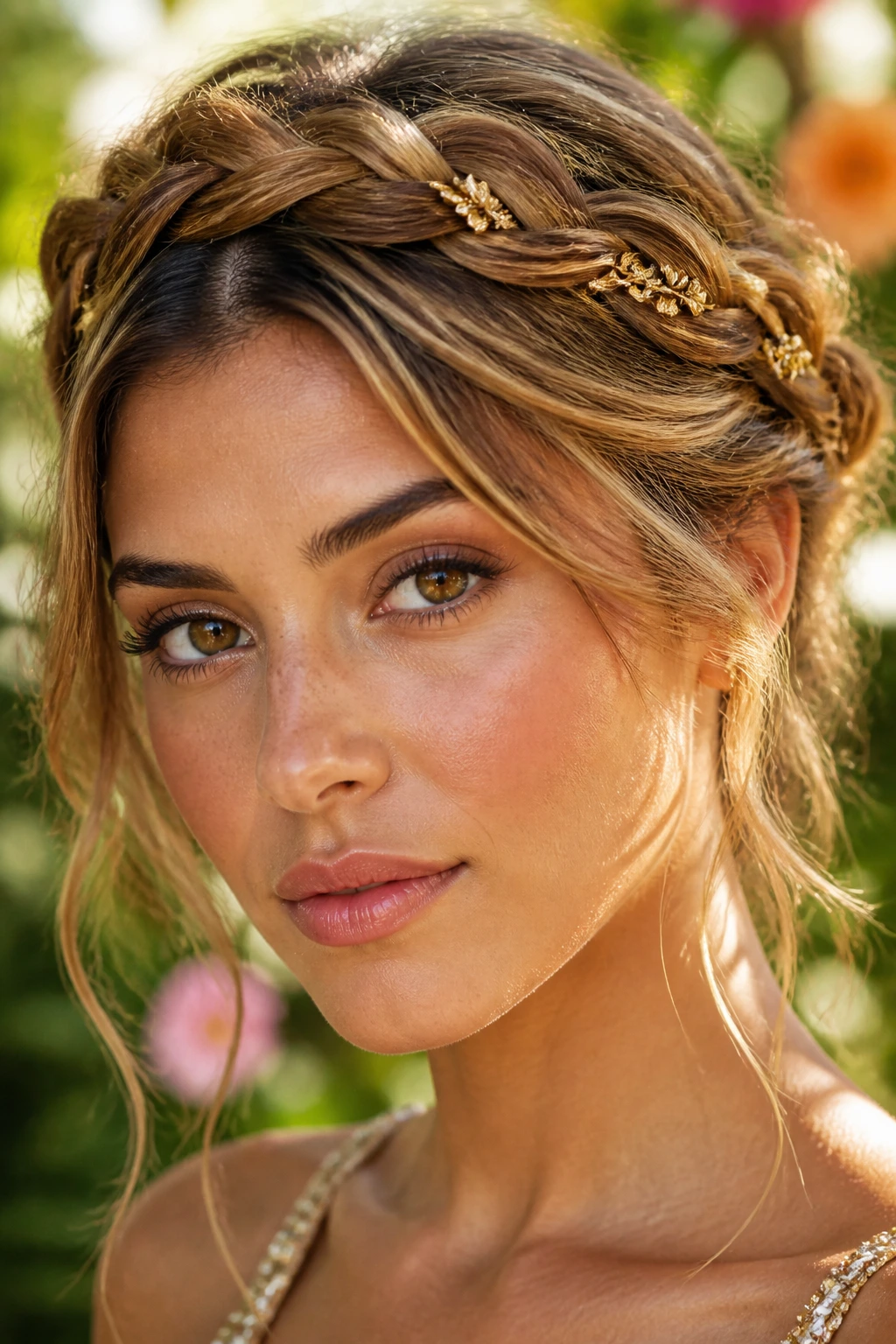
A braided crown can turn fussy fast if the color is too flat. Warm blonde threads fix that by weaving gold through the braid so it doesn’t look like one thick rope. On olive skin, the warmth around the hairline softens the face in a way a severe braid never will.
This is one of the better options for formal events because it shows off dimension without requiring a lot of movement. The braid pattern itself creates the texture, and the color just adds depth. If your hair is fine, tease the crown lightly before braiding so the shape doesn’t collapse. If it’s thick, keep the braid a little looser so the gold strands can separate and show.
A soft mist of shine spray at the finish makes the woven pieces look rich rather than dry. That matters more than people think.
13. Side-Parted Long Curls With Gold Slices for Olive Skin
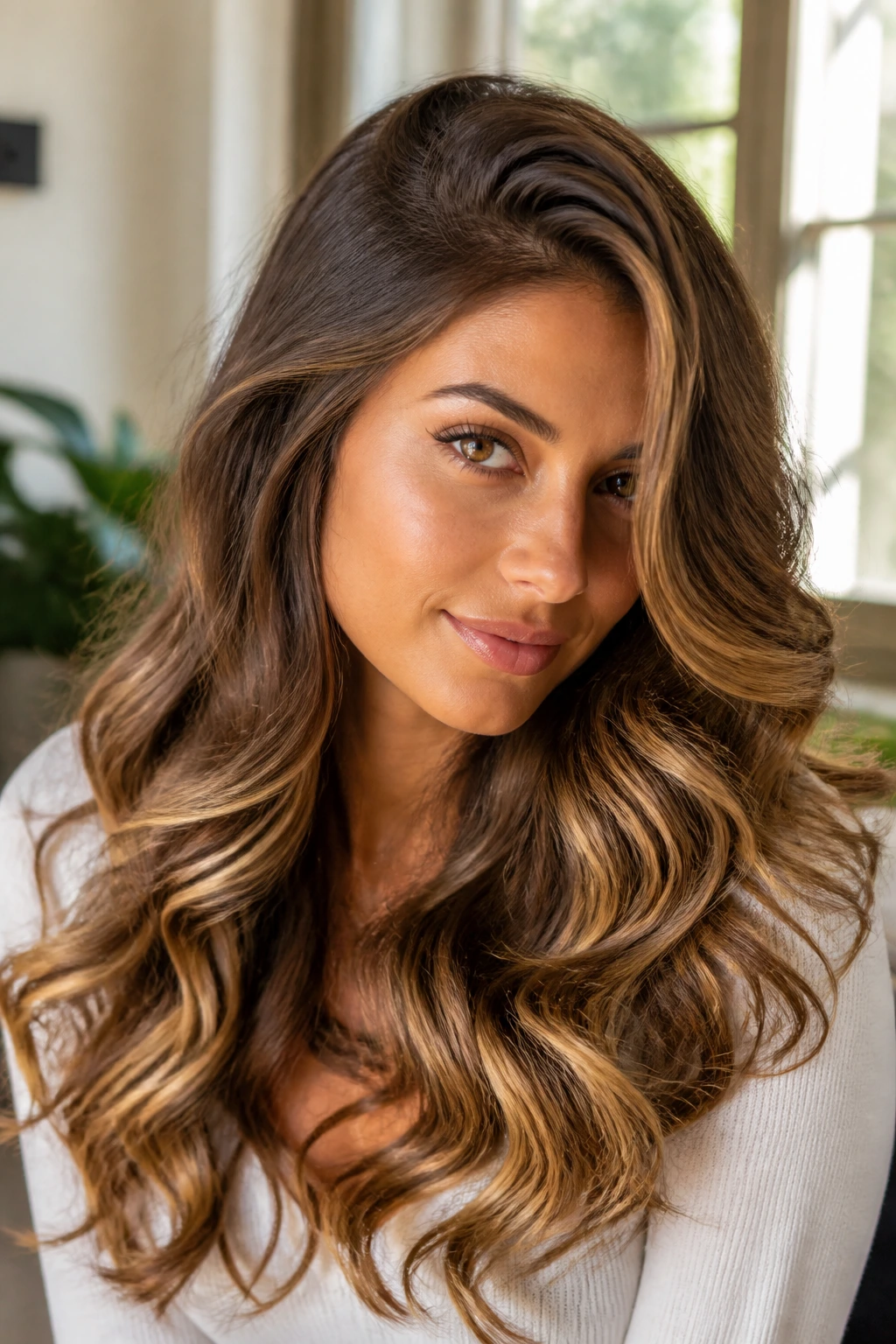
A deep side part changes the whole geometry of long curls. It gives the gold slices a place to land, and it makes olive skin look a touch more sculpted because the brighter side pulls attention upward. The result is less even than a center part, but that unevenness is the charm.
The gold pieces should sit where the curls bend, not only at the outer surface. That way the color shows from the side as well as the front. A 1.25-inch curling iron usually gives the right kind of large, brushed-out curl. Once the curls cool, rake them out with your fingers or a wide-tooth comb and let the side part do the rest.
If your face is round, this shape adds length. If your face is long, keep the brightest slices closer to the cheekbone so the style doesn’t drag everything downward.
14. Chin-Length French Bob With Buttery Ribbons
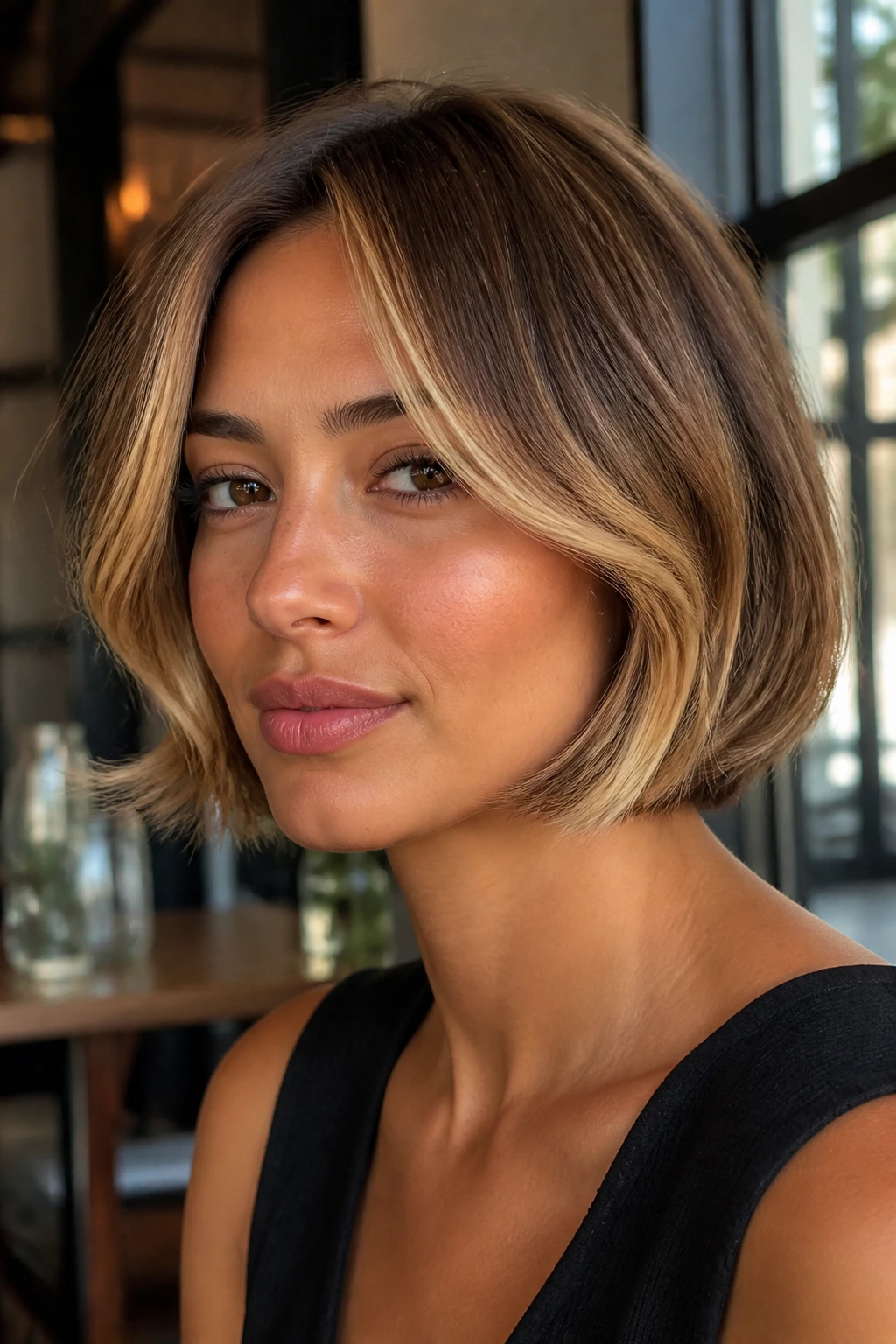
A French bob at the chin can look crisp to the point of severity. Buttery ribbons soften the edges just enough to keep olive skin from looking shaded out by all that straight-line geometry. The bob sits right where the jawline matters most, so the color has to do some of the contouring.
This cut is best when the blonde isn’t painted everywhere. Let the base stay a shade deeper and place the brightest ribbons around the fringe and the outer curve of the bob. That keeps the hair from turning puffy or over-light. A blunt bob with warm ribbons has a kind of cool confidence to it — not loud, just well judged.
If your hair bends naturally, let it. A little bend at the ends makes the butter tones feel softer and more wearable than pin-straight styling.
15. Layered Pixie With Golden Tips
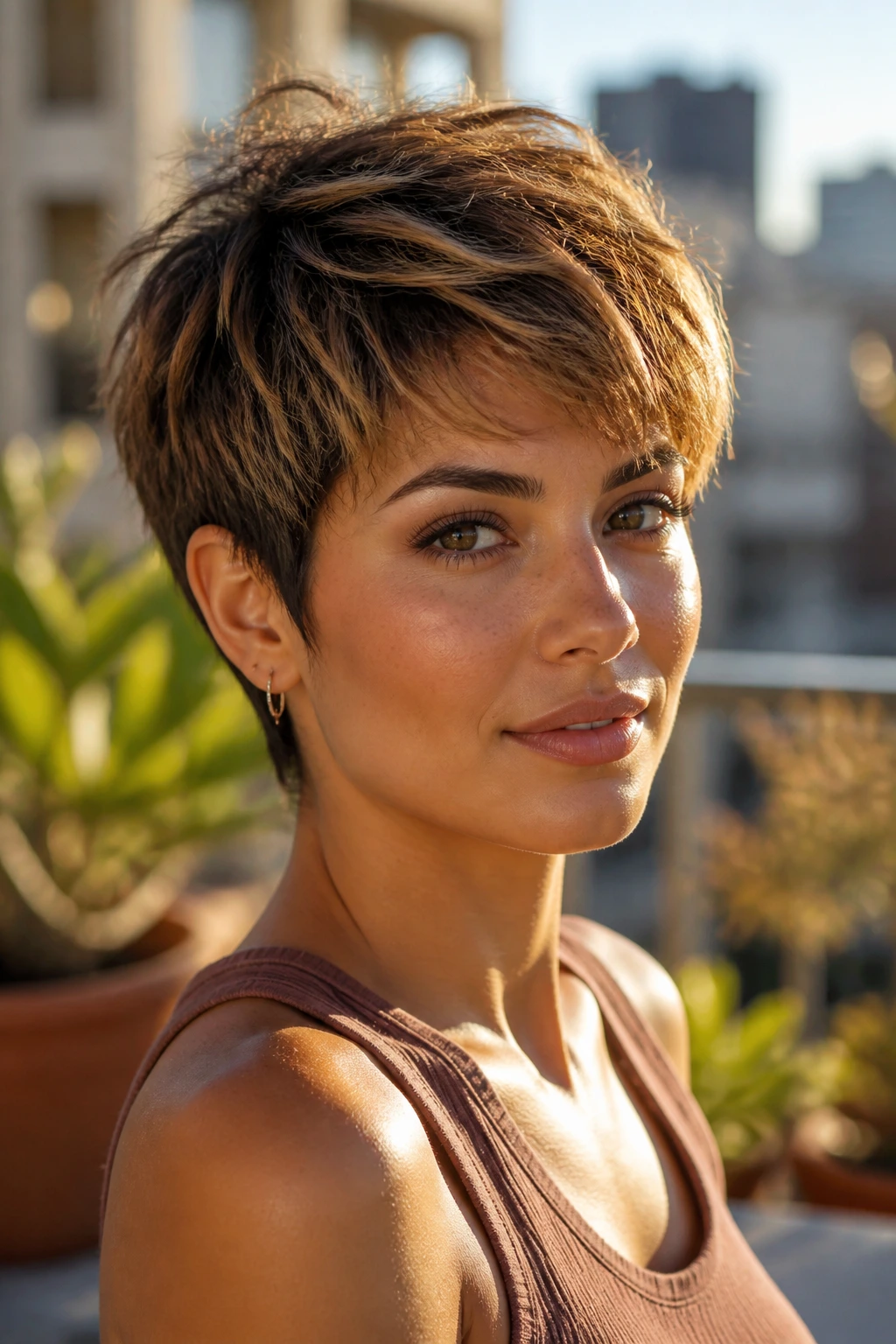
Can a pixie carry honey blonde without looking harsh? Yes, if the lightest pieces stay on top and the sides keep a little depth. Golden tips add sparkle where short hair needs it most, which is the crown, fringe, and upper layers around the temples.
The pixie should be cut with enough texture to let the color break up. A flat, helmet-like pixie and warm blonde don’t play well together. Ask for piecey layers and slightly longer top sections, then use a matte paste or light cream to pinch the tips into place. The gold will show better when the shape has some separation.
This is a good one if you want face brightness without the upkeep of long blonde lengths. The cut does the framing. The tips do the flattering.
16. Soft Waves and Hush Cut With Honey Paint
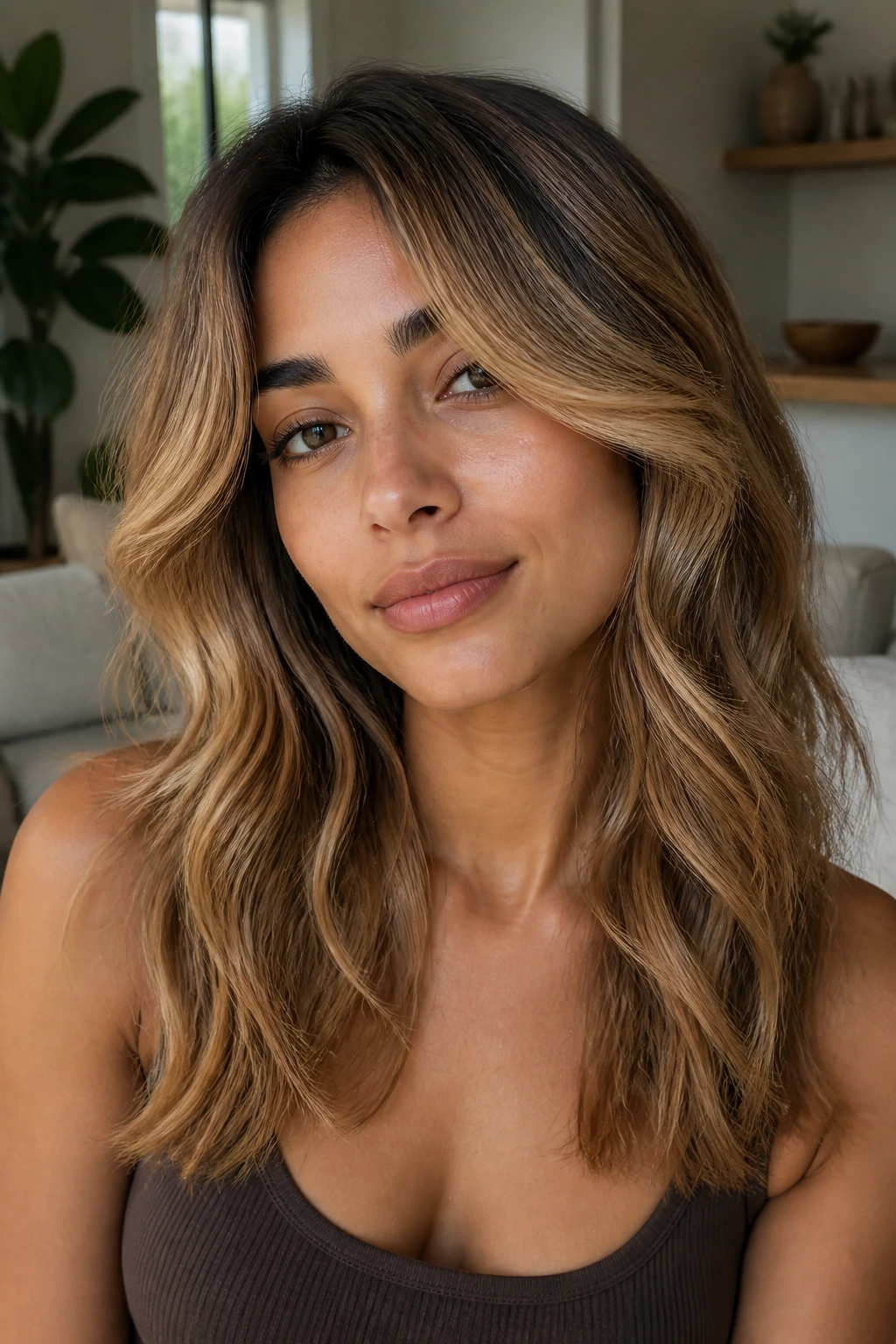
If you like hair that looks touched, not overworked, this is the lane. A hush cut keeps the layers quiet and airy, and honey paint across the top pieces makes olive skin look warmer without turning the whole style into a color statement. The softness is the whole idea.
The waves should bend, not curl tightly. Think loose S-shapes, a little room at the ends, and movement around the face rather than uniform spirals. Honey paint works especially well when the pieces near the part are a touch lighter than the underlayers. That creates depth from above, which is where most people see the hair first.
A light mousse on damp hair and a quick pass with a medium iron is enough. Overstyling kills this look fast.
17. Straight Blunt Cut With Warm Blonde Babylights
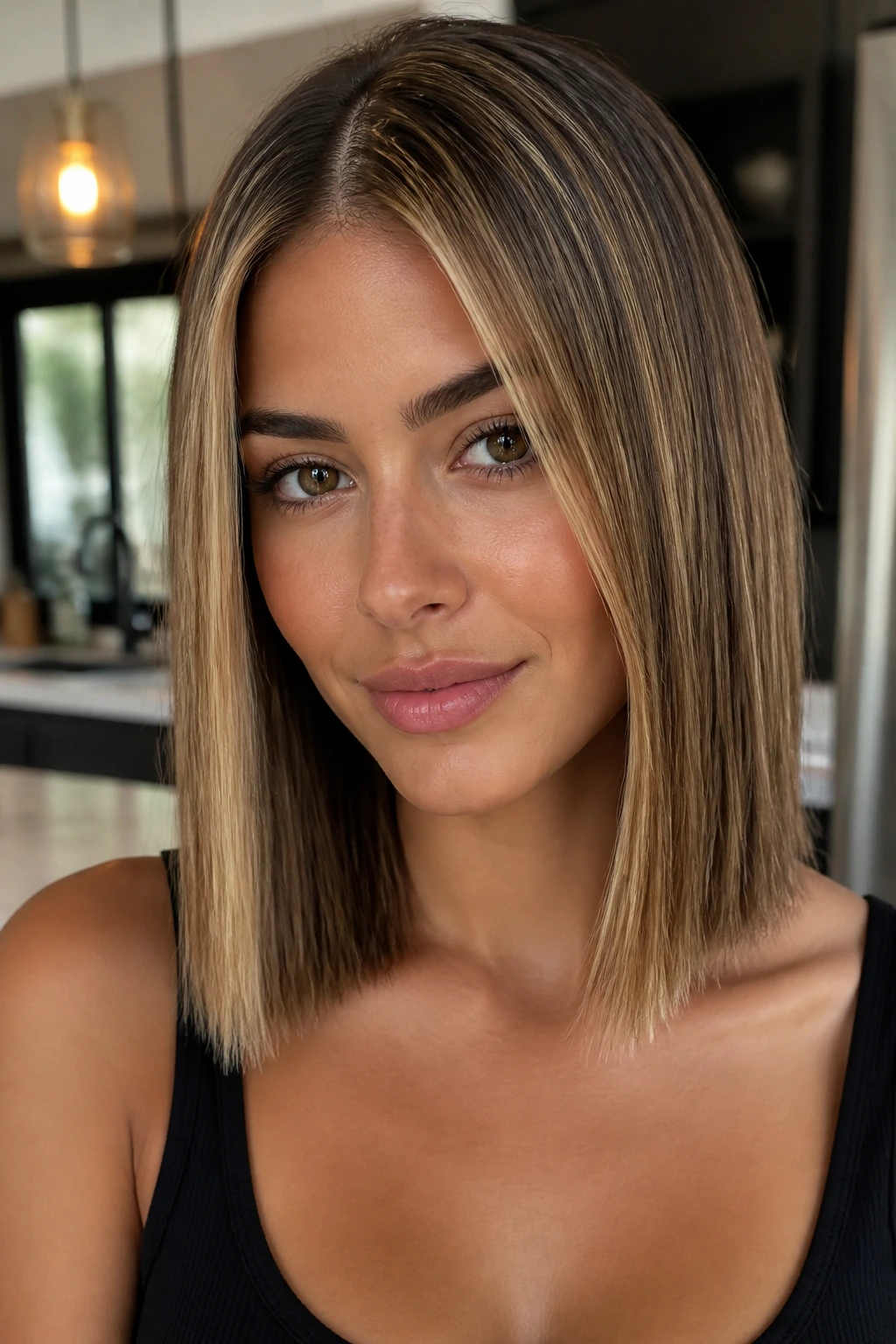
Straight hair can show blonde better than almost any texture, which is why fine babylights matter here. Tiny warm strands woven through a blunt cut keep olive skin from looking flattened by a single block of color. The line stays crisp, but the shade has enough movement to stay alive.
The beauty of babylights is scale. They’re narrow enough to blend, but not so narrow that they disappear. Ask for them around the hairline, part, and top layer, then keep the ends a little deeper so the cut still has weight. That contrast makes the blunt edge look cleaner.
Flat iron the lengths only if you need to. Straight hair with too much heat can lose its body fast, and once the body goes, the warm blonde loses some of its shape too.
18. High Bun With Dimensional Honey Strands
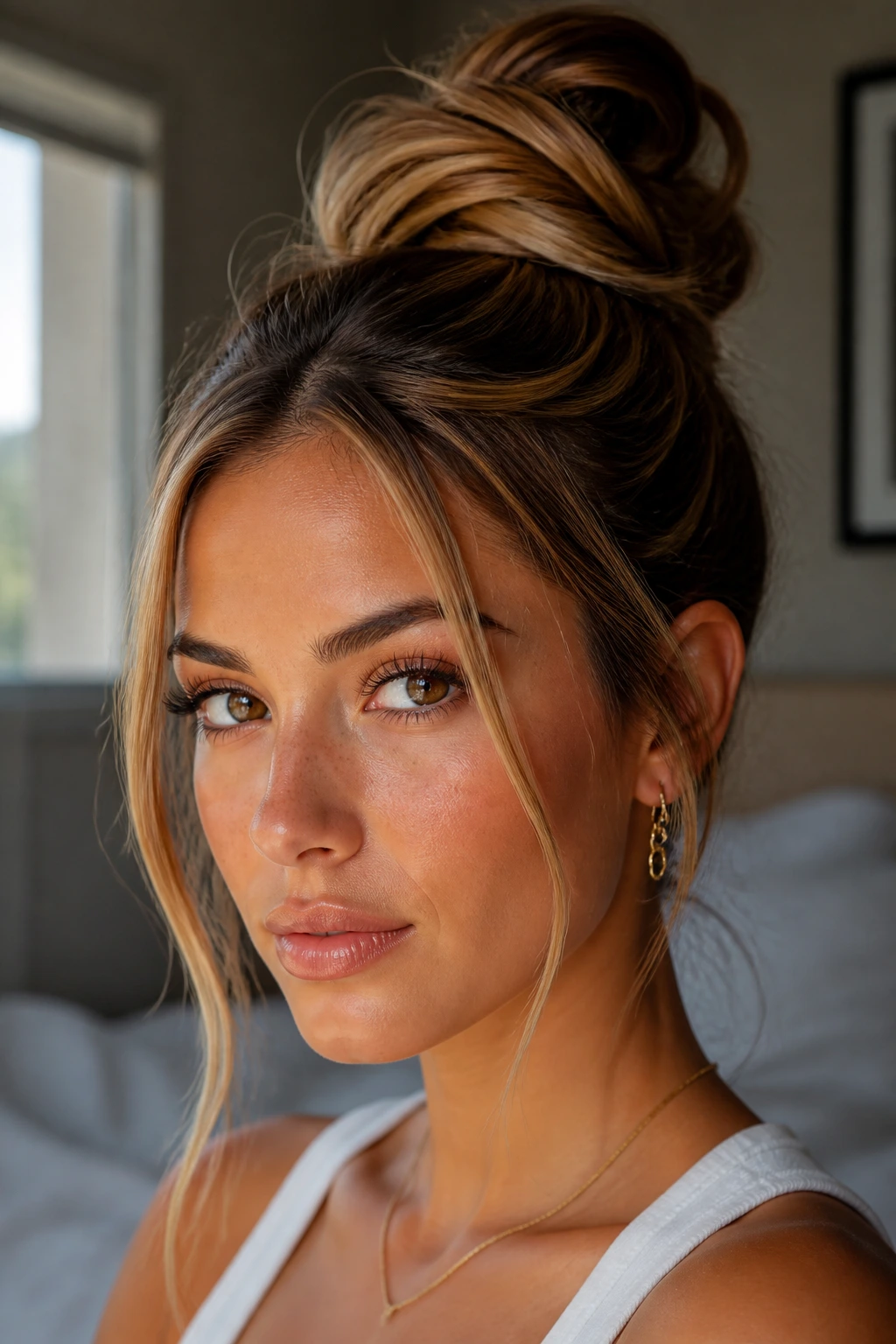
A high bun can turn severe in a hurry. Dimensional honey strands stop that. A few face-framing pieces, a few loose wraps around the bun, and a little warmth at the temples keep olive skin from looking overpulled or stern.
This style works because it leaves the color visible where it matters. The bun itself can be smooth or slightly messy, but the lighter strands around the hairline do the softening. Don’t make every flyaway obedient. A couple of imperfect pieces around the ears and nape keep it human.
Use a light pomade on the top only, then wrap a small section around the elastic so the base looks finished. The contrast between the neat bun and the soft honey pieces is what gives it shape.
19. Tapered Curls With Golden Tips
Tapered curls and golden tips are a good match because both depend on shape. The curls build fullness where the hair is longest, and the gold tips keep the outer ring from disappearing into shadow. On olive skin, the warmth around the edges makes the face look lit from the outside in.
Where the Light Should Land
The brightest pieces belong on the top half of the curl pattern and through the outer perimeter, not buried in the middle. If the light stays inside the curl, you lose it the moment the hair shrinks. A diffuser on low heat helps preserve the shape and keeps the tips bouncy rather than frizzy.
Good Styling Habits
- Scrunch in curl cream while the hair is damp.
- Use a wide diffuser and stop when the hair is about 80% dry.
- Avoid brushing once dry; separate curls with oiled fingertips.
- Refresh the tips with a tiny bit of water and leave-in cream the next day.
This is one of the most forgiving warm-blonde styles if your hair naturally coils or spirals.
20. Shoulder-Length C-Curl Cut With Sunkissed Panels
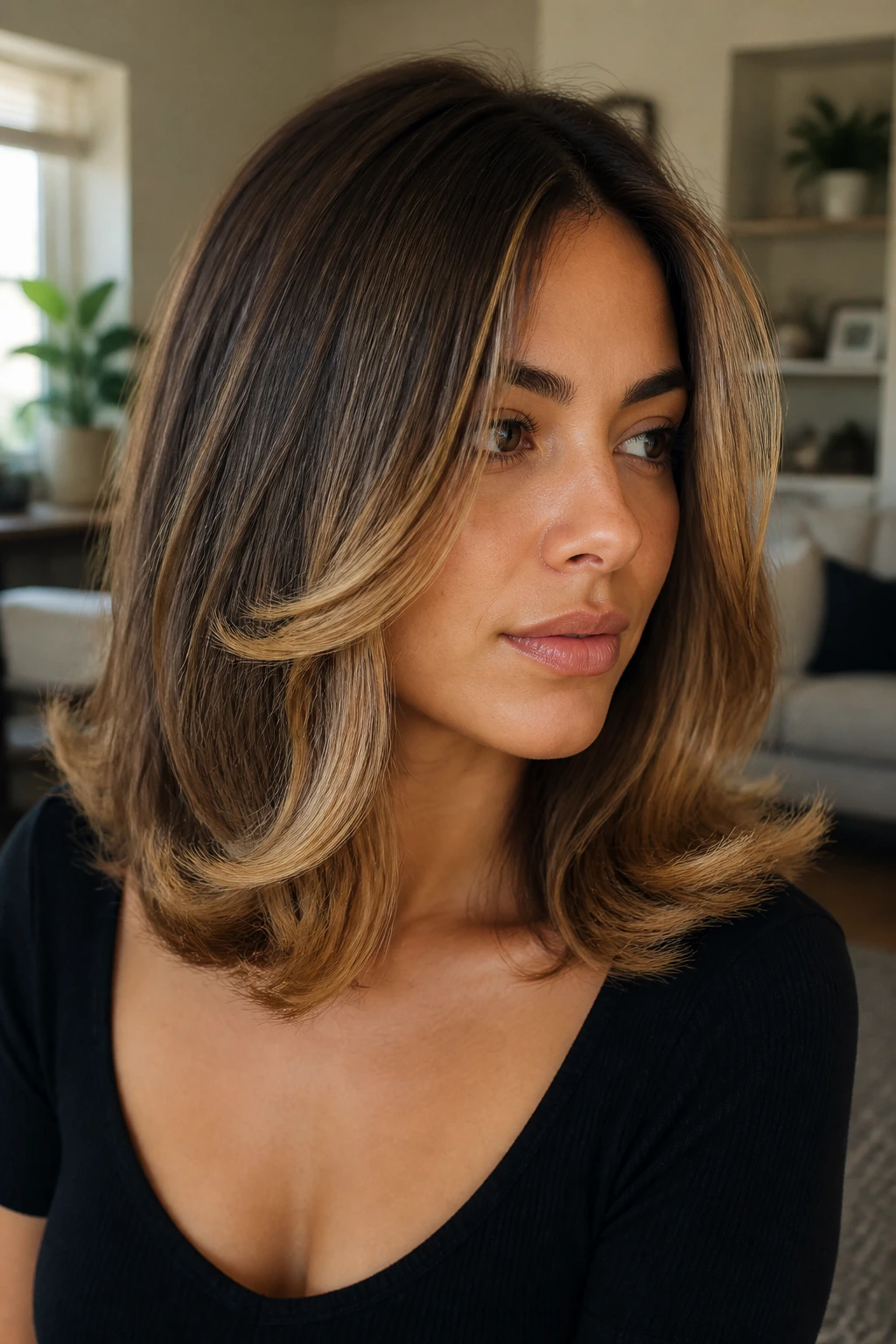
A C-curl cut sits between polished and relaxed, which is why the sunkissed panels feel so usable. The curved ends turn inward just enough to frame the jaw, and the blonde panels add a little contour where olive skin often benefits from it most.
The color should be placed in broad, soft sections rather than thin stripes. Around the face, the panels can be a shade brighter. Through the lower lengths, keep them more muted so the haircut doesn’t lose its shape. This kind of blonde is less about being flashy and more about letting the hair move cleanly.
A 1½-inch round brush gives the ends their curve. If your hair is naturally straight, clip the front pieces in the bend for ten minutes while they cool. Old trick. Still works.
21. Deep Side-Part Glam Waves With Amber Shine
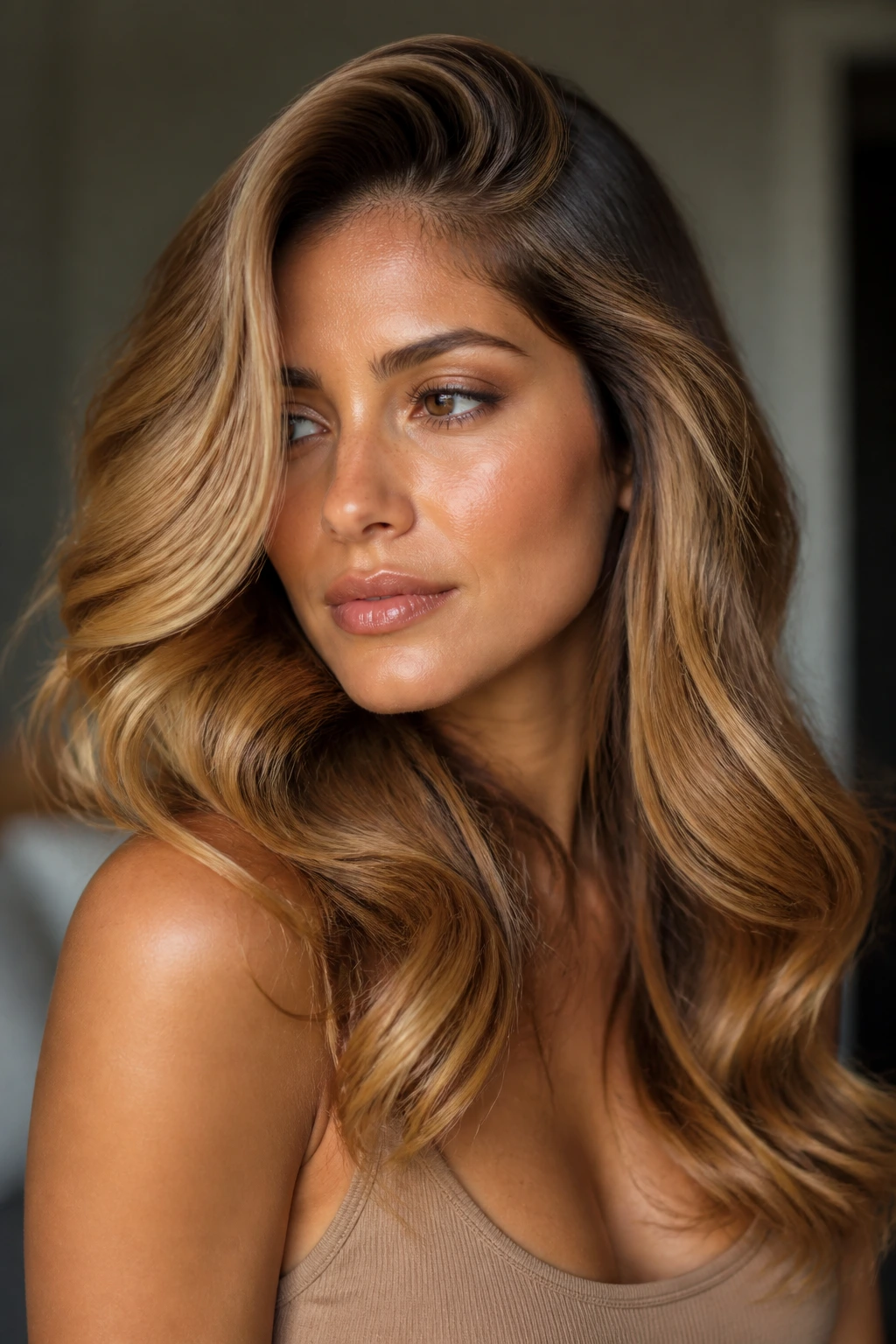
A deep side part changes everything before the wave pattern even starts. It creates lift, shadows one side of the face, and lets amber shine hit the other side in a way that looks tailored to olive skin. The whole look carries a little drama, but not in a hard, costume-y way.
Amber is a useful tone here because it sits between honey and copper. That tiny shift toward warmth gives the hair depth under indoor light, where flat blonde can turn dull. Keep the waves wide and brushed out, then set the front sections with a clip while they cool so the side part holds.
This is the style I’d pick for evening when you want the blonde to feel richer than casual beach waves. It has more polish, less fuzz, and a cleaner light pattern.
22. Long V-Cut With Melted Honey Ombre
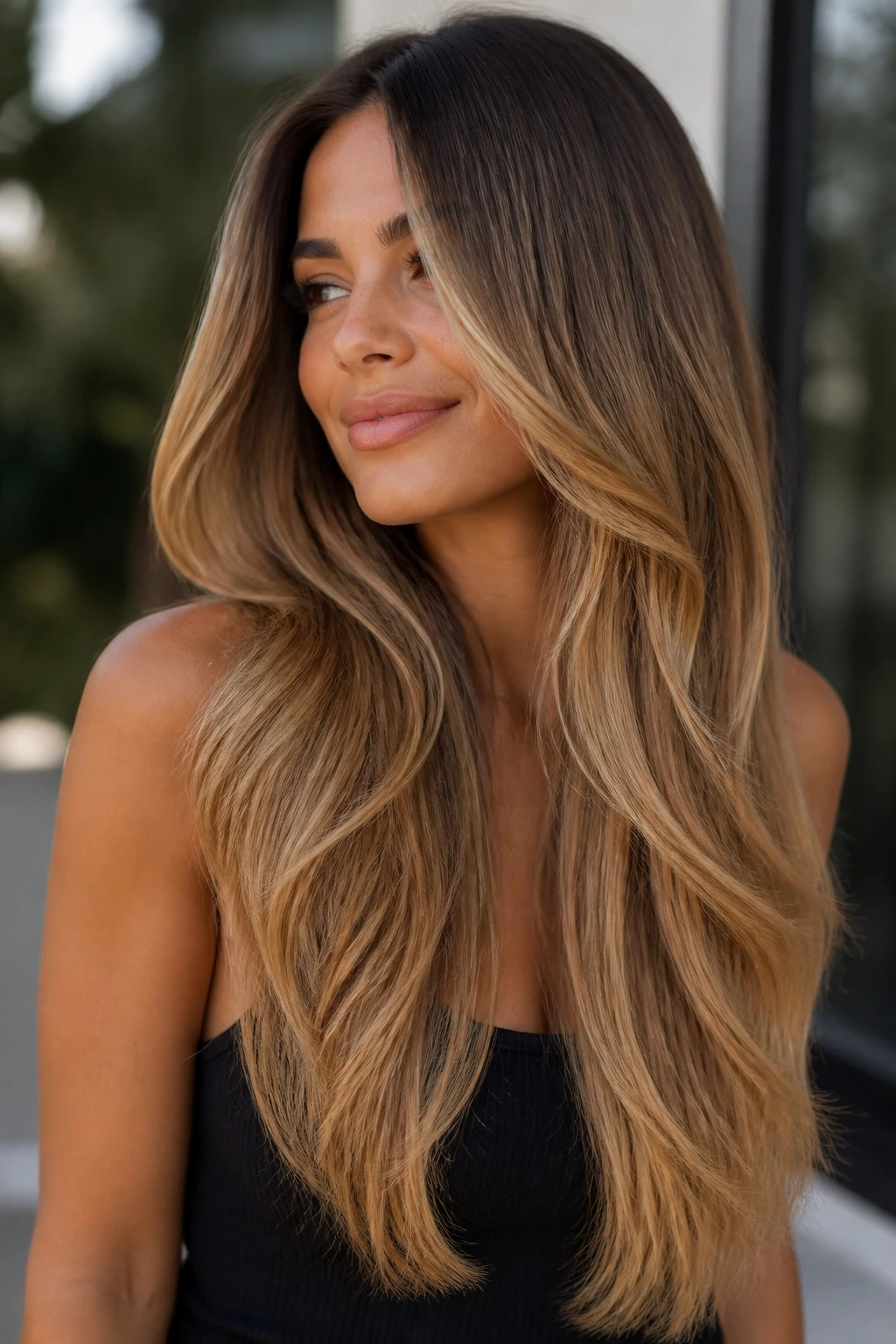
A long V-cut gives honey ombré a place to stretch. The darker root melts into warm mids, then eases into gold at the bottom point of the V, which makes olive skin look balanced rather than overlight. The point of the cut is the point of the color, which is nice when the hair is long enough to show it.
This style benefits from a gradual transition. If the ends are too pale too soon, the gradient breaks. The better version keeps the first shift subtle, then gets brighter only near the last several inches. That way the blonde feels sunkissed, not chopped.
It’s a smart choice if you like long hair but don’t want the upkeep of all-over blonde at the scalp. The root stays quieter, the ends stay lively, and the grow-out is less annoying.
23. Airy Butterfly Cut With Golden Veil
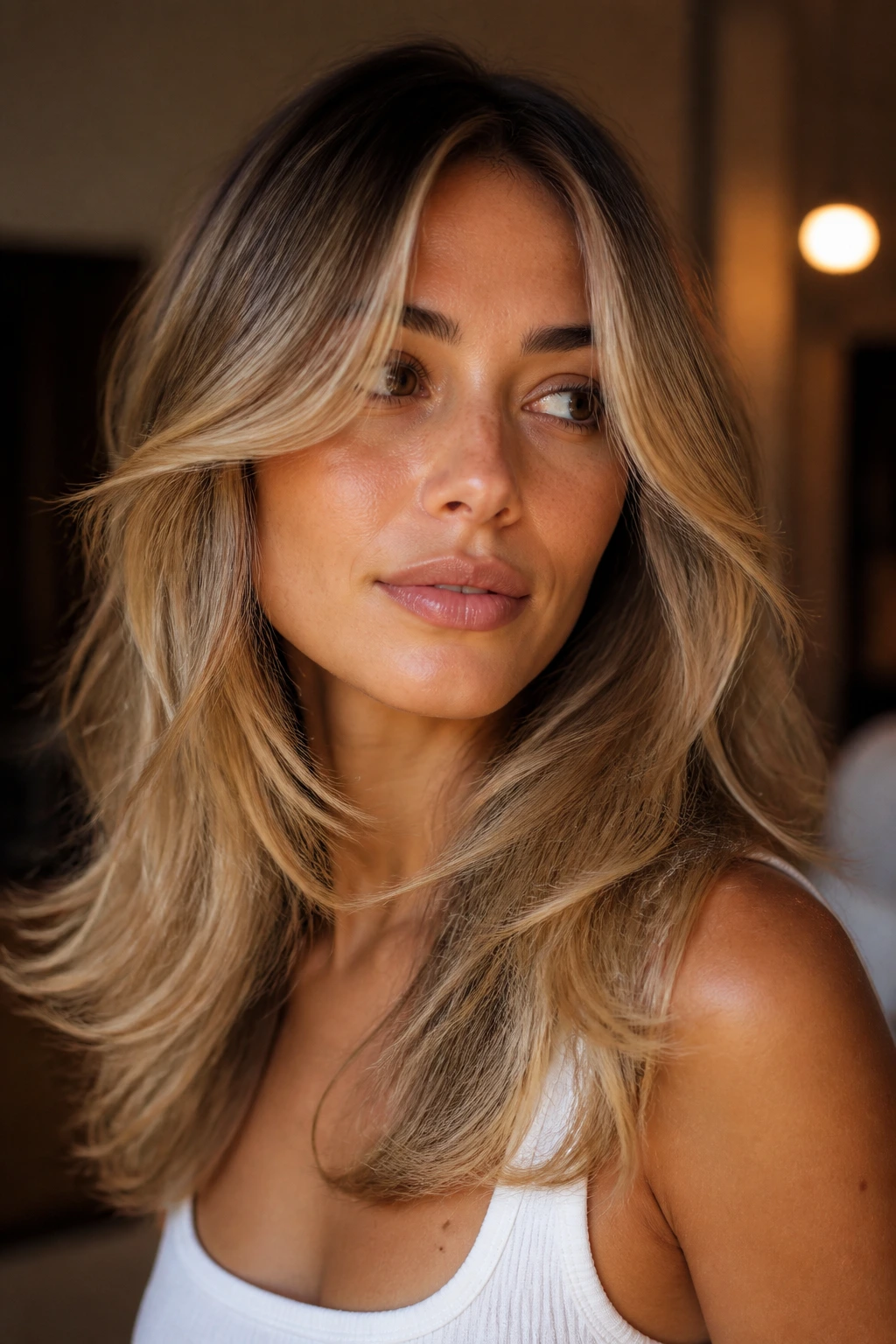
The butterfly cut is built for movement, and golden veil highlights make that movement visible. The shorter face layers frame the cheekbones, the longer back layers keep the length, and the warm blonde sits across the top like a soft film of light. On olive skin, that veil of gold keeps the complexion from looking heavy under the hair.
This cut is especially good if your hair is thick or dense. The layers reduce bulk without making the style feel choppy, and the golden pieces prevent the shorter face layers from getting lost. Blow-dry with a large round brush, then flip the ends away from the face for a bit of lift. It should look airy, not overdone.
If you want hair that moves when you turn your head, this is a strong one.
24. Bra Strap-Length Layers With Apricot Honey Blend for Olive Skin
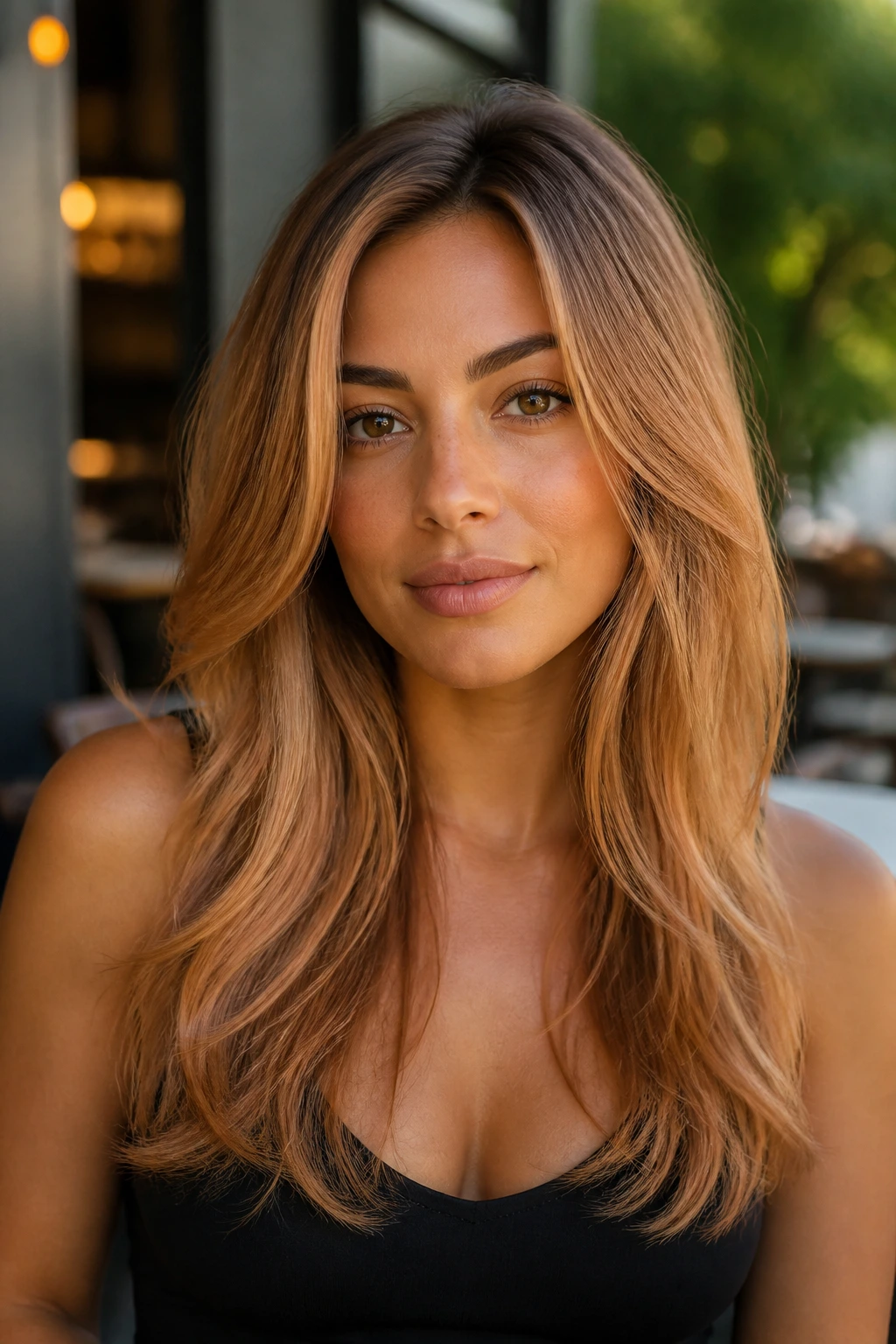
Apricot honey is a little warmer and softer than classic honey, and that small shift matters on certain olive tones. If your skin leans golden or picks up tan easily, the apricot note can keep the blonde from feeling too neutral. The layers around bra-strap length give the color enough space to spread without turning into a solid curtain.
This is a good middle ground for people who want warmth but don’t want their blonde to read flat gold. The apricot cast adds a hint of peach, which can be lovely near the face if your undertone is more warm-neutral than green-gray. Keep the brightest pieces near the front and mid-lengths, then let the lower layers stay softer.
A simple blowout or loose wave keeps the blend from looking too serious. The haircut carries the weight; the color just softens it.
25. Glossy Topknot With Face-Framing Butter Blonde
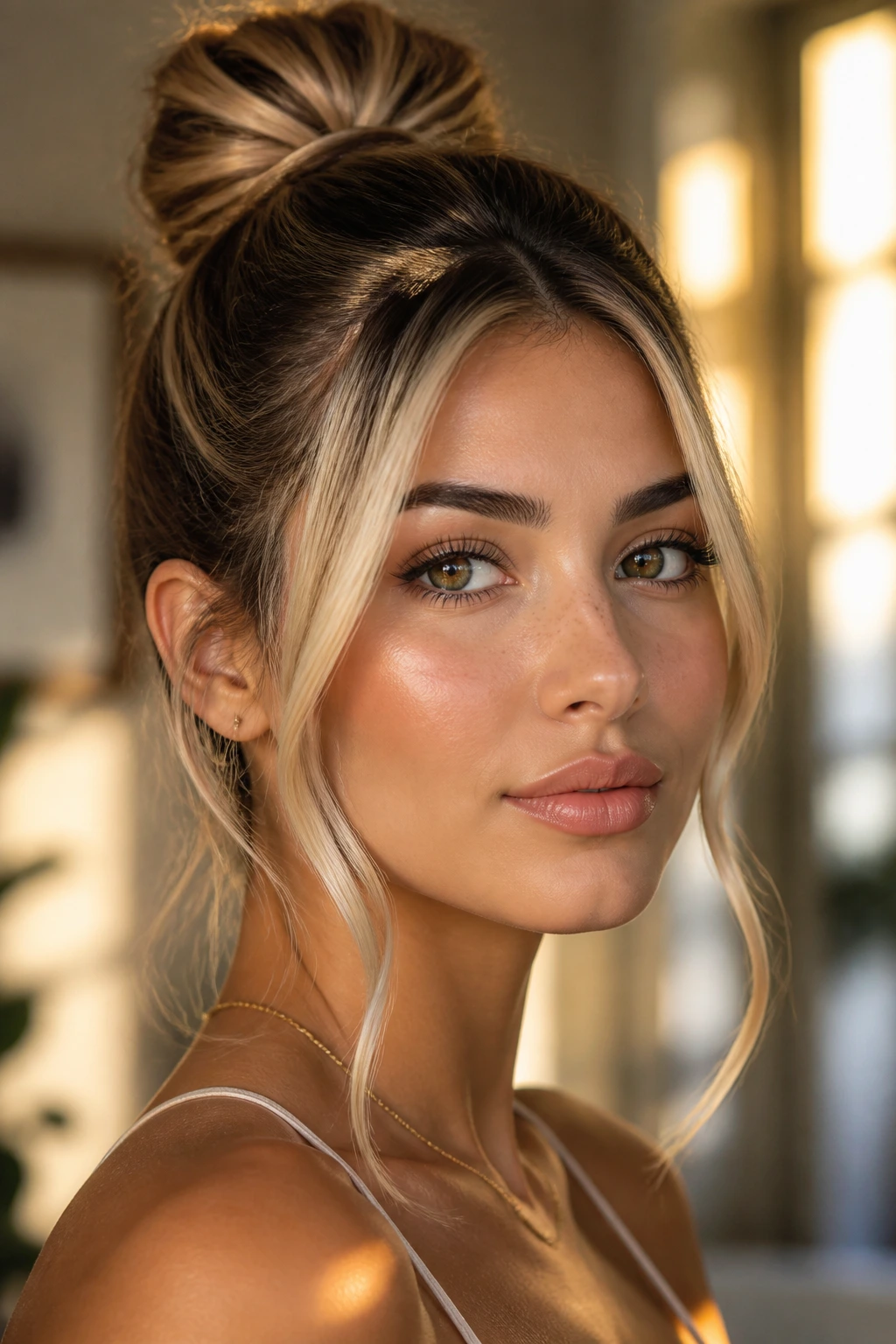
A topknot is only plain when the color stays hidden. Face-framing butter blonde changes that immediately, because the lightest pieces sit where olive skin can use them most — at the temples, cheekbones, and along the jaw. The knot itself can be slick or slightly loose, but the front pieces should stay soft enough to move.
This style is a good one when you want something fast that still looks considered. The blonde around the face gives the bun a purpose. Without it, the knot can feel like an afterthought. With it, the whole look becomes neat, bright, and a little sculptural.
Leave two thin strands out at the front and curve them slightly with a flat iron. Small move. Big payoff. The butter blonde catches the light without making the face look pale, which is exactly why the warm blonde family keeps winning here.
Why Warm Blonde Sits So Well on Olive Skin
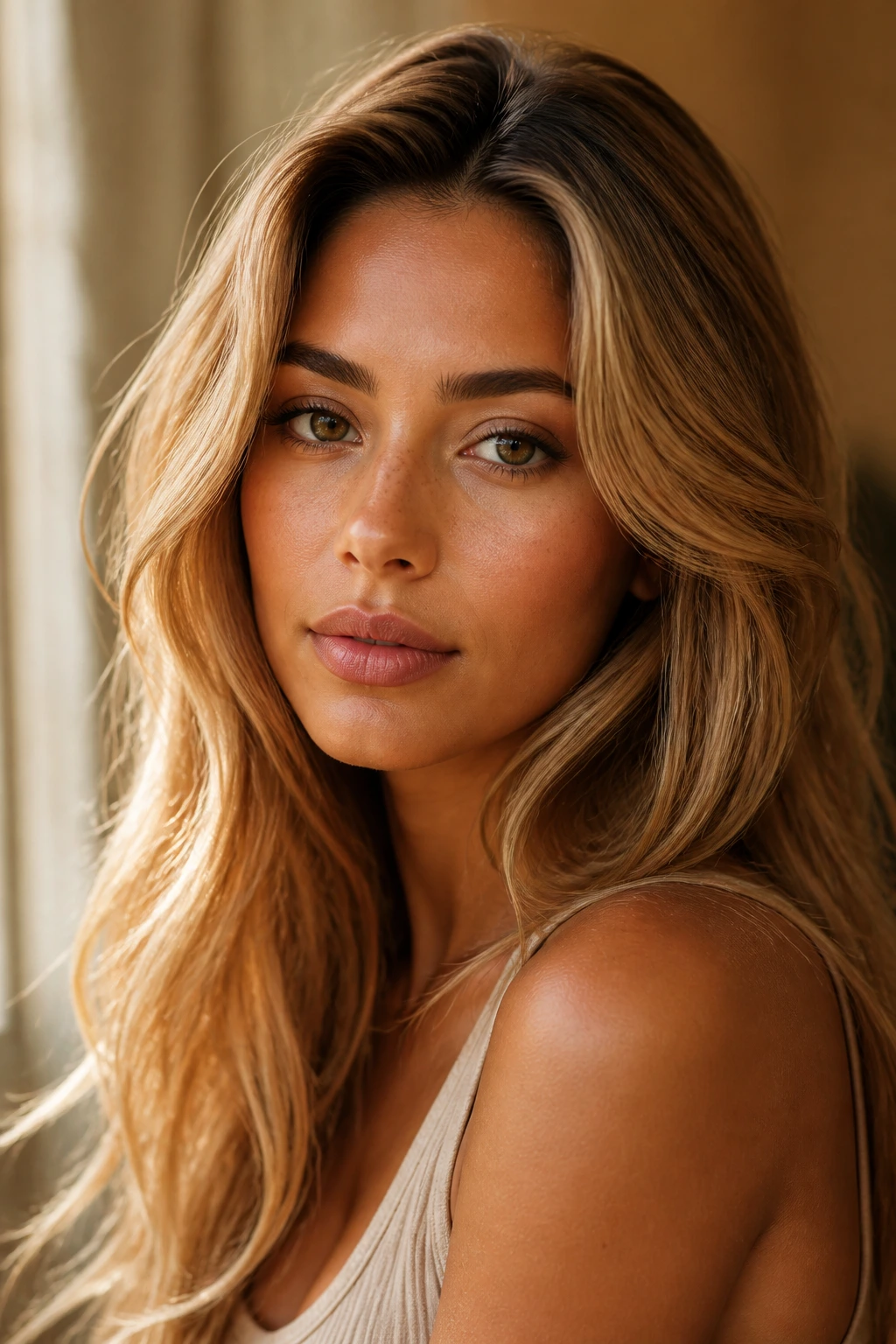
Olive skin usually carries a muted base with a green-gold cast underneath, and that changes how blonde reads. Cool, icy tones can look clean on the swatch and odd on the face. Warm blondes — honey, gold, amber, butter, caramel — sit closer to the skin’s natural warmth, so the whole look feels connected instead of separate.
There’s a practical side too. Warm blonde often looks softer as it fades. A beige-gold gloss or a honey-toned glaze can keep the shade alive even when the brightness starts to soften, while ash blondes tend to go flat or dusty once they lose their fresh toner. That’s one reason colorists keep reaching for warm ribbons around the face instead of flooding the whole head with pale light.
Placement Beats Blanket Lightness
The brightest pieces should land where the eye naturally goes: part line, cheekbone, ends, and the top layer that moves when you turn your head. If every section is lifted to the same level, the color can wash out olive skin. A few deeper pieces underneath give the warm blonde a place to rest.
Roots Are Not the Enemy
A slightly deeper root is your friend here. Even half a level of shadow keeps the blonde from floating off the face and makes the grow-out cleaner. That little bit of depth is usually what separates a flattering warm blonde from something that looks harsh after two weeks.
Dimension Keeps Hair Looking Alive
Solid blonde can be harsh on olive skin because it removes all the natural shadows around the face. Ribbons, babylights, lowlights, and face frames keep the color moving. Hair should look like it has light in it, not like it was dipped in it.
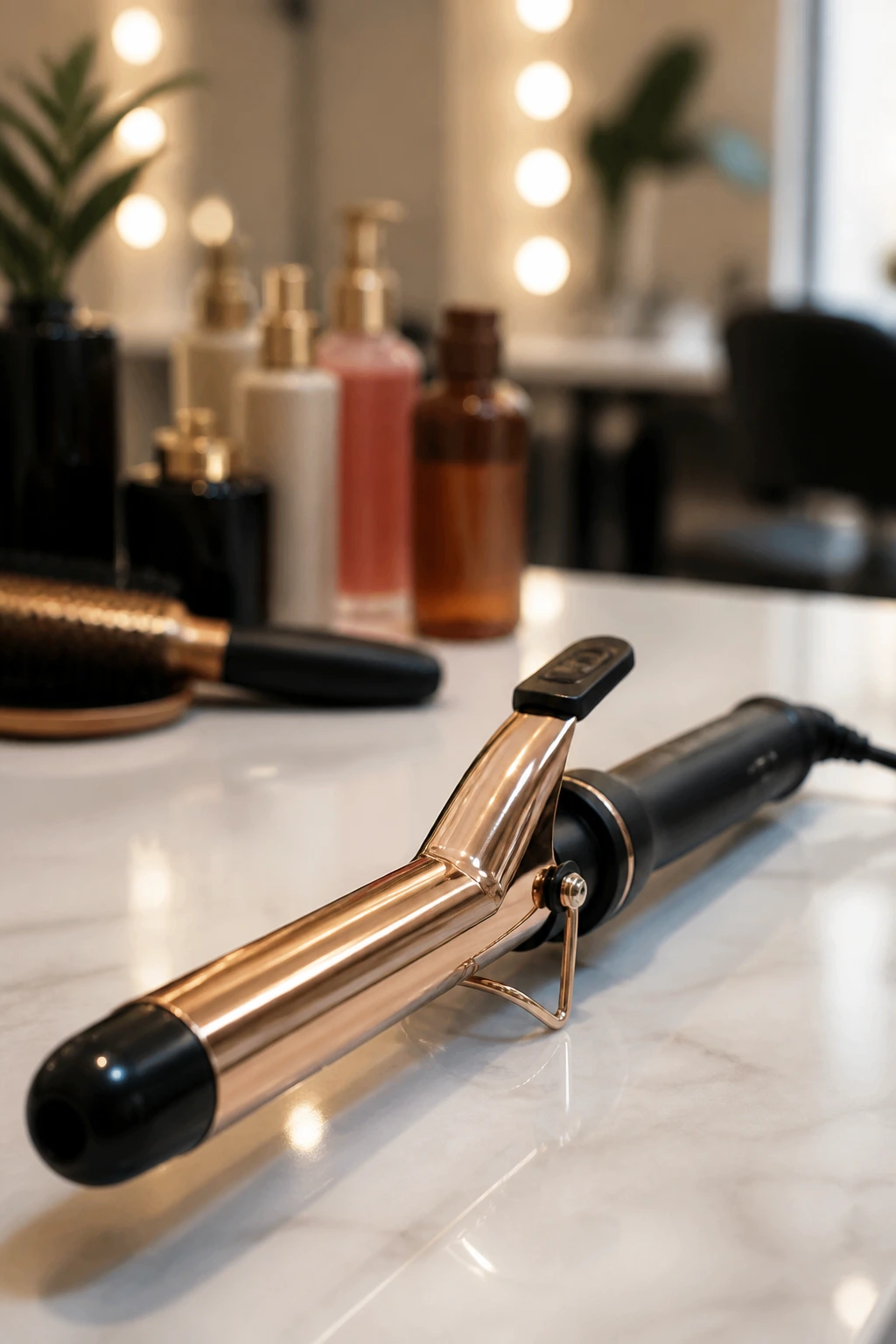
Essential Tools and Color-Care Products
-
Color-safe shampoo and conditioner — Look for sulfate-free formulas that cleanse without stripping the honey and gold out of the hair in two washes.
-
Purple shampoo — Useful only in small doses; too much of it can mute warm blonde and leave the ends looking dusty.
-
Heat protectant spray or cream — Use it every time you blow-dry, curl, or flat iron. Warm blonde shows breakage fast.
-
1¼-inch curling iron or wand — A good size for loose bends, waves, and brushed-out curls across most of these looks.
-
1½- to 2-inch round brush — Best for curtain bangs, bobs, and blowouts that need lift without tight curl.
-
Wide-tooth comb — Helps separate waves and curls without dragging the blonde pieces into frizz.
-
Sectioning clips — Worth having if you style face-framing pieces, set bangs, or do your own highlight placement.
-
Microfiber towel or soft T-shirt — Reduces friction on damp hair, which matters when the ends are lightened.
-
Silk pillowcase or bonnet — Keeps waves smoother overnight and saves the color from rough rubbing.
Smart Shade Choices and Salon Notes
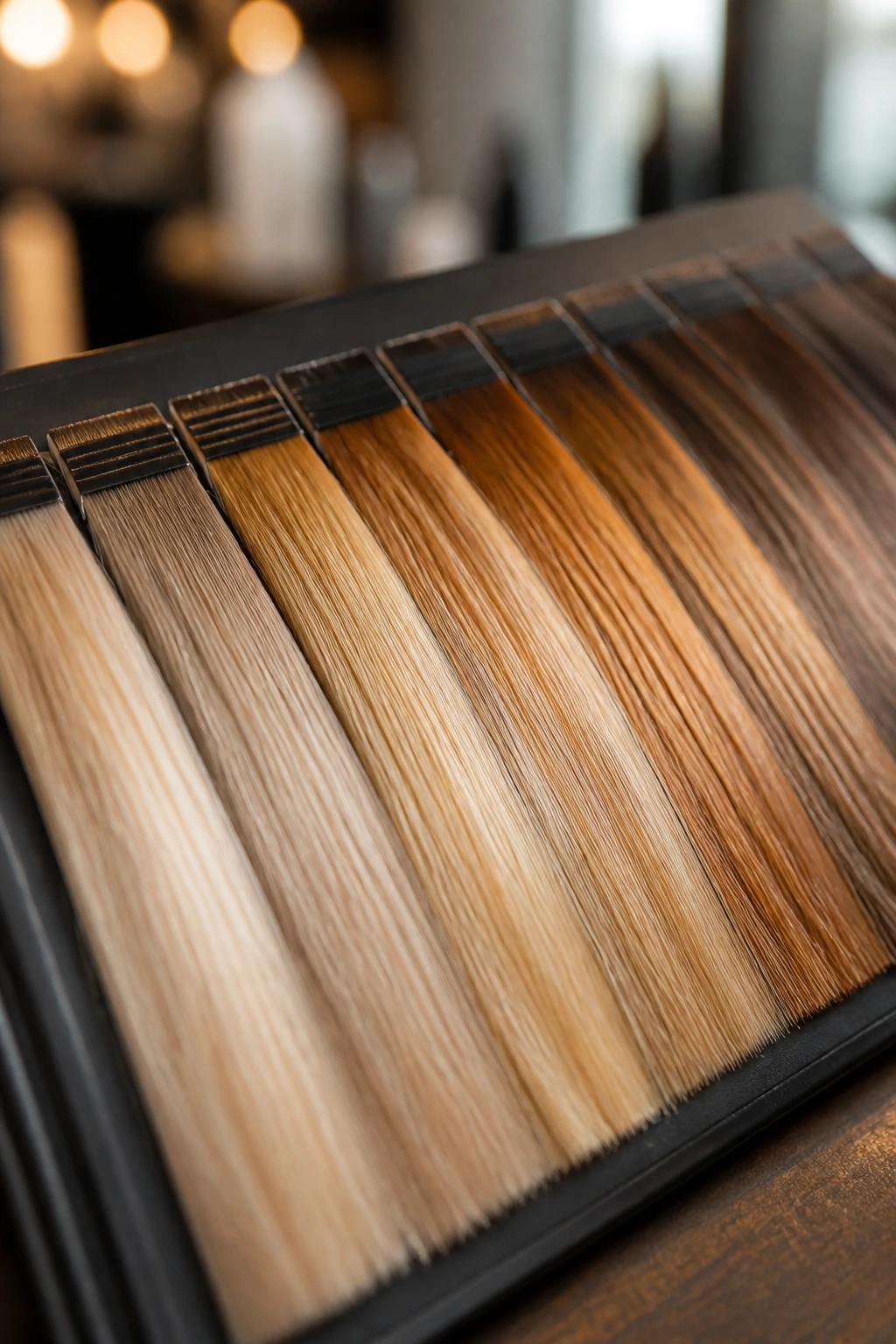
Don’t ask for “blonde” and stop there. That word covers too much. Honey blonde, golden blonde, caramel blonde, butter blonde, amber blonde, and beige-gold blonde all sit a little differently on olive skin, and the wrong one can nudge your complexion toward gray or orange. Bring photos that show both the color and the cut, because the haircut changes the way the shade looks.
If your base is dark brown, ask whether the plan will happen in stages. One aggressive lightening session can leave hair porous and hard to tone cleanly. A staged approach with a warm gloss between sessions usually gives a richer result, especially if your hair is thick or already color-treated. For olive skin, a root that stays one shade deeper than the lightest piece often looks more natural than all-over brightness.
Ask for words that mean something specific: golden beige, warm honey, soft caramel, amber ribbon, butter blonde face frame. Those terms give the colorist room to choose the right tone, rather than pushing the hair toward a generic pale blonde. If you tan easily, a slightly richer warm tone usually flatters better than a frosty one. If your skin is more muted and neutral, keep the warmth but dial back the copper so the blonde stays clean.
One thing people miss: gloss is not a luxury add-on here. A neutral-gold or beige-gold gloss can keep warm blonde from going brassy at the wrong speed, and it helps the shade sit better next to olive undertones. That small extra step often matters more than another round of bleach.
How to Match These Looks to Your Texture and Face Shape
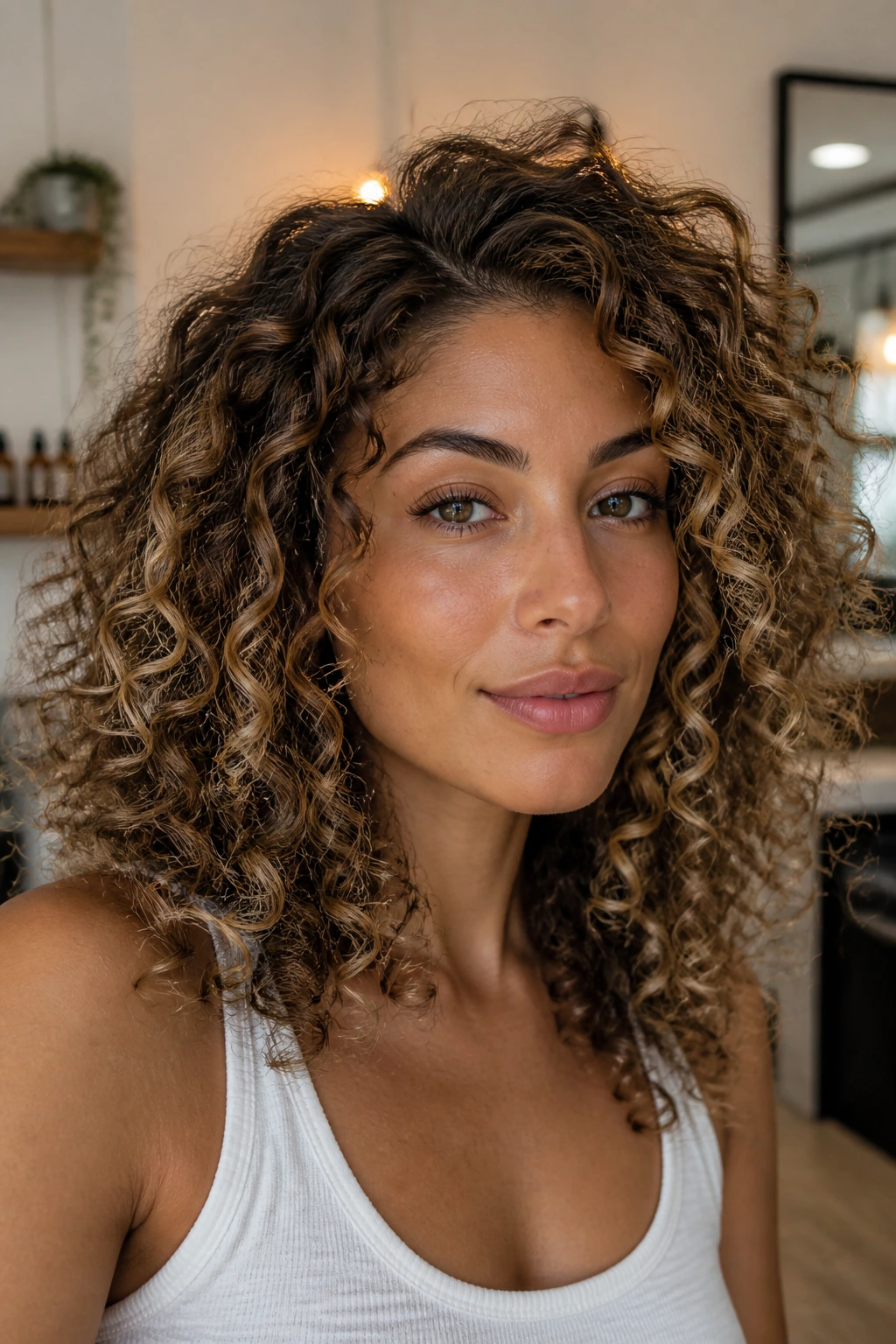
Straight hair: Keep the highlights fine and the cuts sharp. Straight textures show every line, which is great if you want babylights, bobs, or a blunt cut with a warm gloss.
Wavy hair: You can handle chunkier balayage ribbons and more obvious money pieces. The bend breaks up the blonde naturally, so the color looks softer without much effort.
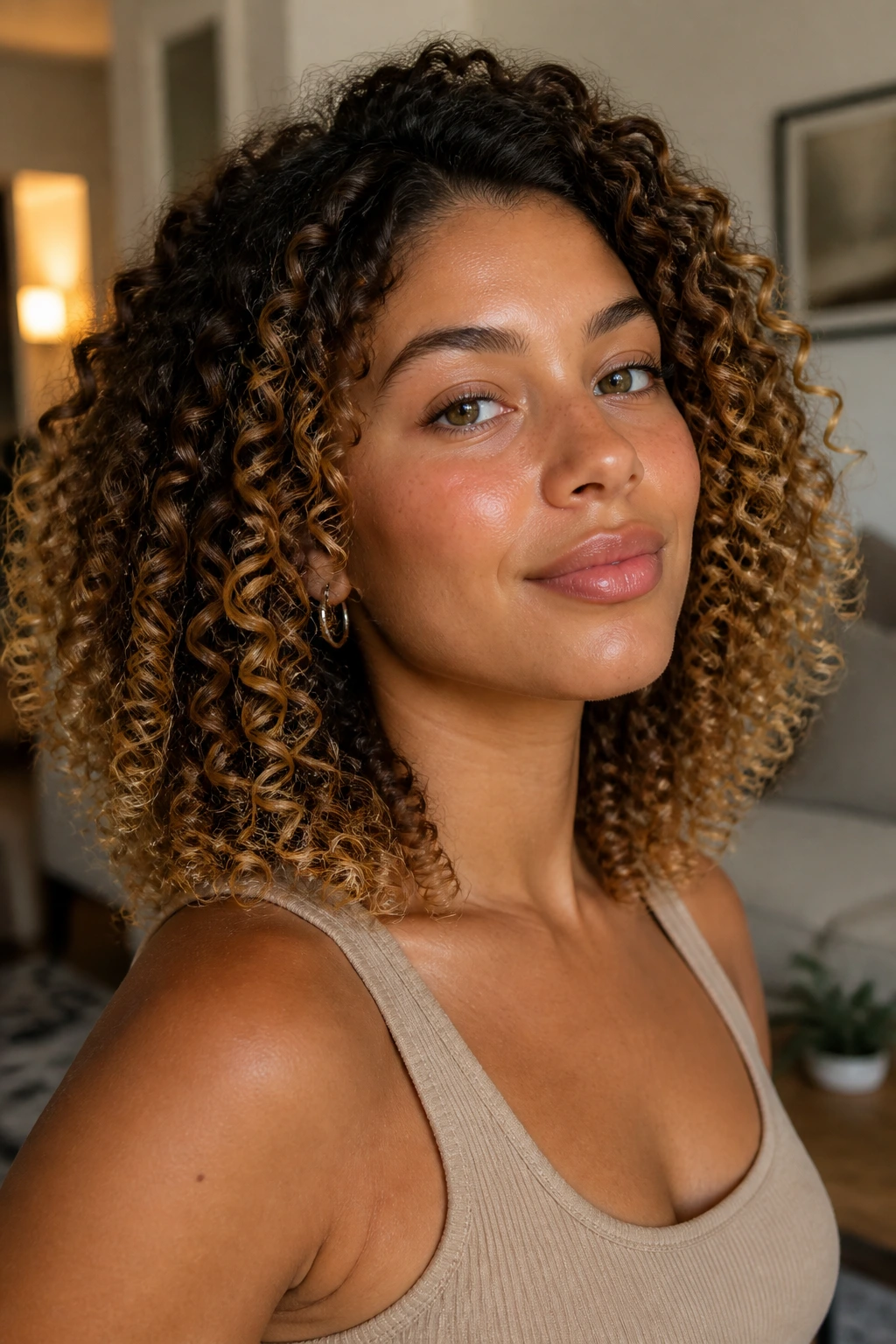
Curly and coily hair: Put the lighter pieces on the outer curve of the curl pattern, not buried in the interior. That way the gold shows when the hair shrinks up and moves.
Fine hair: Stay with delicate highlights and a little root depth. Too much lightness can make fine hair look airy in the wrong way, which is usually code for see-through.
Thick hair: You can carry stronger contrast, larger ribbons, and more layered cuts. The mass of the hair gives the blonde somewhere to live.
Round faces: Bright pieces below the cheekbone can help lengthen the face. Side parts also work well because they add a little vertical line.
Long faces: Put some brightness closer to the cheeks and around the fringe. A curtain bang or a wider face frame keeps the hair from pulling everything downward.
Additional Tips and Small Upgrades
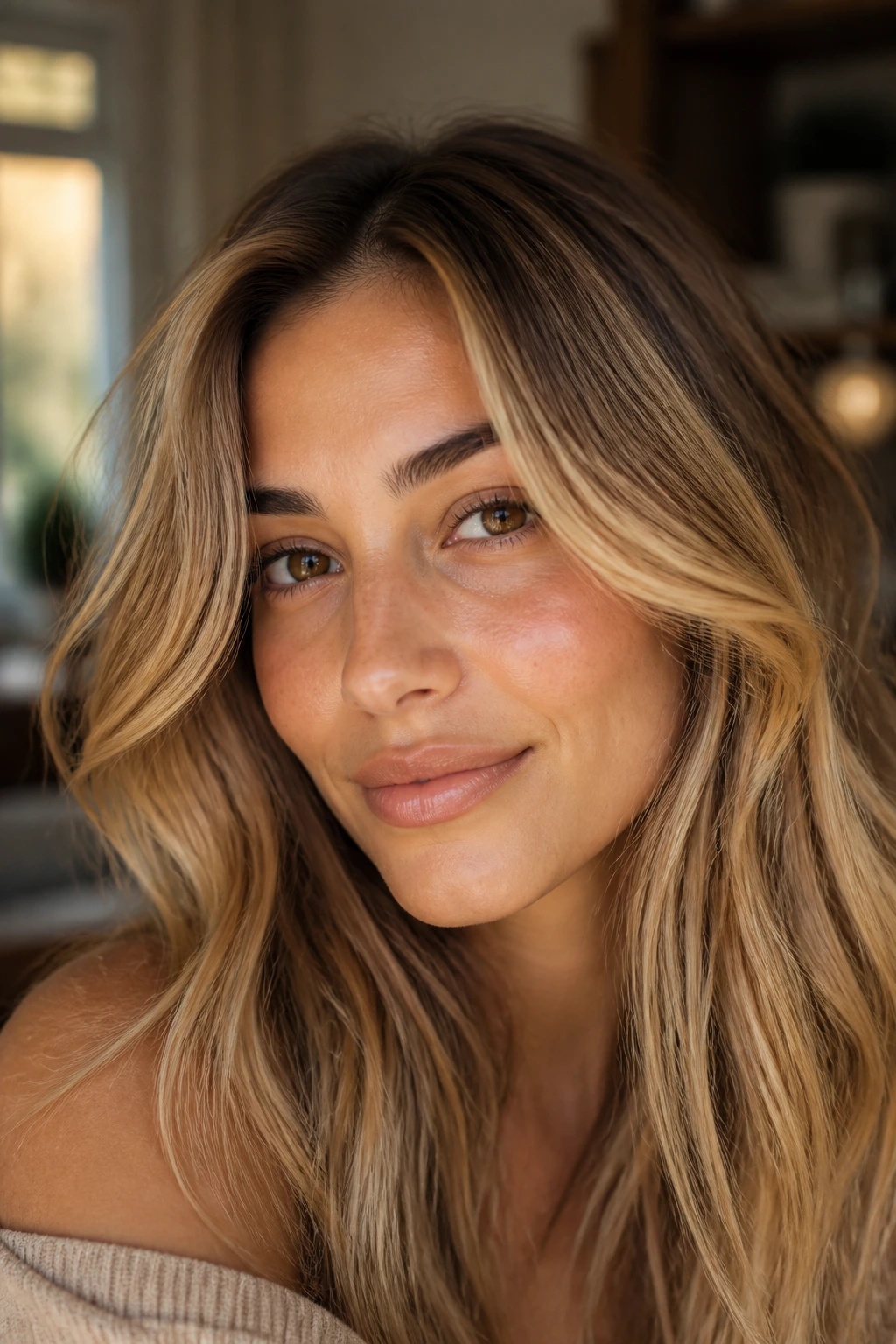
Face-Framing First: Put the brightest pieces where your hair actually touches the face — temples, cheekbone, jawline. That is where the warmth changes the skin fastest.
Gloss Over More Bleach: If the blonde starts looking too yellow, reach for a beige-gold gloss before you book another lightening service. More bleach is not always the fix.
Keep the Root Slightly Deeper: A root shadow one step darker than the mids helps the color read richer and keeps the regrowth softer.
Heat, But Not Too Much: Most of these styles look better around 300°F to 350°F than at max heat. The shape matters more than blasting the hair into a crisp bend.
Make It Yours: If your style feels too bright, add a lowlight panel under the crown. If it feels too dark, widen the face frame by half an inch. Small adjustments do more than a total redo.
Keeping the Shade Fresh Between Salon Visits
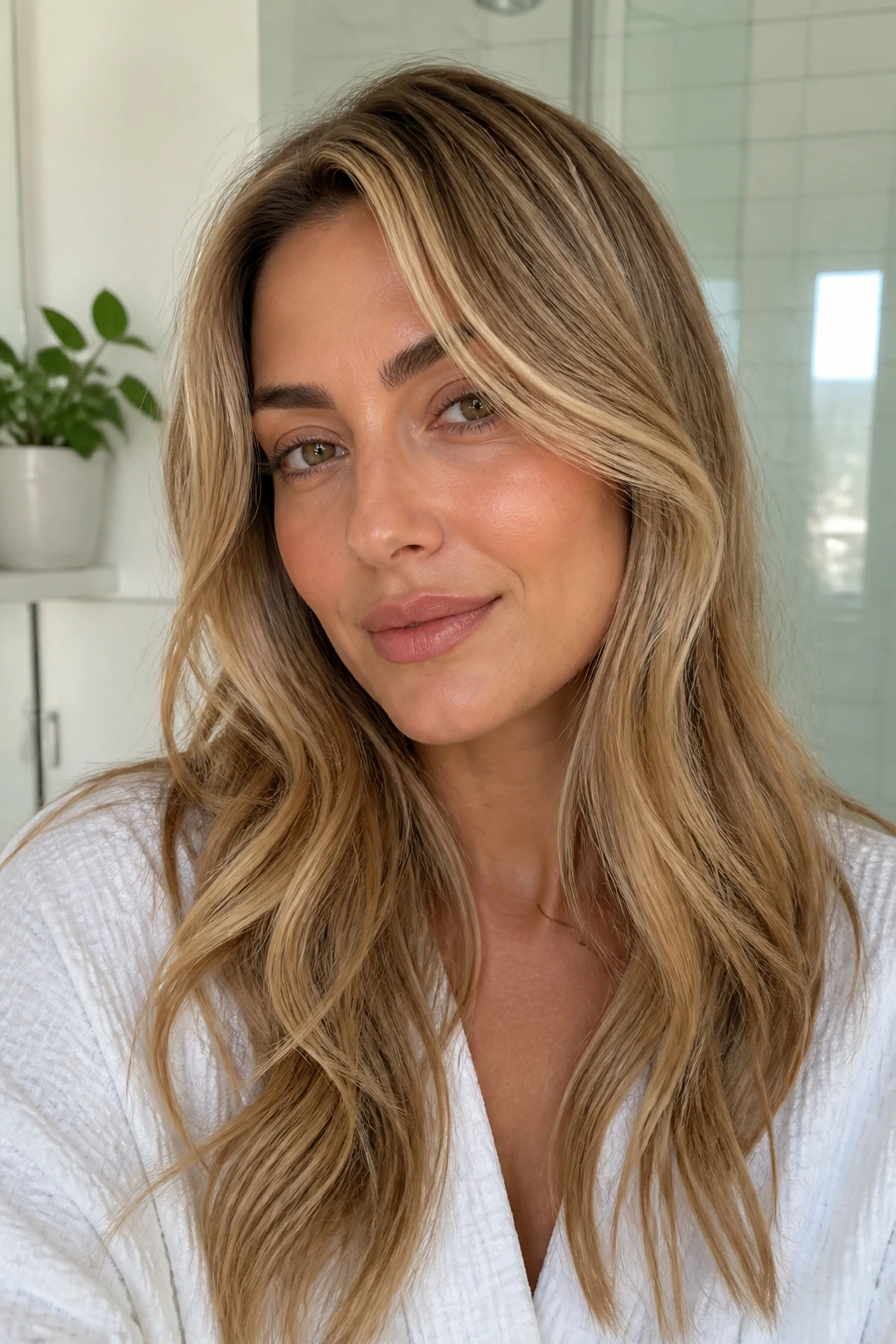
Warm blonde is easier to live with than a fragile pale blonde, but it still needs a little discipline. Wash two or three times a week if you can. Every shampoo strips a little tone, and olive skin tends to look better when the gold stays soft rather than over-washed. On off days, a little dry shampoo at the roots keeps the cut from collapsing without dulling the mids.
Gloss or toner usually needs refreshing every 4 to 6 weeks if you want the honey tone to stay clean. If your hair grabs color fast or runs porous, that window may be shorter. A good salon gloss can revive the warmth without another heavy lightening pass, which is kinder to the ends and easier on the budget.
At night, sleep with the hair in a loose braid, a low silk scrunchie, or a soft topknot. That keeps waves from tangling and helps the blonde pieces stay smooth. For curls, use a bonnet or pineapple the crown gently so the pattern doesn’t flatten. Straight styles usually last best when you keep the crown dry and only refresh the front pieces with a round brush or a quick pass of a flat iron.
Heat styling needs a little restraint. If the blonde is already lightened, repeated high heat will rough up the cuticle and make the warm tone fade faster. Use a protectant every time, and save the hottest setting for stubborn sections only. If an ombré or balayage style is growing out well, do not rush the touch-up just because the root shows. A soft regrowth is often part of the appeal.
Variations and Adaptations to Try
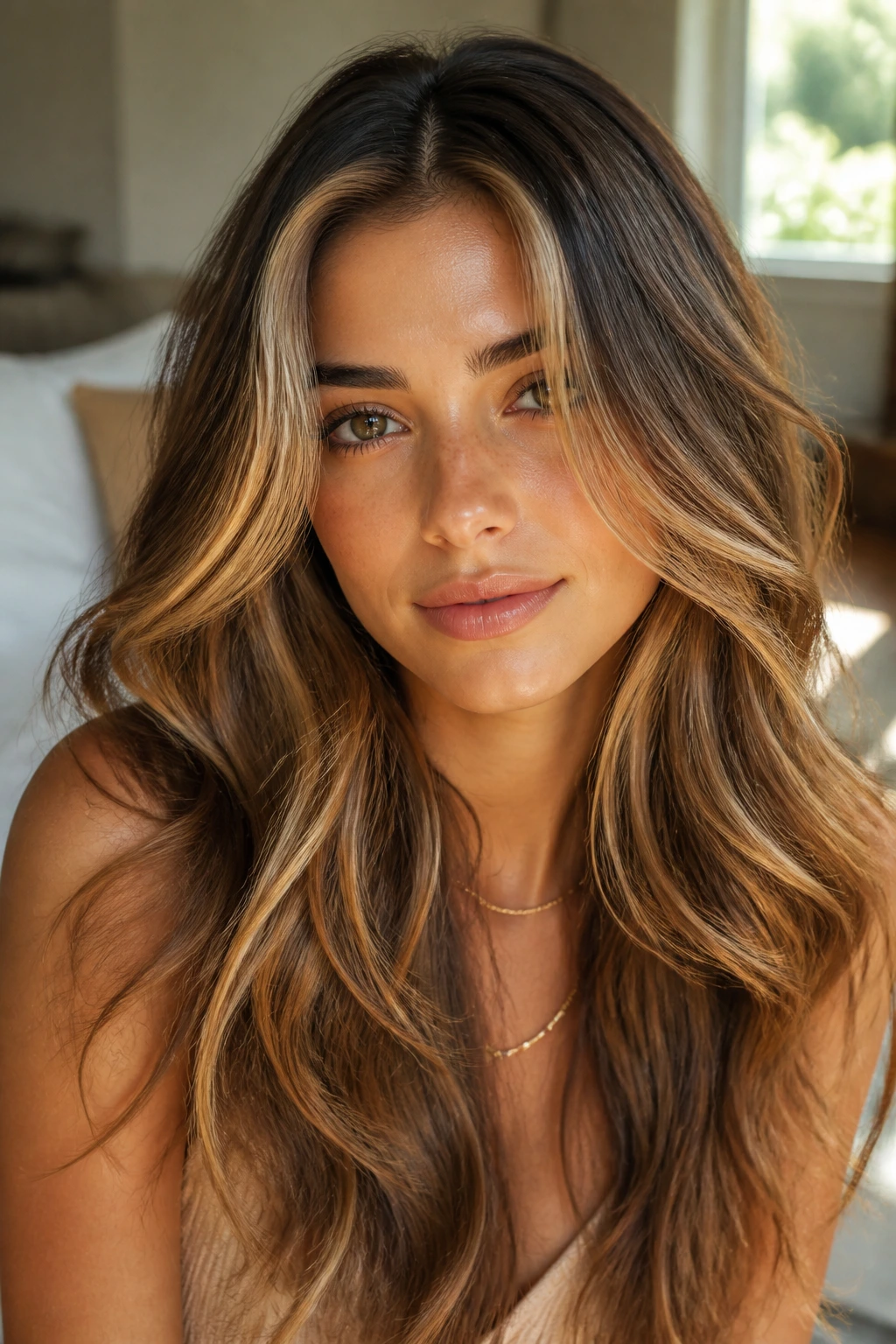
Bronze-First Olive Blend: If your skin leans deeper or more muted, start with caramel and bronze lowlights, then add honey only at the face frame. The result feels richer and less airy, which can be easier to wear than a brighter gold.
Butter Blonde Front Frame: Keep the back and underneath sections darker, then brighten just the first inch or two around the face. This is a smart move if you want the lift without turning the whole head light.
Curly Halo Placement: On curly or coily hair, paint the outer ring of the curl pattern and leave the interior layers deeper. The gold shows when the hair moves, and the shape stays readable.
Low-Maintenance Root Melt: Ask for a root that sits one to two shades darker than the mids, then blend it into honey lengths. The grow-out stays soft, and you do not get that harsh band at the scalp.
Cooler Beige-Gold Twist: If pure gold feels too sunny against your olive skin, ask for a beige-gold gloss instead of a warm coppery toner. It keeps the look bright without pushing the hair toward orange.
Brighter Butter Money Piece: For a bolder finish, keep the base warm and make only the front pieces buttery and light. That gives the face a stronger frame without committing to full blonde maintenance.
Common Mistakes That Flatten the Face
-
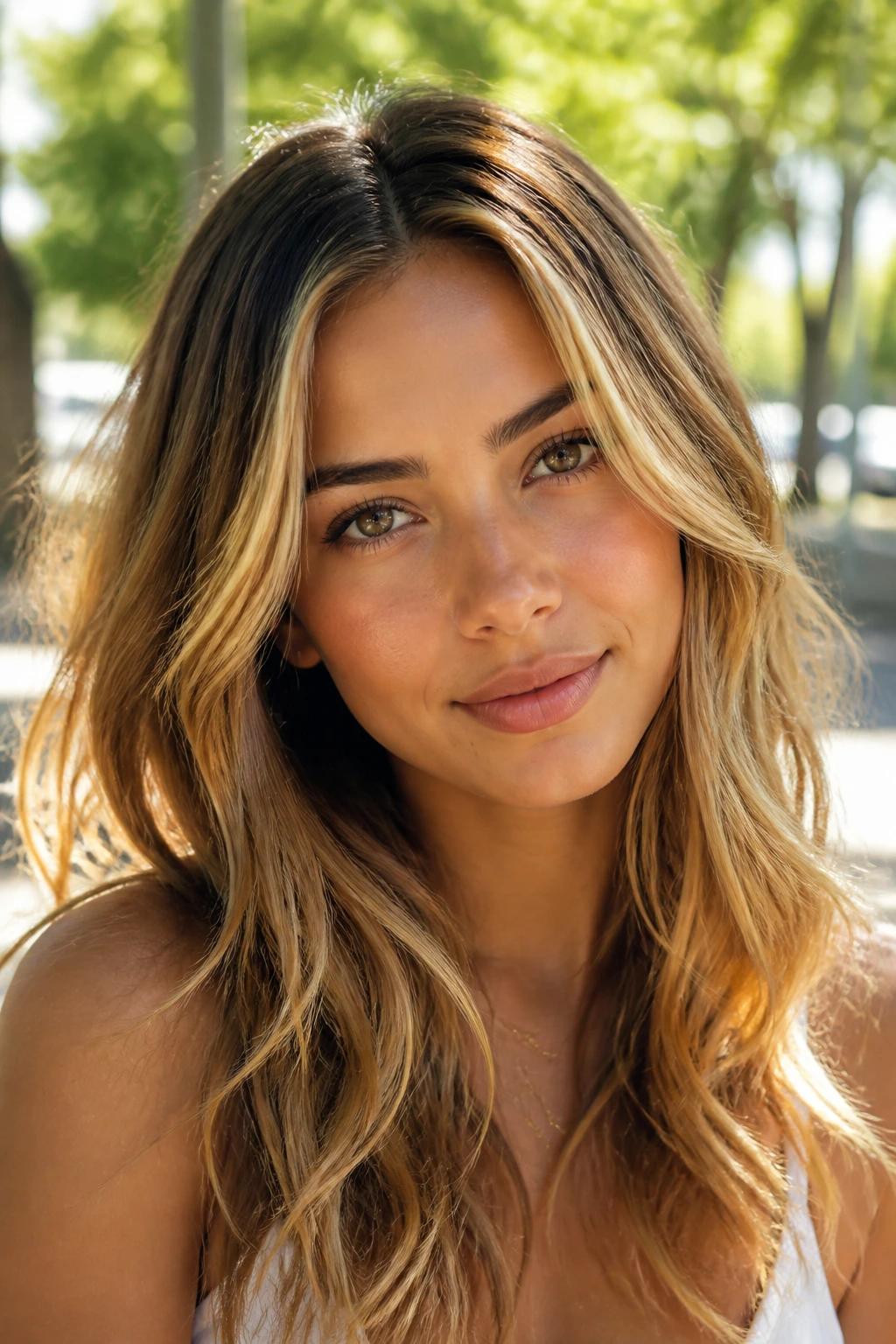
Going too ash or pearl on purpose. The hair may look polished in the bowl, but olive skin can lose warmth fast. Ask for golden beige, honey, or caramel instead, and keep a warm gloss on hand.
-
Lightening every strand to the same level. The result looks flat and can read yellow under indoor light. Leave some depth at the root and underneath so the blonde has contrast.
-
Using purple shampoo too often. It can mute warm blonde and leave honey tones looking dusty or gray. Use it only when the hair truly needs correction, not as a weekly habit.
-
Choosing a cut that hides the color. Heavy one-length hair can swallow face-framing highlights. Add layers, a blunt edge, a fringe, or some bend so the warm pieces actually show.
-
Styling with too much heat. Fried ends make warm blonde look tired fast. Use lower heat, protectant every time, and keep the final pass short.
-
Ignoring your base color. If your natural hair is dark, a dramatic jump to pale gold often looks harsh. A few levels of lift plus dimension usually looks better and wears longer.
Frequently Asked Questions
Is honey blonde or golden blonde better for olive skin?
Honey blonde is usually richer and a little deeper, while golden blonde is brighter and lighter. If your olive skin leans muted, honey often feels easier to wear; if your complexion is clearer and warmer, golden blonde can light you up more.
Can olive skin wear platinum blonde?
Yes, but it usually needs careful balancing with the cut, brows, and makeup. Most olive complexions look softer in warm blonde families because the skin already carries a muted undertone that can get lost under icy color.
What highlight placement is most flattering?
The best placement usually starts around the part line, cheekbone, and ends. That keeps the light near the face instead of spreading it evenly everywhere, which can drain the skin.
How do I stop warm blonde from turning orange?
Use a color-safe shampoo, avoid overusing purple shampoo, and book a gloss when the tone starts to skew too coppery. A beige-gold toner often corrects warmth without killing the honey finish.
Can these looks work on curly hair?
Absolutely. Curly hair can hold honey and golden highlights beautifully, but the placement has to follow the curl pattern so the bright pieces stay visible when the hair shrinks.
How often should I touch up the roots?
Most people can stretch to 8 to 12 weeks if the style has a shadow root or balayage. If you want a very crisp money piece or a high-contrast bob, you may want a shorter interval.
Can I get one of these looks without bleaching all my hair?
Yes. Money pieces, ribbons, underlights, and balayage all let you keep a darker base. That approach is often kinder to the hair and easier to maintain on olive skin.
What if my blonde looks too yellow under indoor light?
That usually means the tone needs a gloss, not more bleach. Ask for a beige-gold or neutral-warm refresh, and cut back on purple shampoo for a while.
Do these shades work with dark brows?
They do, and the contrast can look excellent. Keep the blonde warm enough that it belongs with the brows instead of fighting them, and use the haircut to connect the two.
What if my hair is thin and I want warmth without losing volume?
Choose babylights, a root shadow, or a compact bob. Heavy highlighting can make thin hair look sparse, while fine warm pieces keep the movement and give the hair more lift.
The Shade Family That Keeps Working
Warm blonde works on olive skin because it leaves room for the face to stay itself. That sounds simple, but it is the whole point. Honey, gold, amber, and caramel do not erase the undertone; they sit beside it and make it look deliberate. Once you see that, the better choices get easier.
The most flattering version is usually the one with some depth left in it. A slightly darker root, a few brighter pieces around the face, and a cut that lets the light move — that combination does more than a uniform blonde ever will. Keep the warmth, keep the dimension, and let the hair look sunlit instead of stripped.