



Medium skin can wear blonde better than people think. It just cannot wear every blonde with the same ease. The difference between “sunlit and expensive-looking” and “flat and a little brassy” is usually tone, depth, and where the lightest pieces land around the face.
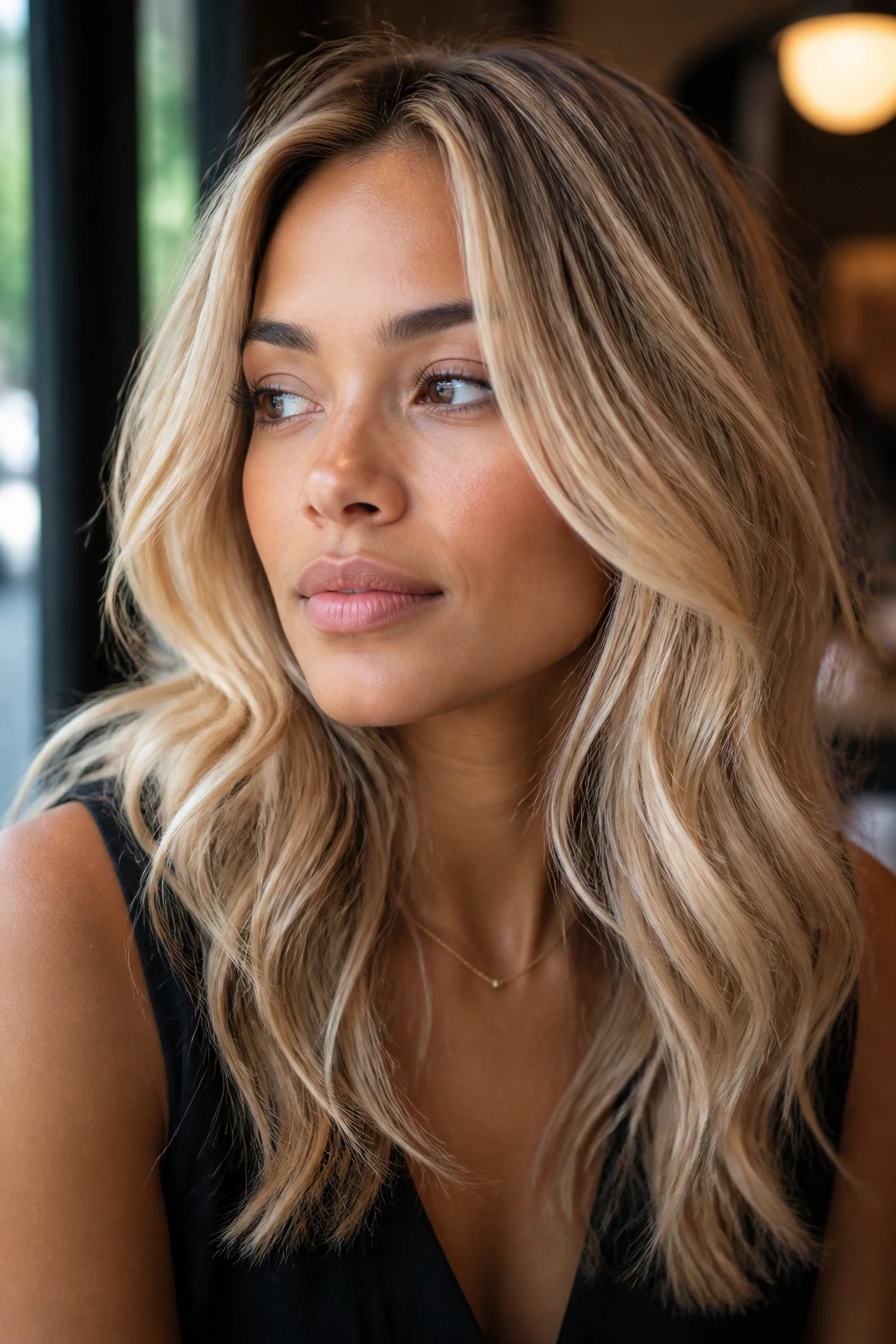
That’s why blonde hair color ideas for medium skin tones need more than a pretty swatch. Honey, beige, caramel, mushroom, champagne, bronze — those shades behave differently once they sit next to golden, olive, or neutral medium skin. A pale blonde with no root depth can make the face look tired. A beige or honey blonde with a little shadow at the scalp can make the whole complexion look clearer and brighter. Little details. Big payoff.
If you’ve ever looked at a gorgeous blonde photo and thought, that would wash me out, you were probably reacting to undertone, not brightness. And that’s the part most inspiration boards ignore. The best blonde on medium skin is not the palest one. It’s the one that gives the skin room to breathe.
Why These Blondes Work So Well on Medium Skin
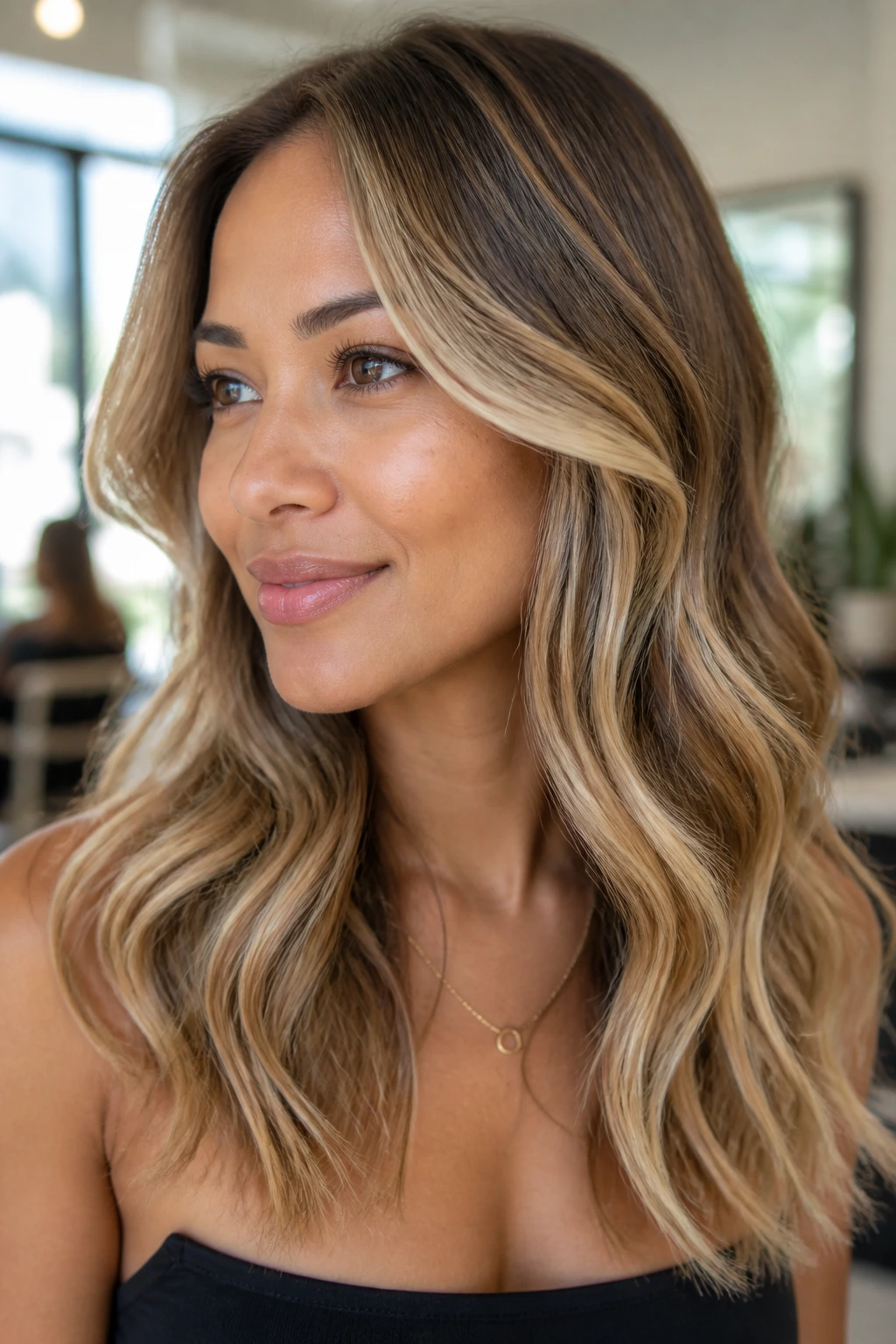
- Tone matters more than level: A level 9 blonde can look softer than a level 8 if the tone is beige or honey instead of chalky ash.
- Root depth keeps the face grounded: A shadow root or bronde base stops the blonde from floating too high on the face.
- Warm and neutral shades are forgiving: Honey, caramel, champagne, and sandy blonde tend to sit neatly against gold, olive, and tan undertones.
- Low-contrast techniques grow out better: Balayage, babylights, and foilayage keep the color from forming a hard line at the scalp.
- Placement changes the whole mood: A bright money piece reads bold; scattered ribbons feel softer and more lived-in.
- Maintenance is part of the look: The best blonde for medium skin is the one you can keep glossy instead of letting it turn dull and yellow.
1. Honey Blonde Balayage for Medium Skin Tones
Honey blonde balayage has a warm, brushed-in glow that flatters medium skin without shouting for attention. The lighter pieces sit over a deeper base, so the hair looks dimensional even when it’s air-dried and a little messy. I like this shade on people who want blonde, but not the kind that needs babying every six days.
Why it works
Honey reflects the same golden note that many medium skin tones already have. That keeps the color from sitting awkwardly on top of the complexion. Ask for hand-painted pieces starting around the cheekbone and concentrating through the ends if you want movement without a chunky highlight stripe.
A level 7 or 8 base with honey ribbons is usually the sweet spot. Go lighter only if your brows, lashes, and makeup can hold the contrast.
2. Beige Blonde with a Soft Shadow Root for Medium Skin Tones
Beige blonde is the shade for people who want light hair without that sharp, almost icy edge. The soft shadow root matters here. It keeps the top half calm and lets the brighter mids and ends do the work, which is exactly what medium skin often needs.
What makes it different
Beige sits between warm and cool, so it doesn’t fight your undertone. That’s useful if your skin shifts gold in daylight but looks more neutral indoors. The root should stay one to two levels deeper than the lightest ends; otherwise the whole look starts to feel chalky.
This is one of the easiest blondes to wear with a center part and minimal makeup. It looks polished, but not stiff.
3. Caramel Ribbon Blonde for Medium Skin Tones
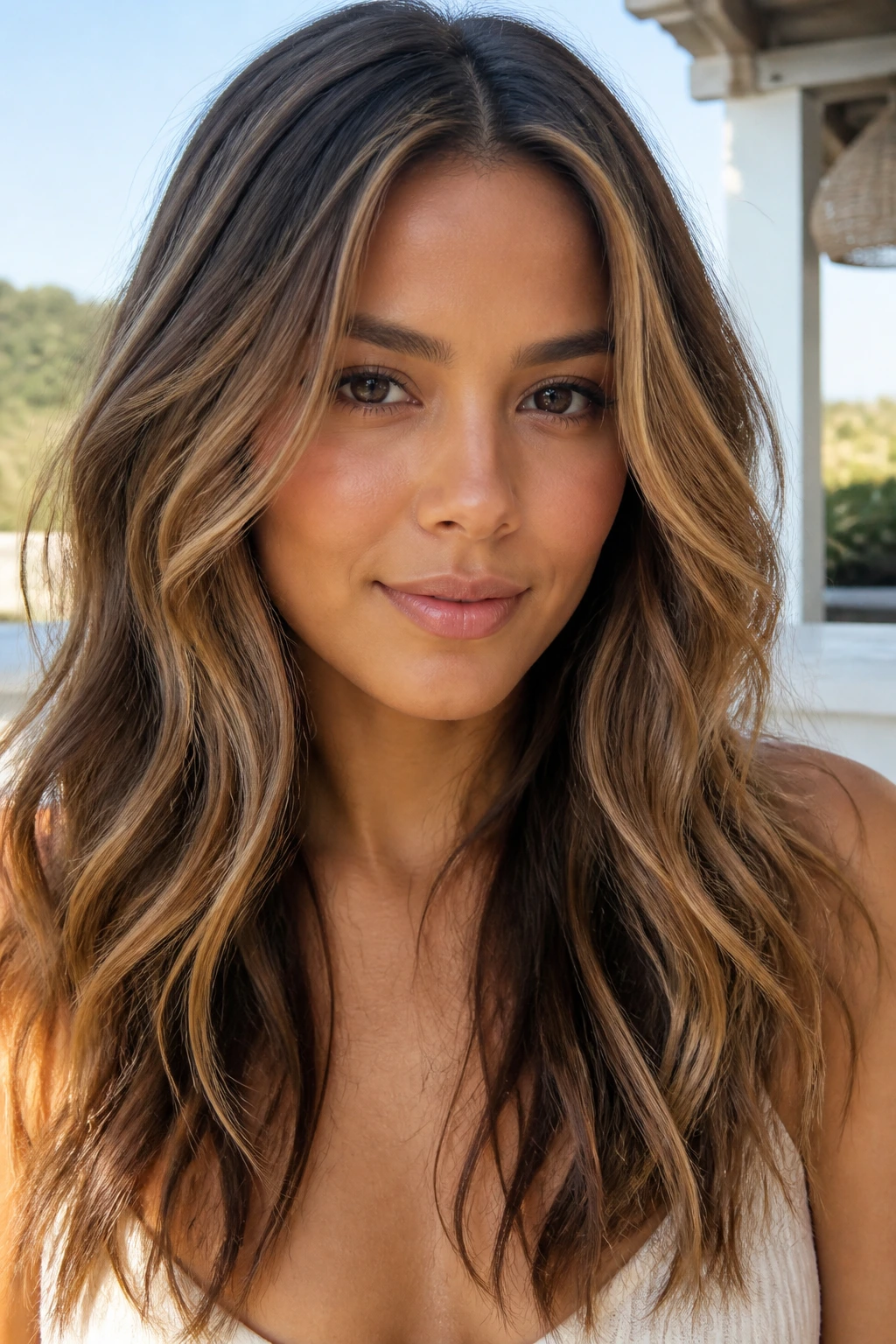
Caramel ribbon blonde is what happens when brunette depth and blonde light stop arguing and start cooperating. You get thin ribbons of caramel and warm blonde woven through a darker base, which makes the hair move in waves and bends instead of sitting flat.
If your hair is naturally medium brown, this is one of the least fussy ways to go blonde. You keep enough depth near the scalp to suit medium skin, and the lighter pieces around the face give you lift where it counts. It’s a good choice if you want something that looks expensive in daylight and still reads rich under indoor lighting.
A little wave helps. Even a loose bend with a 1-inch iron makes the ribbons separate and show their pattern.
4. Champagne Blonde
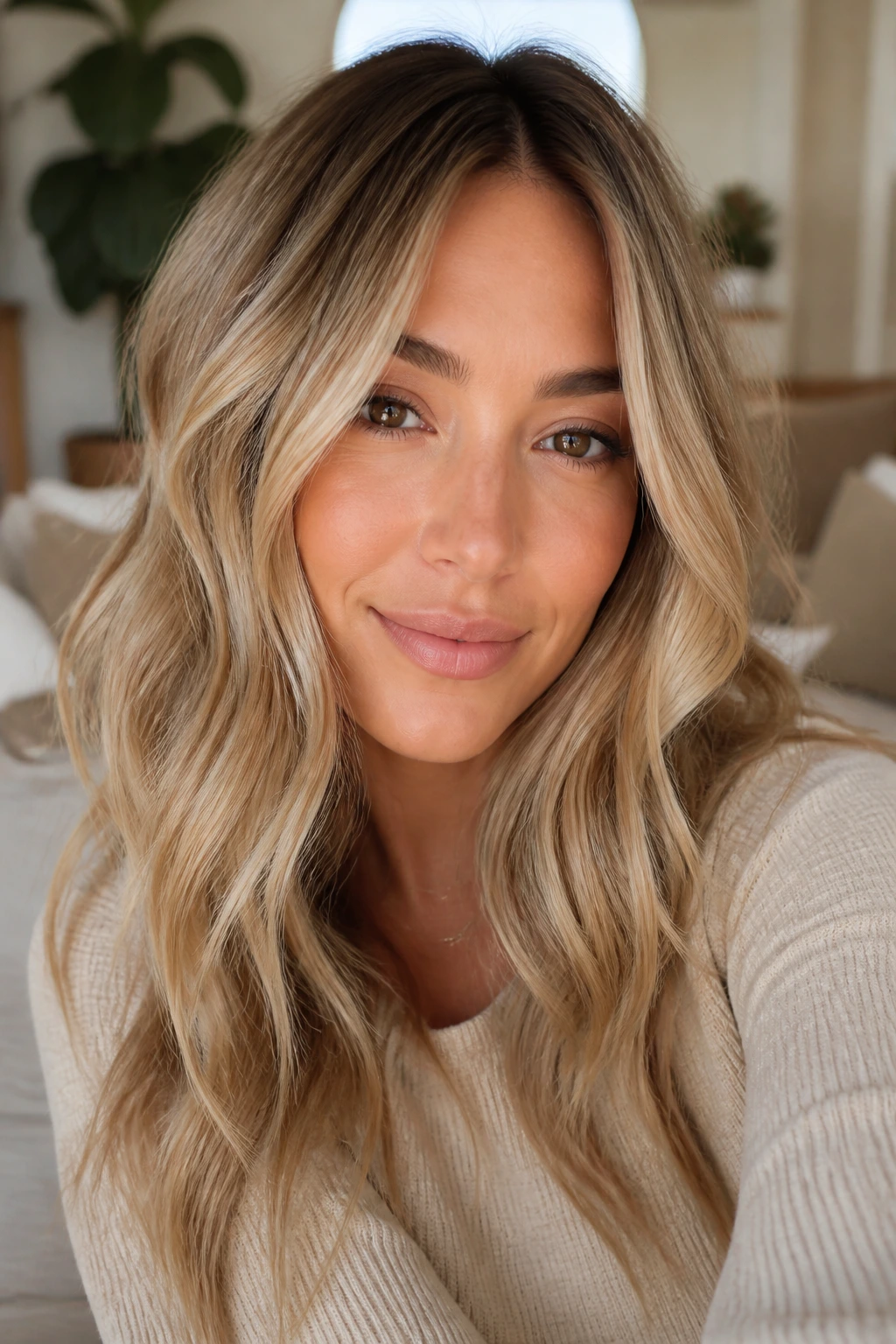
Champagne blonde is the cleaner, cooler cousin of honey. It has sparkle, but not the dry, powdery look that some pale blondes get when they’re toned too hard. On medium skin, that slight golden fizz keeps the face from looking washed out.
Why I like it
It works especially well if your skin is neutral or slightly golden and your features have some softness to them. Champagne blonde is not loud. It glows. That difference matters.
Keep the root a half shade deeper than the ends, and ask for a gloss with beige-gold rather than silver. Too much violet toner can flatten champagne into a dull beige-gray, and that’s a shame.
5. Golden Wheat Blonde
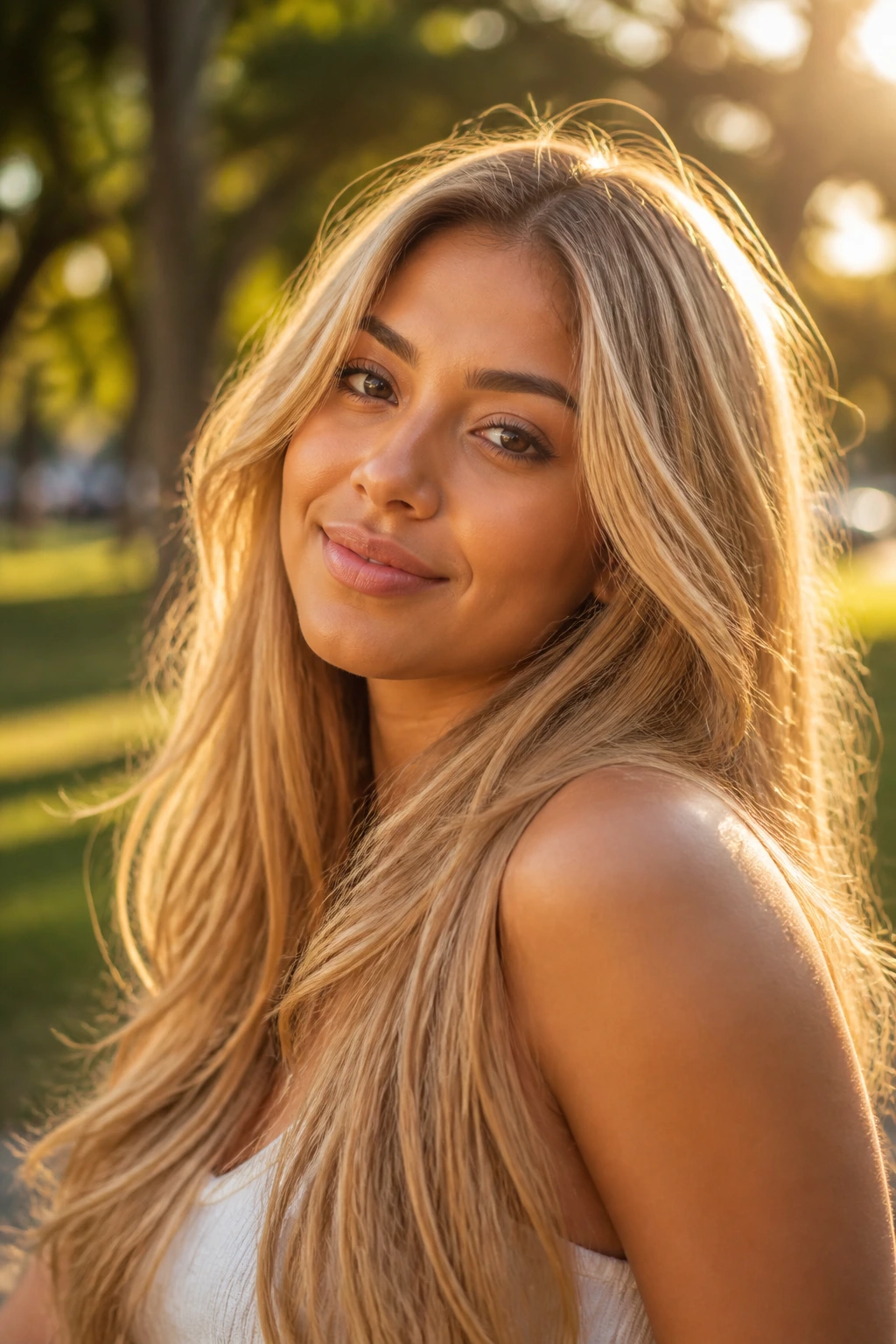
Golden wheat blonde has a sunlit, grain-like warmth that feels natural on medium skin. It’s lighter than honey, but not so pale that it fights the skin. The color looks especially good when the highlights are painted through long layers, where the light hits every bend.
This shade is a good fit if you like warm jewelry, bronze makeup, and clothes in cream, olive, rust, or navy. It has enough brightness to feel blonde, but the gold keeps it from turning icy or artificial. If your hair lifts well, ask for a slightly darker root and a warm gloss through the mids. That gives the color body.
6. Sandy Beige Blonde
Sandy beige blonde is one of those shades that sounds quiet until you see it in motion. Then it starts to make sense. It has a muted, beach-worn softness that suits medium skin because it never gets too yellow or too gray.
The magic is in restraint. Sandy beige works best when the highlights are fine and fairly blended, not chunky. On medium skin with olive undertones, this shade avoids the clash that pure ash blonde can create. On warmer skin, the beige warmth keeps everything smooth.
If you want a blonde that reads expensive in a low-key way, this one deserves a serious look. It also grows out gracefully, which I always appreciate.
7. Mushroom Blonde
Mushroom blonde is the blonde for people who don’t want to look like they tried too hard. It lives in the taupe zone — smoky, earthy, soft around the edges. On medium skin, that muted depth keeps the complexion from looking over-bright.
A shade with attitude
It’s especially good if your wardrobe leans black, gray, denim, or muted green. Mushroom blonde has enough coolness to feel deliberate, but enough beige in the formula to avoid a washed-out cast. Ask for low-contrast ribbons, not a solid ash block. The whole point is movement.
This shade looks best when there is still a little darker depth under the lightest pieces. Flat mushroom blonde can look muddy. Dimensional mushroom blonde has texture.
8. Strawberry Blonde
Strawberry blonde sits in that pretty, tricky place between copper and gold. On medium skin, it can look luminous if the base is warm enough. The shade works best when the copper is soft, not fire-engine bright.
If your skin has golden or peach notes, strawberry blonde can look almost custom-made. It makes the face feel warmer without turning the hair orange. Ask your colorist for a golden copper glaze over a blonde base if you want the effect to stay refined.
Best use case
- Medium skin with warm undertones
- Green or hazel eyes
- Hair that lifts to a clean level 8 or 9
It needs gloss maintenance, though. Copper fades fast, and faded copper goes peach in a way that can look a little tired.
9. Cream Soda Blonde
Cream soda blonde has the soft sweetness of a pale beige blonde with a slightly darker root and a creamy finish through the mids. It’s one of the most wearable options on medium skin because it never lands in that harsh, bleached-out territory.
The color feels rounded. Not flat. That’s the important part. You want the root shadow to blend into a pale beige or vanilla mid-length, then taper to a brighter, but still creamy, end. If you keep the gloss neutral and glossy, the whole thing looks expensive without being severe.
This is a strong choice if you wear softer makeup — peach blush, brown liner, a clean brow — because the hair won’t overpower the face.
10. Face-Framing Bright Blonde
Sometimes you don’t need a full blonde makeover. Sometimes a bright frame around the face does all the work. Face-framing blonde gives medium skin a lift right where the eye lands first, which makes the complexion look brighter even when the rest of the hair stays deeper.
I like this idea for people who want a lighter look without bleaching every strand. Keep the front pieces about 1 to 2 levels lighter than the rest, and let the brightness start around the cheekbone or jawline. Too high at the root can feel stripy.
It’s a smart choice if you wear your hair up a lot. The bright pieces still show in a bun or ponytail.
11. Butterscotch Blonde
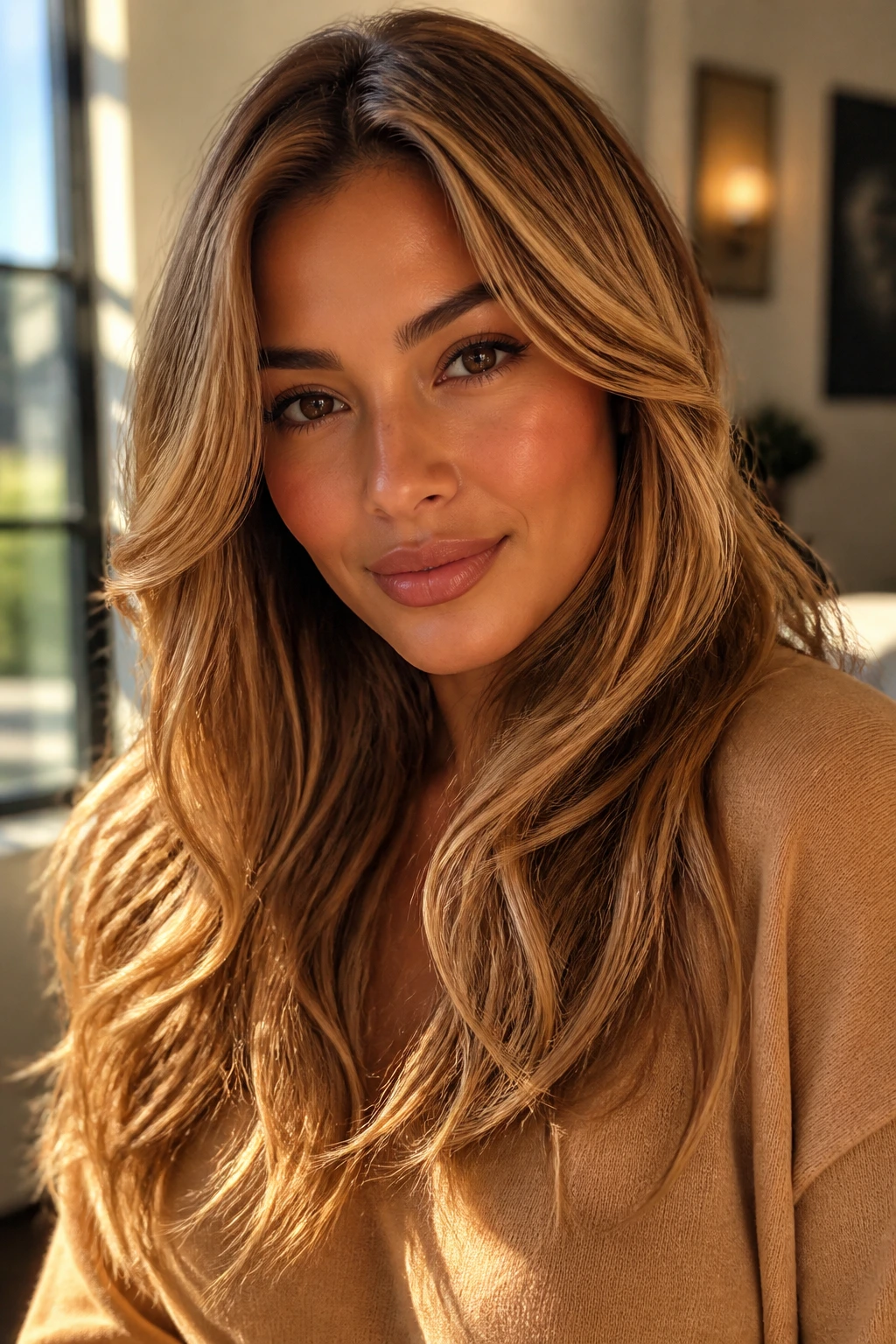
Butterscotch blonde has a rich warmth that reads glossy rather than yellow. On medium skin, that richness is the whole point. It gives the hair a soft gold-brown glow that sits beautifully against deeper undertones.
This shade is especially flattering if you like warm earrings, bronzy cheeks, or soft camel and cream clothing. It does not need to be ultra-light to look blonde. In fact, a level 7 or 8 butterscotch tone often looks more expensive than a bleached-out level 10 that has lost all depth.
A side part can make it feel a little more dramatic. A center part softens it. Either way, the color wants shine.
12. Vanilla Blonde
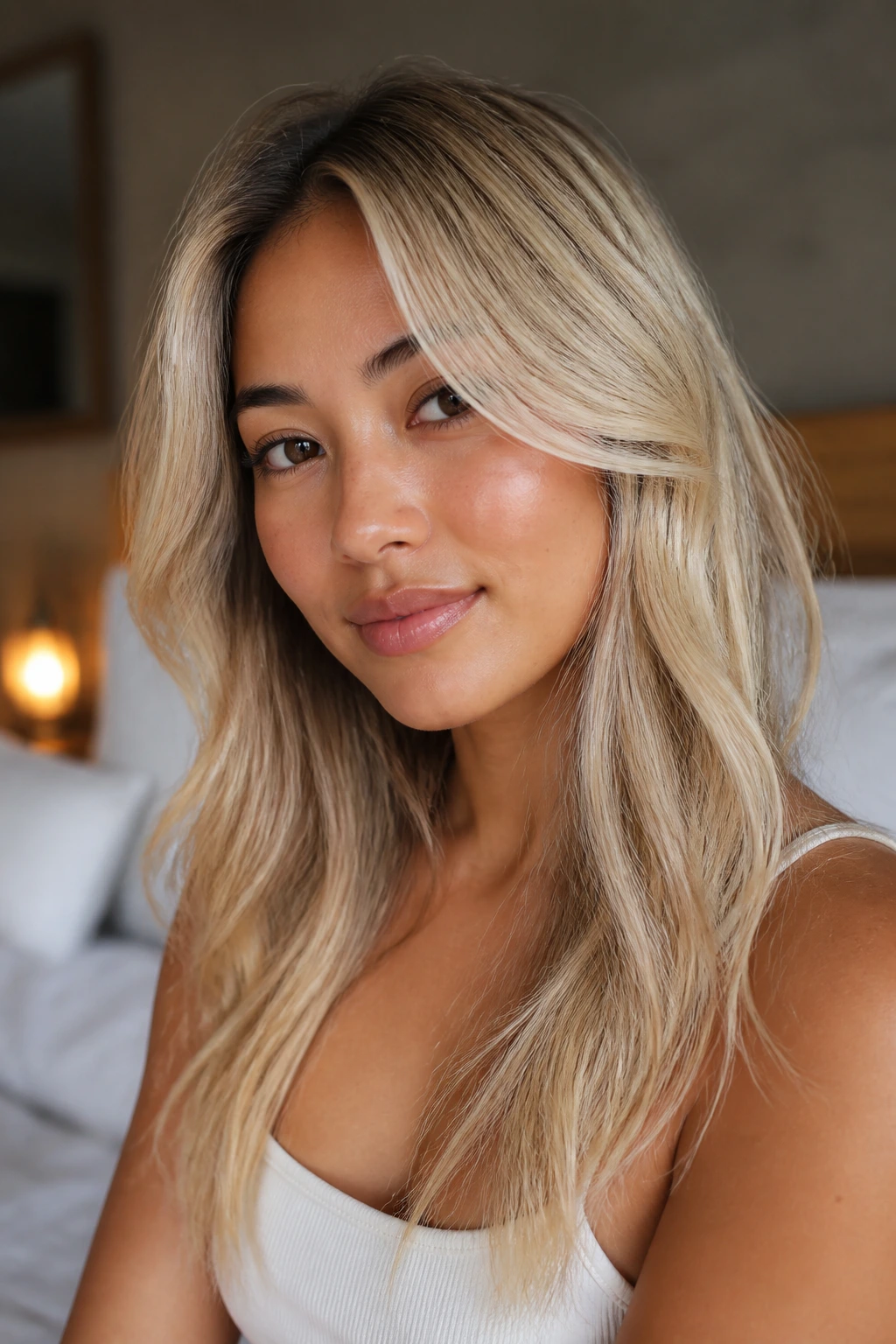
Vanilla blonde is pale, airy, and lighter than beige blonde, but it still needs a little softness to work on medium skin. The trick is keeping enough cream in the formula so the color does not go stark or icy.
What to ask for
Ask for a warm-neutral toner, not a flat silver finish. Vanilla should look like light cream, not white paint. If your skin has golden undertones, a root shadow helps the blonde sit more naturally against the face.
This shade looks best on hair that can hold a clean lift. If the bleach job is patchy, vanilla shows every rough spot. Clean application matters here more than almost anywhere else on this list.
13. Bronde Melt
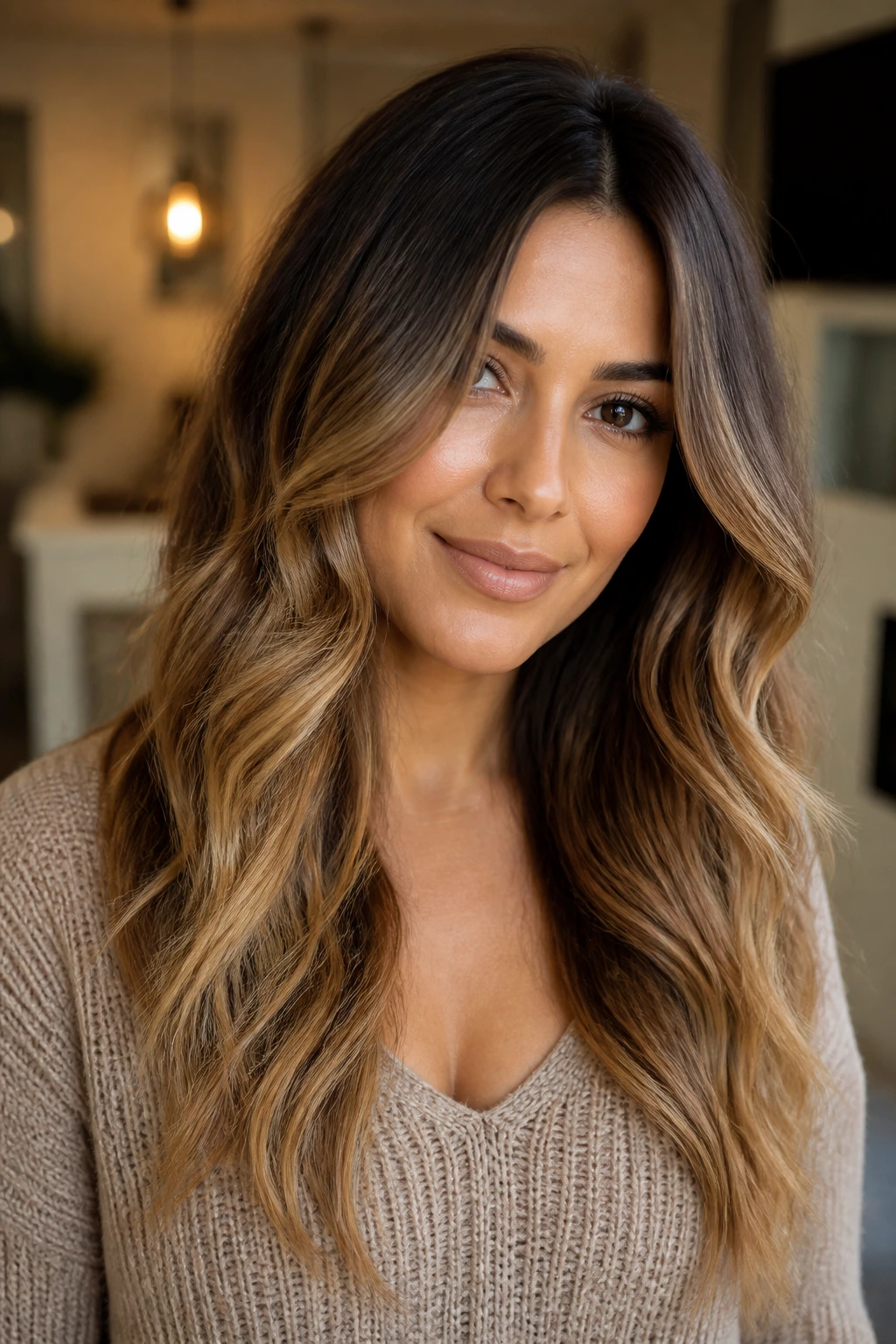
Bronde melt is the easygoing answer to “I want blonde, but I still want my hair to look like mine.” It keeps the roots and lower lights brunette-adjacent, then gradually opens up to blonde through the mids and ends. Medium skin usually loves this kind of depth.
The color works because there’s no hard line where one shade stops and the other starts. That gradual shift stops the blonde from crowding the face. If your natural color is medium brown, this can look almost suspiciously natural — in the best way.
Ask for a melt, not scattered chunky highlights. The melt is what makes the grow-out soft.
14. Dark-Root Platinum Blonde
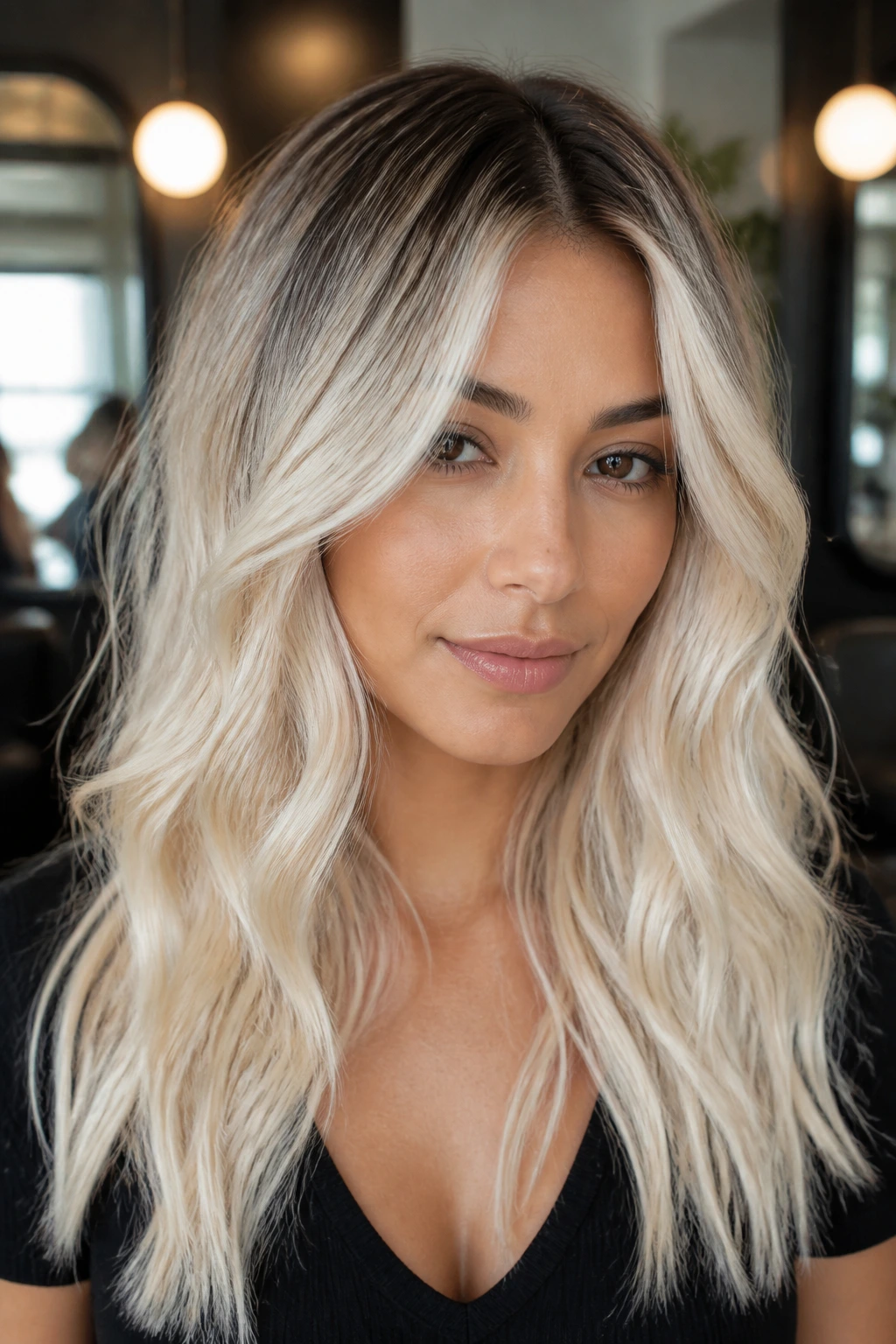
This one is for people who want contrast. Not a whisper of contrast. Real contrast. Dark-root platinum blonde keeps the roots cool and deliberate while the rest of the hair goes bright, pale, and punchy.
On medium skin, the dark root is doing a lot of work. It gives the face a frame and keeps the platinum from bleaching out the complexion. Without that root depth, platinum can look a little detached from the face. With it, the whole thing feels purposeful.
It’s higher maintenance than the warmer shades here. No pretending otherwise. But if you love a sharper finish and you don’t mind salon touch-ups, it’s a strong look.
15. Sun-Kissed Foilayage
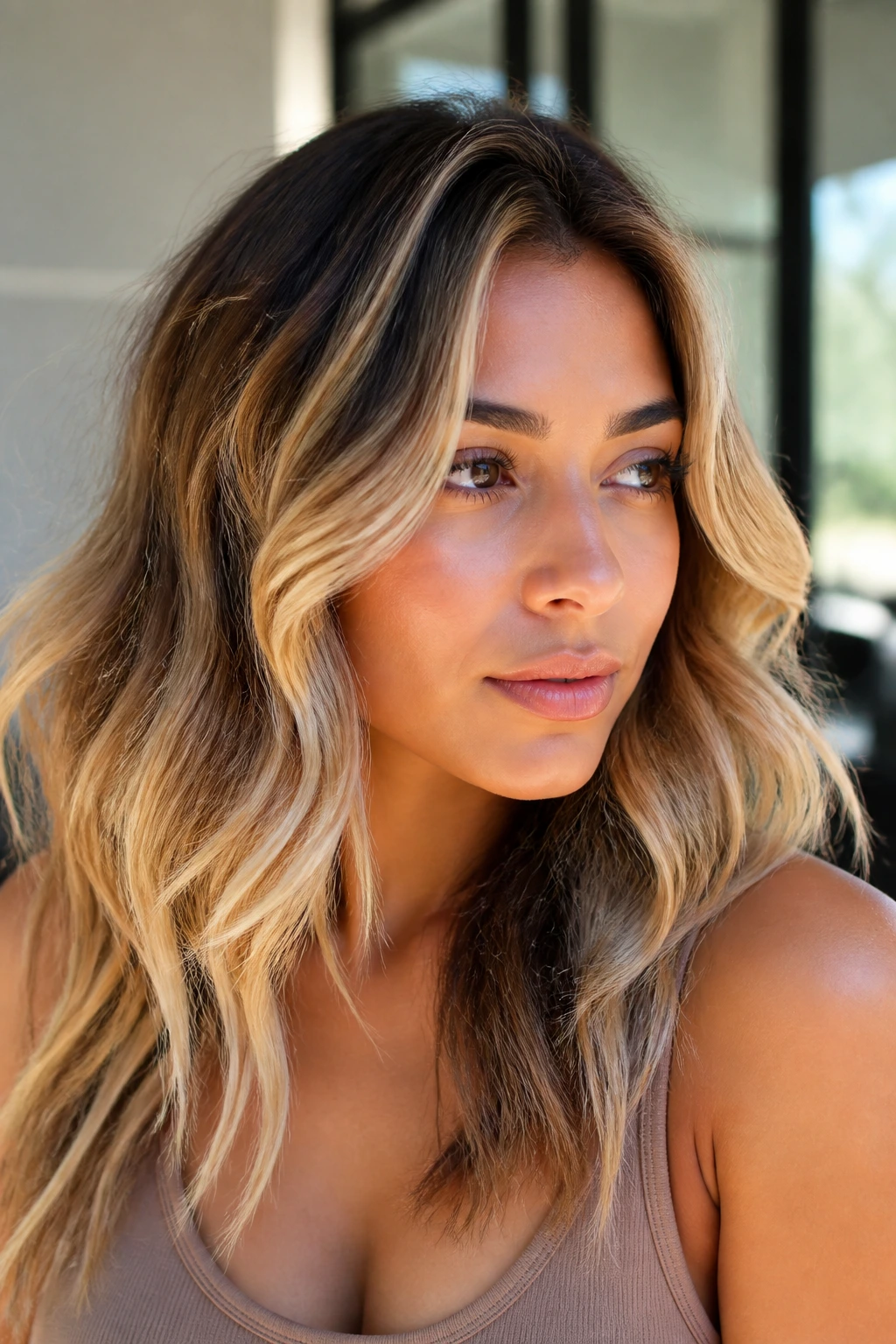
Foilayage gives you the softness of balayage with the lift of foils, which means more brightness in controlled places. On medium skin, that’s useful because you can place lighter pieces where they flatter the face and keep the rest of the hair grounded.
This is one of my favorite techniques for people who want dimension more than a single color story. The hand-painted pieces melt into brighter foil-boosted sections, so the result feels sun-hit rather than stripey. Ask for lighter bits around the hairline and crown, then softer pieces underneath.
It’s one of those blondes that looks good tied back, too. The dimension still shows.
16. Chestnut-to-Blonde Ombré
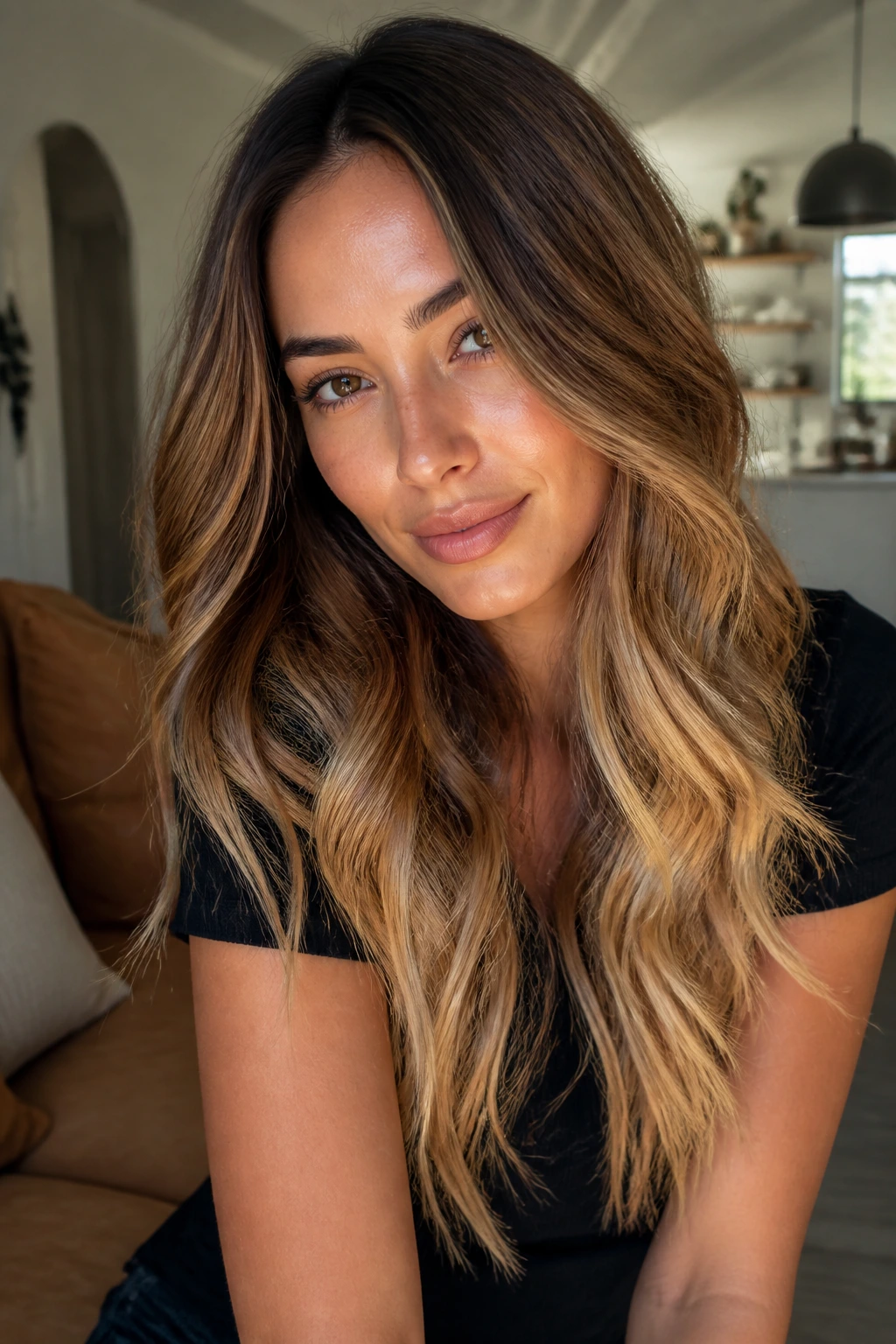
Chestnut-to-blonde ombré starts deep and ends bright, which gives medium skin a very clean frame near the face. The darker chestnut root helps the skin stay grounded, and the blonde ends add enough contrast to keep the look from feeling heavy.
This is especially nice on long hair, because the fade has room to breathe. On shorter cuts, ombré can feel abrupt. With length, it reads smooth and expensive. If your ends are already lightened, ask your colorist to preserve depth near the top and brighten only where the hair can handle it.
It’s a good compromise if you’re not ready for full blonde commitment. You get the mood without the maintenance headache.
17. Iced Cream Blonde
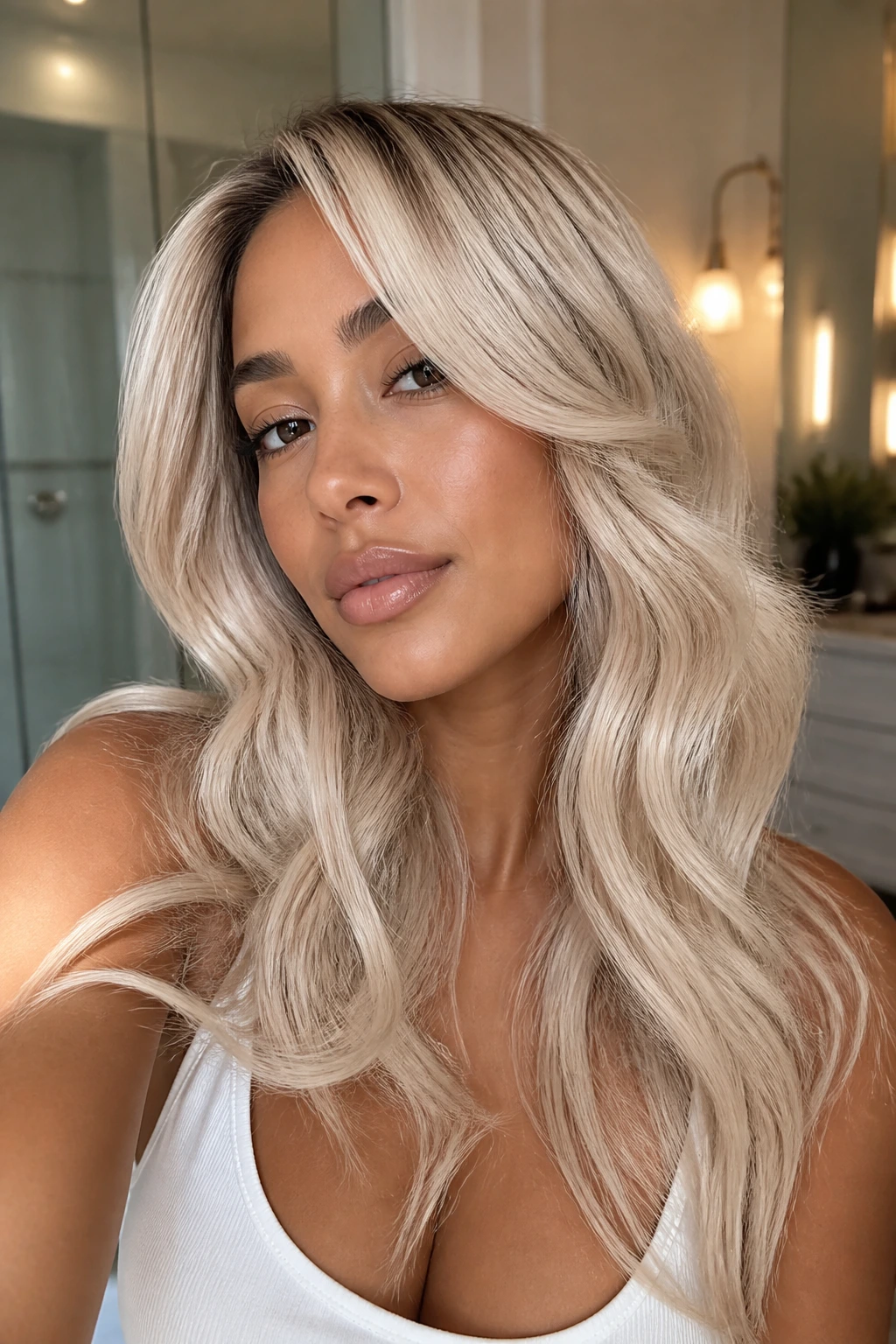
Iced cream blonde is cool, but it should still feel soft enough for medium skin. Think pale cream with a whisper of frost, not stark silver. When done right, it has a clean, polished finish that looks sharp against warm or neutral skin.
The key is keeping some beige in the toner. Full ash can make medium skin look flat, especially around the mouth and under the eyes. A creamy base with just enough coolness gives you brightness without the drained look.
This shade loves smooth blowouts and glossy waves. Rough texture can make it lean too cold. Shine helps.
18. Maple Blonde
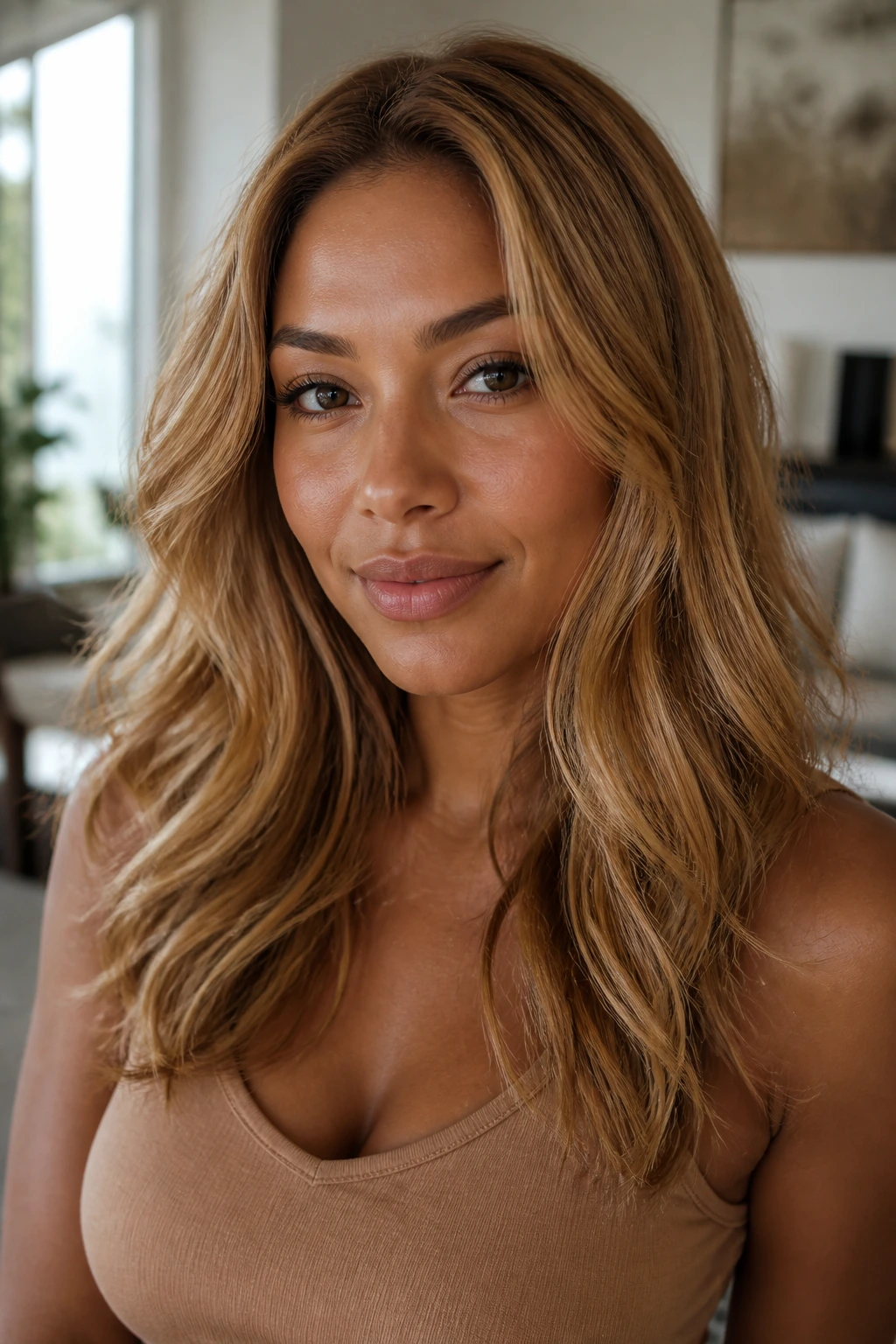
Maple blonde is one of the richest warm blondes on this list. It has amber, gold, and a touch of brown sugar depth, which is exactly why it flatters medium skin so well. The color feels warm without turning orange.
If your complexion likes gold jewelry and earthy makeup, maple blonde is easy to wear. It’s also kinder to darker brows than ultra-pale blondes are. You can keep the lightness around level 7 or 8 and still get a blonde effect that feels luxurious.
It looks especially good when the hair has movement near the ends. Straight, one-length hair can make maple blonde seem heavier than it is.
19. Money Piece Blonde
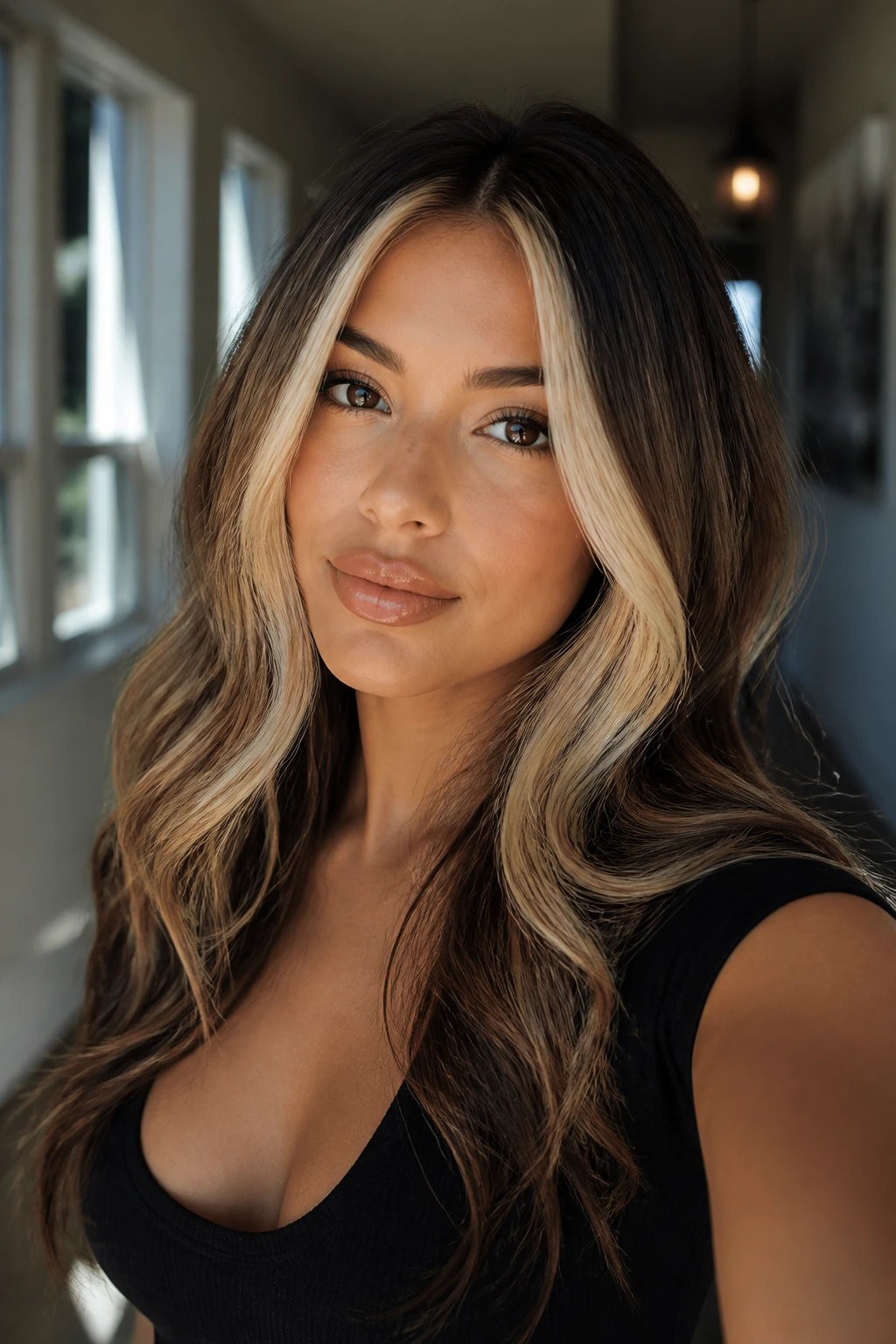
Money piece blonde is all about the face frame. Two bright, front sections — sometimes thicker, sometimes finer — create a spotlight effect that lifts medium skin fast. It’s bold, yes, but not fussy.
I like this as a gateway blonde. You can keep the rest of the hair warm brown, caramel, or beige while the front pieces go lighter and cleaner. That means less bleach on the whole head and a sharper result around the eyes. If you want the look to feel expensive, keep the rest of the hair glossy and the money pieces well toned.
This is the shade people notice first in a room. That’s the point.
20. Toasted Almond Blonde
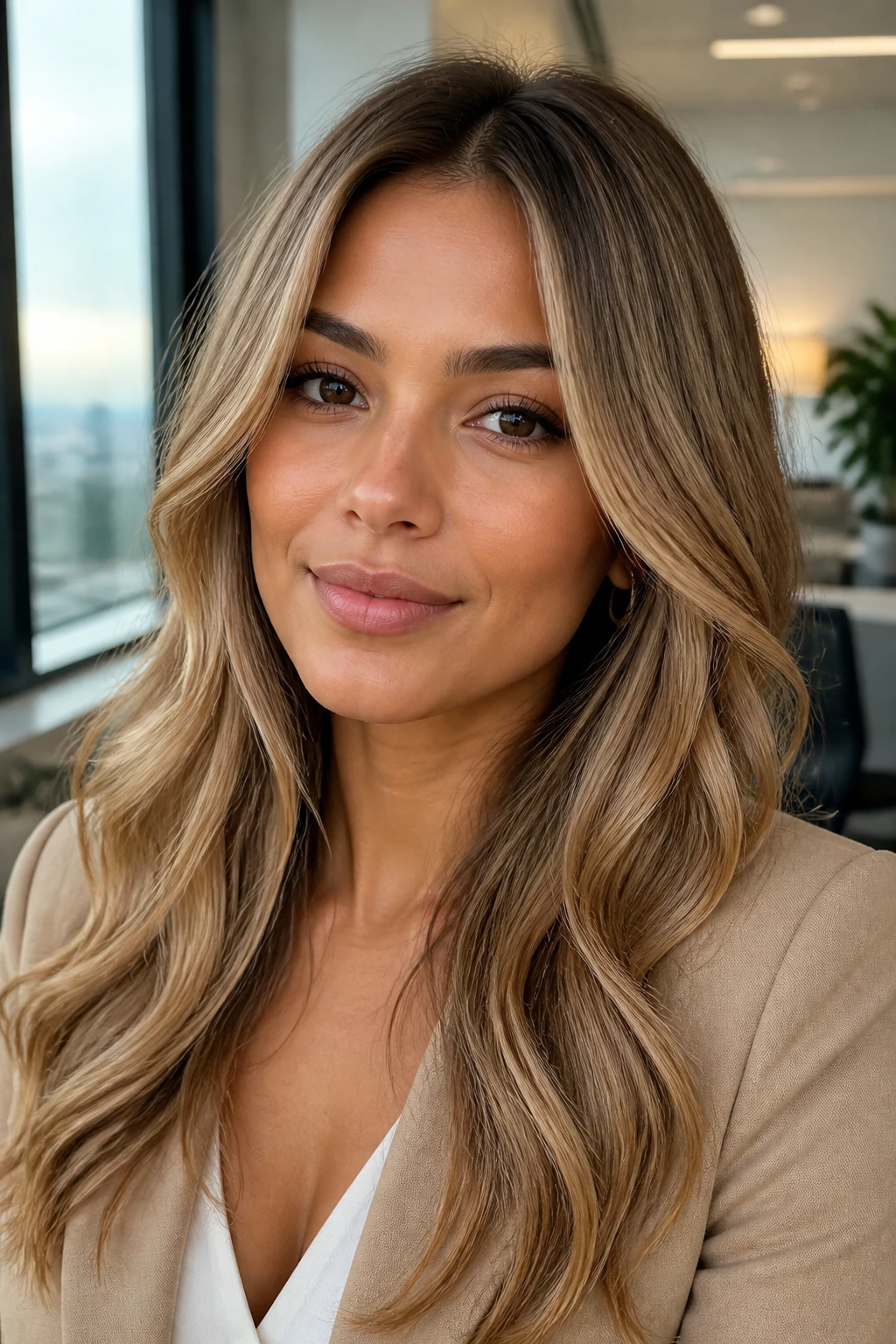
Toasted almond blonde is subtle in the best way. It leans beige-brown with a warm toasted finish, so it never feels overprocessed. On medium skin, that moderate brightness often looks more flattering than a super-pale blonde.
This is a good shade if you want your hair to look polished in office light, car light, and that unforgiving bathroom mirror that tells the truth. The blonde is there, but it’s wrapped in enough depth to feel believable. Ask for fine highlights, a beige gloss, and a root that stays a touch deeper.
It’s also one of the easiest blondes to move into if you’re coming from brunette and don’t want a dramatic jump.
21. Pearl Blonde
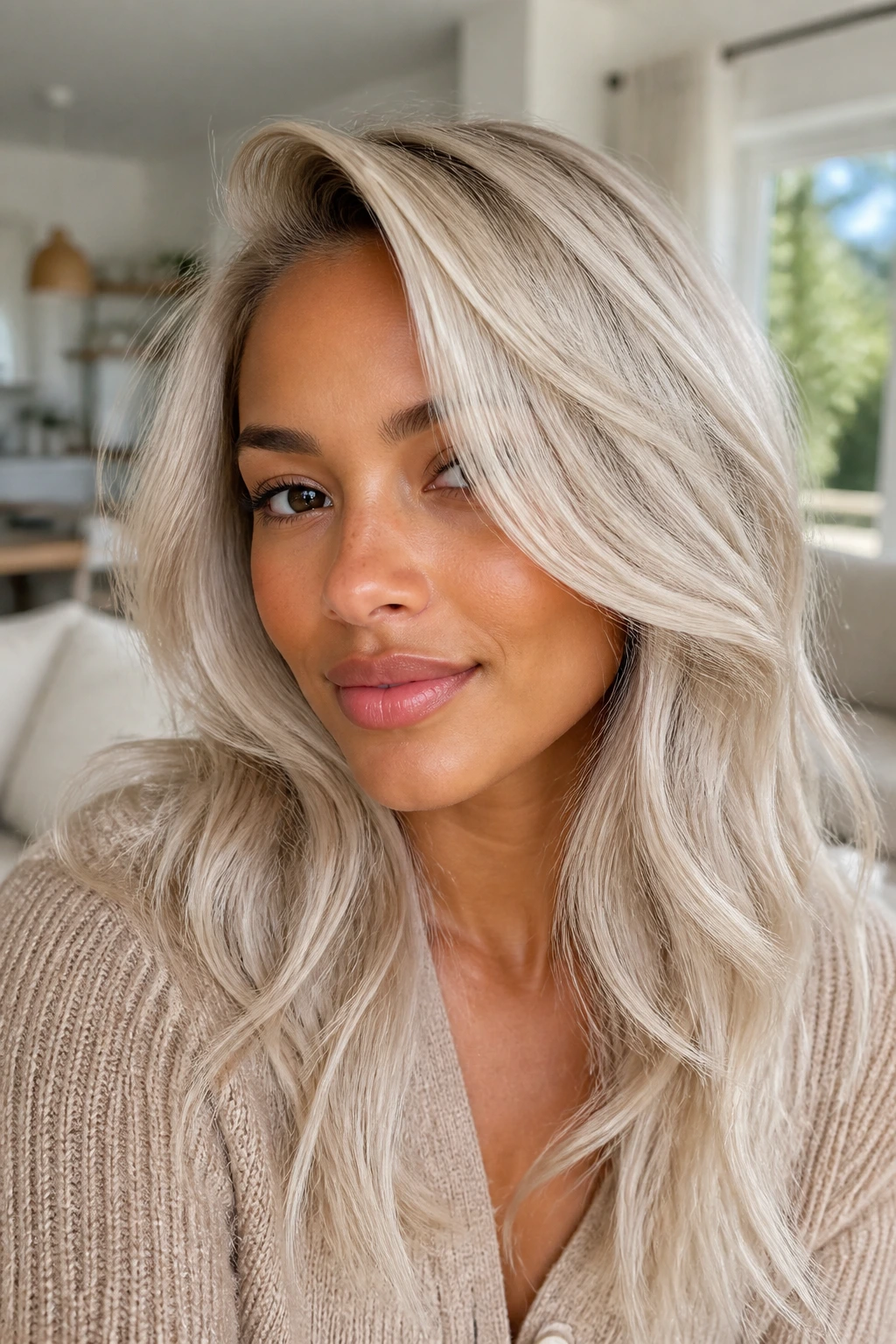
Pearl blonde is pale, soft, and luminous in a way that feels more polished than icy. The tone has a faint opal quality, which is why it works on medium skin when it’s kept creamy rather than white.
The trick with pearl is balance. Too much silver and it goes flat. Too much gold and it loses the pearl effect. A good pearl blonde sits in the middle and gives the hair a clean sheen that looks especially nice with medium skin that has neutral or slightly cool undertones.
This shade is prettier than it is loud. That’s what makes it wearable.
22. Peach Beige Blonde
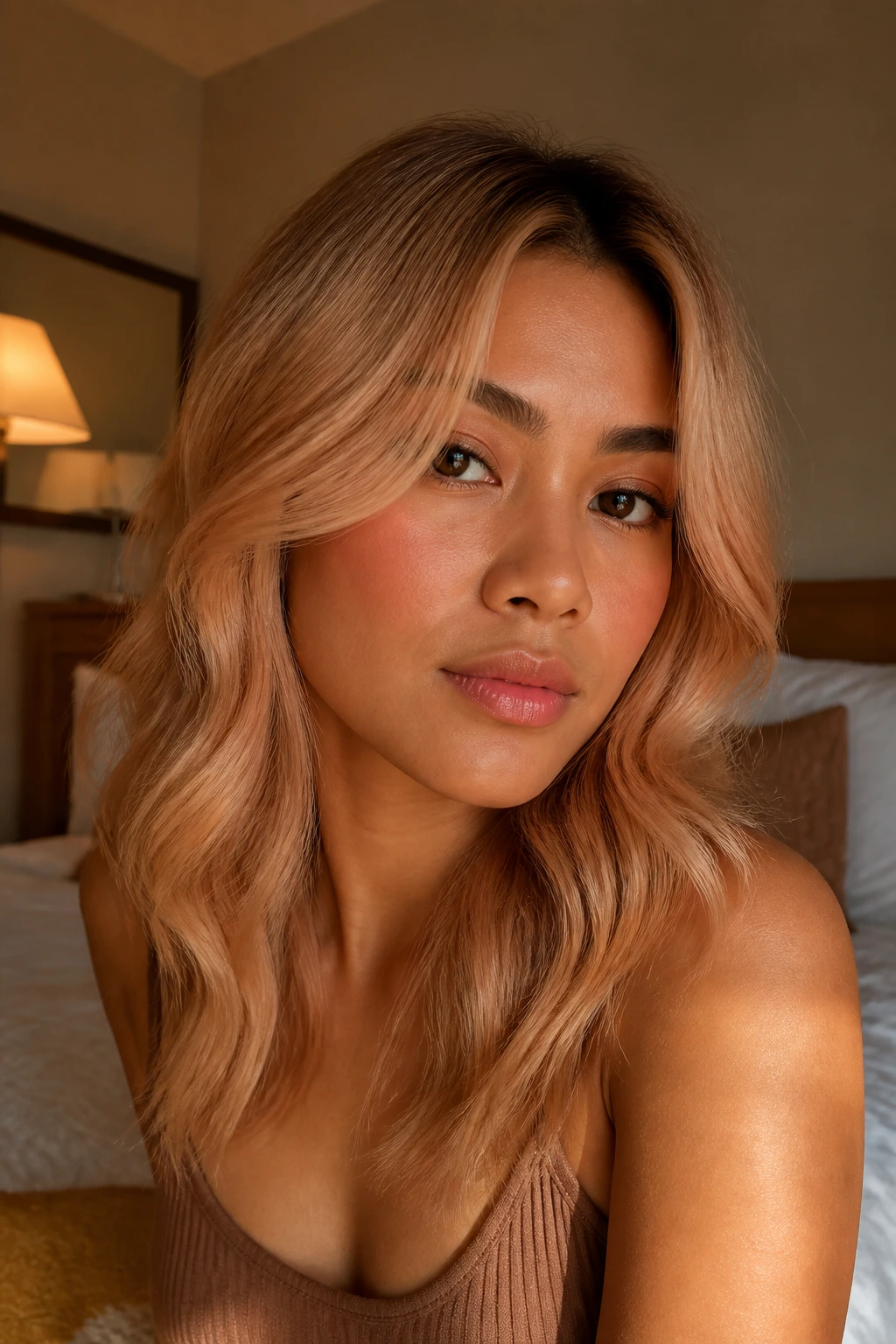
Peach beige blonde is warmer than beige, but softer than copper. It has enough peach in the mix to make medium skin look fresh, especially if your undertones run golden or rosy. It’s the kind of blonde that quietly changes how the whole face reads.
Why it works
Peach adds warmth near the cheek and jaw, which can make the complexion feel less tired. Beige keeps the color from going orange. That balance is the whole story.
It pairs well with soft waves, blush-toned makeup, and warm brow shades. If you want a blonde that feels a little playful without wandering into neon territory, this is a smart one.
23. Beige Babylights
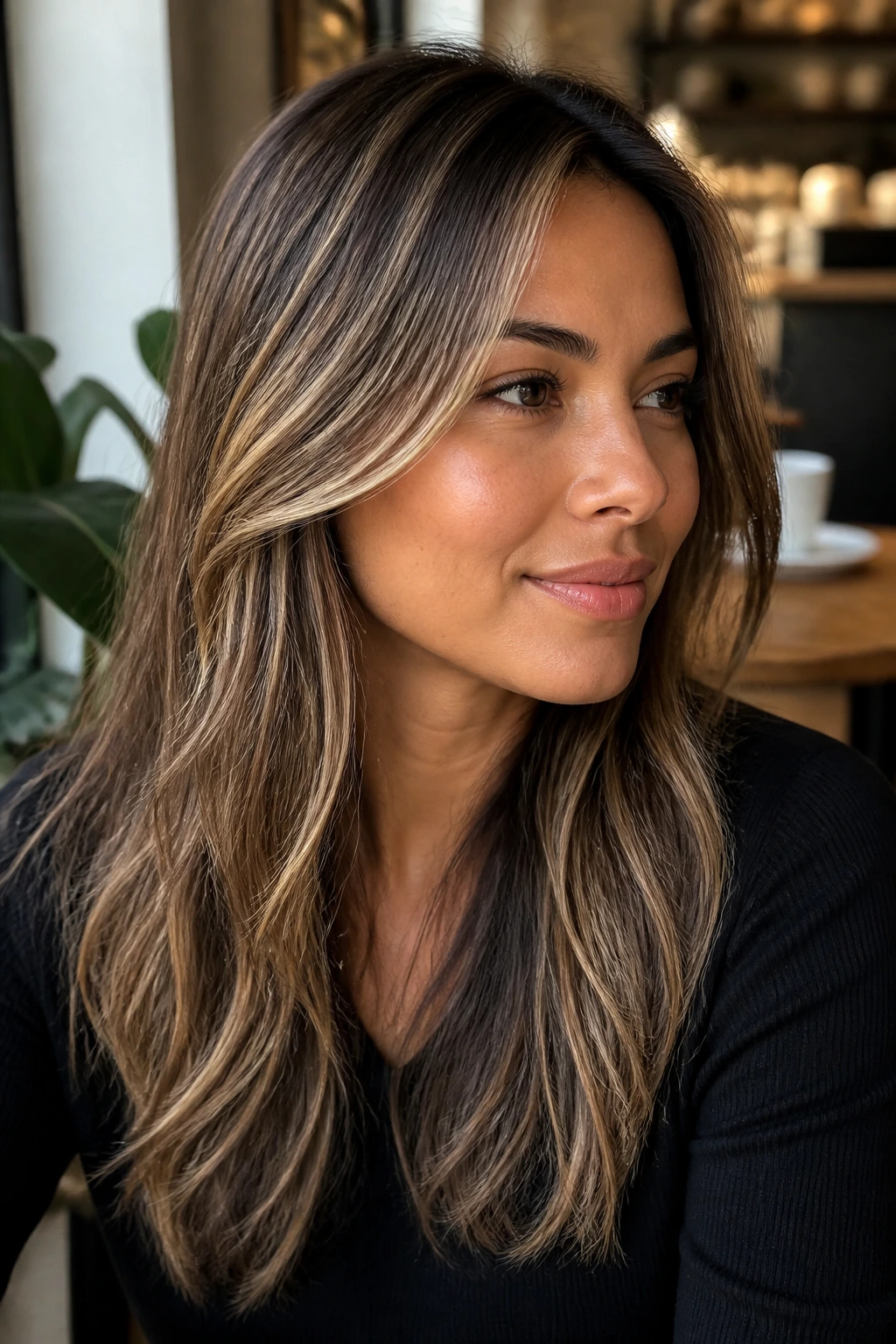
Beige babylights are for people who want detail, not drama. Tiny, fine highlights create a soft veil of light over medium skin, and because the pieces are so small, the color never looks streaky.
This is one of the best choices for first-time blondes. You get brightness, but the pattern stays subtle. Ask for beige or neutral blonde babylights through the top and around the face, with a slightly deeper base underneath. That keeps the hair from turning too washed out.
The result is the kind of blonde people notice only after a second look. I think that’s often the better choice.
24. Honeyed Curls Blonde
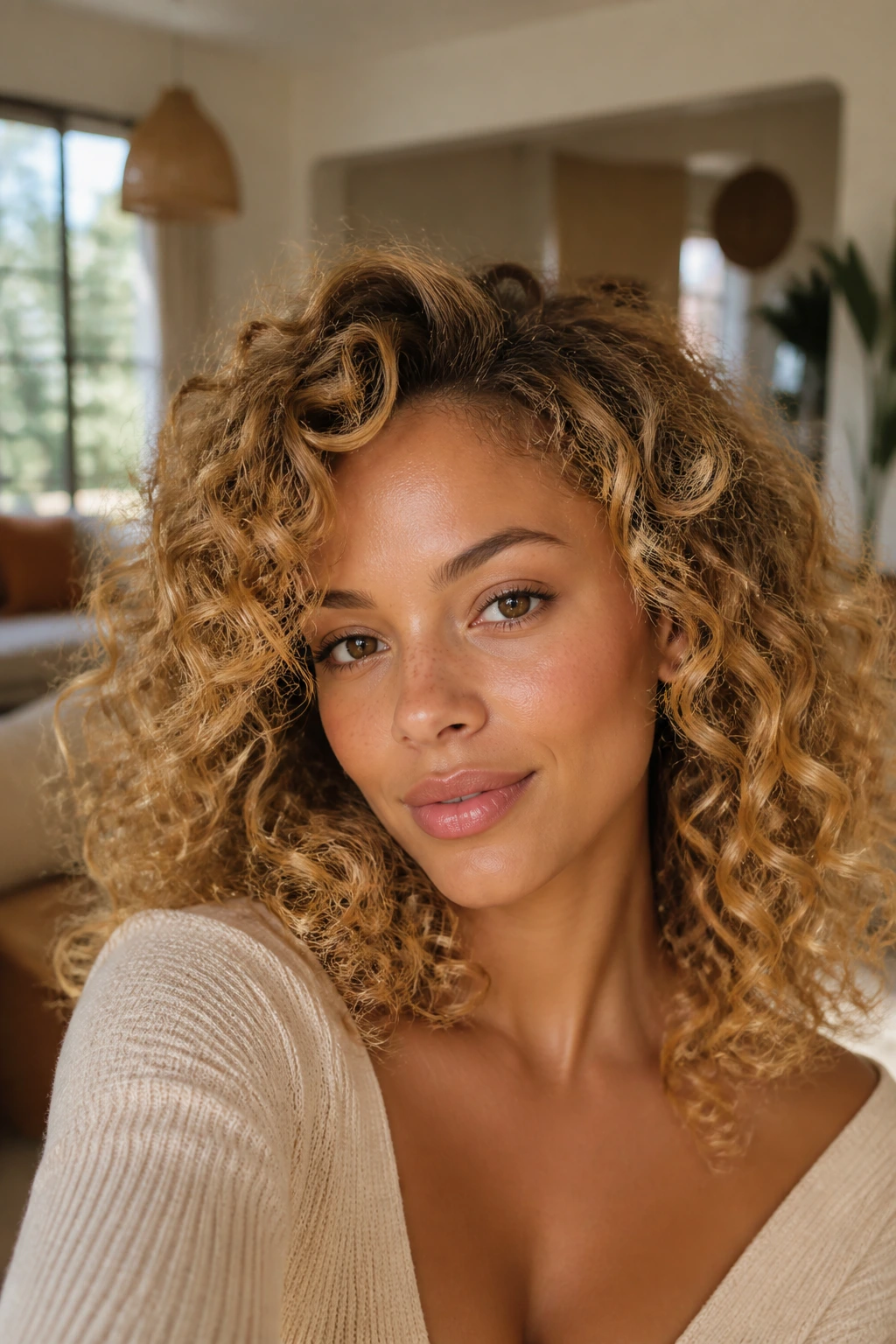
Curly hair needs a different blonde strategy, and honeyed curls blonde understands that. Instead of trying to lighten every curl the same way, the color is painted on the outside of curl clumps, where the light actually lands. Medium skin loves that kind of dimension.
Honey is a strong fit here because it keeps the curls warm and defined. The blonde pieces show the shape of the curl instead of flattening it. If you wear your curls natural, ask for ribbons that follow the pattern of the hair, not harsh stripes that cut across it.
The effect is bright, soft, and alive. Curls can carry a lot of color. This shade lets them do it.
25. Scandi Blonde with Root Shadow
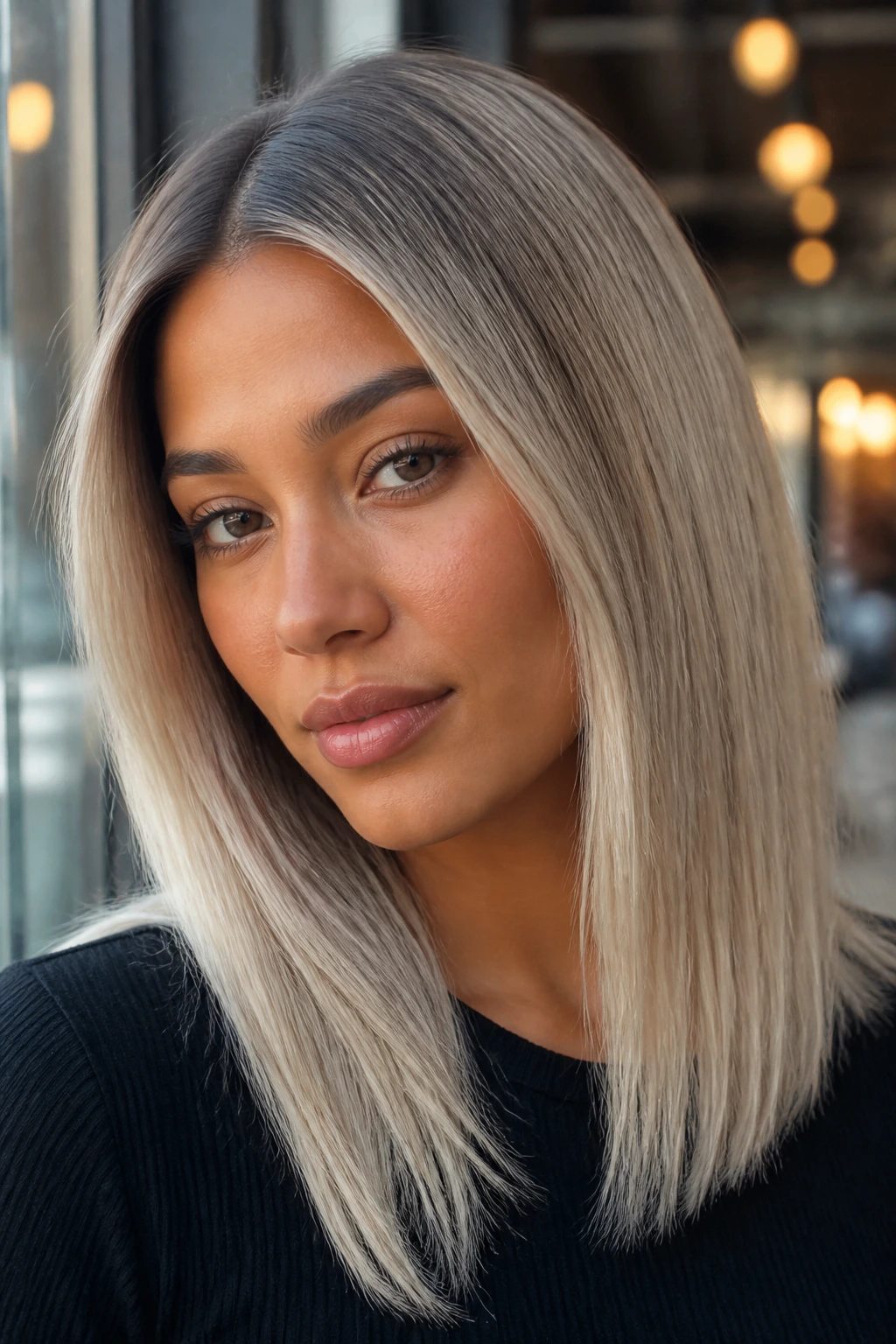
Scandi blonde with a root shadow is high contrast, sleek, and a little cool in attitude. The pale lengths feel very light, while the deeper root keeps the whole thing connected to medium skin. Without that root, the color can look disjointed.
This is the blonde for someone who wants clean lines and a deliberate finish. It works especially well on straight or softly waved hair, where the tonal shift is easy to see. Ask for a root shadow that blends rather than stops, because a harsh line makes the look much harder to wear.
It’s a statement shade. No need to pretend otherwise.
26. Ash Beige Blonde
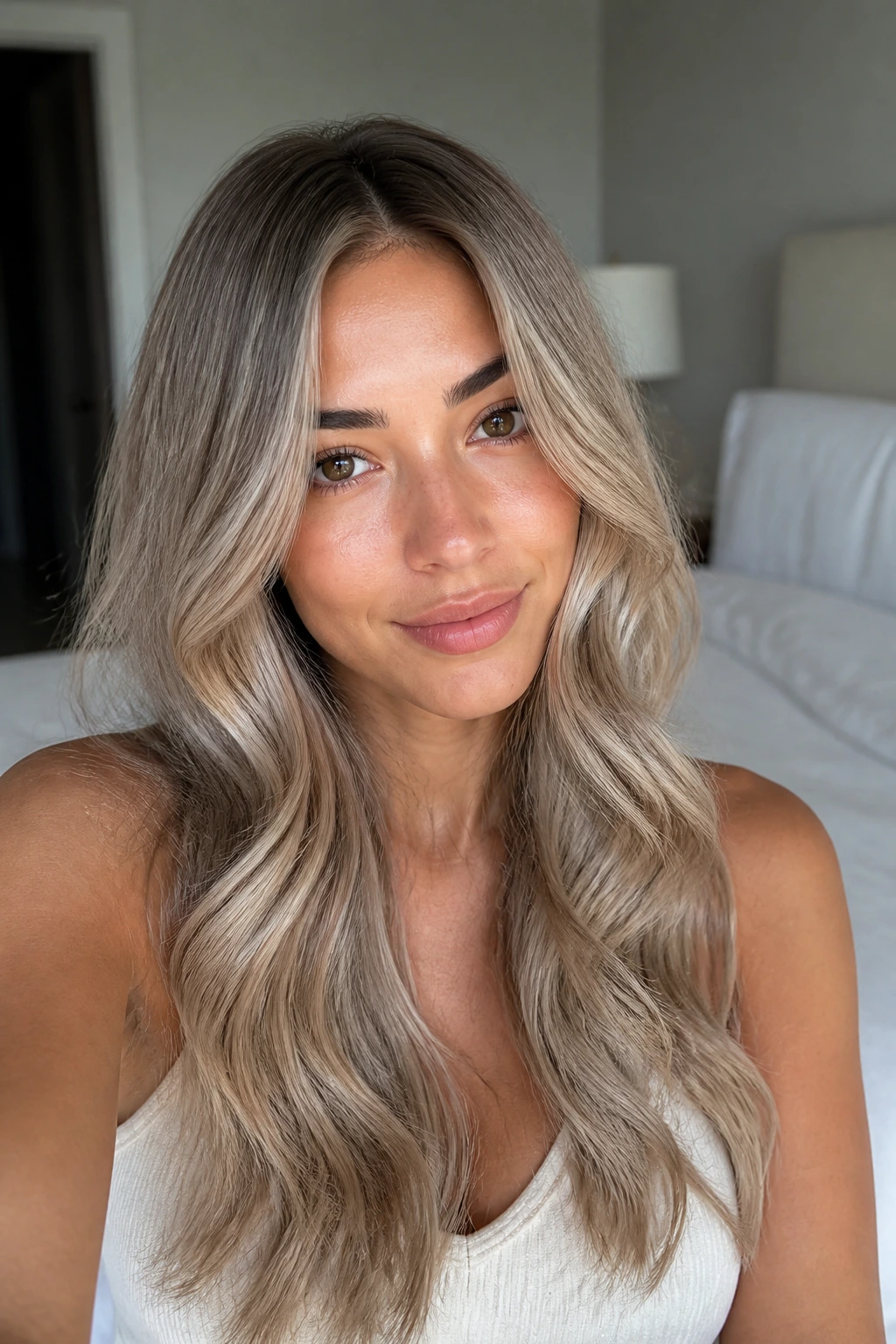
Ash beige blonde takes the cool side of blonde and softens it with enough beige to stay wearable. That matters on medium skin, because straight ash can turn the face flat in a heartbeat. Beige gives the color some life back.
If your undertones lean neutral or a little cool, this shade can look sleek and expensive. It’s also a nice choice if your wardrobe lives in black, charcoal, and white. The key is to keep the ash muted, not gray. Gray-blonde and ash-blonde are not the same thing, no matter how often people use them like they are.
A gloss is non-negotiable here. The finish sells the shade.
27. Soft Smoke Blonde
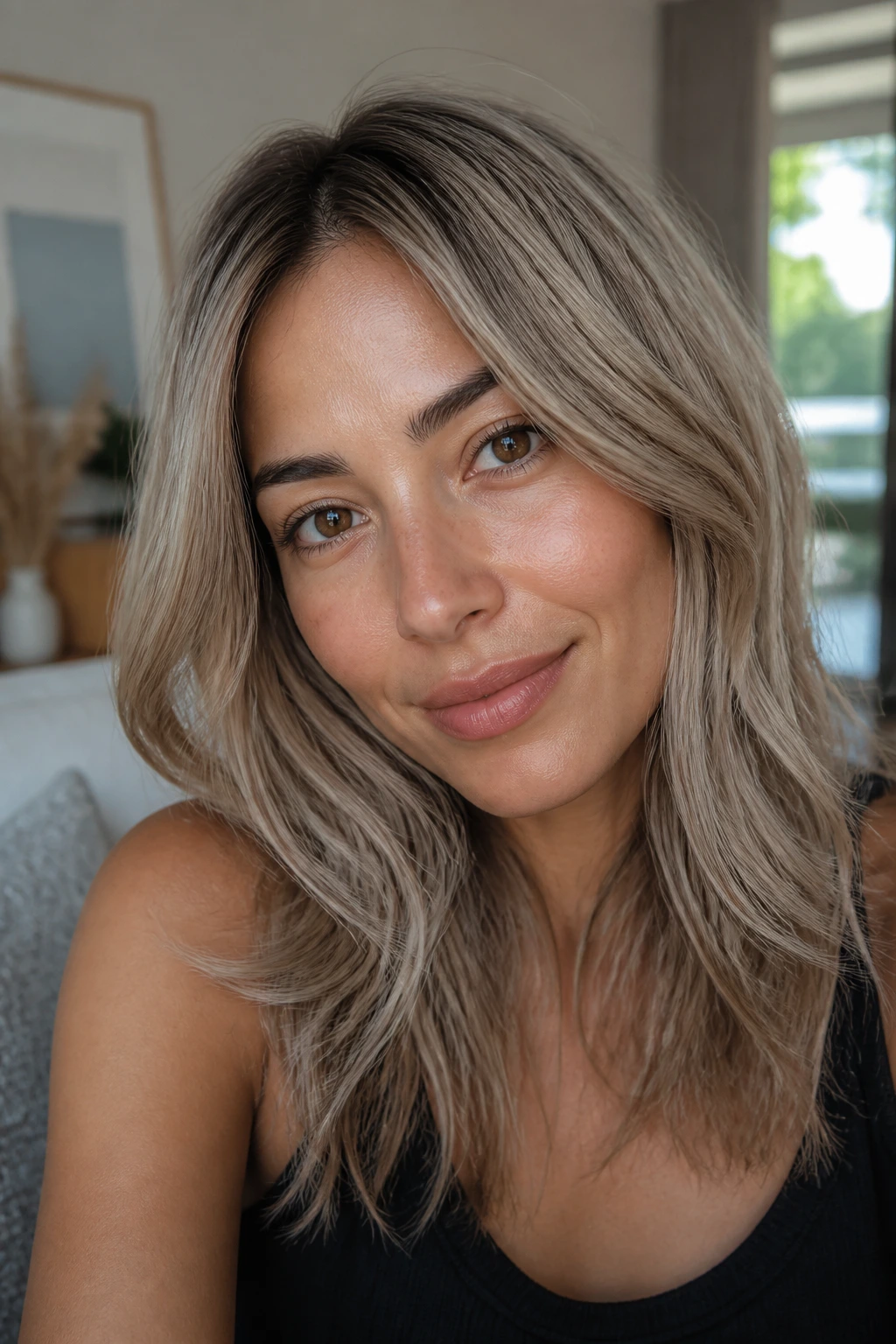
Soft smoke blonde is a muted, velvety blonde that sits between beige and ash. It has a little shadow, a little softness, and enough lightness to still count as blonde. On medium skin, that balance can be gorgeous, especially if you don’t like golden warmth.
This shade looks best when the highlights are blended into the base instead of isolated in big panels. Think smoky edges, soft transitions, clean tone. It’s a nice option for anyone who wants a cooler look without the sharpness of platinum or the heaviness of pure ash.
It also pairs well with textured cuts. A little movement keeps the smoke from feeling flat.
28. Molten Bronze Blonde
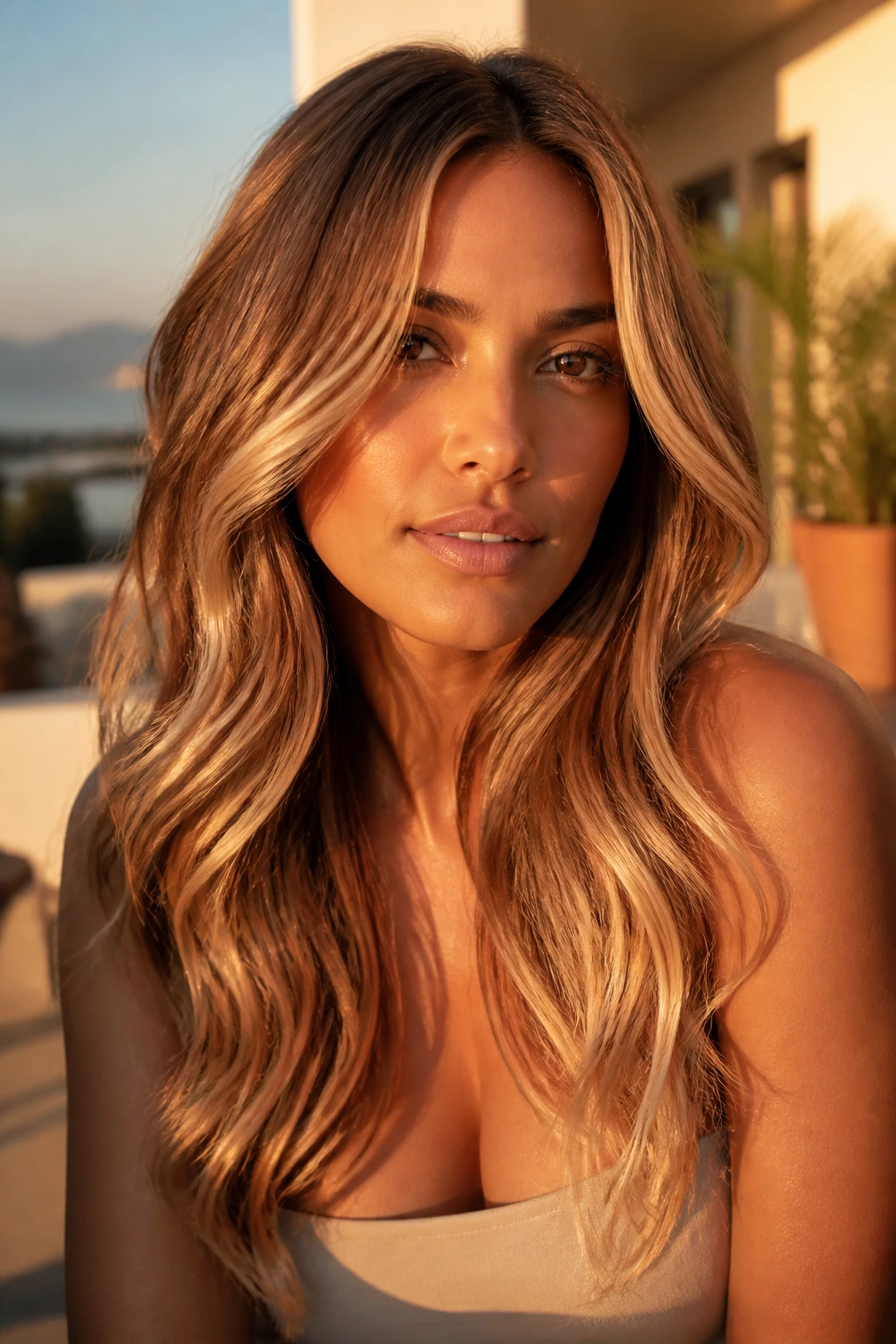
Molten bronze blonde is warm, rich, and full of depth, which is exactly why it deserves a place here. It leans into gold, brown sugar, and soft copper notes, then finishes with blonde brightness through the ends or face frame.
On deeper medium skin, this shade can look almost custom-mixed. The bronze keeps the color grounded, and the blonde gives it lift. If you want hair that catches light in a warm, flattering way, this is one of the easiest wins on the list.
It’s also one of the few blondes that can look good even when the styling is simple. Air-dried waves, a loose bend, a low bun — the color does the work.
Why Blonde Reads Better When It Keeps Some Depth
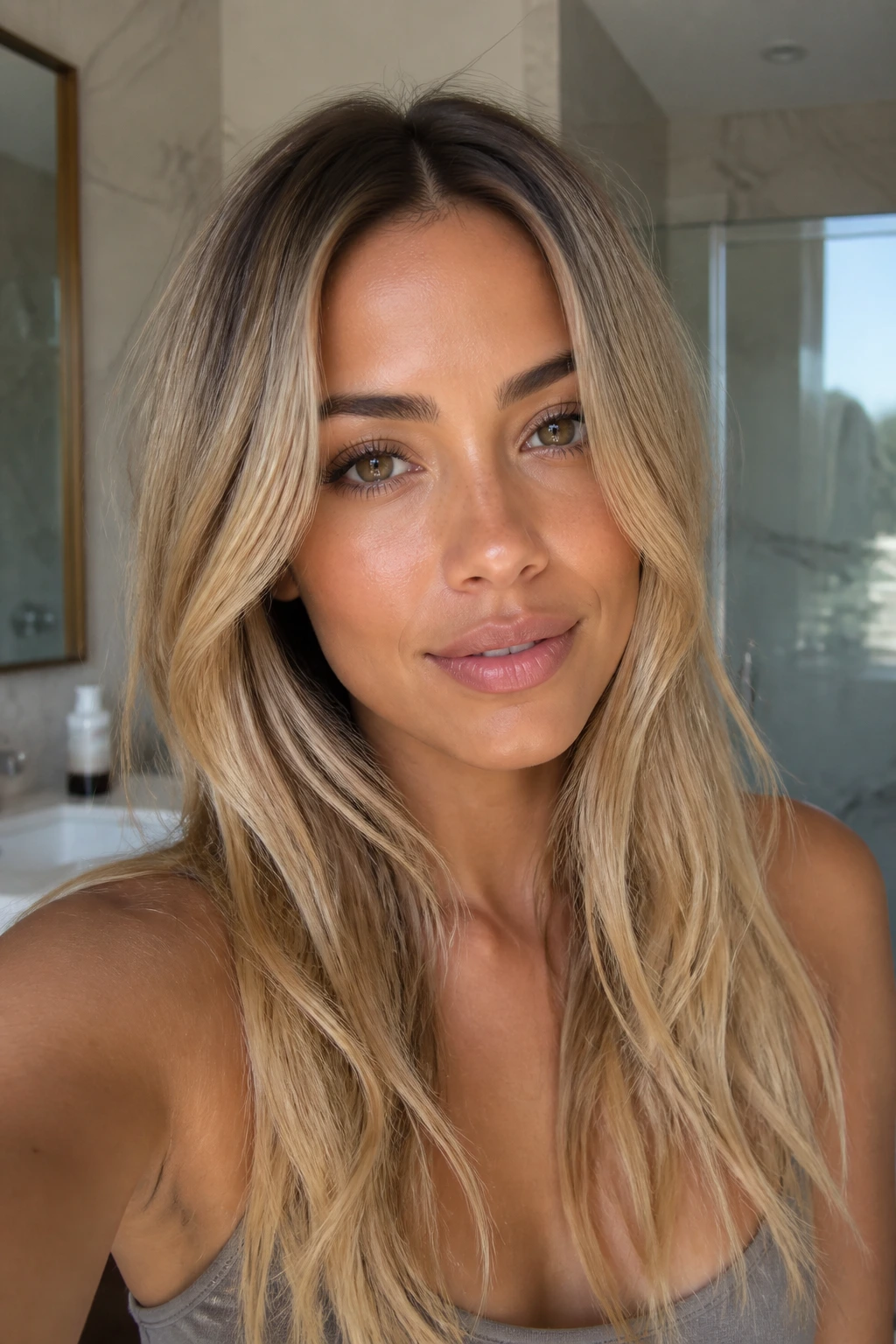
A blonde with no contrast can go a little dead on medium skin. Not always. But often enough that I pay attention to it. The hair starts to look pasted on instead of part of the face, and the skin loses the warmth that made the shade appealing in the first place.
That’s why root shadow, lowlights, bronde melts, and hand-painted placement show up so often in flattering blonde formulas. They create a frame. They let the lighter pieces sparkle without bleaching the life out of the complexion. If the blonde looks expensive in daylight and not just in a salon mirror, the depth is usually doing some of the heavy lifting.
What to Bring to the Salon Chair
- Two to three reference photos: Save one for the overall tone, one for placement, and one for the root depth you want. A single photo rarely tells the full story.
- A note on your natural level: Tell your colorist whether your base is medium brown, dark blonde, or something in between. That changes the lift plan.
- A clean hair history: Box dye, henna, glosses, and old highlights all matter. Bring the truth, not the neat version.
- Styling photos from your real life: If you usually wear your hair straight, don’t bring only curled blondes. The color should make sense in your routine.
- Color-safe shampoo and conditioner: A sulfate-free cleanser and a smoothing conditioner help the tone stay cleaner between visits.
- Purple or blue shampoo: Purple knocks down yellow; blue helps with orange warmth. Pick the one that matches the brass you actually see.
- A bond builder or repair mask: Bleached hair needs structure, not just moisture.
- A wide-tooth comb and section clips: Useful for at-home detangling and for keeping glossy hair from getting roughed up after washing.
How to Choose the Right Blonde Tone for Your Undertone
Medium skin is not one category. That’s the mistake that causes half the bad blonde advice floating around. Some medium skin leans golden. Some has a strong olive cast. Some is neutral, which means it can take a broader range of blondes without looking off. Cool medium skin exists too, and it usually looks better in beige, pearl, or smoke-toned blondes than in heavy gold.
If your skin runs warm or olive
Reach for honey, caramel, butterscotch, maple, and peach beige. These keep the complexion alive and stop the hair from looking disconnected at the hairline. A bit of root depth helps a lot here.
If your skin is neutral
You’ve got room. Champagne, beige blonde, bronde melt, cream soda, and sandy beige all work because they sit in the middle and don’t push too hard in either direction.
If your skin runs cool
Choose pearl, ash beige, soft smoke, or vanilla with a neutral root. Stay away from muddy ash that looks gray-brown instead of blonde. Cool skin still needs light, not chalk.
The fastest mistake people make is choosing a blonde from the photo and ignoring the face next to it. The face is the point.
How to Wear These Shades So the Color Looks Intentional
Brows: If your blonde is warm, keep your brows a shade or two deeper rather than bleaching them out. The contrast gives the face shape. If the blonde is cool and pale, a soft taupe brow pencil keeps the look from getting severe.
Makeup: Honey, maple, and bronze blondes like peach blush, warm bronzer, and soft brown liner. Champagne and pearl blondes can handle a little more taupe and rose. The hair sets the temperature; the makeup should meet it halfway.
Clothing: Cream, olive, rust, navy, camel, and charcoal all play nicely with medium-skin-friendly blondes. Stark white can be a little harsh next to pale blondes, so off-white or bone often looks better. Small thing. Large effect.
Texture: Soft waves make most blondes look richer because the light has somewhere to go. Sleek styles sharpen platinum, champagne, and smoke tones. Air-dried texture suits honey, caramel, and bronde.
Small Tweaks That Change the Whole Blonde
Tone Boost: A gloss every few weeks can push the blonde warmer, cooler, or softer without rebleaching the hair. That’s where a lot of the polish lives.
Face-Frame Brightness: If the color feels too quiet, brighten just the front pieces by half a level. It opens the face fast.
Shadow Root: Want less contrast? Keep the root deeper and blend the transition lower. It makes grow-out less obvious too.
Gloss Finish: Shine spray is fine, but a clear or beige gloss does more for the color itself. It gives blonde that slippery, expensive finish that dry hair never quite manages.
Curly-Hair Tweaks: On curls, place light pieces where the curl clumps separate. A blonde stripe placed wrong on curls can look choppy. A stripe placed well looks alive.
Keeping Blonde Hair Soft Between Salon Visits
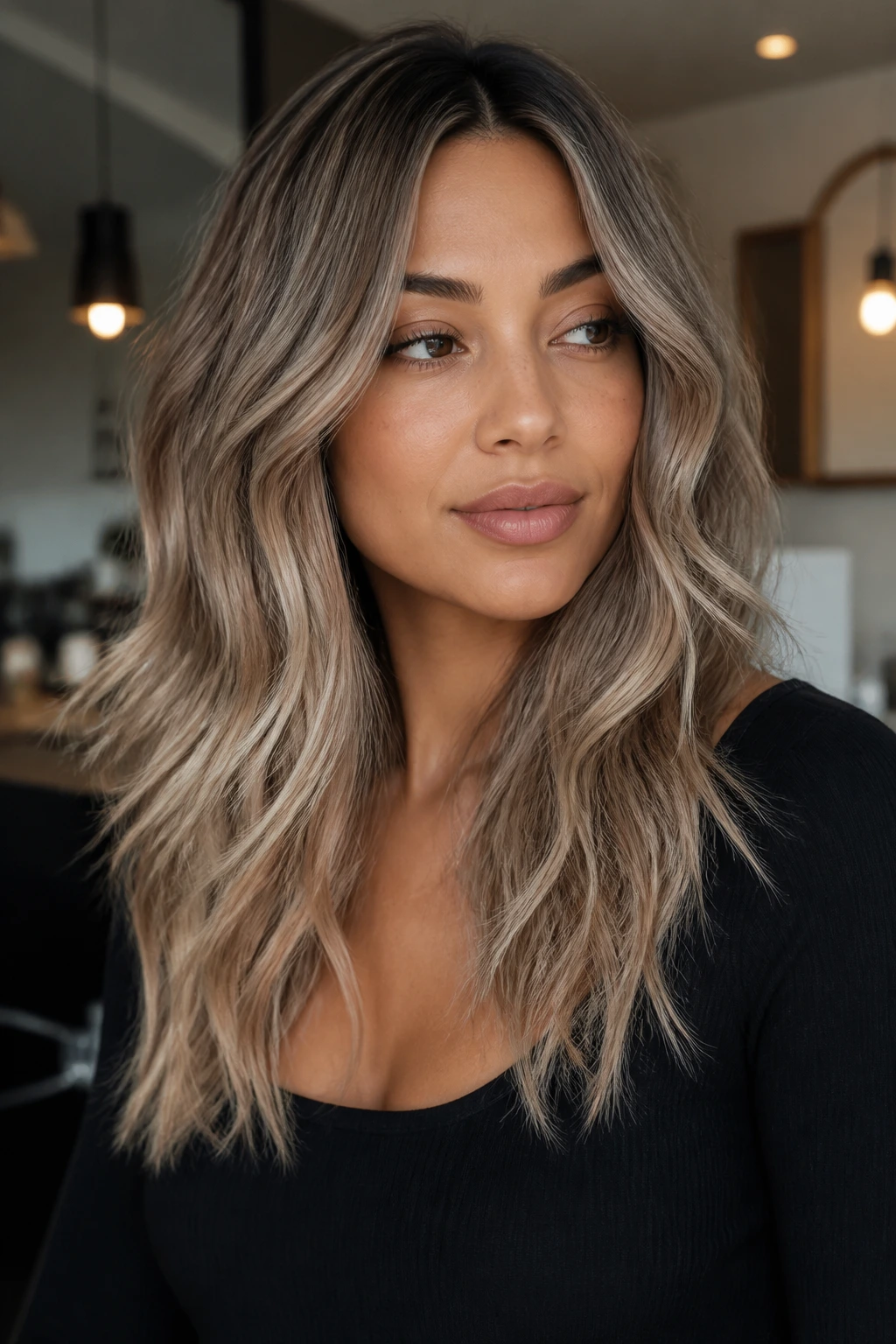
Blonde hair likes a schedule. Ignore it, and the tone starts to wander. Wash 2 to 3 times a week if you can, because every shampoo lifts some tone and roughens the cuticle a little. Use purple shampoo once every 5 to 7 washes if the blonde is drifting yellow. If the color is turning orange, blue shampoo can help, but don’t overuse it or the hair starts to look dull.
Glosses and toners usually hold for about 4 to 6 weeks before the shade starts to shift. That’s a normal window, not a failure. For balayage or bronde, root maintenance may stretch to 8 to 12 weeks. For platinum or Scandi blonde, you’ll usually need more frequent touch-ups.
Heat protectant matters every single time you blow-dry, straighten, or curl. Bleached hair doesn’t like casual heat. It shows the damage fast.
Easy Adaptations for Different Hair Histories
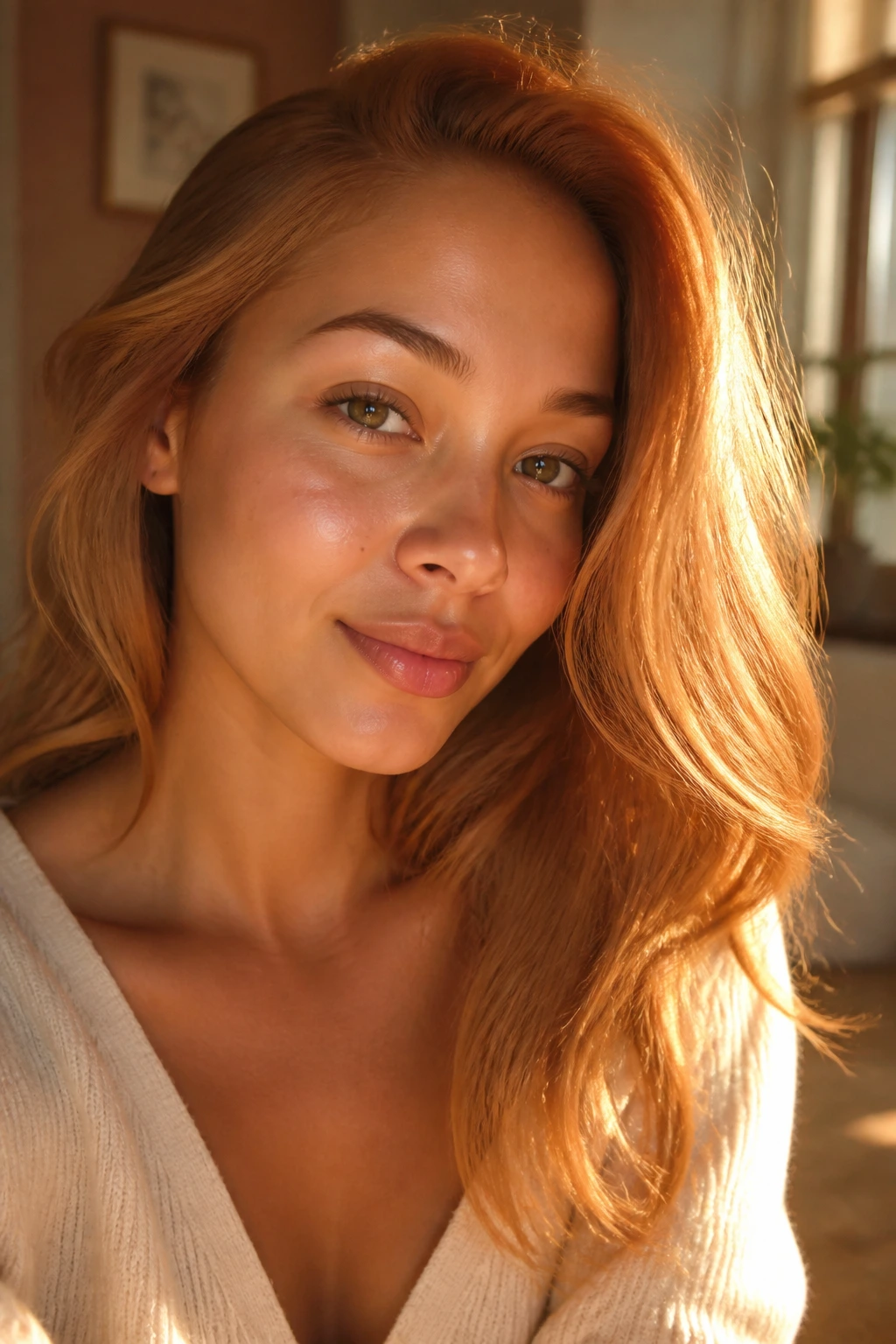
The Virgin-Hair Start: If your hair has never been colored, ask for a gradual lift with dimensional placement first. Jumping straight to pale blonde can be rough on both the hair and the maintenance routine.
The Previously Lightened Refresh: If your ends are already pale, you may need more gloss than bleach. Sometimes the smartest move is refining the tone instead of chasing more lightness.
The Curly-Hair Version: Keep the highlights painted in ribbon shapes that follow the curls. That preserves definition and stops the blonde from breaking up the pattern.
The Low-Maintenance Grow-Out: Bronde melts, shadow roots, and balayage all grow in softer than all-over blonde. If you hate obvious roots, start here.
The Warmer Finish: Move toward honey, maple, butterscotch, or bronze if your skin likes gold. These shades keep medium skin from looking a little tired on gray days.
The Cooler Finish: Reach for pearl, ash beige, or soft smoke if your skin is neutral or cool. Stay away from flat silver unless you enjoy a more editorial, high-contrast look.
Mistakes That Make Blonde Look Flat on Medium Skin
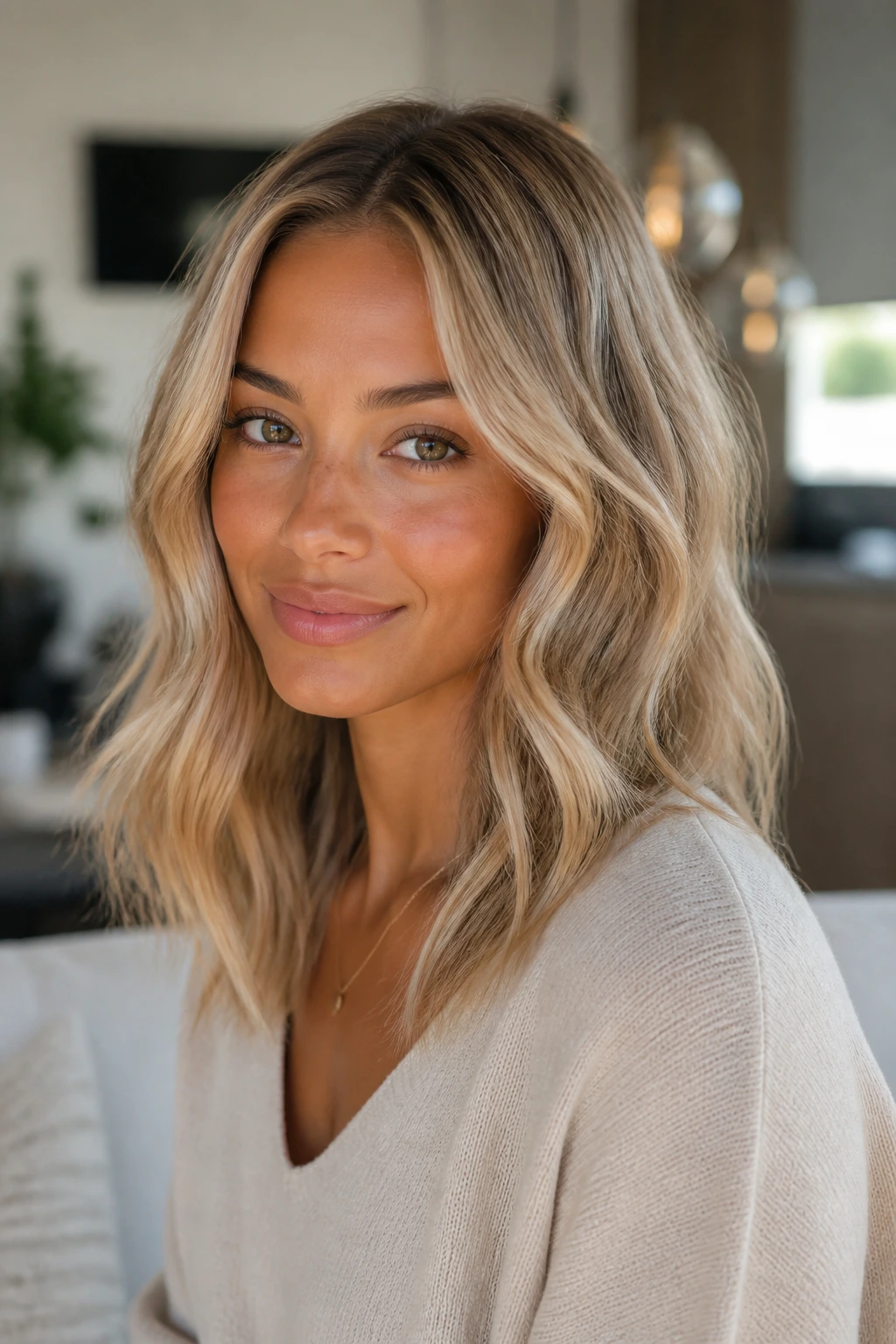
Going too pale from root to tip: The hair can look disconnected from the face, especially if the roots are lifted all the way out. Keep some depth near the scalp unless you truly want a stark look.
Choosing ash without enough beige: Pure ash sounds elegant on paper. In real life, it can make medium skin look gray or tired if the tone is too dry. Ask for ash-beige instead of hard ash.
Ignoring undertone: A gold-toned blonde on cool medium skin can look too orange. A cool pearl on warm skin can look washed out. Match the undertone first, then decide how bright you want to go.
Letting brass sit too long: Yellow and orange tones don’t just appear one day. They creep in through washing, heat, and sun. Fix them early with the right shampoo or gloss.
Chasing one solid shade: Dimensional blonde usually looks better on medium skin than a flat, single-process blonde. The depth keeps the color attached to the face instead of floating above it.
Frequently Asked Questions About Blonde on Medium Skin
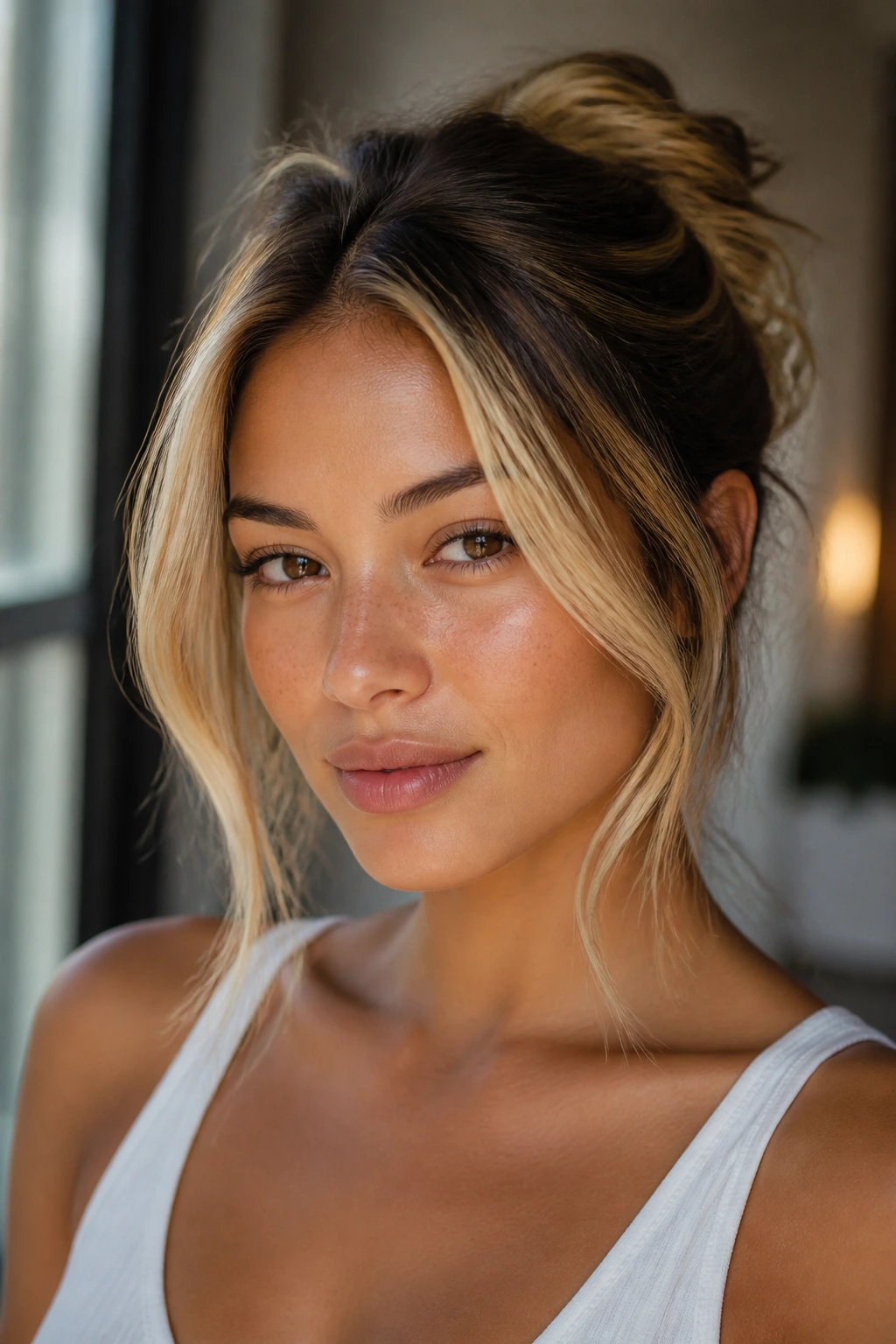
What blonde is most flattering on medium skin with warm undertones?
Honey, caramel, butterscotch, maple, and golden wheat blonde tend to sit naturally against warm medium skin. They echo the warmth in the complexion instead of fighting it, which keeps the face looking awake.
Can medium skin wear ash blonde?
Yes, but it usually works better as ash beige or soft smoke rather than a hard gray ash. The beige keeps the skin from looking flat, which pure ash can do if the formula is too cool.
Is balayage better than full highlights for medium skin?
Balayage often gives medium skin a softer frame because the root stays deeper. Full highlights can work, but balayage grows out more gently and usually feels more natural around the face.
How light can I go without washing my face out?
That depends on your undertone and how much contrast you like, but level 8 to 9 is a safe starting point for many medium skin tones. If you go to level 10, keep root depth or a beige gloss so the hair doesn’t look detached.
How often do I need toner?
Most blondes need a gloss or toner every 4 to 6 weeks. Platinum, Scandi blonde, and cool blondes often need it sooner because they show brass faster.
Will blonde damage my hair badly?
It can, especially if your starting color is dark and the lift happens in one session. Bond builders, careful sectioning, and spacing out appointments make a big difference. Bleach is still bleach, though. Respect it.
Can curly hair go blonde without losing its shape?
Yes, if the highlights follow the curl pattern instead of cutting across it. Ribbon placement and good hydration matter more on curls because the pattern itself shows the color.
What if my blonde turns yellow or orange?
Use the right corrective shampoo sparingly and book a gloss if the tone keeps shifting. Yellow usually calls for purple shampoo; orange usually needs blue. If the brass is deep, toner at the salon is the cleaner fix.
The Blonde That Fits Your Face
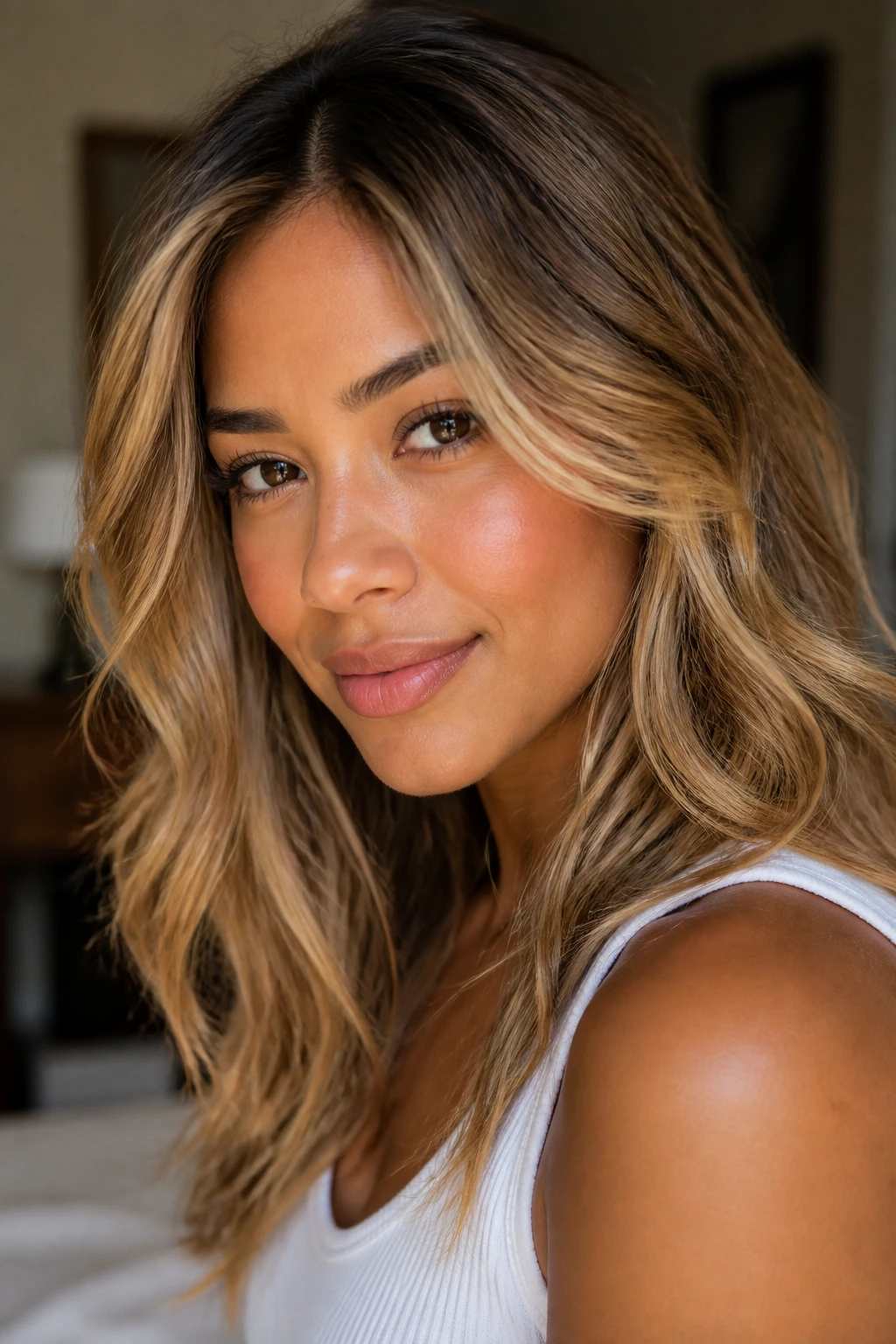
The best blonde for medium skin doesn’t try to erase the skin tone or overpower it. It works with the warmth, depth, and shape already there. That’s why honey balayage, beige shadow roots, champagne blends, and bronde melts keep showing up as the easiest wins — they give light without stripping away contrast.
If you’re choosing between a risky pale blonde and a richer, dimensional one, I usually side with the richer version. It wears better on ordinary days, not just on the salon chair. And that’s the real test, isn’t it?
Pick the shade that makes your face look rested in daylight, not just bright in a mirror. The right blonde does that.