



Golden blonde hair color ideas for olive skin can go one of two ways: they either make the face look alive and polished, or they make everything look a little tired and weirdly flat. There isn’t much middle ground when the undertone is olive. Push the blonde too icy, and the skin can pick up a green-gray cast. Push it too yellow, and the hair starts shouting brass from across the room.
That’s why warm blonde shades deserve a smarter approach here. Honey, beige-gold, champagne, caramel, butter, amber — those tones sit in the same warm lane as olive skin without collapsing into one flat note. They bring light to the face, but they don’t steal all the attention from it. The best versions still keep some depth at the root, some shadow between the pieces, and enough tonal control that the color looks intentional instead of accidental.
The shades below lean into that balance in different ways. Some are soft and subtle. Some are brighter around the face. Some keep the brunette base visible so the blonde reads richer. All of them are built with olive undertones in mind, which is the part that matters more than the buzzword “blonde” ever will.
Why These Shades Feel Better on Olive Skin
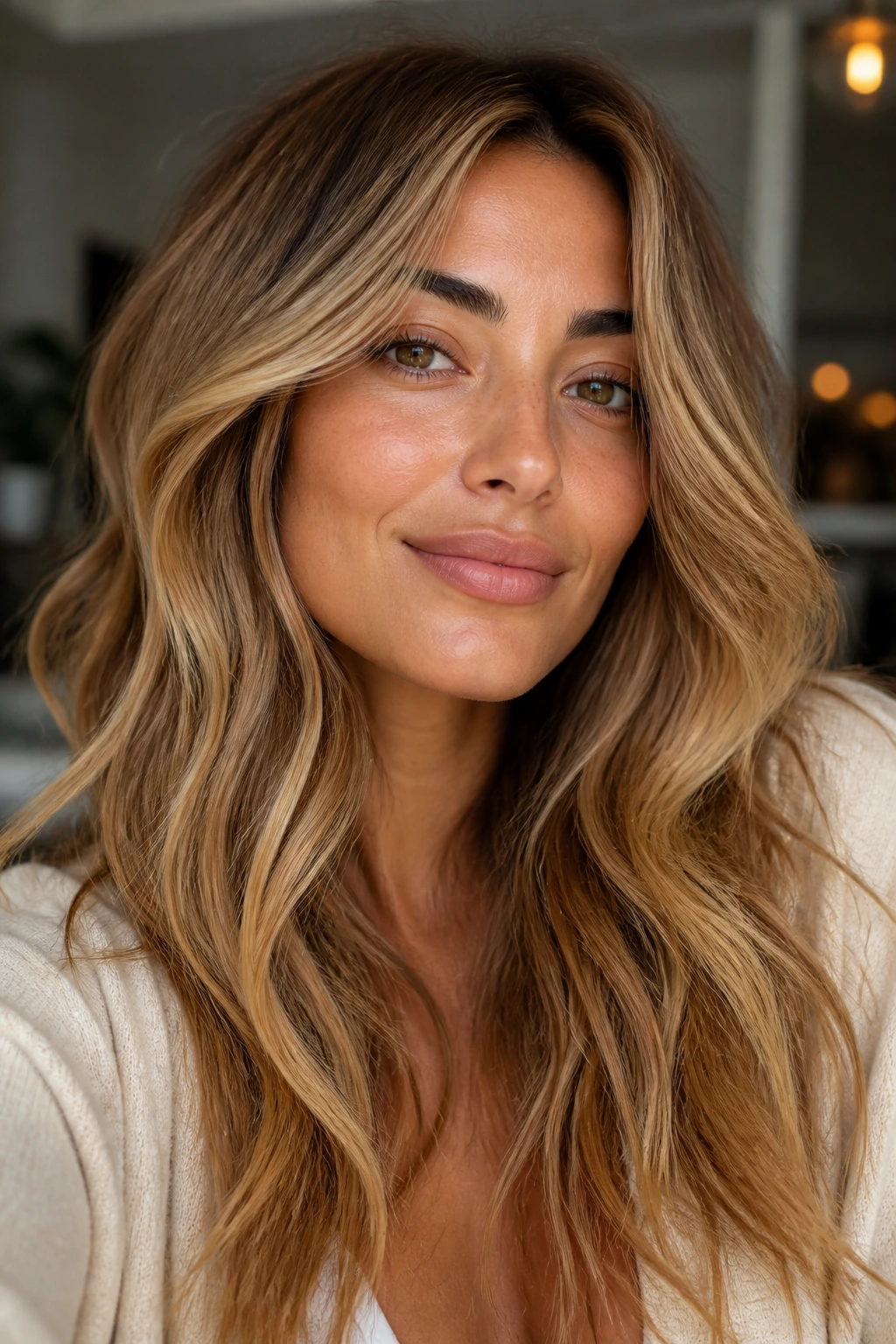
-
Gold, not yellow: The best versions of golden blonde sit in beige, honey, or butter territory, which warms olive skin instead of making it look sallow.
-
Depth keeps the face framed: A root shadow or a darker ribbon through the mid-lengths stops the blonde from floating away from your features.
-
Dimension beats one flat tone: Olive undertones usually look better when the hair has multiple warm notes, not one solid, pale sheet of color.
-
Placement matters as much as tone: Face-framing pieces, balayage ribbons, and babylights can brighten the complexion without flooding the whole head with lightness.
-
These shades age well between appointments: A warm gloss or soft highlight pattern grows out more cleanly than a hard, icy blonde line.
1. Sunlit Champagne Blonde for Olive Skin
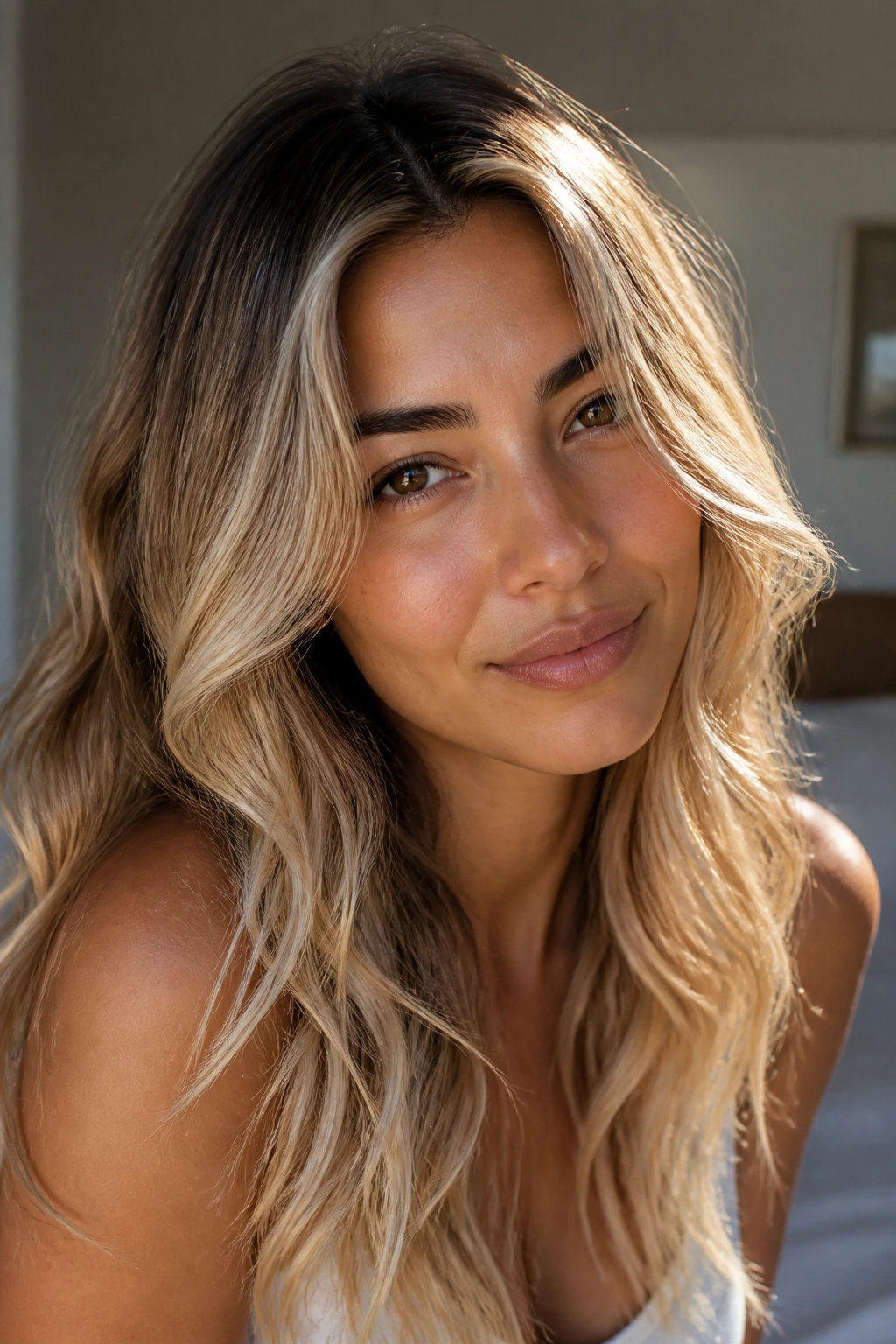
Champagne blonde works when it looks like light passing through pale gold silk, not like a bleach job that forgot to tone. On olive skin, that softer beige-gold finish keeps the face looking clean and bright instead of drained. It is the kind of blonde that looks expensive because it never goes fully flat.
Why It Lands So Well
The trick is keeping the root a shade or two deeper and letting the pale champagne live mostly through the mids and ends. That darker base gives olive skin a frame, which matters more than most people think. Without it, the blonde can feel too sheer.
- Ask for level 8 to 9 highlights with a beige-gold gloss.
- Keep a level 6 or 7 root shadow.
- Best on layered cuts that move.
Small warning: If your hair lifts warm fast, do not chase white-blonde here. The gold should stay soft.
2. Honey Ribbon Balayage
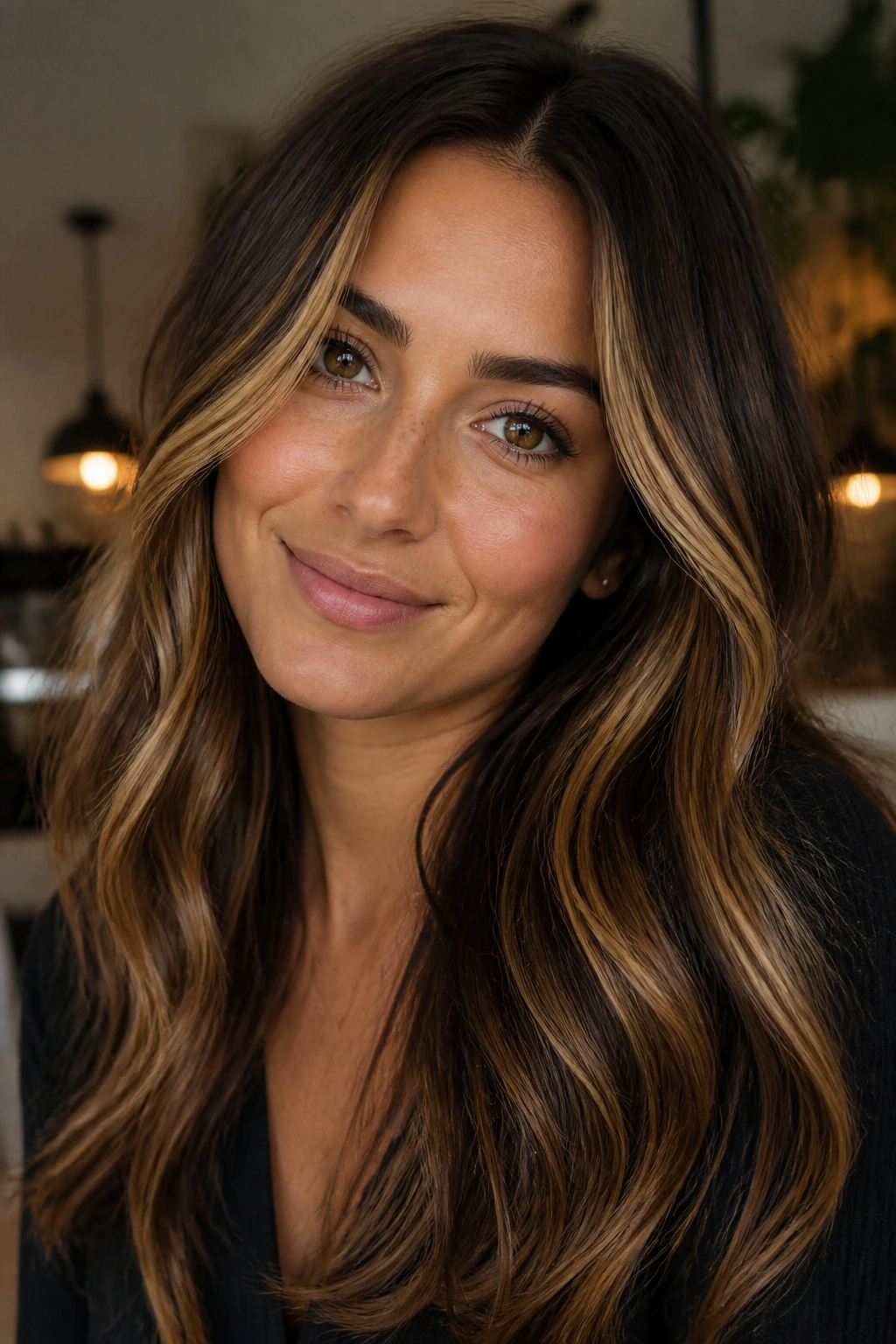
Honey ribbon balayage is the easy answer when you want blonde to show up as texture, not as a block of color. The ribbons sit inside the hair, so the brunette base stays visible and the whole look has more depth. Olive skin tends to like that contrast.
What I like about this shade is the way it softens around the face without losing shape. The brightest pieces go near the cheekbones and temples, then thin out toward the back. That keeps the front lively and the overall color calm.
You can ask for wider ribbons through the crown and finer ones near the hairline. That mix matters. It stops the color from reading stripey, which is the quickest way to ruin a warm blonde on olive skin.
3. Buttercream Blonde
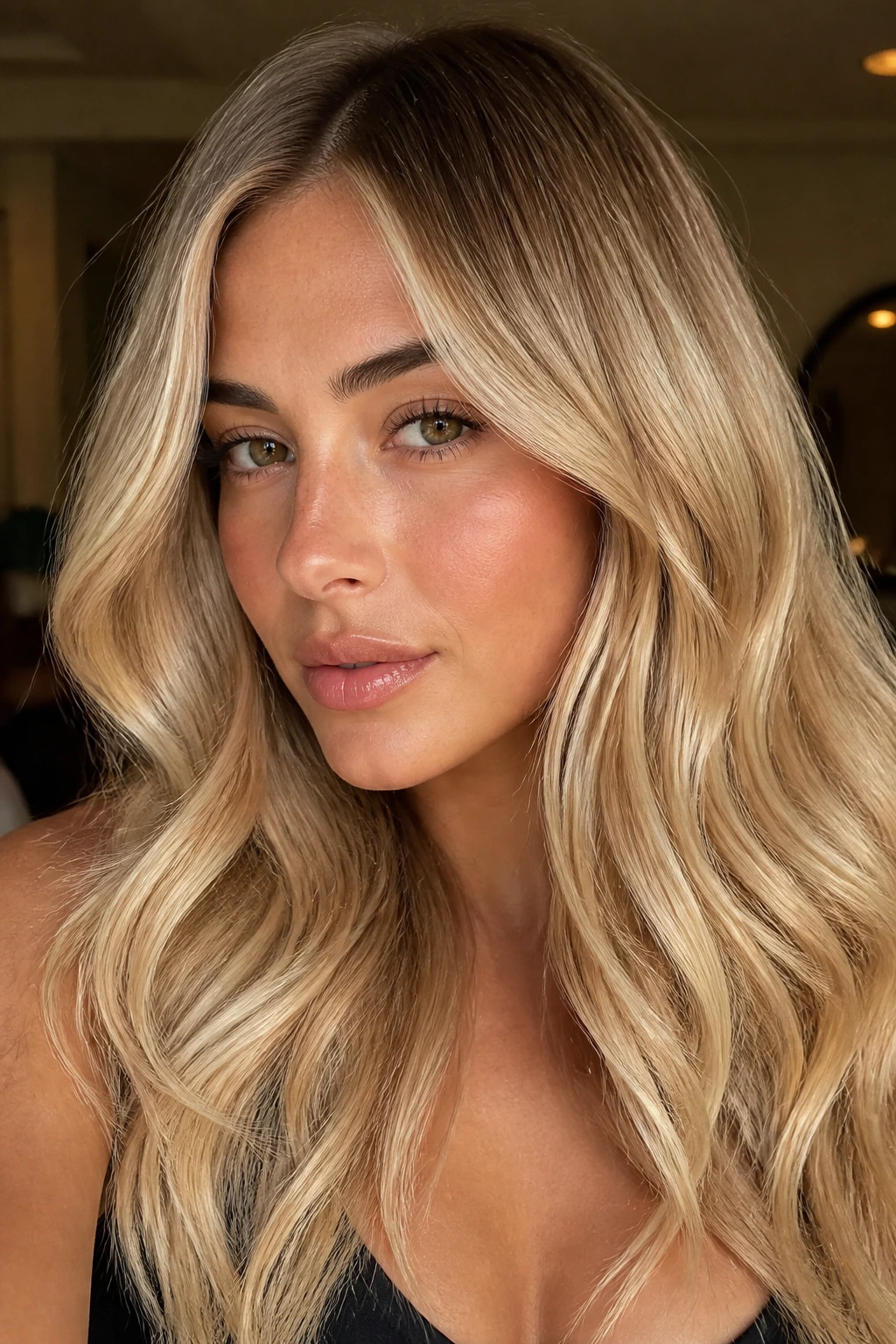
What makes buttercream blonde work on olive skin? It’s the creaminess. The shade has enough warmth to flatter the complexion, but it stays pale enough to feel light and polished instead of orange.
Where to Put It
A good buttercream blonde usually lives in level 8 territory with a beige-toned gloss over the top. It looks especially good on medium-length hair and soft waves because the bends in the hair show off the creamy shifts.
- Use soft, blended highlights instead of hard foils.
- Keep the toner beige, not silver.
- Best if you want brightness without loud contrast.
My take: This is one of the best shades for someone who likes blonde but hates looking overprocessed.
4. Golden Beige Money Piece for Olive Skin
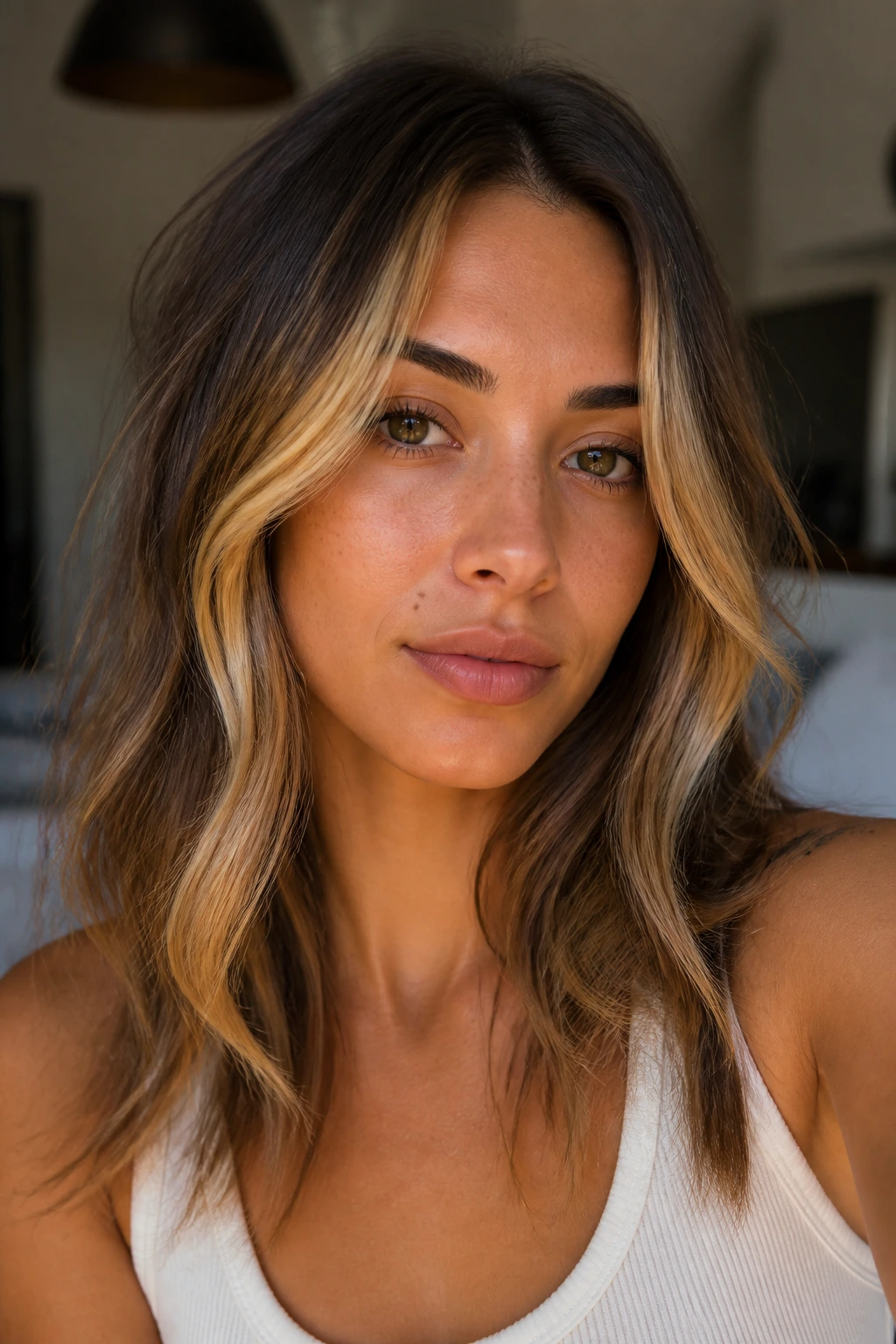
Picture your hair pulled back and the whole effect coming down to two bright strokes at the cheekbones. That’s the money piece doing its job. On olive skin, a golden beige version gives lift right where the face needs it and leaves the rest of the hair calmer.
The Shape of It
The front pieces should be brighter than the rest, but not so pale that they look separate. Ask for a beige-gold tone with a little depth behind the face frame. The contrast should feel deliberate, not harsh.
- Best with ponytails, waves, and half-up styles.
- Keep the center part or curtain placement soft.
- Avoid icy toner around the face.
A money piece like this gives you a face-brightening effect without committing to full-head lightening. That’s a pretty smart trade.
5. Saffron Face-Framing Highlights
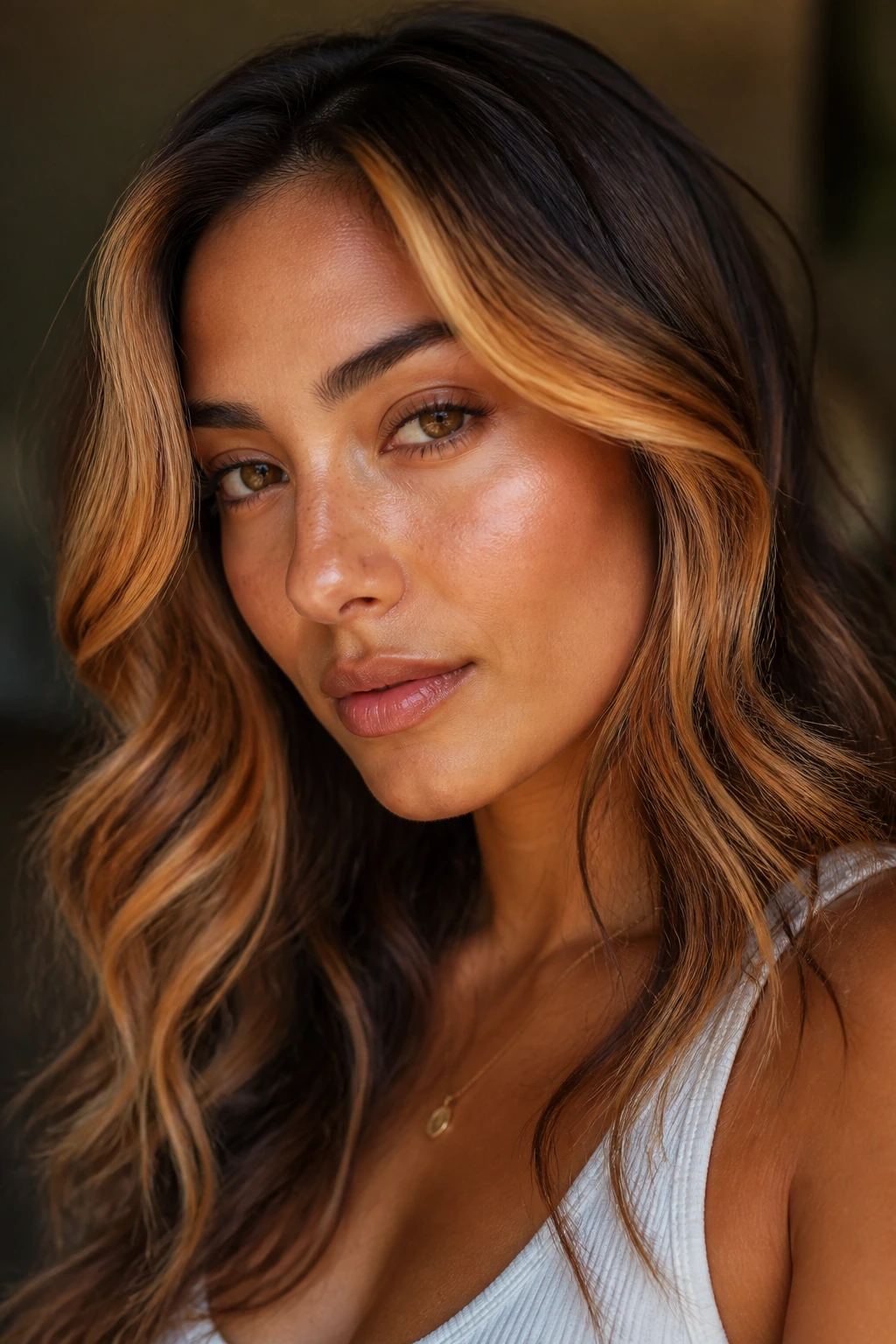
Saffron blonde has a little more spice in it than plain gold. It sits somewhere between honey and light amber, which makes it especially useful if your olive skin leans warm or neutral-warm. The color feels alive from the first wash.
The face-framing version is the part that does the heavy lifting. Bright pieces around the eyes and cheekbones bring warmth right into the complexion, while the rest of the hair can stay deeper and quieter. That contrast keeps the look from turning too yellow.
I like this shade on curls and bends because the golden pieces catch on the shape of the hair. Straight hair works too, but waves give it more movement. If your natural hair is medium brown, this is a nice place to stop before things get too blonde.
6. Caramelized Root Melt
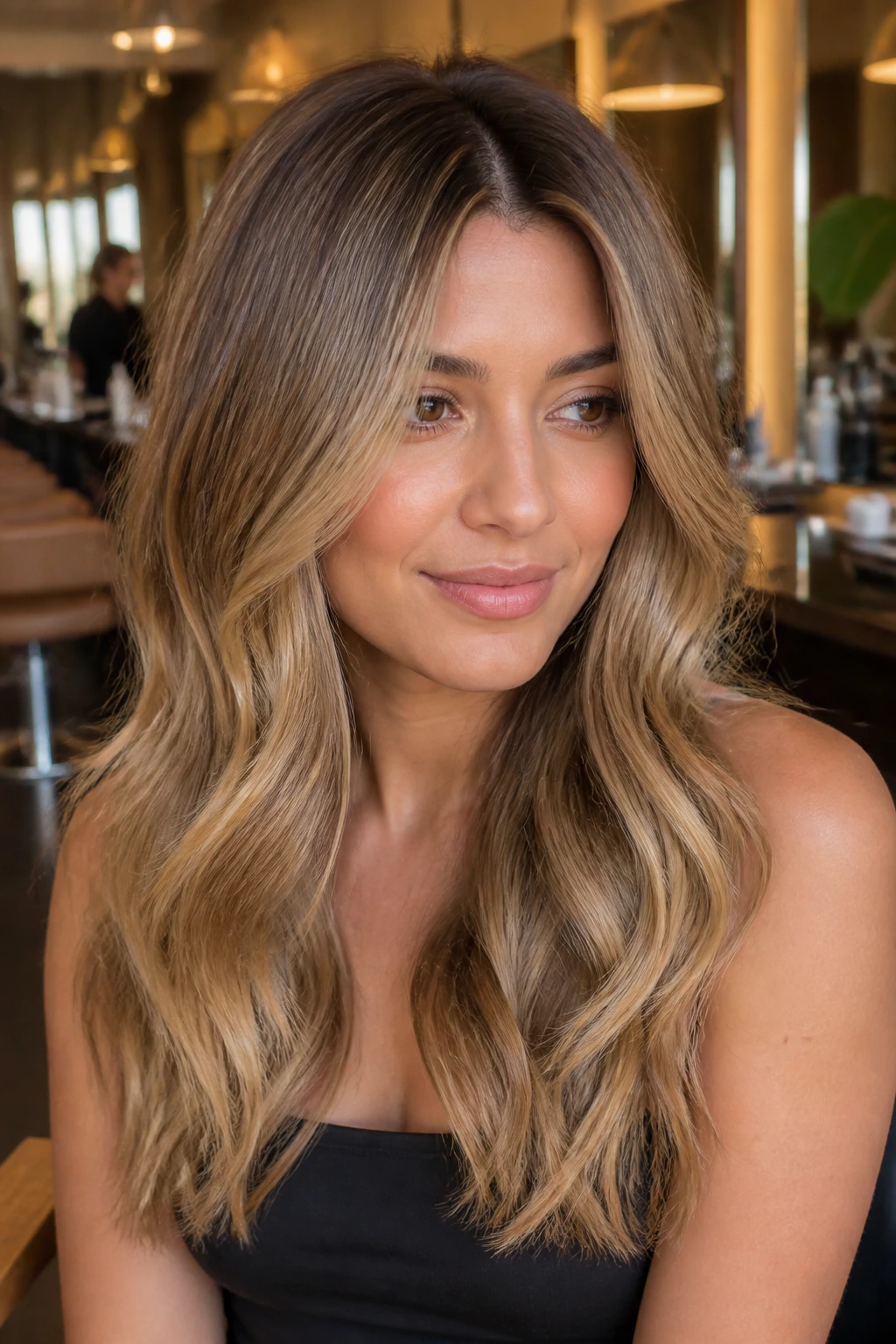
A root melt is the low-maintenance blonde that still looks finished. The darker root fades into caramel-gold mids, and the line between them disappears instead of sitting there like a hard stripe. For olive skin, that softness is a gift.
Unlike one-tone blonde, this version keeps the head from looking washed out. The root shadow gives the face definition, and the caramel melt below it keeps the warmth flowing. If your own hair is naturally dark blonde or light brown, this may be the shade that saves you a lot of salon time.
Ask for the root to stay one to two levels deeper than the mids. That’s enough depth to ground the color without making it feel heavy.
7. Vanilla Bean Blonde
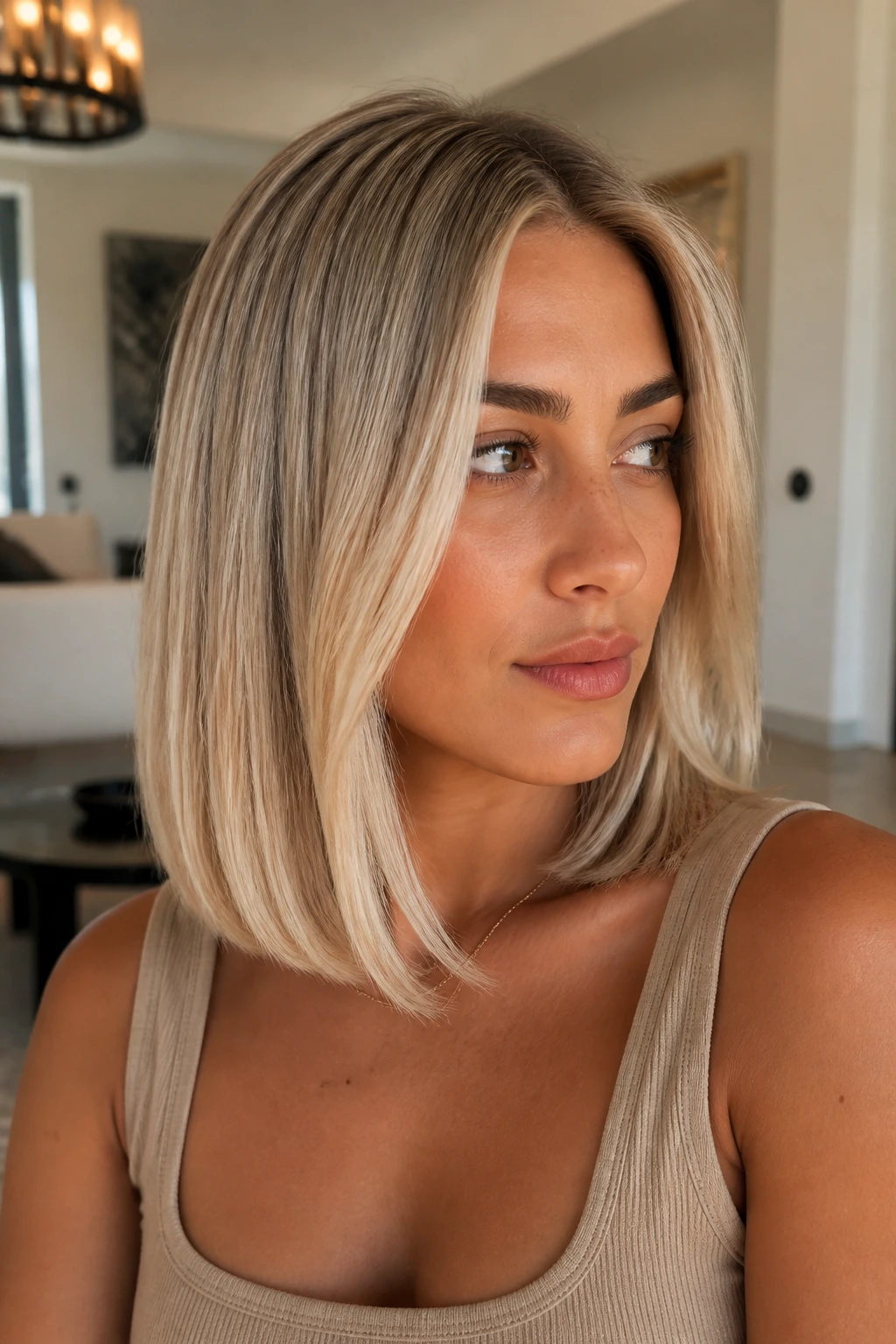
Vanilla bean blonde is a cooler-sounding name than the color itself. In practice, it’s a soft warm blonde with a creamy finish and just enough beige to keep the yellow from getting loud. On olive skin, that creaminess is the point.
Best Ways to Wear It
This shade looks clean on blunt cuts and shoulder-length hair, where the color can read smooth and controlled. Loose waves work too, but the finish should stay glossy rather than beachy.
- Ask for fine highlights, not chunky ones.
- Keep the toner soft and creamy.
- Works well if you like a polished blowout.
The important thing here is restraint. Too much brightness and it loses the vanilla-bean softness that makes it flattering in the first place.
8. Toasted Almond Blonde
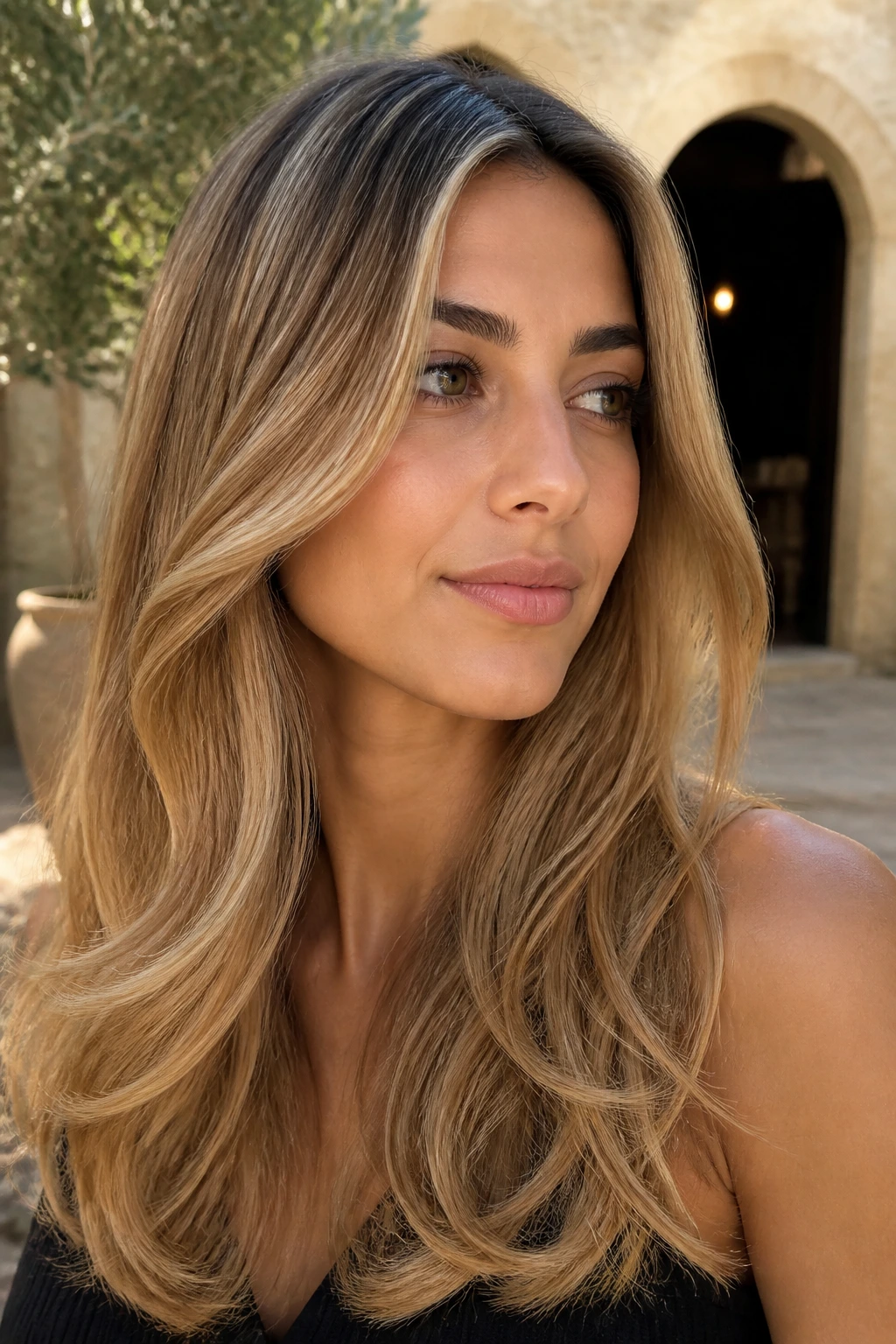
Toasted almond blonde has more depth than champagne or buttercream, which is exactly why it flatters olive undertones so well. The shade keeps some brown in the story, so the blonde feels woven in rather than pasted on.
I think this one is especially good for people who want warmth but do not want their hair to scream “blonde” from every angle. The toasted note gives it a little edge. On olive skin, that extra depth helps the complexion stay fresh instead of looking overexposed.
If your natural base is medium brown, this shade can be built with babylights and a warm glaze. You do not need to strip the hair down to nothing to get the effect.
9. Amber Glaze Blonde
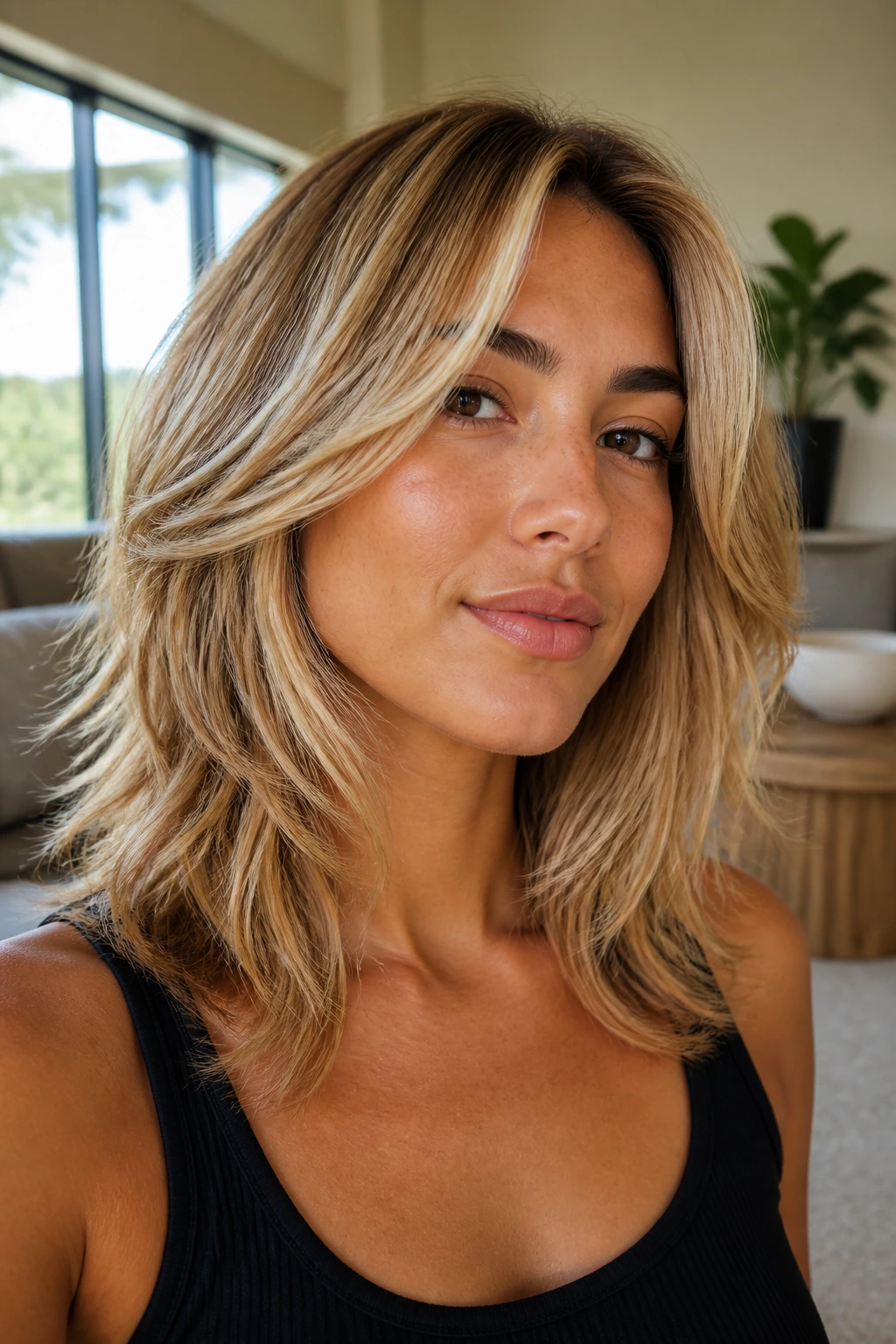
Amber glaze blonde is what happens when warmth gets a little richer and a little shinier. It has that honeyed amber glow that makes olive skin look alive, especially in daylight. The color is less airy than champagne and more plush.
How to Keep It Glossy
A glaze is doing real work here. It keeps the blonde reflective and prevents the warmth from turning dull or muddy after a few washes. If the hair is porous, the glaze matters even more.
- Use a demi-permanent glaze in amber-gold.
- Refresh every 4 to 6 weeks.
- Best on layered cuts with movement.
This shade can lean too orange if the formula is careless, so the gold needs to stay controlled. Rich, not brassy.
10. Sandstone Blonde
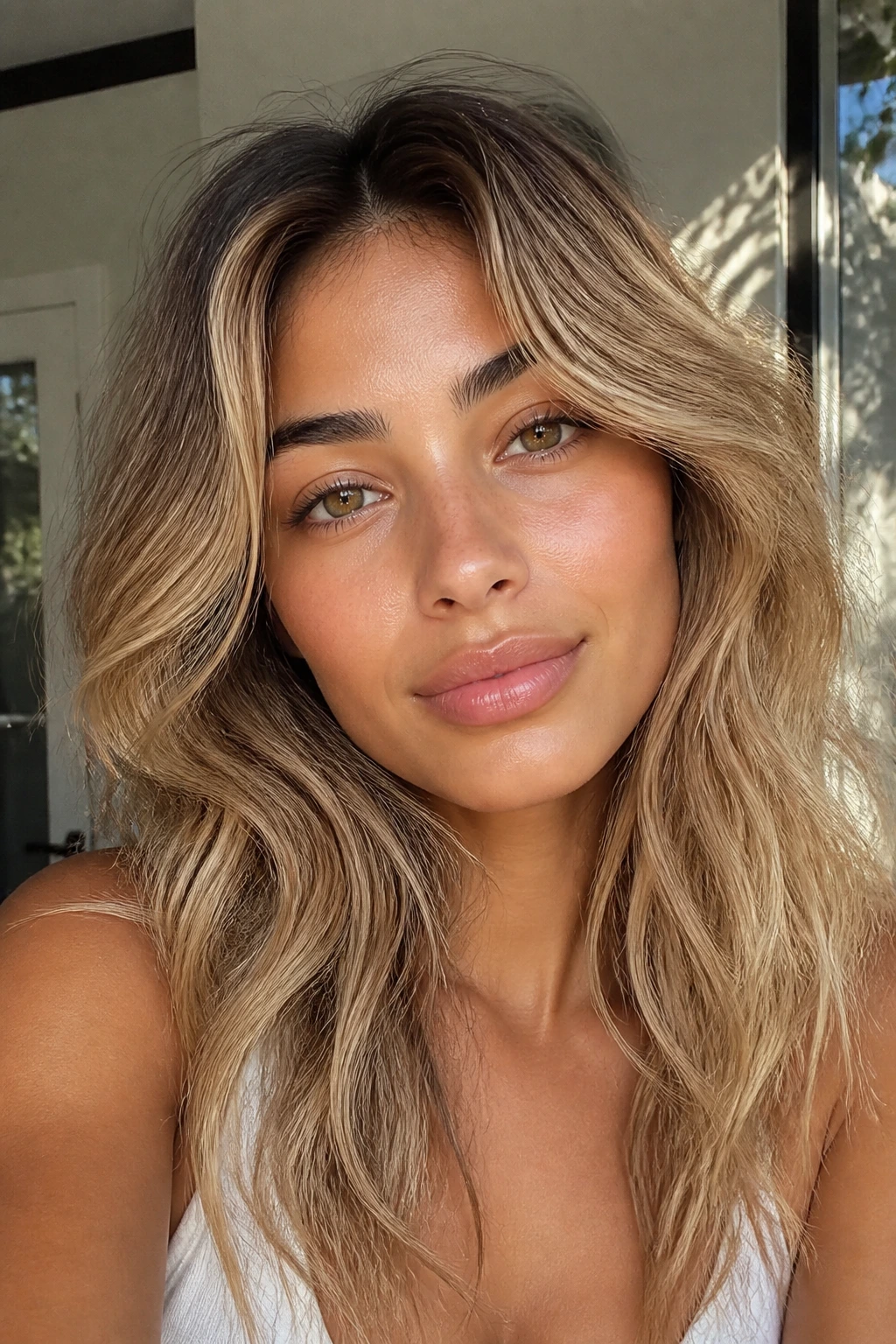
Sandstone blonde is the quieter cousin of honey blonde. It has a dusty beige base with warm highlights, so the whole effect feels grounded. Olive skin likes that balance because it gets brightness without too much glare.
The color works best when the lightest pieces are scattered rather than stacked. Think of it as sun-warmed stone rather than sun-bleached hair. That difference matters. One looks refined; the other looks over-lightened.
It’s a good shade for anyone who wants blonde that still behaves like brunette-friendly color. It grows out softly, and the root line stays less obvious than with a brighter blonde.
11. Custard Blonde Lob
Custard blonde is soft, warm, and slightly glossy, which makes it a very easy match for olive skin. On a lob, the color feels neat and modern because the haircut keeps it from getting too sweet.
The shape of the cut helps here. A lob gives the color enough length to show movement but not so much that the ends feel thin or fried. The blonde should sit in the creamy-gold family, with the lightest pieces near the front and crown.
This is one of those shades that looks better when it is not trying too hard. Clean blowout. Soft bend. No crunchy beach texture. The smoother the finish, the richer it reads.
12. Wheat-Gold Blonde
Wheat-gold blonde is for the person who wants a natural-looking lightness rather than a dramatic change. It carries the color of sunlit grain — pale gold, soft beige, a little warmth at the edges. Olive skin usually takes well to that kind of restrained brightness.
Why I’d Choose It
This shade is especially good if your skin leans neutral olive and you don’t want your hair to overpower your face. The warmth is there, but it stays close to the neutral line.
- Ask for soft babylights through the top.
- Keep the ends lighter than the root, not the other way around.
- Best if you like a soft, lived-in grow-out.
It’s quiet in the best sense. No drama, no glare, just a warm blonde that sits nicely on the skin.
13. Champagne Bronde
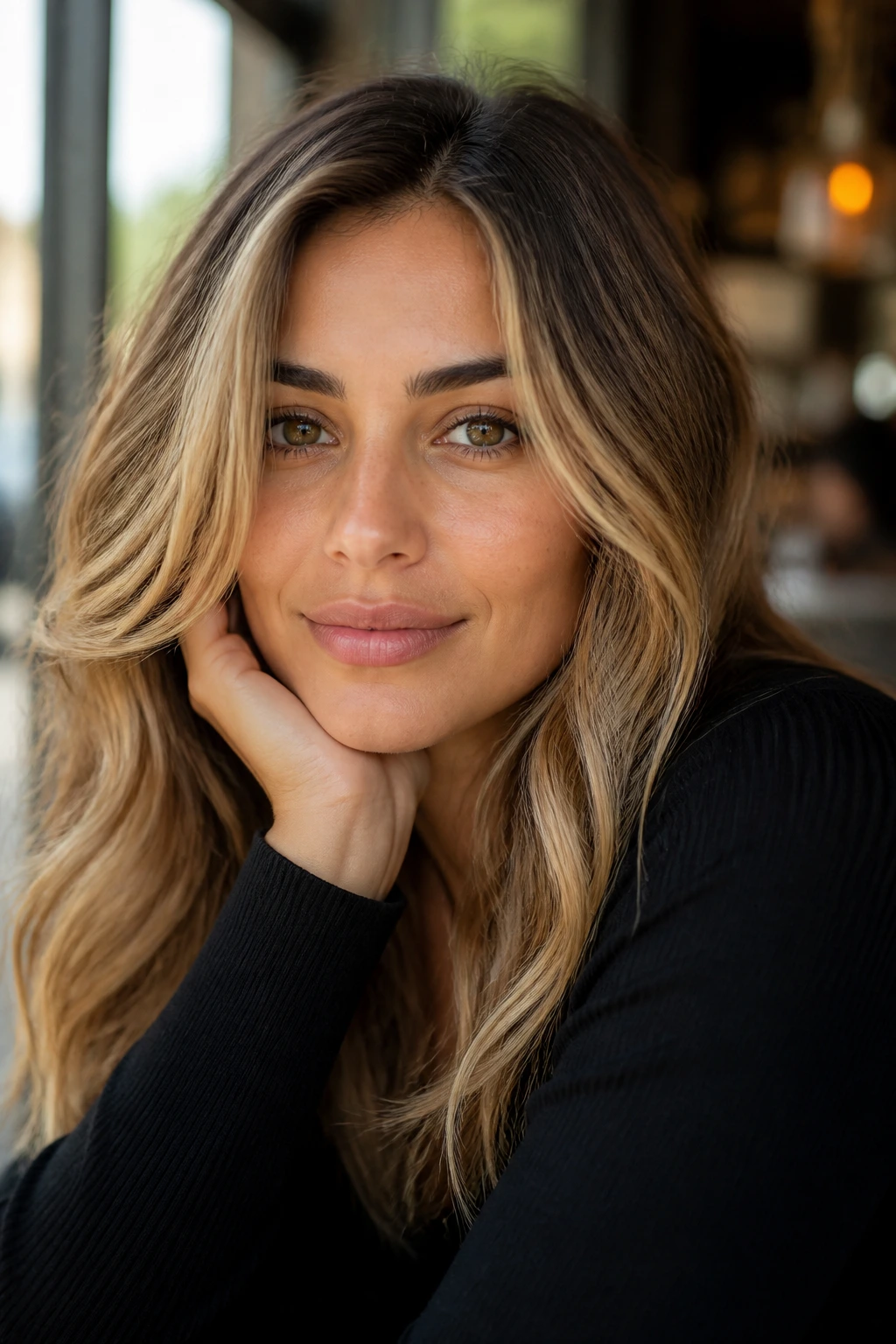
Champagne bronde is the handshake between brunette and blonde. You still see the darker base, but the lighter pieces carry enough gold to brighten olive skin without forcing a full blonde identity on the hair.
That balance is what makes it useful. The brunette depth stops the color from washing out the features, while the champagne ribbons keep the face looking fresh. It’s one of the easiest colors to maintain if you hate sitting in a salon every few weeks.
Ask for a soft transition from brown to beige-gold, with the brightest pieces around the face and crown. If the highlights are too pale, the bronde part disappears. Then you’ve lost the whole point.
14. Marigold Honey Highlights
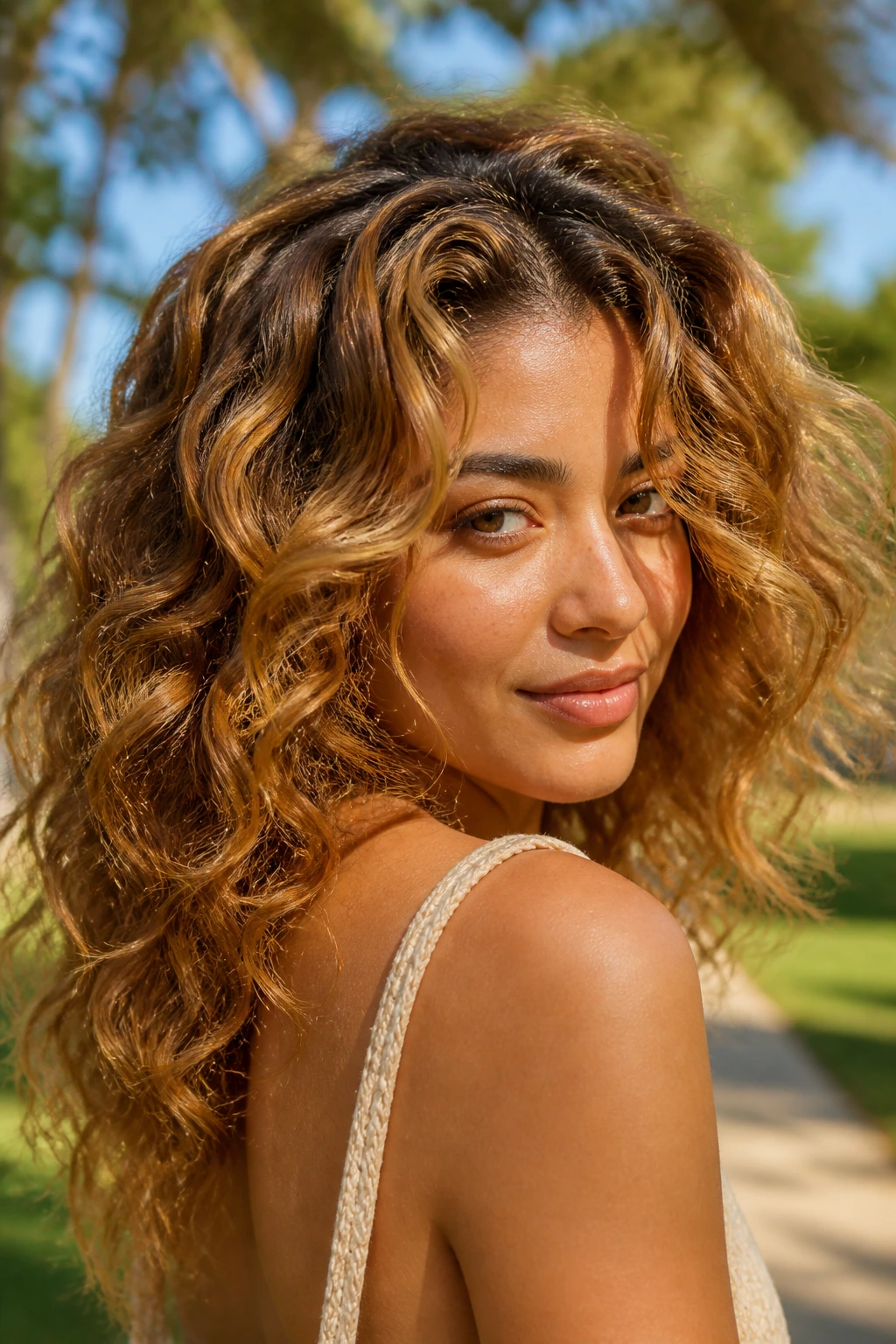
Marigold honey highlights lean sunnier and a little brighter than standard honey. They’re especially good if your olive skin has a warm cast and you want the hair to echo that warmth instead of fighting it.
The shade works because it brings energy to the face. Not neon. Not yellow paint. Just a brighter gold that still feels wearable. On curls, the marigold note catches the bend in the hair and adds movement that flatter, flatter, flatter — well, maybe not flatter in the abstract sense, but it does make the color look alive.
Keep the base a touch deeper so the highlights have somewhere to land. Without that anchor, the whole thing can look thin.
15. Buttery Beige Balayage
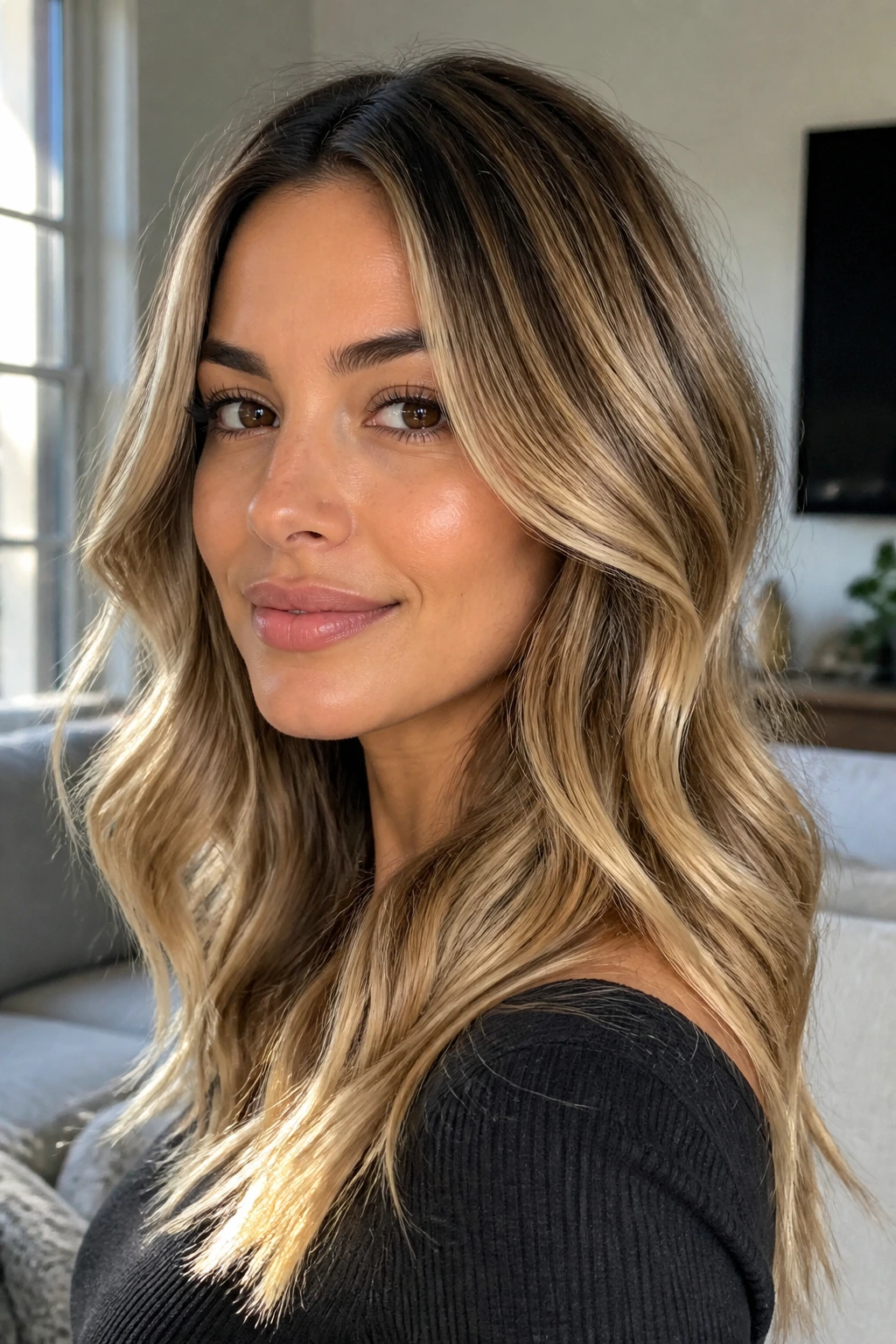
What makes buttery beige balayage useful on olive skin is the beige. The butter gives warmth, but the beige keeps it from crossing into harsh yellow territory. That makes the color much easier to wear on a daily basis.
Where It Works Best
This is a strong choice if you have medium brown or dark blonde hair and want to lighten things without losing softness. The balayage placement keeps the grow-out blurred, which is nice if you’re not planning to live in the salon chair.
- Keep the highlights painted in soft, sweeping sections.
- Avoid a strong contrast line at the root.
- Works well with long layers and curtain bangs.
It’s one of those shades that looks even better after the first couple of washes, when the gloss settles and the pieces blend.
16. Warm Pearl-Gold Blonde
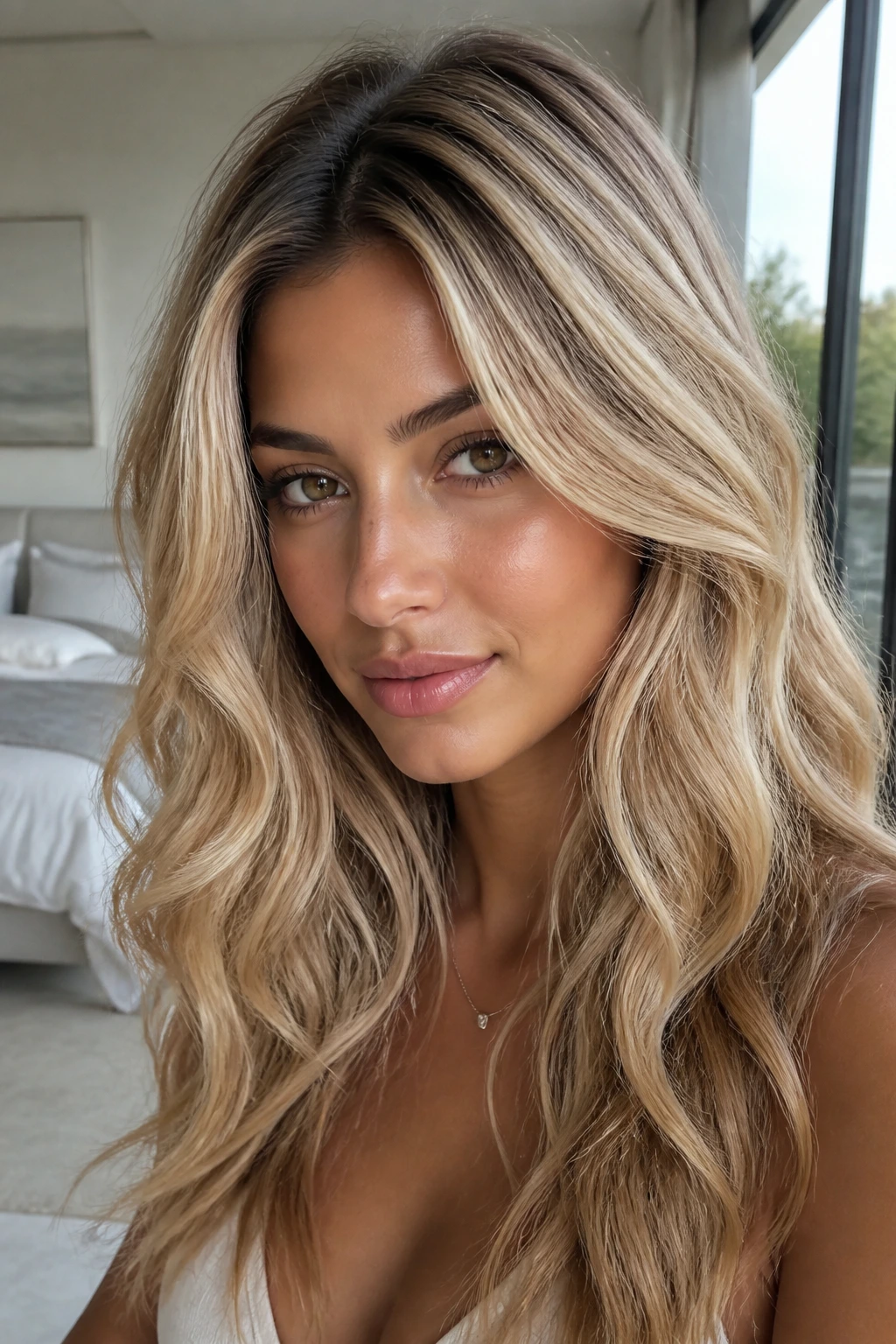
Warm pearl-gold sounds delicate, but the color needs a little body to work on olive skin. Pure pearl can skew too cool. Add gold, and the shade starts to make sense.
The result is a soft reflective blonde that looks light without going icy. It’s a good option if your makeup leans neutral and you want a hair color that feels refined, not loud. Shoulder-length cuts and softer waves usually wear it best because they show the shine without making it flashy.
If your natural hair pulls orange when lifted, this one needs careful toning. The finish should stay creamy, not tangerine.
17. Golden Butter Root Shadow
Golden butter root shadow is a salon-friendly way to keep the blonde bright while protecting the face from looking too bare. The root stays deeper and warmer, then melts into buttery lengths that carry the light.
I like this shade on olive skin because it respects the natural depth of the complexion. Too much pale blonde right at the scalp can make the face feel disconnected. A warm root shadow keeps the whole look steady.
The transition should be soft enough that you can’t draw a hard line with your eye. If you can, the melt isn’t done right. Ask for the shadow to be diffused with a comb or brush, not stamped on.
18. Maple Glaze Blonde
Maple glaze blonde is richer than honey and a little deeper than amber. It feels like the warm part of autumn light, which sounds poetic, but the real reason it works is plain: olive skin usually looks better when blonde has some brown-gold weight in it.
This shade is especially good if you already have darker brows or darker eyes. The maple tone links the hair and face together instead of making the hair float on its own. It’s less bright, more grounded, and easier to live with if your style leans understated.
A clear gloss or demi glaze keeps this color reflective. Without that shine, it can start to look flat.
19. Apricot-Gold Blonde
Apricot-gold blonde gives olive skin a little extra warmth without going full copper. There’s a soft peach note under the gold, which can be lovely if your complexion handles warm tones well and needs a bit of life near the face.
How to Ask for It
This shade works best as a soft warm blonde with apricot gloss, not as a loud orange-blonde. The key is keeping the peach note subtle and letting the gold do most of the work.
- Ask for face-framing warmth first.
- Keep the mids beige-gold.
- Best on wavy or textured hair.
If you like warm lipstick shades, this blonde often sits in that same family. The whole face ends up feeling more connected.
20. Sunflower Blonde
Sunflower blonde is brighter and sunnier than the softer blondes above, and that’s exactly why it can work on olive skin when the tone is managed well. The color needs enough gold to feel luminous, but not so much that it turns yellow.
This is one of the bolder options in the list. It looks best when the haircut can support it — layers, a strong bob, or long hair with movement. The wrong cut can make it feel too solid.
If your skin leans warm olive and you like a brighter hair statement, this shade can be gorgeous. If your undertone is more muted, keep the roots deeper and ask for a slightly beige sunflower, not a pure yellow one.
21. Tan-Gold Babylights
Babylights are the unsung hero of blonde color. Tiny sections. Soft lift. Very little drama. On olive skin, tan-gold babylights can give just enough brightness to make the complexion look rested without changing the overall base too much.
Why Tiny Highlights Matter
The fine placement keeps the color from reading stripey. Because the pieces are so small, the gold looks woven into the hair rather than sitting on top of it.
- Best for someone who wants subtle lightness.
- Works on straight, wavy, and curly hair.
- Grows out with less visible contrast.
If you’ve ever felt like full highlights were too much, this is the shade pattern to look at. Quiet, but not boring.
22. Biscotti Blonde
Biscotti blonde has that toasted, bakery-warm feeling that makes it easy to pair with olive skin. It’s beige-gold with a lightly browned undertone, so the color reads soft instead of sugary.
I like this one on people whose hair naturally sits in the light brown range. It lets you move toward blonde without abandoning the depth that makes olive skin look healthy. The finish is especially good with low, glossy waves or a smooth blowout.
This shade also hides a little grow-out better than brighter blondes. If your schedule is packed, that matters.
23. Soft Gilded Ombré
Soft gilded ombré keeps the roots deeper and lets the gold gather toward the ends. That fade works well on olive skin because it creates movement without flooding the whole head with lightness.
The ombré should feel gradual, not obvious. You want the color to shift from brunette depth into gilded ends over a soft stretch, not jump from dark to blonde in one hard line. The best versions have warm lowlights tucked through the mids so the gradient doesn’t get too thin.
This is a good choice if you like a little drama but still want an easy grow-out. It can look polished for months if the tone stays warm and the ends don’t dry out.
24. Honeyed Copper-Blonde Blend
Honeyed copper-blonde is warmer and more vivid than the shades that lean beige, and that’s why it deserves a spot here. Olive skin can hold copper better than a lot of people expect, especially when the copper is softened with honey.
The blend keeps the color from drifting too orange. Honey gives it softness; copper gives it energy. Together they make a blonde that looks richer on deeper olive tones and more dimensional on neutral olive skin.
This one needs a careful hand. Too much copper and the shade becomes red. Too little and it turns into ordinary gold. The sweet spot is narrow, which is half the fun.
25. Melted Gold Brunette-to-Blonde
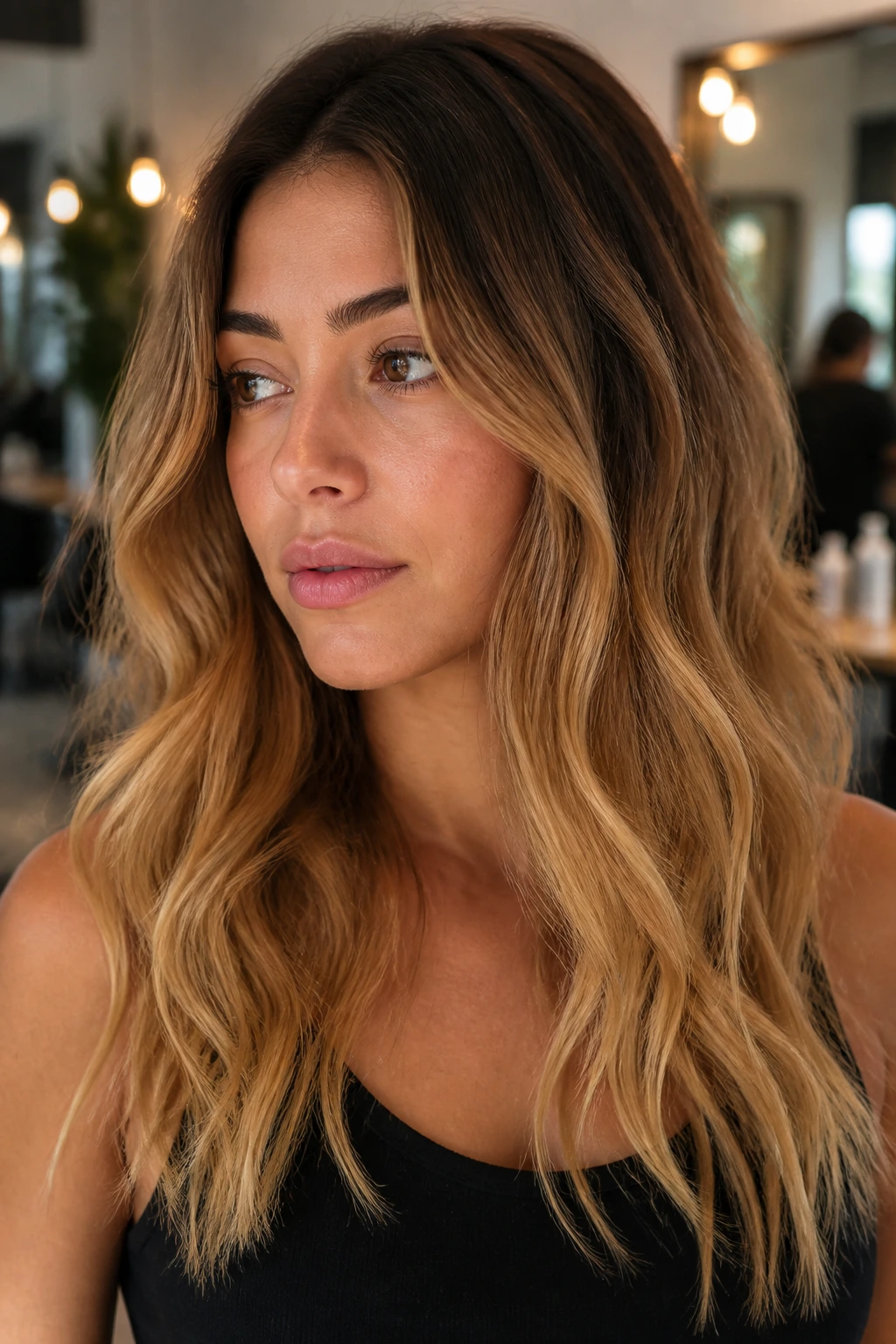
This is the shade for someone who wants the blonde to feel like a gradual reveal instead of a hard change. Dark brunette at the root, warm gold through the mids, lighter honey at the ends — everything melts instead of stopping.
For olive skin, that transition is flattering because it keeps the hair from overpowering the face. The darker top gives structure, and the gold through the lengths brings light where you want it. It’s one of the easiest ways to wear golden blonde without feeling overdone.
If I had to pick one shade for someone nervous about going blonde, this would be near the top. It gives you room to breathe. And room is underrated.
Why Warm Gold Beats Flat Ash on Olive Undertones
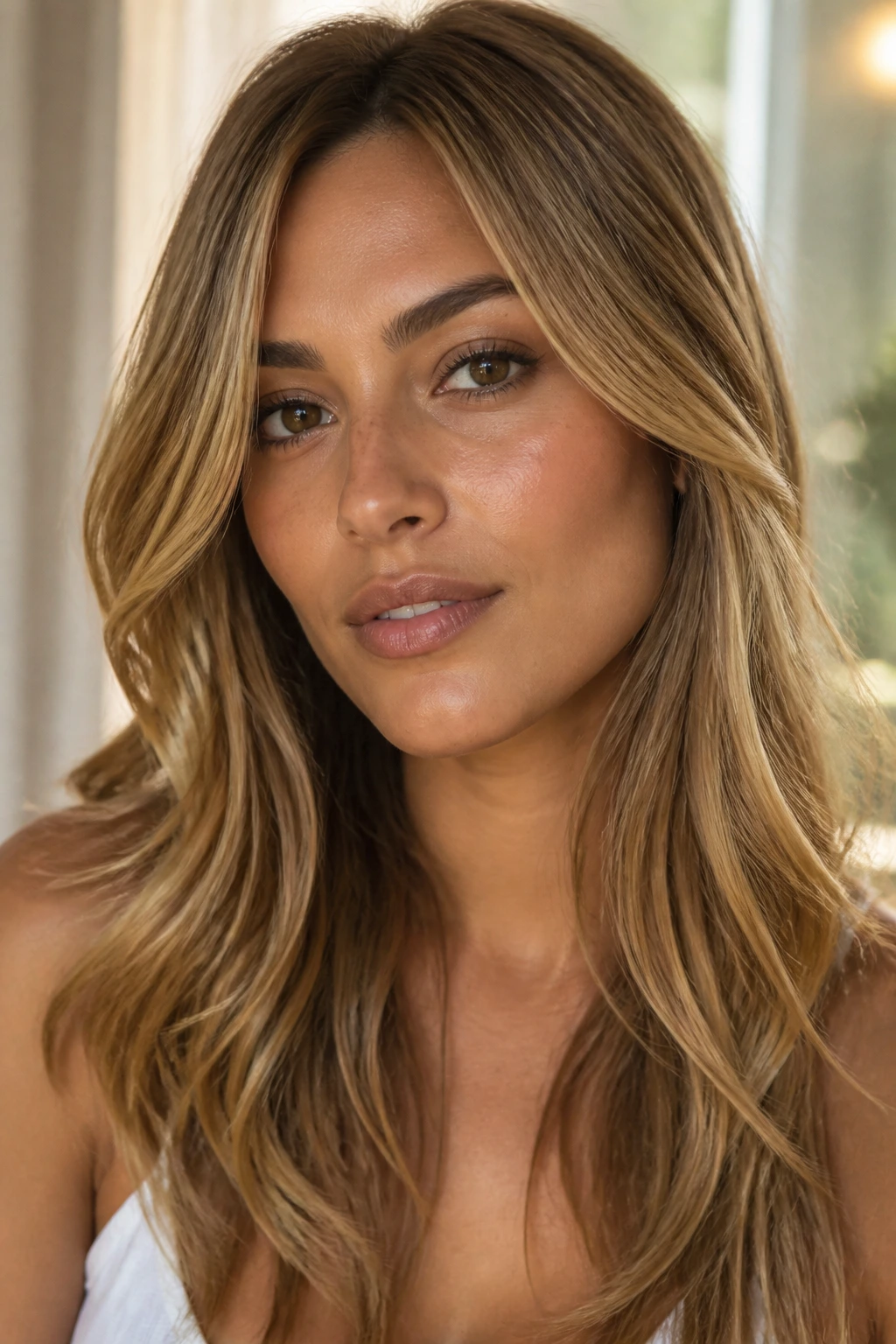
Olive skin has a funny habit of changing the way color behaves. A blonde that looks soft on a fair pink undertone can look smoky or dull on olive skin, while a warm gold that seems almost too rich in the bowl ends up looking balanced once it’s on the head. That’s why beige-gold, honey, butter, and amber keep showing up here. They echo what the skin already has.
Flat ash is the usual mistake. It can drain warmth from the face and make the complexion look green-gray in bad light. Sometimes people think they want “cooler” blonde because it sounds modern, but the color wheel doesn’t care about that mood. If your skin already carries olive depth, the better move is to build light with warmth and keep the tone clean.
The other piece is contrast. Olive skin usually looks better when the blonde has some shadow in it — root melt, lowlights, ribbons, or babylights. Full uniform pale blonde can flatten the face. Dimension gives the eye places to rest.
What to Bring to a Color Appointment
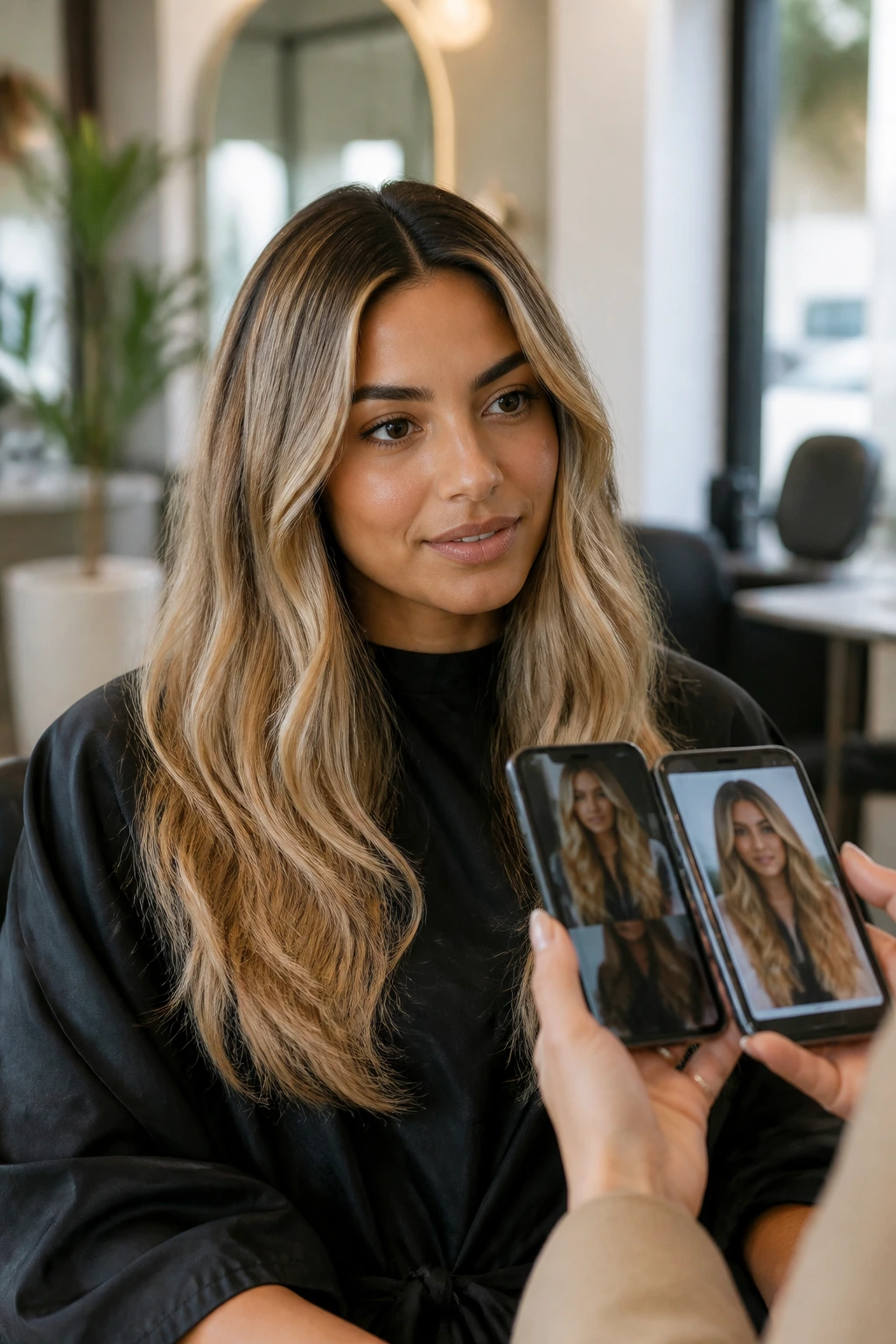
A good salon visit starts before the cape goes on. Bring 3 to 5 photos, and make sure they all show the same general tone. If one photo is champagne blonde and another is copper-bronde, you’ll end up talking past each other.
Write down what you like about the photos. Not just “the color.” Say whether it’s the root shadow, the brightness around the face, or the beige tone through the ends. That helps more than pointing at a picture and hoping for the best.
- A current selfie in daylight: This shows your real base color and how olive your undertone reads in natural light.
- Reference photos from different angles: Front shots can hide root depth; side shots show the melt.
- A note on your maintenance tolerance: If you hate frequent salon trips, say it. That changes the formula.
- Any previous color history: Box dye, old highlights, or dark glosses all affect lift.
- A makeup-free photo: Useful when your skin tone needs to be read honestly, not through bronzer or foundation.
If you can name the finish you want — glossy, airy, lived-in, high-contrast — you’ll get better results than asking for “golden blonde” and leaving the rest to chance.
How to Choose the Right Golden Level
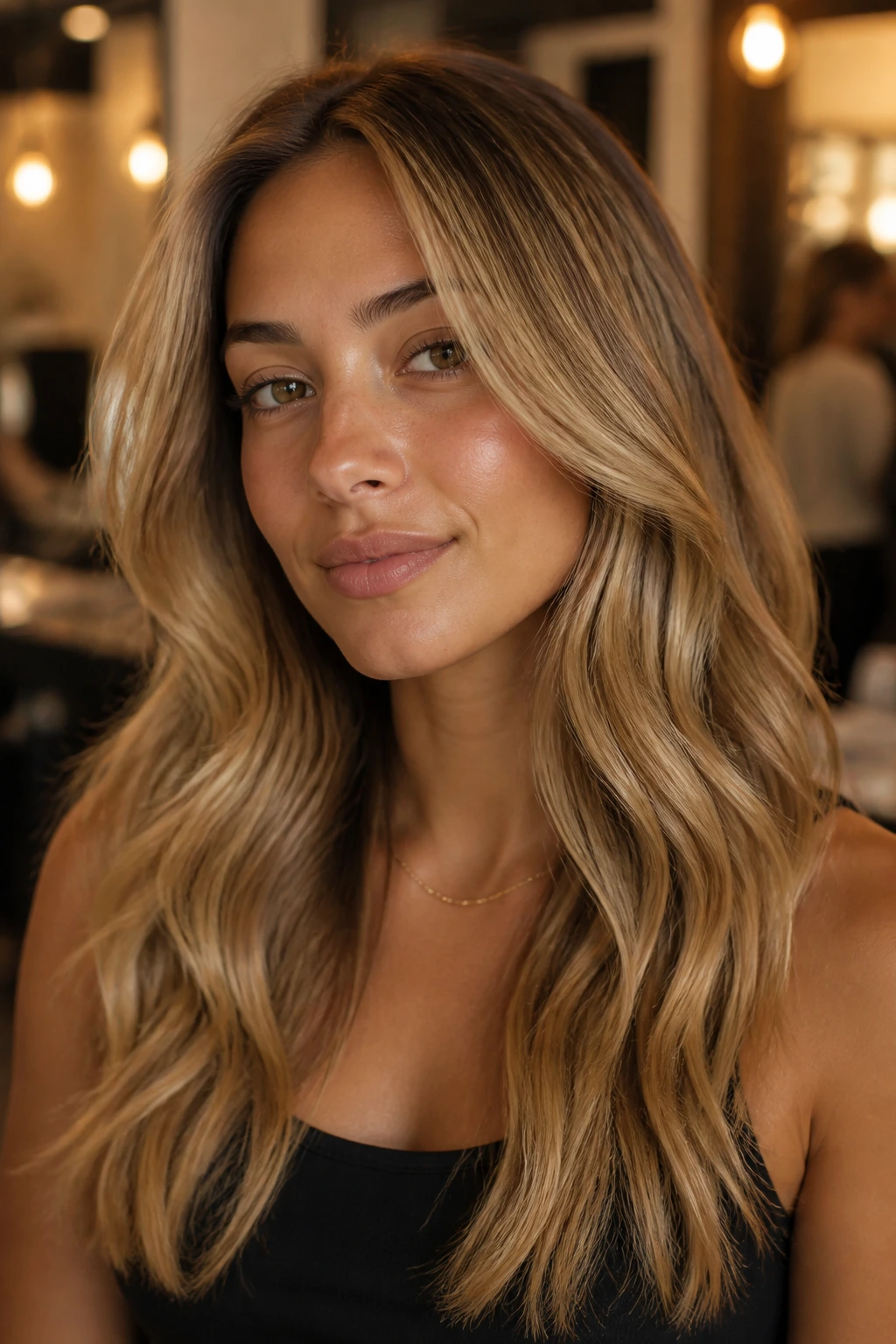
The level matters as much as the tone. A level 7 honey blonde reads much differently from a level 9 champagne blonde, even if both are warm. Olive skin tends to handle level 7 to 9 best, depending on how much contrast you want and how light your natural base is.
If your skin is deep olive or neutral-deep, a richer level 7 or 8 often looks more balanced than a very pale blonde. On lighter olive skin, level 8 to 9 can work well if the tone stays beige-gold and the root keeps some depth. That’s the piece people miss. Lightness alone is not the goal.
There’s also the matter of undertone within olive skin. If your skin leans warm, amber and honey usually behave beautifully. If it leans more neutral, champagne and beige-gold may sit better. If you’re not sure, start with a glossed highlight pattern instead of trying to jump straight to all-over blonde. It’s easier to add warmth than to repair a shade that went too far.
How to Wear These Shades So They Look Intentional
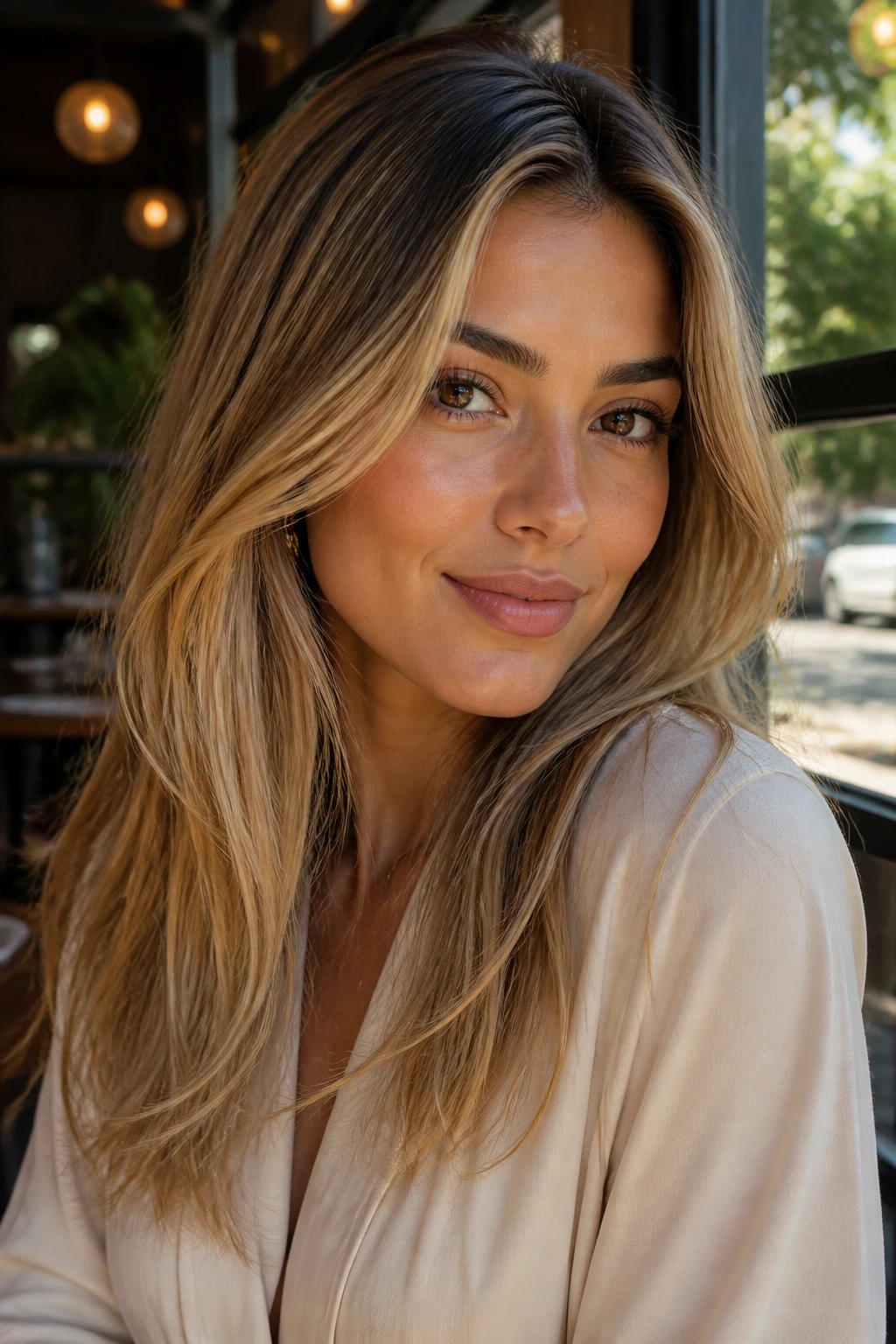
Styling: Loose waves show off ribbons, root melts, and balayage best because the bends catch the warm pieces in different places. Sleek blowouts are better for champagne, custard, and pearl-gold shades because they let the gloss read smooth instead of textured.
Makeup Pairing: Peach blush, bronze shadow, terracotta lips, and warm rose tones usually play nicely with golden blonde on olive skin. Cool mauves can work if the blonde is beige-heavy, but they can fight with the warmer shades. Keep the makeup tone in the same family as the hair, and the face stays coherent.
Wardrobe Colors: Cream, camel, olive green, rust, navy, chocolate brown, and soft black all support warm blonde shades well. Stark optic white can be tricky next to very warm gold, so cream usually looks kinder. Not softer. Kinder.
Best Finish: A little shine serum on the mids and ends goes a long way. Golden blonde looks richer when the surface reflects light instead of looking dry or puffy.
Small Adjustments That Change the Whole Shade
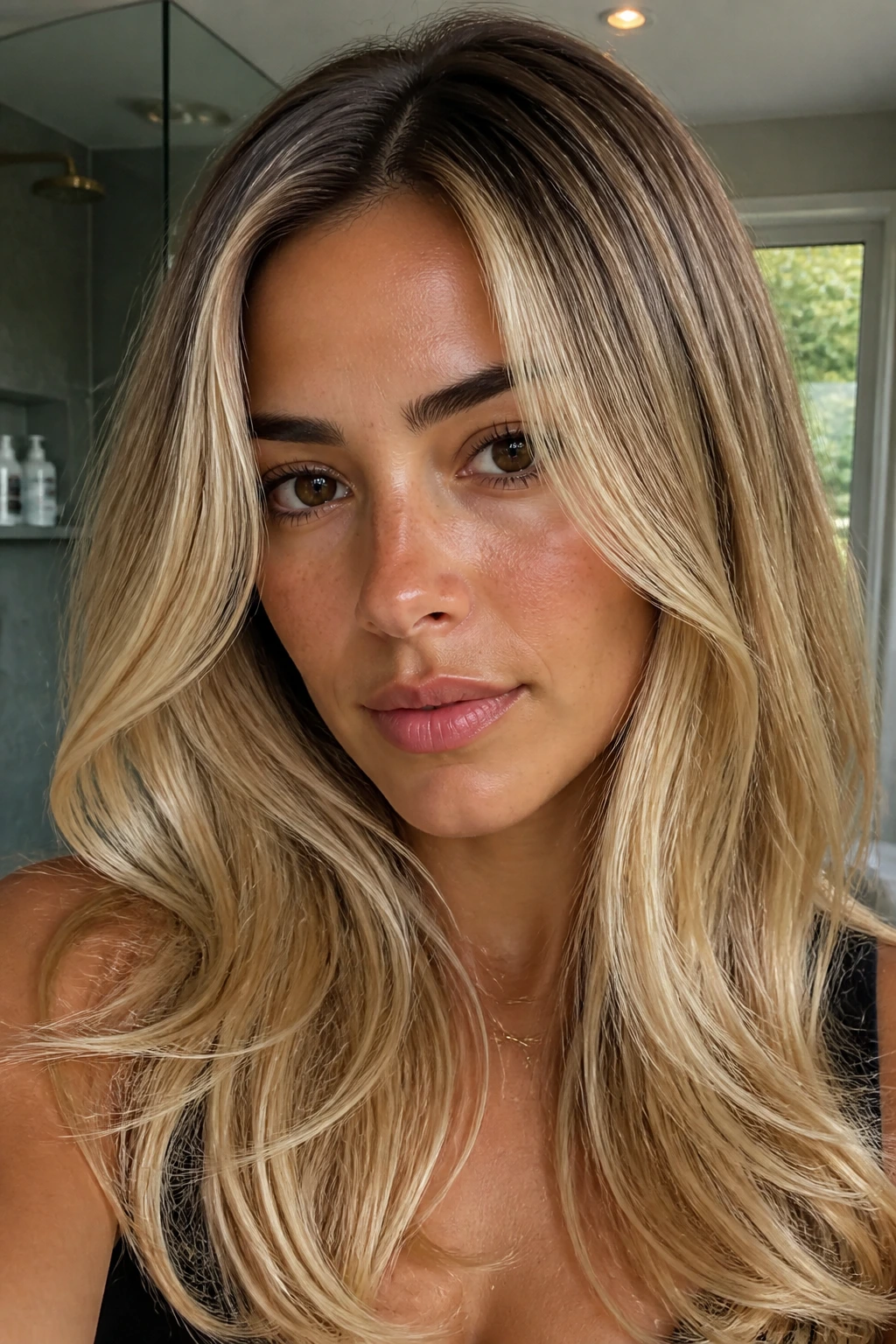
Gloss Boost: A clear or beige-gold gloss every few weeks keeps the tone from drifting brassy or dull. It’s the fastest fix for blonde that has gone tired after washing.
Depth Control: If your hair looks flat, ask for a few lowlights one level deeper than your base. That tiny move gives the gold something to sit against.
Face-Framing: The brightest pieces should usually live around the cheekbones, not all over the hairline. That’s where the color helps the face most.
Make-It-Yours: If you want less maintenance, keep more root and use balayage. If you want more drama, build a brighter money piece and leave the ends softer. If you want a cozy, natural look, stay in the honey-beige lane.
These little choices change the whole read of the color. Same blonde family. Very different result.
Keeping the Gold Fresh Between Salon Visits
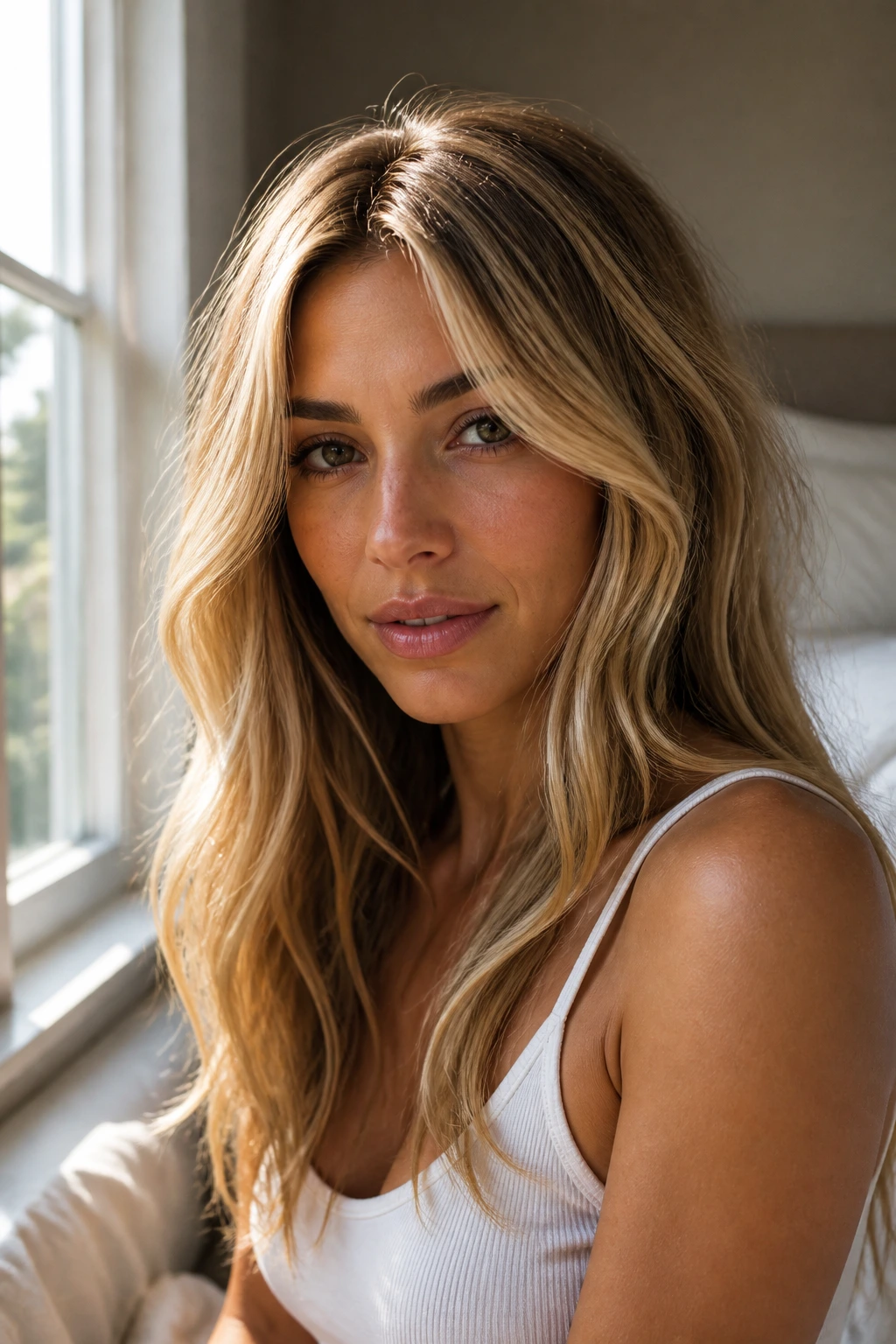
Warm blonde fades in two directions: it can go too yellow, or it can go too dull. The first few washes matter most, especially if the hair was lifted a lot. Wait about 48 hours after coloring before shampooing if you can. That gives the cuticle time to settle a bit.
Use a color-safe shampoo and wash only as often as your scalp needs. For a lot of people, that means 2 to 4 times a week. If you wash daily, the warmth disappears faster and the ends get thirsty. A hydrating conditioner on the mids and ends matters more than another fancy serum.
Purple shampoo is a tool, not a lifestyle. Use it only when the blonde starts turning too yellow, and keep it light — once every 1 to 2 weeks is usually enough for warm blonde shades. Overdoing purple shampoo can mute the gold that made the color flattering in the first place. If the tone is still warm and clean, leave it alone.
Plan on a gloss every 4 to 8 weeks and root maintenance every 6 to 10 weeks, depending on whether you chose highlights, balayage, or a root melt. If the hair is porous or heavily lightened, it may need refreshes sooner. Heat protectant is not optional either. Blow-drying and irons can chew through warm tone faster than people expect.
Haircuts and Textures That Show the Shade Best
Layered hair tends to make golden blonde look more expensive because the pieces move. On waves and curls, the color catches differently from bend to bend, which gives the shade more life. That matters especially for honey ribbons, amber glaze, and balayage.
Blunt cuts can look excellent too, but they need cleaner placement. Champagne blonde, buttercream, and custard tones read especially well on a sharp bob or lob because the shape gives the color a modern edge. If the cut is too shaggy and the highlights are too pale, the result can get messy fast.
Very curly hair can carry stronger gold beautifully, but the placement has to respect the pattern. Put too much light under the curl and it disappears. Put it on the outer curve and the color actually shows. A small detail, but a big one.
Common Mistakes That Make Olive Skin Look Dull
-
Going too icy: This is the fastest way to make olive skin look tired. The fix is a beige-gold or honey toner, not a silver one.
-
Lifting too far: Ultra-pale blonde can erase contrast and make brows look disconnected. Stop at a warm level 8 or 9 unless you really need more lift.
-
Skipping depth at the root: A flat all-over blonde can wash out the face. Ask for a shadow root, lowlights, or a bronde base.
-
Choosing one solid tone: Olive skin usually looks better when there’s ribboning or movement in the color. Add dimension instead of one uniform wash.
-
Ignoring your makeup: Cool-toned blush and gray-beige lipstick can make a beautiful blonde read off. Warm the face back up with peach, bronze, or terracotta.
-
Over-toning at home: Toning shampoo is useful, but too much of it can mute the gold. Use it sparingly and only when the hair actually needs it.
Questions People Ask Before Going Golden
What shade of blonde looks best on olive skin?
Usually beige-gold, honey, champagne, or caramel shades work better than icy platinum. The best choice depends on how warm your olive undertone is and how much contrast you like near your face.
Can olive skin wear ash blonde?
Sometimes, but it needs careful control. If the ash goes too smoky, the complexion can look flat or slightly green. A touch of beige or gold usually fixes that.
Is golden blonde high-maintenance?
It can be, but not every version is. Root melts, balayage, and bronde styles grow out much more softly than a full-head pale blonde.
Do highlights or all-over color work better?
Highlights usually give more dimension and are easier to wear on olive skin. All-over lightening can work, but only if the tone stays warm and the base keeps enough depth.
How do I keep blonde from turning brassy?
Use a color-safe shampoo, limit hot tools, and book a gloss when the tone starts drifting yellow. Purple shampoo helps only when the blonde is actually too warm in the wrong way.
Can I go blonde without bleaching everything?
Often, yes. Face-framing pieces, balayage, or a warm bronde can lift the whole look without taking the hair to the lightest level.
Does hair texture change how the color looks?
Absolutely. Curly and wavy hair show ribbons and warmth differently than straight hair. The same formula can look softer or brighter depending on the cut and texture.
What if my olive skin is deep rather than light?
Go for richer warmth and keep more depth in the base. Golden butter, maple glaze, amber, and warm bronde often look better than very pale champagne on deeper olive skin.
Warm Gold, Kept in Balance
Golden blonde works on olive skin when it respects the skin’s own depth. That usually means warm tone, some root shadow, and enough dimension to keep the hair from turning into one bright sheet. The shades that do this best are the ones with beige, honey, butter, amber, or caramel in the mix.
If you remember only one thing, make it this: the best blonde for olive skin is rarely the palest blonde in the room. It’s the one that looks like it belongs there.
A good colorist can tweak any of these ideas to match your base, your maintenance habits, and how warm your skin actually runs. Start with the version that feels closest to your natural tone, then build brightness where it helps most. That’s how you get a blonde that flatters instead of fights.