



A silver-gray rinse can look cold in the bottle and rich on the right head. On deep skin, the shade gets a darker edge—more smoked chrome than chalky frost—and that shift changes everything. The face looks sharper, the color reads cleaner, and the whole style feels deliberate instead of accidental.
The catch is that silver only behaves if the cut, texture, and finish do their jobs. A flat gray sheet on deep hair can look tired fast. Give it a taper, a shadow root, a braid pattern, or a clean line at the jaw, though, and the same color starts to move with the light instead of sitting there like paint.
That’s why silver-gray is such a useful lane for deep complexions: it can go soft, edgy, polished, or protective without losing its character. Some looks lean sleek and sculpted. Others keep the texture front and center. A few are low-maintenance and a few ask for a steady hand and a silk scarf. The difference is in the shape, not just the shade.
Why Silver Gray Hairstyles for Deep Skin Tones Read So Rich
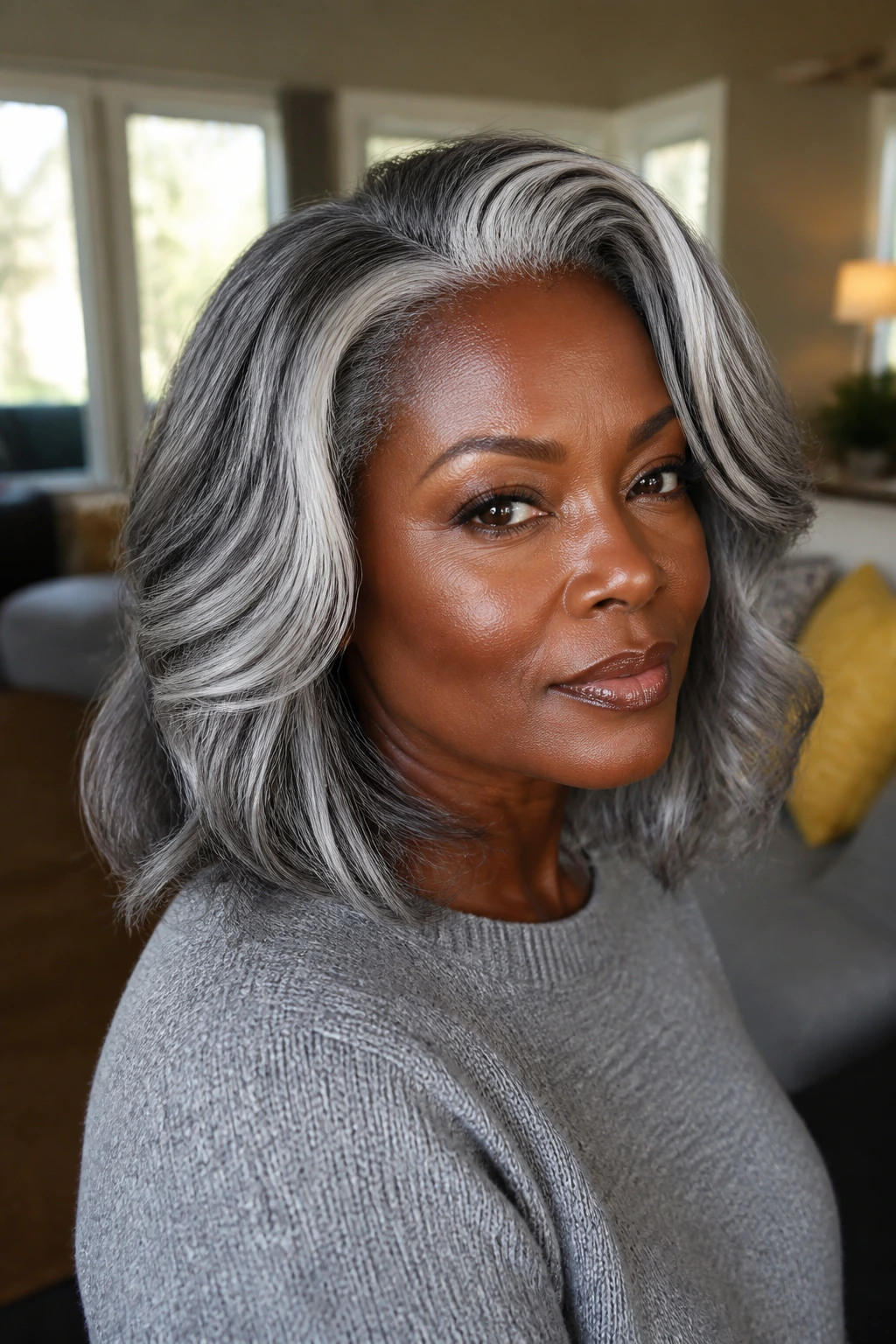
- Contrast does the heavy lifting: Deep skin gives silver room to breathe, so the shade looks metallic instead of washed out when the tone has smoke, graphite, or pewter in it.
- Texture changes the whole mood: The same rinse on coils, braids, a blunt bob, and a silk press does four different jobs, which is why this color is so useful across hair types.
- Shadow roots keep the look grounded: A dark root under silver-gray prevents the color from floating off the face, and it makes grow-out easier to live with.
- Low-commitment options exist: Wigs, braids, twists, and color sprays let you wear the tone without bleaching every strand on your head.
- The finish matters as much as the color: Glossy, moisturized hair makes gray look intentional; dry, frizzy hair makes even a good shade look dusty.
- There’s room for mood changes: You can go icy, smoky, steel, dove, or charcoal-silver and still stay in the same family without repeating yourself.
1. Tapered Silver-Gray Pixie with Soft Sideburns
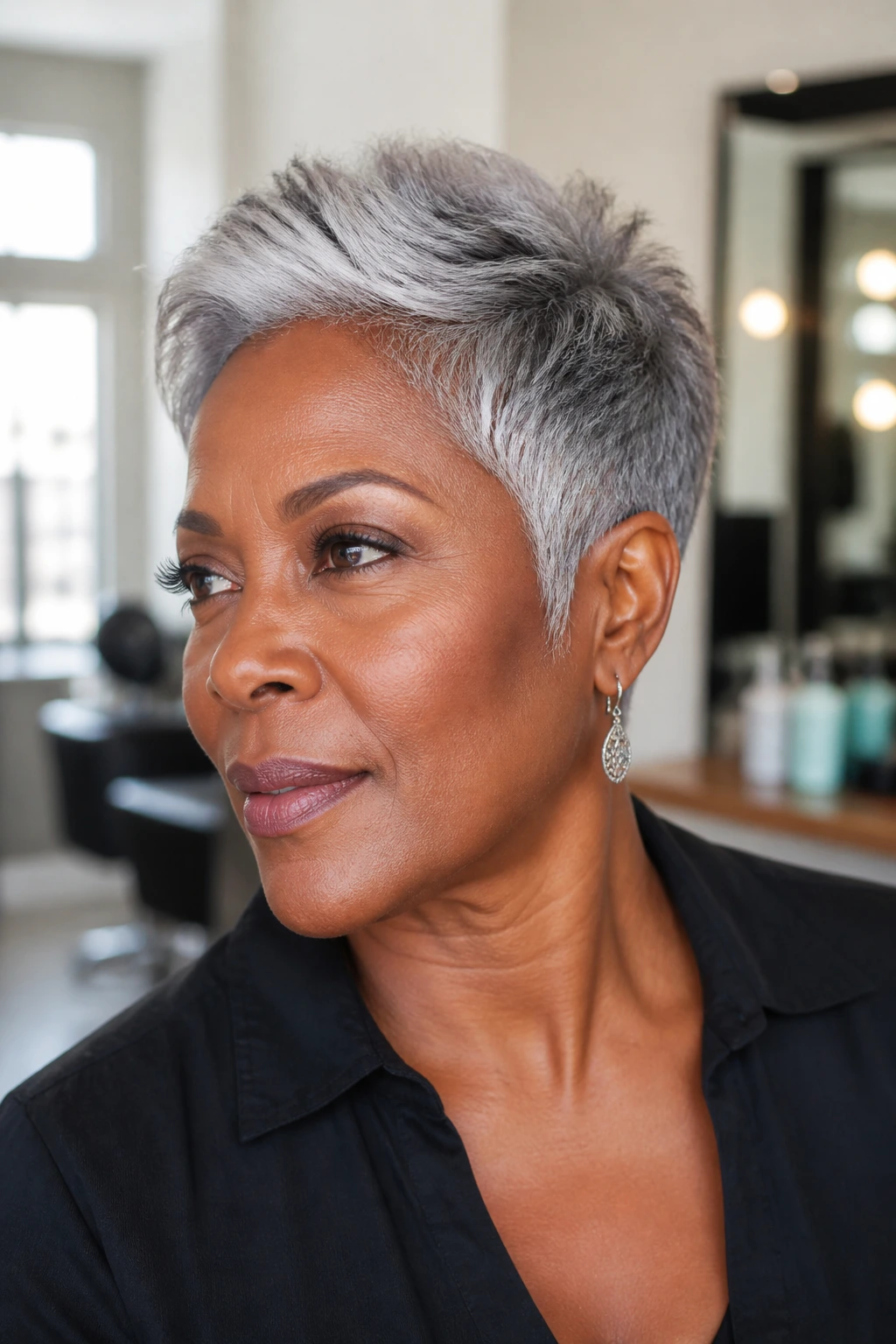
A tapered pixie on deep skin is one of those styles that looks sharper than people expect. The silver-gray rinse sits right on top of the shape, so the eye reads the line at the temple, the lift at the crown, and the soft sideburns all at once. It’s short hair, sure, but it doesn’t feel small.
What makes this version work is the contrast between the tight sides and the slightly lifted top. Keep the crown about an inch longer than the fade, and the color starts to look dimensional instead of flat. A little mousse at the roots and a tiny bit of cream on the ends is enough; too much product makes the gray look greasy fast.
This is the cut I like when the goal is clean shape with very little fuss. On deep skin, the silver lands like a cool highlight around the face, and the sideburns stop it from feeling severe. If your hair is coarse, ask for a soft taper rather than a hard clipper edge. The softer finish suits the rinse better.
2. Side-Part Silver Gray Blunt Bob
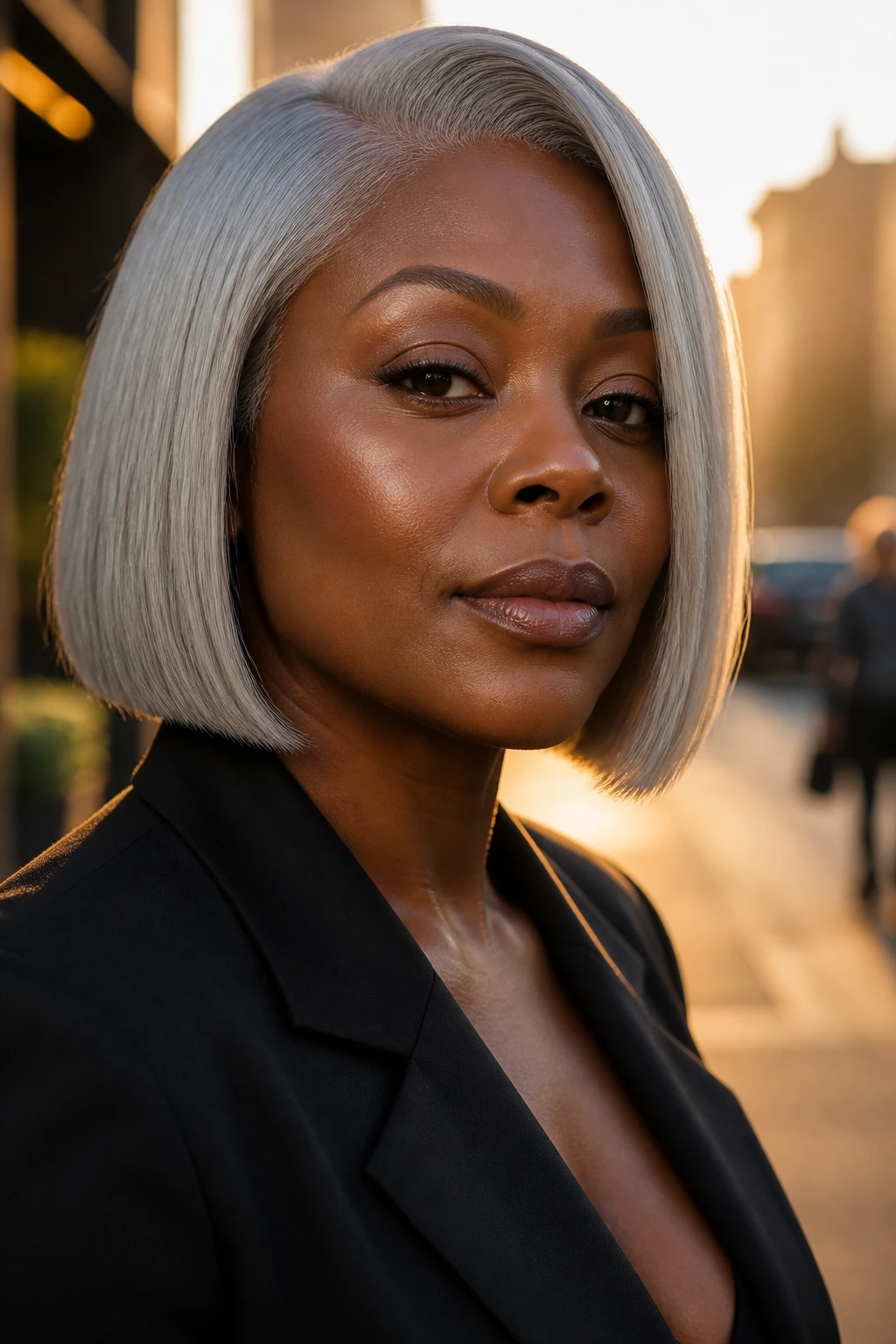
Why does a blunt bob look so expensive in silver-gray? Because the line gives the color a frame. Without that clean edge, silver can drift into “just gray hair” territory; with it, the shade reads deliberate and tailored, especially when the part falls a little off-center.
A chin-length or jaw-skimming bob works best here. Keep the ends blunt and polished, not wispy, so the shade can sit on a solid shape. On deep skin, that contrast between dark roots, cool gray mid-lengths, and a bright edge at the bottom looks clean rather than harsh.
What to watch for
A bob like this shows split ends fast. If you’re wearing it as a silk press or a wig style, trim or dust the ends every 6 to 8 weeks. If the hair is natural, use a heat protectant and a low-pass flat iron pass only when the hair is fully dry. Damp heat is a mess.
A side part helps the bob fall with more movement, which keeps the silver from looking like one solid sheet. That tiny shift matters more than people think.
3. Asymmetrical Silver Lob with Shadow Roots
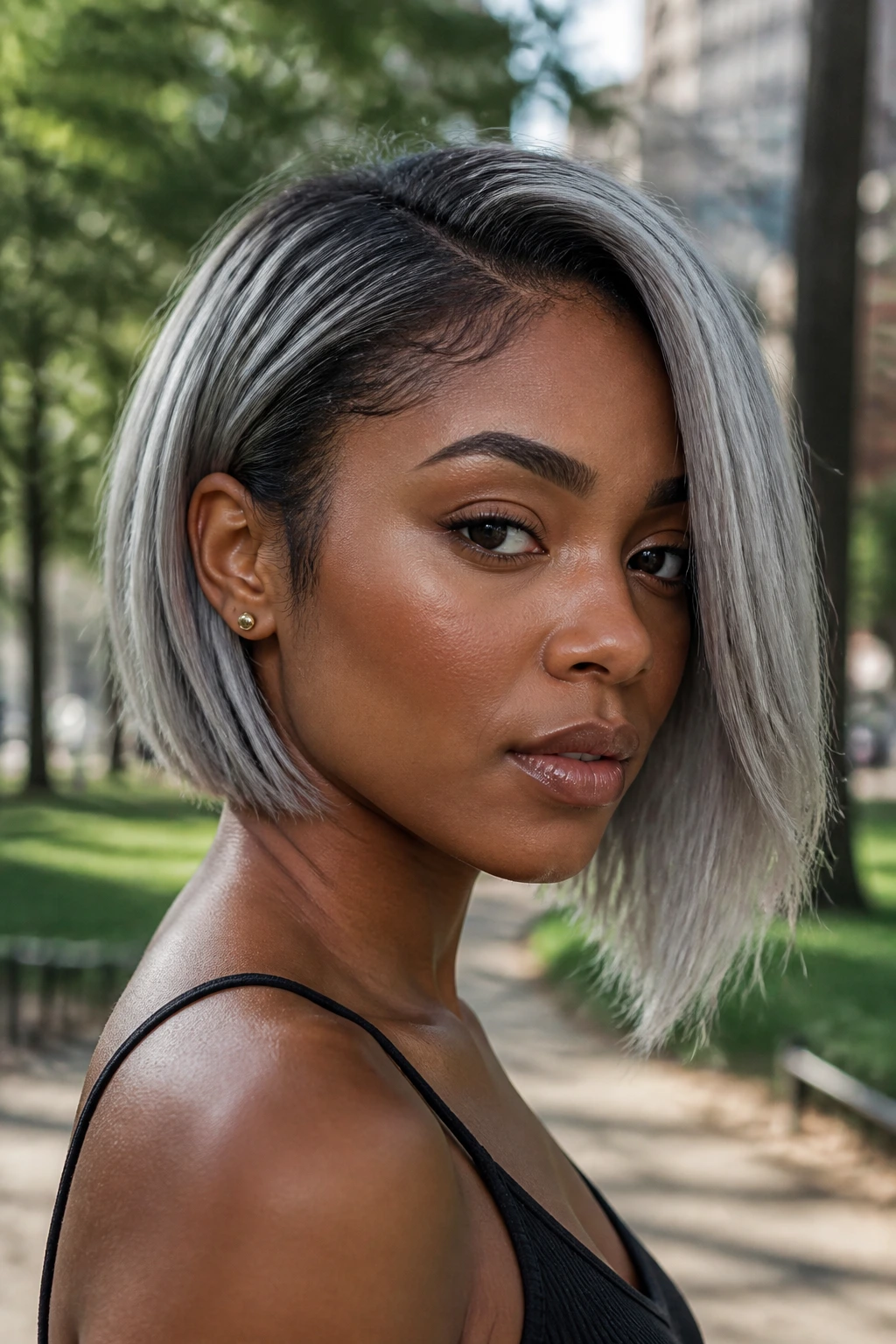
Unlike a blunt bob, an asymmetrical lob gives the color somewhere to travel. One side sits a little longer—usually just enough to graze the collarbone—and the longer line lets the silver-gray sweep rather than stop abruptly. That softness looks especially good on deep skin because the shadow root keeps the shade grounded.
This is the version I’d pick if you want silver but don’t want the hair to feel too formal. The asymmetry takes the edge off the cool tone, and the little bit of angle near the cheekbone adds shape without needing a lot of styling. A round brush or a 1¼-inch curling iron bend at the ends is enough. Don’t curl it into spirals. That would fight the line.
The root shadow matters here. It should be a shade or two deeper than the mid-lengths, not a dark stripe. Think smoked root, not painted root. That little blur gives you a grow-out line that stays soft for longer.
4. Curly Silver-Gray Afro with Tapered Sides
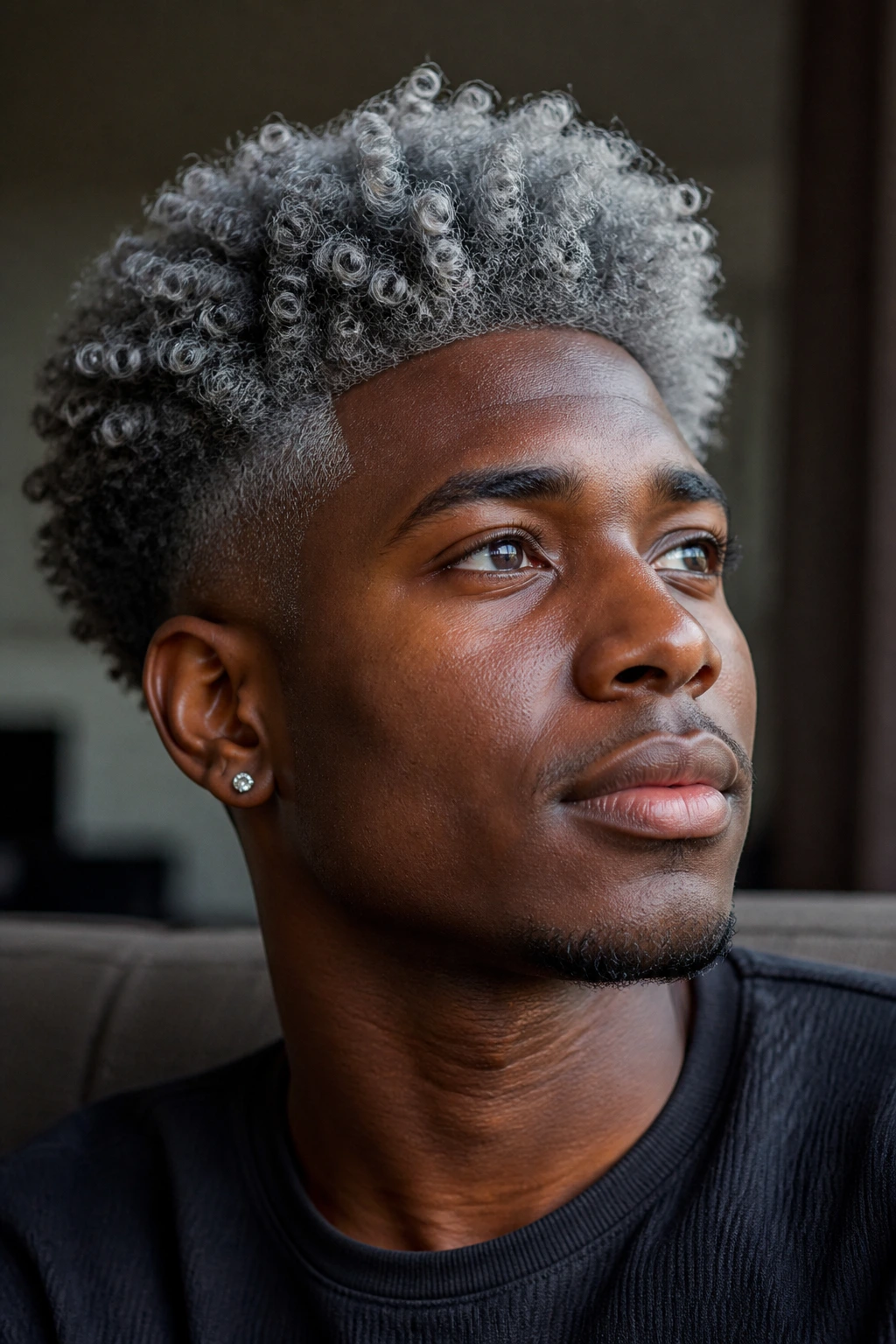
A curly silver-gray afro can look frosty in the best way when the shape is right. The tapered sides keep the silhouette from ballooning out, and the silver catches each curl ridge like tiny flashes of light. On deep skin, that contrast gets even better because the color sits against a warm base instead of floating on its own.
The shape does the heavy lifting
If the top is a little fuller than the sides, the eye goes straight up. That’s the point. You want height at the crown, softness around the temples, and enough moisture that the curls stay plush instead of fluffy. A curl cream plus a mousse or setting foam usually gives the best balance. Heavy butter will dull the shade and drag the curls down.
This style reads best when the curls are defined but not stiff. Use a pick at the roots once the hair is dry, then stop. Over-picking breaks the curl pattern and makes the silver look uneven. A satin bonnet at night keeps the crown from flattening out.
5. Finger-Wave Crop in Pewter Gray
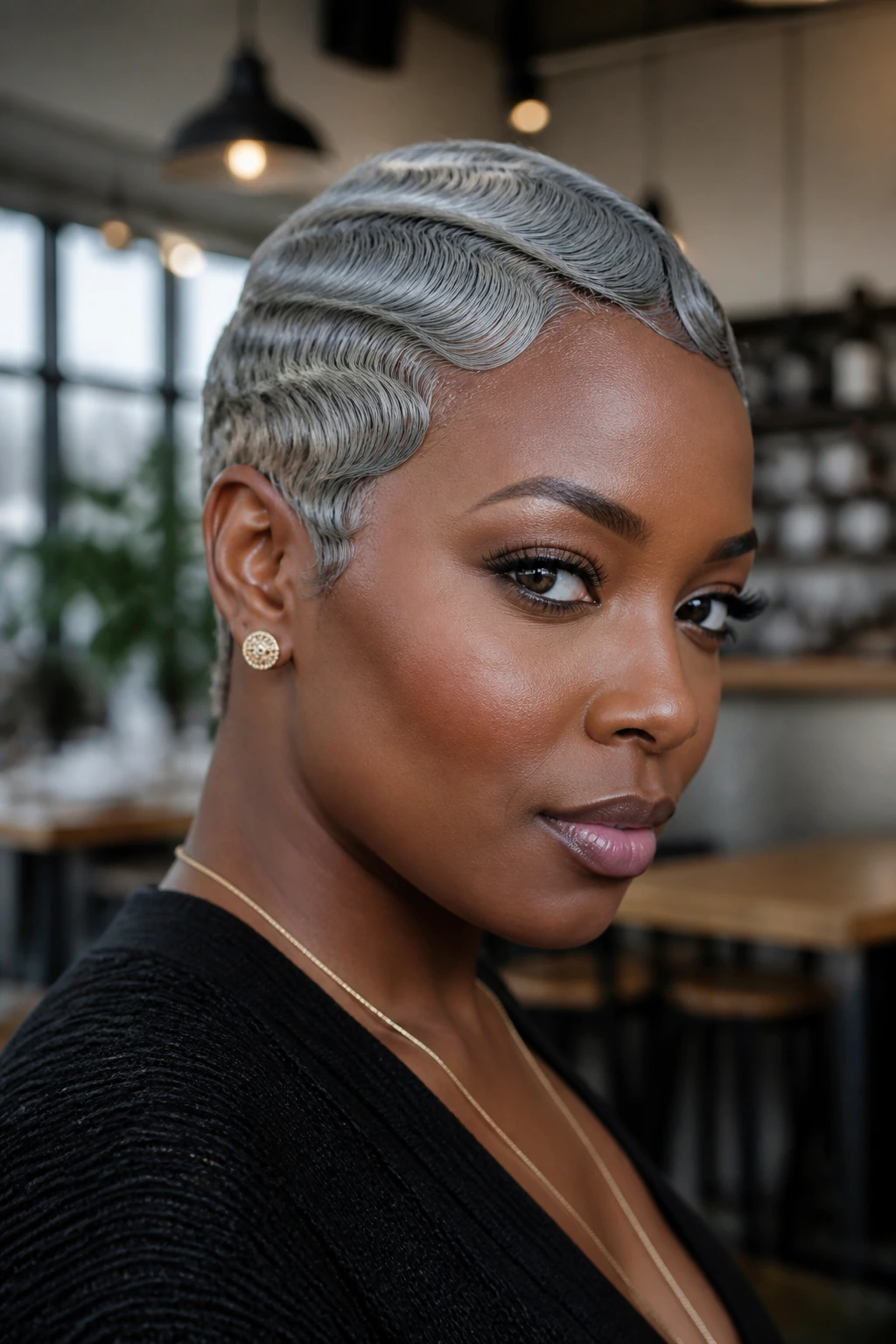
If you want a short style with old-school structure, finger waves in pewter gray are hard to beat. The waves carve little ridges through the hair, and the silver tone sits on top like brushed metal. On deep skin, the result is crisp, not harsh, because the glossy shape keeps the tone from going chalky.
This style likes precision. You need hard-setting lotion, a fine-tooth comb, duckbill clips, and patience while the hair sets under a scarf. On relaxed hair or a short molded wig, it can stay neat for days if you don’t disturb the ridges. On natural hair, the waves need enough length to hold.
The thing I like most here is the way the waves frame the face. They draw attention to the brow, the cheekbones, and the jawline without asking for a lot of accessories. One pair of gold hoops is enough. Too many extras start competing with the shape.
6. Silk-Pressed Length with Silver Ends
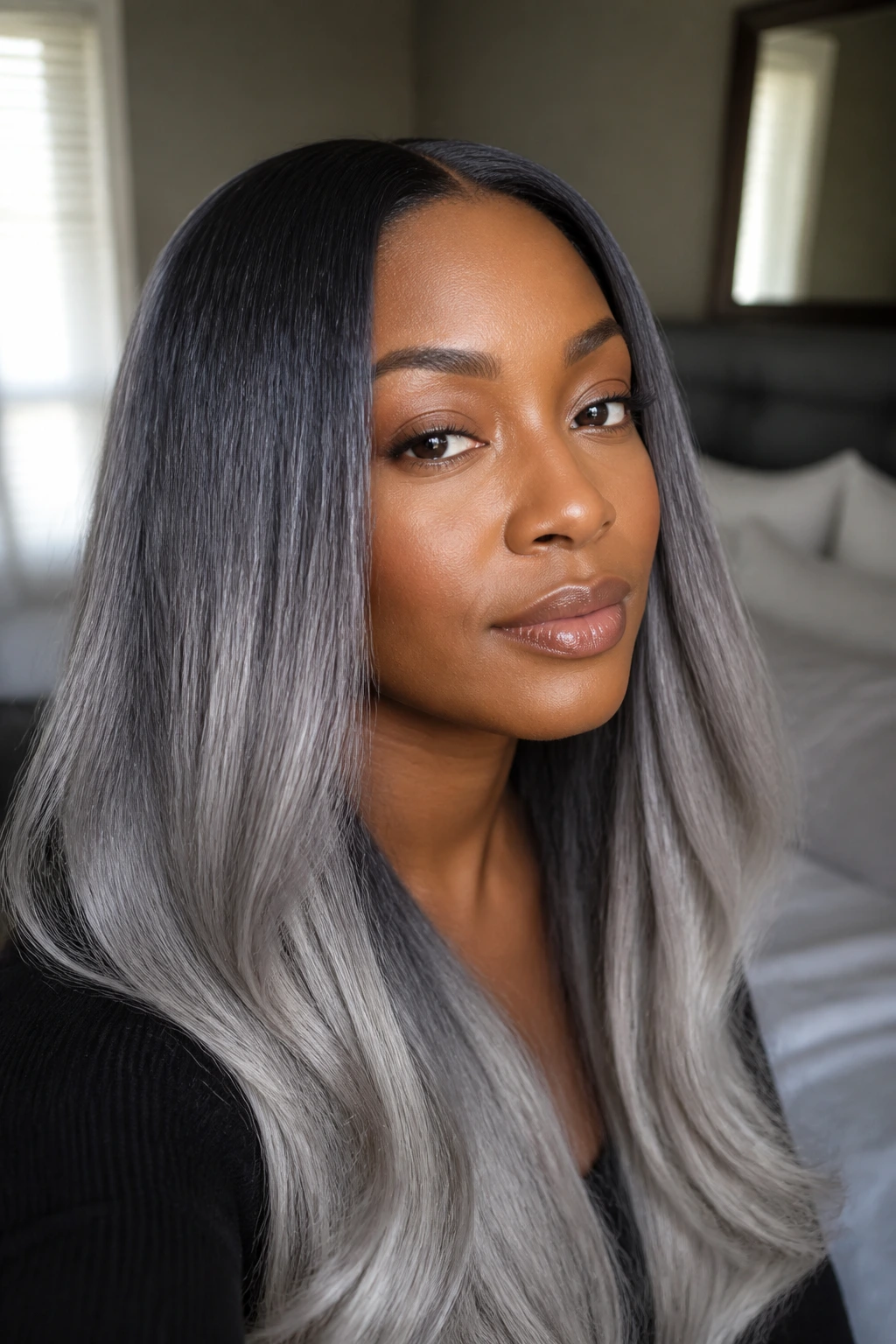
A silver rinse on long, silk-pressed hair can go flat fast if the color starts at the root. I prefer it with darker roots and silver only on the last four to six inches. That keeps the length looking full and makes the movement at the ends the part people notice first.
- Best on: relaxed hair, blown-out natural hair, or a straight wig with a realistic part.
- Finish to use: heat protectant, light serum, and a soft bristle brush.
- Key detail: keep the roots deeper so the gray doesn’t swallow the face.
- What to avoid: overloading the mid-lengths with oil. It kills the shine.
The ends should sway, not hang. A small bend from a flat iron or a round brush helps the silver catch light when you turn your head. If your hair is dense, work in thin sections so the press stays smooth. Thick sections leave frizz underneath, and gray shows that frizz more than dark hair does.
7. Silver-Gray Twist-Out on Stretchy Coils
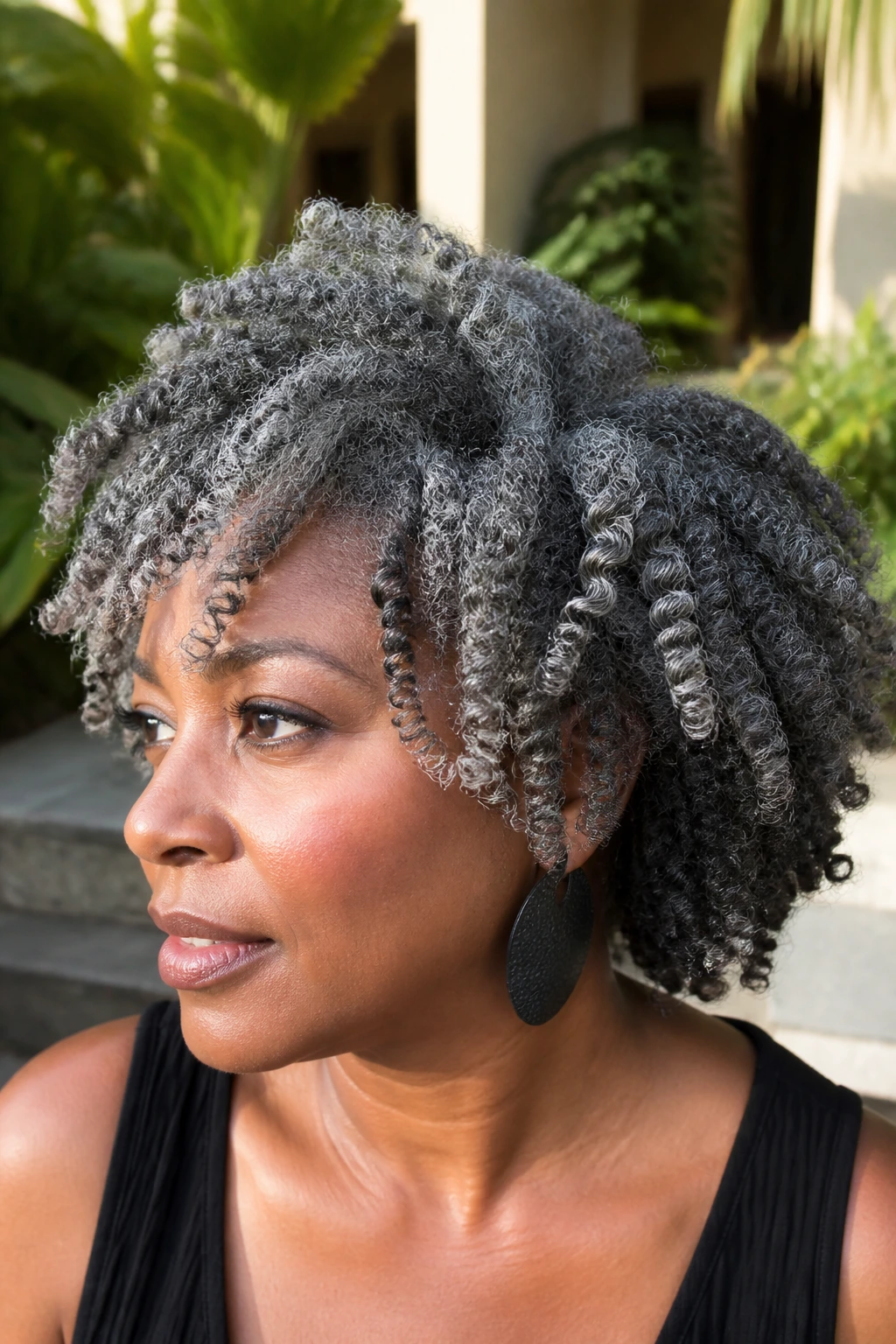
A twist-out gives silver-gray a marled, almost woven look. Each twist line leaves a soft ridge, and the rinse settles into those ridges like a muted highlight. On deep skin, the combination looks rich because the gray isn’t sitting in a flat sheet; it’s living inside the curl pattern.
Start with stretched hair and twist in medium sections so the curls don’t collapse into one giant puff. A lightweight leave-in, a touch of cream, and a foam wrap lotion usually give enough hold without weighing the color down. If the product is too buttery, the gray loses its edge and turns muddy.
Let the twists dry all the way before taking them down. That part matters. If you unravel too soon, the style frizzes before it even gets a chance to set. Separate gently with oiled fingertips, not a comb, and stop once the shape looks full. You want volume, not fuzz.
8. Knotless Box Braids with Smoky Gray Feed-Ins
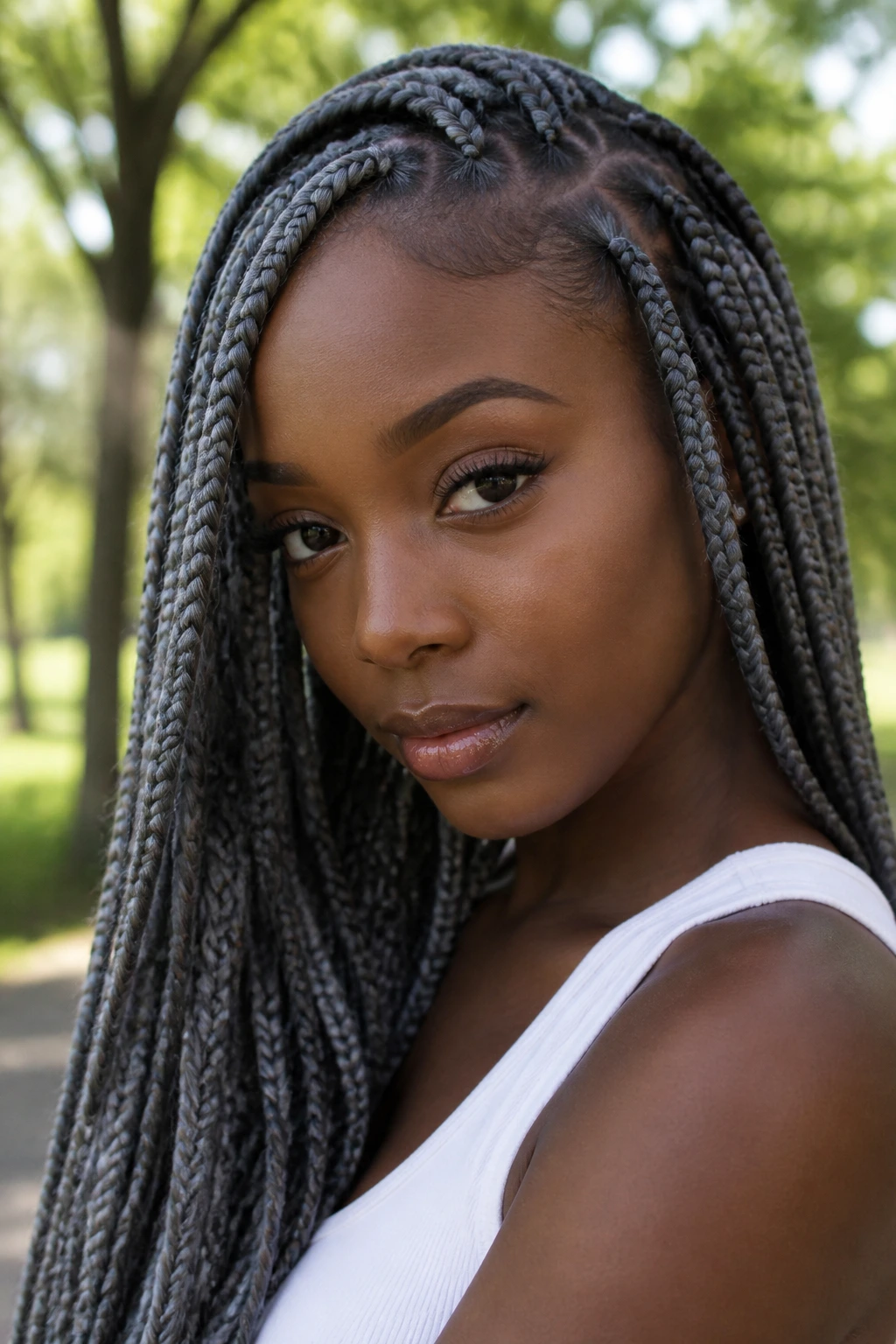
Knotless box braids in smoky gray are one of the easiest ways to wear this shade for weeks at a time. The braids lie flatter at the scalp, the feed-in sections keep the base neat, and the smoky gray hair reads softer than a blunt silver block. On deep skin, it can look almost gunmetal when the braids are fresh.
The best part is the way the color moves. Every braid catches light differently, so the whole style feels textured even when it’s pulled back. Use pre-stretched braiding hair if you can. It saves time and cuts down on that stiff, too-new braid look that some silver blends get right out of the pack.
Don’t braid too tightly around the hairline. Silver looks great, but tender edges do not. Leave a little softness at the temple and crown so the style can sit comfortably. Add cuffs or tiny rings if you want sparkle, but keep them sparse. Too many accessories can make gray braids look noisy.
9. Goddess Braids in Soft Platinum Gray
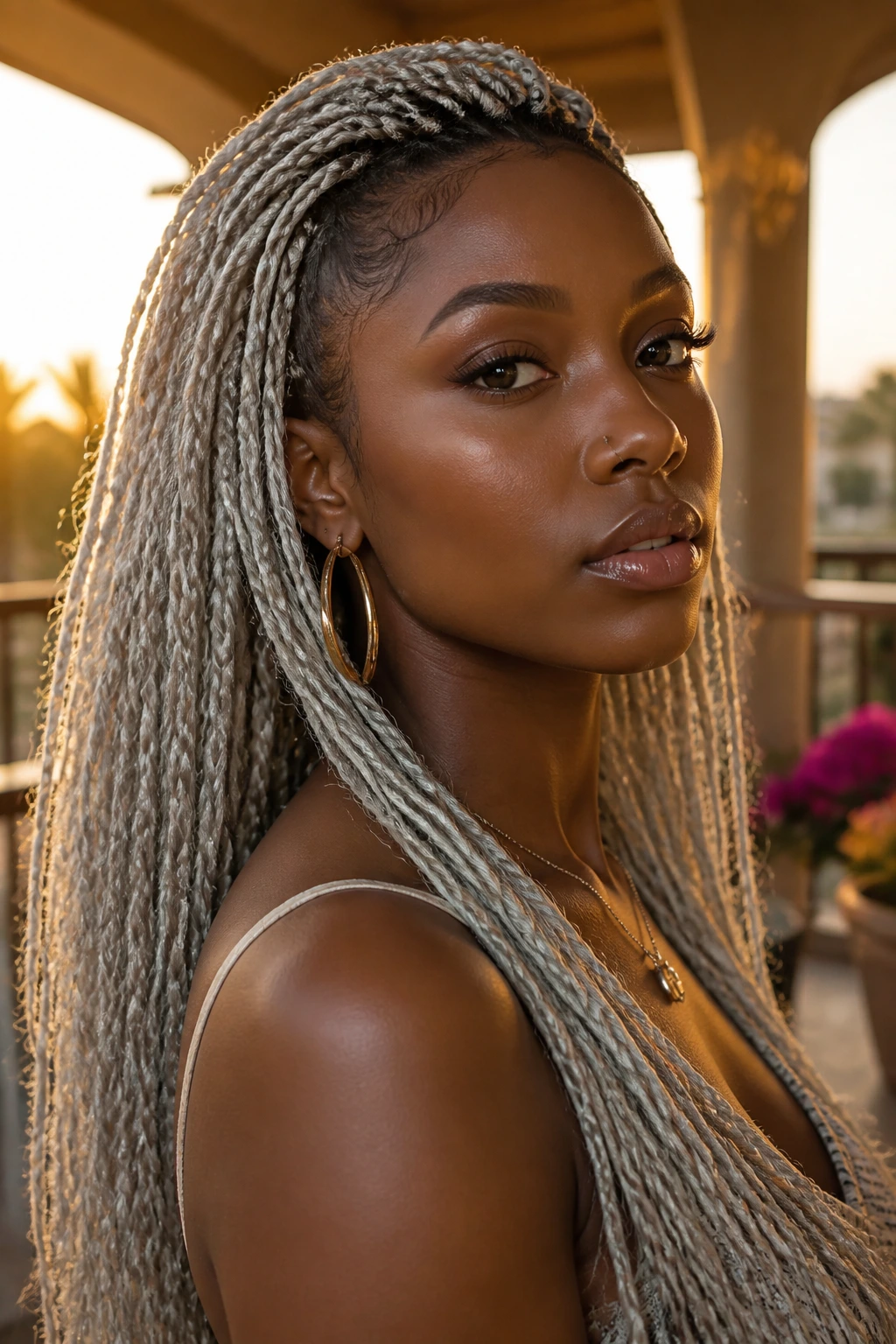
Why do goddess braids feel softer than box braids in the same color? The braid size. Bigger sections create more open space, and that space keeps platinum-gray from looking heavy. On deep skin, the effect is clean and elegant without trying too hard.
This style works especially well if you want hair off your neck but still want the color to show. The braid pattern itself becomes the design. You can run the braids straight back, curve them into a side sweep, or finish them with loose curls at the ends if you want movement. I like the loose curl version best because it breaks up the cool tone a little.
Use gel sparingly at the roots. A hard, shiny helmet of gel can make the gray read flat. A light hold, a neat part, and a satin scarf while the braids set are usually enough. If the hair is synthetic, keep it clean with a very diluted cleanser and dry it fully so the color doesn’t dull.
10. Faux Locs with Graphite Ribbons
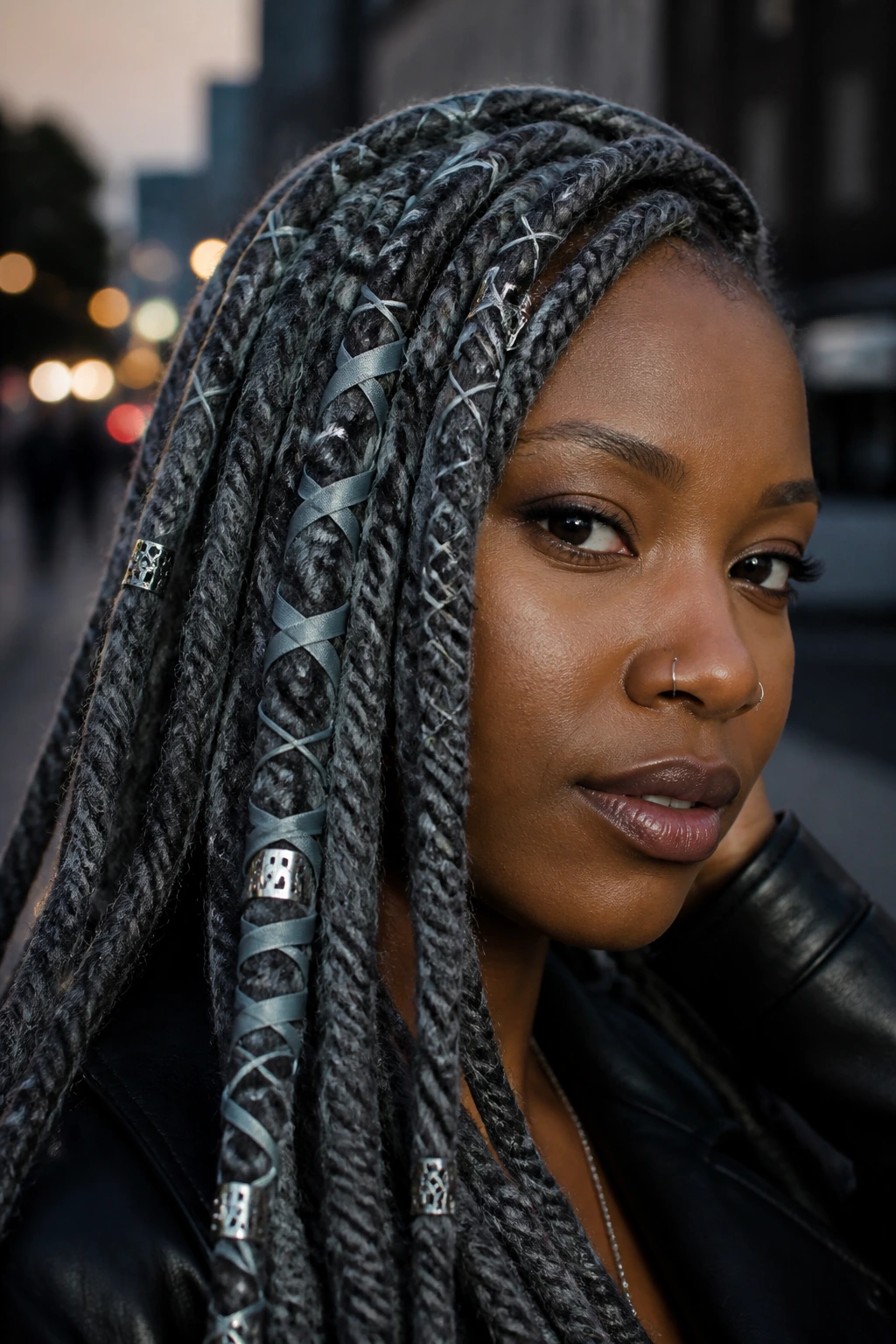
Faux locs in graphite gray have a weight and rhythm that straight styles can’t fake. The loc texture gives the shade depth, and the darker ribbon-wrapping keeps the color from looking one-note. On deep skin, that mix reads like smoked metal, especially when the locs swing past the shoulders.
A little variation in the wrap is the trick. Keep the roots slightly darker, then let the silver-gray thread or synthetic hair brighten toward the mid-lengths. That small shift makes the locs feel hand-built instead of mass-produced. If every wrap is identical, the style loses its edge fast.
This is a good choice when you want movement without daily styling. Add a few metallic cuffs or a single bold part if you want the style to lean more polished. I’d skip heavy oils on the locs themselves; they can make the graphite look dusty and pull the strands apart.
11. High Puff with a Silver Crown Band
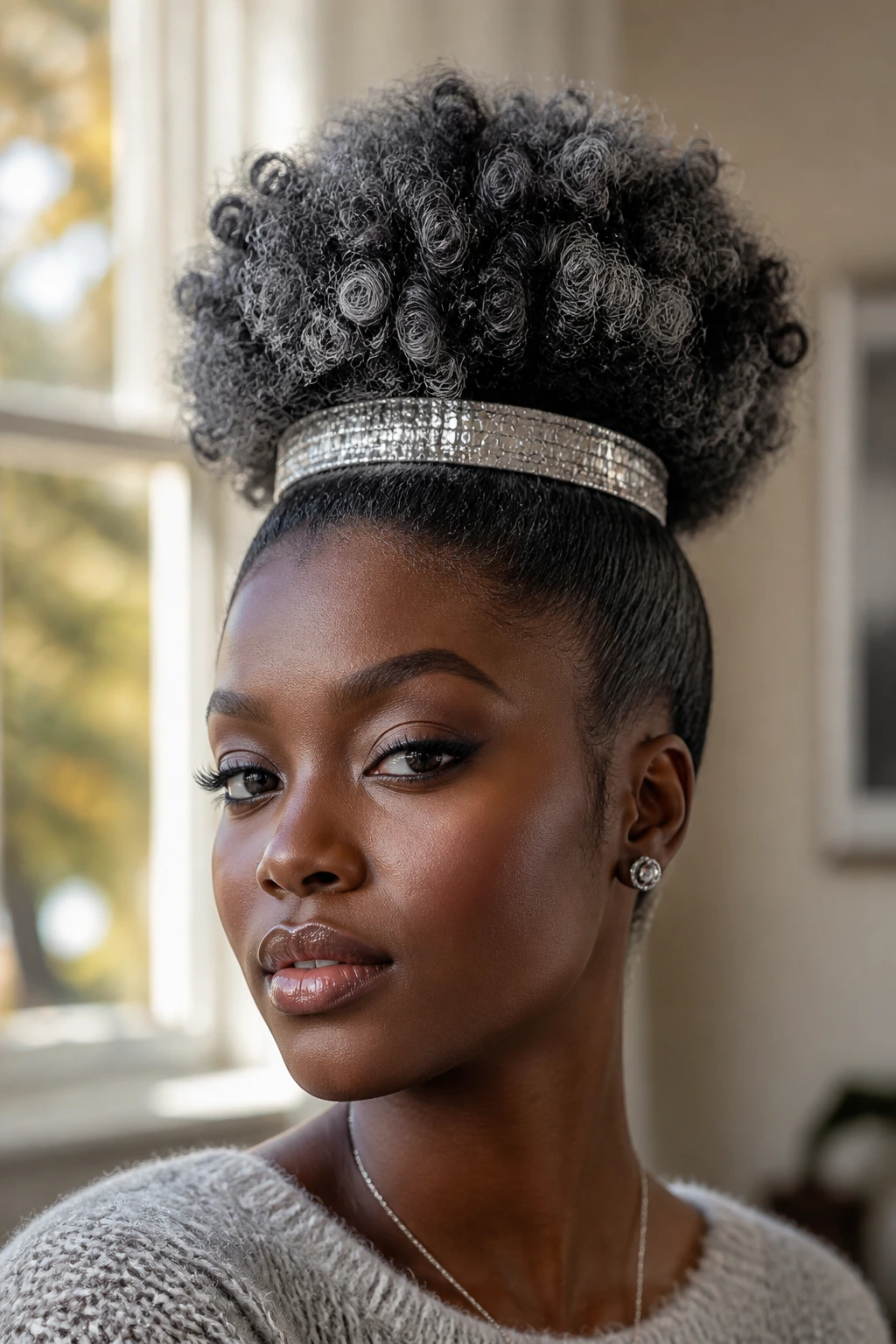
A high puff gives silver-gray a place to rise. If the hair itself has a rinse or temporary color, the puff sits like a soft cloud on top of the head; if the hair is natural, a silver crown band or scarf can echo the shade without needing full-color commitment.
What lifts the puff
The base matters more than people think. Smooth the sides back with a soft brush and a little gel, then secure the puff high enough that it clears the crown. That lift keeps the shape from sinking into the face. On deep skin, the puff’s round silhouette gives the silver band something to frame.
This style is a nice bridge between casual and dressed up. A satin band in chrome, pewter, or gunmetal can make the whole look feel intentional in seconds. If the puff is colored, refresh it with a water mist and a foam moisturizer before fluffing. If the hair is natural, leave the crown airy and let the accessory carry the gray note.
12. Half-Up Half-Down Curls with Chrome Money Pieces
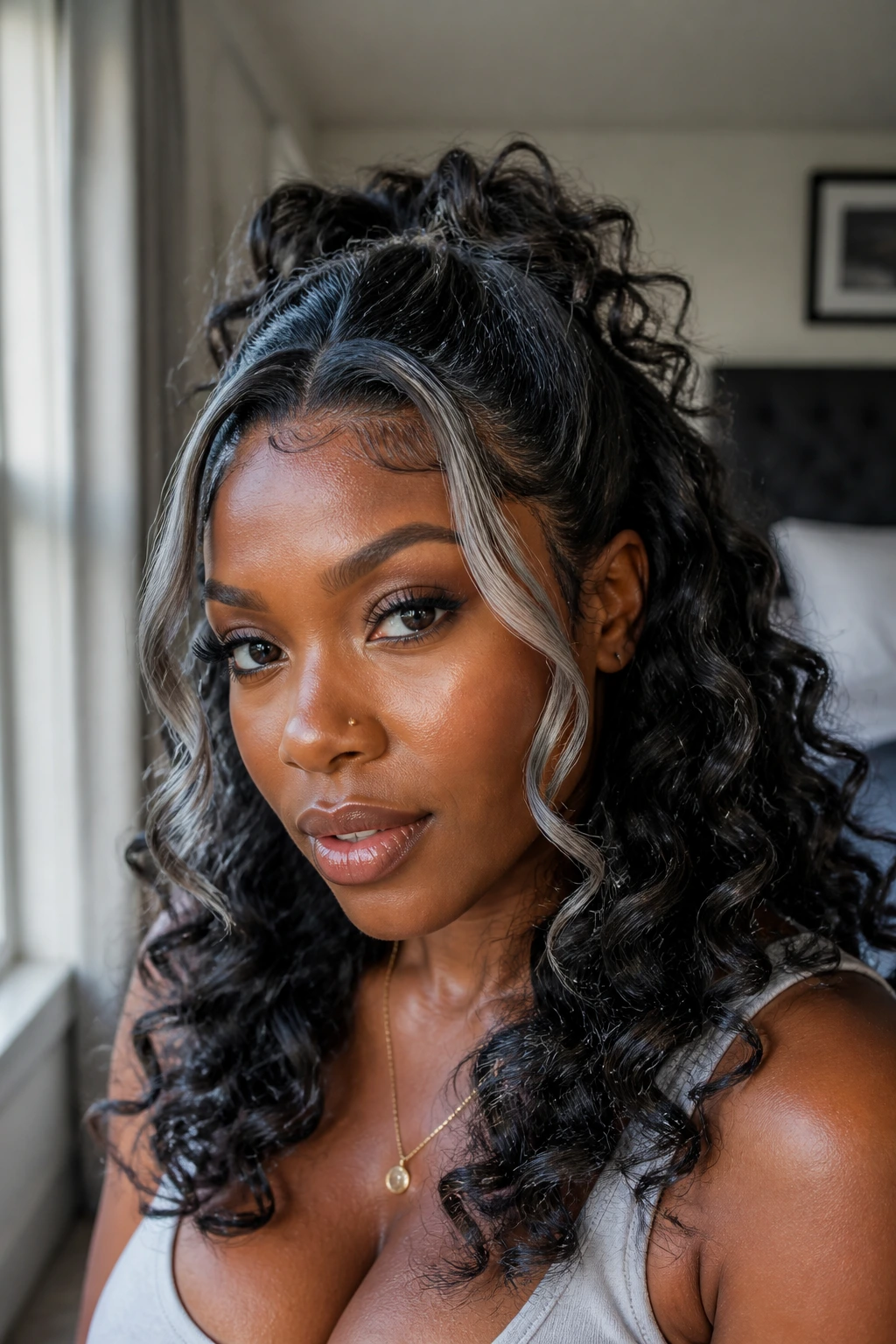
A half-up half-down style with chrome money pieces is the kind of look that makes the color work twice. The top section lifts the face, and the front pieces—kept lighter and cooler around the temples—brighten the eyes without bleaching the whole head. On deep skin, that framing effect is one of the easiest ways to wear silver without losing warmth.
Compared with a full silver head, this style gives you more contrast. The lower section can stay darker, smoky, or even curly and dimensional while the front pieces go brighter. That split keeps the whole style from feeling too icy. I’d especially use this on layered curls or a wig with a natural part.
Keep the front pieces a little narrower than you think. If they’re too wide, they look stripey. A pair of 1-inch face-framing sections is usually enough. Finish with a flexible hairspray so the top stays up but the curls still move.
13. Braided Crown Updo with Ash Gray Accents
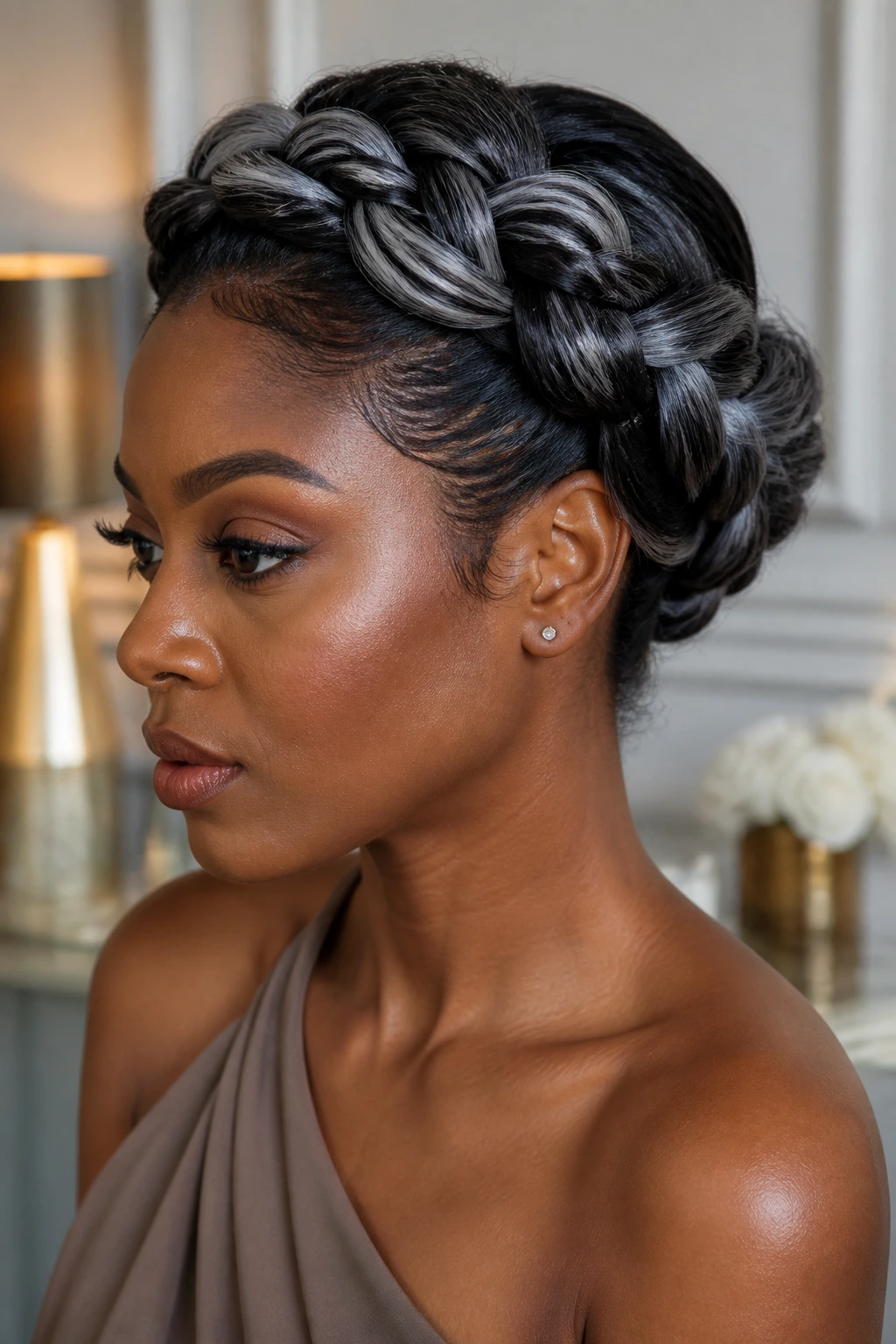
A braided crown updo puts the color where the eye naturally travels—around the perimeter of the head. Ash gray accents woven through the crown braid or tucked into the twist line make the style look carved, not busy. On deep skin, it lands with a kind of quiet drama that works for formal events and still feels wearable.
The updo itself should stay close to the head, with the braid line clean enough to show the pattern. If you’re using extensions, mix one darker neutral shade with the ash gray so the braid doesn’t go flat under indoor light. A little texture helps. Too much shine can make the crown look plastic.
I like this style with simple earrings and a clean neckline. It gives the hair room to be the focal point. If you need a touch of softness, leave a few tiny face-framing pieces loose near the temples. Just a few. Too many strands can unravel the structure.
14. Shoulder-Length Wand Curls in Steel Gray
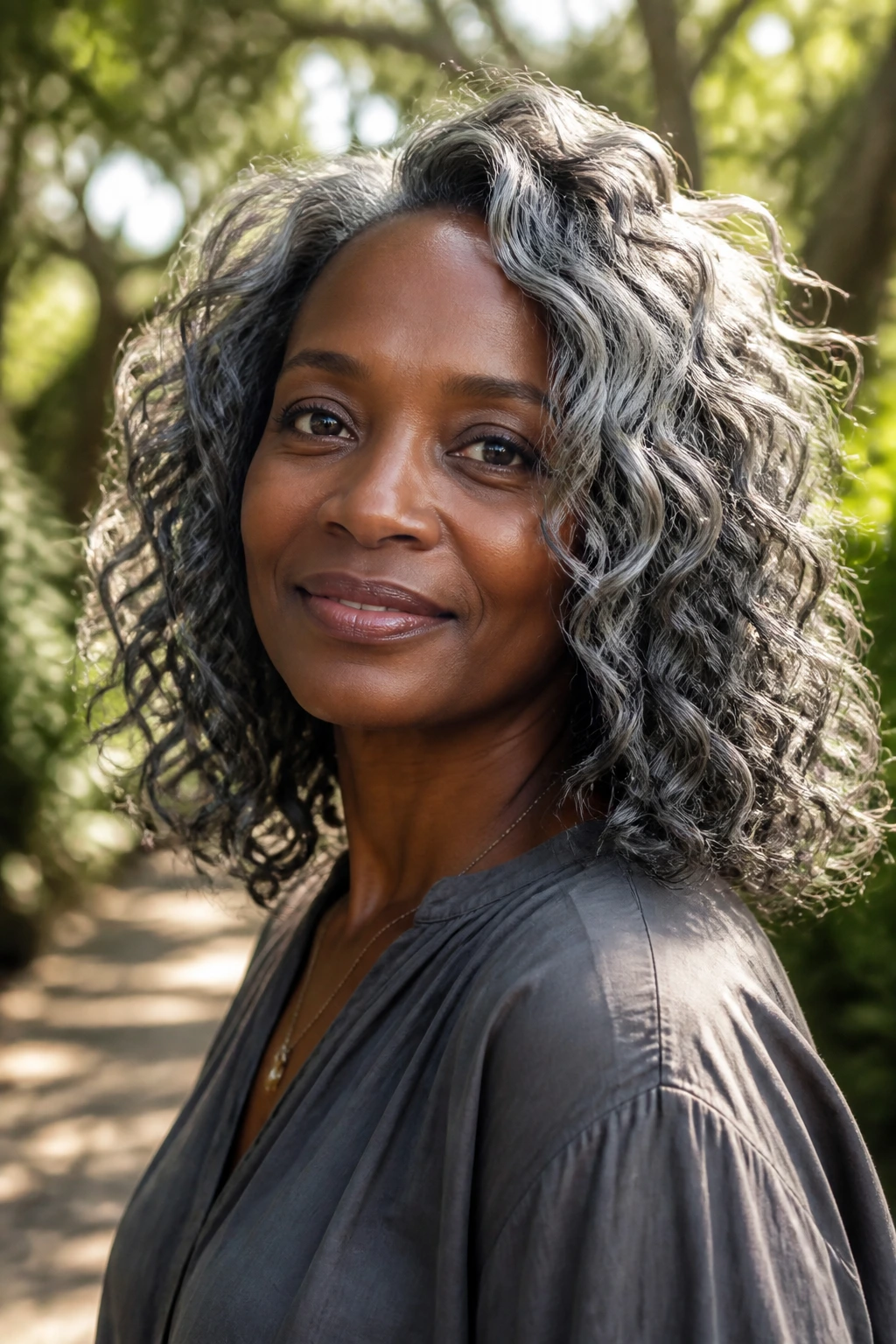
Steel gray and shoulder-length wand curls make a neat pair because the curl pattern keeps the color from sitting still. On deep skin, the cooler tone looks polished when the curls have a bit of bend, not when they’re all the same size. The motion is what saves it.
- Best barrel size: 1 inch to 1¼ inch for defined curls that don’t collapse into ringlets.
- Section size: around 1 inch wide so the curls stay even.
- Finish: light mousse before curling, then a flexible-hold spray after.
- Touch-up rule: don’t re-curl every strand; the ends need some variation or the style gets too stiff.
What I like here is the way the curls skim the shoulders and show off the gray in layers. If you want more depth, leave the root area a shade darker and curl the mid-lengths and ends more tightly. The cooler tone will pick up light when the hair moves, especially outdoors.
15. Sleek Center-Part Ponytail with Metallic Wrap
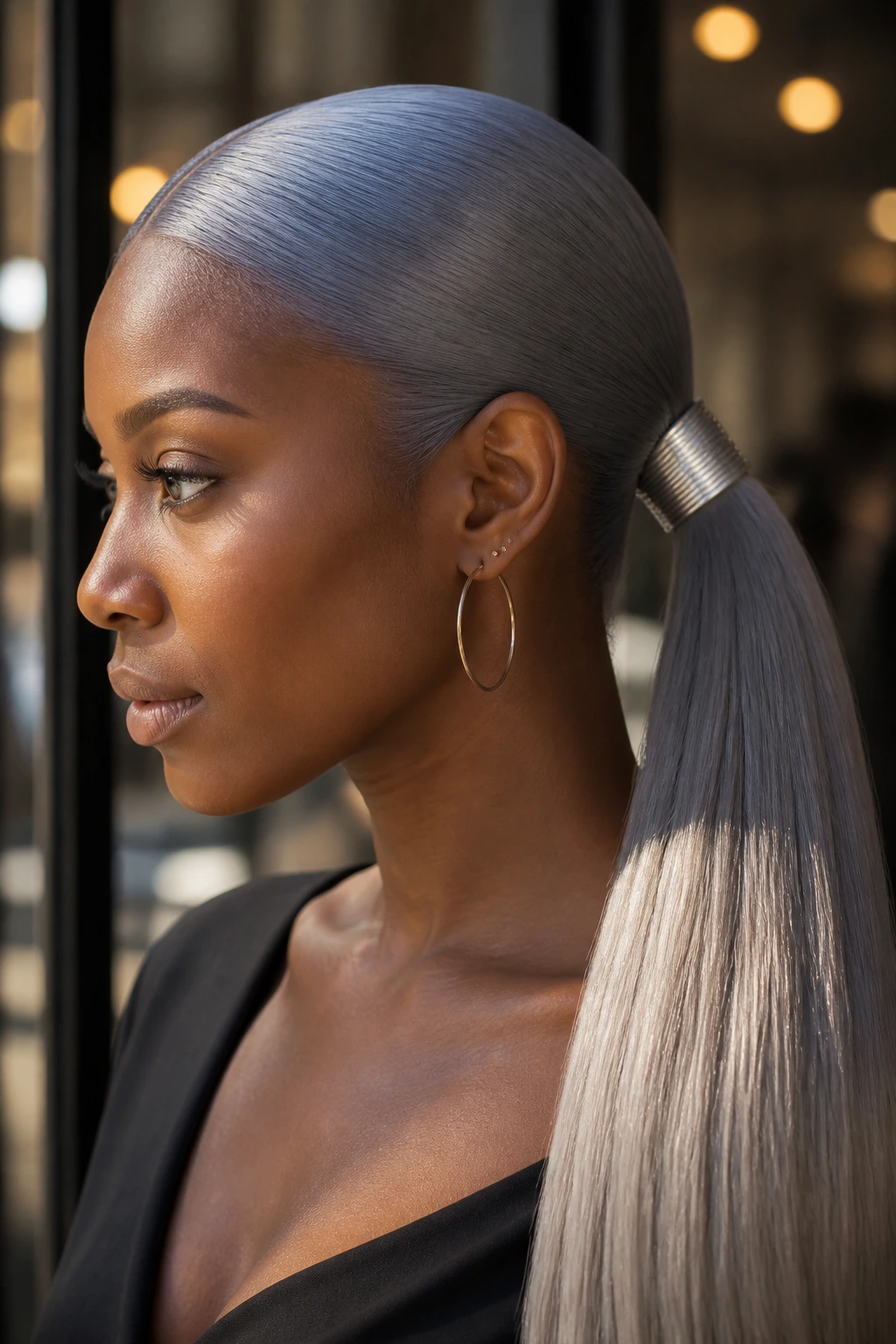
A sleek center-part ponytail does one thing well: it makes the silver-gray look sharp. The center line creates symmetry, the slicked base keeps the color glossy, and a metallic wrap at the base turns the ponytail into a finished shape instead of an afterthought. On deep skin, the contrast can be striking without looking loud.
This is the style I reach for when the rest of the look is doing the talking. Dress, hoops, eyeliner, ponytail. Done. Use a fine-tooth comb, a soft brush, and a strong but not flaky gel to keep the base smooth. If the hair is natural, stretch it first so the ponytail doesn’t puff at the nape.
The wrap matters. A strand of the hair itself works, but a thin silver cord or ribbon can add a cooler finish if you want the metallic note to read on purpose. Keep the ponytail sleek through the mids and let the tail have a soft bend, not a dead-straight stick.
16. Tucked-Back Blunt Cut with Mirror-Finish Shine
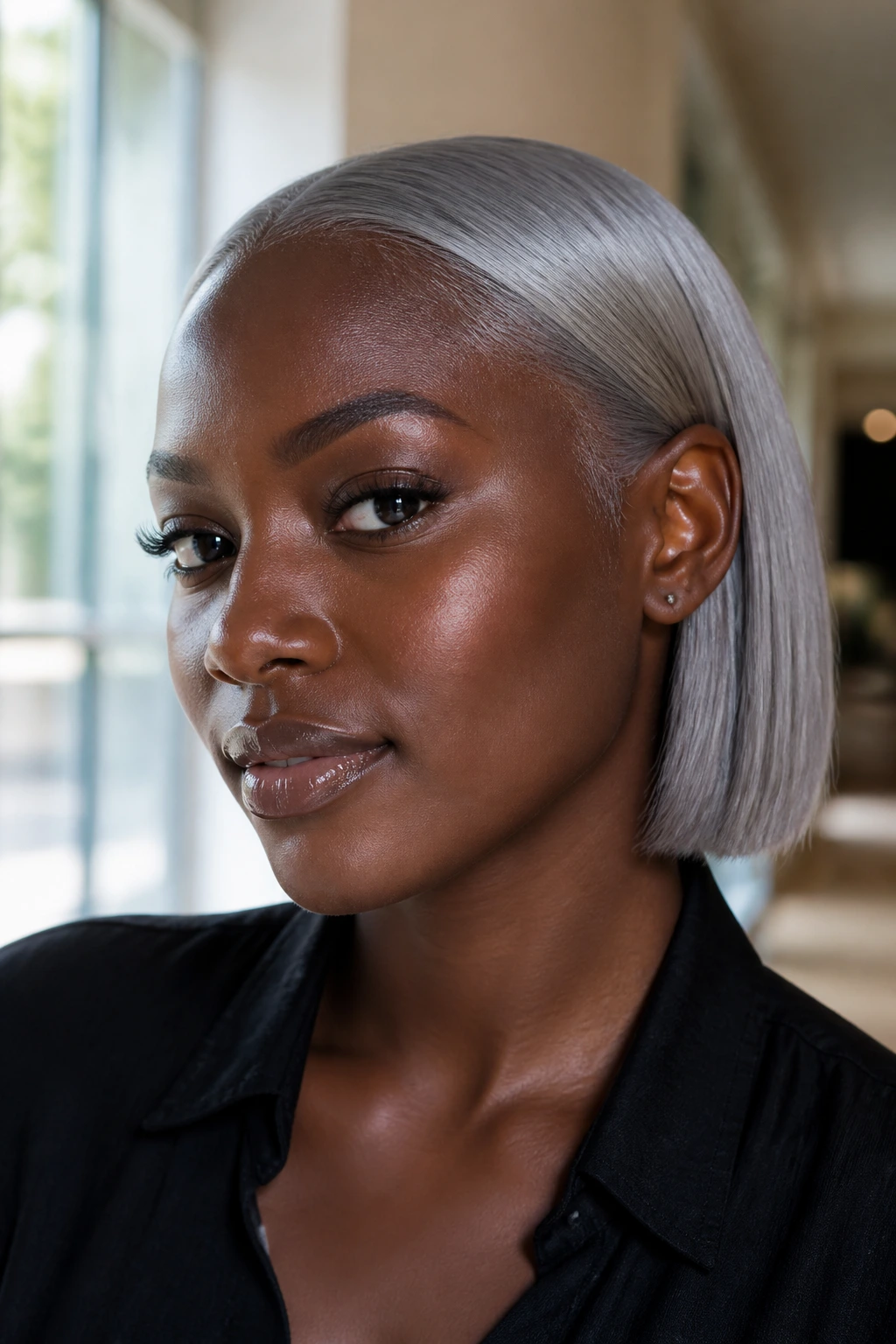
The blunt cut is the style that makes silver gray look like a shape, not just a color. Tuck the sides behind the ears, keep the perimeter crisp, and the hair starts reflecting light like brushed metal. On deep skin, that mirror finish gives the jawline a clean frame.
A blunt cut works best when the ends are heavy enough to stay solid. Thin ends make the style fray at the edge, and that ruins the effect quickly. A flat iron pass, a little serum, and a soft tuck behind the ear are enough. You do not want a lot of movement here. The stillness is the point.
This is one of those looks that gets better when the part is exact. A center part reads formal; a deep side part feels a little cooler and less severe. If you’re wearing a wig, ask for a low-density unit with a slightly darker root. The shadow keeps the silver from floating.
17. Short Coils with a Silver Rinse and Sculpted Edges
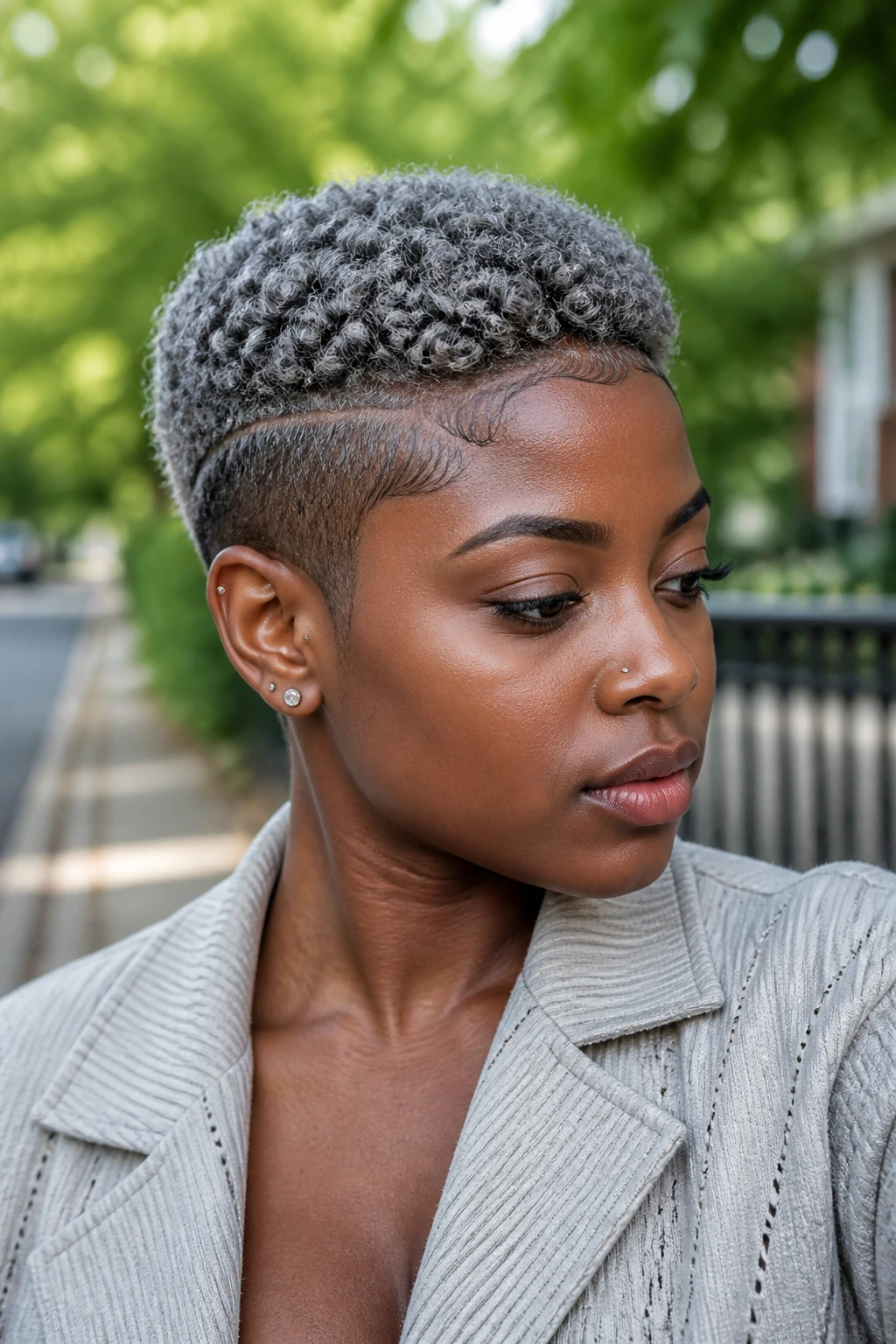
Can short coils carry silver without looking frosted over? Absolutely, if the coils are defined and the edges are neat. The rinse settles into each coil like tiny flecks of metal, and on deep skin that reads as texture first, color second.
The key is moisture. Start with freshly washed hair, add leave-in, then use a curl sponge, finger coils, or a small coil-defining brush to shape the strands while they’re damp. Let them dry fully before touching them. If you mess with them too soon, the coil pattern opens and the silver loses its crisp edge.
A sculpted hairline finishes the look. Keep the edges clean but not overdrawn. Too much swoop can make the style feel dated fast. A narrow side part or a slight diagonal part helps the coils sit with more intention, and that matters when the color is this cool.
18. Marley Twists in Charcoal-Silver Blend
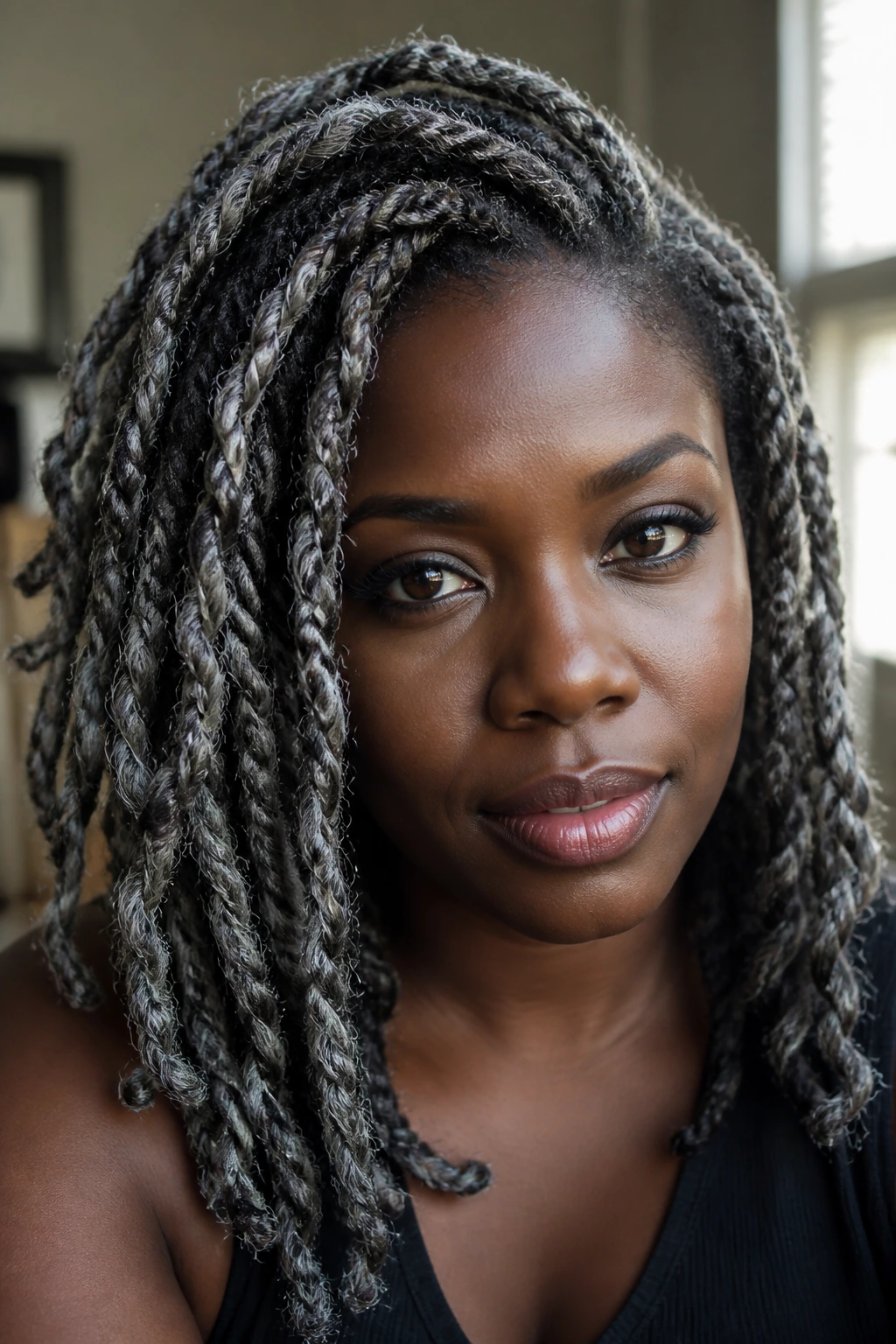
Marley twists in a charcoal-silver blend are a smart middle ground if you want gray without going full chrome. The darker strands keep the twists from looking thin, and the silver threads break up the mass so the style still has movement. On deep skin, the blend lands like smoke rolling through a braid pattern.
Why the blend matters
A single flat silver twist can look stiff. Mix in charcoal and the texture gets richer immediately. The eye sees shadow and shine instead of one block of color, which makes the twists read softer and more wearable. That’s especially helpful if the style is long.
Keep the twist size consistent from root to end. Uneven sections show up fast in gray blends. A lightweight mousse can help the hair stay smooth while you twist, and a satin wrap at night keeps the surface from getting fuzzy. If you want the style to last, avoid heavy creams at the scalp. They break down the crispness of the blend.
19. Layered Shag with Frosted Tips
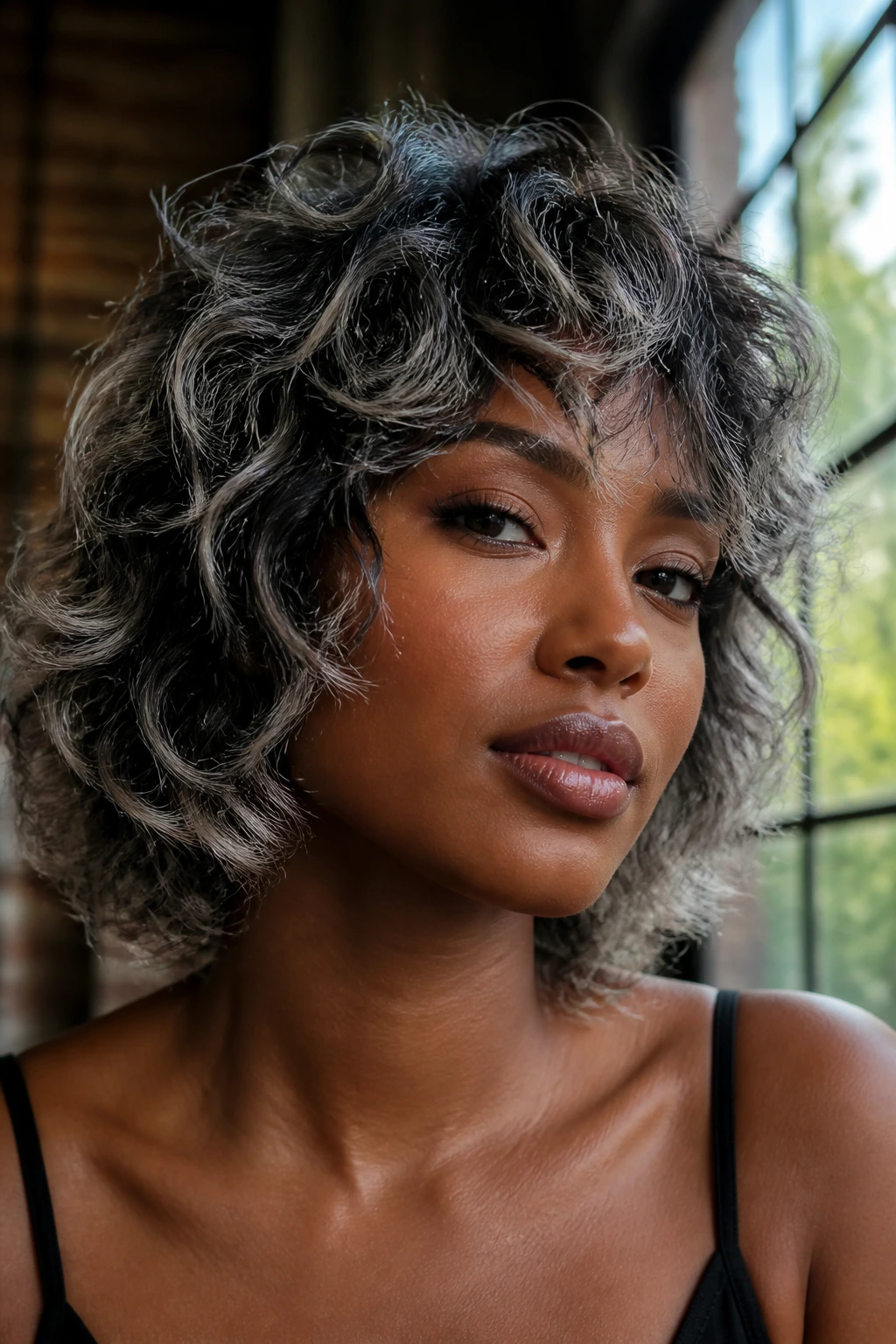
A layered shag keeps silver gray from going helmet-flat. Unlike a one-length cut, the shag gives the color breaks—shorter layers around the crown, longer pieces around the cheeks, and frosted tips that catch the light when the hair flips. On deep skin, that motion keeps the cooler tone feeling lively.
This cut works best on wavy, coily, or blow-dried texture. If the hair is too smooth, the layers lose their bite. A diffuser or a light round-brush bend at the ends is enough. You’re not trying to make every strand behave. The point is the slight messiness of the shape.
I like this style because it can lean soft or edgy depending on how you finish it. A center part and a little serum make it quiet. A tousled side part and a few piecey bangs make it sharper. The gray is doing the same thing in both cases, but the cut changes the message.
20. Bantu Knot Set with a Silver Halo
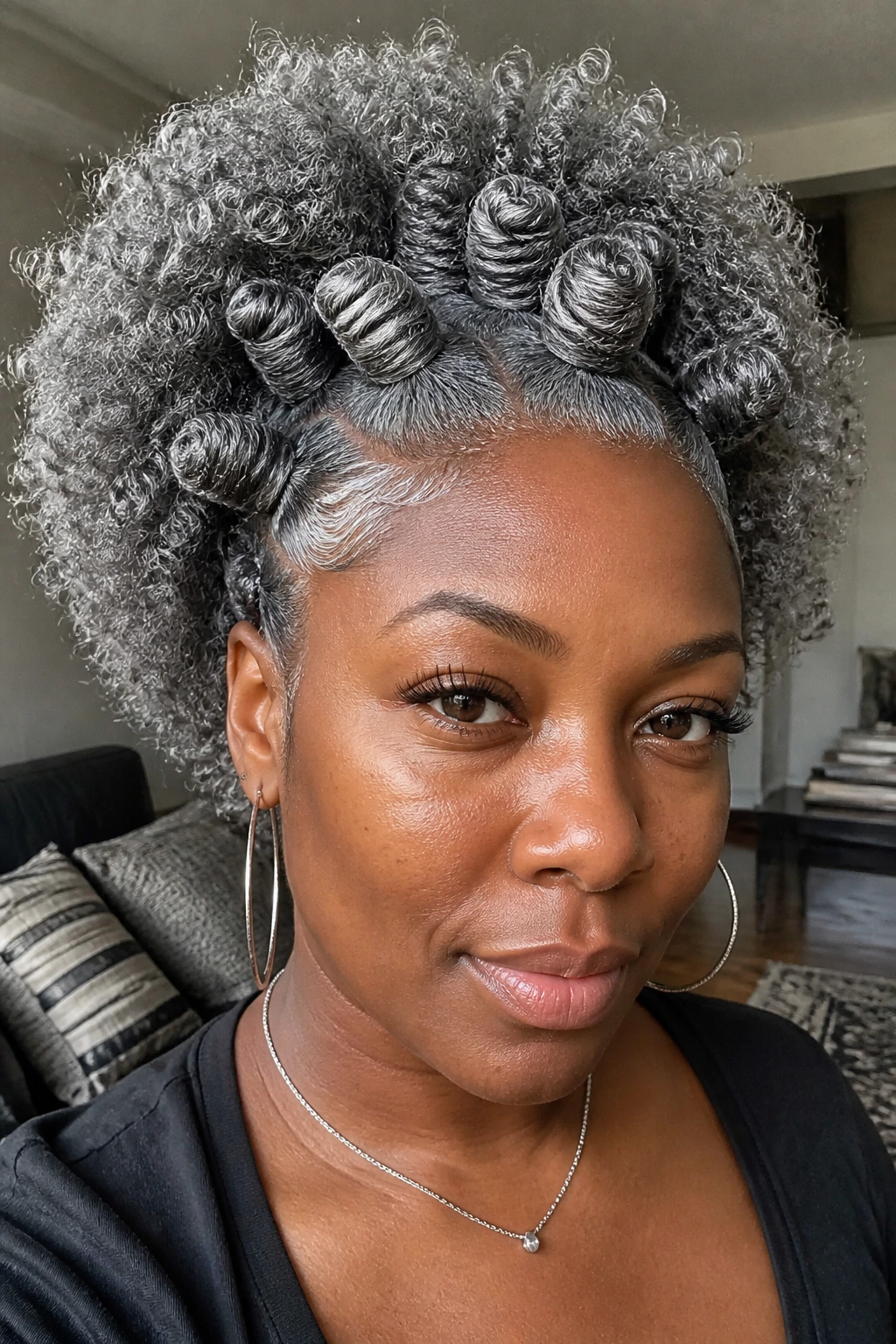
Bantu knots can look almost architectural in silver-gray. The knots themselves create little rounded pods across the head, and if you take them down, you get a halo of soft curls with metallic edges. On deep skin, the whole thing has a sculptural feel that works far beyond a basic set.
The set needs moisture and hold. Add leave-in, a light cream or foam, then divide the hair evenly so each knot sets the same way. Uneven sections show more in silver, because the light hits the knots from every angle. If you’re wearing the knots as a style, keep the parts clean and the scalp moisturized. If you’re using the takedown curl, let the knots dry completely. Half-dry knots are a frizz trap.
This is one of those styles that looks more polished when it’s not too shiny. A soft sheen is enough. A glassy surface can make the knots look stiff, and that fights the softness of the silver.
21. Loose Flat Twists into a Low Bun
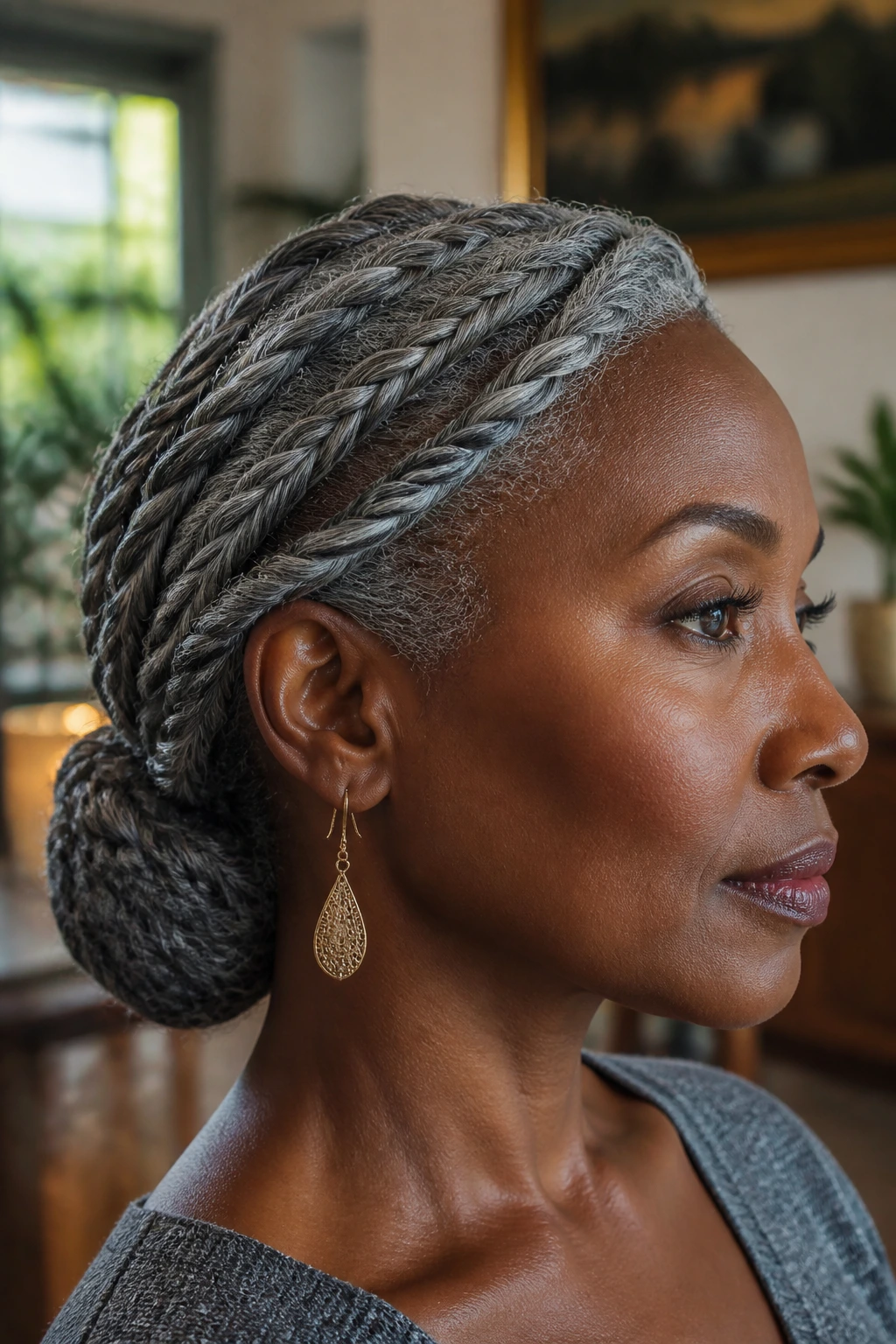
Loose flat twists into a low bun are the quiet answer to silver-gray when you don’t want the color shouting. The twists guide the eye back toward the bun, and the silver shows up in the twist pattern instead of sitting in one loud block. On deep skin, that kind of restraint looks clean.
This style works well for workdays, church, dinners, or any day when you want your hair controlled but not severe. Keep the twists loose enough that the scalp doesn’t show stress. A low bun at the nape softens the silhouette and keeps the neck open. If the hair is colored, a little gloss on the bun area makes the silver look fresh longer.
You can leave a few tiny coils out near the hairline if you want a softer edge. I’d keep the bun smooth, though. Too much texture around the nape can make the whole style look untidy fast, and silver hair has a short fuse for untidiness.
22. Vintage Roll-and-Pin Updo in Dove Gray
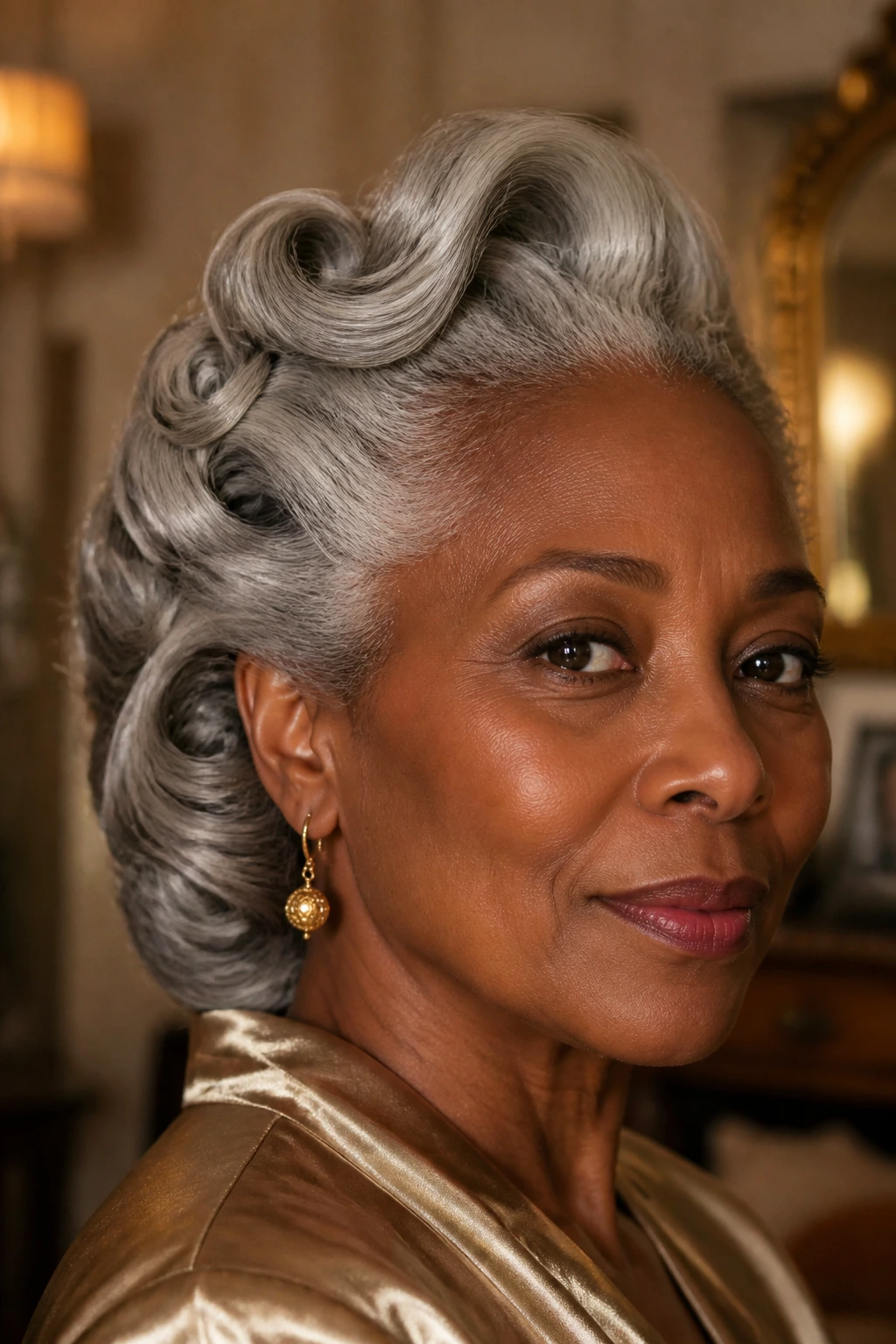
A roll-and-pin updo in dove gray has a softer mood than a sleek bun. The rolled sections create curves and shadows, and the color settles into those bends with a kind of old-fashioned grace. On deep skin, the dove tone gives enough contrast to show the shape without turning harsh.
Compared with a modern chignon, this style feels more built. You’ll want setting clips, a strong hold spray, and a tail comb to map the rolls before pinning them in place. If the hair is relaxed or silk pressed, the shape holds more easily. On a wig, a lower-density unit keeps the rolls believable.
This is the look I’d wear when the outfit has structure—collars, satin, a clean neckline. The updo and the clothes should talk to each other. Add one comb or a single pin if you want a detail, but leave space. The rolls already carry enough visual weight.
23. Long Layers with Smoke-Toned Face Frame
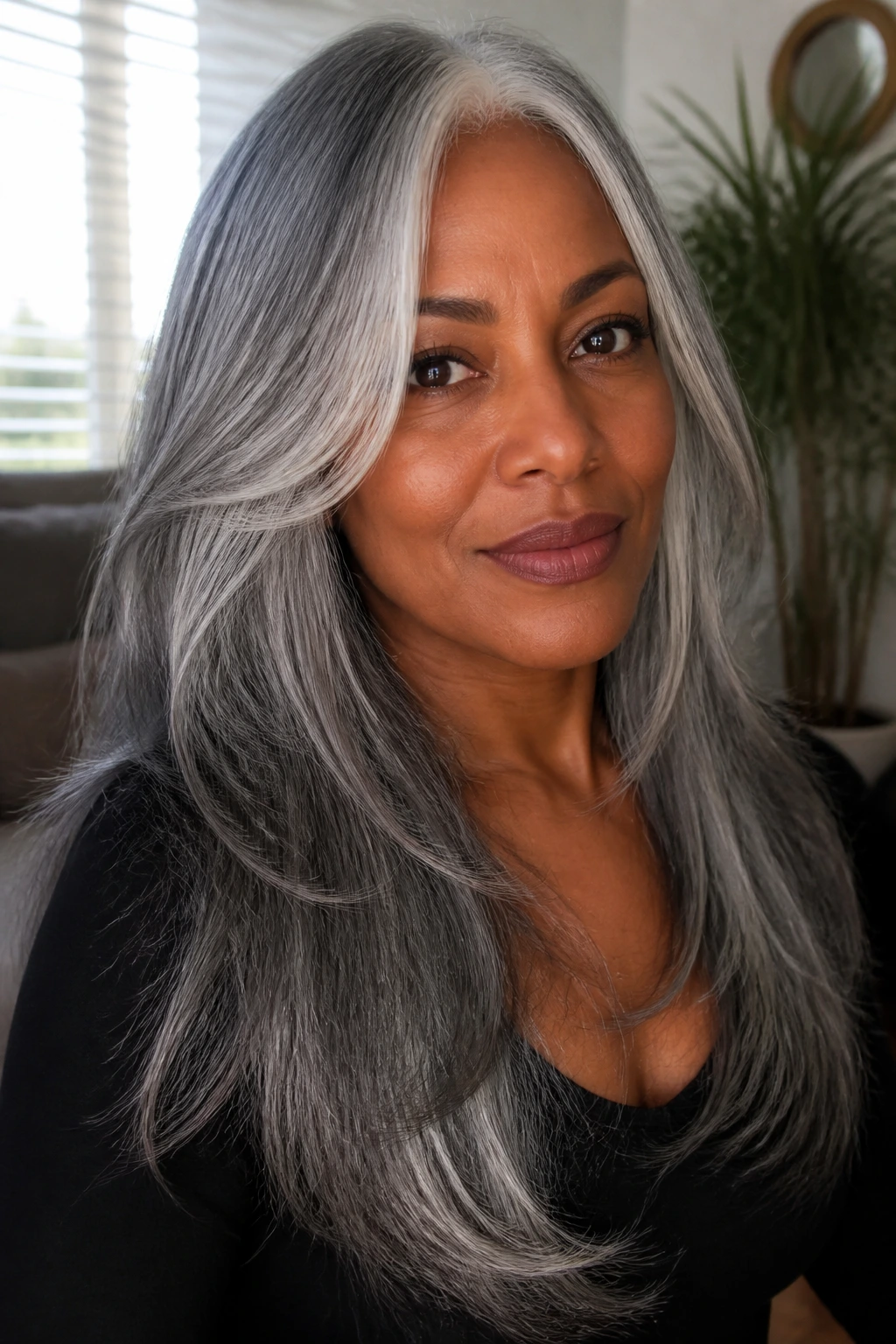
What if you want silver-gray without giving up length? Long layers with a smoke-toned face frame are the cleanest answer. The front pieces brighten the face, while the rest of the hair stays deeper and softer, which keeps the whole look from going icy. On deep skin, that little bit of shadow around the roots keeps the style wearable.
The face frame should be a shade lighter than the rest, but not so pale that it turns stripey. Think smoke, not chalk. Long layers give the color a place to move, especially if the hair is curled with a large iron or worn in a soft blowout. If the ends are too blunt, the weight can make the silver sit flat.
I like this shape because it grows out well. You can let the face frame fade a little and the style still holds together. That matters if you don’t want to visit the salon every few weeks just to keep the color from looking tired.
24. TWA with Silver Glaze and Sculpted Side Part
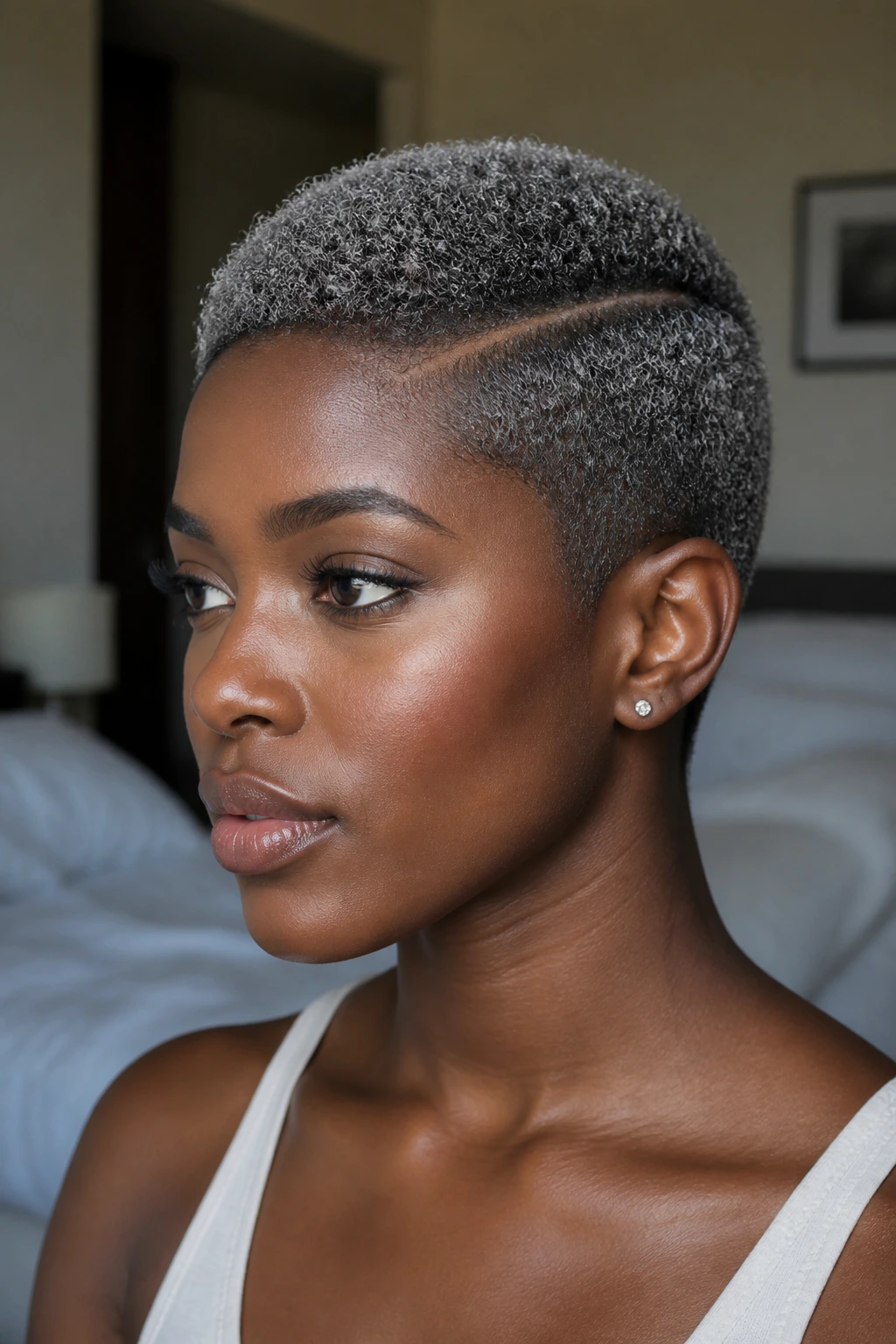
A teeny-weeny afro with a silver glaze is one of the cleanest short looks you can wear. The sculpted side part gives the style direction, and the glaze catches on each tiny coil instead of hovering on top of them. On deep skin, the effect is crisp and modern.
This is not the place for heavy product. A light glaze, a defined part, and a little edge detail are enough. If the hair is natural, keep the scalp moisturized and the coils hydrated; short hair can dry out faster than people expect, and dry coils make the gray look dusty. A satin bonnet at night keeps the part line neat.
If you want more contrast, leave the roots a shade deeper than the top coat. That tiny shadow adds depth. It also makes the silver read more like a finish than a one-time color event, which is a nicer place for it to live.
25. Rope-Twist Ponytail with Lunar Gray Finish
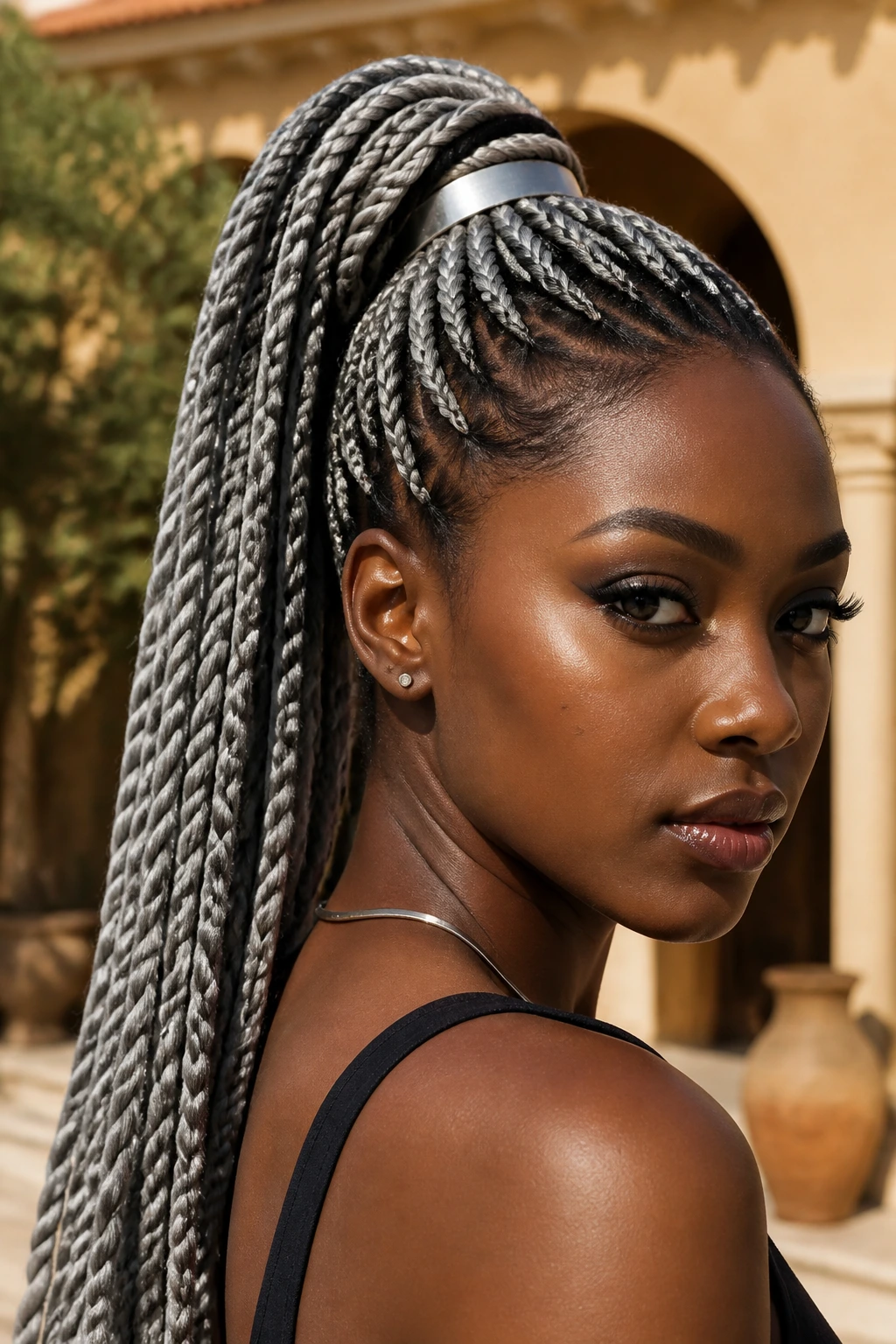
Rope twists give silver-gray a spiral sheen that straight styles can’t imitate. When the twists are pulled into a ponytail, the whole shape moves in a single line, but the twist pattern keeps the color from flattening out. On deep skin, that lunar-gray finish looks clean and a little futuristic without turning costume-y.
The base should be tight enough to stay neat, but not so tight that the scalp starts complaining by noon. Use a smoothing gel at the roots, then twist the lengths with a light cream or mousse so the rope texture stays defined. If you want the ponytail to swing, leave the ends a touch softer than the base.
A metallic cuff or narrow wrap at the base finishes the look well. It doesn’t need much else. The twist pattern already does the visual work, and the gray finish gives it that cool, polished edge the moment the light hits it.
Why Silver Gray Keeps Working on Deep Skin
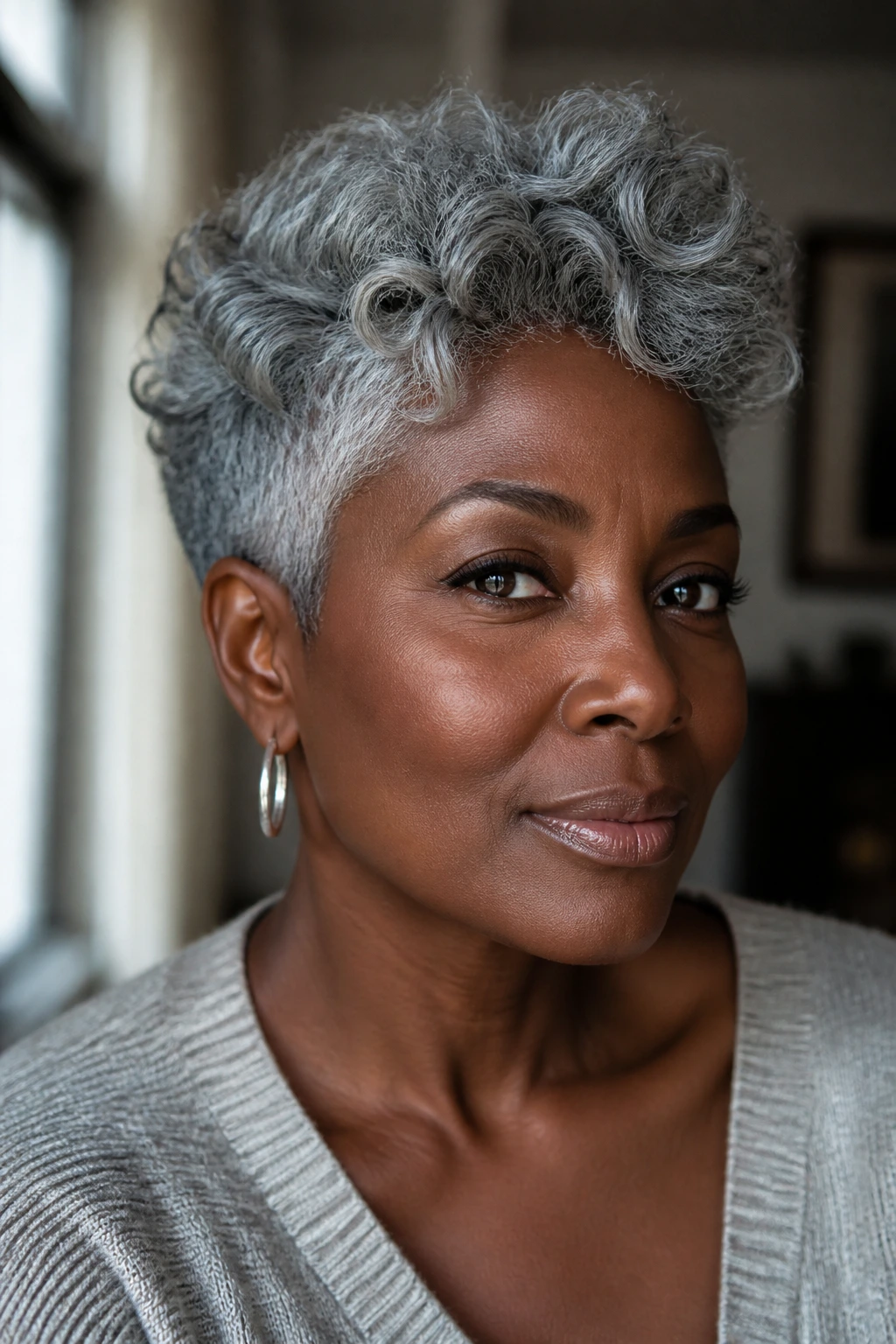
Silver-gray on deep skin keeps making sense because the color has room to breathe. On lighter complexions, the shade can sometimes carry all the weight on its own. On deeper complexions, it gets support from the skin’s richness, so the gray reads more like smoke, steel, or polished ash than a washed-out pastel.
That’s also why texture matters so much. Coils, braids, waves, blunt ends, and sleek ponytails all change how the eye processes the shade. The color isn’t only a pigment choice here; it’s part of the shape. A good cut or braid pattern makes the gray look intentional, and a poor one makes it look like a residue.
I keep coming back to root depth because it solves half the problem. A little shadow at the base lets the silver feel anchored. Without that, the tone can drift too far into ice and start fighting the face. With it, the whole style feels grounded, even when the finish is bright.
Essential Tools and Products for These Looks
- Color-safe shampoo: Keeps silver-gray from fading fast and strips less moisture from lightened hair.
- Purple or blue-violet conditioner: Useful for already-lightened hair that starts to look yellow or brassy.
- Deep conditioner: Silver shows dryness fast, so a rich mask helps the finish stay smooth.
- Heat protectant spray: Non-negotiable for silk presses, wand curls, blunt bobs, and any style that touches hot tools.
- Mousse or foam wrap lotion: Helps curls, waves, finger styles, and molded sets hold shape without heavy buildup.
- Edge brush and soft bristle brush: One keeps the hairline neat; the other smooths ponytails and puffs.
- Rat-tail comb: Needed for parts, clean sectioning, and precise braid or wave placement.
- Silk bonnet or scarf: Keeps silver styles from frizzing overnight and saves the edges from rough cotton.
- Satin pillowcase: Handy when a bonnet slips off in sleep.
- Lightweight shine serum: A small amount brings back gloss on blunt cuts and pressed styles.
- Curl cream or leave-in: Best for twist-outs, coils, shags, and any textured style that needs moisture without weight.
- Pre-stretched braiding hair or synthetic gray extensions: Saves time and gives protective styles a cleaner finish.
Smart Shade Shopping for Silver Gray Hairstyles on Deep Skin
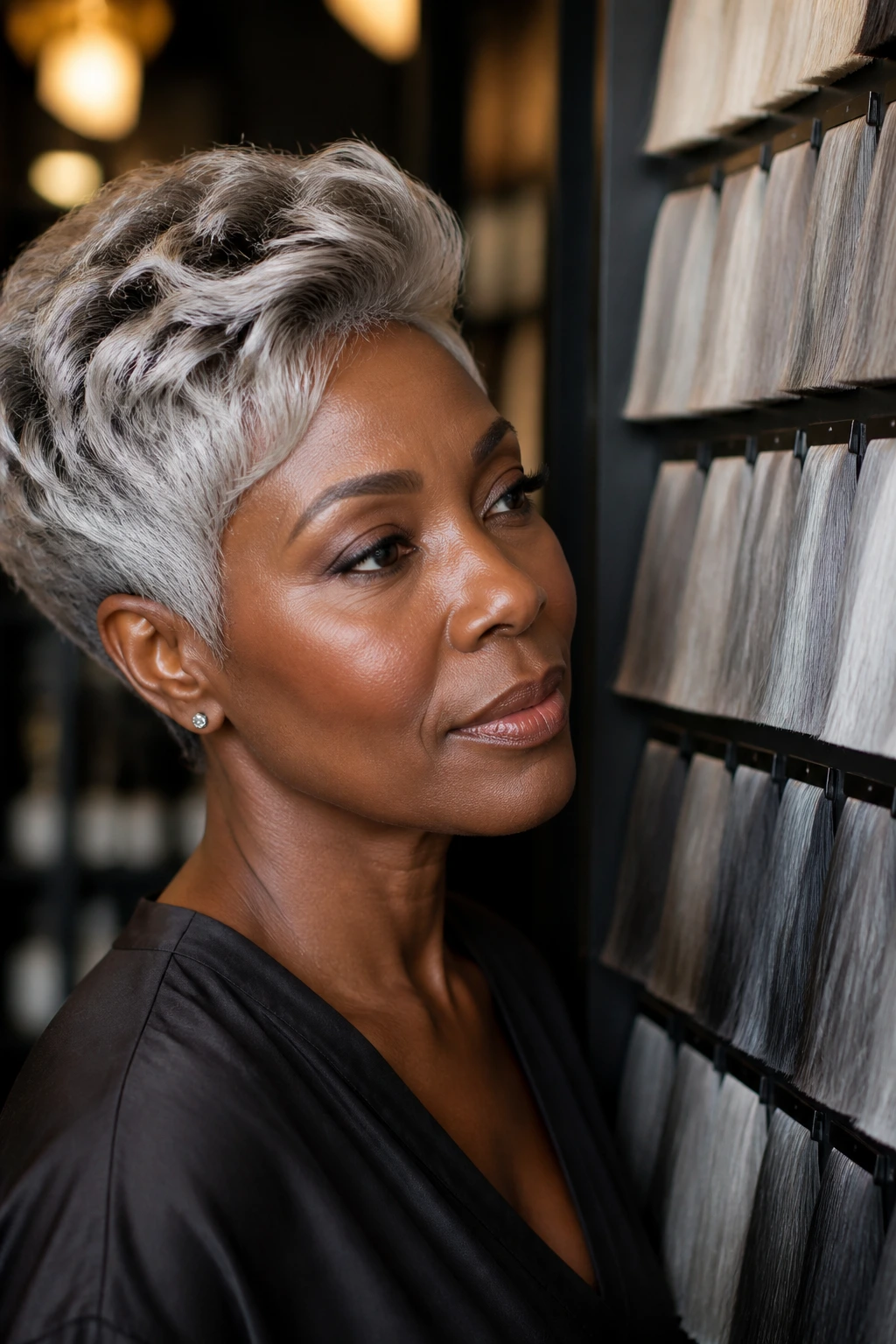
A silver rinse is not one thing. Some formulas are temporary spray-on color, some are color-depositing conditioners, and some are semi-permanent rinses that cling a little longer to lifted hair. If your hair is naturally dark, a rinse alone will not turn it chrome. It will tint, mute, and shade, which can still look gorgeous—but it’s a different result.
For true silver on natural dark hair, lift matters. A level 8 base usually gives smoky gray. A level 9 or 10 is where brighter silver starts to show cleanly. If you want the look without bleaching, wigs, braids, twists, and extensions give you more room to play. That’s the honest answer, and it saves a lot of frustration.
The best silver tones for deep skin usually have some smoke in them. Pewter, graphite, dove, steel, charcoal-silver, and mushroom-gray tend to sit better than a flat icy white. Flat white can be sharp in a good way, but it needs a strong cut and a very neat finish. If the hair texture is loose, rough, or uneven, smoky silver is the safer bet.
When shopping for products, read the undertone, not just the name. “Arctic” and “platinum” can lean blue-white. “Smoke,” “ash,” and “graphite” usually look easier on deep complexions. For braiding hair, low-shine synthetic hair looks more natural than shiny plastic fibers, and pre-stretched bundles save time while giving the style a cleaner shape. If you’re buying a wig, a darker root and a realistic part matter more than a huge density number.
How to Wear These Looks With Clothes, Makeup, and Accessories
Face Shape: Short styles like the pixie, TWA, and finger waves sharpen round faces because they pull the eye upward. Longer bobs and lobs soften stronger jaws, especially when the part sits just off center. If your face is long, keep some width at the cheeks—layers, curls, or braids that sit a little fuller around the sides help the silver feel balanced.
Wardrobe Palette: Deep skin and silver-gray both love contrast. Black, cream, white, cobalt, emerald, oxblood, and chocolate all make the hair look deliberate. If you wear a head-to-toe gray outfit with silver hair, the whole thing can go flat fast. One bold color somewhere—lip, top, or earrings—keeps the look awake.
Makeup Pairing: Warm blush, brown liner, terracotta, berry, and deep nude shades keep the face from disappearing next to cool hair. A soft metallic eye can work, but I’d avoid an icy blue lid unless the rest of the face has enough warmth to anchor it. Clean brows matter more than extra shimmer.
Jewelry and Extras: Silver jewelry is obvious, but gold against silver-gray and deep skin can be gorgeous. Don’t feel trapped by one metal. A matte finish on the face and glossy hair usually looks better than competing shine everywhere.
Additional Styling Tweaks and Color Boosters
Gloss Boost: A clear gloss or color glaze every 2 to 4 weeks brings the gray back to life without making it darker. On lightened hair, a violet glaze can cool yellow tones; on braids or wigs, a lightweight shine spray does the same job without soaking the fibers.
Texture Play: Silver shows texture better than people expect, which is why twists, curls, and waves can look richer than super-straight hair. If you want the shade to read softer, add bends, layers, or a bit of volume. If you want it sharper, keep the ends blunt and the part clean.
Root Smudge: A shadow root of 0.5 to 1 inch keeps silver from looking pasted on. On deep skin, that tiny depth at the base helps the color blend into the face instead of floating above it. It also buys you more time between salon visits or refreshes.
Edge Detail: A neat hairline changes everything. A crisp side part, soft sideburns, or a slightly brushed edge gives gray hair a finished feel. Heavy, crunchy edge control is the enemy here; it turns a cool style stiff in a hurry.
Make-It-Yours: If pure silver feels too icy, ask for smoky gray, lilac-gray, or graphite threads instead. If you want more drama, add metallic cuffs, a chrome headband, or a ribbon at the base of a ponytail. The color doesn’t need to do all the work alone.
Night Care, Wash Days, and Refresh Rhythm
Silver-gray styles stay cleaner when you treat them like they’re fragile, because they are a little fragile. Sleek styles do best with a nightly wrap and a satin pillowcase. Braids and twists need a dry scalp, not a wet one trapped under product. Curls want moisture, but not enough cream to weigh the color down.
For a pressed bob, lob, or ponytail, plan on 5 to 7 days of wear before the shape starts to collapse unless you’re re-molding it each night. Keep a small amount of serum for the ends and only touch the roots with heat if the hair is fully dry. A damp flat iron pass is where the frizz and dullness start.
Protective styles last longer. Knotless braids, faux locs, Marley twists, and braided crowns can wear for 4 to 8 weeks depending on tension and how well you clean the scalp. Wash or rinse the scalp every 1 to 2 weeks, then dry the braids fully. A cool blow-dry on low speed can help, but don’t leave the roots damp.
If your silver is from a rinse or toner, expect fade after a handful of washes. The exact timing depends on porosity and how often you shampoo, but a refresh every 2 to 4 weeks is a fair range for most people. Use purple shampoo sparingly—too much turns gray hair dull lavender, and that look ages fast. A gloss or deposit-only mask usually does a cleaner job.
Common Mistakes That Make Silver Gray Fall Flat
- Picking a silver that’s too icy for the base: If the tone is nearly white and the hair has no shadow root, deep skin can lose the contrast that makes silver look rich. Ask for smoke, graphite, or a darker root to anchor it.
- Using purple shampoo like regular shampoo: Purple products are helpful, but too much turns silver hair chalky or lavender-gray. Use them only when brass starts to show, not every wash day.
- Skipping moisture before and after lightening: Dry, porous hair makes silver look dusty instead of glossy. A balanced routine with deep conditioner, leave-in, and heat protectant keeps the shade smooth.
- Pulling braids or ponytails too tight: Silver styles draw attention to the hairline, which means stress shows fast. If the temples ache, the style is too tight.
- Leaving a sleek style with no shape: A flat gray sheet can look lifeless. Add a side part, blunt edge, layer, curl bend, or root shadow so the color has something to cling to.
- Letting grow-out get too harsh: A hard line at the root makes silver look patchy. A soft shadow root or regular refresh keeps the transition from looking accidental.
Frequently Asked Questions About Silver Gray Hairstyles for Deep Skin Tones
Do silver gray hairstyles work on all deep skin undertones?
Yes, but the shade should match the undertone. Cool undertones usually like graphite, steel, or true silver; warm undertones often look better in smoky pewter, dove gray, or charcoal-silver with darker roots.
Can I get silver-gray hair without bleaching?
If your hair is naturally dark, a true silver usually needs lift. Without bleach, you can still wear the look through wigs, braids, twists, color sprays, or temporary rinses on lighter hair.
What’s the lowest-maintenance silver-gray style on this list?
Knotless braids, faux locs, and Marley twists tend to give the longest wear with the least daily styling. A short pixie or TWA is also easy day to day, but the cut needs more regular shaping.
How do I stop silver hair from turning yellow?
Use sulfate-free shampoo, cool water, and a purple or blue-violet product only when needed. Heavy oils and too much heat can also dull the color, so keep both light.
Will silver gray make deep skin look washed out?
Not if the shade has smoke in it and the haircut has shape. Flat, icy silver is the one that can fight the face; pewter, graphite, and shadow-rooted silver usually sit much better.
How often should I refresh a silver rinse?
Most rinses need refreshing every 2 to 4 weeks, depending on washing frequency and hair porosity. If the color starts looking muddy before then, a gloss or deposit mask usually works better than piling on more pigment.
Can I wear silver-gray hair for formal events?
Absolutely. Finger waves, braided crowns, roll-and-pin updos, and sleek ponytails all look sharp in silver-gray. The cool tone pairs especially well with structured clothes and clean earrings.
What if my silver style looks too flat in person?
Add depth. A shadow root, a bit of texture at the crown, a blunt perimeter, or even a simple side part can change the whole read of the color. Gray wakes up when the shape has some movement.
A Shade That Knows How to Show Up
Silver-gray on deep skin works because it isn’t trying to blend in. It needs contrast, shape, and a little depth at the root, and once those pieces are there, the color starts to look intentional instead of experimental. That’s the whole trick, really.
Pick the version that fits your life, not just the photo. A crisp bob, a braid set, a twist-out, a short pixie, or a sculpted updo can all wear the same shade and still feel completely different. The best one is the one you’ll keep neat enough for the color to do its job.
Give the gray a strong shape, keep the finish glossy, and let the skin do some of the work. That combination never gets old.