



The wrong blonde on a woman over 40 doesn’t look youthful or edgy. It usually looks flat, a little yellow, and annoyingly honest about every root that grows in. Worse, it can make the face look harsher than it is, especially if the color sits too close to the scalp or pulls too pale against the skin.
The best blonde hair color ideas for women over 40 do something smarter. They soften regrowth, put light where the face wants it, and leave room for texture changes, gray strands, and the fact that most hair gets a bit more particular with time. Beige blondes, honey blondes, champagne blondes, mushroom blondes — those shades work because they move. They don’t just sit there and shout.
I’m biased toward blondes with dimension. Flat bleach can be dramatic, sure, but dimensional blonde is usually the one that ages best in real life. It grows out cleaner, looks better in daylight, and doesn’t demand a color appointment every time a temple gray appears like a tiny spotlight.
Why This Collection Is Different
-
Root-friendly: A lot of these shades keep the root a half-step deeper than the ends, which softens grow-out and buys you time between salon visits.
-
Face-brightening: The tones here aren’t chosen to be trendy. They’re chosen because beige, honey, champagne, and creamy blonde tones bounce light off the face in a softer way than one-note platinum.
-
Gray-blending: Several ideas lean into babylights, ribbons, glosses, and silver-friendly blends, which means gray hair can disappear into the design instead of fighting it.
-
Hair-density friendly: Dimensional blonde adds visual thickness. If your hair has gotten finer, that matters more than chasing the palest possible shade.
-
Style-specific: A blonde on a bob behaves differently than the same blonde on long layers. These ideas take the cut into account, because the shape changes everything.
-
Low-regret choices: If you’re nervous about going lighter, there are options here that still look like you on a day you forgot to wash your hair, touch up your roots, and get eight full hours of sleep.
1. Beige Blonde with a Root Shadow
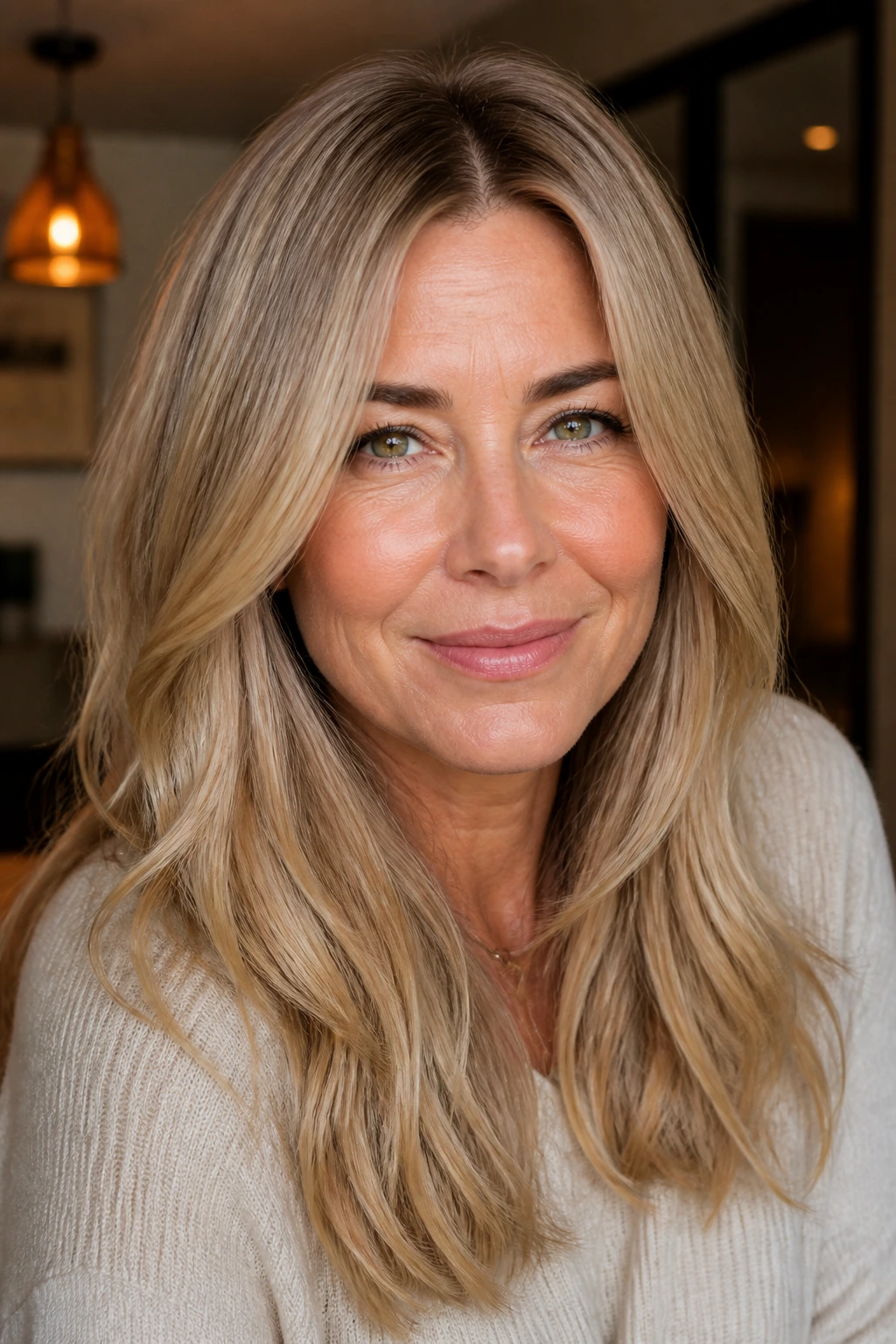
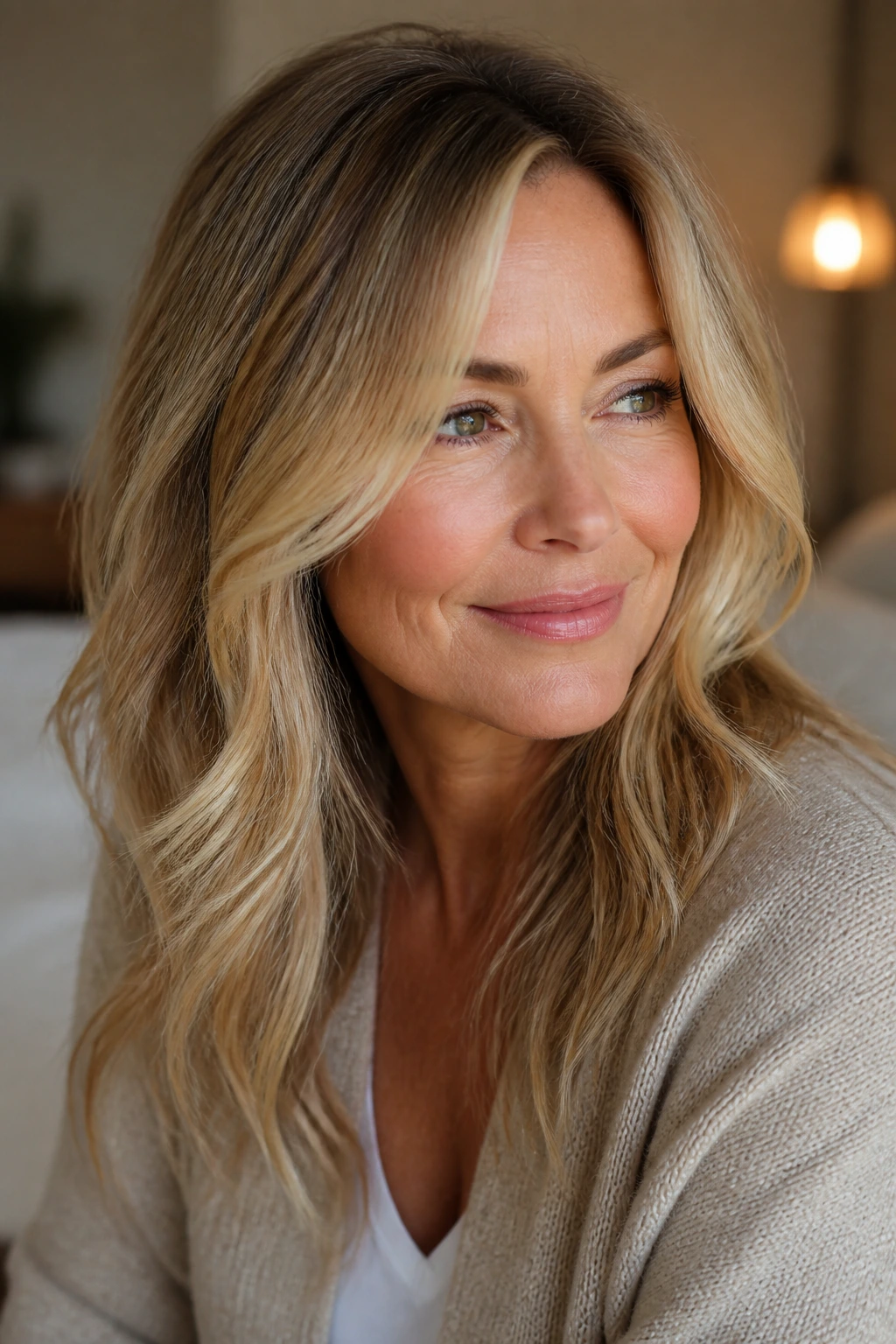
Beige blonde with a root shadow is the shade I’d hand someone who wants blonde without a weekly panic attack. The root stays a level or two deeper than the mids and ends, which keeps the grow-out line soft instead of stripy. Beige does the rest. It sits between warm and cool, so it usually behaves better on mixed undertones than a too-icy blonde or a too-golden one.
Why it flatters
The root shadow gives the eyes a place to land near the hairline, and that alone can make the face feel less washed out. A colorist might keep the root at a level 6 or 7 and paint the lighter pieces around the face and on the surface where the sun would hit. That creates motion without forcing you into full bleach territory.
Best for: women who want blonde that grows out cleanly and doesn’t scream for toner every four weeks.
What to ask for: a beige level 8 or 9 through the mids and ends, with a soft level 6 or 7 root melt.
Watch for: if your hair is naturally very dark, the first appointment may need to stay a touch deeper. That is not a failure. It is the difference between “expensive blonde” and “fried rope.”
2. Honey Blonde Balayage
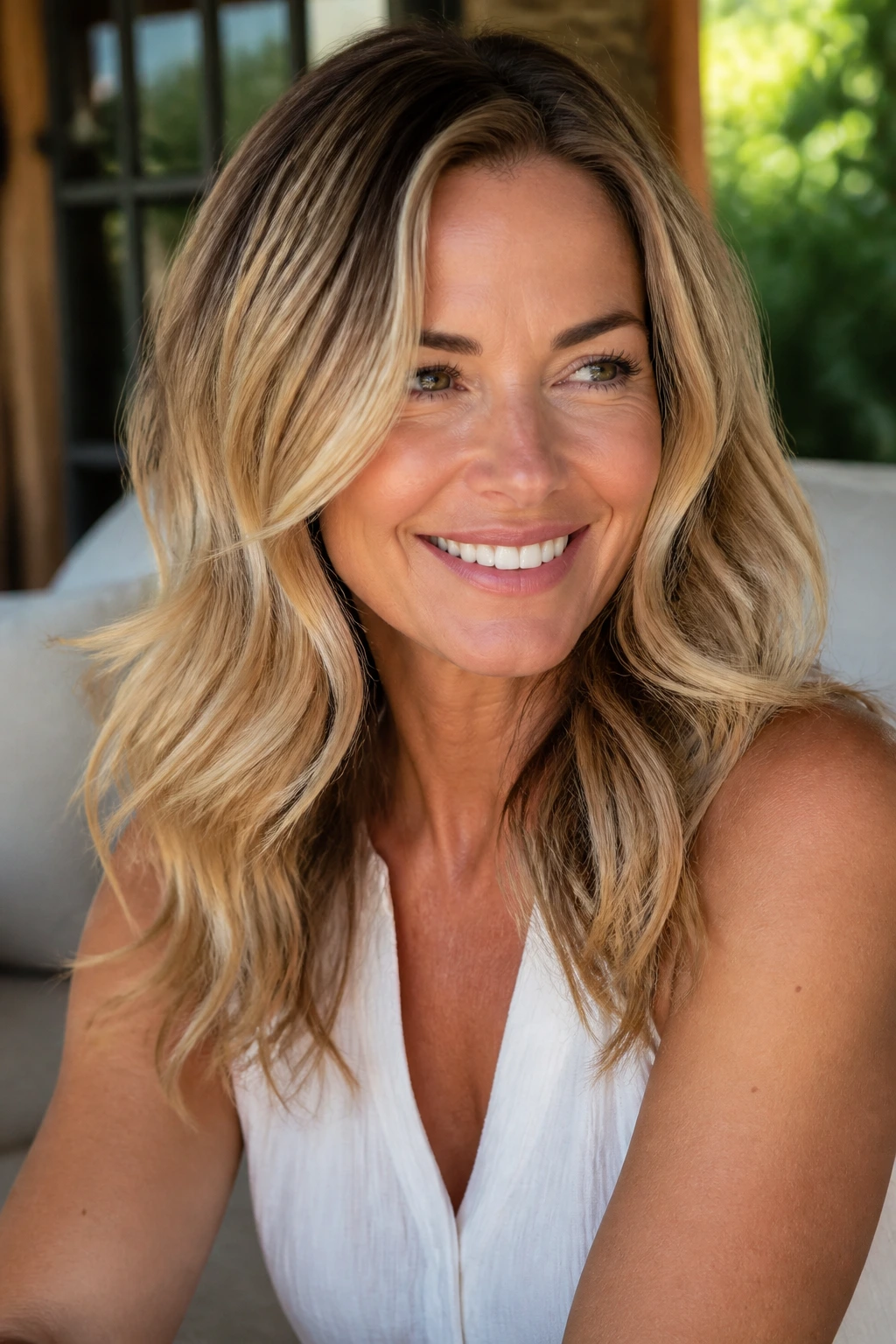
Honey blonde is the shade that makes warm skin look awake without tipping into orange. On women over 40, I like it best as balayage, not as a solid all-over color. Painted pieces through the mid-lengths and around the face keep the warmth looking deliberate, not brassy.
The nice part is that honey blonde does not fight soft lines. On layered cuts, it slides through the hair and gives that moving, sun-kissed feel that flat color never quite manages. If your natural base is medium brown, this shade often blends in like it was always meant to be there.
A good salon ask
Ask for caramel-honey ribbons rather than a blanket of yellow. The ribbons should be brighter on the outer layers and softer underneath, so the hair still has depth when you tuck it behind the ear. If your brows are dark, this shade is especially kind.
Best for: warm or olive undertones, and anyone who wants brightness without coldness.
Maintenance note: a gloss every 6 to 8 weeks keeps honey from drifting into orange-gold.
3. Champagne Blonde Bob
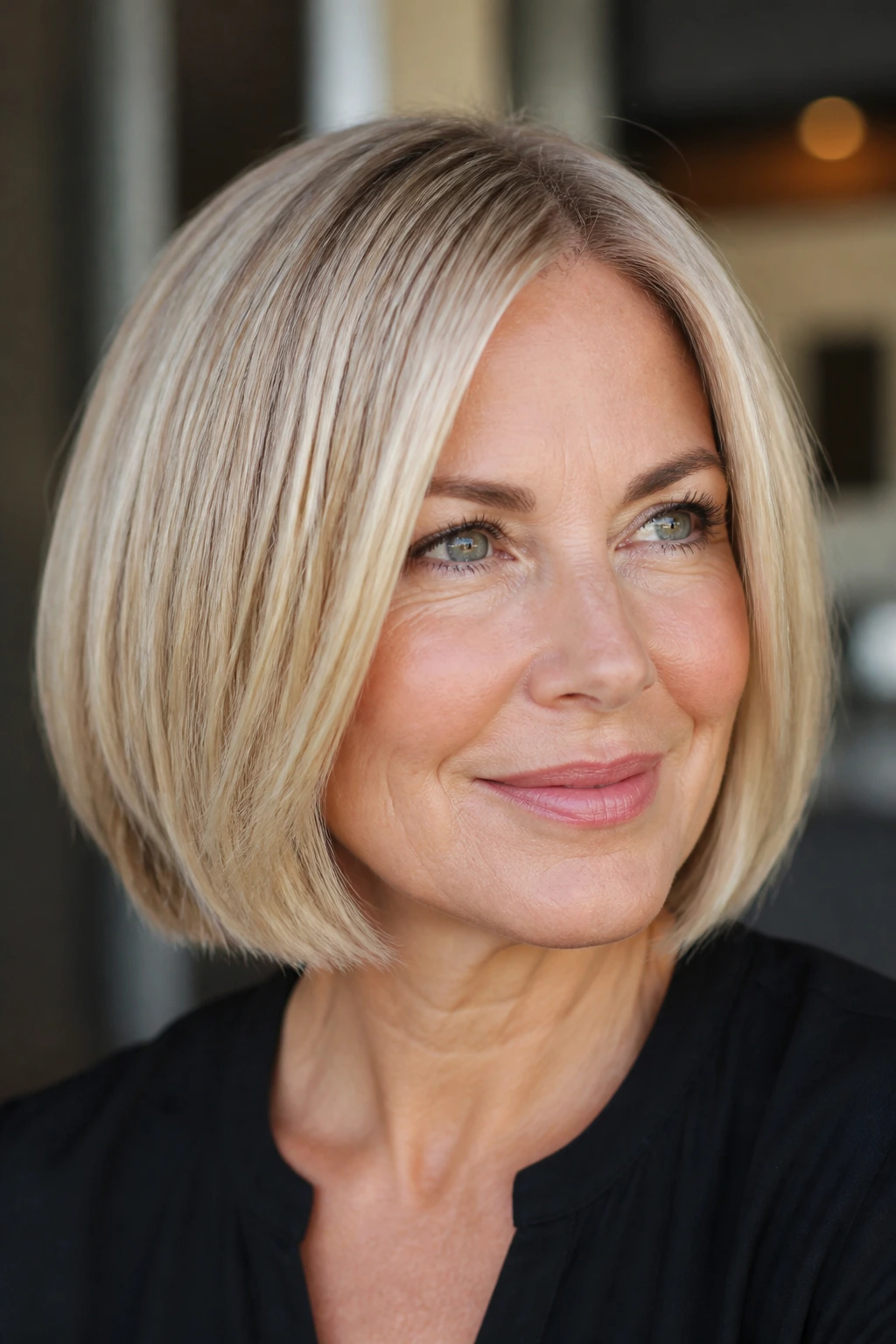
Champagne blonde on a bob is sharp in a good way. The color has enough brightness to catch the eye, but the tone stays soft and slightly creamy instead of stark white. On a blunt or softly layered bob, that combination looks polished without turning severe.
The key here is placement. Around the face, champagne blonde can lift the cheek area and make the eyes look a little clearer. Underneath, a deeper base or lowlights keep the cut from floating away from the head. That matters on shorter hair, where every color choice shows fast.
If your hair is naturally fine, this is one of those shades that can make the whole shape look fuller. Short hair and multiple blonde tones get along well.
Ask for: fine highlights with a pearl-beige toner, not an over-processed pale blonde.
Best if: you like clean lines, easy styling, and a blonde that looks good even when the blowout has started to loosen.
4. Mushroom Blonde on Midlength Hair
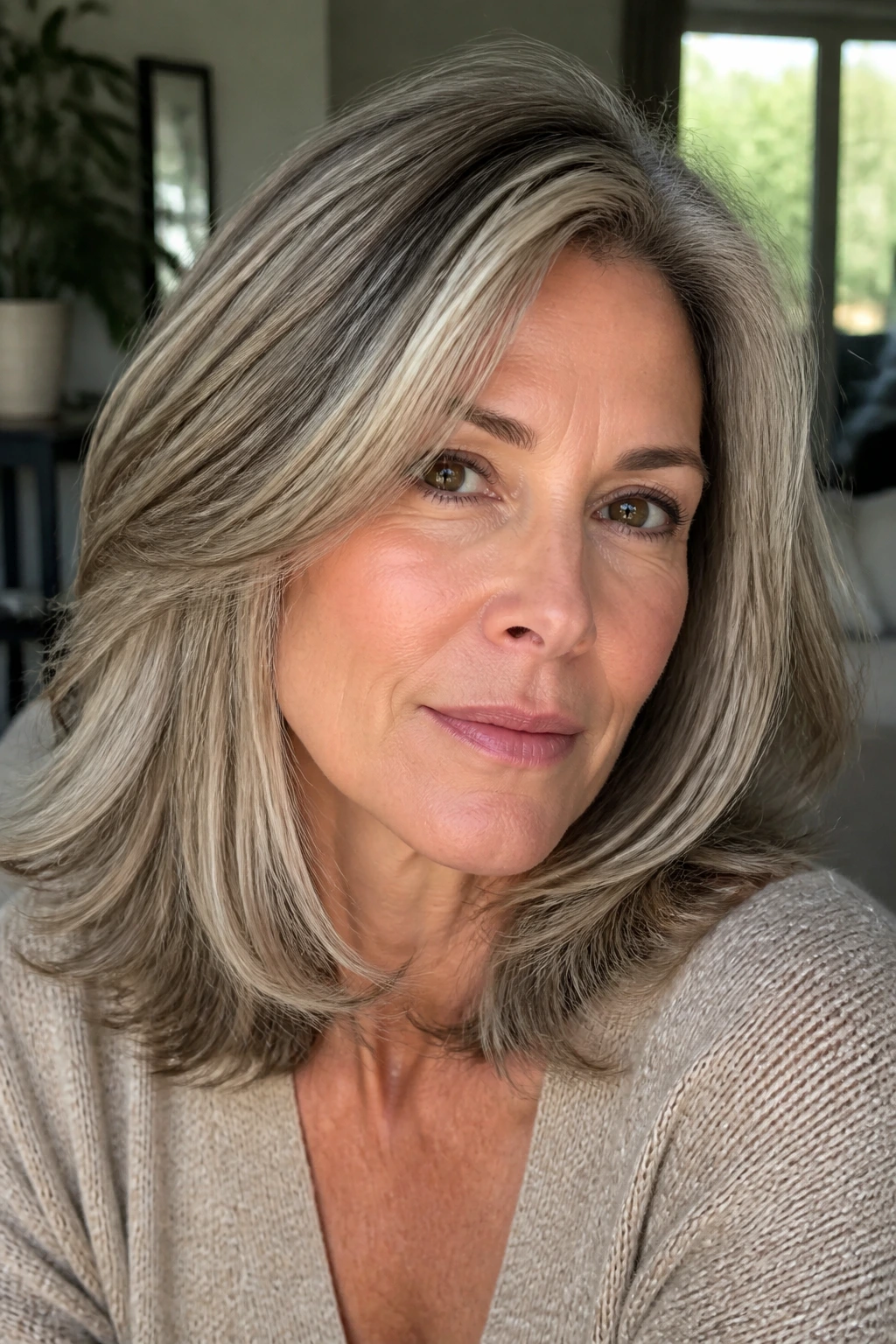
Mushroom blonde is the quiet one in the room — and that is exactly why it works. It sits in that cool taupe zone where blonde and brunette meet, which makes it one of the easiest shades to wear if you do not want warmth creeping into your color. On women over 40, it’s especially useful when natural hair has gone a little silver at the temples.
Why it works
The shade keeps the overall effect soft and dimensional. There’s enough coolness to control brass, but not so much ash that the hair starts looking dusty. On collarbone-length layers, mushroom blonde reads as expensive and easy, which is a rare pairing.
Best for: cool or neutral undertones, especially if you wear a lot of black, navy, charcoal, or white.
Colorist note: ask for beige lowlights and cool blonde highlights, not one flat gray-beige wash.
My opinion: mushroom blonde looks better when the cut has movement. On pin-straight, one-length hair, it can flatten out. Give it a few layers and it wakes up.
5. Butter Blonde with Face-Framing Money Pieces
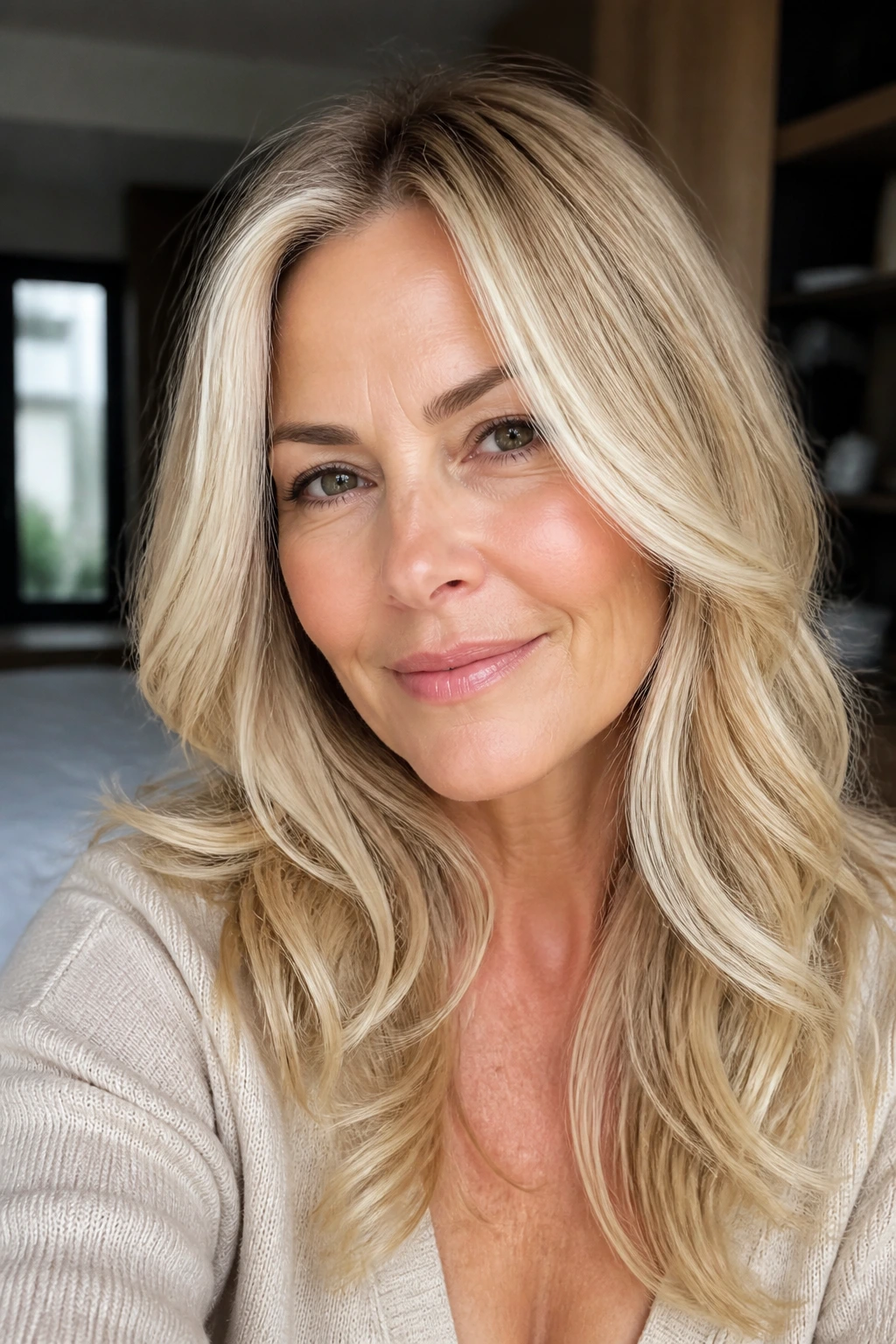
Butter blonde wins when you want brightness around the face, not all over the head. The tone is creamy, warm, and a little glossy, which is why it feels less harsh than pale yellow or white-blonde highlights. Put the brightest pieces in the front and keep the back softer, and suddenly the whole color feels more intentional.
The money pieces do the visual heavy lifting. They bring light to the cheekbones and eyes, which is exactly where most people want it. The rest of the hair can stay a half-step deeper, especially if you have a naturally medium or dark base.
A good version of this shade keeps the face-framing pieces thin enough that they don’t turn into two loud streaks. That mistake is everywhere. Skip it.
6. Ash Beige Blonde for Cool-Toned Skin
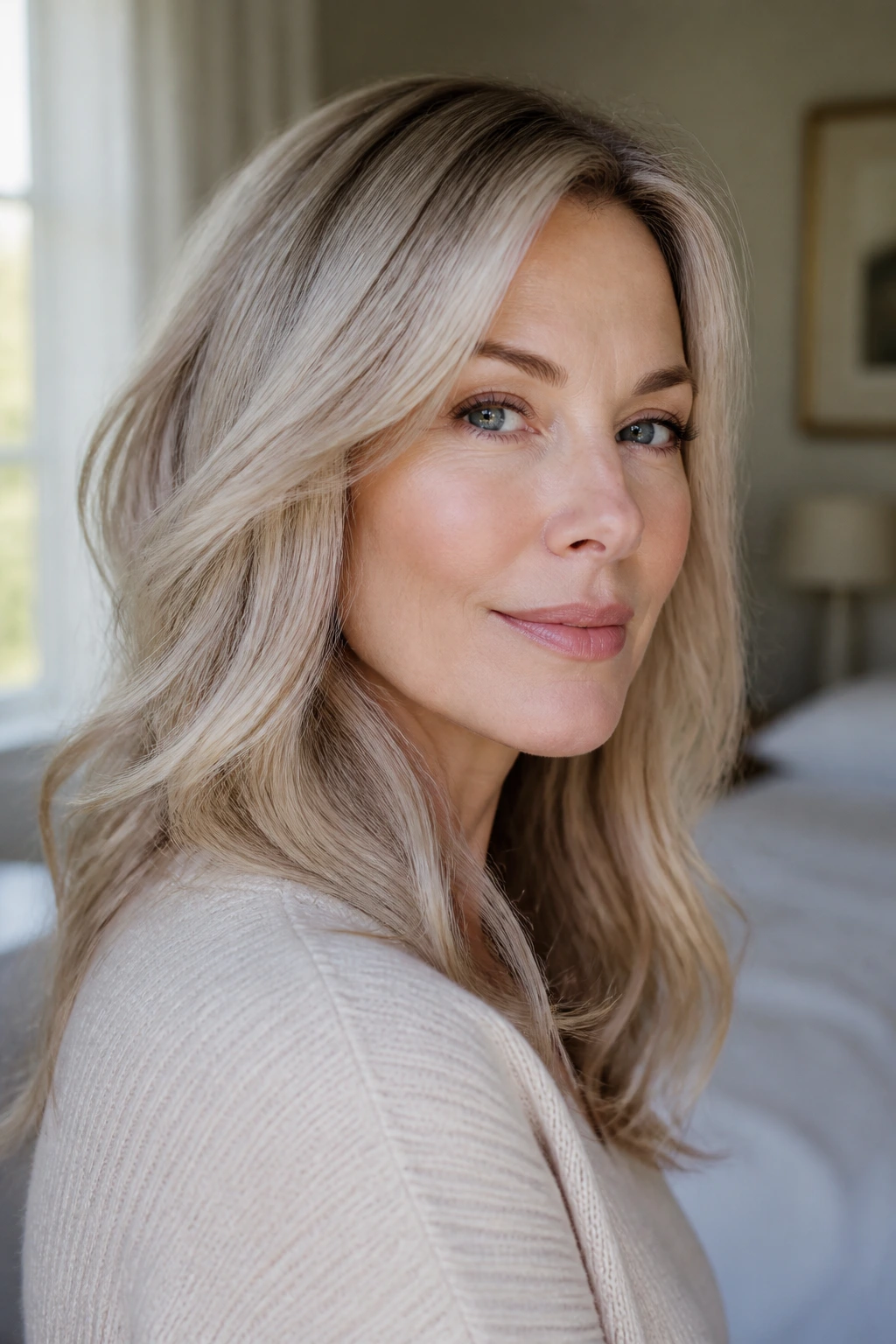
Ash beige blonde is the answer when brass is the enemy and pure silver feels too cold. It’s a cooler blonde, yes, but the beige in it keeps the shade from going dull or chalky. On cool-toned skin, that balance can be a lifesaver. It keeps redness down and gives the complexion a cleaner edge.
This shade works well when hair has a lot of gray already mixed in. The ash tones blend into the silver strands instead of fighting them, and the beige keeps the overall result from looking flat. That’s the trick. Too much ash, and the hair looks dusty. Too much gold, and the tone goes muddy.
Best for: cool undertones, pink undertones, and anyone whose hair pulls orange every time it sees a dye bowl.
Ask for: beige ash highlights with a violet or blue-based gloss if brass has been a problem before.
7. Bronde with Blonde Ribbons
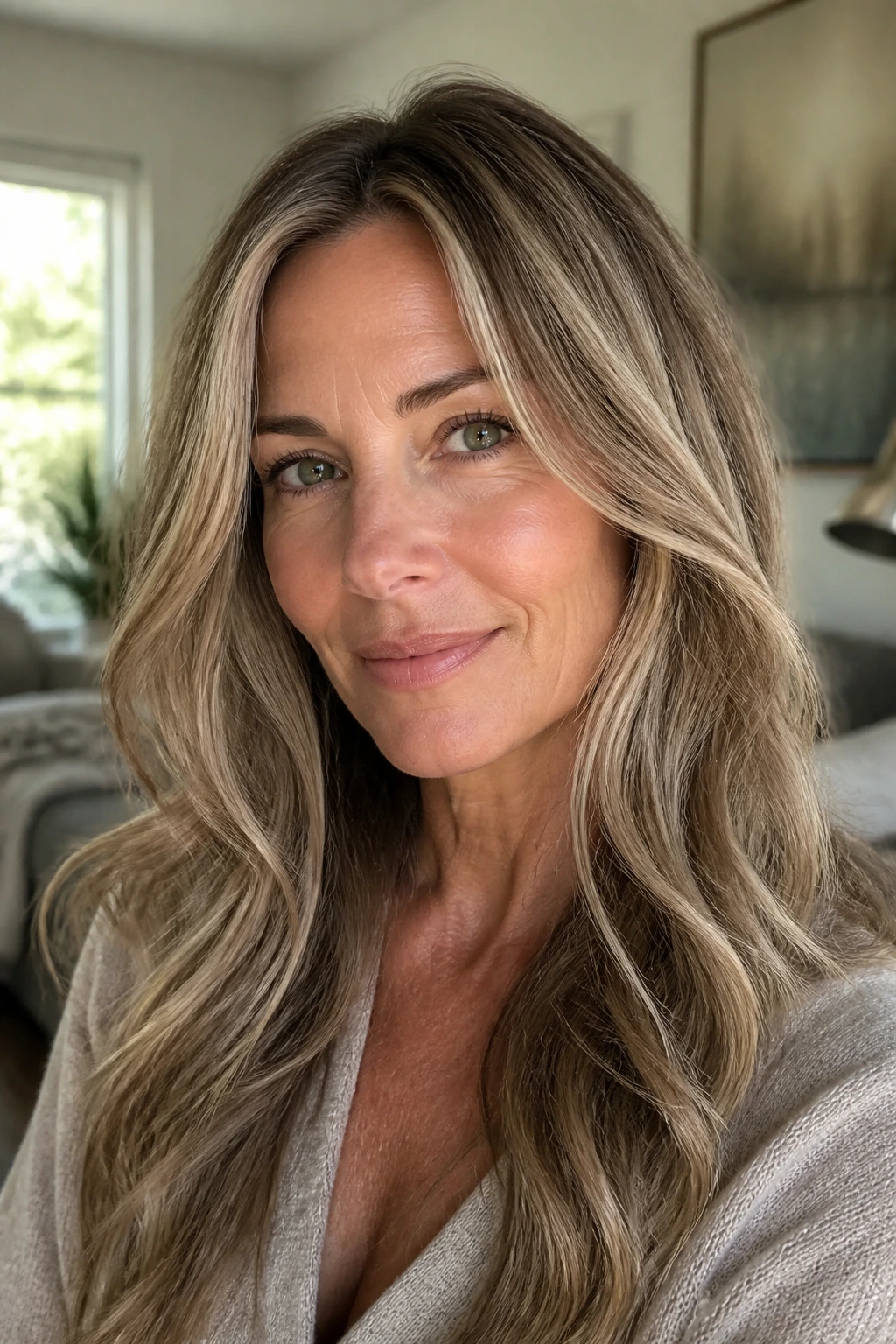
Bronde with blonde ribbons gives you breathing room. It’s not fully blonde, not fully brunette, and that in-between space is where a lot of women over 40 feel most at home. You still get light around the face and through the surface, but the darker base keeps the color grounded.
The ribbons should be thin and scattered rather than chunky. That detail matters. Thin ribbons blur into the natural hair as it grows, which means the color looks softer for longer. It also helps if your hair is wavy or layered, because the light pieces catch in motion instead of sitting in one loud block.
Who should try it
If you’re going blonde for the first time, start here. It’s forgiving. If you’re trying to stretch salon visits, this is one of the smartest choices on the list. And if you have dark brows and don’t want them fighting the color, bronde usually keeps the balance right.
8. Creamy Platinum with a Soft Shadow Root
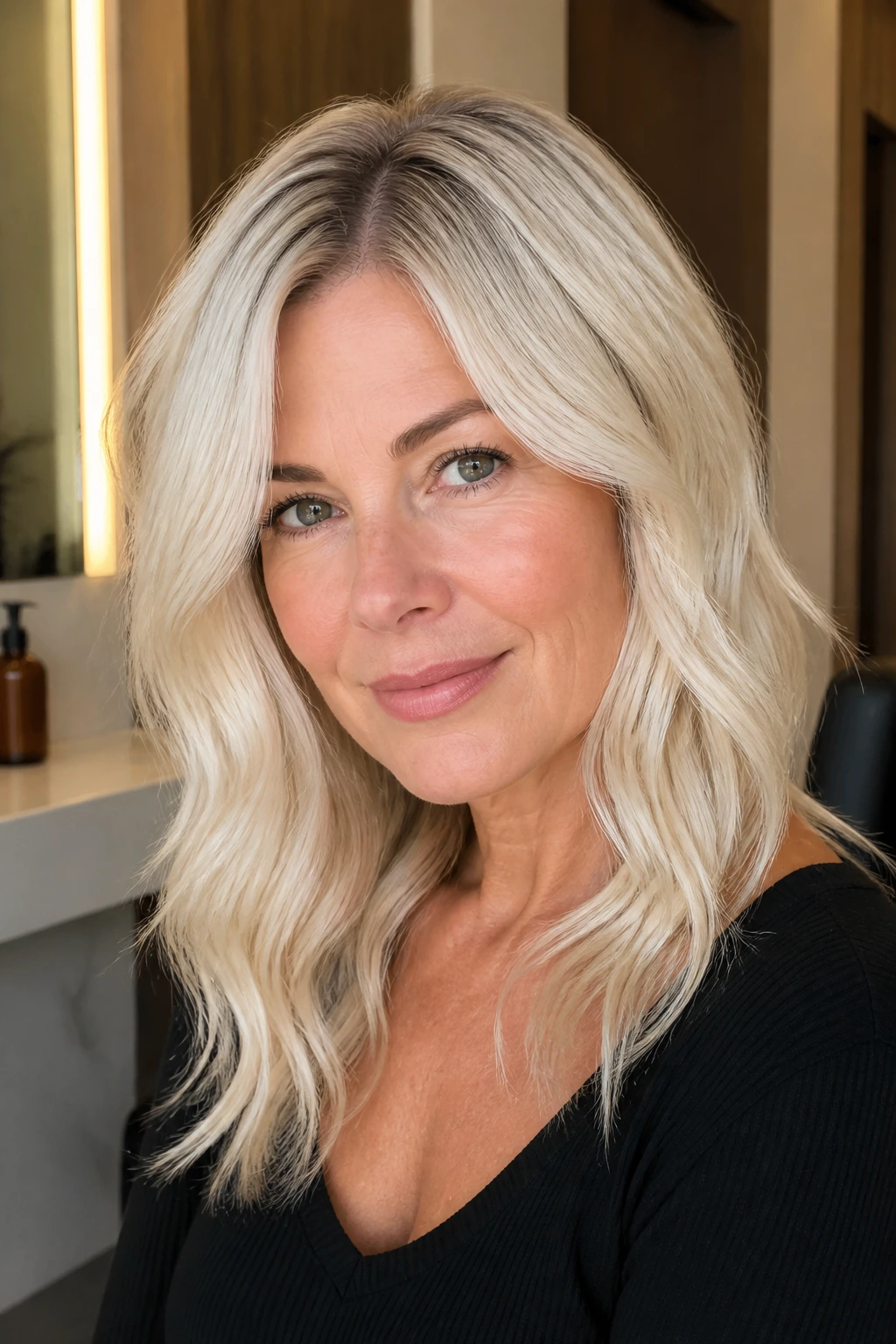
Creamy platinum with a shadow root is for the woman who wants the bright blonde and the real-world schedule. The root shadow keeps the base from looking painted on, while the creamy tone softens the platinum so it doesn’t go icy and brittle in the light. Done well, it looks clean. Done badly, it looks like a warning label.
This shade needs healthy hair or a good repair plan. I’m not going to pretend otherwise. Light blonde exposes split ends, porosity, and damage that darker shades hide. But if your hair can handle it, the payoff is crisp and modern.
Best for: short to medium cuts, good density, and people who don’t mind toner upkeep.
Color note: ask for a beige or pearl toner, not a pure white finish. That little bit of cream keeps it wearable.
9. Vanilla Latte Blonde Layers
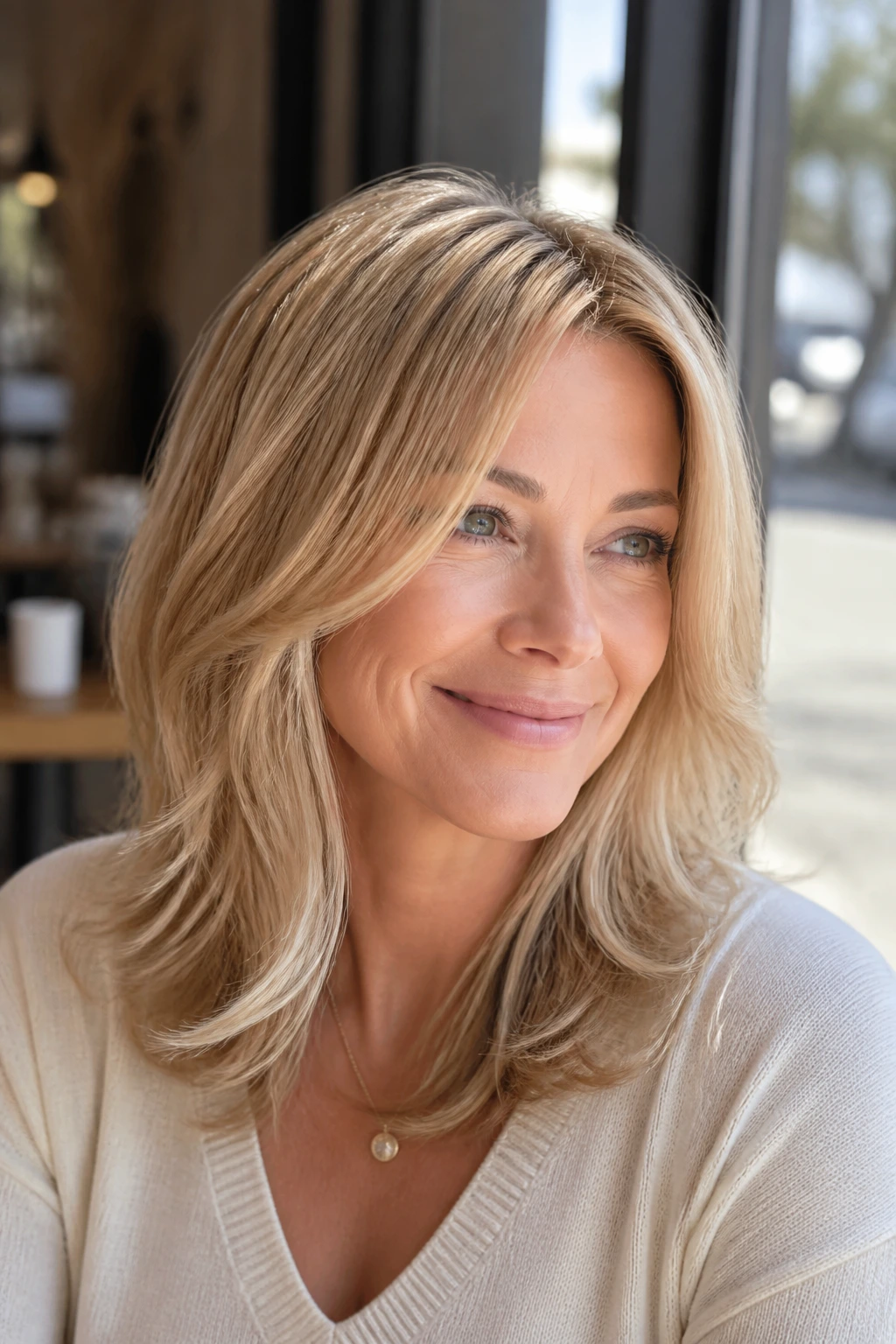
Vanilla latte blonde has a soft, milky finish that flatters layered cuts. Think creamy beige with a whisper of warmth, not yellow, not platinum, not muddy. It’s the kind of blonde that sits quietly until the light hits the layers, and then the whole head starts moving.
Layers matter here because the color depends on seeing different depths. Without movement, the shade can look too plain. With it, vanilla latte blonde gets a gentle lift that feels natural and grown-in rather than overworked.
This is a good choice if you like a polished look but don’t want to maintain a very cool or very warm tone. It lives in the middle, which is usually where the most flattering shades land.
10. Old-Money Beige Blonde
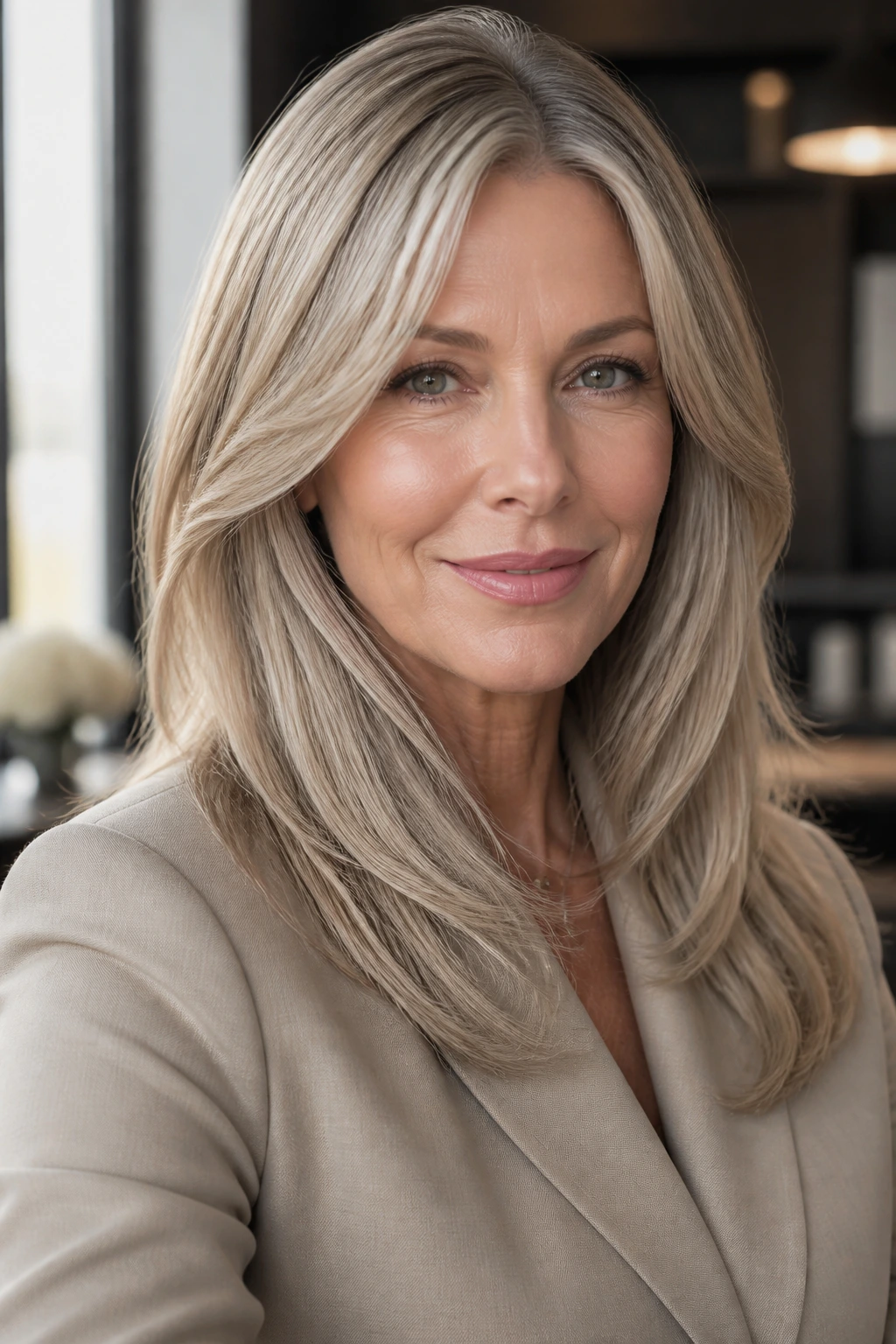
Old-money beige blonde is less about trend and more about polish. The shade is neutral, soft, and understated in a way that reads expensive because it doesn’t look desperate to be noticed. The root is usually kept soft, the blonde stays beige instead of gold, and the whole thing relies on shine more than brightness.
On women over 40, I think this is one of the easiest shades to wear with tailored clothes, clean makeup, and simple cuts. It does not fight for attention. It sits next to a strong brow, a blazer, or a neat bob and makes all of it look better.
What makes it different
It’s not flat. That’s the mistake people make. The best version has thin highlights, a touch of lowlight, and a glossy finish that makes the hair look cared for. Not fussy. Just cared for.
11. Silver-Blonde Blend for Grey Transition
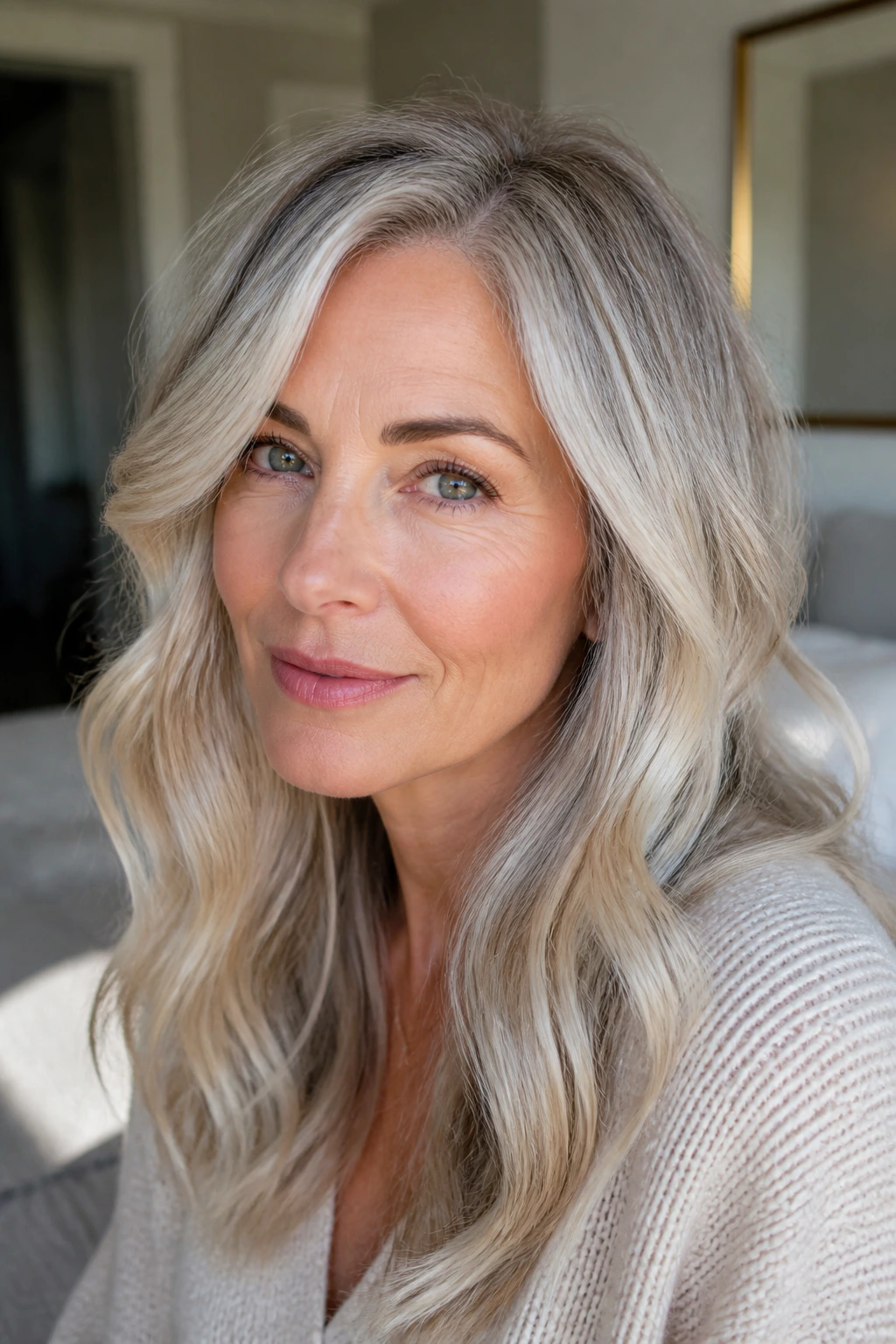
Silver-blonde blend is the shade I reach for when someone wants to stop treating gray like a problem to be hidden. This is not a “cover everything” color. It’s a blending job. Silver and blonde sit together, so regrowth looks softer and the gray strands become part of the design.
The trick is balance. Too much silver and the hair can look severe. Too much blonde and the transition loses its purpose. A good colorist will weave cool blondes, pearly lights, and maybe a few lowlights through the hair so the gray feels intentional. That makes the grow-out easier too, because you are not chasing a hard line.
Best for: salt-and-pepper hair, especially if the natural silver is concentrated at the temples or crown.
Practical note: this shade often looks best with a gloss every 6 weeks, because silver tones fade fast under heat and hard water.
12. Sandy Blonde Lob
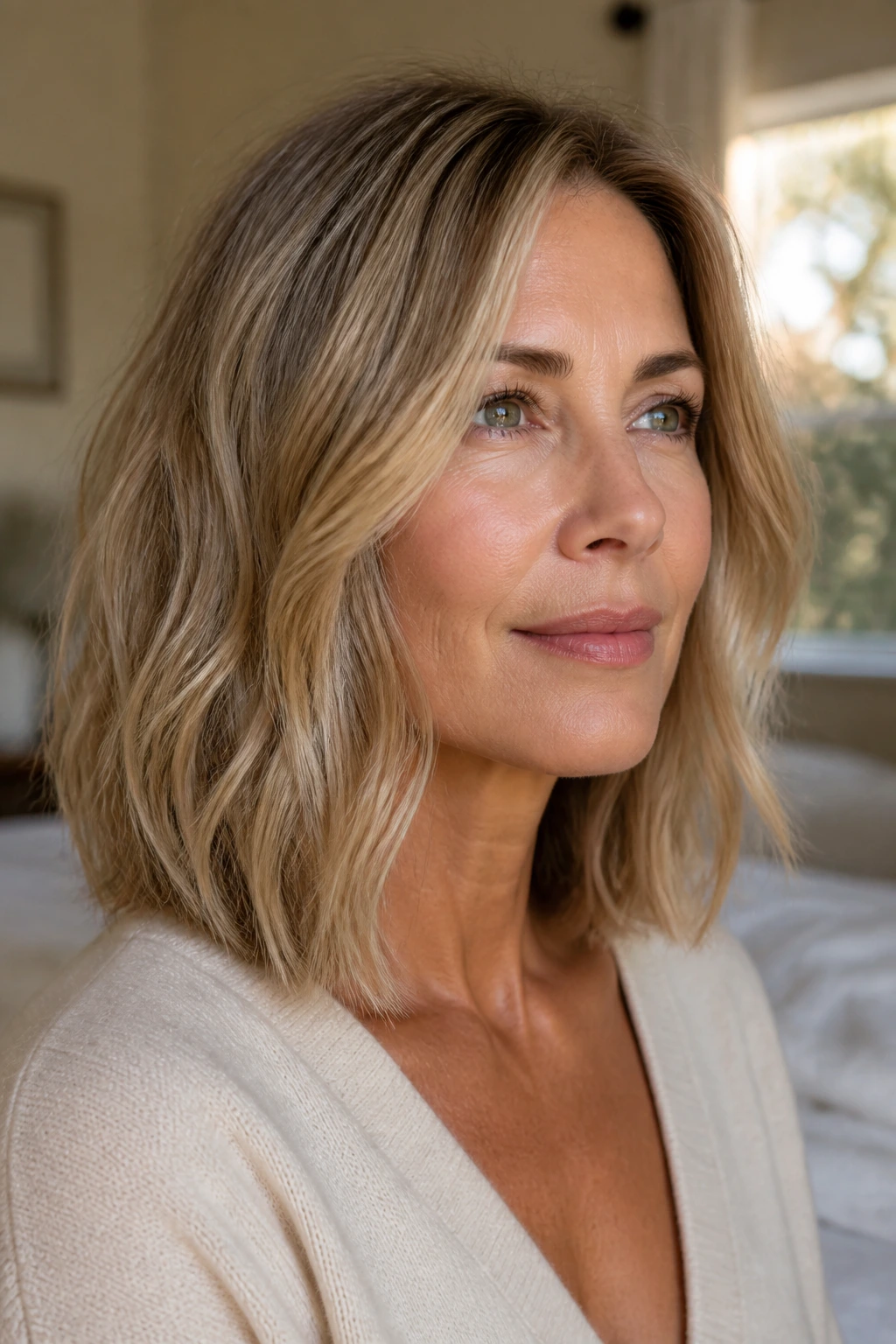
Sandy blonde on a lob has that sun-faded look without the extra yellow. It’s a muted blonde — a little beige, a little tan, a little cool around the edges — and it works especially well on shoulder-grazing cuts because the length gives the color room to breathe.
A lob can look heavy if the color is too solid. Sandy blonde breaks that up. Painted pieces through the mids and ends keep the cut from sitting like a block, which is a real issue on medium-length hair. If your hair is fine, this shade can also make the texture look fuller because the tonal variation adds visual thickness.
Best for: easy styling, air-drying, and people who want blonde that looks relaxed rather than salon-perfect all the time.
13. Golden Beige Highlights
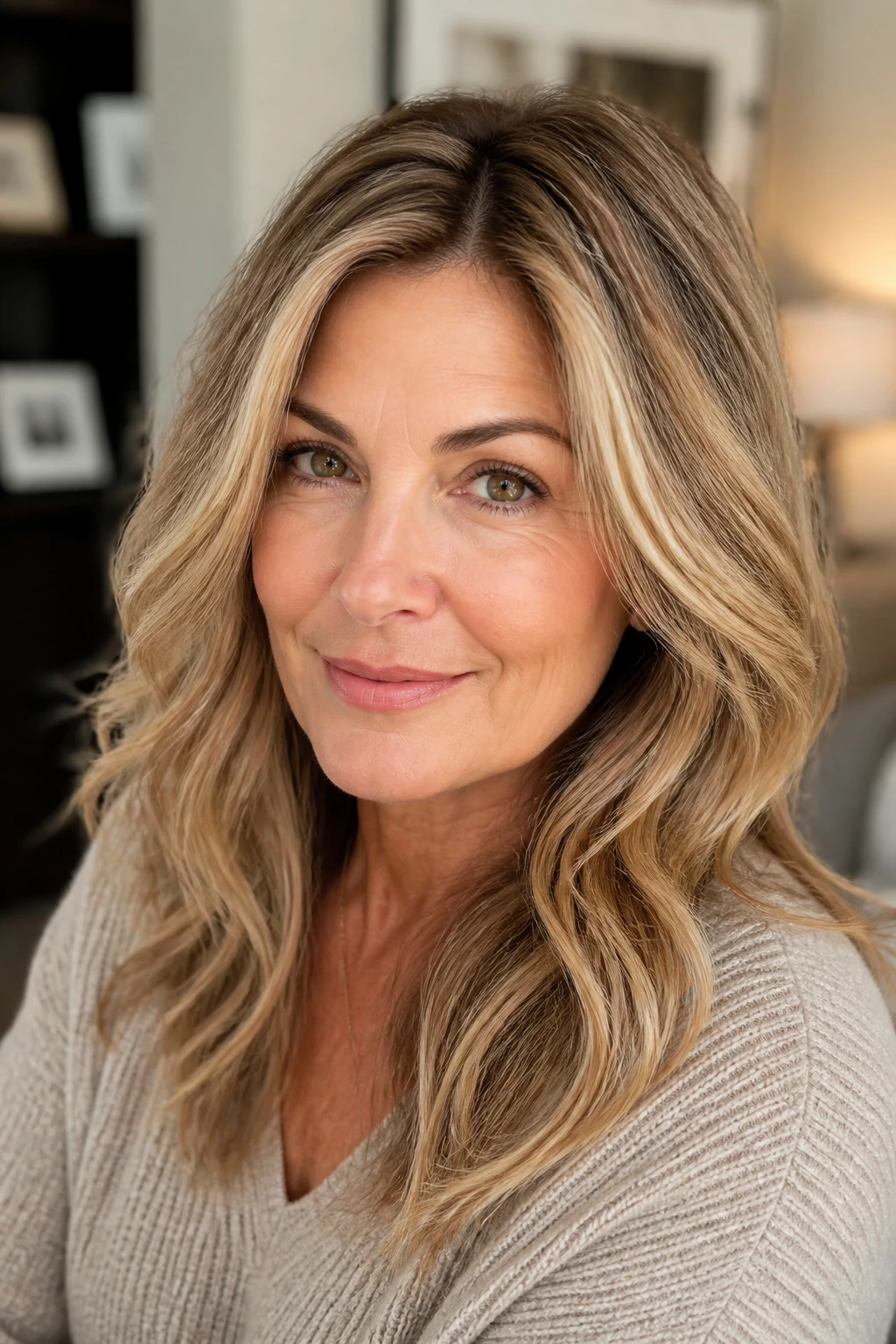
Golden beige highlights are the fix when the face needs warmth. They’re softer than gold and less yellow than classic honey, which makes them useful on skin that looks a little tired next to cool blonde. The beige cuts the sweetness, so the highlight still feels grown-up.
This shade is especially useful if your natural base is a level 5 or 6. You don’t need a massive lift to make it work. In fact, too much lift can kill the richness. A few warm beige pieces around the face and crown can do more than a full head of pale blonde.
A small but important detail
The highlights should not all be the same width. Mix fine and medium pieces so the color doesn’t look like one layer of paint. That’s how you keep warmth from tipping into brass.
14. White Gold Pixie
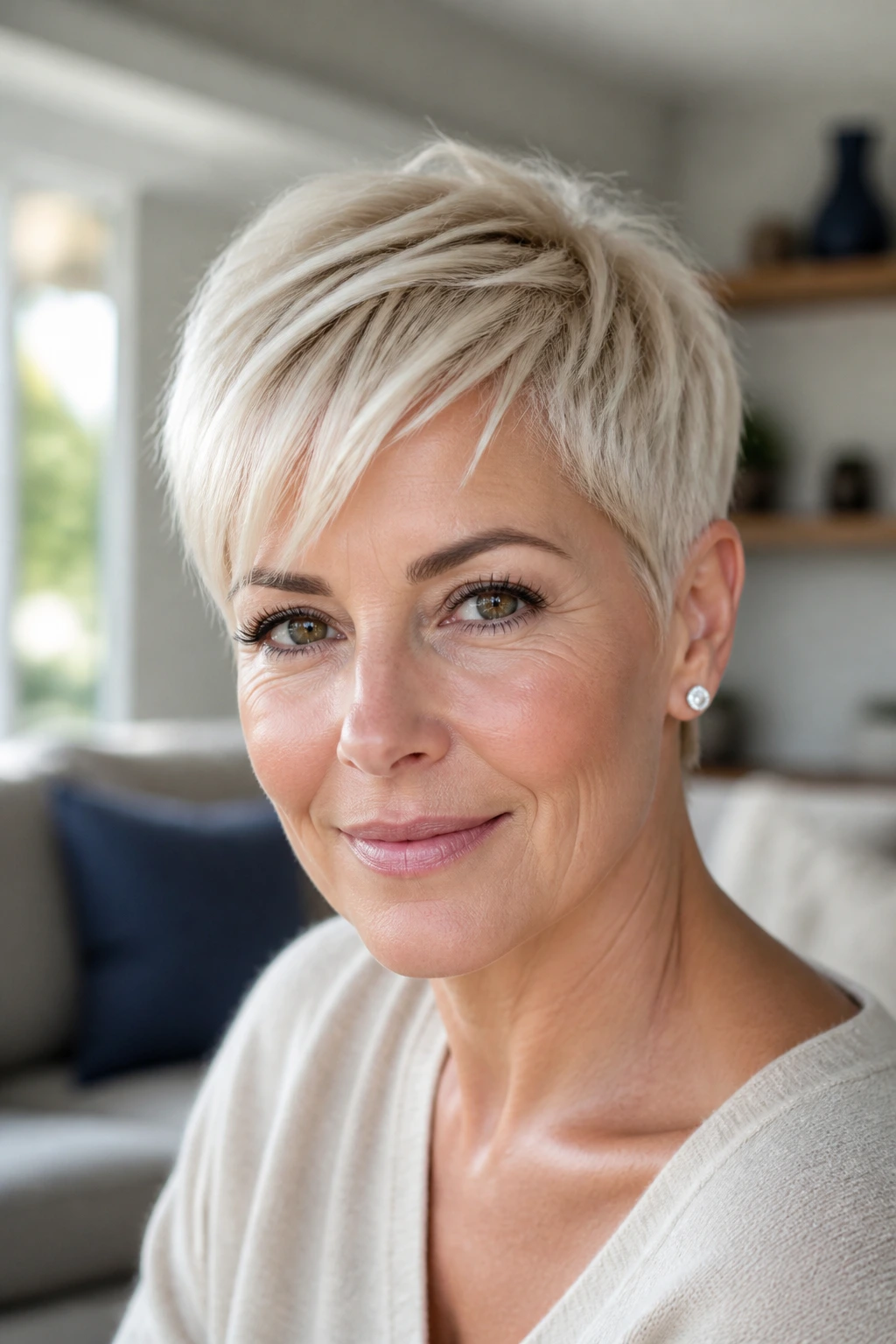
White gold pixie is tiny hair with a lot of attitude. The cut is short, so every tone shows immediately. White gold sits between platinum and champagne, which keeps the pixie bright without making it stark. On women over 40, that softness matters because a very icy short cut can look harder than intended.
The maintenance is real. Short blonde hair needs precise toning and regular trims, because dark regrowth appears fast on a cropped shape. But the payoff is excellent if you want the face lifted and the style kept crisp.
Best for: strong brows, good bone structure, and anyone who likes a sharp outline rather than soft layers.
Skip if: you hate salon upkeep. A pixie this light does not behave like a low-maintenance bob. It has opinions.
15. Dirty Blonde with Bright Ends
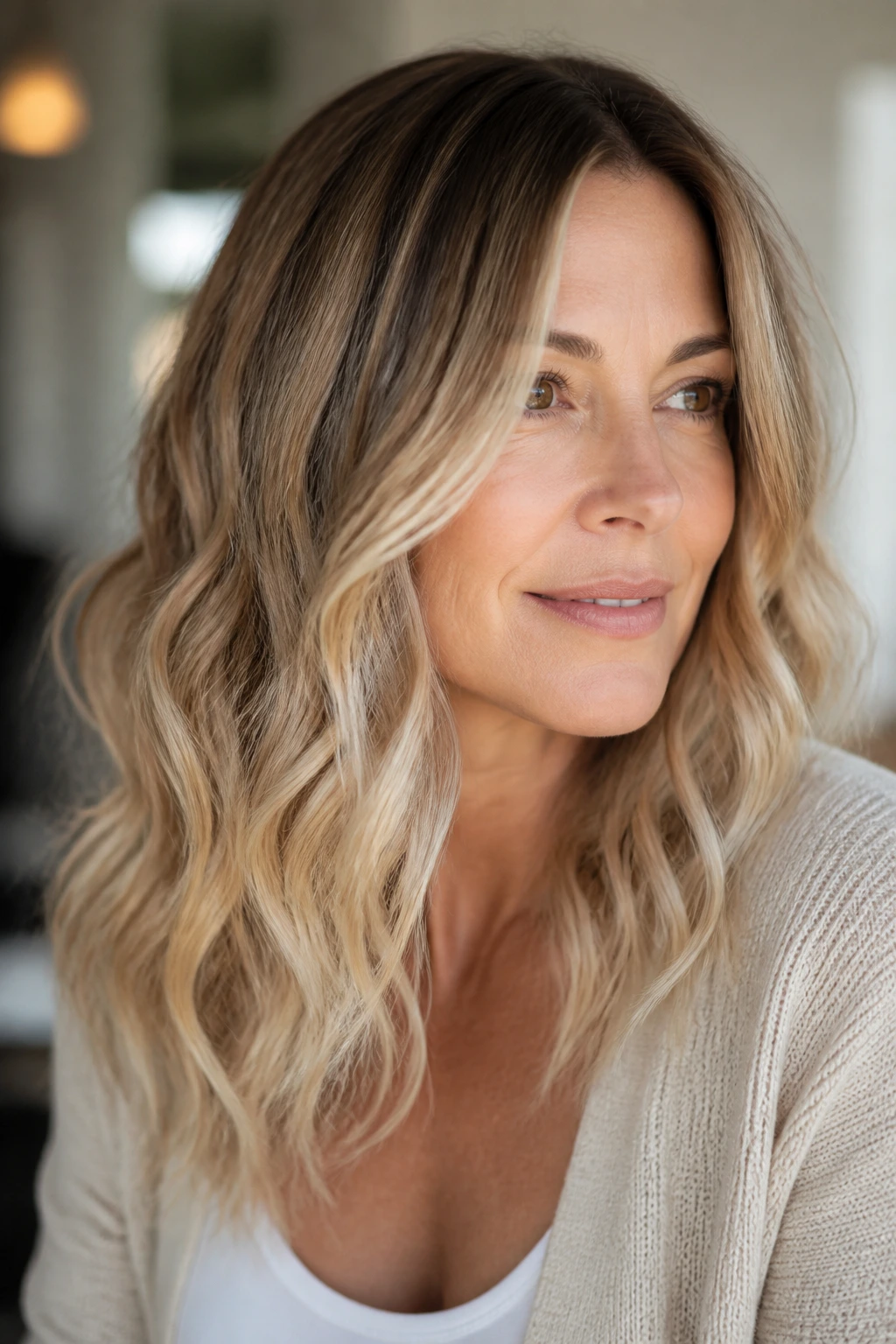
Dirty blonde with bright ends is the smartest kind of low-maintenance blonde. The root stays deeper, the mids stay soft, and the ends get a brighter finish so the whole look still feels alive. It’s a lived-in color, and that usually means it ages better than something heavily bleached from root to tip.
This works beautifully on wavy hair, because the movement breaks up the tones. On straight hair, the contrast is more obvious, which can be good if you want to see the color shift. The key is keeping the dark base intentional, not accidental. It should look designed, not like an overdue touch-up.
If you want blonde that can survive a few busy weeks, this is one of the best bets in the pile.
16. Pearl Blonde Gloss
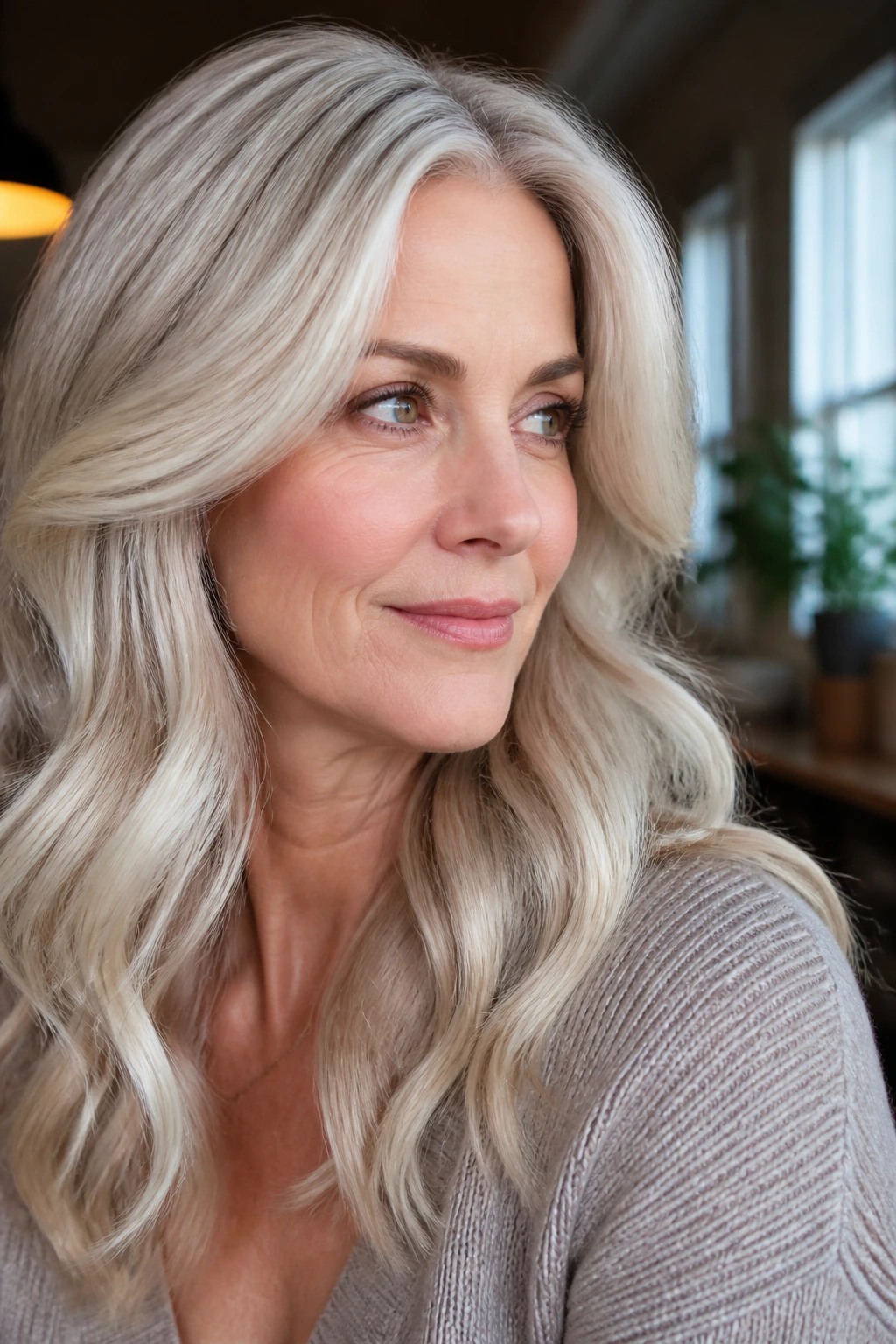
Pearl blonde gloss behaves like a filter, but on real hair. It’s soft, luminous, and slightly opalescent, which means it smooths out roughness in the tone without turning the hair flat. On women over 40, pearl tones can be especially kind to skin that has a bit of redness or unevenness.
This is less about dramatic lightening and more about finish. The base usually needs to be fairly light already, then the gloss shifts it toward a pearly sheen. If your hair is porous, this can be magic for about two weeks and then fade fast, which is why the maintenance matters.
Best for: people who already have light blonde hair and want it to look softer, cleaner, and shinier.
Tip: use a color-safe shampoo and cool rinse water, or the pearl finish disappears faster than you’d like.
17. Scandi Blonde with a Sleek Finish
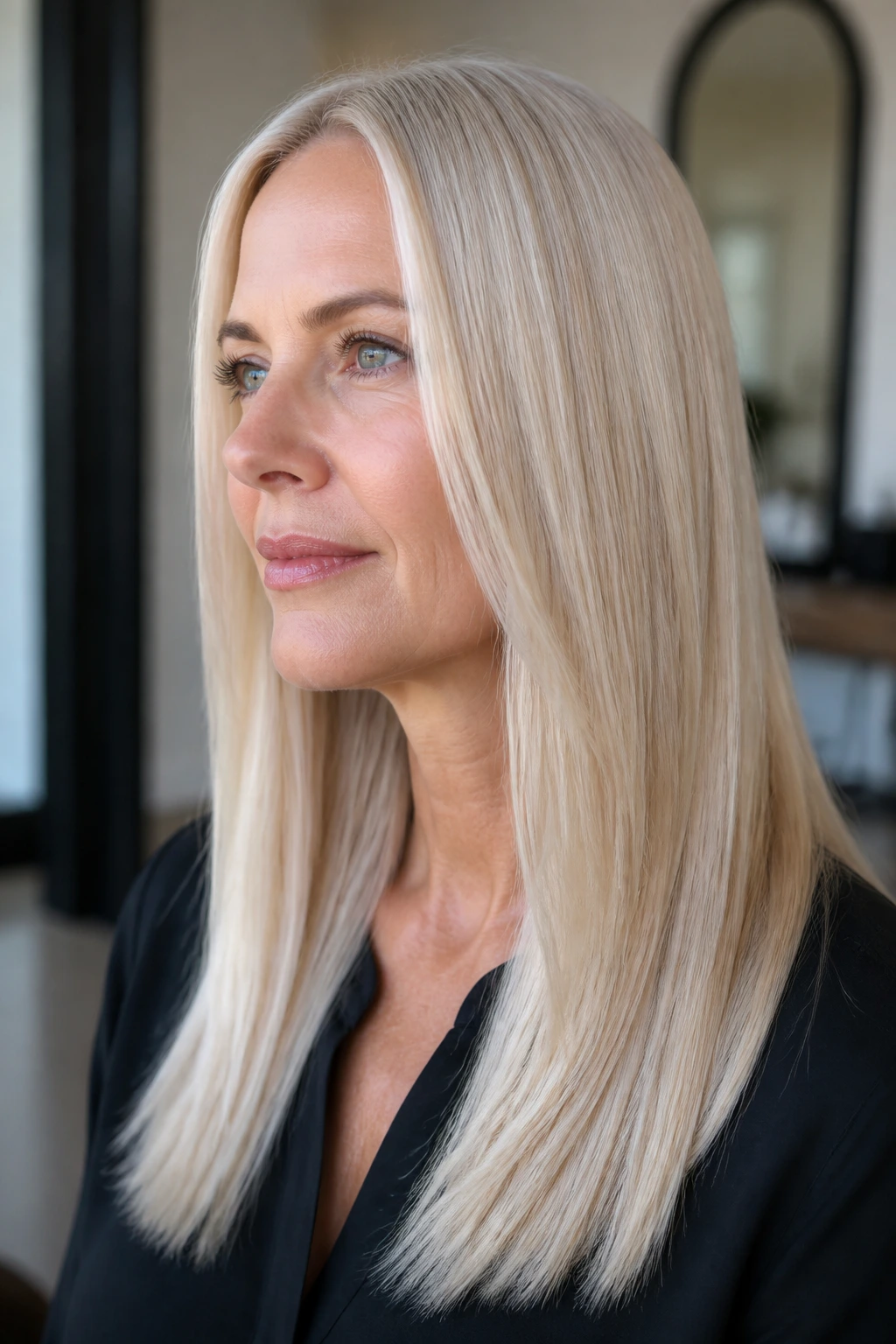
Scandi blonde with a sleek finish is spare, bright, and unforgiving in a good way. It’s the kind of blonde that relies on precision: light enough to read almost pale, but polished enough that the tone stays clean. On straight or smooth blowouts, it looks modern and deliberate.
This shade is not the easiest one on the list. I’d be a little cautious with it if your hair is very fragile or if you are trying to avoid toner appointments. Still, when the hair is healthy and the cut is clean, Scandi blonde can look striking without needing tons of extra styling.
Best for: cool skin, strong brows, and sleek cuts that hold shape.
Watch for: over-toning. If it goes too ashy, it can lose the lightness that gives it its punch.
18. Maple Blonde
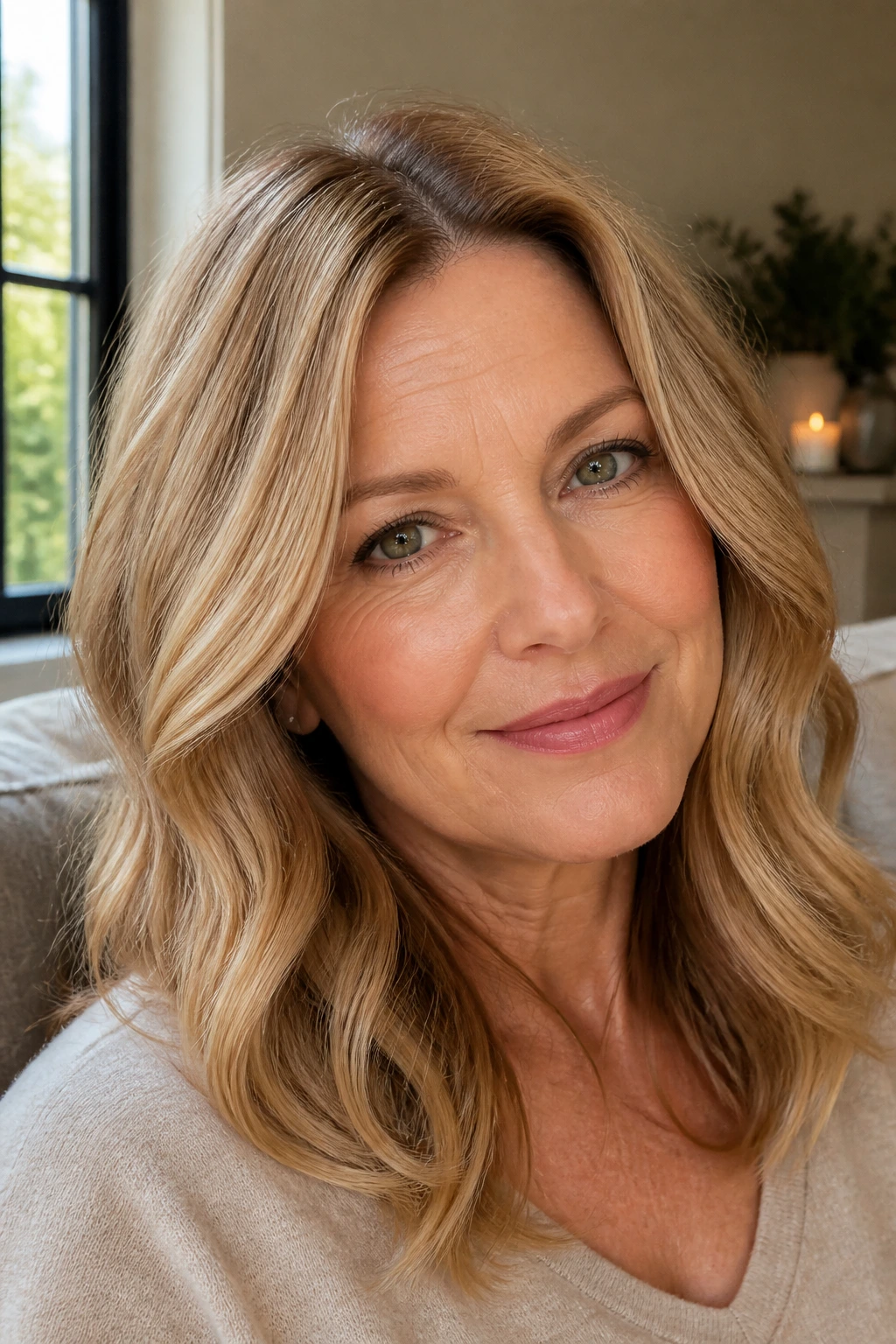
Maple blonde sits between brunette warmth and blonde lift. It’s richer than beige, deeper than honey, and a little more autumnal than most blondes. That’s what makes it useful for women over 40 who want softness without going pale.
This shade tends to play nicely with medium-to-dark natural bases. It doesn’t look like a dramatic transformation, which is often the point. Instead, it gives the hair a warm glow that shows up in indoor light and feels especially nice when the hair is styled with a bend or wave.
Why it’s worth considering
Maple blonde keeps the face from looking too cool or washed out, and it often pairs well with brows that aren’t super light. It feels rich, not loud. That’s a useful line to hold.
19. Strawberry Blonde with a Warm Blonde Base
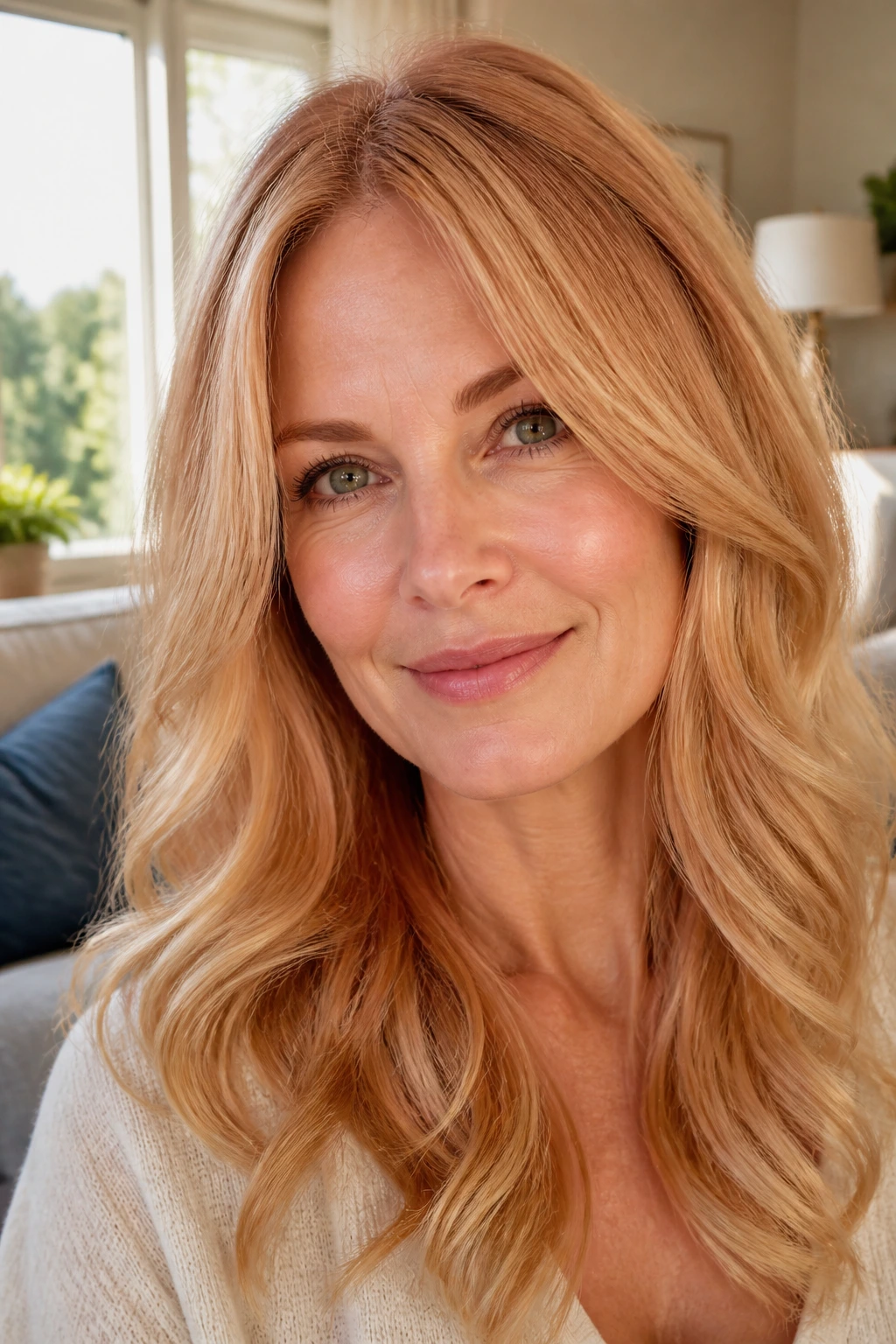
Strawberry blonde is still blonde, and it is better than people give it credit for. The red sits lightly over a warm blonde base, which means the color reads as soft coppery blonde rather than full red. On women over 40, that hint of warmth can be lovely because it lifts the skin without needing a stark contrast.
The best versions keep the red light and luminous. Heavy copper can get too intense fast. A delicate strawberry blonde, though, looks fresh, especially if your natural hair already has some warmth in it. It also works well when you want to shift away from ash tones and into something that feels more alive.
Best for: fair to medium skin, green or hazel eyes, and anyone tired of beige-on-beige hair.
20. Smoky Blonde Balayage
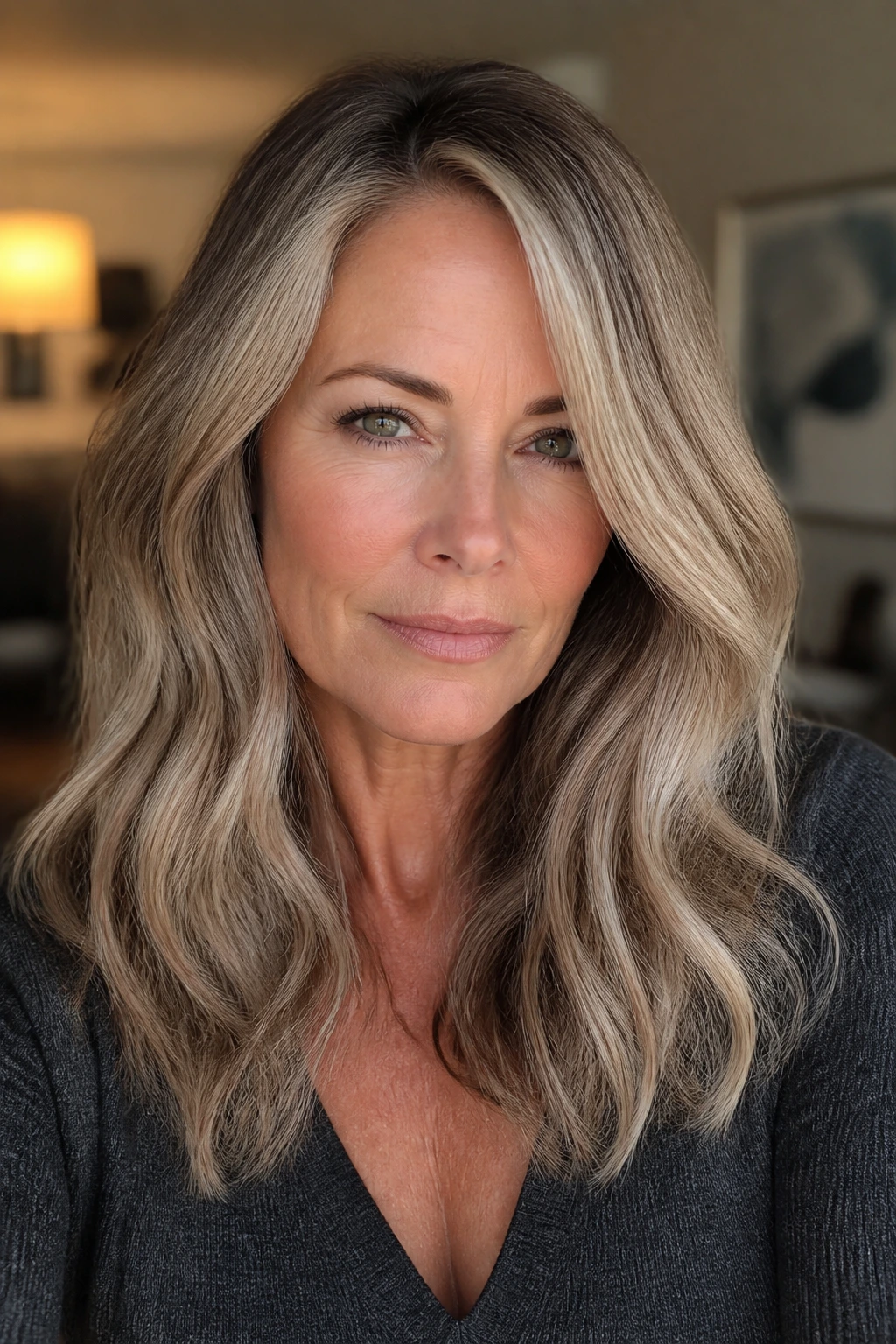
Smoky blonde balayage cools down warmth without going gray. That is the whole trick. The shade has a muted, smoky cast that takes the edge off brass, but it still keeps enough blonde in the mix to feel light and dimensional.
Balayage helps because the color placement stays soft around the root and heavier through the lengths. That means you can wear smoky blonde without getting the helmet effect that some cool blondes create. On layered cuts, the smoky pieces move through the hair and add a little depth every time it swings.
This is a strong choice if your hair has a habit of pulling orange. It gives you control without making the color look stale.
21. Dimensional Balayage with Low Lights
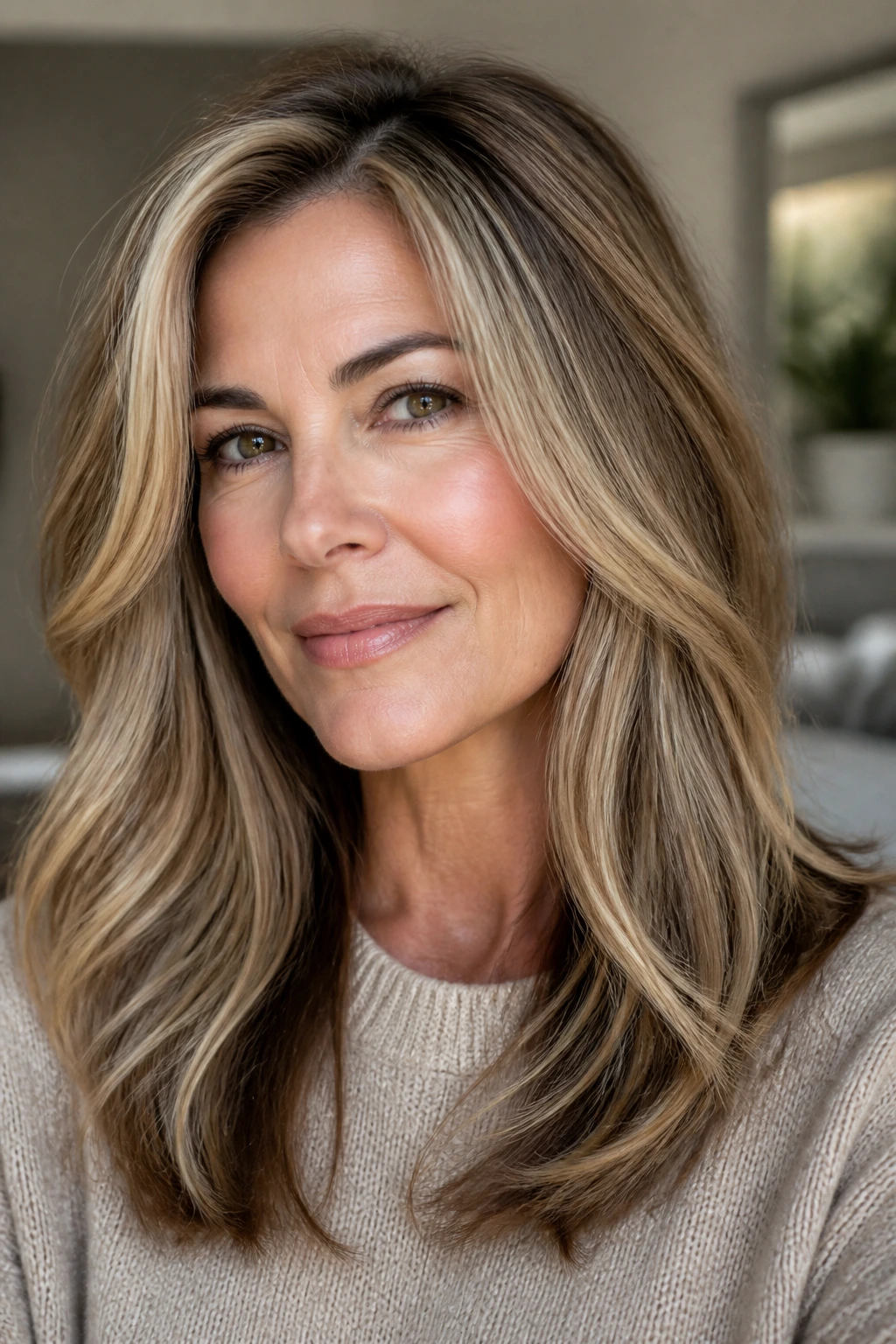
Dimensional balayage with lowlights is the trick for making hair look fuller. Blonde alone can sometimes expose every fine strand, which is the opposite of what you want if volume is the goal. Add lowlights, though, and suddenly the hair has places to disappear and reappear. That visual depth matters.
I like this approach when someone wants to stay blonde but doesn’t want the color to feel obvious. The highlights brighten; the lowlights keep the shape honest. The result can look much more expensive than a single-process blonde, because the eye keeps moving through the hair instead of landing on one flat color.
Best for: finer hair, layered cuts, and anyone who wants blonde to look thicker.
Salon note: ask for lowlights that are only one or two levels deeper than your base. Too dark and the contrast gets choppy.
22. Honey Butter Melt
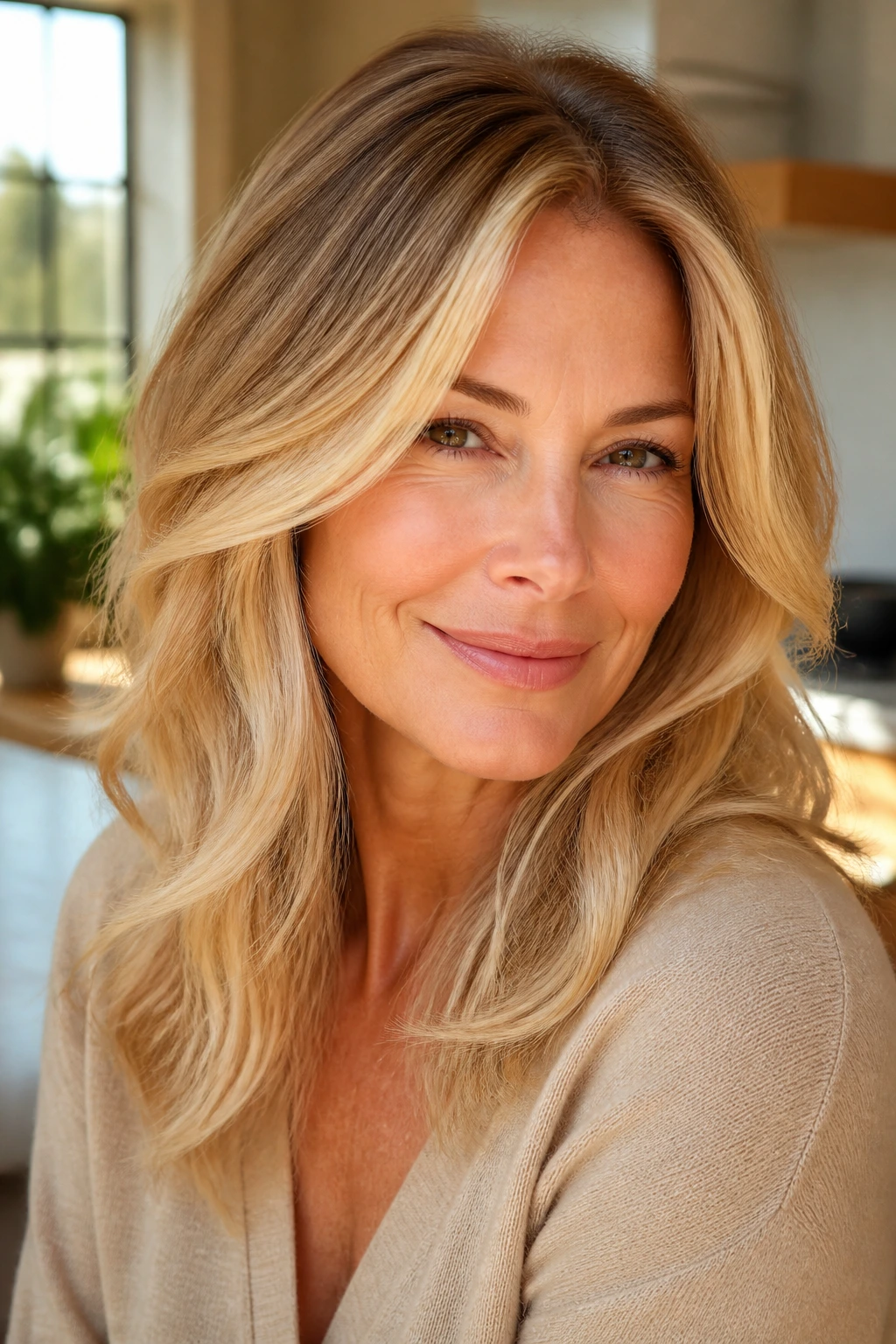
Honey butter melt gives you warmth at the root and softness through the ends. It’s a deliciously untechnical name for a practical color idea: keep the top a richer honey tone, then melt into buttery blonde where the sun would hit hardest. That gradient makes grow-out easier and gives the whole style a soft, glossy shape.
The warmth here is more creamy than brassy. That difference matters. Butter blonde can look yellow if the toner is sloppy, but a true honey butter melt should read as soft, shiny, and dimensional. It works best when the hair has some wave or layering, because the color change becomes more visible in movement.
Best for: warm skin, medium bases, and shoulder-length or longer cuts.
23. Rooted Icy Blonde
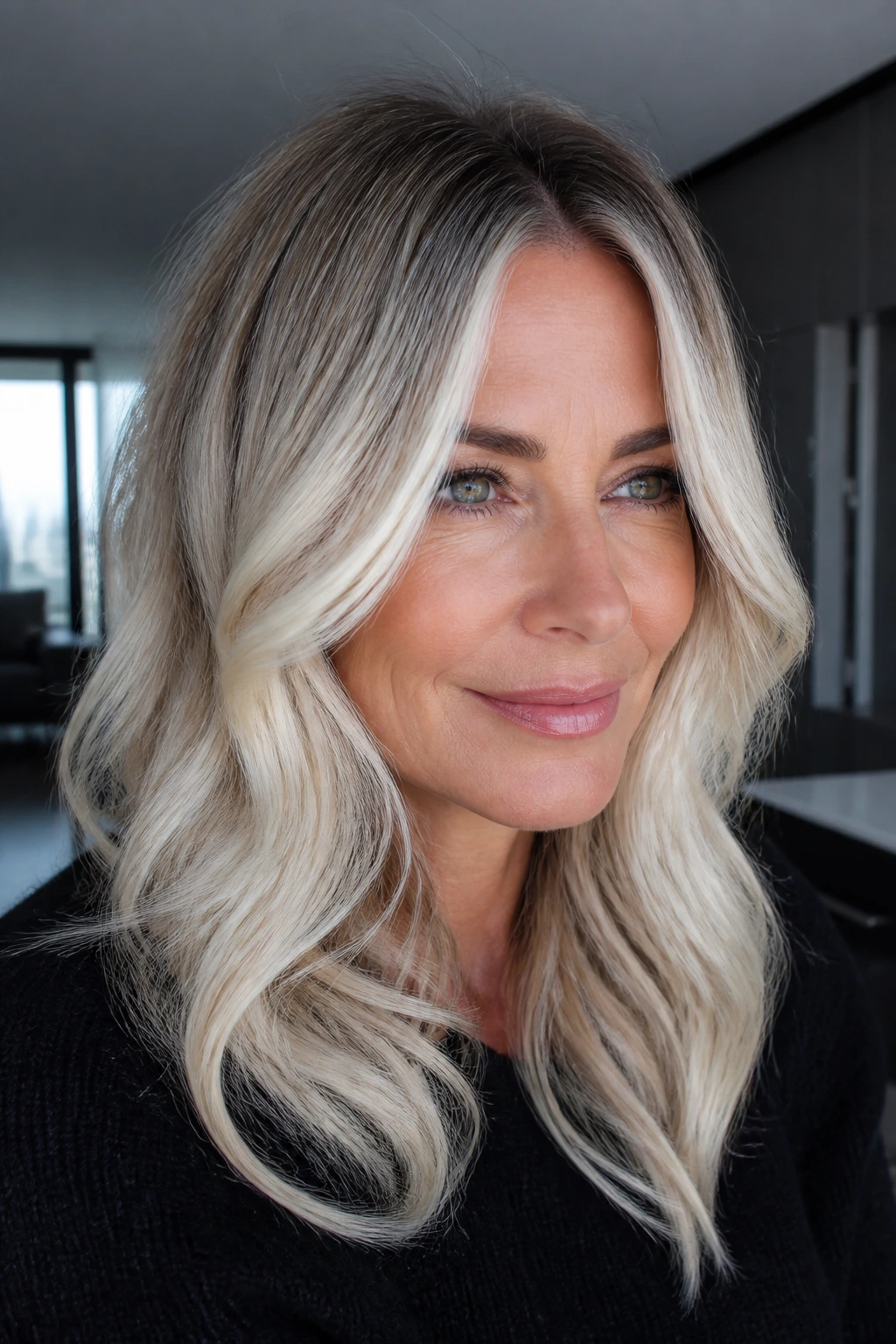
Rooted icy blonde is for people who want contrast, not chaos. The darker root keeps the color grounded; the icy ends bring the drama. On women over 40, the root is doing a lot of the practical work here. It keeps the grow-out from looking too severe and gives your face a softer frame than all-over platinum would.
This shade needs care. Not panic, but care. If your hair is porous or fragile, icy blonde can lose tone fast and start looking dry. A good cut helps too. Sleek layers or a blunt edge keep the style from feeling wispy.
Best for: those who like crisp, cool color and don’t mind upkeep.
Skip if: you want a wash-and-forget blonde. This is not that.
24. Toffee Blonde Bob
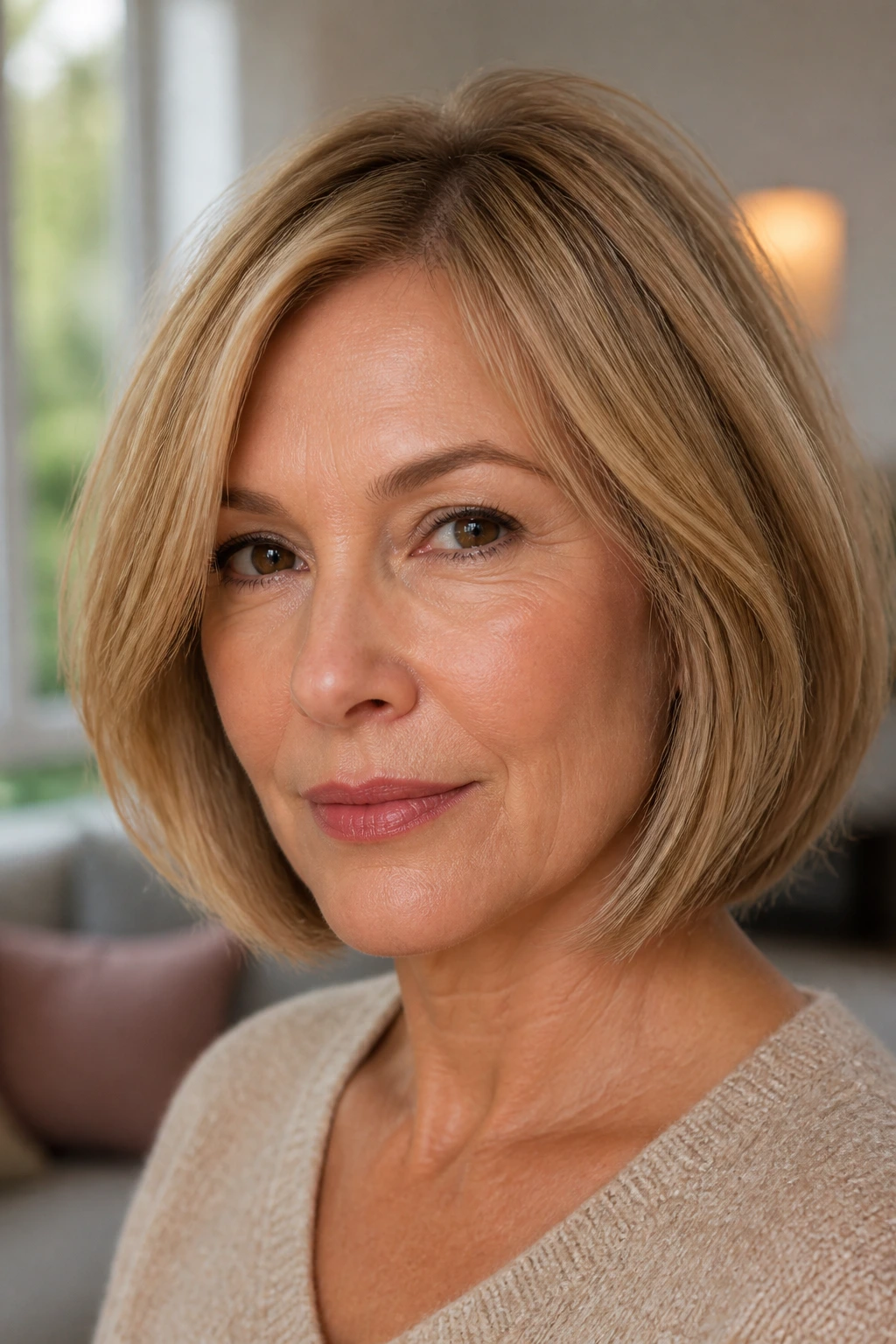
Toffee blonde on a bob looks expensive when the cut is clean. The shade is warmer than beige, softer than caramel, and a little richer than classic blonde. On a bob, that warmth adds shape. It makes the hair look dense around the outline, which is useful if the ends have thinned over time.
The color also pairs well with darker brows and deeper eye color. There’s enough contrast to keep the face from fading into the hair, but not so much that the color starts wearing you. It’s a tidy, polished kind of blonde. Not fussy. Just neat.
A chin-length bob or a softly angled bob tends to show this shade best, because the line of the cut gives the toffee tone something to sit on.
25. Soft Bronde Shag
Soft bronde shag is the move when movement matters more than brightness. The shag cut already brings texture, and the bronde color keeps the look from feeling too heavy. Blonde pieces around the face and through the outer layers stop the cut from collapsing into one dark shape.
This is one of my favorite ideas for hair that has gotten a little finer or flatter with time. The shag adds lift; the bronde adds variation. Together, they do what a single blonde shade cannot. The color looks casual, but it’s not random. It’s carefully messy, which is a harder thing to pull off than people think.
Best for: wavy hair, layered cuts, and anyone who likes a little edge without going punk about it.
26. Sunlit Beige Lob
Sunlit beige lob catches light in strips, not slabs. That distinction matters. A lob gives enough length for highlights to move through the hair, while beige keeps the color from going too yellow or too icy. The result is soft brightness that looks believable.
This is an easy shade to live with because it doesn’t demand a dramatic style to look right. Air-dry it with a bit of wave, blow it out smooth, tuck it behind one ear — it still behaves. The color is doing subtle work in the background, which I think is the best kind of hair color if you have other things to do with your morning.
Best for: neutral undertones and medium-length cuts that need a little life.
27. Champagne Money Pieces
Champagne money pieces do a lot of work for very little dye. You keep the base softer and lighter the front section around the face, usually with thin, bright pieces that sit near the hairline and the part. That placement lifts the face fast without needing a full head of blonde.
The champagne tone keeps the brightness from feeling harsh. It’s lighter than beige, but still creamy enough to look elegant against skin that has changed a bit in tone or texture. If you’re not ready to go fully blonde, this is a useful halfway point.
Best use case
This works especially well on shoulder-length hair, where the front pieces can fall cleanly and frame the face. It’s also a smart choice if you wear your hair up often, because those bright front pieces still show when the rest is tied back.
28. Beige Silver Transition Blonde
Beige silver transition blonde makes gray blending look intentional. That’s the whole point. Instead of trying to disguise silver strands, you fold them into a beige blonde palette so the natural gray and the colored pieces stop arguing with each other.
The best versions keep the overall tone soft and neutral. You don’t want a stark silver cap unless that’s the look you’re after. A good transition blonde often uses fine highlights, some cool lowlights, and a beige glaze to tie everything together. It can be one of the most forgiving options on the list because it respects what your hair is already doing.
Best for: people growing out gray and wanting the process to look polished, not patchy.
29. Cream Soda Blonde
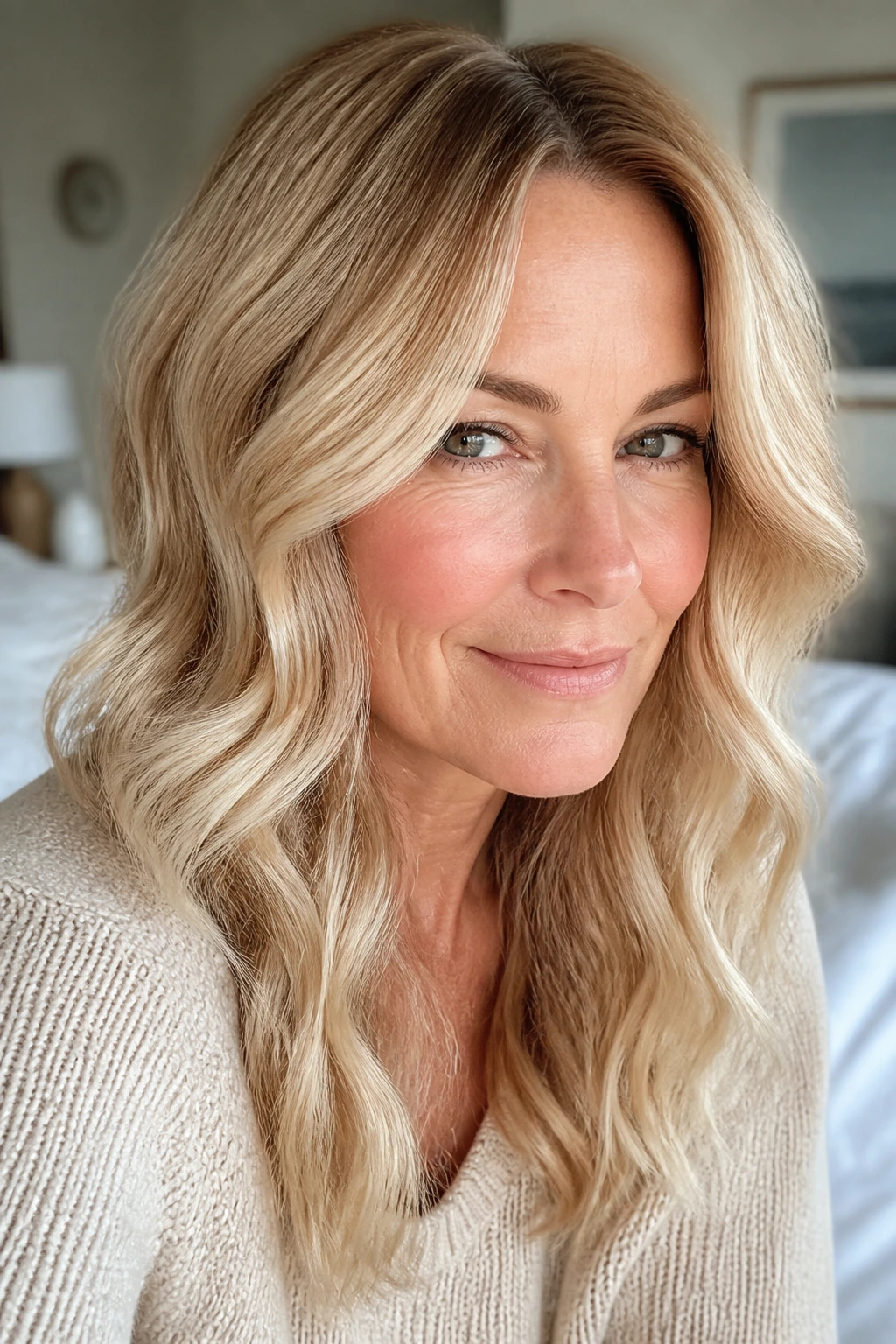
Cream soda blonde is what happens when beige blonde gets a little sweeter. It’s airy, creamy, and softly warm without turning into classic yellow blonde. The name fits because the tone has that pale, fizzy brightness that sits lightly on the hair instead of weighing it down.
I like this on hair that already has a decent amount of lift and shine. It can make layered cuts glow without screaming for attention. If your skin leans warm-neutral, cream soda blonde often looks especially good because it brings a touch of brightness without stealing the show.
Salon note: ask for a beige-vanilla gloss over a lifted base. The gloss is what gives the color its soft, rounded finish.
30. Oatmilk Blonde with Rooty Beige Depth
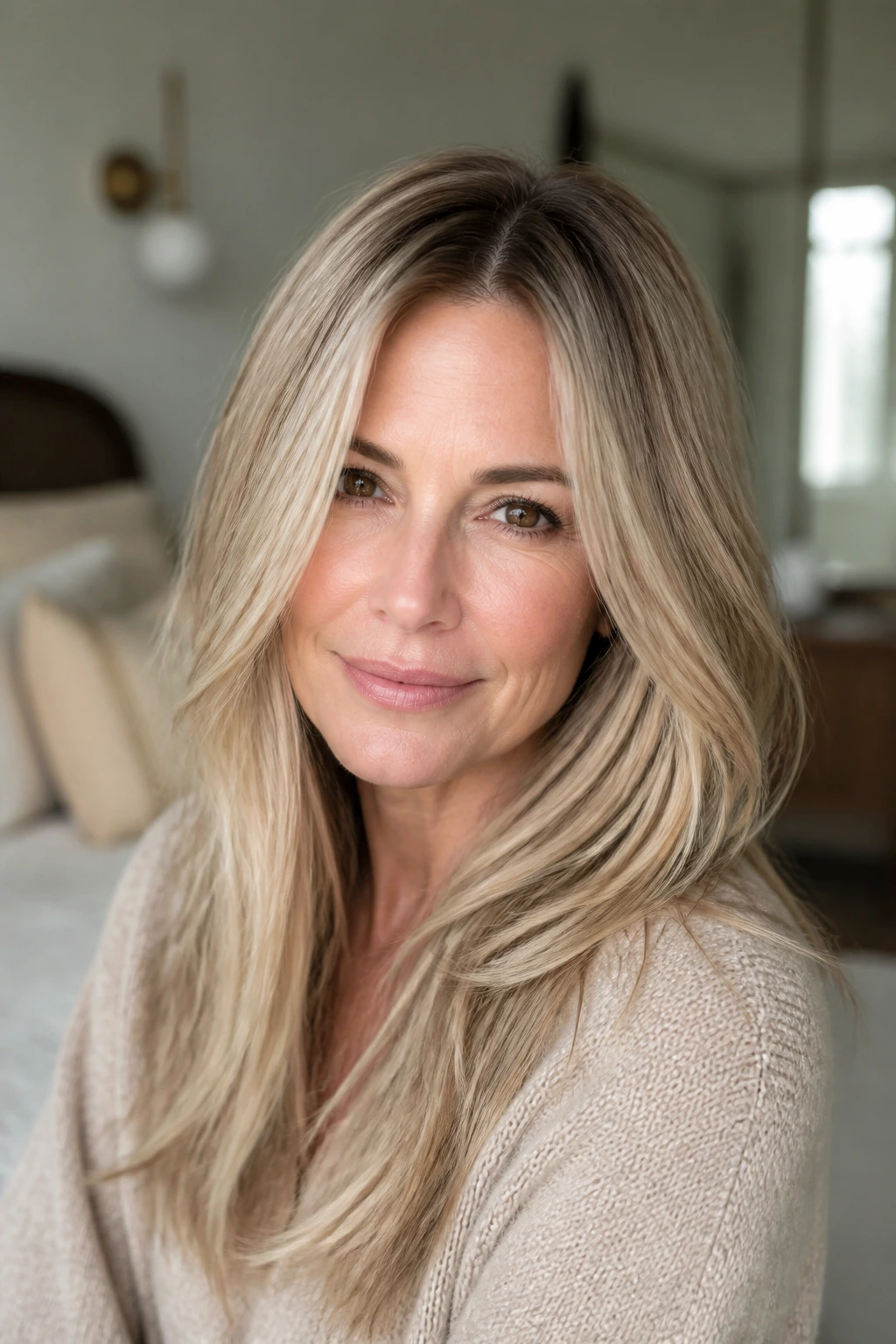
Oatmilk blonde is the final shade on the list because it solves a problem most people don’t name: some blondes look too sweet, too flat, or too overprocessed. Oatmilk blonde stays creamy and soft, but the rooty beige depth keeps it believable. It’s a little lighter than mushroom, a little quieter than honey, and easier to wear than icy platinum.
The effect is best when the colorist blends the root, mid-lengths, and ends instead of stamping on three separate colors. You want drift, not stripes. On women over 40, that softness tends to age better because it doesn’t draw hard lines around the face or broadcast every new root.
If you want one blonde idea that lands in the middle of everything — warm but not yellow, light but not brittle, polished but not precious — this is the one I’d circle first.
Why Blonde Works Better With Movement Than With Flat Color
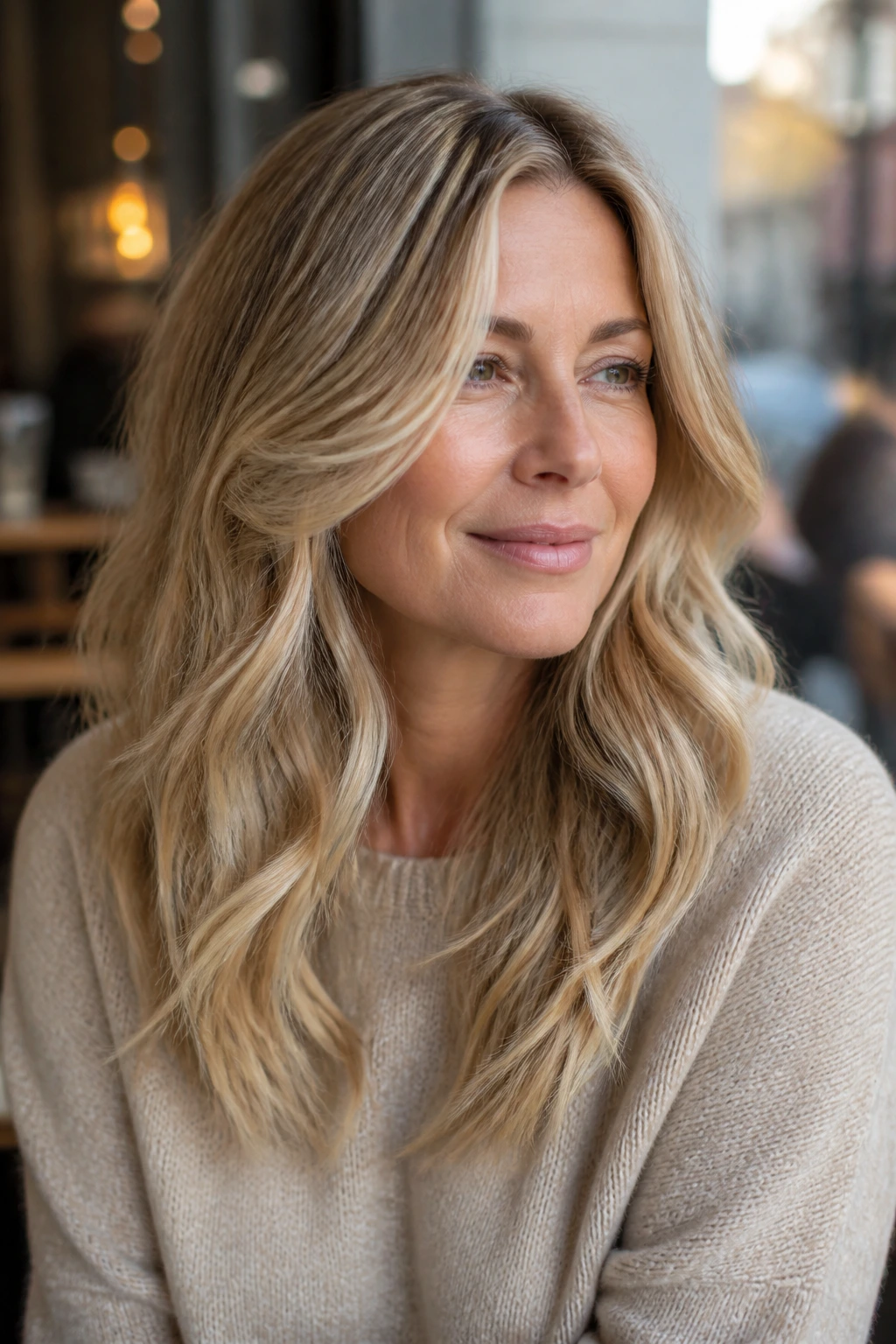
A flat blonde is honest in the wrong way. It shows every dry end, every new gray strand, and every bit of uneven tone that the hair has picked up from sun, heat, or hard water. Movement fixes a lot of that. Layers, waves, ribbons, root shadows, and lowlights break the color into pieces, and those pieces make the hair look fuller and more expensive without needing more lightener.
That matters even more after 40, because hair texture often changes. The strands can become finer, coarser in patches, or a little less dense at the crown. A single block of blonde makes those shifts more visible. Dimensional blonde does the opposite. It gives the eye several tones to work with, which is why a balayage or a rooted gloss often looks better in daily life than a very high-maintenance full blonde.
I’m also firmly in the camp that says shine matters more than extreme lightness. A beige or honey blonde with a healthy gloss often beats a pale, over-toned platinum that has lost its softness. Color should work with the cut, not fight it.
What to Bring to the Salon Chair
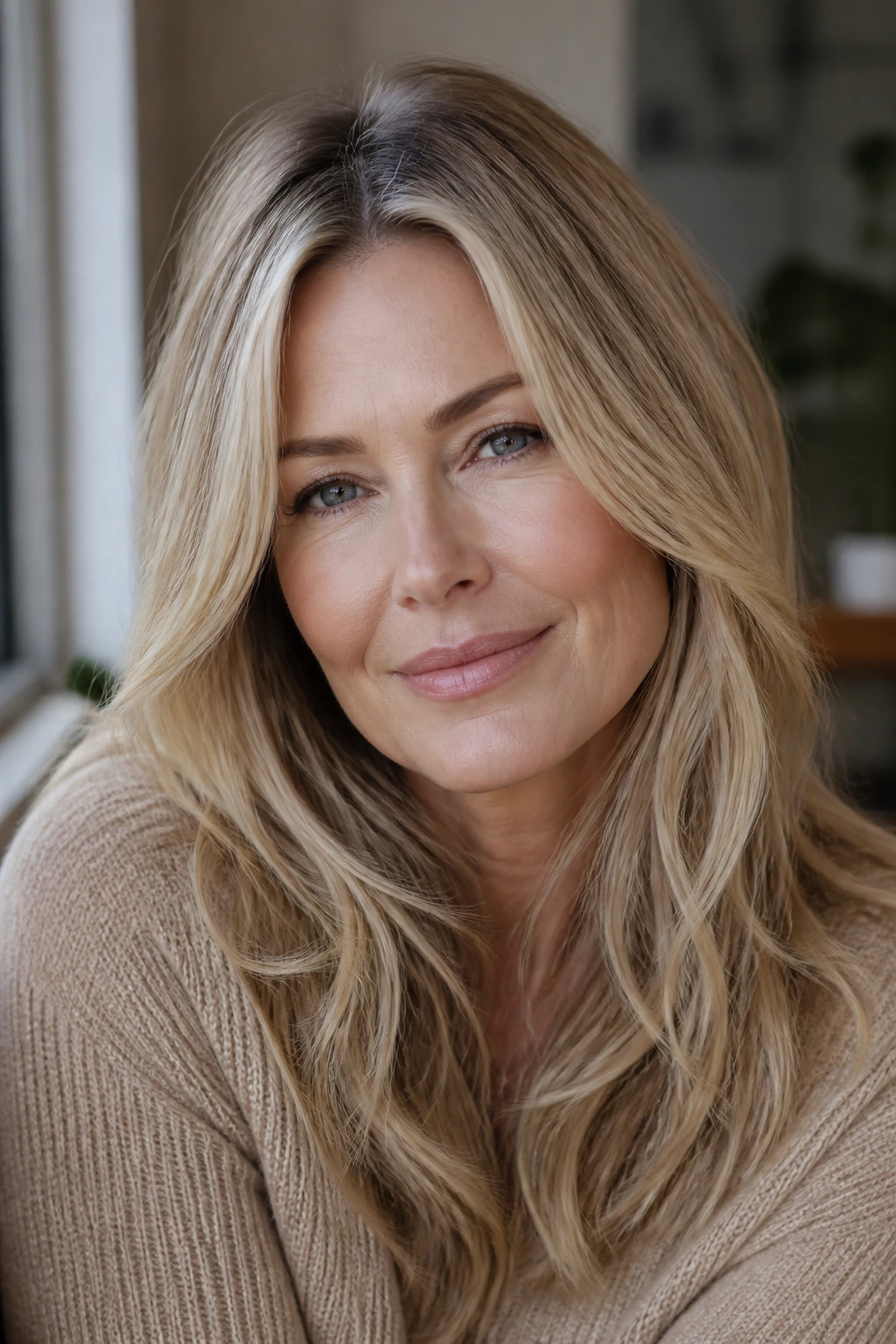
-
Two or three reference photos — Bring photos of hair with a similar cut and texture to yours, not just a pretty color on a completely different head.
-
A quick description of your routine — Tell the colorist how often you’re willing to come back, how much heat you use, and whether you air-dry or blow-dry.
-
Your natural root photos in daylight — A phone picture of your roots in natural light helps a colorist see the true base and any stubborn warmth.
-
A note on gray coverage — If you want full coverage, soft blending, or partial blending, say it plainly. Those are three different jobs.
-
A list of hair history — Box dye, henna, old bleach, smoothing treatments, and repeated toner all matter. Hidden history changes how blonde lifts.
-
A comb or clips for at-home parting — Not glamorous, but useful if you’re maintaining a grow-out line or checking placement between visits.
How to Choose the Right Blonde for Your Skin, Brows, and Schedule
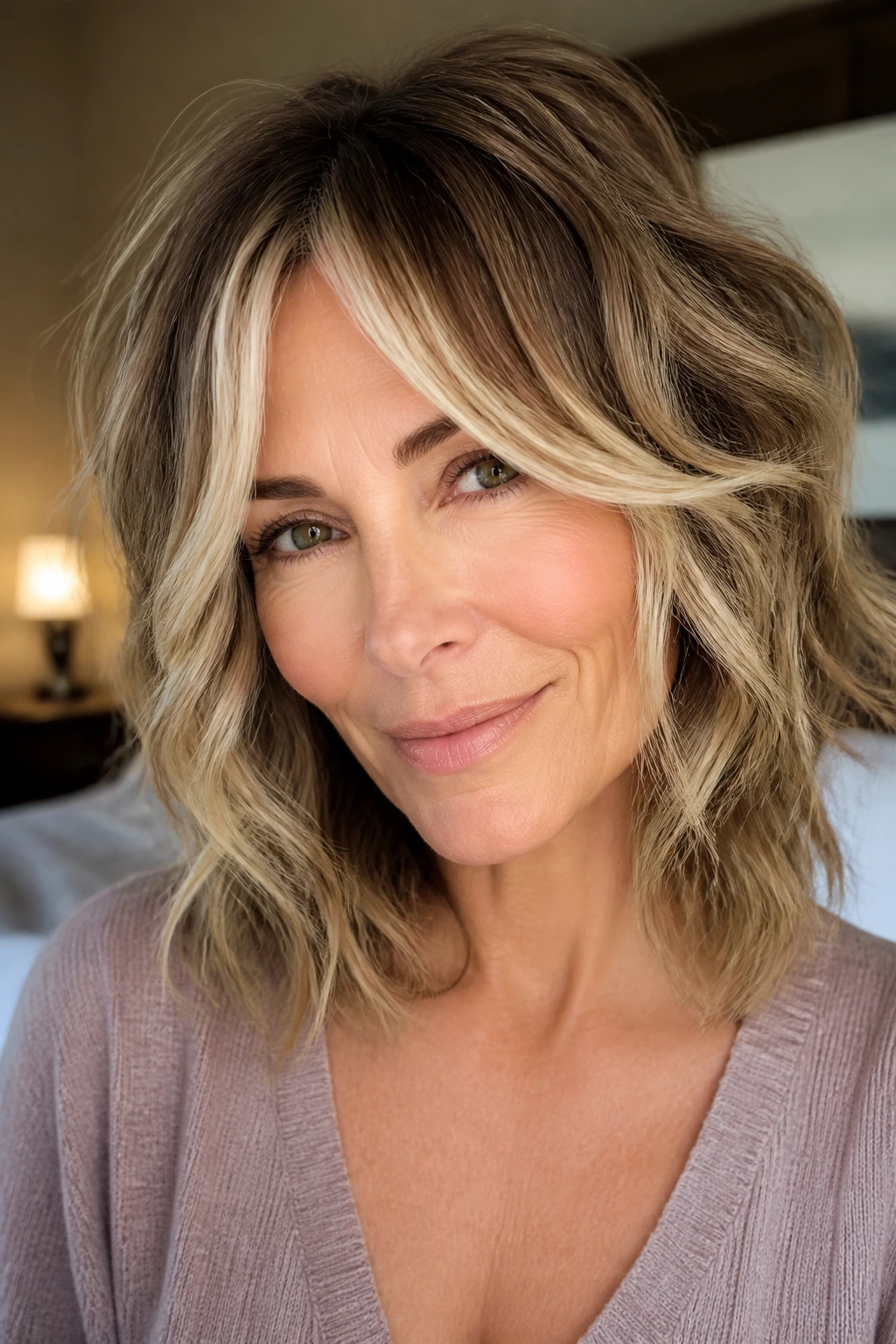
The best blonde for you isn’t the palest one in the room. It’s the one that works with your skin tone, your brows, and your willingness to sit in a chair every few weeks. Those three things matter more than trend charts or internet advice.
If your skin leans warm, beige, honey, maple, cream soda, or toffee blondes usually play nicely. If your undertone runs cool or rosy, ash beige, mushroom, pearl, or silver-blonde blends tend to sit better. Neutral skin gets the broadest lane, which is convenient and mildly unfair. Dark brows usually benefit from some root depth or lowlight so the contrast doesn’t look pasted on.
Your schedule matters just as much. A rooted balayage or bronde ribboning can stretch farther than creamy platinum or Scandi blonde. If you hate salon maintenance, build your color around that fact instead of pretending you’ll suddenly enjoy toner appointments every month. You will not. Pick the shade that matches your actual life.
And think about the cut. Short hair shows color faster, which means bright shades need more precision. Long layers can hold dimension better and make warm-cool shifts look softer. The cut and the color are partners. They should argue less than they do in a lot of salon chairs.
The Mistakes That Make Blonde Look Harsh or Cheap
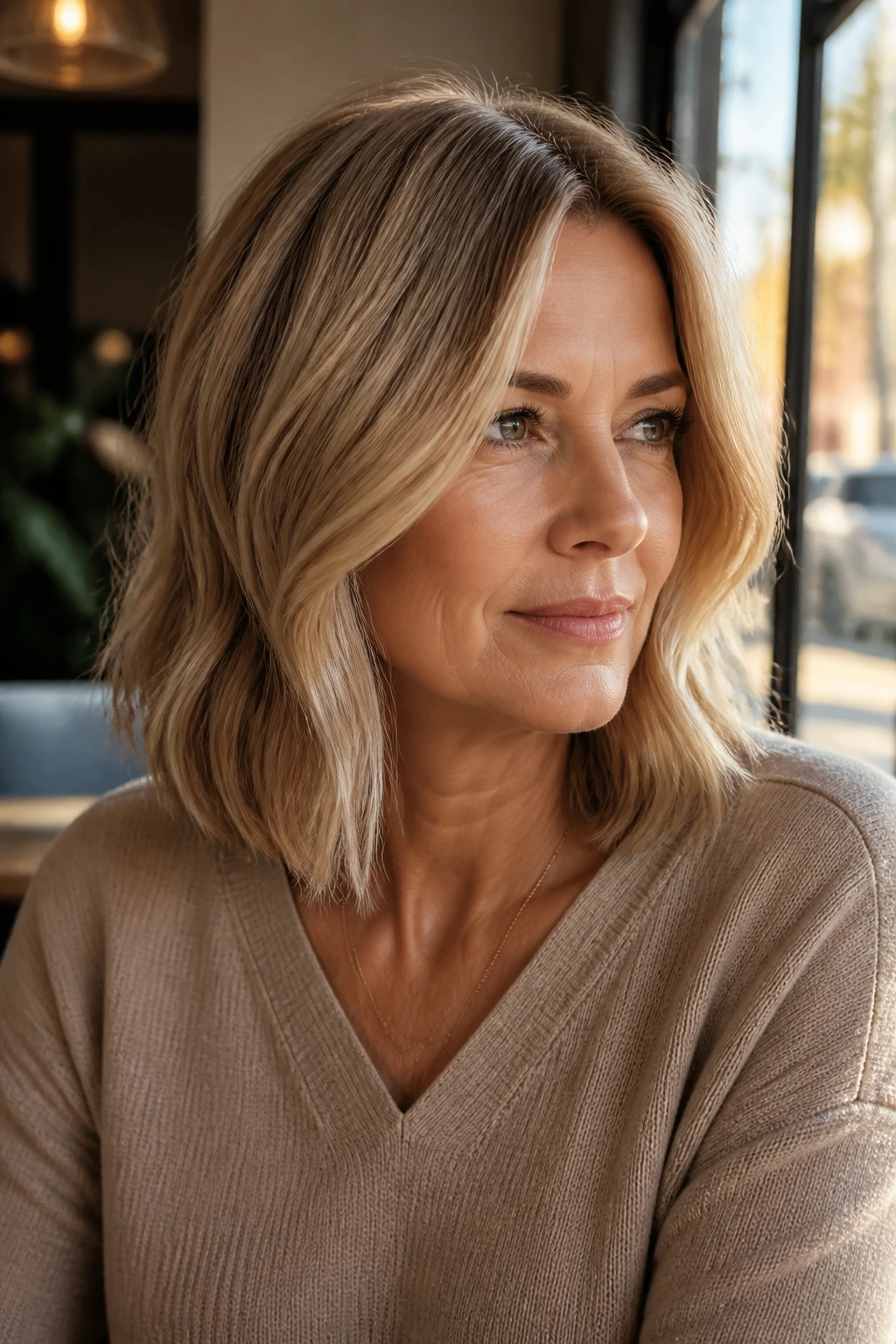
The first mistake is chasing one flat tone from root to end. That’s the fastest way to make blonde look stiff and slightly wiggy. A good fix is a root shadow, babylights, or a few lowlights so the shade has depth.
The second mistake is choosing a tone that fights your skin. Too ashy on warm skin can make the face look tired. Too golden on cool skin can turn orange by the second shampoo. Hold the hair up to your face in daylight if you’re unsure. If the shade makes your skin look calmer, you’re on the right track.
Overusing purple shampoo is another classic error. A little keeps brass in check. Too much can leave blonde looking dull, violet, or chalky, especially on porous ends. Use it once a week, not every wash, unless a colorist has told you otherwise.
And please don’t bleach already fragile hair just because you want to be lighter. Breakage is not a tone. If the ends are rough, fix the cut and build the blonde more slowly. The hair you save is the hair you keep.
Variations and Alternatives to Try
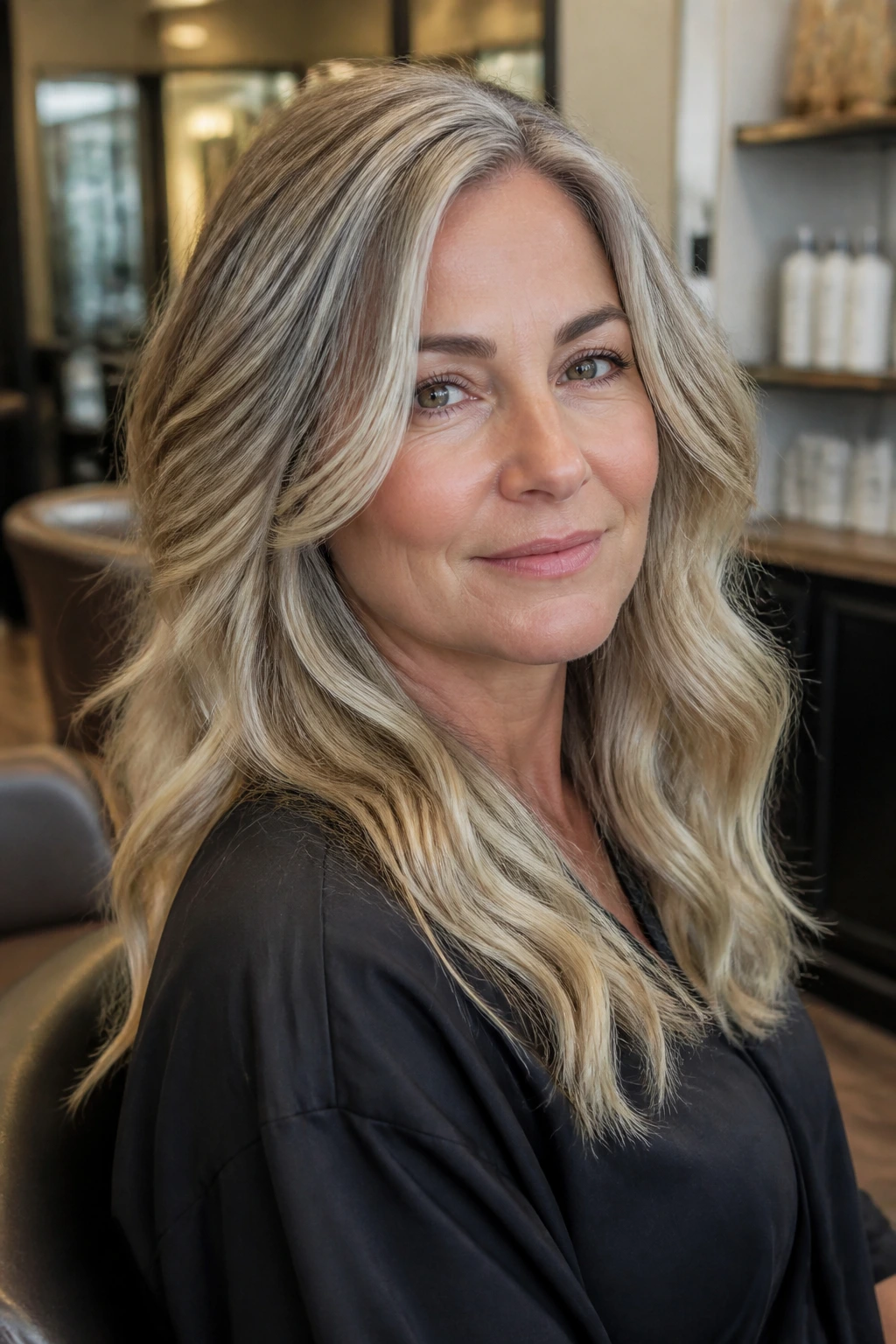
Warmer and Softer: If cool tones make you look flat, shift toward honey, butter, maple, or cream soda blonde. These shades add warmth without going full yellow, and they’re especially useful if your wardrobe leans camel, ivory, olive, or rust.
Cooler and Cleaner: If brass is your nemesis, move toward ash beige, mushroom, pearl, or smoky blonde. Ask for a violet or blue-based gloss, but keep the base from going too gray or the whole look loses light.
Lower-Maintenance Grow-Out: If you want fewer appointments, use bronde, balayage, dirty blonde, or rooted beige blonde as your base idea. Let the root stay deeper and keep the brightest pieces around the face and surface.
Brighter Around the Face Only: If a full blonde feels like too much, work with champagne money pieces or butter face-framing highlights. You get the lift where it matters most without changing the entire head.
Gray-Blend First, Blonde Second: If your gray is showing up fast, ask for a transition blend with silver, beige, and soft blonde ribbons. It makes the grow-out feel planned instead of delayed.
Keeping Blonde Fresh Between Appointments
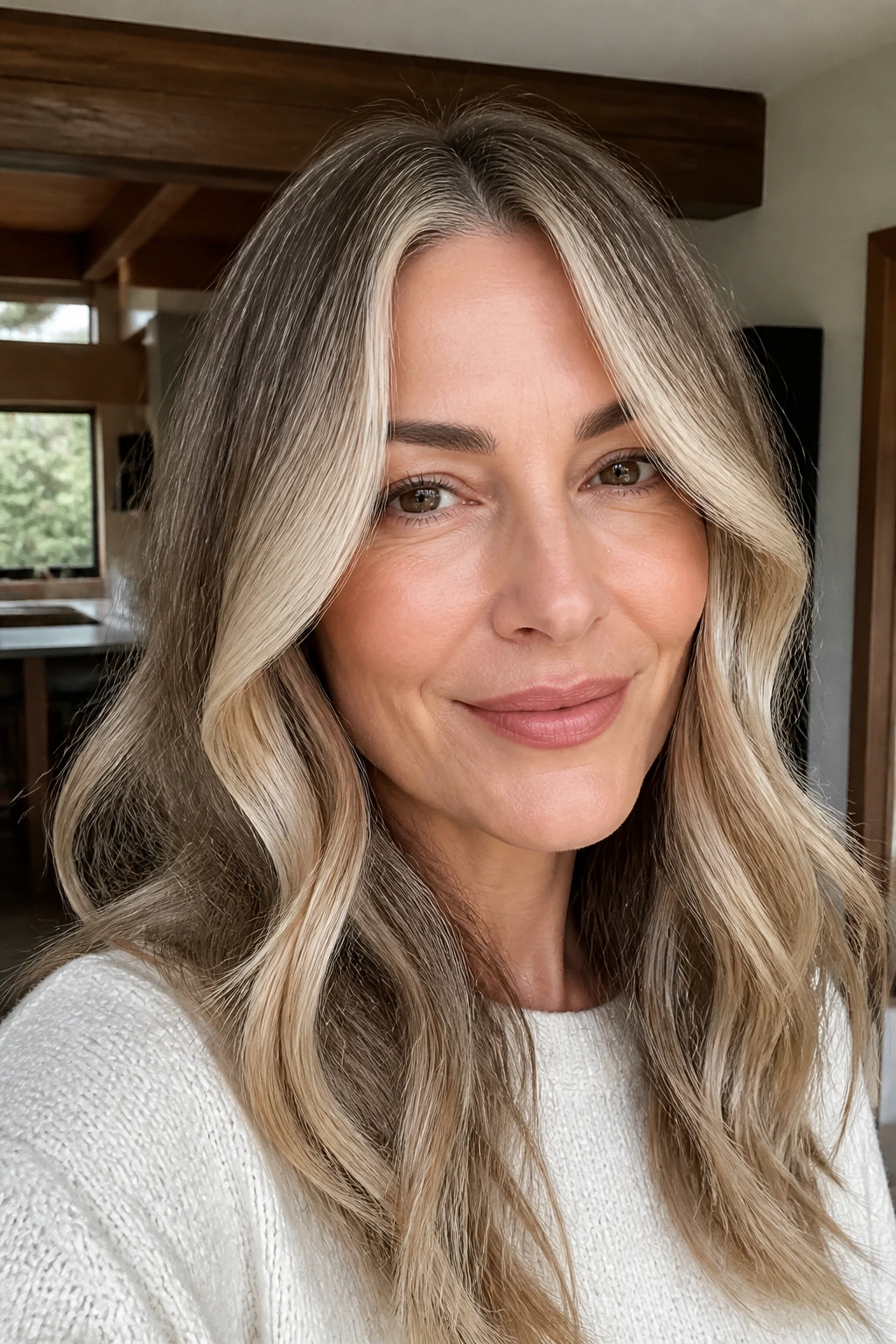
Blonde ages fastest when the hair is dry, the toner is fading, and the roots are arguing with the rest of the color. The easiest fix is a routine, not panic. Use a color-safe shampoo most days, then bring in purple shampoo once a week if the blonde is drifting warm. If the shade is honey or maple, don’t overdo the purple. You’ll strip the warmth right out of it.
A gloss or toner refresh every 6 to 8 weeks keeps the tone clean. If you wear a rooted balayage, you can sometimes stretch the color longer, but the mid-lengths still benefit from a shine service. Hard water also matters. It can leave blonde looking muddy and tired, especially on porous hair. A shower filter or occasional clarifying wash helps more than people think.
Heat is another quiet thief. Use a heat protectant every time you blow-dry, flat-iron, or curl. Keep the temperature modest — lower heat with a slower pass is better than blasting the hair into straw. And get trims. Split ends make blonde look cheaper than it is.
If you air-dry, use a cream or light leave-in that keeps the cuticle smooth. Blonde hair shows rough texture fast. Smoothness is part of the color.
Frequently Asked Questions
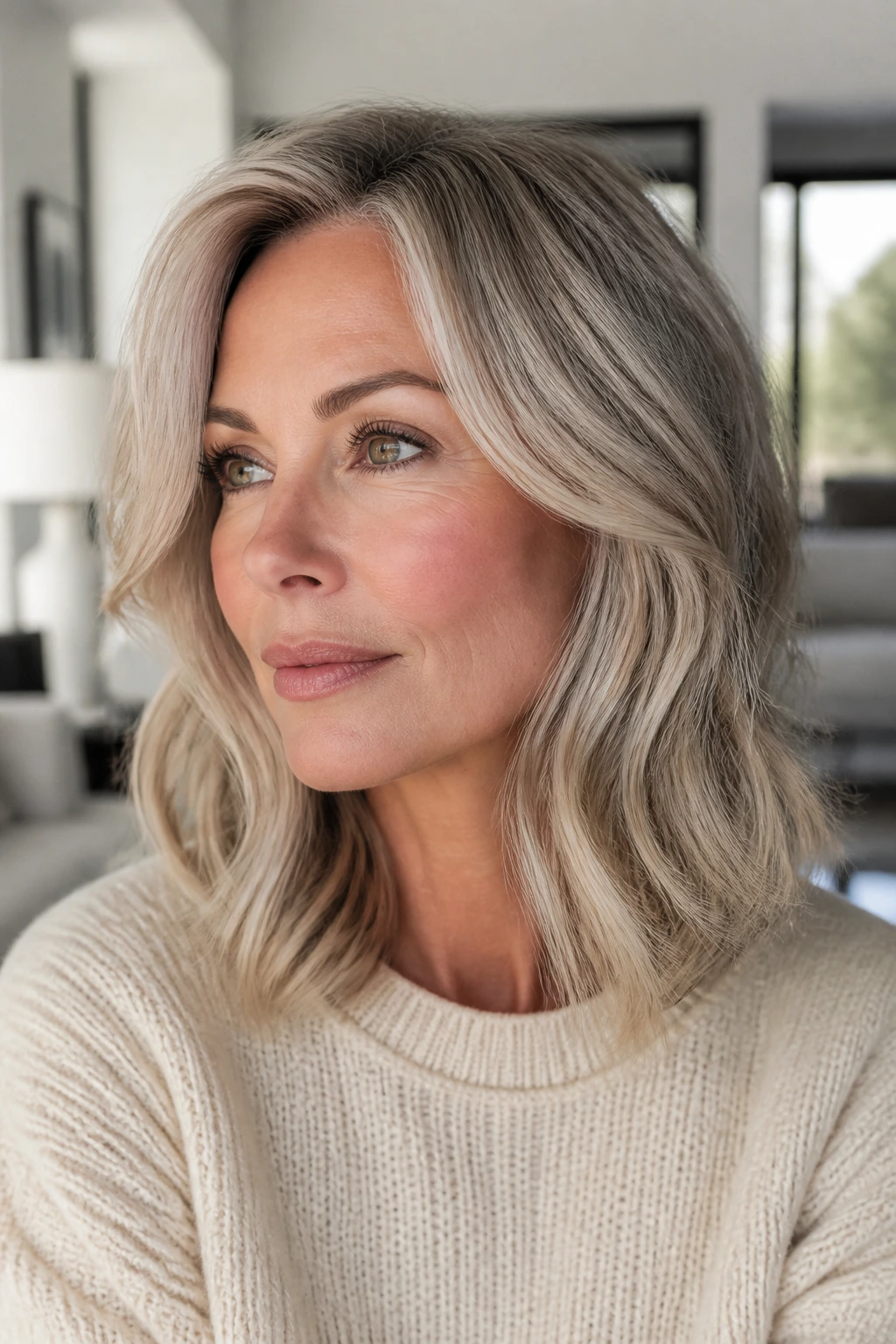
Which blonde shade is the easiest to maintain after 40?
Rooted beige blonde, bronde, and dirty blonde with bright ends are usually the easiest. They allow the natural root to stay visible in a soft way, so regrowth doesn’t look like an emergency.
Is platinum blonde too harsh on women over 40?
Not automatically, but it can be if the cut is heavy, the tone is too icy, or the hair is damaged. A creamy platinum with a shadow root is usually kinder than a flat all-over bleach.
Should I go warm or cool with blonde hair?
Start with your skin tone, brow color, and how your hair tends to pull. Warm skin usually likes honey, beige, maple, or butter blonde. Cool skin often looks better with ash beige, pearl, or mushroom tones.
Can blonde help blend gray hair?
Yes, if it’s designed for blending rather than total coverage. Silver-blonde blends, beige silver transition shades, and fine babylights can fold gray into the color so the grow-out looks softer.
What if my blonde turns brassy fast?
That usually means the toner faded, the hair is porous, or the shampoo routine is too rough. Use a color-safe cleanser, add a violet-based product only when needed, and book a gloss instead of trying to fix everything with stronger shampoo.
Will blonde make fine hair look thinner?
It can if the color is one flat tone. Dimensional blonde with lowlights, ribbons, and a root shadow usually makes fine hair look fuller because the eye sees more movement and depth.
How often do I need salon visits for blonde?
That depends on the technique. Platinum and Scandi blonde may need work every 4 to 6 weeks. Balayage, bronde, and rooted beige shades can often stretch to 8 to 12 weeks with good home care.
Can I keep my dark brows with blonde hair?
Yes, and often you should. Dark brows give the face structure. The trick is choosing a blonde with enough depth at the root or around the face so the contrast looks deliberate, not disconnected.
The Blonde That Feels Like Yours
The smartest blonde after 40 usually does three things at once: it lifts the face, softens the grow-out, and leaves the hair looking like hair, not processed cotton. That’s why the shades here lean on beige, honey, mushroom, champagne, and rooted blends more often than hard platinum. They behave better in daylight and usually behave better in your mirror too.
If you’re standing at the edge of a color change, start with the version that gives you room. Beige blonde with a shadow root, honey balayage, or a soft bronde ribboning job can teach you a lot about how your hair likes to live before you go brighter or cooler. That’s the real trick. Pick the blonde that works on a Tuesday morning, not just the one that looks good in the salon chair.