



Winter caramel hairstyles for deep skin tones work because the color is warm without going pale. The mistake I see most often is chasing caramel that’s too light; on richer skin, that kind of brightness can look chalky in daylight and a little muddy under indoor bulbs.
Give the base some depth and caramel starts acting like jewelry. It catches on the curve of a curl, the edge of a braid, the bend of a bob, and the part line in a silk press; that small contrast is what makes the color read polished instead of loud.
That balance matters even more when coats, scarves, and dryer winter air start changing how hair sits. The looks below keep the roots grounded, the warmth deliberate, and the finish sharp enough to hold up when the weather tries to rough it up.
Why This Collection Hits Different on Deep Skin
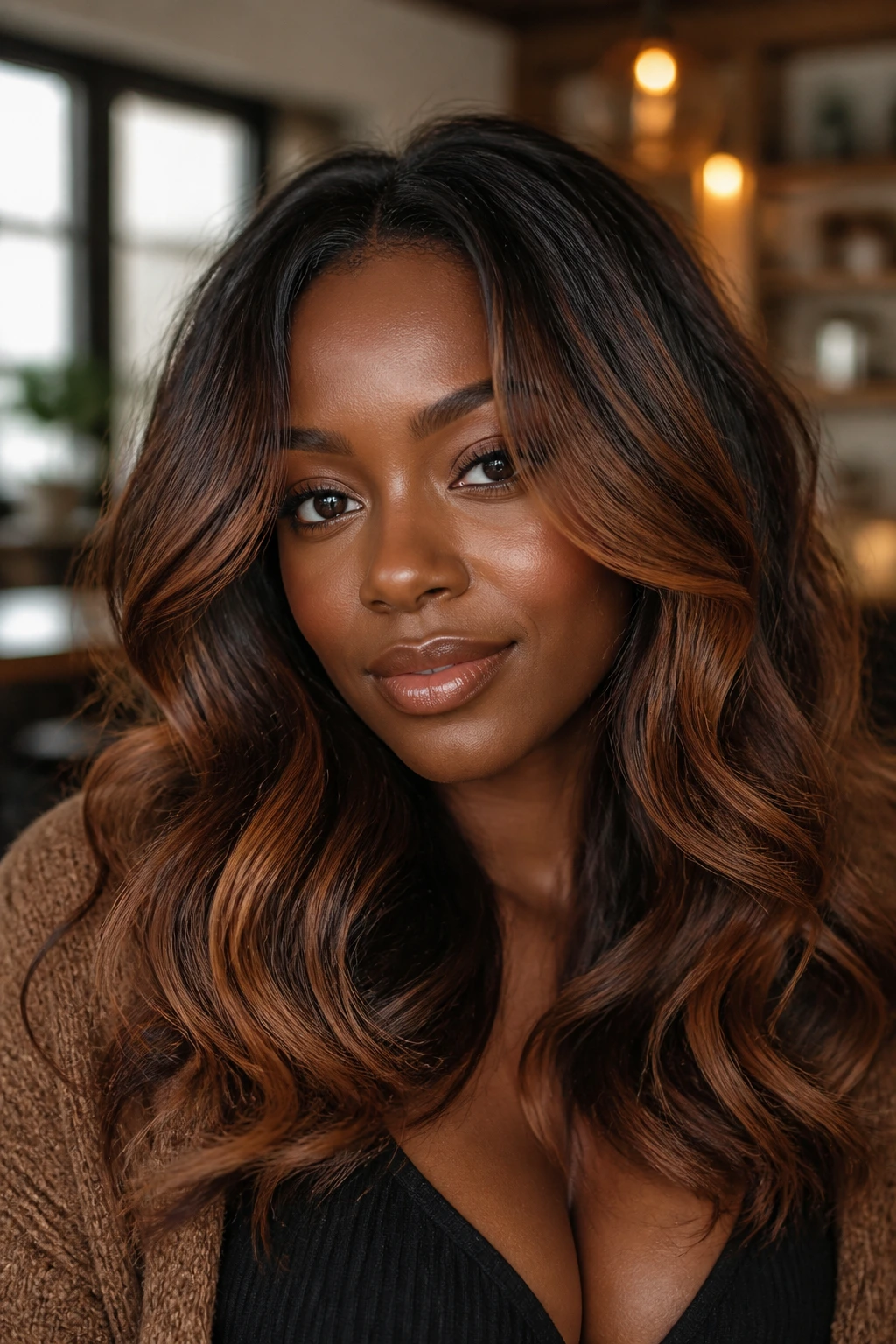
- Depth First: Each style keeps the base darker than the caramel, so the warmth shows up as contrast instead of a flat wash of color.
- Face-Frame Lift: The brightest pieces sit where the eye lands first — around the cheekbones, crown, or ends — which gives the color a clean, flattering placement.
- Texture-Smart: Straight, wavy, curly, coily, braided, and loc’d options are all here, because caramel looks different on every texture and shouldn’t be forced into one shape.
- Low-Regret Color: Several looks use glosses, ribbons, or extensions instead of all-over lightening, which makes the grow-out less dramatic and a lot easier to live with.
- Winter-Friendly Shape: Bobs, buns, puffs, and braids stay visible even when a coat collar, knit hat, or scarf steals part of the silhouette.
1. Dark Chocolate Lob with Caramel Ribbon Ends
A lob can look blunt in the wrong color story. Keep the base dark chocolate and let thin caramel ribbons appear only through the bottom third, and the cut starts moving the second you turn your head.
I like this one because it does not ask the caramel to carry the whole look. The lob stays sleek and expensive-looking, while the warm ends peek out under scarves and wool coats. On deep skin, that contrast reads intentional — not stripey, not washed out, just rich.
What to ask for
- A level 3 or 4 base with ribbon-like caramel pieces.
- Caramel that sits one or two levels lighter, not pale blonde.
- Ends curled slightly inward or outward so the lighter pieces don’t hang dead straight.
The best part is how low-stakes it feels. If you want to try caramel without committing to a full head of lighter color, this is the cleanest place to start.
2. Sleek Center-Part with Caramel Money Pieces
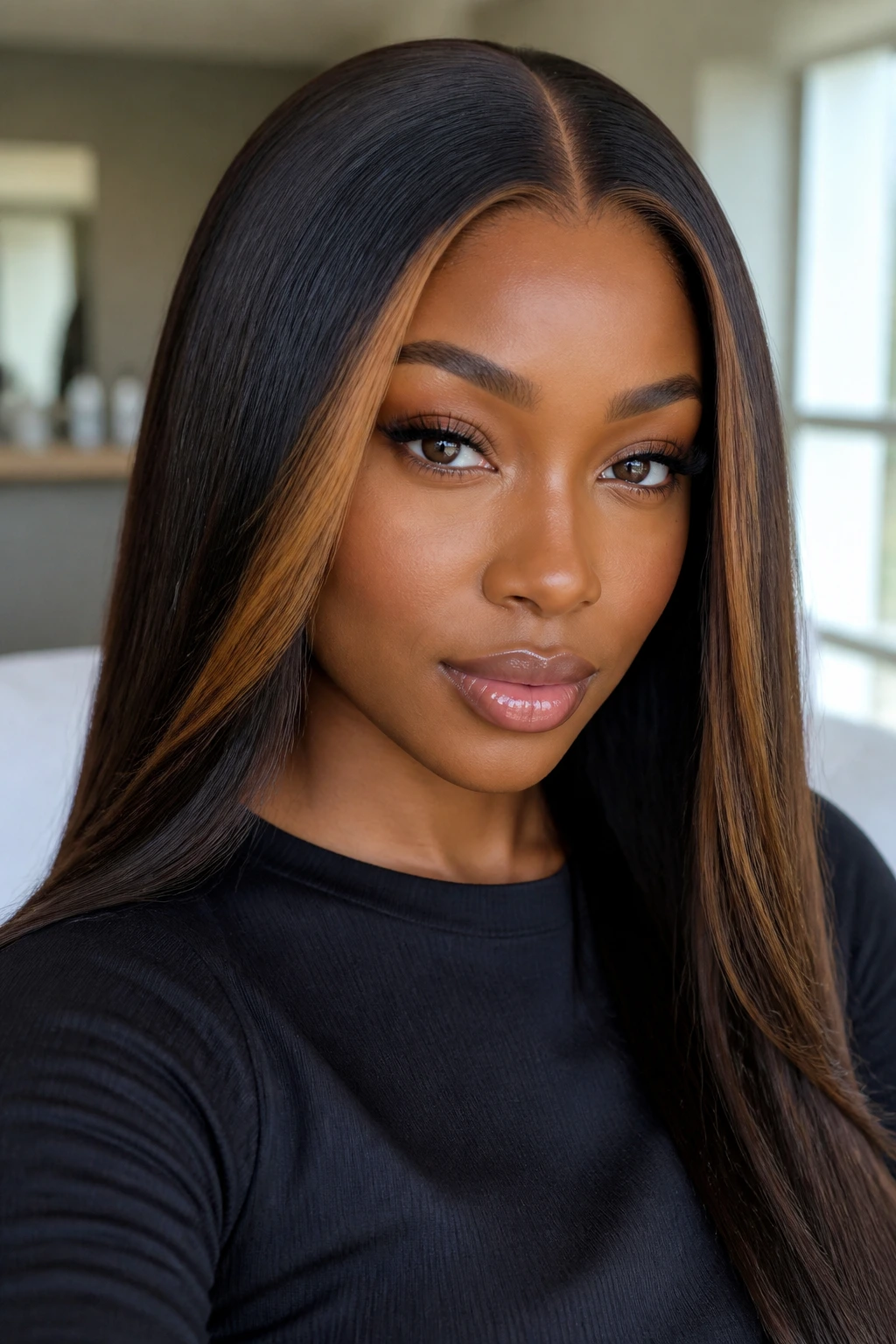
When your hair spends half the day under a coat collar, the front pieces matter more than anything else. A sharp center part with caramel money pieces puts the warmth right where your face can use it, and it gives deep skin that little frame of light without changing the whole head.
Placement matters
The money pieces should be thicker near the cheekbone and softer as they move back toward the temple. If they start too wide at the root, the look can feel loud. Too thin, and they disappear.
I prefer this style when the rest of the hair is kept glossy and calm — straight, pressed, or smoothed into a low ponytail. The point is the contrast: deep roots, warm front pieces, and a clean line down the middle. That line does more work than people give it credit for.
If you wear glasses, ask for the bright pieces to land just outside the frame. That tiny adjustment keeps the color visible instead of hidden behind a lens line.
3. Warm Toffee Silk Press with Blunt Ends
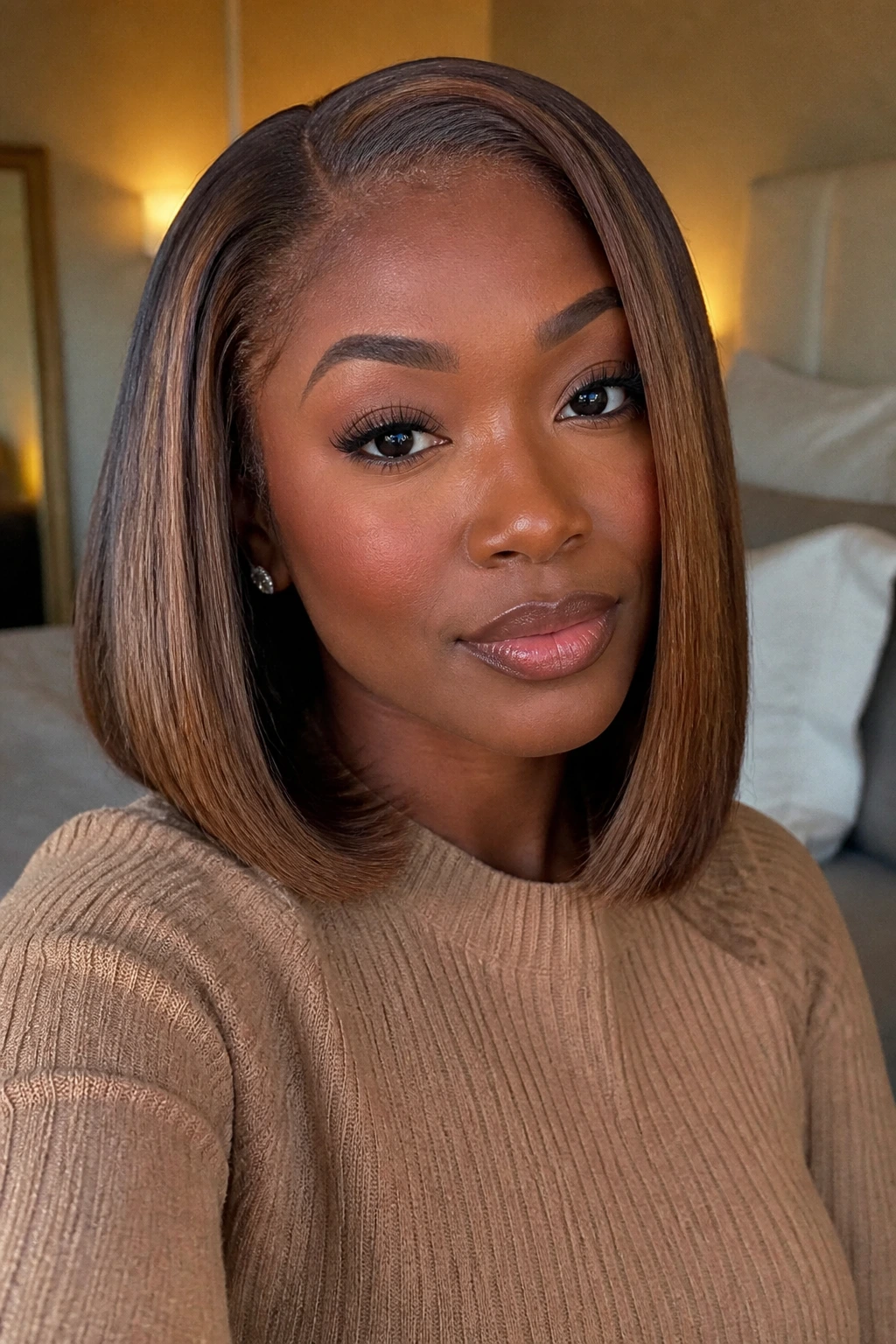
Can a silk press feel soft in winter without going flat? Yes — if the color has enough warmth and the ends stay blunt, not wispy.
This look is all about shine. A toffee gloss over a deep brown base gives the hair that smooth, reflective finish that makes the light move across it. On deep skin, the warmth sits close to the face without drifting into brass territory, and the blunt hemline keeps the whole cut looking deliberate.
Ask your stylist to keep the temperature controlled and the movement subtle. A silk press that’s ironed bone straight can look stiff on some textures; a little bend at the ends, plus a deep side part or a soft center part, keeps it human. That’s the word I’d use here. Human.
A flat iron at the right heat — not the hottest setting the tool can offer — is the difference between polished and fried. The caramel should look like glaze, not toast.
4. Chestnut-Caramel Shoulder Layers with Soft Bend
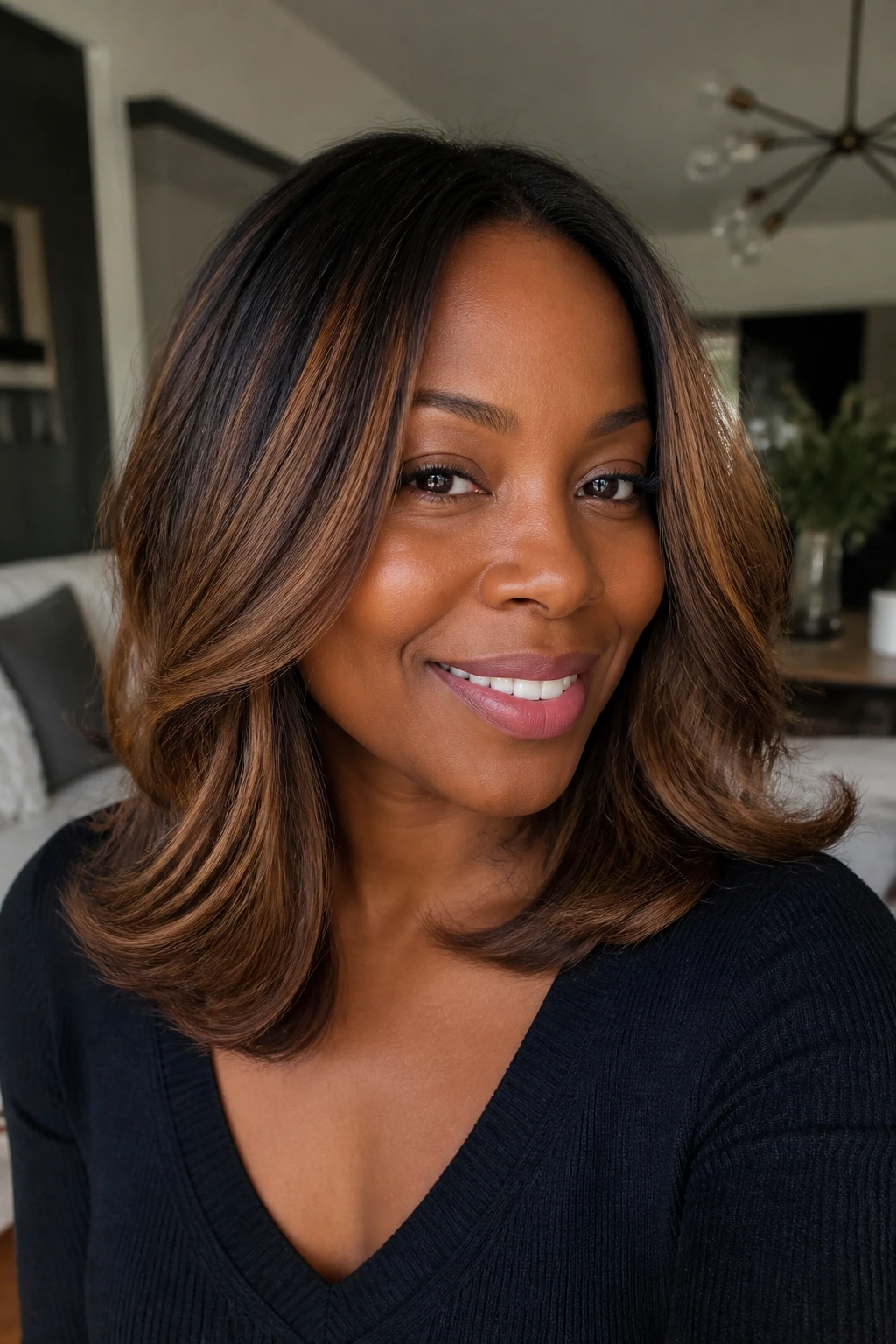
Picture hair that brushes the shoulders, flips once at the collarbone, and picks up just enough caramel to break up the chestnut base. That’s this cut. It’s understated, but it never looks plain.
The layers matter more than the highlight map here. If the cut is too one-length, the caramel can look like it sits on top of the hair instead of moving through it. Shoulder-grazing layers let the warm pieces fall at different points, so the color keeps changing with the angle.
For deep skin, chestnut caramel is a sweet spot. It has enough gold to feel alive, but enough brown in it to stay grounded. I’d choose this over a brighter honey if you want warmth that feels calm instead of loud.
A 1.25-inch curling iron or a round brush can give the ends a soft bend. Keep the wave loose. Tight curls make the layers compete with the color, and that’s not the mood.
5. Cinnamon-Caramel Curly Shag
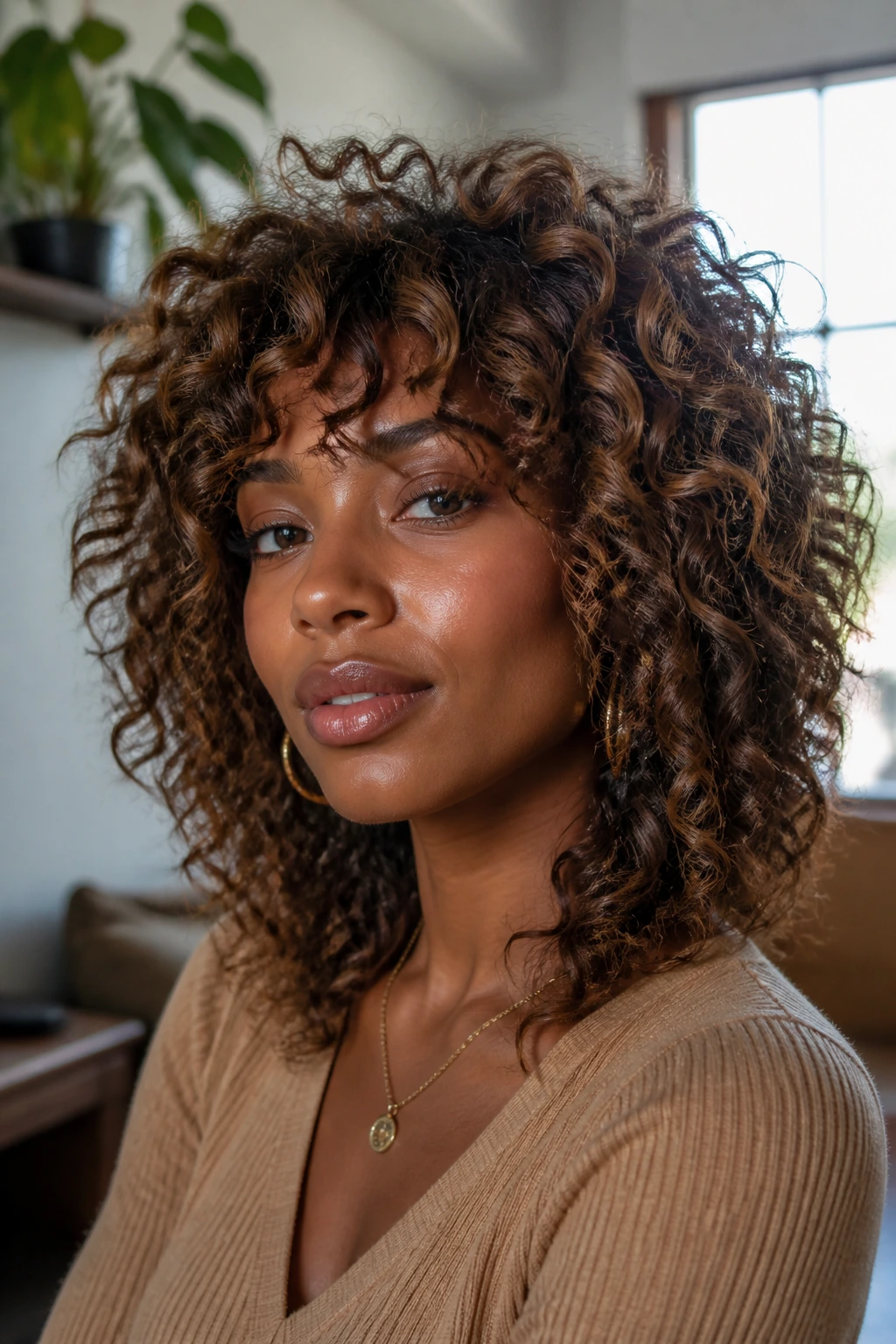
The curly shag is the one that looks like it has attitude even when the styling is simple. Cinnamon-caramel adds a faint reddish warmth to the curl pattern, which deep skin handles well because the color sits inside the curl, not on top of it.
This cut works because the layers are doing two jobs at once. They remove bulk, and they let the warm tone show in different places as the curls separate. Around the temples and cheekbones, the lighter pieces create a little lift. In the back, the darker curls keep the shape from getting fuzzy.
The piece that makes it work
A diffuser. Low heat. Patience.
If you blast a curly shag with too much heat, the ends puff and the caramel can look dry. Diffuse until the curls are mostly set, then stop touching them. Let the pattern cool before you fluff. That pause matters more than another five minutes of scrunching.
This is a good option if you want winter warmth with some edge. It has shape, but not fuss.
6. Toasted Almond Balayage on Loose Waves
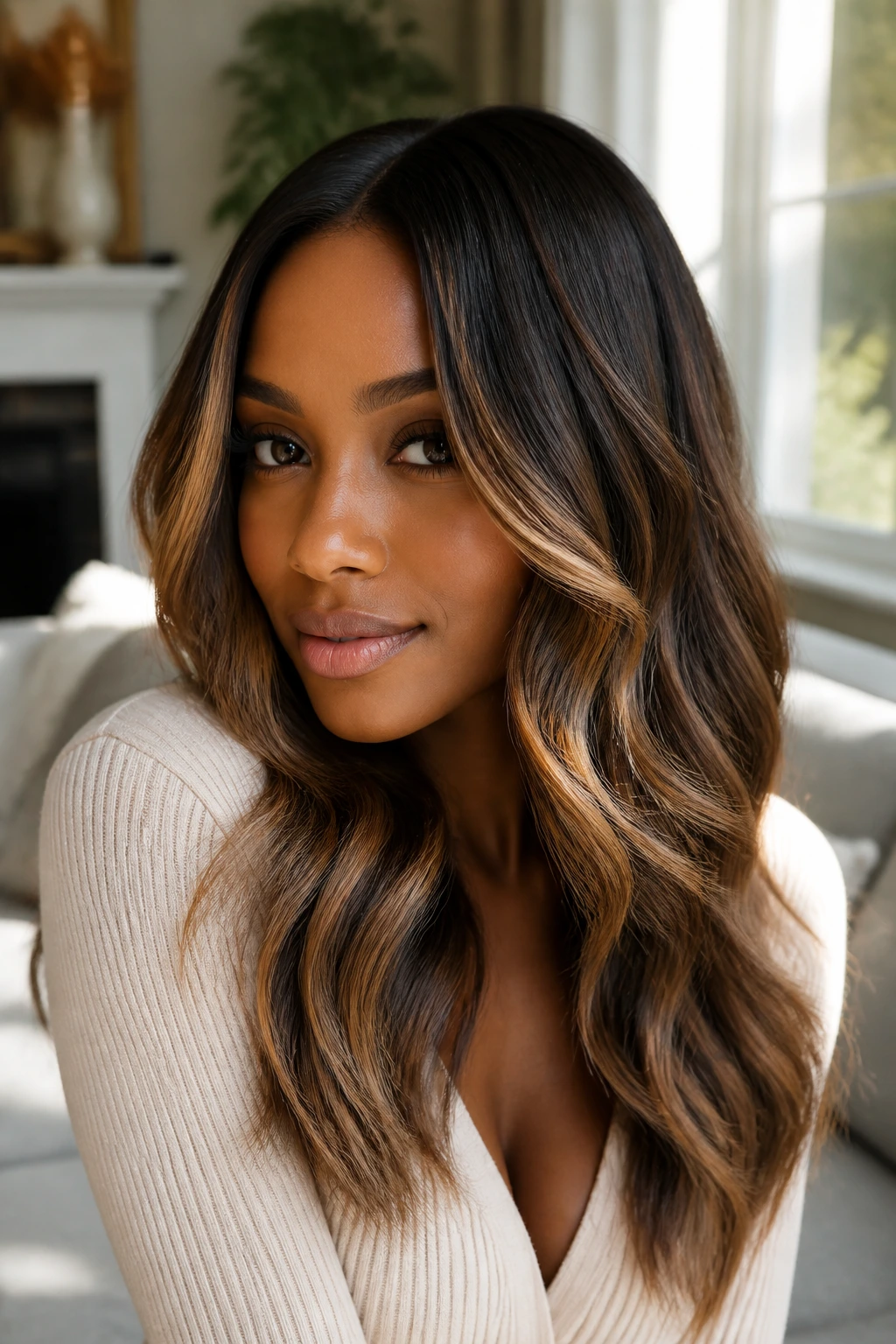
Unlike foiled highlights, balayage grows out softly. That’s the entire appeal here. The toasted almond pieces are hand-painted through the mids and ends, so the root stays darker and the color feels expensive in a very quiet way.
Loose waves make the difference. If the hair is too straight, the color can look mapped on. Soft bends let the caramel thread through each section and catch light at different points. On deep skin, that movement stops the blonde family from going too pale, too fast.
I’d keep the brightest ribbons around the front and through the top layer, then let the underside stay one shade deeper. That keeps the overall look dimensional even when the hair is pulled to one side or tucked behind an ear.
This one suits people who want color they can grow out without staring at a line every six weeks. It’s still a statement. Just a quieter one.
7. Butterscotch Blowout Bob
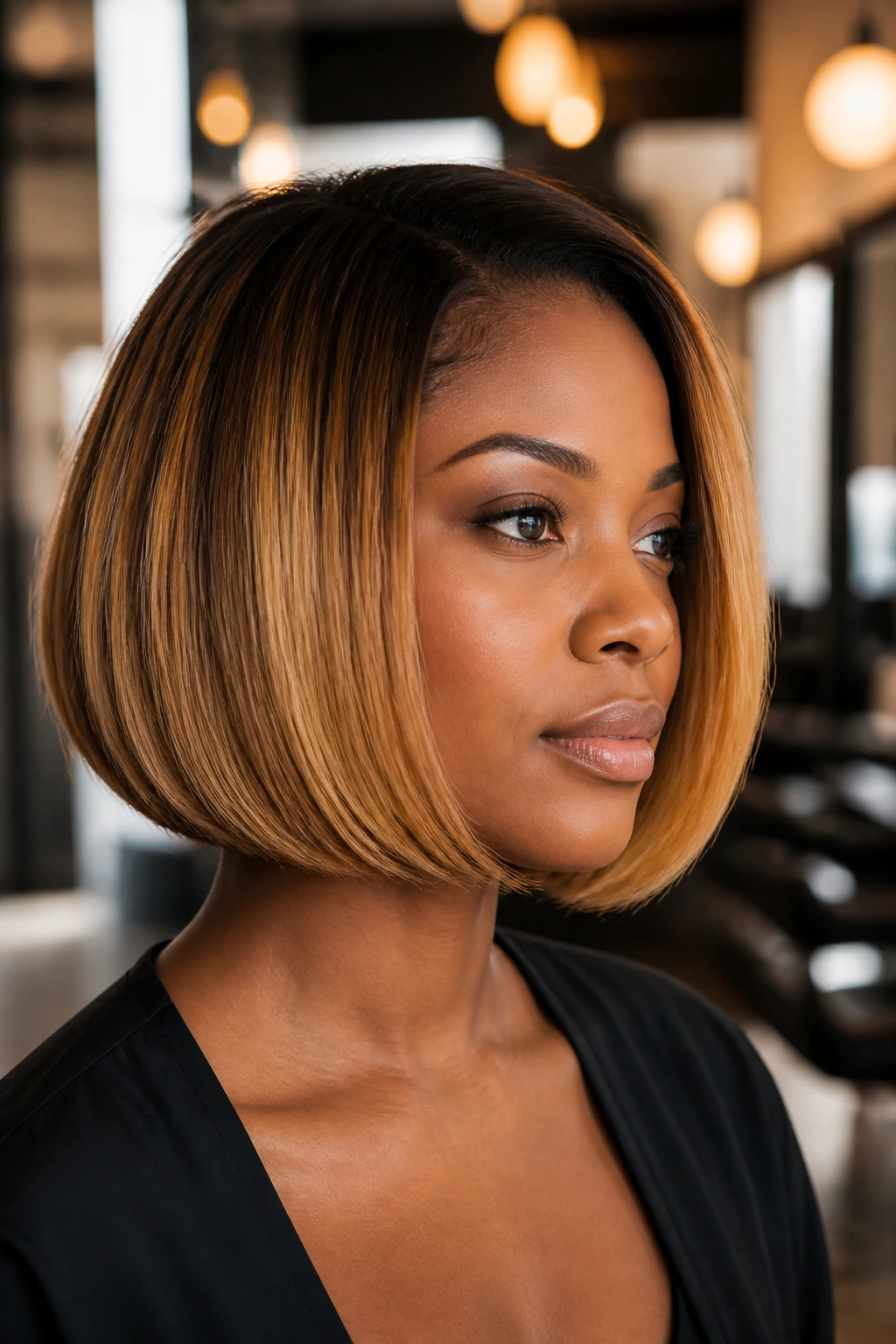
A blowout bob with butterscotch warmth is one of those styles that looks simple until you see it in motion. The bob hits at the jaw or slightly below, the ends kick under just enough, and the warm color shows up in the smoothest possible way.
The reason it flatters deep skin is the contrast between the rounded shape and the color placement. Butterscotch is warmer than ash and less orange than copper, which means it reflects light without turning brassy. On a bob, that warmth reads crisp, especially if the roots stay a touch deeper.
What to ask your stylist
- A blunt or lightly stacked bob.
- Warm caramel or butterscotch gloss through the top layer.
- Ends curved under with a round brush, not flipped to the sky.
This style loves a clean side part too. If your face shape benefits from asymmetry, push the part over a little and let one side swing forward. It changes the whole mood.
8. Honey-Caramel Twist-Out
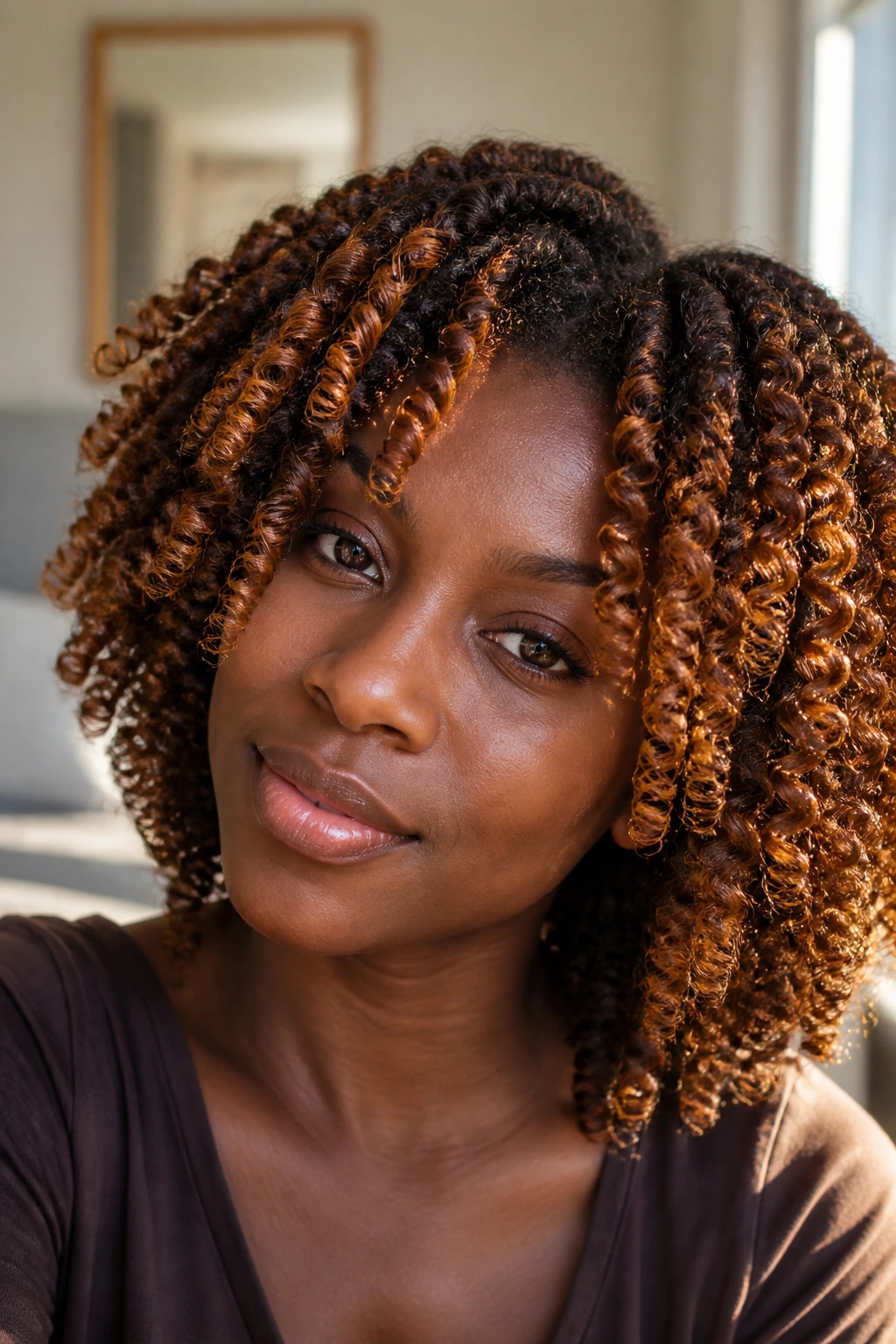
A twist-out can look soft and controlled in a way loose curls sometimes don’t. Add honey-caramel color to a deep base, and the ridges of the twist pattern make the shade look more alive because every spiral catches light differently.
This is a smart choice for winter because the style gives shape without requiring constant heat. A twist-out on deep skin works best when the color stays in the warm brown family — honey, caramel, maple — rather than going so light that the curl pattern starts to look frosted.
The trick is dry-down. Fully dry. Not mostly dry. Not “good enough.” If the hair comes apart before it’s set, the twist-out gets fuzzy fast and the caramel loses its clean definition.
I’d keep the twist size medium to large if you want a plush finish, or smaller if you want more separation. Either way, the color should live inside the twist, not only on the surface.
9. Caramel Halo on a Defined Afro
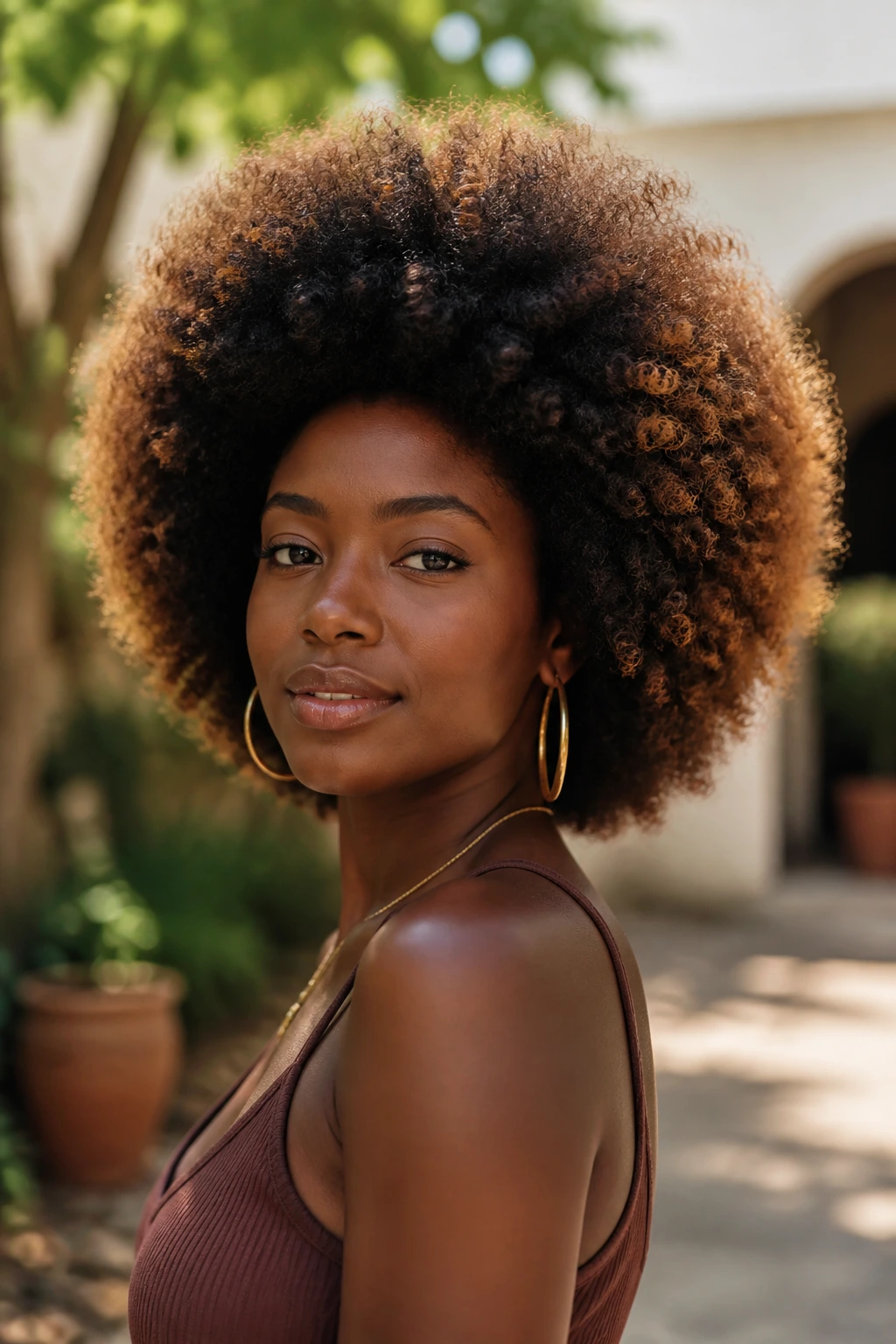
What if you do not want obvious highlights at all? Then do the halo.
This is one of my favorite looks for deep skin because the warmth stays on the outer ring of the afro and around the crown, where it gives a soft glow instead of a streaky effect. The center of the shape remains darker, which keeps the afro looking full and grounded. That contrast is the whole point.
A defined afro can handle more color than people think, but placement has to be disciplined. Keep the caramel away from random chunks in the middle and use it to trace the silhouette — top, front edge, a little around the sides. The shape becomes the frame, and the color becomes the outline.
Best when you want the curl pattern to stay the star
Use a pick only at the roots. Don’t break up the entire halo with too much fluff. You want the rim to glow and the center to stay plush.
10. Maple-Caramel Knotless Braids
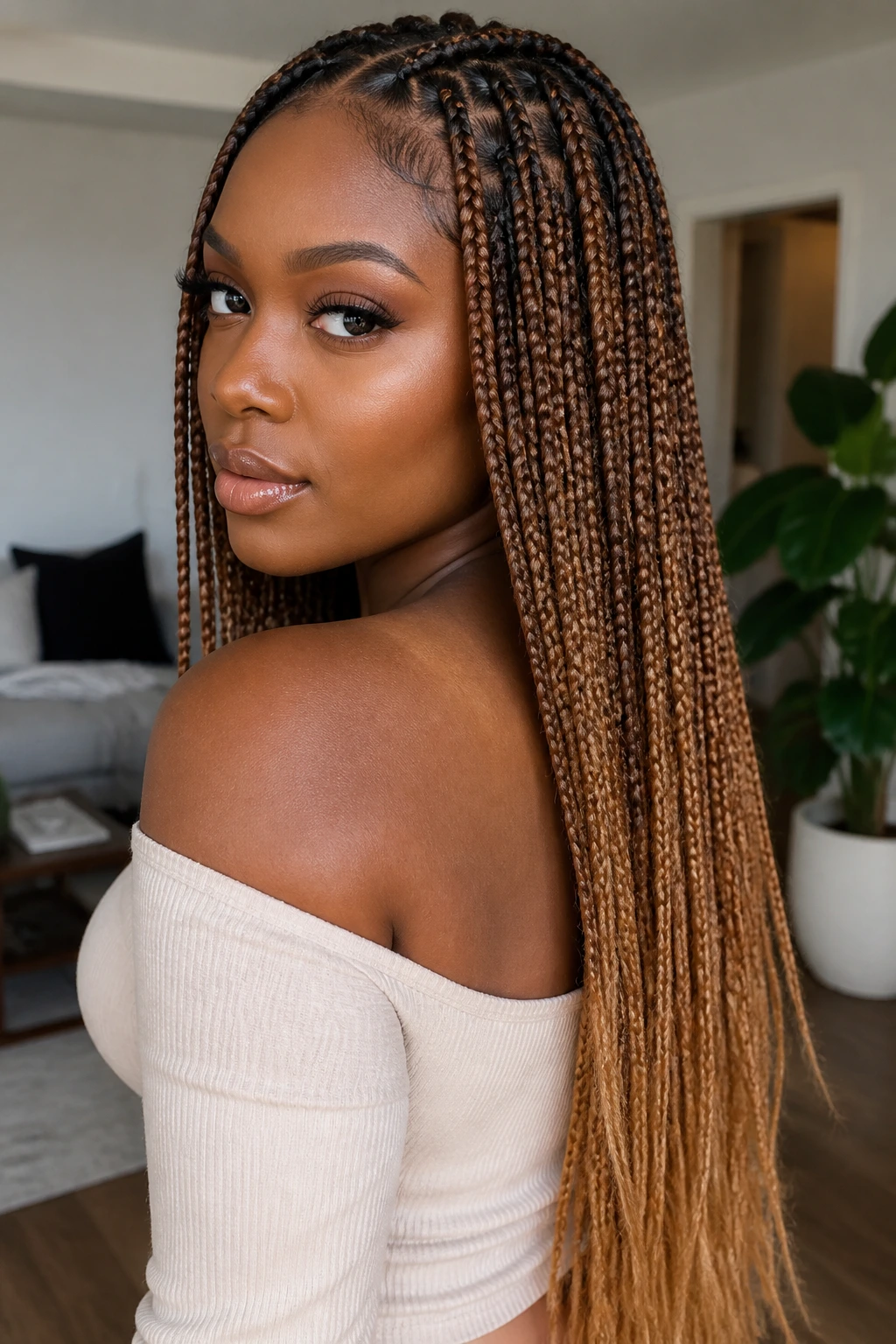
Knotless braids in maple-caramel tones have a way of softening deep skin without making the look feel sugary. The added warmth shows up in the braid length, especially if the roots stay dark and the ends shift into caramel or maple brown.
This is the kind of style that makes sense when you want color but not daily styling. The braids do the work for you. The warm tones catch light in movement, and the darker roots keep the scalp line neat instead of harsh.
A medium braid size is the sweet spot for most people. Tiny braids can look busy with warm color; very large ones lose the detail. Add a little mousse after braiding, tie it down with a satin scarf for 15 minutes, and the finish gets smoother without that crunchy helmet look.
Gold cuffs or a few wooden beads can be nice here, but I’d keep accessories sparse. The color should still be the main event.
11. Burnt Sugar Faux Locs Bob
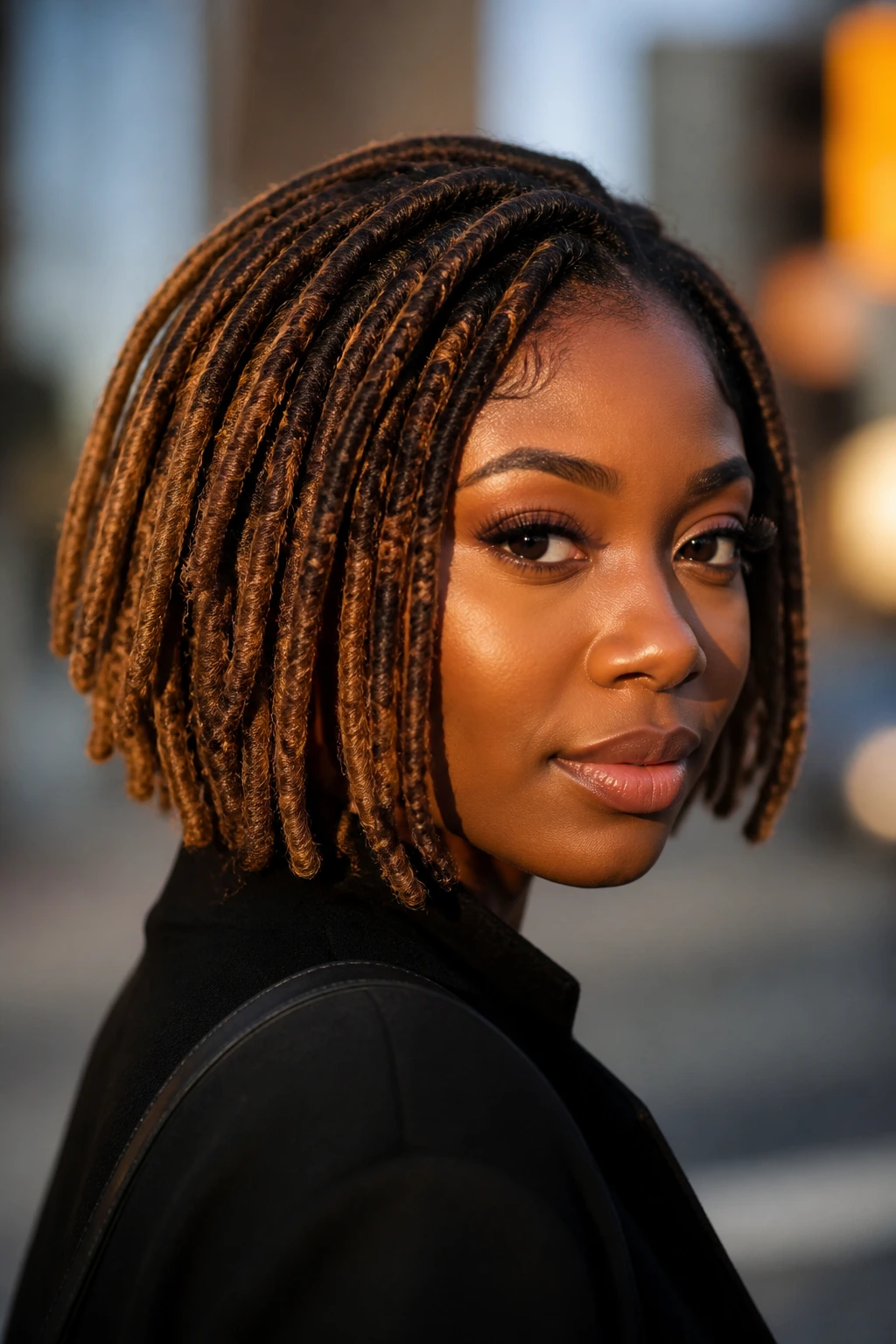
If you want texture without the commitment of dye, faux locs are the obvious answer. Burnt sugar tones wrapped through a bob-length set give deep skin a warm frame, and the shorter length keeps the style from feeling heavy.
I like this one because it combines structure and softness. The faux locs have enough shape to read polished, but the warm wrap around each loc keeps the finish from going flat. A bob hits at the jaw or collarbone and shows the color in a very controlled way.
This is also one of the more forgiving winter options. Scarves don’t crush it as much as loose curls, and the darker base hides the regrowth or installation line better than a brighter shade would.
If you want the most flattering version, ask for a root that stays espresso or dark brown, with the burnt sugar warmth appearing through the mid-lengths and ends. That layered color story is what keeps it from looking costume-ish.
12. Caramel Crown Lights on a Tapered Cut
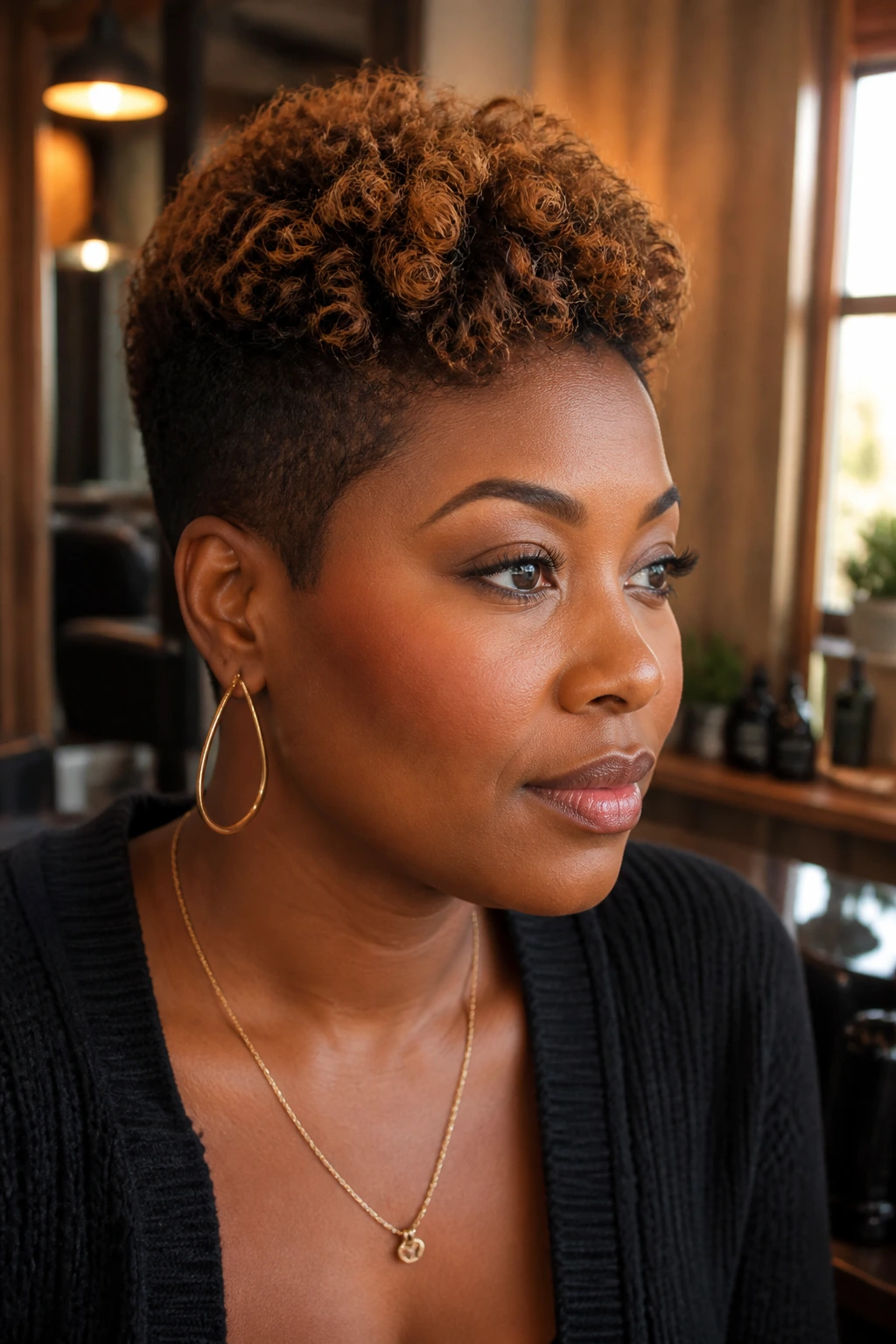
Short hair can carry strong color. It just needs the right map.
A tapered cut with caramel crown lights puts the warmth where the shape is highest and most visible. The sides stay darker, which keeps the profile clean, while the top picks up brightness that makes the cut feel lifted. On deep skin, this works because the color behaves like a spotlight, not an all-over wash.
I’m a fan of this when the cut already has good structure. If the taper is soft, the color adds definition. If the crown has a little height, the caramel makes that height obvious. You don’t need much lightness — just enough to break up the dark base at the top and around the front.
Ask for a gloss or demi-permanent color rather than a harsh lightening job if the goal is depth, not drama. Short hair shows every mistake. It also shows every good decision.
13. Golden Caramel High Puff
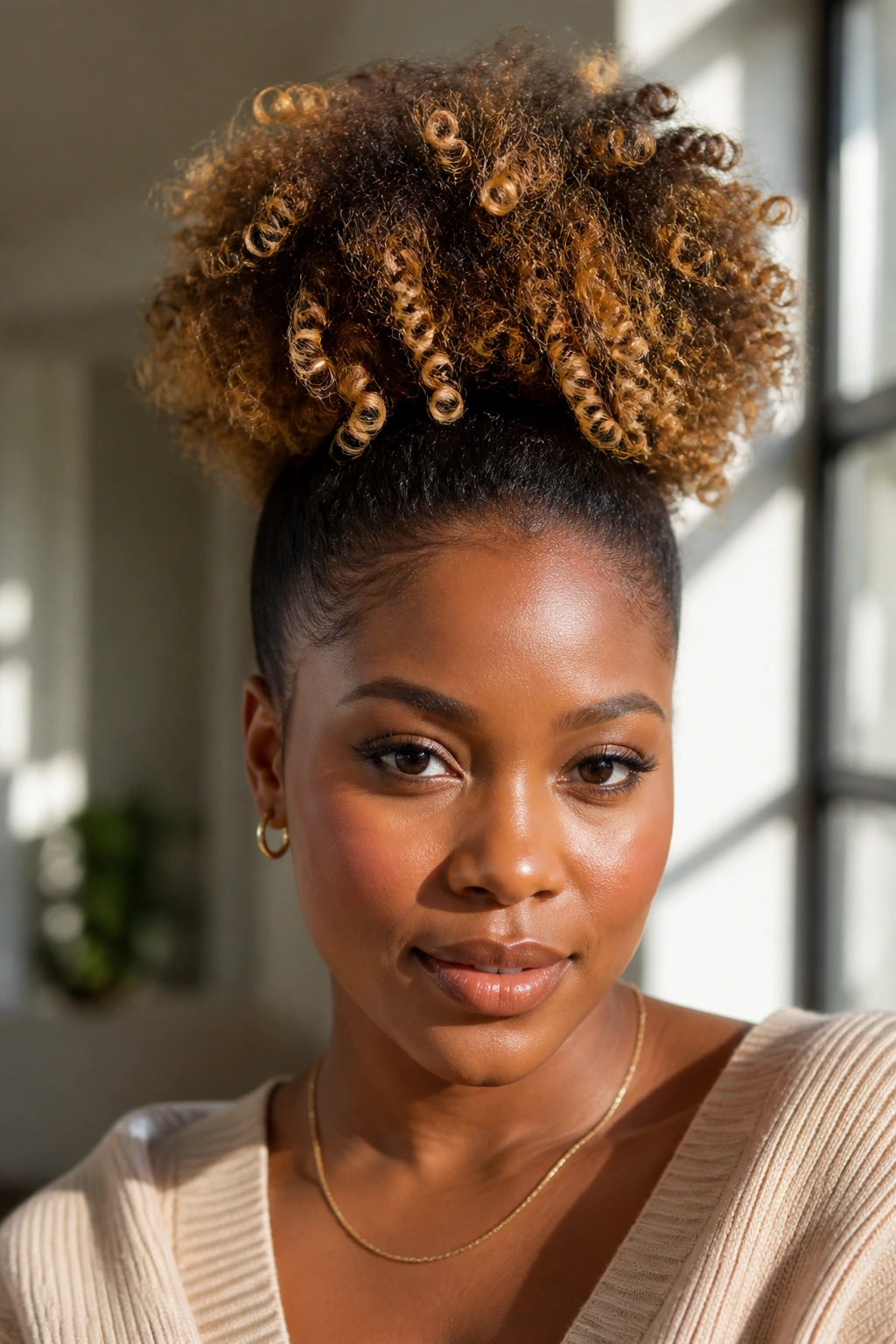
A high puff is the quickest way to make caramel show up from across the room. Pull the hair up, smooth the sides, and the warm tones sit at the top of the head where they catch every bit of winter light.
The puff works best when the curl pattern stays soft and the outer layer has a little shine. If the hair is too dry, the caramel reads dull. If the edges are over-smoothed, the style starts looking stiff. You want lift, not shellac.
Where to place the light
Keep the brightest caramel on the outer layer of the puff and around the front section that spills over the band. That’s the part people notice first anyway.
This is a strong option for deep skin because the warmth sits against the face and upper head, not buried inside the shape. Pair it with a satin scrunchie or a soft band that won’t cut into the curls, and the puff keeps its body through the day.
14. Espresso Base with Caramel Braided Bun
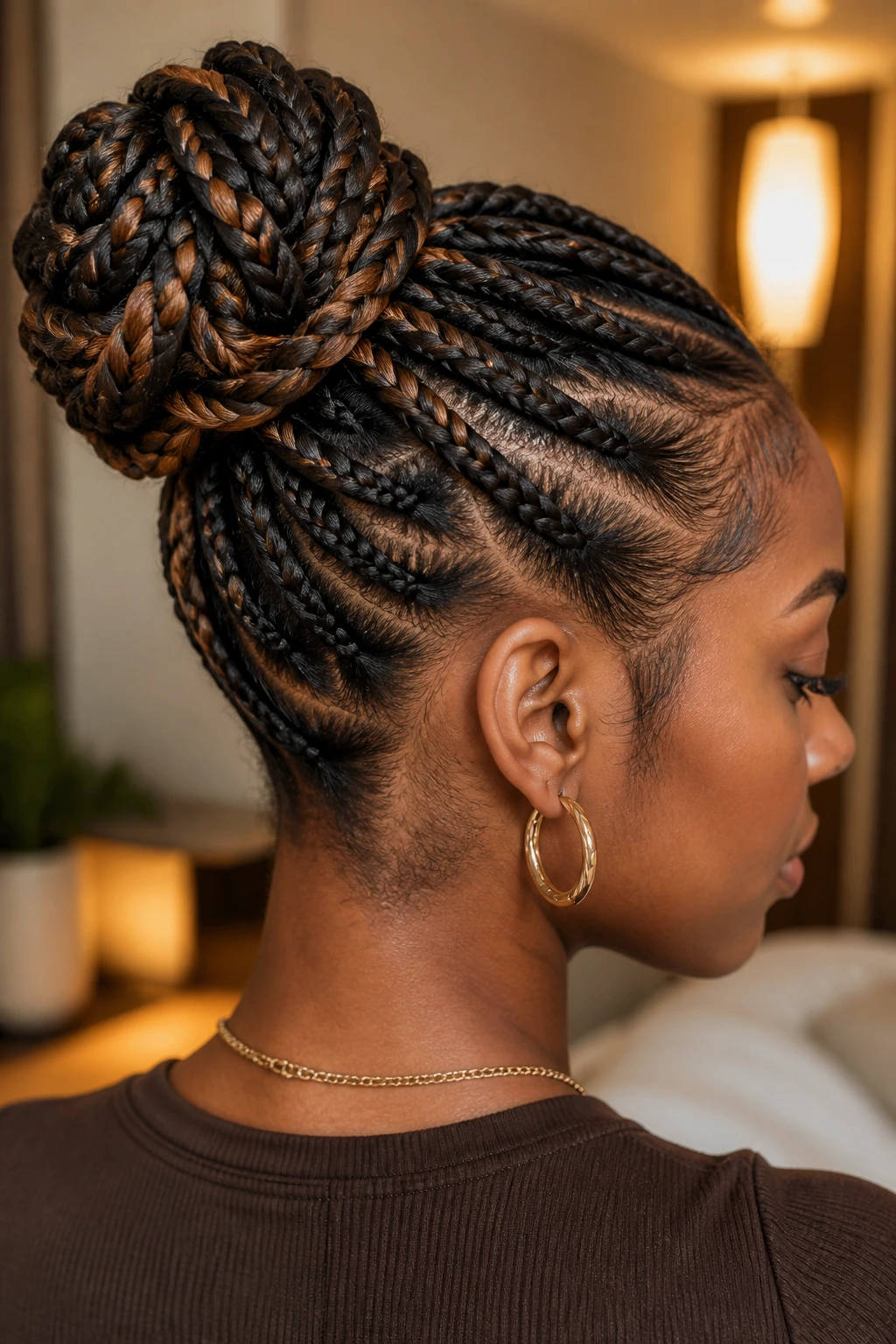
A braided bun with an espresso base and caramel threading feels tailored. Clean. A little formal without being stiff.
This is the style I’d choose for a dinner, a gallery opening, or any day when you want the hair to look finished from every angle. The braids create texture, the bun keeps the silhouette compact, and the caramel threading gives the whole thing depth. On deep skin, that mix of dark and warm tones reads rich instead of busy.
A low bun sits close to the neck and looks neat with coats and high collars. A mid bun gives more lift and exposes more of the braided color. Either works, but the bun should feel deliberate — not like you twisted it up between tasks.
Gold pins or cuffs are enough. Don’t overload the bun with accessories; the color placement already does the work.
15. Amber-Caramel Half-Up Ponytail
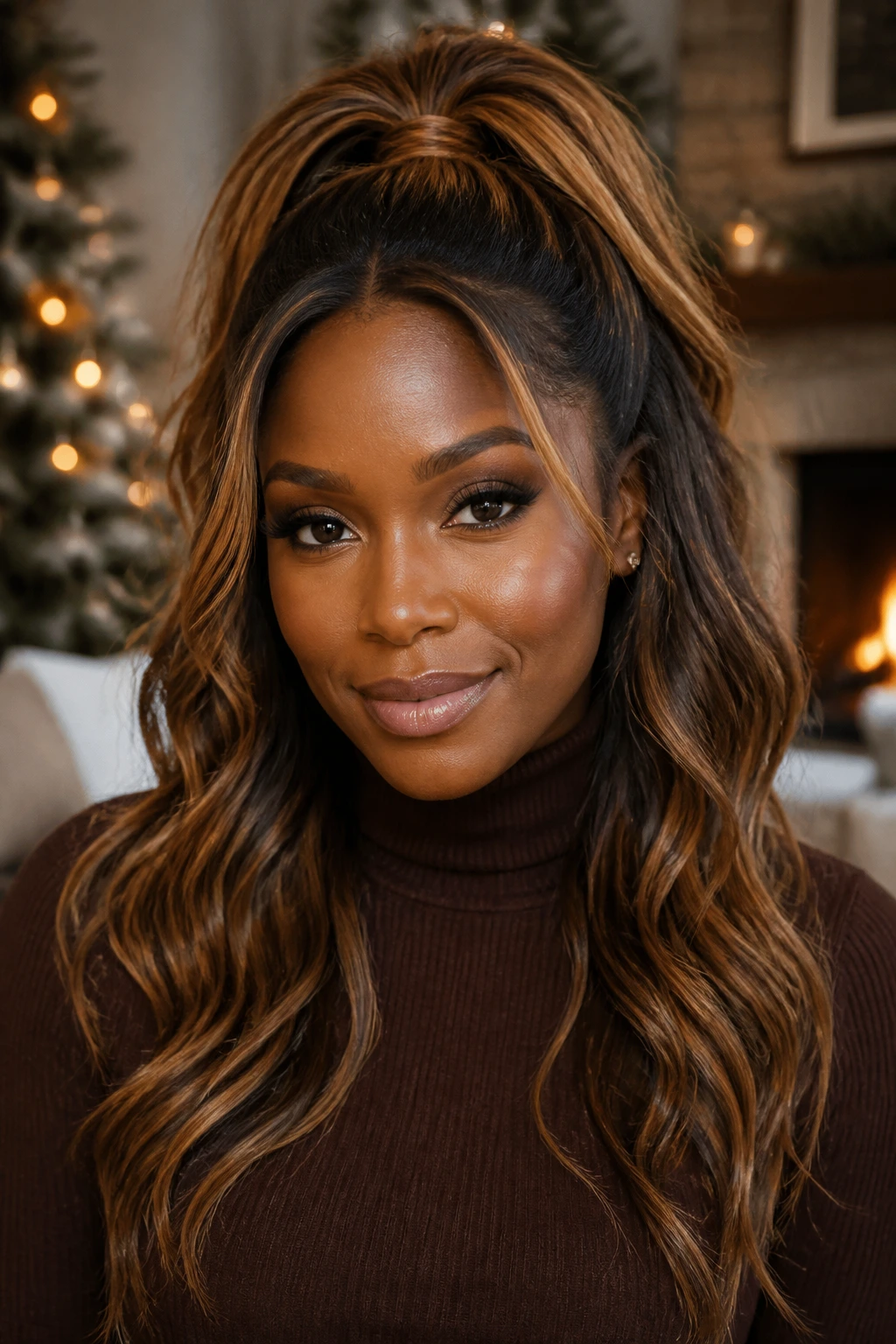
Need a look that works for dinner and a wool coat? This is the one.
A half-up ponytail gives you the best parts of two styles: the lift of an updo and the softness of loose length. When the caramel is woven through the ponytail and left brighter around the top layer, the style shows off the color without requiring the whole head to be visible. That’s useful in winter, when outerwear can hide the lower half of your hair anyway.
If you want less upkeep
Choose a half-up with curled ends or a soft wave through the loose section. Straight ends can make the color look harder. A little bend keeps the amber tones moving.
This look suits long hair, extensions, or clip-ins, especially if you want the ponytail to sit high and full. Keep the top smooth, but not glued down. A soft crown and a defined tail give the caramel room to breathe.
16. Velvet Caramel French Roll
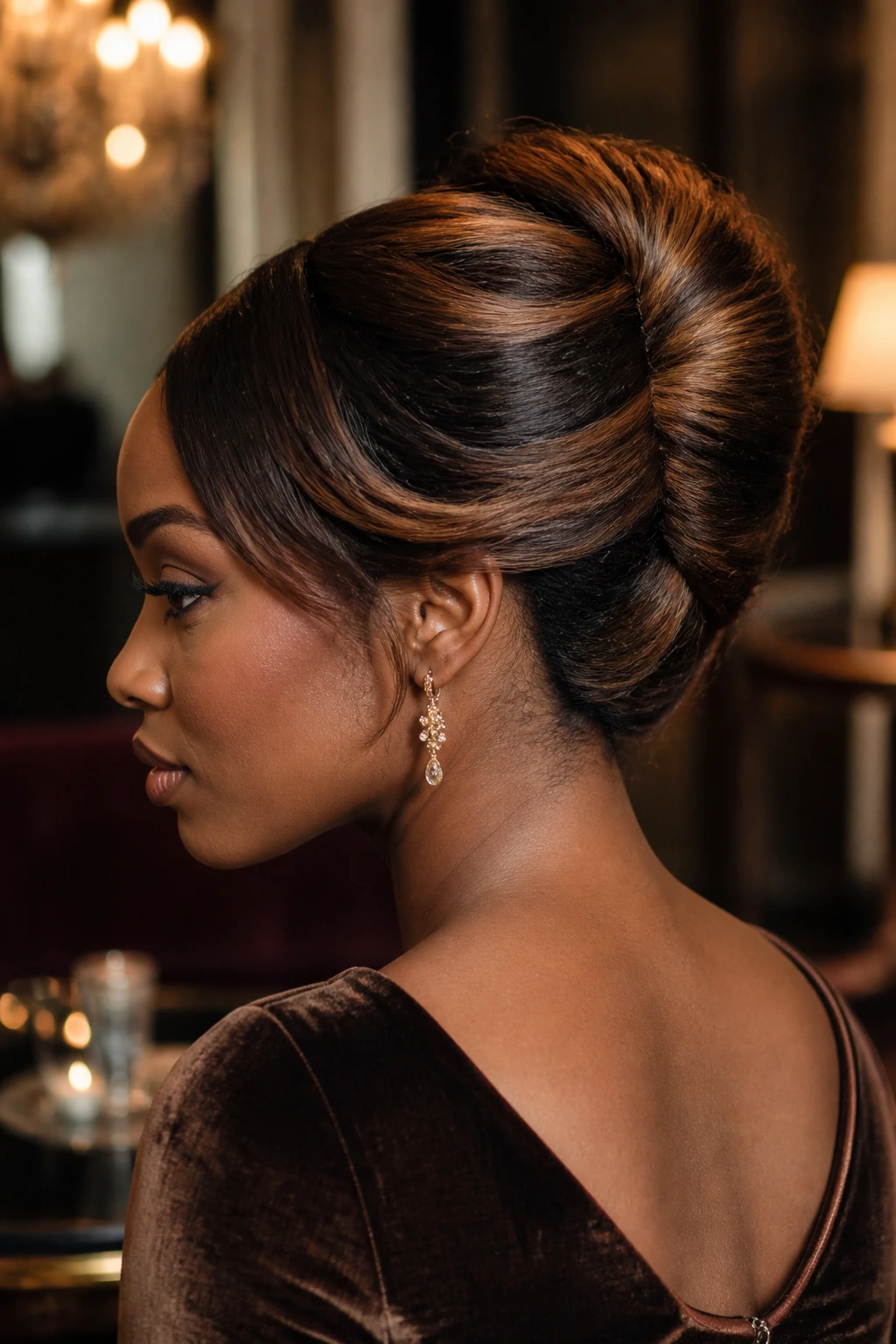
A French roll with caramel ribbons feels old-school in the best way. It’s the kind of style that makes the neckline look longer and the color placement look almost architectural.
What makes it work on deep skin is the way the roll exposes the lighter pieces along the twist. The caramel does not need to be everywhere. It just needs to trace the seam of the roll and maybe flick out near the top edge. That’s enough to make the whole shape glow.
If the roll is too tight, the style can look severe, which is not what you want with winter warmth. Leave a few soft pieces near the front or keep the roll slightly looser at the crown. The goal is polish, not stiffness.
I’d save this for events or days when you want the hair off the neck and the color to read refined. It pairs well with earrings that have a little movement — a small hoop, a drop, nothing fussy.
17. Toffee Bantu Knot-Out
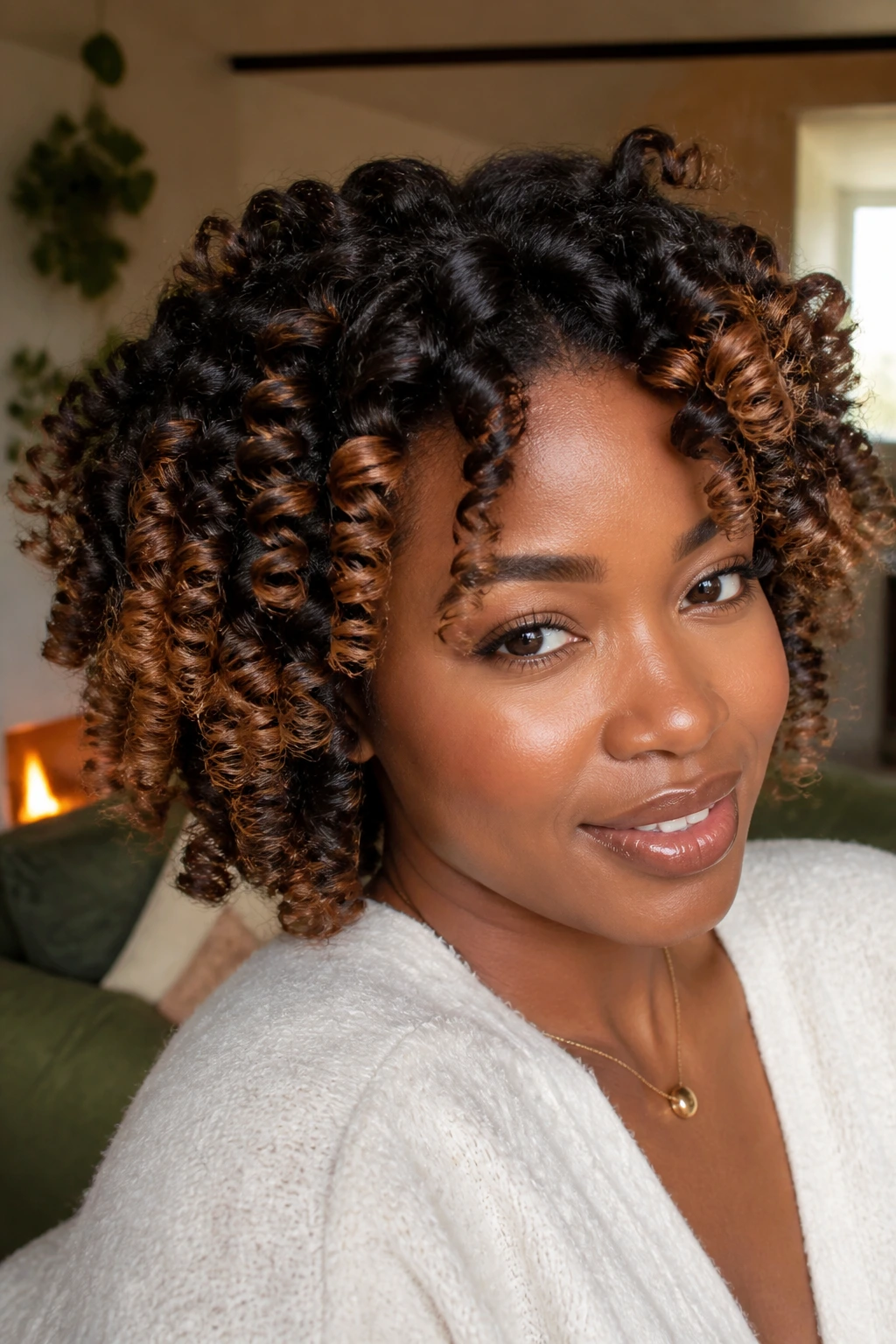
A bantu knot-out gives you more lift at the roots and more pattern at the ends than a basic twist-out. That extra definition is where the toffee caramel gets to show off.
This style is especially good if your hair tends to fall flat by midday. The knots create a springier curl, and the warm color appears in little arcs and spirals instead of a uniform wave. On deep skin, that can look sharper than a soft twist-out because the contrast is stronger and the texture reads clearer.
The best versions start on well-moisturized hair and come apart only when fully dry. If there’s even a little dampness left in the knots, the pattern loses its shape fast. I’d keep the knots medium-sized for a rounder curl and a more visible color swirl.
If you want the ends to hold, use a small amount of light oil only on the tips. Too much and the caramel turns dull.
18. Deep Brunette Waterfall Waves with Caramel Ends
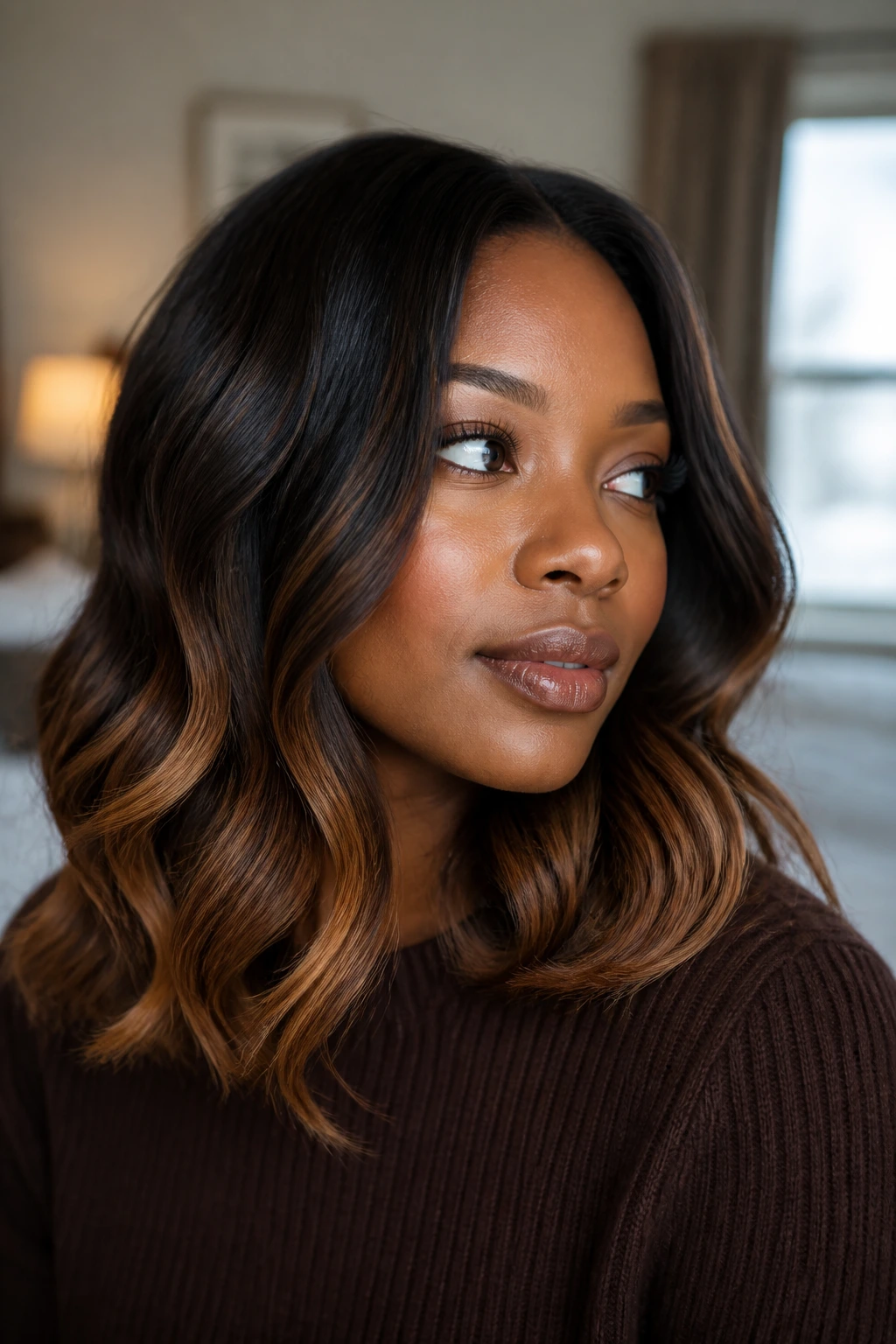
If I had to pick one winter caramel look that survives scarves, wind, and bad indoor lighting, it would be this one. Deep brunette waves with caramel ends keep the top dark and rich, then let the warmth live where the movement is.
That bottom-third placement is why it works. The caramel never fights your skin tone for attention; it appears when the hair bends, flips, or settles over a shoulder. On deep skin, the darker base protects the richness, and the lighter ends give just enough lift to keep the style from feeling heavy.
Ask for soft, hand-painted ends rather than a hard line. A gentler fade lets the waves look expensive without shouting. It also grows out more cleanly, which matters when you’re not in the mood for constant salon visits.
This is the one I’d choose if you want the safest bet in the bunch. Not boring. Just smart.
Why Winter Caramel Looks Richest When the Base Stays Deep
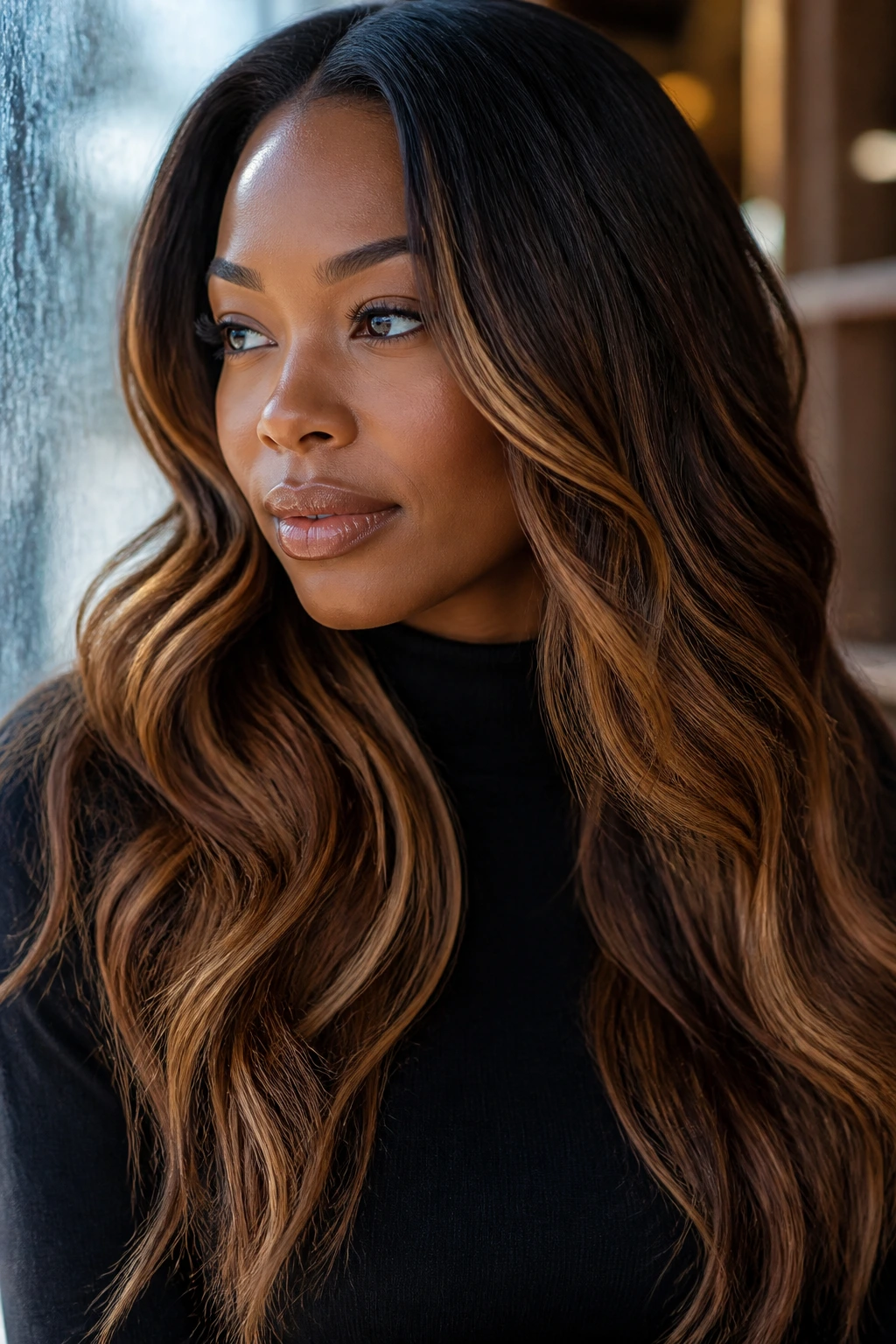
The fastest way to ruin caramel on deep skin is to strip too much depth out of the base. A dark root, a brown mid-shaft, and a warm caramel finish create contrast that reads intentional under winter light, where flat color can suddenly look lifeless.
Winter changes the game. Indoor bulbs are softer than sun, scarves cover half the hairline, and the eye tends to catch shine before shape. That means the best caramel shades are the ones that hold their brown backbone. Golden caramel, toffee, maple, amber, and chestnut-caramel all behave well because they stay warm without drifting into pale beige.
Golden, toffee, and amber are the safest bets
These tones keep some red-gold warmth in them. On deep skin, that warmth prevents the color from looking dusty or muted. A caramel that leans too ash-heavy can lose its brightness fast.
Why ash can look dusty
Ash-brown has its place, but on deeper complexions it can lean gray if the formula is too cool. That’s especially obvious in winter, when natural light is weaker and the hair needs more depth, not less.
A gloss helps, too. Even on darker bases, a clear or warm-brown glaze can make the caramel pieces look cleaner for weeks. Without it, the color starts to read dry, and dry is the enemy here.
Essential Tools for These Hairstyles
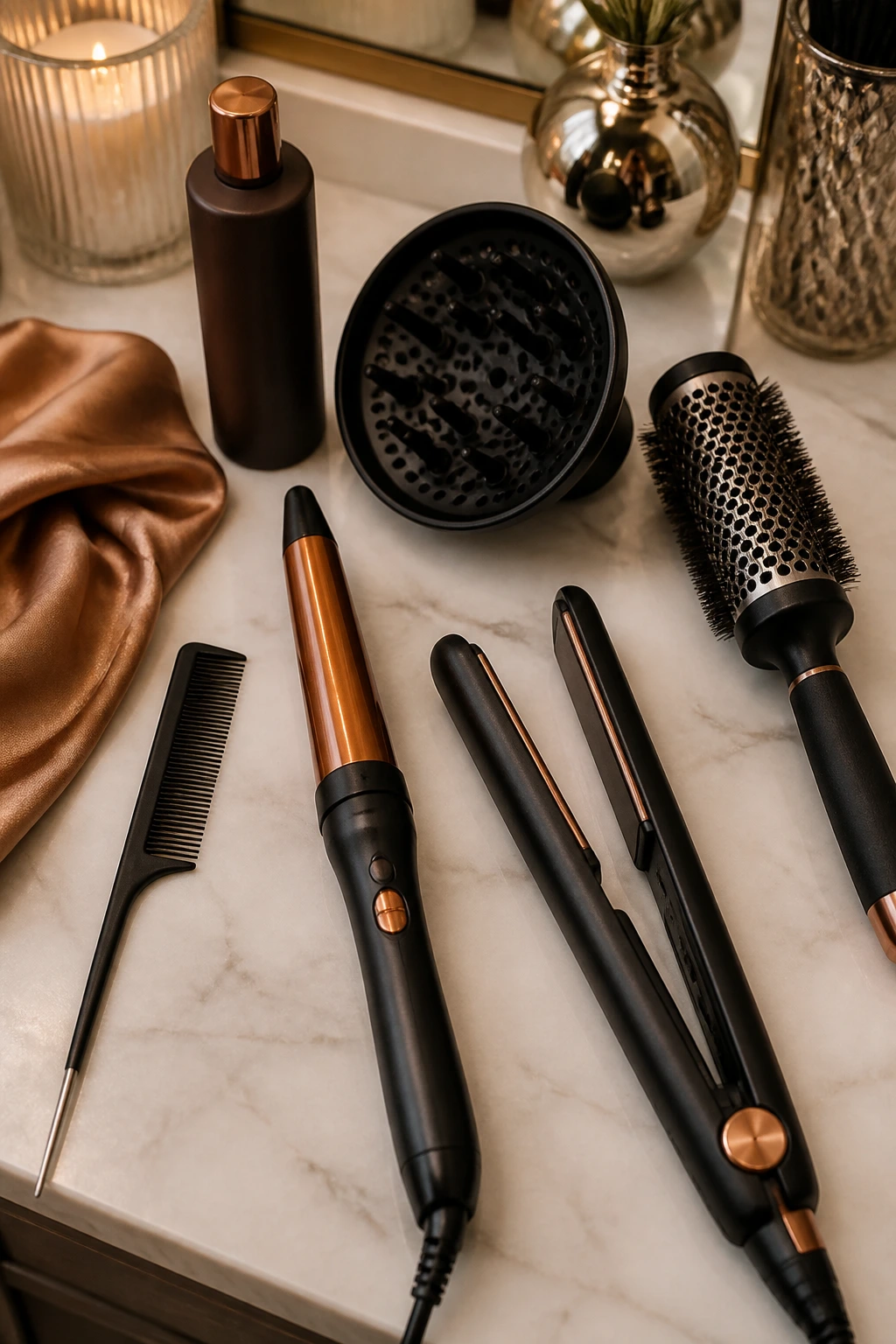
- Tail comb: The clean part matters, especially for money pieces, sleek center parts, and braided styles.
- 1-inch curling wand: Best for lobs, half-up ponytails, and soft wave patterns that show off caramel ribbons.
- Flat iron with temperature control: A must for silk presses; fine hair needs less heat than coarse hair, and one setting does not fit all.
- Round brush: Useful for blowout bobs, flipped ends, and French rolls.
- Diffuser attachment: Helps curls, shags, twist-outs, and puff styles keep their pattern without roughing up the cuticle.
- Satin scarf or bonnet: Keeps the shine in place overnight and stops winter friction from roughing up the finish.
- Color-safe shampoo and conditioner: Warm tones fade fast when you strip them with harsh cleanser.
- Lightweight leave-in conditioner: Keeps coily and curly styles soft without weighing the caramel down.
- Heat protectant spray: Non-negotiable for silk presses, blowouts, and loose waves.
- Edge brush and mousse: Smooths braids and puffs without leaving hard flakes behind.
- Wide-tooth comb: Better than a brush for twist-outs, afro shapes, and any style that needs volume without breakage.
- Rattail clips and sectioning clamps: They make color placement and styling cleaner, which matters more than people think.
Choosing the Right Caramel Undertone for Deep Skin
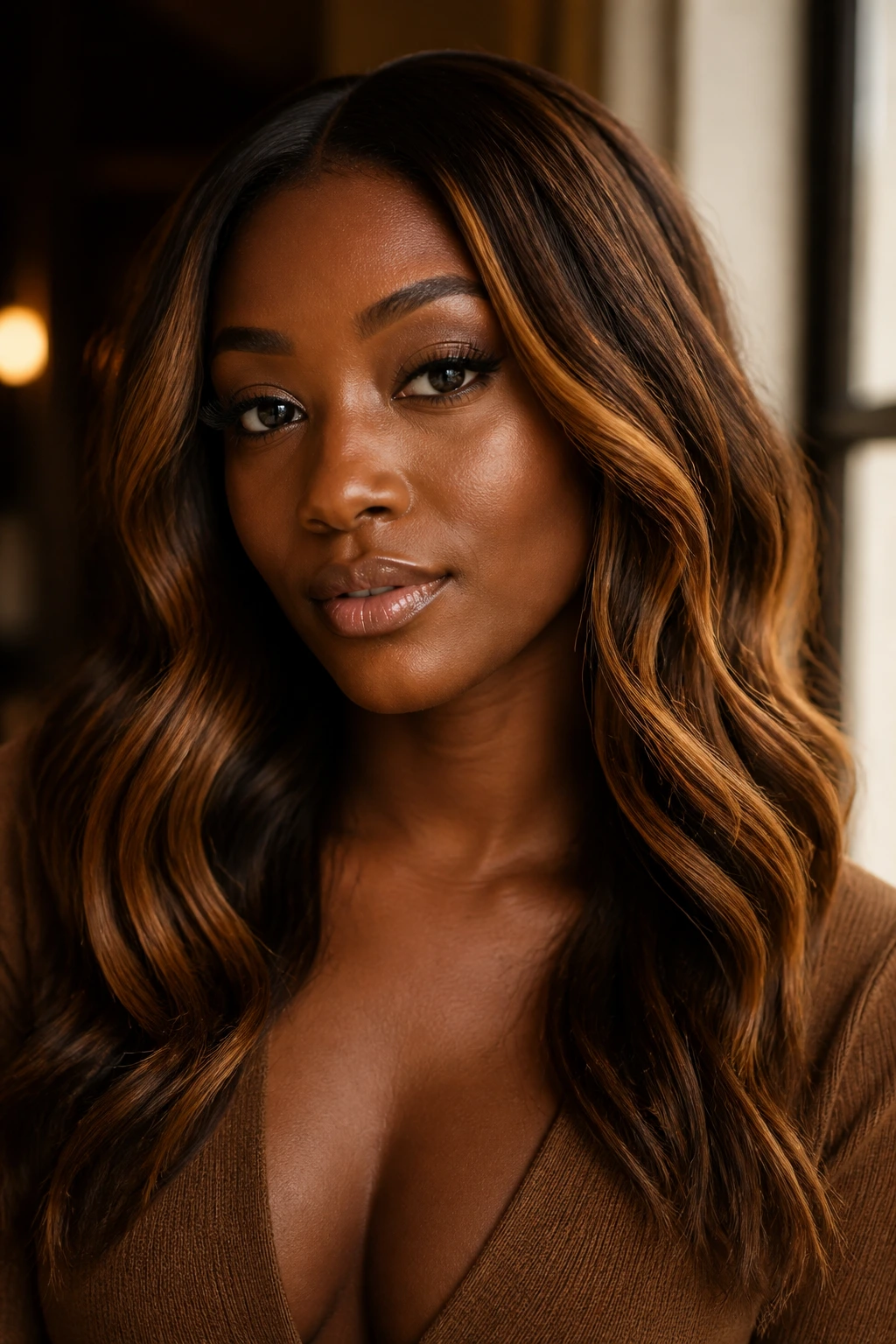
Caramel is not one color. That’s where a lot of people go wrong. Some versions lean golden, some lean amber, some lean toffee, and some carry just enough copper to wake the skin up without pushing into orange.
If your undertone is warm, golden caramel usually behaves well. It sits close to honey and toffee, and it tends to look natural around the face. If your undertone is neutral, chestnut-caramel or maple caramel keeps the warmth balanced. For cooler undertones, I’d still stay in the warm family, but I’d ask for a deeper base so the caramel does not float too light on top.
A salon note that saves trouble
Bring photos in both daylight and indoor light. Caramel can look soft in one and loud in the other, and the difference matters more than the name on the color chart.
If your natural hair is very dark, do not jump to a shade that sits too far away from the base. One or two levels lighter is enough for most deep skin tones. After that, the color starts to fight the complexion instead of sitting with it.
For extensions and braids, look at the undertone of the synthetic or human hair before you buy. Some “caramel” packs skew orange, and that can be a mess against deep skin unless the rest of the look is very warm.
How to Wear These Looks With Coats, Earrings, and Makeup
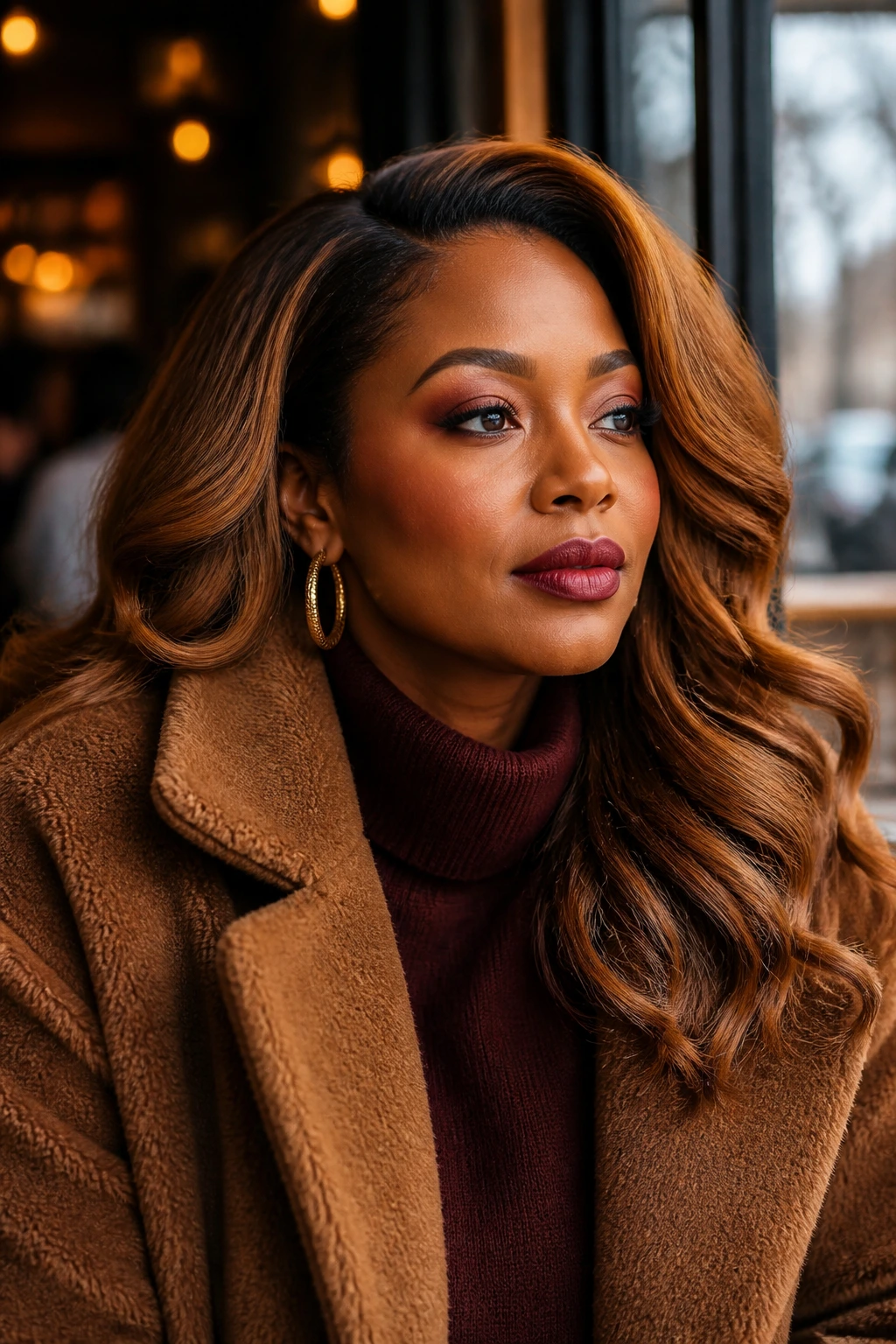
Presentation: Keep the brightest pieces where winter clothing can’t hide them — around the face, at the crown, or at the ends that fall outside a coat collar. A haircut or style that disappears under a scarf will never show off the color properly.
Accompaniments: Gold hoops, bronze shadow, a berry lip, and a ribbed turtleneck all give caramel something to bounce off. Black and camel coats also work well because they create a dark frame that lets the warmth stand out.
Scale: Smaller highlights work better if your hair is fine or if you wear your hair short. Bigger curls, full puffs, and braids can take broader caramel placement because there’s more shape for the color to live in.
Makeup Pairing: Terracotta blush, deep plum lipstick, and a warm brown liner keep the face in the same color family as the hair. If you go too cool with the makeup, the hair can look disconnected. Warm tones pull the whole look together.
One practical note: if you wear glasses, choose bright pieces that sit above or beside the frame line. If you wear heavy coats, keep some brightness higher on the head so the style does not vanish under layers.
Small Tweaks That Keep the Caramel Looking Fresh
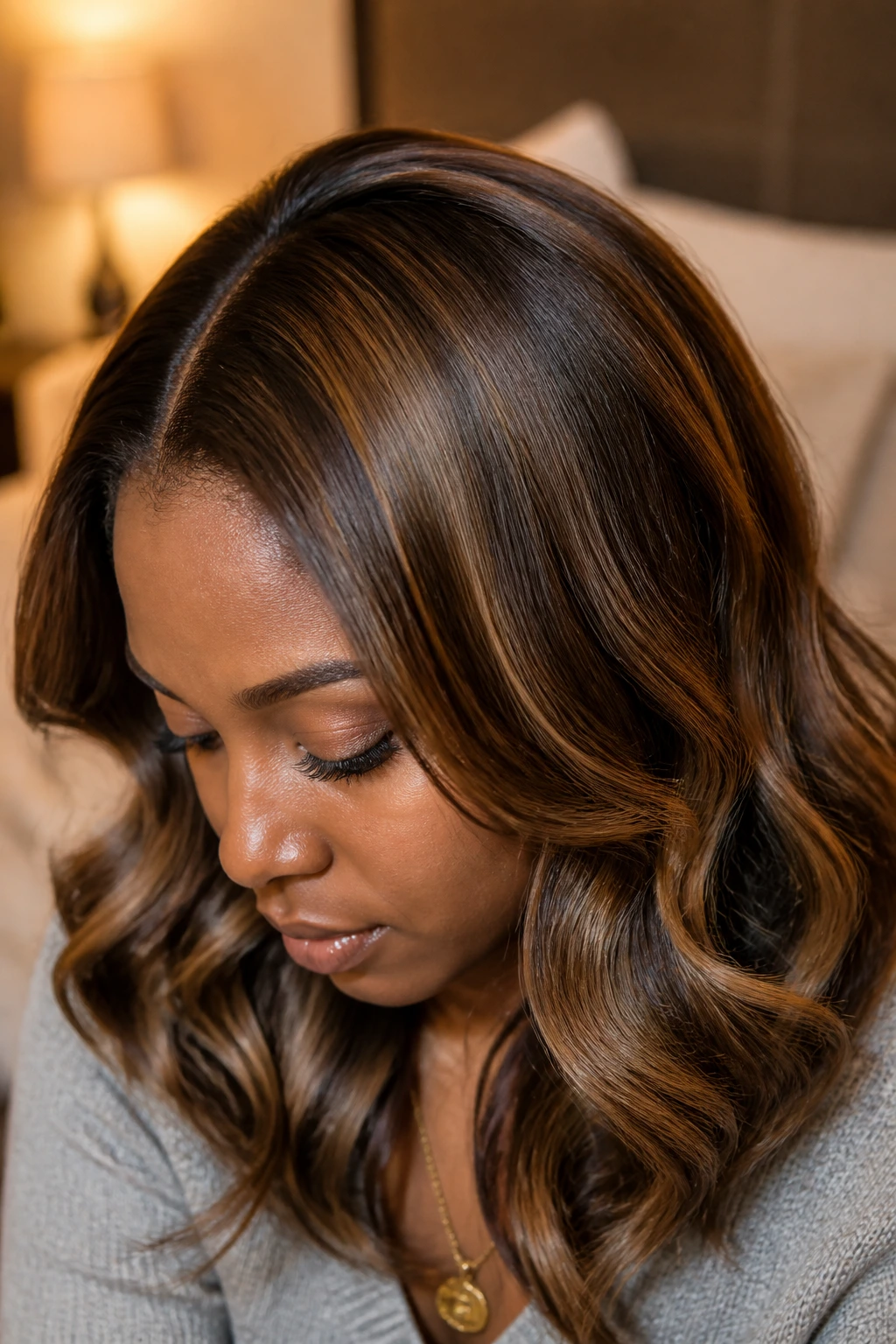
Gloss Boost: A warm-brown or clear gloss every 4 to 8 weeks keeps the caramel from going flat. On color-treated hair, it also smooths the cuticle so the shine lasts longer between washes.
Shadow Root: Leaving the root one shade deeper gives you a softer grow-out and protects the richness of deep skin. It also keeps the color from looking like a hard band.
Texture Play: On curls and coils, use cream-gel or mousse instead of heavy oil. On straight styles, use serum only on the mids and ends, not the roots. Caramel loses its lift fast when the hair gets coated.
Make-It-Yours: If you want less commitment, choose ribbon highlights, money pieces, clip-ins, or braided extensions. If you want more drama, ask for brighter front pieces and a slightly lighter end section.
I also like a tiny bit of warmth at the face even when the rest of the hair stays dark. That one move is doing a lot of heavy lifting.
Keeping the Style Fresh Between Wash Days
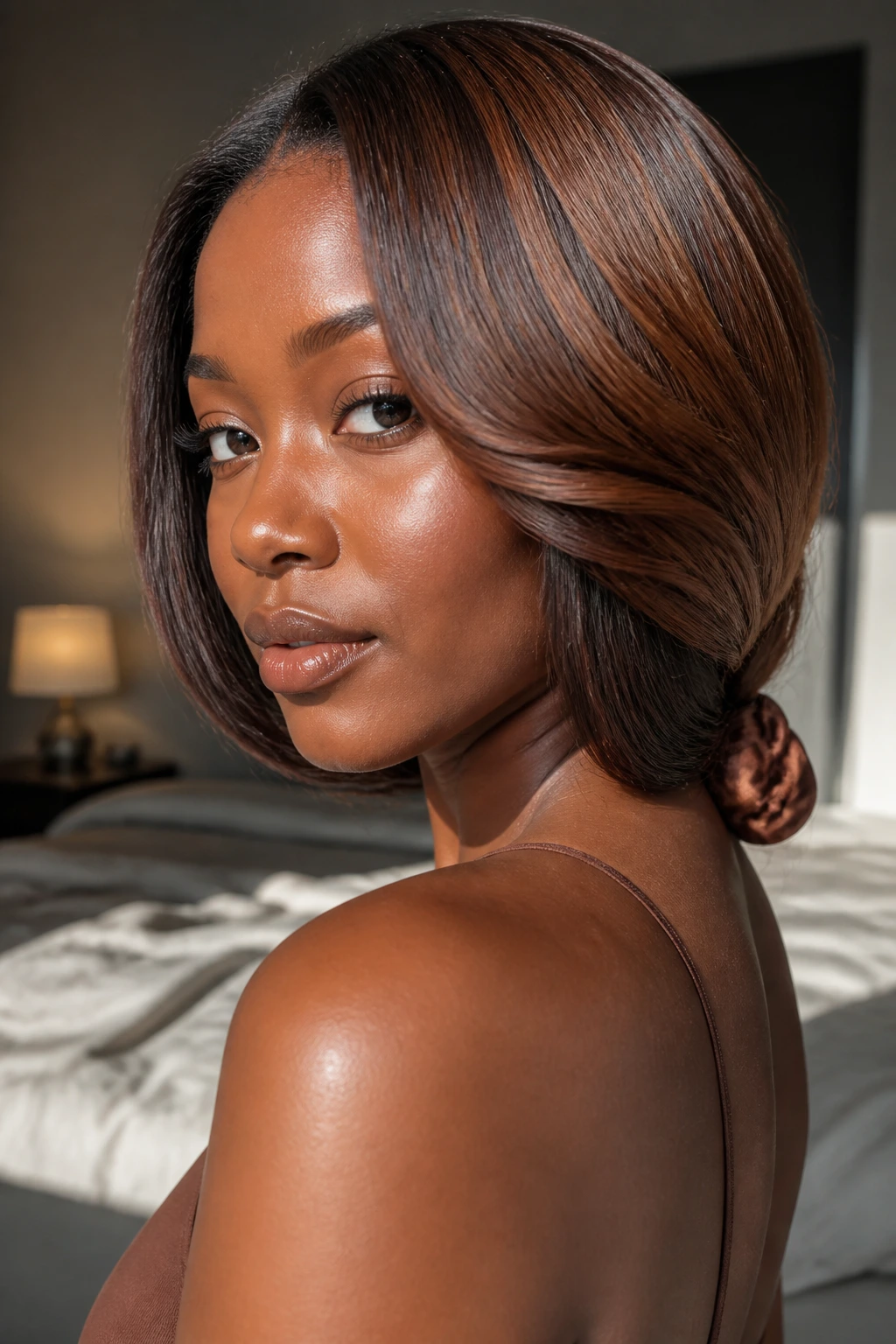
Loose heat-styled looks usually hold up for 5 to 7 days if you sleep with a satin wrap and avoid heavy humidity. For silk presses and blowout bobs, a light touch at the roots and a quick bend at the ends is usually enough to revive them — just do not keep re-pressing the same section with high heat. The caramel will dull faster than the darker hair if you overdo it.
Curly styles and twist-outs need a different rhythm. Rehydrate with a water-and-leave-in mist only when the hair feels dry, not every time it looks a little fuzzy. That fuzz is part of the style. If you smooth it down too much, the caramel loses the edge that makes the texture interesting.
Braids, faux locs, and braided buns can last 4 to 8 weeks depending on installation and scalp care. Clean the scalp every 1 to 2 weeks with a diluted cleanser or a gentle nozzle bottle, then follow with a light oil only where needed. Heavy products build up fast on lighter braid colors and make them look dusty.
For color itself, plan a gloss refresh every 6 to 8 weeks if the hair is dyed. If you’re wearing extensions or braids, replace them before the ends get fuzzy and the caramel starts to separate visually. A style can be clean or it can be tired. There is not much middle ground.
Variations and Adaptations to Try
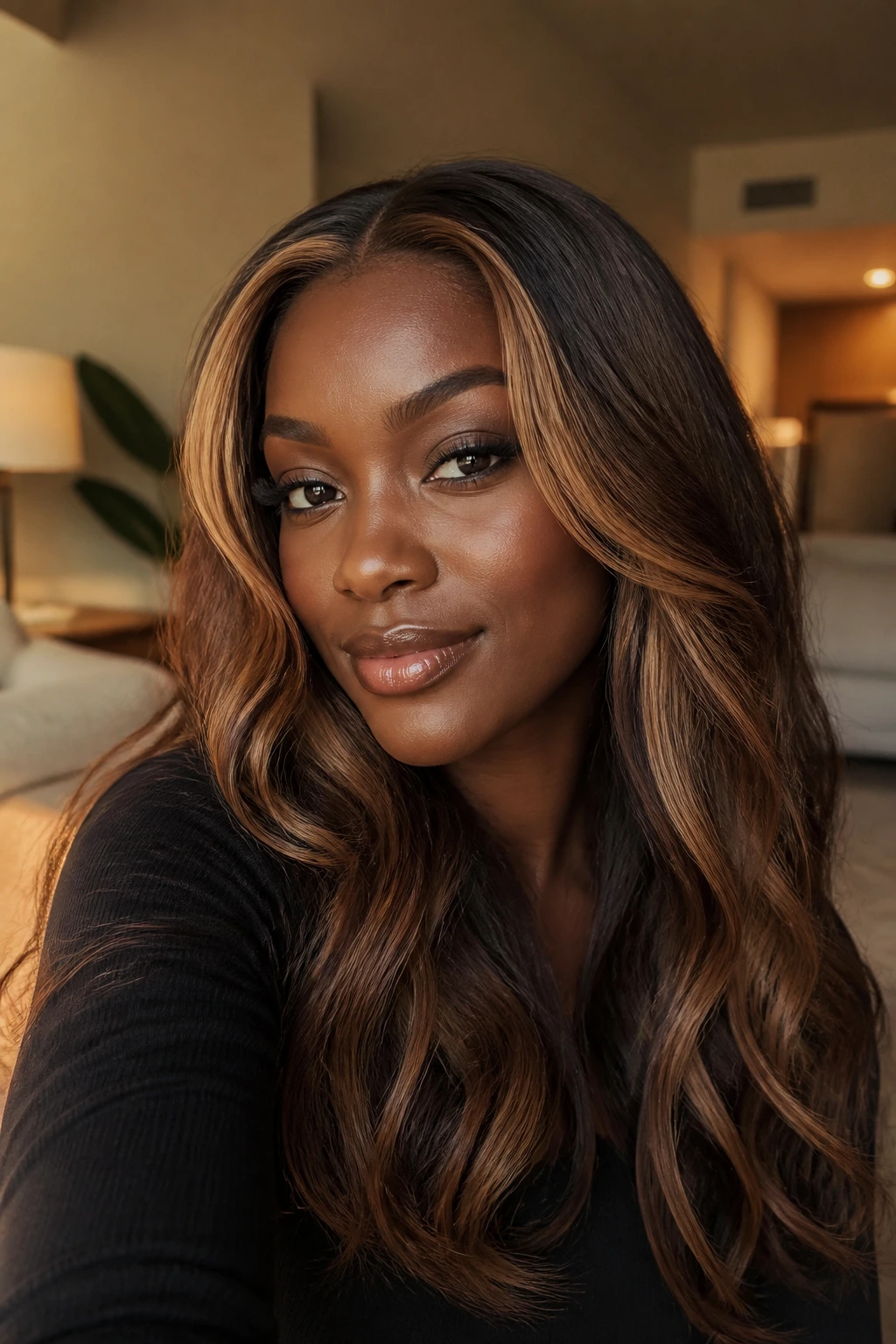
Soft-Glow Version: Keep the caramel to face-framing pieces, ends, or the crown only. This is the quietest route and the one I’d choose if you want warmth without a lot of visible contrast.
High-Contrast Version: Let the base stay espresso or chocolate, then push the caramel one or two levels brighter on the front pieces and ends. It reads sharper, which can be useful if you wear simple clothes and want the hair to carry the color story.
Protective-Style Swap: Take the same caramel family and move it into knotless braids, faux locs, or a braided bun. The structure changes, but the warmth stays, and the hair gets a rest from daily heat.
Cooler Toffee Edit: If your undertone runs neutral or cool, ask for a deeper caramel with less gold and more brown in it. The result looks softer against the skin and avoids the orange cast that can pop up under indoor light.
Low-Heat Version: Use braid-outs, twist-outs, or a high puff instead of silk presses and curls. The color still shows, but you’re not asking the hair to survive a lot of heat styling in the middle of winter.
Short-Hair Shift: Move the caramel to the crown, bangs, or top surface of a tapered cut or bob. Short hair can handle brighter placement because the shape is smaller and the color has less space to go wrong.
Common Mistakes That Flatten the Shade or Frizz the Finish
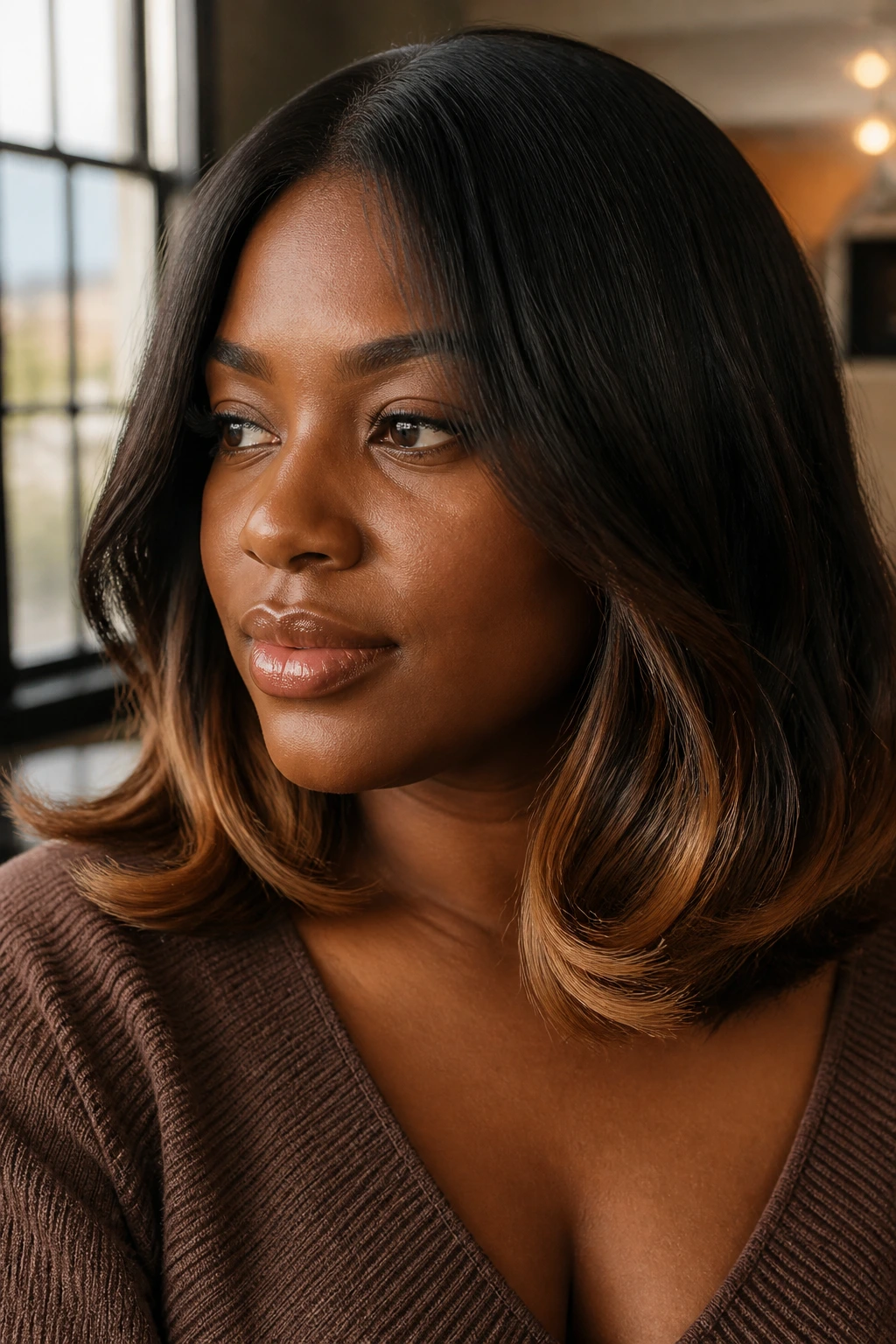
The biggest mistake is making the caramel too light. Pale beige against deep skin can look detached, especially when the light is weak. Fix it by keeping the base deeper, or by asking for a warmer gloss that pulls the shade back into the brown family.
Another one: placing highlights everywhere. That scattershot approach kills the shape. Caramel works best when it’s purposeful — face frame, crown, ends, or the outer ring of curls. Random placement can make the hair look busy instead of dimensional.
Overheating is a mess too. One flat iron temperature for every texture is a bad idea, and blasting curls with hot tools turns the caramel dry and brittle fast. Use the lowest heat that gets the job done, and stop once the shape is set.
People also skip moisture and then wonder why the color looks dull. Dry hair never shows warmth well. A light leave-in, a proper conditioner, and a satin wrap do more for the look than another layer of oil ever will.
Finally, don’t leave braid styles or loc styles in until the scalp is angry and the ends are fuzzy. The color will start looking tired before the hair is actually “done,” and that’s a rough place to be.
Frequently Asked Questions
Which caramel shade flatters deep skin tones best?
Warm caramel with golden, toffee, maple, or amber undertones usually lands best because it keeps the color rich instead of dusty. If you’re unsure, choose a shade that still looks brown in low light and warms up in sunlight.
Can these looks work on natural 4C hair without straightening it?
Yes, and some of them look better that way. Twist-outs, halo afros, high puffs, bantu knot-outs, and braids all show caramel on deep skin without forcing the hair into a heat-styled shape.
Do I need bleach to get caramel highlights?
Not always. If the goal is a subtle warm glow, a gloss, demi-permanent color, or extension color may be enough. For brighter pieces on very dark hair, some lightening is usually needed — but the lift does not have to be dramatic.
How do I keep caramel from turning orange?
Ask for a caramel with brown in the formula, not just gold. After that, keep up with color-safe cleansing and a gloss refresh, because faded warm tones can drift orange if they’re left too long.
Which style is the lowest maintenance?
Braids, faux locs, and protective buns are the easiest to live with. They keep the caramel visible for weeks and do not need daily heat, which makes them a strong winter choice.
Will caramel hair wash me out if my skin is deep?
Not if the base stays deep enough. The problem is usually too much lightness, not the warmth itself. A darker root and controlled placement usually solve the issue fast.
How often should I refresh the color?
For dyed hair, a gloss every 6 to 8 weeks keeps the warmth clean. If you wear braids or locs, refresh the style before the ends fray and the color stops looking sharp.
What if the caramel looks flat under indoor light?
You probably need more contrast or more shine. Add a deeper root, a slightly warmer gloss, or brighter placement at the face and ends so the hair catches light from multiple angles.
The Shade That Does the Most
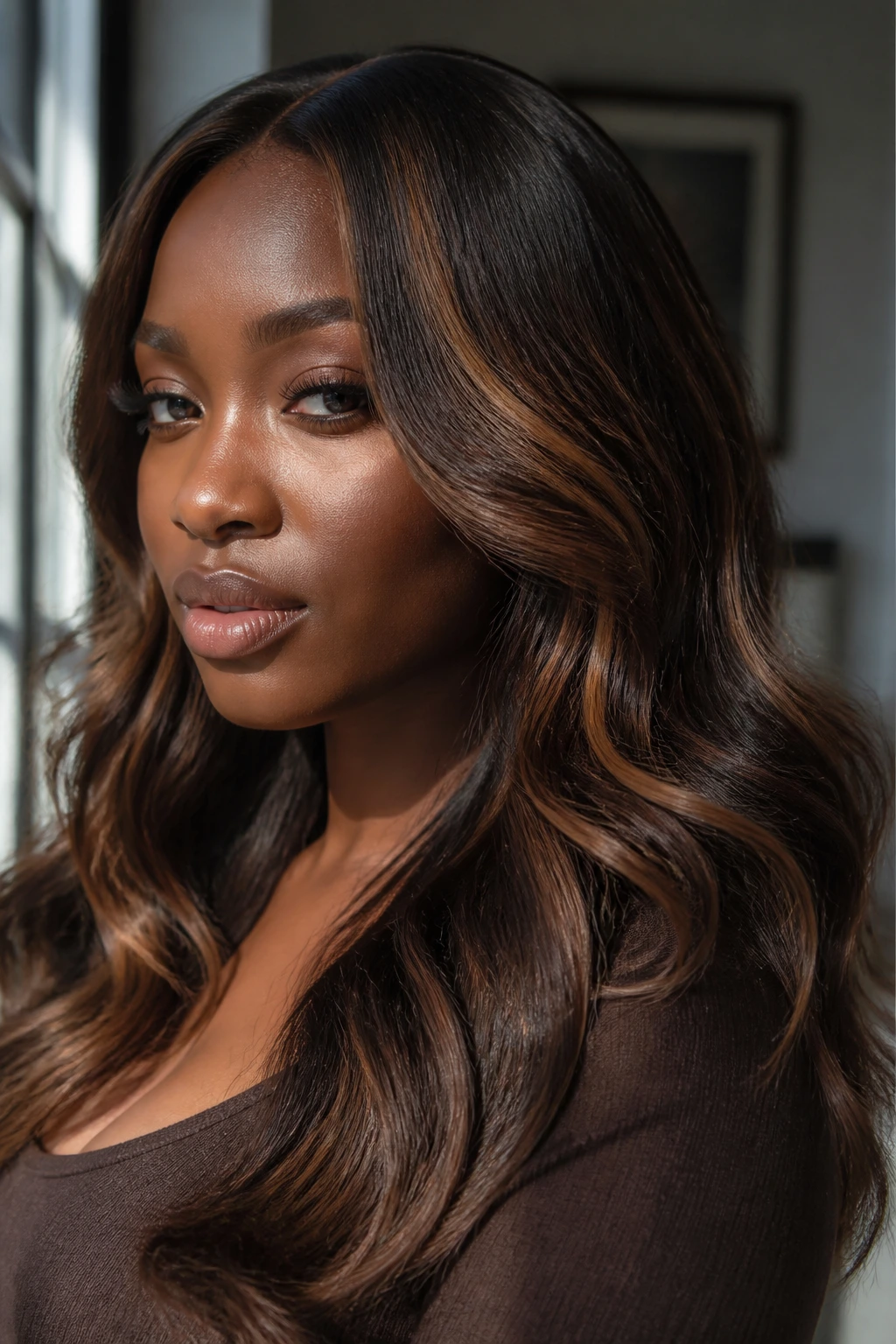
Winter caramel has a sweet spot, and it sits right between warmth and depth. Push the color too light and it loses the richness that makes it work on deep skin. Keep the base grounded, let the caramel show up where movement lives, and the style starts carrying itself.
That’s why the best versions here feel so wearable. They do not depend on perfect weather or perfect lighting. They look good under a coat, on a night out, in a hallway mirror, and in the kind of indoor light that usually flatters nobody. If you’re bringing one idea to a stylist, bring a photo that shows placement first — because with caramel, placement is half the magic.