



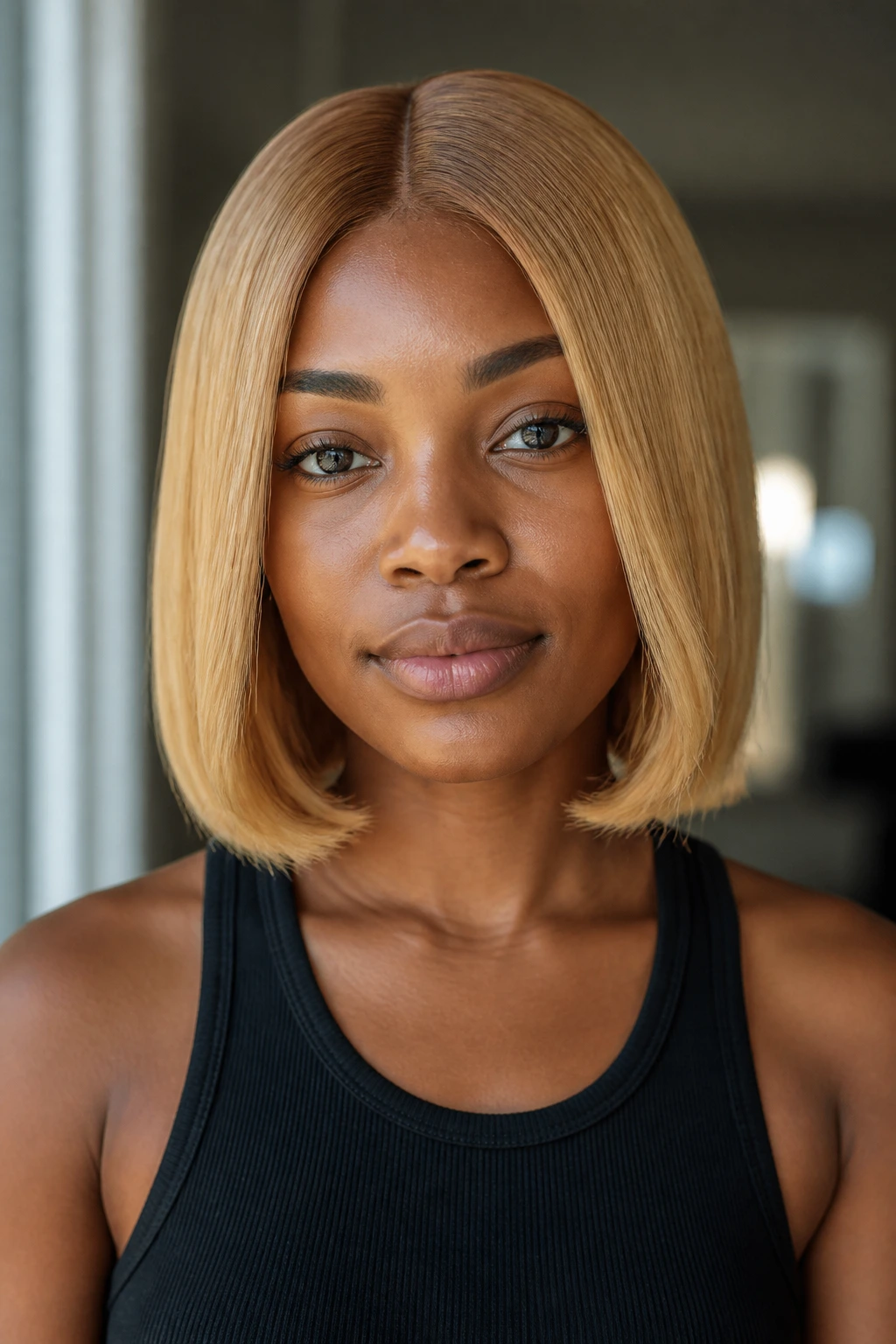
Honey blonde hair color ideas for deep skin tones work best when the blonde still remembers where it came from. On deeper complexions, the shade should sit in that sweet spot between amber, caramel, and warm butter—not chalky, not pale-yellow, and definitely not so icy that it floats above the face like an afterthought.
That’s the part people miss. Honey blonde is not just “blonde, but warmer.” It has to be placed, toned, and balanced so the skin looks richer next to it, not dimmed by it. When the formula is right, the color does that lovely thing warm hair color does on deep skin: it catches the light on curls, brightens cheekbones, and keeps the whole look soft around the edges. When it’s wrong, the hair starts to look flat, brassy, or oddly detached from the face. No thank you.
The best versions keep some depth at the root, use golden or caramel ribbons instead of one flat block of color, and leave room for your natural undertone to do some of the work. That’s the thread running through every look below. Some are subtle. Some are bold. All of them understand that deep skin deserves warmth with dimension, not a washed-out compromise.
Why Honey Blonde Keeps Looking Rich on Deep Skin
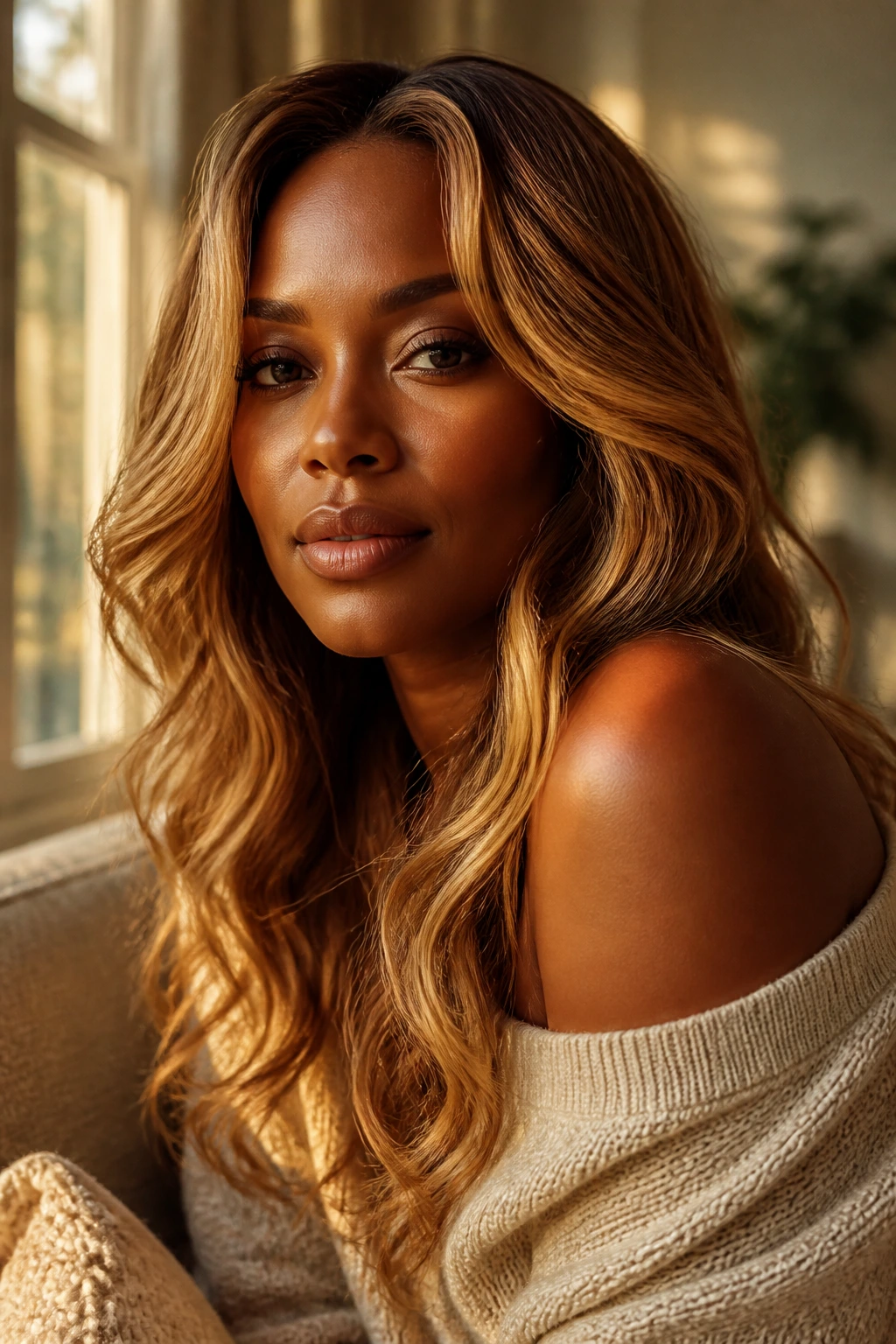
Warmth sits better than ash. Honey blonde lives in the gold family, and gold tends to look flattering against melanin because it reflects back warmth instead of fighting it.
Depth at the root matters. A shadow root, dark base, or lowlight keeps the color from reading flat and helps the blonde look intentional instead of stripped.
Placement changes everything. A few face-framing pieces can light up the face; full ribbons through the mid-lengths create movement; brighter ends make curls look springy.
Texture brings the shade to life. Waves, coils, braids, and silk presses all show honey differently, which is why the same color can look soft on one head and dramatic on another.
Maintenance stays more forgiving. Honey blonde does not need to be lifted to that brittle, pale stage to work. In practice, the sweetest versions usually live around level 7 or 8, with toning that leans gold, beige, or caramel.
It gives you room to play. You can go subtle with a money piece, or louder with a full balayage, without losing the richness that makes deep skin glow next to warm blonde.
1. Golden Honey Balayage on an Espresso Base
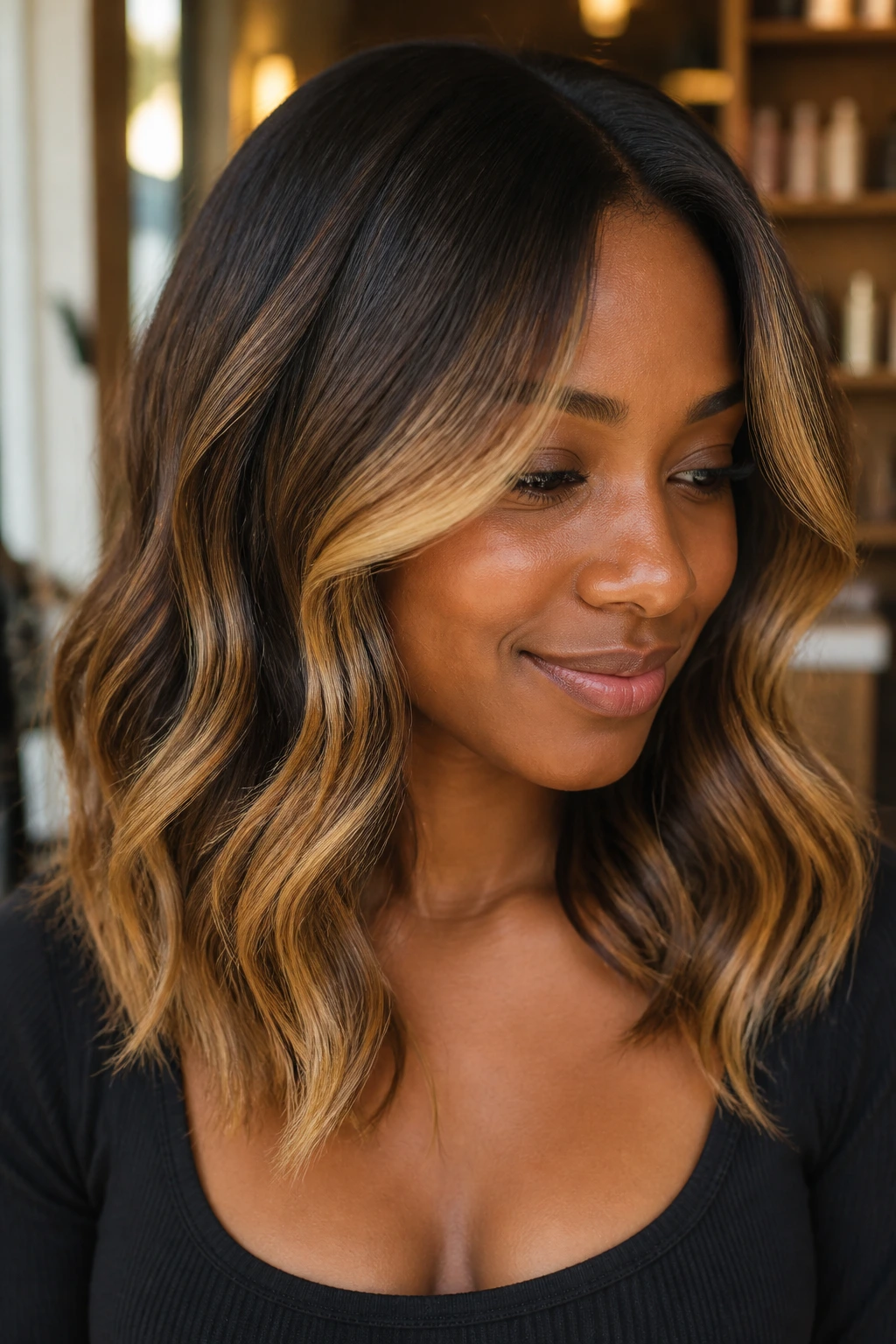
Golden honey balayage is the one I reach for when someone wants movement without surrendering their dark base. The espresso root stays in charge, and the lighter ribbons drift through the mid-lengths and ends like sunlight through a window. On deep skin, that contrast looks clean and deliberate.
What to ask for
Ask for freehand-painted ribbons around the face and lower lengths, with the brightest pieces kept away from the scalp. A colorist who understands depth will usually keep the lighter sections around level 7 or 8, not pale yellow territory.
A little warmth in the toner matters here. Too much ash flattens the whole thing.
- Best for: natural brunettes who want honey blonde without a full head of bleach
- Placement: mid-lengths, ends, and a few face-framing ribbons
- Finish: loose waves or a diffuse blowout to show the dimension
Pro tip: keep the root at least one or two shades deeper than the lightest pieces. That dark frame is what makes the honey look expensive instead of loud.
2. Caramel Money Piece With Warm Ends
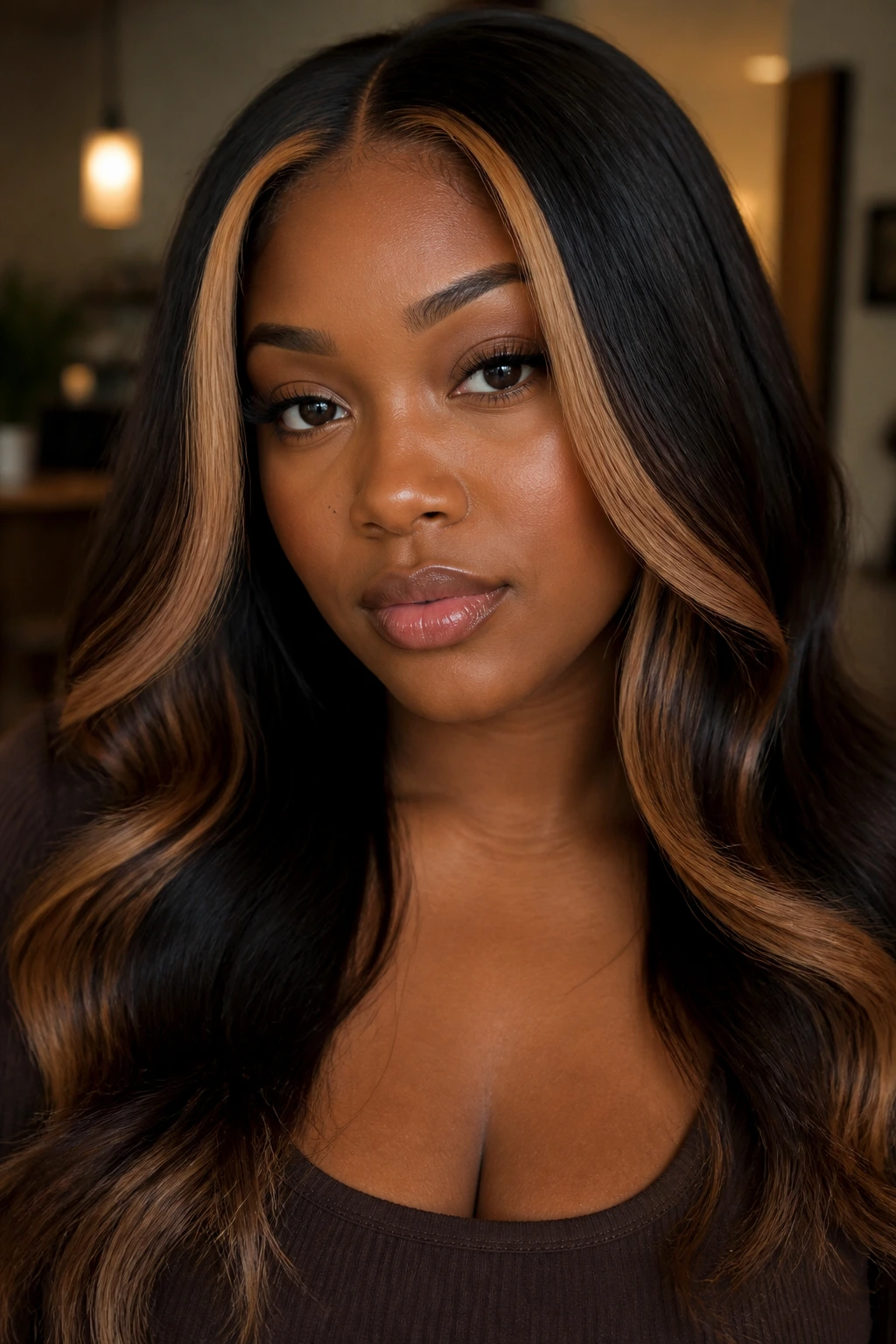
A face-framing money piece is the fastest way to make honey blonde read bold on deep skin. You get brightness right where light naturally hits—around the temples, cheekbones, and jawline—without turning the whole head blonde. It’s sharp in the best way.
The trick is width. Too thin, and it disappears. Too wide, and it can start looking stripey. I like a piece that sits around half an inch to one inch wide, depending on hair density and face shape.
If your base is dark brown or black, ask for a honey lift that lands just two or three levels lighter than the rest of your hair. That keeps the front bright but still believable.
- Best for: layered cuts, center parts, and anyone who wants a strong first impression
- Tone note: go gold-caramel rather than pale beige
- Maintenance: refresh the front pieces more often than the back; they show wear first
It’s a small section. It changes the whole face.
3. Honey Blonde Ombré on Defined Curls
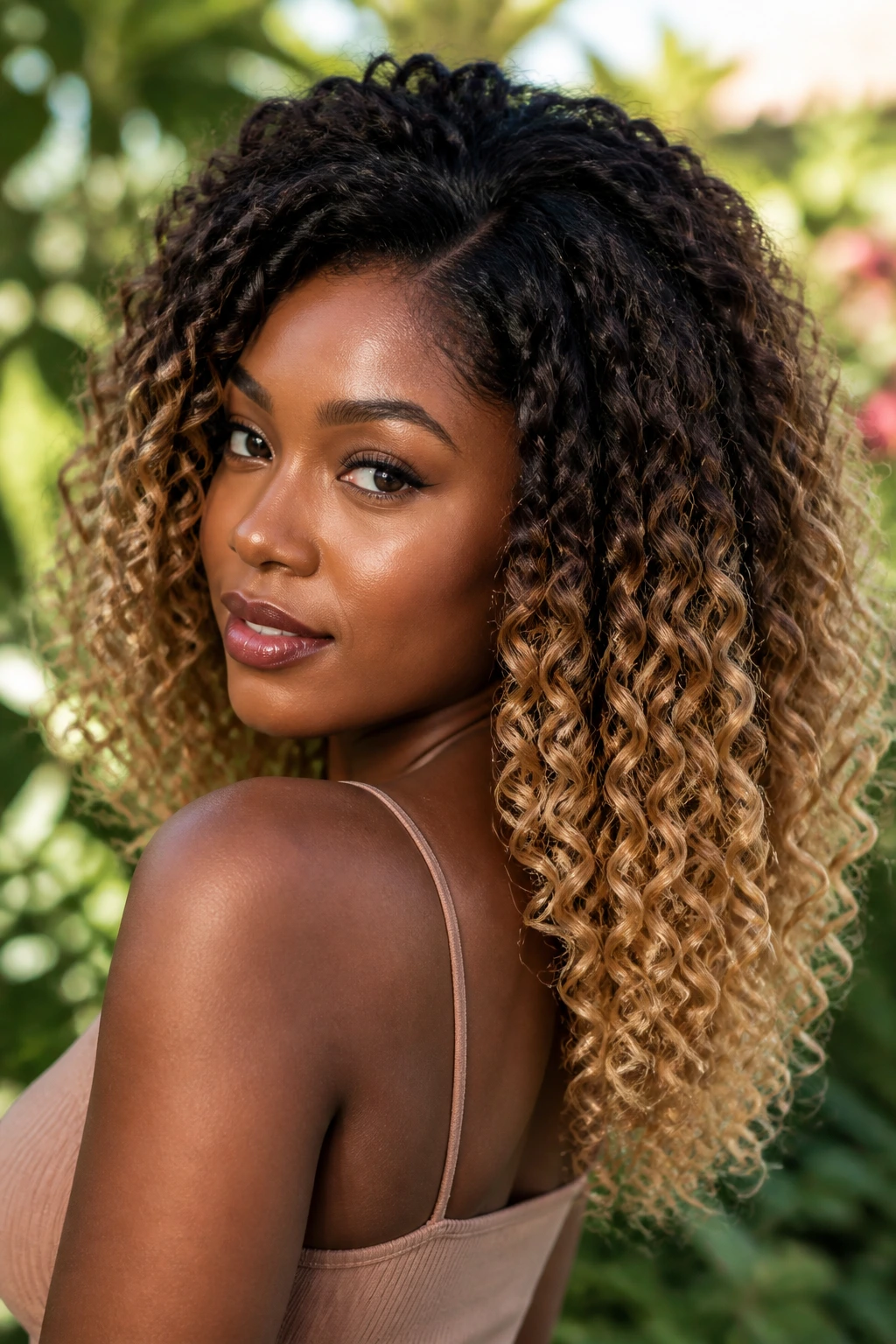
Want blonde that looks like it belongs in your curls instead of sitting on top of them? Ombré does that job beautifully. The roots stay deep, the mids start to warm up, and the ends become the brightest part of the story. On textured hair, that fade makes sense to the eye.
The best honey ombré on deep skin doesn’t start too high. If the lightening begins above the ears, the top can lose too much richness. Start lower, and let the curls carry the transition. On looser curl patterns, the effect reads soft. On tighter coils, it can be gorgeous and punchy, especially when the lighter ends are shaped around the silhouette.
How to wear it
A diffuser helps the blonde show every bend in the curl pattern. So does a curl cream that keeps frizz from stealing the shine.
A blunt, one-length cut can make ombré feel heavy. A few layers open it up.
4. Chestnut-Honey Melt With a Soft Shadow Root
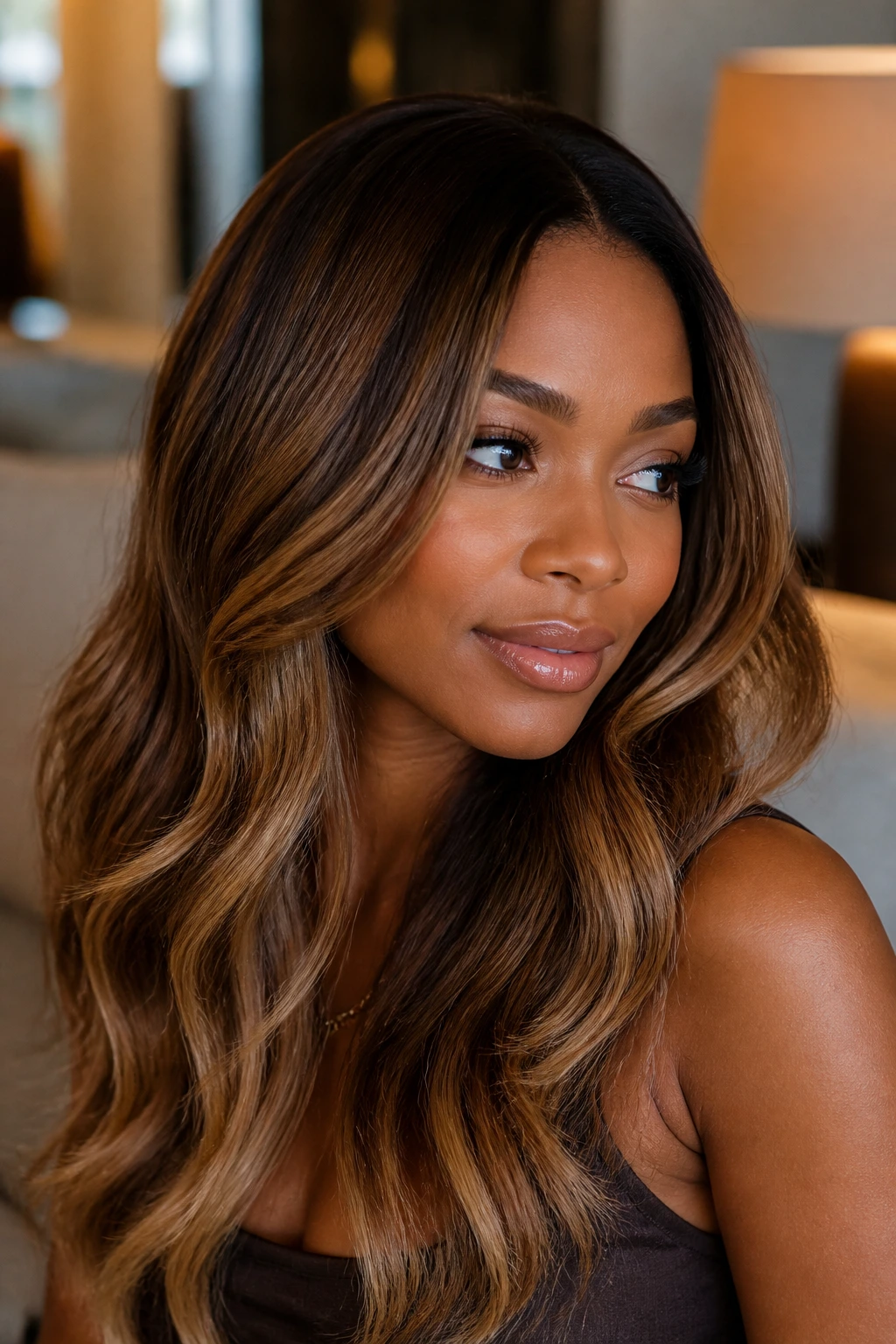
Chestnut-honey is for the person who wants warmth but not too much brightness. The base stays brown, the middle section holds chestnut tones, and the honey shows up gently toward the ends. It feels plush. Quiet, but not boring.
This is one of the smartest choices for deep skin if you want the color to look rich in low light and still glow outdoors. The chestnut bridge keeps the blonde from jumping straight from dark to gold, which is where a lot of home coloring goes sideways. A soft shadow root—just a shade or two deeper than the mids—keeps the scalp area believable.
Why this version works
- It softens the jump between brown and blonde
- It flatters warm and neutral undertones
- It grows out without a hard line
If you want a polished color story that does not need constant explanation, this is it.
5. Buttery Honey Gloss on a Silk Press
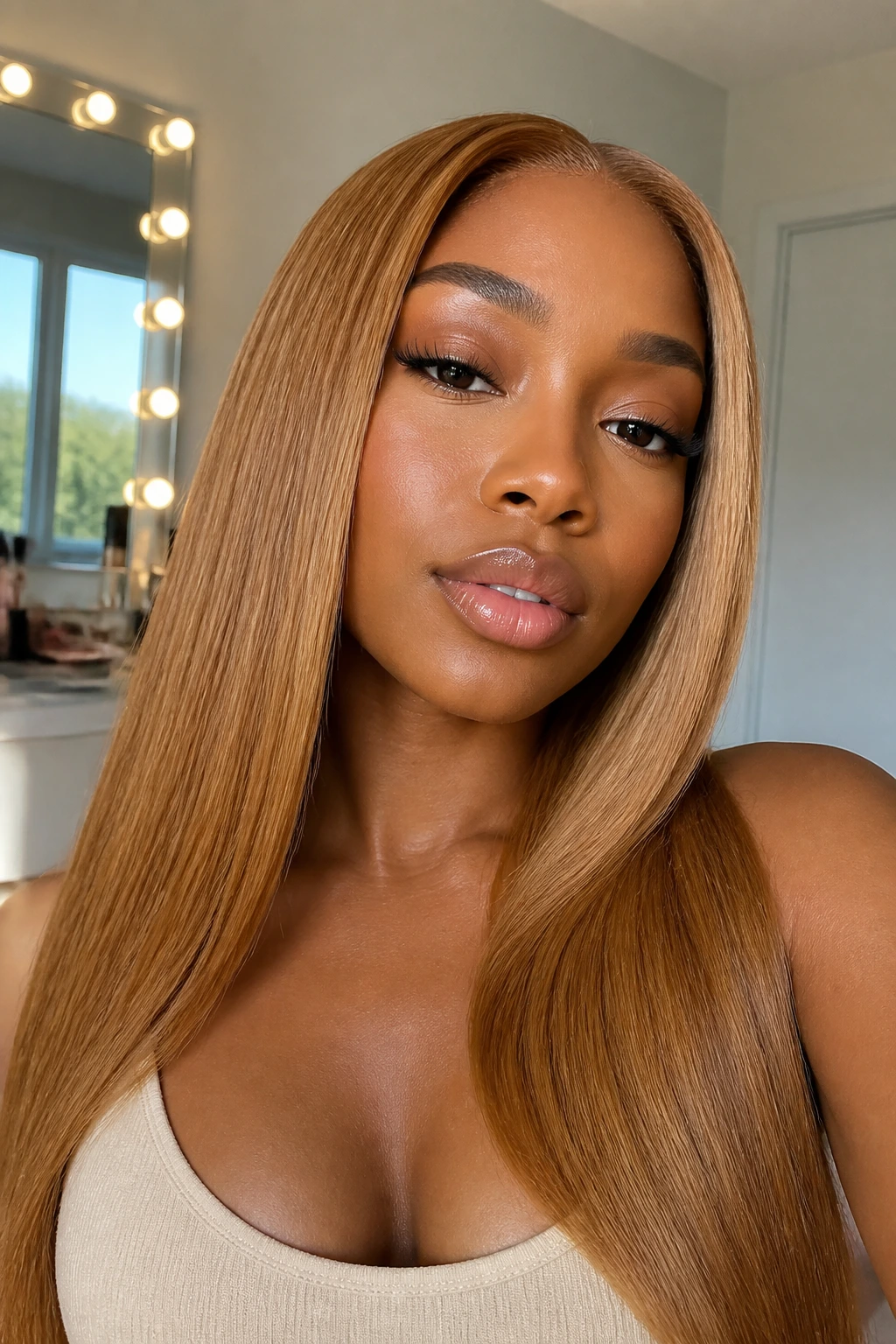
A silk press with a buttery honey gloss is one of those looks that moves quietly and then stops people cold when the light hits it. The shine matters as much as the color here. The blonde should feel cushioned, not dry or high-contrast.
This works best when the hair has enough health left to hold a smooth finish. A demi-permanent gloss or toner in the honey family can soften darker brown hair by a level or two without making it look striped. On deep skin, that subtle brightening often lands better than a big bleach job anyway.
The key is to keep the color warm all the way through. If the toner leans smoky or silvery, the finish can look dusty. A gold-beige blend keeps the press rich.
The best part? A straight style shows every shift in tone. The hair swings, the ends curl slightly, and the honey looks almost liquid.
6. Deep-Rooted Honey Blonde Bob
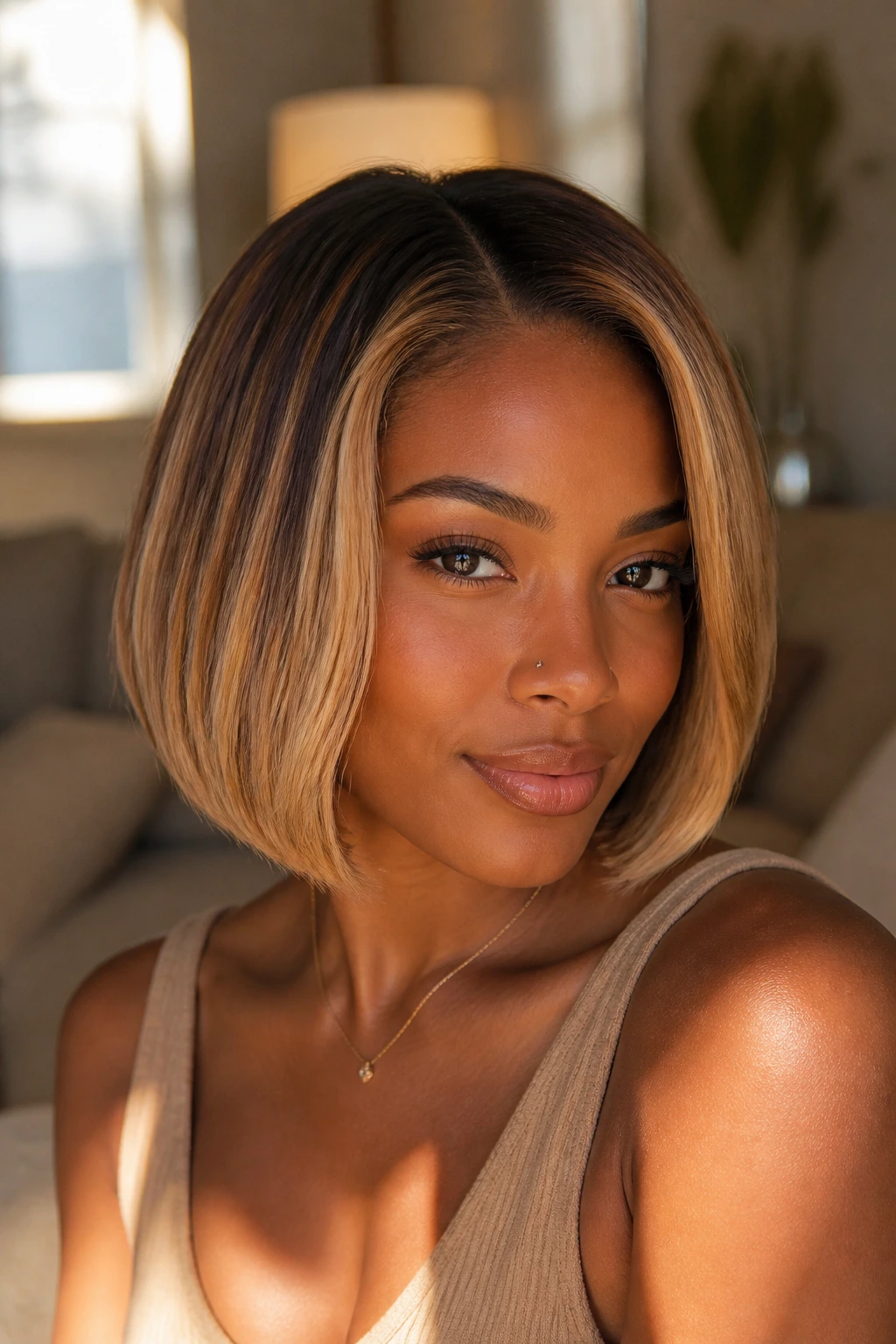
Unlike a full-blonde bob, a rooted honey bob keeps the base dark enough to frame the face. That’s the whole appeal. The cut stays sharp around the jaw or just below it, while the color uses a darker root shadow and warmer blonde through the body.
A bob like this looks best when the honey is not painted all the way up to the scalp. Leave at least a few inches of depth at the root, and let the lighter tone take over through the middle and ends. The result feels modern without getting severe.
Best details to ask for
- Length: chin to collarbone
- Root depth: natural base or one shade deeper
- Finish: beveled ends or a soft bend with a flat iron
This one is especially good if you wear hoop earrings, glossy lips, and a clean part. It gives shape to the whole face.
7. Cinnamon Honey Blonde With a Copper Edge
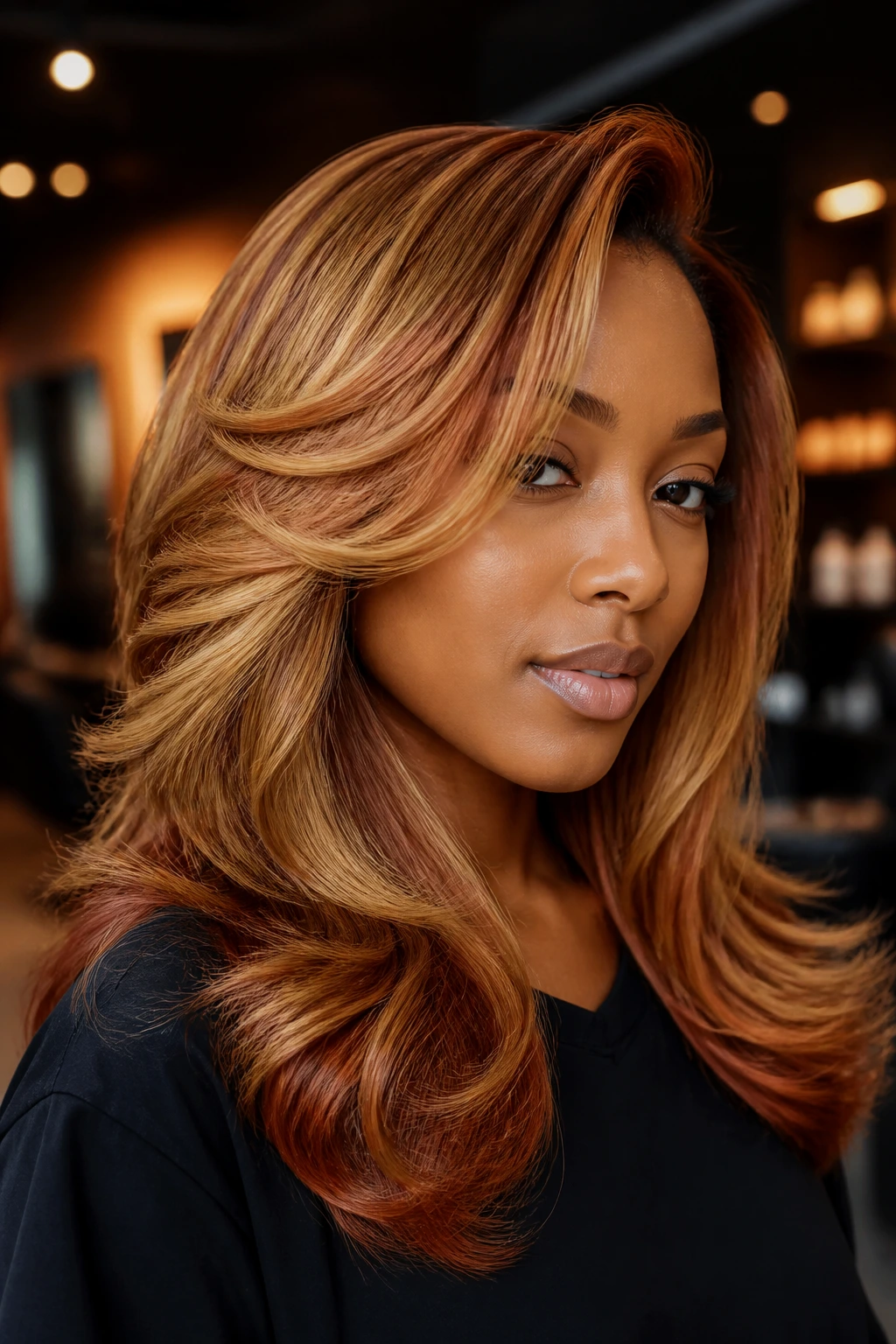
Cinnamon honey blonde is where warmth gets a little more interesting. The shade keeps the honey base, then folds in a whisper of copper so the blonde glows with a reddish-gold edge instead of going flat beige. On deep skin with golden or red undertones, that extra warmth can be magic.
The point is not to make the hair orange. It’s to keep the blonde alive. Pure beige can disappear against rich skin if it’s too muted. Cinnamon brings back the sparkle. It looks especially good in layered cuts, where the copper notes show up when the hair moves.
H3: Why the copper edge matters
Copper undertones add depth around curls and waves, and they also keep the blonde from looking like one flat filter. If your base is naturally warm, the cinnamon note tends to blend better than ash-heavy blonde ever will.
A gloss in the copper-gold family every few weeks keeps the warmth from fading into dull gold.
8. Beige Honey Bronde for a Softer Finish
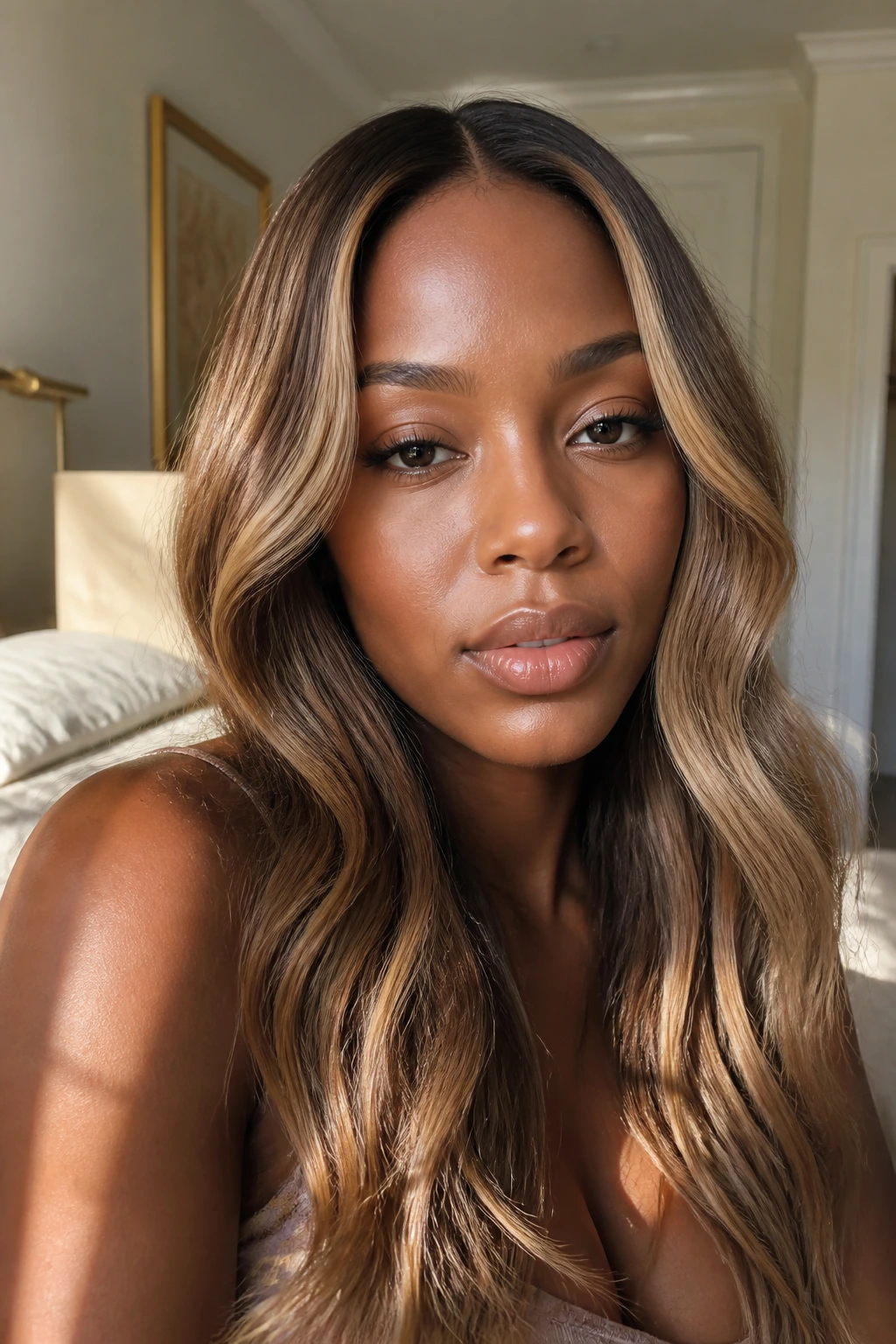
Not everyone wants the blonde to announce itself from across the room. Beige honey bronde is for the quieter crowd. It mixes brown and blonde so the hair never loses its dark richness, but the lighter pieces still catch the eye.
On deep skin, this works best when the beige is used as a supporting tone, not the main event. In other words, don’t strip the hair until it’s nearly pale just to tone it beige later. Let the honey stay honey, then soften it with a beige glaze if needed. That keeps the finish creamy instead of flat.
This color is especially good if you wear natural makeup, gold jewelry, and off-duty texture—air-dried waves, twist-outs, or a loose blowout. It looks intentional without needing a big styling routine.
9. Toasted Honey Highlights on Coils
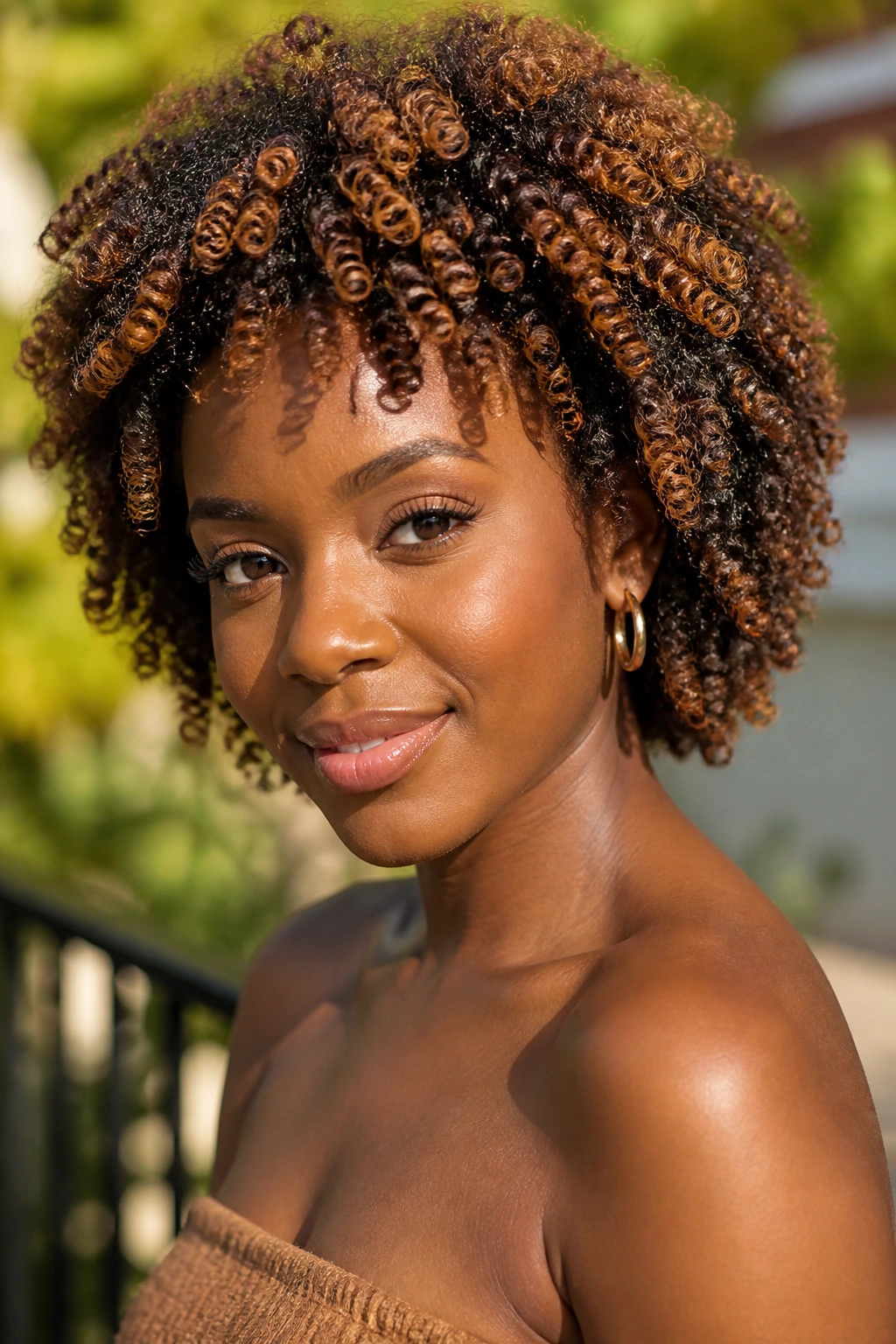
Toasted honey highlights are gorgeous on coils because the color sits in the bends instead of screaming from the surface. A few well-placed lighter strands can make a twist-out or wash-and-go look fuller, and they do not need to cover every inch to work.
The smartest placement is usually around the crown, front panels, and outer layers. That way the highlights show when the hair moves and when the light shifts, but the interior still keeps its depth. On deep skin, that contrast reads rich and dimensional, not patchy.
A good colorist will keep the sections fine, almost ribbon-like. Chunky highlights can work too, but they need enough spacing so the hair does not look striped.
Quick notes
- Best for: 3C to 4C textures
- Placement: crown, front, outer layer
- Finish: defined coils with shine spray or light oil
If you want blonde that respects texture instead of flattening it, this is a solid pick.
10. Bronze-to-Honey Balayage With a Dark Frame
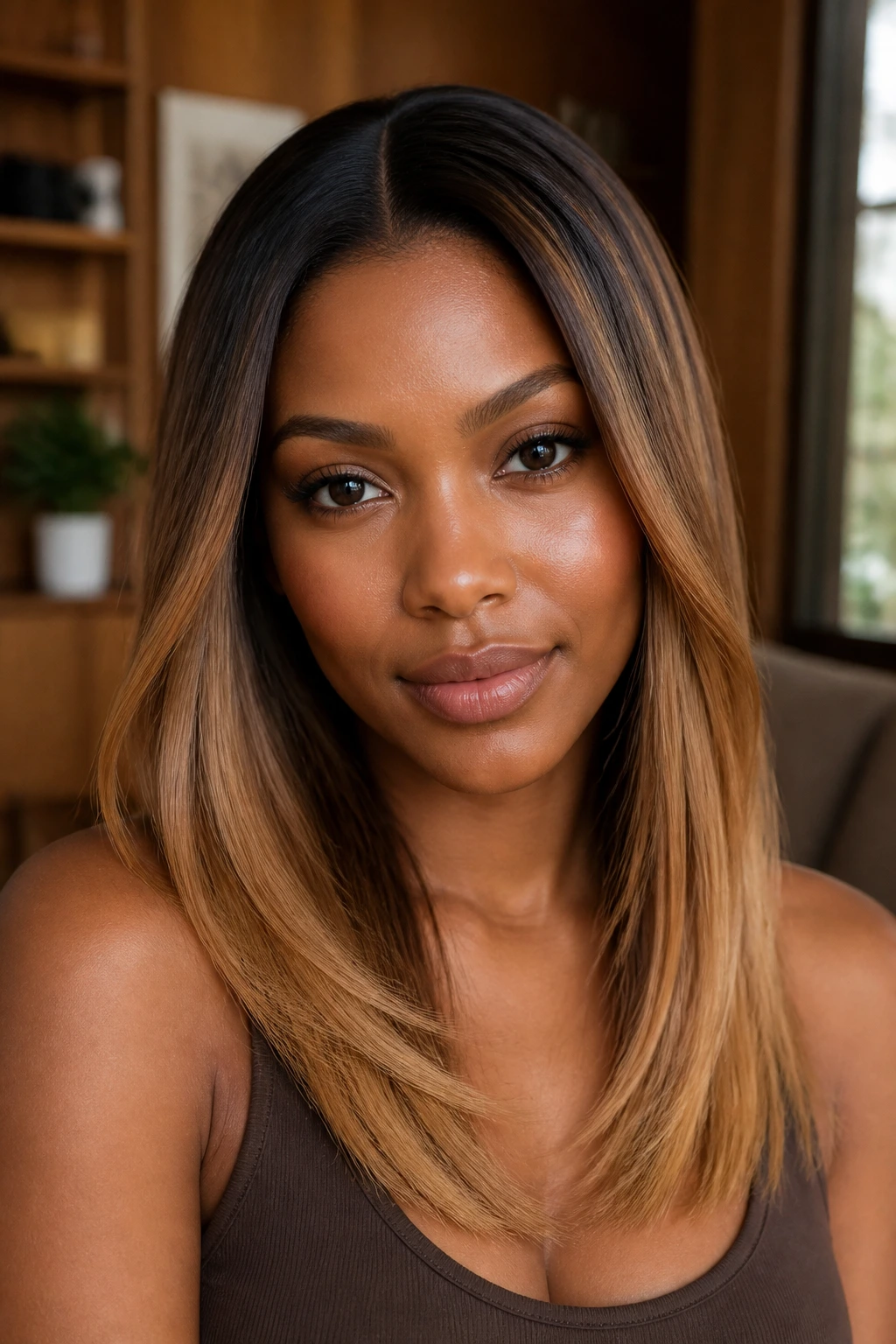
If you fear the jump from brown to blonde, bronze is the bridge. Bronze-to-honey balayage uses a deeper warm brown in the mids, then slides into honey at the ends so the hair never loses its depth. On deep skin, that warmth stack looks expensive in a way plain blonde often does not.
This is the shade I’d recommend to someone who wants glow but hates the idea of light ends looking disconnected from the rest of the hair. Bronze keeps the whole thing grounded. Honey on top of bronze looks like the color warmed up naturally, almost as if the sun had worked slowly over time.
A dark frame at the root makes the whole blend easier to wear. You can still style it in waves, curls, or a half-up look, and the dimension stays visible from every angle.
11. Honey Blonde Pixie With a Clean Root Line
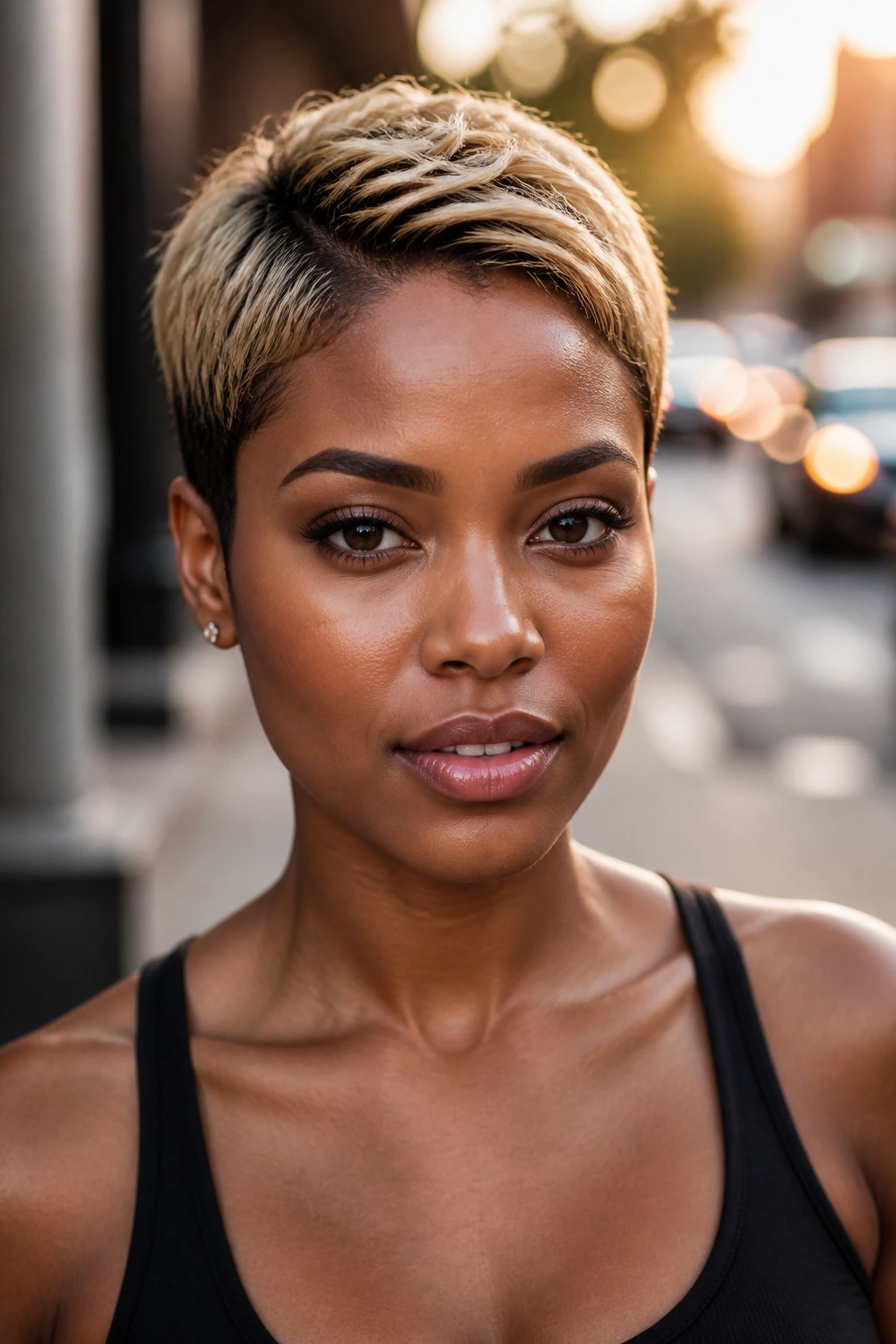
Short hair carries honey blonde in a very specific way. With a pixie, every bit of color reads faster because there’s less length to hide in. That’s why a rooted honey pixie can look so sharp on deep skin. The cropped shape keeps the cut strong, and the warmth in the blonde softens the edges.
A pixie works best when the top is a touch brighter than the sides. Leave the sides deeper, or even natural, and let the crown catch the honey tone. That keeps the head shape visible. A one-tone light blonde on a pixie can look harsh fast.
What to ask for
- Top: honey-blonde lift around level 7 or 8
- Sides: deeper or softly blended
- Styling: matte paste for texture or light gloss for shine
It’s low on length, high on attitude. No fuss, no waste.
12. Honey Lob With Curtain Bangs
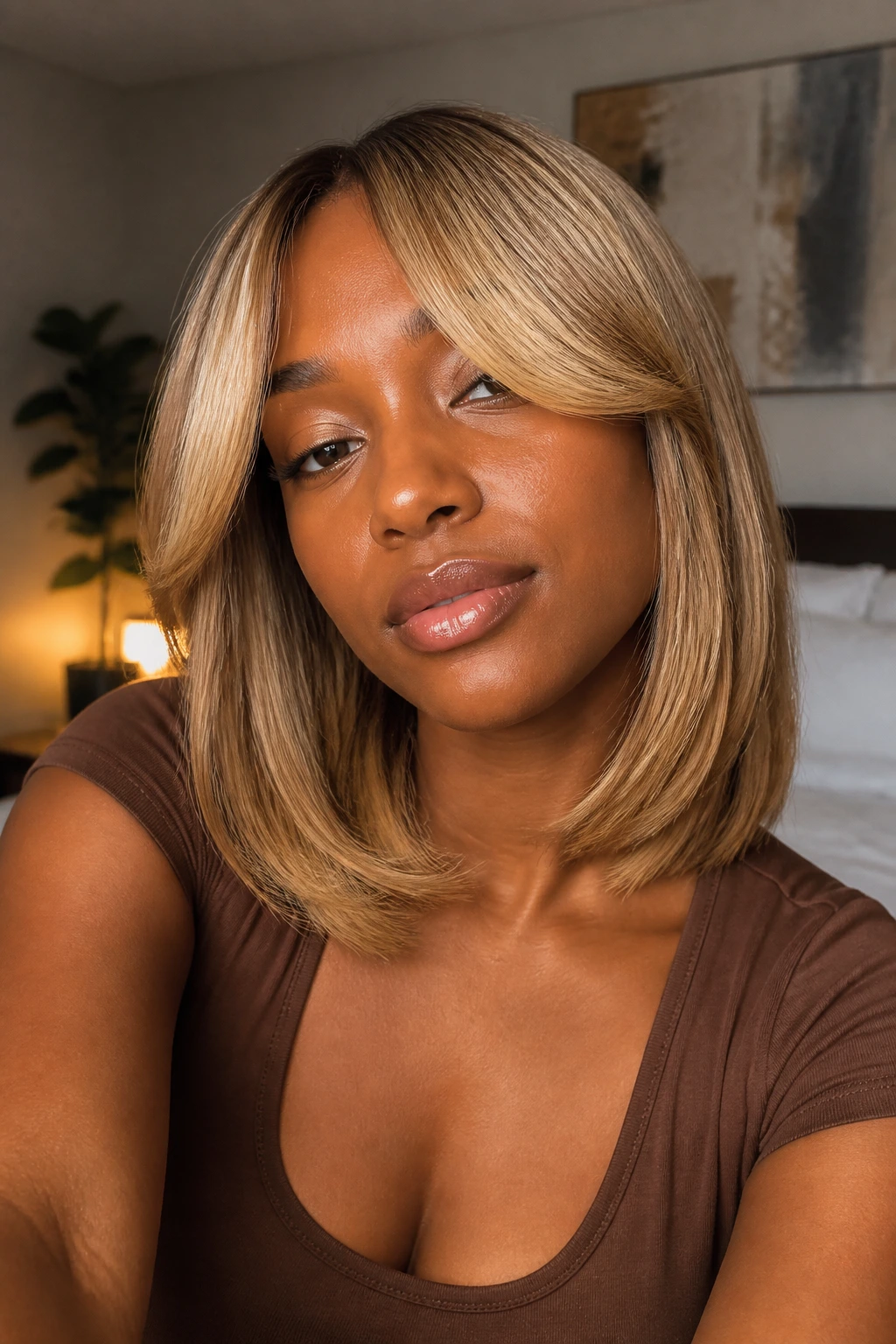
A lob with curtain bangs gives honey blonde a nice amount of movement around the face. The bangs soften the forehead, the length hits somewhere between jaw and collarbone, and the blonde can be painted in a way that follows the part instead of fighting it.
This is a good choice if you want warm color without committing to all-over brightness. The honey can live mostly on the front panels and the lower half of the hair, which keeps the cut looking airy. On deep skin, that front brightness makes the eyes pop without turning the whole look into a blonde project.
Curtain bangs need enough tone variation to avoid looking like one thick block. A few lighter ribbons on the outer edges of the bangs help them fall open instead of feeling heavy.
13. Honey Streaks in Box Braids
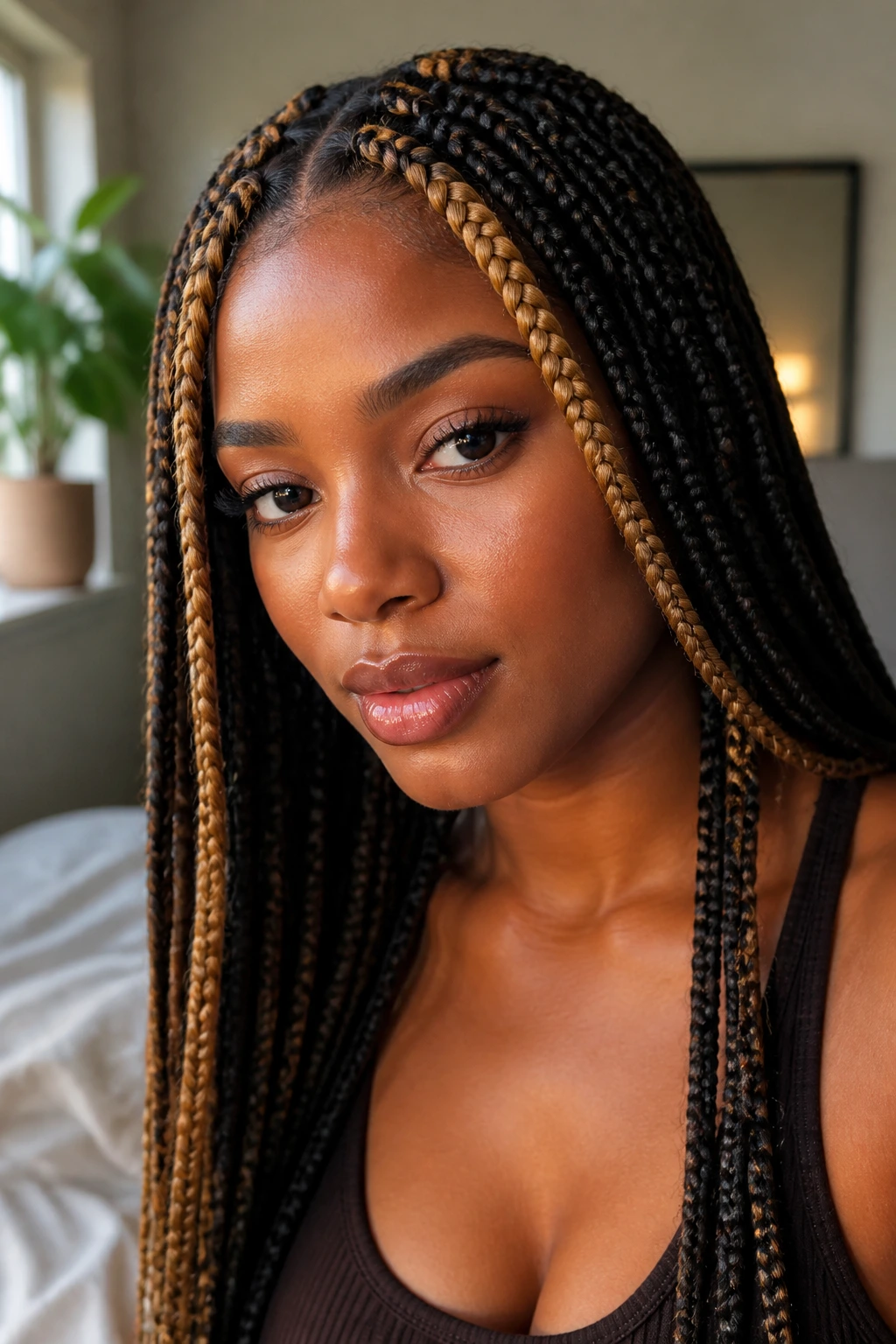
Protective styles do not have to be dark all the time. Honey streaks in box braids can bring warmth to the face and make the braid pattern stand out more clearly. The trick is restraint. A few honey braid strands near the front and crown go a lot farther than a head full of bright synthetic gold.
The nicest version usually keeps the base braid color close to your natural shade, then layers in honey pieces through the top and perimeter. That gives you depth without the wiggy effect some bright braid colors can have. If you want more polish, choose a honey tone that leans caramel instead of lemony gold.
Best moves
- Put the brightest braid color near the face
- Keep the rest of the braids darker
- Use hair jewelry sparingly so the color stays the star
This is one of the easiest ways to wear honey blonde without a permanent color commitment.
14. Honey Afro Puff With Halo Pieces
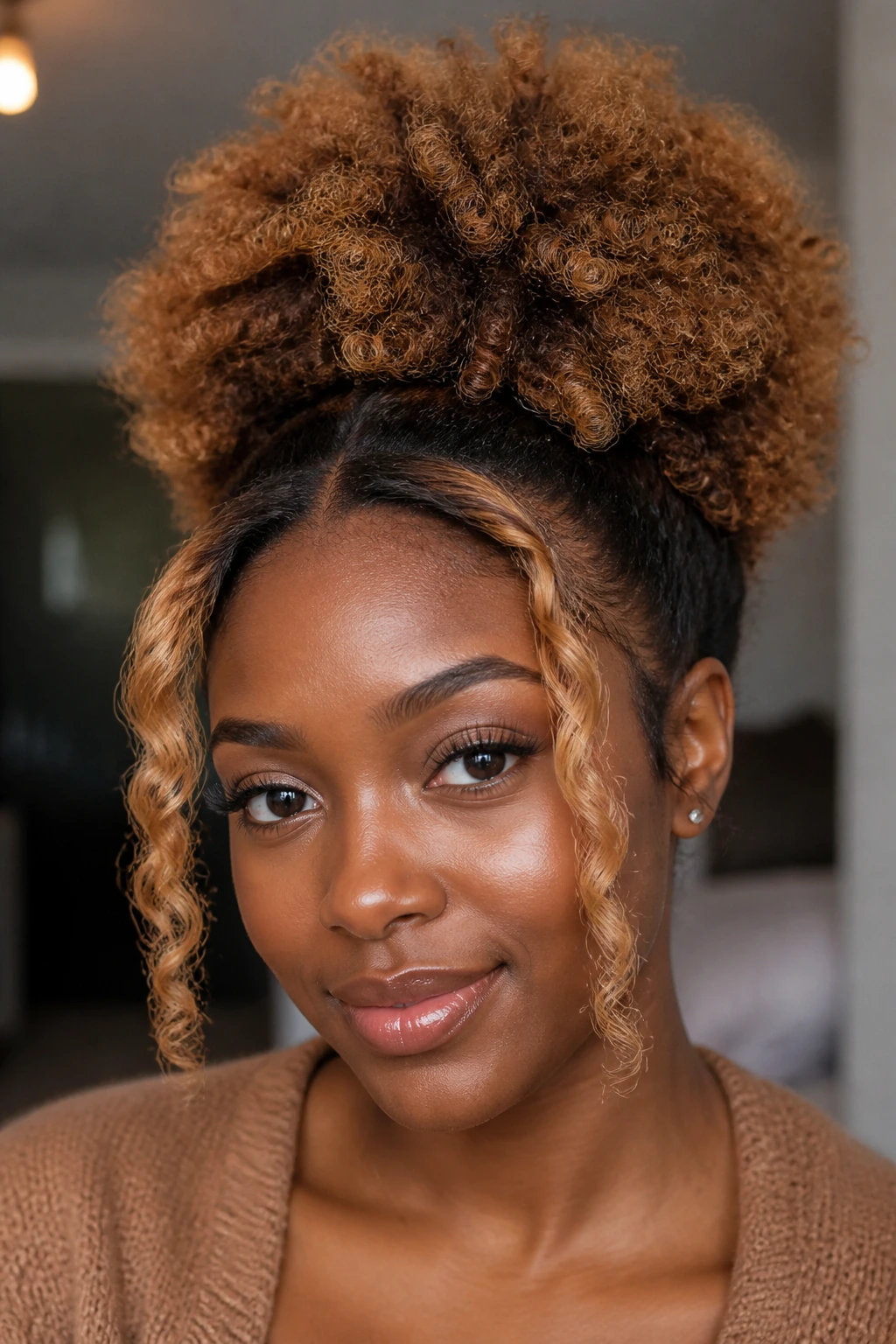
A puff with honey halo pieces is all about framing. The hair stays rich and deep through most of the style, then a few honey-blonde pieces circle the face and outer edge like a built-in spotlight. On deep skin, that placement can be stunning because it keeps the face bright without over-lightening the whole head.
The halo should be selective. You want it around the front hairline, temple area, and maybe a few lifted strands at the crown. That’s enough. More than that and the puff can lose its shape.
It helps to keep the honey pieces slightly thicker than baby-fine highlights so they actually show in textured hair. The color should read as intentional contrast, not accidental dryness.
15. Rooted Honey Blonde With Shadow Bangs
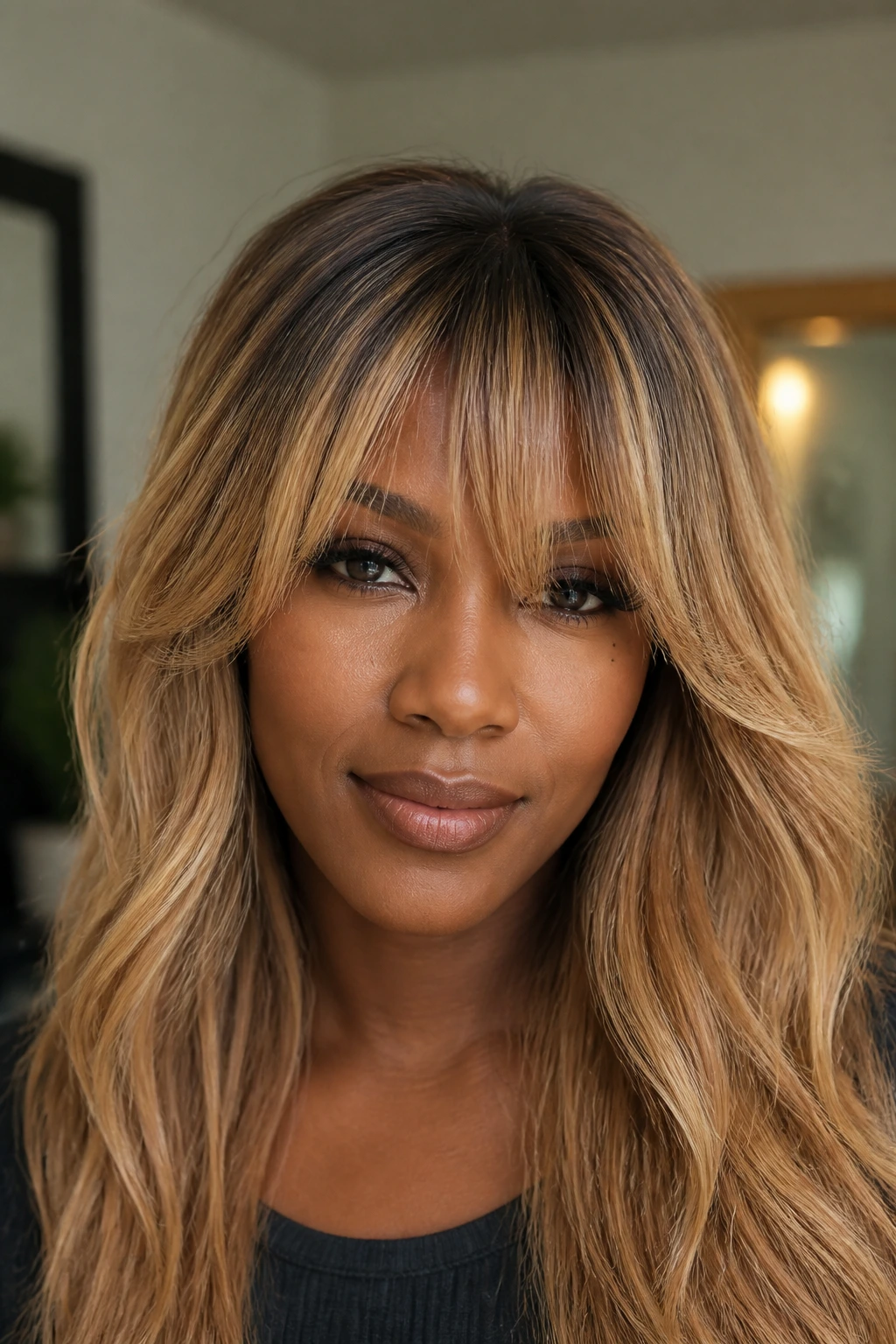
Shadow bangs are a smart move when you want honey blonde near the face but refuse to deal with streaky roots. The dark root area makes the bangs look plush, and the honey pieces around the edges keep them from swallowing the face.
This is one of those styles that looks more expensive the less perfect it tries to be. The root shadow should be soft, not painted in a hard band. Let the blonde start a little below the root so the bangs still have movement. On deep skin, that dark-to-warm shift is flattering because it holds the face in place instead of washing it out.
If your bangs are thick, ask for some lighter pieces beneath the top layer. They’ll show when the bangs split naturally, which keeps the color from looking like a single sheet.
16. Honey Blonde With Auburn Lowlights
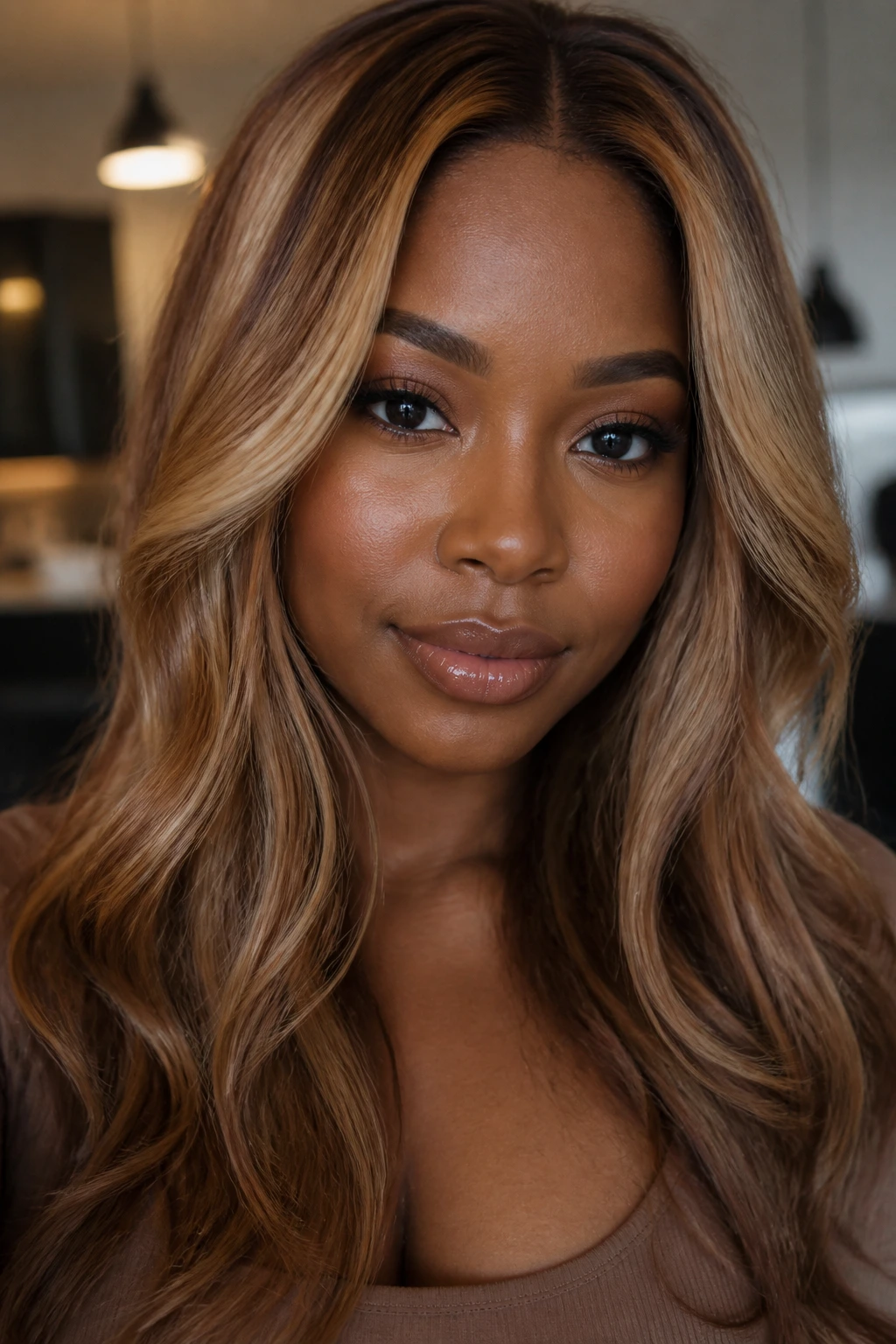
Honey by itself can sometimes drift too bright if the hair is fine or very straight. Auburn lowlights fix that. They thread in a deeper red-brown note so the blonde has something to sit against, which is a blessing on deep skin because the whole color story stays grounded.
This look is especially good on layered cuts. The auburn pieces slip between the honey ribbons and make the ends move instead of just reflecting light all at once. It’s a richer, more lived-in version of blonde. Less pageant, more polish.
Why it works
- Auburn lowlights add depth around the root and mids
- Honey stays bright without turning brassy
- The mix looks better as it grows out
If your natural undertone leans warm, this combo tends to feel easy from the start.
17. Sandy Honey With a Cool Root Shadow
Sandy honey sounds cooler than it usually behaves. On deep skin, it works when the sandy tone stays muted through the mids and the honey keeps the ends warm enough to read as golden. The cool root shadow keeps the scalp area from getting too orange or too busy.
I like this on people who wear more neutral clothes and softer makeup. Think cream, taupe, cocoa, stone. The color can take on a chic, edited feel without going icy. Just do not push it too pale. Sandy honey should look like a warm-gold blonde that got a little dusted down, not a beige wash.
How to keep it balanced
- Keep the root shadow one to two levels deeper than the mids
- Avoid toner that strips all gold from the hair
- Use a gloss with beige warmth, not silver ash
That last part matters more than most people think.
18. Full Honey Blonde Blunt Bob
A blunt bob in full honey blonde makes a very clean statement. The cut says precision; the color says warmth. On deep skin, that combination can look polished fast because the dark-to-light contrast is direct, and the straight edge of the bob gives the honey a frame.
The risk is a helmet effect. Easy fix: put a slight bend through the ends or keep a tiny bit of layering underneath so the shape moves. A full honey bob looks best when the blonde is warm all the way through, with maybe a slightly deeper root if you want the grow-out to be less obvious.
H3: Best finish for this cut
A flat iron bend or a rounded-brush blowout gives the bob enough curve to keep the color from reading harsh. Shine spray at the ends helps, but do not drench it. You want gloss, not grease.
19. Honey-Tipped Locs With Dark Midsections
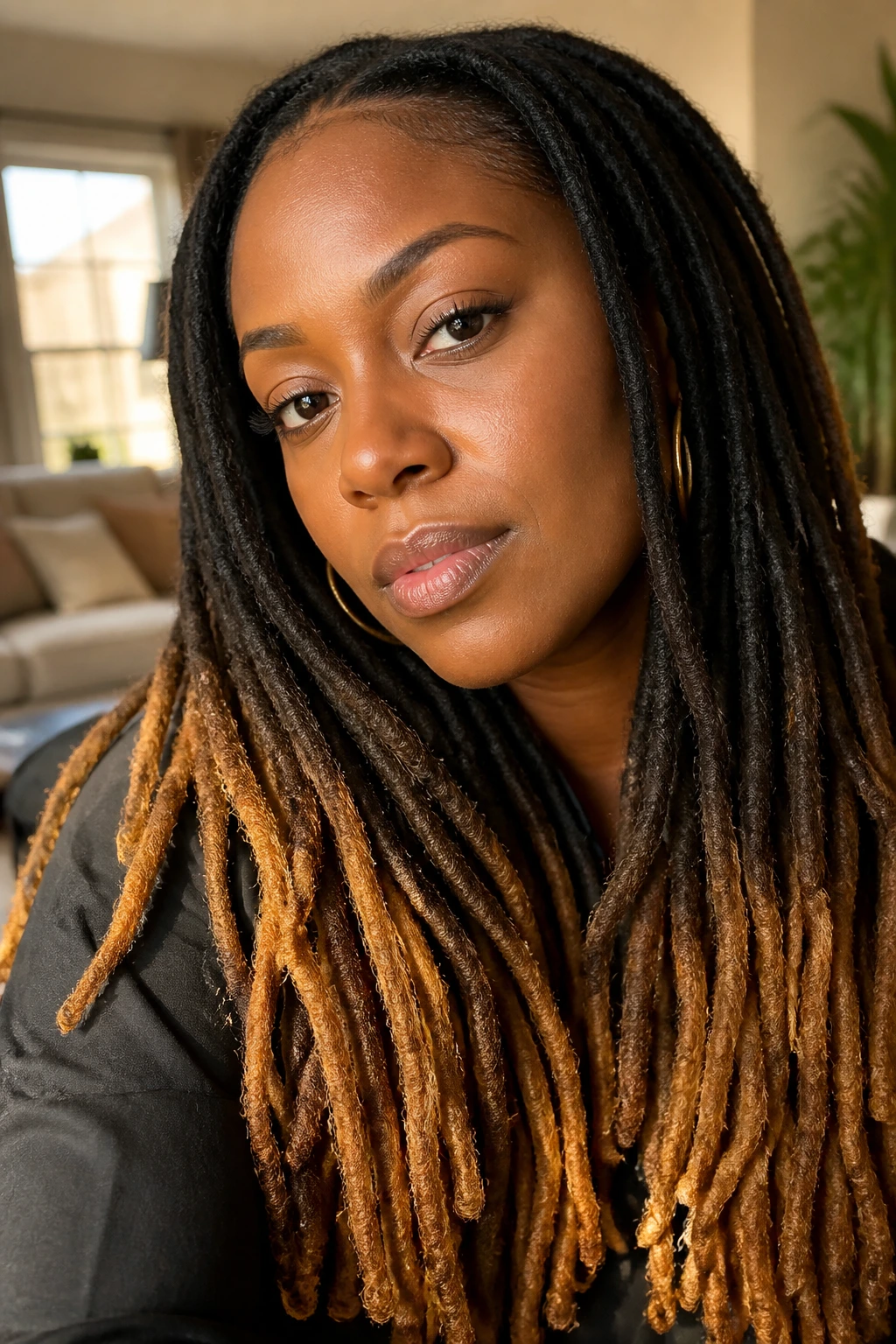
Honey-tipped locs are one of the easiest ways to add blonde without giving up your natural depth. The body of the locs stays darker, then the ends brighten into honey so the color looks like it belongs there. On deep skin, that gradual shift is flattering because the face stays anchored and the ends get the drama.
This works especially well on medium-to-long locs where the tips can swing and show movement. If the tips are only a few shades lighter than the base, the effect stays subtle. Push them brighter and you get more contrast, which can look fantastic if you like a stronger look.
The color should be warm, not pale. Honey tips that lean too yellow can look dry against rich skin. Caramel-gold tips hold up better.
20. Halo Honey on 4C Curls
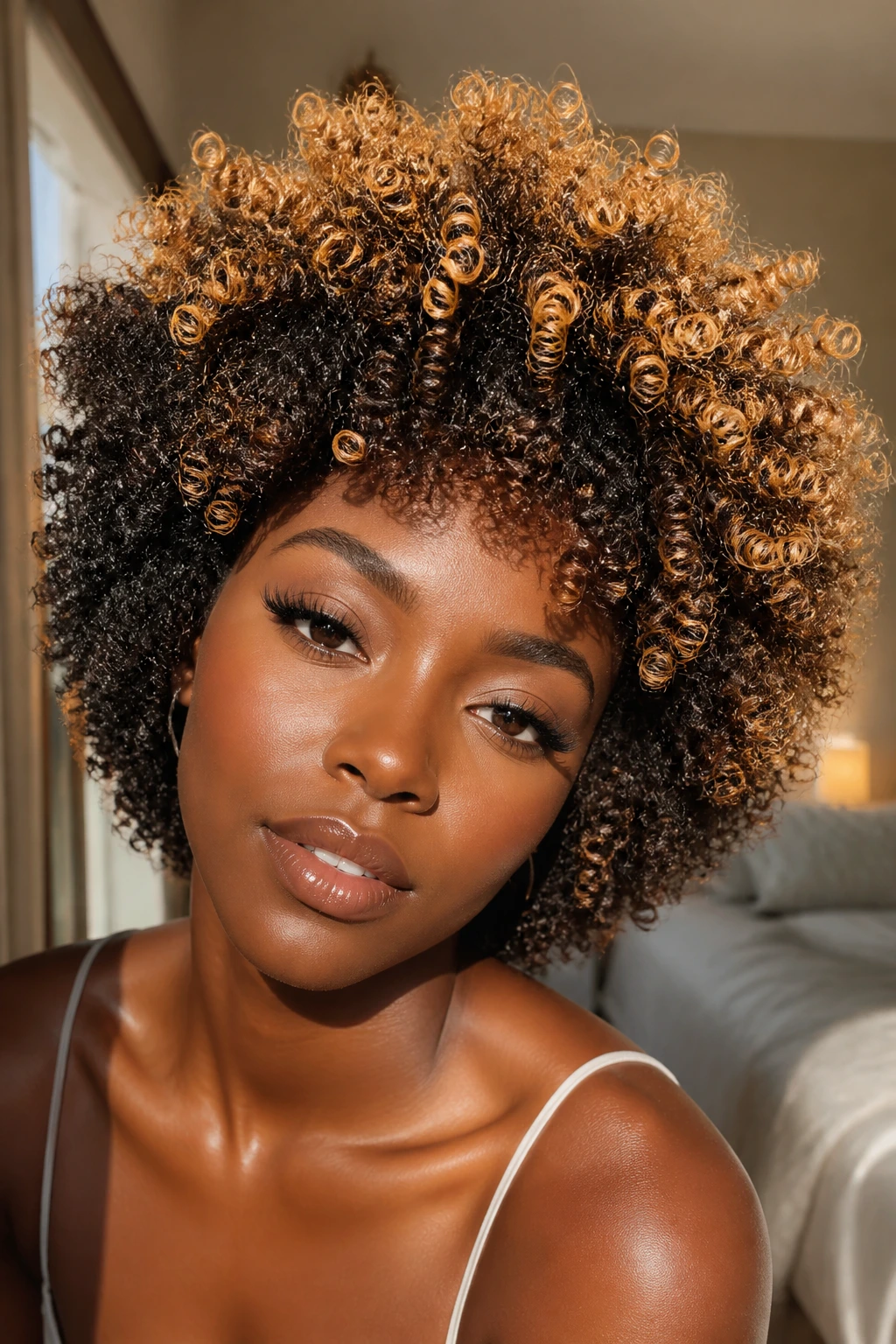
Halo placement is the difference between “my hair is blonde” and “my hair glows from certain angles.” On 4C curls, a halo of honey around the crown and outer perimeter gives the style shape without flooding the whole head with bleach. That matters, because deep skin tends to look richer when the color is placed with intention.
The curls closest to the face catch the most light, so those are the best pieces to brighten. Then let the interior stay deep. That contrast is what keeps the style from looking busy. A good curl cut helps too. Even a few inches of shaping around the face can make the color appear more balanced.
This is a strong option if you like defined curl puffs, twist-outs, or stretched styles that show the blonde in the outer layer and the depth underneath.
21. Syrup Honey Balayage With Chocolate Lowlights
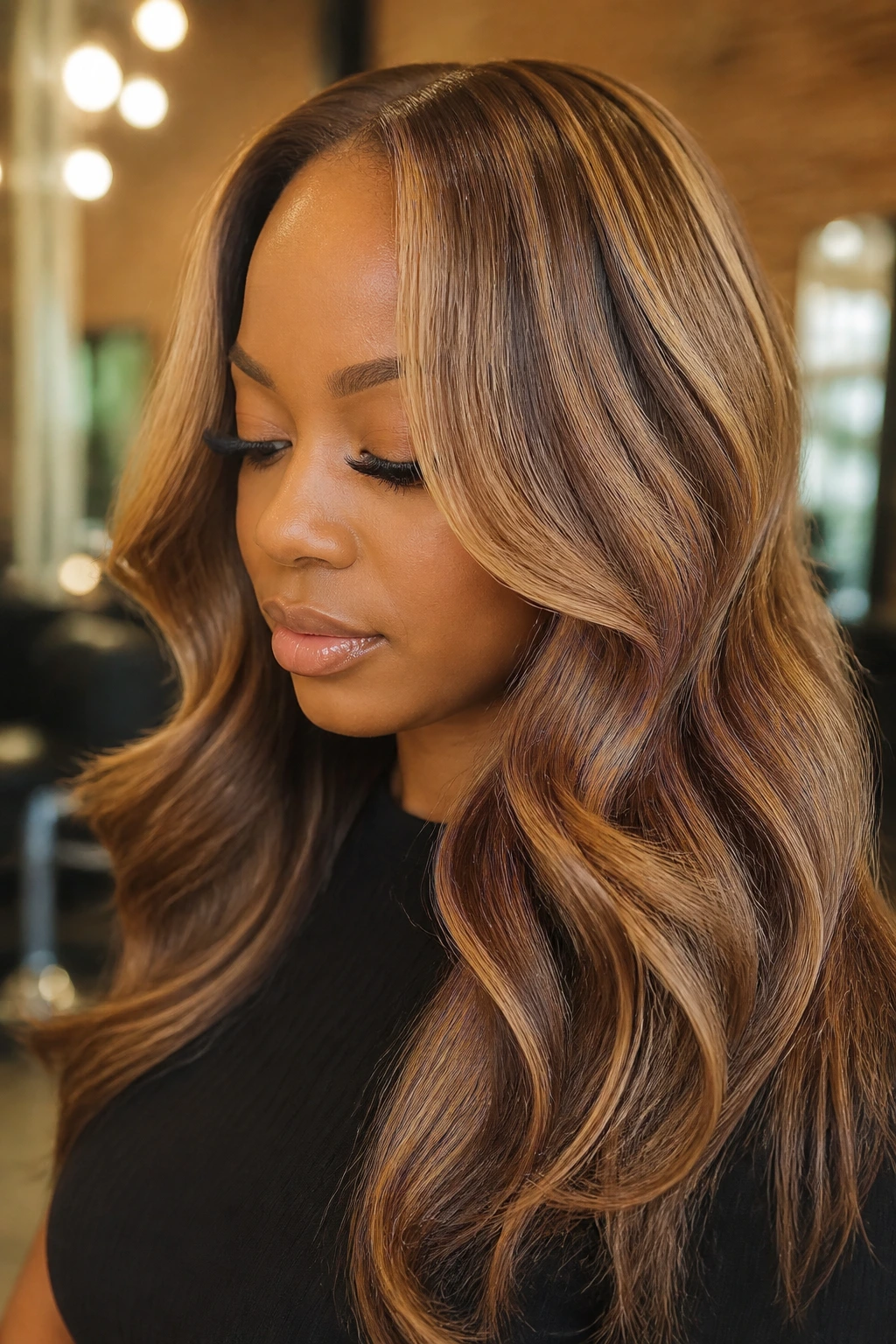
Syrup honey is darker than the name sounds. Think warm amber, not candy gold. When you add chocolate lowlights, the whole look gets a deeper, more wearable rhythm on deep skin. The blonde does not sit there alone; it has a brown companion beside it.
That pairing is what makes this look feel so natural. The chocolate pieces break up the honey in a way that keeps it from turning streaky, especially on long layers or thick curls. If your hair is already dense, lowlights are not extra. They’re the thing that makes the color readable.
Ask for soft placement through the interior and around the lower half of the hair. Too many lowlights near the front can dull the face. You want the richness, not a shadow over your features.
22. Honey Shag With Airy Layers
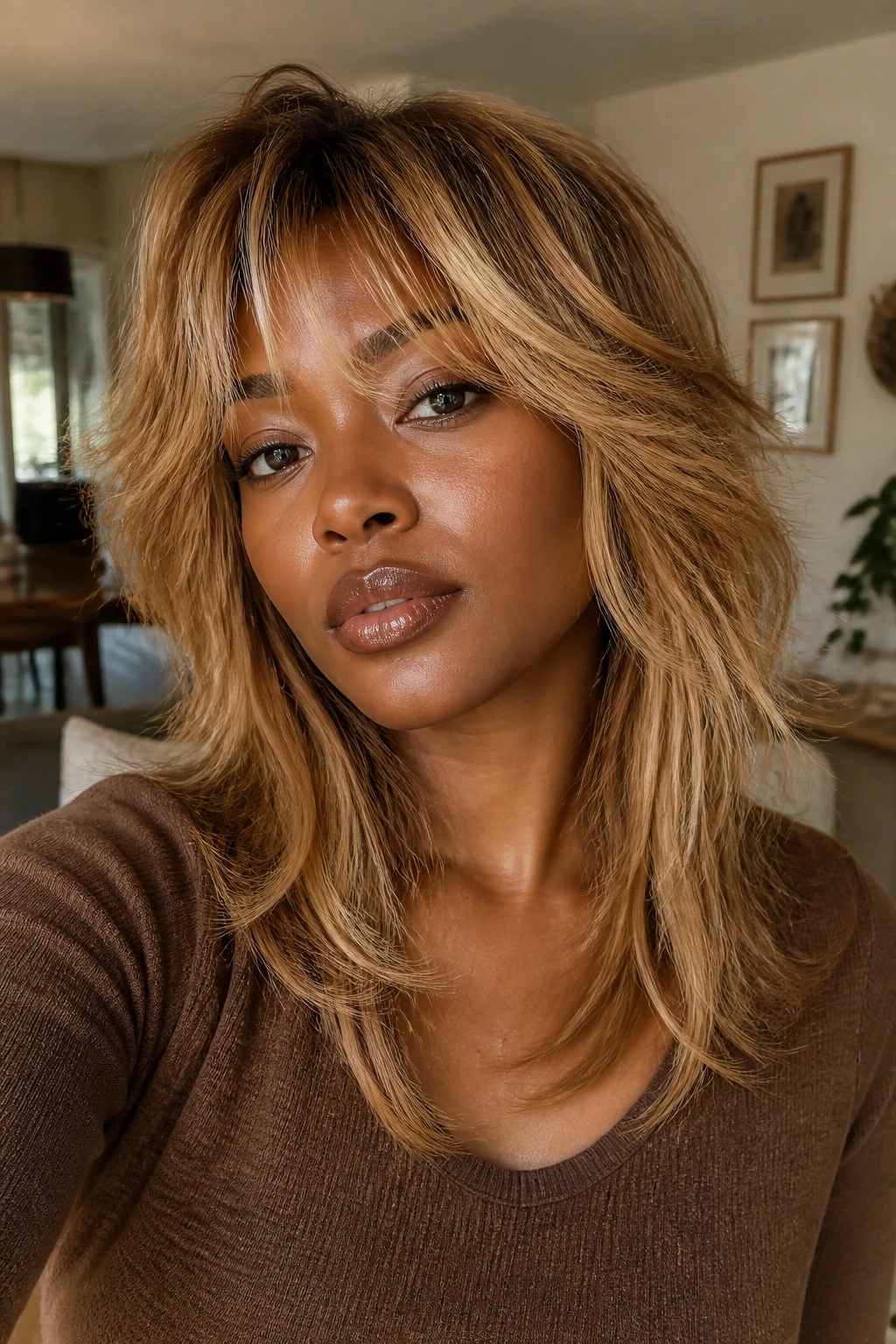
A shag cut gives honey blonde room to move. The layers expose pieces of color at different lengths, which means the blonde never sits in one blunt block. On deep skin, that matters because the warmth can spread out through the cut instead of piling up in one place.
The best version has feathered pieces around the cheekbones and crown. Those areas catch the light first. If the honey is painted mostly through the outer layers, the haircut will do the rest. You do not need heavy saturation. You need smart placement.
What makes it work
- Layers create built-in dimension
- Face-framing pieces brighten the complexion
- Soft ends keep the cut from looking choppy
This is one of my favorite ways to wear honey blonde when you want the color to feel lived-in instead of formal.
23. Sunlit Honey Waves With a Deep Part
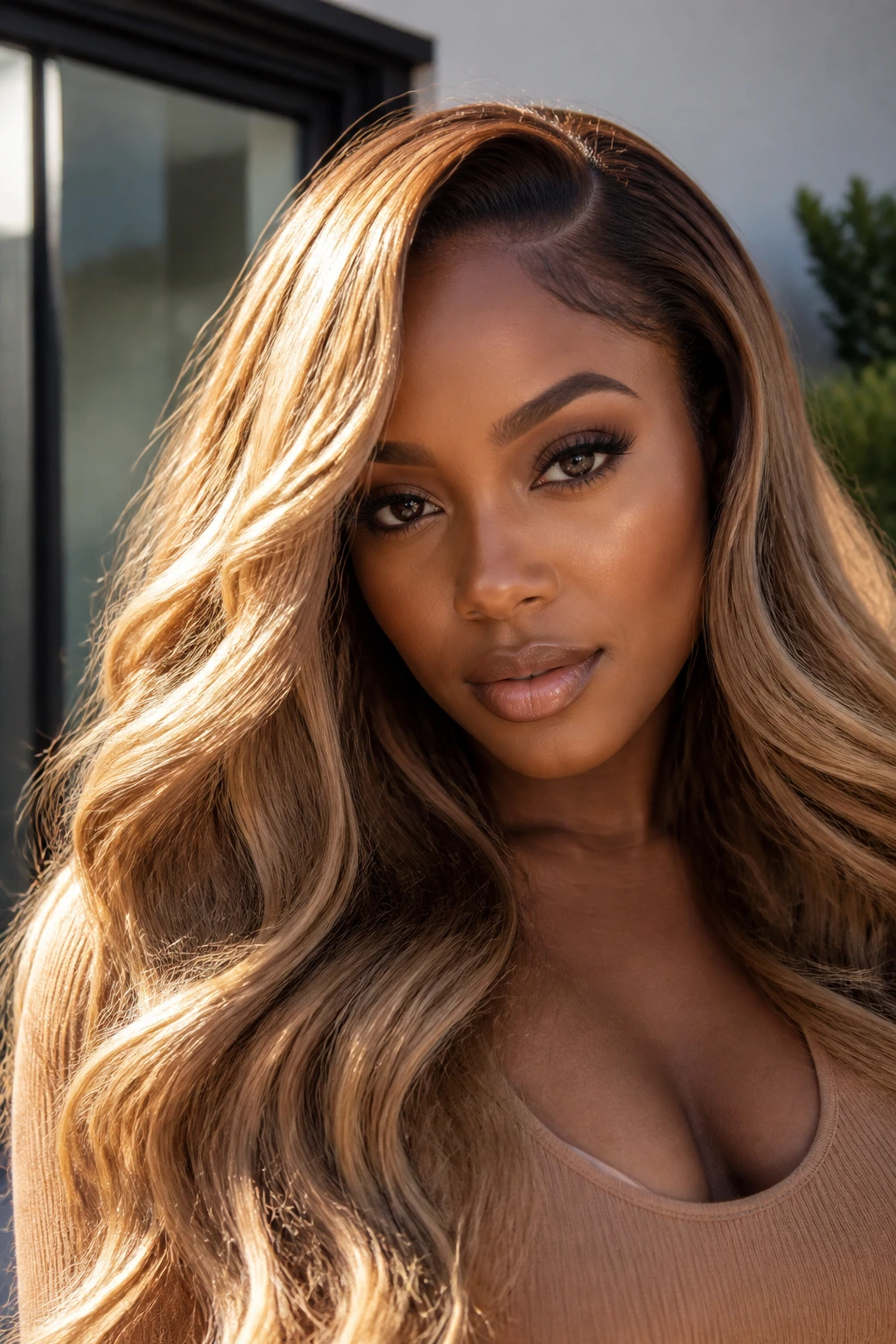
Long waves and honey blonde are old friends, but the part changes the mood. A deep side part gives the waves more drama, and the honey pieces can be concentrated where the hair falls forward. On deep skin, that creates a warm frame without needing to over-lighten the whole head.
The waves should be loose enough to show the different shades. If they’re too tight, all the color blends into one blur. Bigger bends show the honey ribbons, the darker base, and the subtle transitions between them. That’s the part people actually notice.
This look is especially good for thick hair because the blonde can get spread across the surface without losing depth underneath. It also photographs well in daylight, which is really just shorthand for “the dimension survives bad lighting.”
24. Honey Dread Tips With Warm Brown Lengths
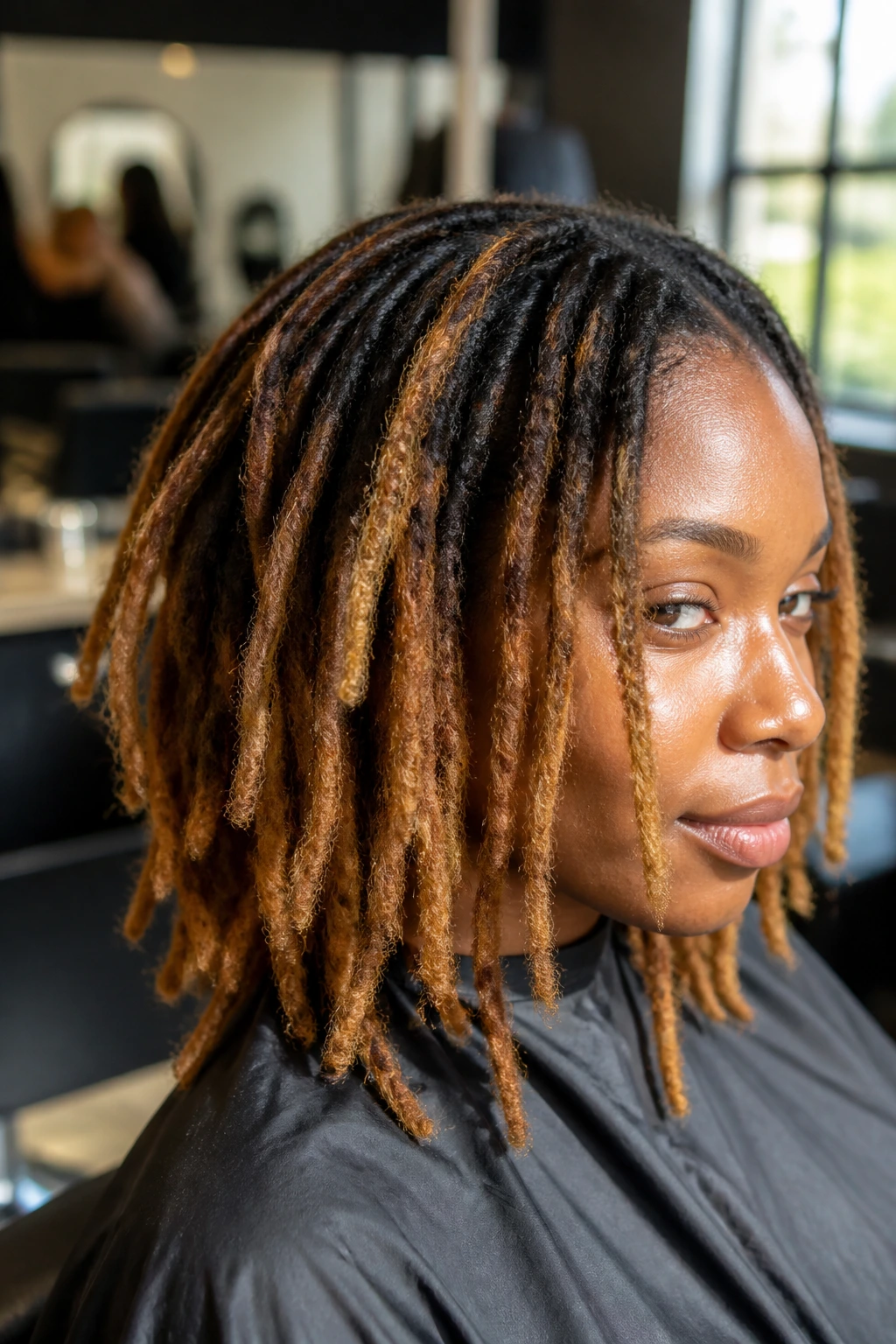
Honey dread tips work when you want color but not a full-color commitment. The lengths stay brown, the ends lighten, and the look gets a sun-kissed finish that still respects the depth of the style. On deep skin, that’s often enough. More than enough.
The best tips are slightly irregular, not all the same length of blonde. That little variation keeps the hair from looking too staged. A warm caramel-honey mix also works better than a stark blonde tip because it blends into the loc texture instead of sitting on it.
A useful rule
If the tips are the brightest thing in the style, keep the rest of the hair clean and well moisturized. The contrast is stronger when the locs or dread lengths are healthy and smooth.
25. Dimensional Honey Blonde With Cocoa Ribbons
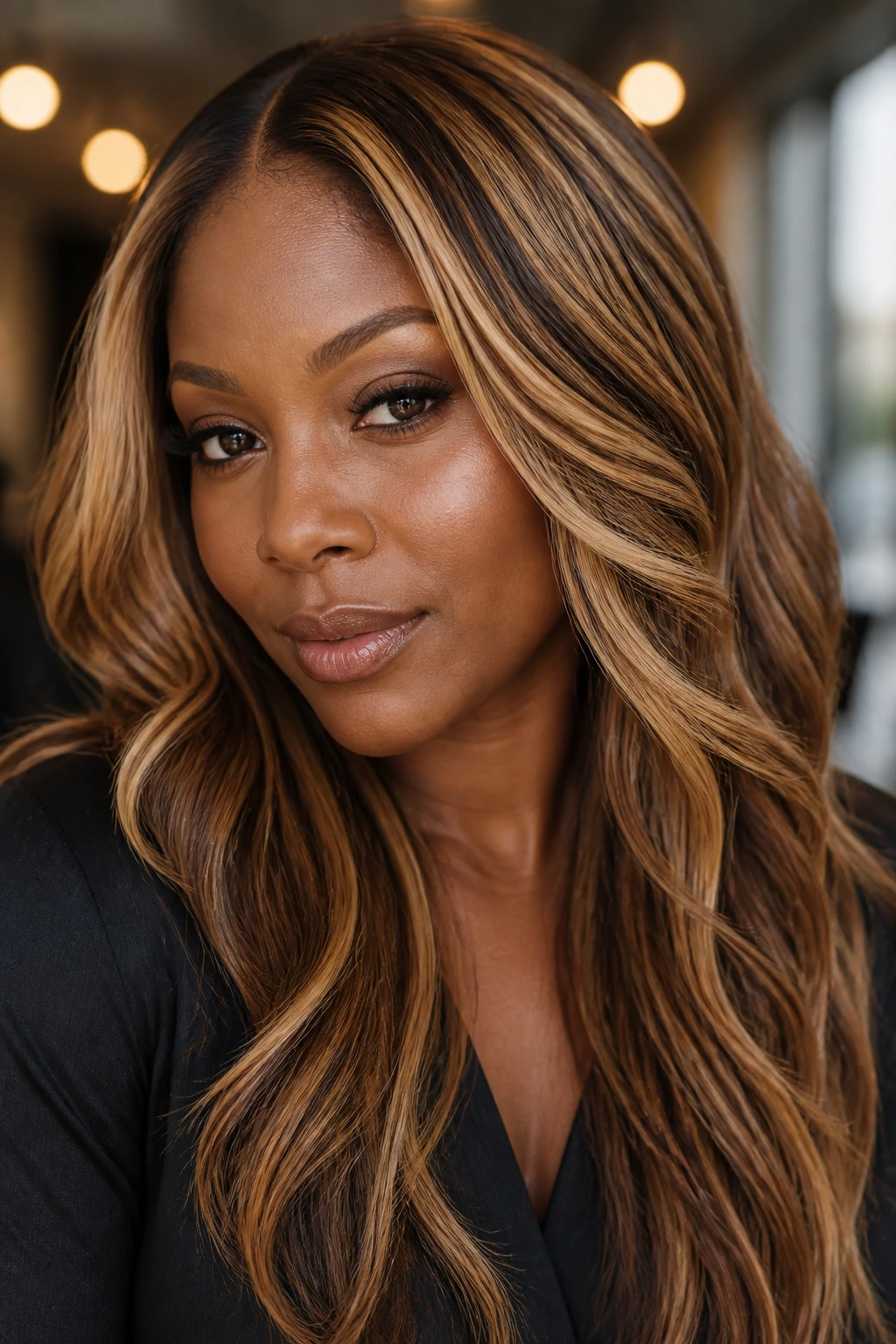
Dimensional honey blonde is the one that usually wins when someone wants the most depth, the most shine, and the least regret later. Cocoa ribbons thread through the honey so the color never loses its shape. On deep skin, that mix is hard to beat because it keeps the warmth rich from root to end.
This is not a one-note blonde. It has moving parts. The cocoa pieces anchor the color, the honey lightens the surface, and the overall effect changes depending on whether the hair is curled, pressed, or braided back. That flexibility is exactly why it works so well.
If you want one shade to show a little bit of everything—glow, depth, softness, and edge—this is the one I’d put near the top of the list.
Why Honey Blonde Looks Best When It Still Has Some Brown Left
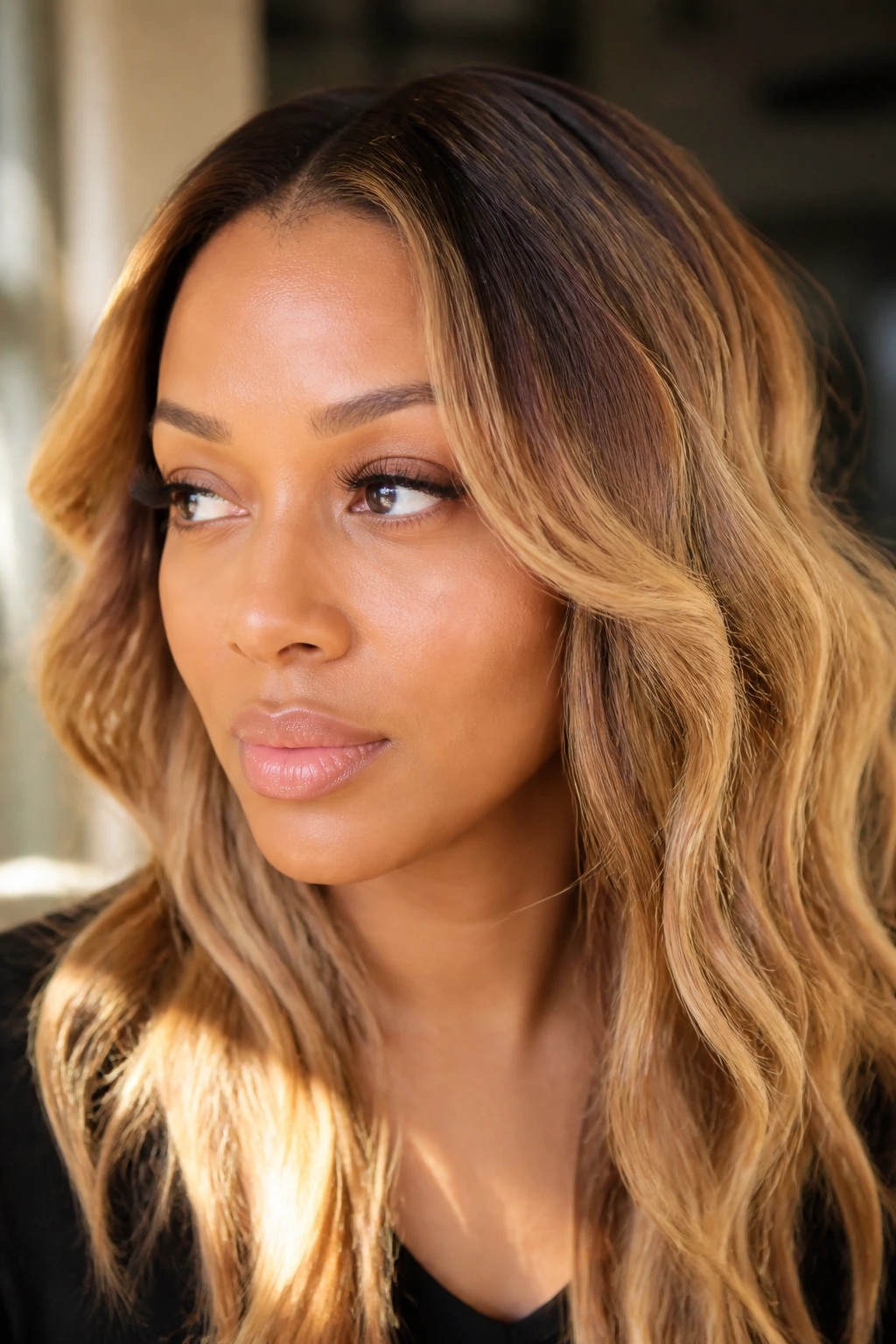
Honey blonde on deep skin gets much better when it leaves room for brown to stay in the picture. That sounds obvious, but a lot of bad color work comes from forgetting it. When the base stays darker, the blonde looks warmer. When the root is shadowed, the face looks framed. When lowlights are left in play, the whole head starts moving instead of sitting there like a single painted panel.
That’s why the richest honey blondes rarely look flat in daylight. They’re not one shade. They’re a stack of warm tones, from cocoa to amber to gold, arranged so the eye keeps moving. On deep skin, that movement matters more than a blinding amount of lift.
And there’s a practical bonus. A bit of depth buys you time. Root regrowth looks softer, toner lasts longer, and the color has a better chance of aging into something pretty instead of something tired.
Essential Tools for Showing Off Honey Blonde Shades
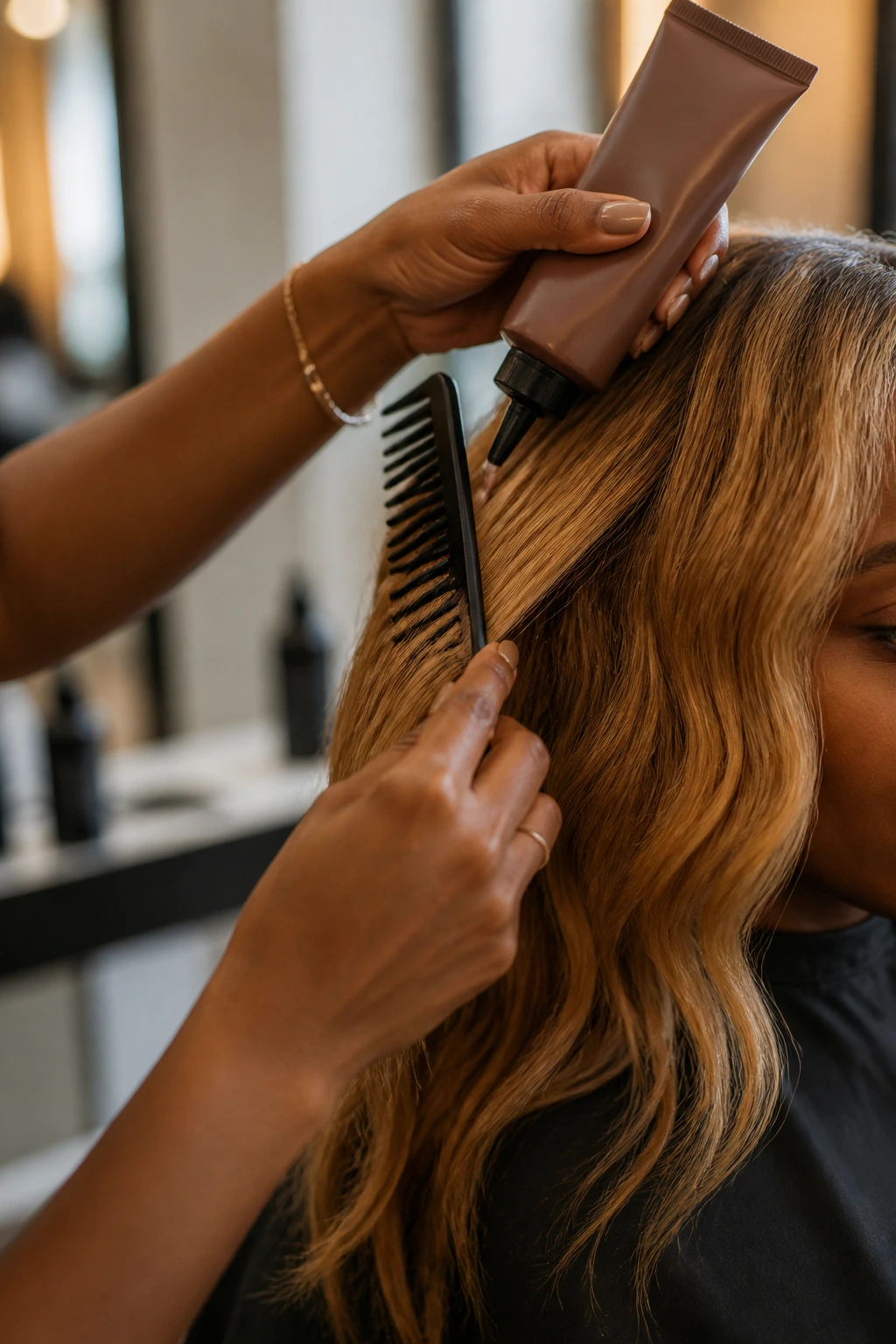
- Color-safe sulfate-free shampoo: Keeps warm toner from stripping out too fast and helps the blonde hold its golden tone.
- Deep conditioner or hair mask: Use it weekly if your hair has been lightened; blonding dries the cuticle, whether the hair is curly or straight.
- Heat protectant spray or cream: A must if you blow-dry, flat iron, or diffuse; honey tones look better when the finish is smooth.
- Wide-tooth comb: Easier on curls, braids, and wet hair than a fine comb, and it helps protect the lightened sections from breakage.
- Satin bonnet or pillowcase: Keeps frizz down and stops the lighter pieces from rubbing rough at night.
- Tinted gloss or color-depositing conditioner: Useful between salon visits when the honey starts leaning dull or brassy.
- Diffuser or round brush, depending on texture: A diffuser shows off curls; a round brush gives straight and wavy looks a cleaner bend.
- Sectioning clips: These matter more than people think. Clean sections make it easier to see where the honey pieces should sit.
Smart Formula and Shopping Notes for a Better Honey Shade
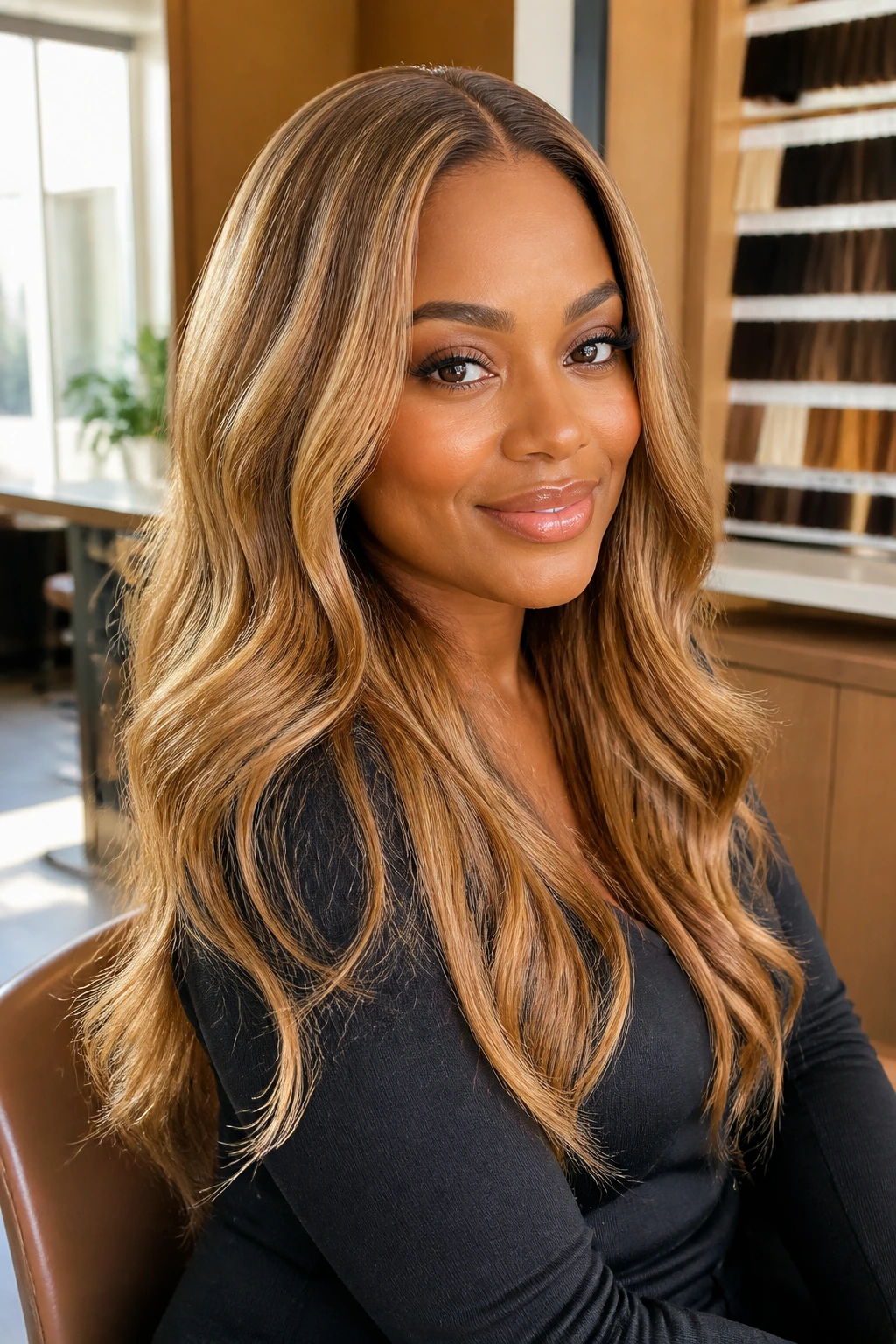
A good honey blonde starts with the right level, not the right fantasy photo. If your natural hair is dark brown or black, most of the flattering versions live around level 7 or 8 once the color is done. That is warm blonde territory. Push too far past that, and the hair can start looking dry, especially against deep skin.
Look for warm descriptors on salon color charts: gold, caramel, amber, beige-gold, copper-gold, honey beige. Be careful with labels that lean icy, ash, pearl, or silver if your goal is a rich blonde. Those shades can work on some undertones, sure, but they are not the easiest starting point for deeper complexions that want warmth.
Bring reference photos that show the hair in daylight and on a texture close to yours. A curly honey blonde and a straight honey blonde are not the same thing. Neither are a golden balayage and a full-head blonde gloss. The photo should tell the colorist where the brightness sits, not just what the final pose looks like.
If you’re doing this with salon services, ask whether the look needs balayage, foils, glossing, a shadow root, or lowlights. Those words matter because they tell the stylist how much depth to leave behind. If you’re doing a wig, bundle, or extension install, match the root depth to your natural hairline first. That’s what keeps the blonde from feeling pasted on.
One last thing: if the hair is fragile, do not chase the lightest possible blonde. Honey is at its best when the hair still feels like hair.
How to Wear These Shades Without Letting Them Wear You
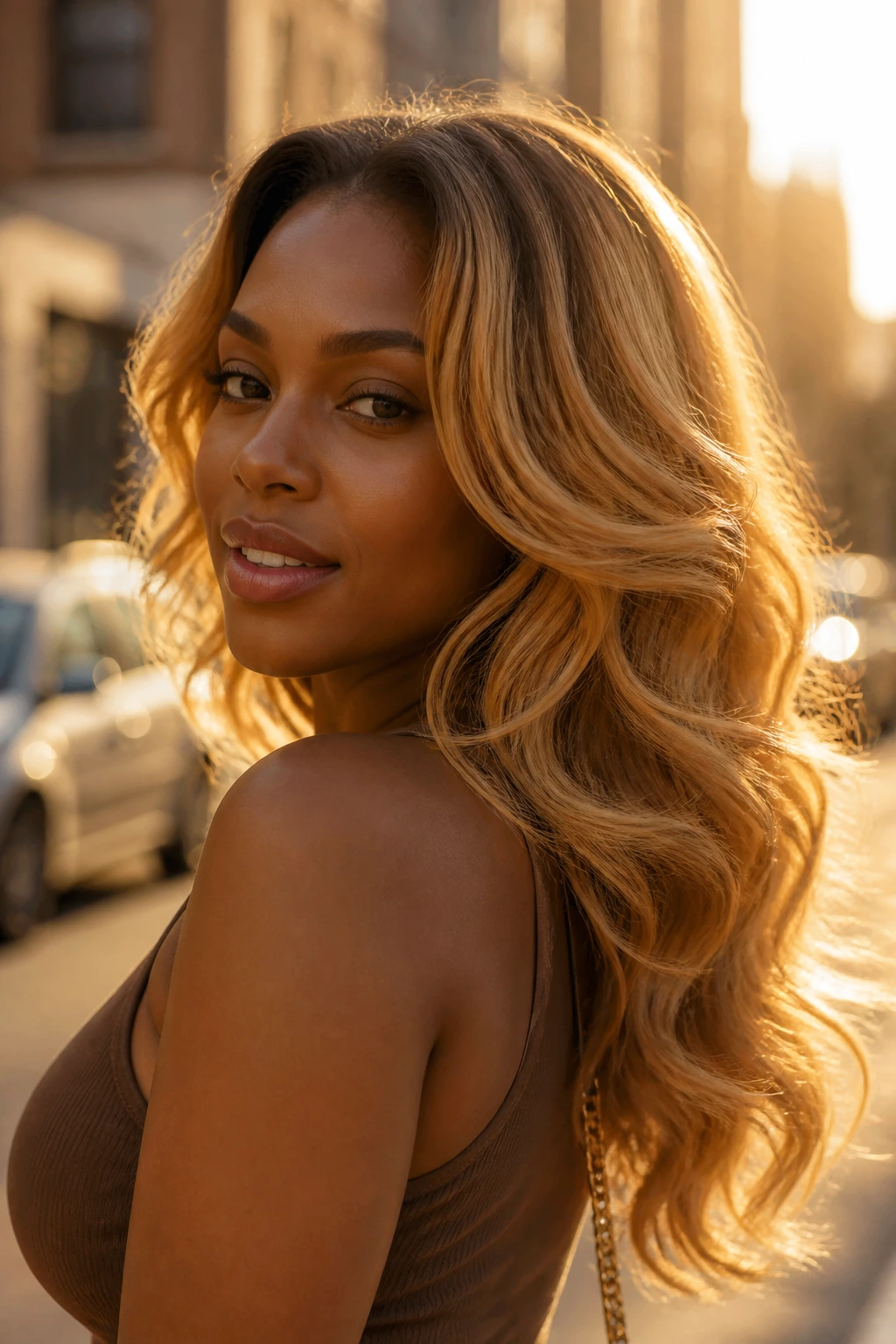
Presentation: Keep the hair moving. Waves, bends, defined curls, or a soft blowout show off honey blonde better than pin-straight, ultra-flat hair in most cases. On deep skin, dimension is the point, so give the color a shape that lets it catch light from more than one angle.
Accompaniments: Gold hoops, bronze blush, terracotta lips, and warm neutrals all sit nicely beside honey blonde. A stark blue-red lip can work too, but the warmer makeup family makes the hair feel more intentional. If you wear bold outfits, let the hair be the warm anchor.
Portions: For subtle wear, keep the honey to the money piece, top layer, or ends. For a medium look, ask for balayage through the mids and ends with a root shadow. For a full commitment, use the honey tone across the whole head, but keep at least one supporting shade—caramel, cocoa, or chestnut—so the color does not go flat.
Beverage Pairing: If you want a visual pairing that makes sense, think warm and toasted. A cinnamon lip gloss, a brown lip liner, or a satin nude finish keeps the hair from looking disconnected from the face. A cool mauve can work, but it usually asks the hair to do all the warming on its own.
Extra Tips for Making Honey Blonde Look Rich, Not Flat
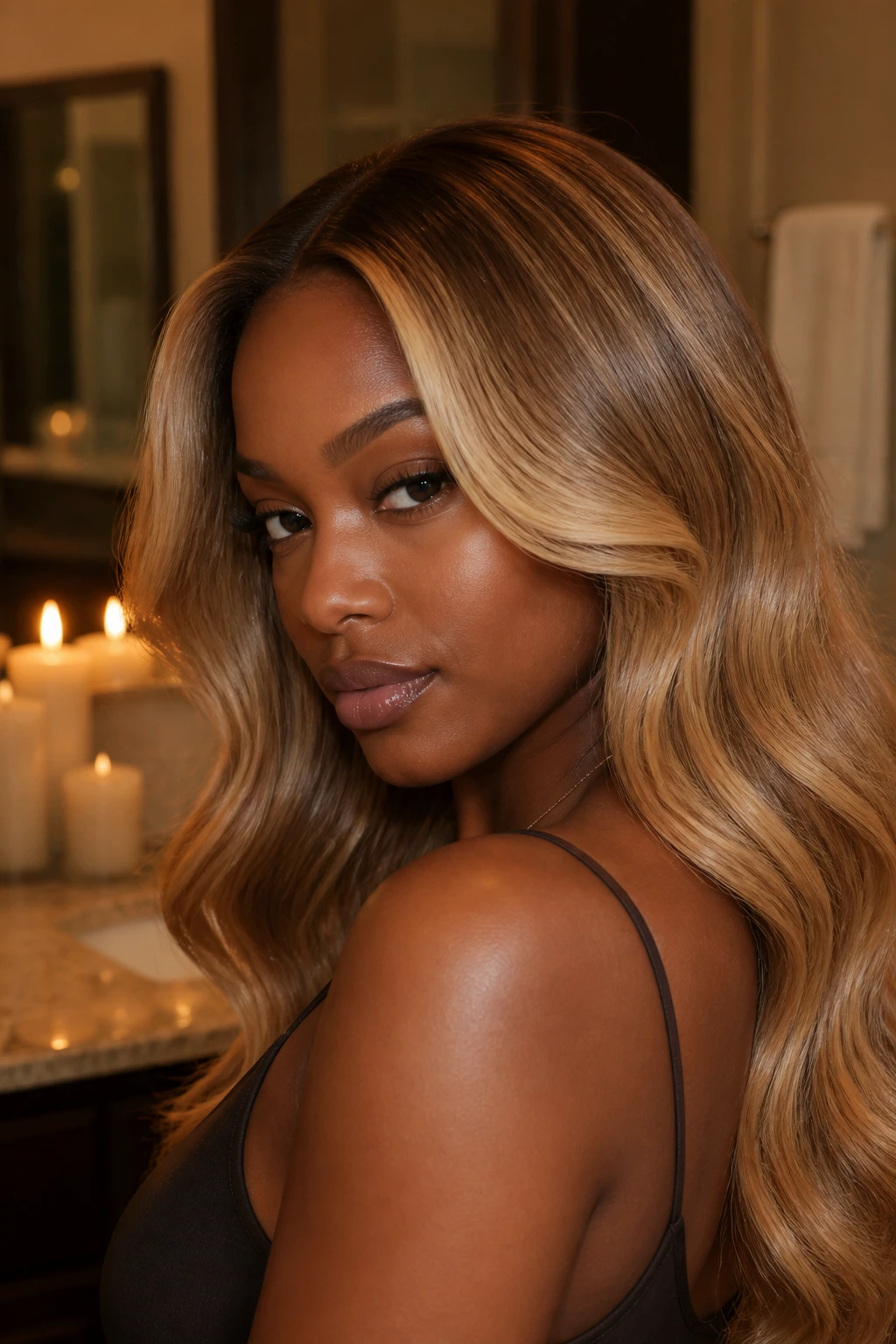
Flavor Enhancement: A gloss is the quickest rescue move when honey starts looking dull. A warm gold-beige gloss every few weeks brings the shine back and softens any rough edges from lightening.
Customization: If you want more drama, add one brighter money piece and keep the rest of the hair rooted. If you want softness, tuck the lightest pieces under the top layer so the blonde reveals itself gradually.
Serving Suggestions: Soft waves, a side part, a slick middle part, or a puff with a few face-framing pieces all change the mood without changing the color. The hairstyle is part of the color story here.
Make-It-Yours:
- For curls and coils, keep the highlights ribbon-thin and place them where the curl bends catch light.
- For straight styles, lean into a smoother blend with a shadow root and glossy finish.
- For protective styles, put honey near the face or at the tips so the warmth reads without overwhelming the whole head.
The best honey blondes are not just lighter. They’re more thoughtful.
Common Mistakes That Make Honey Blonde Fall Flat
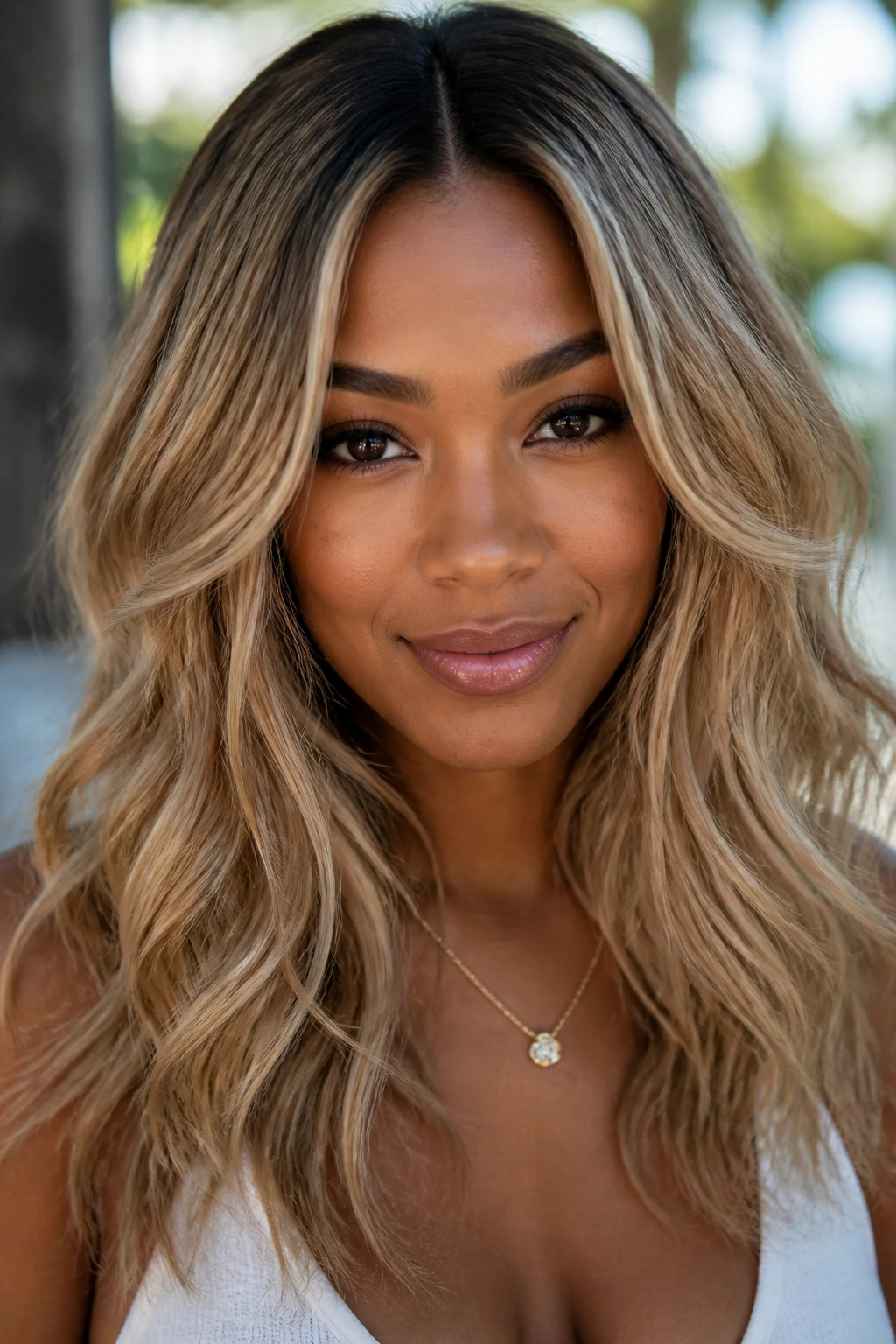
Going too pale too fast. The hair can end up looking yellow or dry against deep skin if you chase a very light blonde from the start. The fix is simple: stay in warm level 7-8 territory unless the hair is healthy enough for more lift, and keep some depth at the root.
Using ash toner to “fix” warmth. This is where a lot of color gets weird. Ash can mute brass, yes, but too much ash can also drain the warmth that makes honey blonde flattering in the first place. If the blonde starts looking dusty, a warm gloss is often the better answer.
Skipping lowlights. A single blonde tone can flatten the whole style, especially on thick hair. Lowlights in chestnut, cocoa, or auburn keep the shade dimensional and help the blonde sit naturally on the hair.
Putting brightness everywhere. Full brightness around the whole head can wash out the face. Better to keep the front pieces, crown, or ends brighter and leave the underneath and root area deeper.
Ignoring texture. Honey blonde looks different on curls, coils, braids, and straight hair. If the placement is copied without adjusting for texture, the color can seem uneven or muddy. The fix is placement that follows the way your hair actually moves.
Neglecting moisture. Lightened hair dries faster. If the ends feel rough and the blonde starts turning dull, the problem may not be the color at all. It may be the conditioner schedule.
Variations and Adaptations to Try
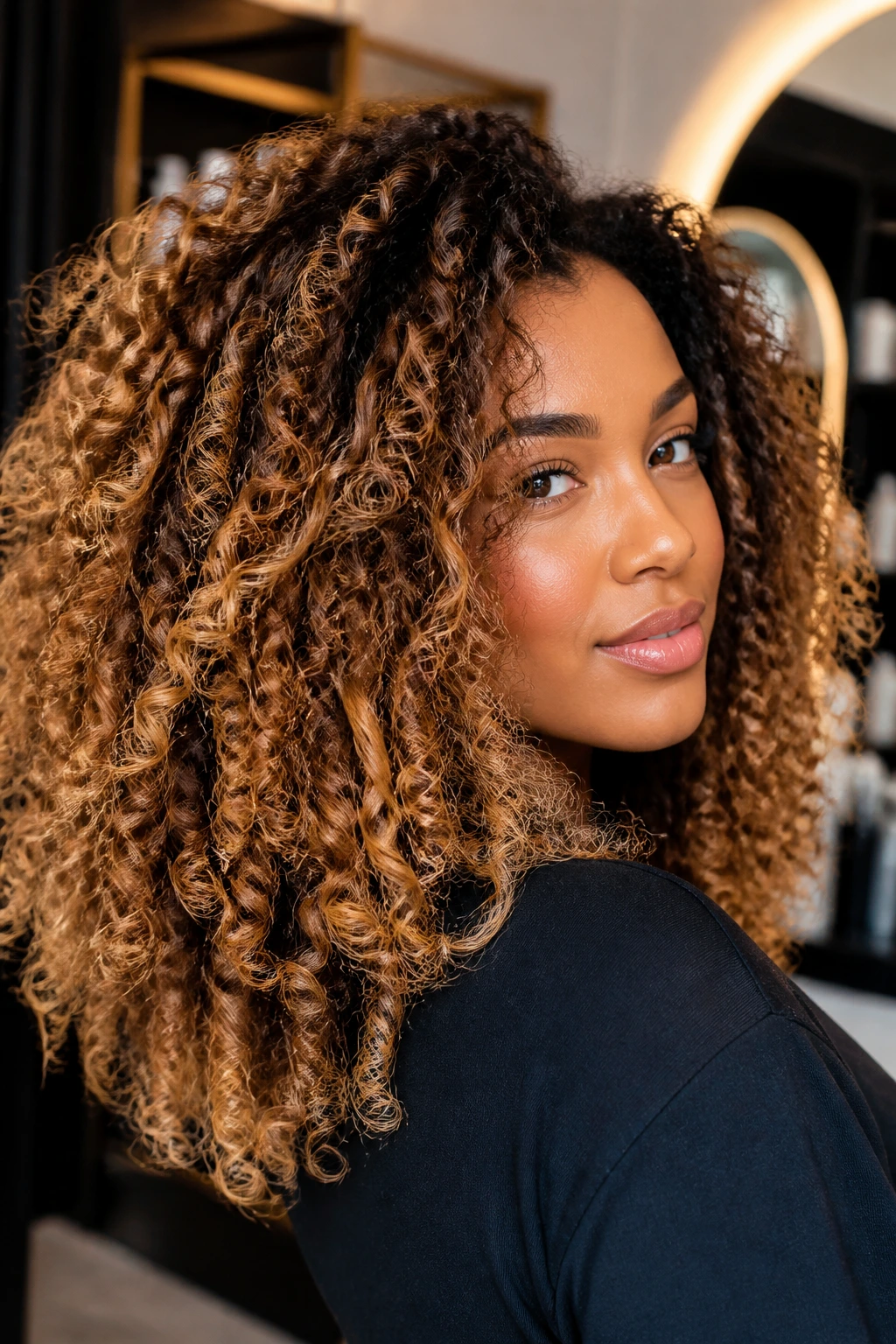
Soft-Focus Honey: Keep the blonde concentrated in fine ribbons and rely on a shadow root to carry the depth. This works if you want the color to show when light hits it, not all the time.
High-Contrast Honey Frame: Brighten just the money piece and a few crown ribbons, then leave the rest dark. It’s a good choice when you want a strong face-brightening effect without full-head lightening.
Curly Halo Honey: Place the lightest honey around the perimeter of curls, puffs, or coils. The effect is lively and dimensional, and it respects the shape of textured hair.
Protective-Style Honey: Use honey on braid extensions, loc tips, or installed pieces instead of the full natural head. You get the warmth and brightness without a permanent color commitment.
Auburn-Honey Blend: Add a copper or auburn glaze to the formula when you want the blonde to feel deeper and richer. This is especially nice on warm undertones and thick hair.
Rooted Bronde Honey: Keep the roots dark, let the mids stay bronde, and push the ends into honey. It’s one of the easiest ways to wear blonde for a long stretch without constant salon visits.
How to Keep Honey Blonde Looking Fresh Between Appointments
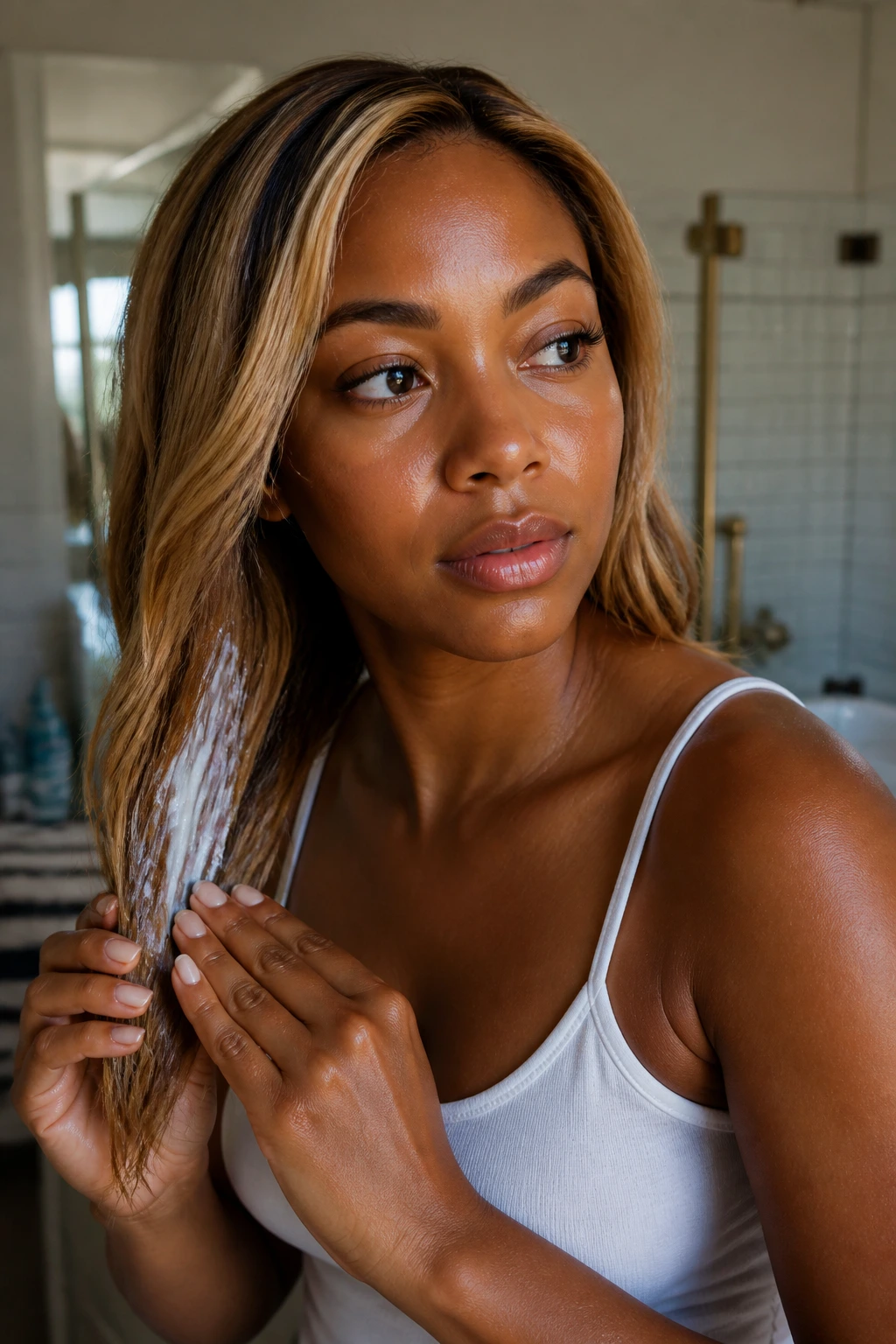
Honey blonde needs maintenance, but it’s the manageable kind if you stay ahead of it. A salon gloss every 4 to 6 weeks keeps the warmth clean. Root touch-ups usually land around 6 to 8 weeks, depending on how fast your hair grows and how much contrast you like at the scalp.
Use a sulfate-free shampoo and don’t over-wash. Two or three washes a week is enough for most people; if your hair is curly, once or twice may be even better. The lighter pieces need moisture, so plan on a mask or deep conditioner once a week and a leave-in on wash day. If you heat-style often, a protectant goes on every single time. Every time.
Purple shampoo is not the hero here unless the blonde starts leaning yellow in a bad way. For honey tones, a gold or beige color-depositing conditioner is usually the better fit. Purple can cool the warmth too much if you use it like a habit instead of a fix.
Sleep on satin. Wear a bonnet if your hair is curly, coily, or braided. If you swim, wet the hair with clean water first and add leave-in or conditioner before you go in. Chlorine and sun can chew through warm blonde fast, and the ends usually show it first.
Frequently Asked Questions About Honey Blonde on Deep Skin
Will honey blonde wash out deep skin?
Not if the tone stays warm and the color keeps some depth. The problem is usually pale, over-lifted blonde with no shadow root, not honey blonde itself. Warm gold, amber, and caramel pieces tend to flatter deeper complexions because they echo the skin’s warmth.
Should I choose balayage or full color?
Balayage is easier to wear if you want a softer grow-out and more depth at the root. Full color works when you want the honey to be the main event, but it usually needs better maintenance and a stronger toning schedule.
What undertones in deep skin suit honey blonde best?
Warm and neutral undertones usually take to honey blonde quickly. Deep skin with golden, olive, or red undertones often looks especially good in caramel, amber, and cinnamon-gold versions. Cooler undertones can still wear it, but the formula should stay balanced and not drift too orange.
Can natural hair be lightened safely for honey blonde?
Yes, but the hair needs a plan, not a gamble. Healthy hair, bond-building care, and realistic lift goals matter a lot more than chasing the lightest blonde possible. If the hair is already fragile, consider highlights, ribbons, or a gloss instead of full lightening.
What if my honey blonde turns brassy?
Brass usually means the gold has pushed too far orange or yellow. A warm gloss can bring it back into honey territory, while a toner chosen for your exact level helps correct the tone without making the blonde muddy.
Is honey blonde hard to maintain on curls and coils?
It can be, but smart placement helps. Ribbon highlights, halo pieces, and ombré ends usually hold up better than a full head of lightened hair because they leave more of the structure dark and intact.
Can I wear honey blonde with braids, locs, or wigs?
Absolutely. In fact, those are some of the easiest ways to test the shade without permanently coloring your own hair. Honey braid hair, honey-tipped locs, and warm blonde wigs all let you experiment with tone and brightness before you commit.
How do I keep the color from looking dry?
Moisture, heat protection, and glossing matter more than most people want to admit. Honey blonde loses its richness fast when the ends get rough. A weekly mask and a light shine product after styling can make a huge difference.
The Shade That Knows Where to Land
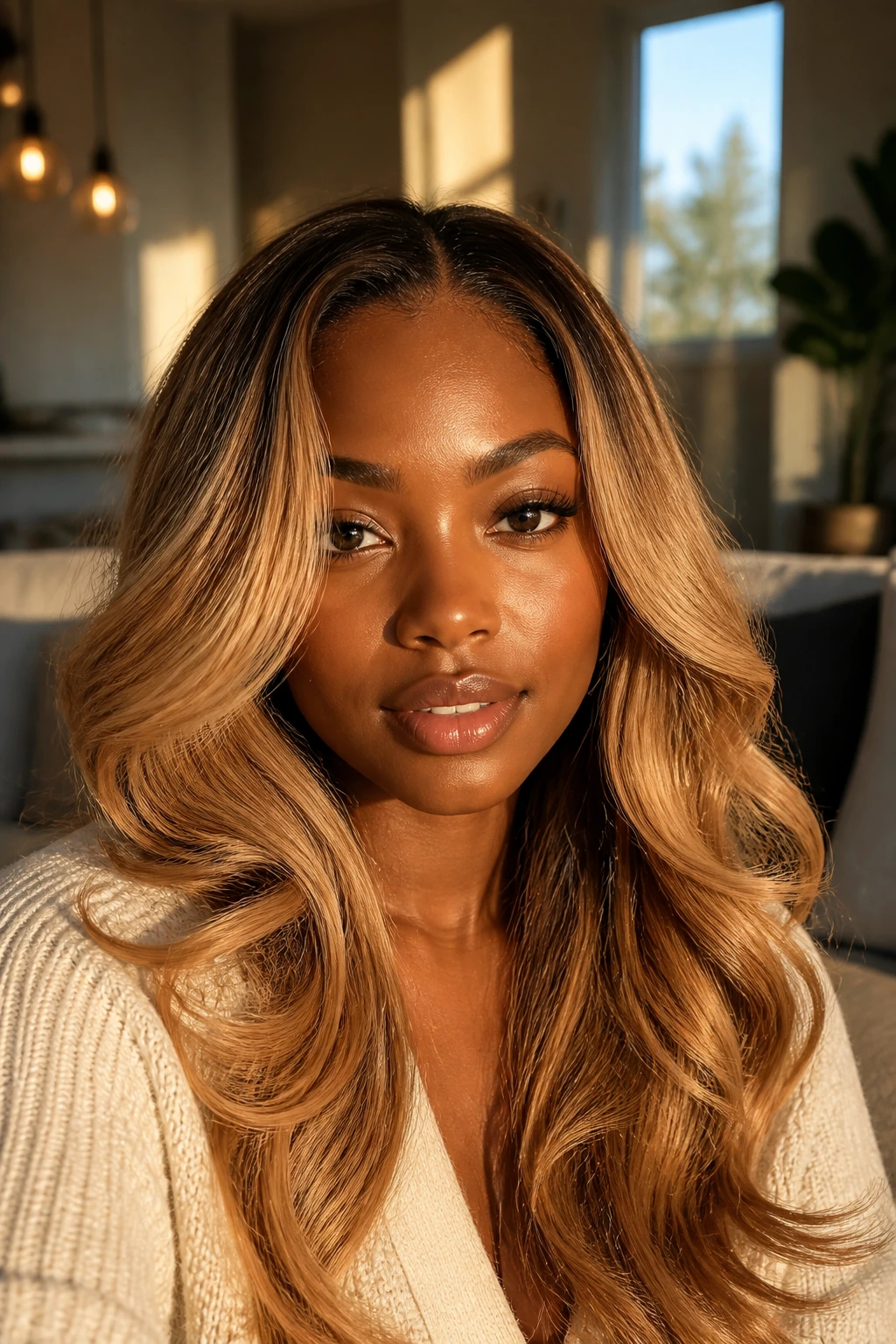
Honey blonde works on deep skin when it keeps its warmth and remembers to leave some darkness in the picture. That’s the whole trick. You do not need the palest blonde in the room. You need a shade that sits beside your complexion and makes the whole face look fuller, warmer, and more alive.
The best looks in this bunch do not shout the same way. Some glow quietly through curls. Some hit hard at the front. Some hide the brightness in the ends and let the root do the heavy lifting. That range is the real appeal—there’s a version for people who want a little glow and a version for people who want a full color moment.
Start with the amount of light you actually want to maintain, not the most dramatic photo you can find, and the honey will do the rest.