



Deep skin tones make hair color look richer the moment the dye hits the strand. A jet-black lob can look sharp and deliberate against cocoa skin, while a copper curl pattern can throw flashes of warmth that seem to move when you do. The best hair color ideas for deep skin tones are not about chasing brightness for its own sake; they’re about choosing a shade with enough depth to sit cleanly against the face and enough shine to keep the whole look from going flat.
A lot of bad color advice starts with the wrong assumption: that deep skin only needs dark hair. Not true. Some of the strongest looks come from contrast — blue-black with a crisp edge, burgundy with violet undertones, caramel ribbons that break up dense brown, or a soft ash brown that cools the whole frame. The complexion is not the problem. The wrong undertone is.
That’s why classic shades still win. They don’t depend on a passing trend to look good, and they tend to age better as the color softens over time. If you’ve ever stared at a swatch book and wondered whether you should go darker, warmer, cooler, or just add a few ribbons around the face, this list gives you a real map.
Why These Shades Keep Showing Up
- Contrast matters: Deep skin takes on a cleaner edge when the hair has either true depth, like espresso or blue-black, or a visible tonal shift, like caramel or copper.
- Undertone is the real filter: Warm complexions usually drink up gold, bronze, copper, and mahogany; cooler complexions can handle ash brown, plum, and blue-black without looking dull.
- Gloss changes everything: The same dark brown can look flat or expensive depending on shine, so finish matters as much as the shade itself.
- Classic shades age better: A good jet black or chestnut brown still reads well after a few washes, while a temperamental trend shade can turn patchy fast.
- You can customize the level: These looks work on curls, coils, waves, and straight hair because the color placement can stay subtle or go bold without losing the shape of the haircut.
1. Jet Black With High-Gloss Shine
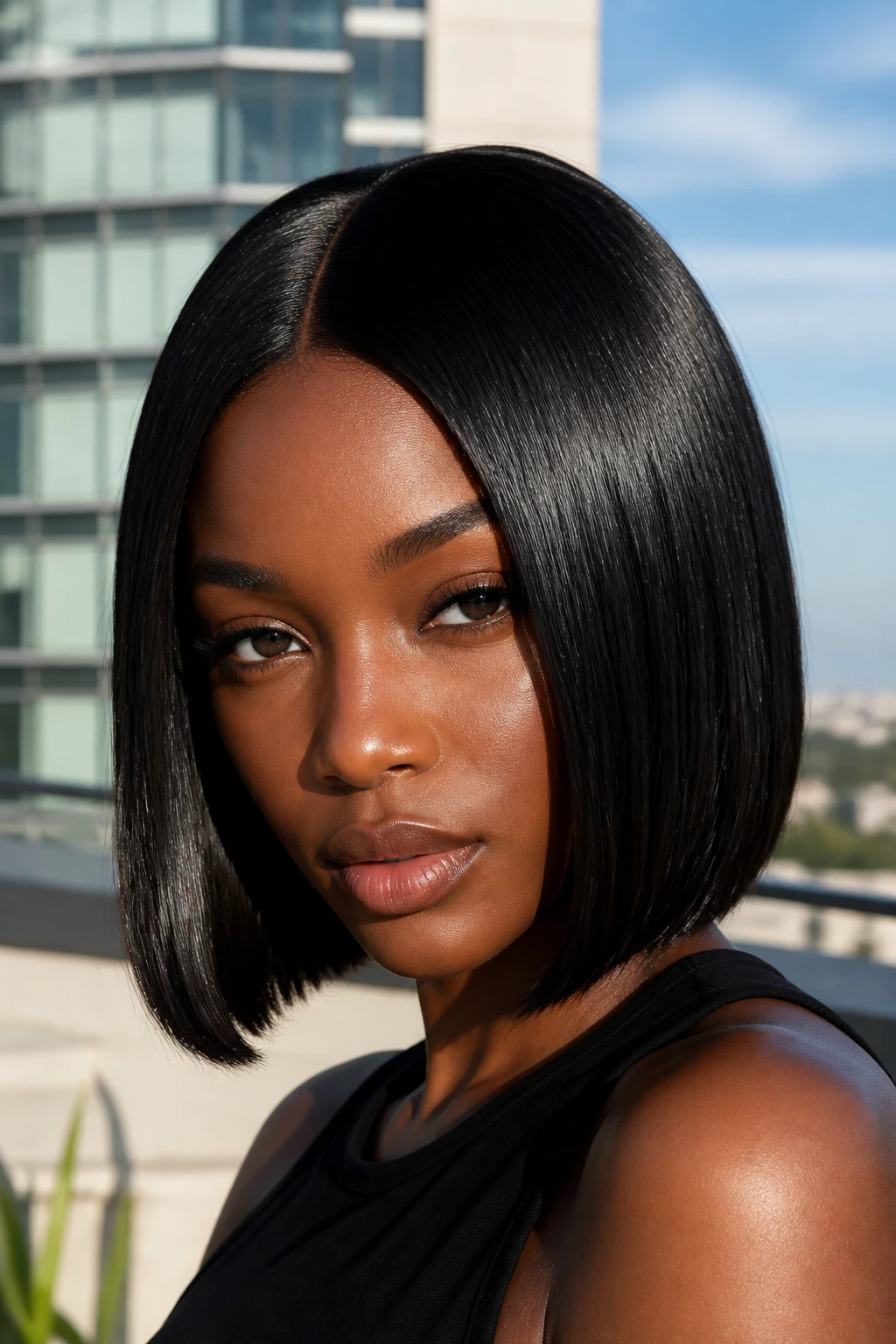
Jet black is the shade people underestimate until they see it on deep skin in daylight. Then it makes sense. The color creates a hard, clean edge around the face, especially on a sharp bob, a silk press, or a blunt cut that already has strong lines.
What makes it work is the finish. Jet black without shine can look heavy; jet black with gloss looks like ink. If your natural hair already sits in the dark brown family, this is one of the easiest classic switches because you are not fighting the texture. You’re just deepening the tone and letting the light do the rest.
I like this shade most on people who want strong contrast with minimal fuss. It’s also one of the few colors that can make a simple style look intentional even when the styling is bare-bones. If you want the color to read crisp instead of flat, ask for a blue-based black gloss and keep the ends trimmed clean.
2. Blue-Black for a Softer, Cooler Edge
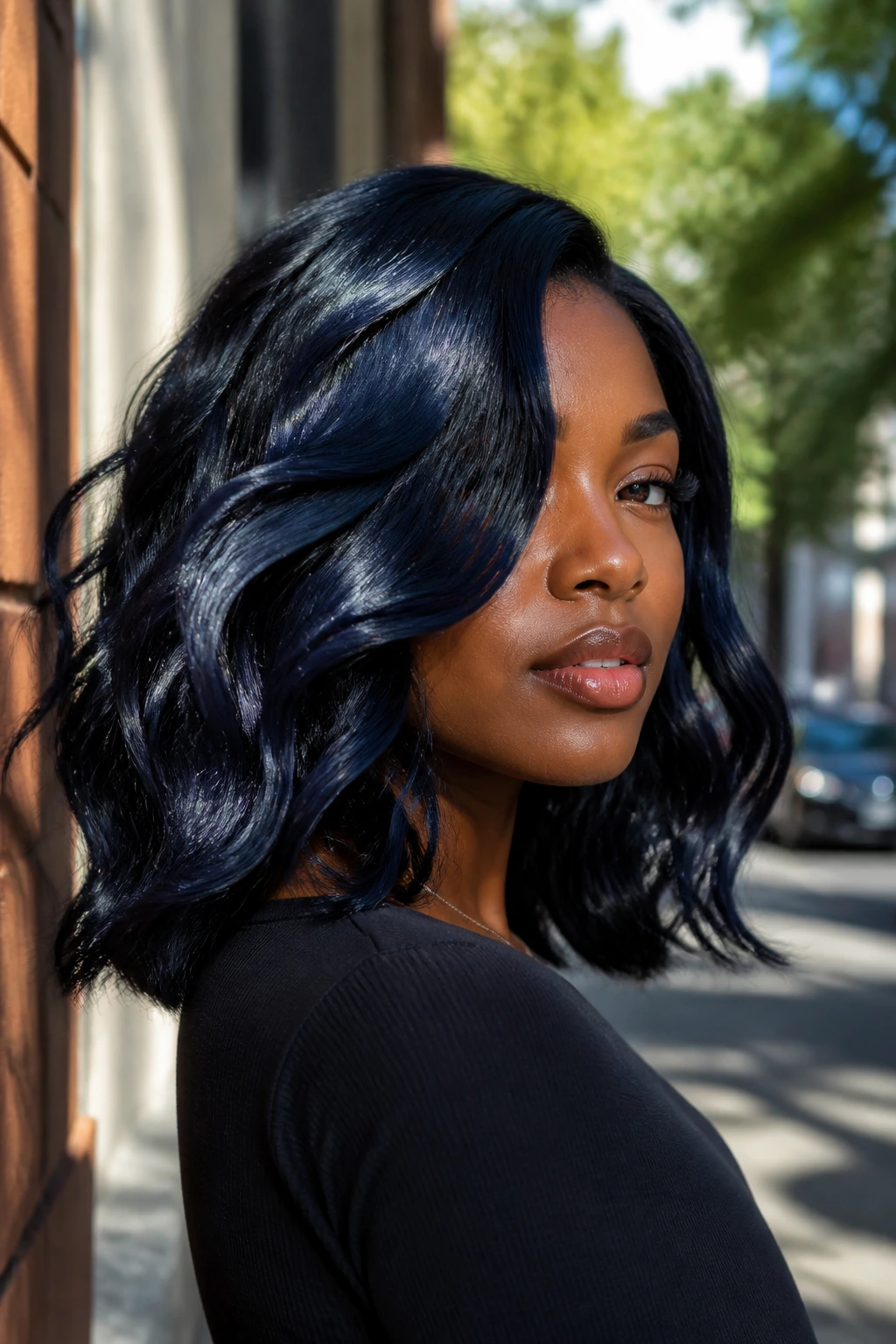
Blue-black asks a better question than plain black: what happens when deep color gets a little reflection? The answer is a shade that looks almost black indoors, then flashes a cool navy sheen in sunlight. On deep skin, that slight shift can be enough to keep the hair from disappearing into the complexion.
It’s a smart pick if your skin leans neutral or cool, or if you like black hair but want it to feel less severe. On curls and coils, the blue note catches on the bends of the hair and shows off movement in a way that pure black sometimes misses.
Ask for this when you want drama without harshness. The color reads polished on long layers, braids, sleek ponytails, and tapered cuts. It does fade toward a softer black-brown, so a color-depositing blue-black conditioner every couple of weeks helps keep the shade from slipping into muddy territory.
3. Espresso Brown That Never Looks Flat
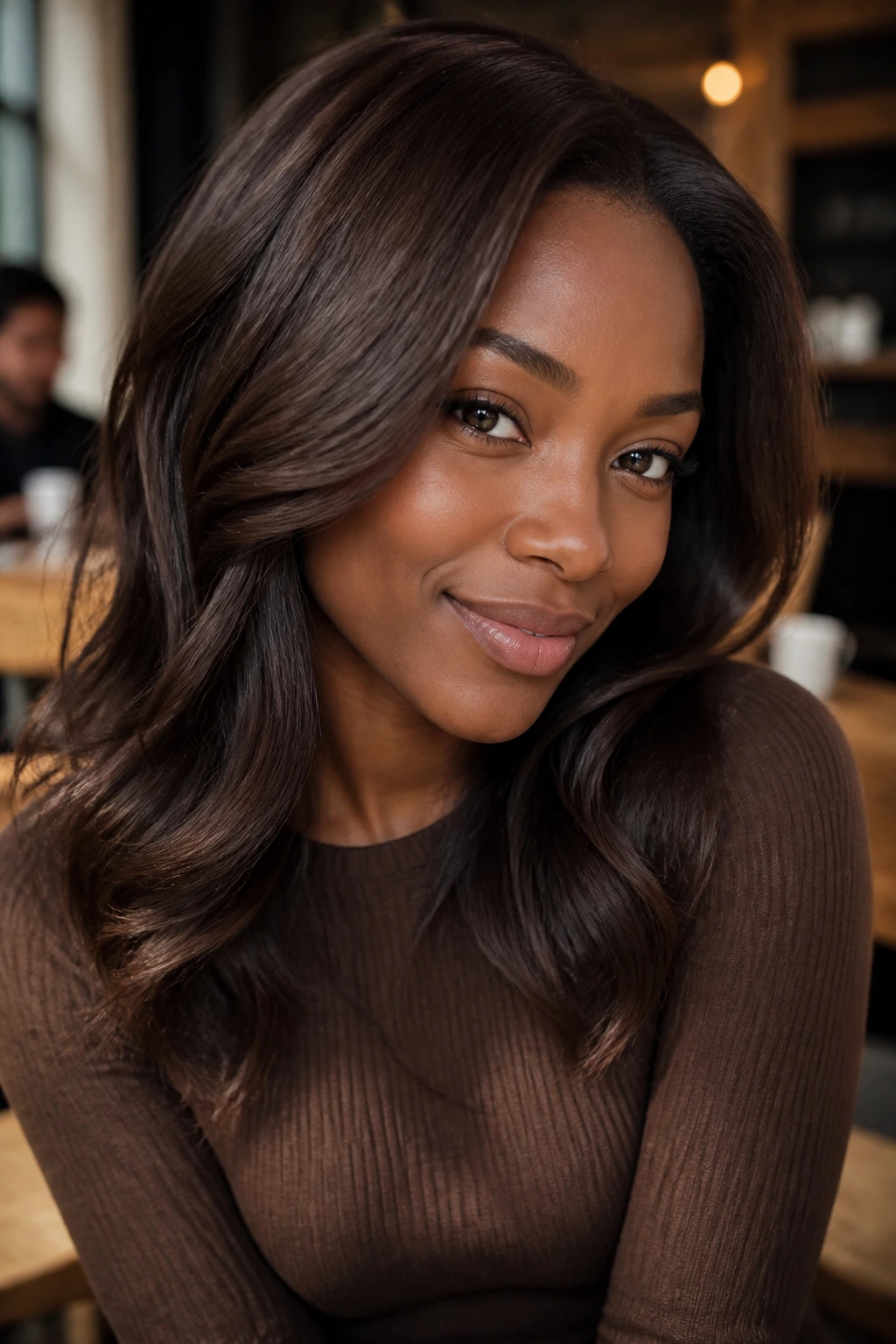
Espresso brown is the shade I reach for when someone says, “I want dark, but not black.” It has enough depth to frame deep skin beautifully, yet it leaves a little room for light to move through the hair. That makes it look softer around the edges than jet black, especially on textured hair.
The best espresso browns carry a cool chocolate base with just enough warmth to avoid looking ashy or dull. On deep skin, that balance matters. Too much cool pigment and the hair can look dusty; too much red and it starts drifting into chestnut territory. Espresso lives in the middle, which is why it works so often.
If you want a color that feels classic without being severe, this is the one. It’s also a good starting point if you color your hair often and do not want a dramatic grow-out line. Ask for a demi-permanent gloss if you want softness, or a permanent color if you need stronger gray coverage.
4. Dark Chocolate Brown With Soft Dimension
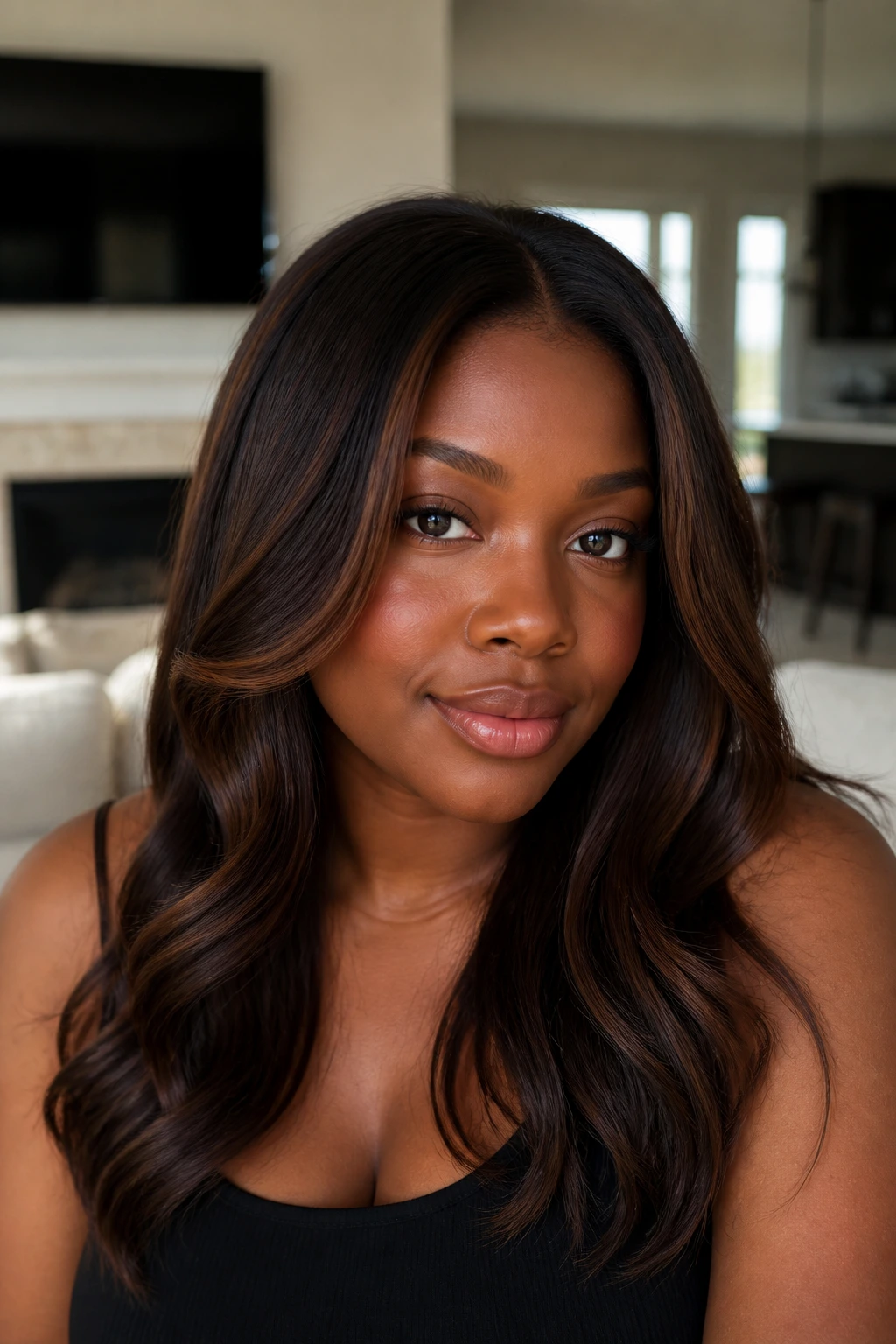
Dark chocolate brown has a rounder, warmer feel than espresso. It leans rich rather than sharp, and on deep skin that warmth can make the face look smoother and more rested. The shade is especially nice on layered cuts because it doesn’t swallow the movement of the hair.
This is the color for people who want “dark brown” but not a one-note block. A touch of red-brown or neutral gold in the formula keeps it from going dead under indoor lighting. That tiny shift is the difference between hair that looks dyed and hair that looks expensive in the old-fashioned sense — full, healthy, and deep.
On curly hair, dark chocolate gives coils a softer outline than black does. On straight hair, it reads clean and polished. If your hair tends to pull red when colored, ask your colorist to keep the base neutral and add shine with a brown gloss rather than extra warmth.
5. Mocha Brown With Just Enough Warmth
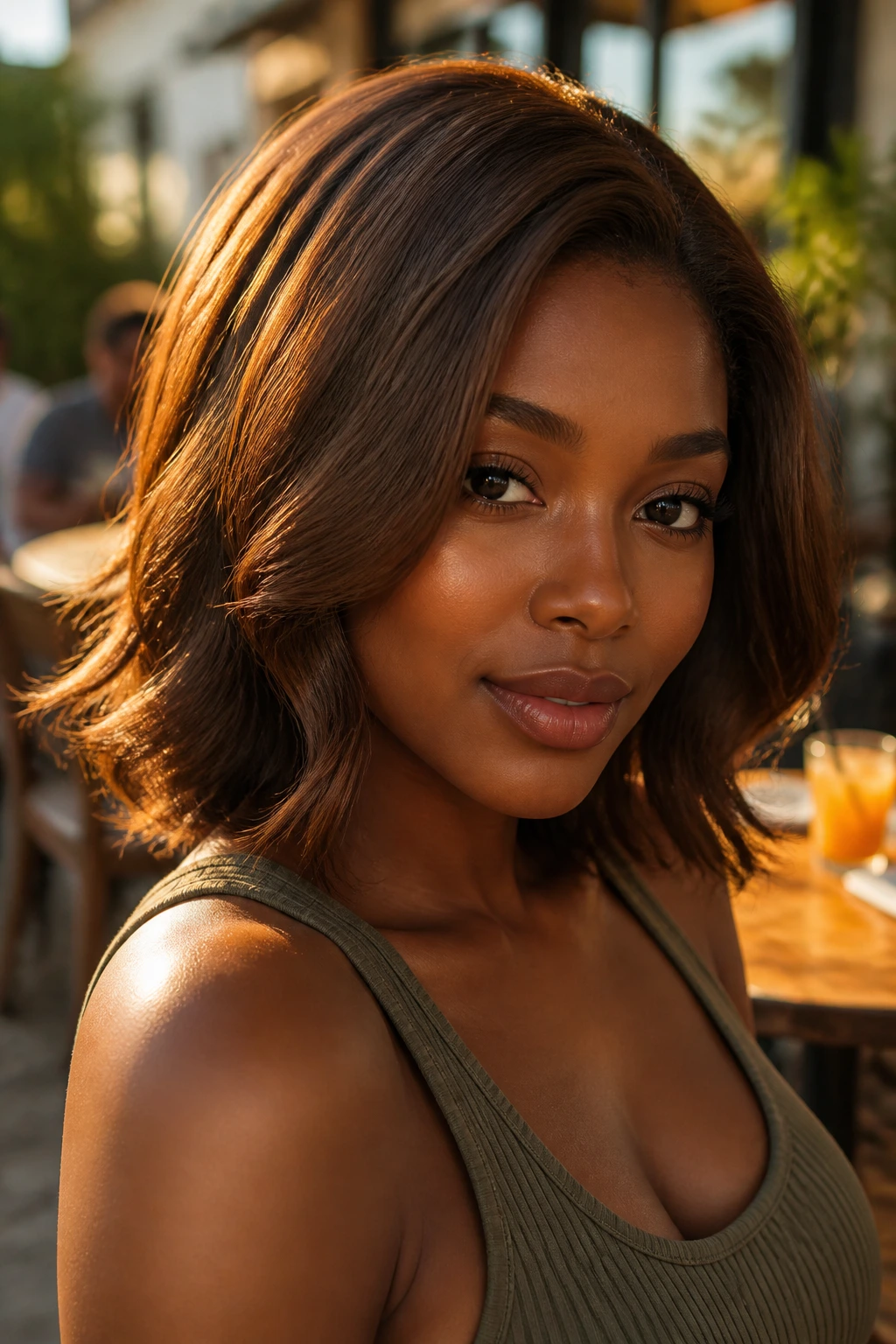
Mocha brown sits between espresso and chestnut, and that middle ground is the point. It has a creamy, warm-brown finish that looks especially good on deeper complexions with golden or olive undertones. The tone isn’t loud, but it doesn’t vanish either.
I like mocha brown when someone wants a color change that feels visible without looking “done.” It’s a friendly shade for people who wear their hair in natural curls, because the warm reflect catches on the curl pattern and makes the shape more obvious. It also works well on shoulder-length cuts, where the color can wrap around the face instead of sitting in one heavy block.
If you’re coloring at home, don’t let the box picture fool you. Mocha can go muddy if the formula is too ash-heavy. A true mocha has a soft caramel-brown glow underneath the brown. That’s the note to ask for.
6. Chestnut Brown for a Warm, Polished Finish
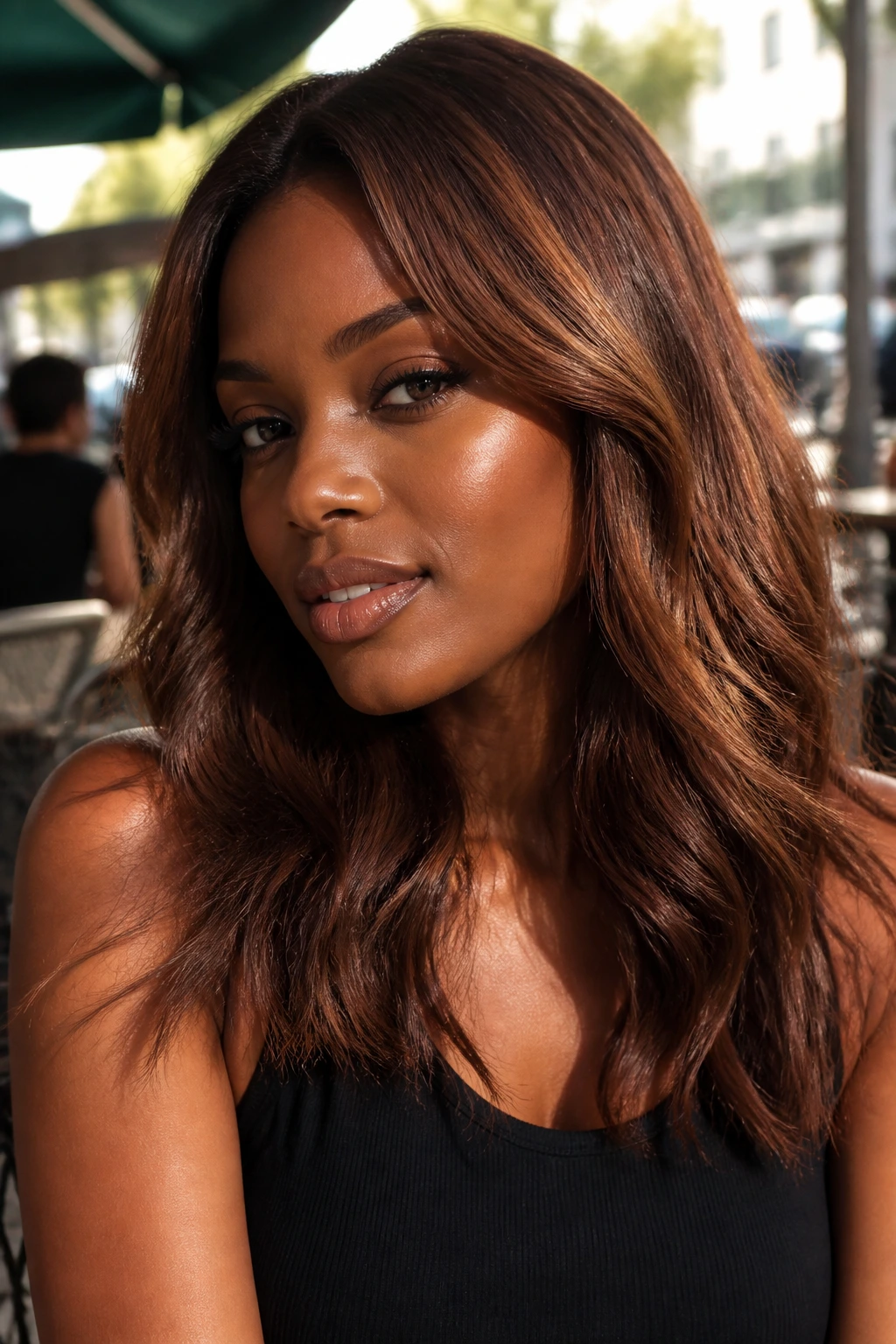
Chestnut brown is one of those shades that quietly carries a lot of work. It’s brown, yes, but it has a red-gold undertone that wakes up deep skin in a way plain brown often doesn’t. The warmth can show up as a subtle glow in daylight instead of a loud red cast.
Best on:
- medium-to-deep complexions with warm or neutral undertones
- layered cuts, blown-out curls, and loose waves
- anyone who wants warmth without full copper commitment
Chestnut is a smart step up from espresso if you want the hair to look sunnier. It also pairs well with glosses, because the undertone can get a little dull if the color fades too fast. If you want the shade to stay clean, ask for a chestnut base with a neutral brown glaze on top. That keeps the warmth rich, not brassy.
7. Auburn Brown With a Red Edge
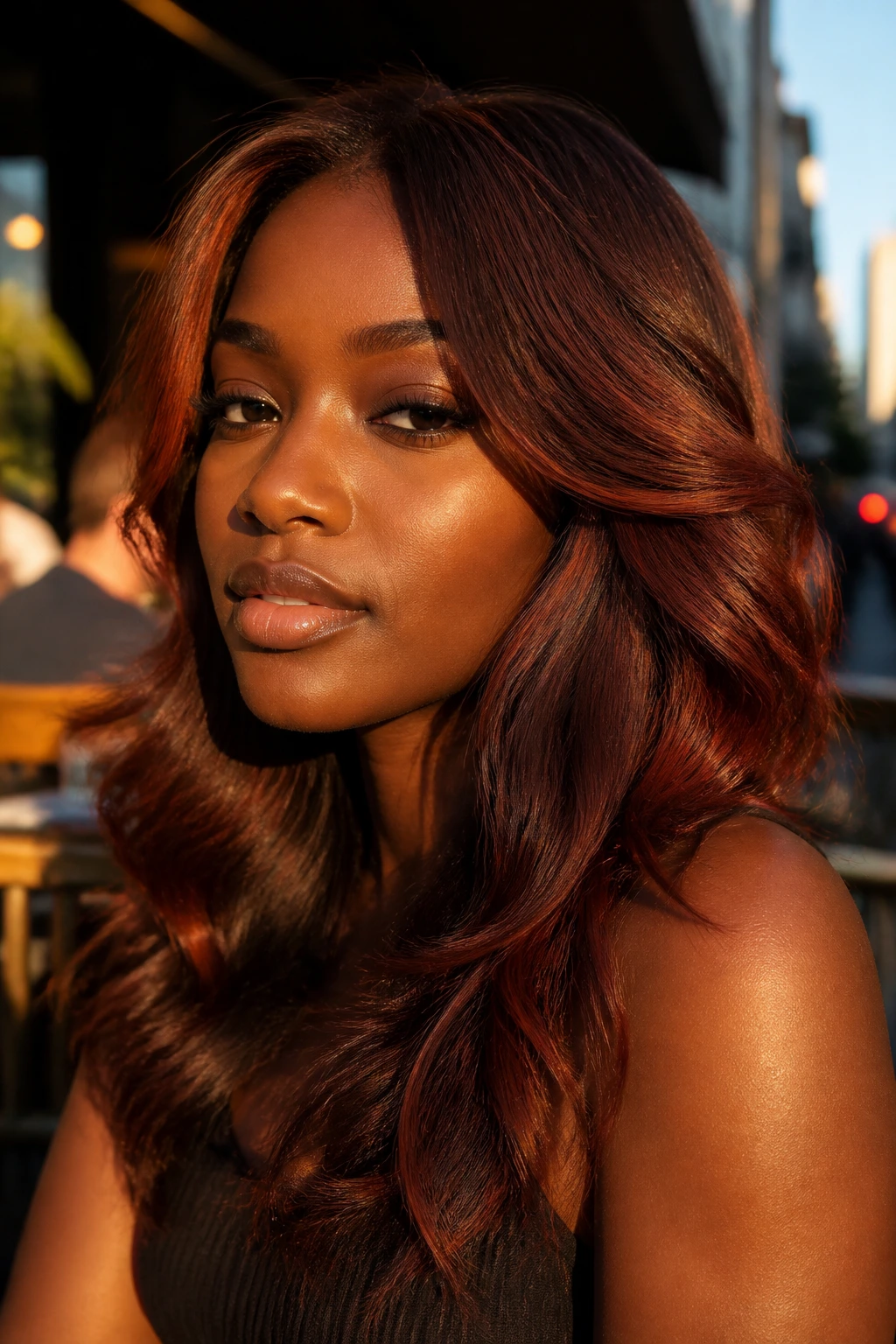
Auburn brown has enough red in it to be interesting, but not so much that it screams for attention. On deep skin, that little red edge can make the face glow, especially around the cheekbones and jawline. It works because red-brown and deeper skin often share the same sense of warmth.
This color reads best when the red is built into the brown, not sitting on top of it like paint. That matters. A true auburn has depth at the root and warmth through the mid-lengths. On a blowout, the tone looks sleek; on curls, it catches movement in a way that gives the hair a little fire without going full copper.
If you have previously colored dark hair and want a change that still feels safe, auburn is a solid bridge. It’s a shade with personality, but it won’t feel like you borrowed it from a costume rack. Ask for auburn-brown rather than bright auburn if you want the classic version.
8. Copper Brown That Glows in Daylight
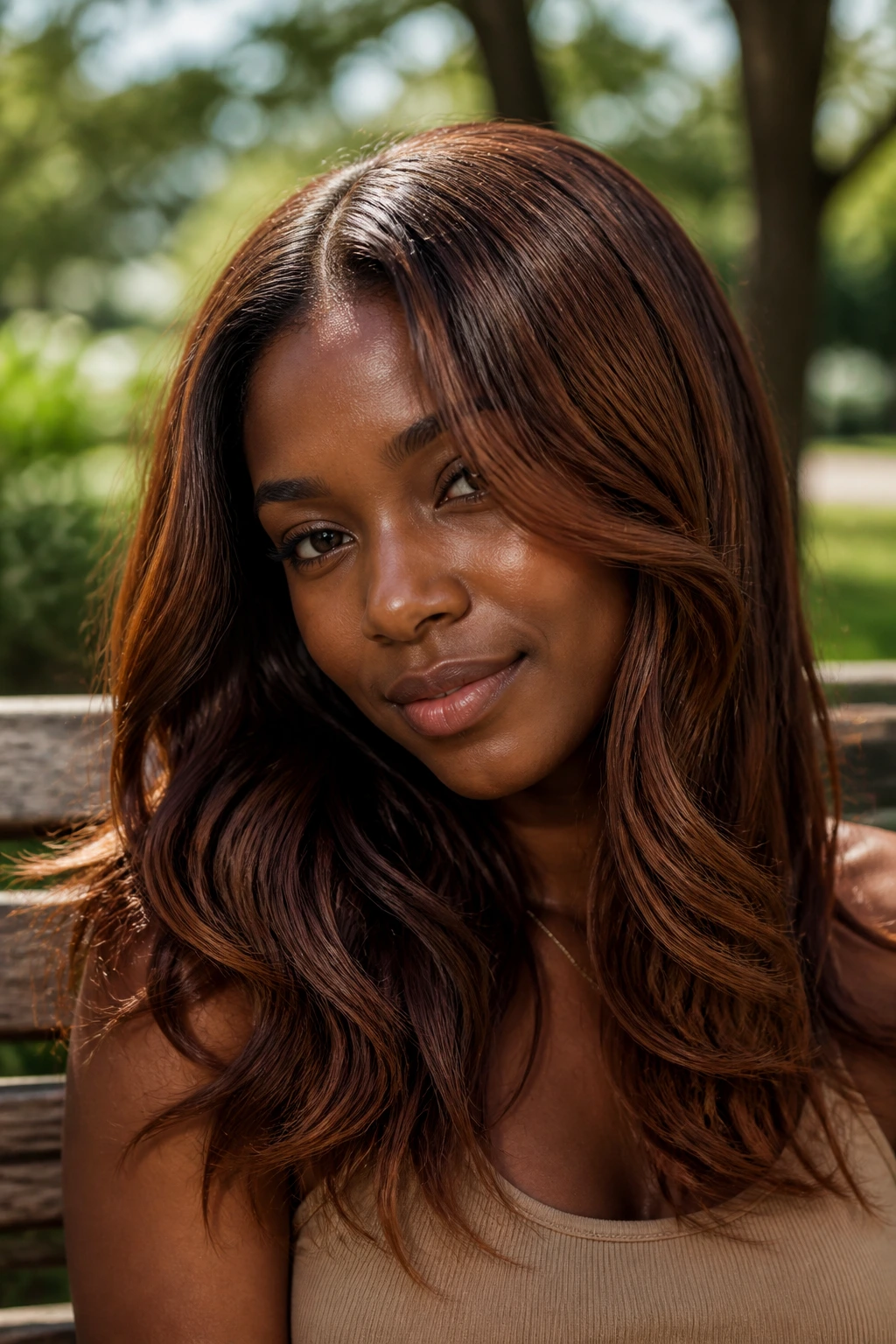
Copper brown is for anyone who wants warmth with a little more lift. It has the red-orange base of copper, but the brown keeps it grounded so it doesn’t tip into neon. On deep skin, that balance can be gorgeous, because the shade adds warmth without trying to compete with the complexion.
The trick with copper brown is keeping it dimensional. Flat copper can go one-note fast. A brown base with copper ribbons or a copper gloss over a brunette foundation usually looks better than one solid copper block. That’s especially true if your hair is curly or coily, because the bend in the strand will show the color in layers.
This shade does ask for maintenance. Copper fades faster than brown, and that first wash can take a little of the glow with it. A color-depositing conditioner made for red-brown tones helps keep the copper from looking washed out between appointments.
9. Mahogany for Deep, Wine-Red Warmth
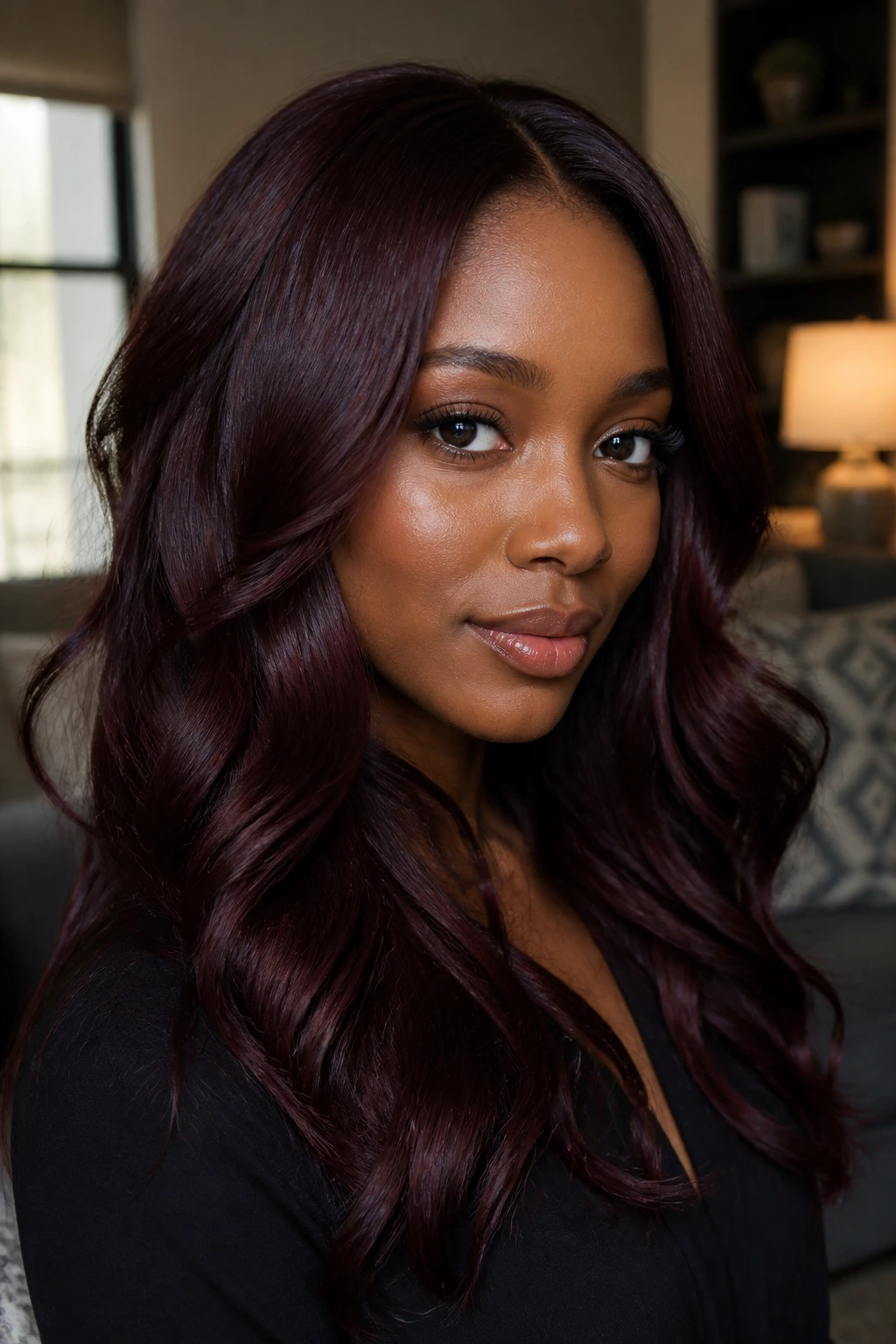
Mahogany is one of the most flattering reds for deep skin because it stays dark enough to feel wearable. It carries brown, red, and a little violet, which gives it that rich wood-tone look instead of a bright salon-red look. It’s the shade that makes people look twice without being loud.
This color is especially nice if you want a red family shade but do not want to bleach the hair to a pale base. Mahogany can sit on dark brown hair and still show up, which makes it a strong choice for first-time color clients. It also photographs with a lot of depth, because the red doesn’t disappear into the dark base.
If your undertone is warm, mahogany gives you a polished glow. If you’re cooler, the violet side keeps it from reading too orange. It’s one of those shades that looks expensive on both straight styles and fluffy curls, which is probably why it never goes away.
10. Burgundy With a Velvet Finish
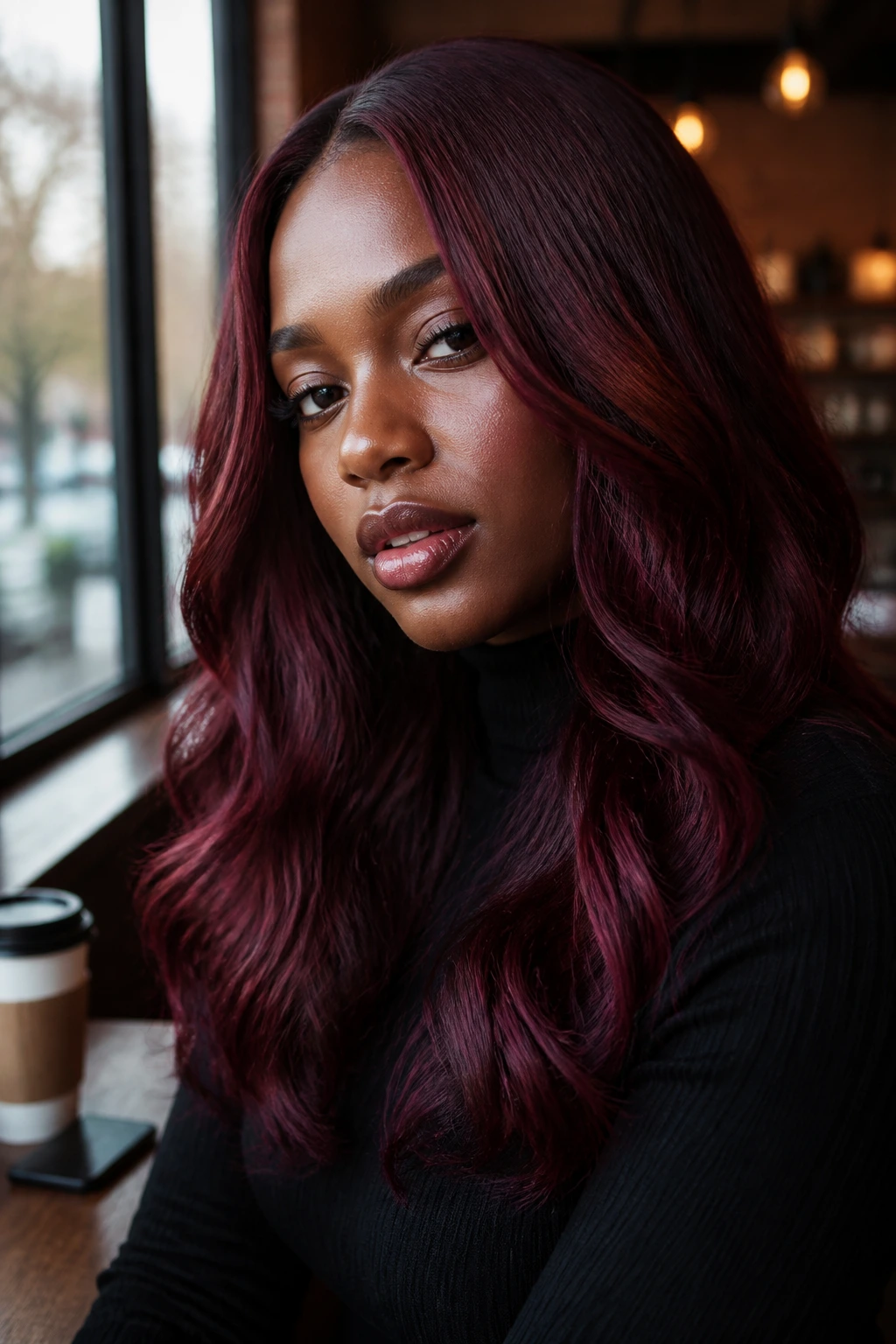
Burgundy can be tricky when it’s too bright, but the deeper version is one of the best classic colors for deep skin. The reason is simple: the wine note gives the hair life, and the dark base keeps it from looking disconnected from the complexion. The result is rich, not shouty.
What I like about burgundy on deeper skin is how the tone shifts under different light. Indoors, it can read like a deep brown with a red undertone. In sunlight, the wine color wakes up and gives the hair more depth. That dual personality is what keeps it from feeling flat.
Ask for a burgundy that leans brown or violet if you want a more wearable version. Full red burgundy can be stunning, but it needs a lot of upkeep. A velvet burgundy with a brown root shadow is the safer, softer route.
11. Wine Red That Stays Rich, Not Bright
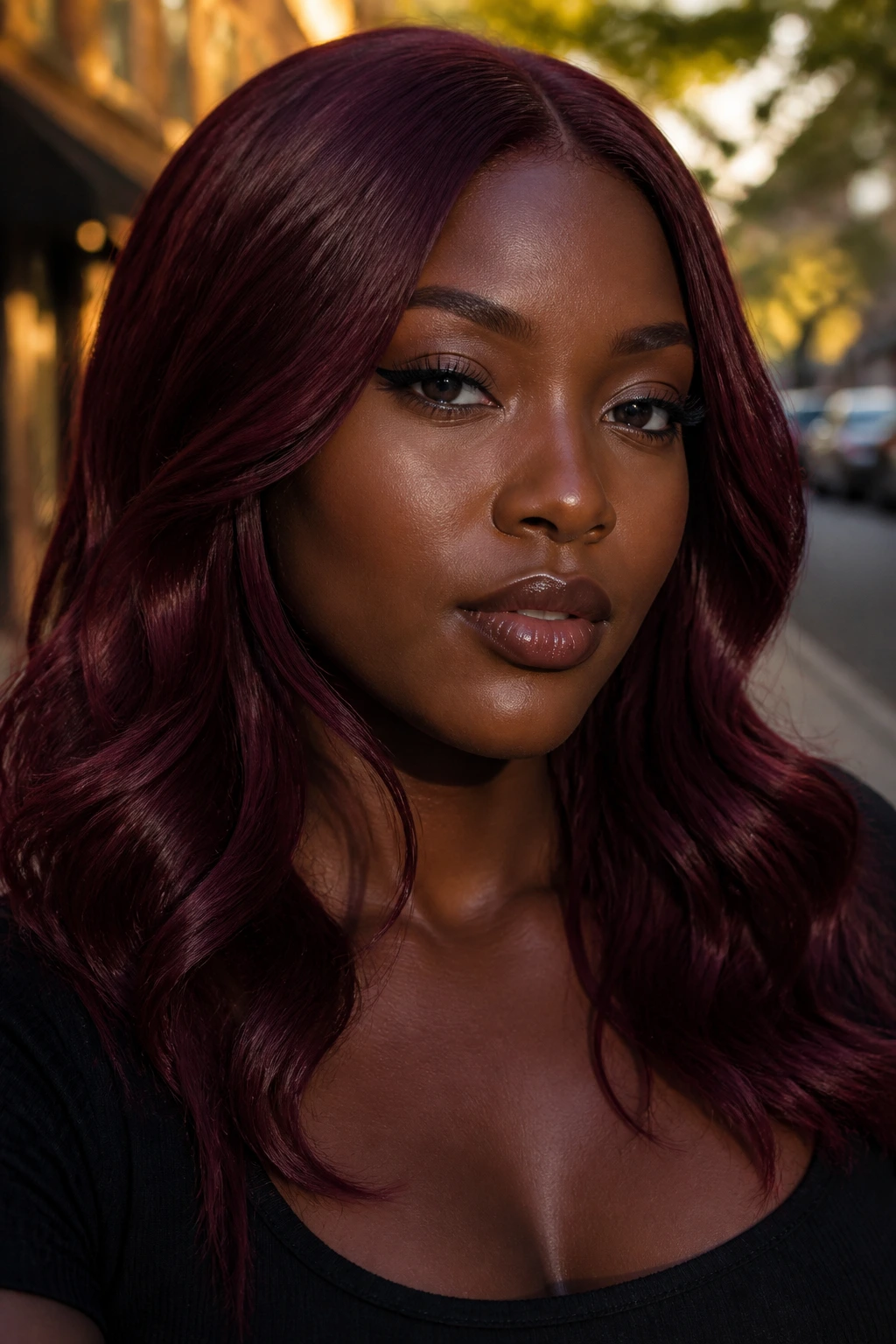
Wine red is burgundy’s slightly moodier cousin. It has a deeper, cooler red base that sits beautifully against deep skin, especially if you like color that feels elegant instead of flashy. The shade works because it borrows the depth of dark brown and the richness of red wine.
This is a strong choice for shoulder-length cuts, long layers, and styles that move. The red shows most on the surface, so the color seems to shift when the hair swings. That movement matters. On still hair, wine red can read almost brown; in motion, it gives off a deep jewel-tone edge.
If you’re nervous about red, this is a smart entry point. It’s softer than bright cherry and more forgiving as it fades. A gloss every few weeks helps keep the tone from slipping into dull plum, which is the one place this color can get sleepy.
12. Plum Brown for a Cool, Luxurious Tone
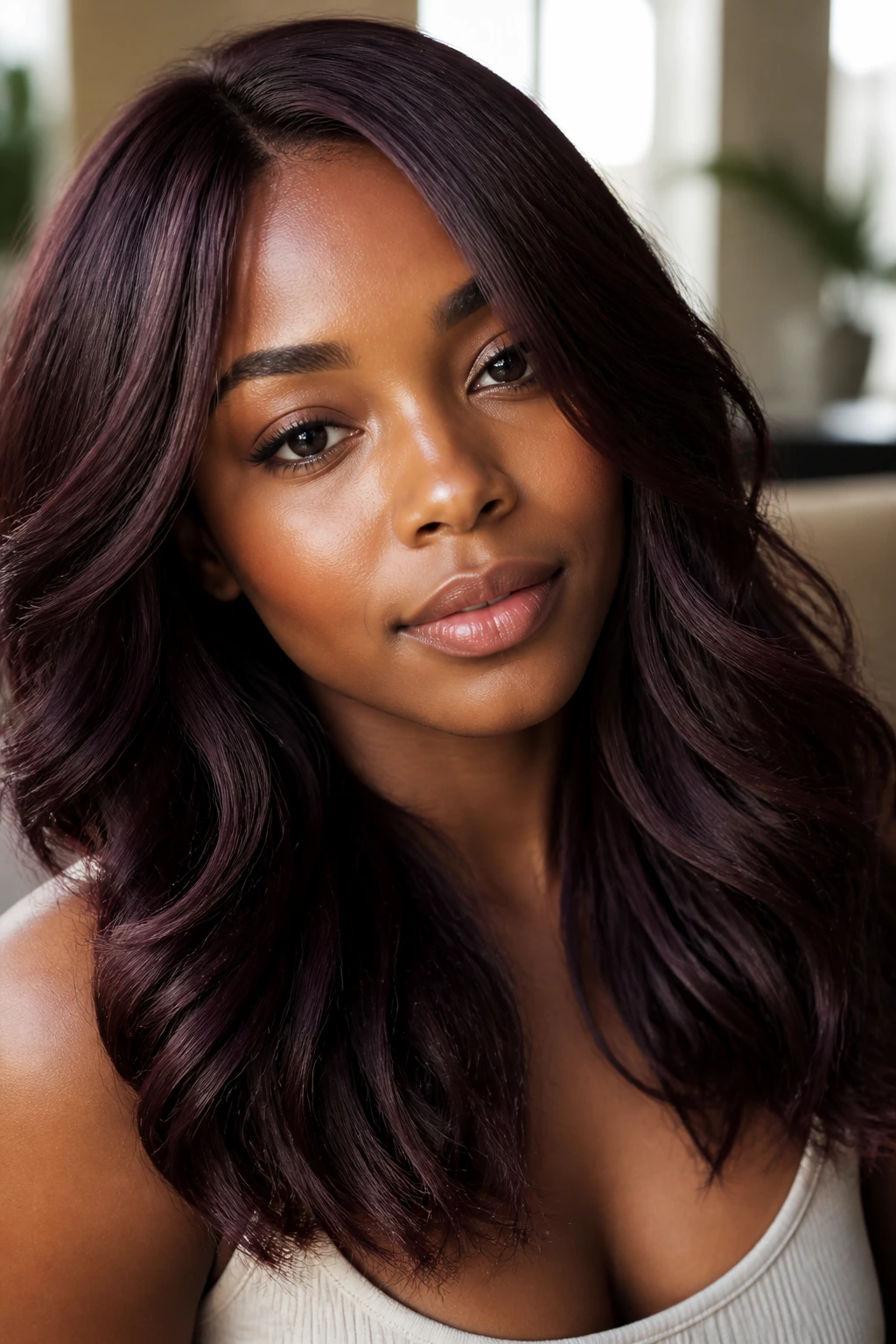
Plum brown sits in that lovely space where red meets violet and neither one wins completely. On deep skin, the violet side brings out cool undertones and gives the hair a quiet depth that looks especially good in low light. It’s a shade with a little mystery to it.
What to ask for:
- a brown base with plum or violet reflect
- a demi-permanent formula if you want soft fading
- a cool gloss to keep the tone from turning rusty
Plum brown is a good fit if you like red family colors but hate orange. That’s the big divider. Because the shade leans cool, it can look more refined than copper or auburn on skin that already has red or gold in it. It’s also a strong option for curly hair, where the violet cast adds depth between the coils.
13. Black Cherry With a Dark, Sweet Edge
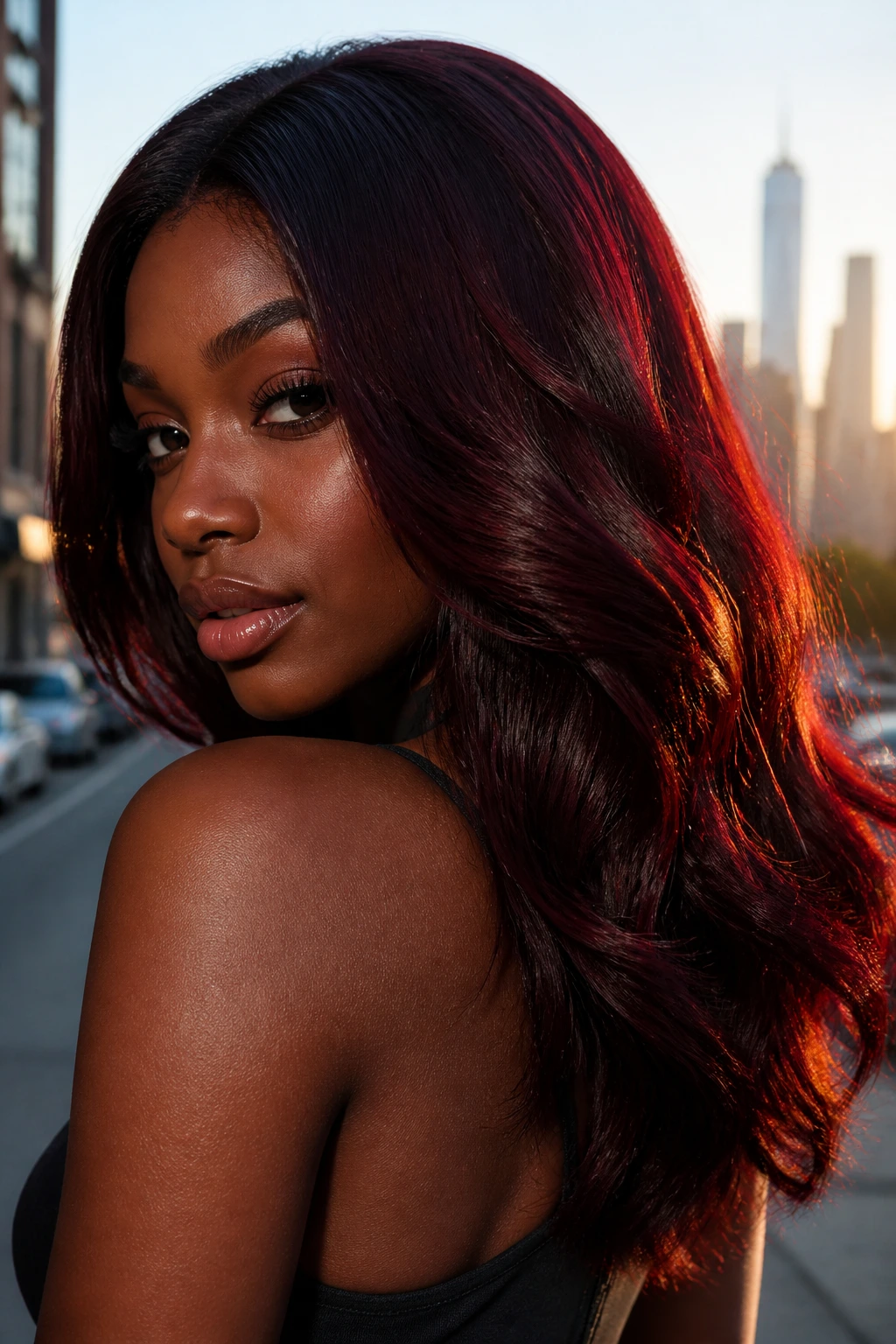
Black cherry is one of those shades that looks dark until it doesn’t. In the shade, it can seem almost black-brown; in sunlight, the cherry tones come forward and give the hair a deep red lift. On deep skin, that contrast is the whole appeal.
This color is best when you want movement without losing darkness. It’s a favorite for layered cuts and curly styles because the light catches the red on the outer curve of the hair. You get color, but you do not lose that grounded, rich base that makes the look work on deeper complexions.
A good black cherry should never drift into bright magenta unless that’s the point. The classic version stays grounded with a dark brunette base. If you want the shade to last, use a sulfate-free shampoo and keep the water cooler than you think you need. Red tones wash out faster than brown, and this one is no exception.
14. Caramel Balayage That Frames the Face
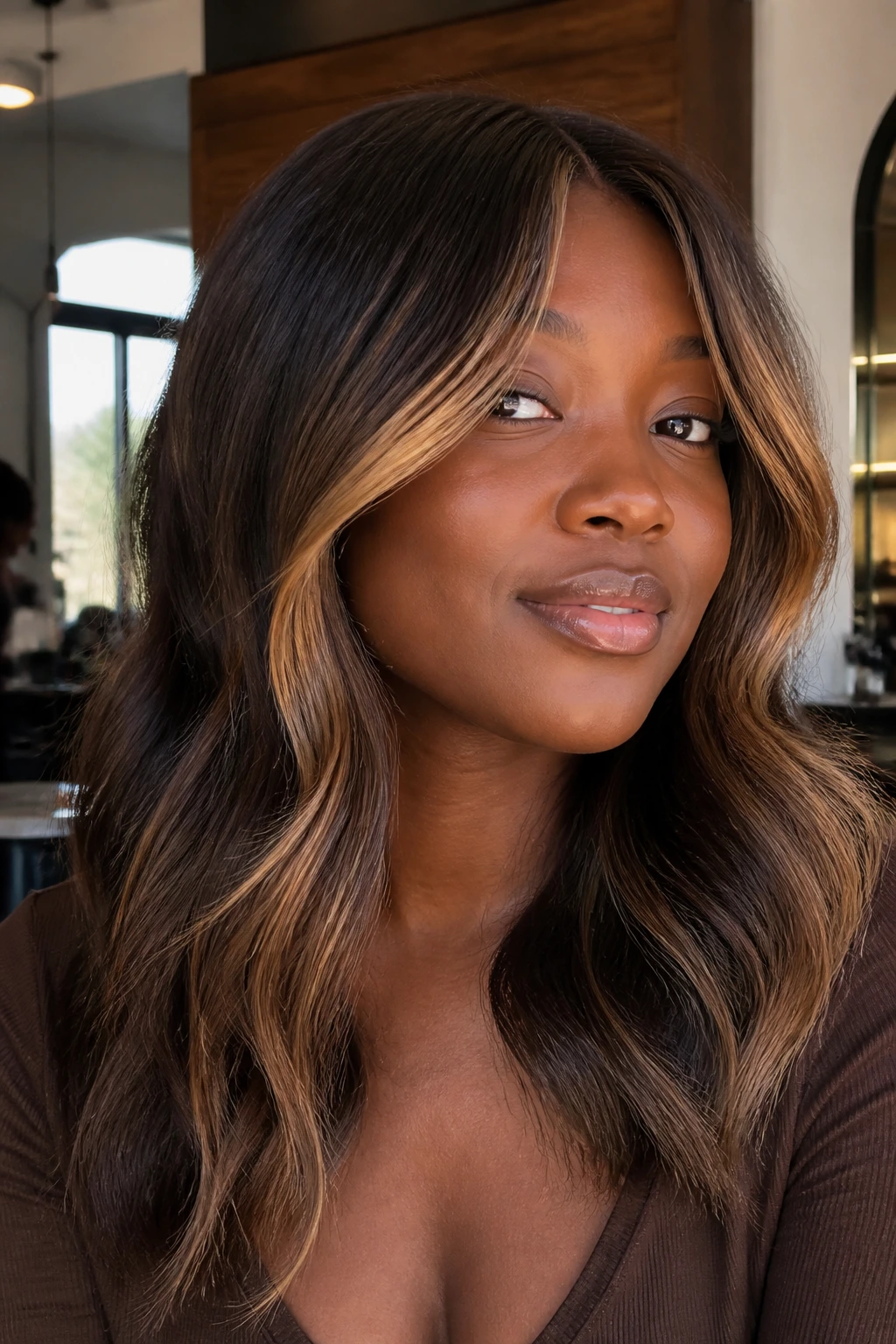
Caramel balayage is a classic for a reason: the contrast is warm, easy to read, and forgiving as it grows out. On deep skin, caramel ribbons can light up the face without flattening the natural depth of the complexion. The key is placement. Too many streaks and it looks stripey; too few and it vanishes.
Balayage gives you that hand-painted softness, which is why this idea works so well on waves, curls, and blowouts. The caramel should sit a level or two lighter than your base, not five levels lighter. That keeps the effect rich instead of harsh.
This is one of my favorite options for someone who wants lighter pieces but does not want a hard highlight line. Ask for a rooted caramel balayage with a soft melt at the mid-lengths. The root shadow matters. It keeps the grow-out calm and the color from looking chopped up.
15. Honey Brown Highlights for a Softer Glow
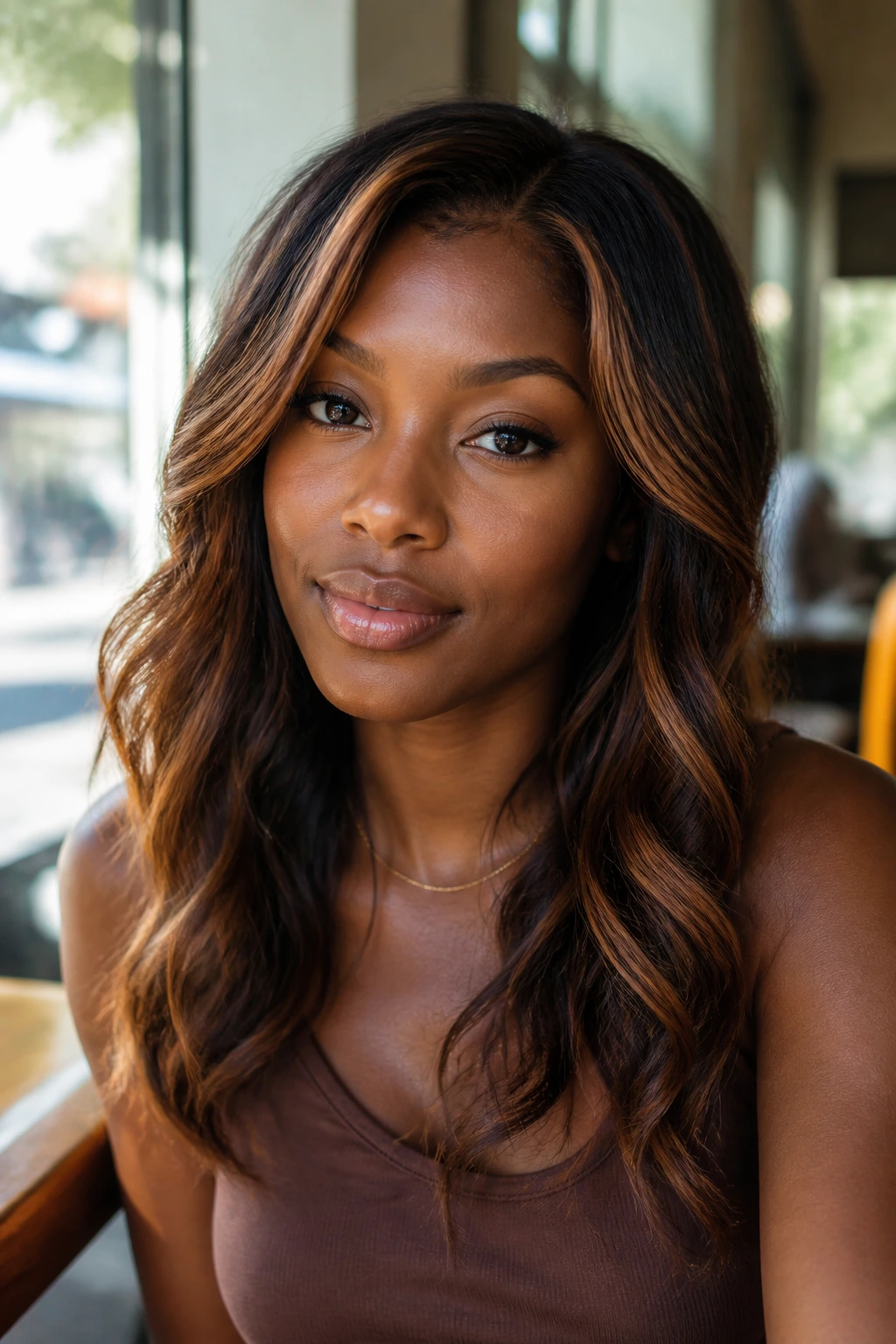
Honey brown highlights bring warmth in a gentler way than caramel. Think golden brown, not blonde. On deep skin, that softer gold can add brightness around the face and through the top layers without stealing the focus from the complexion.
The reason honey works is that it adds reflected light, not a loud stripe of color. On coily and curly hair, that subtle lift can make the texture look fuller because the highlights catch on the bends and create a little visual movement. On straight hair, they add a smooth ribboning effect that reads polished rather than dramatic.
If you want a classic highlight look, keep the placement fine. Thick highlight chunks are where this shade starts to feel dated. Fine honey pieces around the crown and temples are cleaner, easier to maintain, and much kinder to deep skin tones that already have a strong natural contrast.
16. Toffee Brown With a Creamy Finish
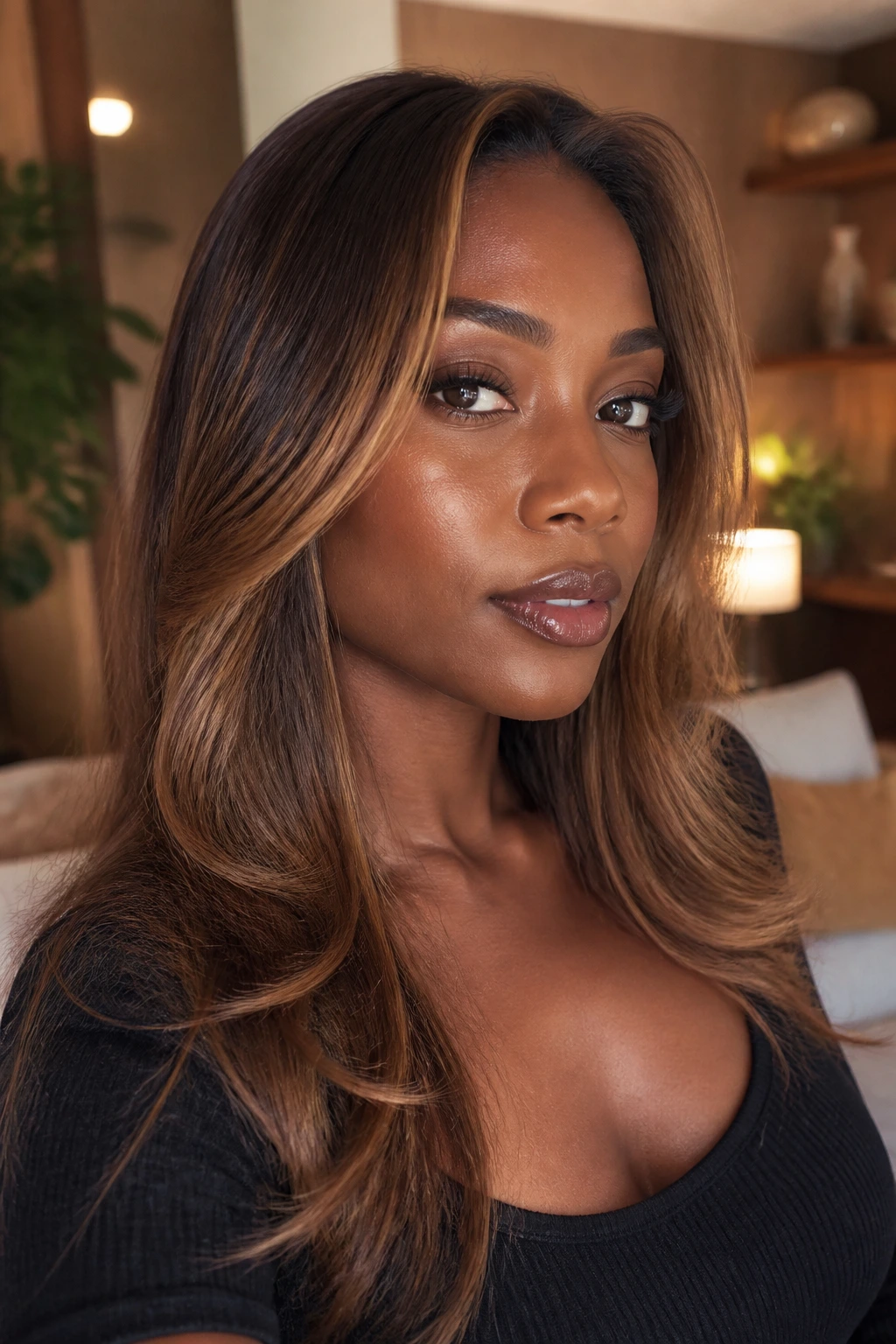
Toffee brown is warmer and creamier than espresso, but not as gold as honey. It lands in the middle of brunette and blonde, which makes it a nice option if you want dimension without going light-light. On deep skin, that medium warmth can soften the whole face.
This shade is useful when you want movement and light, especially if your natural hair is dark and you do not want to erase that base. Toffee works best as a ribbon, glaze, or subtle all-over brown with warm undertones. It can make layers look thicker because the lighter threads break up the mass of darker hair.
If your hair tends to feel heavy in one color, toffee solves that without pushing you into a high-maintenance blonde routine. Ask for toffee ribbons concentrated on the outer layers and around the part. That keeps the warmth where people see it first.
17. Golden Bronze With Sunlit Warmth
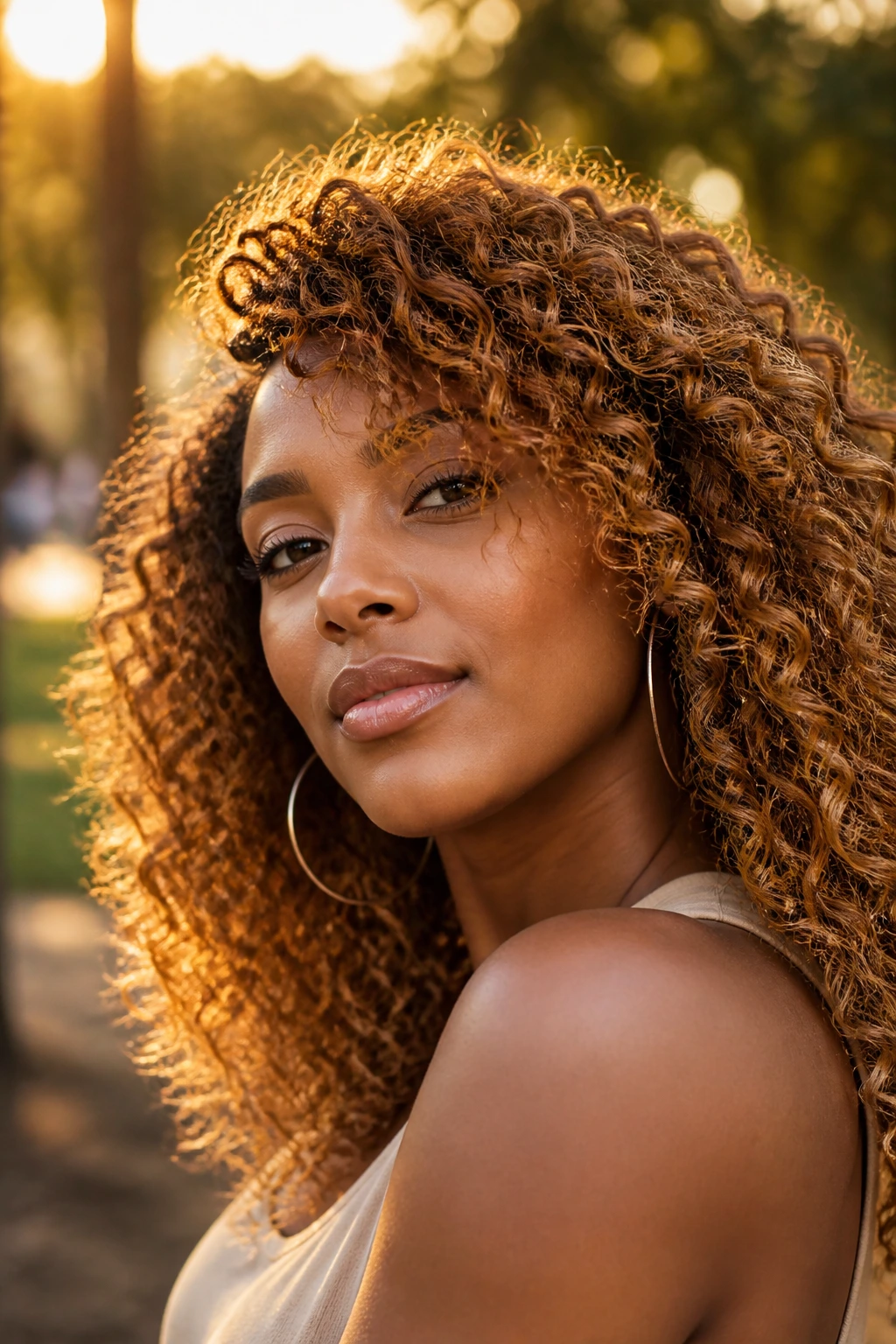
Golden bronze has a warm-metal feel that flatters deep skin in a way that’s hard to ignore. It combines gold and brown with a bit of copper, so the overall effect is luminous without being pale. On the right undertone, it can make the whole face look brighter.
This shade works especially well on textured hair because the different curls and bends pick up the bronze at different points. The color doesn’t need to be bright to be visible. It just needs enough warmth to reflect light when the hair moves.
If you want bronze to look classic instead of trendy, keep the base brown and let the gold come through in thin ribbons or a soft glaze. Too much gold can drift into brassy territory. A balanced bronze, though, has that sun-warmed look that keeps showing up in good color work for a reason.
18. Cinnamon Brunette With a Spiced Edge
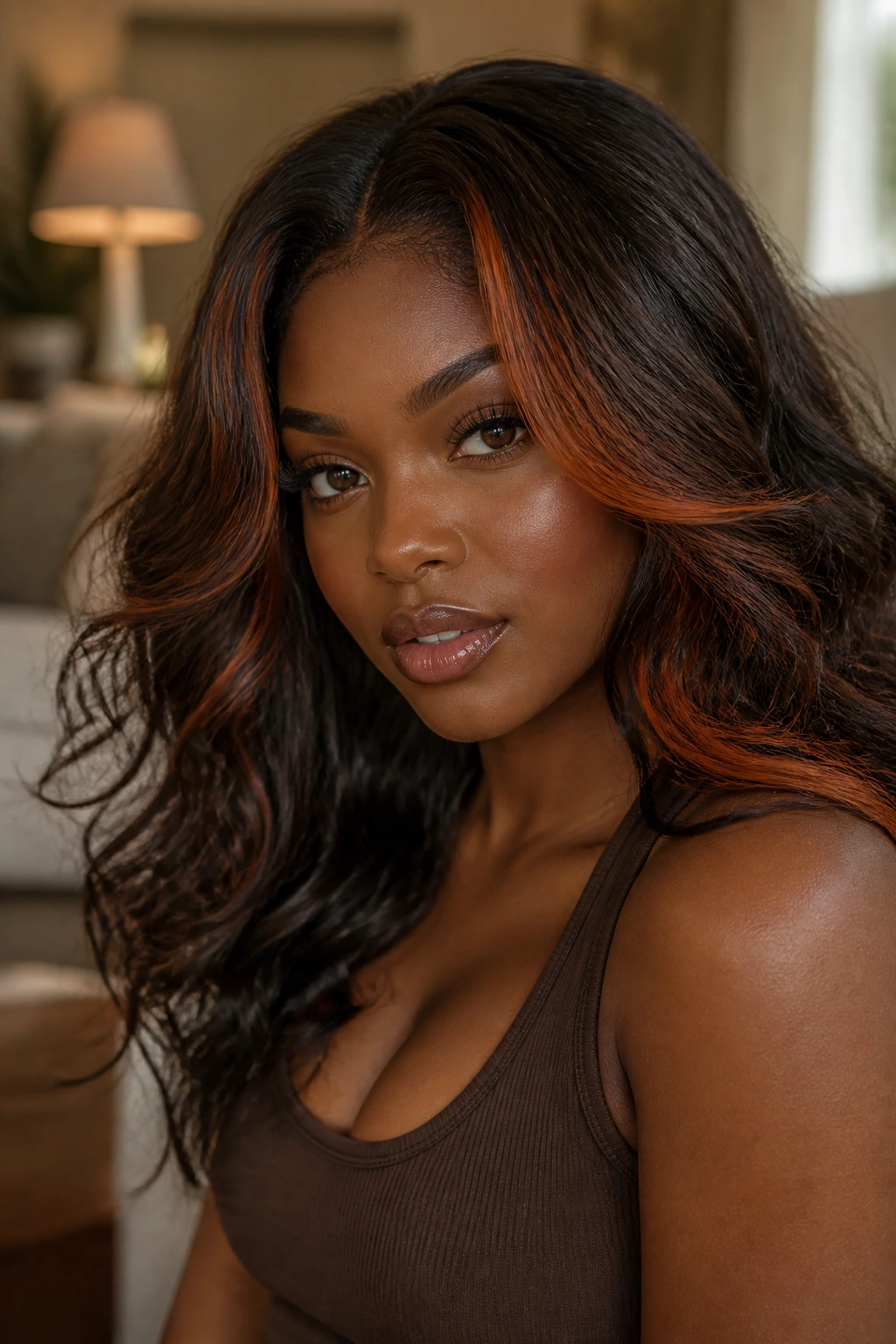
Cinnamon brunette is one of the easiest ways to bring warmth into a dark color without going red-heavy. It has a brown base touched with copper and spice, which makes it especially nice on deep skin that already carries warmth in the complexion. The shade feels alive even when the styling is simple.
It’s a smart pick for people who want a brunette color that doesn’t disappear in low light. Cinnamon gives the hair enough reflect that the shape stays visible, even on long, dark lengths. That matters. Dark hair can turn into one large shape fast, and a little spice breaks it up.
Ask for cinnamon if you want something between chestnut and copper. It’s softer than pure red tones and easier to live with than a bright auburn. On curls, it adds a little glow around the edges; on straight hair, it gives the surface a warmer finish.
19. Ash Brown for a Cooler, Smokier Look
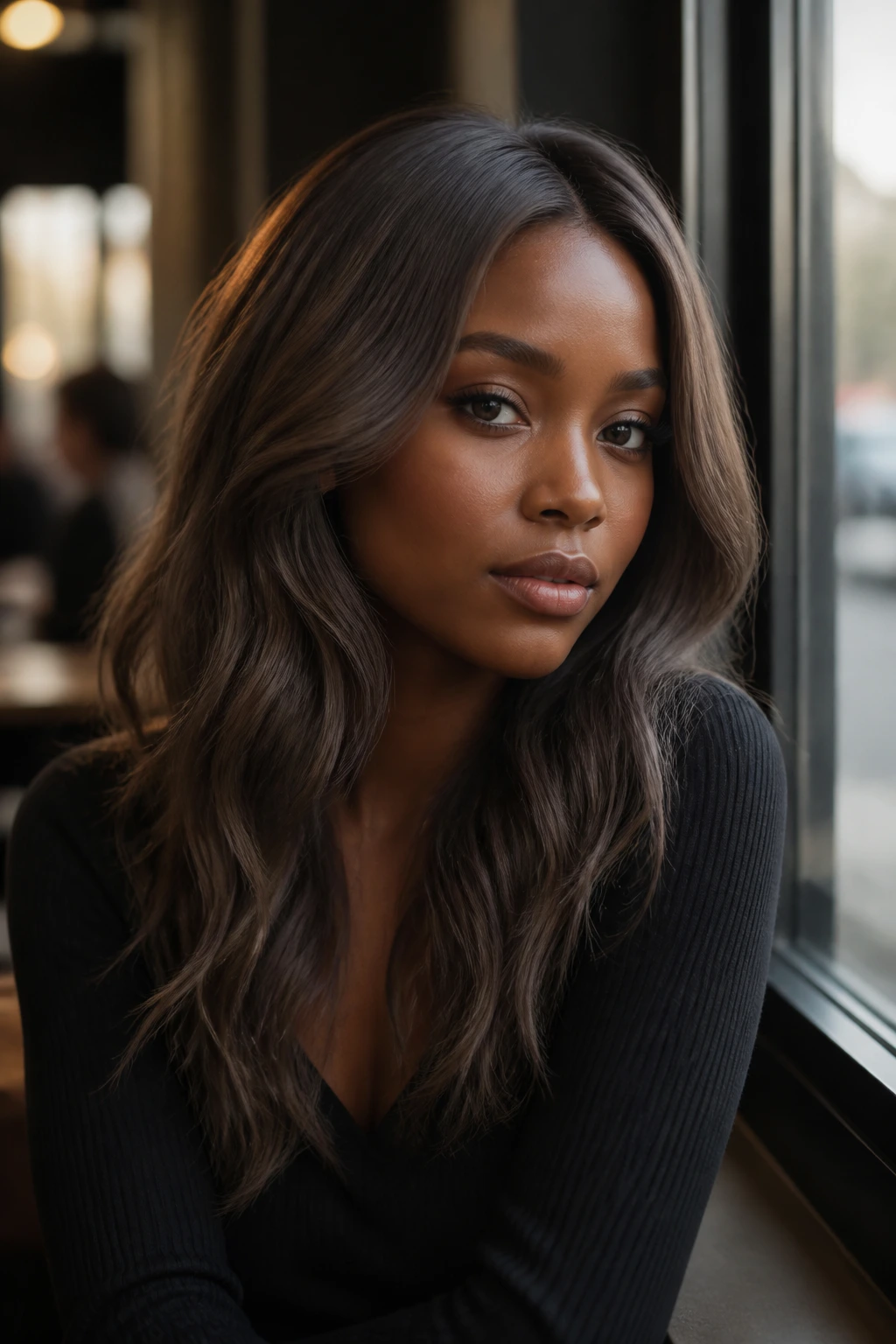
Ash brown is not for everyone, and that’s exactly why it deserves a place here. On the right deep skin tone — especially neutral or cool undertones — it can look sleek, modern, and a little smoky. The cool pigment keeps the shade from leaning orange, which is often the problem with boxed brunettes.
The catch is balance. Too much ash and the hair can look flat against warm skin. That’s why ash brown works best when it still has some depth in the root and just a cool veil through the lengths. It should look like a brunette with cooler air around it, not gray-brown mud.
If your hair pulls warm fast, ash brown can be a useful correction shade. It tones down brass and gives the color a more polished finish. Keep in mind that ash formulas usually fade faster than richer warm browns, so a cool-toned gloss or toner may be needed to keep the shade clean.
20. Smoky Mushroom Brown for Soft Cool Contrast
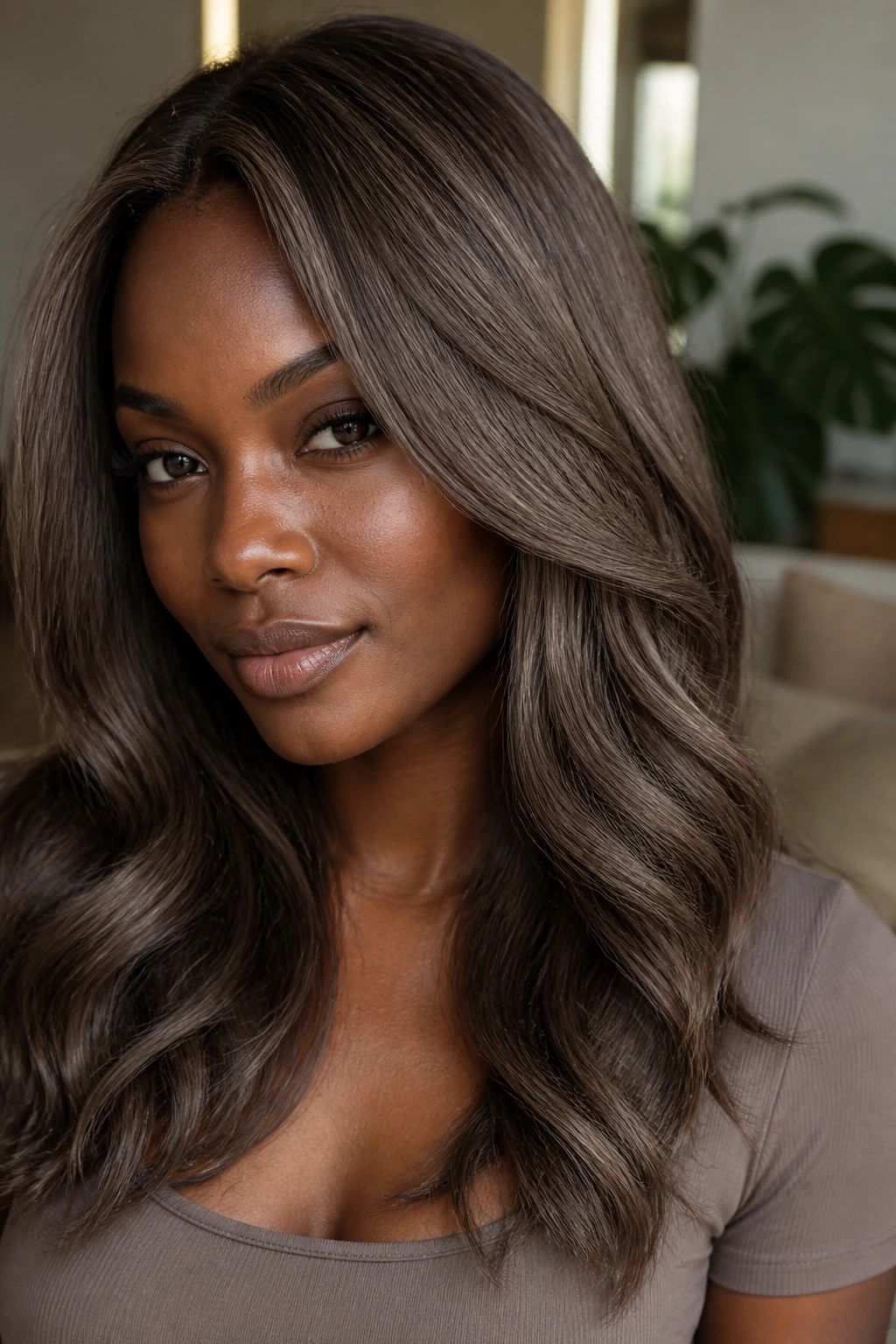
Smoky mushroom brown is the quieter cousin of ash brown. It sits in a muted brown family with taupe and cool-beige notes, which makes it read soft instead of icy. On deep skin, that contrast can be especially pretty if you want the hair to feel calm and refined rather than warm.
Why it stands out:
- it softens brass without making hair look gray
- it works on layered cuts where the color can shift between cool brown and taupe
- it pairs well with naturally dark roots, so regrowth is less dramatic
This shade is best when you want dimension with a cooler edge. It’s also a good choice for people who like low-key color and do not want the red or copper family. The one thing to watch: if your hair is porous, mushroom tones can grab too dark in the ends. A good colorist will control that with placement and timing.
21. Rooted Bronde With Soft Grow-Out
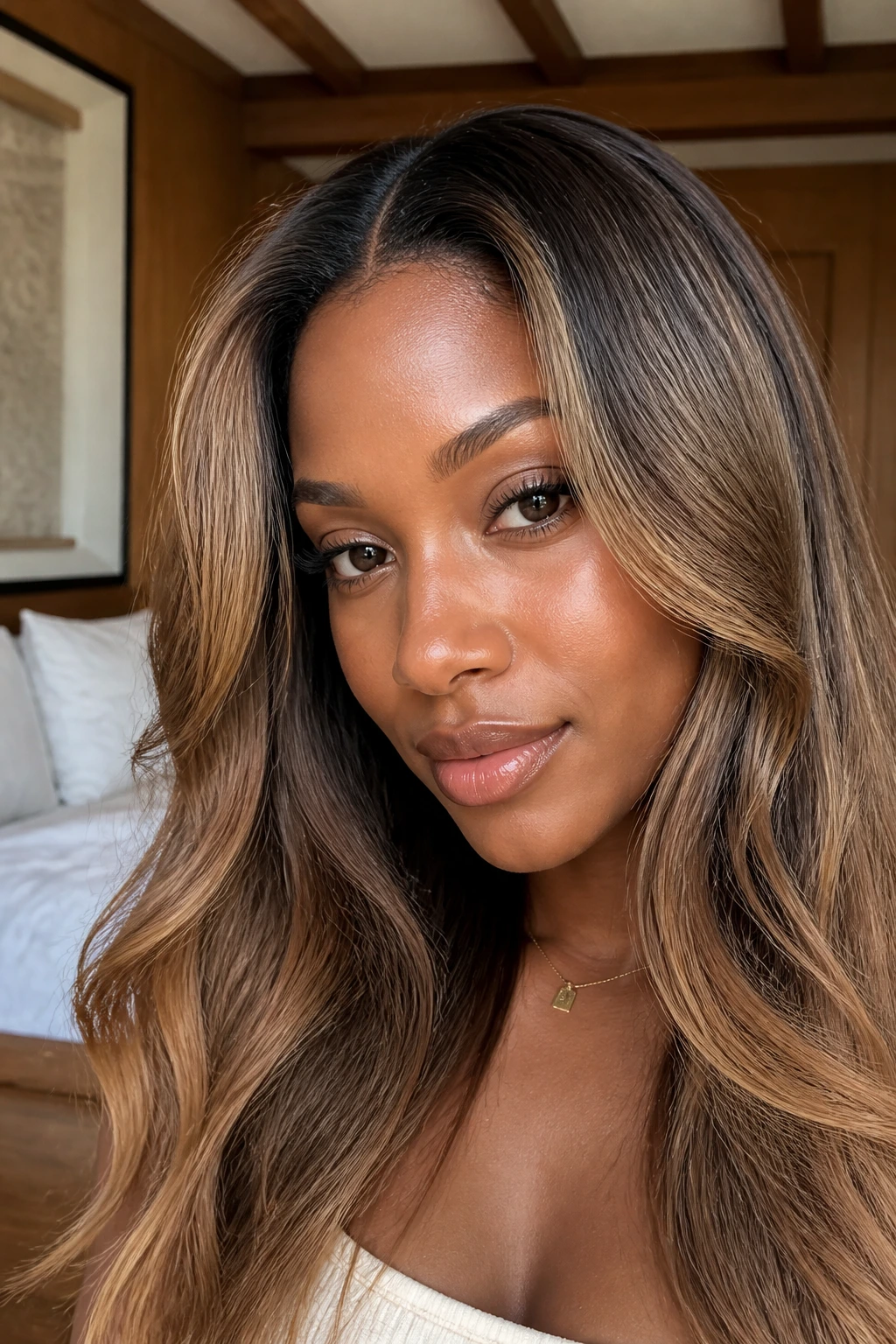
Rooted bronde is the practical shade that still looks finished. The dark root gives the color a clean base, while the brown-blonde blend through the lengths keeps the hair from feeling heavy. On deep skin, that rooted contrast keeps the look readable and stops the lighter pieces from floating awkwardly.
This is a strong option if you want lighter dimension but hate obvious regrowth. The root shadow does the work. It makes the grow-out softer and gives you time between salon visits. On curls, the lighter ribbons show up in the outer loops; on straight hair, they create a smoother sweep.
Ask for a deep root with warm bronde ribbons, not stark blonde. That one detail makes the whole look more believable on deep skin. The color should still feel connected to the base, not pasted on top of it.
22. Face-Framing Money Pieces That Change the Whole Mood
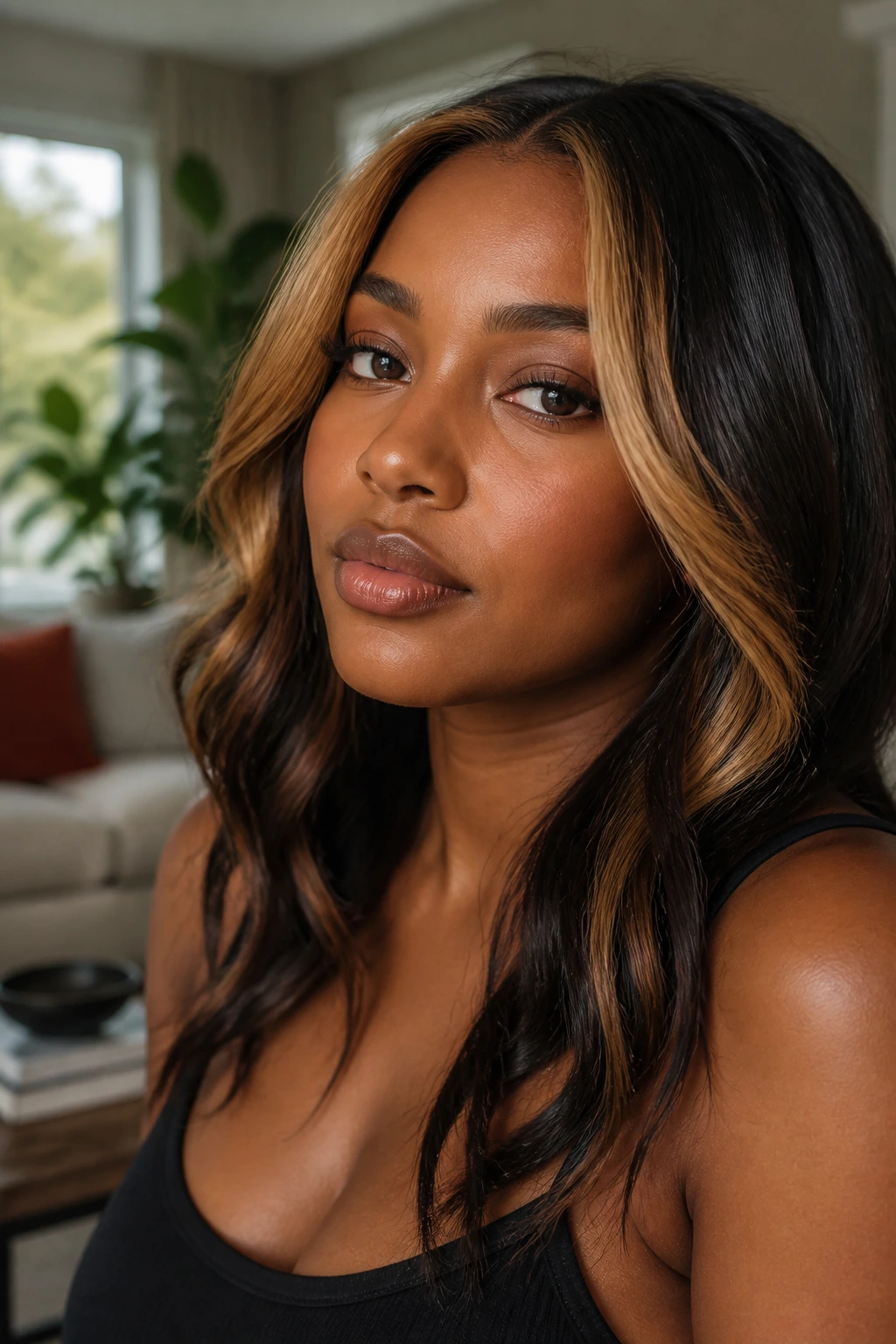
A face-framing money piece can do more than a full color change if you want a smaller shift. A few warm caramel, honey, or bronze pieces around the front can pull light toward the face and make deep skin glow without touching the entire head. That’s the appeal: a small move with a visible effect.
The money piece works best when it respects the haircut. On layered styles, it can blend into the front shape. On blunt cuts, it gives sharper contrast. If you keep the rest of the hair dark — espresso, chocolate, or blue-black — the lighter front pieces read with even more clarity.
This is a good approach when you want a classic look with less maintenance. It also works for people who are color-curious but not ready to commit to all-over lightness. Keep the pieces warm and fine if you want a softer result; go a little thicker if you want the front to pop more.
23. Copper Ombré for a Slow Fade of Warmth
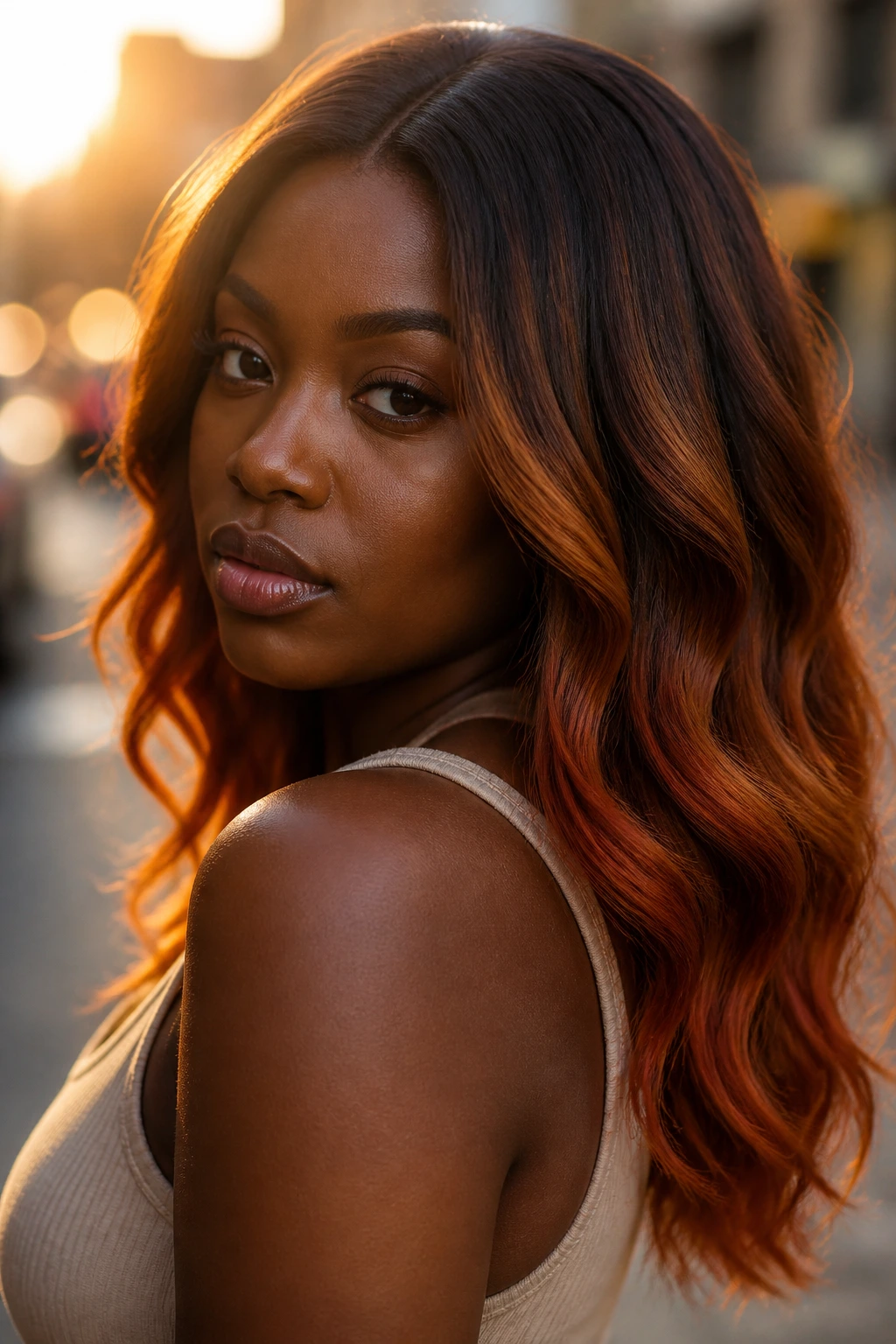
Copper ombré takes the warmth of copper and lets it move from dark to light more gradually. On deep skin, that fade can be striking because the eye follows the color from a rich brown base into a brighter copper end. The transition matters more than the brightness.
It’s a good choice if you want something classic with movement, especially on long hair. The darker root keeps the look grounded, while the copper ends catch light and give the style some edge. On curls, the ombré sits in rings and layers, which can look gorgeous if the transition is smooth.
This shade usually needs pre-lightening, so it’s not the lowest-maintenance option in the bunch. Still, when the fade is clean, it looks intentional for a long stretch. Ask for a brown-to-copper melt rather than a hard line, or the whole thing can start looking choppy fast.
24. Chocolate Cherry for Deep, Dimensional Red
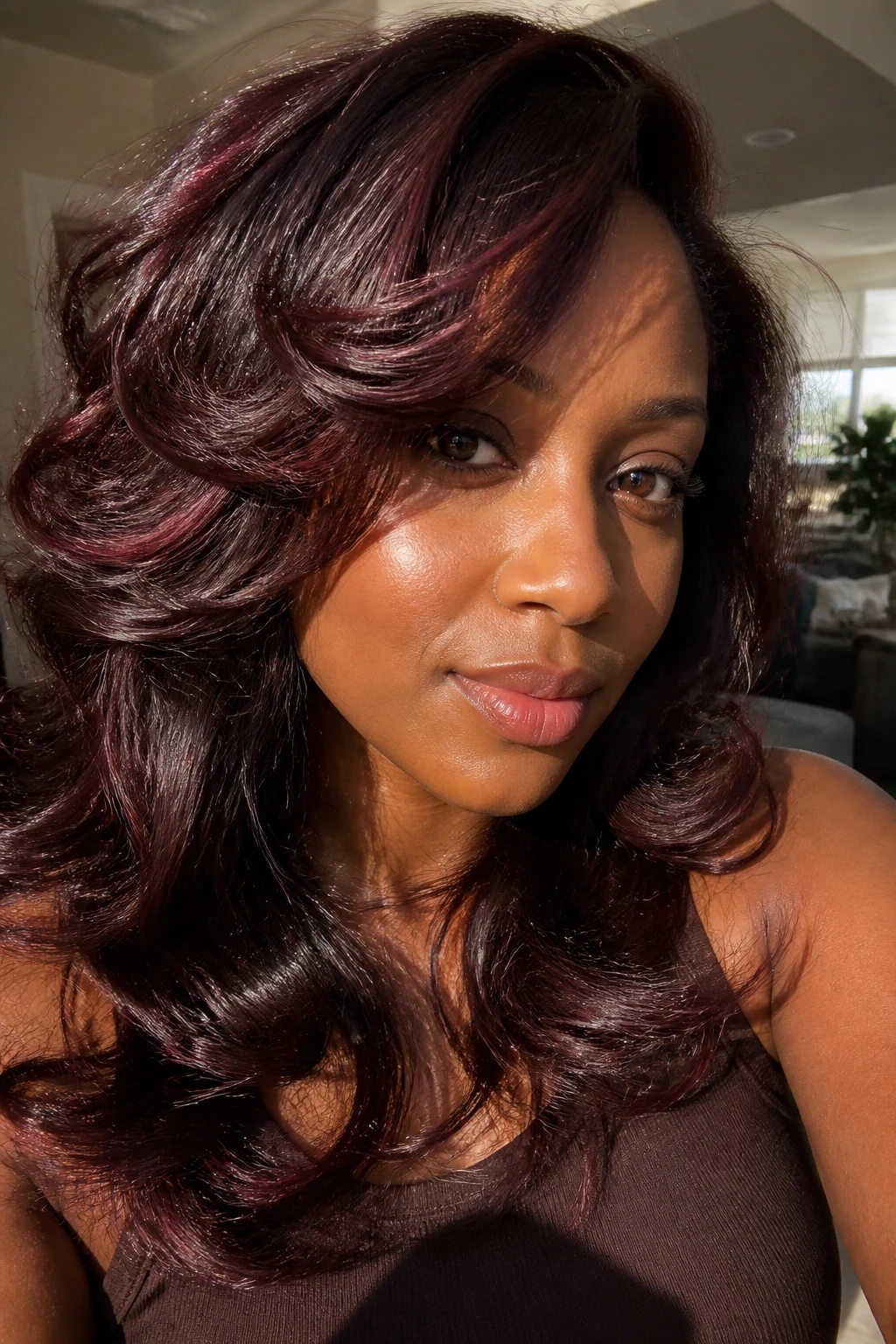
Chocolate cherry is one of the easiest reds to wear on deep skin because the brunette base keeps it grounded. The cherry note adds a deep red sheen, but the chocolate keeps it from becoming too bright or too orange. That combination makes the shade look rich in sunlight and still believable indoors.
I like this one on layered cuts and curls because the red sits in the movement of the hair rather than sitting on top like a sticker. It’s also a good choice if you already love brunette shades and want just enough red to change the mood. The result feels warm, but not sugary.
If you’ve had trouble with reds fading too fast, chocolate cherry is more forgiving than a pure red or bright copper. It still needs tone refreshes, though. A red-brown gloss every few weeks helps keep the cherry note alive.
25. Warm Espresso Gloss for the Easiest Clean Finish
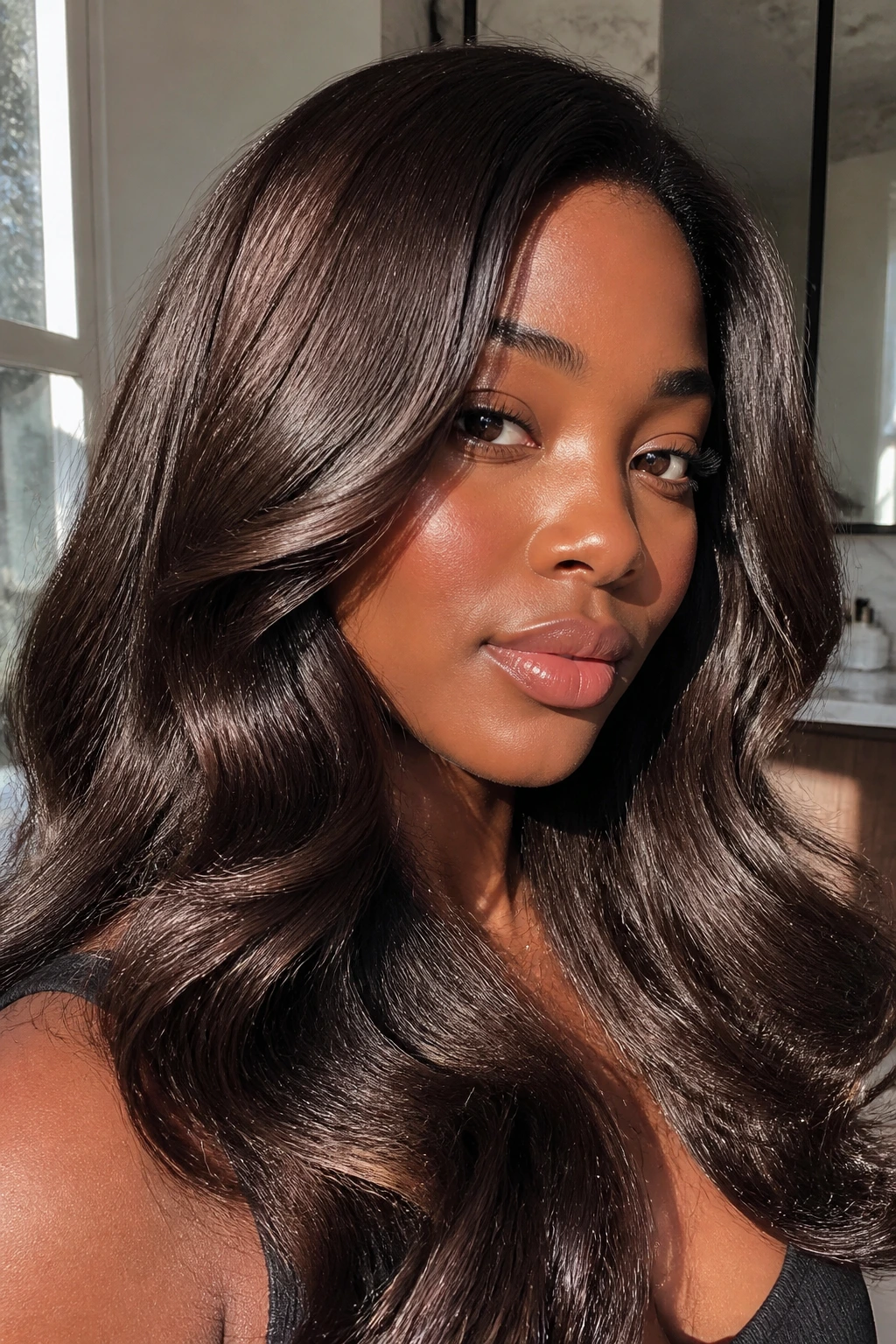
Warm espresso gloss is the shade for people who want the hair to look healthier, deeper, and more polished without making a loud color statement. It keeps the espresso base, then adds a warm brown gloss that softens the edge and gives the surface a reflective finish. On deep skin, that can look incredibly clean.
This is the one I would point to if you like the idea of color but mostly want your hair to look shiny and expensive in the old sense of the word: dense, rich, and cared for. It works on natural hair, relaxed hair, silk presses, and blown-out styles because it does not fight the texture. It just deepens what’s already there.
If you are nervous about a big change, start here. It gives you the feel of colored hair without a dramatic grow-out line. And if you later want more warmth, you can move into caramel, chestnut, or bronze without starting from zero.
Why Rich Color Reads So Well Against Deep Skin
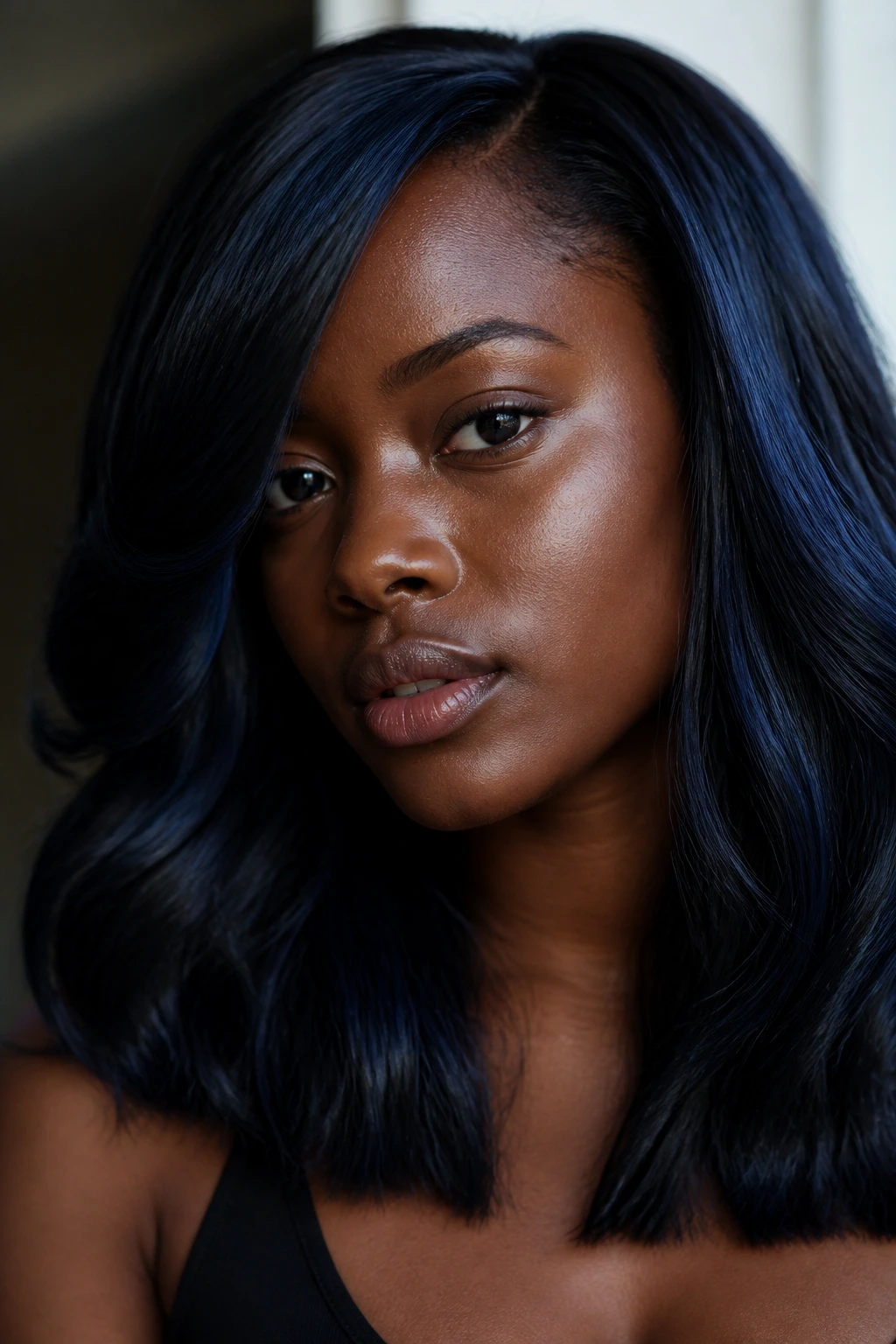
Deep skin tones give classic hair color more room to breathe. A lot of lighter complexions rely on hair color for contrast, but deep skin already has built-in richness, so the best shade choices are the ones that sharpen that depth instead of flattening it. That is why a true blue-black can look cleaner than a soft black-brown, and why a warm mahogany can look fuller than a bright, one-note red.
Undertone matters more than people think. Golden and olive complexions usually handle caramel, copper, bronze, and chestnut with less effort. Cooler or neutral complexions can wear blue-black, ash brown, plum, and burgundy without the shade drifting too orange or too muddy. The exact same color can look sharp on one person and tired on another, and the reason is usually undertone, not the color itself.
Finish matters too. A dark shade with a rough surface can look dull fast, while the same color with gloss reads polished and deliberate. That’s why so many good colorists talk about shine almost as much as pigment. On deep skin, shine is not decoration. It is part of the color story.
The Tools That Make Color Day Easier
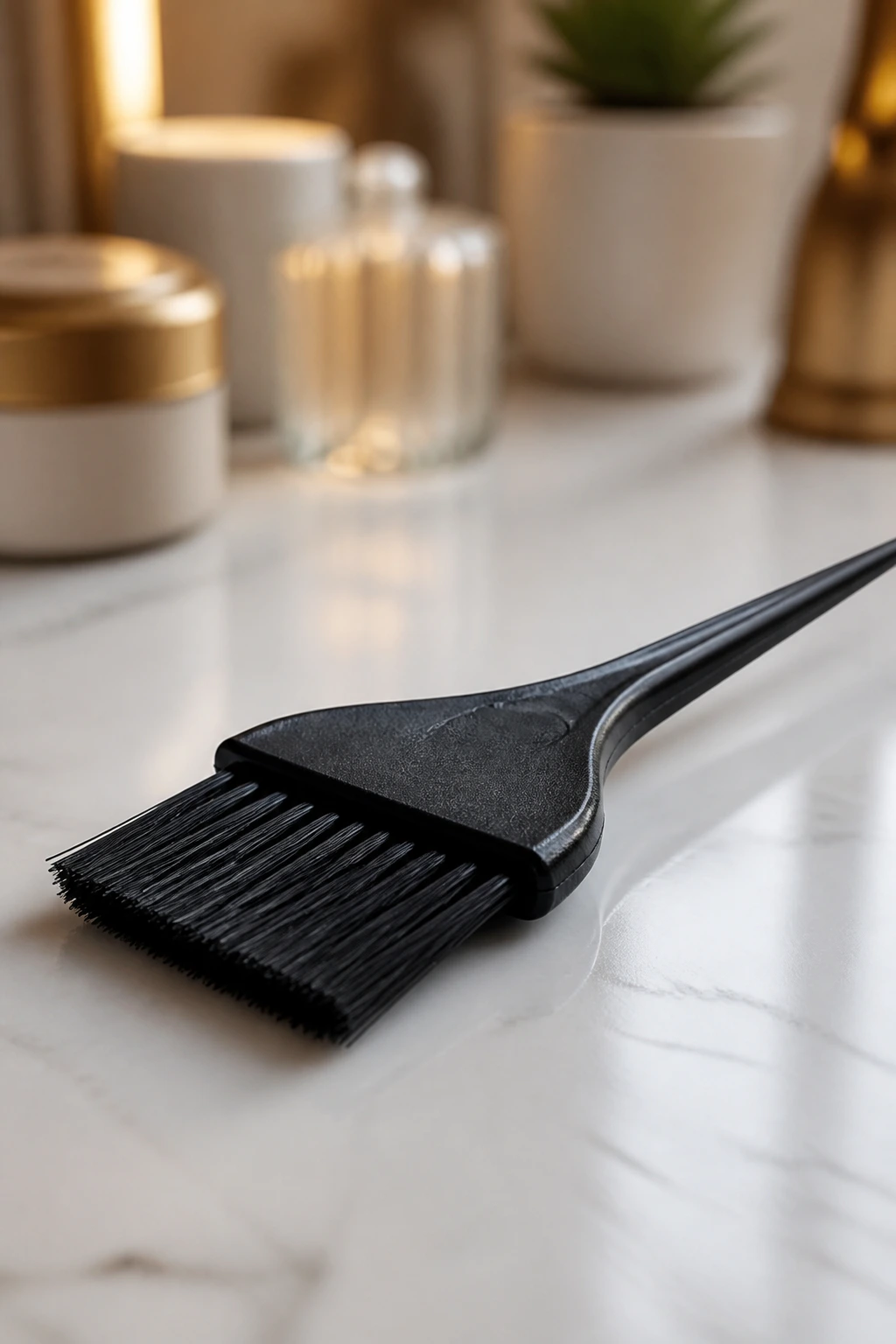
If you’re doing color at home or even just preparing for a salon visit, a few tools save a lot of mess.
- Tint brush and mixing bowl: Needed for clean section-by-section application and more even saturation.
- Sectioning clips: Keep thick curls, coils, or long hair separated so the color doesn’t get patchy.
- Gloves: Non-negotiable for red, brown, and black dyes; stains show fast.
- Old towel or salon cape: Protects the neck and shoulders, especially with dark formulas.
- Wide-tooth comb: Helps distribute demi-permanent color or gloss without ripping through textured hair.
- Timer: Color that sits 5-10 minutes too long can turn from rich to murky, especially on porous ends.
- Petroleum jelly or barrier cream: A thin line around the hairline keeps dark dye off the skin.
- Hand mirror: Worth it for checking the back and nape, which are easy to miss.
- Color-safe shampoo and conditioner: Keeps reds, coppers, and glossed brunettes from fading too fast.
- Plastic processing cap: Helps keep heat in and prevents dripping on the neck.
How to Choose the Right Shade Without Guessing
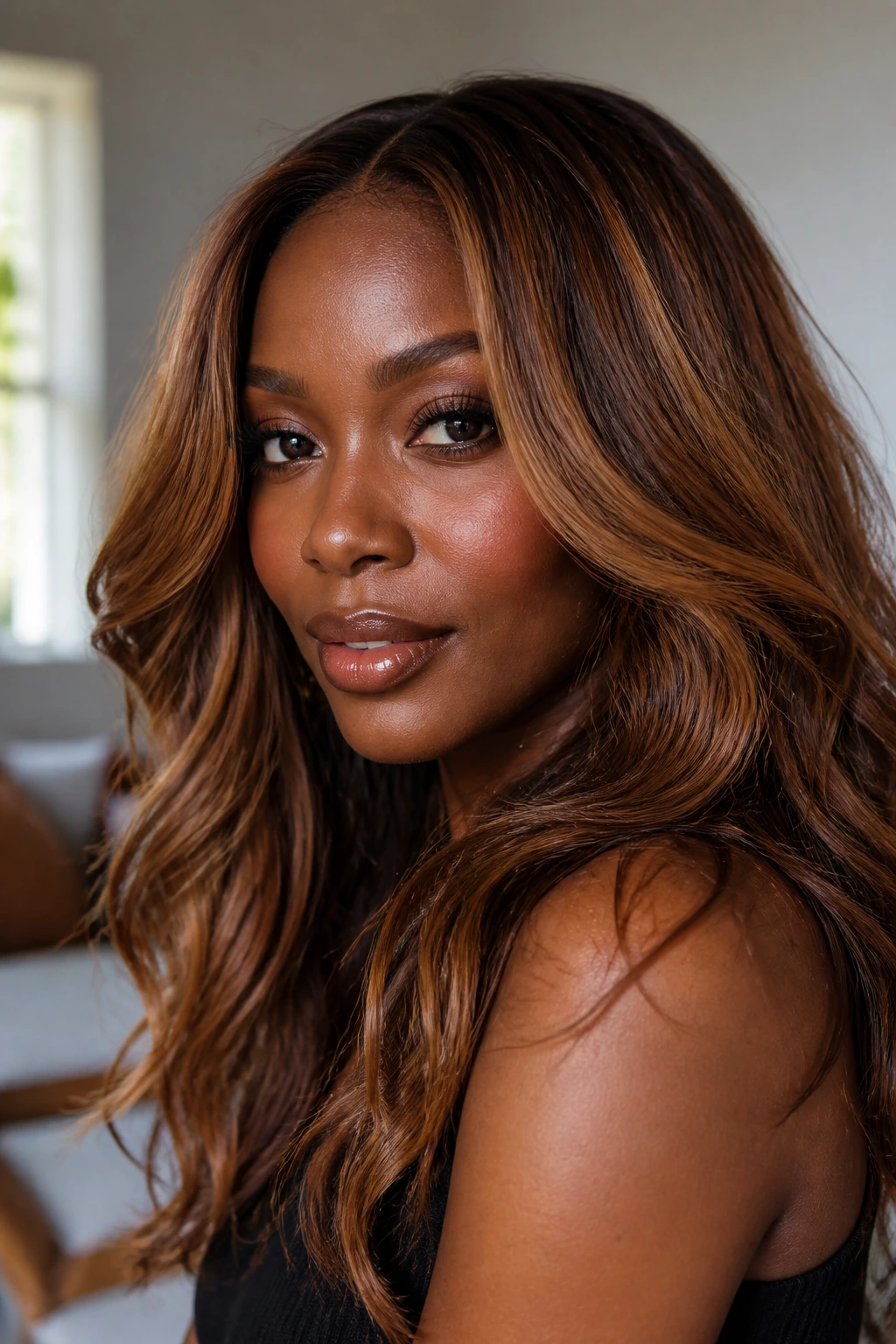
The smartest way to pick from hair color ideas for deep skin tones is to start with level, then move to undertone. Level tells you how dark or light the hair should be. Undertone tells you whether the color should lean warm, cool, or neutral. If you skip that second part, you get the common problem of hair that is technically the right shade but somehow still looks off.
A useful rule: if you want the least maintenance, stay close to your natural depth and use gloss, shadow root, or subtle ribbons. If you want a visible change, move one to three levels lighter or darker, not six. The bigger the jump, the more likely the grow-out line will ask for attention.
Bring photos, but bring them in real light if you can. Screens lie. A caramel balayage on a filtered photo can look golden-brown in one image and full blonde in another. A colorist needs to see the actual tone you like — the warmth, the depth, the shine — not the app filter sitting on top of it.
How to Wear the Finished Color So It Reads Cleanly
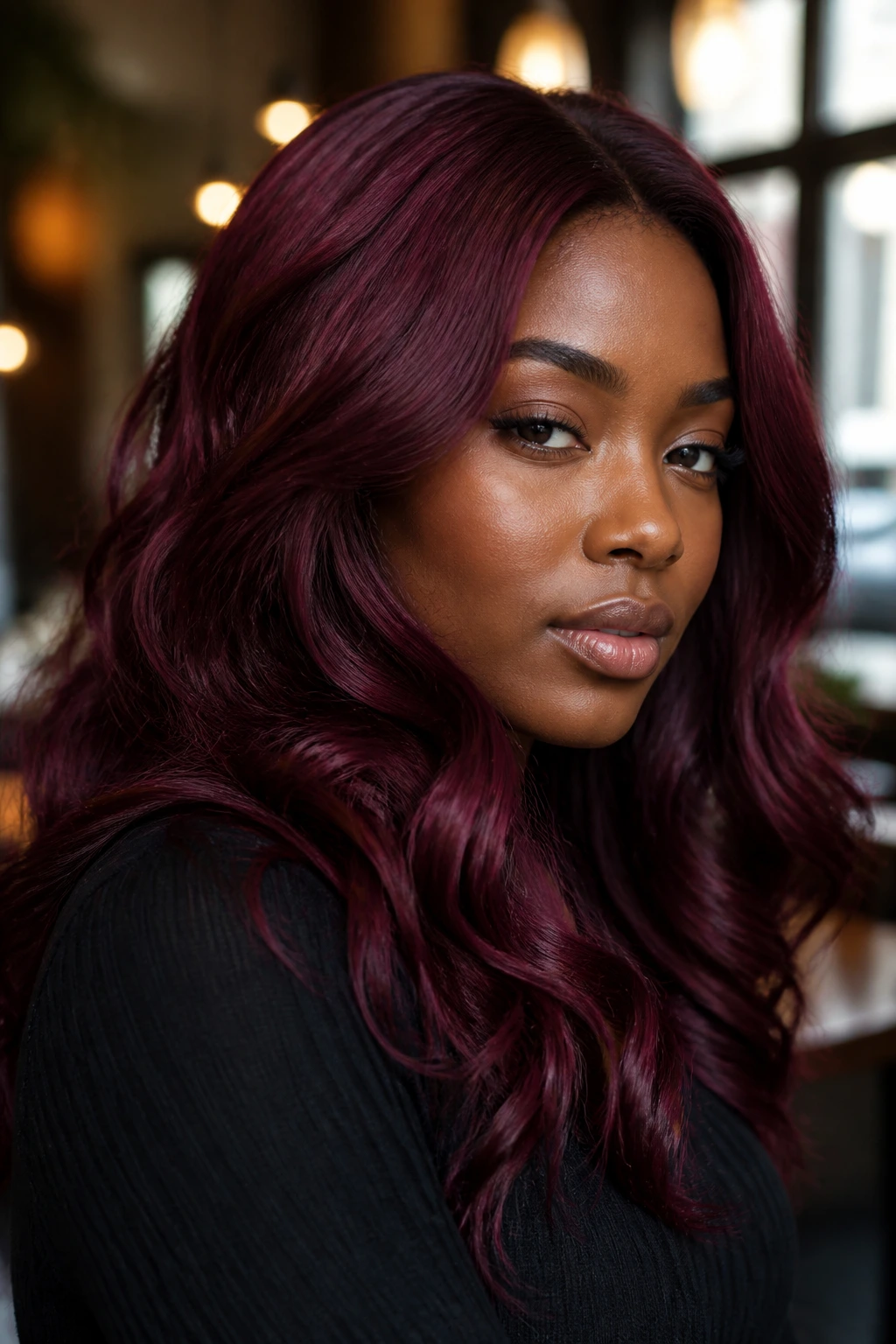
The same shade can look softer or sharper depending on how you style it.
Parting: A deep side part adds drama to dark shades like jet black, espresso, and blue-black. A center part makes caramel ribbons and money pieces read more modern and more open around the face.
Finish: Sleek styles make dark colors look almost liquid. Softer curls and twist-outs let the undertones show through, which is exactly what you want with burgundy, copper, or chocolate cherry.
Makeup: Warm browns, terracotta blush, berry lips, and gold highlighter all make copper, mahogany, and bronze tones make sense on the face. With ash brown or blue-black, a cooler lip or a neutral matte eye keeps the whole look from fighting itself.
Wardrobe: Cream, white, rust, emerald, cobalt, and black all give deep hair color room to breathe. Very dark clothes can work too, but a touch of contrast near the neckline helps the shade show up.
Extra Shine, Depth, and Tone Tricks
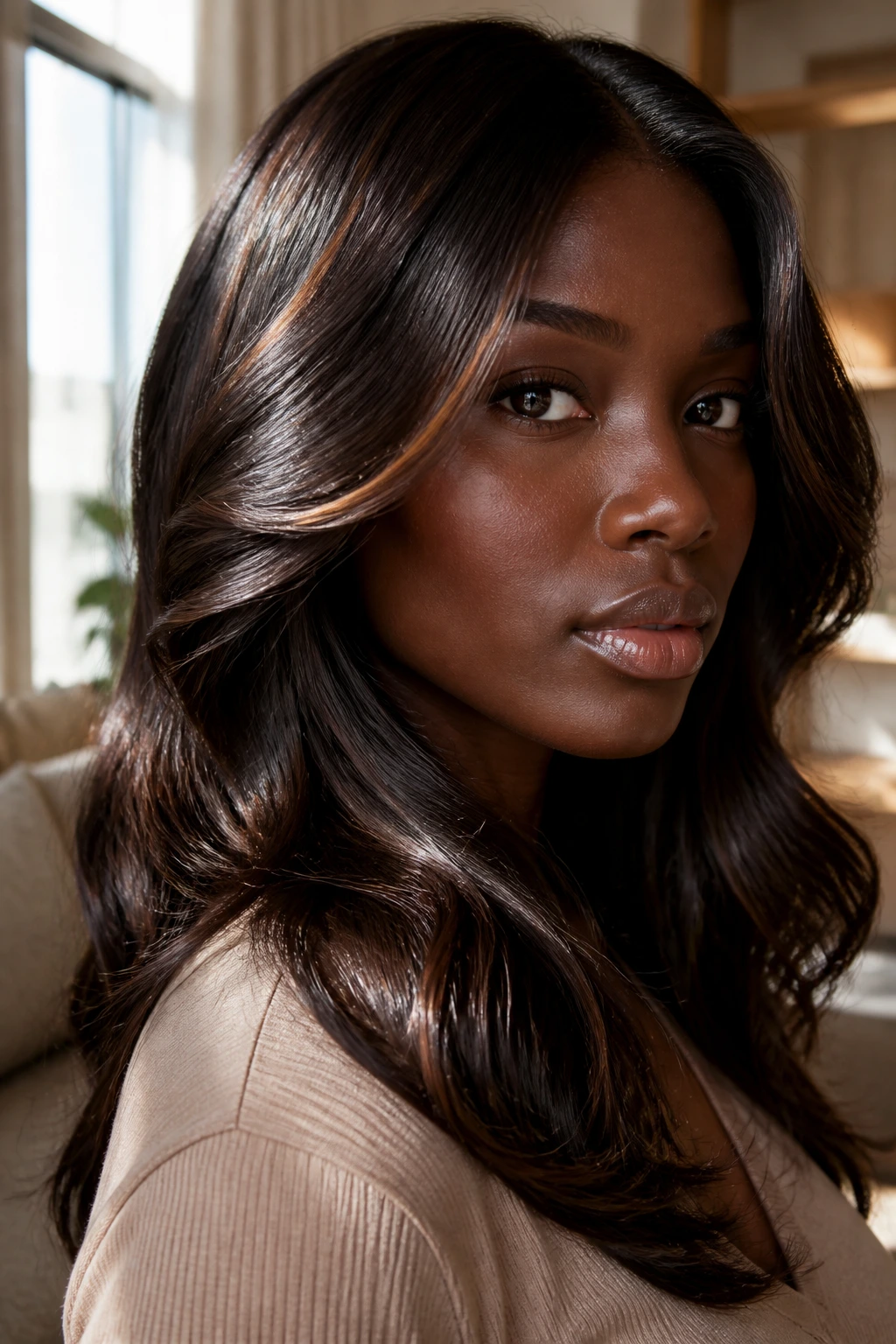
Shine Boost: A clear or brown gloss every 4 to 6 weeks can keep espresso, chocolate, and chestnut from looking dusty. Gloss is one of those boring steps that pays you back.
Customization: If you want a classic brunette with personality, ask for a root shadow plus warm ribbons through the front third of the hair. That gives you depth without a harsh block of color.
Color Saving: Red, copper, burgundy, and black cherry stay cleaner if you wash with cooler water and avoid stripping shampoos. Hot water is a fast way to dull expensive-looking color.
Finish Detail: A pea-sized amount of lightweight serum on the ends adds enough sheen to help black, brown, and bronze shades catch light without making the roots greasy.
Common Mistakes That Flatten Color on Deep Skin
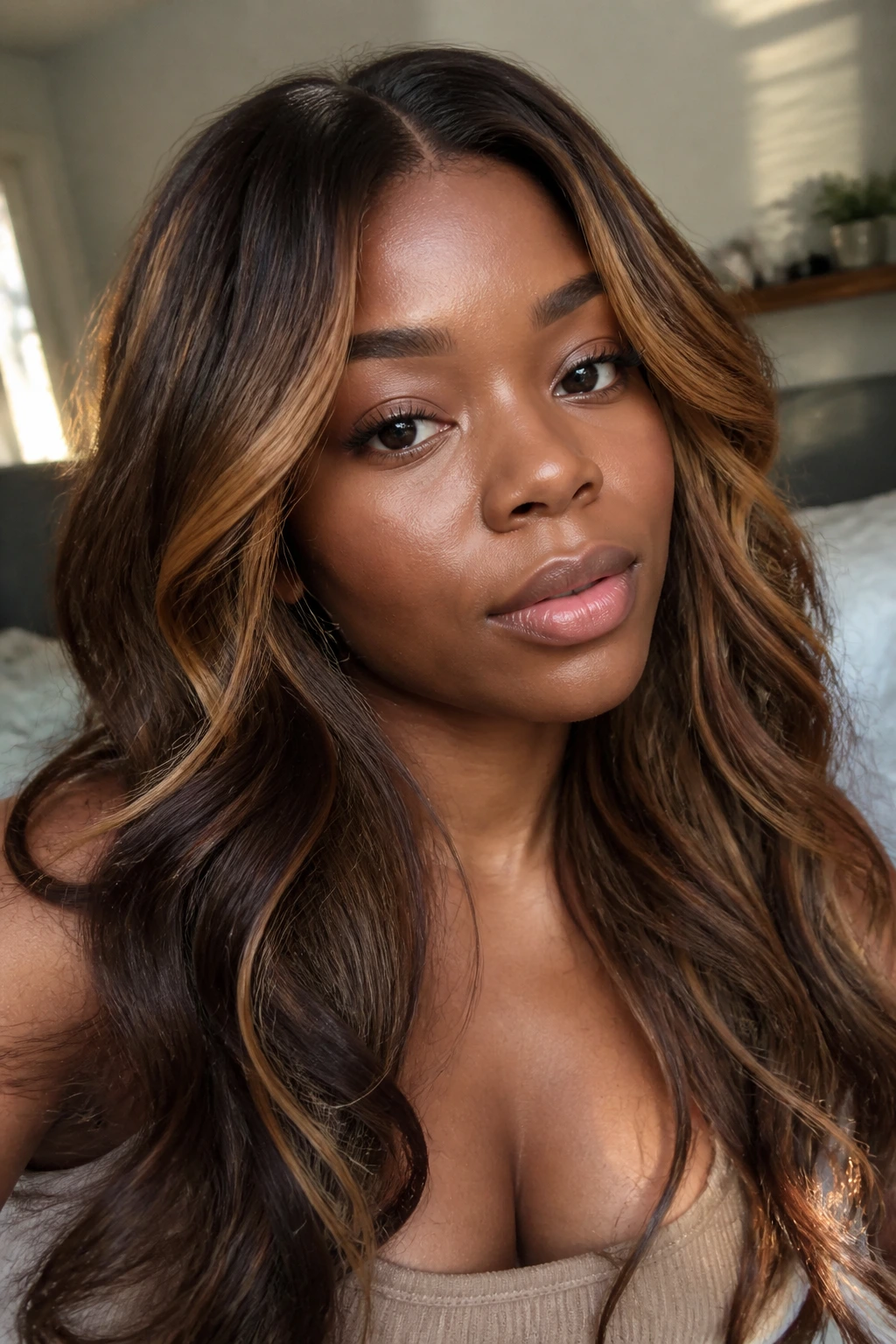
The biggest mistake is choosing a shade from a filtered photo and assuming it will behave the same on your hair. It usually won’t. Phone filters brighten warmth, deepen shadows, and blur the line between caramel, bronze, and blonde. Bring an unfiltered reference or, better yet, a few different photos that show the same tone in daylight.
Another problem is going too light too fast. Deep skin can wear light pieces, but when the lift is extreme and the contrast is harsh, the hair starts wearing the face instead of framing it. A better move is to step up one or two levels, then decide whether you need more brightness.
Porosity trips people up too. Bleached ends grab pigment faster than healthy roots, so the lower half can end up too dark or too red. If your hair has been colored before, tell the colorist. That one detail changes the formula.
Red and copper shades also get abandoned too soon. They fade fast, which means they need gloss or color-depositing care. If you skip that, the tone shifts from rich to tired.
Ways to Adapt These Shades to Different Routines
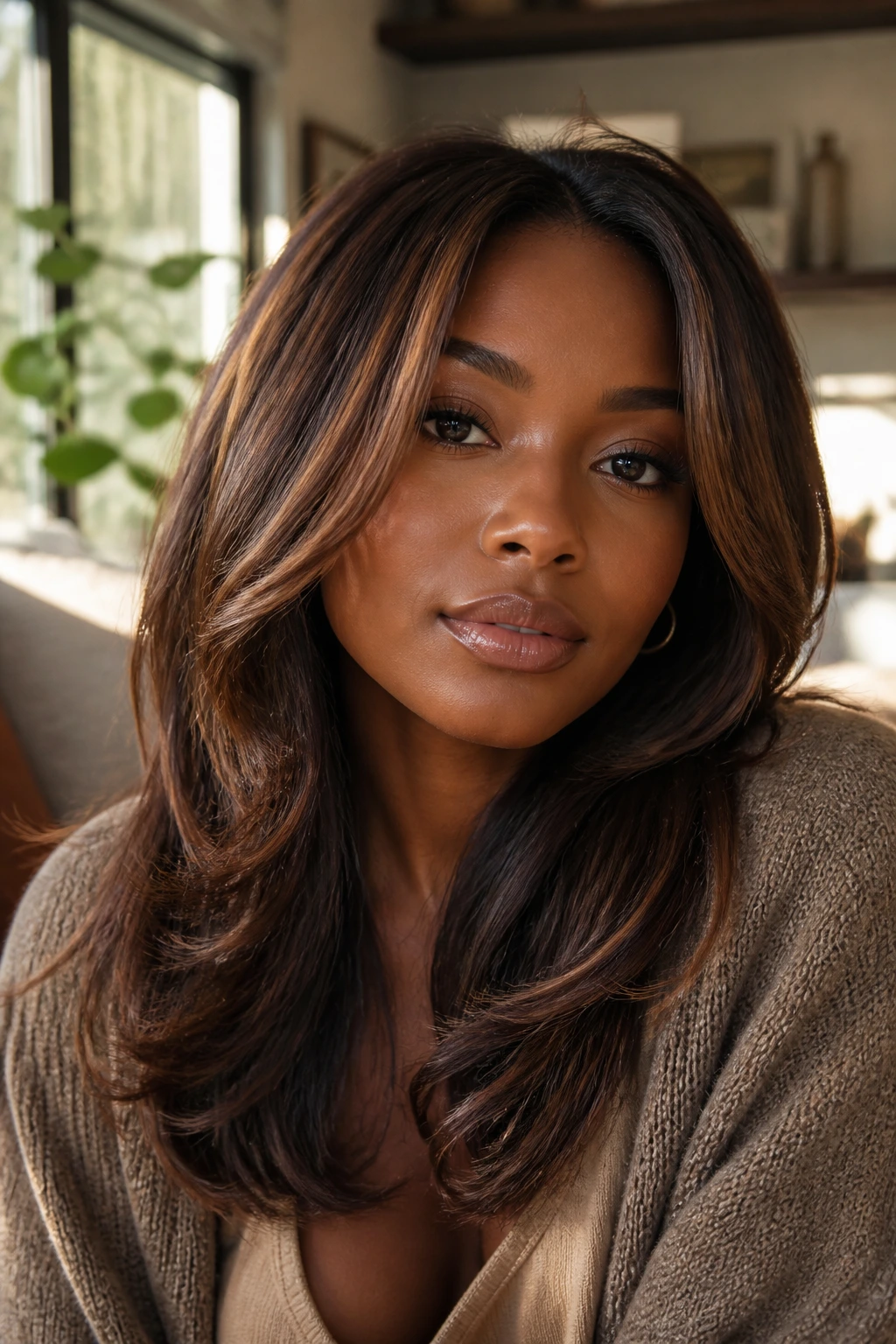
Low-Maintenance Glow: Choose espresso, dark chocolate, or warm espresso gloss. These shades grow out softly and don’t demand weekly rescue work.
Soft Warmth: Pick chestnut, auburn brown, or cinnamon brunette if you want warmth without a bright red commitment. They give depth and a little light at the same time.
High-Contrast Drama: Go for jet black, blue-black, or black cherry when you want the cut and the face shape to do the talking. These shades hold a strong outline.
Ribboned Dimension: Caramel balayage, honey highlights, or rooted bronde work best when you want movement through curls, waves, or layered styles. The placement matters more than the number of lighter pieces.
Cool Smoke: Ash brown and smoky mushroom brown fit people who prefer a muted finish. They’re softer, quieter, and best when the undertone is truly cool or neutral.
Keeping the Shade Fresh Between Appointments
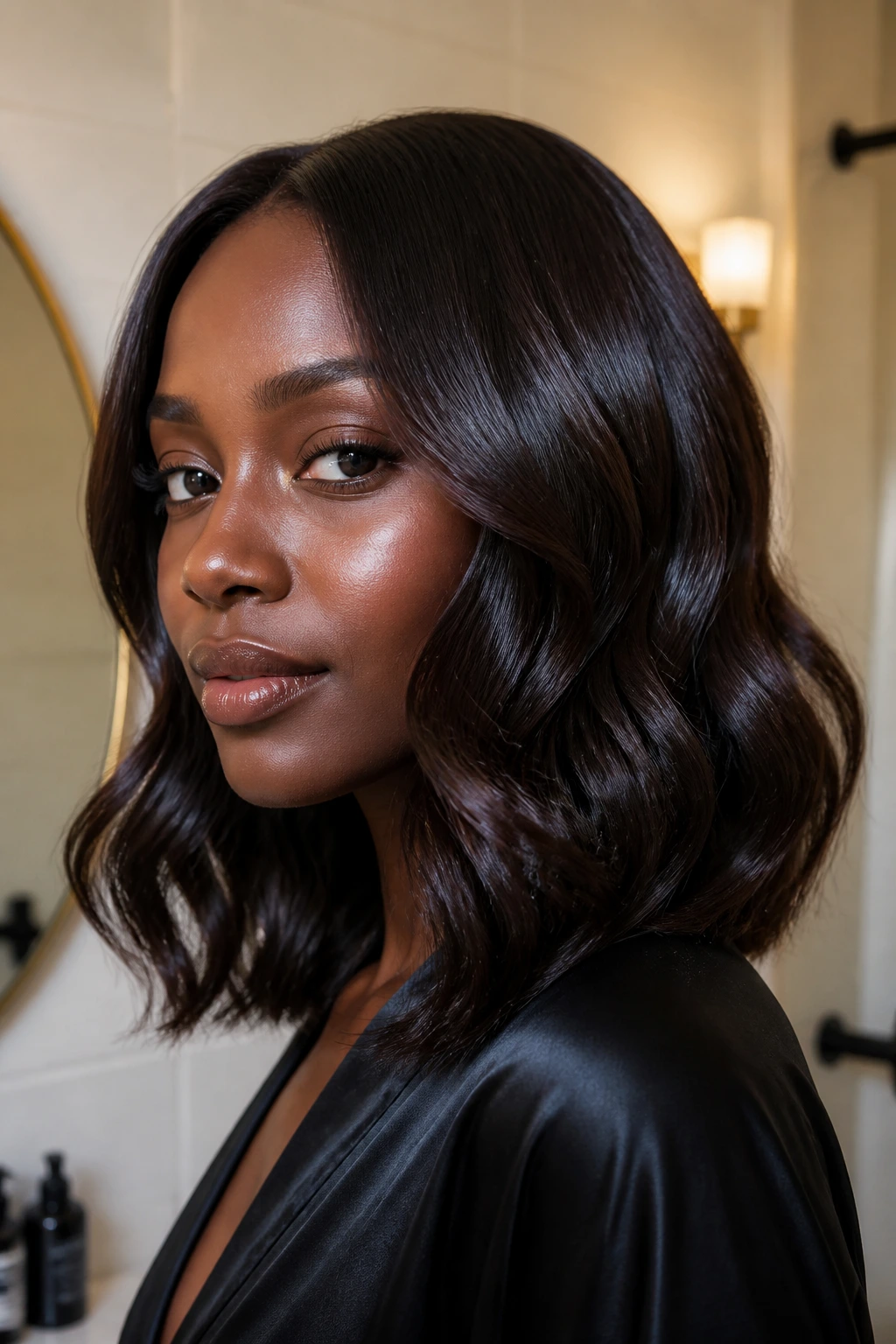
Dark brunettes and black shades usually hold their shape longest. Plan on a root touch-up every 6 to 8 weeks if you want the line clean, or every 8 to 10 weeks if you’re fine with softer grow-out. Glosses can refresh the tone every 4 to 6 weeks, especially on espresso, chestnut, and mocha shades.
Red family colors need more attention. Burgundy, mahogany, copper, and black cherry tend to fade a little faster, especially if you wash often or use hot water. A color-depositing mask once a week can help, and a salon gloss every 3 to 5 weeks keeps the tone from slipping into dull brown.
Highlights and balayage live on a different clock. You may not need a full color service for months, but the toner or gloss can still fade in a few washes. If the caramel starts looking brassy, that does not always mean the highlights are wrong. Often it just means the toner is gone.
Frequently Asked Questions About Hair Color Ideas for Deep Skin Tones
Can deep skin tones wear blonde hair?
Yes, but the blonde matters. Honey, bronze, bronde, and soft caramel usually flatter deep skin more naturally than pale yellow blonde, which can look disconnected unless the root and tone are managed carefully.
Is jet black too harsh on deep skin?
Not if the finish is glossy and the cut has shape. Jet black can look sharp, sleek, and expensive on deep skin, but it does need shine and clean lines so it doesn’t read flat.
What hair colors are lowest maintenance?
Espresso brown, dark chocolate brown, warm espresso gloss, and rooted bronde are among the easiest. They grow out softly and usually only need periodic glossing or root refreshes.
How do I stop red or copper shades from fading?
Wash less often, use cooler water, and work a color-depositing conditioner into your routine. Reds and coppers lose pigment faster than browns, so they need regular tone refreshes to stay rich.
Should I choose warm or cool hair color if my skin is deep?
That depends on undertone, not depth alone. Warm skin usually loves chestnut, auburn, copper, and bronze, while cooler or neutral skin can handle blue-black, ash brown, plum, and burgundy more easily.
Can I go from black box dye to caramel balayage?
Maybe, but it takes time and usually more than one salon visit. Black box dye is stubborn, and lifting it too quickly can damage the hair or leave uneven orange bands.
What if my color looks muddy instead of rich?
That usually means the undertone is off or the color sat too long on porous hair. A gloss or toner can often fix it, but the better solution is choosing the right base and reflect before the next appointment.
Do curly and coily textures need different color placement?
Yes. Ribbons, balayage, and face-framing pieces often show better on textured hair than one flat all-over color, because the bends in the hair catch light and show dimension.
How often should I get a gloss?
Every 4 to 6 weeks is a good rhythm for browns and blacks, while reds and copper tones may need it sooner if you wash often. Gloss is one of the simplest ways to keep the shade from losing shape.
Is demi-permanent color safer than permanent color?
It can be gentler and easier to live with, especially if you want shine and tone more than full gray coverage. Permanent color is useful for bigger changes or strong coverage, but demi-permanent is often the better first move for classic shades.
Shades That Earn Their Place
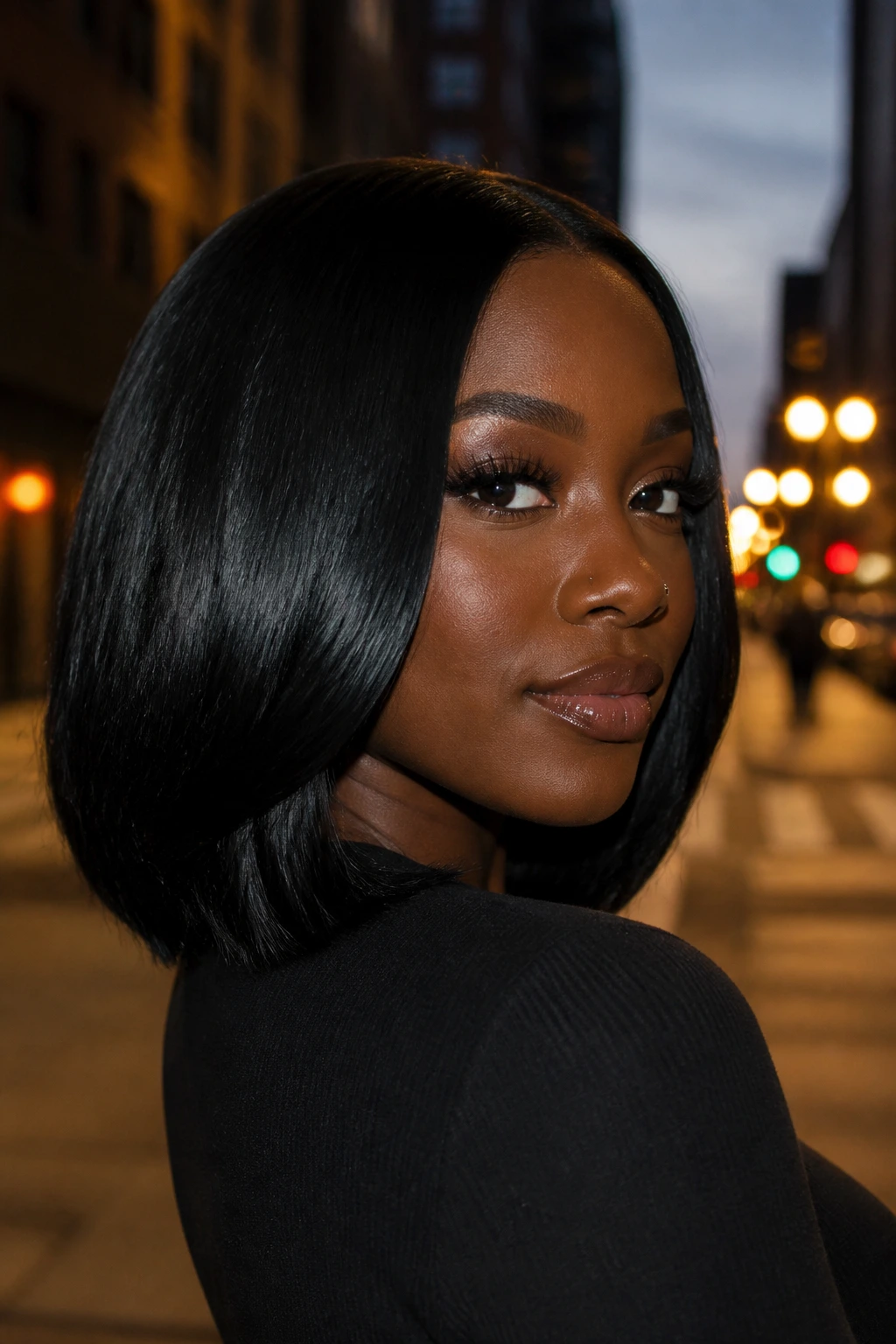
The best hair color ideas for deep skin tones are the ones that respect depth instead of fighting it. Jet black sharpens the face, espresso and chocolate keep things rich, and the warm family — caramel, copper, chestnut, mahogany — brings glow without forcing brightness. Even the cooler shades have a place when they’re chosen with care.
What matters most is not whether the shade is trendy or loud. It’s whether the tone, finish, and placement let your skin and hair look like they belong in the same sentence. A good color does that quietly. A really good one makes the cut look cleaner, the skin look richer, and the whole style hold together even on a plain day.
Pick the shade that matches the kind of attention you want, then ask for the undertone that keeps it honest. That’s where the good stuff lives.