



Some hair colors look rich in the bowl and flat on the head. Caramel brunette hair color ideas for fair skin are different. They need enough brown to keep the face from looking washed out, enough warmth to keep the shade from going muddy, and enough contrast to stop the whole thing from disappearing under bathroom lighting.
That balance is the whole game. On fair skin, a brunette that’s too ash-heavy can turn sallow in a hurry, while a caramel that’s too gold can swing orange the second the sun hits it. The sweet spot sits somewhere between toasted sugar and milky coffee — not loud, not pale, and never one-note.
What makes this shade family so good is the range. A few ribbons can wake up a pale complexion without turning the head into a high-contrast striping experiment. A deeper root with caramel mids can look expensive for months. And the right placement changes everything: near the face, around the ends, through a fringe, or hidden under the top layer when you want the effect to feel softer than the word “highlight” usually suggests.
Why This Collection Works So Well on Fair Skin
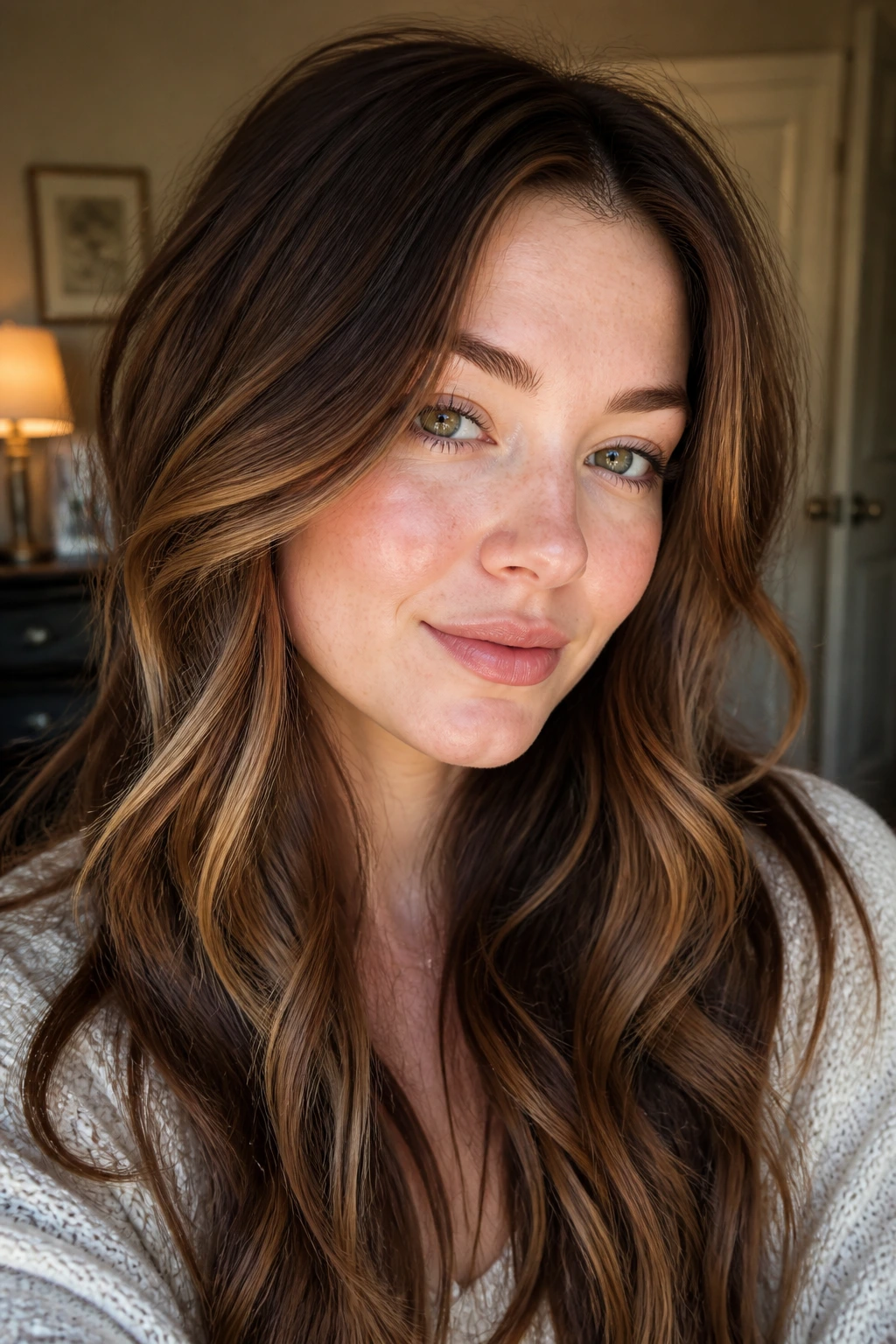
- It adds warmth without flattening the face: Caramel breaks up brunette depth, so pale skin doesn’t get swallowed by one solid dark block.
- It gives you room to play with undertone: Beige caramel, honey caramel, and toffee caramel all sit in the same family, but they change the whole mood of the color.
- It grows out without a harsh line: Rooted placement, balayage, and soft money pieces buy you time between salon visits.
- It works on straight, wavy, and curly textures: The color reads differently on each one, which is half the fun. Waves show ribbons. Curls catch little flashes. Straight hair shows the clean shape.
- It can be as quiet or as bold as you want: A whisper of caramel around the face looks polished; a brighter sweep through the ends reads more playful.
1. Soft Honey Ribbon Balayage
Honey ribbons floating through a medium brunette base are one of those shades that looks casual until you really stare at it. Then the shine hits, the warmer strands pick up light, and the whole head starts looking more awake. On fair skin, this works because the caramel stays woven into the brown instead of sitting on top of it like a sticker.
Balayage gives you that blurred grow-out line people keep paying for. The lighter pieces can start just below the cheekbones and fall a little heavier through the mids, which keeps the top from looking too bright near the scalp. That balance matters on pale skin; too much lightness at the root can make the face look bare.
The best version uses beige-honey caramel, not a loud gold. Keep the ribbons thin. The result is softer, and honestly, more believable.
2. Espresso Base with Melted Toffee Ends
Why It Reads Softer on Fair Skin
A deep espresso root with toffee ends has more drama than honey balayage, but it still behaves nicely on light skin because the warmth stays down low. The darker top gives the face a frame. The caramel at the ends keeps the length from looking heavy or flat.
This shade is good if you like contrast but don’t want the “striped” look that chunky highlights can create. Ask for the ends to be lifted only enough to show a soft toffee tone — not pale blonde. If the ends go too light, they stop reading brunette at all, and the whole point is lost.
- Best for: medium to long hair with movement
- Best caramel tone: toffee, beige-toffee, or light chestnut
- Watch out for: brass at the tips after repeated heat styling
A blunt cut makes the color look sharper. Waves make it softer. Both work.
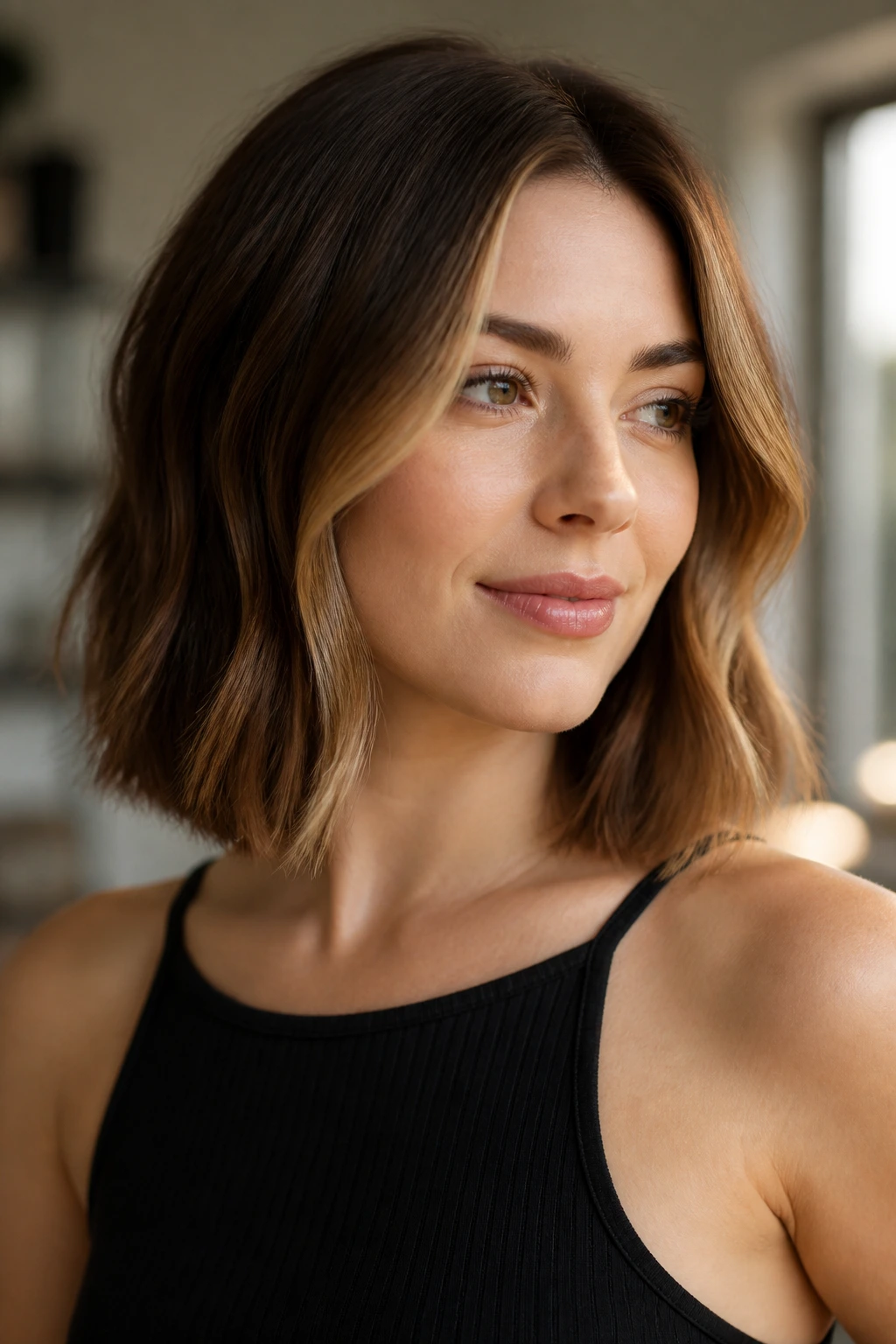
3. Chestnut Lob with Caramel Money Piece
Why does this one flatter fair skin so fast? Because the money piece does the face-framing work while the chestnut base keeps everything grounded. You get brightness where people look first, and depth everywhere else, which is a smart move on a pale complexion that can get overwhelmed by too many light strands.
The money piece should stay narrow — think a clean frame, not a giant billboard. If the front sections are too wide, the face can start to look disconnected from the rest of the hair. A chestnut lob gives the color a neat shape, and the caramel around the face catches cheekbone light without taking over.
This is one of my favorite placements for someone who wants an obvious change but not a full head of highlights. It looks intentional from the salon chair and easy from across the room. That’s the trick.
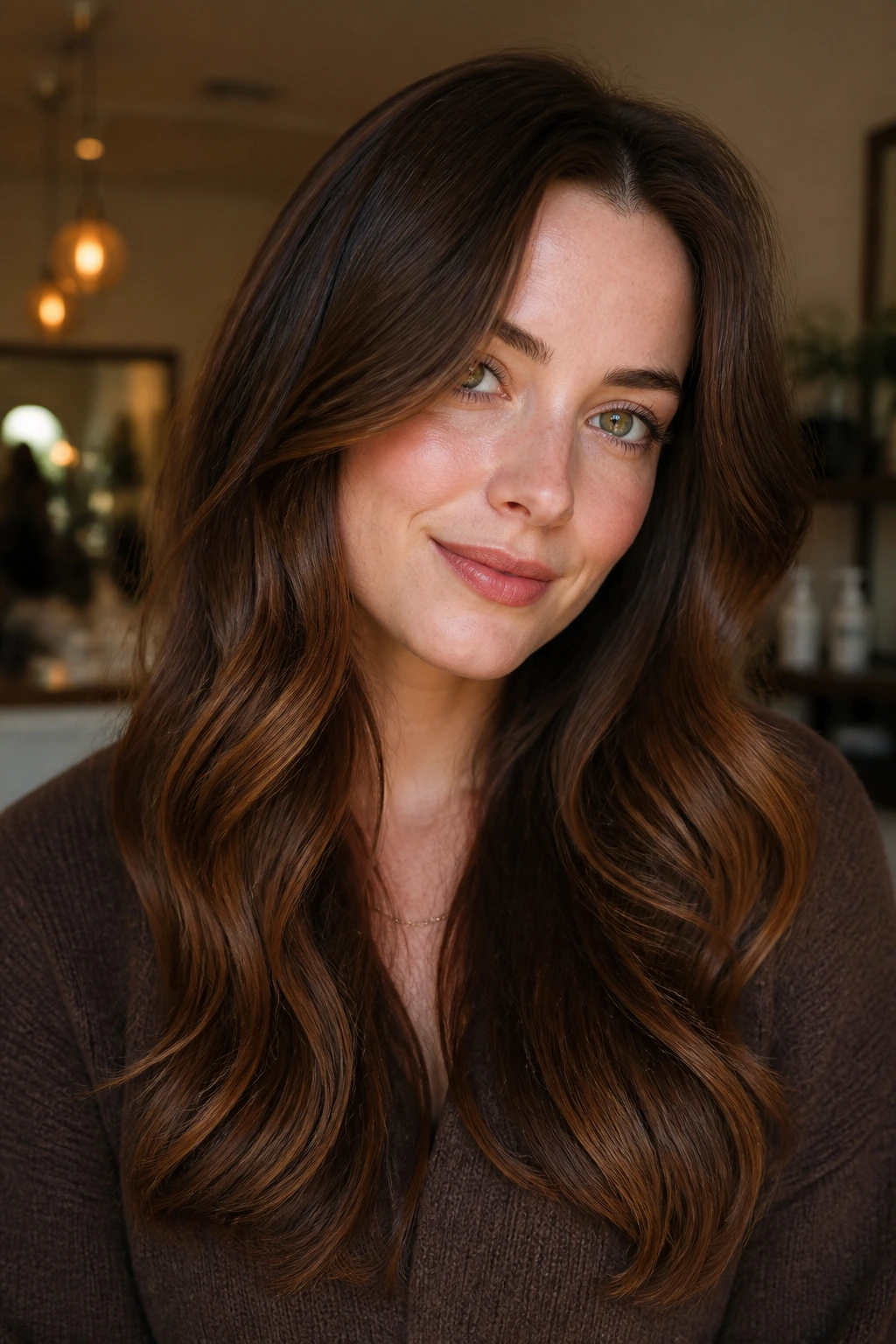
4. Deep Mocha with Cinnamon Glaze
A cinnamon glaze over deep mocha is for someone who wants warmth with a little bite. The glaze doesn’t need to be loud to matter. Even a semi-permanent gloss can pull the brunette forward and give fair skin a gentler contrast than a flat ash brown ever could.
This shade works best when the caramel is more of a spice tint than a gold stripe. Think warm brown with a coppery whisper, especially through the mids and around the perimeter. On fair skin, that slight red-brown warmth can make the complexion look brighter instead of sallow.
It’s also a forgiving choice if you don’t want to bleach. A glaze or demi-permanent color can deepen the brunette and nudge it warmer without that overprocessed look you sometimes get from trying to force caramel into very dark hair. Nice and calm. No panic.
5. Dark Brunette with Apricot-Caramel Peekaboo
What Makes It Fun
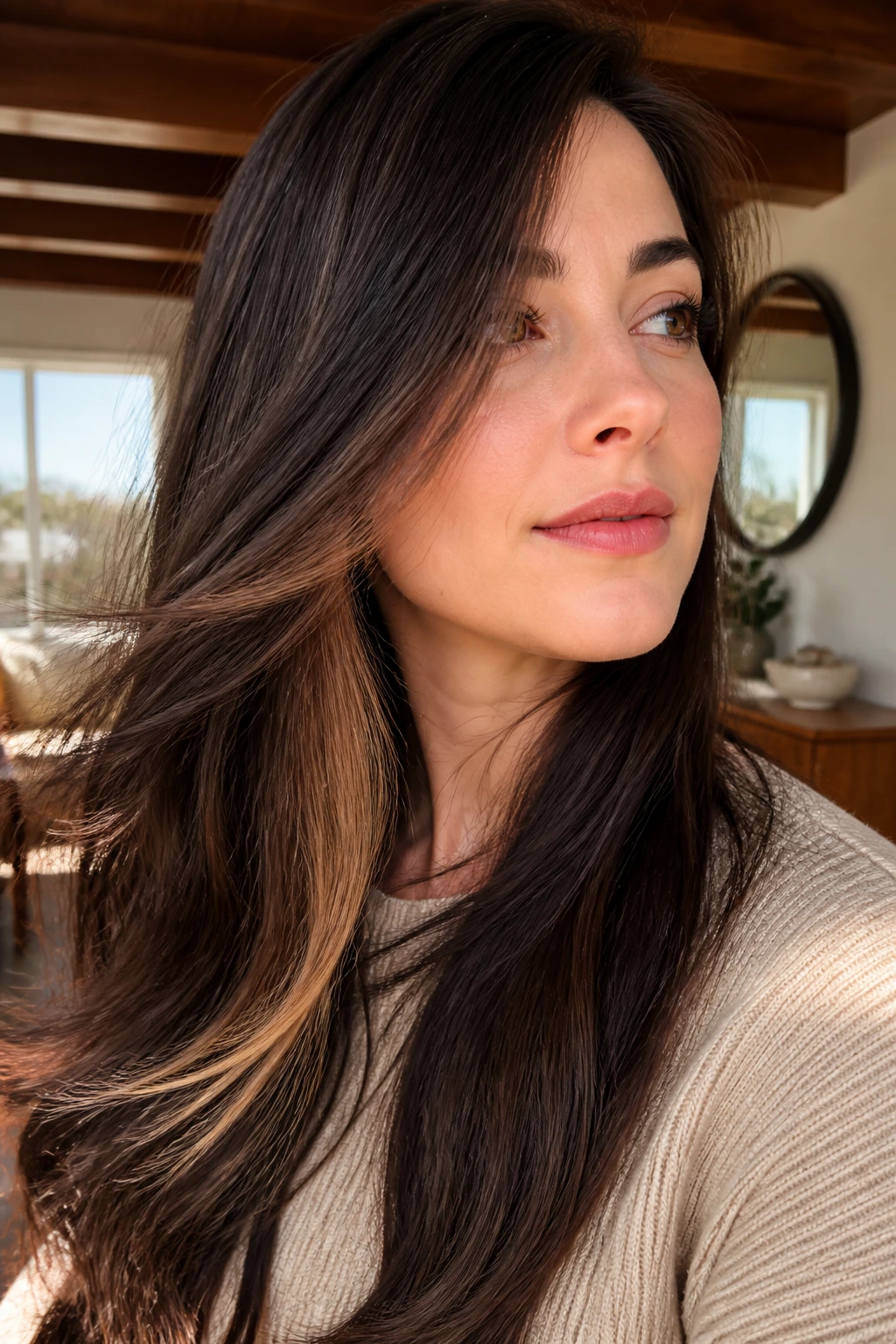
Peekaboo color is the hair equivalent of a good inside joke. Most of the time, you see a solid dark brunette. Then the hair moves, and apricot-caramel pieces flash underneath the top layer. On fair skin, that hidden warmth keeps the overall look from feeling too severe.
The apricot note matters. Pure gold can go brassy; apricot adds a soft, sun-warmed edge that sits between copper and honey. It’s also a smart choice if you work somewhere that prefers hair color to stay a little restrained. You get the payoff in motion, not in every mirror selfie.
- Ask for underlayer placement, not full coverage
- Keep the apricot ribbons thin so they peek, not shout
- Best paired with medium waves or a loose blowout
This is a very good option if you want something with personality and don’t want to explain it to everybody at brunch.
6. Mushroom Brunette with Beige Caramel Veil
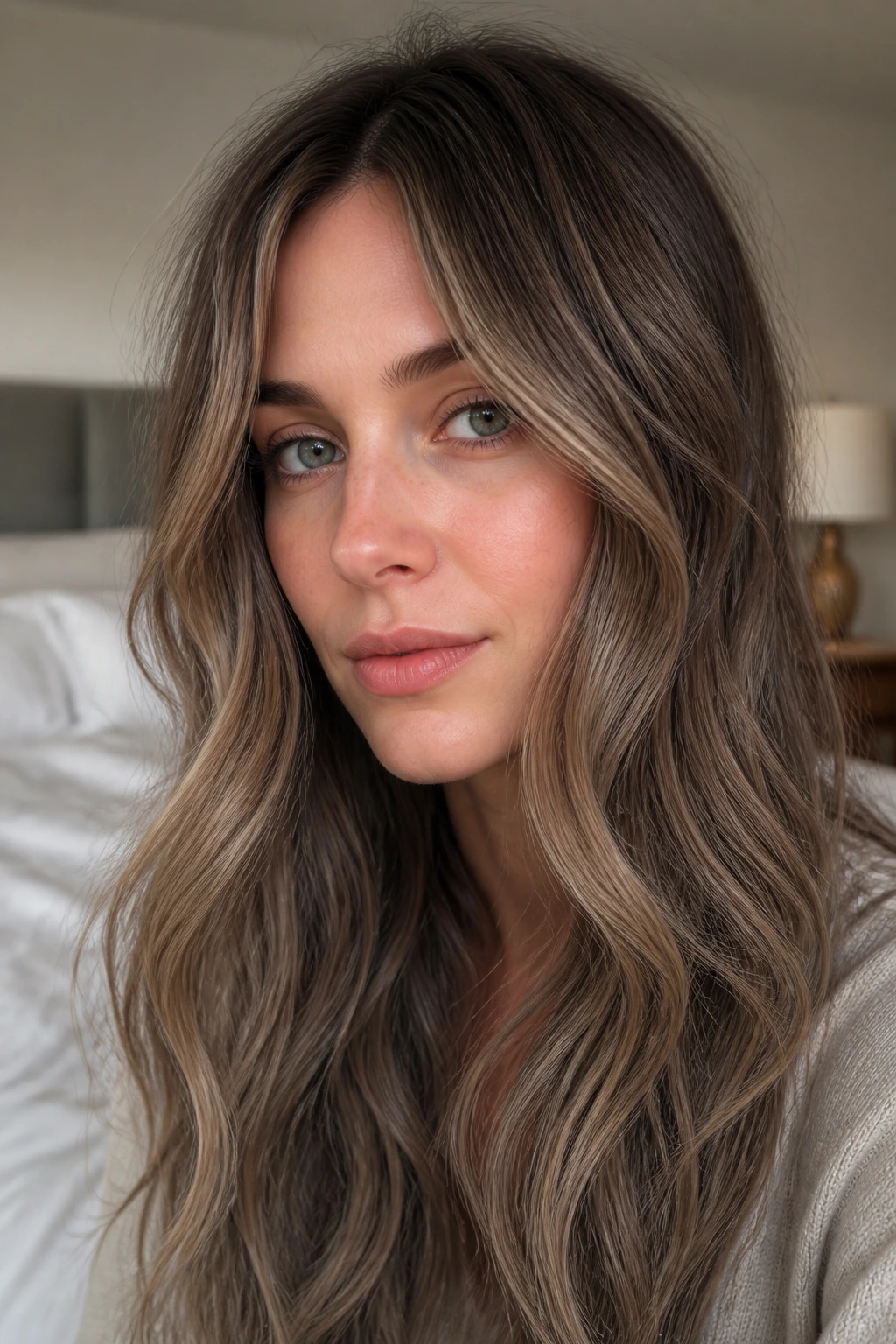
Mushroom brunette gets a bad reputation from people who only see it as “ashy.” That’s lazy thinking. When you thread a beige caramel veil through it, the shade becomes softer, richer, and much kinder to fair skin than a flat brown with no warmth at all.
The Softness Is the Point
The beige tone keeps the caramel from swinging too yellow, which is the main danger on cool or pink-toned skin. The veil placement matters too. Instead of obvious streaks, the color is diffused through the top layers so it looks like light, not dye.
This is a strong pick for someone who likes muted color but hates looking washed out. It’s also one of the easiest shades to wear with makeup, because it doesn’t fight blush, lipstick, or a strong brow.
A mushroom base with a beige veil is quietly expensive-looking. Not flashy. Better than flashy.
7. Wavy Bronde with Sandy-Caramel Ends
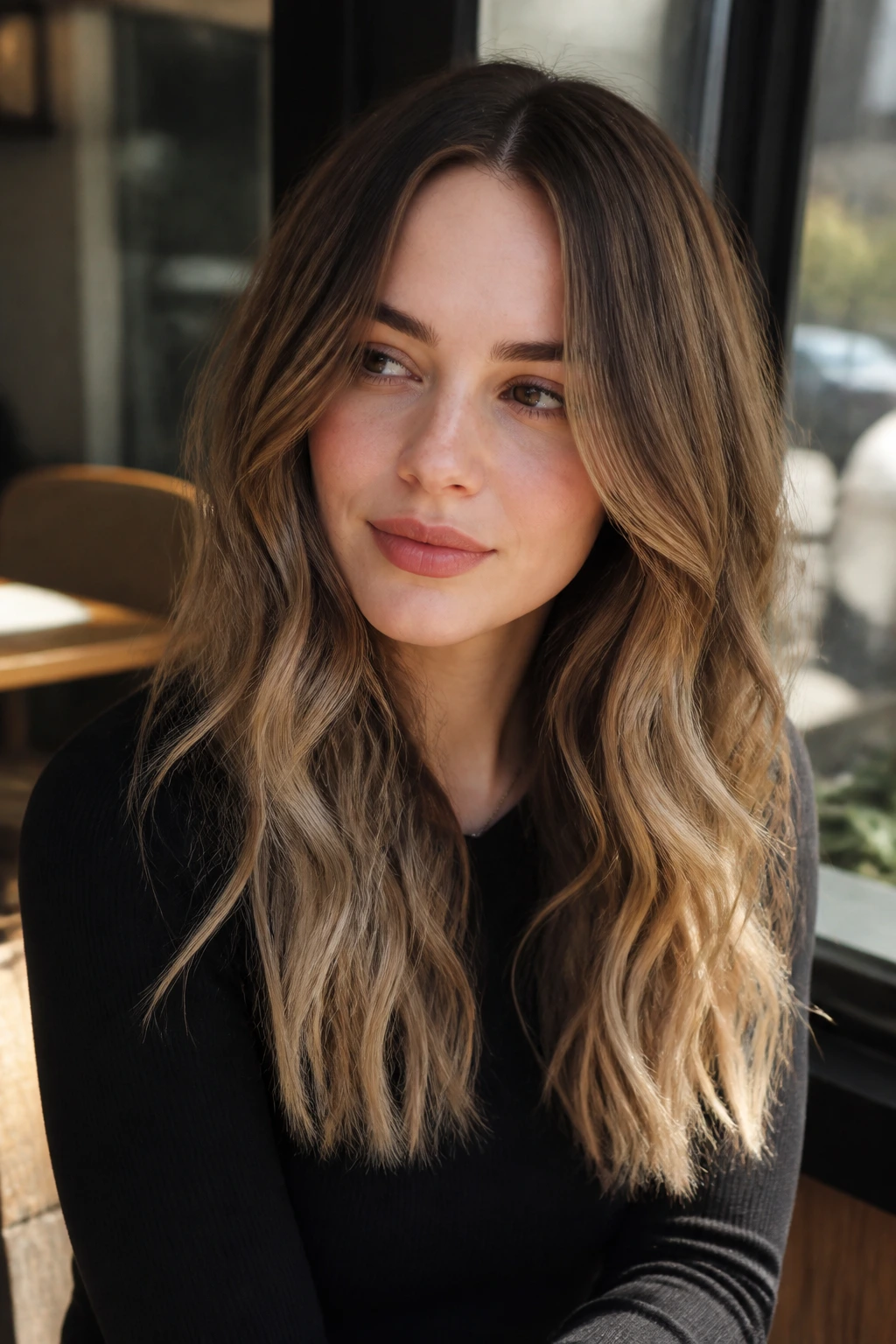
Bronde can get vague fast, so the placement has to do the work. Sandy-caramel ends keep the shade from sliding into yellow, and the wave pattern makes the transition from brunette to caramel feel natural instead of painted on. On fair skin, that low-contrast finish is often the sweet spot.
The ends should stay soft and diffused, not bleached out. Sandy caramel reads lighter than toffee, but it still lives in the brunette family when the root stays intact. That’s what keeps the style believable. If your hair is long, this is one of the best ways to make the ends look airy without losing depth near the scalp.
A center part makes the color look modern. A side part pushes the caramel toward the face. Both are good; the second one is a little more flattering if you want the warmth close to your cheek line.
8. Milk-Chocolate Bob with Buttery Highlights
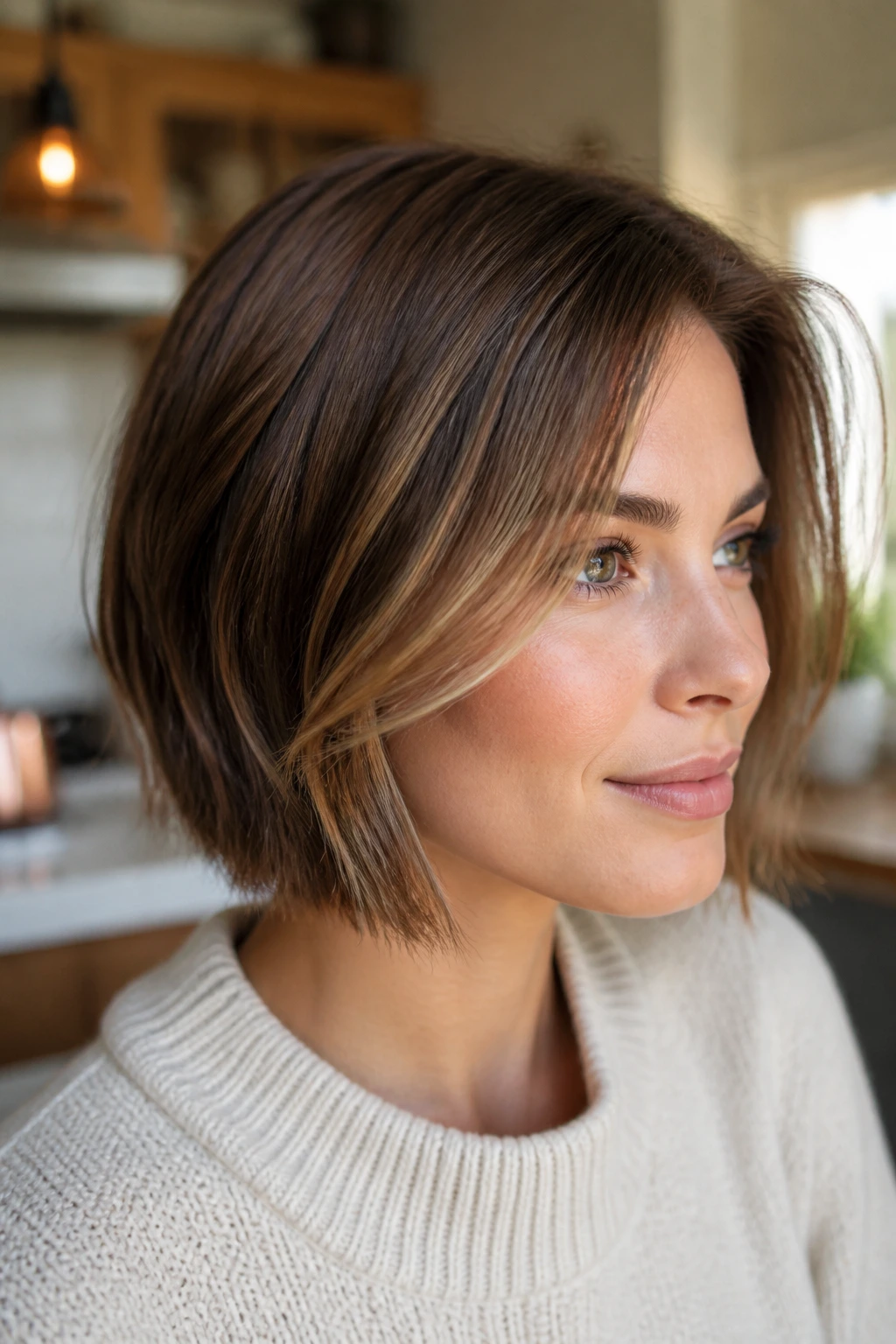
What happens when you want dimension on fair skin but hate chunky highlights? You keep the highlights fine and buttery. A milk-chocolate bob gives the base enough richness, and the buttery pieces sit just a shade brighter so they don’t look striped.
The bob shape matters here. Shorter hair shows every placement decision, which is good if the highlights are clean and bad if they’re not. Ask for soft, narrow pieces starting around the temple and cheekbone, then feathered through the top layers. That keeps the color light where you want motion and dark where you want structure.
This is a lovely choice for straight or slightly wavy hair, because the clean line of the cut makes the color read as polished instead of busy. Too much contrast on a bob can look fussy. Butter solves that.
9. Walnut Brunette with Soft Face Frame
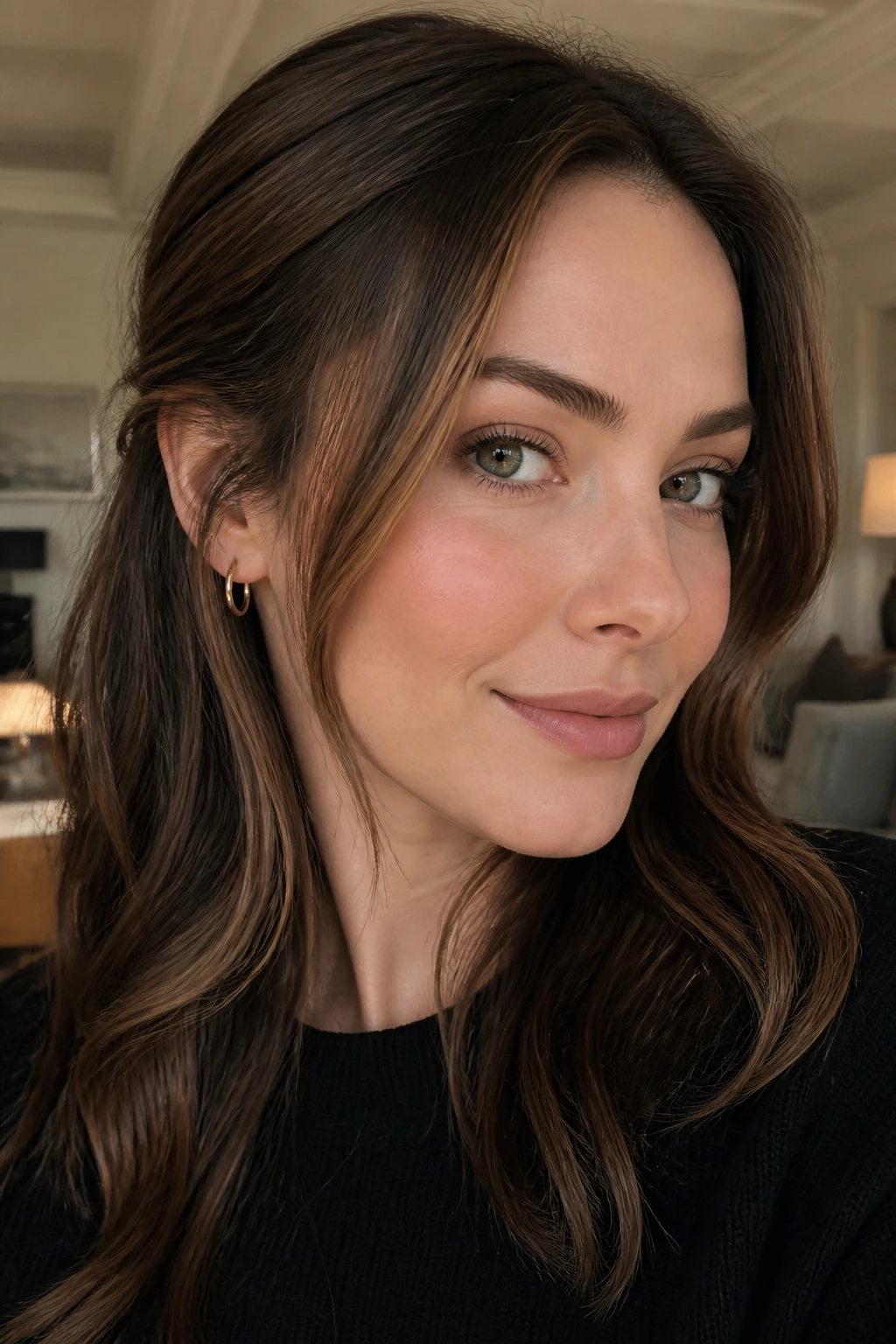
I like this one for people who want the least possible drama with the most visible payoff. Walnut brunette has enough warmth to keep fair skin alive, and a soft face frame gives you brightness without committing to a full head of light pieces.
The Face Frame Is Doing the Heavy Lifting
The front sections should be lighter than the rest, but only by a step or two. If you go much brighter, the frame starts to overpower the natural walnut base. That’s where the shade loses its charm and starts looking patchy instead of dimensional.
Ask for the frame to begin just below the root and blend into the front layers. That tiny bit of shadow at the scalp keeps the look from screaming “fresh highlight line.” It also makes the grow-out easier, which matters more than people admit.
This is the kind of color that looks especially good when hair is tucked behind the ear. The caramel peeks out, the walnut stays in control, and the whole thing feels deliberate.
10. Rooted Brunette with Amber Lowlights
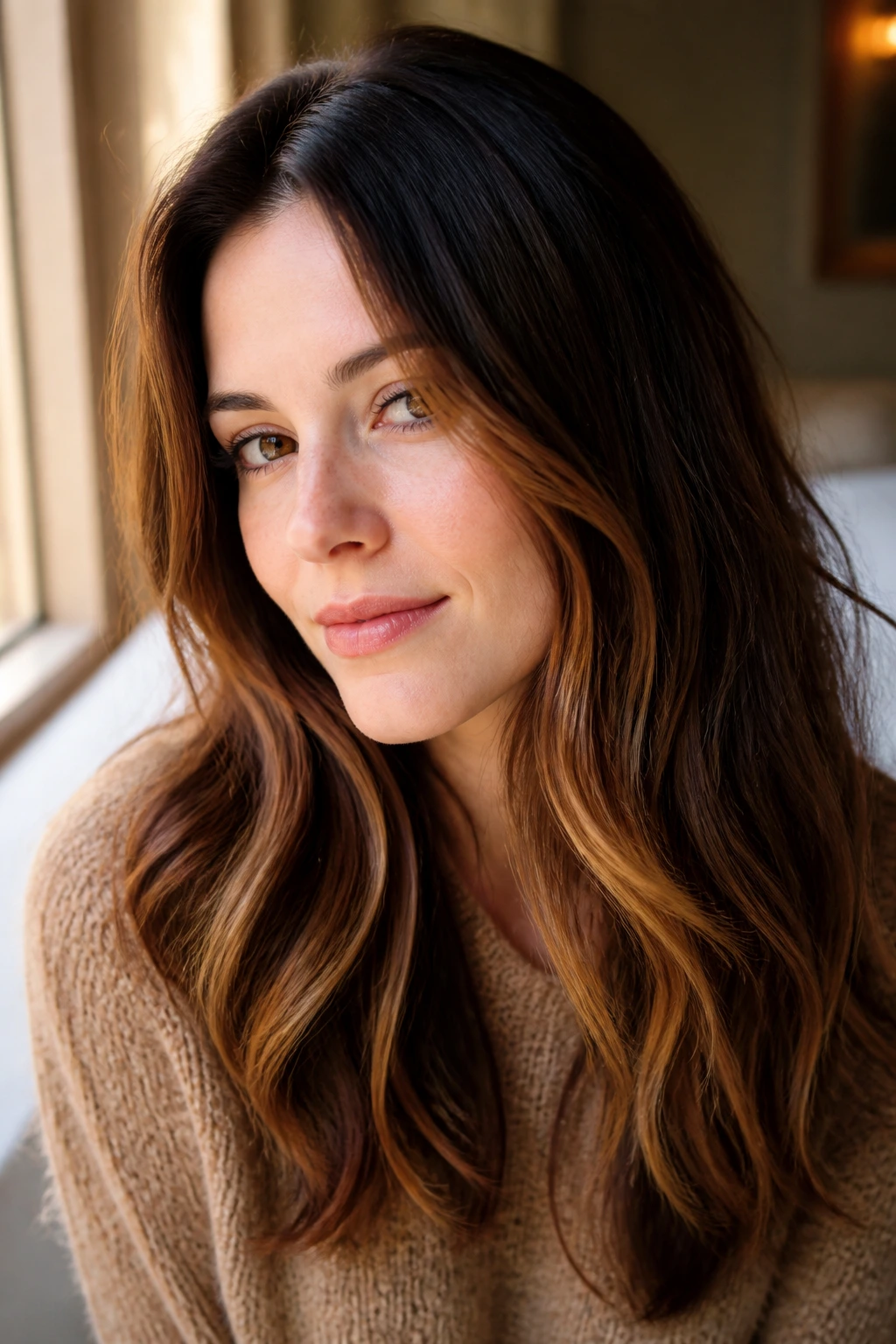
A lot of people think caramel only means lightening. Not true. Amber lowlights can be the smarter move if your brunette is already fairly light and you want more depth around fair skin. The darker threads create contrast, and the warmer amber keeps the shade from looking muddy.
This look is useful when hair has been over-highlighted and needs some visual weight back. Lowlights can make fine hair look denser, too. The caramel in this case is less about brightness and more about warmth sitting inside the brown. That’s a subtler game, but a better one if your complexion is very light and you don’t want the color to wear you.
Ask for thin lowlights placed through the interior, not just the top layer. The result should look like depth, not stripes. That little distinction changes everything.
11. Glossy Cocoa with Caramel Curtain Bangs
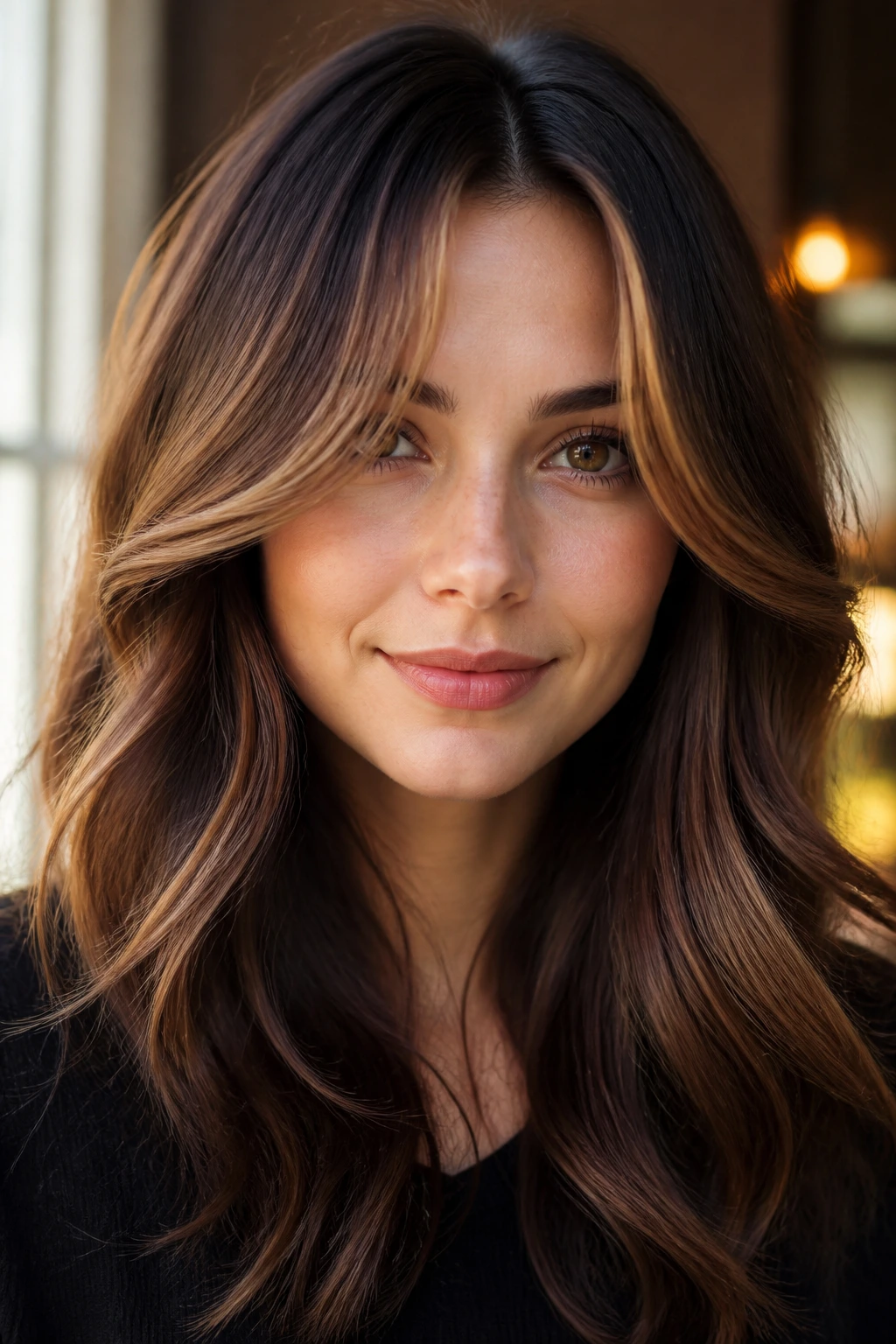
Curtain bangs are already a face-framing move, so pairing them with caramel is almost unfair. The glossy cocoa base keeps the look grounded, while the caramel pieces around the bangs soften the forehead and cheek line. On fair skin, that front-of-face warmth can save the whole color from looking too dense.
The trick is to keep the bangs lighter at the bend, not at the root. You want the caramel to show when the fringe splits and falls to either side. If the roots are too bright, the bangs can look disconnected from the rest of the hair. If they’re too dark, the effect disappears.
This is one of the few shades that can look both romantic and practical. The bangs do the work even when the rest of your hair is tied back. Handy, really.
12. Smoky Brunette with Warm Toffee Ribbons
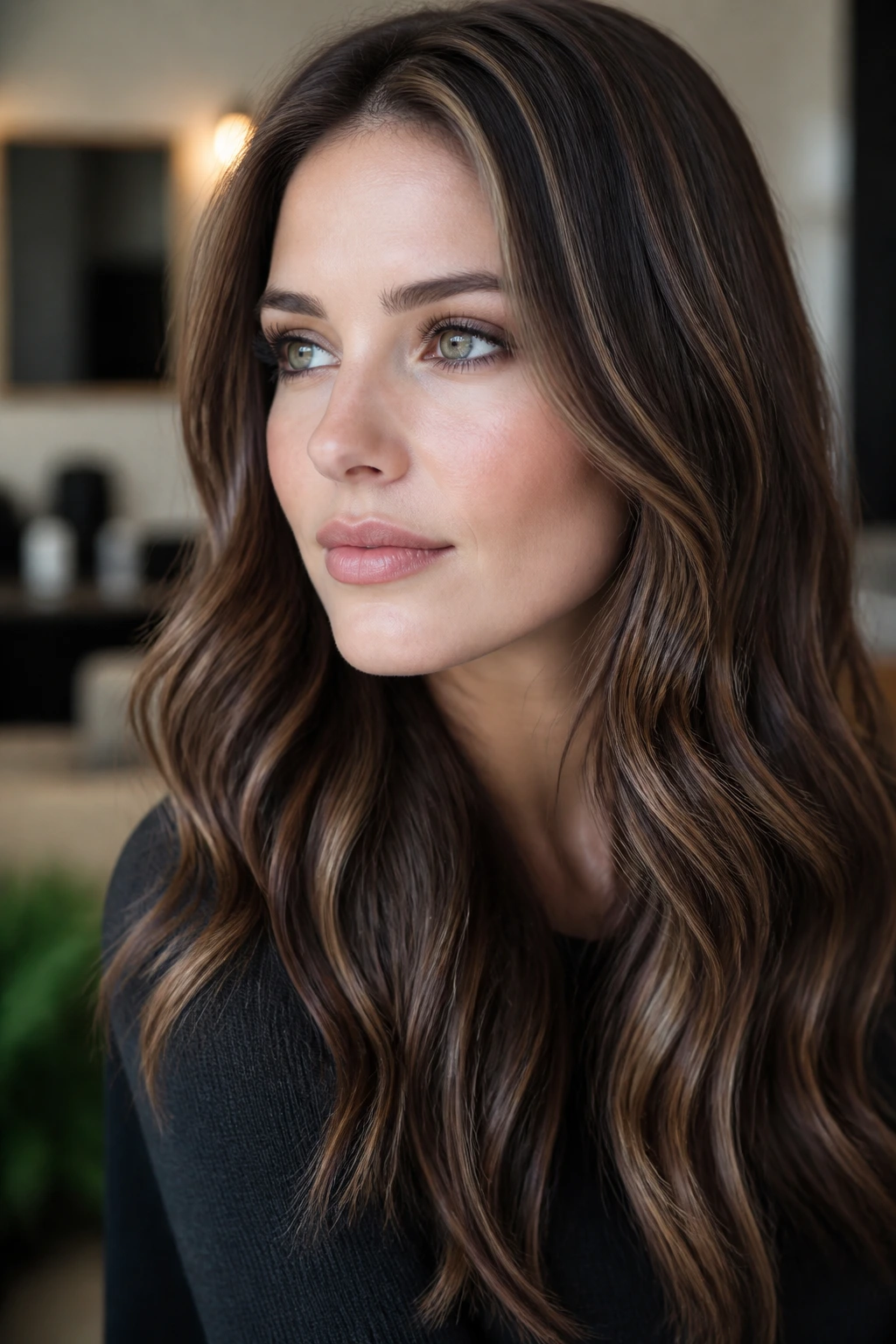
The Contrast Is the Appeal
Smoky brunette usually leans cool, which is why the warm toffee ribbons matter so much. They stop fair skin from looking gray next to the base color. The warmth acts like a small lamp near the face, and small lamps are underrated.
This shade is for someone who likes polish more than obvious highlights. The ribbons should be narrow and placed with enough space between them that the dark brunette still reads clearly. That spacing keeps the color from turning into a warm blur.
It also photographs nicely under indoor light because the toffee pieces catch brightness without washing out. If your hair tends to go flat by day two, this one holds its shape better than a full caramel overhaul.
13. Cinnamon Brunette with Soft Beige Highlights
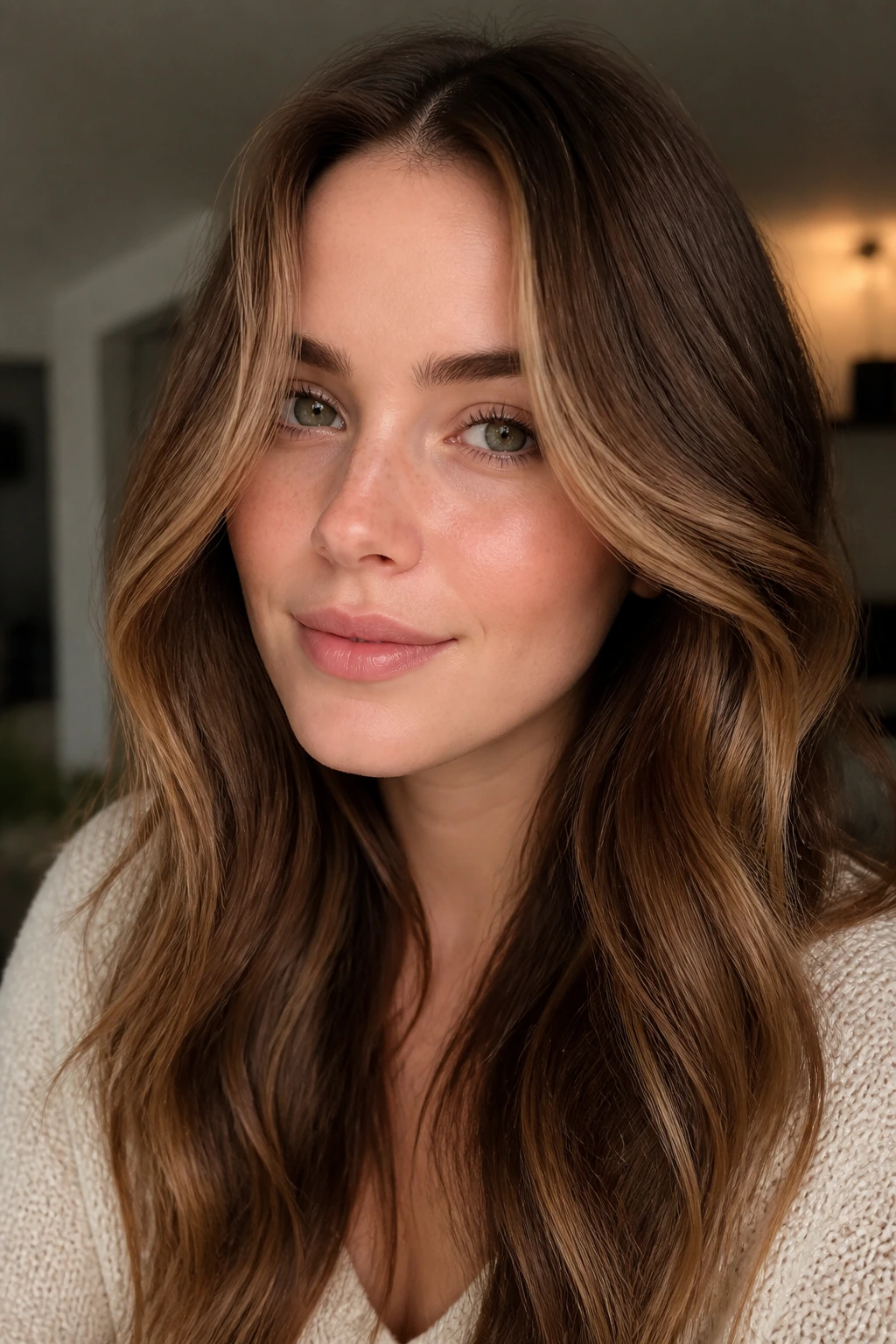
Cinnamon brunette can go red fast, so the beige highlights are there to calm the whole thing down. That’s exactly why it works on fair skin. The color gets warmth without drifting into fiery territory, and the beige keeps the brightness soft.
If your skin leans cool, this is a smart compromise. The cinnamon brings life; the beige keeps the warmth from getting noisy. Ask for highlights that are fine enough to blend rather than sit as obvious streaks. On pale skin, chunkier cinnamon can look like an accident. Thin beige pieces look intentional.
A Small Note on Placement
Keep the brightest pieces around the top layers and the front, then let the lower lengths stay a little richer. That gives the hair shape and stops the shade from reading as one flat tone from root to tip.
14. Hazelnut Brown with Caramel Ribbons
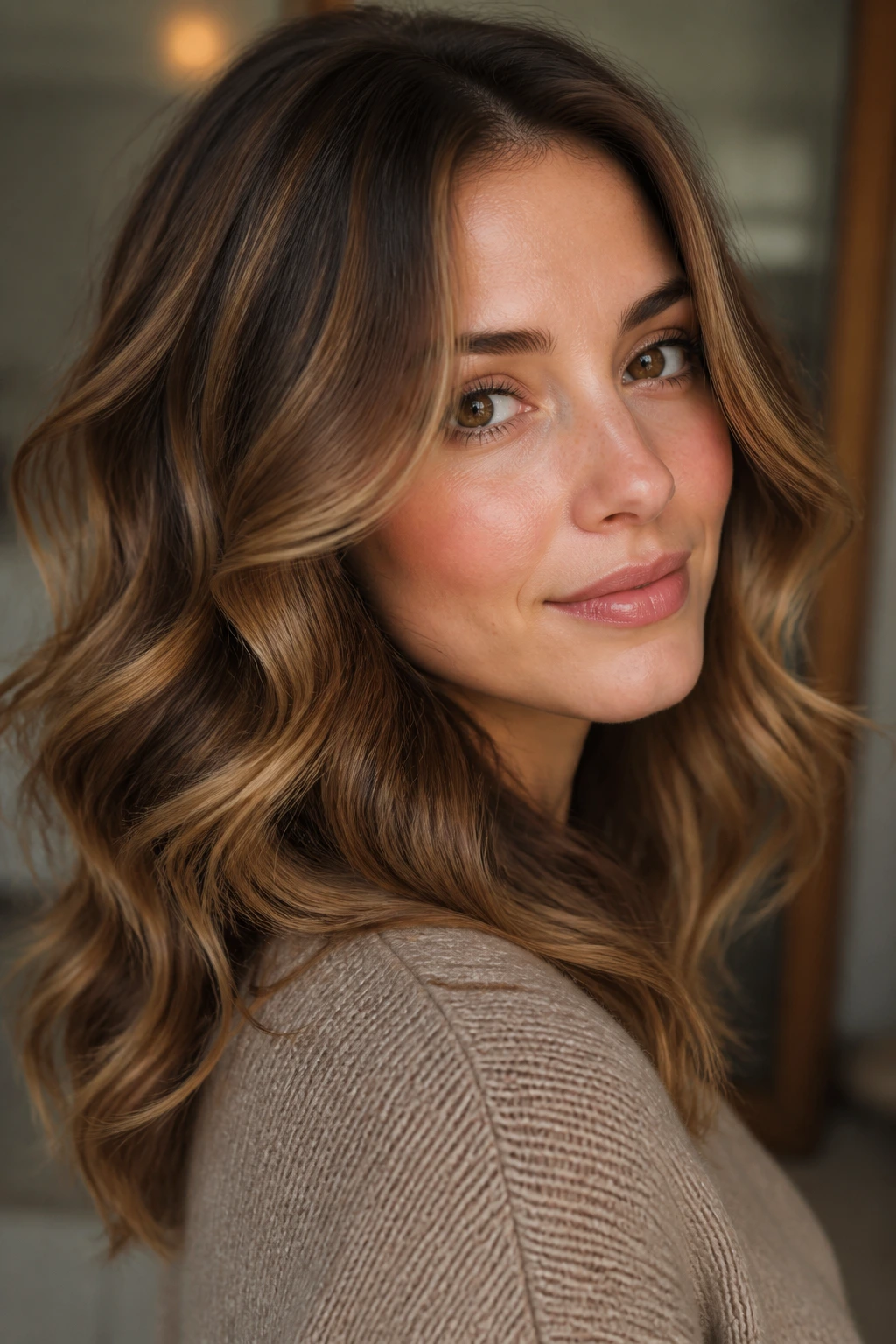
Hazelnut brown sits in a sweet middle zone: warm enough to feel soft, dark enough to keep structure. Add caramel ribbons, and fair skin gets warmth without the face losing definition. That’s a better result than going full blonde around a pale complexion, which can wash the whole thing out.
The ribbons should bend around the head, not sit straight across it. Curved placement follows the haircut and catches motion better. If you wear your hair in loose curls, even better — the caramel shows up in little flashes instead of one big bright stripe.
This is a good “first color” if you’re nervous. It doesn’t ask for much maintenance, and it doesn’t scream for attention. It just makes the brunette read richer.
15. Dark Roast Brunette with Champagne-Caramel Tips
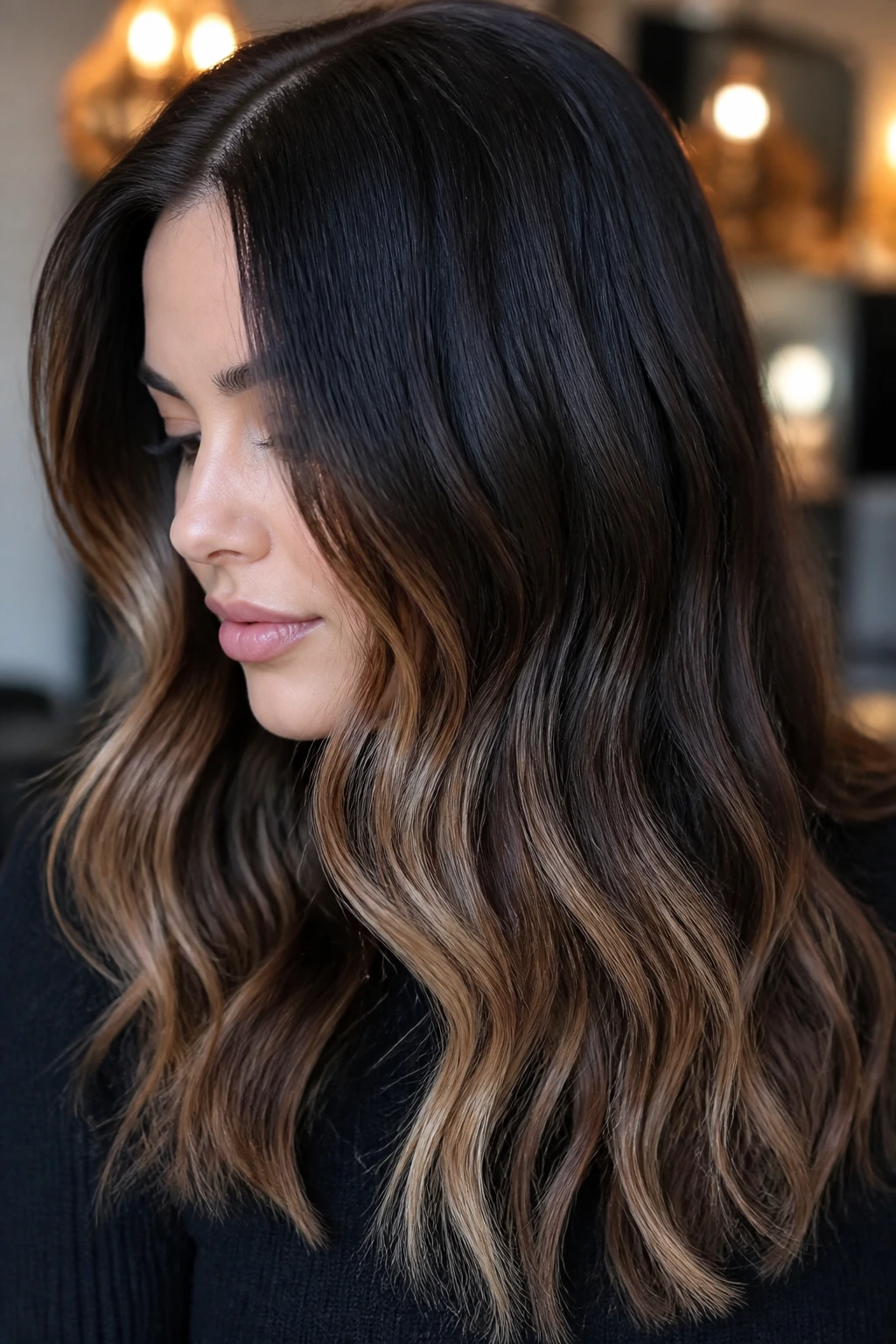
Why the Ends Matter Here
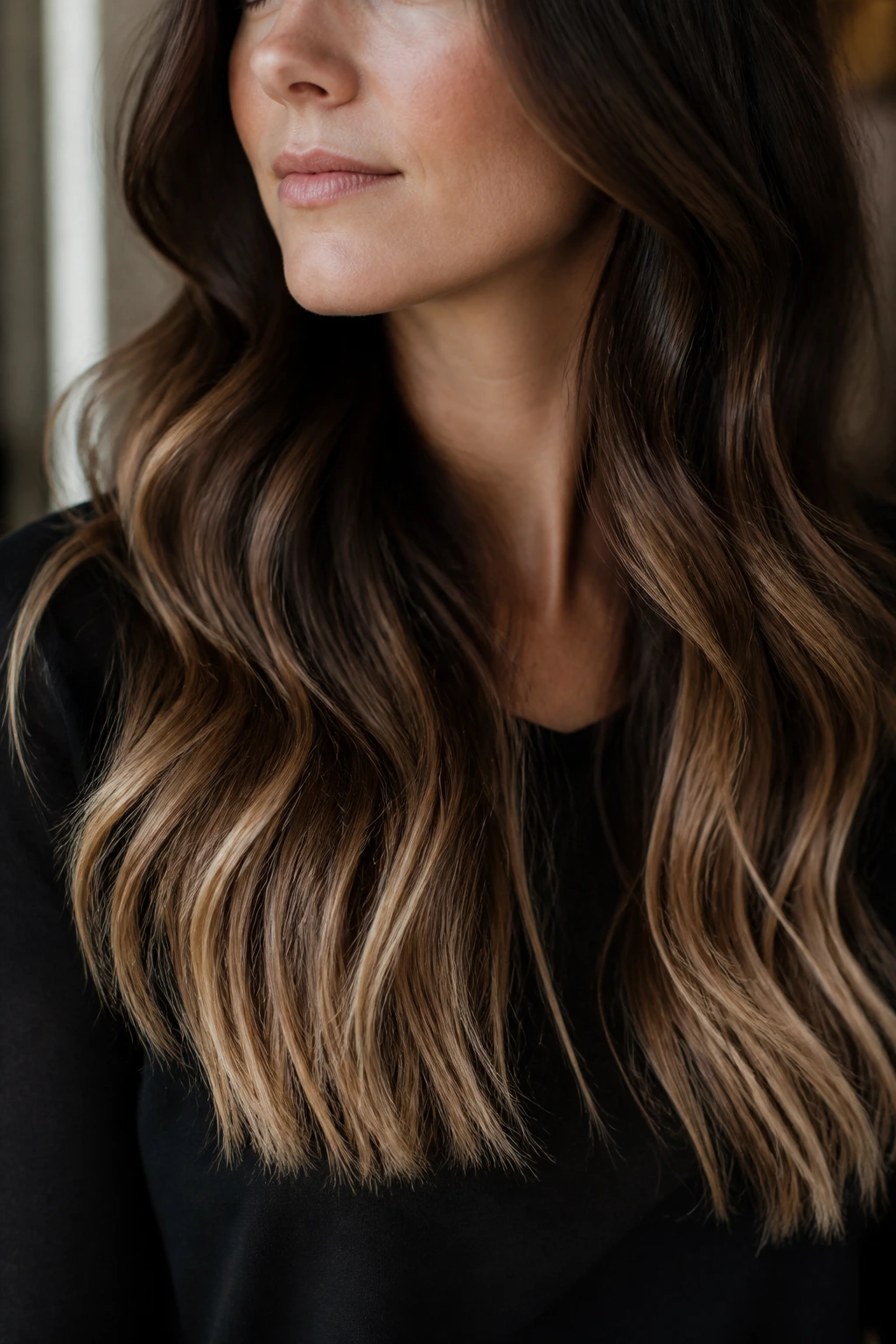
Dark roast brunette with champagne-caramel tips is for someone who wants the bottom of the hair to do the talking. The lighter tips break up density and keep fair skin from looking too stark against a solid dark base. Champagne caramel is paler than toffee, but still warm enough to stay in brunette territory.
The catch? Keep the transition soft. A hard ombré line can look dated fast and feel disconnected from the skin. Ask for a gradual melt, not a jump from black-brown to pale caramel.
This style works especially well on layered cuts. Each layer gets a little hit of color at the ends, which makes the movement visible. On thick hair, it takes some of the visual weight out. On fine hair, it adds a little sparkle where the light lands.
16. Chestnut Ombré with Soft Melt
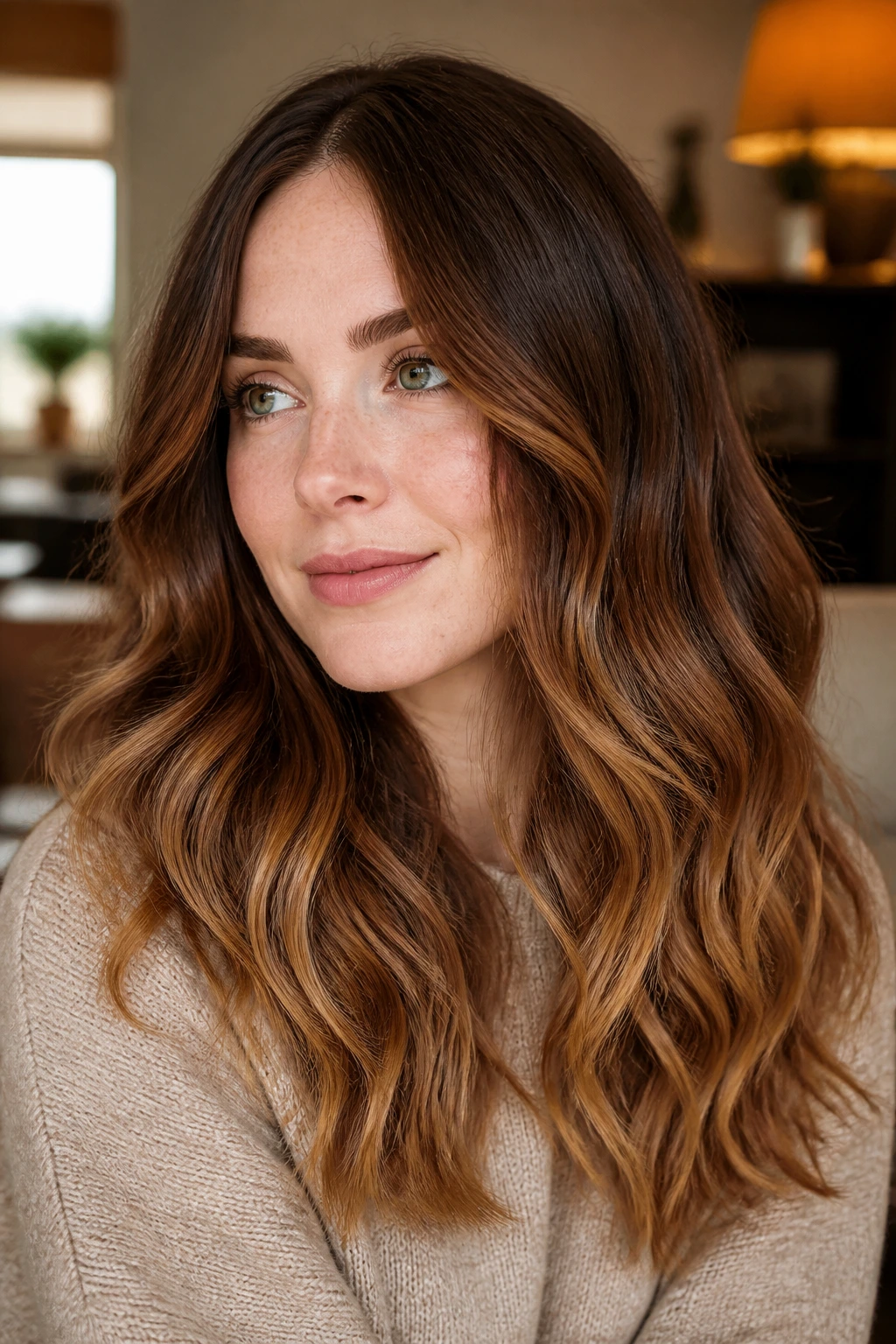
Chestnut ombré is one of the easiest caramel-brunette ideas to live with, because the grow-out looks purposeful. The soft melt from darker roots to warm ends gives fair skin a gentle frame, and the chestnut tone keeps the middle ground rich instead of blonded-out.
I prefer this when the transition starts lower than people expect. Let the root stay chestnut for several inches, then move into caramel only through the lower mids and ends. That preserves depth near the face. If the lighter tone starts too high, the whole effect can get busy.
A wave or a bend in the hair helps the melt read properly. Straight hair shows every line. Gentle movement hides the seam and makes the color feel more expensive than it is.
17. Bronze Brunette with Narrow Caramel Strands
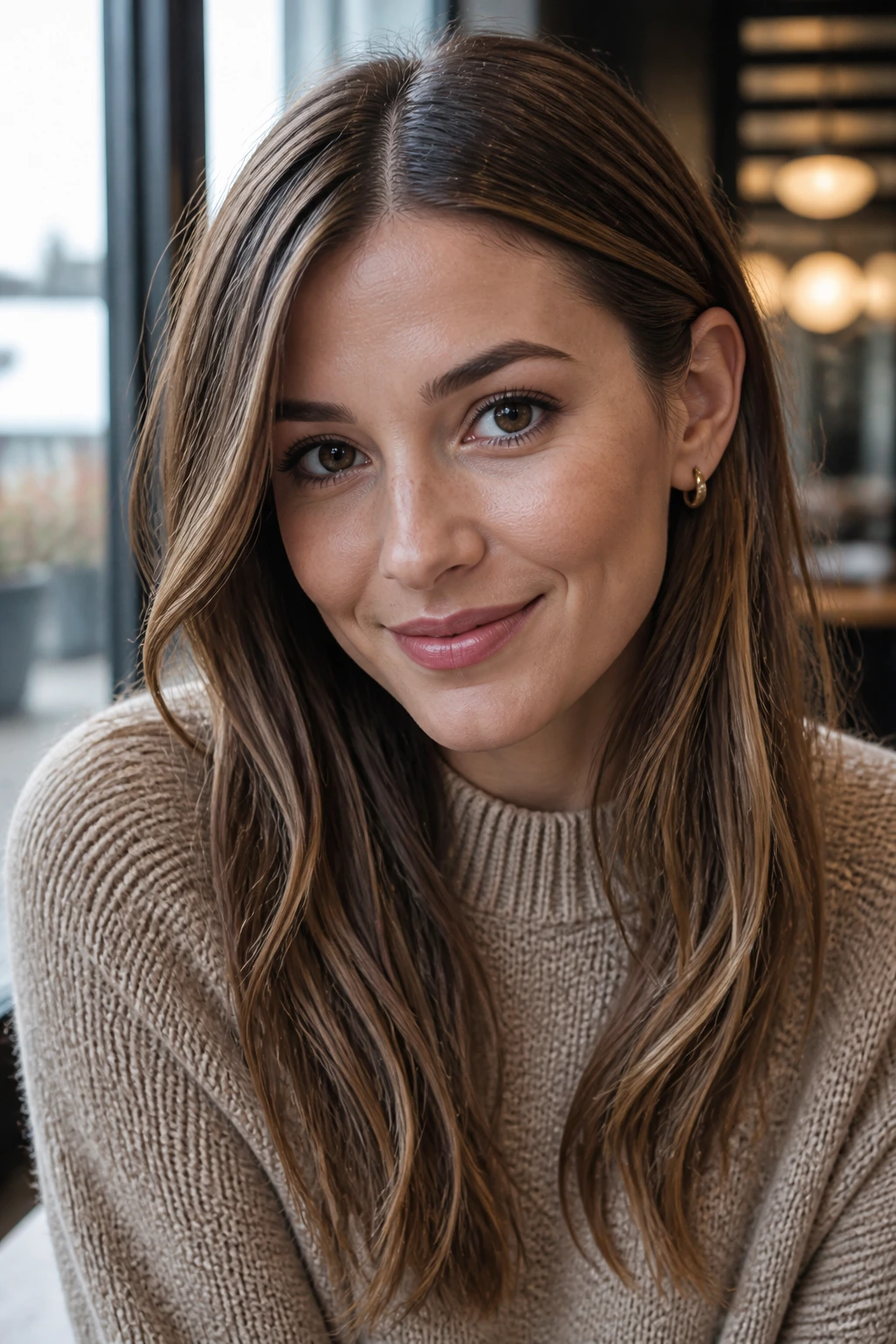
Bronze brunette is one of those shades that can look muddy if the caramel pieces are too thick. Narrow strands fix that. They give fair skin enough reflection to stay lively, but they don’t turn the head into a patchwork quilt.
Thin Ribbons, Better Result
The smaller the strand, the more the bronze base can do its work. That’s the whole charm. You get a layered effect, not a loud stripe effect. On fair skin, that matters because tiny strands are easier on the eyes and don’t pull focus away from the face.
This is a good choice for someone with very fine hair, because the color can create the illusion of texture. The strands should be placed in a way that follows the natural fall of the hair, not in a rigid grid. That little bit of irregularity is what keeps it from looking salon-stamped.
If you like polished, low-drama color, this is worth a serious look.
18. Cool Brunette with Warm Honey Ends
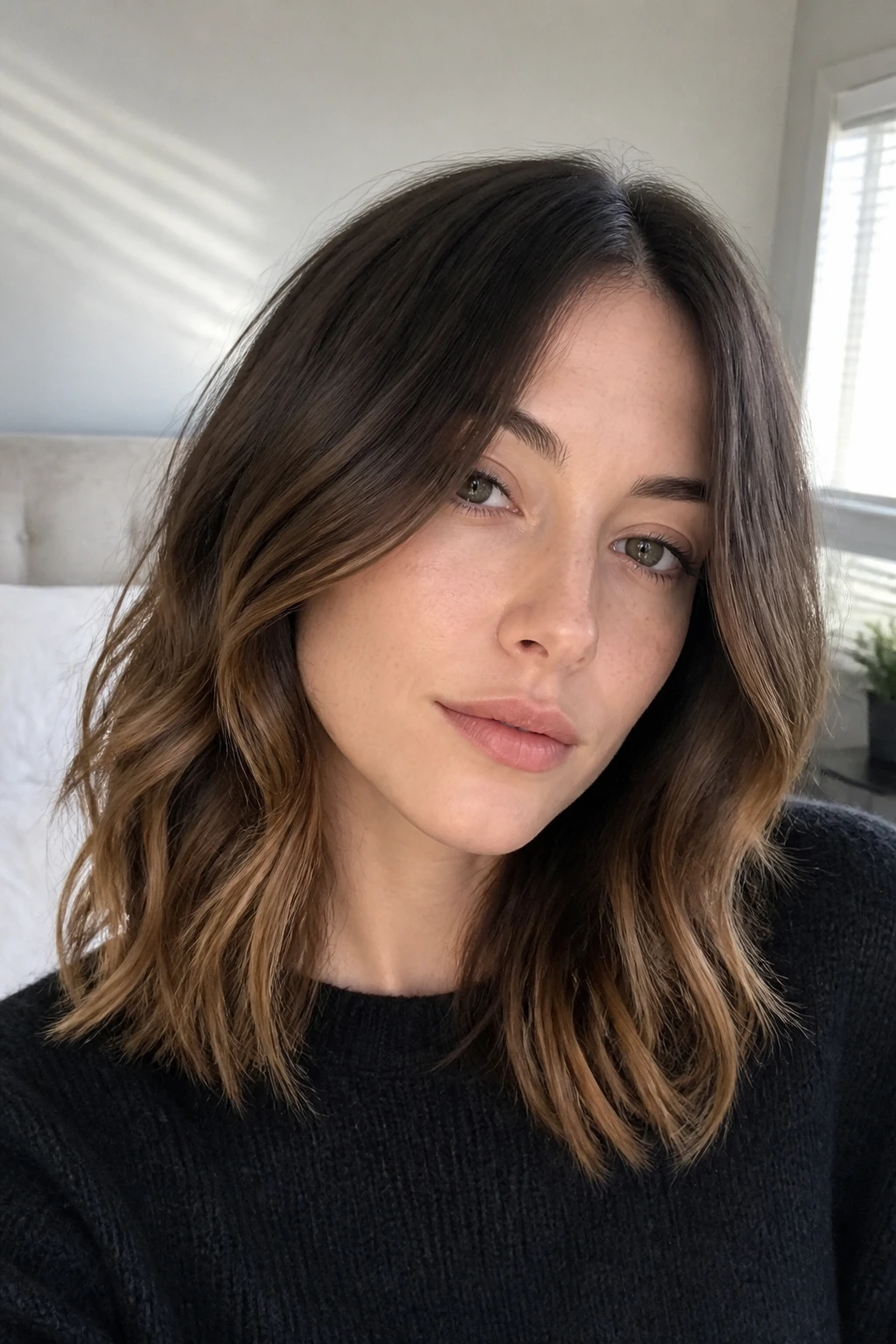
Can a cool brunette still suit fair skin? Absolutely — if the ends are warm enough to keep the face from going flat. Warm honey ends do that job without changing the whole root color, which is useful when you like the darker base but need a touch of life around the lower lengths.
The contrast is quiet, but it matters. A cool root can look sleek; warm ends keep it from reading icy against a light complexion. This is a smart middle path for people who don’t want to commit to a fully warm brunette.
Ask for the honey to stay concentrated below the chin line. That keeps the face area softer and gives the ends enough glow to show up in motion. It’s subtle. That’s the point.
19. Mocha Shag with Sunlit Caramel

A shag cut and caramel are a very good pair because the layers already create movement. Sunlit caramel just follows the shape. On fair skin, the brighter pieces work best when they hit the feathered ends and the bends in the layers, not the scalp.
Why the Wave Pattern Matters
The shag isn’t a one-length cut, so the color should not be treated like one either. A few sunlit pieces around the fringe, some through the crown, and a little more at the ends create that lived-in, rumpled finish people try to fake with styling sprays. Here, the cut does half the work for you.
Keep the caramel warm, but not gold-heavy. If it goes too yellow, the shag can start to look dried out instead of airy. A beige-toffee blend reads better on fair skin because it keeps the texture soft.
This one has a bit of attitude. Not much. Just enough.
20. Sandy Brunette with Root Shadow
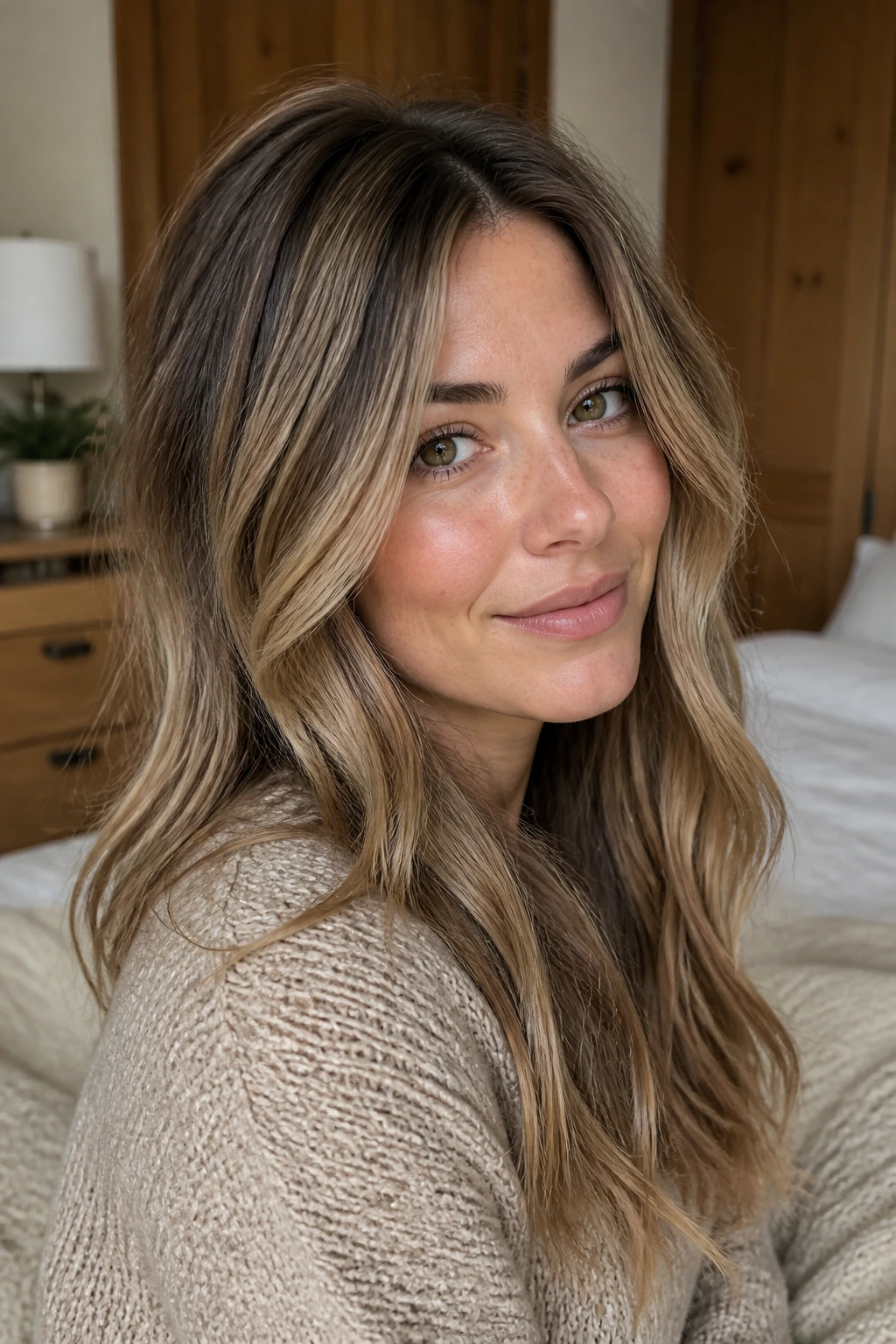
Root shadow is one of my favorite tools because it makes the entire color feel calmer. A sandy brunette with a deeper root shadow gives fair skin contrast without a harsh line, and the sandy pieces keep the warmth restrained.
The shadow should be close to the natural root color or just a touch deeper. If the base gets too dark, the face can look disconnected from the mids. If the sandy pieces get too light, they stop reading as brunette. Both mistakes are common, and both are fixable.
This is especially good for people who don’t want to touch up color constantly. The root shadow buys you time. The sandy tone keeps the ends from looking heavy. Very sensible. Also pretty hard to mess up if your colorist has a decent eye.
21. Chocolate Cherry Base with Caramel Lightening
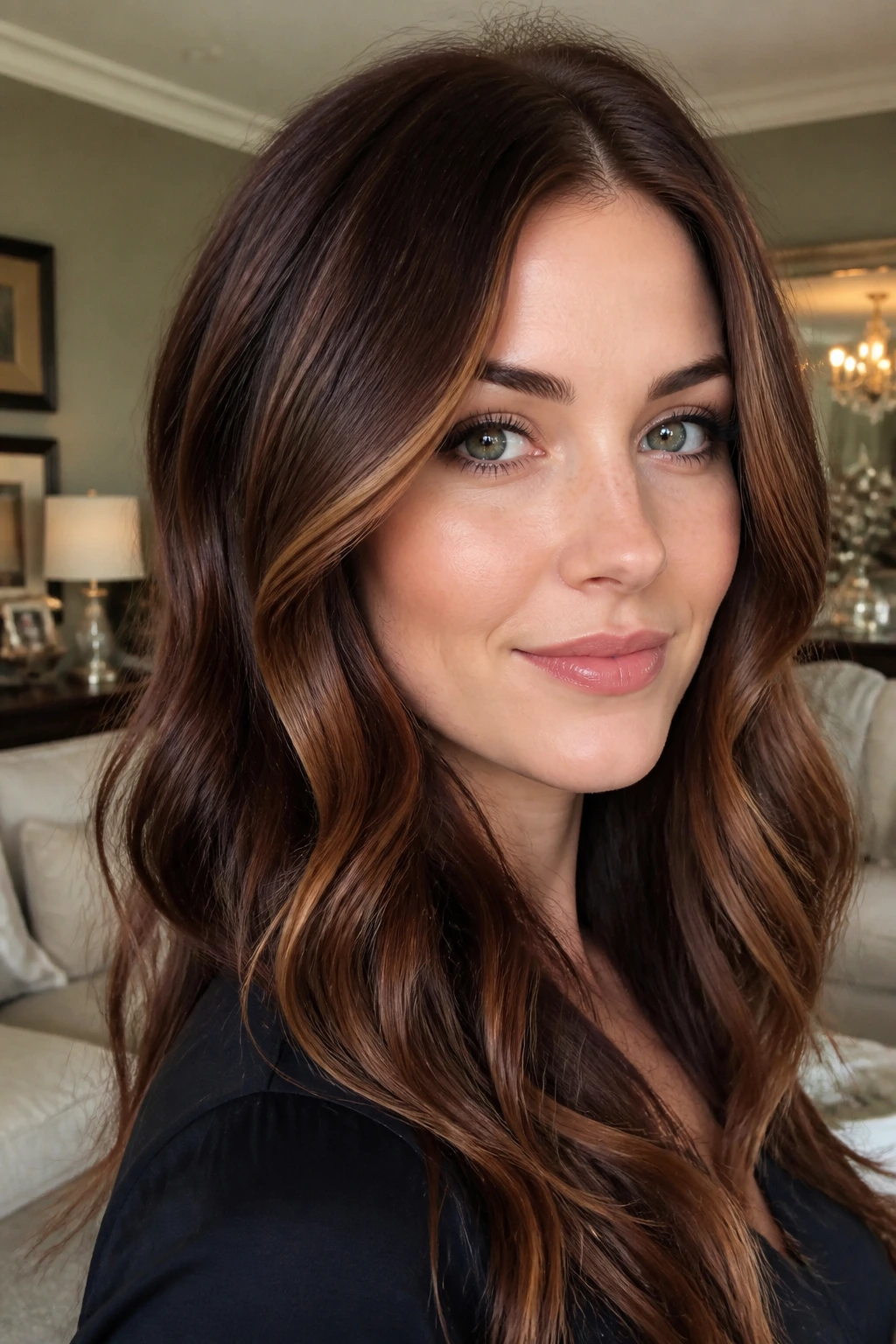
Chocolate cherry plus caramel sounds like a lot, but the result can be surprisingly wearable on fair skin. The cherry undertone warms the brunette base, and the caramel lightening adds contrast so the red-brown doesn’t sink into the complexion.
The important part is balance. Too much cherry and the hair starts dominating the face. Too much caramel and you lose the richness that makes the shade interesting. Keep the caramel in ribbons or a soft glaze over selected sections, not everywhere.
This is a strong pick if you already like warm makeup, rose blush, or berry lipstick. The hair and skin start speaking the same language. That’s usually a good sign.
22. Café Brunette with Subtle Glow Lights
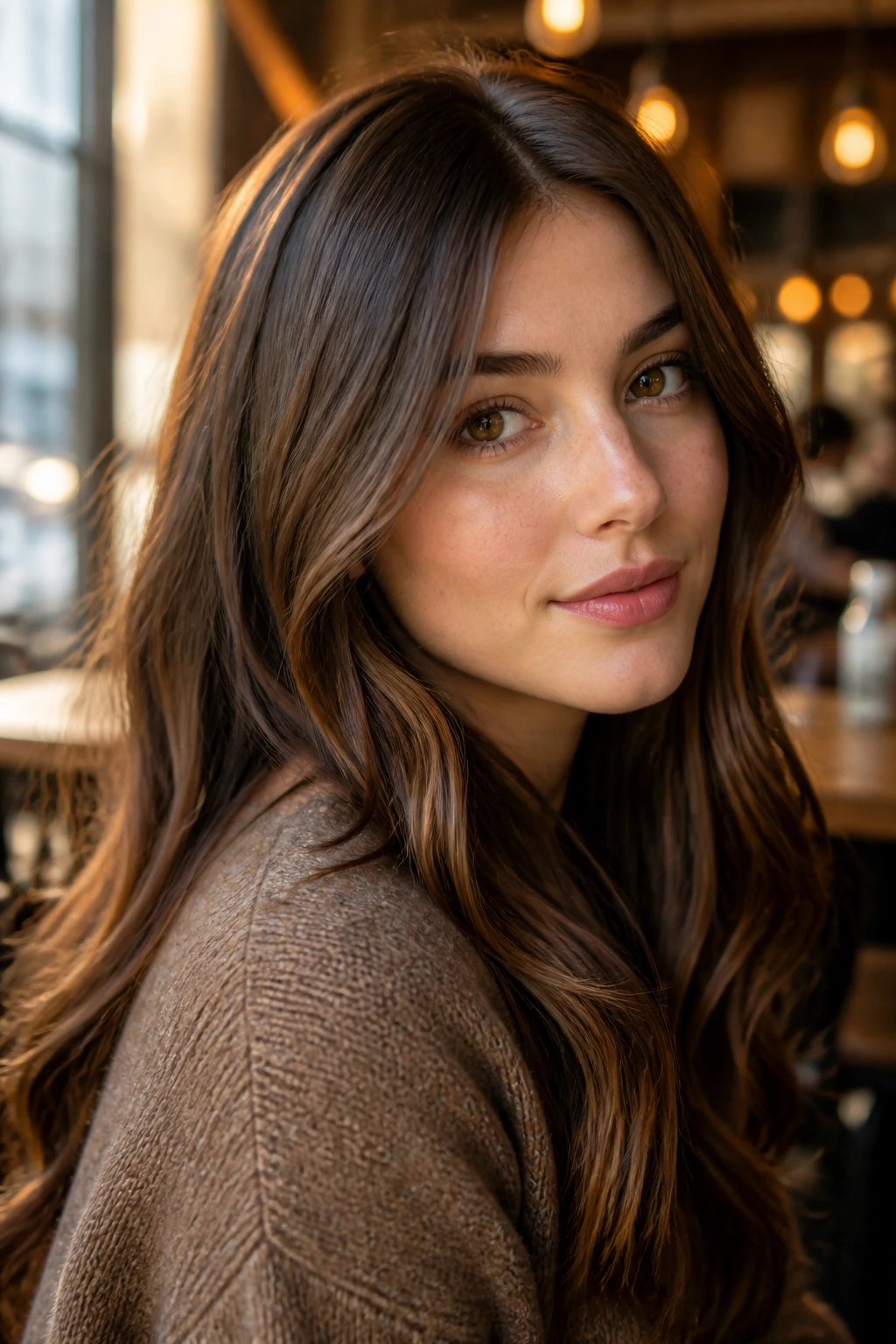
Café brunette is for people who want the hair to look like it simply has better lighting. The glow lights are soft enough that you notice shine before you notice color. On fair skin, that’s a useful trick because it lifts the complexion without creating obvious stripes.
Soft, Not Flat
The glow lights should be placed where the hair naturally bends — around the face, over the top layers, and lightly through the mids. Keep the caramel one or two levels lighter than the base, not five. The result will look more like dimension than highlight.
This is the shade I’d point someone toward if they say, “I want something noticeable, but I don’t want to maintain a lot.” That’s fair. This is the easiest kind of noticeable: people see the hair, not the salon appointment.
23. Golden Walnut with Soft Waves
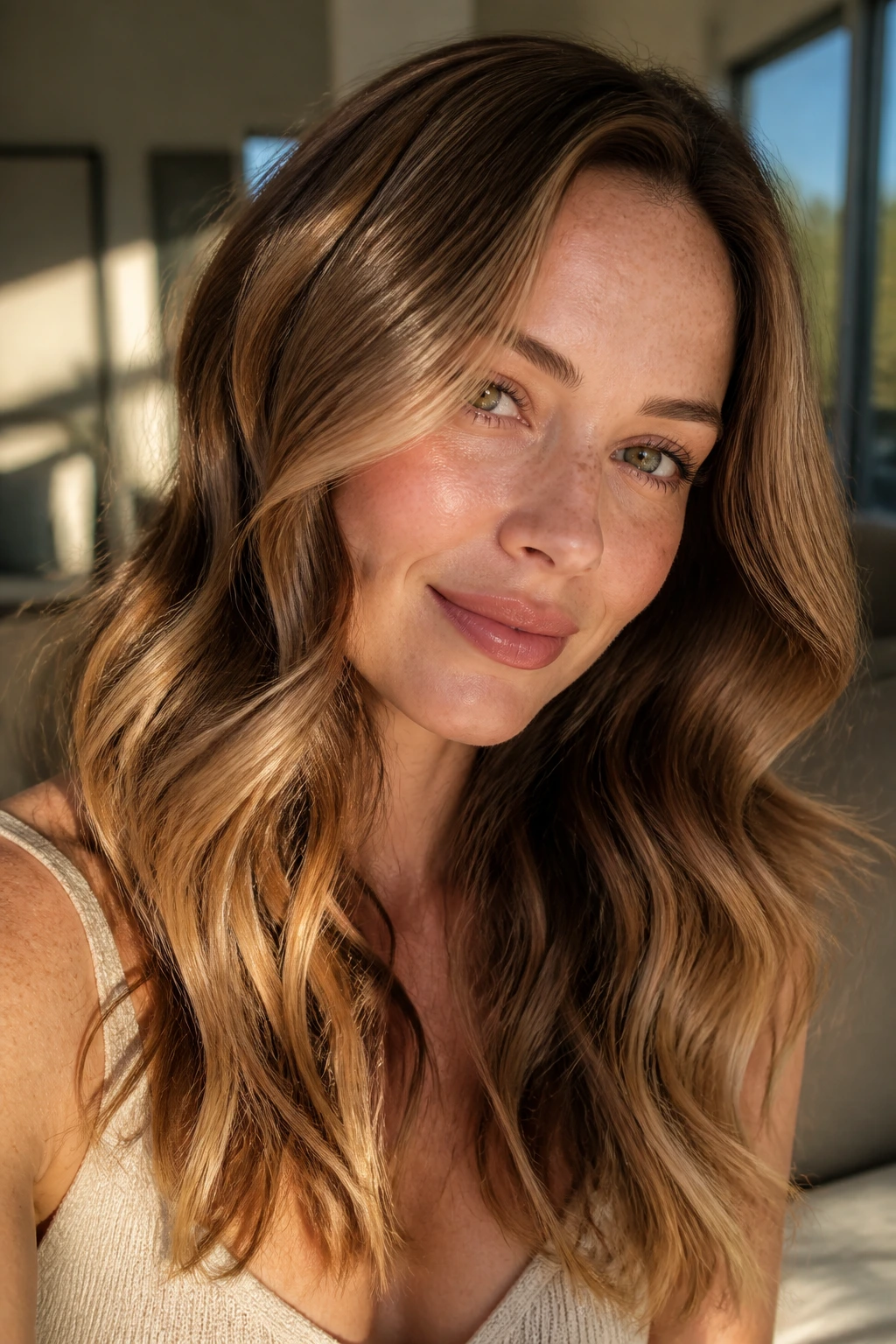
Golden walnut has enough warmth to suit fair skin, but the walnut keeps the shade from turning into soft blonde. The caramel sits in the waves and turns the whole style into something much richer than a simple single-process brunette.
The soft waves are not optional here. They help the golden pieces separate from the deeper base. If the hair is pin-straight, the color can feel a little too even, which dulls the point of the whole thing. A loose bend with a one-inch iron or a blowout brush brings the dimension forward.
This is a very wearable middle ground. Not too dark. Not too light. Just enough caramel to keep the face from getting lost.
24. Spiced Mocha with Dimensional Panels
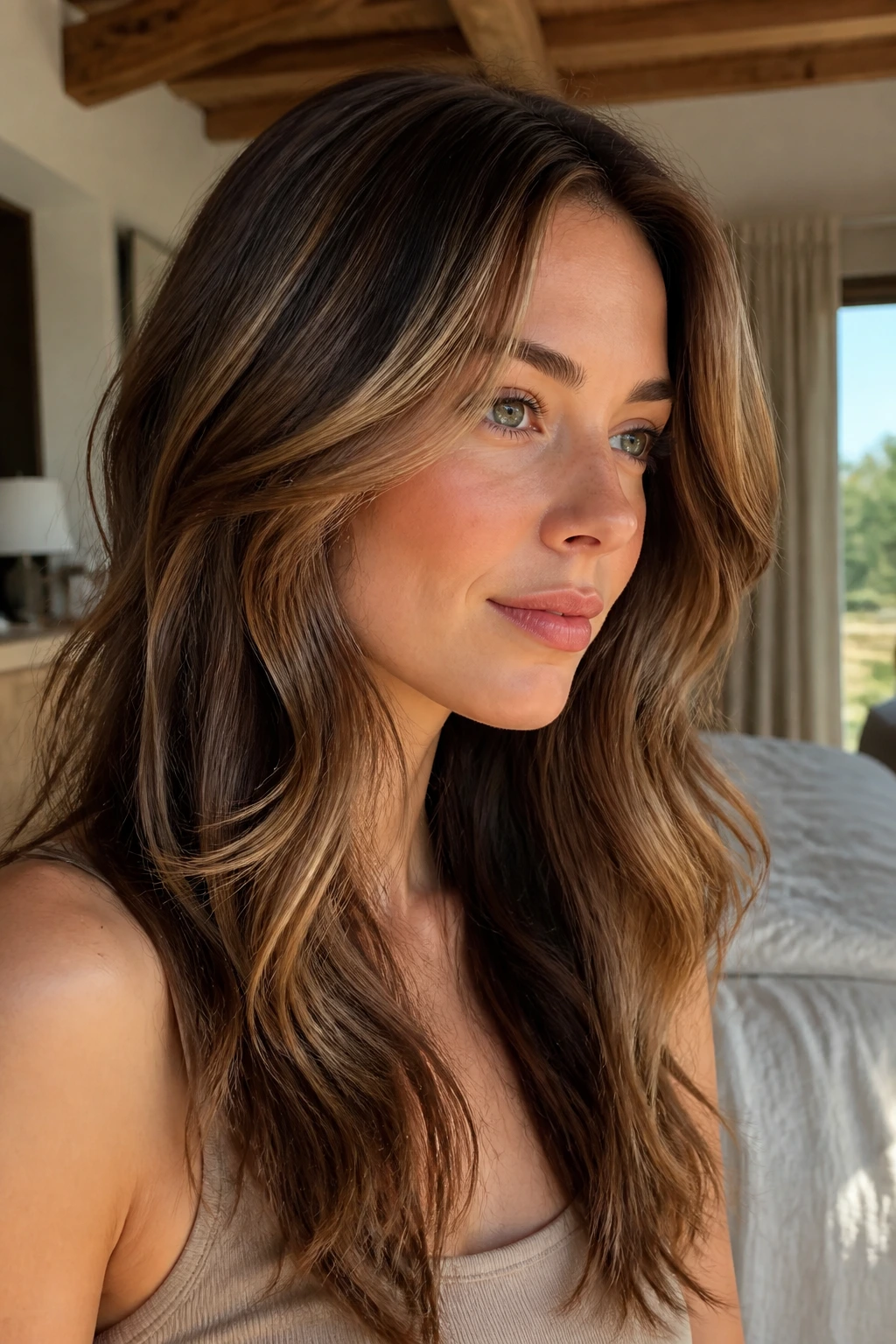
What makes dimensional panels different from regular highlights? They’re larger, placed with purpose, and meant to create shape. On fair skin, spiced mocha with caramel panels can sharpen the haircut in a good way — especially if you want to show off layers or a strong perimeter.
The caramel should be placed where the head naturally catches light: around the front, through the top sections, and sometimes under the surface to create movement when the hair swings. If the panels are too broad, the look becomes chunky. If they’re too thin, the whole idea disappears.
This version suits someone who wants the color to be seen from across the room, not just in a close-up mirror. The spiced mocha keeps it grounded. The panels supply the interest.
25. Rich Brunette with Lived-In Caramel Melt
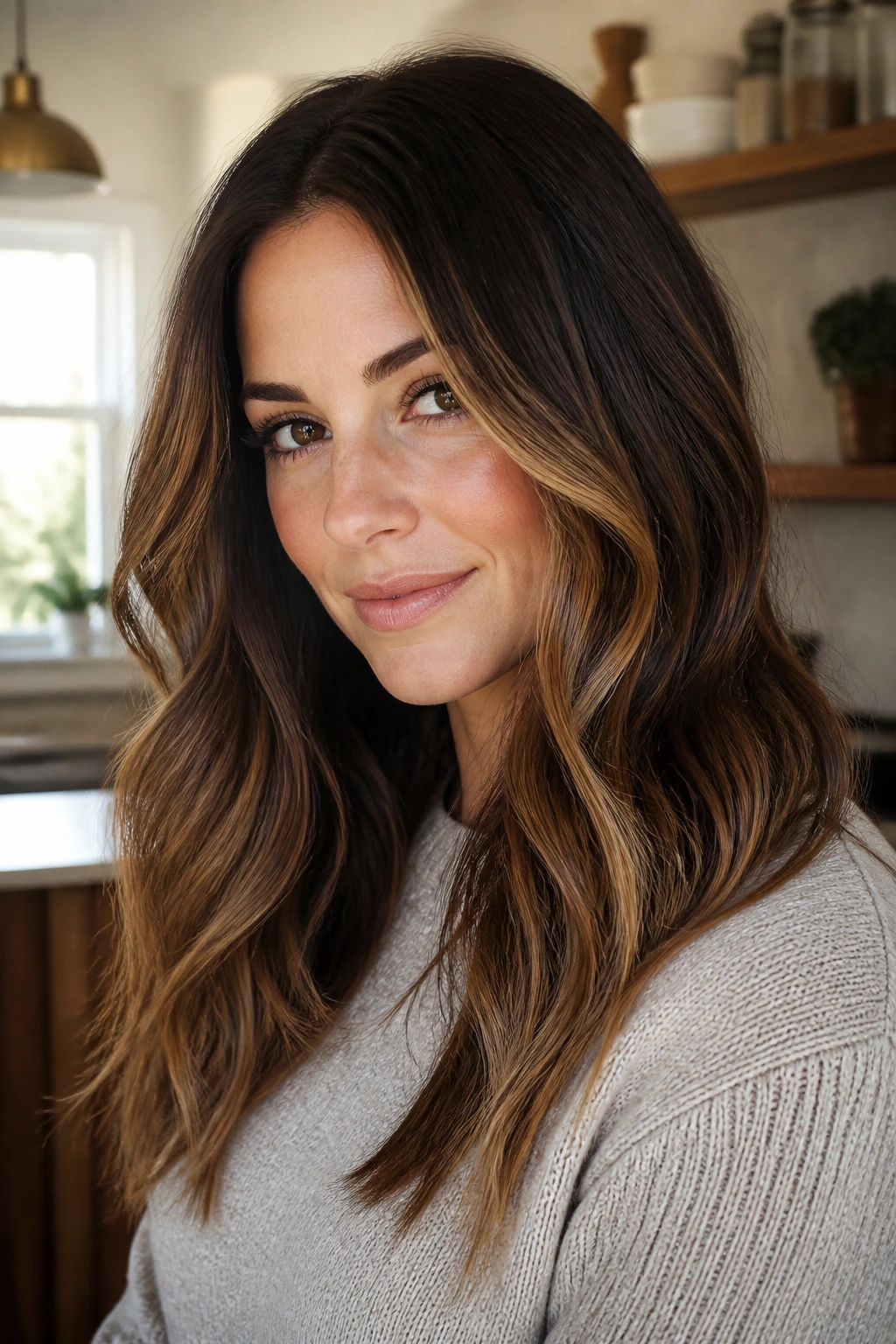
Lived-in caramel is what happens when the color is done with a little patience and a decent eye for placement. The root stays rich. The mids blur. The ends get just enough caramel to show depth without turning the whole head light. On fair skin, that softness keeps the color from feeling harsh or overdone.
This is probably the most forgiving option in the whole list. It grows out nicely, it survives busy weeks, and it doesn’t fight your complexion. If you want a brunette that looks expensive but not fussy, this is the one I’d point to first.
And yes, the word “lived-in” gets thrown around too much. Here, it actually fits. The color should look like it’s been worn, loved, and lightly refreshed — not freshly stamped onto the head.
How Caramel Changes on Fair Skin
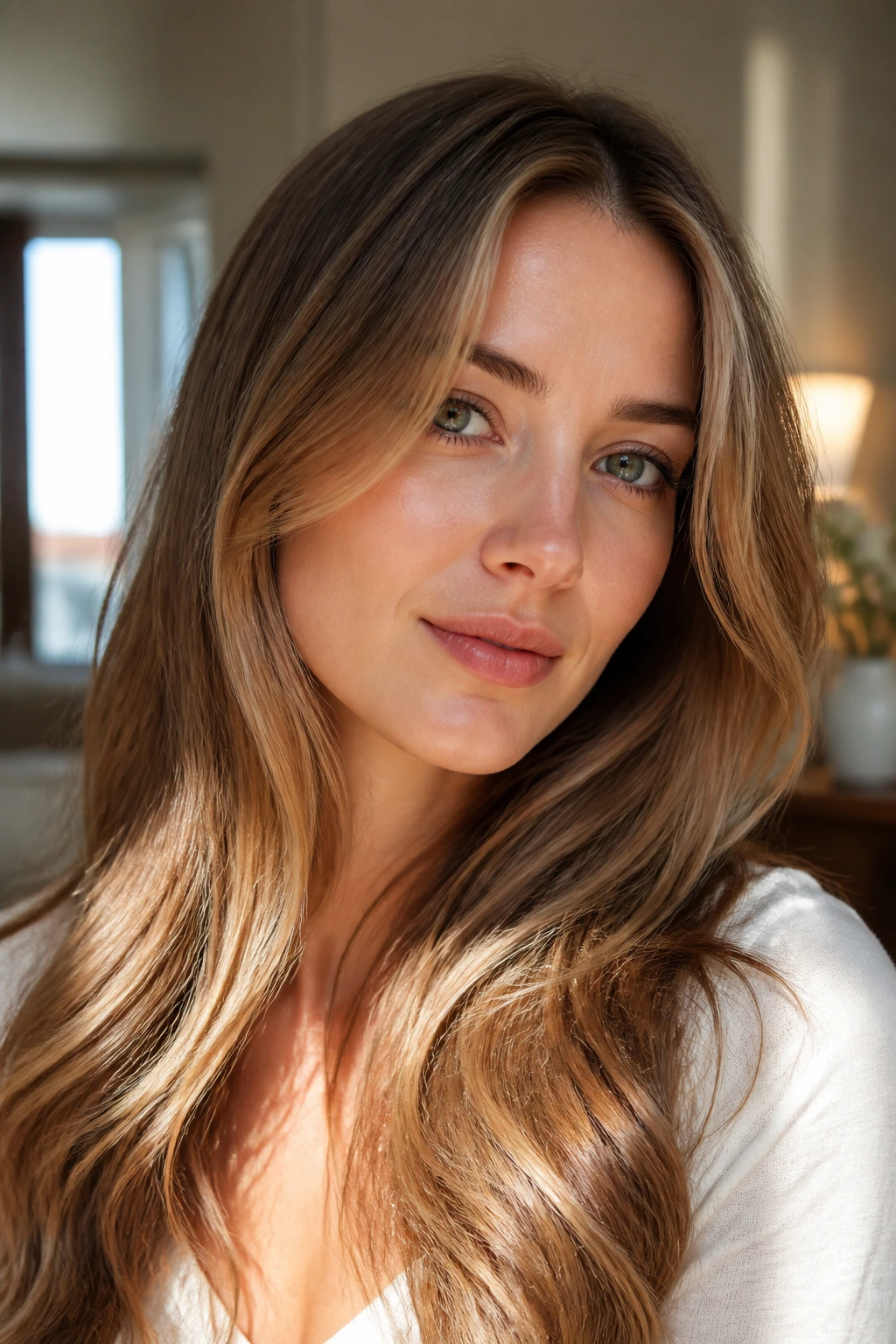
Fair skin changes caramel more than most people expect. A warm brown that looks cozy on olive skin can go orange on pale skin. A beige caramel that looks almost shy on medium skin can suddenly read expensive and luminous on a lighter face. That’s why the undertone matters more than the trend name.
The rule I keep coming back to is simple: the lighter your skin, the softer the caramel should be near the face. You can still have brightness. You just want it to look blended, not pasted on. A root shadow, a gentle gloss, or a face frame one to two levels lighter than the base usually gives the cleanest result.
Gray eyes, blue eyes, green eyes — all of that matters too, but less than the undertone in your skin. Cool fair skin usually likes beige, mushroom, or neutral caramel. Warm fair skin can take honey, toffee, and amber without looking too yellow. Neutral fair skin gets the most freedom, which is rude but convenient.
Choosing the Right Undertone for Your Skin
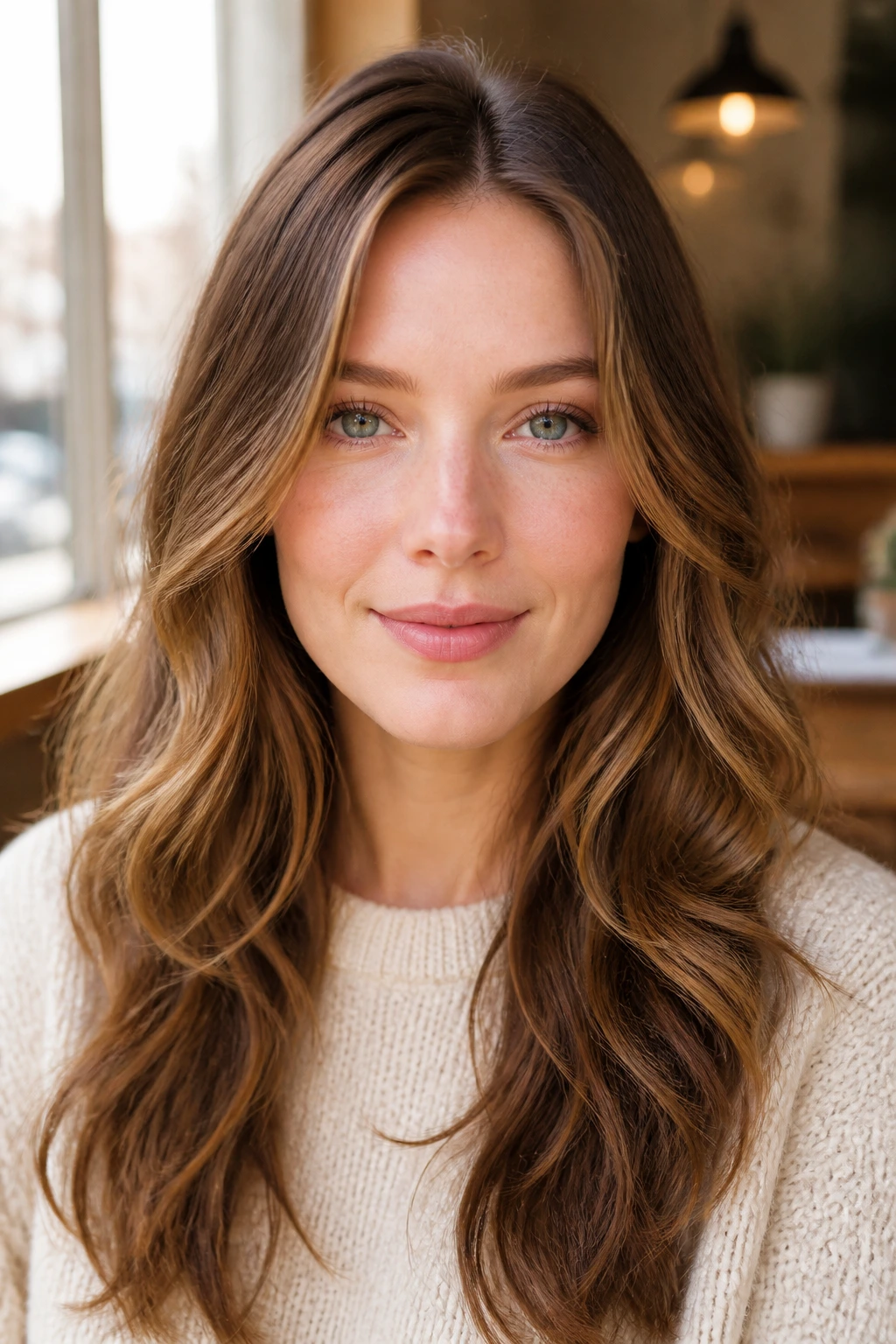
Cool Fair Skin
If your skin leans pink, rose, or blue, keep the caramel beige or neutral. Too much gold can make the complexion look ruddy. A mushroom brunette with caramel veil, a beige ribbon balayage, or a soft toffee gloss usually plays nicely here.
Warm Fair Skin
Peachy or golden fair skin can handle honey, amber, and toffee more easily. The shade still needs depth at the root, though. Warm skin plus light caramel everywhere can drift into a washed-out glow that looks flat after a few washes.
Neutral Fair Skin
Lucky you. Neutral skin can wear both beige and honey caramel, but the haircut decides the rest. Sleeker cuts tend to look better with quieter beige tones, while waves and layers can carry warmer ribbons without getting noisy.
If you’re stuck, a swatch test is worth asking for. Hold caramel photos next to your face in daylight, not under warm salon bulbs. Those bulbs lie.
Placement That Keeps the Color Soft Around the Face
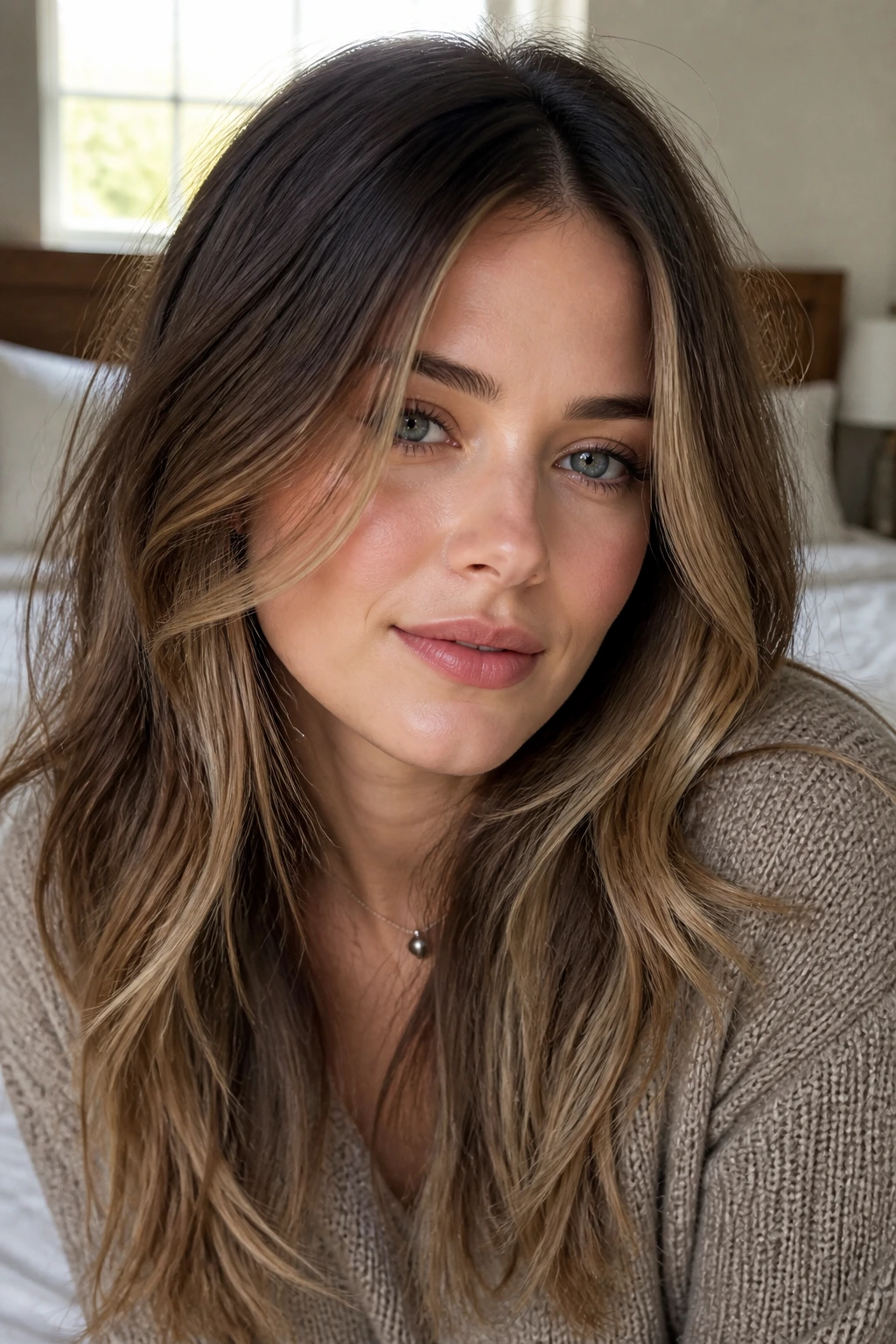
Face-framing color does not need to be loud to work. In fact, the loudest pieces are usually the ones that age fastest. Around fair skin, the better move is to keep the front sections slightly lighter and slightly narrower than you think you need.
A money piece can be as thin as 1/4 inch or as broad as 1/2 inch, depending on how much contrast you want. Anything wider starts to dominate the haircut. The lightest pieces should bend around the cheekbones and fall through the front layers, not sit as a solid slab at the hairline.
For full-head dimension, keep the crown darker and let the brightness live through the mids and ends. That gives the color a natural lift without exposing the scalp in a harsh way. If your hair is very fine, this matters even more. Sparse light pieces can look thinner than they are.
How to Ask for It at the Salon
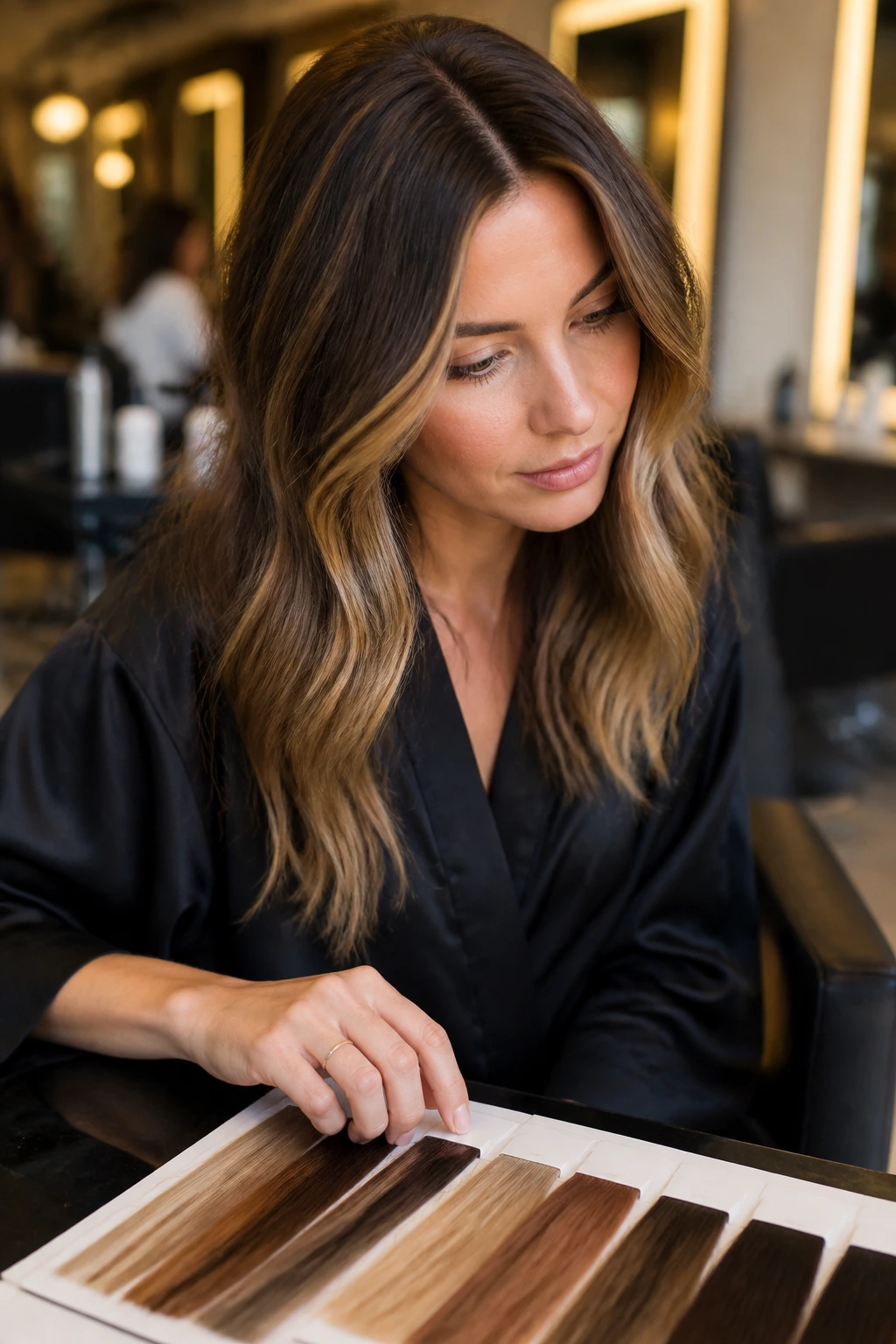
Bring two or three photos, and make sure at least one shows the color in daylight. Salon lighting can flatter almost anything, including shades that look orange the second you walk outside. If you want something specific, say it plainly.
Try this script:
“I want a brunette base that stays rich at the root, with caramel pieces that are one or two levels lighter, kept beige-to-neutral rather than coppery. I like soft face framing and a low-maintenance grow-out.”
That sentence saves a lot of back-and-forth. You can also mention whether you want balayage, fine highlights, or a gloss-only refresh. Those are not the same thing, and confusing them usually leads to disappointment.
If your hair has been colored before, say so. Porosity changes everything. Hair that’s already porous grabs warmth fast, which means the caramel can go brighter than the chart suggests. Good colorists will adjust for that. You want the person mixing the bowl to know what your hair did last time, not just what it looks like today.
Practical Tips for Getting the Shade Right
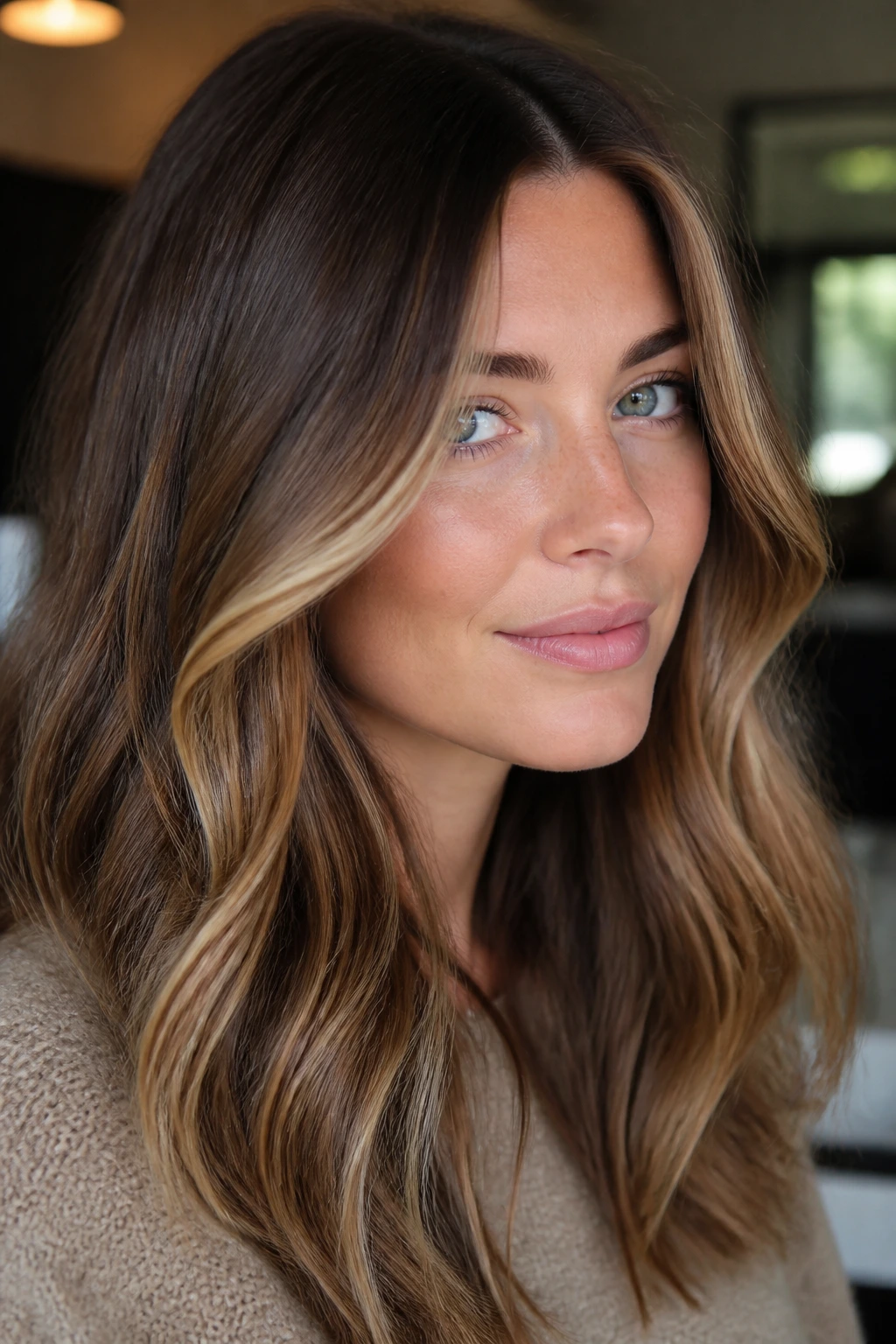
Tone Match: If your skin is very fair, keep the caramel closer to beige or toffee than pure gold. Gold is where brass starts to sneak in, and brass is the thing that makes pale skin look tired fast.
Placement Math: Ask for the brightest pieces near the face and through the upper layers, not scattered evenly everywhere. Uneven brightness creates movement. Even brightness can make the head look helmet-like.
Gloss Habit: A clear, beige, or neutral gloss every 4 to 6 weeks keeps the shade from turning dry and orange. Glosses are one of the cheapest ways to keep salon color from looking old before it actually is.
Heat Control: Flat irons and curling wands over 400°F chew through warm pigment fast. If you style often, stay lower when you can and use a heat protectant every single time.
DIY Reality Check: If your starting color is more than three levels darker than the caramel you want, at-home box dye is a gamble I would not make. That’s where banding and patchy warmth show up first.
Common Mistakes That Make the Shade Fall Flat
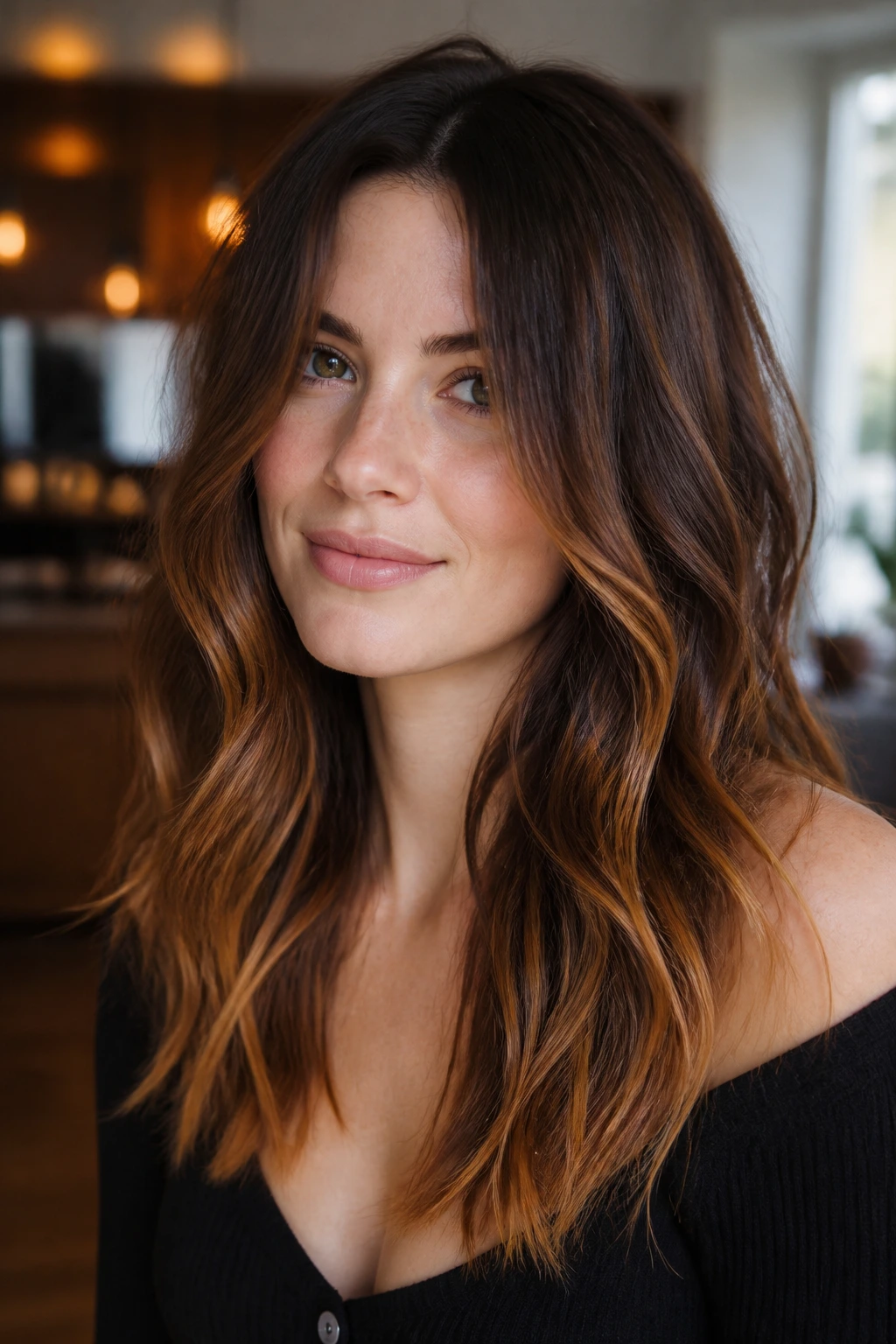
- Going too gold near the face: On fair skin, bright yellow-gold pieces can look brassy instead of warm. The fix is beige or neutral glossing, plus a slightly deeper root.
- Making the highlights too chunky: Thick streaks can make the color look dated and harsh. Fine ribbons or soft panels blend better and are easier on pale complexions.
- Lifting the whole head too light: The brunette disappears, and then you’ve lost the point of caramel brunette entirely. Keep some real brown in the formula.
- Ignoring porosity: Porous hair grabs warmth fast and can turn orange after a few washes. Use a color-safe mask and schedule gloss refreshes before the shade looks rough.
- Skipping root depth: A flat all-over caramel can wash fair skin out. A little root shadow gives the face shape back.
Variations and Alternatives Worth Trying
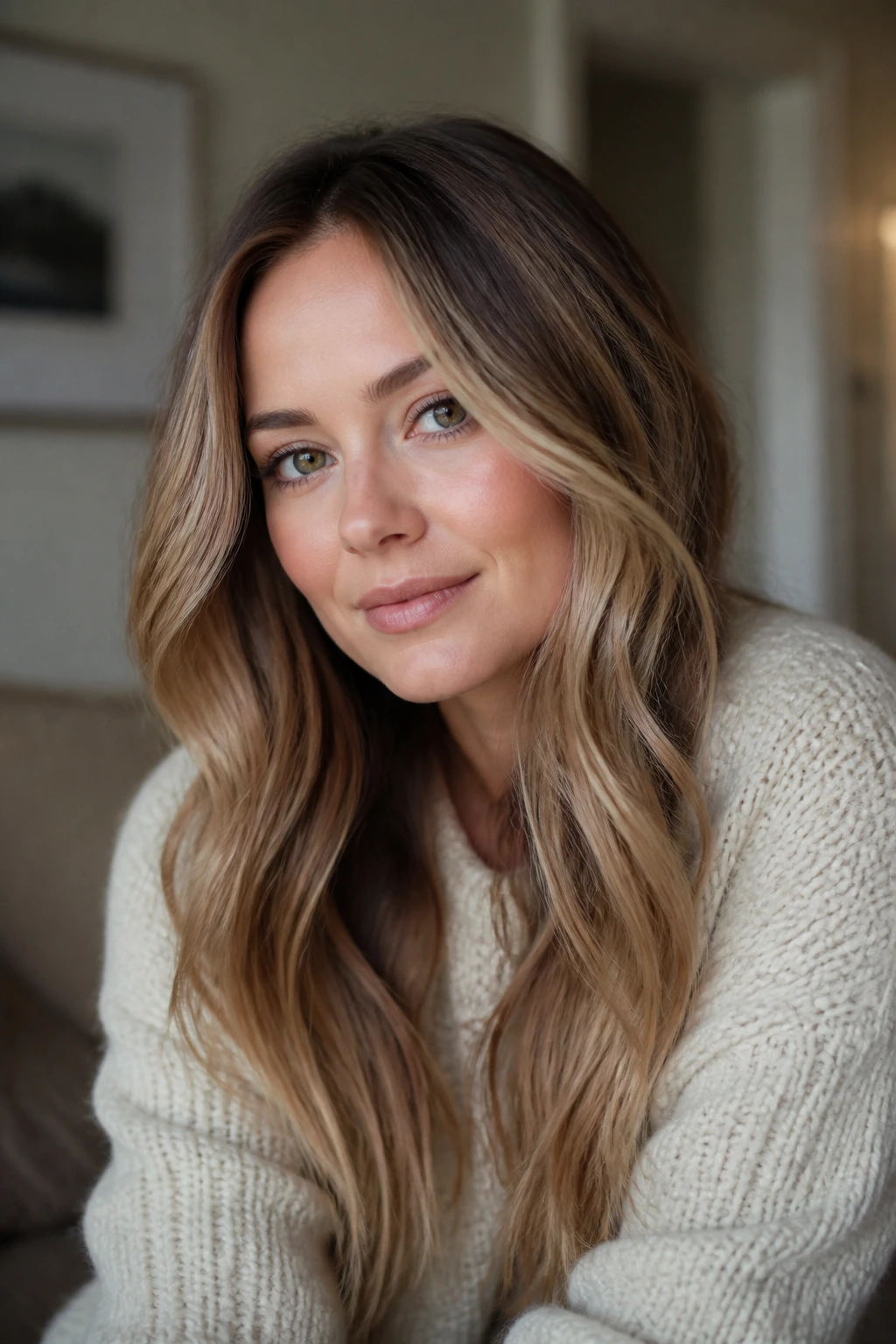
Cool-Beige Caramel: This version swaps gold for beige and keeps the warmth restrained. It suits pink or rosy fair skin and looks cleaner under indoor light.
Honey Money Piece: Keep most of the brunette quiet and brighten only the front sections. That gives you a visible change without committing to a full highlight service.
No-Bleach Brunette Glow: If your hair is already light brown, a gloss or demi-permanent glaze can add caramel warmth without bleach. The effect is softer, but the grow-out is kinder.
Copper-Caramel Tint: Add a touch of copper for freckles, peachy skin, or anyone who wants the color to feel warmer and a little spicier. Keep it controlled or it goes fiery fast.
High-Contrast Melt: Leave the root rich and let the caramel live mainly through the mids and ends. This suits layered cuts and people who like a bolder silhouette without heavy striping.
Tools, Products, and Color Resources
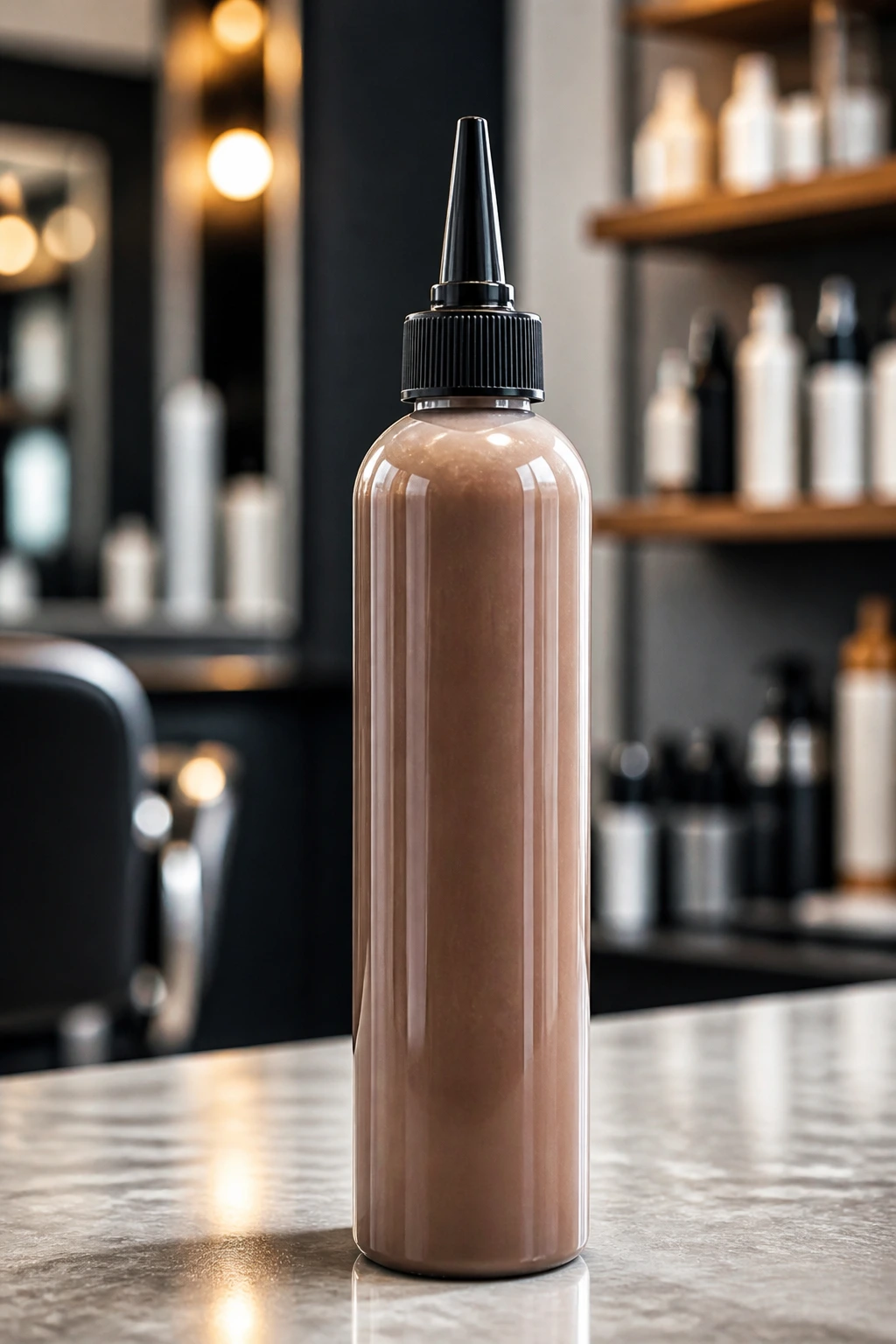
- Color-safe shampoo and conditioner: Keeps the cuticle calmer and slows down fade, especially if you wash often.
- Blue shampoo for brunettes: Helps cut orange brass in caramel pieces that start to pull too warm.
- Leave-in conditioner: Useful on the mids and ends, where caramel shows dryness first.
- Heat protectant spray or cream: Non-negotiable if you curl, straighten, or blow-dry regularly.
- Wide-tooth comb: Easier on highlighted hair than a tight brush when the hair is wet.
- Tint brush and mixing bowl: Handy if you’re doing a gloss or root melt at home.
- Hair clips and foils: Helpful for sectioning if you want clean placement instead of a messy guess.
- Salon cape or old towel: Saves your shirt, your sink, and your patience.
How to Keep the Tone Fresh Between Appointments
Caramel fades best when you don’t bully it. Wash with lukewarm water, not hot water. Use a color-safe shampoo two or three times a week instead of scrubbing every morning, because frequent washing pulls warm pigment out first and leaves the brown looking dull.
A blue shampoo every second or third wash can help if the caramel starts leaning orange. Don’t leave it on forever. A short pass is enough for most brunettes, and too much can mute the warmth until the color looks muddy. Follow with conditioner on the mids and ends only.
Glosses and toners usually need refreshing around every 4 to 8 weeks, depending on porosity and how much heat you use. If the hair starts looking dry before the color looks bad, treat the ends first. Shine is part of the illusion here. Lose the shine, lose the caramel.
Sun exposure matters too. Hair sunscreen sprays and UV-protective leave-ins are worth using if your hair pulls brassy fast. That advice sounds fussy until you spend a summer wondering why your toffee ends turned orange.
Frequently Asked Questions
Will caramel brunette wash me out on fair skin?
Not if the tone is chosen well. Beige, toffee, and neutral caramel usually flatter fair skin better than bright gold, because they add warmth without turning the face yellow.
What caramel tone works best for cool fair skin?
Beige caramel, mushroom brunette with caramel veil, or soft toffee are the safest bets. They keep the warmth muted, which helps cool skin stay clear instead of rosy-red.
Can I get this look without bleach?
Yes, if your base is already light brown or dark blonde. A demi-permanent gloss or glaze can add warmth and shine without taking the hair all the way up to blonde territory.
How often will I need touch-ups?
Rooted versions and balayage styles can go 8 to 12 weeks between major salon visits, while gloss-heavy shades may want a refresh around 4 to 6 weeks. The more heat and shampoo you use, the faster the tone softens.
What if the caramel turns orange?
Use a blue shampoo for brunettes, then follow with a hydrating mask. If the color keeps pulling orange, the next salon visit should lean more beige or neutral so the warmth stays controlled.
Is balayage or highlights better for fair skin?
Balayage is softer and easier to grow out; fine highlights give more all-over brightness. For very fair skin, balayage usually looks less harsh unless you want a stronger contrast.
Can fine hair wear caramel brunette without looking thin?
Yes, and sometimes it looks fuller because the ribbons create visual texture. Keep the light pieces narrow and place some lowlights underneath so the hair keeps body at the root.
What should I tell a colorist if I want low maintenance?
Ask for a darker root, soft face-framing pieces, and a blend that doesn’t start right at the scalp. That gives you grow-out without a harsh line and keeps the color looking deliberate for longer.
A Shade Worth Keeping
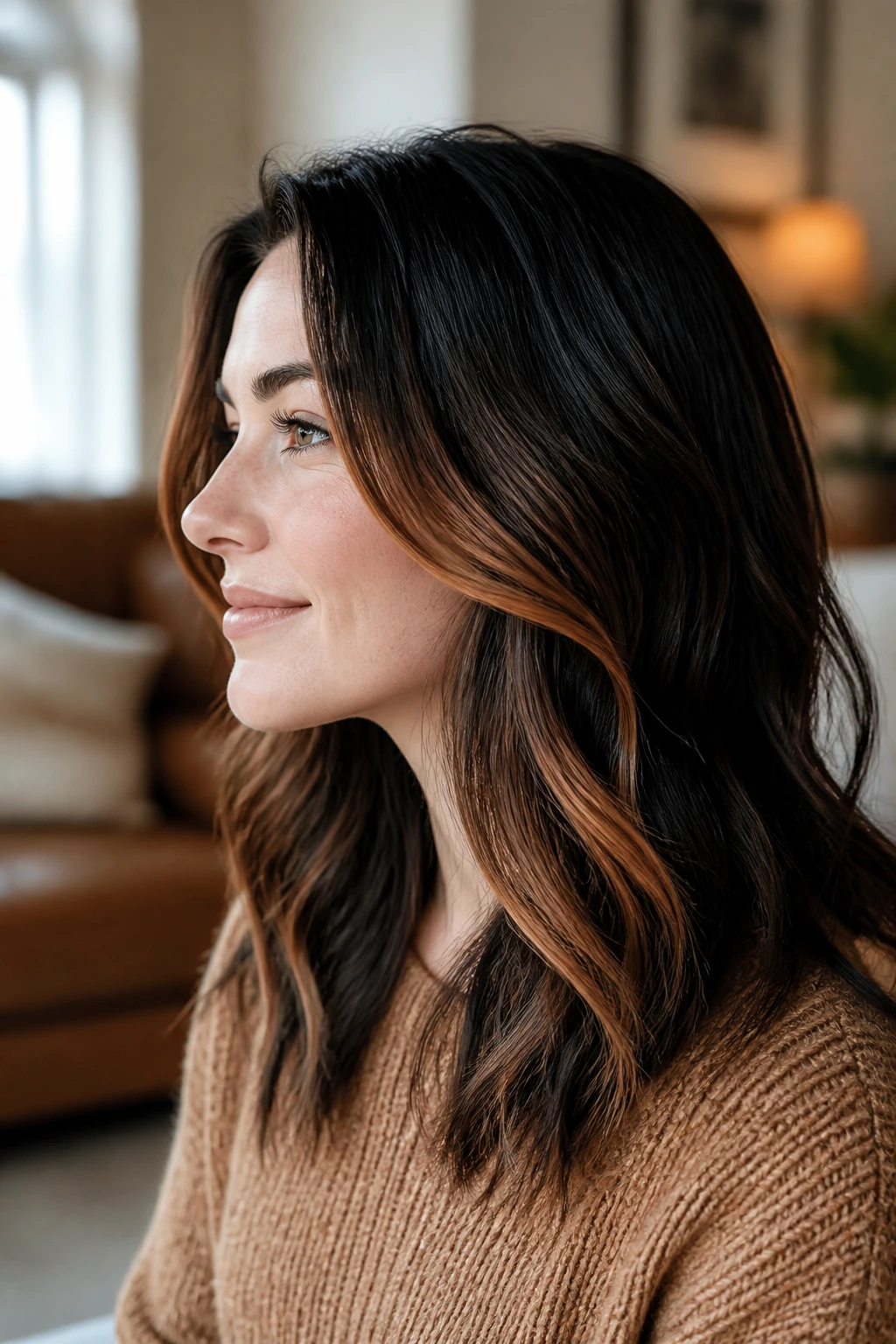
Caramel brunette works on fair skin when the shade remembers its job: warm the face, keep the brunette visible, and avoid any piece that looks like it got there by accident. The best versions are rarely the brightest ones. They’re the ones with enough depth to frame the skin and enough softness to move with the light.
If you’re torn between a few options, start with the quietest one. A rooted caramel balayage, a beige money piece, or a soft gloss can always be pushed warmer later. Going the other direction is harder, and your hair will thank you for not making it work too hard on day one.