



Silver hair can look razor-sharp on olive skin, but only when the shade has some smoke in it. Pure white platinum is the fastest way to make a face look drained; a better silver carries pearl, graphite, or a soft root shadow so the skin still has somewhere to land. The smartest platinum silver hair color ideas for olive skin do not fight the undertone — they work with it.
That matters because olive skin is weird in a very specific way. It can read golden in daylight, muted indoors, and a little green beside the wrong toner, which is why one silver formula can look rich on one person and flat on another. A good colorist watches the root depth, the eye color, and the amount of contrast around the brows before mixing anything icy.
Some of the shades below are clean and bright; others are smoky, pearly, or brushed with beige so they don’t go chalky. That range is the point. If you’ve ever saved a silver-blonde photo and thought, great on her, not sure on me, the difference is usually right here — tone, depth, and placement, not just brightness.
Why These Shades Work on Olive Skin
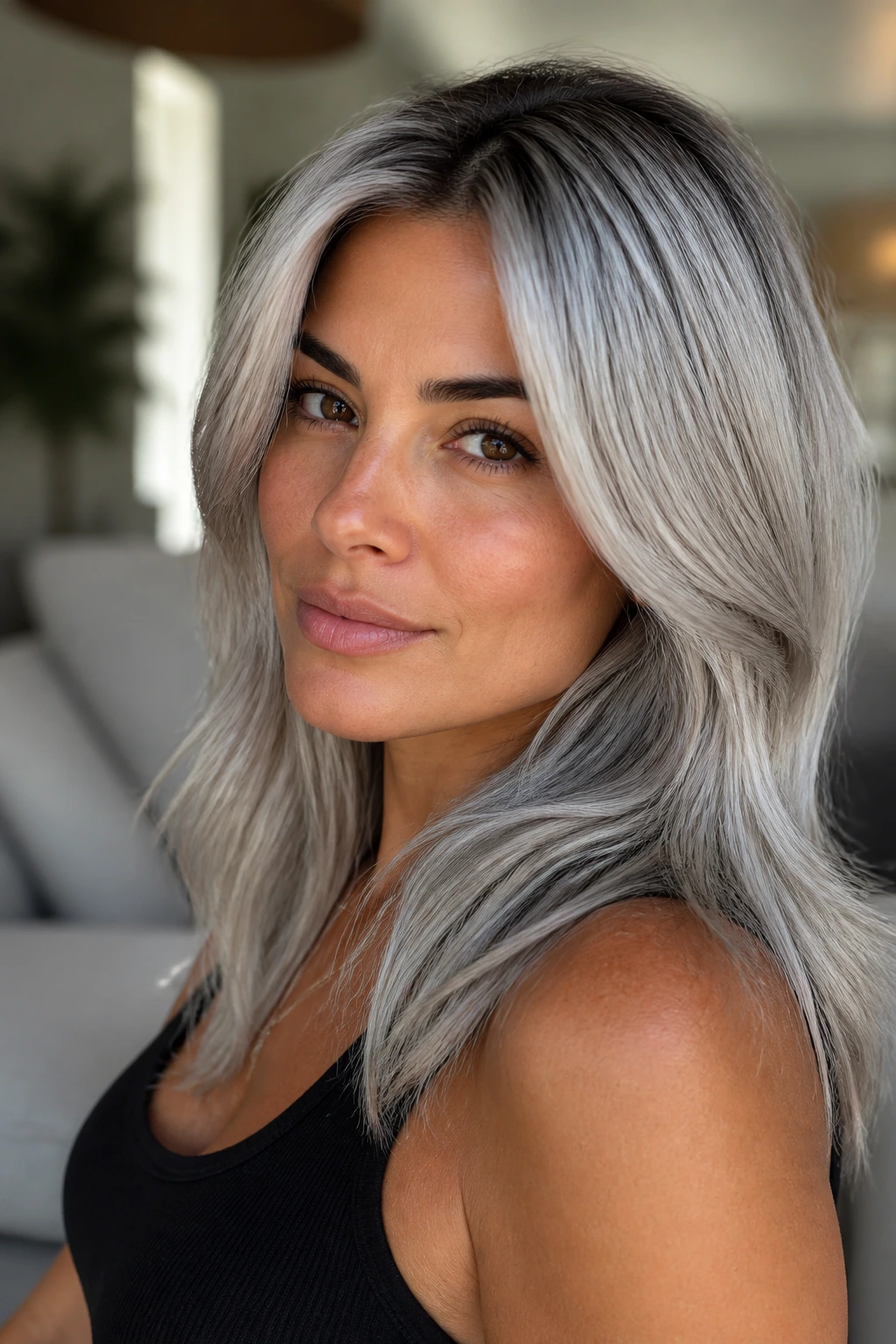
-
Shadow keeps the face alive: A root melt or smoked base stops platinum from flattening olive undertones, especially when your skin leans muted or green-gold.
-
Pearl beats blue: Pearl, beige-silver, and smoky silver read cool without tipping into that hard cobalt cast that can make the skin look tired.
-
Placement matters as much as tone: Money pieces, ribbons, and face-framing highlights put the light where it helps, instead of blasting the whole head with one flat silver panel.
-
Texture saves the color: Waves, bends, layers, and a crisp bob stop silver from looking like a helmet; the movement gives the tone somewhere to break up.
-
Maintenance has to be planned: These shades look polished when toner, purple shampoo, and gloss refreshes are part of the plan, not emergency repairs.
-
Makeup stays flexible: The right silver lets taupe brows, peach blush, berry lips, and olive-friendly wardrobe colors do their job without fighting the hair.
1. Smoke-Root Platinum Melt
Smoke at the root saves this one. The darker base gives your face a line to sit against, which is exactly what olive skin needs when the mids and ends go pale silver. Without that depth, the whole look can drift a little flat.
Why It Works
Ask for a lift to a pale yellow base, then a root smudge that sits about 1 to 1½ inches deep in a level 6 to 7 smoky brown. The melt should feel soft, not stripey. I like this version because it looks expensive even when the grow-out starts showing.
Quick notes:
- Best for: Medium to deep olive skin, especially if your eyes are hazel, brown, or green-brown.
- Maintenance: Tone every 4 to 6 weeks; root blur every 6 to 8 weeks.
- Style it with: Loose bends or a soft blowout so the melt stays visible.
Pro tip: Keep the ends icy, not blue. Blue silver can make olive skin look greener than it is.
2. Pearl-Silver French Bob
A chin-length bob does a lot of work here. The cut is clean and neat, and the pearl-silver gloss keeps it softer than a blunt white platinum. On olive skin, that combination gives structure without harshness.
The pearl finish is the reason this works. It reflects light in a milky way instead of a mirror way, so the skin doesn’t get overwhelmed by coolness. If you wear defined brows and a little peach blush, this shade lands beautifully.
Ask for: a level 9 or 10 blonde base with a pearl-violet toner, then a bob that sits at the jaw or just under it. The shape matters as much as the color. Too much layering and it loses the crisp little French-bob punch.
3. Dimensional Silver Balayage
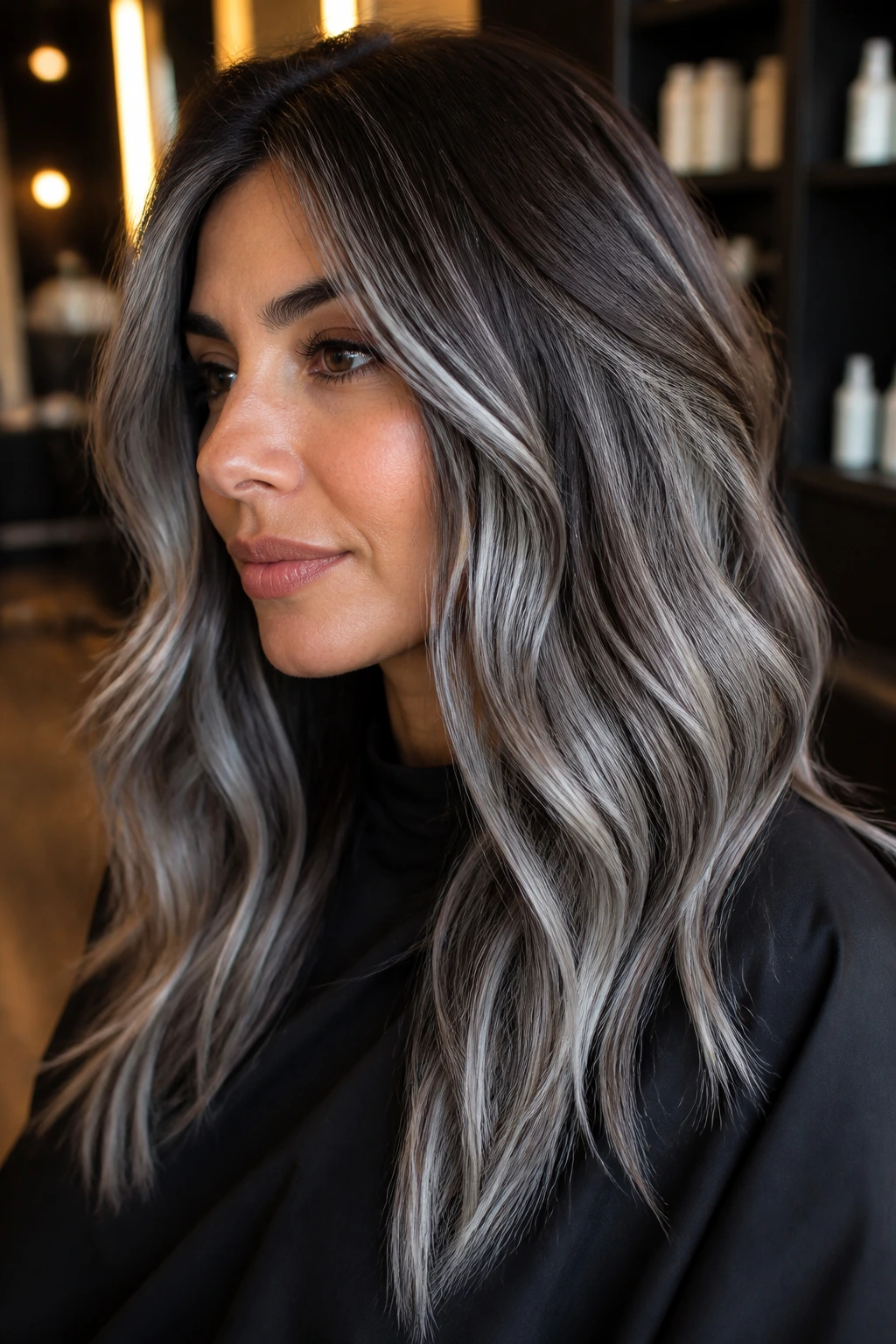
Why does balayage look so good on olive skin? Because it gives you contrast without turning the whole head into one temperature. Silver ribbons over a deeper brunette base keep the face from going washed out, and they grow out in a way that feels deliberate instead of neglected.
This is the one I recommend when someone wants silver but isn’t ready to live at the salon. The darker pieces between the light ones keep the color from reading icy-flat, and that little bit of shadow tends to flatter muted olive undertones better than full bleach.
How to ask for it
- Base: Leave the natural root or a smoky brown base in place.
- Placement: Paint silver highlights around the crown, cheekbone line, and mid-lengths.
- Tone: Keep the silver pearly or ash-heavy, not neon blue.
- Upkeep: Gloss every 6 to 8 weeks and use purple shampoo sparingly.
4. Frosted Money Piece Frost
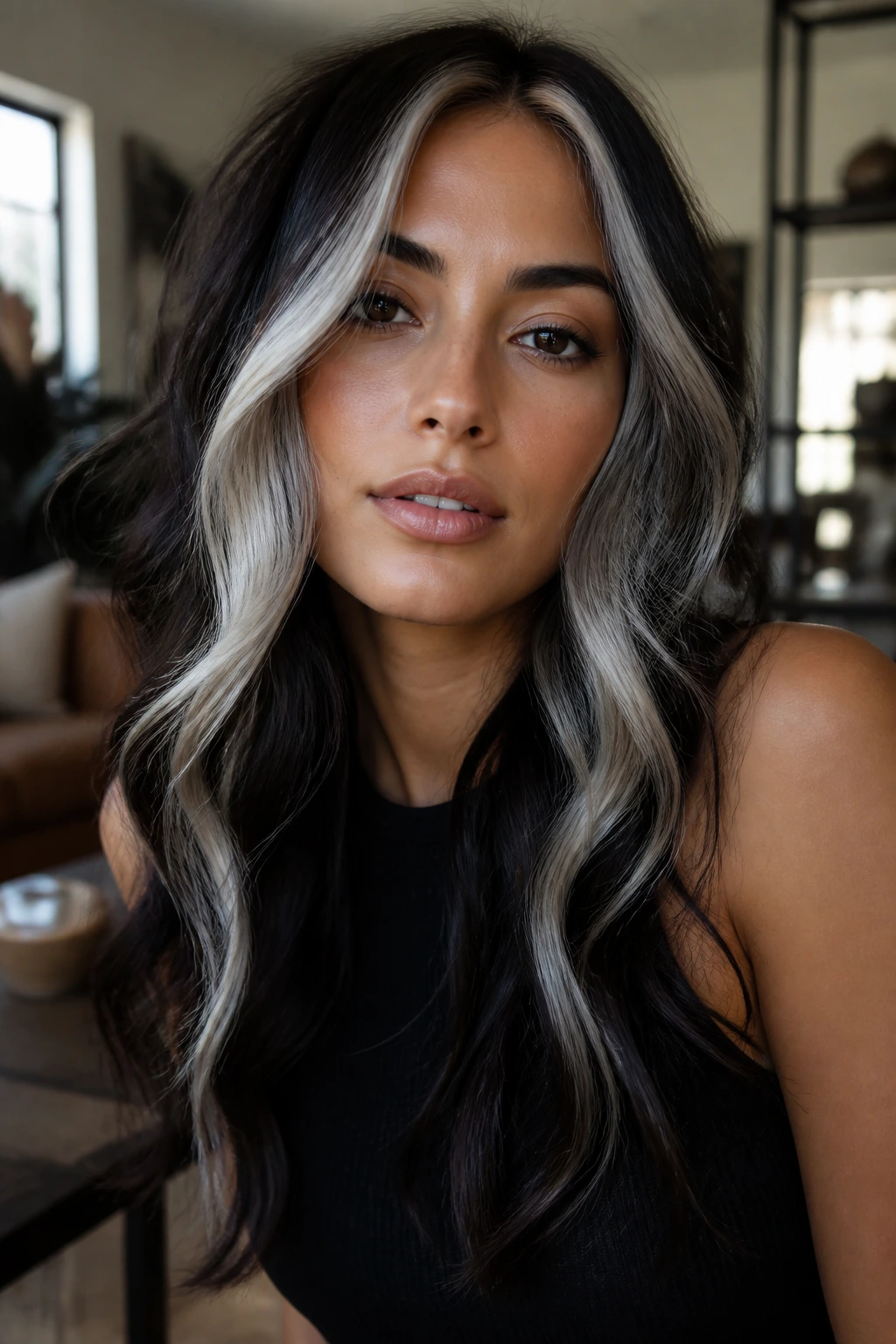
If you want the silver to show up the second you walk into a room, this is the move. Bright face-framing pieces do the heavy lifting, while the rest of the hair stays darker and easier to live with. It’s a good choice for olive skin because the lightest color sits right where the face needs lift.
The trick is restraint. Make the front pieces bright enough to matter, but not so wide that they swallow the whole haircut. Two to four chunky panels is usually enough, and the root area should still keep some depth.
This looks especially strong with long layers, a curtain fringe, or a center part. And yes, it can be dramatic without becoming costume-y.
5. Metallic Silver Lob
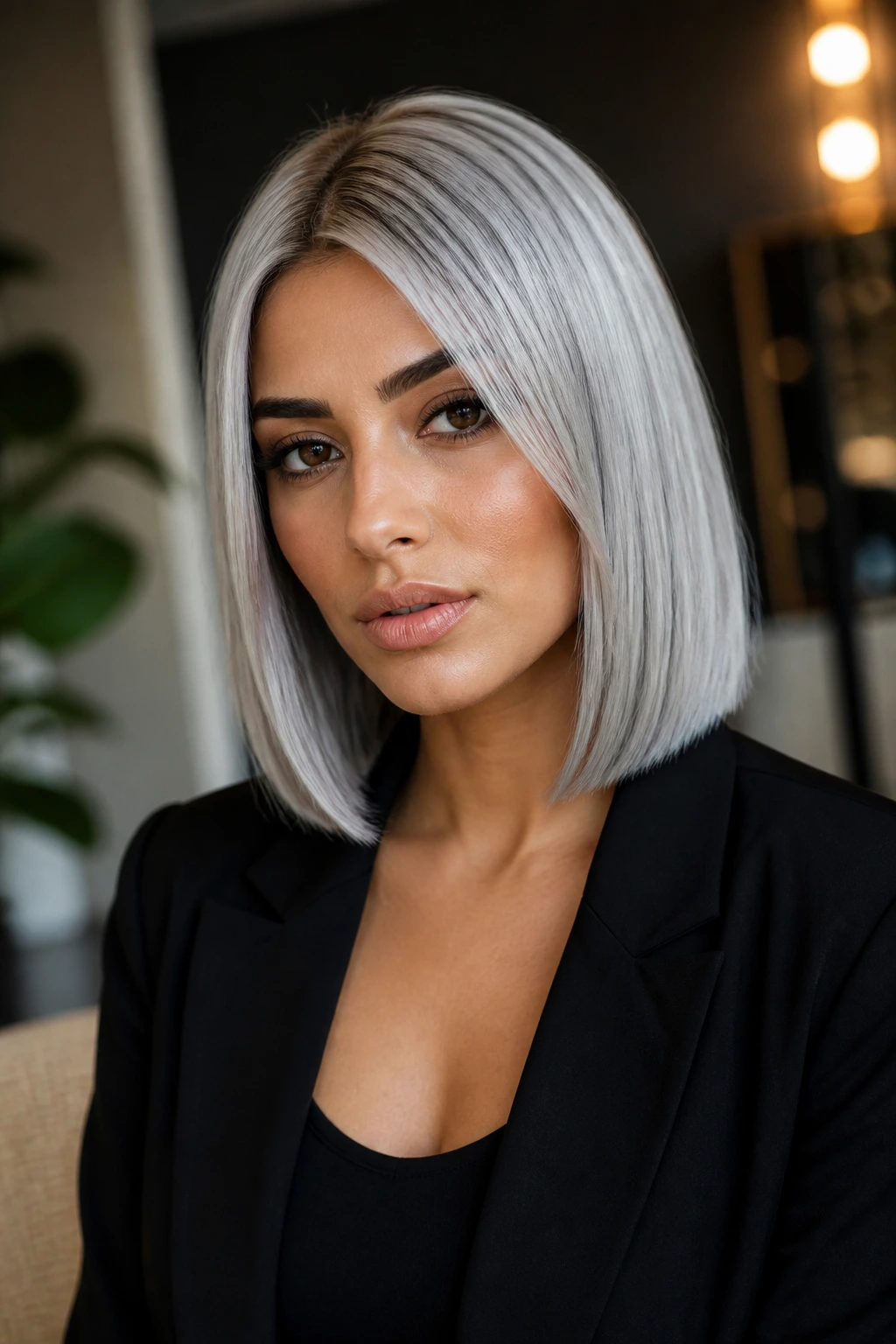
Metallic silver on a lob has a different mood entirely. It’s not airy or frosted. It’s denser, slicker, and a little more polished, which suits olive skin because the color brings structure instead of fading into the background.
A metallic finish works best when the hair is straightened just enough to show the sheen, or bent into large S-waves. Ask your colorist for a cool gloss over a level 9 base, then keep the tone in the steel-to-pearl family rather than the blue family.
This is the shade I’d hand to someone who wears black, charcoal, or deep olive clothes all the time. The whole look feels intentional in a very clean way.
6. Mushroom-Platinum Shag
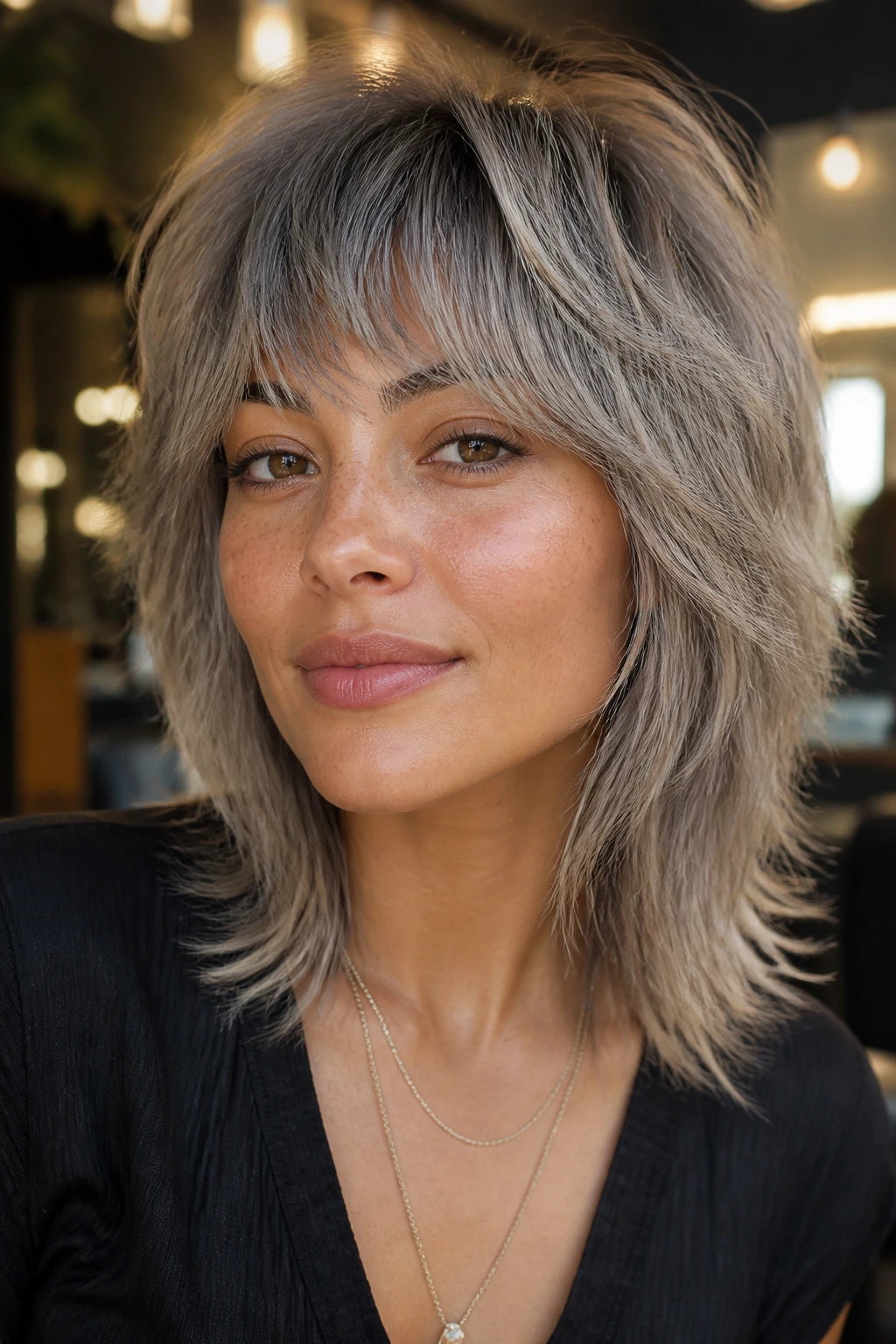
The mushroom-platinum shag is the quiet rebel in this list. It has the coolness of silver, but the beige-ash base keeps it from going sterile. On warm olive skin, that little bit of earthiness is what makes the color feel wearable.
The shag cut does the rest. Choppy layers, a little fringe, and some piece-y texture keep the tone from sitting as one flat sheet. If your hair has natural bend or any wave at all, this color practically leans into it.
What to watch for
A mushroom tone can turn muddy if the toner is too brown. Keep it pale, smoky, and soft around the face. If the color starts looking dull, a clear gloss rather than more purple shampoo usually brings it back faster.
7. Frosted Pixie Crop
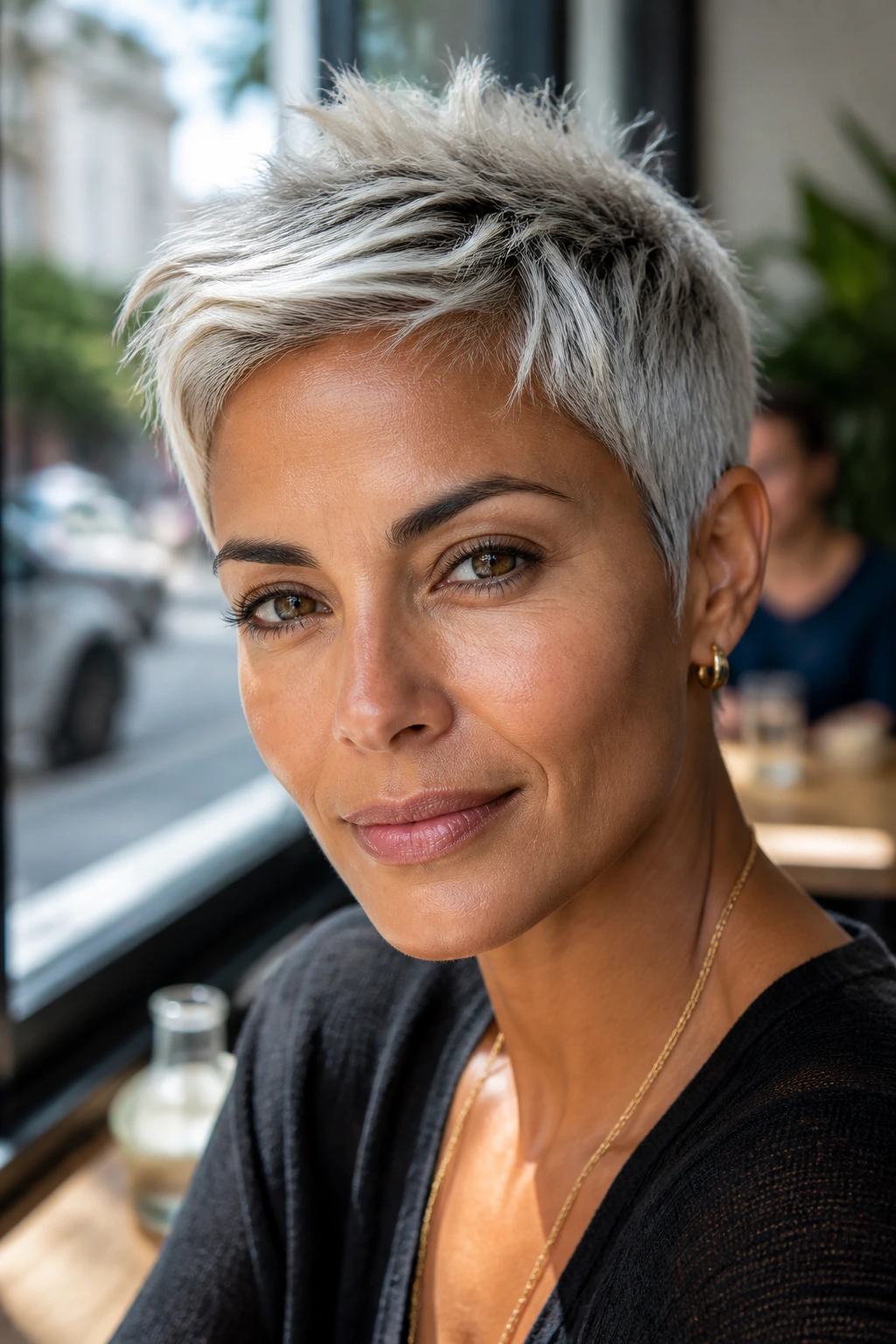
Short hair makes silver look intentional. There’s no hiding behind length, no curtain of ends to distract from the color, and that’s exactly why a frosted pixie works so well on olive skin with strong features.
I like this one because the contrast lands quickly. The bright tips catch the eye, while the close sides and back keep the shape neat. If your brows are naturally dark or your eyes are intense, this cut can look sharper than much longer silver hair.
Why it flatters olive undertones
A pixie leaves more skin visible around the face, so the silver has to cooperate with your complexion instead of competing with it. That means you want a tone that’s clean and cool, but not blue-white. A level 10 silver with a slightly smoky edge is usually the sweet spot.
8. Opal Silver Waves
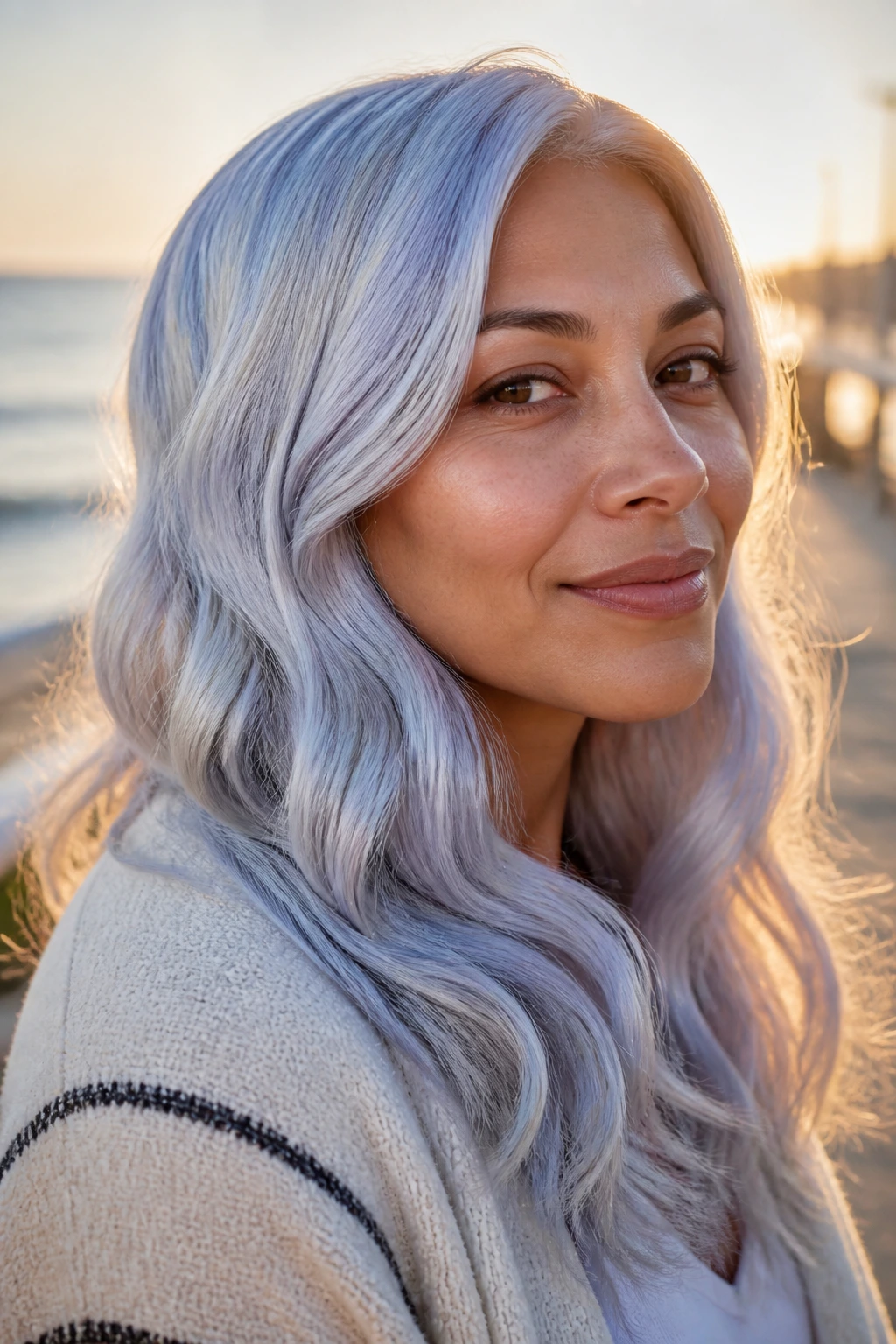
Opal silver sounds fussy until you see it in motion. It’s silver with a whisper of violet and blue, and the whole point is that the tone shifts as the light changes. On neutral olive skin, that tiny color shift keeps the hair from reading flat.
This is not the place to drown the hair in purple. You want a sheer veil, not a pastel helmet. The best version looks like silver that has been rinsed through a piece of sea glass.
Wear it with soft waves or loose bends so the different tones can show up. Straight hair can handle it, but movement makes the finish more interesting and less obvious.
9. Shadow-Root White Silver
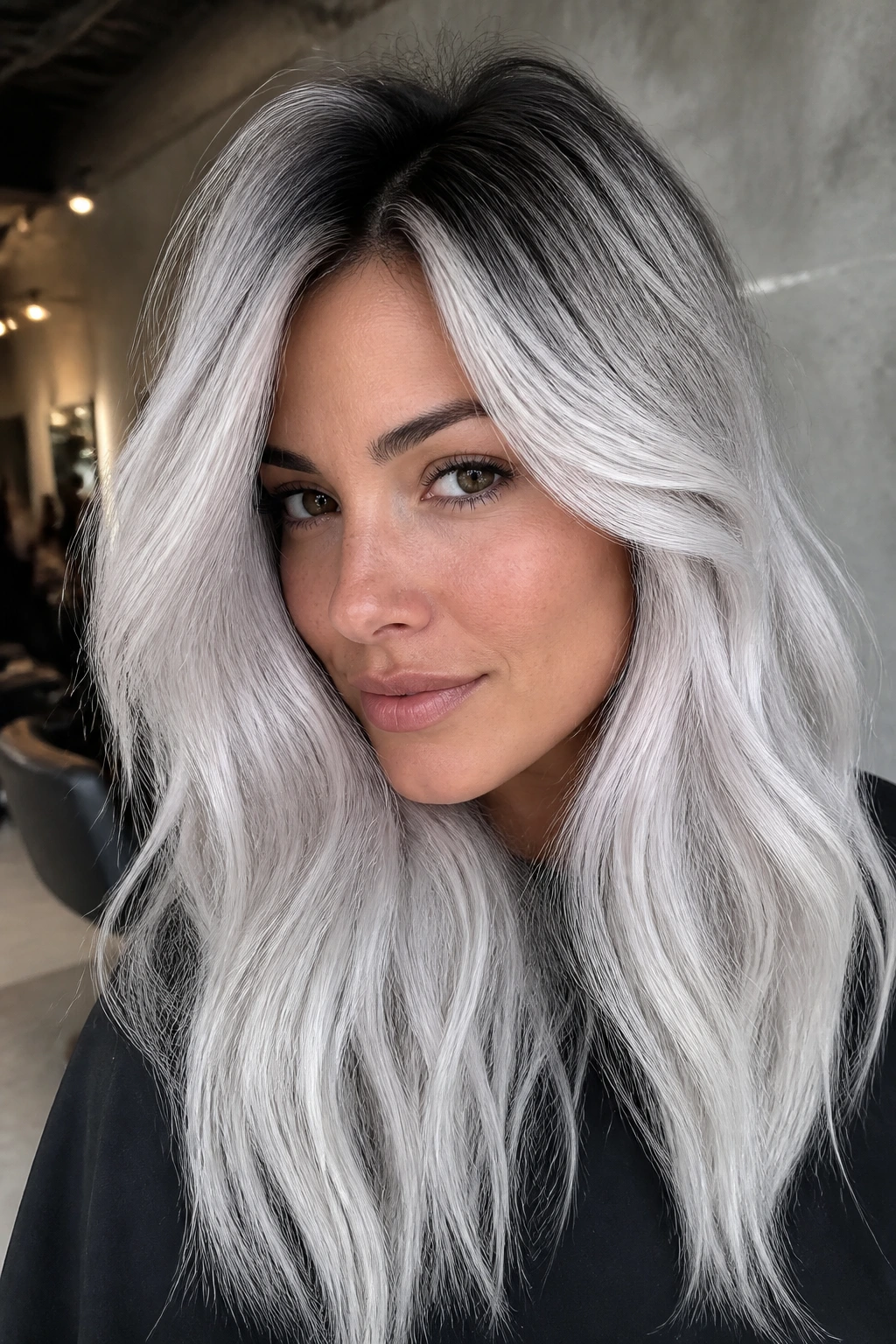
White silver with a dark root is strong, sharp, and a little bit theatrical. That’s not a bad thing. On olive skin, the contrast helps the complexion hold its shape, especially if your eyes and brows are naturally deep.
The root shadow is doing more than hiding regrowth. It gives the face a frame, which is why this shade often looks better than a pure all-over white. Ask for the root to stay around a level 6 or 7, then let the lengths lift to the palest silver your hair can handle.
Key details
- Best for: High-contrast faces and deeper olive skin.
- Not ideal if: You want low maintenance. You do not.
- Keep in mind: Brass shows fast here, so toner appointments matter.
10. Steel-Silver Curls
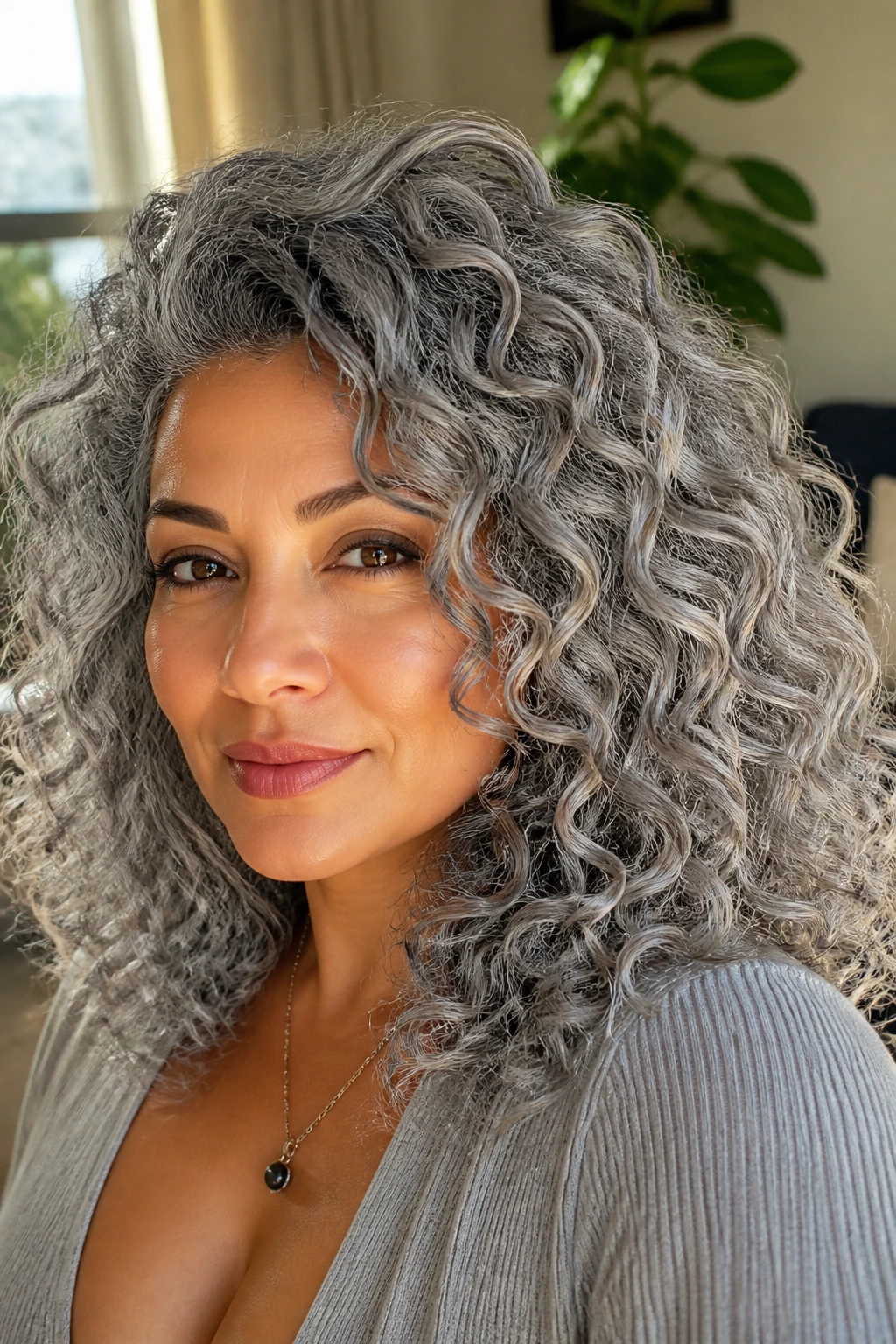
Curly hair changes the whole equation. Silver does not have to be whisper-light to be striking, and steel-silver curls prove that in one glance. The curl pattern breaks up the color so well that you can go a touch deeper and still get a dramatic result.
This shade works because curls already bring texture. A solid sheet of color can be too much, but steel ribbons threaded through curls feel rich and dimensional. That’s useful on olive skin, where a slightly deeper metallic tone can preserve the natural warmth in the face.
Use moisture. Plenty of it. Silver on curls gets dry fast if you treat it like straight hair.
11. Silver-Beige Blend
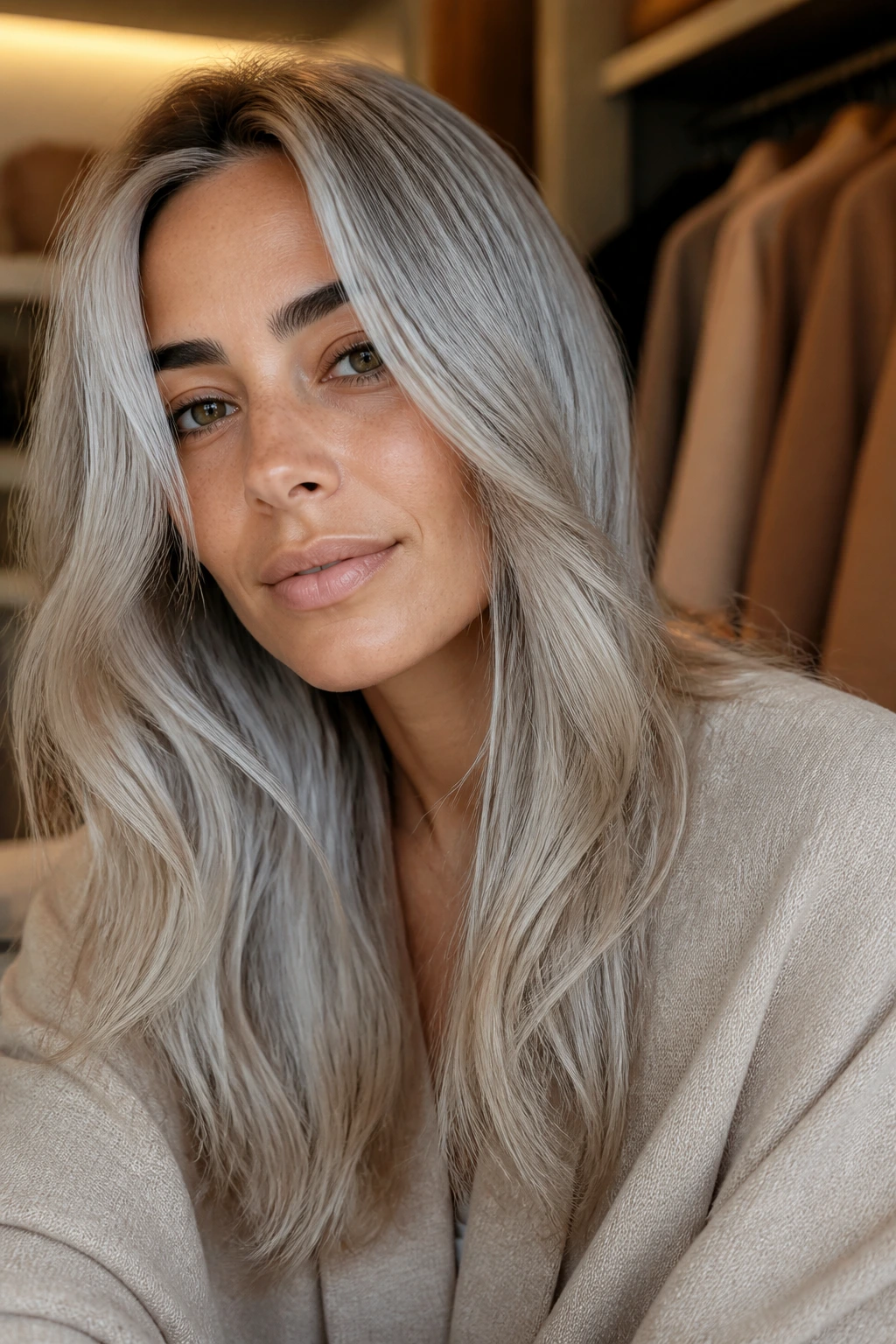
Silver-beige is the answer for warm olive skin that looks a little icy under pure platinum. It keeps the cool factor, but the beige softens the bite. I reach for this formula when someone wants silver and keeps saying, “I don’t want to look washed out.”
The tone should sit between pearl and mushroom, with no obvious yellow and no chalky white. That middle ground is harder to get than people expect, which is why this one often looks best with a colorist who knows how to glaze, not just lighten.
If you wear gold jewelry, earthy makeup, or camel-toned clothes, silver-beige tends to feel more natural than a sharper gray silver.
12. Chrome Ribbon Highlights
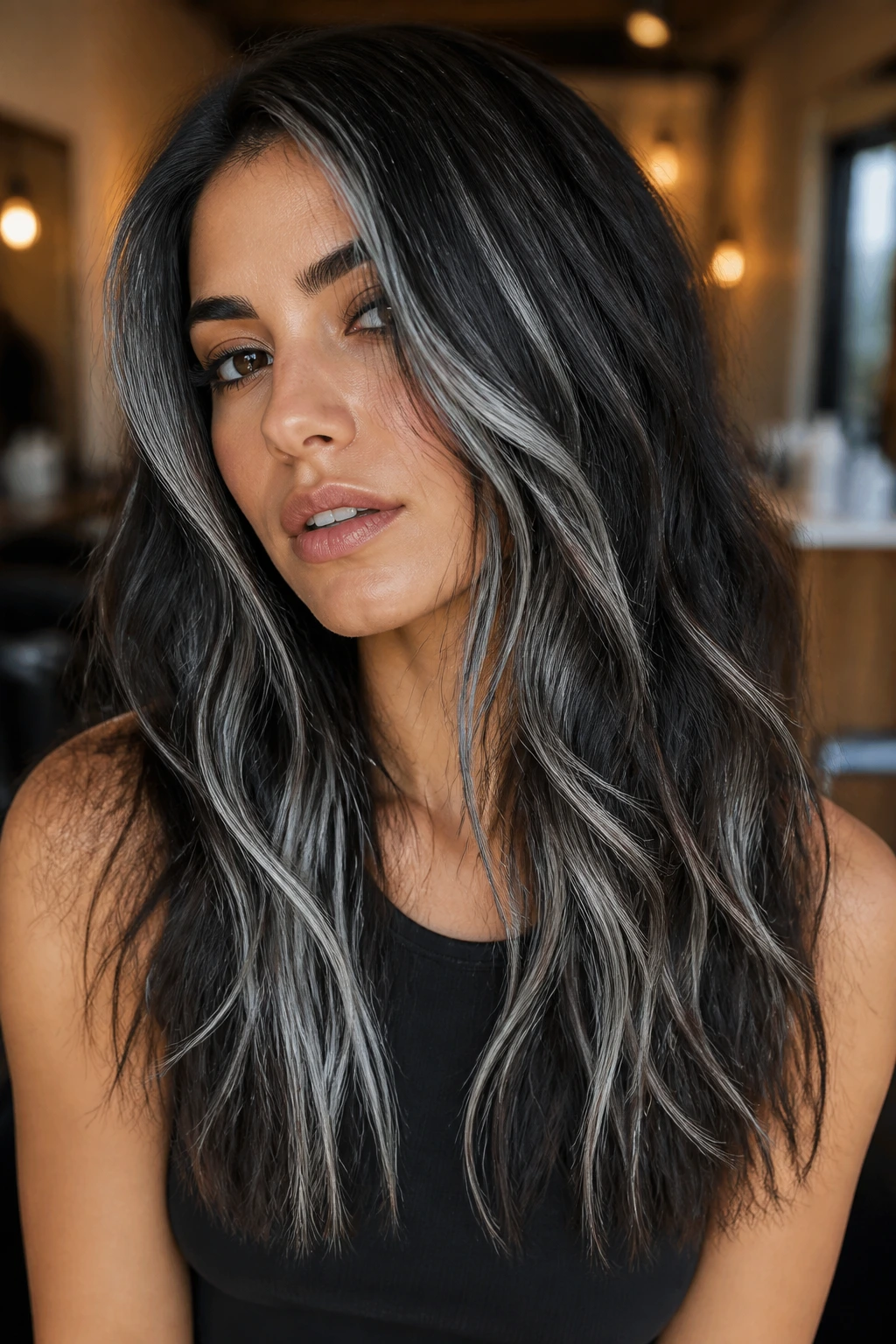
Ribbon highlights are one of the least dramatic ways to get into silver, and that’s part of their appeal. Instead of bleaching the whole head, you thread narrow chrome pieces through the hair so the lightness moves when you do.
On olive skin, that movement matters. The darker base keeps the face grounded, while the silver ribbons catch attention in a more controlled way. It’s a good fit for thick hair because the color gets broken up by the density.
The best chrome ribbons are thin enough to look reflective, not striped. Ask for a few brighter panels near the front, a few through the ends, and a softer silver through the mids so the whole thing doesn’t look pasted on.
13. Silver Curtain Fringe
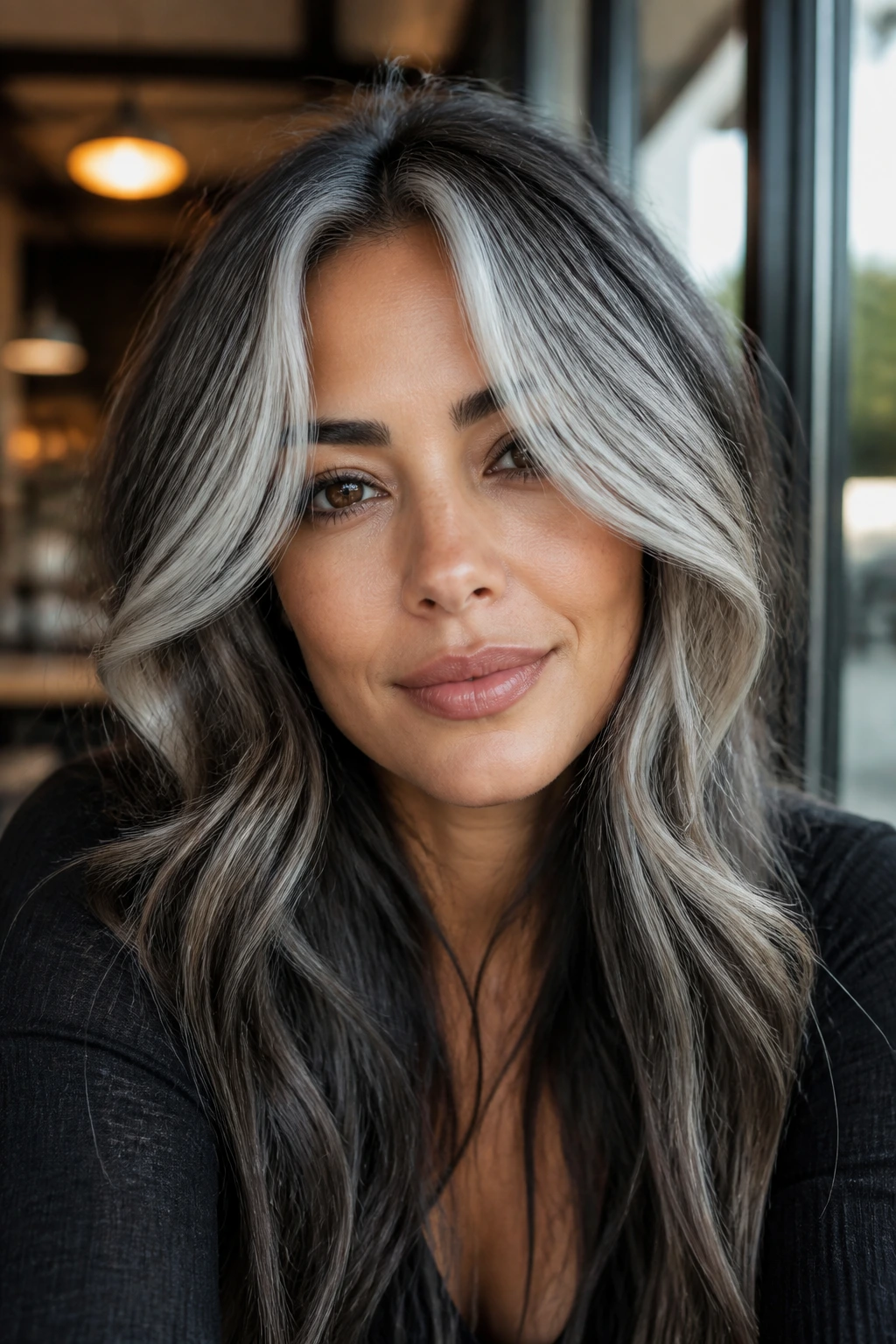
Does silver feel too committed for you? Start with the fringe. A curtain bang can carry the brightest part of the color right at the face, which makes the whole look feel lighter even if the rest of the hair stays smoky or beige.
What to tell your stylist
Ask for the fringe area to be lifted a touch more than the lengths, then toned to a soft silver-pearl rather than an icy blue. The lengths can stay a level or two darker. That contrast makes the bangs do the talking.
This is a smart move for olive skin because the color sits close to the eyes and cheekbones. You get the brightness where it counts, without handing the entire head over to maintenance.
14. Graphite Underlights
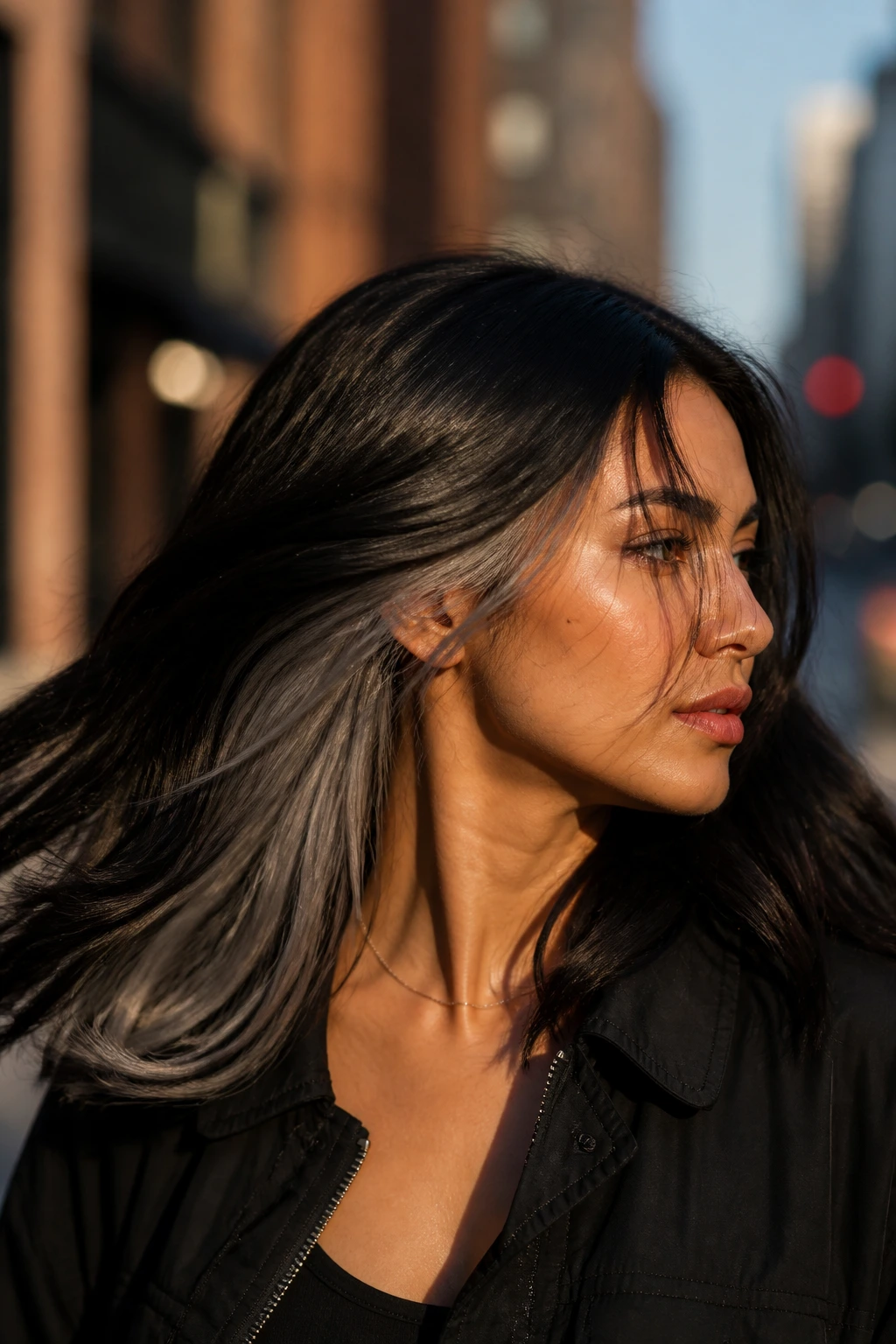
Graphite underlights are for the people who like a surprise when the hair moves. The top layer stays dark, calm, and easy to wear, while the underside flashes silver and charcoal whenever the light shifts.
This is one of my favorite ideas for olive skin because it preserves contrast on the surface. The darker top layer helps the complexion stay grounded, and the silver underneath adds that little edge that keeps the hair from looking plain.
It’s also practical. Since the bright pieces sit underneath, the grow-out is less obvious. You can keep the color interesting without staring at every root line the second it appears.
15. White Platinum Buzz Cut
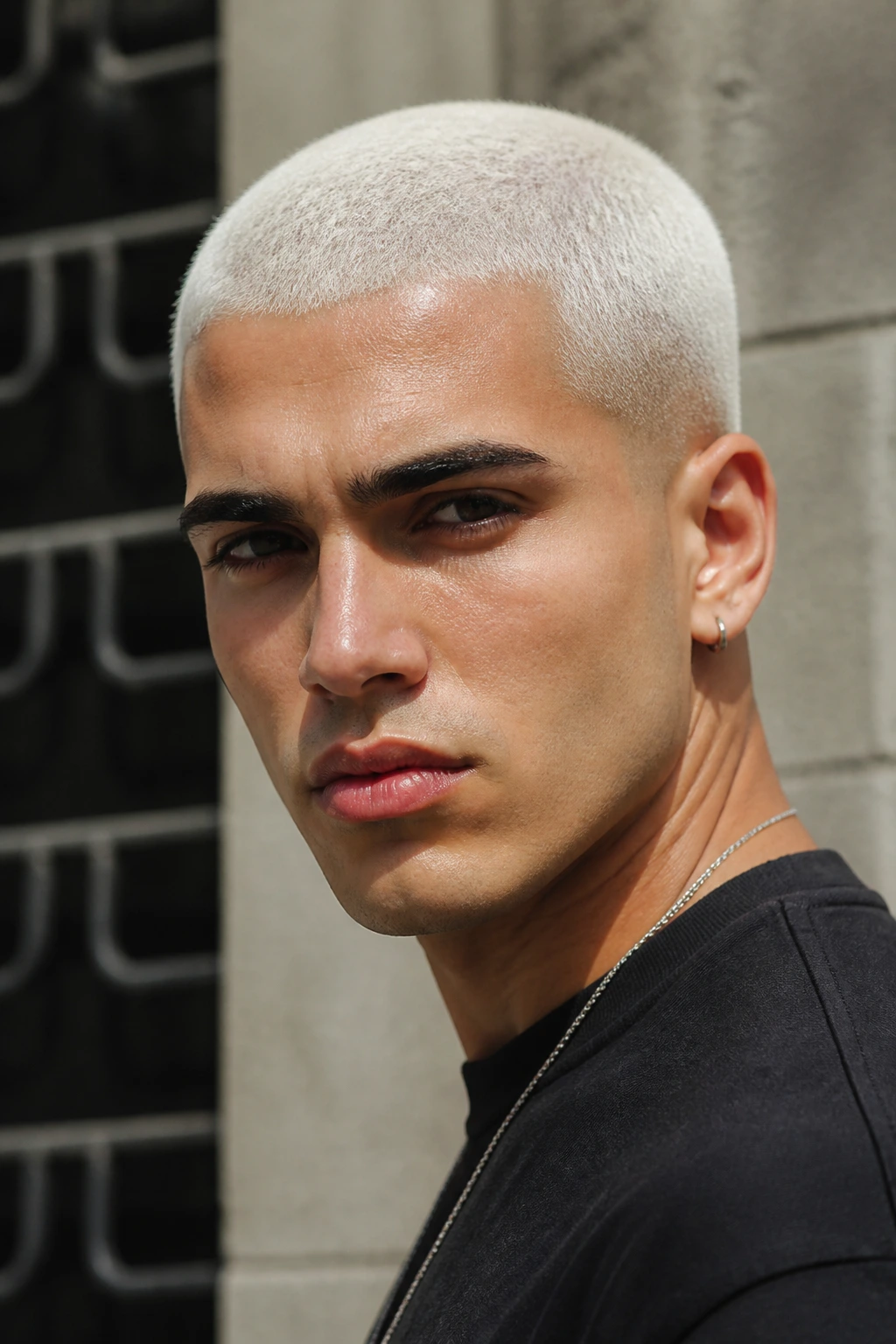
A buzz cut leaves nowhere for bad silver to hide. That’s the whole appeal. With this shape, the color sits right beside the skin, which means olive undertones can look sculpted and clean instead of swamped by length.
The look is bold, but it isn’t complicated. If the base is lifted evenly and toned cleanly, the result can be sharper than any long silver style in this list. A crisp white-platinum finish works especially well when your eyebrows are strong and your features have some contrast.
One note: a buzz cut still needs scalp care. Use sunscreen on exposed areas, and don’t overdo the washing or the hairline will look dry fast.
16. Moonstone Ombré Ends
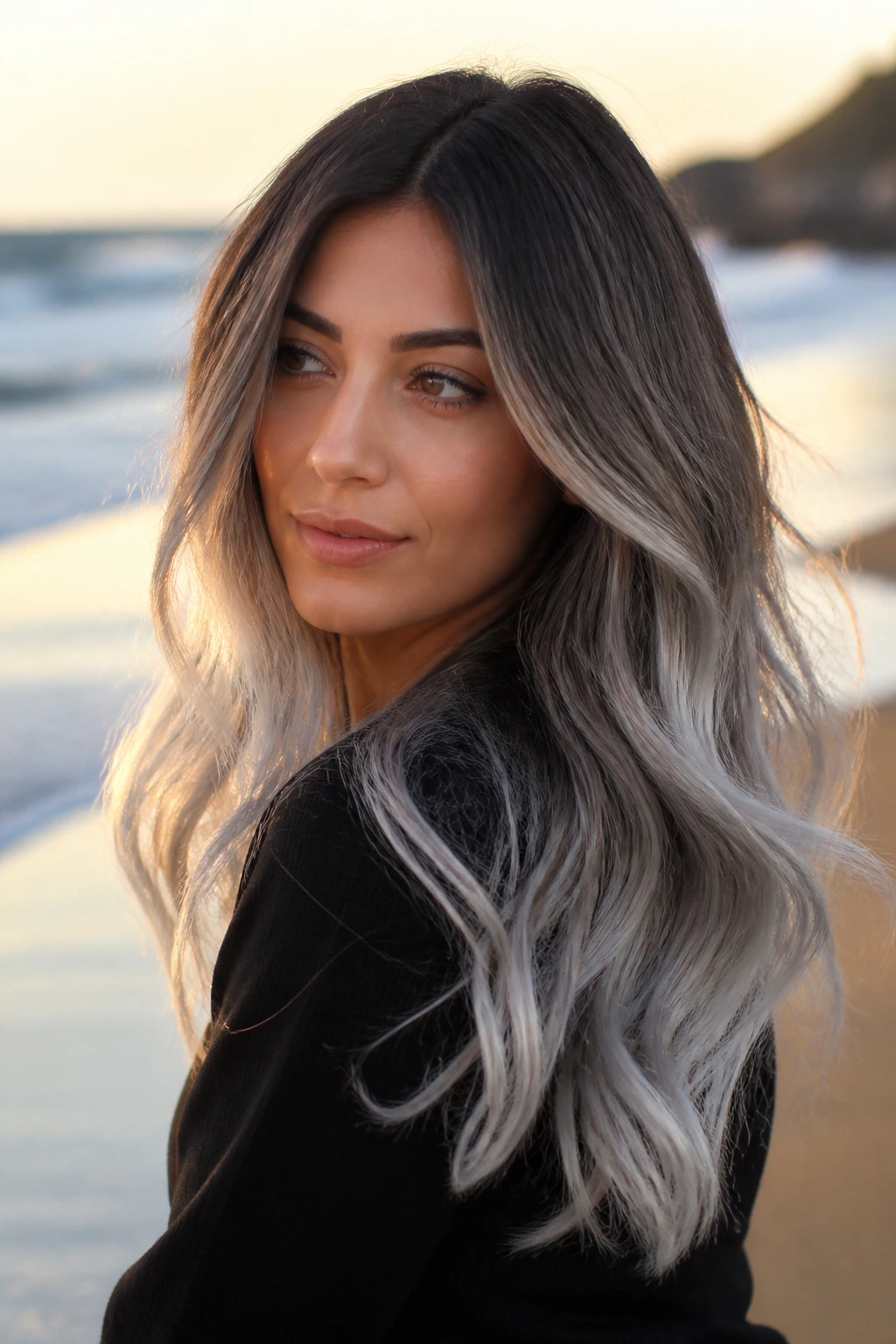
Moonstone ombré keeps the roots deeper and lets the ends fade toward a translucent silver. That makes it a good option for olive skin, because the darker crown holds the face in place while the lighter ends give you the shine.
The gradient should be soft. No hard line. Think of the color as moving from smoky brown into pale silver with a thin pearl haze in the middle, not as two separate colors stuck together.
This works especially well on long layers and waves. The ends catch movement, which keeps the ombré from feeling heavy. If your hair is naturally thick, this is one of the easier ways to wear silver without the whole head looking over-processed.
17. Smoky Silver Wolf Cut
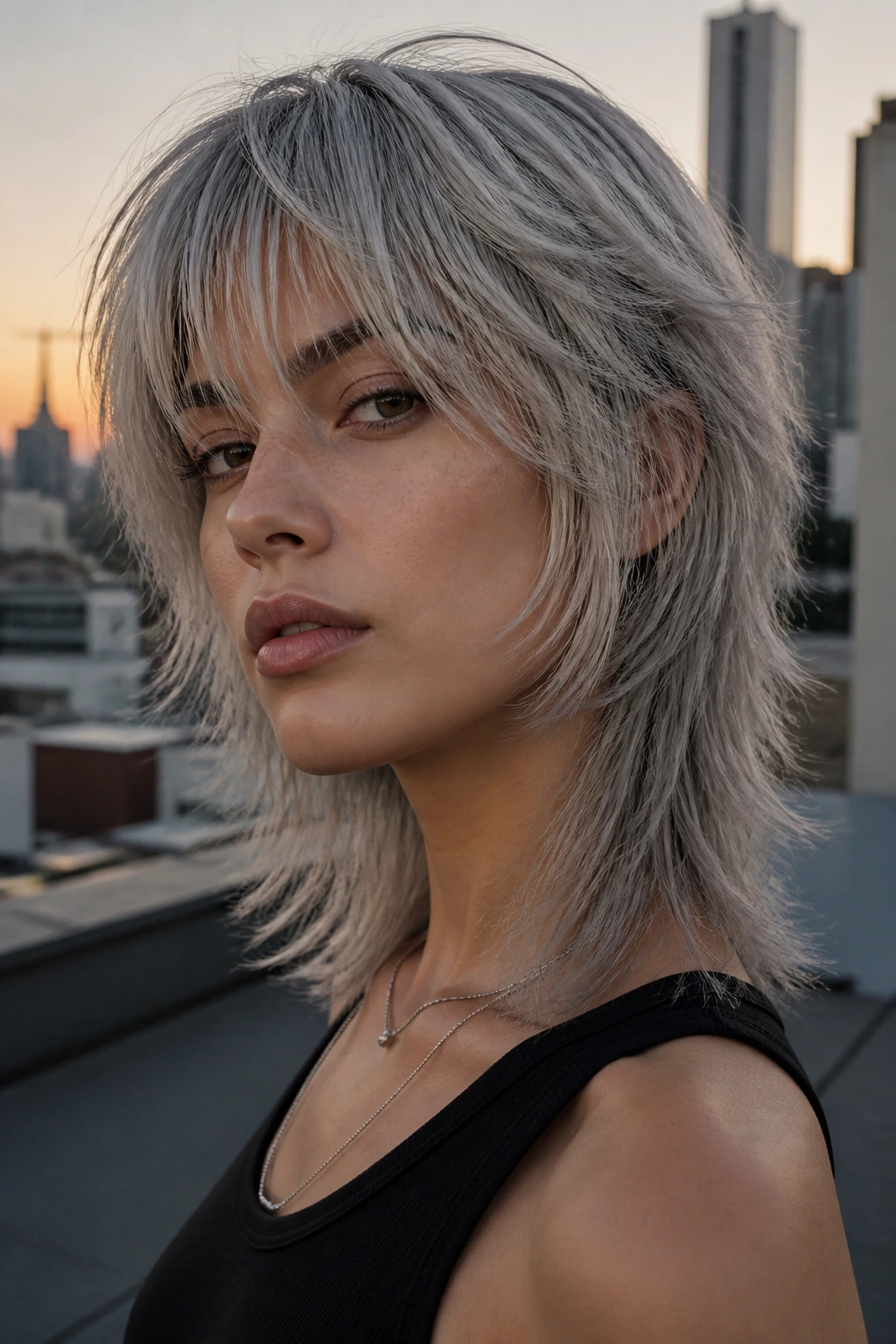
Wolf cuts love texture, and smoky silver loves texture back. That’s why this combination works. The choppy layers stop the silver from turning into a blank sheet, and the smoky finish keeps the style from feeling too bright for olive skin.
How to keep it from going fuzzy
Use a light styling cream or foam, not a heavy oil. You want the layers separated enough to show off the cut, but not so dry that the silver looks dusty. A little graphite lowlight through the underside can also make the whole thing feel richer.
If your hair has wave or curl, this is a good place to lean in. The shape gives the color somewhere to move.
18. Pearl-Glaze Shoulder Cut
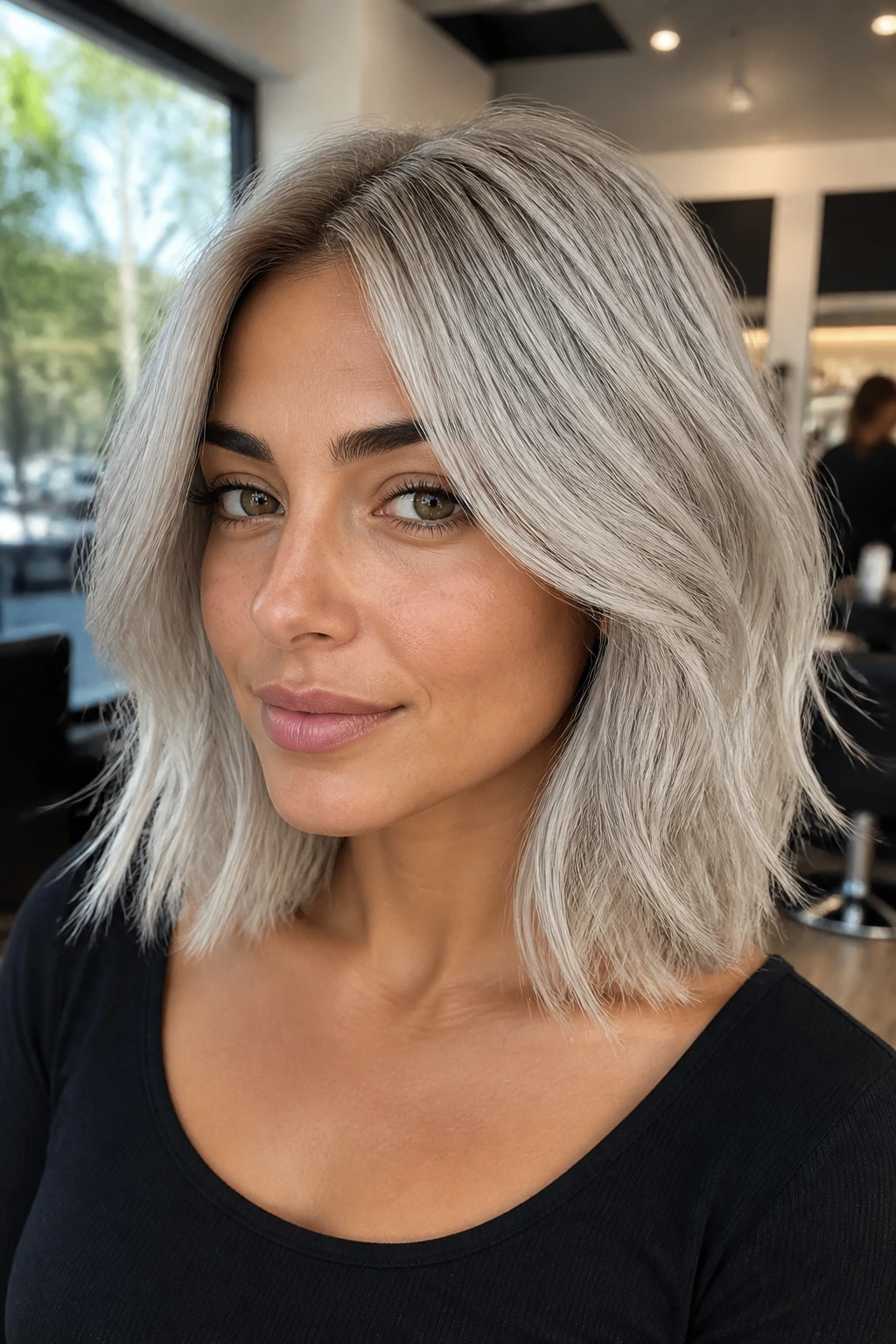
A shoulder-length cut with a pearl glaze is one of the softest silver looks here. It doesn’t shout. It glows in a low, milky way that flatters olive skin because the tone stays cool without getting severe.
This version is especially nice if you want the silver to feel polished rather than edgy. A pearl glaze on a blunt or slightly layered shoulder cut gives you enough structure around the face, but not so much that the color takes over.
Use a shine spray sparingly. The finish should look smooth, not wet. Too much product kills the pearl effect and makes the hair look weighed down.
19. Lilac-Silver Sheen
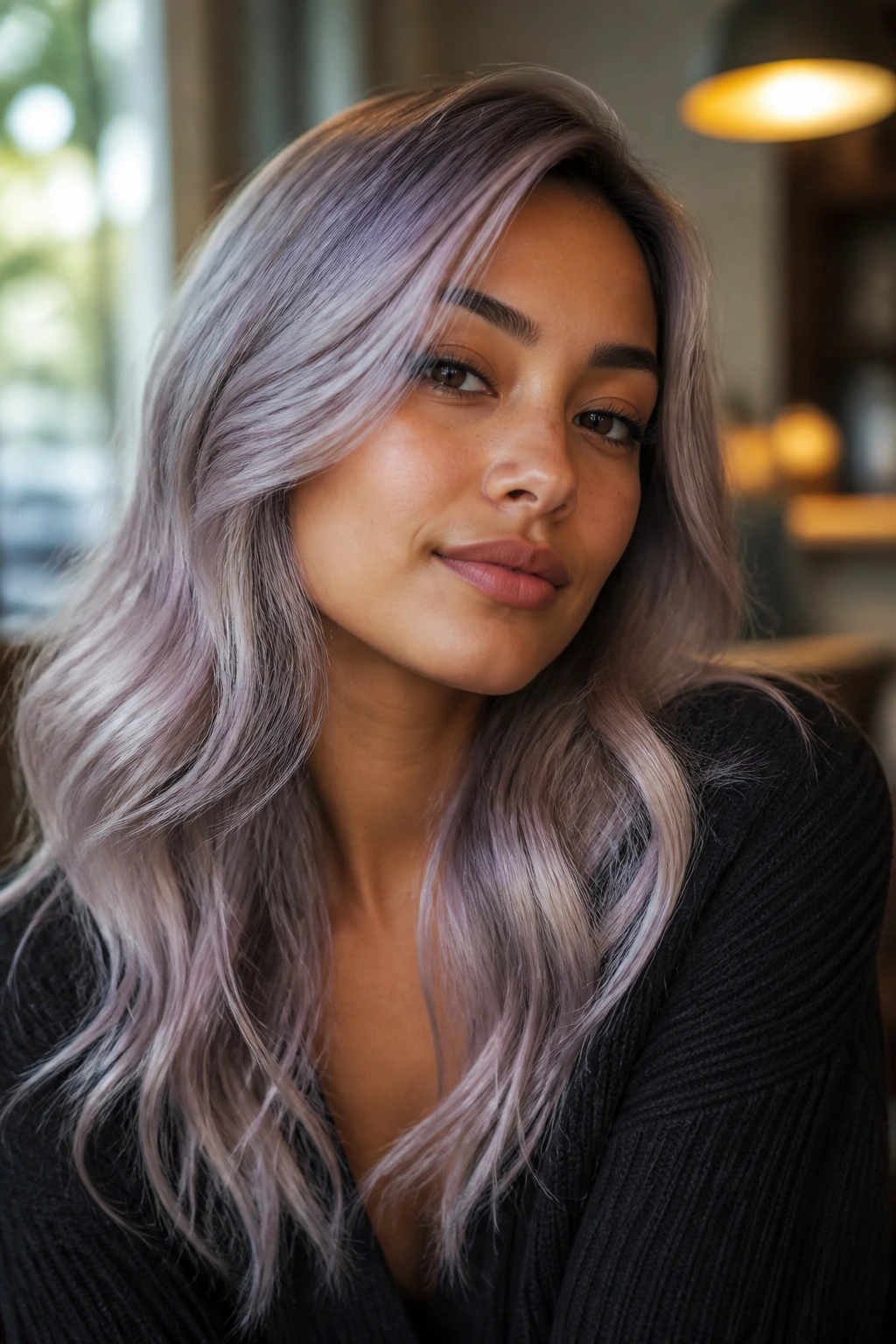
A little lilac can fix a flat silver tone. That said, it has to stay subtle. On olive skin, the goal is a translucent violet whisper, not a full pastel shift that turns the hair lavender in daylight.
When the violet helps
If your silver keeps reading yellow or dull, a soft lilac-silver sheen can cool it down without pushing the hair into harsh white territory. That tiny violet note is especially useful on light neutral olive skin, where too much blue can go cold fast.
I’d keep this finish on the pearl side of silver. Think gloss, not dye job. It’s a good one for waves, because the motion lets the sheen flicker instead of sitting in one block.
20. Arctic Blunt Bob
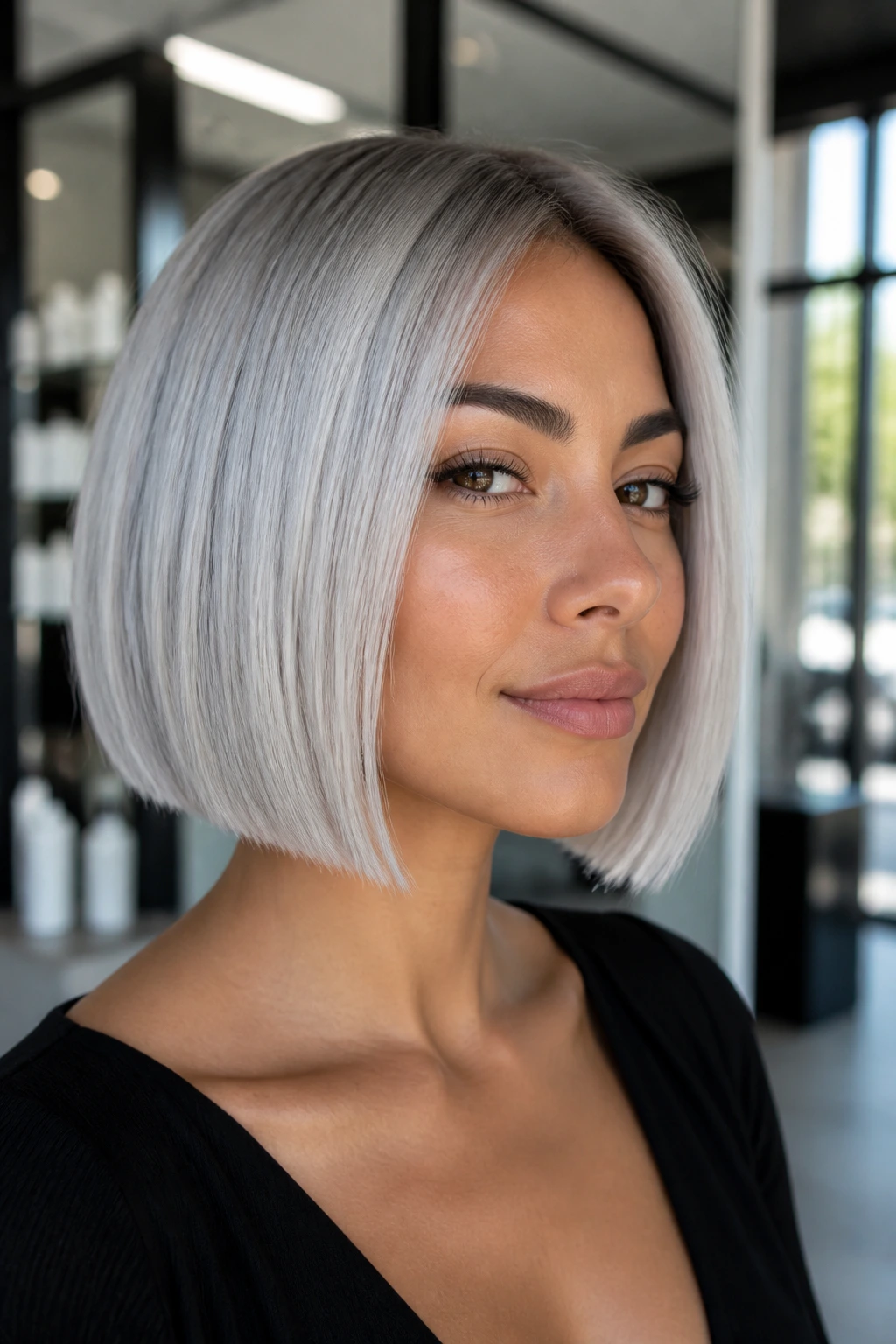
A blunt bob does not forgive sloppy color, which is why arctic silver works so well with it. The cut gives the shade a hard edge, and the color gives the cut a brighter line. Together they make olive skin look clean and defined.
This is a higher-maintenance choice. Any brass or uneven toning shows quickly on a blunt bob because the eye has nowhere else to go. But when it’s fresh, it looks sharp in that very direct way only a clean bob can manage.
If you want this look, keep the ends healthy. A blunt line on dry, frayed hair turns harsh fast.
21. Silver Fox Pixie
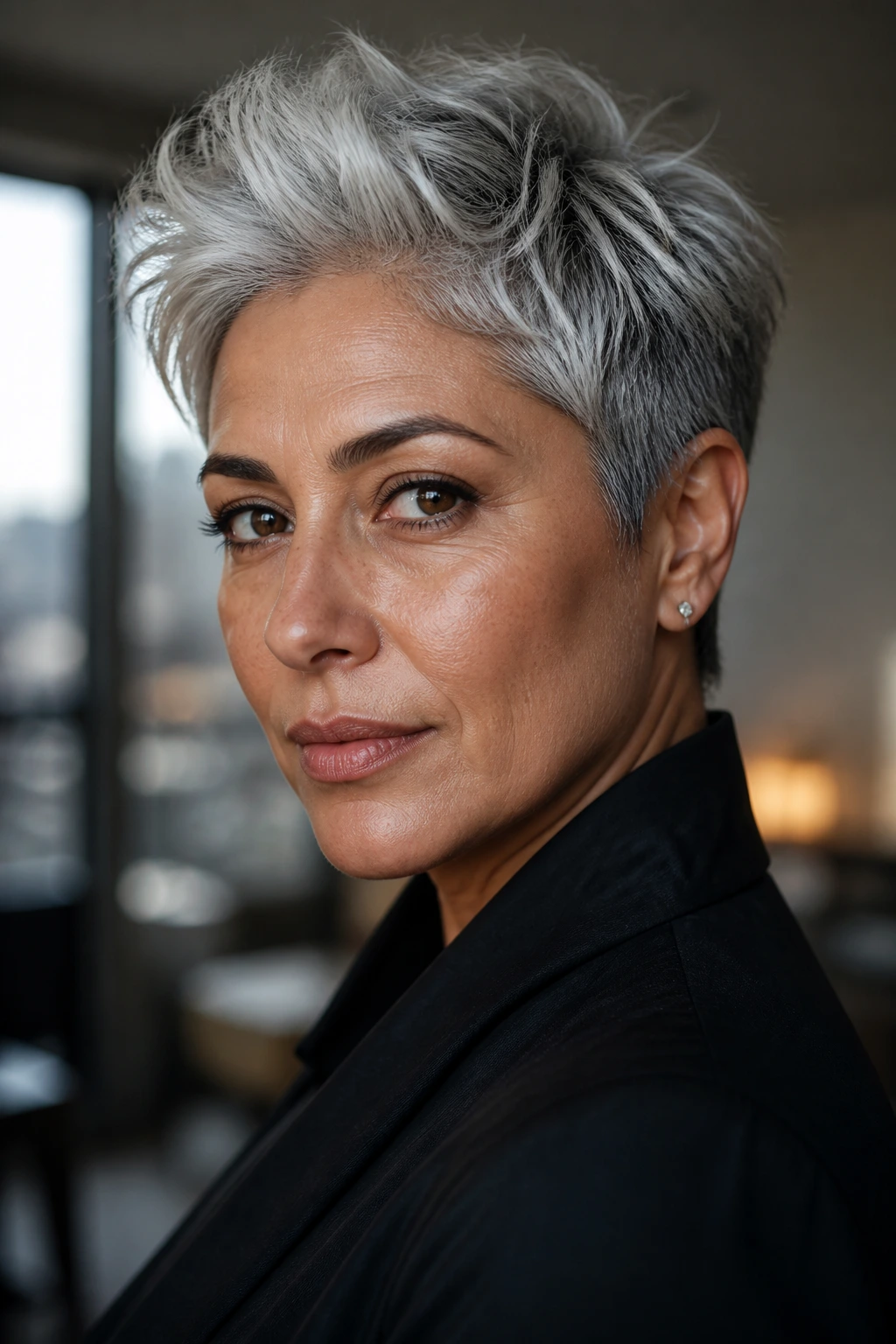
Silver fox is not trying to look youthful. Good. It’s trying to look deliberate. On olive skin, a pixie with silver and charcoal depth can be one of the most flattering short styles because the darker pieces keep the face from disappearing into the light tone.
This one feels especially strong on deeper olive skin and on anyone who wants the hair to read mature rather than playful. The contrast around the temples and nape matters. It keeps the cut from turning into one pale blur.
I like this shade with a slightly matte texture paste. Too much shine can make it feel flat, while a soft finish gives the color some grit.
22. Bronze-to-Silver Color Block
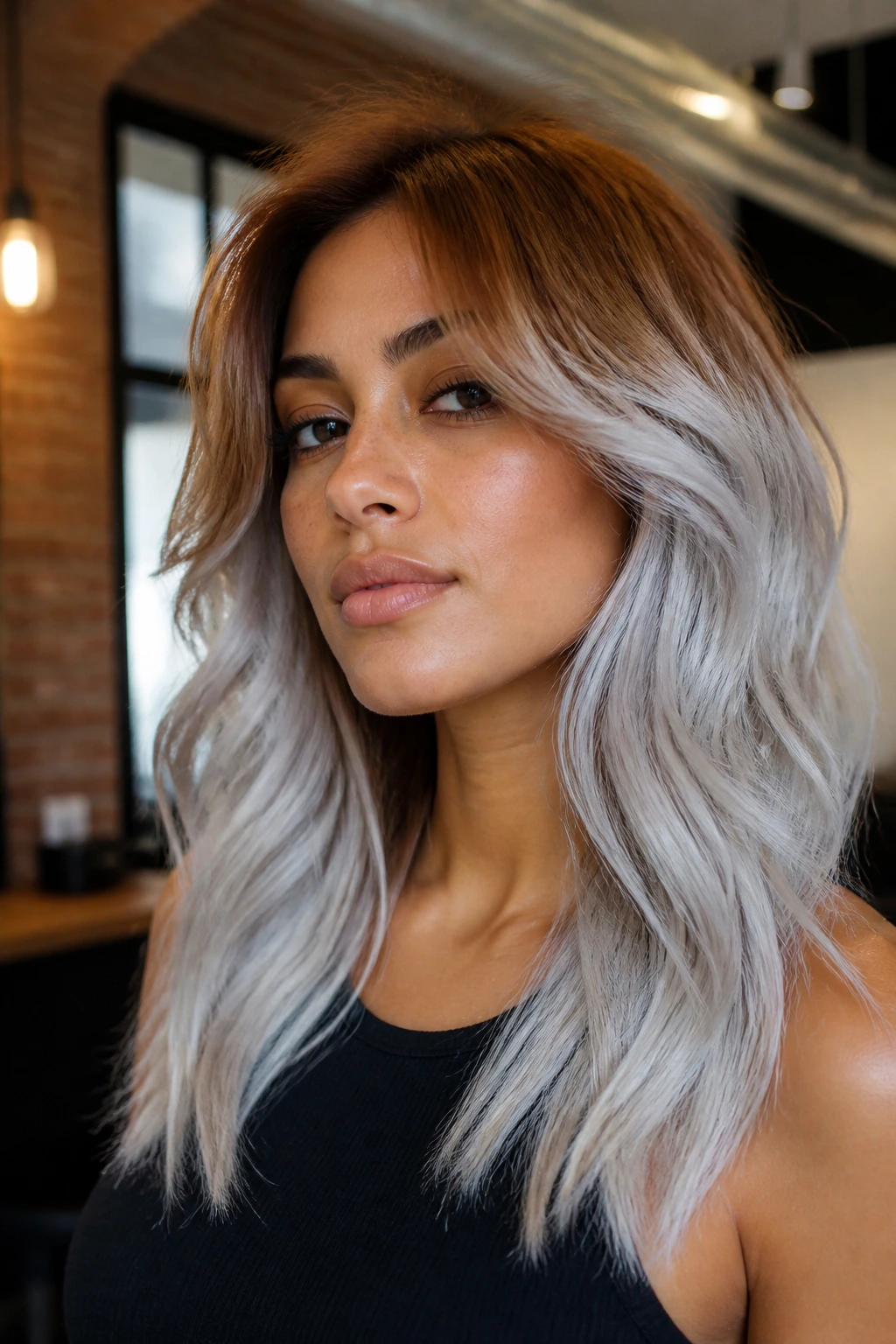
Bronze and silver together should not make sense, but they do. A warm bronze section at the crown or underneath can anchor the face, while the silver lengths keep the whole look in the platinum family. On golden olive skin, that contrast can be a relief.
This is a bolder option than a simple melt. The placement needs to be clean, or it gets muddy. But when it’s done well, the warm and cool pieces play off each other in a way that feels modern without chasing a gimmick.
If you wear rich colors — rust, forest, ink blue, espresso — this color block has more personality than a straight silver head ever could.
23. Frosted Layers with Root Stretch
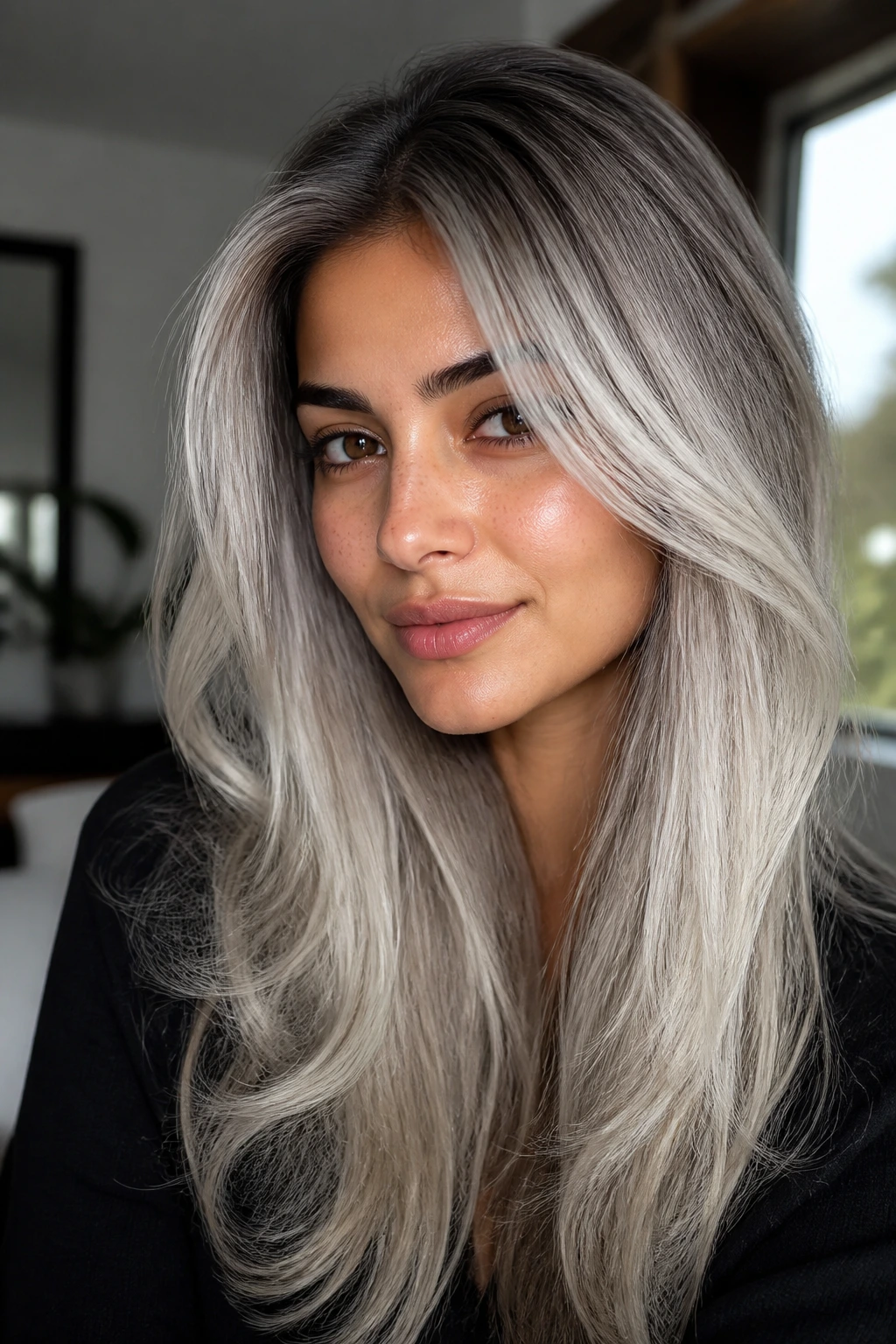
Root stretch is the reason some silvers age better than others. A deeper root, frosted mids, and light ends create a soft gradient that lets the color grow out without looking like a failed bleach job. On olive skin, that shadow also keeps the face framed.
Why it works on long hair
Long layers give the silver different places to land, so the tone doesn’t sit as one flat surface. That matters a lot when you’re aiming for platinum silver hair color ideas for olive skin, because the shape of the cut is doing some of the tonal work.
Ask for a root stretch about an inch deep, then scattered frosted pieces through the mid-lengths and ends. It’s a calmer version of silver, and I think it’s one of the most wearable on the list.
24. Platinum Silver Long Layers
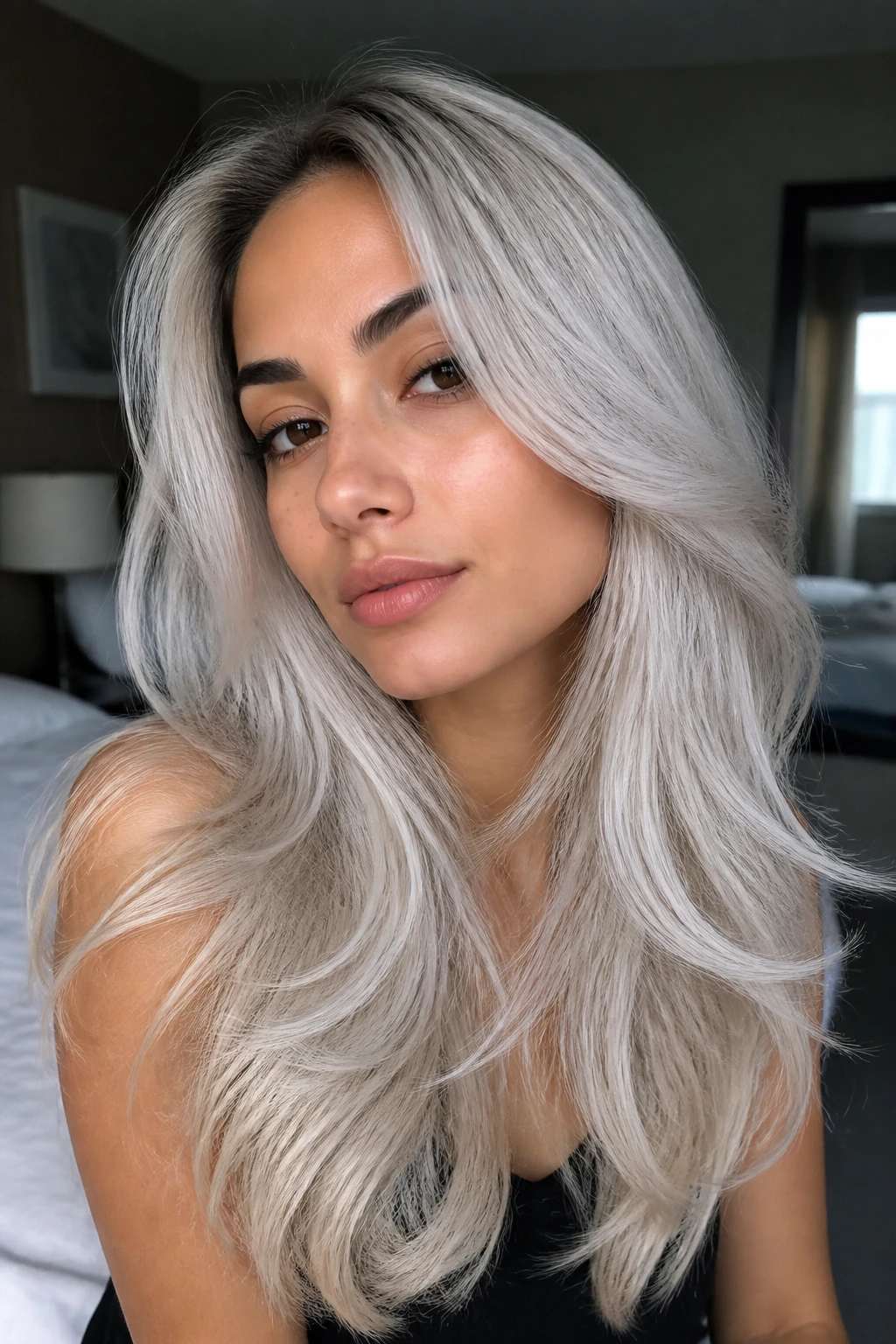
Long layers keep platinum from reading like a curtain. That’s the whole trick. When the color is this pale, movement matters, because the hair needs places for shadow and light to break up the surface.
This version suits olive skin best when the silver is clean but not stark. Think pale platinum with a cool gloss, not a chalkboard white. If your eyes are dark and your brows have weight, the look can feel strong without looking harsh.
Keep the layers soft around the front so the face isn’t boxed in. A few face-framing pieces can change the entire read of the color.
25. Satin Chrome Gloss
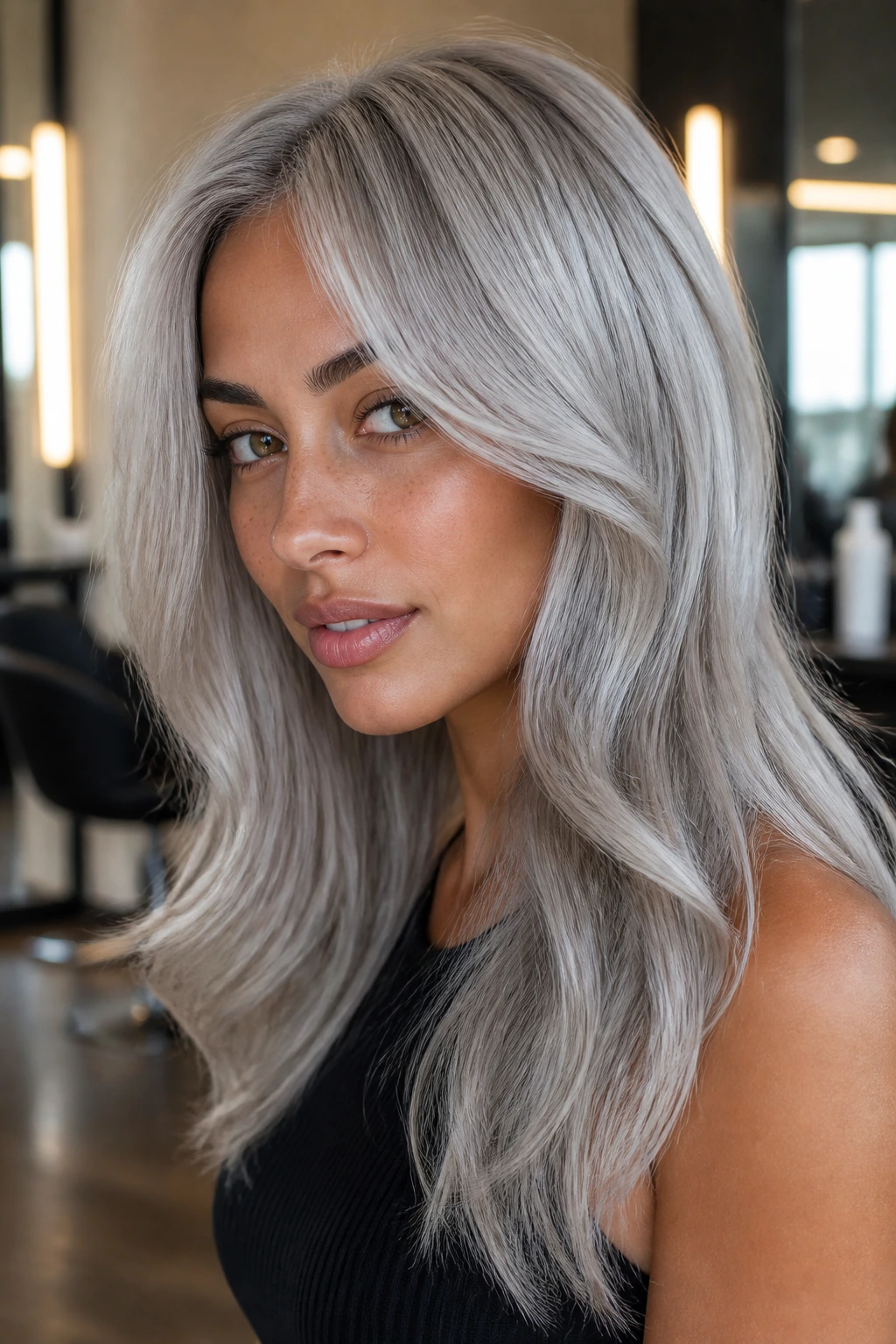
Satin chrome is less about color than finish. It sits between pearl and steel, which is exactly why it flatters olive skin so well. You get reflection, but not that hard mirror shine that can make the face look stripped down.
This is the shade I’d choose if you already have silver hair and want to soften it, or if you’re standing between a smoky and icy look and can’t quite pick one. It works on short cuts, long cuts, curls, and straight hair because the gloss does the heavy lifting.
Final take
If you only remember one thing from this list, let it be this: silver does not have to be loud to be noticeable. Satin chrome proves that a cooler finish can still feel soft, and that balance is often the difference between hair that wears the face and hair that frames it.
Why Silver Looks Better with a Little Shadow
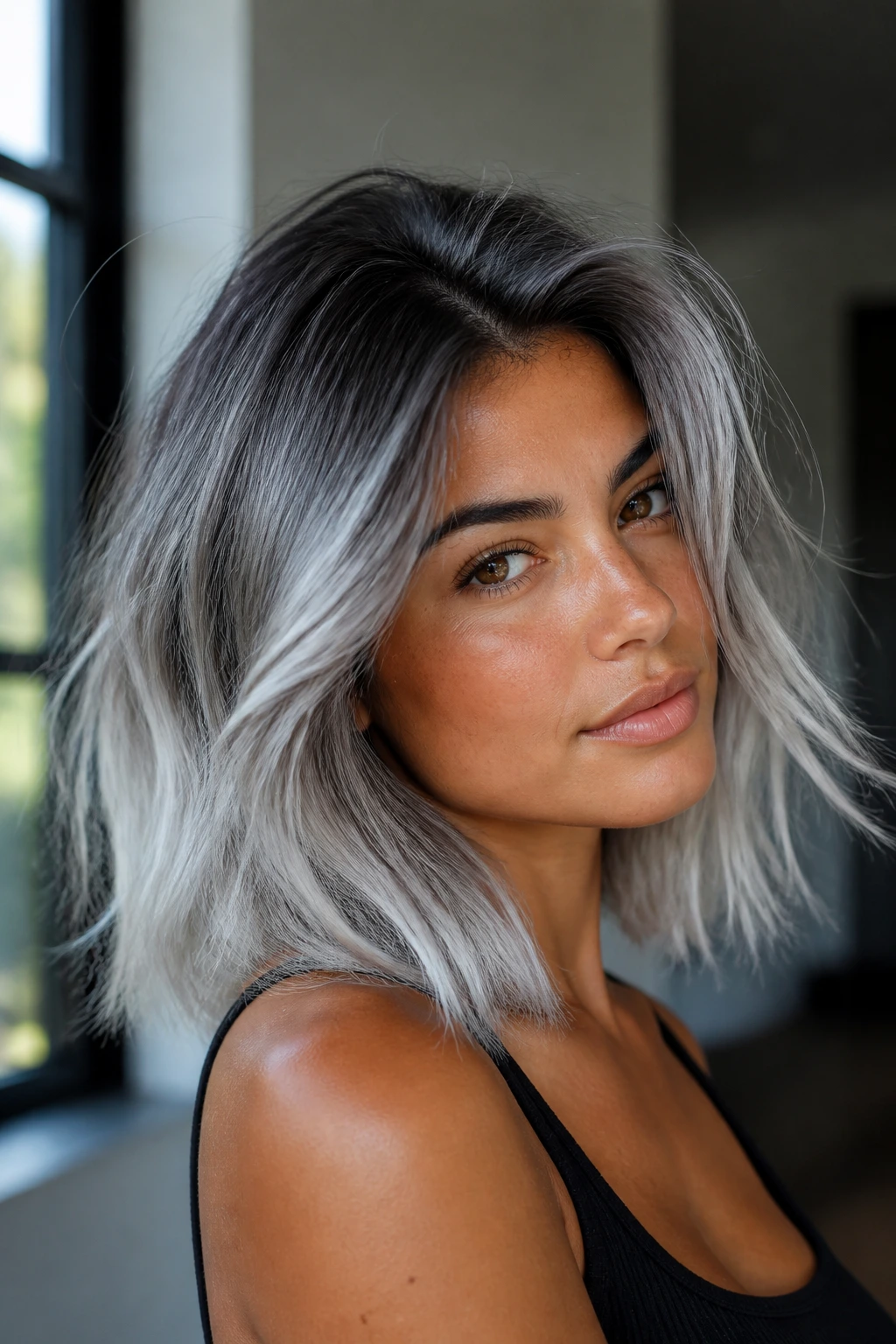
The cleanest silver jobs on olive skin usually have two or three tones working at once. A darker root, a smoky midsection, and a brighter end create a shape that flat color just cannot match. When everything lifts to the same pale note, olive skin can lose definition around the jaw, the mouth, and even the eyes.
That shadow does not make the color less silver. It makes the silver look more expensive, more dimensional, and a lot easier to live with. I’m especially fond of root melts and graphite lowlights because they stop the hair from floating away from the face.
A simple level map helps
- Root area: Around level 6 to 7 keeps the face grounded.
- Mid-lengths: Level 8 to 9 gives the silver somewhere to soften.
- Lightest pieces: Level 9 to 10 carry the platinum edge.
If your olive skin leans warm, pearl and beige tones usually sit better than stark blue-silver. If your complexion is more muted or neutral, graphite and smoke often look cleaner than bright white. That tiny shift in tone changes everything.
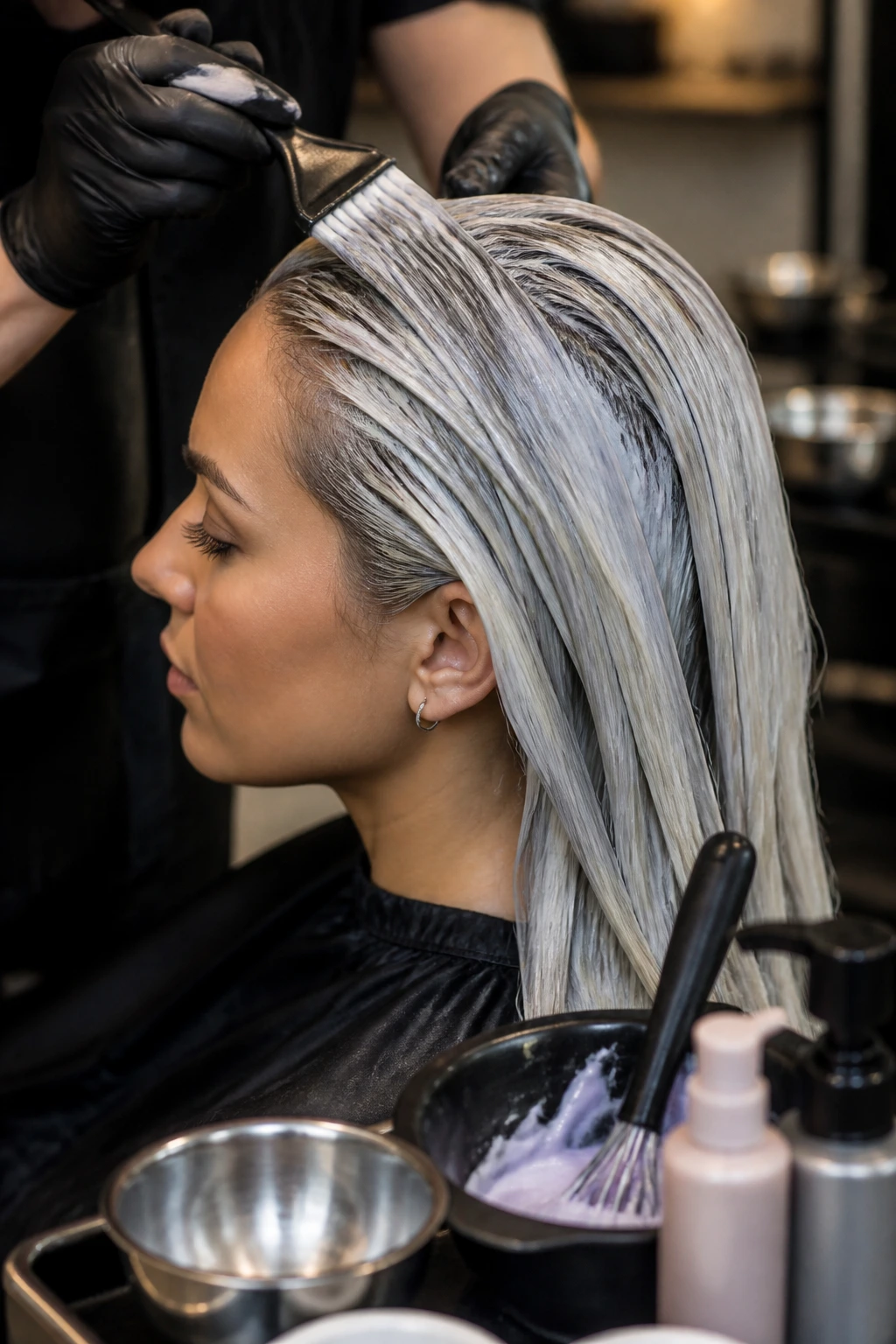
Essential Equipment for These Shades
-
Color-safe, sulfate-free shampoo: Keeps the silver from stripping out too fast and helps the tone stay calmer between washes.
-
Purple shampoo with a pale pigment: Good for knocking out yellow, but the lighter formulas are less likely to stain porous ends.
-
Bond-building mask: Useful if your hair has been bleached to get to silver; it helps the hair feel less brittle after lightening.
-
Weekly moisturizing mask: Silver hair dries out quickly, and a rich mask keeps the ends from looking dusty.
-
Heat protectant spray: Use it before blow-drying, curling, or flat-ironing. Silver shows heat damage fast.
-
Wide-tooth comb: Less snagging, less breakage, especially on freshly toned or porous hair.
-
Microfiber towel or soft T-shirt: Reduces friction when hair is wet, which matters more once the cuticle is opened by lightening.
-
Satin or silk pillowcase: Helps the tone stay smoother and cuts down on overnight roughness.
-
Salon cape or old towel for at-home glosses: Handy if you’re refreshing toner or using a color-depositing mask at home.
-
Sectioning clips: Not glamorous, but they make root touch-ups and product application much cleaner.
Smart Salon Notes and Product Picks
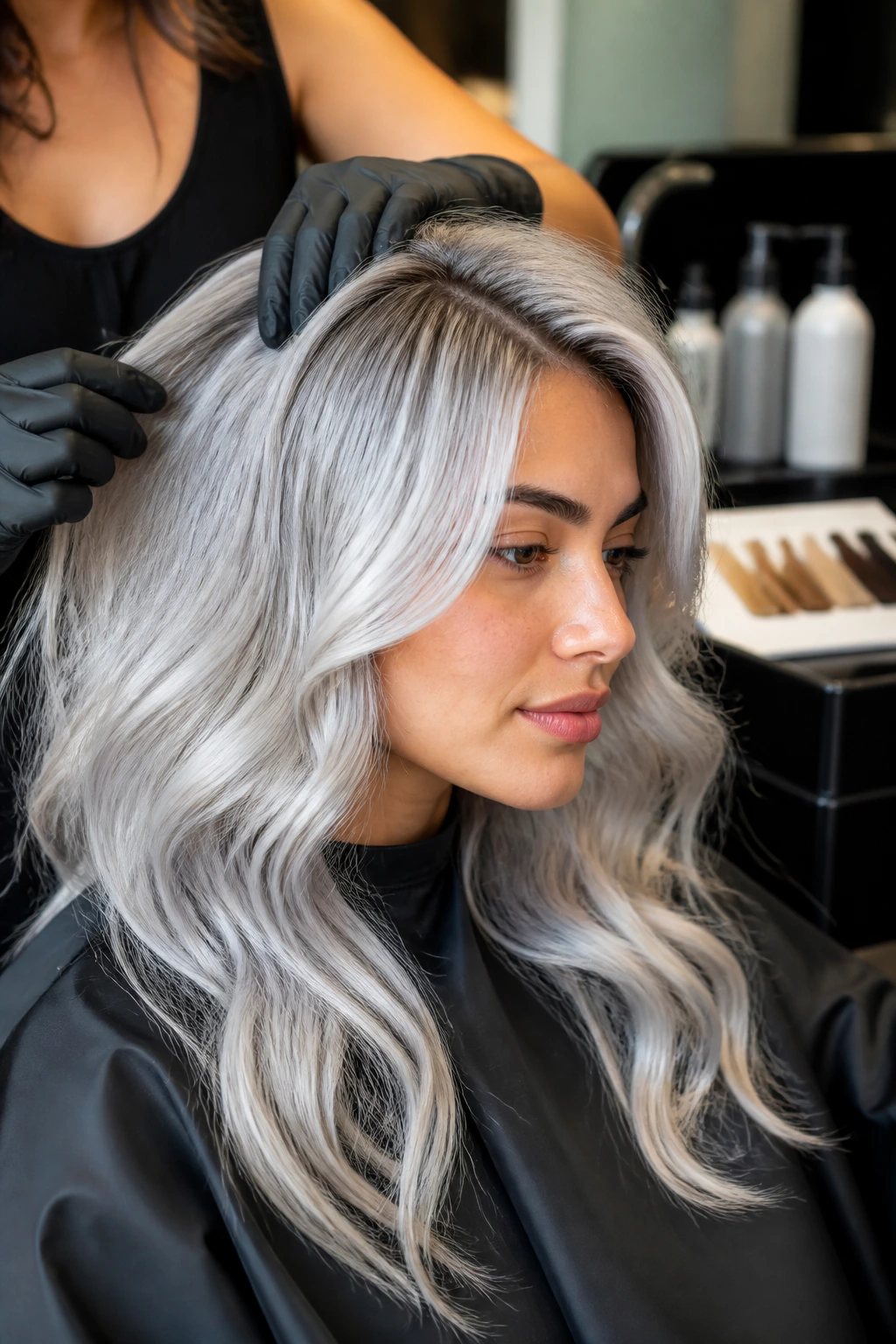
Silver looks simple in photos and fussy in a chair. The difference usually comes down to what gets lifted, what gets left in shadow, and what kind of toner is sitting on top. If you’re bringing in inspiration shots, bring three: one for the color, one for the cut, and one that shows the finish in natural light. A picture of perfect silver on a different haircut can lead you straight into disappointment.
Ask your colorist what level they expect your hair to reach before toning. For true platinum silver, the hair usually needs to be lifted to a pale yellow base first; trying to tone orange or gold into silver is how you get muddy results. If your hair is dark or already colored, that conversation matters more than the shade itself.
On the product shelf, look for a pale purple shampoo rather than a deep, almost inky violet formula. The darker masks can stain porous silver ends and leave a lavender cast where you wanted pearl. A clear gloss, a beige toner, or a smoky silver glaze can be smarter than piling on more pigment.
Bond-building treatments matter here too. I’m not talking about a miracle bottle. I’m talking about one sturdy weekly mask that helps bleached hair hold together when you brush it, blow it out, or tie it back.
How to Wear Silver Hair with Olive Skin
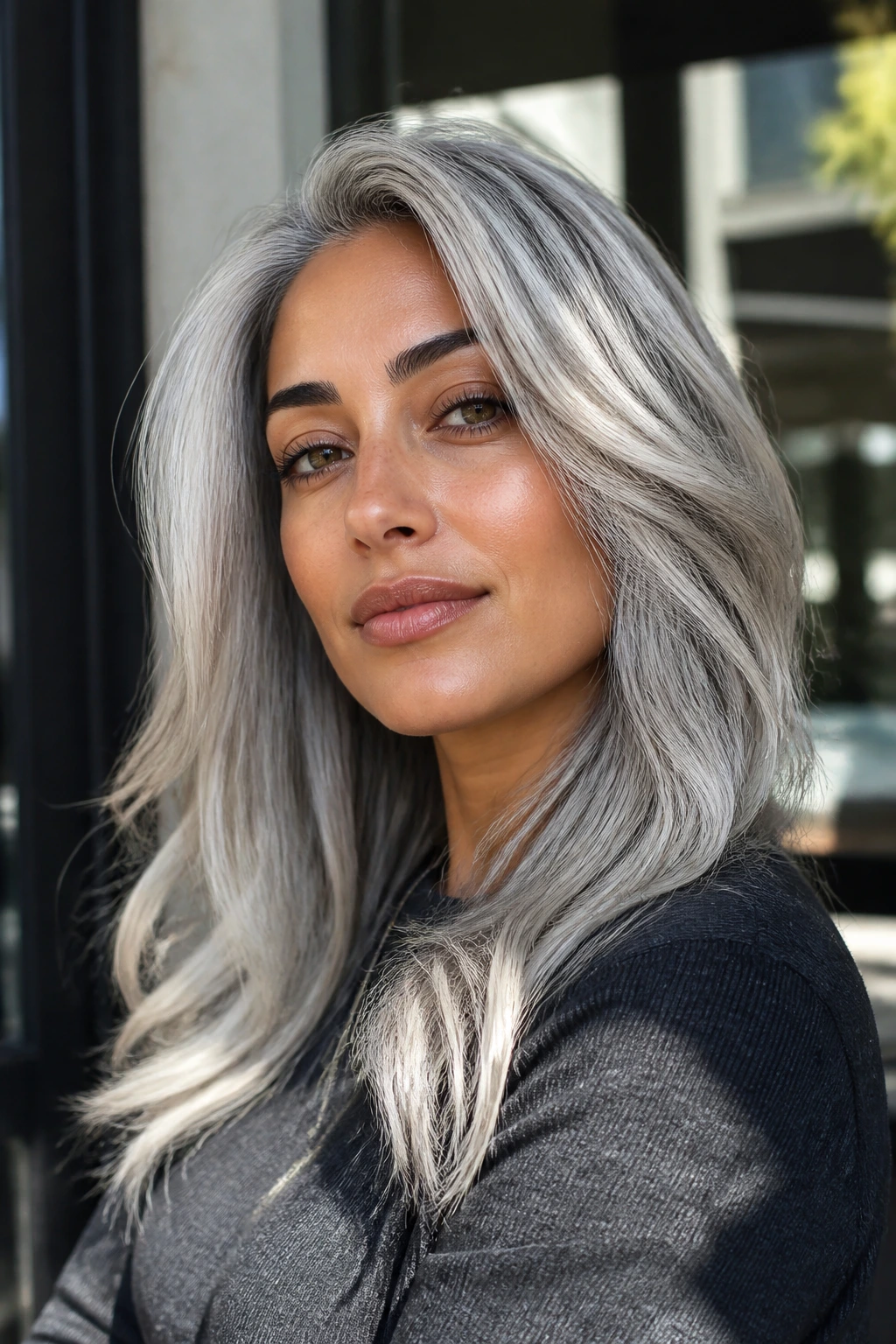
Placement: Put the brightest pieces where your face needs lift — around the cheekbones, along the part, or through the ends if you want a softer outline. If the silver sits too high and too wide, olive skin can lose the natural frame that makes it look alive.
Makeup: Taupe or soft brown brows, peach or apricot blush, and a neutral lip usually sit well with platinum silver. If you go for a sharper white-silver shade, a berry lip or deeper blush can keep the face from looking pale.
Wardrobe: Charcoal, ink blue, forest green, espresso, dusty plum, and soft cream are safer bets than stark optic white. Those colors give silver hair a place to land instead of making it look even colder.
Texture: Waves, bends, and layered cuts keep the hair from reading like a sheet. A blunt bob can work, but it needs clean tone and healthy ends. Loose texture gives silver some life, and olive skin usually likes that little bit of movement.
Lighting: Check the color in daylight, warm indoor light, and bathroom light before you decide it’s done. Silver changes fast. What looks pearl at the salon can read flat at home if the toner is off by half a step.
Additional Tips for Richer Silver
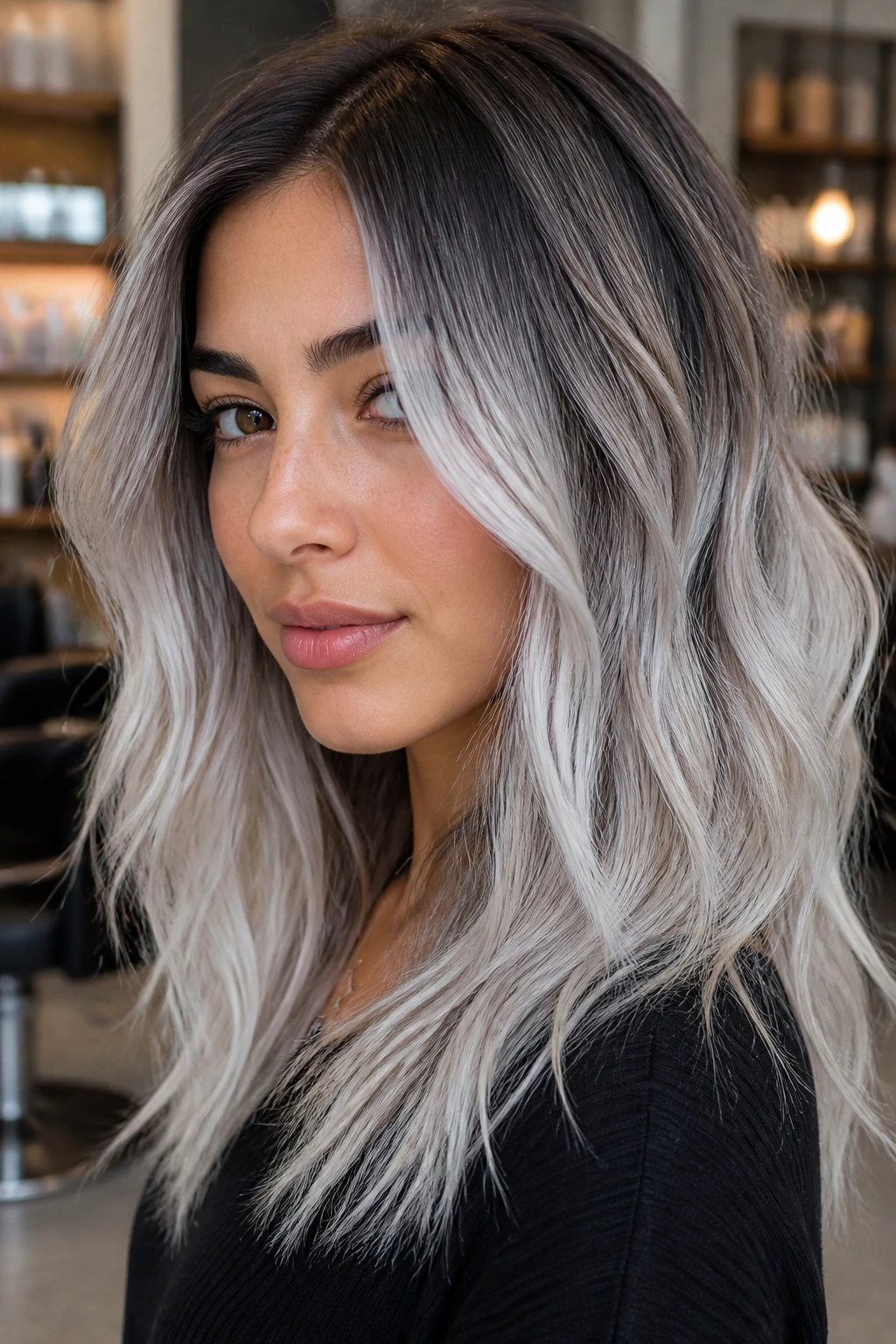
Gloss Boost: A clear or pale pearl gloss every 4 to 6 weeks keeps the finish smooth and stops the silver from going chalky. If the tone starts looking dusty, do not keep chasing it with more purple shampoo.
Contrast Control: If your olive skin leans muted, keep some depth at the root or underneath. A 1-inch root stretch or a few graphite lowlights near the crown can save the whole look.
Tone Control: Beige silver and smoky silver are usually easier to wear than a hard blue-white. If you love icy hair but your face disappears under it, ask for pearl in the mids and steel at the ends instead.
Make-It-Yours: Curly hair usually wants ribboning and shadow more than all-over brightness. Short hair can handle a cleaner, brighter tone. Long straight hair often needs more dimension, or it starts to look like one flat silver curtain.
Keeping the Color Bright Between Appointments
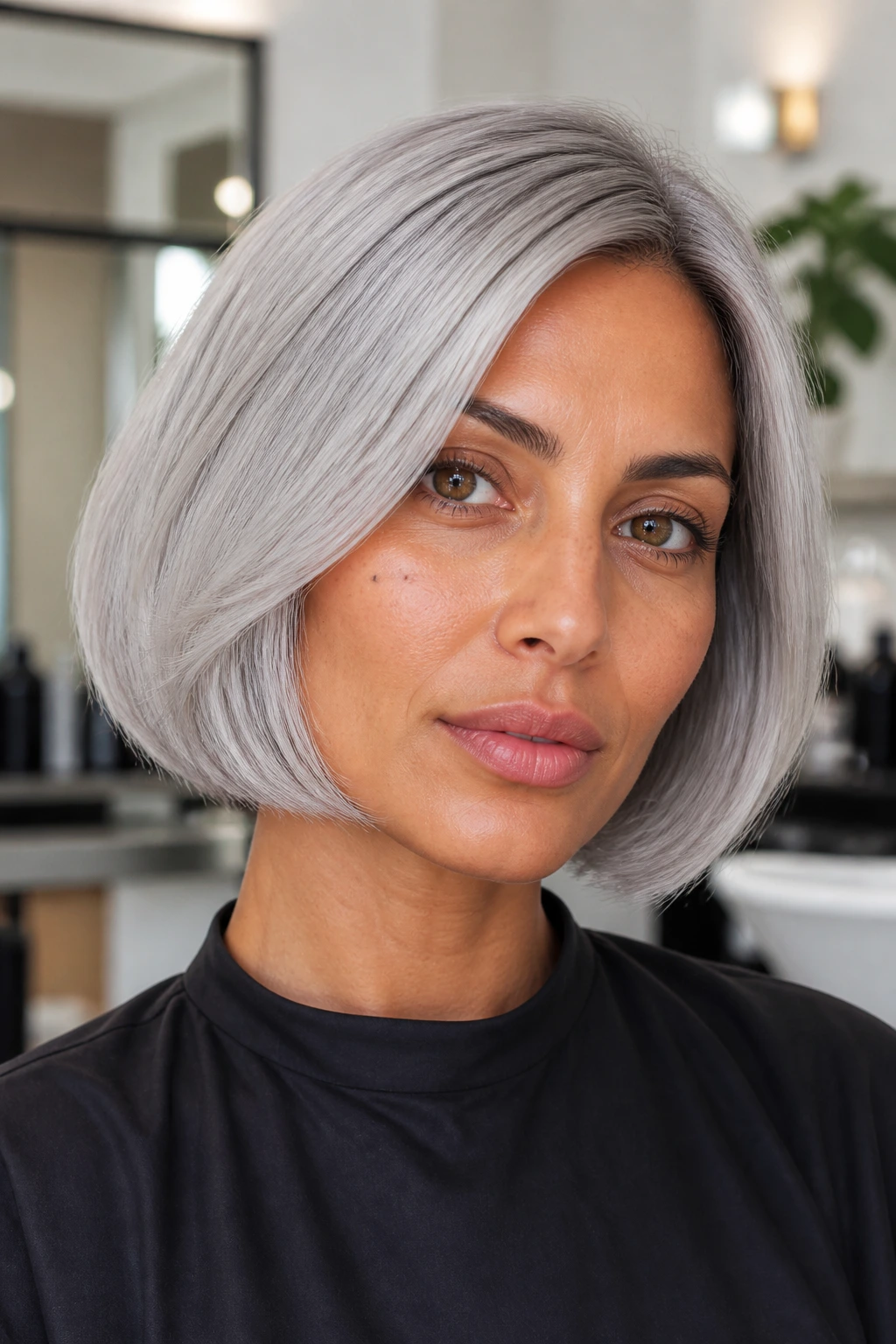
Silver hair is picky about wash day. Two to three shampoos a week is enough for most people, and lukewarm water is kinder than hot water, which opens the cuticle and pulls tone out faster. If your hair is very porous, even a gentle wash can fade the silver faster than you expect.
Purple shampoo is a tool, not a religion. Use it once every 1 to 2 weeks if the hair is already cool and clean, or a little more often if yellow starts showing through. If the formula is strong, leave it on for a short window — 2 to 5 minutes — and rinse well. Letting it sit forever is how you end up with a dull violet cast on pale ends.
A weekly moisture mask helps a lot. Silver hair loses slip quickly, and when it feels rough, the tone looks worse than it is. Bond repair once a week or every other wash can help if your hair has been lightened aggressively.
Toner and gloss refreshes usually land every 4 to 6 weeks for pale silver, and root touch-ups often fall somewhere around 5 to 8 weeks depending on growth and placement. Shadow-root styles can stretch longer. Pure white platinum cannot. It never really does.
Heat styling deserves a little respect too. Keep irons and wands lower if your hair is fragile, use heat protectant every time, and trim the ends before they start splitting into a frayed mess. Silver shows damage fast, which is annoying, but it also means you can catch problems early.
Variations and Adaptations to Try
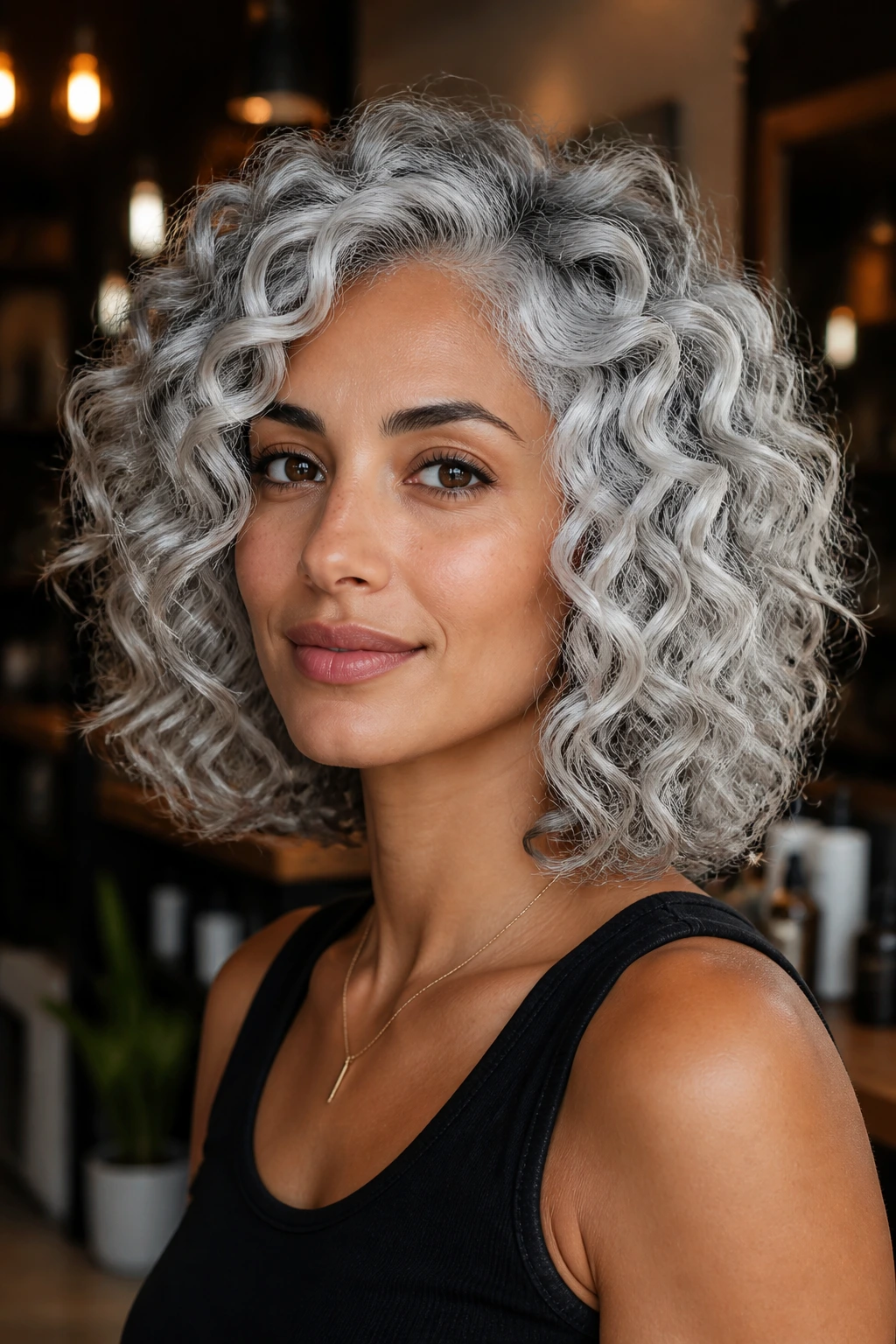
Soft Pearl for Warm Olive Skin: Keep the base lifted to a pale blonde, then glaze it with pearl and beige instead of a hard silver-blue. This version softens the contrast and tends to sit better on olive skin that leans golden. If the face looks too cool, add a little warmth back through makeup or wardrobe instead of pushing the hair whiter.
High-Contrast Silver for Deep Olive Skin: Use a darker root, bright white mids, and a crisp line around the face. Strong brows and deep eyes usually make this one sing. It’s not subtle, and that’s the point.
Curly Silver Ribboning: Instead of bleaching every curl, place silver ribbons where the coil or wave naturally opens. The color looks richer because the curl pattern breaks it up. This is the easiest way to get movement without drying the whole head out.
Low-Maintenance Root Melt: Keep 1 to 2 inches of root depth and let the silver live in the mids and ends. The grow-out looks softer, and olive skin gets the contrast it needs near the face. This is the version I’d choose for anyone who wants silver without a calendar full of touch-ups.
Short-Cut Chrome: Pixies, buzz cuts, and blunt crops handle bright silver better than most people expect. The short length lets the color feel deliberate, not overworked. If your bone structure is strong, this can look cleaner than long platinum ever will.
Muted Beige-Silver: If icy tones keep fighting your skin, shift the finish toward beige-silver or mushroom silver. You still get the platinum family feeling, but the warmth of the glaze makes the look easier to wear. It’s a smart option for office settings, lower-maintenance routines, or anyone who hates a harsh contrast.
Common Mistakes to Avoid
-
Choosing a blue-white toner because it looks sharp in a photo: On olive skin, that can turn the face gray or slightly green. Ask for pearl, smoke, or beige in the formula if you want a softer read.
-
Lifting dark hair in one giant jump: Orange and yellow patches often hide under the silver and ruin the finish. A better plan is staged lightening with a colorist who knows how to get to pale yellow without wrecking the cuticle.
-
Using purple shampoo like it’s regular shampoo: Too much of it can dull the hair or leave a faint lavender stain on porous ends. Use it sparingly and follow with a moisture mask.
-
Ignoring the brows: Silver hair can make brows look lighter by contrast, even when nothing changed. Keep them defined so the face still has structure.
-
Skipping trims: Dry, split ends make silver look older and flatter than it is. A trim every 8 to 10 weeks keeps the shape clean.
-
Flattening the hair with too much heat: High heat can rough up the cuticle and make the tone go dull fast. Use a protectant and keep hot tools as low as your style allows.
Frequently Asked Questions
Will platinum silver hair wash out olive skin?
Not if the tone has depth. Pearl, smoke, graphite, and root shadow usually keep olive skin from looking drained, while a hard white silver can be too much on its own.
Is pearl silver or icy silver better for warm olive undertones?
Pearl silver usually wins. It cools the hair without pushing it into a blue-white zone that can make warm olive skin look flatter than it should.
Can dark brown hair go all the way to silver in one appointment?
Sometimes, but not always safely. Dark hair usually needs staged lightening to a pale yellow base before toning, and heavily colored hair may need color correction first.
How often will I need toner?
For bright silver, every 4 to 6 weeks is a realistic range. If you choose a shadow root or smoky finish, you can often stretch that a little longer.
Do I need to change my eyebrow color too?
Usually not drastically. Keep brows defined and slightly soft; jet-black, blocky brows can fight the finish and make the face feel heavy.
What if my silver starts looking yellow or muddy?
That usually means the tone is fading, not that the whole color failed. A gentle purple shampoo, a clearer gloss, or a salon toner refresh usually fixes it faster than piling on more pigment at home.
Can curly hair wear platinum silver without looking dry?
Yes, but curly hair needs more moisture and less rough handling. Ribbon highlights, smoke-root melts, and steel-silver finishes usually work better than an all-over bright white.
Are root shadows lazy or intentional?
Intentional, when they’re done well. A good shadow root frames olive skin and buys you time between appointments instead of leaving you with a harsh regrowth line.
Which silver idea is easiest to live with day to day?
Smoke-root melts, dimensional balayage, and frosted layers with root stretch are usually the least fussy. They still read silver, but the grow-out is softer and the tone has places to breathe.
A Silver Shade That Fits the Face
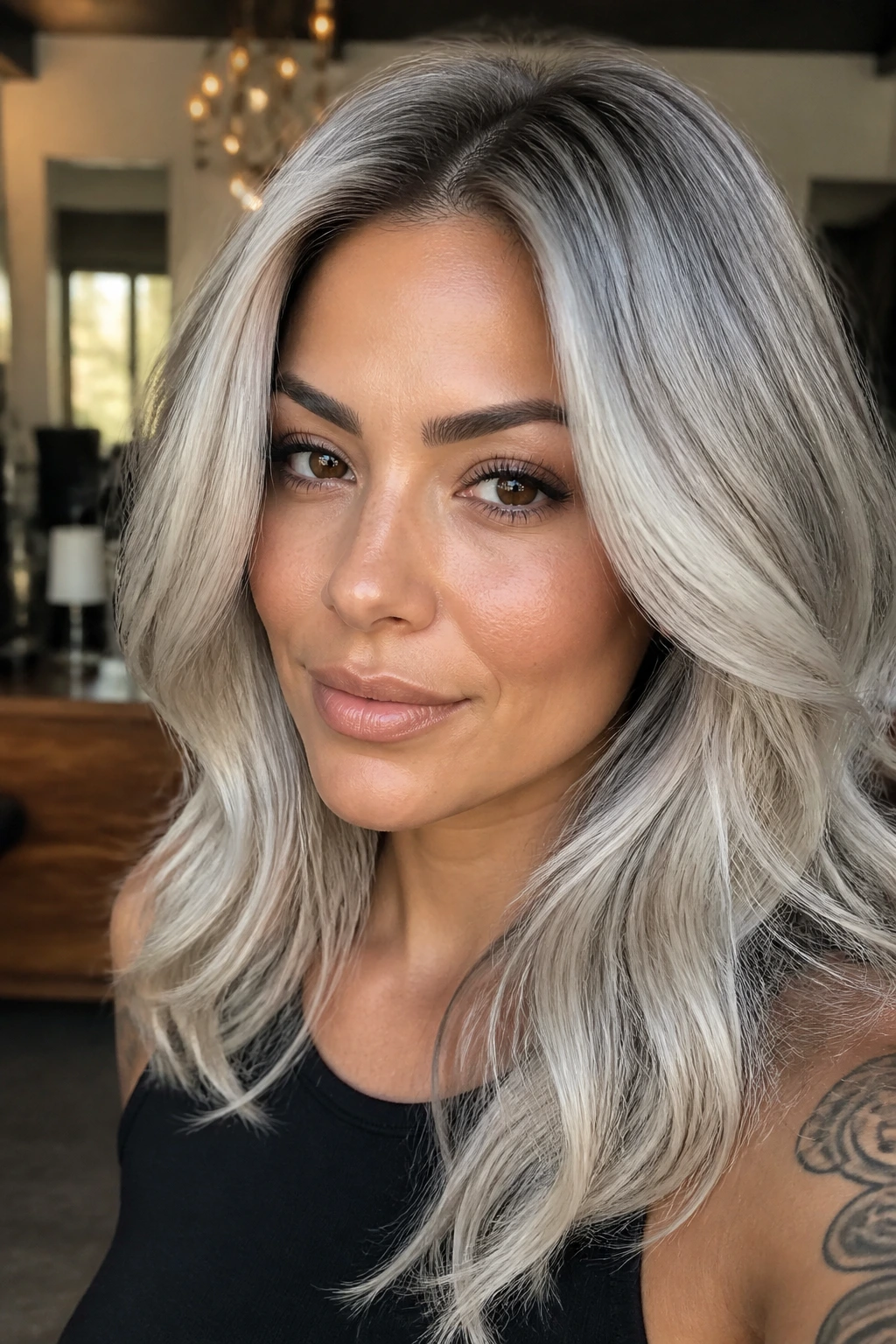
The right silver on olive skin does not have to be loud to matter. In fact, the most flattering versions here are usually the ones that keep a little depth at the root, a little pearl in the mids, and just enough brightness around the face to sharpen the whole look. That mix gives the skin room to breathe.
If you’re saving inspiration photos, do not stop at the color. Save the haircut, the lighting, and the level of contrast around the brows too. That’s where the difference lives, and once you start noticing it, platinum silver hair color ideas for olive skin get a lot easier to sort through.