



Brown to blonde hairstyles can go muddy fast on warm skin tones. Too much ash, too much beige with a gray base, or too much lift all at once, and the face starts to look flatter than it should. But get the balance right—caramel, honey, amber, butter, toffee—and the whole head reads softer, brighter, and more expensive in the plainest sense of the word: the color looks deliberate, not accidental.
That’s the part most people miss. Warm skin does not need a cold, icy blonde to look polished. It usually wants the opposite: a brown base that still holds weight, plus blonde pieces that feel woven through the cut instead of pasted on top. A root shadow, a face frame that starts at the right point, a few ribbons in the mid-lengths—those small decisions do more than a full-head lightening frenzy ever will.
I’ve always liked brown-to-blonde color best when you can still see the brunette underpainting. The blonde should move. It should catch the eye in waves, bends, and ends. If it looks like a helmet, it’s too much. If it disappears entirely, it’s too timid. The looks below sit in that sweet middle zone, with enough warmth to flatter golden undertones and enough shape to make the hair feel styled even on a lazy day.
Why You’ll Love This Collection
-
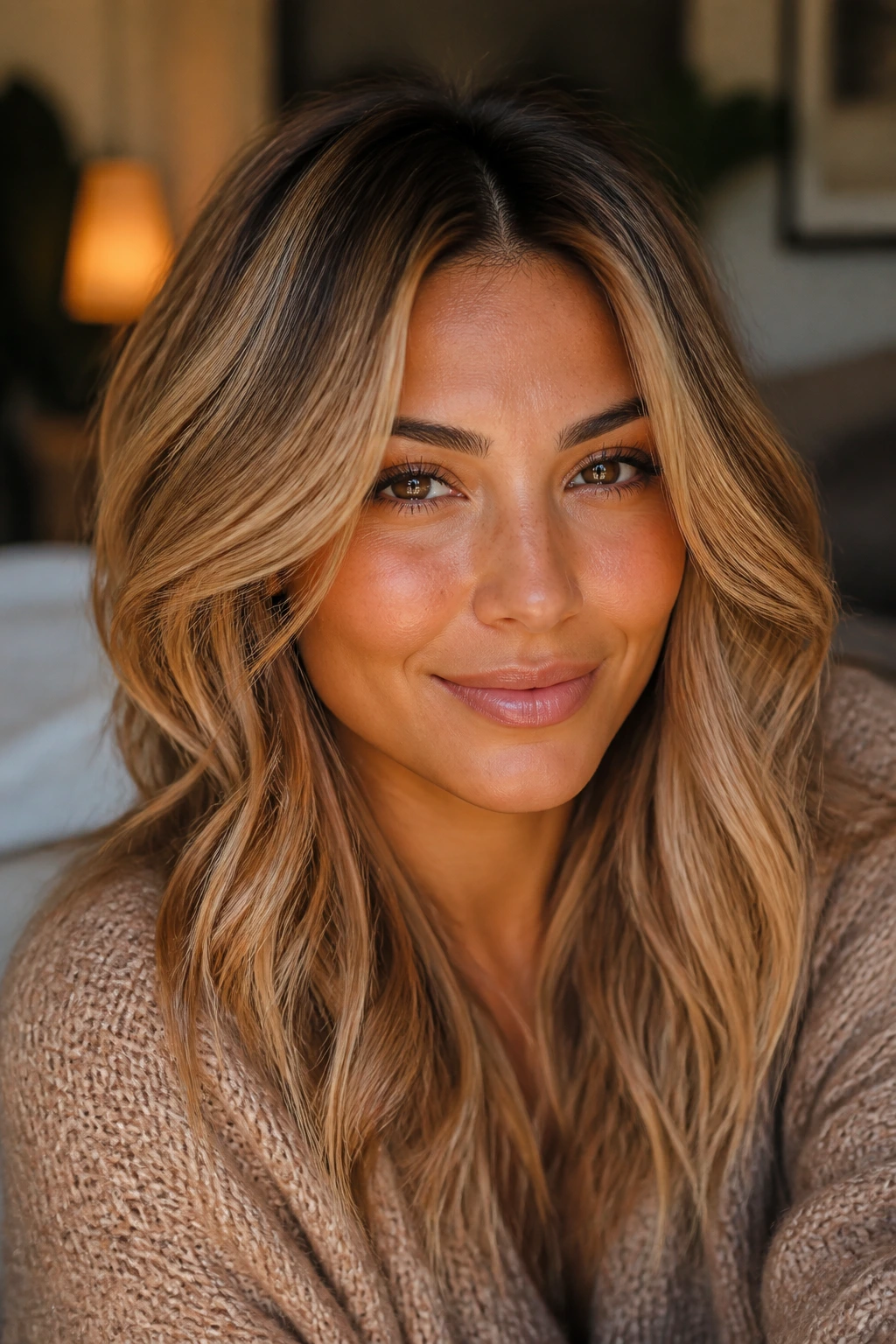
Warmth-Friendly Color Choices: These looks lean into caramel, honey, amber, and beige-gold, which sit next to warm undertones without that chalky cast some blondes create.
-
Built-In Dimension: Every style keeps some brown in the mix, so the blonde reads as woven through the haircut instead of sitting on top like frosting.
-
Different Lengths, Same Logic: Whether the hair is a pixie, lob, shag, or long curl, the placement ideas here make the lightness work with the cut.
-
Grow-Out That Behaves: Shadow roots, balayage, and ribbon highlights soften the line as the hair grows, which means fewer awkward weeks between salon visits.
-
Easy to Push Softer or Brighter: You can keep the blonde subtle with beige and toffee tones or go bolder with honey and butter pieces without losing the warm-skin harmony.
The Warm-Undertone Rulebook
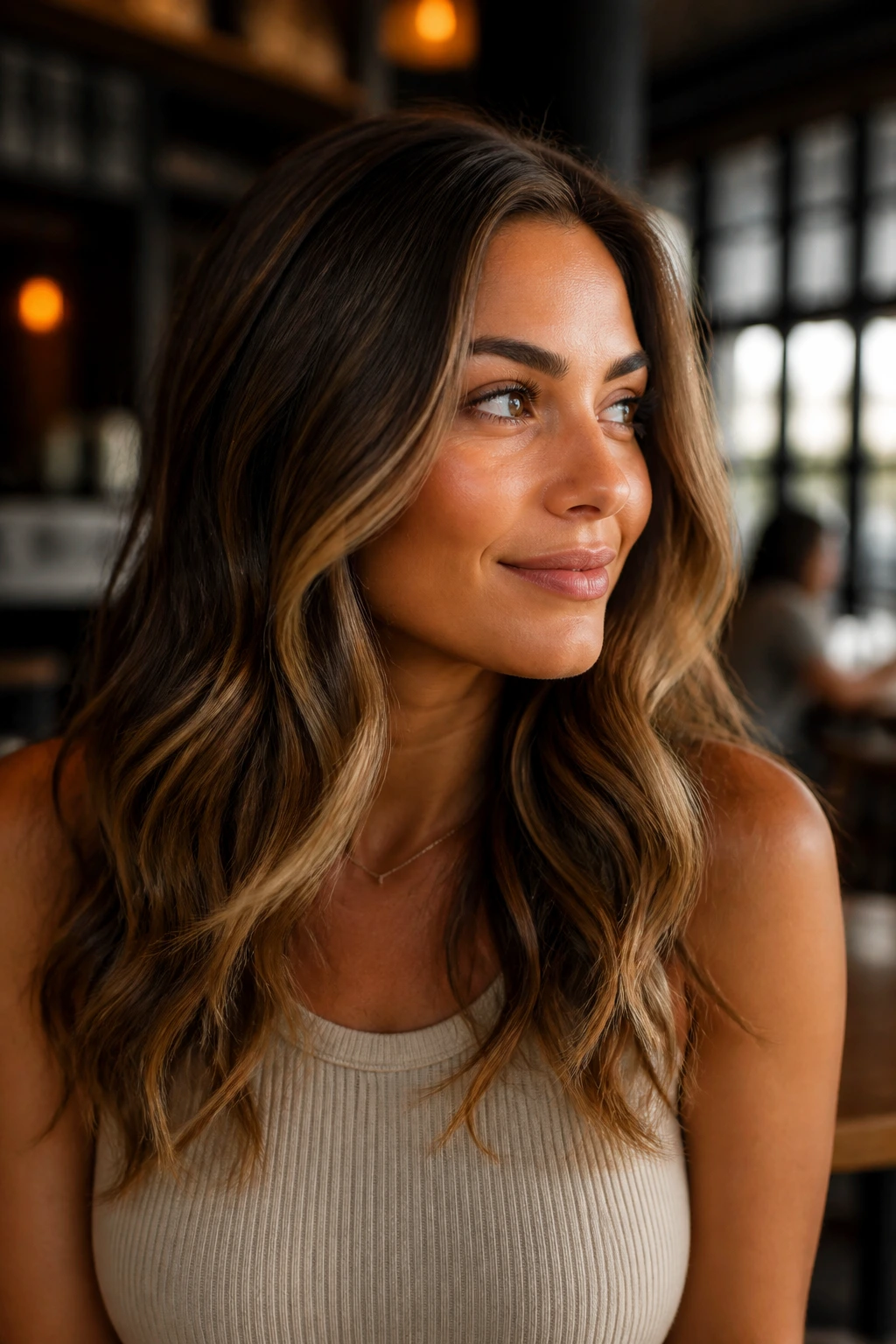
Warm skin tones usually carry golden, peach, or olive-gold undertones, and that means the blonde has to match the temperature of the face, not fight it. A pale ash blonde can look pretty on a swatch and still go flat the second it sits next to a golden cheek. Honey, caramel, butterscotch, amber, beige-gold, and soft apricot blonde tend to behave better because they echo the warmth that’s already there.
The smartest brown-to-blonde hairstyles keep the base at least one or two shades deeper than the lightest pieces. That contrast gives the color a frame. Without it, the whole head can go hazy, which sounds airy in theory and looks tired in real life.
Placement matters just as much as tone. If the lightest strands start around the cheekbone or the brow tail, the face opens up without the top half of the head going too bright. On curly hair, warm highlights should follow the curl pattern. On straight hair, longer ribbons usually look better than tiny, choppy foils because they keep the finish smooth.
One more thing people forget: warm doesn’t mean orange. Orange is a lift issue, not a tone strategy. If the blonde needs to be light, it can still stay golden. That’s the difference between a polished caramel blend and a brassy accident.
What to Tell Your Colorist Before the Foils Go In
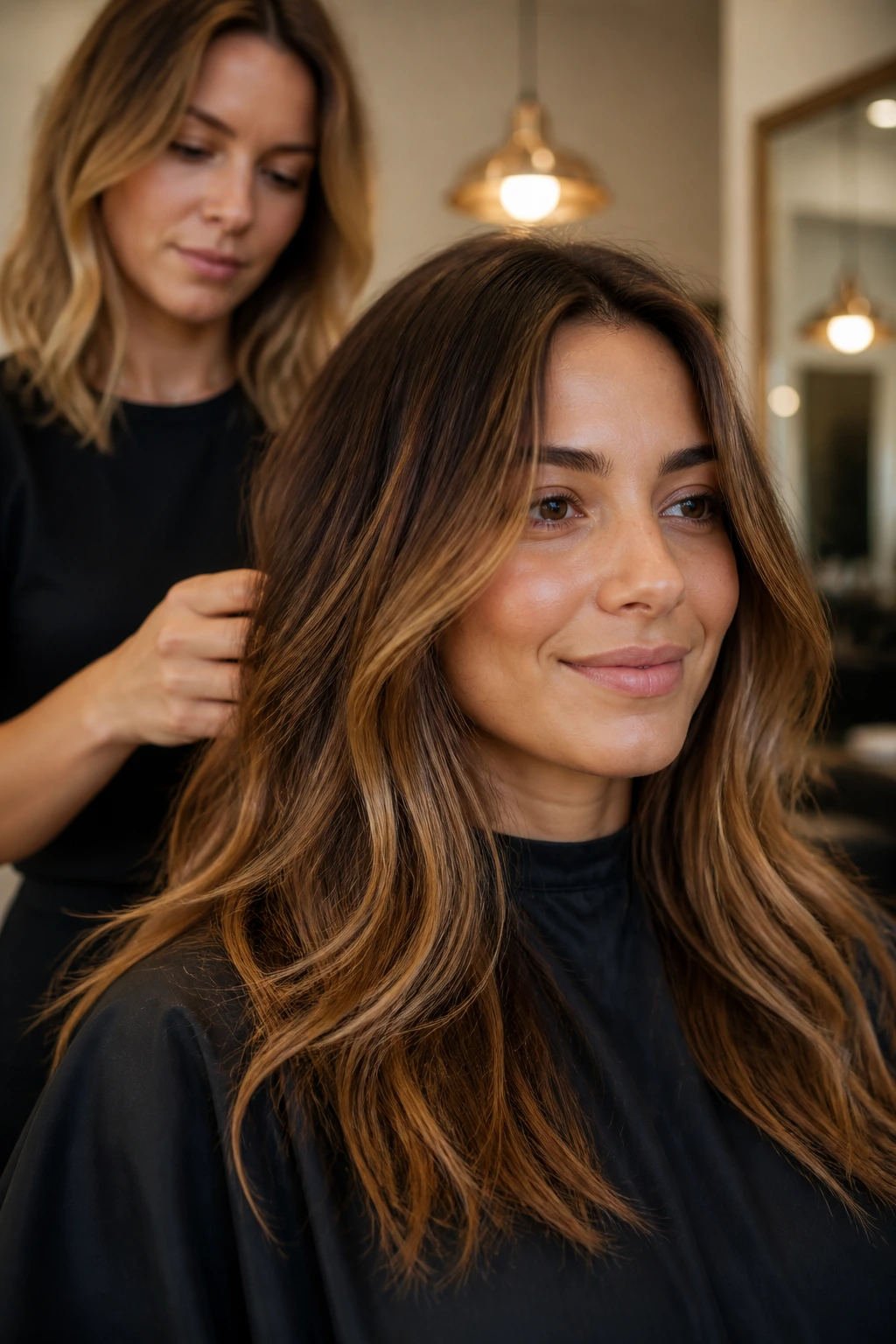
Bring photos, but bring the right kind of photos. A picture of a pale platinum bob does not help if your goal is a honeyed brunette with dimension. I always tell people to save one image for tone, one for placement, and one for haircut shape. That keeps the conversation from drifting into a vague “make me blonde” mess.
Use plain language at the chair. Say you want brown depth at the root, warm blonde pieces through the mids and ends, and a finish that still looks like brunette at first glance. If you like contrast, ask for a money piece or brighter face frame. If you want soft grow-out, ask for balayage with a root shadow one level deeper than your natural base.
If your hair is dark brown or previously colored, the salon plan matters more than the inspo photo. Some warm blondes can happen in one visit. Others need staged lightening so the hair doesn’t feel straw-dry by the time the toner goes on. That part is boring. It also saves the haircut.
1. Caramel Ribbon Layers
Caramel ribbon layers are the safest place to start if you want brown to blonde hairstyles that still feel soft on warm skin. The color sits in long, thin bands through the mid-lengths, so the hair moves when you walk instead of looking like one solid block of color. It’s the kind of blonde that shows up best in daylight and never quite shouts.
Why It Flatters Warm Skin
The caramel tone mirrors the warmth already in the face, which means the hair and skin stop competing. A level 6 or 7 brunette base with level 8 caramel ribbons keeps the contrast gentle, and that matters. Too much lift at the root and the whole thing starts to look detached.
- Best on layered cuts that move.
- Works well with loose waves or a blowout.
- Ask for ribbons, not chunky stripes.
Best tip: keep the brightest pieces below the eyebrow line; that’s where the color starts to read expensive instead of loud.
2. Honey Balayage Lob
A honey balayage lob is one of those cuts that simply behaves. The length lands around the collarbone, which gives the warm blonde enough room to show off without dragging the face down. Honey is brighter than caramel, but it still has enough gold to stay friendly on golden or peachy skin.
The trick is in the hand-painted placement. The lightest pieces should live around the face and the lower half of the cut, not all over the crown. That gives the top a little brown depth and lets the ends feel sunlit. On straight hair, the color looks clean and glossy. On waves, it breaks into soft bands that look like you’ve spent more time on your hair than you actually have.
3. Bronde Blowout with Soft Face Framing
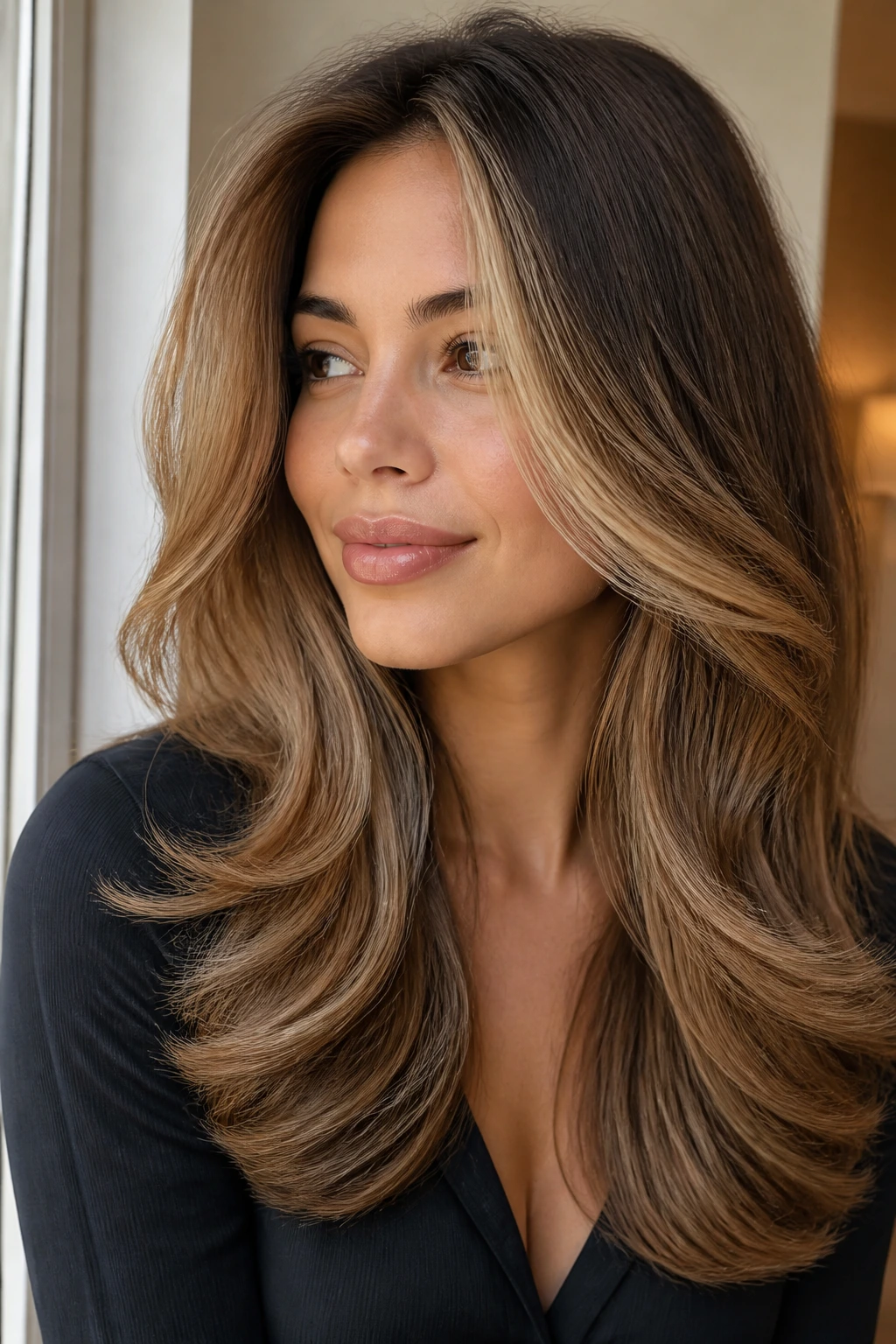
Want the blonde to brighten the face without making the whole head look bleached? This is the answer. A bronde blowout keeps the base brown, then adds blonde just where the eye lands first—around the temples, cheekbones, and front layers. The result is polished, but not stiff.
Where the Light Should Sit
The front pieces should be one to two shades lighter than the rest of the head, never four. That small shift is enough to make warm skin look fresher around the mouth and eyes. With a round brush blowout, the lighter strands bend under slightly and catch light at the ends, which is where this look earns its name.
- Best for medium to thick hair.
- Ask for a soft root smudge.
- Keep the front pieces narrow if your features are delicate.
4. Butterscotch Curtain Bangs
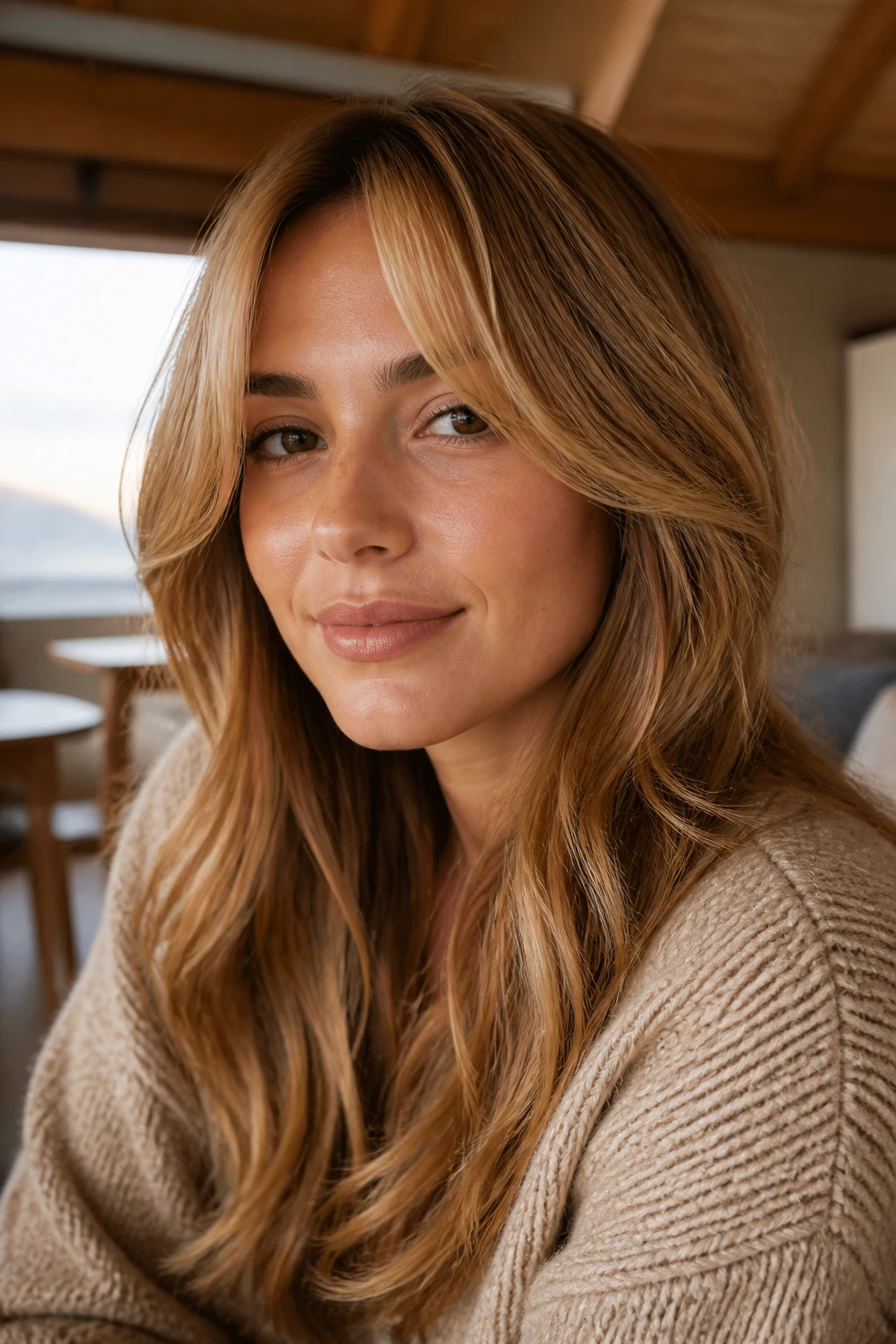
Curtain bangs are already forgiving. Add butterscotch pieces through the fringe and the whole haircut suddenly has a little warmth at the brow, which matters more than people think. The bangs break up the forehead and soften the upper face, and the blonde gives them lift without making them look blunt.
This works because bangs need contrast close to the face, but not too much. Butterscotch has enough gold to flatter warm skin, and enough depth to avoid the peroxide look that can happen when fringe gets too pale. If your hair is straight, these bangs will show the color cleanly. If it’s wavy, the bends make the blonde look even softer.
5. Toasted Almond Shag
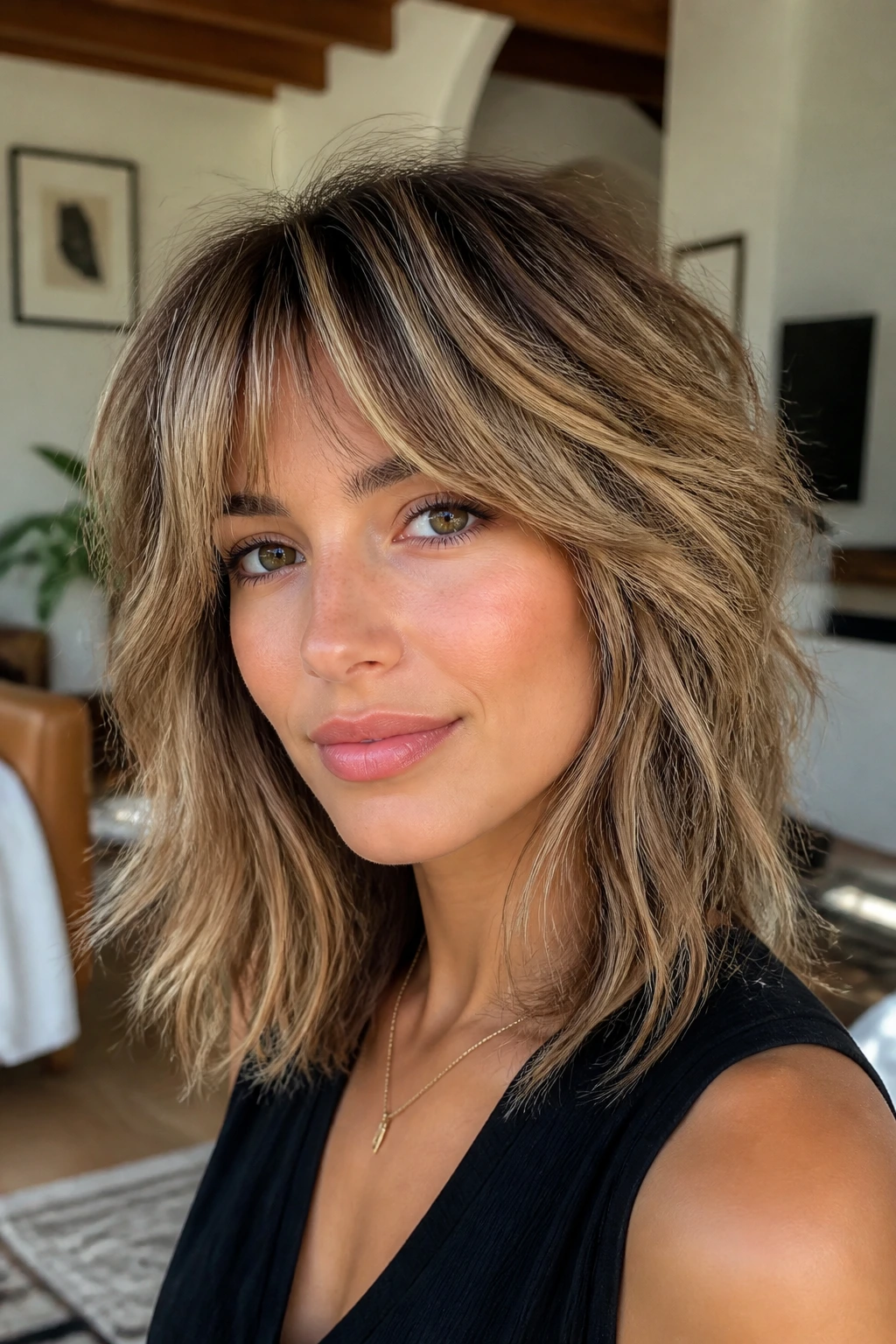
A shag wants movement, and toasted almond is one of the best tones for it. The cut has choppy layers, so the blonde can’t sit in one neat lane anyway. It needs to be scattered through the texture, with deeper brown underneath to keep the shape from going fuzzy.
I like this one on warm skin because the color does not fight the haircut’s rough edges. The almond tone is still blonde, but it has enough brown in it to keep the whole style grounded. If you’re wearing air-dried waves, the lighter ends pop at the bend. If you rough-dry it, the color turns a little edgier and the layers look almost feathered.
6. Golden Ombré Waves
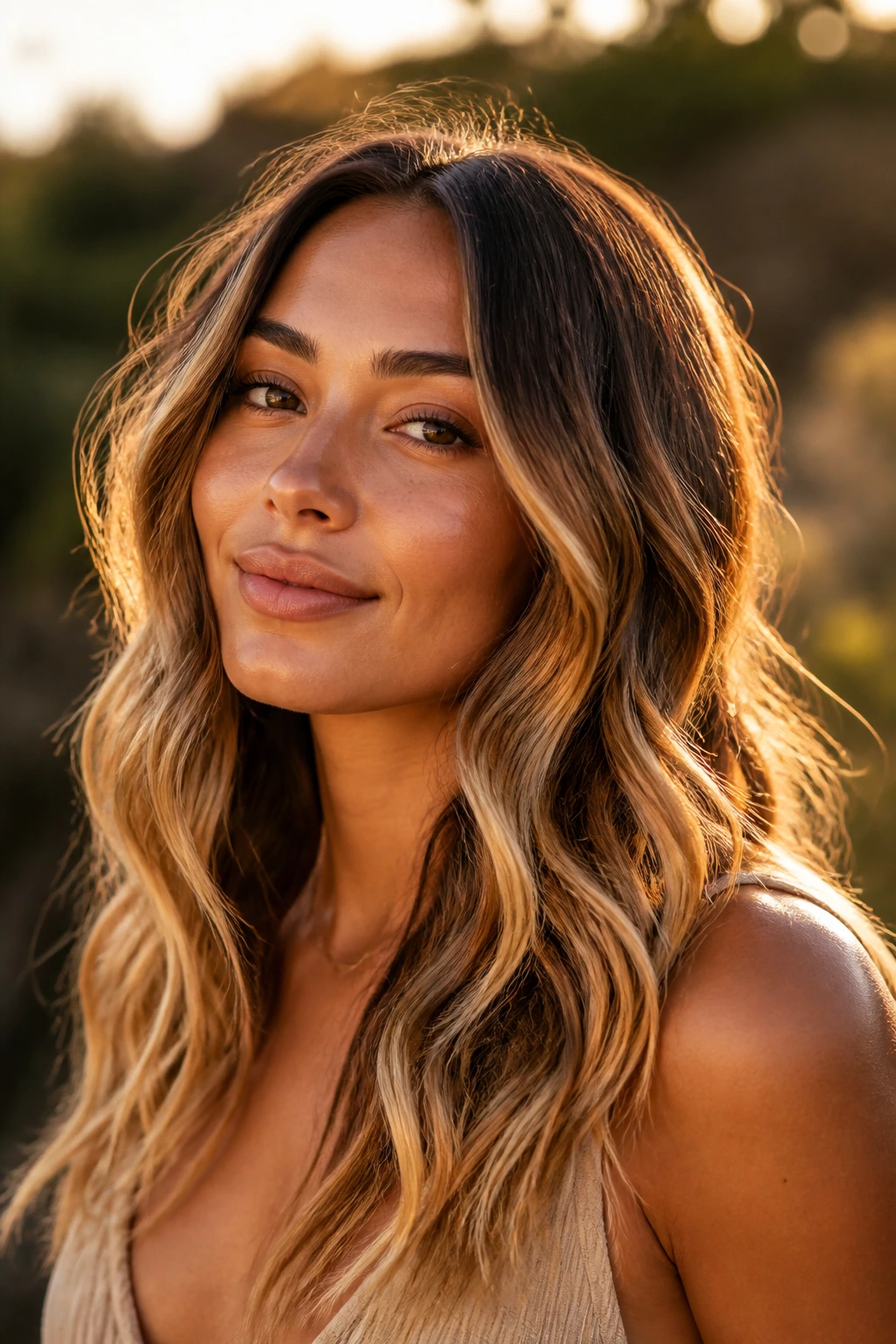
Ombré has a reputation for being too obvious, which is fair when the fade starts too high or the blonde goes too pale. Done well, though, golden ombré waves look like the sun spent time on the hair and then left. The brown stays rich at the roots, and the blonde blooms through the mid-lengths into the ends.
What Makes It Different from Balayage
Balayage spreads the lightness around. Ombré commits to the shift. That makes it a stronger choice if you want a visible brown-to-blonde move without losing warmth. Golden tones keep the ends from reading washed out, and the wavy styling smooths the transition.
Use this if: you want a more noticeable change, you wear the hair loose most days, and you don’t mind a little more toning upkeep than a soft balayage.
7. Chestnut Base with Beige Ribbons
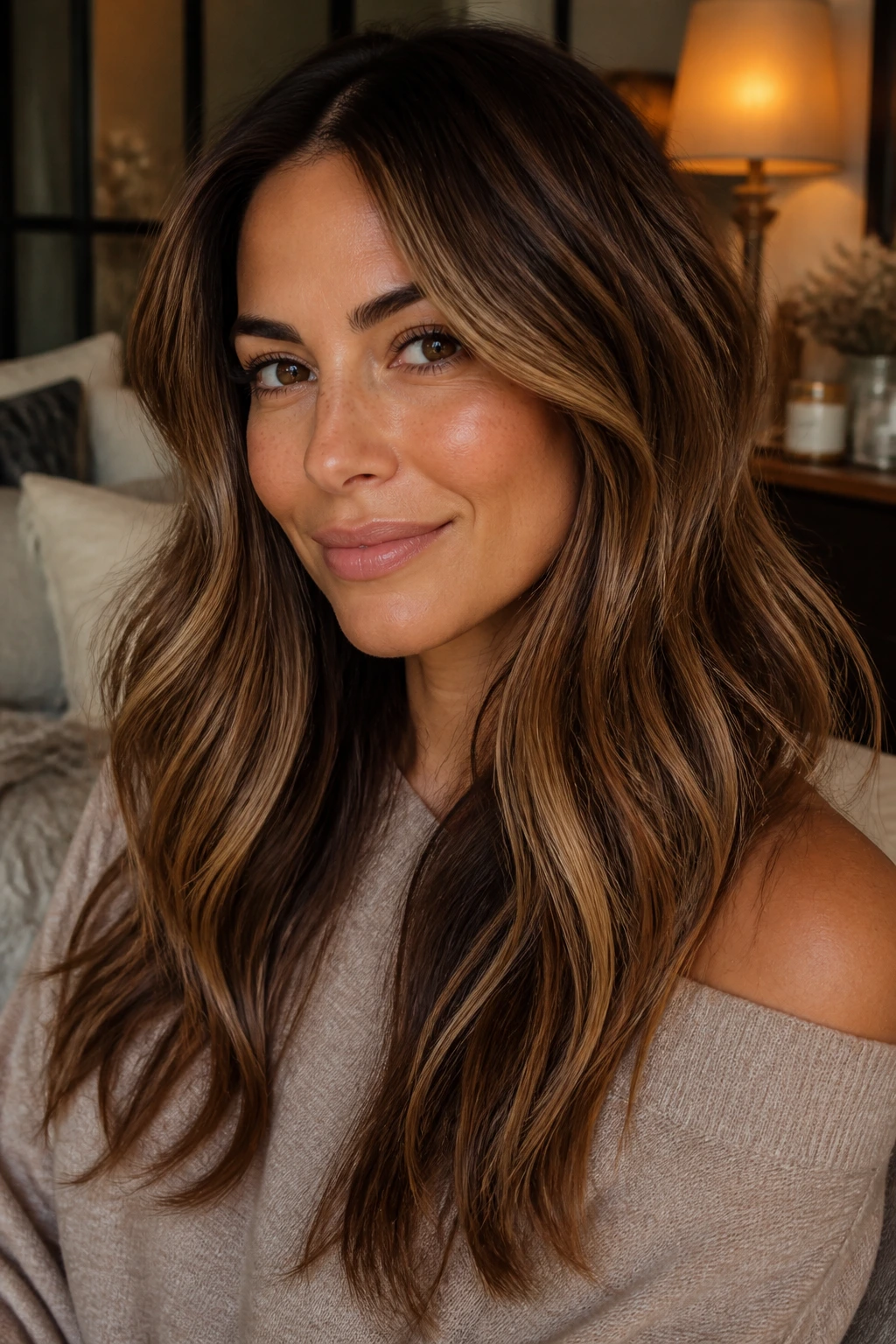
Not every warm-skin blonde has to be bright. A chestnut base with beige ribbons stays close to brunette, then slips in lighter threads that live in the middle ground between gold and neutral. It’s subtle, which makes it useful for anyone who likes the idea of blonde but not the commitment of obvious blonde.
The beige ribbons should be fine, not thick. Think of them as a texture detail, not a headline. On a blunt bob, they make the cut look sharper. On long hair, they keep the color from sinking into one flat brown sheet. This is also a nice choice if your brows are dark and you want the hair to stay visually connected to them.
8. Cinnamon Curl Halo
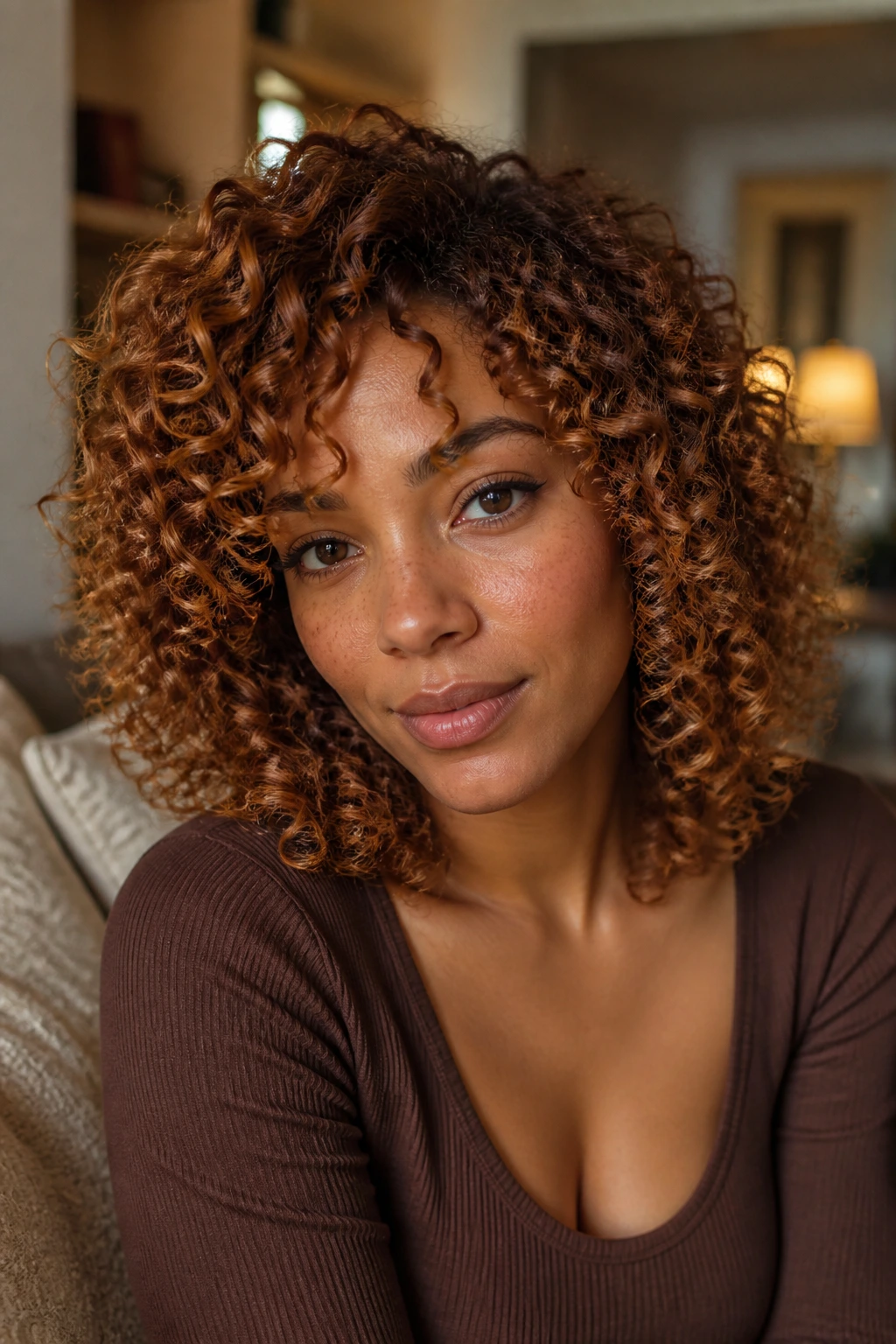
Cinnamon curl halos are made for textured hair that wants warmth without losing shape. The curls do half the work here because each coil catches a different ribbon of light. Cinnamon in the mid-lengths, honey at the ends, and a deeper brown underneath gives the style a round, glowing shape.
The reason it suits warm skin so well is simple: the color matches the skin’s own temperature, then the curls break the blonde into small, flattering flashes. You don’t need a lot of pale pieces for this to read as blonde. In fact, too many light strands can blur the curl pattern. Leave some depth. That’s what gives the style its life.
9. Maple Gloss Straight Cut
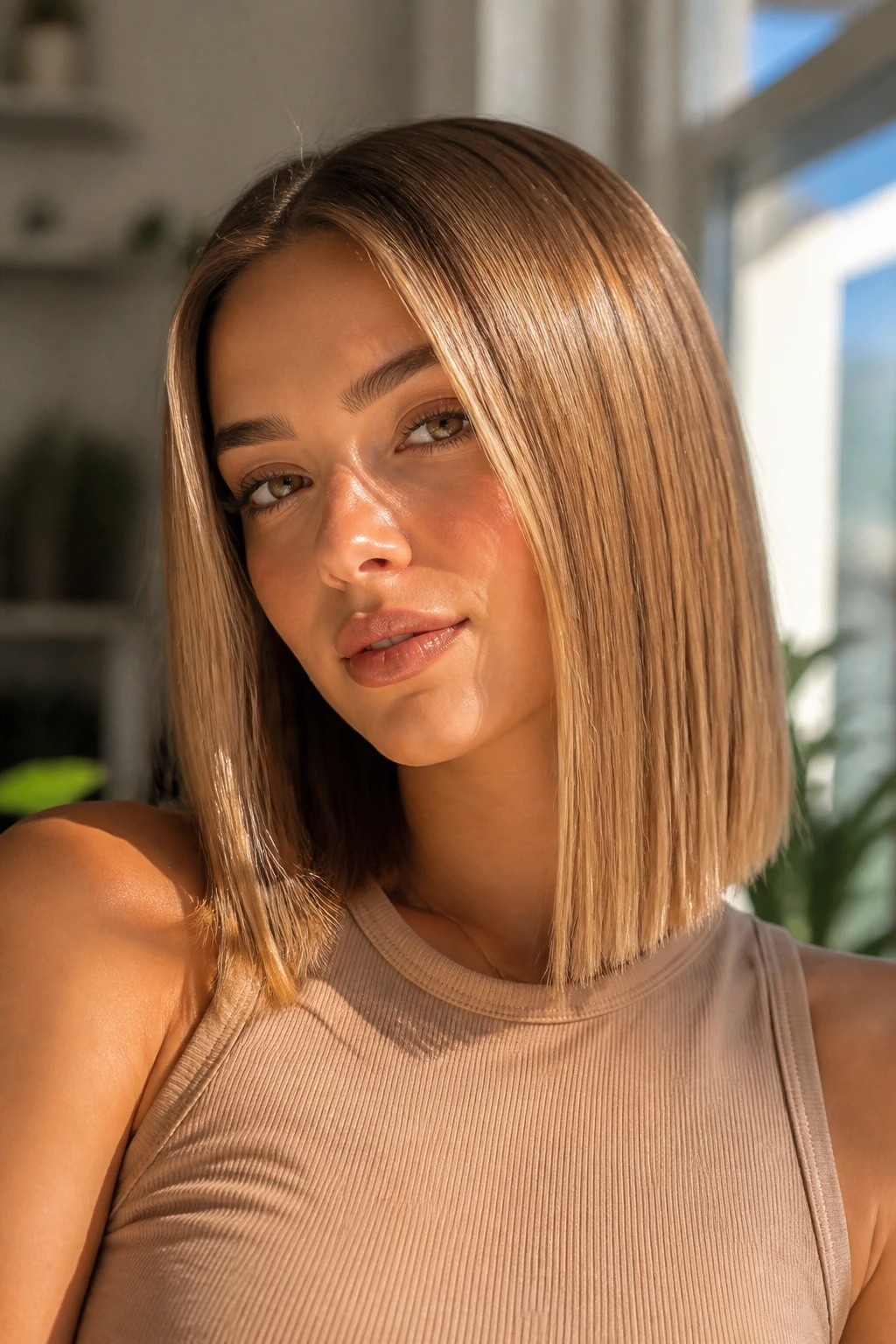
A straight cut with maple gloss depends on shine more than curl, and that’s exactly why it works. The haircut can be blunt, shoulder-length, or just grazing the collarbone, but the color needs to look like it was poured over the hair in a thin, warm glaze. Maple sits in that nice middle zone between brown and blonde, which makes it especially easy on warm skin.
The best version has a smooth finish. If the hair is polished with a paddle brush or flat iron, the gloss reads deeper and richer. If you want to avoid the flat, one-dimensional look that straight hair can fall into, keep a few slightly lighter pieces toward the front and around the ends. Small details. Big difference.
10. Amber Money Piece Bob
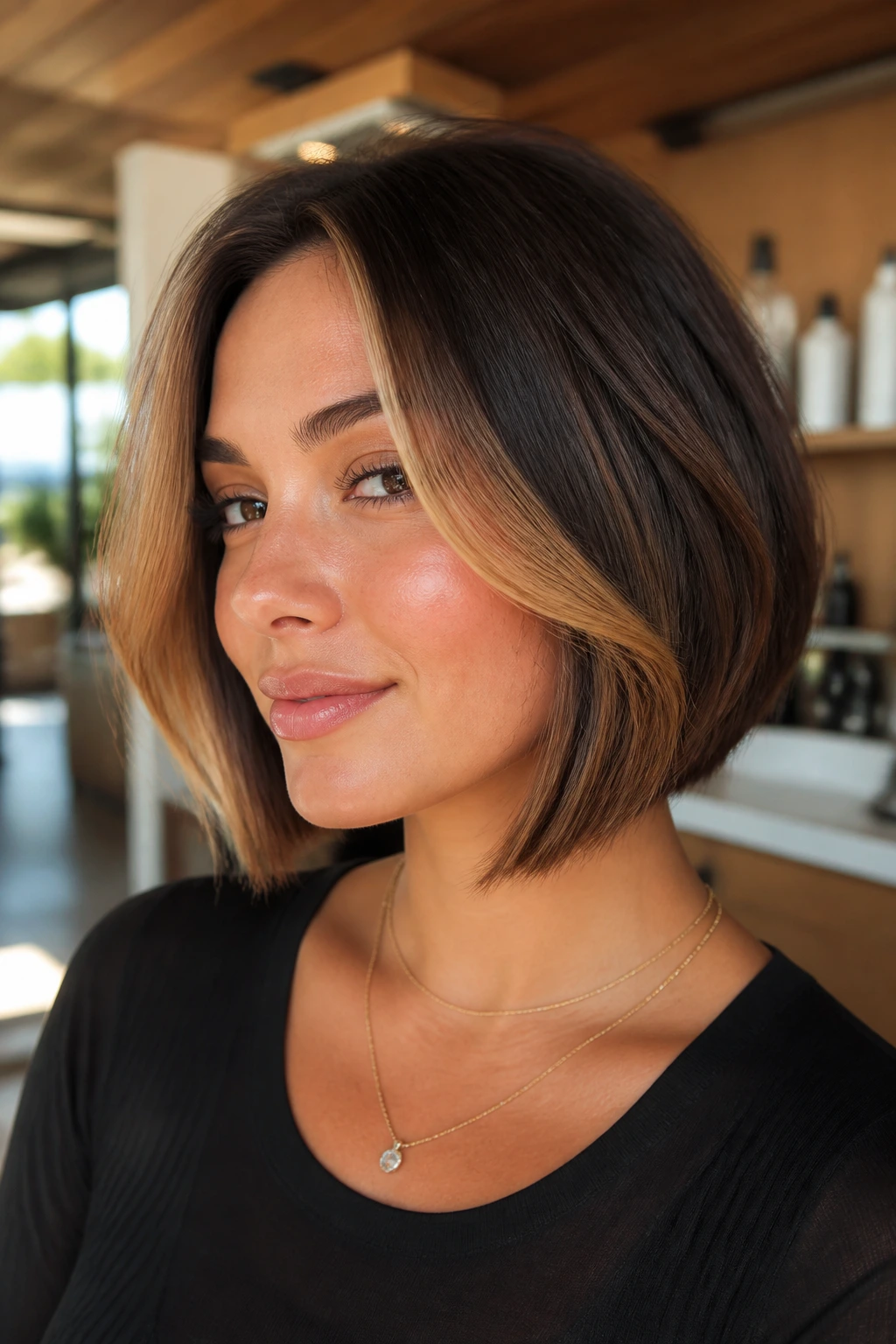
An amber money piece bob brings the brightening power right where the eye lands first. The bob keeps the shape clean, while the amber front sections lift the face and make warm skin look more awake around the cheekbones. The key is restraint. A money piece should frame the face, not swallow it.
The Practical Part
Use a chin-length or jaw-skimming bob if you want the amber to feel modern instead of retro. The front should be brighter by about one shade level, maybe two at most, compared with the rest of the head. Anything more and the contrast starts to look costume-y.
- Best for straight or softly waved hair.
- Keep the nape darker for shape.
- Ask for a soft blend into the side panels.
11. Sunlit Pixie with Apricot Tips
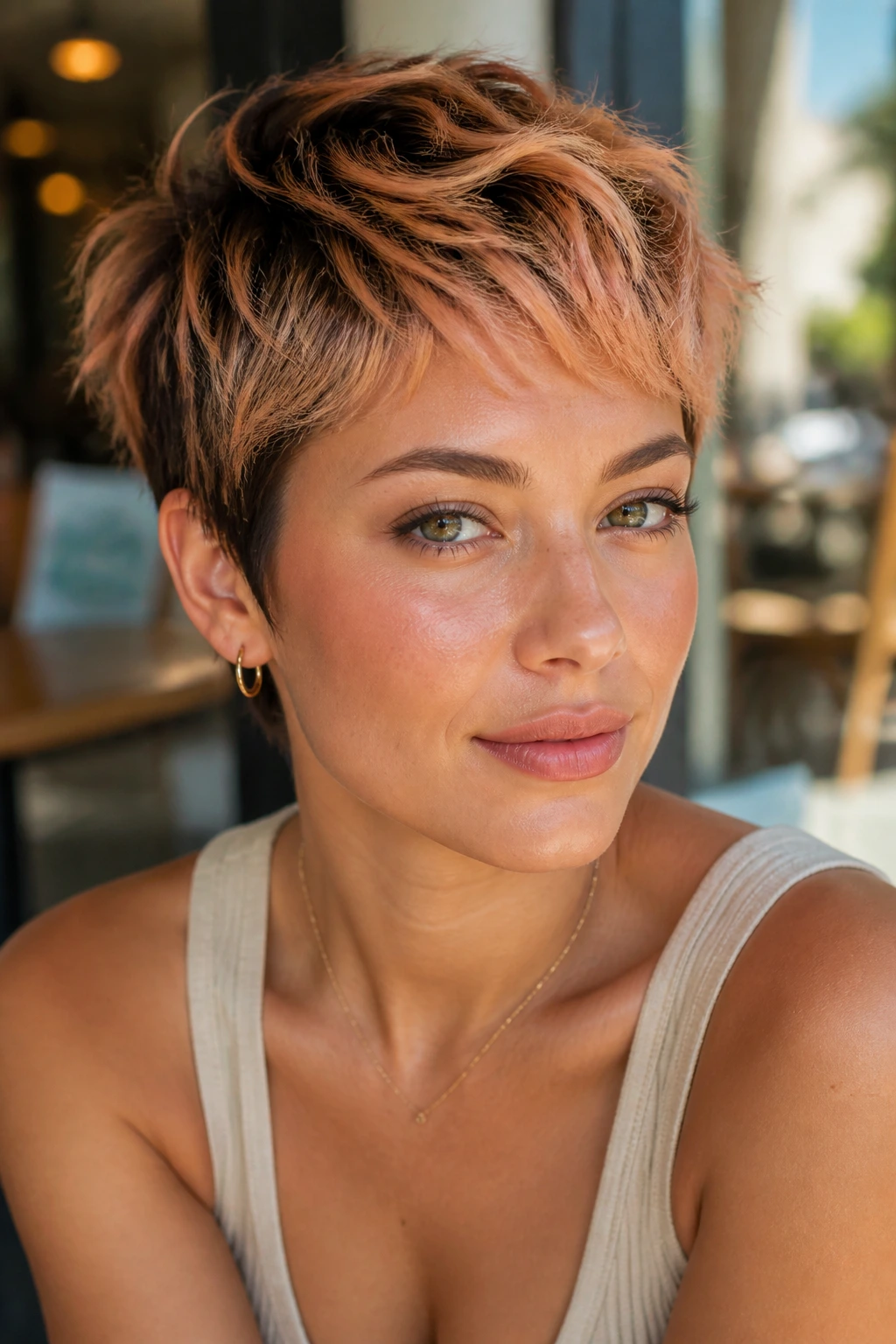
Short hair can wear blonde beautifully when the color is kept warm and the cut has enough texture to hold it. A sunlit pixie with apricot tips does exactly that. The apricot tone gives the ends a lifted, slightly peachy glow, and the darker roots stop the whole thing from becoming a bleached blur.
I prefer this look on warm skin because the color sits near the face without harsh contrast. It makes the eyes stand out. It also looks better as it grows, which is rare for a short cut with blonde in it. The texture should be piecey, not helmet-smooth. A tiny bit of separation is what keeps the apricot ends from looking like one solid cap.
12. Toffee Textured Lob
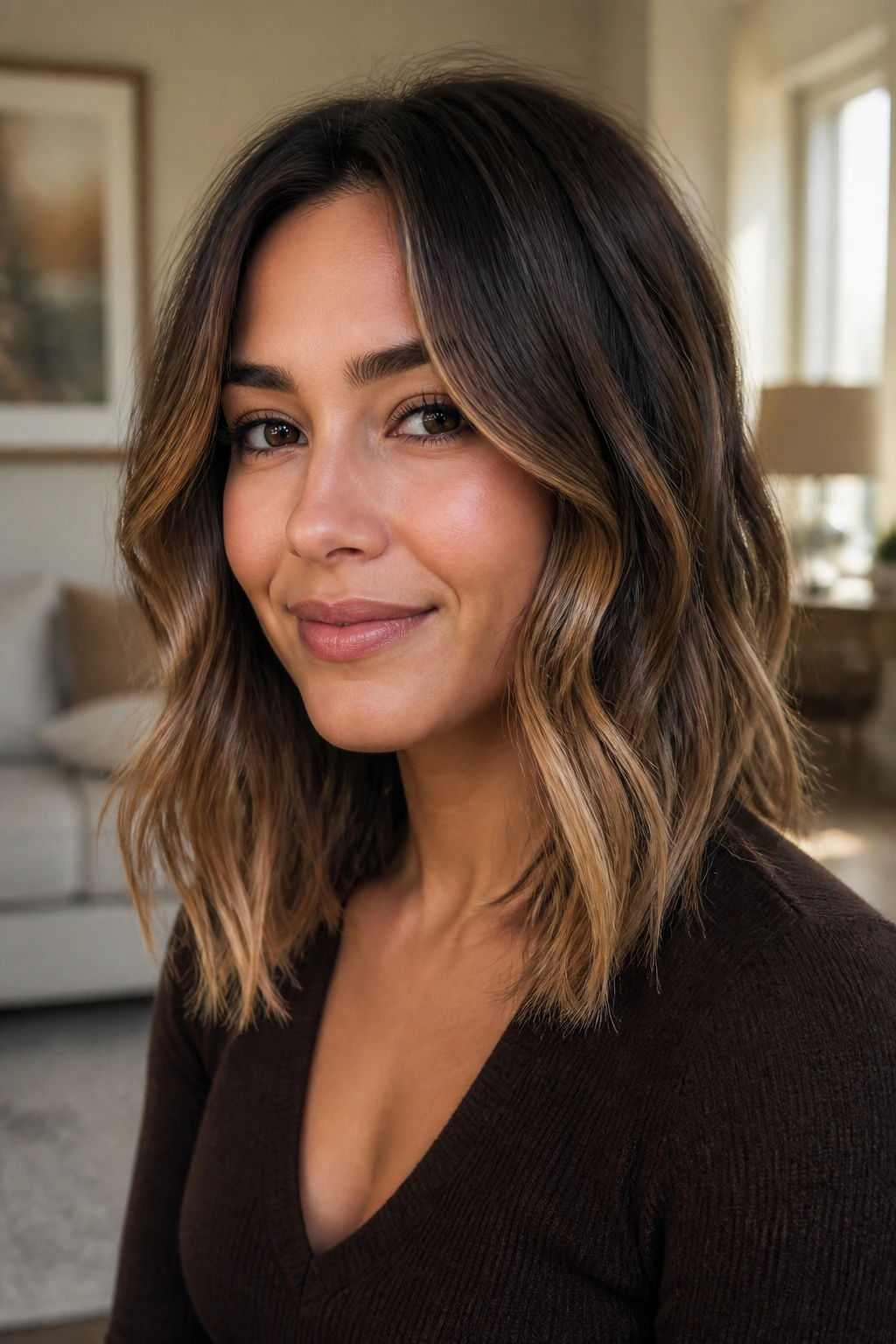
If fine hair tends to fall flat on you, a toffee textured lob is one of the smartest brown-to-blonde hairstyles you can wear. The cut gives the hair movement, and the toffee blonde adds visual thickness without forcing the hair into a bright, high-maintenance zone. It’s warm, but not syrupy.
Unlike a blunt one-length lob, this version gets its shape from piecey ends and scattered lightness. The blonde should live mostly in the lower half of the haircut, where the texture can show it off. A little sea salt spray or a light mousse on damp hair helps the pieces separate just enough. Too much product and the whole thing goes crunchy. Nobody needs that.
13. Mocha Melt with Vanilla Ends
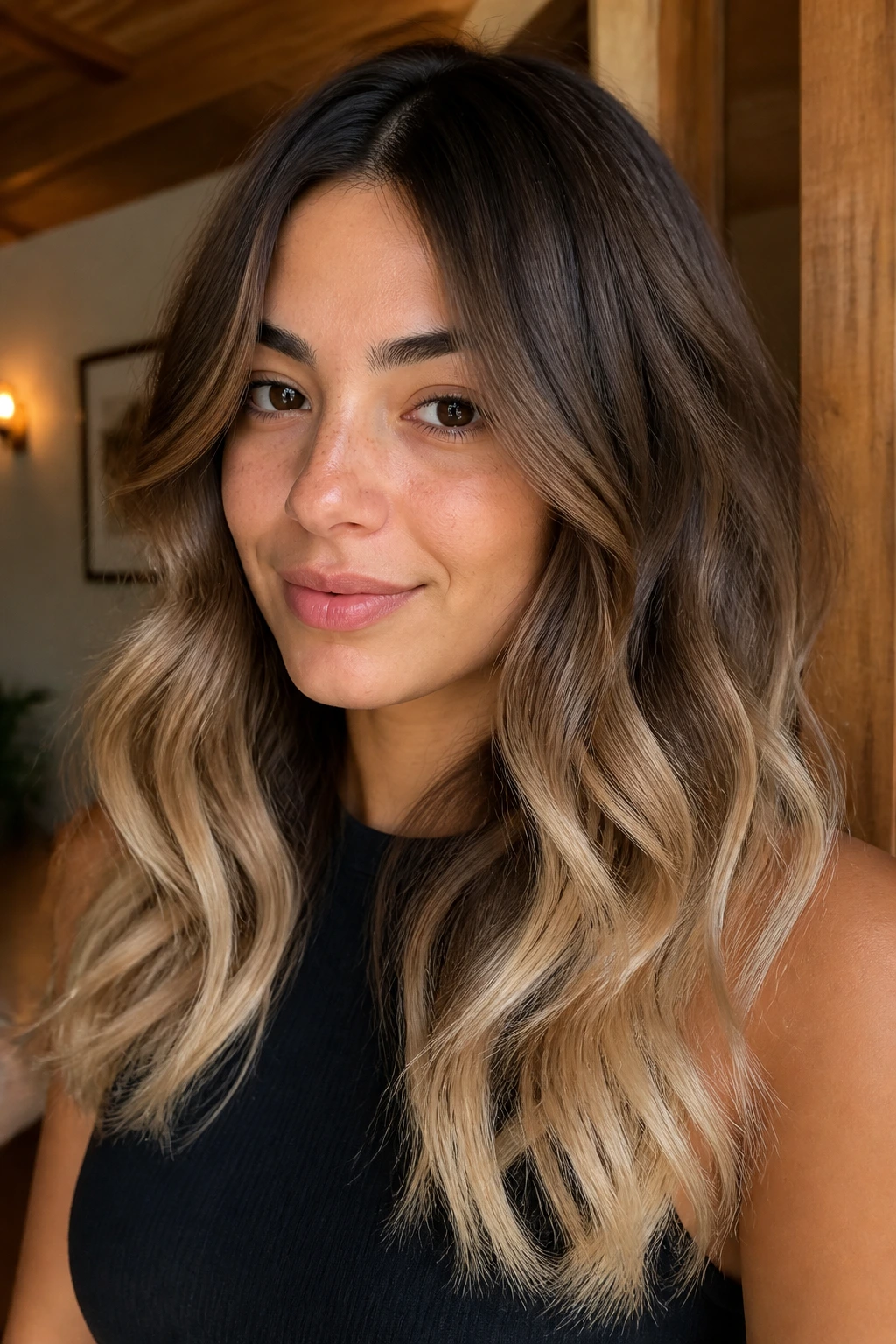
Mocha melt with vanilla ends works because the lightest part stays where the eye expects it: at the tips. The root and mids keep a mocha base, then the ends fade into a softer vanilla blonde that still carries warmth. That slow shift keeps warm skin from being blasted by a cold, high-contrast lightening job.
Where the Lightness Should Stop
The blonde should start low enough that the top third of the hair still feels anchored. If the lift begins too high, the melt becomes a stripe. If it begins too low, you lose the payoff entirely. Vanilla ends are best when they’re creamy, not pale. Think buttercream, not bleach.
14. Warm Beige Balayage on Long Layers
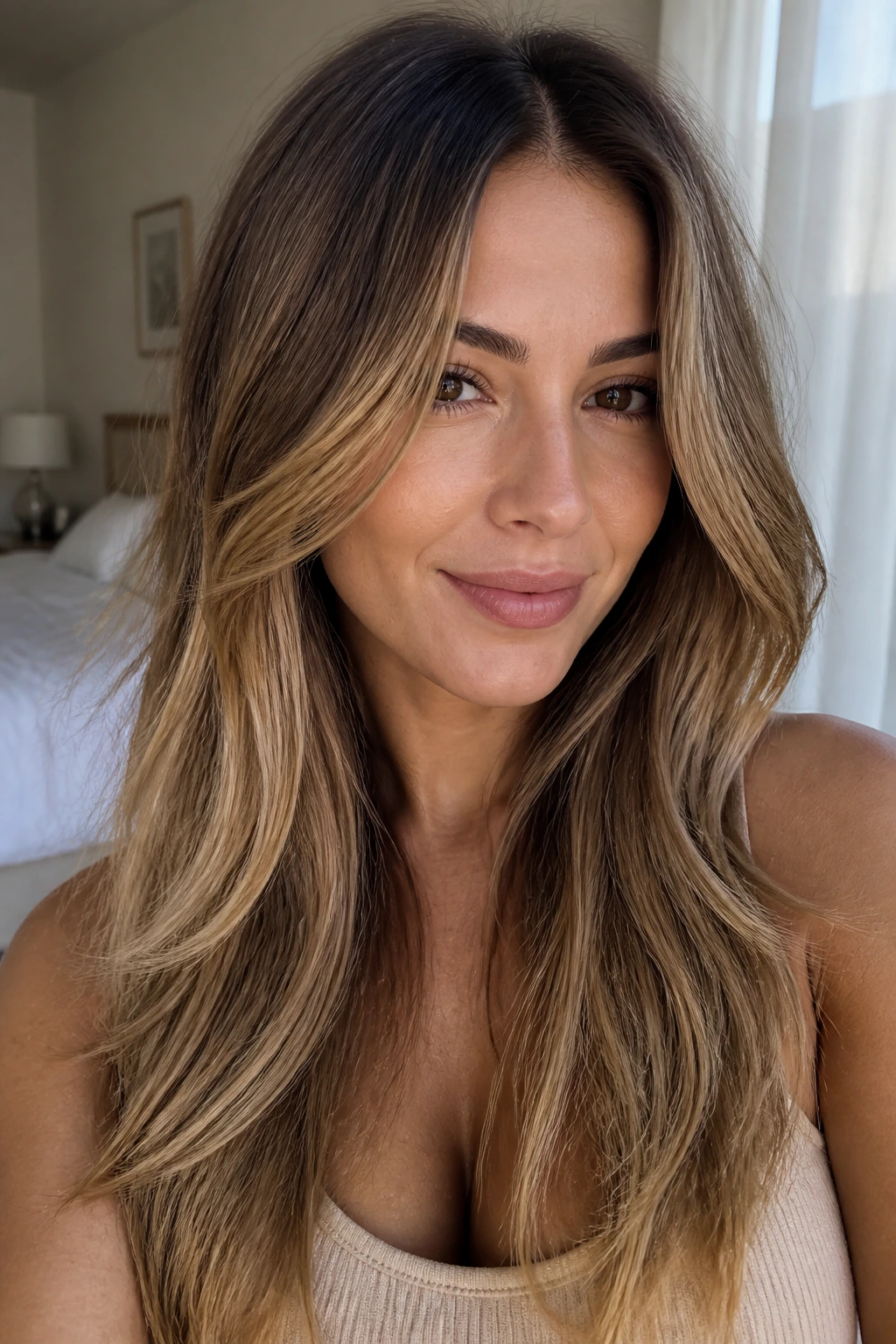
Long layers need movement, or the color disappears into the length. Warm beige balayage fixes that by spreading soft, beige-gold ribbons through the mid-lengths and ends while leaving enough brown at the top to keep the shape visible. On warm skin, the effect is gentle and clean.
This is the kind of look that rewards a good blow-dry. The layers lift away from each other and the beige pieces separate into a soft weave. I like this one when someone wants blonde but hates obvious highlight lines. The grow-out is kind too. The balayage softens as it settles, which means the hair doesn’t suddenly look “due” when the roots come in a little.
15. Honeyed Butterfly Cut
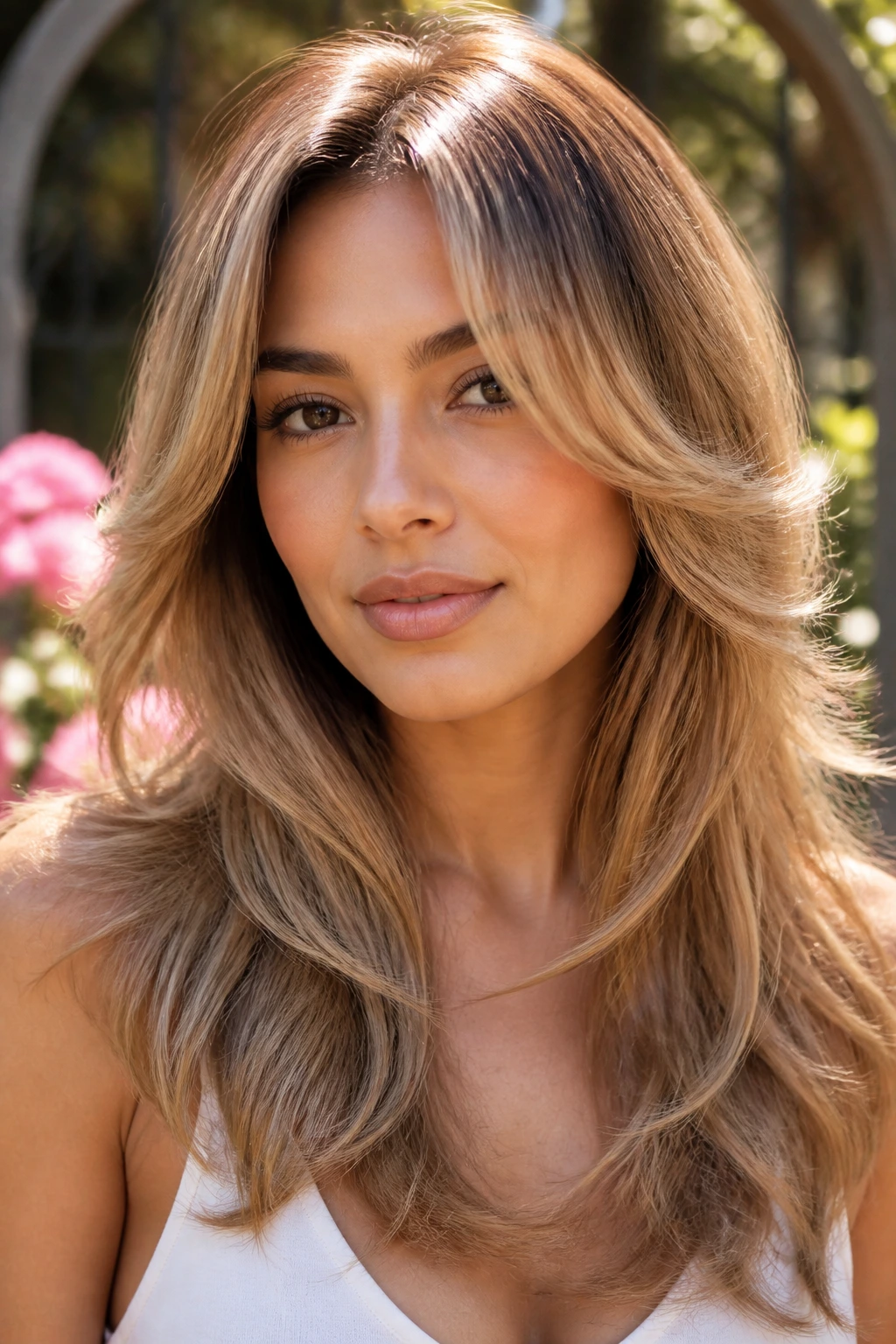
The butterfly cut lives on volume and face framing, so honey tones fit it like they were designed for it. The short front layers create movement around the cheekbones, and the longer back layers keep the overall length intact. Honey blonde through the front and upper mids gives the haircut its lift without flattening warm skin.
Why This One Works So Well
The cut already creates a shape that opens and closes like wings, which is a strange sentence and also exactly what it looks like in motion. Honey highlights catch those swings. The trick is to keep the lower layers a bit deeper so the hair doesn’t turn puffy at the ends.
16. Bronze-Toned Curls with Buttery Ends
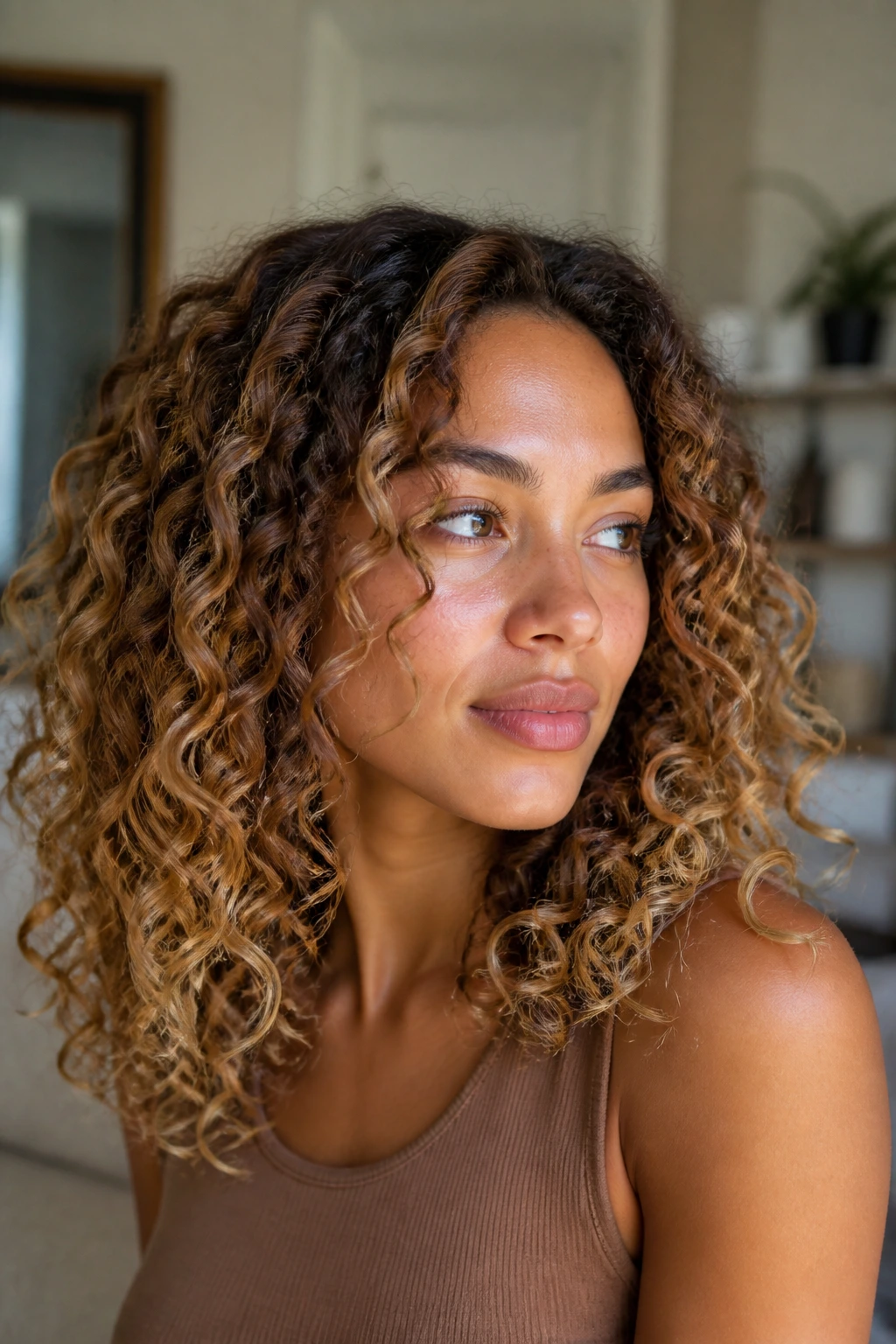
Bronze-toned curls with buttery ends look rich from a distance and detailed up close. Bronze gives the base some depth, and the buttery ends brighten the curls just enough to show each spiral. This is one of those styles that looks far more elaborate than the actual color map.
- Best on medium to thick curly hair.
- Keep the ends lighter, not the roots.
- Use a diffuser so the curl pattern stays intact.
The warm skin connection is obvious here. Bronze reflects the same warm range the face already has, so the blonde doesn’t fight the complexion. If anything, it makes the skin look cleaner and more even. That’s the kind of blonde I trust on warm undertones.
17. Caramel Ribbon Ponytail
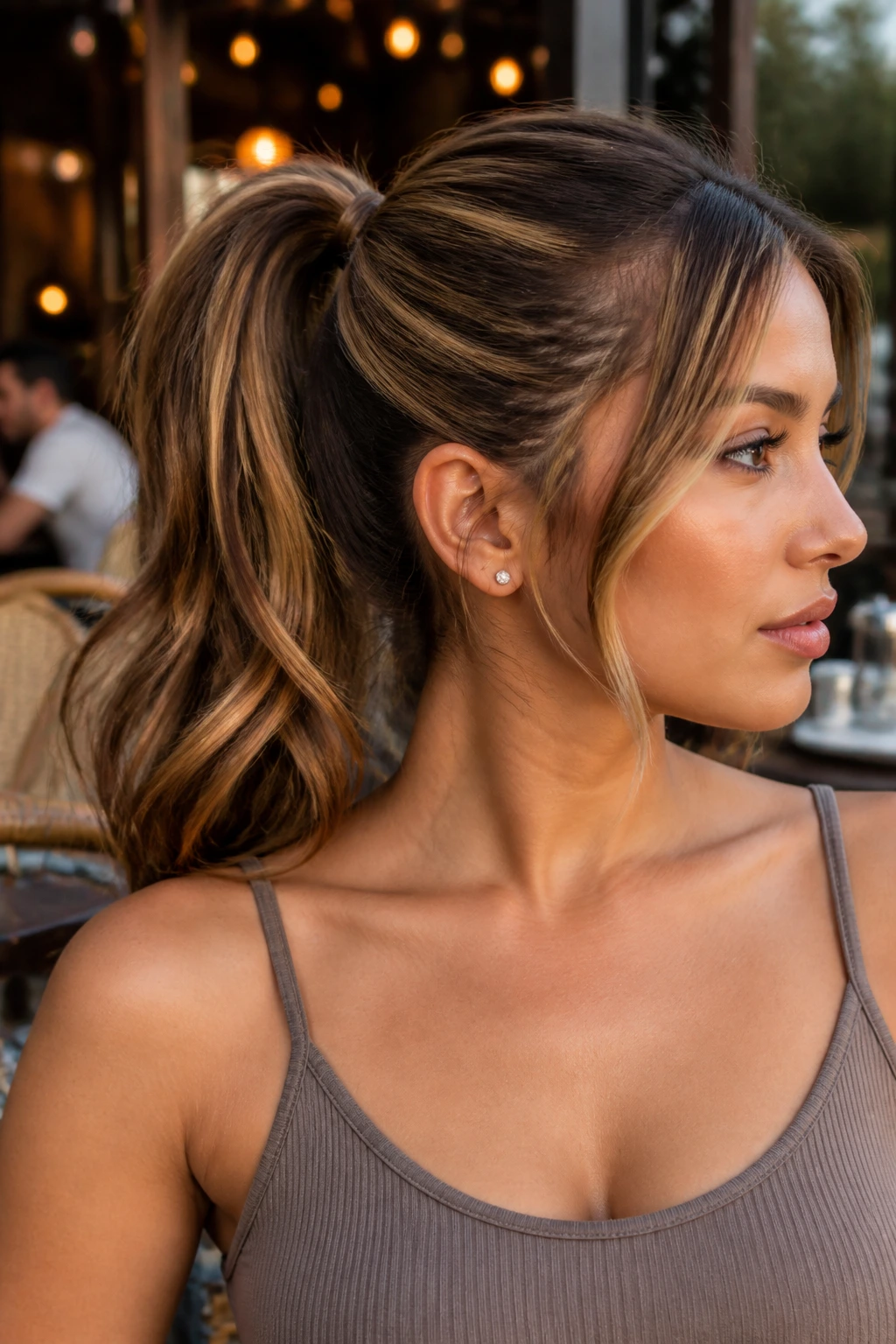
A ponytail sounds simple until the color starts doing the talking. Caramel ribbon strands pulled through a ponytail give the style movement that a plain brown tie-back can’t match. When the hair swings, the ribbons flash through the tail, which is a small thing that makes the whole look feel finished.
I like this on medium and long hair because the ponytail becomes a place to show the dimension instead of hiding it. Keep a few face-framing pieces out if you want softness at the front. And if the hair is curled before it goes up, the caramel sections break into neat bends that look intentional, not accidental.
18. Rooted Blonde Bob with Golden Glaze
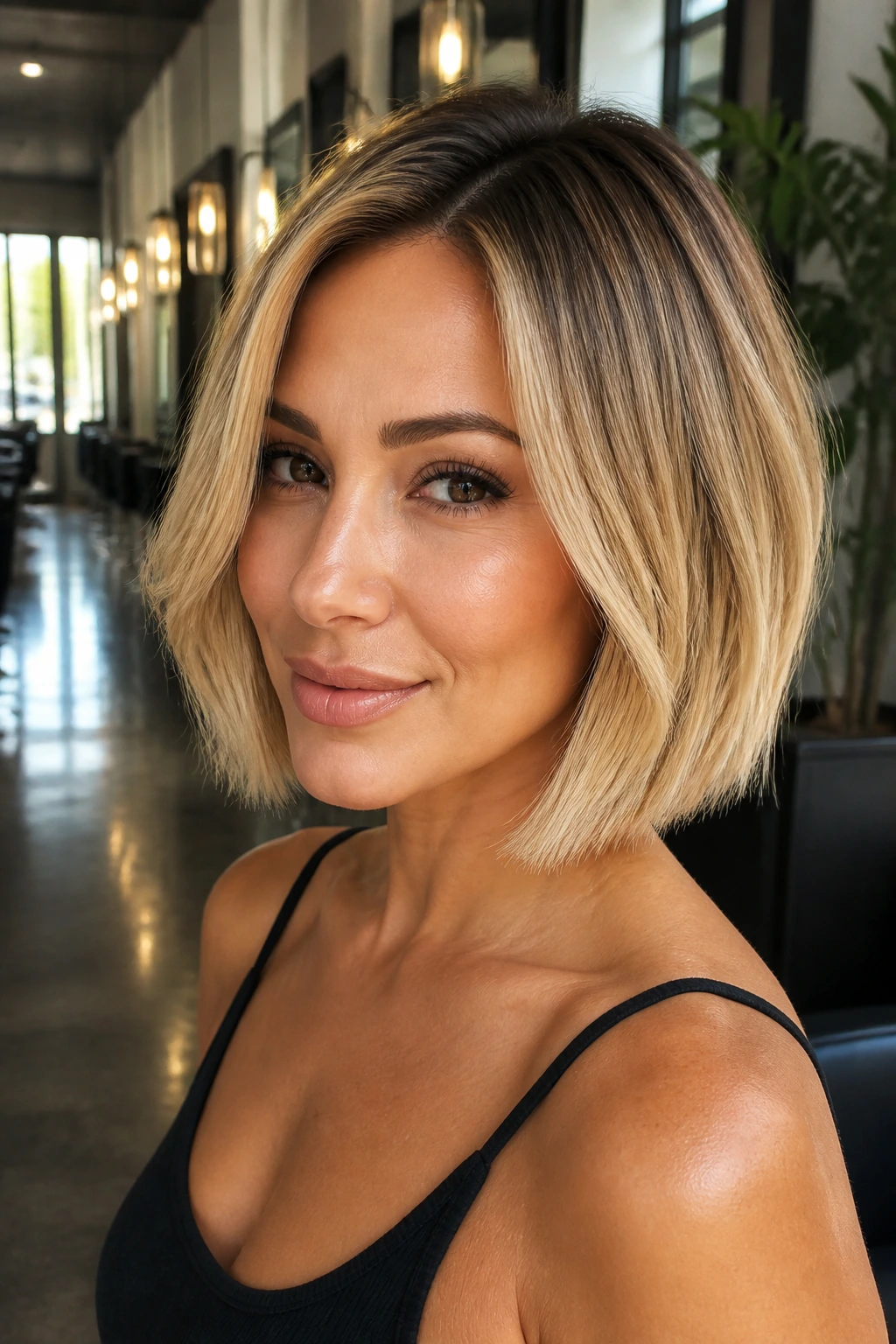
A rooted blonde bob is the opposite of high-maintenance in the best way. The deeper root gives the bob shape, and the golden glaze keeps the blonde warm enough for golden skin. It’s a neat balance: not too brown, not too pale, and no harsh line where the new growth starts.
Best When You Want a Longer Grow-Out
A bob grows fast visually because the perimeter is so clean. A rooted finish slows that down. The shadow root keeps the hair looking tidy for longer, while the golden glaze stops the blonde from drifting into beige-gray territory. If you wear sunglasses, earrings, or a strong lip, this cut-color pairing gives the face enough frame without extra fuss.
19. Copper-Infused Bronde Lob
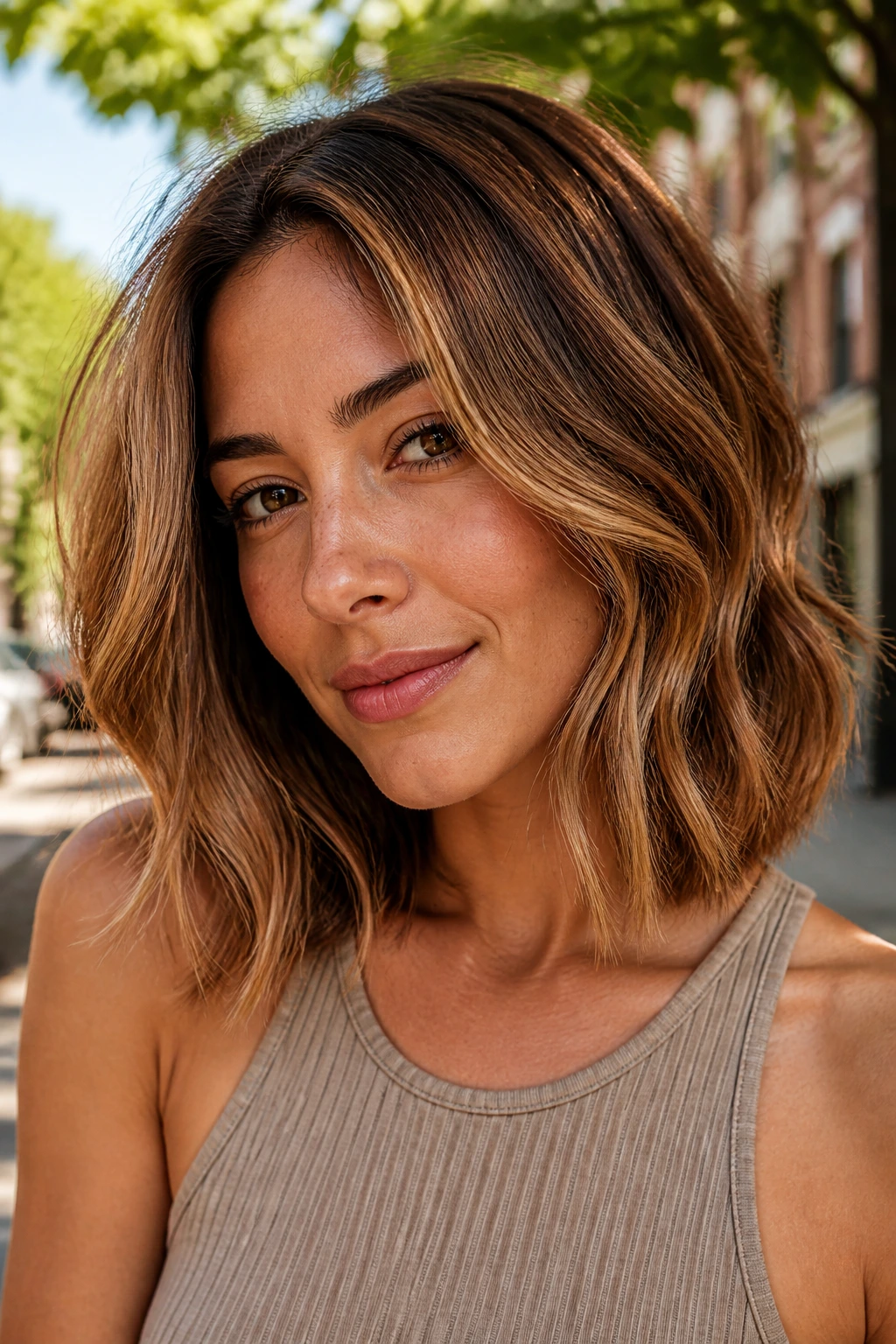
Copper-infused bronde is for people who want warmth with a little extra spark. The copper is subtle, not fire-engine bright, but it changes the entire mood of the blonde. Instead of a standard beige bronde, you get a color that feels richer and more alive against warm skin.
The lob length matters because it keeps the color grounded. On a shorter cut, copper can go loud fast. On a lob, it sits inside the brown-blonde blend and brings out the gold in the complexion. This is a good choice if your natural color has red or auburn notes already. The hair usually takes to it faster, and the finish looks less forced.
20. Buttercream Face Frame on Long Curls
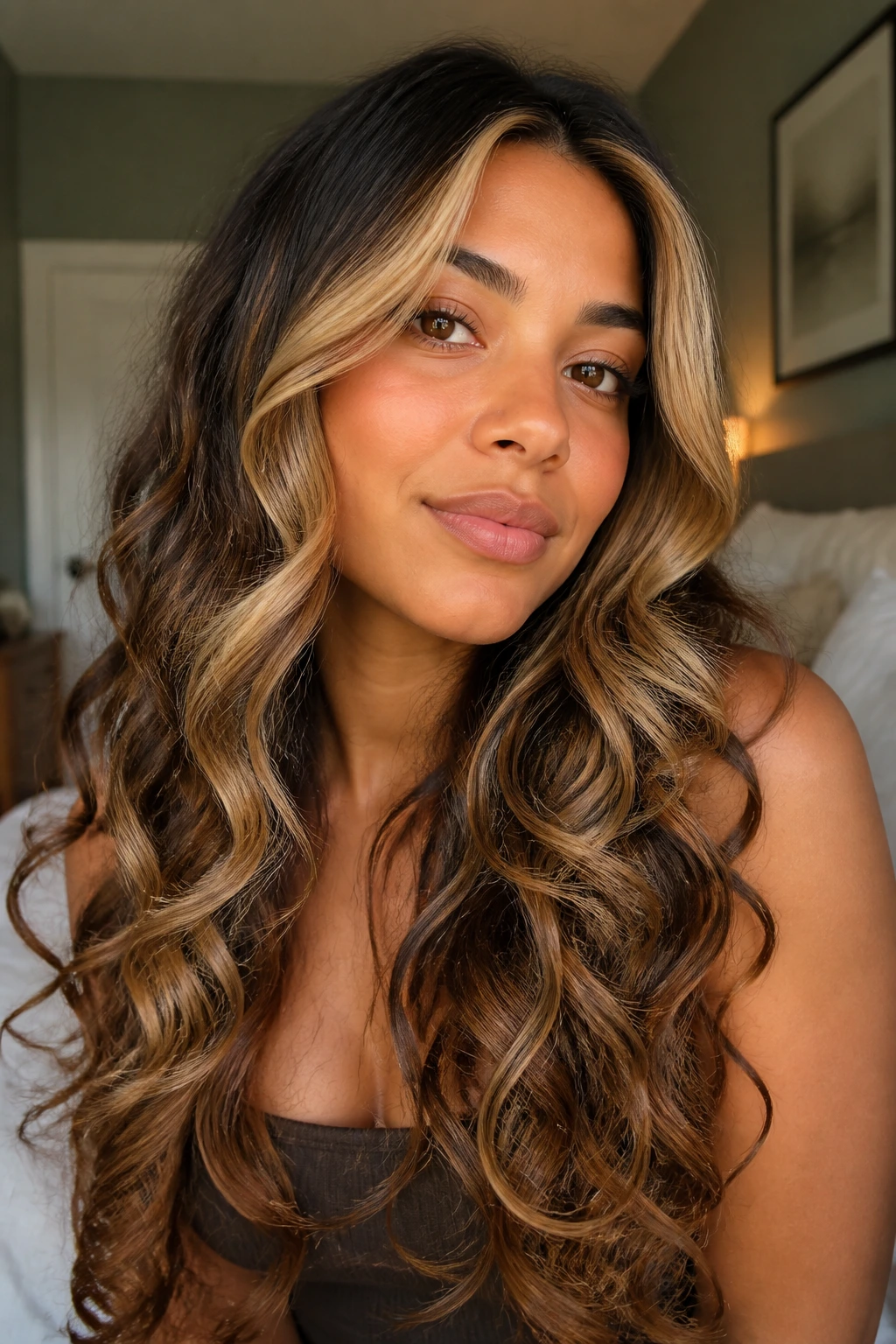
A buttercream face frame can save long curls from looking too heavy. The front pieces brighten the upper face, while the rest of the curls stay deeper and more brunette. That contrast makes the whole style look lighter without stripping away the curl pattern.
Ask for This When You Want Soft Brightness
Tell your colorist you want the lightest pieces around the eyes and cheekbones, then a softer drift into the rest of the length. Buttercream is a good tone because it reads blonde without going icy. On warm skin, that matters. The face stays connected to the hair instead of looking like it was pasted onto a different color palette.
21. Hazelnut Waves with Golden Lights
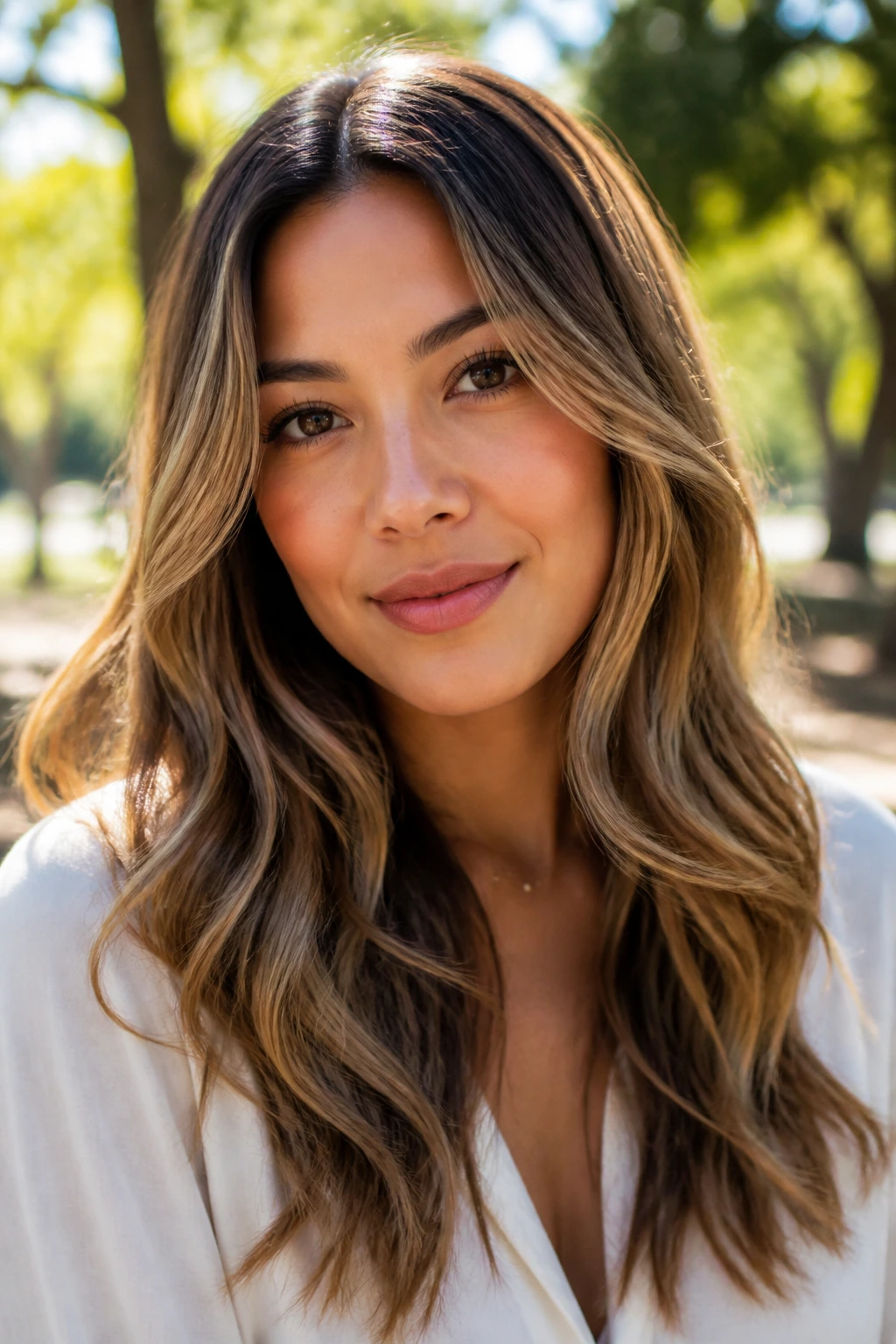
Hazelnut waves are the quiet achiever of the bunch. The base stays nutty and brown, and the golden lights sit in thin waves through the mids and ends. Nothing screams for attention. Everything works together.
That’s why this style is useful if you like blonde but don’t want your hair to become the first thing people notice. The waves bring out the contrast, and the golden pieces stay warm enough to flatter the skin rather than fighting it. A middle part gives it a little more polish. A side part makes it feel softer. Either way, the placement stays flattering because the blonde never gets too cold or too dense.
22. Melted Chestnut-to-Gold Curls
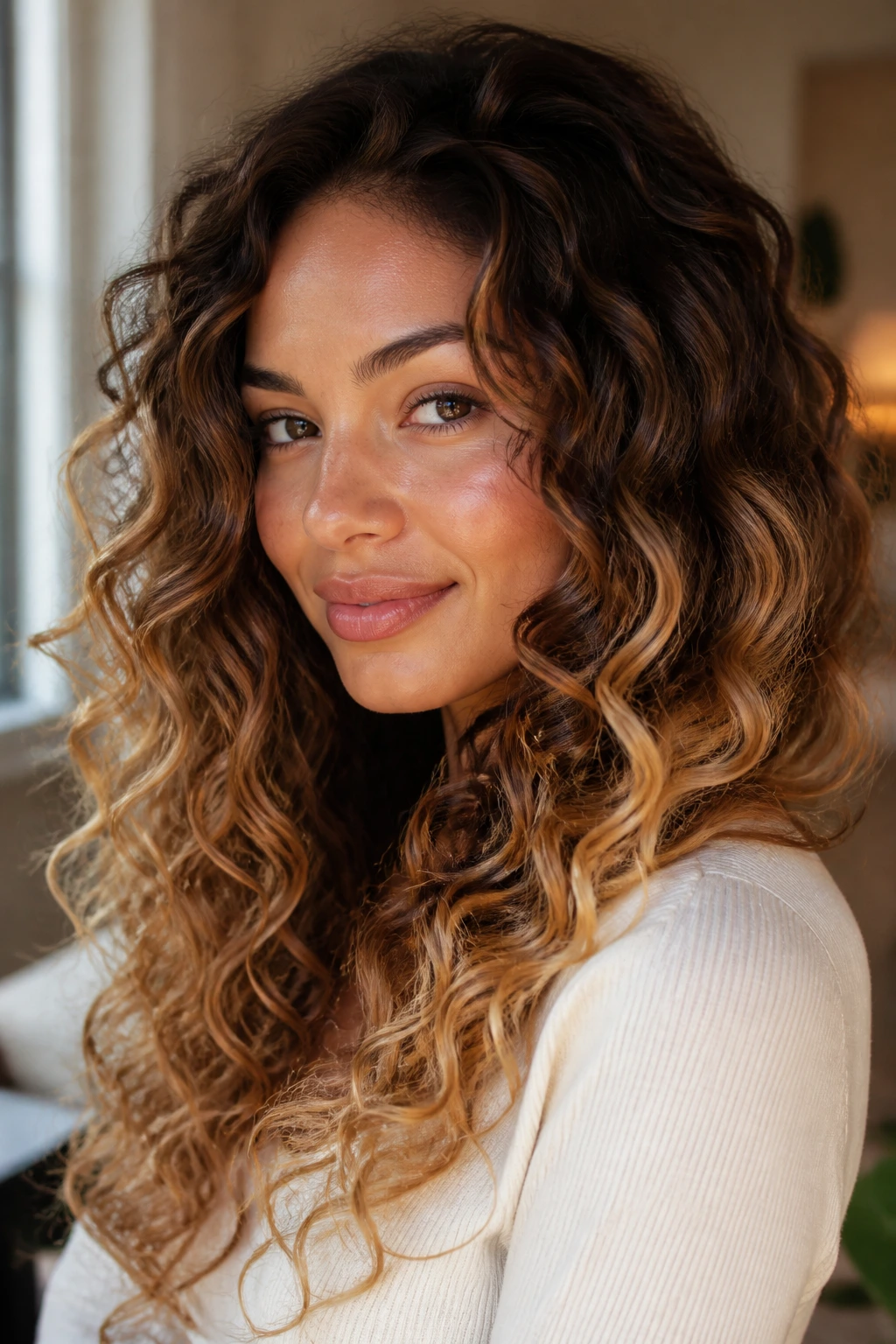
Melted chestnut-to-gold curls do what the name suggests: they fade gradually, so the blonde feels like a natural end point instead of a hard shift. The chestnut base keeps the top dark enough to frame the face, and the gold through the ends brings the lightness where curls need it most.
This style is especially good on warm skin because the color path mirrors a natural sun-fade. It does not look forced. If your curls are looser, the gold reads in soft ribbons. If they’re tighter, the light lands in small flashes, which is even prettier in motion. Leave the crown deeper. That’s where the shape stays rich.
23. Warm Blonde Wolf Cut
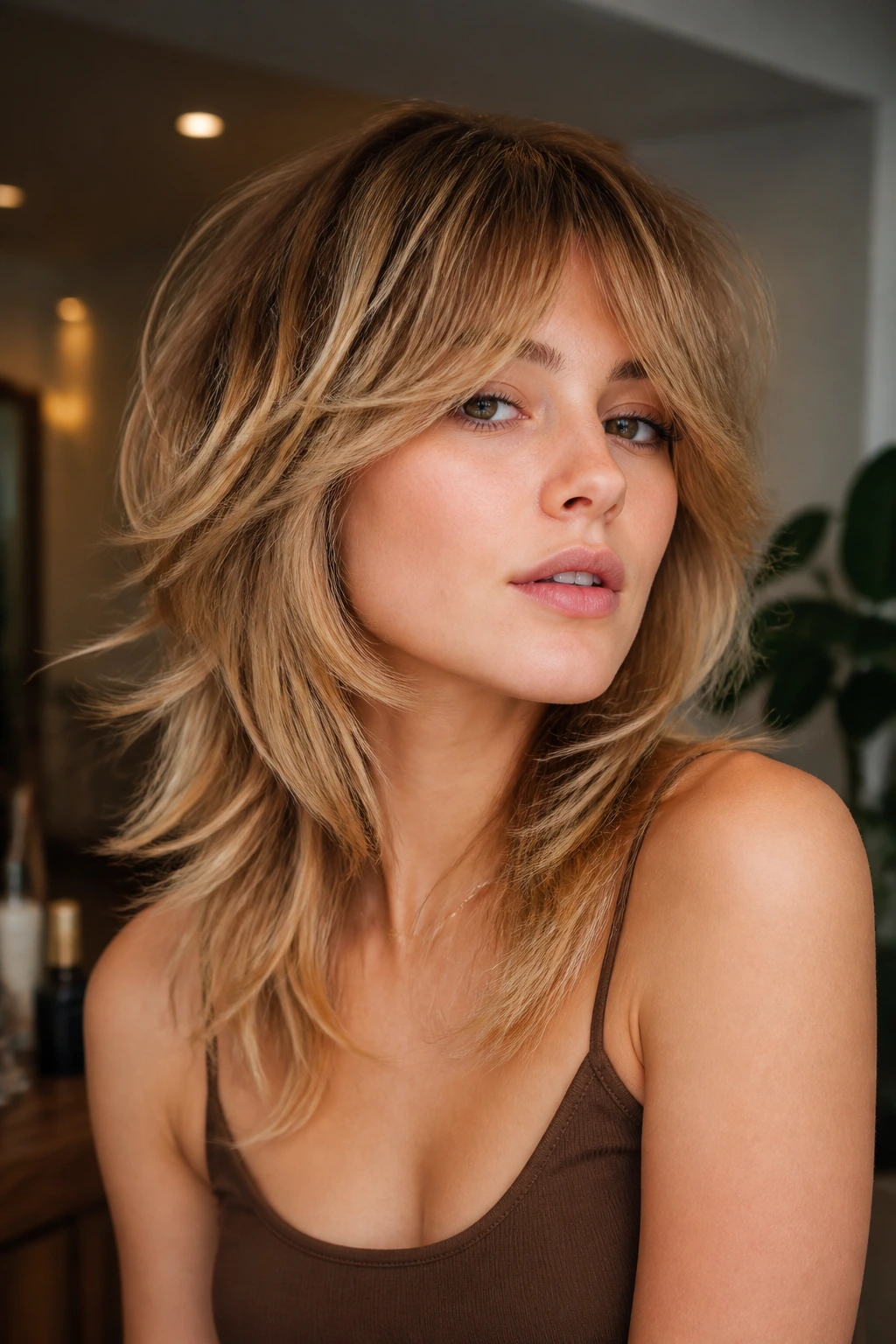
A wolf cut can go harsh fast, but warm blonde keeps it from turning into a costume. The choppy layers need color contrast to show off the texture, and brown-to-blonde placement gives you that without making the cut look severe. Warm blonde in the ends, deeper brown through the top, and a little face framing—that’s the formula.
Why It’s Better Than a Cool Blonde Version
Cool blonde on a wolf cut can make the texture look dusty. Warm blonde gives the layers some shine. It also flatters warm skin better because the messy, lived-in shape reads as deliberate rather than over-processed. If you like a bit of edge but still want the face to look soft, this is the right lane.
24. Gingerbread Balayage
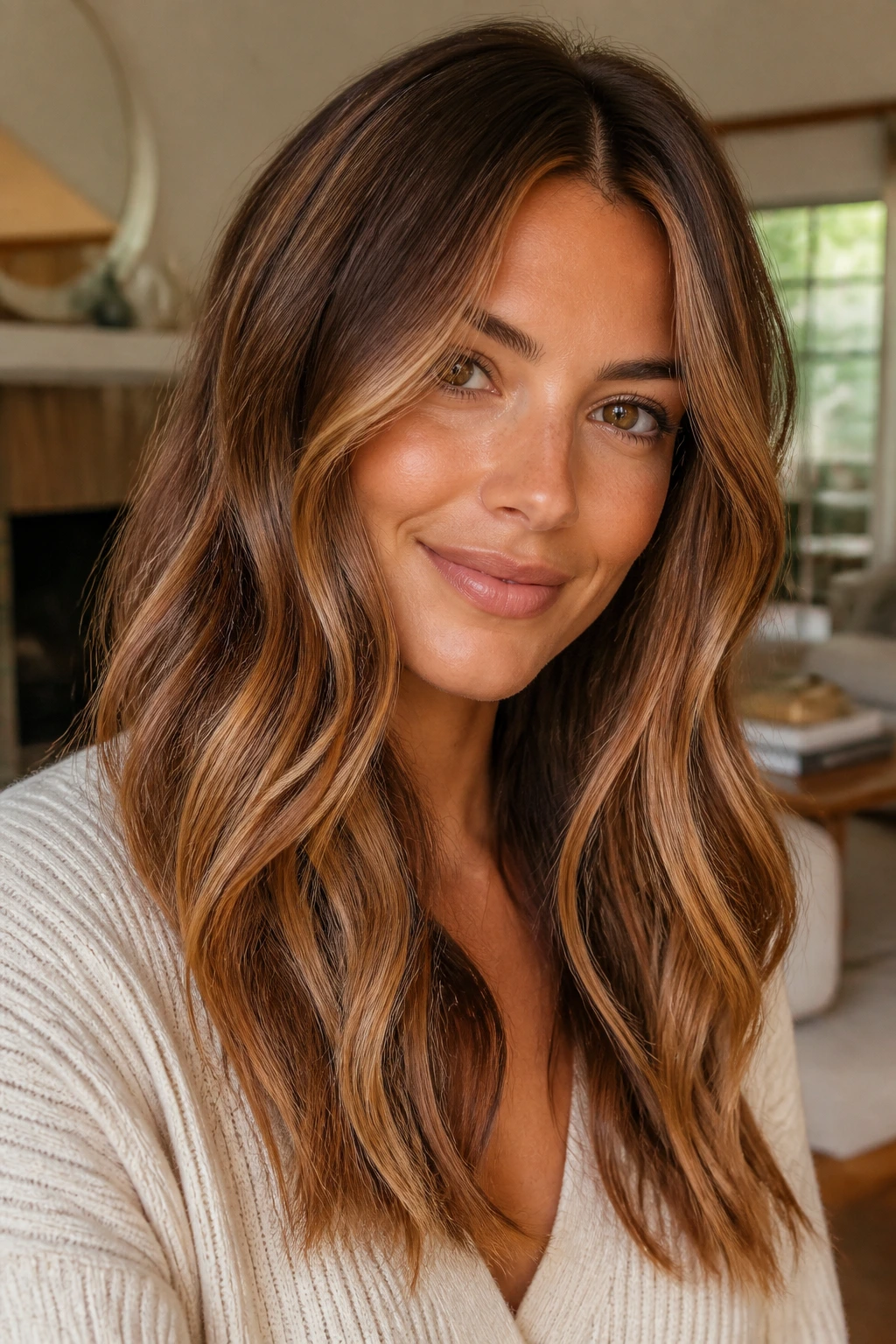
Gingerbread balayage has a little spice in it, which is why it works so well for warm undertones. The blend sits between brunette, copper, and blonde, so the color feels layered instead of flat. It’s one of the few looks that can make brown hair seem brighter without moving all the way into obvious blonde territory.
I’d call this a good “middle confidence” color. It’s not shy, but it doesn’t demand attention from across the room either. The balayage placement keeps the lift soft around the ends and face, where the light does the most for the cut. On textured hair, the gingerbread tones can look almost caramel. On straight hair, they lean richer and more golden.
25. Cinnamon Brunette with Blonde Peekaboo
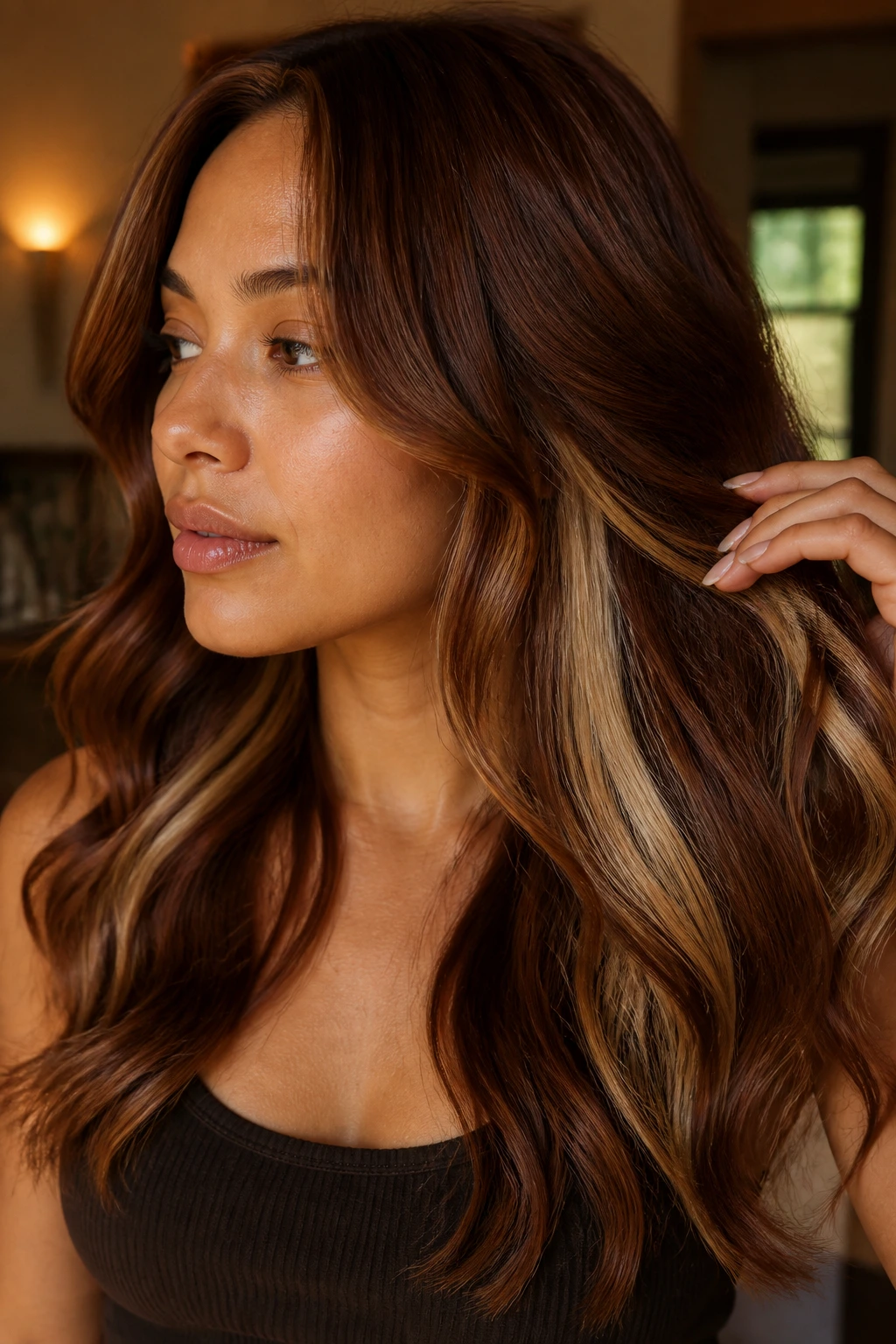
This is for the person who wants a surprise, not a full switch. Cinnamon brunette keeps the visible surface warm and deep, while blonde peekaboo pieces hide underneath or around interior layers. The blonde shows when the hair moves, flips, or gets tucked behind the ear.
Best for People Who Like Control
You can keep the blonde subtle or push it brighter, but the structure stays the same. The top layer protects the brunette effect, and the lighter panels give the haircut motion. On warm skin, the cinnamon base prevents the blonde from floating too far away from the complexion. It’s a small, clever detail, and I like that a lot.
26. Honey Blonde Dutch Braid
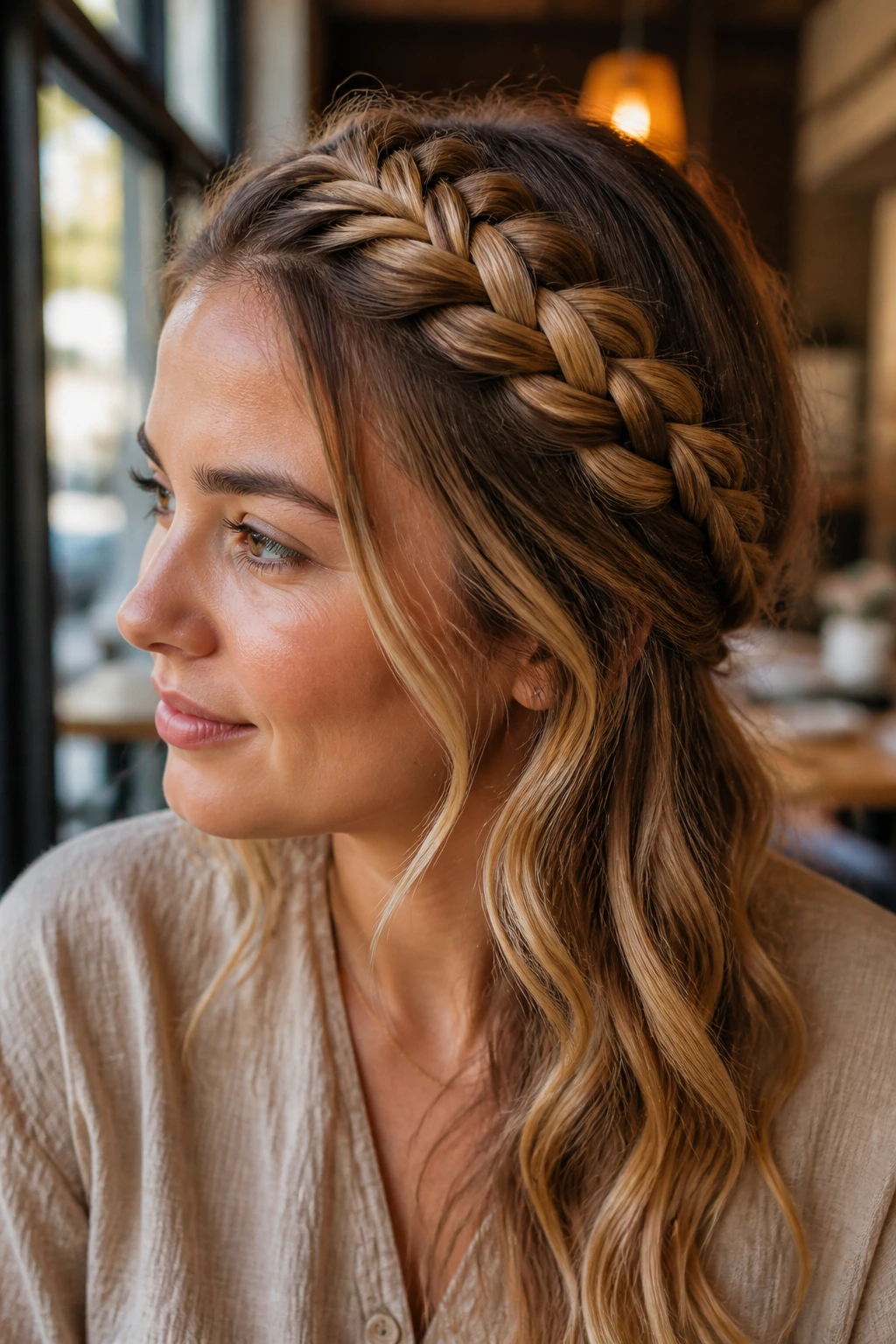
A Dutch braid turns color into pattern. That matters here, because warm brown-to-blonde hair can look even richer once the braid starts stacking the pieces on top of each other. Honey blonde sections woven through brown hair show off the contrast without needing a big curl or blowout.
The braid works best when the blonde is placed in ribbons, not blocks. That way the braid creates a ladder of light through the plait. If you’re doing this for a special day, pull the braid a little looser at the edges. The wider weave lets the honey pieces show. Tight braids hide too much of the color, which is a shame.
27. Buttery Curly Bob
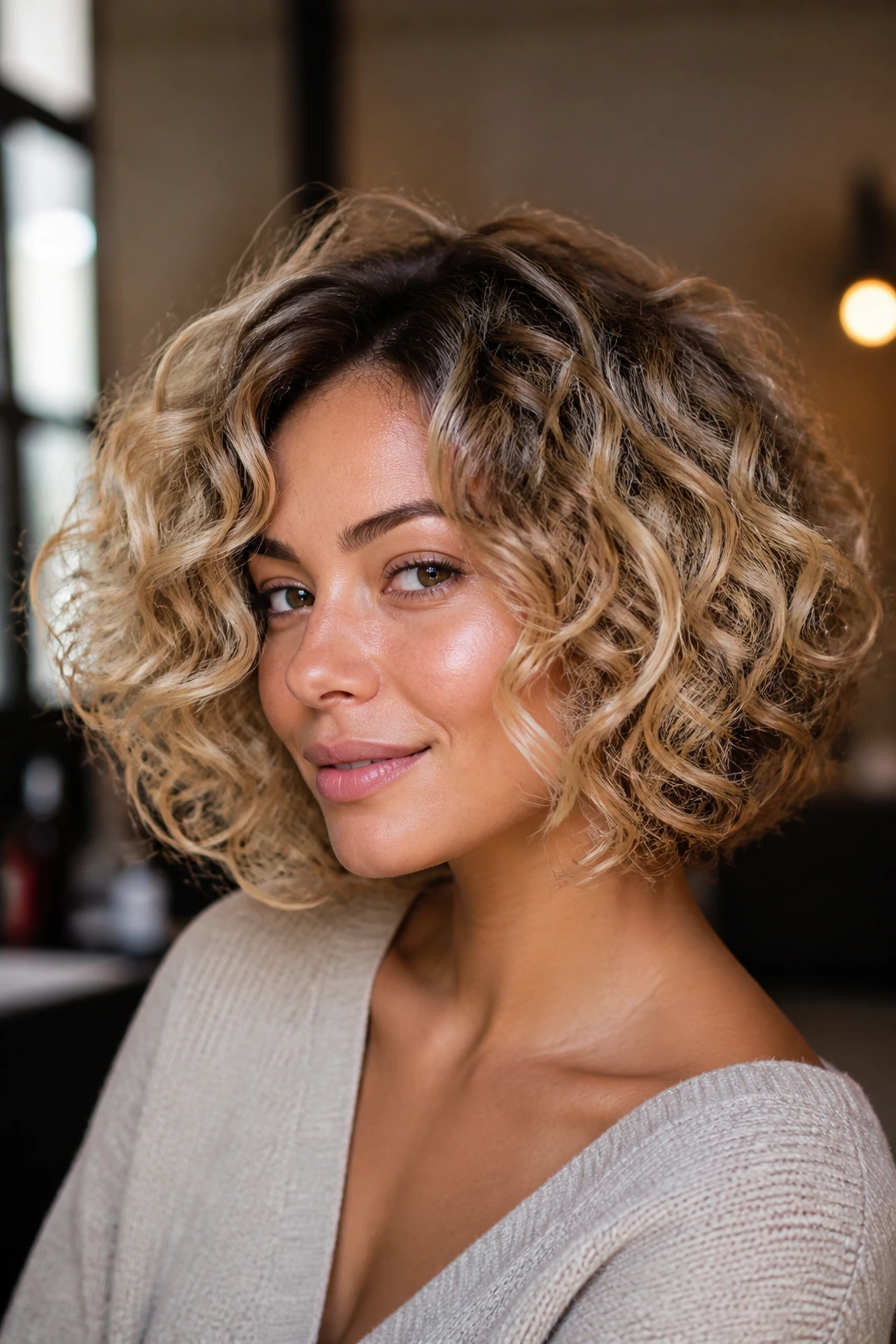
A curly bob with buttery blonde pieces is compact, bright, and a little cheeky. The bob shape keeps the hair from overwhelming the face, and the buttery tone makes the curls feel lifted instead of heavy. On warm skin, the result is clean and cheerful without drifting into yellow.
The main thing here is balance. If the ends are too light, the bob can puff. If the roots are too pale, the shape loses depth. Keep the underside a shade or two deeper and let the butter live on the outer curls and around the face. The cut does the rest. It’s a small look with a lot of personality.
28. Sunlit Caramel Layers with Gloss Finish
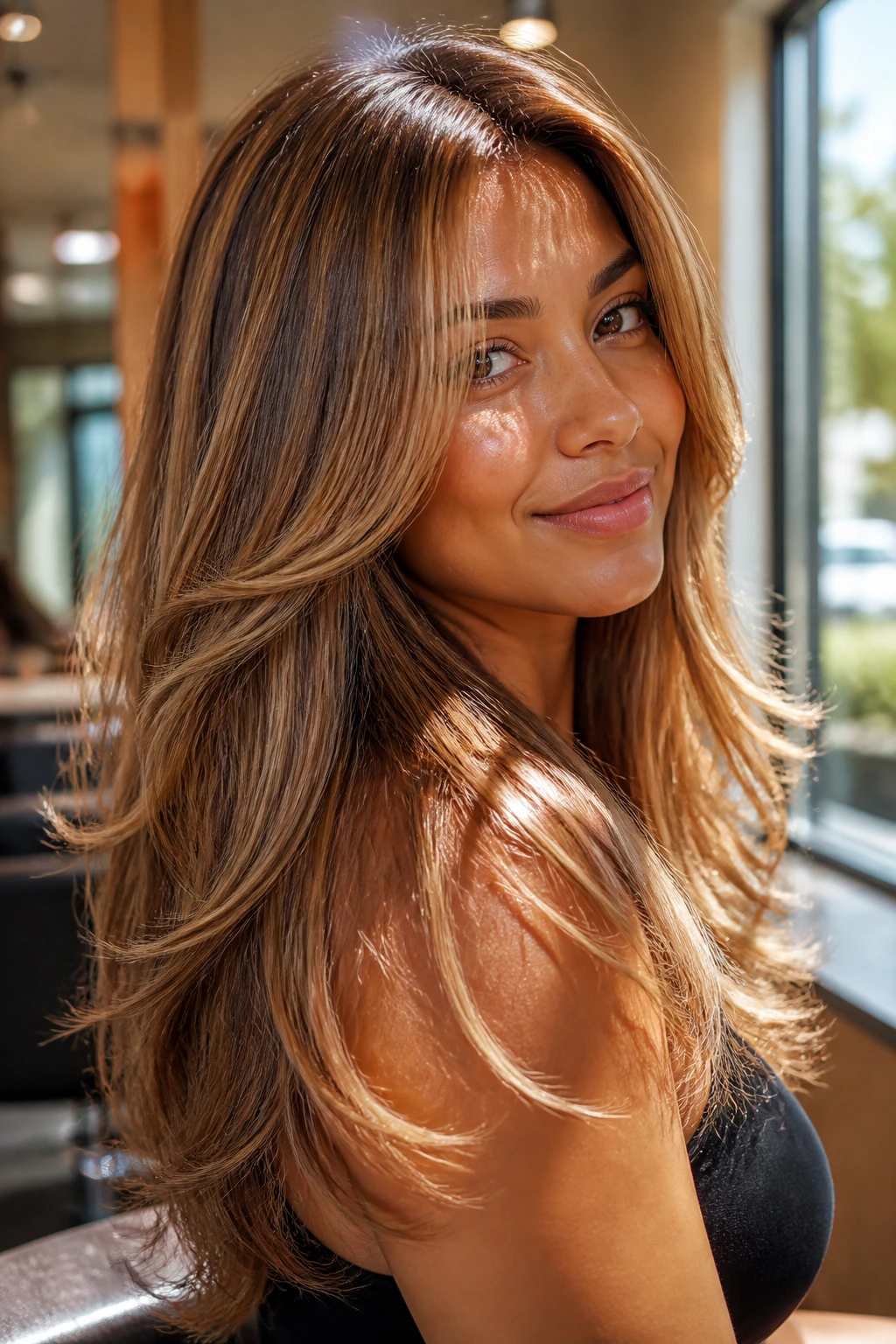
Sunlit caramel layers are the version I’d point to if someone wants one haircut that does a lot without screaming about it. The layers keep the hair moving, the caramel pieces brighten the mids and ends, and the gloss finish makes the whole thing look freshly styled even when it’s been a few days since wash day.
The Finish Is the Point
This look depends on shine. Not greasy shine. Healthy shine. A clear or warm glaze makes the caramel pieces read smoother and helps warm skin look brighter next to the hair. If the haircut already has movement, the gloss ties the layers together and keeps the blonde from looking dry at the edges. That little bit of polish changes everything.
Why Brown-to-Blonde Placement Looks Better When the Base Stays Dim
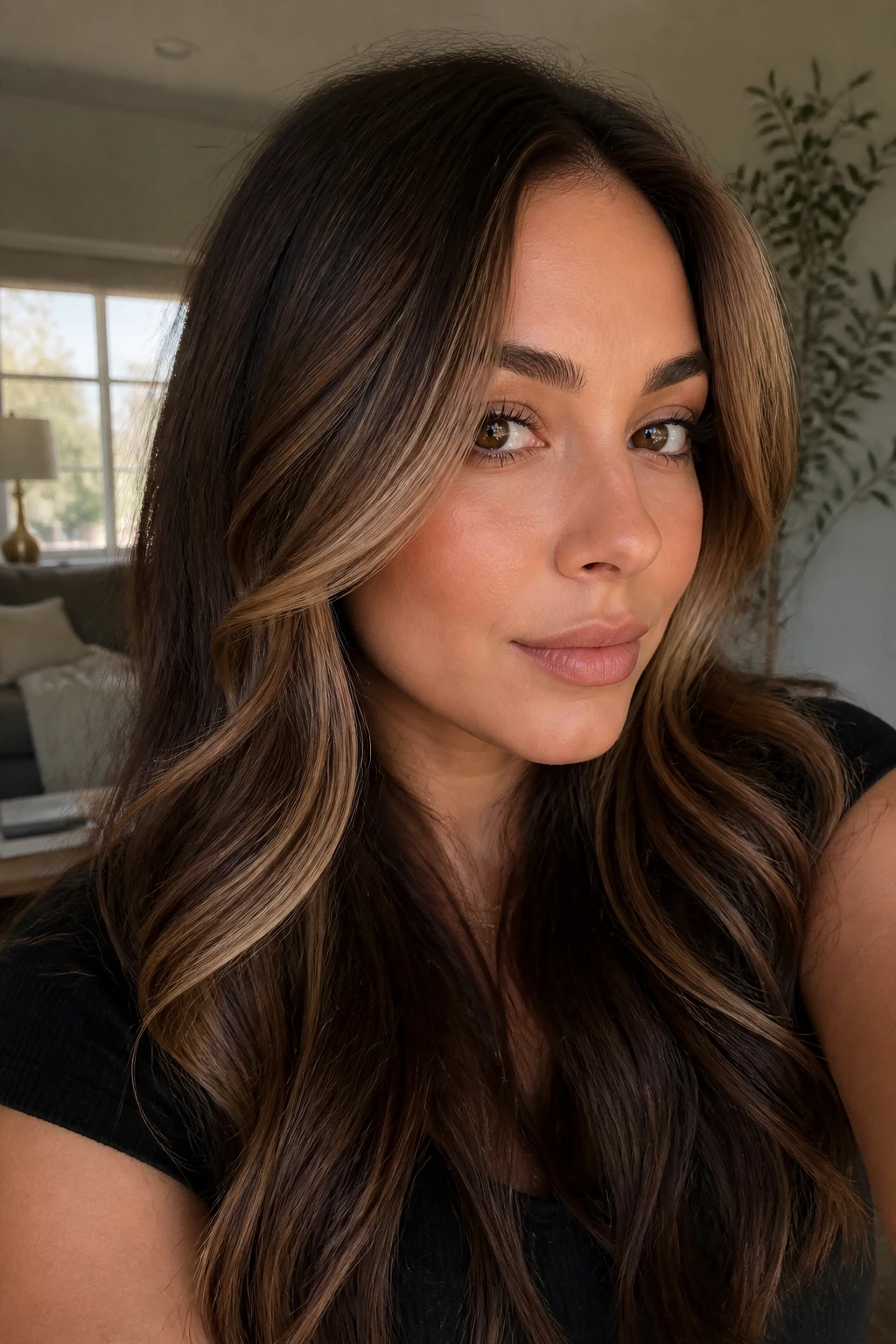
The best brown-to-blonde hairstyles on warm skin do not erase the brunette underneath. They leave it in place, then bring the light forward in ribbons, melts, or face-framing pieces. That darker base does two jobs at once: it gives the blonde something to sit against, and it keeps the face from losing its shape.
Pure blonde can look pretty in a salon mirror and a little flat two steps outside. A dimmer base with caramel, honey, or beige-gold pieces keeps the style alive in daylight, under lamps, and in the mirror above your bathroom sink. That’s the difference between color that looks painted and color that looks worn in.
Warm skin benefits from that depth because the hair never goes colder than the face. The result is softer around the jaw, cleaner around the eyes, and less likely to veer brassy when the toner fades. I’m a big fan of restraint here. A few well-placed light pieces usually beat a whole head of pale blonde, and they cost less maintenance over time.
Essential Tools for These Looks
-
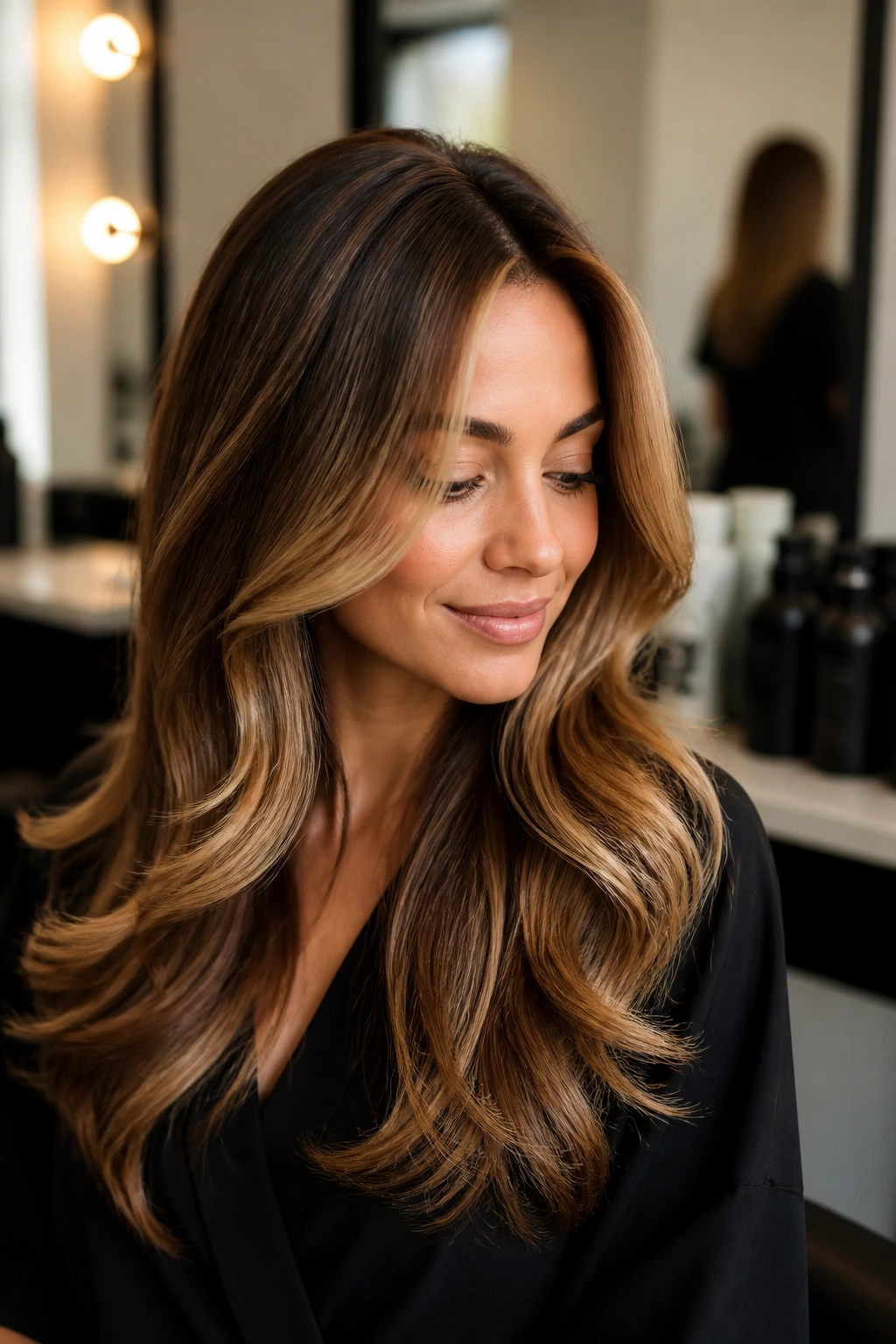
Color-safe shampoo and conditioner: Keeps warm blonde from fading fast and helps the brunette base stay rich.
-
Heat protectant spray: Necessary if you use a dryer, wand, flat iron, or even a hot brush.
-
1-inch curling iron or wand: The sweet spot for showing ribbon highlights, especially on lobs, long layers, and bobs.
-
Round brush: Helps blowouts show the shine in glossed caramel and honey blends.
-
Wide-tooth comb: Better for detangling curls and waves without tearing the lighter pieces.
-
Sectioning clips: Useful for styling and for keeping face-framing pieces separate when you blow-dry.
-
Bond-building treatment: Helpful if the hair has been lifted from brown to blonde more than once.
-
Blue or violet shampoo, used sparingly: Good only when the warm blonde starts leaning too orange or too yellow; too much can mute the warmth you actually want.
-
Glossing serum or light oil: A pea-sized amount on the mids and ends can make warm blonde look smoother without flattening the cut.
Smart Shade Shopping and Product Tips
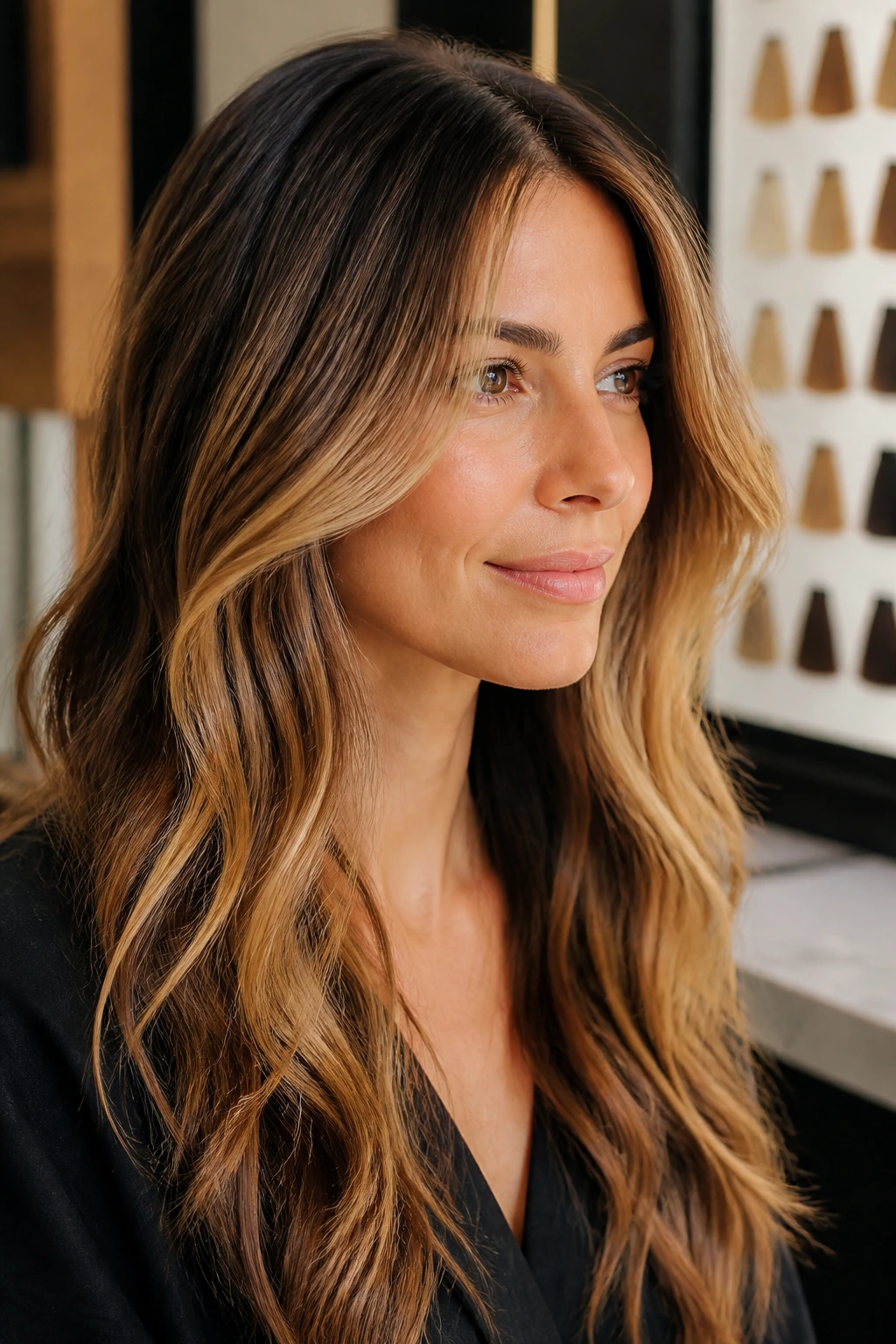
If you’re choosing salon color, look for words like honey, caramel, amber, toffee, beige-gold, and butter. Those usually point toward blonde shades that sit comfortably on warm skin. Words like icy, silver, platinum, and ash are useful only if you want a cooler result than this topic calls for. On warm undertones, cooler shades can work against the face unless they’re balanced with a deeper brown base and a strong root shadow.
The other smart move is to think in levels, not only in names. A level 6 or 7 brown base with level 8 or 9 warm blonde pieces usually gives enough contrast without bleaching the personality out of the hair. If your natural hair is very dark, you may need more than one visit to get there cleanly. That is not a flaw. It’s simply how hair behaves when you ask it to travel several levels lighter.
For products, buy based on what the hair needs after lightening. Lightened brown hair usually wants moisture, a little protein, and gentle cleansing. A sulfate-free shampoo, a weekly mask, and an occasional gloss treatment do more than a pile of random “blonde” products. Also, if your hair already runs warm, don’t use purple shampoo like it’s a house paint roller. Use it lightly, and only when the tone starts wandering.
How to Wear the Dimension
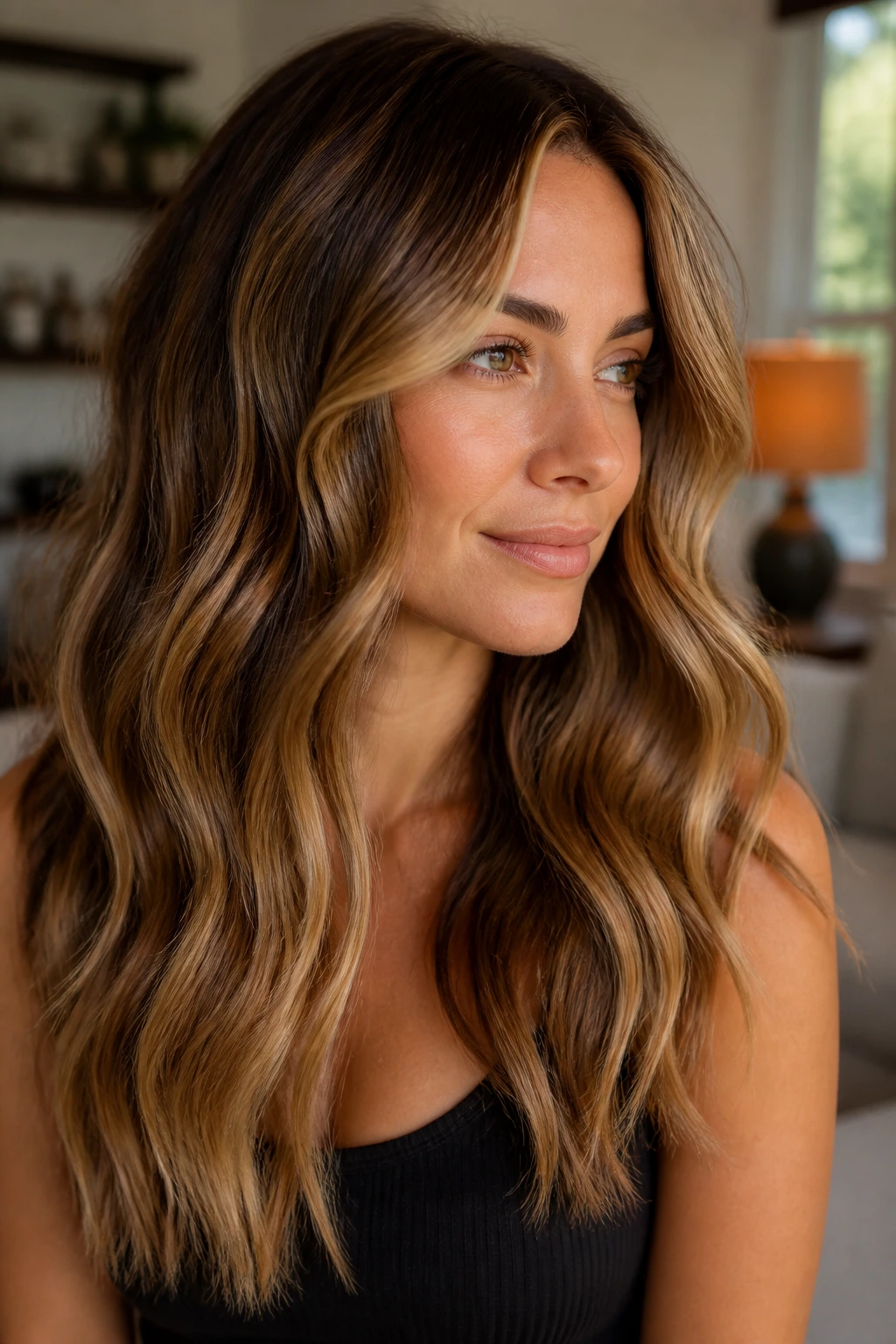
Soft Waves: Loose bends show ribbon highlights best. A 1-inch wand or large-barrel iron lets the blonde peek through the brown instead of hiding under it.
Straight and Glossy: A smooth blowout makes ombré, glaze finishes, and clean money pieces look sleek. The shine matters here. Flat, dry hair will swallow the color.
Curls and Coils: Follow the natural curl pattern when you place highlights or style the front pieces. If the light areas sit where the curls open, the blonde shows up without breaking the shape.
Updos and Braids: These styles reveal the hidden color work. A ponytail, braid, or half-up twist makes underside ribbons and peekaboo panels visible, which is useful if you want the color to look richer than it does loose.
Additional Tips and Tone Boosters
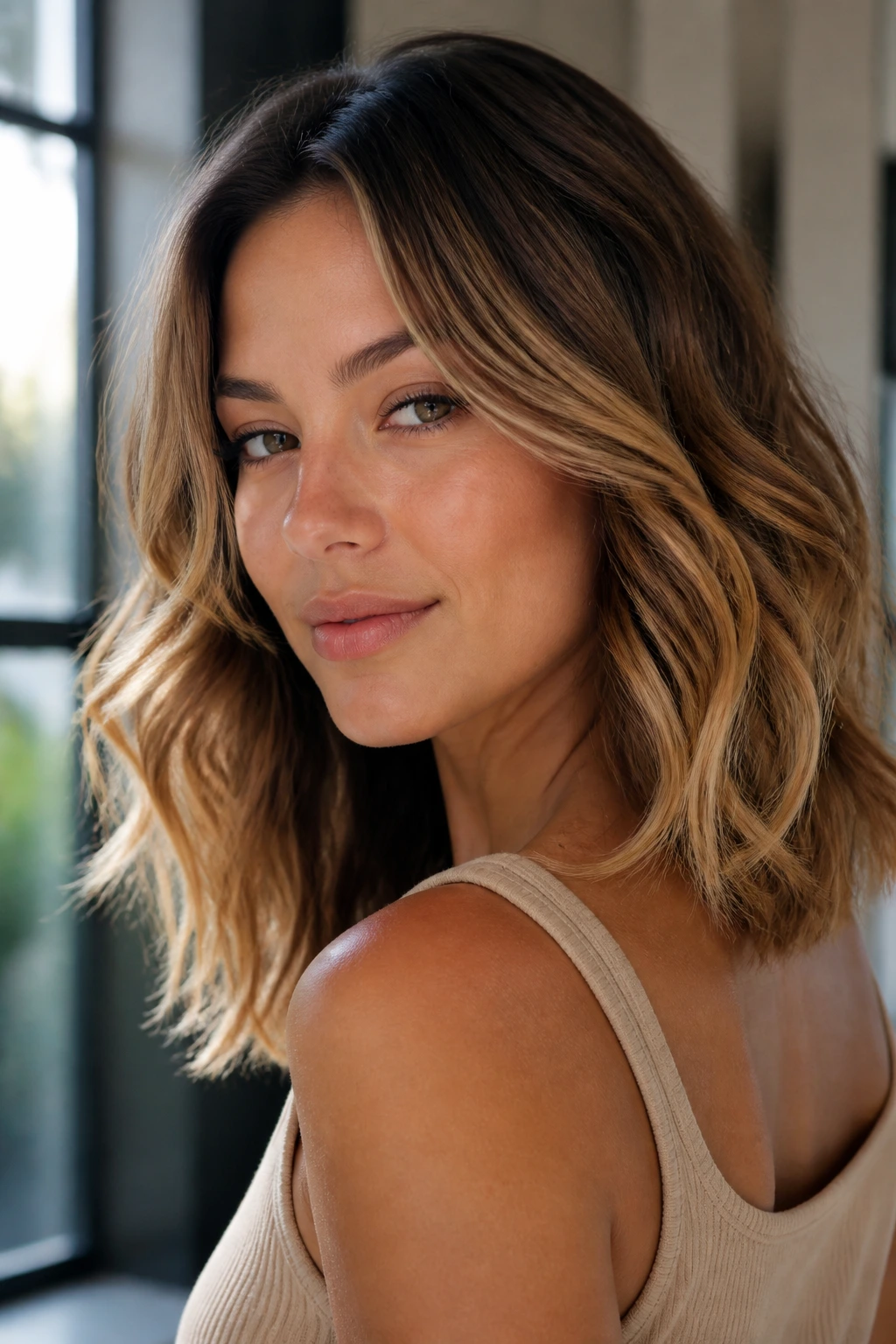
Gloss Boost: A clear or warm-toned gloss every 6 to 8 weeks keeps caramel, honey, and butter pieces from drying out into a dull beige. It also smooths the cuticle, which is half the battle with lightened brunette hair.
Dimension Boost: Leave some deep brown near the nape, crown, or underside. That hidden depth keeps the blonde from looking like one flat band when the hair moves.
Face-Lightening Trick: The brightest pieces should usually start around the brow tail or cheekbone, then soften as they travel down. That pattern brightens the face without making the root area look too busy.
Make-It-Yours: Fine hair usually looks best with slimmer ribbons and less contrast. Thick or curly hair can carry chunkier placement and a slightly brighter money piece. If you want the look to feel lower-key, ask for beige-gold instead of full honey.
Common Mistakes to Avoid
-
Choosing a blonde that is too cool: If the blonde has a gray or silvery cast, it can make warm skin look tired. Ask for gold, honey, or caramel instead.
-
Lifting the whole head too high: Taking every strand to a pale blonde kills the brown-to-blonde contrast that gives these styles shape. Leave depth at the roots and through the interior.
-
Making the face frame too wide: A thick money piece can dominate the haircut. Narrower front sections usually look cleaner and flatter the face more.
-
Overusing purple shampoo: It can mute the warmth that makes these colors work in the first place. Use it only when the blonde starts drifting brassy, not as your everyday shampoo.
-
Ignoring the haircut: Blonde placement looks different on a blunt bob, a shag, and long layers. If the cut is wrong for your hair density, the color can’t rescue it.
Variations and Adaptations to Try
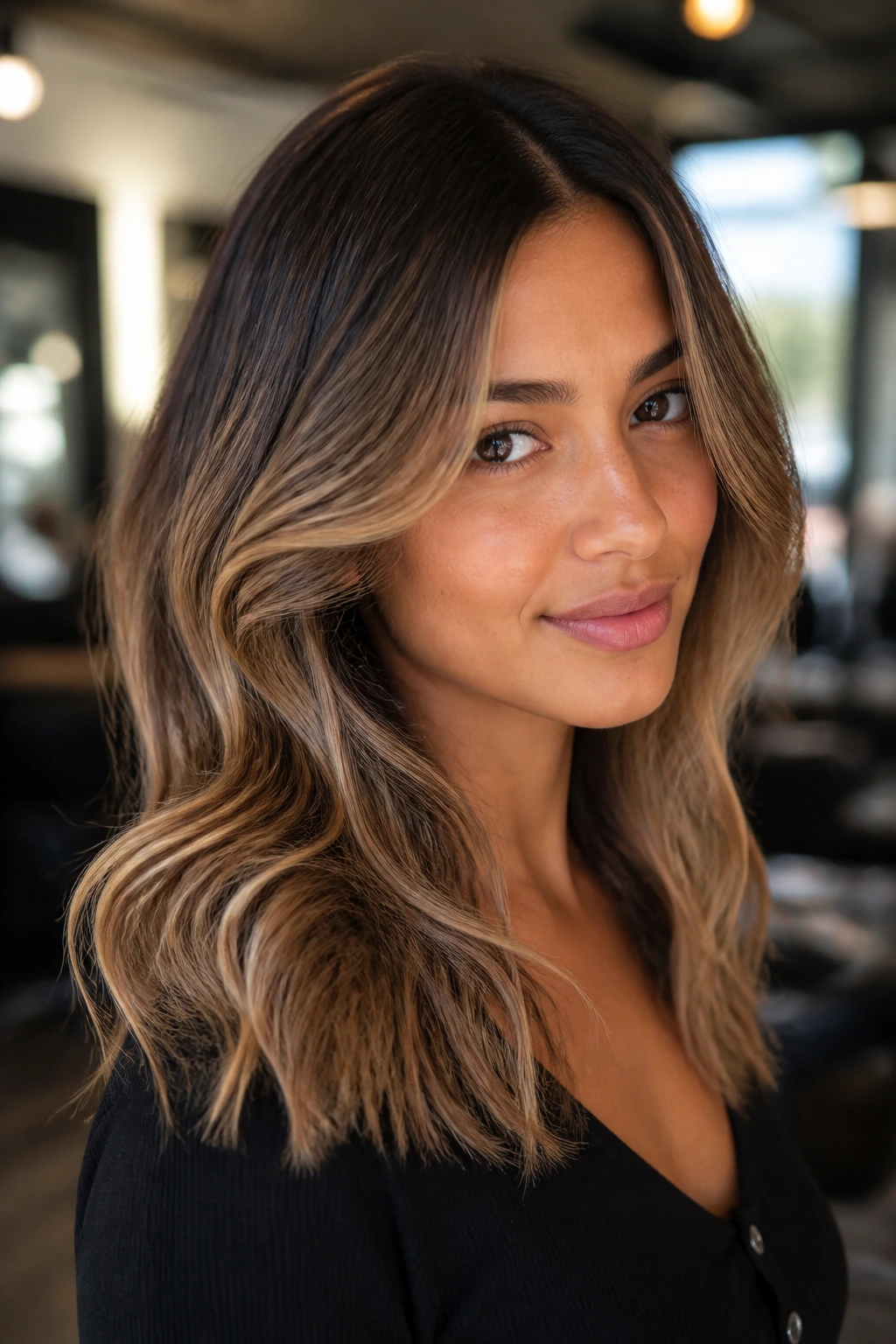
Low-Maintenance Bronde Melt: Keep the base close to your natural brown and melt just a little blonde through the mids and ends. This works for someone who wants softness and minimal root stress between appointments.
Curly Honey Halo: Concentrate the honey pieces on the outer curls and around the face. The halo effect makes the curl pattern glow without stripping away the depth that curls need.
Short Golden Pixie: If your hair is cropped short, keep the blonde in the top layer and fringe area only. That gives the cut lift while the nape stays deeper and cleaner.
High-Contrast Money Piece: Brighten only the front panels and leave the rest of the hair rich brown. This is a sharper, more obvious look, and it suits warm skin when the front pieces stay golden rather than icy.
Soft Copper Bronde: Add a tiny copper note to the blonde so the whole color leans more amber than beige. This is a strong pick if your skin has peachy or olive-gold undertones.
Dimensional Brunette with Hidden Light: Keep the outside layer brown and tuck the blonde underneath. The style looks subtle until the hair moves, which is handy if you want brightness without announcing it from across the room.
Keeping the Color Fresh Between Appointments
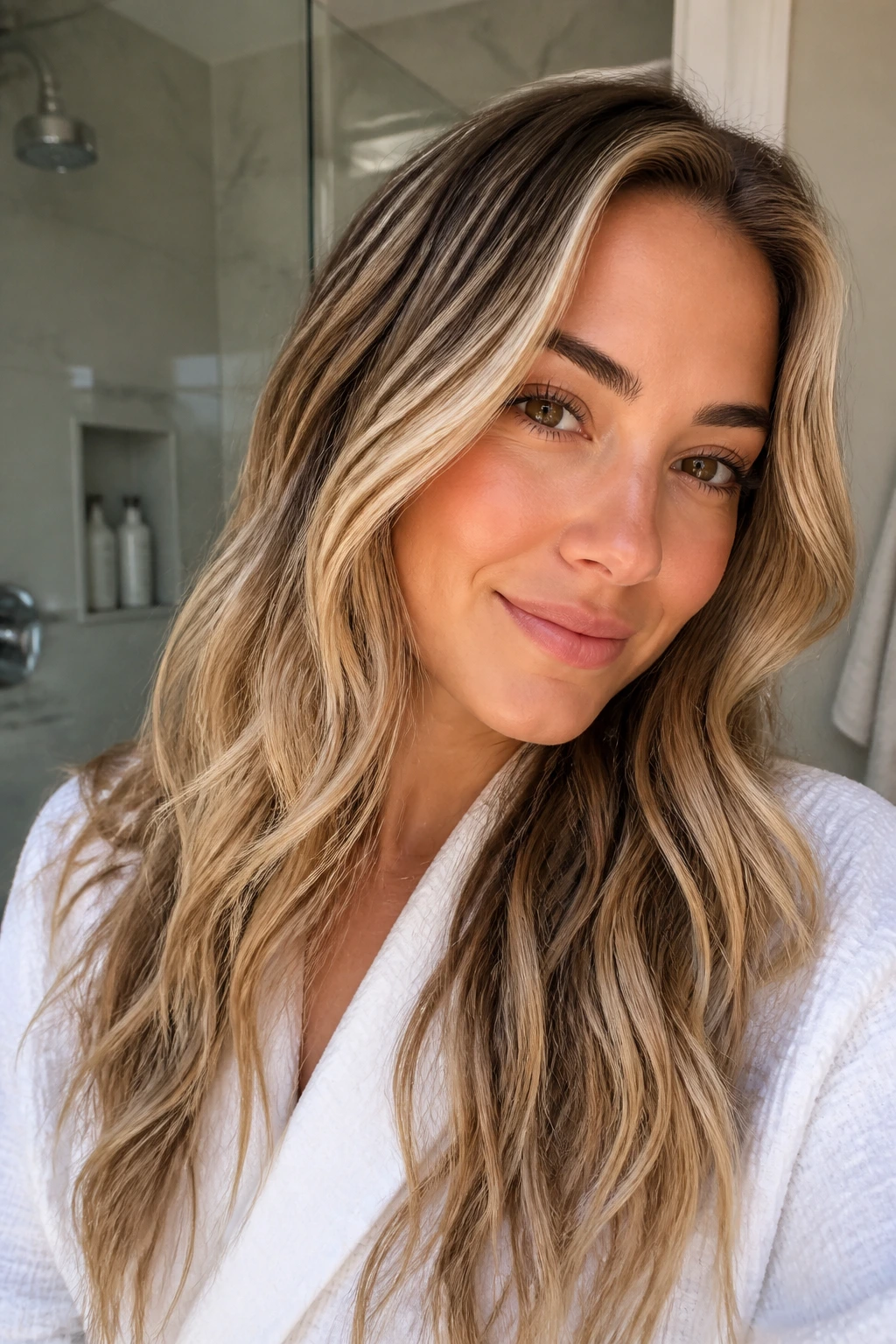
The first 48 hours after a color service matter more than most people want to admit. Skip shampoo, keep the water cool when you do rinse, and avoid heavy oils right away so the tone has time to settle. After that, wash two or three times a week if you can. More frequent washing strips warm blonde fast.
Use a color-safe shampoo most days, then add a moisturizing mask once a week if the hair feels dry or rough at the ends. If the blonde starts looking too yellow, one violet shampoo wash can help. If it starts drifting orange, a blue shampoo is the better tool. Neither one should become the default. They’re correction tools, not lifestyle products.
Salon refresh timing depends on the placement. Rooted balayage can often go 8 to 12 weeks before it needs a serious touch-up. Brighter money pieces or short cuts with obvious face framing may need a glaze or top-up closer to 6 weeks if you want them crisp. Heat styling every day? Put protectant on every time. No exceptions. Blonde hair does not forgive laziness.
Frequently Asked Questions
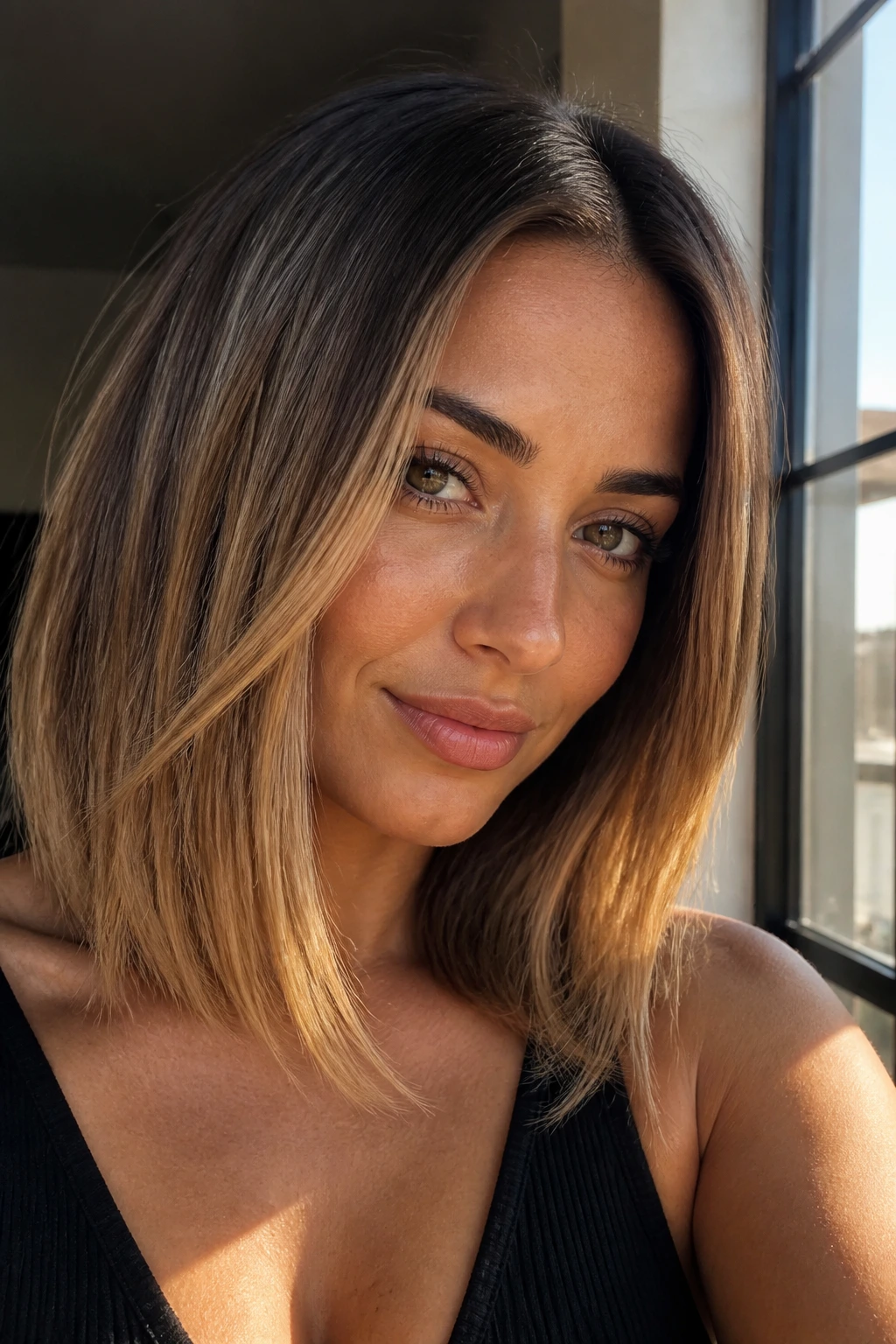
What blonde tones flatter warm skin tones most?
Honey, caramel, amber, butterscotch, beige-gold, and soft butter blonde tend to sit best on warm undertones. They echo the warmth in the skin instead of going against it.
Can warm skin tones wear beige blonde?
Yes, if the beige leans warm rather than icy. Beige-gold reads softer and often works better than a cool beige that skews gray in daylight.
Is balayage better than highlights for brown-to-blonde hair?
Balayage usually gives a softer grow-out, while foils can give more lift and brightness. If you want visible contrast and a cleaner face frame, a mix of both can be better than choosing only one method.
How do I stop blonde pieces from looking brassy?
Use a color-safe shampoo, limit hot tools, and book a gloss before the tone gets too far off. If the blonde turns orange, a blue shampoo can help; if it turns too yellow, use violet shampoo sparingly.
Can curly hair pull off these looks without losing definition?
Absolutely, but placement needs to follow the curl pattern. Thin ribbons and a deeper base usually keep the curl shape intact better than thick, all-over lightening.
How light can dark brown hair go in one visit?
That depends on the hair’s history, condition, and porosity. Dark brown hair often looks best lifted in stages if you want warm blonde pieces that still feel healthy and shiny.
Do I need a root shadow for every brown-to-blonde style?
Not every single one, but it helps more than people expect. A root shadow gives the color shape, softens grow-out, and keeps warm skin from losing contrast at the top of the head.
What if my blonde gets too yellow after a few washes?
A violet shampoo used once every week or two can help tone down excess yellow. If the warmth is actually flattering, don’t chase every bit of gold out of it. Some warmth is the point.
Soft Gold, Not Brass
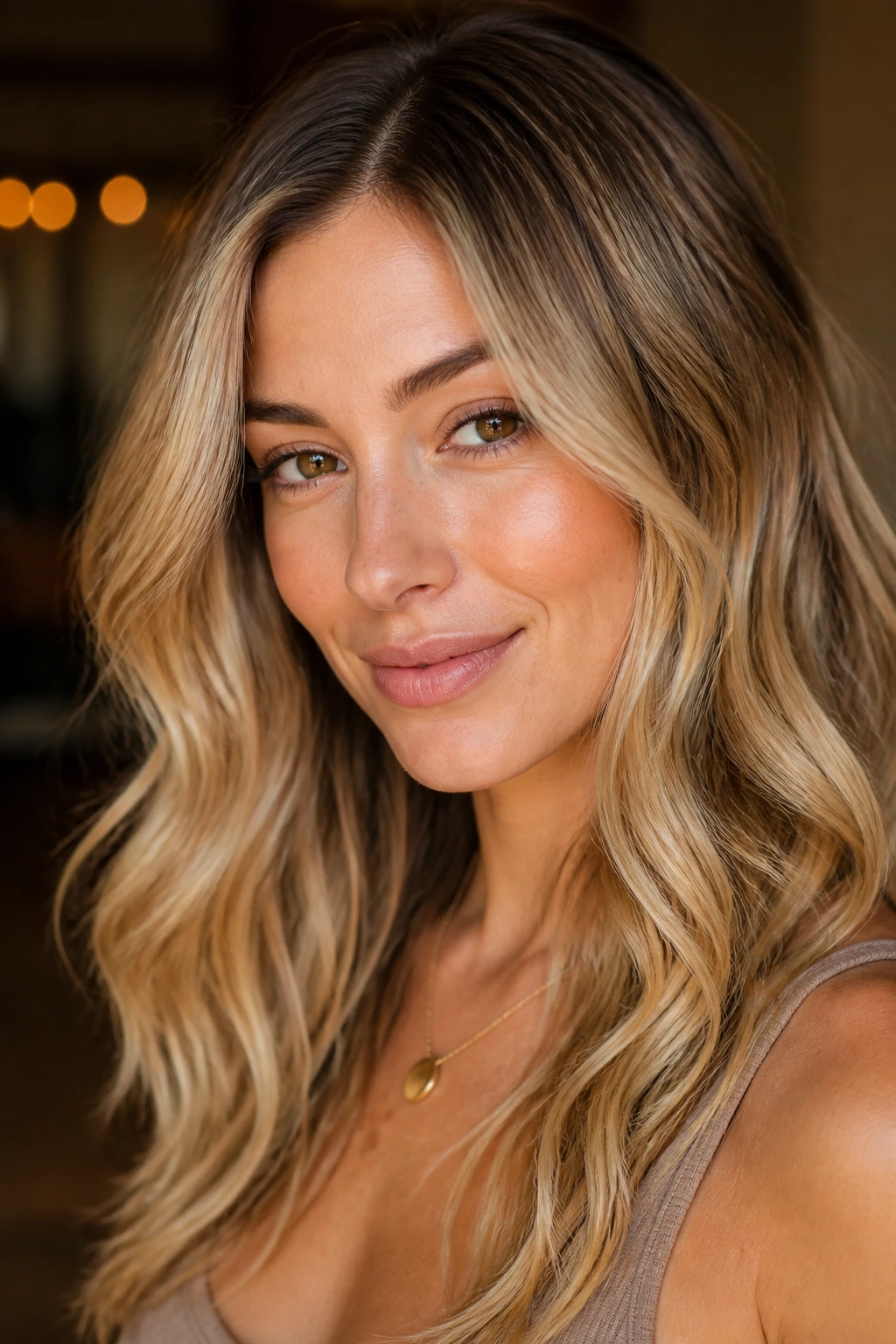
The best brown-to-blonde hairstyles for warm skin tones do one thing well: they keep the hair bright without draining the face. That usually means preserving depth at the root, choosing warm-toned blonde pieces, and letting the cut do some of the visual work. The color should look intentional from a few feet away and even better up close.
I trust these looks more when they leave a little brown behind. A clean shadow root, a warm glaze, a few honey ribbons around the face—that combination holds up longer than a blanket of pale blonde ever will. And when the hair grows out, it still looks like the same hairstyle, which is a small luxury most people notice the second they stop fighting their color.
If warm skin has been arguing with cool blonde for years, stop making that argument. Pick the version that keeps the gold, the caramel, and the brown all talking to each other, and the whole style starts doing the flattering for you.