



Dark, thin hair can be fussy about color. Put the wrong brown on it and the whole head reads like one flat block — pretty in theory, heavy in real life. Put the right brown on it and the effect changes fast: the part looks softer, the ends stop disappearing into shadow, and the hair starts catching light in little flashes that make each strand seem a touch fuller.
That’s why brown hair color ideas for dark thin hair need a different filter than the usual “just go brunette” advice. On fine strands, the difference between espresso and smoky cocoa is not cosmetic trivia. It changes how dense the hair looks, how much scalp shows at the part, how often you need to tone, and whether the color reads expensive or just dull.
The smartest browns here lean on gloss, dimension, and controlled contrast. Some stay close to the natural base and get their life from shine. Others use tiny ribbons of lighter brown or a soft root shadow so the eye keeps moving. That movement matters. It’s one of the easiest ways to make thin hair look less see-through without asking the hair to survive a full bleach marathon.
Why These Brown Shades Work on Dark, Thin Hair
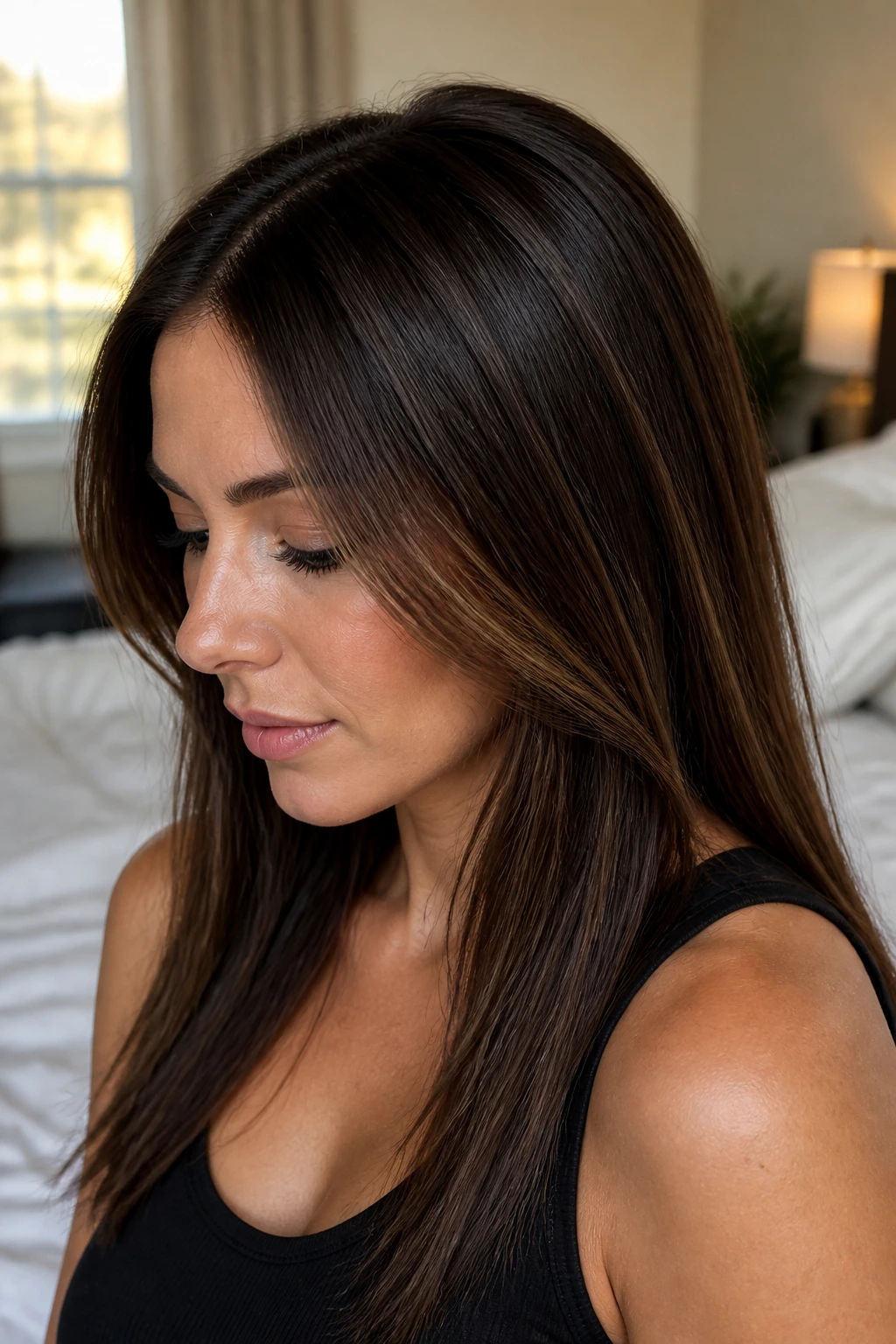
-
Depth without heaviness: A level 3 to 5 brown keeps dark hair looking rich, but tiny undertone shifts stop it from turning into one flat helmet shape.
-
Micro-dimension matters: Fine babylights, lowlights, and glosses create little changes in tone that make the hair look denser from three feet away.
-
Shine helps the cuticle read fuller: A demi-permanent gloss or clear glaze reflects light better than a chalky, over-processed finish.
-
Low lift is kinder to delicate strands: Staying close to your natural base usually means less breakage, less frizz, and fewer brittle ends.
-
Placement beats volume: A few well-placed caramel pieces around the face can do more for thin hair than a whole head of chunky highlights.
-
Undertone decides the mood: Warm browns bring softness, cool browns sharpen the shape, and neutral browns split the difference without fighting your skin tone.
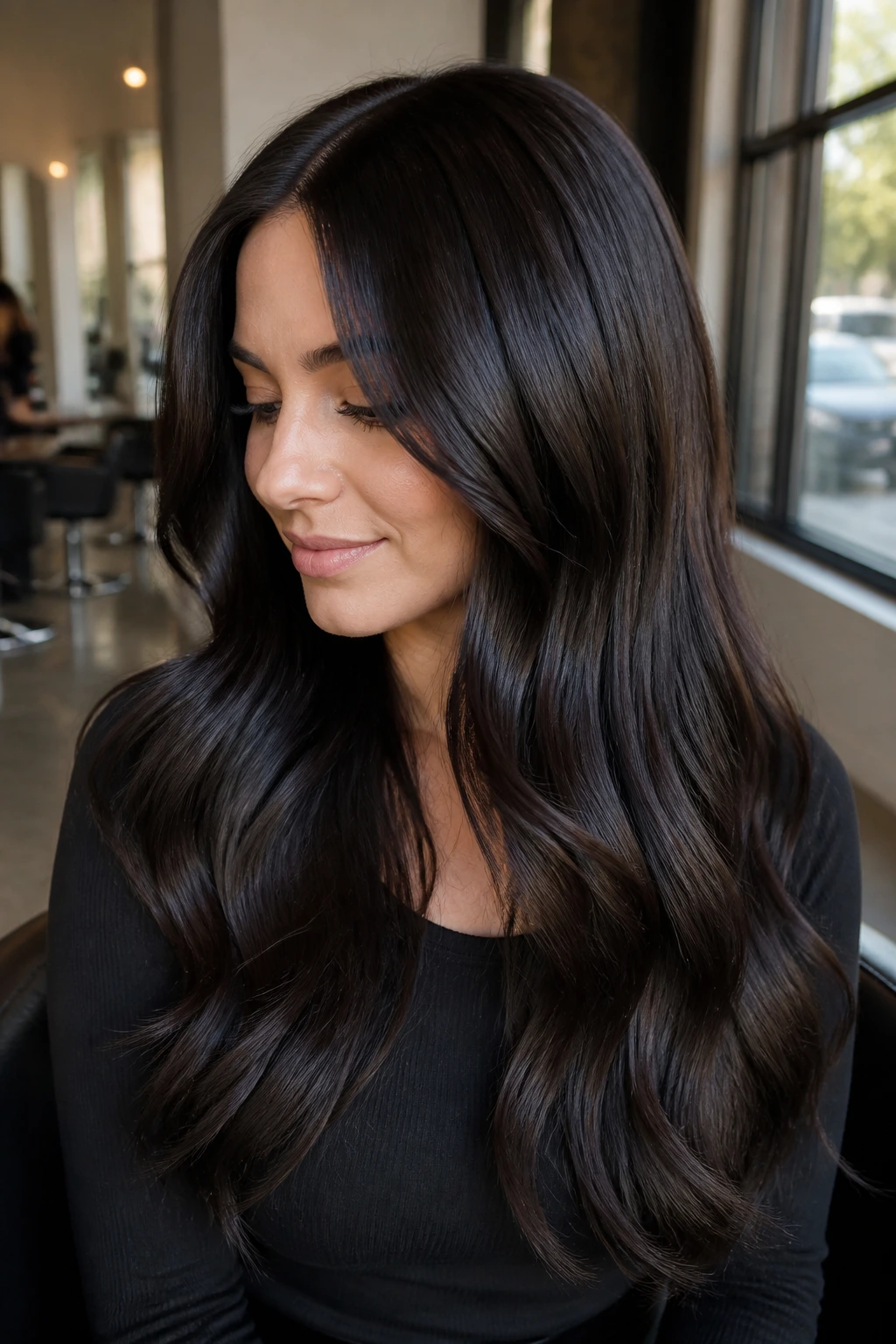
1. Espresso Glass Brown
Espresso glass brown is for the person who wants depth first and drama second. It’s a deep, almost black-brown base with a glossy finish, so the hair looks polished rather than dusty. On dark thin hair, that shine is the whole trick: the color stays close to the natural level, but the reflective surface keeps the strands from disappearing into a dull block.
Why It Works
This shade works best when your hair is already dark and you want to make it look richer, not lighter. A sheer gloss or demi-permanent brown at level 3 or 4 keeps the result soft around the hairline, which matters when the part is wide or the ends are delicate. Skip heavy opaque dye if your hair is fine; it can make the finish look stiff.
Best for: Straight or softly waved hair that needs a mirror-like finish.
Ask for: An espresso base with a clear glaze over top.
Watch for: If your natural hair is warm, ask your colorist to keep the brown neutral so it does not go reddish in sunlight.
2. Chestnut Money Piece
Chestnut money piece is one of those smart little moves that does more than it looks like it should. The hair stays deep and brunette through the body, while a soft chestnut frame around the face lifts the whole cut. On dark thin hair, that front-lighting effect keeps the style from sinking into the face.
What Makes It So Useful
The money piece should be subtle, not stripey. Think one or two shades lighter than the base, painted around the front corners and blended near the temple. That gives the illusion of thicker hair right where people look first — at the face, the fringe, the part line, all the places where fine hair can appear flat.
How to wear it:
- Keep the rest of the head one level deeper so the contrast stays controlled.
- Style with a side part if you want the chestnut to show more.
- A round-brush blowout gives the lightened front sections a little swing.
3. Mushroom Brunette
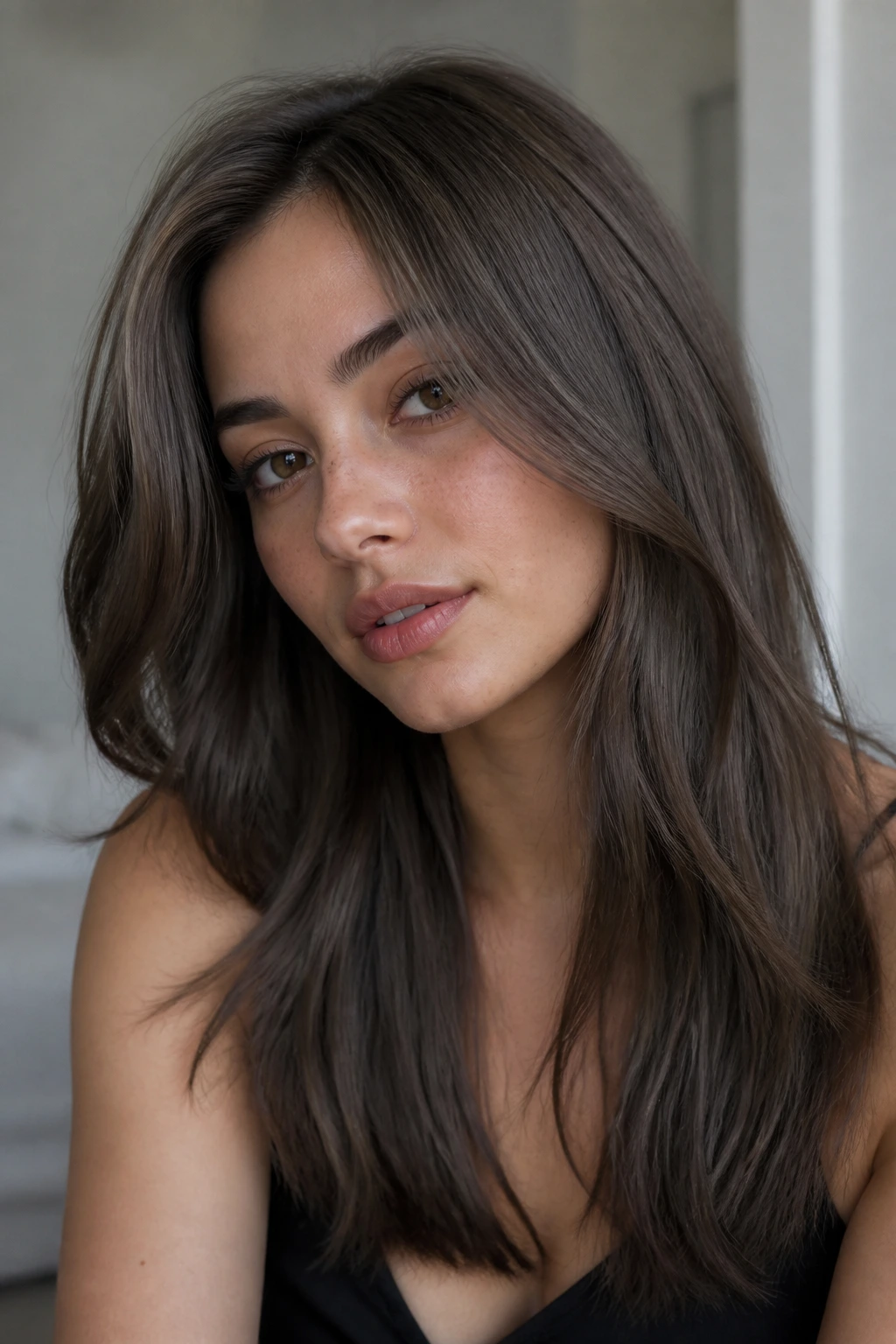
Mushroom brunette has a cool, smoky cast that looks expensive when it’s done right and muddy when it isn’t. The color sits somewhere between taupe, ash, and soft brown, which makes it a nice choice if your natural hair leans neutral or cool. On thin hair, that cooler tone can make the shape look cleaner and less puffy around the crown.
It’s a good pick if warm browns pull orange on you or if your hair tends to throw red after coloring. Ask for a smoky brunette gloss with a neutral base, not a flat ash dump. The goal is soft shadow, not gray paint.
A little warning, though: mushroom brunette can flatten the face if the color is too uniform. A few darker lowlights under the top layer keep it from looking washed out.
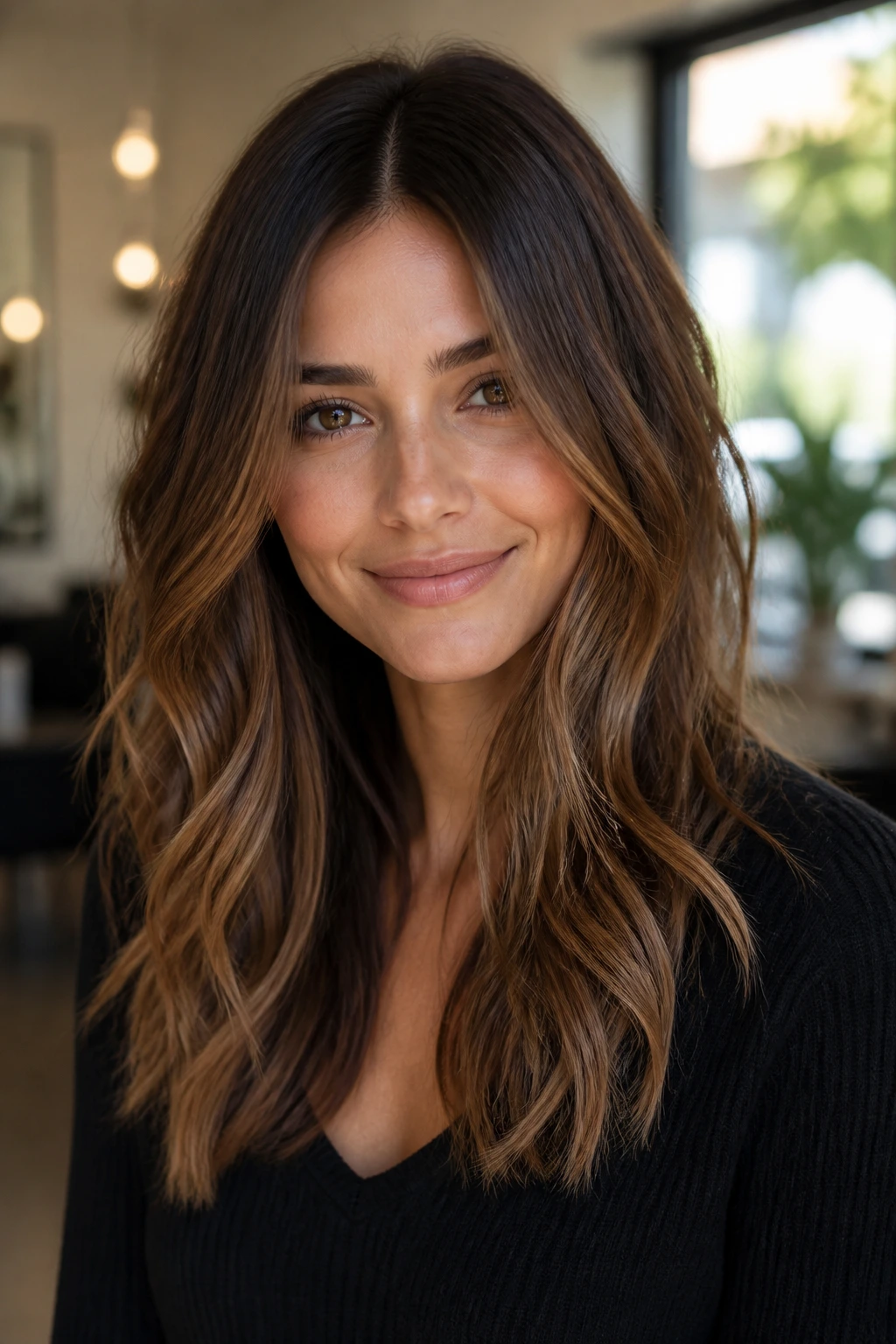
4. Mocha Balayage
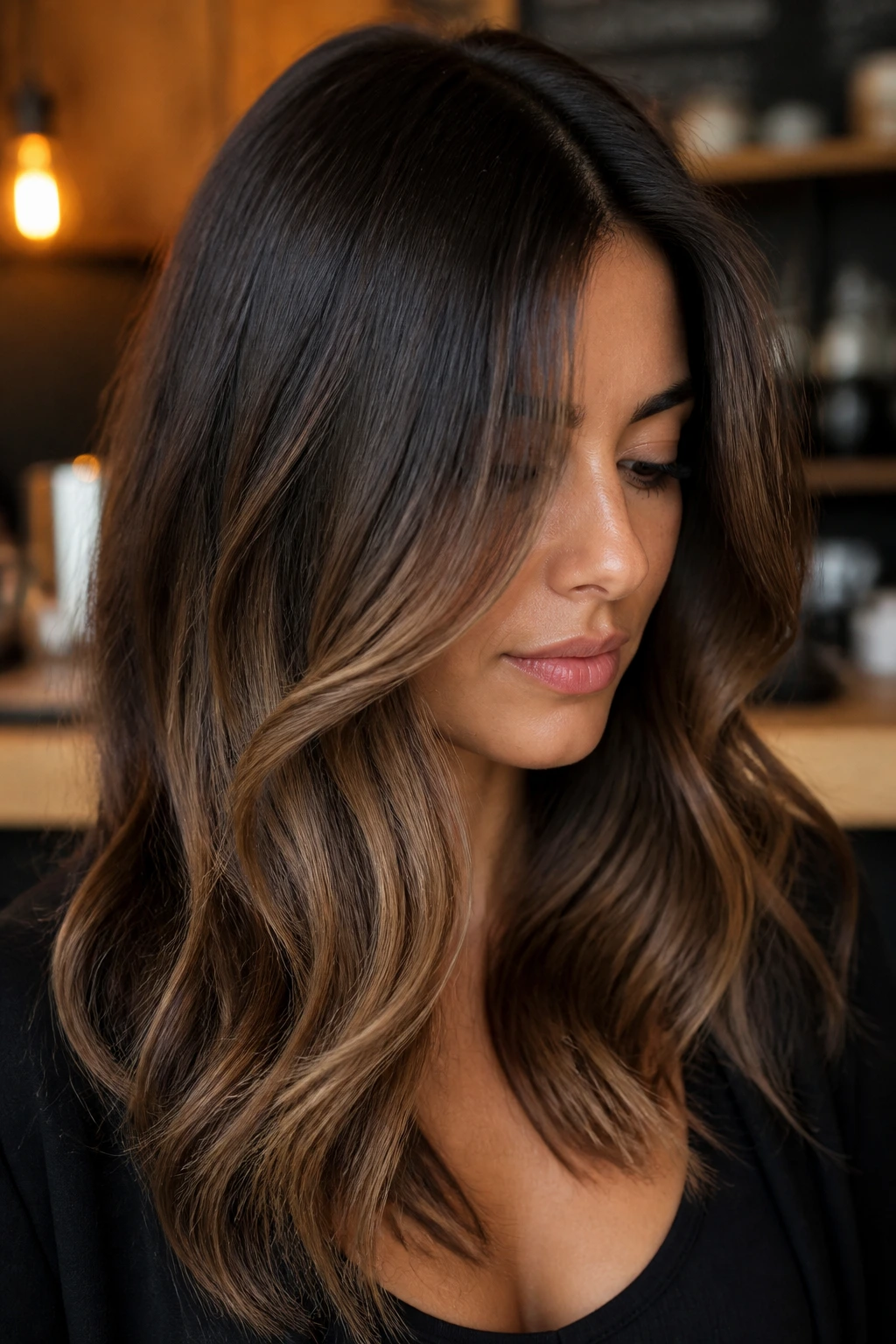
Mocha balayage is the practical brunette color for people who want movement without obvious stripes. The base stays dark, and the lighter mocha pieces are painted in broad, feathered panels that start lower on the hair shaft. For fine hair, that lower placement matters because it leaves the roots dense and focuses the brightness where the hair can handle it.
The effect is softer than classic highlights. You see dimension when the hair moves, not a grid of foils when it’s still. That is the whole appeal.
If your hair is very thin, keep the lightening one to two levels above the base, not five. Big contrast can make the scalp look more visible, especially on straight hair or a center part.
5. Milk Chocolate Babylights
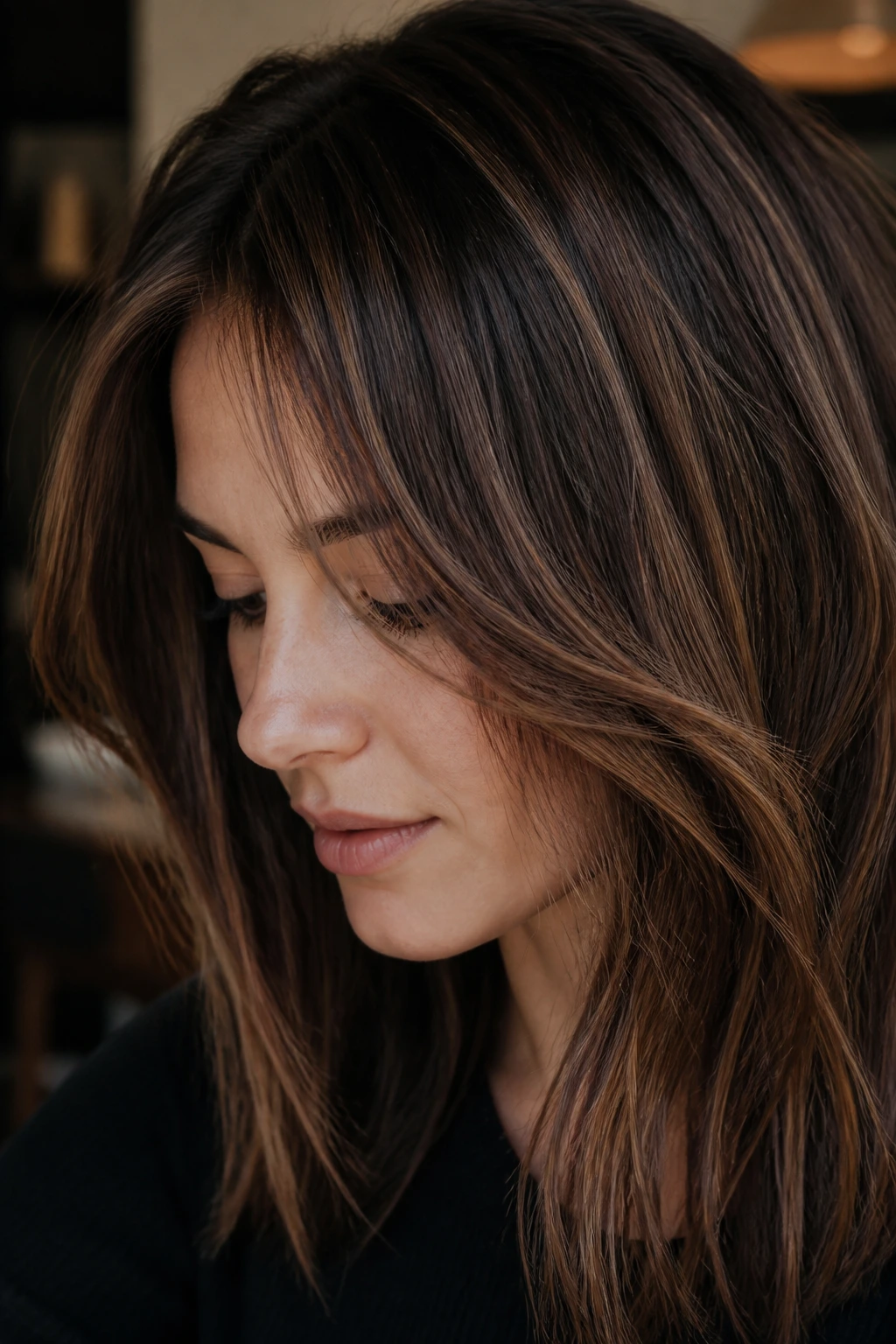
Milk chocolate babylights are tiny, almost whisper-thin highlights that keep brunette hair from going dark and heavy. The shade is still brown, still warm, but those fine threads of lightness break up the surface so the hair catches light in a cleaner way. Fine hair often does better with this kind of small-scale detail than with broad streaks.
Why It Works
Babylights are narrow enough to blend into the base without shouting about themselves. On dark thin hair, that gives you the brightness people notice before they notice the technique. The lighter pieces should sit mostly through the top layer and around the crown, where the hair needs a little lift. Keep the tone in the milk chocolate family — soft, creamy, and not orange.
Pro move: Ask for babylights no wider than a few millimeters if your hair is truly fine.
6. Cinnamon Ribbon Highlights
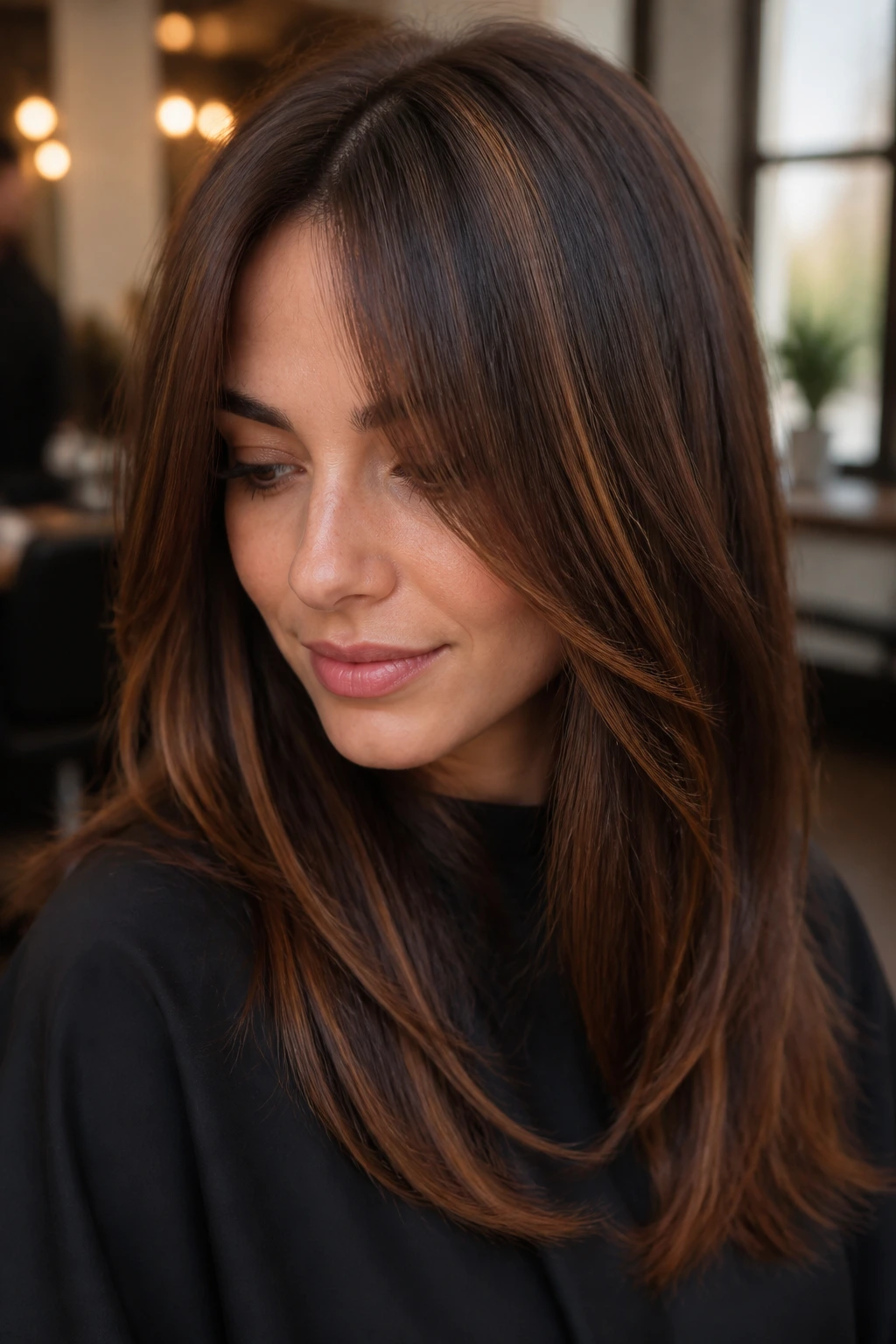
Cinnamon ribbon highlights bring warmth without tipping into copper overload. They show up as slim, bent pieces of brown with a reddish spice to them, and that tiny bit of warmth makes dark hair feel less closed in. The look is especially good if your hair falls straight and you want movement without a blunt contrast line.
Here’s the catch: cinnamon can go loud fast if it’s too bright. Keep it one or two levels above the base and ask for a soft glaze between salon visits so the color stays rich, not brassy. On thin hair, the ribbon effect works better than thick panels because it creates the feeling of fullness in layers.
7. Hazelnut Ends
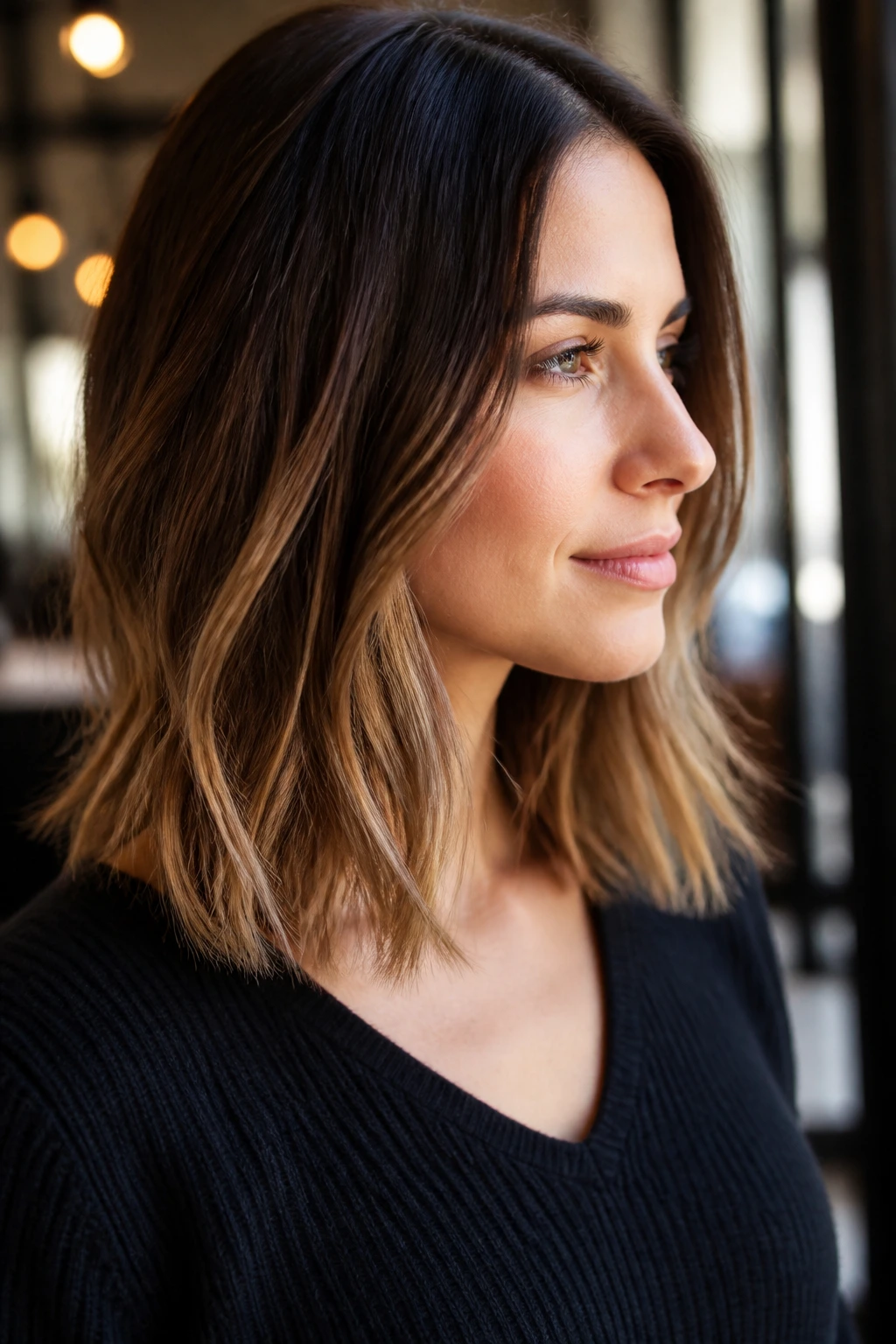
Hazelnut ends are a sweet spot between all-over brown and full balayage. The roots stay deeper, and the lower half gets a creamy hazelnut lift that makes the hair look lighter without losing structure. If your ends are sparse — and thin hair often is — this trick puts the attention there in a way that feels intentional.
A good hazelnut finish should look melted, not painted on. The transition from root to end needs to be soft enough that you can’t draw a hard line with your eye. That softness keeps the hair from looking chopped into levels.
This shade works especially well on shoulder-length cuts and long bobs. The end lightness gives the cut shape.
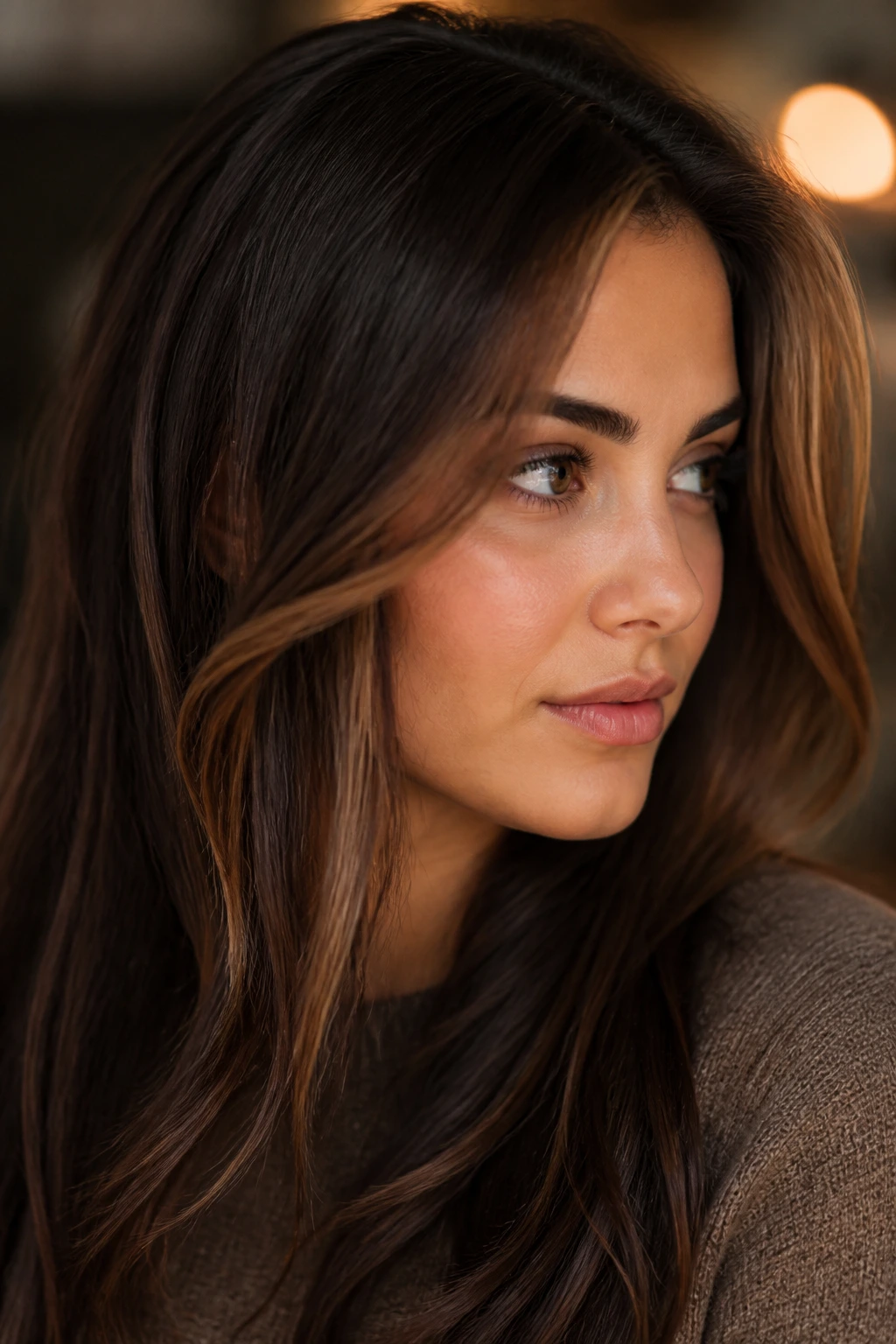
8. Toffee Face-Frame
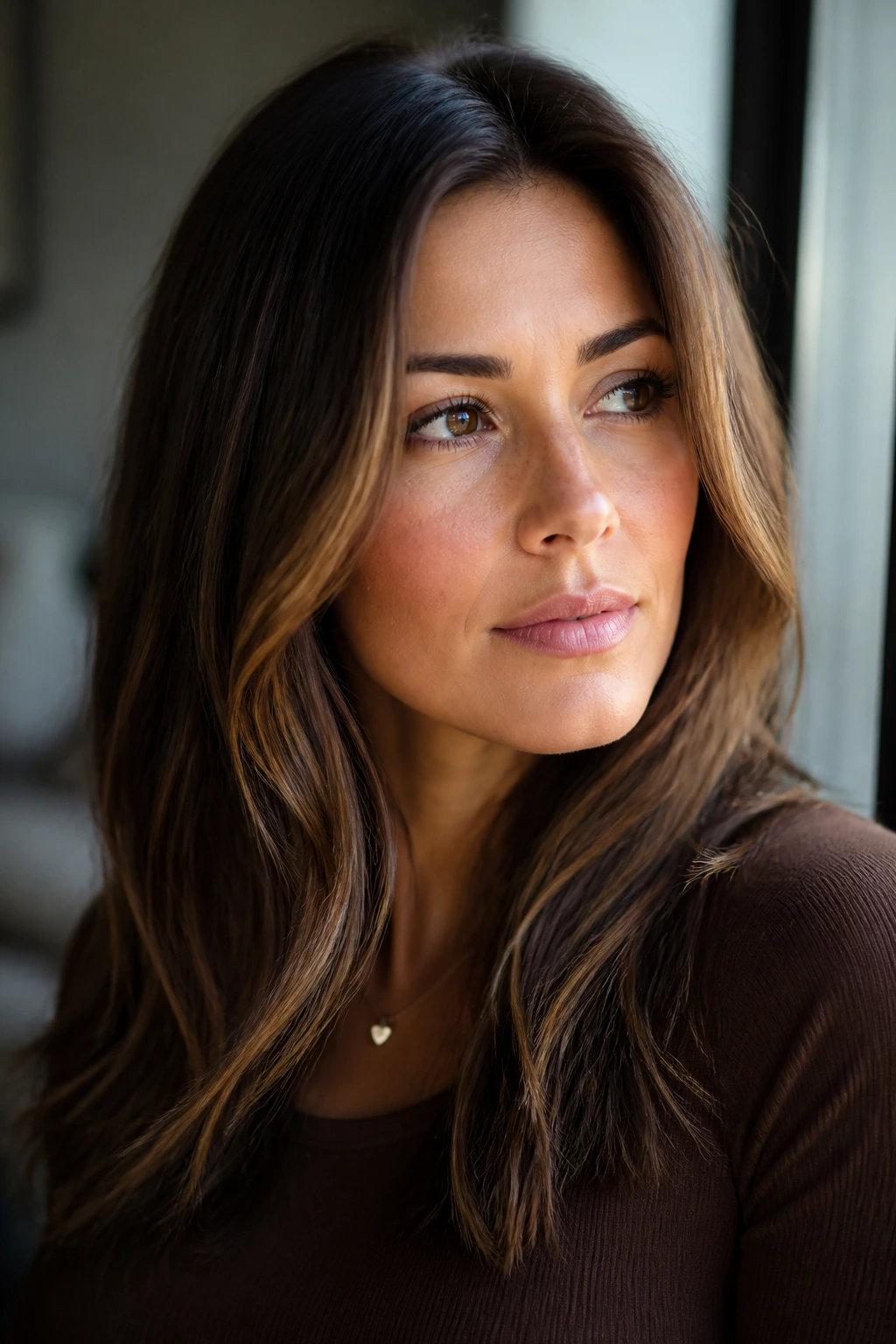
Toffee face-frame color is one of my favorite ways to wake up dark brown hair without committing to an all-over change. The toffee pieces sit right around the face and through the first few inches of the front layers, where the light naturally falls. On thin hair, that little hit of brightness makes the whole style seem more alive.
You do not need a dramatic blonde money piece here. In fact, that can backfire. A toffee tone that’s only slightly lighter than the base looks softer and keeps the hair looking dense at the temples, which is where thinner hair tends to reveal itself quickest.
Best when: You wear your hair down more than up.
Pairs well with: curtain bangs, side-swept fringe, or soft layers.
9. Rooted Caramel Sweep
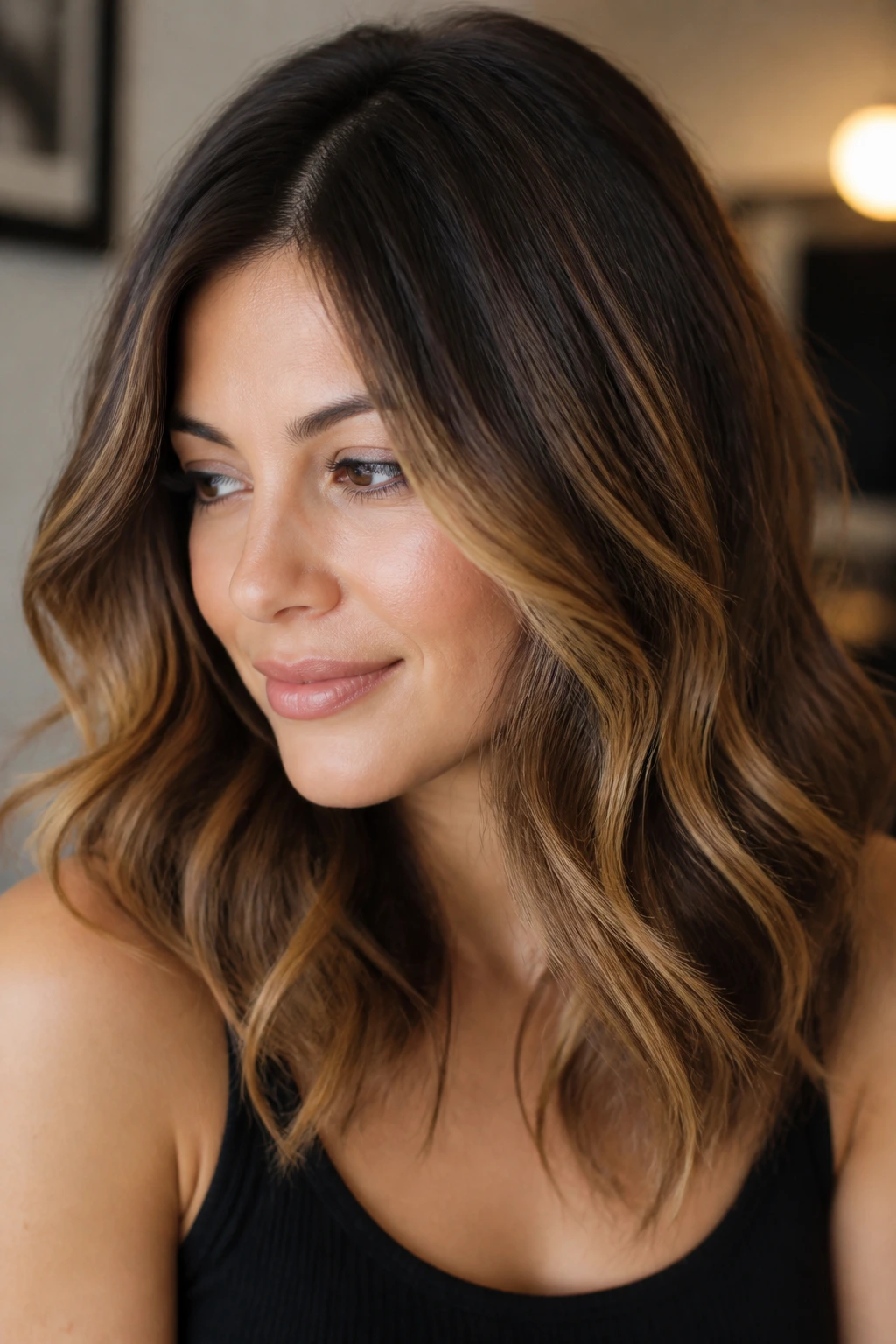
Rooted caramel sweep is what happens when you want lighter ends but hate the look of high-maintenance highlights. The root stays dark and natural-looking, then caramel ribbons sweep through the mid-lengths and ends. On dark thin hair, that rooted base prevents the scalp from looking washed out and keeps regrowth forgiving.
The caramel should be soft, not yellow. Thin hair can look frayed when the light pieces get too bright and too dry. A rooted finish gives you room to keep the ends lighter while the top stays thick-looking.
If your hair is straight, add a bend with a large barrel iron or a round brush. That movement helps the caramel pieces separate just enough to show the color story.
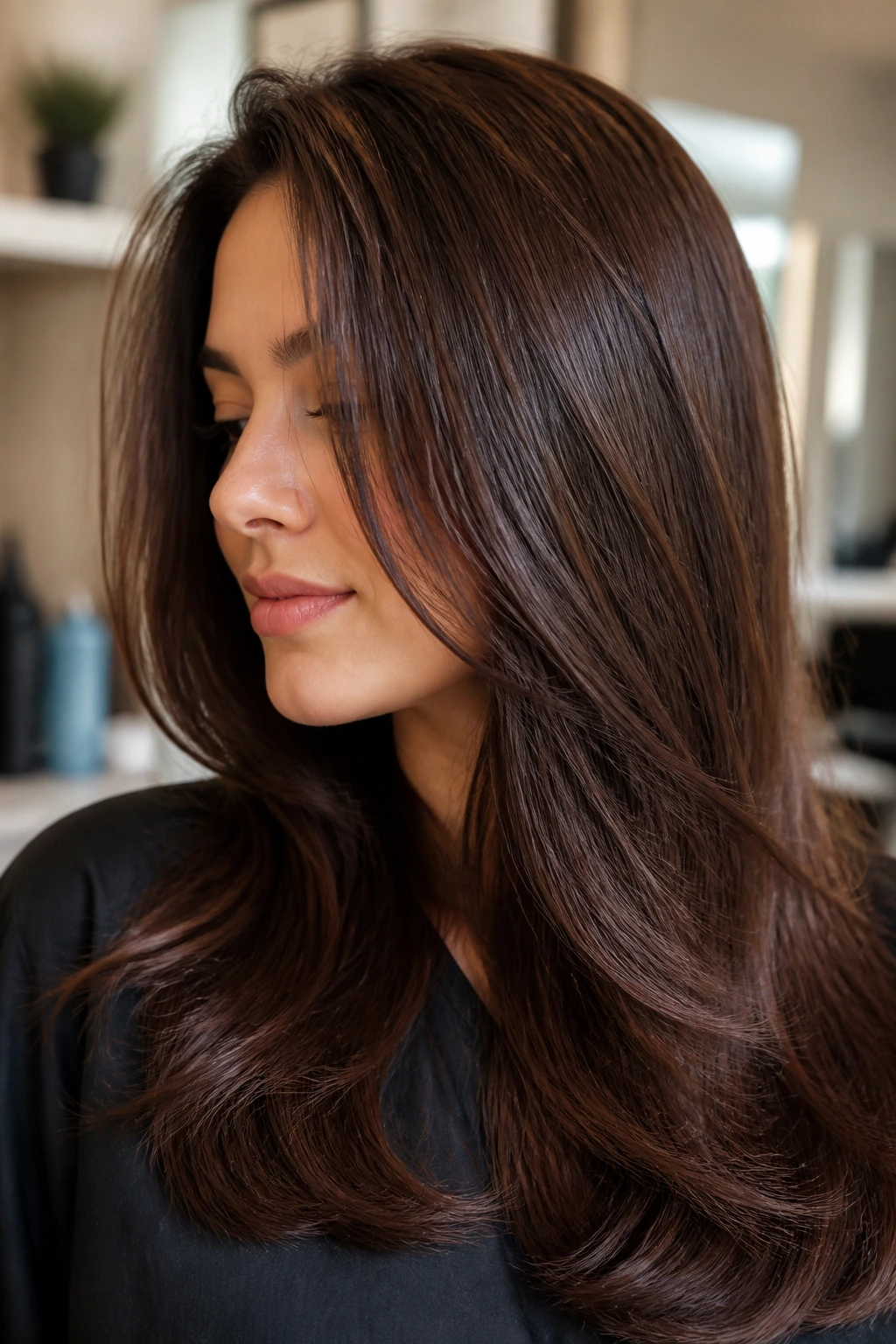
10. Smoky Cocoa Brown
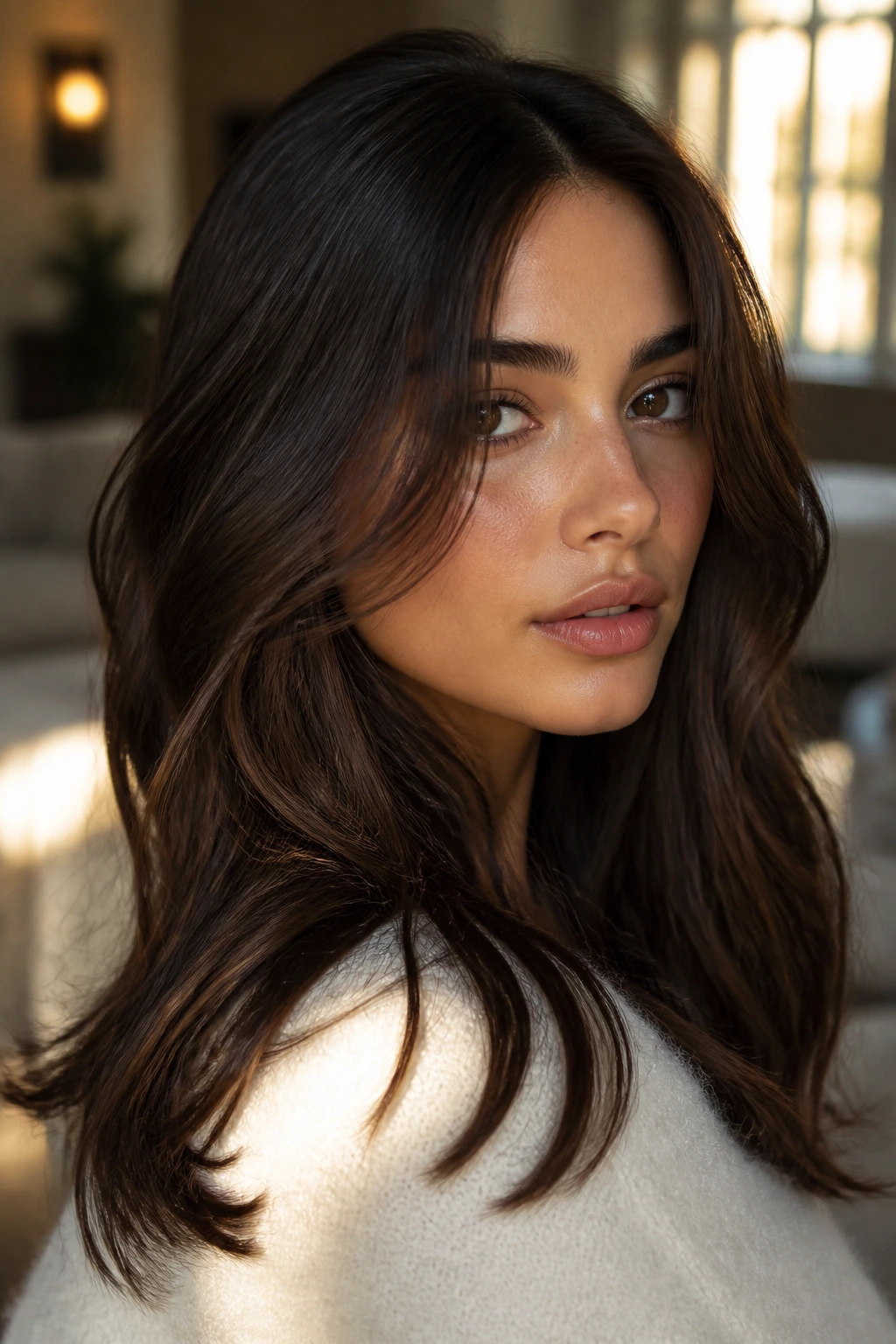
Smoky cocoa brown is a cooler, muted brunette that looks especially good when you want the hair to feel dense and sleek. The color sits deeper than milk chocolate and softer than black, which gives it that velvety finish dark thin hair often needs. It’s not flashy. That’s the point.
The shade works because it absorbs some light while still showing texture around the ends. A flat brown can look like one block. Smoky cocoa has a little shadow variation, which keeps the cut from disappearing.
If you have warm undertones in your skin, ask for a neutral smoke rather than a gray ash. You want the brown to soften your features, not drain them.
11. Walnut Lowlights
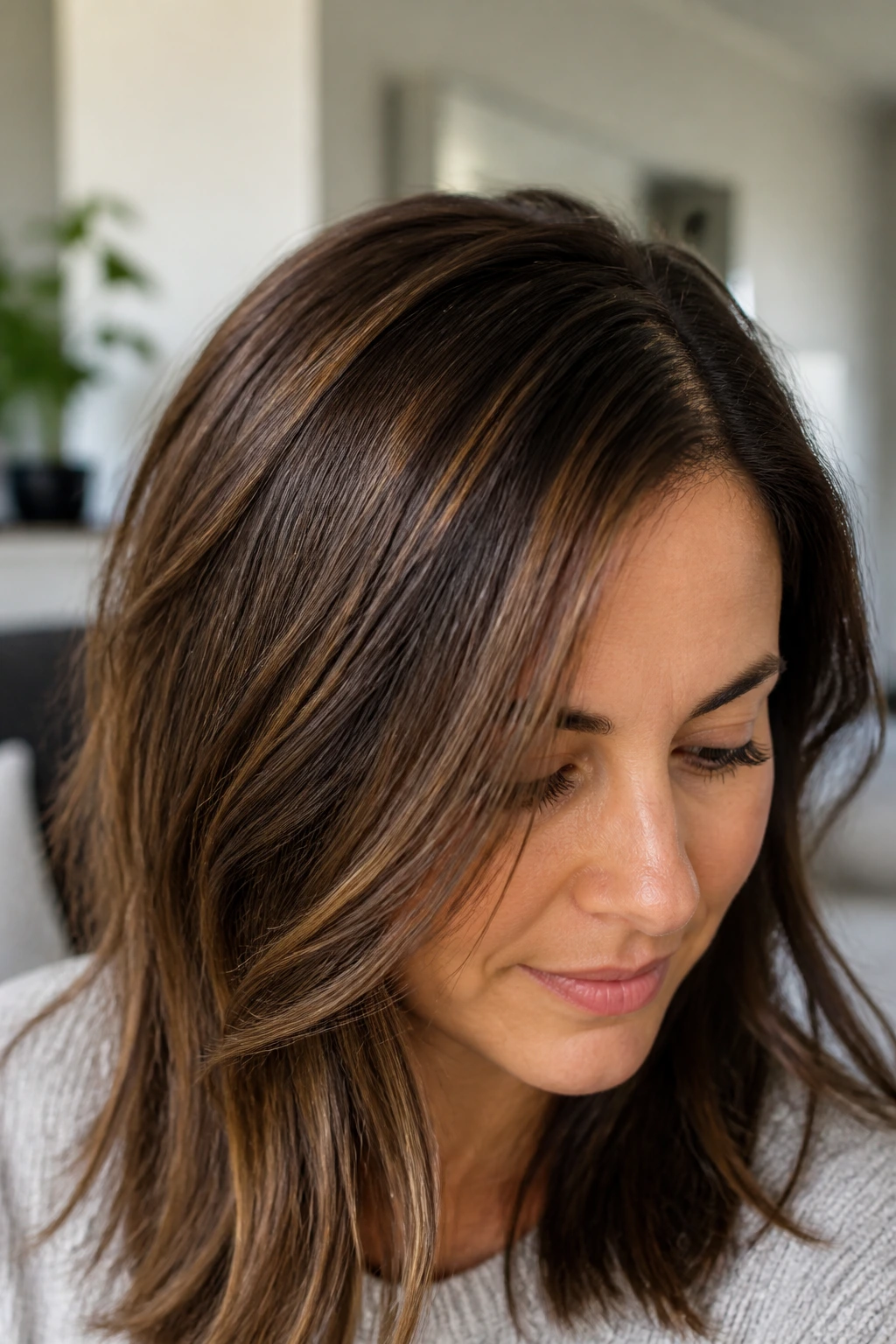
Walnut lowlights are the quiet fix for brunette hair that looks too uniform. Instead of lifting pieces, you weave in slightly deeper strands of walnut brown to create shadow and depth. On thin hair, that shadow is useful because it makes the hair appear thicker by contrast.
The trick here
The lowlights should be fine and scattered, especially through the top layer and under the crown. Broad lowlights can look stripey and old-fashioned. Fine lowlights, though, give the hair a little swing and stop the finish from looking one-note.
This is one of the best choices if your hair is already medium to dark brown and you want shape more than brightness.
12. Ashy Shadow Root
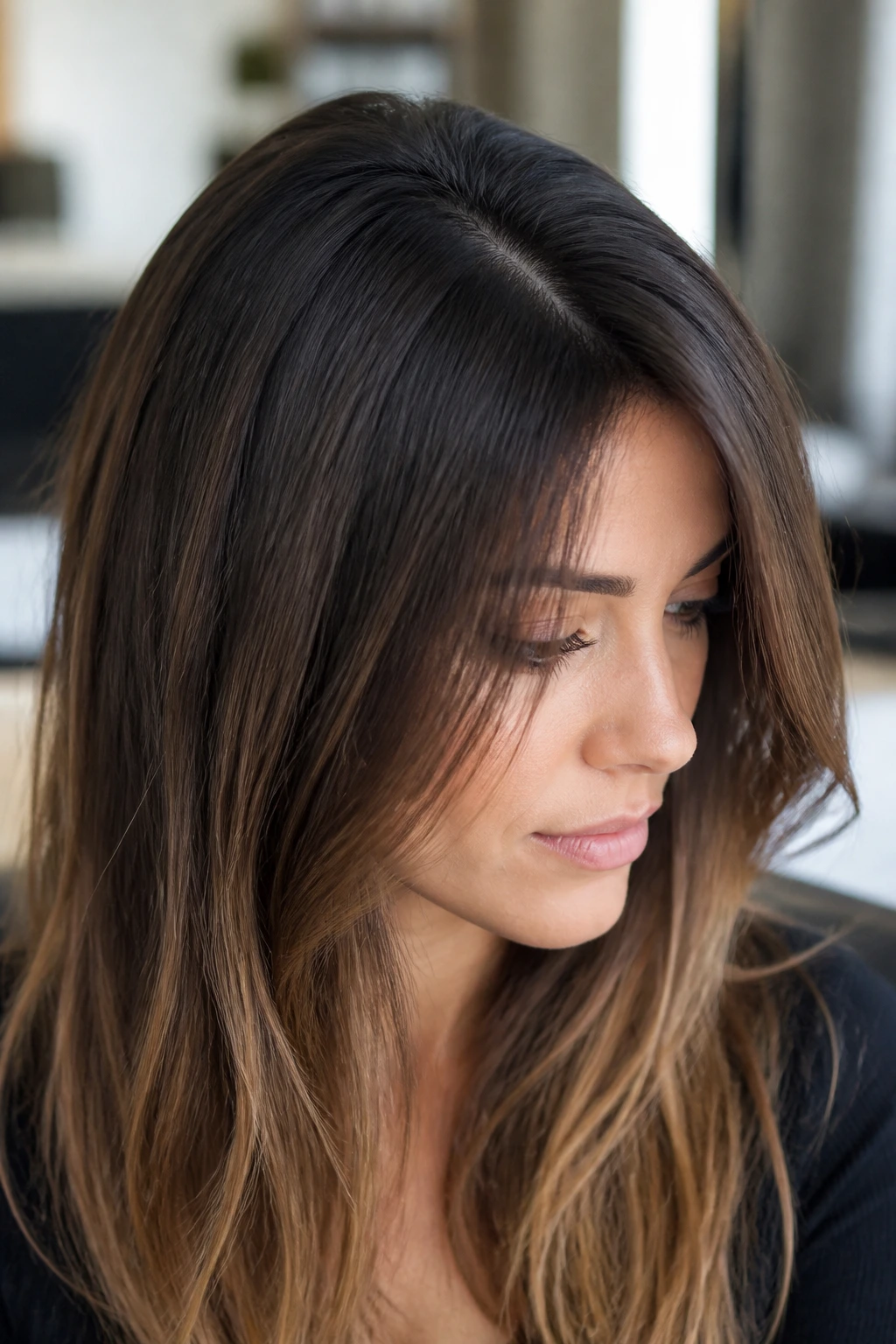
Ashy shadow root is made for anyone growing out highlights or trying to stretch salon visits. The root area stays soft, cool, and slightly deeper than the rest of the brown, then the mids and ends carry the dimension. On dark thin hair, the shadow at the crown helps hide sparse parts and makes regrowth look on purpose.
The cool tone also keeps brunettes from going orange, which happens fast on porous fine hair. Ask for a shadow root that fades gradually over an inch or two, not a blunt band. If the transition is too sharp, the part line starts shouting.
This shade is especially forgiving on layered cuts, where movement helps the root melt disappear into the rest of the style.
13. Dark Chocolate Micro-Highlights
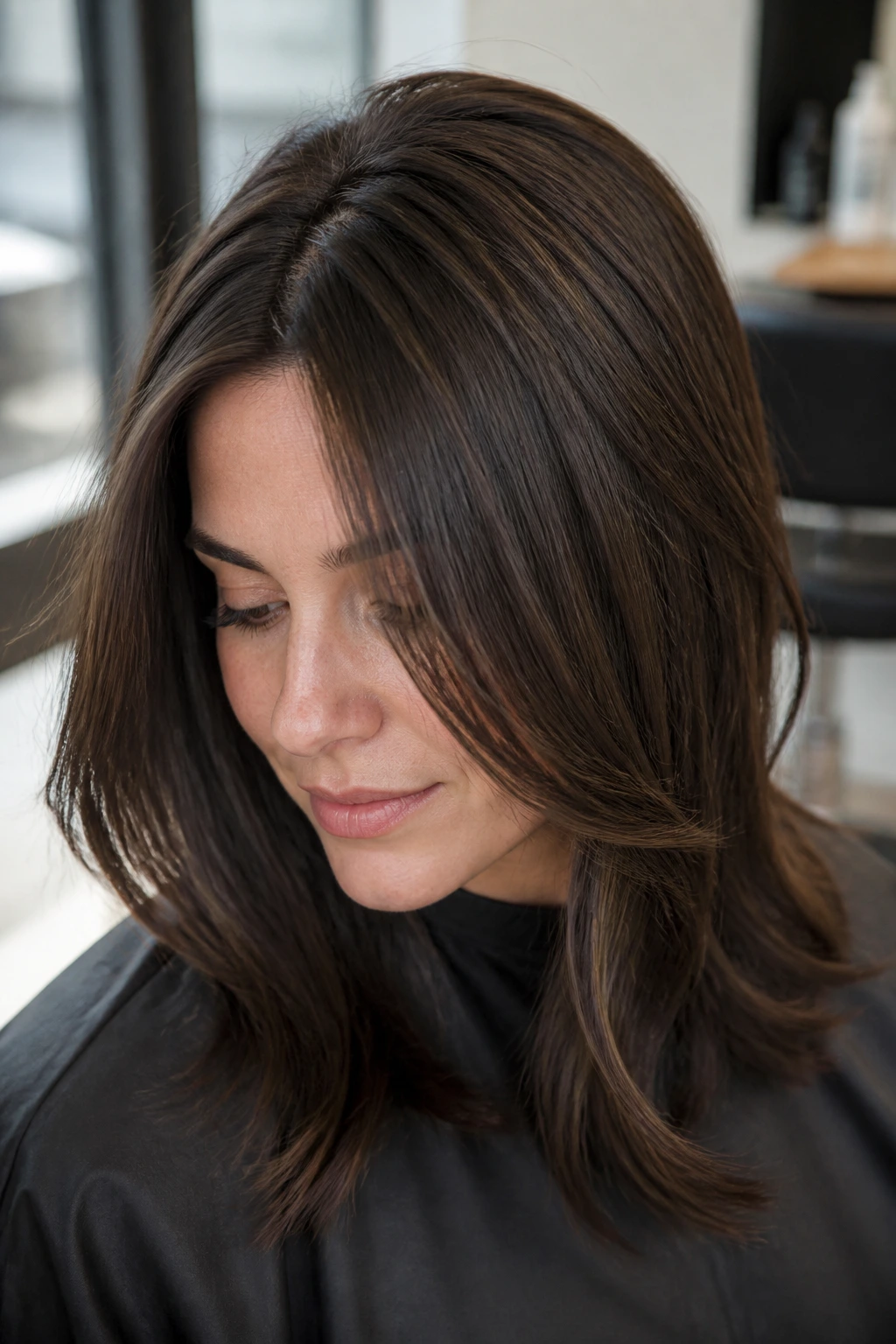
Dark chocolate micro-highlights are the answer when you want dimension but not obvious color change. The pieces are so fine they almost disappear until light hits them. On dark thin hair, that’s the sweet spot. You get depth, texture, and a fuller-looking surface without risking chunky streaks that expose the scalp.
The color itself should be a few soft shades lighter than the base. Think dark chocolate with tiny threads of milk chocolate, not caramel ropes. The hair reads richer because the eye keeps finding a little shift in tone.
Best for: straight hair, blunt cuts, and anyone who hates obvious highlights.
Salon note: ask for hand-painted micro-lights through the top half only.
14. Auburn Brown Glaze
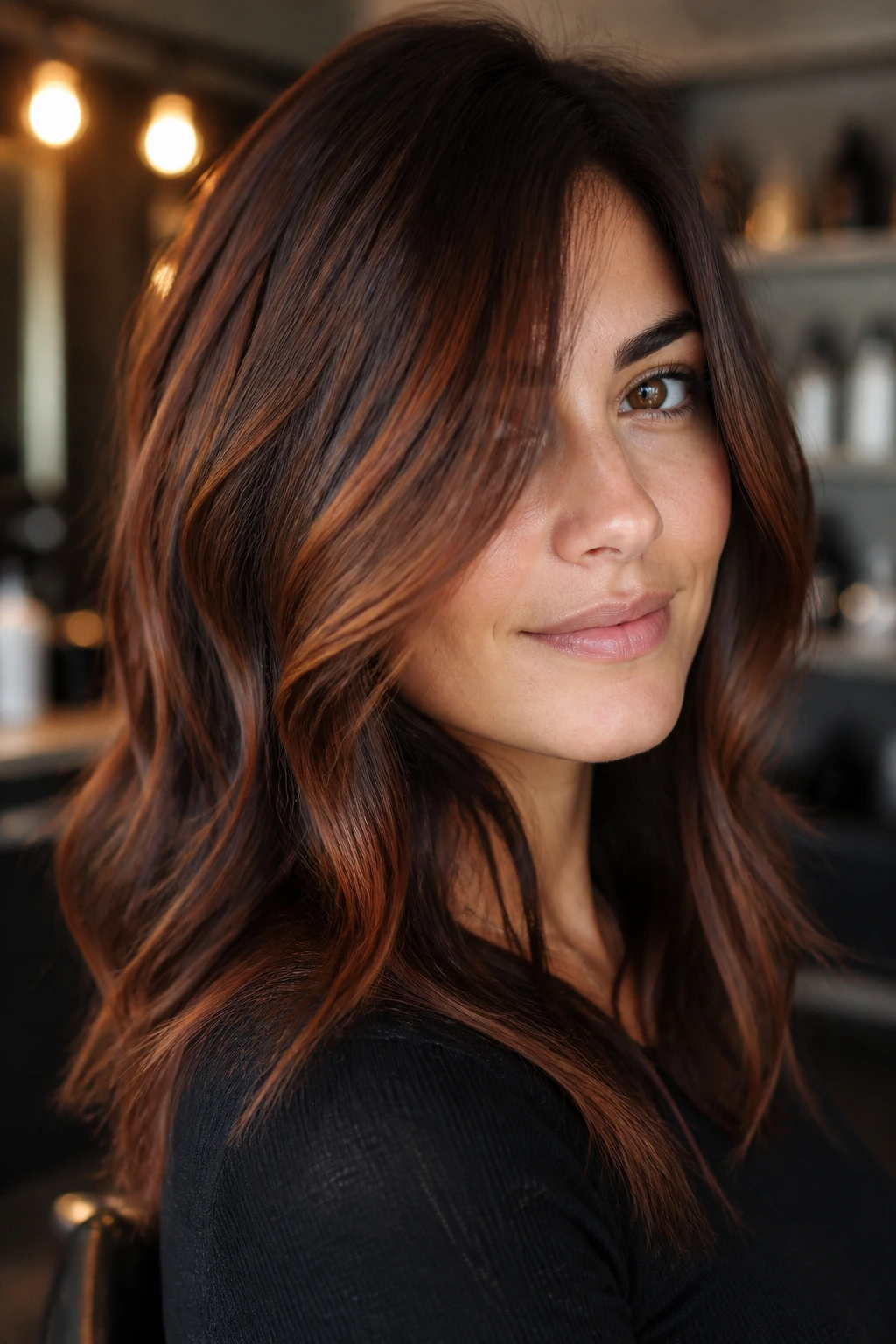
Auburn brown glaze adds a warm pulse to dark hair without going full red. The brown base stays in charge, but the auburn glaze slips in enough copper and chestnut to make the hair feel softer and less severe. On fine strands, that warmth can make the hair look fuller because it catches light more easily than a flat cool brown.
It’s a good option if your complexion can handle warmth or if your natural hair tends to turn rusty in the sun anyway. The key is controlling the red so it looks polished. A glaze or demi-permanent formula usually behaves better than a permanent high-lift mix on thin hair.
Auburn can be gorgeous. It can also go loud. Keep the saturation modest.
15. Bronzed Brunette
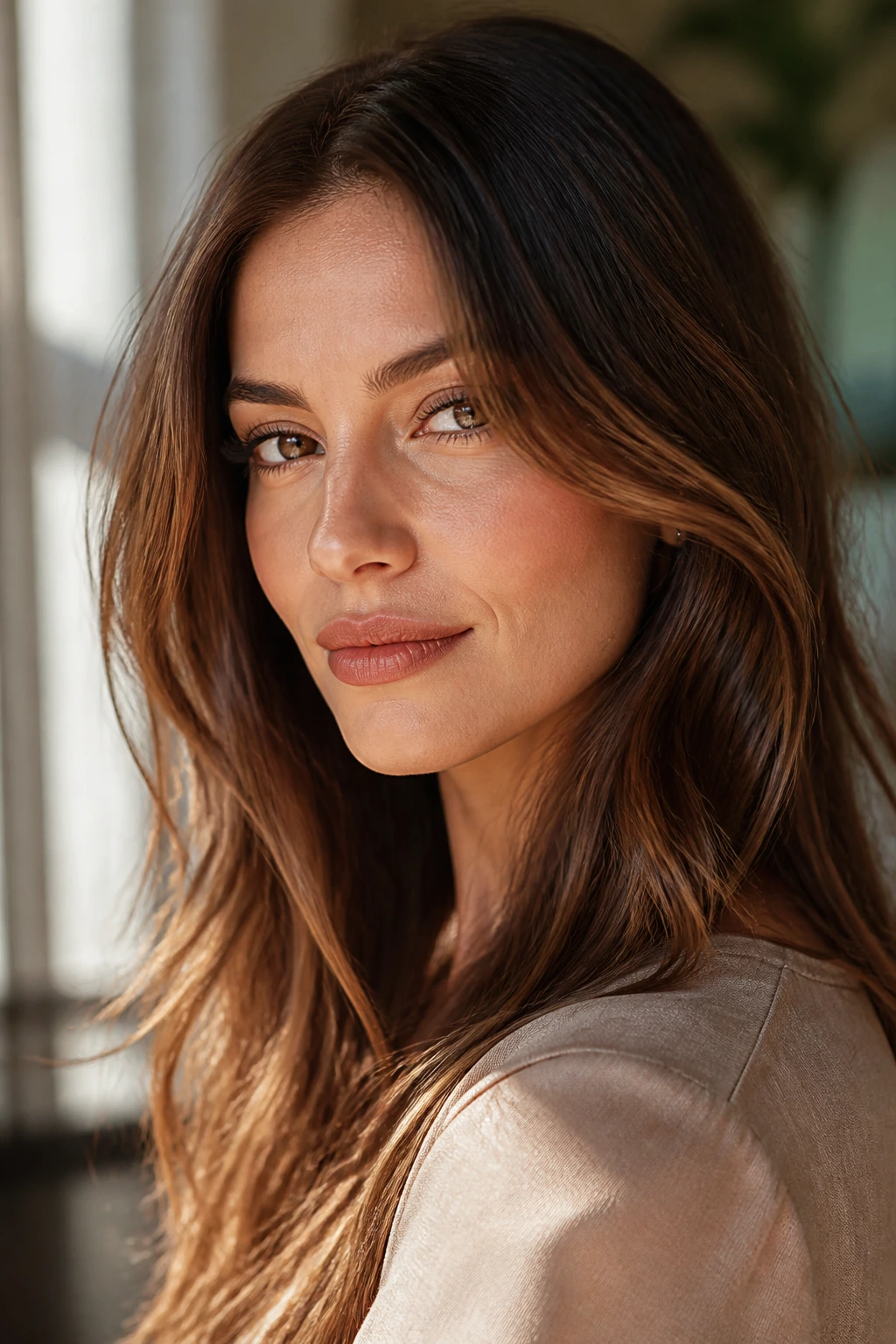
Bronzed brunette sits in that useful middle zone where brown meets warm metallic shimmer. It’s richer than caramel, softer than copper, and more luminous than plain chestnut. On dark thin hair, bronzed tones help the surface catch light, which makes the strands look a little sturdier.
The best version is not streaky. It should read like a wash of warm brown with gold-brown reflections, especially through the ends and around the face. That kind of subtle glow pairs well with a glossy blowout and loose waves. Straight hair can wear it too, but the dimension shows more with bend and movement.
If your hair pulls brassy fast, keep the bronze muted and use a color-safe shampoo, not harsh clarifiers.
16. Sandalwood Brown
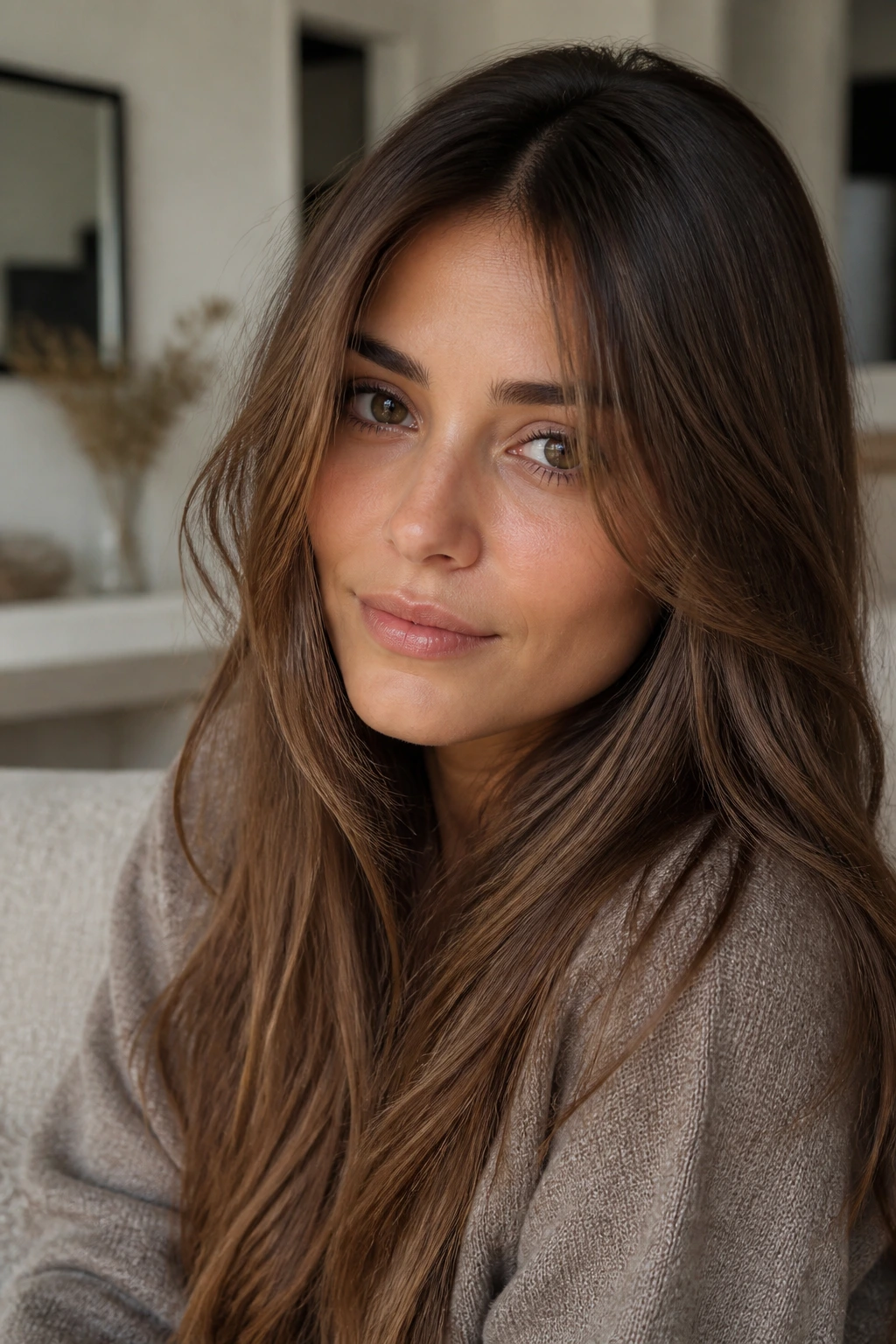
Sandalwood brown has a soft, creamy neutrality that flatters dark thin hair without yelling for attention. It’s not as cool as mushroom and not as warm as caramel. That middle ground is useful when you want the hair to look expensive and soft rather than red or golden.
The shade works well when the root area is left deeper and the mids are barely lifted. That keeps the scalp area looking fuller. A sandalwood brown glaze can also soften old highlights that have gone too yellow or too orange.
It’s one of the better choices if you wear a lot of neutral clothing or if your skin tone changes in different lighting. Sandalwood doesn’t fight the face.
17. Iced Mocha Brunette
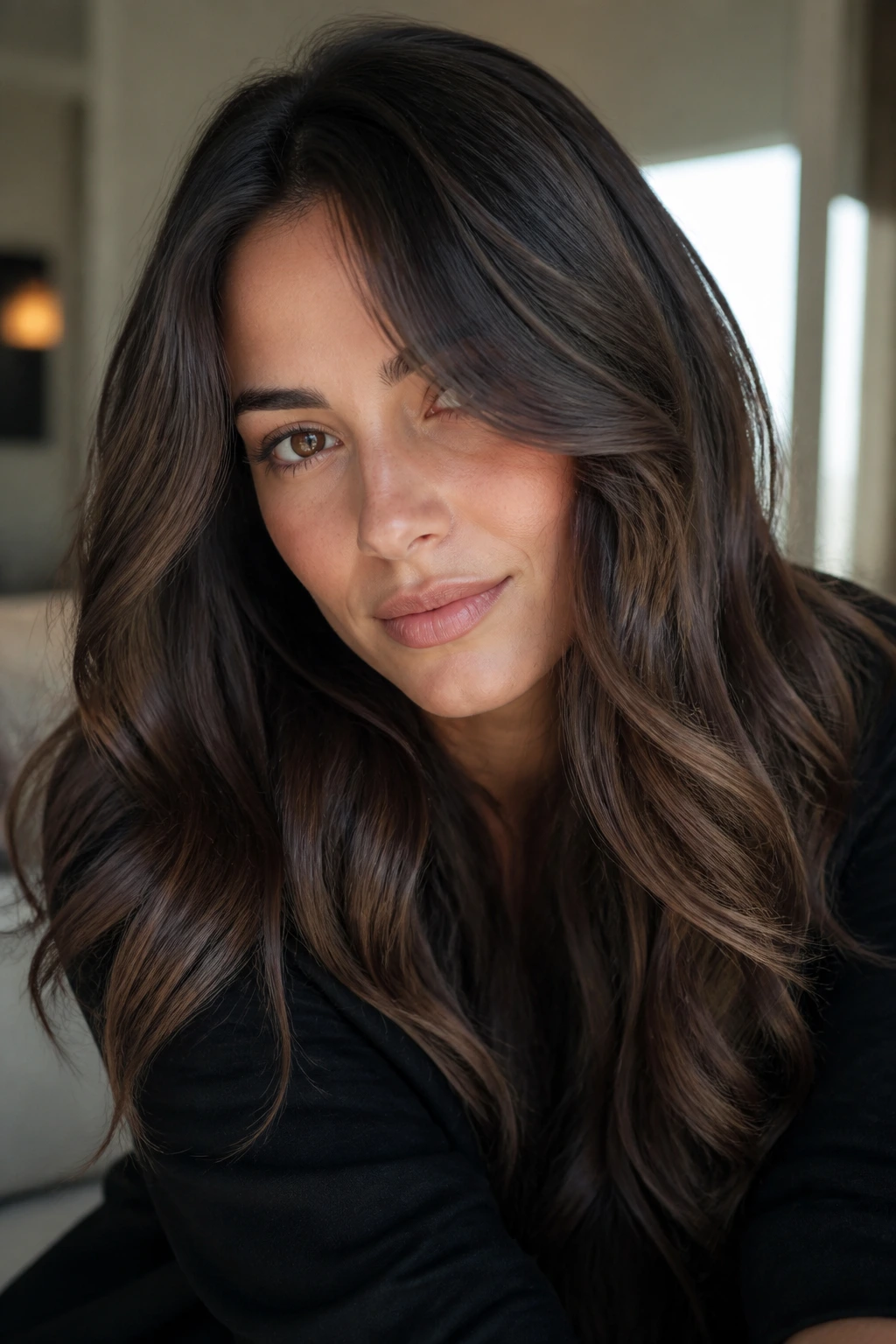
Iced mocha brunette is mocha with a cooler finish — not icy blonde, just a more muted, polished brown. On dark thin hair, the cooler reflection can make the style look cleaner, especially if the hair tends to get frizzy at the ends. The shade reads sleek even when the texture isn’t perfect.
Why it stands out
It’s a useful color if you want dimension but don’t love warmth. The cooler undertone keeps the brown looking crisp, and the mocha base keeps it from going flat. Ask for a gloss that mutes orange without turning the whole head gray.
A soft wave helps here. The bends make the cooler and warmer pieces alternate in the light.
18. Maple Brown Melt
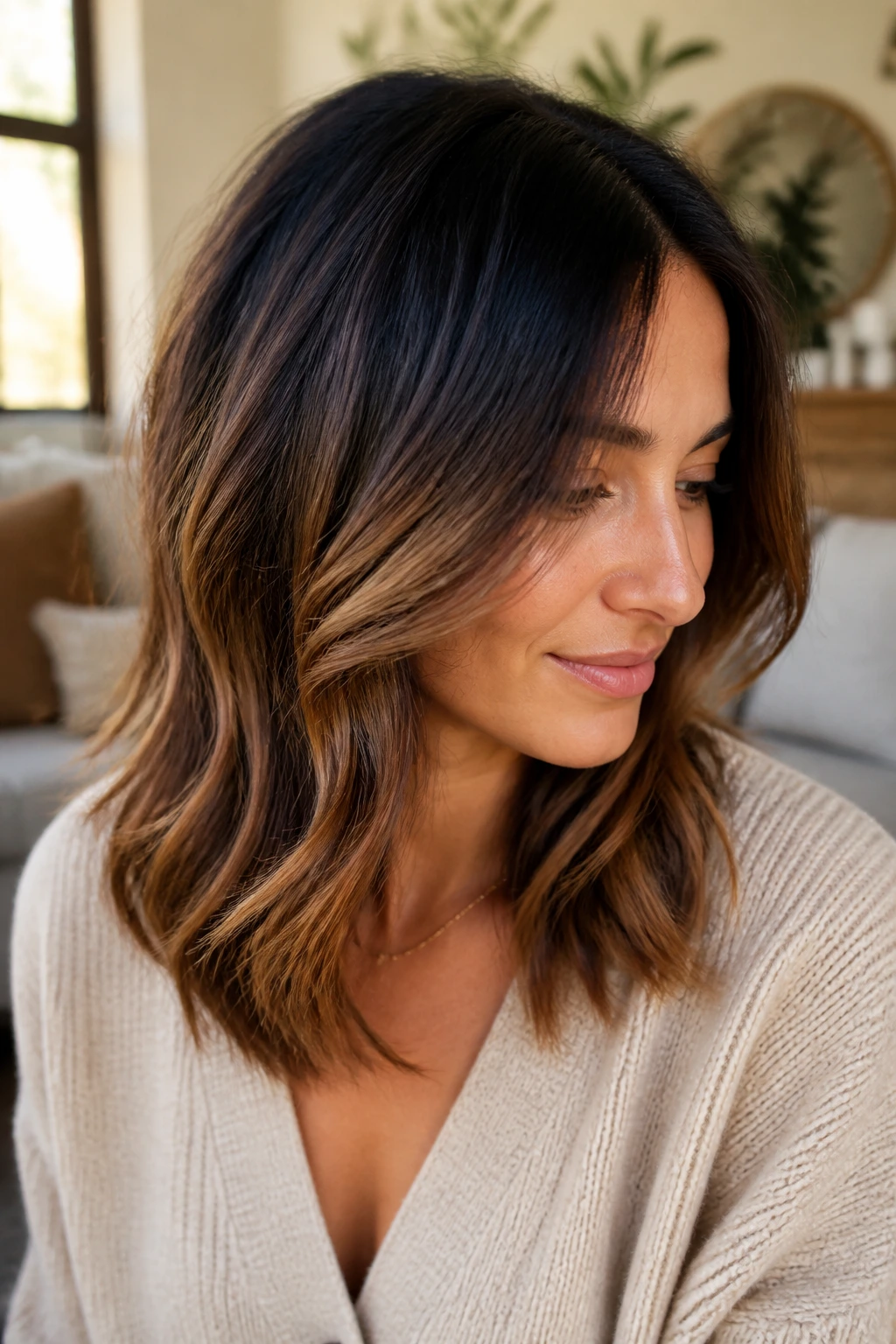
Maple brown melt is a warmer, syrupy brunette with a soft fade from root to end. The root stays deep, while the mids and ends shift toward a maple-caramel brown. On thin hair, that melt makes the color look more expensive because there’s no hard stop where the light pieces begin.
The best part is how forgiving it is between appointments. As your hair grows, the root stays believable. That’s a big deal when you do not want obvious regrowth marking every inch of new hair.
This color does best on layered cuts or collarbone-length styles. The movement helps the softer maple pieces show up.
19. Chestnut Ombre
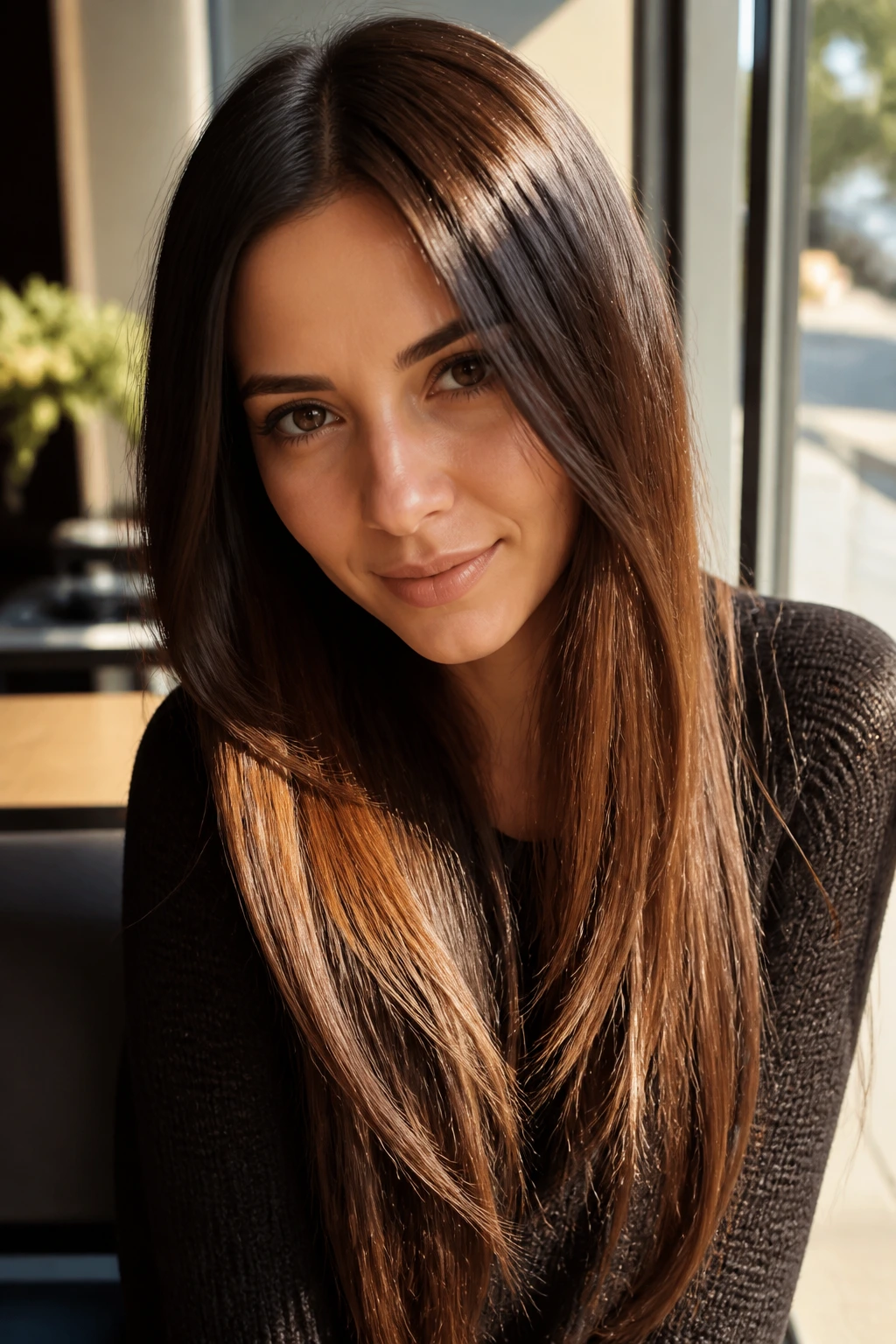
Chestnut ombre gives you a gradual transition from dark roots to chestnut ends, and that shape can be kinder to fine hair than all-over lightening. The roots stay thick-looking, while the ends pick up warmth and brightness. If your hair is long and thin through the lower half, this lets the ends stop disappearing into shadow.
Ombre can turn harsh if the transition is too abrupt. A good chestnut ombre should feel like a long fade, not two separate colors stacked on each other. That is especially important on straight hair, where every line shows.
The shade looks nicest when the ends are trimmed cleanly. Ragged ends make any ombre look tired.
20. Mink Brown
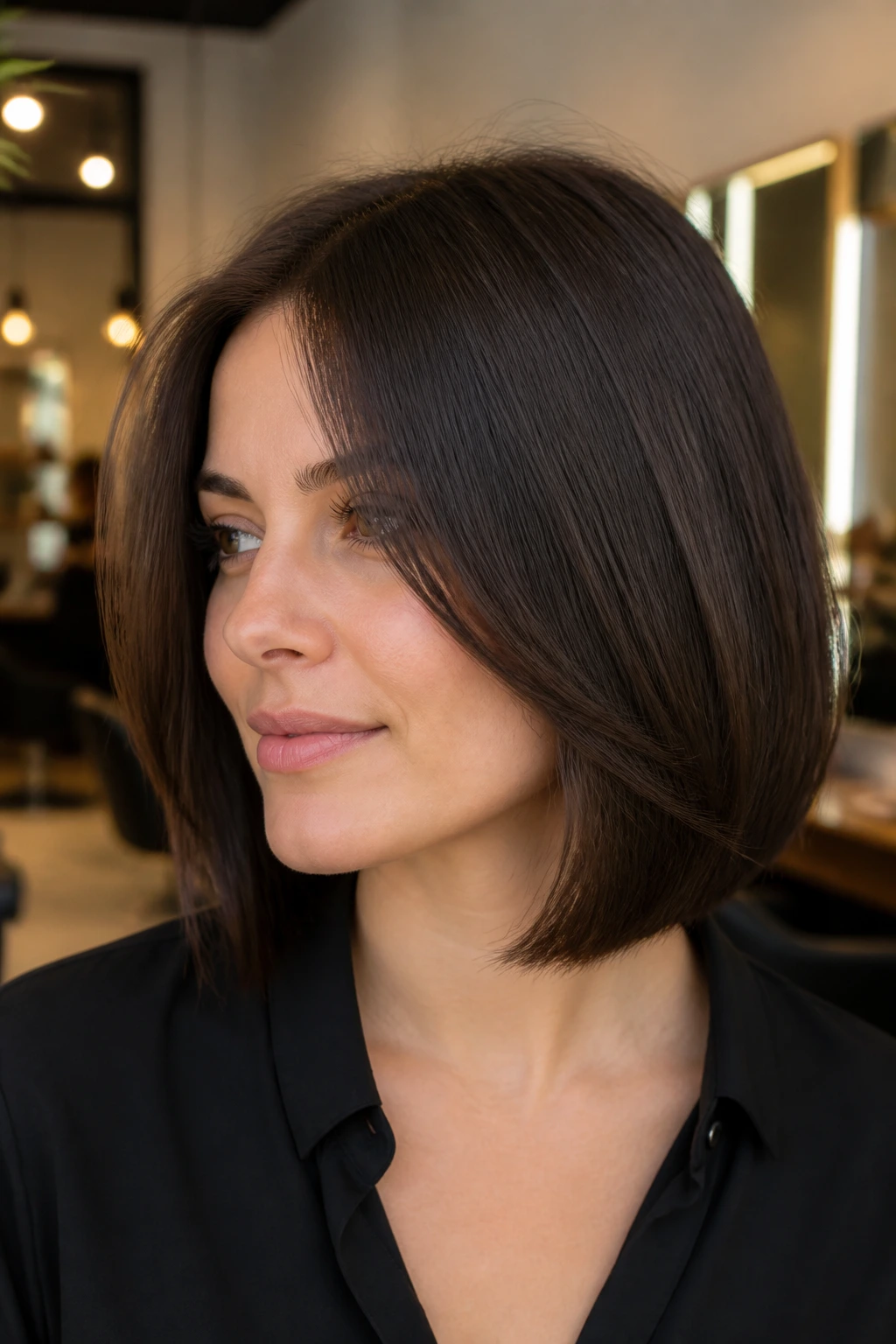
Mink brown is a deep neutral brown with a soft, plush finish. It’s darker than chestnut, lighter than espresso, and it has that smooth in-between look that works well when you want color depth more than brightness. On thin hair, mink brown can make the hair look denser because the color sits rich and even, without chalky warmth.
I like this shade on bobs and shoulder-length cuts. The shape of the haircut and the plush brown feed each other. If the hair is too layered and wispy, though, mink can look a little too soft. You want enough structure underneath it.
A satin blowout suits this shade better than beach waves. The color has a tailored feel.
21. Brown Sugar Balayage
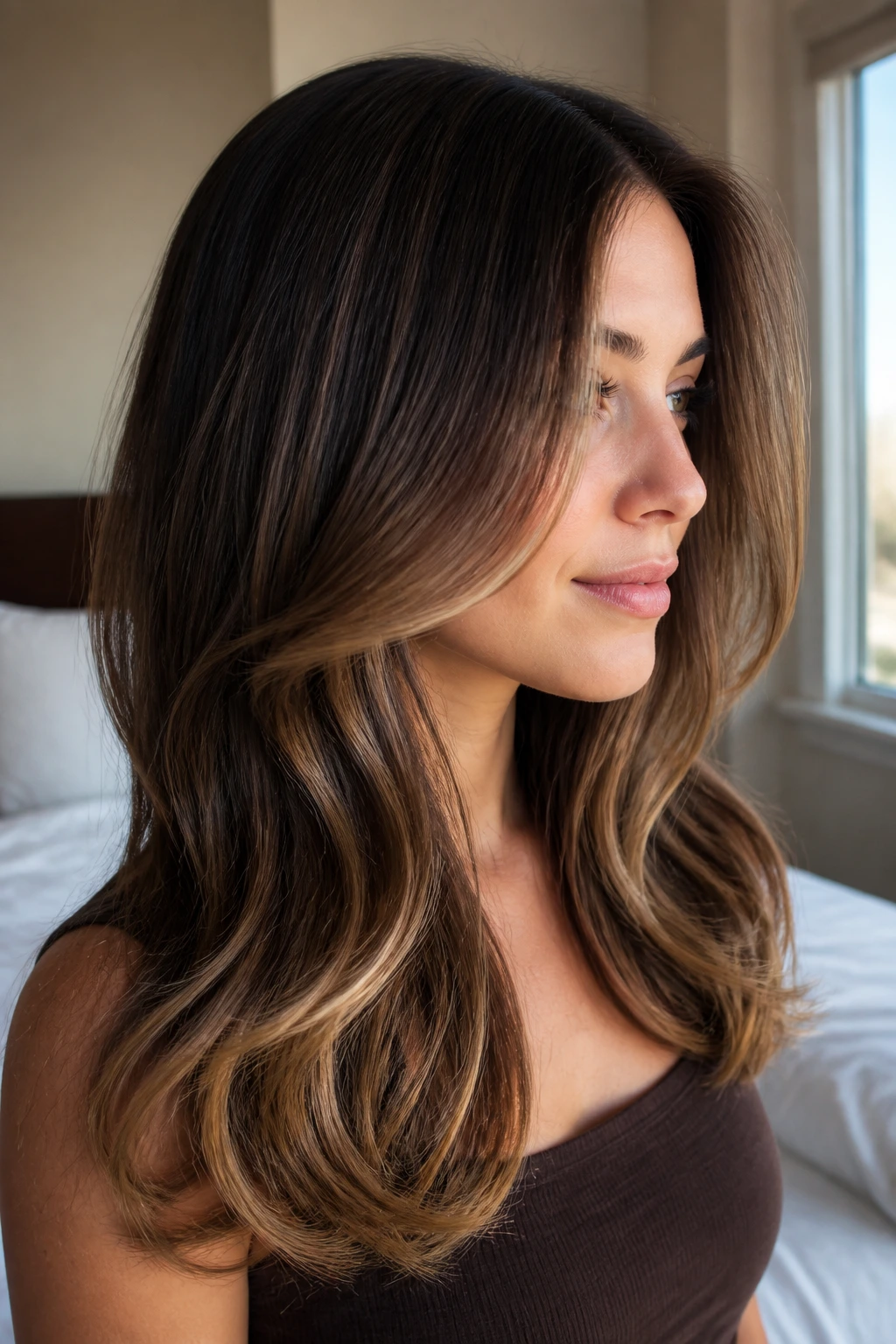
Brown sugar balayage is warmer and softer than caramel, which makes it a good choice when you want dimension without a big contrast jump. The lighter pieces should feel sweet and sun-warmed, not blond. On dark thin hair, that gentler lift keeps the ends from looking see-through.
The balayage placement should stay mostly mid-length to ends, with only a few pieces near the face. Too much brightness at the roots can make thin hair reveal too much scalp. Brown sugar tones are forgiving because they fade into the base rather than hanging out on top of it.
This is the kind of brunette that looks best after a blowout with a little bend. The movement shows the different tones.
22. Coffee Bean Dimension
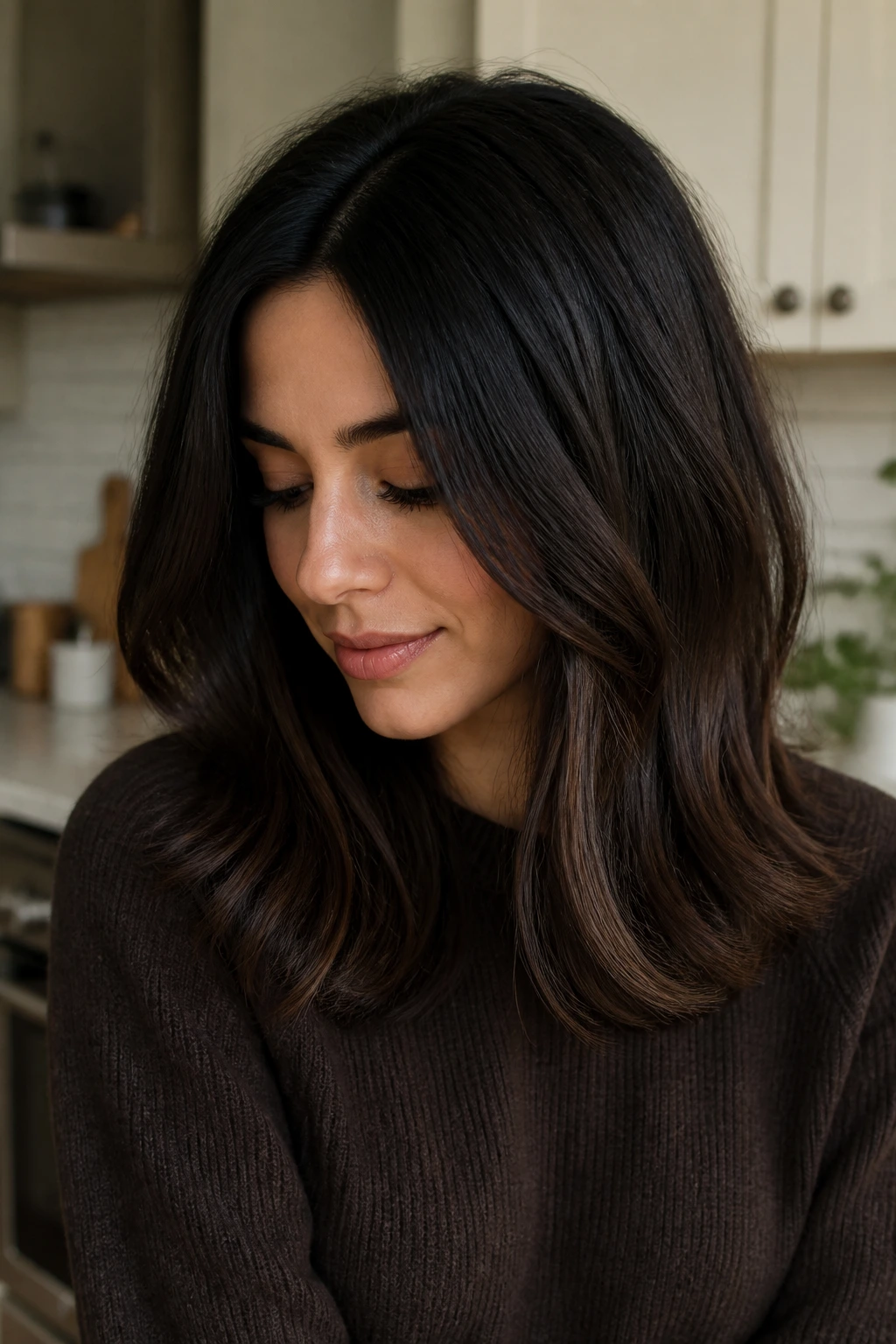
Coffee bean dimension is for people who want the darkest brunette palette with just enough variation to avoid flatness. The base stays close to coffee bean, and the dimension comes from carefully placed lowlights or a softer gloss at the ends. On thin hair, that difference is subtle, but subtle is the whole point. It keeps the hair looking plush.
This is a smart option if your hair is already dark and you’re not trying to brighten it much. You’re making the color read richer, cleaner, and less one-dimensional. A little shine serum on the mid-lengths helps this shade behave.
If you have very fine hair, ask your colorist to keep the dimension concentrated under the top layer, where it won’t compete with the scalp.
23. Copper Brown
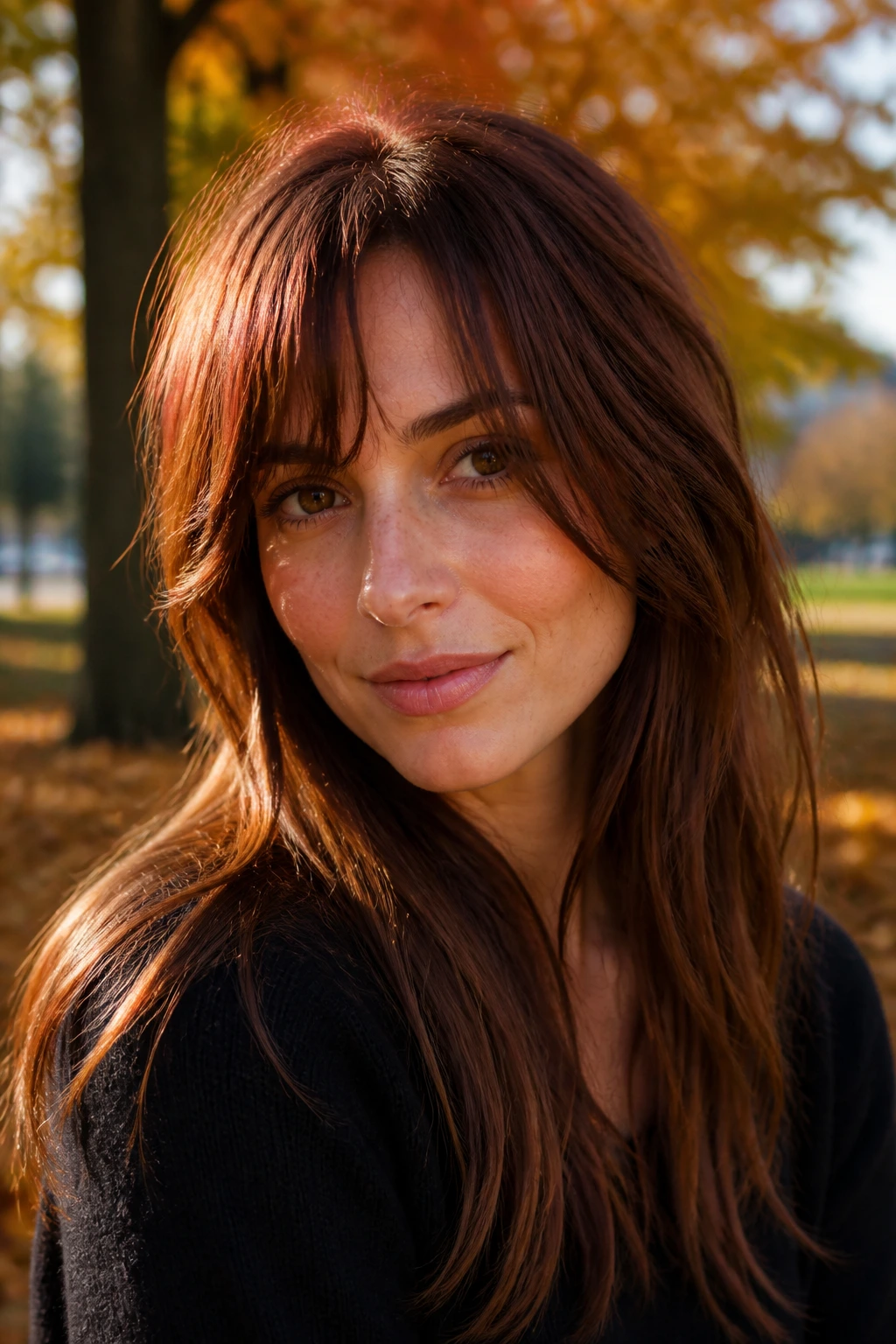
Copper brown brings energy into dark hair without forcing it into full red territory. The brown base keeps the shade grounded, while the copper adds a bright, warm edge that shows up most in the sun and under indoor light. On thin hair, that warmth can make the strands look more lively because copper reflects more clearly than a deep neutral brown.
This is not the shade for someone who wants to hide everything quietly. It has personality. Keep the copper soft enough that it feels like a glaze, not a fire alarm. Porous fine hair can grab red fast, so a gentler formula is safer than a huge permanent shift.
A soft fringe or face-framing layers look especially good with this color.
24. Cocoa Beige Blend
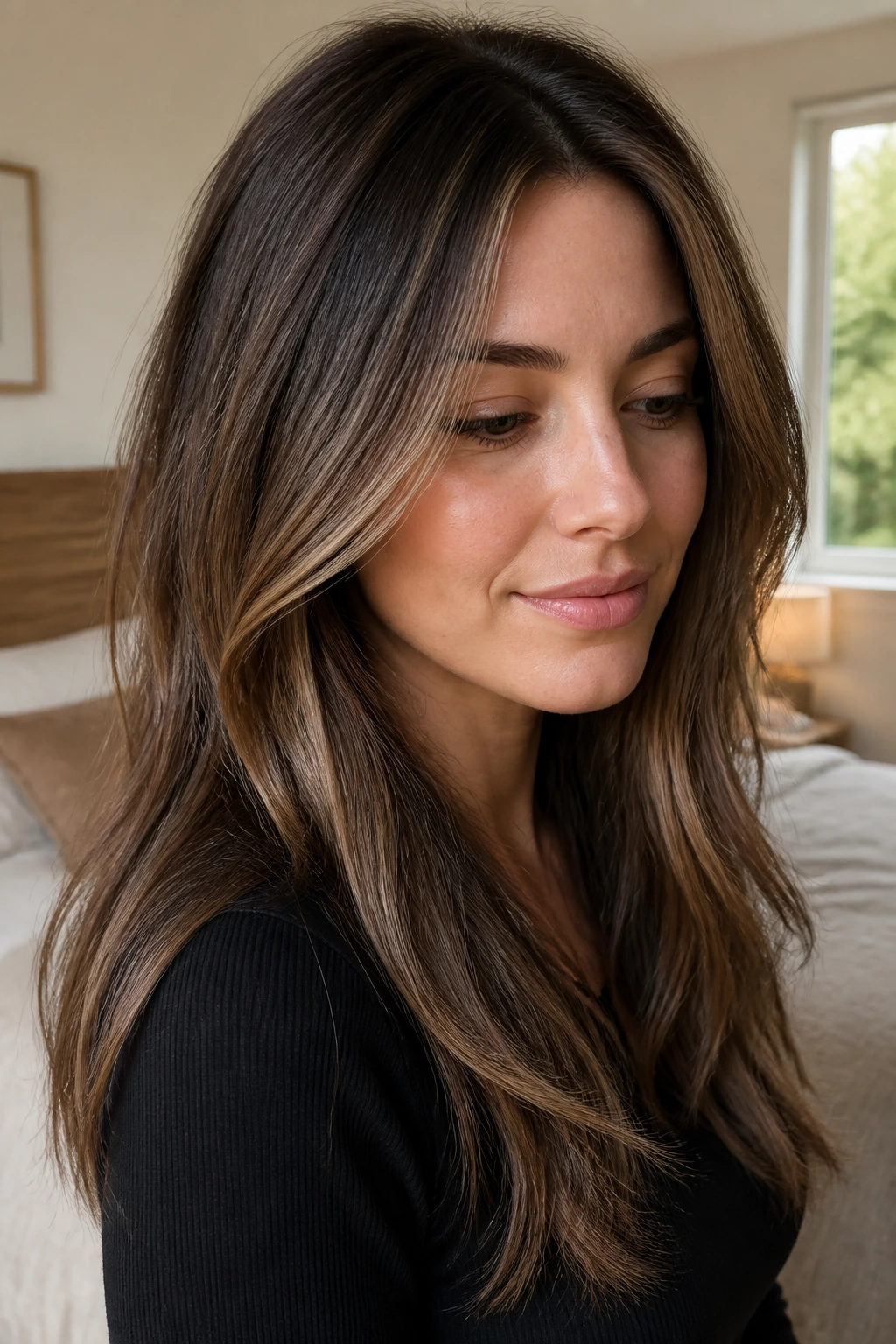
Cocoa beige blend is a neutral-to-warm brown that avoids both harsh ash and loud gold. It has enough beige softness to lighten the overall feel, but enough cocoa depth to keep the hair looking grounded. On dark thin hair, that balance is useful because the color stays dimensional without going brassy.
This shade does well when the highlights are extremely fine and the base is kept slightly deeper. If the beige gets too light, the contrast can make the hair feel sparse. The best result looks smooth and expensive in a plain mirror, not just in salon lighting.
If your hair is naturally dark, this is a nice bridge shade when you want a brown that feels lighter but not blond.
25. Walnut Smoke Balayage
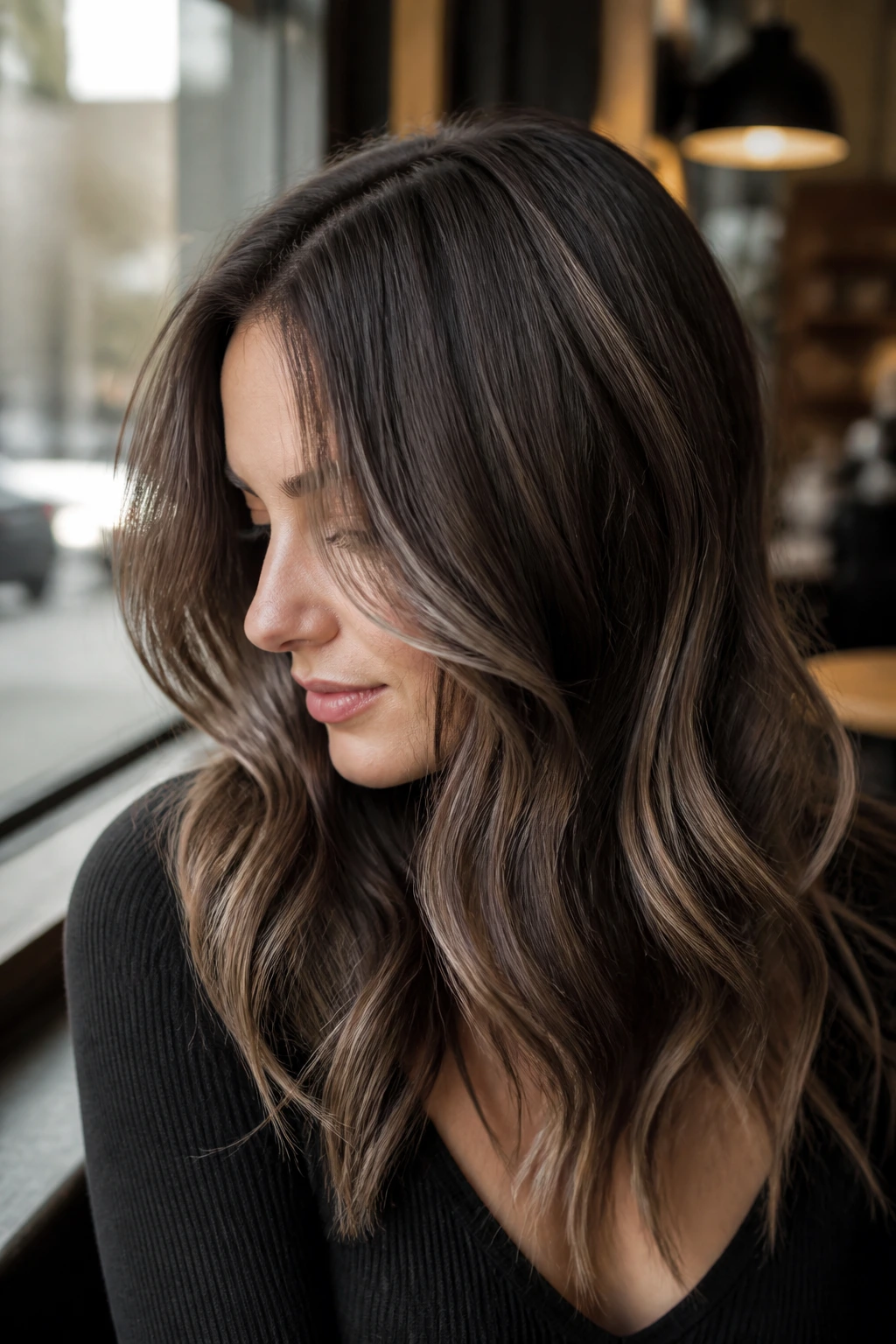
Walnut smoke balayage mixes cool shadow with soft brown warmth, and that combination can be a lifesaver on fine hair. The darker walnut pieces create depth, while the smoky finish keeps the look modern and controlled. It’s a good choice if you want a brunette color that feels layered without obvious streaks.
The balayage should be feathered high enough to show movement, but not so high that it exposes the part line. The contrast is gentle, which matters if your hair is thin around the temples. Too much lift there can make the cut look sparse.
A wavy finish really helps this shade. The bends break up the darker and lighter pieces in a flattering way.
26. Soft Bronde
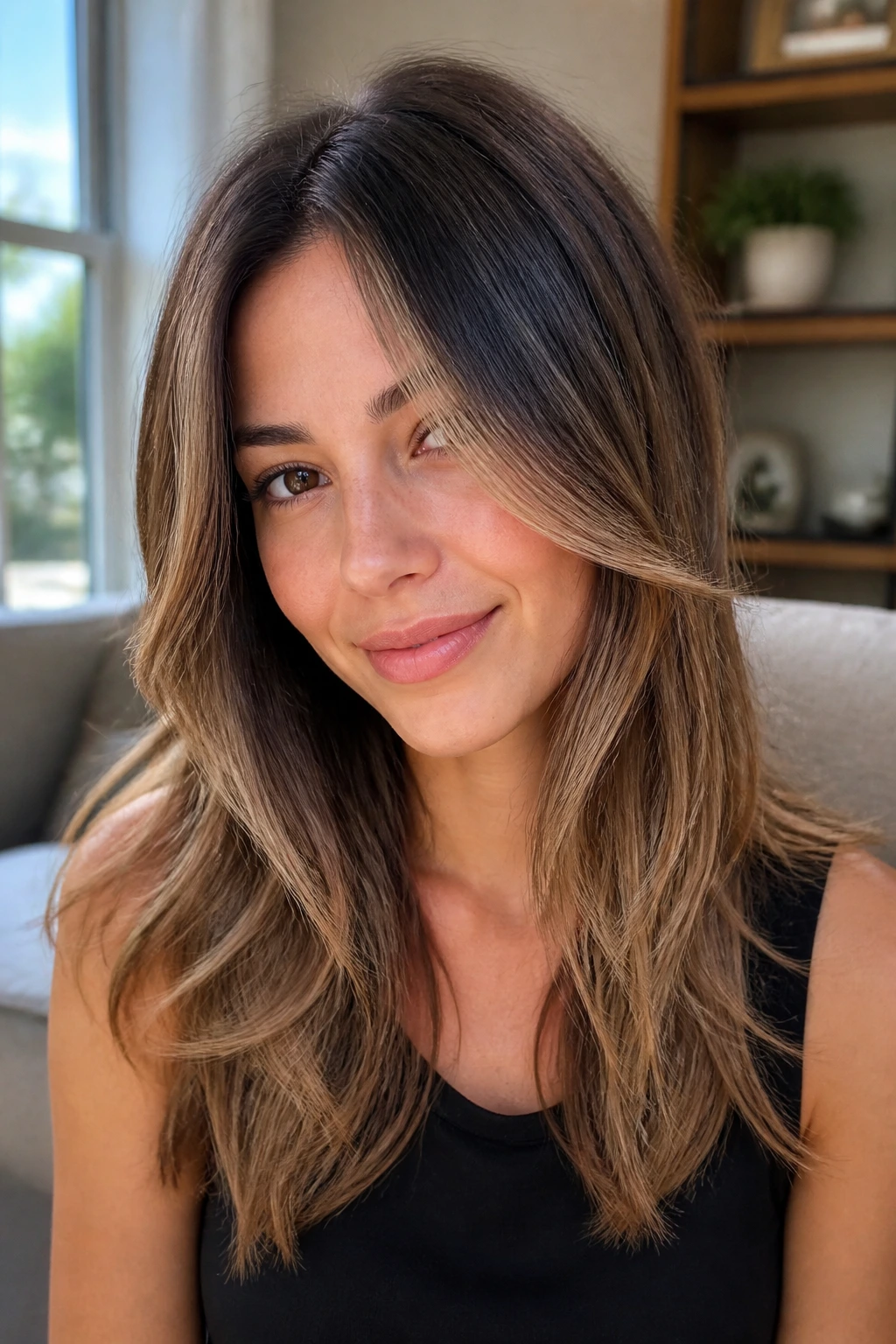
Soft bronde is the easygoing brunette-blonde middle ground, but on dark thin hair it should stay brunette first. That means brown roots, restrained lightening, and a face frame that doesn’t jump too far from the base. The goal is not to go blond; it’s to make the hair feel lighter and more textured.
This works well if you want brightness but don’t want the upkeep that comes with heavy highlights. The color should stay soft around the crown and a touch lighter at the ends. If the blonde pieces get too wide, thin hair can start looking wispy.
The best bronde on dark hair is calm. Anything louder than that usually looks like a styling mistake.
27. Cherry Cola Brown
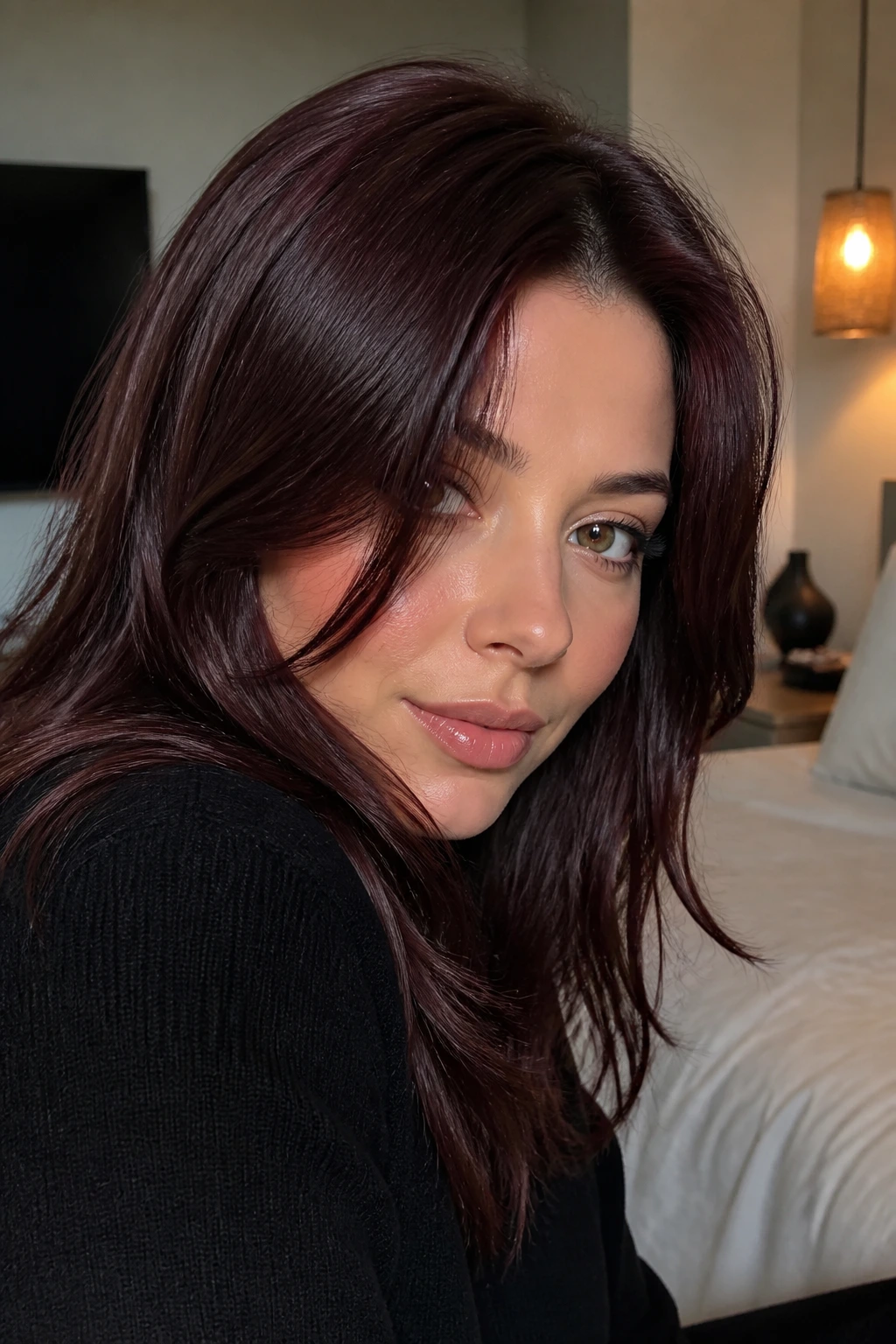
Cherry cola brown is deep, sultry, and a little moody in the best way. The base is a dark brown with a red-violet glow that shows under certain light, which gives fine hair a richer surface and a little visual thickness. It’s darker than auburn, cooler than copper, and more dramatic than chestnut.
This shade is strong enough that you don’t need much highlighting around it. In fact, too much lightness can fight the whole look. Keep the finish glossy and the red-violet undertone soft. Fine hair often loves this kind of reflective depth because it makes the color feel fuller from root to tip.
If your wardrobe leans black, cream, charcoal, or jewel tones, this one sits nicely in that palette.
28. Latte Brown Gloss
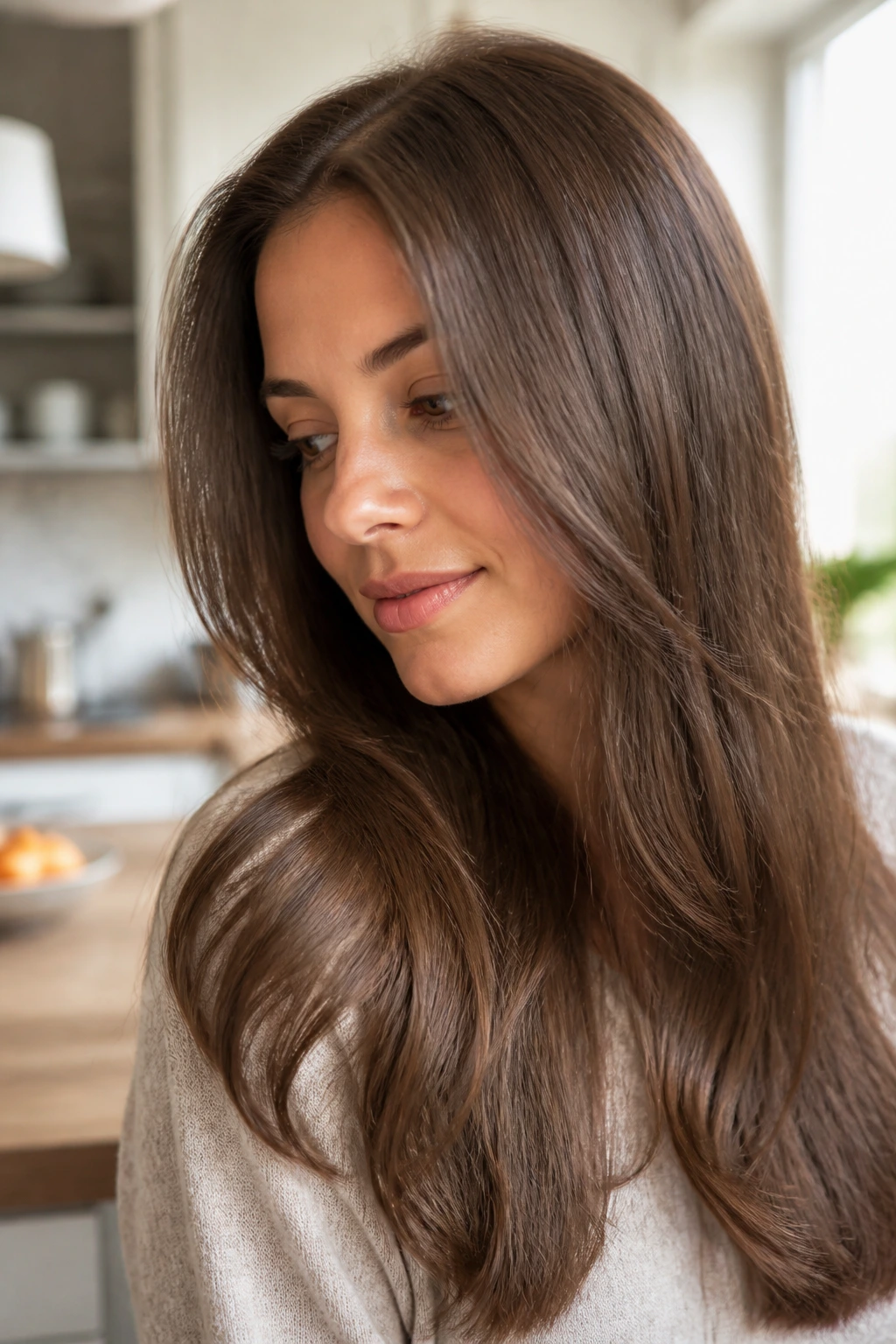
Latte brown gloss is the softest, most wearable shade in the group. It lightens dark brown hair just enough to make the surface look creamy and smooth, then leaves the base intact so thin hair doesn’t lose density. The gloss is what matters here. It gives the hair that silky finish people notice before they notice the color itself.
This is a solid choice if you want a low-commitment change or if your hair is already fragile and needs a break from heavy processing. The brown should feel calm, not dull. A little warmth keeps it from going flat.
It’s the sort of brunette that works with almost any cut, but it looks especially good on blunt ends and soft curtain fringe.
What Brown Color Does to Fine Hair in Real Life
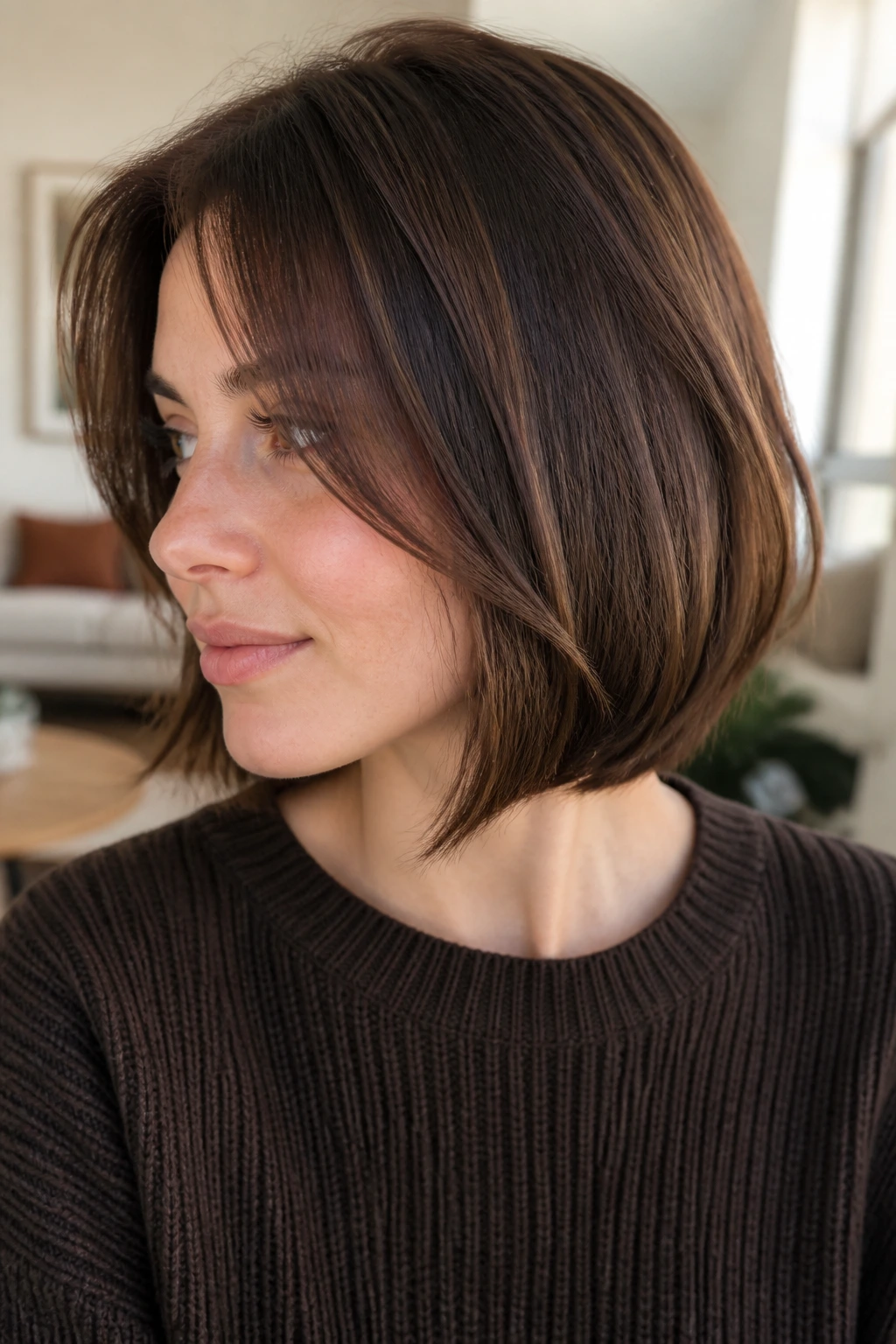
Brown hair color on thin hair is a game of shape, not just shade. If the color is one solid, opaque block, the eye stops moving and the hair looks smaller. If the color has tiny shifts — a gloss here, a lowlight there, a soft face frame, a deeper root — the surface starts to read fuller because there’s more to look at.
That’s why so many of the best brown hair color ideas for dark thin hair are not dramatic blonding jobs. They’re controlled, almost fussy in the best sense. A good brunette colorist thinks about where the light hits the part, how the ends behave against the collarbone, and whether the hair needs shine more than lift. It’s not glamorous work. It’s smarter than that.
The shape of your cut matters too. A blunt lob can make a brown gloss look denser, while long, wispy layers need more dimension so they don’t disappear into the ends. The color and the cut should support each other. If they’re fighting, you’ll see it right away.
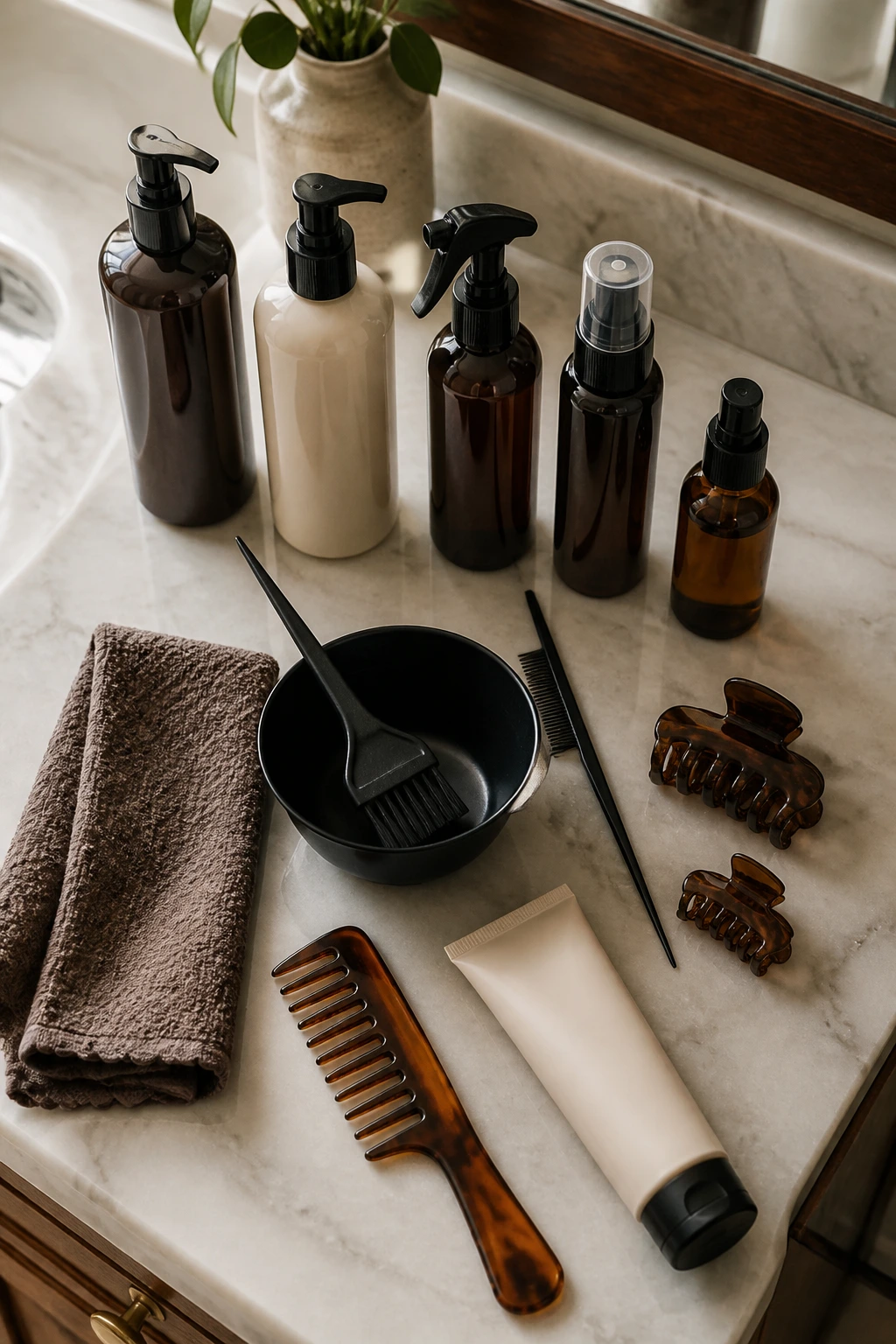
Tools and Products Worth Having on Hand
-
Color-safe shampoo: A sulfate-free formula helps brown tones stay rich longer and keeps fine hair from getting squeaky and dry.
-
Color-safe conditioner: Look for one that rinses clean; heavy masks can weigh thin hair down at the roots.
-
Heat protectant spray: Use it before blow-drying or ironing so the ends do not turn rough and light-stripped.
-
Demi-permanent gloss or toner: Handy if you refresh at home between salon visits and want shine without heavy lift.
-
Applicator brush and bowl: Makes it easier to place root shadow or a gloss evenly instead of splashing it on and hoping for the best.
-
Tail comb: Useful for sectioning a neat part line and keeping highlights or lowlights tidy.
-
Claw clips: Better than tight elastics when you’re sectioning fine hair; they won’t leave a dent.
-
Microfiber towel: Cuts down on friction after washing, which matters when thin hair tangles fast and frizzes at the ends.
-
Wide-tooth comb: Safer than yanking through wet hair with a brush, especially if the color has lightened the ends.
-
Weekly deep conditioner: Choose a lightweight one so the hair stays soft without collapsing at the roots.
-
Shine serum or lightweight oil: A pea-sized amount on the mids and ends can make brown color look smoother and richer.
How to Choose the Right Brown Level Without Guessing
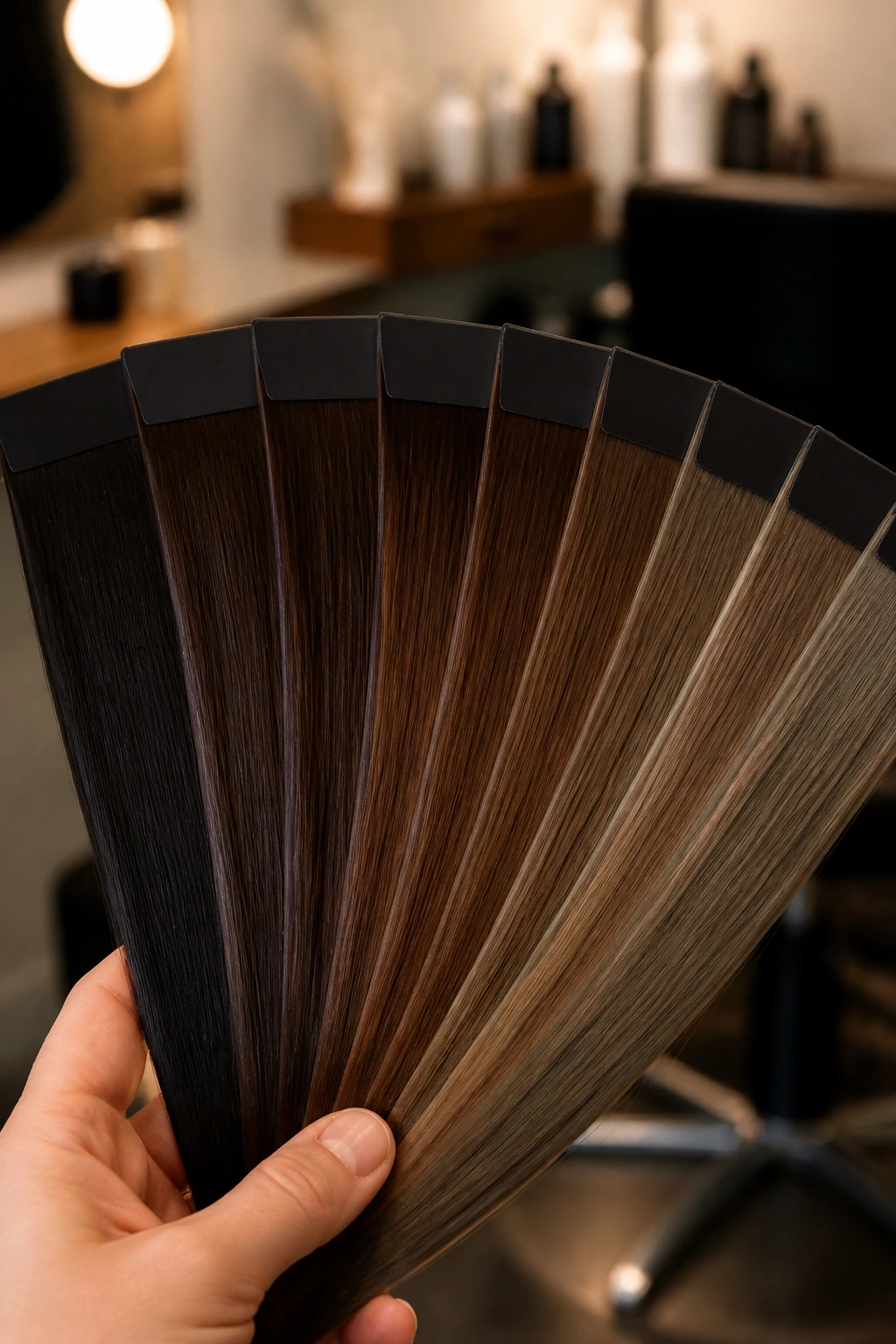
Hair color charts can look harmless until you sit in front of one and realize “brown” covers half the board. For dark thin hair, level matters. A level 3 espresso sits much deeper than a level 5 light brown, and that difference changes how much scalp shows, how visible the cut line is, and how often you’ll need to maintain the shade.
If your hair is naturally very dark, jumping several levels lighter in one appointment can expose the fine texture in a way you may not like. A safer path is a level-by-level move: deep brown to rich chestnut, chestnut to soft mocha, mocha to caramel only if the hair can handle it. Thin hair usually looks best when the shade shifts are controlled rather than extreme.
Undertone matters just as much. Warm browns — chestnut, caramel, cinnamon — soften the face and reflect light fast. Cool browns — mushroom, smoky cocoa, ash brown — sharpen the line of the haircut and keep red tones from creeping in. Neutral browns sit in the middle and are often the easiest choice if your skin tone changes in different lighting or you’re not sure which way to lean.
Ask your colorist whether the formula is permanent, demi-permanent, or a gloss. Permanent color changes the hair more aggressively and can be too much for fragile strands. Demi-permanent color and glaze formulas usually leave a softer finish, which is often the better deal on dark, thin hair because shine matters almost as much as pigment.
A strand test is worth the time if you’re changing tone a lot. Fine hair grabs color quickly, and it can go darker or warmer than expected. Better to see that on one hidden section than on your whole head.
How to Wear These Shades on Dark Thin Hair
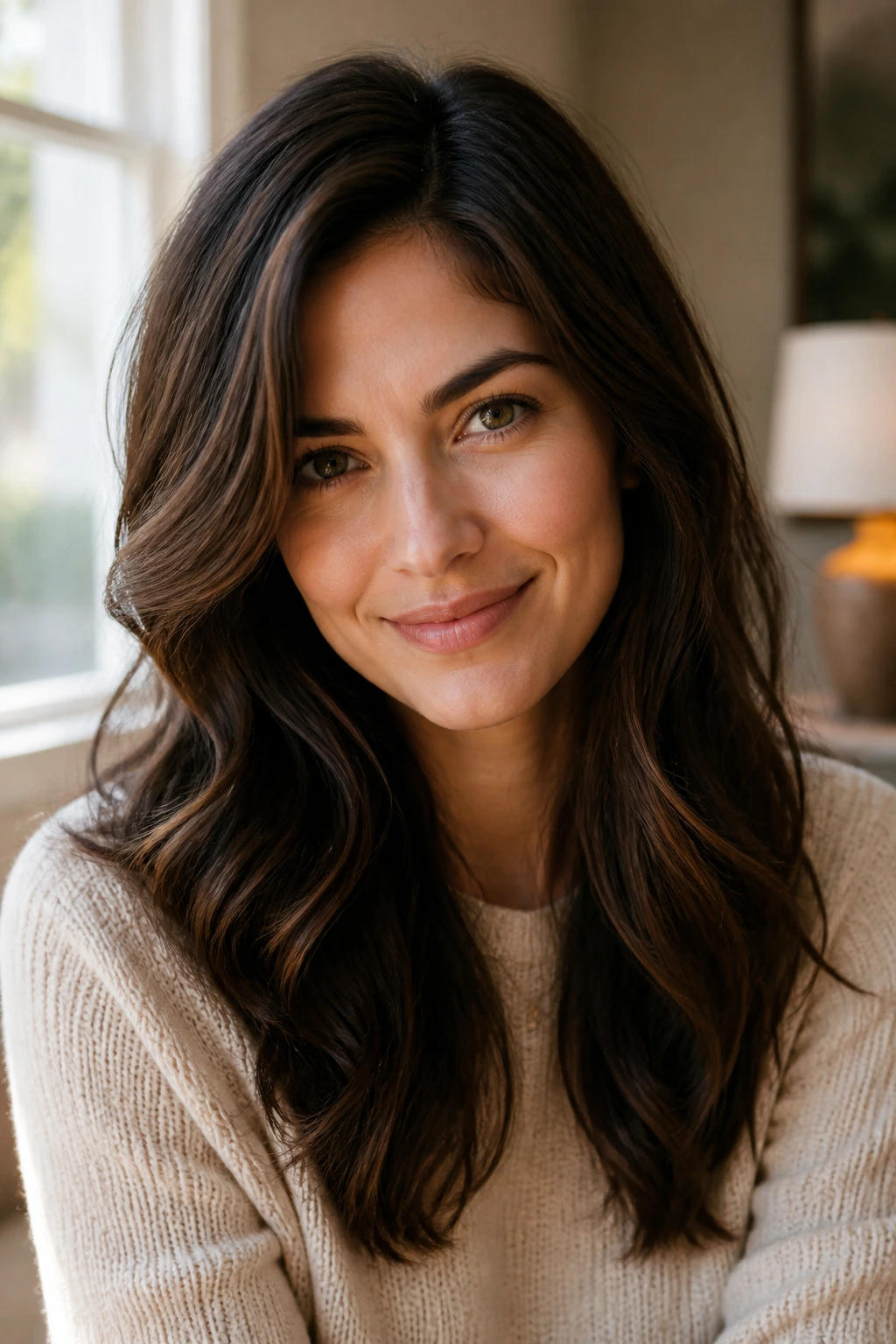
Parting: A soft side part usually gives fine hair a little lift at the crown, which makes brown dimension show more clearly. A center part can work too, but it tends to expose the scalp faster if the color is too flat or too dark.
Styling: Loose bends, a round-brush blowout, or soft waves help the different brown tones separate in the light. Pin-straight hair can look sleek, but it also makes one-tone color look even flatter. If you love straight styles, choose a shade with babylights or a gloss finish so the surface doesn’t go dull.
Cut pairing: A blunt bob, clavicle-length cut, or long layers with a clean hemline usually make brown color look denser. Wispy ends need more dimension, or they can vanish into the background. Curtain bangs and face-framing pieces are useful because they give the lighter brown pieces a place to land.
Accessories: Gold hoops, tortoiseshell clips, and warm-toned headbands tend to play nicely with chestnut, caramel, and maple browns. Cooler shades like mushroom or smoky cocoa usually look sharper with silver jewelry and clean, simple clips. Small detail, but it makes the color feel intentional.
Extra Shine and Dimension Boosters
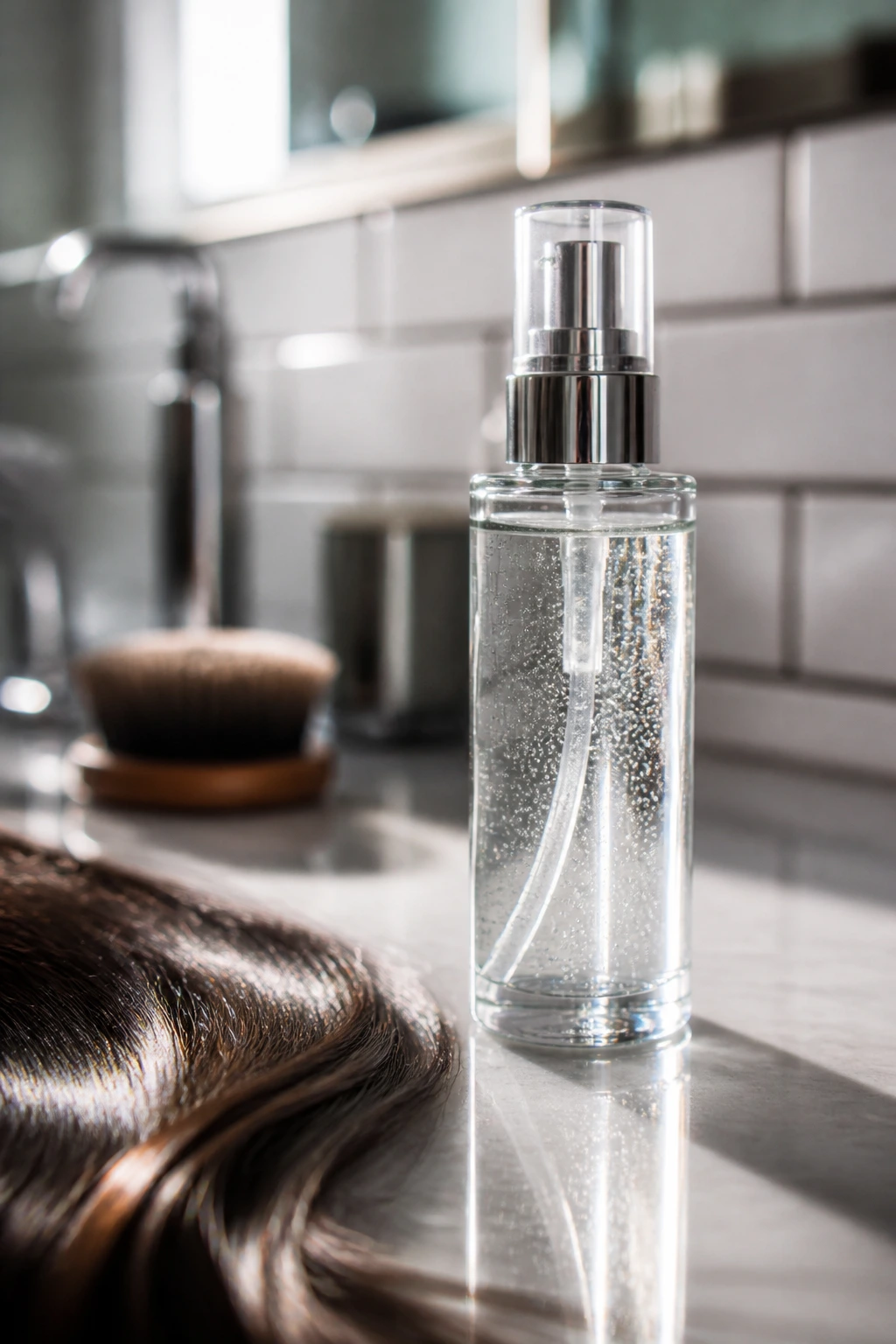
Gloss Boost: A clear or sheer brown gloss every few weeks can keep the cuticle smooth so the shade reflects light instead of swallowing it. On thin hair, that shine often matters more than adding another level of lightness.
Contrast Control: Ask for fine lowlights or babylights instead of chunky stripes. Fine hair needs tiny changes in tone. Big blocks of color can make the scalp and part line look wider.
Thickness Trick: Keep the darkest tone at the roots and crown, then soften the mids and ends. That little shadow at the top creates the illusion of more hair where the part is most visible.
Low-Effort Refresh: Use a color-depositing conditioner in a brown or warm chestnut tone when the shade starts looking washed out. It won’t replace a real color service, but it can buy you another week or two of decent-looking tone.
Common Brown-Color Mistakes That Make Thin Hair Look Flatter
Going too dark all over: A solid level 2 or 3 brown can look chic on paper and heavy in real life. The symptom is a flat, helmet-like finish with no movement at the ends. The fix is simple: keep some softness through the mids or add a gloss that shifts the undertone slightly.
Using chunky highlights: Thick blonde streaks can expose the scalp and make thin hair look patchy. You end up seeing the color blocks before you see the hair. Ask for babylights, ribbon highlights, or a soft balayage instead.
Choosing the wrong undertone: Ash on warm skin can look tired; copper on already-warm hair can go orange fast. The fix is to match the undertone to your base and skin, then keep the formula soft enough that it fades politely.
Skipping the trim: Brown color can make dry ends stand out more, not less. If the ends are see-through, even a beautiful shade won’t save them. A clean trim every 8 to 10 weeks keeps the color line crisp.
Over-toning fine hair: Toner is useful, but too much can leave the hair dull and muddy. If the shine disappears and the brown starts looking chalky, the toner was probably left on too long or applied too often.
Heat-styling without protection: Thin hair shows damage fast. Brown can turn rough-looking in a hurry if the ends are fried with a flat iron every day. A heat protectant and a lower iron setting do more than people think.
Variations and Adaptations to Try
The Soft Brunette Reset
If you want a change with very little drama, stay within one level of your natural brown and ask for a clear gloss. This version is good when the hair already feels fragile and you want shine more than color shift. It’s also the easiest option to grow out.
The Warm Chestnut Lift
This version leans into chestnut, maple, or brown sugar tones for a softer, warmer finish. It’s useful if your skin looks better with warmth or if your hair tends to look dull in cool browns. Keep the brightness around the face and through the ends.
The Cool Smoke Edit
Choose mushroom, smoky cocoa, or ash brown if your hair pulls red fast or you want a sharper, cleaner line. The color reads sleek and controlled, especially on blunt cuts. Just avoid making it too gray, or it can drain the face.
The Grey-Blending Brunette
If you have a few gray strands mixed into dark thin hair, a soft brunette gloss with fine lowlights can blur them without a harsh grow-out line. This works better than a solid dark dye because the dimension disguises the mix. It also buys you some breathing room between touch-ups.
The Low-Commitment Dimension Mix
Ask for babylights through the crown, a deeper root, and a warm brown gloss on the ends. That three-part mix gives thin hair movement without a dramatic color overhaul. It’s a good middle ground if you want the hair to look fuller but still natural.
Keeping Brown Color Fresh
Brown shades on fine hair usually look best in the first few weeks after coloring, when the gloss is still intact and the ends haven’t been dried out by heat or shampoo. Try not to wash for the first 48 to 72 hours after a fresh color service if your colorist gives you that instruction. After that, washing 2 to 3 times a week is usually enough for most dark brunettes.
Use a sulfate-free shampoo and a lightweight conditioner that won’t sit heavy at the roots. Fine hair gets weighed down quickly, and limp roots can make even a beautiful color look tired. If your brown leans cool, a blue or purple-toned product can help keep orange from sneaking in, but use it sparingly. Too much tone-correcting product can make brunette hair look flat and dull.
Glosses and toners usually need refreshing every 4 to 6 weeks if you want the shade to stay crisp. Root touch-ups often run closer to 6 to 8 weeks, depending on how fast your hair grows and how obvious the contrast is. If you have a dark natural base and a soft balayage, you can often stretch that timing a bit. If you chose a high-contrast money piece, the grow-out shows faster.
Heat is the other thing to watch. Keep hot tools on the lower end of the temperature scale that still styles your hair — often somewhere around 300°F to 350°F is enough for fine strands. Anything hotter tends to rough up the ends, and rough ends make brown color look dusty. A tiny bit of shine serum on the mids and ends after styling can help the shade stay polished between appointments.
Frequently Asked Questions
Can dark thin hair go lighter brown without looking sparse?
Yes, if the lightening is controlled. Fine hair usually looks better with soft chestnut, mocha, or caramel ribbons than with a big blond shift, because the deeper base keeps the scalp and part line from showing too much.
Is balayage better than all-over brown for thin hair?
Often, yes, because balayage adds movement without flattening the roots. Still, an all-over gloss can be better if you want the hair to look denser and darker rather than lighter. The right choice depends on whether you want lift or fullness first.
What brown shade makes thin hair look thicker?
Deep neutral browns like espresso gloss, mink brown, and smoky cocoa tend to make the hair look fuller because they keep the surface rich and even. Add tiny babylights or lowlights if you want more movement without losing density.
Should I pick warm or cool brown?
Warm browns are softer and reflect light fast, while cool browns can make the haircut look cleaner and sharper. If your hair pulls red or orange, cool tones help. If your skin looks better with golden warmth, chestnut or caramel usually works better.
How often should brown thin hair be toned?
Most brunettes need a gloss or toner refresh every 4 to 6 weeks if they want the shade to stay fresh. If the color is close to your natural level and you’re not fighting brassiness, you may stretch it longer.
Can I do these colors at home?
Some of the lower-commitment ideas, like an all-over gloss or a demi-permanent brown, can be done at home if you’re careful with the formula. Balayage, money pieces, and anything involving lifting are safer in a salon, especially on fine hair that can over-process fast.
What if my brown turns too red or orange?
That usually means the undertone is too warm for your base, or the hair has been lightened a little too far. A blue-based brunette gloss can calm the orange, while a cooler brown toner can bring down the red. If the hair is porous, ask for a gentler formula next time.
Will dark brown make my hair look flatter than lighter brown?
It can, if the color is solid and matte. A dark brown with gloss, fine lowlights, or a soft face frame usually looks fuller than a one-note medium brown with no shine. Depth matters more than brightness here.
The Brown That Does the Heavy Lifting
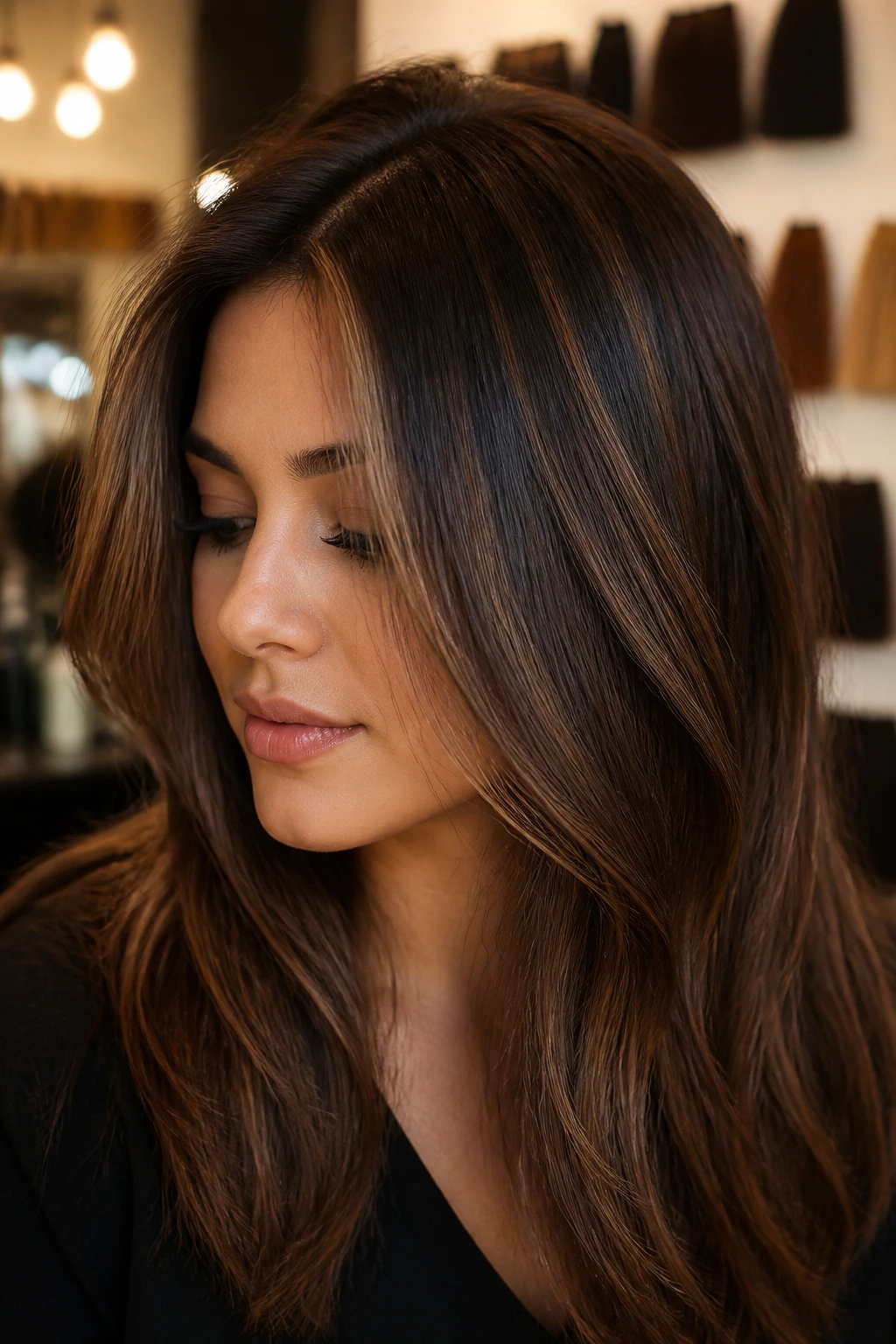
The best brown for dark thin hair rarely looks like one color in the bottle. It usually looks like two or three browns working together: a deeper root, a softer mid-tone, and a finish that catches light instead of swallowing it. That’s the real trick. Not drama. Not bleach. Just enough movement to keep the hair from going visually flat.
If you’re standing between shades, choose the one that gives the cut the most shape with the least damage. That answer is often a gloss, a babylight, or a rooted melt — not the loudest color on the board. Brown can do a lot for fine hair when it’s handled with restraint, and that’s what makes it worth coming back to again and again.