



Professional blonde hairstyles for brunettes work because the blonde is placed with restraint. A brunette base gives the hair a clean frame; a few pale ribbons near the face, a soft root shadow, or a neatly beveled bob can brighten the whole look without turning it loud.
That balance matters more than people think. Chunky streaks can shout across a room. The right blonde placement — closer to champagne, beige, honey, or caramel than to icy platinum — looks considered, tidy, and expensive in the plain old practical sense of the word: it grows out better, styles faster, and doesn’t make your hair look like it’s fighting your face.
A lot of the strongest versions here lean on the same quiet tricks colorists use day after day: babylights instead of stripes, root smudge instead of a hard line, and a finish that sits smooth at the hairline. Nothing fussy. Nothing forced. Just enough light to lift the brunette base and enough depth left behind to keep the whole thing grounded.
Why These Blonde-Brunette Pairings Look More Polished
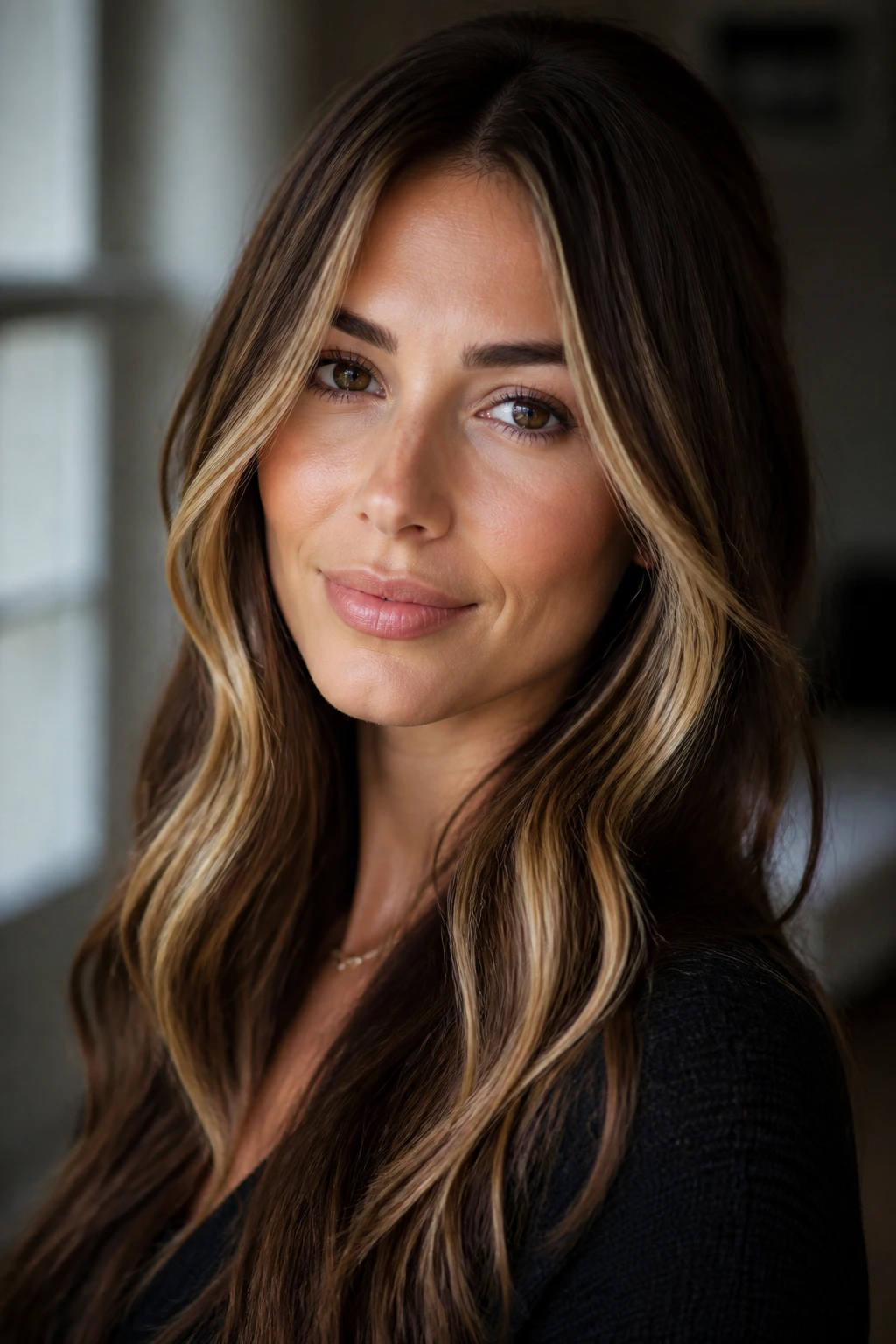
- Soft Contrast: The blonde in these looks usually sits two to four levels lighter than the brunette base, which gives lift without making the hair read as one flat sheet of color.
- Better Grow-Out: Root shadow, teasylights, and balayage blur the transition near the scalp, so the line between colors stays soft for weeks instead of showing up like a bright stripe.
- Face-Framing Lift: Many of these styles put the lightest pieces around the cheekbones, jaw, and temples, which is where the eye lands first in a meeting or on a video call.
- Cleaner Styling: A smooth blowout, tucked-under ends, or a low bun makes blonde accents look intentional; messy texture can make the same color placement look scattered.
- Works With Real Life: Brunette bases hide a day or two of root regrowth better than all-over blonde, and that matters when your hair has to look tidy between salon visits.
1. Caramel Ribbon Lob With a Soft Center Part
A collarbone-grazing lob with caramel ribbons is one of those cuts that looks calm from across the room and detailed up close. The brunette base does most of the work; the blonde sits in narrow, warm bands that catch the light when the hair moves.
What makes it professional is the shape. A blunt or lightly beveled lob keeps the ends thick, and a center part keeps the whole look symmetrical enough for a blazer, a white shirt, or a plain knit top. I’d ask for foilyage placed below the crown so the blonde doesn’t start too high.
Ask for: a medium brunette base, caramel lights two shades lighter, and a 1/2-inch root shadow.
Styling note: bend the ends under with a 1-inch iron, then brush them out so the ribbons sit soft instead of stripey.
2. Face-Framing Money Piece Layers
Do you want the lightest part of your hair to sit right where people look first? Then this is the one. Thick, bright pieces at the front — usually starting around the cheekbone or just below it — can make a brunette cut feel awake even when the rest stays deep and polished.
The trick is not to overdo the brightness. Keep the money piece one to two shades lighter than you think you need, then leave the rest of the hair softer and darker. That contrast looks cleaner on brunettes than a full head of light streaks, which can turn a little loud under office lighting.
Best for: layered cuts that already move well around the face.
Styling move: blow the front pieces back with a round brush so the blonde frames the face instead of falling flat against it.
3. Ash Beige Balayage on Long Waves
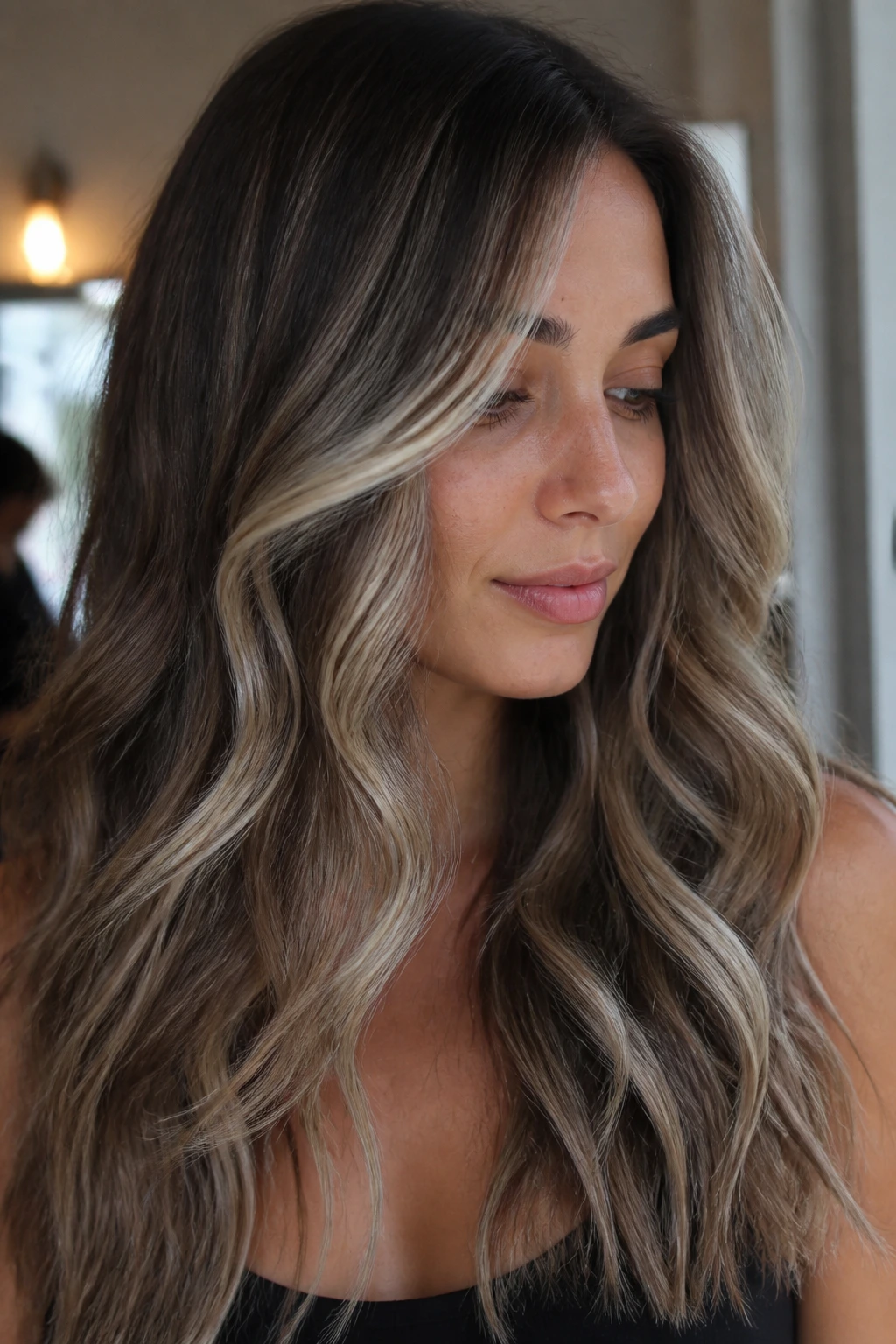
Ash beige is the shade I reach for when warm blonde would feel too sunny. On a brunette base, it reads like sand, smoke, and a little pearl mixed together — not icy, not gold, and not brassy.
Long waves give this color room to breathe. You want the blonde ribbons to show in the bend of the hair, not as one broad surface on top. If the hair is all one length, keep the waves loose and mid-shaft only; too much curl can make the blonde pieces stack up in a way that looks busy.
Why it works: the ash-beige tone cools down red undertones in brunette hair without flattening the whole head.
Salon note: ask for soft balayage with a neutral gloss, then tone again only if the blonde starts to skew yellow.
4. Polished Beige-Blonde Blunt Bob
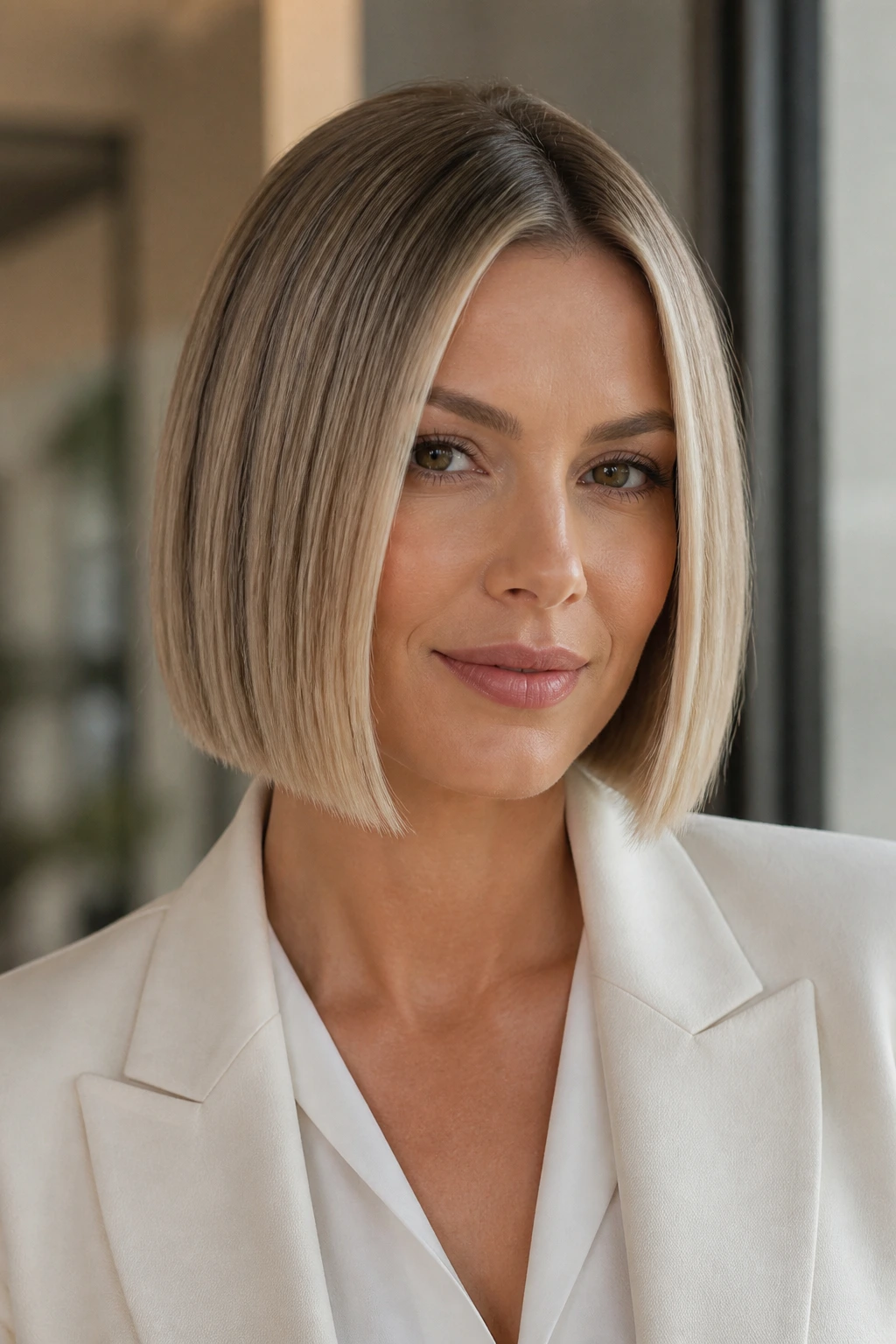
A blunt bob in beige blonde is sharp in the best way. The cut keeps the line clean at the jaw, while the blonde lightens the perimeter just enough to make the shape pop without needing a lot of styling.
This look has a nice office dress-code quality to it. Tuck one side behind the ear and the whole thing reads neat. Leave it loose and it still stays controlled because the bob itself does the heavy lifting. Beige blonde is the safe middle ground here: lighter than brunette, softer than platinum, and less yellow than honey.
Styling tip: use a smoothing cream before blow-drying, then finish with a flat brush so the ends stay crisp.
5. Honey Blonde Blowout Layers
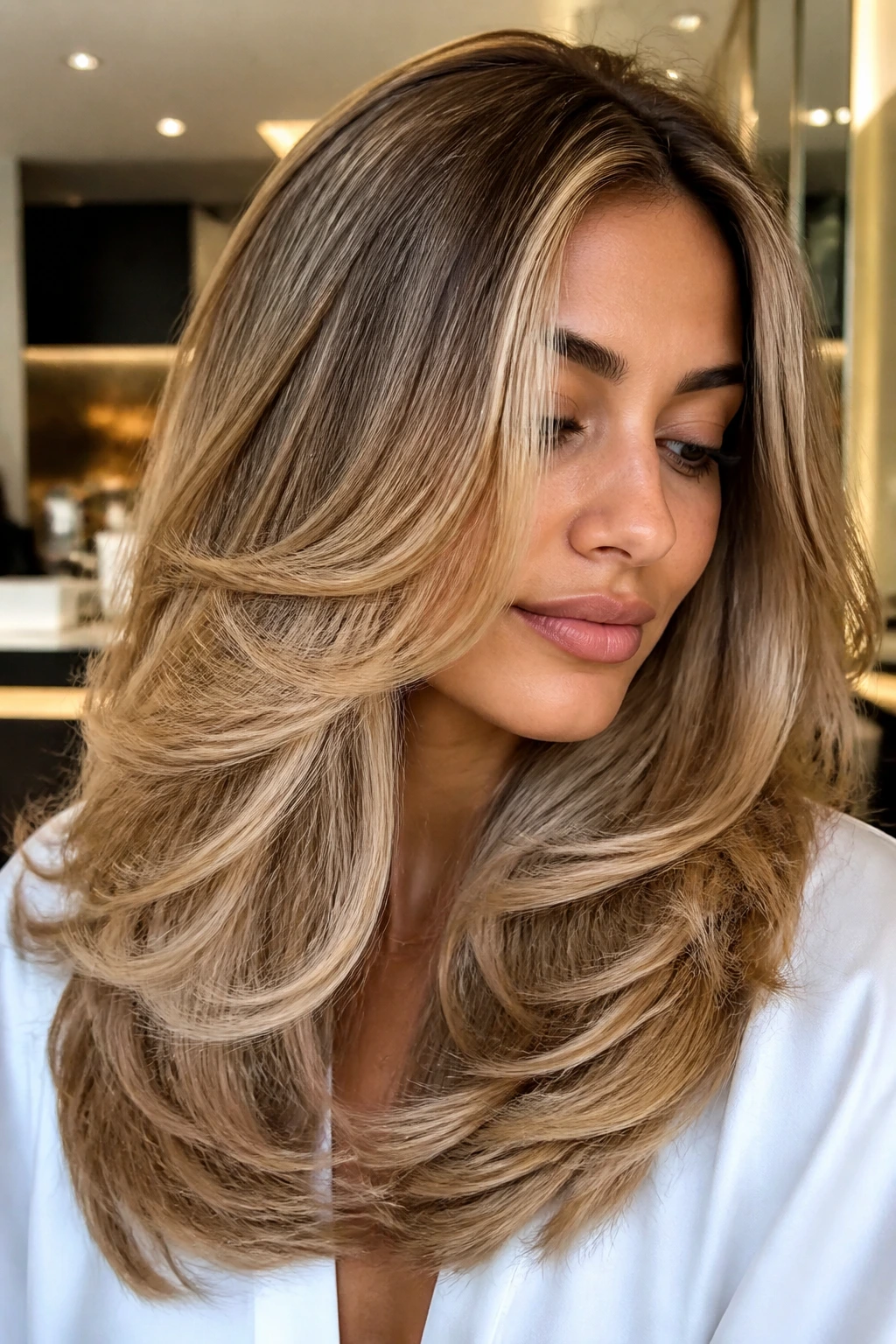
Honey blonde can be a little too sweet if it’s overdone. Done right, though, it gives brunette hair that sun-warmed lift that makes layered cuts look fuller and more expensive in motion.
This works best on medium to thick hair that can hold a round-brush blowout. The color should sit mostly through the mid-lengths and ends, with a few lighter threads around the face. When the blow-dry bends the layers outward just a bit, the honey tones show up in a soft, glossy way — not in a chunky, obvious way.
Best for: warm undertones and hair that tends to look flat when it’s air-dried.
Salon request: caramel-to-honey dimension with a neutral glaze at the roots so the regrowth stays tidy.
6. Smoky Bronde Shag With Soft Movement
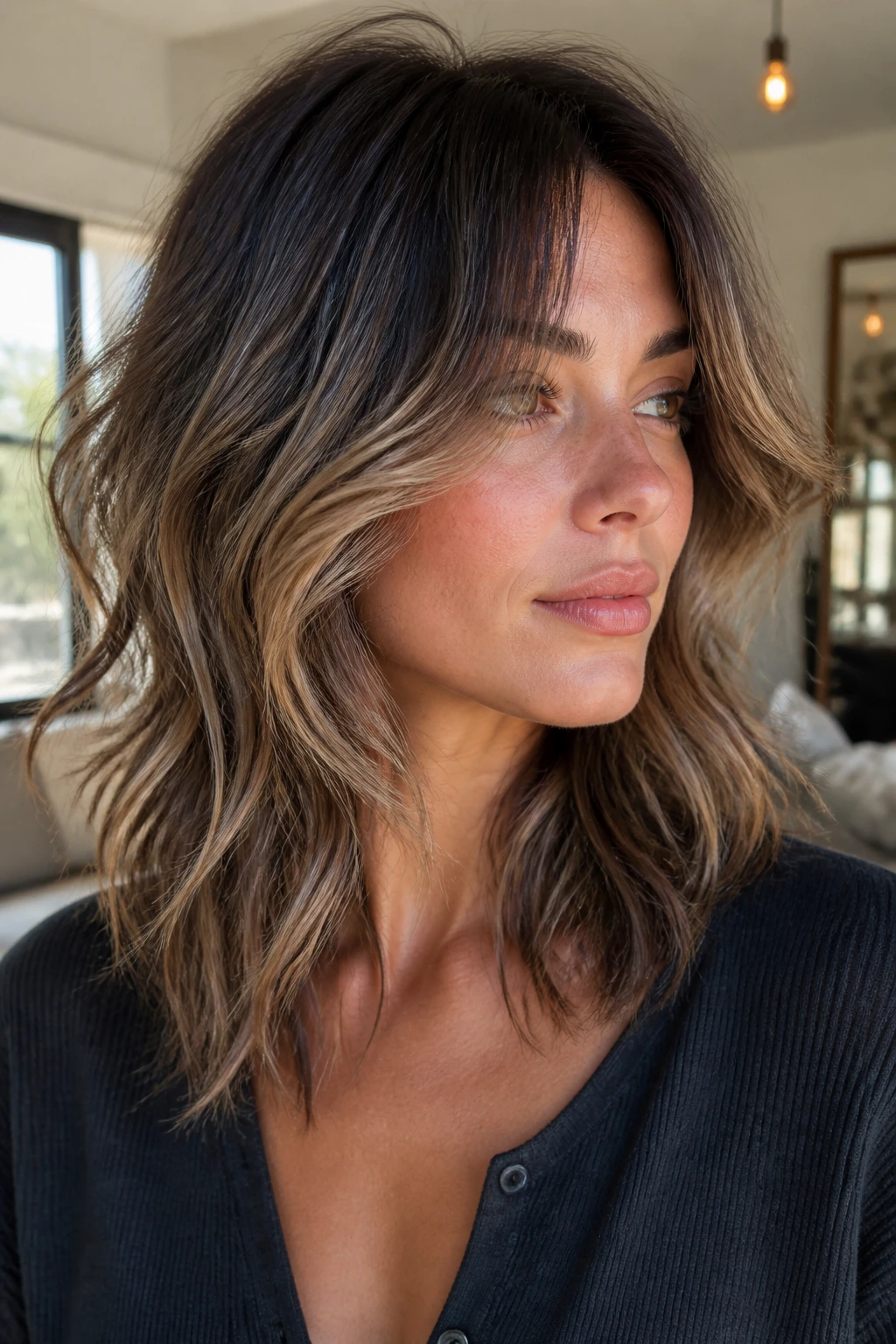
Bronde gets a bad name when it’s done lazily. A good smoky bronde shag has depth at the root, beige-light ribbons through the mid-shaft, and enough texture to keep the layers from collapsing.
The shag shape keeps this from feeling too polished in a stiff way. That sounds odd, but it matters. The piecey layers give the blonde movement without making it look like a highlight chart on your head. Keep the styling loose — a rough blow-dry with a round brush at the front is usually enough.
Why it works: the smoky tone holds the brunette depth, so the blonde pieces look like dimension rather than correction.
Watch this: don’t go too pale at the ends if your hair is fine; a little shadow keeps the cut from looking wispy.
7. Vanilla Curtain Bang Layers
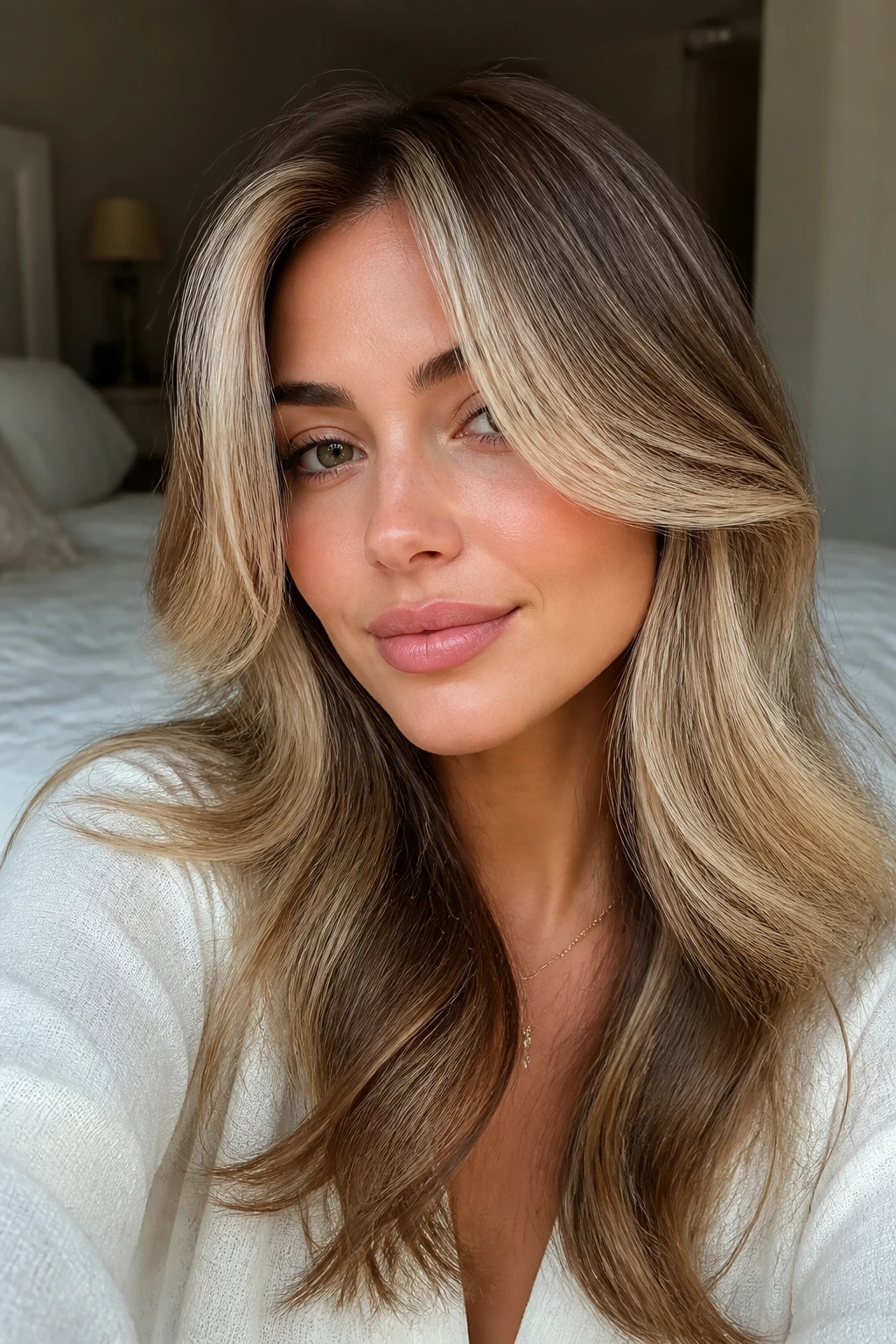
Curtain bangs change the whole mood of brunette hair, and vanilla blonde through the fringe makes them read deliberate instead of accidental. The lightest pieces sit where the bangs split, which means the color lifts the face without requiring a bright overall dye job.
I like this on shoulder-length or longer layers, especially when the rest of the blonde stays soft and blended. The bangs need a bit of styling — a small round brush or a blow-dry brush, plus a minute or two of shaping at the front — but the payoff is a face-brightening fringe that still looks neat.
Styling note: keep the ends of the bangs slightly beveled, not flipped out hard. That tiny detail changes the whole feel.
8. Champagne Straight Lob With Root Shadow
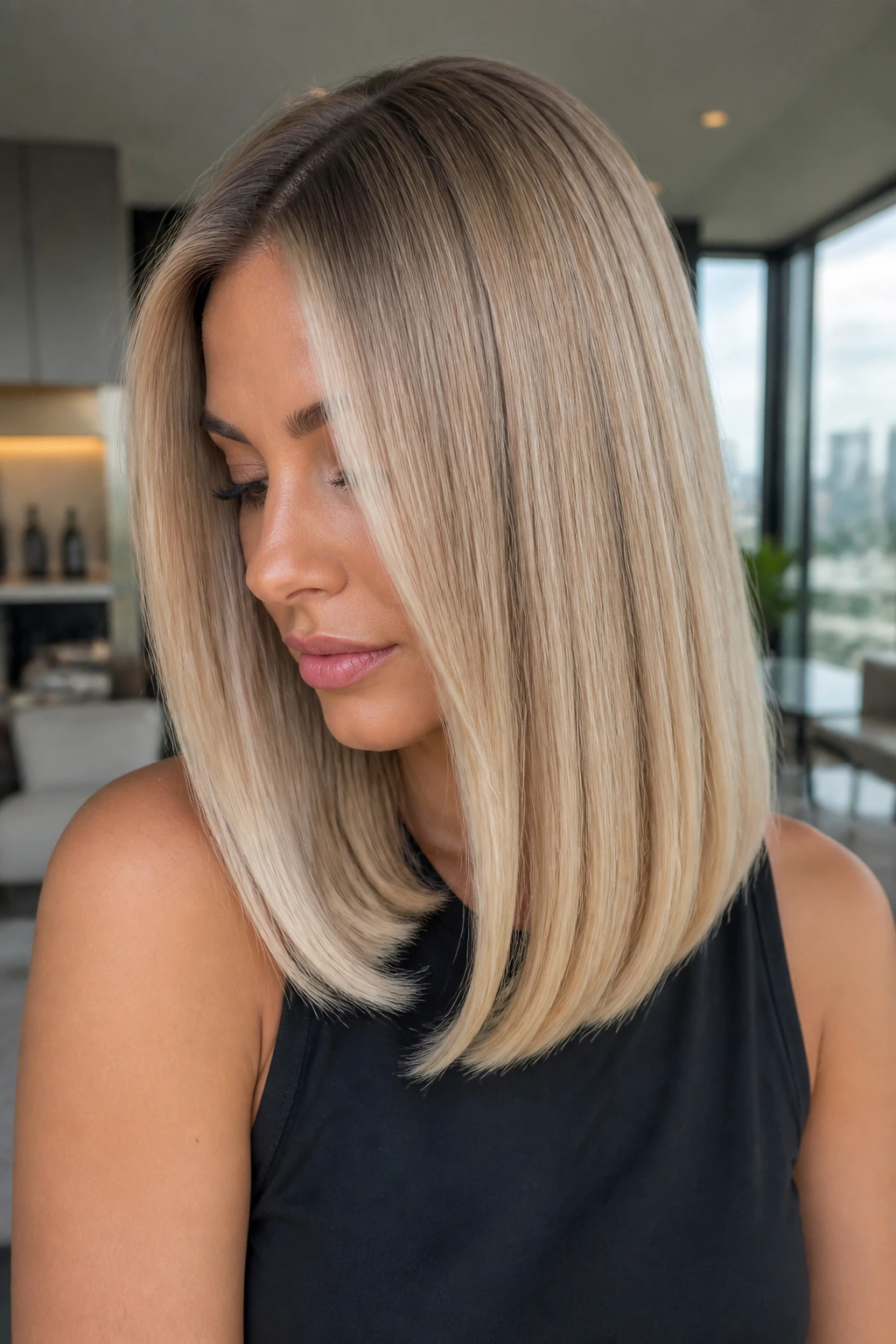
If you prefer hair that looks smooth and controlled, a straight lob with champagne pieces is hard to beat. Champagne blonde lives in that narrow lane between warm and cool, which makes it a good match for brunettes who don’t want obvious gold or ash.
The root shadow is what keeps this looking grown-up. Leave about 1 inch at the scalp a shade deeper, then fade the lightness down through the lob. The line stays soft even as the hair grows, and the color looks more expensive under indoor light because the root depth gives the blonde somewhere to land.
Best for: straight hair, fine hair, or anyone who wears a lot of tailored clothing.
Pro move: flat iron the ends once, then curve them inward just a touch so the cut doesn’t look severe.
9. Soft Ombré on Long Brunette Hair
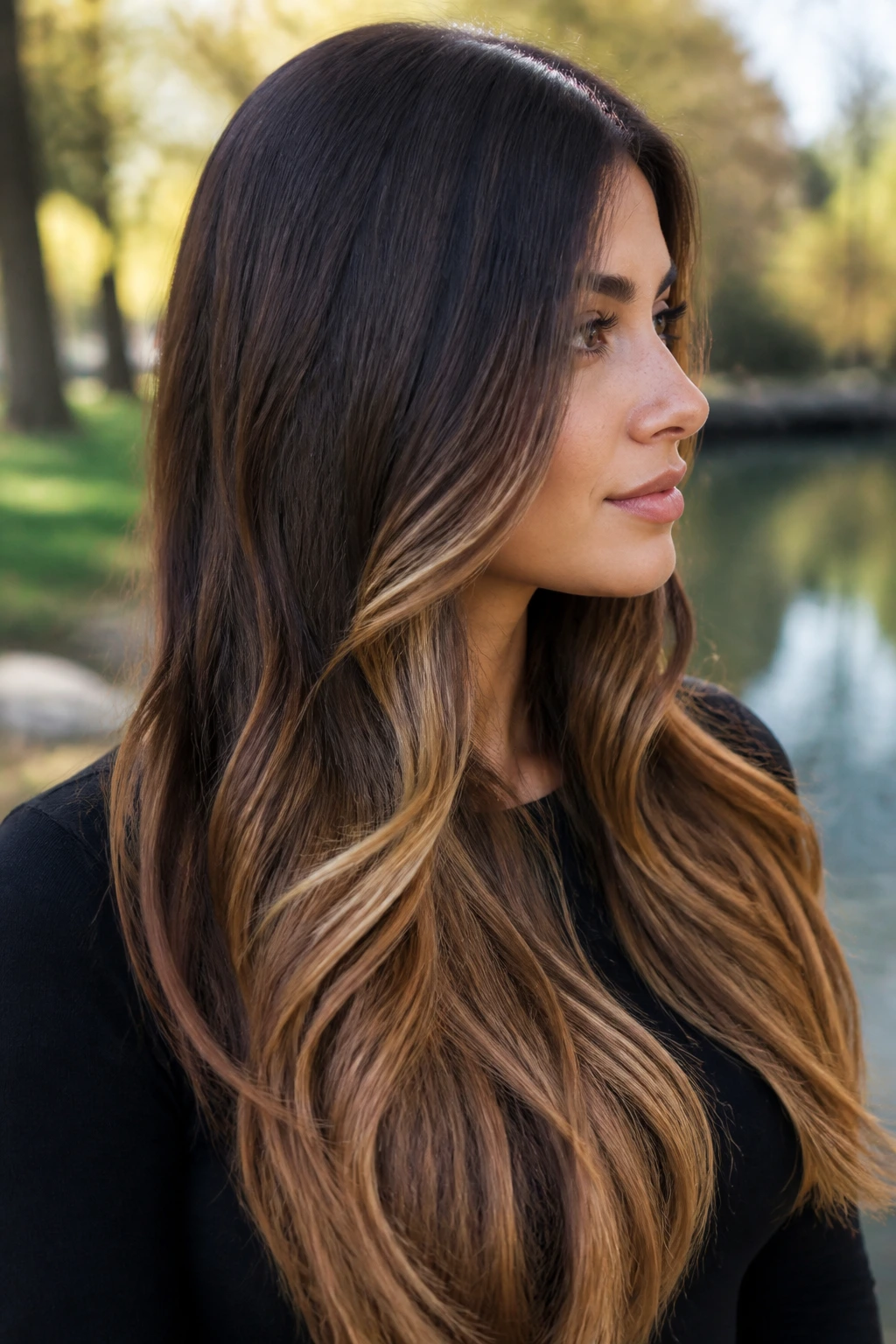
Long brunette hair can take an ombré better than most people expect, as long as the fade is gentle. You want the color to melt from deep brown into caramel, beige, or pale honey over several inches — not drop suddenly like a dip dye from years ago.
What makes this feel professional is the controlled finish. Brush the waves out. Keep the ends neat. Avoid crunchy texture spray. A soft ombré looks best when the lower half of the hair moves in one clean sheet, not in ten tiny pieces.
Why it works: the eye sees brightness at the ends and depth near the scalp, which gives lift without a hard maintenance line.
10. Beige Blonde French Bob
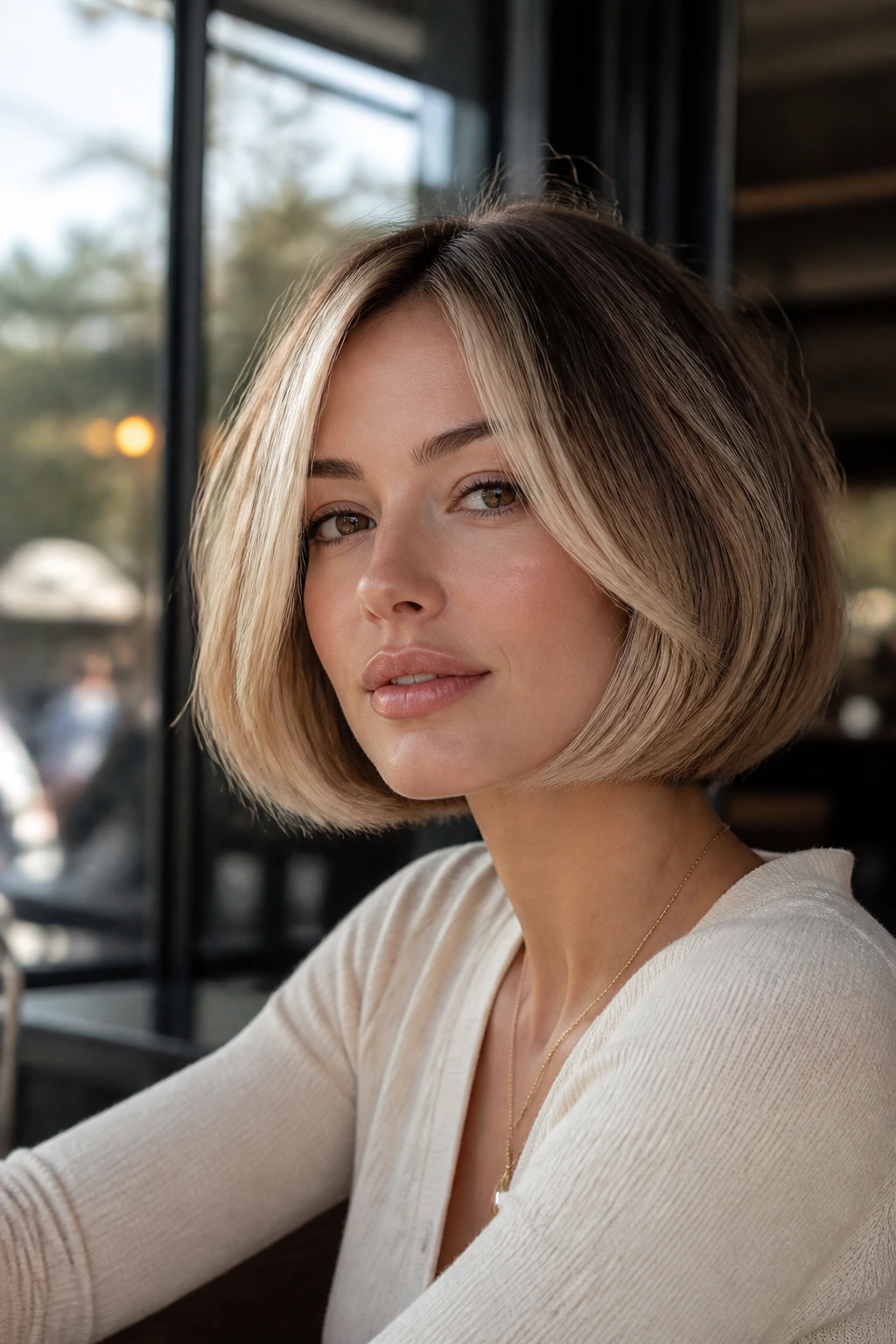
A French bob with beige blonde paneling has a clean, editorial feel without going cold. The length stops around the jaw, the ends are usually curved under or left with a gentle bend, and the blonde pieces sit where they can frame the cheeks.
This cut likes simplicity. A side part or a soft center part both work. Keep the color dimensional rather than stripey, and the whole look feels sharp enough for work while still having some personality. Beige blonde helps a brunette bob avoid that too-dark, too-heavy look that short hair sometimes gets.
Salon note: ask for narrow beige lights around the face and lighter ends through the lower perimeter.
11. Golden Babylight Curls
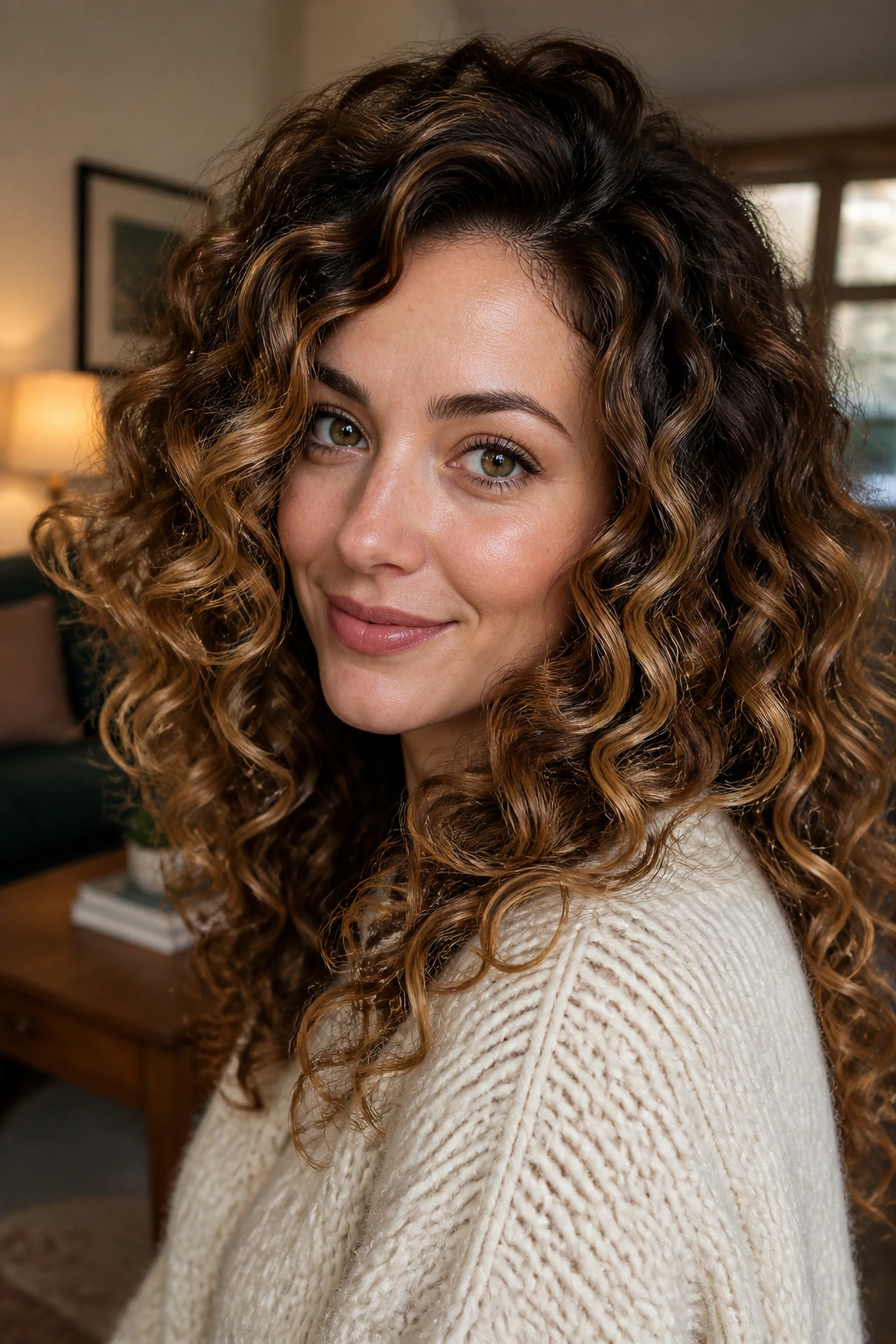
Curly brunette hair needs a lighter hand with blonde. Babylights — those fine, narrow highlights that look almost woven — are the answer because they spread brightness through the curl pattern without breaking up the shape.
Golden works here better than icy blonde. Curls already create texture, and gold or soft honey gives them shine instead of dryness. The blonde should live on the outside curve of the curl and a little around the crown so the pattern feels dimensional from every angle.
Styling tip: use a diffuser on low heat, then break the cast with a few drops of oil on the ends only.
12. Pearl Blonde Pixie Crop
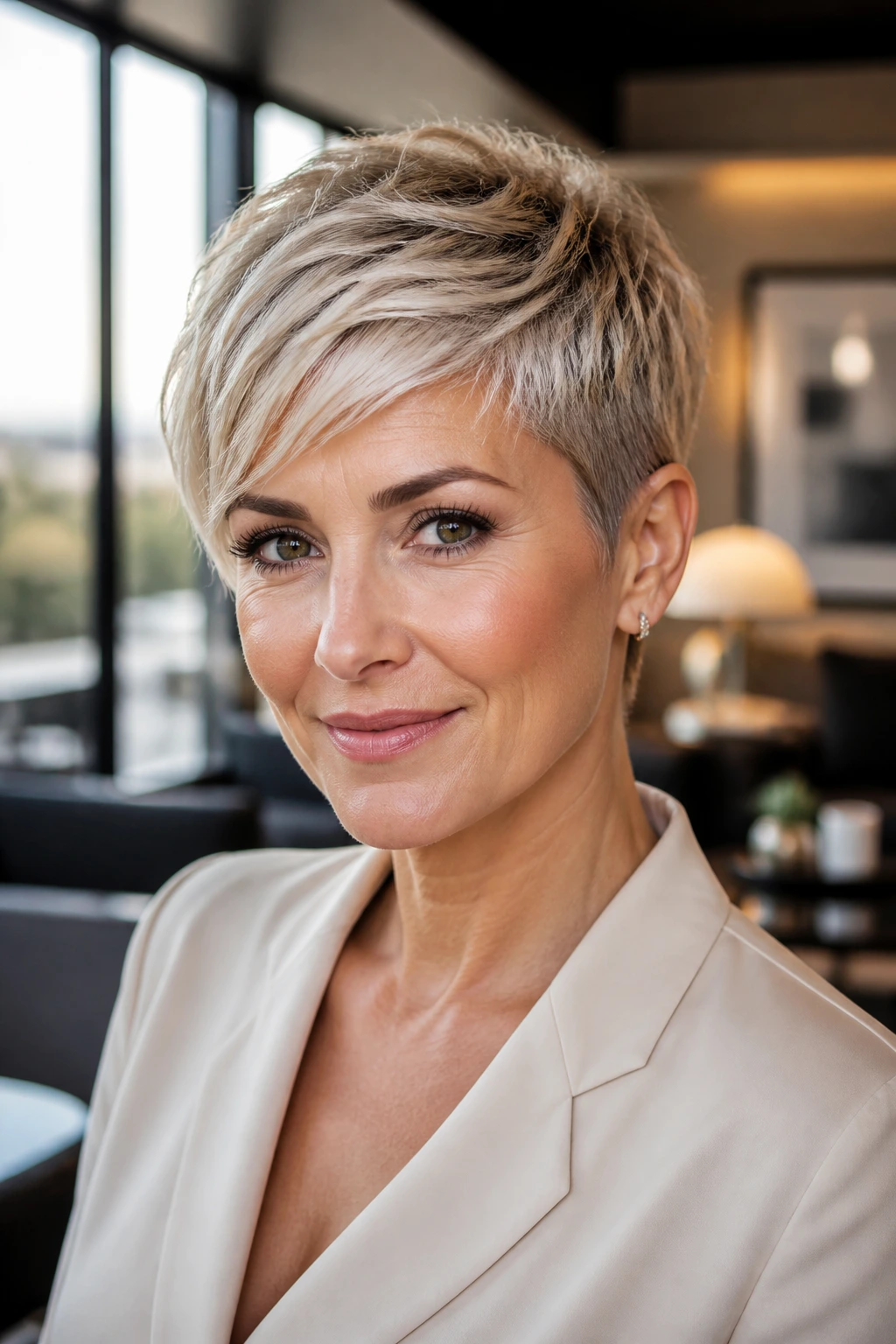
A pixie can look formal or sporty depending on the color placement, and pearl blonde pushes it toward polished. Keep the sides deeper and the top lighter, then add a soft pearl tone that doesn’t go yellow or silvery.
This works because short hair shows every inch of color. Too much contrast turns a pixie into something sharp and fussy. Pearl blonde softens the edges and makes the crop look deliberate. Ask for longer length at the top so you have room to sweep the front pieces to one side.
Best for: strong cheekbones, neat office dress codes, and anyone who wants the morning routine to take five minutes.
13. Root-Melted Low Ponytail
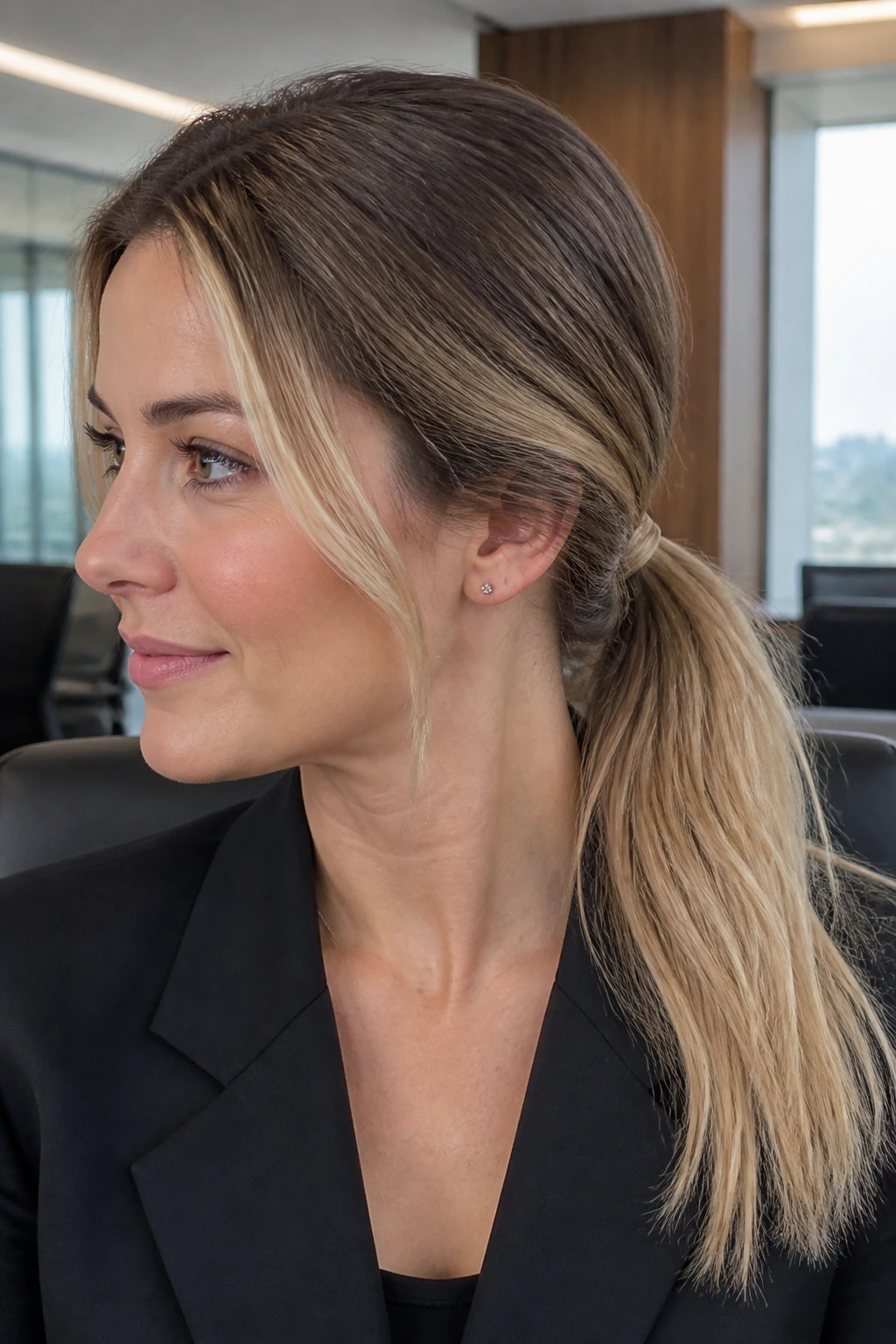
A low ponytail sounds plain until you give it a root melt and a few lighter lengths through the tail. Then it becomes one of the easiest professional styles in the bunch. The brunette root keeps the scalp looking clean, the blonde through the tail adds movement, and the wrapped base makes the whole thing look finished.
This is the kind of style that saves you on days when your hair is between washes. Smooth the sides down, secure the pony low at the nape, and pull out one thin front piece if you want a softer line. The blonde shows best when the tail is straightened lightly or bent once with a brush.
Styling note: hide the elastic with a small strand of hair and pin the end underneath.
14. Ribbon Highlights on a Shoulder-Length Cut
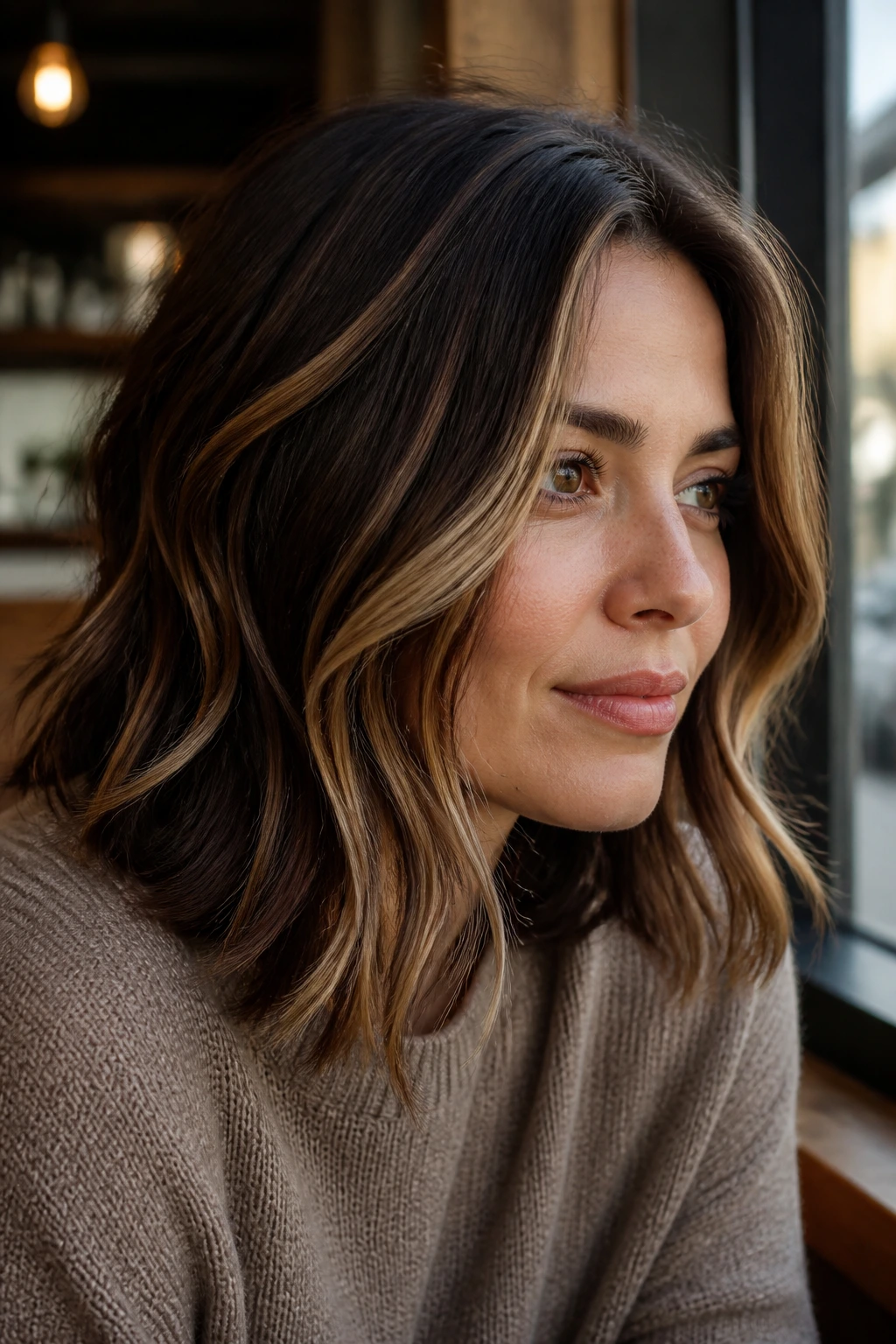
Ribbon highlights are wider than babylights and softer than chunky streaks. On shoulder-length hair, they can give brunette strands a real sense of depth, especially if the cut has a subtle bend at the ends.
This style is less about drama and more about movement. The blonde ribbons should appear in layered sections, not in a row from root to tip. That spacing keeps the hair from looking overworked. If you usually wear your hair tucked behind one ear, leave the brightest ribbon on that side — small detail, big payoff.
Why it works: shoulder-length hair has enough length to show contrast, but not so much that the lightness drifts away and disappears.
15. Buttercream Half-Up Twist
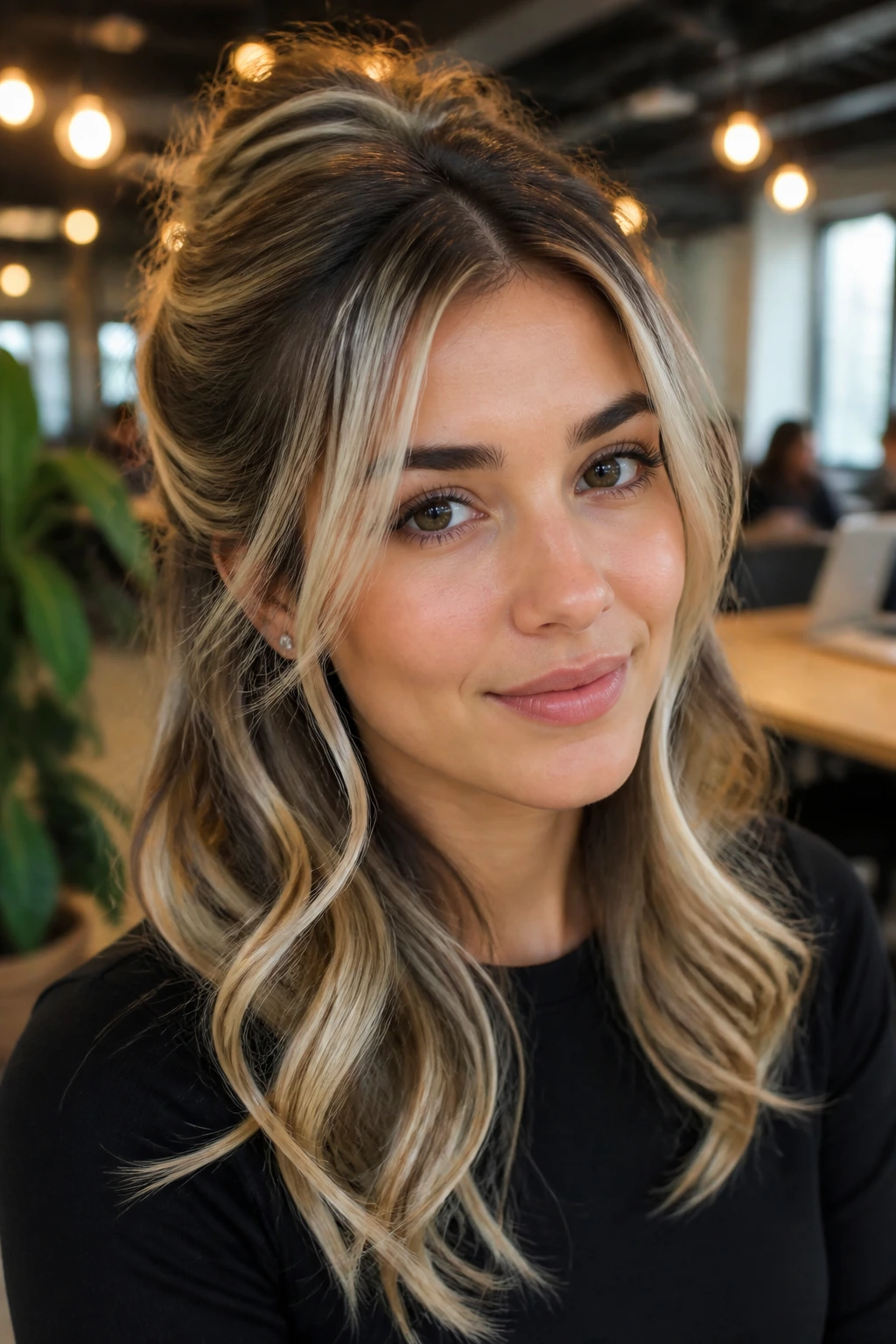
A half-up twist can look too pretty if the color is wrong. Buttercream blonde solves that by softening the front and crown without turning the whole style sugary or flat.
This is a good choice when you want hair out of your face but don’t want a severe bun. Twist the top section back loosely, leave the lower layers smooth, and let the buttercream pieces show around the temples and crown. The style works especially well on day-two hair because the twist hides a little texture at the roots.
Best for: mid-length to long hair, especially when you need the front pieces controlled for a long workday.
16. Sandy Blonde Side-Part Lob
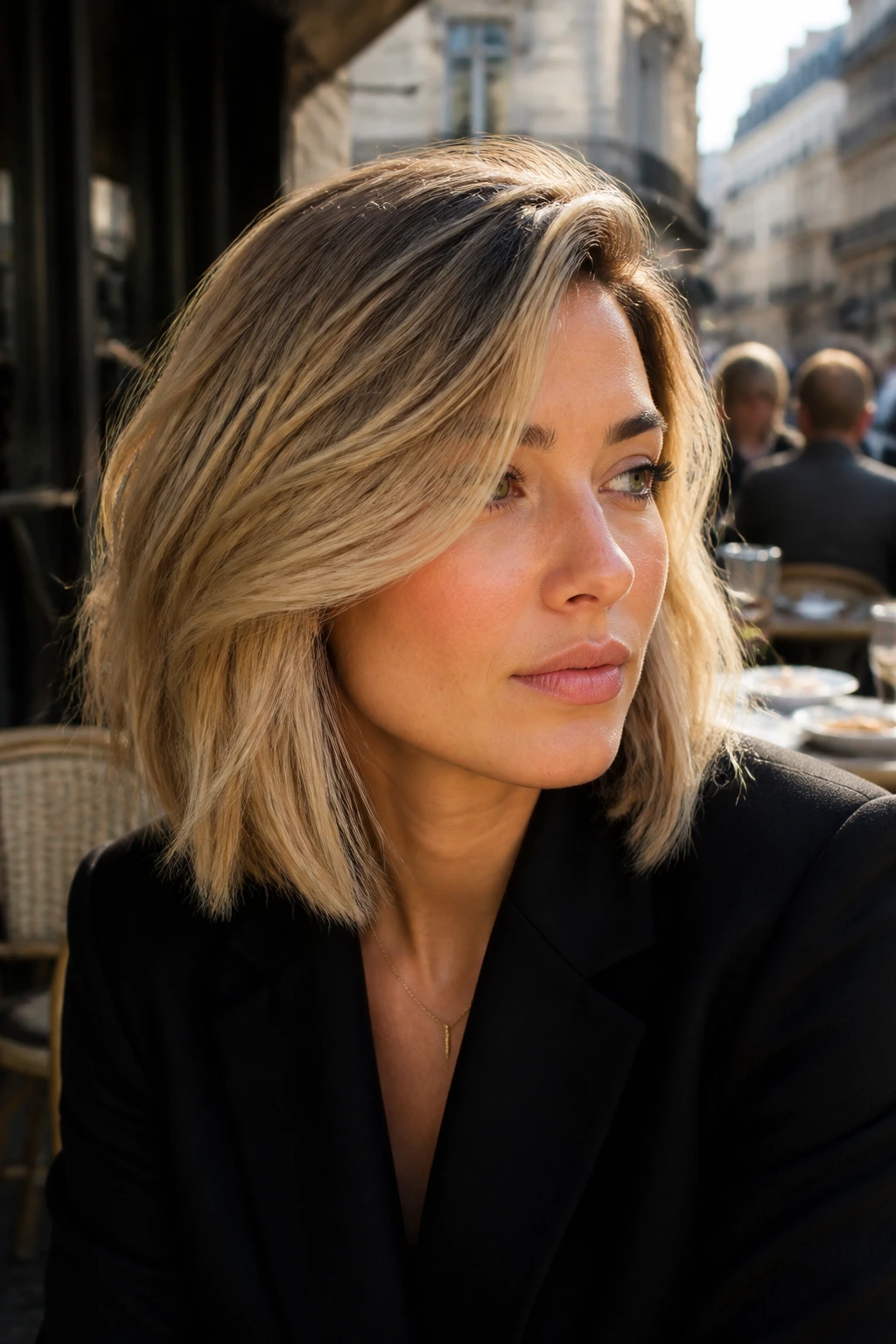
A side part changes the entire mood of a lob. Add sandy blonde highlights, and the cut gets a little softer, a little more lifted, and a lot more flattering on brunettes who want movement without obvious contrast.
Sandy blonde is the neutral you use when both gold and ash feel wrong. It sits quietly in the middle, which makes it a good match for darker brown hair that tends to pull red or orange. The side part adds height at the crown and makes the blonde pieces fall in a more flattering sweep across the face.
Styling move: blow-dry the part first, then guide the rest of the hair away from the face with a round brush.
17. Chestnut-to-Vanilla Face-Framing Layers
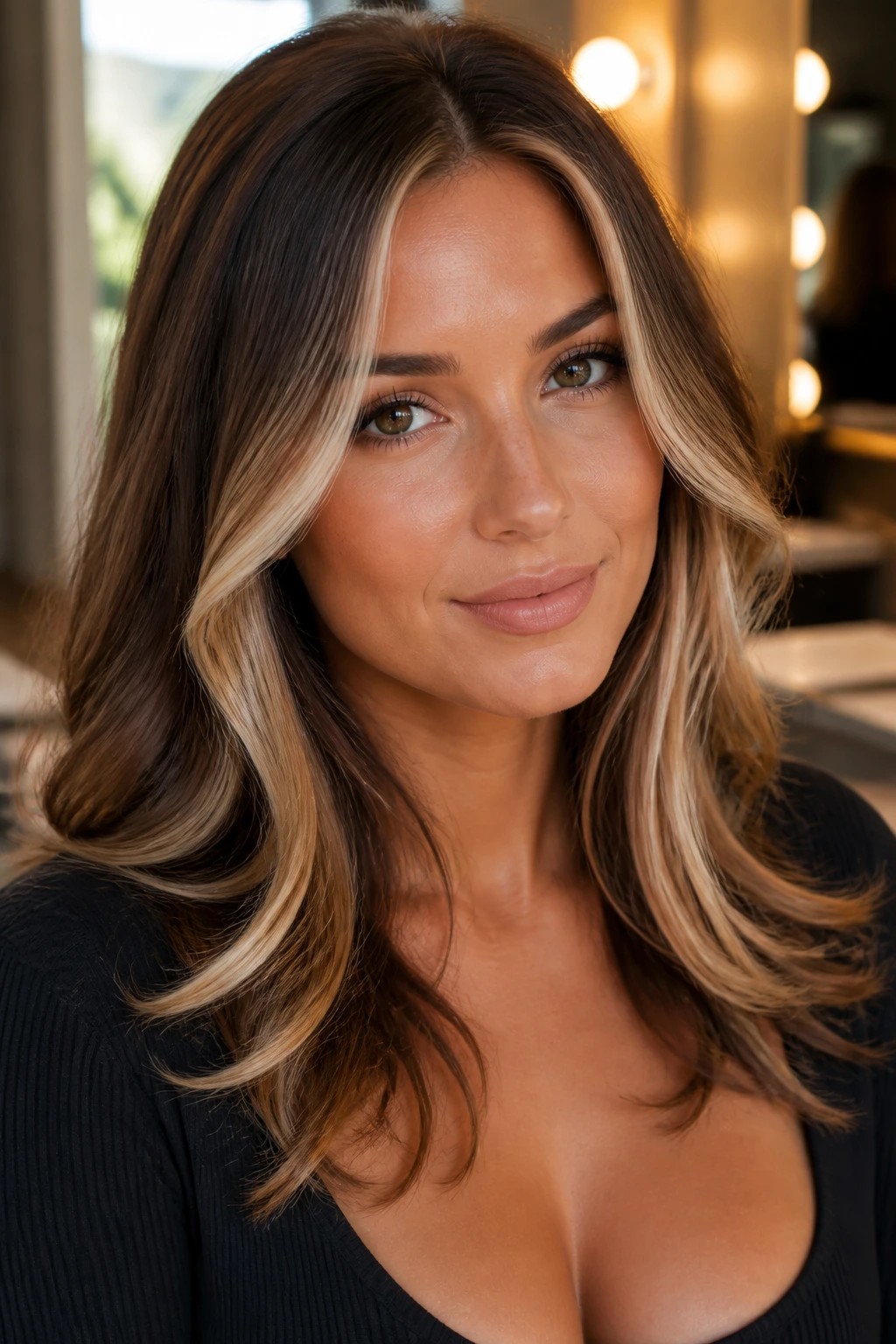
This one is for brunettes who want contrast but not a full color overhaul. Keep the base chestnut, then move into vanilla blonde only at the front layers and through the lowest lengths. The result is brighter around the face and softer everywhere else.
The contrast works because the lightness is concentrated where it gets the most visual payoff. You don’t need to bleach everything to make the face pop. A few well-placed vanilla pieces can brighten skin, soften a strong jaw, and still leave the rest of the hair looking rich and grounded.
Salon request: face-framing lights that start no higher than the cheekbone, with a root melt that stays visible.
18. Underlight Blonde on Dark Brunette Waves
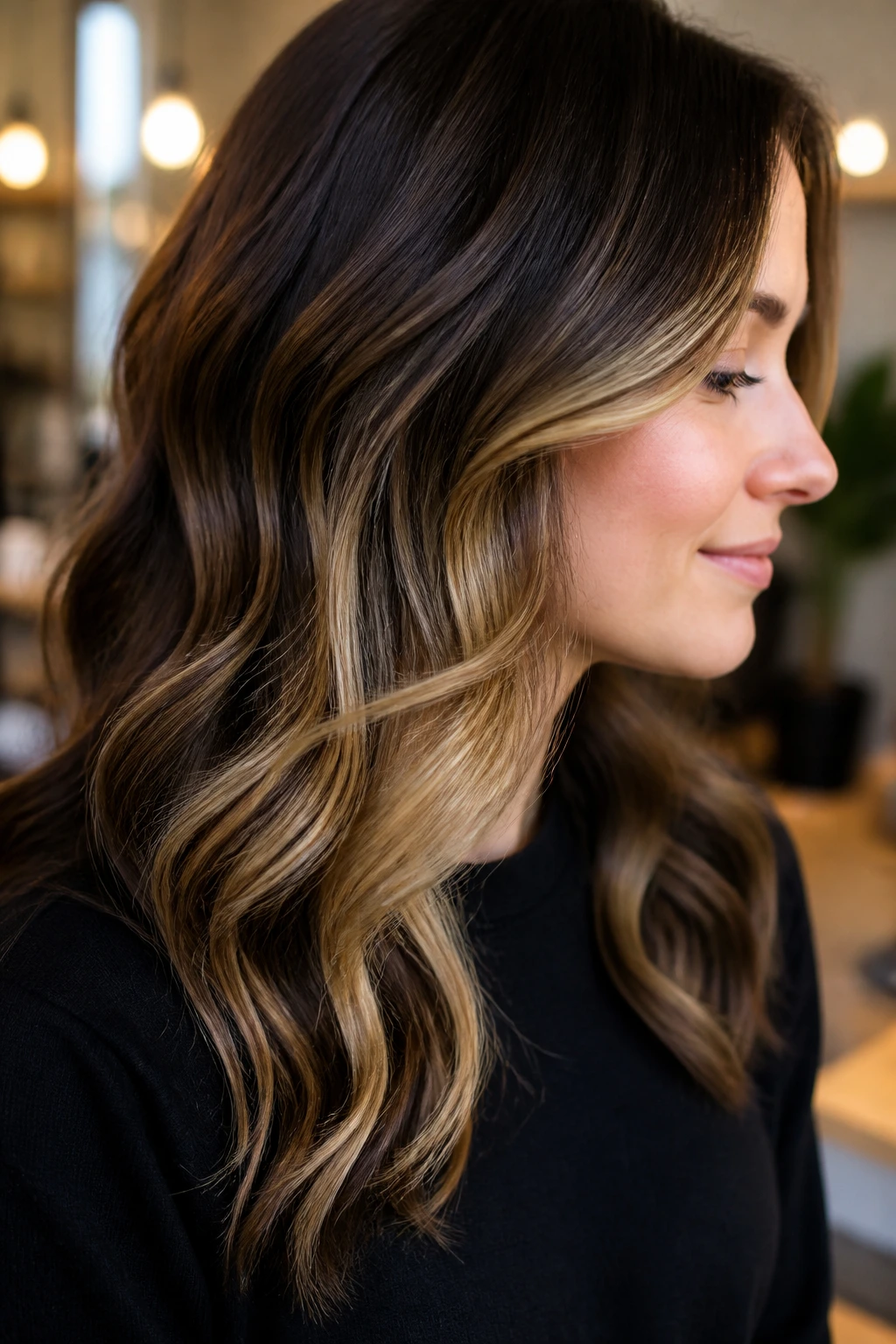
Underlights are one of the smartest options on this list if your workplace is conservative or your hair has to look dark from the front. The blonde sits underneath the top layer, so the hair reads brunette most of the time and flashes lighter only when it moves.
That hidden placement makes the look feel controlled. Wear the hair in soft waves, and the light pieces peek through at the ends and inside bends. It’s also a nice choice if you like a little surprise without committing to a bright money piece at the front.
Why it works: the blonde never competes with the whole head; it just gives the waves something to reveal.
19. Ashy Teasylight Layers
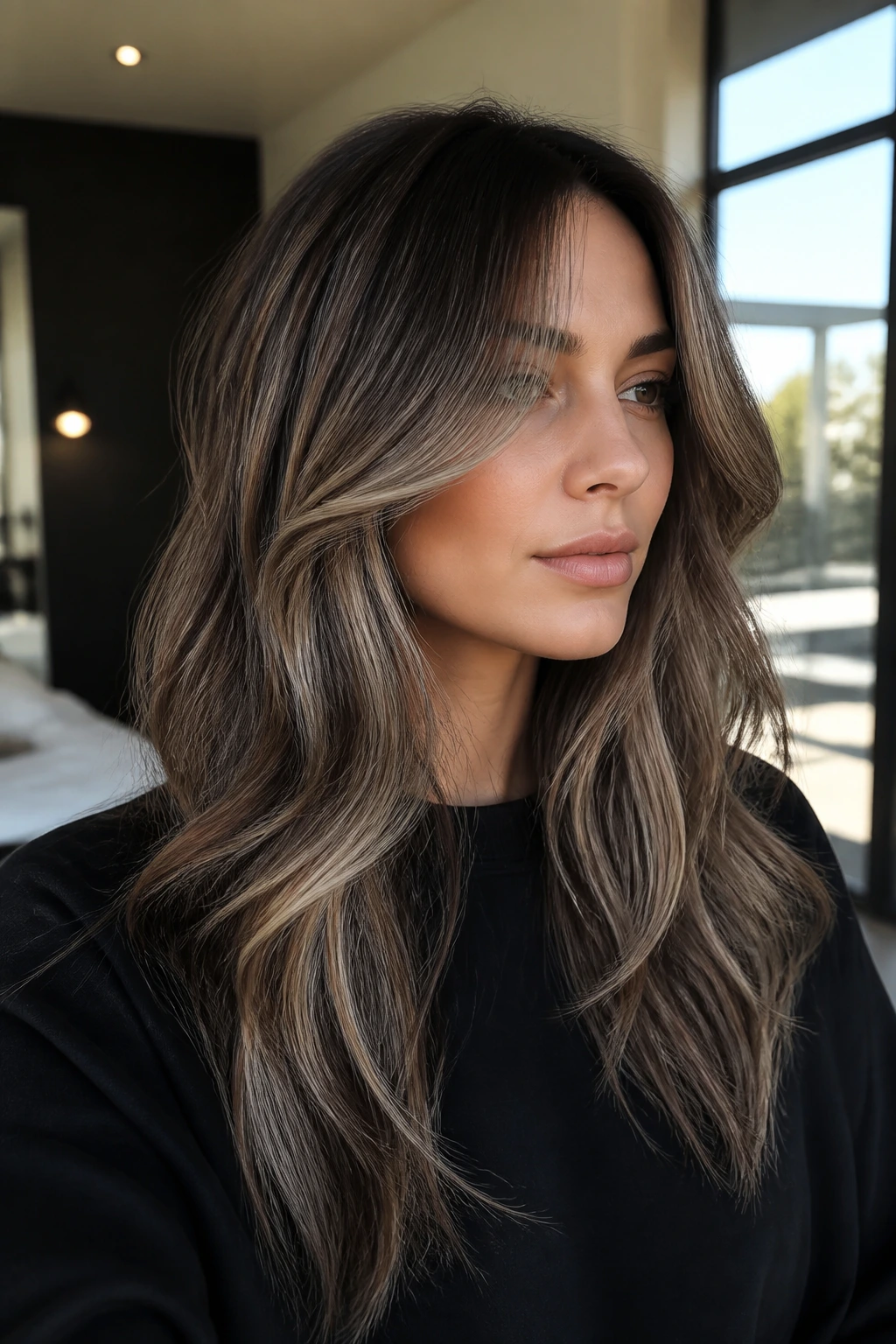
Teasylights are for people who hate harsh lines. The hair is lightly teased before color is painted in, which softens the transition and leaves the highlight diffused instead of blocky.
Ashy tone helps here because it keeps brunette hair from drifting orange. The result is cool, modern, and a little quieter than gold. On long layers, the ash pieces catch light in a narrow, controlled way that looks particularly good when the hair is straightened or loosely waved.
Watch this: if your brunette base has a strong red undertone, pair ash with a beige gloss so the finished color doesn’t go hollow.
20. Espresso Bun With Blonde Veil Pieces
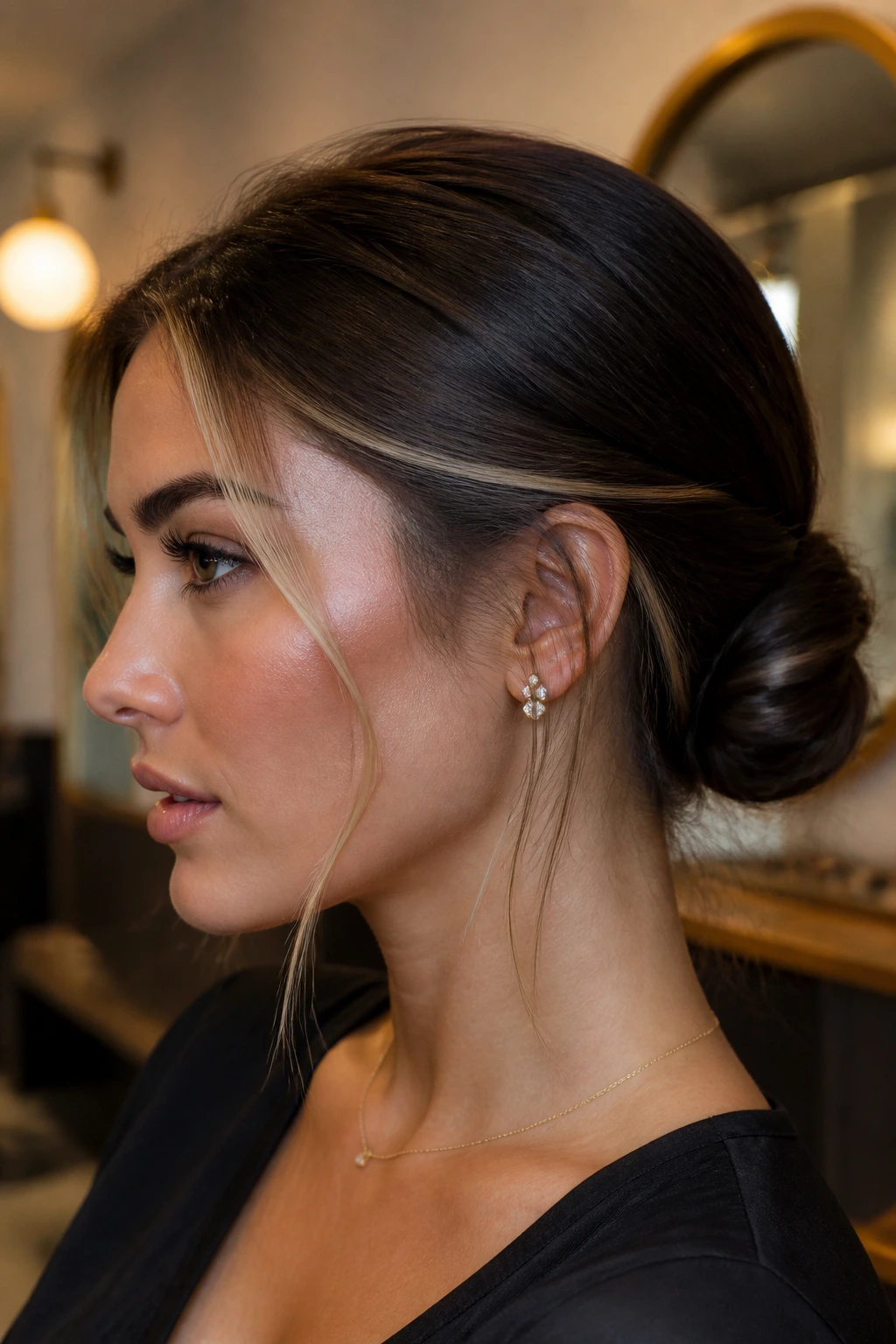
A low bun gets a lot more interesting when you leave a few blonde veil pieces around the hairline and nape. The base stays espresso-dark, which keeps the style formal, but the lighter strands soften the outline and keep it from looking too severe.
This is a smart move for days when you need your hair pinned back and still want some dimension. Smooth the bun tightly, keep the veil pieces thin, and let them fall naturally. Too many front pieces and the style loses its clean shape; too few and it looks severe. The sweet spot is narrow.
Styling note: a dab of gel at the hairline can keep flyaways down without making the finish crunchy.
21. Mocha Bronde Curls
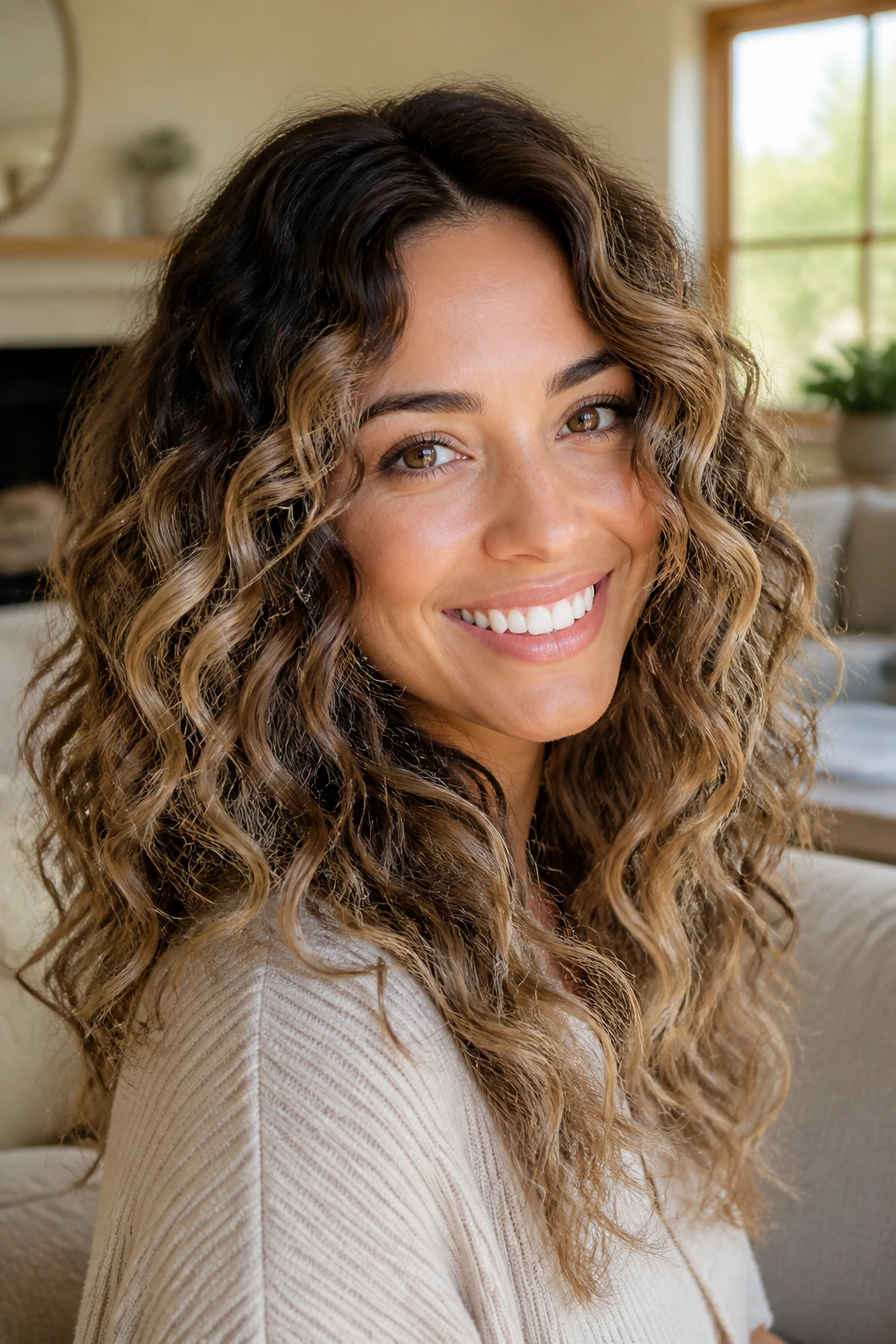
Mocha bronde sits in that lovely middle space where brunette hair still looks rich, but the blonde makes the curls read fuller. On medium or thick curls, this can look cleaner than a high-contrast highlight because the lightness is spread through the curl pattern instead of stacked on top.
The key is placement. Bright pieces around the outer curve of the curl, softer beige in the interior, and a darker root all keep the shape readable. If the curls are tight, don’t over-lighten the ends; they need enough pigment to hold their shape and shine.
Best for: natural curls that need dimension more than drama.
22. Caramel Sleek Blowout With Tucked Ends
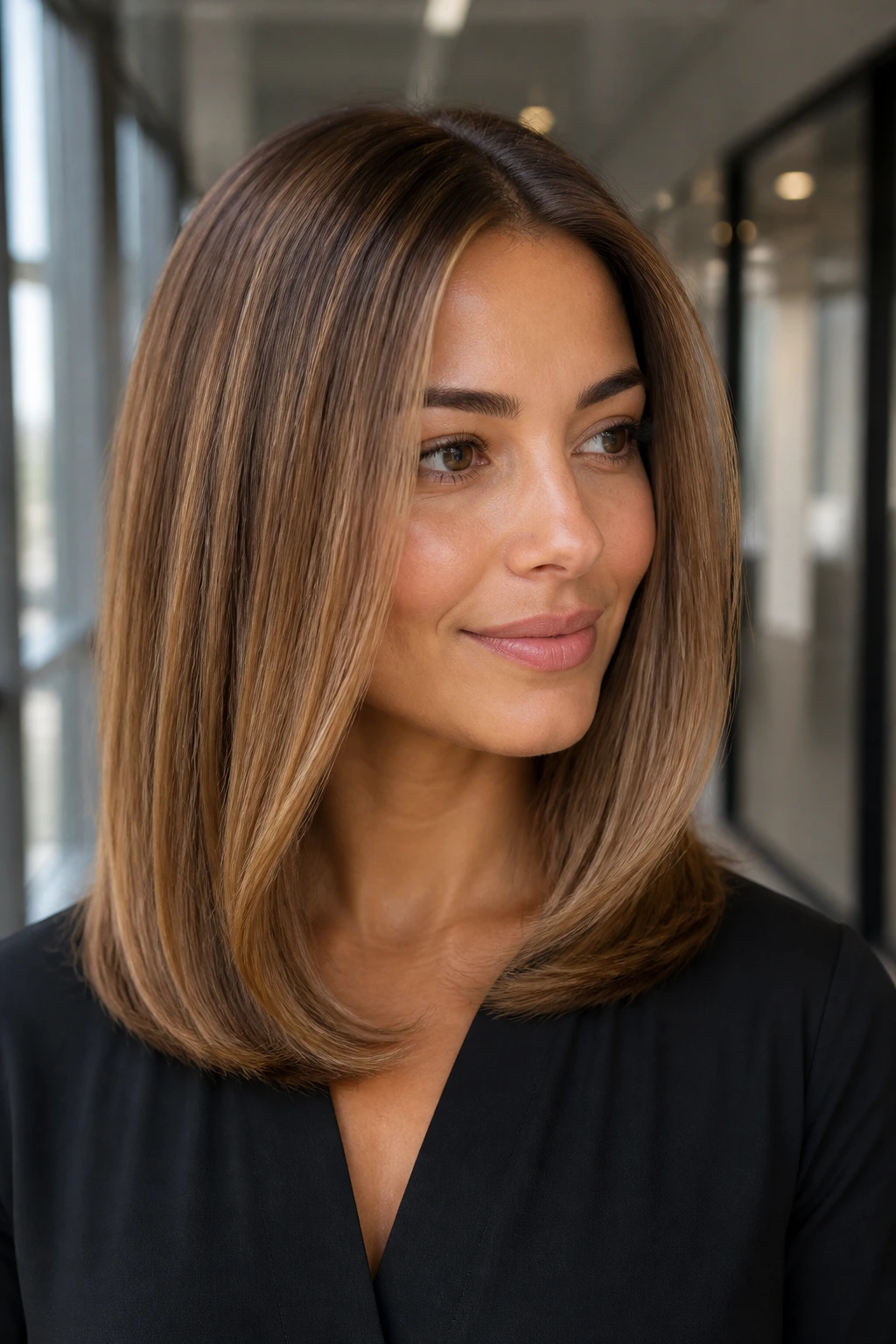
A sleek blowout with tucked-under ends looks controlled in a way that I like for long office days. The caramel blonde should sit mostly through the lower half and around the face, where the blowout curve can show it off.
This style works because the finish is so tidy. You’re not relying on waves or texture to sell the color. The shape does it for you. Keep the roots smooth, bend the ends in with a round brush, and finish with a light shine spray on the mid-lengths only.
Comparison point: unlike big beach waves, this version stays neat under a coat, scarf, or jacket collar.
23. Smoky Beige Collarbone Cut
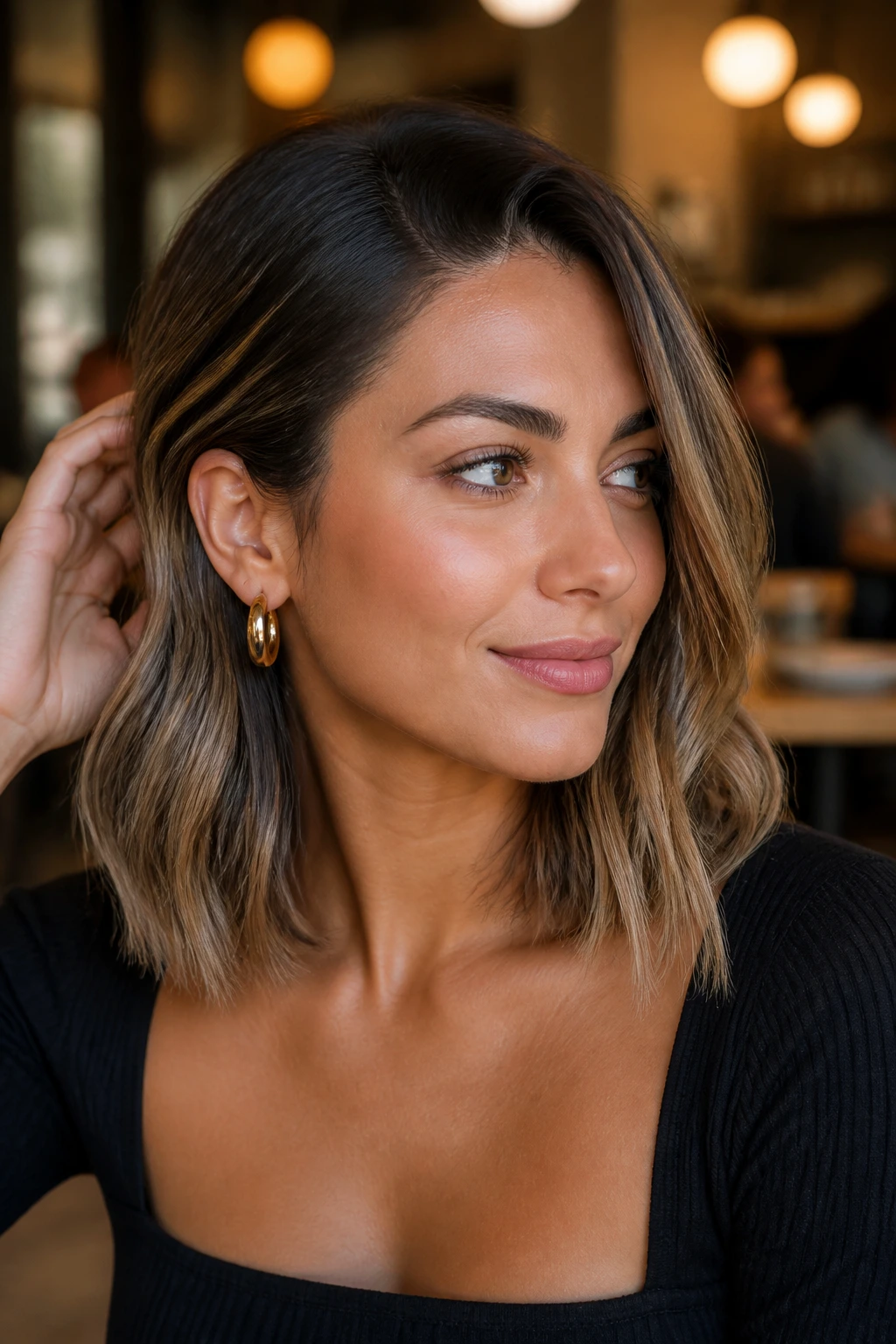
A collarbone cut can be the most useful length in the room. It hits below the chin, above the chest, and gives smoky beige highlights enough surface area to show dimension without making the hair look heavy.
Smoky beige is a bit cooler than caramel and softer than ash. That makes it a good fit for brunettes who want a clean, modern finish. Keep the ends lightly beveled so the cut doesn’t hang flat, and let the blonde sit in soft bands through the middle and lower layers.
Styling tip: a side tuck or one curved front piece keeps the shape from feeling too blunt.
24. Honeyed Crown Braid
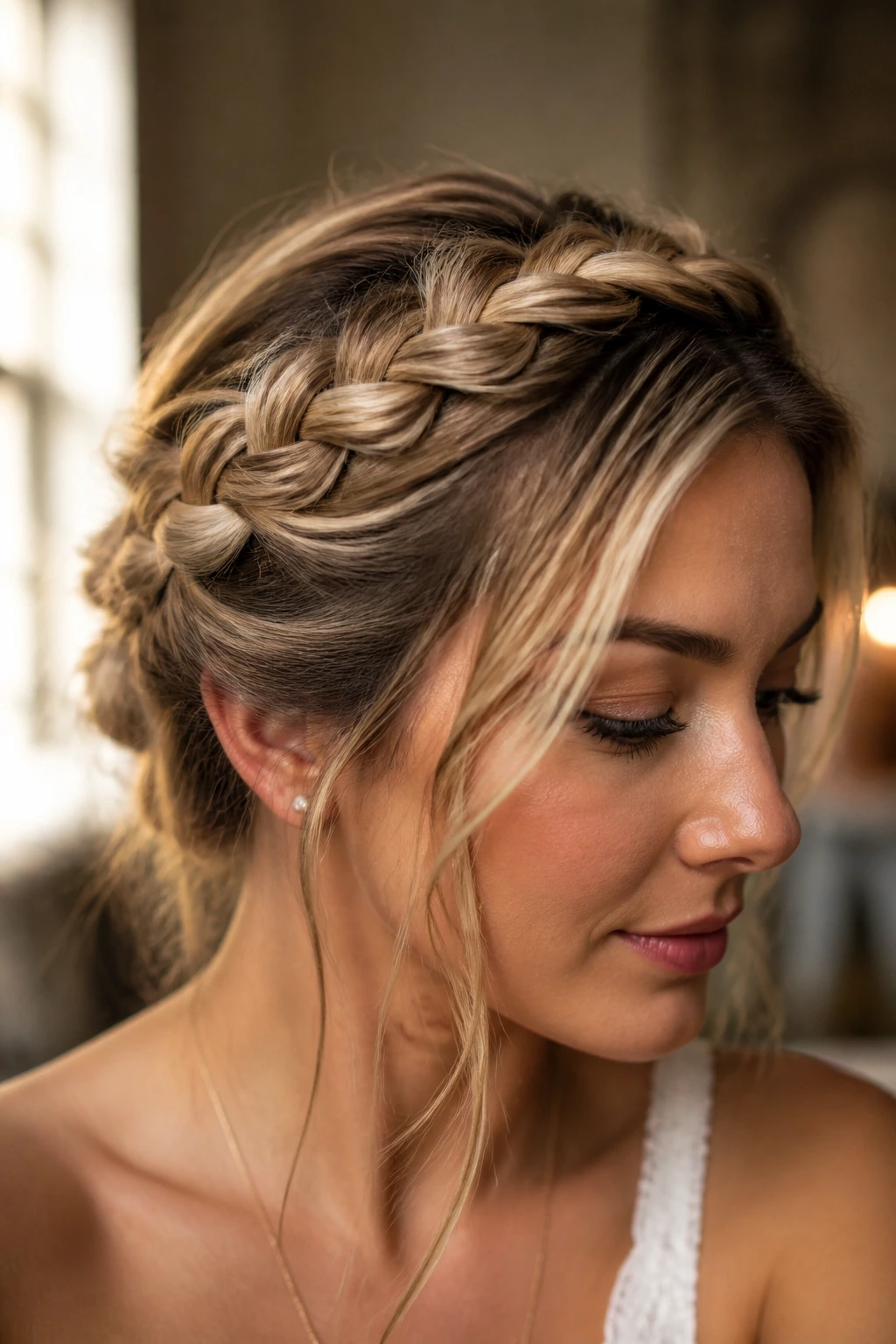
A crown braid with honeyed pieces woven through the top layer has a polished, almost ceremonial feel — but in a real-life way, not a costume way. The blonde catches in the braid pattern, which makes the texture visible without needing a lot of product.
This is useful when you want hair off the neck but still want to show the color work. Keep the braid snug enough to hold its shape, then loosen the edges a little so the honey pieces sit softly at the surface. A braid that’s too tight can make the blonde disappear into the weave.
Best for: long hair, events, or days when you need your style to survive humidity and a long commute.
25. Soft Vanilla Ombré With Polished Ends
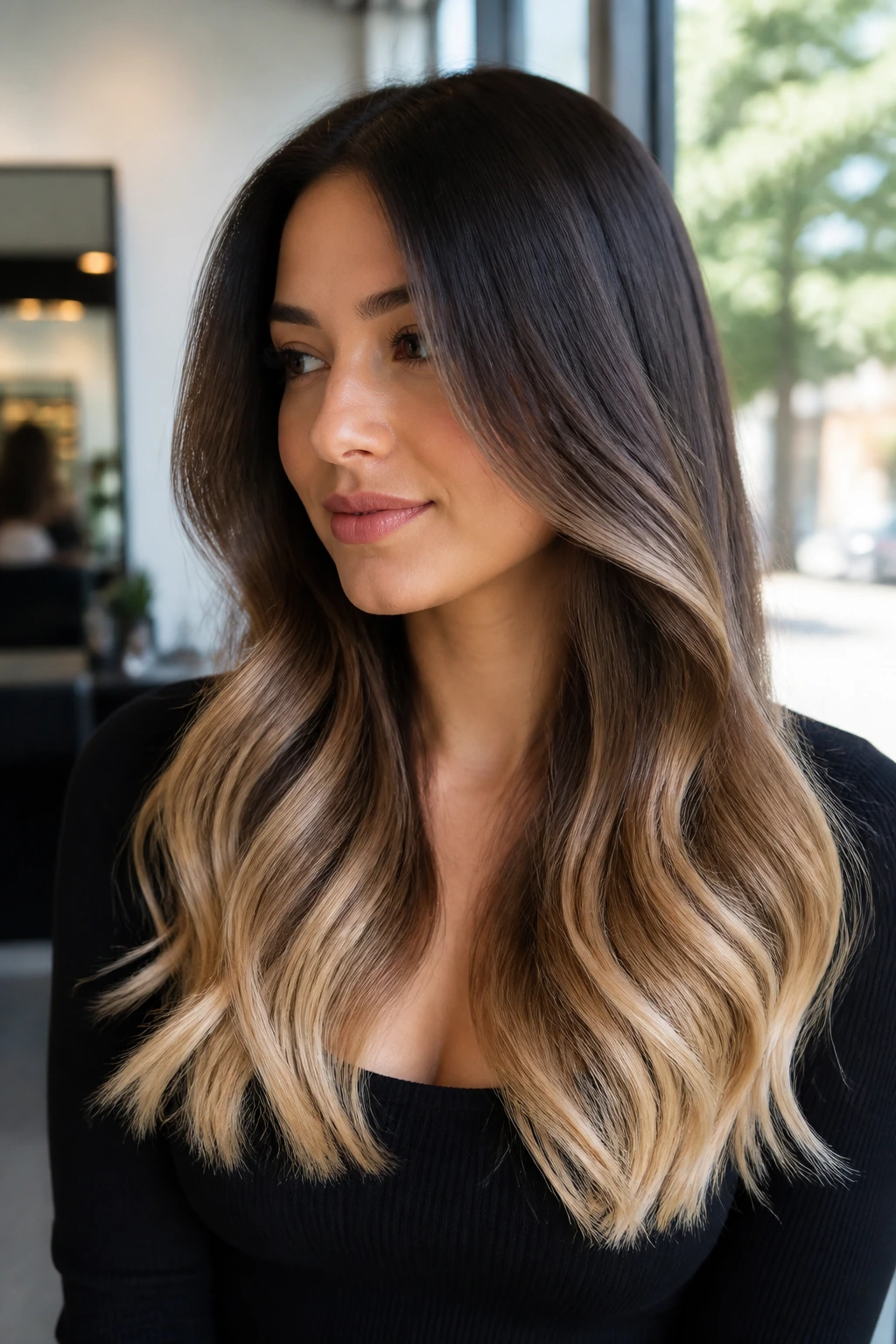
A soft vanilla ombré is the easy way to end this list because it gives you brightness where hair naturally shows wear — the ends — while leaving the roots dark and tidy. On brunettes, that means less maintenance and a cleaner grow-out line.
The polish comes from the ends. Keep them hydrated, trimmed, and shaped. If the ends are frayed, the vanilla tone can look dry no matter how good the color is. With a smooth finish, though, the whole style feels intentional and calm, not high-maintenance.
Salon note: ask for a gradual fade, not a sudden jump, and finish with a neutral gloss to keep the blonde from going too warm.
How Professional Blonde Hairstyles for Brunettes Stay Polished
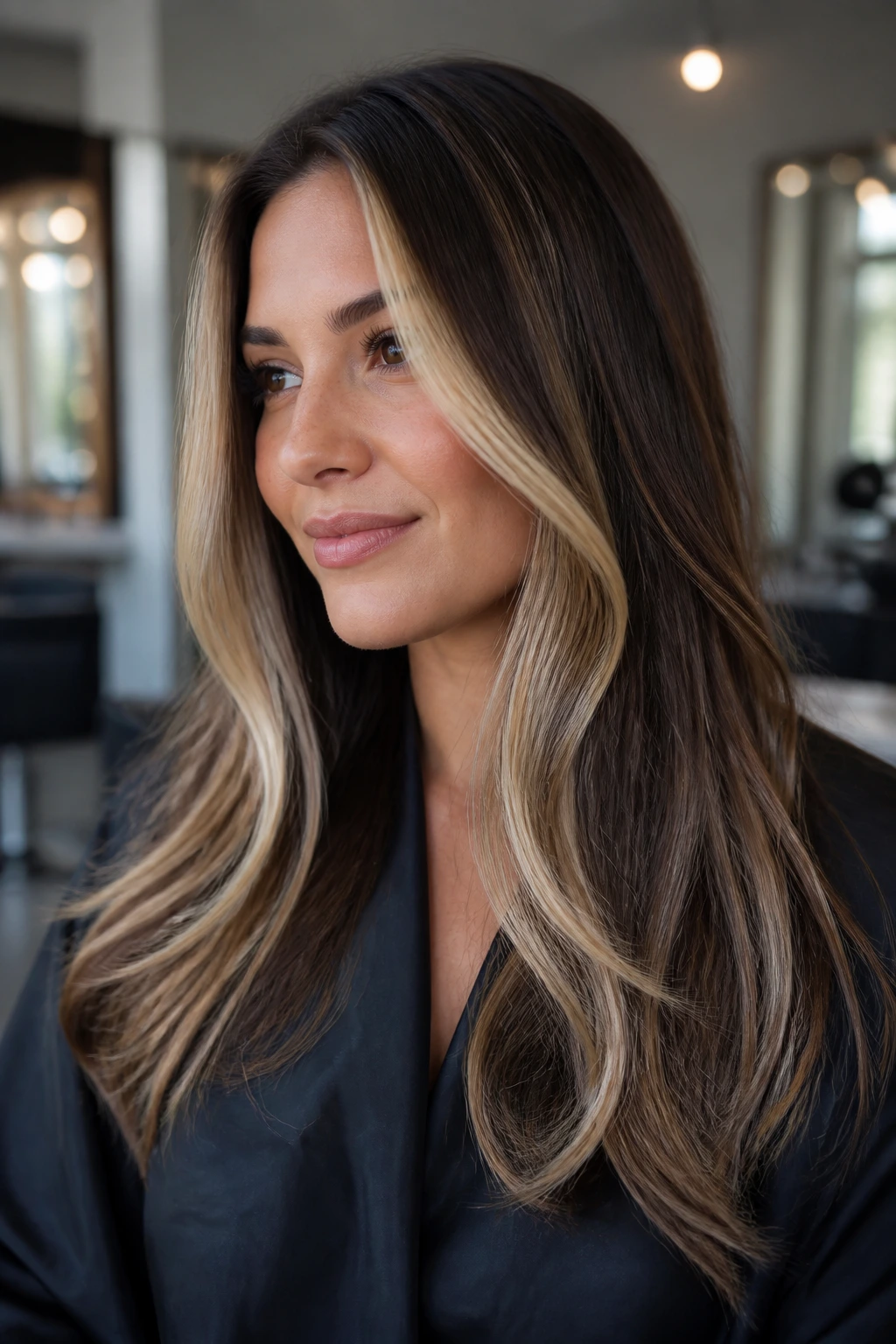
The biggest thing to understand is that brunette hair usually looks best when the blonde is placed like punctuation. A few well-placed marks change the sentence. Too many, and the whole thing gets noisy.
If your base is deep brown, keep the lightness concentrated at the face, the ends, or inside the layers. If your hair sits around medium brown, you can usually wear more brightness through the mid-lengths without losing that refined feel. Either way, the goal is the same: keep enough depth at the root and through the interior so the blonde has somewhere to live.
Texture matters too. Straight hair shows every line, which means the highlights need to be softer and more blended. Wavy or curly hair can carry slightly stronger contrast because the movement breaks the color up for you. That’s why the same blonde formula can look clean on one head and loud on another.
How to Choose the Right Blonde Tone for Brunette Hair
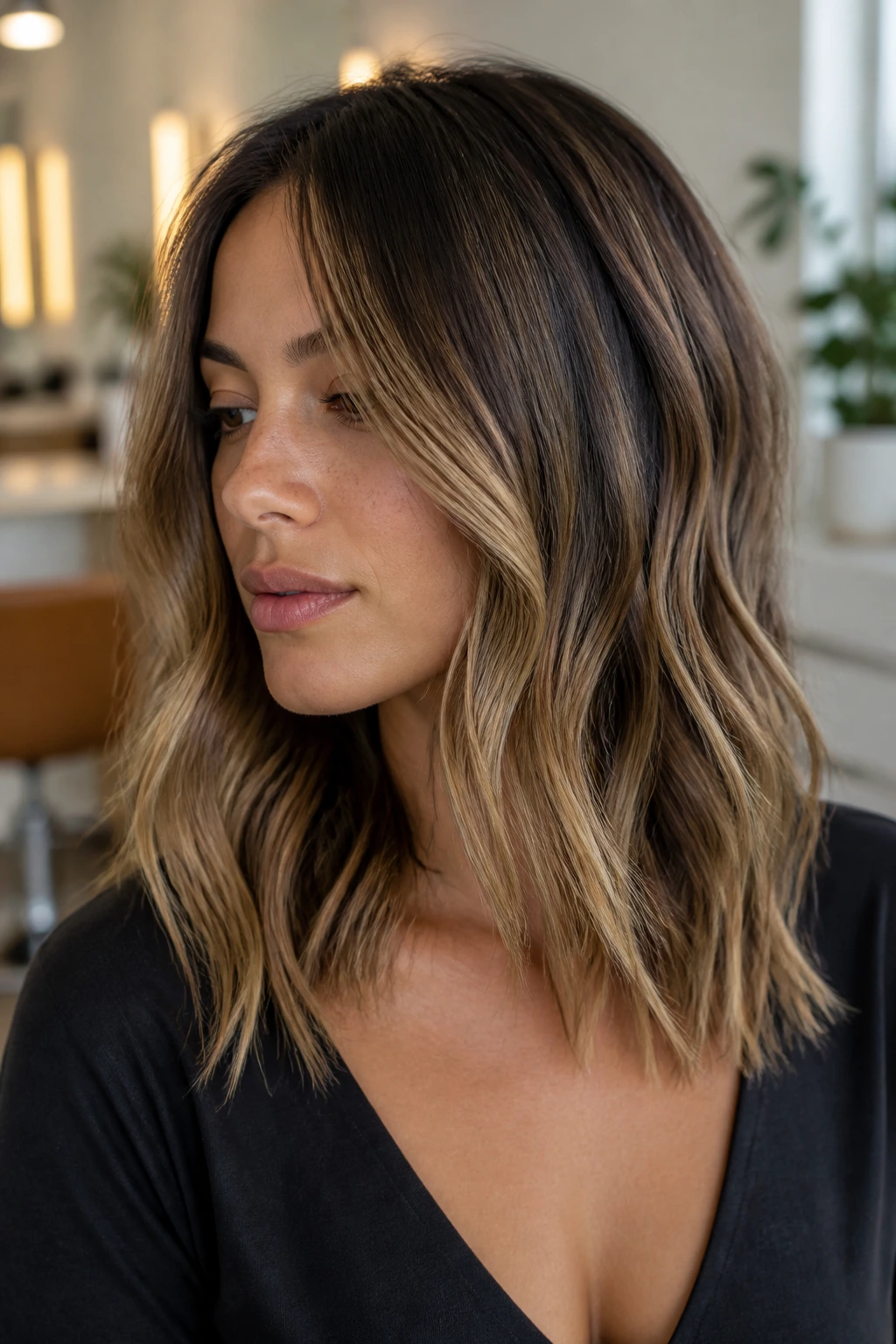
Warm brunette bases usually play best with honey, caramel, buttercream, or soft gold. Those shades keep the hair from looking muddy and tend to flatter olive, golden, or peachy skin tones without much fuss.
Cool brunette bases often do better with beige, ash-beige, pearl, or smoky blonde. These tones quiet orange undertones and keep the finish clean under indoor light, which can be unforgiving if the blonde leans too yellow.
Fine hair usually needs finer placement. Babylights, thin ribbons, and face-framing pieces give the illusion of fullness without making the strands look sparse. Thicker hair can hold bolder placement, but the color still needs room to breathe — if every section is light, you lose the brunette depth that makes the style look tailored.
A root shadow or gloss is worth the appointment time. Always. That little bit of depth near the scalp keeps the blonde from looking pasted on, and it buys you more time between touch-ups.
Essential Tools and Products for Styling and Color Care
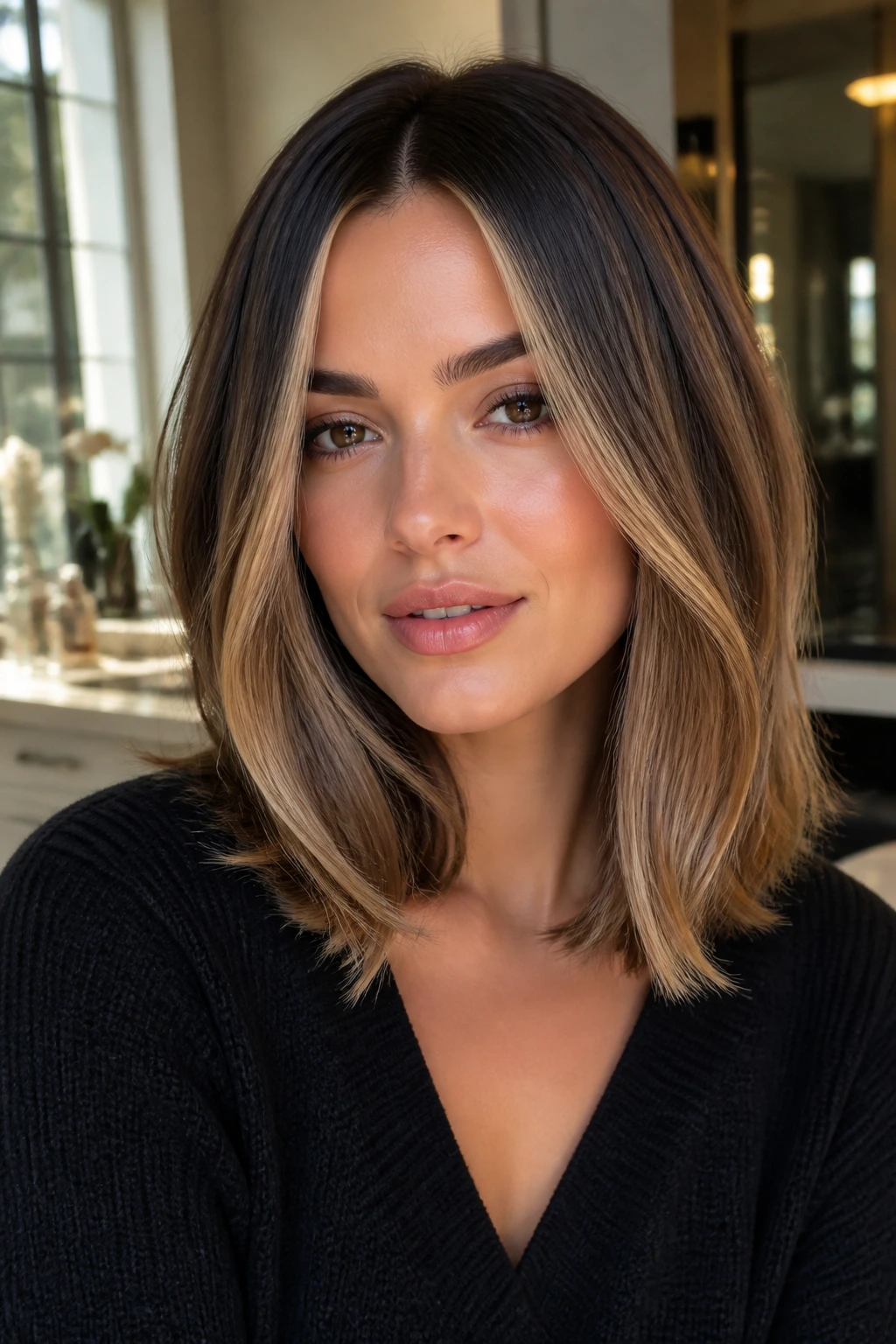
- Color-safe shampoo: Keeps brunette depth and blonde tone from fading too fast; look for gentle cleansers that don’t strip the ends.
- Purple shampoo: Best for beige, champagne, and lighter blonde pieces when they start to lean yellow; use it sparingly so the hair doesn’t go dull.
- Blue shampoo: Helpful if your brunette-to-blonde blend pulls orange, especially on darker bases.
- Bond-building conditioner or mask: Useful after lightening because it helps the ends stay smoother and less brittle.
- Heat protectant spray: Non-negotiable if you round-brush or curl regularly; blonde pieces dry out faster than the darker base.
- 1-inch curling iron: Good for soft bends in lobs, layers, and money-piece styles without creating stiff ringlets.
- 1.25-inch round brush: The sweet spot for most blowouts; it gives enough bend without making the hair flip too hard.
- Blow dryer with a nozzle: Helps keep the cuticle smooth, which matters a lot when blonde and brunette tones sit side by side.
- Sectioning clips: Useful for clean blow-drying and for keeping highlights organized when you style.
- Tail comb: Handy for sharp parts, root lift, and neat ponytails or buns.
- Satin pillowcase or bonnet: Reduces friction overnight, which keeps blonde ends from roughing up and looking dry.
- Lightweight shine serum: A tiny amount on the mid-lengths makes the blonde pieces look smoother and the brunette base look richer.
How to Keep Blonde Pieces Fresh Between Salon Visits
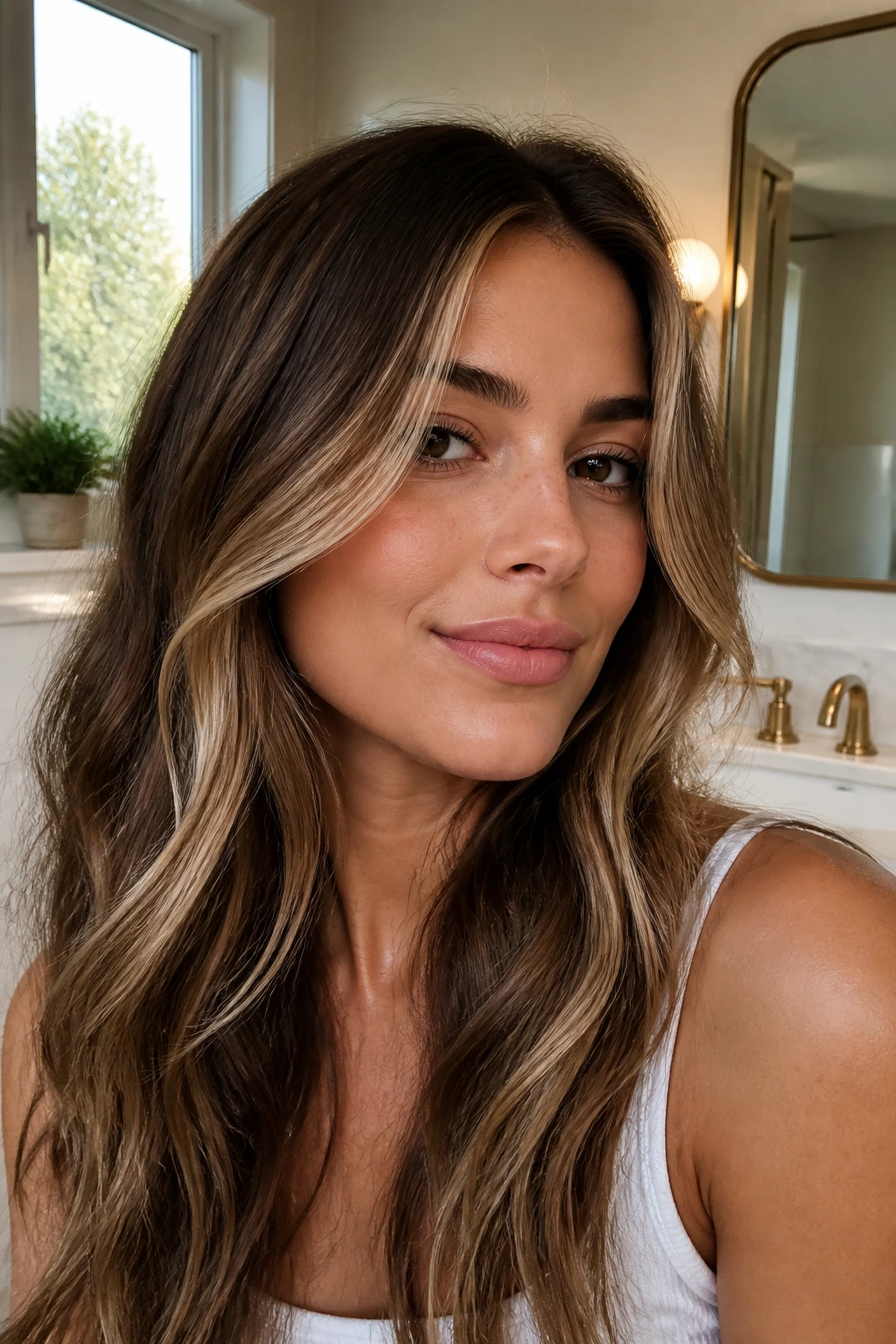
Blonde on brunette hair tends to look best when the tone stays controlled, not when it stays the same forever. A gloss every 4 to 6 weeks usually keeps the blonde from drifting yellow or orange, especially if you wear it in warmer shades like honey, caramel, or beige.
Root touch-ups depend on placement. A soft balayage or money piece can stretch 8 to 12 weeks before it needs serious attention, while finer babylights or a precision bob may need tidying closer to the 6 to 8 week mark. If you keep a visible root shadow, the grow-out stays softer and buys you more breathing room.
Purple shampoo should be treated like a tool, not a habit. Once every 7 to 10 days is enough for many beige or champagne blondes; use it for 3 to 5 minutes, then rinse well and follow with a mask. If your blonde is warm honey or caramel, go lighter on the toning shampoo and lean more on moisture, because over-toning can flatten the warmth that makes those shades look rich.
Heat is the other thing to watch. Try to stay at 300°F to 375°F for curling irons and flat irons, and use the lower end if your hair is already lightened on the ends. A weekly deep-conditioning mask, a trim every 6 to 8 weeks, and a chelating shampoo once a month if you have hard water will keep the blonde from turning rough and dull.
Smart Variations for Different Dress Codes and Hair Textures
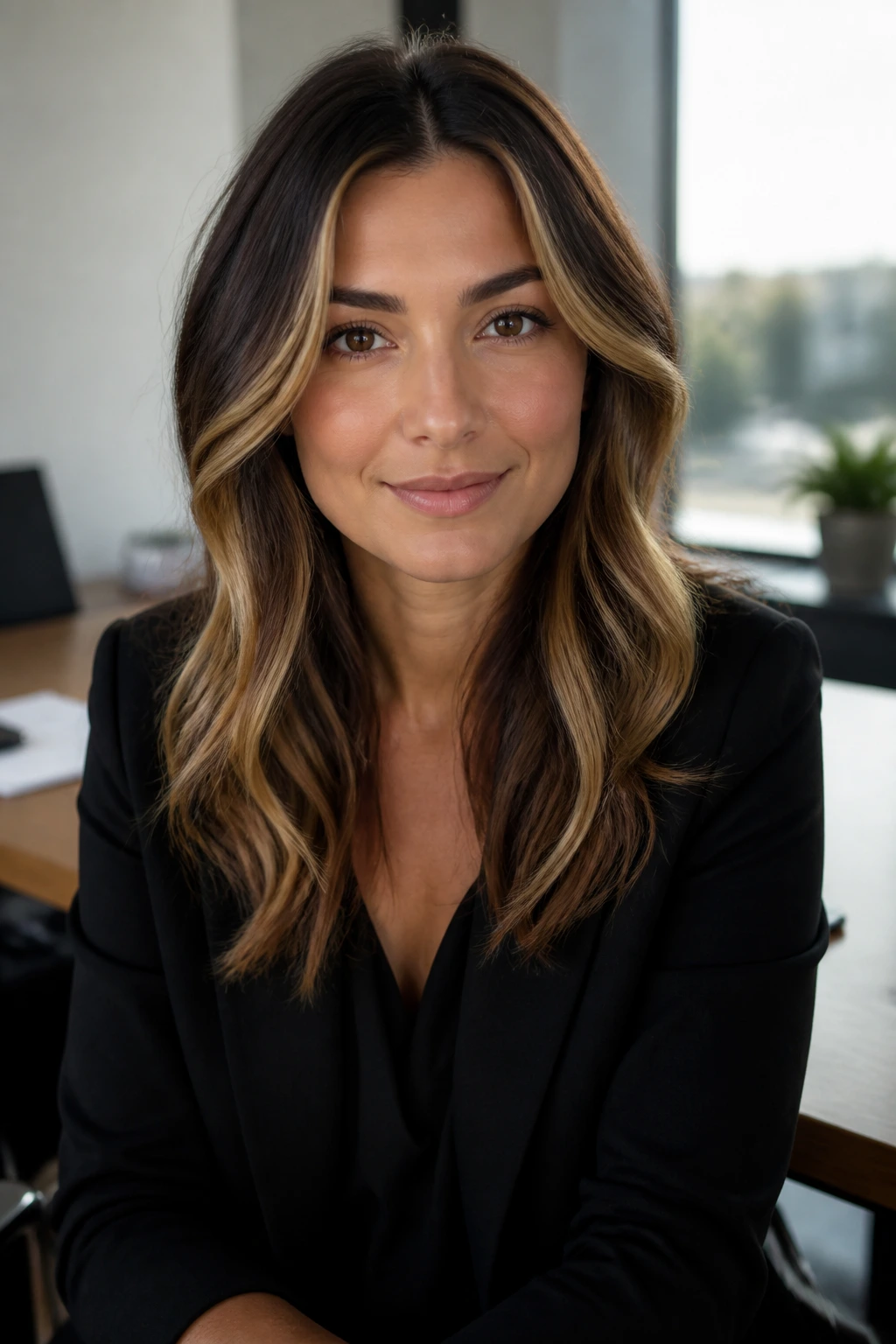
The Quiet-Office Edit: Keep the blonde two shades lighter than the brunette base and focus it only at the face, ends, or interior layers. This version stays understated even when your hair is down and full, and it works well if your workplace leans formal.
The Warm-Honey Version: Swap cool beige for honey, caramel, or buttercream. This suits golden skin tones and gives brunettes a softer, warmer glow that still looks neat with a blowout or low bun.
The Cool-Boardroom Version: Use ash-beige, pearl, or smoky blonde with a visible root shadow. The finish is calmer and cleaner, especially on straight hair or sharper cuts like bobs and collarbone-length styles.
The Curly-Hair Version: Ask for babylights or fine ribbons, not chunky panels. Curly hair breaks light up naturally, so the color should be woven through the curl pattern and toned gently so the shape stays readable.
The Low-Commitment Version: Try underlights, a money piece, or a soft ombré instead of all-over highlights. You get the blonde effect without having to keep every inch of the hair fresh all the time.
The Short-Hair Version: Concentrate blonde near the top, crown, and hairline. On pixies and bobs, too much lightness at the ends can make the cut look thin, while a controlled placement keeps the shape crisp.
Common Mistakes That Make Brunette-to-Blonde Color Look Harsh
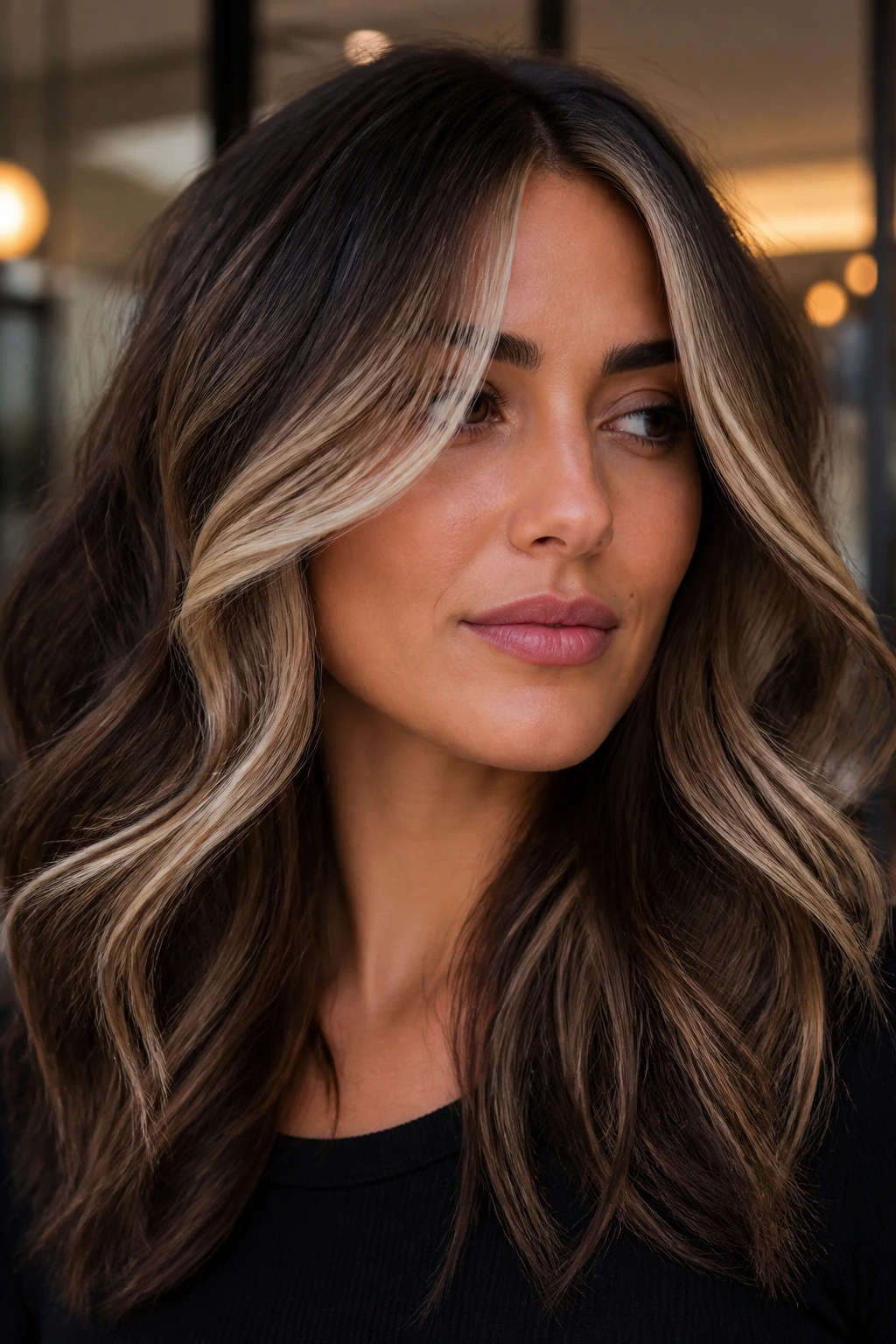
- Too much contrast at the root: If the blonde starts too high with no shadow, the grow-out line can look blunt fast. The fix is a root melt or smudge so the lightness fades in gradually.
- Choosing the wrong blonde tone: A honey blonde on a cool brunette base can turn brassy, while an ash blonde on a warm base can look flat. Match the tone to your undertone and add a gloss if the first pass feels off.
- Chunky highlights on fine hair: Big stripes can make the hair look sparse and dated. Fine babylights or narrow ribbons usually create more fullness and look cleaner.
- Skipping toner or gloss: Raw lightener doesn’t stay pretty for long. Without toning, blonde on brunette hair can pick up yellow, orange, or just a rough matte finish.
- Overusing purple shampoo: It can leave blonde pieces dusty and tired if you reach for it too often. Use it only when the tone starts to drift, then switch back to moisture.
- Flat styling on a bad day: When blonde pieces dry unevenly, the color can look harsher than it is. A quick blowout, even just at the front and ends, softens the whole look fast.
Frequently Asked Questions About Blonde Hairstyles for Brunettes
Can brunettes go blonde and still look professional?
Absolutely, if the blonde is placed with restraint. Face-framing pieces, root shadow, and soft balayage tend to look calmer than all-over lightening, and they grow out with less drama.
Which blonde shade is easiest to wear on brown hair?
Beige and caramel are usually the safest bets because they sit between warm and cool. They flatter a lot of skin tones and don’t look too icy under fluorescent lights.
Is balayage better than highlights for brunette hair?
Balayage usually gives a softer grow-out, which is handy if you don’t want a strict maintenance schedule. Highlights can work too, but they need finer placement and better toning if you want them to look polished.
Will blonde highlights make fine brunette hair look thinner?
They can, if the pieces are too wide or too light. Fine hair usually looks fuller with delicate babylights, a root shadow, and a cut that keeps the ends blunt or slightly beveled.
How do I keep blonde from turning brassy?
Use color-safe shampoo, tone regularly, and don’t overdo heat. If the blonde is warm, focus more on glosses and hydration; if it leans cool, a small amount of purple shampoo once a week can help.
Can I get these looks if my hair is very dark brown?
Yes, but the process often needs more patience and a gentler lift. Very dark brunette hair usually looks best with concentrated lightness at the front, ends, or underlayers rather than an all-over blonde shift.
Do blonde money pieces work with curly hair?
They do, but keep them soft and narrow. Curly hair already gives you movement, so a chunky front highlight can overwhelm the curl pattern faster than you’d expect.
What if I want blonde but hate obvious upkeep?
Pick underlights, a soft ombré, or a deep-rooted balayage. Those techniques let the brunette base do the heavy lifting, which means the grow-out stays smoother and less noticeable.
A Blonde Finish That Stays Intentional
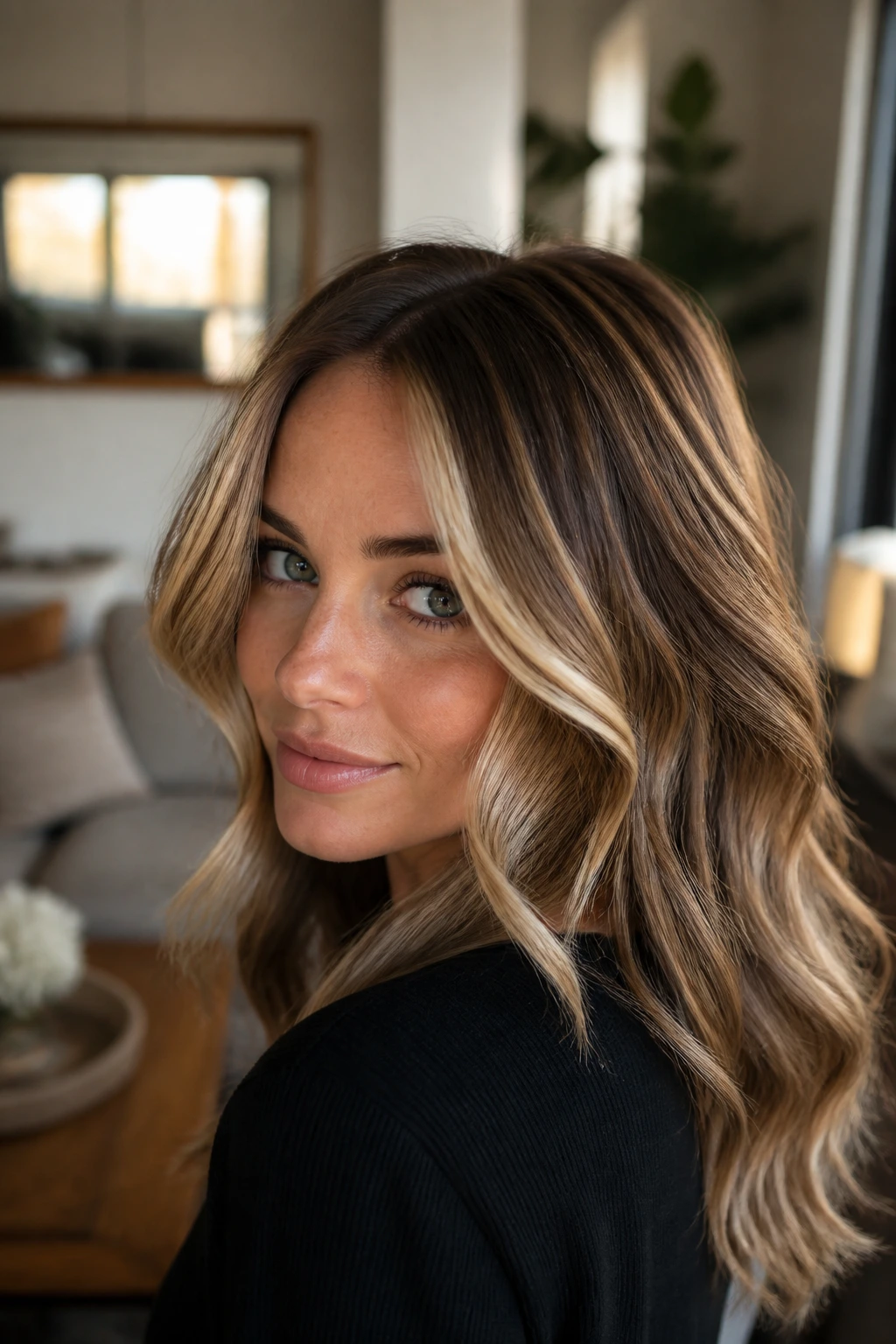
The best brunette-and-blonde combinations don’t try to hide the brown part of the hair. They use it. That depth makes the blonde look brighter, cleaner, and more controlled, which is exactly why these styles hold up in real life instead of only in a salon mirror.
If you want the easiest path, start with one clear decision: where should the lightest pieces live — around the face, at the ends, or hidden underneath? Once that’s set, the rest gets simpler fast. Bring a photo of the cut, a photo of the blonde tone, and one honest note about how often you’re willing to touch it up. That three-part conversation saves a lot of back-and-forth, and it usually gets you much closer to hair that looks polished on a random Tuesday, not just the day you leave the chair.