



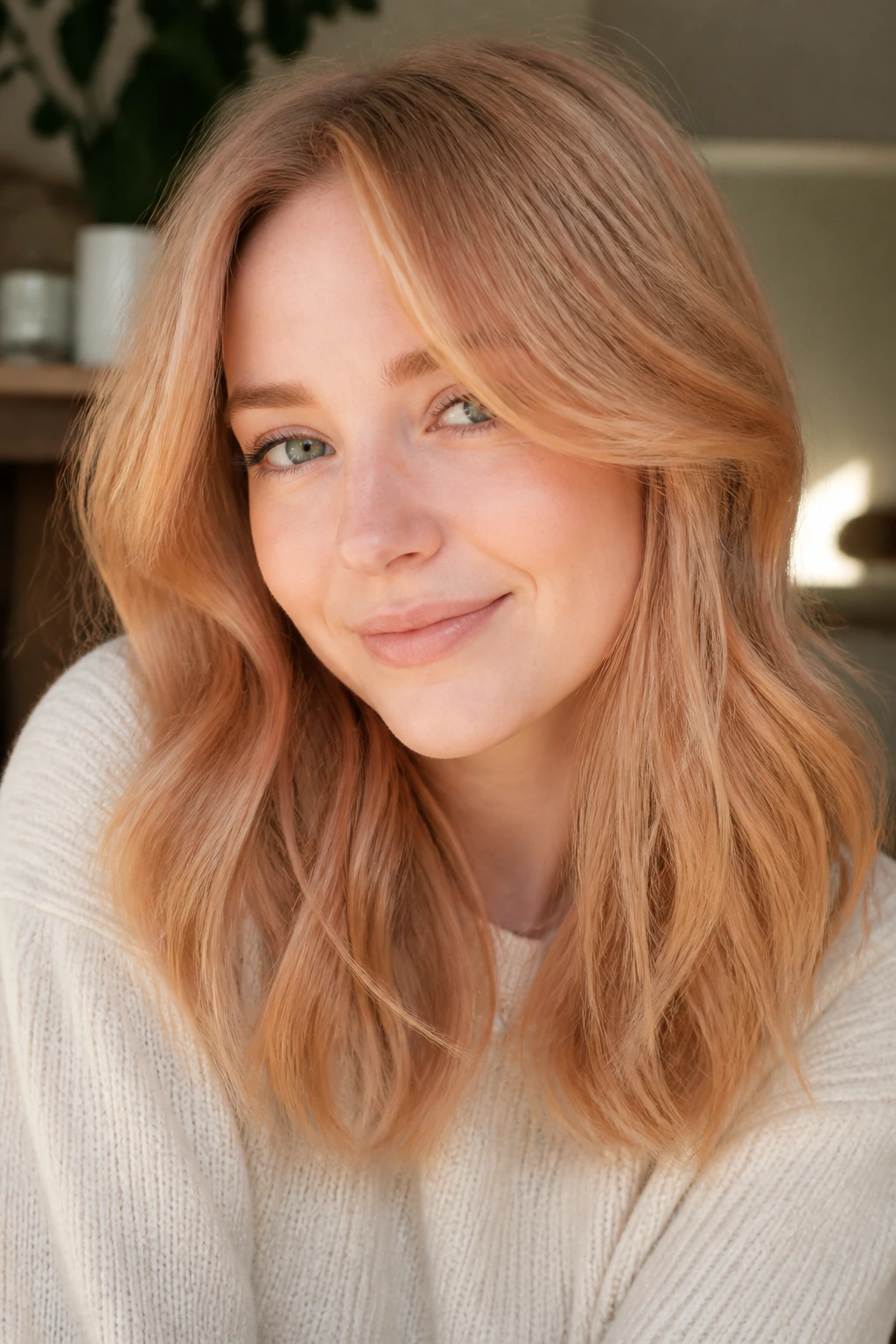
Light strawberry blonde hair color sits in a sweet spot that a lot of people chase and then describe badly. It is blonde, but not pale. It is warm, but not copper. When it’s mixed well, you get that soft apricot glow that flashes through the ends of a wave, then turns creamy and quiet again when the light shifts. That little change is the charm. It keeps the shade from looking flat.
What makes the color tricky is the balance. Push the red too hard and you land in ginger territory. Pull back too far and the result turns beige, which is pretty, but not strawberry. The best versions usually live on a level 8 or 9 blonde base with a whisper of copper, gold, or rose layered in through gloss, balayage, or very fine highlights. That’s why the shade can look gentle in one room and almost luminous in another.
The fun part is how many directions it can go. Some versions lean peach and soft. Some read like rose gold with a little sun in it. Others stay rooted and dimensional so the grow-out doesn’t shout for attention. Below, I’ve pulled together 28 light strawberry blonde hair color ideas that range from barely-there warmth to richer, more polished copper-blonde blends, so you can pick the version that fits your base color, your upkeep tolerance, and your taste for warmth.
Why Light Strawberry Blonde Keeps Working in Real Life
-
It softens blonde without killing brightness: A touch of copper or rose keeps pale blonde from looking icy or chalky, especially around the face.
-
It plays nicely with grow-out: Root shadows, balayage ribbons, and gloss layers make the color look deliberate even when your roots show a little.
-
It’s easier to tweak than full copper: A stylist can steer it warmer, pinker, or more beige with toner and glaze instead of starting over.
-
It flatters different undertones when mixed right: A peachier version warms cool skin; a beige-gold version keeps warm skin from looking too red.
-
It changes in a flattering way under different light: Indoors it can read soft and creamy. Outside, the copper-gold notes show up more clearly.
-
It works on cuts, not just lengths: A bob, shag, lob, or long layered cut can each make the same strawberry base feel different.
1. Soft Apricot All-Over Strawberry Blonde
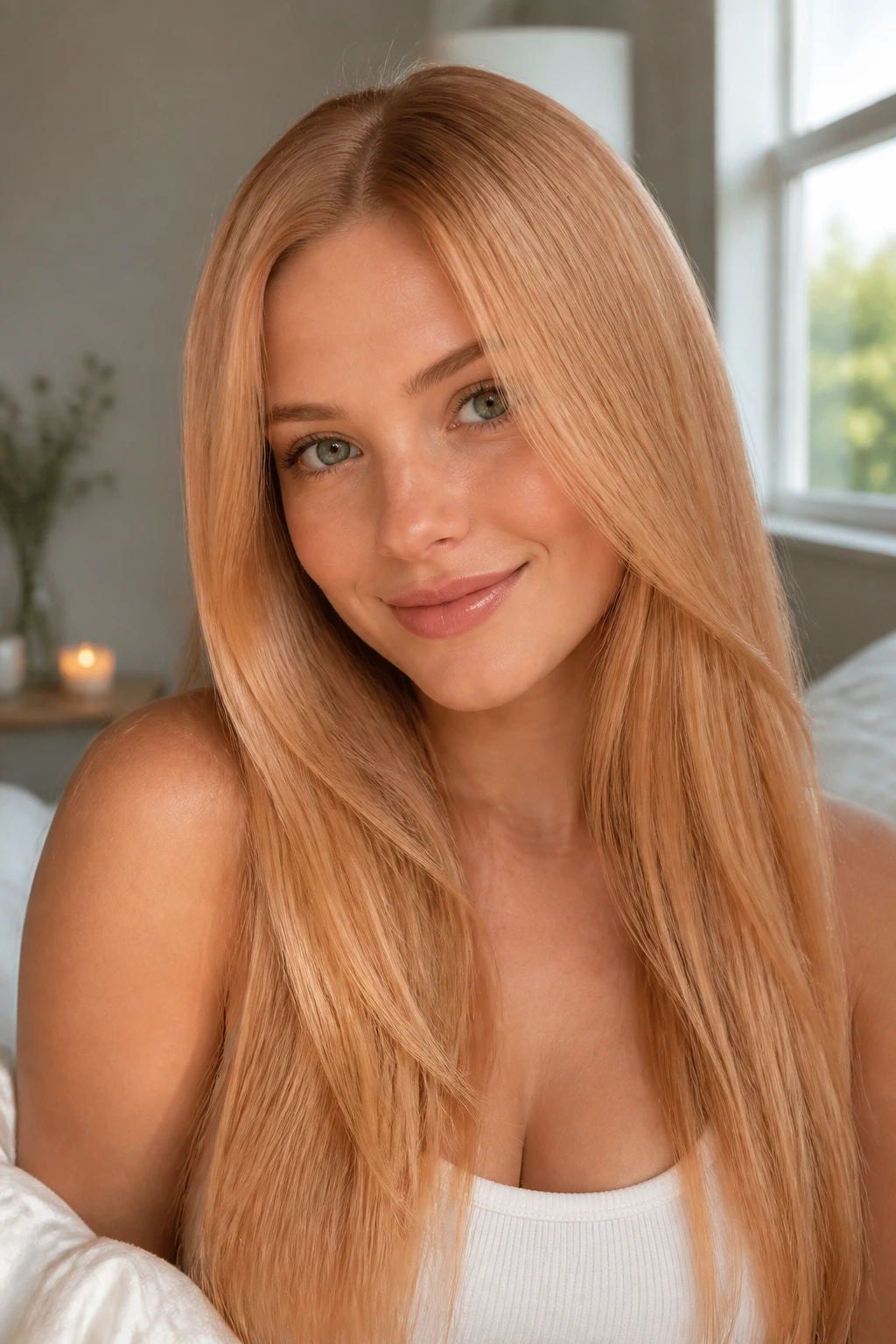
This is the version that makes people stop and squint a little, because it doesn’t announce itself as red or blonde first. It lands in that soft apricot lane where the warmth feels baked into the hair rather than painted on top. On straight hair, it looks smooth and creamy. On waves, the peachy notes catch at the bends and keep the whole thing from going flat.
What to ask for
Tell your colorist you want a level 8 beige blonde with a very light copper-apricot glaze. That wording matters, because a full copper formula will push the shade too far. You want warmth, not orange. A demi-permanent gloss usually gives this look the most believable finish.
Best on
- natural dark blonde or light brown bases
- skin with neutral or warm undertones
- hair that already lifts evenly, since the color is soft rather than high-contrast
My favorite part: it grows out quietly. The root line doesn’t scream, which is half the reason this shade has such staying power.
2. Rose-Gold Cream Strawberry Blonde
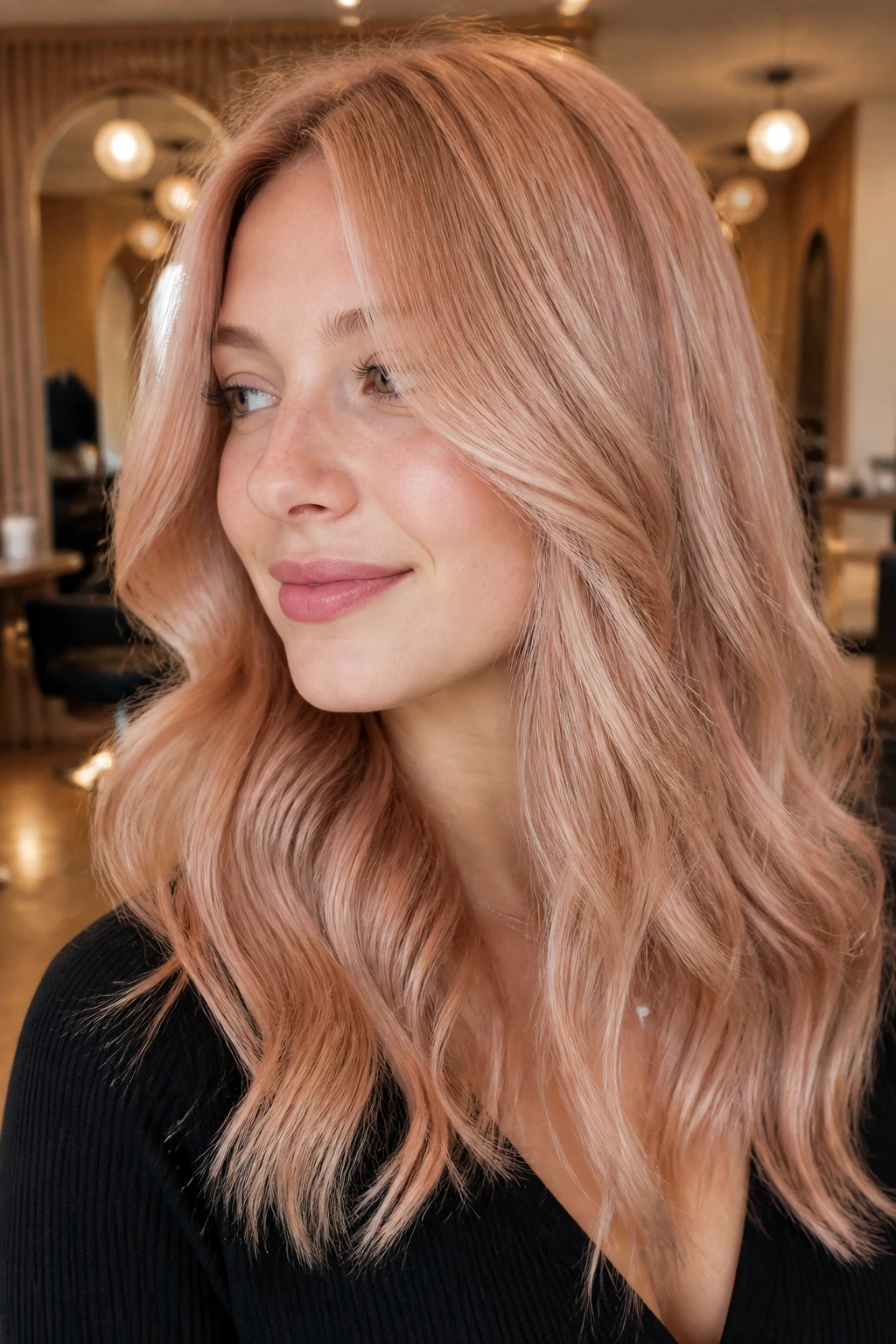
A lot of rose-gold shades can look a little too sweet if the pink is heavy. This one avoids that. The base stays creamy blonde, then a rose glaze slips in just enough to make the warmth feel polished rather than brassy. The finish is softer than copper and less sugary than pink blonde.
Why it stands out
Rose-gold strawberry blonde works because the pink sits on top of gold, not in place of it. That means the shade still reads warm, but it gets a cooler little edge that keeps it from turning flat on fair skin. It’s one of those colors that looks expensive when the gloss is fresh and still looks thoughtful two weeks later.
How to wear it
A blunt lob or shoulder-length cut suits this shade especially well because the clean edges show off the tonal shift. Loose waves help too, but keep them wide and brushed out. Tight curls can muddy the rose note and make the color lose its creamy feel.
3. Peach Beige Balayage
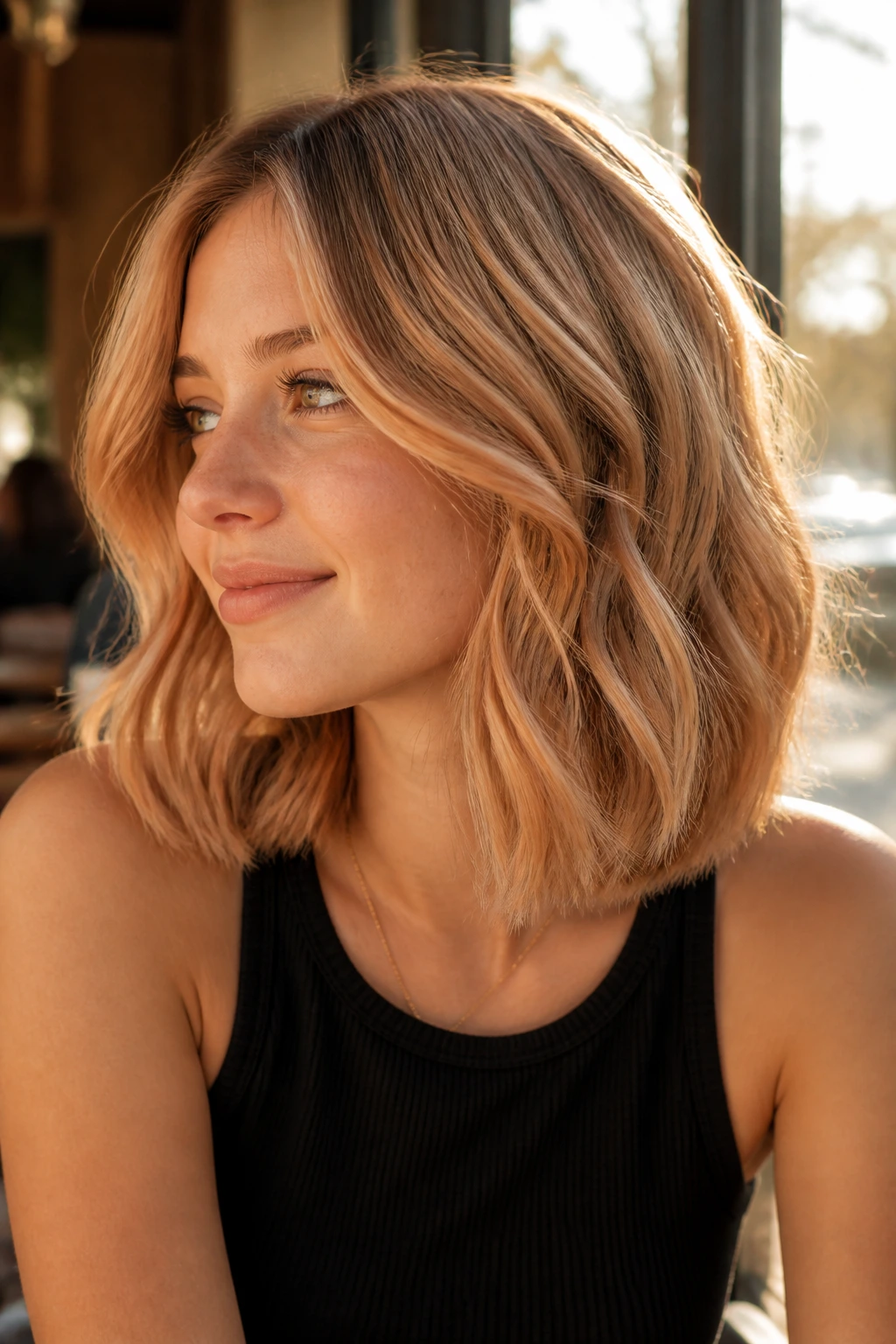
Peach beige is the calmer cousin in the strawberry blonde family. It doesn’t flirt with red as hard as some of the other ideas here, and that is exactly why I like it on people who want warmth without a lot of drama. The beige keeps it wearable. The peach keeps it from looking dusty.
Why this works
Balayage lets the warmth sit where the sun would naturally hit: the top layer, the face frame, the ends. That placement matters because light strawberry blonde can start looking too even if it’s painted from root to tip with the same intensity. With balayage, you get movement. You get soft contrast. You also get a little forgiveness if your natural base is darker.
Best for a first strawberry blonde
If you’re nervous, this is one of the safest entry points. Ask for fine, hand-painted ribbons with a peach-beige toner, then keep the root area slightly deeper. That little depth near the scalp keeps the color from looking washed out.
4. Rooted Strawberry Blonde Melt
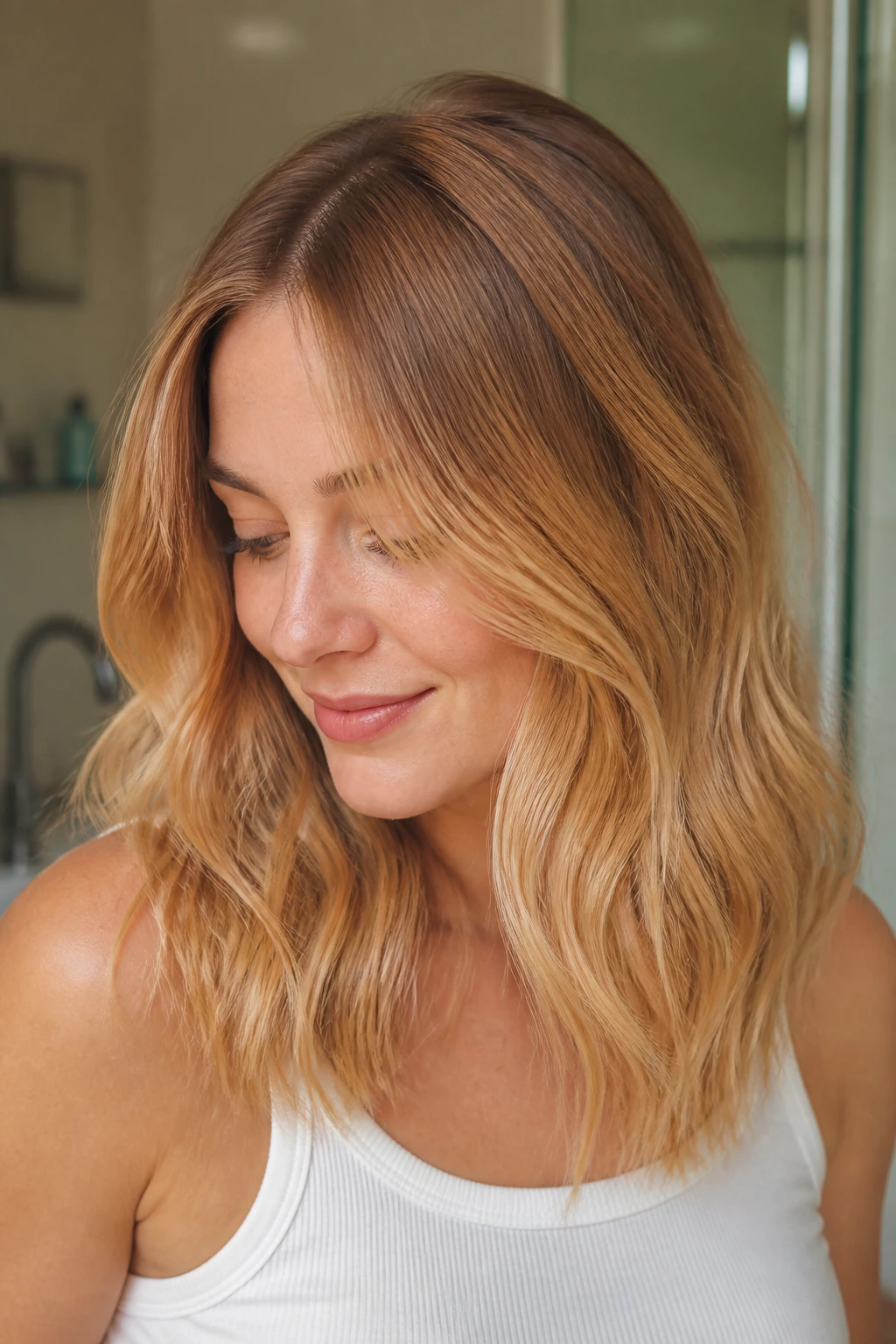
A rooted melt is the version I recommend to anyone who wants strawberry blonde but does not want a color appointment every few weeks. The root stays a shade or two deeper, then the color slides gradually into a light strawberry blonde mid-length and ends. The transition matters. No hard line. No skunky grow-out.
What it looks like
Think of a warm latte poured into pale honey. The root gives the shade structure, then the lighter ends catch the light and keep the hair looking airy. On layered cuts, the melt shows even more because each tier of hair picks up a different amount of warmth.
Practical note
This one is smart if your hair lifts unevenly. A rooted finish hides a little roughness near the scalp, so you do not need every section to be lifted to the exact same pale blonde before toning. That can save the hair a bit of stress, which I always like when the goal is softness.
5. Face-Framing Strawberry Blonde Money Piece
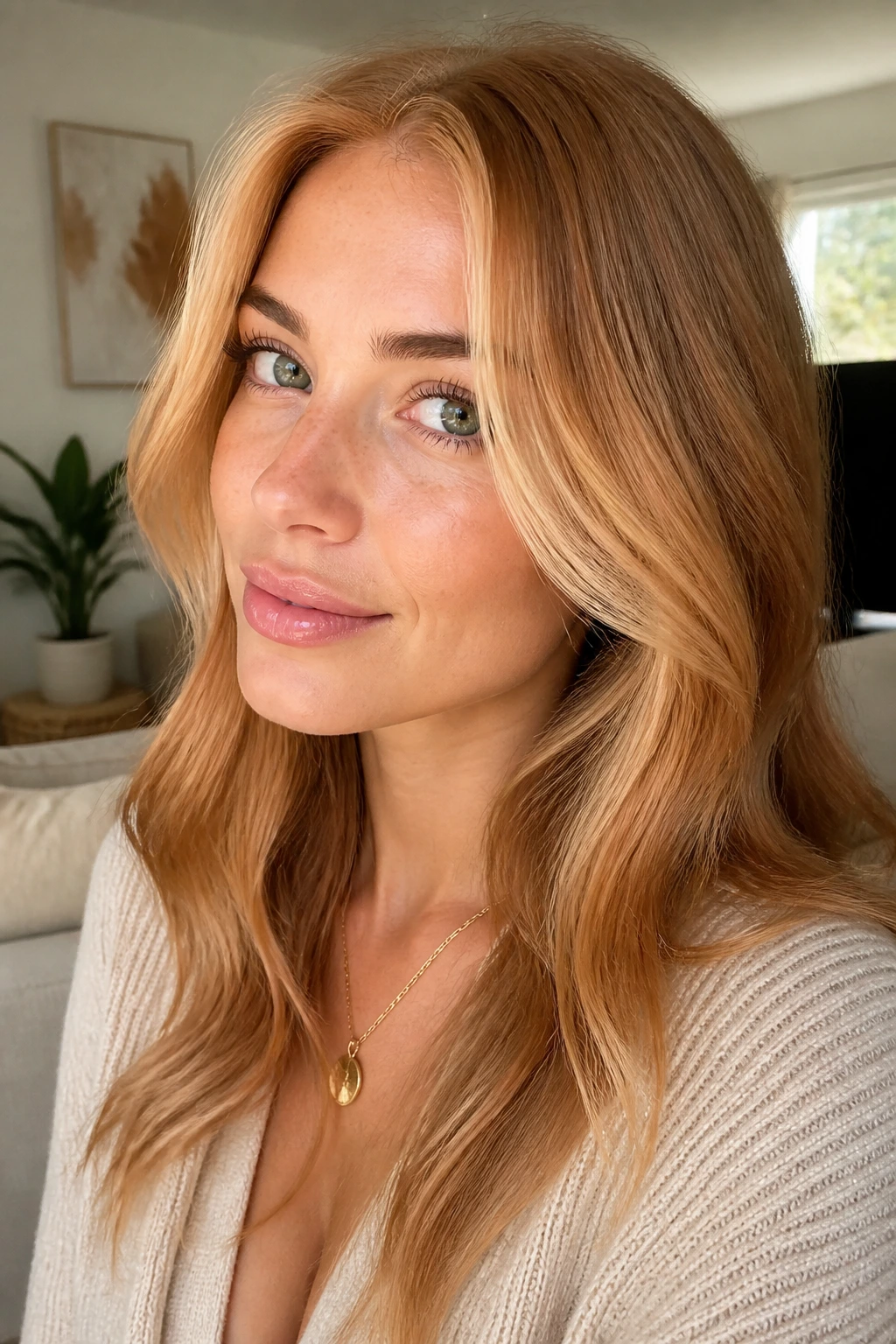
A money piece can go wrong fast if the front sections are too bright or too red. Done well, though, it gives light strawberry blonde a little lift around the face without turning the whole head into a highlight map. This version keeps the ends soft and the front bright, with a warm peach-gold strip framing the eyes and cheekbones.
Why it works
The face frame is where you can afford a bit more warmth. It reads intentional there, even if the rest of the color stays quieter. If your base is naturally deeper, this is a smart way to test strawberry blonde without committing to an all-over change.
How to ask for it
Request two to four fine face-framing foils on each side, then glaze them in a strawberry-gold toner. You want them bright enough to read at a glance, but not so pale that they flip into champagne blonde and lose the strawberry note.
6. Champagne Strawberry Blonde Gloss
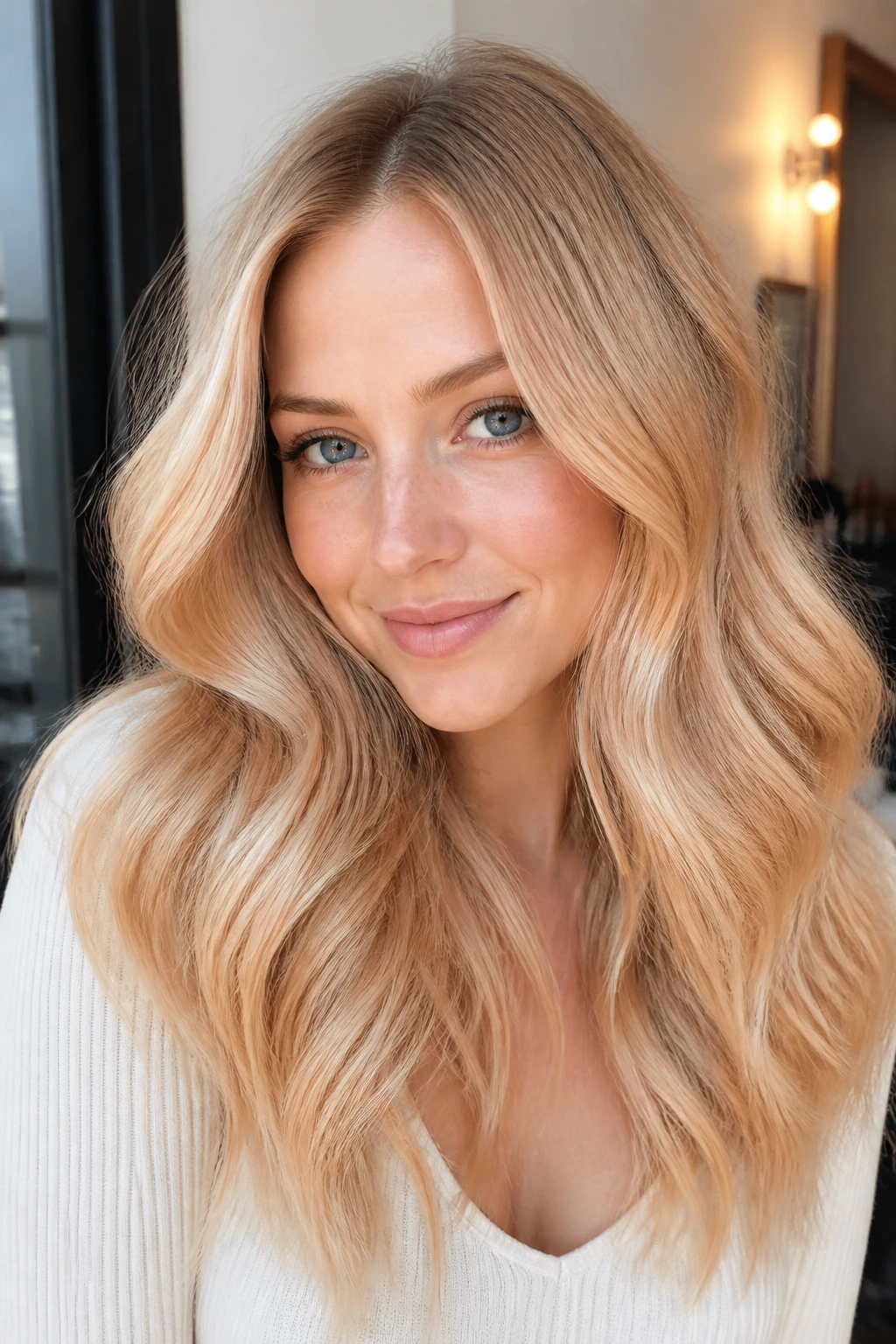
Champagne strawberry blonde is what happens when the color palette leans creamy and luminous instead of peachy-red. The strawberry note is there, but it’s tucked under a pale gold glaze that gives the whole finish a soft, silky look. It’s one of the most subtle ideas in the bunch.
How it differs from pure blonde
Pure champagne blonde can sometimes feel cold on certain skin tones. A whisper of strawberry warmth fixes that. The result is softer around the face, especially if your hair tends to pick up ash or yellow in the wrong places. The strawberry note keeps the color alive.
When I’d choose it
Choose this if you want your hair to look blonde first and warm second. It’s a clean choice for office settings, formal events, and anyone who hates obvious copper. It also works well with fine hair because gloss-heavy finishes tend to make strands look smoother than textured color alone.
7. Copper-Kissed Strawberry Blonde Bob
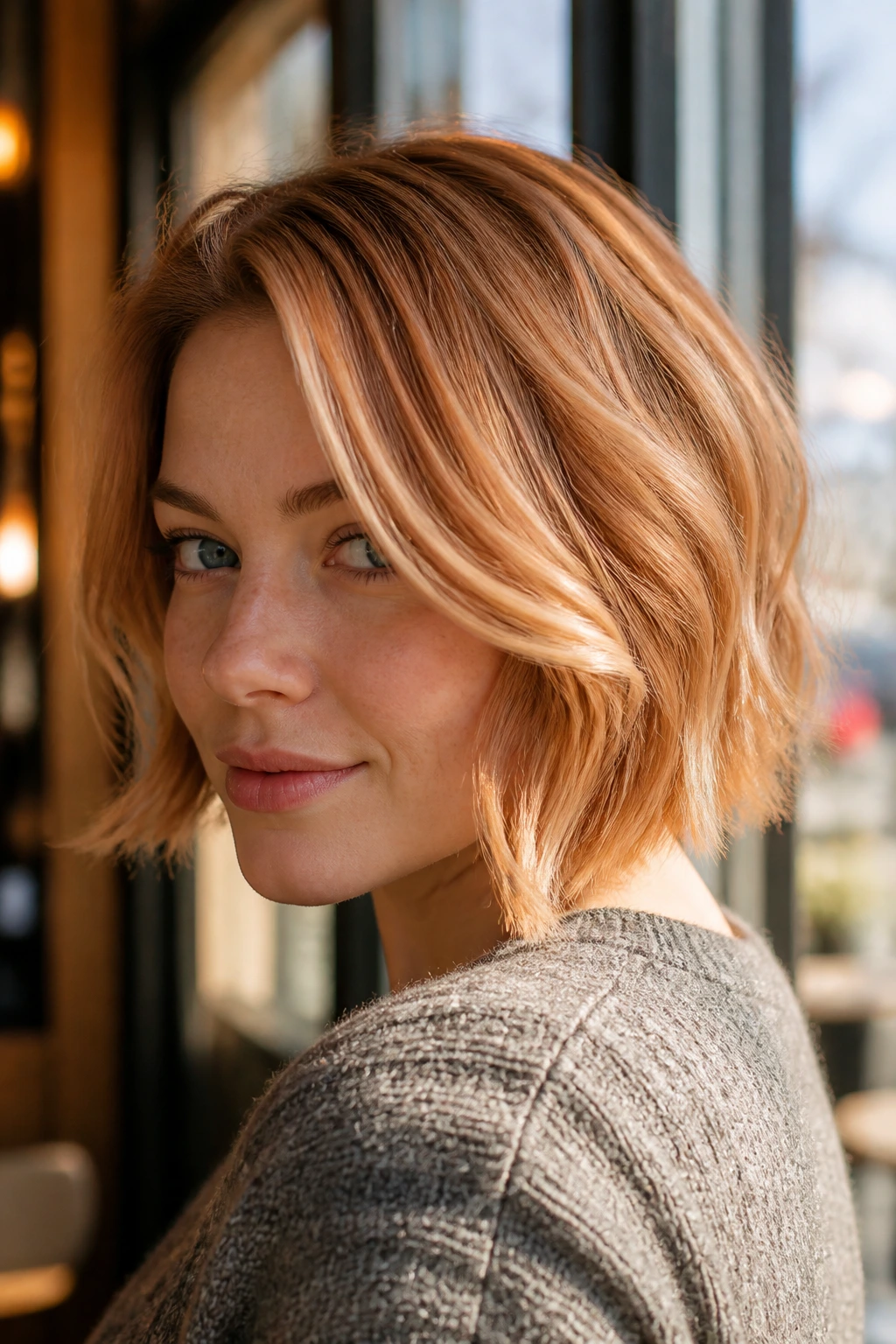
Short hair can take warmth in a bolder way because there’s less length for the color to disappear into. On a bob, a copper-kissed strawberry blonde feels sharp, fresh, and a little playful. The color can sit a touch deeper than the other ideas here because the cut itself keeps the look light.
Best details to ask for
A jaw-length or chin-length bob looks best when the shade has soft copper ribbons mixed through a blonde base. If the bob is blunt, keep the color dimensional so it doesn’t look like one solid block of peach. If the bob is layered, you can push the warmth a little more because the texture does some of the work.
Tiny styling note
A round brush and a fast blow-dry make this shade sing. Short cuts with warm color can look dull if they’re air-dried and ignored. Give the ends a bend. You’ll see the difference immediately.
8. Dimensional Lob with Strawberry Lowlights
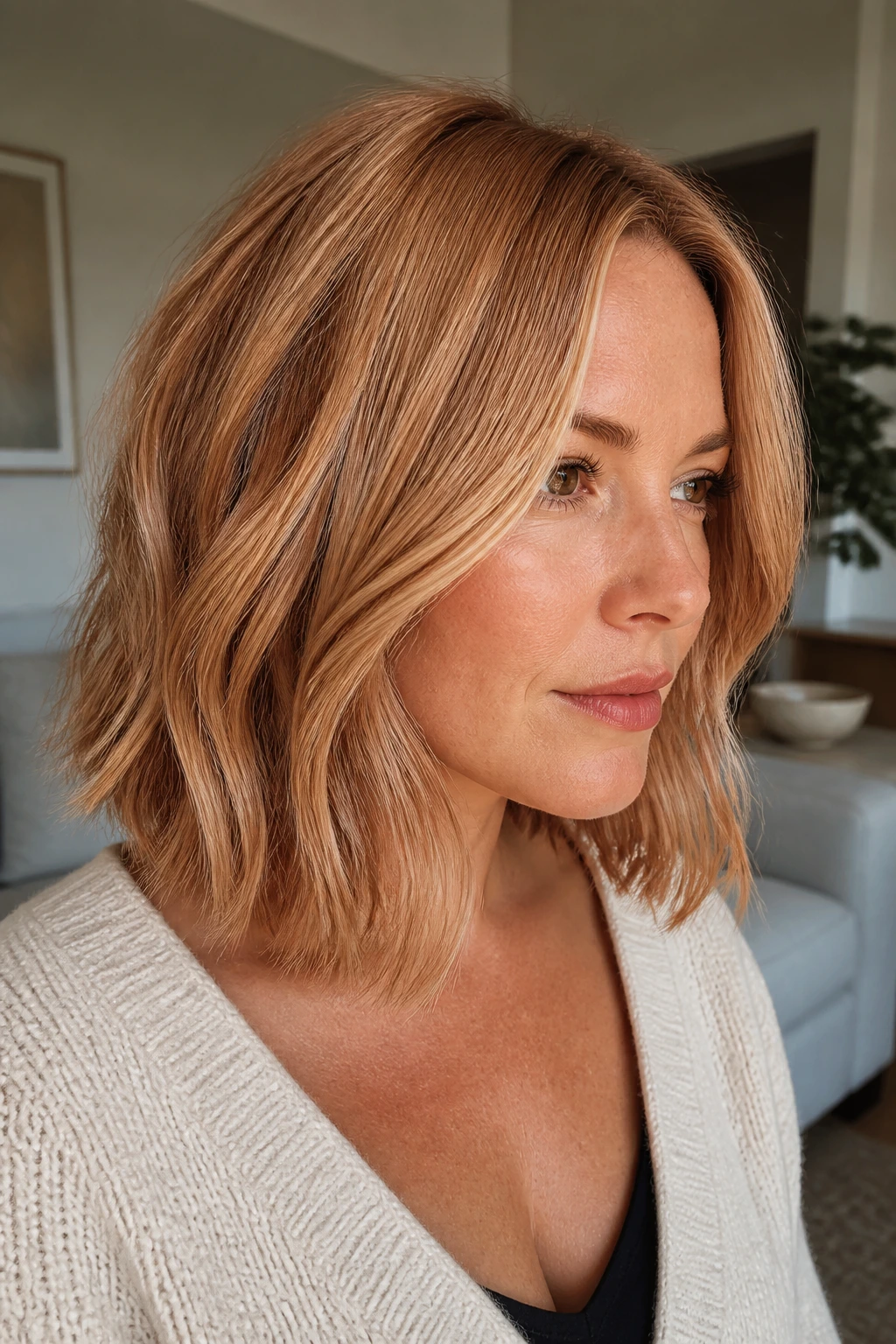
Here’s the move for people who don’t want the hair to look uniformly warm from root to tip. Add strawberry lowlights into a blonde lob and the whole cut gets depth. The lowlights sit under the brighter pieces, so the surface still reads light, but there’s a flicker of copper underneath that keeps it from looking washed out.
Why it’s smart
Lowlights are the part people forget. They matter. Without some deeper strands, light strawberry blonde can sometimes turn thin and over-processed, especially on medium-density hair. A few darker warm pieces help the brighter ones look brighter.
Who should try it
If your hair is shoulder-length or just below, this is one of the most flattering choices. It works on straight hair, but it really comes alive with a loose wave because the warmer and cooler strands separate a bit and create that ribboned effect you want.
9. Sunlit Baby-Lights on a Blonde Base
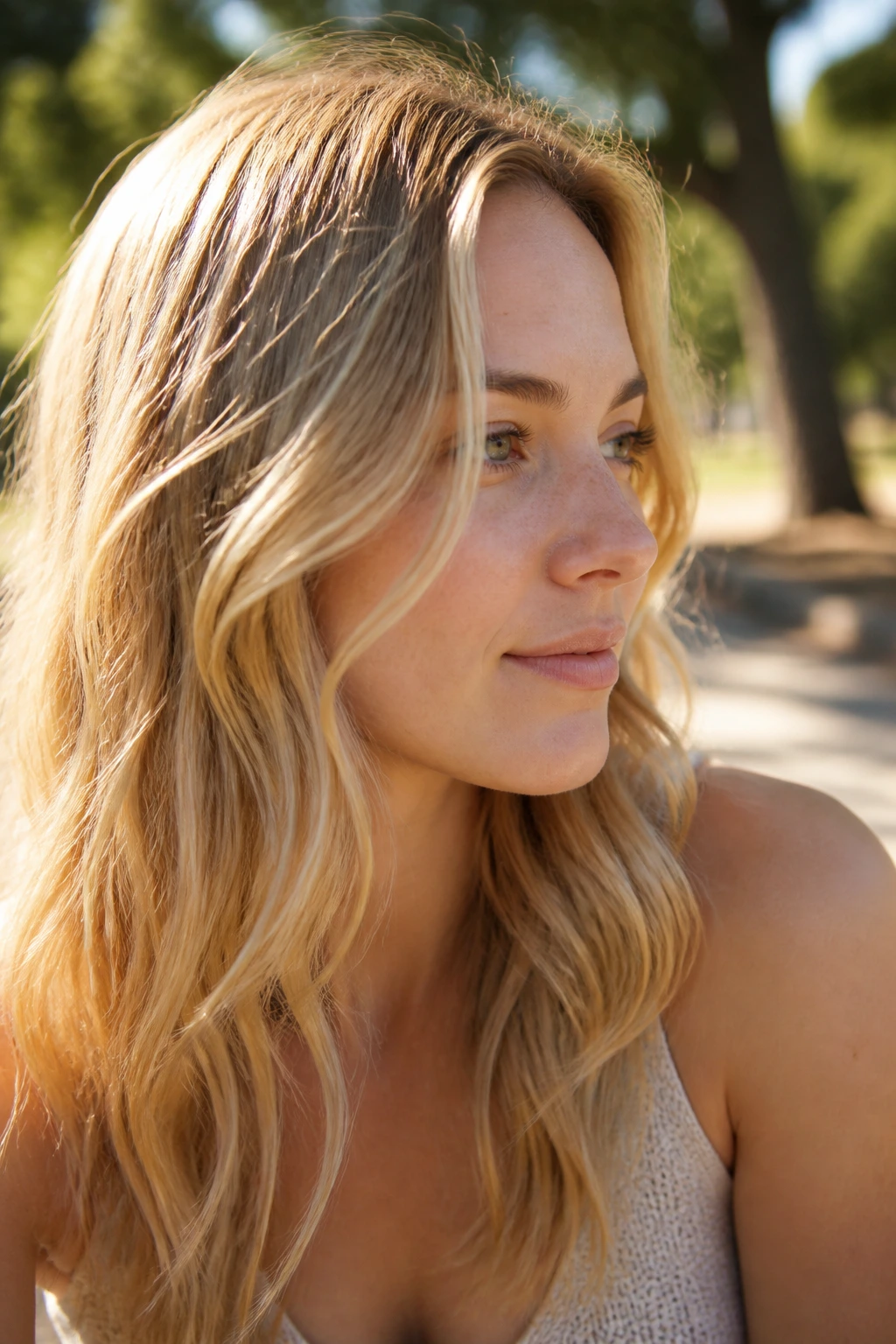
Baby-lights are for people who want the strawberry note to whisper instead of speak. The strands are so fine that the color looks like it lives inside the hair, not on top of it. On a pale blonde base, the strawberry-gold finish can be almost hazy in the best way.
What makes it different
Unlike chunkier highlights, baby-lights don’t carve up the head into obvious sections. The result is smoother and softer, which means the strawberry tone can read as a glow rather than a stripe. It’s a nice choice if you’ve worn bright blonde for a while and want a warmer turn without a hard change.
Salon note
Ask for micro foils and a sheer copper-gold gloss. If the stylist uses a heavy toner, the blonde can lose its airy feel. Thin placement is the whole point here.
10. Strawberry Blonde Curtain Bangs
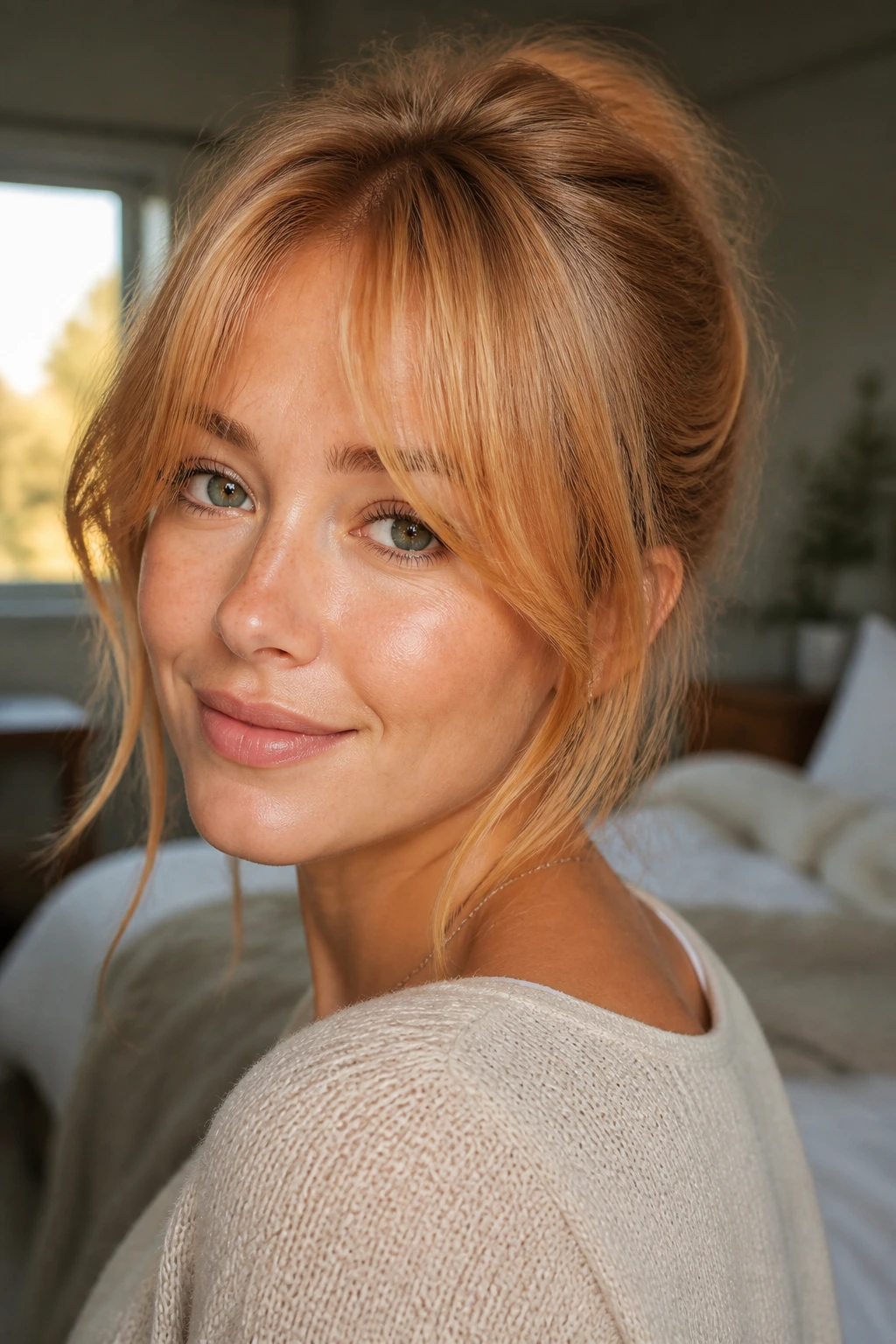
Curtain bangs can turn a simple color into a much more interesting one because they put the brightest pieces right where the eye lands first. In strawberry blonde, those front sections feel soft and flattering, not high-contrast. The warmth spills into the rest of the cut without taking over.
A quick angle worth considering
If you wear your hair up a lot, this is a strong option. The bangs keep the color visible even when the rest is tied back. That means you get more mileage out of the shade without needing extra length or a complicated style routine.
What to avoid
Don’t make the bangs too pale. Too much brightness in the front can flatten the strawberry effect and push the color into standard blonde. Keep a little peach or copper at the root of the fringe so the whole look stays connected.
11. Curly Strawberry Blonde Ribboning
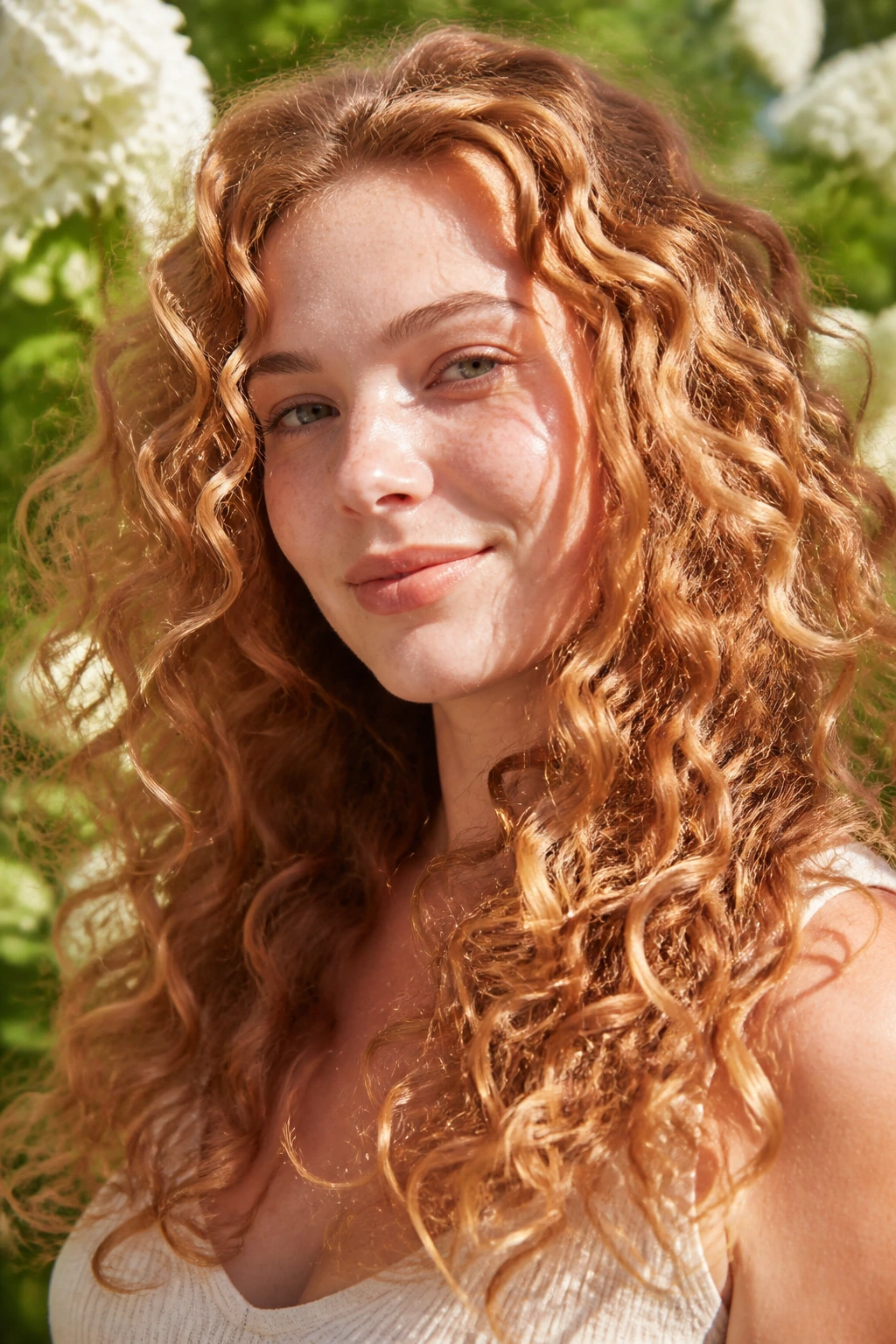
Curly hair and strawberry blonde are a better match than some people expect. Curls hold color in little pockets, so a warm blonde with copper-gold ribbons can look almost dimensional by default. The trick is to keep the placement intentional. Random color on curls can get busy fast.
Why ribboning works
Ribboning follows the curl pattern. A few brighter pieces wrapped around the outside of the curl create movement, while the deeper warm tones underneath keep the shape from getting flattened. It’s a much better choice than blanket lightening if you want the hair to keep its bounce.
My opinion
This is one of the prettiest ways to wear the shade because it doesn’t fight the texture. The curls do the visual work, and the color just rides along. You get softness, shine, and enough contrast to make the pattern visible without looking striped.
12. Apricot Ombré Ends
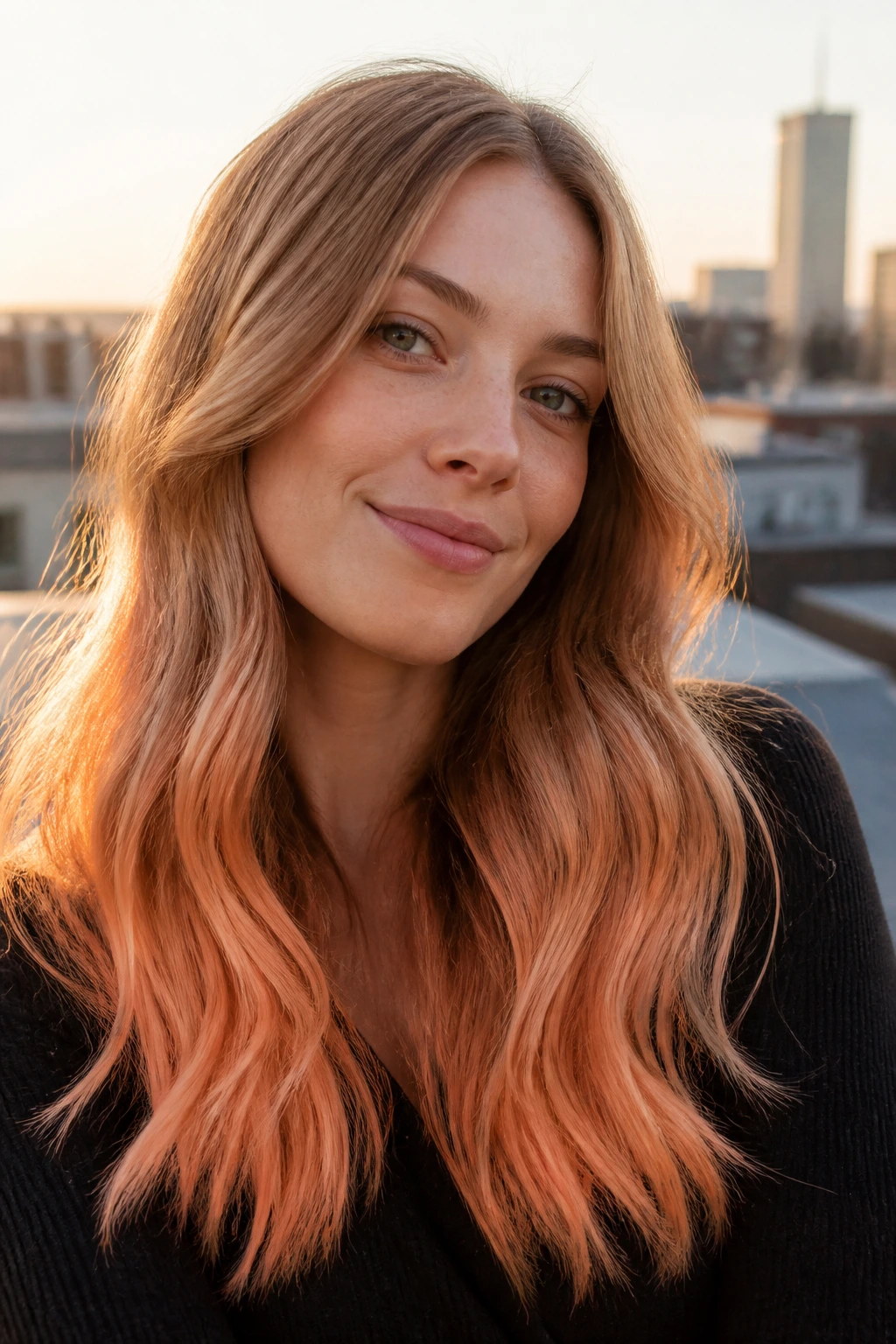
Apricot ombré starts quiet near the top and gets warmer toward the ends. That makes it a nice fit for people who want strawberry blonde without full-head maintenance. The crown stays more neutral, then the color warms up where the hair usually needs the most brightness anyway.
Why it works on longer lengths
Long hair can swallow soft color if the warmth is spread too evenly. Ombre fixes that by putting the strawberry tone where it can actually be seen. Ends also take toner in a more obvious way, which means the apricot finish shows up cleanly even on a medium brown base with highlights.
Good to know
This one looks best when the blend is slow. If the transition from brown to strawberry blonde happens too abruptly, the look starts to feel costume-y. Keep the shift soft over several inches. That detail matters more than people think.
13. Beige Strawberry Blonde for Cool Undertones
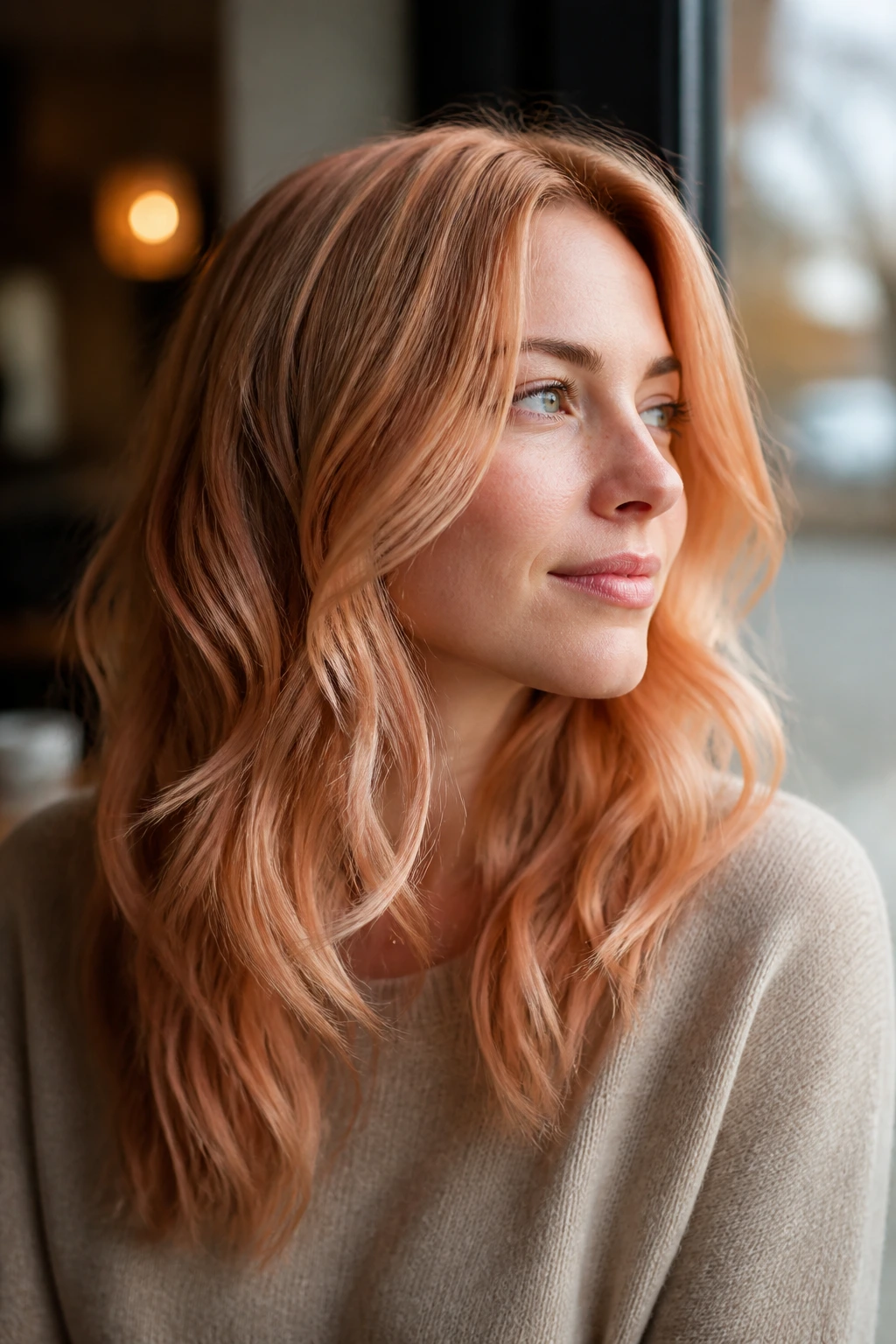
If your skin runs cool and you still like the idea of strawberry blonde, beige is your friend. Too much orange can fight with cool undertones and make the whole face look flushed in the wrong way. A beige-strawberry mix keeps the warmth muted enough to stay flattering.
How to explain it at the salon
Ask for a neutral blonde base with a soft peach-copper glaze rather than a true red tone. The beige note keeps the warmth under control, and it also helps the shade age better between appointments. A color that leans beige tends to look less patchy as it fades.
Best visual cue
This shade should feel like toasted cream with a little peach at the edge. If it looks like a bright copper penny, it’s gone too far.
14. Golden Strawberry Blonde with Soft Roots
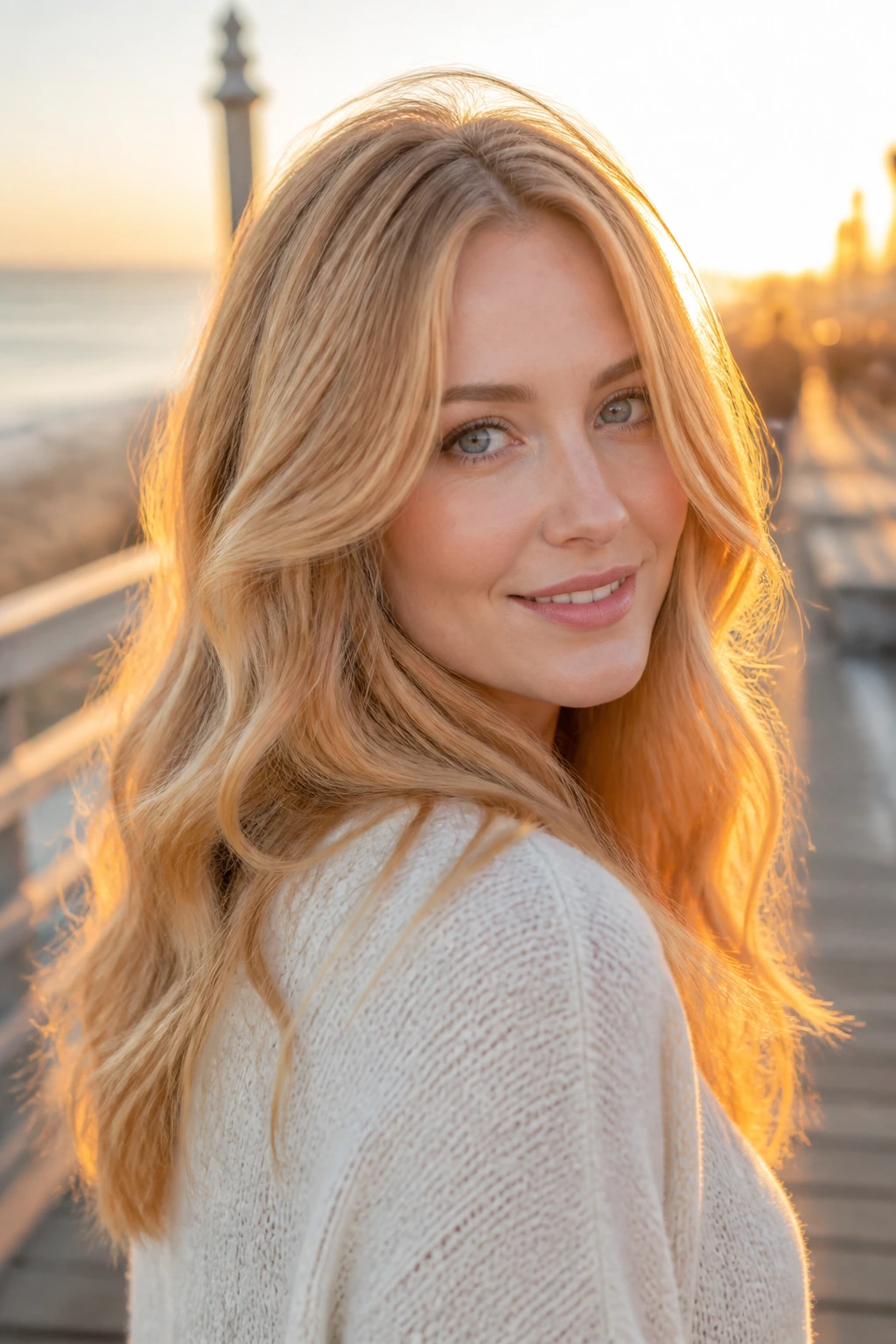
This version is a little sunnier and a little less pink than some of the others. The gold does most of the work, then a strawberry glaze slips in so the blonde doesn’t become plain. A soft root keeps the color grounded and makes the grow-out look intentional.
Why people choose it
Gold-based strawberry blonde is a sensible pick if your natural hair already pulls warm. You’re working with your own pigment instead of fighting it. That usually means less correction, fewer toner surprises, and a more natural finish overall.
The styling part
Large waves make this shade look richer because the gold catches the curve of the hair shaft. Straight hair can wear it too, but it may look flatter unless you add some shine spray or a smooth blowout. Gold needs a bit of movement.
15. Strawberry Blonde Pixie
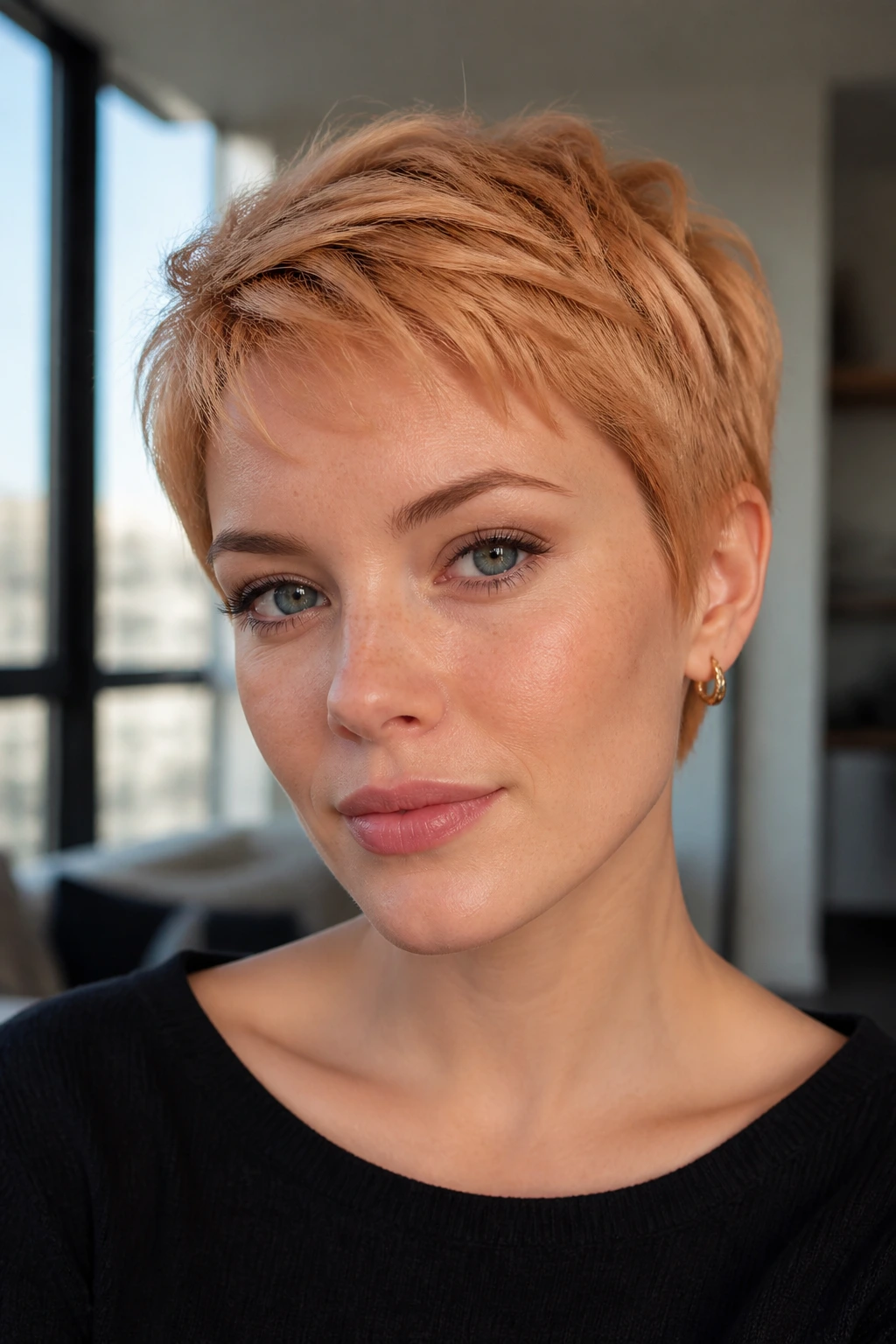
A pixie cut can hold warmth in a sharp, almost jewel-like way. There isn’t much length, so every tone shows up quickly. Light strawberry blonde gives the crop enough softness that it doesn’t read severe, which is the mistake a lot of short cuts make when they’re colored too ash or too flat.
Why this is a good idea
With short hair, maintenance is less about masking grow-out and more about keeping the tone fresh. A strawberry blonde pixie can be touched up with a quick gloss, and because the cut itself is so exposed, the color looks polished even when the roots start to show a bit.
My take
I like this on people who want warmth but do not want the hair to feel fussy. It’s crisp. It has personality. And it looks especially good when the sideburns and nape are kept a shade deeper than the top.
16. Creamy Coral Strawberry Blonde
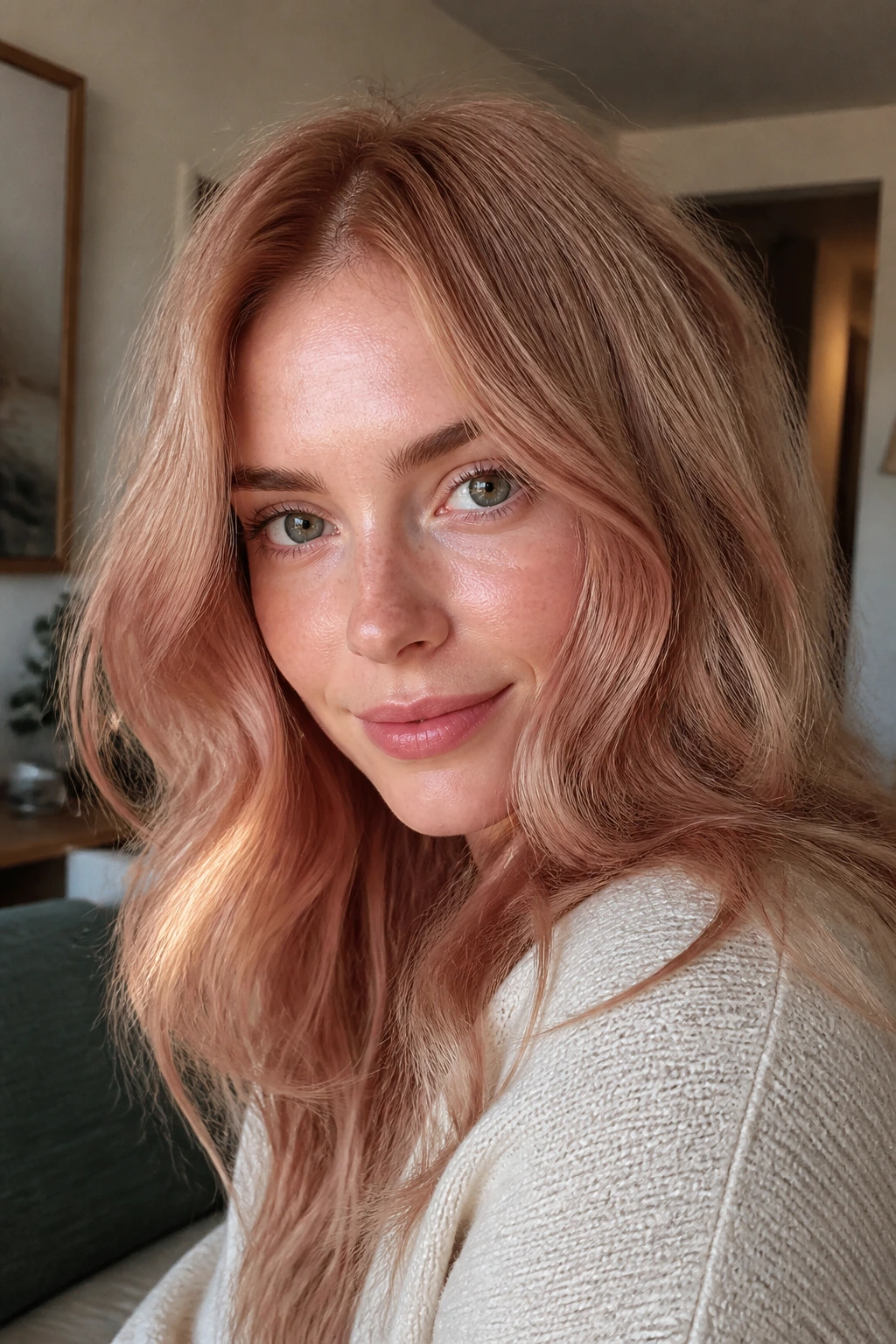
Coral is the bolder turn in this family, but if the pigment is diluted enough, it stays wearable. Creamy coral strawberry blonde has a blushy softness that reads like sunset light rather than a saturated fashion color. The key is keeping the base pale and the coral translucent.
Why it feels different
Most coral shades can feel bright and seasonal. This one stays softer because the blonde underneath still dominates. The coral shows up as warmth, not as a full pigment blanket. That makes it a nice bridge for people who are tempted by pink but do not want to commit to visible pink hair.
A good use case
If your wardrobe already leans warm — ivory, tan, rust, dusty rose, olive — this shade slides in easily. It’s the kind of color that makes simple haircuts look more finished.
17. Cinnamon Lowlights on Strawberry Blonde
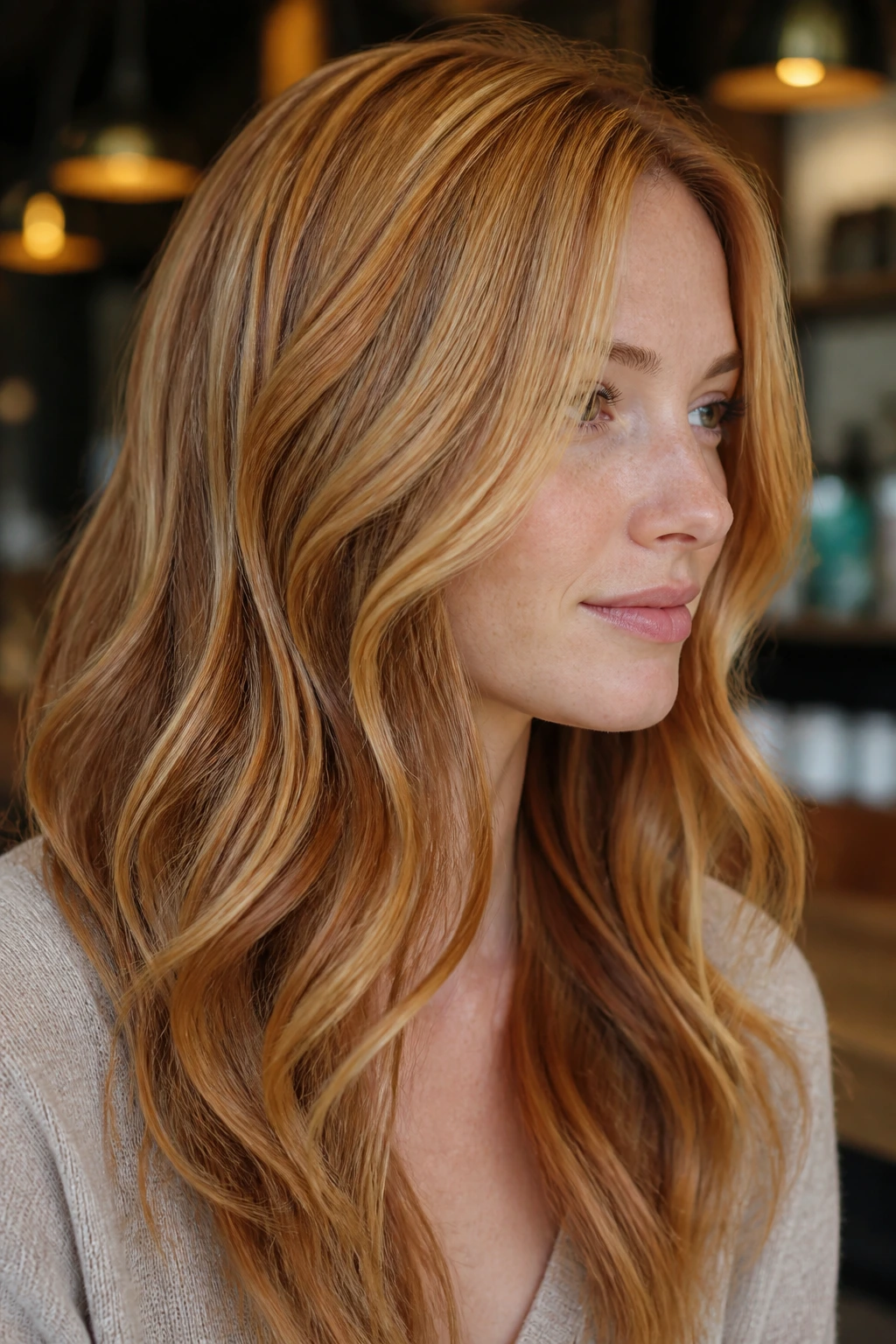
A few cinnamon lowlights can make light strawberry blonde feel richer without turning it dark. They add a baked, spiced note under the lighter pieces, which keeps the color from becoming too airy or washed out. This is one of my favorite ways to give thin or fine hair more visual weight.
Why the depth matters
One of the hidden problems with very light warm blondes is that they can look see-through. Lowlights fix that. Cinnamon strands tucked under the top layer make the brighter pieces pop, and they help the color hold together when it starts to fade.
Tiny technical note
The lowlights should not be muddy brown. Ask for a warm cinnamon or soft auburn lowlight, nothing too dark. Too much depth breaks the strawberry feeling and makes the whole head look heavy.
18. Dusty Peach Strawberry Blonde
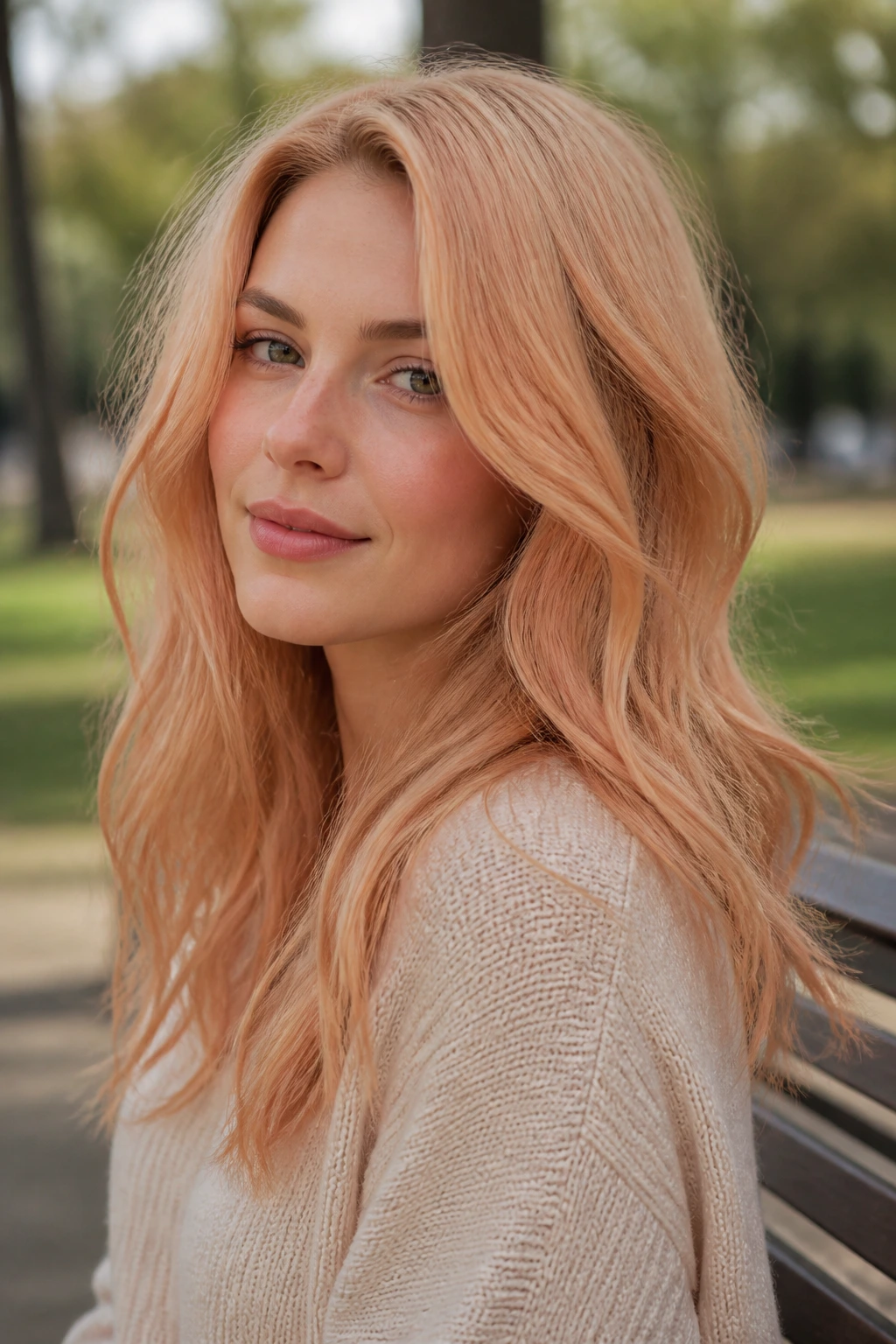
Dusty peach sits farther from copper and closer to soft blush. It’s a quieter interpretation of strawberry blonde, and that is exactly why it works on people who want warmth without a strong red signal. The dusty note takes the edge off.
What it looks like in real life
Think of peach sorbet that’s been lightened with cream. The result is warm, but not shiny or loud. On shoulder-length cuts, this color can look incredibly smooth because the muted tone does not fight the shape of the hair.
Best fit
This is a strong choice if your hair tends to hold onto red pigment. A dusty finish helps prevent the shade from becoming too saturated after a few washes. It’s a smarter option than a vivid copper gloss if you know your hair keeps warmth aggressively.
19. Soft Ginger-Blonde Fusion
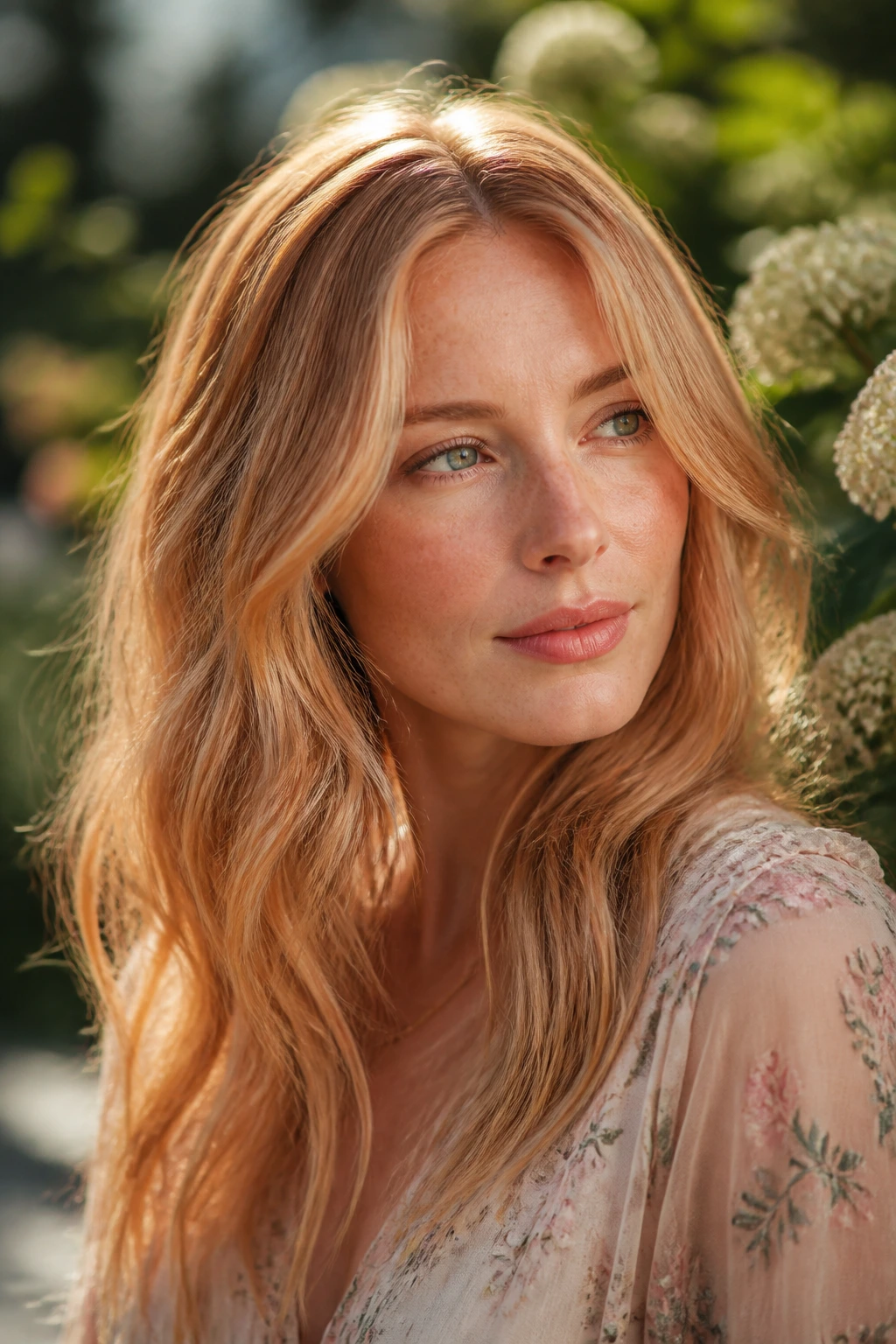
This one leans a little more toward ginger, but it stays light enough to live in the strawberry blonde family. The fusion works because the blonde keeps the color airy while the ginger note gives it backbone. It’s more spirited than beige strawberry blonde and less polished than rose-gold.
Who it suits
If your natural coloring is freckled, warm, or golden, this can be a lovely match. The shade has enough red influence to make the skin glow without turning the hair into one flat copper block. It’s especially good if you wear minimal makeup and want the hair to do some of the work.
Worth saying
This is one of the few shades here that can look slightly different every time you wash it. That isn’t a flaw. The pigment shifting a little is part of the appeal.
20. Mushroom Strawberry Blonde
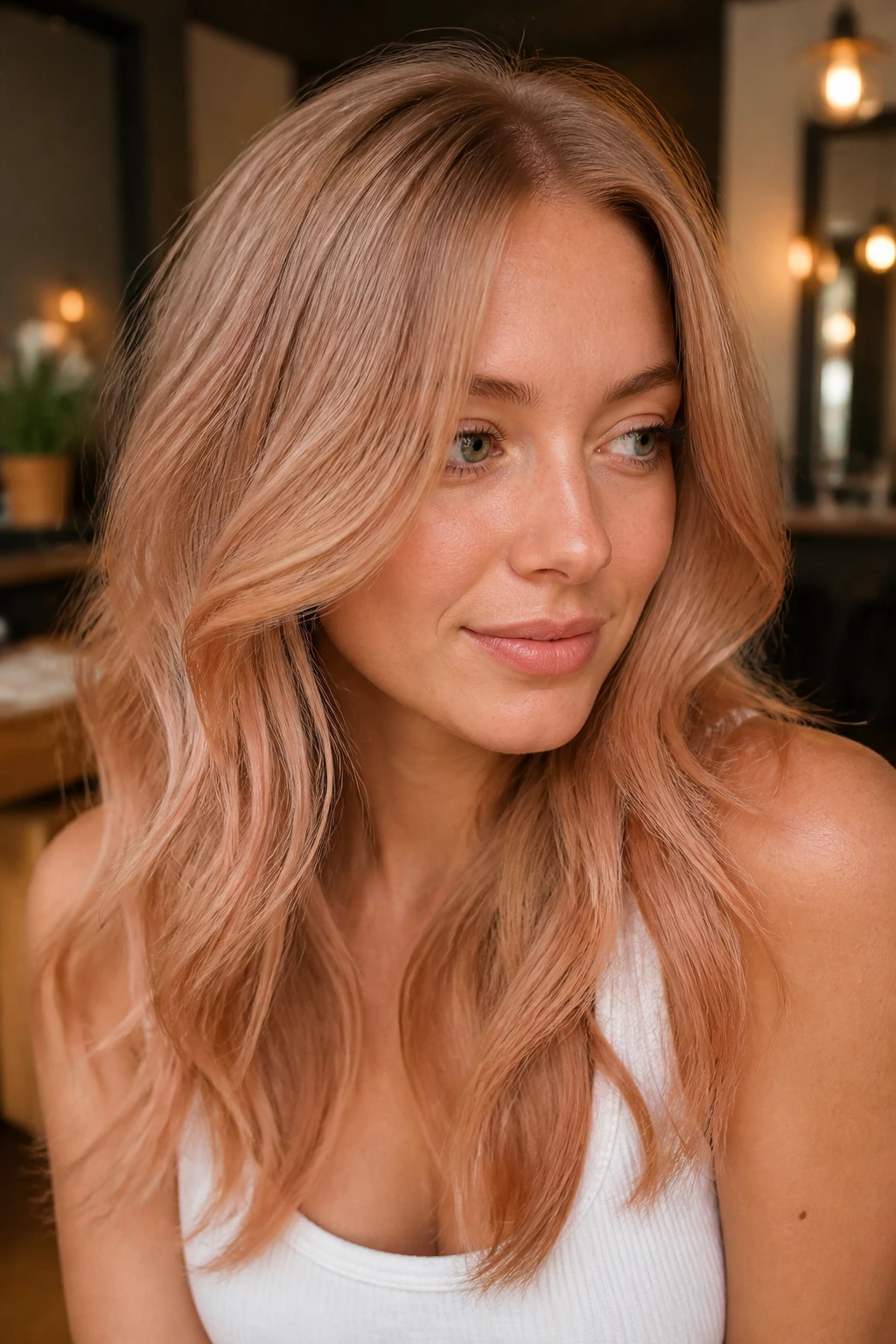
Mushroom and strawberry do not sound like obvious partners, which is exactly why the mix is interesting. The mushroom note cools down the warmth just enough to keep the strawberry from becoming too sweet. The result is a muted, modern warm blonde with a soft peach cast.
Why it works
If you have olive skin or you dislike bright copper, this is a clever compromise. The base is more neutral, and the strawberry lives in the highlights and glaze rather than dominating the whole head. That gives you warmth with a slightly earthy finish.
Salon language that helps
Use the phrase neutral beige blonde with a restrained strawberry gloss. “Mushroom” alone can confuse people, since it can mean different things in different chairs. Say what you want the warmth to do. Keep it soft. Keep it believable.
21. Strawberry Blonde for Fine Hair
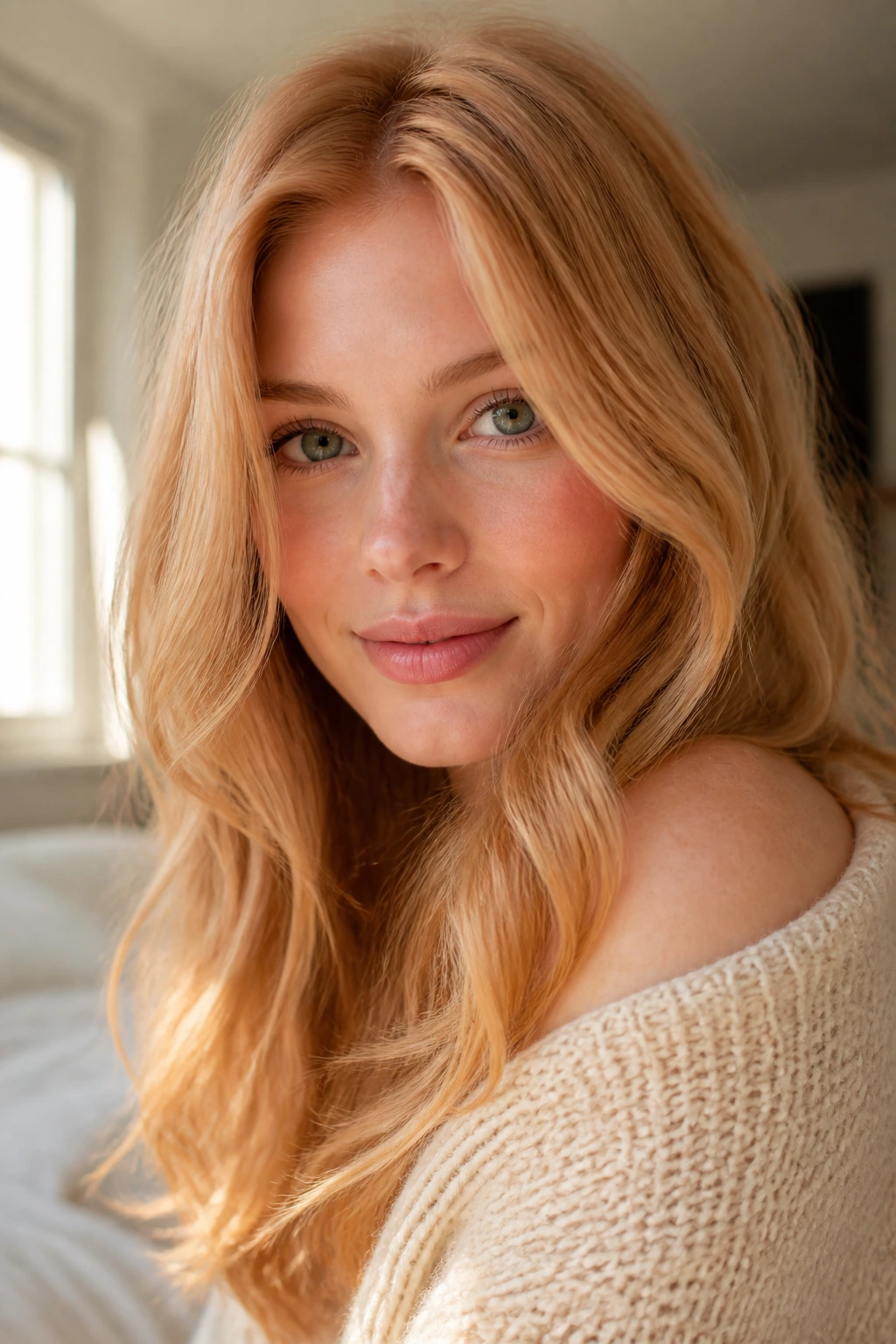
Fine hair can disappear when the color is too even or too pale. A light strawberry blonde with a little tonal contrast gives the hair shape before you even start styling it. That’s the main reason I like this approach on finer textures. You get depth without needing a heavy, dark root.
What makes it work
The best version uses micro-lowlights, a sheer gloss, and a few brighter strands around the face. That combo creates the impression of fullness. One flat warm shade won’t do the same job. Fine hair needs movement in the color, not just shine.
Practical note
Avoid a very pale, single-process blonde with a strawberry toner on top. It can look pretty for a week, then go dull and one-note. A little dimension keeps the shade alive longer.
22. Long Layers with Glossed Ends
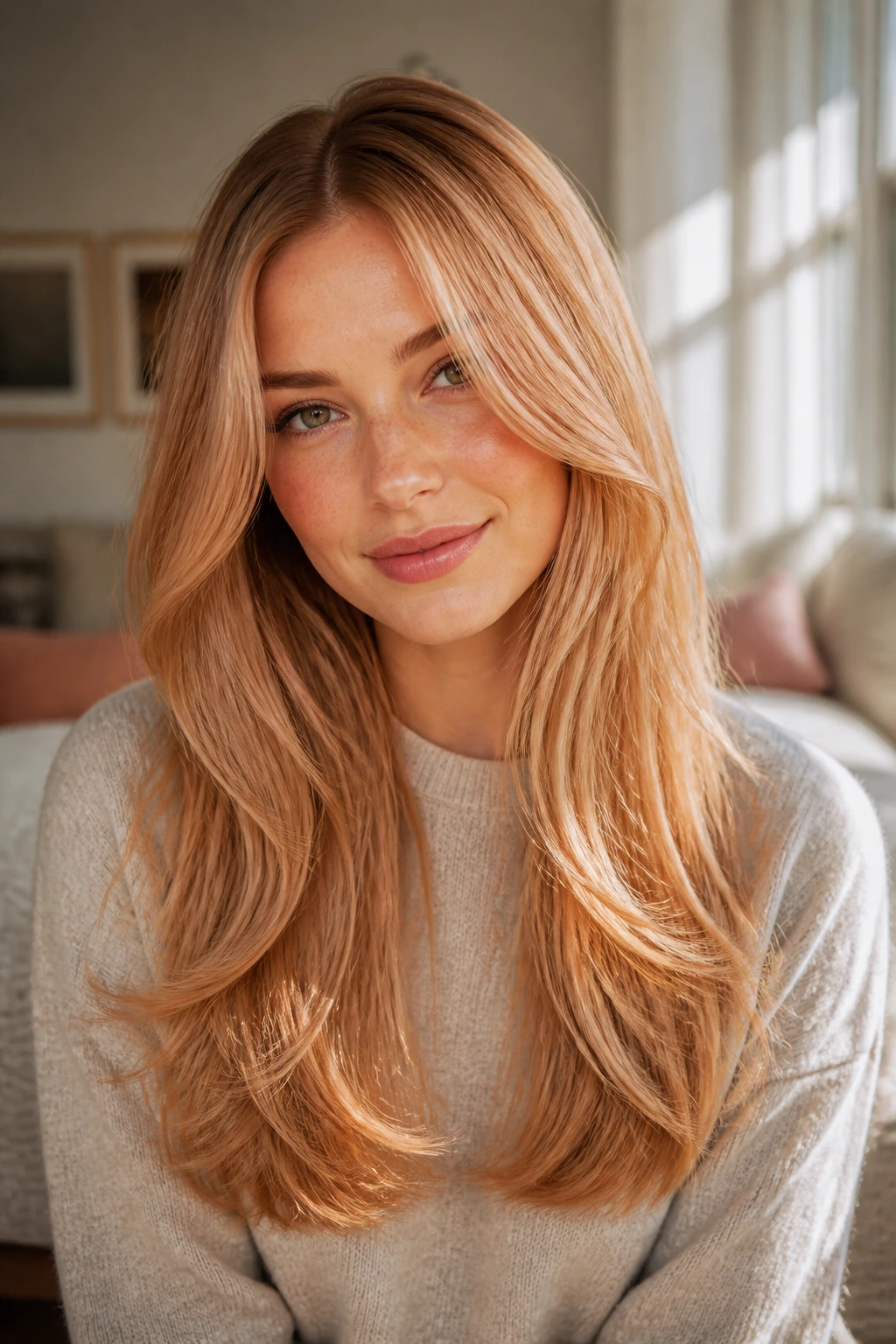
Long hair gives strawberry blonde room to breathe, but it also risks looking plain if the color is too consistent. Glossed ends solve that. You keep the top more natural and let the lower lengths carry the warm peach-gold finish.
Why this is smart
Hair ends are usually where older color starts to look tired. A fresh gloss there revives the length without having to brighten the whole head. In long layered cuts, this also creates a nice cascade effect, because each layer catches light differently.
Best result
The ends should look polished, not frosted. A transparent or semi-transparent glaze works better than a thick, opaque toner. I’d rather see a little warmth shifting at the tips than a heavy block of pigment.
23. High-Lift Strawberry Blonde from Dark Blonde
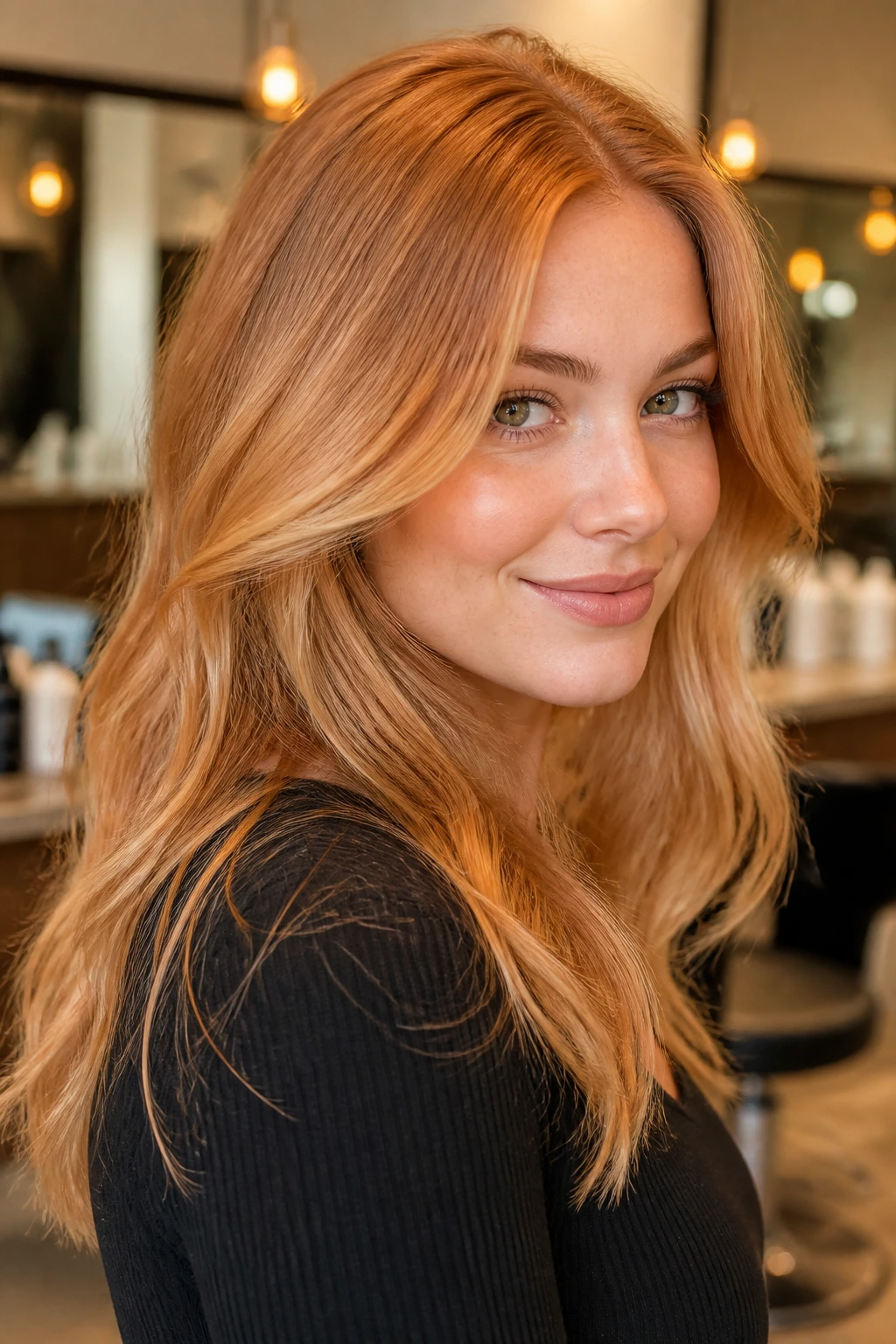
This is for people whose natural color sits around dark blonde and wants to cooperate just enough to make the job easier. High-lift strawberry blonde starts with lifting the base, then layering in a warm glaze so the final result feels bright but not cold. It’s a cleaner path than trying to force warm blonde onto hair that wants to stay darker.
What to expect
This version usually looks a little sunnier than rooted or lowlighted ideas. The tone lands in the bright end of strawberry blonde, with enough gold to keep it from reading pink. If your hair takes lift evenly, the result can be very smooth.
Good caution
High-lift color is not the move for damaged hair. If your strands are already fragile, the more cautious route is highlights plus gloss. Same vibe. Less strain.
24. Warm Neutral Strawberry Blonde
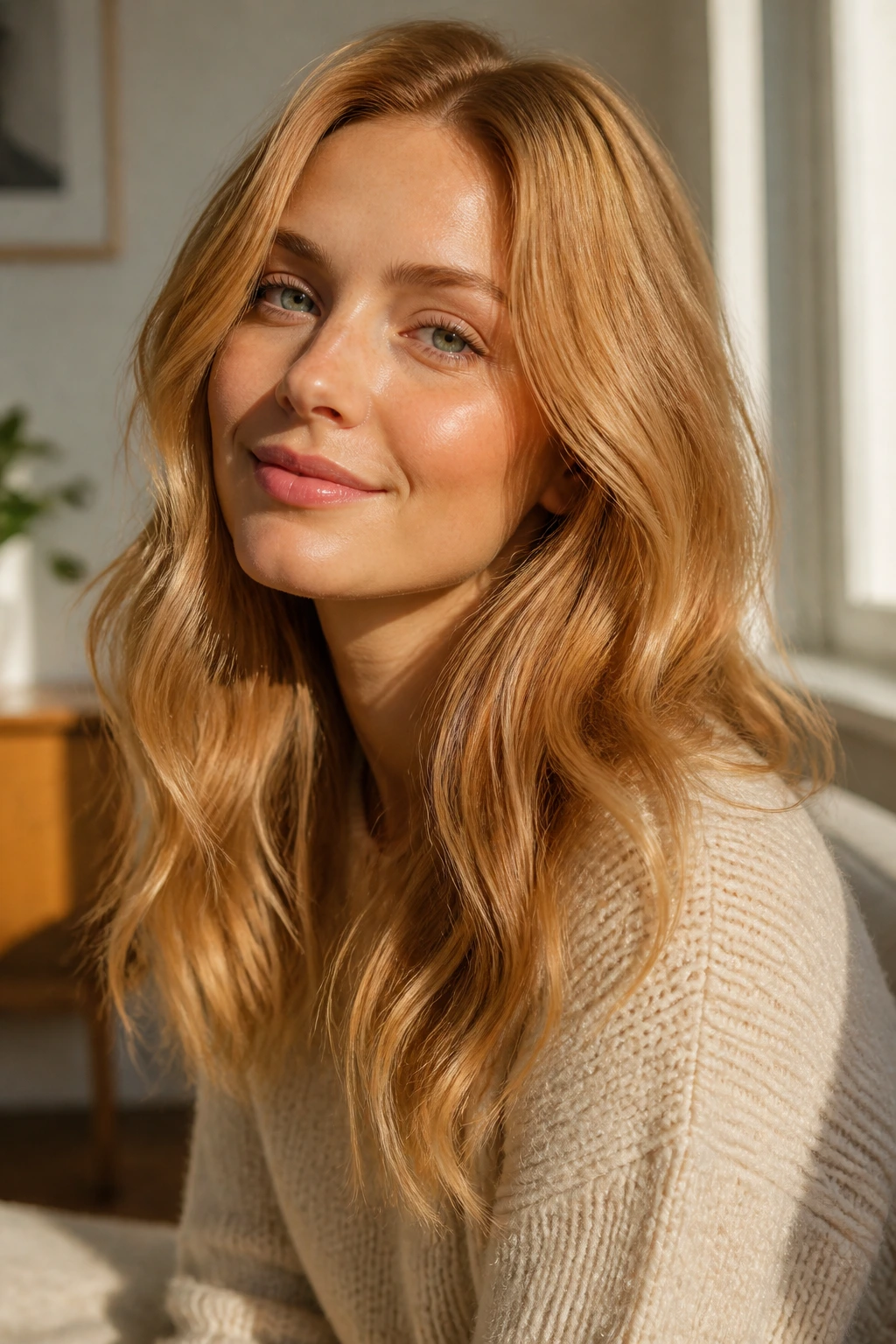
Warm neutral sounds boring until you see it on the right person. Then it looks balanced, smooth, and easy to live with. It’s not peach-heavy, not copper-heavy, and not beige enough to turn bland. It sits right in the middle and stays there.
Why I like this tone
Not everyone wants a hair color that changes mood every time the light shifts. Some people want a warm blonde that just behaves. This is that shade. It flatters a lot of skin tones because it does not pull too hard in any one direction.
When to choose it
Pick this if you need a color that can work in professional settings, on vacation, and in everyday life without constant toner drama. It’s the sensible choice, which is not a bad thing at all.
25. Copper Ribbons Through Blonde
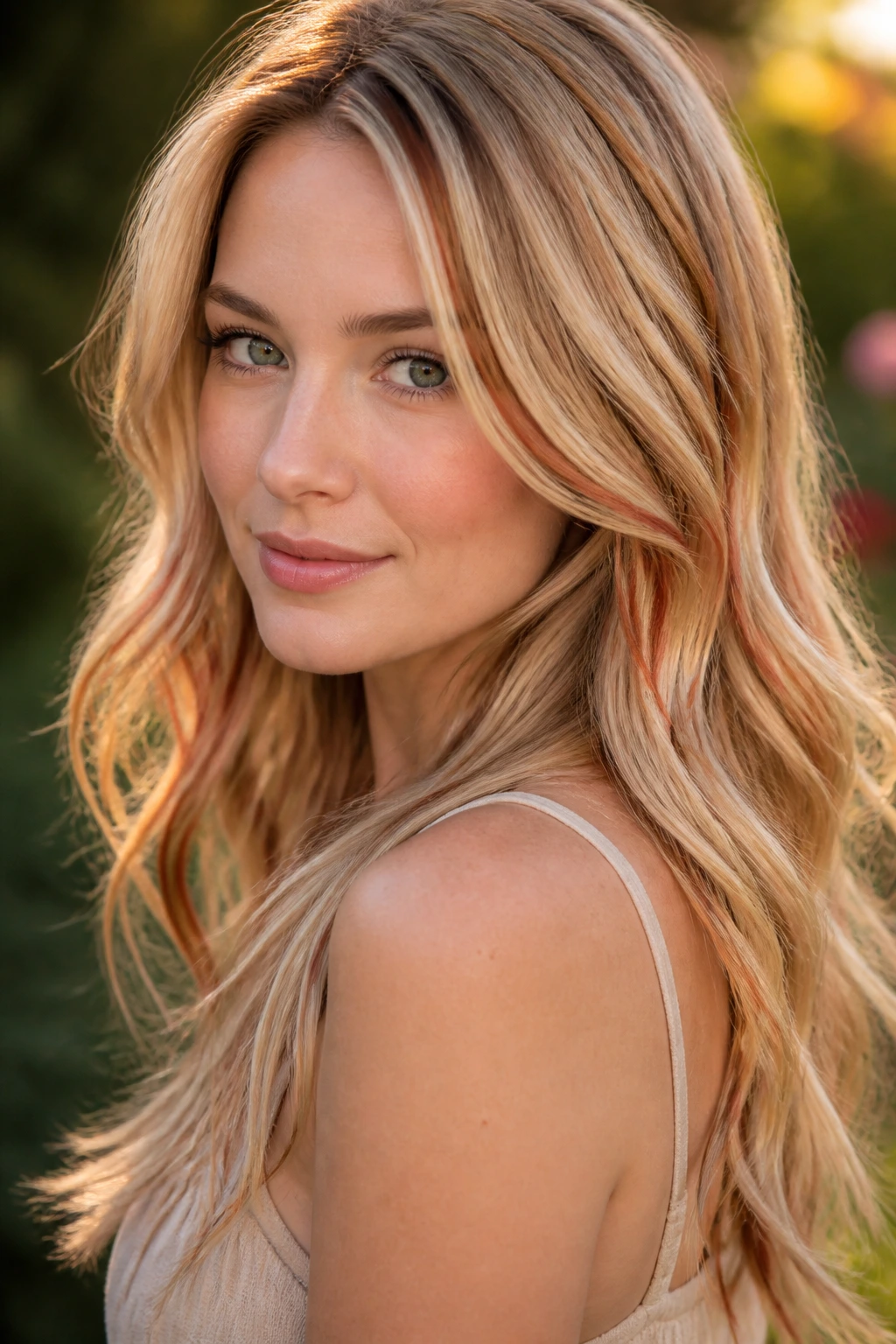
Instead of turning the whole head strawberry, this idea threads copper ribbons through a light blonde base. The result is brighter and more dimensional than an all-over glaze. The copper is visible, but it does not dominate every strand.
Why ribbons beat a solid color here
Ribbons create contrast. Contrast makes the blonde look lighter and the copper look richer. If you have layered hair or loose waves, the ribbons show beautifully because they separate naturally. On straight hair, they still work, but you need a clean placement pattern so they don’t look random.
My preference
I like this better than a full copper wash for people who fear maintenance. When the copper fades a bit, the blonde still carries the look. That gives you more breathing room between appointments.
26. Pearl Babylights Over Strawberry Blonde
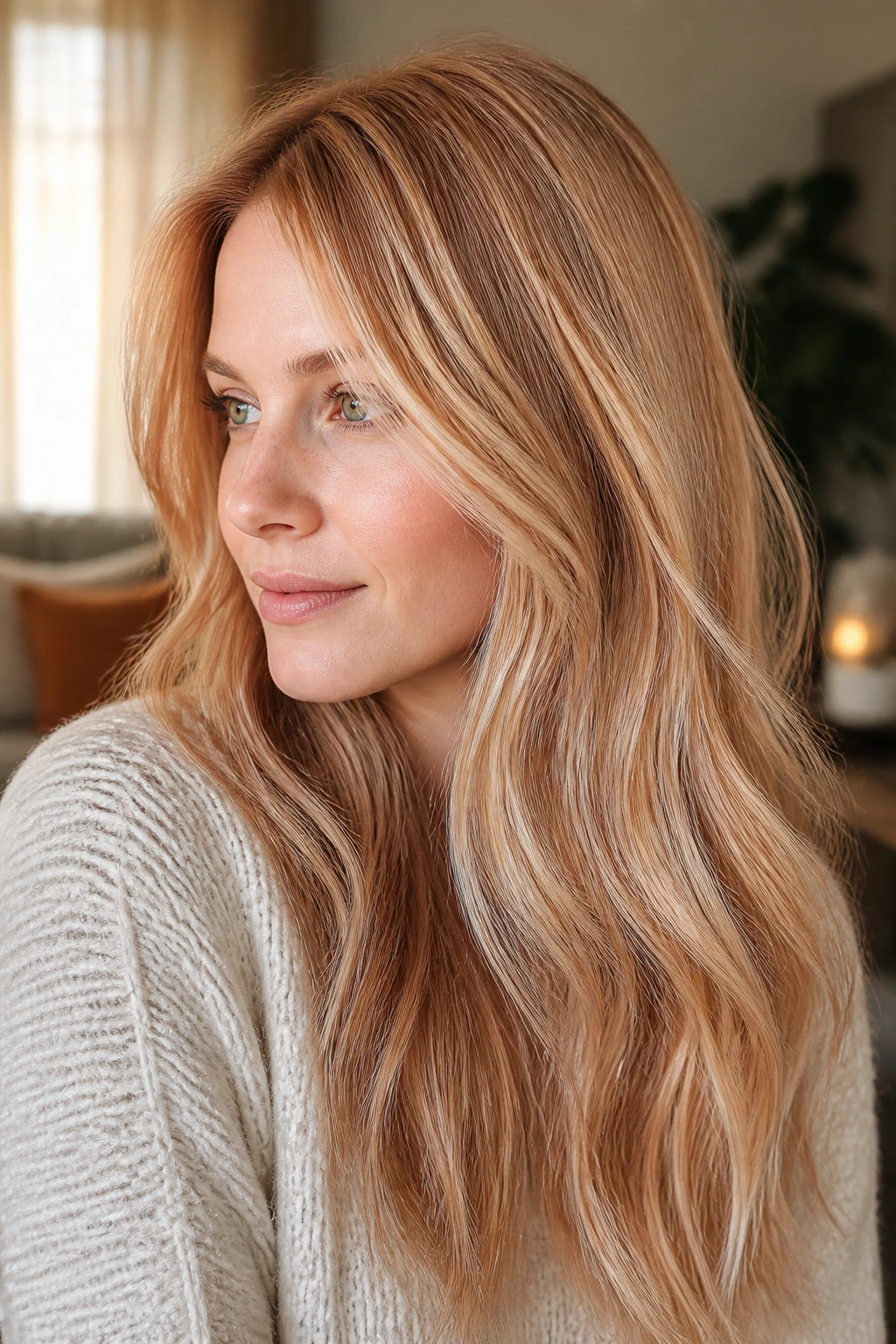
Pearl babylights sound cooler than the shade actually feels. The pearl note lightens the strawberry warmth just enough to keep it airy. The result is soft and polished, with a subtle sheen that keeps the hair from getting too red.
How it reads
This is one of the lightest options in the group. It’s perfect if you love blonde but want a hint of warmth that shows up mainly in certain light. The strawberry note is there, just quiet.
The detail that matters
The babylights need to be fine and numerous. If they’re chunky, the pearl effect disappears and the whole thing starts to look stripey. Fine placement makes the color seem expensive, which is a word I almost never use, but it fits here.
27. Strawberry Blonde Shag
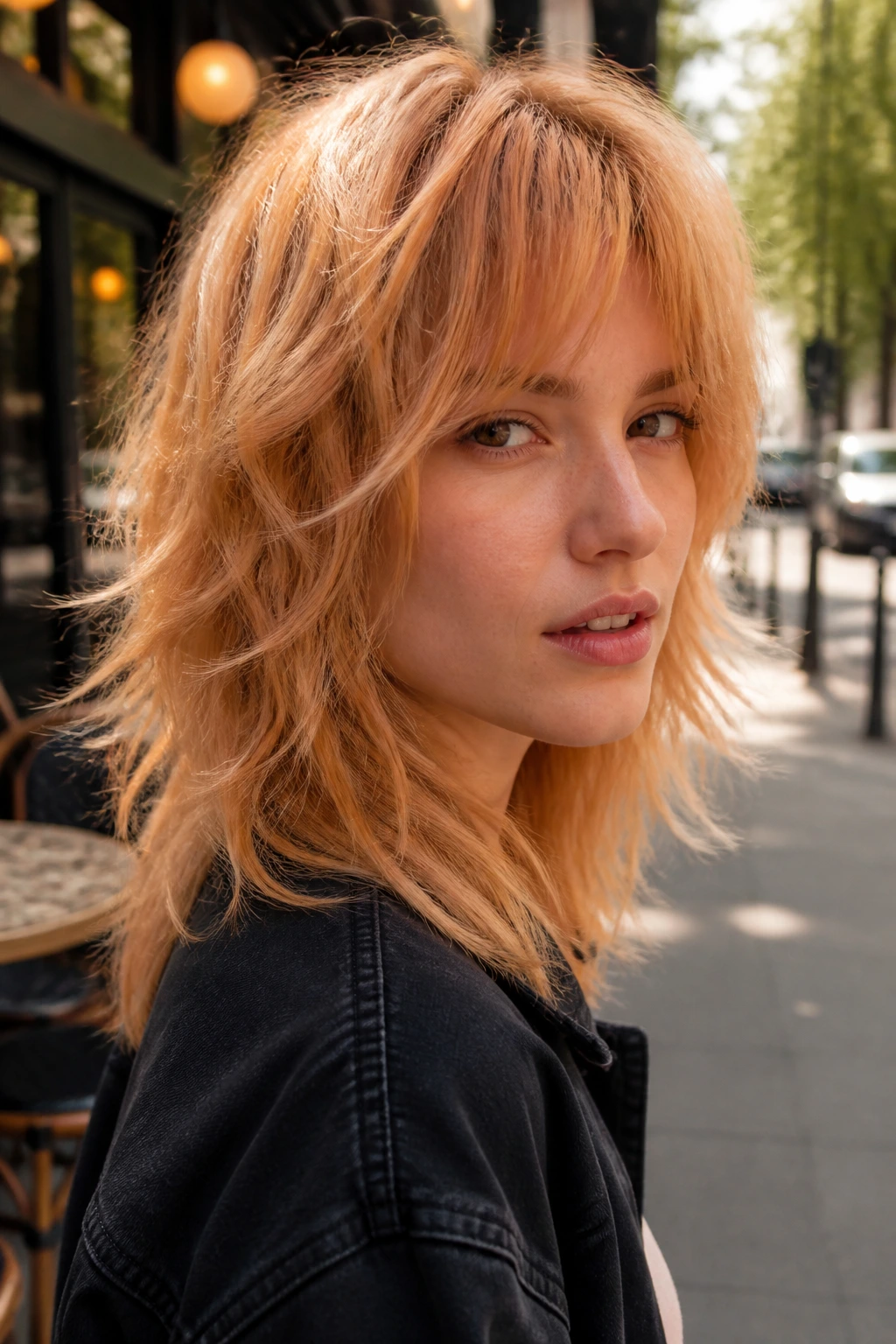
A shag gives color plenty of places to live. The layers break up the tone, so strawberry blonde reads in pieces instead of as one uniform block. That makes this cut a smart home for lighter, warmer color because the texture keeps it from looking too tidy.
Why this pairing works
Shag cuts like movement. Strawberry blonde likes movement. Put them together and the color shows off every bend, flip, and face frame. If your hair has a little natural wave, even better. The whole thing can look casual without looking lazy.
Styling note
A bit of mousse at the roots and a small amount of cream on the ends are enough. Don’t drown the cut in heavy oil. That will flatten the layers and hide the tonal work.
28. Low-Maintenance Strawberry Blonde for Brunettes
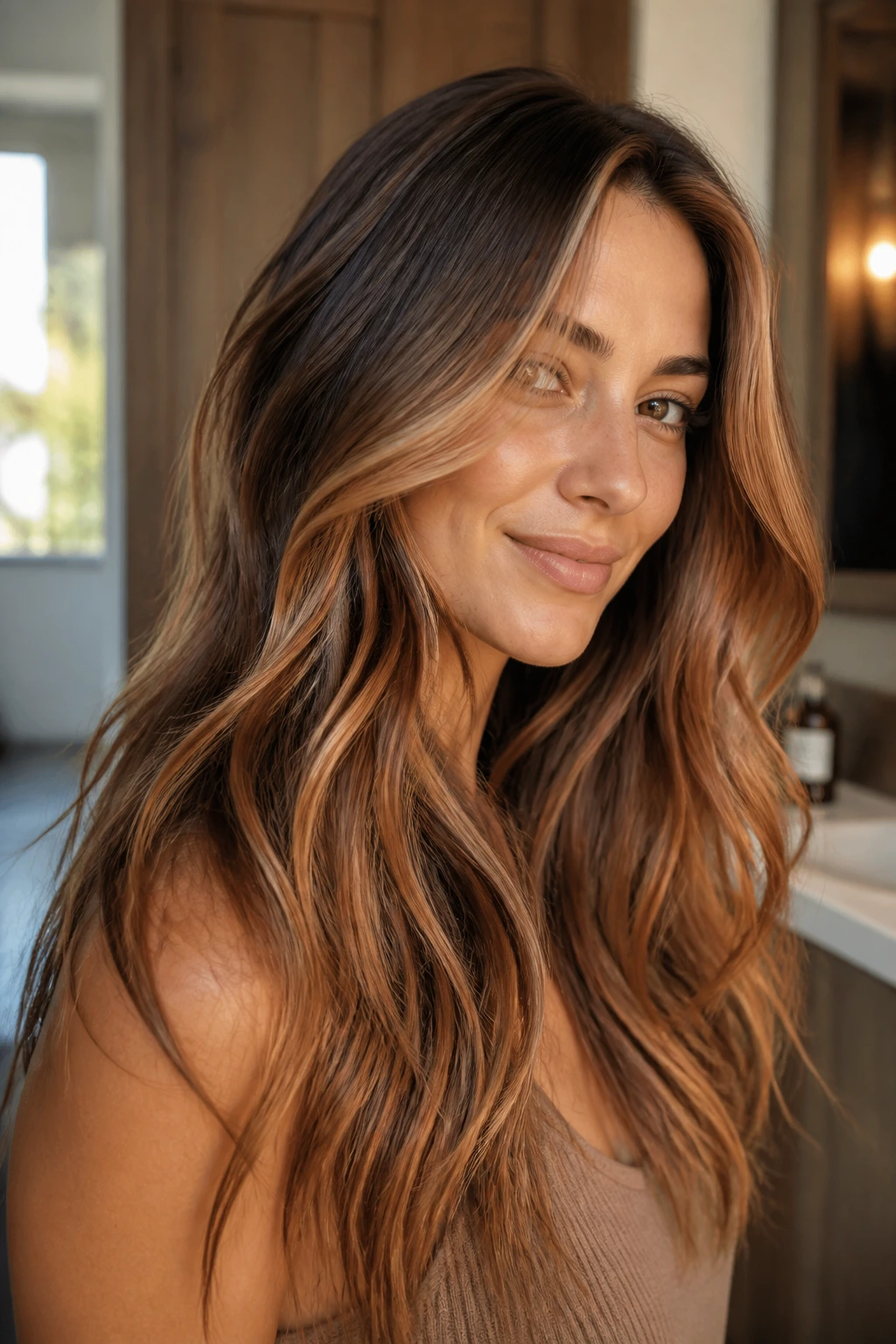
This is the version for darker natural bases that want the strawberry look without a full commitment to lightening every inch. The color is usually built through painted highlights, warm gloss, and a soft root shadow. You get strawberry blonde where the hair moves, not necessarily everywhere at once.
Why it’s practical
Brunettes often need a more strategic approach because pulling the hair all the way to pale blonde can be rough. A lower-maintenance version protects some depth while still giving you the warmth you came for. The grow-out also looks kinder, which matters once the roots start talking back.
Best request
Ask for strategic warm highlights with a peach-copper gloss and a natural root fade. That gives the color room to breathe. It also keeps the whole thing from looking like a one-day transformation that needs constant rescue.
What Makes Light Strawberry Blonde Feel Soft Instead of Brass
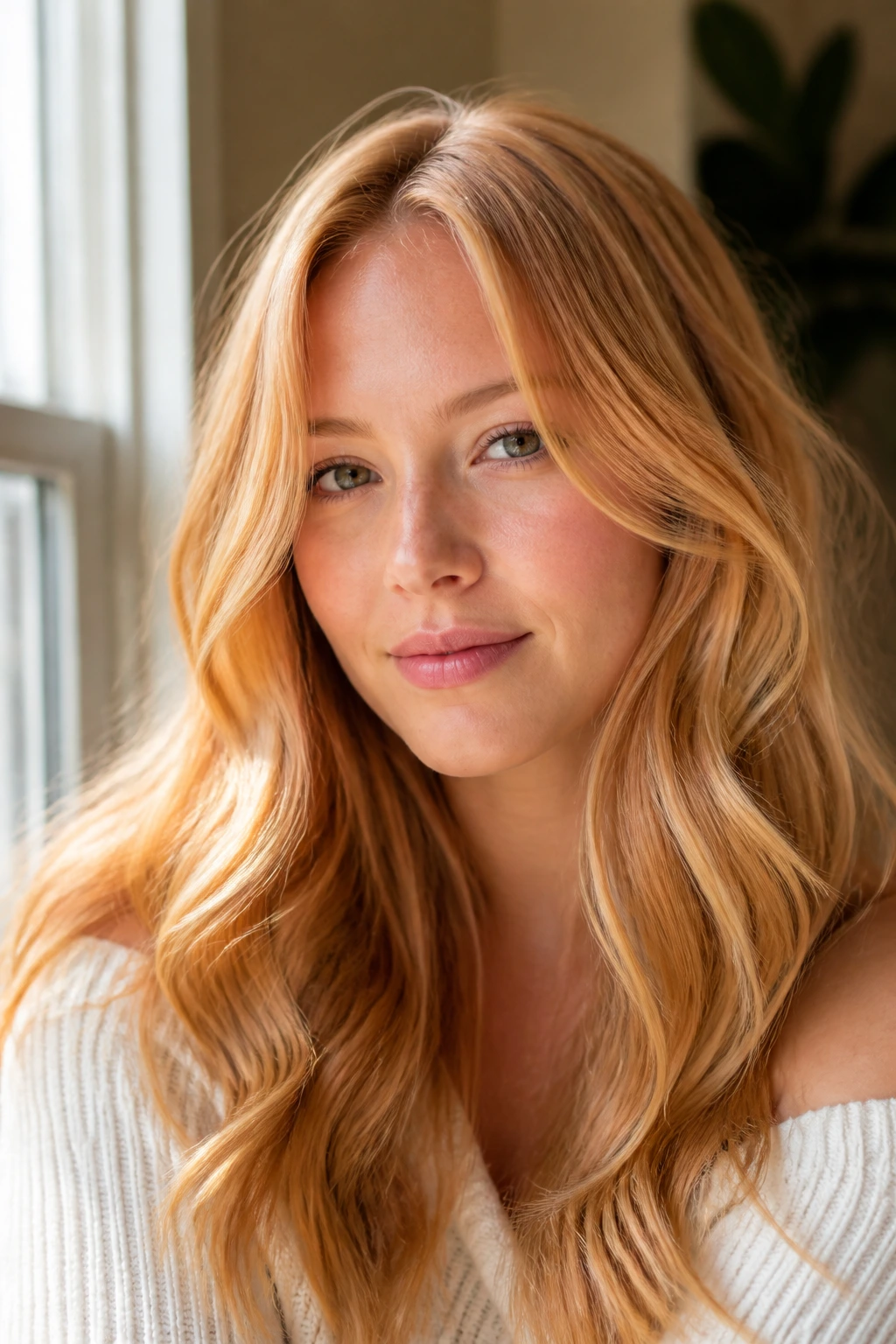
The shade works when the warm pigment has a job. That sounds fussy, but it’s really the difference between pretty and patchy. Copper, gold, and rose all behave differently on the hair shaft. Copper brings the strongest red reflection. Gold gives brightness. Rose adds a blush note that can soften the red before it starts shouting.
The base level matters as much as the tone. On a level 8 or 9 blonde, a strawberry glaze can sit on top of the hair and look airy. On a deeper base, the same glaze can turn muddy or orange if the lightening stage is rushed. That’s why some strawberry blonde photos look silky and others look like they came from a bad toner day. The underlying lift was different.
A good colorist usually thinks in layers: lift, balance, glaze, then refine. The first step opens the canvas. The second keeps it from going too yellow or too flat. The glaze brings in the strawberry note. The refinement is where the color stops looking salon-fresh and starts looking like it belongs on your head.
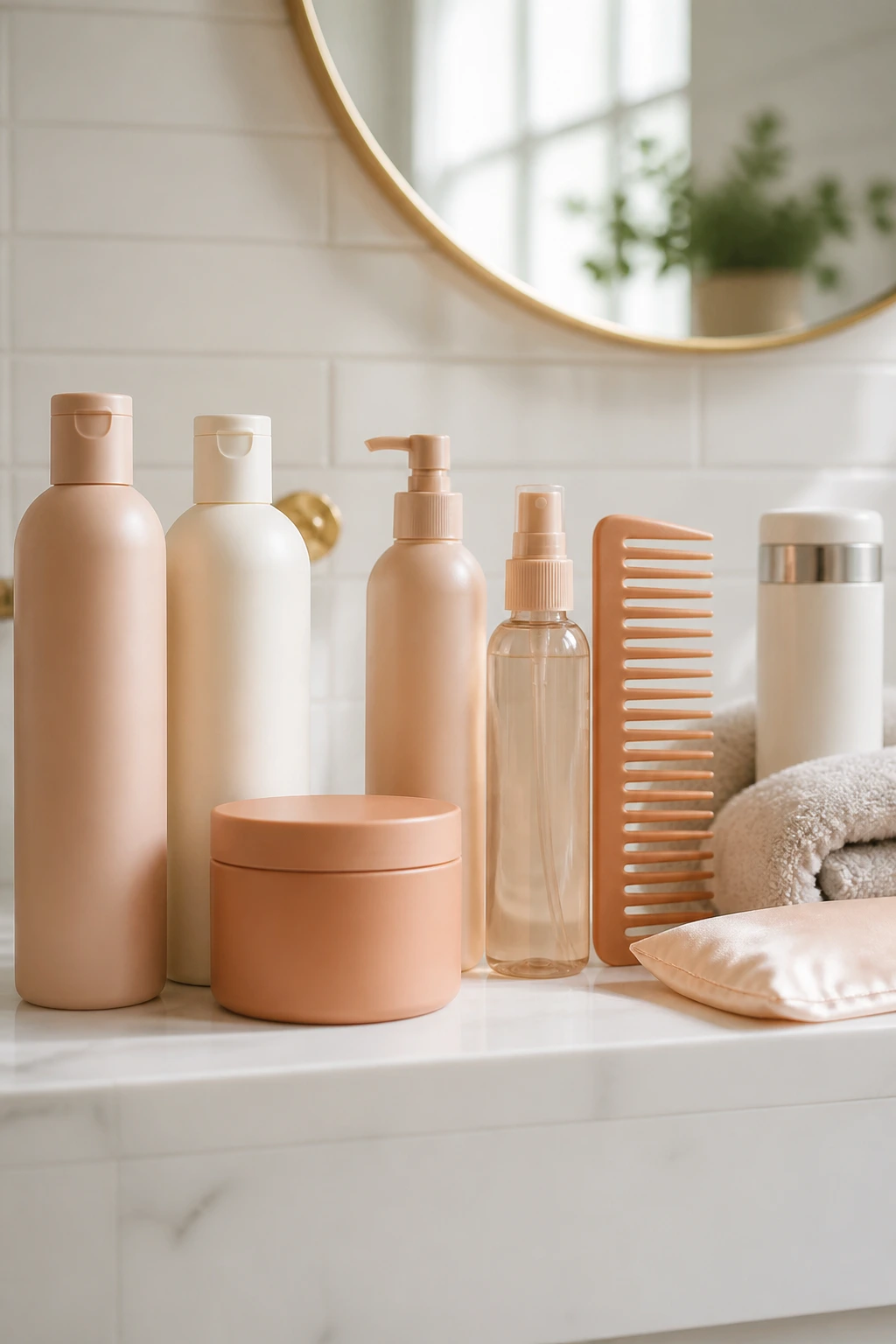
The Tools That Keep the Shade Soft
-
Sulfate-free shampoo: Keeps the warm glaze from stripping out too fast and helps the ends stay smooth.
-
Color-safe conditioner: Softens lifted hair, which matters because light strawberry blonde often sits on pieces that have been lightened at least a little.
-
Color-depositing mask: Useful every 1 to 2 weeks if your tone fades peachy or too blonde and needs a gentle refresh.
-
Heat protectant spray: A flat iron or curling wand can scorch warm blonde fast, and damaged ends turn dull before they turn brassy.
-
Wide-tooth comb: Better for distributing conditioner and detangling wet hair without snapping delicate lightened strands.
-
Microfiber towel or soft T-shirt: Cuts down on roughness after washing and helps waves form without frizz.
-
Shower filter: Optional, but handy if your water is hard and tends to leave blonde hair looking rough or dull.
-
Silk or satin pillowcase: Reduces friction so the color and the cut both look smoother in the morning.
How to Choose the Right Reference Photo and Formula
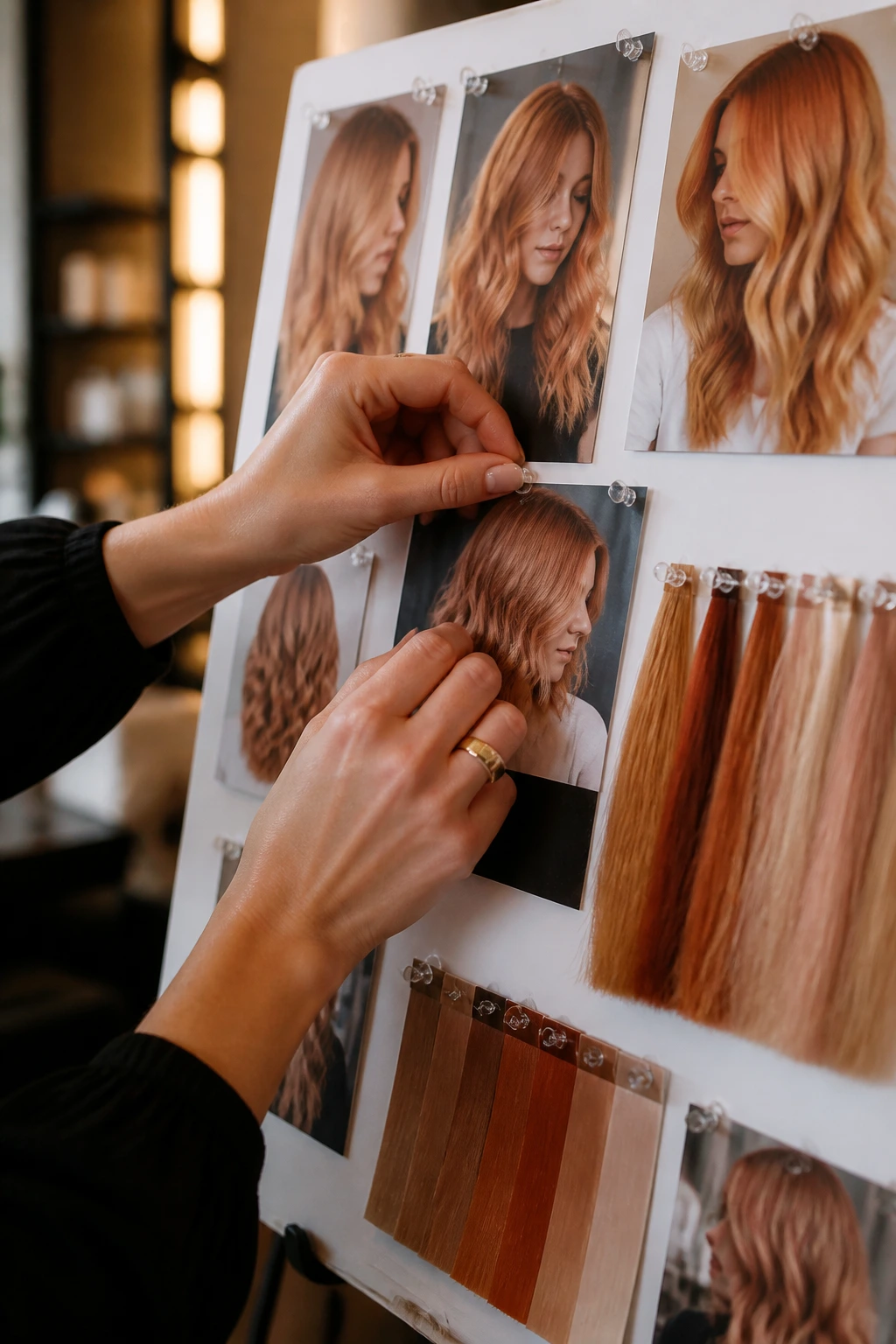
Reference photos only help if they show the same starting point your hair actually has. That part matters more than people think. A photo of strawberry blonde on a platinum base tells you very little if your own hair starts at level 6. Look for photos with a similar depth, similar texture, and similar root color. Straight hair and curly hair can make the same formula look like two different shades.
Save at least three pictures: one for the tone, one for the placement, and one for the root depth. That sounds a little fussy, but it keeps the consultation clear. A stylist can read a lot from a good set of images. “I like the warmth in this one, the root in this one, and the brightness around the face in that one” is far better than waving at one photo and hoping for magic.
Formula language helps too. Phrases like peach-gold glaze, soft copper ribboning, level 8 beige blonde, and sheer rose toner are useful because they describe tone and depth together. If you can point to a specific finish — creamy, coral, muted, sunlit, rooted — you’re giving the colorist a target instead of a vibe.
How to Wear Light Strawberry Blonde So It Doesn’t Disappear
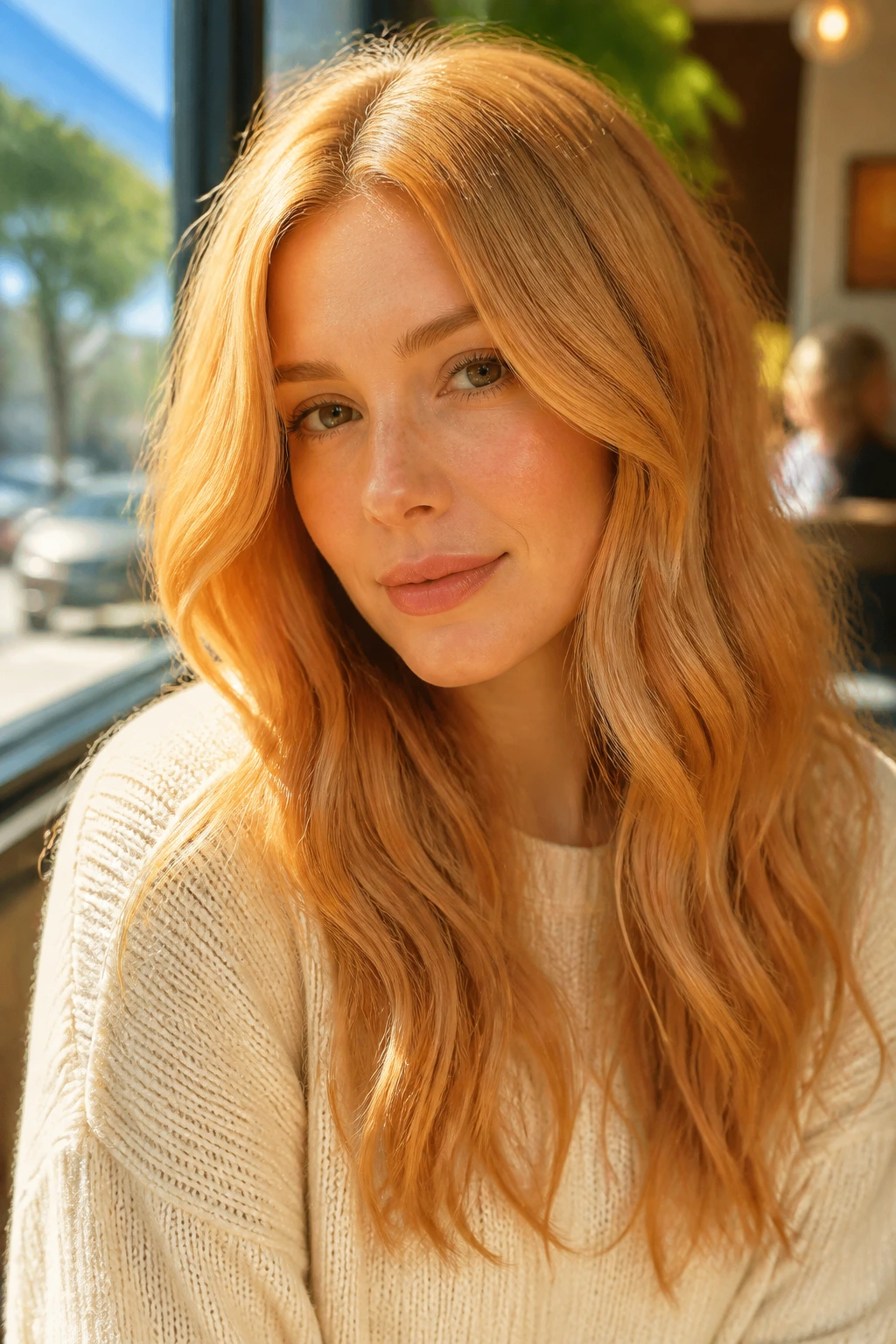
Styling: Loose bends, soft waves, or a smooth blowout show off the color changes better than a very stiff curl. The point is to let the warm pieces separate a little so the tone shift can show.
Makeup Pairing: Peach blush, warm beige gloss, and soft brown liner tend to play well with strawberry blonde. If the hair leans more rose than copper, a cooler nude lip can keep the face from going too warm.
Wardrobe Pairing: Cream, camel, olive, soft navy, and warm gray usually make the color look cleaner than stark white or neon tones. That doesn’t mean you need a new closet. It just means certain colors let the warmth sit naturally.
Lighting Notes: Warm hair can look flatter under yellow indoor bulbs. If you’re testing a new shade, check it near a window or in daylight before you decide the toner is wrong. Sometimes it’s the bulb, not the hair.
Small Tweaks That Make the Shade Feel More Personal
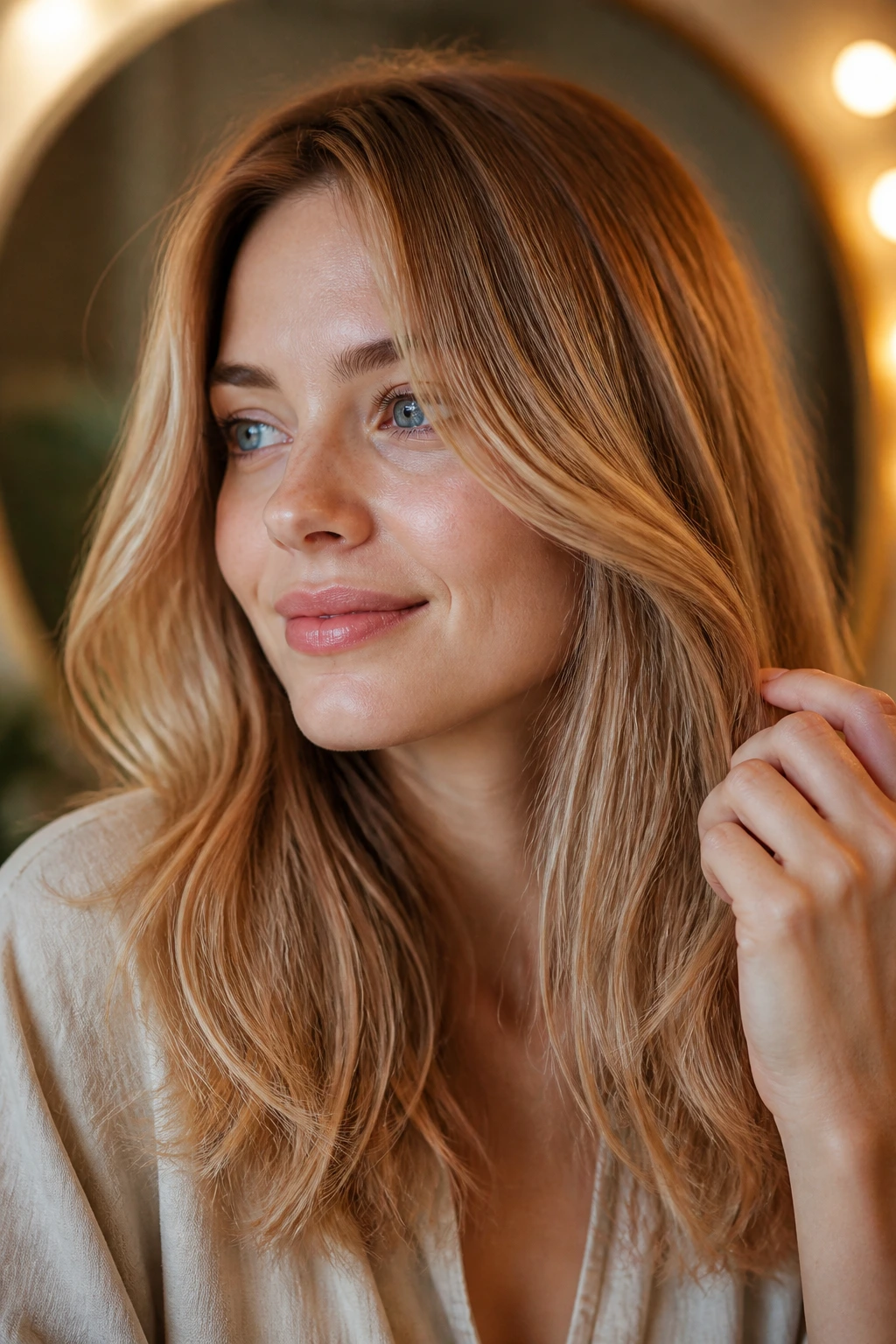
Gloss Finish: A clear or sheer gloss every few weeks keeps the ends shiny and keeps the strawberry tone from turning dusty. I like glosses more than permanent color for this family because they preserve the softness.
Root Smudge: A slightly deeper root shadow makes the color feel less precious and more lived-in. It also saves you from that odd “helmet” effect some all-over blondes get after the first few washes.
Face Frame Brightness: If you wear your hair down most days, brighten the front a touch more than the back. If you wear it up a lot, keep the warmth balanced through the crown so the color still shows in a ponytail or bun.
Texture Matters: Fine hair usually benefits from softer tonal contrast, while thicker hair can carry a bit more copper. Curly hair can handle ribboning better than one solid glaze. Straight hair often needs more placement detail so the finish doesn’t look one-note.
Common Mistakes That Turn Strawberry Blonde Orange or Dull
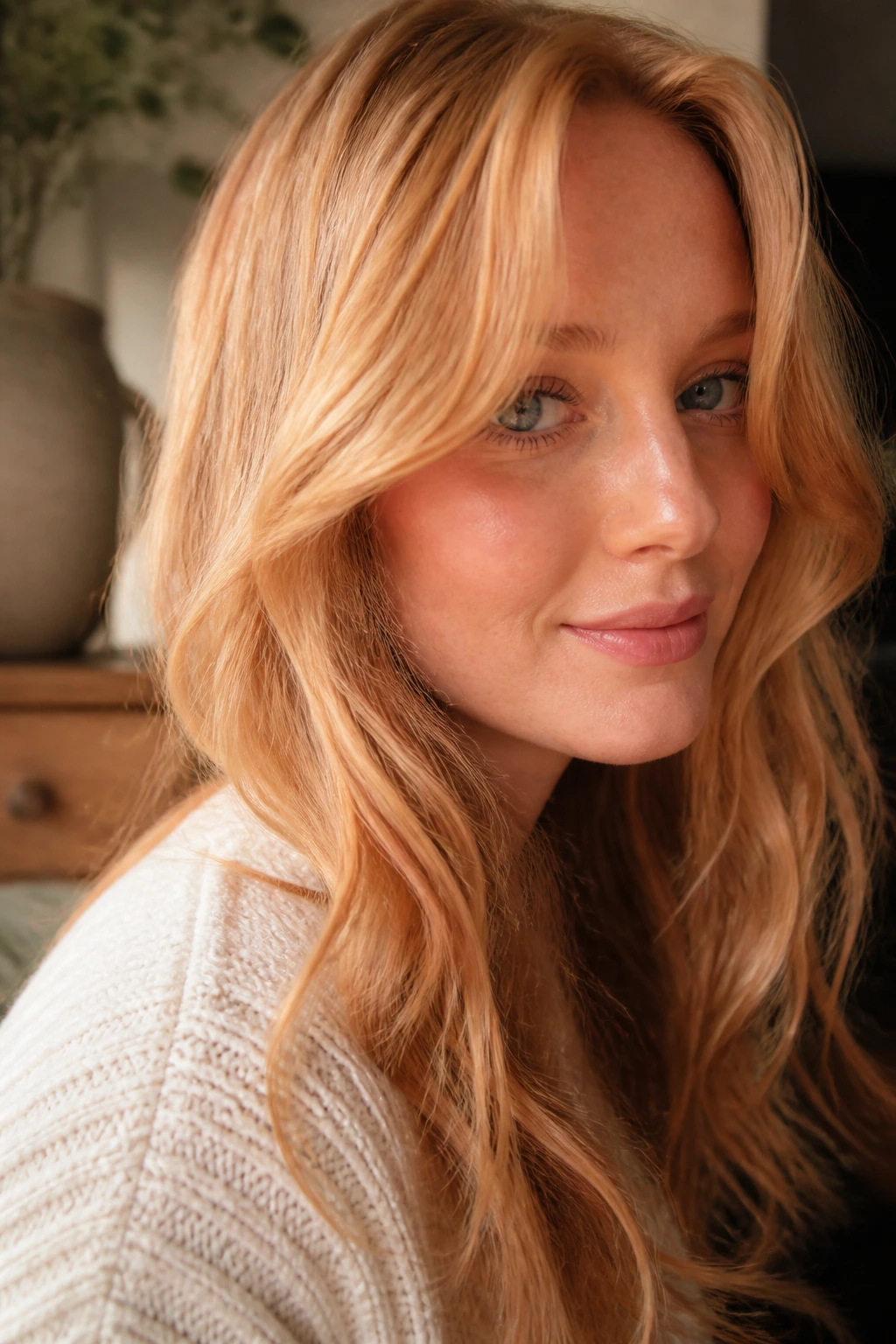
The first mistake is going too copper too fast. It happens when someone asks for strawberry blonde and gets full copper instead. The fix is simple, though not always cheap: keep the glaze sheer and the red pigment restrained. Once the color goes pumpkin, it usually needs a corrective gloss to calm it down.
Skipping depth is another one. If every strand is lifted to the same brightness, the color can look thin. You need a few deeper warm pieces, even if they’re subtle. They give the blonde room to breathe.
Overusing purple shampoo is a sneaky problem. Purple shampoo can be useful on very yellow blonde, but too much of it on strawberry blonde can strip the warmth you actually wanted. If the shade starts looking dull or smoky, cut back and use a color-safe conditioner instead.
A fourth issue is expecting the same tone forever. Strawberry blonde fades. That’s part of the deal. The warm pigments soften first, and then the blonde underneath starts to show more. If you like the original tone, schedule gloss refreshes before the fade gets too far along.
Maintenance, Fading, and Refresh Timing
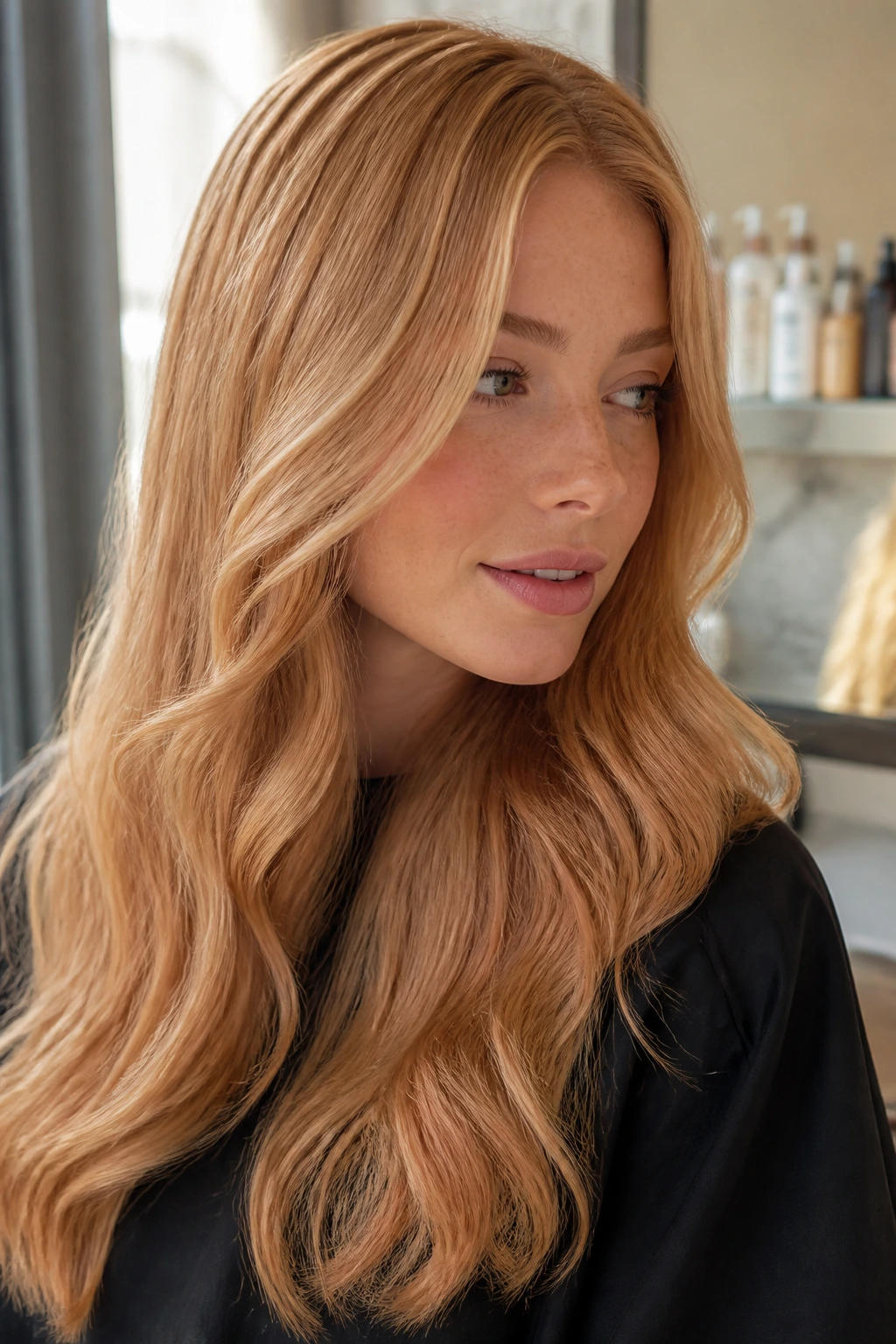
Light strawberry blonde usually looks its best when you treat it like a living glaze, not a set-and-forget dye job. For most salon versions, a toner or gloss refresh every 4 to 8 weeks keeps the warmth clear without letting the shade turn brassy or flat. If you’ve got highlights underneath, the timing depends on how much lift is exposed; lighter pieces show fade sooner.
Wash frequency matters more than people want to hear. Two to three washes a week is easier on the color than daily shampooing, especially if your water runs hot. Rinse with lukewarm water, then finish with cool water if you can tolerate it. That little change helps the cuticle lie flatter, which keeps the color looking smoother.
At home, a color-depositing mask every 1 to 2 weeks can nudge the tone back into place if it starts drifting pale or peach-less. Use it sparingly. You’re refreshing the tone, not repainting the whole head. Too much deposit can make the shade muddy. For heat styling, use protectant every time. No exceptions. Warm colors are sensitive to heat damage, and once the ends fry, the strawberry note starts looking dull.
Variations and Adaptations to Try
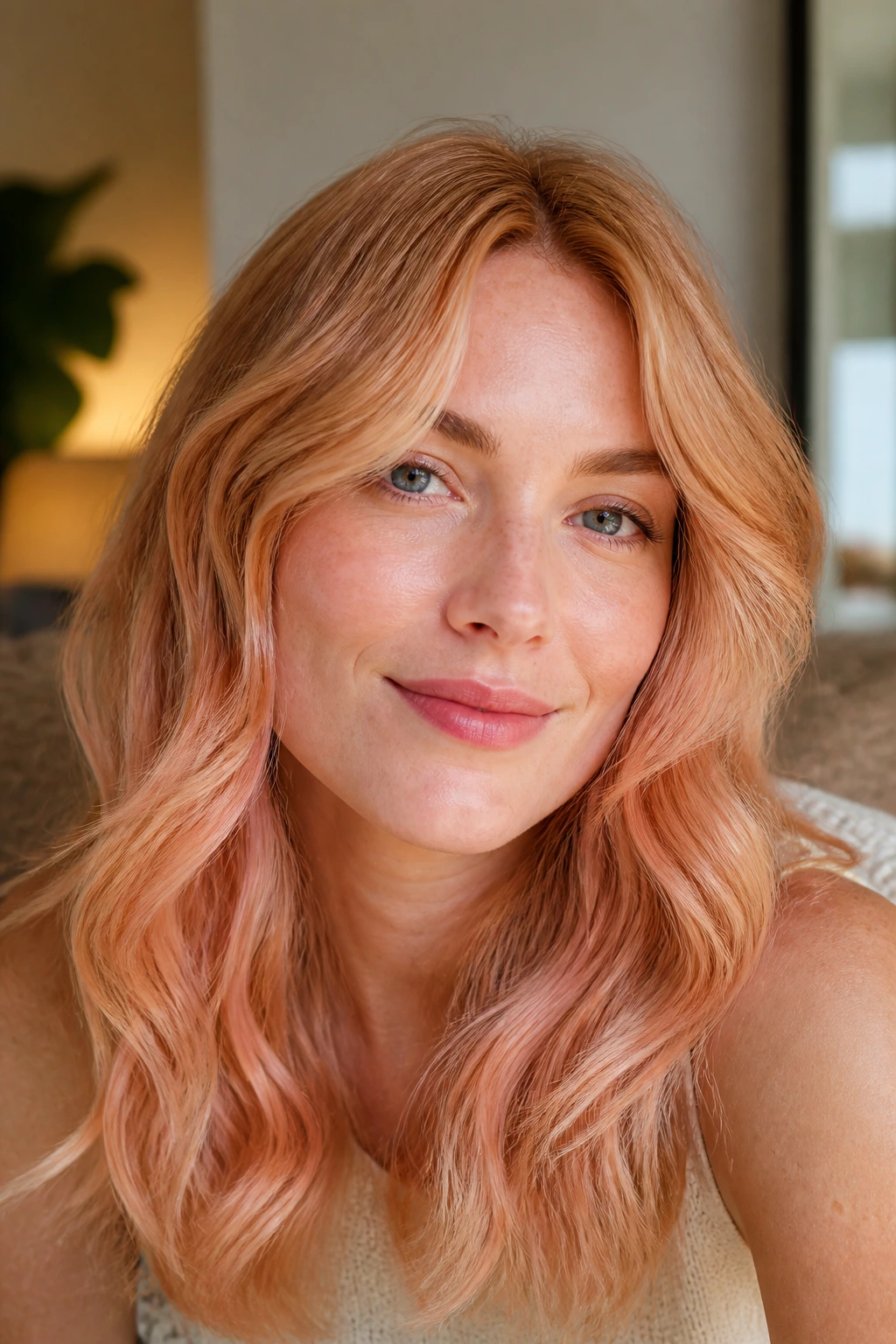
The Creamsicle Shift: Keep the blonde pale and add only a whisper of peach. This version works if you want the softness of strawberry blonde without obvious red notes. It’s especially nice on shoulder-length cuts with loose waves.
The Burnished Root Melt: Deepen the root by one to two levels and let the color melt into a light strawberry blonde mid-length. Choose this if you want a more grown-up version that stretches salon visits a little longer.
The Soft Coral Glow: Add a sheer coral glaze over a bright blonde base. This gives you more pink-warmth than a standard strawberry tone, but the translucence keeps it from looking like fashion color.
The Beige-Copper Balance: Split the tone between beige and copper instead of leaning hard into either one. This adaptation flatters cooler skin because the beige cools the copper down before it gets too loud.
The Ribboned Brunette Blend: For darker bases, use highlights and lowlights instead of an all-over blonde lift. The strawberry note lives in the lighter ribbons, while the deeper pieces keep the color grounded and easier to maintain.
Frequently Asked Questions
What level does my hair need to be for light strawberry blonde?
Most versions look best on a lifted level 8 or 9 base, where the hair is pale blonde but not icy. Darker bases can get there, but they usually need highlights, balayage, or more than one appointment if you want the color to stay soft instead of copper-heavy.
Can brunettes wear strawberry blonde without bleaching everything?
Yes, but the plan changes. Instead of an all-over lightening job, ask for warm highlights, a subtle root shadow, and a strawberry gloss layered over the lighter pieces. That approach keeps more depth and usually looks more natural on darker hair.
Does light strawberry blonde work on cool skin tones?
It can, if the tone is balanced. A beige-strawberry or rose-gold version usually flatters cool undertones better than a bright orange-copper formula. The wrong warm tone can make skin look flushed; the right one wakes it up.
How often will I need a gloss or toner refresh?
A lot of salon glosses hold their tone for about 4 to 8 weeks, depending on how often you wash and heat-style. If you want the color to stay clearly strawberry rather than drifting into plain blonde, plan on refreshing it before the fade gets too far.
Will purple shampoo ruin strawberry blonde?
Used once in a while, it can help if your blonde base gets too yellow. Used too often, it can flatten the warmth and make the color look dull or smoky. If your hair already has the right amount of gold, stick to color-safe shampoo instead.
What should I tell my stylist if I want it soft, not coppery?
Use plain language: say you want a light strawberry blonde with peach or rose warmth, not bright copper. If possible, show a photo where the hair looks creamy in the mids and only slightly warm at the ends or front.
Is strawberry blonde high-maintenance?
The lighter and brighter it is, the more upkeep it needs. A rooted melt or balayage version is easier to live with than a solid all-over pastel strawberry shade. The trick is choosing the version that matches how often you want to sit in a salon chair.
What if the color turns orange after a few washes?
That usually means the red-gold balance was too strong, or the hair lifted unevenly underneath. A quick gloss can calm it down, but if the orange is intense, ask for a toner that leans beige or neutral instead of adding more warmth.
The Shade That Stays Soft
Light strawberry blonde works because it has movement built into it. It isn’t one note, and that’s the whole appeal. The best versions flicker between peach, gold, rose, and cream depending on the cut, the base color, and the way the light lands on the hair.
If you pick the version that fits your starting point, the upkeep gets easier and the color looks more like it belongs to you instead of borrowing someone else’s photo. That’s the real win with this shade family. It can be bright, gentle, or quietly dimensional, and it doesn’t need to shout to get noticed.