



Grey coverage hairstyles for deep skin tones work best when the color does not sit flat, stale, or over-processed against the face. The mistake people make most often is reaching for the darkest black they can find and hoping that depth alone will hide silver strands. It usually does the opposite. Grey at the hairline starts to look brighter, the face can lose warmth, and the whole head of hair begins to read as one hard block.
What tends to look better is richer than black, not flatter than black. Think blue-black with a clean shine, espresso with a soft root shadow, mahogany that warms the skin, burgundy that gives the curls a little depth, or braids and twists that hide the regrowth line before it has a chance to shout. On deep skin, those shades look intentional. They also age better as the roots come in, which is half the battle when grey keeps showing up first at the temples, crown, or part line.
The smartest looks here do more than cover. They bend light, break up the regrowth line, and make the grey feel blended instead of fought. That is the sweet spot: strong enough to cover, soft enough to wear.
Why These Grey-Coverage Looks Stand Out on Deep Skin
-
Warmth beats flatness: Espresso, mahogany, chestnut, and cherry-toned shades sit more naturally against melanin-rich skin than a hard, inky black that can look pasted on at the hairline.
-
Texture does part of the hiding: Curls, coils, twists, and braids scatter light, so grey strands are not sitting in one smooth plane where the eye can catch them fast.
-
Regrowth matters as much as coverage: Styles with shadows at the root, fringe at the forehead, or a side part at the temple buy you extra time between touch-ups.
-
Shine changes the whole read: A glossed finish, a silk press, or a polished braid pattern keeps grey coverage from looking chalky or dry once the cuticle opens a little.
-
Protective styles can be honest and practical: Braids, locs, sew-ins, and buns let you hide grey while giving the hair a break from daily heat and combing.
-
The right color family keeps skin alive: Blue-black, plum-black, smoky chocolate, and deep red-brown keep the complexion from looking washed out the way some ash-heavy shades do.
1. Blue-Black Silk Press Bob
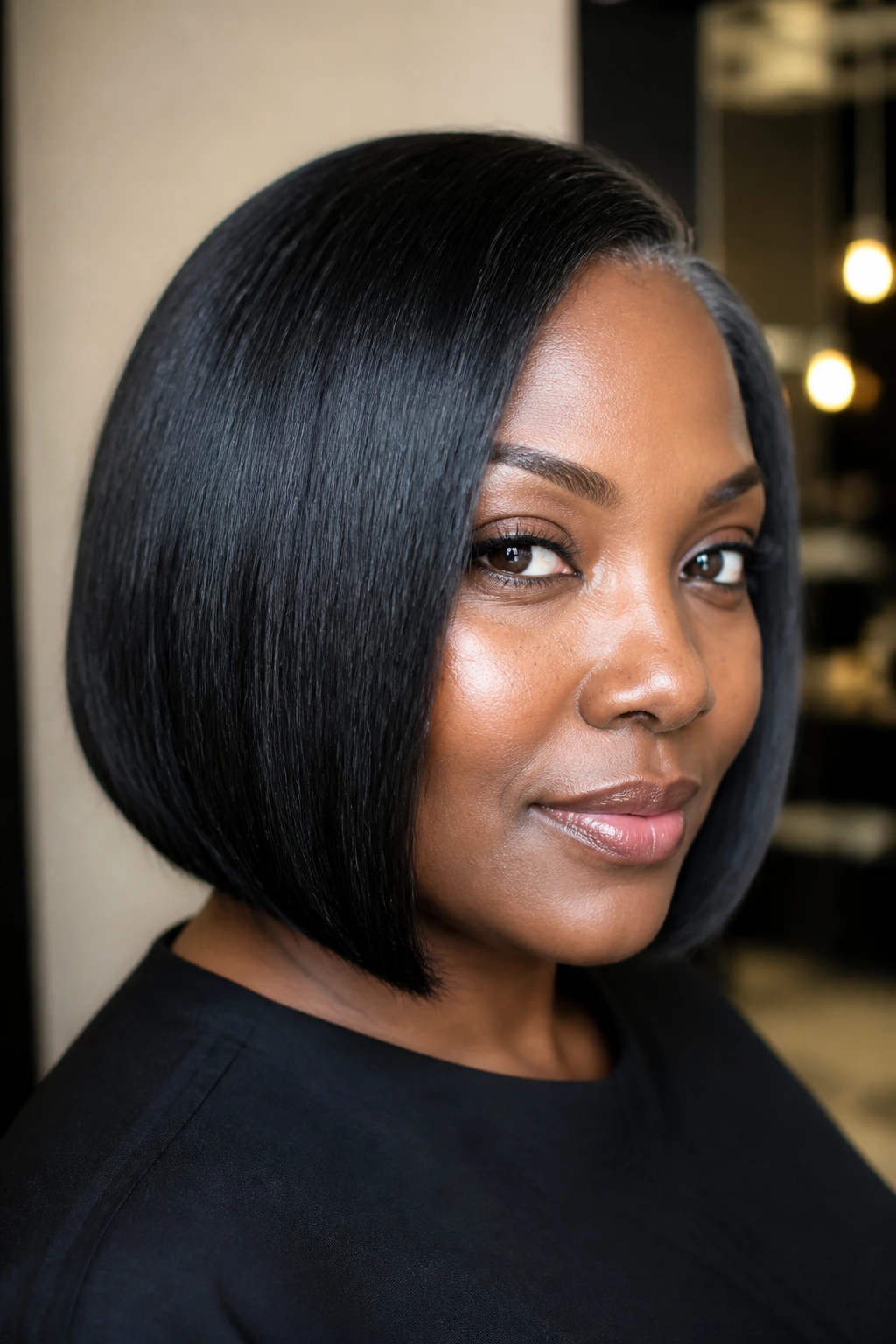
Blue-black is one of those shades that looks almost too dark in the bowl and then comes alive once it hits a deep complexion. On a chin-grazing bob, the color reads glossy instead of heavy, and the clean line at the ends makes grey at the temples disappear into the shape. I like this one when the hairline is the first place grey shows up, because the sharp outline gives the eye somewhere else to land.
The real trick is the finish. A silk press smooths the cuticle so silver strands do not stick up and flash at odd angles, and the blue base keeps the black from turning flat or harsh. If the hair is porous, a gloss over the color helps the blue-black stay rich instead of fading toward dull brown after a few washes.
This cut asks for discipline, though. Wrap it nightly with a silk scarf, keep the iron temperature sensible, and trim it every 6 to 8 weeks so the shape stays crisp. Once the bob starts flipping out at the jaw, grey regrowth looks louder than it is.
2. Espresso Layered Lob with Root Shadow
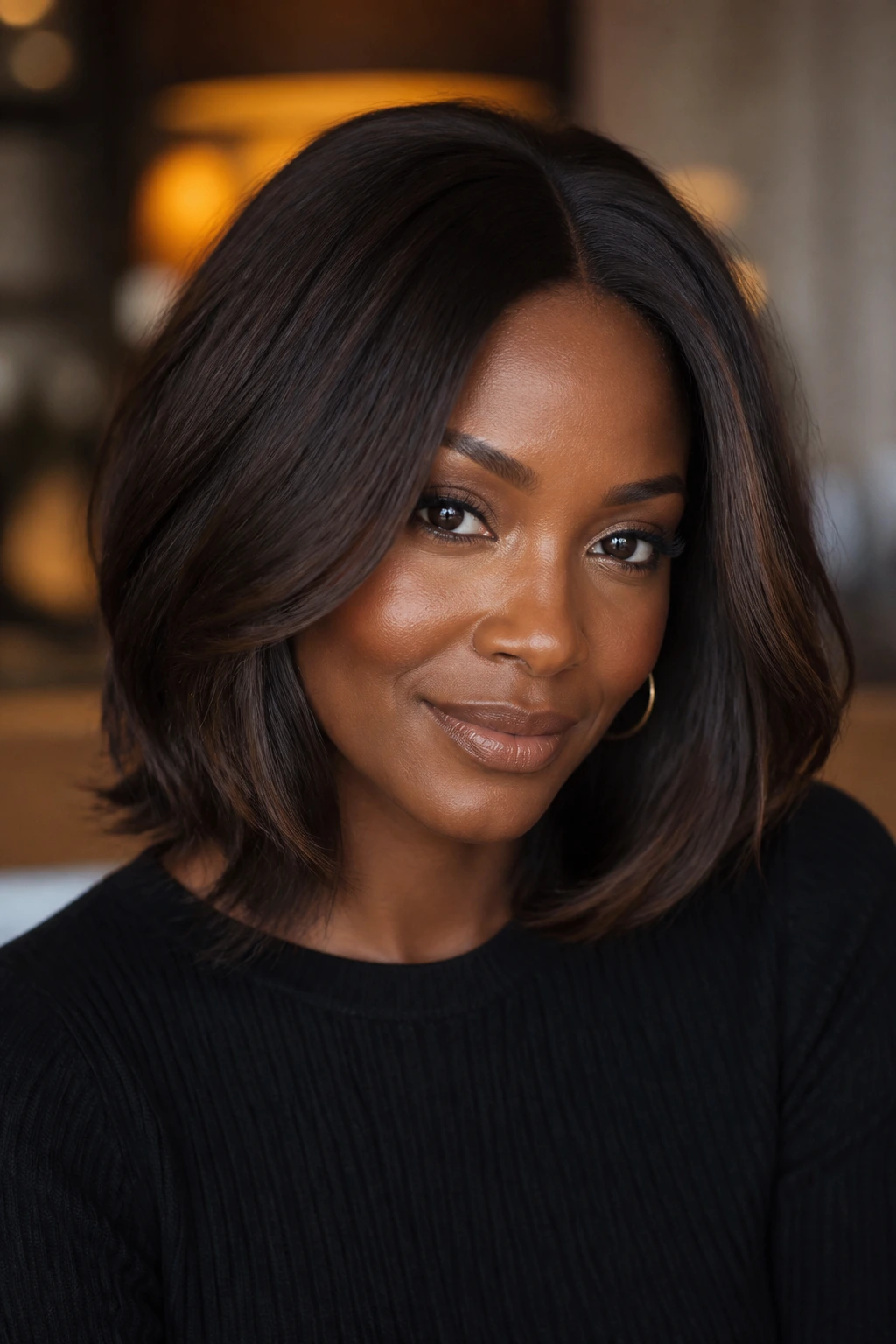
Why does an espresso lob hide grey so well? Because the layers and the root shadow do different jobs at the same time. The darker root blur softens the part line, while the longer front pieces keep the eye moving instead of locking onto a patch of silver at the crown. On deep skin, espresso has enough warmth to feel rich without tipping into red.
Ask for a lob that sits somewhere between the collarbone and the top of the chest, with a soft face frame that starts around the cheekbone. That length gives the hair swing, and swing is useful; a moving shape is harder for grey to interrupt. A neutral or slightly warm root smudge works especially well if your greys cluster at the temples.
This is one of the easiest looks to keep looking neat for weeks. A demi gloss every 6 to 8 weeks keeps the shade even, and a side part can be switched from left to right when the regrowth starts to show. Small change. Big payoff.
3. Mahogany Tapered Afro
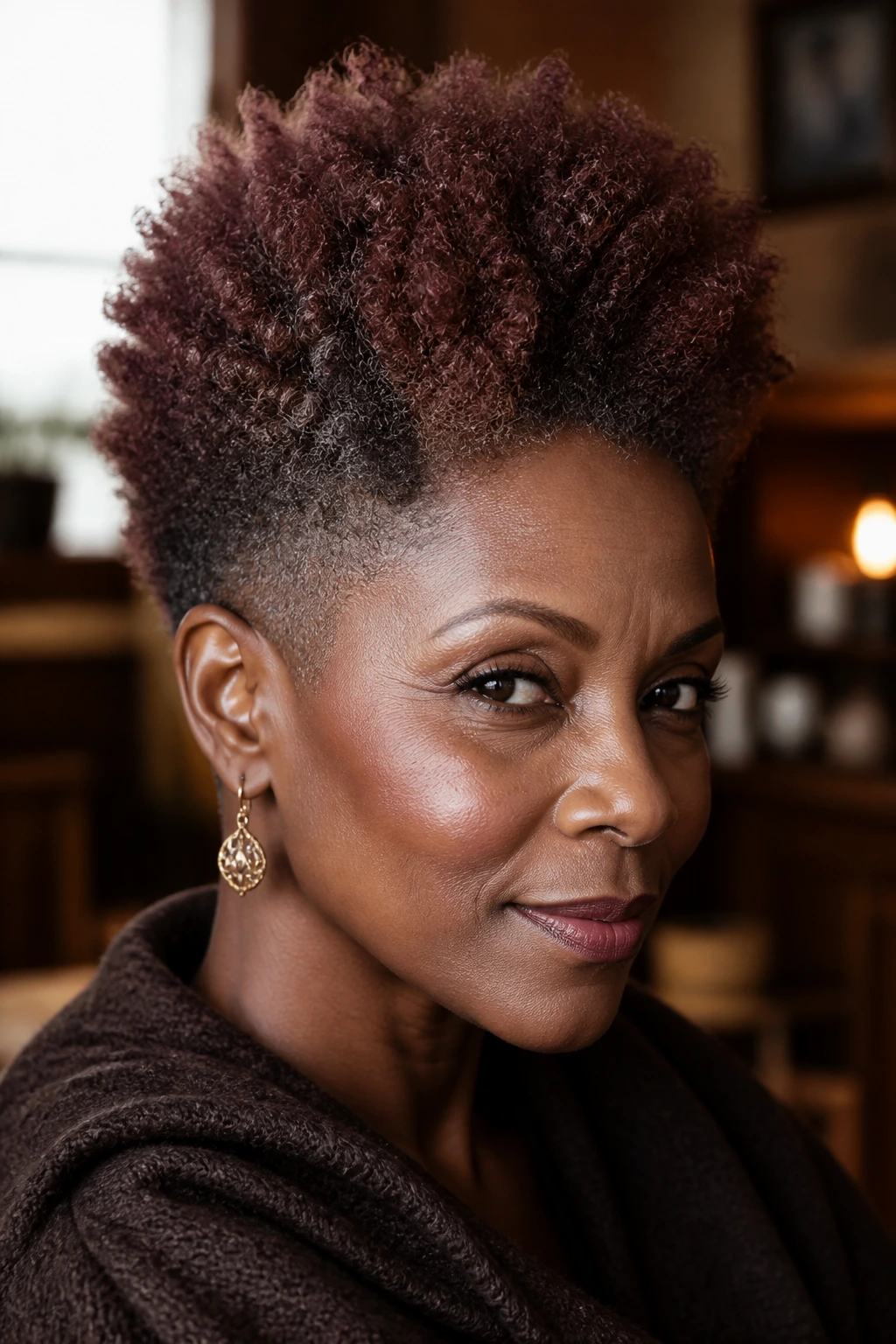
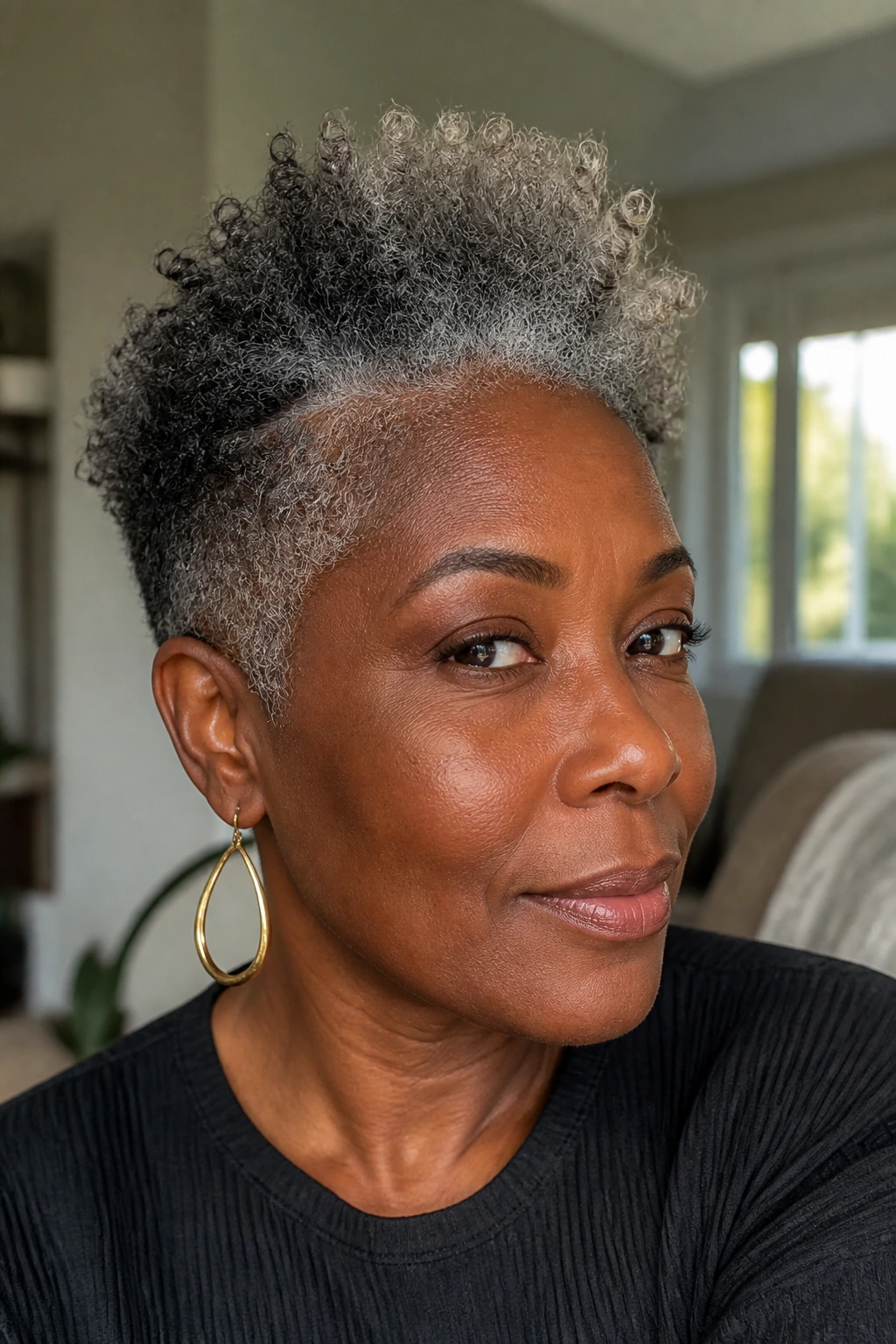
A tapered afro does something a blunt cut cannot: it lets the grey disappear into the curl pattern. Mahogany is a smart choice here because it brings warmth to deep skin without shouting red from across the room. The color sits in the hair, not on top of it, which matters when you want coverage that still feels like natural texture.
The taper keeps the sides clean and the crown fuller, so the eye reads shape before it reads individual silver strands. Grey at the front hairline gets softened by the contrast between the tighter sides and the rounded top. If you have coarse coils, this is one of the easiest ways to make grey feel blended rather than singled out.
I would keep this one on a 4- to 6-week trim cycle. A moisturizing cream and a light oil on the ends help the mahogany stay deep, because dry ends can make the whole color look lighter than it is. And if you use a pick, use it at the root only. Dragging through the ends frays the shape fast.
4. Cinnamon Twist-Out with Chestnut Ribbons
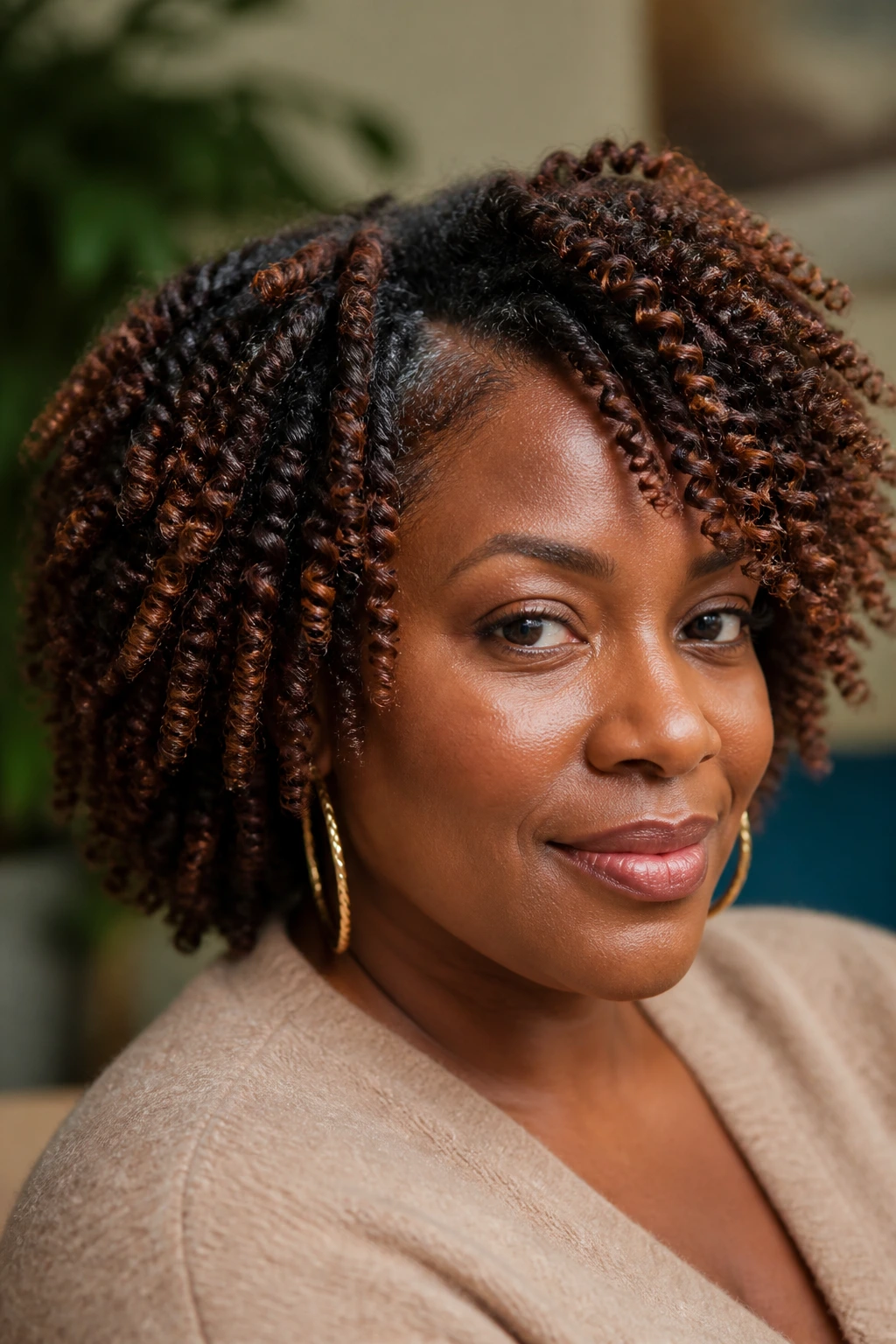
A good twist-out hides a surprising amount of grey because the curl pattern breaks up the surface. Cinnamon and chestnut together give the hair that warm, worn-in richness that looks especially good on deep golden or neutral skin. Grey strands still exist, obviously, but they do not stand alone the way they do on straight hair.
This style works best when the twists are set on damp hair with a cream that has enough slip to reduce frizz, then separated once they are fully dry. The chestnut ribbons can come from a demi color, a gloss, or a tinted conditioner if you only want soft coverage. I like the ribbon idea better than one flat color because it keeps the look from reading fake.
If your grey is mostly at the part line, make the twists a little deeper near the crown and then break them apart gently around the face. That small change changes everything. It pushes the lighter strands into the curl body where the light cannot catch them as quickly.
5. Chestnut Box Braids with Dark Roots
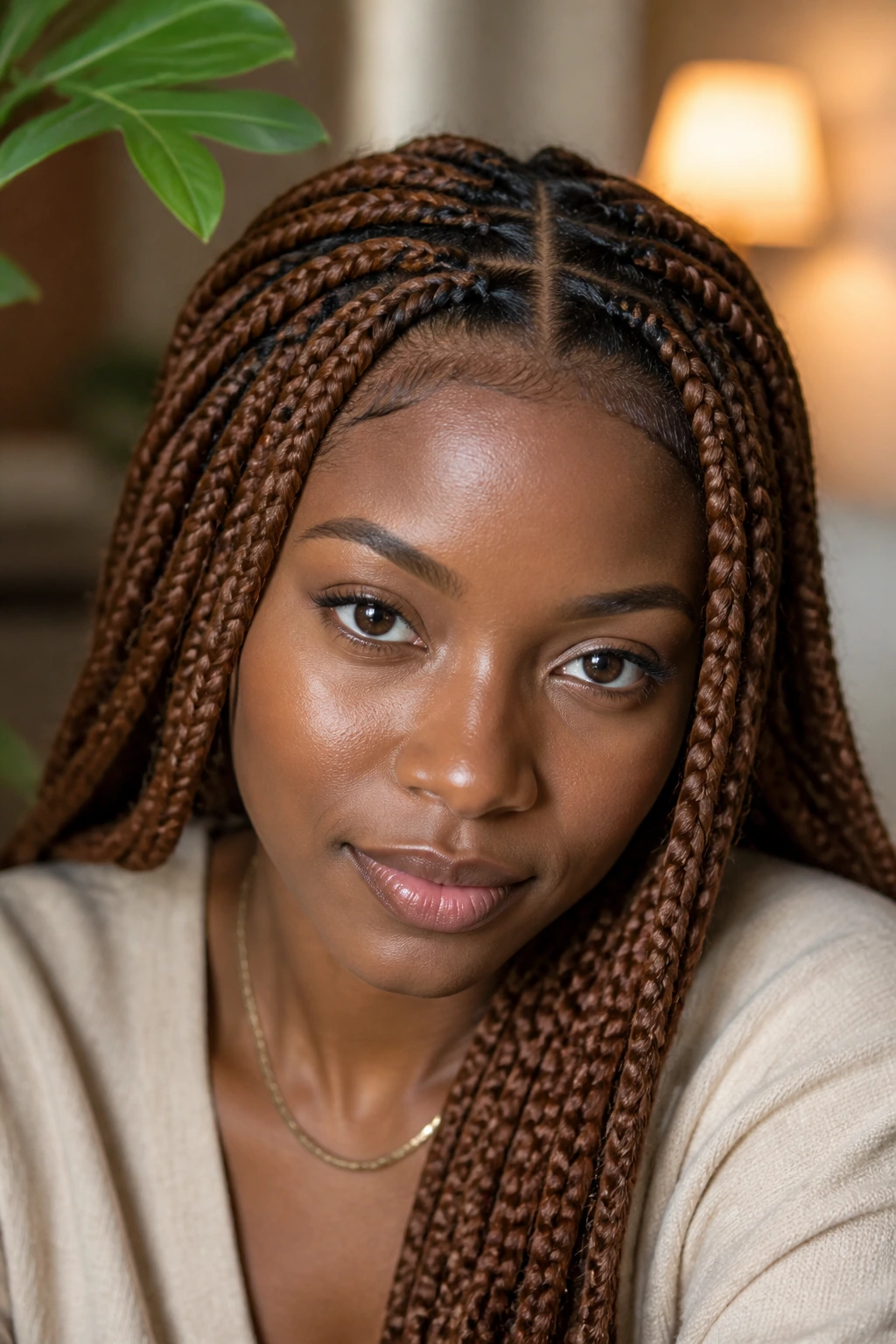
Chestnut box braids are one of the easiest ways to keep grey from taking over the conversation, especially when the roots are dark and the braids themselves sit in a rich brown. The color shift keeps the look soft against deep skin, and the braids do the extra work of hiding the actual regrowth line. Clean, tidy, low-drama.
What makes it work: the darker root section blends the temple area, while the chestnut mid-lengths give enough warmth that the style does not look heavy. If you choose pre-stretched braiding hair in a 1B, 2, or deep brown mix, the braid pattern looks more natural than pure jet black. Jet black can be too hard here.
Best use case: people who want to stretch time between coloring appointments without giving up polish. The style can go 6 to 8 weeks if the scalp stays clean and the braids are not pulled too tight at the edges. That part matters. Too much tension around the front will make the hairline look thin before the style ever gets old.
Pro move: ask for medium-sized parts rather than tiny ones. Micro parting shows scalp more clearly, and scalp exposure makes grey pop at the root.
6. Burgundy Shoulder-Length Curls
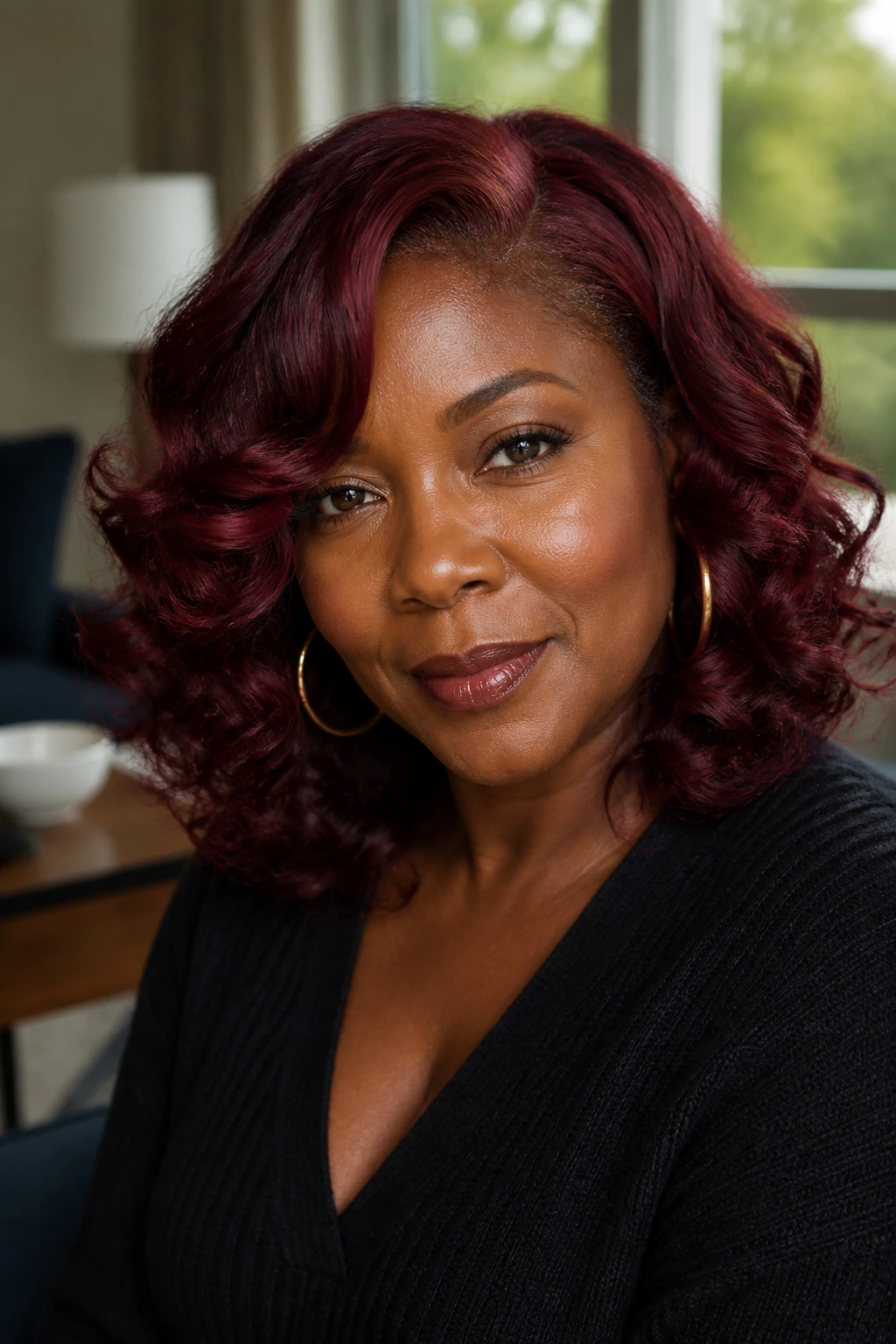
Burgundy on deep skin can look expensive in a way flat brown never quite manages. The shoulder-length cut gives the curls room to move, and movement is the whole point here. Grey strands vanish into the red-violet depth once the light hits the curls at different angles.
The reason this shade works is simple: grey hair is translucent, so a saturated burgundy pigment clings to it better than a washed-out pastel or a pale brown. On textured curls, that saturation looks layered instead of loud. If your hair has been lightened before, keep the burgundy on the deeper side so it does not go patchy at the porous ends.
This is a look that benefits from a curl-defining cream and a diffuser set on low heat. The curls should look soft and springy, not crunchy. A little shine serum on the mid-lengths helps the color stay rich, but keep it away from the roots or the style can separate and show the grey line again.
7. Deep Walnut Blunt Cut With Gloss
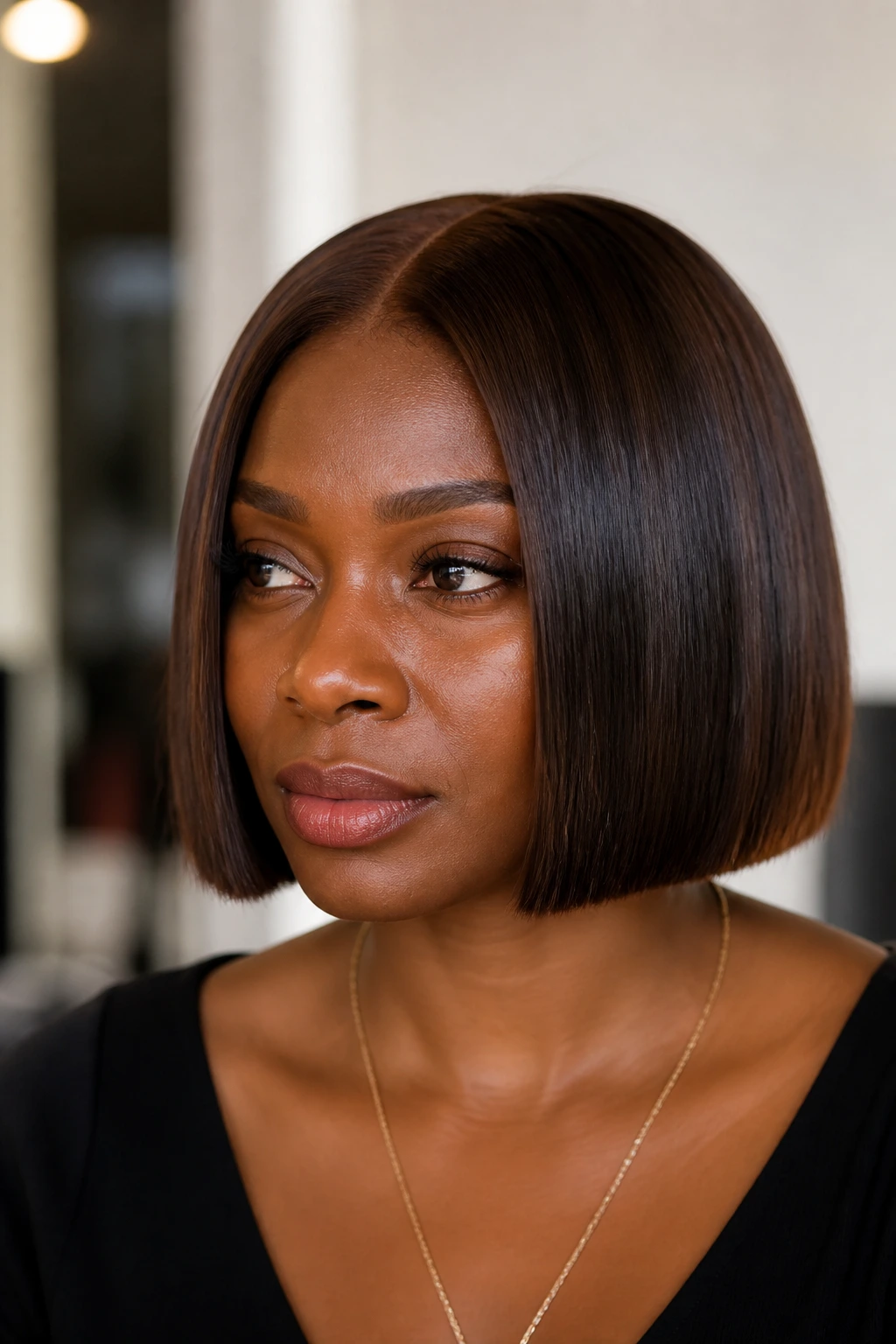
A blunt cut is honest. It tells on bad color work, and that is exactly why it is worth doing right. Deep walnut gives the hair enough darkness to cover grey while keeping a brown base that looks kinder against deep skin than dead black. The gloss is the part people skip, and then they wonder why the color looks tired.
A clean one-length line at the shoulders or just above makes the whole shape feel deliberate. There is less visual clutter, so the eye reads the smooth edge and the reflective finish before it notices silver at the root. If your hair is fine, this cut can also make the strands look denser, which helps because grey often feels more obvious when the hair is spread out and soft.
I like this style best when the ends are kept blunt and the root area is treated with a neutral brown shadow. That one-two combo is practical. It gives coverage without making the hairline look painted on.
8. Auburn Fulani Braids
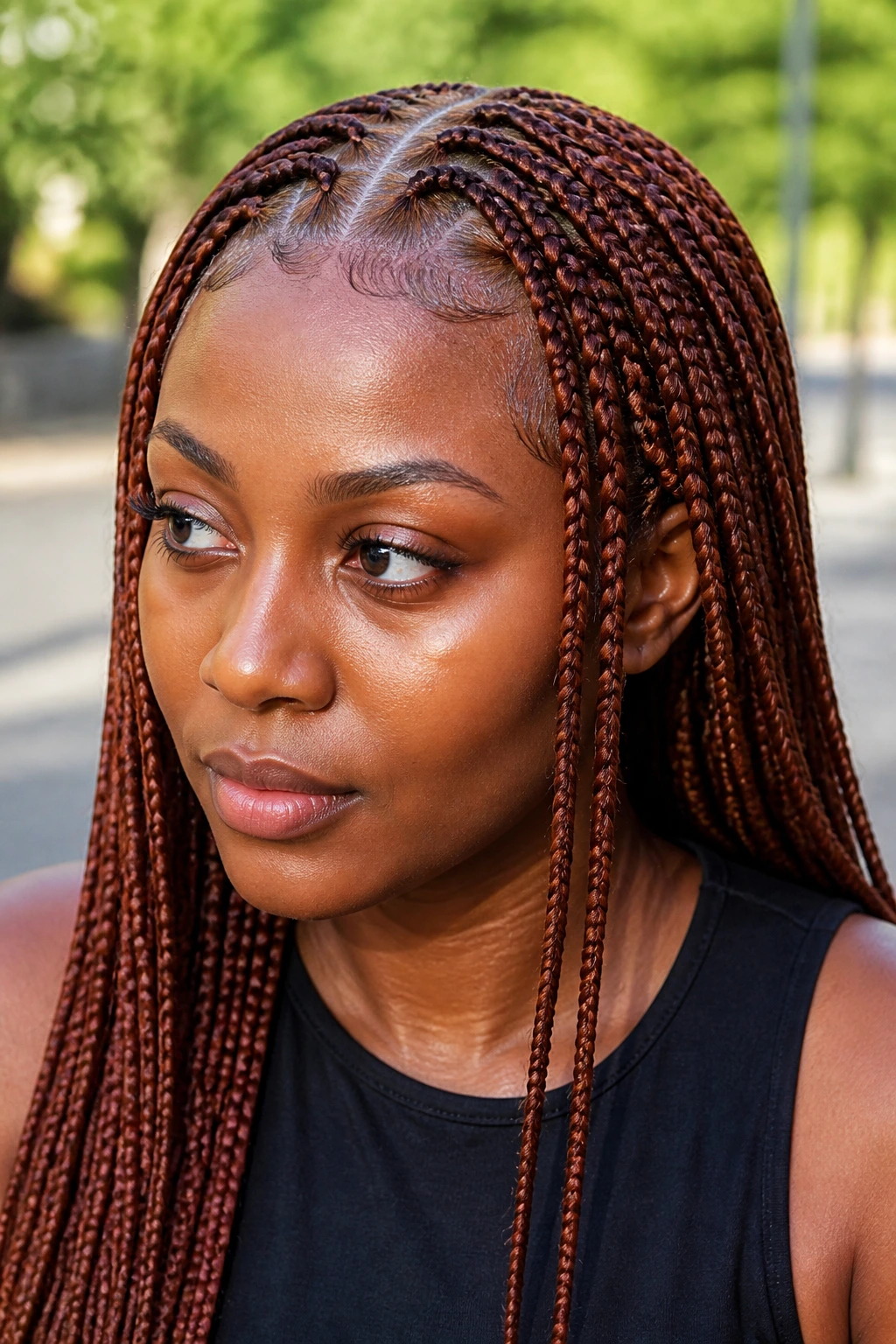
Fulani braids already have built-in structure, and auburn gives them a warm edge that plays well with deep skin. The center cornrow or braid line frames the face, while the side braids and beads keep attention moving. Grey at the temples has a harder time standing out when the braid pattern is doing that much work.
The auburn should stay deep, more rust than orange. Bright copper can go loud fast, especially if the skin tone is cool or neutral. A deeper auburn looks richer and makes the scalp look more even, which matters if your grey is clustered at the front hairline.
A clean part is everything here. If the part gets fuzzy, the grey shows sooner, so use a rat-tail comb and a little styling foam to keep the base neat. This is one of those styles that looks best after the first day, once the braids settle and the shine drops into a softer finish.
9. Mocha Cornrows Into a Low Bun
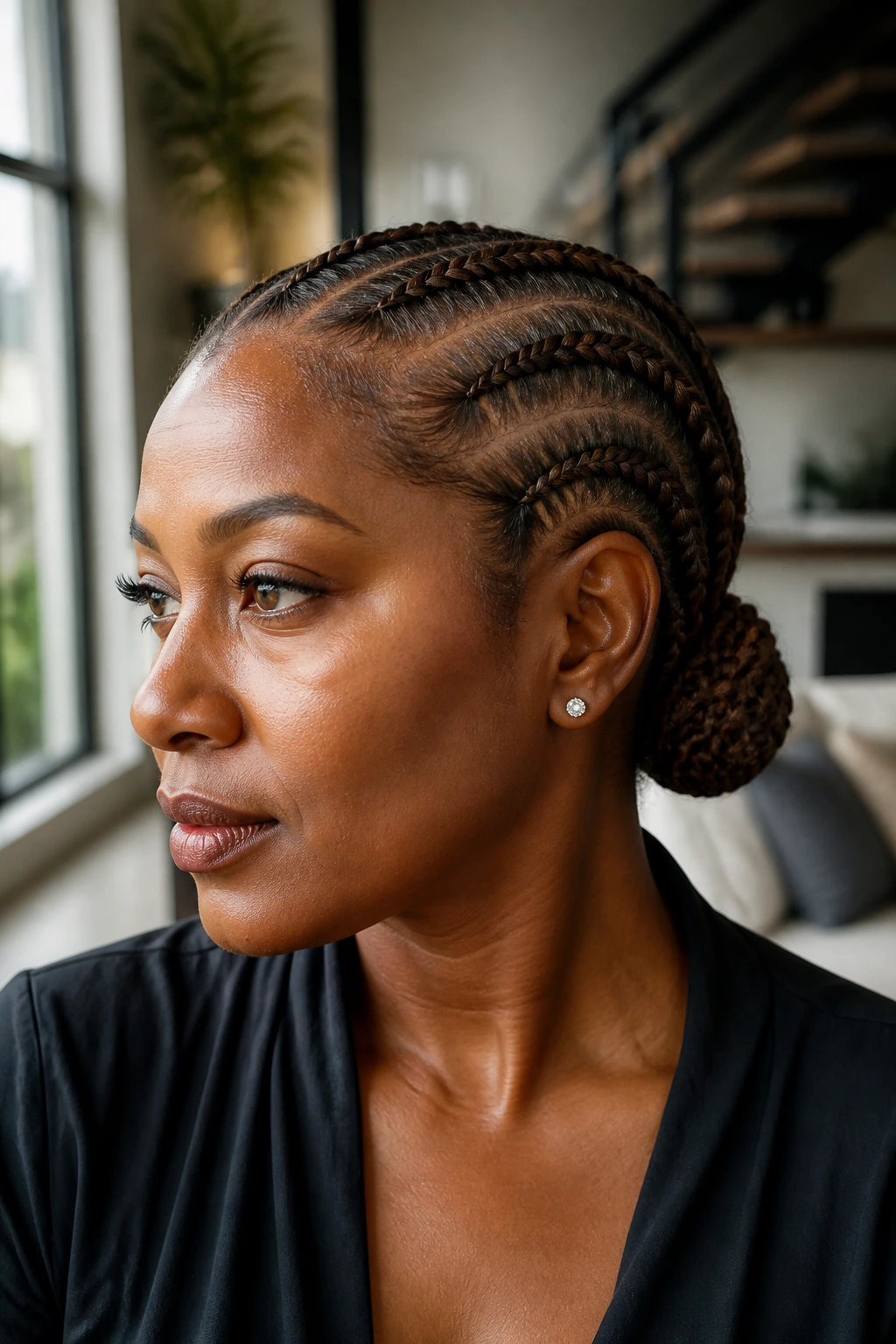
Mocha cornrows into a low bun are the kind of style that makes grey disappear without asking for much in return. Cornrows flatten the hair close to the scalp, which hides regrowth where it usually starts to bother people most. Then the low bun gives the style a finished shape instead of leaving it looking purely practical.
The mocha tone matters because it warms the scalp and keeps the whole look from becoming too severe. A deep brown-black with a soft brown cast looks especially good on deep skin when the bun sits at the nape and the braids are not pulled into a tight, shiny shell. That shiny shell is the problem. It can make every silver thread at the temple feel louder.
This style is useful if you work with your hair a lot and do not want loose pieces falling into your face. It also behaves well in humid weather. If the edges tend to frizz, smooth them with a light gel and a soft brush rather than piling on product.
10. Cherry Cola Side-Part Sew-In
A side-part sew-in is one of the quietest ways to handle grey, which is part of why it works so well. The natural hair stays tucked away, the part can be placed where the grey is least visible, and cherry cola color brings enough red-brown depth to keep the style from reading flat. It is coverage without constant touching.
Coverage trick: ask for a closure or leave-out plan that places the part away from the area where your grey shows first. If the silver tends to live at the temples, a deeper side part can be kinder than a center part. Cherry cola is also a good choice when you want color but do not want the brightness of a true red.
What to watch: human hair extensions hold the look better than synthetic hair if you plan to gloss or heat-style the sew-in. Synthetic hair can look too shiny at the top and too fake around the part. That kind of shine makes the grey at the front even more noticeable.
Best for: people who want a polished finish for several weeks and are willing to keep the closure clean. A lightweight mousse and a satin wrap at night keep the part looking tight.
11. Golden Brown Tapered TWA
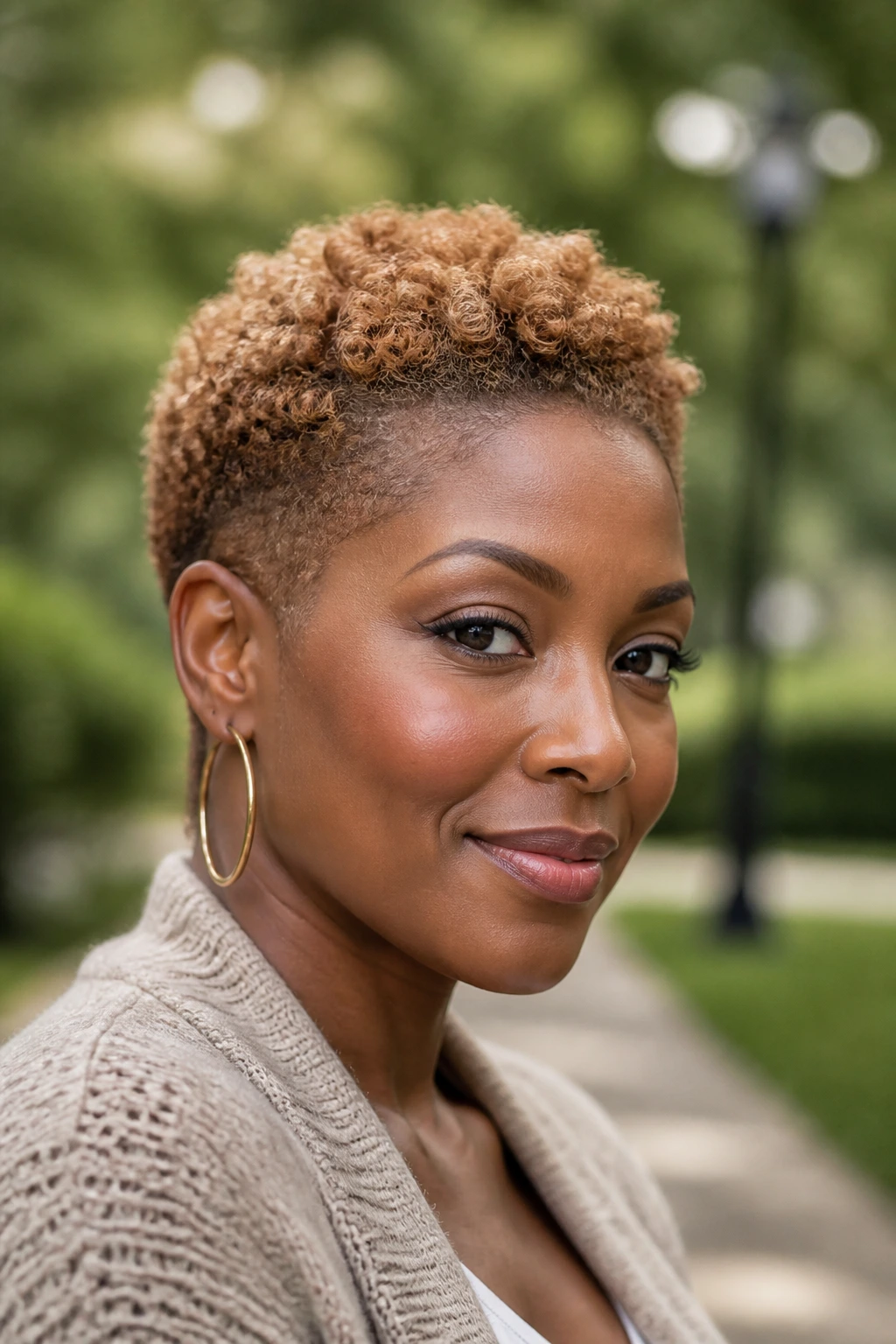
A tapered teeny-weeny afro, or TWA, gets better when the brown has enough gold in it to warm the face. Golden brown is not a shy shade. It softens grey by refusing to sit still, because the warm tones catch light in a way flat black never does. On deep skin, that warmth can wake up the whole face.
The taper keeps the sides neat and the crown full, so any grey that remains reads as texture rather than mistake. If your hair is naturally coily, this is one of the easiest styles to maintain between washes. Grey at the part line gets lost in the short shape, and the short shape means you are not fighting long roots every morning.
I like a light curl sponge or finger coil pattern here if the texture needs a little help holding shape. Too much product will make the hair look coated, and coated hair always shows grey faster than fluffy, breathable coils. Keep it soft. Keep it moving.
12. Plum Knotless Braids
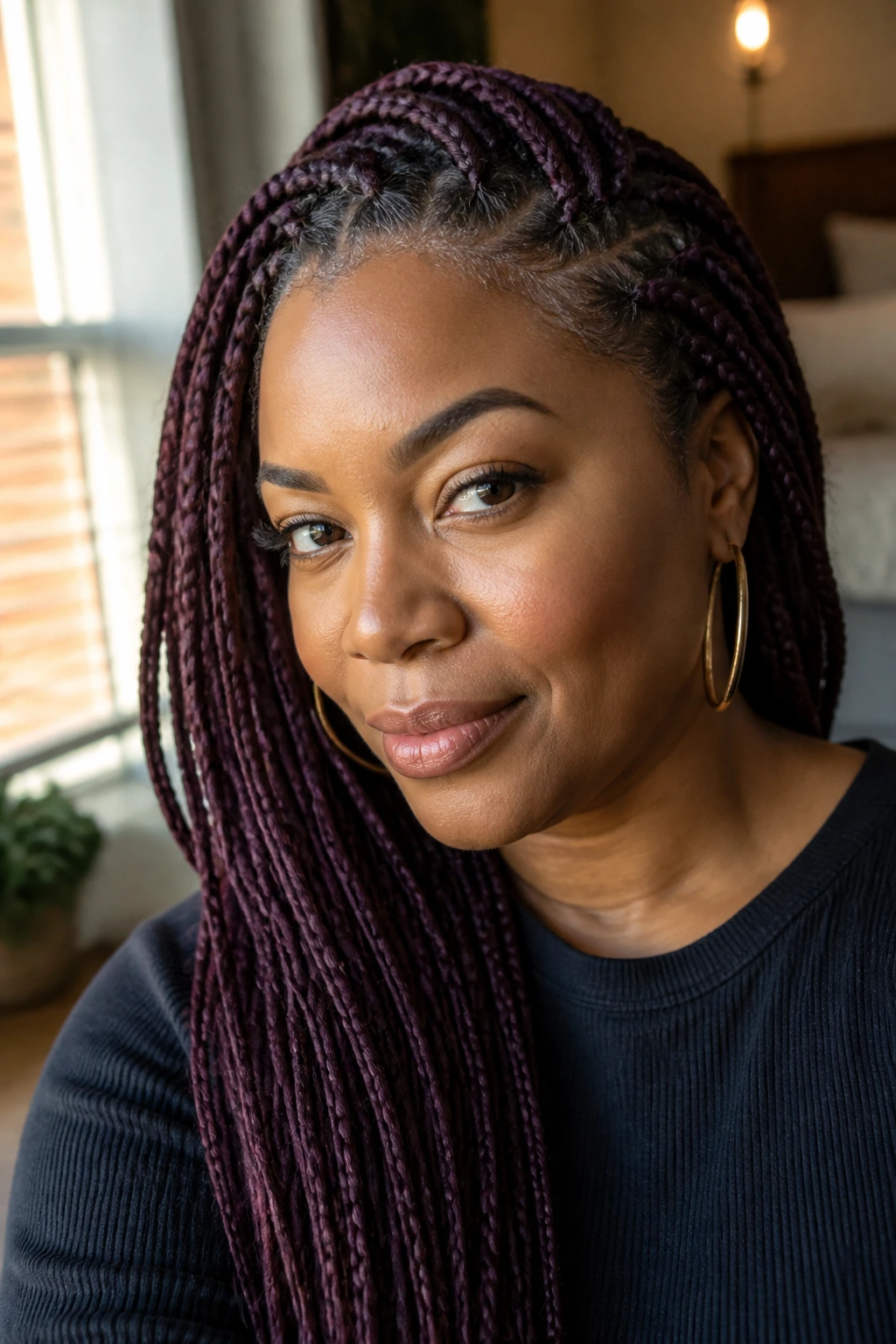
Plum knotless braids sit in that sweet spot between bold and easy. The darker plum base is rich enough to cover grey around the root, while the gentle knotless start keeps tension lower at the hairline. That matters more than people think. A stressed front line makes every silver strand more visible.
The color should stay deep, almost wine-stained, rather than neon purple. On deep skin, a restrained plum looks elegant. A bright violet braid can fight the complexion, and then the whole style reads louder than it needs to.
If your grey lives mostly in the part and front edges, knotless braids are useful because the start of the braid is flatter and softer than a traditional knot. That softer root is easier to blend. I also like them for longer wear because the roots do not pop out at the same rate as they do with some heavier braid styles.
13. Caramel Balayage Locs with Dark Base
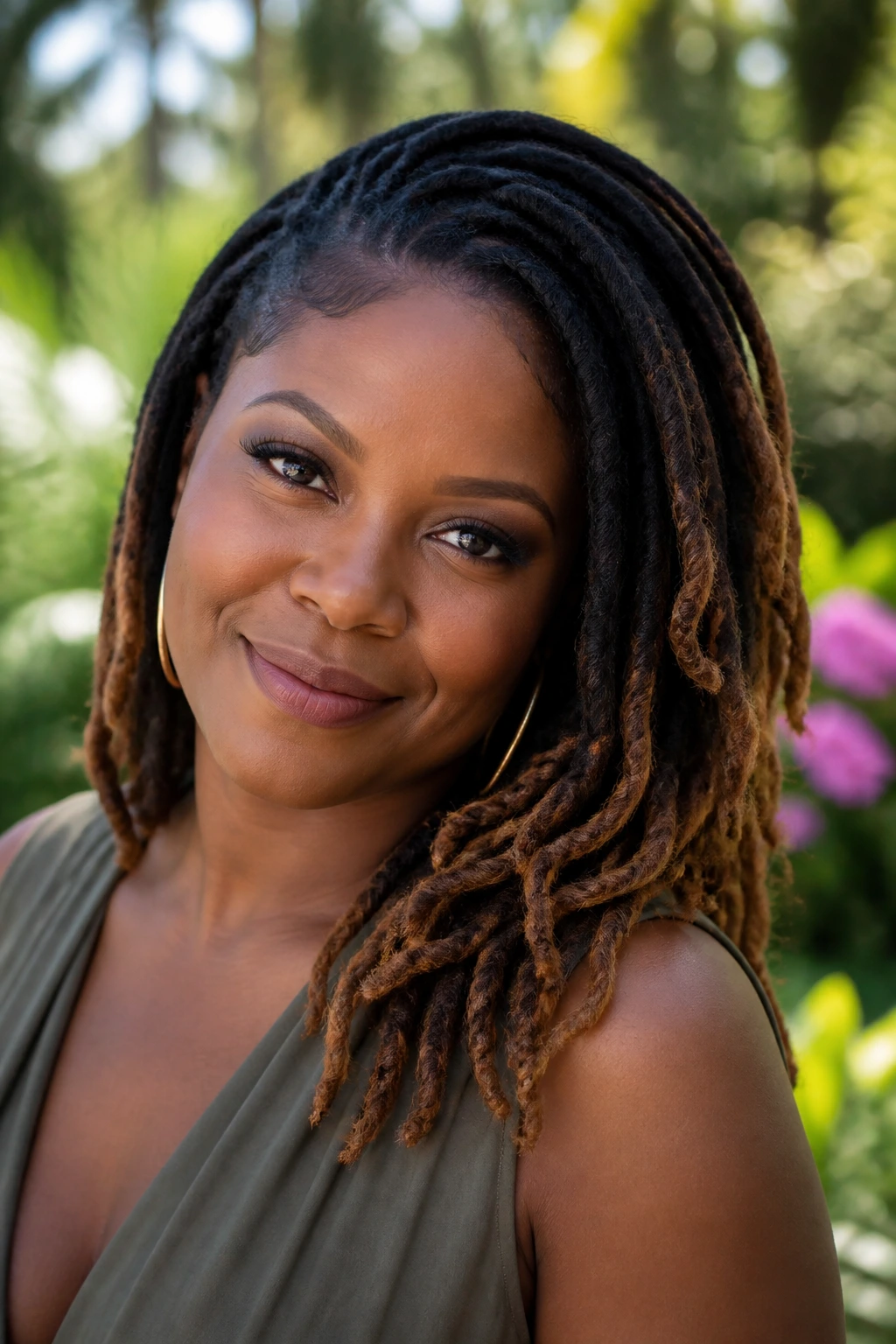
Locs already give you depth, so caramel balayage works here as an accent rather than the main act. The dark base hides grey at the root, and the caramel through the mid-lengths keeps the locs from looking too heavy on deep skin. It is one of the few lighter-toned approaches that still feels grounded.
The balayage should be subtle. Thin painted ribbons through the outer locs are enough; you do not need a dramatic blonde effect to get dimension. In fact, a loud blonde stripe can make the grey at the base more obvious by comparison. Caramel sits closer to the warmth of the skin and softens that shift.
This style is strong if you like a lived-in look and do not want to color the entire head every few weeks. A little oil on the scalp, a gentle retwist schedule, and a satin bonnet go a long way. When the roots stay neat, the dark base keeps doing its job.
14. Smoky Chocolate Bantu Knot Out
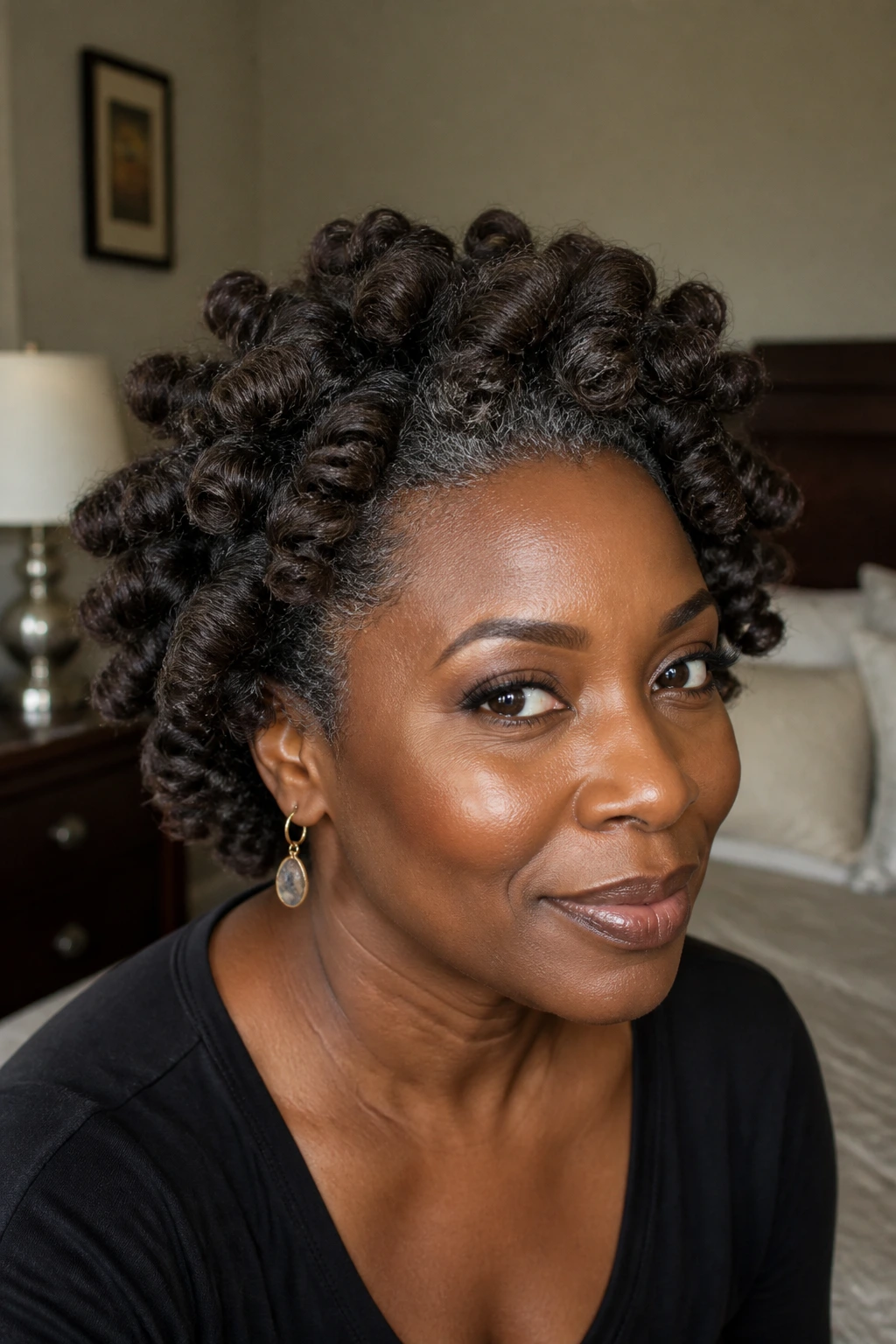
A Bantu knot out is one of the better ways to blur grey because the style itself creates a grid of texture and shadow. Smoky chocolate adds depth without turning the hair flat or overly red. The result feels soft around the face and dense through the body, which is exactly what you want when grey likes to poke out at the hairline.
Set the knots on damp, stretched hair and let them dry all the way. Half-dry knots unravel badly, and rough frizz can expose silver strands in a way that looks accidental rather than styled. The smoky chocolate tone looks especially good on hair that has a little sheen, so finish with a light cream rather than a heavy butter.
This look has a nice side benefit: you can wear the knots for a day or two, then release them for a fuller curl pattern. That gives you two styles from one set. Lazy? Maybe. Smart? Absolutely.
15. Espresso Pixie With Feathered Fringe
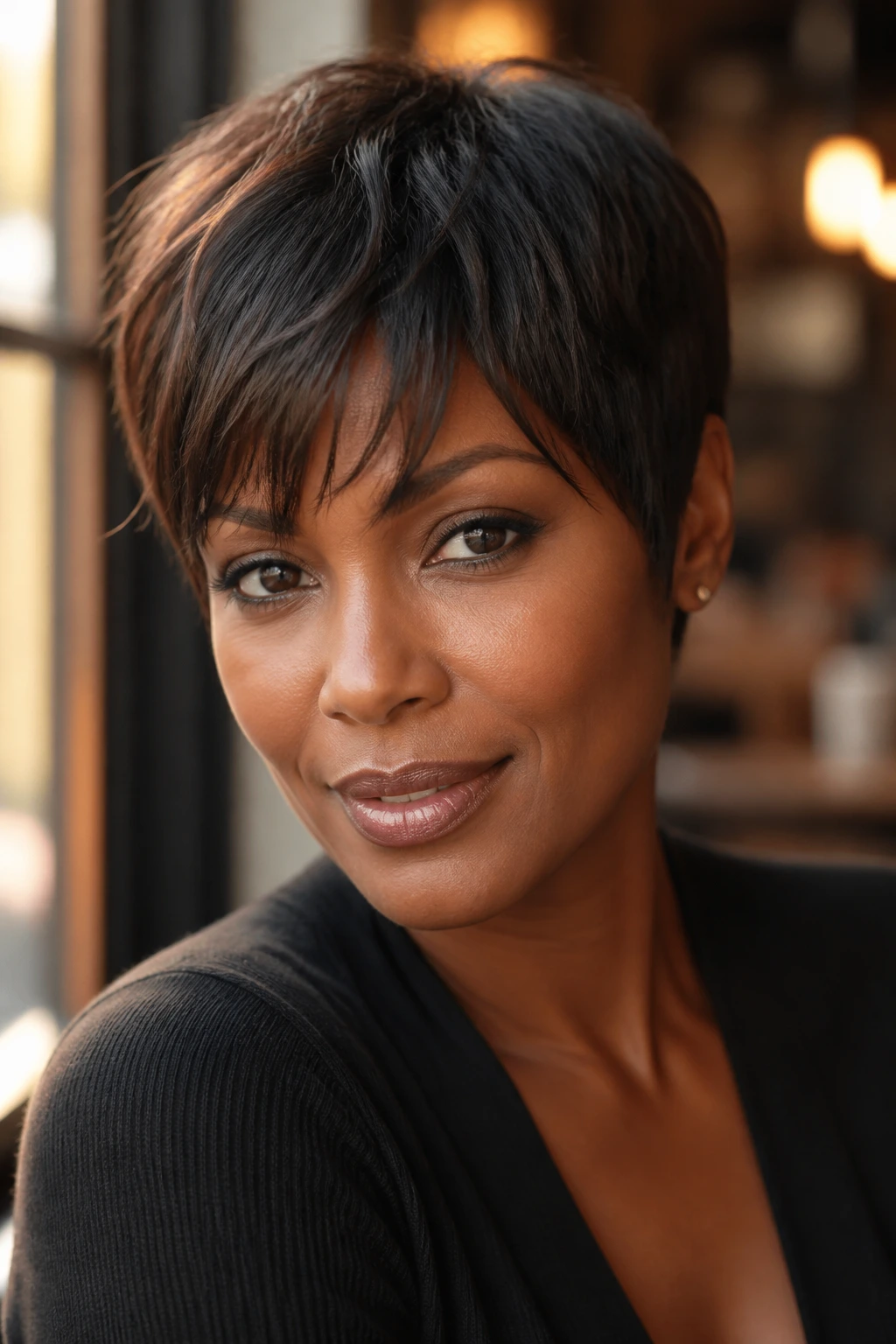
An espresso pixie is the haircut I reach for when someone is tired of chasing grey every other week. The short length means the color line stays close to the scalp, where it can be maintained fast, and the feathered fringe hides the front hairline without feeling severe. On deep skin, espresso has enough depth to cover grey while staying softer than pure black.
Why it holds up: short cuts force the eye to follow shape, not regrowth. The feathered fringe breaks the forehead line, which is where grey tends to announce itself first. If you keep the sides slightly cropped and the top a little longer, the cut gets movement without losing coverage.
What to tell your stylist: keep the top textured, not wispy. Too much thinning can make the grey pop through the hair in patches. A light gloss every 4 to 6 weeks keeps the espresso from dulling, especially if you use heat or sun protection spray.
Best for: people who like neat edges and do not want a long styling routine in the morning. It is sharp, but not stiff.
16. Copper-Tinged Flat Twists
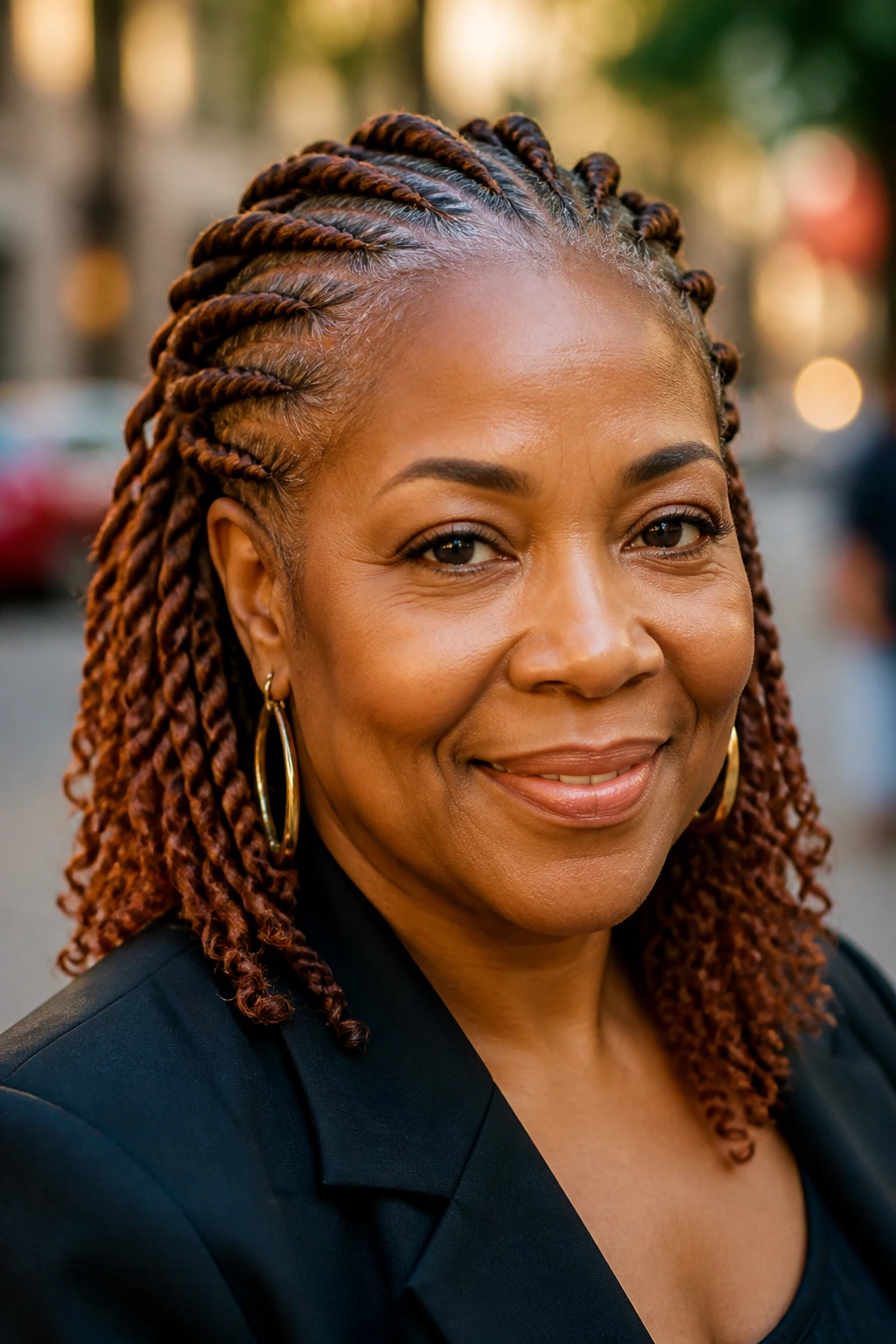
Flat twists are underrated for grey coverage because they sit close to the scalp and create a clean path over the areas where silver tends to show first. Copper adds a warm flash that looks especially good on deep golden or warm undertones. It is enough color to shift the eye, but not so much that it becomes the whole story.
The twist pattern should be crisp at the base and a little looser toward the ends. That keeps the scalp from looking overexposed. If your grey is concentrated around the front edges, start the twists slightly behind the hairline and sweep a few pieces forward after styling. That small offset does a lot of work.
This style behaves well with a moisturizer and a setting mousse, not a pile of grease. Too much product makes the twists heavy, and heavy twists hang flat enough for grey to show through the roots. Keep them light, and they last longer.
17. Black Cherry Curly Lob
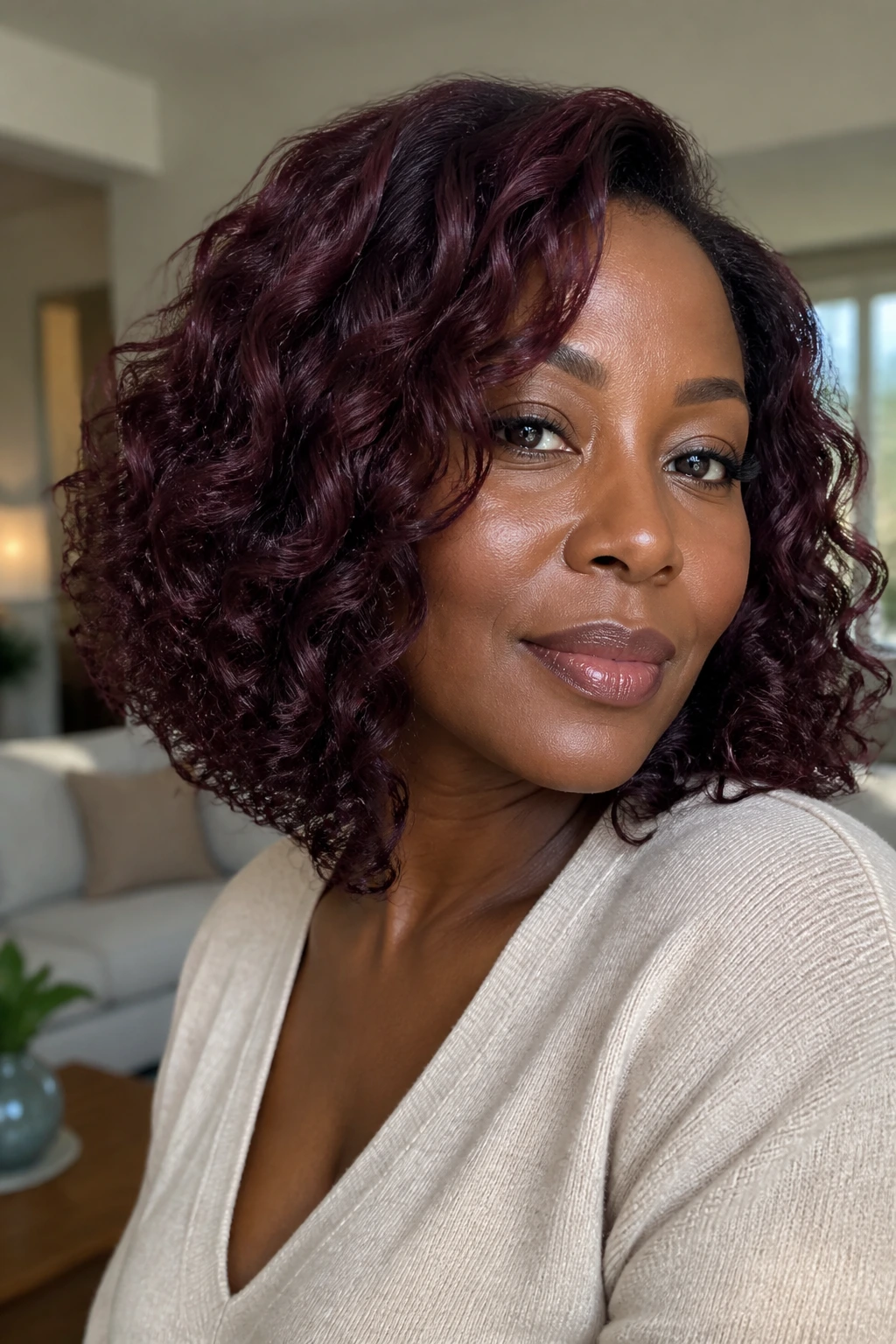
Black cherry is the color I recommend when someone wants depth with a little attitude. It sits between brown, burgundy, and near-black, which makes it ideal for grey coverage on deep skin because it does not look pasted on. The curly lob shape keeps it soft around the jaw and collarbone.
The curls matter as much as the shade. A looser, defined curl pattern gives the color places to catch light, which means grey strands get folded into the movement instead of sitting out in the open. If you want the finish to look rich rather than red, keep the root darker and let the cherry live mostly through the mids and ends.
This is a good option if you like wearing your hair down but do not want a slick, rigid style. A curl cream with a little hold, plus a light diffuse dry, keeps the shape rounded. Once the curls flatten out, the grey starts to peek through more easily at the top.
18. Honey-Bronze Silk Press Layers
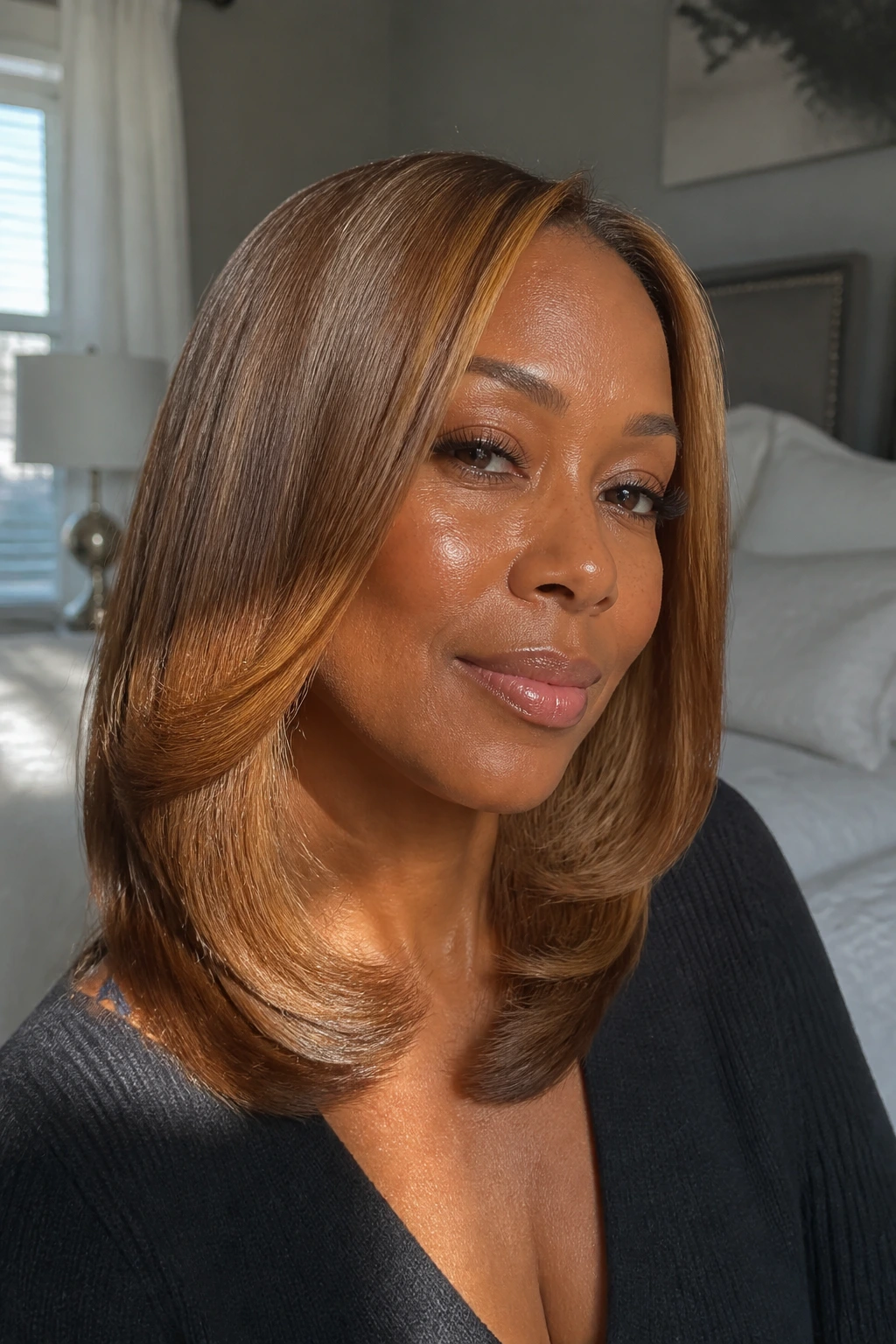
Honey-bronze sounds lighter than it is. On deep skin, the shade reads warm, reflective, and expensive-looking without going pale. The layered silk press gives the color movement, and movement is what keeps grey from sitting in one obvious line at the scalp.
The layers should begin below the chin or around the collarbone if you want the front to frame the face. That face frame helps hide temple greys and keeps the style from feeling too heavy at the back. Honey-bronze also flatters deep skin because the warmth in the color mirrors the warmth many people already have in the complexion.
If the hair is fine, keep the layers soft rather than choppy. Choppy layers can expose individual grey strands at the ends. A smooth, rounded layer pattern is better here. It holds the press, and it keeps the shine even.
19. Dark Root Boho Braids
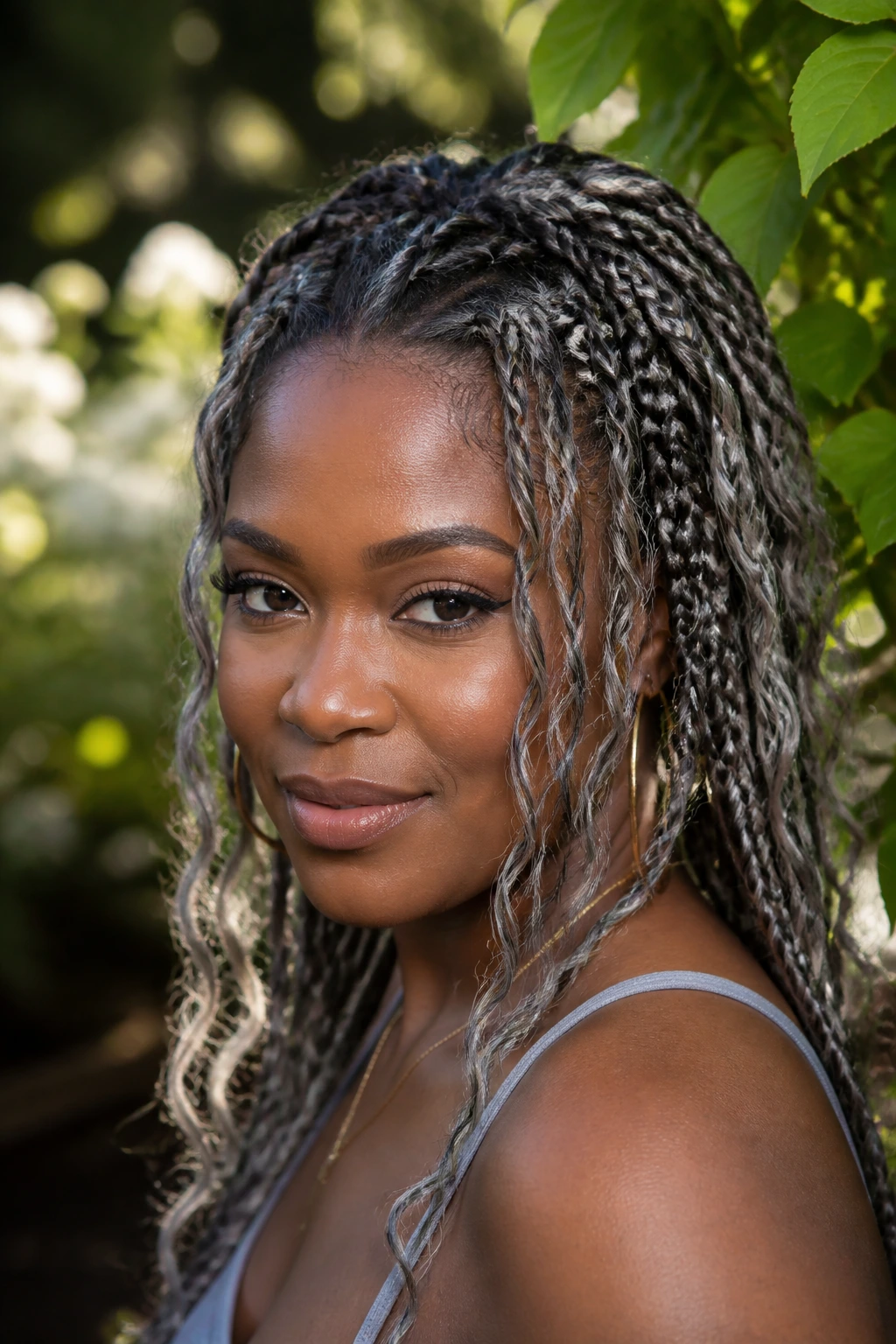
Boho braids need a dark root if grey coverage is the goal. That root depth lets the loose pieces and wavy ends feel playful without exposing the scalp line too much. On deep skin, the dark base also stops the style from drifting too light around the face.
The beauty of this look is the contrast. The roots are grounded, the braid body is controlled, and the curly ends soften the whole thing. If your grey appears mostly at the crown or hairline, the dark root gives you breathing room. The loose pieces draw the eye downward, away from the area where regrowth usually announces itself.
I would not make the ends too fluffy. Too much frizz around the face can highlight the root area instead of hiding it. A gentle mousse refresh every few days keeps the curls soft but not wild.
20. Rich Brown Afro Puff with Edge Softening
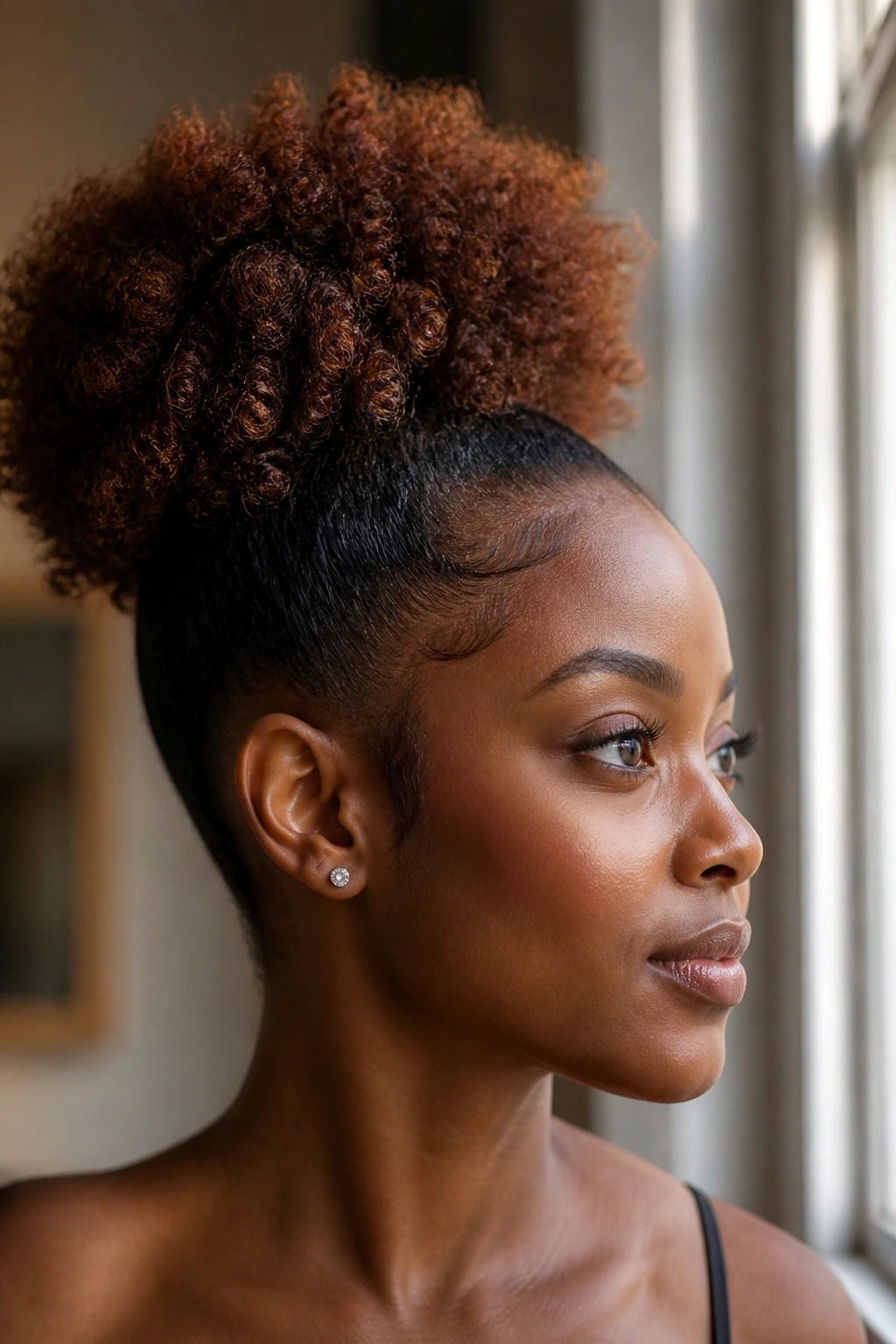
A high puff does not need to expose every grey strand. With a rich brown base and softened edges, it can do the opposite. The puff pulls the texture upward and away from the hairline, while the warm brown color keeps the face from going hard around the perimeter.
Best part: the puff gives you lift without forcing the hair into a sleek, unforgiving line. If the grey lives around the temples, that lift is useful because it moves the attention to the shape of the puff instead of the roots. The edge softening should stay gentle; a stiff, helmet-like hairline makes grey more obvious, not less.
Maintenance note: use a satin bonnet at night and refresh the puff with a light mist of water and leave-in conditioner in the morning. Heavy edge control builds up fast and can make the front look dull. Dull edges show silver sooner.
When it shines: busy weeks, gym days, and any time you want coverage without hiding the texture of the hair itself.
21. Soft Ombré Senegalese Twists
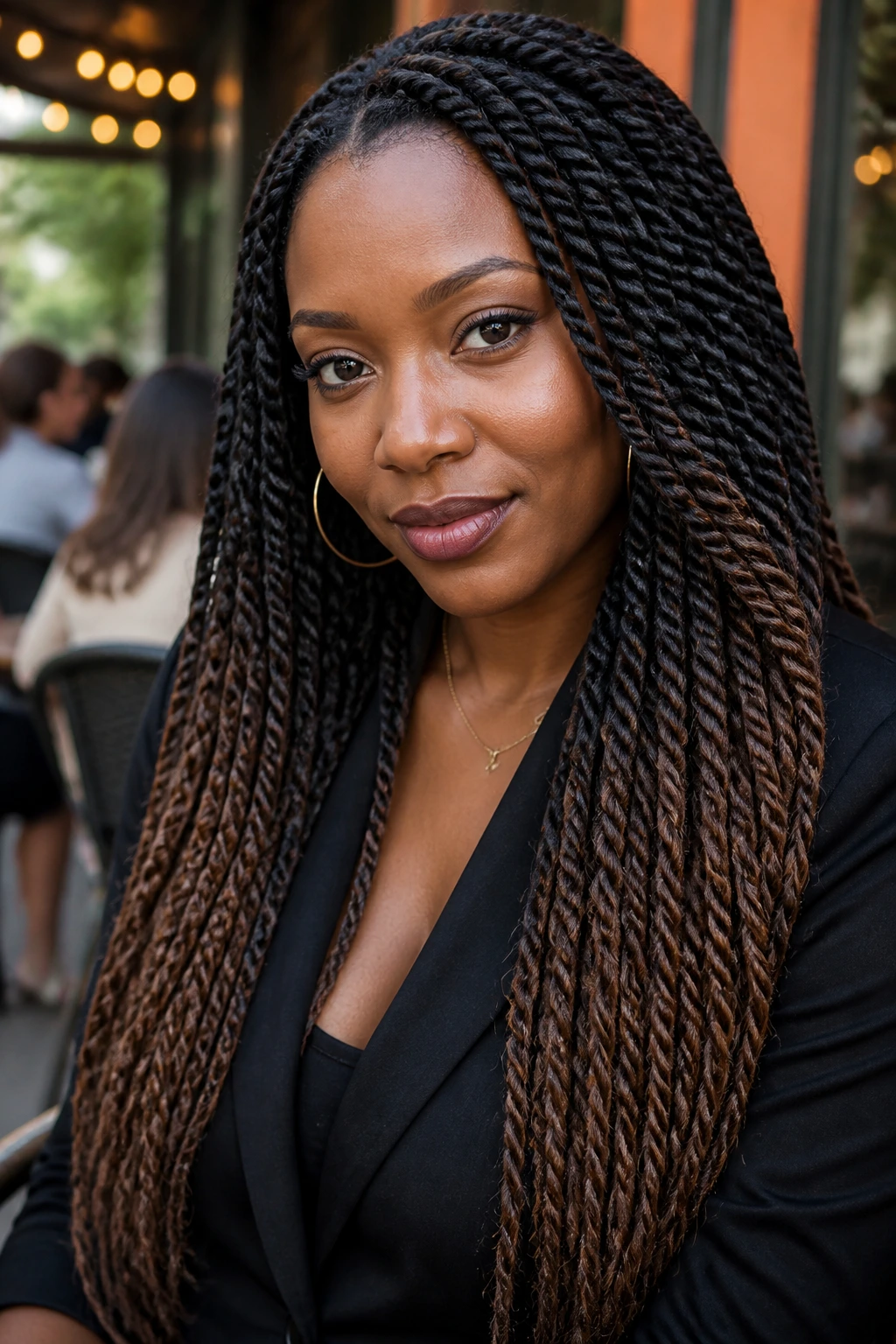
Senegalese twists already give you smoothness, and a soft ombré makes the style feel longer and richer without exposing the roots. Darker roots at the scalp help grey blend in, while a gentle shift to a slightly lighter brown toward the ends keeps the twists from looking heavy on deep skin. It is a clean, practical balance.
The ombré should be subtle. Think one to two shades lighter at the ends, not a dramatic blonde fade. A softer change reads elegant and keeps the scalp area in shadow, which is where grey coverage matters most. If your hairline is the main concern, ask for the darkest color at the first inch or so.
This style is one of the easiest for stretching time. The twists stay neat for weeks, and the color variation means you do not notice tiny changes in root growth as fast. Just keep the scalp clean. Dirt at the base makes every shade look dull.
22. Cinnamon Mahogany High Puff
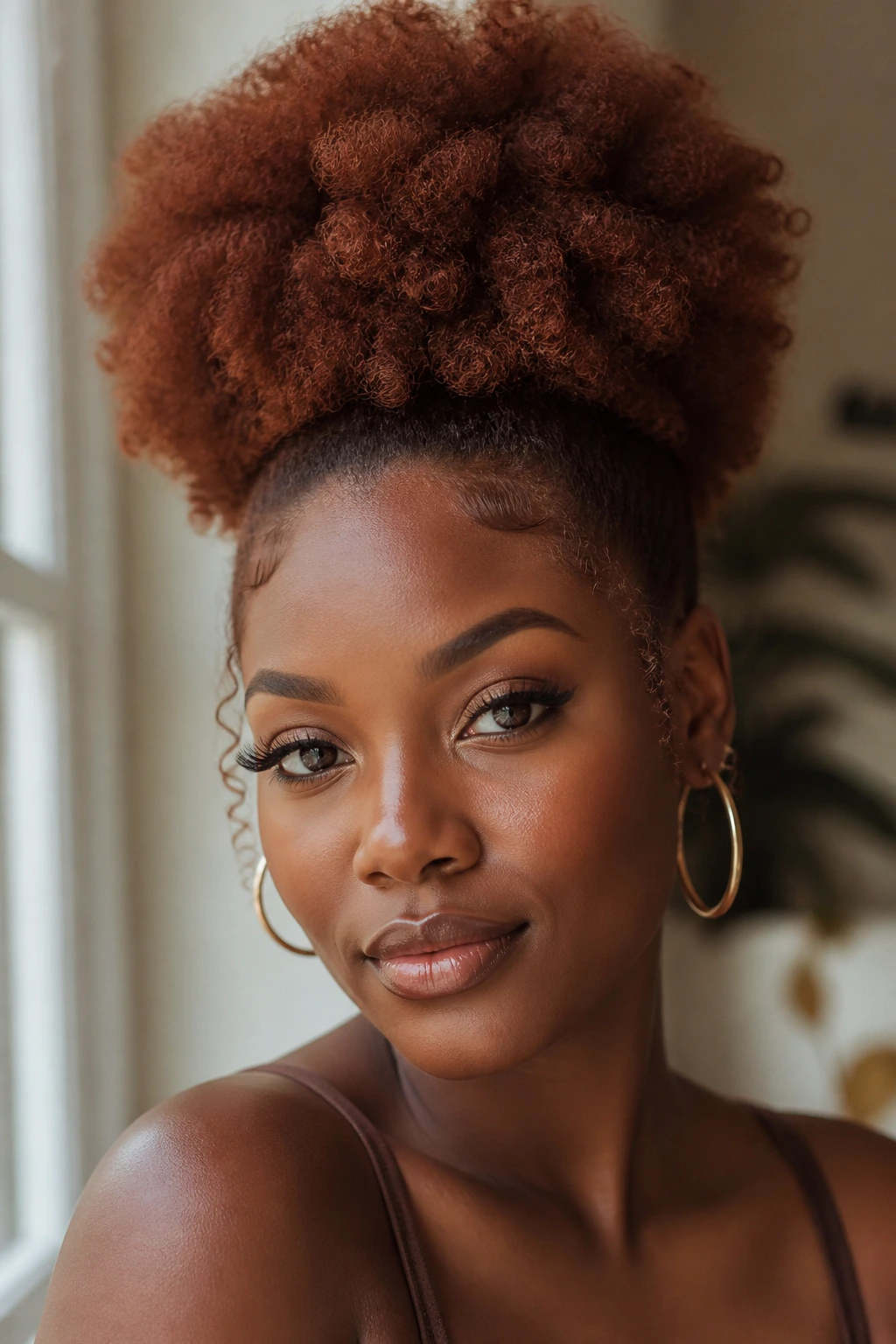
A high puff has more lift than the low version, and that lift changes the way grey is seen. By pulling the hair up and away from the face, you make the front less crowded. Cinnamon mahogany adds warmth that looks especially good on deep skin with golden or red undertones.
The shade should stay in the brown-red family, not bright copper. Cinnamon mahogany has enough warmth to flatter the complexion while still covering the grey strands that show through around the crown. If your hair is natural and dense, this puff is a quick way to wear color without putting heat on the strands every week.
I like a soft brush around the perimeter and a loose tie at the base. Too much tension will make the temples look thinner, and then the grey gets louder at the sides. Keep the puff round, not scraped tight.
23. Cool Espresso Blowout with Face Frame
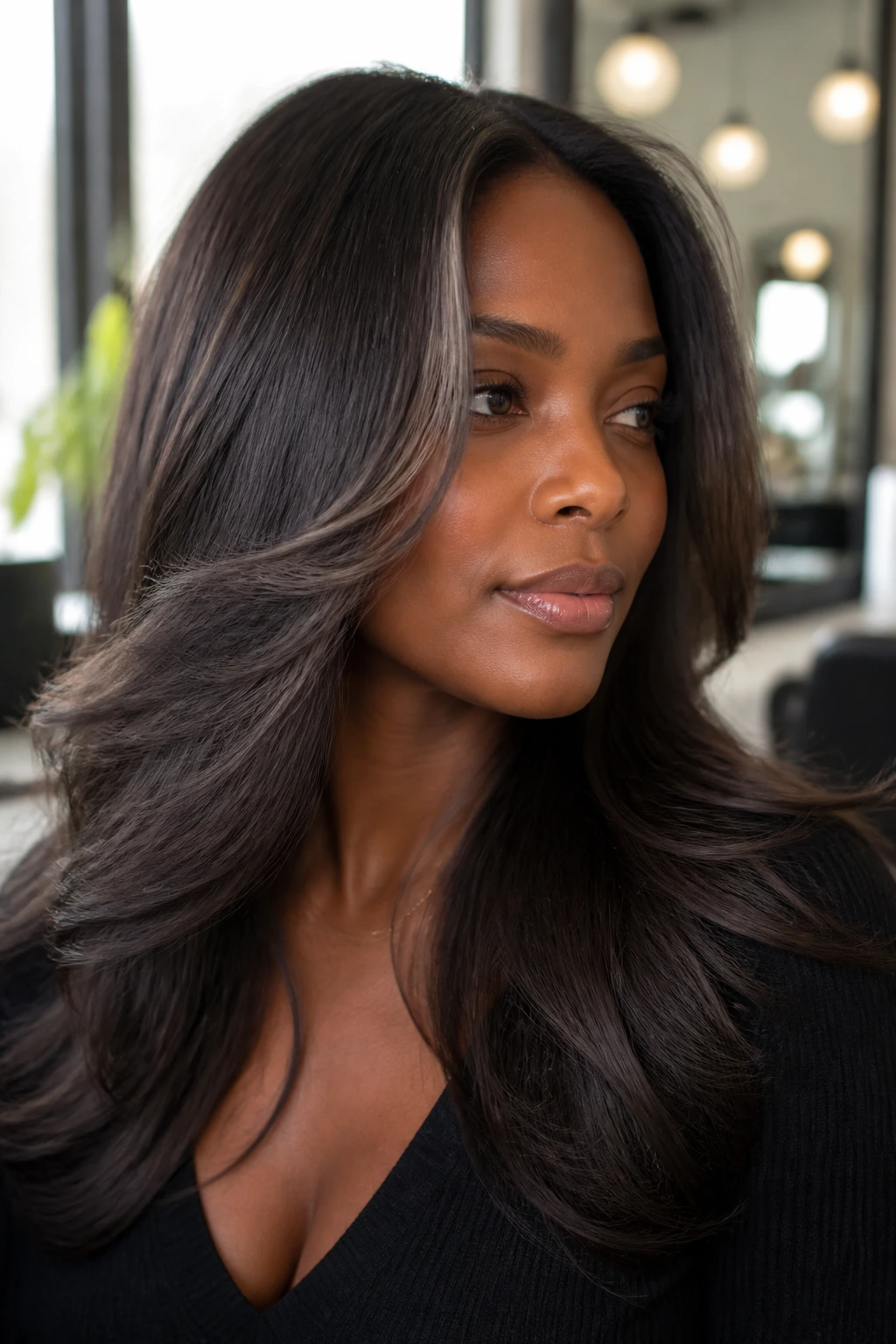
A blowout can cover grey surprisingly well when the color is deep and the face frame is intentional. Cool espresso keeps the tone rich without tipping red, and the front pieces soften the temples where grey often appears first. It is one of the more polished looks on the list, but not the only one that works.
The blowout should stay smooth at the root and airy through the ends. That contrast keeps the style from looking flat. If you want a face frame, leave a few inches around the front slightly curved inward. Those pieces break up the hairline and keep the silver from sitting right on the edge of the face.
This one needs a little heat discipline. Use a protectant, keep the iron moving, and do not chase every frizz. A tiny bit of texture helps the style look human. Too much smoothness can actually make grey regrowth easier to spot.
24. Deep Plum Passion Twists
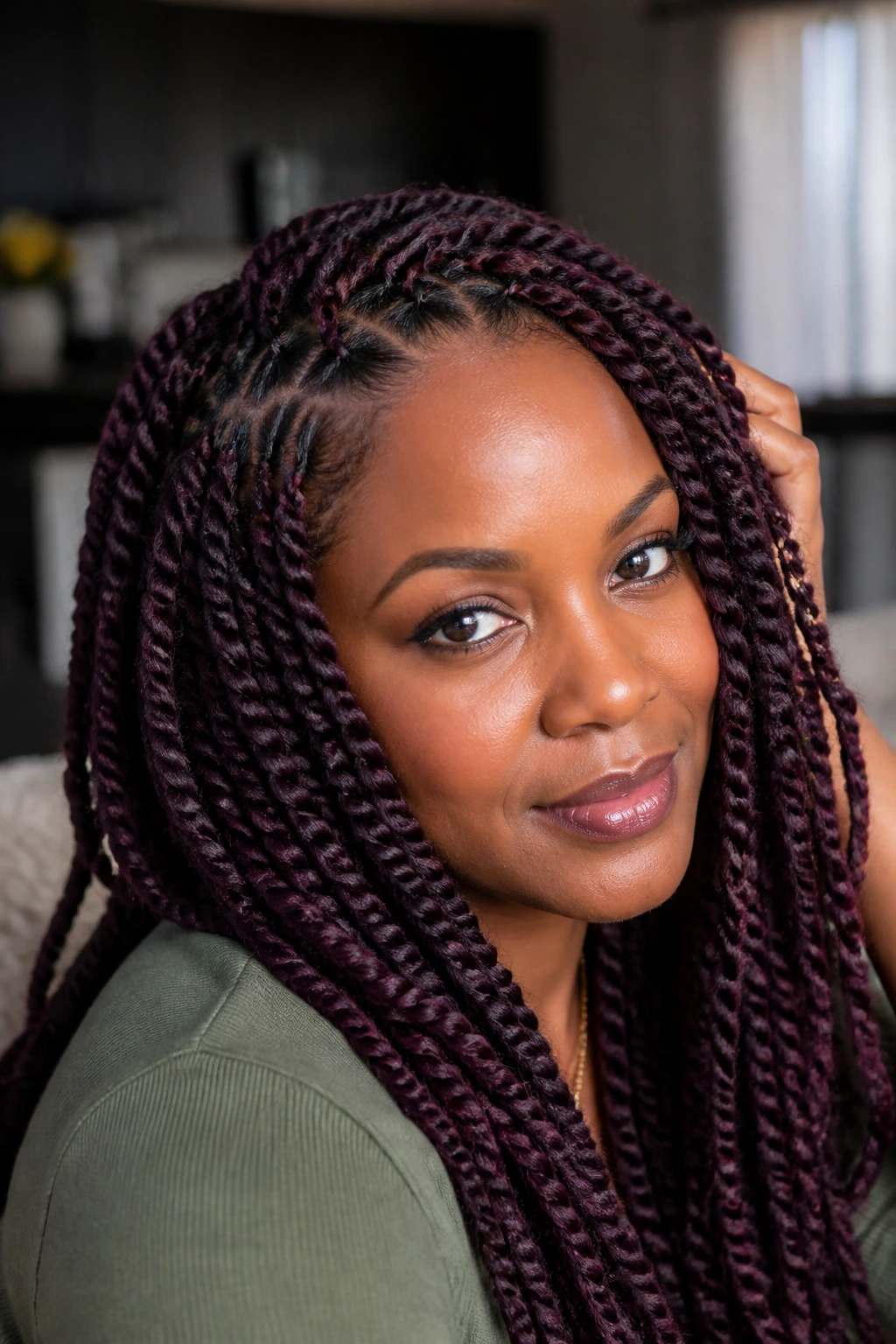
Deep plum gives passion twists a richer feel than plain black or brown. The twist pattern already hides some grey by nature, and the plum shade adds depth that looks especially good against deep skin with cool or neutral undertones. It is moody in the best way.
The color should stay dark enough that the roots do not split from the rest of the style. A plum that is too bright can make the grey at the hairline look dull by comparison. A deeper plum sits closer to wine, and that version is much easier to wear for more than a few days without feeling loud.
Passion twists are useful if you want movement without a polished braid finish. The soft, springy texture does a lot of hiding on its own. If the roots start to puff, a little mousse at the base can reset the look without making the twists stiff.
25. Walnut Twist-Out with Side Sweep
Walnut is one of the best under-the-radar shades for grey coverage because it is deep enough to hide silver but brown enough to keep the face warm. A twist-out with a side sweep makes the grey in the part line less visible, since the hair is deliberately falling across the forehead instead of sitting straight back. Small adjustment. Big difference.
Why this one lasts: the side sweep cuts across the most common grey zones, especially the front edges and one temple. Walnut also softens the overall look, so the style does not depend on perfect opacity to do its job. A little movement is your friend here.
Styling note: set the twists on slightly stretched hair, let them dry fully, and separate with oil on the fingertips, not on the whole palm. Too much oil can collapse the pattern and expose the roots. That is one of those annoying little details people ignore until the style starts looking tired on day two.
Best for: someone who wants natural texture, soft coverage, and a shape that does not feel overworked.
Why Dimensional Color Covers Grey Better on Deep Skin
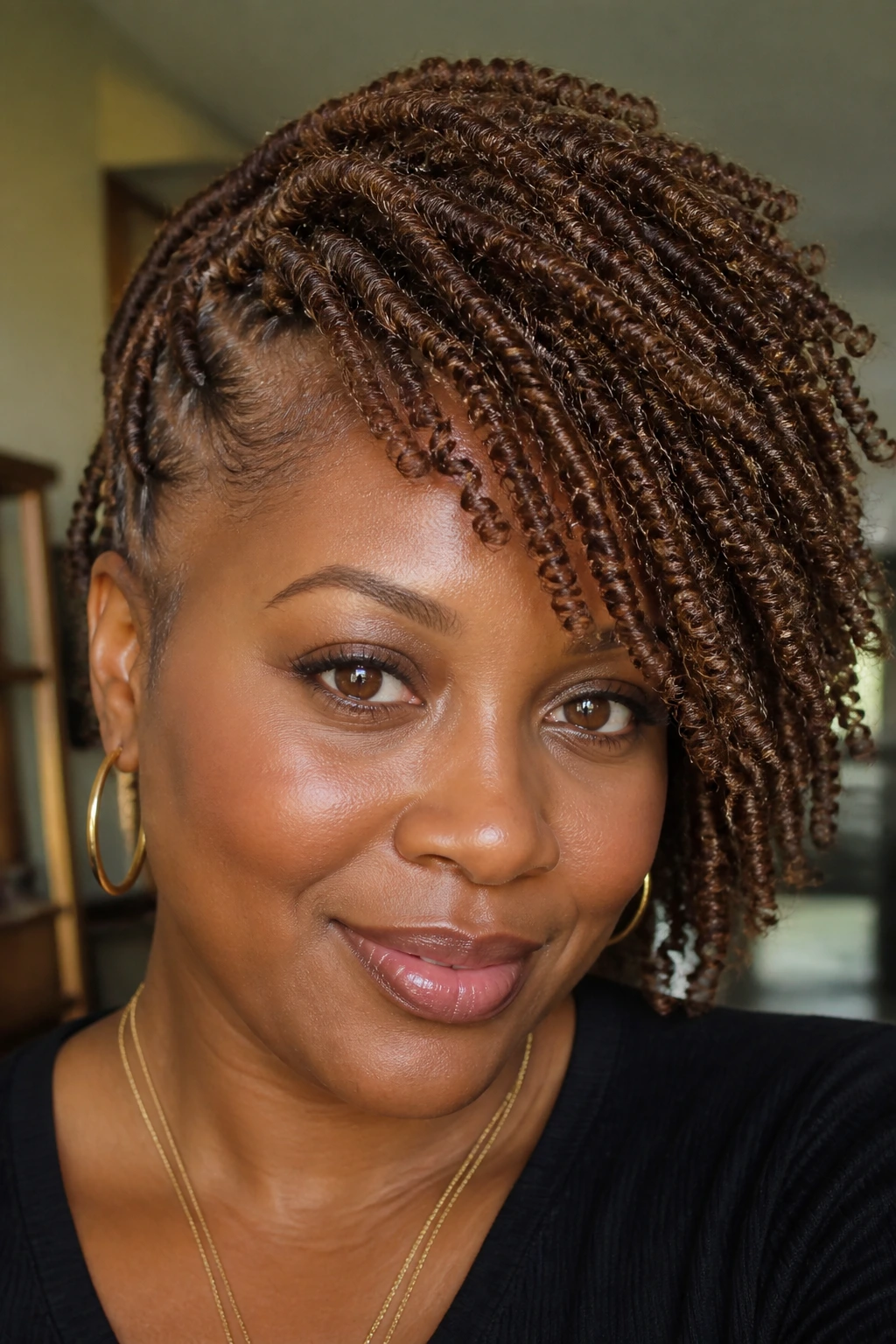
Grey hair is not blank. It is translucent, which is why it can swallow color in a patchy way if the formula is too flat or too light. On deep skin, a single hard shade often looks even harsher because the eye keeps jumping between the face and the hairline. That is where dimensional color earns its keep.
Warm browns, blue-black, burgundy, plum, and smoky chocolate all do a better job of making the regrowth line blur into the rest of the style. The eye sees shine, depth, and movement before it notices a silver strand. On textured hair, that effect is even stronger because coils, curls, braids, and twists break up the surface. No smooth surface, no easy target.
There is a catch. If the shade is too ashy, too muddy, or too dark without any reflection, deep skin can look disconnected from the hairline. The face loses warmth and the grey starts to stand out again, not because the color is light, but because it lacks life. A little red, violet, or blue undertone usually fixes that. So does gloss.
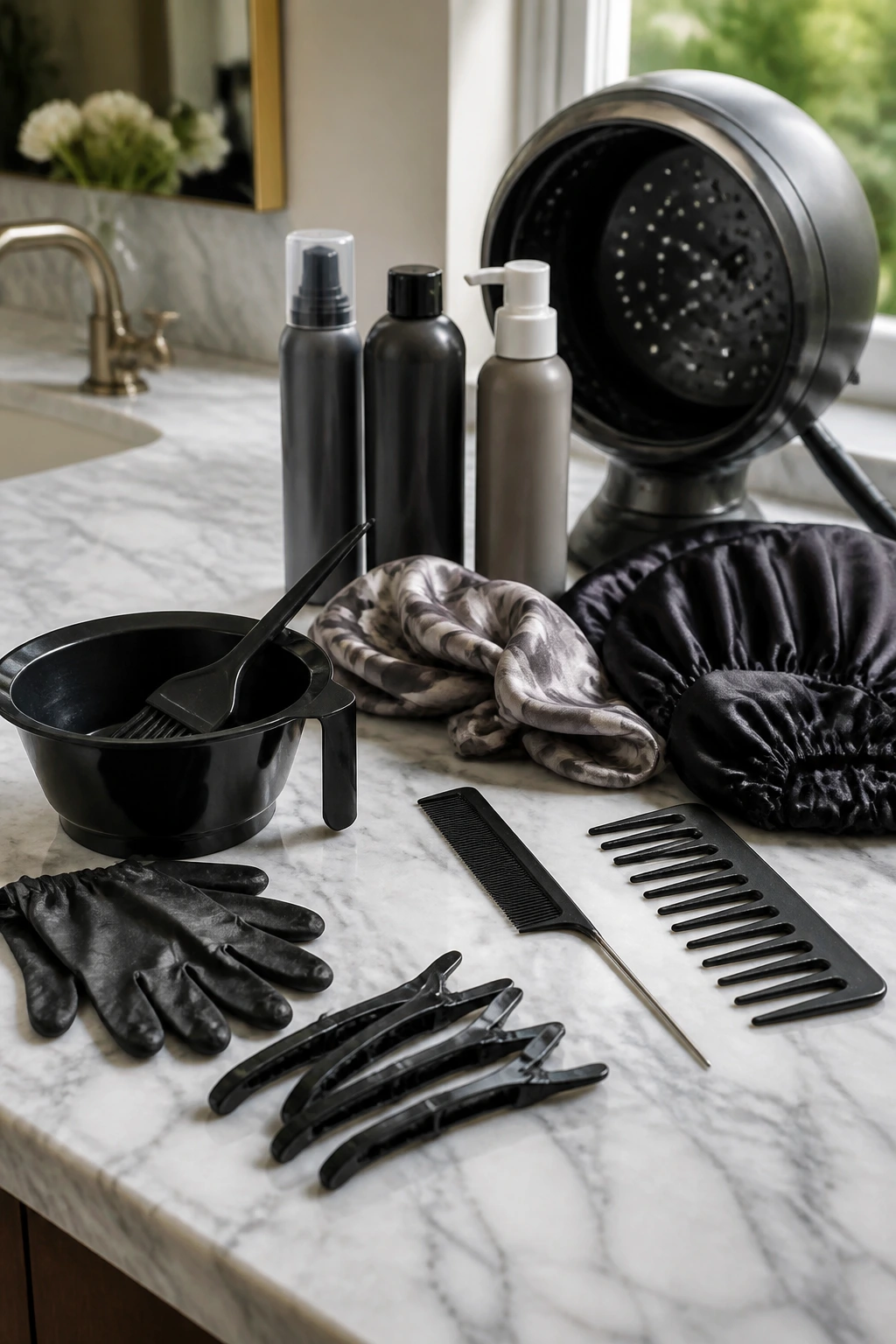
Essential Tools for Color, Styling, and Touch-Ups
-
Tint bowl and brush: Needed for root touch-ups, glosses, and any color that has to be placed at the hairline with control.
-
Rat-tail comb: The clean part is half the battle in grey coverage, especially on styles where the part line stays visible.
-
Sectioning clips: These keep the hair separated while you color, blow-dry, twist, braid, or press.
-
Nitrile gloves: Better than thin kitchen gloves when you are mixing color or applying a root smudge.
-
Wide-tooth comb: Gentle detangling matters when grey hair is coarse or wiry and wants to snag.
-
Silk scarf or wrap: Keeps silk presses, pixies, and sleek buns from frizzing up at the temples overnight.
-
Satin bonnet: Useful for braids, twists, locs, and sew-ins because it reduces friction at the root area.
-
Hooded dryer or diffuser: Helps set twist-outs, curls, and blowouts without blasting the hairline with too much heat.
-
Lightweight mousse: Good for braid refreshes, twist-outs, and styles that need hold without a heavy film.
-
Color-safe shampoo: Keeps glosses and permanent color from fading fast, especially if you wash weekly.
-
Leave-in conditioner: Helps textured styles stay soft so the grey does not look extra bright against dry strands.
-
Edge brush: Useful when you want a smooth front without laying on thick gel that can flake.
Picking Shades That Blend Grey Without Looking Flat
Deep skin can wear a wide range of shades, but grey coverage asks for a little more thought than picking the darkest swatch on the card. The shades that usually work best have depth and a hint of warmth or cool richness: espresso, mocha, walnut, mahogany, chestnut, plum-black, burgundy, and blue-black. Those tones keep the complexion from going dull.
Developer strength matters too. If you are coloring stubborn grey, a permanent formula with enough deposit is usually better than a timid gloss alone. But if your hair is fragile around the edges, a demi-permanent color or root smudge is kinder. 10-volume is gentle. 20-volume gives more lift and deposit. I would be cautious with 30-volume near the hairline unless a stylist has a specific reason for it.
Extensions and braid hair need the same kind of attention. Pre-stretched braiding hair in soft black, dark brown, or deep auburn usually blends better than a shiny jet black pack. For sew-ins, choose human hair if you plan to heat style or tone the piece. Synthetic hair can look too glossy at the top and too fake around the part, which makes the grey underneath stand out faster.
How to Wear These Looks in Everyday Life
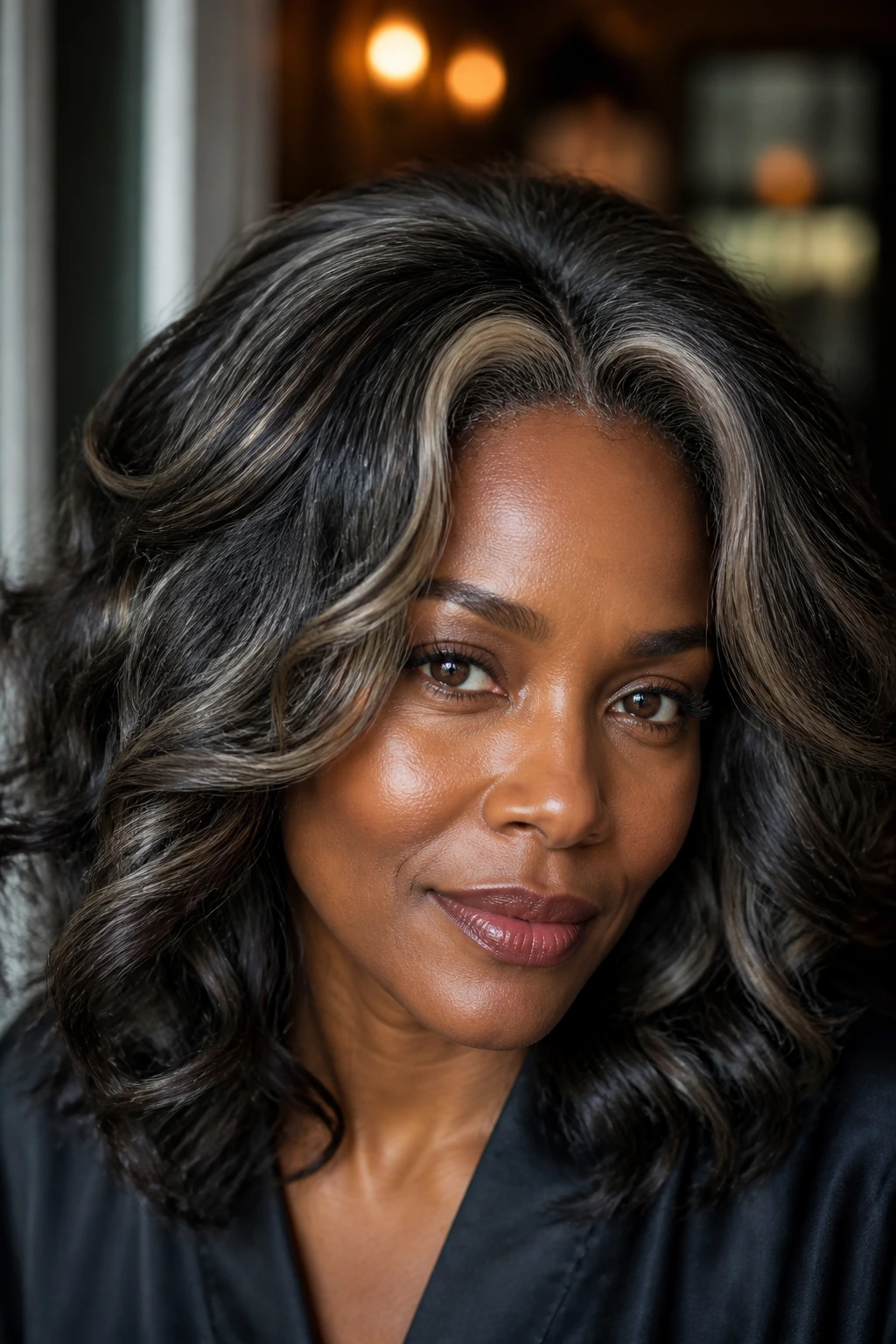
Face Frame: If grey shows first at the temples, choose styles with a side part, fringe, or a few softer pieces around the cheeks. That breaks up the line where the silver usually clusters.
Finish: Deep skin usually looks better with shine that feels controlled, not greasy. A silk press, gloss, or light serum on the mids and ends gives coverage a richer look than a dry, matte finish.
Best Settings: Bobs, lobs, pixies, and sleek buns work for polished settings. Braids, twists, locs, and puffs give you more breathing room when you need time between appointments.
Maintenance Rhythm: If you do not want to think about hair every morning, protective styles are the quiet winner. If you like changing your part or shape often, shorter cuts and layered curls give you more flexibility without exposing every grey strand.
Extra Shine, Extra Blend: Small Tweaks That Help
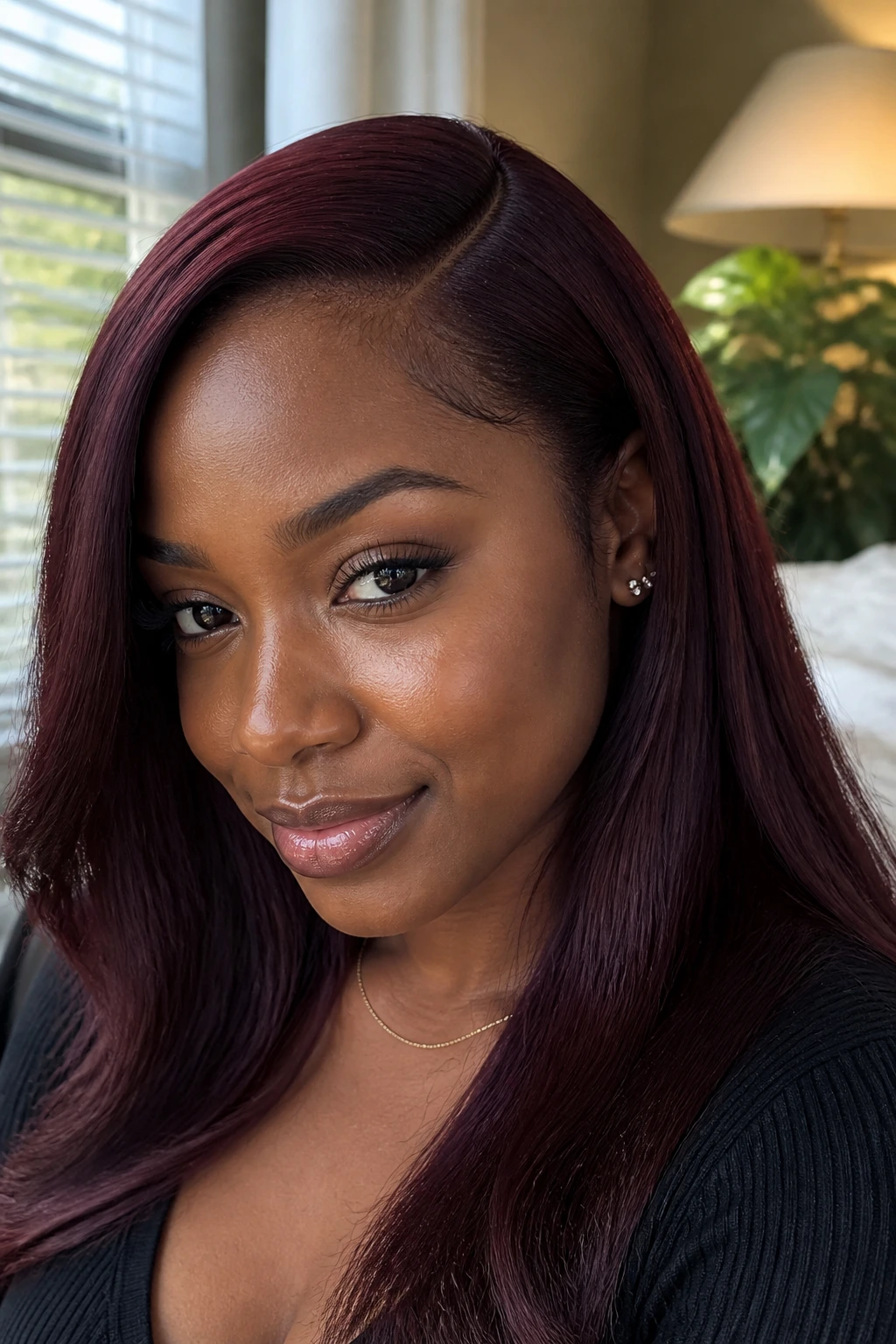
Gloss Boost: A clear or lightly tinted gloss every 4 to 6 weeks keeps dark shades from turning dusty. On grey coverage, gloss is not vanity; it is camouflage. Once the hair looks reflective again, the silver strands stop catching your eye so fast.
Root Blend: Ask for a shadow root that stays within one shade of your base color. A dark but softened root is easier on the eyes than a hard line between natural grey and dyed ends.
Moisture Balance: Dry hair makes grey stand out. A leave-in with a little slip, followed by a lighter cream or mousse, usually works better than heavy butters that sit on top of the strands.
Night Protection: Silk or satin matters more than people want to admit. Friction roughens the cuticle, and rough cuticle equals brighter-looking grey. Wrap the hair or bonnet it every night, even if the style still looks decent.
Part Switching: If your style allows it, change the part every so often. A center part can make grey at the crown obvious. A side part shifts the visual focus and buys you a few extra good days.
Mistakes That Make Grey Coverage Look Harsh
-
Choosing jet black when you need depth, not severity: Jet black can look like a helmet on deep skin and make the hairline stand out instead of blending. A blue-black, espresso, or deep brown-black often looks softer.
-
Using too much ashy tone: Ash-heavy shades can go muddy or greenish on porous hair. If the grey keeps peeking through, warmth is usually the fix, not more ash.
-
Pulling braids or slick styles too tight: A tight front line makes the temples look thinner and gives grey a brighter frame. Softer tension is better, even if the style needs an extra minute to set.
-
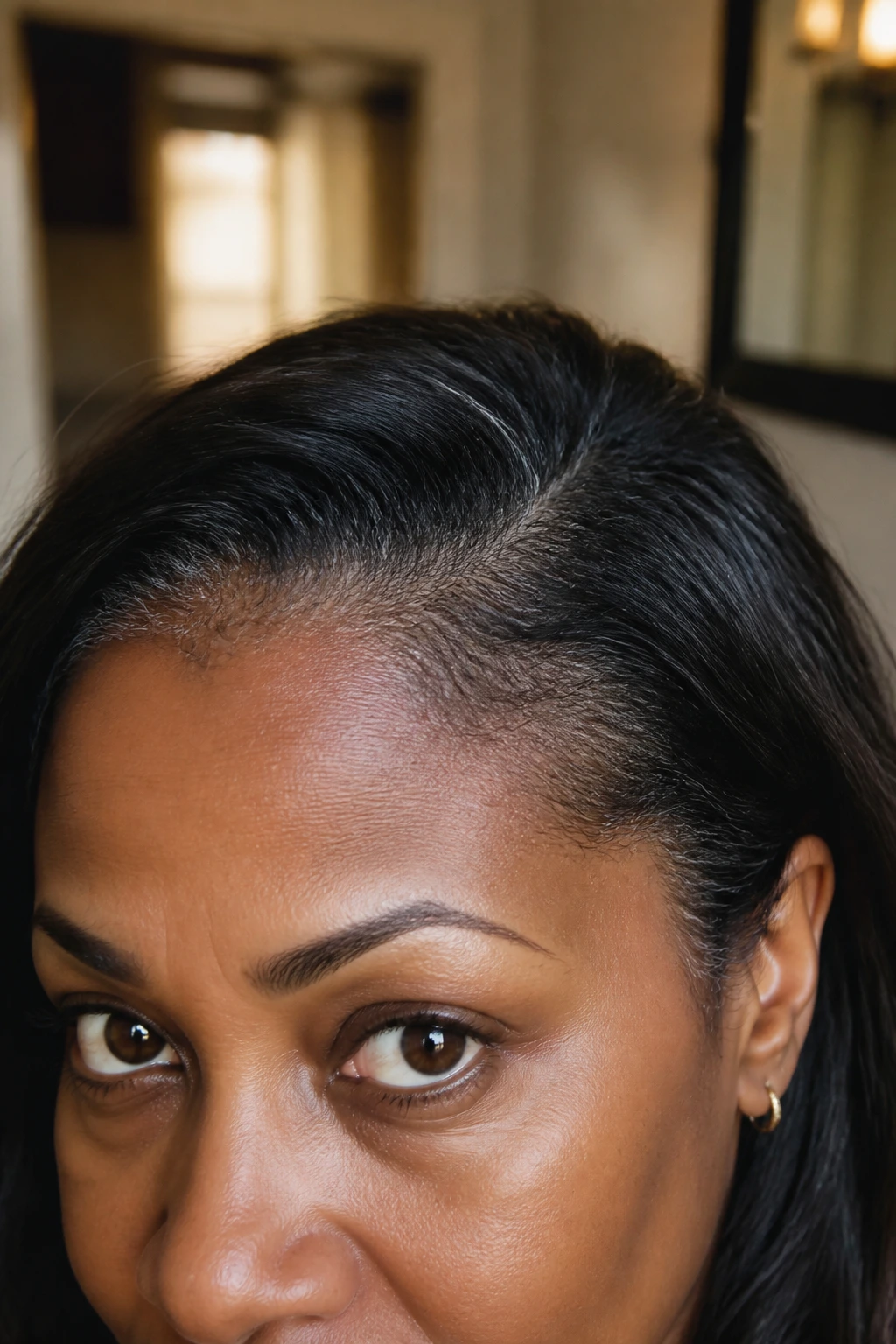
Skipping the root area in maintenance: Grey usually shows first at the temples, hairline, and part. If you only moisturize the lengths and ignore the root zone, the style starts looking tired in a hurry.
-
Overloading the hair with heavy product: Thick oils and edge gels can sit on top of the hair and make dark color look dull. Dull color exposes grey faster because the contrast gets harsher.
-
Keeping a style past its useful life: Braids that have grown out, a silk press that has puffed, or a sew-in that has lost its part structure all make regrowth louder. Remove or refresh before the style starts fighting itself.
Variations and Alternatives for Different Textures
Soft-Cover Version: If you do not want full opacity, choose a demi-permanent brown-black with a root shadow and let a little grey live near the temples. The look feels softer and grows out with less stress. Good for people who hate hard regrowth lines.
Protective-Style Swap: Braids, twists, locs, and sew-ins can all carry grey coverage without daily heat. Pick rooted colors and keep the scalp clean, and the style will hide regrowth for weeks instead of days.
No-Heat Texture Version: Twist-outs, braid-outs, Bantu knot outs, and curly puffs are the better move if you want coverage without hot tools. The texture itself does the hiding, and warm brown or burgundy shades keep the strands from looking flat.
Polished Office Version: Blue-black bobs, espresso lobs, sleek buns, and blowouts with face-framing pieces all lean neat without looking severe. These are the looks I’d pick when the goal is quiet, controlled, and easy to maintain.
Bold Color Version: Burgundy, plum, and black cherry work when you want the grey covered but not invisible. They are richer than natural brown and add enough depth that the look feels intentional, not like a cover-up.
Keeping the Roots, Shine, and Shape Fresh Between Appointments
Silk presses and blowouts usually hold best for about 1 to 2 weeks if you wrap them nightly and avoid heavy moisture. Once the roots start puffing, grey at the part line shows faster, so do not wait until the style is fully blown out before refreshing it. A light re-pass with heat protectant is better than repeatedly scorching the same section with a hot iron.
Braids, twists, and loc styles can stretch longer, but they still need scalp care. Clean the scalp every 1 to 2 weeks with a diluted shampoo or a nozzle bottle, then dry the roots fully so the style does not smell damp. Most braid styles look best at 6 to 8 weeks; after that, the grow-out line usually gets too loud for grey coverage to stay soft.
Sew-ins and closures need a cleaner schedule than people expect. A neat part and a flat base can hold for 6 to 8 weeks, but if the closure starts to lift or the leave-out gets frizzy, the grey underneath becomes more visible. For natural styles, a twist-out or puff usually needs a reset every 3 to 5 days. Use a mist of water, a little leave-in, and a foam or cream with hold. That is enough. More product usually makes the hair look tired.
Permanent color around the roots usually wants a touch-up every 4 to 6 weeks if grey is stubborn. Demi color or gloss can stretch longer, but the exact rhythm depends on how fast your silver comes in and how much contrast you like. If the roots are the only problem, target them. Do not recolor the whole head every time unless you need to.
Frequently Asked Questions
What grey coverage color works best on deep skin tones?
Deep brown-black shades with warmth or rich cool undertones usually look best: espresso, walnut, mahogany, burgundy, and blue-black. They cover grey without flattening the face the way a harsh, inky black sometimes can.
Is jet black too harsh for grey coverage?
Sometimes, yes. Jet black can make the hairline feel hard and can actually highlight regrowth because the contrast is so sharp. A softer black-brown or blue-black usually blends better on deep skin.
Can braids or twists hide grey better than dye?
They can, especially if your grey is concentrated at the temples or part line. Braids and twists break up the scalp view and buy you time between color services, though they still need clean roots and the right base color.
Will burgundy or plum make grey more noticeable?
Not if the shade stays deep. Rich burgundy, plum, and black cherry can cover grey well because the pigment is dense, but bright versions can make grey pop by contrast. Keep the color grounded and the result usually looks smoother.
How often should I touch up grey roots?
Permanent root color often needs attention every 4 to 6 weeks. Demi-permanent glosses and shadow roots can last longer, but once the part line starts drawing the eye, it is time to refresh.
What if my grey hair resists color?
Grey can be stubborn because it is coarse and less porous in some spots. A stylist may use a stronger deposit formula, a longer processing time, or a pre-softening step so the color grabs evenly. Home color sometimes misses those resistant strands the first time around.
Can I wear these looks on natural hair without relaxing or straightening it?
Absolutely. Twist-outs, braid-outs, Bantu knot outs, puffs, tapered afros, locs, and braids all work on natural texture. In fact, texture often helps cover grey because it breaks up the light.
Do highlights make grey coverage harder?
They can if the highlights sit too high around the hairline or crown. If you want dimension, keep the lighter pieces low and warm, or use balayage and lowlights instead of a bright streak that fights the grey.
Richer Roots, Softer Regrowth
Grey coverage does not have to look like damage control. On deep skin, the best versions look rich, deliberate, and a little dimensional, even when the real goal is to hide those stubborn silver strands at the temples. A good cut, a smart shade, and a finish with some shine will do more than a bottle of jet black ever could.
If one thing ties all these looks together, it is this: color works best when it cooperates with shape. A blunt bob, a twist-out, a braid pattern, or a tapered afro can hide grey more cleanly than dye alone. Pick the shade family first, then choose the style that lets the regrowth stay soft for as long as possible.