



On fair skin, strawberry blond has a narrow sweet spot. Too much orange, and the whole look starts shouting. Too beige, and the color disappears the second you step away from warm light. The versions worth wearing are the ones that feel like peach skin, apricot syrup, and a little copper leaf caught in the right place.
That’s why this shade keeps pulling people back. It can be soft enough for porcelain complexions, warm enough for freckled faces, and bright enough to make blue, green, or gray eyes look sharper without adding hard contrast. The catch is tone control. A good strawberry blond doesn’t sit on top of fair skin; it seems to rise out of it.
The best ideas lean into that idea from different angles. Some are barely tinted glosses. Some are fuller copper-blonde blends with a root shadow. Some keep the face bright and the ends softer, which is usually the smarter move if your skin is pale and a bit pink. The fun part is that strawberry blond isn’t one shade. It’s a whole family.
Why These Shades Work on Fair Skin
-
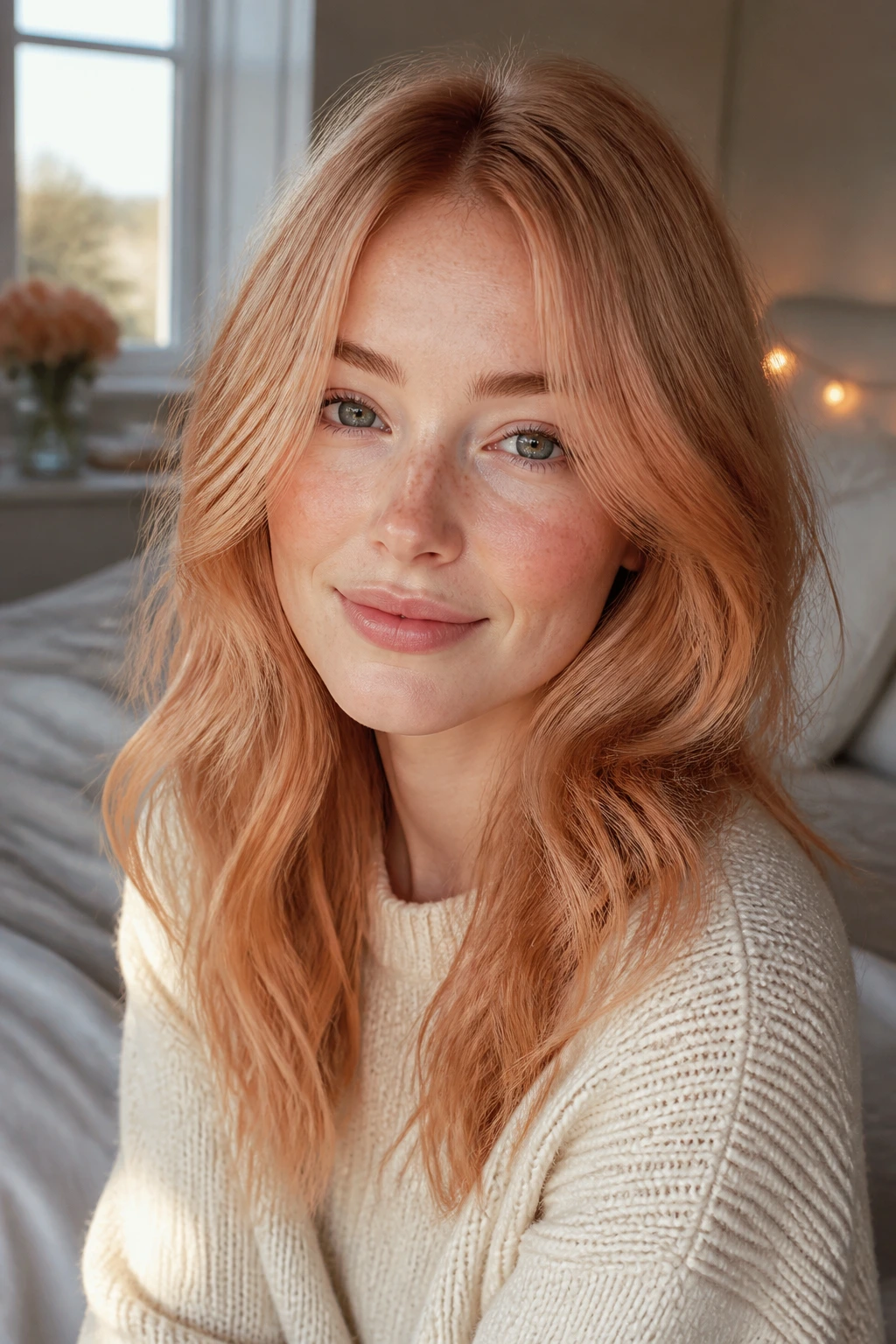
They soften pinkness instead of fighting it: Peach, rose-gold, and beige strawberry tones sit closer to the natural warmth in fair skin, so redness looks calmer rather than louder.
-
They keep contrast gentle: A harsh red against pale skin can look costume-y fast. A strawberry blond with gold or cream in it gives shape without turning your hair into the only thing anyone notices.
-
They make light eyes look sharper: Blue, hazel, and gray eyes tend to pop more when the hair has a warm reflect right around the face. That tiny copper shimmer matters.
-
They leave room for freckles and brows: Fair skin with freckles usually looks better with a softer strawberry tone than a deep copper. Dark brows can handle a little more saturation, which is why the right version changes so much from person to person.
-
They work in gloss, balayage, or full color: You do not need to commit to a bright, all-over copper block. The nicest strawberry blond looks are often built with ribbons, veils, and a well-placed gloss.
1. Soft Peach Strawberry Blonde
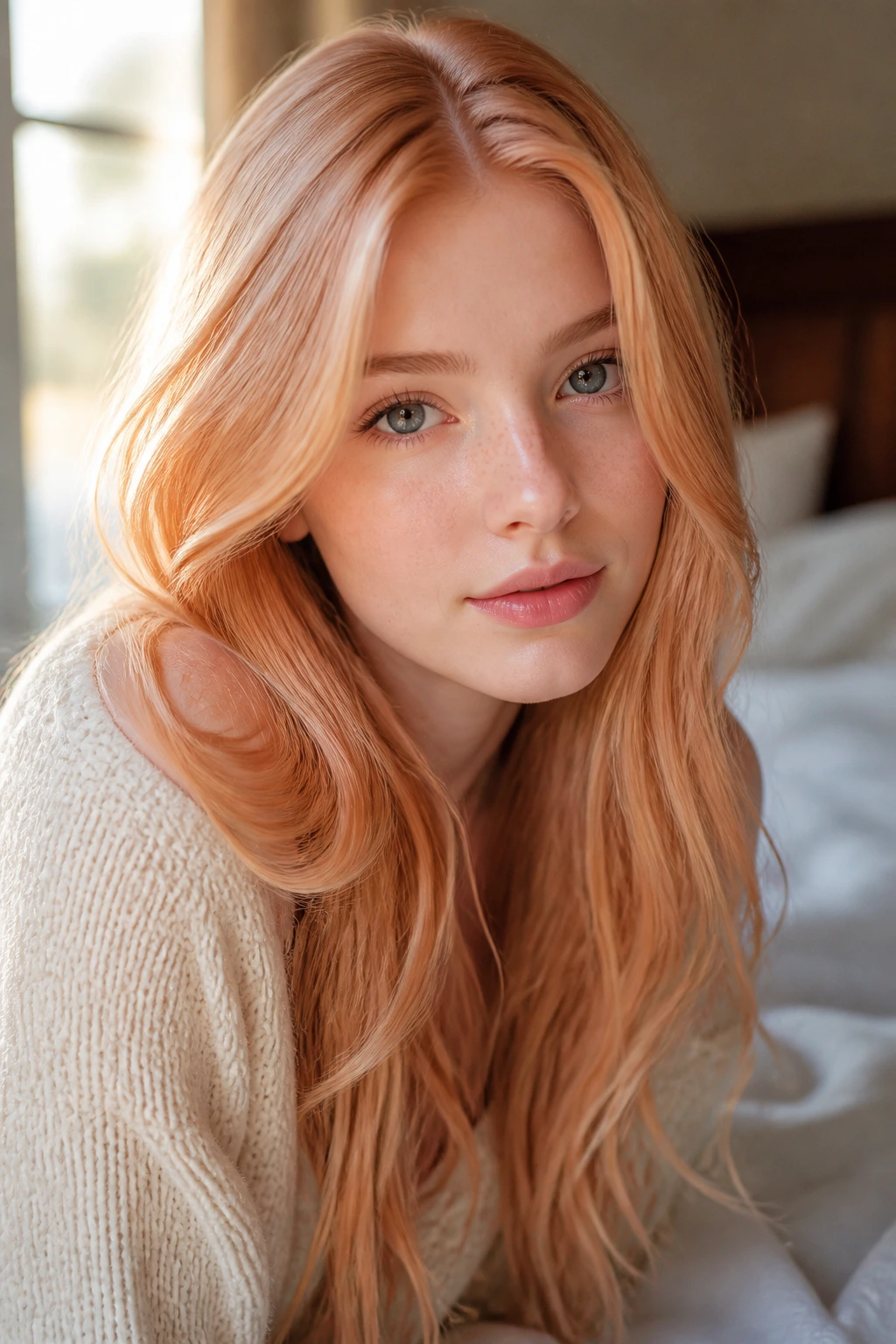
This is the shade I reach for when someone wants strawberry blond without the “did you mean red?” problem. On porcelain skin, it reads like peach tea with a little cream stirred in, not fire.
Why It Works
Peach does two things at once: it warms fair skin and keeps the color from turning too orange. Ask for a pale blonde base around level 9, then a sheer peach-gold gloss over the top. If your skin runs pink, this version usually looks calmer than a copper-heavy formula.
A few things to keep in mind:
- Best for: Fair skin with pink or neutral undertones
- Ask for: Soft peach gloss, not vivid copper deposit
- Style it with: Loose waves or a tucked-behind-the-ear bend
The finish should be translucent, not opaque. That’s the whole trick. If the color looks like candy coating, it’s too strong.
2. Golden Strawberry Balayage
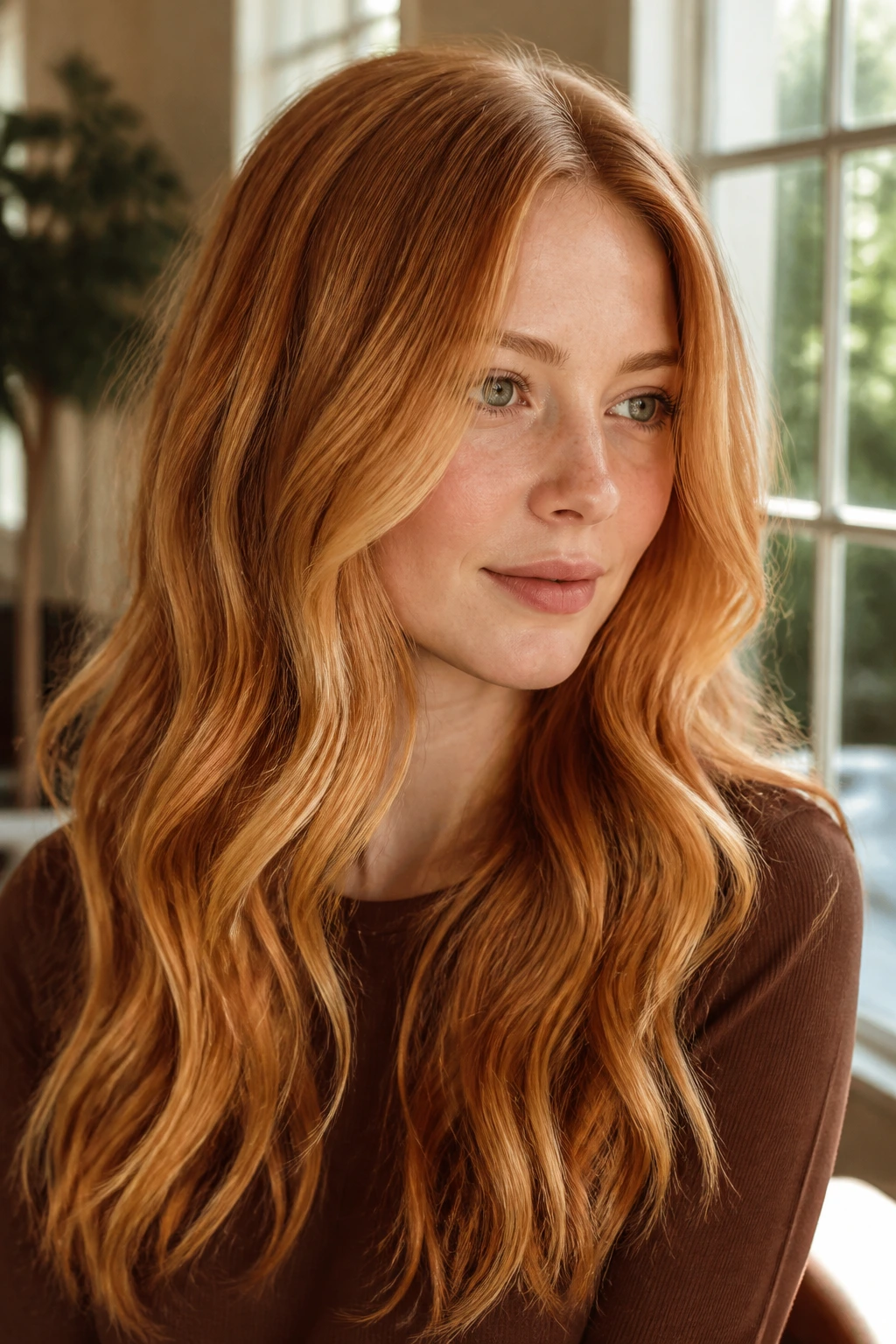
This is the safest warm version for fair skin that leans peach or slightly golden. The blonde ribbons stay visible, and the strawberry tone lives in the mid-lengths and ends instead of taking over the whole head.
Balayage keeps the root softer, which matters on pale skin because a dark root line can feel heavy fast. When the light pieces sit around the face and crown, the whole color looks sunlit instead of dyed in one block. I like this on longer cuts, especially if the hair has a little wave.
Ask your colorist for a blonde base with warm strawberry ribbons painted through the surface and ends. If the starting shade is already light, a gloss may be enough. If the hair is darker, the lift needs to happen first or the strawberry part will muddy into copper-brown.
3. Rose-Gold Strawberry Melt
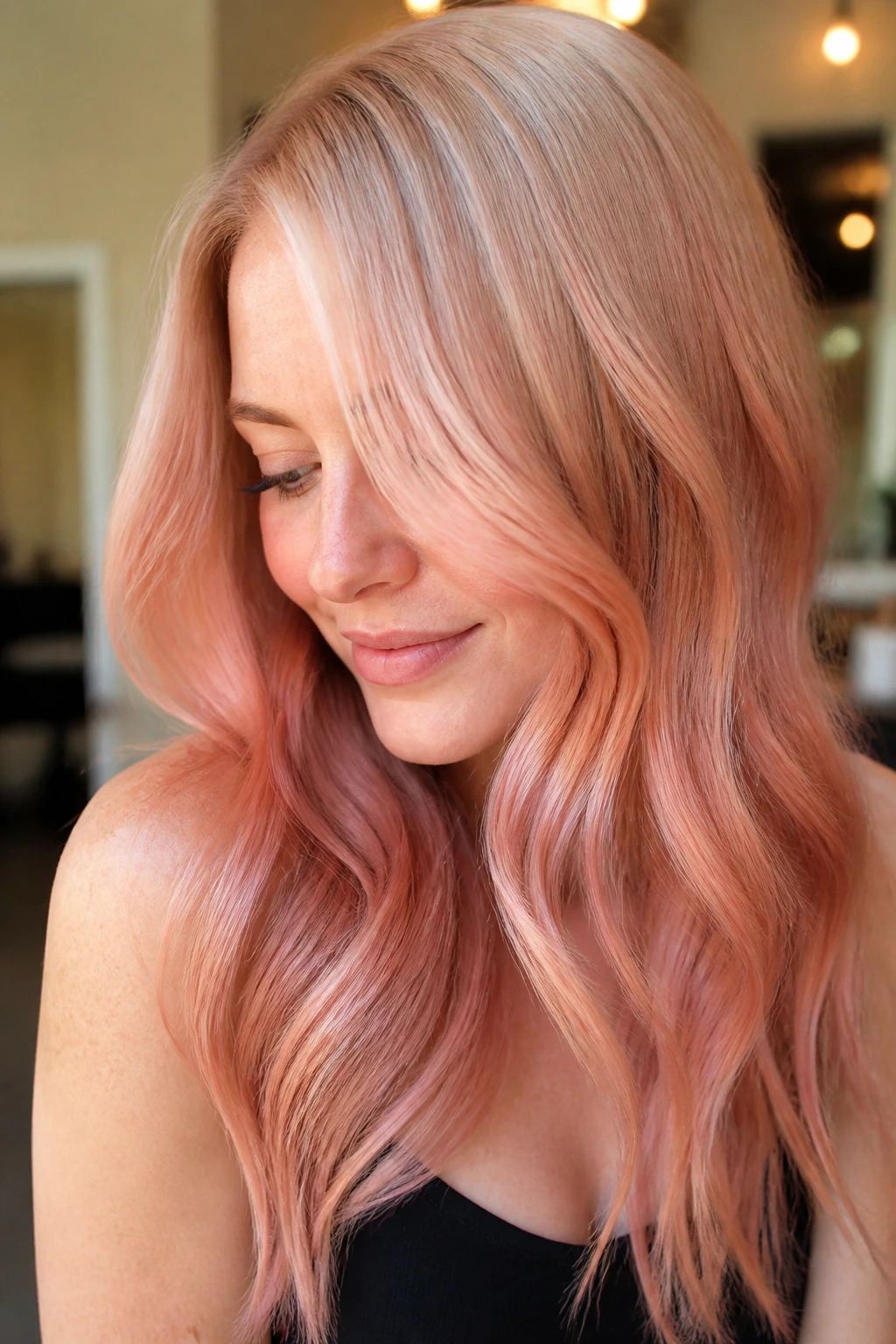
A rose-gold melt is softer than copper and more polished than pink. It suits fair skin that has both pink and beige in it, which is a trickier undertone than people think.
How to Ask For It
Tell your colorist you want a seamless transition from a pale blonde root area into rose-gold mids and ends. No hard line. No stripe at the root. The whole point is that the color should feel blended enough to move with the light.
This works especially well on long bobs and collarbone cuts. The melt gives the hair movement even when the cut is simple. If you wear a lot of gray, white, or navy, the rosy warmth looks expensive instead of loud.
4. Copper Face-Framing Money Piece
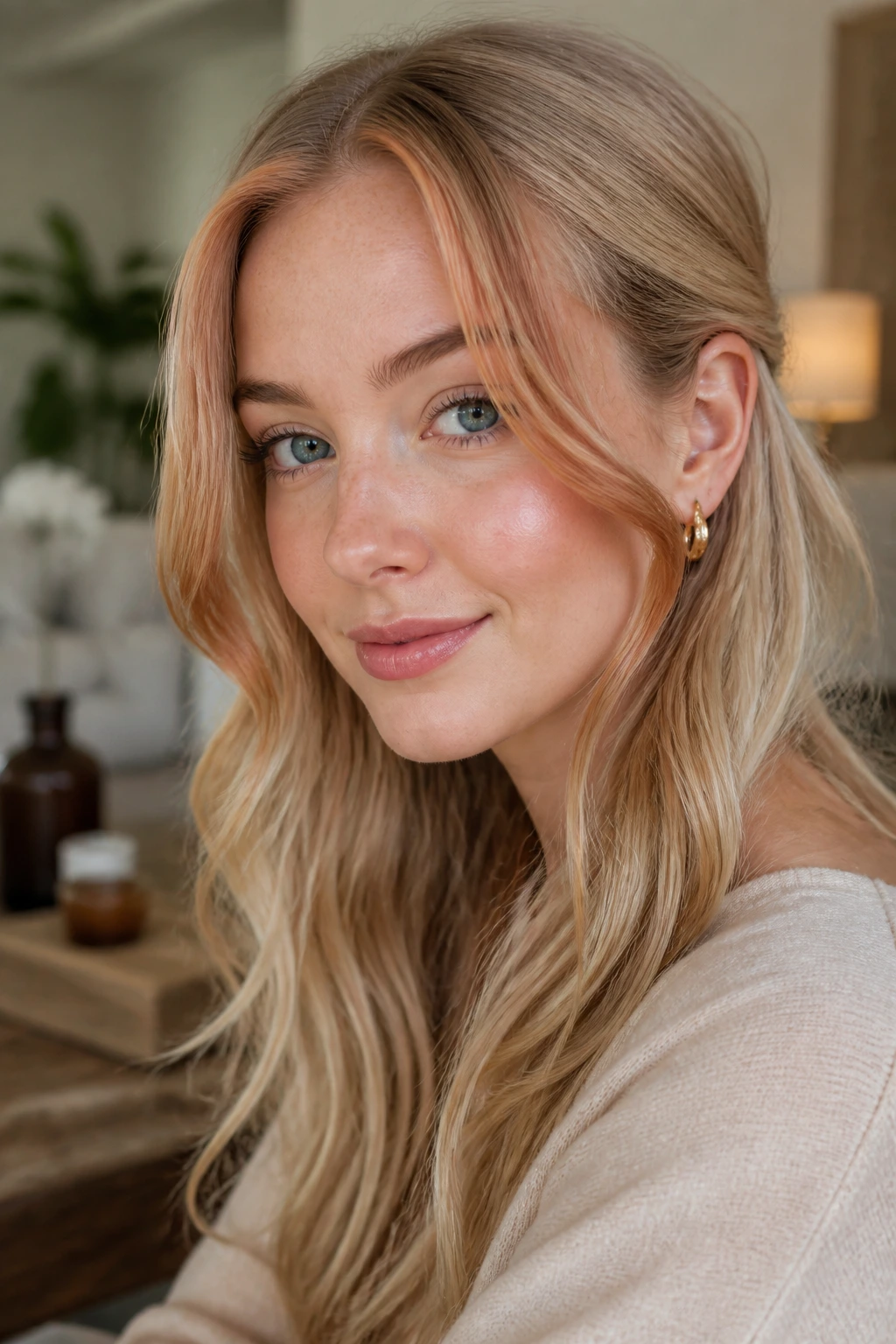
If you want the most visible strawberry moment without committing to all-over warmth, start at the front. A copper money piece brightens the face and gives fair skin a warm border without flooding the whole head.
The reason this works is simple: the eye goes straight to the front pieces. Keep the rest of the hair beige blonde or soft gold, and the copper reads like a feature, not a helmet. On pale skin, that contrast is enough. You do not need red everywhere.
This one is especially good if you wear your hair half-up, tucked behind one ear, or in loose bends. The front pieces move, catch light, and pull the color story together. If your brows are light, keep the copper one step softer than you think.
5. Beige Strawberry Blonde Bob
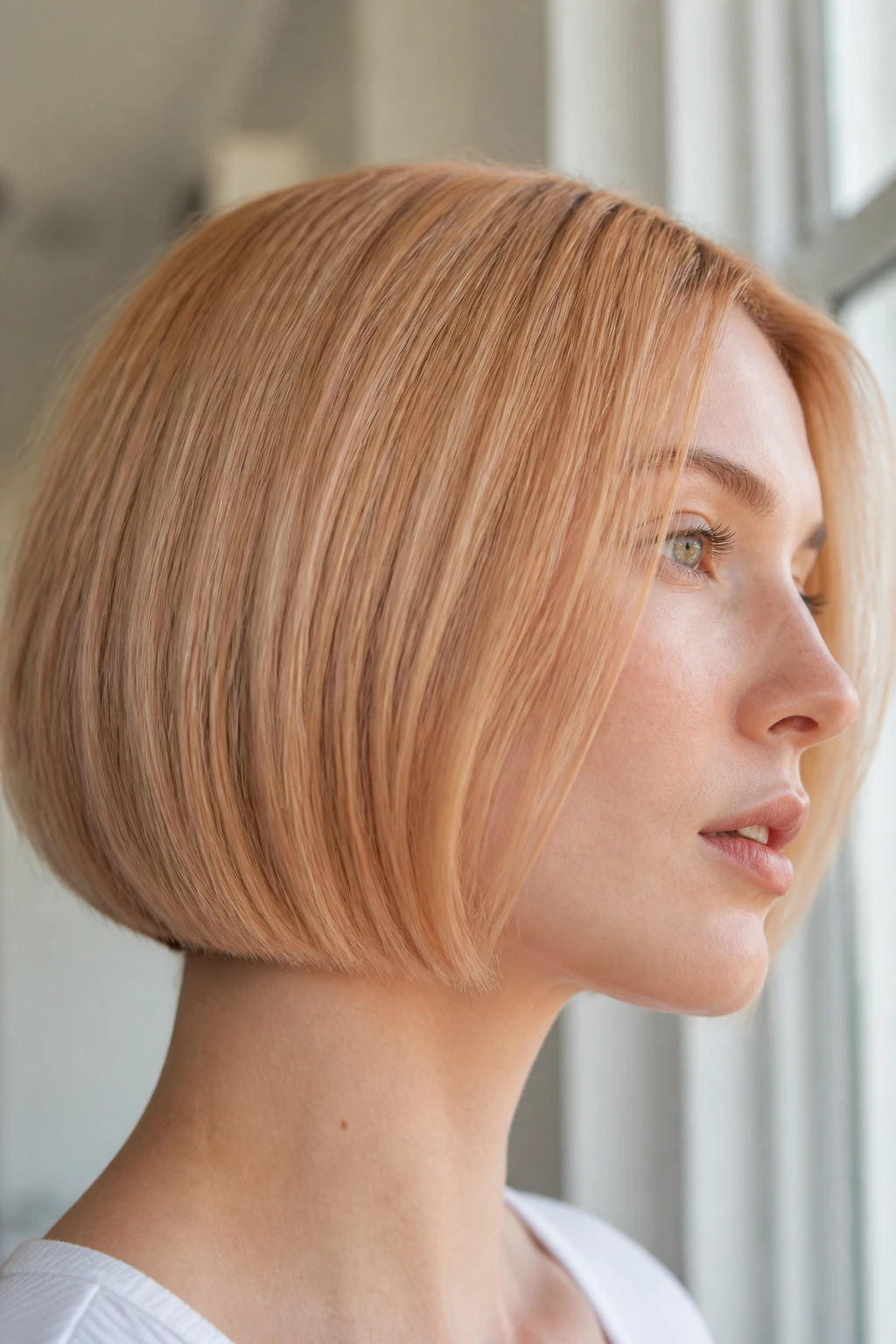
Short hair can swallow bright color if the tone is too hot. A beige strawberry bob avoids that problem by keeping the warmth low and the finish soft.
The bob shape already gives you structure. You do not need the color to do all the work. A beige base with a whisper of strawberry through the ends keeps fair skin from looking washed out, but it never turns the haircut into a copper block. I like this on straight bobs and slight A-line shapes, where the clean line keeps the shade looking neat.
6. Champagne Strawberry Blonde
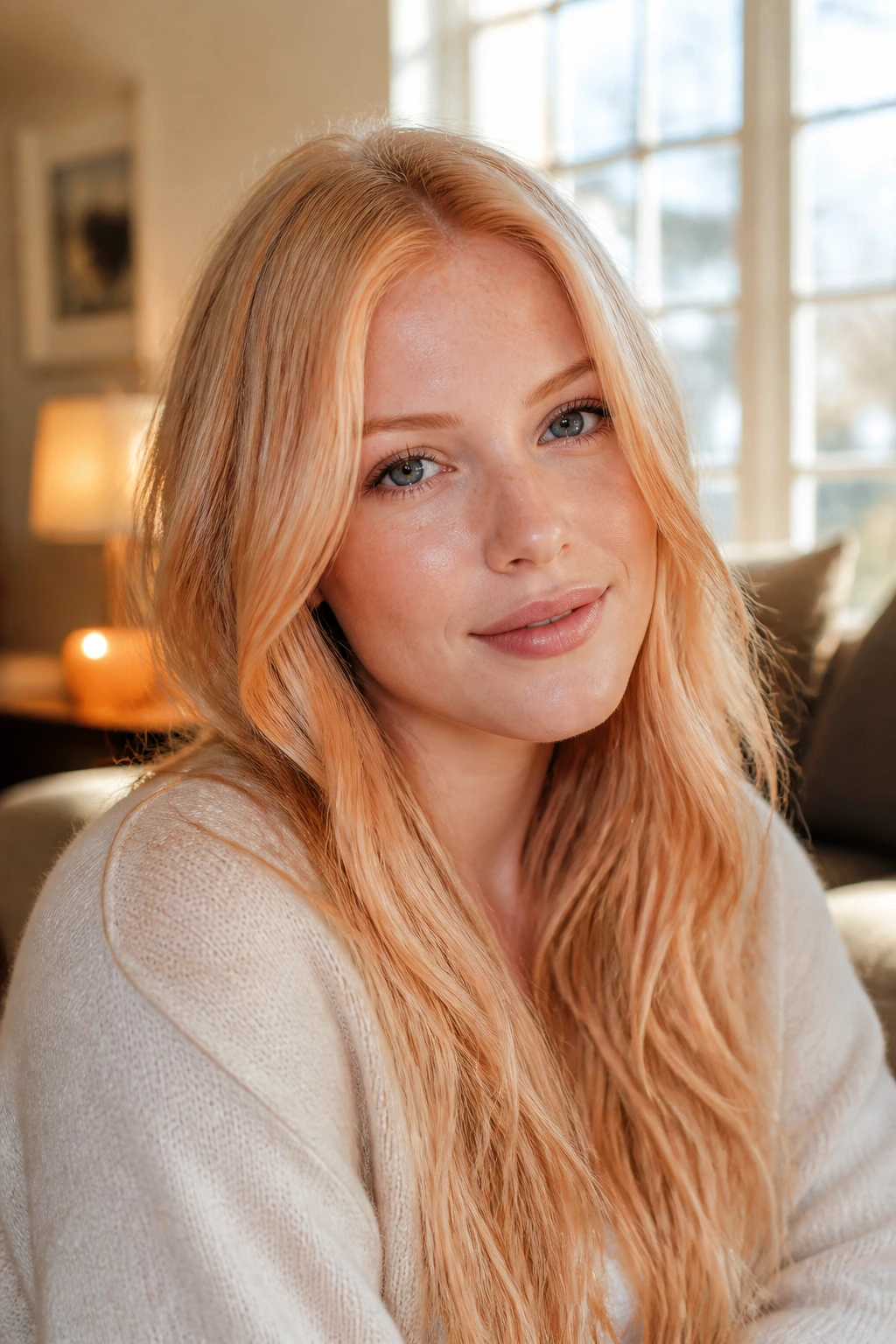
Why does champagne strawberry look so good on pale skin? Because it behaves like light, not paint. The shade has enough warmth to keep fair complexions alive, but enough pale blonde in it to stay airy.
Best For
- Fair skin with neutral undertones
- Fine hair that needs brightness more than depth
- People who want strawberry blond without a big red footprint
This is one of the easiest shades to wear if you want the color to look expensive in a quiet way. Ask for champagne blonde with a soft strawberry glaze, not a strong red toner. That wording matters. The wrong toner can shove the color straight into peach-orange territory.
7. Apricot Gloss on Long Layers
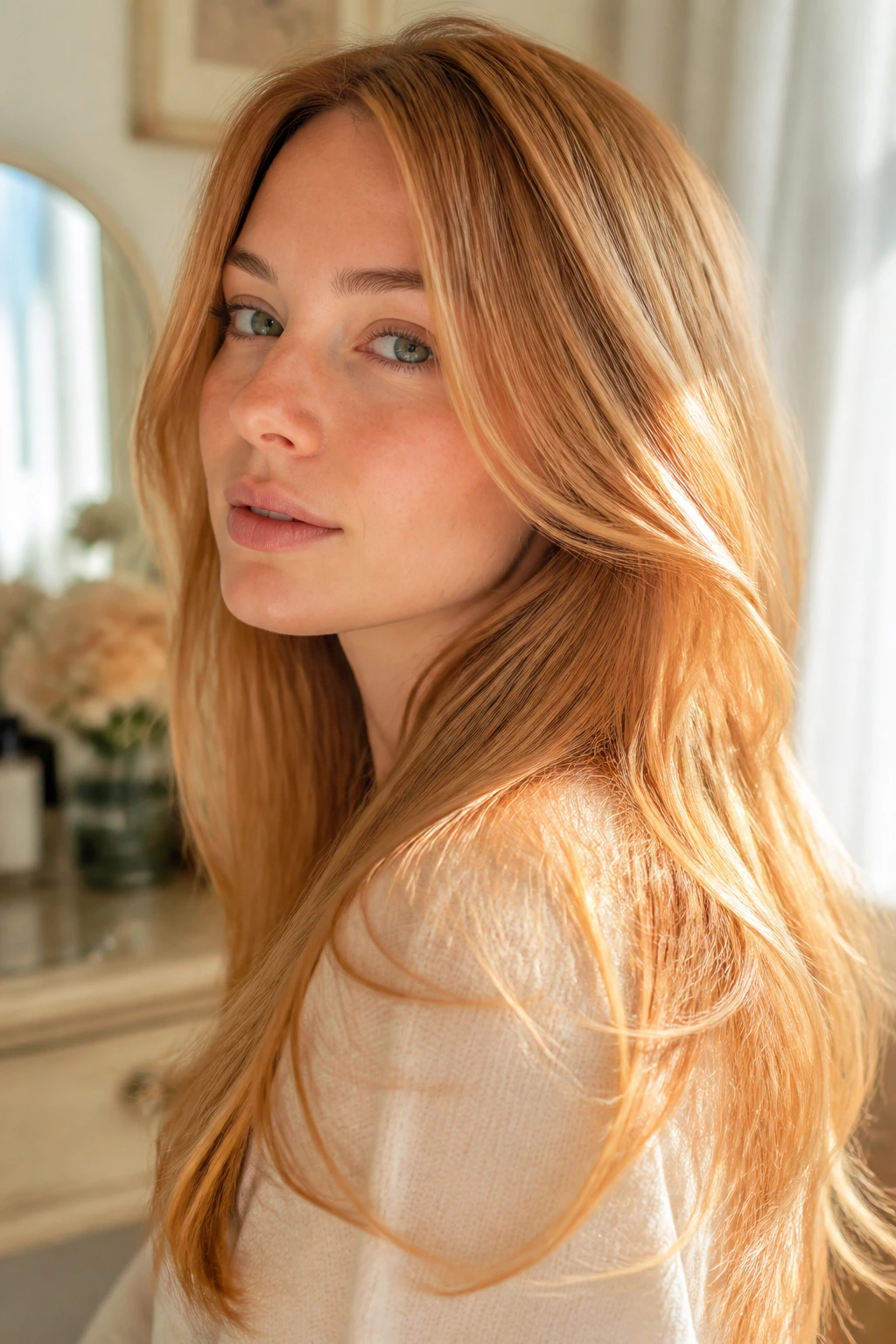
Apricot is the easiest way to make strawberry blond feel fresh on long hair. It has more fruit and less fire, which usually suits fair skin better than a dense copper layer.
Long layers give the gloss places to catch light. The result isn’t flat. It’s that flicker you see when the hair moves over the shoulder and the warm tone shows up in pieces. If your natural base is already blonde, this can be done with a demi-permanent gloss and a light touch.
I like apricot best on hair that’s been blown out smooth or curled in wide bends. The shade has enough warmth to stand on its own, but not so much that it needs a heavy styling routine.
8. Dimensional Strawberry Bronde
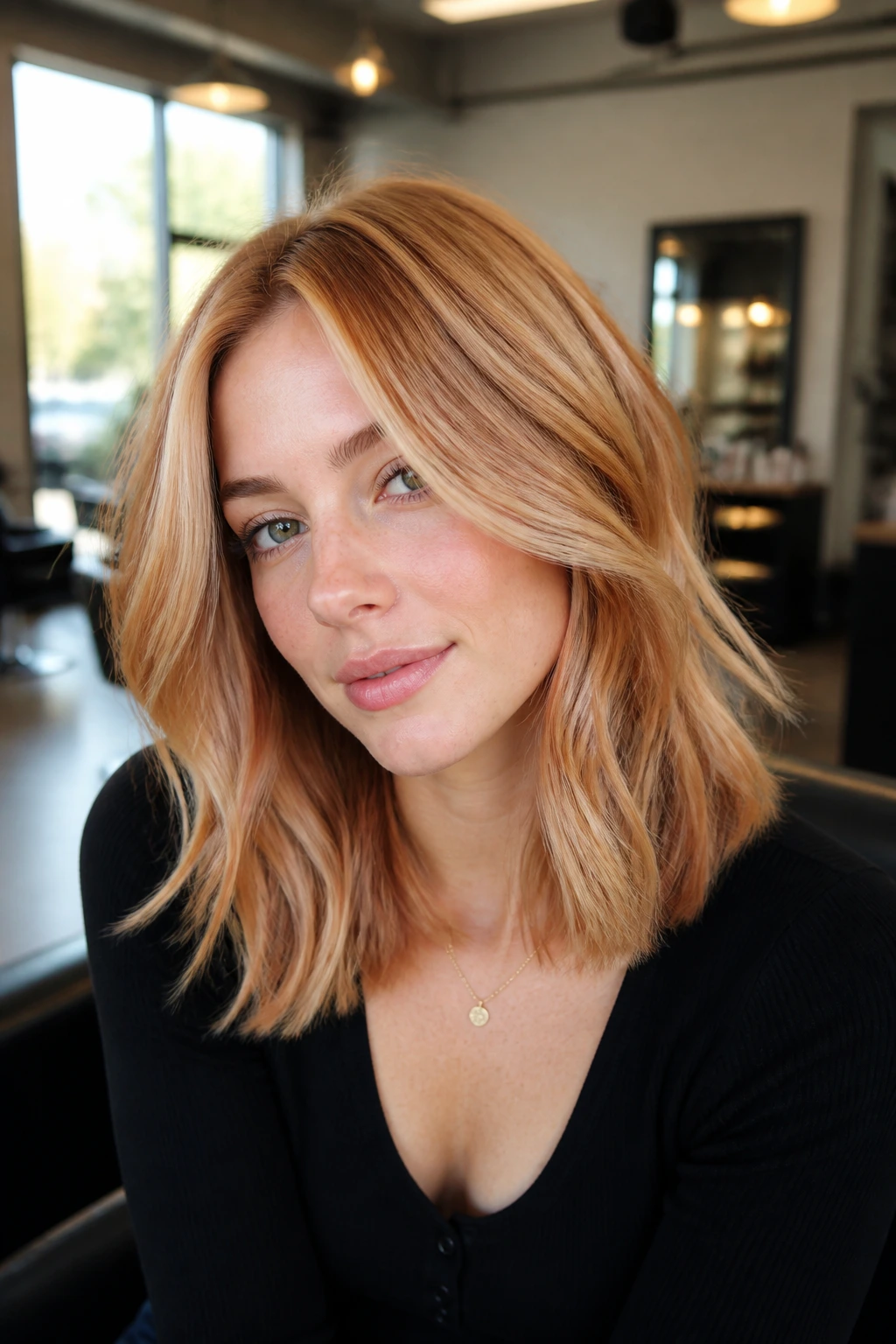
Bronde sounds like a compromise, but on fair skin it often solves the whole problem. You keep enough blonde to stay light around the face, then add strawberry warmth in the lowlights and surface ribbons.
That dimensional shift matters if your brows are darker or your skin tans slowly. A one-note red would look too stark. Bronde gives the strawberry tone a place to rest. It feels more natural, especially on medium-length cuts and layered lobs.
Ask for beige blonde, soft copper lowlights, and a strawberry gloss over the top. The three pieces should sit together, not fight each other. When it works, the hair looks thicker than it actually is.
9. Micro-Babylight Strawberry Shine
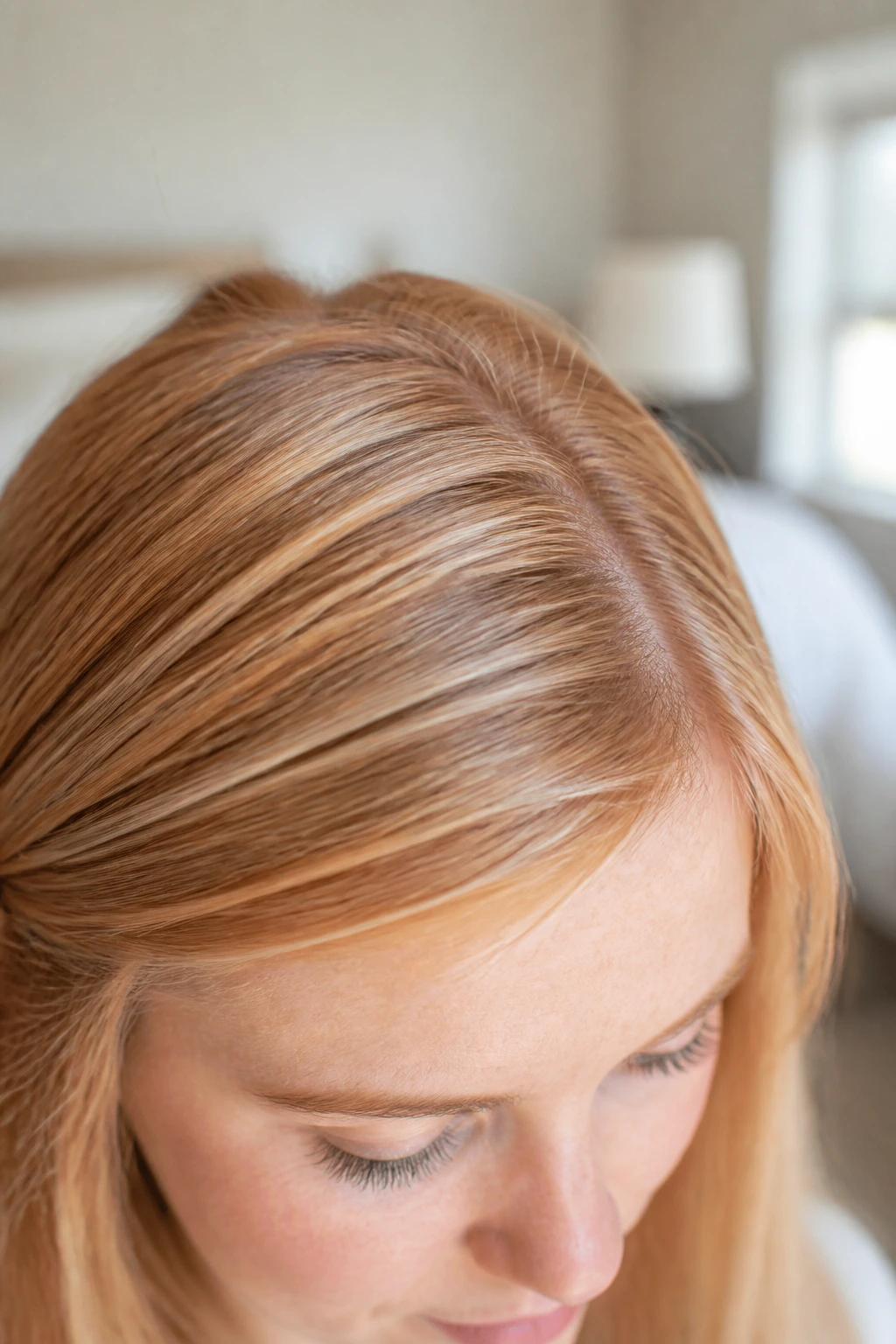
Tiny babylights are the move when you want fair skin to stay the focus. The color is there, but it never becomes the only thing in the room.
This shade is built from delicate strands, usually around the hairline, part, and crown. The strawberry tone is soft enough to read as shimmer first and color second. That matters for very pale skin, especially if your face tends to flush easily. You want a glow, not a contrast problem.
How to Wear It
Keep the finish soft. A light wave or air-dried bend shows off the fine highlights better than a stiff blowout. If the hair is too polished, the babylights can disappear. Strange but true.
10. Buttercream Strawberry Blonde
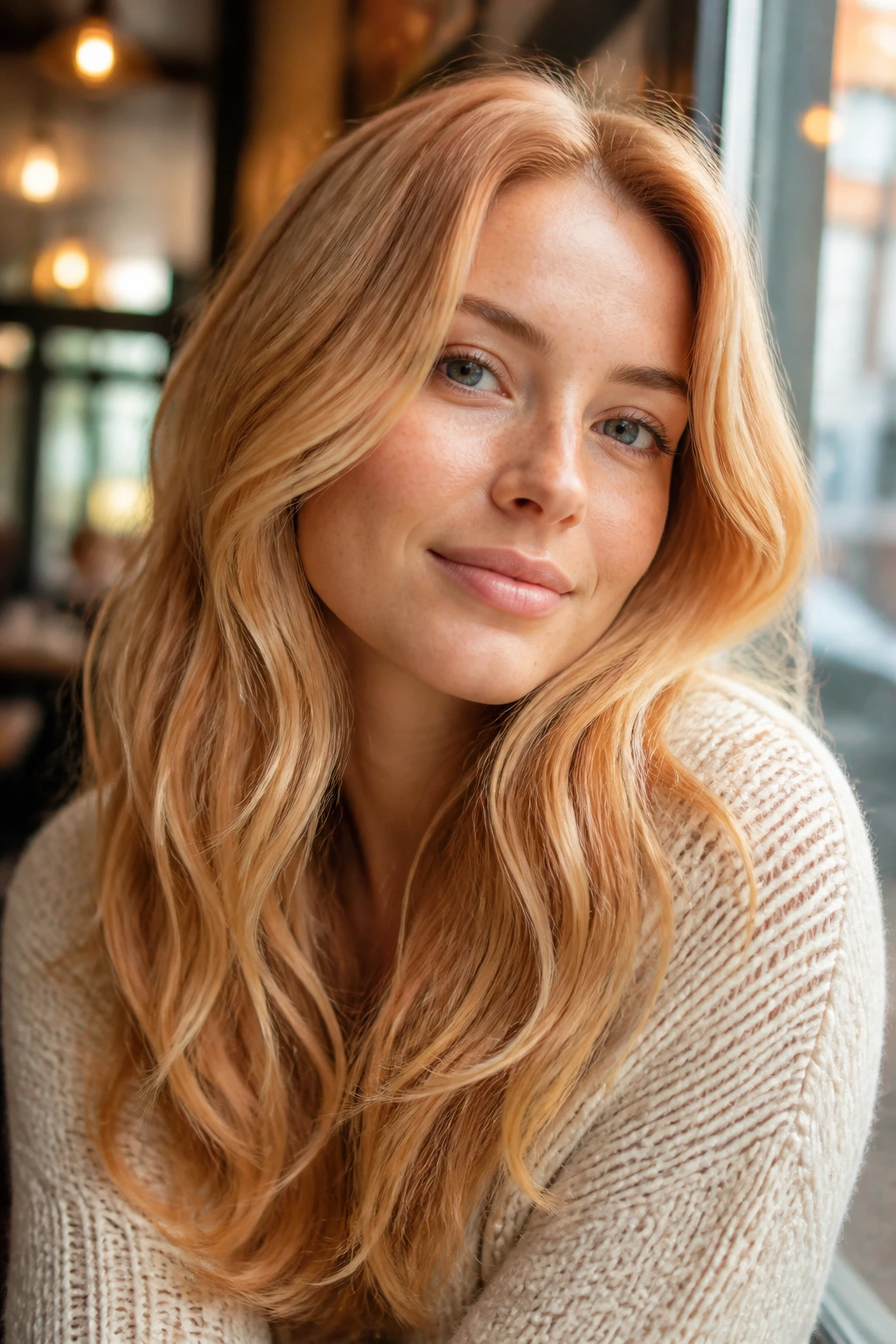
Buttercream strawberry has a slightly creamy cast that flatters fair skin with a soft peach undertone. It is warmer than beige, but nowhere near copper.
I think this shade works best when you want your hair color to feel friendly. Not timid. Just softer around the edges. It’s a good choice for finer hair because the creamy reflect can make the hair look fuller without loading it up with dark depth.
It also plays nicely with light brows. If your brows are nearly invisible without makeup, this shade doesn’t bury your face the way a stronger red might.
11. Warm Auburn Strawberry Ends
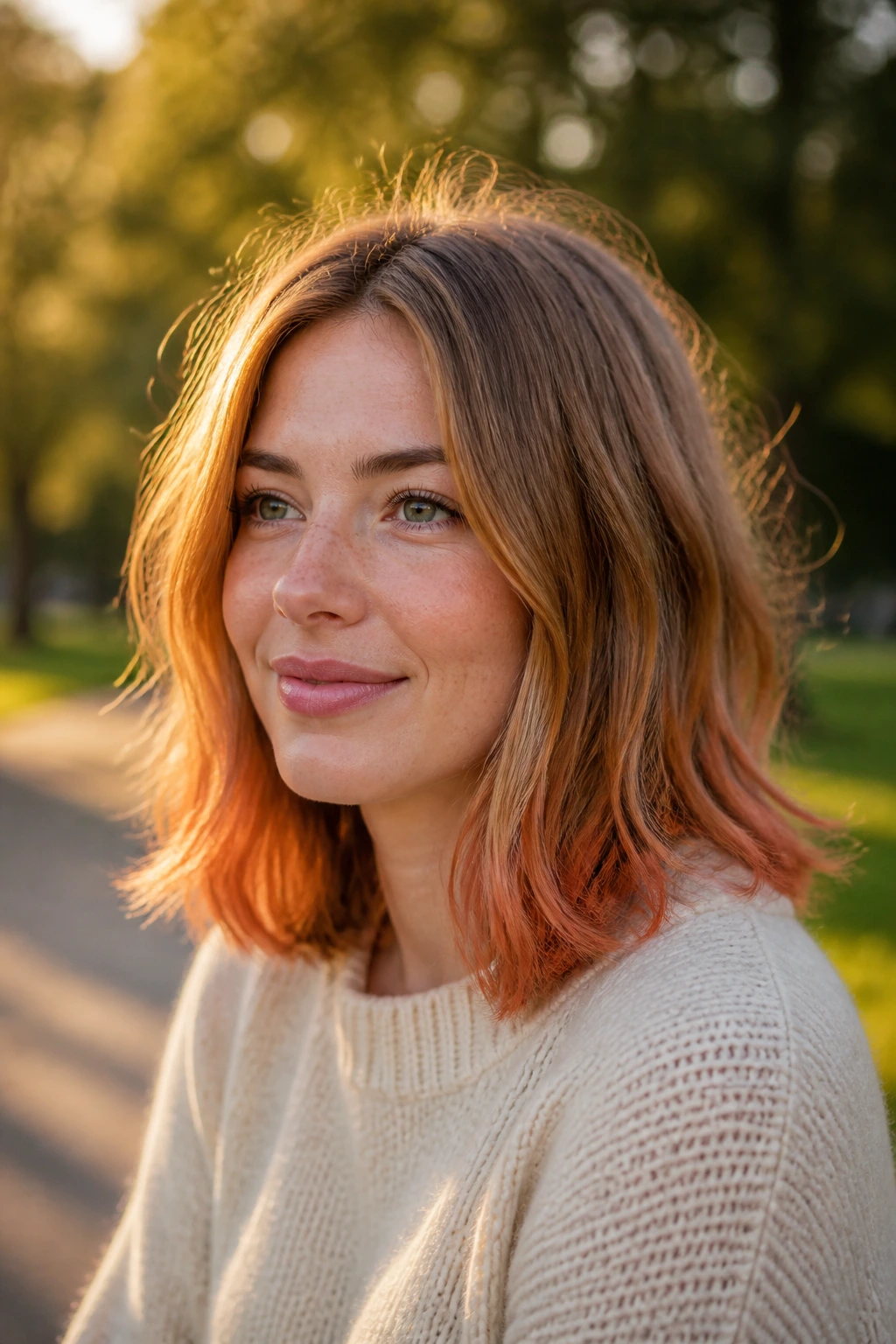
This one starts tame and finishes with a little drama. The root and mid-lengths stay a soft blonde, then the ends deepen into warm auburn strawberry.
That gradient keeps fair skin from getting overpowered. The eye lands on the brighter face area first, then slides down to the richer ends. On layered hair, the effect is especially good because the lighter top pieces break up the depth underneath.
This is a smart choice if you like to wear your hair in a half-up twist or low ponytail. The auburn ends peek through the movement. Simple, but not boring.
12. Strawberry Money Piece
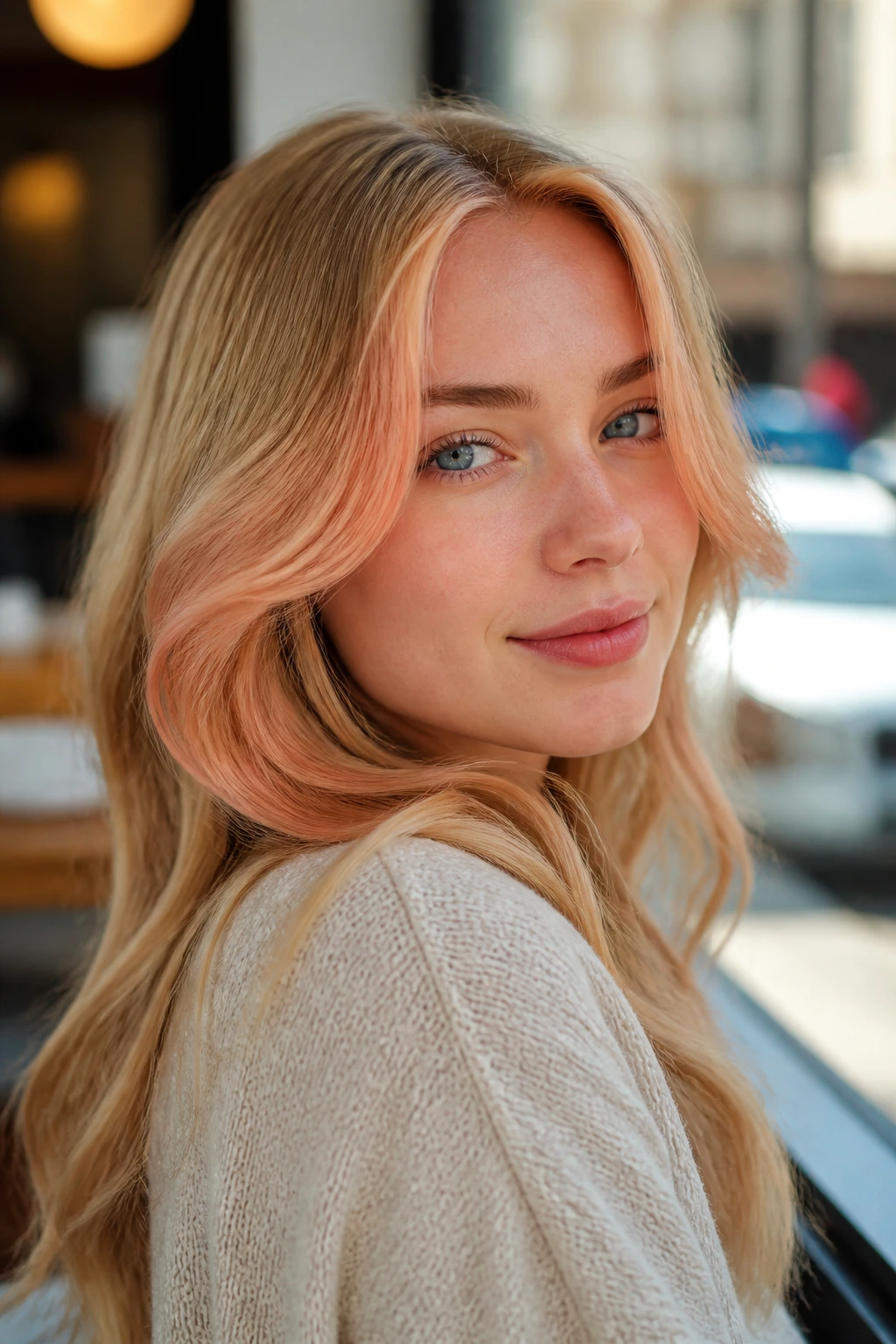
A strawberry money piece is the faster, brighter cousin of the copper face frame. The difference is tone: this version leans rosier, almost like a soft watermelon glaze on pale hair.
The front pieces should be the brightest part of the look. Keep the rest of the hair beige or pale gold, and the face frame will make the skin look clearer without making the whole head feel red. On fair skin, that front-loaded warmth is often enough.
If you wear curtain bangs, this shade gets even better. The bangs and face frame blend into one little halo of color.
13. Strawberry Beige Pixie
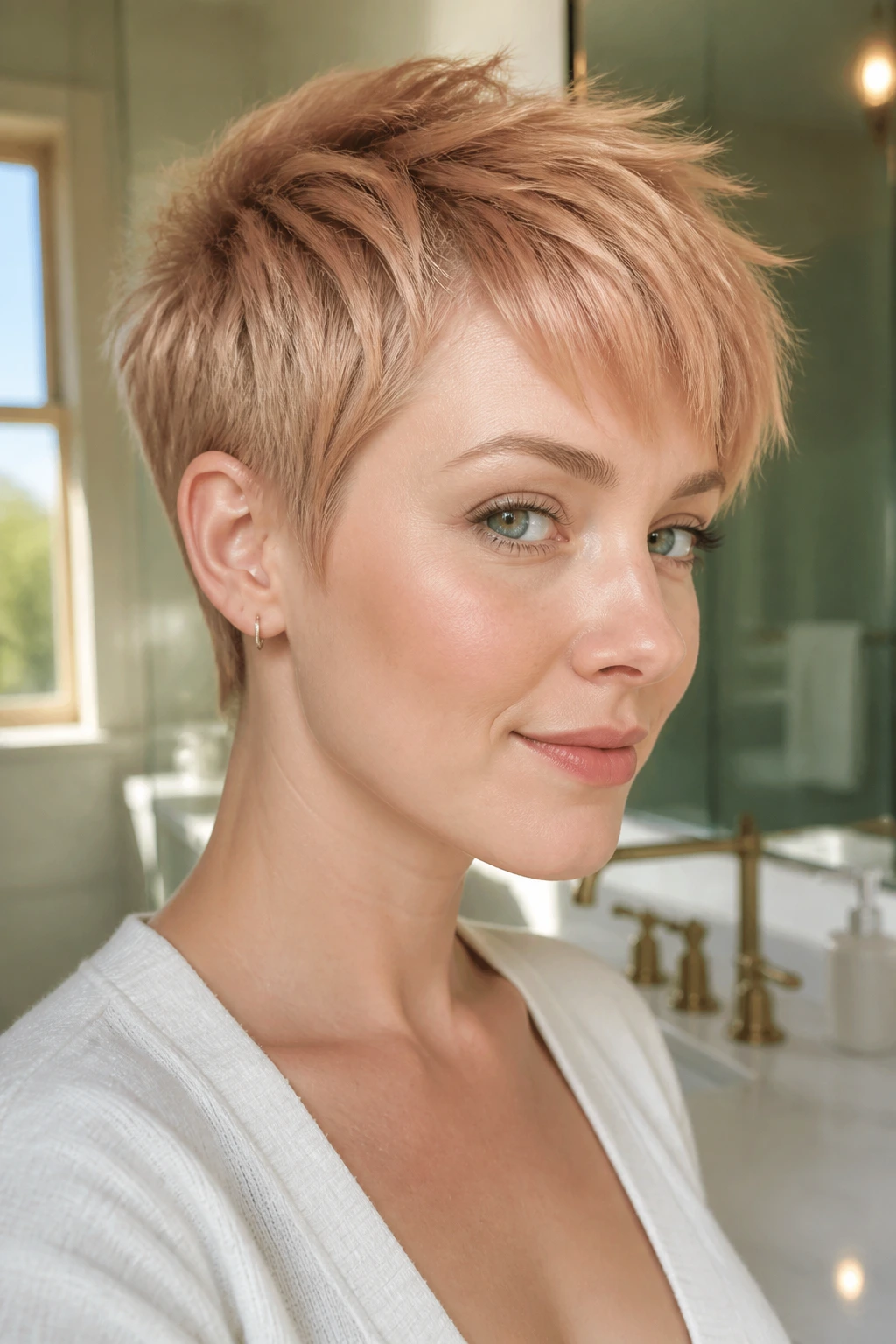
Short cuts can go harsh if the color is too saturated. A strawberry beige pixie keeps the shape crisp and the tone soft.
I like this because the haircut does the sharpening work. The color just adds warmth. On fair skin, that means the pixie reads clean and light instead of severe. Ask for a beige blonde base with a sheer strawberry glaze through the top layers and crown.
Quick Notes
- Best for: Sharp cheekbones, light brows, and very fair skin
- Avoid: Heavy copper at the roots, which can look boxy on short hair
- Style with: A matte cream or light styling paste
14. Cinnamon Sugar Strawberry Lob
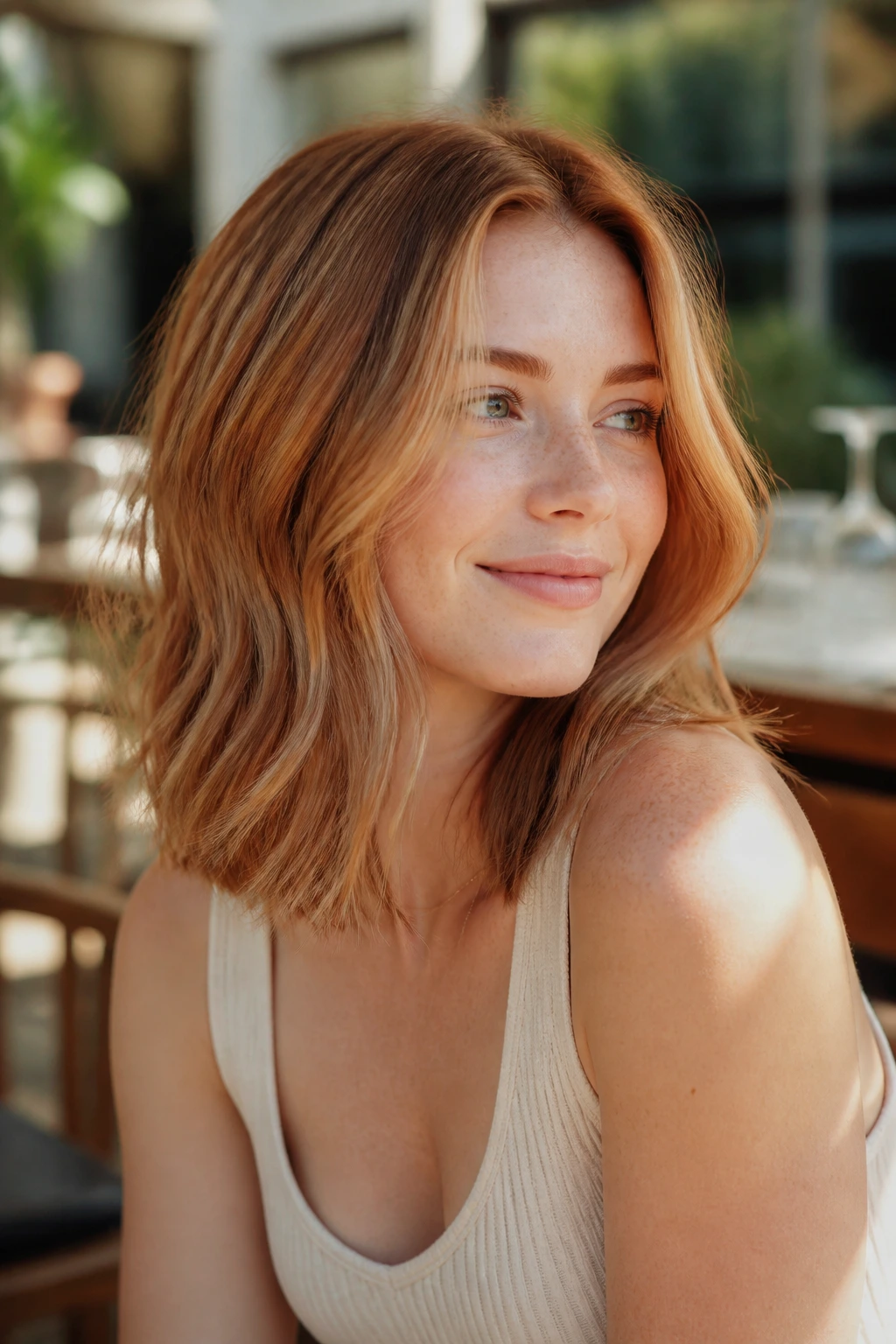
Cinnamon sugar sounds darker than it is. In hair terms, it means warm spice with enough blonde in the mix to stay wearable on fair skin.
The lob length helps because it gives the shade room to breathe. A bright strawberry on a short cut can feel loud. On a shoulder-grazing lob, the same warmth reads softer and more expensive. The ends move, the layers shift, and the color feels intentional instead of poured on.
This is one of the better picks if you have freckles. The cinnamon warmth sits close to that skin pattern and lets the complexion stay natural.
15. Rooted Strawberry Blonde
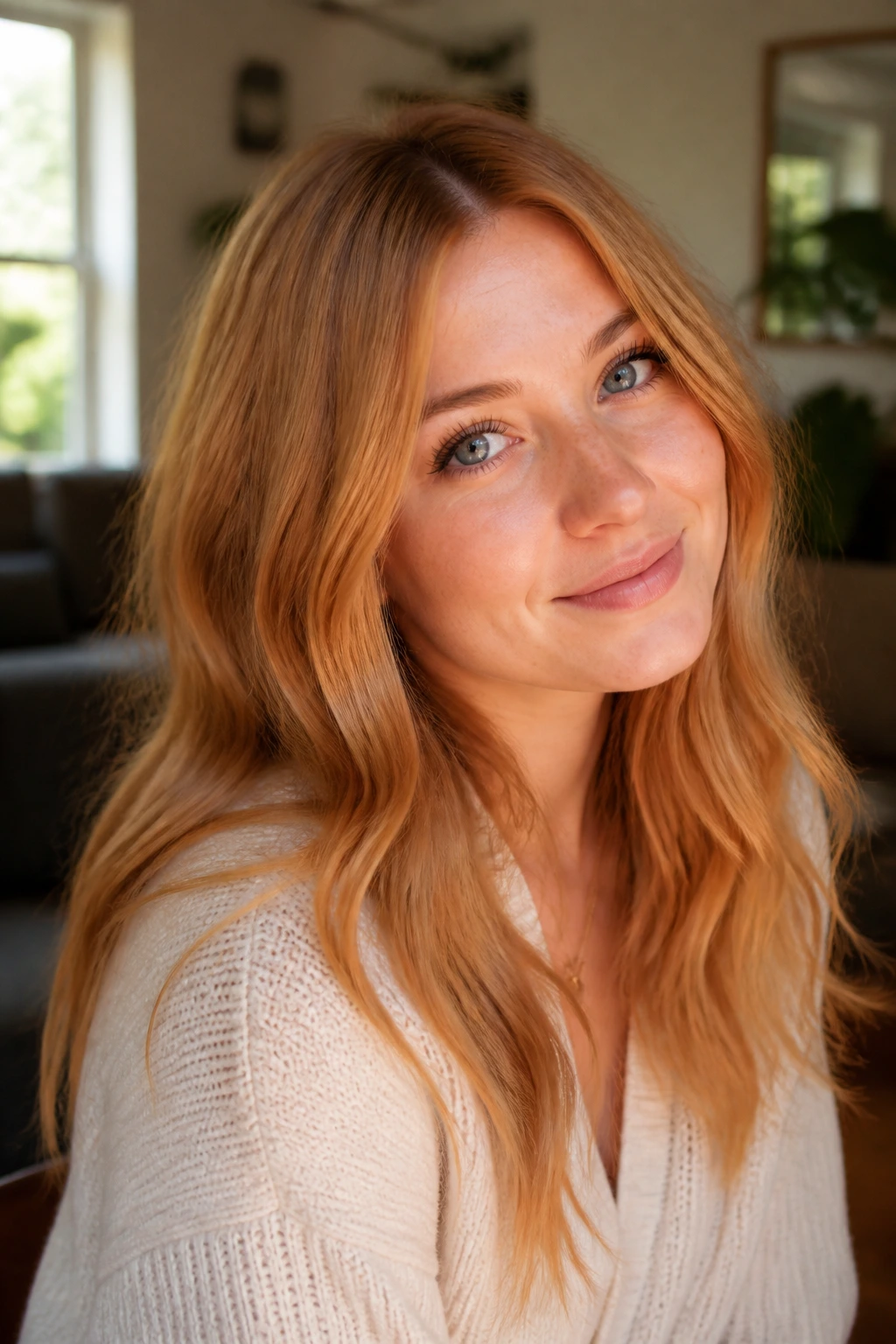
Why does a rooted strawberry blond work so well on pale skin? Because it gives the color somewhere to start. Without a root shadow, a fair face can get swallowed by too much lightness at once.
Why It Helps
A soft root shadow adds depth at the scalp and lets the strawberry tone sit in the mids and ends where it can breathe. The effect is less precious, which I prefer. It also buys you time between appointments because the grow-out is softer and less obvious.
Ask for a root no more than one or two shades deeper than the lengths. Anything darker can look muddy against fair skin. The safest version keeps the top neutral and lets the strawberry build as the hair drops.
16. Peach-Rose Curly Strawberry Curls
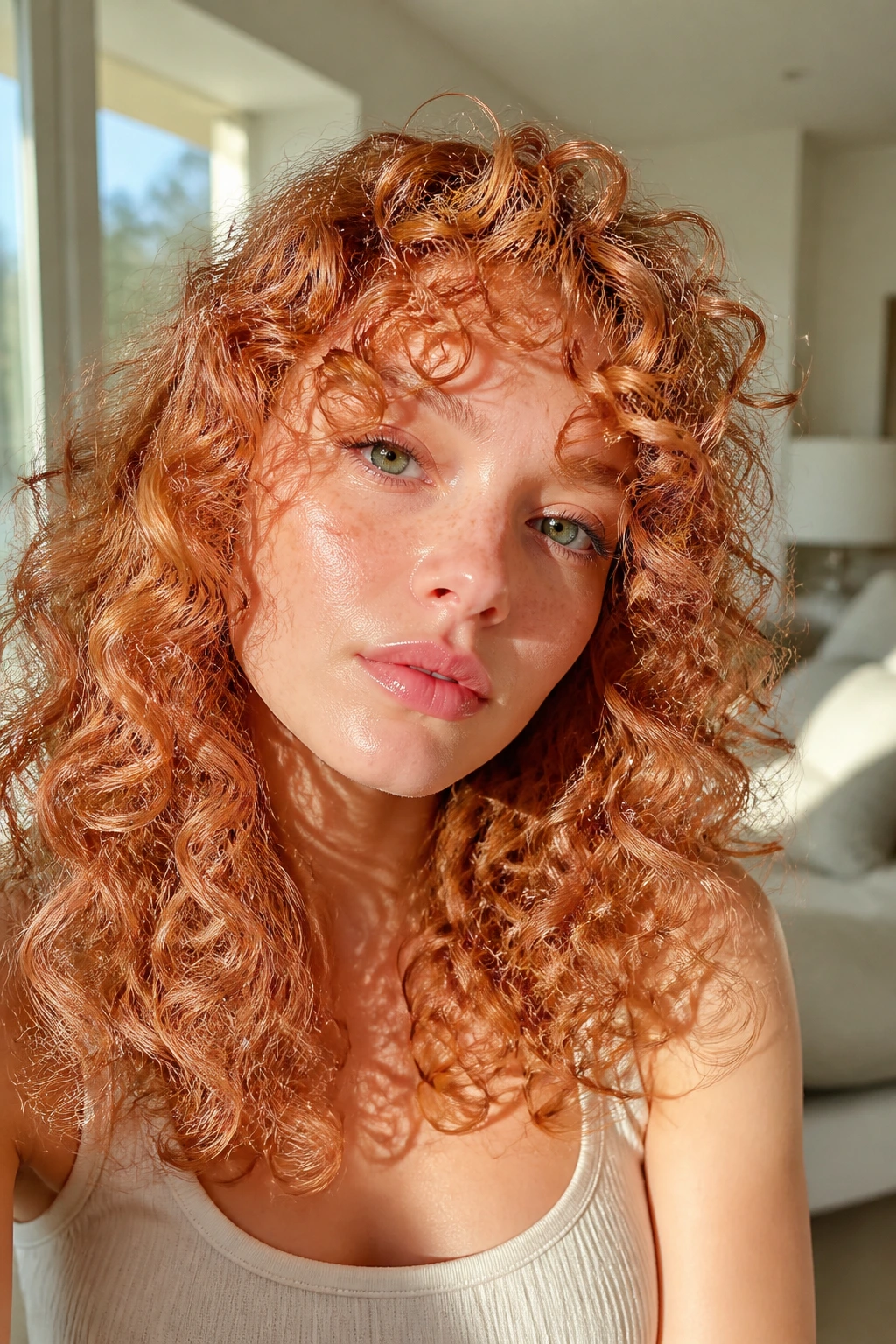
Curly hair needs more saturation than straight hair because the texture breaks up the color. A peach-rose tone gives those curls enough depth to show, while still staying gentle on fair skin.
The nice part is that curls naturally create little pockets of light and shadow. When you layer strawberry tones through them, the color seems to move even when the hair isn’t. If your skin is very light, a peach-rose gloss keeps the contrast soft and flattering.
Use a curl cream with a light hold, not a heavy gel. The shine matters here. Dull curls make strawberry tones look flat, and nobody wants that.
17. Sunlit Strawberry Ombré
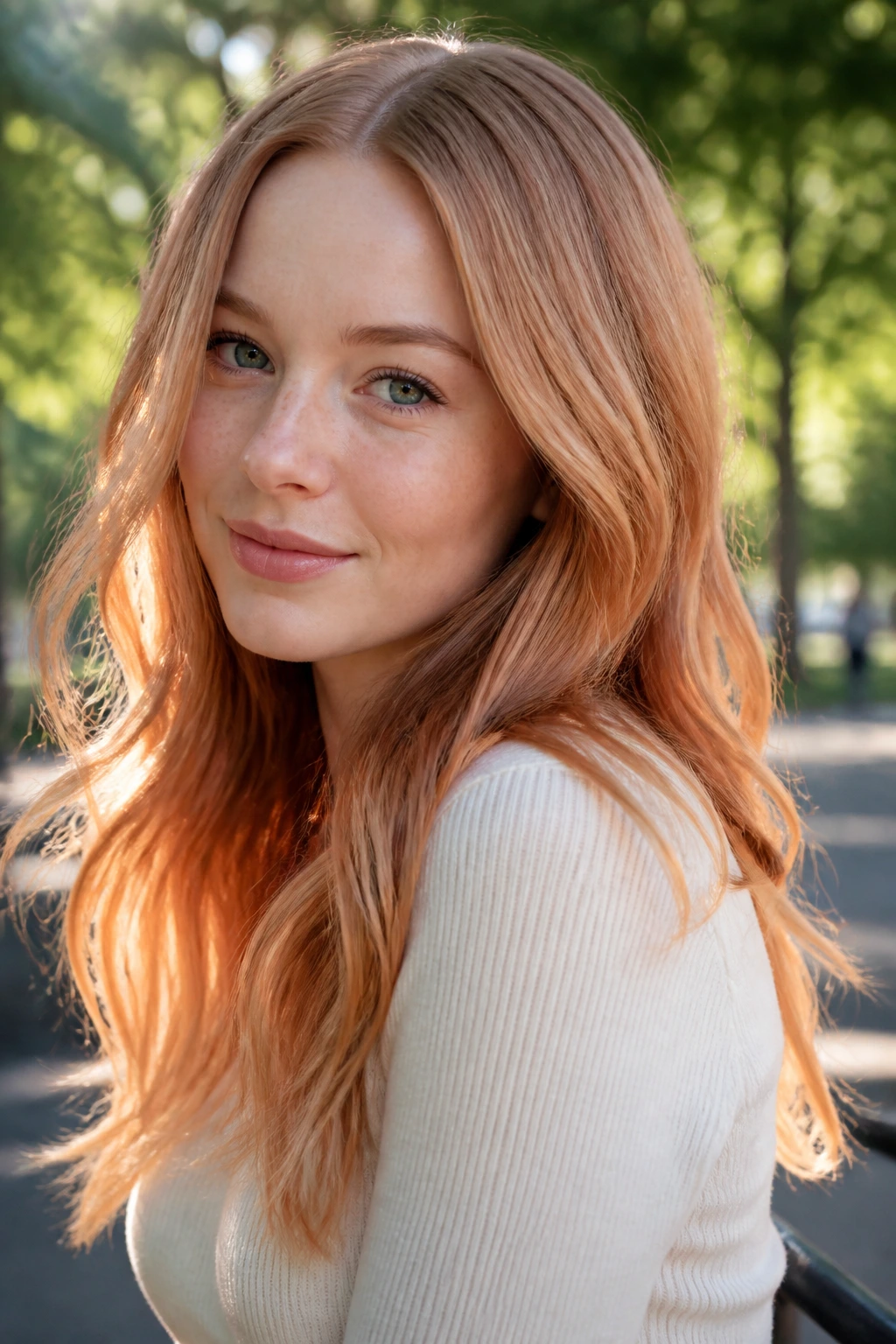
Ombré can go wrong fast if the ends are too orange. But a sunlit strawberry ombré, with a softer root and brighter mids, can look clean on fair skin.
The root area stays close to your natural shade, which keeps the face from getting overwhelmed. Then the color gradually warms as it moves down the length. I like this when someone wants strawberry blond but hates sitting through full-head maintenance.
This is also one of the most forgiving options for people who are growing out old highlights. The transition hides the awkward middle stage and gives you a reason to keep the color warm instead of icy.
18. Velvet Copper Strawberry Shag
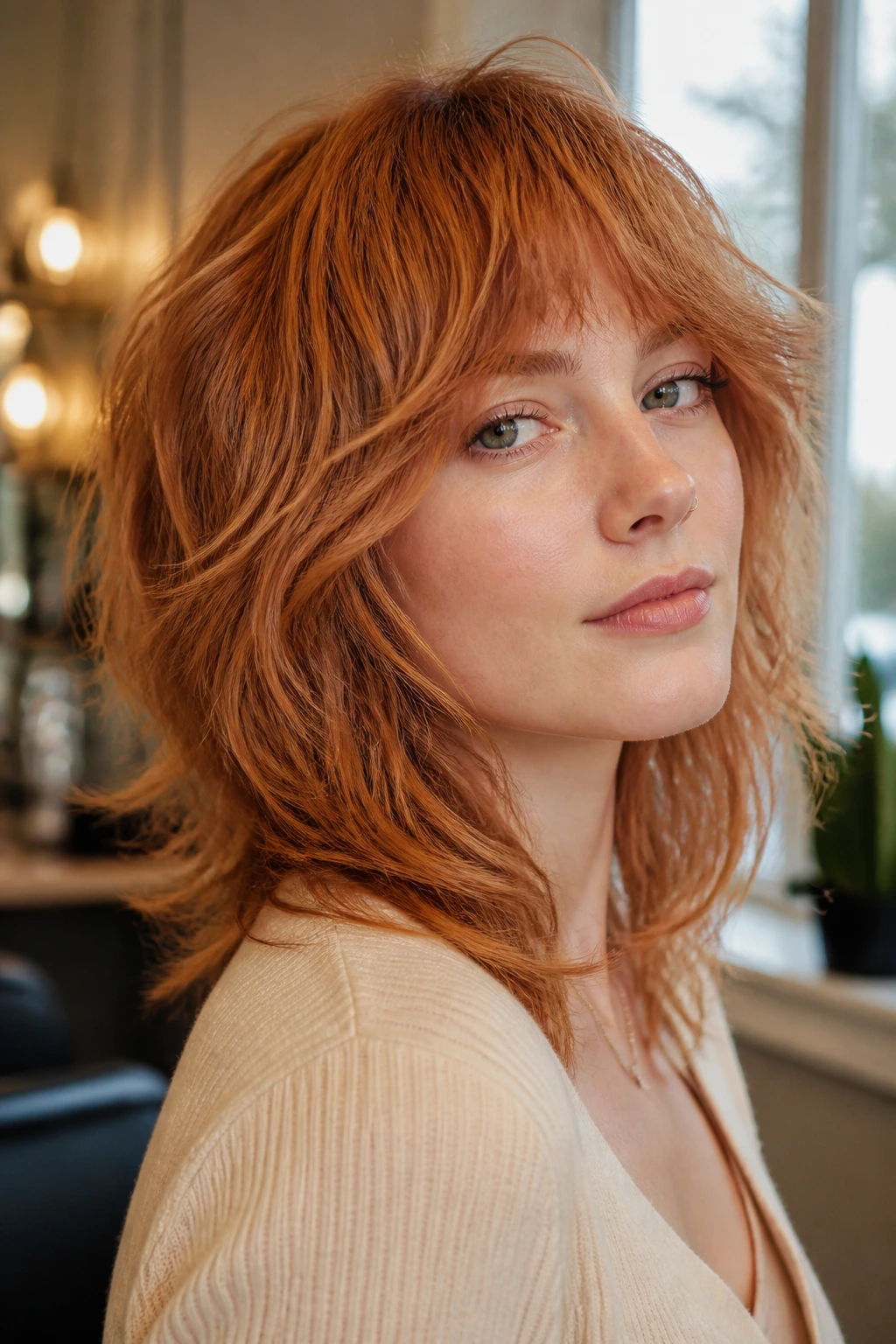
A shag cut can carry more color than a blunt cut because the layers already add movement. Velvet copper strawberry takes advantage of that.
The trick is the word velvet. Not bright copper. Not neon red. A muted, plush warm tone with enough copper to show in the shag’s broken layers. On fair skin, that gives you personality without making the hair look disconnected from the face.
This one works best when you like texture. Air-dried bends, loose waves, a little grit in the finish. If you straighten it flat every day, you lose the point.
19. Soft Coral Strawberry Waves
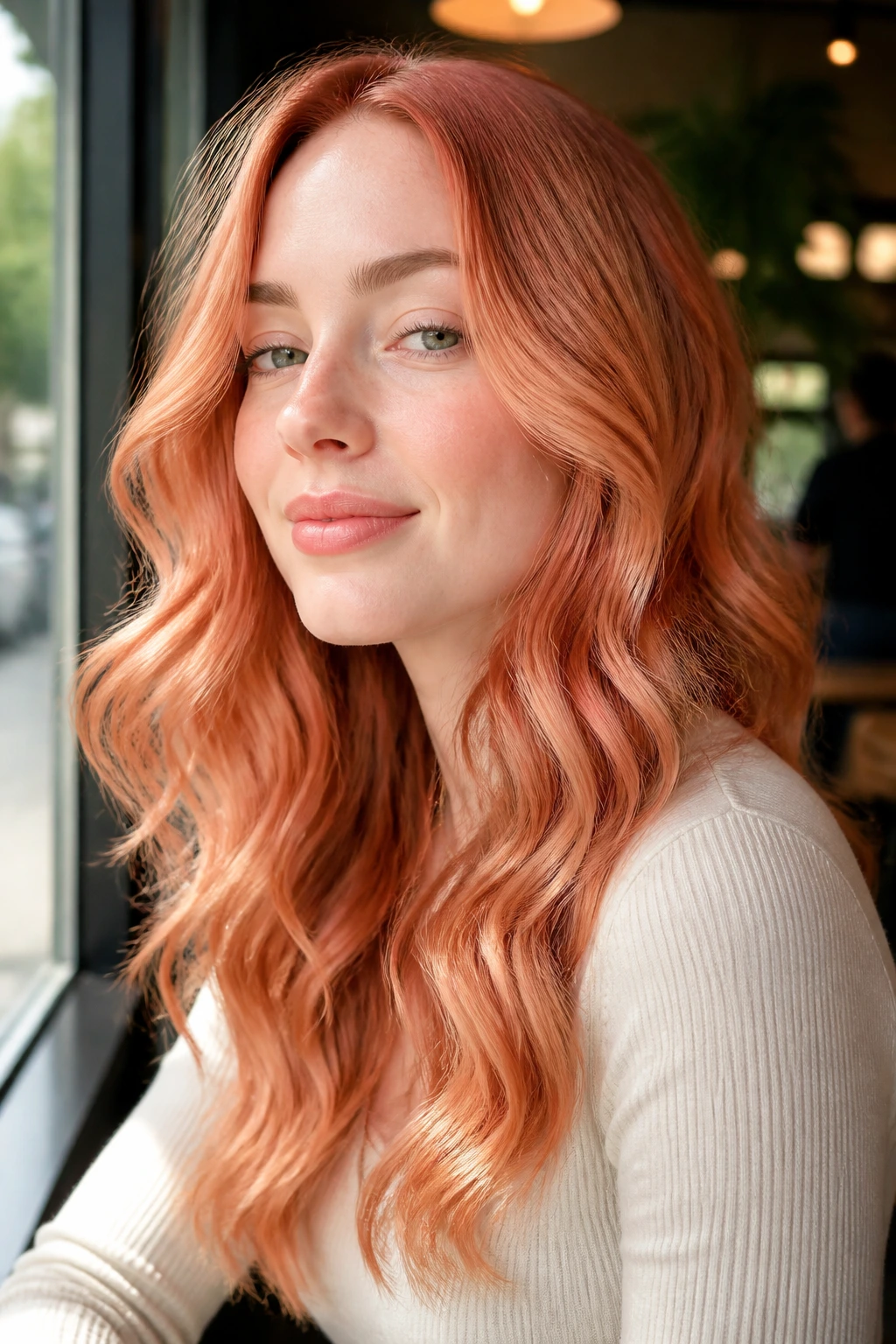
Coral sits between pink and orange, which makes it surprisingly useful for fair skin that has a rosy cast. Too much red can exaggerate flush. Coral softens the edge.
Waves help here because the color needs movement. On straight hair, coral can look a little static. On loose bends, it reads as a warm sheen that picks up light in the mid-lengths and ends. The look feels fresh, not sugary.
If your wardrobe is full of cream, denim, and dusty blue, this shade fits right in. It has warmth, but it isn’t trying to dominate the room.
20. Honeyed Strawberry Foilayage

Foilayage gives you brighter ribbons than balayage, and on fair skin that can be a good thing if the ribbons stay honeyed rather than golden-yellow.
What Makes It Different
The strawberry tone shows up in the brighter sections, so the color feels lifted and light around the face. Honey keeps it from looking brassy. The method also lets a colorist place warmth where your skin needs it most — front hairline, crown, and the pieces that fall forward.
This is a smart pick if your hair starts darker and needs real contrast. The foils do the heavy lifting. The finish should still look soft, though. If the highlights are too stripey, the whole effect loses its charm.
21. Dusty Pink Strawberry Blonde
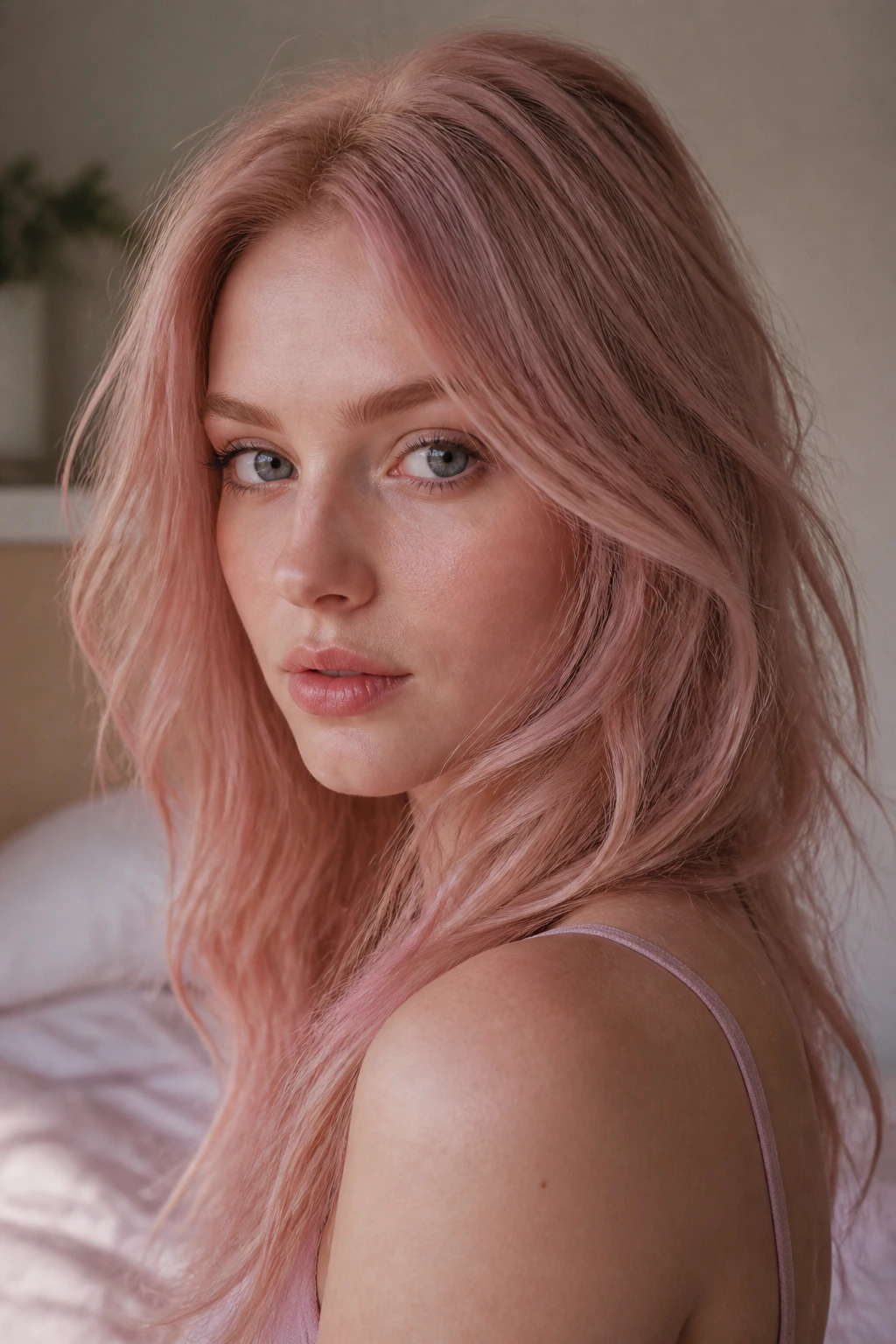
Dusty pink strawberry blond is the cooler cousin in the group. It works best on fair skin with pink or neutral undertones that get overwhelmed by orange.
The dusty part is what saves it. A sheer pink-beige cast keeps the color from turning bubblegum. I like it on pale complexions because it sits quietly against the skin instead of fighting with it. That restraint matters. The best version looks like a blush tint, not a fantasy color job.
Ask for a strawberry gloss with muted rose and beige notes. Skip anything too bright or too red. The softer the formula, the better the result.
22. Curtain-Bang Strawberry Blonde
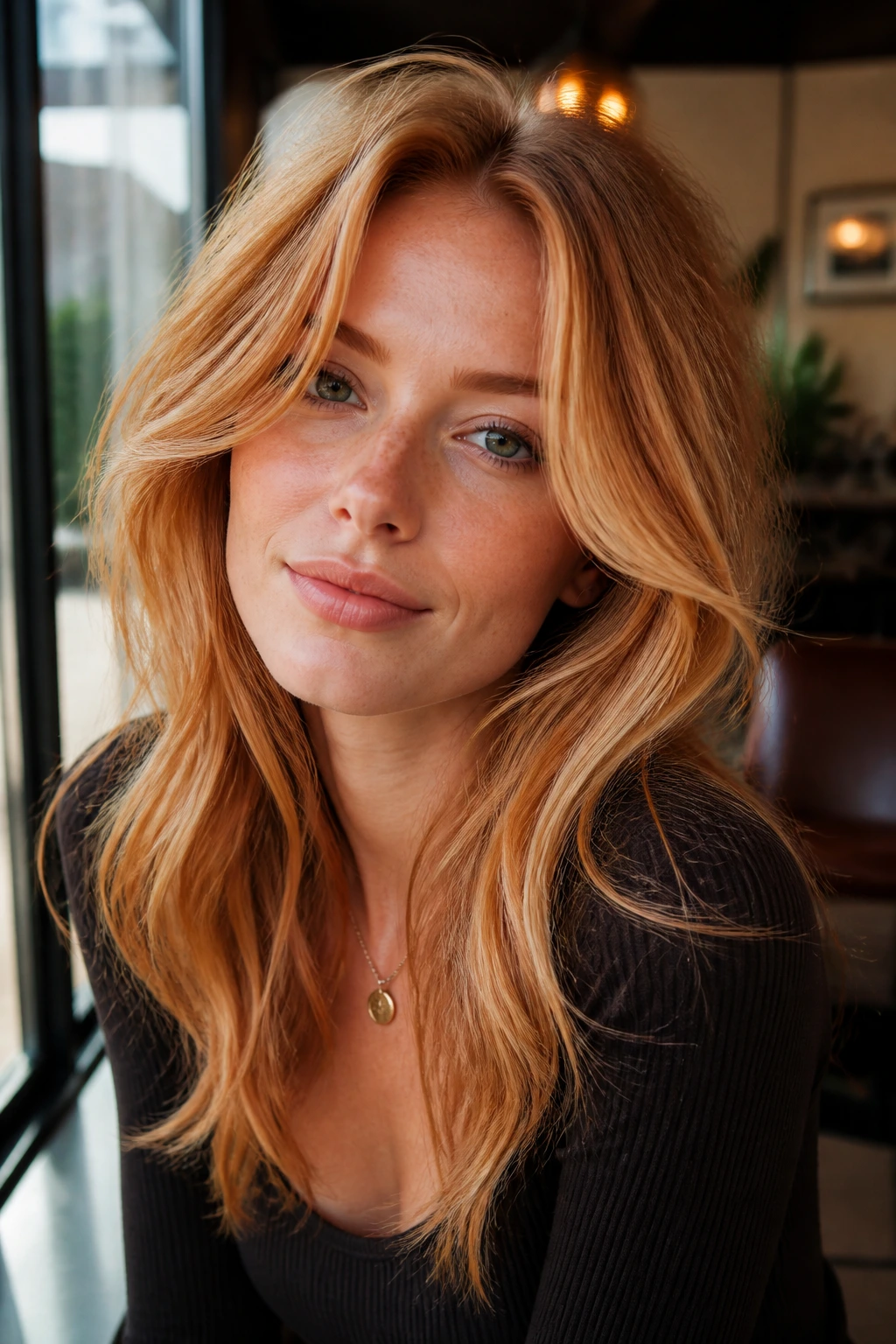
Curtain bangs make strawberry blond feel intentional fast. They put the warm pieces right where the eye starts, which matters on fair skin because the face can get lost under one flat tone.
The bangs should be a touch brighter than the rest of the cut. Not a stripe. Just enough to frame the cheeks and forehead. If you wear your hair in soft bends, the whole thing gets that slightly French, slightly undone look that works better than overstyled copper.
This is especially good if your forehead or cheek area tends to look pale in photos. The bangs add warmth without forcing a full-color commitment.
23. Toasted Almond Strawberry Layers
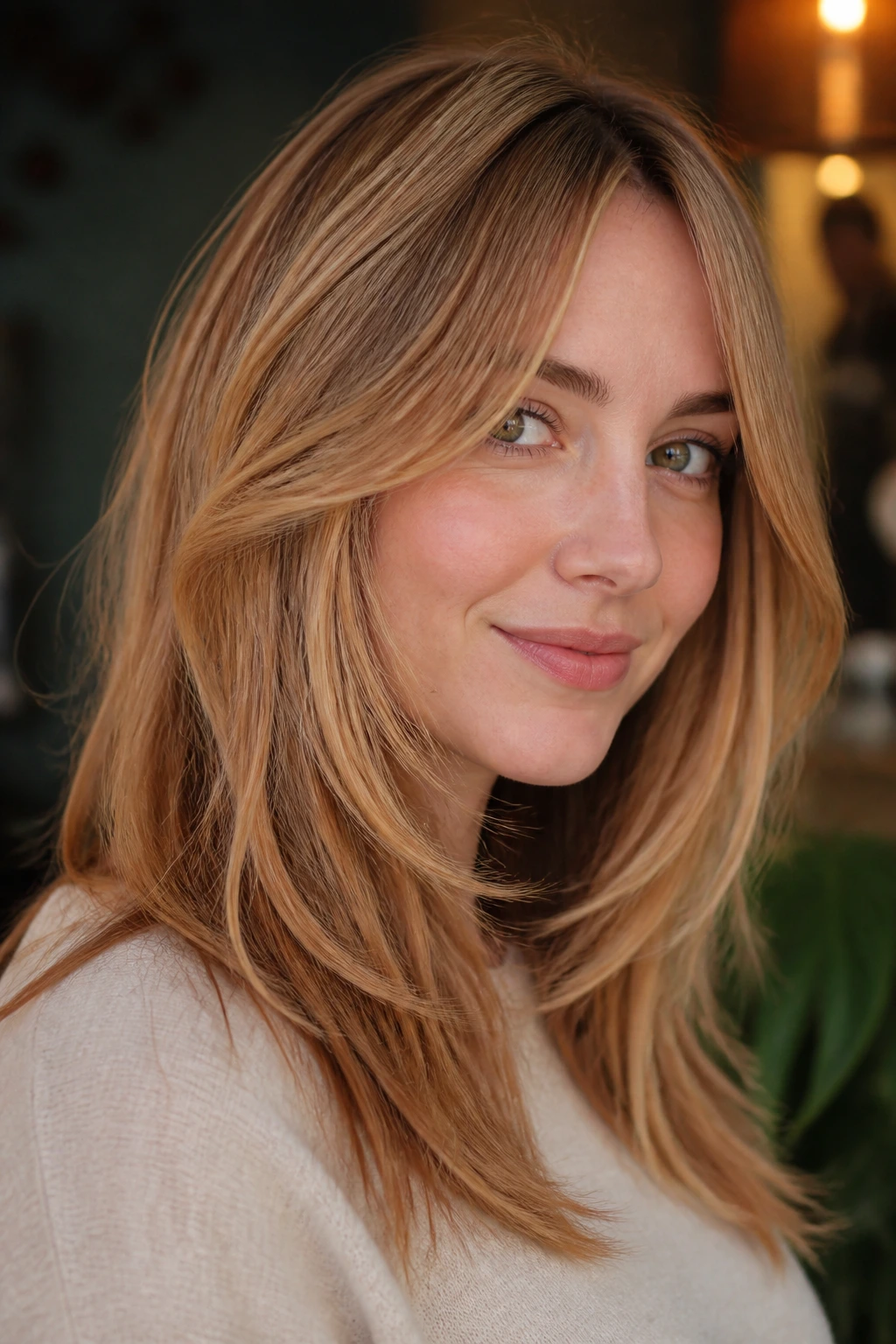
Toasted almond is one of my favorite ways to soften strawberry blond for fair skin with neutral undertones. The almond base keeps the color grounded, while the strawberry layers lift it back up.
The result is calmer than pure copper and richer than beige blonde. It’s good for people who want dimension but don’t want to explain their hair every time someone sees them. The layers help the warm and cool pieces sit together instead of forming a block.
If your eyes are hazel or green, this shade can be especially flattering. The warm-almond base gives the eyes something to lean against.
24. Retro Copper Strawberry Bob
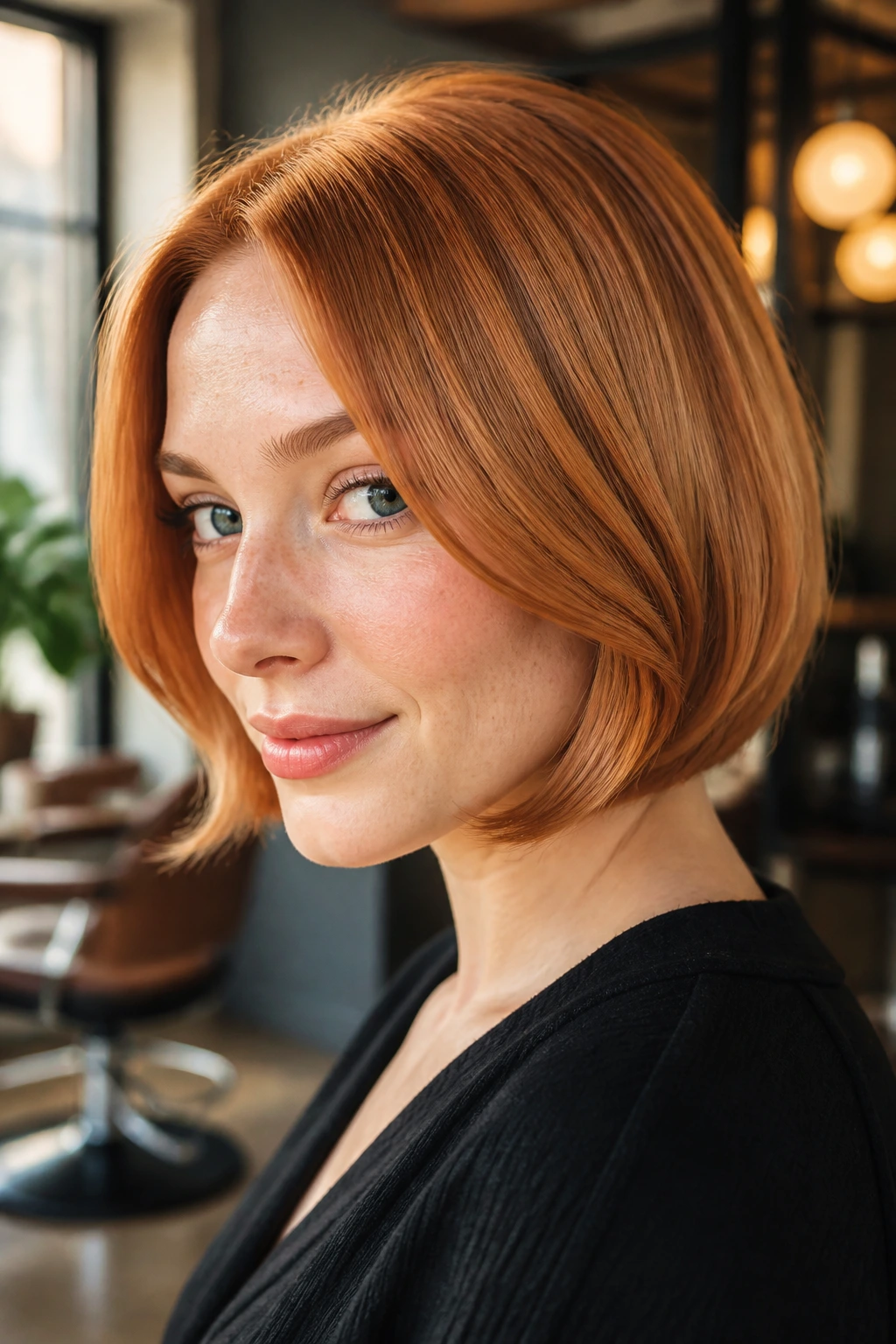
A retro bob can handle a little more edge, but fair skin still needs restraint. That’s where copper strawberry comes in: bright enough to show the cut, soft enough not to overwhelm the face.
The best version has a glossy finish and a clean tucked-under shape. The color should feel polished, not brassy. If the copper is too hot, the bob turns theatrical in a hurry. Keep the strawberry note in the gloss and the copper in the reflection, not the whole formula.
This one is for people who like a neat silhouette and don’t mind a little attention. It looks sharp with a side part and a swipe of mascara.
25. Sheer Strawberry Gloss
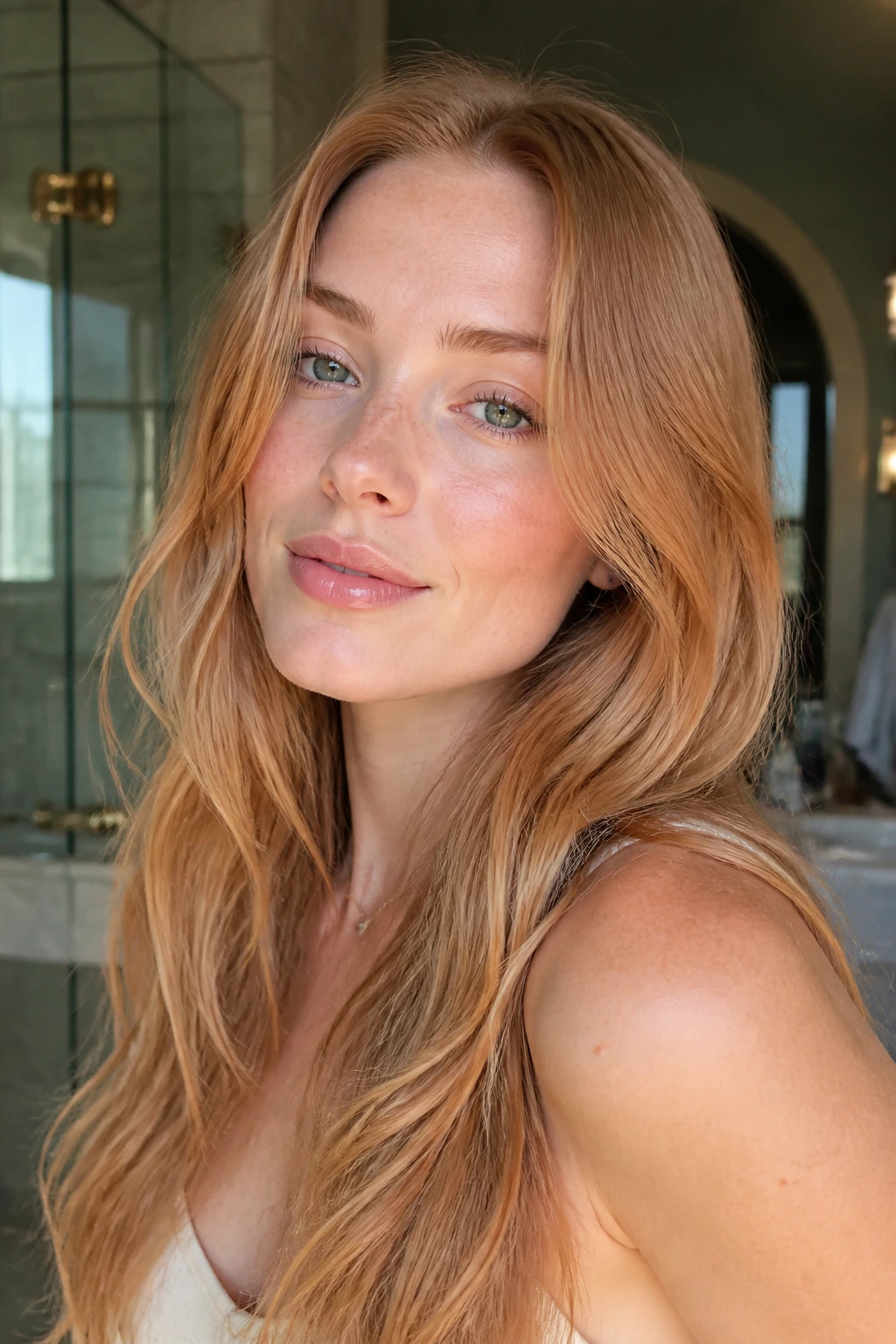
If you want the lightest possible entry into strawberry blond, start here. A sheer gloss barely changes the base; it just warms the hair enough to make fair skin look less washed out.
That restraint is the point. This shade is the least intimidating option in the group, and sometimes that’s the right move. It is especially good on natural blondes who want a hint of peach or rose without a full color session. The gloss fades softly, which also makes it easier to test whether you like warmth on your face.
If you’re nervous about committing, this is the one to ask for first.
Why Strawberry Blond Needs Undertone Control
Fair skin is not one thing, and strawberry blond punishes lazy formula choices. A peachy complexion can take more gold. A rosy complexion usually wants less orange and more beige or rose. Freckled skin often handles saturation better than very pale, almost translucent skin, because the freckles give the face enough pattern to hold a warmer shade.
That’s why the same hair color can look lovely on one person and strangely loud on another. The hair is not changing much. The skin is. A colorist who understands undertone will often talk less about “strawberry blond” as a single target and more about where to place warmth: root, face frame, mids, ends, or just a gloss over a pale blonde base.
The part most people miss
If your skin flushes easily, keep the red tone softer near the face and slightly stronger through the ends. If your brows are light, a little more depth in the root can keep the face from looking unfinished. And if your complexion is very cool, you want strawberry blond with peach and beige in it, not bright copper that lives on the wrong side of orange.
Tools and Products Worth Having Around
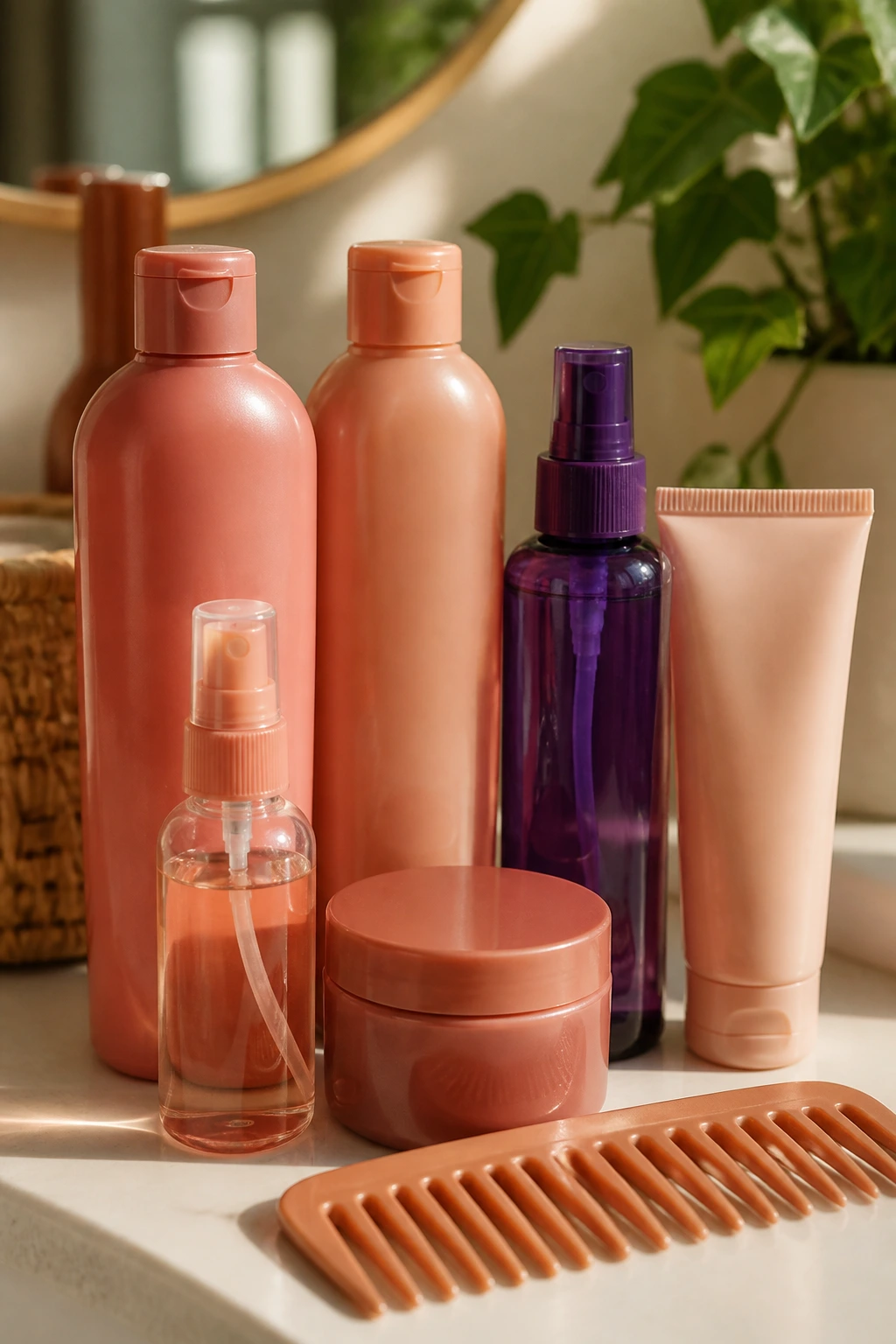
A good strawberry blond lasts longer when the aftercare is boring and consistent. That means the right shampoo, the right mask, and a few things that keep the tone from drifting too warm too fast.
- Sulfate-free color shampoo: Keeps the warm reflect from fading after a few washes.
- Color-safe conditioner: Adds slip so the ends don’t rough up and lose shine.
- Heat protectant spray: Use it before every blow-dry, flat iron pass, or curling wand session.
- Purple shampoo: Use sparingly, usually once every 7 to 10 days, if the blonde side of the color starts to look brassy.
- Demi-permanent gloss or glaze: Good for refreshing peach, rose, or champagne tones between salon visits.
- Wide-tooth comb: Helps distribute conditioner without dragging on fragile lightened hair.
- Microfiber towel or soft T-shirt: Cuts down on friction when hair is wet, which matters more than people think.
- Sectioning clips and a tint brush: Useful if you’re applying a gloss or root smudge at home.
- Deep-conditioning mask: Use it once a week if the hair was lightened first.
- UV or heat spray with shine: Optional, but handy if your hair loses glow fast under hot tools.
How to Brief Your Colorist Without Guesswork
The fastest way to get the wrong strawberry blond is to say, “I want strawberry blond.” That phrase is too broad. Bring photos, but bring the right photos: one for depth, one for placement, and one for tone. The best results come when you can point to what you like in each image instead of treating one picture like gospel.
Say whether you want a gloss, balayage, money piece, root shadow, or full color. Those are different jobs, and they age differently on fair skin. If you care about grow-out, say it out loud. If you wash your hair three times a week and heat-style daily, say that too. A color that looks gorgeous in the chair can be a mess by week three if nobody planned for your routine.
Also mention your undertone in plain language. Pink, peach, neutral, freckled, very pale, easily flushed — all of that helps more than “cool” or “warm” alone. Color is chemistry, but the finished look is about face balance.
How to Wear and Style Strawberry Blond
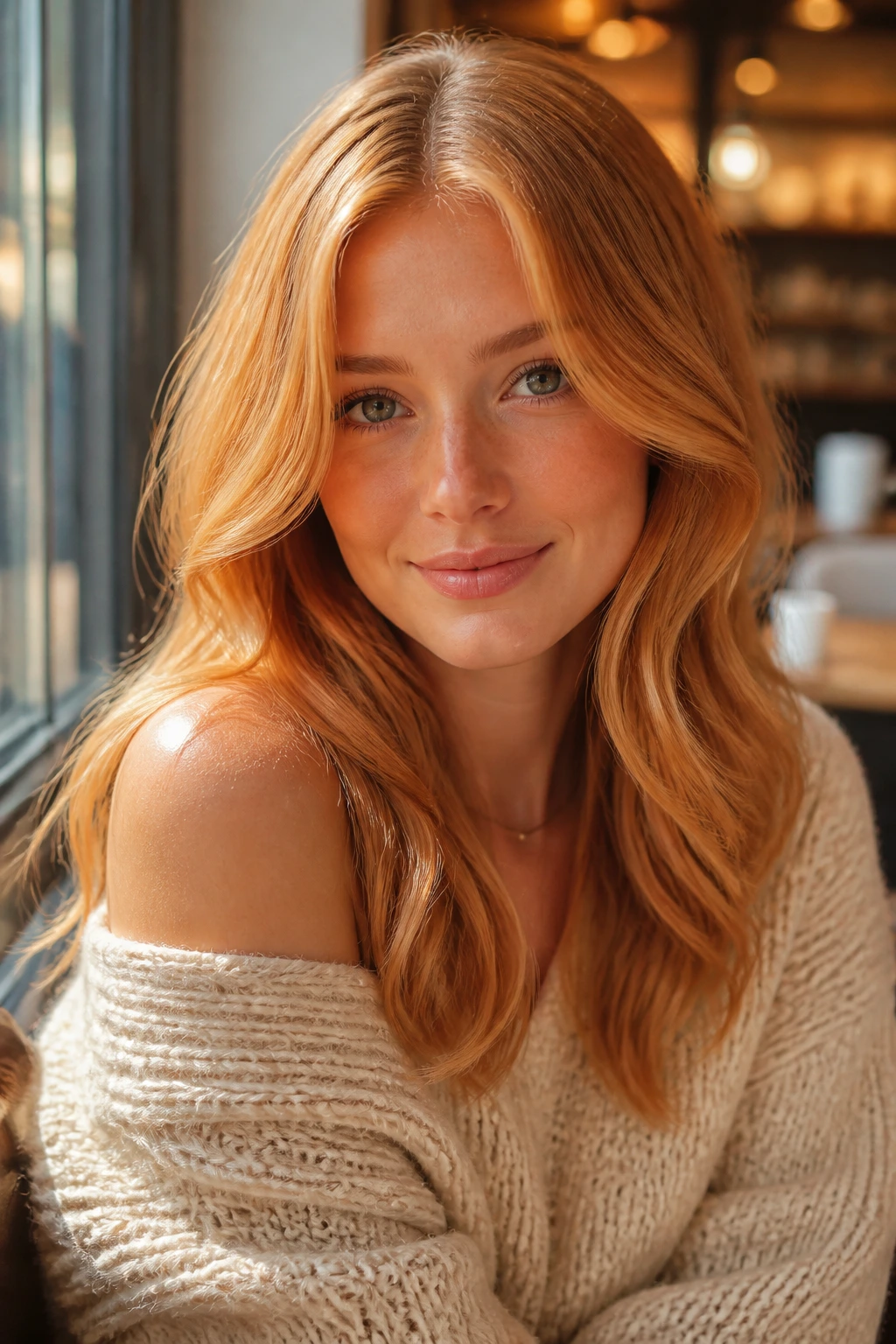
Presentation: Keep the color’s brightest pieces near the face if your skin is very fair, and let the mids and ends carry the deeper strawberry notes. Soft waves, a loose bend, or a blunt bob with movement will show the tone better than dead-straight hair. A center part can make a rosy blonde feel modern; a side part softens it.
Pairings: Cream, dusty rose, sage, navy, and camel are the easiest wardrobe colors around strawberry blond. They let the hair be warm without making the whole look clash. Makeup matters too. A soft peach blush and a neutral lip tend to sit better with strawberry tones than a cool gray contour-heavy face.
Intensity: If you’re pale and pink, keep the saturation lighter at the hairline and stronger only where the hair moves. That keeps the skin from looking redder than it is. If your brows are darker, a rooted version or a bronde blend usually looks more finished.
Finish: Shine is the whole game. Strawberry blond looks best when it reflects light in small pieces, not when it’s coated in greasy oil. A small drop of serum on the ends, then stop. Too much product kills the warmth.
Extra Tone Boosters and Custom Touches
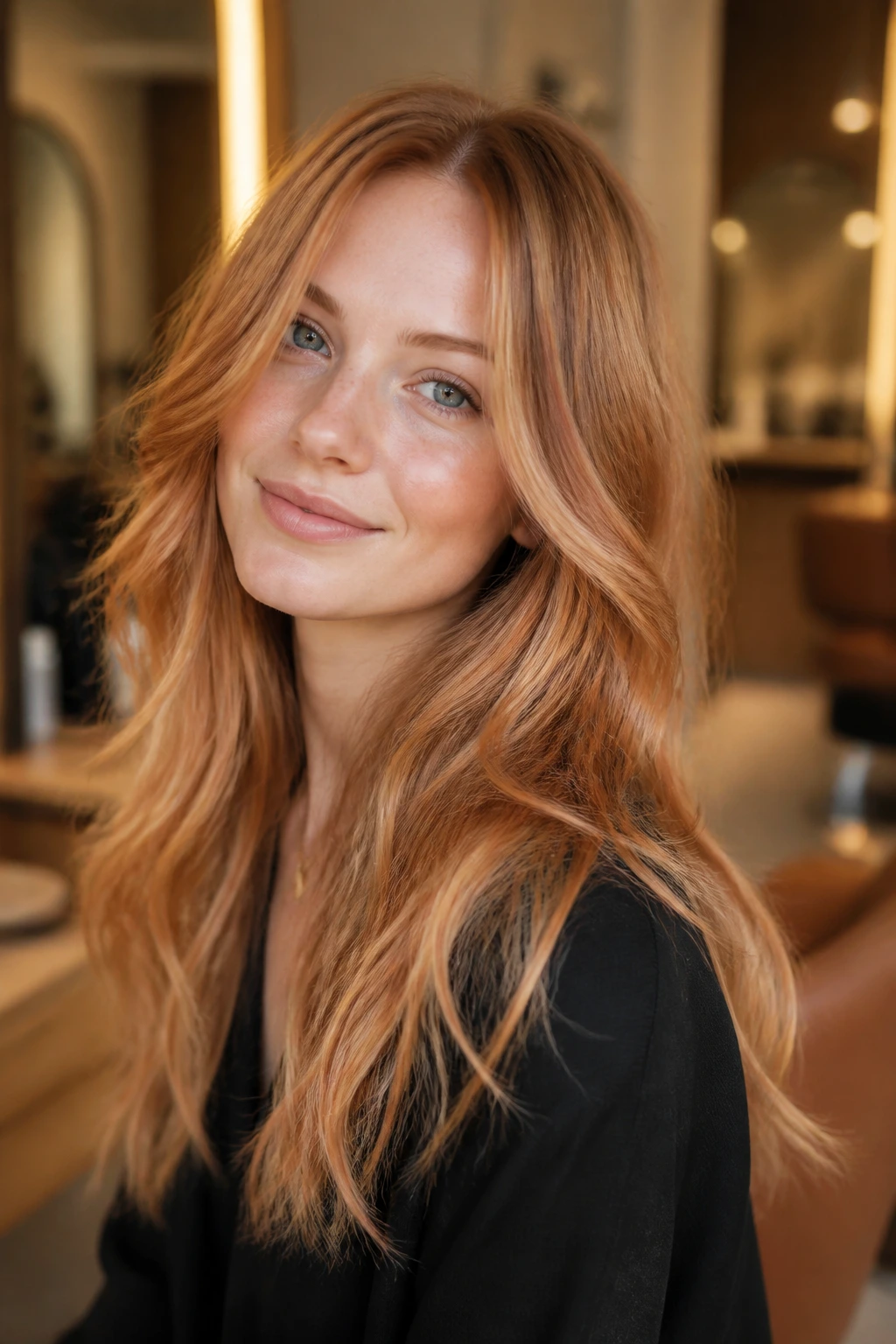
Tone Enhancement: A clear gloss with a peach, rose, or champagne additive can revive the color between larger appointments without pushing it too far. If the blonde side starts to look flat, a light glaze wakes it up fast.
Customization: Add a softer money piece if you want the face brighter, or ask for deeper root shadow if the color feels too airy. On longer hair, a few lowlights can stop strawberry blond from looking one-note. On short hair, the cut often needs less help.
Serving Suggestions: Wear it with loose waves, a smooth blowout, or a tucked-under bob so the color changes as the head moves. Jewelry also matters more than people admit — gold warms the look, while silver can cool it down if the strawberry is already strong.
Make-It-Yours: For very fair, rosy skin, lean peach and beige. For freckled or peach-toned skin, go a little deeper into copper and honey. If your brows are almost invisible, add just enough root depth to frame the face. That one move can save the whole color.
Common Mistakes That Push Strawberry Blond Off Course
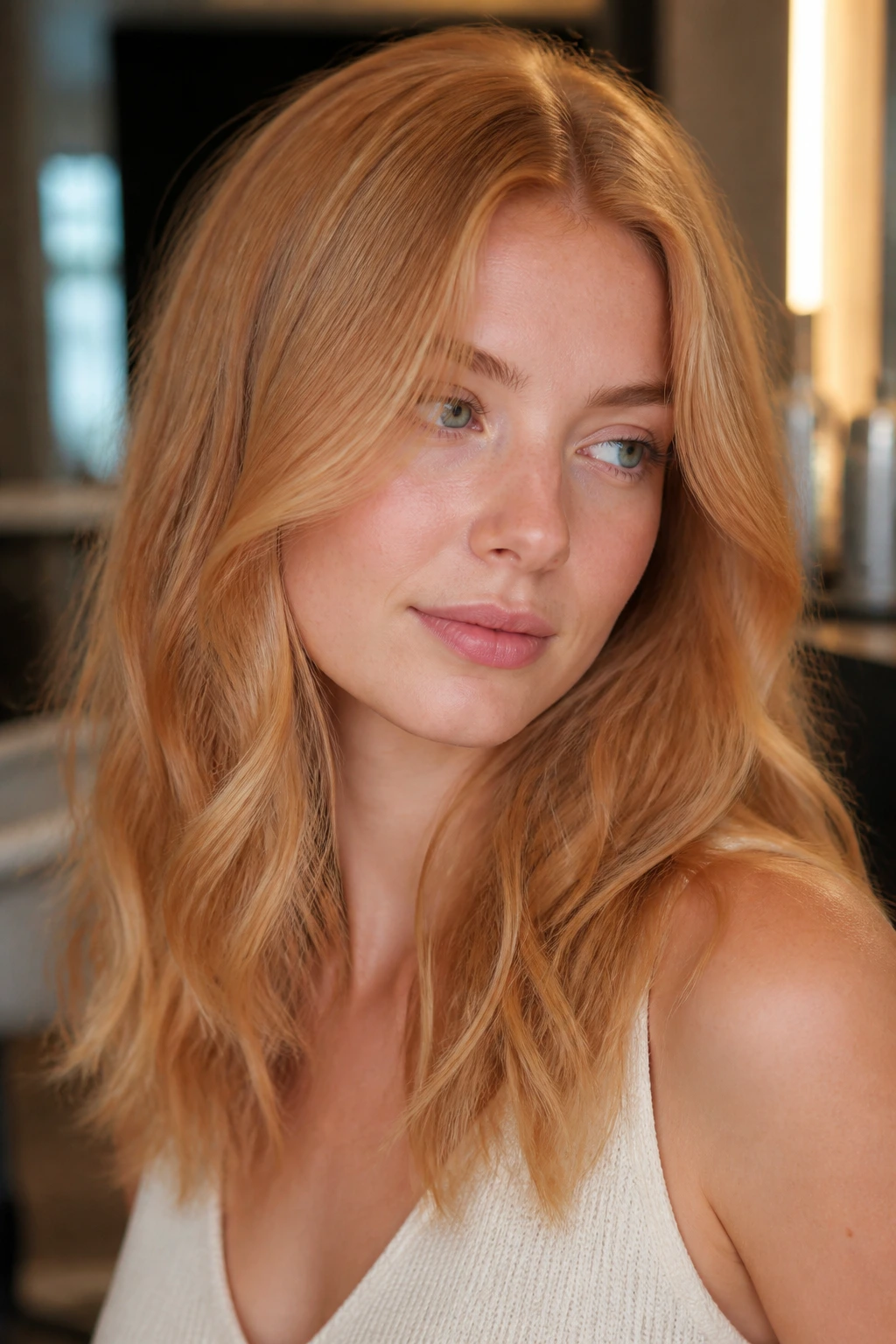
The most common problem is going too orange. On fair skin, orange reads fast and hard. If the goal is strawberry blond, the color needs gold, peach, or rose blended in so it stays soft. The fix is usually a sheer gloss or a tone adjustment, not another heavy round of dye.
Another mistake: leaving the roots too light. A pale scalp-to-end color can make the face disappear. A small root shadow gives the eyes somewhere to land and makes the strawberry reflect look richer.
People also overuse purple shampoo. It can cool the blonde side, but too much of it strips the warmth that makes strawberry blond work in the first place. Once every week or two is enough for most heads. More than that, and the shade can turn chalky or dull.
And then there’s the bleach issue. Lightening fragile fair hair too aggressively can fry the ends before the color even has a chance to look good. If your starting base is darker than medium blonde, lift in stages. One rough session is cheaper than a year of trying to hide breakage.
Variations and Adaptations to Try
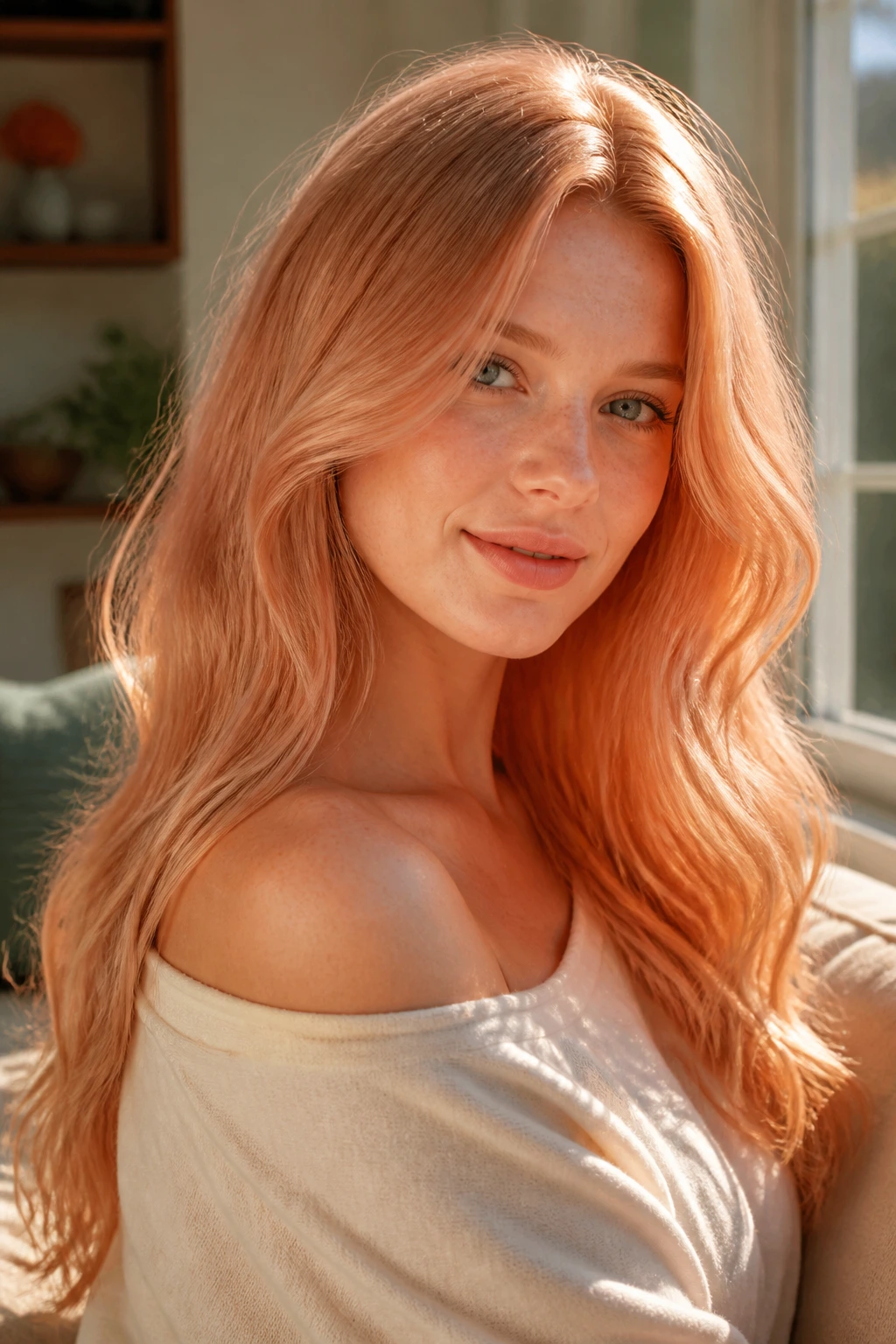
Soft Peach First-Timer: Start with a sheer gloss over blonde hair and keep the strawberry note light. This is the least risky version if you’ve never worn warm color before.
Cool-Shift Rose Strawberry: Ask for more rose and beige, less gold. It suits fair skin that burns easily or looks pink after washing the face.
Deeper Copper Lift: If your skin has peach or gold undertones, you can push the copper a little stronger through the mids and ends. Keep the root softer so the shade doesn’t harden the face.
Rooted Low-Maintenance Blend: Add a soft shadow root and let the strawberry live mostly below the cheekbones. This grows out gracefully and needs fewer emergency salon visits.
Curly Textured Version: Increase saturation by half a step on curls, because the texture eats color. The payoff is better movement and a warmer halo around the face.
Maintenance, Refreshes, and Grow-Out
A good strawberry blond does not need constant panic, but it does need a schedule. If you’re using a demi-permanent gloss, expect the brightest tone to last about 4 to 6 weeks before it starts softening. A full blonding service with strawberry toning usually needs a refresh closer to 6 to 8 weeks if you want it to stay clean around the face.
Do not store mixed color or bleach for later. Once it’s combined, use it right away and throw out the rest. Unmixed products are fine in a cool, dry cabinet, but opened color should be kept sealed and away from direct heat.
Wash with lukewarm water, not steaming hot water. That one choice keeps the cuticle flatter and the warm reflect around longer. If the hair feels dry, a weekly mask is worth the extra five minutes. Heat styling should always start with protectant. No exceptions there. Strawberry blond gets dull fast when the ends are rough.
Questions People Ask Before Making the Jump
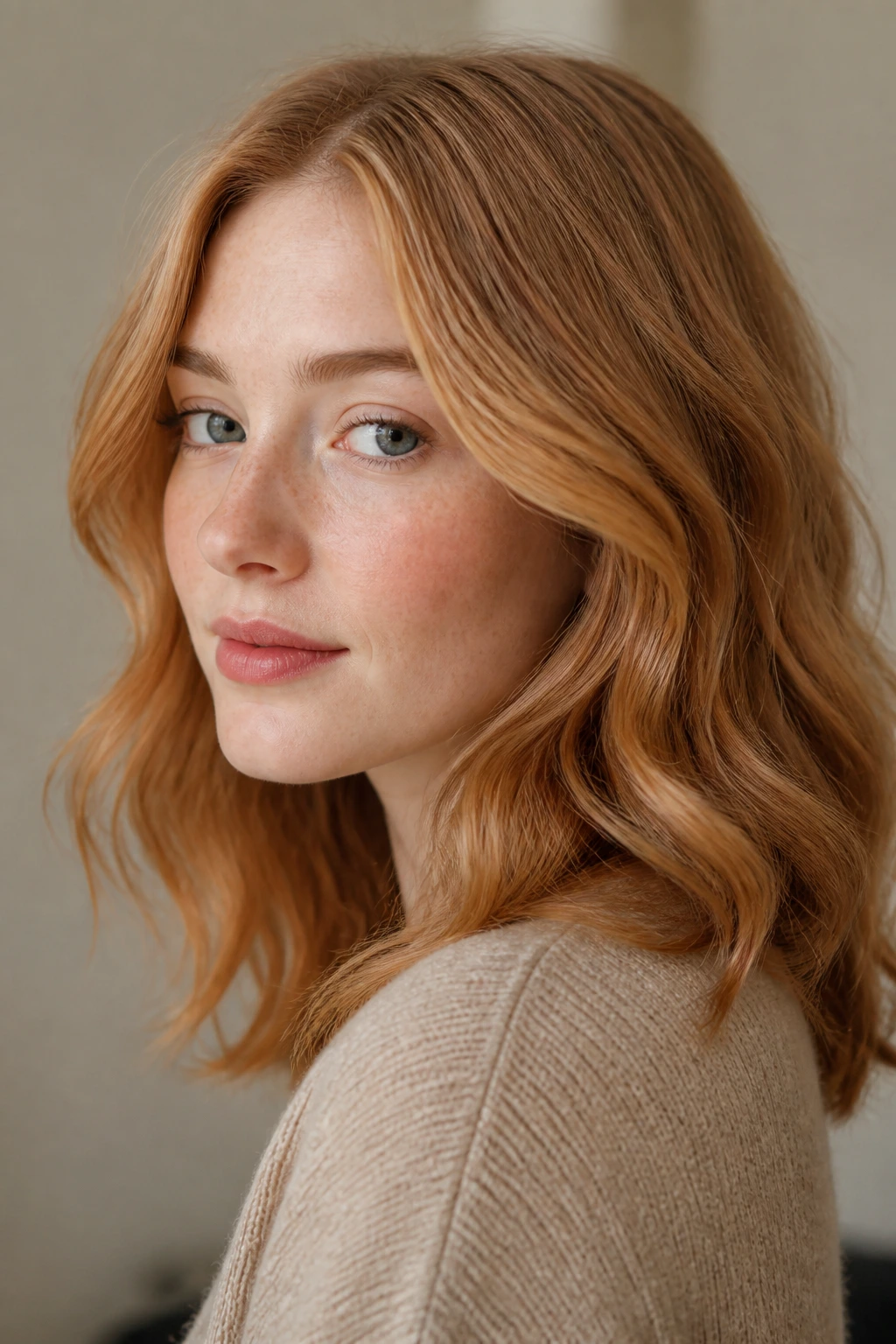
Will strawberry blond work on very pale skin with pink undertones?
Yes, if the tone leans peach, beige, or rose instead of strong orange. Pink undertones usually look better with softness around the face.
Can brunettes go strawberry blond without a huge bleach session?
If the hair is light brown, maybe with a lift and gloss. If the base is deep brown, you’ll need staged lightening or the strawberry tone will sit on top too dark.
Does strawberry blond make redness look worse?
It can, if the shade is too copper-heavy. A softer peach or champagne version usually calms redness rather than calling it out.
How often should I refresh the tone?
Glosses usually need a touch-up every 4 to 6 weeks. Highlights or lifted pieces may need longer, but the warm reflect will fade before the cut does.
What makeup works best with strawberry blond on fair skin?
Peach blush, soft berry lips, and neutral brows usually look better than icy contouring. Keep the finish natural; the hair already brings warmth.
Is this shade hard to maintain?
Not if you choose a rooted or glossy version. Full copper across the whole head needs more upkeep. Soft strawberry blond with a shadow root is much easier to live with.
What if the color turns brassy?
Use a gentle purple shampoo once a week, then stop before the warmth disappears. If it still looks orange, the next fix is usually a salon gloss, not more at-home shampoo.
The Shade Sweet Spot
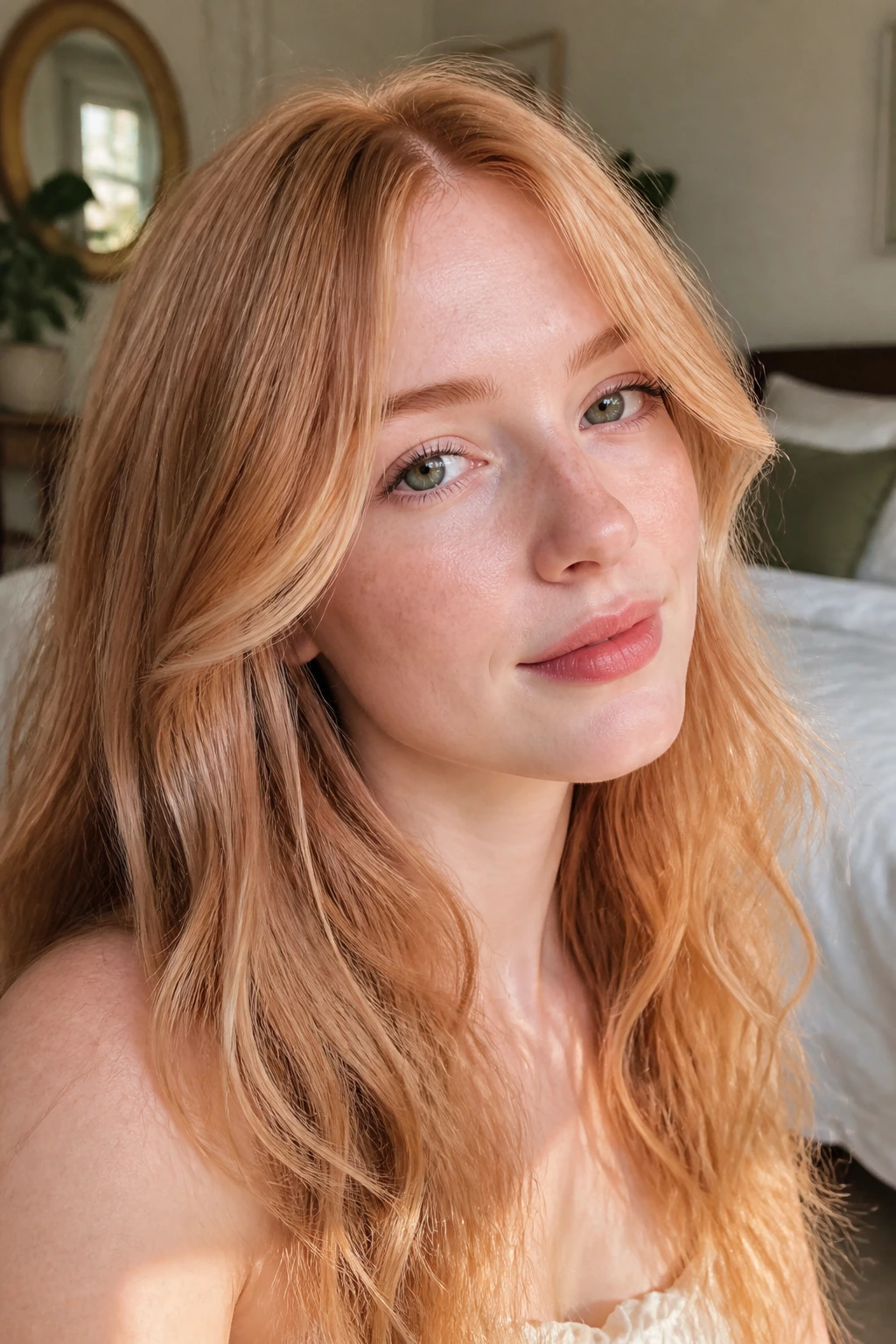
Strawberry blond on fair skin works when it feels tuned, not forced. The best versions keep the warmth close to the face but never let it sit there like a block. Peach, rose, beige, honey, and soft copper all have a place here. Bright orange usually does not.
If you’re standing at the edge of the color wheel and wondering how bold to go, start softer than your instinct says. Strawberry blond has a sneaky way of looking richer after a few days, once the surface shine settles and the tone starts to live in the hair instead of on top of it. That’s the version worth chasing.