



Some blondes make warm skin look tired. Others wake it up in the nicest, least fussy way. The difference usually isn’t how light the blonde is; it’s where the color sits, how much gold is inside it, and whether the cut lets your waves do some of the work.
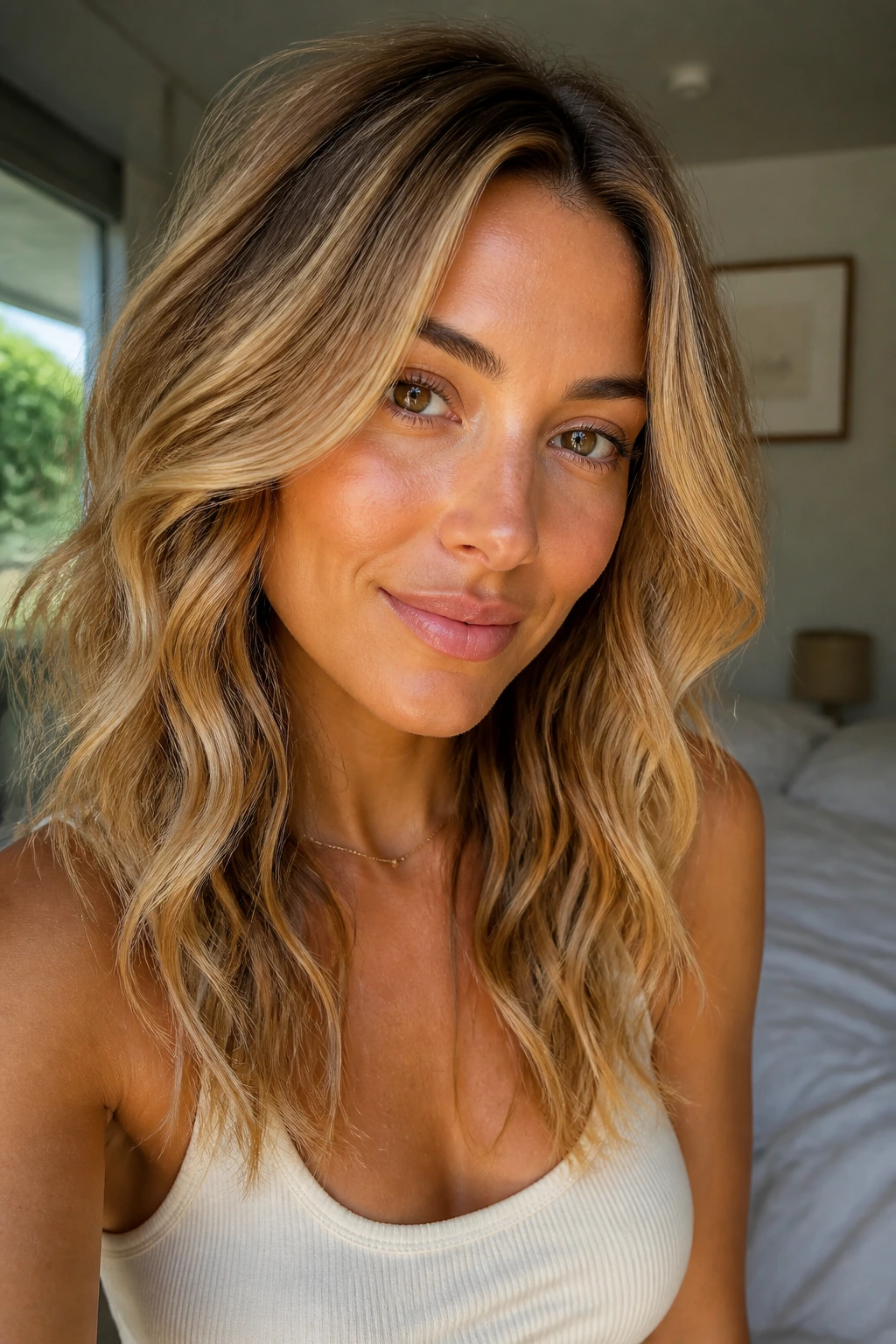
That is why blonde hairstyles for warm skin tones with wavy hair feel so satisfying when they’re done right. A little honey near the face, a caramel ribbon through the mids, a buttery gloss over ends that already bend on their own — suddenly the hair looks richer, not louder. Wavy texture helps, too. Each bend catches light at a slightly different angle, so the color gets that soft ribbon effect that flat hair never quite gives you.
I’d reach for honey, beige, wheat, butterscotch, maple, and caramel before I’d touch a cool, icy blonde on warm undertones. Not because cool blonde is “bad.” It isn’t. It’s just a tougher fit when your skin already carries peach, gold, or olive warmth. The better move is usually a blonde that echoes the warmth in your face instead of trying to cancel it out.
The looks below lean on that idea. Some are low-key and air-dry friendly. Some need a curling wand and six minutes of patience. All of them make more sense once you stop asking what color blonde should be and start asking where the light should land.
Why Warm Blonde Shades and Wavy Hair Click So Well
-
The bend does half the coloring work: Waves create tiny shadows and highlights on their own, so honey balayage and caramel ribbons look layered instead of streaky.
-
Warm undertones don’t need to be “fought”: Gold, beige, butter, and toffee shades echo peachy and olive skin tones, which keeps the face from looking washed out.
-
Dimensional color survives grow-out better: A root shadow or darker lowlight means the style still looks deliberate when regrowth shows up two or three weeks after your appointment.
-
Wavy texture likes placement, not perfection: When the hair moves, you want brighter pieces around the face and on the curve of the wave, not a flat sheet of light from root to tip.
-
These cuts hold shape without over-styling: Layers, lobs, shags, and curtain bangs make the wave pattern visible even on second- or third-day hair.
-
You can go glam or low-maintenance with the same color family: Honey blonde can look polished in brushed-out waves or casual in a loose air-dry finish. The tone stays the same; the effort doesn’t have to.
How to Read Your Undertone Before You Choose a Blonde
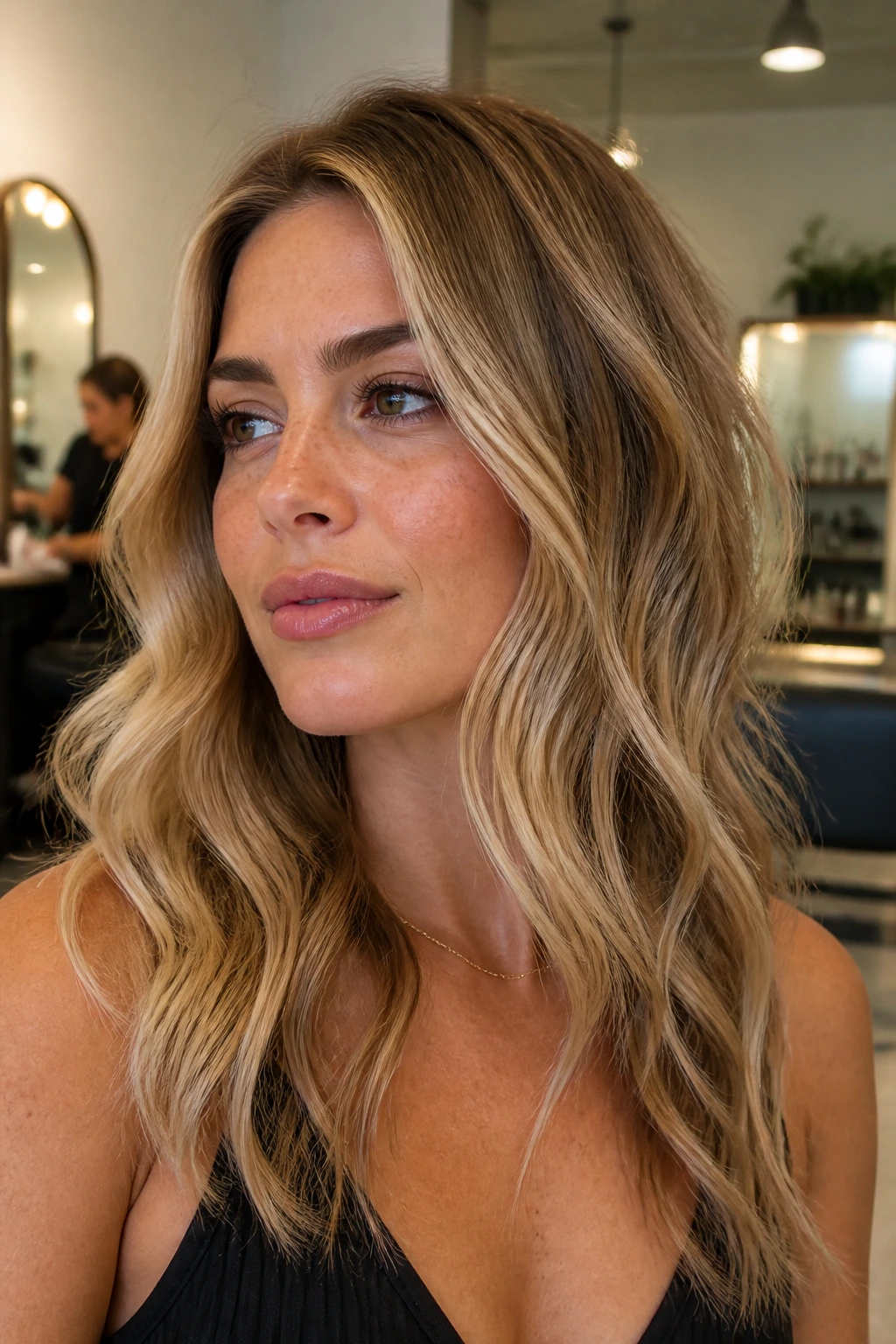
Warm skin tones are not all the same, and that matters more than people admit. Peachy skin usually likes honey, buttery beige, and warm vanilla because those shades keep the face bright without going brassy. Golden skin can handle deeper caramel and toffee pieces, especially around the cheekbones and collarbone. Olive skin often looks best when the blonde has some beige in it, because full-on yellow gold can get loud fast.
If your skin tans easily, you probably don’t need as much brightness as you think. A level 7 or 8 blonde with a soft root melt can look more expensive than a level 10 that starts at the scalp. That’s especially true on wavy hair, where the motion already adds energy.
Freckles change the picture, too. A lot of warm blondes look best when the lightest pieces sit near the face, then ease off through the mids and ends. It keeps the skin from disappearing into the hair. And if your natural base is medium brown or dark blonde, don’t rush straight to pale blonde in one appointment. That’s where the hair can start to look hollow.
Where Brightness Should Sit on Wavy Hair
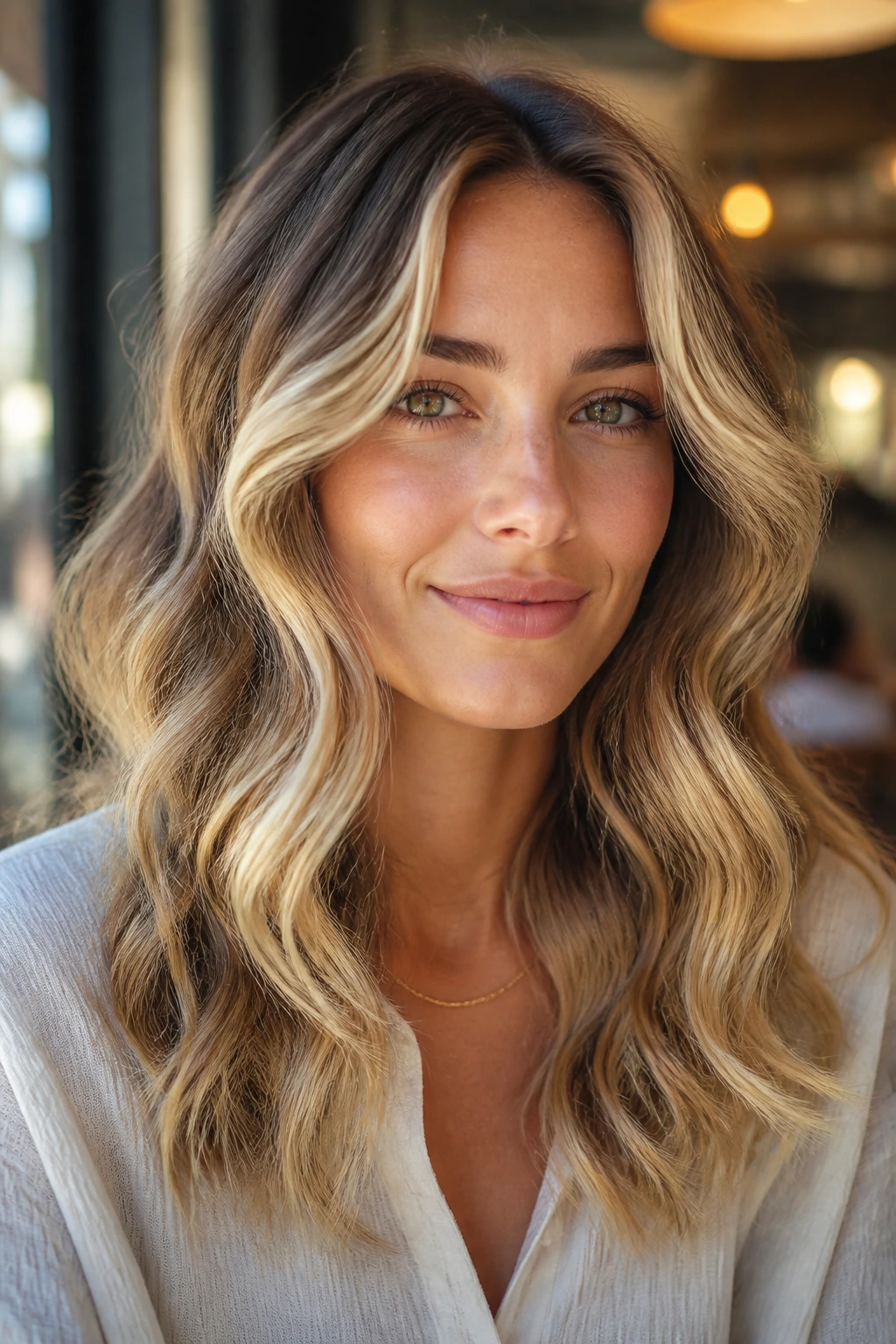
The best blonde placement on waves follows the wave pattern itself. Bright pieces near the outer curve of the wave catch the eye first. Bright pieces buried deep inside a heavy section don’t do much except waste bleach and make maintenance annoying.
A money piece — those brighter face-framing strands — can do more visual work than a full head of lightening. A warm blonde chunk around the cheekbone and jawline opens up the face, especially if the rest of the hair stays a shade deeper. That little bit of contrast matters. It keeps warm skin from looking flat.
Root shadow is your friend here. So is balayage. So are babylights tucked into the top layer rather than all the way through the ends. If the hair is wavy and layered, the color can look like it’s shifting when you move, which is the whole trick. Flat color on wavy hair feels off. The movement wants company.
1. Honey Balayage with Long S-Waves
This is the easy place to start if you want a warm blonde that looks soft rather than loud. Think a medium-to-light brown base with honey and golden ribbons painted from the mid-lengths down, then styled into big S-waves that bend once, pause, then bend again. It has that “I didn’t overthink this” look, which is usually code for “the color placement is very good.”
The reason it flatters warm skin is simple: the honey sits close to the tone of sunlit skin, so it doesn’t compete with your face. On wavy hair, the balayage stripes break up as the strands move, which makes the blonde look lived-in instead of striped. If your hair is shoulder-length or longer, this style feels especially good because the wave pattern can actually show.
Best for: medium to thick waves, golden or peach undertones, and anyone who wants grow-out to behave.
Styling note: Wrap sections around a 1.25-inch iron, leave the last inch out, then brush lightly once the hair cools. That creates those soft bends instead of tight curls.
2. Buttery Blonde Curtain Bang Lob
A collarbone lob with curtain bangs can do a lot of face work without looking try-hard. Add buttery blonde — not pale ash, not neon gold, but that creamy in-between shade — and the whole cut starts to look smoother around the eyes and cheekbones. It’s one of those styles that looks clean even when the ends are a little undone.
Curtain bangs are especially friendly to warm skin because they bring brightness straight to the front of the face. On wavy hair, they fall in a way that feels casual rather than forced, which matters if your hair likes to swell up in humidity. The lob length keeps the shape from turning into a triangle, and that’s the part many people get wrong.
If your hair has a finer wave, ask for a little internal layering, not a heavy snip all over. You want movement, not fluff. The blonde should stay warm at the roots and slightly creamier through the ends.
3. Caramel Money Piece Midlength Waves
When someone says they want “just a little blonde,” this is often the answer. A darker brunette or light brown base with a caramel money piece around the face gives you brightness without turning the whole head into upkeep. The rest of the hair can stay softly dimensional, which makes the face-framing streaks stand out even more.
The money piece works because it changes the first thing people see. It pulls the eye upward, especially when the waves start below the cheekbone. Warm skin tones tend to glow more when the face is framed in caramel rather than icy beige. The tone is friendly. That sounds vague, but it isn’t — caramel has enough warmth to blend into sun-kissed skin instead of clashing with it.
This one also suits people who like to tuck hair behind one ear. The exposed side looks brighter; the other side can stay quieter. It’s a nice bit of asymmetry, and wavy hair carries it well.
4. Golden Bronde Shag
The shag is not subtle, and that’s why it works here. A golden bronde shag keeps the roots darker, lifts the mids with golden blonde pieces, and chops the ends into airy, feathered layers that bounce when you move. The look gets its energy from texture first and color second.
Warm skin tones usually love this because the gold lives in the same family as the undertone. There’s no icy contrast to flatten the face. The waves also keep the shag from looking too edgy or too retro. Instead, it lands in that sweet spot where the cut feels cool and the color feels soft.
What makes it different: the layers should be visible even when the hair is air-dried. If you need a curling wand every single time, the cut is too blunt for the idea.
Good call: use a light mousse at the roots and a cream through the mids. Skip heavy oil on the top layer unless your hair is very coarse.
5. Toasted Vanilla Butterfly Cut
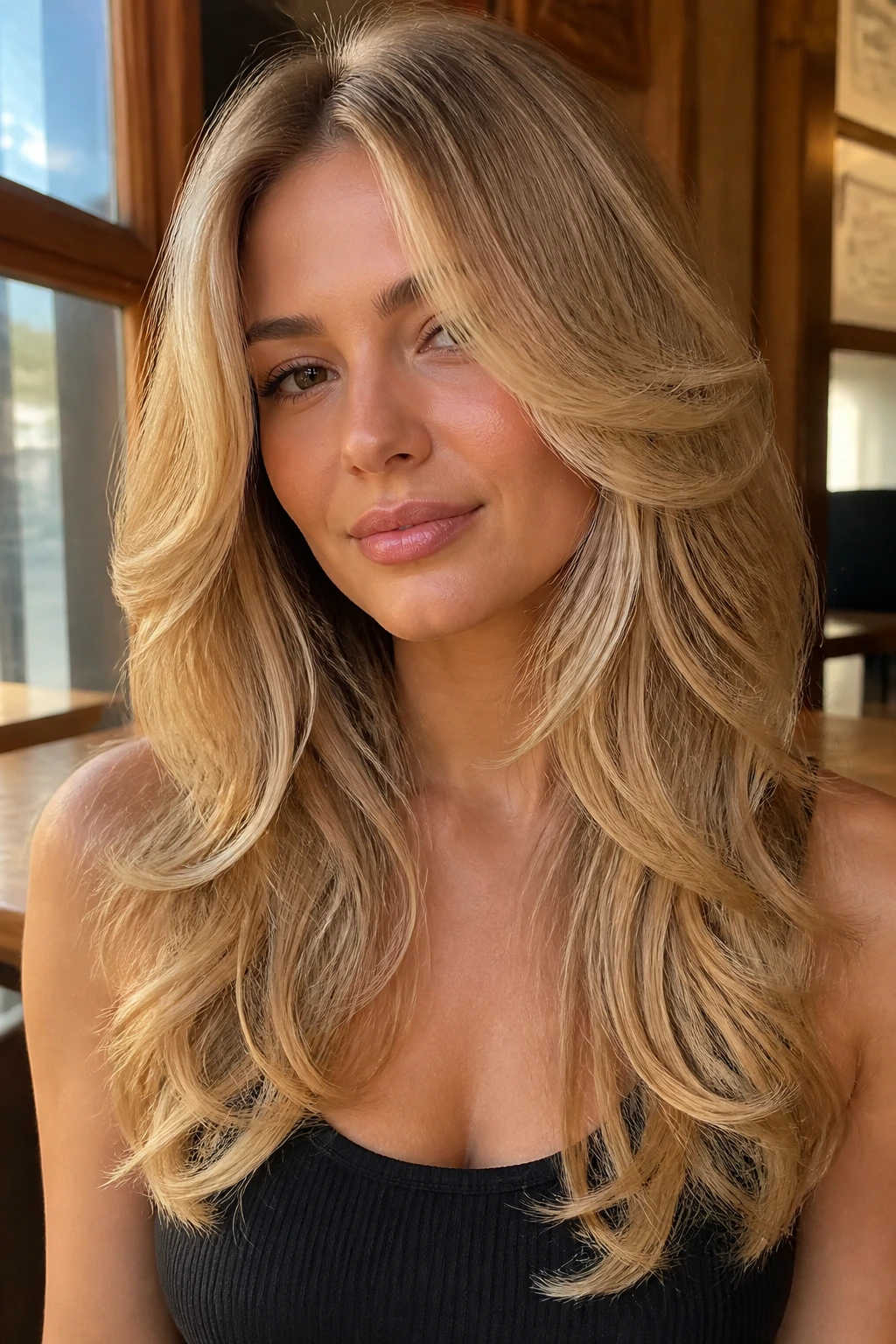
The butterfly cut thrives on movement. It keeps the length in back, then uses shorter face-framing layers in front so the hair falls in two loose zones instead of one heavy curtain. In toasted vanilla blonde, the style picks up a creamy warmth that feels polished without getting stiff.
This is one of my favorite options for thick wavy hair because it removes bulk from the top without sacrificing the sweep of the lengths. The lighter front pieces soften warm skin, and the deeper vanilla-beige tone keeps the color from going too yellow. On dark blonde or light brown hair, it looks especially good with a soft root melt.
You do need a little styling discipline. Not a lot. Just enough to blow out the front pieces away from the face, then let the rest sit in a loose wave. That contrast between lifted layers and softer lengths is what makes the butterfly shape read properly.
6. Sand Beige Beach Lob
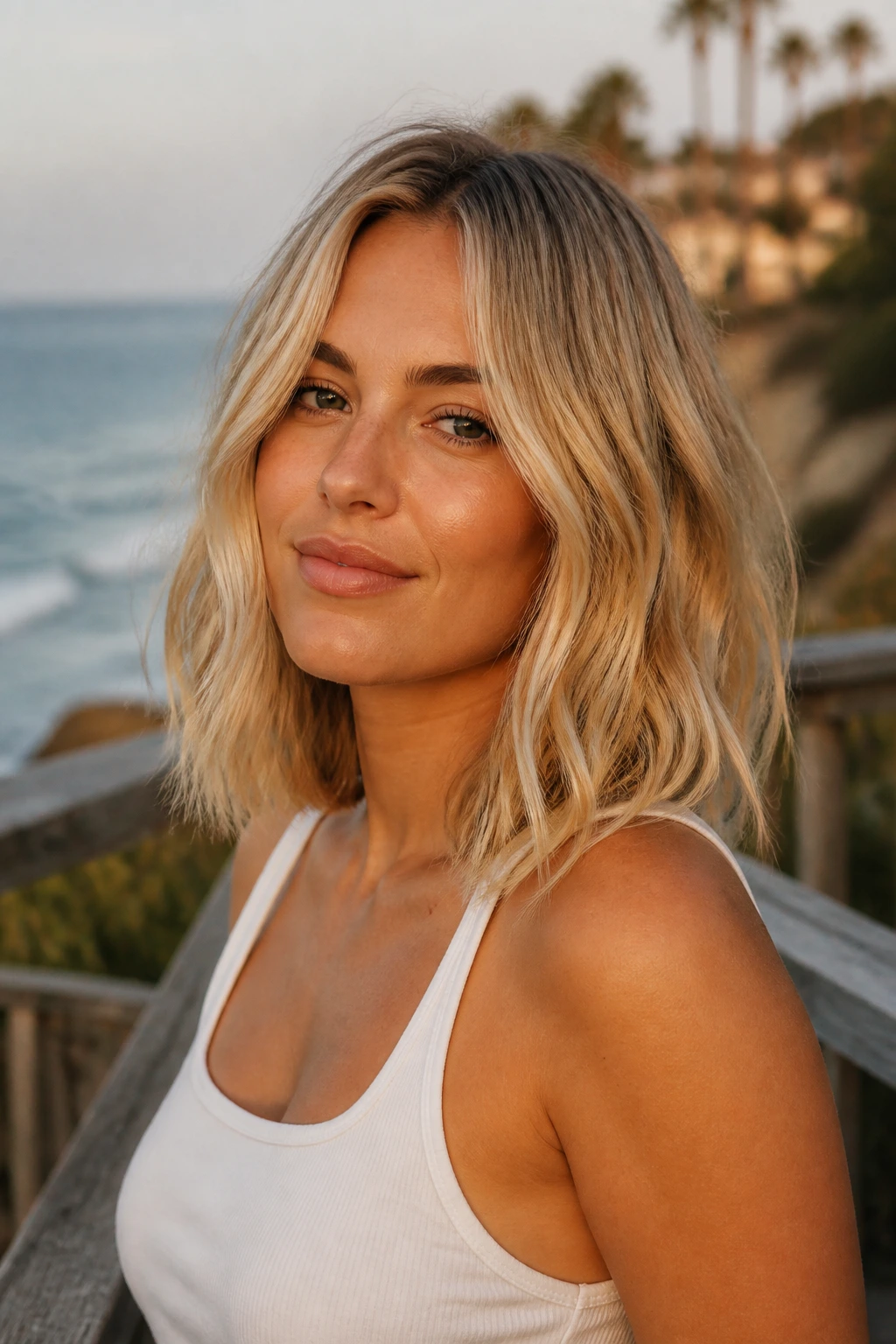
Some blondes shout. Sand beige doesn’t. It’s the quiet one in the room that still looks expensive because the shade is balanced and the shape is clean. On a lob, this beige-blonde tone keeps the overall look soft, while the beach wave texture adds movement without turning crunchy or overdone.
Warm skin tones benefit from this because beige sits between gold and neutral. It gives brightness without tipping into brass, and it doesn’t make olive skin look strange the way some yellow blondes can. Wavy hair also loves the lob length because it lands in that useful zone where you can air-dry it, tuck it, or curl the ends for a neater finish.
A center part can work here, but an off-center part usually feels more relaxed. If your hair has a slight bend already, this cut lets that natural texture do most of the labor.
7. Maple Ribbon Highlights on Long Layers
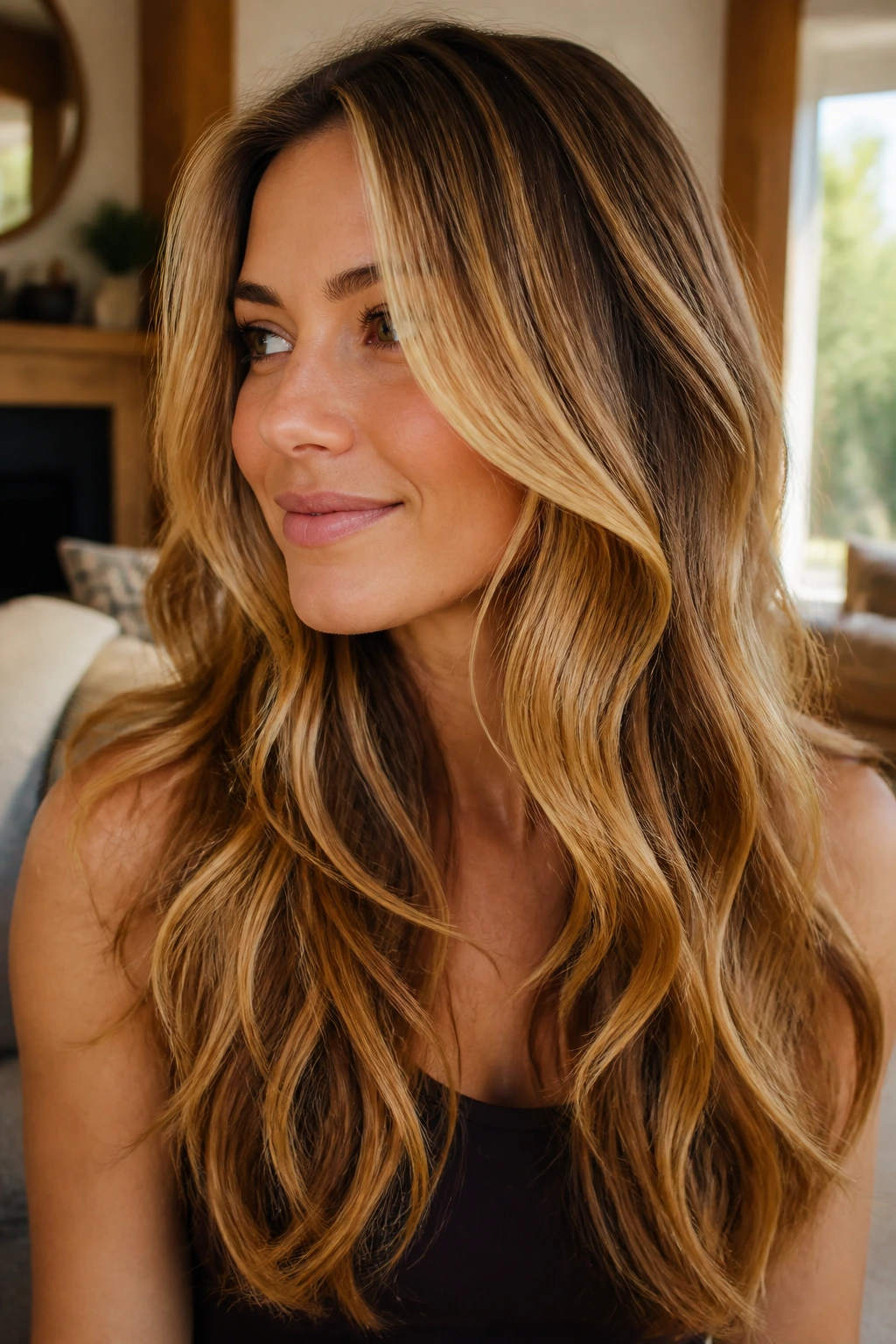
Maple is one of those colors that hair color charts never fully capture. It’s warm, a little toasted, and just deep enough to keep the blonde from looking flat. Put maple ribbons through long layers and the result looks sunlit without turning high-contrast.
This is especially good if you already have warm brown hair and don’t want a dramatic shift. The ribbons live mostly through the lower half of the hair, so the top can stay close to your base. That makes the grow-out easier and keeps the style from feeling overly salon-fresh all the time. Wavy hair helps because every layer flips the color in a slightly different direction.
If you have thicker hair, ask your colorist to keep the ribbons irregular. Uniform highlights can look too neat on waves. Irregular placement is the whole point.
8. Creamy Honey Bob with Tucked Ends
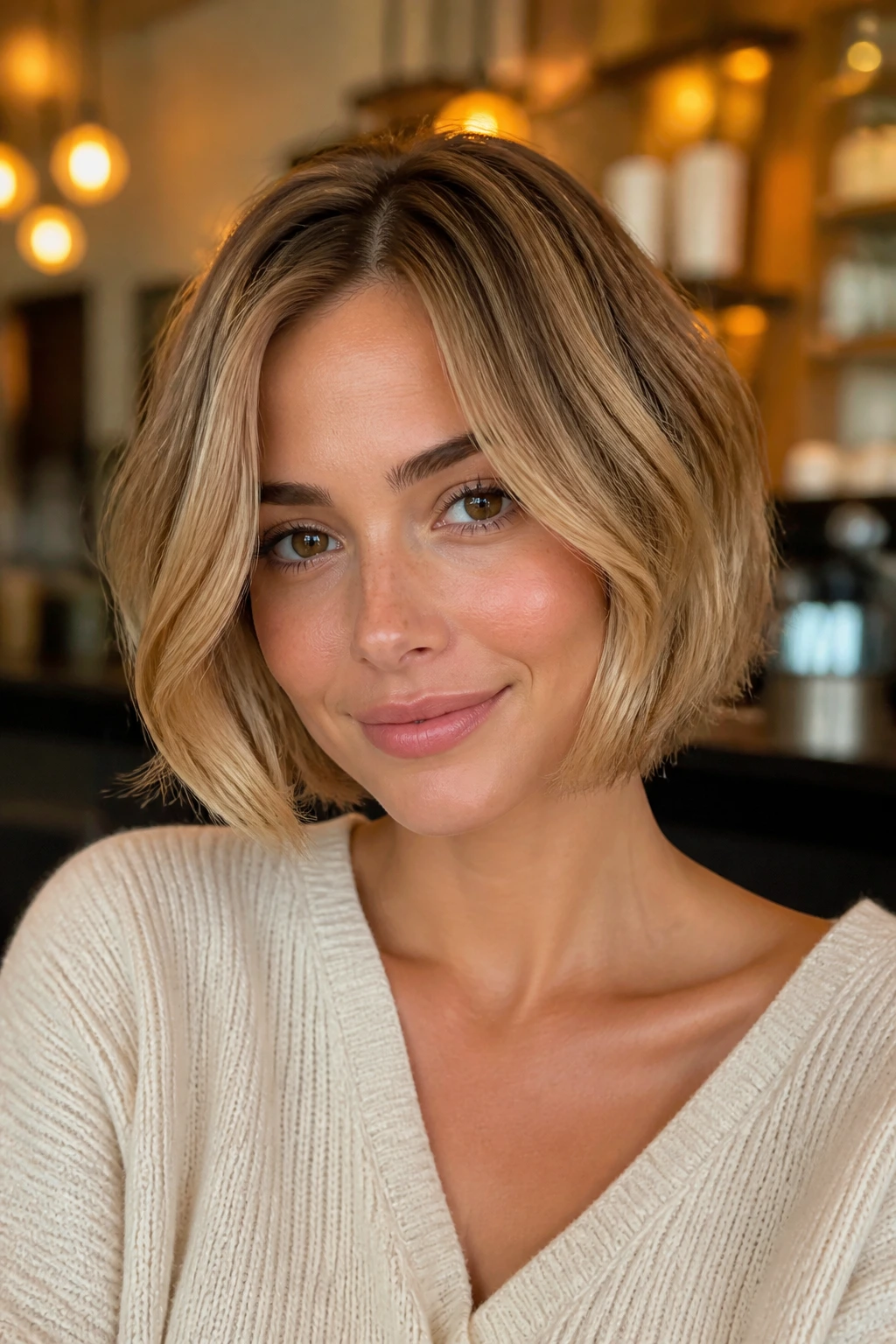
A bob can absolutely work on wavy hair, but the shape has to be handled with care. A creamy honey bob with softly tucked ends sits around the jaw or just below it, then bends inward a bit at the bottom. That slight inward curve keeps the style from exploding outward when the waves swell.
The honey tone gives the bob warmth near the face, which is useful if your skin leans golden or peach. You don’t need much length for the blonde to show. In fact, shorter hair often lets the tone read more clearly because there’s less surface area competing for attention. A tucked end also looks better than a blunt, puffy finish, especially if your texture is medium or coarse.
This is a strong choice if you wear earrings often. The cut leaves room around the neck and jaw, and the blonde catches light right where people look first.
9. Sunlit Wolf Cut with Wispy Fringe
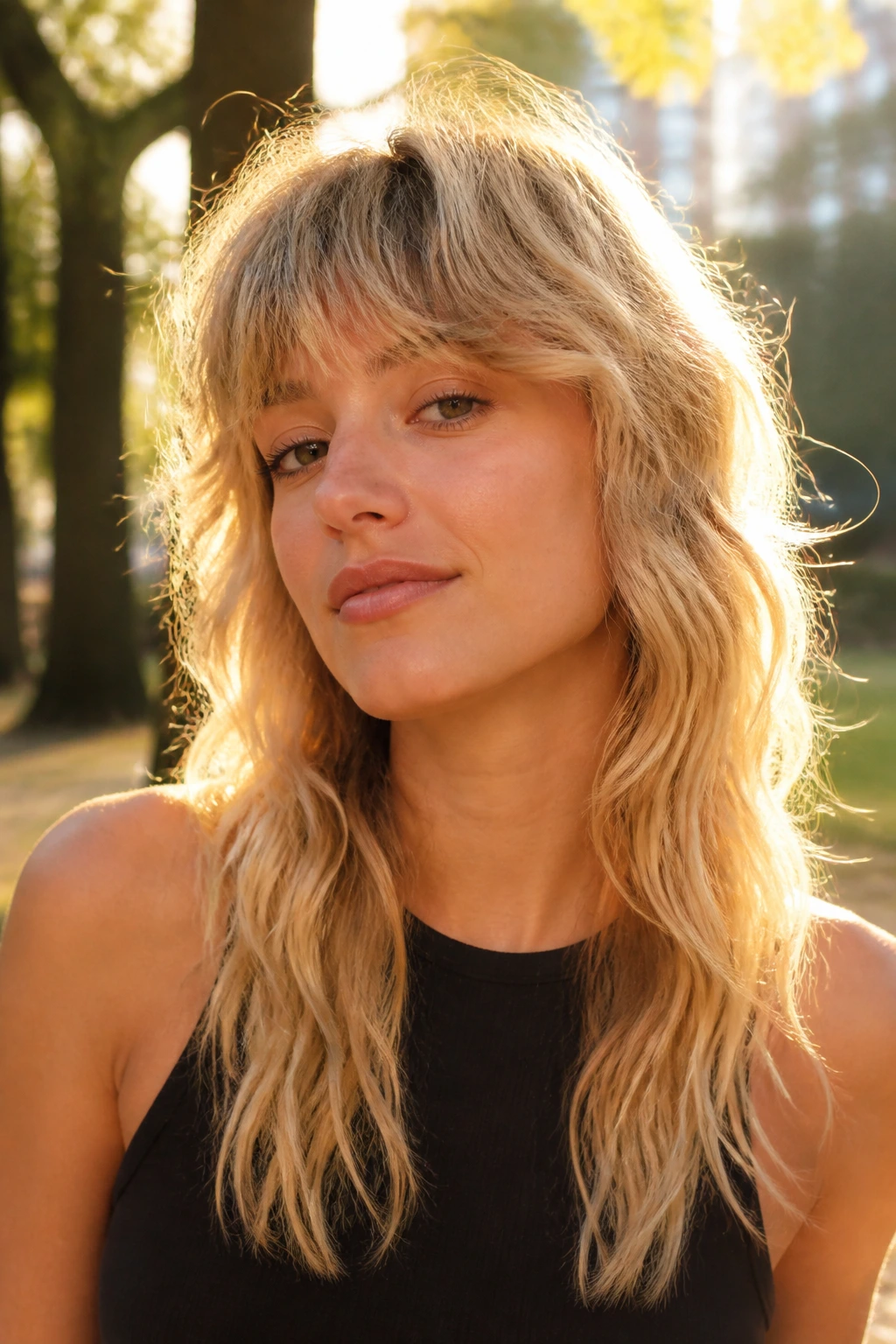
A wolf cut sounds aggressive on paper. In warm blonde, it feels much softer. The choppy top layers and lighter fringe pieces give the hair a little grit, while the sunlit blonde keeps it from turning too severe. On wavy hair, the cut almost styles itself, which is the main reason people keep coming back to it.
The best version uses a warm blonde that sits between honey and beige, with maybe a few brighter bits near the crown. The fringe should be wispy, not heavy. If the bangs are too dense, they can pull all the attention down and make the eyes disappear. If they’re airy, they just frame the face and let the rest of the cut move.
This one is for people who like some edge but don’t want to spend twenty minutes fighting a round brush every morning. Air-dried wave cream, a scrunch with your hands, done.
10. Butterscotch Side-Part Waves
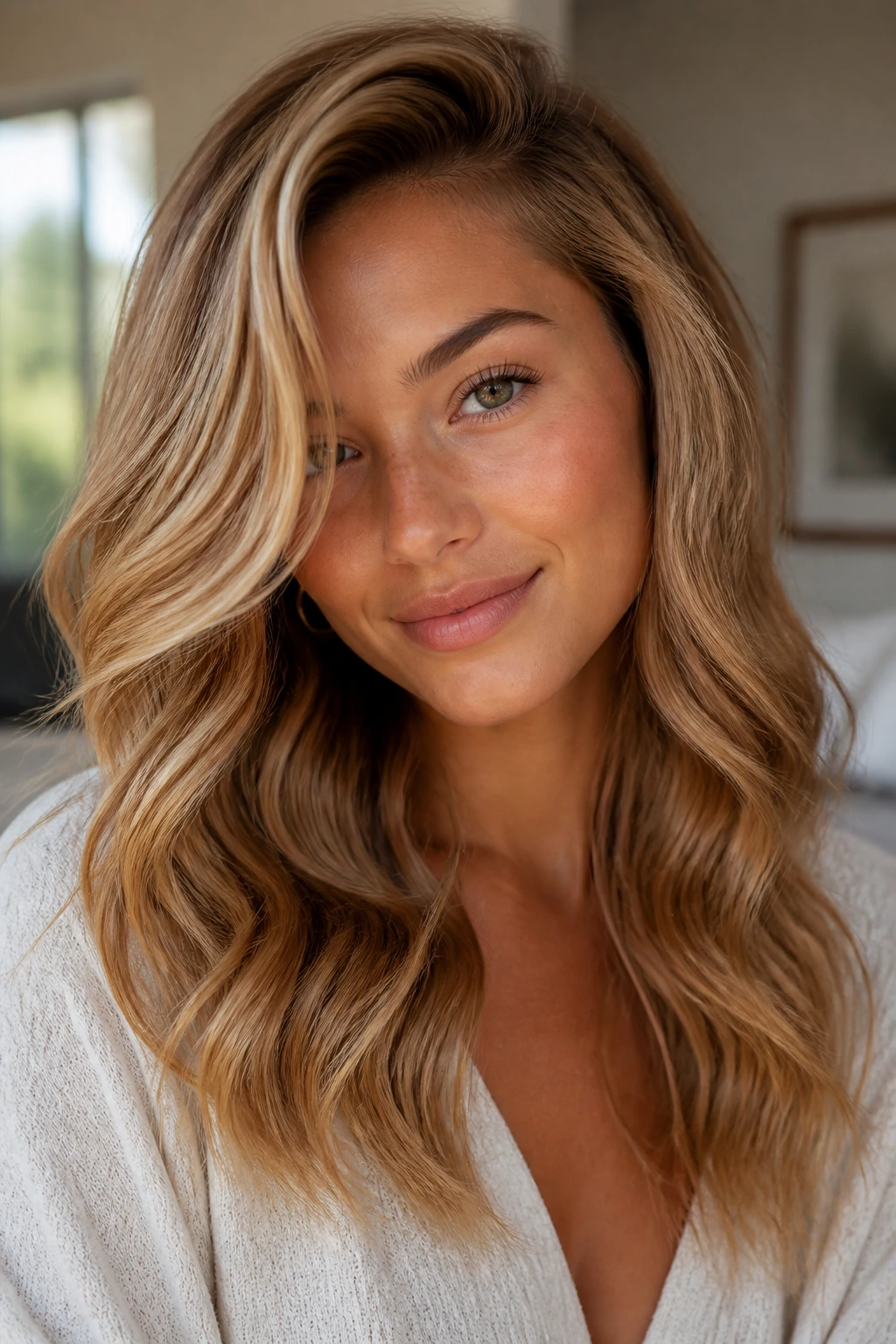
Side parts have a way of changing the whole mood of wavy hair. With a butterscotch blonde, the effect turns slightly old-Hollywood, slightly modern, and a lot richer than a flat center part. The deeper part gives one side more volume, which helps the blonde catch light in a staggered way instead of all at once.
Butterscotch is a warmer, deeper blonde than pale honey, so it usually flatters golden and tan skin especially well. The shade can also make brown eyes look deeper because the tone around them is soft and warm. On long waves, this style feels polished without needing a stiff curl pattern.
If your hair falls flat at the roots, use a little root lift mousse and flip the part before drying. That tiny trick gives you more height where you need it. No need to overcomplicate it.
11. Champagne Beige Collarbone Cut
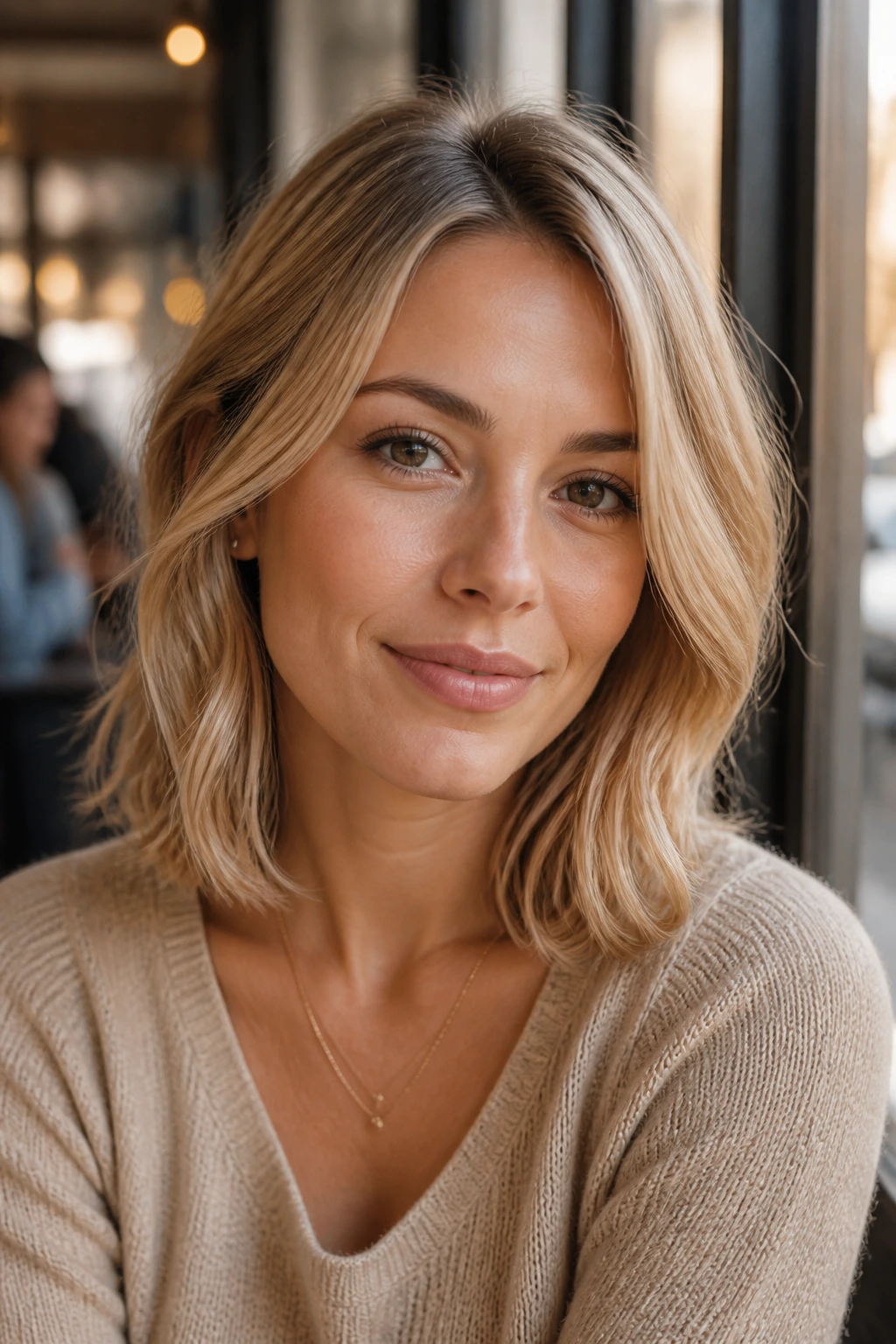
Champagne beige sounds cooler than it really is. In practice, it’s a soft beige blonde with enough warmth to stay kind to the skin. On a collarbone cut, the shade feels light and airy without pushing the hair into a platinum zone that can look harsh on warm undertones.
The cut length matters. Collarbone hair gives waves enough room to form but stays short enough to feel deliberate. If the ends turn under slightly, the whole style feels tidy. If they bend loosely outward, it reads more undone and beachy. Both work here.
This is a good middle-ground choice if you want something brighter than caramel but less obvious than pale blonde. It sits in that practical lane where the colorist can leave some depth underneath and still lift the outer layers enough for the blonde to show.
12. Amber-Toned Mermaid Waves
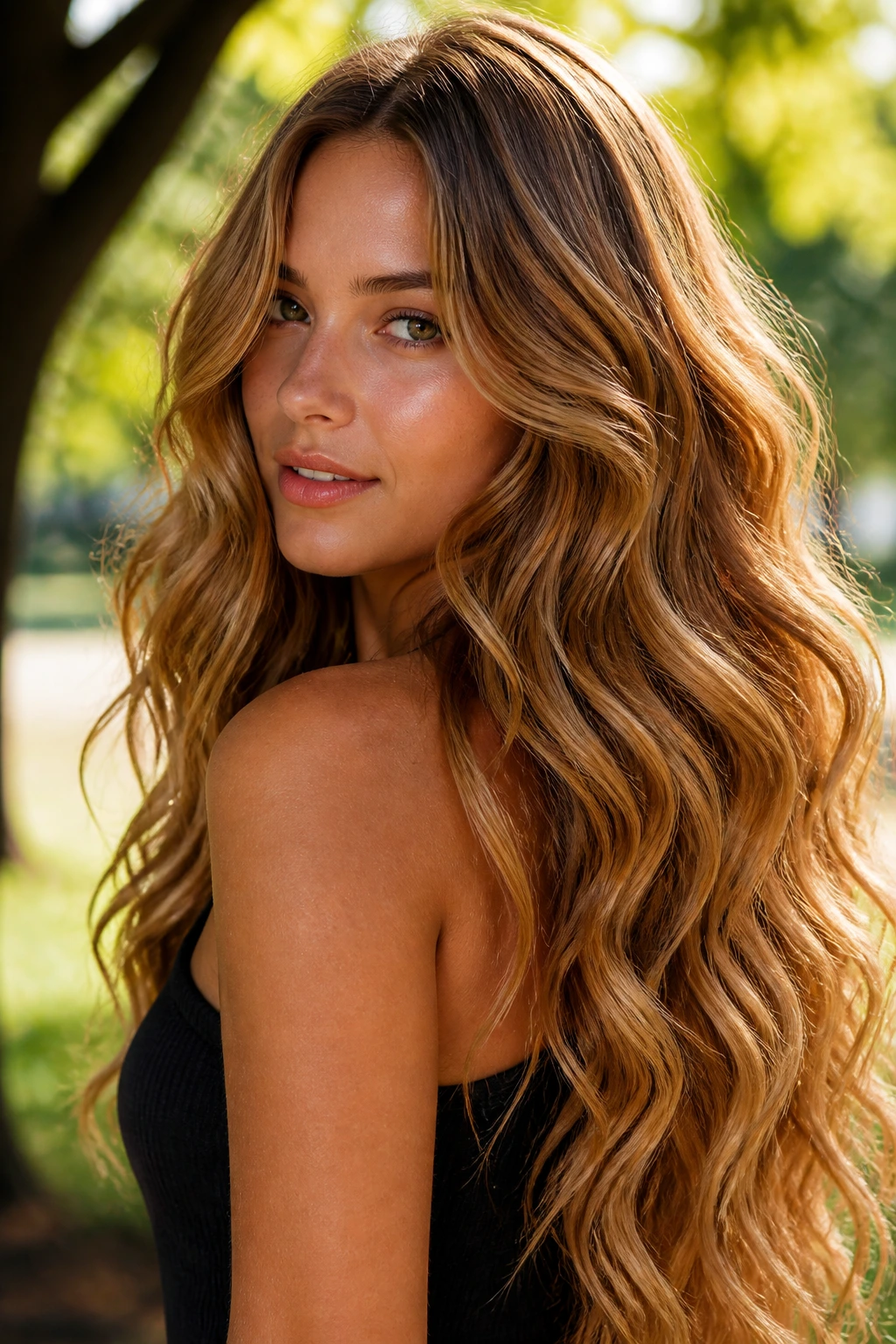
Long, full waves in amber blonde can look a little theatrical in the best way. Amber brings more depth than honey and more glow than beige, so it suits warm skin that likes richer tones. On very long hair, the effect is almost like liquid color moving through the lengths.
This style works best when the lighter pieces are painted in broad sections rather than tiny highlights. Mermaid waves need room to breathe. If the blonde is sliced too finely, the length can start to look busy. Amber lowlights under the top layer help too, because they keep the waves from reading flat from a distance.
Best for: thick hair, medium-to-dark warm undertones, and anyone who likes a more dramatic silhouette.
Watch out for: heavy lengths can swallow the wave pattern. If your hair is fine, keep the layers long and the ends airy or the style loses that floaty finish.
13. Cocoa-to-Honey Melt Lob
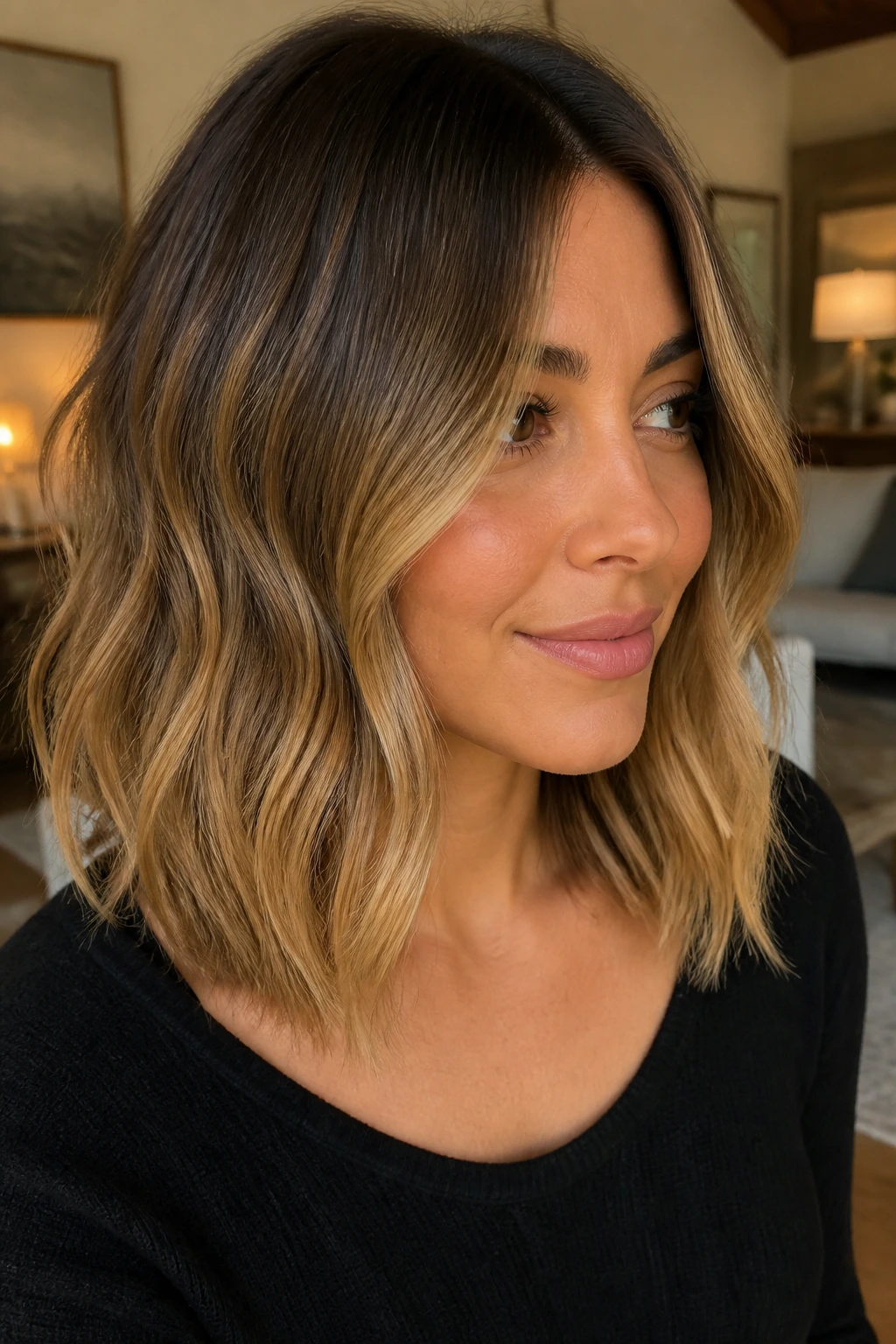
A hair color melt is one of the easiest ways to keep warm blonde wearable. Cocoa at the roots, honey through the mids, and a soft golden finish toward the ends gives the hair depth at the scalp and brightness where the waves move. It’s a blunt refusal to choose between brunette and blonde, which I respect.
Warm skin tones tend to like this because the transition is gentle. There’s no line of demarcation, no sudden blast of cool tone. On wavy hair, the dark-to-light shift looks even better because each bend reveals a different part of the melt. The result feels expensive in the old-fashioned sense — not loud, just considered.
This is also a smart choice if you know you’ll be growing it out for a while. The melt hides regrowth much better than a solid blonde panel.
14. Golden Copper Blonde Shag
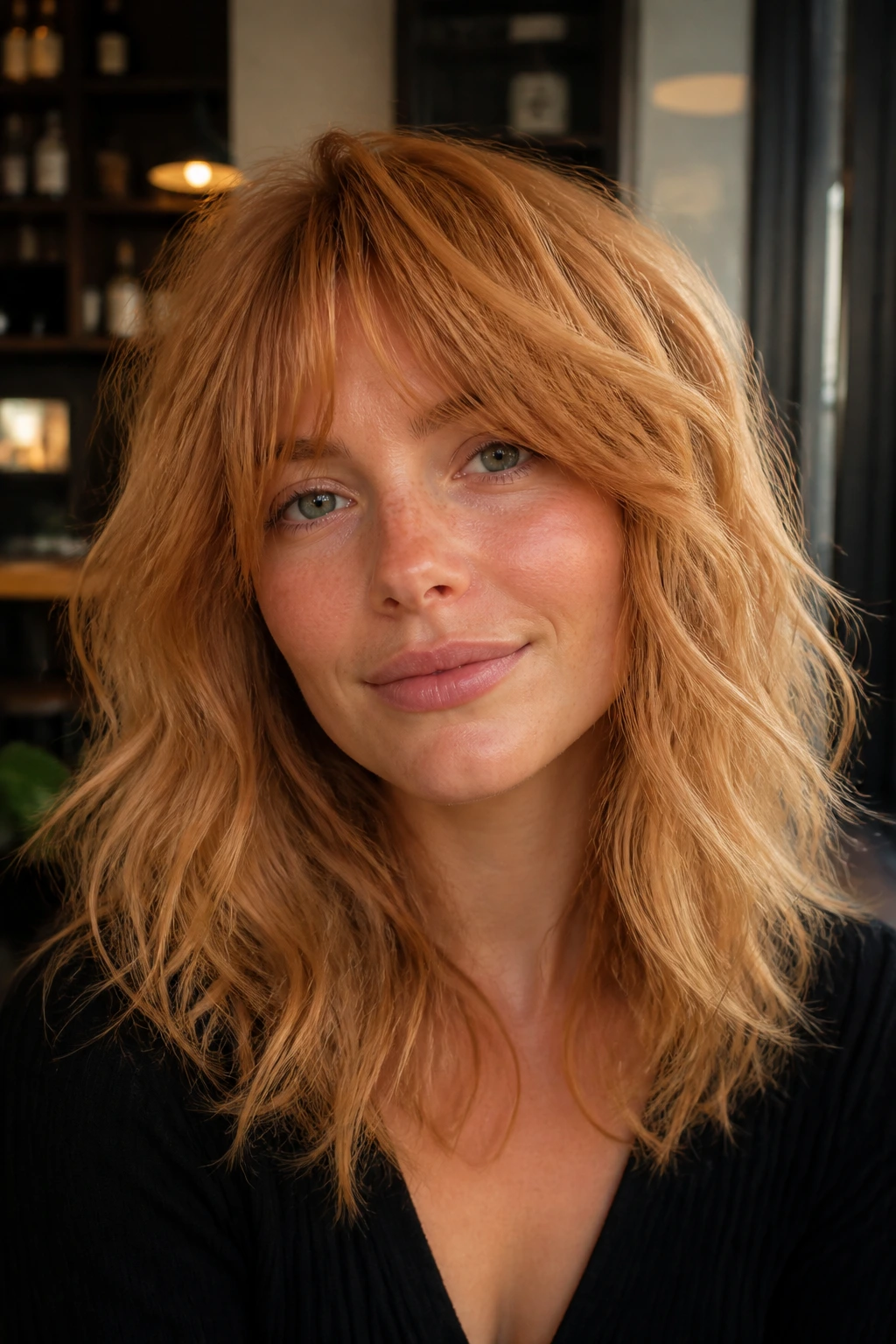
Here’s the deal: some warm skin tones can handle a little copper, and when they can, the result is lovely. Golden copper blonde sits between strawberry and honey, so it brings warmth without drifting fully red. On a shag, that extra warmth gives the layers a little sparkle and makes the texture look intentional.
Freckles and peach undertones usually love this one. The shade echoes the warmth in the skin, and the shaggy layers keep it from looking too dense or too precious. You get movement, lightness, and a hint of fire in the color. Not a flame. A flicker.
It does need careful toning. If the copper gets too orange, the whole thing can tilt fast. Ask for a warm blonde gloss, not a harsh copper overlay, unless you really want the red note to take over.
15. Soft French Bob in Wheat Blonde
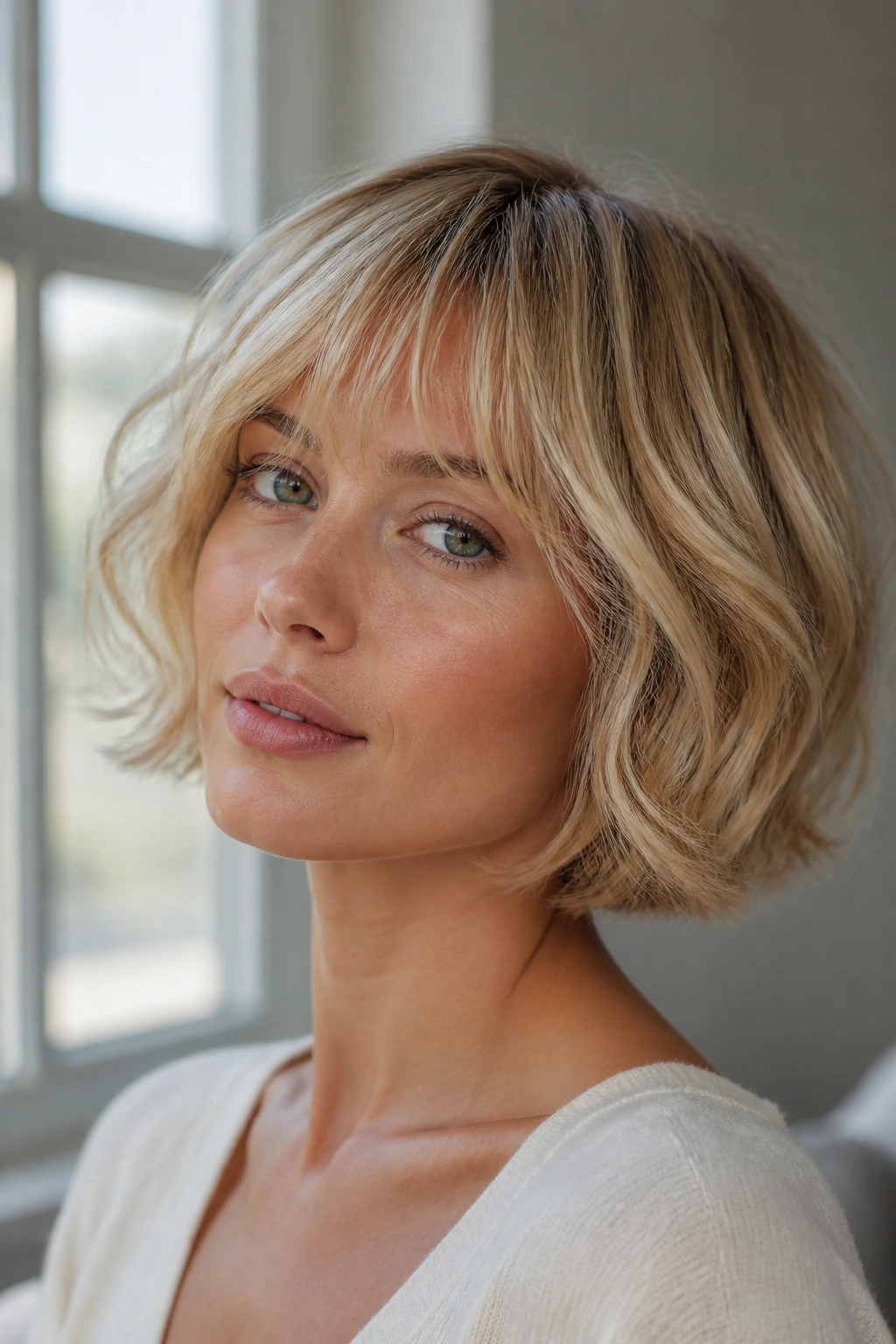
The French bob has a clean little attitude problem, and that’s part of the charm. Cut it at the jawline, keep the ends soft, add a subtle wave, and you get a shape that feels chic without trying to be polished to death. Wheat blonde is the right color partner because it has warmth, but not so much gold that it turns brassy.
This style flatters warm skin when the wave is loose and the fringe is soft, almost bent rather than curled. It frames the mouth and cheekbones in a nice, direct way. If you wear lipstick often, the bob gives your face a neat border that makes the whole look read sharper.
It’s also one of the easiest styles to maintain on wavy hair. The shorter length means less product, less drying time, and less of that draggy mid-length frizz that can happen when long hair gets too heavy.
16. Honeyed Curtain Bangs with Face-Framing Pieces
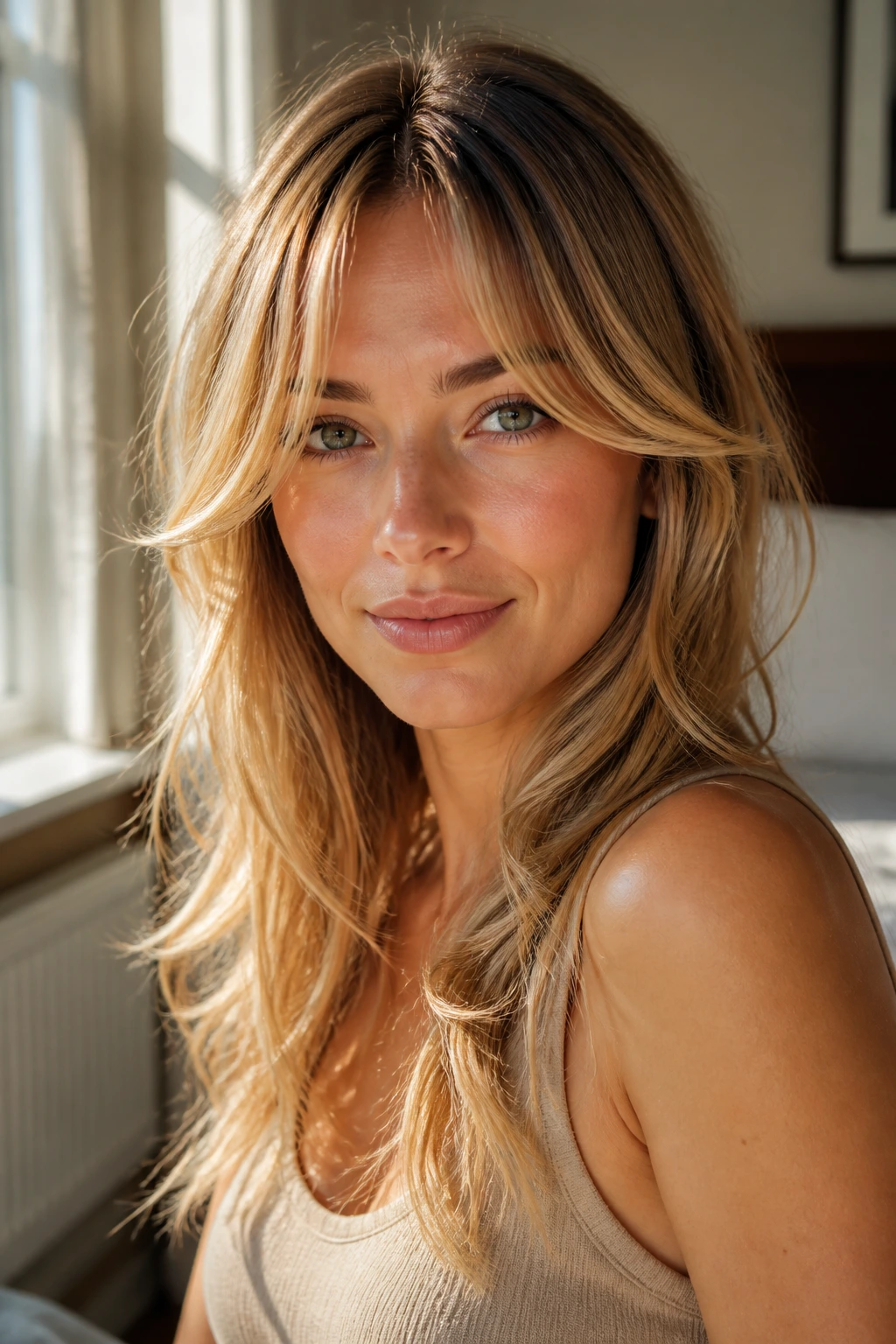
Sometimes the haircut is doing the talking, not the length. Honeyed curtain bangs with longer face-framing pieces can freshen up warm skin tones without changing the overall shape of the hair. That matters if you like your length but want the front to feel lighter and more flattering.
This setup works because the bangs break up the forehead area and create a soft blonde halo around the face. On wavy hair, the pieces around the cheeks fall in loose bends, which keeps the look from becoming too neat. Honey is a safe color choice here because it reads warm in daylight and soft indoors.
If you usually pin your hair back, this is a smart option. The face-framing pieces still do the color job when the rest of the hair is out of the way.
17. Biscotti Blonde Air-Dry Layers
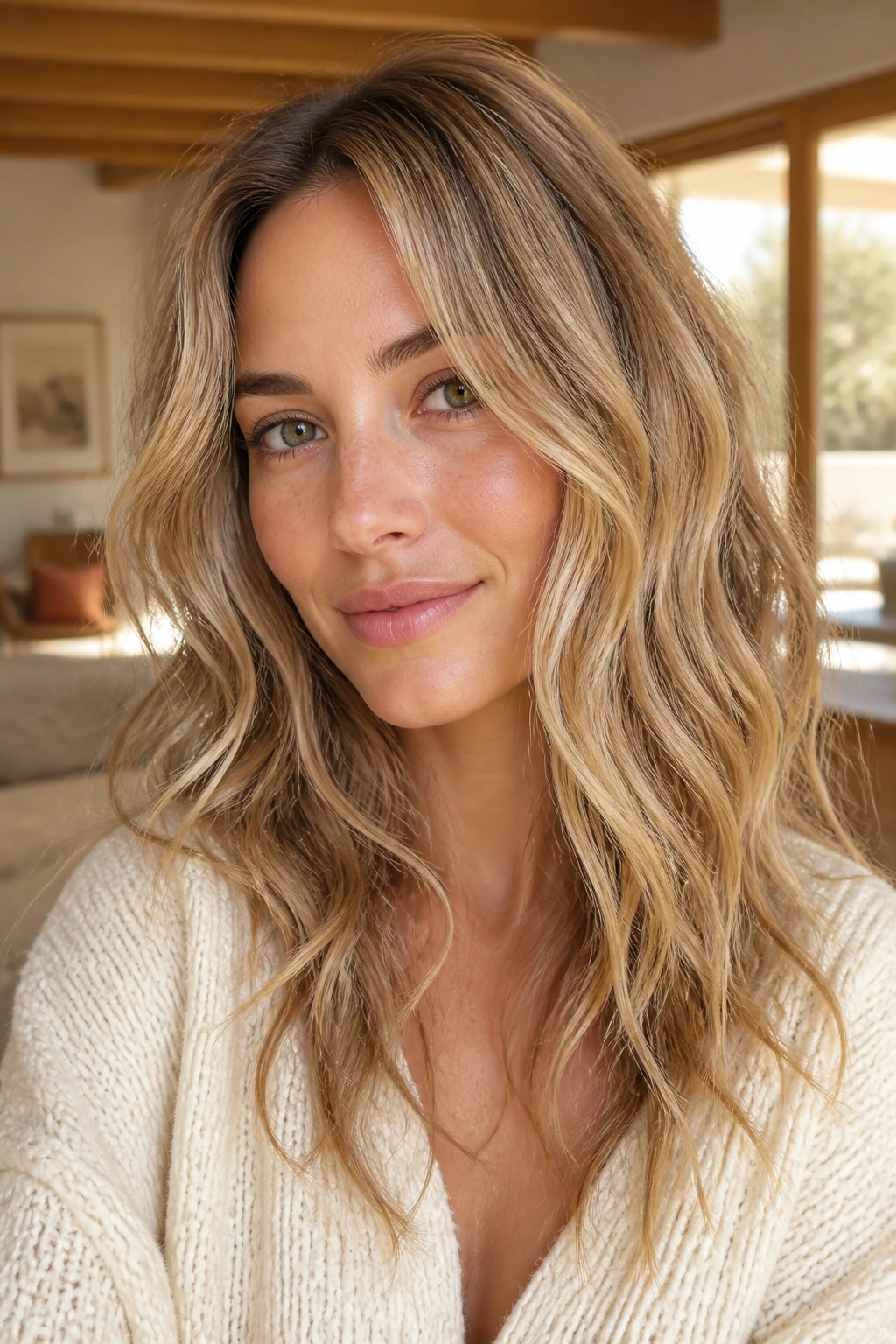
Biscotti blonde is a nice shade if you like beige tones with a little toastiness underneath. It’s not bright, not dark, just believable. Put it on layered wavy hair and you get a style that seems to improve the more casually it’s worn.
Air-dry layers are a strong fit for this color because the color placement doesn’t depend on a perfect blowout. You can scrunch in a little cream, let the wave set, and the layers will still show. Warm skin tones benefit from the biscuit-beige range because it keeps the hair from looking too yellow and keeps the face from looking shadowed.
This is one of my favorite picks for people who want low effort but not low finish. The whole point is to let the natural texture carry the style.
18. Caramelized Long Bob with a Deep Side Part
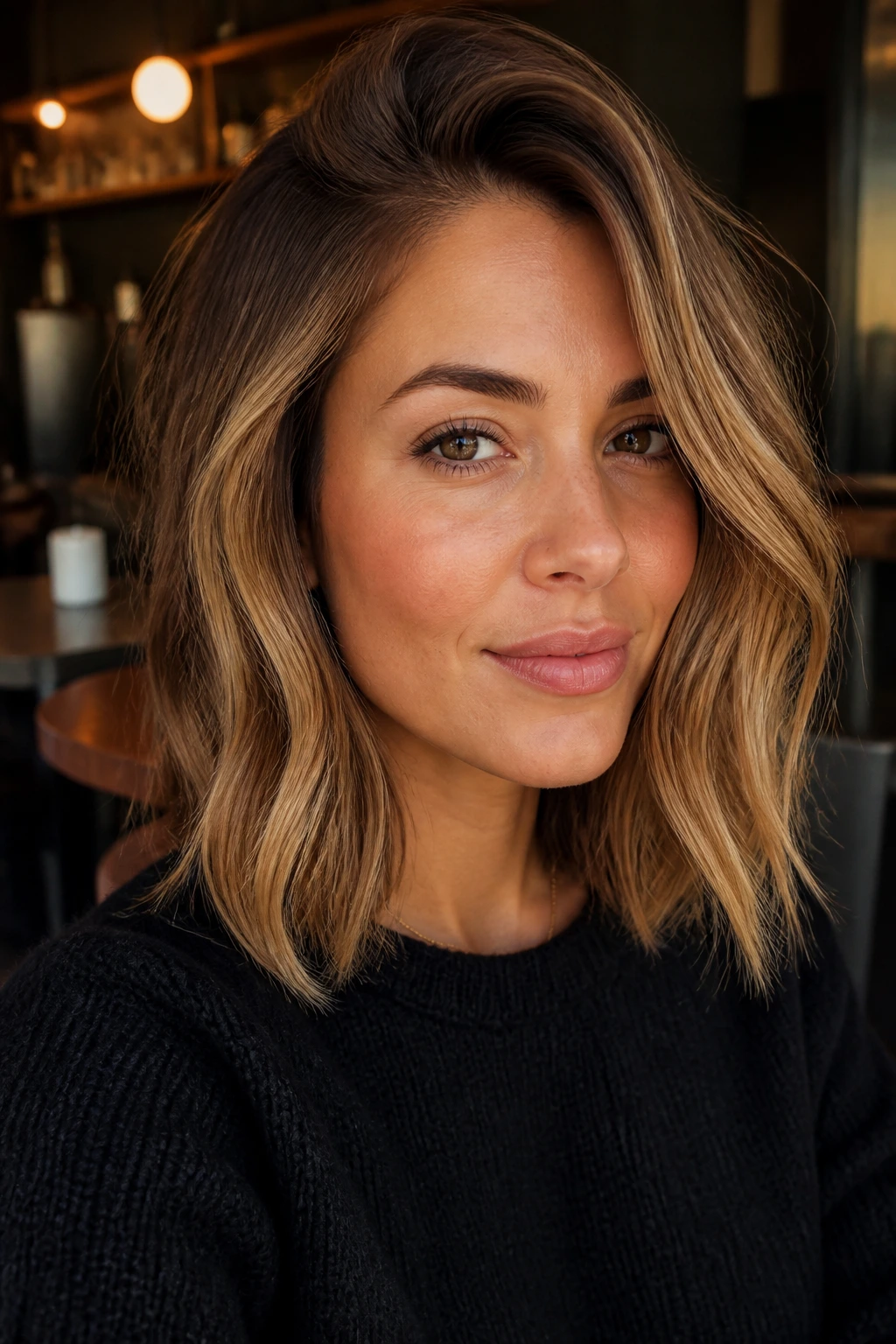
A long bob with a deep side part is one of those cuts that instantly gives wavy hair more shape. Add caramelized blonde pieces through the mids and ends, and the whole thing gets that warm, glossy look that sits nicely against golden or olive skin.
The side part creates lift at the crown and a little sweep across the forehead. That keeps the face from looking boxy. Caramel is a useful blonde here because it has enough depth to show up in movement, especially if your natural base is medium brown. You don’t need the entire head to go light for the style to feel blonde.
This works especially well for round or heart-shaped faces, since the side sweep softens the proportions. If you like a more dramatic finish, tuck one side behind the ear and let the highlights do the rest.
19. Sunkissed Half-Up Wave Sweep
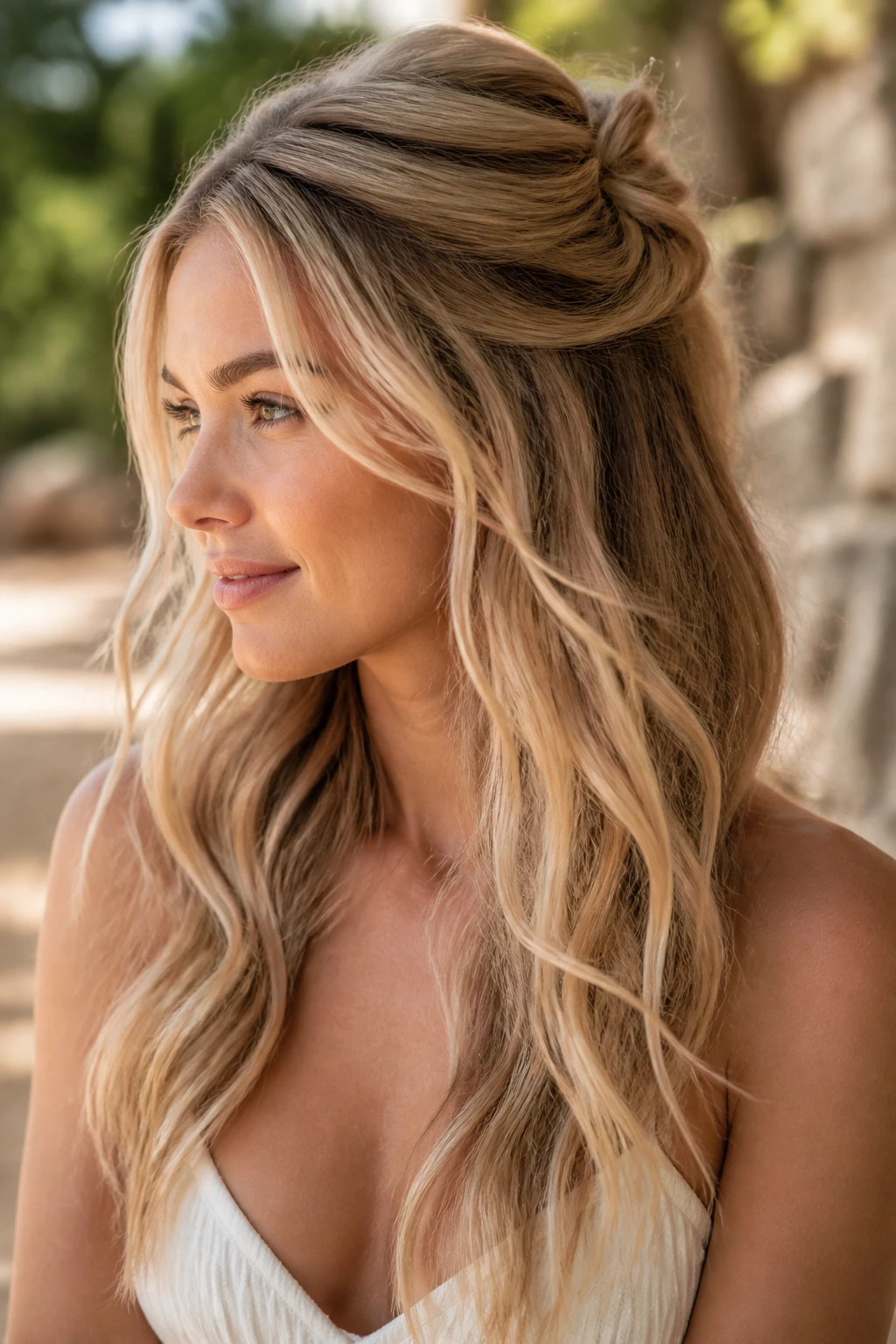
Half-up styling can look childish or smart, depending on how it’s handled. On warm blonde wavy hair, it usually lands in the smart camp if you keep the crown loose and let the lower lengths stay full. The color shines in the top layers, where the sun would naturally hit, which makes the style feel believable.
This is a strong move when you want the face open but still want the length to show. The blonde ribbons near the top can be a little brighter, while the lower pieces stay honey or beige. That mix keeps the style from looking washed out. If you’re going out for the evening, a small twist or clip at the back works well. If you’re running errands, a loose elastic and a few pinned tendrils are enough.
It’s a handy style for second-day waves, too. The half-up shape hides a little bend loss at the roots and makes the color around the face look fresh.
20. Apricot Beige Wavy Shag
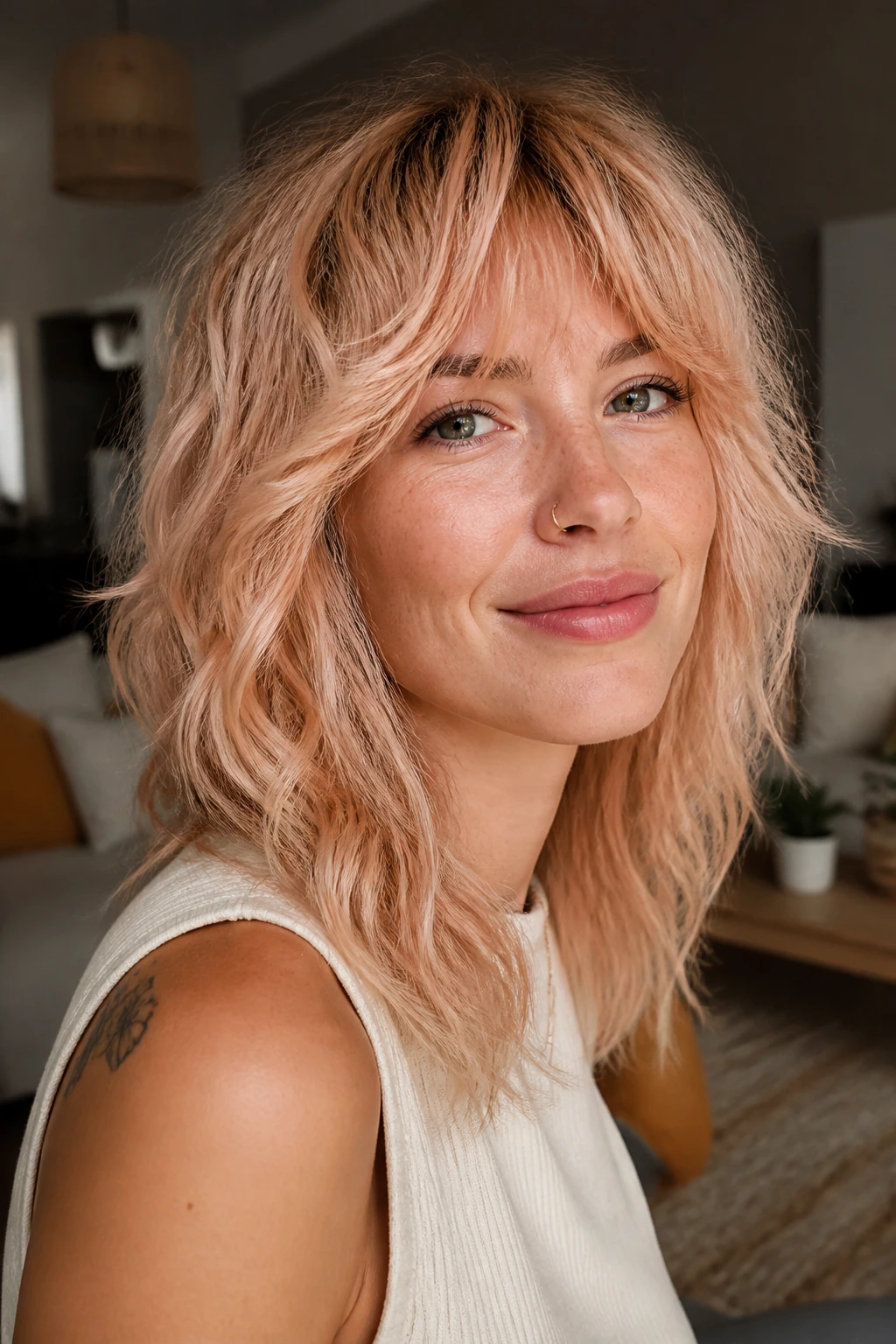
Apricot beige is one of those shades people either immediately understand or absolutely need to see in person. It’s warm, soft, and a little peachy, but the beige base keeps it from going neon. On a shag, that nuance matters because the layers already give the cut a lot of movement.
Warm skin tones with peach undertones often look especially good in this range. The shade adds warmth around the face without turning the hair orange. On wavy hair, the shag layers show off the color in little flashes, which keeps it from feeling flat. If your hair has natural volume, this can be a very good look. If your hair is finer, keep the layers gentler so the ends don’t get wispy in the wrong way.
It’s not the most conservative choice on this list. It is, however, one of the most interesting.
21. Golden Ribbon Braids and Waves
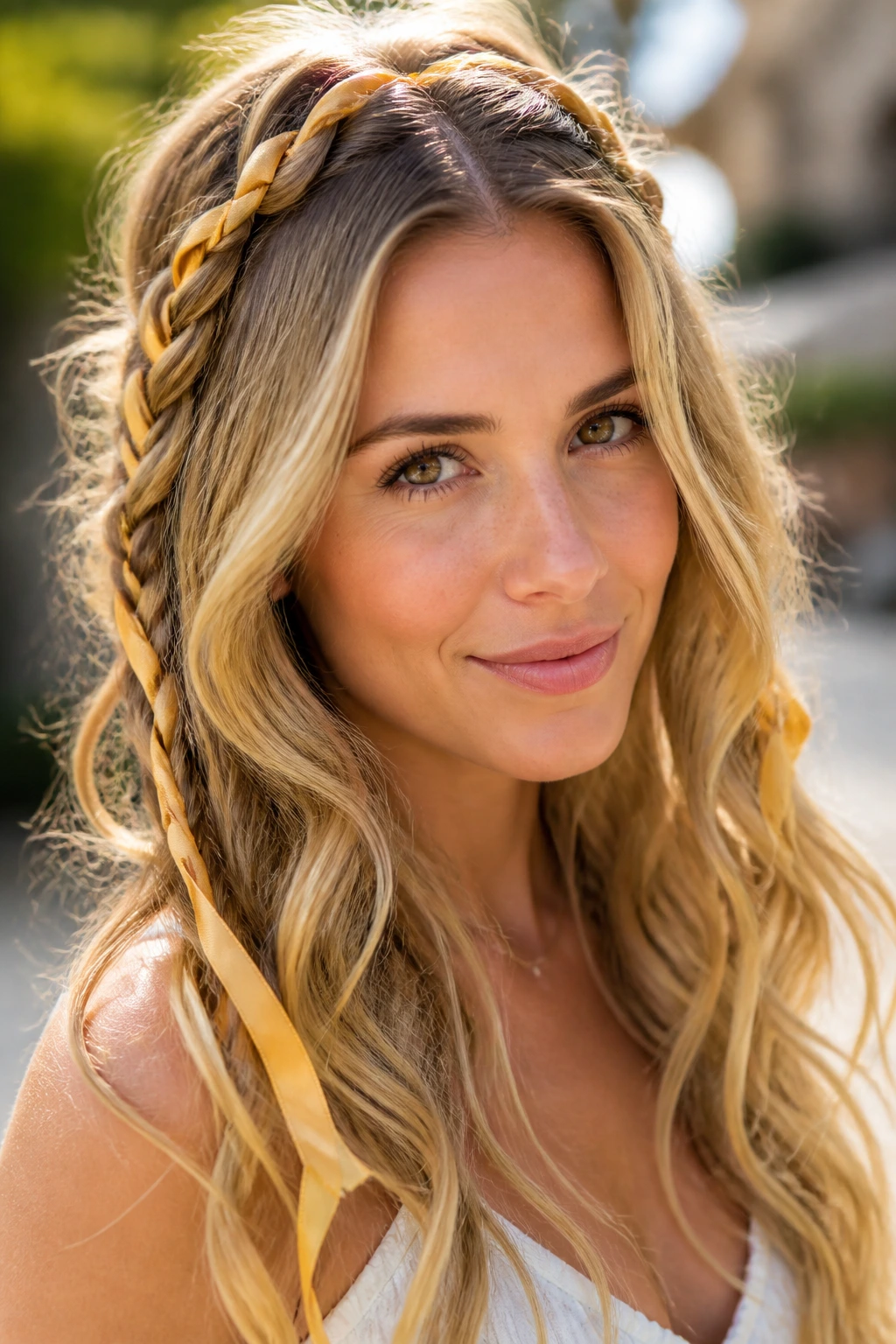
Braids are underrated for showing off blonde dimension. On warm skin, golden ribbon highlights tucked into waves and loose braids can look casual in daylight and more polished at night. The braids break up the color in a way that makes every highlighted strand feel more deliberate.
This style works when the blonde placement already has contrast. If your hair is darker at the roots and lighter through the mids, two loose braids near the temples or one side braid can bring the color forward without demanding a full style change. Wavy hair is ideal because the braid can come loose a little and still look intentional. Actually, a little looseness is the point.
Use this when you want to make the highlights visible without straightening or curling all the way through. A light texturizing spray helps the pieces grip. Don’t overdo it or the hair will feel sandy instead of soft.
22. Buttercream Blowout Waves
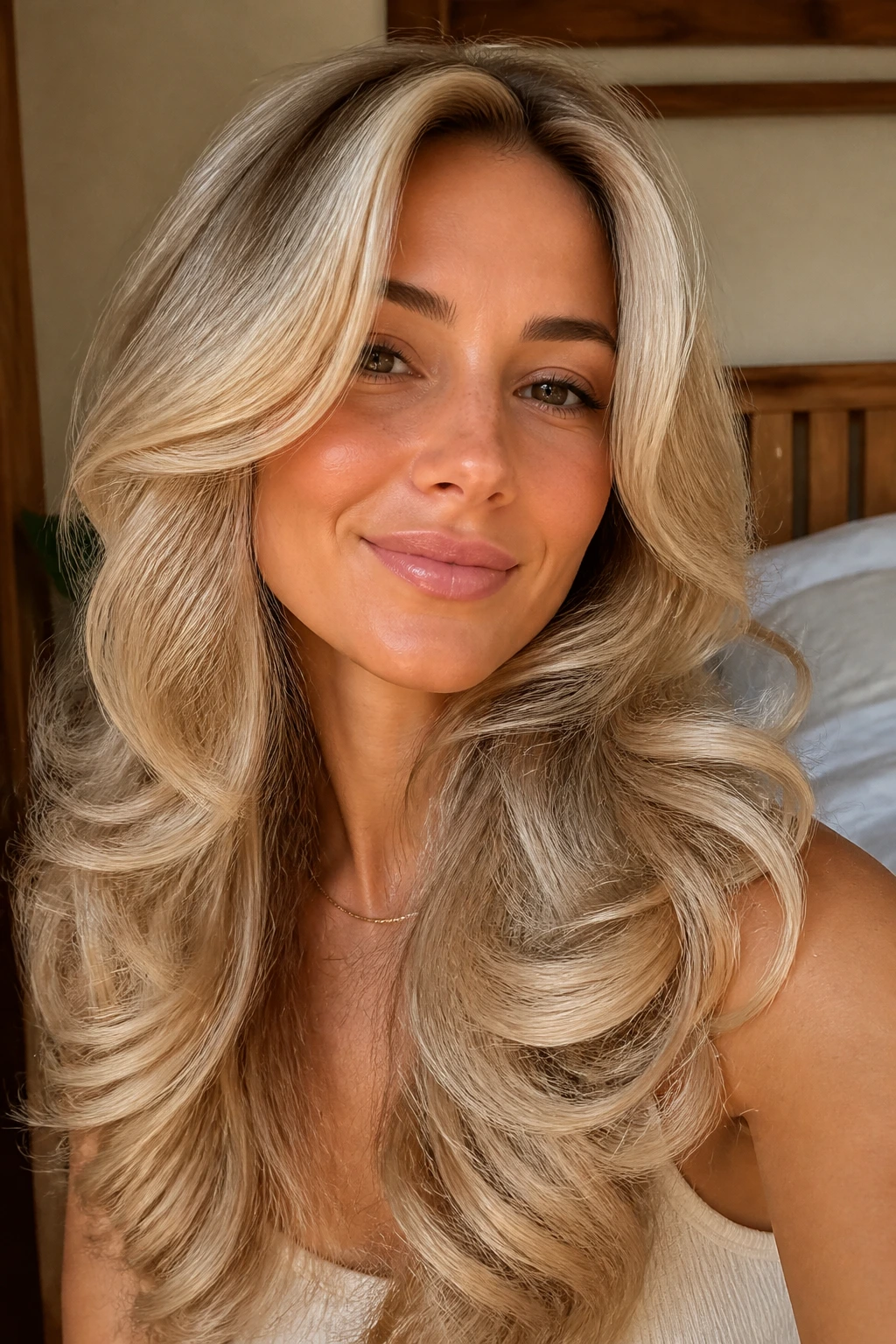
Buttercream blonde sits in that creamy, pale-warm space that can look rich on the right skin tone and very flat on the wrong one. On warm skin with wavy hair, it usually works best when the tone is not pushed too cool and the style has some bounce. Blowout waves give the color a lifted, polished finish that reads more expensive than flat ironing ever could.
This is a good choice if you like volume at the roots. The blowout opens the face, and the buttery tone keeps the brightness from becoming harsh. If your natural hair is medium blonde or light brown, this can be a relatively graceful shift. If your base is darker, ask for dimension near the roots so the grow-out doesn’t get blunt.
It’s a little more styling-intensive than some other options here. But when it lands, it lands hard.
23. Golden Hour Ponytail Waves
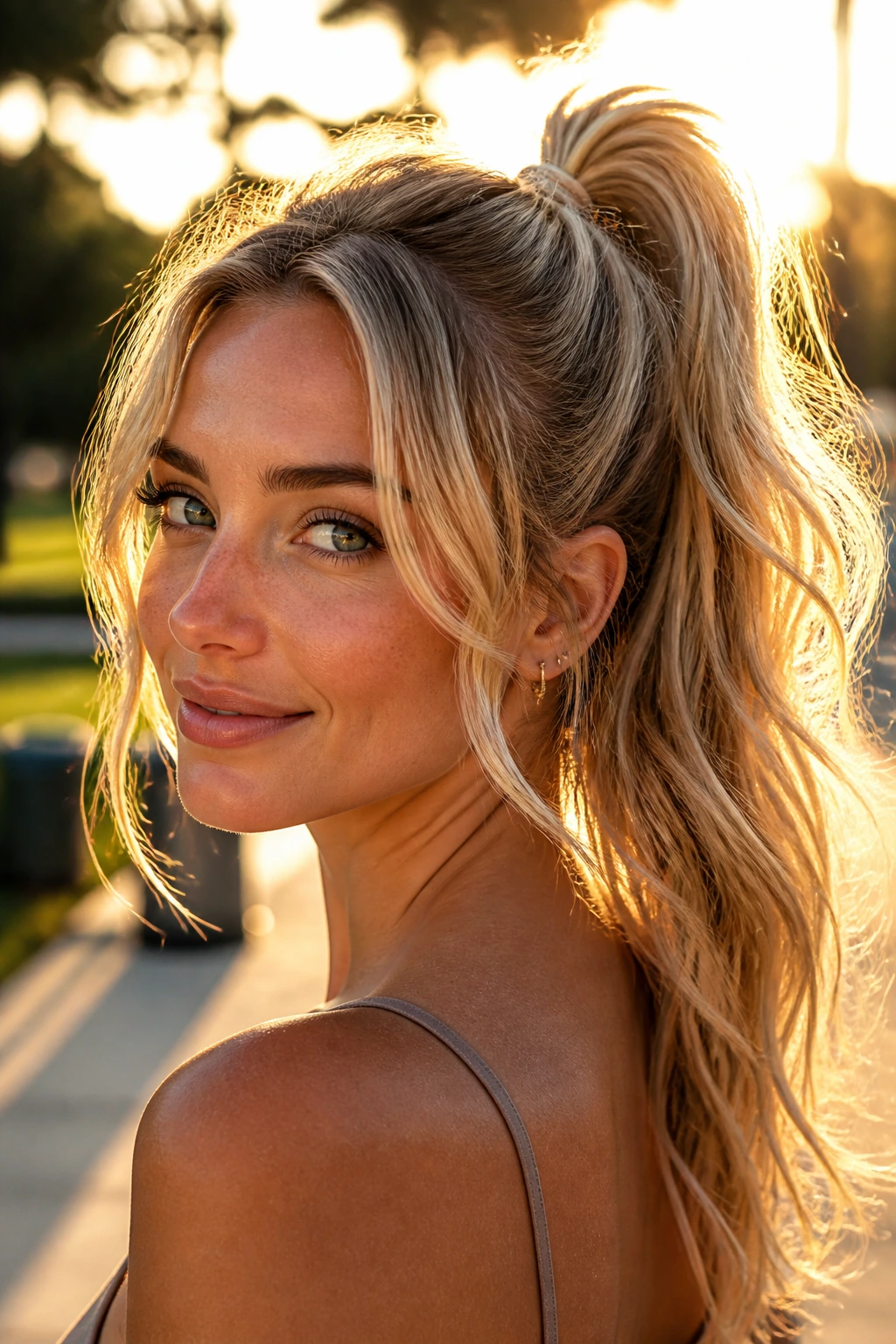
A ponytail doesn’t have to mean “I gave up.” With warm blonde waves, a golden hour ponytail can look clean and finished, especially if you leave a few face-framing strands out and keep the wave pattern soft through the tail. The trick is keeping the blonde visible at the crown and through the pulled-back section.
This works well when your hair has lighter pieces around the top layer. When you pull it back, those strands still catch the light. A high pony gives more lift and shows off the cheekbones; a mid pony feels calmer and a little more relaxed. Either way, warm blonde reads beautifully here because the style itself is simple and the color does the decoration.
If your hair tends to kink when tied up, wrap a small section of hair around the elastic. That tiny move makes the ponytail feel more deliberate and less gym-bag-adjacent.
24. Warm Vanilla Claw-Clip Twist with Face-Framing Strands
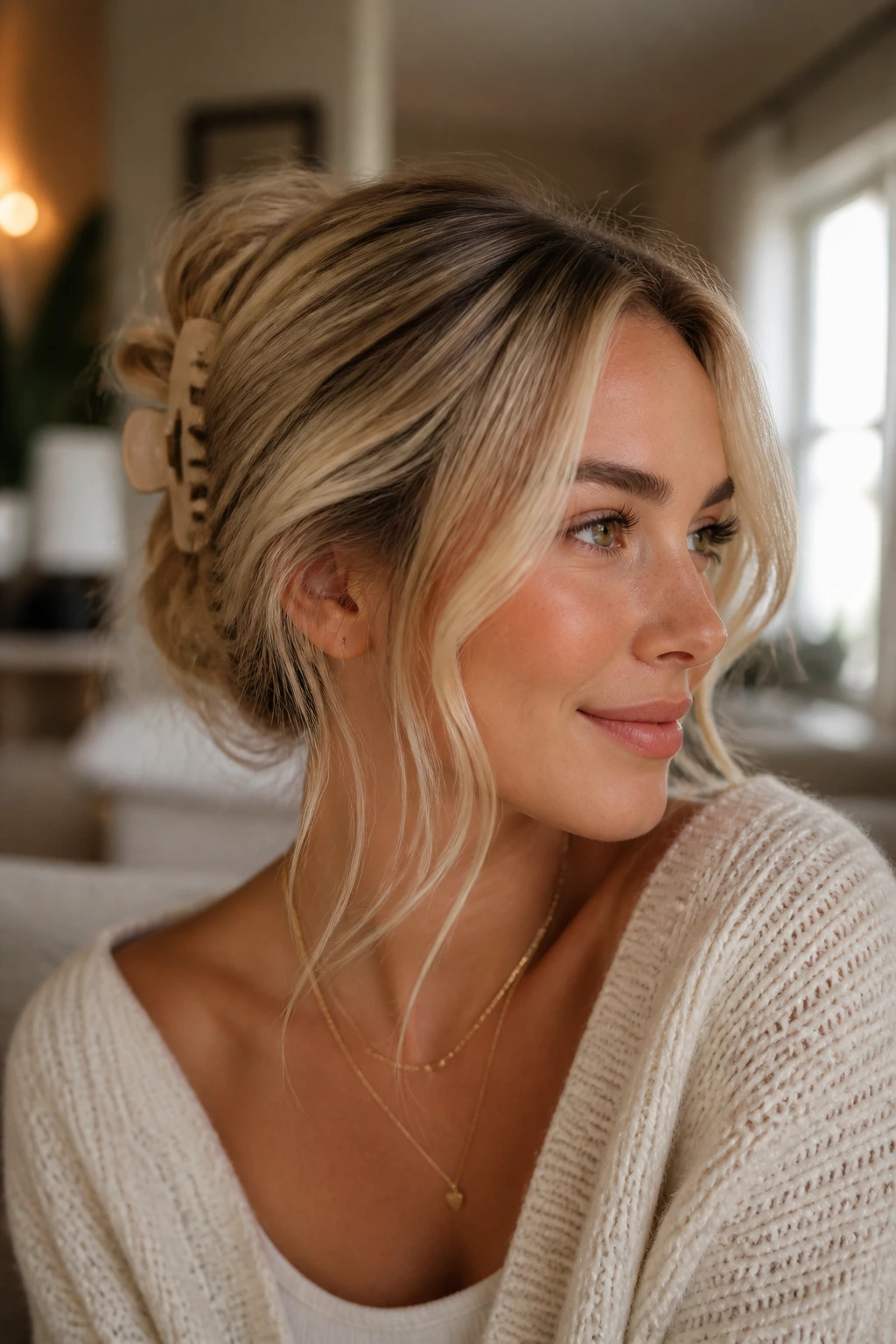
Claw clips are useful, but only if the hair still looks like hair after you twist it up. Warm vanilla blonde with loose face-framing strands keeps the whole thing soft. The brighter vanilla pieces near the front stop the style from disappearing into one big knot at the back of the head.
This is ideal for second-day waves or for hair that gets frizzy when worn down all day. Pull the hair up loosely, let the ends spill a little, and keep the front strands out around the temples and jaw. The vanilla tone adds lightness around the face, which matters because an updo can otherwise drag everything backward.
Don’t twist too tightly. That ruins the wave pattern and creates a dent that takes longer to fix than it should. Loose is better here. Always.
25. Honey Glaze Cascading Layers
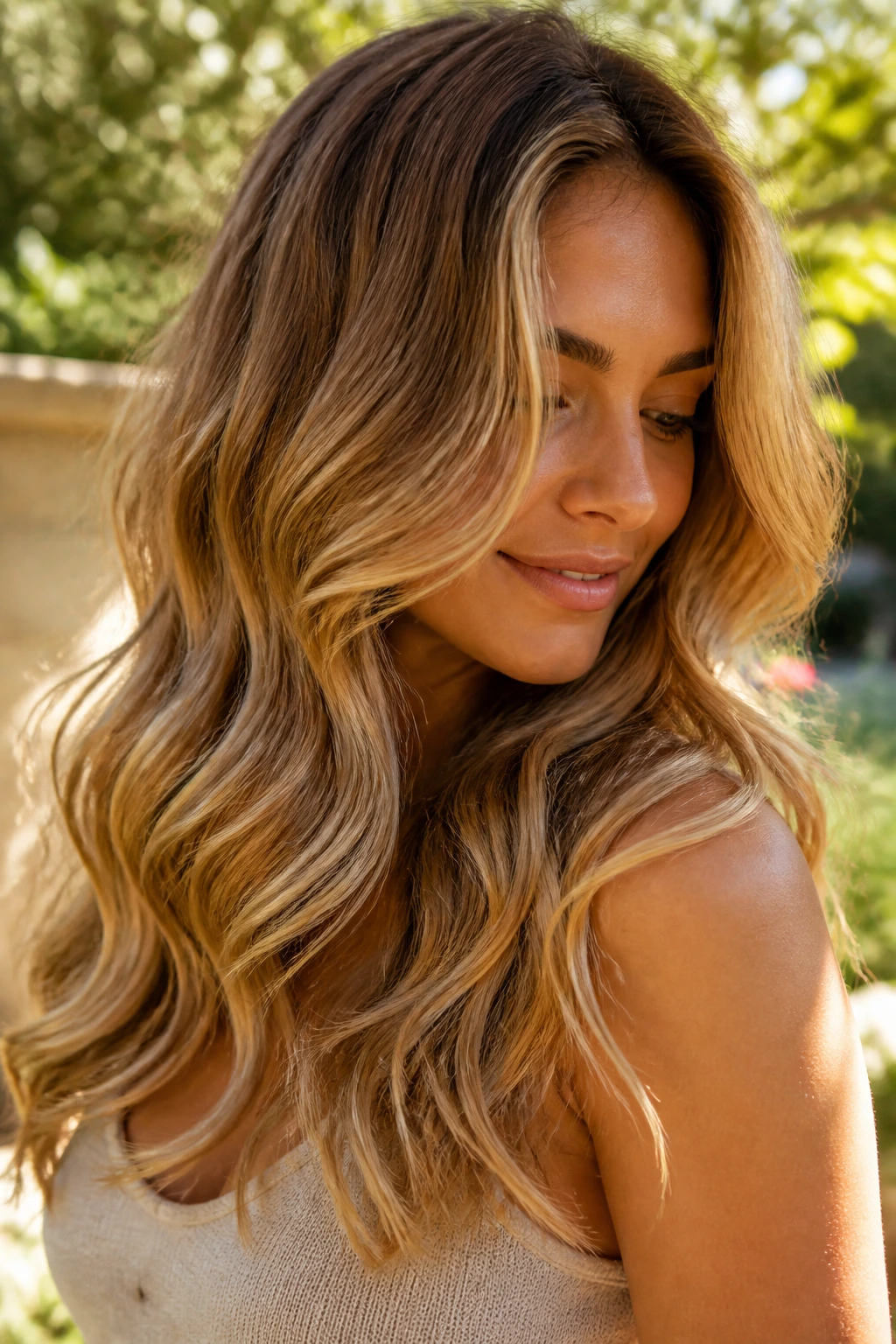
This is the all-rounder. Honey glaze through cascading layers gives you warmth, brightness, and movement without locking you into one mood. It works on long wavy hair because the layers stack color in a way that keeps the hair from feeling heavy at the ends.
Warm skin tones tend to look especially fresh with this shade because honey glaze sits in a familiar, flattering zone. It’s bright enough to lift the face, but it still has depth. That balance matters on waves, where the lighter and darker pieces keep trading places as you move. The result feels easy to wear and not at all random.
If you want one blonde style to show a colorist, a stylist, and your future self who hates maintenance, this is a very strong candidate.
How to Style Wavy Blonde Hair So It Stays Soft
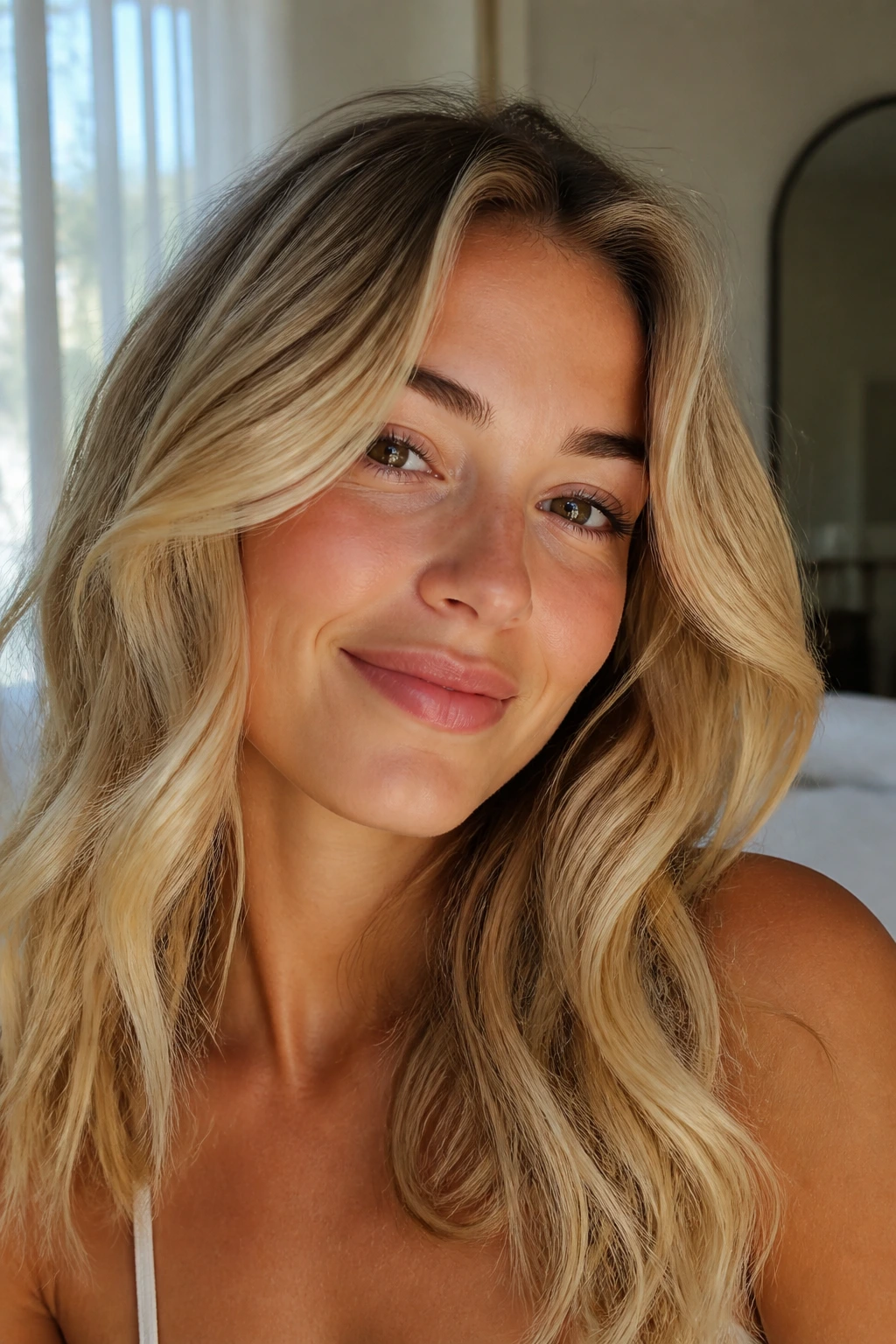
Colorist note: ask for warmth at the root and through the mids, then let the lightest pieces live around the face and on the curve of the wave. If every section is equally bright, the hair can start to look puffy instead of dimensional.
Styling note: rough-dry your hair to about 80 percent, then go in with a 1.25-inch wand or a large round brush on only the top pieces. Wavy hair usually does better when you do less to the lower half. Let those bends stay loose. They’re doing the visual work for you.
Product note: use a lightweight mousse or wave cream before drying, not a heavy serum that flattens the wave pattern. On blonde hair, too much oil near the roots can make the color look dull in daylight.
Parting trick: if your hair is too flat around the face, switch the part to the opposite side and blow-dry the root for 20 to 30 seconds before it cools. That tiny change can wake the whole cut up.
Heat note: keep hot tools around 300°F to 325°F if the hair is color-treated. You do not need a screaming-hot iron to form a soft wave. You need control and a clip or two.
Tools and Products That Earn Their Place
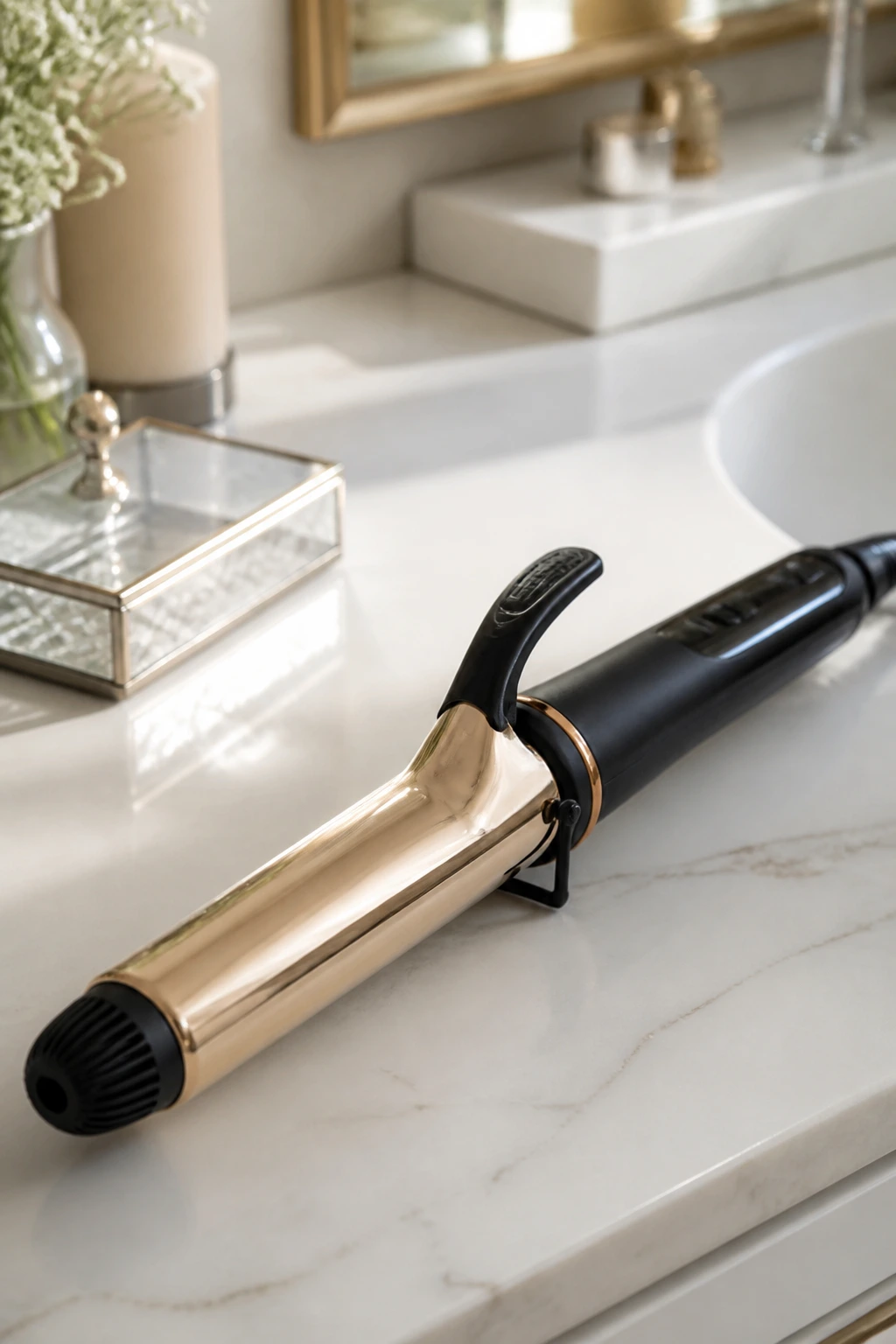
-
1.25-inch curling wand or iron: The sweet spot for most warm-blonde waves; smaller tools tend to over-curl and make the color look busier.
-
Diffuser attachment: Useful if you air-dry or scrunch-set your waves and want to keep frizz from taking over the blonde ribbons.
-
Wide-tooth comb: Detangles without dragging through wet hair and stretching the wave pattern out of shape.
-
Color-safe, sulfate-free shampoo: Helps keep warm blonde from fading and keeps the hair less squeaky and stripped after washing.
-
Lightweight conditioner: Smooths the cuticle without coating the hair so much that the highlights lose their glow.
-
Bond-building treatment: Worth it if your blonde is lightened repeatedly; it helps fragile ends hold shape better.
-
Heat protectant spray: Not optional if you use a wand, flat iron, or blow-dryer on color-treated waves.
-
Microfiber towel or soft cotton T-shirt: Cuts down on rough drying, which matters more for blonde hair than people think.
-
Duckbill clips or sectioning clips: Helpful for face-framing work, especially if you’re styling curtain bangs or a money piece.
-
Satin pillowcase or bonnet: Keeps the wave pattern from getting crushed and helps the blonde look smoother by morning.
The Maintenance Habits That Keep Warm Blonde Looking Clean
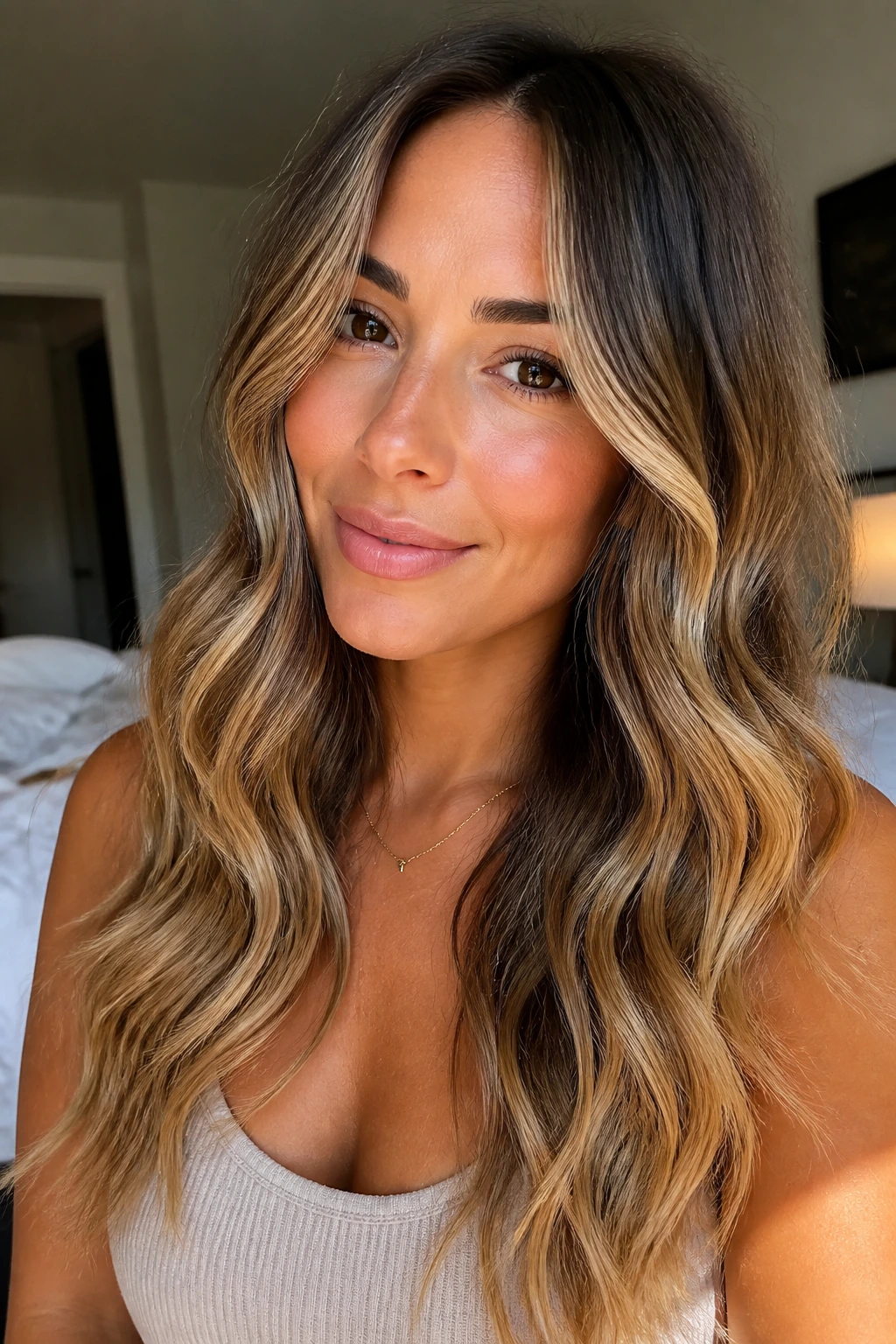
Warm blonde hair does not need to be washed constantly. In fact, most wavy blonde hair looks better with a little natural oil in it, because the color catches light more softly after day one. Two or three washes a week is usually plenty if your scalp allows it. If your hair is very fine or your scalp gets oily quickly, you can wash more often, but keep the shampoo focused at the roots.
Glossing is where a lot of people get lazy. Don’t. A warm or beige gloss every 4 to 6 weeks can keep honey and caramel tones from going flat or muddy. If your blonde tends to yellow, a violet shampoo used once every 2 to 3 weeks is usually enough. More than that and the warmth starts to disappear, which defeats the point of choosing this color family in the first place.
For grow-out, balayage and root shadow usually buy you 8 to 12 weeks before the line starts to bother you. More foiled, brighter looks may need a refresh sooner. Trim the layers every 8 to 10 weeks if your waves start to lose shape at the ends. And if you sleep on your hair loosely braided or tied with a soft scrunchie, the next day will go smoother. Simple. Effective.
Common Mistakes That Flatten Warm Blonde Waves
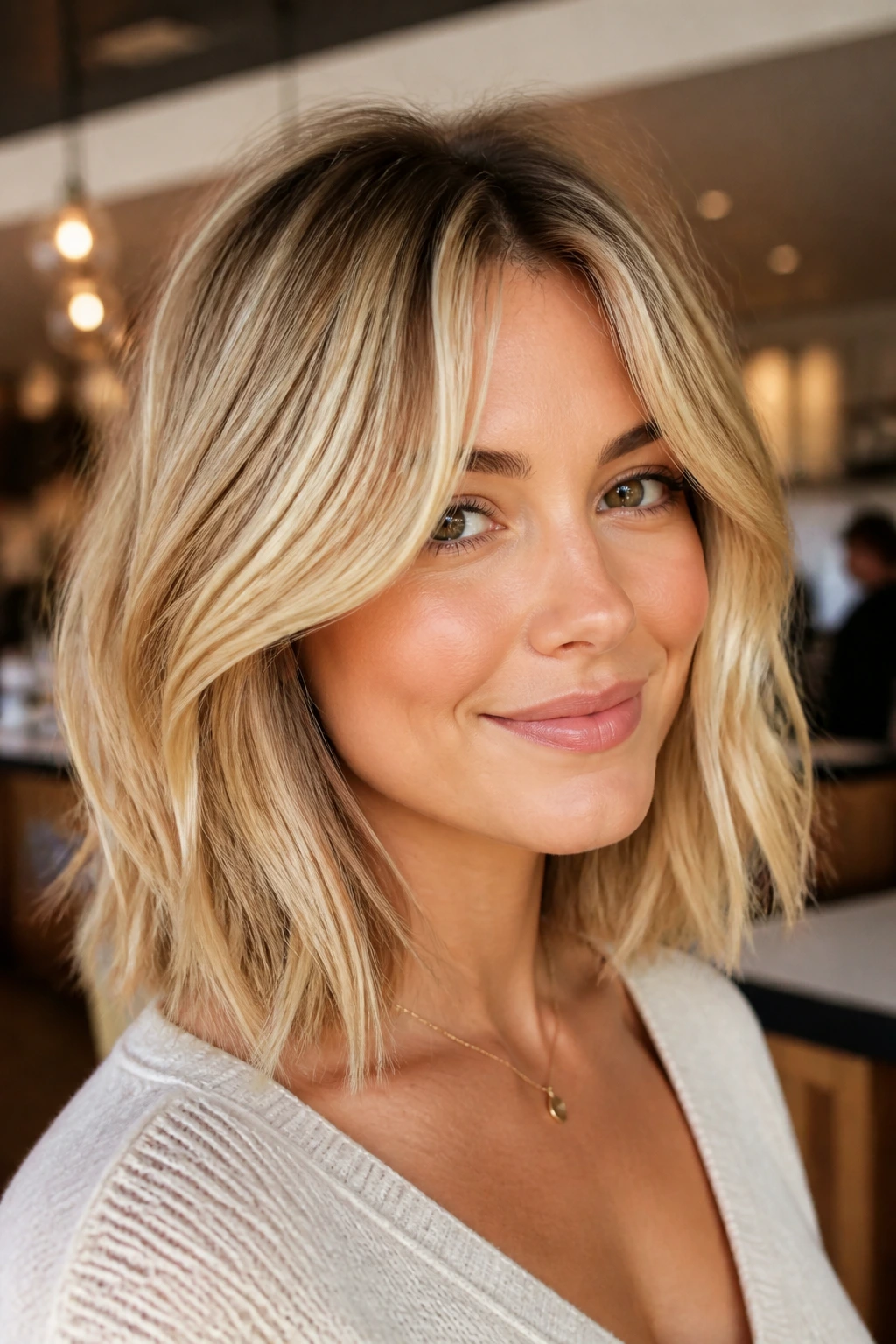
-
Going too ashy: Ash tones can make warm skin look gray or tired, especially if the blonde is placed heavily around the face. The fix is to ask for beige, honey, caramel, or butter-based tones instead of cool pearl or silver notes.
-
Lifting the whole head too light: A uniform pale blonde can erase the wave pattern and make the hair look dry. Keep some depth at the root and through the underside so the color has contrast.
-
Using the same curl direction everywhere: That creates a helmet, not waves. Alternate direction or leave the ends out on some sections so the blonde bends break up naturally.
-
Over-layering fine hair: Too many short layers can make wavy blonde hair frizzy and thin at the ends. Ask for longer internal layers that keep movement without shredding the shape.
-
Over-toning with purple shampoo: Warm blondes can turn dull fast if you fight every bit of yellow. Use violet shampoo sparingly and only when the shade starts to lean too golden.
-
Ignoring the haircut after coloring: Blonde placement looks rough when the cut is blunt, uneven, or grown out. The shape matters. A lot.
Variations and Alternatives to Try
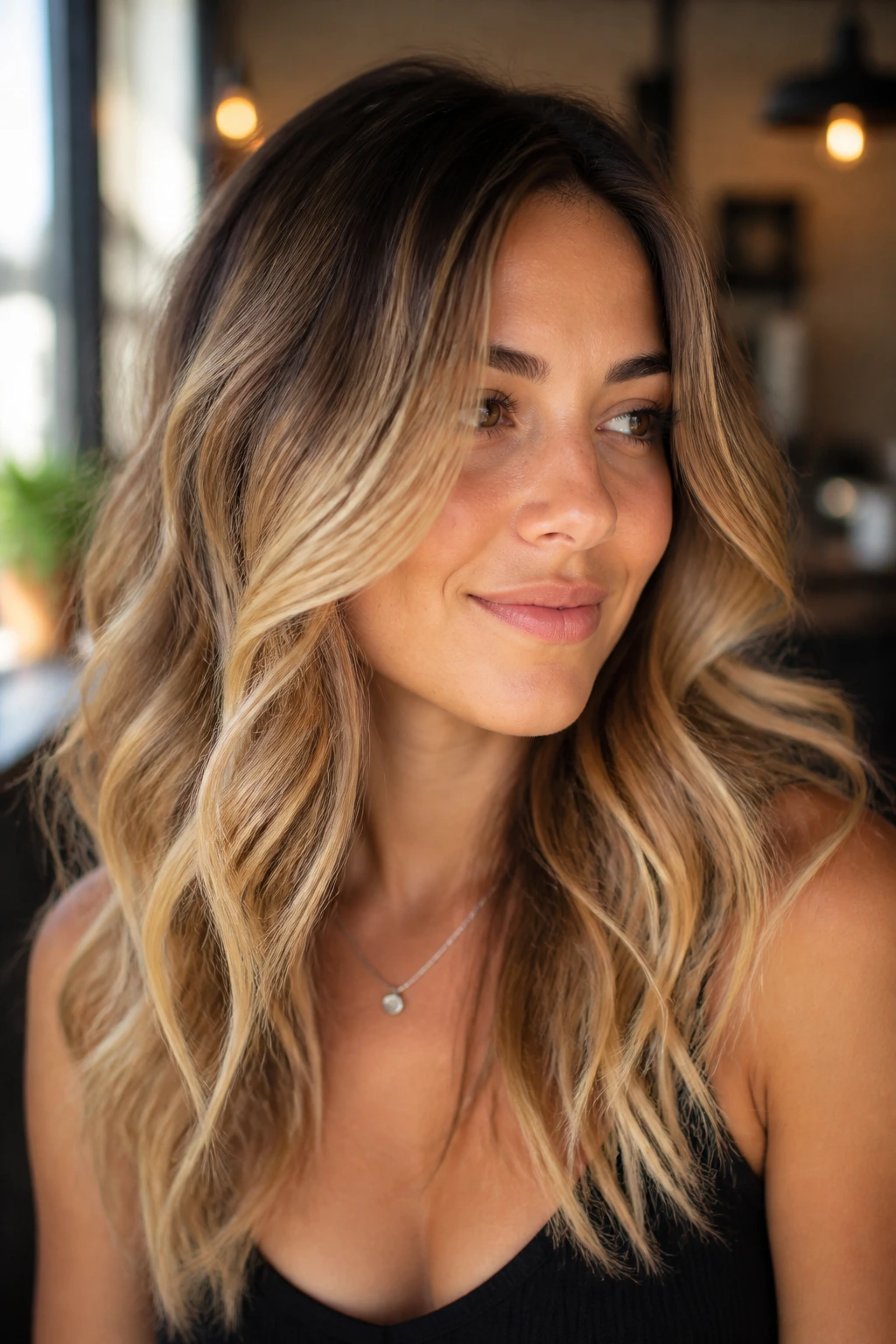
The Low-Maintenance Bronde Melt: Keep the roots deeper and let the blonde open up only through the mid-lengths and ends. This is the easiest route if you hate visible regrowth and want the color to blend into your natural base.
The Bright Face-Frame Refresh: Leave the back softer and lift just the front pieces into honey or caramel blonde. It’s a smaller change, but on warm skin it can still make the face look brighter and more awake.
The Short Swing Bob: If your waves are loose and your neck likes a bit of shape, a chin-length or jaw-length bob in wheat or buttery blonde can look sharp without needing much styling. It’s cleaner, cooler in feel, and easier to dry fast.
The Thick-Hair Ribbon Blonde: For dense waves, use wider highlight ribbons and more internal layering. Thin babylights can disappear under heavy texture; broader pieces hold their own and show movement better.
The Fine-Hair Airy Blonde: If your waves are fine, keep the blonde placement soft and the layers longer. A light beige or honey blonde with a root shadow will look fuller than a highly contrasted color job that eats up the density.
What Usually Goes Wrong With Warm Blonde on Wavy Hair
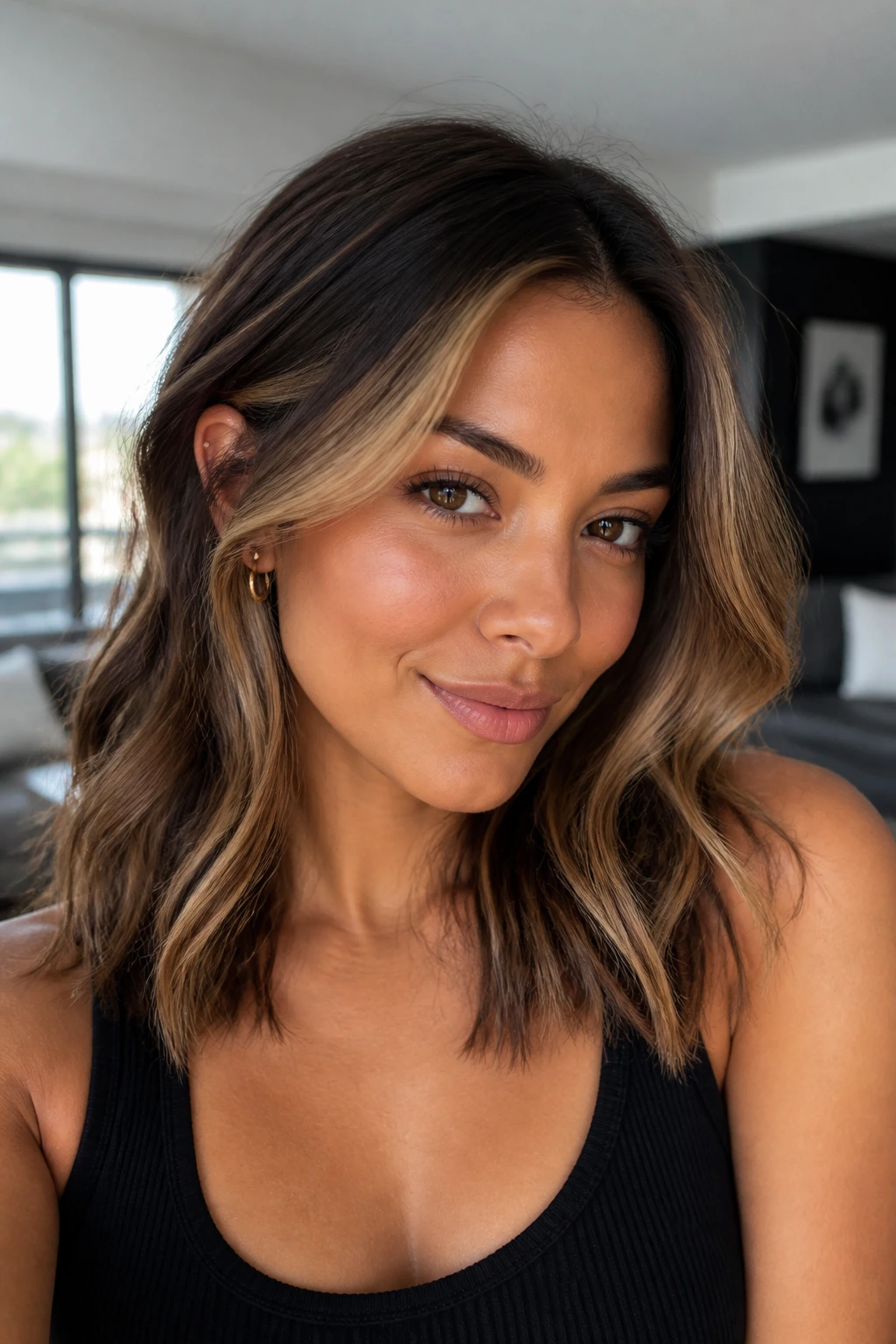
The first mistake is color that fights the skin instead of working with it. When the blonde is too icy, the face can lose warmth fast, especially in natural light. The fix is not “more blonde.” It’s warmer blonde.
The second mistake is cutting the hair as if texture does not matter. Wavy hair needs room to move. If the haircut is too blunt or too thinned out near the ends, the color can’t sit properly, and the whole style starts to look fuzzy.
Third, people sometimes style waves too uniformly. That shiny uniform curl you see on social media looks neat for about ten minutes. Then it starts to feel stiff. A mix of larger bends, straighter ends, and some broken-up pieces around the face looks better on warm blonde almost every time.
Frequently Asked Questions About Blonde Hairstyles for Warm Skin Tones with Wavy Hair
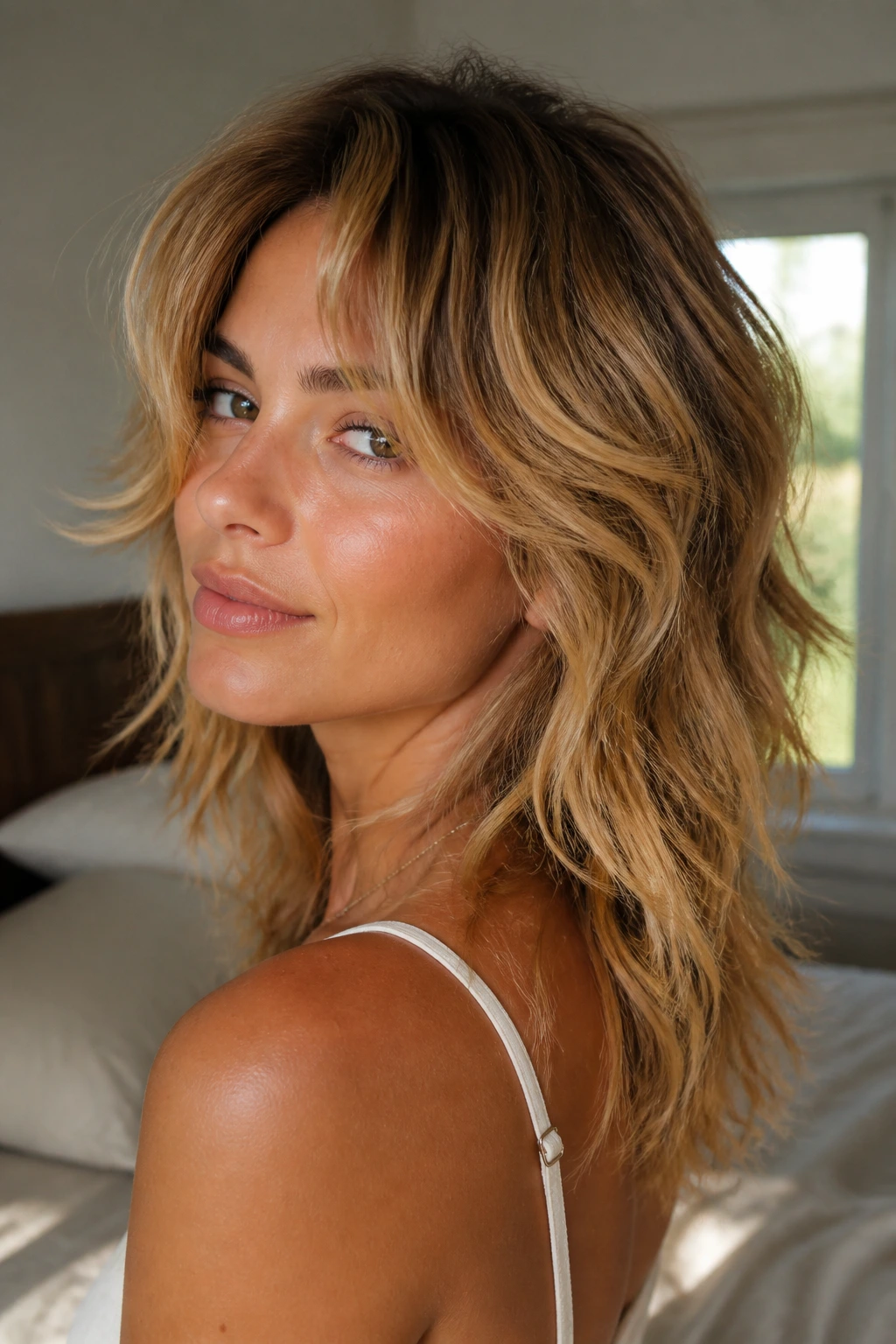
What blonde shades suit warm skin tones best?
Honey, caramel, butterscotch, beige blonde, maple, and buttery vanilla are the safest places to start. They sit in the same warmth family as peach, gold, and olive undertones, so the face stays lively instead of pale.
Can warm skin tones wear ash blonde?
Yes, but it usually needs balance. A tiny bit of ash in the root shadow or lowlight can help tame brass, but a fully cool blonde across the whole head can make warm skin look flat.
Is balayage better than highlights for wavy hair?
Usually, yes, if you want a softer grow-out and a more natural ribbon effect. Balayage follows the bend of the wave better, while foils can look starker unless they’re placed very carefully.
What haircut works best if my waves are thick?
Layers with movement — shag, butterfly cut, long layered lob, or a softened wolf cut — tend to work best. Thick wavy hair needs shape removed in the right places, not just more length taken off the bottom.
How often should warm blonde hair be toned?
A gloss every 4 to 6 weeks is a sensible rhythm for most people. If your hair is porous or sun-exposed, you might need it a little sooner, but don’t over-tone or the warmth disappears.
Can I make these styles work if my waves are fine?
Yes. Keep the layers longer, the highlights softer, and the root shadow slightly deeper so the hair doesn’t lose density. Fine waves often look better with beige or honey blonde than with very pale blonde.
What if my blonde turns too yellow or brassy?
Use a violet shampoo once every couple of weeks, not at every wash. If the brass is stronger, book a gloss instead of trying to scrub it away at home.
Do warm blonde styles need a center part?
No. Center parts can work well on long waves, but side parts often give more lift and make warm blonde placement show up more clearly around the face.
How do I keep waves from looking frizzy after lightening?
Use a bond-building treatment, dry with a microfiber towel, and stop brushing once the hair is dry unless you want a softer, brushed-out finish. The cuticle matters more after lightening, so rough handling shows fast.
The Shade That Feels Like You
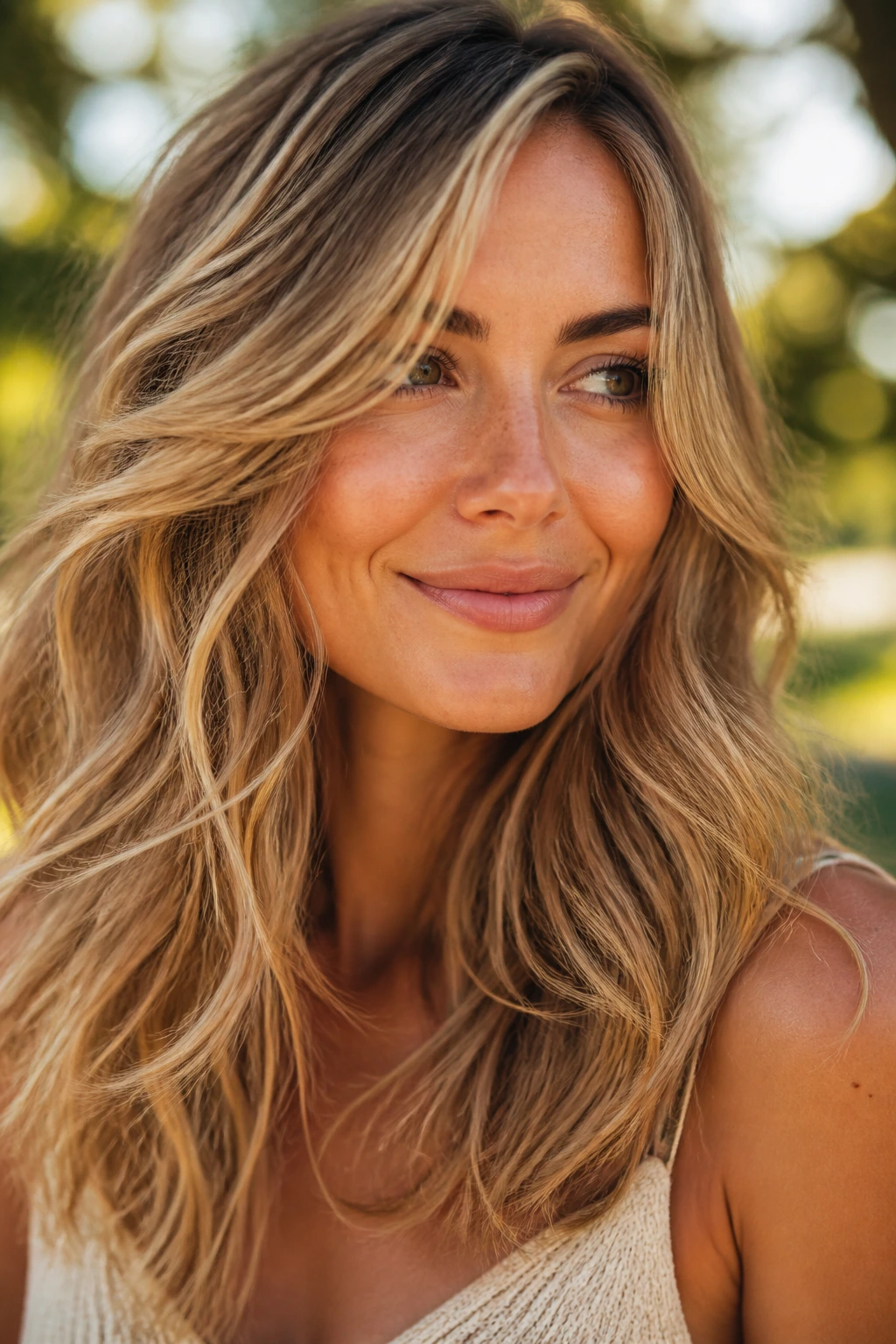
The best warm blonde is not the brightest one in the room. It’s the one that looks like it belonged on your face from the start. On wavy hair, that usually means some depth at the root, some warmth around the face, and enough layering for the bends to keep doing their job.
If you’re heading to a salon, bring photos that show both color and shape. One without the other is half the conversation. And if you’re trying to decide between two shades, I’d usually pick the warmer, slightly deeper one first. You can always brighten it later. Pulling warmth back into hair that went too cold is a slower, more annoying fix.
Start with honey, caramel, beige, or butter. Let the waves handle the rest.