



Platinum hair color ideas for deep skin tones work best when the blonde has some depth left in it. That’s the part a lot of people miss. A flat, chalky white can make the face look stripped bare, while a pearl, smoke, champagne, or silver tone can sharpen the features and leave the skin looking rich instead of washed out.
I’ve always thought platinum on deeper complexions looks best when it behaves a little less like a stunt and a little more like tailoring. The right shade sits with the face. It doesn’t shout over it. That usually means a real lift to level 10 or 11, a toner chosen for undertone instead of trend, and some kind of root depth — even if it’s only a whisper of shadow at the scalp.
And yes, platinum can be dramatic on deep skin. That’s the fun of it. But the best versions have shape: a cool edge, a creamy veil, a smoky melt, a silver wash, or a warm-white glow that makes the color feel intentional from the first glance. The shades below cover the whole range, from the cleanest icy blondes to the softest beige-platinum finishes, so you can pick the one that fits your undertone, your haircut, and how much upkeep you actually want to live with.
Why These Platinum Shades Work So Well on Deep Skin
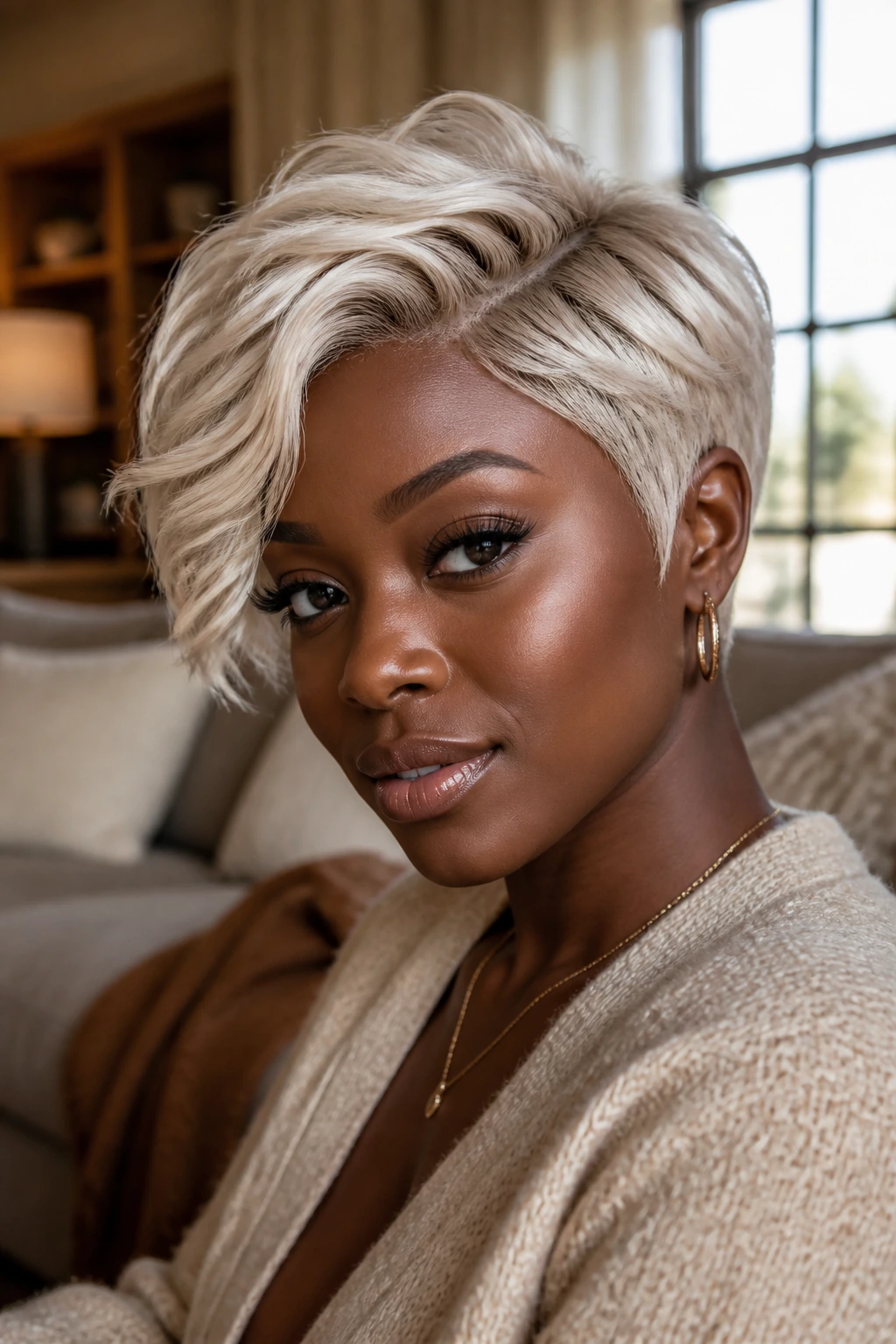
- Contrast has room to breathe: Deep skin gives platinum a strong backdrop, which means even a small ribbon of brightness can read clearly without needing an all-over bleach bomb.
- Tone matters more than brightness: A pearl or beige toner can look far richer on deeper complexions than a screaming white lift, because the finish still leaves some softness around the face.
- Root depth keeps the look grounded: A shadow root prevents the color from floating away from the scalp and gives the whole style a more finished shape.
- Texture changes the mood: Straight hair shows off icy finishes, while curls and waves make smoky and champagne platinum look layered instead of flat.
- Makeup and brows can finish the job: Deep brows, a warm blush, and a defined lip keep the hair from overpowering the face.
Choosing Platinum Hair Color Ideas for Deep Skin Tones
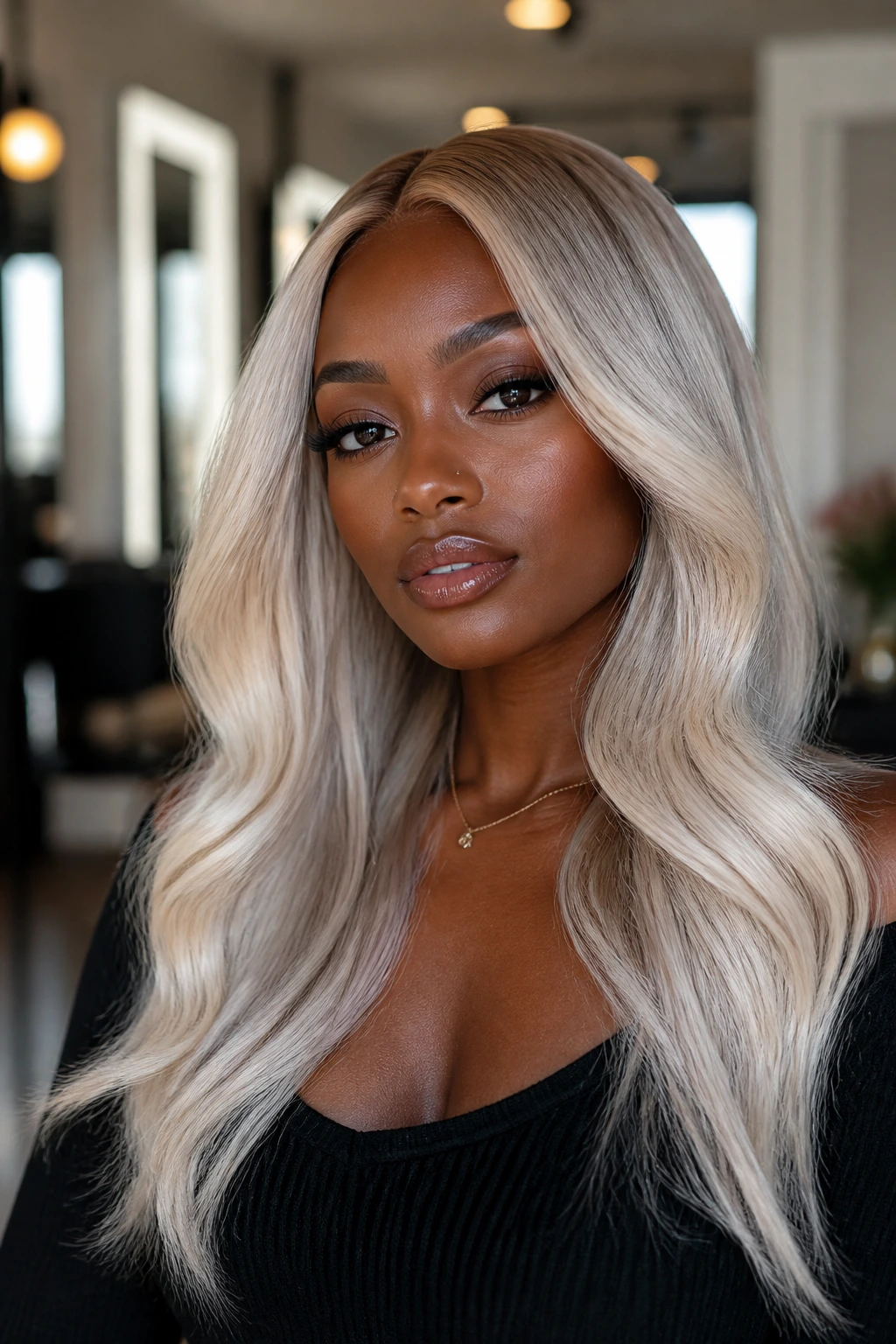
Platinum is not one shade. It’s a family, and the difference between a good result and a weird one usually comes down to undertone. On deep skin, that matters even more because the face already carries a lot of natural richness. If the blonde is too ashy, it can make warm undertones look a little tired. If it’s too yellow, it can turn brassy fast and lose that sharp, expensive edge.
The safest starting point is usually a conversation about your skin’s undertone and your hair’s history. Virgin dark hair often needs multiple lift sessions to reach a clean level 10 or 11 without chewing up the ends. Hair that has been colored before may lift unevenly, and that’s where a strand test saves people from a bad day in the chair. A strand test is boring. It’s also cheaper than fixing a bad toner.
I like to think about platinum in three lanes: cool, neutral, and warm. Cool platinum leans silver, lilac, and pearl. Neutral platinum lands in mushroom, beige, and smoky territory. Warm platinum goes champagne, white-gold, and soft vanilla. The right lane depends less on some giant rule and more on whether you want the color to sharpen your features or soften them.
One more thing: if your hair is already fragile, ask about bond support before anyone reaches for the lightener. Platinum is a lift-heavy look. The scalp can handle a lot more than the hair shaft can.
1. Ice-Glass Platinum
Ice-glass platinum is the crispest version of the look, the one that reads sharp from across a room and even sharper in daylight. On deep skin, it works best when the haircut has structure — a blunt bob, a clean lob, or a pixie with a strong outline. Loose, shapeless layers can make it feel a little floaty. This one needs edges.
Why It Flatters Deep Skin
The trick is the toner. A pearl-violet finish keeps the blonde clean without pushing it into dull gray. If the lift reaches level 10 or 11, the color lands in that bright, icy zone that looks deliberate, not accidental. Cool or neutral undertones usually wear this best.
- Ask for a level 4 or 5 shadow root if you want the contrast to stay soft at the scalp.
- Keep the ends a touch brighter than the mids so the color has movement.
- Flat-ironed hair shows this shade best; curls can blur the icy finish.
- Deep brows help. Without them, the hair can take over the whole face.
My take: this is the platinum for people who like clean lines and don’t mind a little attention.
2. Rooted Platinum Melt
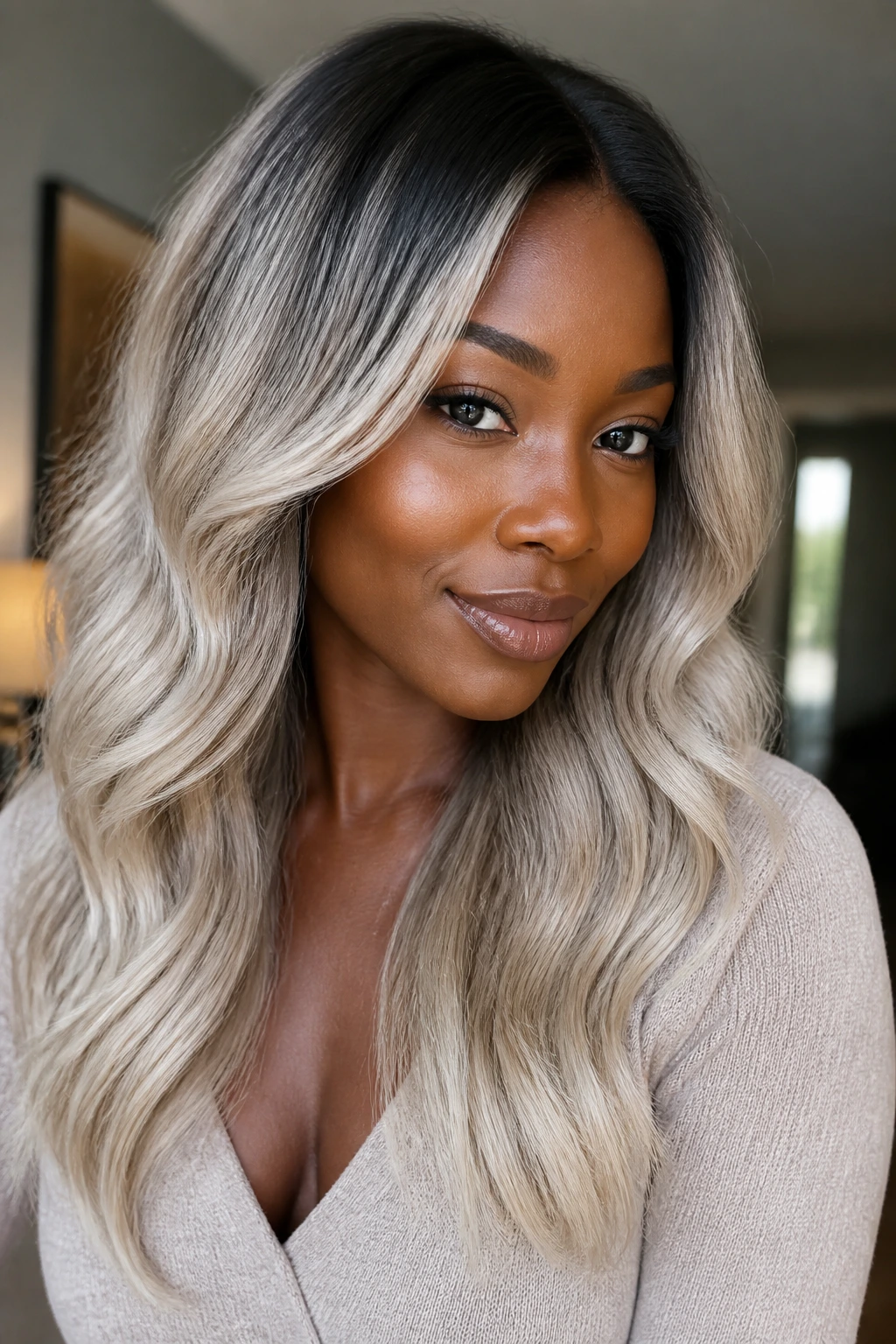
A root shadow is not a compromise here. It’s the reason this platinum looks rich instead of stripped. The deeper root melts into pale silver-beige mids, then fades into a colder end, so the whole head feels like one smooth gradient instead of three separate colors.
That depth is a gift on deep skin. It keeps the face from getting swallowed by brightness at the hairline, and it cuts down on that “helmet blonde” problem some platinum styles get when the roots are lifted too high. I especially like this on layered cuts and long waves, because the darker root gives the lighter lengths something to hang from.
If you want something that can survive grow-out without looking sloppy in two weeks, this is the one to put high on your list. It also gives curly and coily textures a little more shape, since the root color and lighter ends create visible bands of light and shade.
Best for: people who want platinum but do not want to chase the salon every few weeks.
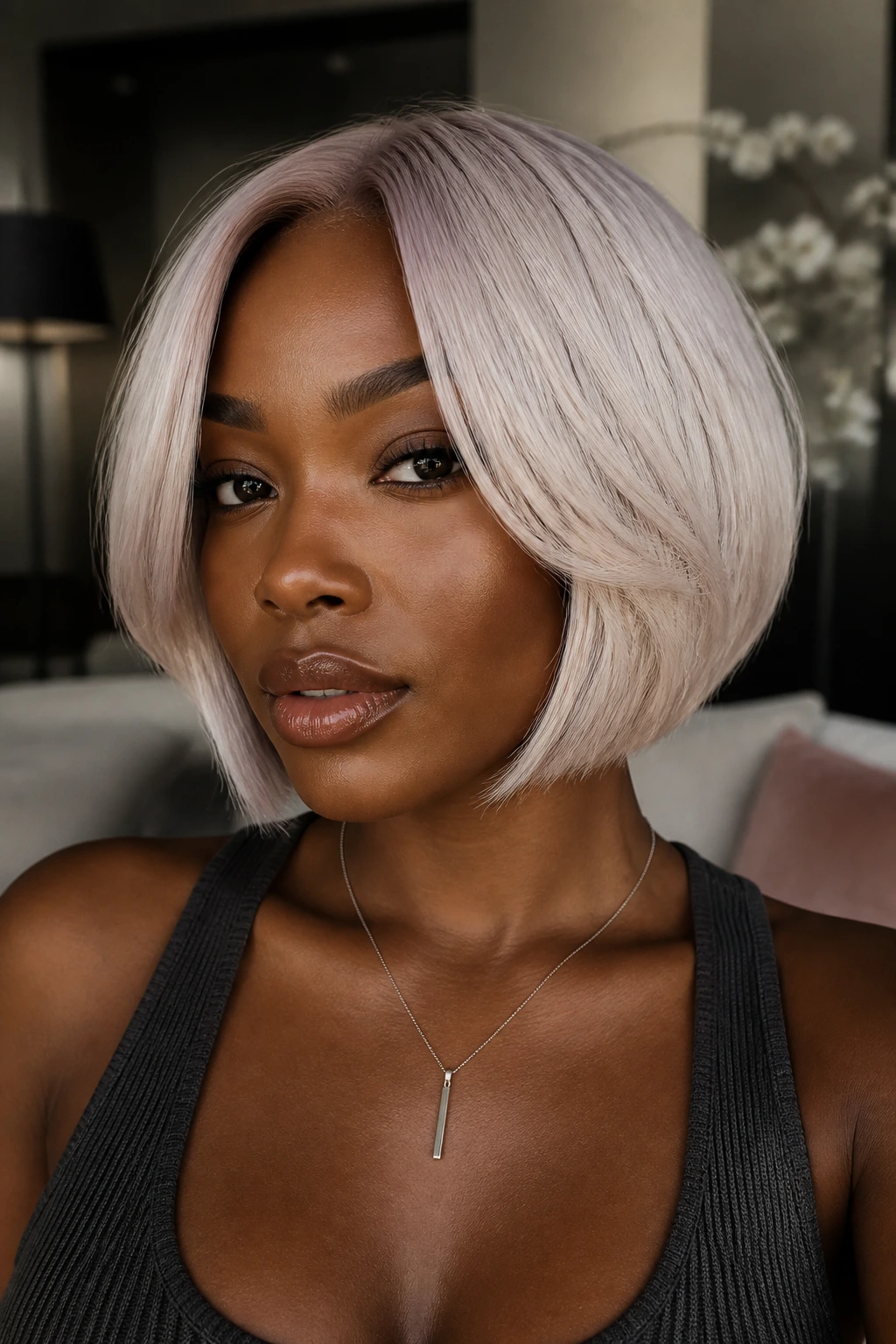
3. Pearl Platinum Bob
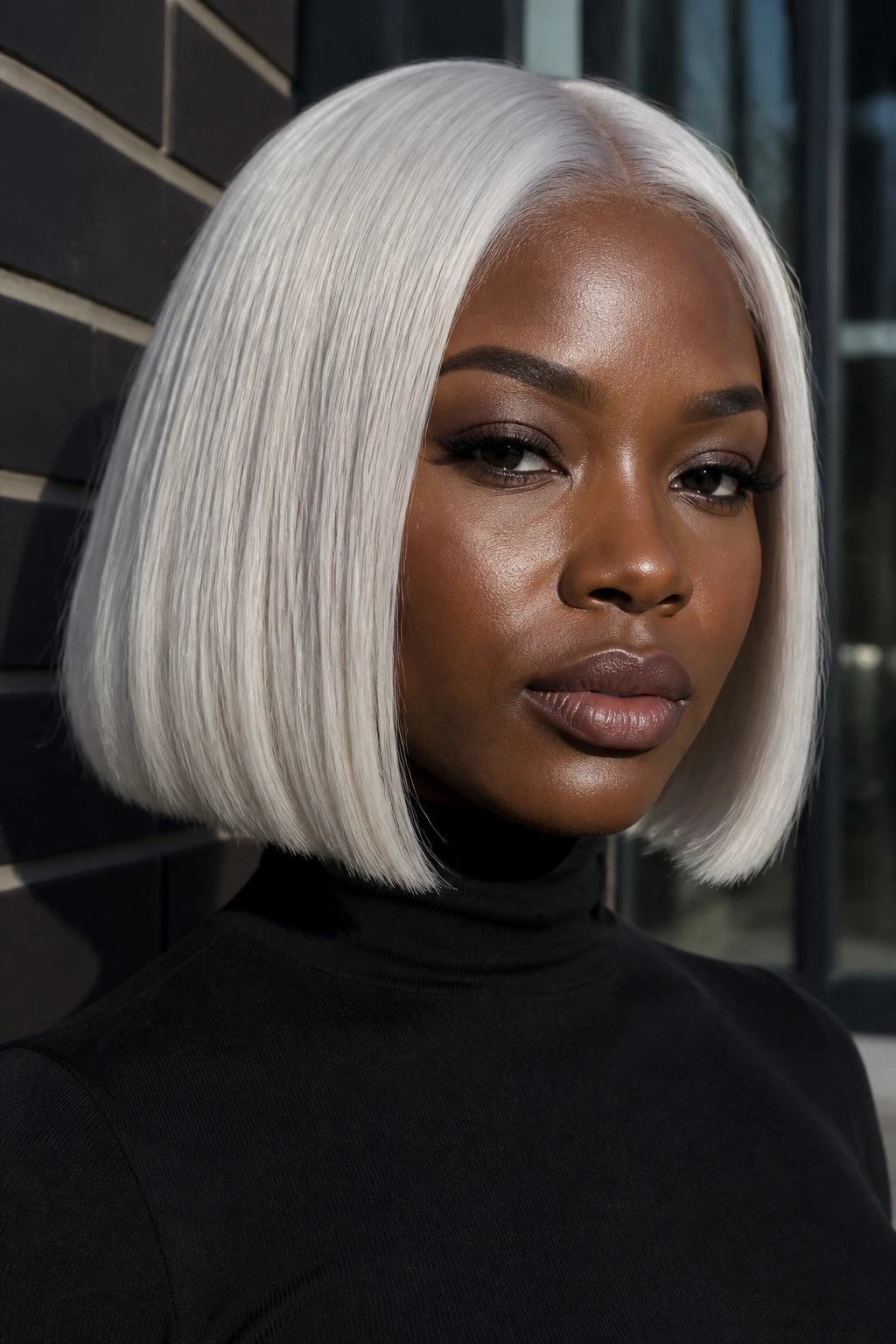
Why does pearl platinum feel softer than the pure white version? Because it keeps a whisper of translucence. Instead of a hard, flat silver-white, this bob gets a pearl glaze that leans slightly violet-beige, and that tiny shift changes the whole attitude of the color.
A chin-length bob or collarbone lob suits this shade best. The cut keeps the finish neat, while the pearl tone stops the blonde from looking icy enough to flatten warm undertones. On deep skin with neutral or golden undertones, it reads polished in a way that’s hard to fake with a harsher white.
How to Wear It
Side parts are kinder than dead-center parts if your face is rounder or fuller. A little bend through the ends keeps the bob from looking like a helmet. And if your wardrobe lives in black, cream, or rust, this shade slides right in without fighting your clothes.
The maintenance is moderate, not brutal. You’ll still need toning, but pearl fades more gracefully than blue-gray silver.
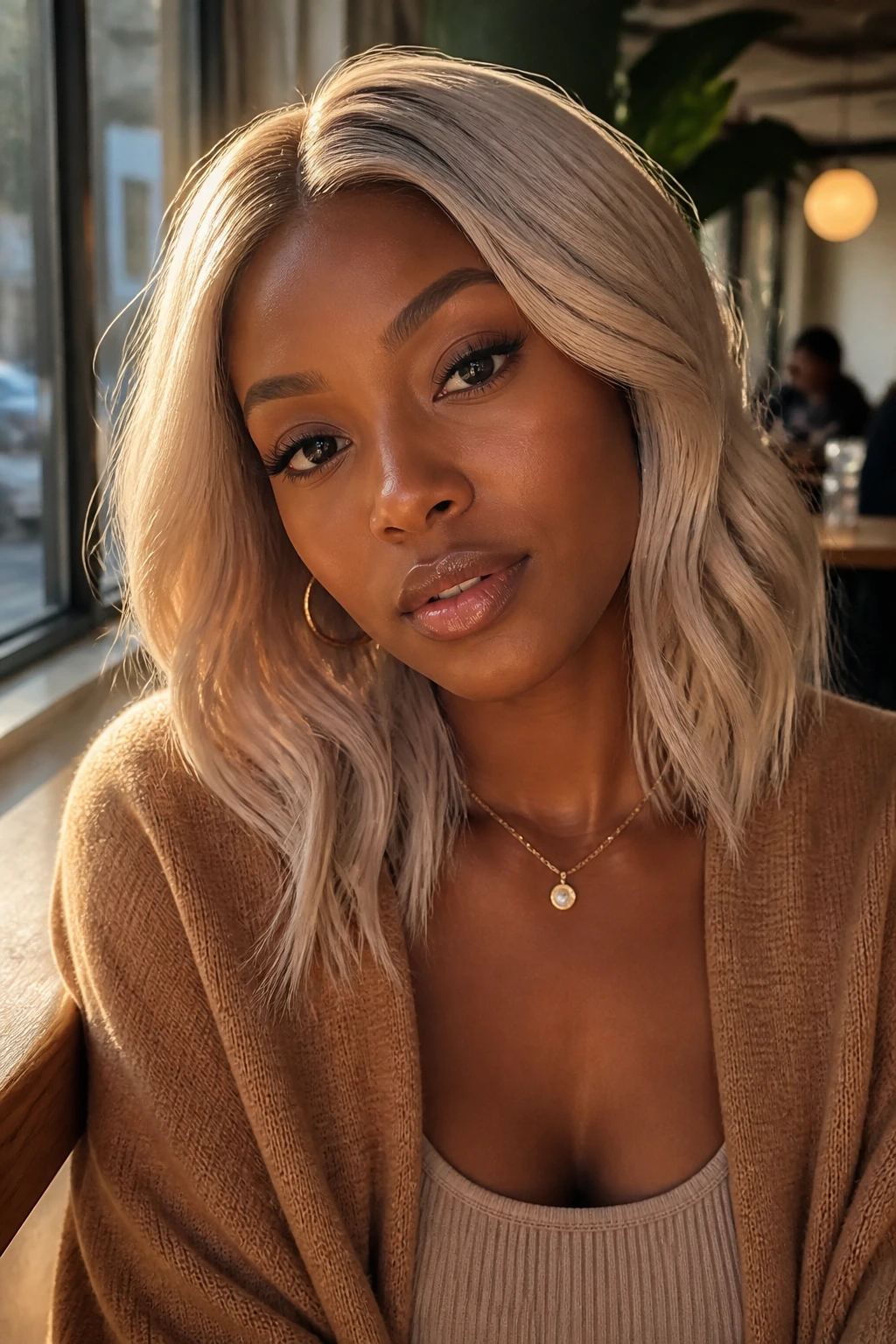
4. Champagne Platinum Veil
Picture platinum with a faint golden glow running through it, almost like the blonde was filtered through pale champagne. That’s the version I reach for when deep skin has warm undertones and the usual icy shades start looking too severe. This one has warmth, but not brass. There’s a difference.
The color works beautifully on shoulder-length hair with soft bends or brushed-out curls. It catches the eye in a gentler way than white-silver, which means it plays nicely with bronzer, terracotta blush, and warm lipstick shades. If your complexion already has gold or honey in it, champagne platinum keeps the face from looking hollow under strong light.
- Ask for a beige-leaning toner, not a gold one that can drift yellow.
- Keep the root a shade or two darker for depth.
- A gloss every 4 to 6 weeks helps preserve the creamy finish.
- This shade looks best when the hair has movement.
One-line truth: if pure silver feels too cold, champagne platinum is the safer bet without feeling boring.
5. Mushroom Platinum Balayage
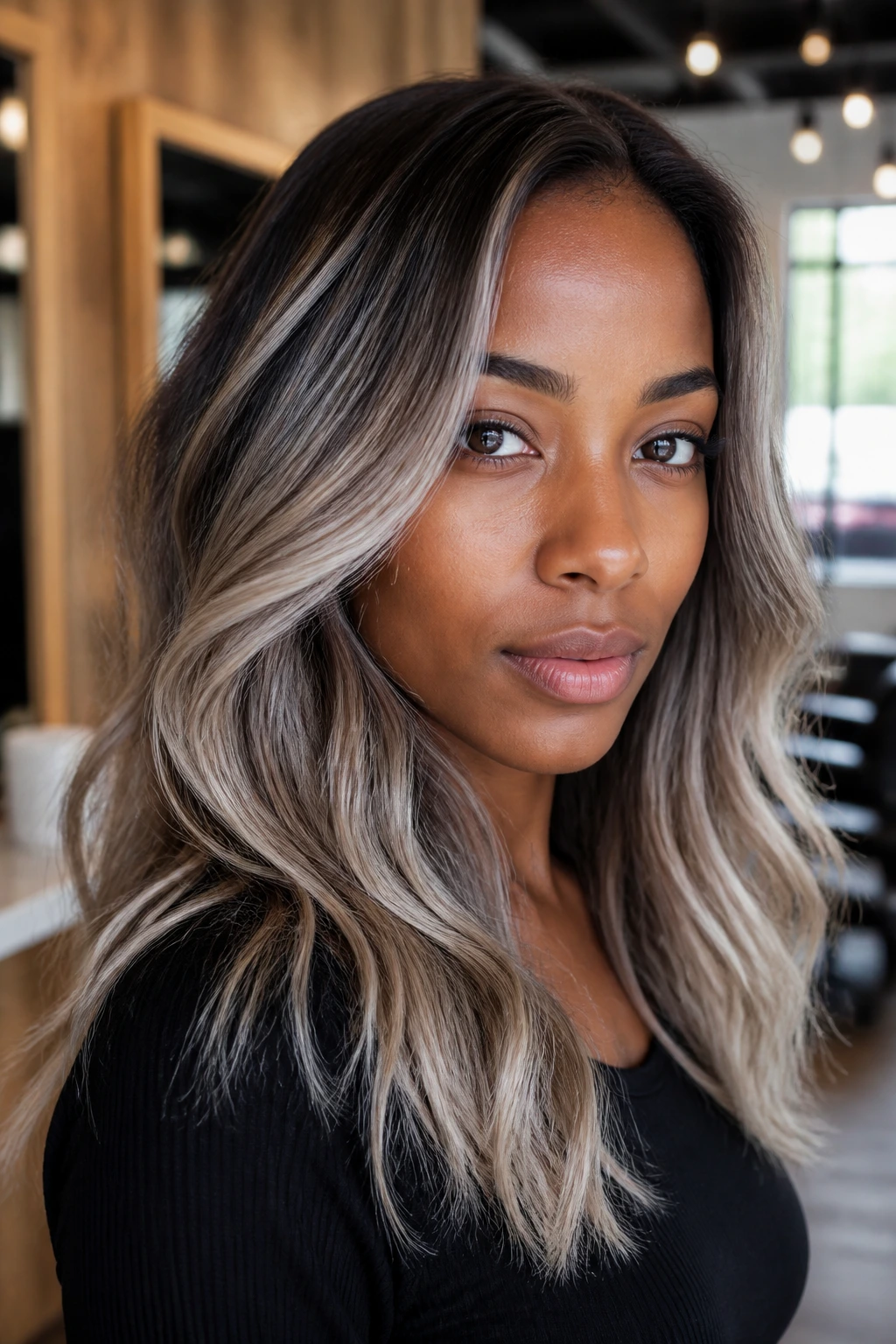
Mushroom platinum is where smoky brown and pale silver meet, and I think it’s one of the smartest platinum ideas for deeper complexions. It doesn’t chase white. It sits in that cool taupe lane that keeps the brightness controlled and the grow-out easier to live with.
This shade is especially good if your skin has neutral or olive undertones, because the mushroom base keeps the blonde from turning too icy. The balayage placement matters too. When the light pieces are painted through the mid-lengths and ends instead of blasted from root to tip, the whole style looks expensive in a quiet way. Not plain. Just controlled.
The best part is how this shade behaves on movement. Waves, curls, even a simple rough-dry bring out the smoky dimension. Straightening it pin-straight can make it look a little flatter, so I’d leave some bend in the hair unless you’re going for a very sleek finish.
6. White-Gold Platinum Curls
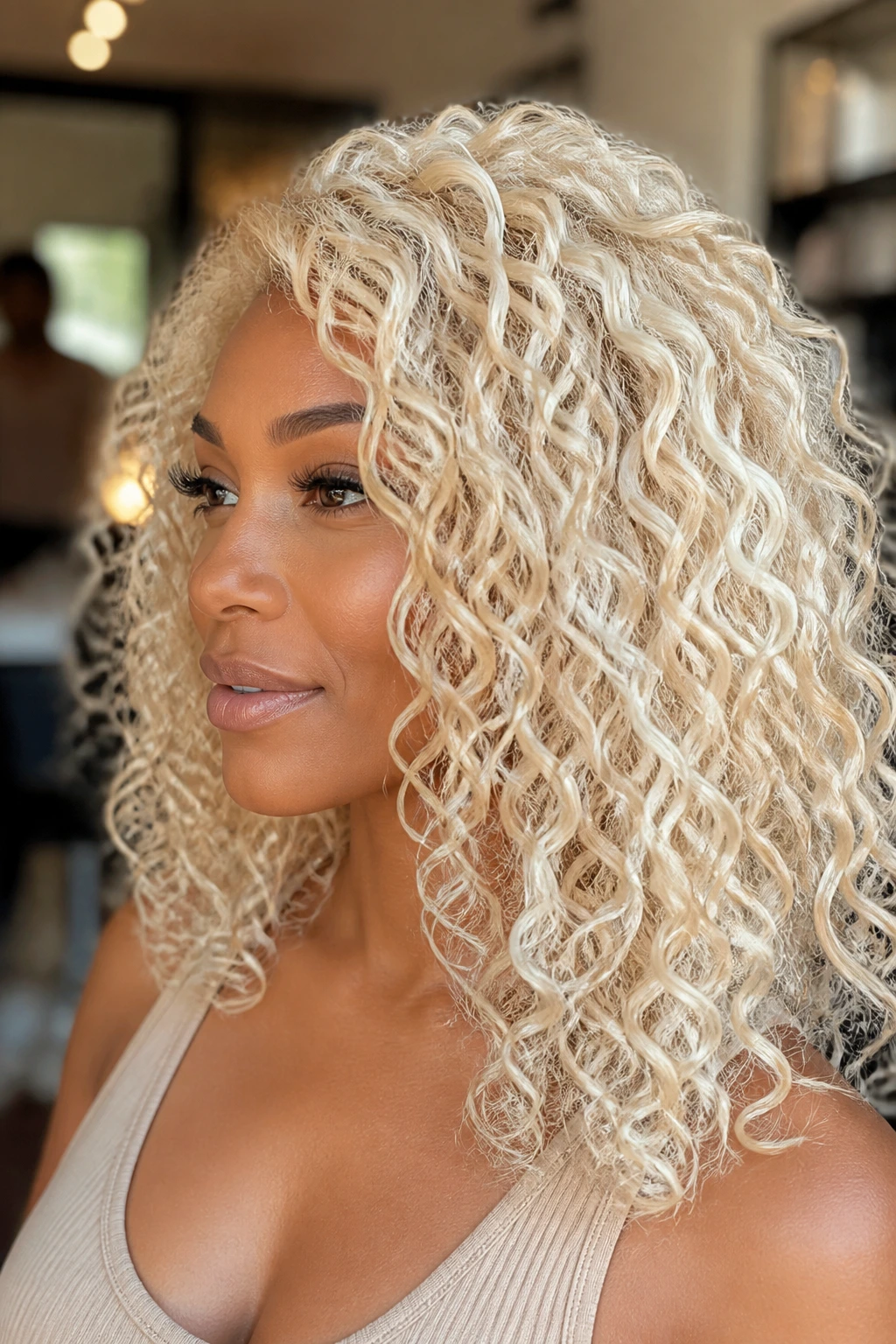
White-gold platinum is the warmer cousin of the ice look, and on curly or coily hair it can be stunning because the curl pattern gives the tone room to breathe. Instead of one wall of brightness, you get highlights, shadows, and a soft gold-white shimmer that moves as the curls move.
This shade works best when the lift is clean but the toner stays creamy. Too much violet and the gold gets stripped out; too much yellow and the whole thing tips into brass. The middle path is what you want. On deep skin with golden or red undertones, white-gold can feel almost luminous without looking pale.
Best Way to Wear It
Use curl cream sparingly and let the definition do the talking. Heavy butters can dull the brightness. A side part or off-center part helps the curls fall in a way that shows off both the color and the shape of the hair. If the curl pattern is tight, keep the ends in good shape; frayed ends kill the clean finish fast.
This one likes moisture, but not grease.
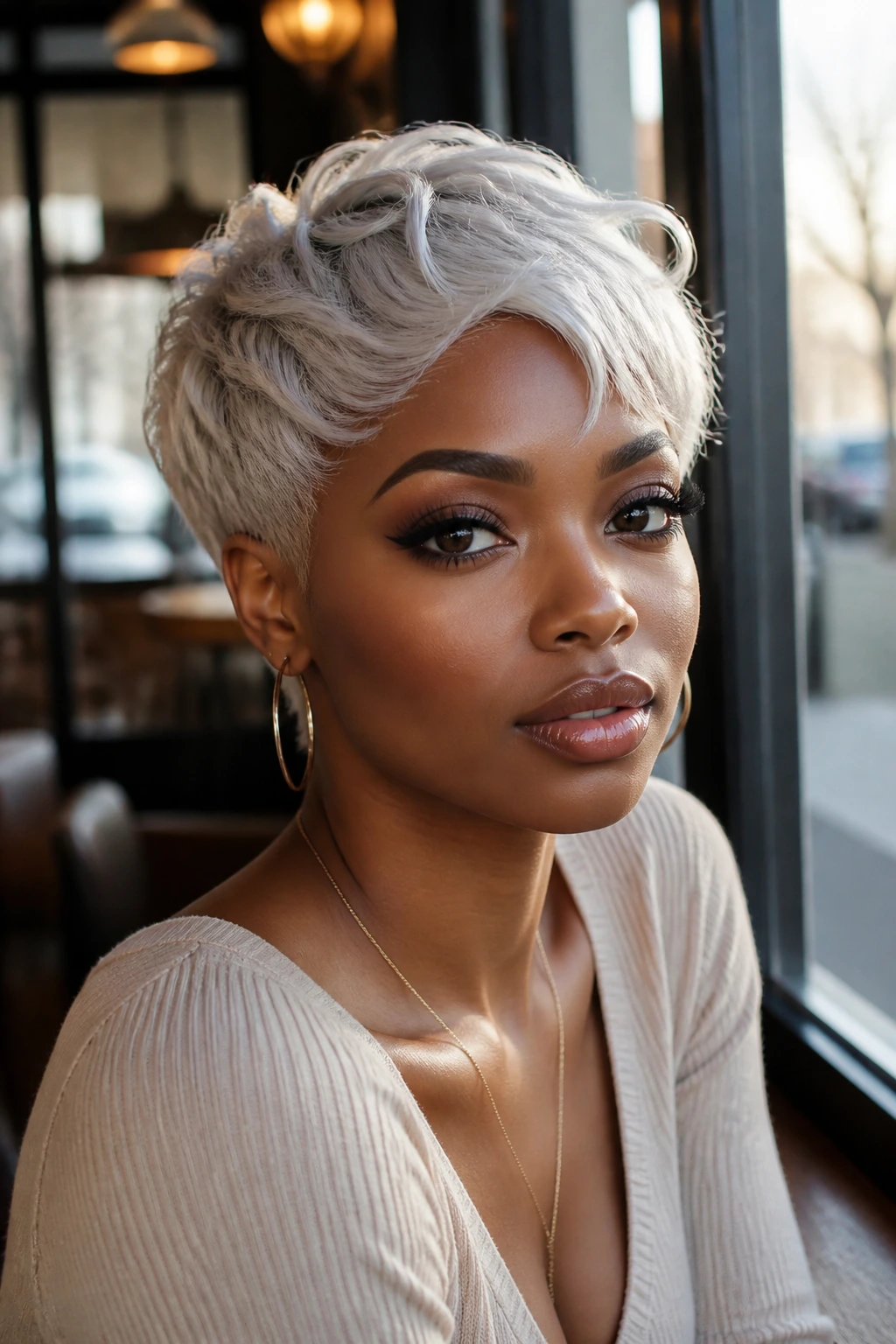
7. Silver Smoke Pixie
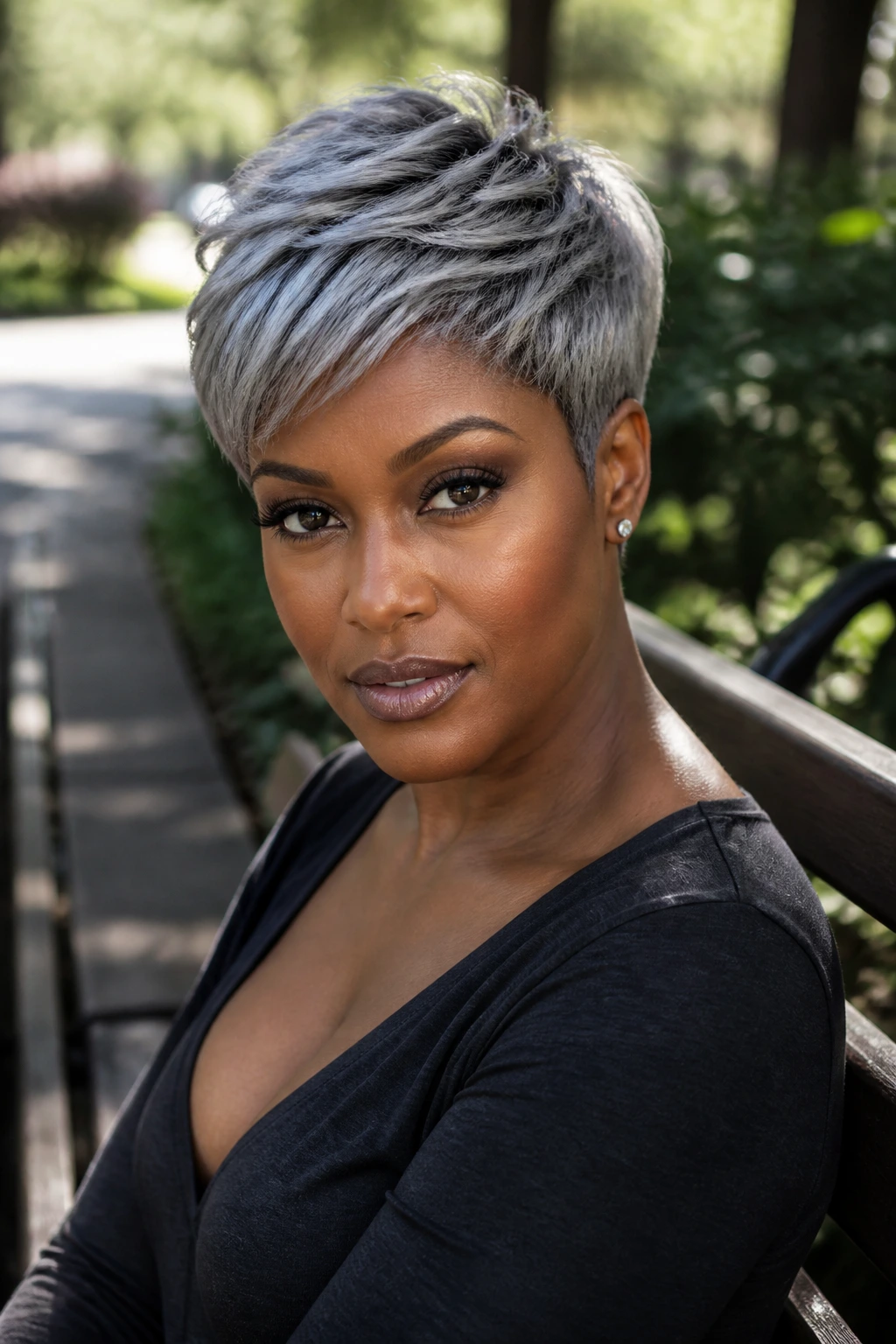
A short pixie can handle more drama than most people think. Silver smoke proves it. The color sits between true silver and soft charcoal, so the overall effect is cooler and more grounded than a bright, cartoon-white platinum.
On deep skin, the contrast looks bold because the haircut does half the work. The close sides and nape keep the color neat, while the longer top lets the smoky silver catch the light in different ways. If your face shape likes a cropped cut, this is one of the cleanest ways to wear platinum without committing to a full-length maintenance project.
The best versions keep the root slightly deeper and the top a touch lighter. That tiny shift gives the cut movement even when it’s short. I’d ask for a matte silver glaze rather than a shiny blue toner if you want the color to stay wearable. Too much blue can turn the whole thing cold in a way that fights the skin.
8. Platinum Money Piece
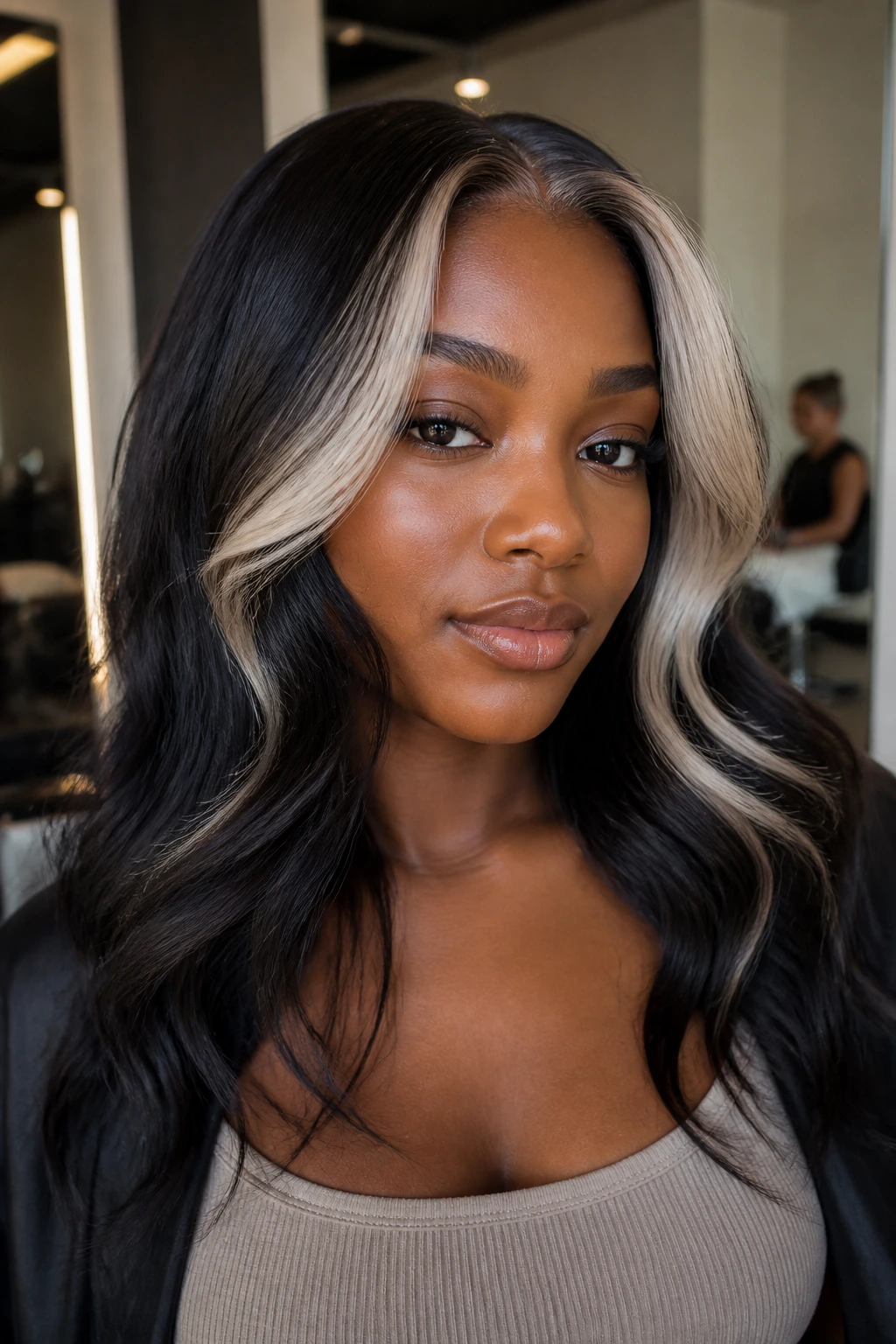
Want platinum without bleaching your entire head? The money piece is the smartest place to start. It puts bright platinum panels right around the face — usually at the hairline and front sections — so the contrast hits your cheekbones, jaw, and eyes first.
On deep skin, this placement can be more flattering than an all-over platinum because it keeps most of the hair dark or mid-tone, which gives the face a stronger frame. It also grows out with less panic. A dark base plus bright front pieces looks intentional for longer, especially if the platinum is toned to a soft pearl or beige.
A center part gives the boldest result. A side part softens it. If you wear curls, the money piece reads even more dimensional because the light sections break up around the face instead of sitting like two flat stripes.
What I’d ask for: a bright face frame, a root blur, and a toner that stays pale rather than yellow.
9. Shadow-Root Platinum Lob
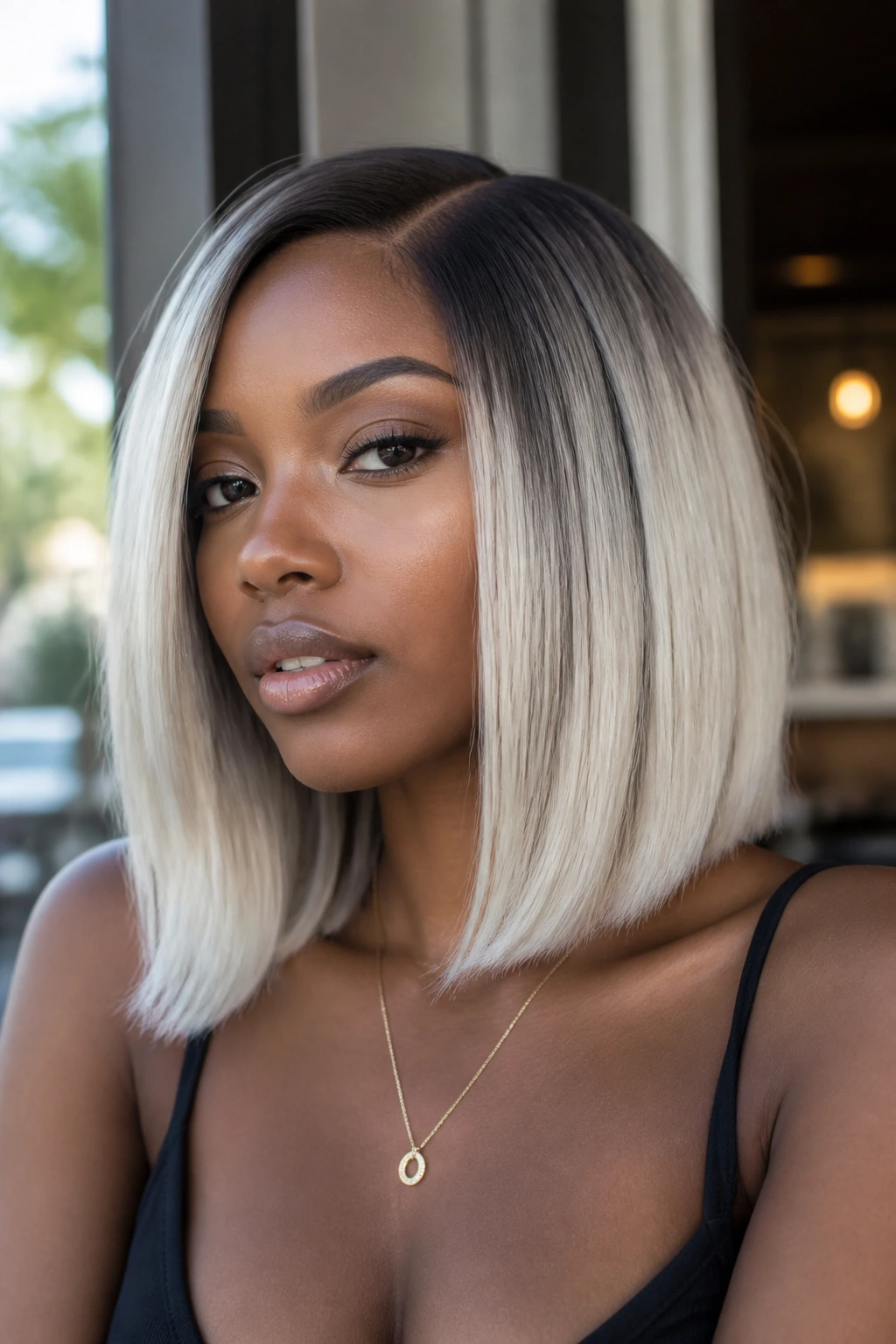
The lob is the workhorse cut of platinum, and the shadow-root version is the one I’d recommend most often for deeper skin tones. It keeps the scalp grounded with a darker root, then fades into a bright platinum through the mids and ends, so the whole style has shape from top to bottom.
That root depth matters more than people realize. A platinum that starts too high at the hairline can make the face disappear, especially if the brow color is light or sparse. A shadow root fixes that in one move. It also buys you time between appointments, which is useful because platinum does not stay clean forever.
- Best on straight or softly waved lobs.
- Works well with a blunt perimeter and subtle layers.
- Needs gloss refreshes more than heavy bleaching every time.
- Looks sharper when the root color is close to your natural base.
This is the one for someone who wants a bright blonde but still wants to look like they know exactly what they’re doing.
10. Lavender Ice Melt
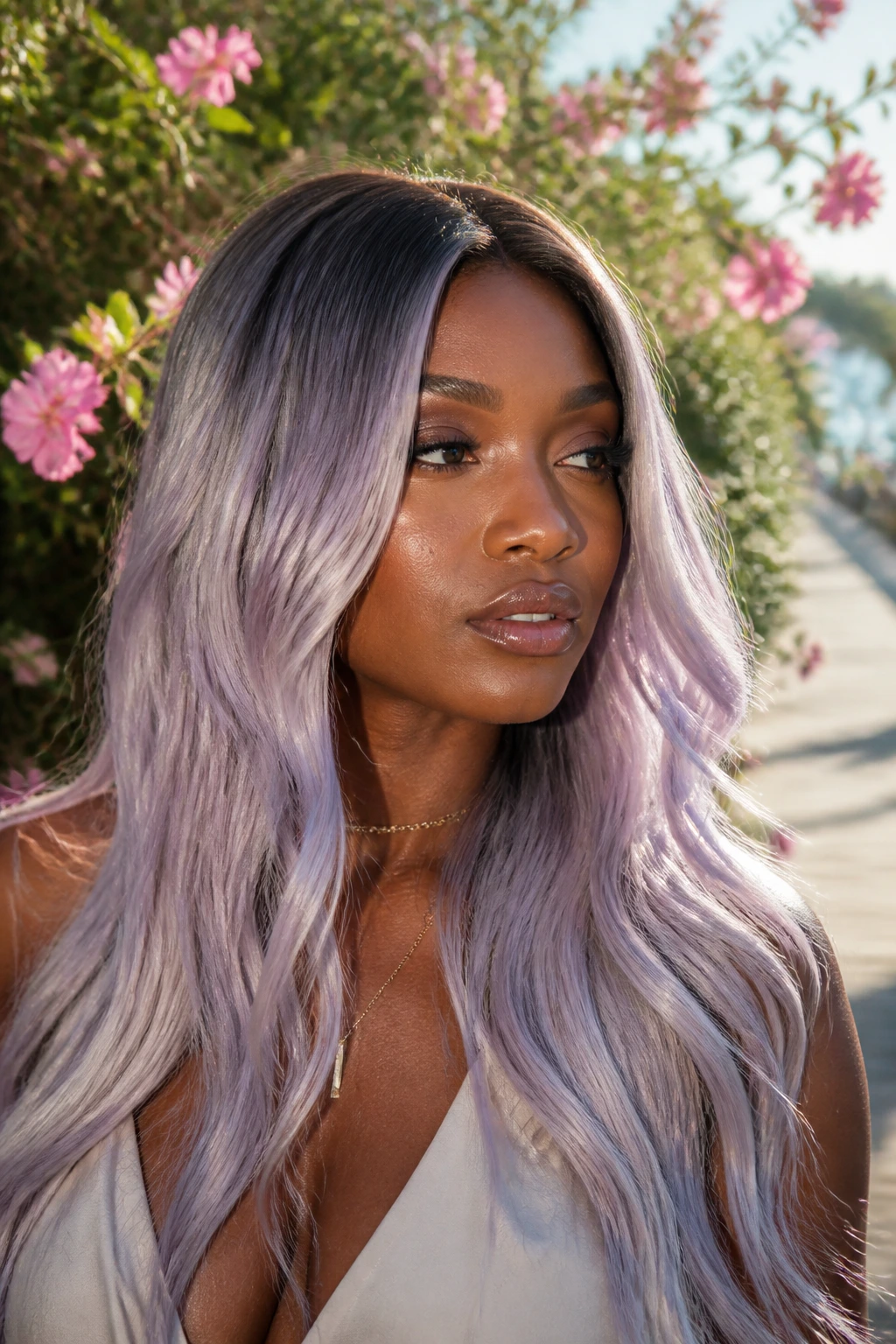
Lavender ice is where platinum picks up just enough cool lilac to stop it from feeling severe. The tint is barely there, which is exactly why it works. You get the brightness of platinum, but the violet cast softens the edges and keeps the finish from looking plain white.
I like this on deep skin with cool or neutral undertones, especially if the person already wears cool makeup shades or silver jewelry. On warm undertones, it can still work, but the lavender needs to stay very faint. Too much purple and the hair starts reading pastel instead of platinum.
The melt version matters here. Darker roots flowing into lavender-platinum lengths keep the color wearable. If the whole head is one flat pastel, it can look costume-heavy fast. A melt gives the eye something to follow.
Try it on a long bob or layered curls. The movement helps the shade look airy instead of dense.
11. Rose Quartz Platinum
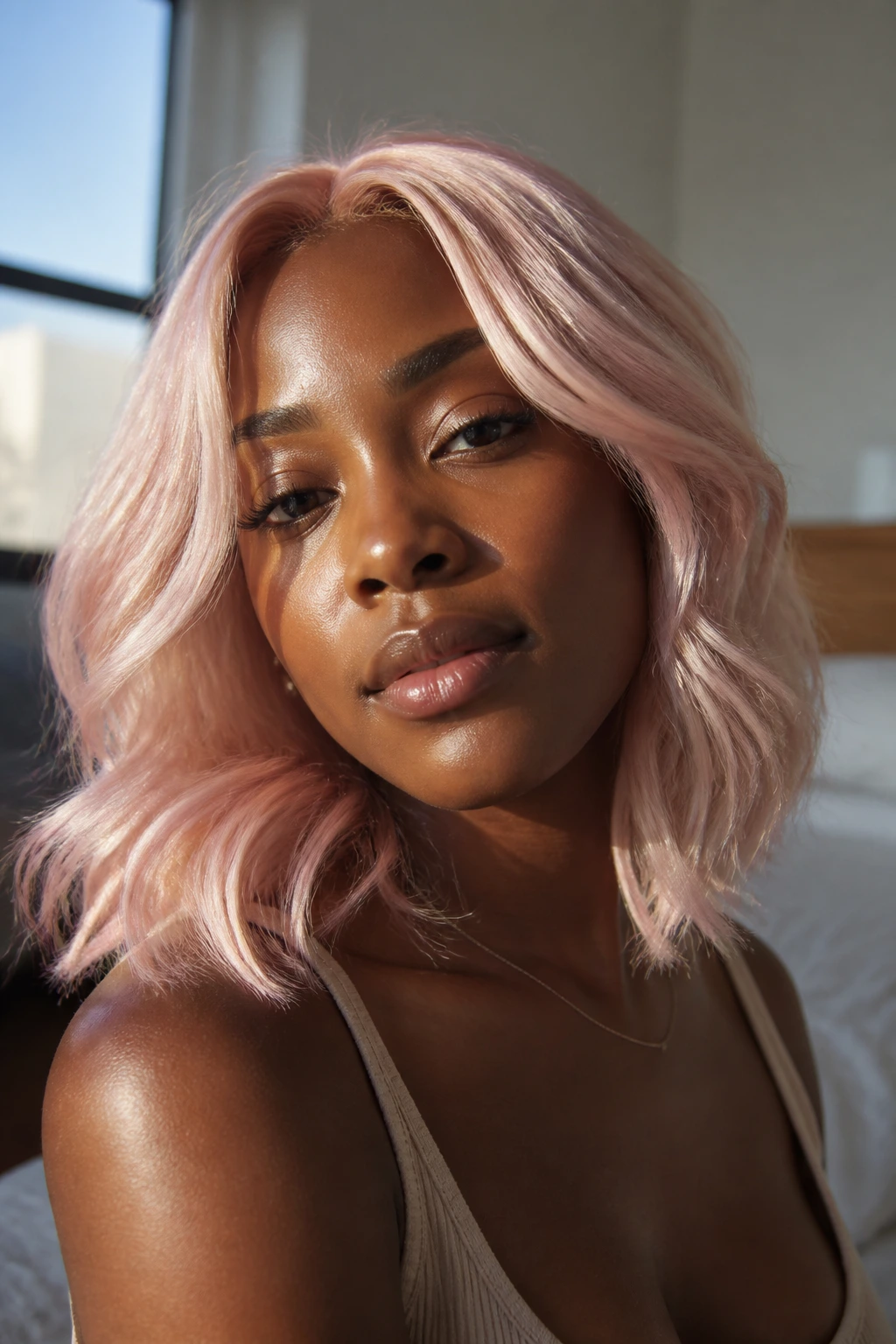
Rose quartz platinum is a softer, warmer take on the idea, and it’s a smart choice if you want the brightness of platinum without the hard chill of silver. The pink is delicate — not neon, not bubblegum — more like a blush washed through pale white-blonde hair.
On deep skin, rose quartz reads fresh because the warmth in the pink catches the same undertone family that many deeper complexions already carry. That’s why it can feel less stark than a pure icy blonde. It also plays nicely with berry lipstick, terracotta blush, and gold earrings. Small thing. Big payoff.
This color is strongest when the base is lifted cleanly and then glazed with a translucent rose toner. If the pink is too opaque, it can look flat. If it’s too sheer, it disappears. The sweet spot is that soft blush that shows up in daylight and relaxes indoors.
I’d wear this on shoulder-length waves or a blunt cut with curved ends. It needs a little softness around it.
12. Blue-Steel Platinum
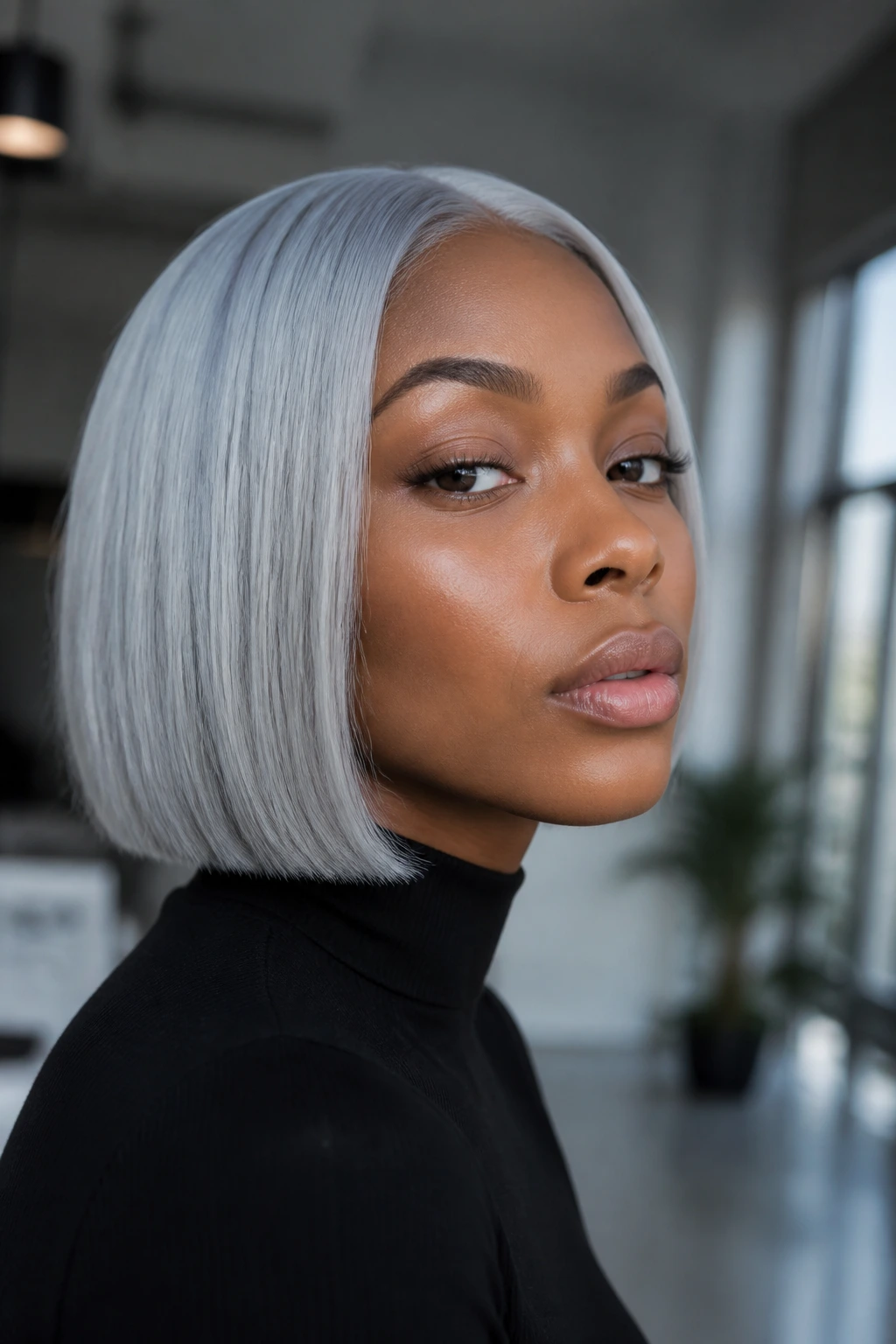
Blue-steel platinum is the cool-toned cousin that likes a sharper face and a stronger haircut. It has that steel-gray undertone with a faint blue edge, which makes the platinum look sleek instead of sugary. On deep skin, the contrast is intense in the best way when the tone is kept disciplined.
Why choose blue-steel instead of plain silver? Because silver can sometimes veer soft and shiny, while blue-steel gives the color more attitude. It’s a cleaner fit for those who wear darker makeup, line the eyes heavily, or want a more fashion-forward finish.
Best Match
A blunt bob, a close crop, or a long style worn straight will show this tone well. Curls can work, but the blue-gray reads most clearly when the surface is smooth. Ask for a blue-violet toner rather than a very violet one if you want to avoid the purple wash.
This is not the easiest platinum to maintain. It fades fast if you wash too often with hot water. But when it’s fresh, it has real bite.
13. Beige Snow Platinum
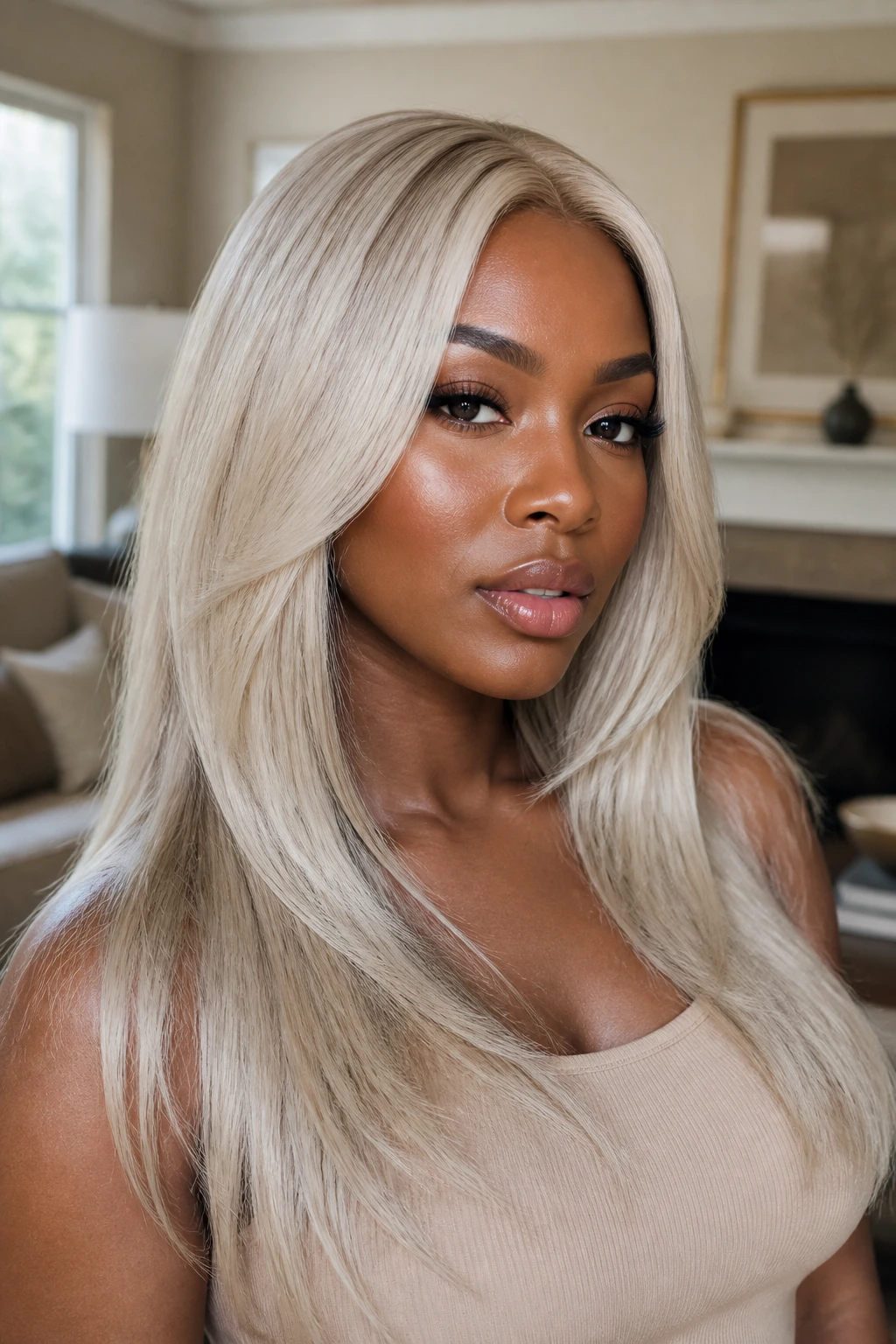
Beige snow platinum is one of my favorite choices for deeper skin because it keeps the brightness without the harsh white line some platinum shades create. The beige note gives the hair a creamy finish, and that creaminess helps the color sit more comfortably against warm and neutral undertones.
It’s a useful option if you like your blonde elegant rather than icy. The finish is lighter than champagne, but not as cool as silver. That middle ground matters. Too much ash can make deep skin look a bit flat, while beige snow keeps the hair bright and the face warm.
This shade works best on long layers, silky straight styles, or soft bends. It can look a little too polished on a very textured cut unless you add shape with waves or a blunt outline. A gloss in the beige family every few weeks helps keep the cream note from drifting yellow.
If you’re torn between warm and cool platinum, this is the compromise I’d trust.
14. Platinum Ombré Ends
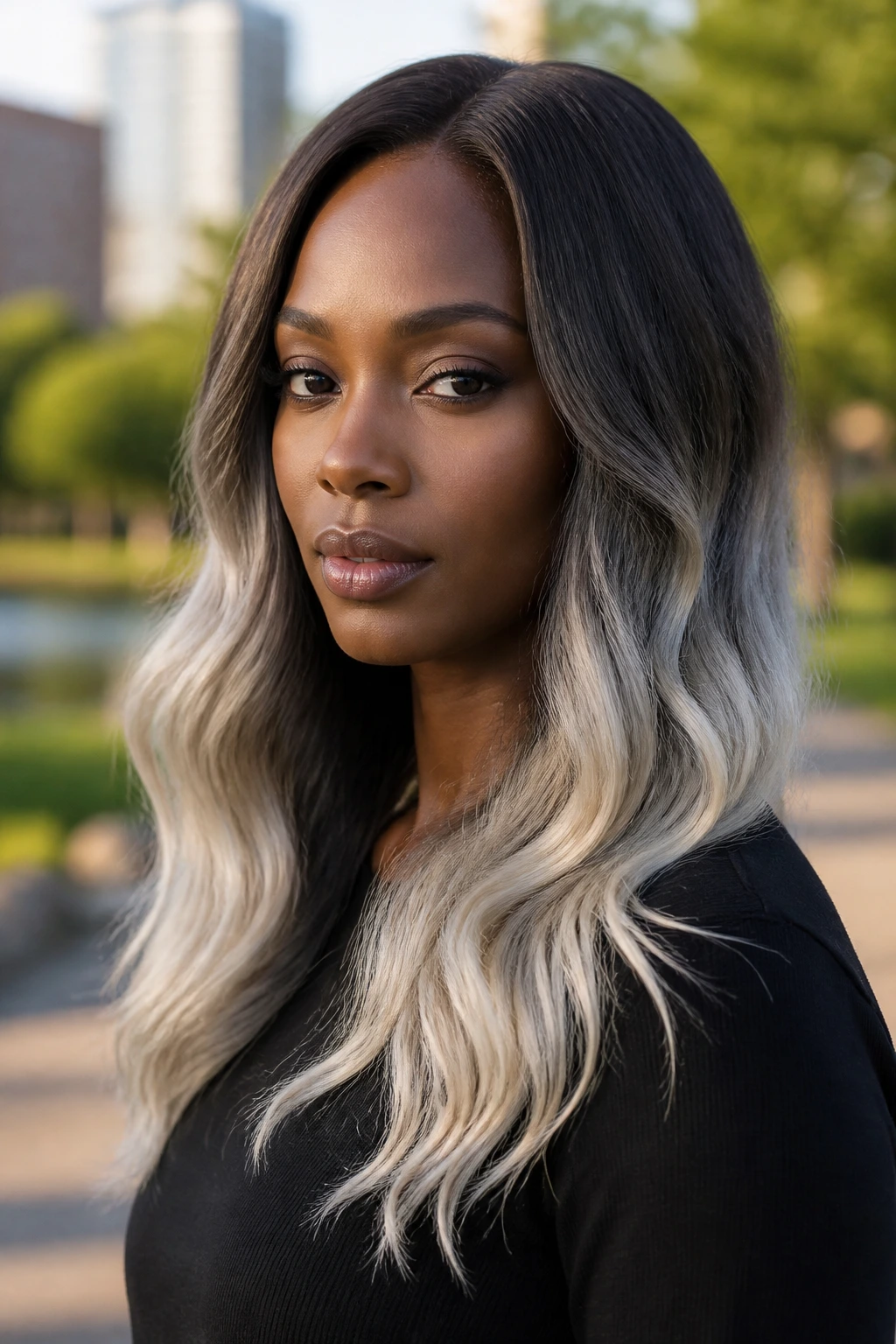
Platinum ombré ends are made for people who want the platinum punch without living at the salon. Dark roots stay intact, the mid-lengths soften into blonde, and the ends land in a pale platinum zone that looks dramatic when the hair moves.
On deep skin, this kind of placement can be more flattering than full-head platinum because the darker upper section gives the face a frame. The eye goes first to the lighter ends, then back to the natural depth near the scalp. That keeps the overall look grounded.
This style is especially good on long hair, layered cuts, and waves that show off the fade. Straight hair works too, but the gradient is more obvious when there’s bend. If your ends are already dry, though, don’t force a high-lift ombré. Platinum ends show damage like a flashlight. You need the hair to be in decent shape before you ask it to carry that much light.
A bond mask and regular trims are not optional here.
15. Chunky 90s Platinum Highlights
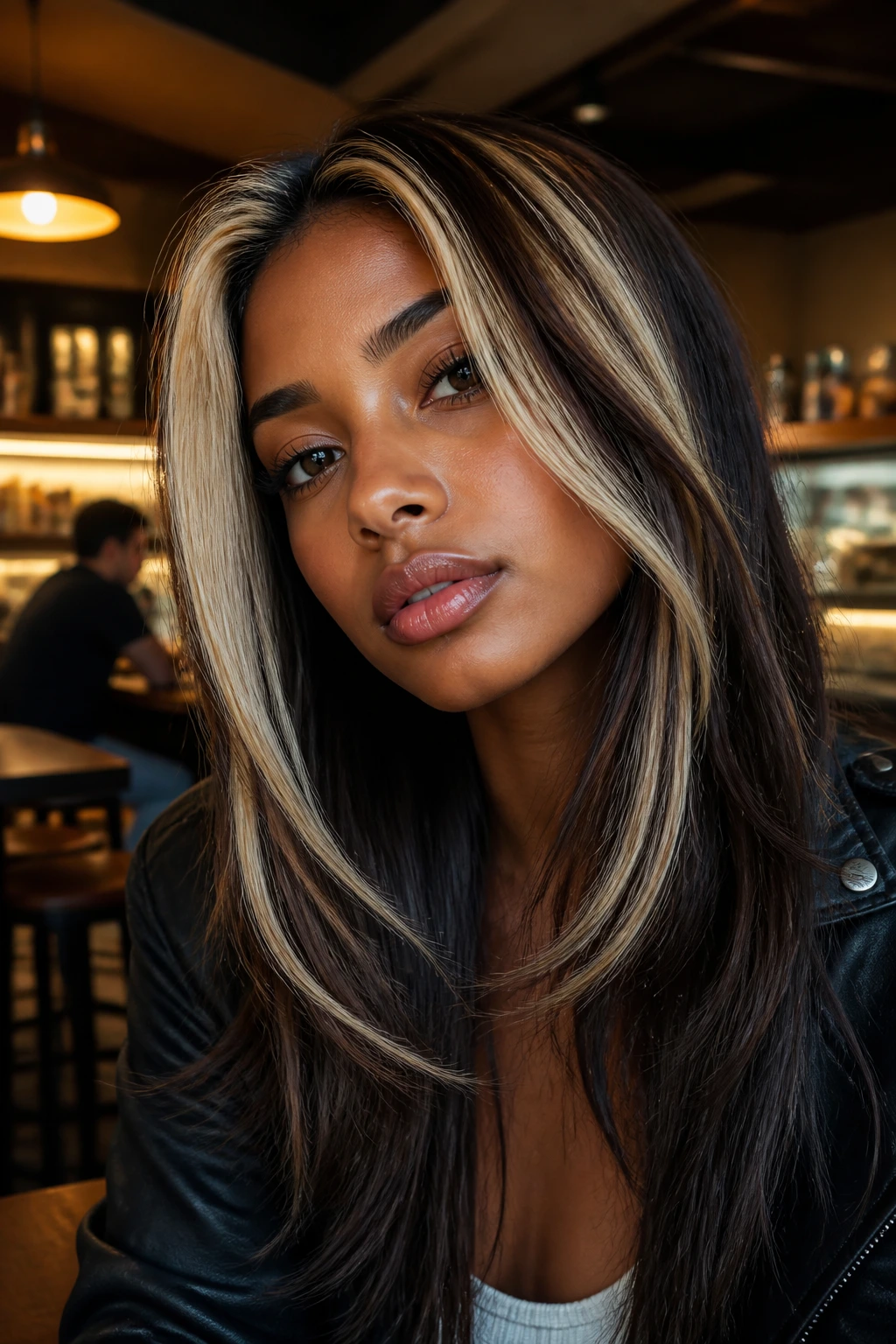
Chunky platinum highlights are back because they solve a problem that fine babylights can’t: they give dark hair more shape. Instead of whisper-thin blonde threads, you get obvious ribbons of platinum that sit against your natural base and create real contrast.
That contrast is excellent on deep skin. The darker hair stays visible, which means the platinum doesn’t wipe out the frame around the face. The result feels confident, not washed out. On layered cuts, the ribbons can almost act like built-in contour lines, especially when the hair is blown out or curled loosely.
What to Watch For
- Keep the ribbons wide enough to be seen, but not so wide they look stripey.
- Ask for a toned platinum, not raw yellow lift.
- This style looks best when the base color is rich and healthy.
- If your hair is curly, chunkier pieces show up better than tiny highlights.
I’d pick this one if you want something loud enough to matter but structured enough to wear with a plain black tee and still look put together.
16. Soft Vanilla Platinum
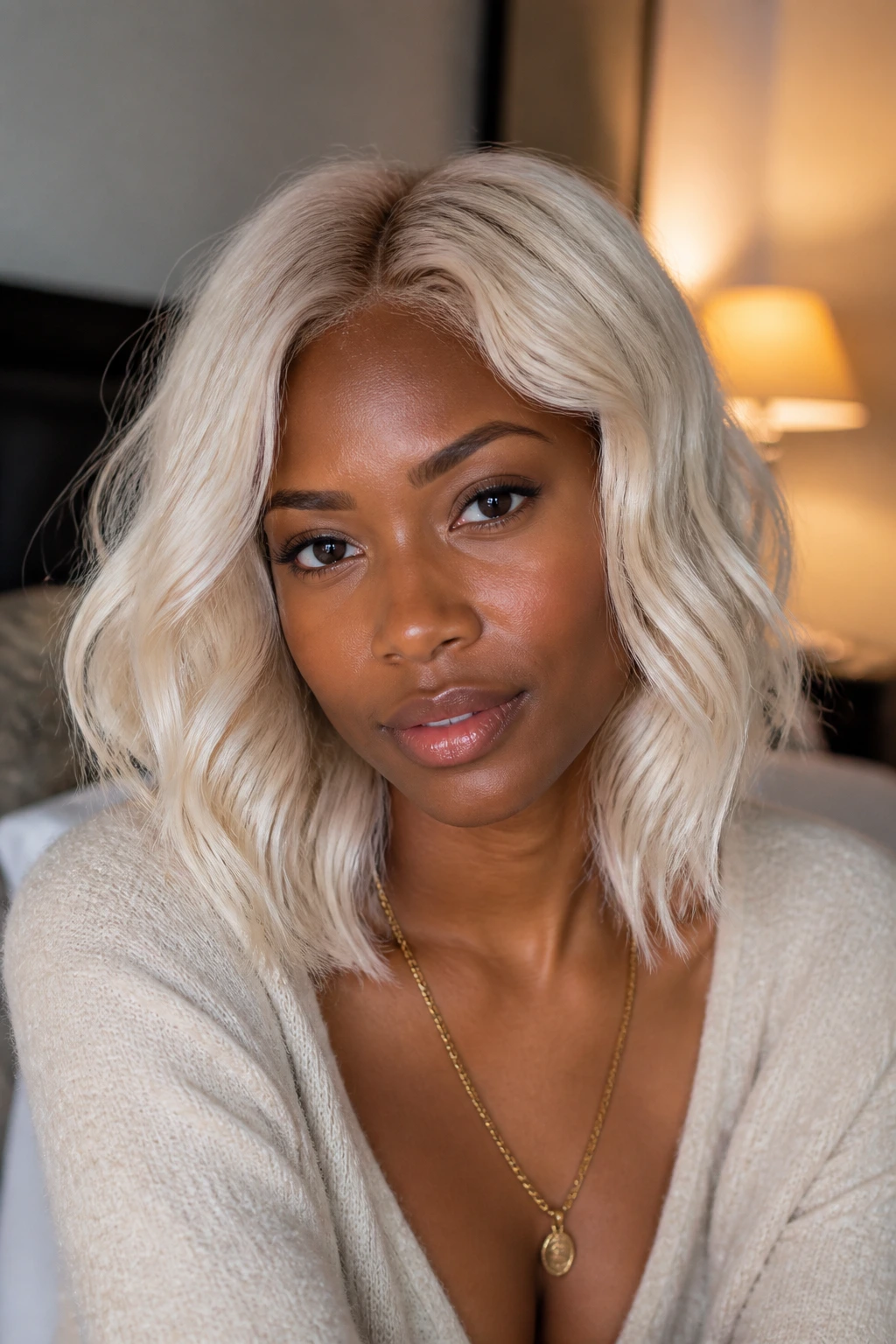
Soft vanilla platinum is the creamier, warmer answer to the question of “Can platinum be gentle?” Yes. It can. This shade carries enough pale gold to keep the blonde from reading icy, but it stays light enough to count as platinum rather than beige blonde.
On deep skin, that softness can be a relief. The color doesn’t carve the face into hard lines. Instead, it gives a warm glow that works especially well with medium-deep to deep complexions that have gold in the skin. If you wear warm-toned makeup or gold jewelry often, soft vanilla tends to feel natural fast.
I think it looks best on styles with some air in them — a loose lob, layered waves, or a blown-out round-brush finish. Pin-straight hair can make the shade look a little flat. You want just enough movement for the creamy tone to catch light from different angles.
This is the platinum for people who want bright, but not icy-bright.
17. Satin Silver Lob
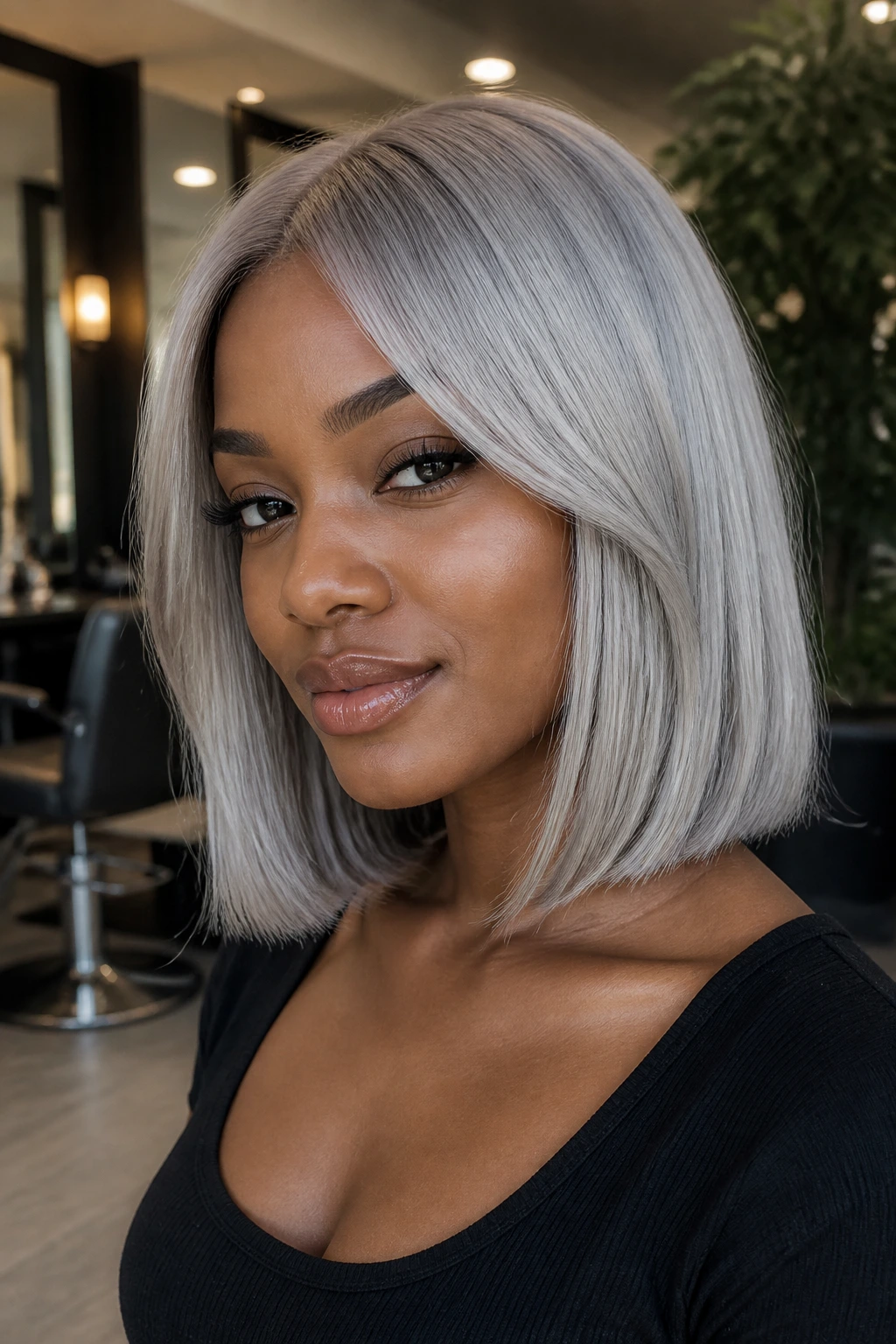
Why does satin silver feel calmer than ice silver? Because it trades some of the hard white flash for a smoother, brushed-metal finish. The tone is still cool, still bright, but there’s less of that almost reflective glare that can make some platinum shades feel severe.
A lob gives satin silver the right amount of room. It’s long enough to show the tone shifting through the ends, short enough to keep the whole thing neat. On deep skin, the color looks especially good when the haircut has a blunt bottom edge and soft interior texture. That contrast keeps the silver from going flat.
If you have a lot of hair, ask for slight internal layering so the cut doesn’t puff out and swallow the color. If your hair is finer, keep the perimeter clean. Either way, this shade likes a glossy finish. A light serum on the ends can make the silver look smoother without turning greasy.
Satin silver is for people who want cool platinum with less drama than full ice.
18. Smoky Lilac Face Frame
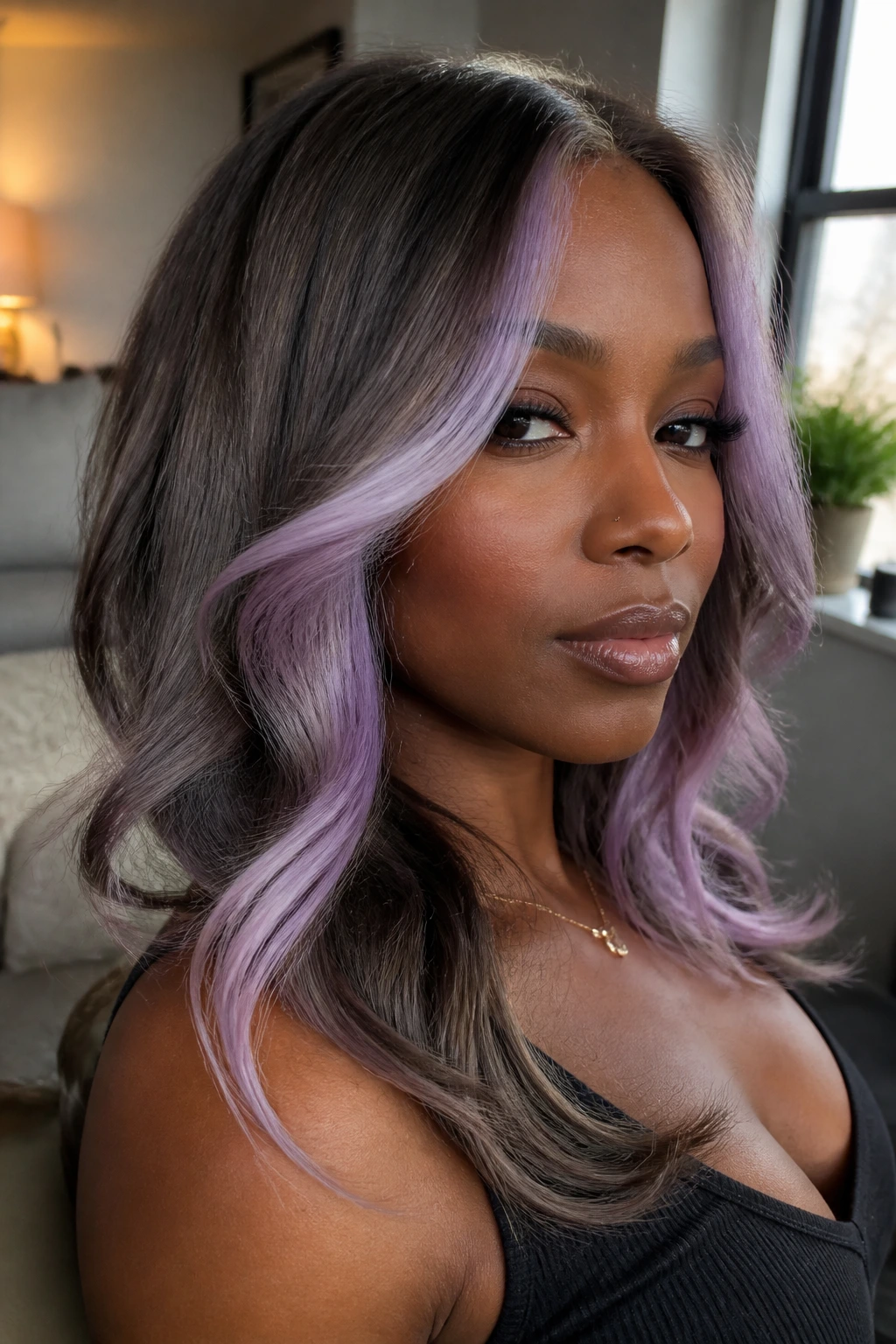
Smoky lilac face framing is one of the easiest ways to try a tinted platinum without committing the whole head. You keep most of the hair in a deeper blonde or brunette base, then add pale lilac-silver pieces around the face and part line so the color hits where people actually look first.
On deep skin, that placement works because the darker base stays in control. The lilac doesn’t need to carry the whole style. It just has to brighten the face a few inches at a time. I like this best on layered cuts, shags, and long curls where the color can peek through instead of sitting in one flat block.
The lilac should stay smoky, not sugary. If it gets too pastel, it can read playful in a way that loses the platinum effect. A soft violet glaze keeps it in the cool family. This is a good one for people who want a little edge but aren’t ready for constant root appointments.
It’s also one of the easiest shades to grow out. That matters.
19. Cream Platinum Pixie
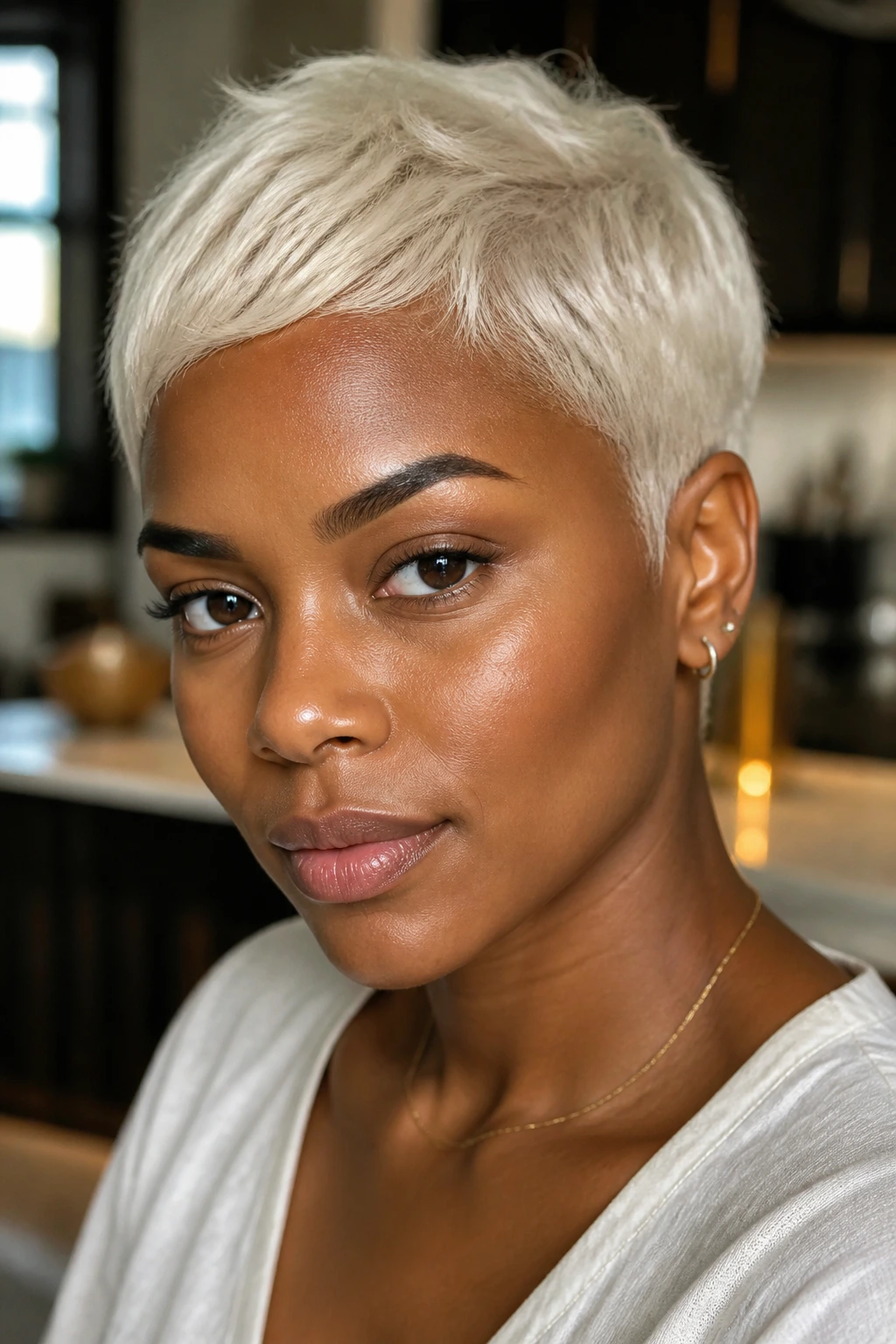
A cream platinum pixie can be incredibly flattering on deep skin when the cut is tight and the top has a little texture. The creamy blonde keeps the look from becoming harsh, while the short length makes the color feel clean and deliberate instead of overworked.
This is not the place for fuzzy layers or a shapeless top. The crop needs crisp sides and a top that can be pushed, spiked, or brushed forward depending on the mood. The hairline becomes part of the design. So does the brow shape. If the brows are too pale, the whole look can drift off balance.
Why It Works
The shorter the cut, the less hair there is to compete with the skin. That means the blonde can be brighter and still feel controlled. A cream-toned platinum also ages better on short hair than a flat white, because it hides toner fade more gracefully.
If you want a look that’s sharp but not frozen, this is a strong pick.
20. Black-Root Platinum Crop
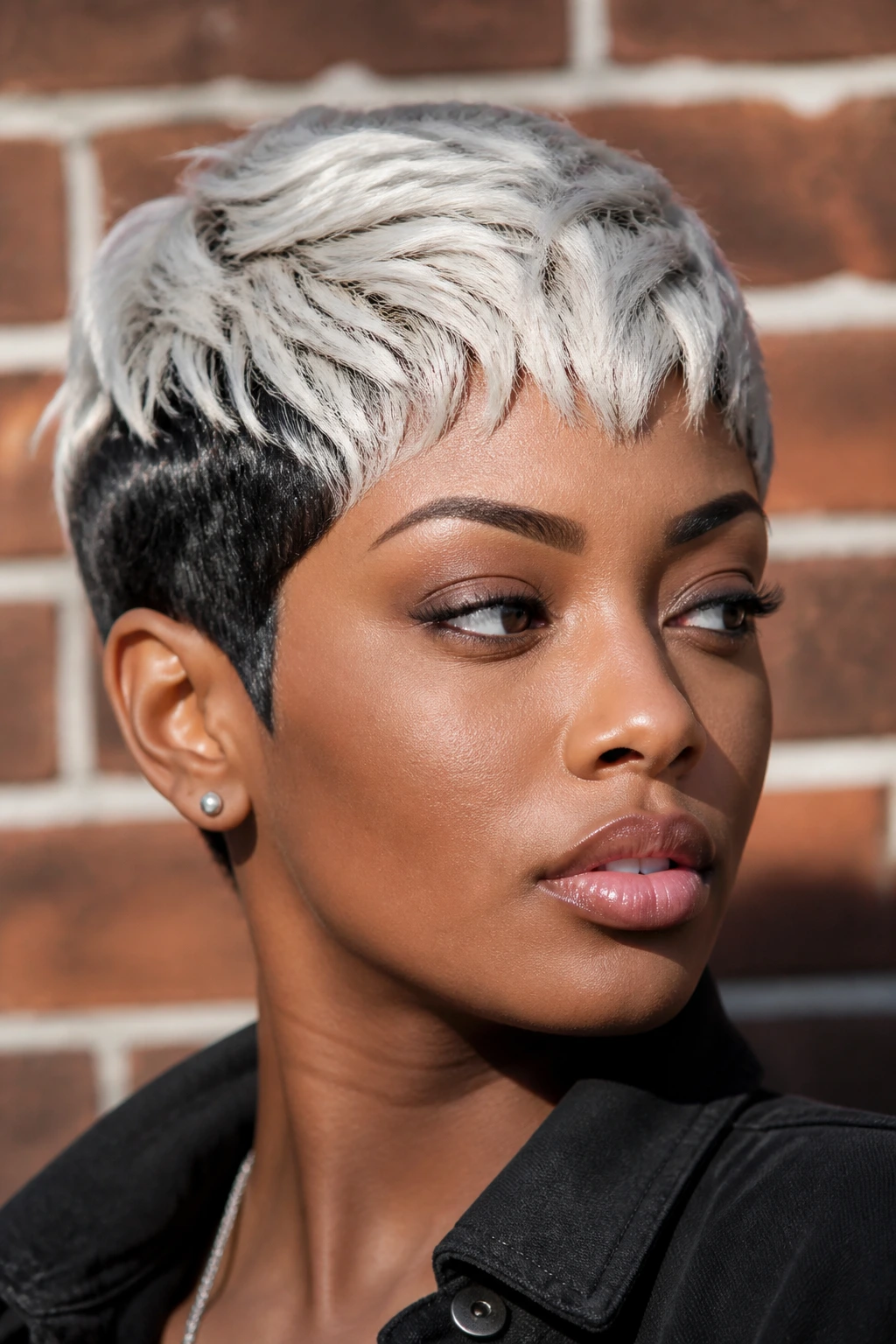
Black roots are not a flaw here. They’re the point. A black-root platinum crop gives you one of the strongest contrast stories in the whole lineup, and on deep skin that contrast can look incredibly polished when the cut is precise.
The crop shape matters because the short length keeps the dark-to-light shift compact. That prevents the hair from looking patchy or unfinished. The platinum sits on top, around the crown or front, while the darker root anchors the style. It’s especially striking on textured crops, finger waves, or tapered cuts where the shape has a little architecture.
This is a good option if you want high drama but don’t want an all-over blonde maintenance schedule. The root can grow a bit and the look still holds. I’d ask for a clean silver-beige platinum rather than a yellow white, since the darker root already provides all the drama you need.
Sharp haircut. Sharp contrast. No fluff.
21. Pearl Ash Balayage
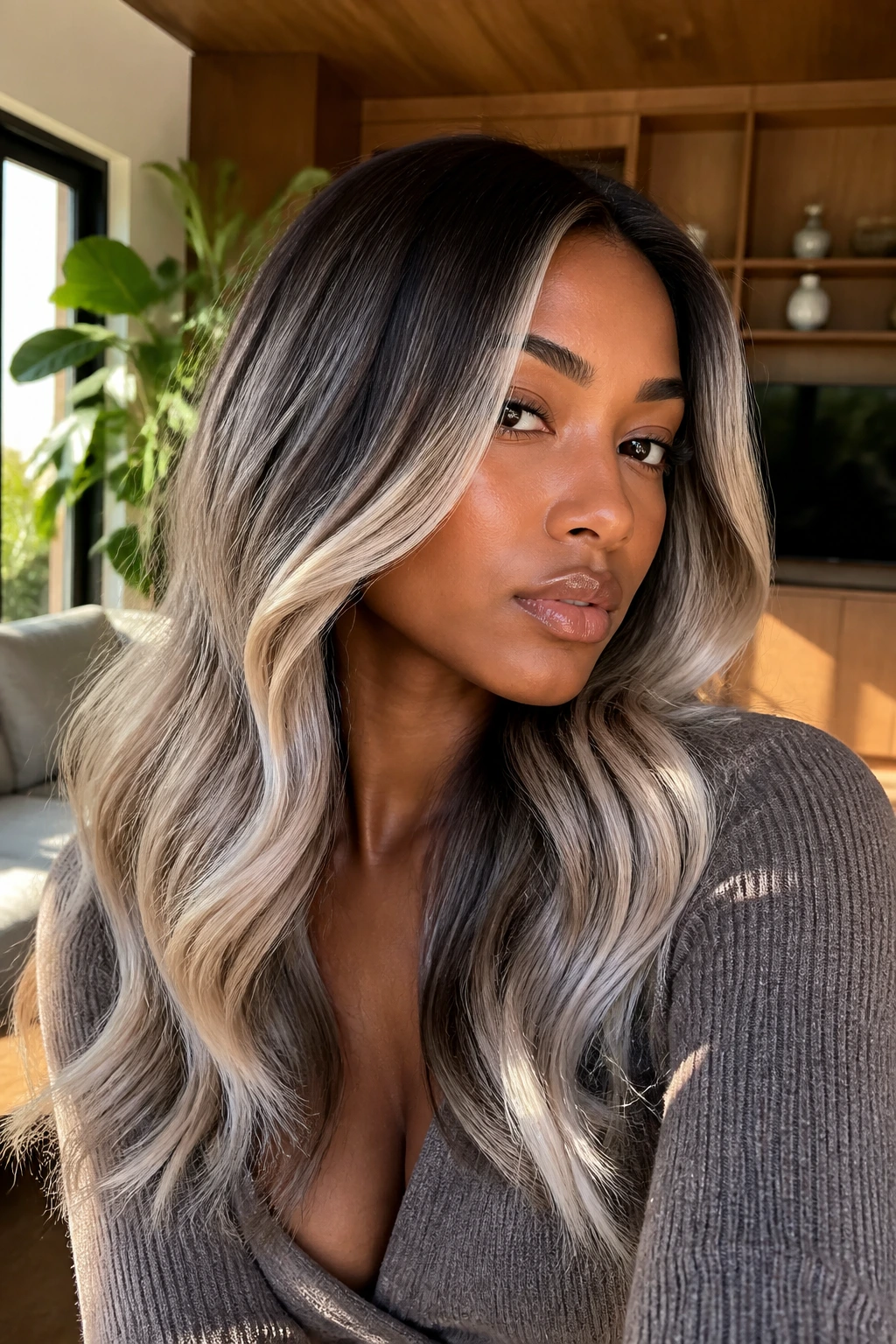
Pearl ash balayage is the quieter cousin of the brighter platinum looks, and that’s exactly why it deserves a spot here. Instead of flooding the whole head with white, the colorist paints pearl and ash ribbons through the mids and ends, leaving the base visible enough to keep the hair grounded.
On deep skin, this kind of softness can be smarter than full platinum. It keeps the overall look dimensional, especially if your complexion leans neutral or if you prefer not to wear strong makeup every day. The pearl note makes the blonde feel creamy, while the ash keeps it from drifting yellow.
This shade is also useful if your hair is long and you want movement. Balayage can stretch the color in a way that makes waves look fuller without turning the head into a block of brightness. I’d suggest it for people who want a platinum vibe but not the full maintenance hit.
It’s understated. Not boring. There’s a difference.
22. Golden Halo Platinum
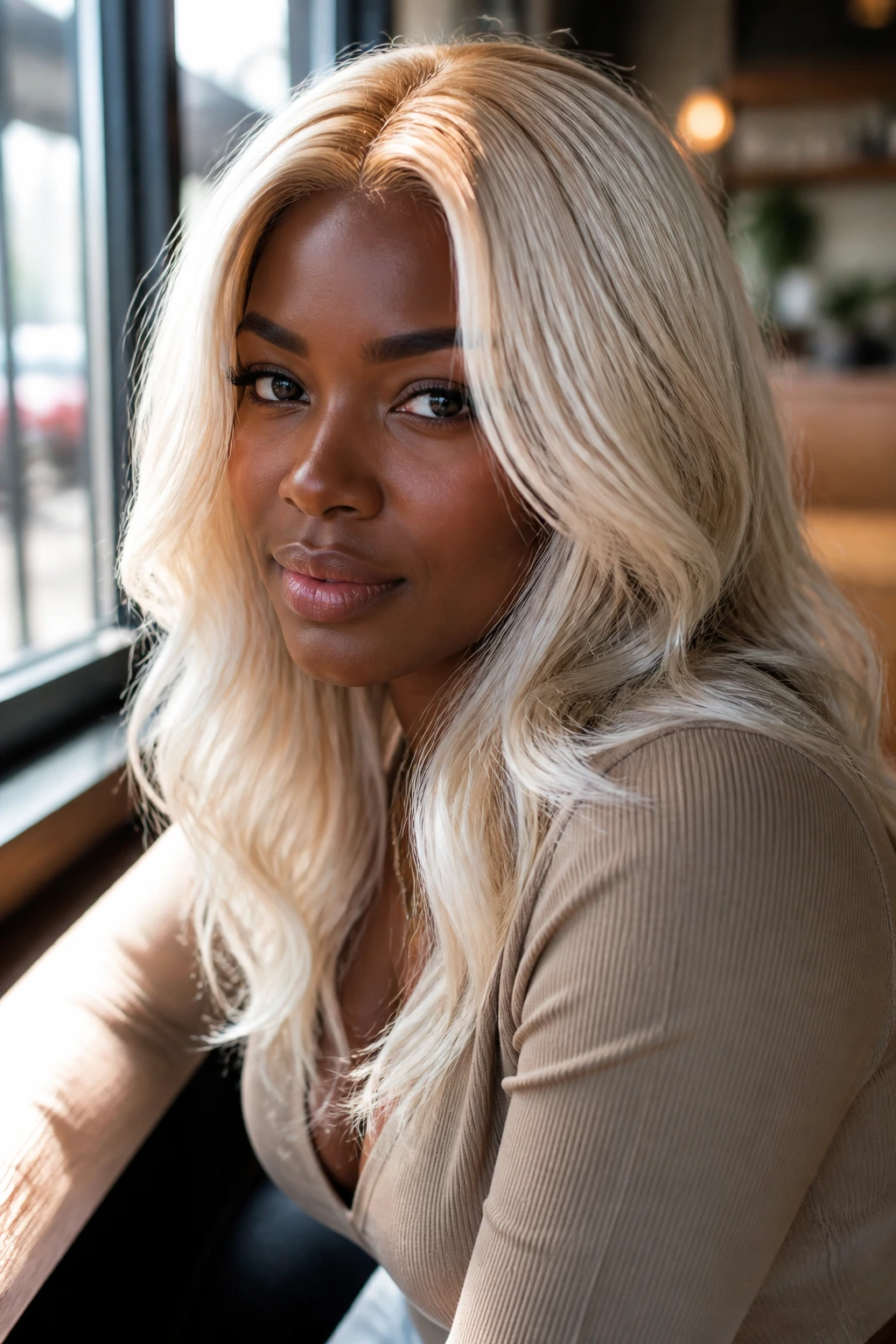
Golden halo platinum puts the brightest, warmest blonde around the face and crown, then lets the rest stay a shade deeper. Think of it as a soft glow rather than a full-light bleach session. On deep skin with golden undertones, this one can be surprisingly flattering because it echoes the warmth already in the complexion.
What makes it work is restraint. The gold should stay pale, almost buttery-white, not yellow. The halo placement keeps the bright tone where it has the most impact, which means the rest of the hair can stay calmer and healthier-looking. That’s a big deal if you’re trying to avoid the overprocessed look that sometimes comes with all-over platinum.
This shade suits layered cuts, soft curls, and blowouts with face-framing pieces. It can also be adapted to locs or twists with bright front sections if you want a less traditional version. The warm shine is the whole point. If the tone goes too cool, the halo loses its name.
23. Frosted Curl-Out
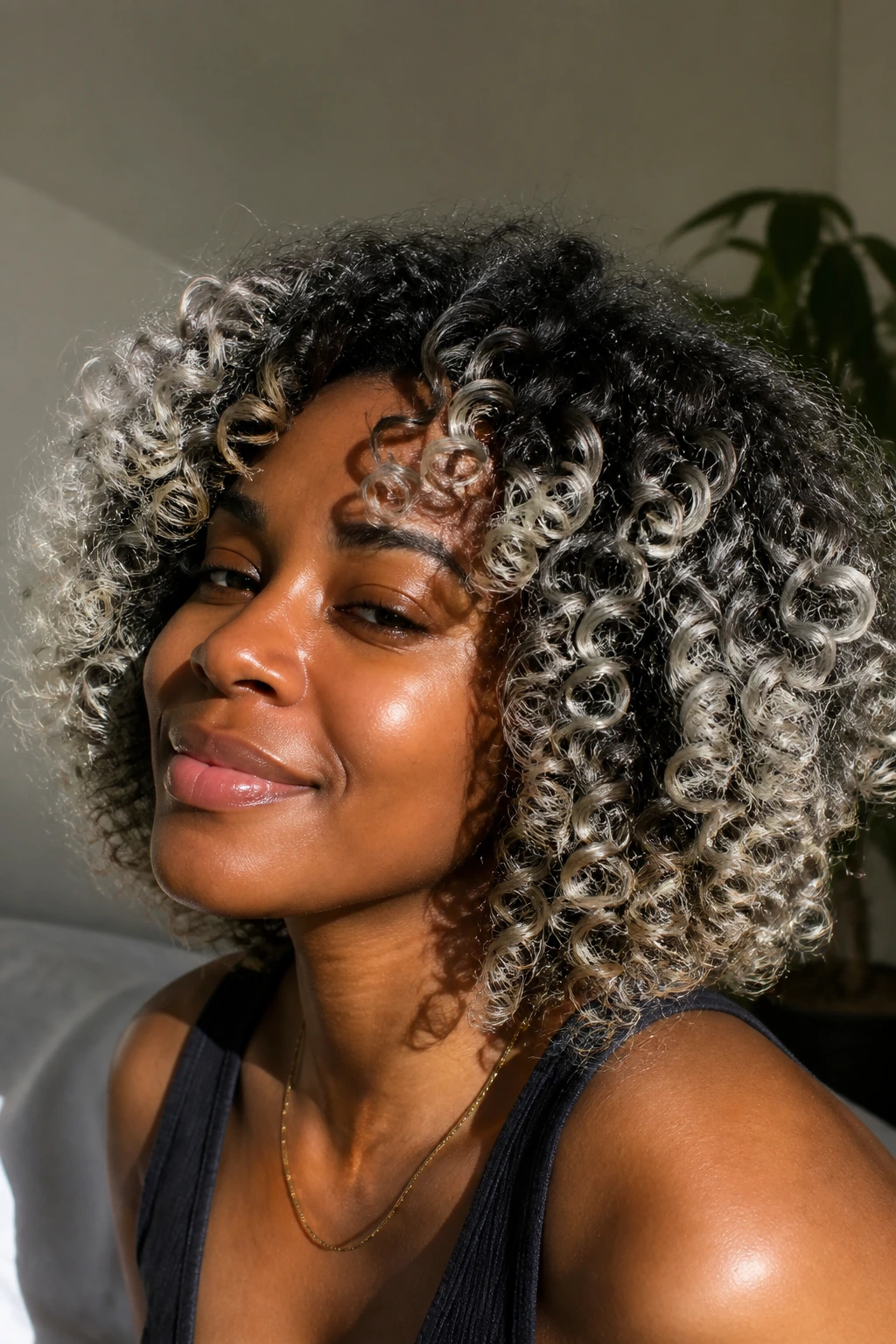
Frosted curl-out is what happens when platinum meets texture instead of trying to flatten it. The color lands on the outer parts of the curls — the pieces that catch the light first — while the deeper base stays visible underneath. That gives the whole style a frosted, dimensional look that feels alive.
On deep skin, this works because the hair keeps its depth. You’re not replacing the natural contrast with a wall of blonde. You’re drawing light into the curl pattern. I like this especially on medium to tight curls, where the lighter ends can pop without needing every strand lifted to the same level.
Key Details
- Keep the root or base a little darker.
- Use a creamy toner, not a blue one that can freeze the curl pattern.
- Define the curls with a light gel or foam so the platinum sections separate cleanly.
- Trim dry ends before coloring; frosted tips show damage fast.
The color looks best when the curls are juicy, not crunchy.
24. Cinnamon-Root Platinum
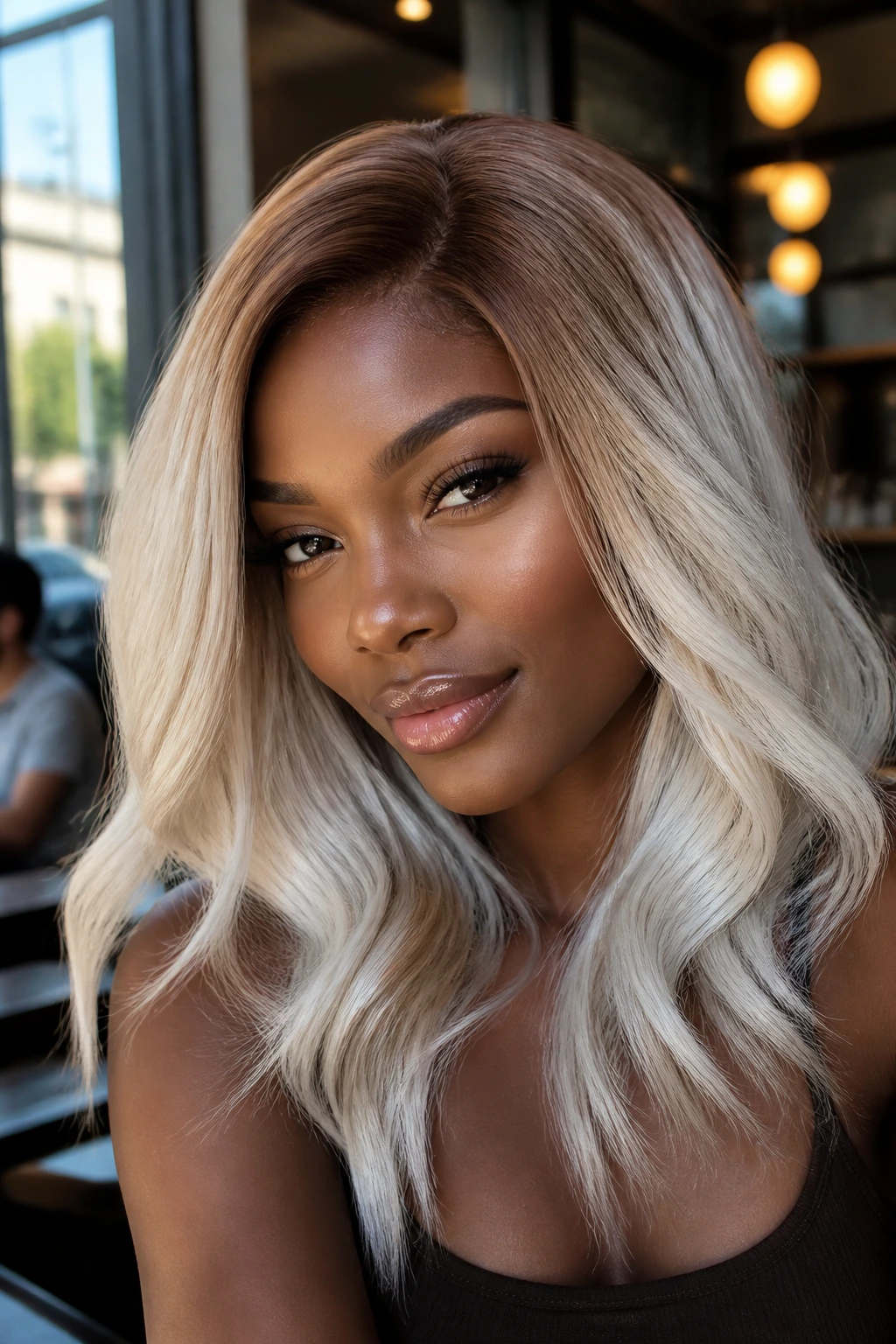
Cinnamon-root platinum is the warmest bridge between brunette and blonde in this whole group. The root stays rich and spicy, closer to copper-brown than black, while the lengths fade into a cool platinum that keeps the style from becoming too heavy.
On deep skin with red or bronze undertones, this shade can look excellent because the root tone echoes the skin instead of fighting it. The platinum ends then provide the contrast. That combination feels richer than a simple dark-root blonde because the root itself brings color, not just depth.
The balance matters. If the root is too orange, the look can go brassy. If the platinum ends are too white, the transition can look abrupt. A beige-platinum finish in the lengths usually solves that problem. I’d wear this on waves, curls, or layered blowouts where the root melt can be seen moving through the hair.
This is the one for people who like warmth but still want real brightness.
25. Smokestack Platinum Paneling
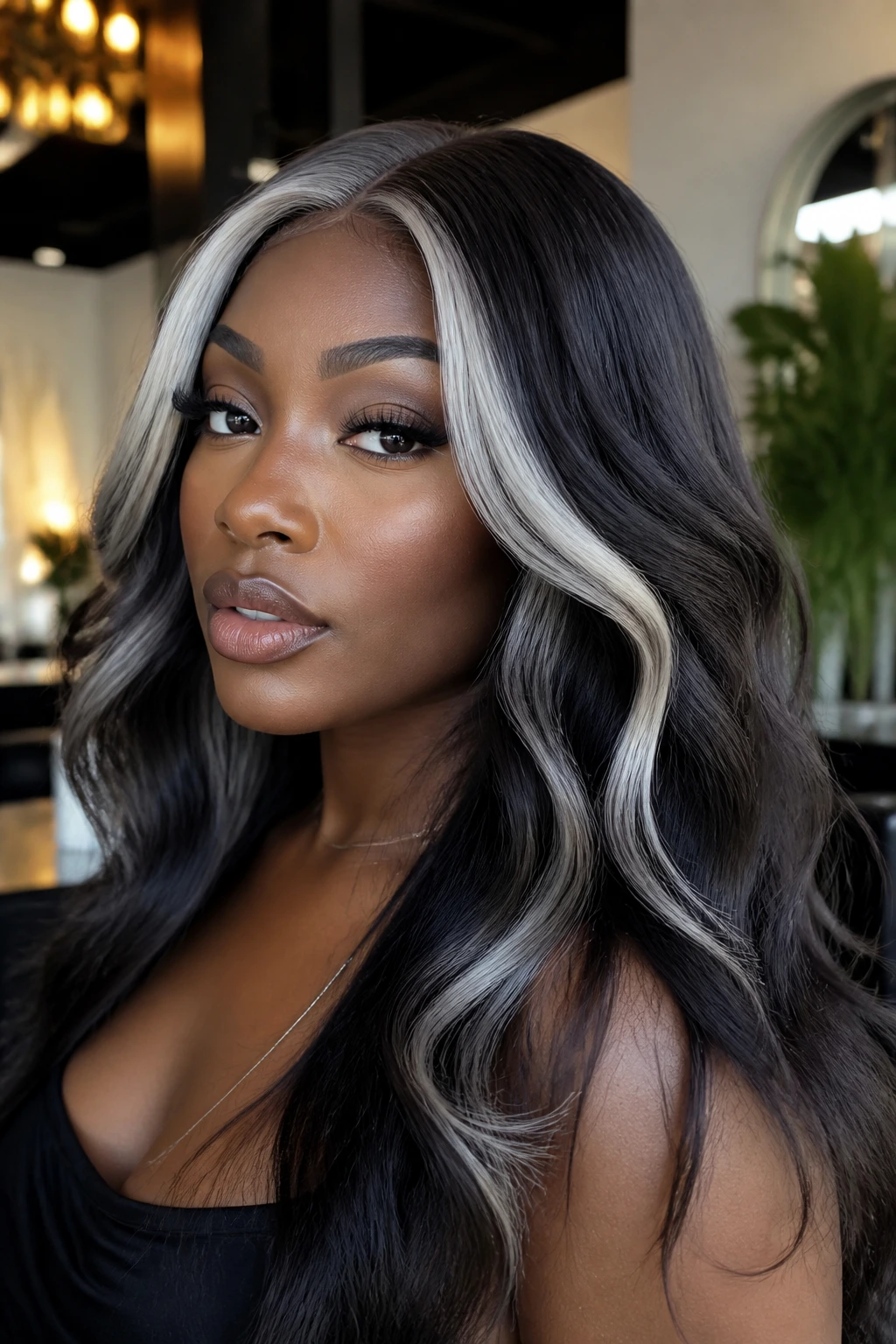
Smokestack platinum paneling is my favorite final answer for anyone who wants platinum without losing the depth of a dark base. Instead of painting the whole head light, the colorist places platinum panels through strategic sections — around the face, through the top layer, maybe a few ribbons at the crown — while leaving most of the hair a deep smoky brunette or black-brown.
That contrast is excellent on deep skin because it keeps the base rich and the blonde controlled. The result looks architectural. Not loud. Just deliberate. It also works on long hair, bobs, and textured cuts because the panels can be placed to follow the shape of the haircut.
I like this version when someone wants movement, light, and grow-out that doesn’t require constant panic. The panels stay visible as the hair moves, which gives you the platinum effect without the headache of full saturation. Ask for a cool beige or soft silver panel, not pure white. The darker base does the heavy lifting here.
What Makes Platinum Look Expensive on Deeper Complexions
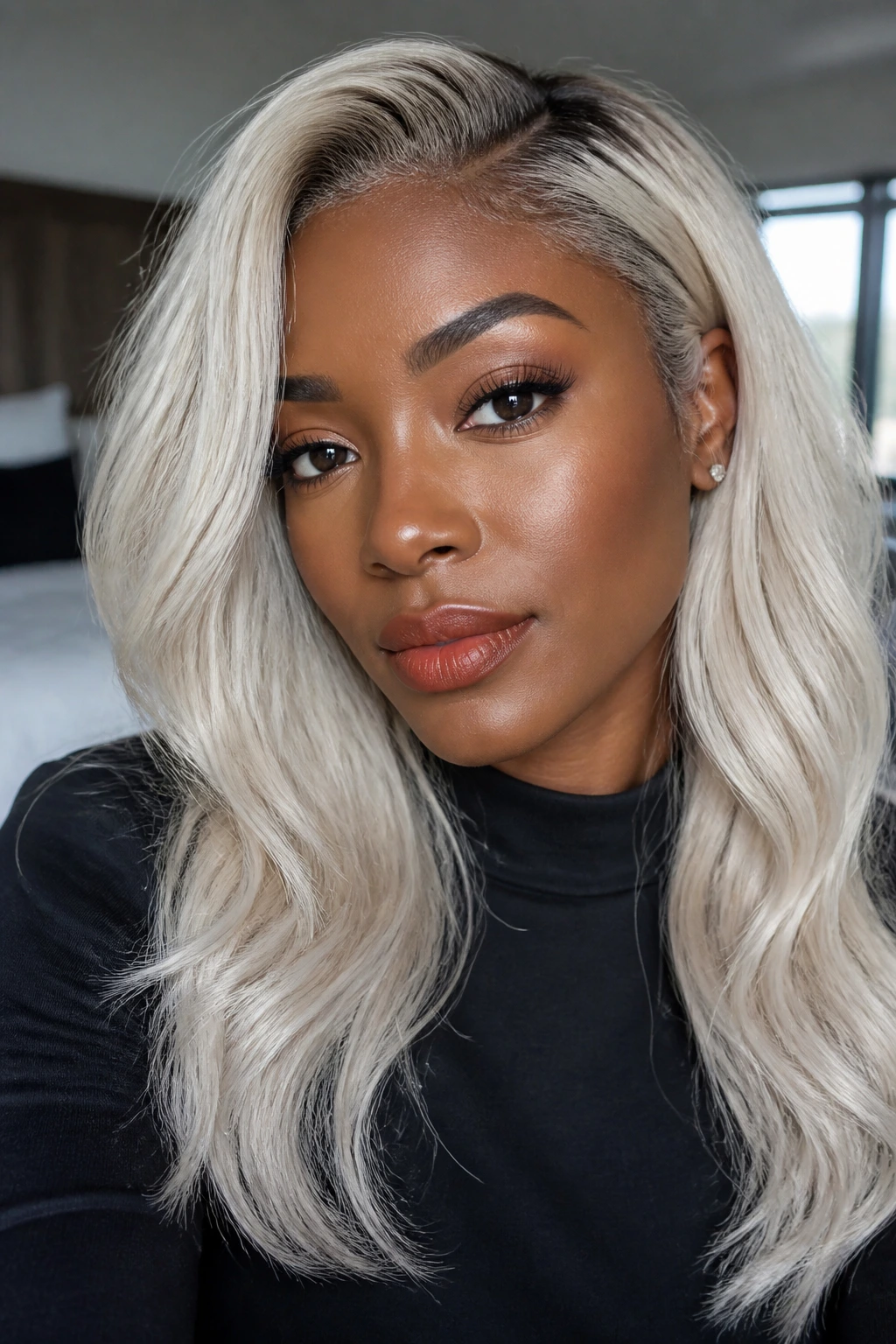
The cleanest platinum on deep skin usually has one thing in common: it keeps some depth somewhere. That depth might live at the root, under the top layer, or in the toner. It doesn’t have to be obvious, but it has to be there. Pure white from scalp to ends can look harsh unless the cut is very sharp and the styling is disciplined. Most of the time, a little shadow makes the whole thing read richer.
Texture also changes the story. Straight hair shows every tone shift, so it’s the best place to wear ice, silver, and pearl. Waves and curls blur the transitions, which is why smoky, champagne, and mushroom platinums tend to look so good on textured hair. They don’t need to be perfect to look right. They need shape.
And then there’s the face. Brows, lip color, and even the neckline of your clothes change how platinum sits on deep skin. I’d rather see a creamy platinum with deep brows and a warm lip than a blinding white platinum with no structure around it. The hair should frame the person, not erase them.
Essential Tools for This Color Family
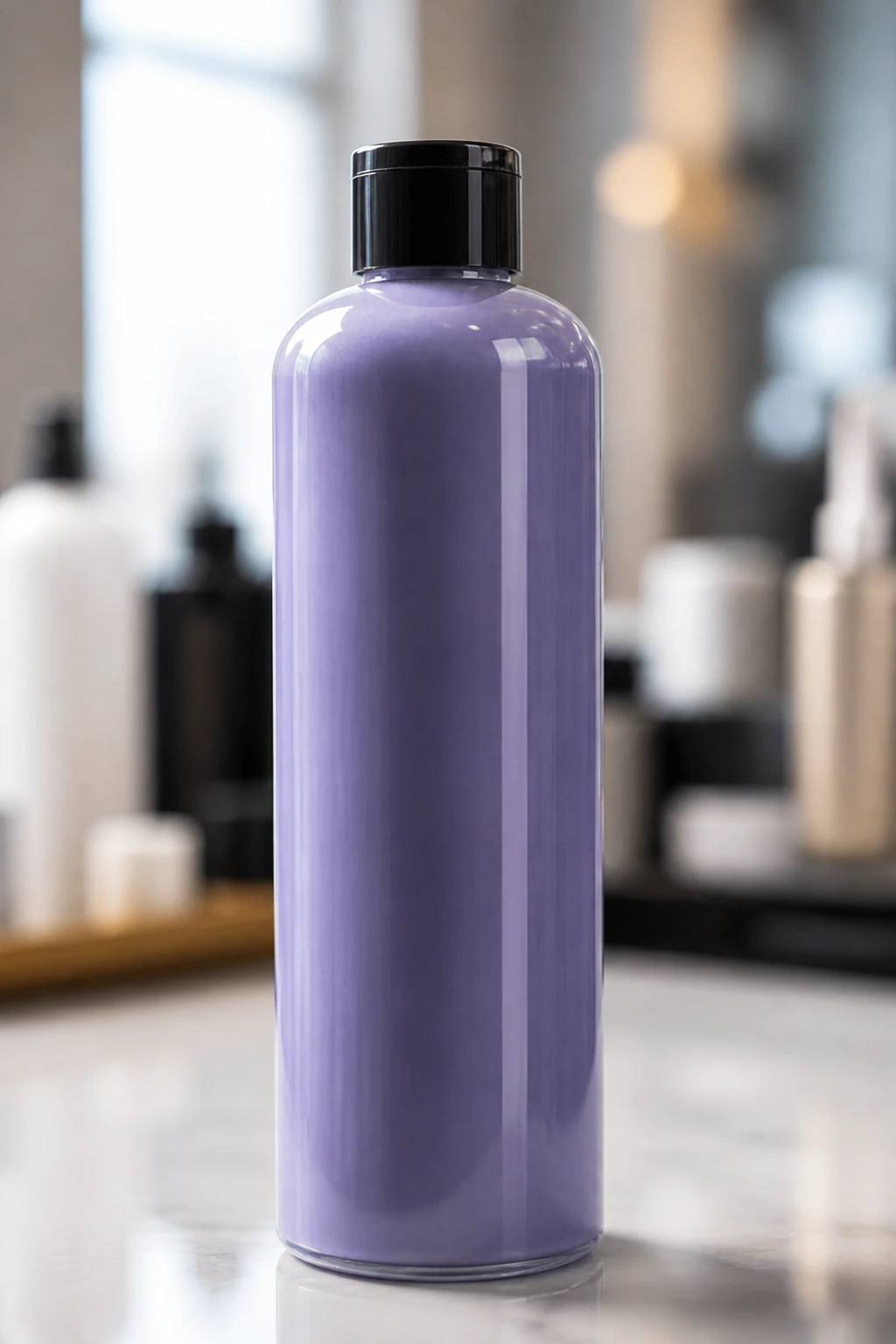
- Lightener and developer in the right strength: Platinum starts with a clean lift, and the developer strength should match the hair’s condition, not your impatience.
- Bond builder or bond repair treatment: Lifted hair needs help staying stretchy instead of snapping.
- Toner in violet, pearl, beige, or silver families: The right toner keeps blonde from turning yellow or muddy.
- Tint brush and mixing bowl: Useful for controlled application, especially if you’re doing root shadows or panels.
- Sectioning clips: These save a lot of chaos when the hair is thick or textured.
- Purple shampoo and, if needed, a blue-violet shampoo: Purple handles yellow; blue-violet can help when brass starts leaning warmer.
- Sulfate-free shampoo and color-safe conditioner: Strong detergent strips toner fast.
- Heat protectant: Lifted hair does not need extra heat damage.
- Microfiber towel or old T-shirt: Rough towels can frizz fragile platinum ends.
- Wide-tooth comb: Less breakage during detangling, especially on curly or coily hair.
- Silk or satin pillowcase: Helps keep platinum smoother between washes.
How to Wear These Shades in Real Life
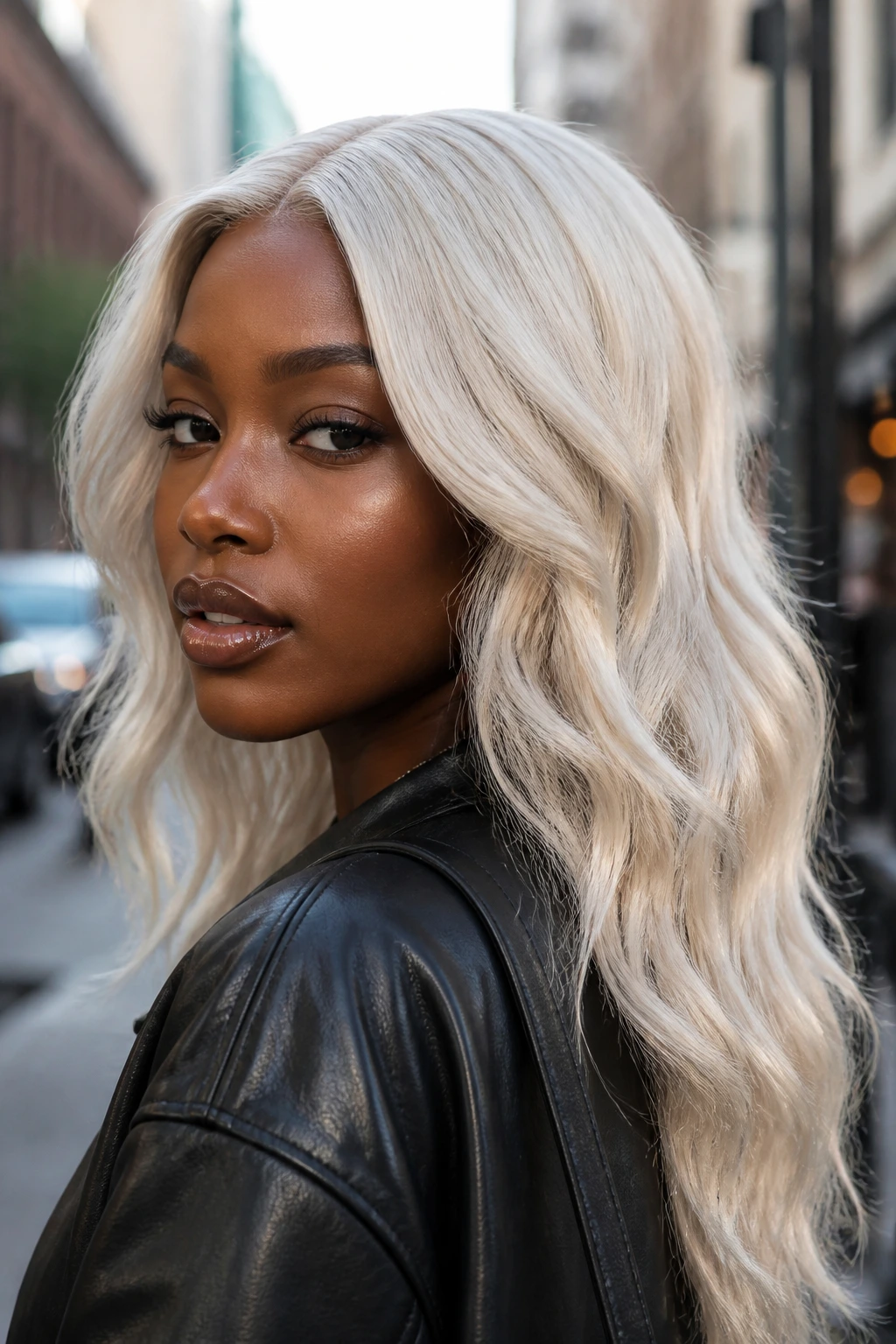
Parting: Center parts make the strongest contrast with money pieces, shadow roots, and paneling. Side parts soften icy shades and are kinder if you want less scalp exposure.
Cut: Blunt bobs, crisp pixies, and shaped lobs make platinum look intentional. Long layers work best when there’s enough movement for the tones to shift instead of sitting flat.
Styling: Sleek styles show off ice, silver, and steel. Soft bends, curls, and brushed-out waves make champagne, mushroom, and pearl tones feel fuller.
Brows and Makeup: Deeper brows usually keep the whole look grounded. A warm blush, brown liner, or berry lip helps platinum sit on the face instead of hovering above it.
Wardrobe: Black, cream, rust, emerald, and cobalt all handle platinum well on deep skin. Muted beige can disappear a little if the hair is very bright, so add at least one deeper color near the face.
Pro Tips for Getting the Most Out of Platinum
Tone Plan: Don’t let the toner choice be an afterthought. A silver or violet toner can read chilly on warm skin, while beige or pearl gives more breathing room. Save a few reference photos that show the exact finish you want, not just the same haircut.
Texture First: The hair’s texture should guide the platinum. Straight styles can handle sharper white. Curly and coily hair often looks better with smoky or creamy finishes because the shape does some of the work for you.
Lighting Check: Platinum can look almost white indoors and much cooler outside. Look at photos in daylight before you decide it’s too warm or too cool. That little shift is normal.
Root Strategy: A root shadow is not laziness. It’s a design choice. Even a half-inch of depth can make the color feel better anchored on deep skin and stretch your salon visits a bit longer.
Color Boosters and Custom Tweaks
Flavor Enhancement: A clear gloss or a very pale pearl glaze every few weeks keeps the finish shiny and keeps the platinum from turning flat after washing. It’s one of those boring steps that matters a lot.
Customization: If you want softer contrast, ask for beige or champagne toners. If you want sharper contrast, move toward silver, ash, or blue-steel. Those are not small changes; they change the whole mood of the hair.
Serving Suggestions: Face-framing pieces, deeper brows, and warm jewelry can turn a decent platinum into one that feels finished. If the platinum is very icy, a terracotta blush or brown lip liner helps balance the face.
Make-It-Yours: For cool undertones, lean into silver, pearl, or lavender. For warm undertones, champagne, white-gold, and vanilla-platinum are easier to wear. If you want low-commitment color, keep the platinum in panels, money pieces, or ends instead of the entire head.
Keeping Platinum Hair Color Ideas for Deep Skin Tones Bright
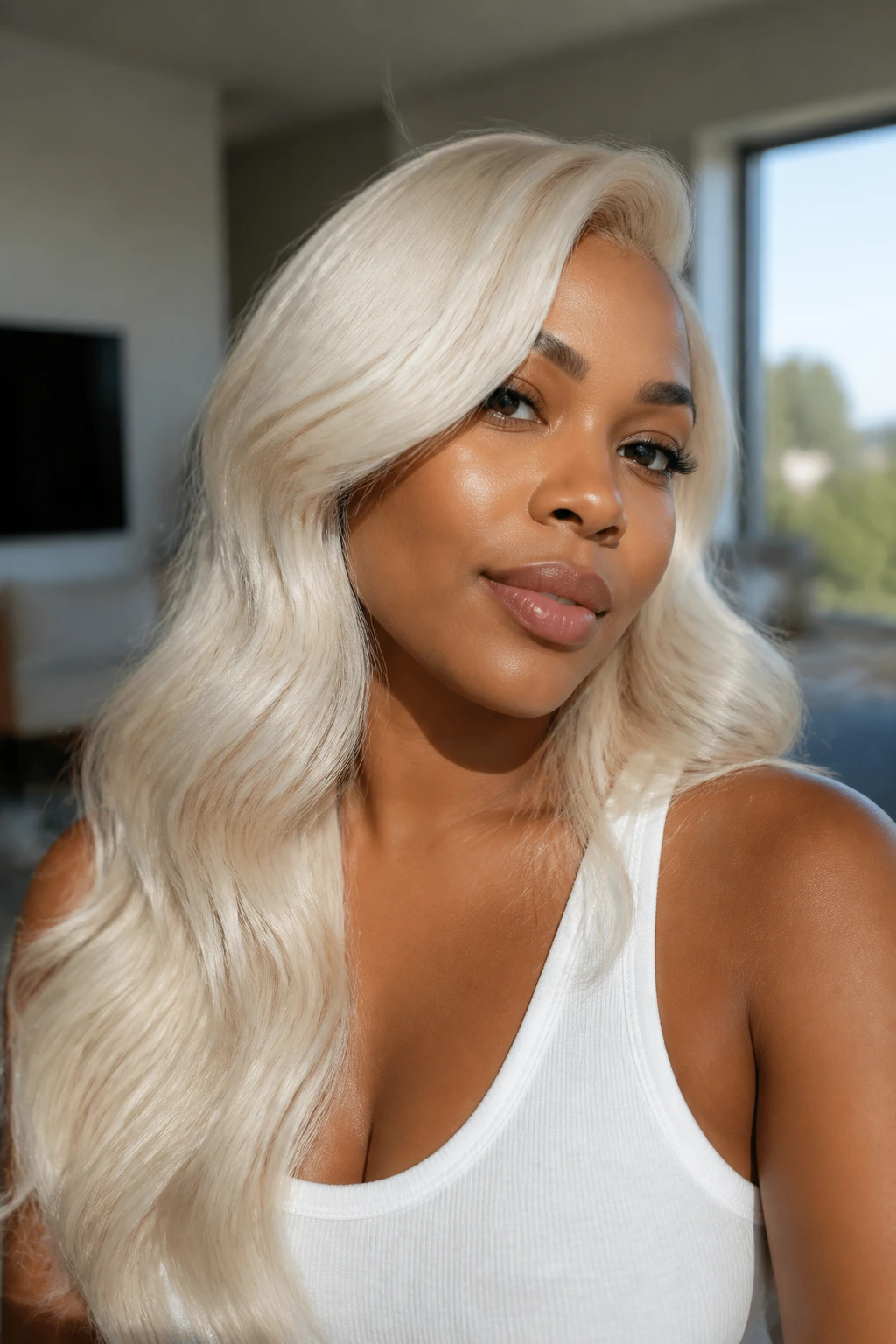
Platinum gets dull fast if you treat it like normal blonde. It needs a gentler routine. Most people can stretch washes to two or three times a week without much trouble, and that’s often better than shampooing every day. Hot water pulls toner out faster than people expect, so lukewarm rinses help more than fancy products alone.
Purple shampoo works best in small doses. Once a week is plenty for many shades. If the blonde starts leaning orange rather than yellow, a blue-violet shampoo can help, but don’t use either one so often that the hair starts looking dusty. That powdered look is a sign you’ve overdone it.
For maintenance, plan on a gloss or toner refresh every 4 to 6 weeks, and root touch-ups anywhere from 5 to 8 weeks depending on how obvious you want the grow-out to be. Highly lifted hair usually needs a weekly mask, and bond repair is worth using if the hair feels gummy, stretchy, or rough at the ends. If the ends are porous, they’ll grab toner fast and fade fast. That’s normal. Keep an eye on them.
Variations and Adaptations to Try
Soft-Grow-Out Platinum: Keep the root 1 to 1.5 inches deeper and let the platinum sit lower through the mids and ends. This gives you a lower-maintenance version that still reads bright.
Cool-Ice Edit: Lean into silver, steel, and pearl toners if you like a sharper finish. Best for cool or neutral undertones and sleeker haircuts.
Warm Halo Edit: Keep the lightest pieces around the face and crown in champagne or white-gold. This is a good move if your complexion has gold or bronze undertones and you want the blonde to feel softer.
Curly Platinum Edit: Leave the base a touch deeper and brighten only the outer curl pattern. You get dimension without flattening the curl shape.
Short-Cut Edit: On pixies and crops, push the contrast harder. Short platinum can handle more drama because the cut itself controls the shape.
Panel-and-Root Edit: If full-head blonde feels too much, try platinum panels with a dark or cinnamon root. That version gives you movement and contrast without the nonstop upkeep.
Common Mistakes to Avoid
The first mistake is chasing paper-white hair just because the inspiration photo looks cool. On deep skin, that can backfire if the hair has no depth left anywhere. A pearl, beige, or smoky finish usually lands better.
The second is ignoring the undertone of the toner. Silver over warm skin can look frosty in a bad way; gold over cool skin can veer yellow. Pick the finish to match the face, not the screenshot.
The third is skipping a root plan. Platinum with no shadow can grow out harshly and make the hairline look disconnected from the rest of the style. Even a soft blur at the scalp helps.
The fourth is using purple shampoo too often. Once the blonde goes gray and chalky, you’ve gone past maintenance and into damage control. Use it as a touch-up, not a daily habit.
The fifth is forgetting that a haircut matters. Platinum without shape can look expensive for one day and then shapeless the next. A blunt edge, defined layers, or a crisp crop makes the color look finished.
Frequently Asked Questions
How light does hair need to be for platinum on deep skin tones?
You usually need a level 10 or 11 lift for true platinum. If the hair stops at a darker yellow, the toner can only do so much, and the result will look blonde rather than platinum.
Can deep skin tones wear icy platinum without looking washed out?
Yes, but the haircut and undertone have to help. A crisp bob, a sharp pixie, or a strong shadow root keeps the color from floating away from the face.
Is warm platinum better than cool platinum on deep skin?
Not always, but warm finishes like champagne or vanilla are easier for many deep undertones to wear. Cool finishes can look stunning too; they just need more thoughtful makeup and brow balance.
Can you go platinum in one session from dark hair?
Sometimes, but not safely on every head of hair. Virgin hair, previous dye, and hair strength all change the answer, and multiple sessions are often the smarter route.
What if platinum turns yellow after a few washes?
That usually means the toner has faded, which is normal. Use a purple shampoo once a week, then ask for a gloss or toner refresh if the yellow starts taking over.
Does platinum work on curly and coily hair?
Absolutely, but the placement matters. Smoky, pearl, and champagne versions usually keep the curl pattern looking fuller than a flat white would.
What haircut suits platinum best on deep skin?
Sharp cuts help a lot. Bobs, lobs, tapered pixies, and layered shapes all give the color a frame so it doesn’t feel overpowering.
Can I keep my roots dark and still call it platinum?
Yes. Rooted melts, ombré ends, and paneling are all valid platinum looks. In fact, the darker root often makes the platinum stronger on deep skin.
How often do I need to touch up platinum?
That depends on how precise you want the look to stay. Glosses often need refreshes every 4 to 6 weeks, while root appointments can stretch longer if you like grow-out.
What if my hair feels gummy after lightening?
Stop heat styling, use a bond repair treatment, and give the hair time. Gummy hair needs a break more than it needs more toner or more heat.
The Platinum Sweet Spot
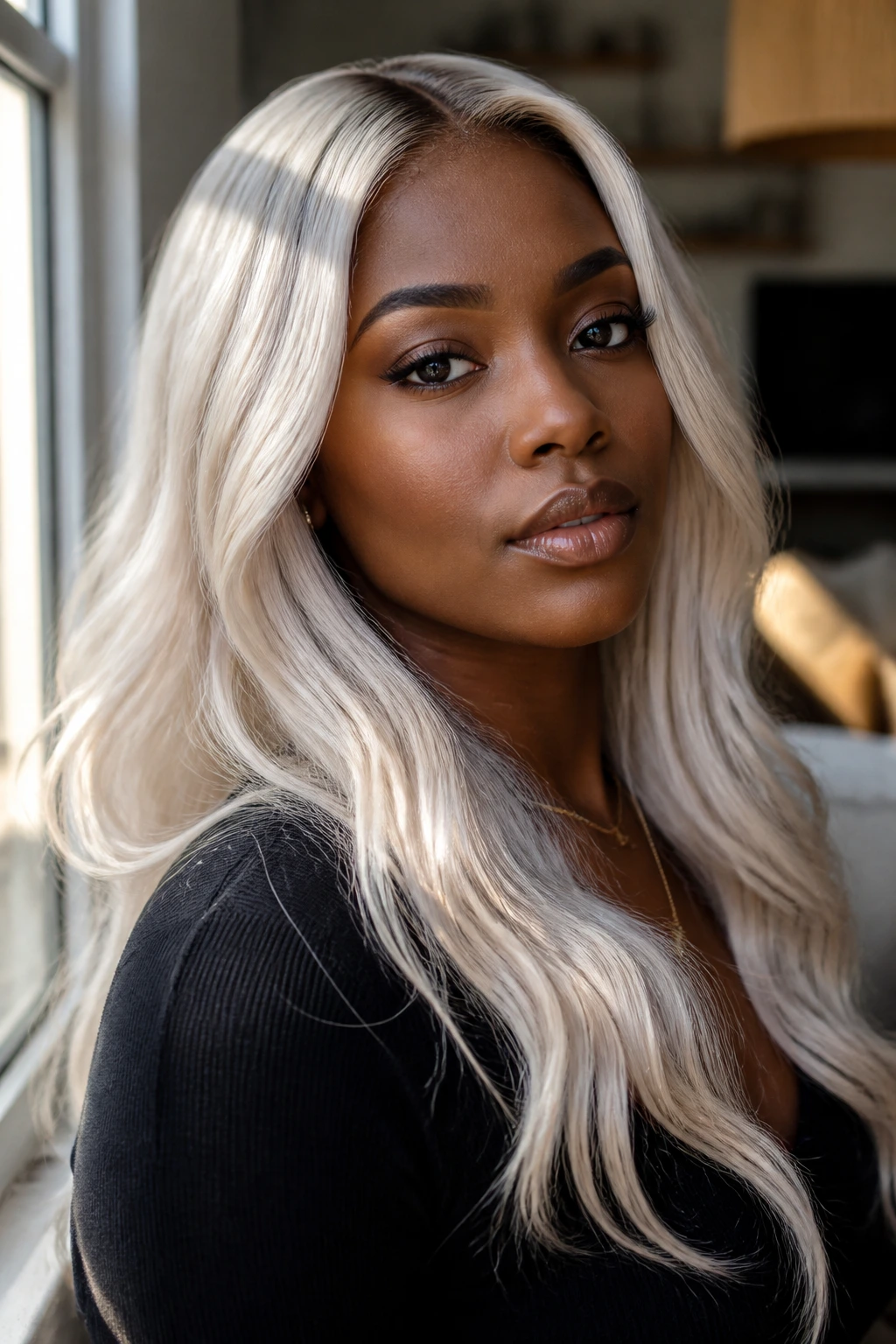
The nicest platinum on deep skin usually has a little depth left in it. That might be a shadow root, a smoky glaze, a warm-white finish, or just enough contrast in the haircut to keep the blonde from flattening the face. The right choice is the one that keeps the skin looking rich and the hair looking deliberate.
If you’re torn between two shades, pick the one that matches your undertone first and your maintenance tolerance second. That order matters. Platinum can be striking, but it’s at its best when it still feels wearable after the first wash and the first grow-out line.