



Warm skin and icy blonde can fight each other. In cold light, that mismatch shows fast: the hair can go chalky, the face can look sallow, and all the work you paid for gets swallowed by a black coat and a gray sky. The smarter move is a winter blonde that keeps some gold in the tank — honey, butter, caramel, apricot, soft bronze — so the hair still looks alive when the rest of the outfit goes heavy and dark.
Winter blonde hairstyles for warm skin tones work best when the color and the cut are doing different jobs. The shade warms the complexion. The shape keeps the hair from looking flat under scarves, beanies, and static electricity that seems to appear the second the heat kicks on. I’ve always thought blonde looks best when it has a little depth near the roots and a little movement around the face. One-note blonde can be pretty. Dimensional blonde looks expensive.
Some looks here are soft and easy, the kind you could wear with a wool coat and a no-nonsense lip balm. Others lean a little sharper, with a cleaner line or a fashion edge. The common thread is warmth that feels deliberate, not brassy.
Why These Winter Blonde Looks Work on Warm Skin Tones
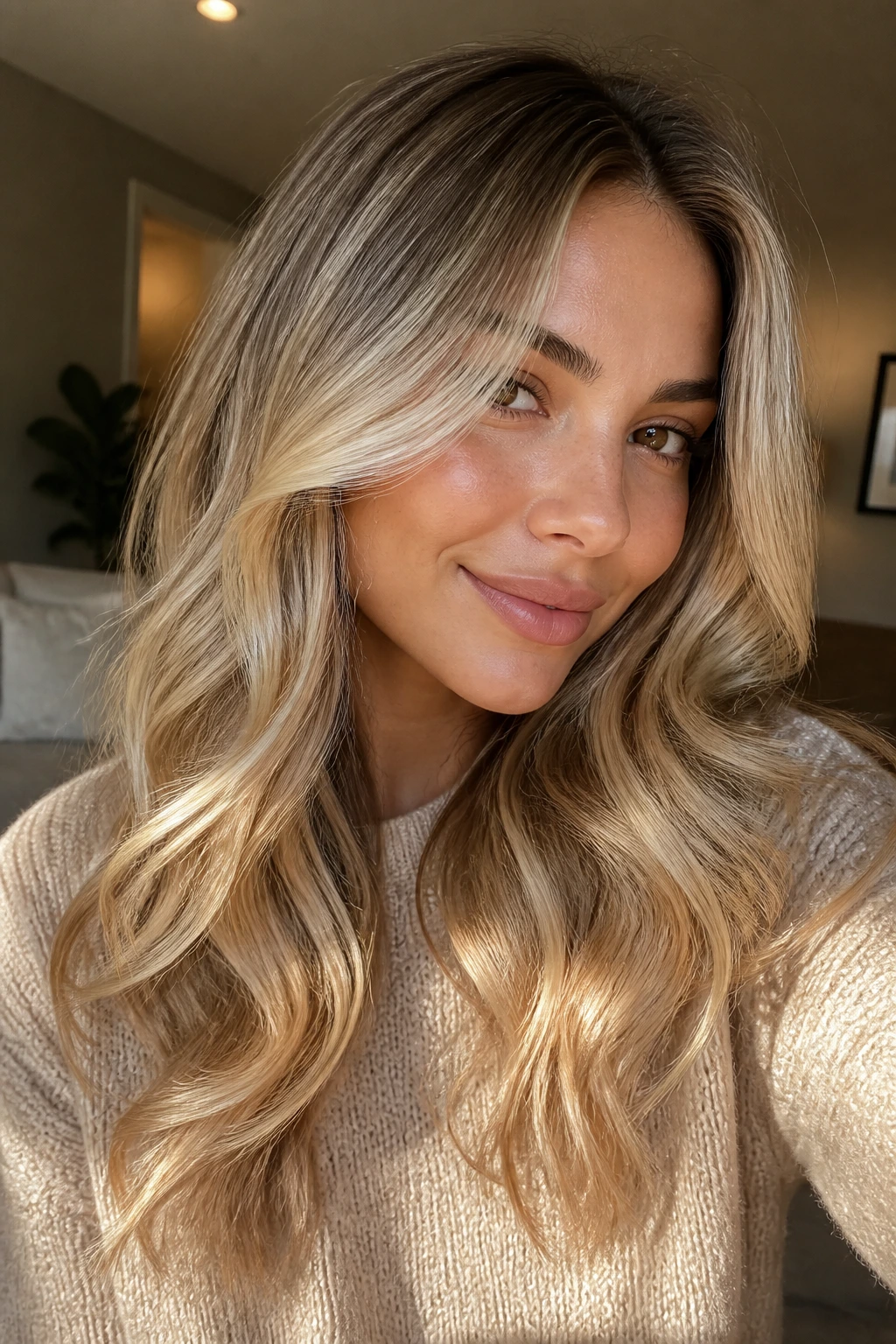
-
Gold beats ash on warm undertones: Honey, butter, and caramel reflect back the warmth in the skin instead of flattening it the way smoky blonde often can.
-
Dimension matters more in winter light: A flat all-over blonde can disappear indoors; roots, lowlights, and face-framing pieces keep the color readable under soft gray light.
-
Shape does half the work: Long layers, blunt bobs, and lifted crowns stop the hair from looking heavy under coats and scarves.
-
Warm blonde is easier to style around winter clothes: Turtlenecks, high collars, and bulky knitwear add visual weight near the face, so a softer, warmer blonde balances that out.
-
You can keep it subtle or bright: Not every warm blonde has to scream honey. Some of the best versions are just one or two shades warmer than beige, with a gloss that catches the light without going orange.
1. Honey-Blonde Curtain Bangs and Long Layers
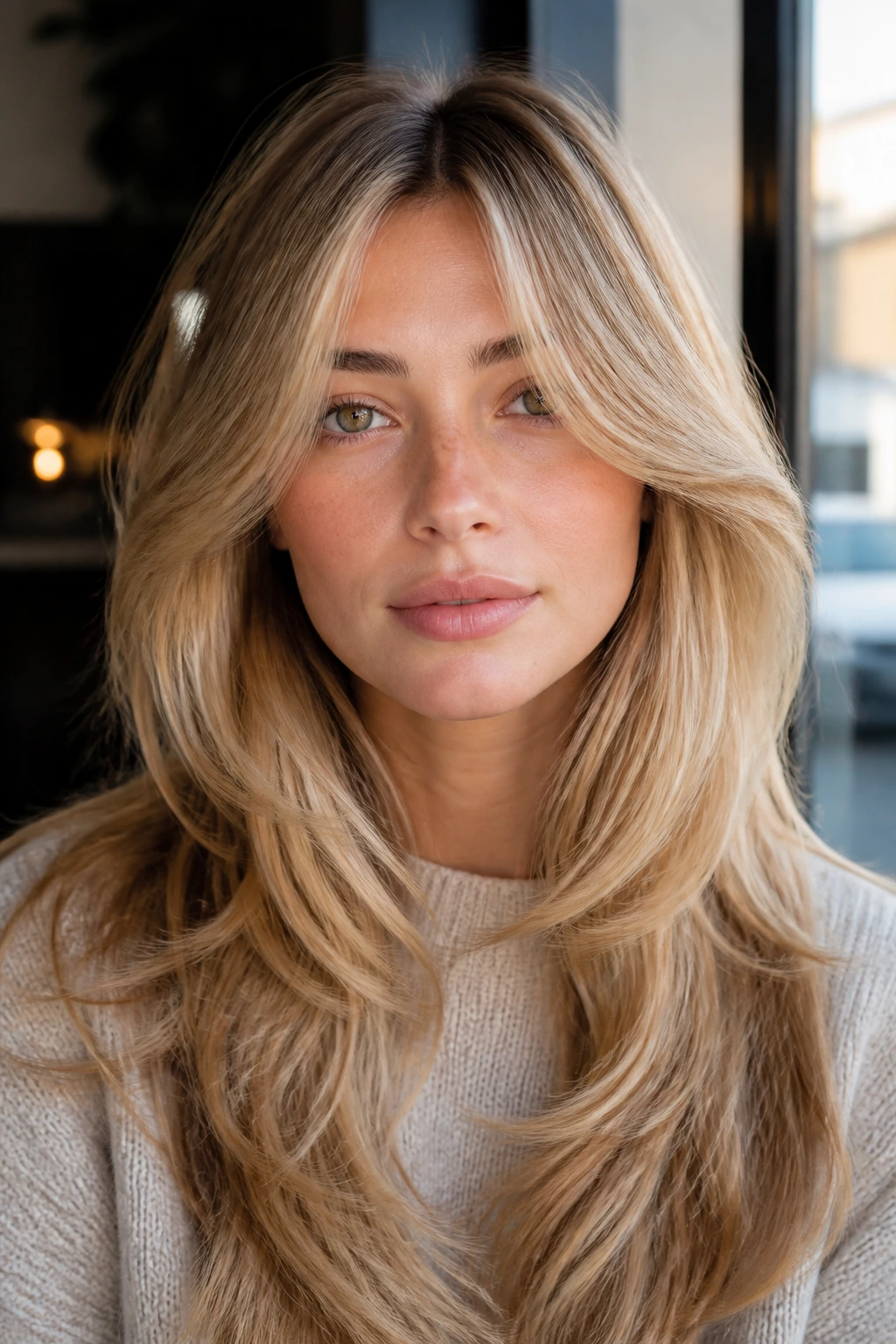
Honey-blonde curtain bangs sit right where the face needs them most: at the cheekbones, where they soften edges without taking over the whole haircut. On warm skin, that golden tone acts like a little bit of light near the face, which matters when the rest of your wardrobe turns dark and textured.
The trick is to keep the bangs a shade softer than the brightest face-framing pieces. If everything is equally light, the cut can start to look stripey instead of blended. Ask for long layers that move past the shoulders and a root shadow that’s only one to two levels deeper than the mids. That tiny depth at the root keeps the style from looking blown out by indoor heat and hat hair.
A clean center part or a barely off-center part both work here. I like this look best with a round-brush bend at the ends and a soft, brushed-out wave through the front. It’s one of those styles that can look polished without being stiff.
Best detail: Keep the bang section a little softer than the ends so the cut reads as blended, not blocky.
2. Caramel-Gloss French Bob
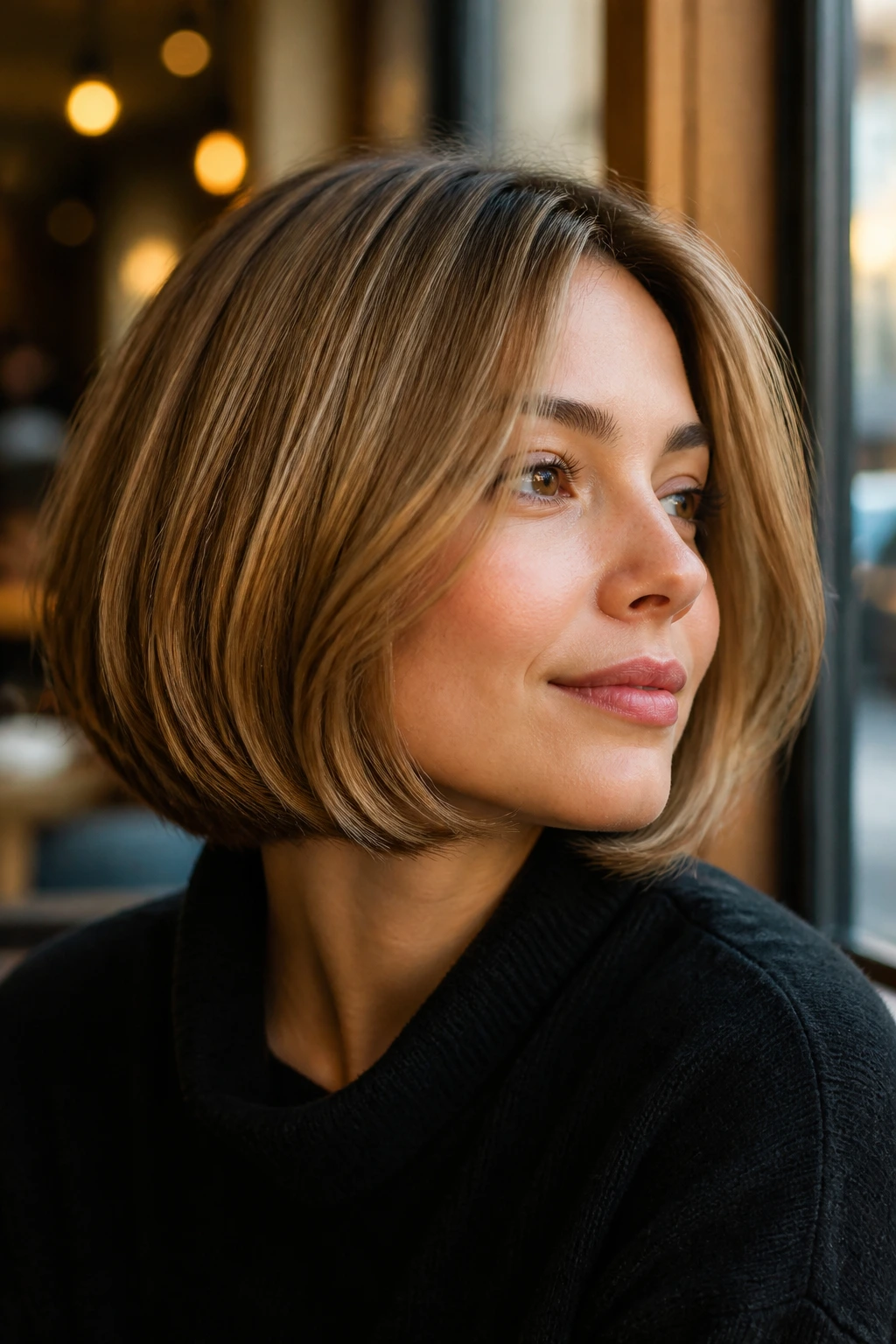
A French bob in caramel blonde has attitude, but not the loud kind. The line hits around the jaw or just below it, and that shorter length gives warm skin a neat frame, especially when everything else is bundled up in scarves and collars. Caramel blonde keeps the shape from feeling severe.
What makes this version work is the gloss. A bob with a dry, matte finish can go dull fast, especially under winter lighting. Ask for a warm caramel or toasted beige gloss over a blonde base, then style it with a bend under the ends so the cut curves softly toward the chin. That tiny inward turn makes the whole style feel intentional.
This is the one I’d choose for someone who wants structure without fuss. It’s short enough to dry fast, long enough to tuck behind one ear, and sharp enough to make a simple sweater look pulled together.
3. Buttery Blowout with Rounded Ends
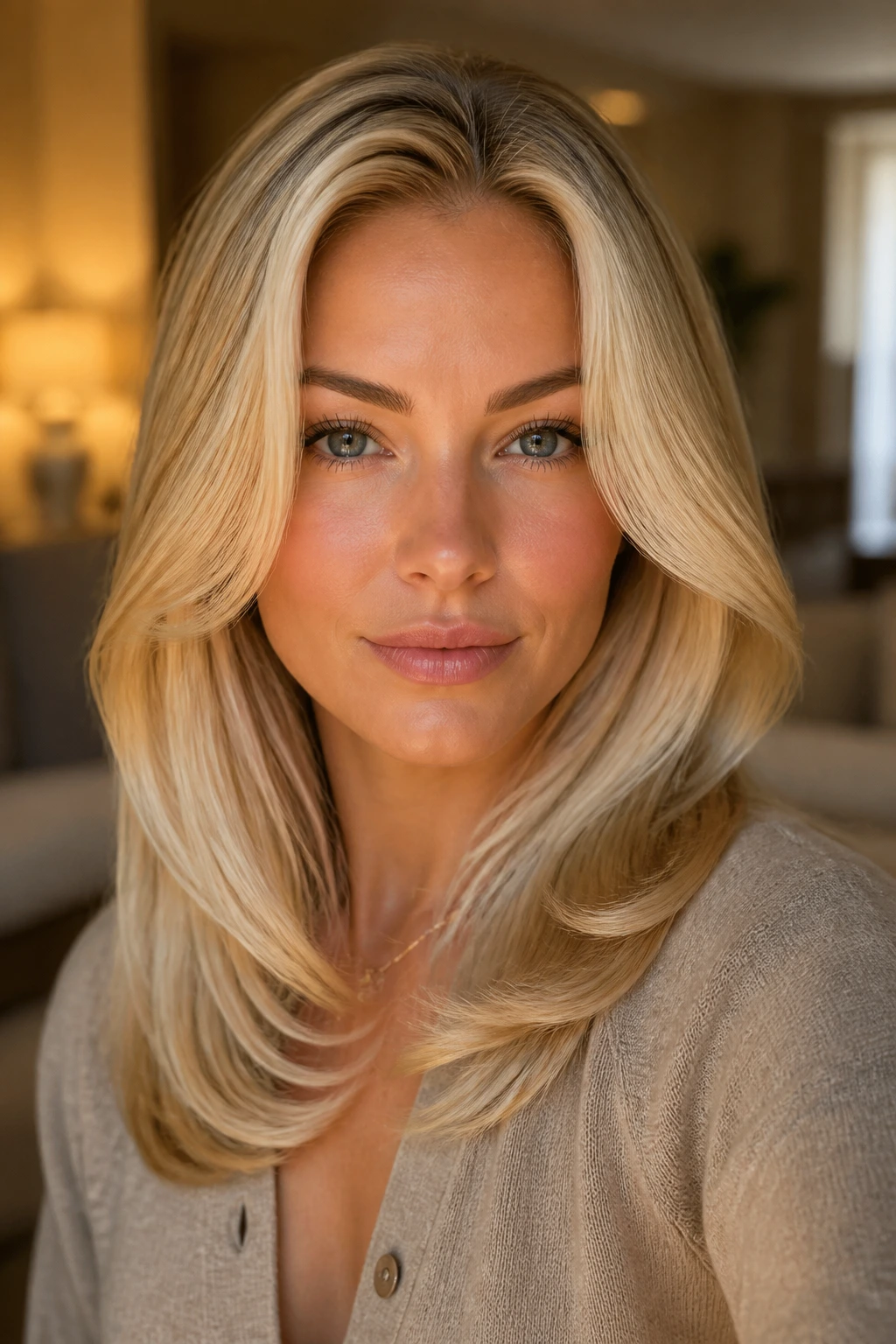
This is the blonde you wear when you want hair that feels full, smooth, and slightly old-school in the best way. The blowout has weight at the ends, not frizz, and the buttery blonde tone keeps the volume from reading too icy or dry.
The important part is the roundness. Blow the hair out with a medium round brush, then wrap the ends under just enough to make them look soft, not curled. If the hair flips too hard, the style starts looking dated. If it falls straight, you lose the shape. That in-between bend is the whole point.
Warm skin usually likes this because the overall look is plush. The color catches light without going pale, and the body of the blowout gives the face a little lift. It’s the kind of style that looks especially good with a turtleneck or a coat collar that sits close to the neck.
4. Golden Ribbon Waves and a Middle Part
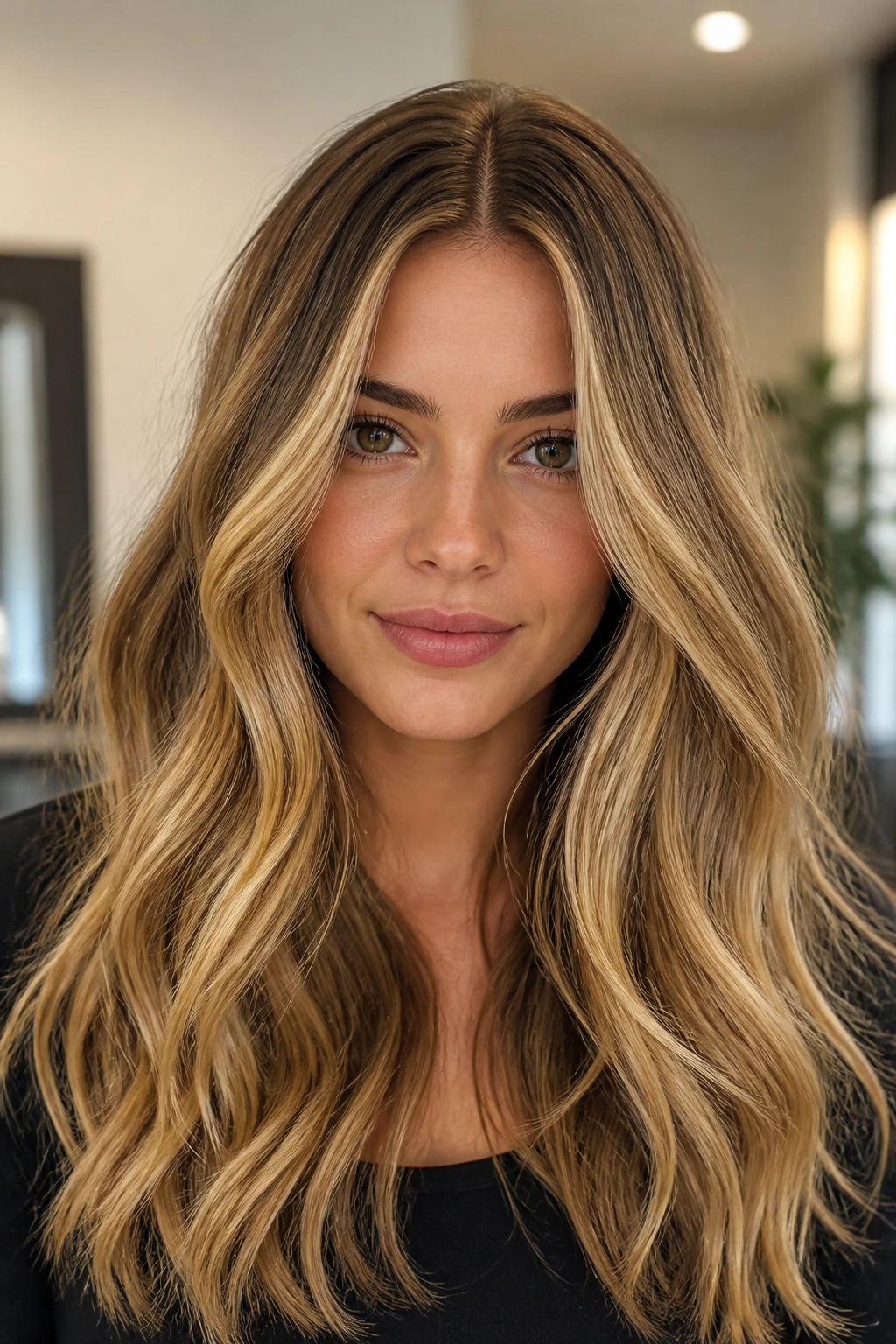
Golden ribbon highlights are the answer when one flat blonde tone feels too predictable. Instead of flooding the whole head with the same shade, this look threads thinner gold pieces through a darker blonde base, so the hair shifts in the light rather than sitting there all one color.
A middle part keeps the ribbons symmetrical, which matters if you want the color to read polished instead of random. Loose waves are the move here — not tight curls, not beachy chaos. Think broad bends that let the highlights show from root to end. If you use a curling iron, alternate direction on each section and brush the waves out once they cool.
This style works especially well on medium to long hair. The extra length gives the color room to move, and the warm gold keeps warm skin from looking washed out on gray days. It’s a good choice if you like dimension but don’t want chunky contrast.
5. Toasted Beige Shag with Piecey Fringe
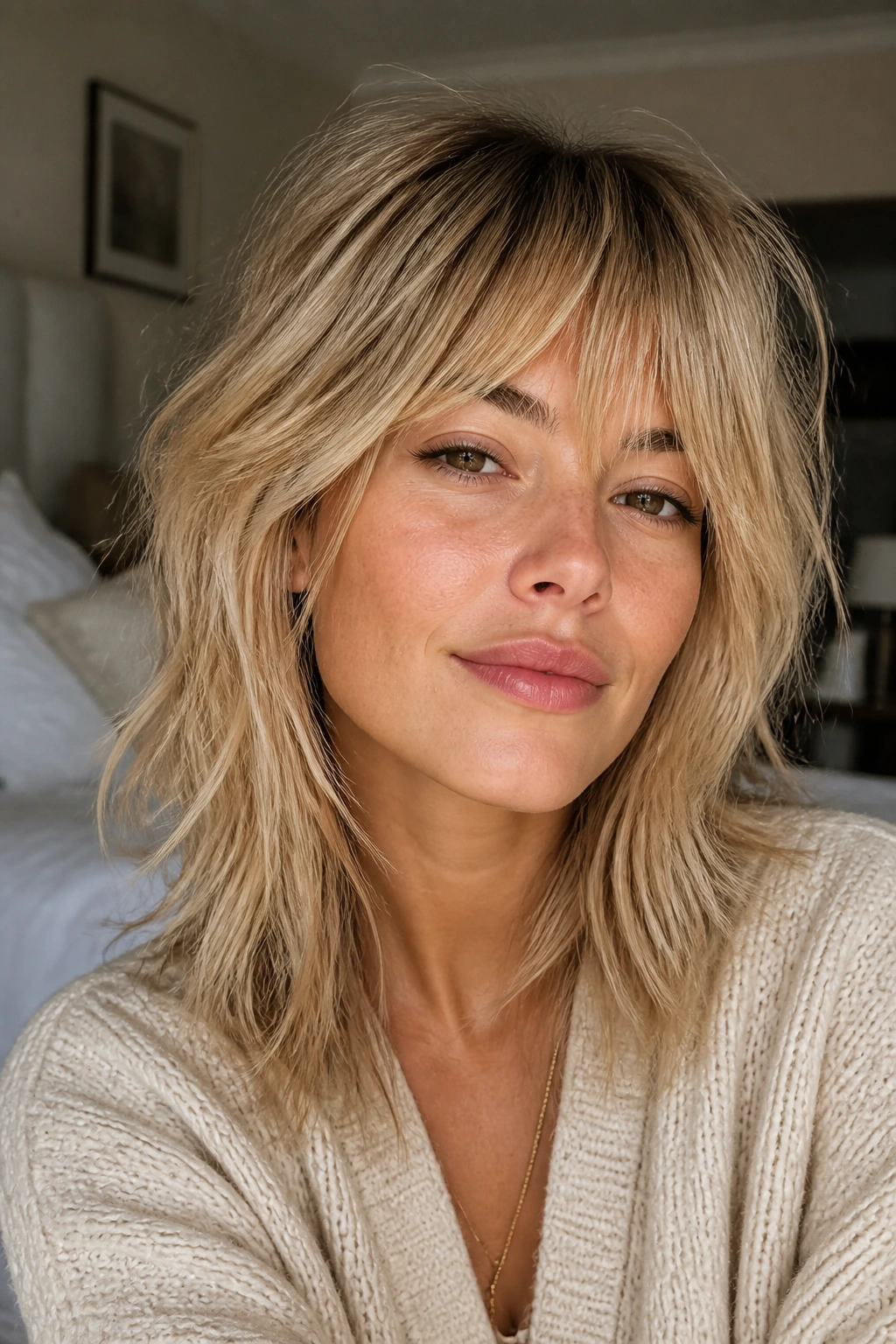
A shag with warm beige-blonde color sounds low-key, and that’s the appeal. The layers break up the shape, the fringe adds some edge, and the toasted beige tone keeps the whole thing from drifting into cool, dusty territory. It’s blonde with texture first, color second.
This cut works best when it looks a little lived-in. Air-dry it with a light cream, then scrunch in a small amount of mousse or texture spray once the hair is about 80 percent dry. The point is movement, not perfect polish. If your hair has a wave already, this style will probably be easier than most.
Warm skin tones often look good in this kind of blonde because the color doesn’t sit too far away from the natural undertone. It’s soft enough to wear every day, but the fringe and shag shape keep it from feeling too sweet. A little grit helps. A lot, actually.
6. Peachy Strawberry Blonde Curls
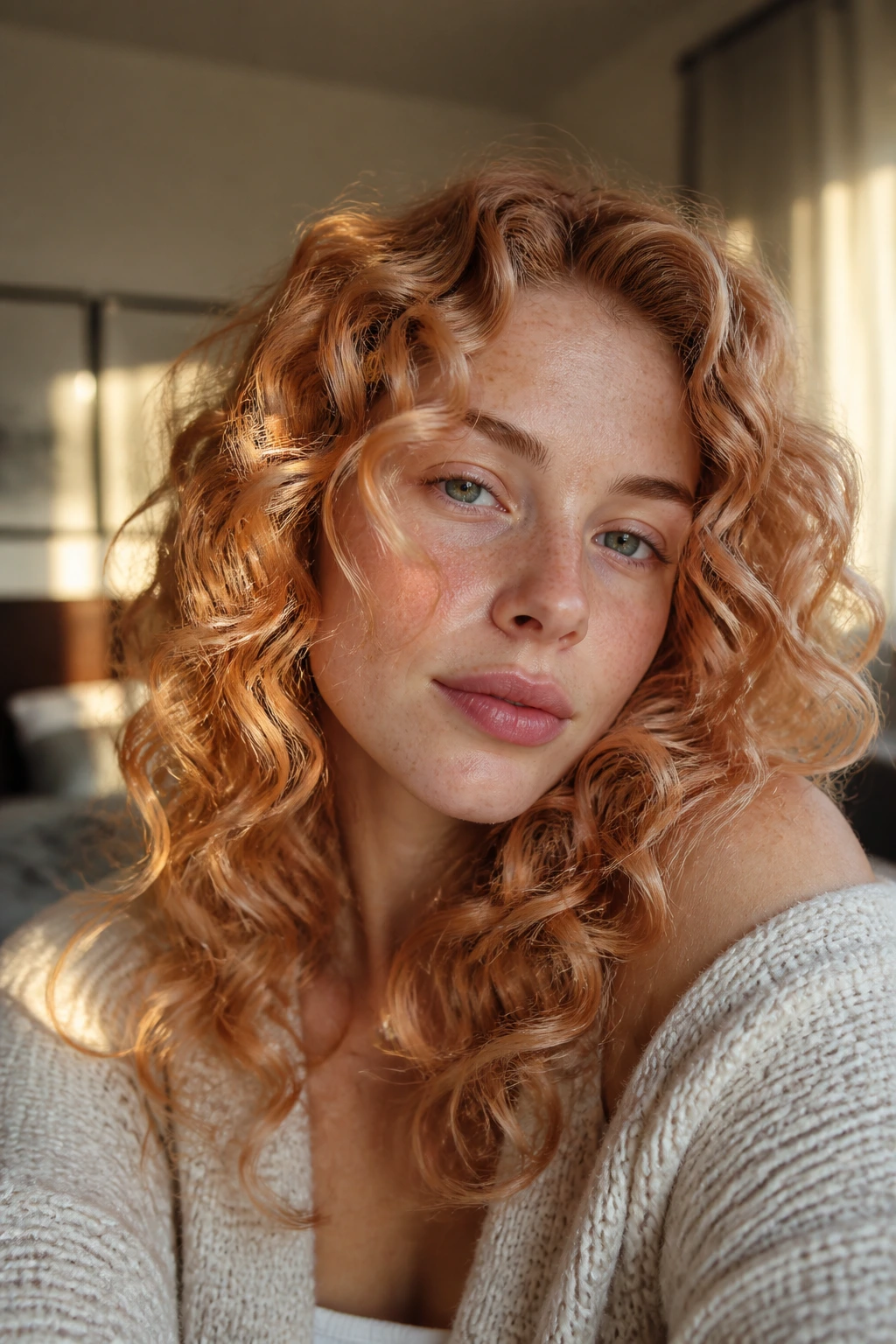
Peachy strawberry blonde is one of those shades people either ignore or fall hard for. I’m in the second group. On curls, the tone looks especially lively because every bend catches a slightly different note of gold, apricot, and soft rose.
This is not the same as vivid red or copper. Keep it warmer and lighter, more like a peach glaze than a candy color. The curls should be well-defined but not crunchy, and a gloss after coloring helps the tone stay glossy instead of chalky. If your hair is naturally curly, this blonde can be a very smart choice because it adds visible warmth without needing a ton of styling.
It’s also a good winter option when you want something a little less expected than honey blonde. The softness of peach plays well with warm skin and with winter makeup — think berry lip, soft bronzer, nothing too heavy.
7. Warm Champagne Sleek Lob
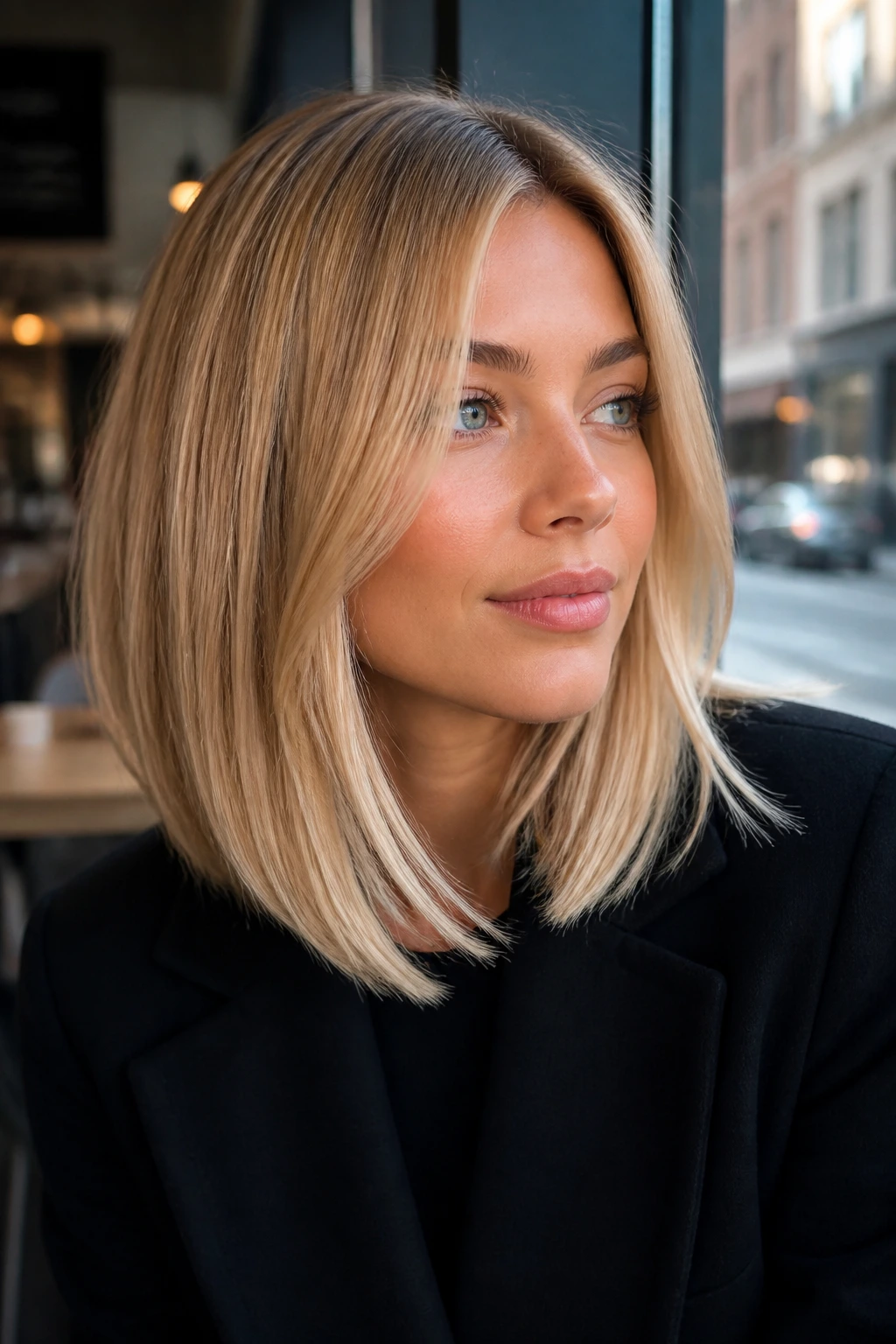
A champagne blonde lob can go cold fast, so the warm version is the one to ask for. Think beige-gold, not silver-beige. The finish should be sleek, the line should sit just at the collarbone or slightly above, and the hair should move like fabric when you turn your head.
This style has almost no room for sloppiness. The ends need a clean bevel, either from a flat iron or a blowout with a paddle brush. If the cut is textured too heavily, it starts to lose that clean shape. Keep the layers hidden, not obvious, so the silhouette stays smooth.
Warm skin tones often look sharper in this style than they do in a super cool blonde lob. The reason is simple: the warmer reflect keeps the complexion from going gray. It’s especially good if you wear a lot of black, charcoal, or deep brown.
8. Cinnamon-Rooted Beach Waves
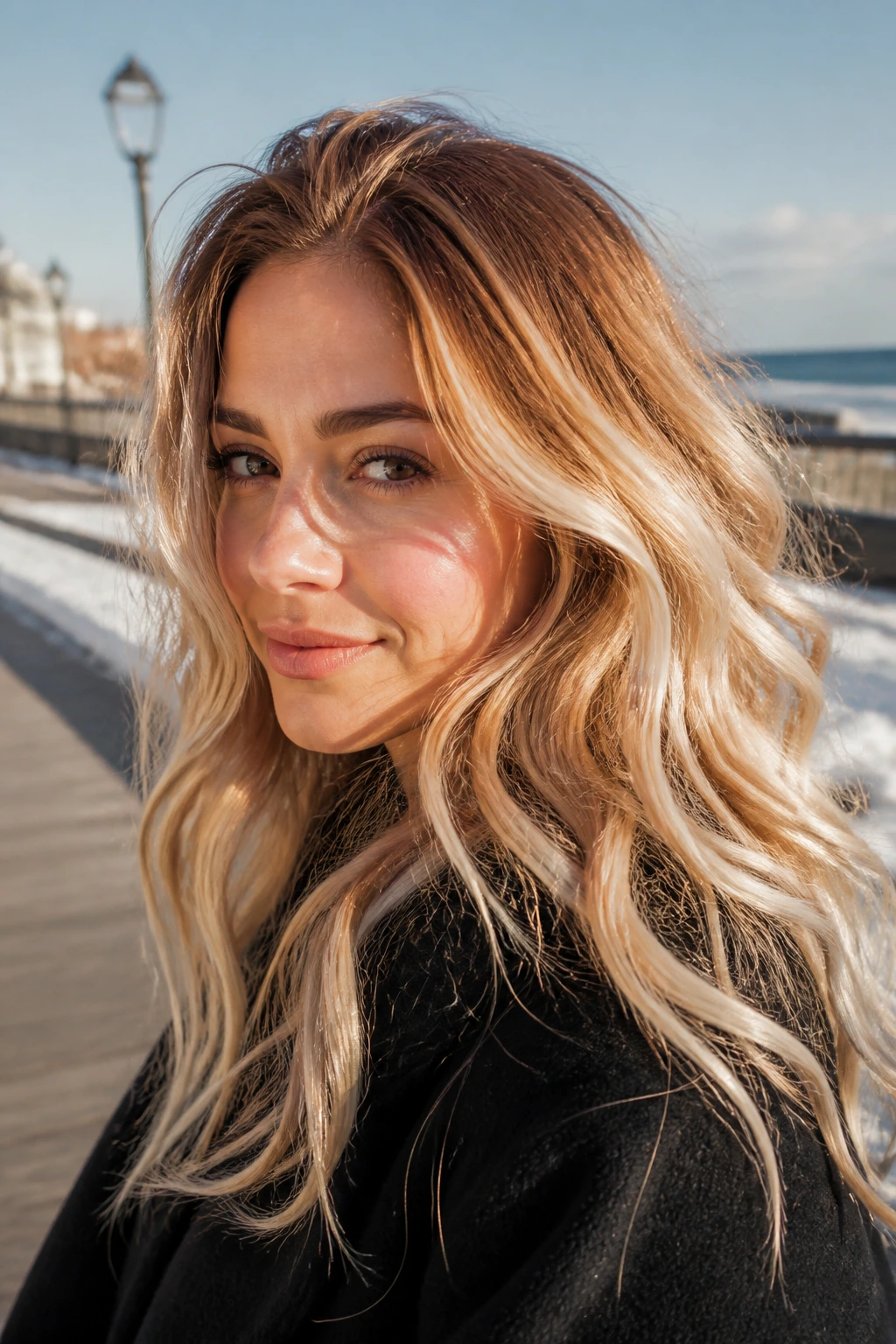
A cinnamon root with lighter blonde through the mids and ends is one of the easiest ways to keep blonde from looking too salon-perfect. The darker root adds depth, and the warmer blonde pieces keep the whole style from turning flat. It’s a nice fit for warm skin because it mimics the way hair lightens naturally in sun.
Beach waves suit this color because they let the root melt into the lighter sections. Don’t overcurl it. A flat, polished wave can make the color bands look obvious, while a looser bend lets the transition read soft. I like a one-inch iron here, wrapped away from the face, then brushed out after it cools.
This is a practical winter blonde if you don’t want to touch up roots constantly. The darker root also gives you some grace when your hair loses a little brightness from weather, scarves, and dry indoor heat.
9. Honey-Toned Pixie With Longer Top
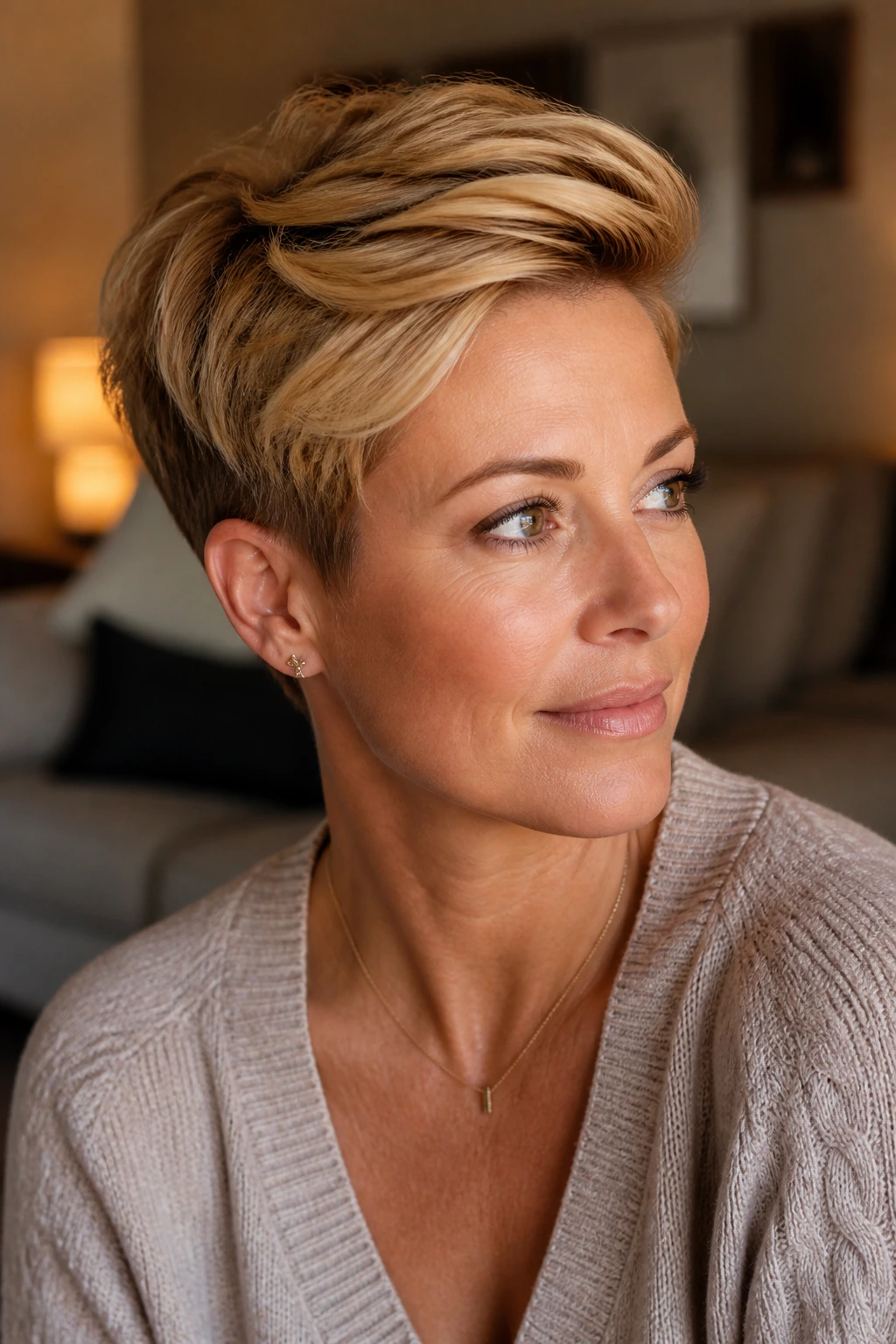
Short hair can handle warm blonde better than people think. In fact, a pixie with honey tones can be more flattering on warm skin than a longer, paler blonde because all the brightness sits close to the face where it matters most.
The key is keeping the top a little longer than the sides. That extra length gives you room to lift the crown with a round brush or a bit of paste, and it stops the cut from feeling too close to the head. Ask for honey or soft gold through the top and crown, with slightly deeper color near the nape so the shape doesn’t vanish.
I like this style when hair needs to feel clean and sharp without much daily work. It wears well under hats, it dries fast, and it doesn’t get lost under winter layers. Tiny haircut. Big payoff.
10. Amber Blonde Butterfly Cut
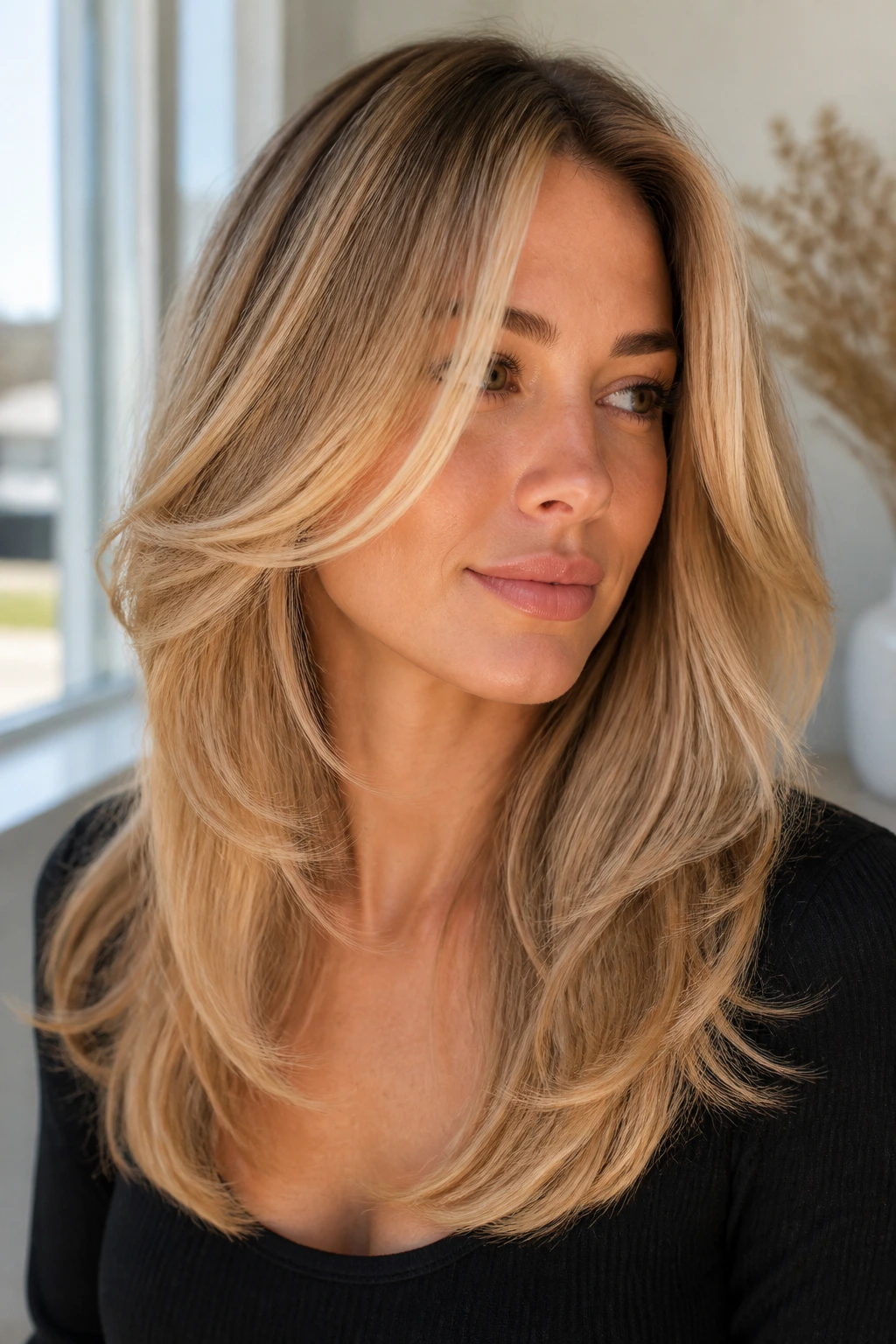
The butterfly cut lives and dies by its layers, so the color should move the same way. Amber blonde gives those longer front pieces and feathered mid-layers some warmth, which is exactly what warm skin wants when the weather gets gray.
This is a long-hair style, but it doesn’t feel heavy because the shortest layers around the face create lift. Ask for pieces that start around the cheekbone and curve into longer lengths. The amber blonde can be mixed with honey and soft caramel so the layers don’t look separate from the rest of the head.
It’s a good option if you like hair that looks full in motion. The cut gives shape. The color gives depth. Put the two together and you get a style that still feels soft when you throw on a coat or scarf.
11. Foilayage Ribbon Curls
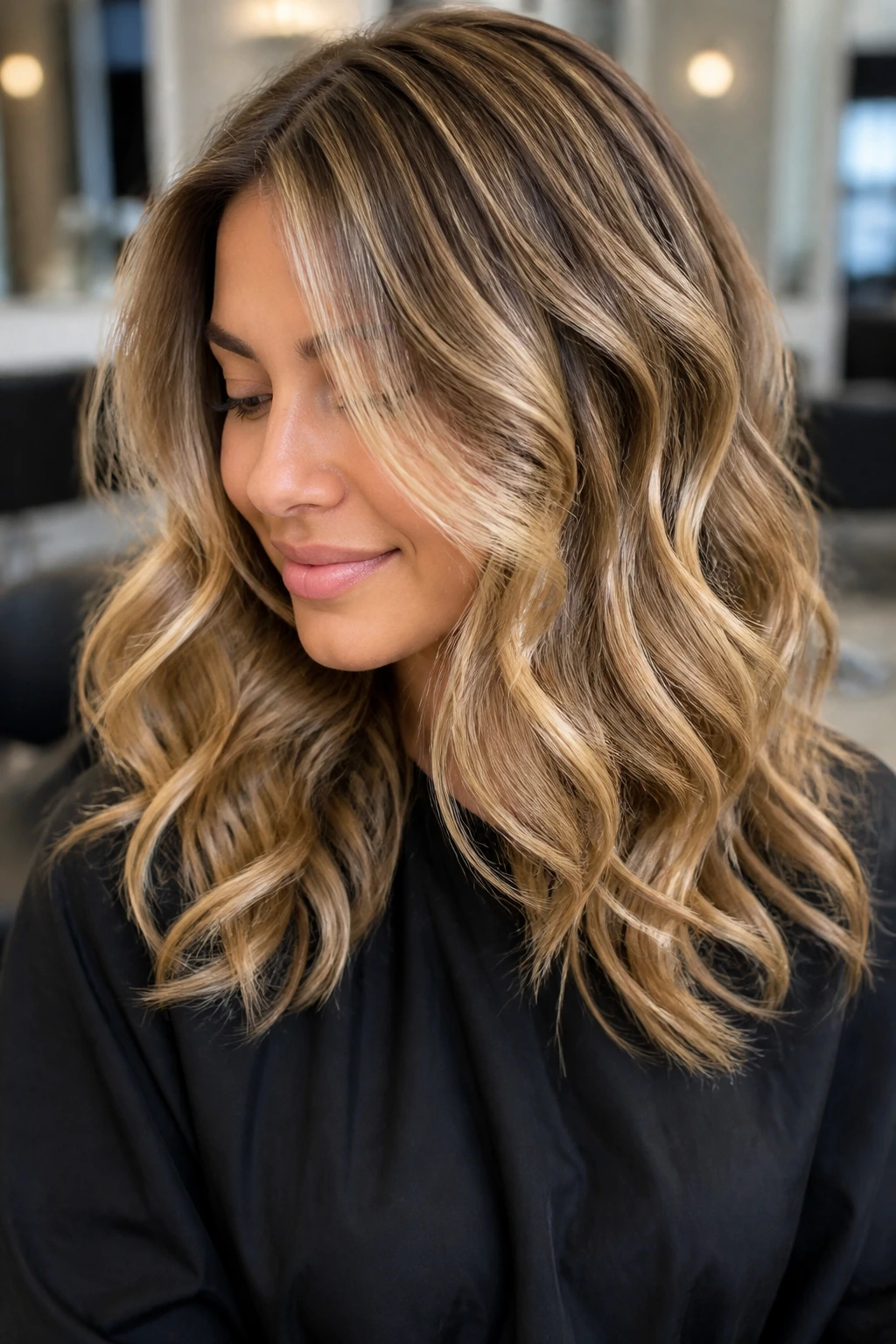
Foilayage is what I reach for when someone wants brightness, but not the kind that looks pasted on. The ribbons are painted and lifted in a way that lets the blonde sit in soft, curved lines through the hair, which is exactly why curls show it off so well.
The finished look should have warm beige and golden sections mixed through a deeper base. If the highlight placement is too even, the color loses the ribbon effect. Ask for stronger lightness around the front and mids, then a few softer pieces underneath so the curls reveal color from every angle.
This style is a little more salon-heavy than some of the others here, but the payoff is real. The dimension reads clearly in winter light, and warm skin gets the benefit of brightness without the hard, icy contrast that can make the face look tired.
12. Glossy Butter-Blonde Ponytail
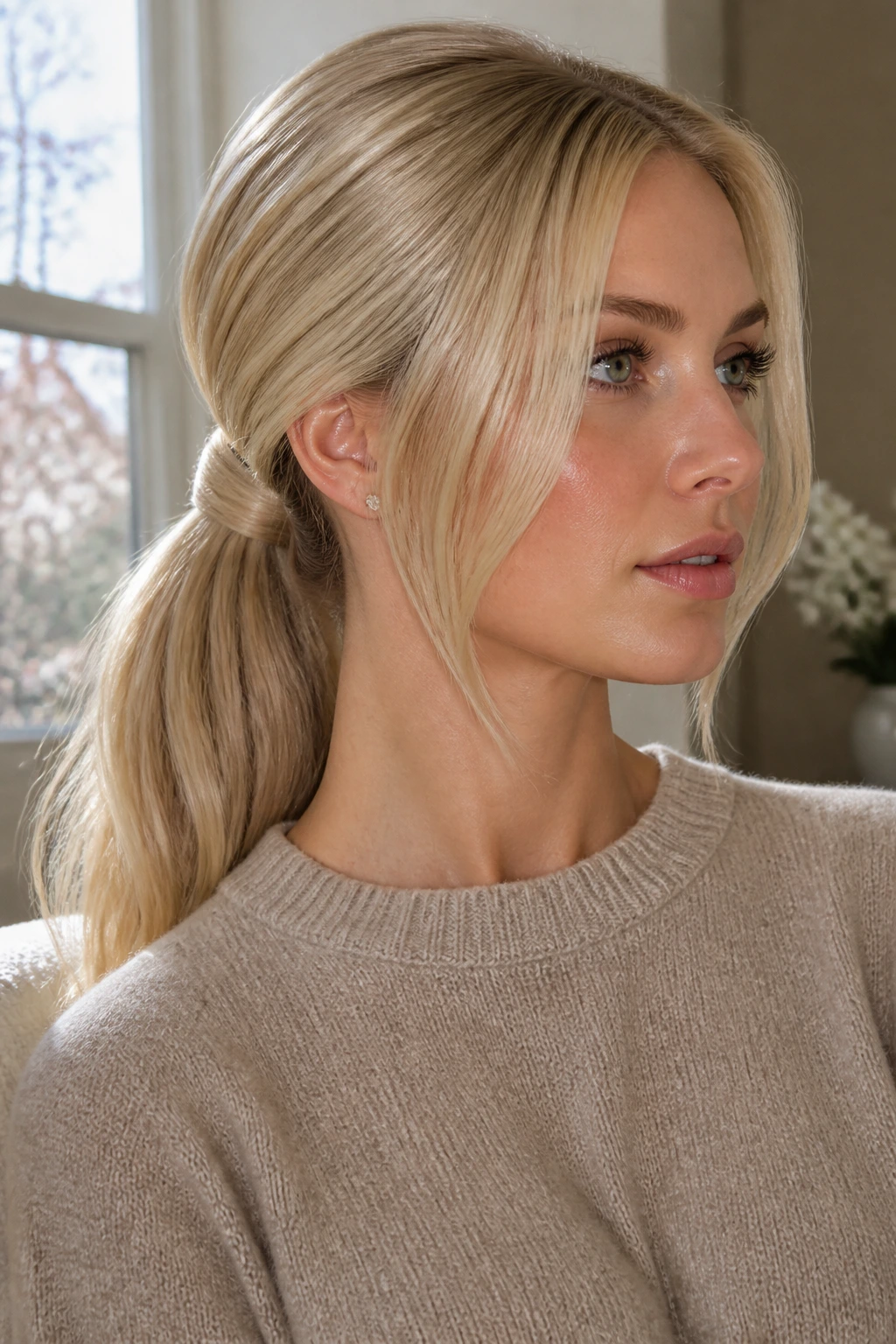
A ponytail doesn’t sound like a winter blonde hairstyle until you make it glossy and precise. Butter blonde through a high or low ponytail looks finished in a way that a loose everyday pony just doesn’t. The color matters because it keeps the style soft around the face.
The smartest version is usually a low pony with a wrapped base or a high pony with a polished crown. Smooth the surface, leave a little bend at the ends, and keep the butter tone warm enough that it doesn’t go pale against the scalp. If you have highlights, they should be placed so the ponytail shows depth when it swings.
I like this for days when you need your hair off your neck but still want it to look deliberate. It works with earrings, coats, and heavy makeup. It also behaves better than loose styles when static starts acting up.
13. Soft Bronzed Bob with Tucked Ends
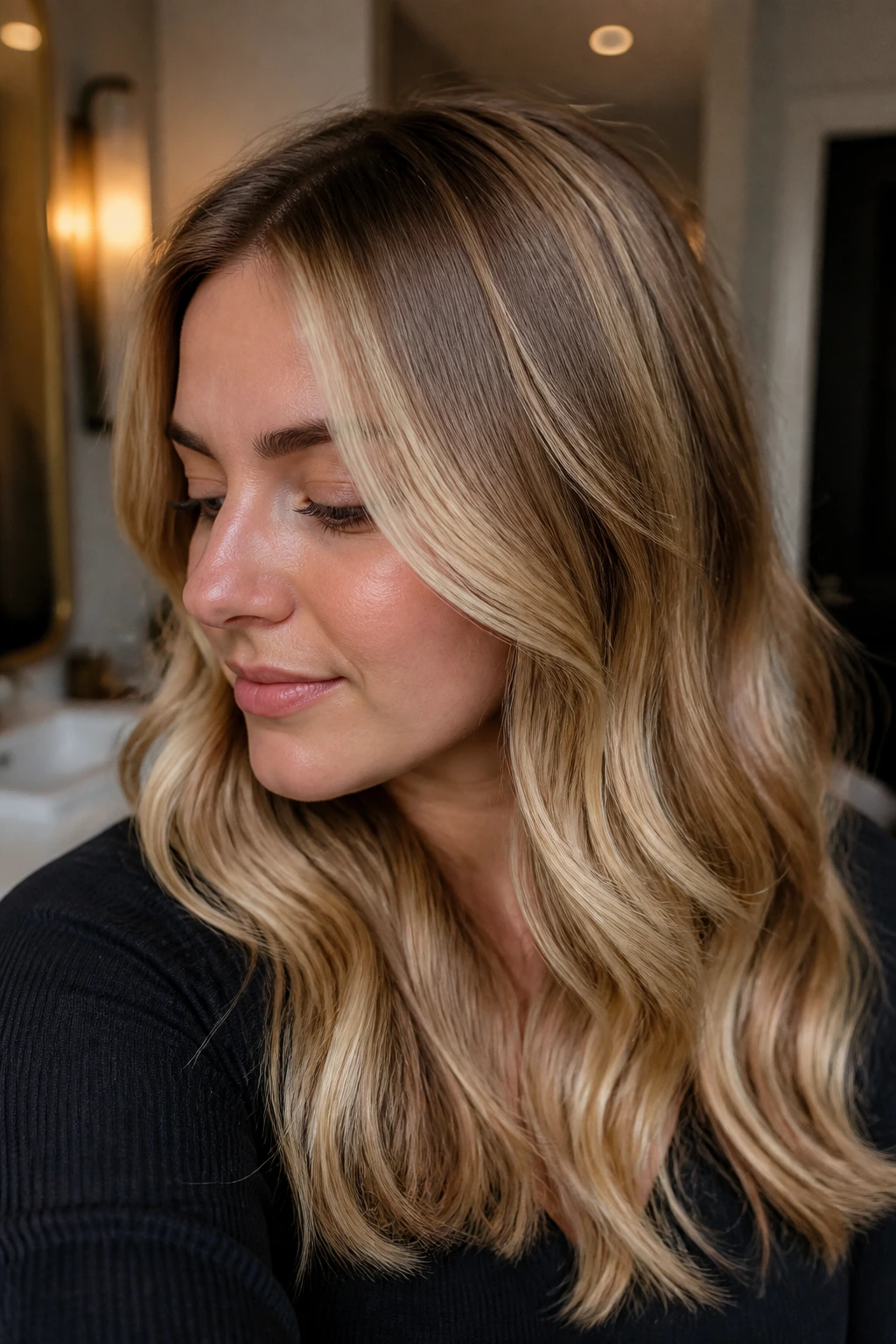
Bronzed blonde has a little more depth than honey, which is why it looks so good in a bob. The cut sits near the jaw or chin, and the tucked ends soften the line so the whole thing feels sleek instead of severe.
This is one of the easiest warm-blonde styles to wear with winter clothing because the bob clears the collar. No hair trapped under a coat. No weird flattening at the nape. The bronze-gold tone also keeps the face from looking pale, especially if the light where you live tends to be flat and gray for most of the day.
Ask for a bob with subtle internal shaping, not tons of choppy layers. Then use a blow dryer and round brush to bend the ends under just enough to give the cut a neat finish. Simple. Clean. Strong.
14. Maple Blonde Braid Crown
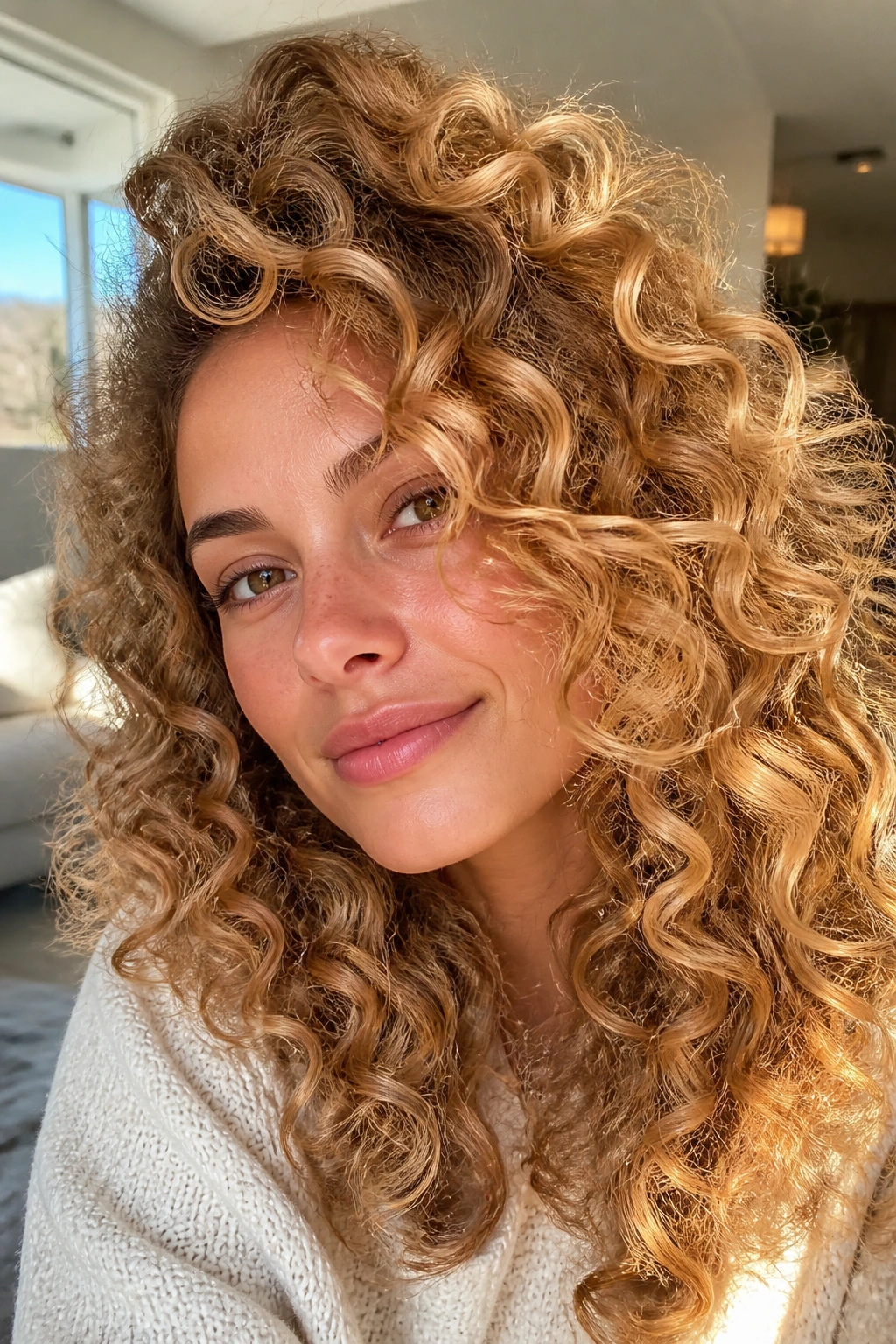
Braids look richer when the blonde has depth, and maple blonde gives you that depth in spades. The warm tone threads through the braid like wood grain, which is a nice way to describe it because that’s exactly what it looks like when it’s done well.
A braid crown works best when the front pieces are left a little soft. If you pull everything tight, the style can feel severe. Leave a few slim tendrils around the temples and ears, then widen the braid gently with your fingers so the texture looks full, not stiff.
This is a good winter option for events, dinners, or days when you want the color to show but don’t want heat styling. Braids also hold up well under light snow, humidity, or a long day inside and outside. Practical, but still a little dressy.
15. Apricot Blonde Soft Mullet
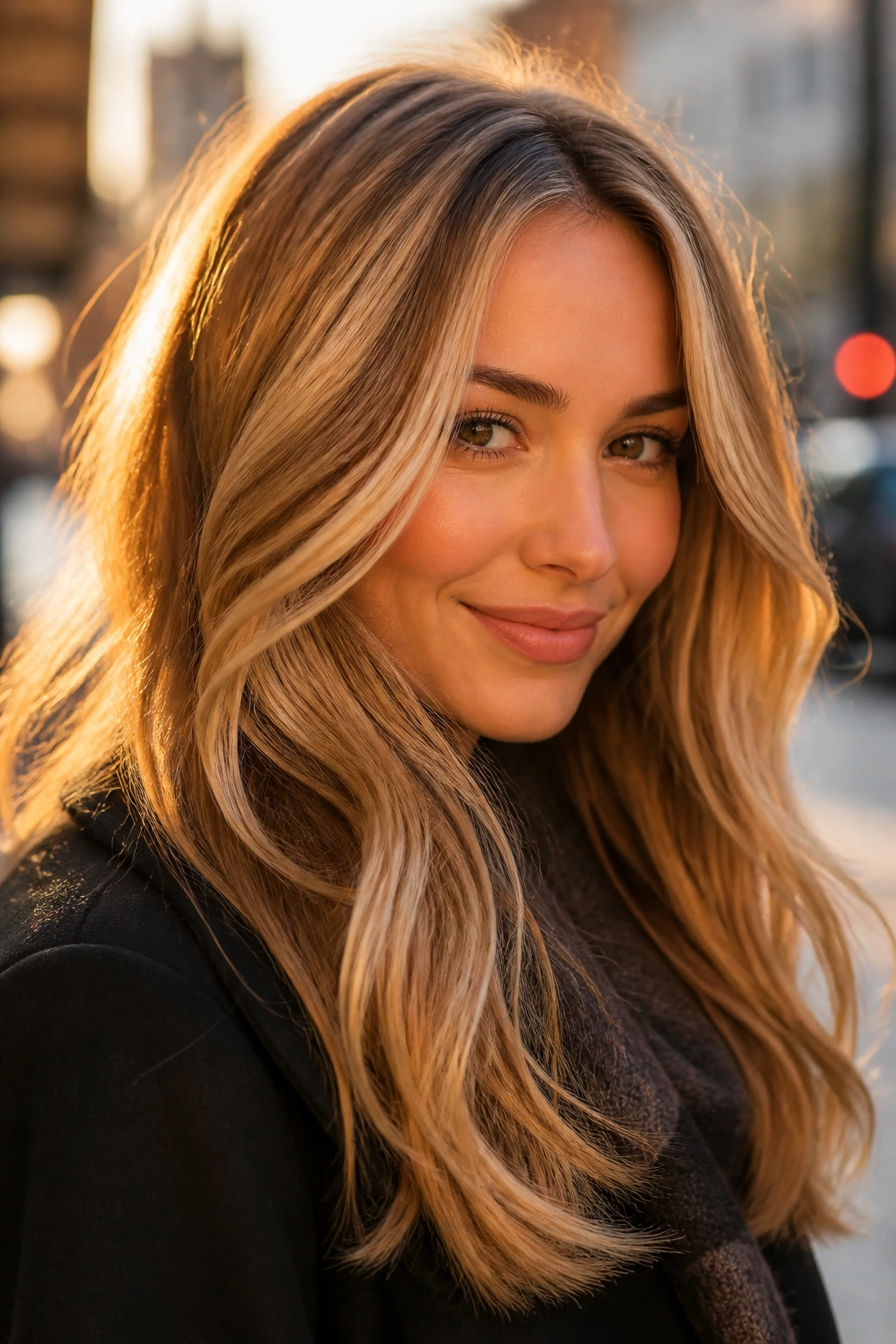
A soft mullet sounds risky until you see it on the right hair type. With apricot blonde, the cut gets a warm, slightly fashion-forward edge that still feels wearable. The front pieces stay light and face-framing, while the back keeps a bit more length and movement.
What matters here is balance. If the top is too short and the back too long, the whole cut can look accidental. Ask for feathered layers through the crown, a gentle disconnect through the back, and a warm apricot-gold tone that keeps the shape from feeling harsh.
This is the look for someone who wants personality in the haircut, not just in the color. It suits warm skin because the apricot undertone adds brightness without going neon. It’s a little cheeky. That’s the point.
16. Warm Beige-Blonde Money Piece Updo
When you pull warm blonde into an updo, the face-framing pieces do the heavy lifting. A beige-blonde money piece around the front of a bun or chignon keeps the whole style from disappearing against winter clothes.
The money piece should sit where the eye naturally falls — usually near the cheekbone or just below it. Keep the bun low and soft, or high and neatly pinned, depending on the occasion. The beige-blonde itself should stay warm enough to flatter the skin, not turn icy at the front and muddy elsewhere.
This is one of the most useful styles in the bunch because it gives you shape, polish, and softness all at once. The updo stays out of the collar. The blonde still shows. And the face gets a little brightness where it counts.
17. Creamy Blunt Cut with Hidden Layers
A blunt cut can look heavy fast, especially in winter, so the hidden layers are the real trick here. They remove weight from inside the shape without breaking the outer line. Pair that with a creamy warm blonde and you get a style that feels clean but not flat.
Ask for a blunt perimeter at the collarbone or just below the shoulders, then add internal shaping so the ends move when you turn your head. The color should sit in the cream-beige-to-honey family, not silver or dusty ash. A smooth finish is part of the look; if the hair puffs out, the blunt line loses its charm.
I like this cut for warm skin because it frames the face without competing with it. The clean edge keeps things modern. The warm tone keeps things kind.
18. Warm Bronde Curls with Blonde Ends
Bronde is the safe place for anyone who wants blonde but doesn’t want to live in full lightness. On warm skin, the brown-blonde mix usually looks more natural than a heavy all-over blonde, especially when the ends carry the brightest warmth.
Curls make the contrast easier to see. The darker base gives the head shape, and the blonde ends bring the eye down through the length. If the curls are too tight, the contrast can look busy. Loose spirals or brushed-out curls usually read better.
This is a solid winter choice if your natural color is already medium brown. You keep some depth near the root, which helps during grow-out, and the lighter ends still give you that blonde payoff. It’s one of the least fussy looks in the group.
19. Sandy Blonde Textured Crop
A textured crop in sandy blonde is short, sharp, and easier to wear than a lot of people expect. The sand tone should lean warm, with a little gold, not the chalky beige that can make warm skin look tired.
The crop needs texture at the top and around the fringe. Use a pea-sized amount of matte paste or cream, work it through the crown, and push the hair where you want it instead of trying to make it lie perfectly flat. That tiny bit of lift gives the color room to show.
This is good if you want something that dries fast and still looks styled with almost no work. It’s also a smart choice if you wear earmuffs, hats, or thick scarves that would crush a longer haircut. Short hair can be winter-proof too.
20. Peach-Glaze Half-Up Style
The half-up style gets more interesting when the blonde has a peach glaze over it. The top section lifts away from the face, the lower section keeps the length visible, and the warm tone makes the whole thing feel softer than a standard cool-toned blonde half-up.
I’d keep the crown a little loose instead of pulling it back too tight. You want lift, not a stretched look. Let a few front pieces fall free, then curl the lengths into wide waves so the peach-gold tone shows in the bends.
It’s a flattering pick for warm skin because the lifted front opens the face without washing it out. Also, it’s one of the easiest ways to make medium-length hair look intentional without spending forever on it.
21. Honeyed Hollywood Waves
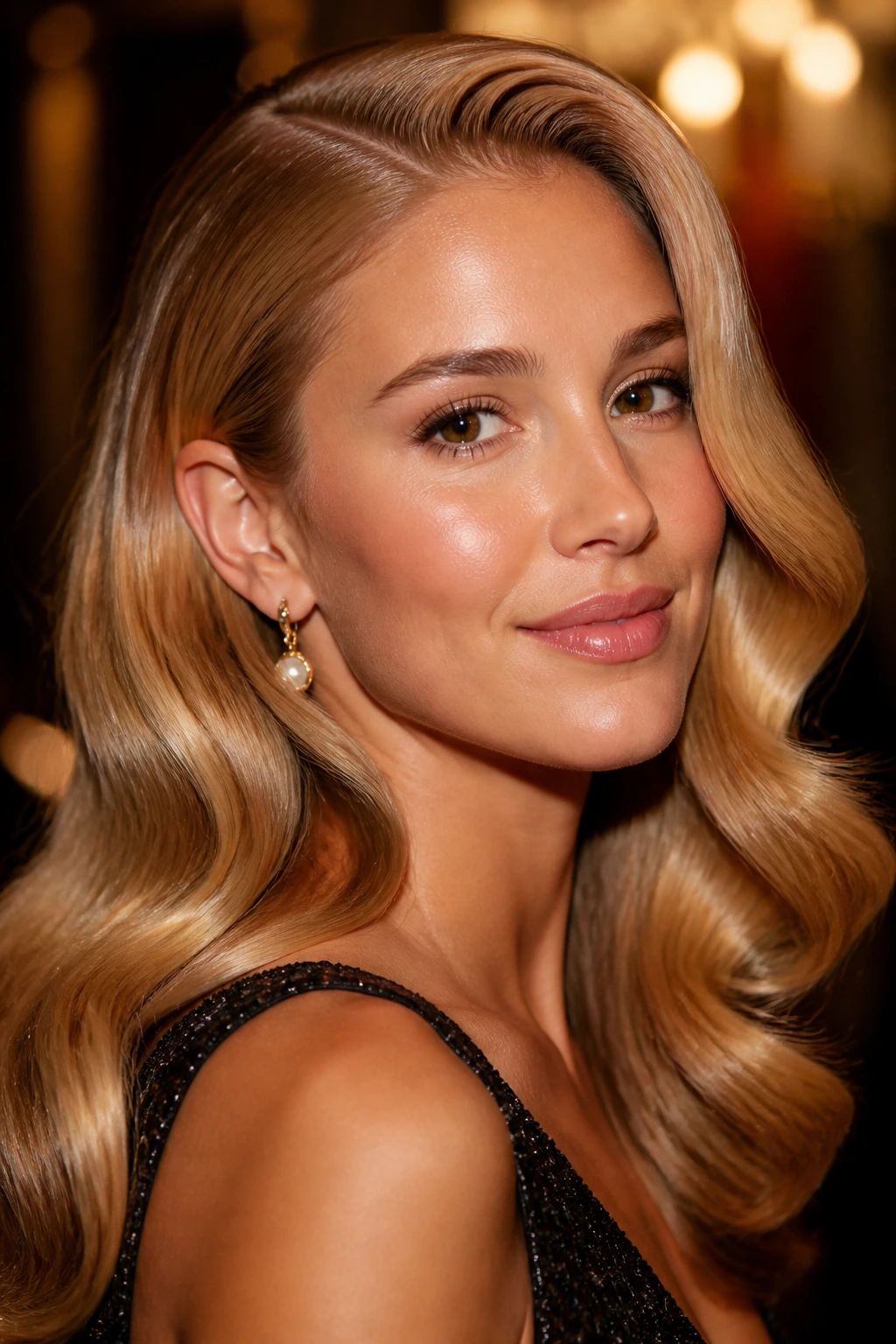
Hollywood waves can look too formal if the tone is wrong. Honey blonde fixes that. The warm reflect keeps the glamour from turning cold, and the deep side part gives the hair a richer line across the face.
The wave pattern should be smooth and consistent, not fluffy. Set the hair in a uniform bend, brush it out, then pin the front section while it cools if you want that molded S-shape near the cheek. The shine should look healthy, not greasy.
This is the style I’d choose for a night out when you want the blonde to do some talking for you. On warm skin, it tends to read elegant without looking severe. A good red lip doesn’t hurt, either.
22. Honeyed Angled Bob
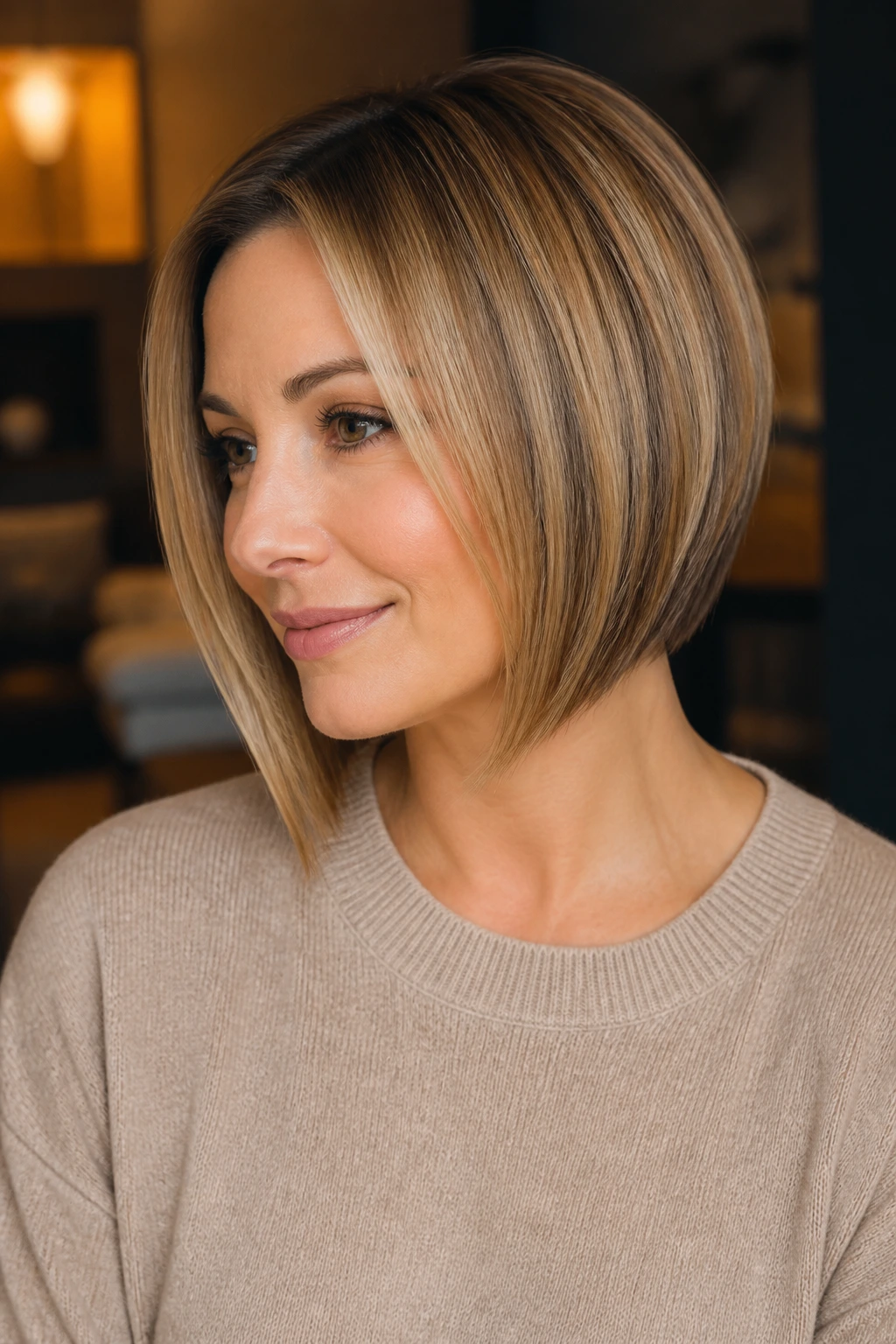
An angled bob gives blonde a little forward motion. The front is longer, the back sits shorter and cleaner, and the honey tone keeps the cut soft enough for warm skin. It’s tidy, but not stiff.
The angle matters. If the front isn’t long enough, the shape loses drama. If the back is too short, it can feel harsh around the neck. Ask for a gentle angle, not a giant drop. Then keep the finish sleek with a flat brush or a pass of the iron on the ends.
This style is especially good if you want shape without a lot of styling time. It holds its line well and looks neat with sweaters, blazers, and coats that would make longer hair feel crowded.
23. Warm Vanilla Braided Ponytail
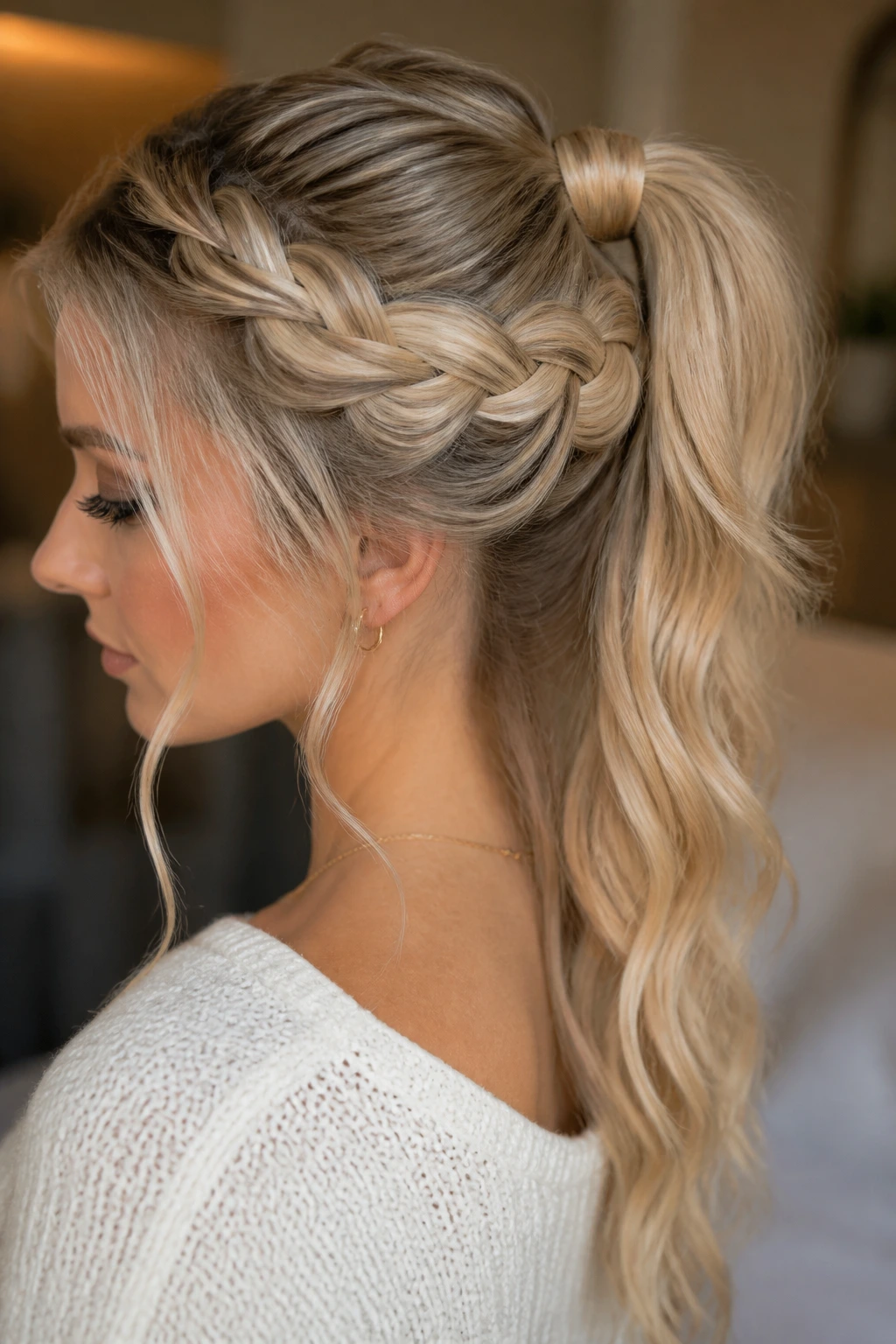
A braided ponytail sounds casual until the color has the right tone. Warm vanilla blonde makes the braid look thicker because the light and dark pieces weave together. That’s especially helpful in winter, when dry air can make hair look thinner than it really is.
Start with a smooth base, then braid the ponytail loosely enough that the pattern shows. If you want more width, pull the braid apart a little with your fingers after you secure it. A vanilla blonde with gold undertones keeps the braid from going flat in photos or in person.
This is one of the easiest styles to dress up or down. It clears the neck, works under a coat, and still feels styled. Useful, honestly. More useful than most people give it credit for.
24. Butterscotch Layers with Feathered Ends
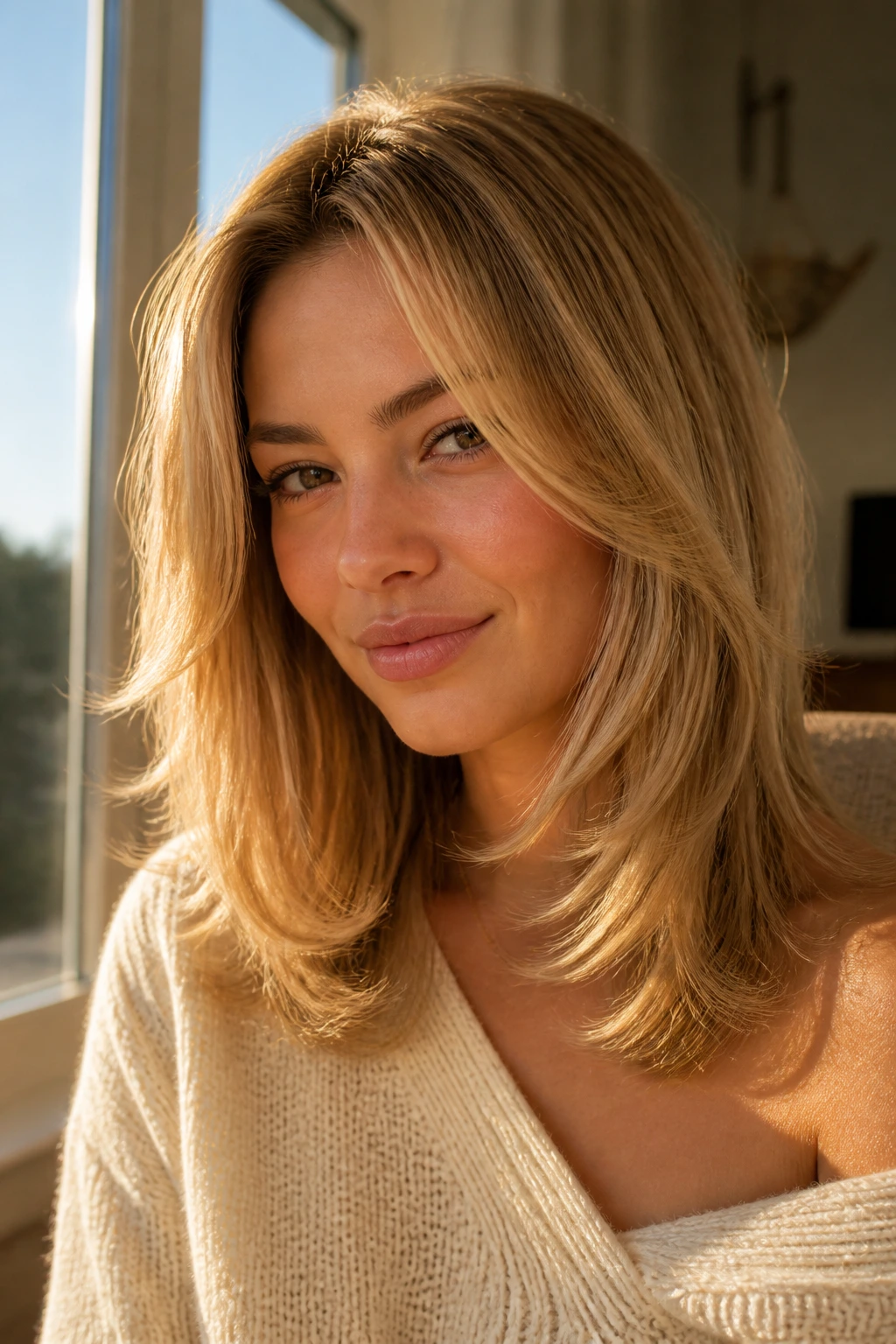
Butterscotch blonde is warm in a way that feels rich instead of bright. When you pair it with feathered ends, the cut gets a soft edge that moves when you walk, which is exactly what long hair needs when winter clothes make everything else feel bulky.
The layers should start around the collarbone or lower and taper out toward the ends. Feathering is the key word here. If the layers are too blunt, the hair gets thick at the bottom and loses the airy feeling. Butterscotch color keeps the movement visible, even in dim indoor light.
This style works well if you like hair that looks full but not heavy. It also flatters warm skin because the blonde tone stays in the golden family instead of drifting icy or beige-gray.
25. Sunrise Blonde Lob with Soft Flicks
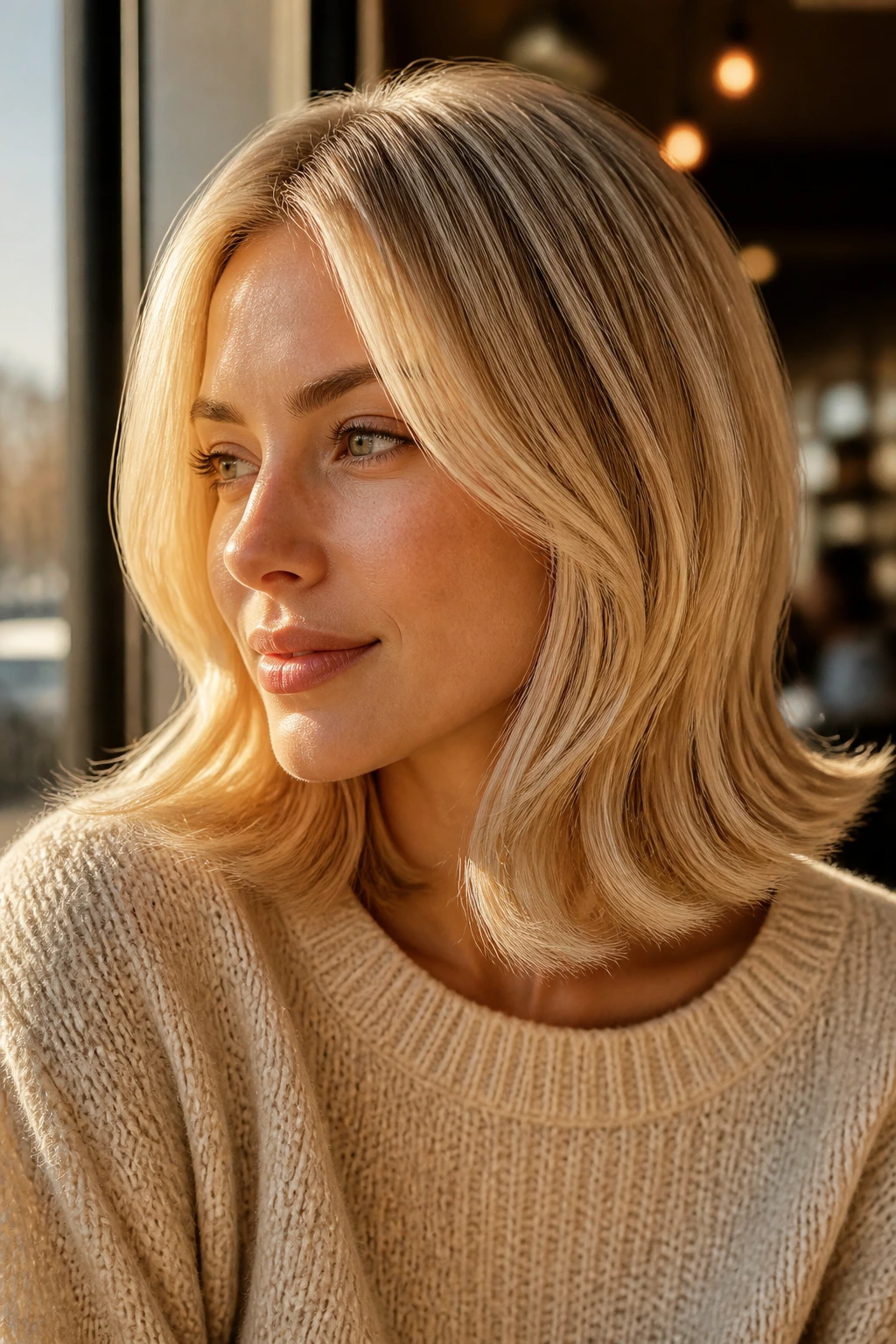
A sunrise blonde lob has that early-light feeling: warm, pale gold near the face, a little deeper through the mids, and just enough brightness at the ends to keep the shape alive. It’s one of the easiest warm blondes to wear because it doesn’t ask for much drama to look good.
The flicks at the ends should be soft, not turned out into anything fussy. A subtle flip away from the face or a tiny underbend is enough. If the lob is too straight, the color can feel static. If the curl is too strong, the whole thing gets busy.
This is the kind of blonde that works on warm skin in a very quiet way. Nothing shouty. Nothing brittle. Just enough light to keep the face open and enough depth to make the haircut feel finished.
Why Warm Blonde Feels Better in Gray Winter Light
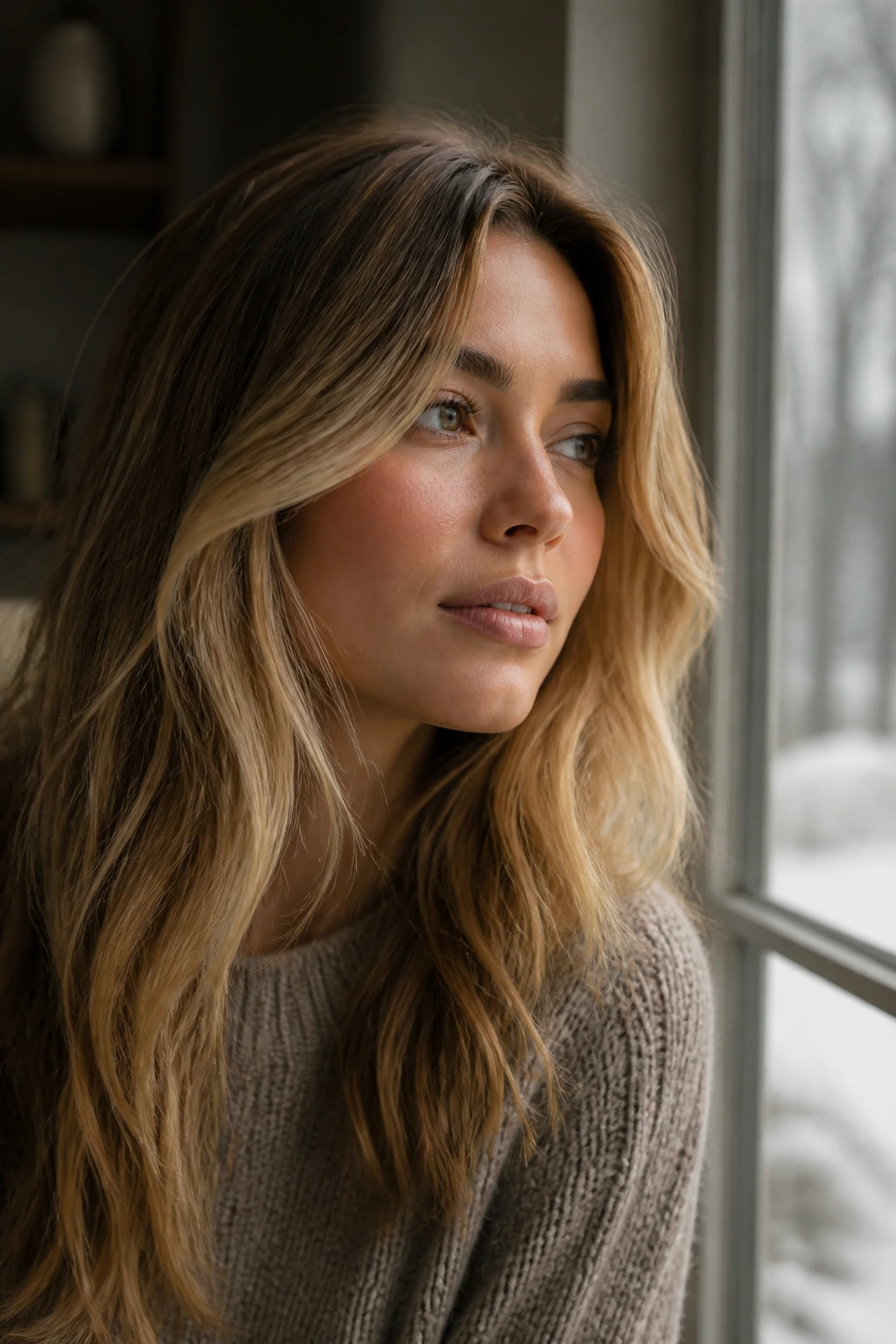
Gray light is brutal to flat hair color. It drains cool blondes fast and can make warm skin look a shade less alive than it really is. That’s why honey, butter, caramel, and apricot shades matter so much when the weather turns dim. They hold onto their color story even when the sun is low and the indoor bulbs are unforgiving.
There’s also the clothing problem. Heavy coats, wool scarves, and dark knits create a lot of visual weight near the face. A warm blonde haircut gives the eye somewhere to land, which is especially useful if your natural coloring already has gold in the skin or a peachy flush in the cheeks.
I’d rather see a blonde with depth and shine than a pale, one-note platinum on most warm complexions. Not because platinum is bad. It’s just a different job. Warm blonde is trying to make the face glow a little, not compete with the room.
How to Ask for the Right Shade at the Salon Without Guessing
The easiest mistake is walking in and saying, “I want warm blonde.” That’s not enough. Warm can mean honey, caramel, beige-gold, butter, apricot, or strawberry-gold, and those are not the same thing once the foils come out.
Bring photos, yes, but bring the right ones: one in daylight, one indoors, and if you can, one where the color is shown from the side. Then give your colorist a level range if you know it. A level 7 to 9 base with a level 6 or 7 root shadow is a common starting point for warm blondes that still have depth. If you want brightness near the face, say so. If you want the ends lighter than the roots, say that too.
Use plain words. “Honey,” “butter,” “golden beige,” “caramel,” “toasted,” and “apricot” are useful. “Ash,” “silver,” and “icy” are the words you probably want to avoid if your skin already leans warm. And if you have redness in your cheeks, a little extra gold usually does more for you than a beige that looks pretty on paper and wrong in the mirror.
The Styling Tools That Keep the Finish Soft, Shiny, and Controlled
You do not need a drawer full of gadgets. A few good tools, used well, beat a mountain of clutter every time.
- Heat protectant spray or cream: Use it before blow-drying, curling, or flat ironing so the warm blonde keeps its shine instead of going dry and fuzzy.
- 1-inch or 1.25-inch curling iron: The smaller size gives you bend and ribbon waves; the larger one gives soft, brushed-out movement.
- Medium round brush: Best for curtain bangs, rounded ends, and lifted blowouts that frame warm skin well.
- Blow dryer with a nozzle attachment: The nozzle matters. It directs air and keeps the cuticle smoother, which helps blonde reflect light cleanly.
- Rat-tail comb: Useful for clean parts, crown sections, and those face-framing pieces that need to sit in the right place.
- Section clips: They save time and stop the top layers from getting tangled while you style the underside.
- Lightweight shine serum: A small amount on mid-lengths and ends keeps warm blonde from looking dry.
- Dry shampoo: A little at the roots keeps the crown lifted when hats or static flatten everything.
- Color-safe shampoo and conditioner: The regular sulfate-heavy stuff can strip gloss faster than you think.
- Silk pillowcase or scarf: Less friction, fewer tangles, less morning fuzz. Simple and worth it.
How to Keep Your Style Intact Under Hats and Scarves
Winter hair has to survive friction. Beanies press the crown flat, scarves rub the lengths, and high collars can kink the ends before lunch. If the style is fragile, it won’t last long outside the house.
The fix starts before you put the hat on. Give the roots a light lift with dry shampoo or a root spray, then let the hair cool fully if you’ve blow-dried or curled it. Warm hair bends too easily. If you trap it under a hat while it’s still warm, the shape collapses into whatever the hat decides. Not ideal.
For longer styles, a low braid, loose bun, or low ponytail usually survives better than free-falling waves. For bobs and lobs, tuck one side behind the ear and let the other side keep its shape. And when scarves rub the ends, a tiny bit of serum on the last two inches is enough. Too much and the hair goes limp fast.
Small Tweaks That Make Warm Blonde Look Richer
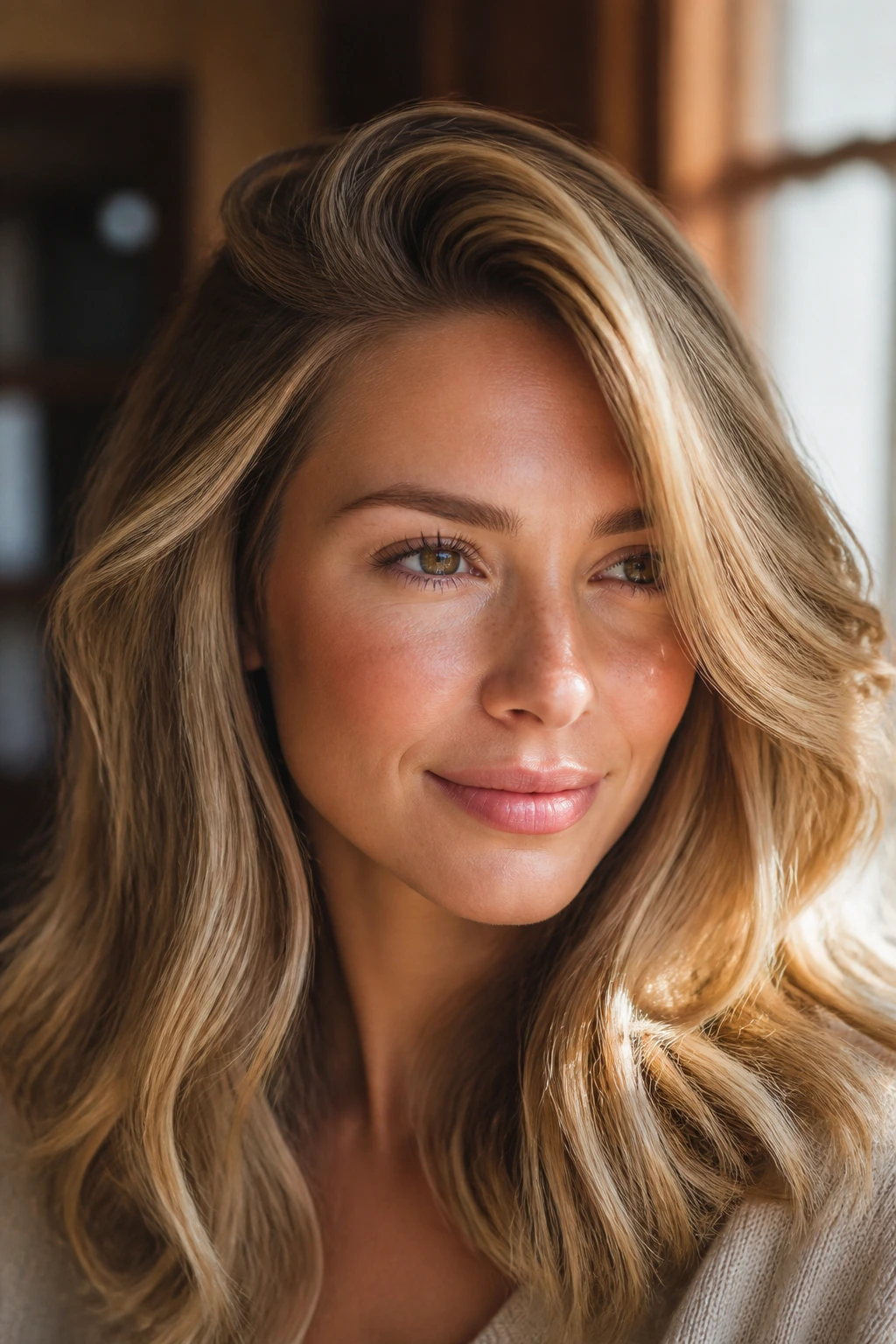
Face-Framing: Keep the brightest pieces near the cheekbones, jaw, or fringe line. That’s where the warmth matters most, and it stops the rest of the color from looking overdone.
Texture: A soft bend usually looks better than tight curl on warm blonde. The movement shows the different tones inside the hair, which is the whole point of dimension.
Parting: A deep side part adds lift and drama. A middle part gives symmetry and makes the blonde read cleaner. Try both before deciding. They change the haircut more than people expect.
Finish: Fine hair usually looks best with satin shine, not heavy oil. Thick hair can take more gloss. Either way, keep the product off the roots unless you want the crown to collapse by noon.
Undertone: If your skin flushes peachy or golden, ask for honey, butter, or caramel. If your undertone is warm but muted, beige-gold can be better than strong gold. That small shift makes a bigger difference than most people think.
Keeping the Warmth: Glosses, Toners, Trims, and Wash Day
Warm blonde doesn’t stay warm by accident. It needs a little maintenance, but not the kind that takes over your life. A gloss or toner refresh every 4 to 8 weeks usually keeps the tone soft and believable. If your hair fades quickly, stay closer to the shorter end of that window. If the color holds, you can stretch it.
Trim the ends every 8 to 10 weeks if you wear your blonde long. That keeps the shape from fraying, especially on layered cuts and blunt lobs. Dry ends show up faster on blonde than on darker hair, and winter air is not kind to split ends. You know the look. It turns fuzzy at the bottom and refuses to behave.
Wash day matters too. Two or three washes a week is enough for most warm blondes. Use lukewarm water, not hot. Hot water opens the cuticle too much and can dull the tone fast. Purple shampoo is fine if your blonde starts turning yellow-orange, but use it sparingly — once every two or three washes, and only for a short time. Too much purple can make warm blonde look dusty, which defeats the whole point.
Common Mistakes That Drain Color and Shape
-
Choosing a blonde that’s too cool: If your skin starts looking pink, tired, or flat, the blonde is probably too icy. Ask for honey, butter, or a beige-gold gloss to bring the warmth back.
-
Leaving the roots too light: A root that’s as bright as the mids can make the whole head look one-dimensional. A slightly deeper root shadow keeps the color grounded and makes grow-out easier.
-
Overusing purple shampoo: It can strip the warmth right out of a blonde that was meant to feel golden. Use it only when you actually need it, and rinse it out on time.
-
Skipping shape: Warm blonde still needs a haircut that moves. If the ends hang straight and heavy, the color can’t do much on its own.
-
Putting too much oil on fine hair: A heavy serum on the crown or mid-lengths flattens the style and makes the blonde look dull. Keep oils to the ends, and use a lighter hand than you think you need.
-
Ignoring hat hair: If you wear beanies often, build in a little root lift or choose a cut that springs back after compression. Flat crown, no matter how nice the color is, changes the whole read of the style.
Variations and Adaptations for Different Hair Types
The Short-Cut Edit: If your hair is short, keep the warmth concentrated around the face and crown. A honey pixie, bronzed bob, or sandy crop gives warm skin a clean frame without needing a lot of length.
The Curl-First Edit: Curly hair loves golden ribbons and peachy-strawberry tones because the bends show every shift in color. Keep the lightness in the outer curl pattern and avoid over-lightening the interior too much, or the shape can look frizzy.
The Fine-Hair Edit: Fine hair usually looks better with fewer, better-placed highlights. A root shadow plus face-framing brightness gives the impression of depth without stripping away body.
The Gray-Blending Edit: If you’re blending grays, warm beige highlights with soft lowlights around the hairline are a smart move. They make the grow-out look intentional instead of stark.
The Low-Maintenance Edit: Balayage and soft foilayage both work well when you don’t want constant salon visits. Ask for depth at the root and warmth through the mids so the color can fade gracefully.
Frequently Asked Questions
What blonde shades flatter warm skin tones best?
Honey, butter, caramel, apricot, warm beige, and soft gold usually work best. They echo the warmth already in the skin instead of fighting it.
Can warm skin tones wear platinum blonde?
Yes, but it usually needs careful balancing with makeup, root depth, or a warmer cut line. If the platinum goes too white or silver, the skin can look drained.
How often should warm blonde hair be toned?
Most warm blondes do well with a gloss or toner refresh every 4 to 8 weeks. The exact timing depends on how fast your color fades and how often you wash.
Is balayage better than full highlights for warm undertones?
Balayage is often easier to live with because the grow-out stays soft. Full highlights can still work, but they usually need more maintenance to avoid looking too bright or too striped.
What if my warm blonde keeps turning brassy?
If the color pulls orange or yellow, use a color-safe shampoo and book a gloss refresh. A small amount of blue or violet shampoo can help, but don’t overdo it or the blonde can go dull.
Do these styles work on short hair?
Absolutely. Some of the strongest warm-blonde looks are pixies, cropped bobs, and angled lobs because the color sits close to the face and the shape stays visible under winter layers.
Can I make my blonde look warmer without recoloring it?
Yes. A golden gloss, a change in part, a softer wave pattern, and a better shine spray can shift the whole read of the hair without a full color service.
How do I keep my blonde from flattening under hats?
Preload the roots with a little lift spray or dry shampoo, let the hair cool before covering it, and choose styles that can bounce back — loose waves, low buns, lobs, and layered cuts do better than pin-straight hair.
The Shade That Stays With You
Warm blonde works because it doesn’t try to erase the season or the skin under it. It gives the face a little glow, keeps the haircut readable under thick clothes, and holds onto its richness when the light goes gray. That’s the real test, not how it looks in a bright salon mirror.
If you want a blonde that flatters warm undertones without looking flat, choose the version that has depth, movement, and a little gold in the finish. That combination is hard to beat, and it tends to look even better once the first coat comes off and the hair has to live in the real world.