



Blonde hair color ideas for natural hair can look soft and expensive, or flat and thirsty, and the difference usually comes down to placement more than brightness.
A honey balayage on a dense 4C fro reads like sunlight in motion. A hard, all-over ash blonde on the same texture can look sharp too — but only if the lift is clean and the toner doesn’t turn the ends gray and tired-looking.
Natural hair changes the rules because curl pattern hides color in layers. Porous ends grab light fast, roots resist it, and shrinkage can make a tiny highlight look like a whole stripe once the hair dries. That’s why blonde on coils, curls, and kinks has to be thought out a little differently.
The good part? Once you stop treating blonde like one flat shade and start thinking in ribbons, shadows, and undertones, the options open up fast. Some of them are low-commitment. Some are bold enough to stop traffic. All of them need a little more care than a swatch book would suggest.
Why These Blonde Ideas Work on Natural Hair
-
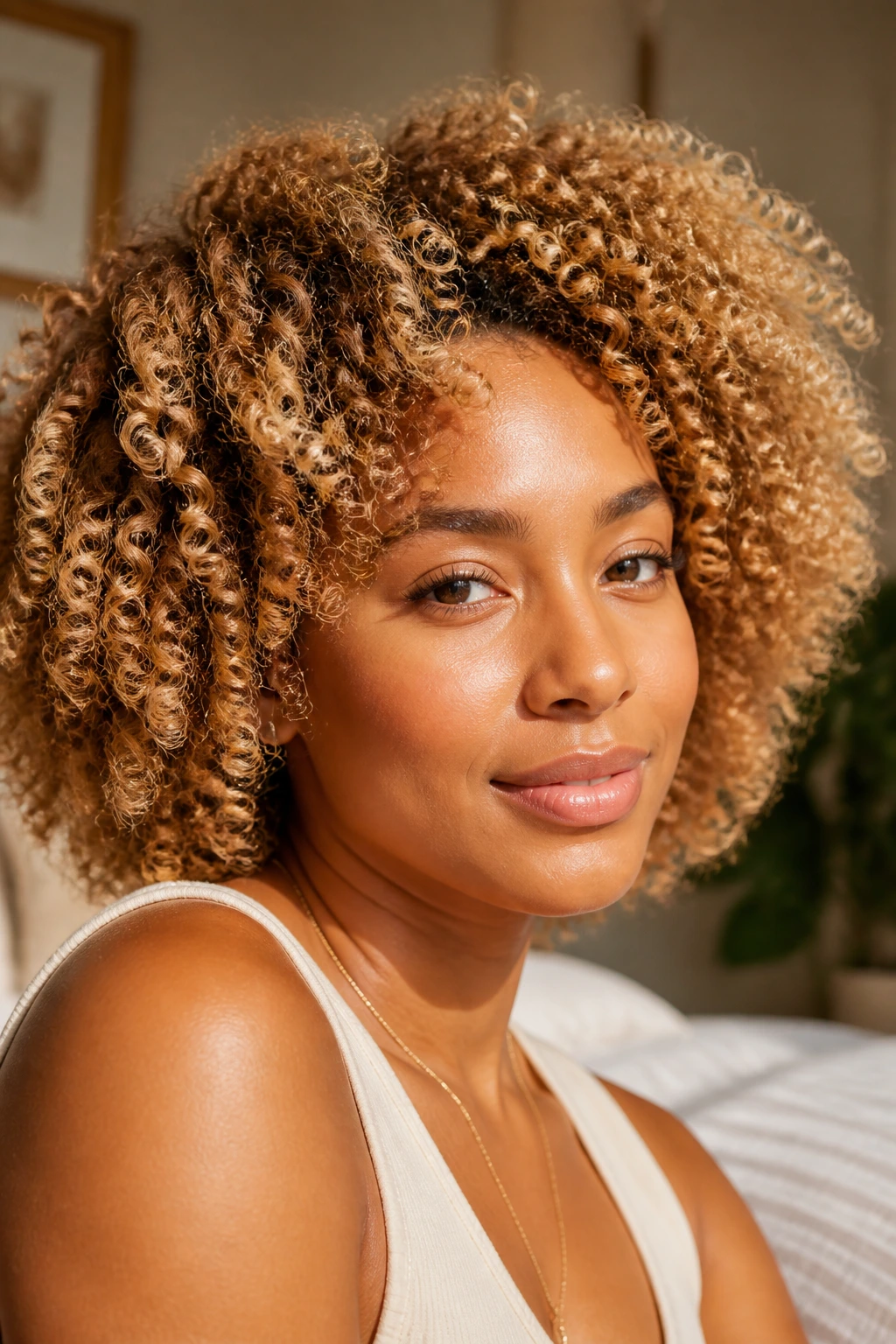
Soft grow-out: Rooted placements and balayage let your regrowth look planned instead of messy, which matters a lot when your curl pattern changes how the color reads week to week.
-
Better dimension: Natural texture already gives you built-in shadow, so blonde looks richer when it’s broken up into ribbons, panels, or ends instead of painted as one flat block.
-
Less harsh regrowth: Leaving a darker root buys you time between salon visits and keeps the color from fighting your scalp line as the hair grows.
-
Shade control: Honey, beige, caramel, and champagne tones usually sit more naturally on dark bases than icy blondes that need near-perfect lift.
-
Style flexibility: These ideas work in wash-and-gos, twist-outs, puffs, braids, locs, and short cuts, so you can choose color without giving up the hairstyle you already wear.
-
Damage awareness: A lot of these looks lean on partial lightening, glosses, or color placement instead of full-head bleach, which is kinder to hair that already lives with shrinkage and dryness.
What Makes Blonde Behave Differently on Coils, Curls, and Kinks
Blonde doesn’t sit on natural hair the way it sits on straight hair. It bends, hides, flashes, and disappears depending on how the hair is styled, how dense it is, and how tight the curl pattern runs. That’s why the same honey tone can look soft and blended in a twist-out but louder in a stretched blowout.
Porosity matters too. The ends of natural hair often lighten faster than the roots, especially if the hair has been colored before, heat-styled often, or simply worn long enough to have older, drier sections. That means the blonde can look uneven in a hurry if the colorist pushes too hard on the fragile parts. The fix is not “more bleach.” The fix is smarter placement and a slower plan.
Shrinkage changes the whole story. A highlight that looks subtle when the hair is wet can become a thick ribbon once the curls spring back. That’s not a problem if you planned for it. It is a problem if you asked for tiny dimension and got a stripe.
How to Read Undertones Before You Lift a Single Strand
A lot of bad blonde choices happen because people choose the shade before they choose the undertone. That’s backwards. Natural hair usually lifts through red, orange, and yellow before it gets anywhere near blonde, so the question is not “Can we make it light?” It’s “What kind of light are we aiming for once the hair moves through those stages?”
Warm Bases
If your skin has golden, red, or rich brown undertones, honey, butterscotch, caramel, and toasted beige tend to read the most natural. They don’t fight the warmth already living in the hair shaft, which means the result looks more blended and less like a color correction emergency.
Neutral Bases
Neutral undertones give you the widest lane. Beige blonde, cream soda, and soft bronde all have room here. You can lean warmer for softness or cooler for a little edge, but I’d still avoid extreme platinum unless the cut is short and the maintenance doesn’t scare you.
Cool Bases
Ash blonde, champagne, and icy panels can look gorgeous on cool skin, especially on short cuts or pieces that sit away from the face. The catch is simple: cool blonde shows brass fast. If the hair lifts unevenly, ash can turn muddy instead of crisp.
A strand test is not extra. It is the price of getting the color you actually want.
1. Honey Balayage on a Dark Base
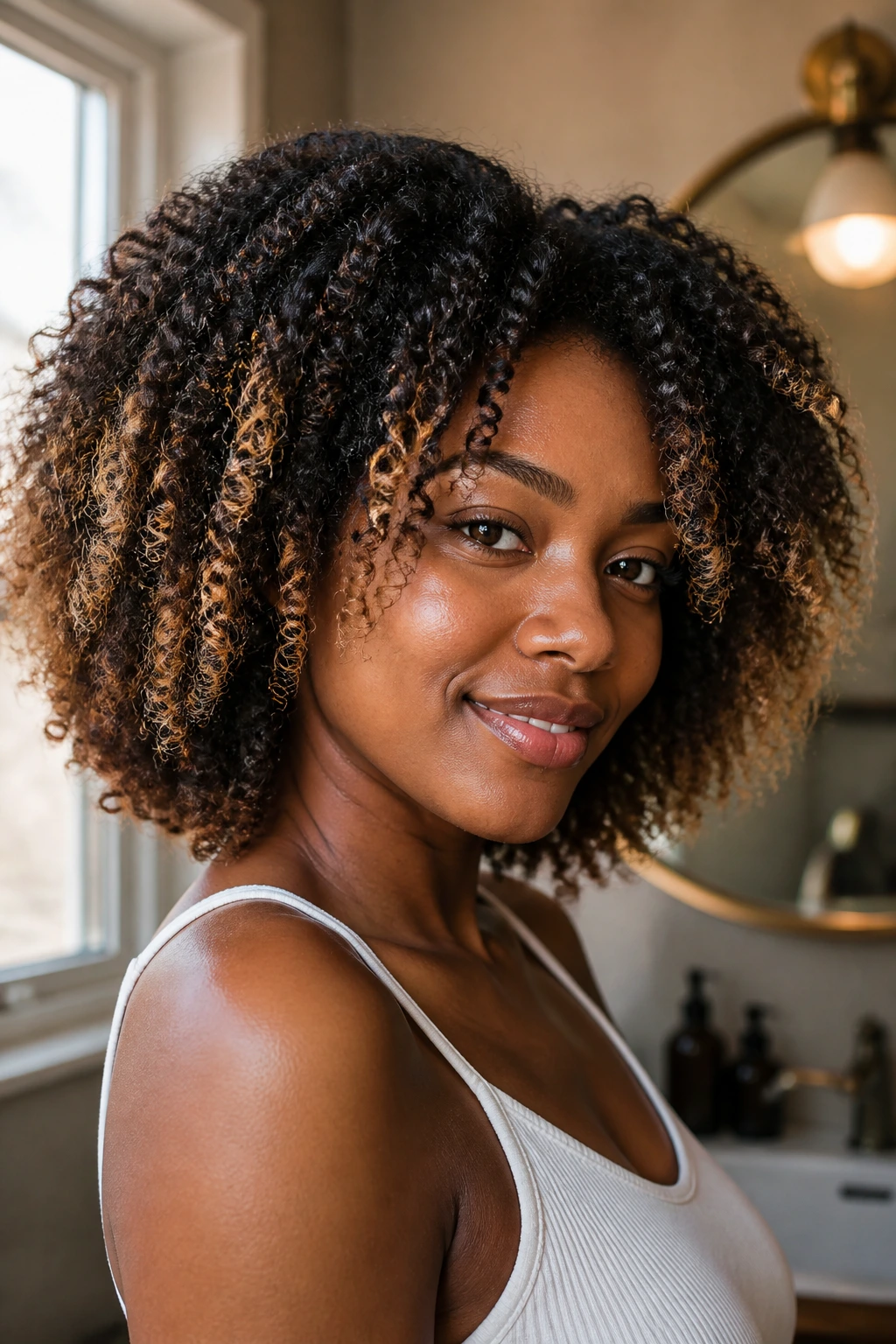
Honey balayage is the shade I reach for when someone wants blonde that softens the curl pattern instead of fighting it. The warmer tone sits nicely against dark brown and black hair, and hand-painted placement keeps the color from looking like a block.
On a twist-out or braid-out, honey balayage looks like sunlight caught between the coils. On a wash-and-go, it reads a little softer and less striped, which I like even more. Leave the roots dark, keep the mid-lengths lifted one to two levels lighter, and let the ends take the brightest touch. That gives the hair movement without making the curl pattern look thin.
This is one of the safer blonde ideas for natural hair because it does not demand that every strand reach the same pale level. It also grows out well. Nice bonus.
2. Caramel Money Piece Around the Face
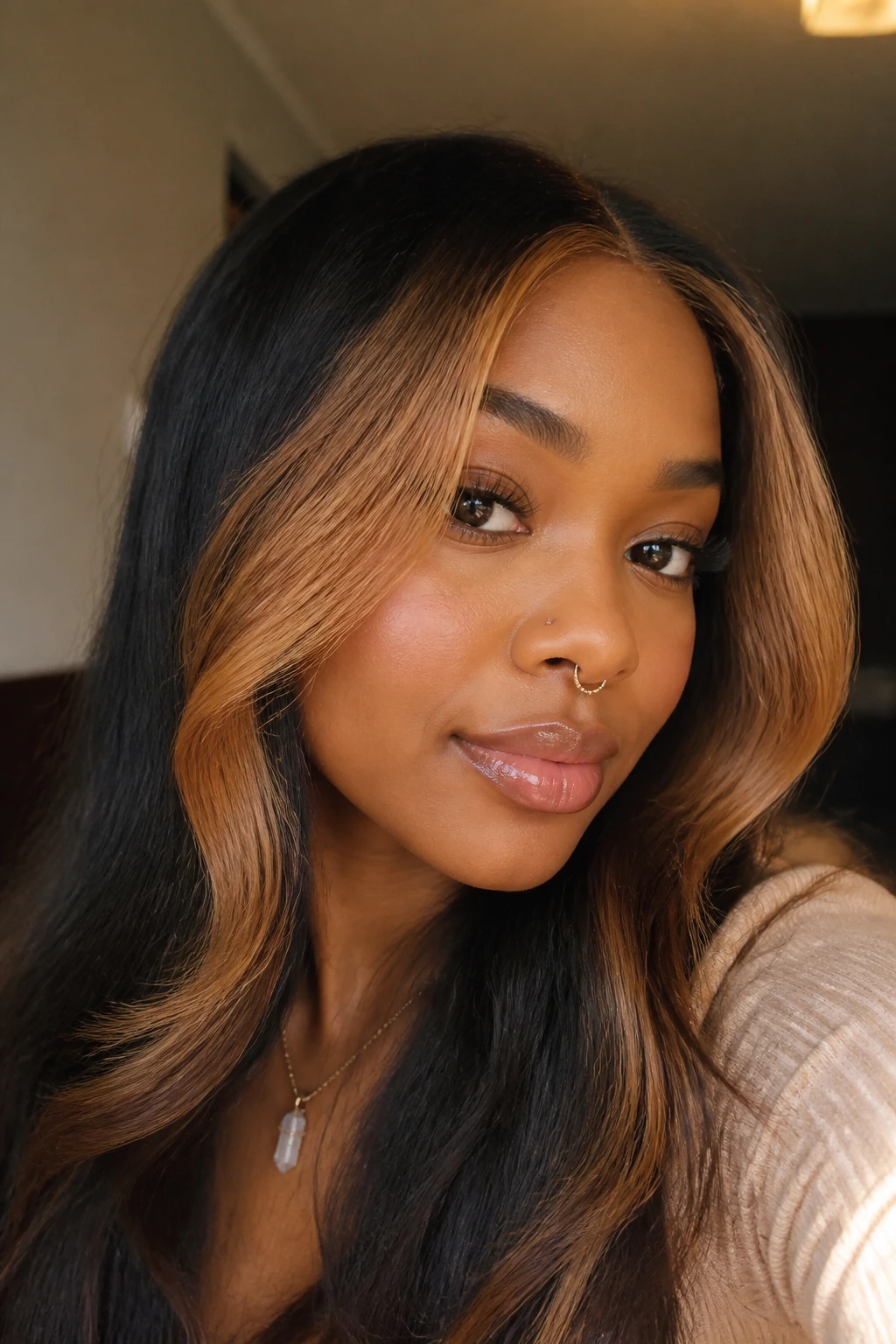
Why does a face-frame strip change the whole haircut? Because the eye goes straight to the front first, and a little blonde there makes the rest of the hair look brighter by comparison.
Best placement for this look
- Keep the brightest section around the temples and cheekbones.
- Blend the root with a soft shadow so the strip doesn’t look pasted on.
- Let the color sit a shade or two lighter than the rest of the hair, not five shades lighter.
Caramel works especially well if you wear puffs, side parts, or fluffy blowouts. It gives the face a lift without forcing you into a full bleach job, and it looks good even when the back of the hair is darker and denser. If your edges are fragile, keep the lightest pieces off the hairline itself. That little detail saves a lot of grief.
3. Sun-Kissed Ombré Ends
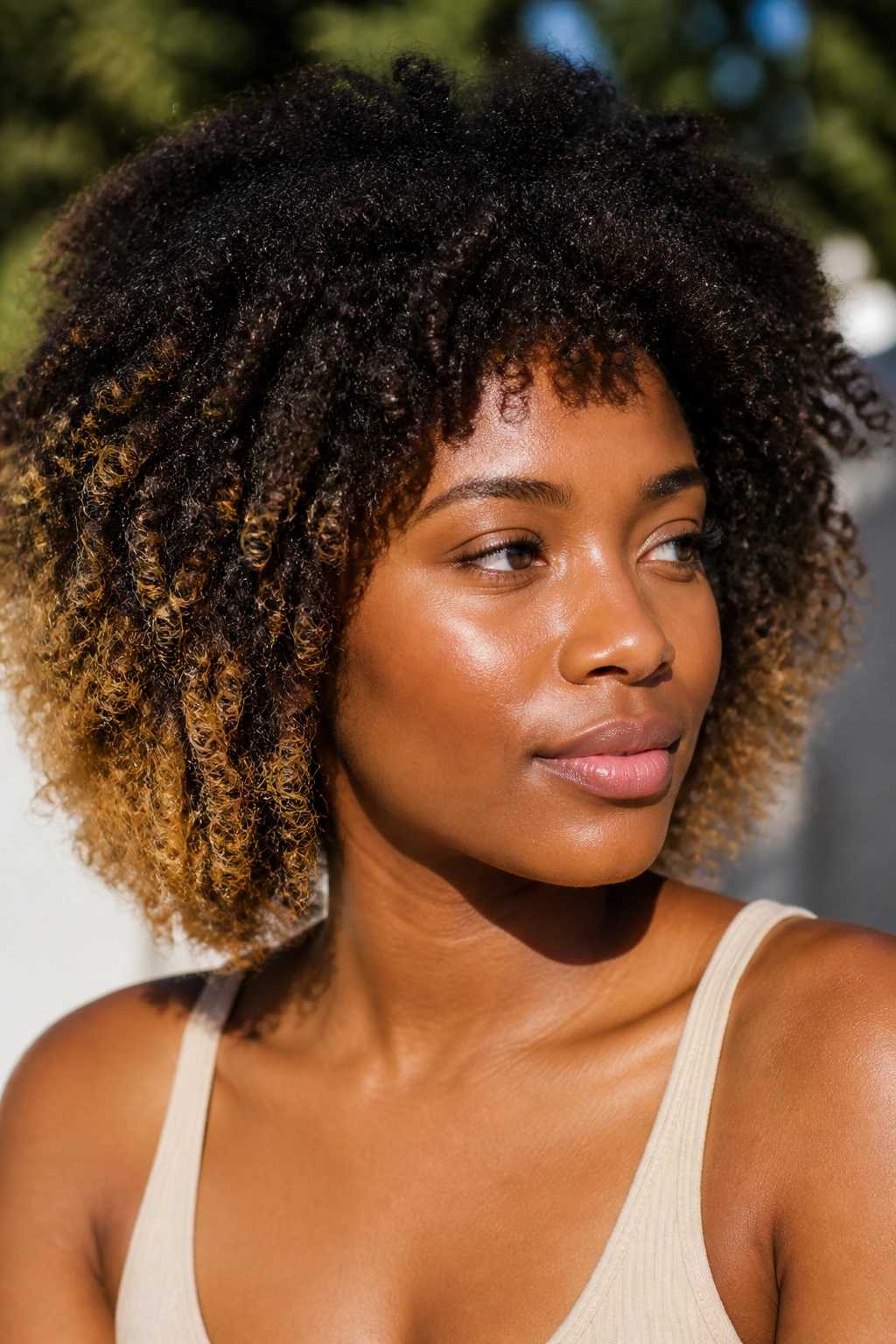
Picture a twist-out where the bottom few inches glow as if they’ve spent a week in dry sunlight. That’s the appeal of ombré ends on natural hair.
The roots stay dark, the mids stay grounded, and the last 2 to 4 inches carry the blonde. On longer coils, that gradient looks intentional instead of heavy. It also means the most fragile part of the hair — the ends — gets the most visual payoff, so the color feels worth the effort.
Ombré is smart if you’re nervous about blonde because it lets you test the brightness without committing your whole head to it. It’s also one of the easiest blonde ideas to pair with trims. If the ends need to be cut later, the shape usually still makes sense.
4. Beige Blonde Afro
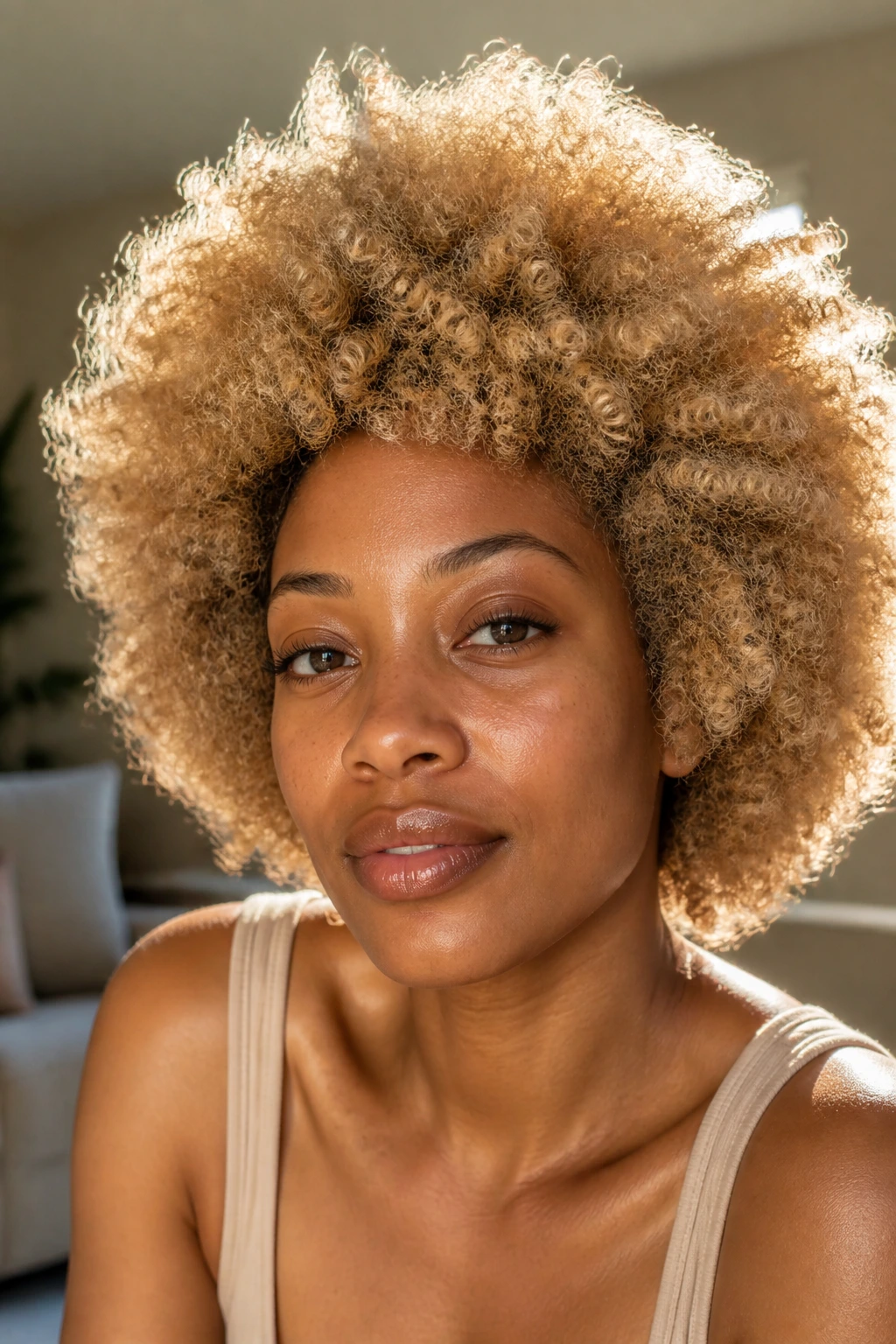
Beige blonde is the quiet overachiever of this whole group. It sits between honey and ash, which means it avoids the too-orange warmth of a bad lift and the chalky look of a tone that’s too cool.
On a rounded afro, beige blonde gets room to breathe. The shape catches light from every side, so the color doesn’t need to shout. It just needs to be even enough that the halo effect looks soft instead of blotchy. A level 8 or 9 lift with a beige toner usually gives that finish.
I like beige blonde for people who want blonde that does not argue with their skin tone. It has presence, but not the kind that wears you instead of the other way around.
5. Bronde Melt for Easy Grow-Out
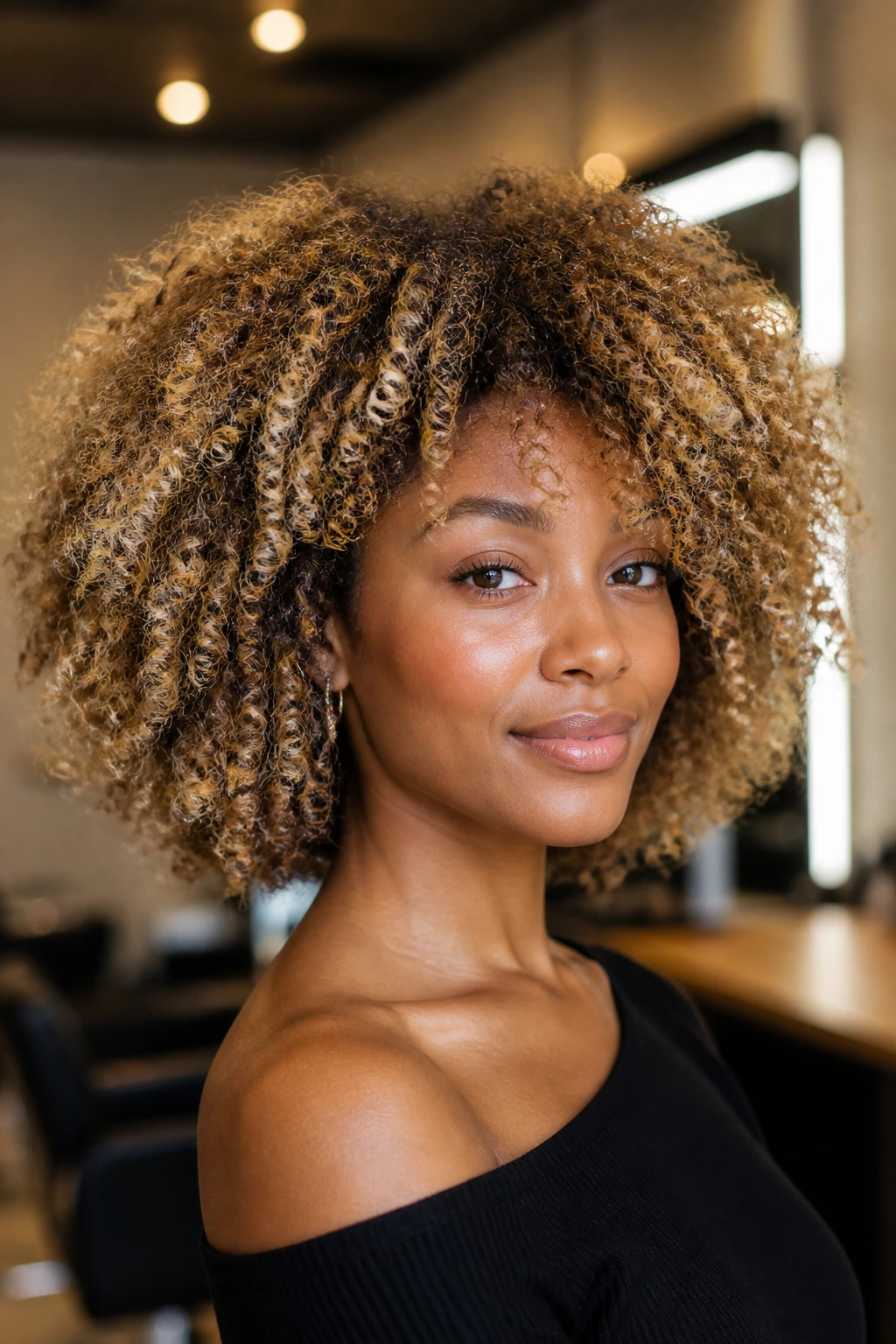
Bronde is what happens when brown and blonde stop fighting each other and decide to share the head. It’s one of the most forgiving options for natural hair because the darker pieces keep the color from looking flat, while the blonde adds enough contrast to matter.
If you’ve ever watched a twist-out dry and wished it had more depth in the middle, bronde is that fix. Use a dark root shadow, then feather beige or caramel ribbons through the canopy and ends. The result looks richer than a single blonde tone, especially on dense hair that naturally creates heavy shadow between curls.
This is the look I’d pick for somebody who wants blonde but doesn’t want “blonde” to be the first word people say.
6. Butterscotch Blonde Fro
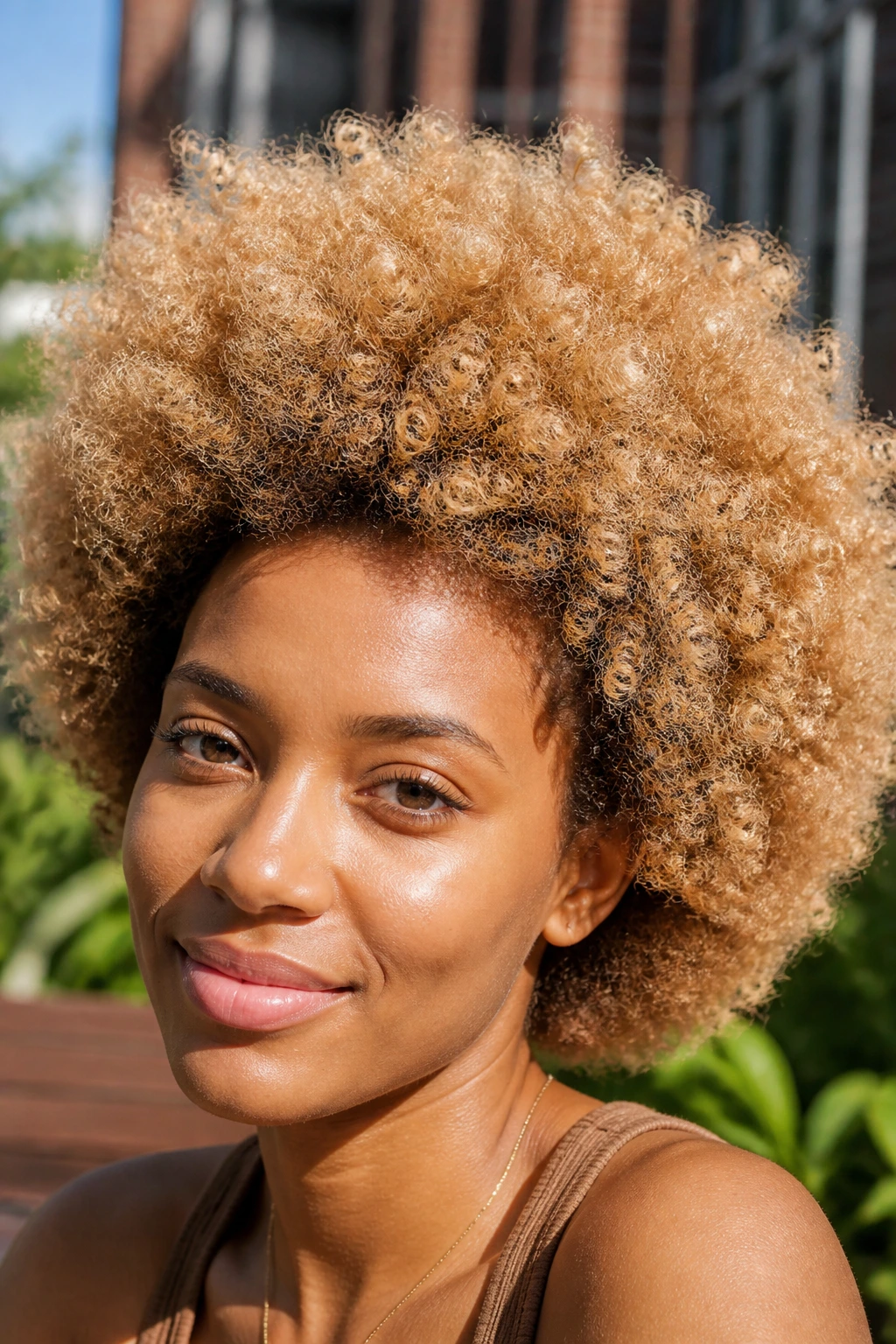
The first time you see butterscotch on a picked-out fro, it looks like the hair has a warm filter built in. Not orange. Not brass. Just a deep golden blonde that feels plush.
Butterscotch works because it keeps enough warmth to play nicely with dark roots and rich brown bases. If the hair lifts to level 7 or 8, that warm tone gives you a creamy finish without having to chase platinum. That matters on natural hair, where over-lifting can wreck the spring of the curls fast.
Why it stands out: the shade reads expensive on a full fro because the texture adds shadow under every bend. The result is softer than gold and richer than beige. I’d call that a very good place to be.
7. Champagne Highlights on a Tapered Cut
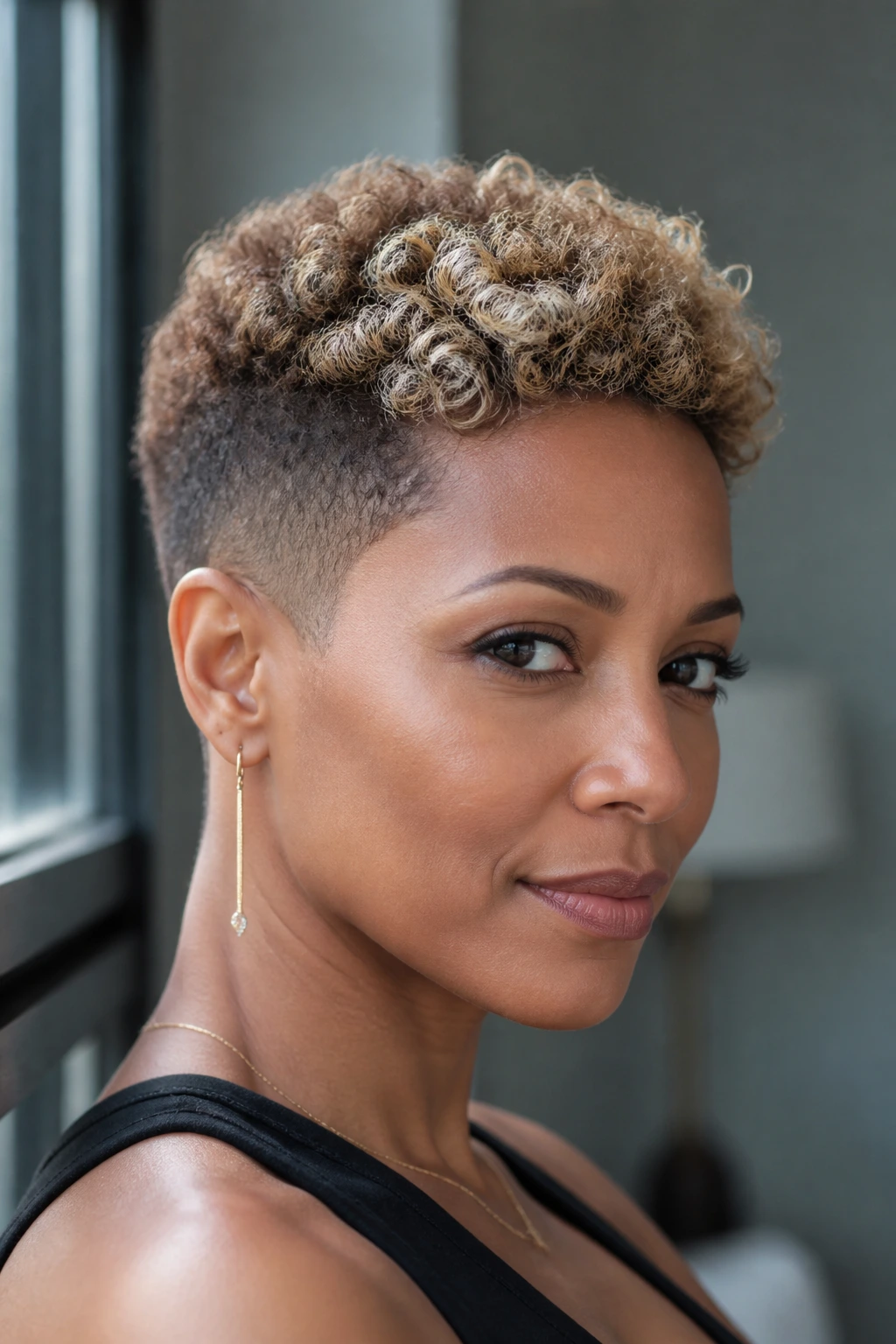
Champagne blonde is one of the cleanest ways to go lighter on a tapered cut. The shorter shape gives the color room to look crisp, and the cool-leaning beige tone keeps the finish from turning too yellow under indoor lights.
The trick is placement. Put the brightest pieces where the light hits first: top crown, fringe, and the edges of the parting pattern. Leave the sides slightly darker if you want the cut to keep its shape. That little contrast does more for the haircut than a heavy all-over lift ever could.
This is a strong choice for anyone who likes structure. The color reads polished without needing a long length to show off.
8. Sandy Blonde Loc Tips
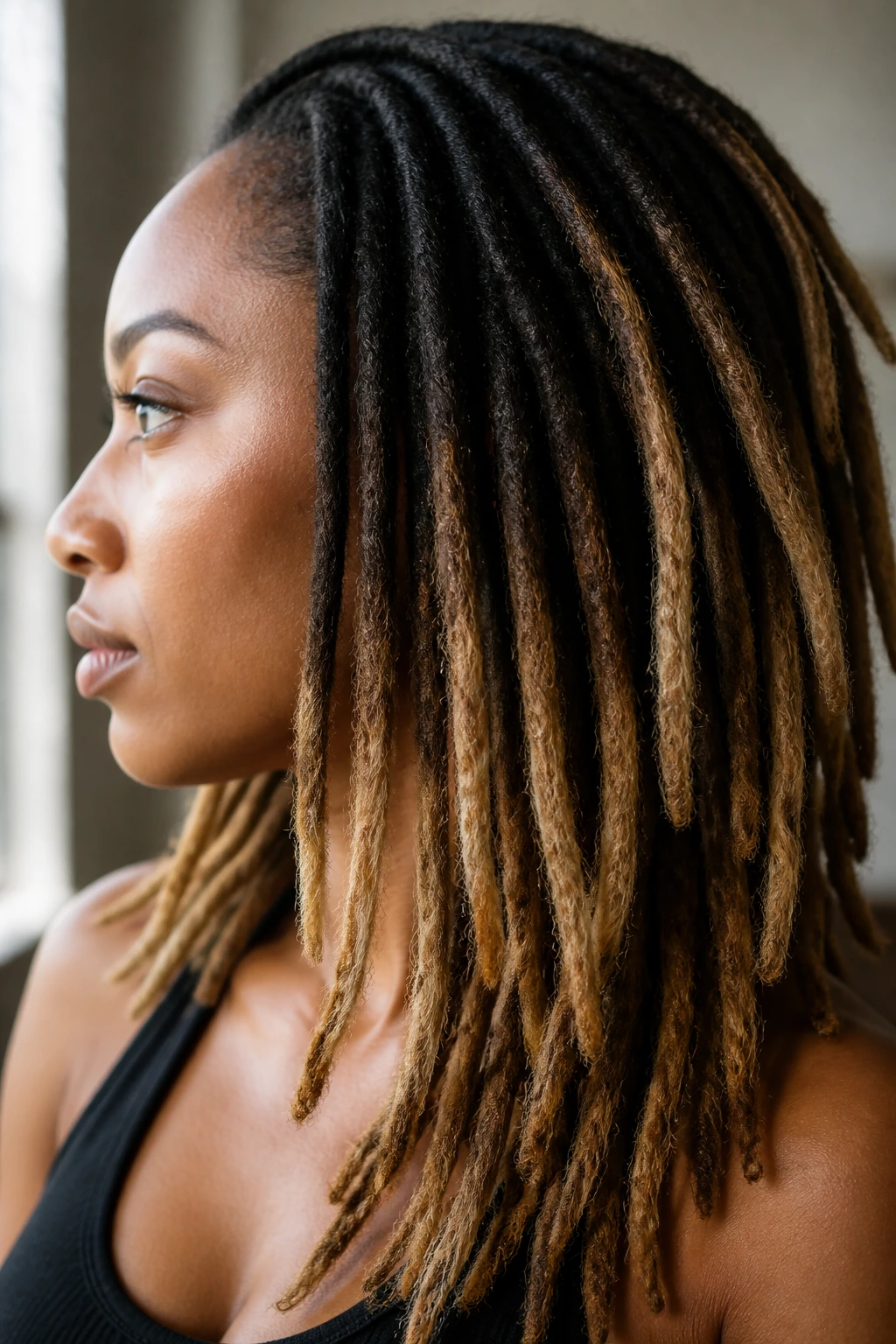
Can locs take blonde without looking fried? Yes, if the color lives mostly at the tips and not everywhere at once.
Sandy blonde is a muted beige that keeps the ends from going too yellow or too stark. On mature locs, the tip color can look beautifully worn-in, especially if the roots stay dark and the fade is gradual. I like this for medium-to-long locs because the movement in the ends keeps the lighter shade from feeling heavy.
A full-head bleach job on locs can be rough. Tip color gives you the blonde effect with less stress on the length, and it usually grows out in a more forgiving way. That matters when the hairstyle already has a lot of texture and weight to carry.
9. Cream Soda Curly Bob
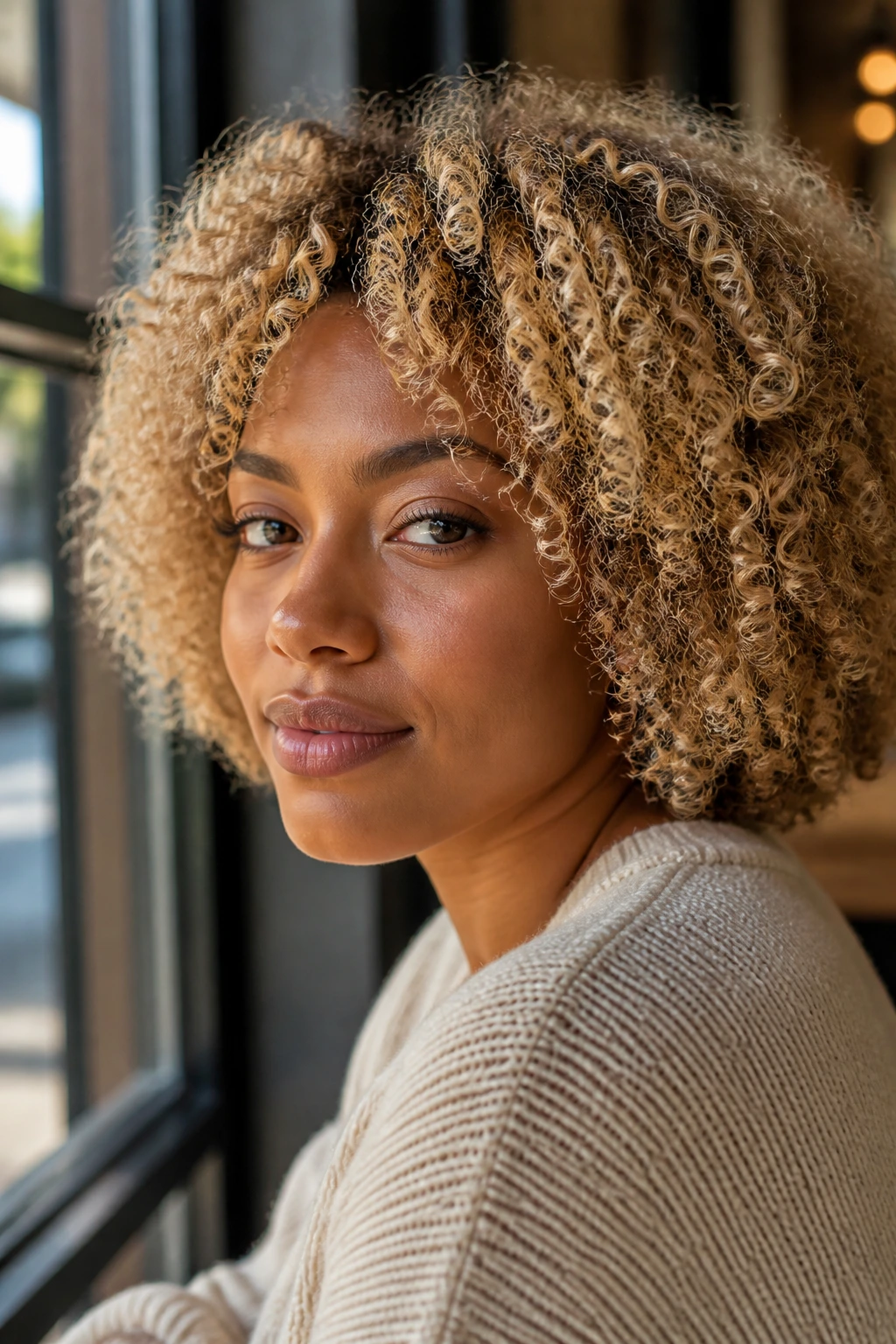
Cream soda blonde sits in that sweet spot between beige and warm cream. It has enough softness to flatter a dark base, but not so much warmth that it tips into yellow the minute the light changes.
On a curly bob, this color works because the cut already gives the hair a neat shape. The blonde just adds texture inside that shape. Keep the front pieces a hair lighter than the back if you want the face to open up a bit; the difference is small, but on a bob it shows.
This is one of those shades that looks calm in a photo and richer in person. That’s not a bad thing. It means the hair keeps its depth.
10. Ash Blonde for Cool Undertones
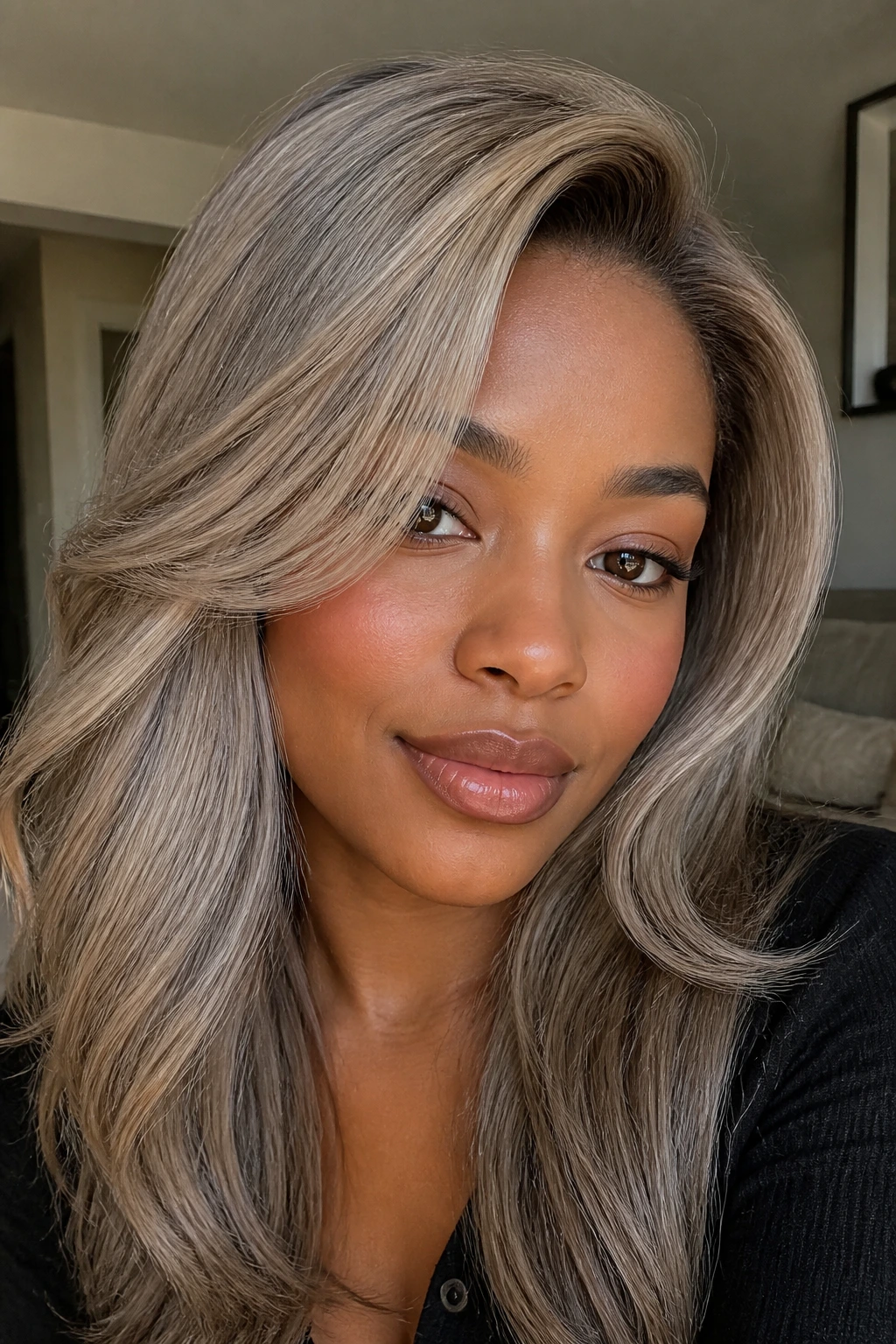
Ash blonde is the risky one, and I mean that in the honest sense, not the dramatic salon-post sense. If your undertones are cool and the lift is clean, it can look sharp, modern, and very deliberate.
If the hair is porous, though, ash can turn muddy in a hurry. On natural hair, the cuticle often opens unevenly, so the cooler toner can grab in odd places and leave the ends looking khaki. That’s why ash needs a cleaner base than honey or beige. A gloss refresh every few weeks helps, but the first lift has to be right.
I’d reserve ash for people who don’t mind upkeep and who actually like the cool edge. It is not the easy blonde. It is the tailored one.
11. Root Shadow Blonde Bob
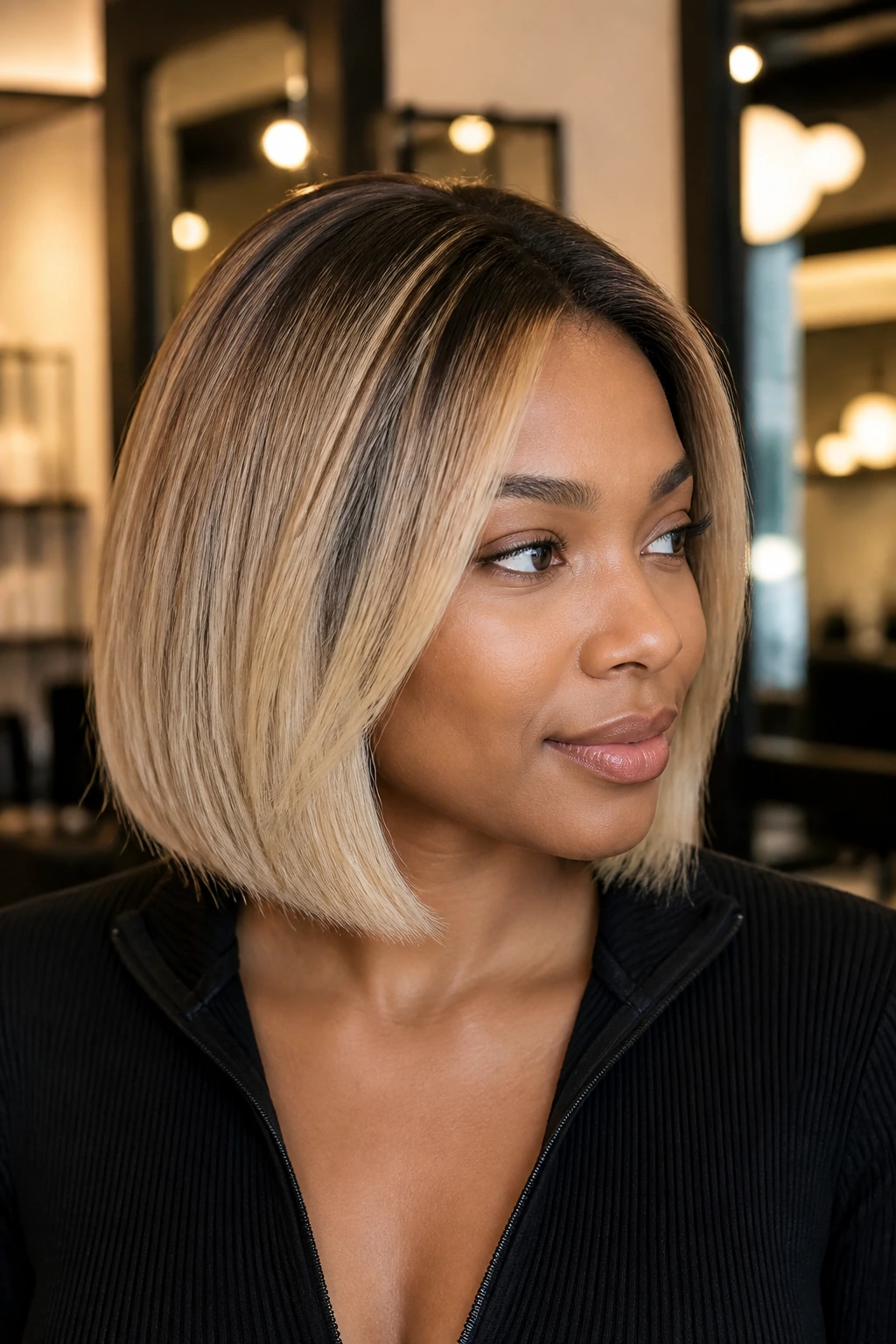
A dark root is not a compromise; it’s a design choice.
On a blonde bob, root shadow gives the cut depth right where natural hair tends to shrink and puff the most. That means the blonde can stay bright through the mids and ends while the top keeps enough darkness to ground the whole look. I prefer this on bobs because the clean outline of the cut makes the color placement look intentional.
Keep the root shadow about one to two levels darker than the blonde for the smoothest blend. Too dark and it looks like a hard line. Too light and you lose the contrast that makes the bob feel dense. This is one of those styles that looks expensive when the tone work is careful and messy when it is not.
12. Chunky Ribbon Highlights
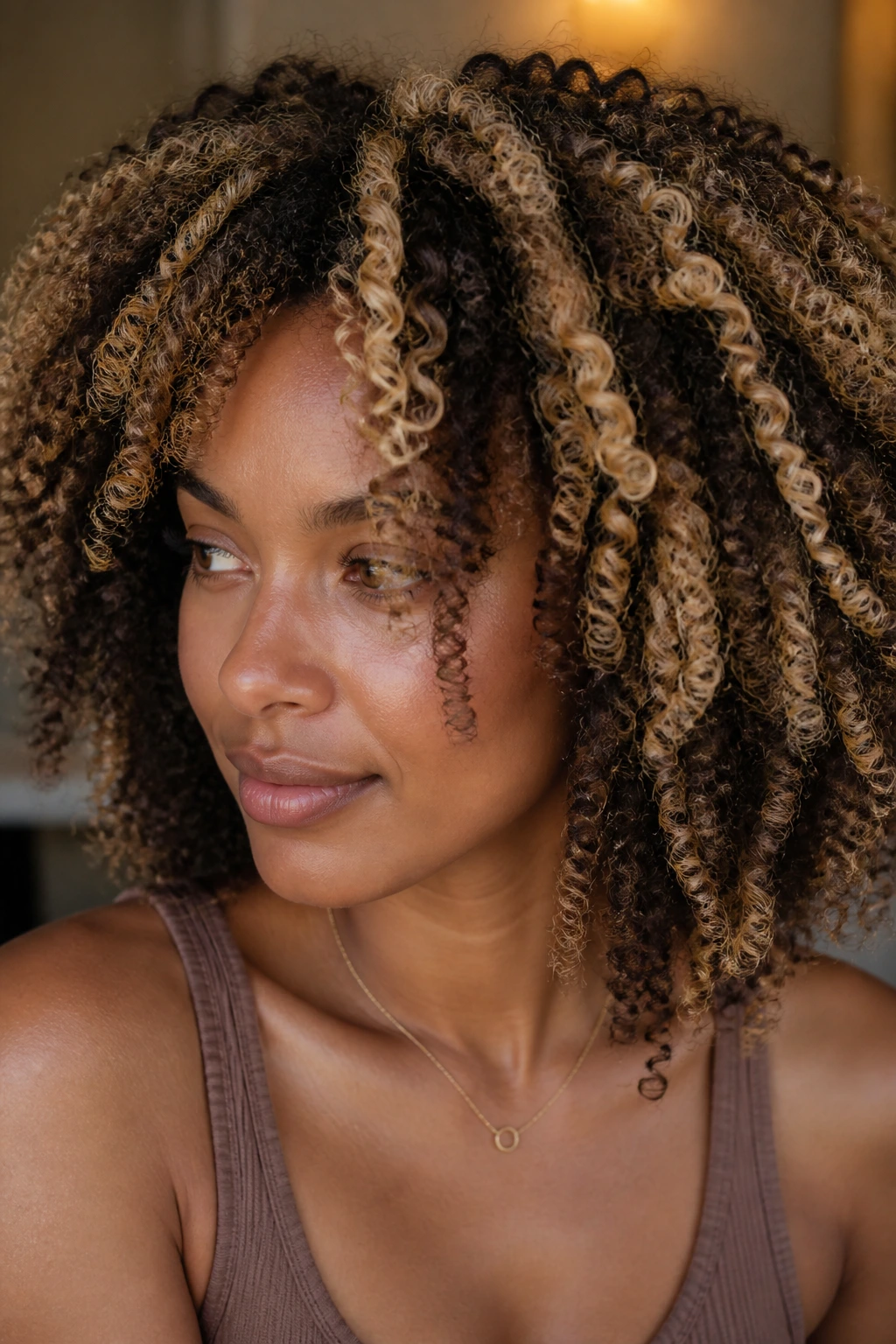
If you want color you can actually see in a twist-out, chunky ribbons beat fine weaving. Tiny highlights disappear into dense curls unless the light hits them at exactly the right angle.
What to watch for
- Keep the ribbons broad enough to show through shrinkage, not so broad that they look striped.
- Place a few brighter sections around the crown and one or two at the front.
- Balance the blonde with darker lowlights so the hair still has shape when it moves.
Chunky highlights work because they create rhythm. Your eye moves across the hair instead of reading one flat tone. On natural hair, that movement matters a lot. A little too much and you get zebra. A little too little and you can’t see the color at all. There’s a narrow lane here, but when the placement is right, it’s one of the most dynamic blonde ideas in the whole bunch.
13. Platinum Peekaboo Panels
What if you want platinum but don’t want to live in it every day? Peekaboo panels solve that problem neatly.
The lightest pieces sit under the top layer, near the sides or the nape, so the blonde flashes when the hair moves. On natural hair, that hidden placement is smart because the outer canopy can stay darker and healthier while the brighter sections get their moment only when the hair is lifted, tucked, or flipped.
Platinum is demanding. No way around it. Keeping it hidden buys you breathing room, especially if your texture is tight and your hairline can’t handle frequent lightening. I’d choose this when the drama matters, but you still want the rest of the hair to look like hair, not straw.
14. Frosted Crop on Short Coils
Short coils can carry a frosted blonde in a way longer hair sometimes can’t. The haircut does part of the work for you, because there’s less hair to process and less length for the color to fight with.
The key here is even lift. A short crop shows every patch of brass, so the blonde needs to be clean and consistent, usually in a soft beige or pale gold range rather than a stark white. A tiny bit of shadow near the root keeps the cut from looking painted on.
This is a strong choice if you like sharp edges and low fuss. The shape is the statement, and the blonde just sharpens it.
15. Wheat Blonde Side-Part Puff
Wheat blonde is softer than gold and a little more grounded than cream. On a side-part puff, that makes the whole style feel easy to wear instead of high-maintenance.
The side part matters here because it gives the color a built-in direction. The blonde catches across the top and front, while the darker root peeks through at the base. That contrast is doing quiet, useful work. It keeps the puff from looking round in a boring way and lets the blonde breathe without taking over the shape.
If you want blonde that looks good on the second or third day of a style, wheat blonde is a solid bet. The color holds its softness even when the hair gets a little fluffy.
16. Toasted Coconut Balayage
Toasted coconut blonde is what I’d call a dark-rooted balayage with pale beige mids and warmer ends. It sounds fancy because it is a little fancy, but the idea is practical: keep depth where the hair needs it and brightness where the eye lands first.
This shade works especially well on longer curls, layered cuts, and locs because the varied lengths let the color move. The darker root anchors the style, the beige middle keeps it creamy, and the toasted ends prevent the blonde from feeling flat. That three-part shift is what gives the look its life.
It’s a good one for natural hair that tends to eat color visually. The dimension survives shrinkage.
17. Cinnamon-to-Blonde Melt
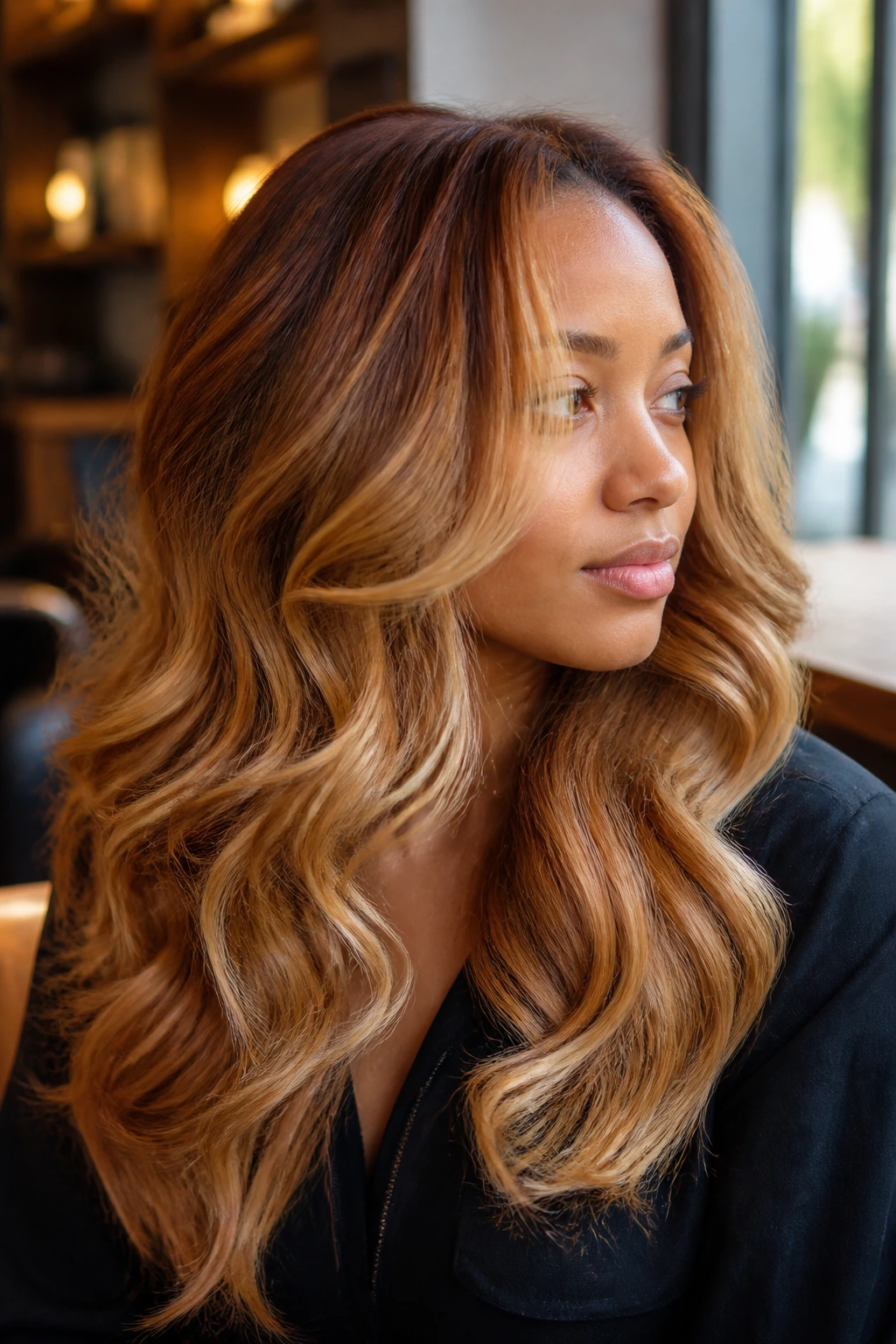
A cinnamon-to-blonde melt is for people who love warmth but don’t want the whole head living in copper. The color starts richer near the root and moves into honey or golden blonde through the mids and ends.
That transition works well on natural hair because the warm tones keep the hair from looking hollow. Tight curls can make one-tone blonde feel thin. A cinnamon base gives the hair body, even when the curls clump small. It also plays nicely with skin that already carries gold or red undertones.
I prefer this to very cool blonde on warm bases. It looks like the hair belongs to the person wearing it, which is the whole point.
18. Sunlit Auburn-Blonde Dimension
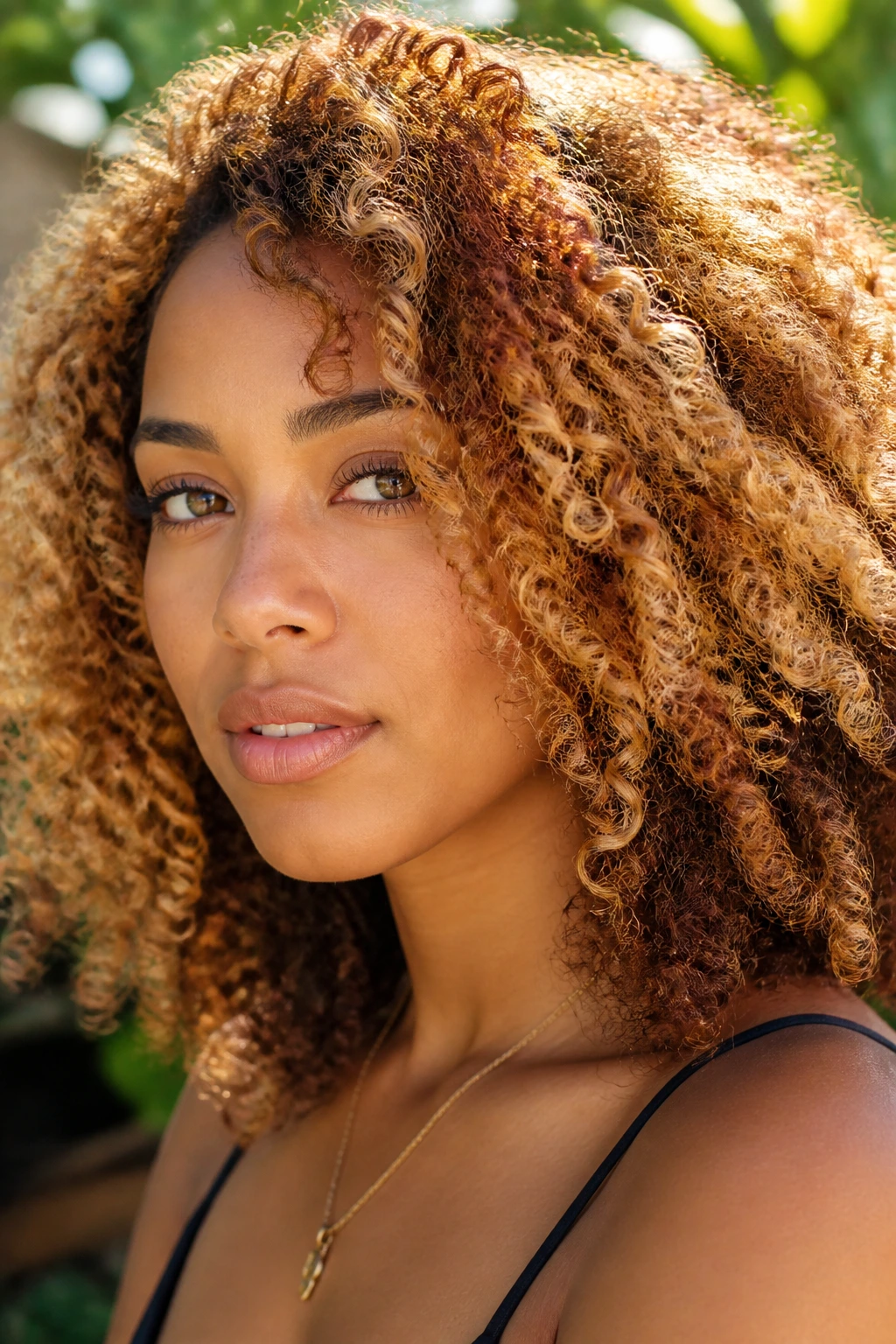
Some blonde ideas need a little red to stay alive. Sunlit auburn-blonde dimension does that. It mixes blonde with soft auburn pieces so the hair never reads flat, even when the curls are tightly packed.
This is one of the prettiest choices for dense natural hair because the auburn gives the blonde a little blood in the water, so to speak. That sounds blunt, but it’s accurate. Pure blonde can sometimes wash out the texture. A trace of copper or auburn brings it back.
If your hair tends to lift orange, this look can feel like a smart compromise instead of a problem. The warmth becomes part of the design rather than an accident to fix.
19. Honeyed Micro-Highlights
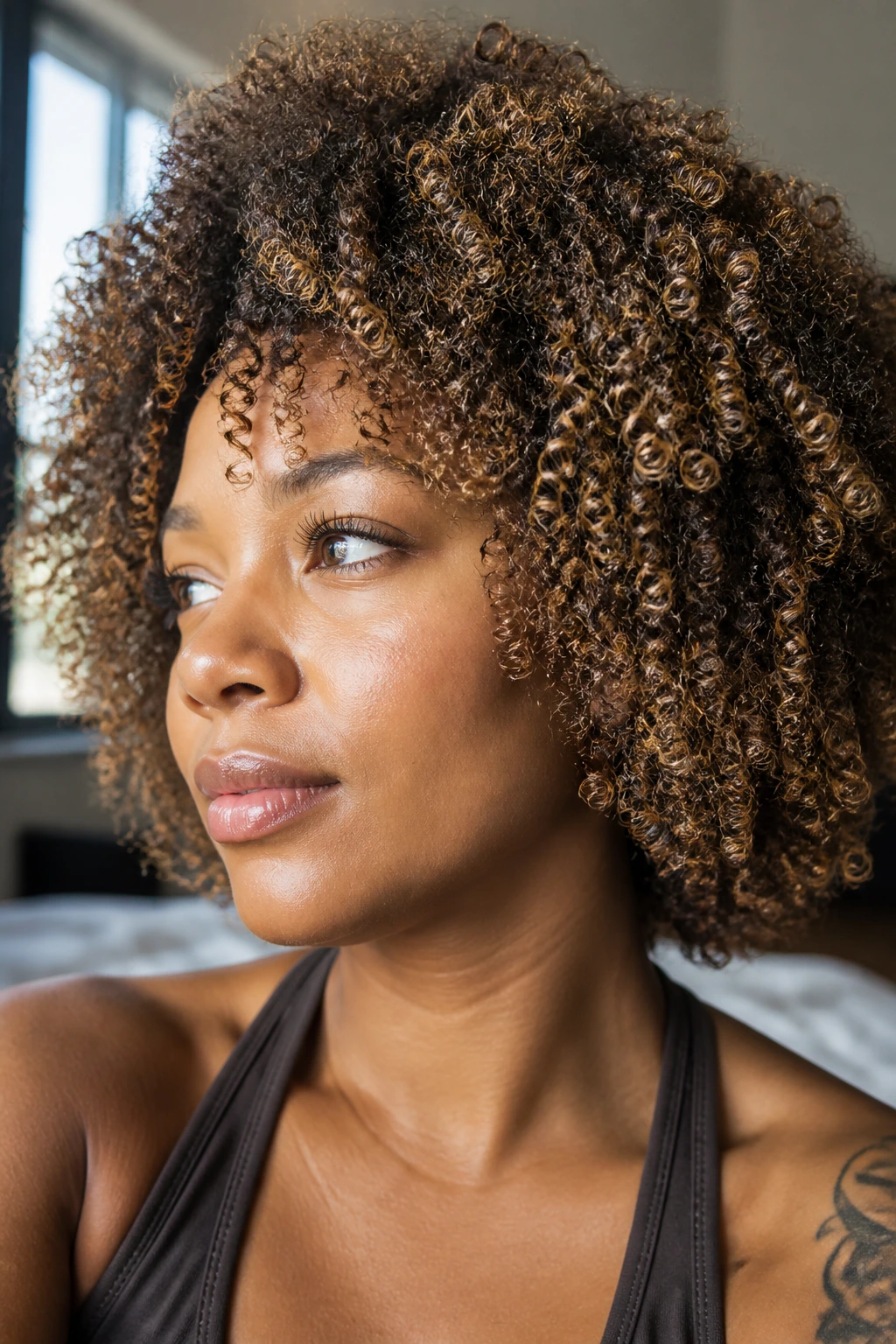
Sometimes the prettiest blonde is the one you notice only when the light moves.
Honeyed micro-highlights are tiny ribbons scattered through the canopy, often with more space between them than people expect. On natural hair, that spacing matters because the curls already create visual texture. You do not need much blonde to get a lot of effect. A few well-placed strands near the crown and front can make the whole head look brighter.
I like this approach for anyone who wants dimension without a big color commitment. It also makes the grow-out softer, which means fewer awkward weeks between appointments. And because the highlights are small, the hair can keep more of its strength than it would after a heavier lift.
20. Bright Blonde Frohawk
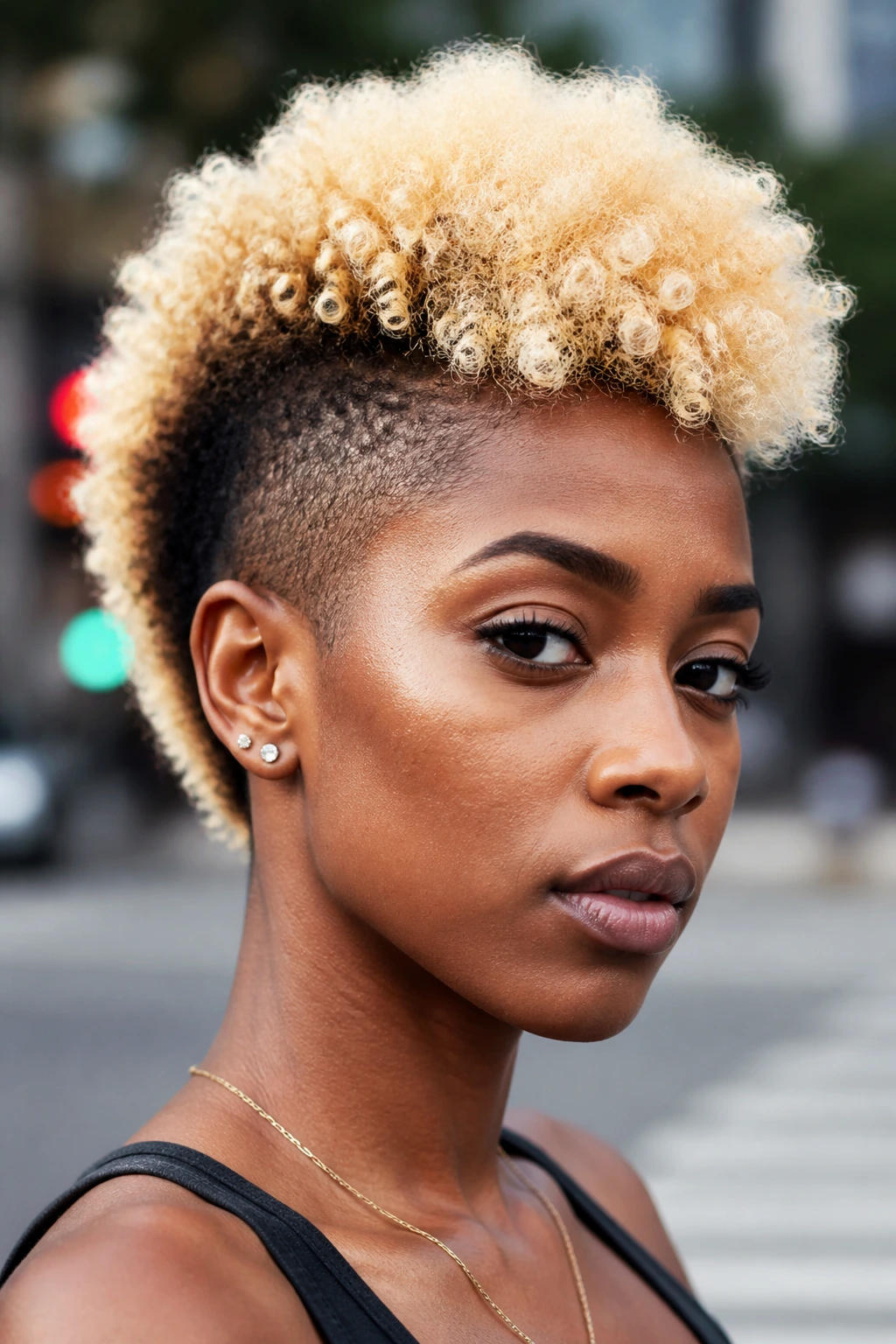
A blonde frohawk sounds loud, but the cut keeps it cleaner than a full-head bleach job.
The middle strip carries the brightness, while the sides stay darker or are tapered close. That contrast gives the style shape even when the hair is full and fluffy. It also means the blonde lives in the section that gets seen first, which is efficient in the best possible way.
This is a good pick if you like bold hair but hate the maintenance of carrying that brightness across every inch. The frohawk frames the face, shows off the texture, and keeps the blonde where it has the most impact.
21. Rooted Vanilla Twist-Out
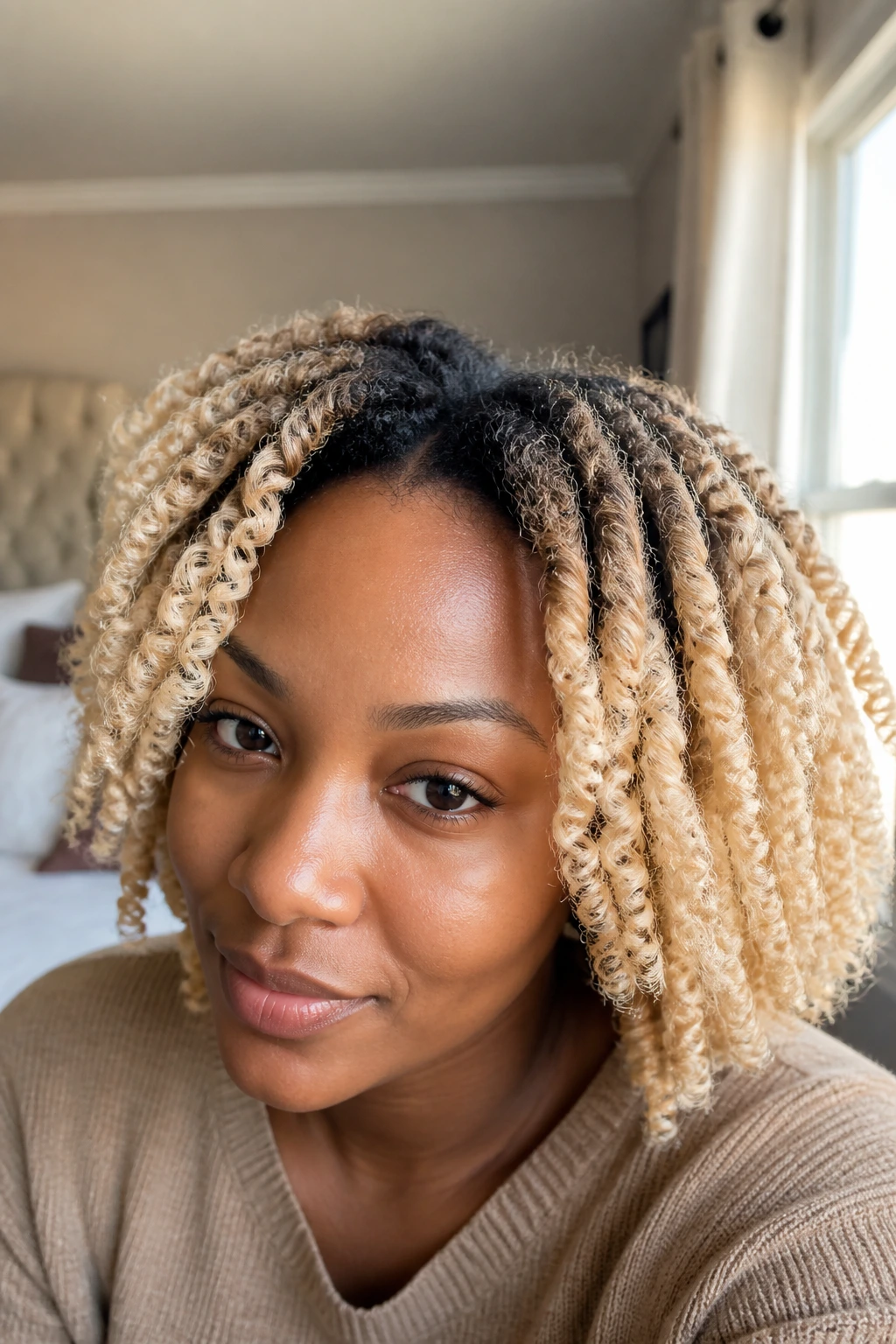
Why does vanilla blonde look so good when the root stays dark? Because the dark root stops the pale tone from washing out the curl pattern.
A rooted vanilla twist-out reads creamy and soft, not harsh. The ropey texture of the twist-out lets the lighter pieces catch on each twist and separate enough to show depth. That’s a small thing on paper. On the head, it changes everything.
Vanilla blonde is one of the cleaner choices if you want a pale tone without full platinum. The root shadow gives your hairline a rest, and the softer blonde keeps the style from looking over-processed. It’s the kind of blonde that looks calm even when the curl definition is a little messy.
22. Golden Blonde Passion Twists
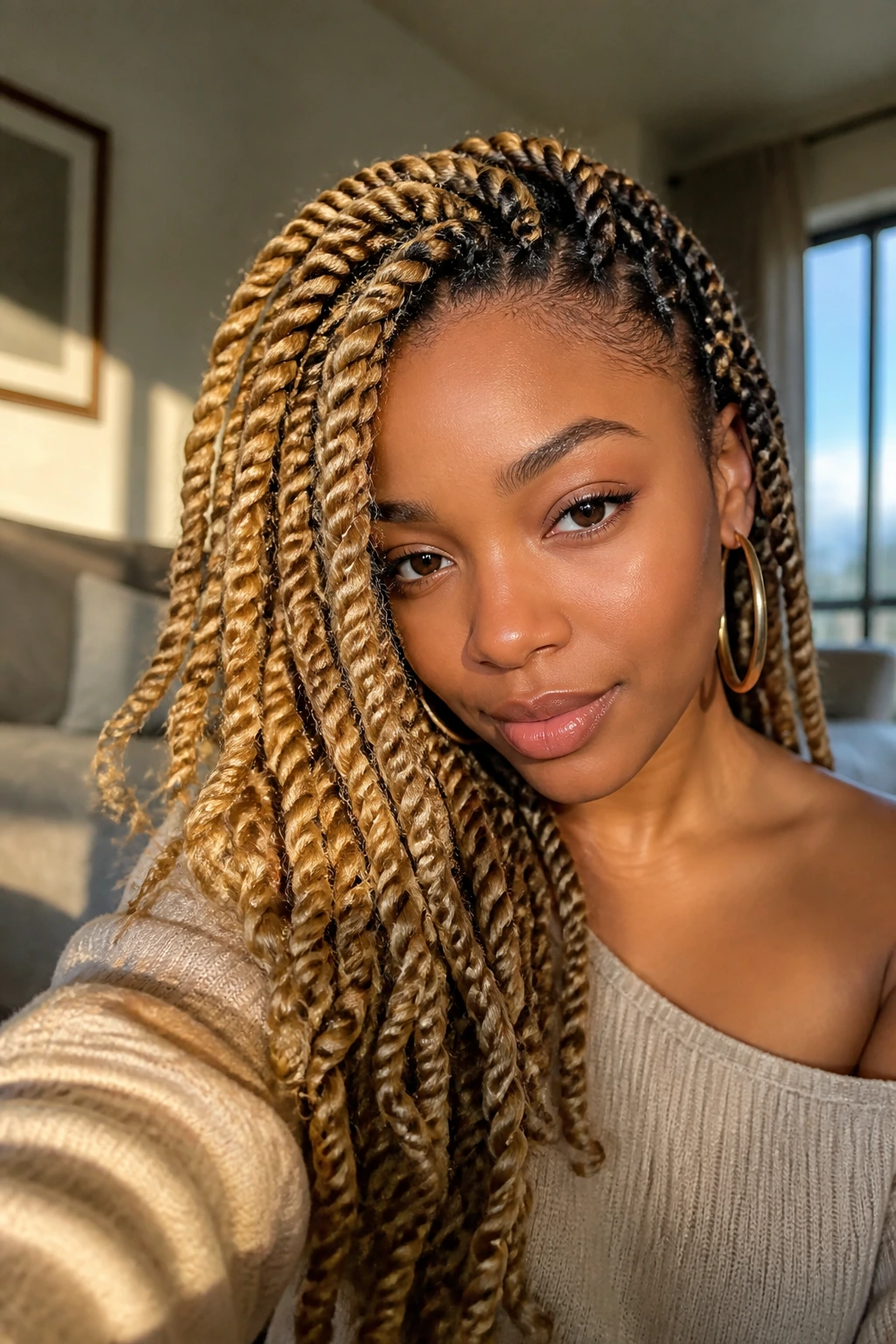
Passion twists with golden blonde extensions can change your whole face even when your own hair stays tucked away. That’s the big appeal here: you get the brightness without bleaching your natural strands.
The trick is choosing blonde that still has depth. A flat, single-tone gold can look synthetic fast. A mix of honey and pale gold tends to sit better, especially if the twists have a little texture. The color should look woven, not sprayed on.
This is one of the easiest ways to test whether blonde suits you before committing your hair to chemical lightening. It’s also a nice bridge if your hair is growing out damage and you want something lighter without taking another hit.
23. Dimensional Curly Lob
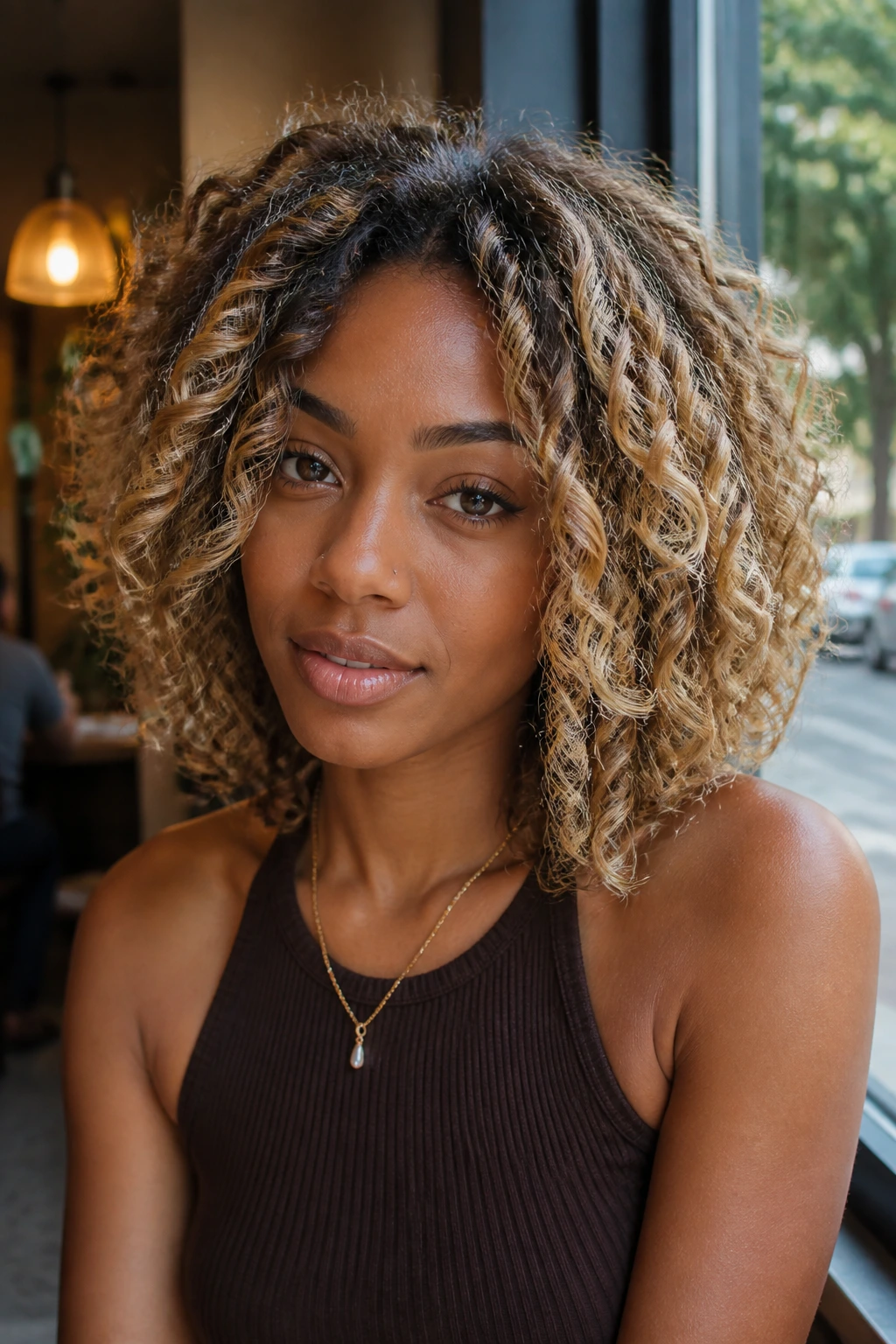
A curly lob gives blonde room to move. That’s the real advantage. The length is long enough for dimension, short enough to keep the style from dragging.
If you wear a lob with blonde ribbons, the curls can show a mix of tones as they separate. A single blonde shade tends to flatten the shape, especially on thick hair. Dimension keeps the cut alive. I’d use honey, beige, and a few lowlights rather than one all-over color, because the contrast helps the curl pattern show up.
This cut also lets you play with parting. A center part makes the lighter pieces look symmetrical, while a side part pushes the blonde into one side and gives the whole style a little attitude.
24. Honey Blonde with Dark Roots
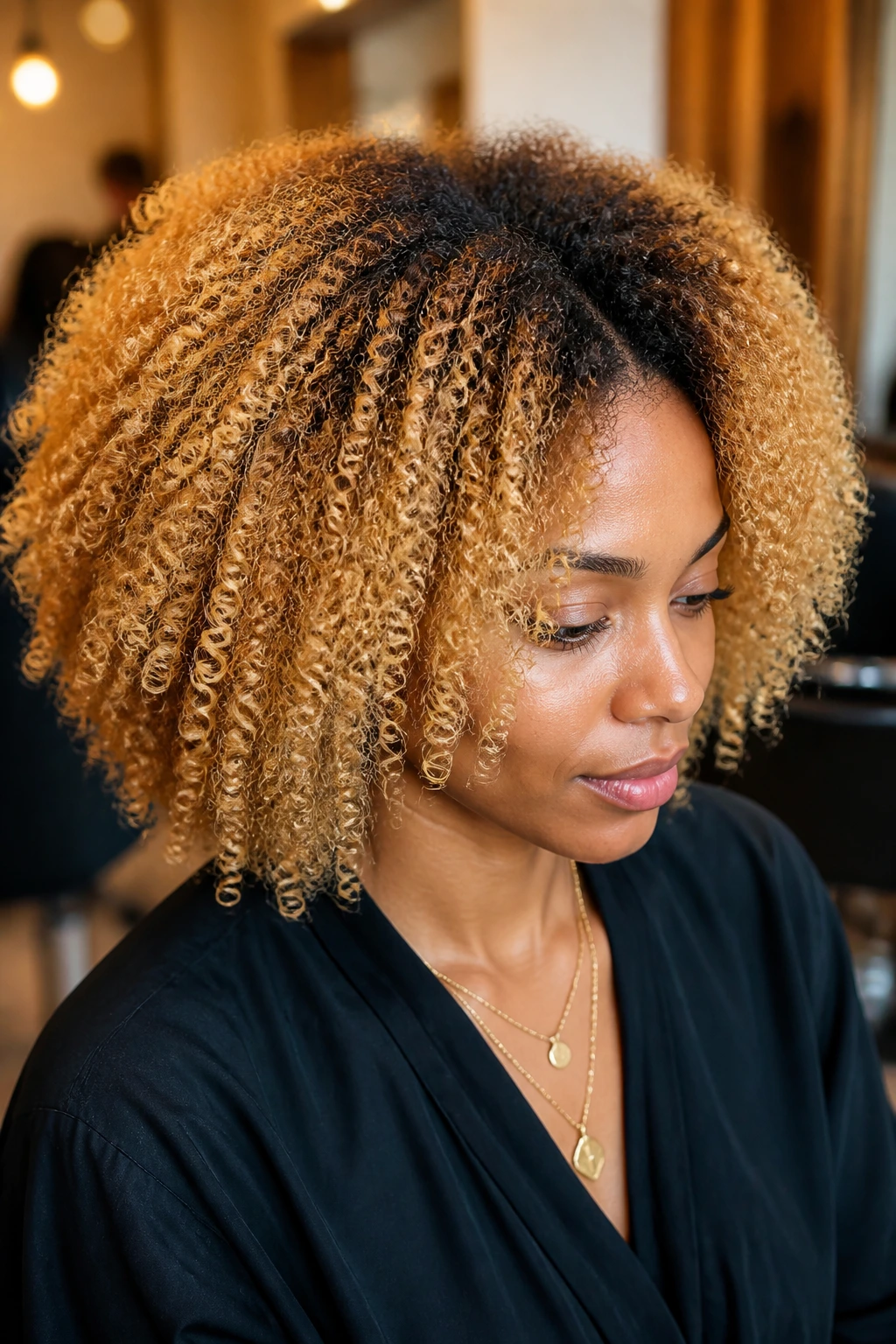
This is not the same thing as root shadow, and the difference matters. Honey blonde with dark roots is a deliberate contrast style: bright mids and ends, visible darkness at the scalp, and enough separation to keep the blonde from collapsing into one tone.
It works especially well on thicker natural hair because the dark root anchors the shape. Without that contrast, the blonde can float a little too much and lose its structure. The darker roots also make regrowth less obvious, which means the style holds up longer between salon visits.
If you wear twist-outs, wash-and-gos, or stretched styles, this is a strong choice. The root darkness makes the blonde look deeper and warmer than it would on its own.
25. Beige-Blonde Streaks in a Silk Press
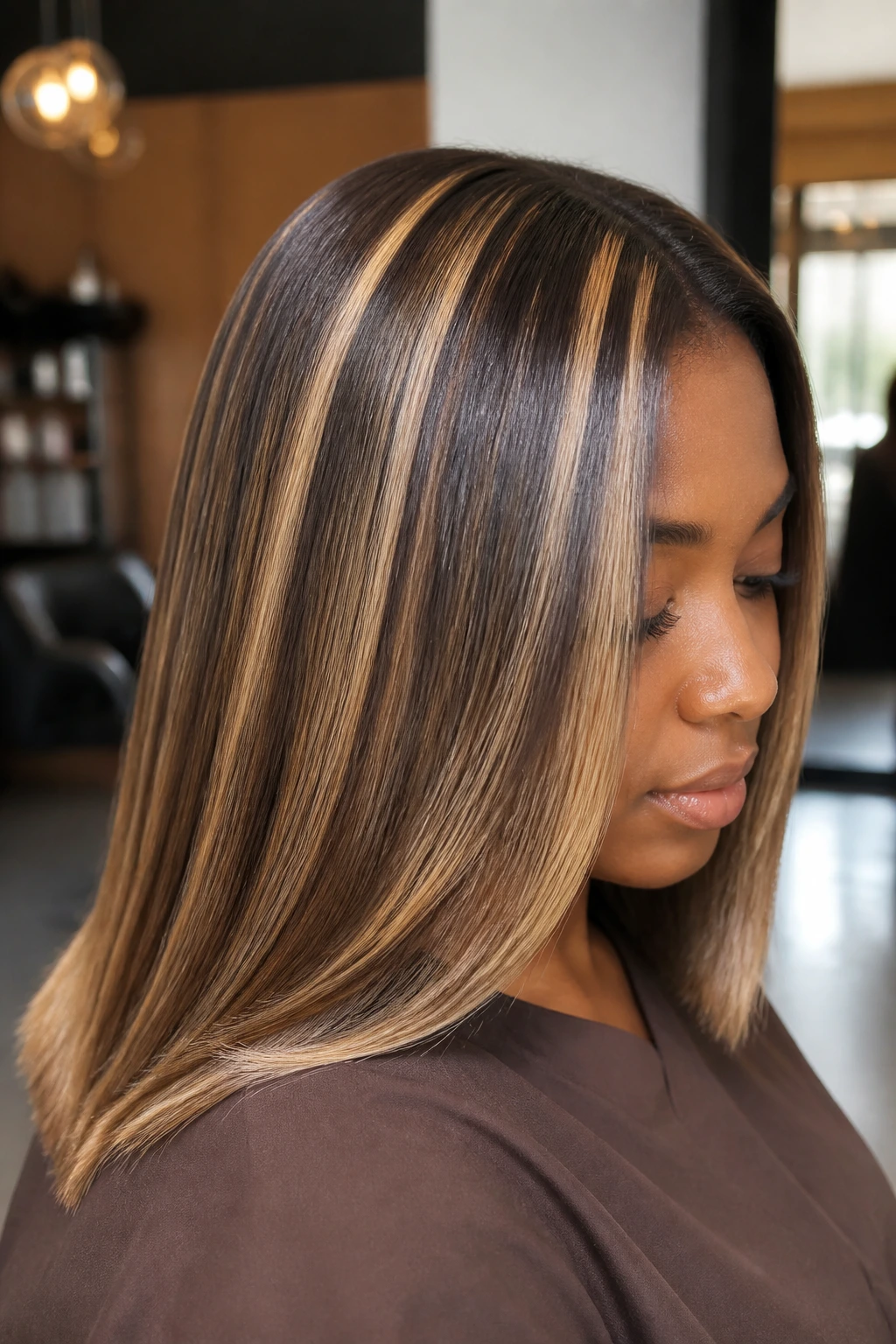
A silk press shows off blonde in a very different way than curls do. Every streak is visible, which is great if the placement is clean and less great if the lift is uneven.
Beige-blonde streaks are safer than icy ones here because straight hair exposes brass more aggressively. If the blonde is too yellow, the whole press can look off. Beige stays calmer. It also lets the shine from the press do some of the work, which is a nice trade.
This is the version for people who occasionally wear their natural hair straight and want the color to look deliberate in both textures. Once the hair reverts, the streaks soften into something almost halo-like. That shift is part of the appeal.
26. Pecan-and-Cream Duo-Tone
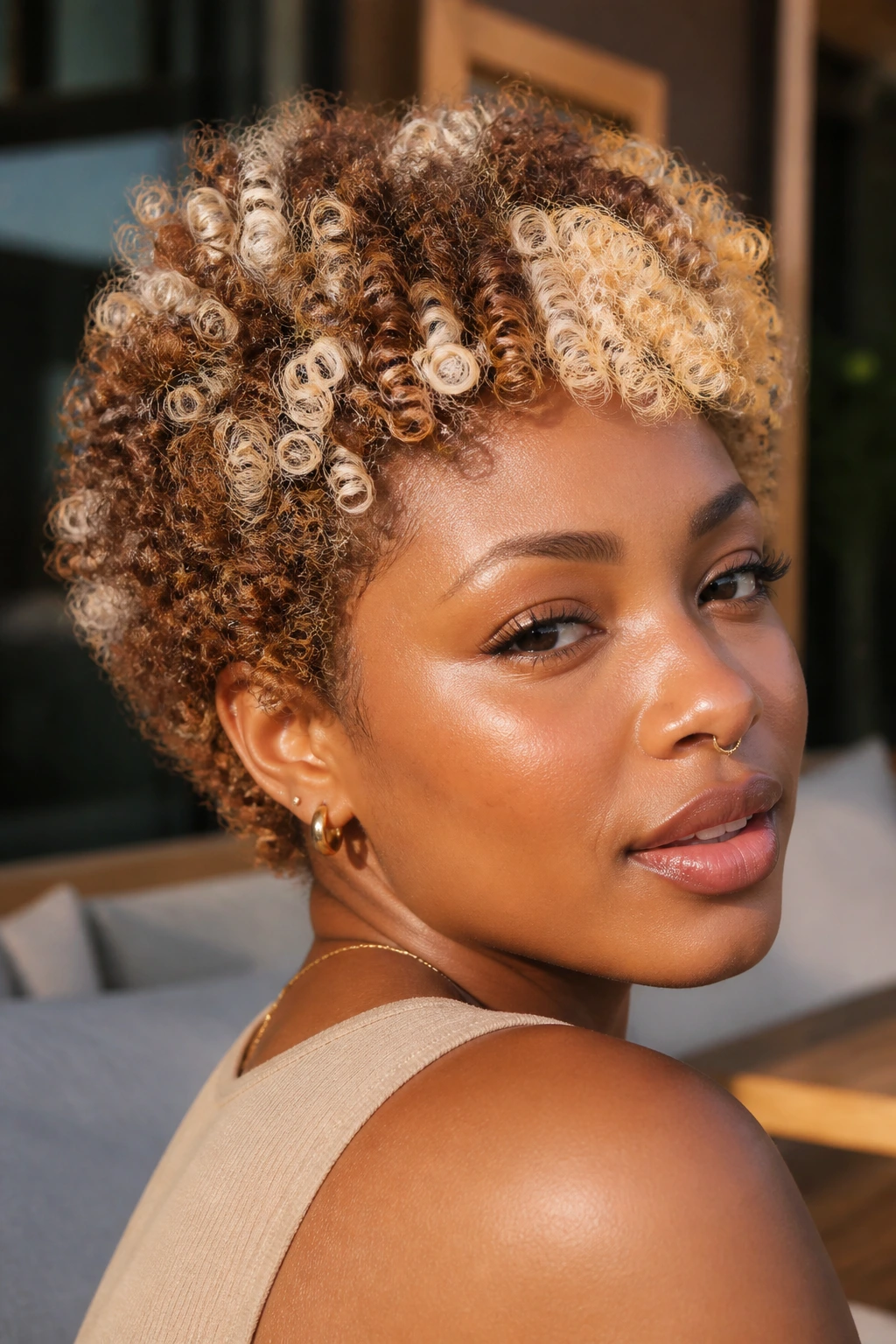
Pecan-and-cream hair is a two-tone idea that gives you contrast without needing every section to be processed the same way.
The pecan brown keeps the base rich, while the cream blonde pieces show up as bright accents. On natural hair, that kind of contrast is helpful because the curl pattern can swallow a single blonde shade fast. Two tones solve that by giving the eye more to follow.
This is a smart look if you want color that feels designed, not sprayed on. It works on twist-outs, blowouts, and layered cuts. The darker pieces hold the shape; the cream pieces make it feel lighter. Clean, simple, effective.
27. Blonde Box Braids with Root Smudge
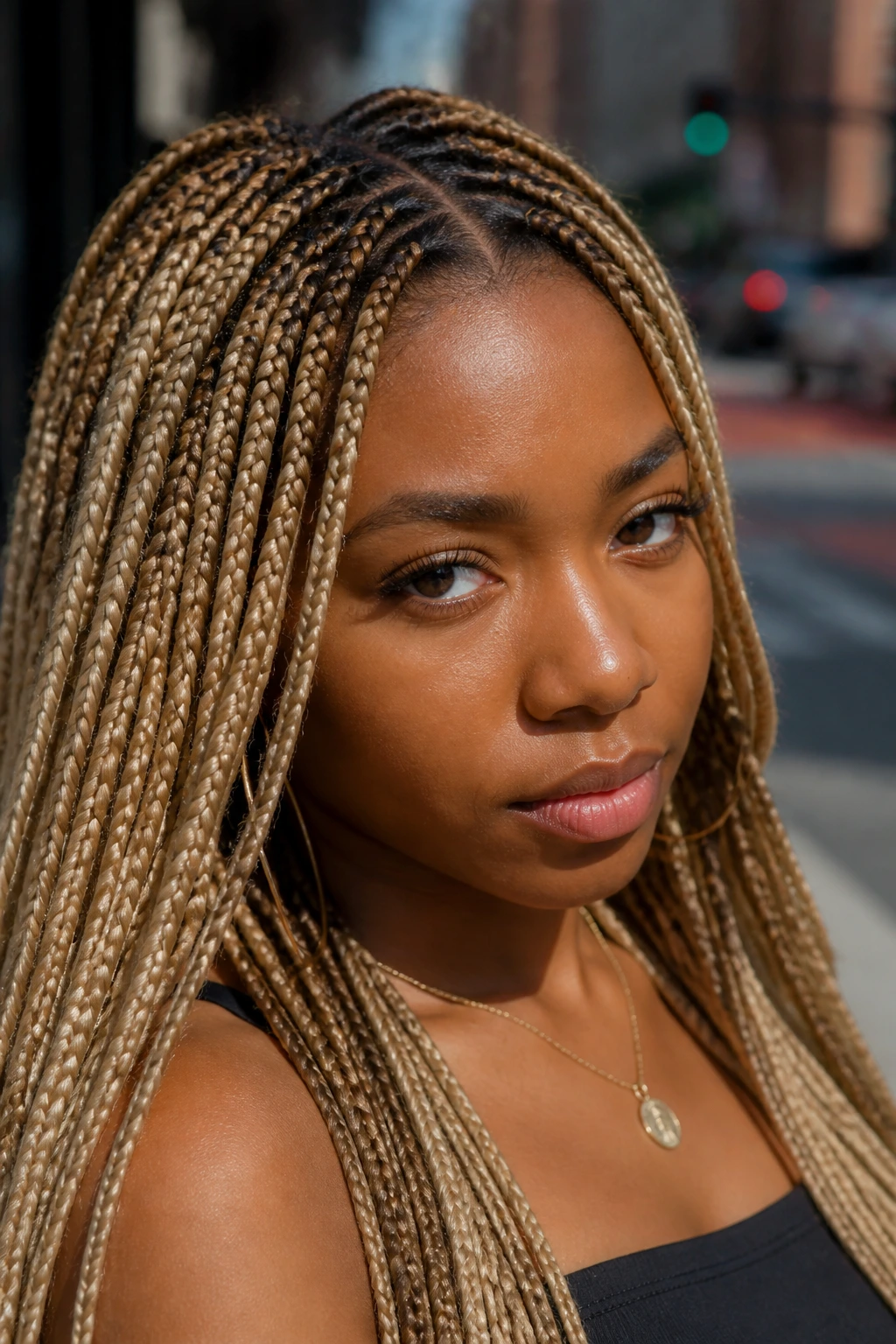
Blonde box braids can look flat if the color is too one-note, so a root smudge helps a lot. Keep the hair near the scalp deeper, then let the blonde brighten as the braid travels down.
I also like using at least two blonde shades here: a honey or caramel blonde and a lighter beige piece. That mix keeps the braids from looking synthetic. It also helps the style move better in daylight, because the color shifts instead of reflecting in one harsh block.
This is one of the best low-damage blonde ideas in the whole list because your natural hair can stay tucked away while the blonde lives in the braid fiber. It’s a color story without the chemical bill on your own strands.
28. Iced Ends on Soft Locs
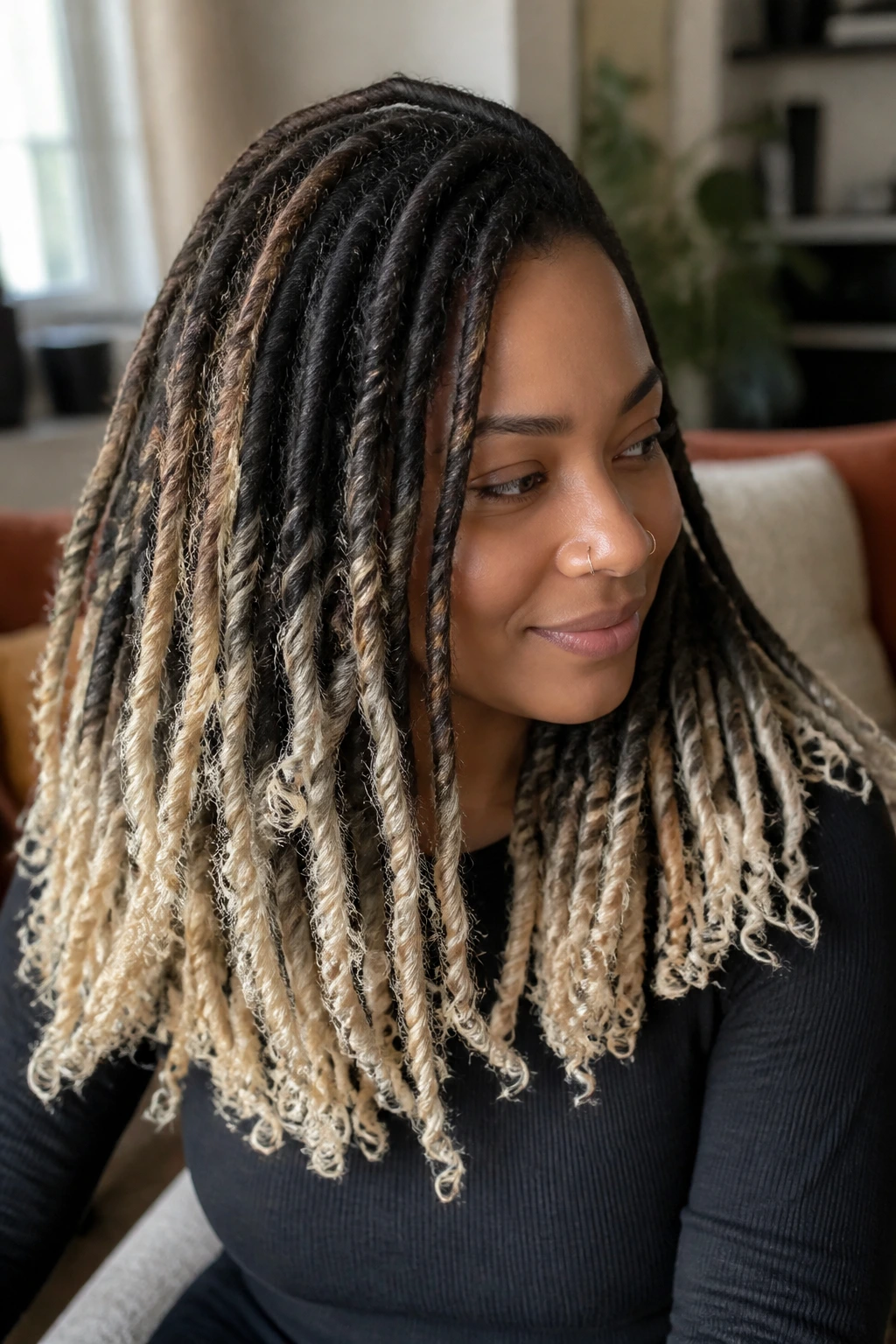
Iced ends on soft locs give you that cool, pale finish without asking the whole head to go there.
The blonde stays near the tips, where the color can be seen as the hair swings. Keeping the roots dark gives the style structure and keeps the locs from looking chalky at the scalp. That matters because cool blondes can turn harsh fast if the whole length is pushed too light.
I’d keep the icy shade to the last inch or so if the locs are fine, or a little farther up if they’re thicker and longer. Either way, the contrast is doing the heavy lifting. The result feels crisp, not busy.
Small Tweaks That Make Blonde Look Cleaner on Natural Hair
Tone match: The shade should match the curl pattern and the skin tone, not the salon lighting. Beige and honey are safer starting points than white-blonde if you’re unsure, because they hold their shape better when the hair dries and shrinks.
Root strategy: Leave some darkness at the scalp unless you’re ready for a very high-maintenance blonde. A root shadow of just one or two levels deeper keeps the style looking grounded and makes regrowth less annoying.
Pattern awareness: Put the brightest pieces where the curls move most — around the face, crown, or outer layer. Blonde buried under a dense canopy won’t show much unless the hair is stretched.
Finish choice: A twist-out, braid-out, or diffused wash-and-go usually shows color better than a tight, fresh set with too much product. The hair needs a little separation for the tones to read.
Tools and Products Worth Keeping Near the Sink
-
Color-safe sulfate-free shampoo: Keeps the blonde from stripping out too fast and helps the hair hold moisture longer.
-
Moisturizing conditioner with slip: Detangling lightened natural hair without slip is a fast route to breakage.
-
Deep conditioning mask: Use one with fatty alcohols, ceramides, or oils that actually sit well on your hair type.
-
Bond-building treatment: Helpful after any real lightening, especially if the hair was lifted more than a couple of levels.
-
Purple or blue conditioner: Use sparingly on cool blondes or stubborn brass, not every wash. Too much makes the hair dull.
-
Wide-tooth comb: Less snagging, less ripping through fragile ends.
-
Microfiber towel or cotton T-shirt: Cuts down on rough friction while the curls are wet.
-
Diffuser: Great for wash-and-gos and blow-dry sets when you want the blonde ribbons to stay defined.
-
Heat protectant: Non-negotiable if you ever silk press or stretch the hair with heat.
-
Satin bonnet or pillowcase: Helps keep color-treated curls from drying out against cotton and protects the finish overnight.
How to Keep Blonde Healthy and Bright Between Salon Visits
Blonde on natural hair usually needs more moisture discipline than the same shade on straight hair. A weekly wash and deep condition is the bare minimum if the hair has been lightened. If you co-wash often or use heavy gels, watch the ends for roughness and add a richer mask when the hair starts to feel squeaky in a bad way, not a clean way.
Cool blondes need toning more often than warm ones. A beige or ash gloss every 4 to 6 washes is enough for many heads, but do not chase toner just because the shade looks a touch warmer under indoor light. That’s how people overcorrect into flat, grayish hair. Honey and butterscotch usually need less toning and more moisture.
If the hair feels stretchy, mushy, or oddly limp when wet, stop piling on conditioner and add a protein treatment instead. Lightened natural hair often needs that balance: moisture for softness, protein for structure. Too much of one without the other is where trouble starts.
Trim the ends when they start to fray or tangle faster than the rest of the hair. Color shows damaged ends in a cruel, honest way.
Common Mistakes That Turn Blonde Dull or Patchy
Going too light in one sitting: Dark natural hair often lifts orange before it gets blonde. If someone pushes past that stage too fast, the hair can feel rough, the color can look patchy, and the curl pattern may lose its snap. The fix is a slower lift with a realistic tone plan, not a bigger developer and hope.
Choosing the wrong undertone: Ash on a warm base can look muddy. Honey on a cool base can look brassy. The hair still has to live on your head after the salon chair, so the toner needs to match the skin and the base.
Overusing purple shampoo: A little helps. Too much dries the hair out and leaves the blonde looking dusty instead of clean. Use it when brass shows, not as a weekly punishment.
Lightening fragile ends again and again: The ends are older, drier, and often already porous. Reprocessing them repeatedly is how people get thin, see-through tips. If the ends are already light, stop chasing them and move the brightness higher or trim them out later.
Ignoring shrinkage: A placement that looks subtle on stretched hair can look chunky once the curls spring back. If you wear the hair curly most of the time, plan the blonde for that state, not the blowout version.
Variations and Alternatives to Try
Gloss-Only Glow: If you want a hint of blonde without committing to bleach, a beige or honey gloss can brighten the surface tone and add shine. It’s a smart move for hair that’s already been through heat or color and needs a softer touch.
Face-Frame First: Start with the front pieces and part line only. This gives you the visual lift of blonde without changing the whole head, and it’s easy to grow into if you like the result.
Ends-Only Ombre: Keep the roots and mids dark, then let the blonde live almost entirely at the tips. The look works especially well on longer coils and locs because the lighter ends move more than the roots.
Protective-Style Blonde: Use blonde braids, twists, or loc extensions if you want the color effect without coloring your own strands. This is the best route when your hair needs a break but you still want brightness.
Cool Beige Reset: If your blonde pulled too warm, a beige toner can cool it down without sending it into that flat ash territory. I’d choose this over harsh silver toning for most natural hair.
Short-Cut Drama: Short coils, tapers, and crops can carry bolder blonde than people expect. The shorter length makes the maintenance more manageable and lets the haircut do part of the visual work.
Questions People Ask Before Going Blonde
Will blonde damage natural hair?
Any lightening process changes the hair structure, so yes, it can cause damage if it’s done too aggressively. That does not mean blonde is off-limits. It means you want a realistic shade, a strand test, and a plan for moisture and bond repair afterward.
What blonde shade looks best on dark natural hair?
Honey, beige, caramel, and butterscotch are the easiest starting points because they keep some warmth and depth. They usually look softer on dark bases than very icy blonde, which needs cleaner lift and more upkeep.
Do I need bleach to get blonde?
For real blonde on dark natural hair, most of the time yes. A gloss or temporary color can brighten the surface, but it won’t give you true blonde without lift. Protective styles with blonde extensions are a good no-bleach option.
How often should blonde hair be toned?
Cool blondes may need a gloss every 4 to 6 washes. Warm blondes usually need less frequent toning and more moisture maintenance. If the hair starts looking dull, don’t rush to toner first — check dryness and product buildup too.
What if my blonde turns orange?
That usually means the hair lifted into orange and stopped there, or the toner faded. A beige or blue-based toner can help, but the fix depends on how light the hair is underneath. If the lift is too dark, toner alone won’t rescue it.
Is purple shampoo enough to keep blonde clean?
No. It can help with brass, but it won’t replace conditioning, protein balance, or a proper toner when the color needs it. Use purple shampoo as a tool, not a full maintenance plan.
Can I get blonde in braids or locs without coloring my own hair?
Absolutely. Blonde braiding hair, loc extensions, or twists let you wear the color with far less chemical stress. That’s one of the smartest places to start if you want to test the look first.
Should I straighten my natural hair before deciding on blonde?
Not if you wear it curly most of the time. A silk press shows the color in one way, and your curls will show it in another. Choose the blonde for the texture you actually live in, not the one you wear for one afternoon.
When the Blonde Fits the Curl Pattern
The best blonde on natural hair does not fight the texture. It rides with it. Honey, beige, and caramel usually make the easiest starting point because they keep the shape full and the grow-out manageable, while ash and platinum need more care and a cleaner lift to avoid looking tired.
That’s why placement matters as much as shade. A dark root, a few face-framing pieces, or a bright set of ends can say more than an all-over lightening job that ignores the curl pattern. Natural hair has built-in drama already. The smartest blonde shades work with that, not against it.
If you’re torn between two ideas, pick the softer one first. On curls and coils, the texture usually gives it enough character.