



Dark hair does not become blonde by accident, and that’s exactly why brunette to blonde hairstyles for dark hair look best when the light is placed with intent instead of spread everywhere. A thin money piece can wake up a whole cut; a blunt wall of platinum usually just yells over the rest of your hair. On a deep brown base, the blonde has to earn its place.
That’s the part most people miss. Dark hair throws warm pigment fast, so the prettiest blonde tones are often the ones that work with that warmth instead of fighting it — caramel, honey, beige, champagne, mushroom, and soft ash-beige. The haircut matters too. A shag can swallow tiny ribbons and make them look lived-in, while a blunt bob turns the same shade into a clean stripe of light.
The looks below cover the full range: soft and quiet, bright and high-contrast, long, short, curly, straight, braided, pinned up, and blown out. Some are low-maintenance by design; some need a toner refresh and a little discipline. All of them treat the blonde like part of the hairstyle, not a bolt-on afterthought.
Why These Brunette-to-Blonde Looks Work So Well on Dark Hair
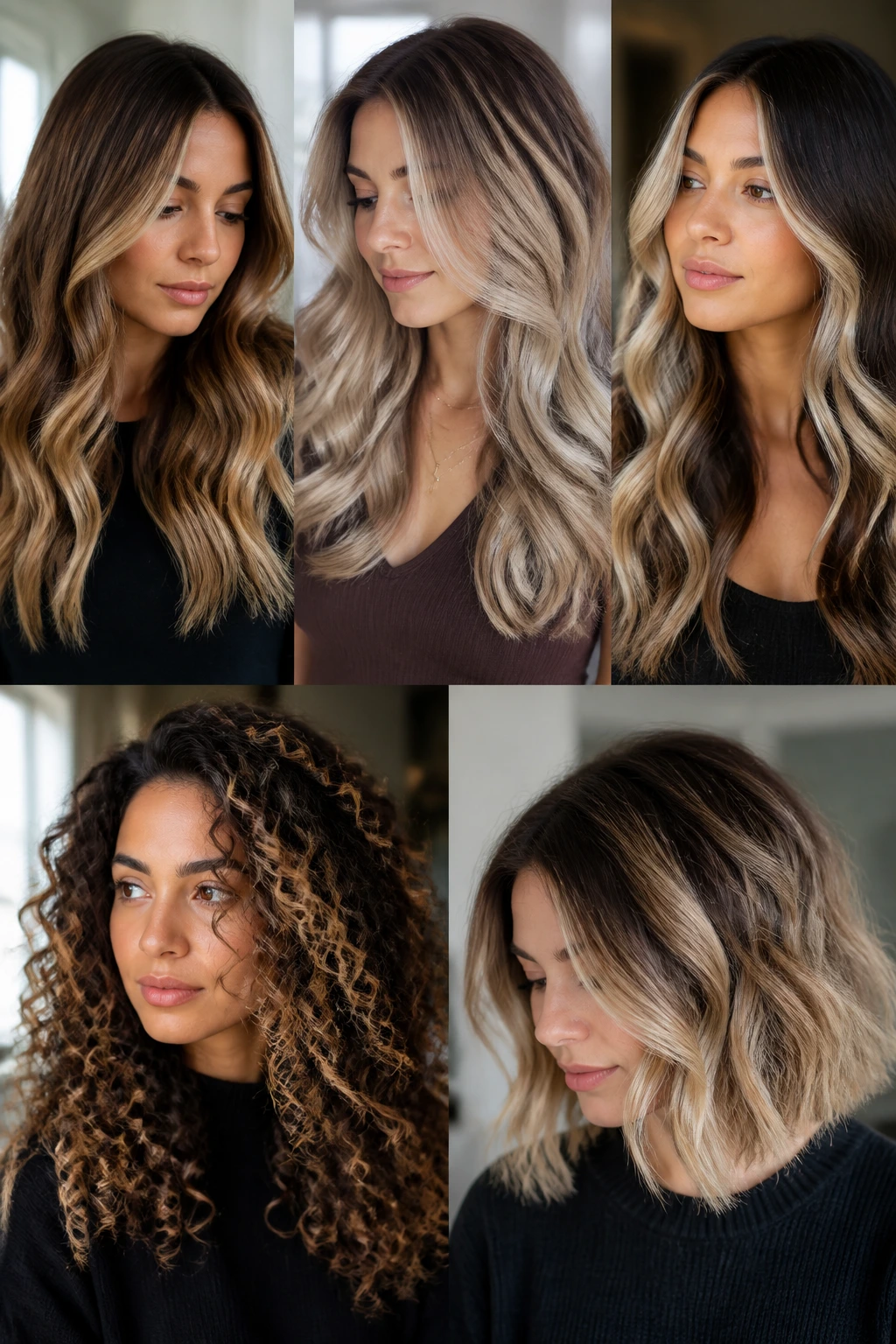
- Soft grow-out: Root shadows, babylights, and balayage keep the regrowth line from turning harsh after a few weeks.
- Real-life friendly: Several of these looks still make sense in a ponytail, braid, or air-dried bend, which matters more than a perfect salon mirror shot.
- Shade range: Honey, beige, ash-beige, champagne, and mushroom each behave differently on a dark base, so you can choose the kind of blonde your hair can actually hold.
- Cut first, color second: A bob, shag, lob, or waist-length layer cut changes where the blonde lands and how bright it reads.
- Not every blonde needs bleach-face drama: Some of these styles barely lift the base at all; they just place the lighter pieces where movement already happens.
1. Face-Framing Money Piece Waves
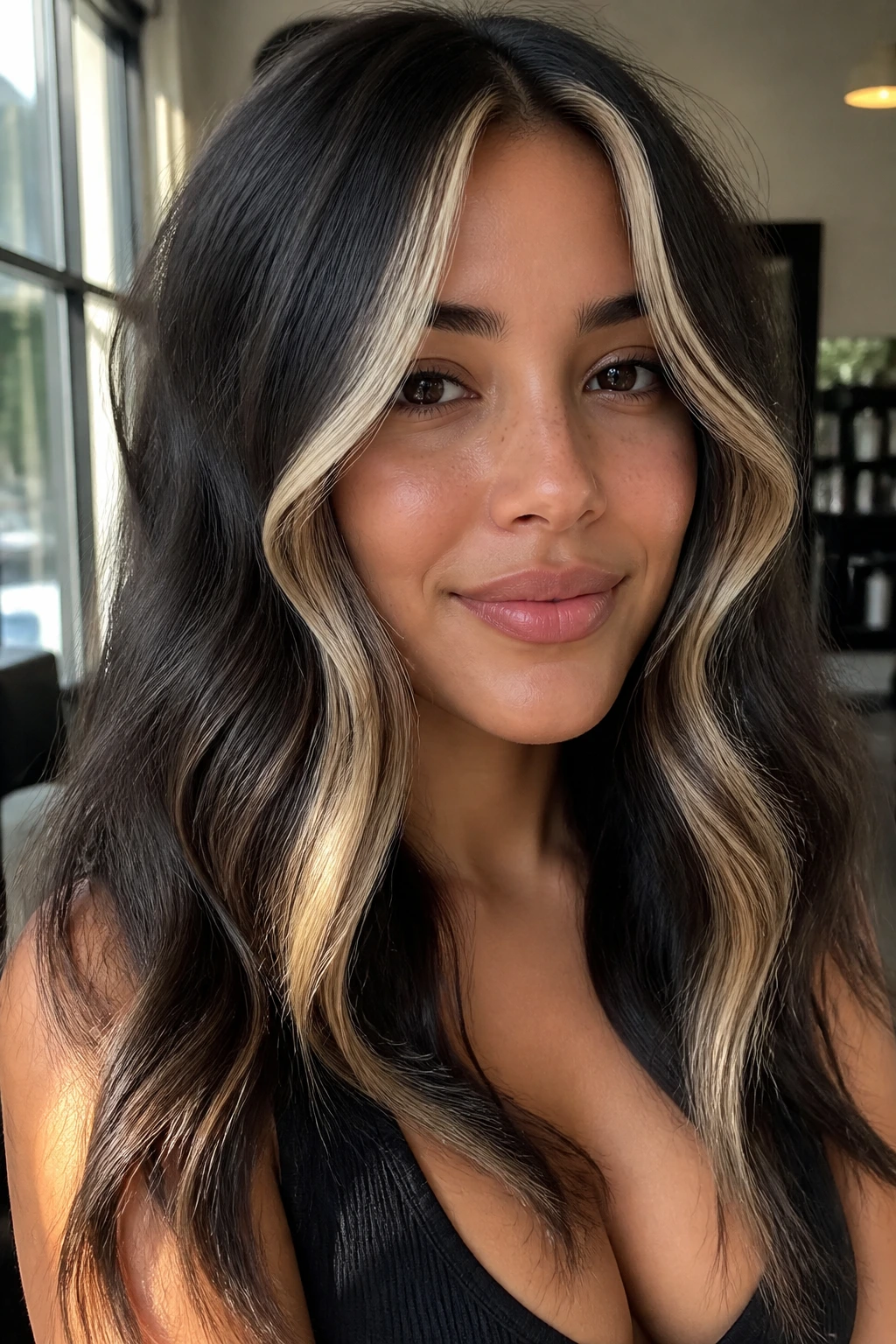
This is the look people ask for when they want a visible change without turning every strand into a project. The money piece sits right around the face — usually starting near the cheekbone or jaw — and the rest of the brunette base stays deeper, so the contrast feels deliberate instead of noisy. On dark hair, I like this best in a beige or soft champagne blonde, not an icy tone that can look disconnected from the base.
Why It Works on Dark Hair
The front pieces do the heavy lifting here. They catch the light first, which means the blonde shows up even when the rest of your hair is tucked behind your ears or pulled half up. Loose waves make the lighter sections bend and flash, so the color looks woven in rather than painted on.
Ask for a deep brunette root with two to four brighter face-framing foils on each side. If your hair is long, keep the money piece narrow enough that it still feels like a frame, not a curtain. Too wide and the look loses that sharp, flattering edge.
2. Rooted Caramel Balayage Lob
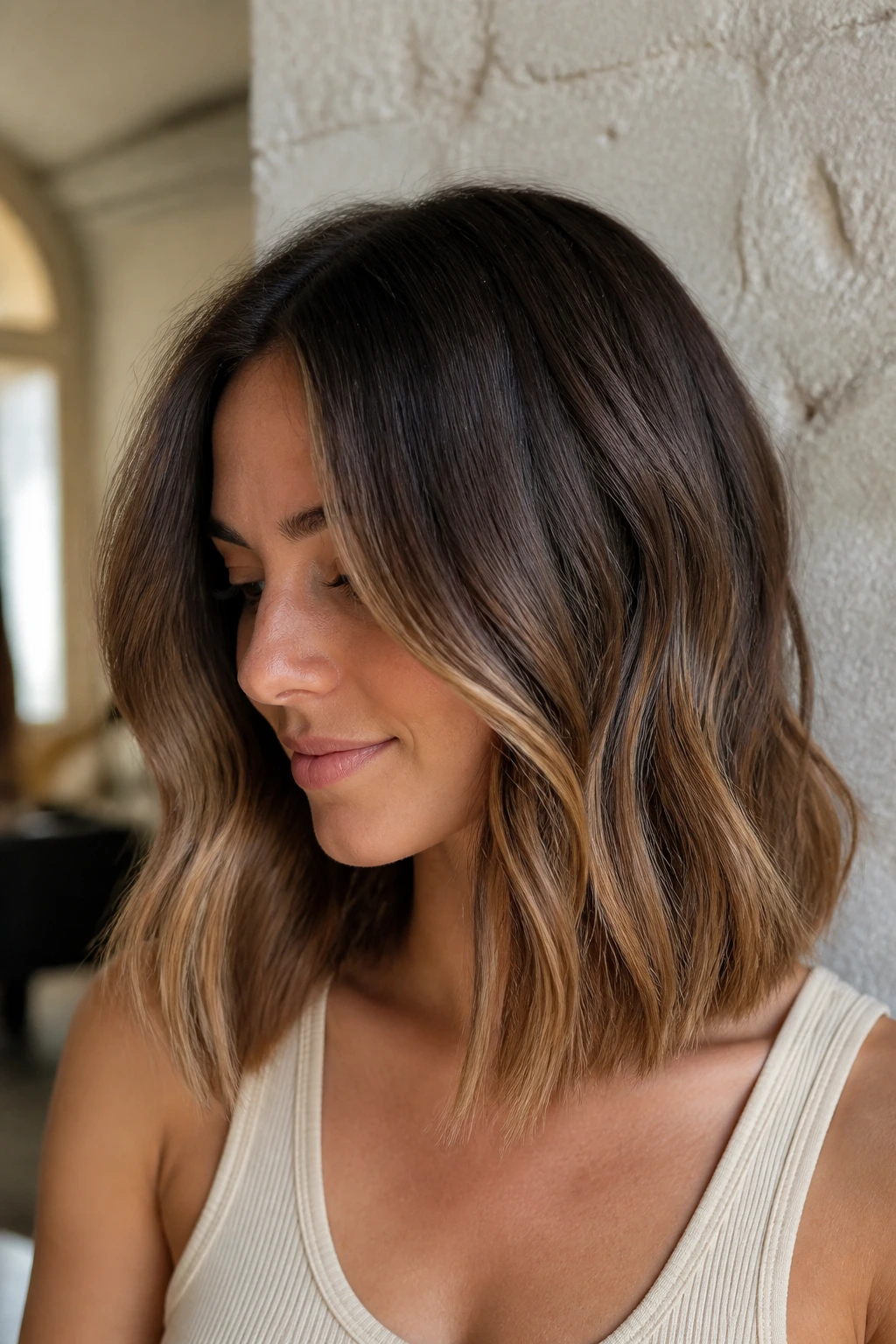
A collarbone lob with caramel balayage is one of those styles that looks calm in the best way. The brunette root stays rich, the caramel ribbons are painted through the mid-lengths, and the ends drift lighter without looking bleached-out. It’s a smart choice if you want brunette to blonde hairstyles for dark hair that still make sense after a rough week and a dry shampoo day.
The real charm is the grow-out. Because the light pieces are hand-placed, the regrowth doesn’t draw a hard line. You get that soft “I’ve been living with this color for a while” look, which is a lot more flattering than a strict stripe at the scalp.
A lob also gives the color room to move. Straight, it reads polished. Wavy, it looks more dimensional and a little sun-kissed, even if the sun had nothing to do with it.
3. Curtain Bangs with Beige Blonde Ends
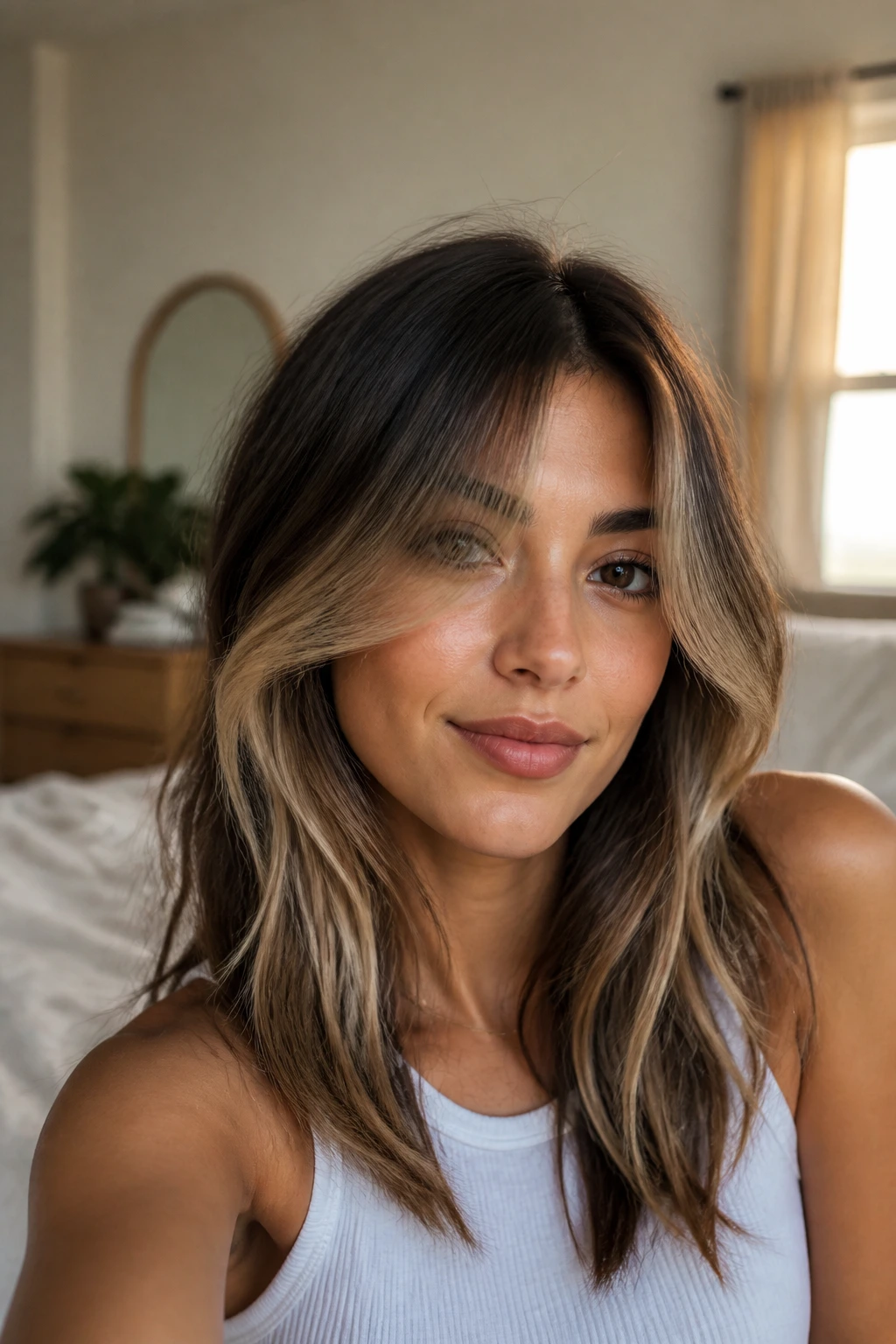
Curtain bangs are one of the easiest ways to make dark hair feel lighter without bleaching the whole head to death. The trick is to keep the bang root a touch deeper and let the beige blonde live mostly through the ends and front layers. That keeps the fringe soft instead of chunky, which is where a lot of home inspiration photos go wrong.
This shape works because curtain bangs already split open around the face. When the lighter tone sits on the bend of the fringe, your eyes go straight there. Beige blonde helps here more than gold does; it has enough warmth to suit dark hair, but it doesn’t turn brassy at the first sign of heat styling.
If your hair is thick, this look feels especially good with a round-brush blowout. Thin hair can wear it too, but the bang needs a little bend — not a flat ironed sheet.
4. Long Layered Blowout with Honey Ribbons
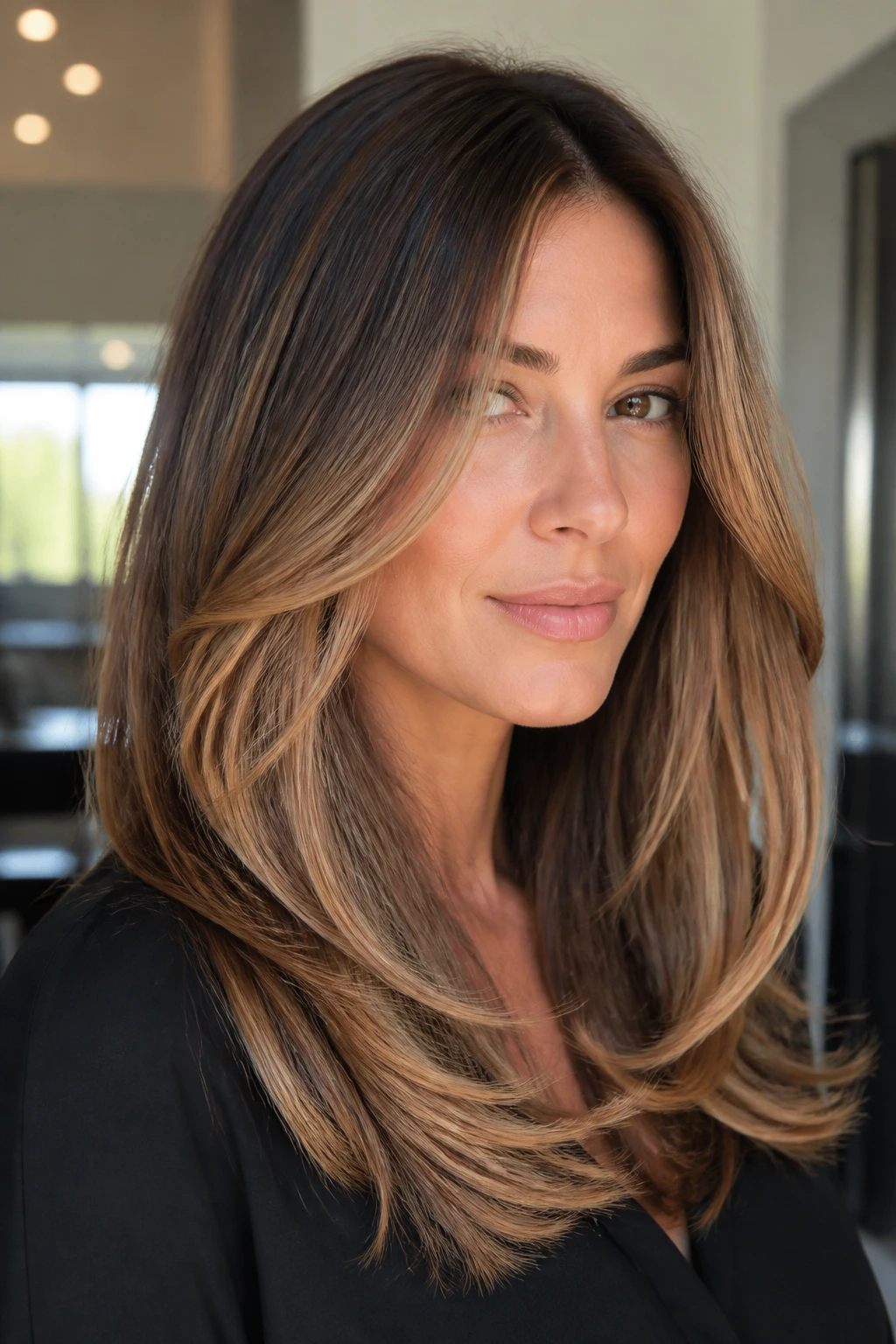
Honey ribbons in long layers are a classic for a reason, and I’m not pretending otherwise. The blonde is woven through the mid-lengths and ends, which means every time the hair moves, those ribbons peek through the darker base. On long dark hair, honey has enough glow to show up, but it still looks friendly next to deeper brown roots.
The blowout matters as much as the color. When the layers are brushed away from the face and the ends turn under just a little, the highlight placement starts to make sense. Without that shape, the ribbons can blur together and lose their contrast.
This one is best if you like hair that looks touched but not overdone. A shine spray on the last inch of hair, a 1.25-inch round brush, and a little patience around the crown. That’s the whole mood.
5. Textured Shag with Mushroom Blonde Panels
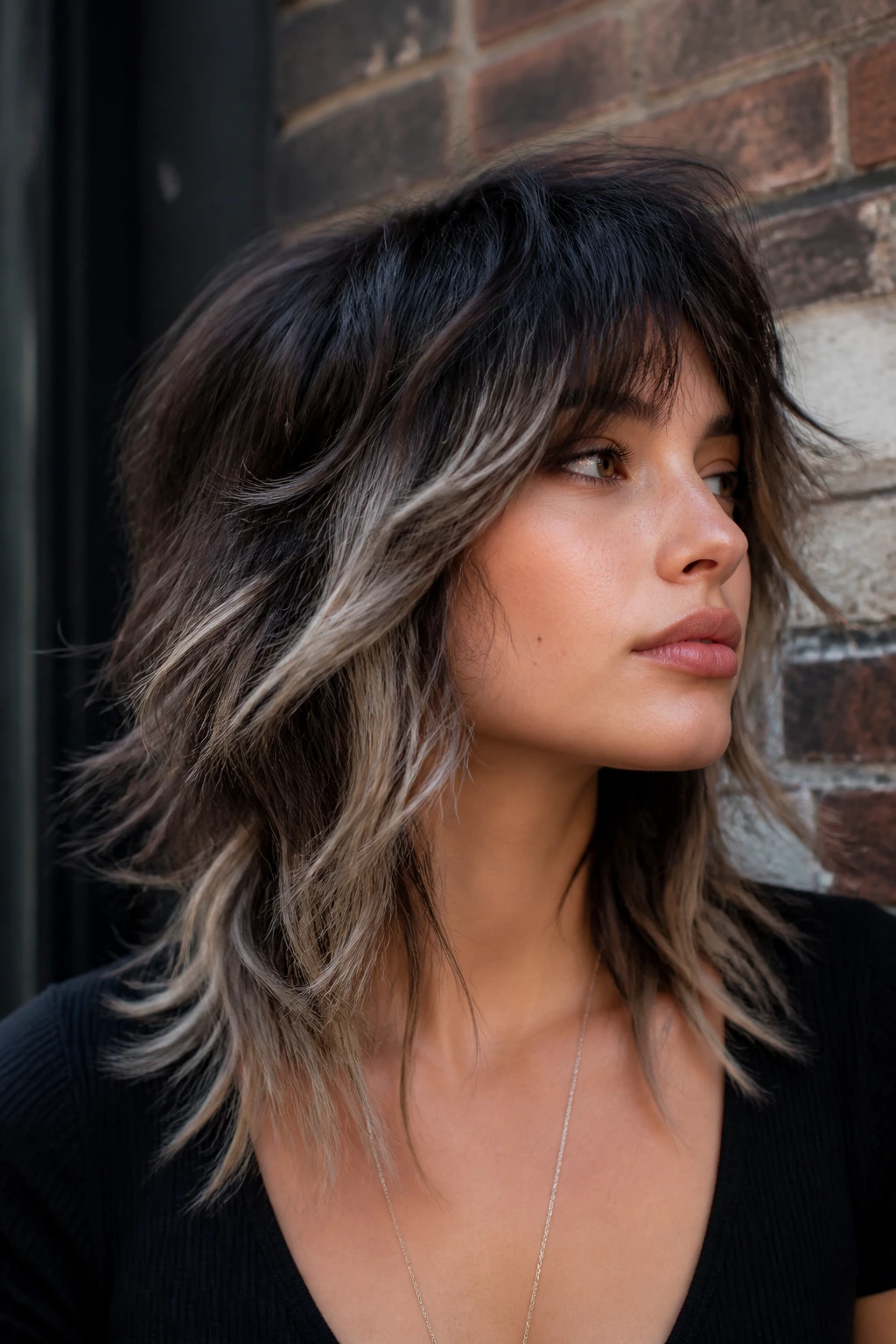
A shag with mushroom blonde panels is for someone who likes dimension with a bit of grit. Mushroom blonde sits in that cool-beige range that keeps dark hair from looking too yellow, and the textured cut lets those panels show up in slices instead of big blocks. It’s less glossy-girl, more lived-in and sharp around the edges.
The best part is how the shag breaks up the color. Choppy layers make the lighter pieces flick in and out of view, so the blonde feels built into the haircut. On straighter hair, it looks more graphic. On wavy hair, it gets softer and slightly smoky, which is where this shade really earns its keep.
If you hate constant upkeep, this is one of the better options on the list. Mushroom tones soften the grow-out, and the shag’s movement hides the fact that roots do what roots always do.
6. Sleek Blunt Bob with Champagne Highlights
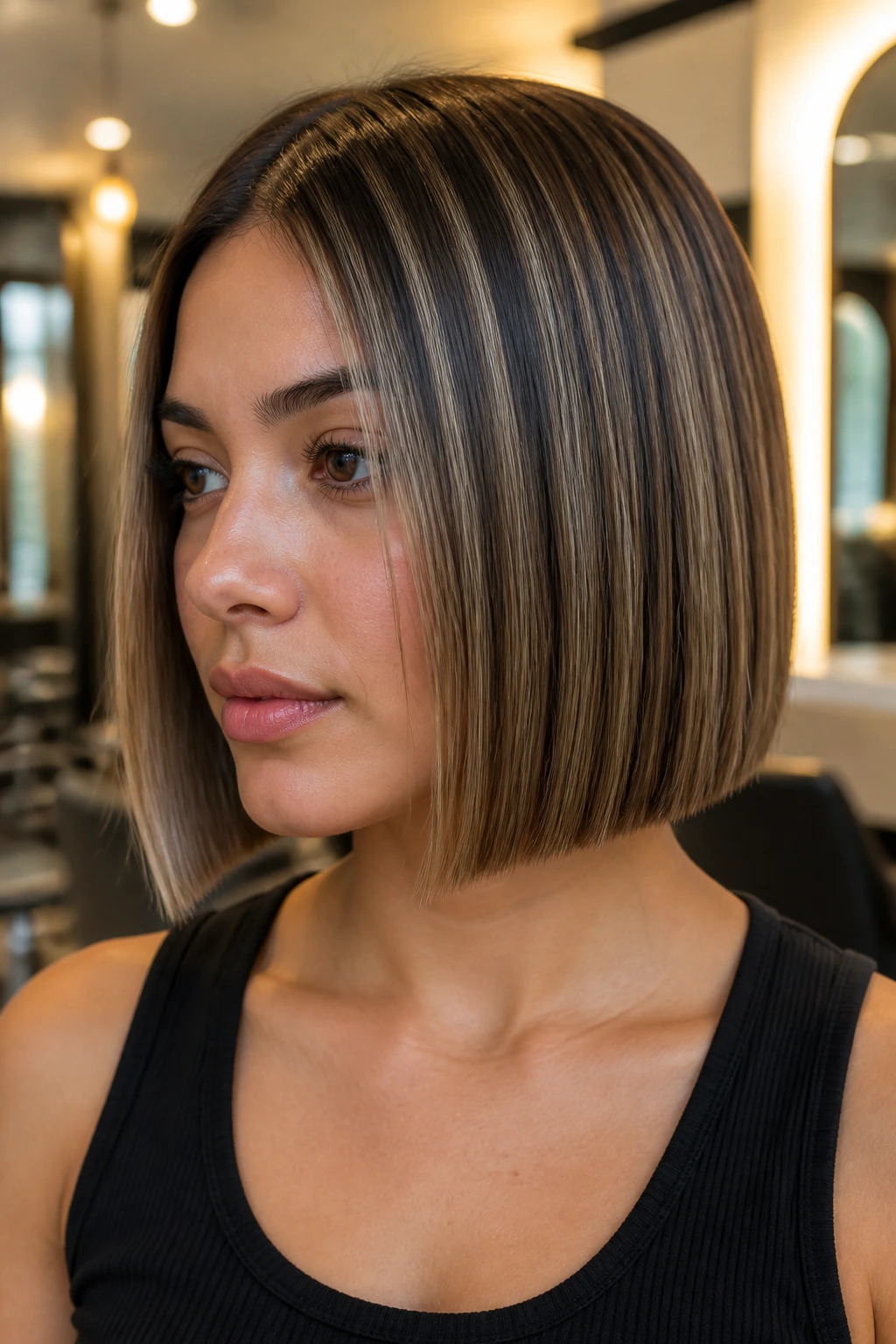
A blunt bob and champagne highlights is a sharp little combination. The cut is clean, the edge is precise, and the blonde is thin enough to keep the line from feeling heavy. On dark hair, champagne highlights give you brightness without crossing into harsh platinum territory.
What Makes It Hit Harder Than a Softer Bob
The blunt shape is the point. Because there isn’t a lot of internal layering to distract the eye, even narrow highlight ribbons read clearly. That means you can use less blonde and still get a strong effect.
This works best when the highlights sit just under the top layer and around the crown, where they flash when the bob swings. Keep the finish straight or only slightly curved under. A flat, glassy bob makes the champagne color look deliberate; a tousled one can muddy the clean lines a little.
7. Butterfly Layers with Vanilla Ends
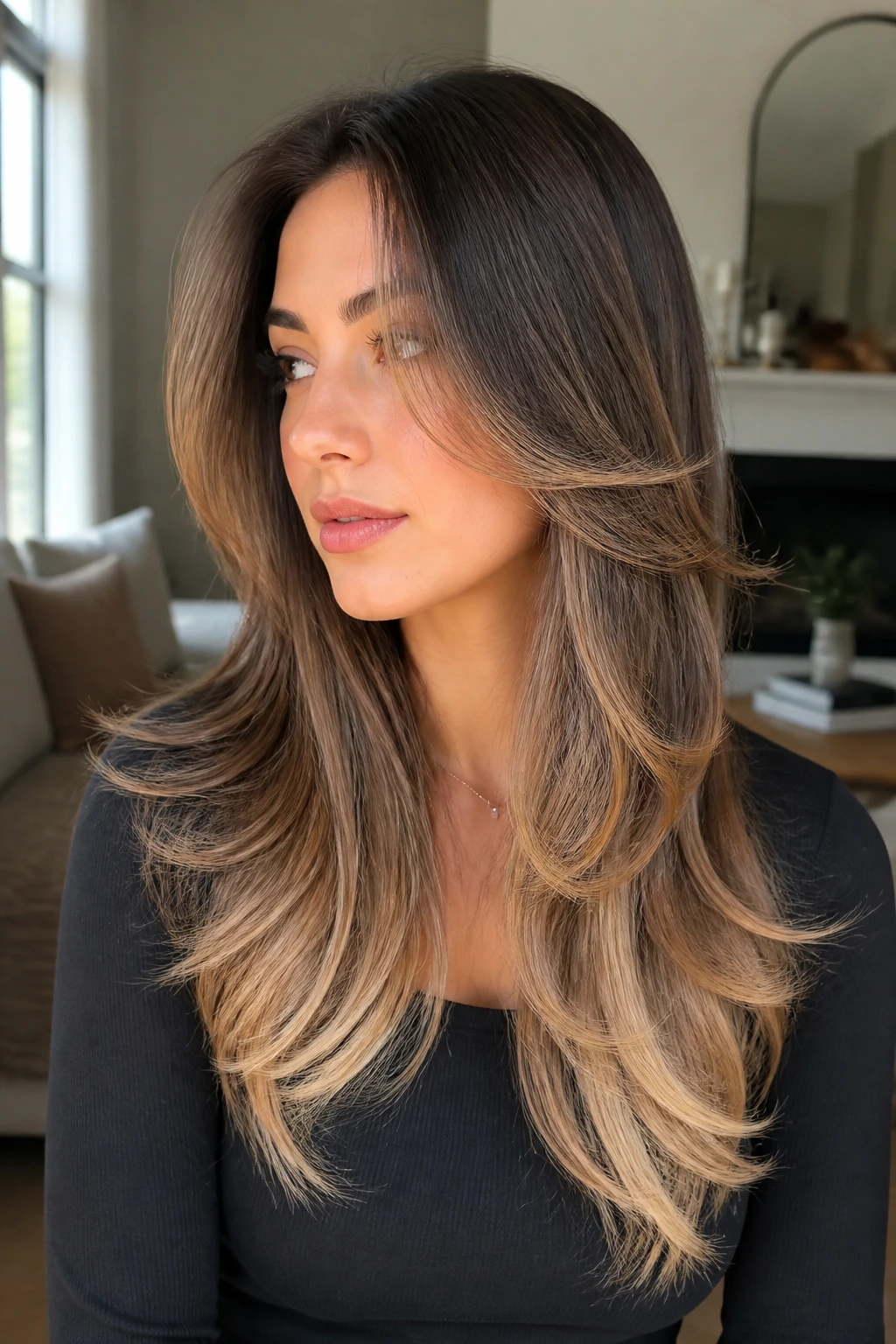
Butterfly layers give you that long, airy shape around the face while keeping the length intact, which is useful if you want blonde to show without chopping off the whole brunette story. Vanilla ends soften the bottom half of the cut so the lighter tone feels like a finish, not a separate section.
The beauty of this look is the motion. The shorter face-framing layers lift around the cheekbones, while the long ends swing freely and show off the blonde. On dark hair, vanilla can look too pale if it starts too high, so keeping it focused toward the lower lengths is the move.
I like this on hair that holds a curl or blowout well. A little bend through the ends keeps the lighter shade from looking like a flat block. And no, it does not need to be curled into pageant hair. A loose wave is enough.
8. Soft Curls with Shadow Root Blonde
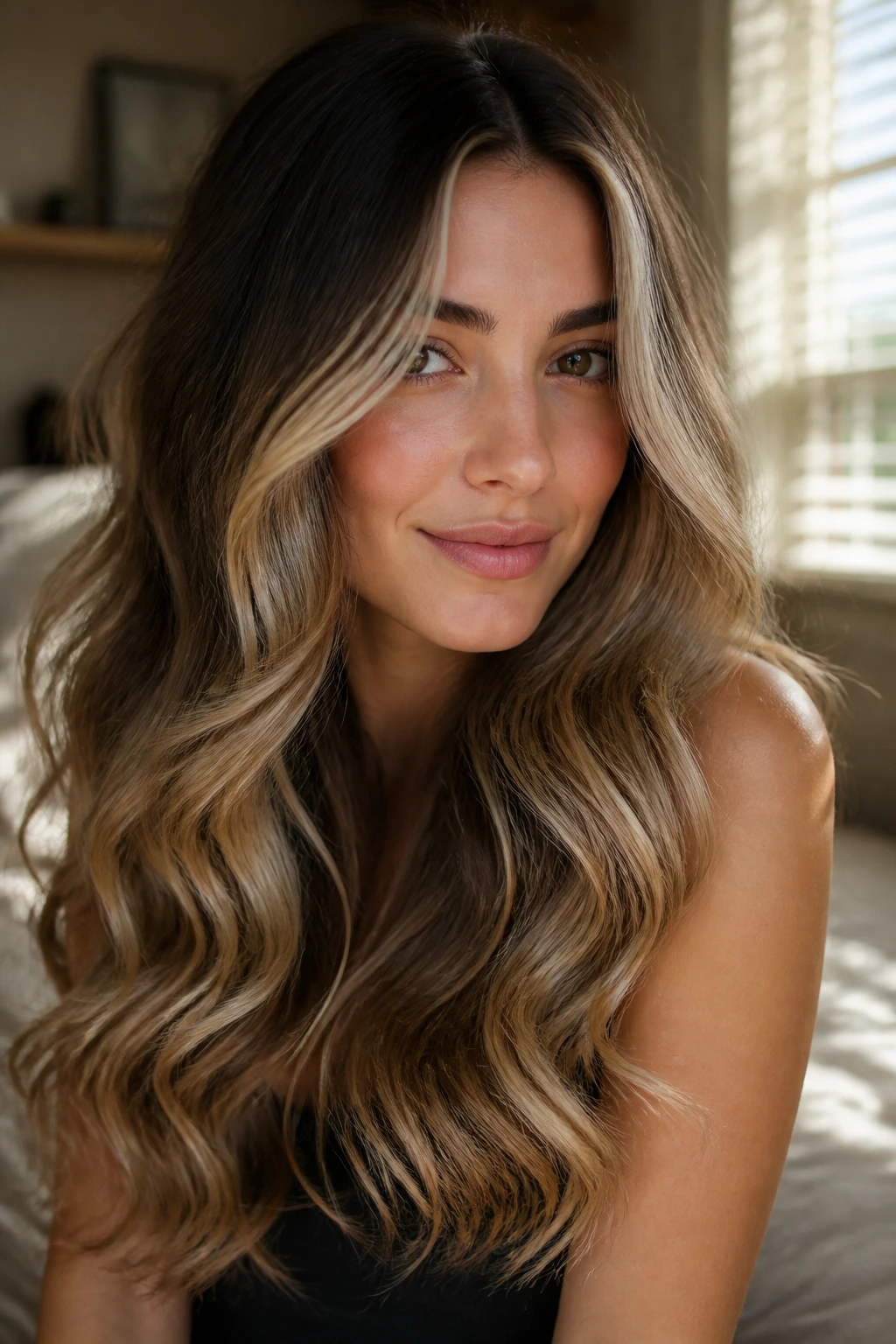
Soft curls and a shadow root are a forgiving pairing, especially when the base is dark. The root stays deeper, which helps the blonde pieces look grounded instead of floating. The curls then spread the lighter tone across the shape so the eye keeps moving.
This is one of the best brunette to blonde hairstyles for dark hair if your natural texture already has volume. Curly hair hides a lot of grow-out in the best possible way, and the darker root makes the blonde feel richer. Ask for lighter ribbons in the outer curl pattern, not only underneath. That’s where the movement lives.
The shade should sit in the beige-to-honey zone unless you want a cooler finish and are prepared to tone it often. Curly hair can turn brass faster than people expect, and a shadow root buys you some breathing room.
9. Braided Half-Up with Peekaboo Blonde
Braids are sneaky. They pull hidden blonde pieces to the surface, and suddenly a dark base looks much more layered than it did loose. A half-up braid is especially good because the top section stays tidy while the woven strands reveal lighter bits underneath.
Peekaboo blonde works best when it’s placed in the mid-lengths and inner layers, not right at the hairline. That way, the color shows when the braid twists, flips, and loosens. On dark hair, I prefer caramel or soft gold here rather than icy streaks, which can jump out too hard in woven sections.
This style has a practical perk too. If your color is growing out, the braid disguises the root line and makes the whole thing look intentional. The braid gets the attention, not the regrowth.
10. Glossy High Pony with Bright Front Pieces
A high ponytail can be plain, or it can look expensive in the best old-fashioned sense. The difference is usually the front pieces. If you leave two bright blonde sections around the face and keep the pony sleek, the contrast feels sharp and polished instead of basic gym-hair.
This works especially well on dark hair because the ponytail itself creates a solid brunette block. The blonde in front breaks it up. Use a bright beige or champagne tone if you want the contrast to read cleanly; use honey if you want the look softer and a little warmer.
The key is smoothness. A brushed crown, a wrapped elastic, and a bit of shine serum on the lengths make the blonde pieces look crisp. If the pony is frizzy, the lighter front pieces can look detached. No one wants that.
11. Grown-Out Pixie with Frosted Tips
Short hair with blonde is tricky, and that’s why a grown-out pixie with frosted tips feels so good when it’s done well. The blonde should sit on the top layers and edges, not all over the head like a helmet. A little frost around the crown and fringe can wake up the shape without making it look dated.
This is one of the few dark-to-blonde looks where contrast is your friend. The shorter the hair, the more a small blonde section matters. I’d keep the tone soft — almost cream or pale beige rather than stark white — unless your skin and wardrobe already live in high contrast.
A pixie like this needs frequent trims, because the cut shape is doing half the work. If the sides start to puff out or the top gets floppy, the blonde placement stops reading as intentional and starts looking like a grown-out color job.
12. Mid-Length Wavy Cut with Toffee-to-Cream Dimension
Toffee at the root, cream at the ends, and a wavy cut in the middle — that’s the whole story here. The gradient makes sense on dark hair because it follows the natural way the eye reads depth: rich at the top, lighter where the hair moves. Mid-length cuts are especially good for this because they show enough color to matter without needing a ton of length.
The waves keep the transition soft. If the hair is too straight, the toffee-to-cream shift can look like a line instead of a melt. A loose bend with a flat iron or curling wand will break that line up and make the color look more gradual.
I like this one for people who want blonde but do not want the word “maintenance” to define their appointment schedule. The darker root and warm mid-tones make grow-out easier than it sounds.
13. Bottleneck Bangs with Sandy Blonde Sweep
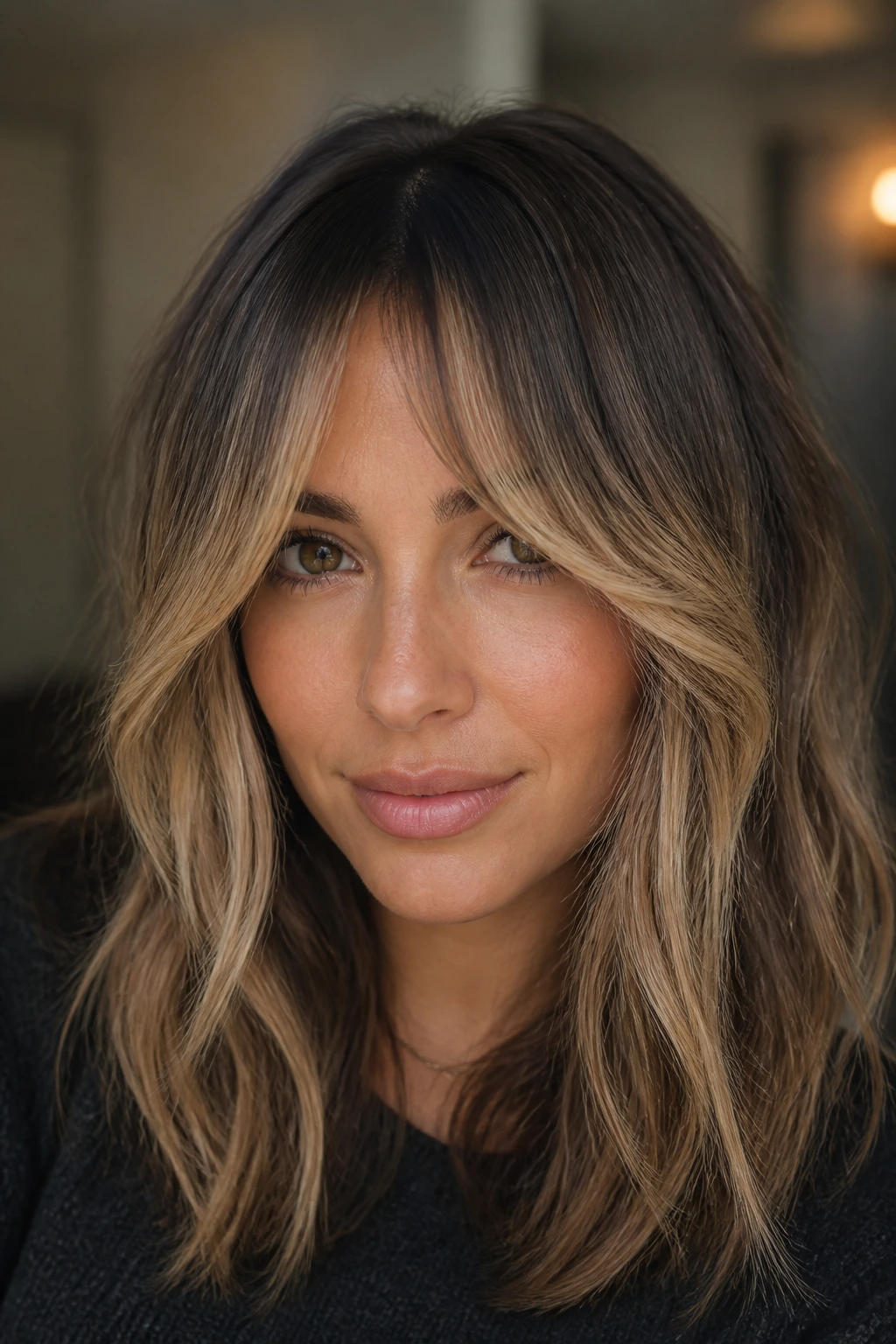
Bottleneck bangs are a little narrower at the top and softer as they widen, which makes them a neat fit for sandy blonde sweep pieces around the face. The lighter shade sits where the fringe opens, so the whole cut feels lighter without losing the brunette depth underneath.
Sandy blonde works here because it sits between beige and gold. It is bright enough to show against a dark base, but not so cool that it turns chalky. On thick hair, this combo gives you a nice break in the density around the forehead and cheekbones. On finer hair, it adds shape without making the fringe look too heavy.
This style looks best when the bangs are styled with a little bend, not blasted flat. A small round brush or velcro roller can help the sweep land in the right spot. Tiny detail, big payoff.
14. A-Line Lob with Ribbon Highlights
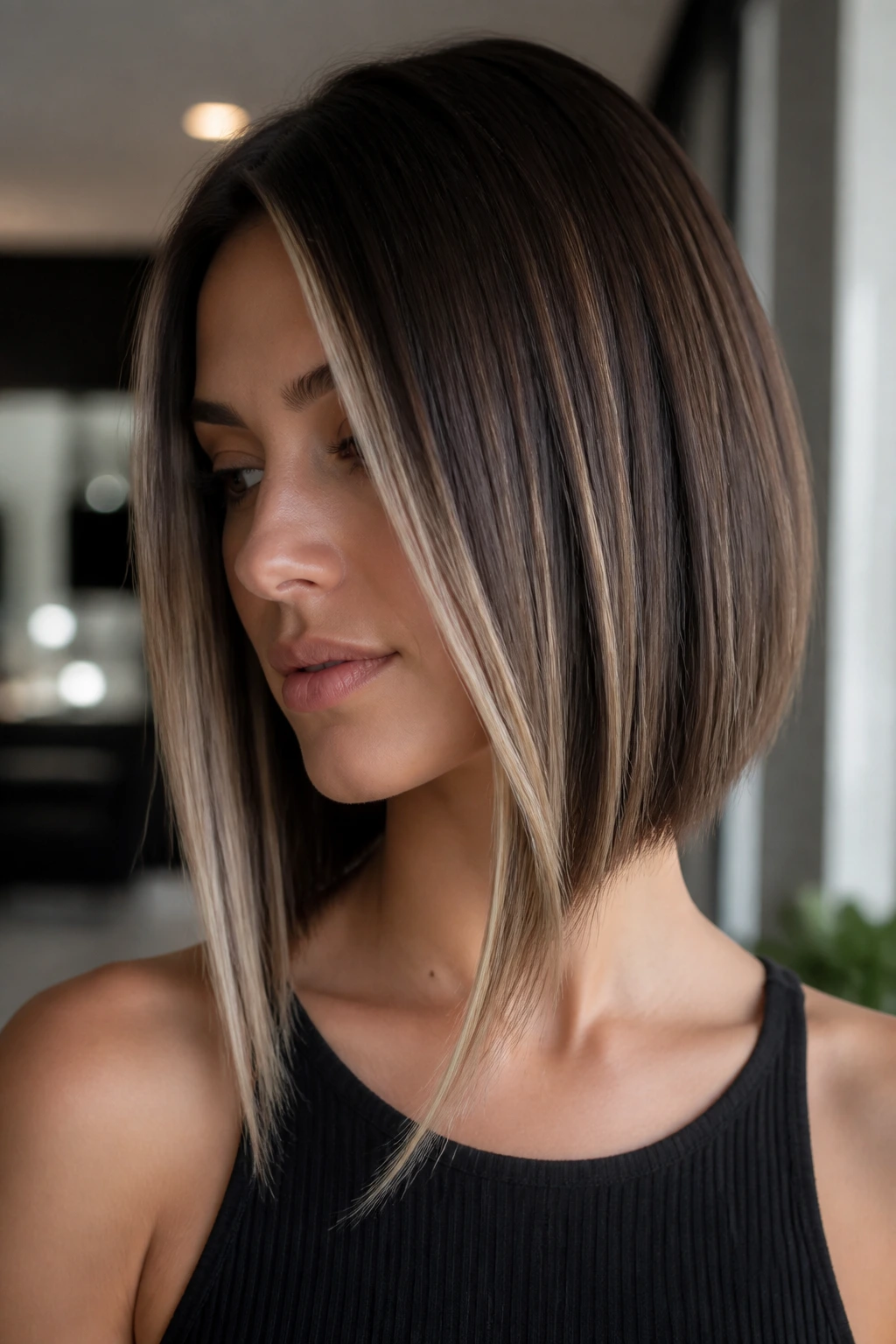
An A-line lob already has built-in drama because the front is longer than the back. Ribbon highlights play into that line beautifully by tracing the angle instead of fighting it. On dark hair, that means you get dimension where the cut is most visible — around the jaw and collarbone.
This is a smart choice if you want the blonde to read polished rather than beachy. The ribbons can be thin and spaced out, which keeps the look sophisticated and easier to maintain. Champagne or beige blonde usually works better here than super-warm gold, because the shape itself brings enough energy.
Straight styling makes the angle look crisp. A slight bend under at the ends can soften it, but too much wave blurs the point of the cut. That’s a personal preference, of course, but the line is what makes this one earn its place.
15. Boho Waves with Buttery Babylights
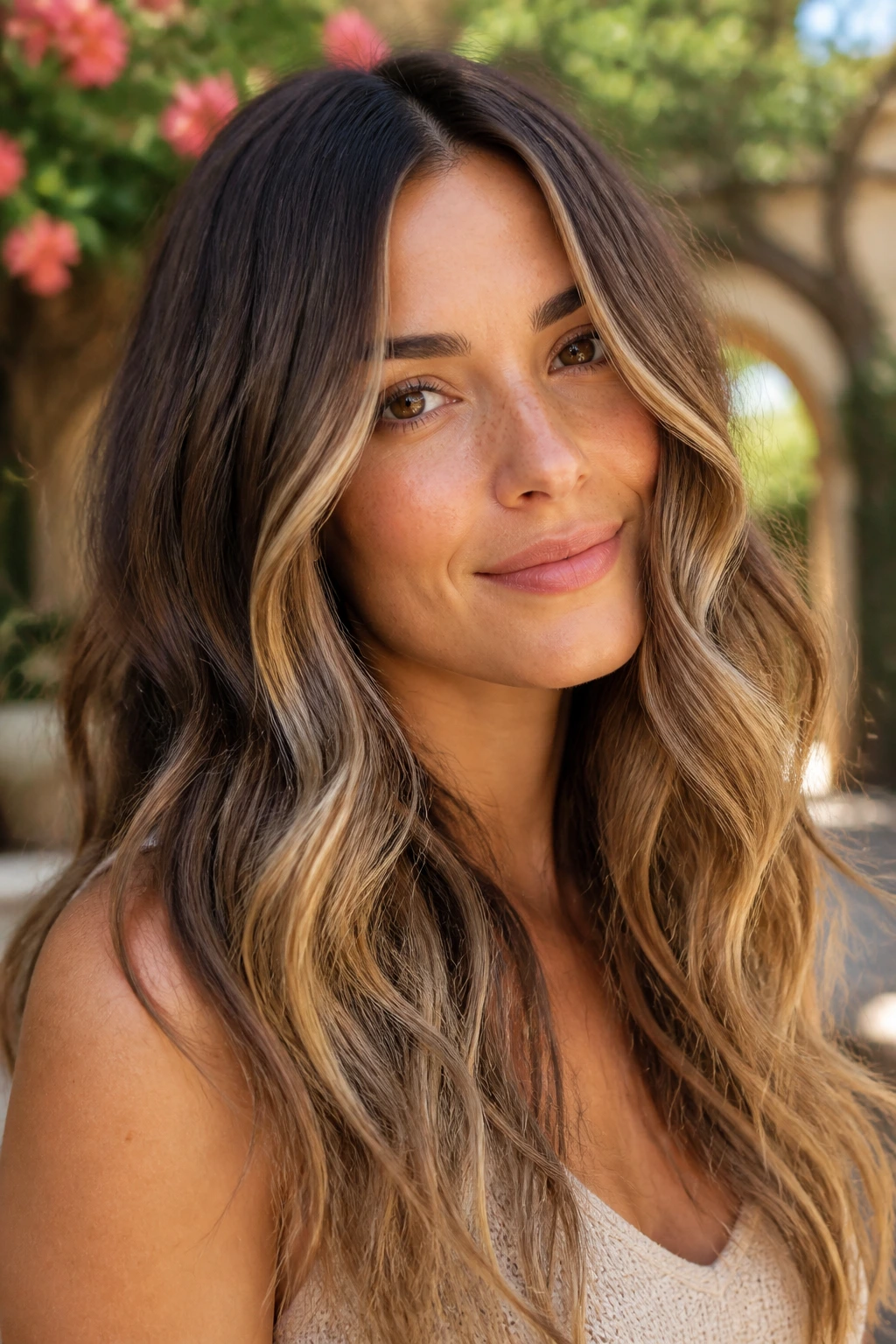
Babylights are tiny, fine highlights, and on dark hair they can create a lot of softness without loud contrast. Butter blonde is the shade I’d reach for here, because it gives the waves a warm glow without looking striped. The effect is especially good if you like that softly sunlit finish that grows out in a calm way.
What makes this style work is how evenly the color is dispersed. Instead of a few obvious blonde chunks, you get many small shifts in tone. The waves then pull those tiny shifts together so the whole head looks lighter from a distance and dimensional up close.
This is one of the quieter blonde looks on the list. If you want a dramatic change, skip it. If you want hair that reads lighter when it moves and richer when it sits still, it’s a strong pick.
16. Polished Straight Layers with Ash-Beige Ends
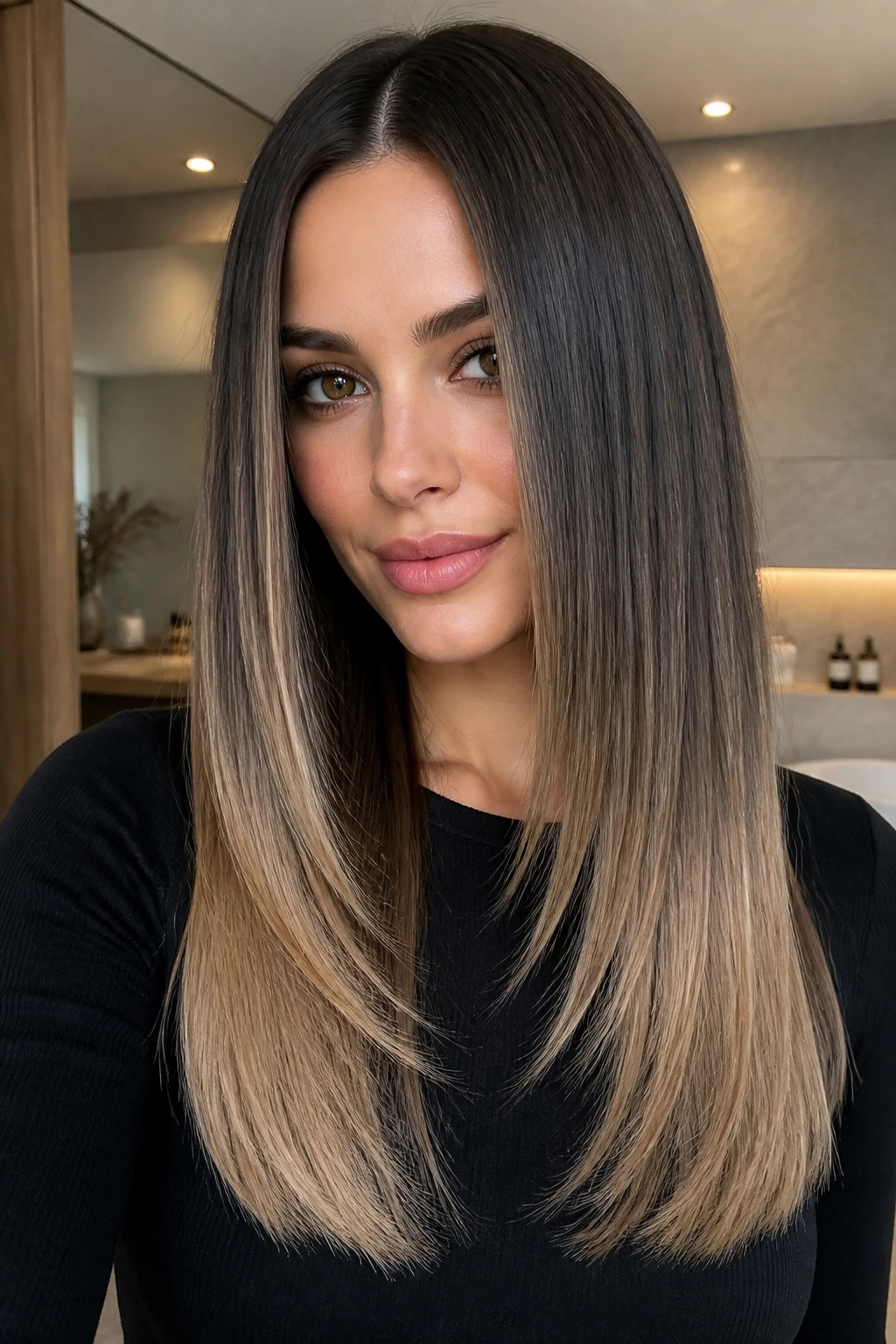
Ash-beige ends can look very chic on dark hair when the styling is straight and controlled. The color is cool enough to stop the blonde from turning too honeyed, but not so icy that it clashes with a deeper brunette base. Straight layers help the lighter ends line up cleanly, which is half the appeal.
This isn’t a messy look. It likes order. A center part, a smooth blow-dry, and a serum that takes the fuzz off the ends make the ash-beige placement look intentional instead of accidental. If your hair tends to wave wildly, you’ll fight it more than you want to.
I’d choose this one for someone who likes a polished finish and doesn’t mind using toner on a schedule. Cool shades show brass sooner than warm ones. They also look striking when they’re fresh, which is the tradeoff.
17. Tousled Wolf Cut with Bronde Melt
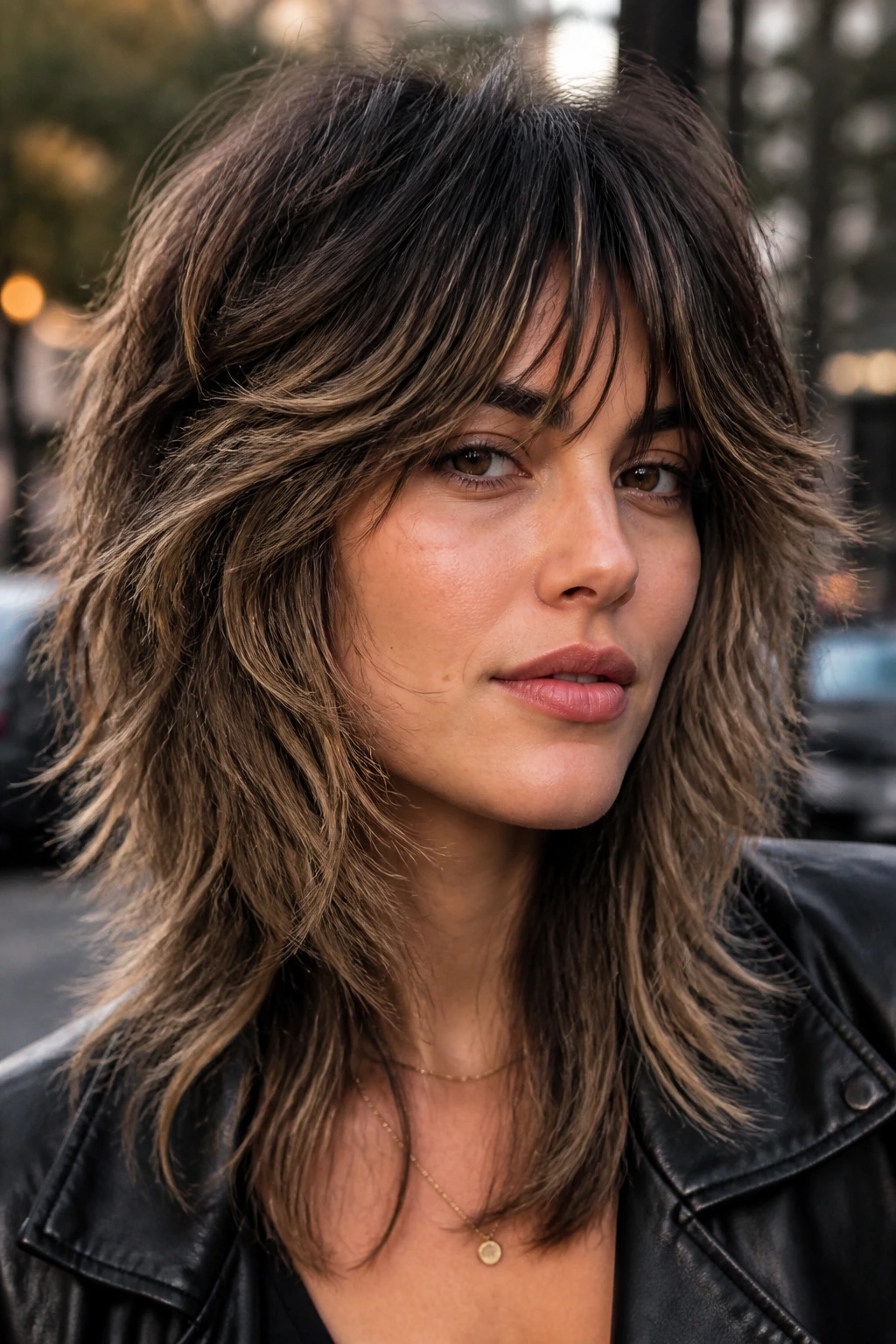
A wolf cut gives you choppy layers, a bit of edge, and enough movement to make a bronde melt look easy. Bronde — that brown-blonde middle ground — is a good fit for dark hair because it doesn’t demand a hard leap to pale blonde. The color can stay in that smoky, in-between space where the layers do the talking.
This cut loves texture. The longer mullet-like ends and shorter crown pieces let the lighter strands fall in different directions, so the blonde never looks flat. If you air-dry and scrunch, the color looks rugged. If you use a diffuser, it reads even more piecey.
This is not the look I’d recommend to someone who wants neatness. It’s for people who like hair with some attitude and don’t mind that the shape has a little wildness to it.
18. Deep Side Part Glam Waves with Platinum Pop
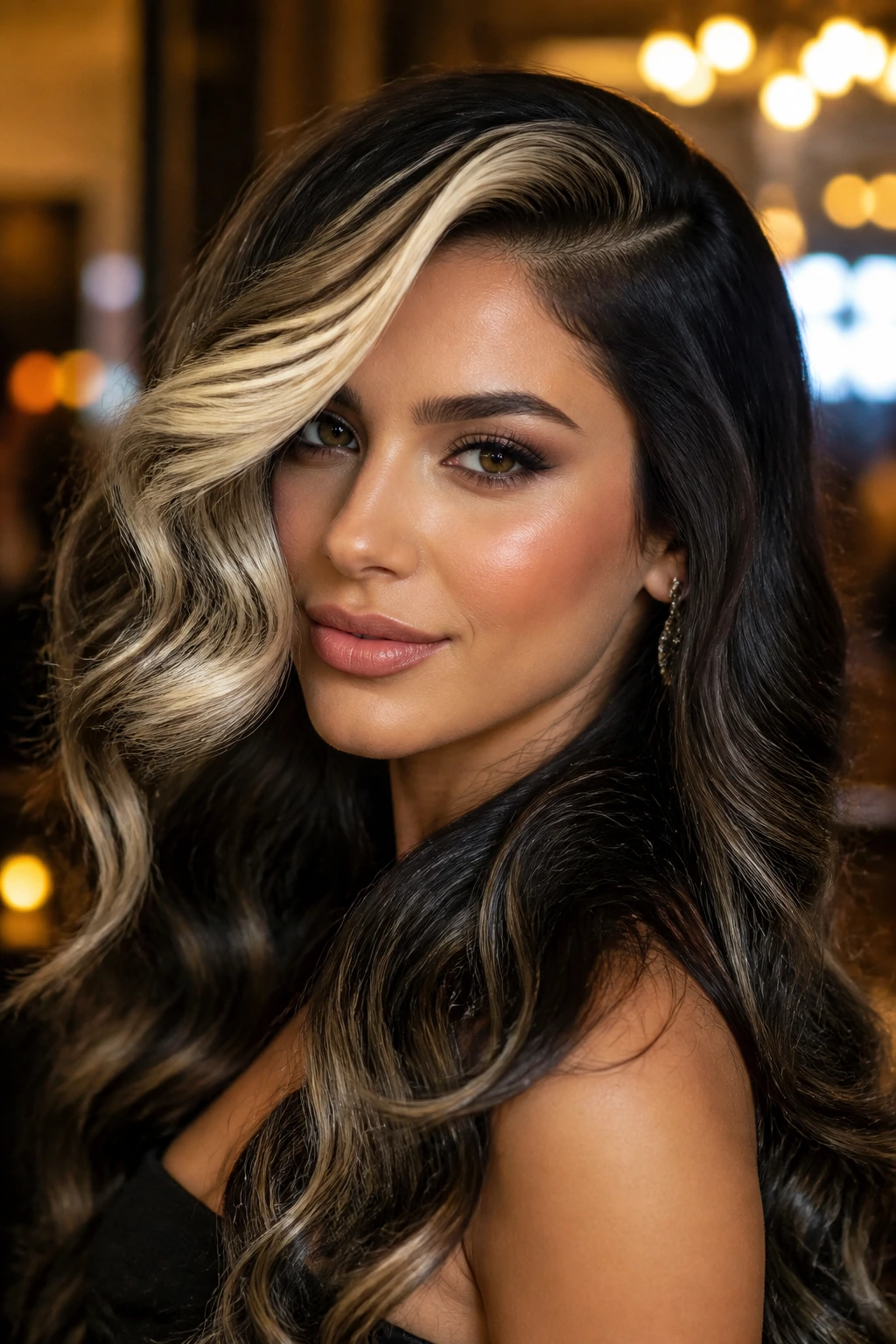
A deep side part changes everything. On dark hair, it can turn a simple wave pattern into a very deliberate blonde placement story, especially when a platinum pop lands near the front or on one side. The contrast is high, and that’s the point.
Platinum on dark hair is the least forgiving shade in this whole set, so the placement has to be smart. Keep it as a bright accent, not the whole head, unless you are prepared for serious upkeep. A side part helps because it gives the blonde one clear moment instead of spreading it everywhere.
This is the look for evenings, events, and days when you want the hair to make a statement before you do. The waves should be smooth and glossy, not dry or broken, because platinum exposes everything. Everything.
19. Low Bun with Blonde Veil Pieces
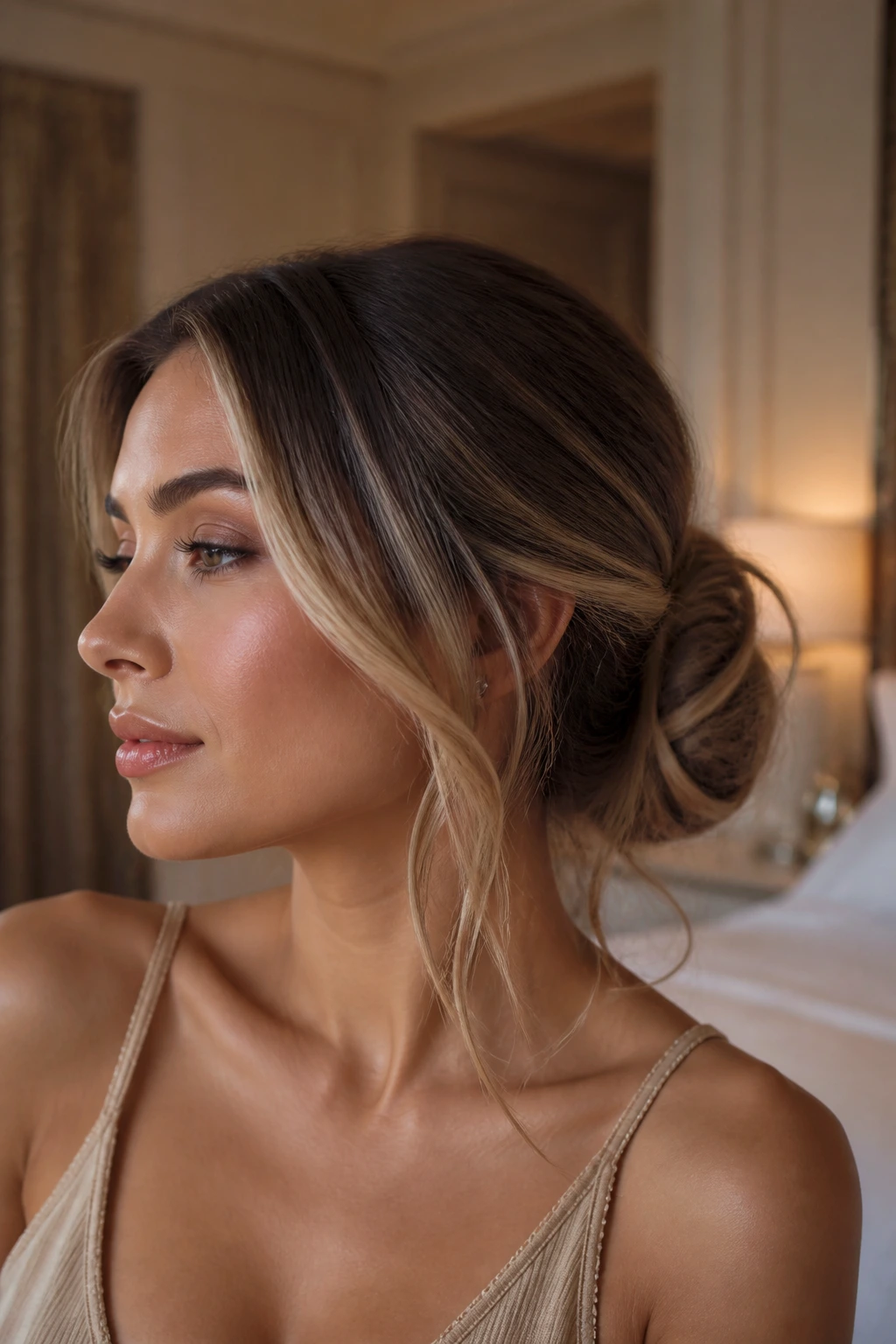
A low bun does not have to disappear. If you leave a few blonde veil pieces loose around the nape and temples, the updo keeps its shape while still showing off the lighter color. On dark hair, those little escaped pieces are enough to stop the bun from feeling too severe.
I like this best with soft, ribbon-like highlights rather than chunky blocks. When the bun twists, the lighter pieces wrap around it and catch the eye. The look is elegant, yes, but the interesting part is the movement around the edges.
It’s also practical. The bun hides grow-out at the scalp, while the loose blonde pieces keep the color visible. That makes it a very useful style when you need your hair up but do not want your color to vanish into a plain knot.
20. Braided Crown with Dimensional Golden Strands
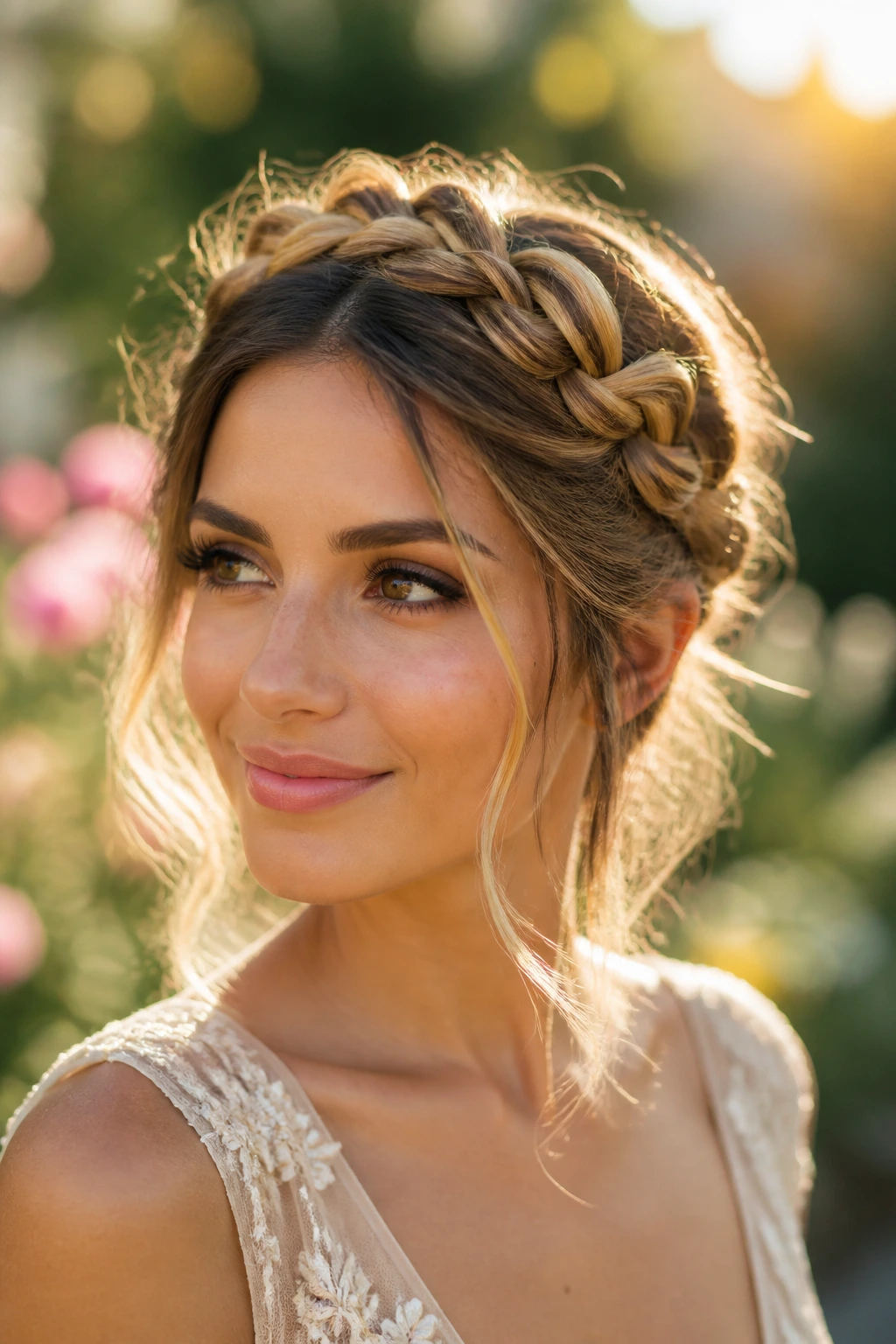
A braided crown is one of those styles that looks complicated until you break it down. The braid itself frames the head, and the golden strands woven through it make the shape pop against a brunette base. Gold is the right word here — not orange, not brassy, just warm enough to look rich.
This works because braids compress the hair. That compression puts the blonde pieces next to each other, so the contrast reads more clearly than it would in loose hair. If you have layered dark hair, a crown braid can also collect shorter pieces around the face and make them part of the design instead of a nuisance.
Choose this when you want a romantic look that still shows color. The braid does not need to be perfect. A little looseness keeps the lighter strands visible.
21. Collarbone Cut with Espresso-to-Honey Fade
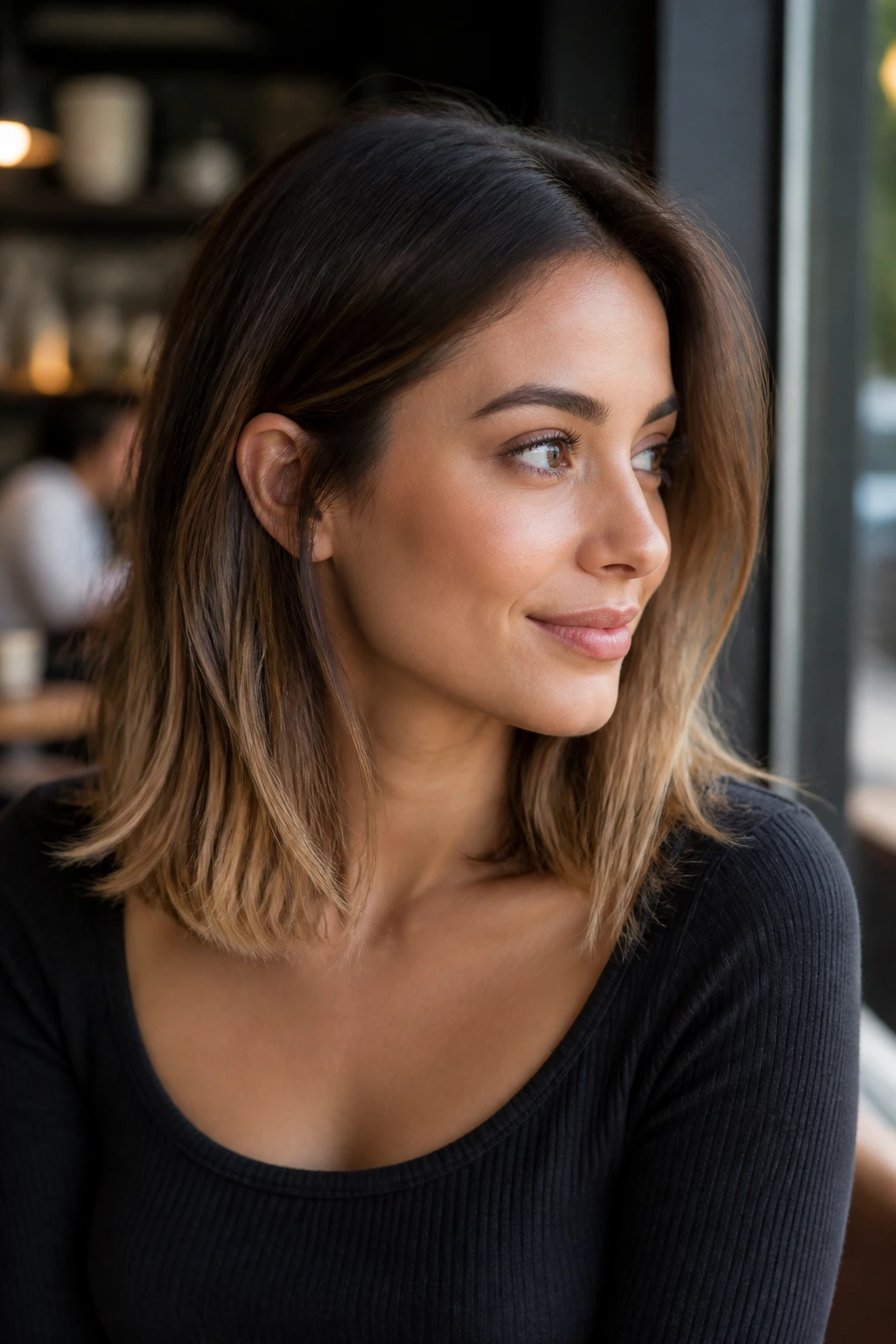
An espresso-to-honey fade is about gradual brightness, not a dramatic jump. On a collarbone cut, that fade has enough length to show off the shift from dark root to warmer ends, which makes the whole haircut feel longer and lighter at the same time. It is one of the more wearable brunette to blonde hairstyles for dark hair because it does not depend on one exact styling trick.
The fade should start softly around the mid-lengths. Too high, and the root loses its depth. Too low, and the blonde has no room to breathe. Honey is the shade that keeps this kind of gradient friendly and wearable; it gives you light without flattening the richness that makes dark hair look good in the first place.
I’d call this one a workhorse style. It suits straight hair, loose waves, and even tucked-behind-the-ear looks. Not flashy. Just smart.
22. Voluminous Curls with Caramel Money Piece
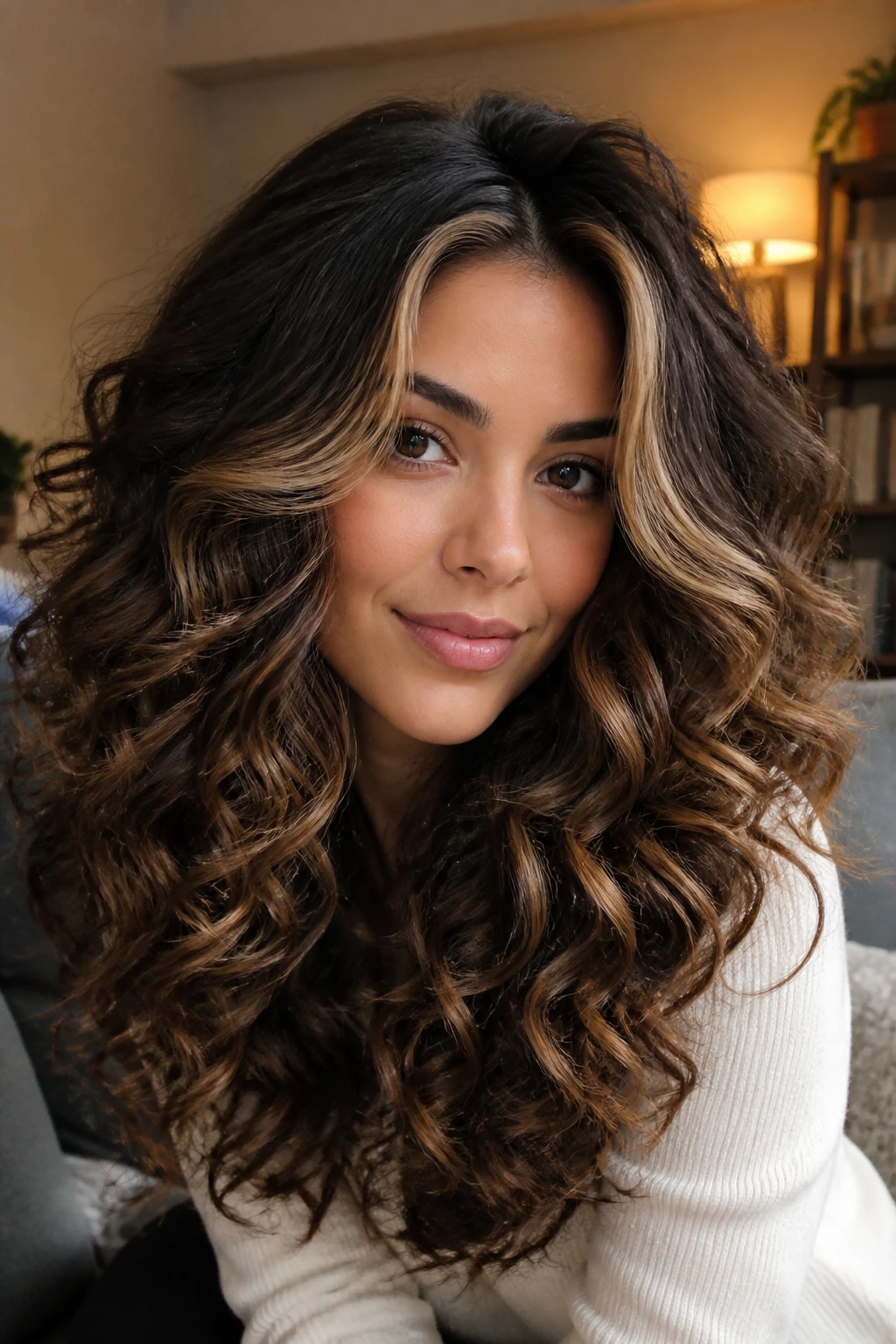
Curls love a money piece when it’s placed with restraint. The bright caramel front gives the face a lift, while the rest of the curls keep their brunette depth and shape. On dark hair, that contrast can look especially lush because the curl pattern makes the lighter pieces appear thicker than they are.
The trick is not over-lightening the entire curl. A few strategically placed pieces around the front and crown do more than a whole head of pale streaks would. Caramel is a safe starting point because it reflects enough light without making each curl look dry or overprocessed.
If your curls are tight, ask for the lightest pieces to be slightly longer than you think you need. Curly hair springs up, and blonde ends can disappear if they’re cut too short. That detail matters more than people expect.
23. Sleek Chin-Length Bob with Soft Vanilla Underlayers
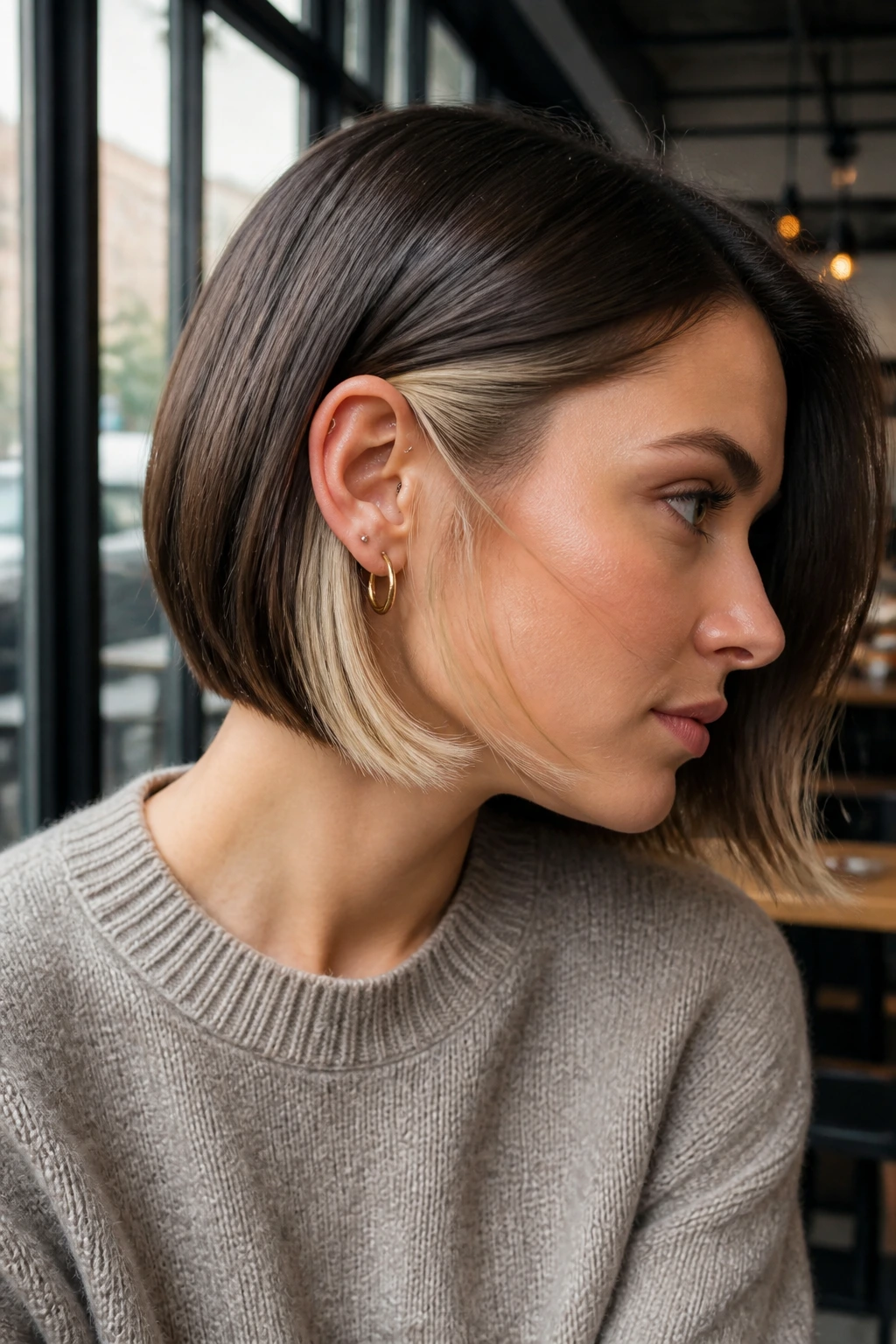
A chin-length bob with vanilla underlayers is the kind of look that rewards a clean cut. The top layer stays deep brunette, while the lighter underlayer flashes when the hair moves, flips, or tucks behind the ear. It’s subtle until it isn’t.
This is especially useful if you want to wear your hair sleek most days but still want a hint of blonde. Vanilla is bright enough to show through a dark base, yet soft enough that the contrast doesn’t feel aggressive. Underlayers also hide a lot of grow-out, which makes this a smarter choice than a full top-layer blonde bob.
Straight styling shows the shape. A slight inward curve at the ends keeps the underlayer from peeking out too much; a sharper tuck reveals it. You get to decide how much light you want in the room.
24. Airy Long Shag with Sunlit Ends
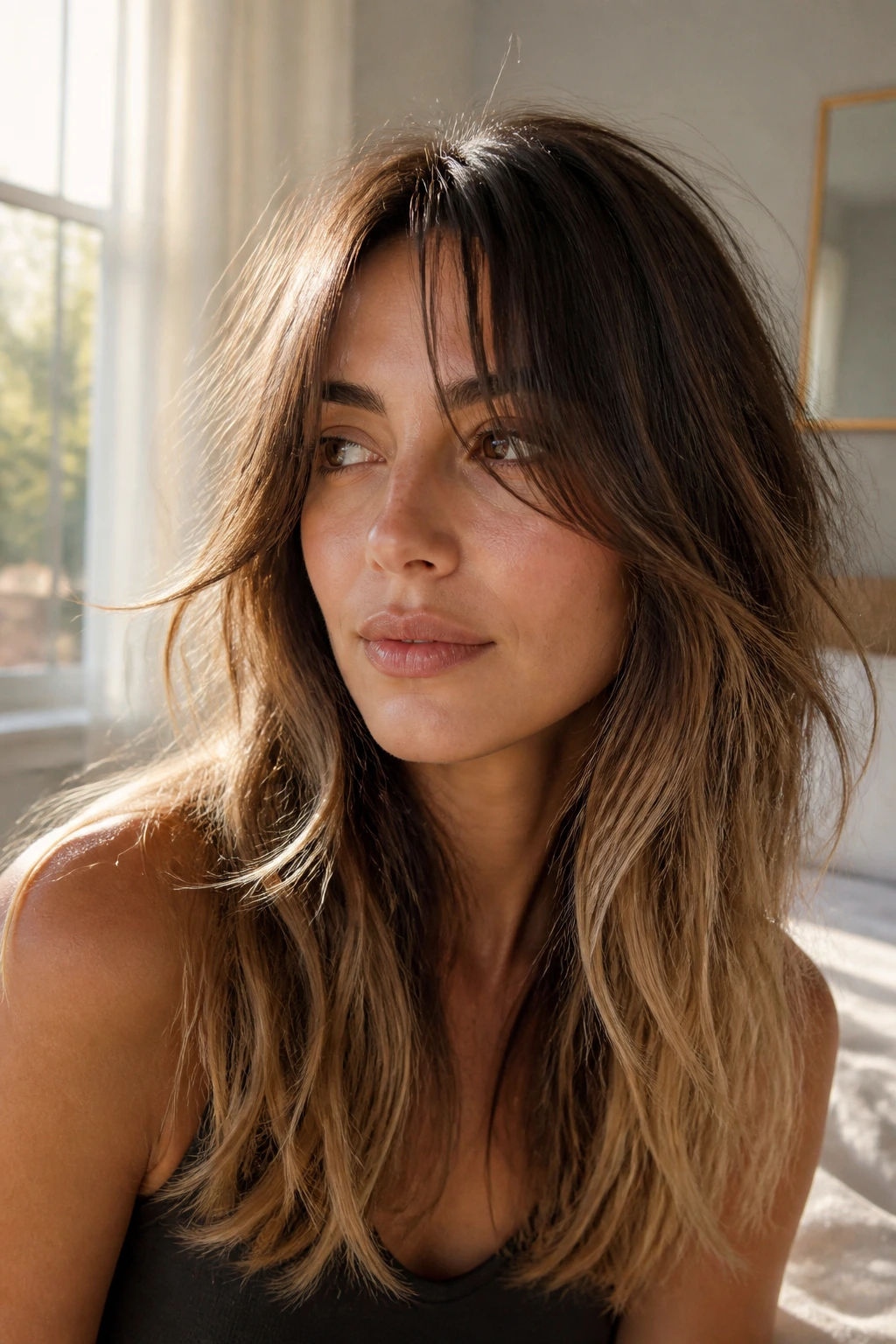
A long shag gives you space for sunlit ends without turning the whole head into a highlight map. The ends should look lighter because of movement and exposure, not because every inch from root to tip has been pushed pale. That distinction matters on dark hair, where too much lift can erase the depth that makes the cut interesting.
Sunlit ends work best in a warm beige or soft gold. The color sits on the lower lengths and the outer layers, so the look feels airy rather than streaky. If you air-dry, the texture creates little pockets of light that read well in real life, not just in a mirror.
This one suits people who like their hair a little undone. Too polished and it loses the point. A long shag should move, bend, and fall apart a little.
25. Twisted Half-Up with Ribboned Balayage
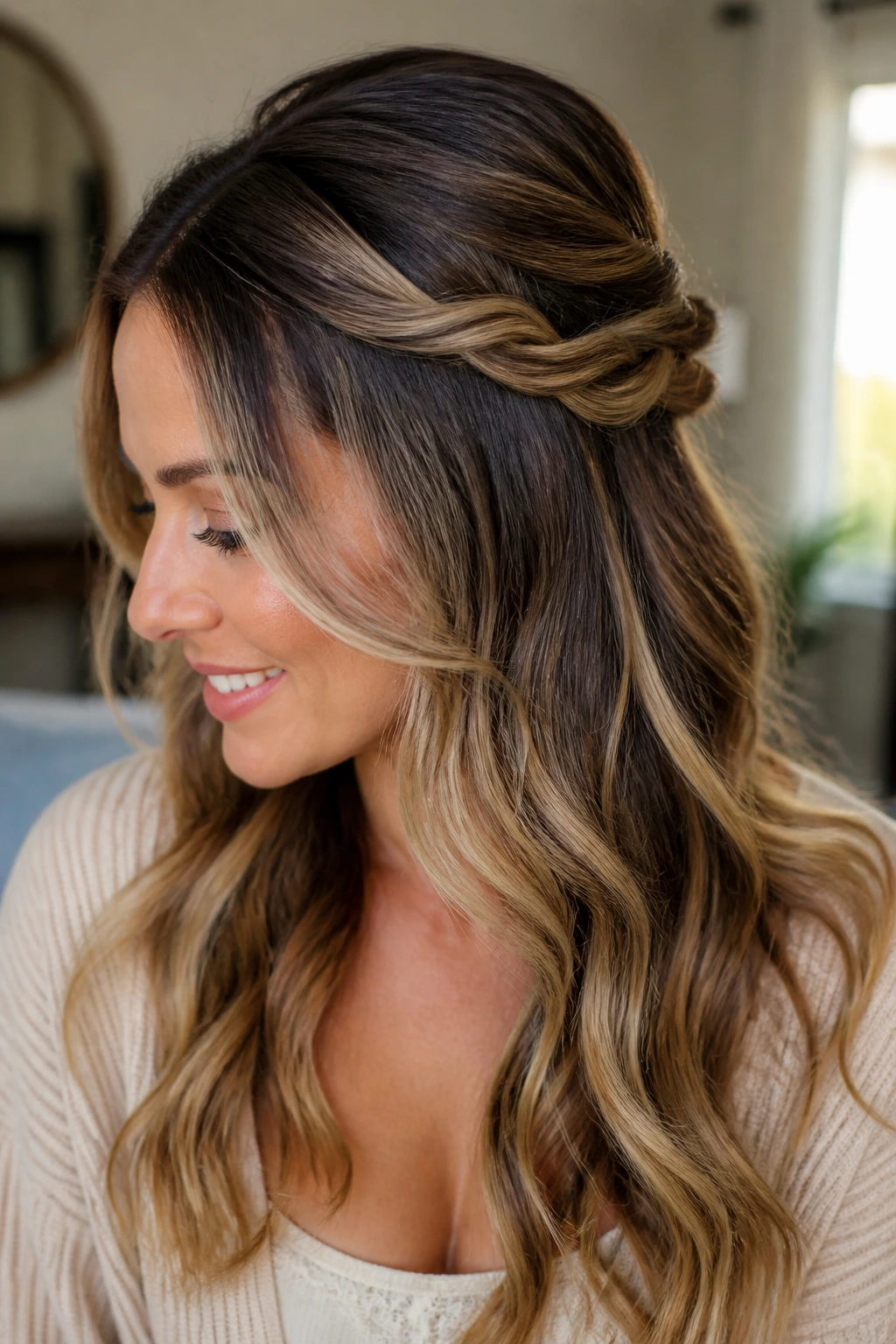
A twisted half-up style is a nice way to show off ribboned balayage without needing a full styling session. The twist pulls lighter pieces from the sides toward the back, which makes the blonde show up in bands instead of isolated spots. On dark hair, that banding gives the whole style a more deliberate shape.
Ribboned balayage means the light pieces are painted in long, fluid sections. They don’t have to be bright to be effective. In fact, a slightly softer beige or caramel ribbon often looks richer when it’s twisted through the half-up section than a very pale strand would.
I like this for days when you want your color to do some work but you do not want to fight your own hair. The twist can be loose, pinned with a small clip, or wrapped into a tiny knot at the back. The blonde will still show.
26. Soft Mullet with Smoky Blonde Texture
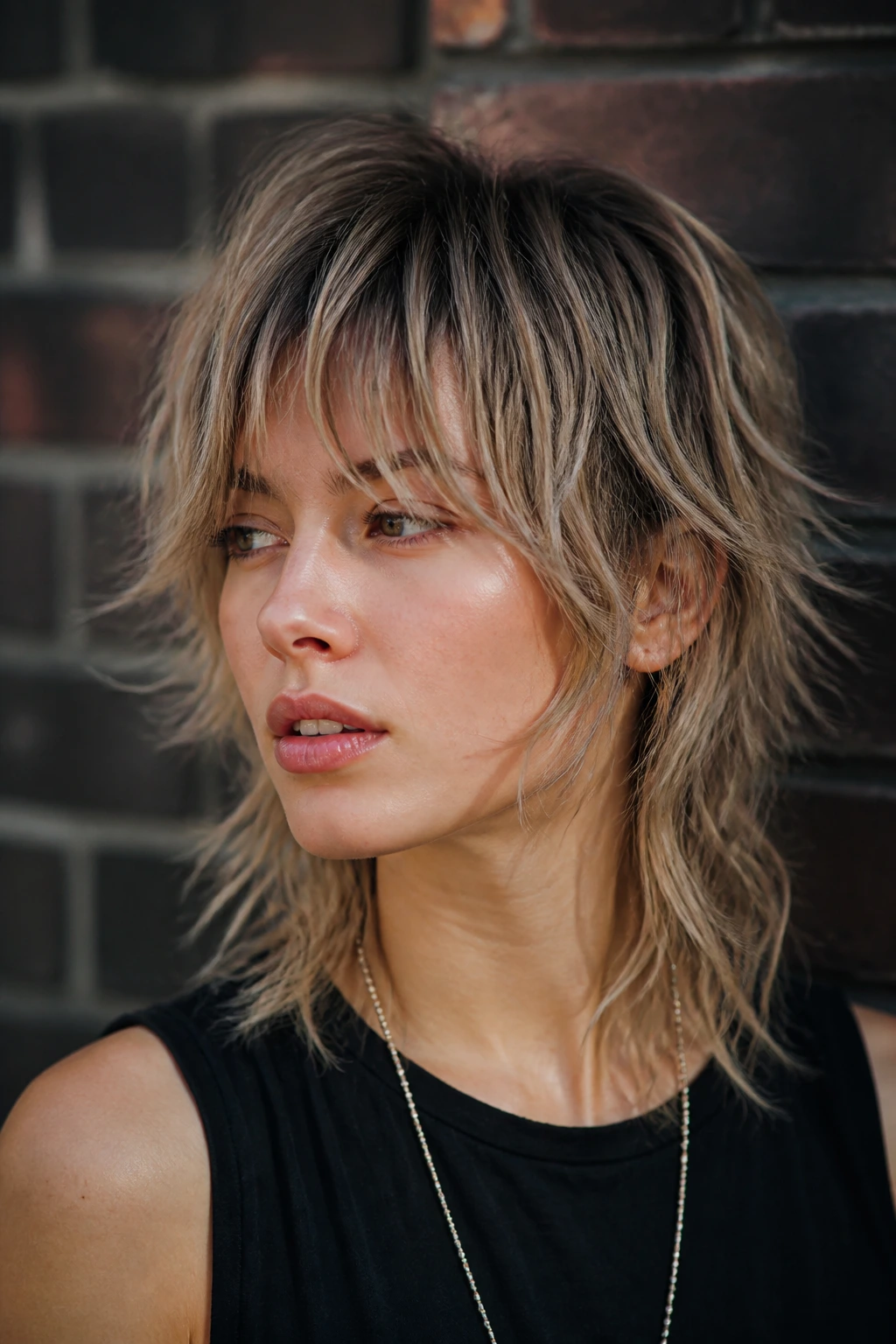
A soft mullet is for someone who wants shape more than polish. Smoky blonde texture keeps the look from feeling costume-y, because the shade lives in that cool, muted range rather than screaming for attention. The contrast against dark hair gives the cut a rougher edge, which is exactly why it works.
The blonde should be piecey and uneven here. You want the texture to look broken up, not carefully stacked. That makes the layers around the crown, sides, and ends feel more modern. If the tone goes too yellow, the whole thing loses its smoky feel and starts looking accidental.
This is not a shy cut. It likes a little grit from matte paste or texturizing spray, and it behaves better when the styling is intentionally messy. If you want neat and glossy, choose one of the lob looks instead.
27. Long U-Cut with Champagne and Beige Ribbons
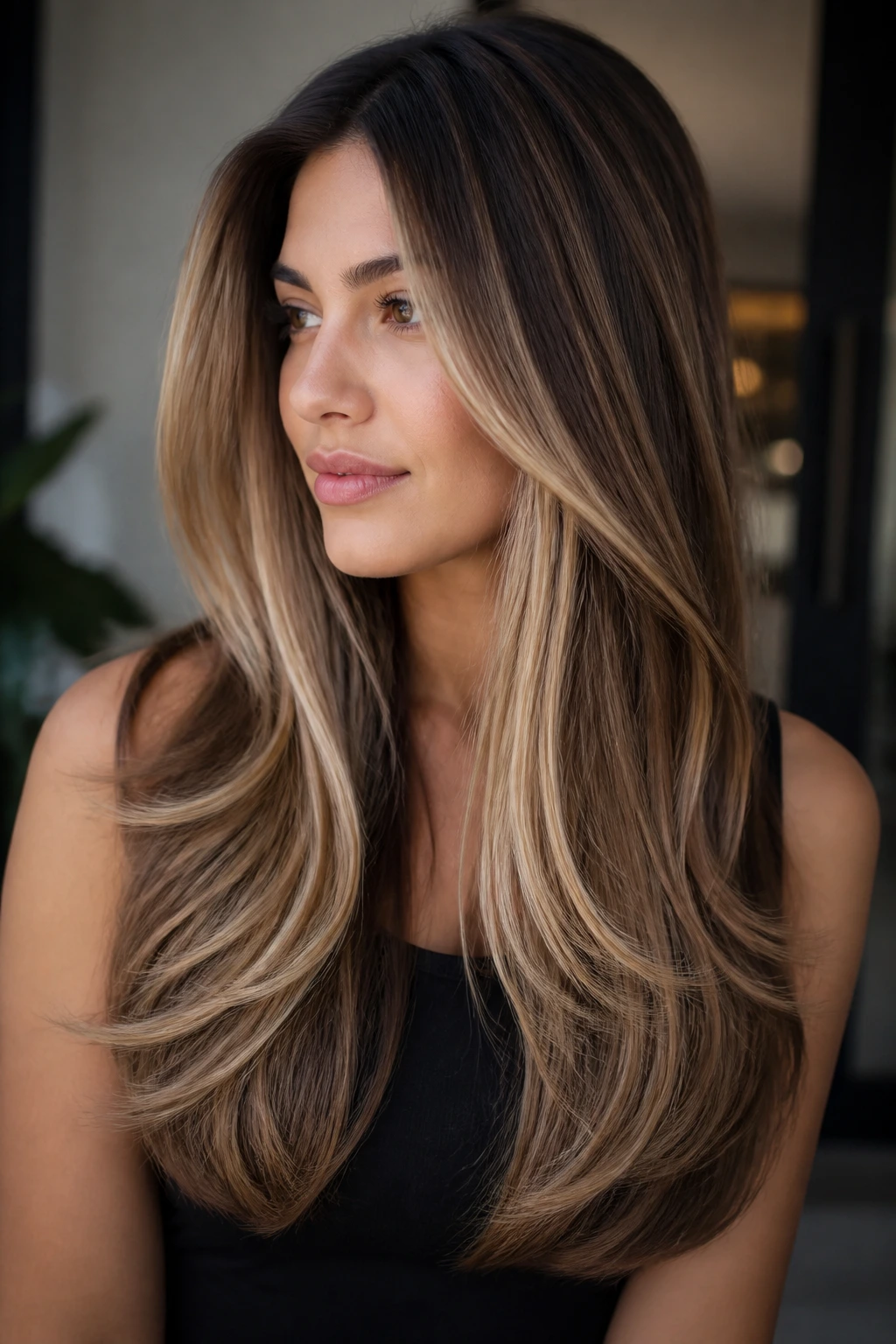
A U-cut keeps the length rounded, which gives champagne and beige ribbons a long runway to show off. The lighter pieces follow the curve of the cut instead of breaking it up, so the whole shape feels fluid. On very dark hair, this is one of the easiest ways to make the color look expensive without needing an aggressive platinum story.
The two shades work together nicely. Champagne brings brightness; beige keeps it wearable. That little mix matters because a single flat tone can disappear in all that length, while two related tones make the hair look deeper and lighter at once.
This is the kind of style that looks just as good loose as it does in a low pony or a half-up knot. Long hair with dimension should not only work when it’s curled. If it does, the color placement is probably smarter than it first looked.
28. Lived-In Beach Waves with Melted Brunette-to-Blonde Finish
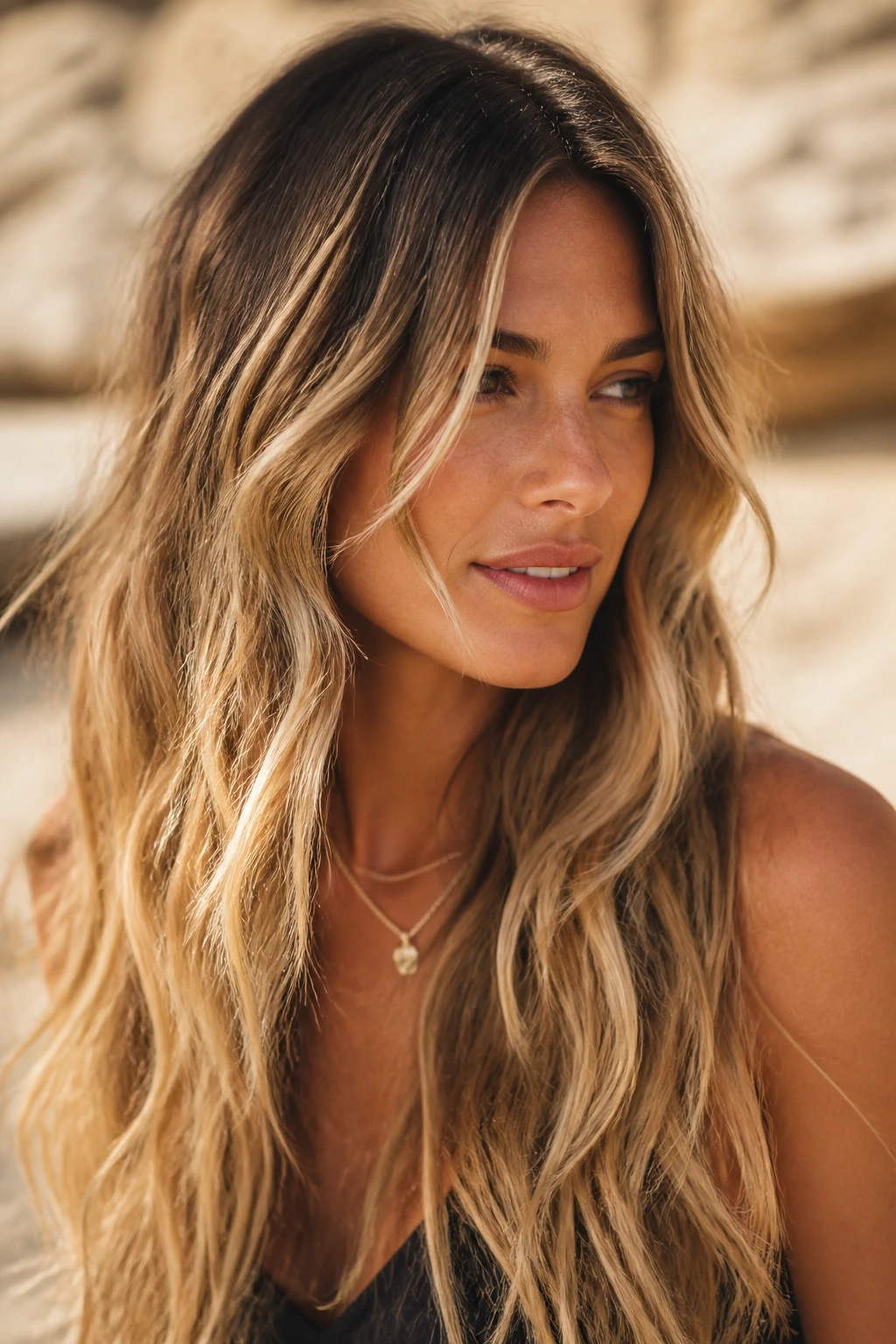
A melted brunette-to-blonde finish is the closest thing on this list to the “I’ve had this hair for a while” look, even when the color is freshly done. The brunette root stays deep, the mid-lengths soften into warmer blonde, and the ends carry the lightest tone. On dark hair, that gradual shift keeps the result from looking striped or high-maintenance.
Beach waves help because they separate the ribbons just enough to show the melt. Straight hair can hide too much of the transition; loose bends make the color breathe. I’d keep the blonde in the honey-to-beige range unless you want a cooler, ashier finish and are willing to tone it regularly.
This is the safest final option for a reason. It works on a lot of lengths, a lot of textures, and a lot of lifestyles. Not every blonde has to be loud to matter.
How Dark Hair Changes the Blonde Conversation
Dark hair is generous and stubborn at the same time. It carries depth well, but it also reveals warmth quickly when lightened, which is why so many blonde results turn gold before they turn pale. That is not a flaw. It is the starting point.
The Undertone Problem Nobody Likes Talking About
A level 2 or 3 brunette base usually exposes orange first, then gold, then beige if the lift keeps going cleanly. If you ask for ice-blonde pieces too early, the color can go muddy or look hollow because the underlying warmth was never fully dealt with. Beige, honey, mushroom, and champagne are easier companions for a dark base because they live closer to that natural warmth.
Placement Beats Sheer Brightness
The other piece is placement. Blonde that sits around the face, crown, or ends where the hair moves reads brighter than the same shade hidden in a dense interior layer. That’s why money pieces, ribbons, and underlayers can do more than a whole-head highlight pattern when the base is dark.
Essential Tools for These Looks
- Heat protectant spray: Use it before every blow-dry, wave, or flat-iron pass; bleached or lightened hair loses its edge fast without it.
- 1.25-inch curling iron or wand: This gives loose bends that show off ribbons and balayage without making them look cramped.
- Round brush: Best for blowouts, curtain bangs, and polished lob styles where the blonde needs clean movement.
- Wide-tooth comb: Good for detangling curls and waves so you do not tear up the lighter pieces.
- Root clips or duckbill clips: Handy for setting crown lift while the hair cools, which helps the blonde sit where you want it.
- Color-safe shampoo and conditioner: The basic rinse routine matters; harsh shampoo dulls the lighter tones faster than people expect.
- Purple shampoo or blue shampoo: Purple helps yellow blonde, blue helps orange warmth on darker lifts — use whichever matches the problem.
- Microfiber towel or cotton T-shirt: Cuts down on frizz, which makes the blonde ribbons look cleaner.
- Shine serum or light oil: A tiny amount on the ends keeps blonde pieces from looking dry and brittle.
- Salon gloss or color-depositing mask: Useful for keeping beige, champagne, or honey tones fresh between appointments.
How to Choose the Right Blonde Shade for Your Brunette Base
If your hair sits deep brown or near-black, start by deciding how much contrast you actually want. Honey, caramel, and toffee are easier to live with because they sit closer to the natural warmth of dark hair. Beige, champagne, and ash-beige read cooler and cleaner, but they need more toner care.
Warm brunettes: Caramel, honey, amber, and soft gold usually flatter warmer skin and deeper bases without fighting the undertone.
Cool brunettes: Beige, mushroom, ash-beige, and champagne keep the result from going orange.
High-contrast people: Platinum, frosted tips, and bright money pieces are the loudest options, but they ask for more upkeep.
Low-maintenance people: Shadow roots, balayage ribbons, and underlayers hide regrowth better than a full highlight.
One useful shortcut: if your current hair tends to pull copper when lightened, don’t start with a hard ash tone. Go beige first. It usually looks cleaner in real life and tones down more gracefully.
How to Style the Dimension So It Shows Up
Loose waves: The easiest way to show balayage, ribbons, and money pieces is a soft bend from mid-length to end. Keep the curl large and broken up so the blonde doesn’t collapse into one stripe.
Straight and sleek: This works best for blunt bobs, A-line cuts, and ash-beige ends. Use a heat protectant, a smoothing brush, and a tiny bit of serum on the last two inches. Too much product, and the lighter pieces go limp.
Braids and twists: Pull a few face pieces loose and let the braid collect the blonde where it can flash. The more the braid compresses the hair, the more obvious the contrast becomes.
Curly textures: Diffuse the roots, clip the crown if you need lift, and let the lighter pieces sit on the outside of the curl pattern. That keeps the blonde visible instead of buried in the coil.
Ponytails and buns: Leave the front pieces out or wrap a small blonde section around the elastic. Otherwise, the color can vanish the second you tie it back.
Extra Tips for Better Shine and Softer Grow-Out
Tone control: If your blonde is getting yellow, use purple shampoo every 7 to 10 days and leave it on for 1 to 3 minutes. If it leans orange, blue shampoo is the better fix. Do not overdo either one; too much toning can leave the hair dull and dusty.
Root shadow: Ask for a soft root shadow if you want the color to hold its shape longer. A slightly deeper root buys you time between appointments and makes the blonde look more natural on dark hair.
Texture match: The cut should match the finish. Shags and wolf cuts need a messier bend, while blunt bobs and A-lines look better with smooth styling. When the shape and finish disagree, the blonde placement stops making sense.
Shine finish: A pea-sized amount of serum on the ends is usually enough. More than that starts to clump the light pieces together, which hides the work the colorist did.
Common Mistakes to Avoid
- Going too light too fast: The symptom is brittle ends, yellow-orange mid-lengths, or a harsh stripe where the blonde starts. The fix is slower lifting and better placement, not piling on more bleach.
- Choosing ash when your hair is still warm: If the blonde looks muddy, gray-green, or flat, the tone is too cool for the underlying pigment. Beige or honey usually reads cleaner.
- Ignoring the haircut: A flat cut with random blonde pieces can look chopped up in the wrong way. Ask for placement that follows your layers, lob angle, or bob line.
- Skipping maintenance completely: A bright money piece without toner care turns yellow fast. If you want that sharp front contrast, set a refresh schedule and stick to it.
- Styling with no movement: Blonde needs bend, polish, or texture to show up. If the hair is flat and dry, the color looks dull no matter how expensive the appointment was.
Variations and Adaptations to Try
Low-Commitment Bronde Melt: Keep the root dark and blend into soft brown-blonde mid-lengths, with only a whisper of light at the ends. This is the version for people who want dimension without obvious streaks.
Cool Beige Edit: Swap warm honey and caramel tones for beige, mushroom, and ash-beige pieces. It suits cooler skin undertones and gives dark hair a softer, cleaner edge.
Bright-Front Statement: Concentrate the lightest blonde at the money piece and leave the rest of the hair deeper. That works well if you wear your hair up a lot or want the face frame to do the talking.
Curly-Hair Ribboning: Place the light pieces on the outer curl pattern and avoid flooding the interior with too much blonde. The shape stays strong, and the curls read fuller.
Short-Cut Lift: Use champagne, vanilla, or frosted beige on bobs and pixies where small sections show up fast. Short hair doesn’t need much blonde to make an impact, and too much can overwhelm the cut.
How to Keep the Color Fresh Between Salon Visits
The first rule is simple: lighter pieces need a calmer routine than the brunette base. Use a color-safe shampoo two or three times a week, and keep your hottest water for the dishes, not your hair. Hot water opens the cuticle and helps the lighter shade fade faster.
If your blonde is bright or cool, plan on a toner or gloss refresh every 4 to 6 weeks. Honey, caramel, and softer beige shades can usually stretch a bit longer, often 6 to 8 weeks, before they start looking tired. Root touch-ups depend on the technique: money pieces often need attention sooner than balayage ribbons, because the contrast shows at the hairline first.
Weekly deep conditioning helps, but don’t drown the hair in heavy masks if it’s fine. One mask a week is enough for most people; more than that can make lightened strands collapse. And if the ends start feeling gummy or stretchy, step back from the hot tools for a few washes. Air-drying with a light leave-in usually does more good than another round of heat.
Frequently Asked Questions
Will brunette to blonde hairstyles for dark hair work on almost black hair?
Yes, but the blonde usually needs to be placed with more care and a little more patience. On very dark hair, caramel, beige, and shadow-root blends are often easier to wear than a jump straight to platinum.
Which blonde tone looks least brassy on dark hair?
Beige and mushroom blonde tend to sit in a safer middle ground. They soften the warm pigment that shows up during lightening without looking flat or gray.
Can I go blonde without bleach if my hair is dark?
Not in any dramatic way. A glaze, high-lift color, or subtle honey ribbon can shift the tone a bit, but real blonde on dark hair usually needs lightening.
Is balayage better than traditional highlights for dark hair?
For a lot of people, yes, because balayage grows out softer and doesn’t carve such a hard line at the root. Traditional foils can still be the better choice if you want stronger brightness or a more precise money piece.
How often should blonde hair on dark roots be toned?
Every 4 to 6 weeks is common for cooler blondes. Warmer honey or caramel looks can usually go a little longer before they need a gloss.
What if my blonde turns orange after a few washes?
That means the underlying warmth is showing through, which is common on dark hair. Blue shampoo can help, but if the tone keeps sliding orange, the next gloss should be adjusted by a colorist.
Do curls show blonde better than straight hair?
Usually, yes. Curls and waves break up the light pieces so the contrast shifts as the hair moves. Straight hair can still look strong, but the placement has to be cleaner.
Which of these styles is easiest to maintain?
The rooted balayage lob, long U-cut with ribbons, and lived-in beach waves are the most forgiving. They keep depth at the scalp, which means grow-out looks planned instead of obvious.
A Blonde Shift That Still Feels Like You
The best brunette-to-blonde hairstyle on dark hair is the one that keeps your base doing some of the work. If the brunette still has depth, the blonde looks richer. If the cut gives the color a shape to live in, the whole style feels more expensive, even when the actual tone is soft and subtle.
That’s the part I keep coming back to: blonde is strongest when it isn’t shouting for attention. A clean money piece, a caramel ribbon through a lob, a beige sweep under curtain bangs — those details do more than a blanket of light ever will. Pick the placement that matches your haircut, your texture, and the amount of upkeep you can live with, and the result will look like it belongs on your head instead of in a folder of inspiration photos.