



Fine curls can make a haircut look thicker than it is, or flatter than it should be, and the difference usually comes down to where the weight sits. With fine hair, the strand itself is thin; with loose curls, that thin strand also bends, lifts, and shrinks in a way straight hair never does. That combination can be gorgeous. It can also turn into a frizzy halo, a see-through hemline, or a crown that goes limp by lunch.
The trick is not to fight the curl pattern. It’s to give it a shape that can carry itself. Too much layering strips away the little bit of density fine hair has. Too little shaping leaves you with a shelf of hair that feels heavy at the top and thin at the ends. The best low maintenance haircuts for fine hair with loose curls sit right in that middle space: enough structure to look intentional, enough weight to look full, and enough softness to grow out without making you hate your mirror.
That’s why some of the smartest choices here are not the flashiest. A blunt lob can look richer than a heavily layered shag. A soft bob can do more for lift than a drawer full of styling products. And a carefully placed fringe can save your whole face shape on days when your curls decide to have opinions. Some of these cuts are short, some keep length, and a few are the sort of in-between shapes that dry fast, resettle easily, and don’t ask for a round brush just to leave the house.
Why These Cuts Earn Their Keep
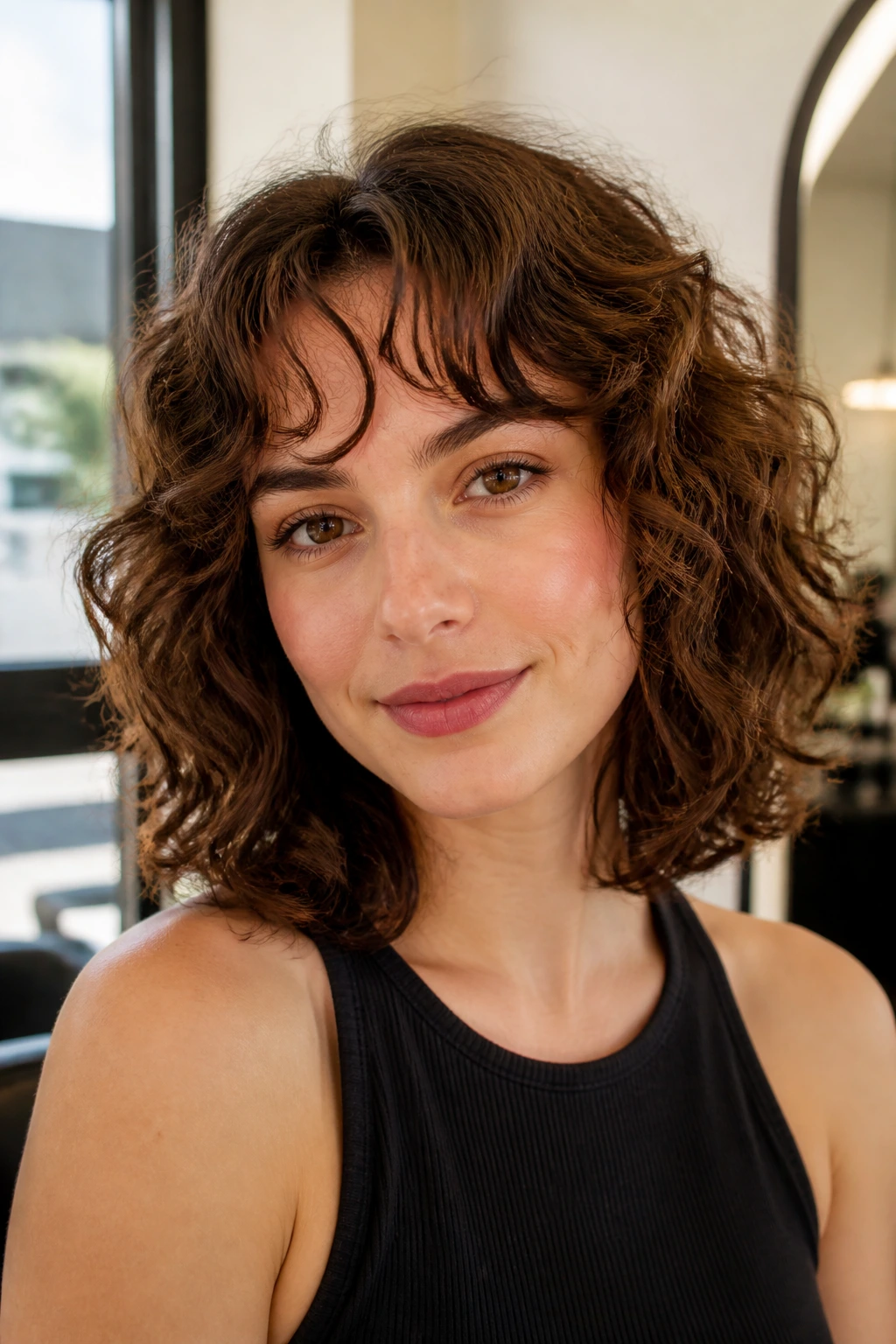
-
The outline stays heavy where fine hair needs it: A blunt perimeter or a gentle U-shape keeps the ends from looking stringy once the curls separate.
-
The crown gets lift without turning puffy: Strategic layering near the top creates movement where loose curls can hold it, instead of cutting so high that the whole shape balloons.
-
Grow-out looks deliberate, not desperate: These cuts are built to soften as they grow, which matters a lot when you don’t want a four-week haircut to become a six-week headache.
-
Air-drying actually has a chance: Fine loose curls often look better when the haircut does part of the work. That means less heat, fewer passes with the diffuser, and fewer mornings spent rescuing flat spots.
-
Low maintenance does not always mean long between trims: A pixie or bixie may need more salon visits than a lob, but it can still be low maintenance if it takes three minutes to style instead of thirty.
-
Loose curls need room to bend, not room to explode: The right cut lets the curl pattern show up cleanly without opening the door to a triangle silhouette.
1. Collarbone Blunt Lob
A collarbone blunt lob is one of the most reliable shapes for fine hair with loose curls because it keeps the ends heavy enough to look thick. The length lands just below the collarbone, which gives the curl room to spring without making the style feel boxy. It’s a clean, unbothered shape. That matters.
Ask for a blunt perimeter and keep the face frame soft and low, usually below the chin. The whole point is density at the bottom, not a lot of sliced-up movement through the ends. If your hair tends to look sparse once it dries, this cut gives the eye a fuller line to follow.
A little mousse at the roots and a light gel through the mids is usually enough. You do not need much. If you add too many creamy products, the curl clumps can collapse and the lob loses the crisp edge that makes it work.
2. Soft Curly Shag
A shag can go wrong fast on fine hair, but a soft curly shag is a different animal. The key word is soft. The layers should build movement around the cheekbones and under the ear, not carve the hair into strips that go see-through at the ends.
This cut works because loose curls hold shape in a few strategic places. You get lift at the crown, a little swing around the face, and a perimeter that still has enough weight to look full when the hair settles. It’s especially useful if your roots lie flat and your curls gather more toward the middle and bottom.
The thing to watch is over-layering. If the shortest pieces land too high, the top starts to puff while the length looks thin. A good shag on fine curls should feel airy, not shredded. If it looks jagged when you leave the salon, it usually grows out badly too.
3. Rounded Chin-Length Bob
A rounded chin-length bob gives fine loose curls a denser look because the shape curves inward instead of hanging straight down. When the curl pattern lands right, it frames the jaw and cheekbones without dragging the style flat. It’s one of those cuts that looks considered even on a rough air-dry.
The roundness matters. A straight, boxy bob on fine curls can feel too severe and expose the fact that the hair is thin at the ends. A soft curve keeps the outline fuller. If your curl pattern bends toward the face, this shape can look almost sculpted without much effort.
I’d skip a chin-length bob if your jaw is your widest point and you do not want attention there. Otherwise, it’s a sharp little shortcut that cuts down on styling time. A side part can add a touch more lift if the center starts to go flat.
4. Long One-Length Cut
Long, one-length haircuts are underrated for fine loose curls because they protect the ends. When every strand sits in the same perimeter, the hair tends to clump better and read denser. That is a big deal when your curl pattern is loose enough to show every bit of fraying.
This cut is for people who want the simplest possible outline. There’s not much to explain to a stylist, and there’s not much to fuss with at home. The hair can dry in its own shape, and because the line stays clean, you avoid that over-layered fuzz that makes fine curls look wispy.
The tradeoff is volume. If you want the crown to lift high on its own, this is not the strongest pick. But if you like length, air-dry texture, and a low-drama morning routine, a one-length cut is quietly excellent.
5. A-Line Lob
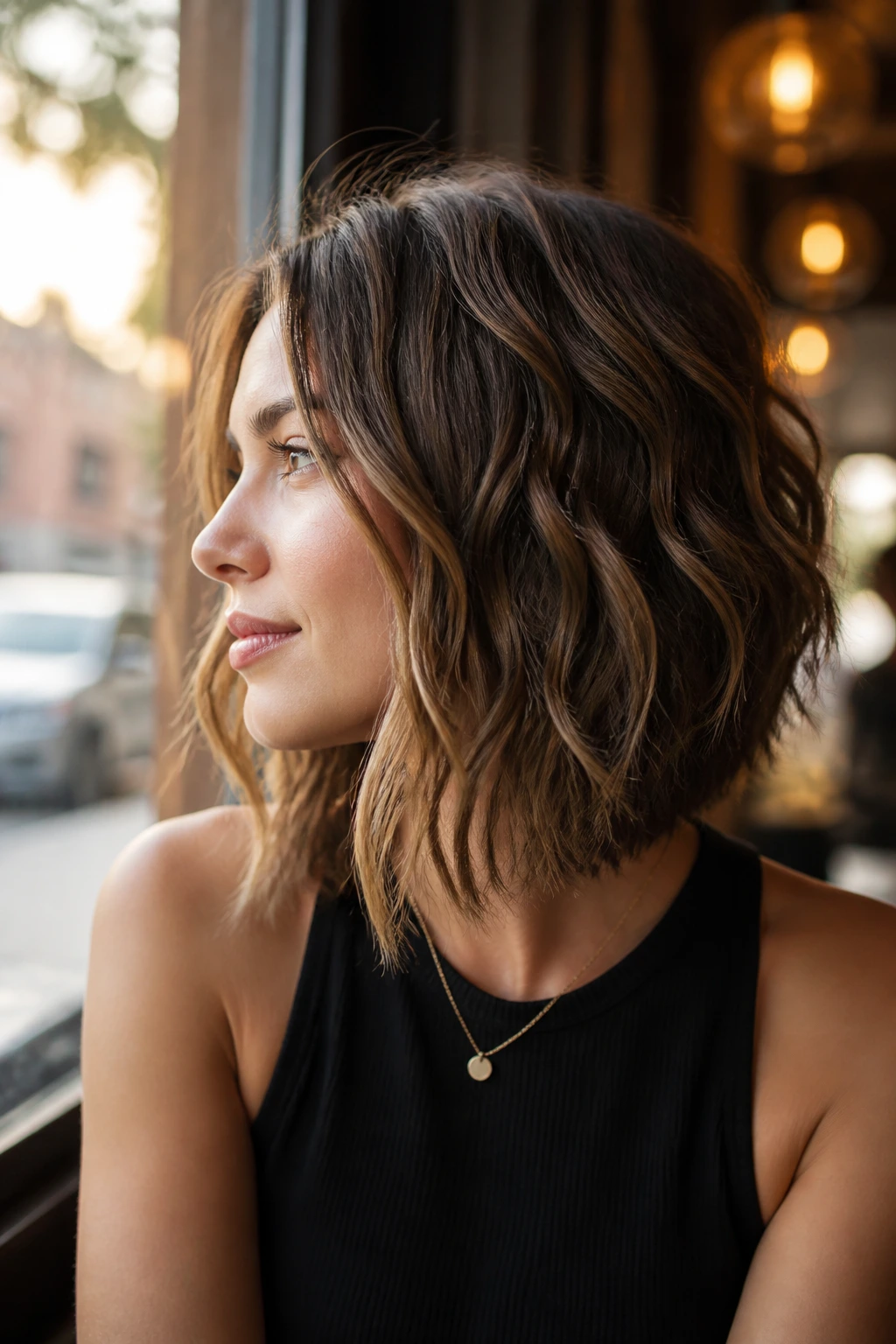
An A-line lob gives you built-in movement because the front lands a touch longer than the back. On fine loose curls, that simple angle can make the hair look fuller from the side and less heavy at the neck. It’s a smart shape when the back tends to collapse.
Keep the angle subtle. Too dramatic, and the cut starts asking for blow-drying to behave. The best version is soft enough that the line shows only when the hair moves, not so steep that it looks like it was drawn with a ruler.
A side part helps this cut even more. The little shift in weight creates lift at the roots and lets the front pieces frame the face without swallowing it. If your hair flips out at the nape or sticks to the collar of your shirt, this shape usually fixes that without much effort.
6. Airy Long Layers
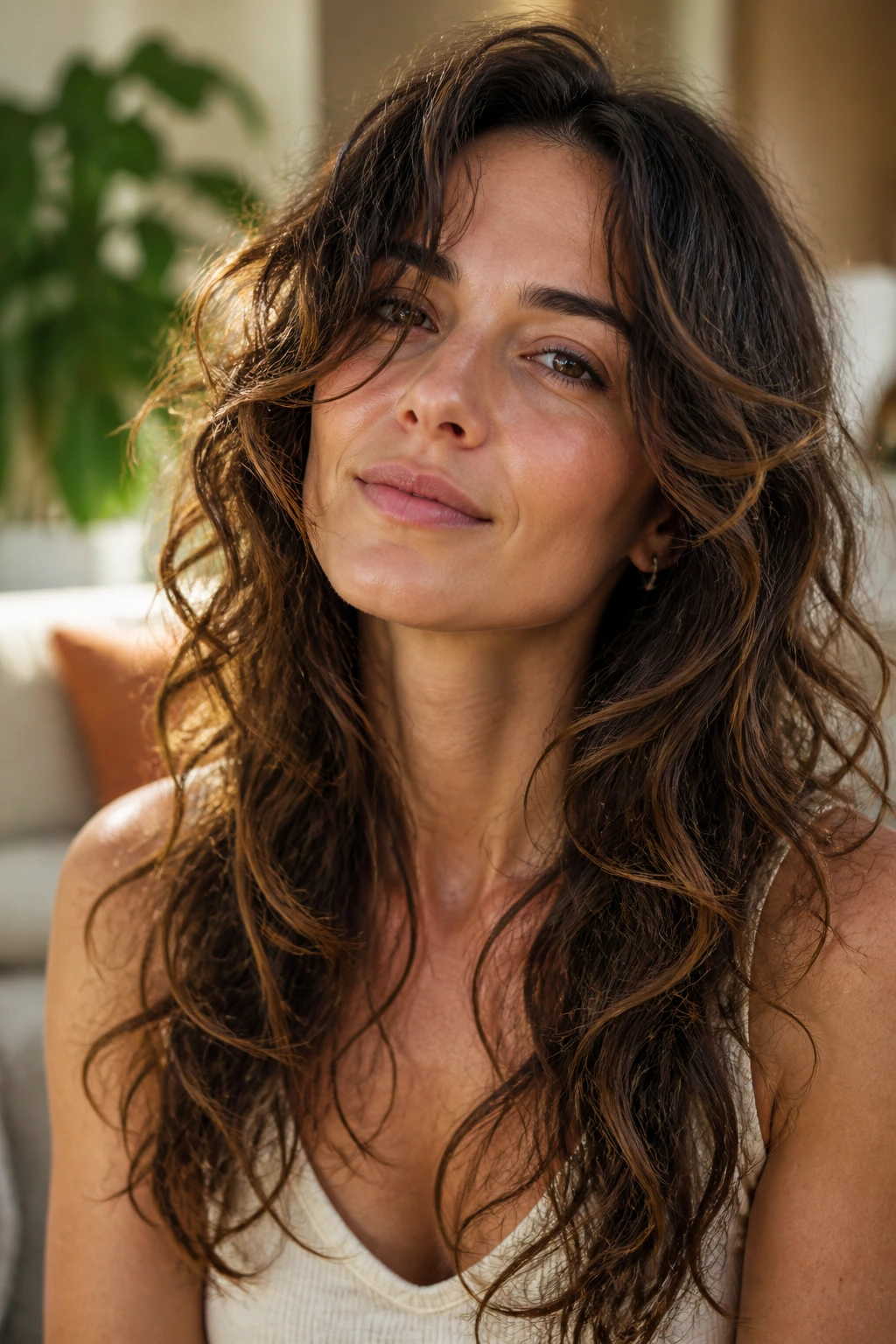
Long layers can work on fine curls, but only when they start low and stay modest. I like this cut for people who want to keep their length and still get some motion where the curls can actually hold it. Layers that begin below the collarbone remove drag without tearing the hemline apart.
The mistake people make is asking for “lots of layers” and then wondering why the ends look hungry. Fine hair does not need aggressive layer work. It needs weight in the right places and a few soft breaks so the curl pattern can breathe. That balance is what makes the haircut feel airy instead of hollow.
This is one of the better options if you often wear your hair down. The length helps the curls clump, and the low layers stop the whole thing from lying like a sheet. It’s a very practical cut, which is another way of saying it behaves.
7. Butterfly Cut
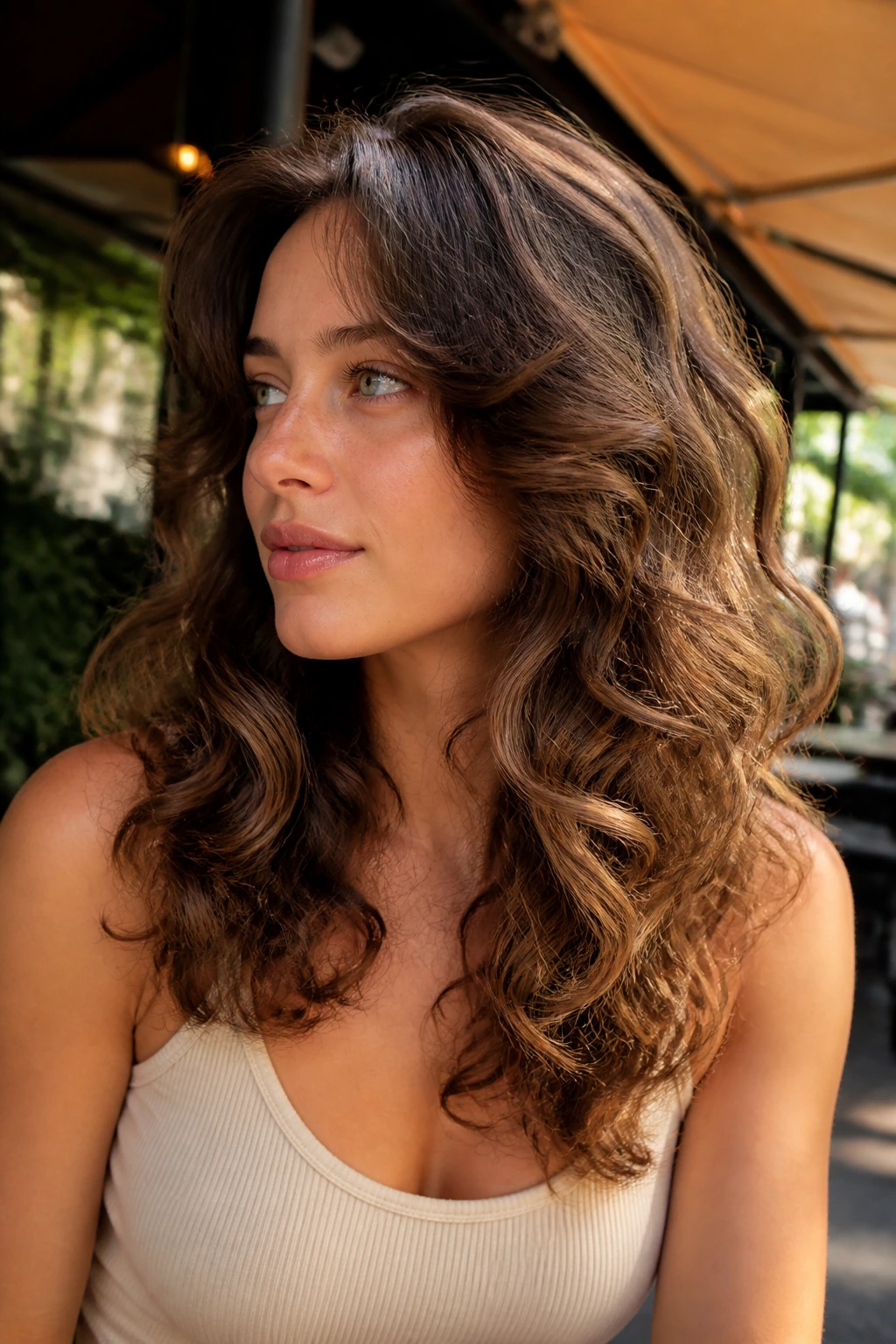
The butterfly cut looks dramatic in photos, but on fine loose curls it needs a restrained hand. The short face-framing pieces create movement near the front, while the longer back keeps the overall density from disappearing. Done right, it gives you shape without sacrificing too much length.
The danger is obvious: too much crown layering. Fine curls can only carry so much removed weight before they start looking sparse. Ask for a soft version with long, blended transitions and a dry check at the end, because loose curls often spring higher than they look when wet.
This cut is a good fit if you want your hair to move around your face instead of sitting close to the head. It can be flattering with glasses, earrings, or a tucked-behind-the-ear moment, but only if the front stays soft. Hard steps and chopped shelves are the wrong move here.
8. Face-Framing Layers

Face-framing layers are the easiest way to change the mood of fine loose curls without making the rest of the haircut work harder. A few pieces starting around the cheekbone can wake up the face, add swing, and keep the length from feeling all one note.
This is a low-risk haircut, which is part of why I like it. You still keep a heavier outline through the back, so the hair doesn’t go see-through. The front gets just enough shape to stop the curls from hanging in a dull curtain.
If you wear glasses, this can be a sweet spot. The layers can sit around the frames instead of fighting them. Just don’t let the shortest pieces start too high near the temple unless you like constant pinning and strange flip-outs on humid days.
9. Curly Pixie with Length on Top
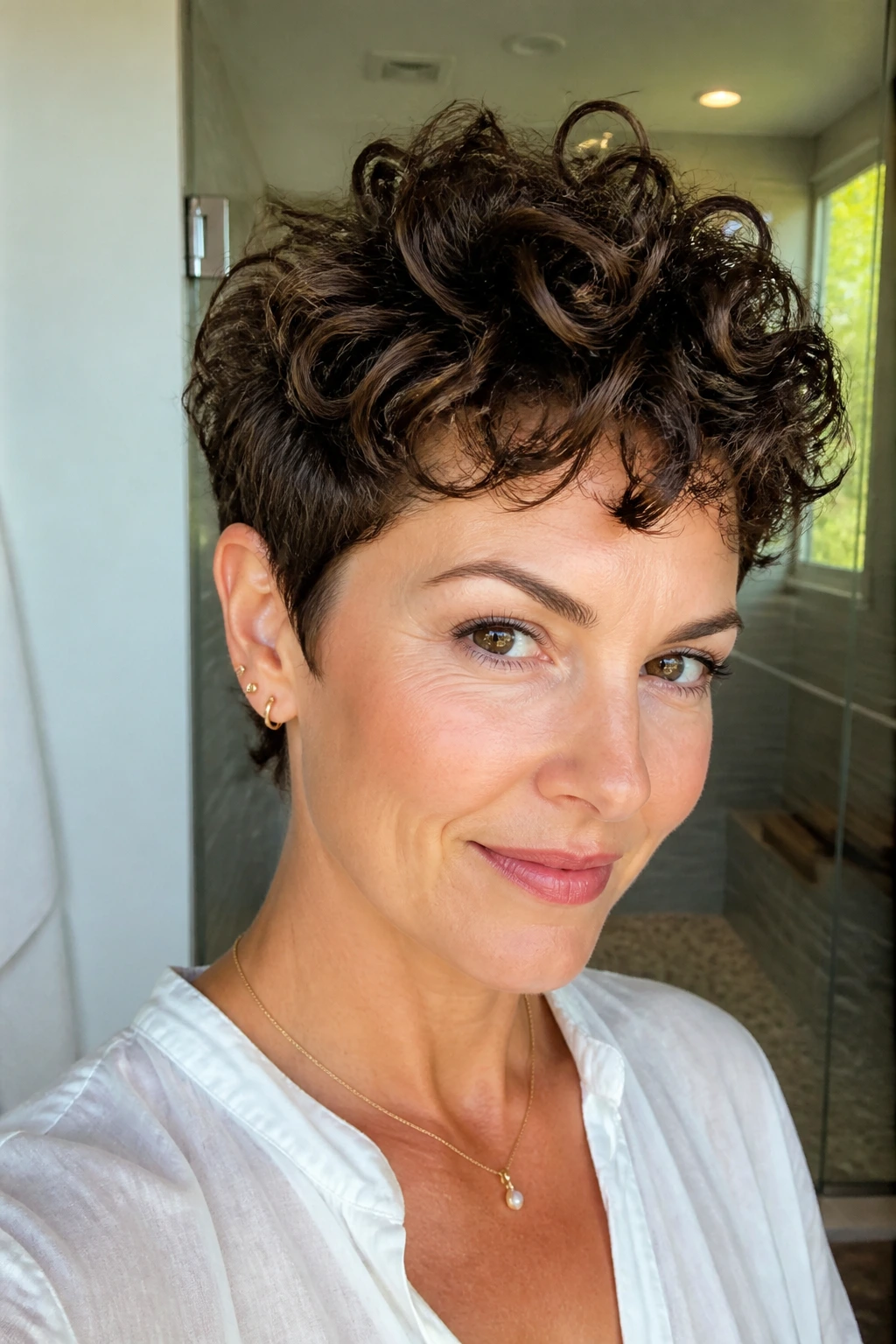
A curly pixie with length on top is the fastest morning in this whole list. Keep the top around 2.5 to 3.5 inches so the loose curls have enough room to bend, and let the nape stay neat and close. You get lift where you need it and almost no dead weight.
This cut is not about salon frequency being low. It’s about styling being low. A small amount of mousse, a quick finger scrunch, maybe a few seconds with a diffuser, and you’re done. If your hair is the sort that collapses under long lengths, this can be a relief.
The important part is softness on top. Too short and the curl pattern turns spiky. Too blunt at the sides and the cut starts looking square instead of airy. With the right balance, a pixie on fine loose curls can look brighter and thicker than shoulder-length hair that has no shape at all.
10. Shoulder-Grazing U Cut

A shoulder-grazing U cut keeps the middle back a touch longer than the sides, which softens the outline and helps the curls fall in a more natural way. On fine hair, that little drop in the center can stop the style from looking too square or too wide.
I prefer this shape when the ends like to separate. The U lets the curls stack into a more forgiving line, and the slight curve keeps the silhouette moving even when you do almost nothing to it. It is one of the least fussy medium-length cuts you can ask for.
The curve should stay wide and gentle. If the U is too deep, the sides can look skimpy. Keep it soft and you get the kind of shape that dries in place, then holds up through the rest of the day without much coaxing.
11. French Bob
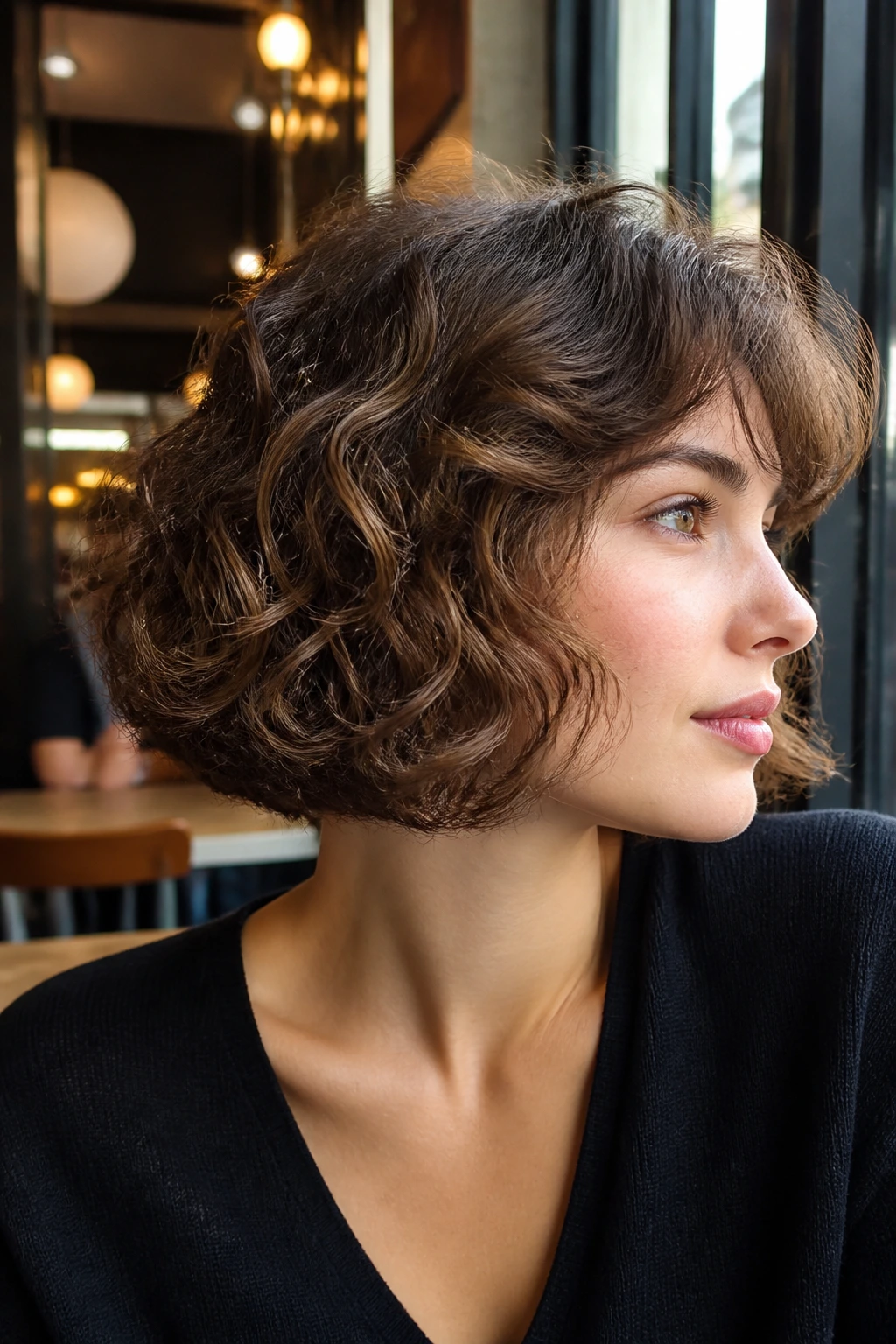
A French bob is a little sharper, a little cheekier, and a lot easier to wear than people expect when the curls are loose and fine. Chin length or just above usually works best, especially if the ends have a soft bend instead of a tight flip. The cut has a neat little attitude to it.
What makes it low maintenance is the density at the line. The perimeter is short enough to feel fresh, but heavy enough that the hair does not look feathery. If you add a soft side sweep or a piecey fringe, the shape feels finished even on a day when the air-dry was not perfect.
This cut needs regular neckline cleanups, though. I would not pretend otherwise. It’s still easier in daily life than a lot of longer cuts because you are not trying to drag limp length into shape. You’re just letting a compact silhouette do its job.
12. Curved Fringe Lob
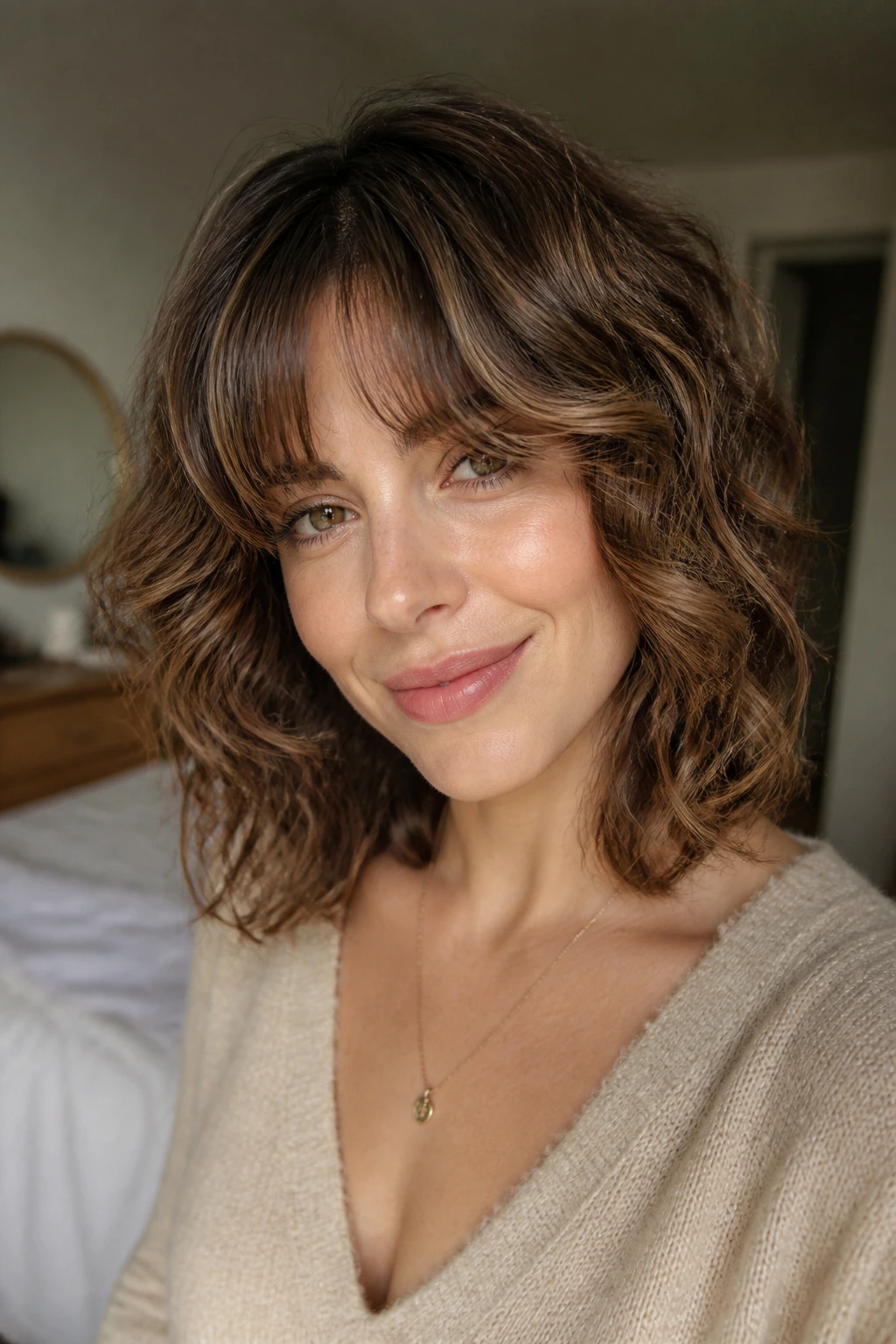
A curved fringe lob is one of my favorite compromises for fine loose curls because it does two jobs at once. The lob gives you weight and swing, and the fringe softens the front without demanding a full bang commitment. The key is keeping the fringe longer at the temples and shorter in the center so it moves with the curls.
That curve matters more than people think. Fine curls shrink unevenly, and a blunt fringe can separate or spring up in the middle. A curved line keeps the fringe looking intentional even when the humidity has ideas of its own.
This cut works especially well if you want your forehead softened but do not want to lose the easy grow-out of a lob. It does ask for occasional bang trims. The rest of it, though, stays pretty easy.
13. Invisible-Layer Midi Cut

An invisible-layer midi cut looks almost one-length when you first glance at it, which is exactly why it works so well on fine curls. The weight comes out from the inside rather than the perimeter, so the ends still look thick and the surface stays smooth.
Ask for soft internal layers or hidden movement. That language matters. If the stylist starts carving visible steps near the top, the cut can go hollow. Internal shaping gives the curls room to stack without turning the hemline into a stringy mess.
This is a strong pick if you want a medium length that behaves on day two. The hair moves, but it does not scream for attention. It’s one of the best answers to the old problem of fine hair looking pretty in the chair and tired by lunch.
14. Tapered Crop
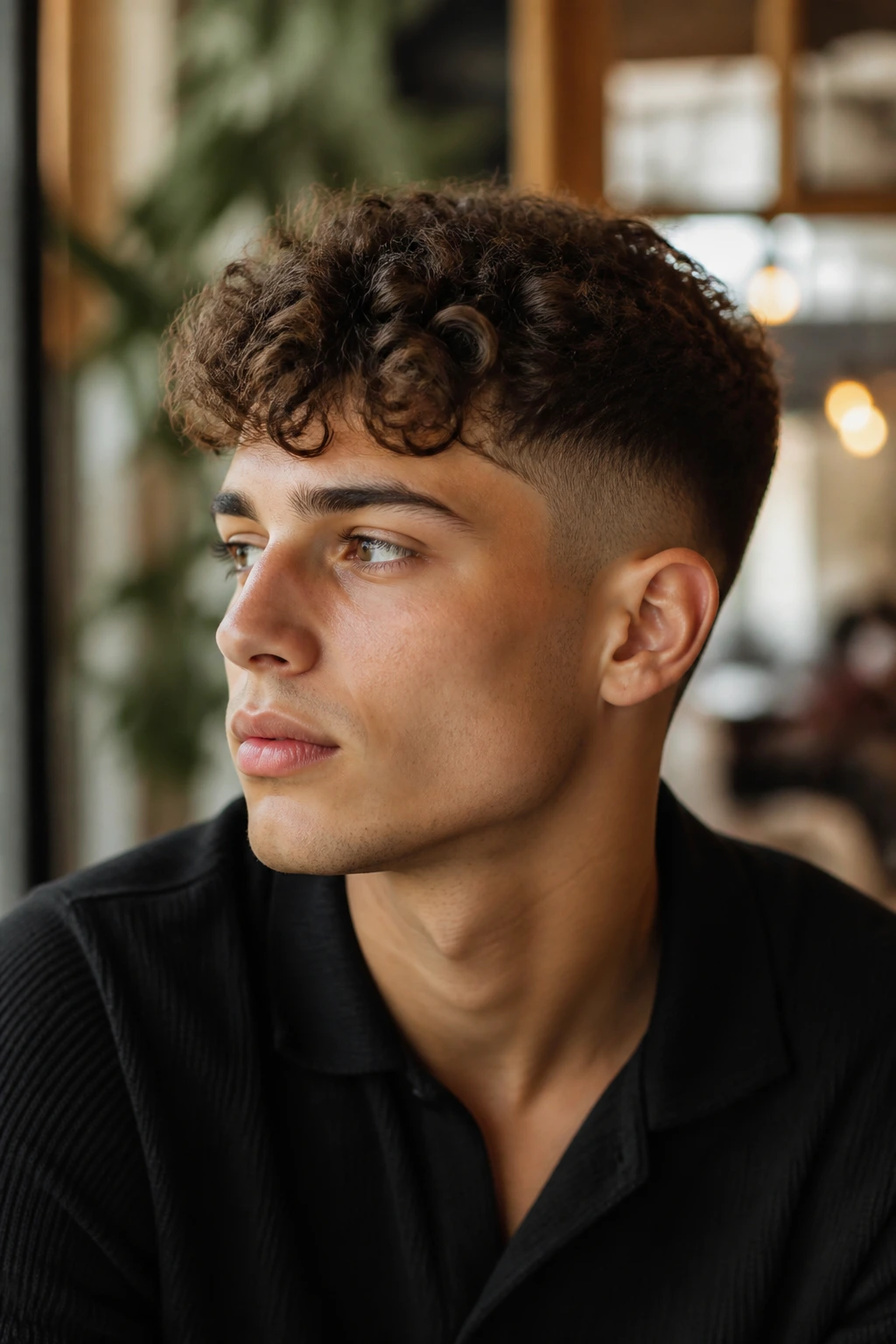
A tapered crop is short hair with a clean shape and enough length on top for loose curls to show up. The sides and nape stay close, while the top holds onto a bit more length, which gives the silhouette some height without making it boxy.
This cut is low maintenance in the morning and less low maintenance at the salon. I would be honest about that. It grows fast in terms of shape, so you’ll want more regular trims. But the daily routine is almost laughably short: a little mousse, some finger-drying, and out the door.
It suits people who like seeing their earrings, collars, and jawline. It also works well when the crown tends to go flat. The short sides let the top do the talking instead of fighting against it.
15. Soft Wolf Cut
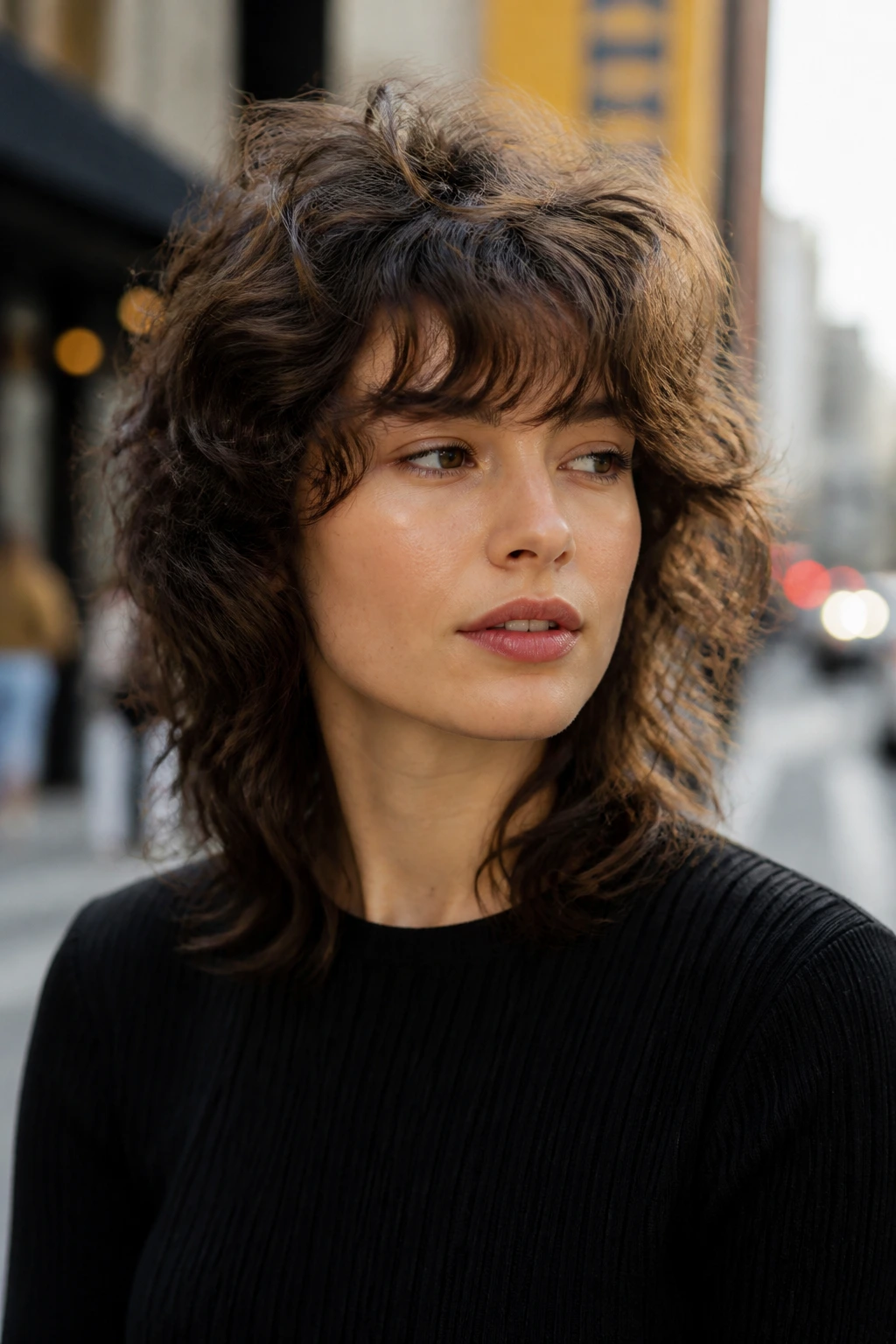
A soft wolf cut keeps the attitude of a shag but tones down the sharpness. On fine loose curls, that softer transition is the whole point. The crown gets lift, the perimeter stays long enough to hold weight, and the layers blend rather than chop.
I like this version better than the harder-edged wolf cuts people copy from photos. Fine hair does not love being sliced into disconnected pieces. It needs a little chaos, yes, but not the kind that leaves the ends looking abandoned.
If your hair bends in a loose wave and then springs into a curl at the ends, this shape can make the whole thing feel more alive. It’s not the quietest haircut in the room. It is, however, one of the few textured cuts that can still feel wearable on a regular Tuesday.
16. Side-Part Bob

A side-part bob can change the whole read of fine loose curls without changing much length at all. That off-center part creates lift at the roots and gives one side a little more body, which is useful when the center part exposes scalp or collapses the top.
You can wear it at chin length, jaw length, or just past the jaw. The exact length matters less than the part and the line. A blunt or slightly graduated bob with a side part tends to feel fuller than the same cut parted dead center.
This is a simple trick, but I keep coming back to it because it works. It is one of those rare fixes that costs nothing, takes no time, and makes the haircut look more intentional the moment you flip the part.
17. Bixie with Curly Crown
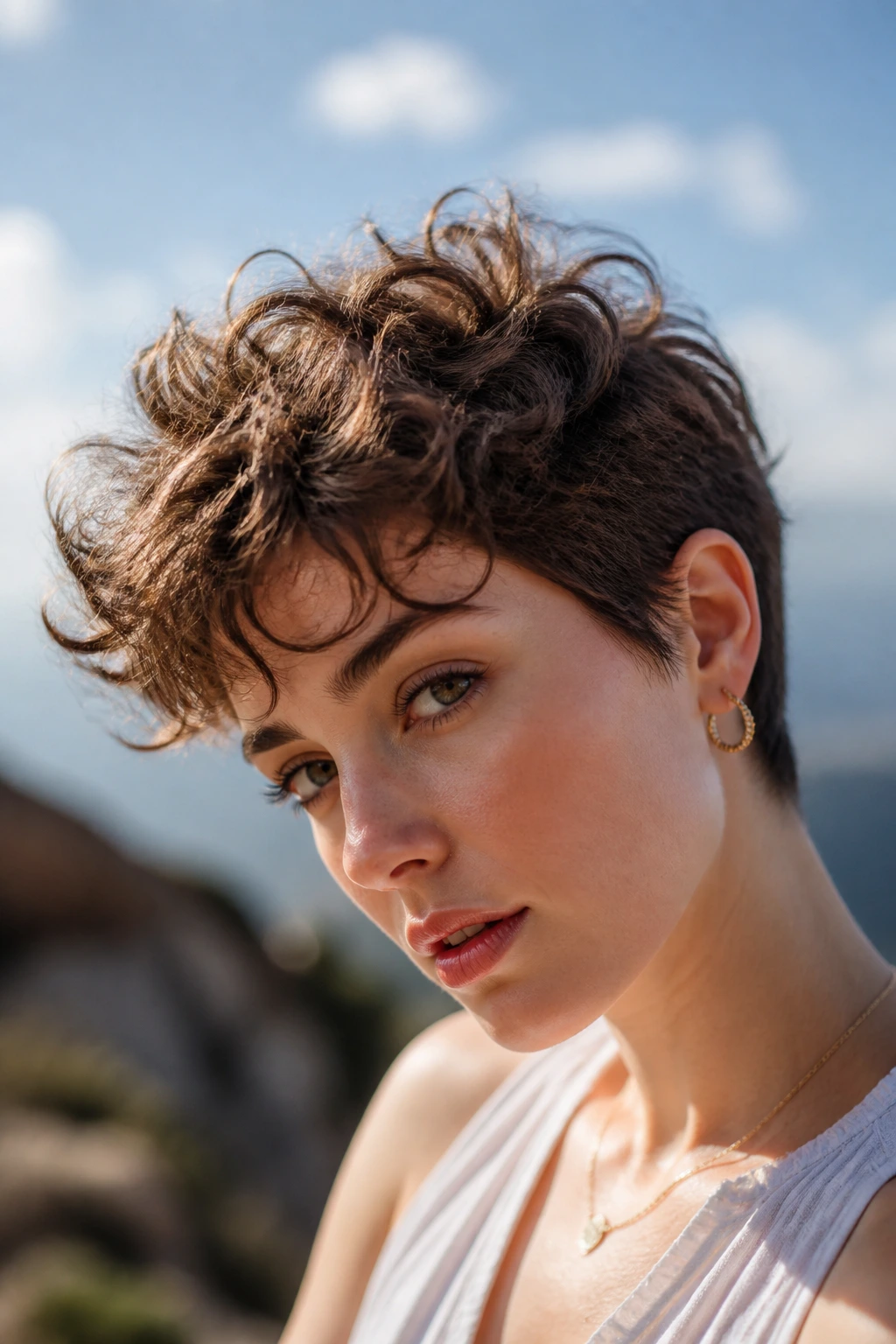
A bixie sits between a bob and a pixie, and that in-between space is useful for fine loose curls. The crown stays long enough to curl, the sides stay soft, and the nape stays neat. You get shape without the full commitment of a very short crop.
What I like here is the crown. Fine curls often need a little extra room on top so the head does not go flat after two hours. The bixie gives that height while keeping the sides tidy enough that you do not feel overstyled.
It does need regular shaping around the ears and neckline. Still, the daily routine is quick, and the grown-out phase is kinder than a sharper pixie. If you want short hair that still has some movement, this is one of the easiest ways to get there.
18. Layered Bob with Tapered Nape
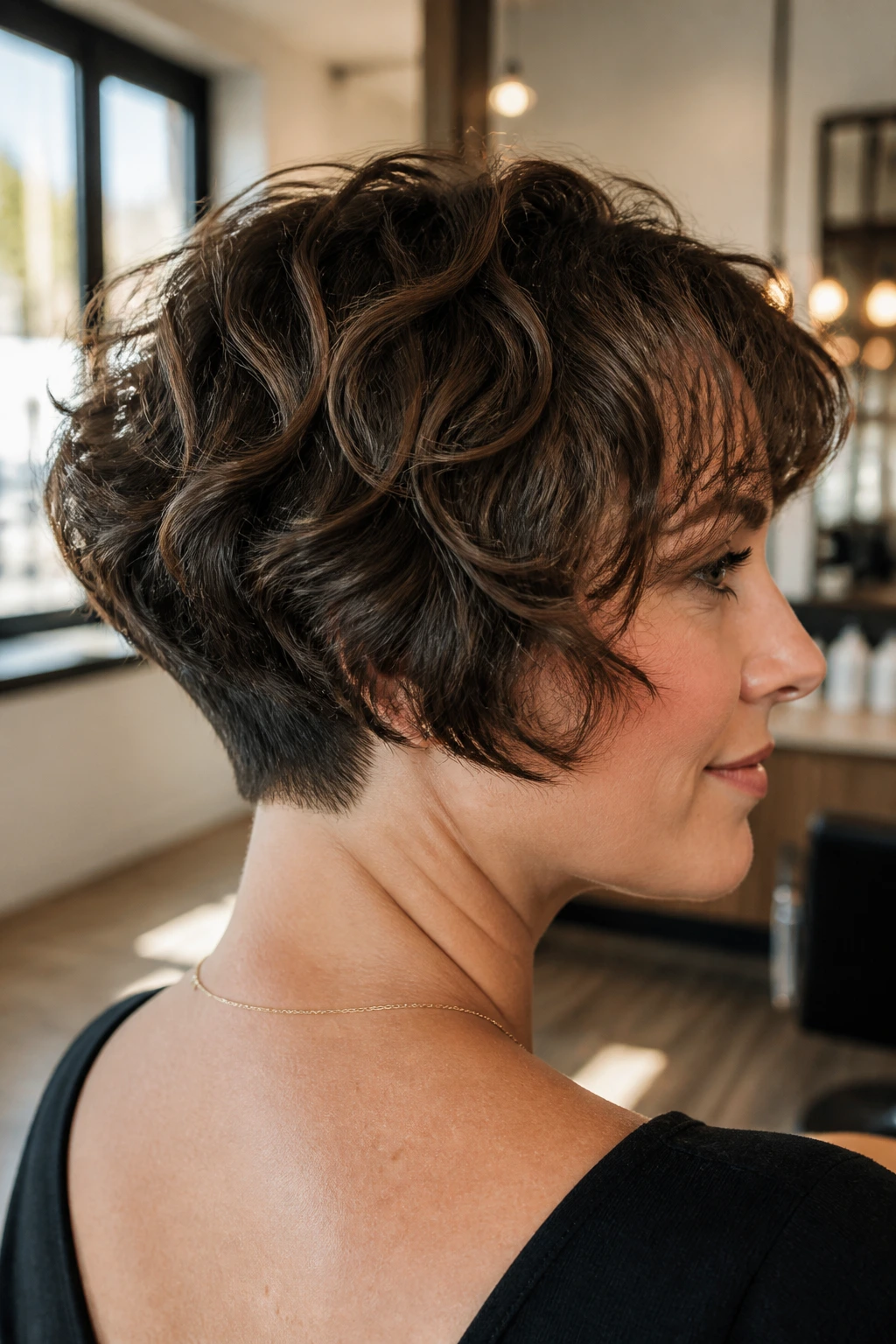
A layered bob with a tapered nape gives you neck clearance and a stronger overall silhouette. The shorter back keeps the style from dragging, while the softer layers on top let the loose curls rise without turning into a helmet. That balance is what makes the cut useful.
This is not the place for heavy slicing through the interior. Fine hair can only take so much removal before the bob starts puffing in the wrong places. You want the shape to curve toward the head at the back and sweep gently at the sides.
If your hair tends to collapse at the nape but widen at the cheeks, this cut solves both problems at once. It is tidy without feeling severe. And yes, it grows out well, which is half the battle with short curls.
19. Mid-Length Cut with Curtain Bangs
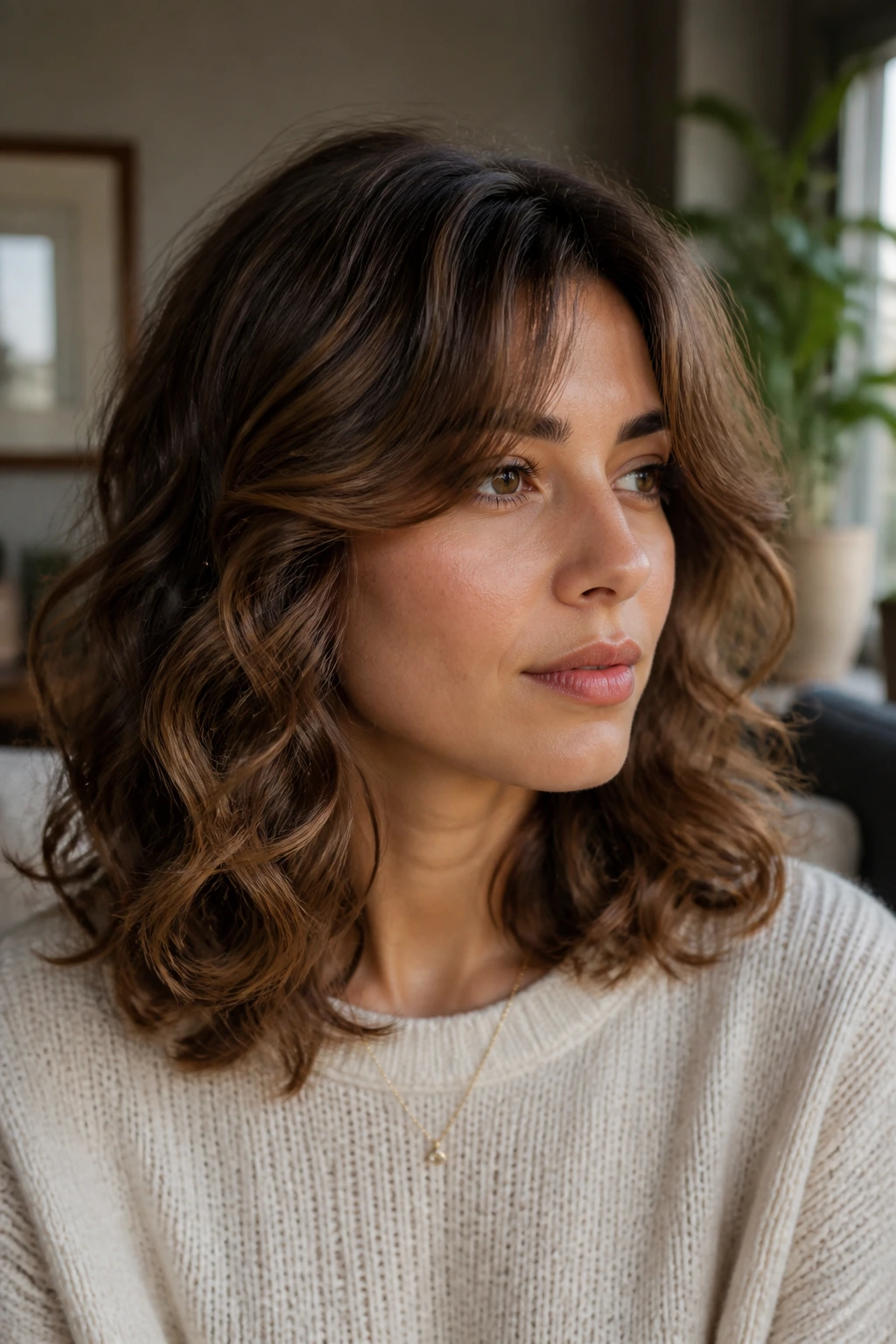
Curtain bangs can work on fine loose curls, but they need to be cut with enough length to bend instead of springing straight up. They should start around the cheekbones and open toward the temples, not stop at a blunt eyebrow line. That extra length is the difference between soft and fussy.
Pair them with a shoulder-length or collarbone cut so the rest of the hair stays easy. The bangs do the face-framing work, and the length keeps the style from becoming too busy. It’s a good option if you like having something around the face but don’t want a heavy fringe.
I’d trim these more often than the rest of the haircut. Bangs are needy in a small, specific way. Everything else can be relaxed.
20. Angled Lob
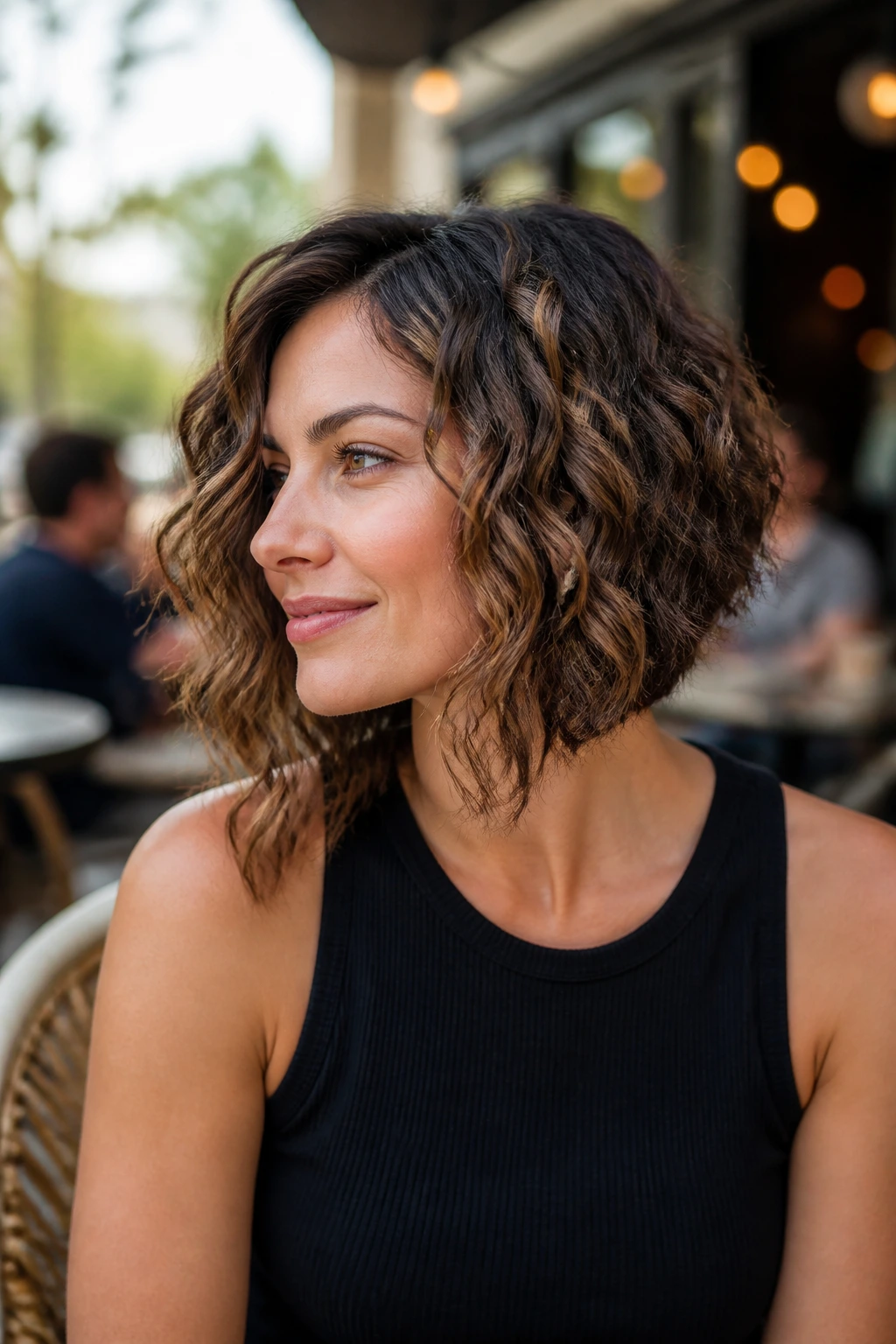
An angled lob is sharper than a U cut and softer than an inverted bob, which gives it a nice middle ground. The front pieces sit longer, the back stays neat, and the diagonal line makes fine curls look deliberate instead of accidental.
This shape is useful when the back of the head falls flat but you still want some front framing. It gives you movement without needing a lot of layers. On loose curls, that matters because a simpler structure often holds better after sleeping, sweating, or living a normal life.
Keep the angle subtle if you want low maintenance. The steeper it gets, the more the cut starts asking for heat styling. A gentle diagonal does the job without turning into a project.
21. Graduated Shoulder Bob
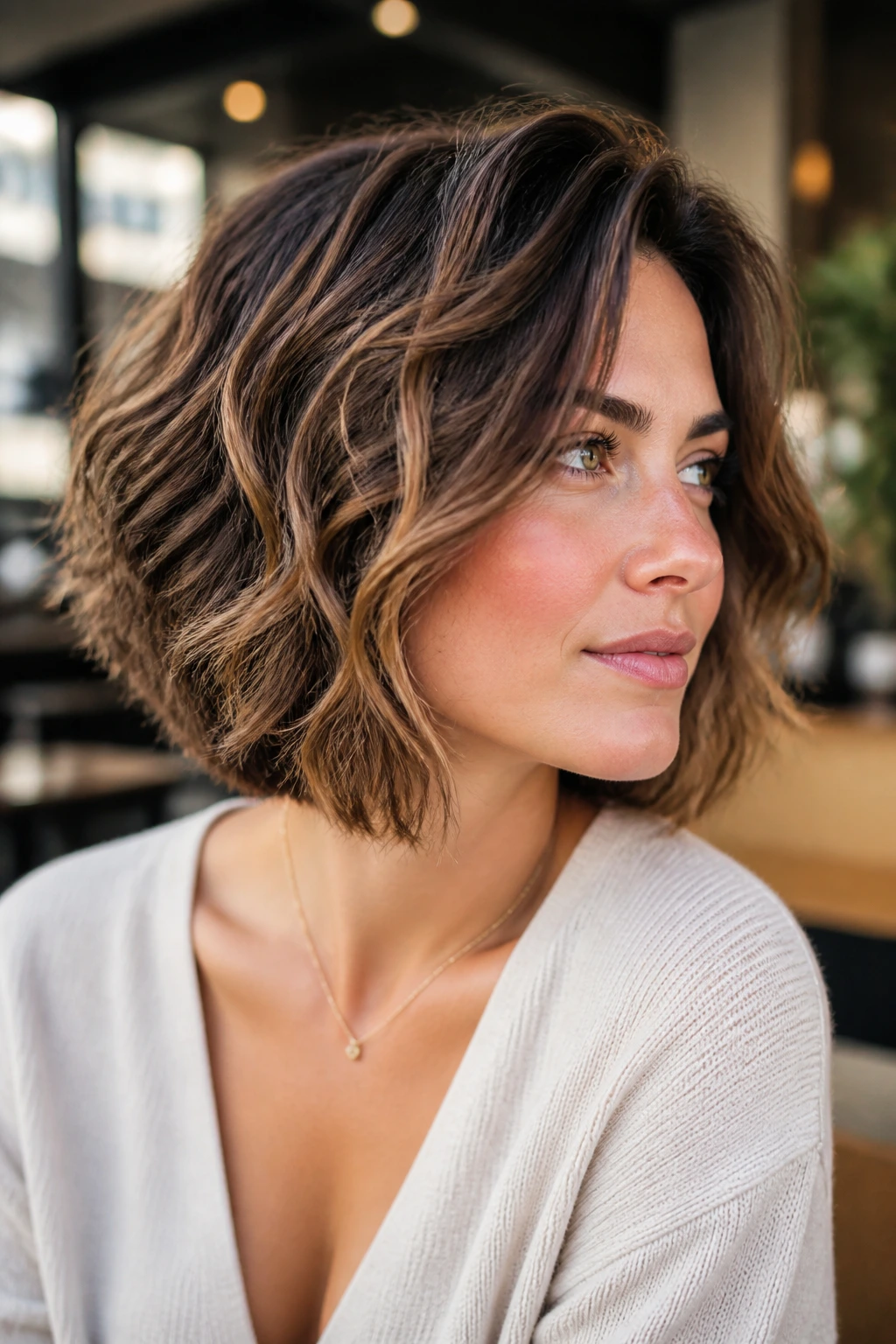
A graduated shoulder bob is the quiet workhorse on this list. The nape is shorter, the front is slightly longer, and the haircut builds body through shape instead of through lots of layers. Fine loose curls respond well to that kind of restraint.
It’s a good choice if you want a polished outline that still feels soft. The graduation gives the back some lift, but the shoulder length keeps the style from getting too abrupt. That means the cut can air-dry, then settle without much fuss.
I’d choose this over a shag if you like cleaner lines and over a blunt lob if you want a bit more bend. It sits in the middle and behaves like it belongs there.
22. Soft Mullet
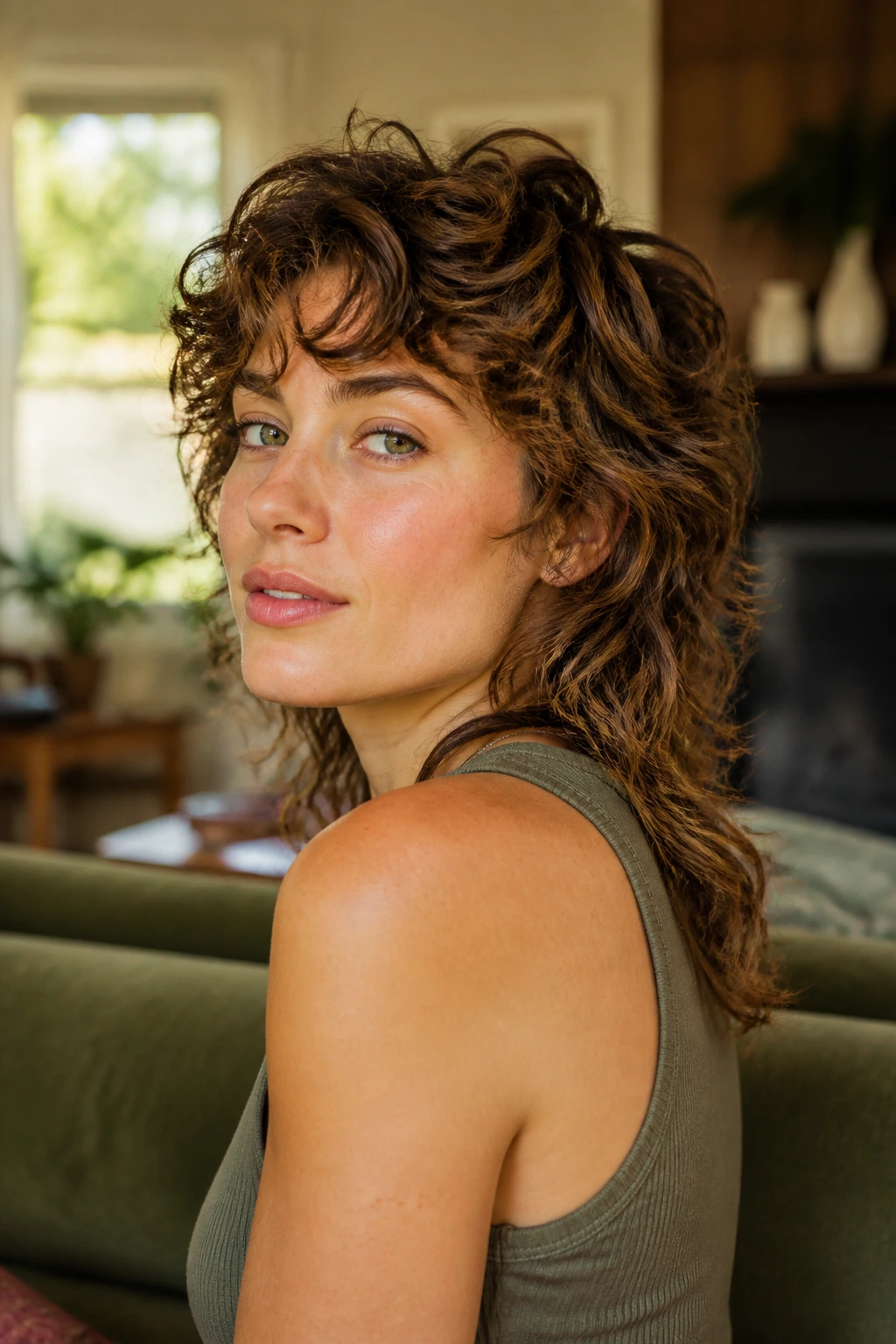
A soft mullet has more range than people give it credit for. The back stays a touch longer, the top and sides are shaped to keep the crown from sinking, and the whole cut leans into texture instead of pretending the texture isn’t there.
The softness is the point. Fine hair cannot carry a harsh disconnect for long without looking thin in the wrong spots. A gentle transition keeps the shape wearable and stops the ends from looking like they were snipped off in one pass.
This is a strong choice if you like air-dried hair with some edge. It is not quiet. But it can be easy, and for a lot of loose curls, that combination is more useful than a perfectly tidy bob that needs constant coaxing.
23. Inverted Bob with Loose Ends
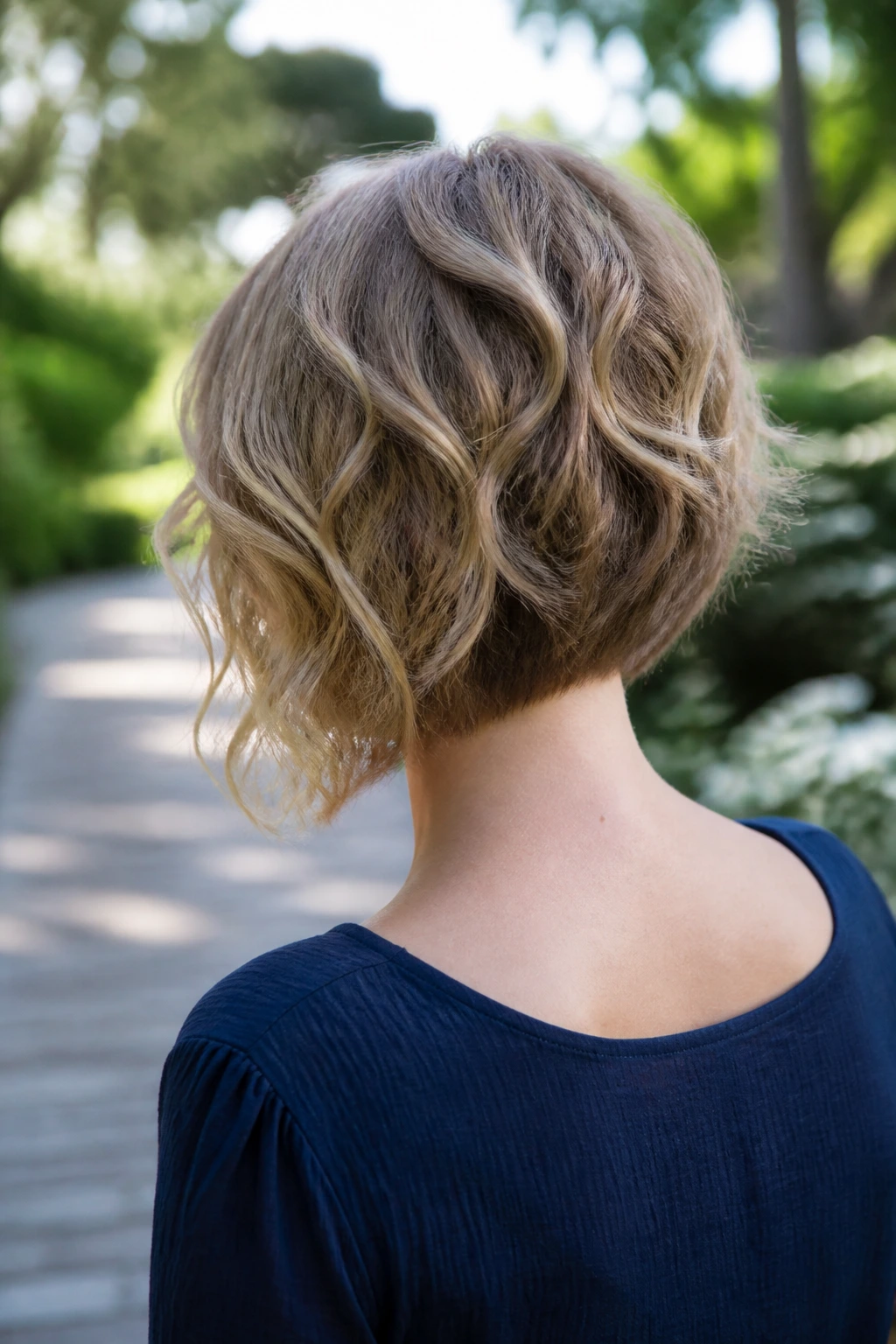
An inverted bob puts the shortest point at the back and lets the front angle longer toward the jaw or collarbone. On fine loose curls, that rear lift can make the whole silhouette look fuller because the crown no longer drags the shape down.
I’d keep the ends soft rather than stacked hard. A hard inverted bob can get puffy fast and starts needing blow-drying to look sane. The loose-ended version keeps the angle but softens the finish, which is why it stays lower maintenance.
If you want lift at the back and a bit of drama at the front without going full editorial, this one hits the mark. It also grows out in a fairly readable way, which helps when you are not in the mood for constant salon rescue missions.
24. Long Layers with Internal Debulking
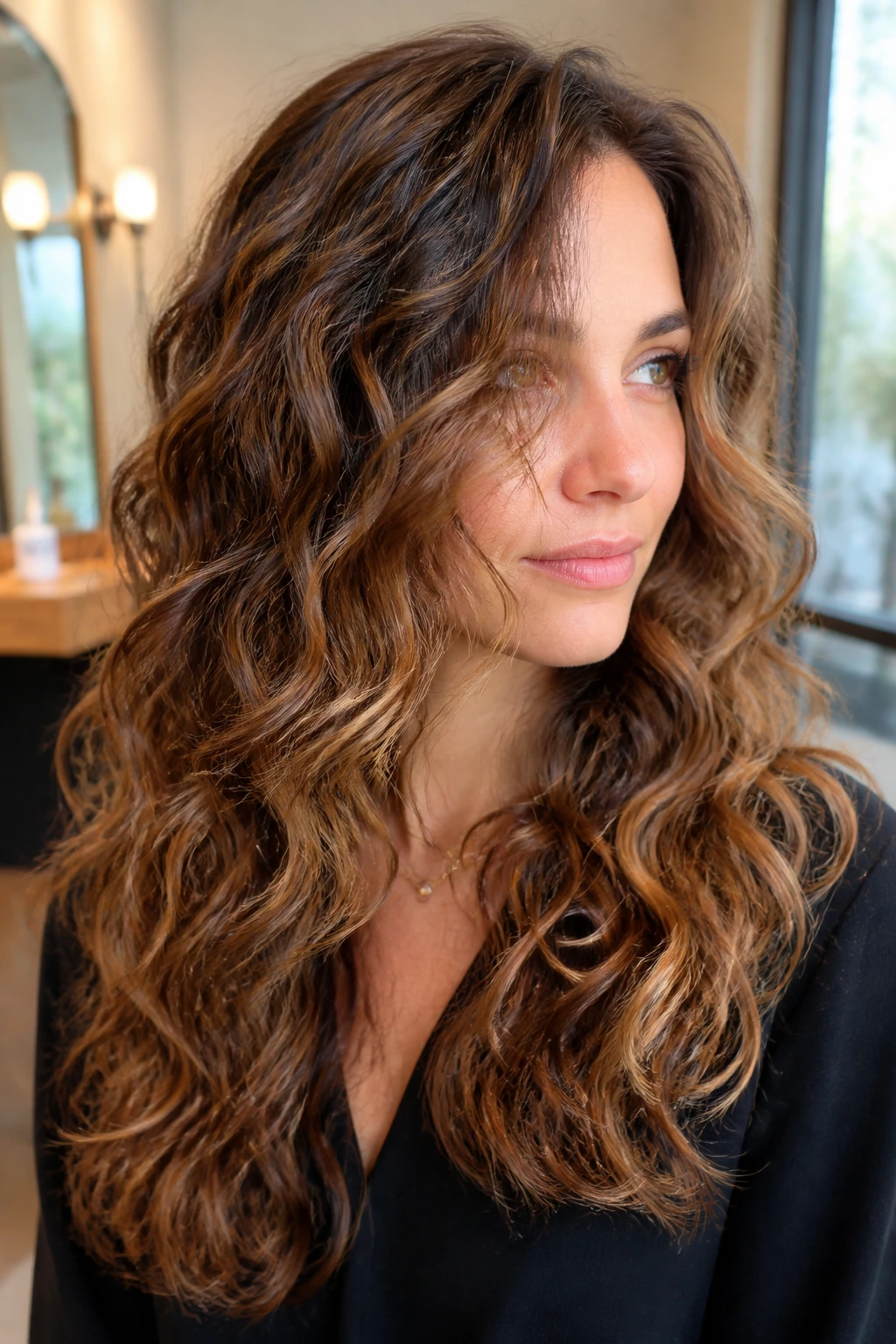
Long layers can be a blessing or a mess on fine curls, and the difference usually comes down to where the weight is removed. Internal debulking keeps the perimeter long and strong while taking some pressure out of the middle so the curls can move.
This is one of the better cuts if you love long hair but hate the way it turns into a heavy sheet. A tiny bit of internal shaping can stop that without making the ends look thin. The perimeter stays visible. That’s the part to protect.
I’d be picky here. Fine hair can look chopped up if the stylist gets too enthusiastic with thinning shears or a razor. A few thoughtful adjustments are useful; overworking the inside is not. If you ask for long layers, ask for them to stay light and controlled.
25. Grown-Out Pixie Bob
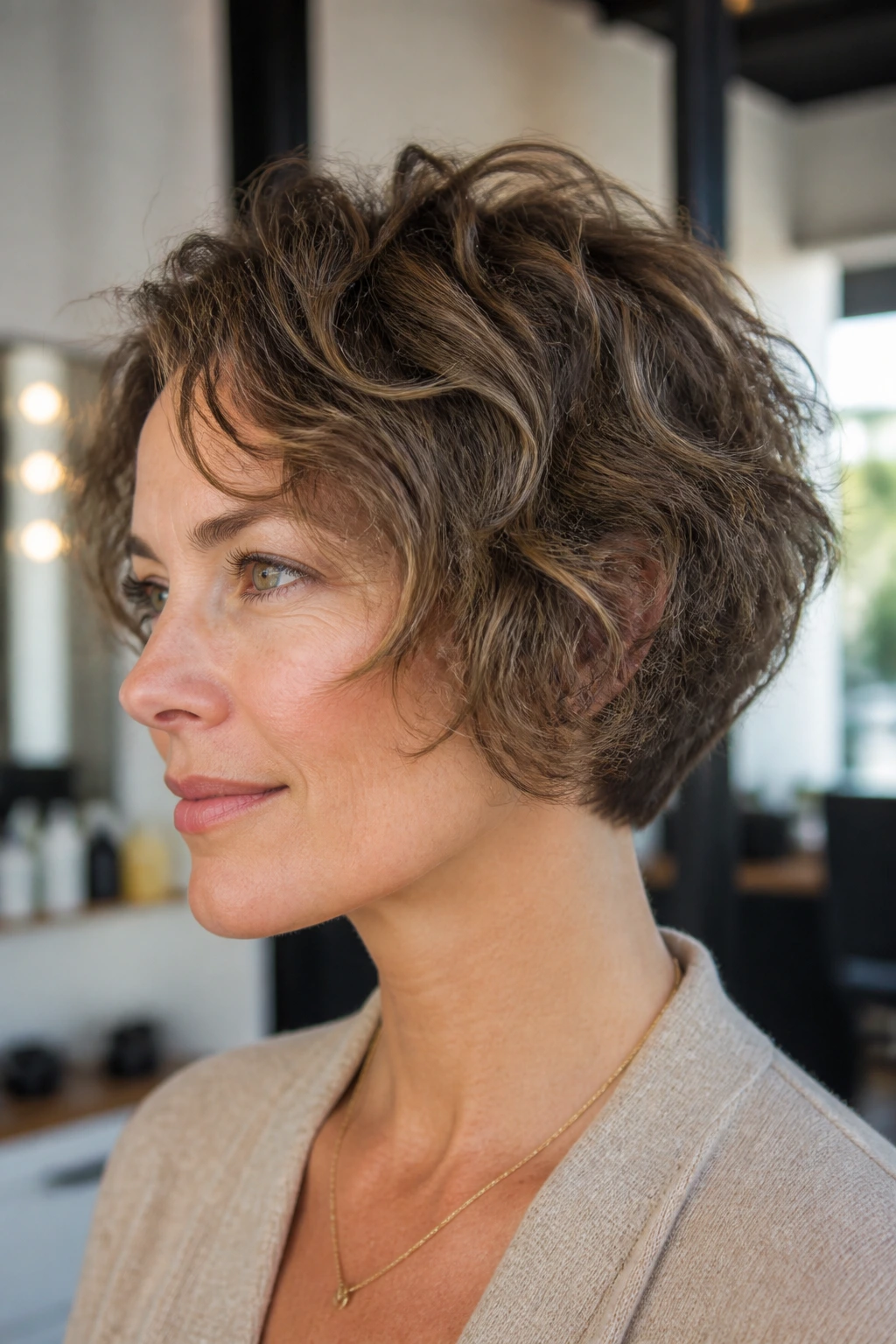
A grown-out pixie bob is one of those in-between cuts that grows into something better instead of something awkward. The nape stays short enough to keep the neck clean, while the top and sides stay long enough to bend into a soft bob shape.
That makes it a smart option for fine loose curls. The texture hides the transition between lengths, and the shape keeps moving even when the cut is a few weeks past its best trim. It’s a forgiving haircut, which is not a small thing.
If you want short hair without the sharp grow-out line of a classic pixie, this is a good place to live. The only real catch is keeping the crown and edges balanced every five to seven weeks. That’s the price of the shape.
Why Weight Distribution Matters More Than Product
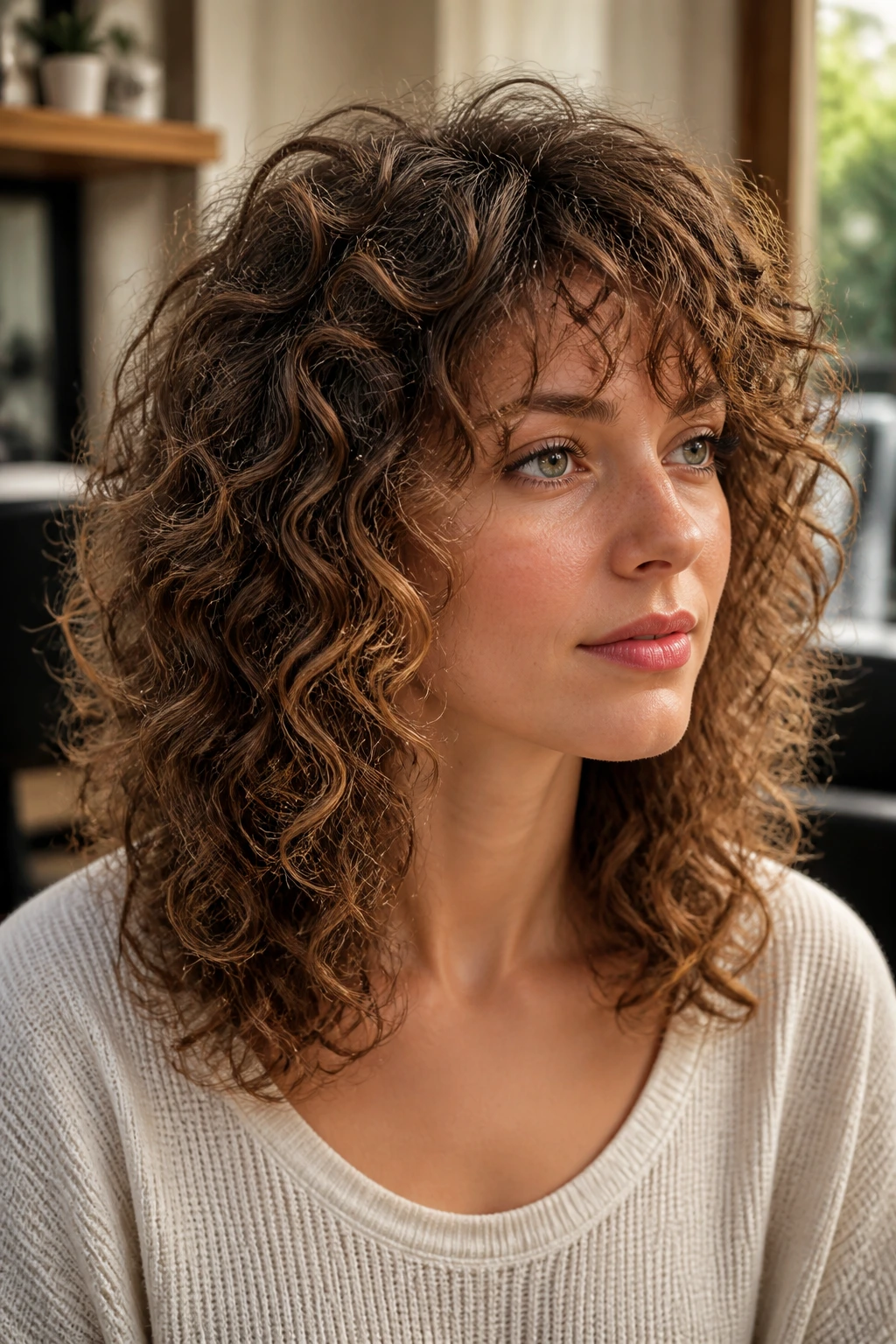
A lot of bad haircut advice for fine curls starts with product. That’s backwards. The haircut sets the weight line, and the weight line decides whether your curls collapse, puff, or sit in that nice middle zone where they actually look like hair you’ve seen on purpose.
Fine hair is not just “less hair.” Sometimes it’s a lot of strands with a thinner diameter, which means the cut has to protect the perimeter and place the layers with care. Loose curls make this even trickier because the bend in the strand changes where the eye sees fullness. Cut the wrong spot, and the curl looks airy in all the wrong places.
Keep the Perimeter Honest
If you want the ends to look full, the perimeter has to stay clean. That does not mean straight and severe. It means the hemline needs enough weight to hold together once the hair dries and separates a little.
Put Lift Where the Curl Can Hold It
Crown layers can help, but only when they’re not too high. Loose curls have enough movement to create lift without needing the whole top cut to pieces. The sweet spot is a soft removal of weight near the crown and a stronger line through the ends.
Let the Cut Grow Softly
Low maintenance is not only about how fast you style your hair. It’s about how the shape behaves six weeks later. The best cuts on this list keep their outline as they grow, which means you can live in them instead of babysitting them.
Essential Tools for Cutting and Styling This Texture
-
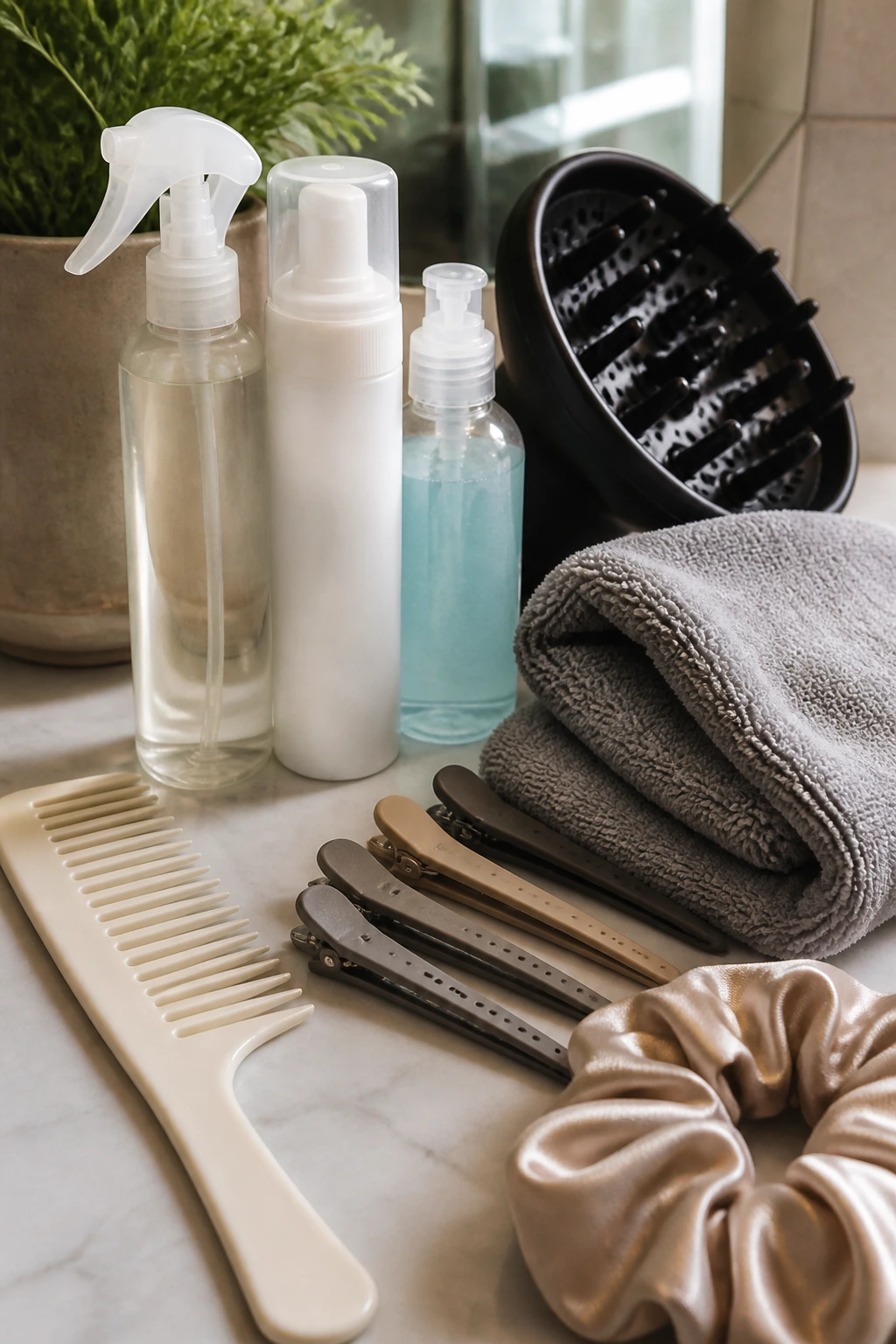
Reference photos from the front, side, and back: One photo only tells half the story, and curls lie in two directions at once.
-
A wide-tooth comb: Useful for detangling in the shower or distributing product without pulling the curl pattern apart.
-
A spray bottle with water: A few spritzes can wake up a flat section without soaking the whole head.
-
Lightweight mousse or foam: This gives fine curls body at the roots without the drag of heavier creams.
-
A soft-hold gel: Good for keeping loose curls together so the ends don’t frizz into little wisps.
-
A diffuser attachment: Not required, but helpful if your hair dries too flat at the root.
-
Duckbill clips or root clips: These can lift the crown while the hair sets, especially on lob and bob shapes.
-
A microfiber towel or cotton T-shirt: Rough terry cloth can make fine curls puff before they’ve even dried.
-
A satin pillowcase or bonnet: Helps the style survive sleep without crushing the crown.
-
Hair clips for sectioning: Handy if your stylist works in dry sections or if you refresh in small parts at home.
How to Brief Your Stylist So the Cut Fits Your Curl Pattern
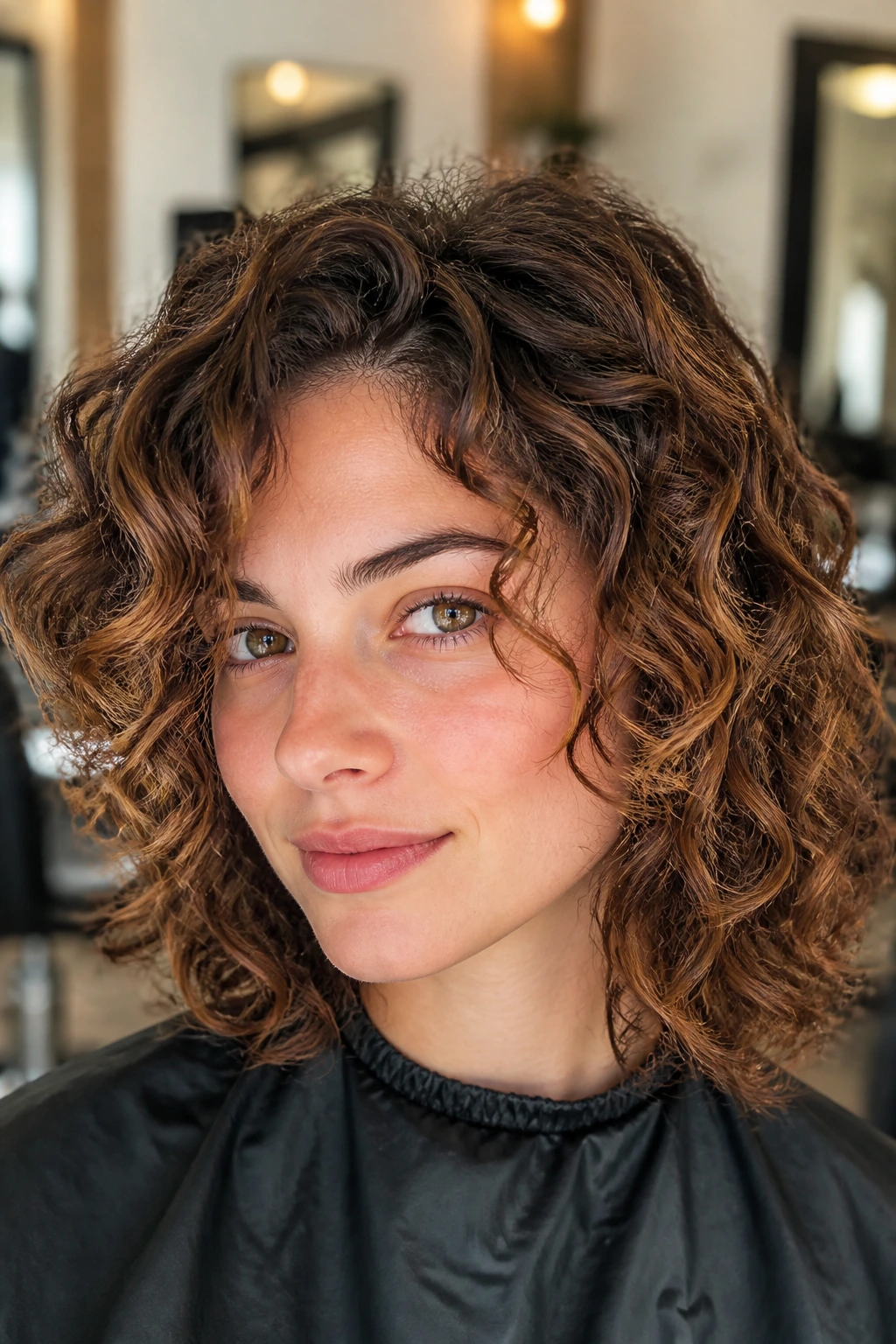
Bring more than one photo. One front shot, one side shot, and, if you can get it, one back shot tell the story much better than a single glossy image. The front might sell you on bangs while the back secretly shows the real shape. Curls can hide a lot in a picture.
Say where your hair fails, not just what you want it to look like. If the roots go flat, say that. If the ends look thin by day two, say that too. The stylist needs to know whether they’re solving a volume problem, a density problem, or a grow-out problem. Those are not the same thing.
Ask for specific restraint if you need it. “Keep the perimeter heavy,” “start layers below the cheekbone,” and “don’t thin the ends” are far more useful than “make it light.” Fine loose curls often need a cut with limits, not a cut with enthusiasm.
Product language helps too. If you air-dry, say so. If you diffuse for five minutes and stop, say that. If your hair hates thick creams, mention it. A good stylist can shape the cut around your actual routine instead of building something that only works after a salon blowout.
How to Wear These Cuts on Busy Mornings
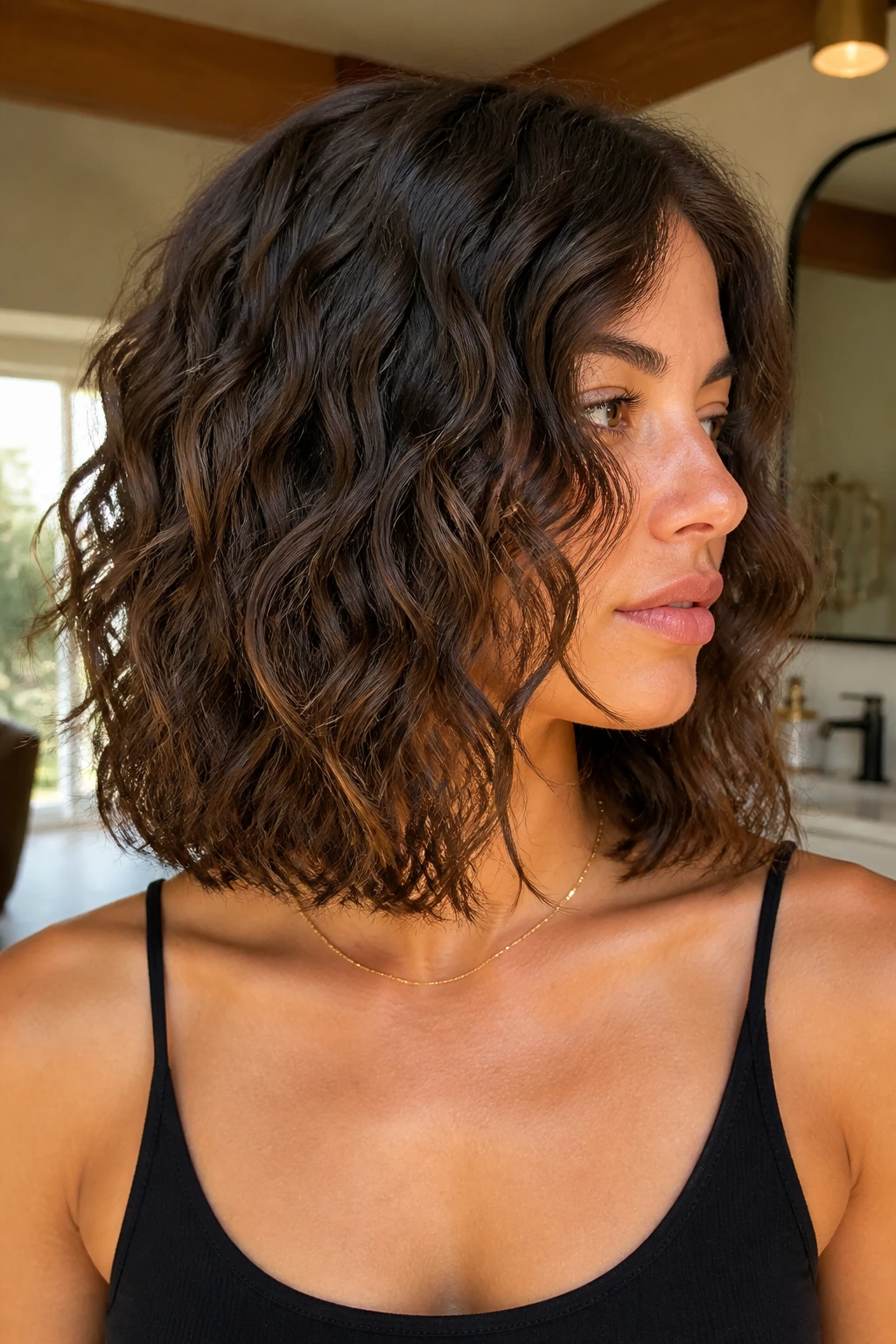
Silhouette: The smartest low maintenance shapes make the outline do the work. A blunt lob, a rounded bob, or a soft midi cut will already have structure when you wake up, which means you’re not rebuilding the shape from scratch.
Products: On fine loose curls, less is usually better. Start with a light leave-in or mist, then choose either mousse or gel as the main styler. If you use both, keep the amounts tiny. A nickel-size blob can be plenty on shoulder-length hair.
Parting: A center part can look crisp, but a side part often gives you more lift at the crown. If one side goes flat, flip the part and let the roots reset. That tiny shift can change how the whole haircut reads.
Finish: Leave a little frizz at the surface if the curl pattern is soft and the cut is good. Chasing every flyaway usually costs you volume. A clean outline with some movement looks more alive than hair plastered into place.
Small Styling Moves That Buy You an Extra Day
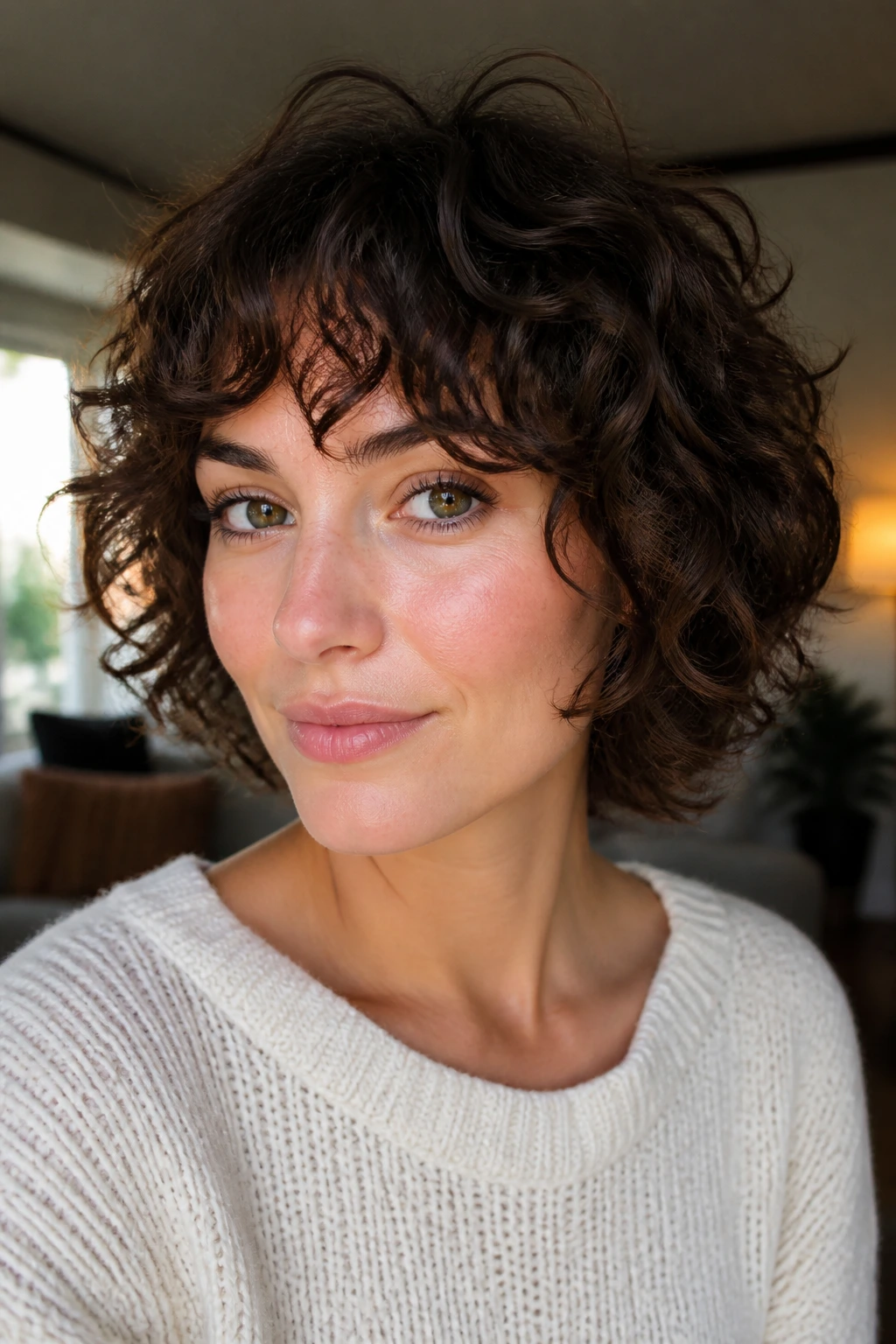
Root Lift: Clip the crown for 10 to 15 minutes while the hair air-dries. You do not need a dozen clips. Two or three placed at the root can change the way the top sits all day.
Refresh: Mist the top layer lightly with water, then scrunch in a pea-size amount of mousse or gel diluted in your hands. That’s usually enough to reactivate the curl without restarting the whole wash routine.
Time-Saver: If one side always lies flatter, set that side first with product and clips. Hair is annoyingly honest about where you spend your time. Give the bad side a little extra help and it usually behaves.
Night Routine: Sleep on a satin pillowcase and gather longer curls loosely on top with a soft clip if they’re hitting your shoulders. Tight elastics leave dents. Loose support keeps the shape.
Hands Off: Once the hair dries, stop touching it. Fine curls frizz when they’re constantly handled, and the ends lose their clump faster than most people expect.
Keeping the Shape Between Salon Visits

Shorter cuts need more frequent shape-ups, and that’s not a flaw. It’s the deal. A curly pixie, bixie, or French bob usually wants a trim every 4 to 6 weeks. Bobs and lobs can often go 6 to 8 weeks. Longer layered cuts usually stretch to 8 to 12 weeks if the perimeter stays healthy.
Sleep matters more than people admit. A satin pillowcase cuts down on friction, which helps the crown stay less smashed. If your curls are long enough, a loose pineapple or a soft clip at the top of the head can keep the lengths from tangling without flattening the roots.
If the ends start to look wispy, don’t wait until the whole haircut feels off. Fine hair shows split ends quickly because there’s not much thickness to hide them. A tiny trim can make the entire shape look fuller again. It’s not glamorous, but it works.
Variations and Adaptations Worth Trying
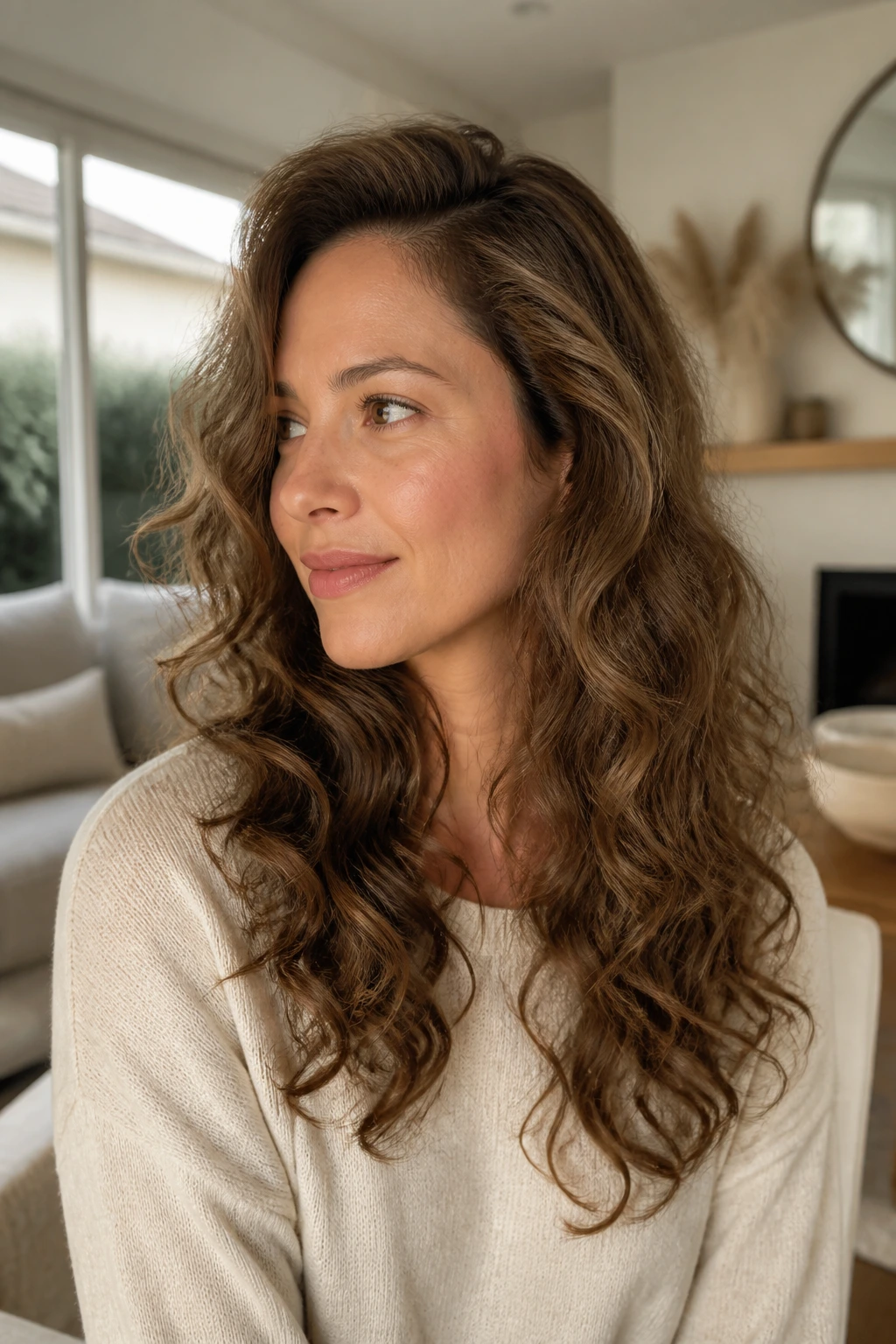
Longer Than It Looks: If your curls shrink a lot, keep the same haircut but ask for an extra half inch to an inch of length. Fine loose curls can bounce up more than a straight-haired photo suggests, and that extra room keeps the shape from ending up too short.
Stronger Crown Lift: For hair that lies flat at the top, ask for a little more height through the crown or a deeper side part. That small change can save you from over-layering the whole head.
Fringe-Free Version: If bangs make you nervous, ask for face-framing pieces that start at the cheekbone instead of a true fringe. You still get softness around the face, but the cut stays easier to grow out.
Humidity-Ready Version: Keep the ends blunt and the layering modest. Fine curls in humid air usually do better with a cleaner perimeter and a gel that holds the curl together rather than a cream that makes it swell.
Shorter Nape, Softer Front: This tweak works on bobs, bixies, and pixies. A cleaner nape keeps the haircut tidy, while a softer front keeps the shape from looking too severe.
Heat-Free Version: If you never want to reach for a blow-dryer, choose a cut with a denser bottom line and softer internal movement. That combination air-dries with less rescue work and fewer weird bends at the ends.
Common Mistakes That Flatten Fine Curls

-
Taking too much weight out of the ends: The symptom is obvious: the hemline turns see-through and the curls separate into wisps. The fix is a heavier perimeter and much lighter interior shaping.
-
Cutting for straight hair, then expecting curl magic: Wet hair lies. Fine loose curls can spring up an inch or two, sometimes more, and the final shape can surprise you. A dry check or a stylist who works with curls helps a lot.
-
Too many layers starting too high: You get a puffy top and thin ends, which is the fastest way to make fine hair look tired. Keep the shortest layers lower unless you’re intentionally going shaggy.
-
Using heavy creams as your default: Cream can drag fine curls down fast. If the hair feels limp by midday, switch to mousse or a lighter gel and use less of it.
-
Ignoring part placement: A center part can expose flat roots, while a side part can create the lift the haircut needs. If your shape feels lifeless, the part might be the first fix.
-
Waiting too long on short styles: A pixie, bixie, or French bob loses its line quickly when it’s grown past its trim window. Once the edges blur, styling gets harder, not easier.
Questions People Ask Before They Chop the Length

Can fine loose curls wear short hair without looking sparse?
Yes, as long as the cut keeps enough weight at the top and around the edges. A soft pixie, bixie, or French bob can look fuller than long hair if the shape is controlled and not over-thinned.
Should fine curly hair be layered at all?
Usually, yes, but gently. Layers help create movement and stop the hair from hanging flat, yet too many layers can strip away density fast. The safest move is soft internal shaping or low, blended layers.
Is a blunt cut good for loose curls?
Often, yes. A blunt line can make the ends look thicker and help the curl clump into a fuller shape. The catch is that it needs enough movement elsewhere so the haircut does not feel boxy.
How often should I trim a low-maintenance curly cut?
That depends on the shape. Short cuts often need trims every 4 to 6 weeks, while lob and shoulder-length shapes can usually go 6 to 10 weeks. Long layered cuts can stretch a bit longer if the perimeter still looks strong.
Can I get bangs if my curls are fine and loose?
You can, but they need length and softness. Curtain bangs, curved fringes, and side-swept pieces are safer than a blunt short fringe because they move with the curl instead of fighting it.
Should my stylist cut it wet or dry?
Dry cutting or dry finishing is often helpful with loose curls because the final length and bend are easier to see. If the cut starts wet, a careful dry check at the end is a good sign the stylist understands curl shrinkage.
What if my crown is flat but my ends are fluffy?
That usually means the shape needs lift near the top, not more product on the ends. A side part, a few root clips, or a cut with soft crown layers can fix that better than piling on cream.
Which of these cuts is easiest if I air-dry every day?
The blunt lob, the long one-length cut, and the invisible-layer midi cut are strong picks. They keep enough structure that air-drying does not leave you with a random shape in every direction.
Will these cuts still work if my hair is more wavy than curly?
Yes. Loose waves and soft curls live in the same neighborhood when it comes to weight and shape. You may need slightly less layering and a little less product, but the same haircut logic still applies.
The Shape That Keeps Up

The best haircut for fine loose curls is not the one with the most movement on a mannequin head. It is the one that still looks like itself when the car windows are down, the weather is humid, and you have had exactly nine minutes to deal with your hair. That usually means a perimeter with some honesty, layers that stay in their lane, and a shape that doesn’t fall apart the moment it stops being perfect.
If I had to choose one principle to keep in your head, it would be this: protect the weight line first, then add movement only where the curl can carry it. That one decision does more than most styling routines ever will.
When you sit down for the next cut, bring one front photo and one side photo, then ask where the weight should live. That’s the conversation that gets you a haircut you can actually wear.