



Medium skin can wear more fall hair color than people give it credit for. The trick is not to chase the darkest brown in the bowl or the brightest copper on the swatch ring. It’s to find shades that keep the face alive: a little warmth where the light hits, a little depth at the root, and enough movement that the color doesn’t turn into one flat helmet under indoor lighting.
The best fall hair color ideas for medium skin tones usually do three things at once. They soften the line between hair and skin, they pull from the season’s richer palette, and they leave room for your undertone to show through. That last part matters more than most salon conversations admit. Medium skin can sit anywhere from golden to olive to neutral, and the same color that looks lush on one person can look muddy, orange, or chalky on another.
So I’m steering clear of the usual lazy shade list. You’ll find browns with spice, reds with restraint, blondes with shadow, and a few deeper tones that look expensive because they move, not because they scream. Some are low-maintenance. Some demand gloss appointments. All of them earn their place by doing something specific for medium skin, not by sounding cute on a color chart.
Why These Shades Work So Well on Medium Skin
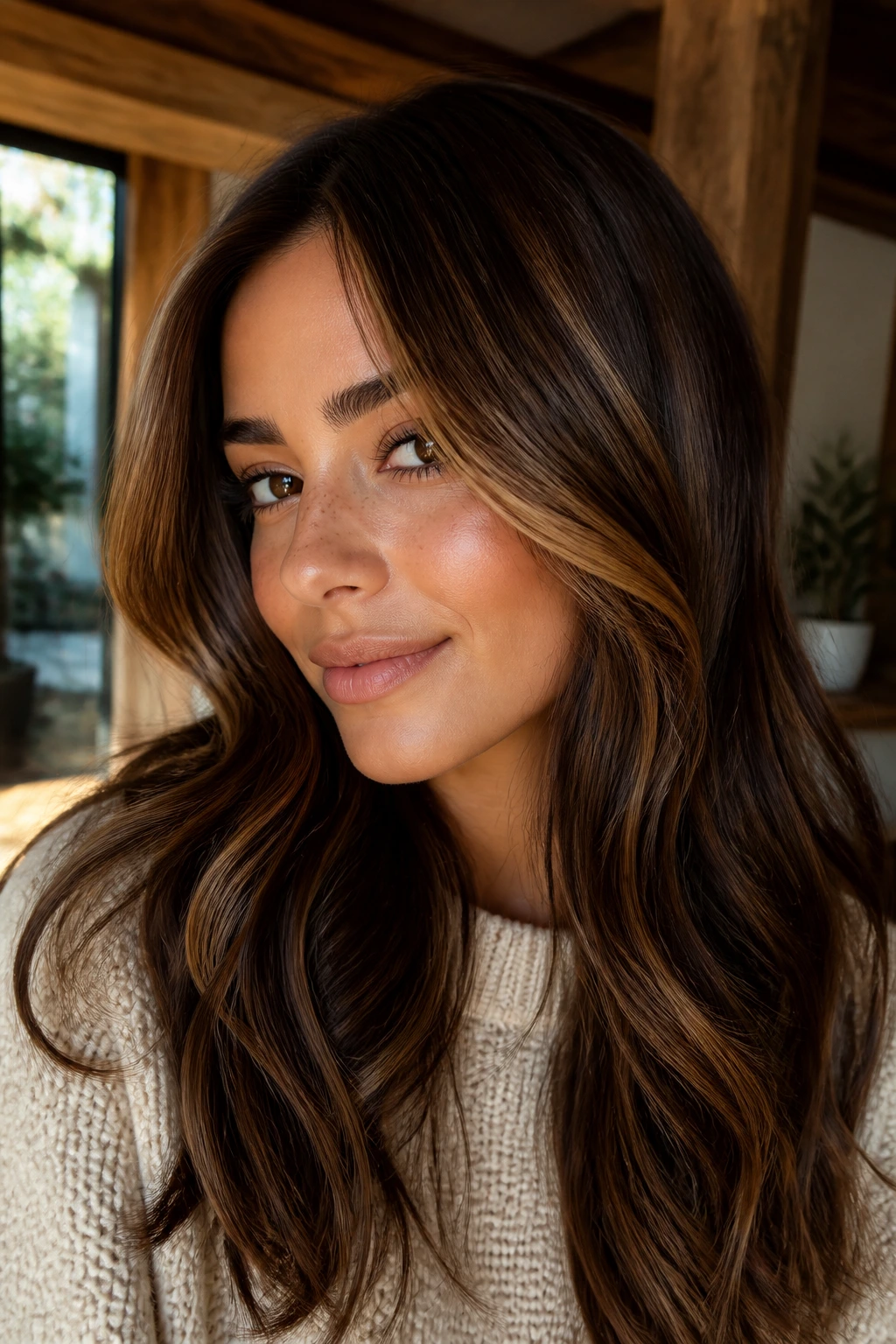
- They respect undertone first. Medium skin isn’t one thing; these shades work because they lean warm, cool, or neutral on purpose instead of guessing.
- They keep dimension in the hair. A single block of flat brown can drag the face down, while ribbons, melts, and shadows keep the color alive.
- They avoid harsh contrast. The smartest shades don’t jump from root to end like a stripe. They soften the transition and let the eye move.
- They make fall light work for you. Indoor light, cloudy daylight, and low evening light all hit these tones differently, which is half the fun.
- They’re easier to wear than trend colors. A good autumn shade should look like it belongs with your brows, your eyes, and your skin — not like it arrived from another person’s head.
- They give you room to grow out. The smartest color choices still look intentional at week six, not week two.
How Medium Skin Changes the Color Conversation
Medium skin sits in a sweet spot, but it’s not a neutral blank page. Some complexions carry a golden cast that makes copper, amber, and toffee glow. Others lean olive, which can make ashier brunettes and smoky plum shades look richer than warm brassy tones ever will. And if your skin is medium with a cooler undertone, the right burgundy or cocoa shade can sharpen your features in a way sunny blondes never will.
The mistake I see most is people picking hair color by depth alone. Dark brown feels safe. Blonde feels bold. Red feels fun. That logic falls apart fast. A chestnut brown with cinnamon ribbons can be far more flattering than a solid dark brown, and a muted mushroom brunette can look sharper on medium skin than a warm honey blonde that’s a level too yellow.
Placement matters as much as pigment. Face-framing pieces, a soft root shadow, and glossed ends often do more for medium skin than a dramatic all-over change. The face wants movement. It wants contrast in the right places and softness everywhere else.
1. Chestnut Brown With Cinnamon Ribbons
Chestnut brown is the shade I reach for when someone says, “I want change, but I still need this to feel like me.” The base stays brown and grounded, while thin cinnamon ribbons run through the mids and ends, especially around the face. On medium skin, that little hit of warmth keeps the complexion from looking flat.
Why it works
Chestnut gives you the brown depth that feels right for fall, but the cinnamon ribboning breaks up the surface so the hair doesn’t read as one heavy mass. If your skin leans golden or neutral, this is one of the easiest shades to wear because it mirrors the warmth already in the face. Ask for soft, scattered lights instead of chunky highlights. The difference is huge.
What to ask for
- Base: medium chestnut brown
- Dimension: fine cinnamon or light auburn ribbons
- Finish: a gloss that leans warm, not coppery
- Avoid: streaky highlight placement that starts too high at the root
If your hair is already brown, this one usually needs less lift than people expect. That’s the charm. It looks rich, not noisy.
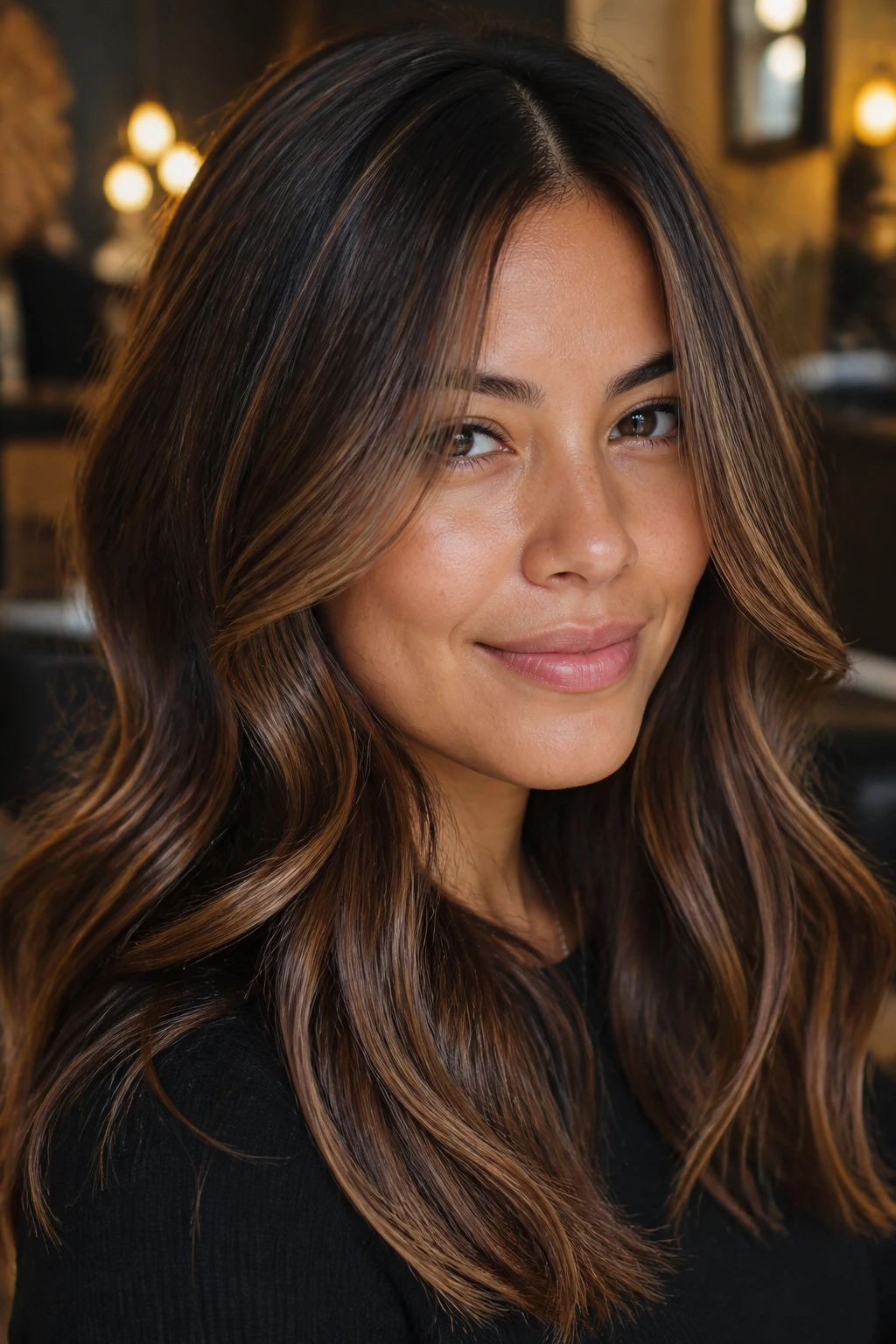
2. Espresso Brown With Soft Caramel Face Frame
Espresso brown can go harsh in a hurry. Too much depth, and the whole look starts to swallow the face. The fix is a soft caramel frame that sits just in front of the ears and around the cheekbones, where the light naturally breaks.
The contrast here is the point. Medium skin needs enough separation to show the color, but not so much that the hair starts wearing the face instead of the other way around. Keep the caramel two shades lighter than the base, no more. That keeps the effect luxe, not stripy.
This is the shade for someone who likes clean lines, a blowout, and a little polish around the front. On a lob, it looks tidy. On longer hair, the caramel pieces move and flash when you turn your head. Simple. Effective.
3. Copper Brunette Melt
Why does copper look better on medium skin than people expect? Because medium skin can carry warmth without getting washed out by it. The trick is to keep the copper inside a brunette melt, not to march straight into bright orange territory.
How it reads
Think brown at the root, copper through the mids, and a slightly brighter but still earthy finish at the ends. The whole thing should feel blended, like the shade was poured rather than painted on. A glaze is often better than a hard dye line here, because it keeps the hair shiny and prevents the copper from turning blocky.
Best for
- Medium skin with golden or neutral undertones
- Wavy hair that shows off dimension
- People who want warmth without full-on red
Copper fades fast if you wash it hard and often. That’s not a flaw so much as a personality trait. If you love shine, this color can be gorgeous. If you hate upkeep, keep reading.
4. Mushroom Brown
Mushroom brown has become the quiet favorite for a reason. It sits in that smoky, cool-toned lane between brunette and ash blonde, with taupe and beige woven through so the hair looks expensive without looking loud.
On medium skin, especially if you lean olive, mushroom brown can be smarter than a warm caramel. Warmth is not always your friend. Sometimes the slightly smoky edge is what keeps the skin from looking sallow. This shade also grows out softly, which matters if you do not want visible root drama every five weeks.
What makes it different
- Ashy brown base
- Beige lowlights
- Soft gloss, not brass
- Best on shoulder-length cuts and waves
The only real danger is going too gray. You want smoky, not dusty. If the color starts looking like a frozen latte, it needs more beige back in it.
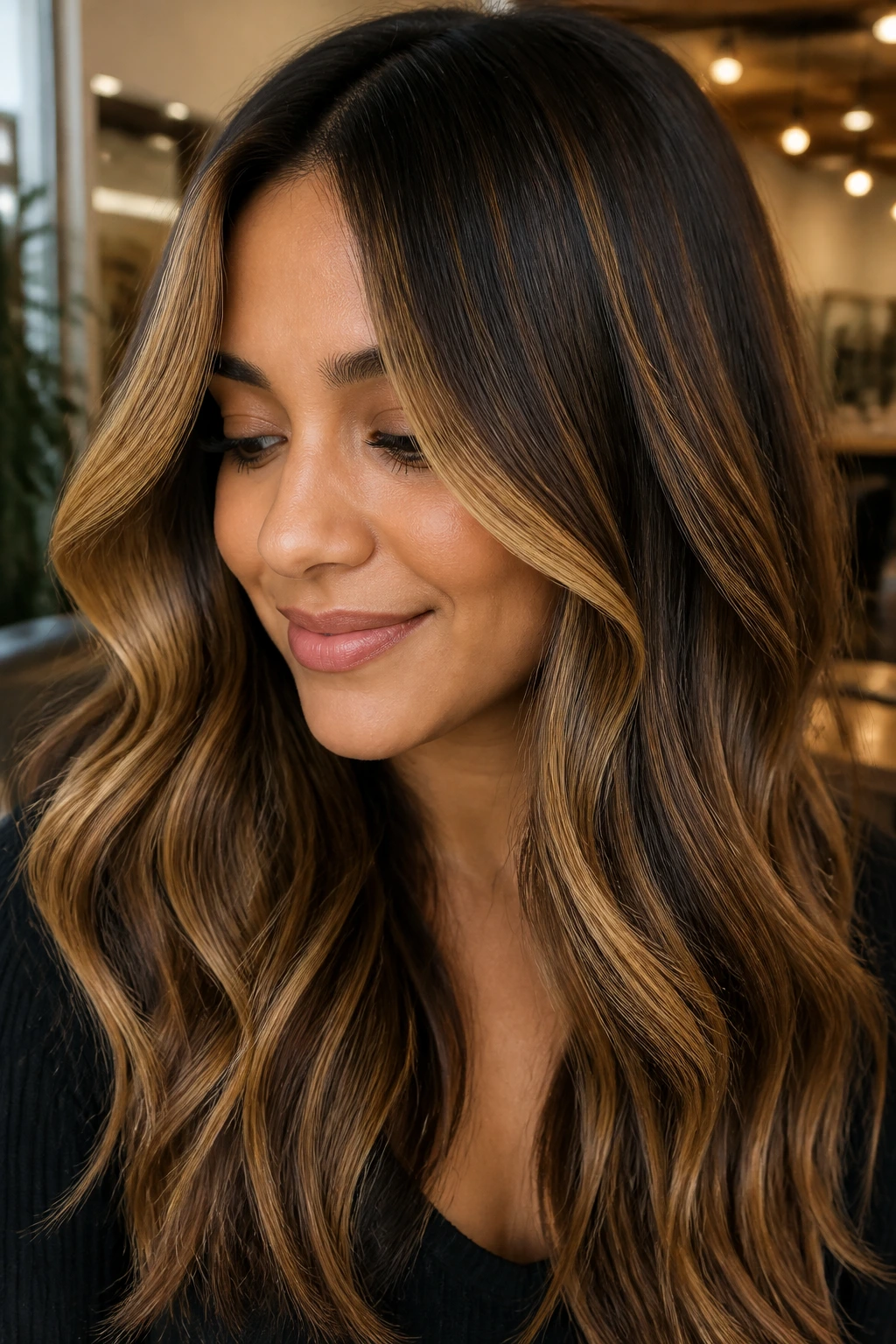
5. Golden Honey Balayage
Golden honey balayage is the shade people think of first when they want brightness in fall without losing the season’s warmth. The hair stays brunette at the root, then melts into honeyed ribbons that catch the light through the mids and ends.
Medium skin can wear this especially well when the honey isn’t pushed too yellow. That’s the line. You want golden, not banana. The best versions look sun-kissed but grounded, which is why a shadow root helps so much. It gives the brightness a frame.
If you wear layers, this color has something to do. Every flip of the hair shows a different slice of light. On straight hair, it looks smoother and more subdued, which is fine too. Just keep the contrast soft.
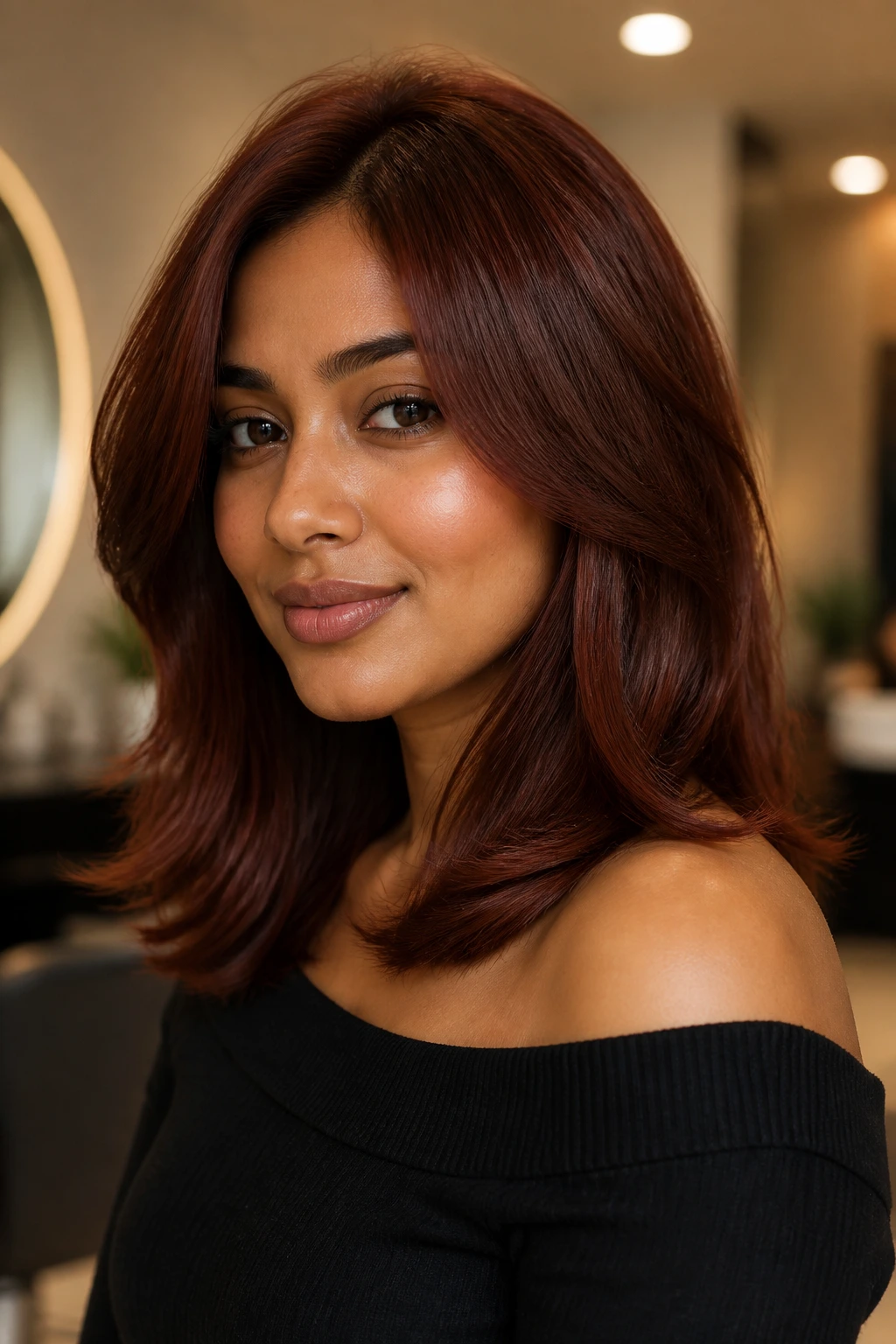
6. Deep Auburn
Deep auburn is not the same thing as bright red, and that’s a blessing. It lives in the brown-red range, with enough copper or mahogany to feel seasonal but enough depth to avoid the cartoonish red problem.
Why medium skin likes it
Medium skin gives auburn something to hold onto. Pale skin can make it shout. Medium skin lets it settle. If your undertone is golden or olive, auburn can warm the whole face in a way that looks deliberate. If your skin runs cooler, ask for more brown than orange so the color stays grounded.
A good deep auburn should look richest in indoor light and glow softly in daylight. That’s the sweet spot. If it looks neon in every setting, your colorist went too far.
7. Chocolate Cherry
Chocolate cherry is what happens when brunette meets wine and neither one takes over. Under low light, it reads as a deep brown with a polished edge. In brighter light, the cherry tone wakes up and gives the hair a little pulse.
What to ask for
Start with a chocolate base and add a cherry glaze or demi-permanent overlay. That keeps the red dimension sitting inside the brown instead of floating on top of it. For medium skin, this matters because the color needs to support your complexion, not compete with it.
This shade works especially well if you want something richer than chestnut but not as bright as copper. It also plays nicely with straight hair, where the glossy finish can look almost lacquered, and with curls, where the cherry tint peeks through the bends. Little details. Big payoff.
8. Toffee Beige Brunette
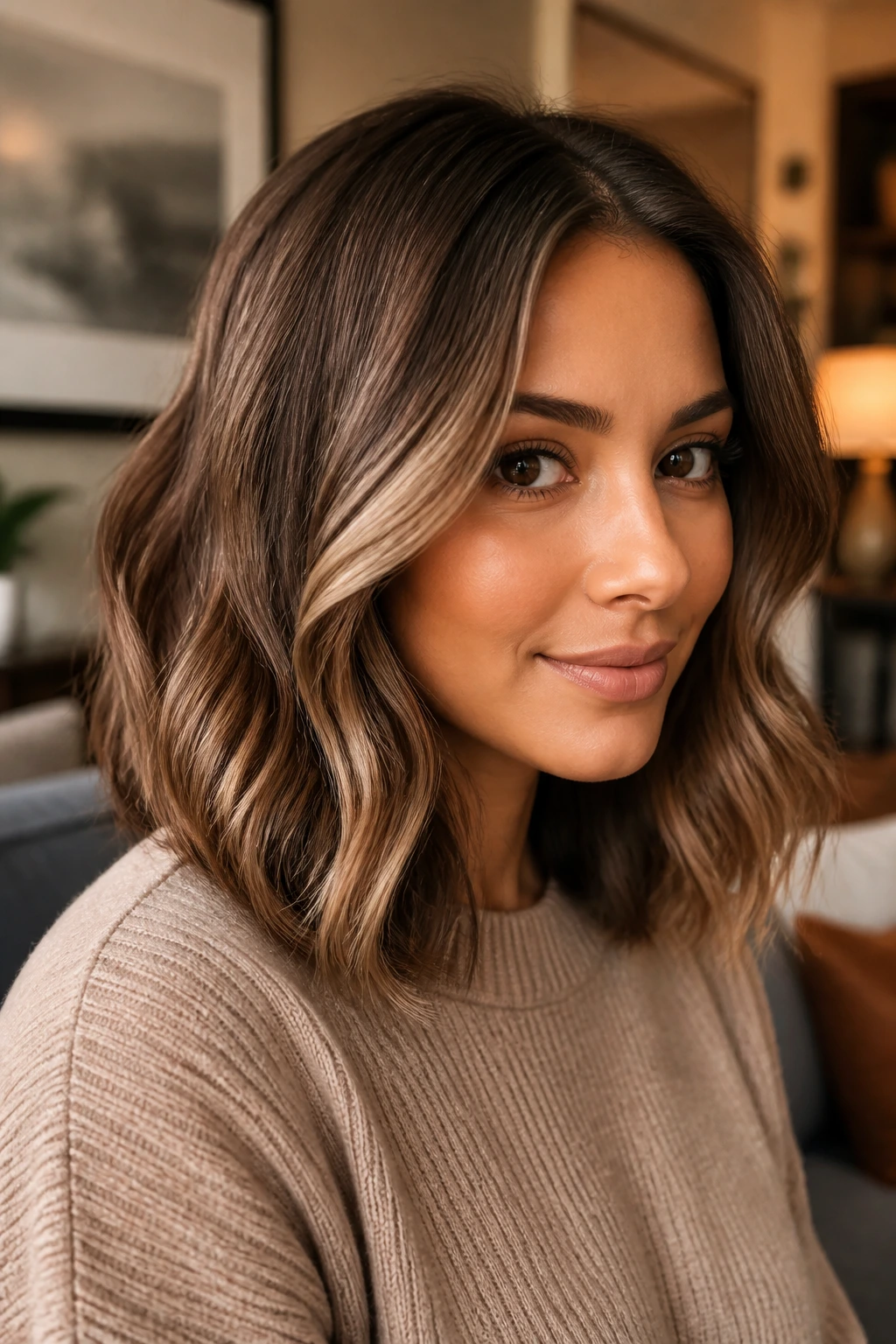
Toffee beige brunette is one of those shades that looks calm from a distance and quietly complex up close. The base stays brunette, but the highlights lean toward toffee and beige instead of gold. That small shift keeps the color soft against medium skin.
This one is excellent if your undertone is neutral and you want to stay away from orange. It has enough warmth to feel fall-ready, but the beige keeps it from going heavy. Ask for a tonal melt rather than sharp highlight stripes. The surface should look creamy, not painted.
A blunt bob, long layers, or even a mid-length shag all work here. The shade is flexible that way. It does not need much styling to read well, which is one reason I like it for people who want polish without fuss.
9. Smoky Bronze
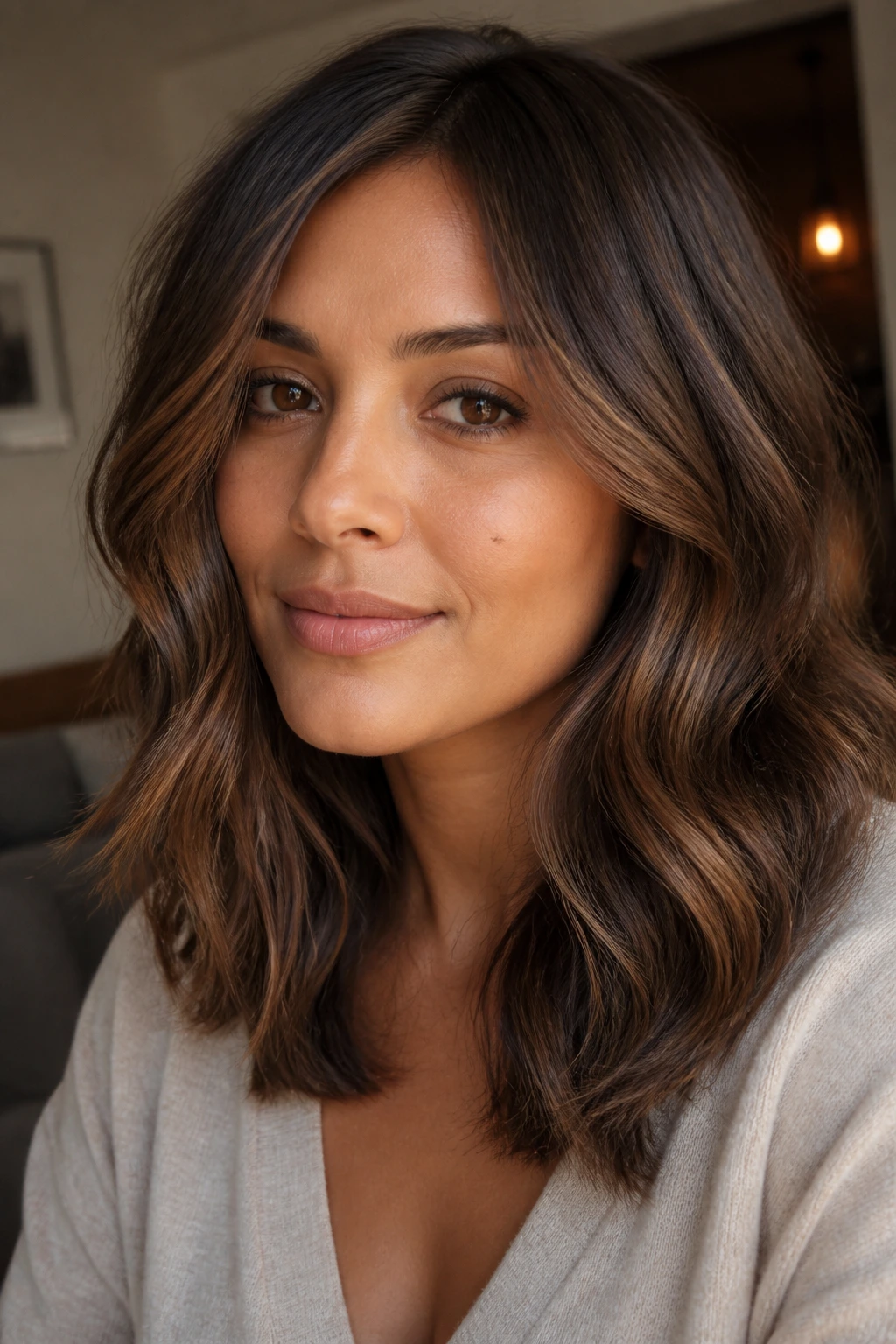
Smoky bronze has a little heat and a little shadow, and that combination is why it flatters medium skin so well. The bronze gives you reflected warmth; the smoky root keeps it from drifting into brass.
Imagine the color of a well-worn penny after rain, but softer. That’s the mood. The best version keeps the ends a touch lighter than the root, with a satin gloss that catches light instead of flashing it.
Quick reality check
- Best on medium skin with warm or neutral undertones
- Easier to maintain than copper
- Needs gloss to keep the bronze from dulling out
- Looks especially good on layered cuts and loose waves
If your hair tends to go flat, this is one of the better ways to add warmth without turning the whole head bright.
10. Maple Brown
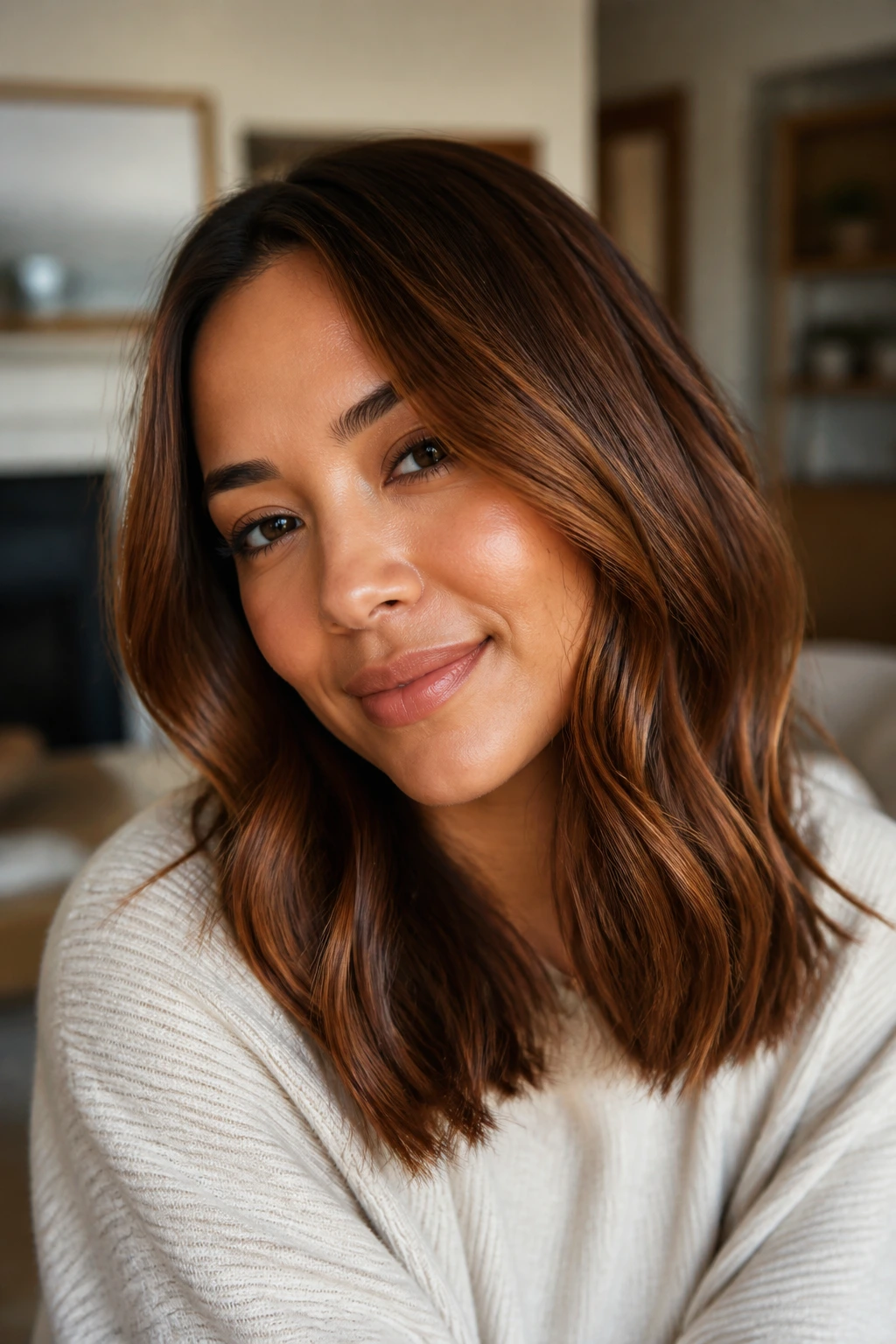
Maple brown sits between chestnut and auburn, and it’s one of the easiest fall shades to wear if you want warmth without drama. The maple tone brings in reddish-gold notes, but the brown keeps it rooted.
That balance is why it works on medium skin. It won’t overpower golden undertones, and it won’t look muddy on olive skin if the red stays soft. I’d avoid going too orange at the ends. Maple should feel like syrup, not pumpkin.
When it shines
- On thick hair that can carry depth
- On longer cuts where the color can stretch and move
- On people who want a change that still looks natural
If you like your color to look expensive without looking obvious, maple brown is one of the best bets in the pile.
11. Rich Mahogany
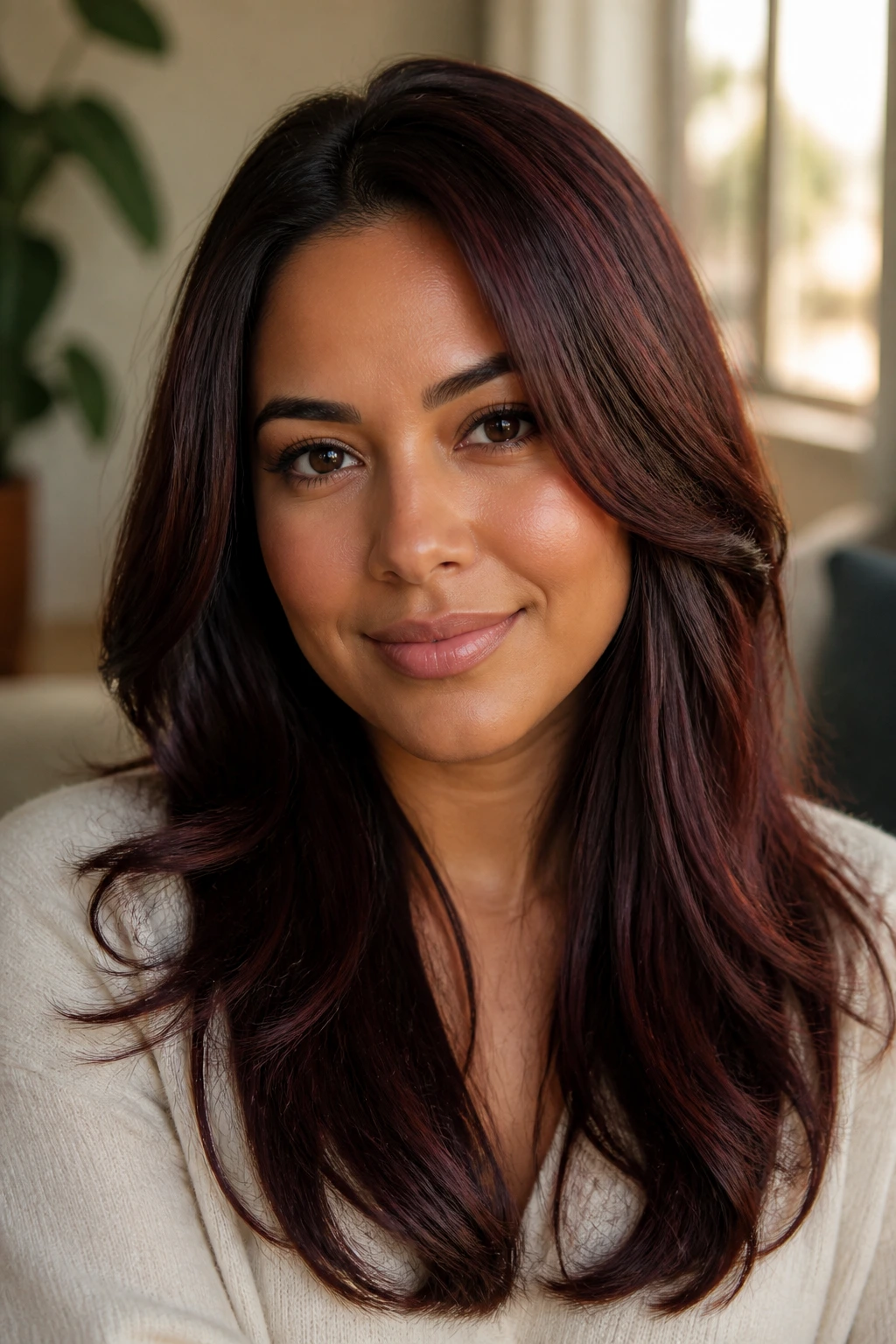
Is mahogany too red for medium skin? Not when it stays brown-first. Rich mahogany is one of my favorite dark fall shades because it gives you wine depth without making the hair look flat or loud.
The color should sit somewhere between brunette and burgundy, with a polished finish that catches light in the mids. Medium skin, especially neutral or warm medium skin, can wear this beautifully. The skin looks clearer beside it. That’s the real win.
Ask for a mahogany glaze over a dark brown base if you want something softer. If you want more impact, let the red live closer to the ends. Either way, keep the saturation deep. Mahogany gets tacky when it’s too bright.
12. Bronde With Shadow Root
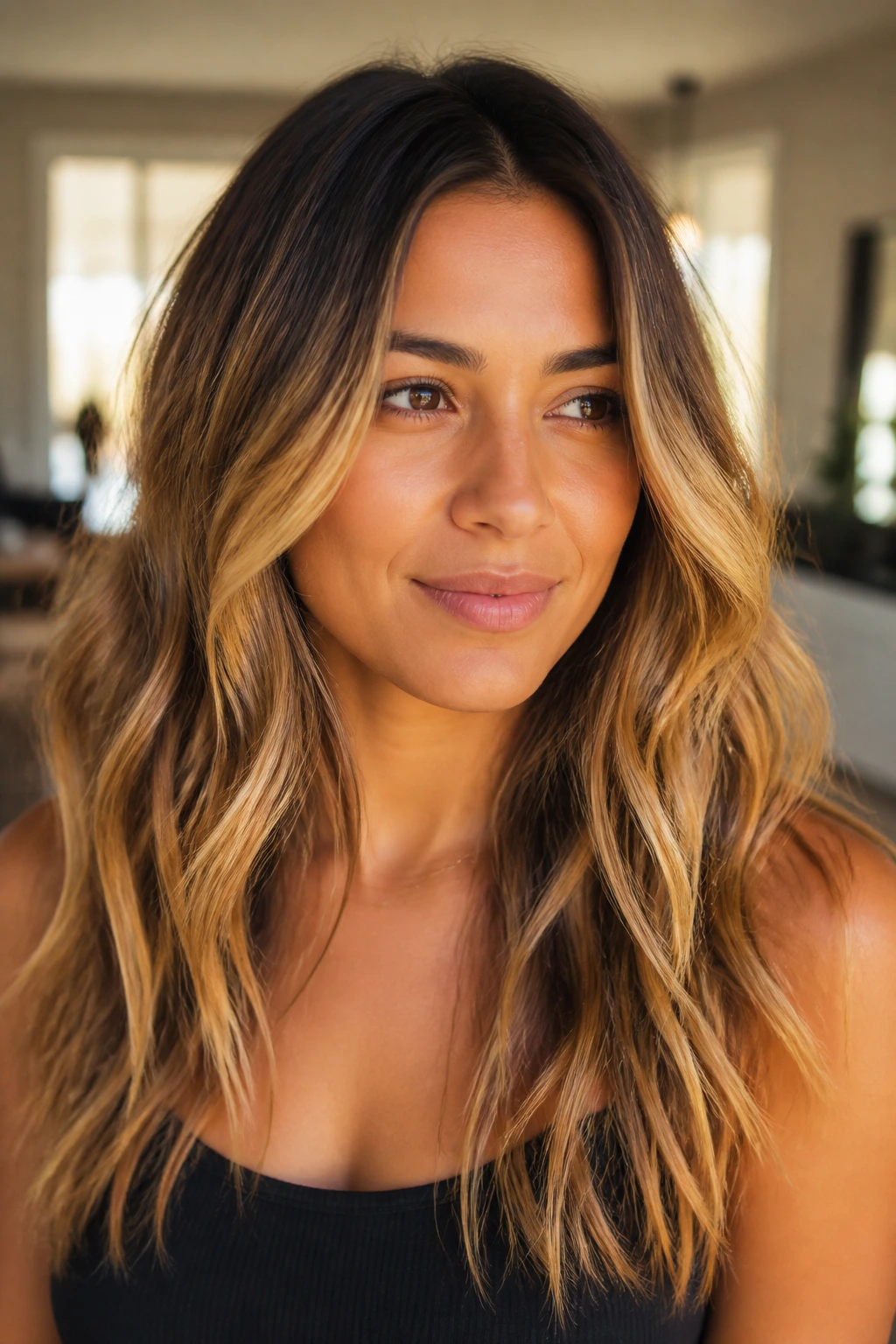
Bronde is the safe word people use when they want to live between brown and blonde without committing to either camp. On medium skin, a bronde with a shadow root is a smart fall choice because the deeper root keeps the brightness from floating too high on the face.
The shadow root matters. Without it, the blonde can feel disconnected from the complexion, especially in fall light, when everything outside is a little dimmer and the hair needs a stronger anchor. Beige-blonde mids with caramel lowlights do the rest.
If your summer hair was lighter, this is a graceful way to bring it back down without going dark. It also grows out better than a solid blonde. The root melt buys you time. Time is underrated.
13. Amber Money Piece
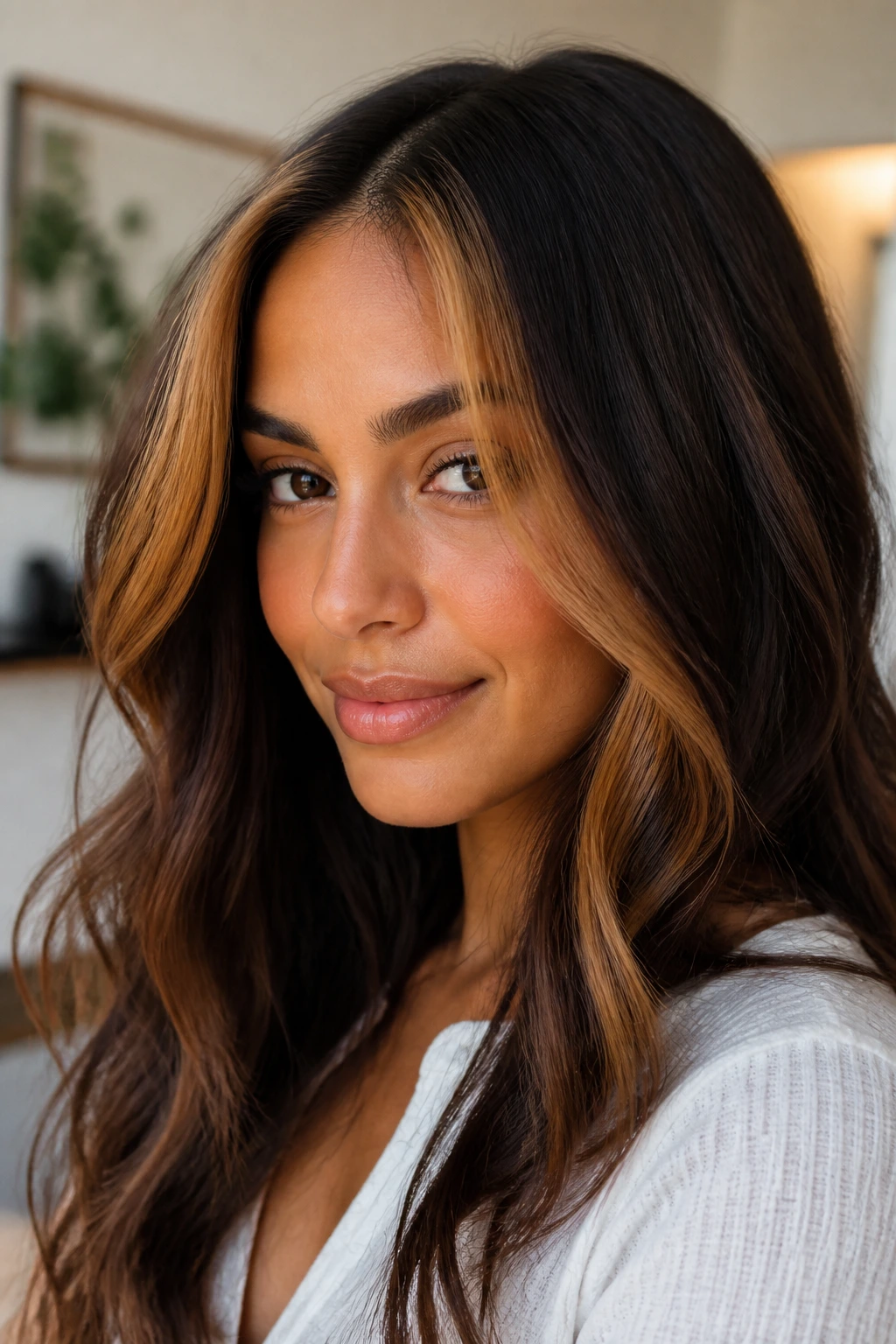
An amber money piece can do more for medium skin than a full head of highlights, and I mean that literally. One or two amber panels around the face pull the eye where you want it and bring warmth right up to the cheeks.
The useful part
Keep the rest of the hair in a brunette or deep blonde base, then lift the front pieces just enough to show amber, not gold-orange. The goal is glow, not glare. This works especially well with curtain bangs or a soft, face-skimming layer because the color has something to fall over.
A strong money piece can feel trendy; a softer amber frame feels wearable. That’s the version I’d choose if you want the face to look lit but not overworked.
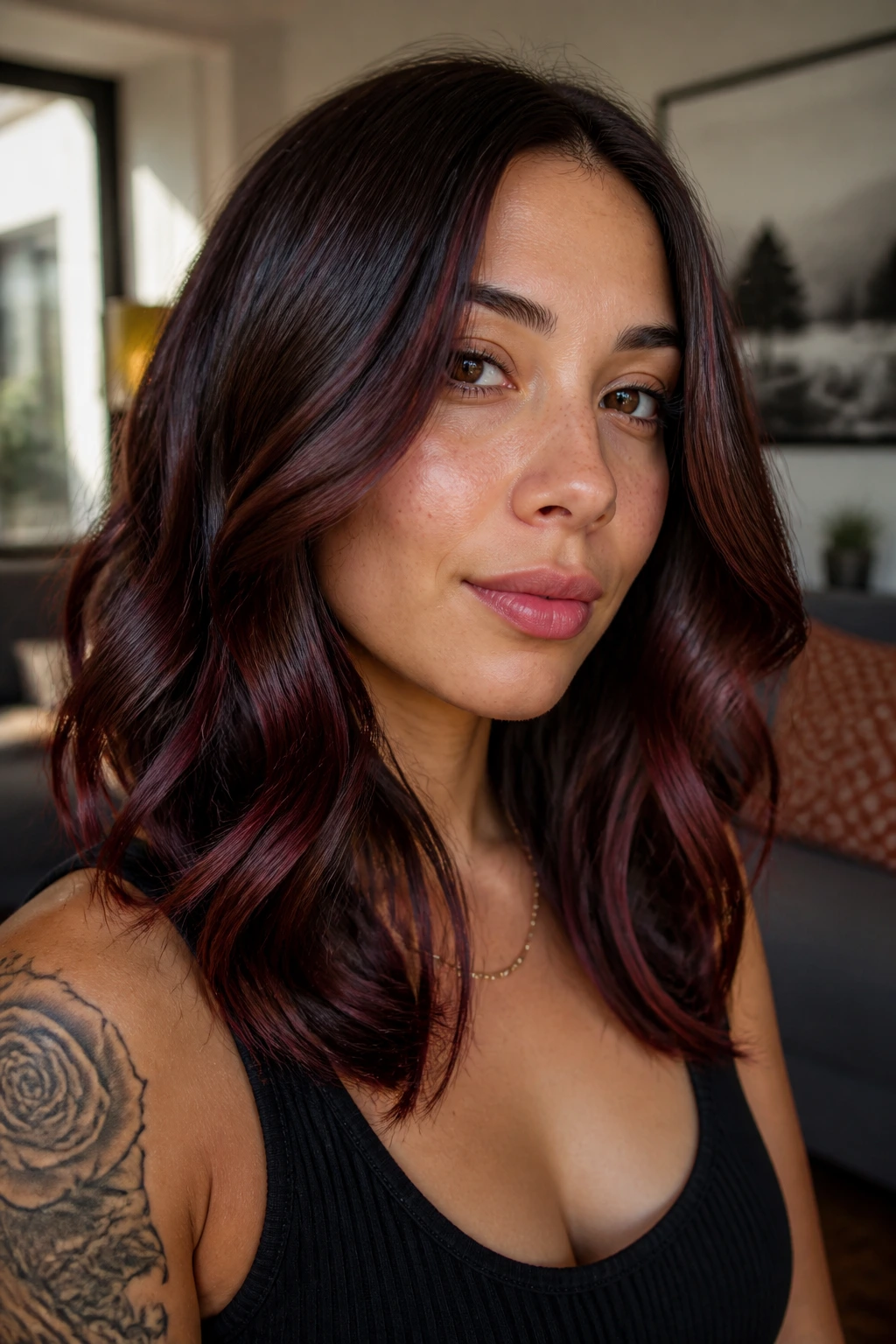
14. Mulled Wine Burgundy
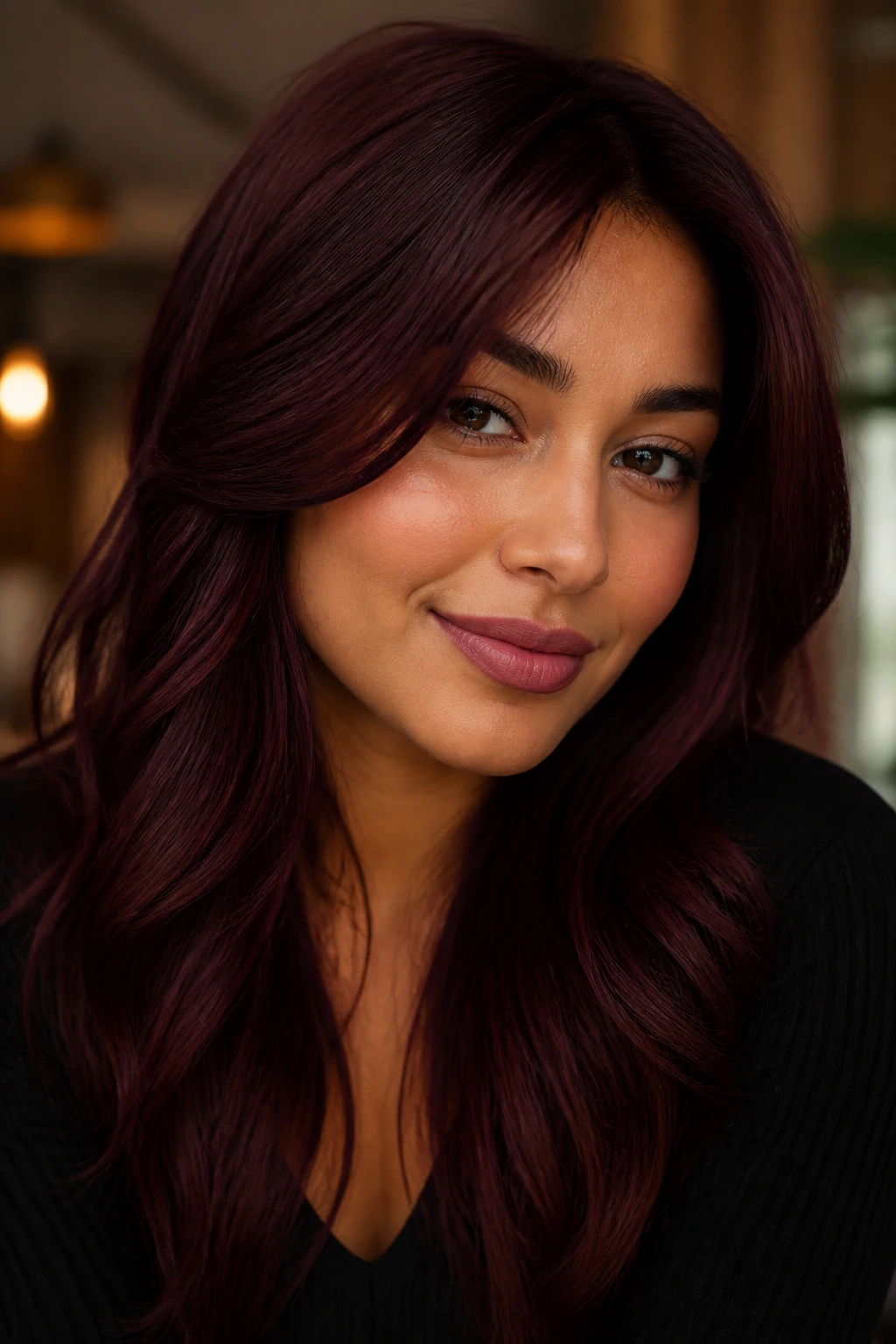
Mulled wine burgundy is moodier than cherry and less brown than mahogany. Think of red wine warmed with spice, then toned down enough to live on hair without looking theatrical.
Medium skin with cool or neutral undertones tends to wear this shade well because the wine notes give contrast. If you lean warm, keep the burgundy softened with brown so it doesn’t fight your complexion. The shine matters too. Burgundy looks cheap when it’s matte.
This is one of the few dark reds that can feel elegant on straight hair and dramatic on curls at the same time. The shape of the cut changes the mood, but the color does the heavy lifting.
15. Toasted Almond Blonde
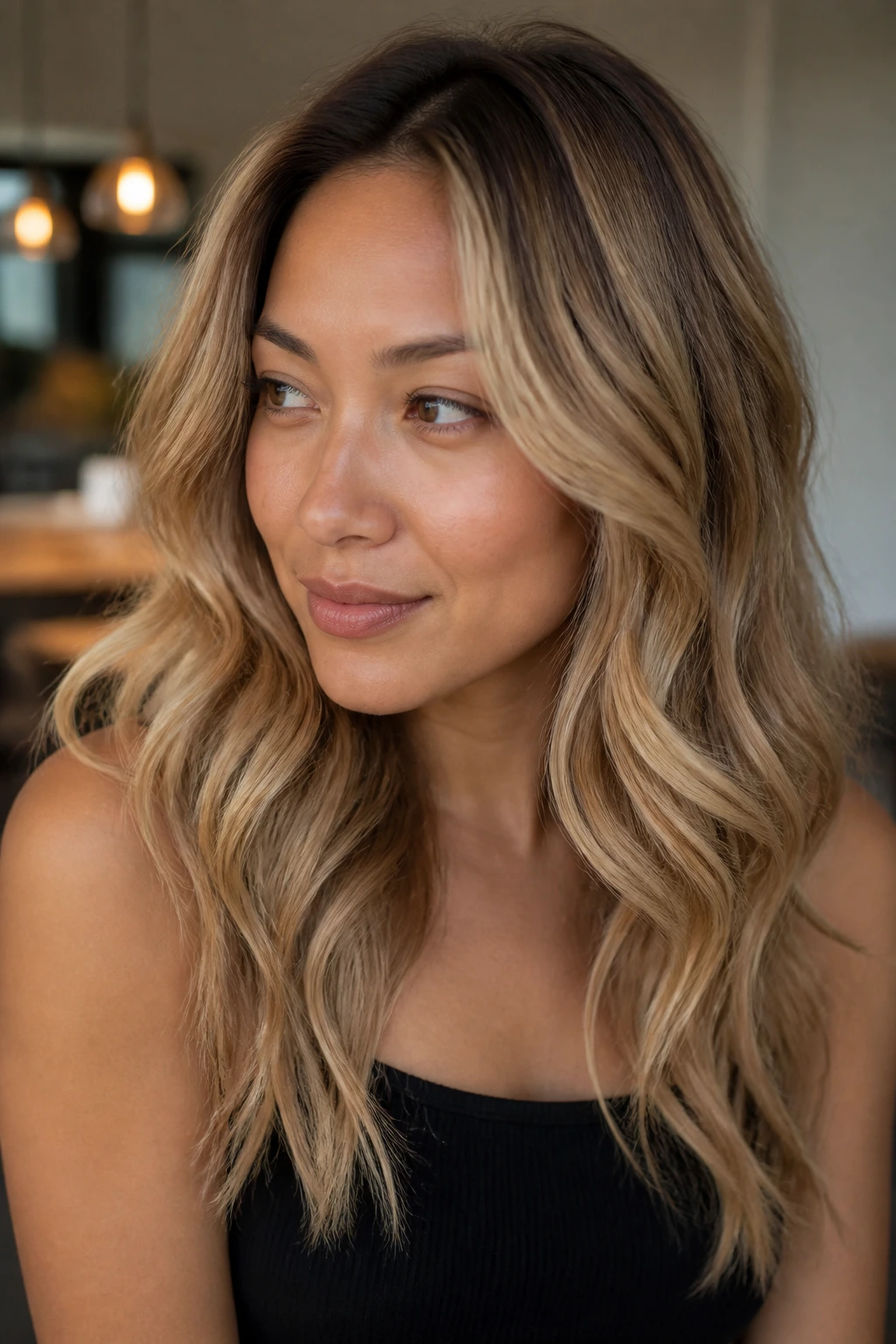
Can medium skin wear blonde in fall? Absolutely — if it’s toasted almond, not icy beige. The warmth needs to come from toast and cream, not silver and ash.
Why it works
Toasted almond blonde keeps a brunette root shadow and layers soft beige-gold through the mids. That gives medium skin a lift without making the face look bleached out. It’s a better choice than a bright platinum jump because it still belongs to the season.
This shade likes waves. A slight bend in the hair makes the almond tones read richer. On pin-straight hair, you’ll want more lowlight contrast so the blonde doesn’t go flat. Keep the toner warm. Too cool and the whole thing gets pale in a hurry.
16. Walnut Brown With Subtle Babylights
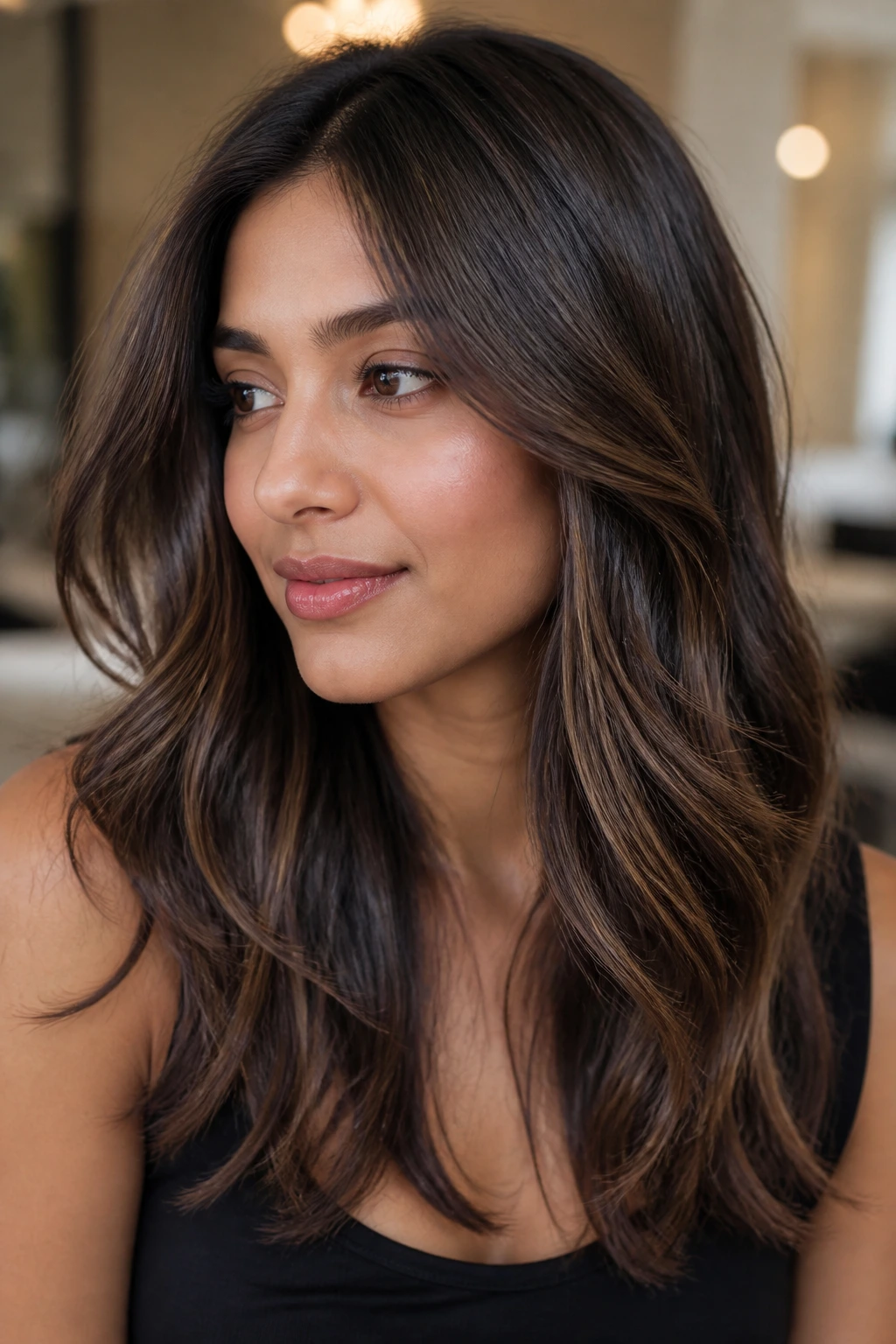
Walnut brown is the quiet overachiever of fall brunette shades. It has depth, but it doesn’t sit heavy. Add a handful of babylights — truly tiny ones, not chunky highlight strips — and medium skin gets enough movement to keep the face open.
Best part
Babylights should be woven thin enough that you notice the shimmer before you notice the stripe. That’s the whole point. Ask for cool beige or soft caramel strands depending on your undertone. Either way, the base should still read as walnut, with that soft nutty brown finish.
This shade is a favorite for people who want low contrast and low fuss. It grows out better than most blonding work, and it looks good even when the styling is lazy. Which, let’s be honest, happens.
17. Smoky Plum Brown
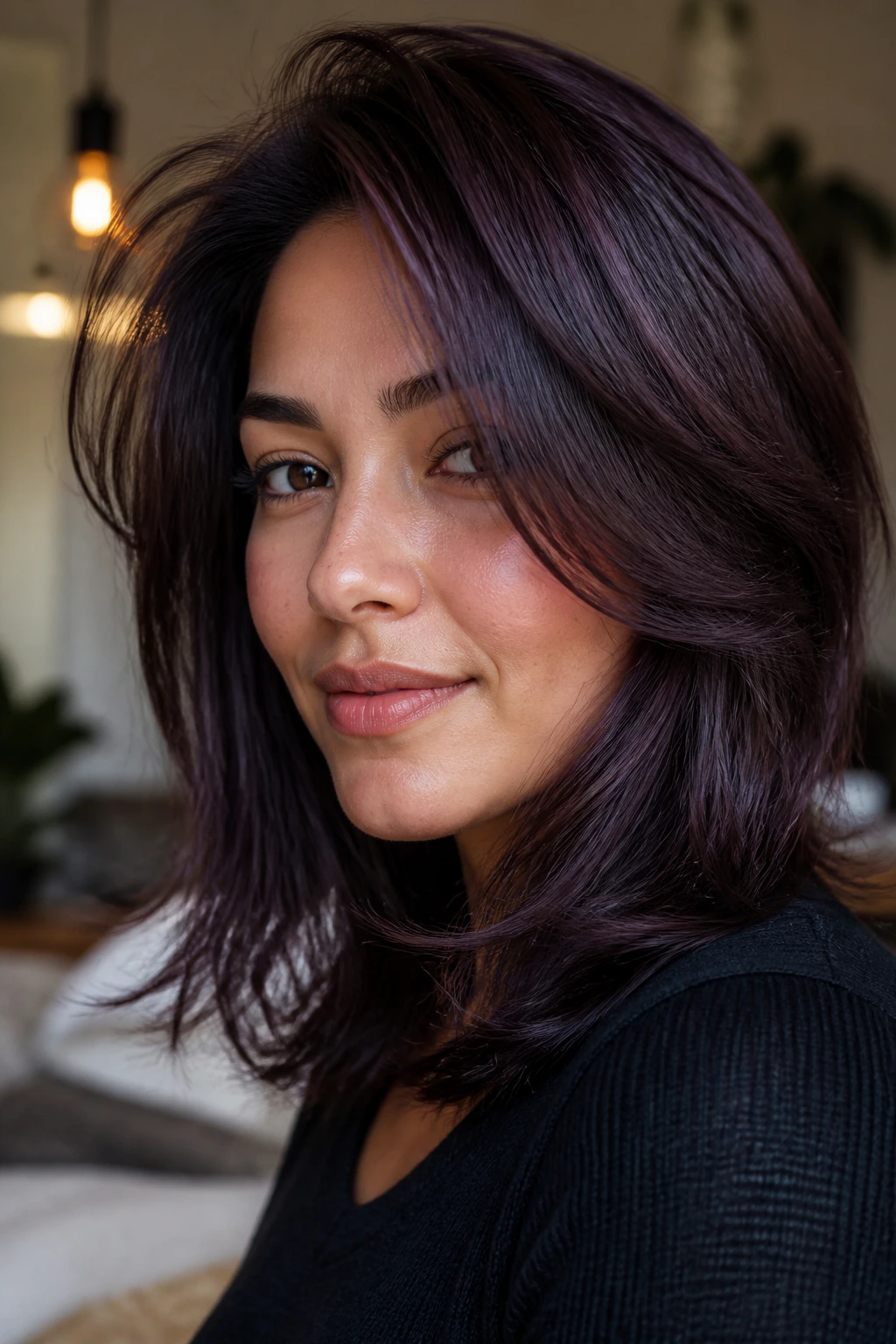
Smoky plum brown is one of the most underrated fall colors for medium skin, especially if your undertone leans olive. The plum adds depth and a faint cool edge, while the brown keeps it wearable.
The color should not scream purple. If it does, it has missed the point. You want a brown base with plum light reflecting through it — the sort of shade that looks nearly mysterious indoors and quietly dimensional outside. It’s especially good on layered cuts, where the color shifts as the hair moves.
If you’re bored with copper but not ready for burgundy, this is the lane to try. It has more attitude than chocolate and less maintenance than vivid red.
18. Sunlit Copper Balayage
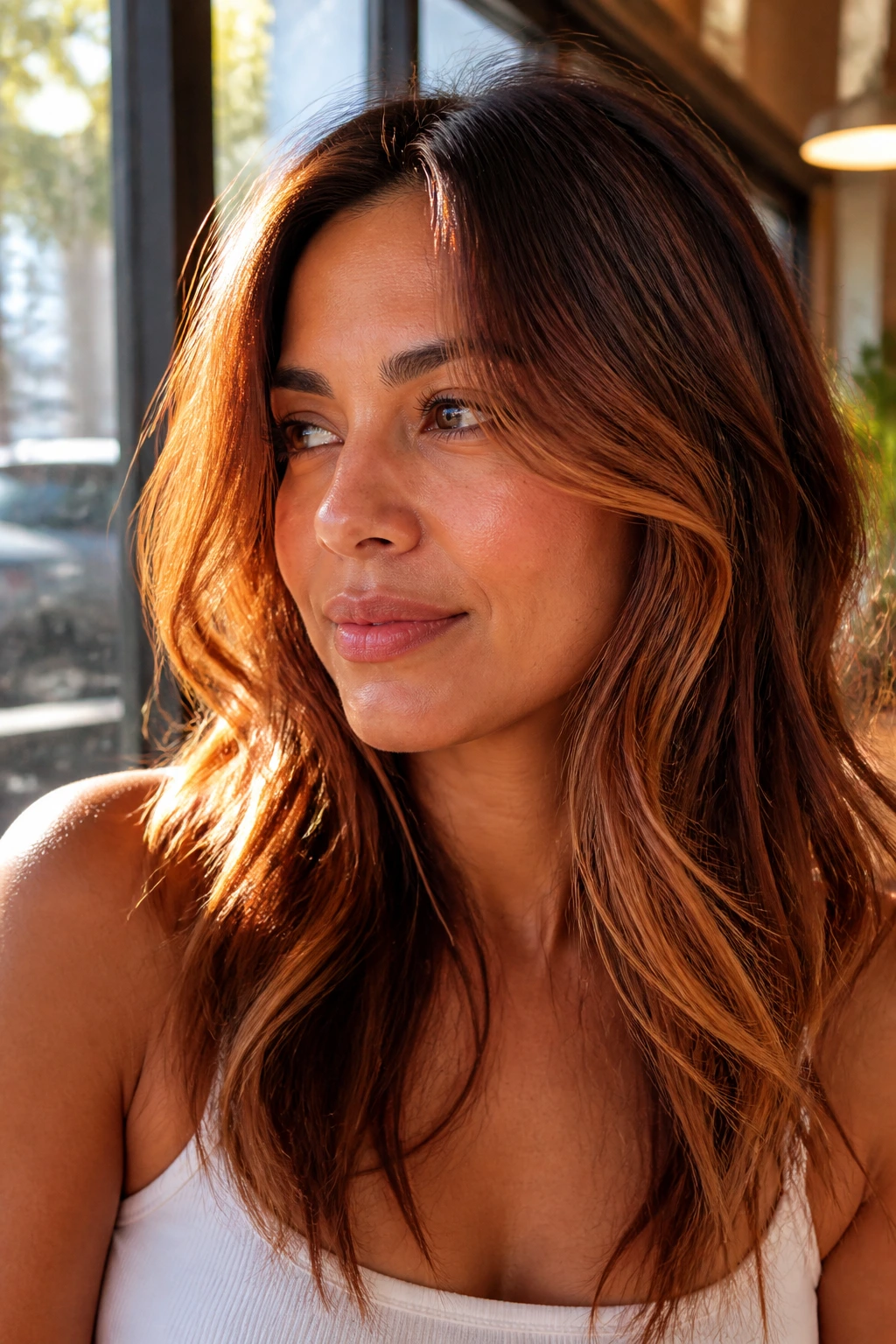
Sunlit copper balayage is the more open, lighter cousin of copper brunette melt. The difference is that the copper shows up in ribbons that sit a little higher and a little brighter, usually around the face and through the outer layers.
Medium skin can carry this beautifully when the copper is balanced with brown at the root. Warm skin loves it. Neutral skin can wear it too, as long as the copper is softened with gold rather than pushed into neon territory.
The thing I like here is movement. When hair swings, the copper catches light in flashes instead of sitting there politely. That makes the color feel alive. It also means you should book a gloss refresh before it gets dull — copper goes flat fast when ignored.
19. Mocha Melt
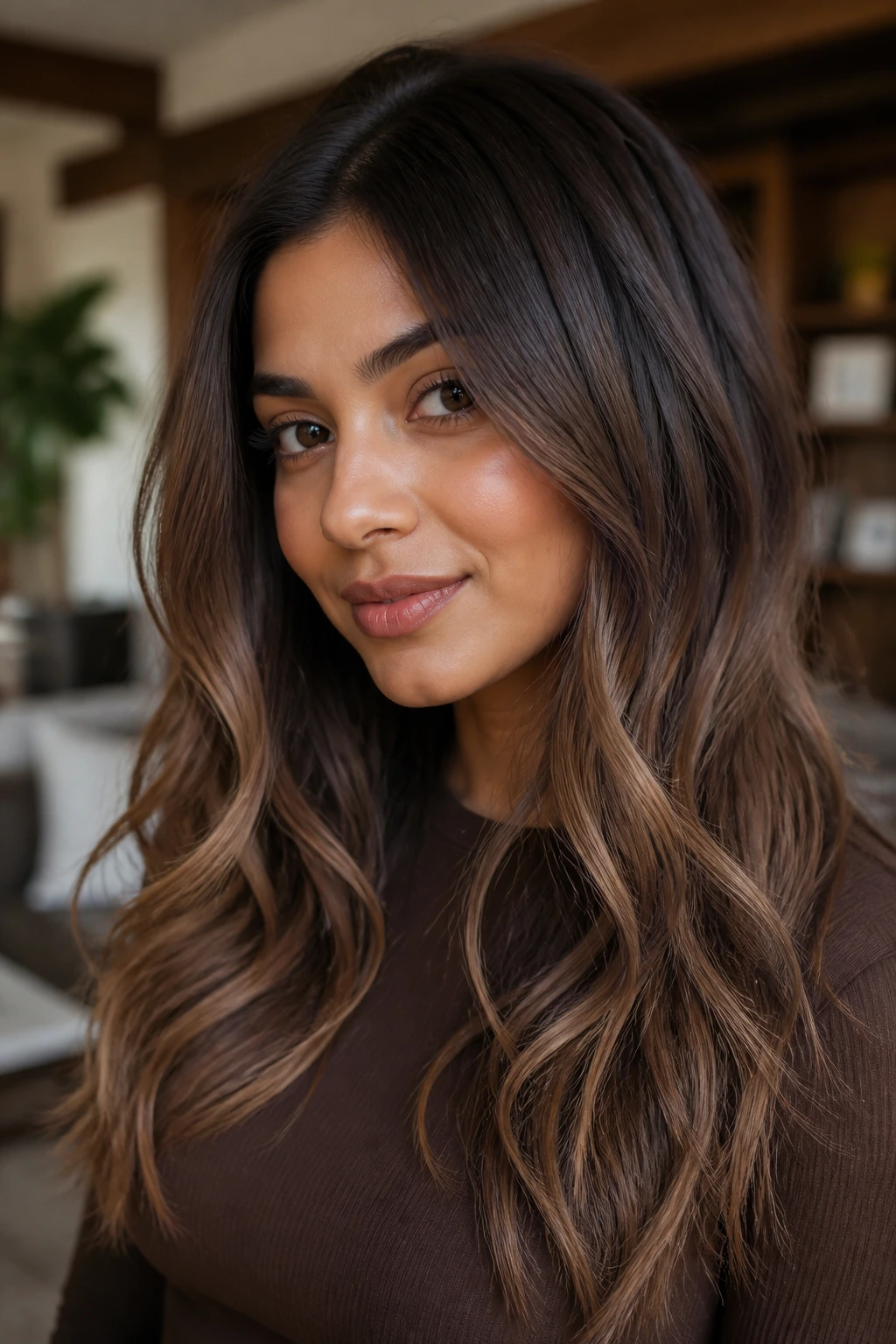
Mocha melt is for the person who wants depth, shine, and a little softness at the same time. The color moves from a darker root into a milkier, more blended brown through the mids, then settles into a richer mocha at the ends.
Unlike a hard ombré, a mocha melt keeps the transition blurred. That’s why it works so well on medium skin. There’s no chunky line to interrupt the face, just a smooth shift that feels expensive without being precious.
This is also one of the better options if your hair is fine. Too much highlight can make fine hair look threadbare. A mocha melt gives you dimension without exposing every strand.
20. Burnt Caramel Ombré
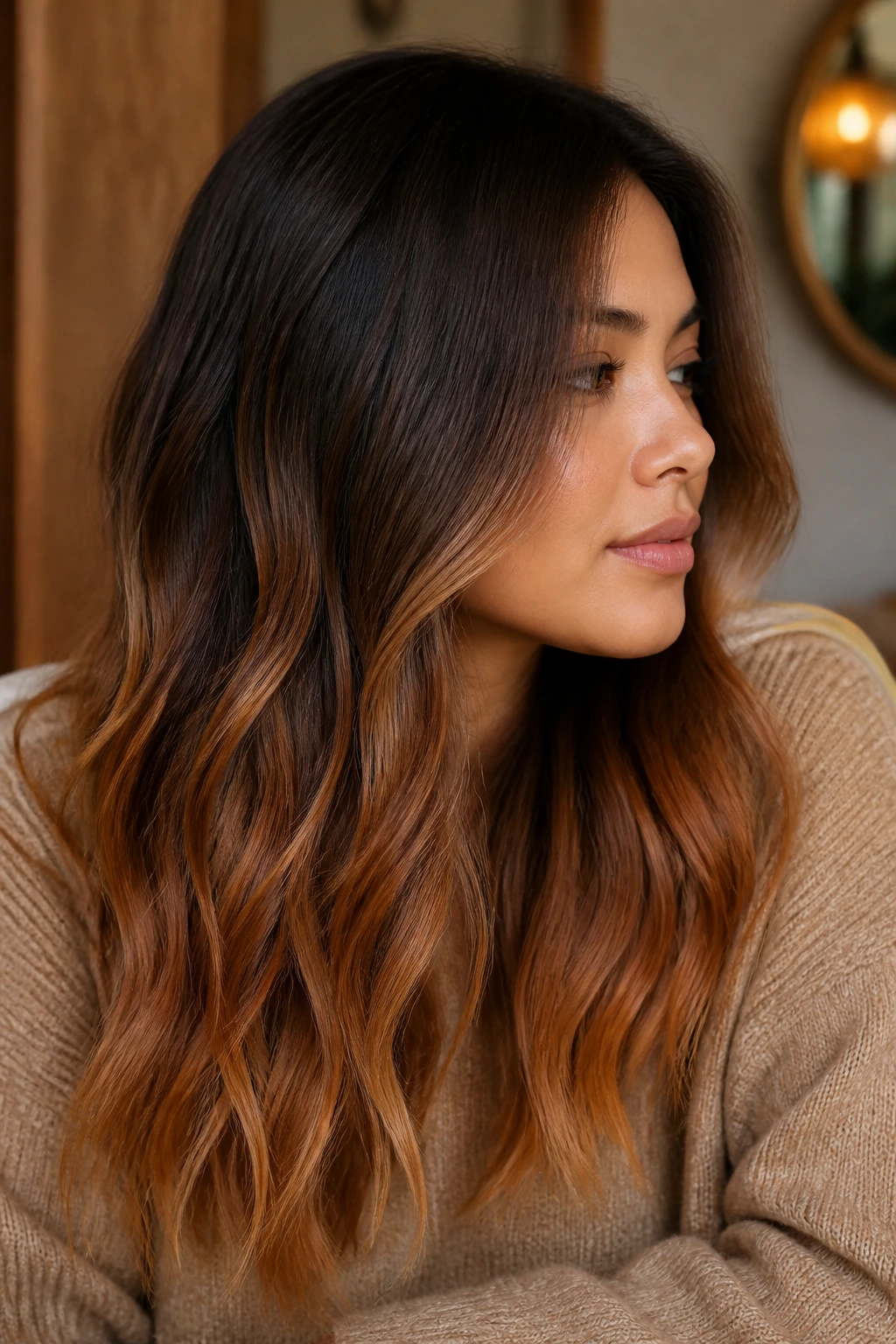
Burnt caramel ombré is richer than a classic caramel fade and a lot more fall-appropriate. The roots stay dark, then the color opens into a burnt caramel tone through the ends — warm, toasted, and a little deeper than regular honey.
How to wear it
It looks best on medium-length or long hair where the gradient has room to breathe. Curls and waves help, too, because they break up the fade and keep the ombré from reading as a block. If you wear it straight, keep the transition soft and the end tone creamy.
Medium skin likes this color because the warmth tends to concentrate where the eye already goes: around the face and at the bottom edges of the hair. It’s flattering without asking for much back.
21. Deep Rose Brown
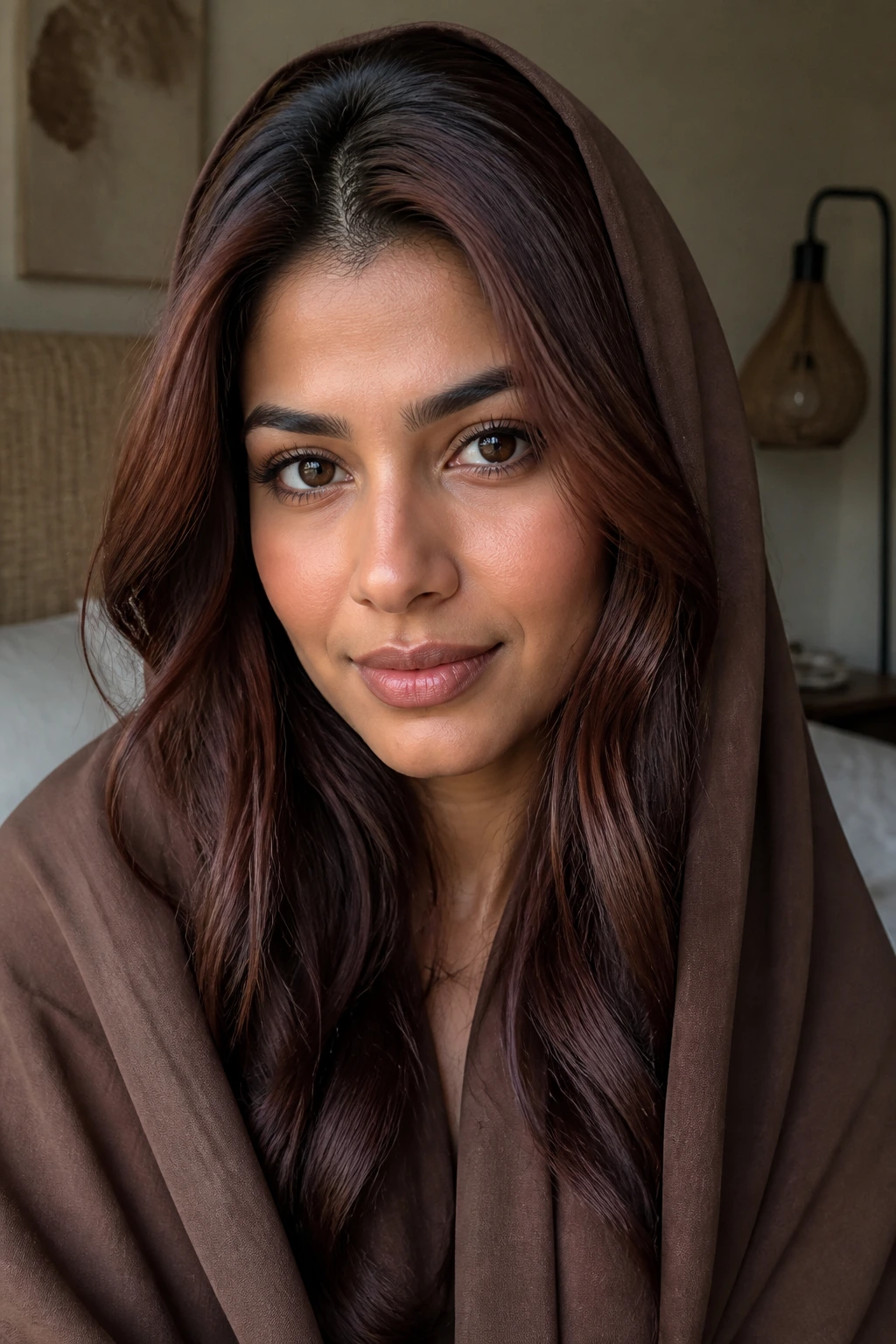
Deep rose brown is the graceful answer to anyone who wants red but does not want pumpkin or copper shouting from their head. The rose tone sits under a brown veil, so the color feels softer and more mature.
Medium skin with neutral or cool undertones tends to wear this especially well. The rose brings a little life to the complexion without washing it out. I’d keep the saturation moderate rather than intense. Too much pink and the shade loses its depth.
This one has a nice trick in low light. It reads nearly brunette. Then the rose wakes up in daylight. That shift is what makes it interesting.
22. Cocoa Espresso Melt
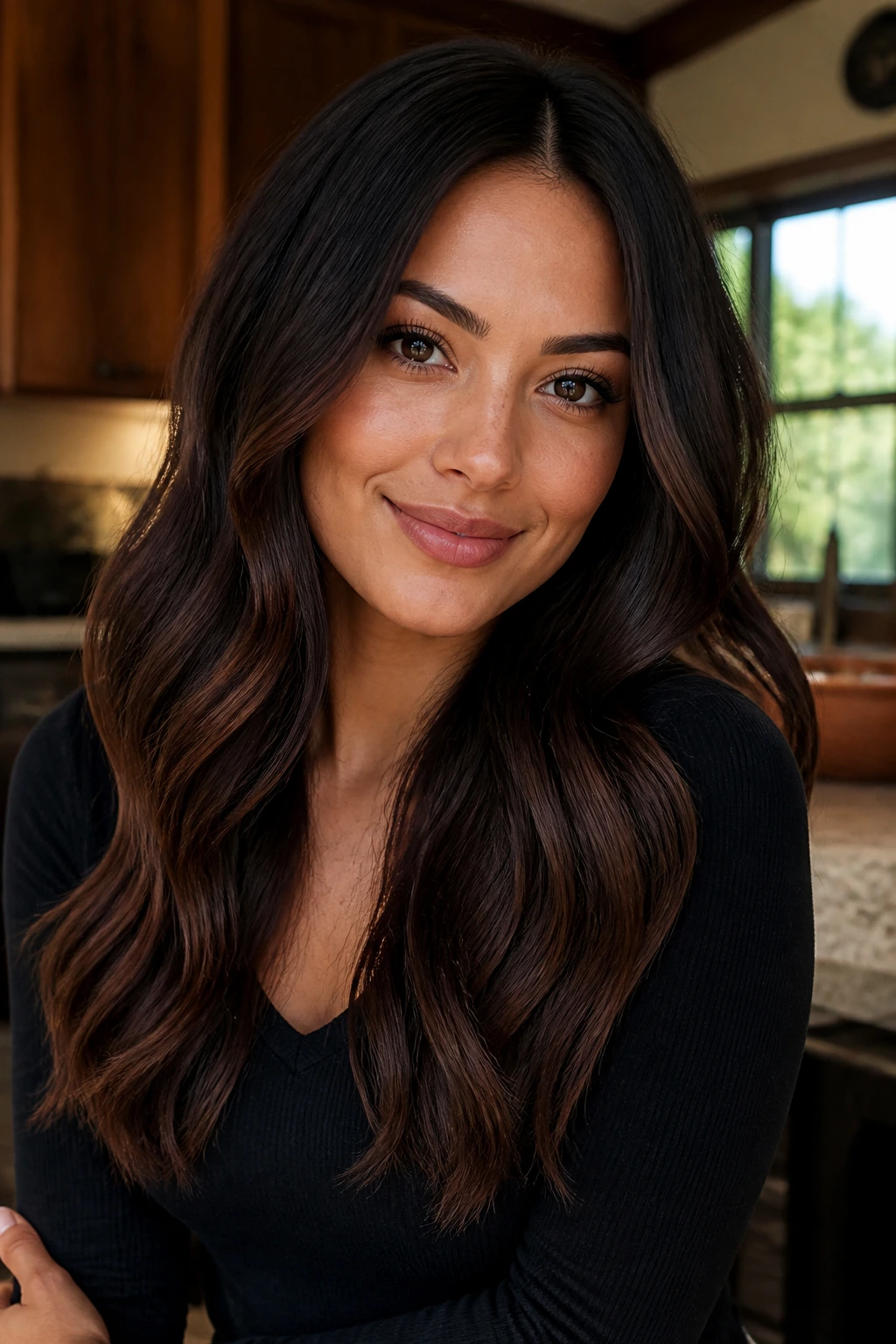
Cocoa espresso melt is one of the easiest fall updates to wear if you’re not interested in a dramatic transformation. The root sits in deep espresso territory, then softens into cocoa through the mids, which keeps the whole look glossy and dimensional.
For medium skin, this works because the shades stay brown but not black. That difference matters. Black can make medium skin look harder or even a little tired, especially if the undertone is warm. Cocoa keeps the softness while still giving you depth.
This is a strong choice for someone who wants the least maintenance possible without giving up richness. A quarterly gloss can keep it from looking stale. That’s about all it asks.
23. Ginger Spice Copper
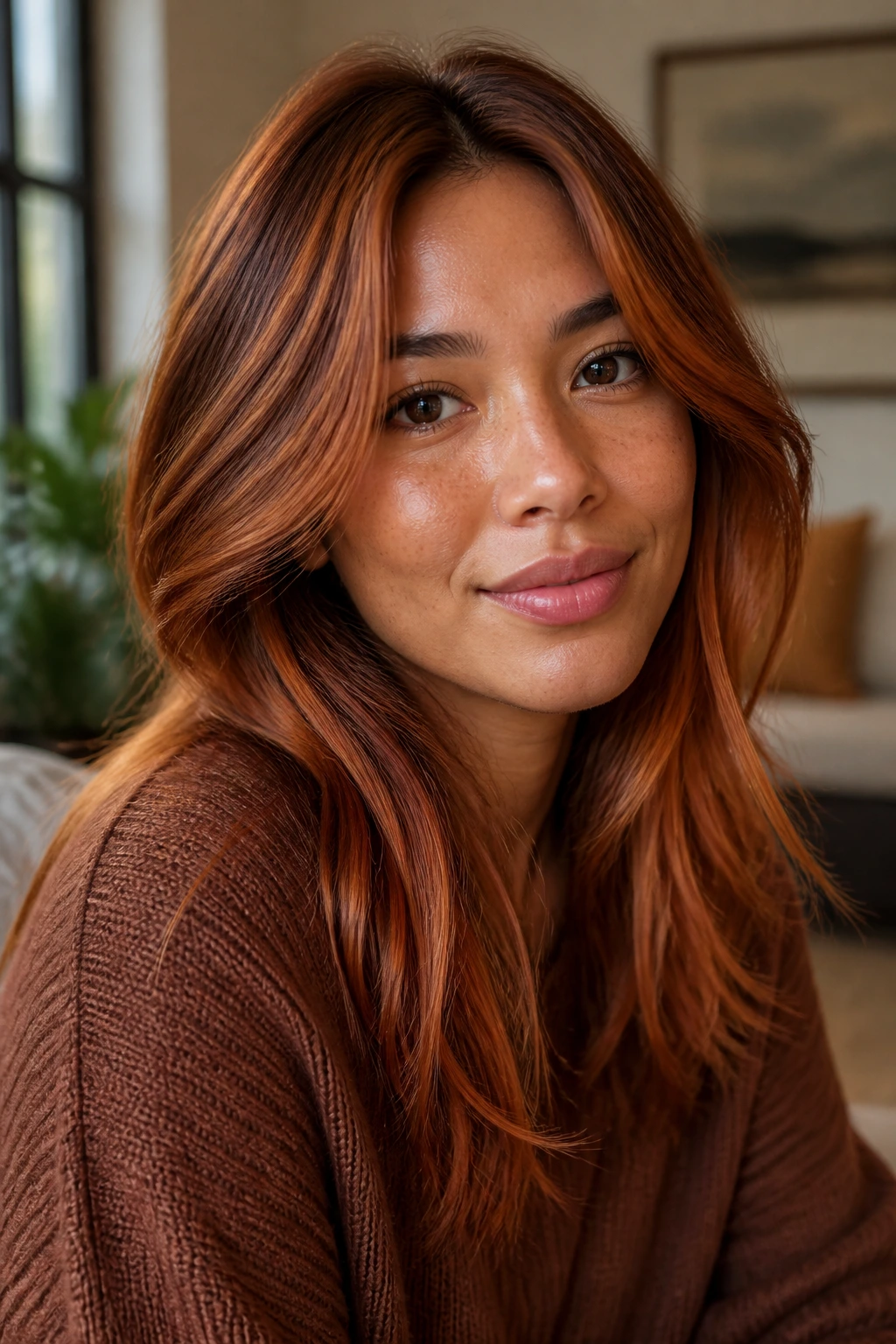
Ginger spice copper has more lift than deep auburn and less restraint than chocolate cherry. It’s lively, but it shouldn’t be loud. The ginger note should sit inside a darker base so the color feels like a fall spice, not a warning label.
The right way to do it
Start with brown or dark blonde roots, then let ginger copper show up through the mids and ends. If your skin is medium and warm, this can be a beautiful fit. If you lean cool, soften it with a more muted cinnamon gloss so the hair doesn’t take over your face.
This shade shines around the eye area. Hazels, gold-brown eyes, and warm brows make the whole thing sing. On very straight hair, keep the layers soft so the color has movement.
24. Autumn Blonde With Root Shadow
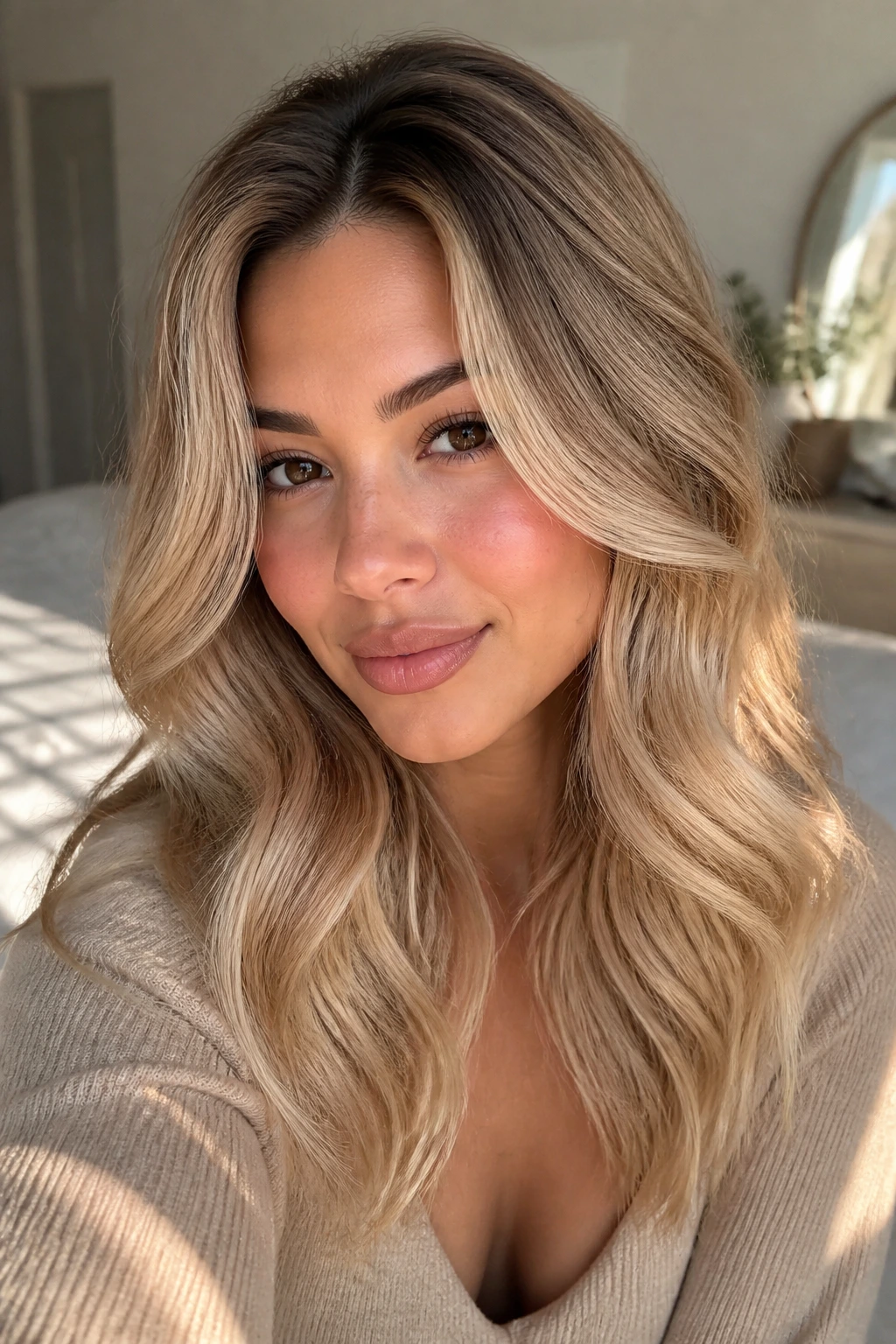
Autumn blonde is the answer for someone who does not want to give up blonde just because the leaves change. The root shadow keeps the base grounded, while the blonde sits in a toasted, slightly beige lane instead of bright summer yellow.
On medium skin, this reads better than icy blonde almost every time. The root shadow gives the skin a frame, and the warmer blonde keeps the complexion from going pale. If you spent the warm months lighter, this is the gentler shift back.
A few things to notice
- The blonde should look creamy, not brassy
- The root shadow should be soft, not harsh
- The grow-out line should blur at the part
- It pairs well with waves, curls, and lived-in blowouts
This is one of those shades that looks more natural in motion than it does on a swatch. That’s a good sign.
25. Black Cherry Brown
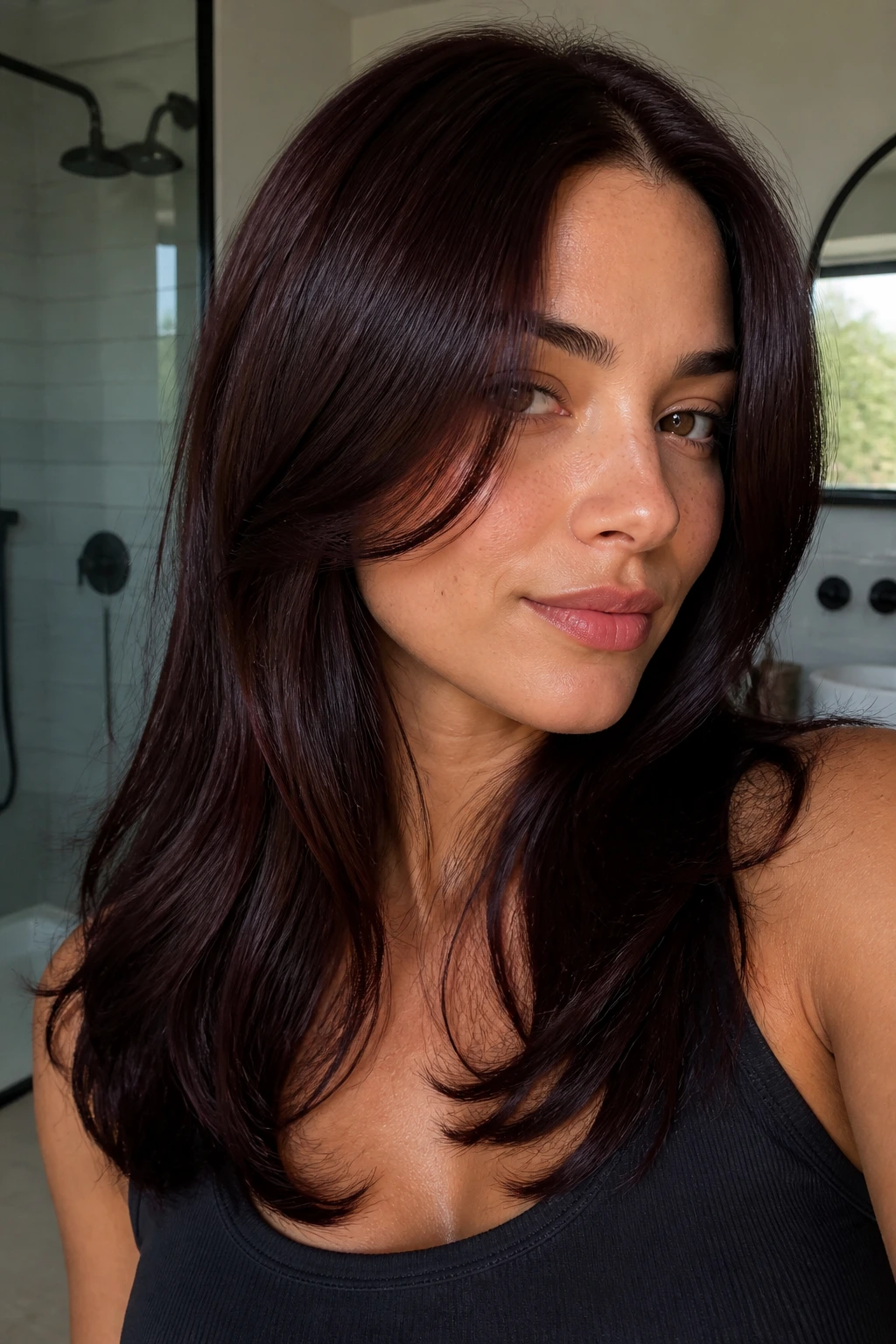
Black cherry brown is the boldest dark color in this mix, and I mean that in a good way. It gives you almost-black depth, then slips a cherry tone through the finish so the hair doesn’t disappear into one note.
Medium skin can wear this because the cherry keeps the darkness from looking severe. If your brows and lashes are dark, the whole look can feel very pulled together. If your features are lighter, ask for a few soft face-framing pieces so the color doesn’t sit too heavily.
This shade looks best when it shines. Gloss matters. A lot. Without it, black cherry can go flat. With it, the color has that slick, almost berry sheen that makes people look twice.
How to Choose the Right Tone Without Guessing at the Mirror
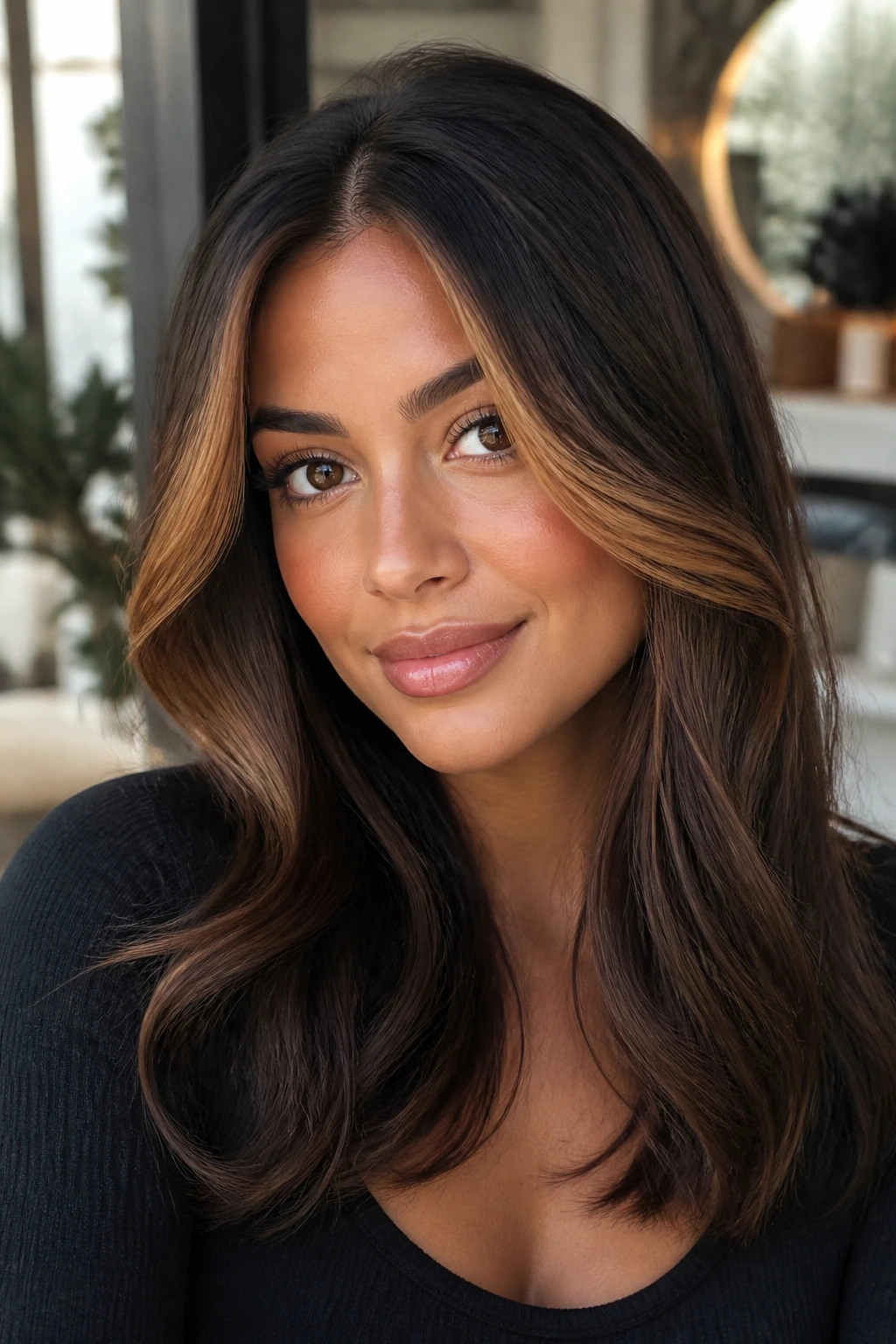
The fastest way to pick a flattering fall shade is to stop staring at skin depth and start looking at undertone, brow color, and how your hair already behaves in light. Medium skin with gold or peach undertones usually likes chestnut, maple, copper, amber, and toffee. Olive skin often wakes up around mushroom brown, smoky bronze, mocha, and smoky plum. Neutral skin gets the widest lane of all — honestly, it can wear almost every shade in this list as long as the placement is soft.
Brow color gives away more than people think. If your brows are deep brown or nearly black, a darker fall shade with red or bronze dimension usually looks more natural than a very light blonde. If your brows are lighter brown, soft almond, bronde, or chestnut can keep the face from looking too heavy.
There’s also the issue of maintenance, and it’s not small. Coppers and burgundies fade faster. Smoky brunettes and root-shadow blondes hang on longer. If you hate salon visits, pick a shade with a deeper base and muted dimension. If you love gloss appointments and you don’t mind the upkeep, go bolder. No shame either way.
Cuts and Styling Moves That Make These Colors Read Right
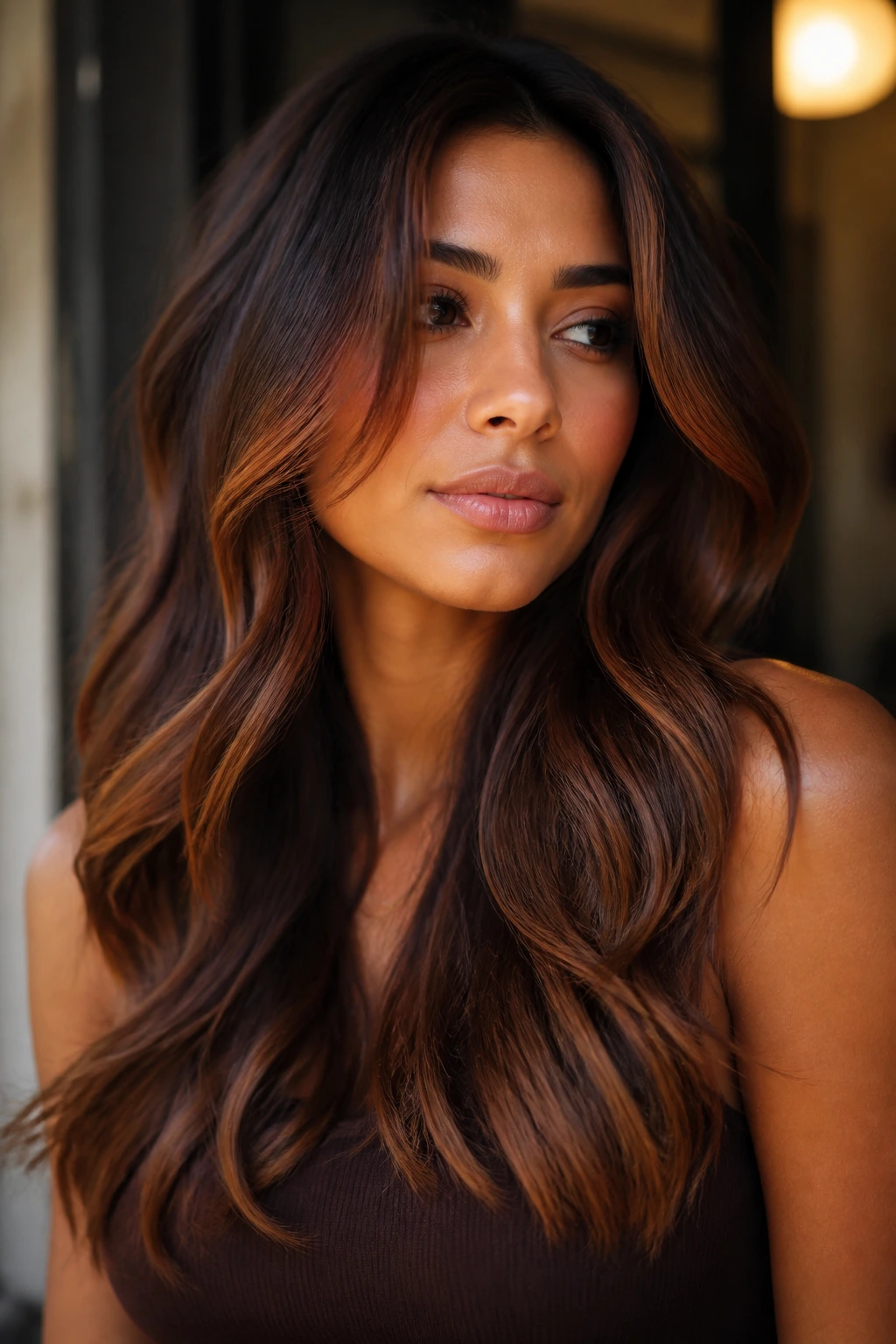
A color doesn’t live alone. It sits on a cut, and the cut changes the whole mood. Long layers make chestnut, copper, and toffee shades move in soft ribbons. A blunt bob gives espresso, mocha, and black cherry a sharper edge. Curtain bangs are especially good with money pieces and amber frames because they create a little motion right where the light hits.
Waves help most of these shades. Not beachy chaos — that’s tired — but a loose bend through the mids and ends so the highlights catch at different angles. If you wear your hair straight, lean into gloss and dimension instead. A straight, shiny chestnut brown can be gorgeous, but it needs a good tonal difference so it doesn’t go flat.
Best styling pairings
- Loose waves: for balayage, copper, and bronde
- Blunt cuts: for espresso, mocha, and black cherry
- Curtain bangs: for amber money pieces and root-shadow blondes
- Air-dried texture: for mushroom brown and smoky bronze
A final note: if your color has warm dimension, a shine spray or light oil on the mids and ends helps the tone show up. Dry hair eats color. Dull hair makes even the best shade look tired.
Essential Tools and Consultation Notes
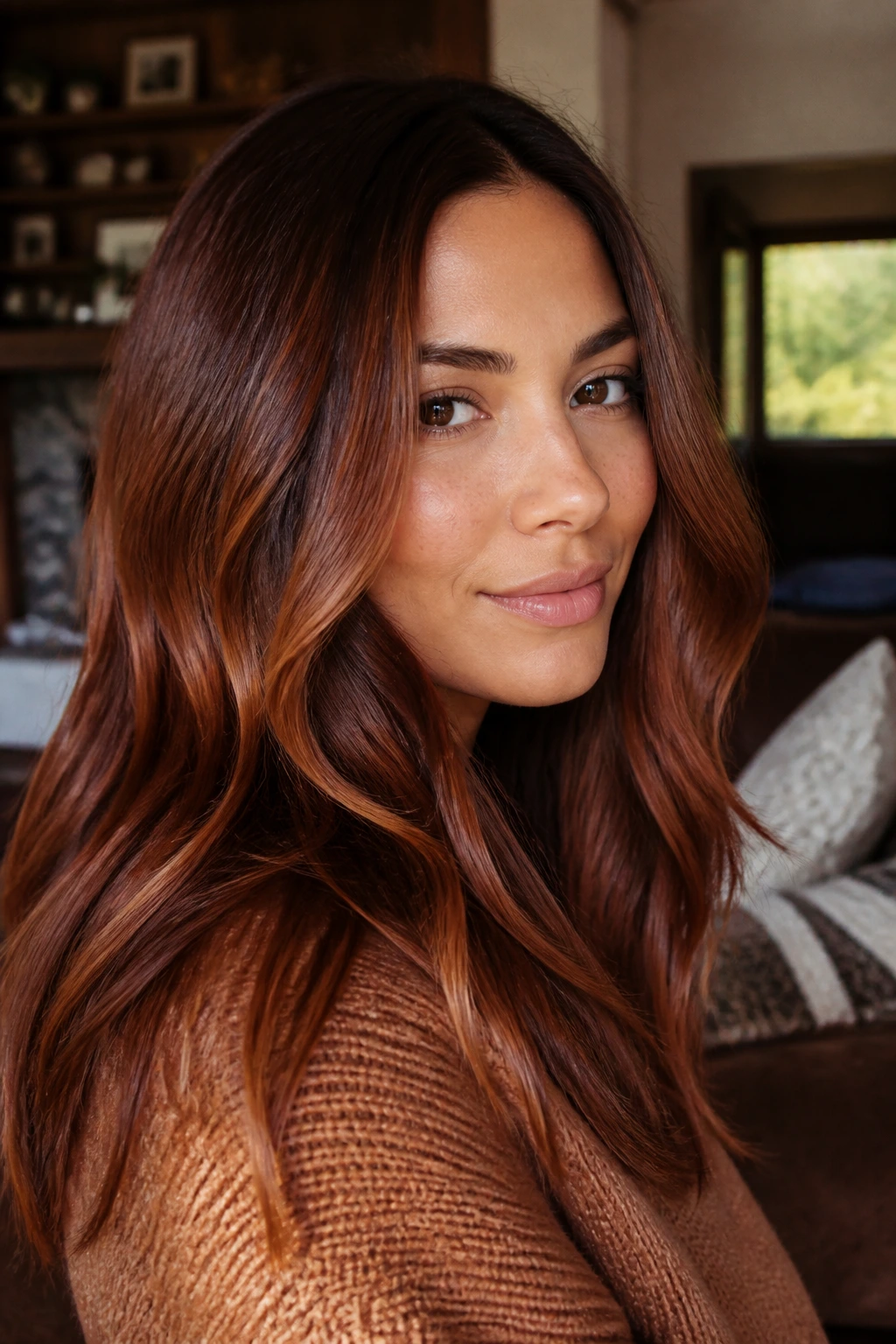
- A phone full of reference photos: bring 3 to 5 pictures, not 20; the goal is to show tone, not build a collage.
- A mirror near natural light: bathroom bulbs lie, and they lie with confidence.
- Color-safe shampoo and conditioner: the less sulfates and harsh stripping, the longer your fall tone keeps its shape.
- Heat protectant spray: copper and red tones fade fast when your hair gets toasted on a hot tool.
- A weekly gloss or color-depositing mask: useful for red, copper, plum, and brown shades that need a nudge between appointments.
- A wide-tooth comb: less breakage, less color loss from rough detangling.
- A silk or satin pillowcase: optional, but it helps reduce friction and keeps the ends from looking frayed.
If you’re heading to a salon, the best resource is a clear conversation about level, undertone, and maintenance. Say whether you want low upkeep or visible change. That sentence saves everyone time.
Additional Tips for Making the Shade Work Harder
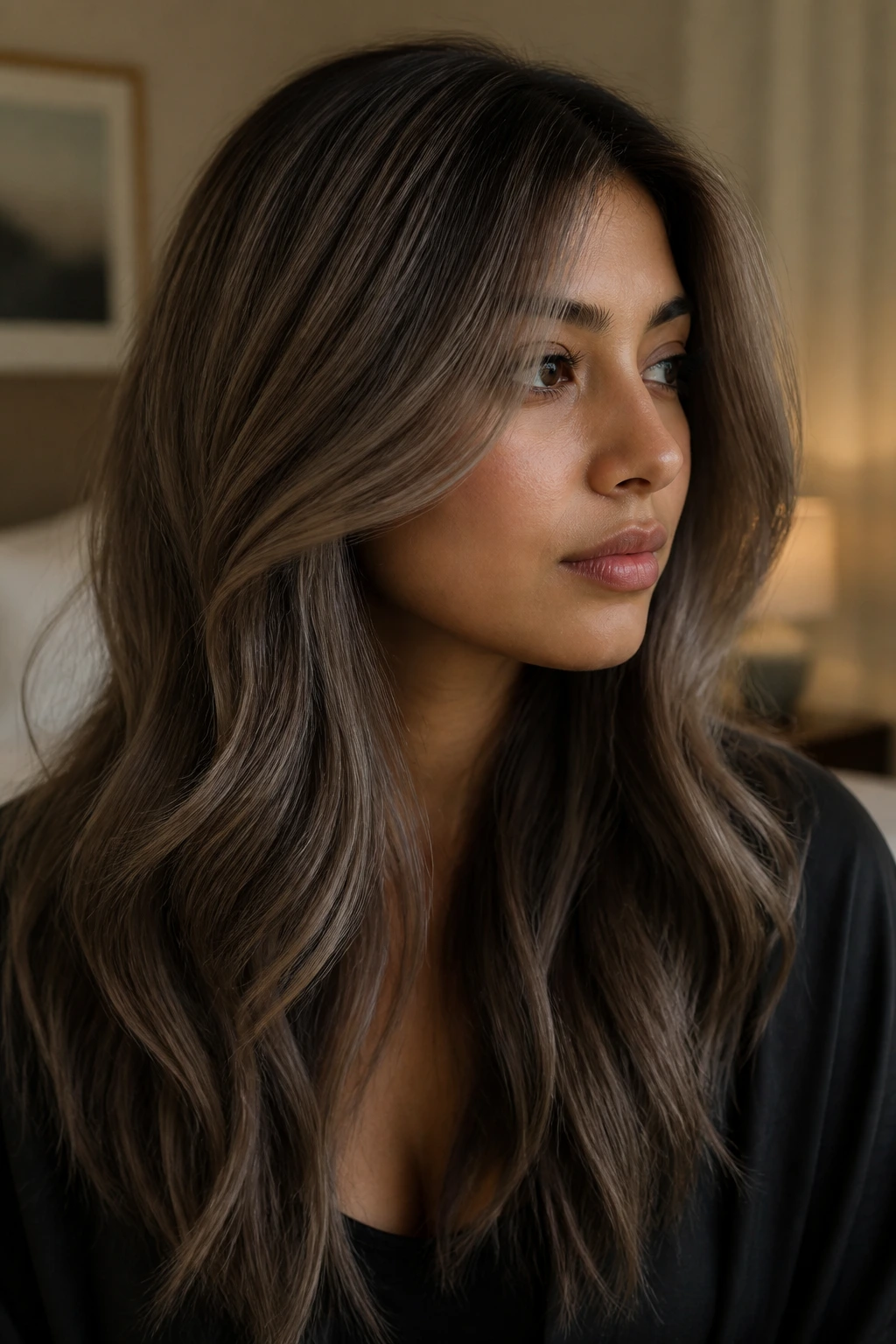
Undertone Match: If your skin leans golden, ask for warmth in the gloss and avoid overly gray toner. If you lean olive, ask the colorist to keep brass under control and build in smoky beige or mushroom pieces instead.
Placement: The front of the hair does more work than the back. A small face frame, a soft root melt, or a few brighter ribbons around the cheekbones often changes the whole reading of the color.
Glossing: A clear or tinted gloss every 6 to 8 weeks keeps brown and red tones from going dull. It also gives the hair that smooth, finished look that makes even a simple brunette feel deliberate.
Make-It-Yours: If you want low-maintenance color, stay in the brown family with small dimension. If you want stronger impact, move toward copper, cherry, or burgundy — but keep the base grounded so the color still belongs to medium skin.
Serving Suggestions: Pair richer shades with a haircut that moves: layers, bends, a soft fringe, or even a tucked-behind-the-ear bob. Flat, one-length hair can make even a lovely color look stricter than it needs to be.
How to Keep Fall Color Rich Between Salon Visits
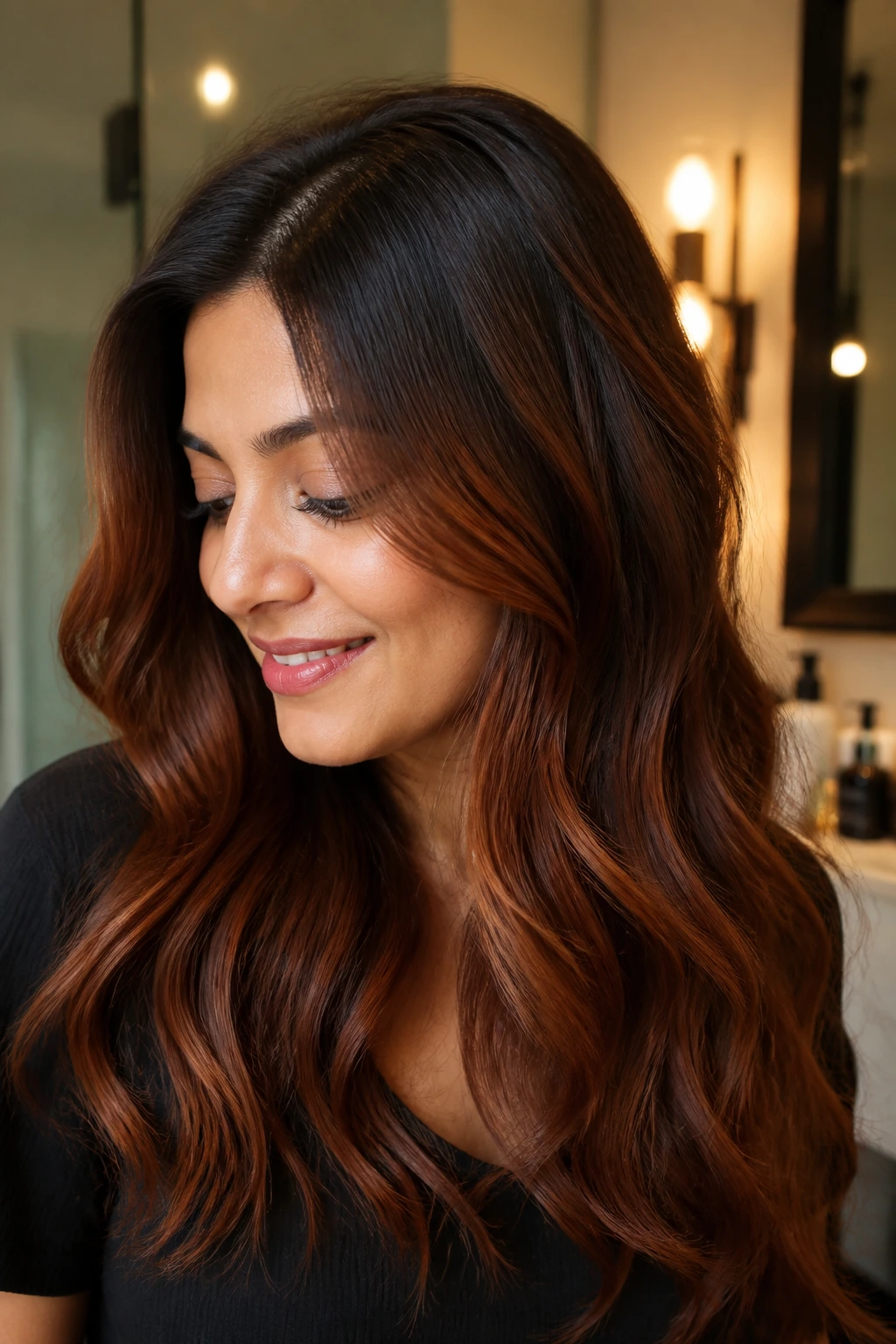
Color fades in a pattern, and once you notice it, you can work with it instead of fighting it. Red and copper shades fade first at the ends. Brunettes usually lose their shine before they lose depth. Blonded pieces get dull or slightly brassy if they’re washed hot or over-toned.
Wash less often if you can. Two or three times a week is kinder to most fall shades than daily shampooing. Use lukewarm water. Hot water strips gloss faster than people expect, and it opens the cuticle enough to let pigment escape. If you wear copper, auburn, or cherry, a color-depositing conditioner once a week can keep the tone from looking tired.
Maintenance by shade family
- Copper, auburn, burgundy: gloss or toner every 4 to 6 weeks
- Brunette melts and mushroom brown: refresh every 8 to 10 weeks
- Bronde and blonde-rooted shades: tone every 6 to 8 weeks
- Deep brunettes and black cherry: shine treatment every 4 to 8 weeks
Heat styling should come with protection. Every time. Not sometimes. The ends are the first place color goes thin, and that’s where flat irons do the most damage. If your shade relies on warmth, a cool finish spray or lightweight serum helps keep the cuticle smooth so the tone reflects instead of disappearing.
Variations and Adaptations to Try
Soft Focus Fall: Take any brunette here — chestnut, mocha, walnut — and swap crisp highlights for whisper-thin ribbons. This suits someone who wants movement but hates visible stripes. It also grows out like a dream.
Warm Skin Glow-Up: If your medium skin leans golden or peach, shift mushroom brown or smoky plum toward beige, cinnamon, or bronze. You still keep dimension, but the warmth sits closer to your natural undertone instead of fighting it.
Cool Olive Adjustment: Olive medium skin often looks best with smoke, taupe, plum, burgundy, and cool mocha. Keep copper out of the driver’s seat and use it as a small accent if you want a little sparkle.
Low-Maintenance Grow-Out: Choose a deeper root with soft balayage ends — think bronde with shadow root, cocoa espresso melt, or walnut babylights. These shades buy you more time between salon visits and still look intentional when they grow.
Bold Spice Version: If you want more personality, push chestnut toward copper, maple toward auburn, or chocolate brown toward cherry. Keep one element dominant and the other as support. The best bold fall colors still have a base that feels wearable.
Common Mistakes That Flatten Medium Skin
The first mistake is going too flat. A single dark brown can look clean in the chair and lifeless two blocks later. Medium skin usually needs some movement — even a little gloss variation, a root shadow, or face-framing brightness.
Another one: choosing a tone that ignores undertone. Ash brown on warm golden skin can make the face look tired. Bright copper on very cool medium skin can look disconnected. Neither is wrong on paper. They’re wrong on the head.
What else goes sideways
- Too much contrast at the front: a money piece that’s several levels lighter than the base can look striped instead of soft.
- Ignoring maintenance: reds and coppers fade faster than brunettes; if you hate upkeep, pick a deeper family.
- Letting toner go muddy: a color that was once smoky can turn dull if the ash is overdone.
The fix is usually smaller than people think. Softer placement. Better gloss timing. A shade that sits one step closer to your actual undertone. Hair color rarely fails because it’s too subtle. It fails because it’s trying too hard.
Frequently Asked Questions
Can medium skin wear blonde in fall without looking washed out?
Yes, if the blonde is rooted and warm enough to support the face. Toasted almond, autumn blonde, and bronde with shadow root tend to work better than icy beige or platinum, which can pull the complexion pale.
What’s the safest fall color if I’m nervous about a big change?
Chestnut brown with cinnamon ribbons or mocha melt. Both add dimension without forcing a dramatic contrast line, so the result feels like a refined shift instead of a color overhaul.
Do copper shades work on olive skin?
They can, but the copper should stay muted and grounded. Olive skin usually looks better with copper tucked into a brunette base, not loud orange placed everywhere.
How often do red tones need refreshing?
Usually every 4 to 6 weeks if you want them to stay lively. Red pigments fade faster than brown ones, and the ends go first. A color-depositing mask can stretch the timing a bit.
What if my hair is fine and easily looks flat?
Choose a shade with dimension rather than a solid all-over color. Babylights, shadow roots, and melts add movement without exposing too much scalp or making the hair look sparse.
Can I get these colors if I cover grays?
Yes, but the best choice depends on how much gray you have and how much contrast you want. Deeper brunettes, mocha, walnut, and chestnut usually blend grays more softly than lighter blondes or vivid reds.
Should medium skin go warmer or cooler for fall color?
Neither by default. Match the shade to your undertone and hair goals. Warm medium skin often loves copper, maple, and toffee; olive and neutral skin can wear mushroom, plum, mocha, and burgundy with ease.
What if the color turns brassy too fast?
The toner was probably too warm for your base, or your wash routine is stripping it. Use cooler water, reduce shampoo frequency, and ask for a gloss that balances rather than pushes extra gold.
The Shade You’ll Actually Wear
The prettiest fall shade is not the one that looks loud on a swatch card. It’s the one that makes medium skin look clearer, the brows look richer, and the whole face feel a little more awake when you walk past a window. That can be a chestnut melt. It can be bronze. It can be plum, cherry, mocha, or a blonde with enough root shadow to keep its feet on the ground.
What matters most is balance. A good color for medium skin has enough warmth or coolness to match your undertone, enough dimension to keep the hair moving, and enough depth to survive bad lighting. That’s the real test. If it still looks good under a grocery store fluorescent strip, you picked well.
If you’re sitting with a screenshot of three shades and one of them keeps pulling your eye, trust that. Then refine it. That’s how the best color choices usually happen — not by chasing the boldest option, but by choosing the one you’ll keep liking after the first week, the second wash, and the first time the weather turns gray.