



Long curly hair can look like three different heads of hair in one week: huge and romantic after a good diffuser session, heavy at the roots if the shape is wrong, and mysteriously shorter than the tape measure says when shrinkage kicks in. That’s exactly why hair transformations for long hair with curly hair are such a useful thing to think about. You do not need to chop everything off to make a real change. Sometimes the fix is a cleaner outline, a better part, or a style that lets the curls sit where they want to sit instead of being bossed around into submission.
I’ve always liked long curls best when they have a plan. Not a stiff, helmet-like plan. A shape plan. Curly hair needs room to breathe, but it also needs edges, layers, and enough restraint that the whole look doesn’t drift into triangle territory by lunch. The good news is that long curly hair is one of the easiest textures to transform without looking fake. A center part can suddenly feel sharp. A half-up twist can make the length look intentional. A cut that removes weight in the right place can make the same head of hair feel lighter and twice as lively.
And yes, shrinkage matters here. So does density. So does where your curls bend hardest—around the jaw, above the shoulders, or halfway down your back. Those little details change everything. A style that looks tidy on loose waves can collapse on tighter spirals, while a cut that looks too aggressive on fine curls can save a thick, thirsty mane from dragging itself flat by noon. The trick is choosing the transformation that works with your pattern, not against it.
Why These Transformations Earn Their Spot
-
Shape beats length alone: Long curly hair can look richer and more expensive when the outline is deliberate, not just long for the sake of being long.
-
Most of these ideas are low-commitment: A new part, a twist, a clip, or an overnight set can change the silhouette without a scissors appointment.
-
They respect shrinkage instead of fighting it: Styles that stretch, lift, or stack the curls make the length read better, especially on tighter patterns.
-
There’s something here for every curl type: Loose waves, springy ringlets, and dense coils all behave differently, so this collection doesn’t pretend one trick fits all.
-
Several of the looks protect the ends: That matters more than people admit. Long curly ends get dry fast, and tucked styles keep them from rubbing on sweaters, scarves, and car seats all day.
-
You can make the same hair look formal or relaxed: One style with a center part and clean edges can feel precise; the same curls in a pineappl e or side cascade can feel soft and undone.
1. Rounded Layers That Let Curls Stack Instead of Hanging
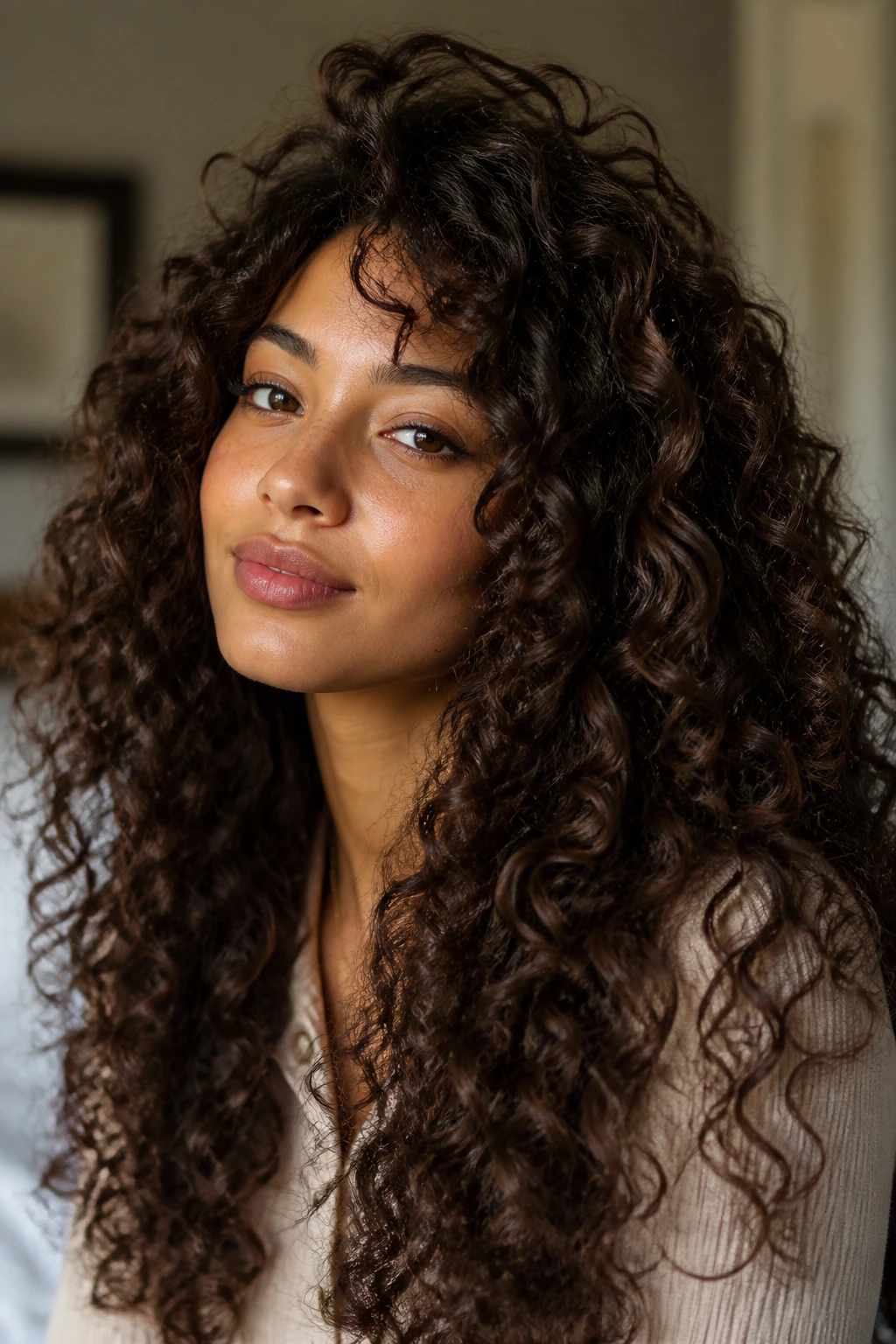
Rounded layers are the haircut I recommend to people who say their long curls look heavy, even when the hair itself is healthy. The shape is the point here. Instead of letting the length drop in one straight curtain, the layers build a soft dome, so the curls stack over one another and create lift from the middle instead of dragging everything down.
This transformation works best when the cut is done dry or nearly dry, because curly hair lies to you when it’s wet. Wet curls stretch, pull, and settle in ways that can hide the real outline. Dry cutting lets the stylist follow the actual curl pattern. If your ends look stringy or the bottom line makes the hair feel dense but tired, rounded layers can fix that fast.
Ask for a shape that keeps the bottom from becoming a shelf. You want movement, not a staircase you can see from across the room. The best version keeps the overall length, but gives the curls somewhere to sit.
2. Curtain Bangs That Split the Length at the Cheekbones
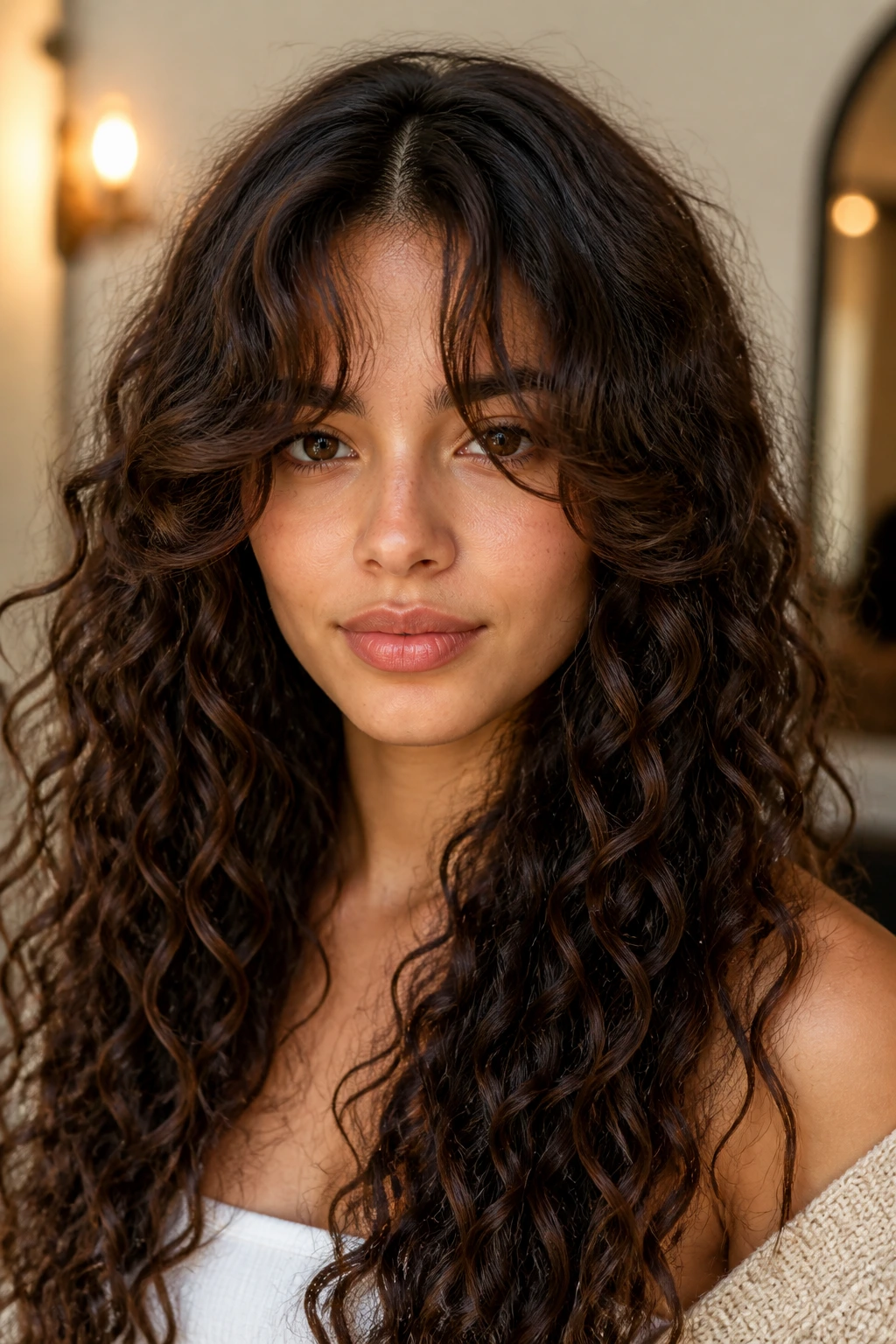
Curtain bangs on long curly hair can change the whole mood of a head of hair in about five seconds. They pull the eye upward, frame the face, and break up the heaviness that sometimes happens when curls are long and all one length. When they’re cut well, they don’t look like a blunt fringe trying to survive in humidity. They look soft, expensive, and a little effortless—though I hate that word, because the work is in the cut.
The catch is length. Curly bangs need to start longer than straight bangs. A curl that looks chin length when wet may spring up to eyebrow level once it dries. That’s why a cautious stylist will usually leave more room at the beginning and adjust after the first dry check. If you’ve ever had bangs that hit way above where you expected, you already know why that matters.
Curtain bangs work especially well if your curls fall in loose spirals or soft waves around the front. They create a face frame even when the rest of the hair stays down. Keep them separated with a little leave-in and a drop of gel at the ends, then let the rest of the length do the heavy visual work.
3. The Butterfly Cut for Big Movement and Airy Ends
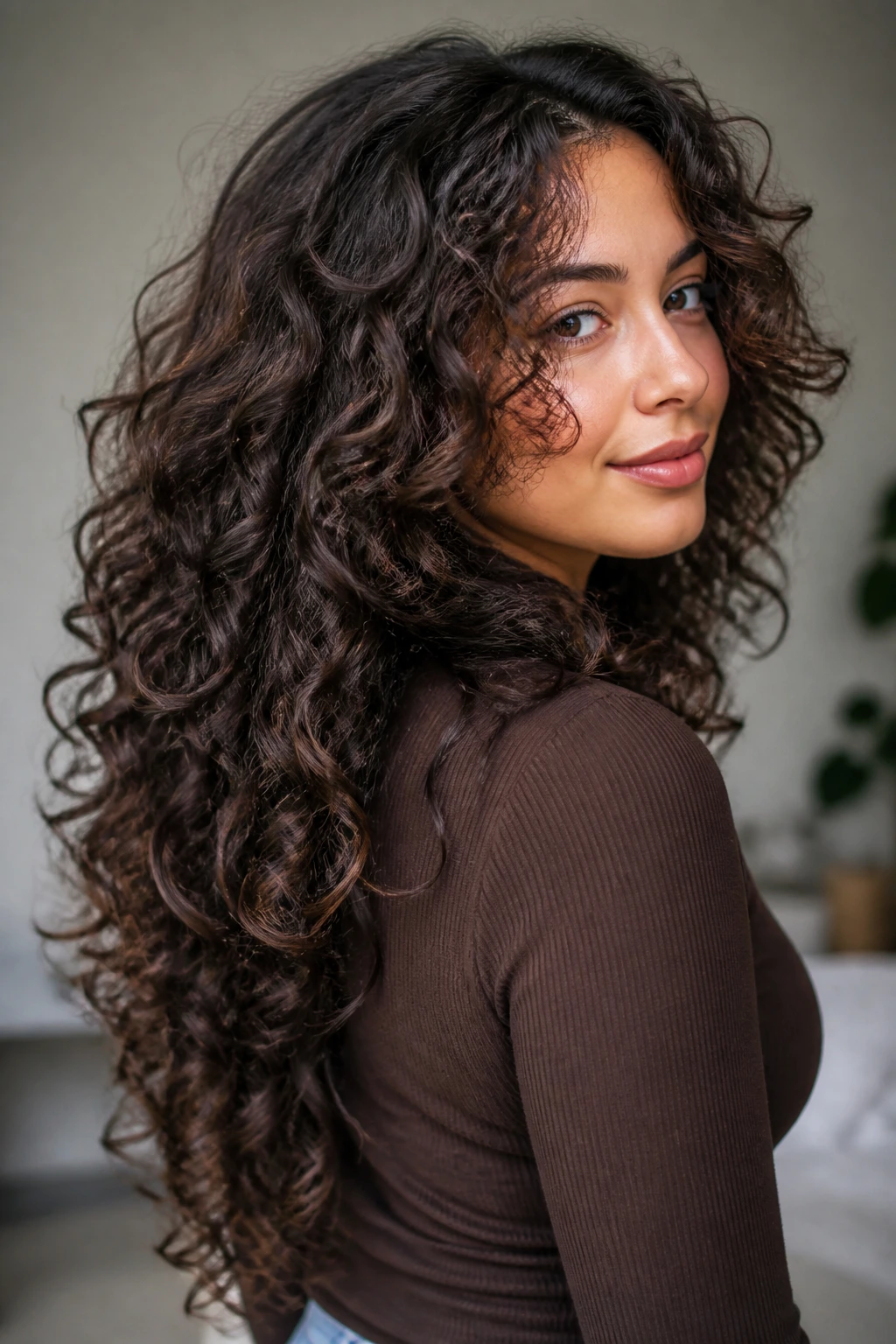
The butterfly cut is one of those styles that makes long curly hair look lighter without making it look thin. It keeps the bottom length, then adds shorter layers around the crown and upper sides so the top portion lifts and the ends don’t feel like one giant curtain. On curls, that means more bounce where you want it and less bulk where you don’t.
I like this cut on thick hair that collapses at the shoulders. It gives the illusion of shorter hair around the face while preserving long curls in back. That contrast is the whole trick. You get a shape with motion, and you still have enough length to twist, braid, or pull up when you’re bored with wearing it down.
The butterfly cut needs an honest consultation. If the top layers are too short, the crown can puff up in a way that feels more startled than stylish. Keep the shortest pieces long enough to blend, especially if your curls are tight or springy. On looser curls, the effect is softer and more feathered.
4. A Deep Side Part That Changes the Whole Outline
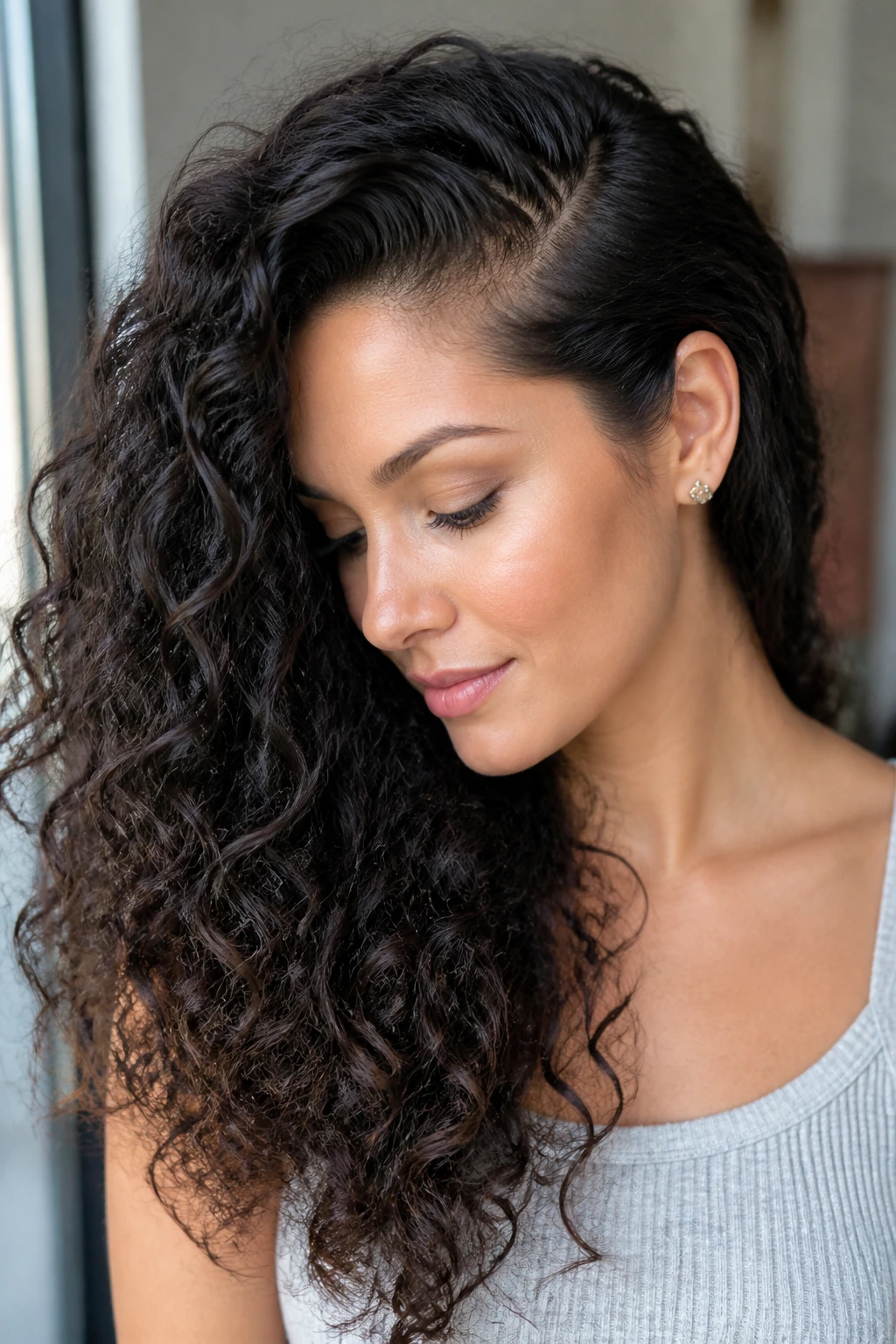
A deep side part is the cheapest transformation in this entire list, and maybe the most dramatic for the effort. You are not cutting anything. You are not buying anything fancy. You are just moving the whole visual weight of the hair to one side, and suddenly the length reads differently.
Curly hair takes to side parts in a strange, satisfying way. The root volume at the heavier side gives the face a frame, while the opposite side falls closer to the cheek and jaw. That creates asymmetry, and asymmetry is useful when long curls start to feel too familiar. It can also make the profile look sharper if your hair usually sits in a center part.
If the roots fight you, don’t force a clean line with a comb and walk away. Part the hair when it’s damp, clip the heavier side near the root for a few minutes, and let it dry that way. A little mousse at the roots helps the new direction stay put. No drama needed.
5. A Curly Shag That Keeps the Crown Light
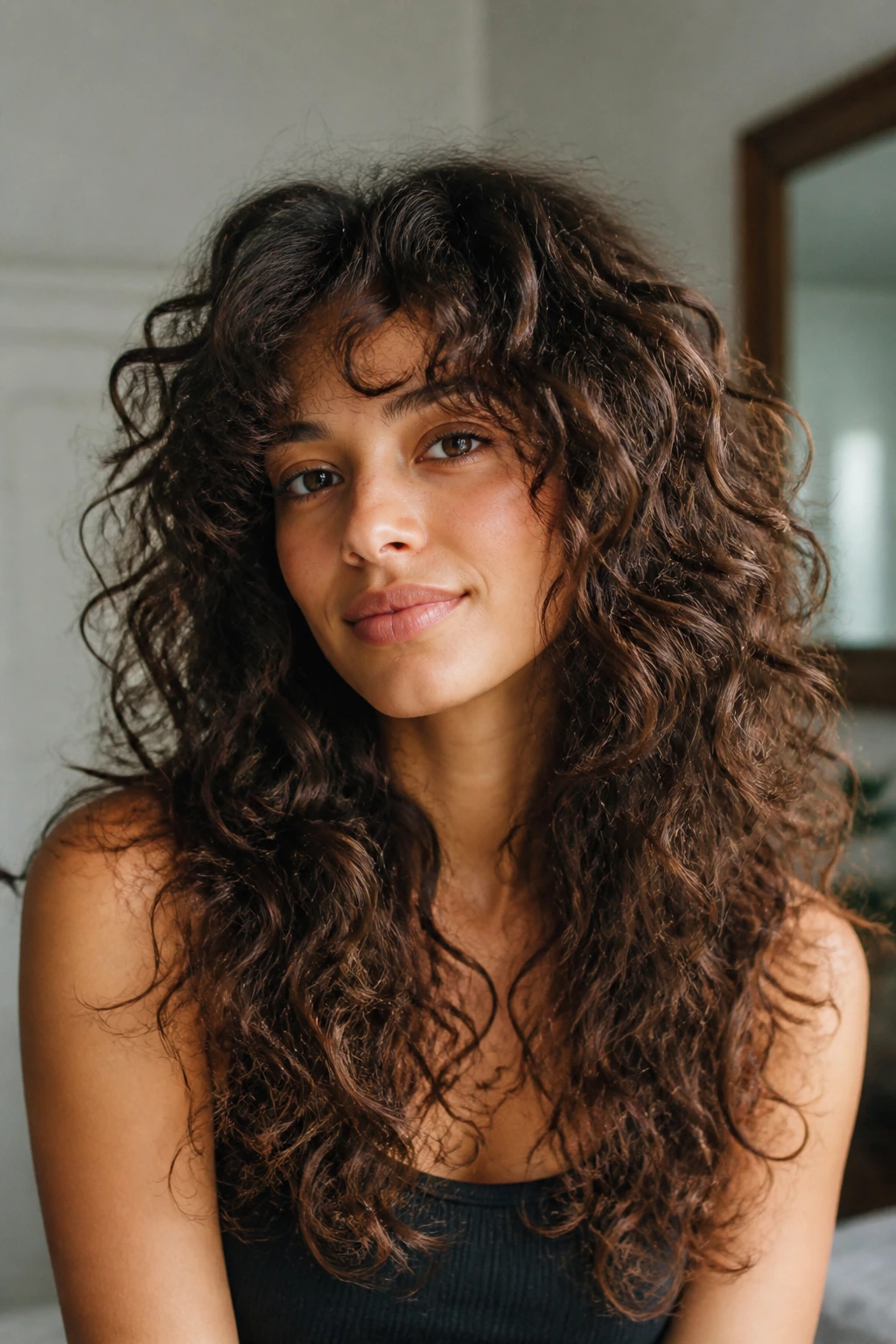
A curly shag is for people who want their long hair to feel more alive. It keeps the length, but it removes enough weight around the crown and sides that the curls stop hanging in one sad mass. The whole cut feels more playful, more layered, and less precious. Which, frankly, is the point.
This one shines on medium to thick curl patterns, especially if your hair has some natural spring and can hold its own shape. A shag adds air between the curl clumps. That means you see more definition and less wall-of-hair effect. It also gives you that slightly undone look that straight-haired people spend too much time trying to fake with irons and texturizers.
The one thing I would not do is ask for a shag that climbs too high into the top layers if your curls are fine. Fine curly hair can look sparse when the layers get ambitious. Keep the shortest pieces long enough to still read as part of the length. You want texture, not a hole in the middle of your head.
6. V-Cut Ends for a Sharper Back View
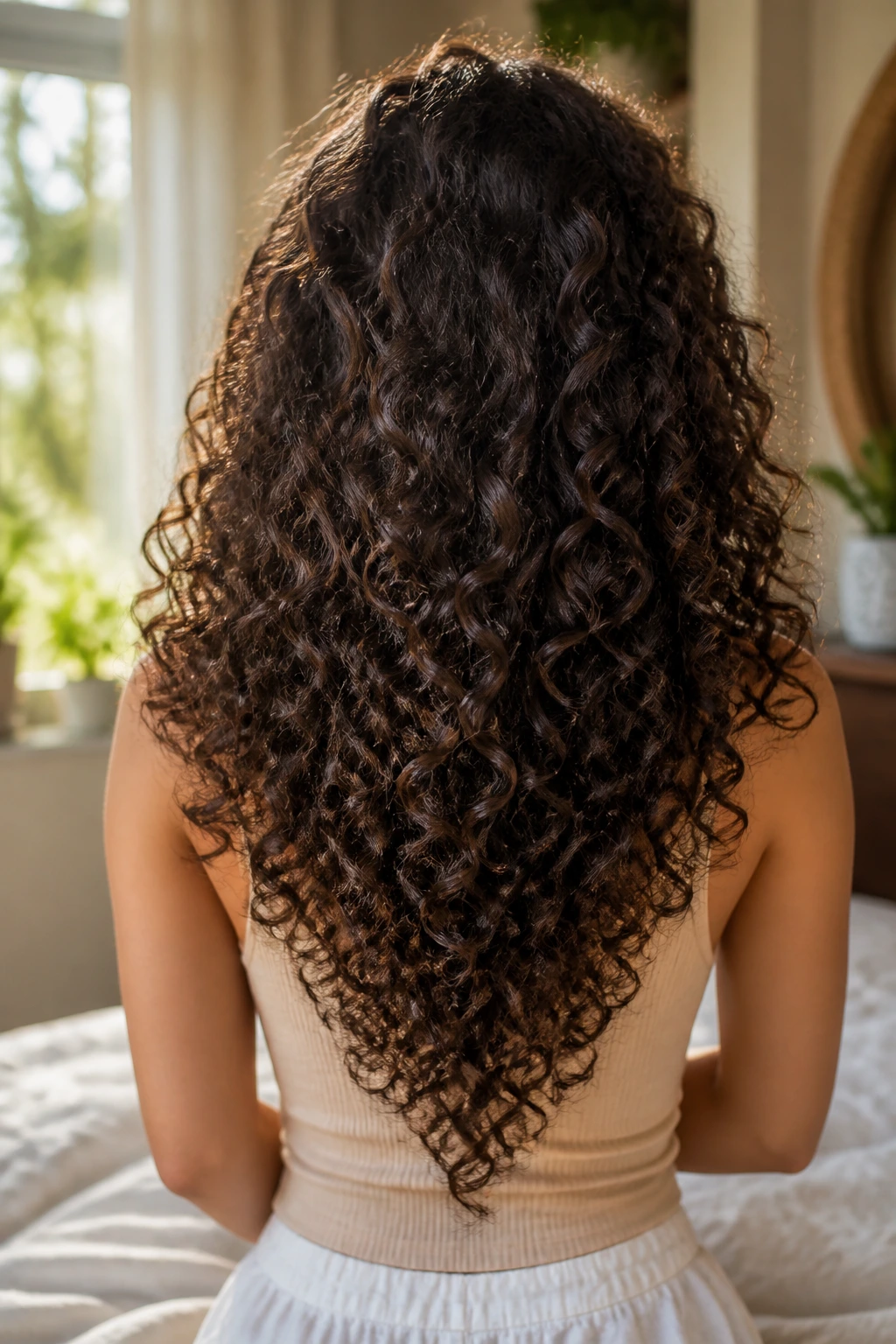
A V-cut is one of the best ways to keep long curly hair from looking blocky from behind. Instead of ending in a straight or rounded line, the perimeter dips into a point, which gives the whole shape a cleaner fall. On curls, that point gets softened by the natural bend, so it never looks harsh or geometric unless the cut is done too aggressively.
This is the cut I think about when someone says, “I want to keep my length, but I’m tired of the bulk at the bottom.” The V shape narrows the silhouette without sacrificing the drama of long curls. It’s especially handy if the sides of your hair puff out more than the center, because the line helps the eye move downward instead of outward.
Ask for the point to be subtle if your curls are tight. A deep V can make the ends feel thin. A shallow one gives you shape without taking away too much density. That balance matters more than the label on the cut.
7. U-Shaped Ends for Softer, Polished Length
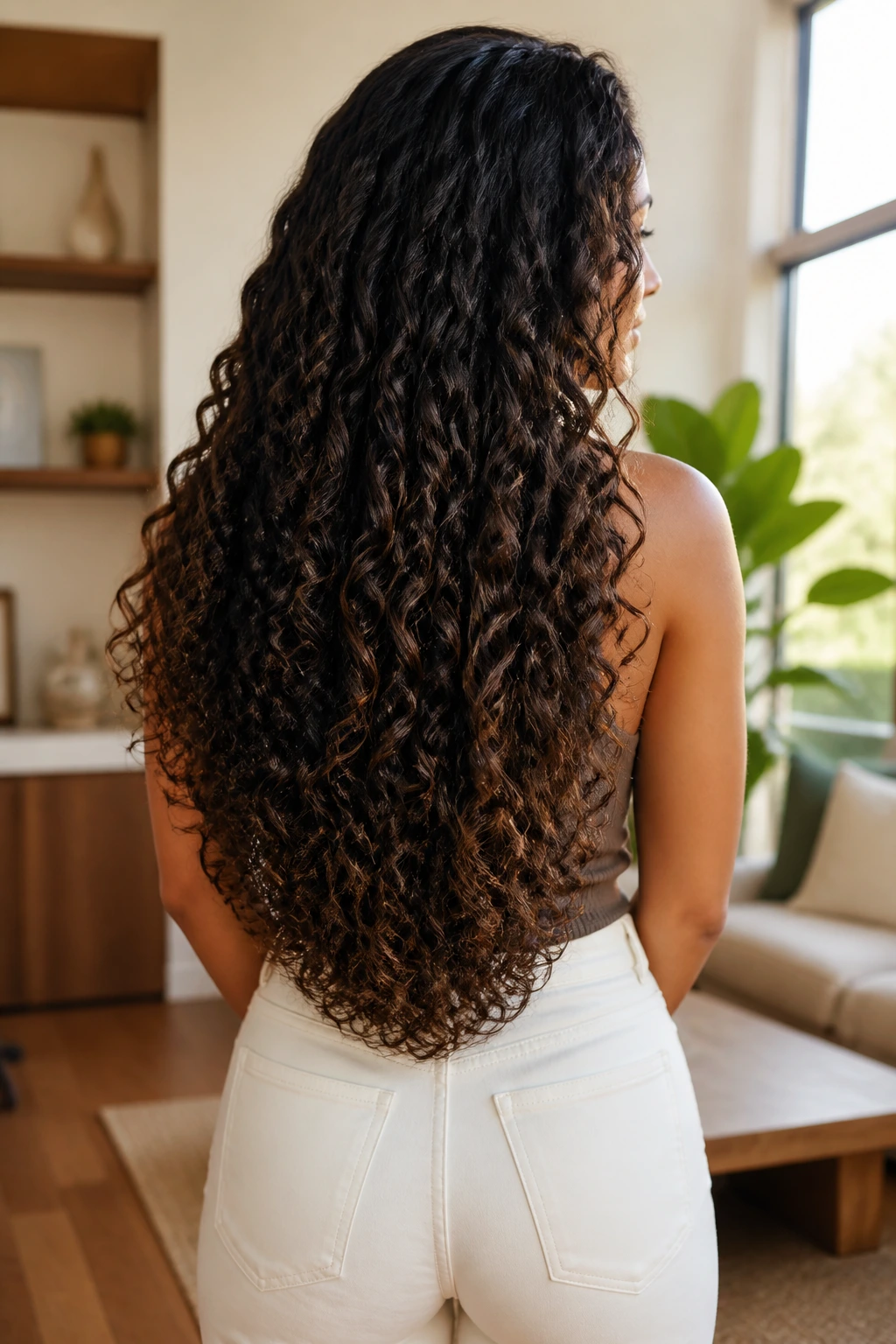
A U-cut is the quiet cousin of the V-cut. Same idea—shape the perimeter so long curly hair looks intentional from the back—but the curve is softer and rounder. There’s no sharp point to notice, just a gentle dip that follows the natural swing of the curls.
I like this when the goal is polish. Not stiff polish. Just a cleaner line that makes the hair look cared for. The U shape works on a lot of patterns because it doesn’t overcorrect. Thick curls keep their fullness, while looser waves get a more graceful fall. It’s the haircut equivalent of hemming trousers instead of trimming them with scissors in the dark.
If your current ends look blunt and heavy, a U shape can be a relief. It allows the curls to keep their body while removing that shelf-like finish that sometimes happens when long hair grows out for too long. Small change. Big difference.
8. Half-Up Halo Twist for Instant Structure
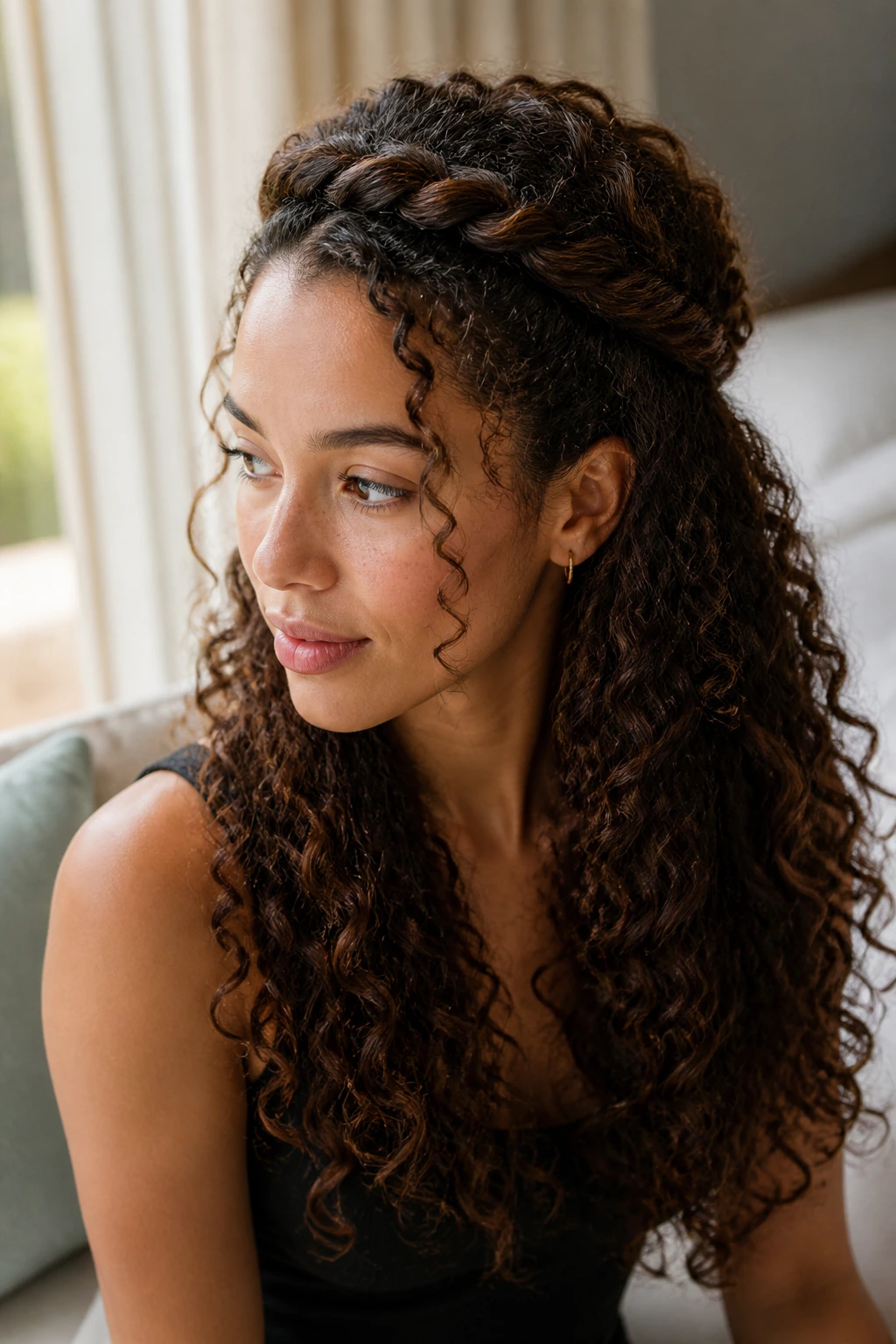
Sometimes the transformation isn’t a cut at all. Sometimes it’s a twist and two pins. A half-up halo twist pulls the top section of long curly hair away from the face, then wraps or twists it across the crown so the front looks neat while the length stays loose and visible.
This style is a favorite of mine for second- or third-day curls, when the roots need a little help but the ends still have enough life to look good down. The twist gives you shape at the top, which is where long curls often lose their structure. It also shows off the length in back instead of hiding it under a full updo.
Use one or two bobby pins on each side and anchor them in the denser part of the twist, not the fluffy outer surface. If the hair is slippery, mist the section lightly with water and a touch of gel before twisting. That tiny bit of grip saves you from spending the day re-pinning the same spot.
9. High Pineapple Ponytail for Lift and Drama
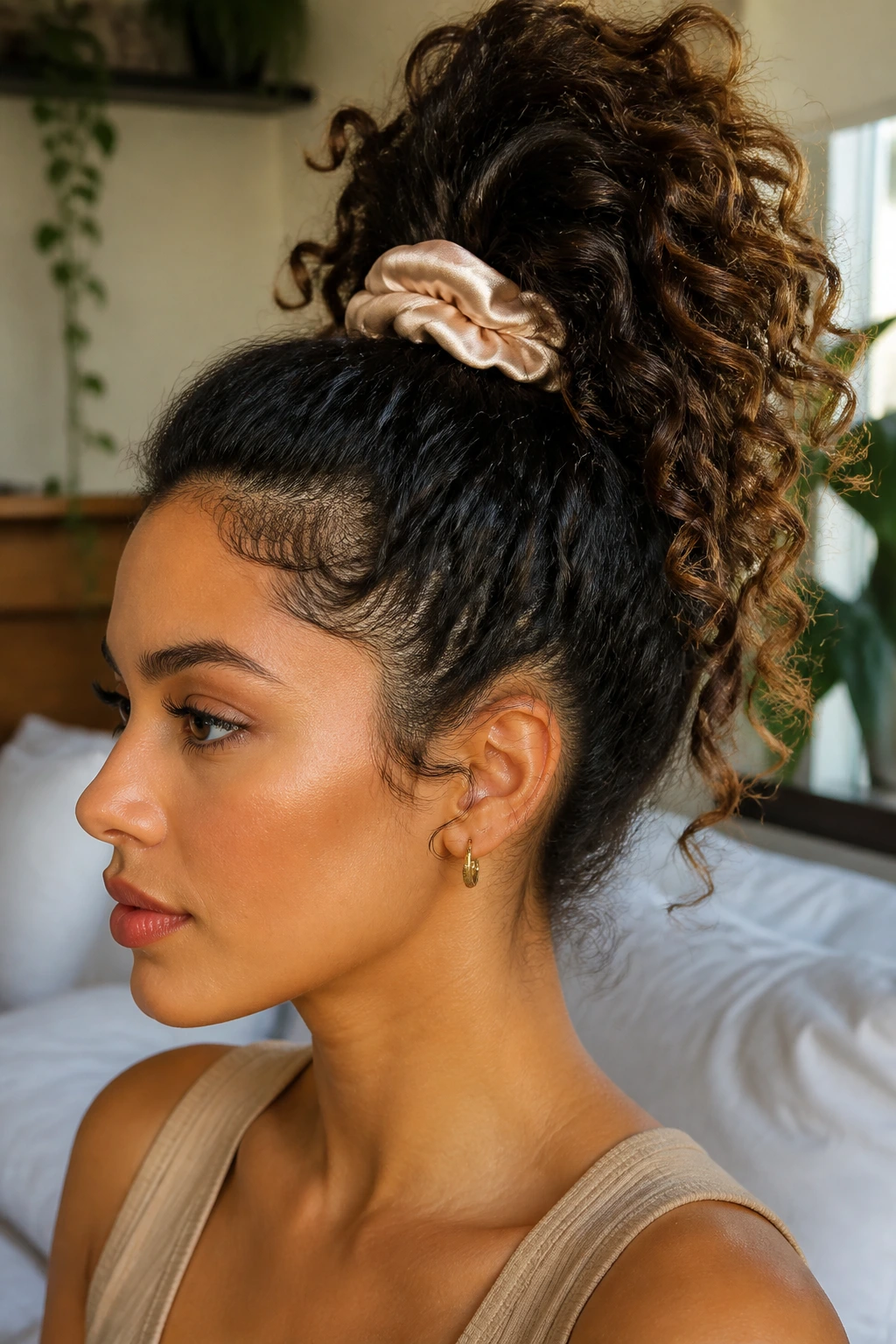
The high pineapple is one of those styles that looks casual until you realize how much work it’s doing. It piles the curls high on the head, which instantly changes the outline of long hair. The length still hangs, but now it hangs from above the crown, so the whole silhouette looks taller and bouncier.
This is especially good for tight curls and coils because it respects shrinkage instead of pretending the hair will stay flat just because you want it to. A loose silk scrunchie is the right move here. Tight elastics snag, flatten, and leave a dent that lasts longer than the style itself. Keep the base loose enough that the curls can spill without being crushed.
I like a pineapple on days when the ends need a break. It protects them, keeps them away from friction, and gives the face a clean frame. Leave a few curls out at the temples if you want a softer finish.
10. Low Curly Chignon for Clean, Formal Shape
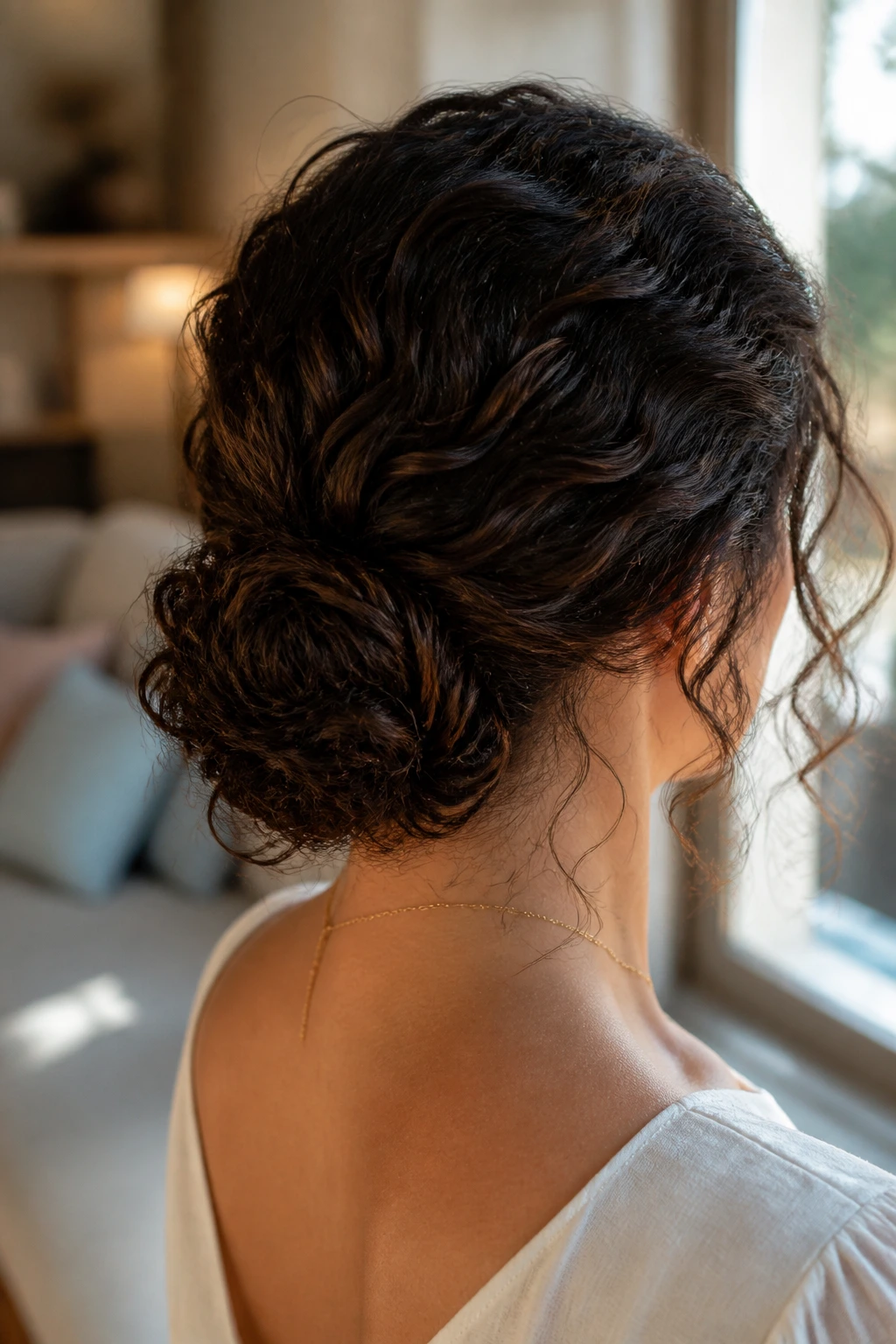
A low curly chignon turns long hair into something tidy without stealing the texture. Gather the length at the nape, fold or twist it into a low knot, and let a few curls escape on purpose—not by accident. That little mess around the edges keeps the style from looking too severe.
This transformation works beautifully when the hair has been stretched a bit first. A little length helps the bun sit neatly, and stretched curls are easier to tuck without building a giant lump at the back of the head. Use pins that match your density. Thin hair needs smaller pins and lighter tension; thick hair usually needs more anchors than people expect.
The reason I keep coming back to this style is simple: it protects the ends and it looks like you meant it. Long curly hair can get fussy in formal settings. The chignon cuts through that noise.
11. Braided Crown with Loose Length Left Out
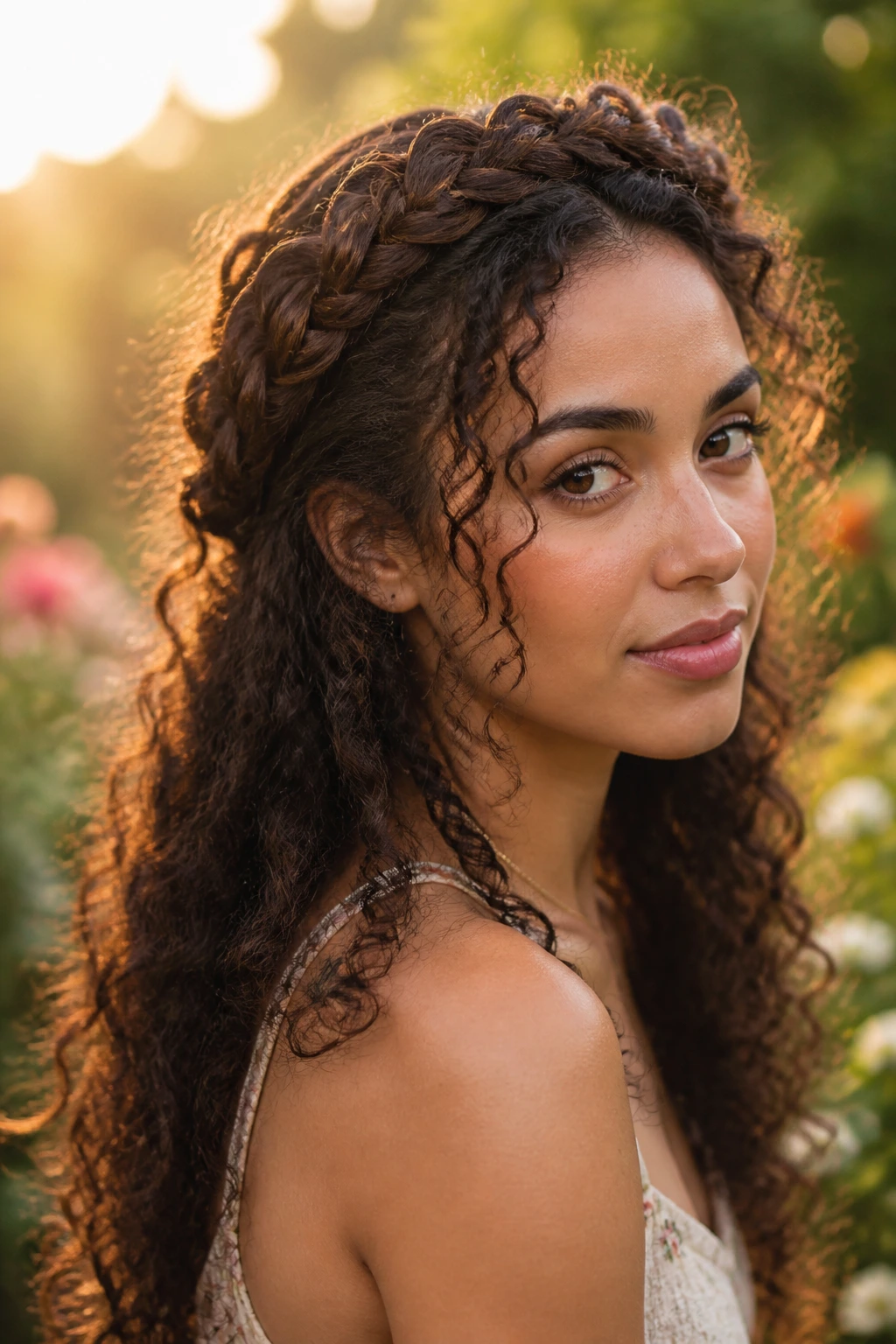
A braided crown gives long curly hair a romantic frame without swallowing the length. You braid around the hairline or just above it, then leave the rest of the hair down so the curls still do the big work. It’s a nice compromise if you want detail up top and movement below.
The trick is tension. Too tight, and the braid pulls at the front and loses the softness that makes it pretty in the first place. Too loose, and it slips before you’ve left the house. Aim for secure but not stretched raw. If your hair is fine, a little texturizing spray or dry shampoo on the section before braiding can help it hold.
This style is better than a full updo when you want to show off earrings, a neckline, or the sheer length of the curls. It gives you structure near the face and a good dose of texture in back. That combination never really gets old.
12. Twist-Out Definition for a Longer, Smoother Fall
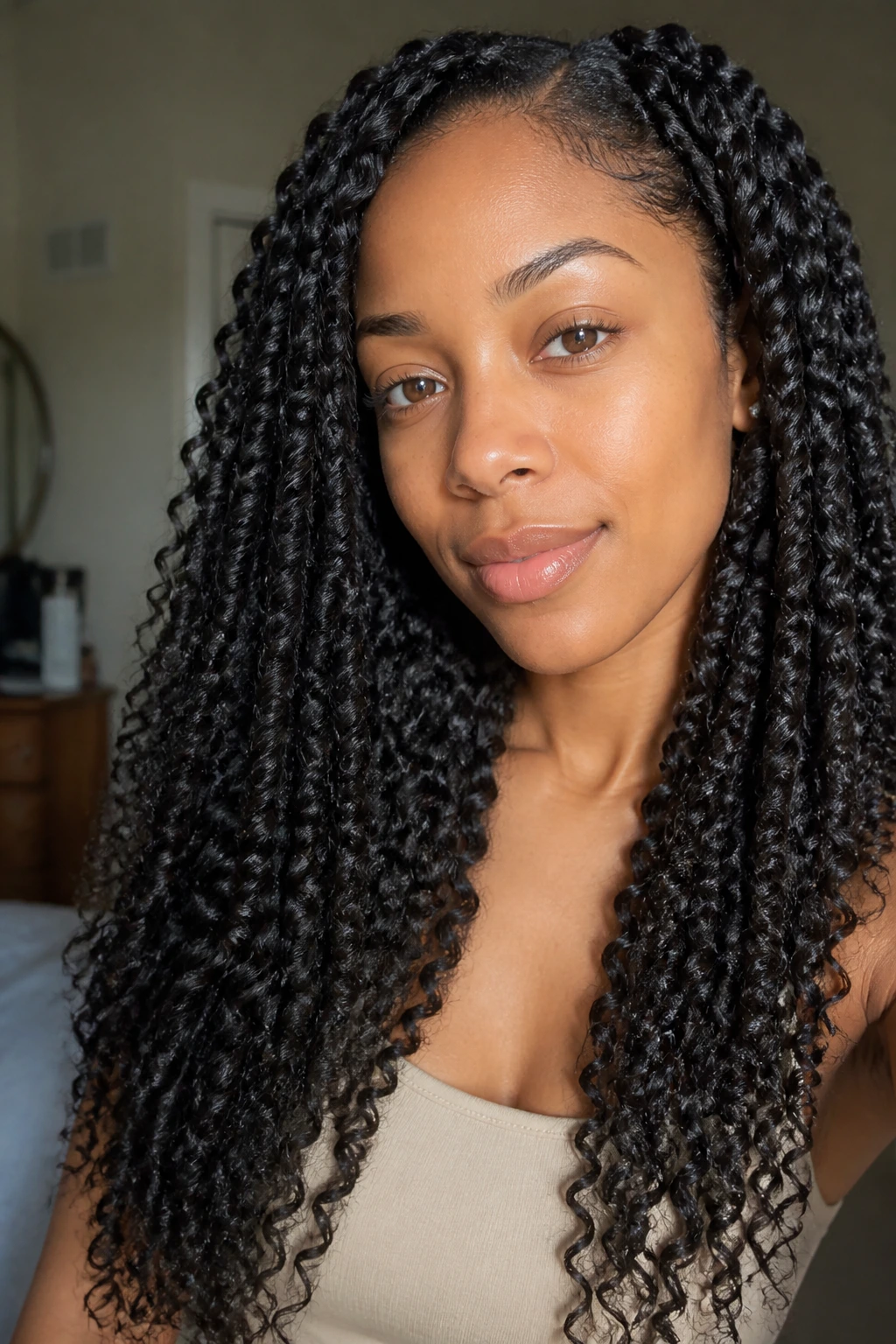
A twist-out can change the whole visual story of long curly hair. Instead of letting the hair dry in its natural clumps, you set it in two-strand twists, let them dry fully, and then unravel them with oil on your fingertips. The result is elongated, defined, and usually a little smoother than a wash-and-go.
This is the style for days when you want more length on display. Twists pull the curl pattern into a stretched shape, so the hair reads longer without heat. They also help keep frizz under control if your hair tends to puff up the minute you step outside. Use a cream plus gel combination if you want the twist-out to hold its shape for more than a day.
Be patient when drying. Damp twists that get taken out too early turn fuzzy fast. If the twist feels cool in the middle, it is not ready. That’s the part people rush, and it shows.
13. Braid-Out Waves for Stretch and Soft Bend
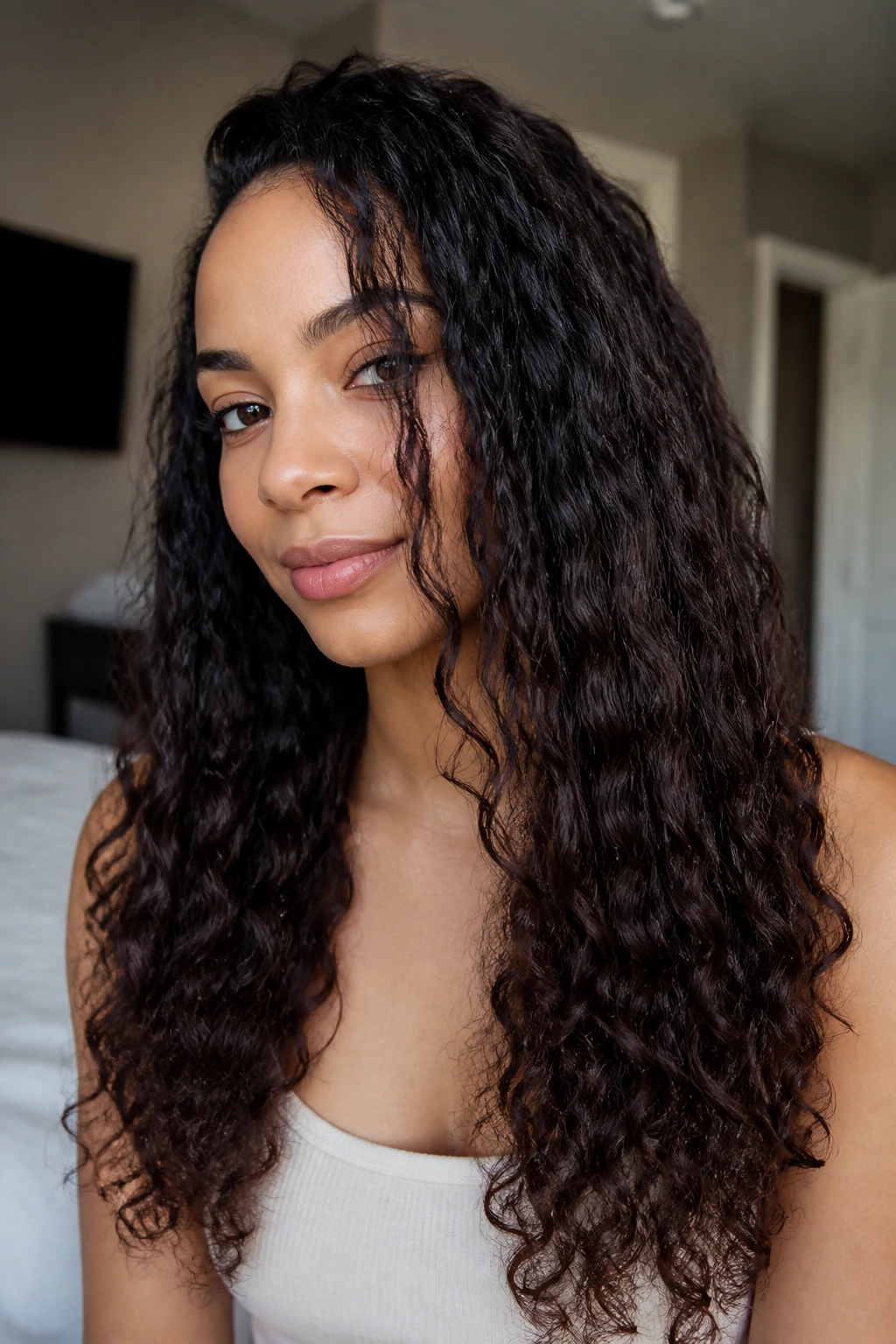
A braid-out is the softer, more open cousin of the twist-out. Braids create a looser wave pattern that stretches the hair a little more and leaves the ends with a gentler bend. On long curly hair, that can be a nice way to reduce bulk while keeping texture visible.
I like braid-outs for looser curls and waves that need more structure without turning into a rigid pattern. The larger the braids, the softer the finish. Smaller braids give more definition and more shrinkage control. If you want the hair to fall farther down the chest or back, make the sections a little bigger and let them dry all the way.
A braid-out can also be a clever way to fake a longer silhouette before a dinner, date, or event. It’s not heat, it’s not a cut, and it usually costs only a few bobby pins and some time the night before. Hard to complain about that.
14. Diffused Wash-and-Go with Root Clipping
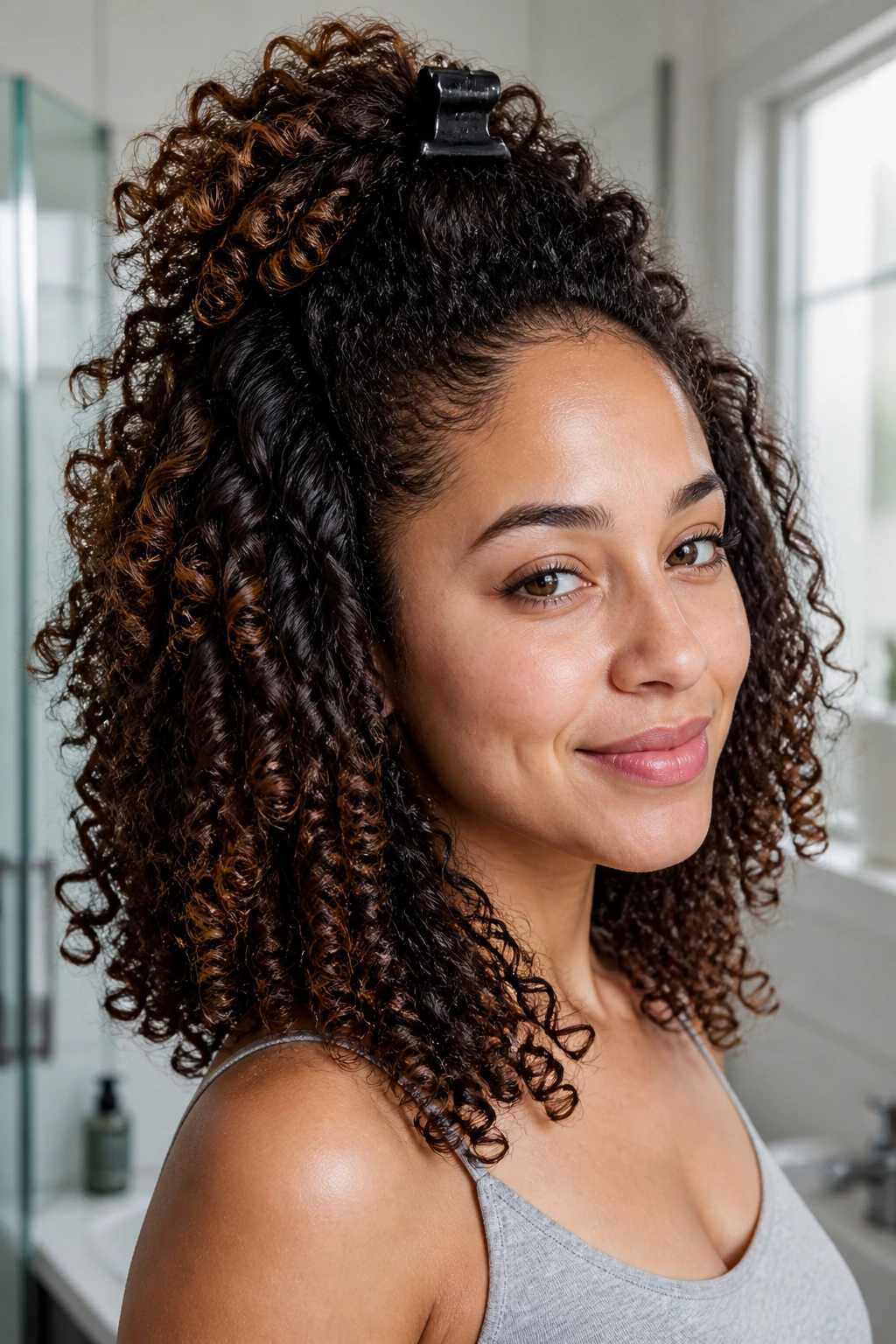
A good wash-and-go on long curly hair can look like a reset button. The important part is not the wash. It’s the dry. Apply your stylers to soaking-wet hair, encourage the curl clumps with your hands or a brush, then clip the roots upright and dry with a diffuser until the cast is set. That’s where the shape happens.
If you skip the root clipping, long curls often dry with beautiful ends and sleepy roots. That’s a shame, because the top section controls how the whole style reads. The clip lift gives you height at the crown, which keeps the length from dragging the face down. You do not need a dozen clips. Even four placed around the part line can change the result.
Stop touching the curls once the gel cast starts forming. Let it dry. Then scrunch out the crunch with a tiny bit of oil. If you keep fluffing while it’s still damp, the frizz will answer back.
15. Heatless Banding for a Longer Silhouette
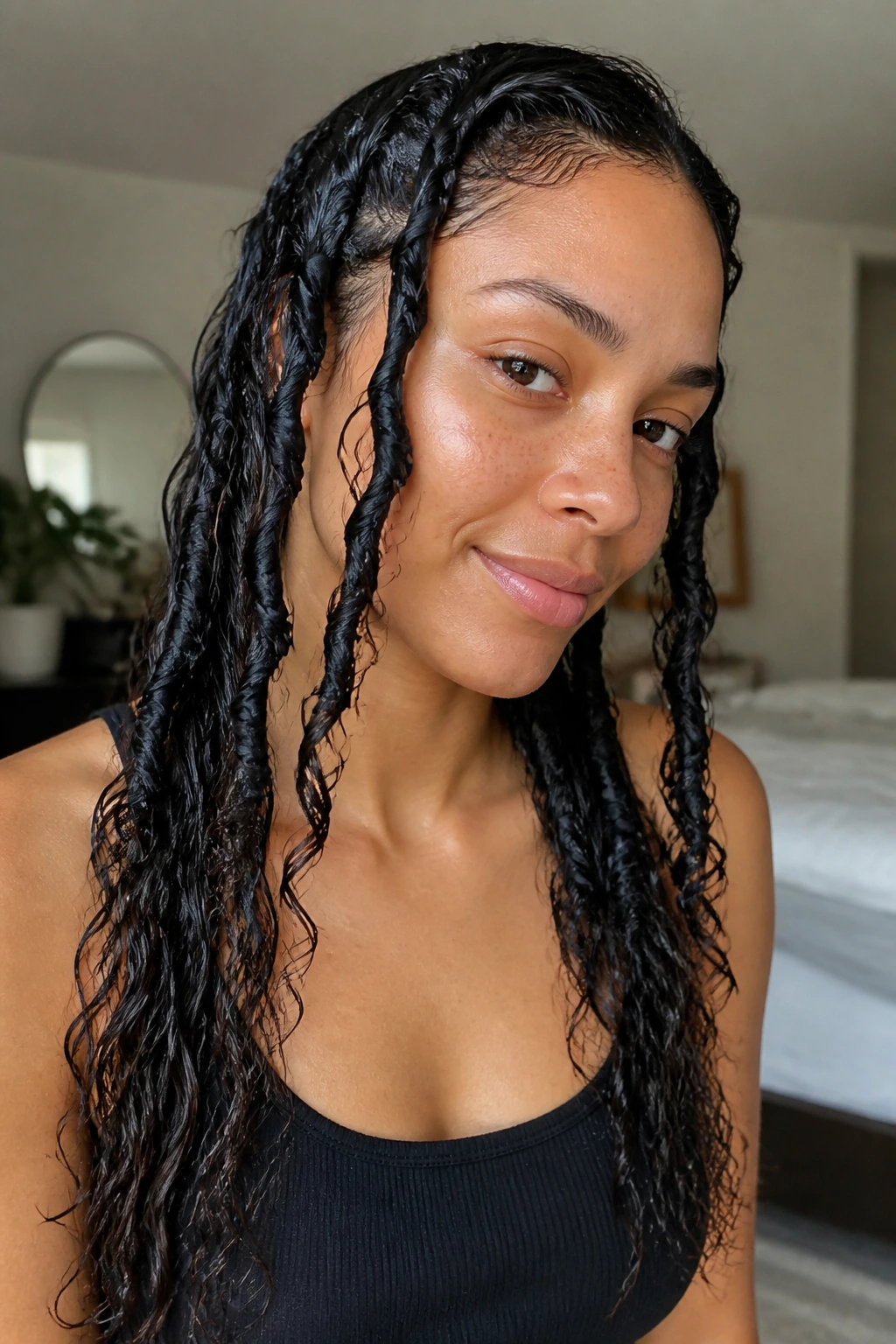
Banding is one of the easiest ways to stretch curly hair without heat. You section the hair, wrap soft bands down each section while it’s damp or lightly moisturized, and let it dry that way. When the bands come off, the curls are elongated and the length reads longer.
This style is a lifesaver for tighter curl patterns that shrink hard. It does flatten the curl a bit, so the finish looks more stretched than springy. That’s the point. You’re trading some volume for visible length, and that trade can be worth it on days when you want the hair to sit past the shoulders instead of hovering above them.
Use satin scrunchies or snag-free bands if you can. Small rubber elastics are a bad idea unless you enjoy spending ten minutes untangling one section. Also, don’t pull the bands down so tightly that the hair dents at each point. The goal is stretch, not a striped pattern of regret.
16. Slicked-Back Wet Look with Defined Ends
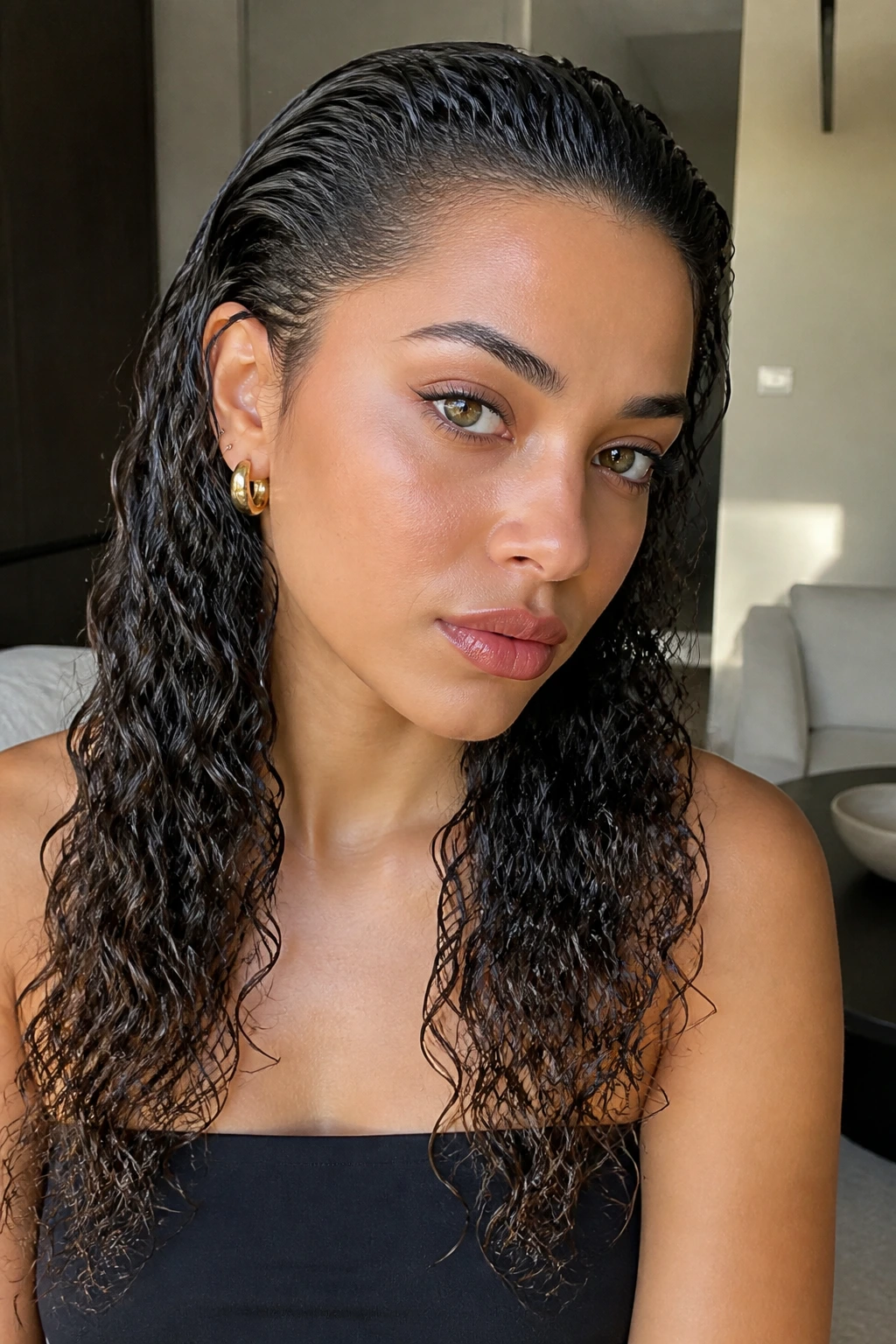
A slicked-back wet look on long curly hair can be gorgeous when the rest of the outfit is clean and the hair gets to be the statement. Comb the front and sides back with gel or a strong cream-gel mix, then let the length either hang straight down the back or tuck into a low knot. The contrast between sleek roots and textured ends is what makes it work.
This isn’t the style for every day, and that’s fine. Some looks should feel a little dramatic. The trick is to keep the application even so the top doesn’t separate into greasy patches. Use a wide-tooth comb or brush to spread product from the hairline back, then smooth with the palms. If the product sits too thick near the temples, it will look heavy instead of glossy.
I like this on humid days, oddly enough, because the slick root section can stay cleaner than a fluffy one. The ends still need moisture, though, or they’ll fray by the time you reach your destination.
17. Claw-Clip French Twist for Fast Polish
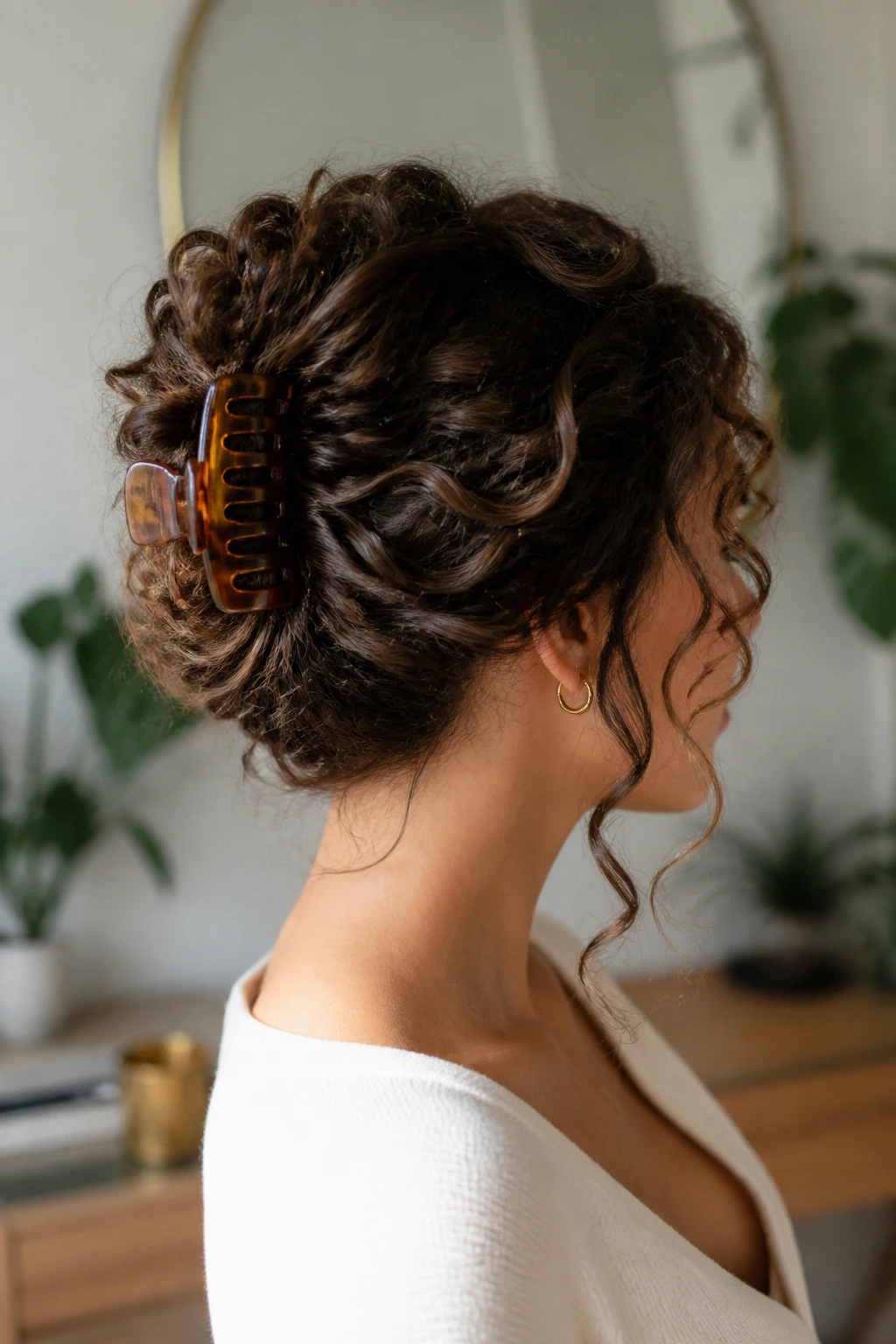
A claw-clip French twist gives long curly hair a quick lift without flattening everything into a tight bun. Gather the hair low, twist it upward, then tuck the twist into a large clip so the curls spill from the top and sides in a controlled way. It’s not precious. That’s why it works.
This style is good for medium to thick hair because the clip needs something substantial to hold onto. Thin hair can do it too, but a smaller twist and a grippy clip will keep it from sliding out. I’d avoid ultra-slick clips with smooth teeth; they look nice in the drawer and fail the second your hair has any weight.
The best part is that it keeps the length visible while clearing the neck. You get the sense of an updo without losing all the movement. Very useful when the weather turns sticky or you need your hair out of the way for a few hours.
18. Bubble Ponytail Down the Back
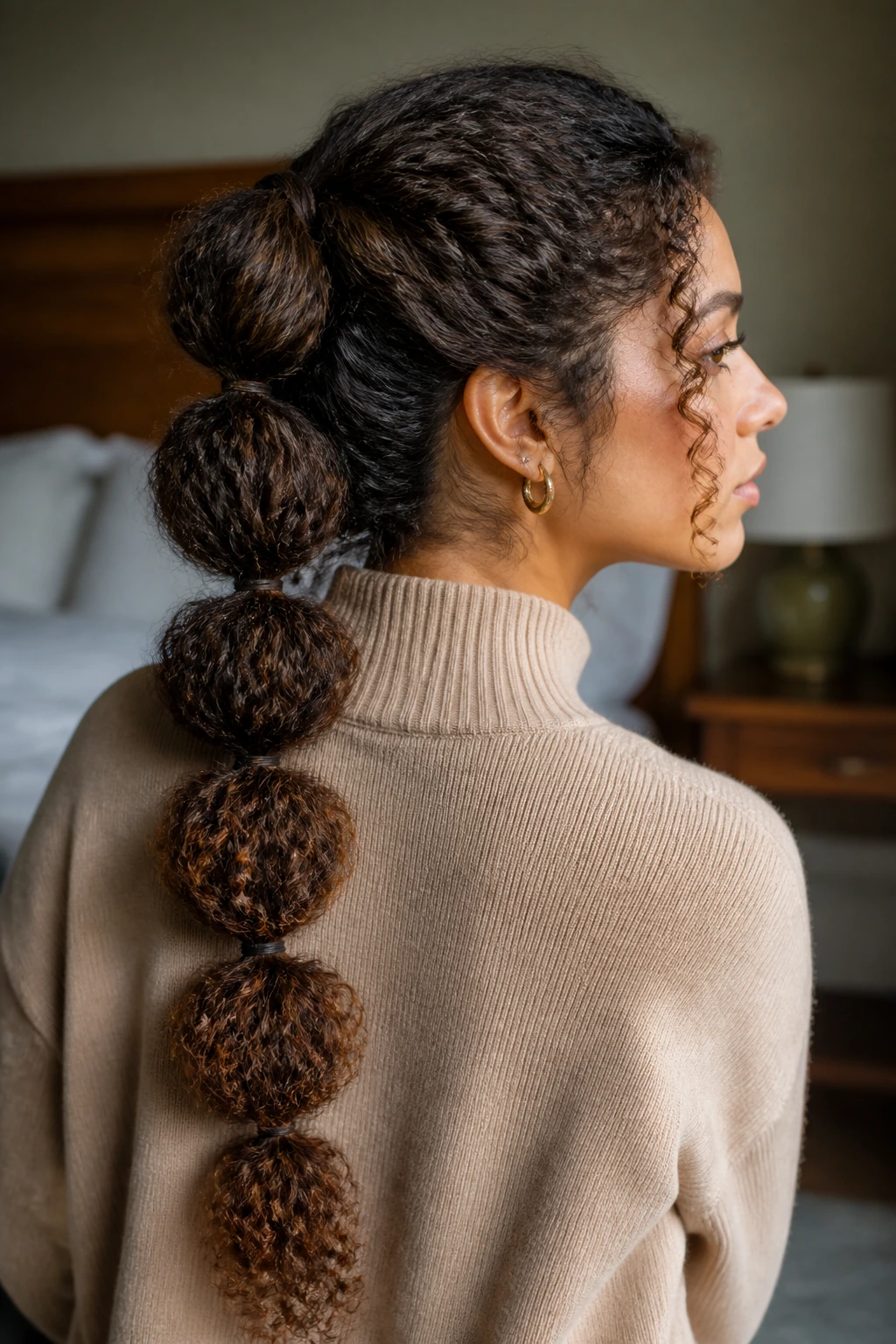
The bubble ponytail turns a simple ponytail into something with rhythm. Secure the hair at the crown or mid-back of the head, then add elastics every few inches down the length and gently puff each section into a rounded bubble. On long curly hair, the natural texture makes the bubbles look fuller and less stiff.
This works best when the length has been stretched a bit or when the curls are already defined enough to separate neatly. If the hair is overly tangled, the bubbles turn messy in the wrong way. A little detangling cream on the mids before you start can make the sections slide into place.
I like this style because it gives the eye something to follow. The hair no longer reads as one mass; it reads as a sequence of shapes. That’s a small design trick, but it changes the whole feel.
19. Side-Swept Hollywood Cascade for Dressy Curves
A side-swept cascade turns long curly hair into a proper event style. Create a deep side part, pin one side back near the temple, and let the curls fall over one shoulder in a controlled wave of texture. If the hair is more wavy than curly, a large-barrel set or a roller set can make the finish smoother and more dramatic.
The shape here is old-school in the best way. It opens one side of the face, which makes earrings and necklines work harder, and it keeps the length visible instead of hiding it in a bun. If the roots on the heavy side collapse, clip them while they’re still warm or damp and let them set in that lifted position.
This style likes shine. A light serum on the outermost layer gives the hair enough gloss to look deliberate. Don’t drench it. One or two drops is plenty.
20. Curly Faux Hawk with Tucked Sides
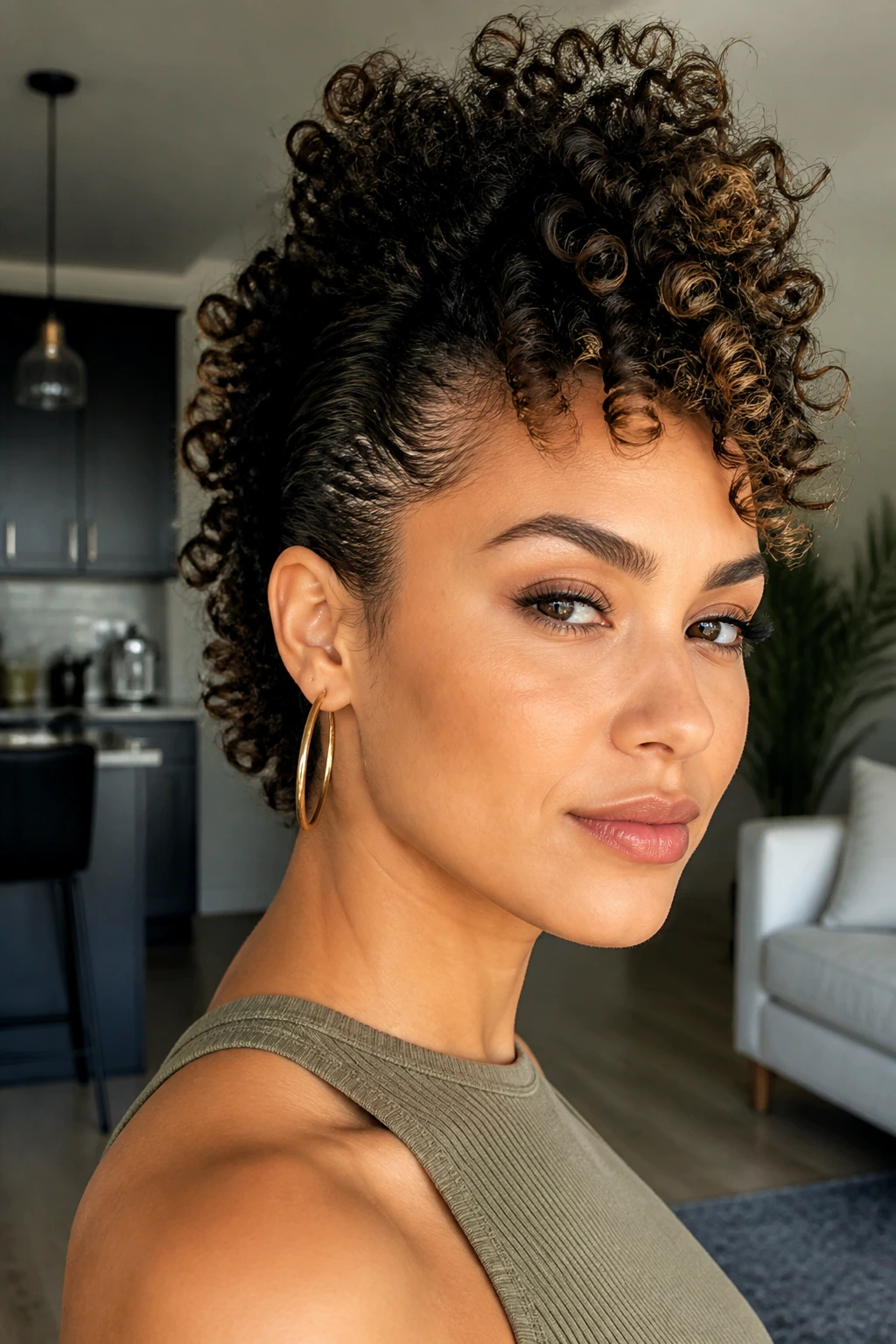
A curly faux hawk is what happens when you decide the middle of your hair should get all the attention. Pin or smooth the sides back, keep the center ridge high and full, and let the curls sit stacked through the middle of the head. It looks bold, but it’s surprisingly practical because the sides stay tucked away.
This transformation works especially well on dense curls. The middle section can hold volume on its own, and the pinned sides make the face look open and lifted. If your hair is thick, use hidden pins that anchor into the hair near the scalp. Surface pins alone will not survive long.
The faux hawk is one of the few styles here that feels genuinely edgy without requiring heat or a haircut. It also buys you a little extra time between wash days, since the tucked sides tend to stay neater than loose curls around the cheeks and jaw.
21. Face-Framing Tendrils and a Center Part
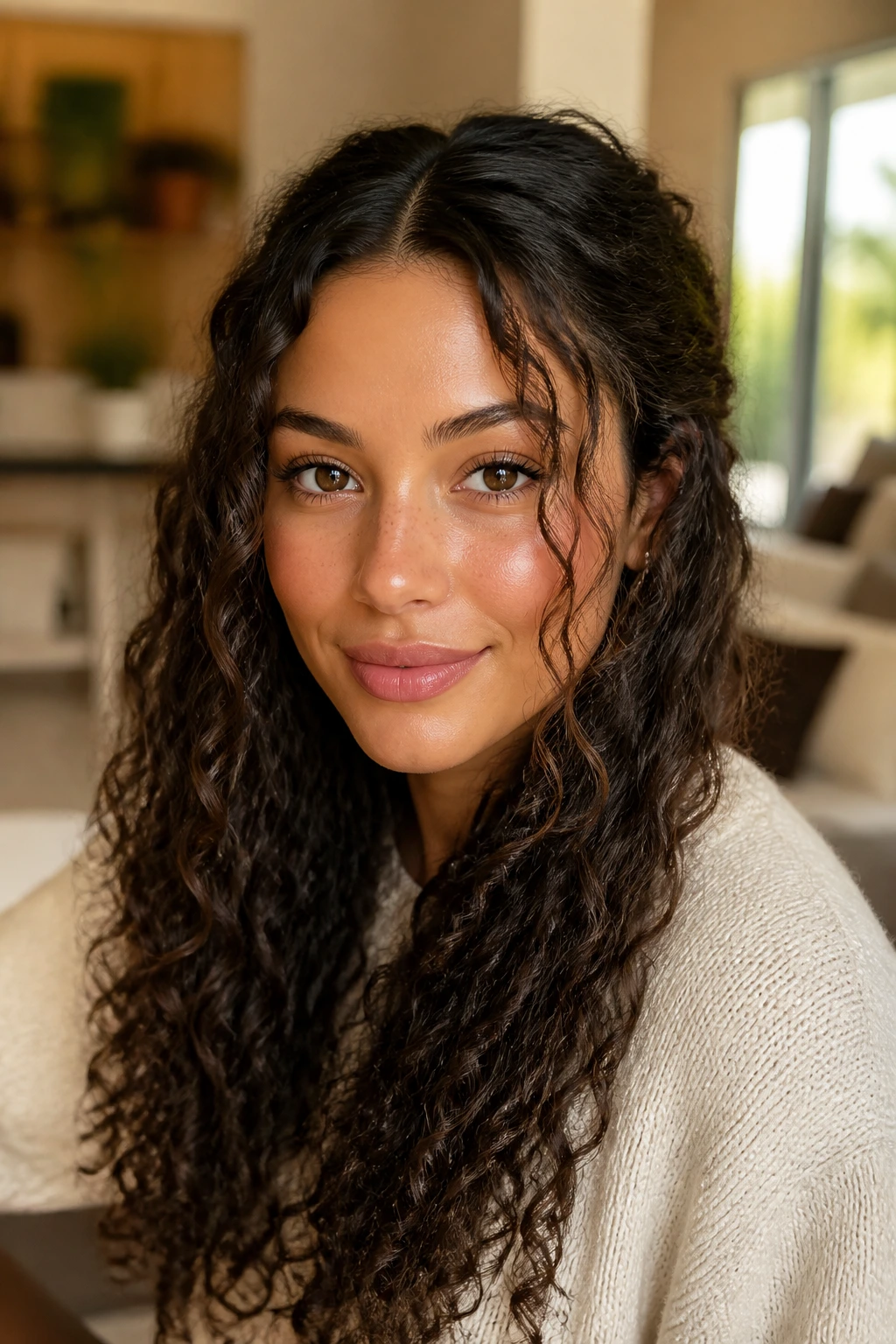
Sometimes the smallest transformation is the one that looks smartest. A clean center part, paired with two loose tendrils at the front, can change long curly hair from casual to intentional in one minute. The center part gives symmetry. The tendrils soften the face and stop the length from feeling severe.
I like this move when the rest of the hair is already in good shape and doesn’t need much fussing. It works on loose waves, ringlets, and even tighter curls if the front pieces are defined enough to hold their shape. Keep the tendrils a little longer than you think you need. Curly hair springs up, and a piece cut too short can spend the whole day bouncing in the wrong place.
This is also the easiest way to show off glasses, earrings, or a strong brow line. Small shift. Large payoff.
22. Glossy Ends Refresh for Day-Three Hair
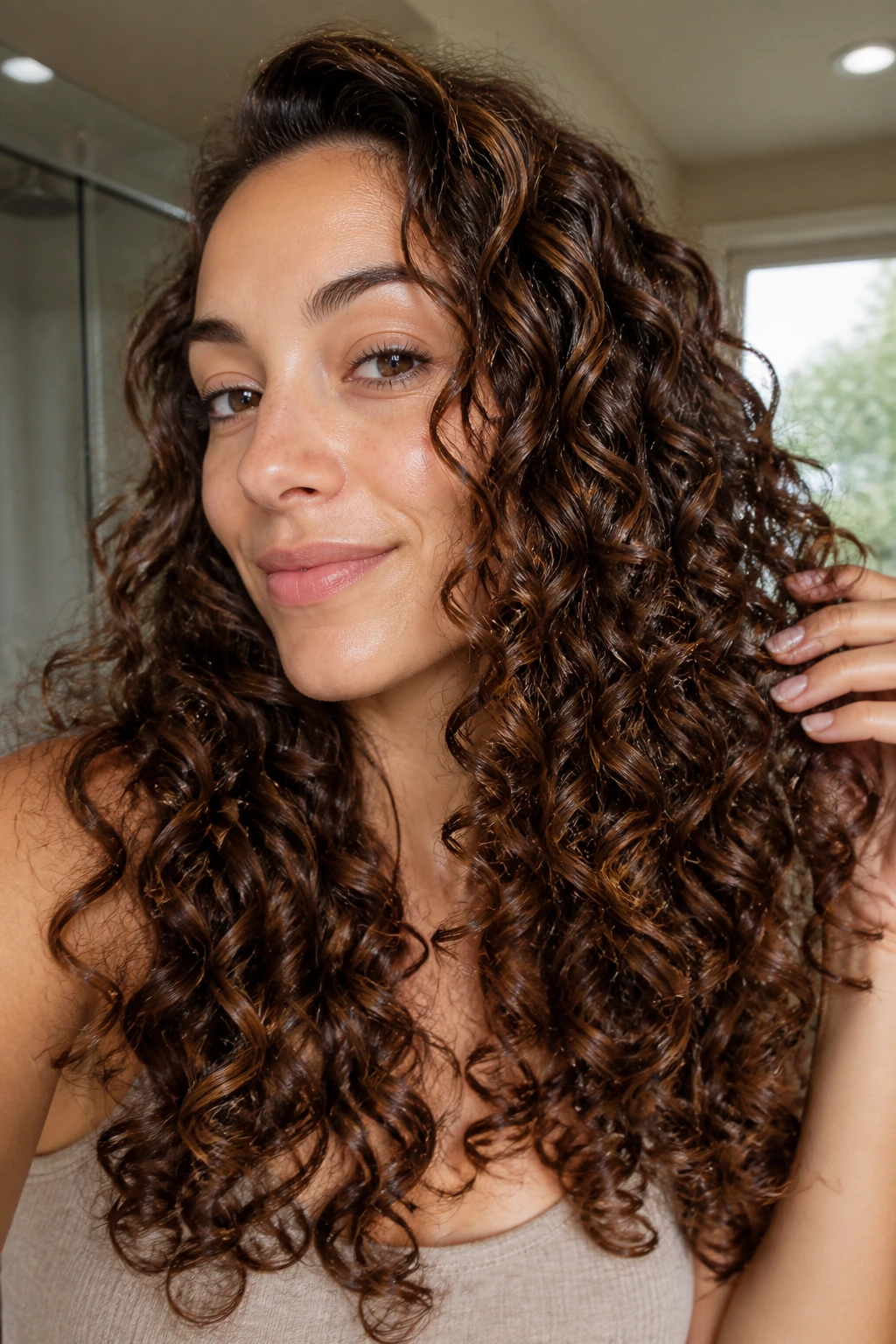
A glossy ends refresh is not glamorous in theory, but it can make long curly hair look a full day younger. Mist the mids and ends with water or a very light leave-in spray, smooth in a small amount of curl cream, then seal the most parched bits with a drop of oil. The goal is not to soak the hair. It’s to wake up the curl clumps and calm the frayed pieces at the bottom.
This is the move I reach for when the roots still look decent but the ends have started to look thirsty and slightly broken up. Long curly ends take the most friction, so they usually need the most help. A refresh like this can make a wash-and-go or twist-out look presentable again without restarting from scratch.
Use your hands, not a heavy brush. Brushes can break apart the finished pattern and leave you with halos of fuzz around the face.
23. Honey and Copper Highlights That Draw Out the Curl Pattern
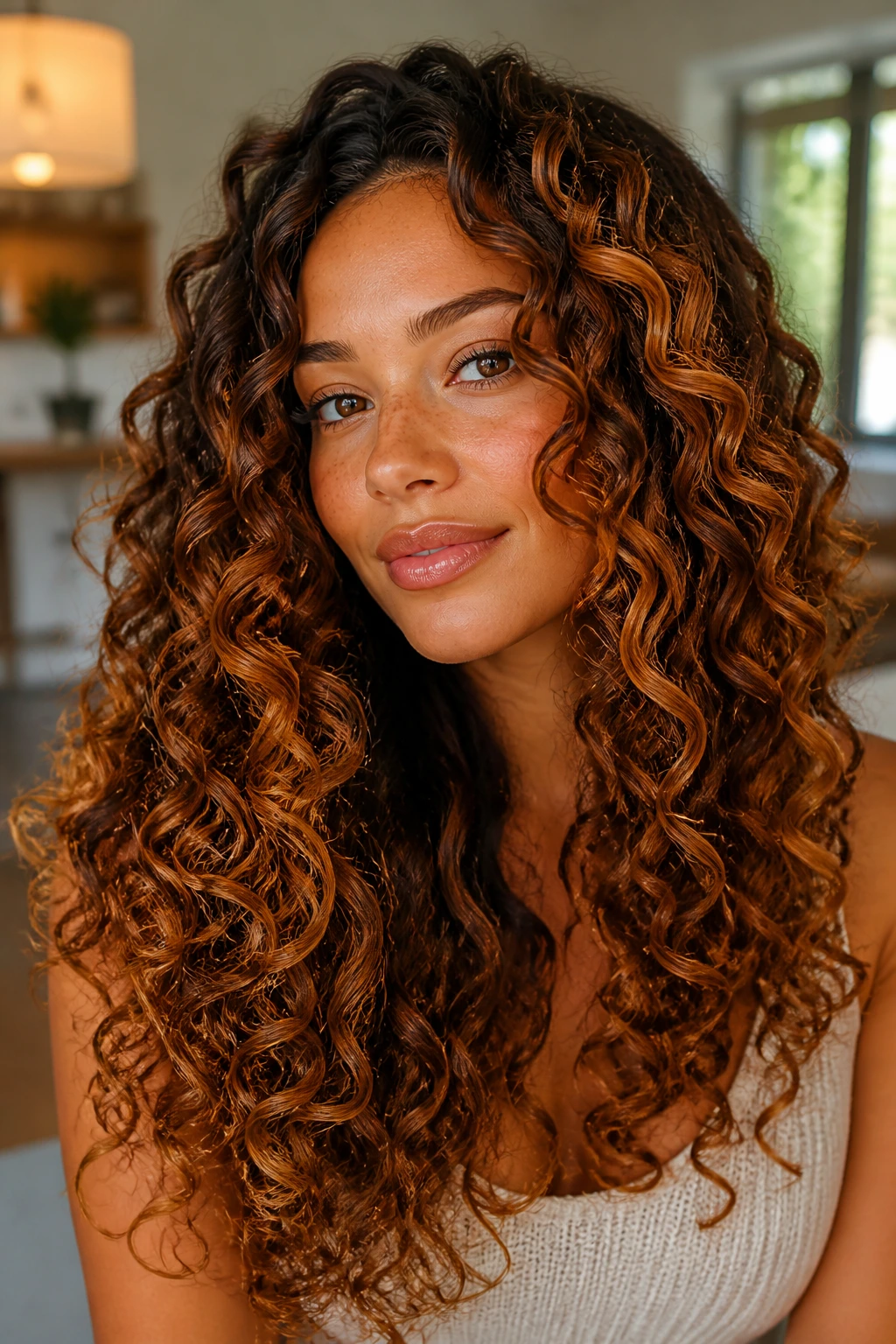
Color can transform long curly hair just as much as a cut can. Honey, copper, caramel, and warm golden ribbons pick up the bends in the hair and make the curl pattern easier to see. That dimension matters. On dark curly hair, a few well-placed highlights can separate the layers visually and keep the whole style from reading as one dark block.
The placement is what makes this work. Thin ribbons around the face, through the top layers, and near the ends can show movement without turning the whole head stripey. I prefer painted placement over chunky foils for curls, because curls live in pockets of light and shadow. A gentle placement follows that pattern.
Color does ask for more moisture. That’s not a scare tactic. It’s just the price of chemistry. A regular mask, a gentle shampoo, and lower heat on the diffuser will help the curl pattern stay crisp instead of frayed.
24. Silk Press or Blowout with Loose Bends
A silk press or blowout gives long curly hair a full-change moment. You keep the length, but the texture shifts into soft bends and glossy movement. It’s not a permanent transformation, which is part of the appeal. You get to wear your hair a different way without giving up the curls forever.
The important part is heat control. Use a protectant, work in sections, and keep the tension steady instead of yanking the brush through. If the goal is loose bends, stop before the hair gets poker-straight. A round brush or large iron can leave enough curve that the style still feels like it belongs to curly hair, not borrowed from somewhere else.
I would not make this a constant habit. But as an occasional switch-up, it can be lovely. It also shows you the full length in a way curls sometimes hide. That alone can feel like a surprise.
25. Scarves, Pins, and Comb Clips for a Low-Lift Finish
Accessories do more than decorate long curly hair. They change the shape. A silk scarf can tame a broad crown, a cluster of pins can redirect volume, and a comb clip can hold a side sweep or twist without flattening the whole head. If you’ve ever thought accessories were just sugar on top, curls will prove you wrong.
The nice thing about this transformation is how flexible it is. A scarf tied at the nape can feel soft and vintage. A row of metal pins can feel sleek and deliberate. A single ornate comb can turn a loose half-up style into something that looks finished, even when the curls underneath were behaving badly five minutes earlier.
Pick accessories with teeth or grip if your hair is dense, and avoid anything that snags the outer curl layer. The goal is to support the shape, not wrestle it into place. When the accessory fits the texture, the whole look settles faster.
Why Long Curly Hair Changes Shape So Fast
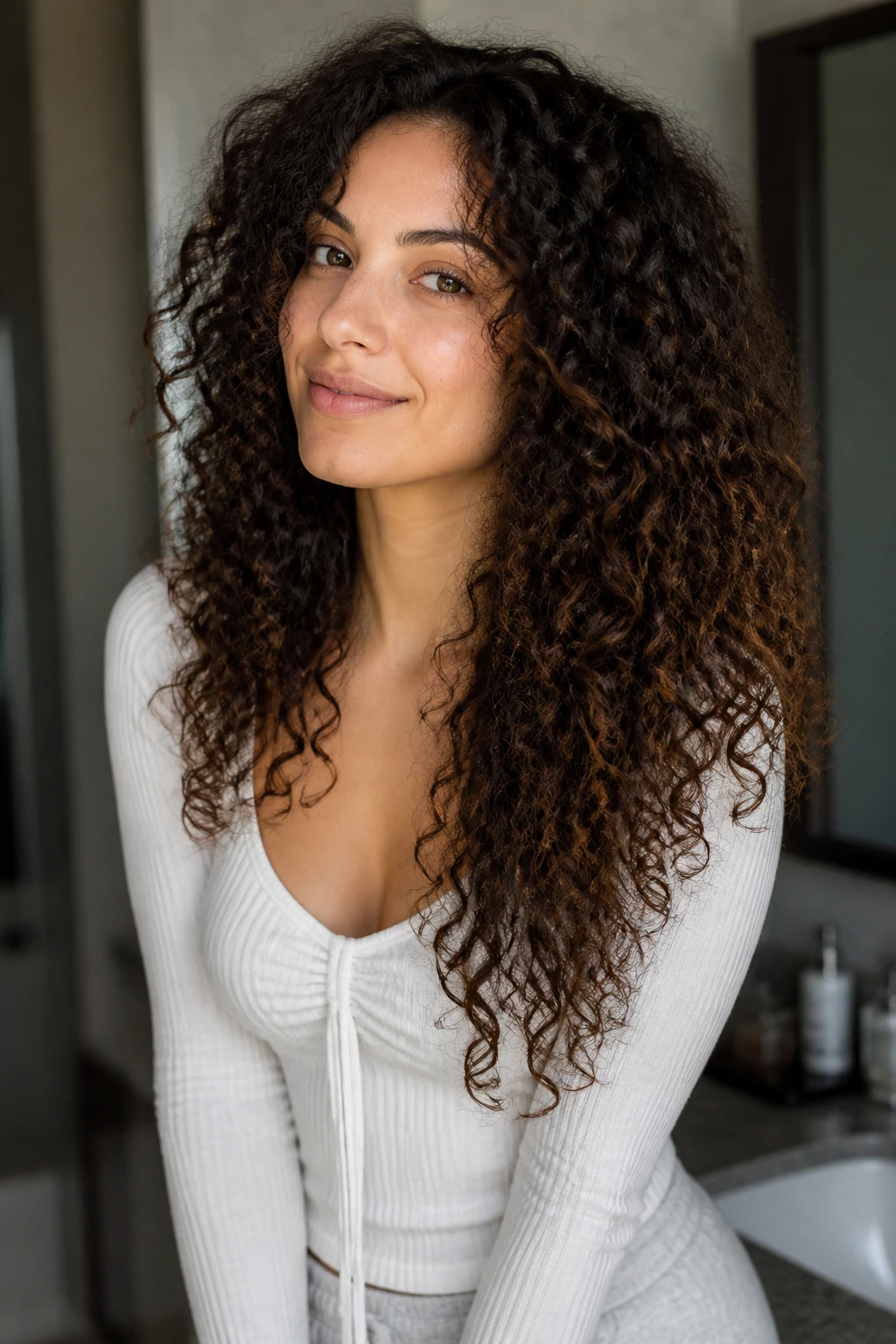
Long curly hair is a moving target. That’s the problem and the fun part.
Shrinkage makes a style look different the second it dries. A curl pattern can lift a few inches as the moisture leaves, and tighter textures can hide even more length than loose waves do. That is why a cut that seems generous in the chair can suddenly feel much shorter at home, and why a style that looks bulky when wet can dry into something much smaller and more structured.
Density changes the equation too. Thick curly hair doesn’t behave like thin curly hair with the same length. It stacks, swells, and resists flatness in a way that can make certain shapes look rich while making others look bottom-heavy. A layered shape can keep the whole head from feeling like a blanket. A blunt line, on the other hand, can turn into a shelf if the curls are heavy enough.
Humidity, friction, and product choice matter more than people admit. Curls that are defined in the morning can go fuzzy by afternoon if the hold is too soft or the ends are under-moisturized. That’s why these transformations are not just “pretty looks.” They’re shape strategies. Each one solves a different problem, whether that problem is too much bulk, not enough lift, or a length that has started to feel invisible.
Essential Tools for These Transformations
-
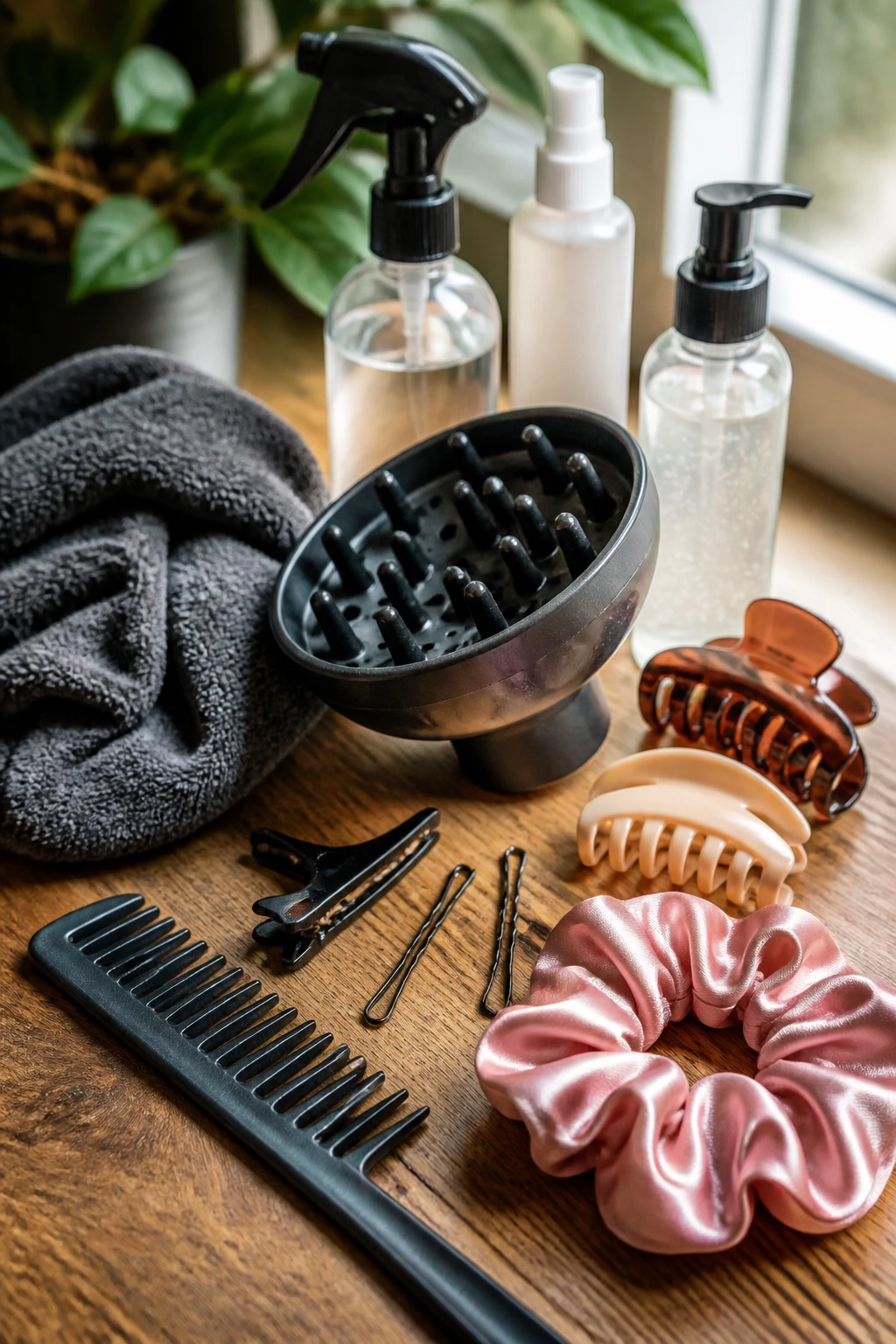
Wide-tooth comb: Detangles long curls without ripping apart the clumps you just worked to build.
-
Duckbill or alligator clips: These hold sections up while drying and make root clipping much easier.
-
Diffuser attachment: A must if you want lift at the crown and a set curl pattern without rough drying.
-
Silk or satin scrunchies: Better than tight elastics for pineapples, ponies, and half-up styles.
-
Bobby pins and U-pins: Useful for twists, crowns, chignons, and hiding loose sections that won’t behave.
-
Claw clips with rounded teeth: These hold more hair than people expect, especially on thick curly lengths.
-
Microfiber towel or cotton T-shirt: Blots water without roughing up the outer layer of the curl.
-
Spray bottle: Handy for refreshes, twist-outs, and reactivating old product without fully rewashing.
-
Heat protectant spray or cream: Non-negotiable if you plan to use a blowout or silk press.
-
Lightweight gel or mousse: Gives shape and hold without making the hair feel like a wax sculpture.
Smart Product and Accessory Picks for Long Curly Hair
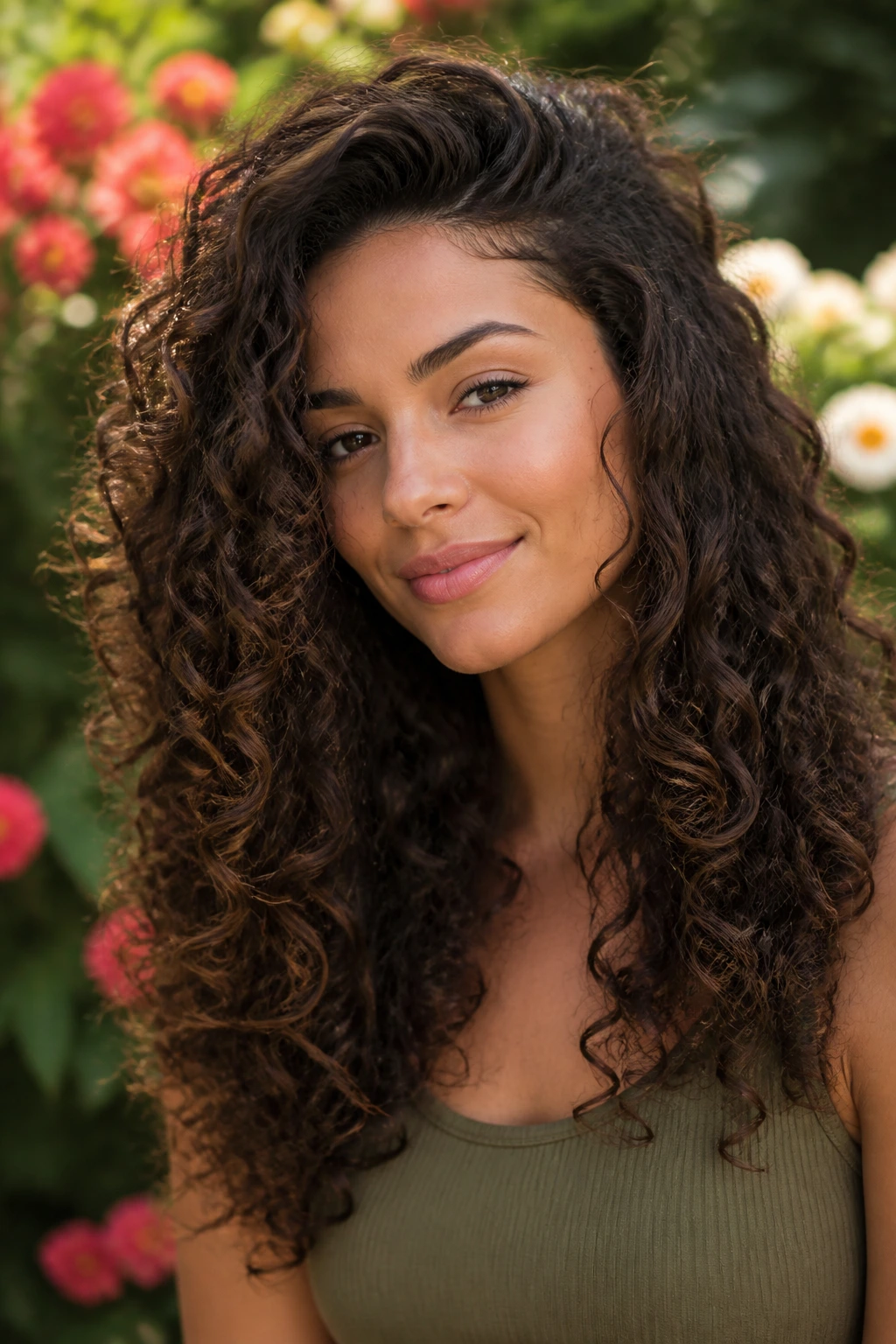
Pick products by hold and weight, not by the prettiest label. Long curls usually need a little structure at the roots and a lighter hand on the ends, so a thick butter all over the head can smother shape fast. I like a leave-in that slips easily, a styler that gives a cast or some firm hold, and a small finishing oil only at the ends. That trio covers most of these transformations without making the hair greasy or limp.
Accessories should match the density of the hair. Thin bobby pins are fine for small twists, but long thick curls need sturdier clips and pins with grip. A decorative comb looks lovely, then slides out if it has no teeth. The same goes for claw clips. If the teeth are too smooth or too short, they will fail the moment the hair shifts.
For humidity-prone hair, choose stylers that keep shape instead of only adding softness. Softness is nice. Softness with no memory is not. A mousse or gel with flexible hold can keep a twist-out or wash-and-go from ballooning into fuzz. If your hair is color-treated, be a little kinder with heat and a little more serious about moisture masks. Colored curls can still look crisp, but they need more attention than virgin hair.
How to Wear These Looks
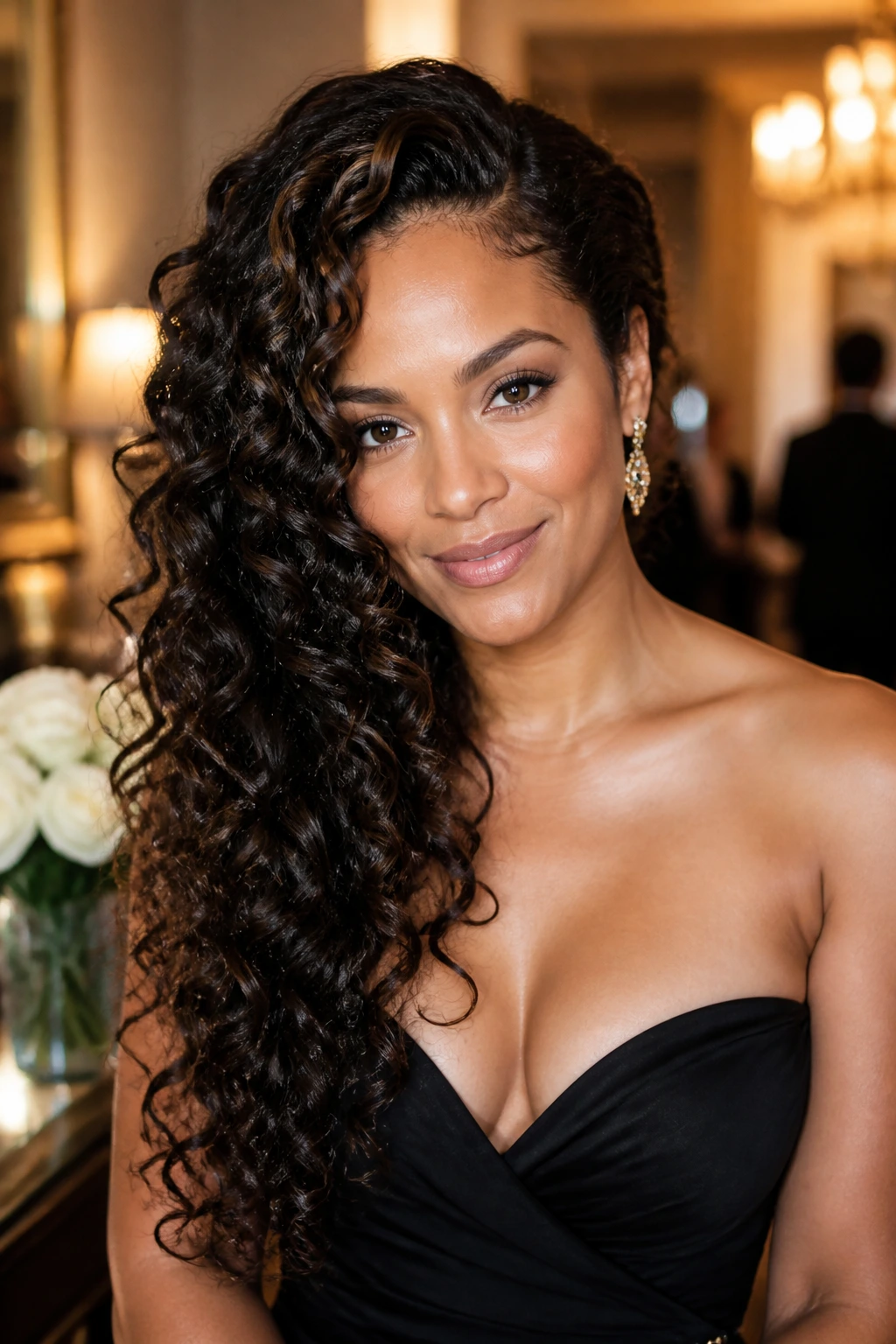
Presentation: Pick one thing to lead the eye—height, face framing, a braid detail, or a clean part—so the style reads as intentional from the front and back.
Accompaniments: Earrings, collars, scarves, sunglasses, and makeup should sit outside the curl line instead of fighting it; open necklines and larger earrings usually make long curls look even stronger.
Portions: Leave more hair down when you want the length to feel dramatic, or pin 20 to 30 percent of the crown when you need lift without losing the long line.
Pairing: Match the shape to the setting—a sleek root or low bun for a sharper outfit, a braid-out or halo twist for relaxed days, and a high pineapple or faux hawk when you want the hair to feel loud.
Additional Tips and Shape Boosters
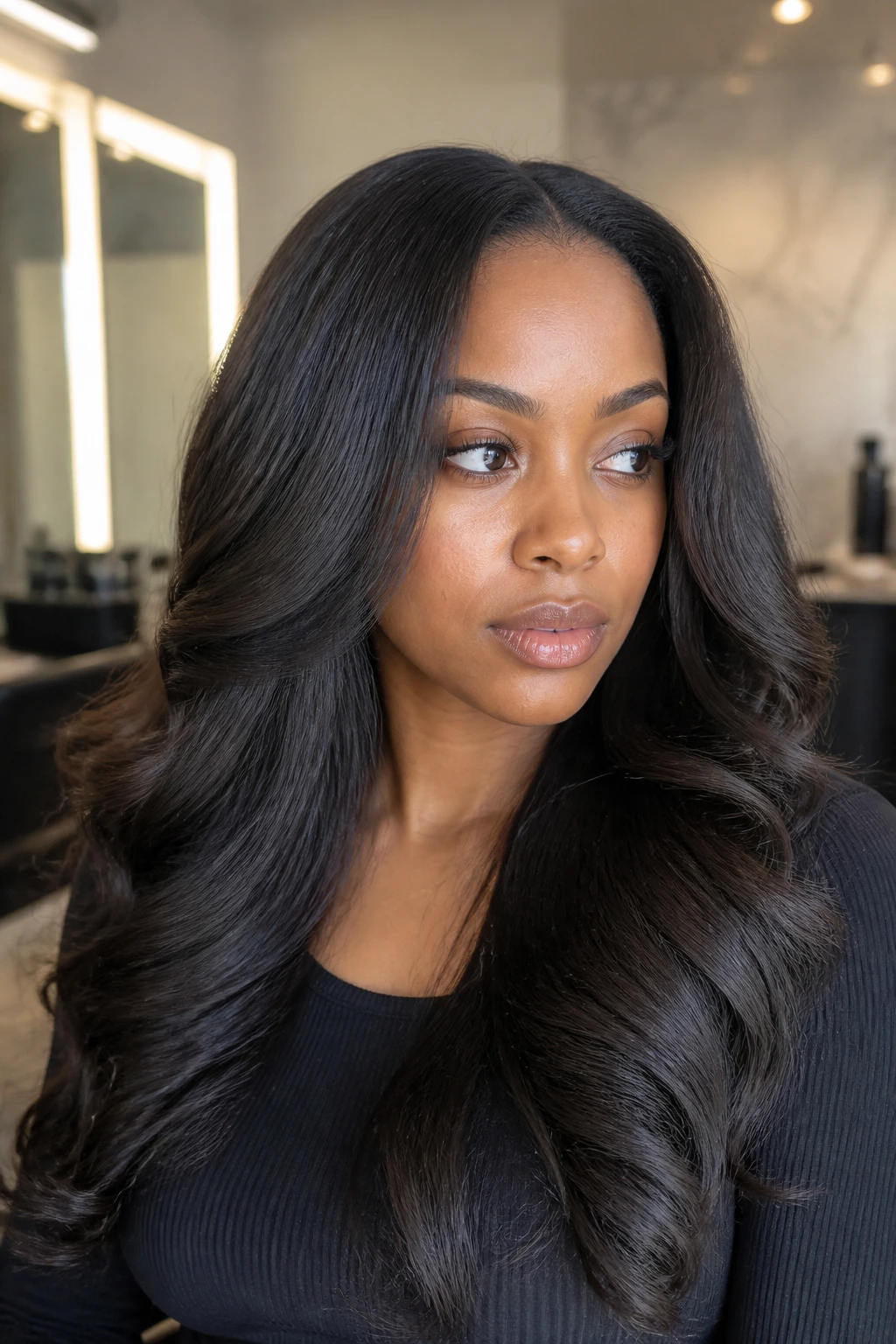
Root Lift: Clip the roots while the hair is drying, especially around the part and the crown. That one move stops long curls from collapsing into the scalp.
Length Cheat: If you want the hair to read longer, stretch the mids with banding or twists before drying. If you want more volume, leave some shrinkage alone.
Finish Control: Use shine on the outer layer and moisture on the ends, not the roots. A glossy crown can look flat fast, while shiny ends make the whole style look healthier.
Make-It-Yours: If your hair is fine, choose shapes with less layering and more root lift. If it’s thick, go after clean outlines and tucked styles so the bulk doesn’t swallow the silhouette.
Mistakes That Flatten the Whole Look
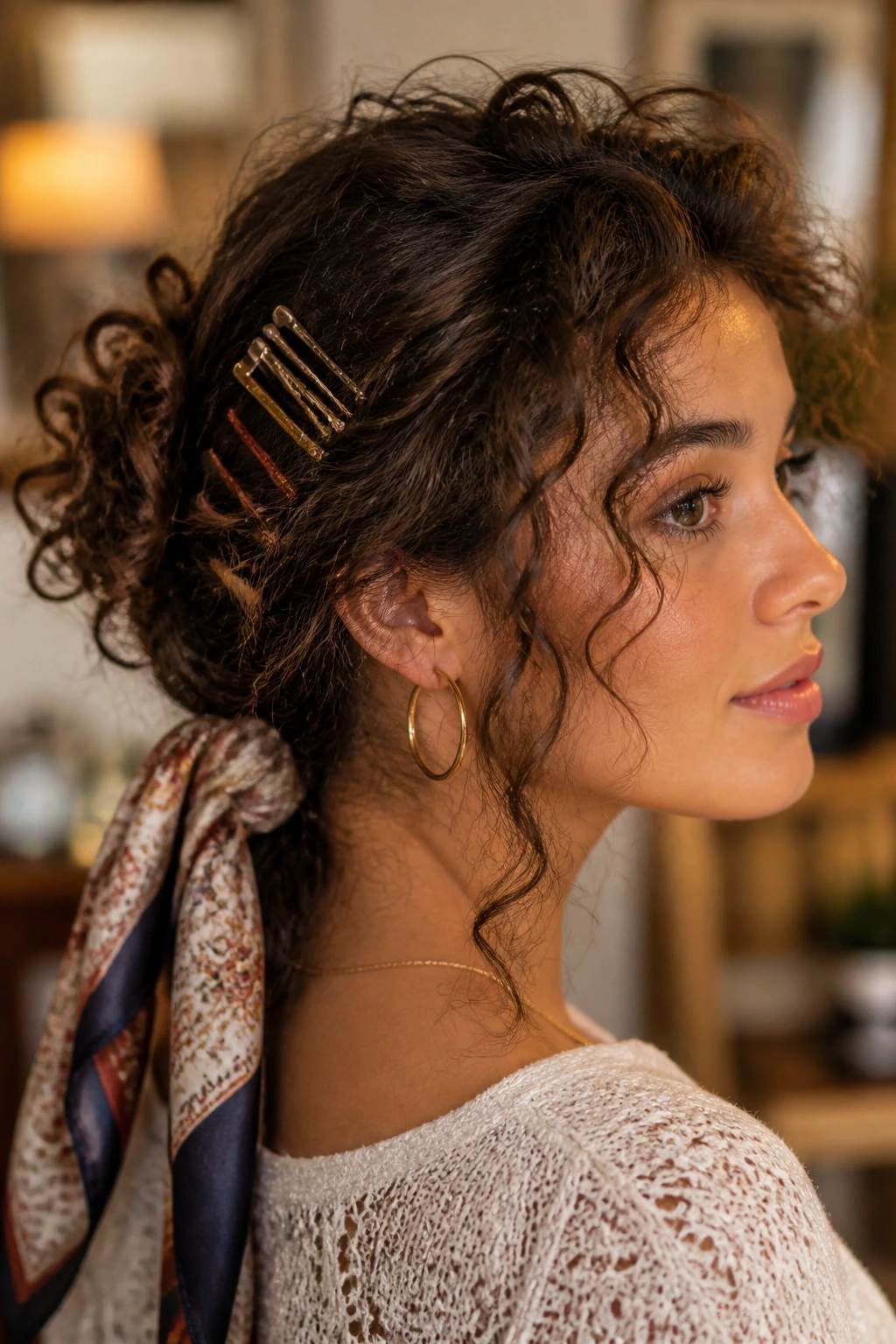
The biggest mistake is chasing length without considering weight. Long curls can look shorter when they’re too heavy at the bottom, which is why blunt, overgrown ends often drag the whole head down. If the shape feels like a wet towel by midday, ask for layers, a rounded outline, or a lighter perimeter.
Another common error is using too much product near the roots. Heavy creams and oils can make the crown clump flat, and once that happens, the length becomes the only thing people notice. Keep richer products on the mids and ends, then use mousses or lighter gels up top.
People also rush the drying stage. A twist-out taken down early, a banded style opened while still damp, or a wash-and-go scrunched before the cast is set will all lose definition. Wait until the hair is fully dry. Fully. Not “mostly” dry. That difference matters.
And then there’s tension. Tight ponytails, rough elastics, and over-pinned styles can give you a headache and breakage at the hairline. If the style hurts, it’s too tight. No style is worth the little dent that turns into a sore scalp by evening.
Variations and Adaptations to Try
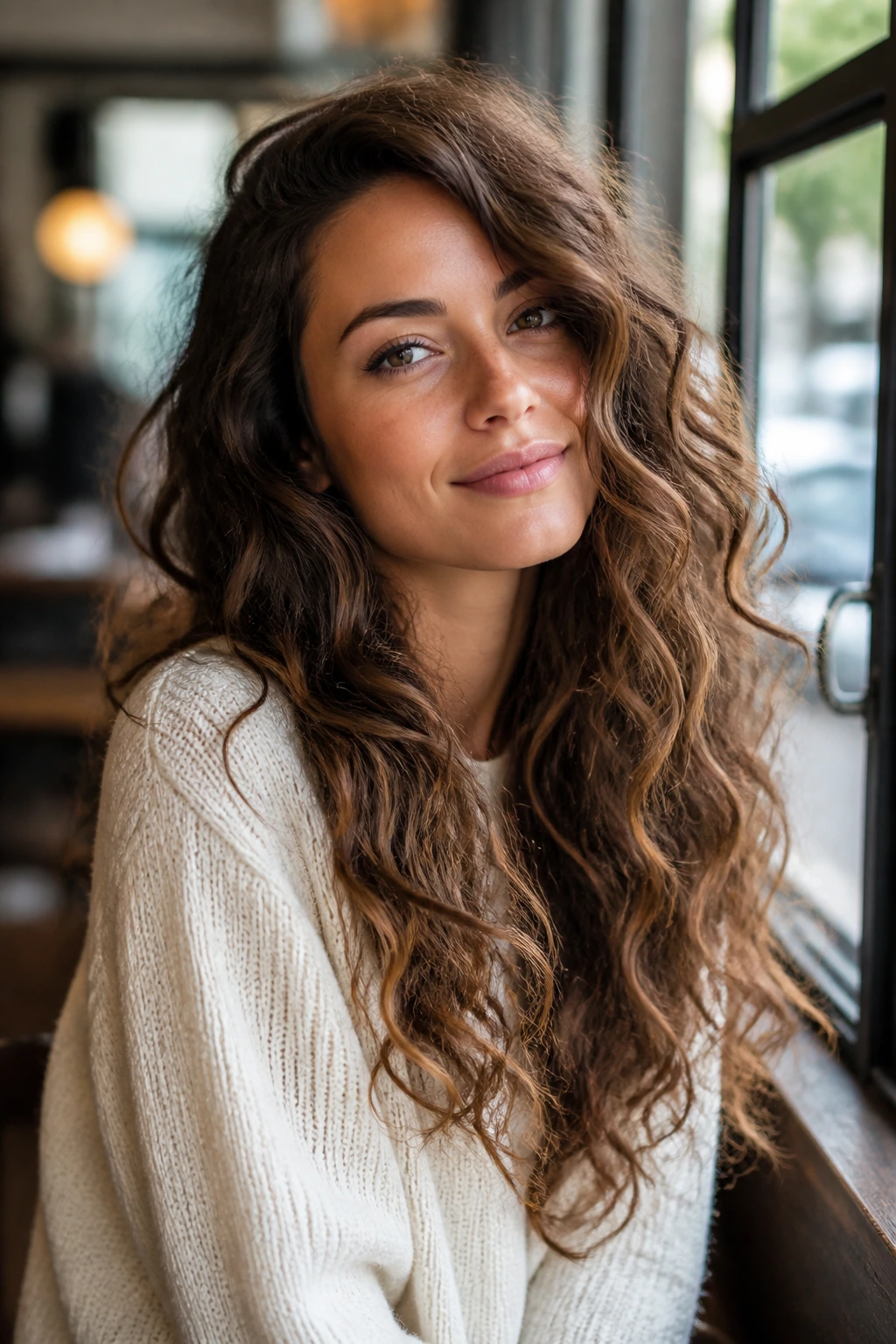
Loose-Wave Version: If your hair sits closer to 2C or 3A, lean into side parts, butterfly layers, braid-outs, and soft curtain bangs. These keep the shape airy without forcing the hair into a much tighter pattern than it naturally wants.
Tight-Curl Version: For 3C to 4C hair, favor rounded layers, pineapples, banding, faux hawks, and tucked updos. Those shapes respect shrinkage and keep the style from looking chopped off halfway through the day.
Heat-Free Formal Hair: Pair a braid-out or twist-out with a low chignon or side cascade when you want event hair without hot tools. You still get polish, but the curls keep their texture and movement.
Humidity-Heavy Day Version: Reach for slicked-back roots, claw clips, halo twists, and low buns when the air feels sticky. Styles that keep the crown controlled usually outlast loose shapes that depend on perfect definition.
Protective Rotation: If your ends are dry or the weather is rough, rotate between braided crowns, low buns, and pineapples for a week. That gives the ends a rest while still changing the look enough that you do not feel trapped in one style.
Keeping the Shape Between Wash Days
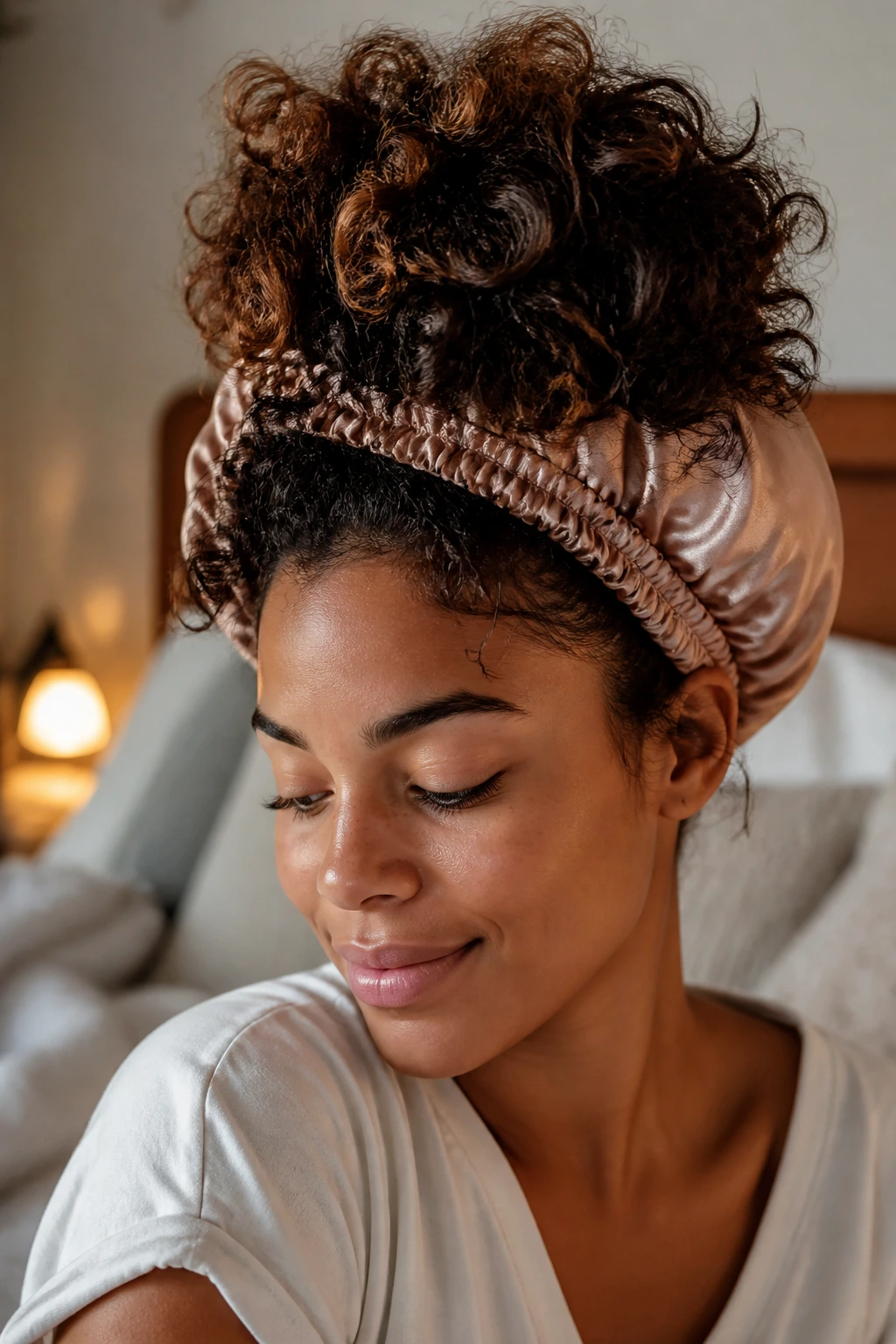
Long curly hair usually looks best when you stop treating every morning like a reset button. A silk bonnet or satin pillowcase keeps the curls from rubbing into a frizzy mess overnight. If you wear your hair loose to sleep, a loose pineapple on the crown with a satin scrunchie can save the shape better than you’d think.
Refreshes should be light. Mist the hair with water, add a pea-sized amount of leave-in to the front and ends, and scrunch gently. If the roots have gone flat, use clips for ten or fifteen minutes while the hair re-dries. That’s often enough to bring back the lift without soaking the whole head.
For styles like twist-outs, braid-outs, and banded sets, preserve the pattern rather than pulling at it every day. Pineapple the hair at night, separate only the pieces that need it, and use your hands instead of a brush when the pattern starts to soften. If the ends are rubbing on coats or bags, tuck them away. Friction is a thief.
A good refresh can buy you two to four extra days from a style, depending on density, porosity, and how much humidity your hair has been fighting. Some curls will hold longer. Some won’t. But all of them do better when you protect the shape before you sleep on it.
Frequently Asked Questions
Which transformation works best if I want to keep my length?
Rounded layers, a U-cut, a deep side part, and accessory-led styling usually give the biggest change without sacrificing inches. If you want the silhouette to look different but the ends to stay where they are, those are the safest places to start.
Do curtain bangs work on very curly hair?
Yes, but they need to be cut longer than straight bangs and checked dry. Tight curls shrink more than people expect, so the front pieces should start longer and get refined after the hair has settled.
Can I do these styles without heat?
Absolutely. Twist-outs, braid-outs, banding, pineapples, halo twists, faux hawks, and claw-clip updos all work without hot tools. Heat is optional here, not required.
What if my curls flatten at the crown no matter what I do?
Clip the roots while drying, use a lighter styler near the scalp, and change the part before the hair dries. A heavy cream at the roots will usually make the collapse worse, not better.
How do I make long curly hair look longer?
Stretch the hair with twists, braids, or banding, then use a V-cut or U-cut to clean up the perimeter. A center part and a little root lift also help the eye read the hair as longer.
Are these transformations good for thick hair?
Yes, especially the layered cuts, faux hawk, high pineapple, low chignon, and shags. Thick curls usually need shape more than volume, so anything that trims the bulk without killing the texture tends to work.
What should I do if an updo keeps slipping out?
Use a grippier clip or more pins, and rough up the section slightly with mousse or a tiny bit of texturizing spray before you twist it. Very smooth, freshly conditioned hair can be slippery enough to slide right out of a pretty clip.
Can I combine more than one transformation at once?
That’s often the smartest move. A side part plus curtain bangs, or a twist-out plus a half-up halo, can look more finished than a single change. Just keep one main feature in charge so the style doesn’t turn busy.
Long Curls, New Shape
Long curly hair does not need a dramatic chop to feel fresh. A cleaner outline, a better part, or a style that lifts the crown can change the whole read of the hair without taking away what you already like about it. That’s the part people miss when they treat curls like they only need more volume or more length. Usually, they need shape.
I’d start with the transformation that fits your real life, not the one that looks best on a mood board. If you wear your hair up half the week, a cut or style that holds in a clip matters more than a perfectly polished cascade. If your curls fight humidity, a shape that stays neat on day three will be worth more than one gorgeous first day. Pick the version that solves the problem in front of you.
The nicest thing about long curly hair is that it can keep changing without losing its personality. That’s a gift. Use it.