



Fine medium haircuts for wavy hair with loose curls live in a narrow little sweet spot, and that’s exactly why they’re worth getting right. Cut too short, and the wave pattern can spring up into a puffy triangle. Leave it too long, and fine strands start to look stringy at the ends, like the shape ran out of steam halfway down.
Medium length is where the shape usually starts behaving. It gives loose curls enough room to bend, while keeping the perimeter close enough to the shoulders that the hair still looks full when it dries. The trick is not “more layers” or “less layers” in some cartoonish sense. It’s choosing the right balance of weight, lift, and edge definition so the hair can move without collapsing.
That balance changes depending on where your wave starts, how much your curls clump, and whether your hair gets flatter at the crown or more ragged at the ends. A good medium haircut can make fine wavy hair look thicker than it is. A bad one can make it look like you lost half your hair in the wash. The difference is usually in the shape, not the shampoo, and the first cut on this list shows exactly why.
Why These Cuts Keep Their Shape

- They hold onto the perimeter: Fine hair needs some weight at the bottom so the ends don’t fray into see-through wisps by mid-afternoon.
- They let loose curls stack naturally: A medium length gives curls enough room to form a bend without being pulled straight by extra weight.
- They keep the crown from looking sparse: The right layers lift the top without carving so deeply that you can see scalp through the part.
- They grow out without turning weird: A shoulder-to-collarbone cut usually softens as it grows, instead of flipping into a boxy helmet shape.
- They work with air-drying and diffusing: These cuts are built for hair that needs a little help, not a full salon blowout every morning.
- They make styling decisions easier: Once the shape is right, you can wear it smooth, scrunched, or brushed out and it still has a backbone.
1. Collarbone Lob with Soft Interior Layers
This is the haircut I’d hand to someone who wants movement without the drama of a shag. The perimeter lands right around the collarbone, which is long enough to let loose curls form a clean bend, but short enough that fine hair still looks like it has some substance when it dries. The interior layers are the quiet part here. They live inside the shape, not on the surface, so the cut moves without looking shredded.
Ask for a blunt-ish outline with soft internal graduation starting below the cheekbone. That keeps the ends from looking thin, which matters a lot on fine hair. If your waves are loose and a little lazy, this shape helps them clump instead of separating into skinny pieces. It’s especially good if your hair goes flat at the roots but still has a little kick through the mids.
Style it with a lightweight mousse and a diffuser on low heat, or let it air-dry with a couple of root clips while the top is still damp. The best thing about this cut is that it doesn’t need a lot of rescue work. It just needs the shape left alone.
2. Blunt Midi with Micro-Texture Ends
A blunt midi can look expensive on fine waves for one reason: it keeps the eye on the edge instead of on every tiny gap in density. When the hemline is clean, shoulder-skimming, and only lightly textured at the tips, the whole head reads fuller. That’s the part most people miss. They think fine hair needs loads of layers. Often, it needs fewer.
Why It Works
A solid line gives loose curls a place to land. If the ends are over-thinned, the curl pattern breaks apart and you get a fluffy halo with a transparent bottom. Not a great trade.
Ask for the ends to be point-cut just a touch, not razored into fluff. You want movement, not holes. This cut is also one of the easiest to brush out into soft waves the next day, which matters when your hair loses structure overnight. If you like a polished finish more than a messy one, this is a smart bet.
Best for: hair that waves from midlength down and needs a stronger edge.
Avoid if: your hair already tends to kick outward at the ends when it dries.
3. Rounded Lob with Face-Framing Ribbons
Why does a rounded lob work so well on loose curls? Because it echoes the curve your hair already wants to make. Instead of hanging straight down and then flipping awkwardly at the bottom, the cut bends inward slightly at the sides and leaves the front pieces a little longer. The result is softer around the jaw and fuller through the lower half of the head.
The face-framing pieces should start around the cheekbone or just below it, then taper gradually into the rest of the length. If they’re cut too high, fine hair can look wispy right where you want a little strength. If they’re too long, they disappear into the rest of the cut and you lose the point of having them at all.
What to Tell Your Stylist
Ask for a rounded silhouette with a fuller bottom line and face-framing pieces that don’t get chopped into separate “layers.” That language matters. You want ribbons that blend, not steps that telegraph every shear mark.
This is one of those cuts that looks good even when the styling is lazy, which I appreciate. A little air-dried bend around the face is enough.
4. Curtain Bangs and a Shoulder-Skimming Cut
Curtain bangs can be a gift or a mess on fine wavy hair. The cut works when the fringe stays light enough to split in the middle and fall into the sides without stealing too much density from the front. Shoulder-skimming length gives the rest of the hair enough room to balance the bang area instead of making the whole cut feel top-heavy.
The key is softness at the bridge of the nose and longer length near the cheekbones. You do not want a heavy, blunt curtain bang that sits flat across fine hair like a curtain rod. You want a fringe that opens easily and then disappears into the longer pieces around the face. That lets loose curls do their own thing without fighting a harsh line.
This cut suits people who like the idea of bangs but hate feeling trapped by them. The fringe grows out into face-framing layers instead of becoming an awkward chunk you have to pin back for months. That grow-out is half the appeal.
5. Soft Shag with a Clean Perimeter
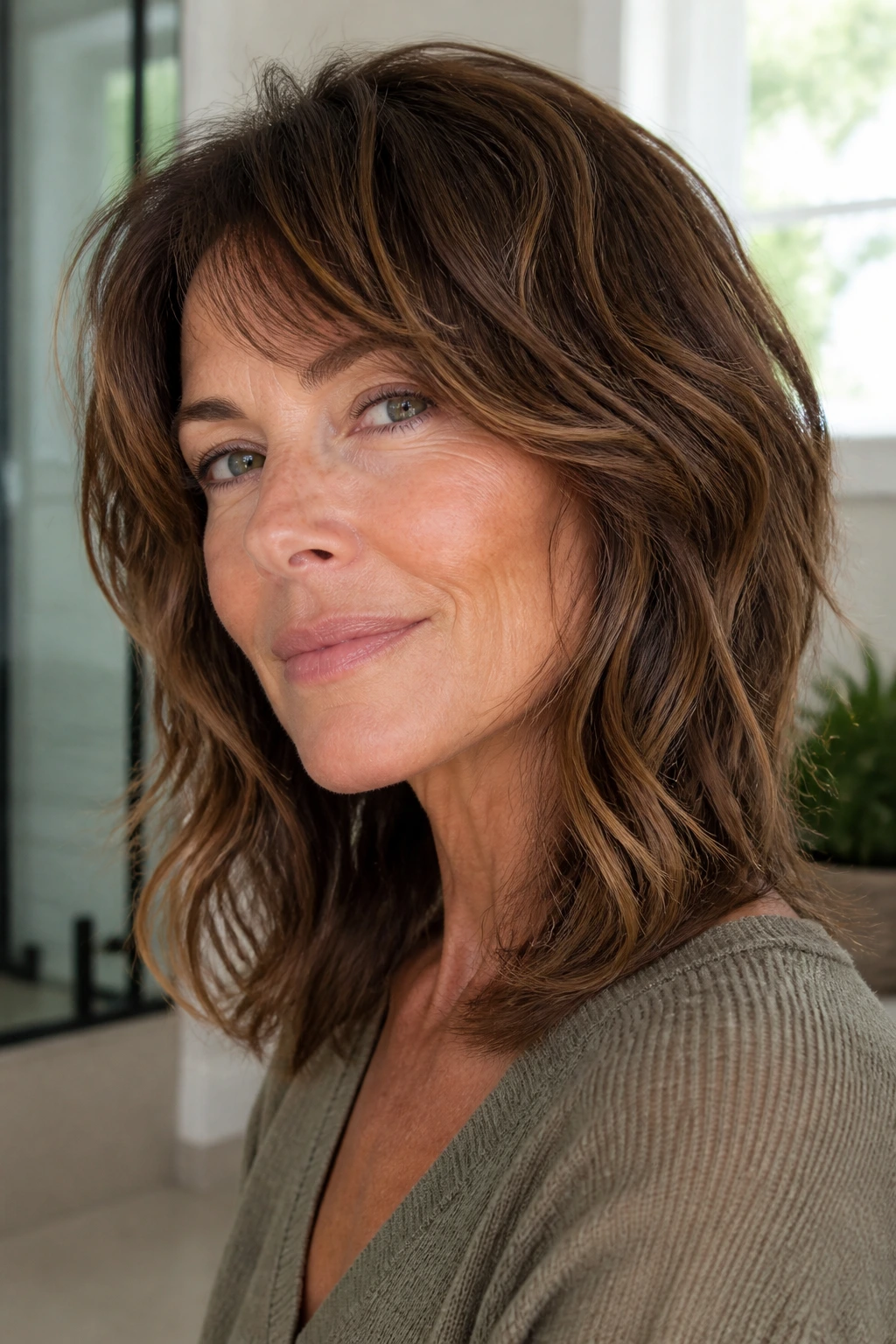
The soft shag lives or dies by restraint. On fine hair, too much choppy layering turns the crown into a puff and the ends into dust. A good version keeps the perimeter clean and only adds texture where the hair can support it, usually through the top third and around the cheekbones. That gives loose curls a lifted, airy shape without stripping away all the weight.
This cut works best when the stylist cuts it dry or dry-checks it after the wet cut. Fine wavy hair can look deceptively long when wet, then jump up once it dries. If the layers are set too high while the hair is soaked, you can wind up with a top-heavy shape that never lies flat again. No thanks.
How to Wear It
Wear it with a diffuser and a light mousse if you want the shag effect to show. If you prefer a smoother finish, use a round brush only at the crown and leave the mids alone so the wave pattern stays intact.
6. U-Shape Midlength Cut
A U-shape is one of the sneakiest good cuts for fine wavy hair because it keeps length in the back while curving the sides just enough to avoid a blocky outline. From the front, the hair looks softer and a little fuller. From the back, the perimeter has enough arc to keep loose curls from hanging in one heavy curtain.
This shape is useful if your hair tends to feel thin at the very ends but you still want some shoulder-length drama. The curve lets the front pieces swing around the face while the back keeps the illusion of density. It is also easier to grow out than a blunt bob, which matters if you hate frequent salon visits.
Ask for the center back to sit a little lower than the sides, with minimal internal layers. That keeps the bottom line from dissolving. On fine hair, the finish is everything. The less stringy the edge looks, the more the whole cut reads as full.
7. Side-Part Lob with Cheekbone Layers
A deep side part is one of the fastest ways to make fine waves look like they’ve got more lift than they actually do. It creates an instant root push on the heavier side and gives the wave pattern somewhere to fall instead of splitting down the middle and collapsing flat. Pair that with cheekbone-grazing layers and you get a lob that feels lively without being over-chopped.
The layers should begin around the cheekbone, then fall softly into the rest of the length. That keeps the front from looking heavy while still protecting the ends. This matters if your loose curls are more active on one side than the other, because a side part lets the cut work with the imbalance instead of pretending it isn’t there.
If your face tends to disappear behind your hair, this is a smart move. It opens one side, keeps the other grounded, and gives your waves a little architectural help. That sounds fussy, but it isn’t. It just means the hair gets a direction.
8. Butterfly-Lite Medium Cut
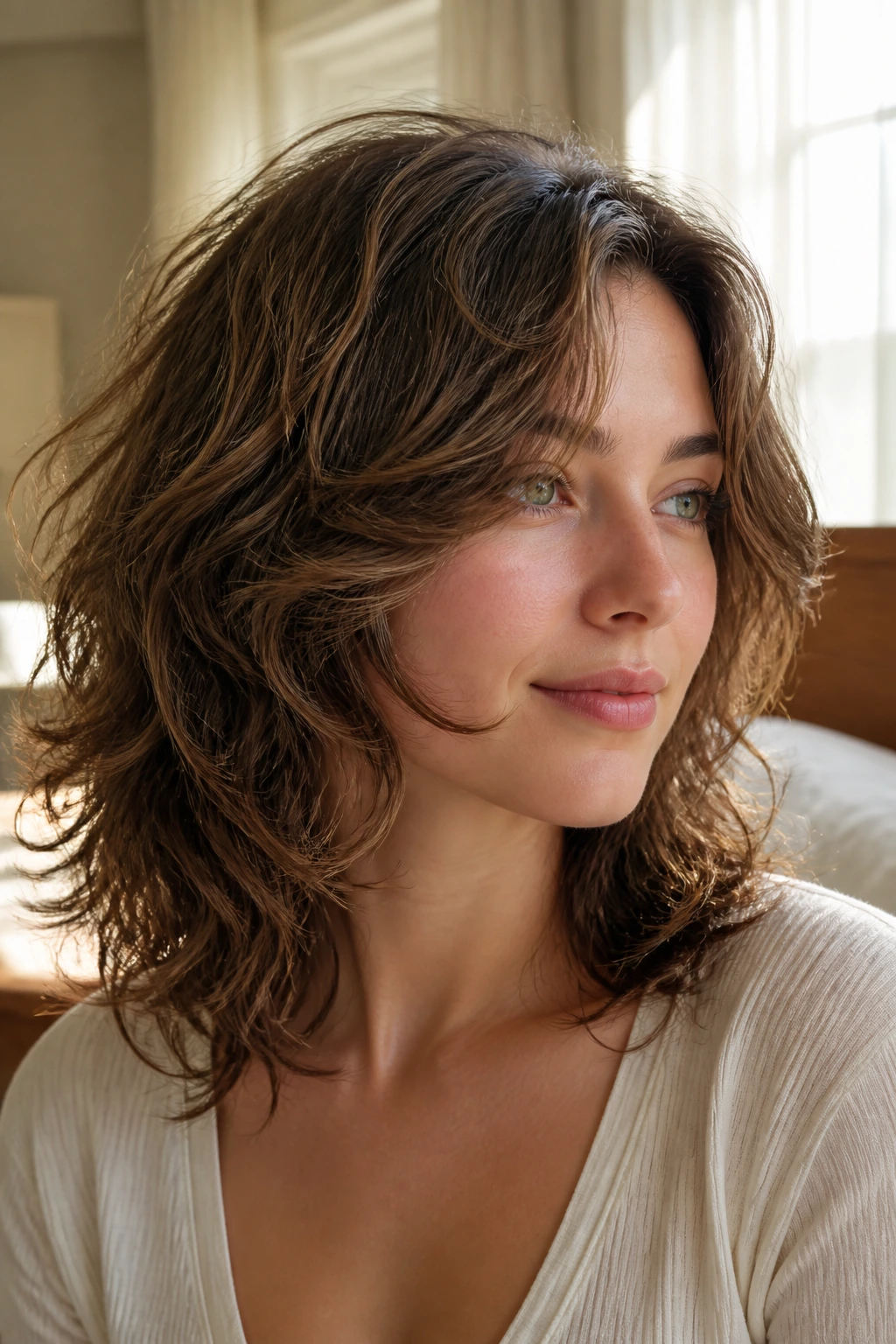
The butterfly cut gets talked about like it’s a magic trick. Usually it’s not. For fine wavy hair, the useful version is a lighter, calmer interpretation: shorter front layers that fall from the chin or cheekbone, while the bottom length stays intact. You get lift around the face and crown without sacrificing the heavy-looking ends that keep fine hair from going see-through.
This cut works because it separates the visual weight of the top from the body of the length. Loose curls can cluster in the front layers and create that bendy, airy shape people want, while the rest of the hair stays long enough to anchor everything. If the hair is fine and medium in density, that anchor matters more than people think.
It’s not the cut I’d hand to someone who wants zero styling. It does ask for a bit of round-brush work or a diffuser. Still, when it’s good, it gives the hair a lifted front and a cleaner outline in the back, and that’s a nice deal.
9. Soft A-Line Lob
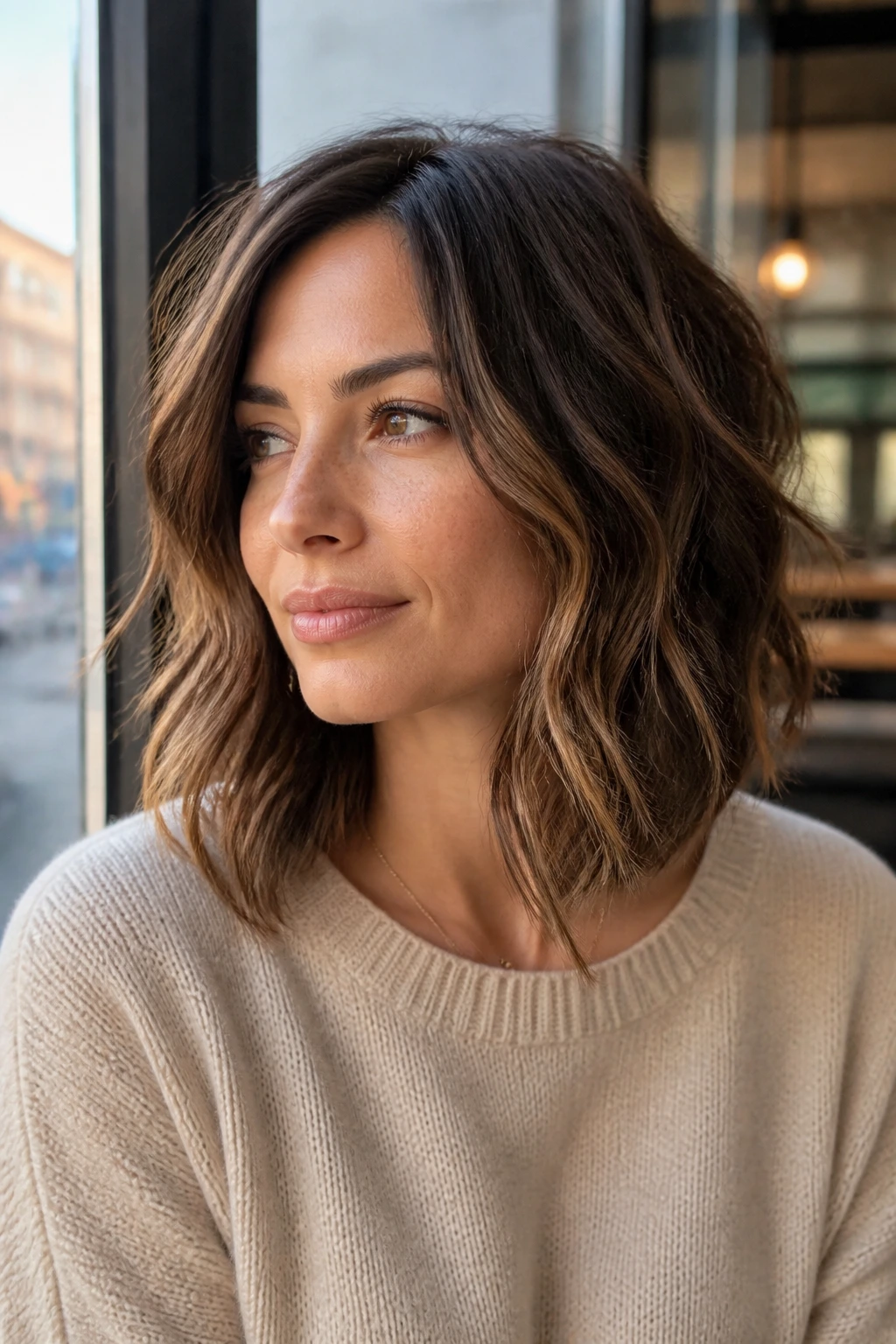
A soft A-line lob keeps the front a touch longer than the back, which is useful if your waves tend to collapse near the jaw and then flare awkwardly at the shoulders. That subtle forward angle pulls the eye down and out, creating a little length without making the hair look dragged out. Fine hair likes this because the shape stays recognizable even when the ends get a little fuzzy.
The angle should be gentle, not severe. A harsh A-line can look dated fast and can make loose curls stack in a weird shelf at the front. A soft one gives just enough direction to make the cut look intentional. That’s the whole game with fine wavy hair: enough shape to look designed, not so much geometry that the hair starts arguing with itself.
If you wear glasses, this cut also plays nicely with frames because the front pieces can sit just below the cheekbone and keep the face open. It’s a small thing. Small things matter.
10. Invisible-Layer Midi with a Dense Bottom Line
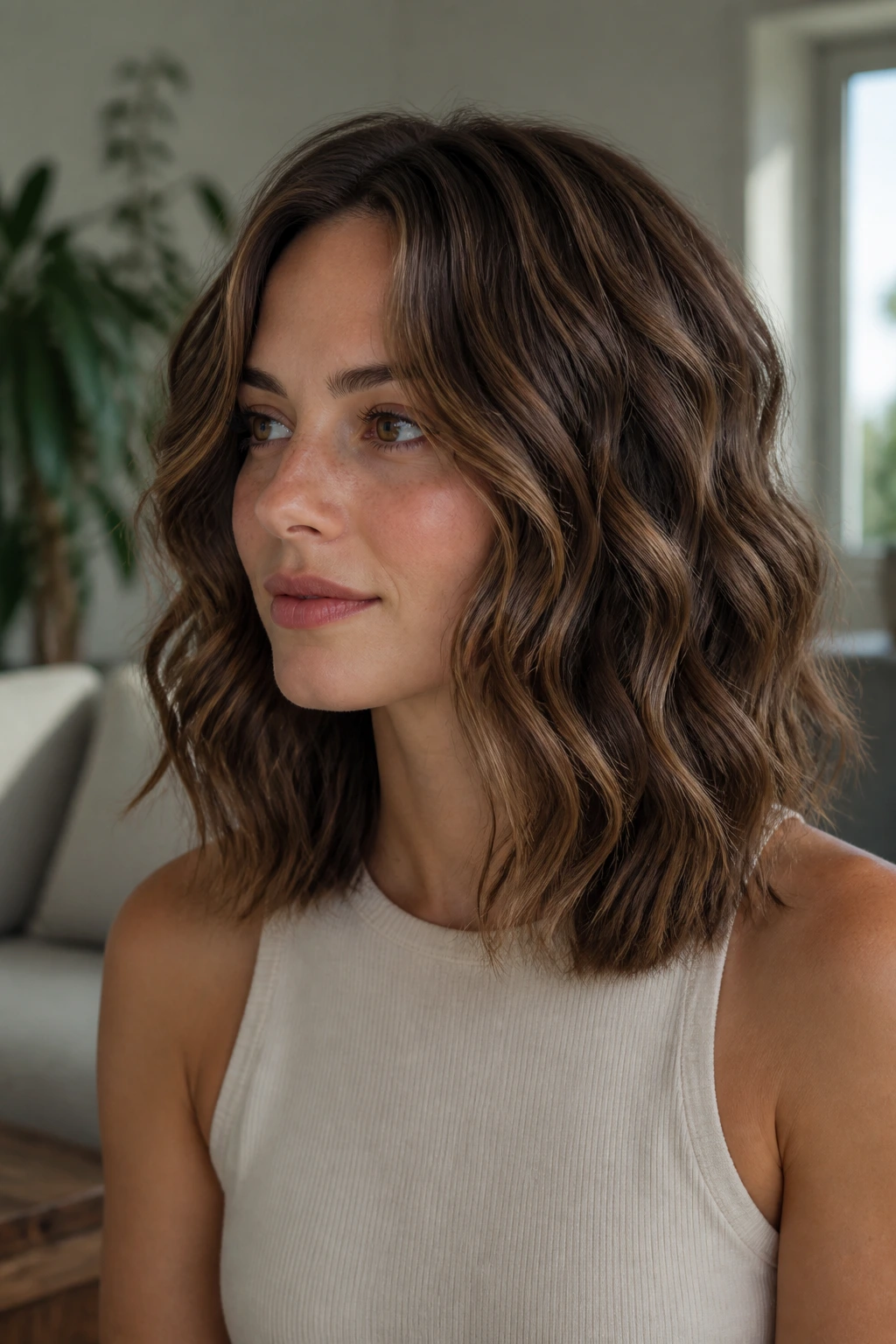
This is the haircut for people who hear “layers” and flinch a little. Invisible layers are long, hidden, and mostly there to remove bulk from the inside without touching the outer edge too much. On fine wavy hair, that can be a very smart compromise. You get movement in the mids and a bottom line that still looks thick enough to matter.
The cut should feel calm from the outside. No dramatic steps. No shaggy breakup. The ends stay blunt-ish, which keeps the hair from looking threadbare, while the hidden internal layers stop the whole shape from hanging like a damp towel. If your loose curls need encouragement but not a full makeover, this is a clean solution.
Best For
- Hair that waves easily but looks flat at the crown
- Anyone who wants a medium cut that grows out quietly
- People who wear their hair both straight and wavy
The downside? It can be too quiet if you want obvious texture. But if your hair already has movement and you just want it to read better, quiet is the point.
11. Razor-Soft Midlength Cut
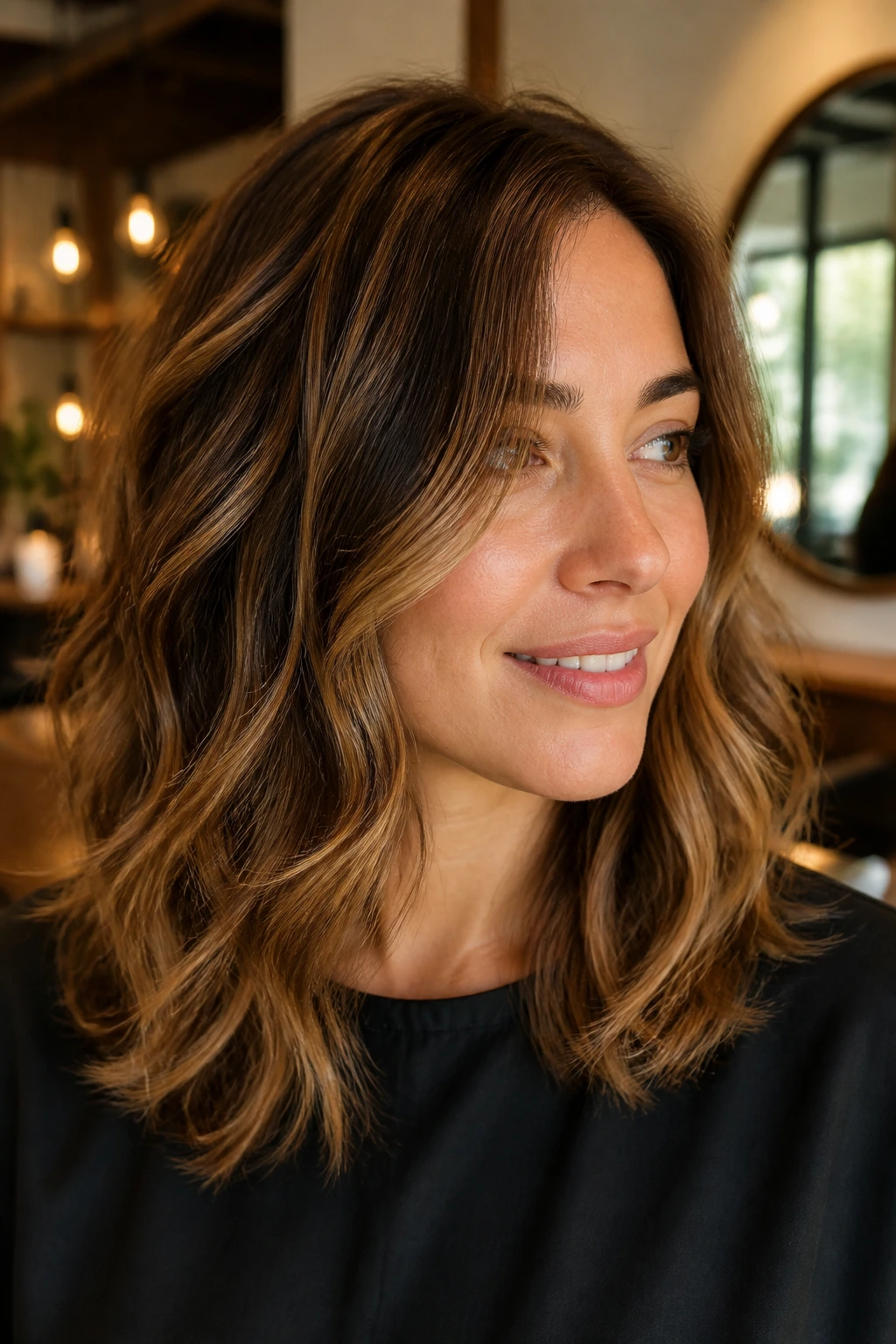
A razor-soft midlength cut can be gorgeous on the right head of hair, and a little dangerous on the wrong one. On fine wavy hair, the blade needs to be used with a light hand, mostly to soften ends and free up movement around the face. If the razor goes too deep, the ends can fray and the hair starts to look wispy in a bad way.
I like this version best on fine hair that has a decent amount of wave and not too much breakage. The softness can help loose curls clump and swing, especially if your hair gets puffy when cut too blunt. The line should still have some integrity. You want feathering, not a shredded edge.
This is the cut for someone who likes a little undone texture and doesn’t mind using a diffuser or a small amount of cream. It looks best when the finish has a touch of separation. If you air-dry and then rake your fingers through it too much, though, the whole shape can fall apart. So don’t fuss with it.
12. Wavy Midi with Bottleneck Bangs
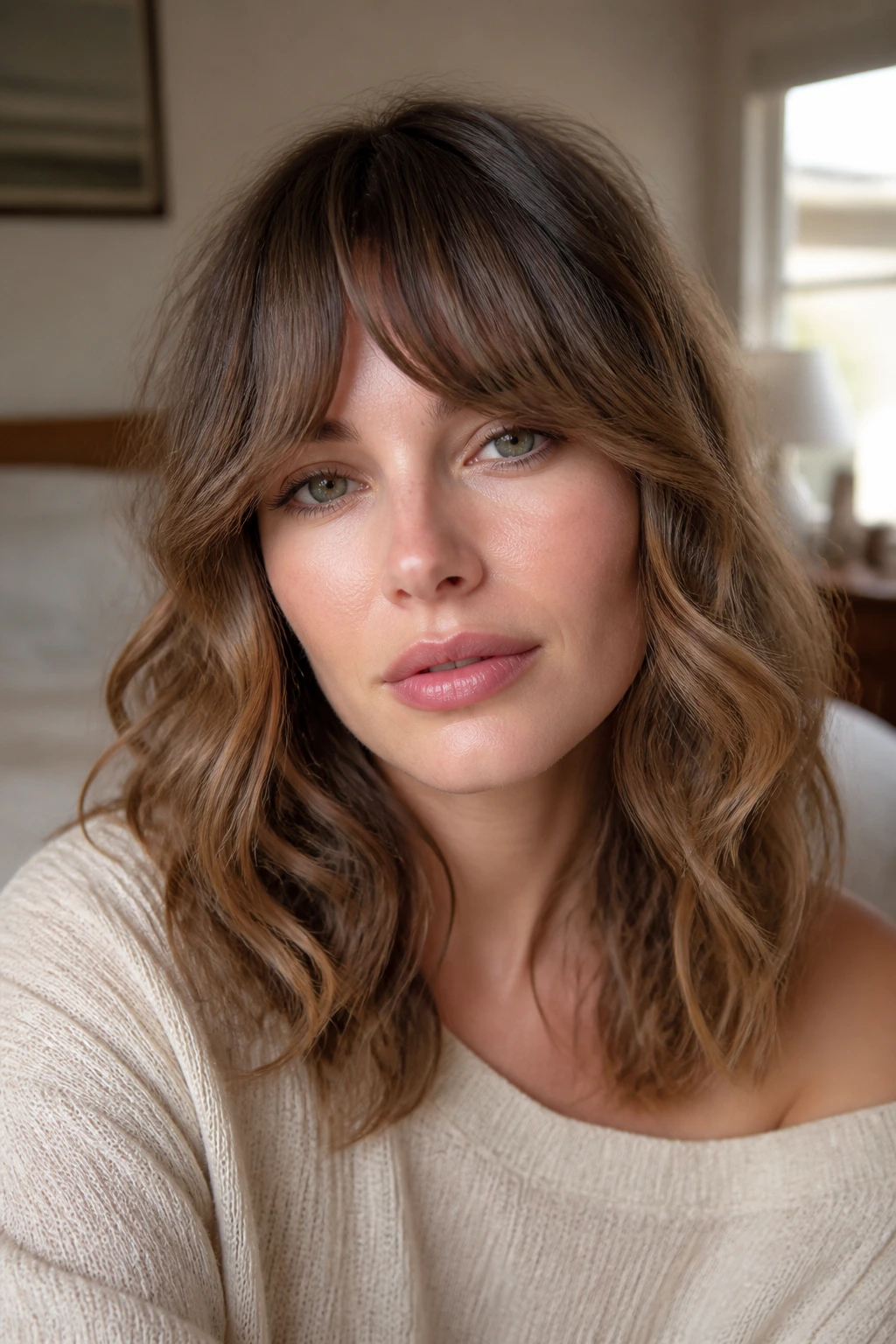
Bottleneck bangs are one of those fringe choices that make a medium haircut feel finished instead of generic. They’re shorter in the center, then open out toward the temples, which gives fine wavy hair a little frame without blocking the forehead with a heavy strip of hair. The rest of the cut can stay medium and loose, with enough length to keep the curl pattern visible.
The trick is keeping the bangs soft enough that they bend, not sit there like little curtains made of wire. On fine hair, a bottleneck fringe should skim the brow, then feather into the side pieces so it doesn’t look chopped on. If your waves are loose and your forehead is on the shorter side, this shape can balance the face without swallowing it.
It’s a good choice if you want something that feels current without being fussy. The fringe gives the cut personality. The medium length gives it backbone. That’s a pairing I trust.
13. Tapered-Ends Midlength Cut
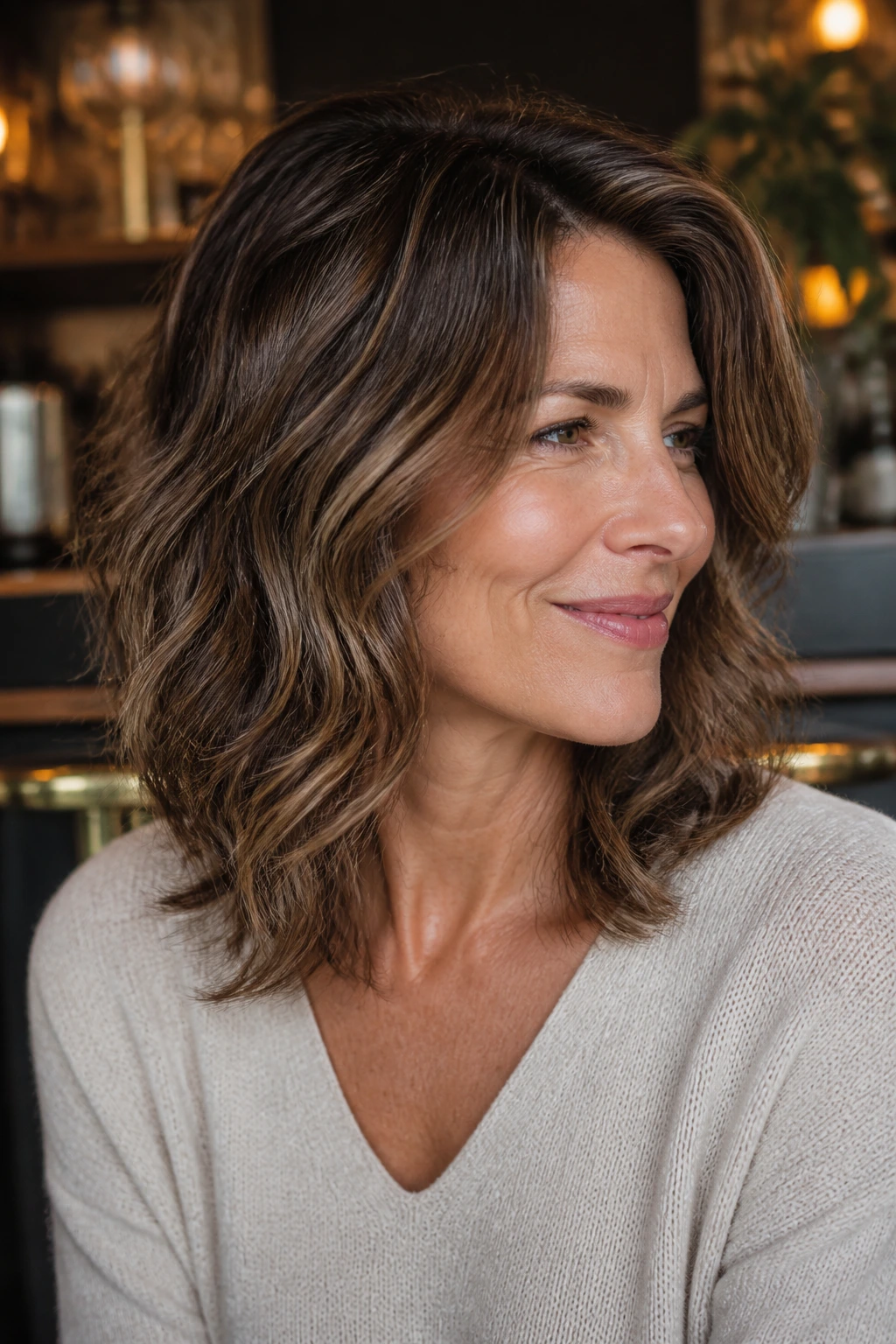
A tapered-ends cut takes the bulky feel out of medium hair without stripping the whole shape down. The ends narrow gently instead of stopping at one blunt line, so loose curls can stack with a little more movement. On fine hair, that taper can keep the shape from feeling boxy when it dries.
The important part is where the taper starts. Too high, and the mids start to look sparse. Too low, and the cut just looks unfinished. I like it when the taper begins in the last inch or two of the hair, with the perimeter still strong enough to show a full line from the front. That gives you softness at the edge and density through the body.
This cut is especially nice if your hair flips outward at the shoulders. The tapered finish helps the ends curve instead of shooting out sideways. It’s a small detail, but it changes the whole silhouette.
14. Sliced-Front Midlength Cut
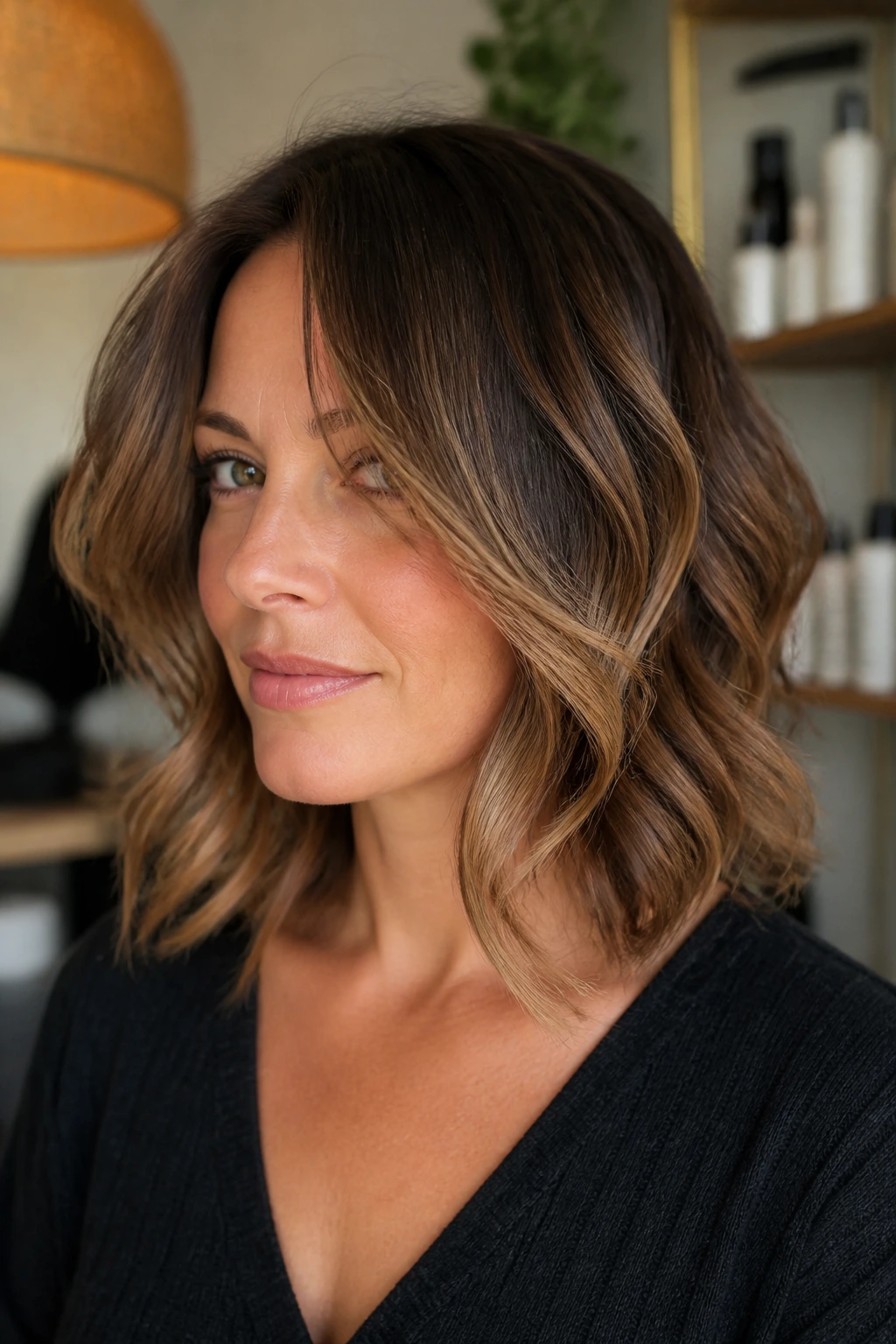
Some cuts are about the front. This is one of them. A sliced-front midlength cut keeps the back and bottom fairly solid while carving soft movement into the pieces that frame the face. On fine waves, that gives you a little lift right where people look first, without risking a thin-looking back.
The slice should be long and controlled, usually starting around the chin or collarbone and melting into the rest of the cut. No hard steps. If the front pieces are too short, you get a disconnected face frame that feels old fast. If they’re too long, they disappear into the length and the shape loses its point.
What I like here is the balance between polish and mess. The front pieces can be tucked behind the ears, left loose, or brushed into the rest of the waves. It’s adaptable without being bland, which is a rarer thing than it should be.
15. Grow-Out Lob for Fine Hair
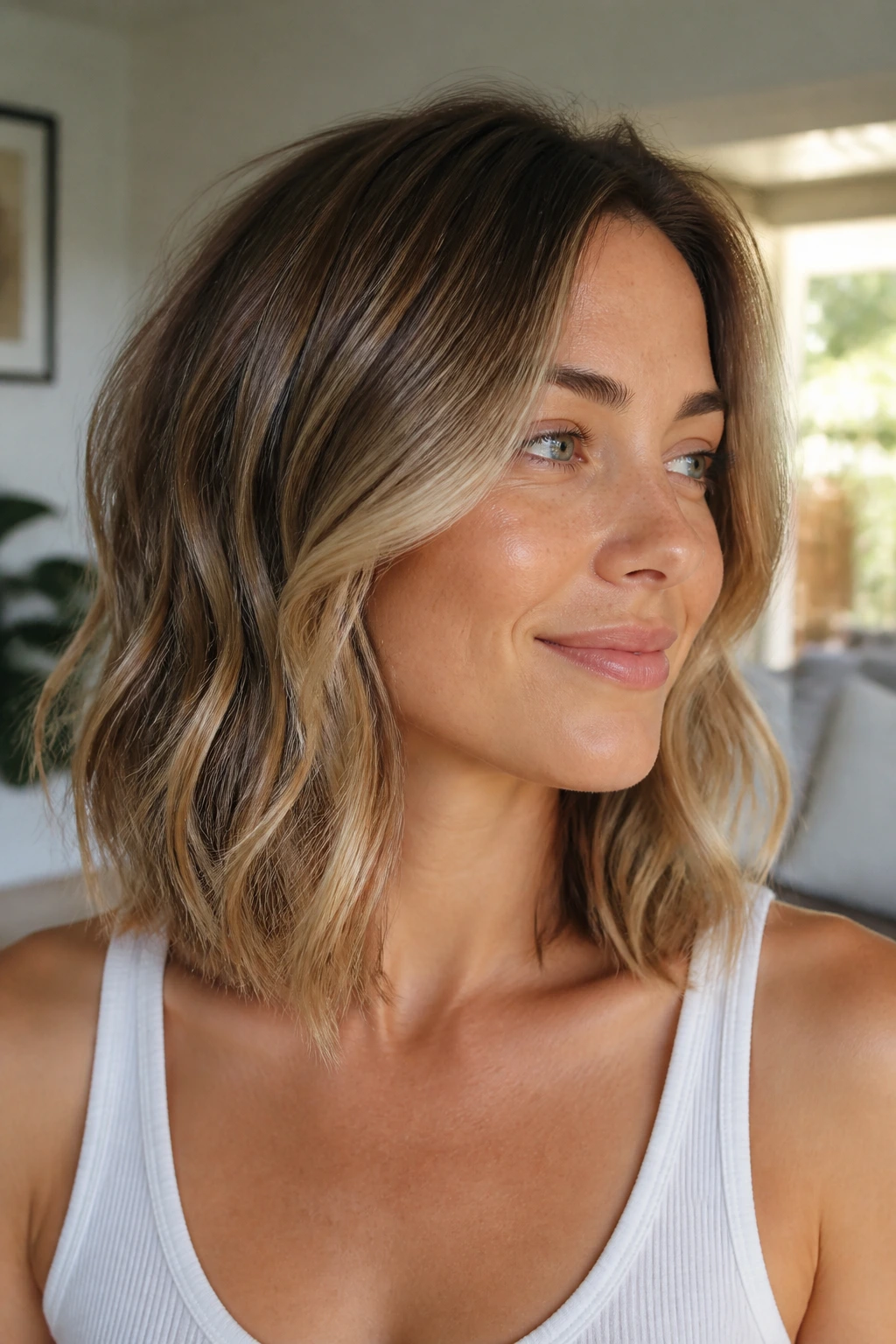
This is the haircut for someone who wants to stretch the time between appointments without looking neglected. A grow-out lob starts around the collarbone or just below it, with long layers that are meant to soften, not disappear, as the hair gets longer. Fine wavy hair benefits from that because the shape stays legible even after several weeks of growth.
The best versions keep weight in the bottom third of the hair. That means the ends can hold the eye while the top gets a little looser and more lived-in over time. If your hair has loose curls, the grow-out phase can actually look nicer than the first few days after the cut, because the layers settle and the bend becomes more relaxed.
A good ask at the salon
Ask for a lob that still looks intentional eight to ten weeks later. Stylist language matters here. If you say you want “something low maintenance,” you may get a cut that’s bland. If you ask for “a shape that keeps its line as it grows,” you’ll get closer to what you actually need.
16. Rounded Shoulder Cut with Blunt Ends

A rounded shoulder cut is one of the most underrated options for fine wavy hair. It brushes the shoulders, curves slightly at the sides, and keeps a blunt bottom edge that makes the hair read thicker. The roundness stops the silhouette from getting boxy, while the blunt ends protect the visual density.
This is a strong choice if your loose curls have a tendency to kick outward around the shoulders. A rounded shape keeps that movement looking soft instead of accidental. It also plays well with a middle part or a gentle side part, which gives you some styling room without changing the haircut itself.
Use a medium round brush only if you want a smoother finish. If you want to keep the wave, let the hair dry with a little mousse and just touch the ends with a diffuser. The cut does the heavy lifting here. That’s the whole point.
17. Airy Midlength Shag

The airy midlength shag is for people who want obvious texture and don’t mind a little attitude in the shape. On fine wavy hair, it has to be edited carefully. The crown gets enough lift to keep the roots from lying flat, the sides get soft breakup, and the perimeter still needs enough weight to stop the ends from disappearing.
If the cut is done well, loose curls look bouncy instead of ragged. The top pieces should be shorter, but not chopped into tiny fragments. Think light movement, not heavy layering. The shag should look like it can be pushed to the side and still keep its shape. If it collapses the moment you run your fingers through it, the layers were too aggressive.
This is not the most polished option on the list. It’s the one with the most personality. If your hair likes a scrunched finish and you don’t want to spend much time making it look “done,” the airy shag earns its keep.
18. Deep Side-Swept Medium Cut
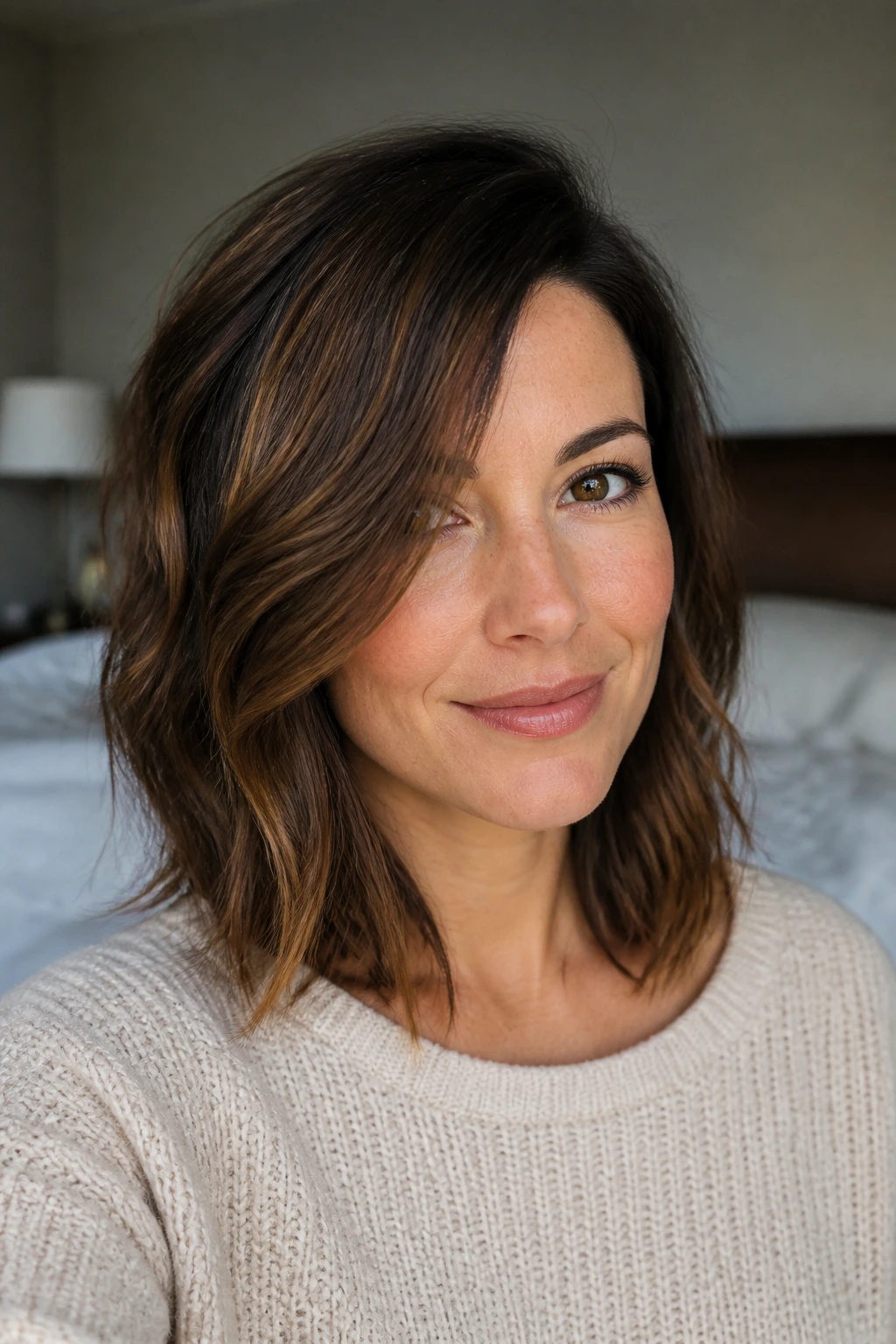
A deep side sweep can rescue fine hair that falls flat down the middle. Shift the part hard to one side, and the root on the heavier side gets an instant lift. That change alone can make medium-length waves look fuller at the crown. Pair it with a clean, shoulder-grazing cut and the shape feels deliberate instead of messy.
The front should be cut so the longer side can drape across the cheekbone while the shorter side opens the face. That contrast gives loose curls somewhere to land, and it keeps the cut from settling into one flat plane. I like this best on hair that has a soft bend but not a lot of natural volume at the roots.
It’s a smart style for days when your hair looks tired. Some cuts need perfect blow-drying to show up. This one doesn’t. A side part and a little root lift spray can change the whole mood in five minutes.
19. Minimal-Layer Midi for Loose Curls
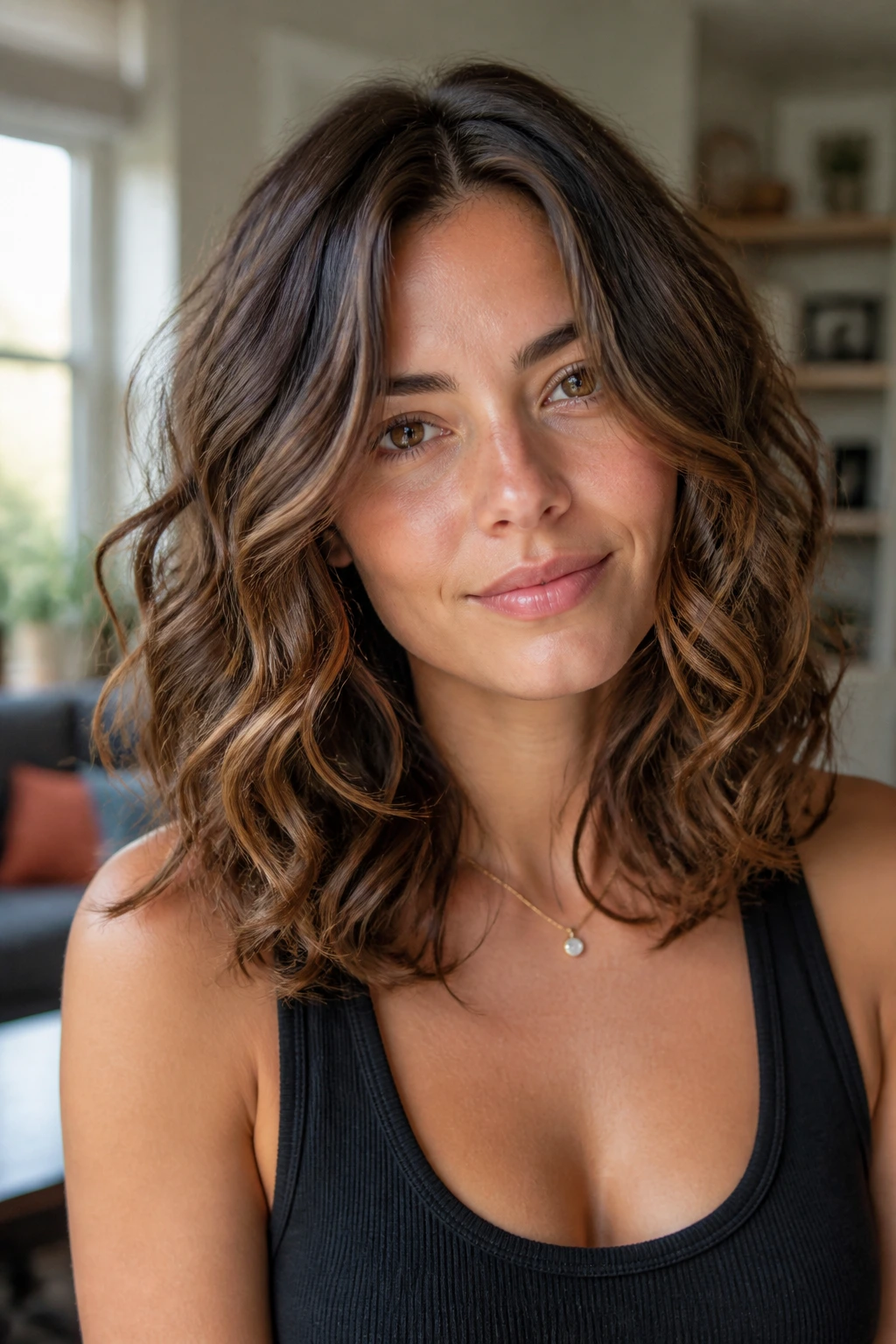
If your hair is fine but your loose curls are strong enough to create shape on their own, minimal layers can be the answer. This cut keeps the length intact and only trims enough to stop the bottom from getting ragged. The goal is density, not drama.
What makes it work is restraint. Loose curls already have movement. They don’t need a thousand extra cuts to prove the point. Too many layers can break up the curl clump and leave you with a fluffy top and a transparent bottom. A minimal-layer midi avoids that by keeping the overall mass together.
This is the cut I’d recommend to someone who wants to air-dry more often than not and doesn’t want to babysit their hair. It can still move. It just doesn’t broadcast every technical detail. Sometimes that’s the more flattering choice.
20. Layered Lob with Internal Weight Removal
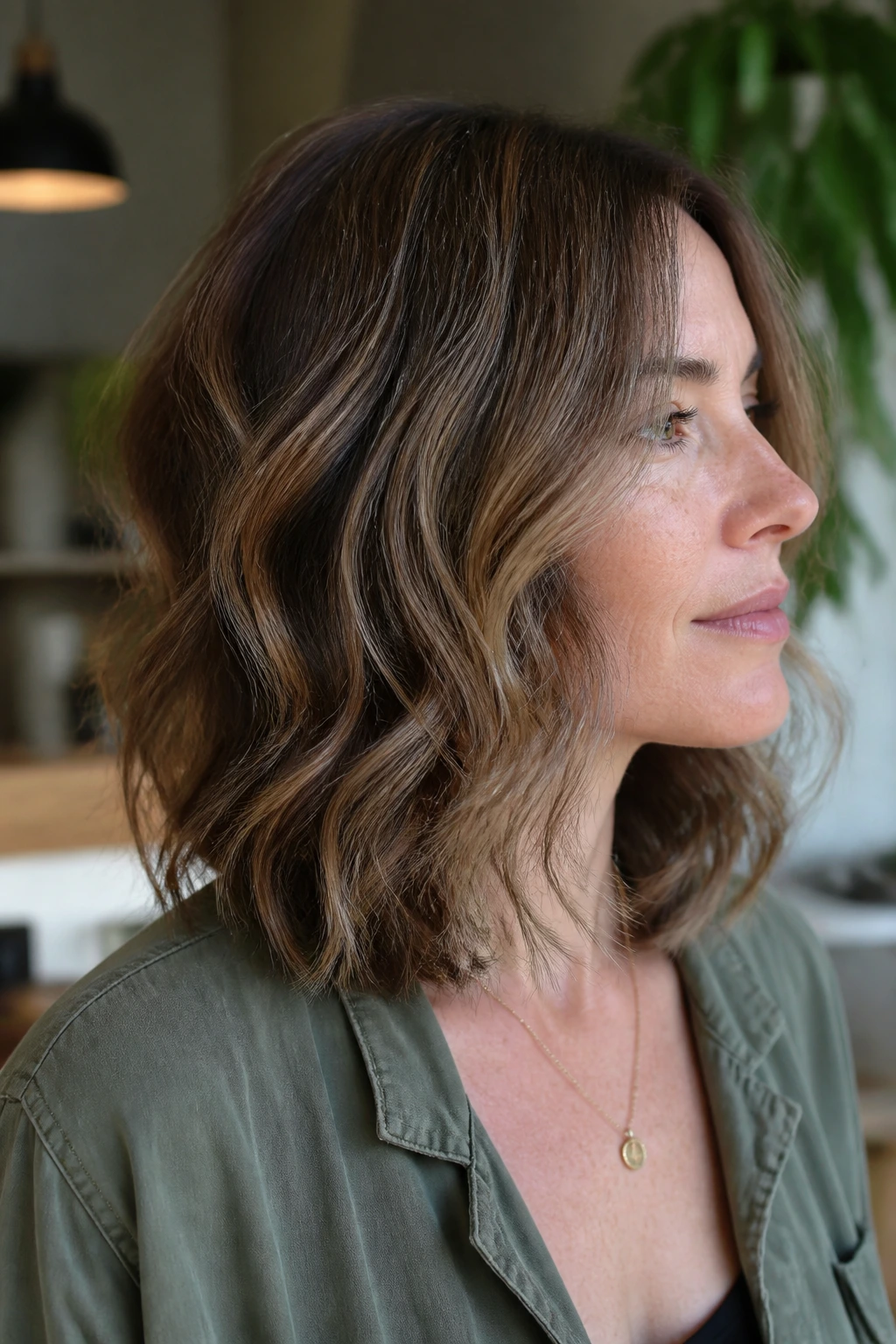
Internal weight removal sounds like salon jargon, but it’s simple enough in practice: the stylist removes bulk from inside the cut while protecting the outline. For fine wavy hair, that can be useful when the mids swell or the bottom feels too heavy. The outer edge stays full, and the inside gets more room to move.
This is a better choice than aggressive surface layers when you want shape but not obvious chop marks. The hair can bend, separate, and fall more cleanly, especially if your loose curls like to clump in some sections and not others. Internal weight removal gives the curls breathing room without exposing the scalp or thinning the ends.
Ask the stylist to keep the perimeter solid and only lighten the inside if needed. That request keeps the haircut from drifting into over-layered territory. And over-layered fine hair is a mess you’ll spend weeks trying to grow out of.
21. Wolf-Lite Lob

The wolf cut gets a lot of attention because it’s messy in a photograph. The problem is that most fine hair cannot carry a full wolf cut without looking sparse. The lite version keeps the idea but softens the extremes: a little crown lift, a little face framing, and a lob-length perimeter that still looks thick.
This version works if your waves are loose and your hair has some natural body at the top. You get texture without the hollowed-out ends that make fine hair look thinner. The layers should be long enough to blend into the rest of the cut instead of sitting on top of it like a separate haircut.
It’s one of the more expressive choices here. If you like a slightly rebellious shape and you’re willing to style it with mousse or a diffuser, the wolf-lite lob can look sharp without chewing up the density. That balance is hard to find. This one gets close.
22. Collarbone Cut with Long Curtain Fringe
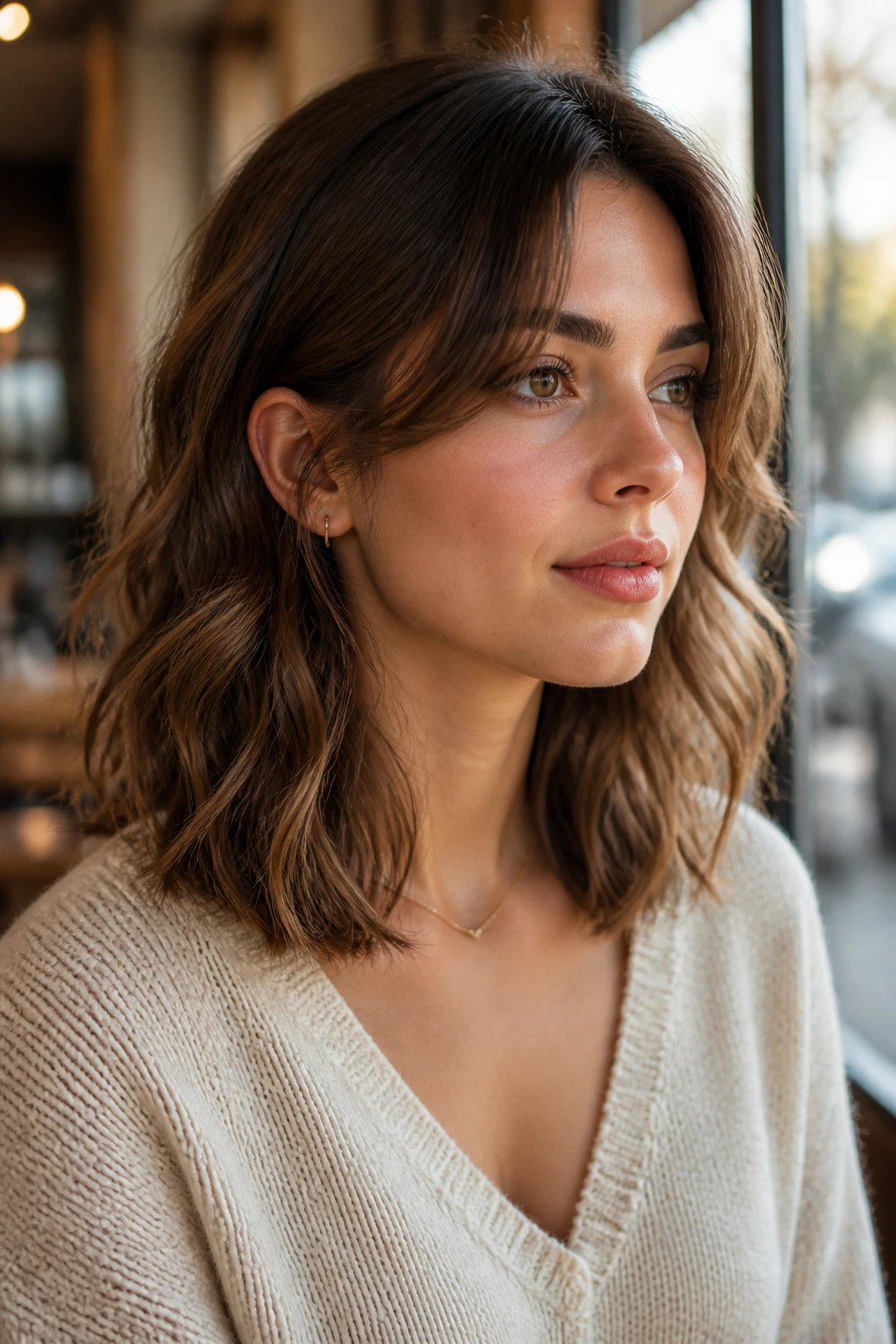
If I had to pick one cut that feels calm, current, and easy to live with, this would be near the top. A collarbone cut keeps fine wavy hair in the dense-looking zone, and a long curtain fringe adds shape without stealing too much width from the front. The bangs should be long enough to tuck behind the ears or split softly at the center, which gives you options on days when you don’t want the fringe in your face.
The reason it works so well on loose curls is that the fringe frames the face while the rest of the hair stays strong and even. Nothing gets too chopped up. Nothing gets too precious. The cut has enough detail to look intentional, but not so much that you need a full styling routine every morning.
If your hair has ever looked better two days after a cut than on day one, this shape is probably in your lane. It settles nicely. That’s a quality I trust.
Why Medium Length Wins for Fine Wavy Hair
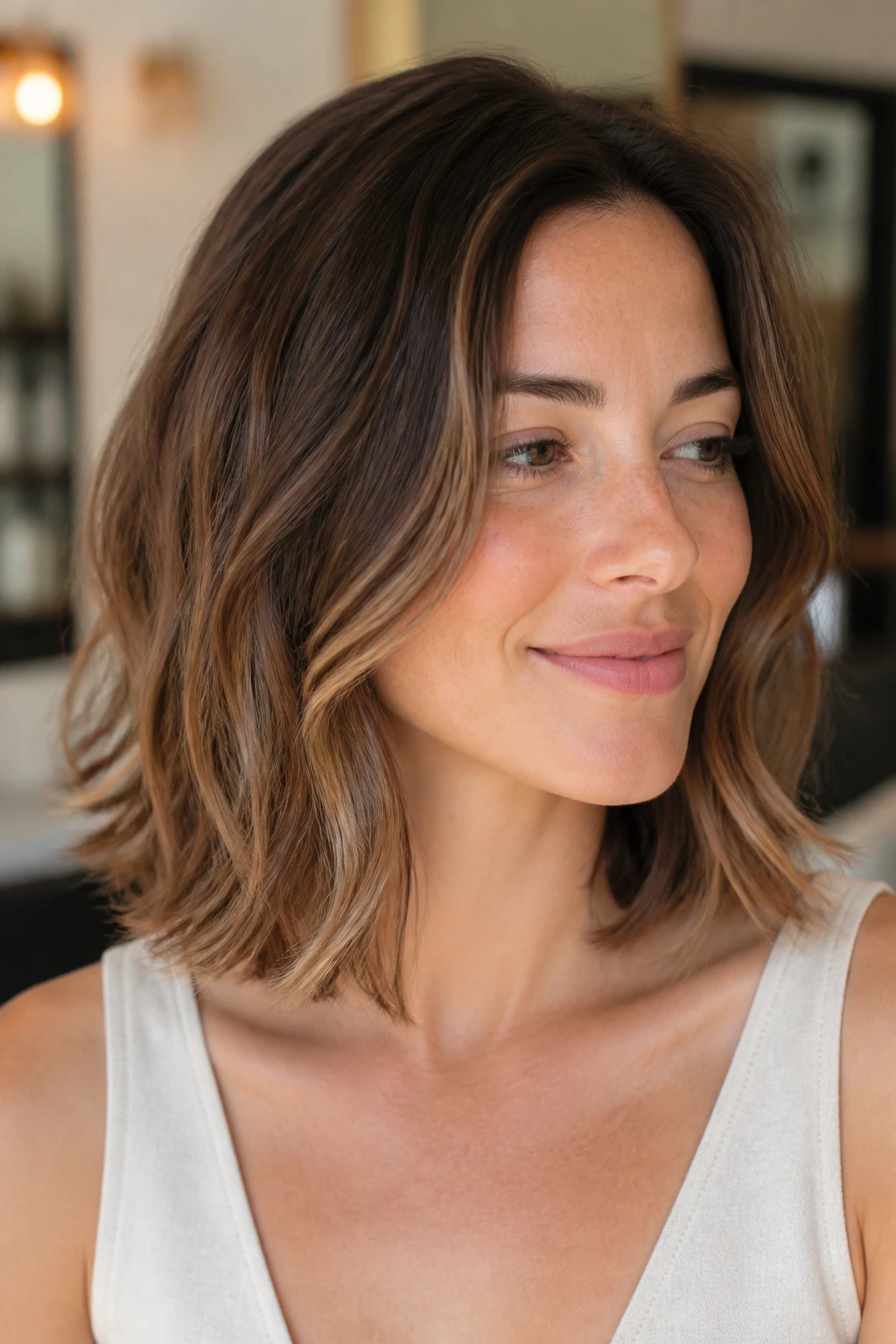
Medium length sits in the useful middle. Shorter cuts can make fine waves spring up so much that the shape gets round and airy at the crown but sparse at the edges. Longer cuts can pull the pattern down so hard that the loose curls lose their bend and start looking tired by the second day. Around the shoulders or collarbone, the hair gets enough gravity to behave without getting dragged flat.
The other advantage is movement that still reads as fullness. Fine strands do better when they’re allowed to group together in a recognizable shape. Medium cuts let those groups stay visible. The line at the bottom matters here. If the perimeter is too airy, the eye goes straight to the lack of density. If it’s too blunt, the hair can feel boxy. The right medium cut sits between those two problems and quietly makes them both disappear.
What to Ask for at the Salon
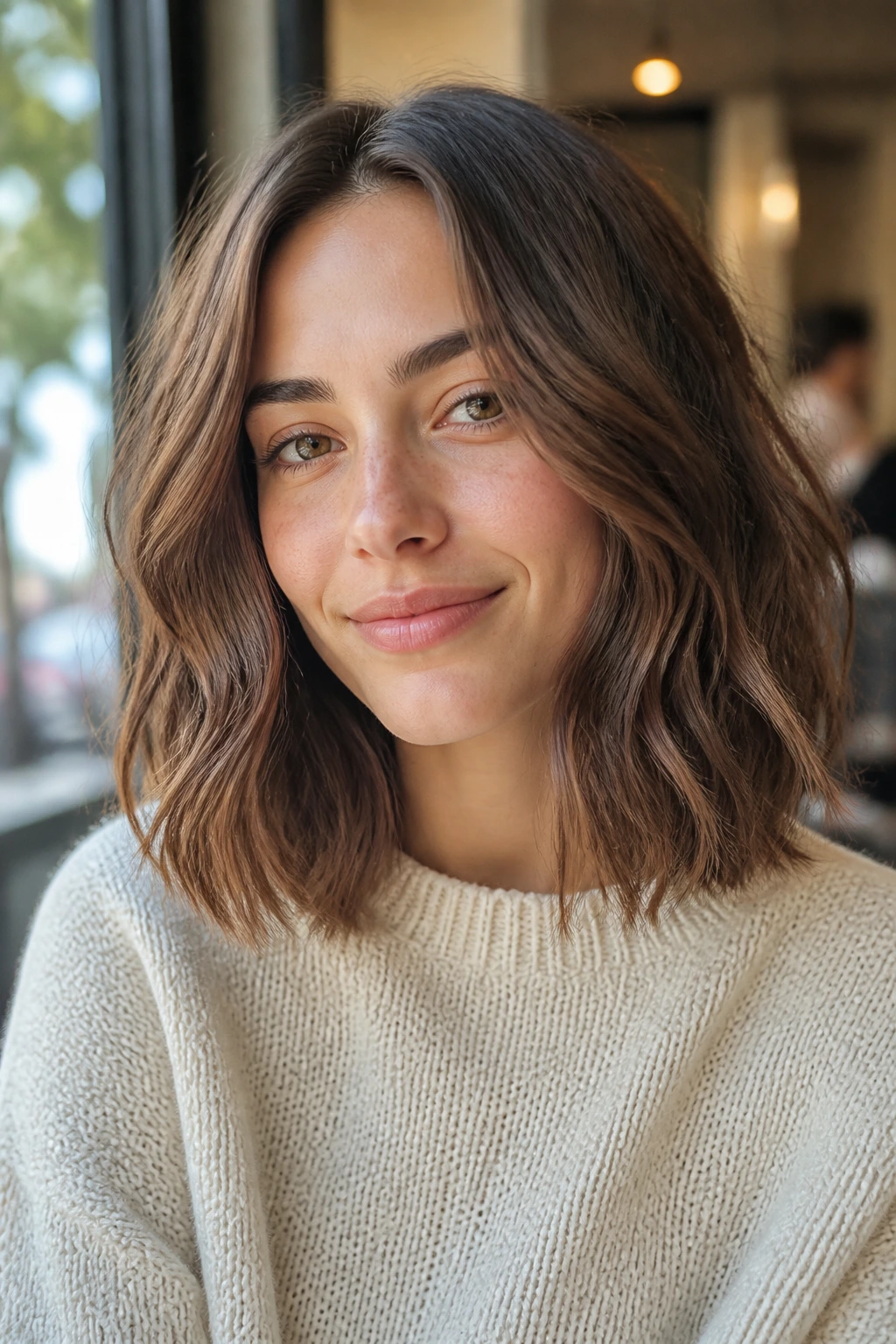
Bring photos, yes, but bring language too. Say where you want the hair to hit: collarbone, top of the chest, or just below the shoulder. Say whether you want a strong perimeter or a little softness at the ends. And if your waves swell up when dry, tell the stylist how much the hair shrinks. That one detail can change the entire cut.
Ask for long layers, internal texture, or a blunt outline depending on what your hair actually needs. Those are not interchangeable. Long layers help with movement. Internal texture helps with bulk. A blunt outline helps keep fine hair looking thick. If you ask for all three at once without guidance, the haircut can get confused fast.
Essential Tools for Styling and Maintenance
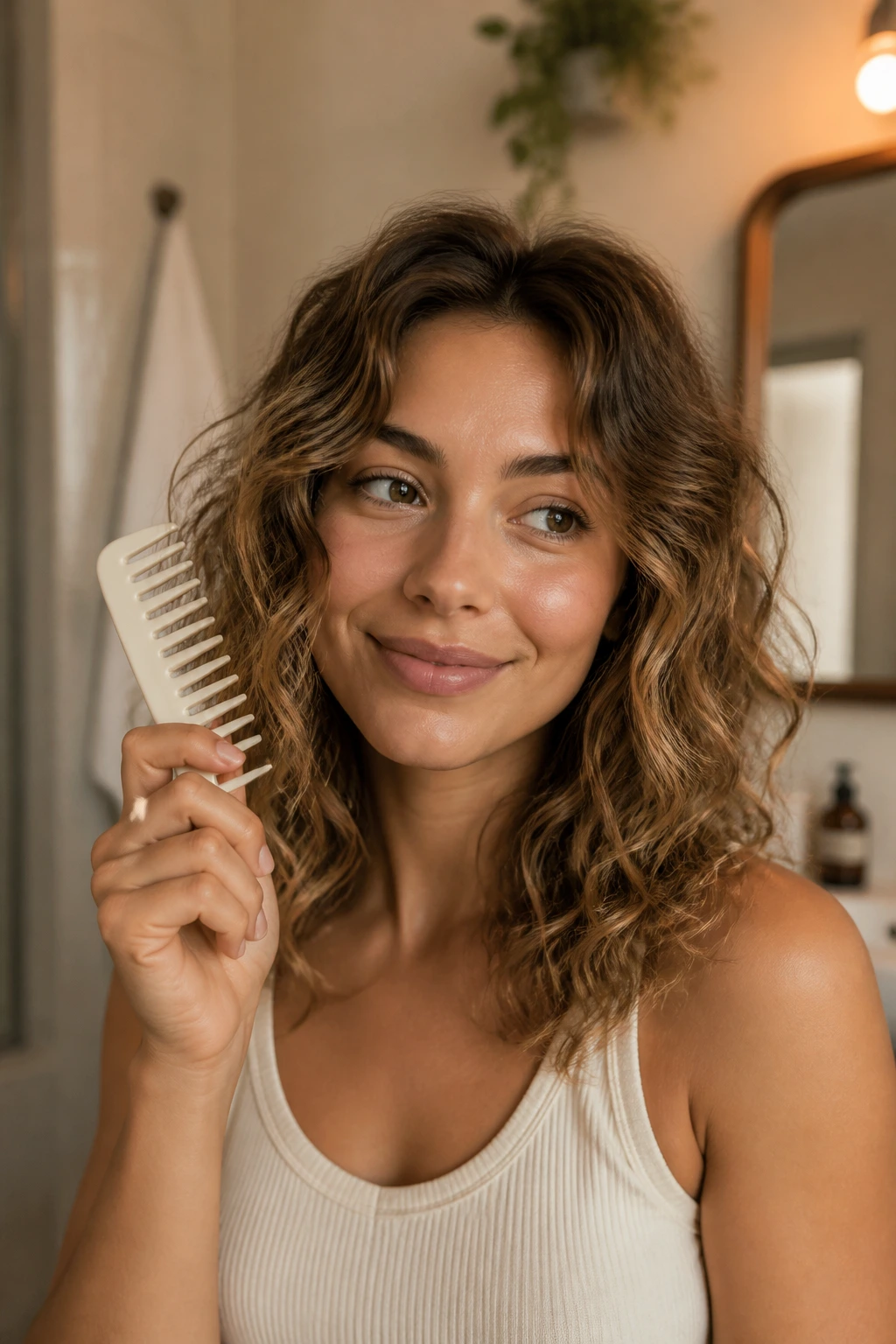
- Wide-tooth comb: Detangles wet waves without pulling them into frizz.
- Microfiber towel or cotton T-shirt: Blots water gently so the cut keeps its clump.
- Lightweight mousse: Adds lift at the roots without turning the mids crunchy.
- Root clips: Useful for air-drying if the crown needs help staying off the scalp.
- Diffuser attachment: Softens the dry time and keeps loose curls from blowing apart.
- Small round brush: Handy for face-framing pieces or curtain bangs.
- Satin pillowcase: Reduces the overnight bend and frizz that flatten fine hair.
- Dry shampoo: Good on day two if the roots collapse faster than the ends.
How to Style These Cuts Without Flattening the Roots
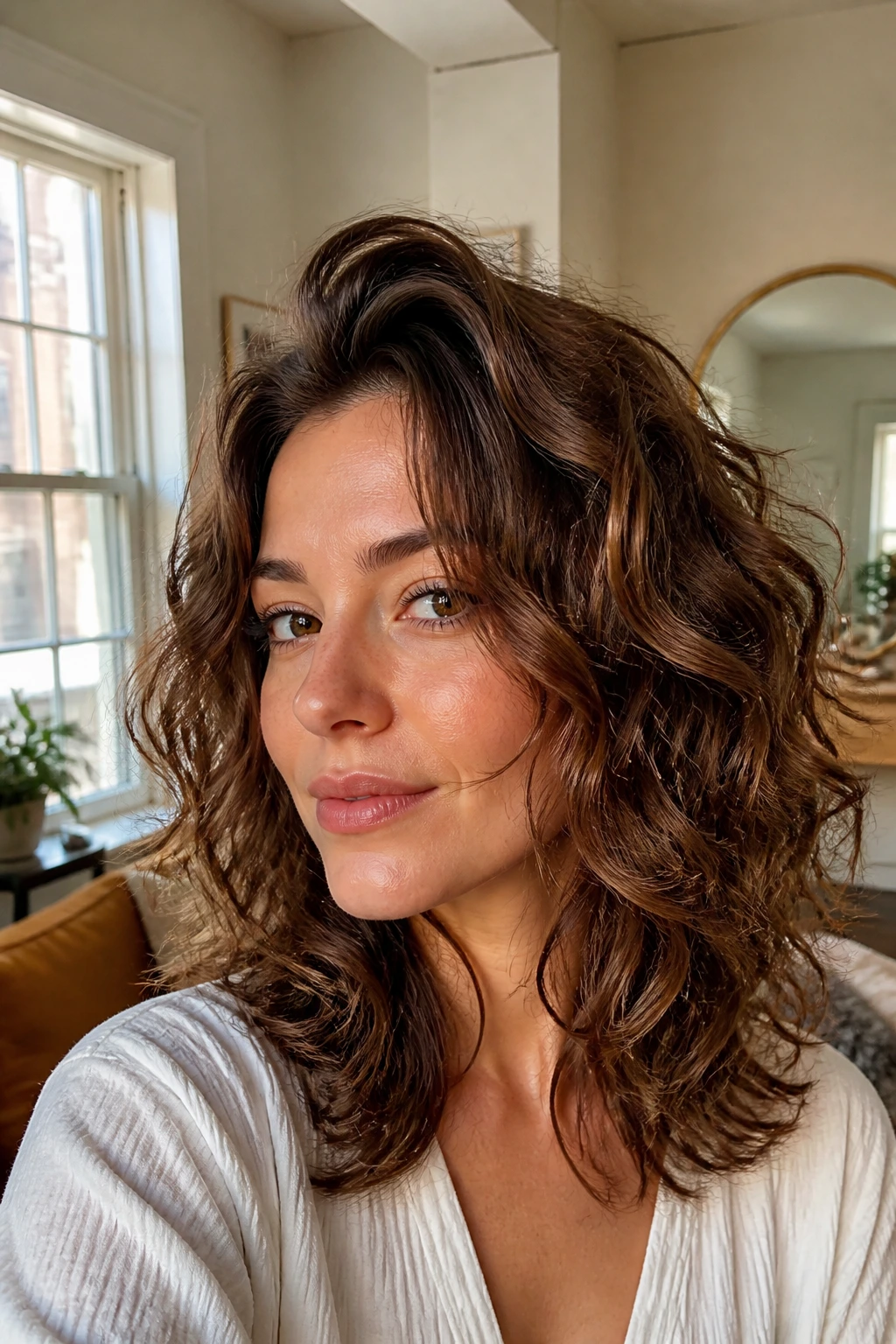
The biggest mistake people make with fine wavy hair is loading product everywhere. That’s how you get a pretty shape at 10 a.m. and flat roots by lunch. Keep the heavier conditioner off the scalp, squeeze excess water out before styling, and use mousse near the roots before any cream touches the mids. That order matters.
For air-drying, scrunch once, then leave the hair alone. Seriously. The more you touch it while it’s half-dry, the more you break the clump and invite frizz. If you’re diffusing, keep the heat low and the airflow soft, and stop before the hair is bone-dry. Leaving a tiny bit of moisture helps the waves settle in instead of puffing out.
Root clips are worth the nuisance if your crown goes flat. Clip the top sections while the hair is still damp, let them cool in place, then remove them once the hair is about 80 percent dry. That little lift at the roots can change the whole silhouette.
Common Mistakes That Make Fine Wavy Hair Look Thinner
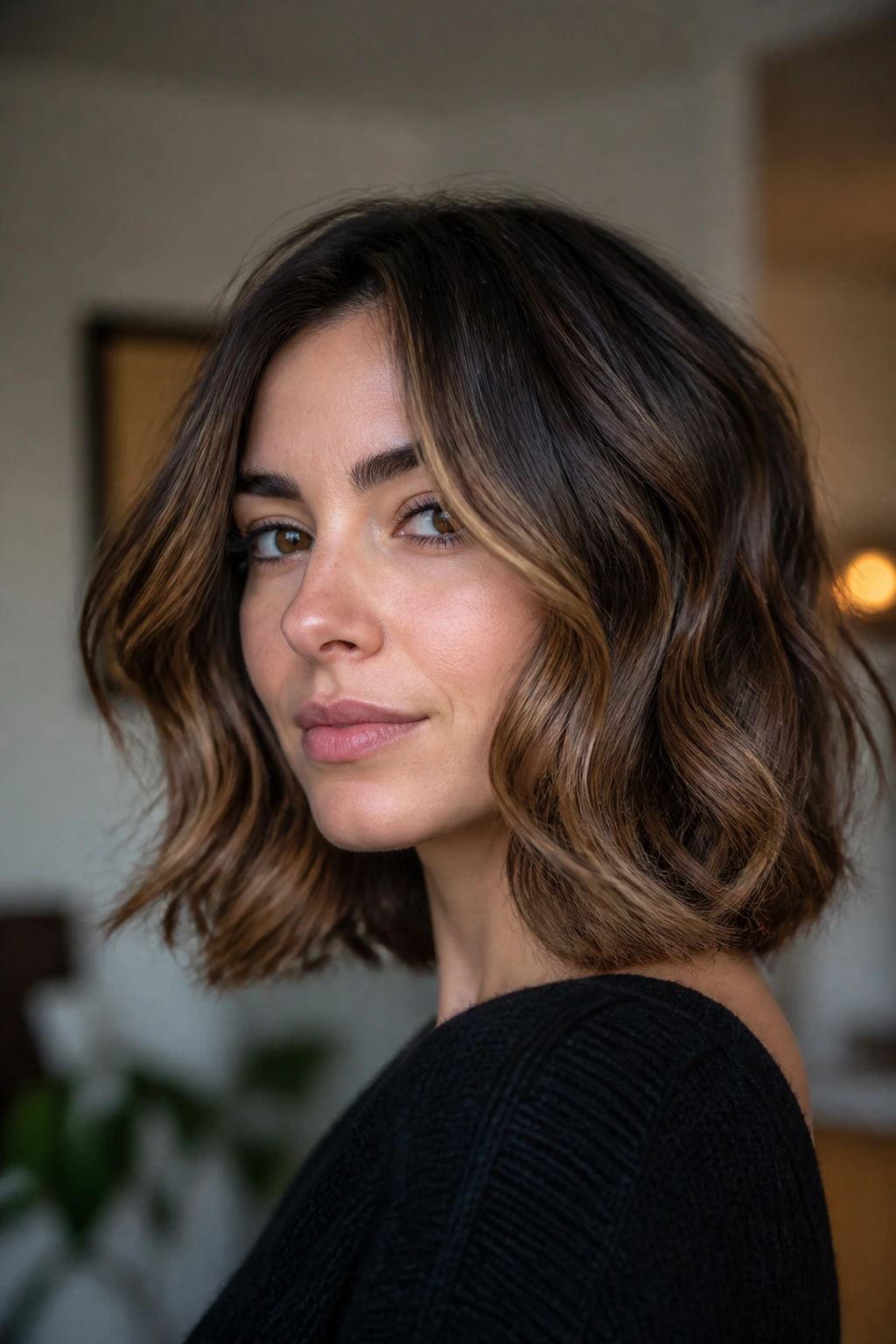
The first mistake is over-layering. It feels logical at the salon, because layers sound like movement. On fine hair, too many layers can strip the ends until they look stringy. The fix is a stronger perimeter with only enough layering to free the wave pattern.
The second mistake is using heavy creams and oils near the roots. That weight slides downward and leaves the crown flat before the day is over. Keep richer products below the ear, and use mousse or mist near the roots instead.
The third mistake is cutting bangs too thick. Heavy fringe on fine hair can swallow the face and make the rest of the haircut look sparse. Curtain bangs, bottleneck bangs, or a long side fringe usually work better because they borrow less density.
The fourth mistake is waiting too long between trims. Fine ends show wear sooner, and once they start to fray, the whole cut looks thinner. A clean dusting every 8 to 10 weeks keeps the shape alive.
Variations and Adaptations to Try
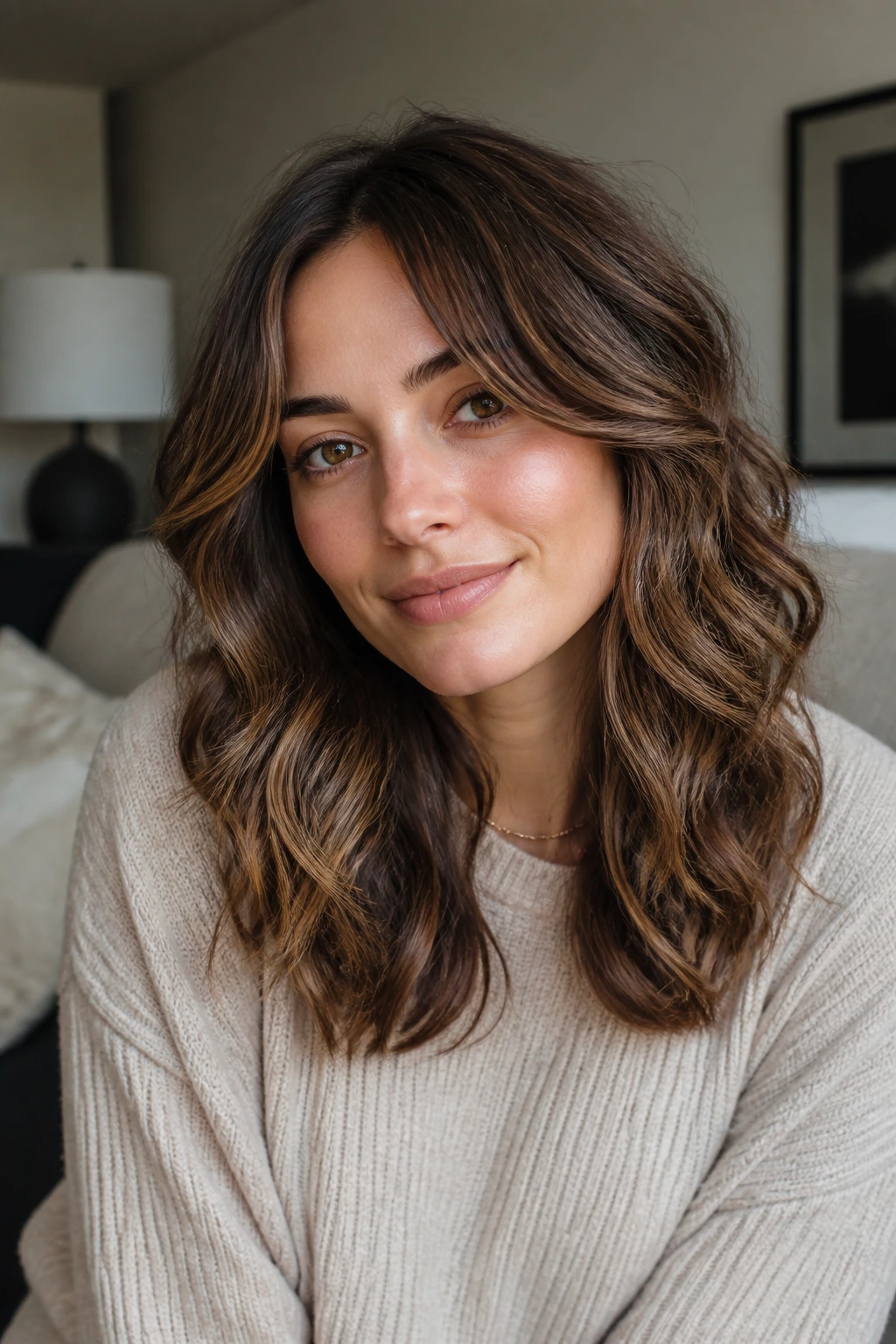
- Air-Dry Only Version: Ask for a cut with long layers and a strong bottom line, then style with mousse and clips only. This suits anyone who wants the wave pattern to do the work without a brush.
- Polished Blowout Version: Keep the perimeter blunt and use only face-framing layers, so the cut can swing smooth with a round brush. It’s a better choice if you wear your hair straight half the week.
- Fringe-Free Version: Skip bangs entirely and keep the front pieces long, starting around the chin. That protects density at the front, which matters if your hair is especially fine around the hairline.
- More Texture Version: Add soft crown layers and a little more internal removal through the mids. This works when your hair has enough body to handle it without going sparse.
- Grow-Out Friendly Version: Keep the shape in a gentle U or A-line so the haircut softens rather than flipping awkwardly as it gets longer.
Trim Schedule and Grow-Out Care
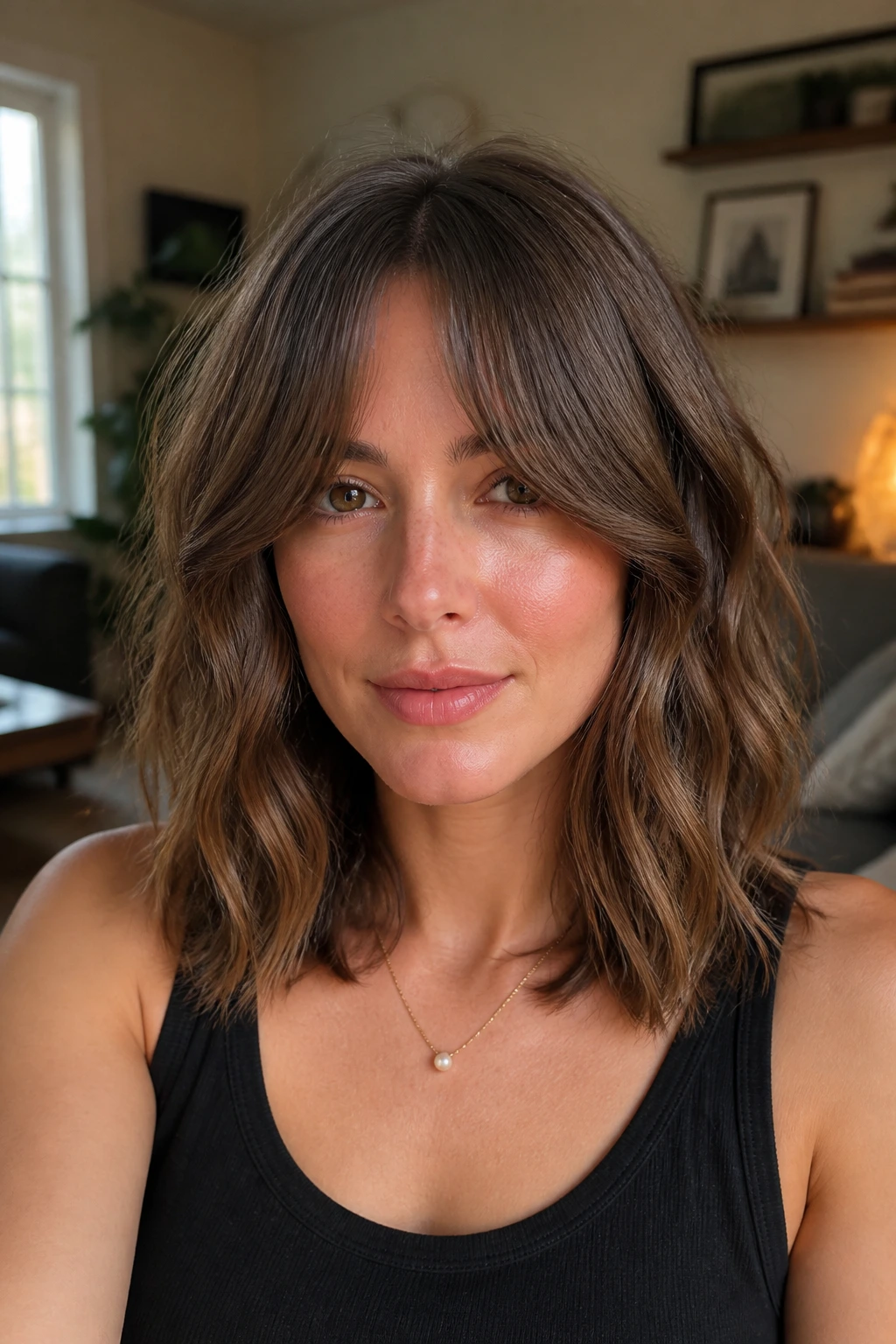
Fine wavy hair usually shows split ends and shape loss faster than thicker textures. A trim every 8 to 10 weeks keeps the bottom line crisp and stops the ends from feathering out. If you wear curtain bangs or a fringe, the front may need a tiny cleanup sooner, often around the 4 to 6 week mark.
Growing the haircut out doesn’t mean abandoning it. It means protecting the outline while the layers settle. Keep the ends conditioned, avoid over-brushing when dry, and refresh the wave pattern with a light mist of water and a dab of mousse on wash days. If you want to move from a lob to a longer shape, ask for softening trims rather than major reshapes. That keeps the density intact.
Frequently Asked Questions
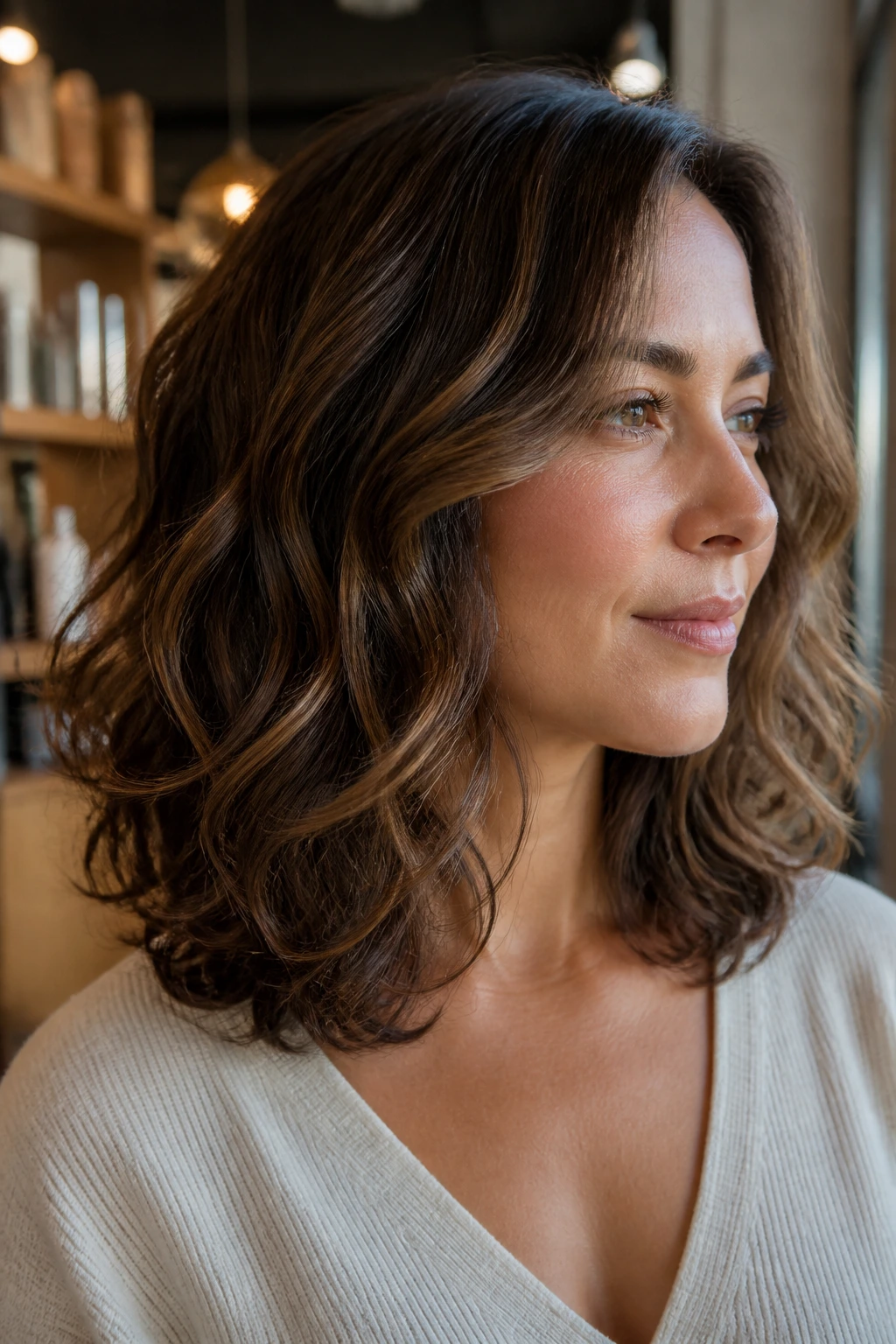
What’s the best haircut if my fine waves go flat at the crown?
A collarbone lob with soft internal layers or a deep side-part lob usually gives the crown the most help. Both shapes create lift without shaving too much weight off the bottom.
Should fine wavy hair be cut wet or dry?
Wet cutting works well for cleaner lines, but a dry check helps the stylist see how much your waves spring up. If your hair changes shape a lot after it dries, a dry finish pass is worth asking for.
Are bangs a bad idea on fine wavy hair?
Not at all, but thick bangs can eat up density fast. Curtain bangs, bottleneck bangs, or a long side fringe are safer choices because they frame the face without taking over the whole front section.
How much layering is too much?
If the ends start looking see-through or the hair puffs at the top but looks thin at the bottom, the layers are too aggressive. Fine hair usually does better with long layers, internal texture, or a solid perimeter.
Can I wear these cuts straight sometimes and wavy other times?
Yes, and that’s one of the reasons medium length is so useful. Blunt edges, rounded lobs, and invisible-layer cuts all switch between smooth and wavy without losing the shape.
What if my waves are uneven from side to side?
A side-part cut or a softly asymmetrical lob can help. The part and the shape work together, so one side doesn’t have to fight the other every morning.
Will a shag make my fine hair look thinner?
It can if the layers are too short or too many. A soft shag with a clean perimeter works better than a heavily chopped version, because it keeps the outline full while adding movement on top.
A Shape That Holds Its Own
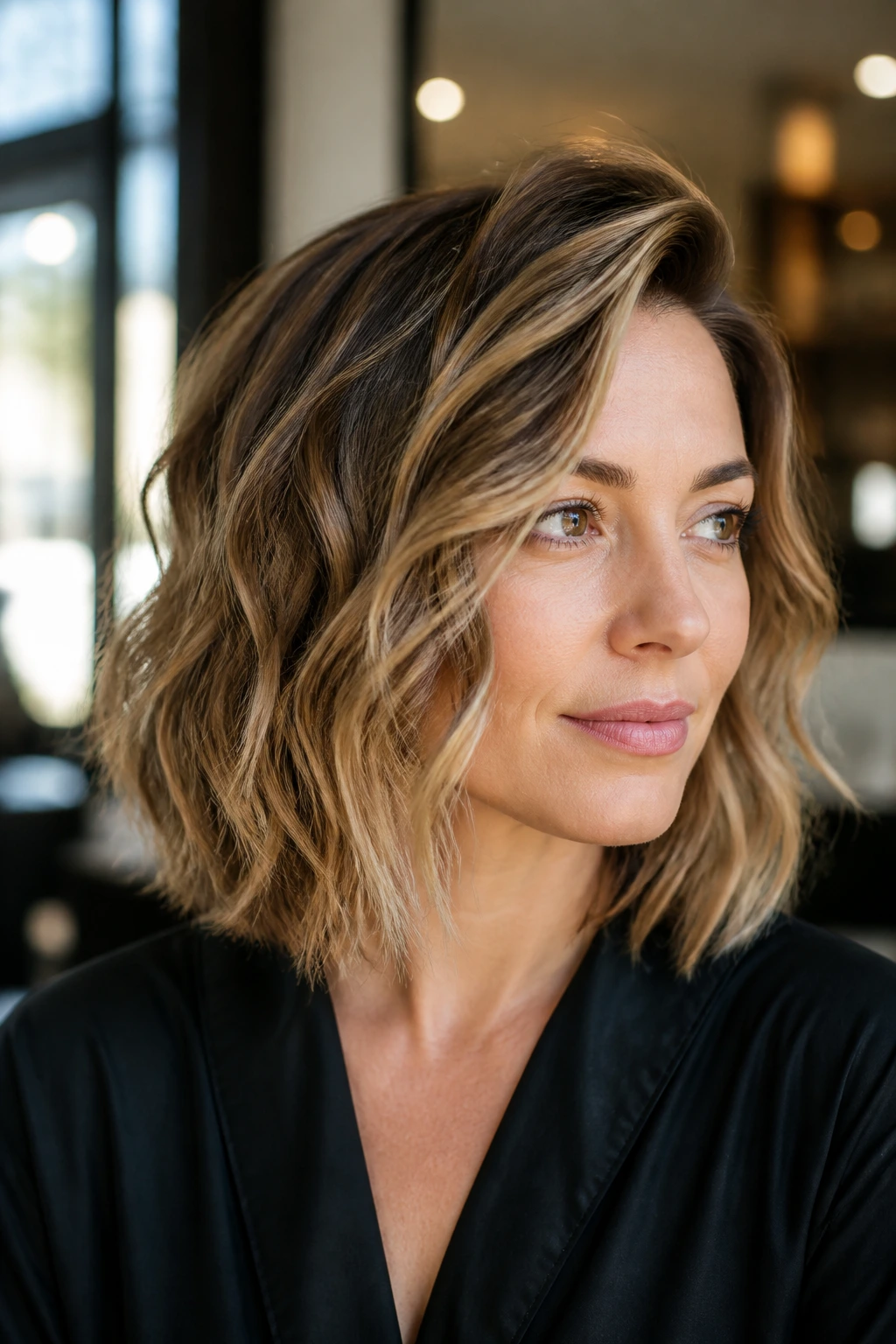
The best fine medium haircuts for wavy hair with loose curls do one simple thing well: they keep the hair looking intentional when it dries, not accidental. That means enough weight to hold the ends together, enough layering to let the wave pattern move, and enough restraint to stop the whole head from going wispy.
Once you find the right silhouette, styling gets easier in a way that feels almost unfair. The hair falls better. The roots stay up a little longer. The loose curls start acting like they know where they belong.
A good medium cut doesn’t shout for attention. It gives the texture room to show up, which is a much better trick.