



A round face doesn’t need hiding, and fair skin doesn’t need rescuing with a blunt, yellow blonde that sits on top like a helmet. The better move is softer: a blonde that breaks into cream, beige, champagne, butter, or pearl tones, paired with shape that stretches the face instead of cutting it off at the widest point. That’s where the good stuff lives.
Soft blonde hairstyles for fair skin and round faces work because they do two jobs at once. The color brightens the skin without washing it out, and the cut nudges the eye upward or downward in clean lines that make the face read a little longer. You can feel the difference the second you see a side part, a collarbone-length bend, or a fringe that opens at the cheekbone instead of sitting straight across the brow.
A lot of advice about round faces is lazy. “Go long.” “Avoid bangs.” “Choose cooler blondes.” None of that is complete. A chin-grazing bob can be gorgeous if it has internal texture. Bangs can work if they’re airy. A warm blonde can look better than an icy one if your skin has peach in it. The trick is in the details, and the details matter more than the label on the dye box.
Why These Soft Blonde Looks Work on Fair Skin and Round Faces
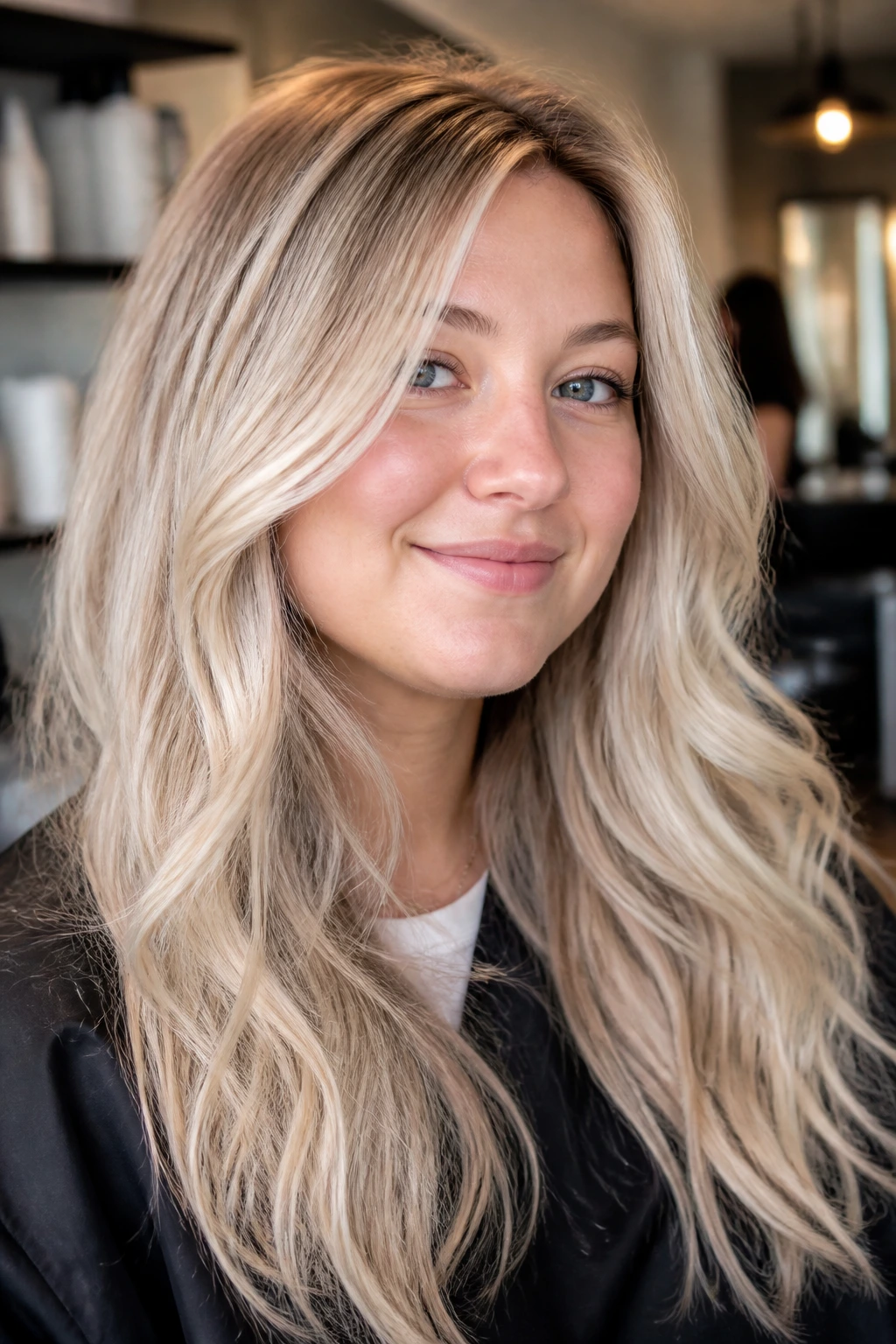
- Color softness: Beige, champagne, vanilla, and pearl blondes keep fair skin from looking flat or reddish, especially when the roots stay a shade deeper for contrast.
- Face length: Cuts that pass the chin, hit the collarbone, or add lift at the crown create a longer line through the face. That matters more than a trendy name.
- Cheekbone control: Layers that start below the cheekbone pull attention away from the widest part of a round face, which keeps the shape from feeling overly circular.
- Light reflection: A few brighter ribbons around the face can wake up fair skin fast, but too much high-purity platinum can look stark. Balance wins.
- Easy styling: Most of these looks can be done with a round brush, a 1-inch iron, or a flat iron bend. You do not need a full glam setup.
The list below leans into cuts and shades that flatter without shouting. Some are long, some are cropped, some are softly textured, and some are quietly polished. All of them have enough shape to do something useful for a round face, which is the part most people skip.
1. Feathered Lob in Champagne Blonde
A feathered lob is one of those cuts that just behaves. It sits somewhere between the chin and shoulders, which gives a round face a cleaner vertical line, and the feathering keeps the ends from looking boxy. Champagne blonde works here because it has enough softness to flatter fair skin, but it still carries a little depth through the root and mid-lengths.
What Makes It Flatters So Well
The length matters. A lob that lands around the collarbone doesn’t stop the eye at the jaw, so the face reads a little slimmer and longer. Ask for light, sliced layers through the front and a soft bend at the ends, not chunky steps. Heavy layering can make this shape wobble in a bad way.
How to Style It
- Blow-dry with a 1.5-inch round brush to create a slight curve away from the cheeks.
- Finish with a touch of shine cream, not a sticky serum.
- Tuck one side behind the ear for an easy diagonal line across the face.
- If your hair is fine, keep the layers light so the ends don’t split apart.
This is the kind of style that works for office days and messy weekends without needing two separate haircuts. It looks best with a side part that lands just off-center, not dead middle.
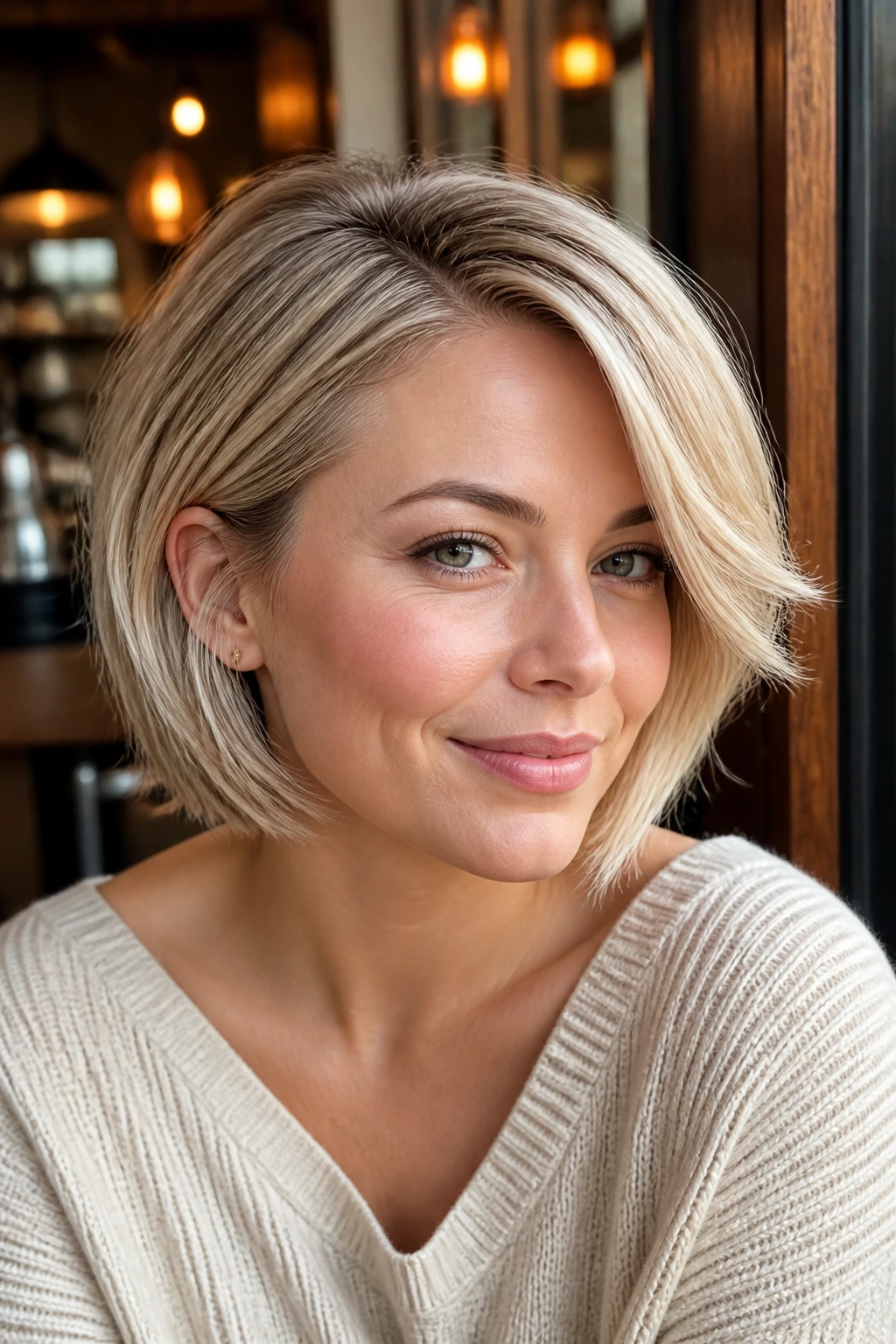
2. Side-Swept Chin-Length Bob in Beige Blonde
A chin-length bob sounds risky on a round face, and in some cases it is. The fix is in the sweep. Push the part off-center and let the front fall diagonally across one cheek, and suddenly the bob stops feeling like a little bowl and starts feeling sharp in a good way.
Beige blonde is the shade that keeps this cut from getting too harsh on fair skin. It has a soft neutral base, so it won’t turn brassy fast, and it doesn’t go chalky the way a high-ashe bob can. Keep the ends a bit softer than blunt if your face is very full through the cheeks.
Ask your stylist for: a slightly longer front, subtle undercutting in the back, and a side-swept fringe that reaches the outer corner of one eye.
Skip: a perfectly even line that ends right at the jaw. That’s where round faces get boxed in.
This is a polished cut, but not a stiff one. It needs a little bend, a little movement, and a little asymmetry. That’s the whole point.
3. Curtain Bangs with Butter Blonde Waves
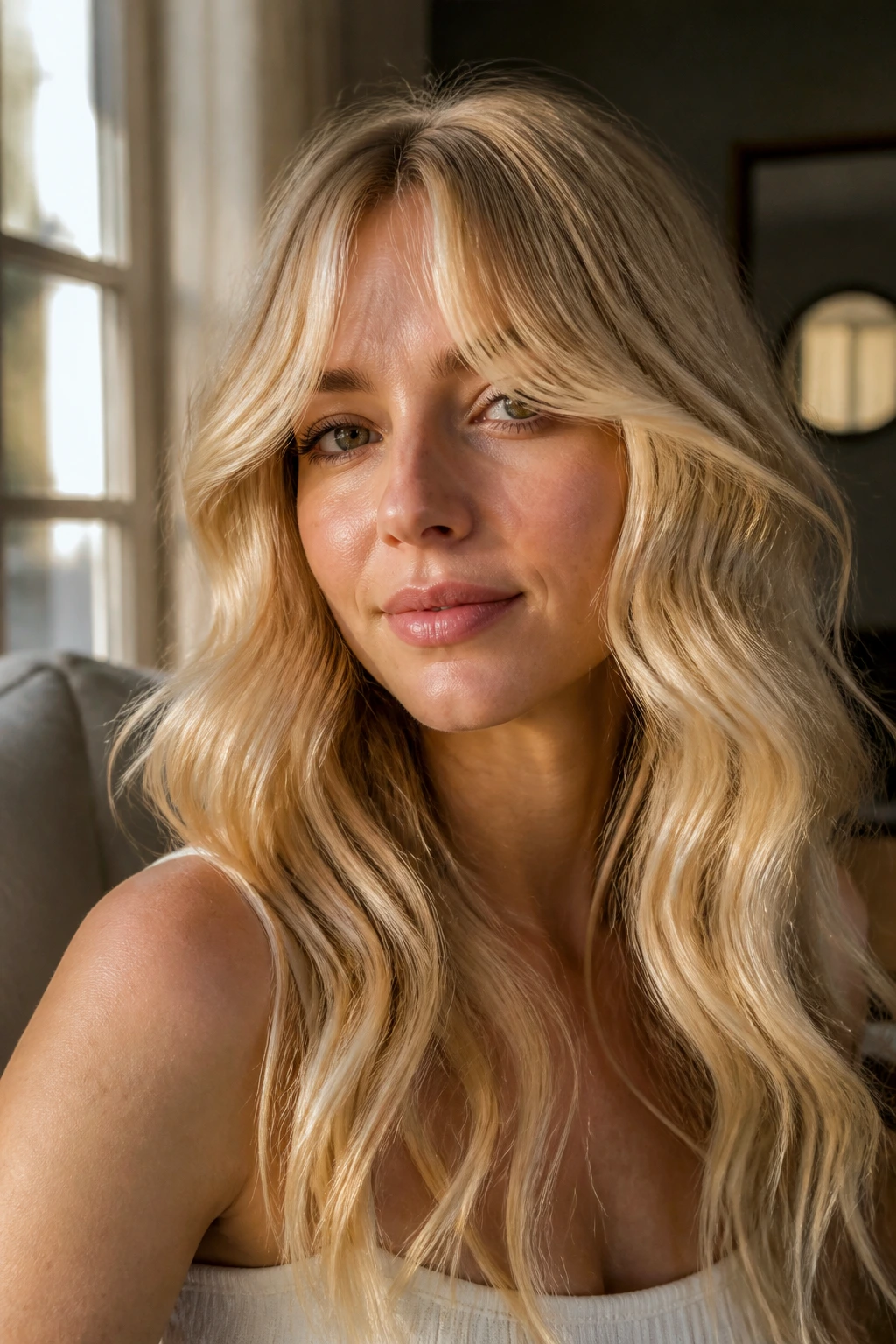
Curtain bangs are everywhere for a reason, but they’re not all equal. The good ones split softly at the center, curve past the brows, and blend into cheekbone-length layers. On a round face, that shape opens the face up instead of chopping it in half, which is the mistake straight-across fringe often makes.
Butter blonde gives the look warmth without tipping into yellow. On fair skin, that matters. The shade has enough golden softness to keep the skin from going dull, but it still feels light and airy once the waves are in place.
Why It Works
The bangs create a vertical line down the middle, then the longer pieces fall around the face like brackets. That framing is doing a lot of work. Pair it with loose waves made with a 1-inch curling iron, alternating directions and brushing them out once they cool.
A tiny warning: if your forehead is short, keep the shortest bang pieces just below the brow, not above it. That tiny difference changes the whole balance.
4. Long U-Cut with Vanilla Balayage
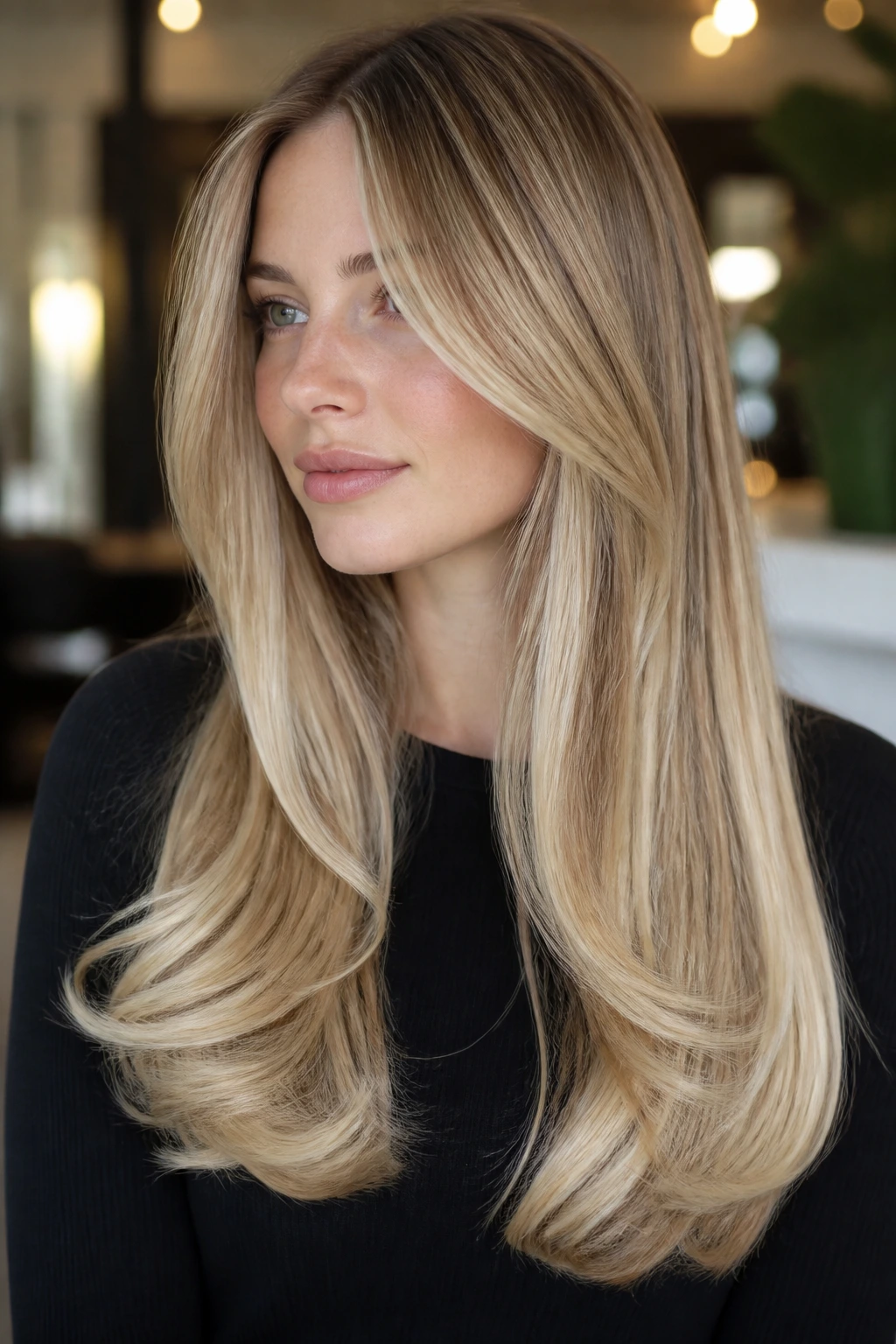
The U-cut is underrated because it looks simple in photos and much better in motion. The rounded shape through the back lets the hair fall in a soft curve, which is handy on a round face because it draws the eye downward. Vanilla balayage keeps the ends bright without turning the whole head into one flat shade.
This shape works especially well if your hair is thick and tends to balloon at the sides. The U removes bulk from the center back while keeping enough length to create a clean line. Ask for face-framing layers that start below the cheekbone, then get lighter toward the collarbone.
If your skin is very fair and leans cool, vanilla can be better than honey. It reads creamy instead of golden. If your undertone is peachy, you can warm it slightly with beige-gold ribbons around the face.
The result is soft, not boring. That’s the balance here.
5. Textured French Bob in Pearl Blonde
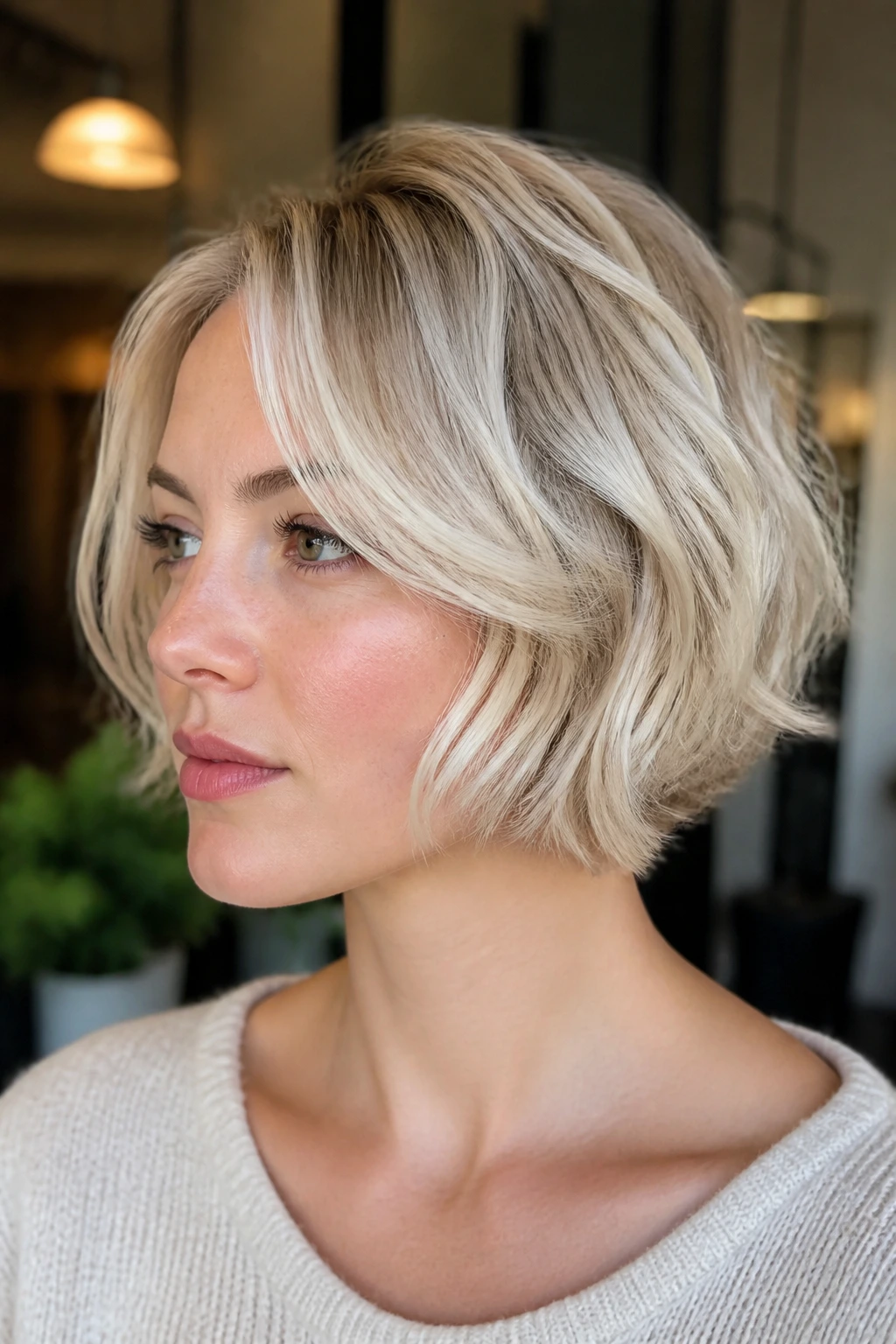
A French bob can look too severe on a round face if it’s cut blunt and worn flat. Add texture, keep the line slightly shorter in back, and let the front graze the cheekbones, and it turns into something much more flattering. Pearl blonde is the right shade when you want brightness without a lot of warmth.
Pearl blonde is sneaky. It reflects light in a clean, soft way, which flatters fair skin that can sometimes get lost under yellow tones. The trick is to keep the texture airy, almost undone, so the hair doesn’t sit like a cap.
What to Ask For
- A bob that lands between the mouth and chin
- Soft point-cut ends, not a hard blunt edge
- A side part or broken center part
- A touch of root shadow for depth
This cut needs a little grit. A matte texture spray at the roots and a small amount of smoothing cream through the ends is enough. Don’t over-style it. That ruins the charm.
6. Soft Pixie Bob with Cream Highlights
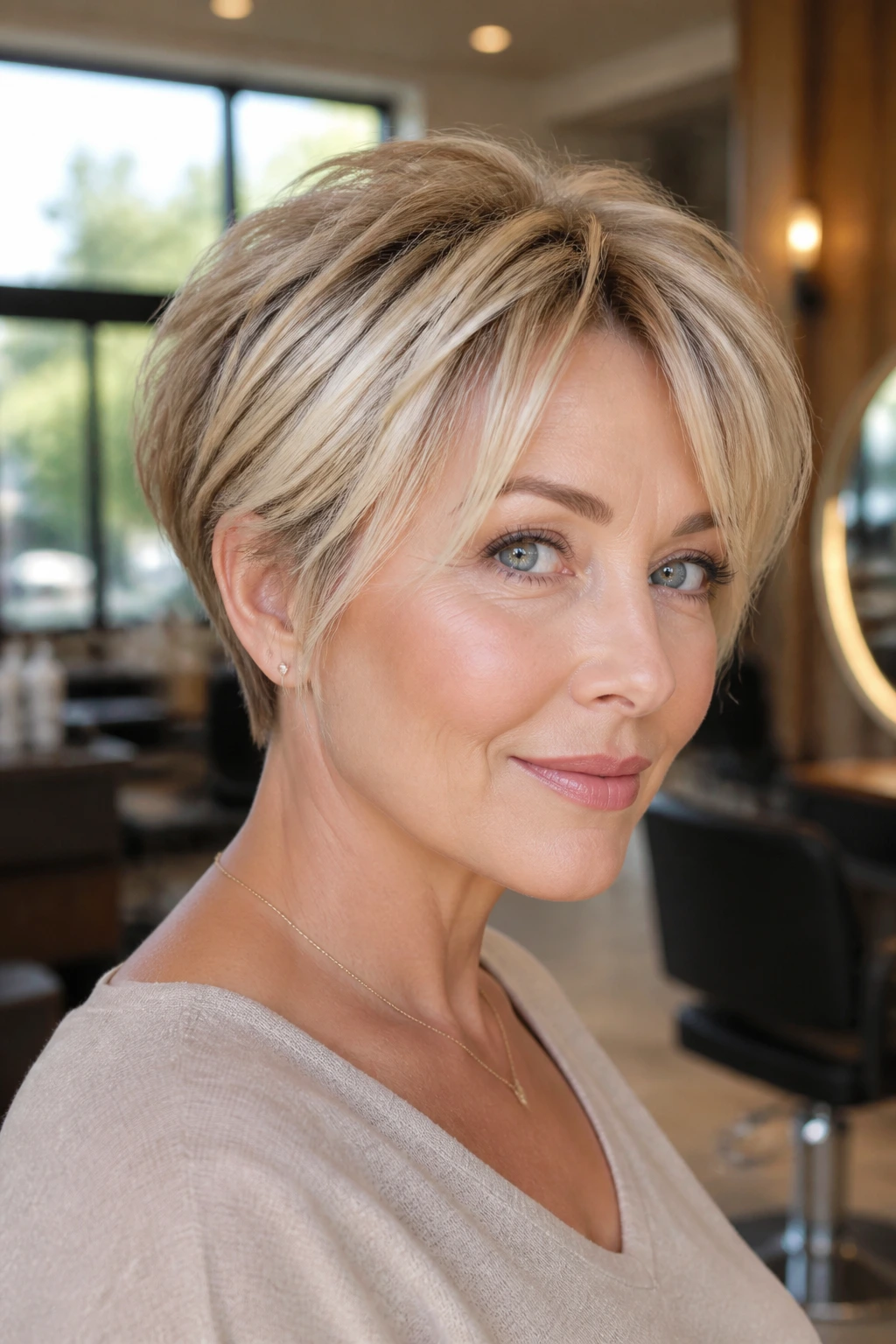
A pixie bob is one of the best short cuts for a round face because it keeps the ears and neckline open while still giving you enough length around the temples and jaw. Cream highlights are the move for fair skin when you don’t want the contrast to go too sharp.
The shape should be slightly longer in front, with crown lift and tapered sides. That gives the face a touch of height. If the sides are too full, the haircut swells right at cheek level, and that is exactly what you don’t want.
This is a good choice if you like hair that looks styled in five minutes. Use a blow-dryer and a small vent brush, then bend the front pieces away from the cheeks with a round brush. Keep the top soft, not spiky.
Short hair can absolutely flatter a round face. It just needs clean lines and a little lift.
7. Layered Blowout with Honey Beige Dimension
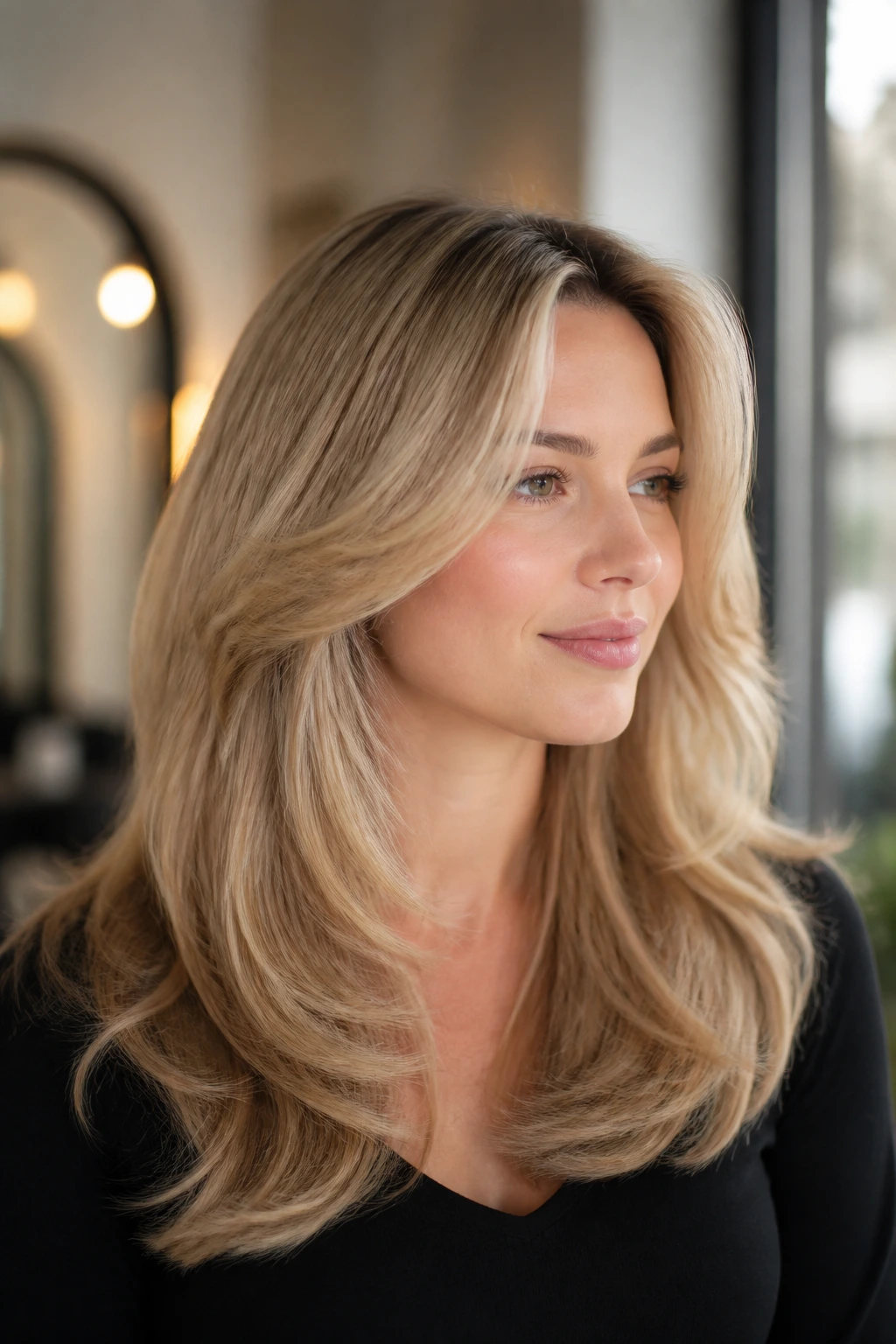
If you like volume but don’t want your hair to expand sideways, a layered blowout is your friend. The layers should start below the chin and continue in long, gentle pieces through the body of the hair. Honey beige dimension keeps the style from looking flat and gives fair skin some warmth without heavy brass.
This look is built on movement. The blowout should sweep away from the face, not curl inward toward the cheeks. Use a large round brush, about 2 to 2.5 inches, and wrap the ends under only at the very bottom. You want bounce, not pageant hair.
Why It Flatters
The layers create a vertical slide through the silhouette, while the color breaks up the mass with soft highs and lows. That matters on a round face because a single solid blonde can look wide in strong light.
A side part helps. So does keeping a little height at the crown. Flat roots and puffed-out sides fight each other.
8. Face-Framing Money Pieces on Long Layers
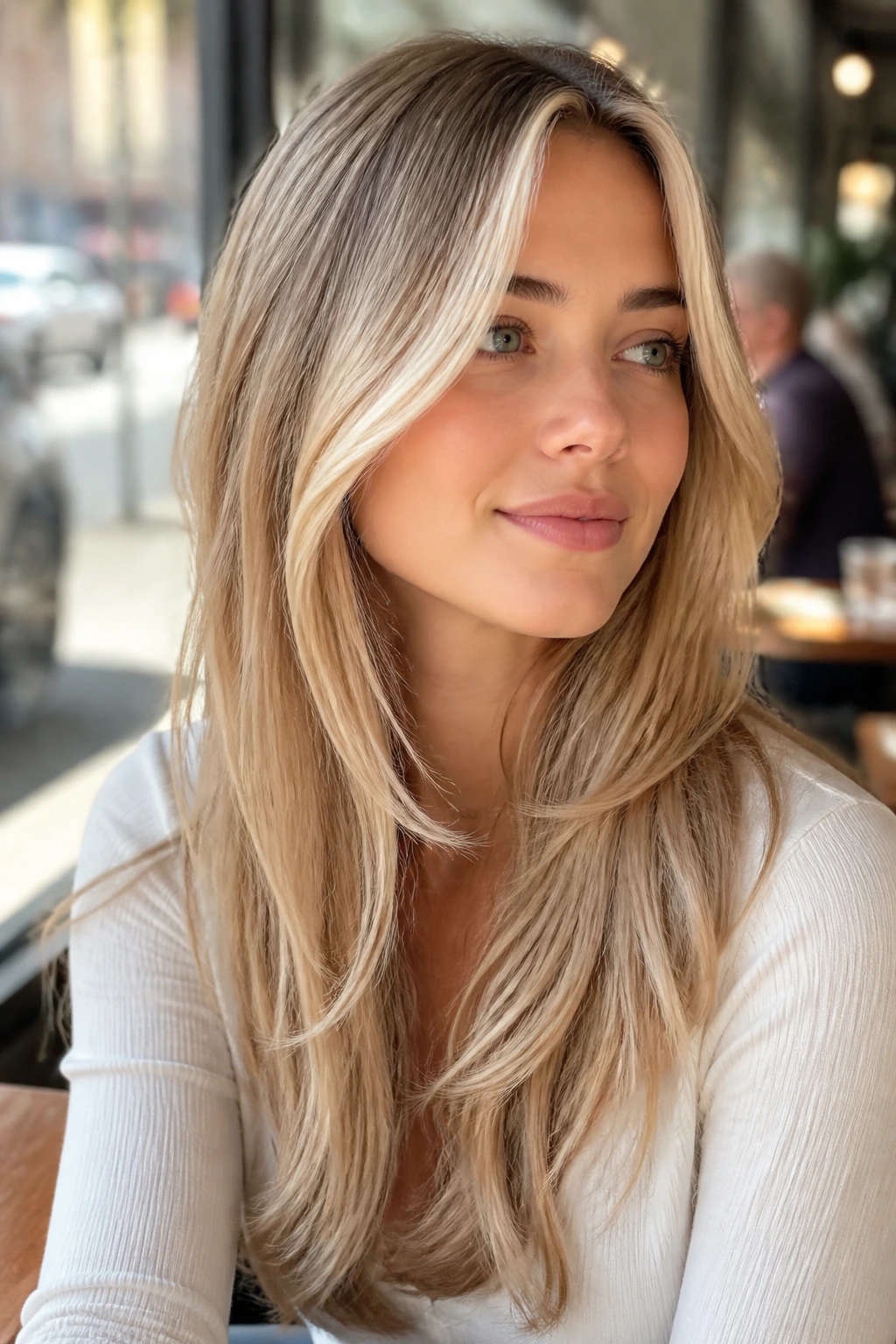
Money pieces are easy to overdo, which is why this style works best when the brightness is controlled. Ask for lighter ribbons only around the front section, starting below the brow line and blending into long layers that fall past the shoulders. On fair skin, that front brightness can lift the complexion without bleaching out the whole head.
Long layers are useful on a round face because they pull the eye downward. They also let the hair move around the cheeks instead of sitting in one heavy ring. If your hair is fine, keep the layers subtle so the ends don’t look see-through.
The shade should stay soft. Champagne, pale beige, or vanilla near the face works better than stark white blonde. You want the color to look expensive, not loud. That means a little shadow at the root and a gentle blend through the mid-lengths.
This is one of the easiest ways to get a blonde refresh without committing to an all-over overhaul.
9. Sandy Blonde Shoulder-Length Waves
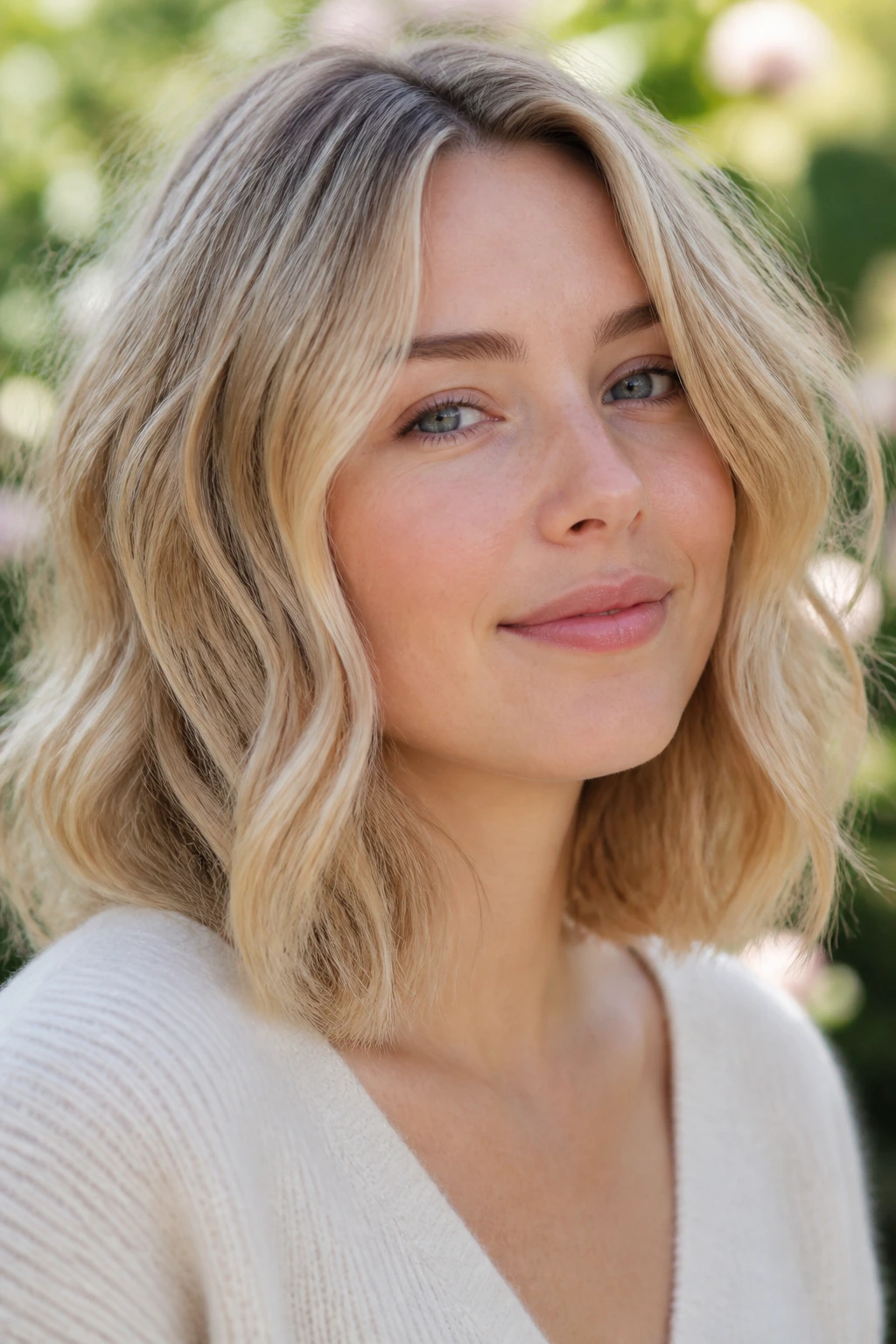
Shoulder-length waves are a safe bet for round faces because the length gives the face some room, but the texture keeps the cut from dragging. Sandy blonde is a nice middle path for fair skin. It doesn’t scream warm, and it doesn’t turn icy.
The key is irregular wave pattern. A uniform curl can make the style look too round, which is the opposite of the goal. Wrap sections loosely around a curling wand, leave the last inch out, and then break the pattern with your fingers once the hair cools.
A shoulder-length cut is also practical. It doesn’t fight coats, scarves, or collars. The color stays soft around the face, and the waves move enough to soften the jaw without hiding it.
If your cheeks are your widest point, keep the layers a touch longer in front. That little length difference matters more than people think.
10. Rounded Lob with Root Shadow and Bright Ends
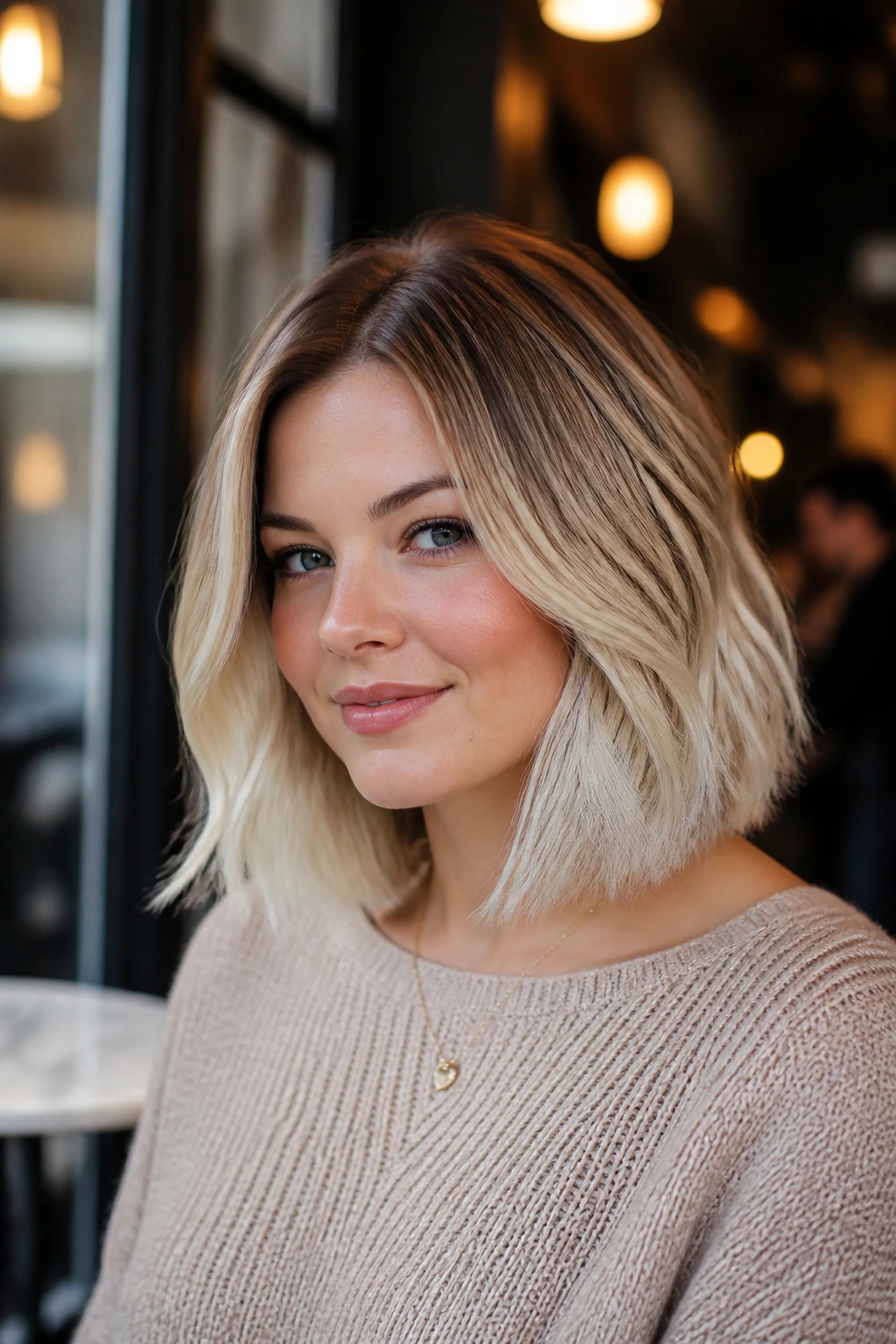
This is one of my favorite tricks for round faces. Keep the lob rounded and softly layered, then use a root shadow that melts into bright ends. The darker root gives the head some depth at the top, which makes the face look taller. The lighter ends draw the eye down.
Root shadow is useful on fair skin too, especially if your brows and lashes are naturally soft. The contrast keeps the blonde from floating away from the face. Ask for a blended root about one shade deeper than the mids, not a harsh grow-out line.
The cut itself should end just below the chin or at the top of the collarbone. That’s the range where the shape feels long enough without dragging. A straight cut can work, but only if the ends are textured so the whole thing doesn’t sit like a block.
This style is quiet from a distance and smarter up close. That’s a good combo.
11. Airy Wolf Cut in Pale Wheat Blonde
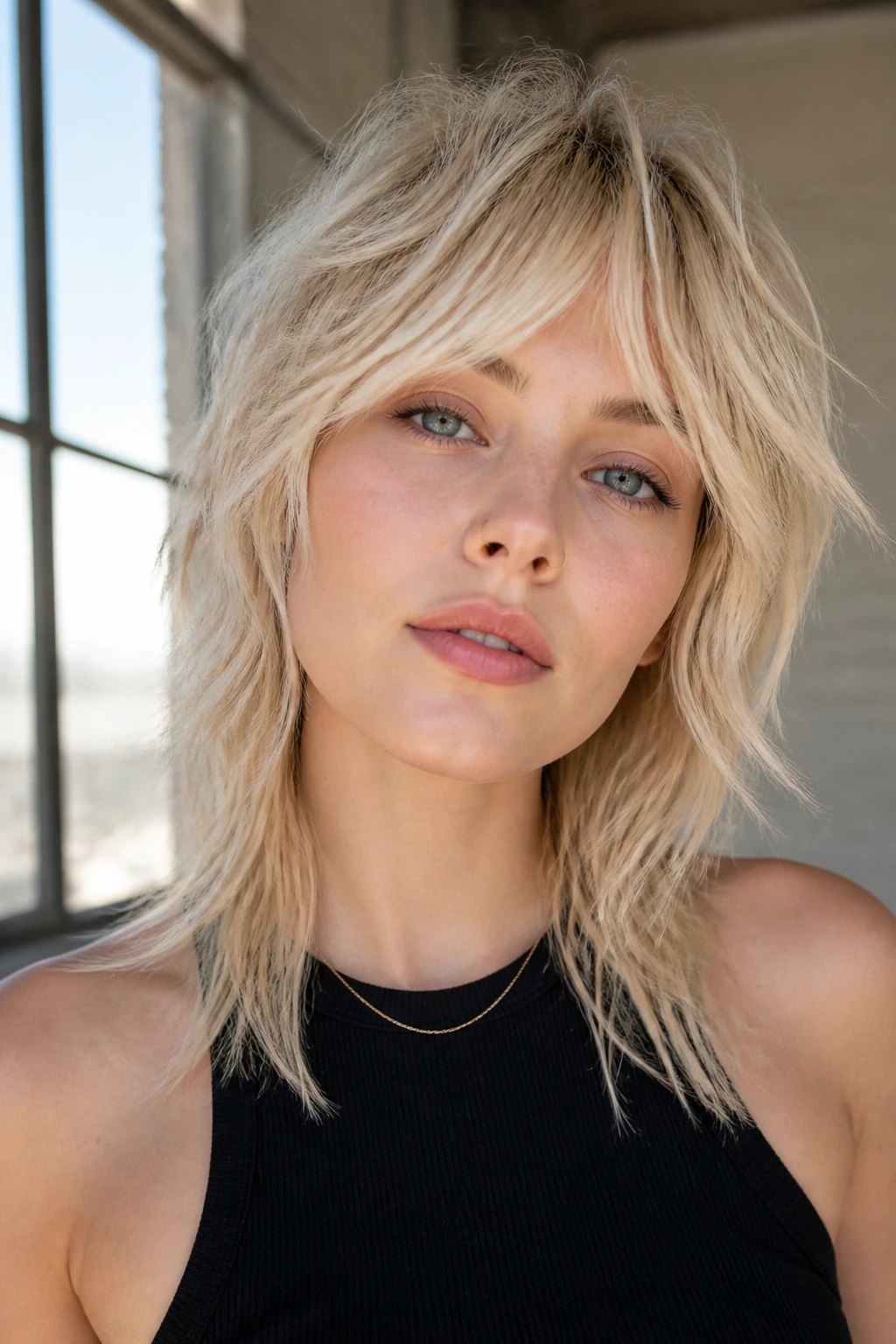
A wolf cut can be a mess if it’s too heavy, too shaggy, or too high at the sides. Keep it airy, and it turns into a clever shape for round faces. The crown gets lift, the sides stay broken up, and the face doesn’t get boxed in.
Pale wheat blonde is warmer than ash but softer than gold. On fair skin, it can be a very nice middle tone, especially if your complexion looks a little flat under icy colors. The cut needs softness in the fringe and taper in the lengths, not harsh choppy chunks.
How to Wear It
Use a diffuser if your hair is wavy, or rough-dry with a blow-dryer and a little texture spray if it’s straight. The goal is loose separation at the ends. If every layer sticks straight out, the whole head can widen.
This style has a little edge, but the color keeps it from getting severe. That’s the trick.
12. Tapered Pixie with Ivory Blonde
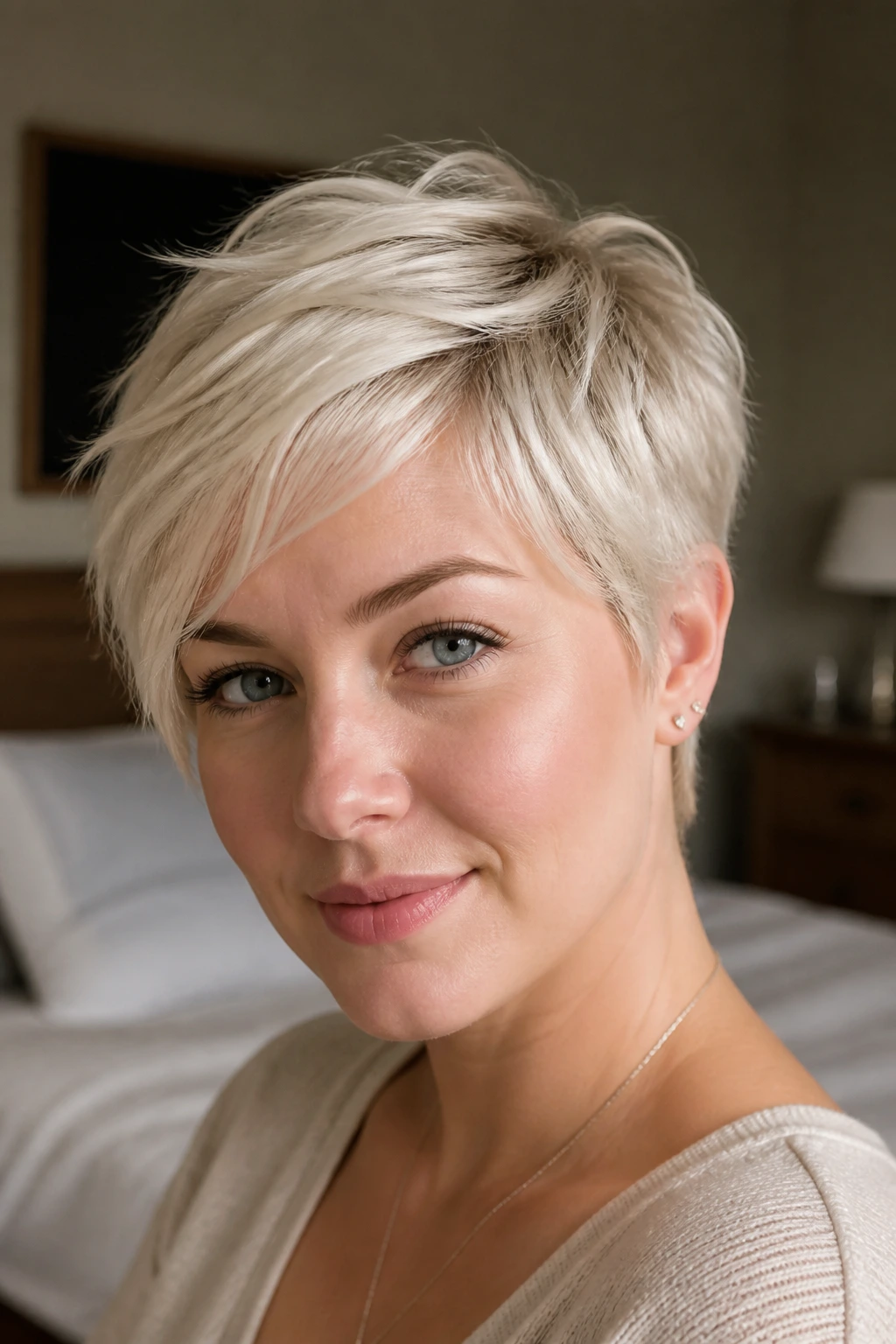
Short hair on a round face needs one thing above all: direction. A tapered pixie gives you that by keeping the sides close and the top longer, so the eye moves upward instead of outward. Ivory blonde makes the cut feel softer against fair skin and keeps it from reading too stark.
This works best when the top has some lift and the fringe sweeps diagonally. A straight, flat fringe can shorten the face. Side-swept pieces, on the other hand, create a line that cuts across the widest area and makes the face look more oval.
It’s a low-weight cut, which is useful if your hair is thick and tends to puff out. It also dries fast. The downside is that it needs regular trims, often every 4 to 6 weeks, or the shape loses its edge.
If you like short hair but want it to feel feminine and light, this is the lane.
13. Butterfly Cut with Golden Beige Blonde
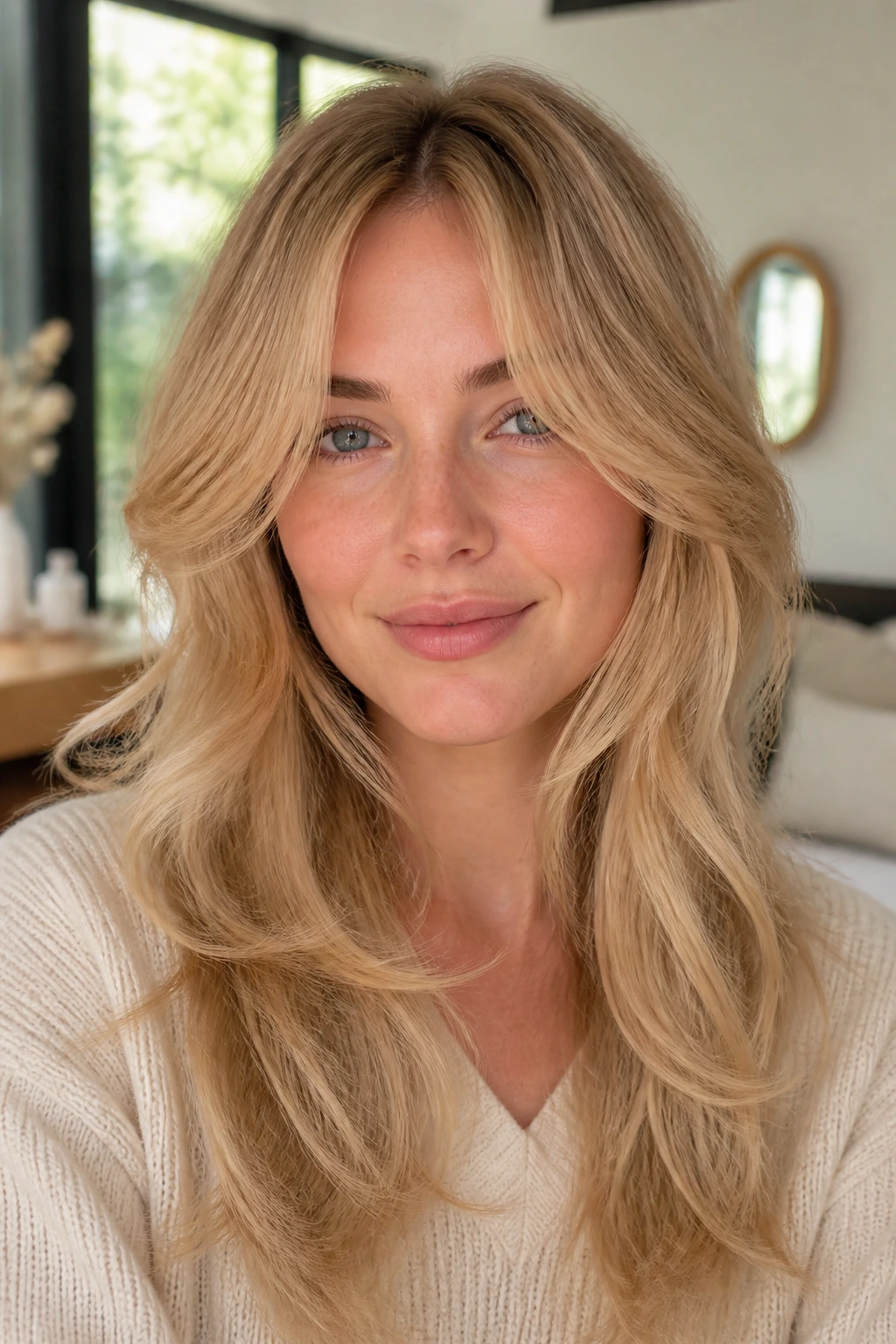
The butterfly cut is built from shorter face-framing layers over longer lengths, and that structure does a nice job on a round face. The top layers create movement around the cheekbones, while the bottom keeps the overall silhouette long. Golden beige blonde softens the look without making it too warm.
What I like about this cut is that it gives you volume where it helps and length where it counts. If the shortest face-framing layer starts around the mouth or lower cheek, it opens the face without calling too much attention to the widest spot. That’s the sweet spot.
It’s also flexible. You can wear it with a blowout, loose waves, or pulled back in a clip without losing the shape. A little root lift cream at the crown helps a lot.
This is one of the better options if you want movement but don’t want full shag energy.
14. Shoulder-Skimming Curls with Champagne Ribbons
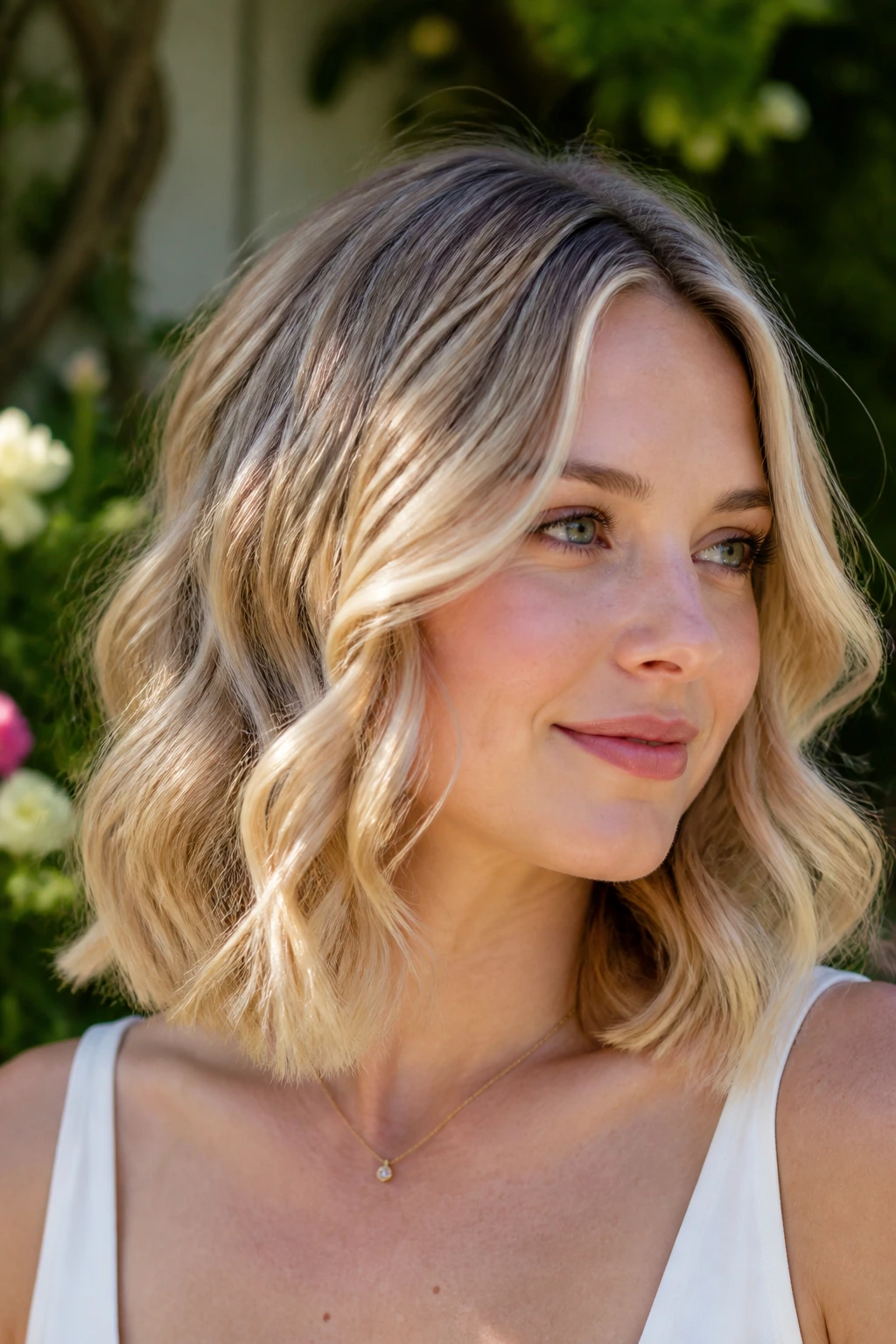
Shoulder-skimming curls are a smart answer if you want softness without a lot of length. The curls add shape, but because they land near the shoulders, the face doesn’t disappear into one big puff. Champagne ribbons keep the blonde dimensional and fair-skin friendly.
The cut should be layered carefully. Too many short layers and the curls spring outward like a triangle. Keep the layers longer and ask for some weight preserved through the bottom. That gives the curls a cleaner drop.
Use a 1-inch curling iron or set the hair with large rollers if you want a softer finish. When the curls cool, comb them out lightly with fingers or a wide-tooth comb. You want loops, not spirals glued to the head.
This style is especially nice when you want movement around the jaw but don’t want to commit to a bob.
15. Side-Swept Pixie Bob with Almond Blonde
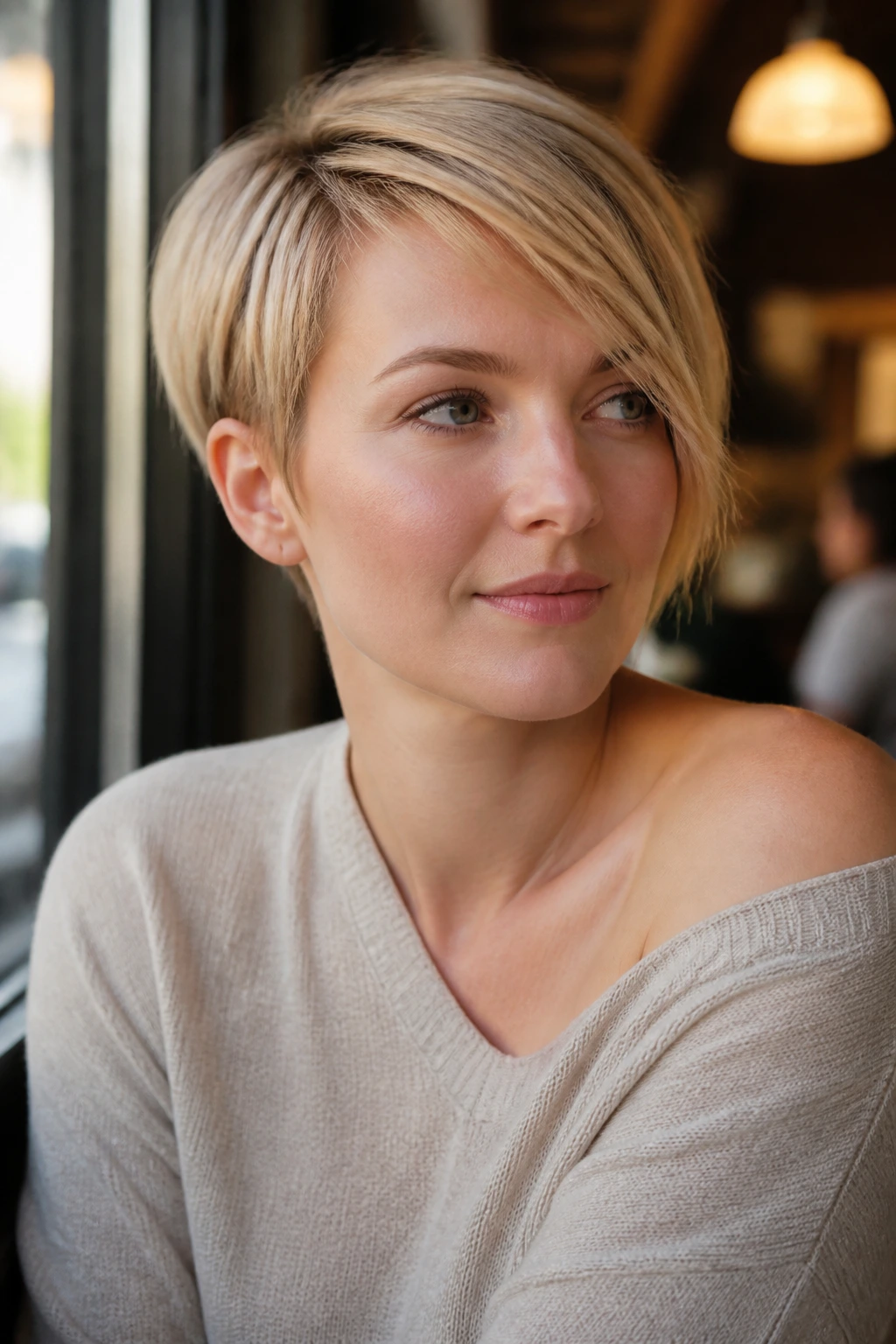
The pixie bob sits in a sweet place between short and polished. A side-swept front keeps the cut from feeling too blunt on a round face, and almond blonde gives fair skin a soft, slightly warm frame that doesn’t go too yellow.
Ask for more length on one side and a slightly lifted crown. The asymmetry is doing the face-shaping work here. If both sides are the same length and volume, the cut can read too circular. One side should feel like it’s taking the lead.
This is also a good haircut for people who hate spending 20 minutes with a brush every morning. A little mousse, a blow-dryer, and a quick sweep of the fingers is usually enough. If the ends flip under, that can be charming. If they puff out like a mushroom, trim the sides shorter.
A small detail, but an important one.
16. Blunt Midi with Subtle Lowlights
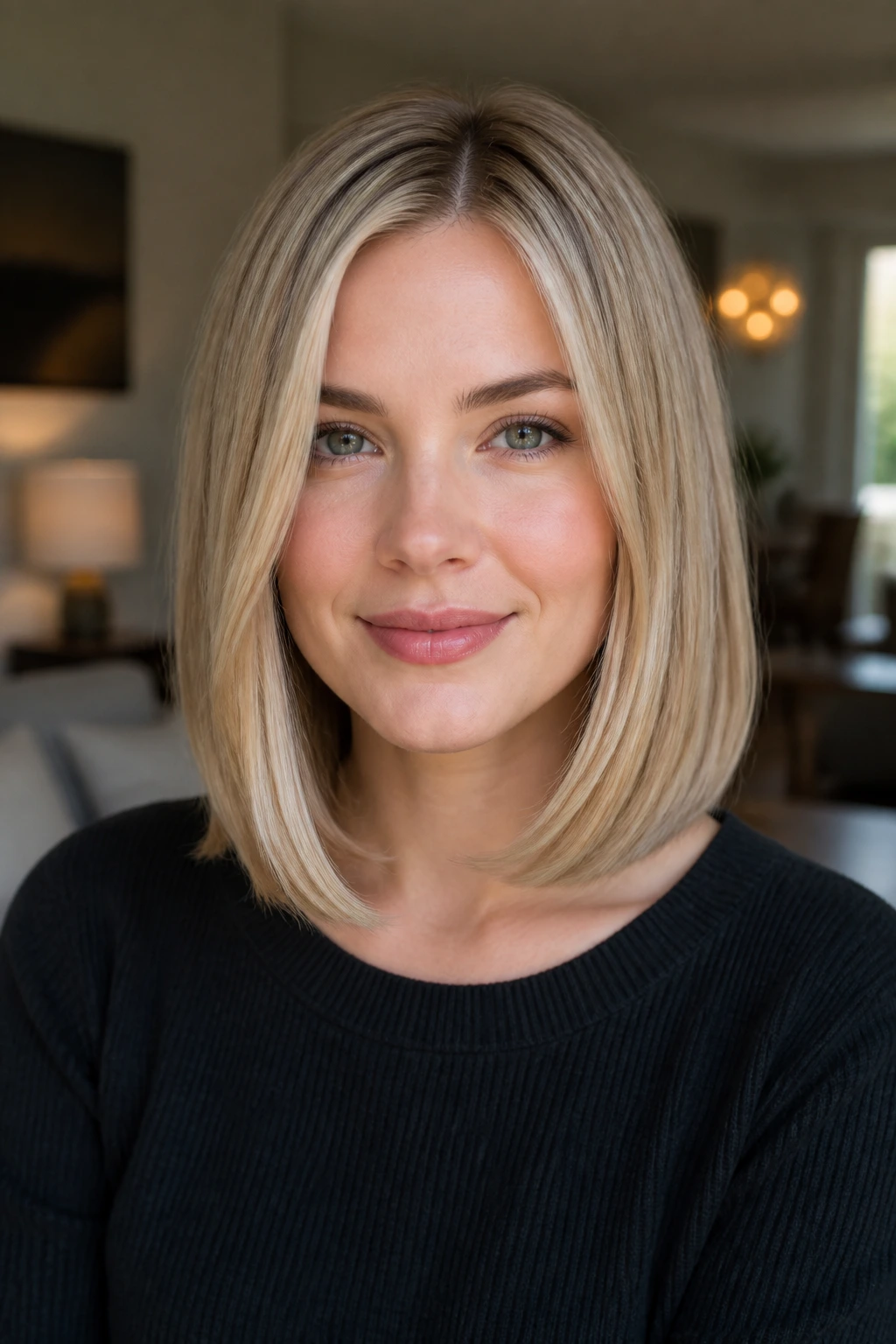
A blunt midi can be flattering on a round face if it lands below the widest part of the cheeks and has enough internal shadow to keep it from looking heavy. That’s where subtle lowlights help. They break up the blonde so it doesn’t become one solid sheet of pale color.
Fair skin often looks best with a little depth around the face, even if the overall blonde is light. A pure all-over pale blonde can erase features. Lowlights in beige or soft taupe bring the brows and eyes back into the picture.
The cut should be sleek but not pin-straight. A slight bend through the ends makes the line feel modern and less boxy. Keep the part slightly off-center to avoid making the face look wider through the middle.
This one is for someone who likes polish and doesn’t mind a clean, deliberate finish.
17. Graduated Bob in Milk Tea Blonde
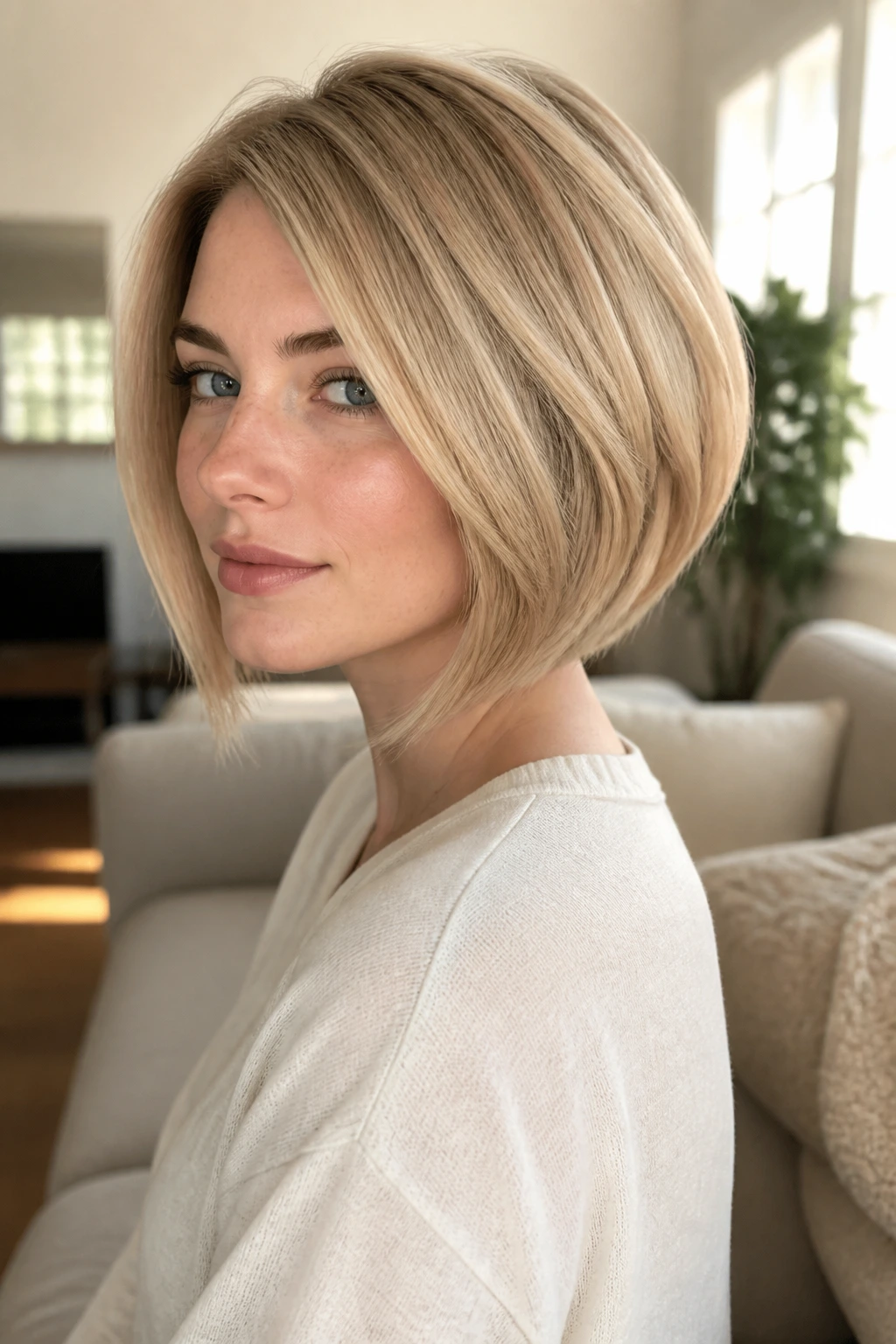
A graduated bob gives you a shorter back and longer front, which is a useful shape on a round face. The back lift adds height, and the longer front pieces carve a vertical line toward the collarbone. Milk tea blonde softens the structure so it doesn’t look too hard against fair skin.
Milk tea blonde sits in that creamy-beige zone that feels both warm and calm. It’s not loud. It’s not icy. It’s the shade I’d choose if I wanted a bob to look expensive without seeming overworked.
Things to Ask For
- Shorter graduation in the back, not stacked to the sky
- Front pieces that pass the jawline
- A side part to keep the shape asymmetrical
- Soft texturizing through the ends
This is one of the best “put-together” cuts on the list. The shape does the face work, and the color keeps the whole thing soft.
18. Swoopy Layers with Buttercream Balayage
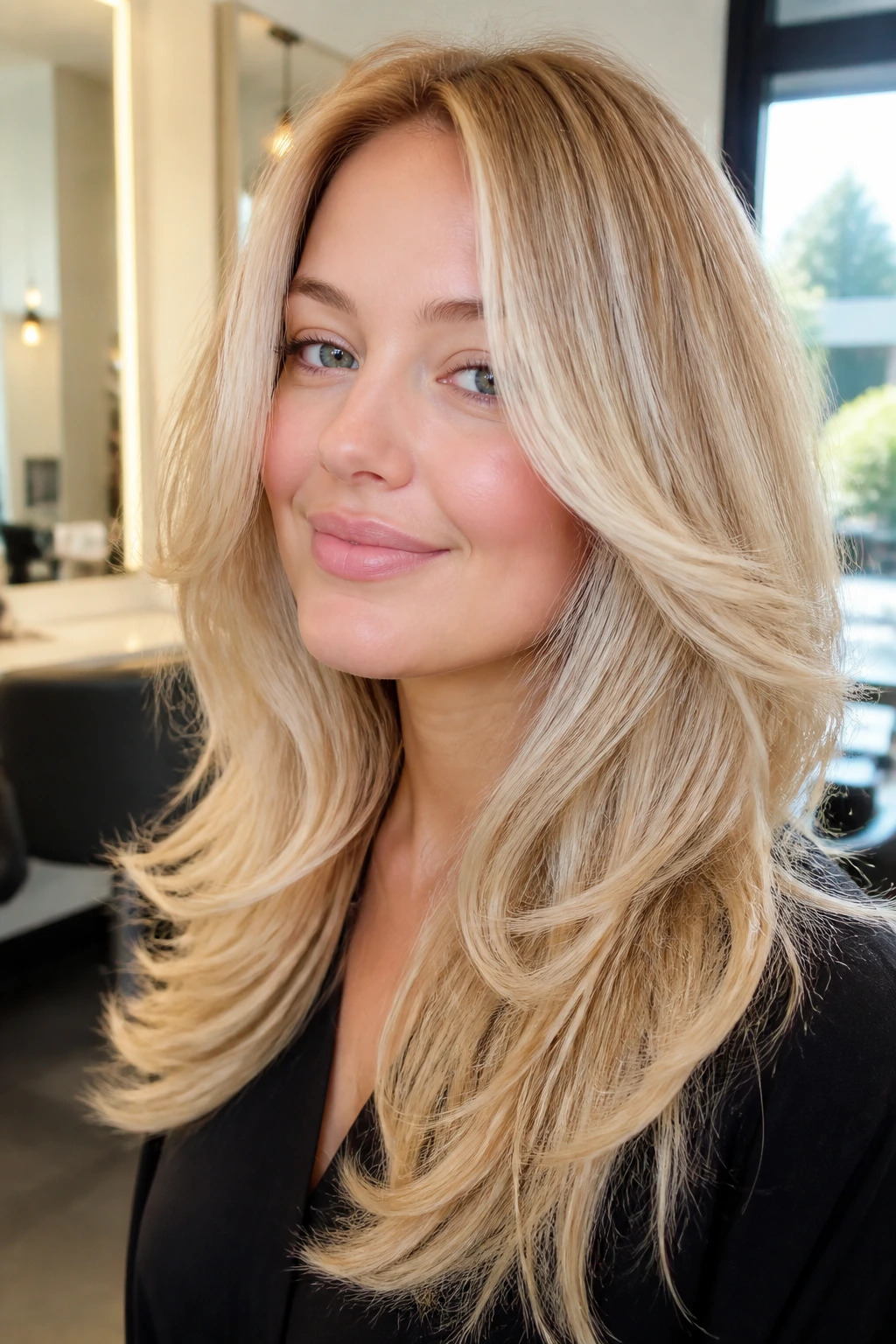
Swoopy layers are all about movement that bends away from the cheeks. On a round face, that matters. A layer that sweeps outward at the cheekbone gives the face some space and keeps the middle from feeling too full. Buttercream balayage makes the shape feel light and easy.
This is a good choice if you like a blowout look with a little bounce. Use a round brush or a large curling brush attachment and direct the front pieces away from the face. If the layers bend inward, the face can feel boxed. Outward is the move.
Buttercream is a nice shade for fair skin because it holds a soft warmth without going orange. That makes it easier to wear than brighter gold when the skin is very pale.
I’d pick this look for medium to thick hair, especially if the ends need a little more life.
19. Long Soft Waves with Pearl Ends
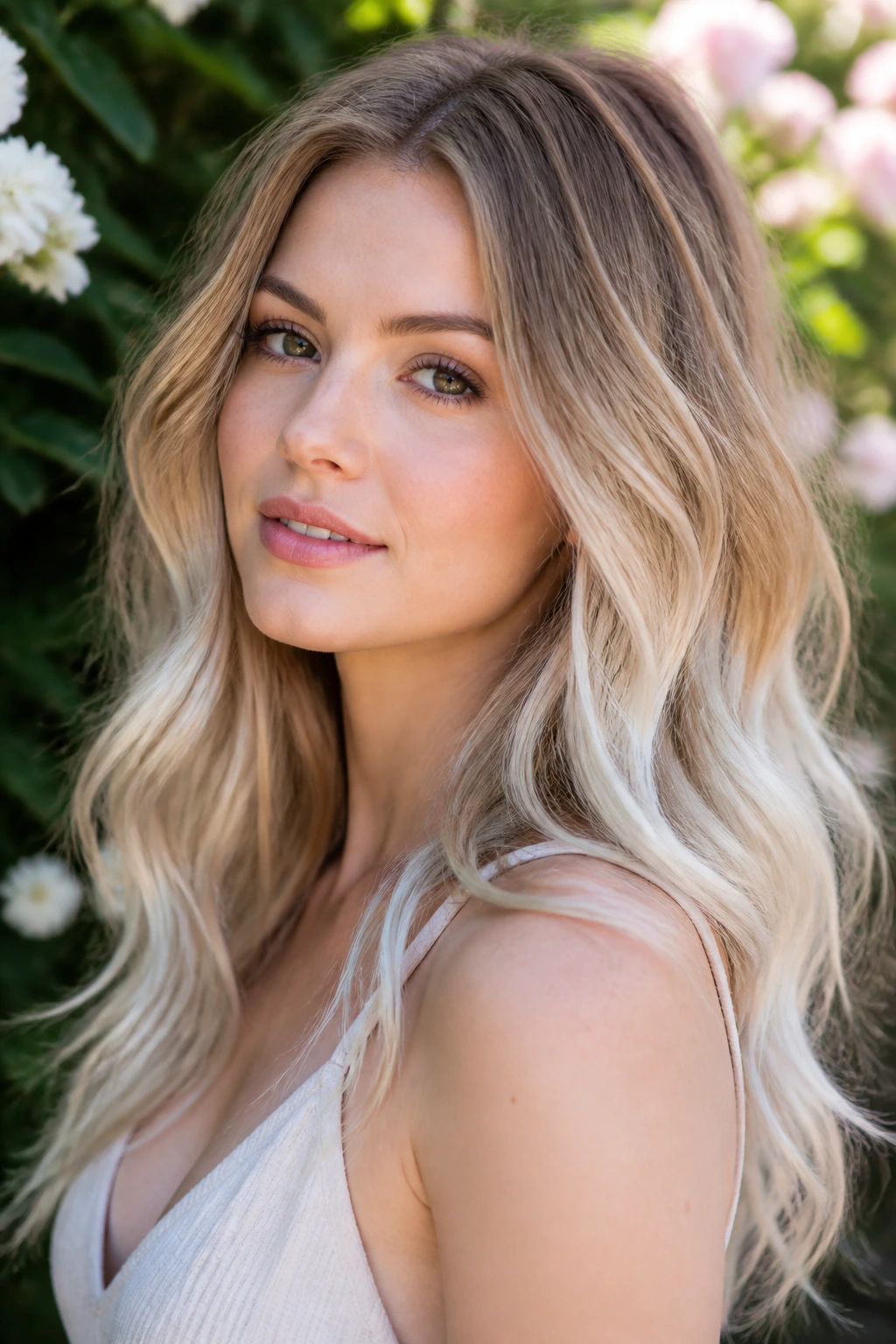
Long hair can work on a round face, but only if the waves do some shaping. Keep the wave pattern loose and start the brightest pearl blonde at the lower half of the length. That keeps the top from getting too busy and lets the face stay open.
Pearl ends look especially good on fair skin because they reflect light in a clean, cool way. If your skin has pink in it, that can look fresh rather than washed out. The important part is not pushing the blonde all the way to white at the roots.
The waves should begin below the cheekbone, not right at the jaw. That delay in movement stretches the face visually. If the wave starts too high, you get width where you don’t want it.
This is one of the easiest styles to wear if you like length but still want some structure.
20. Choppy Shag in Oat Blonde
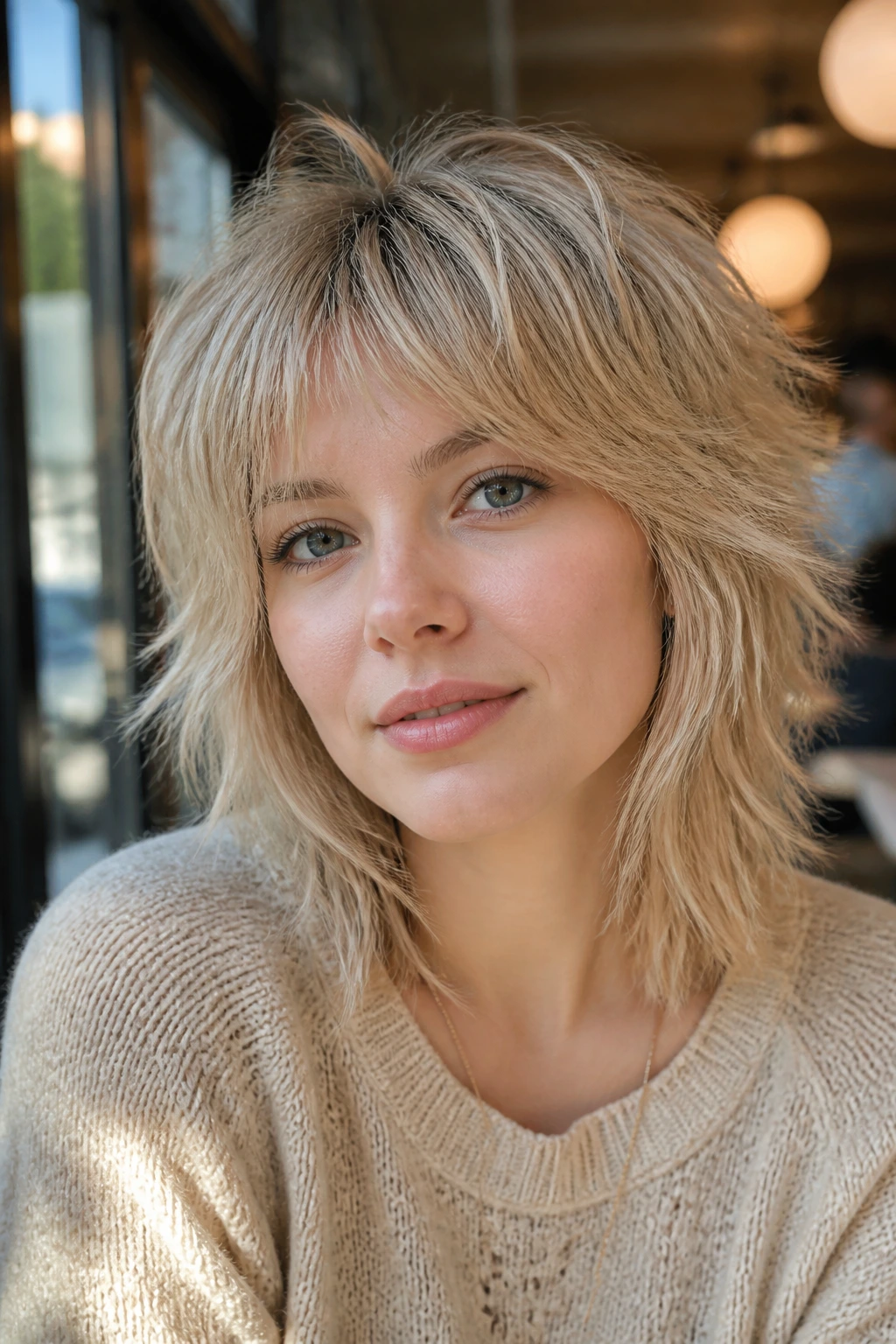
A shag can be flattering on a round face when it stays airy instead of heavy. The choppiness should be light around the crown, with the bulk removed from the sides and enough length to keep the silhouette from puffing up. Oat blonde is a soft, neutral shade that works nicely on fair skin without looking too cool or too gold.
This cut needs a little mess. If you smooth it too much, the layers lose their shape and the face can look wider. A salt spray or light mousse gives the ends separation, which is where the interest comes from.
I like this style for people who don’t want the polished blowout look. It has personality. It also grows out in a fairly forgiving way, which is useful if you hate a strict maintenance schedule.
Just don’t let the shortest pieces sit right at cheek level. That’s the spot that makes a round face feel even rounder.
21. Tucked Bob with Beige Money Pieces
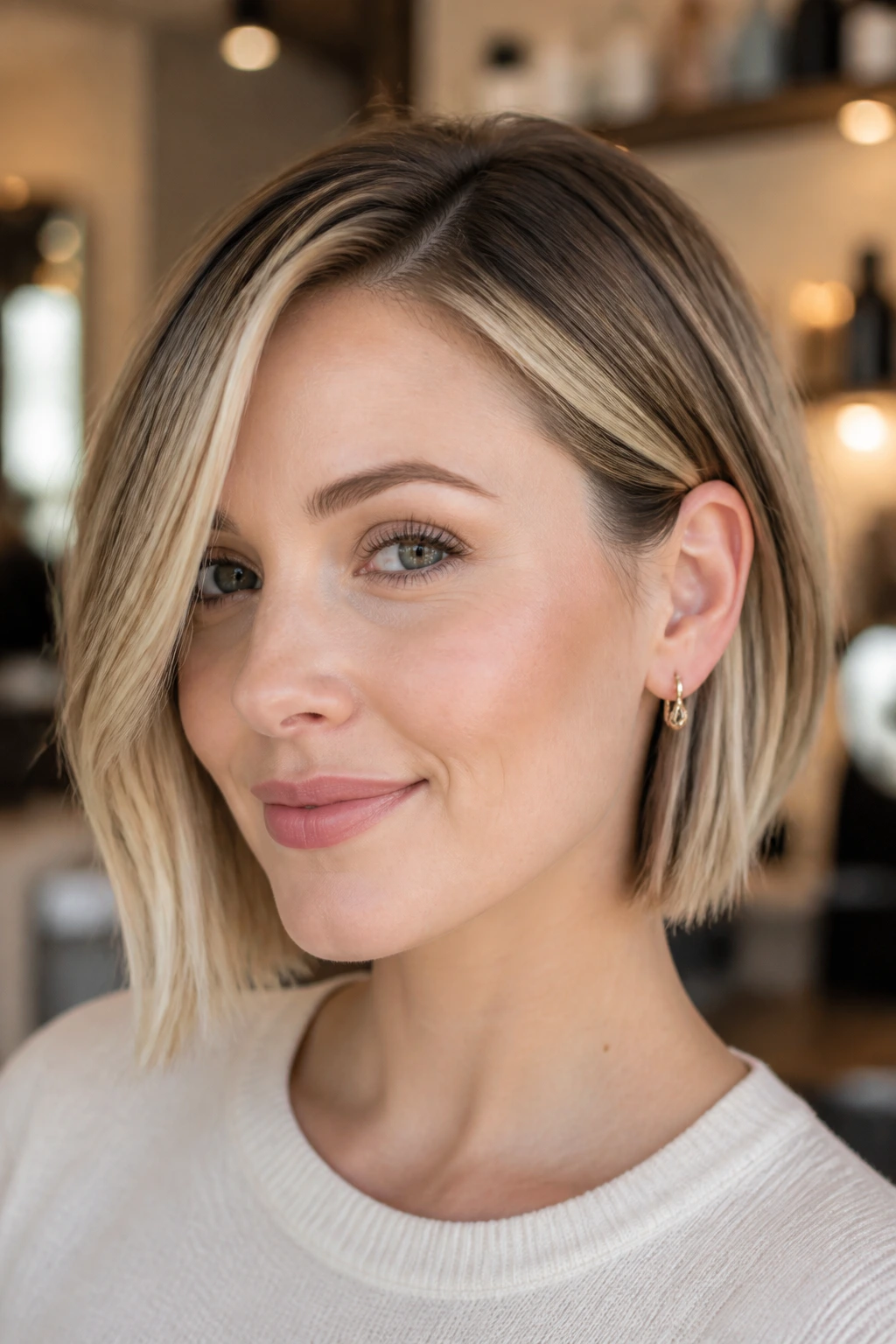
A tucked bob is an easy trick with a lot of payoff. Tuck one side behind the ear, leave a side part in place, and let the opposite side stay loose. The asymmetry slims the face a bit, and beige money pieces near the front keep fair skin looking bright without a hard color line.
This style works best when the bob is slightly longer than the chin. If it ends right at the jaw, the tuck can make the lower face feel crowded. Give it a little extra length, then use the tuck as your styling move.
The beige front pieces should be soft, not stripey. A strong highlight can look dated fast. A blend that starts a touch lower and melts through the mid-lengths looks much better.
Simple idea. Strong effect. That’s the appeal here.
22. Mid-Length U-Cut with Toasted Vanilla
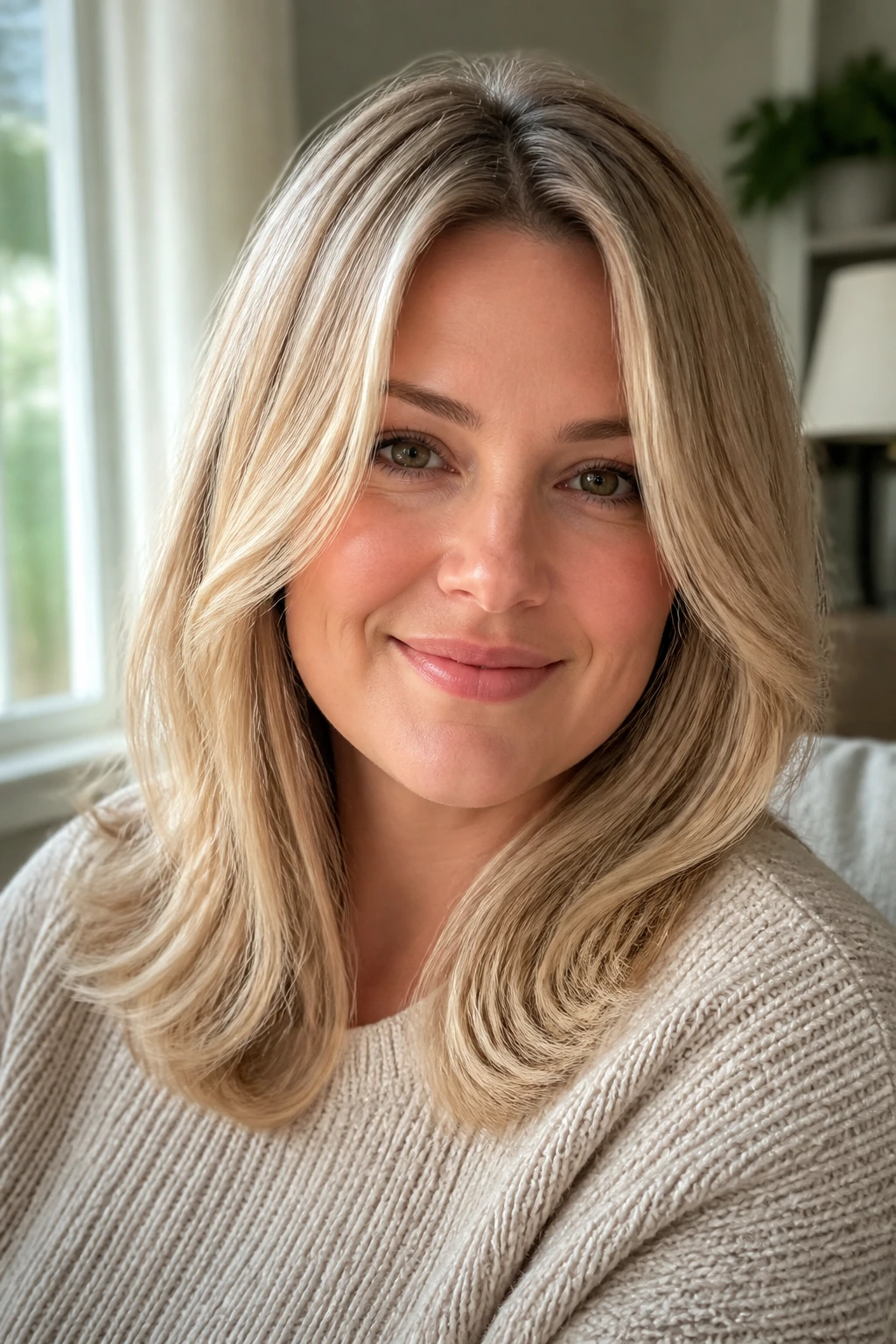
A mid-length U-cut has a gentle curve through the bottom, and that curve helps round faces by keeping the outline from becoming boxy. The front should drift a bit longer than the back, which pulls the eye down. Toasted vanilla brings a little warmth to fair skin without going orange.
This style is one of the nicest options for naturally straight hair because it builds shape without requiring a huge styling routine. A quick blow-dry with a paddle brush, then a slight bend through the ends, is usually enough. If you want more lift, wrap the front sections away from the face for 30 seconds each with a large brush.
The U-shape also behaves well when hair is tucked into scarves or jackets. The curve still shows through. That matters in real life, not just in a salon chair.
If your hair is heavy, this cut can breathe. If it’s fine, keep the layers conservative.
23. Curved Fringe with Frosted Champagne
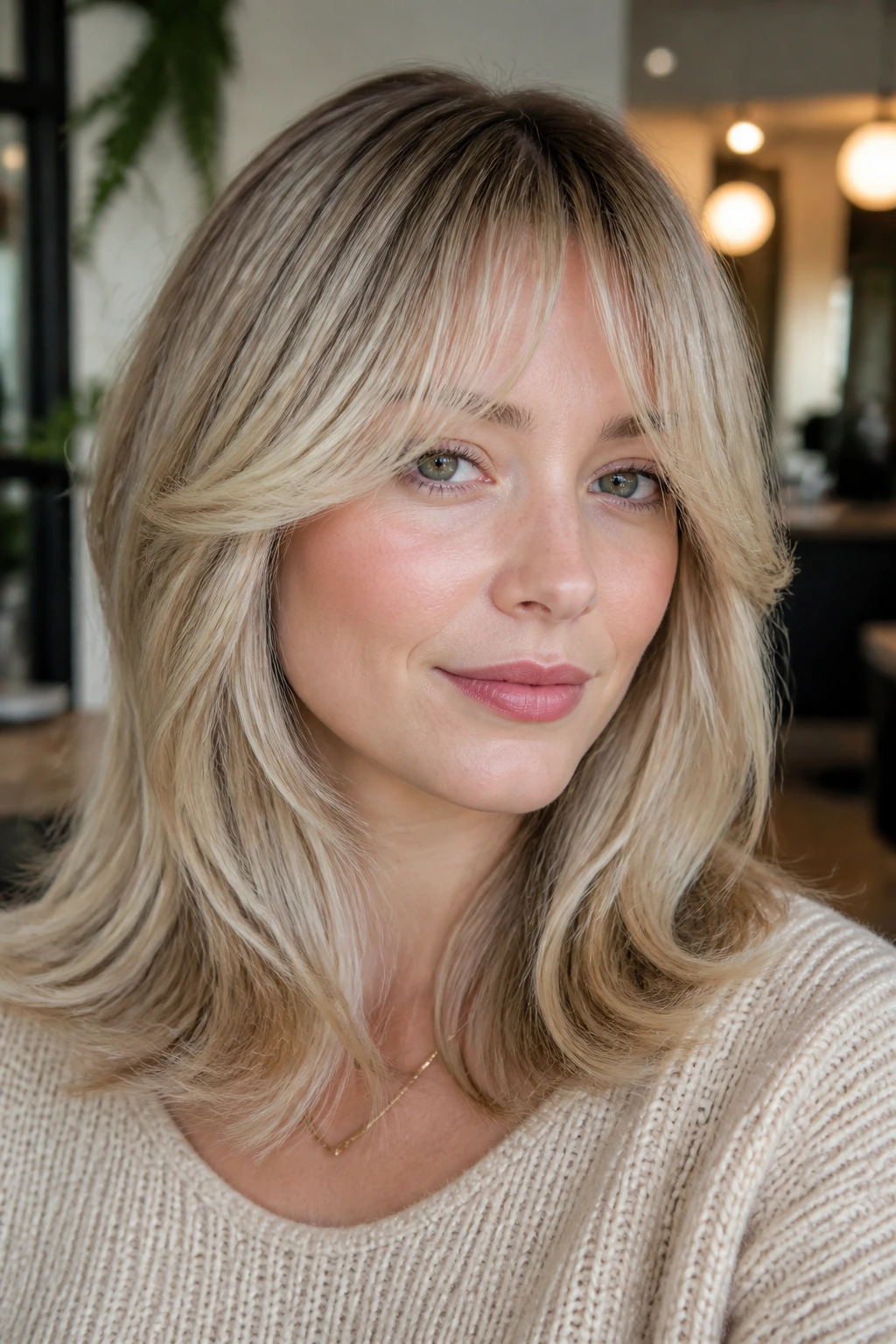
A curved fringe can be a really smart move on a round face because it breaks up the forehead without making the face look shorter. The center should sit a little shorter, then lengthen gently toward the temples. Frosted champagne gives the style a soft brightness that flatters fair skin without making the fringe look chunky.
This is not the same as a blunt bang. It’s looser. The curve matters. If the bang falls too straight, the face gets sliced across the middle. If it arcs softly, the eye moves upward and outward in a nicer line.
The rest of the cut can stay shoulder length or a little longer, as long as the fringe has space to blend. Style it with a round brush or a tiny flat iron bend so the ends don’t stick flat to the forehead.
This cut has a little personality. It’s not shy.
24. Relaxed Half-Up Layers with Honey Glaze
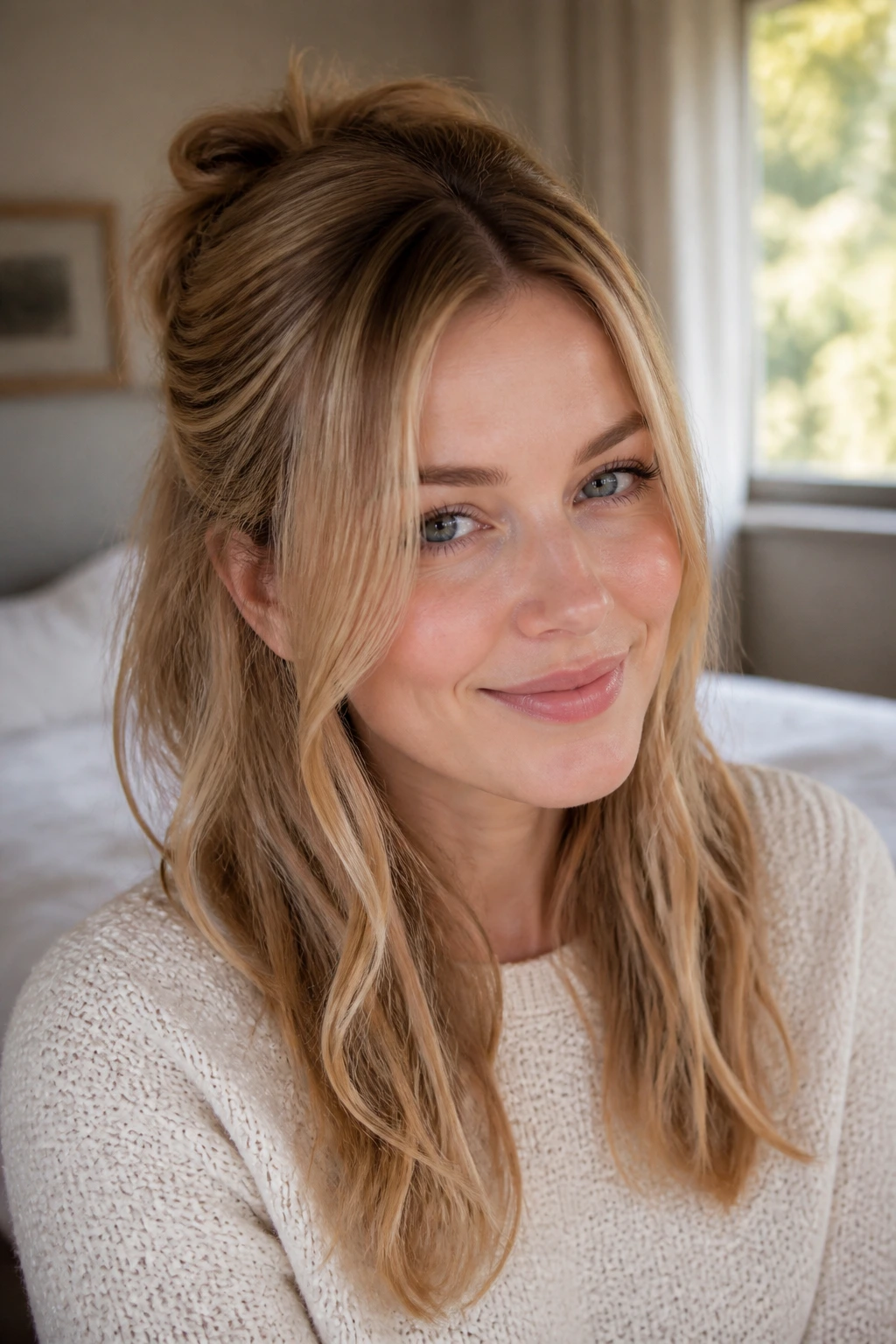
A half-up style is a smart way to change the face shape without losing length. Pull the top section back loosely, let the sides stay soft around the cheeks, and the face opens up while still keeping some framing. Honey glaze adds warmth that works especially well if fair skin needs a touch of golden tone.
The secret is not pulling the top too tight. That makes the face look wider through the temples. Keep a little lift at the crown and leave a few short layers loose around the front. Those pieces soften the hairline and stop the style from feeling severe.
This is a good “middle ground” look for long hair. It gives you shape on days when loose hair feels flat, but it doesn’t require a full updo. A small claw clip or a few pins is enough.
Messy works here. Too perfect looks stiff.
25. Shoulder-Length Cloud Curls in Pale Gold
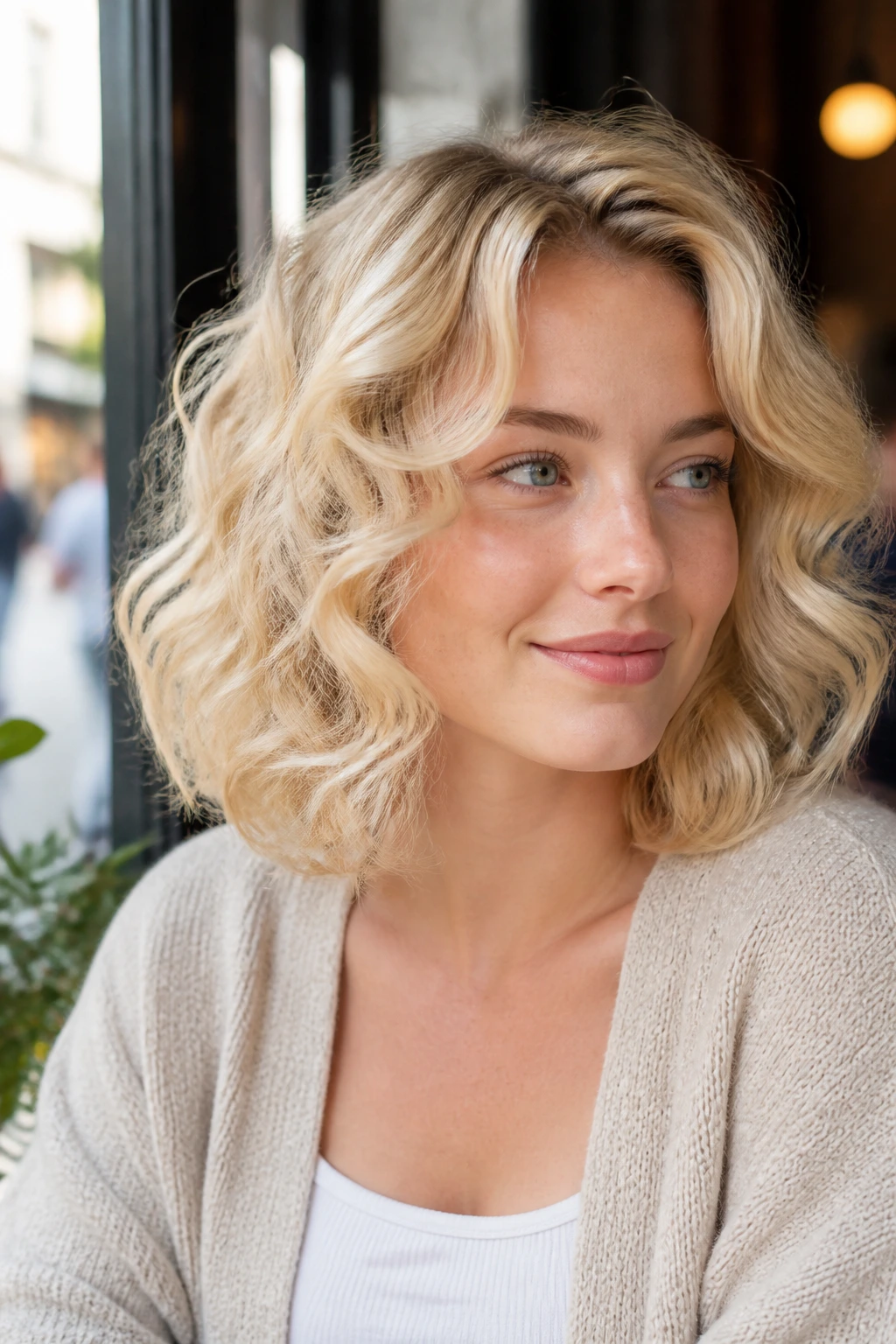
Cloud curls are loose, soft, and a little airy at the edges, which is exactly why they flatter a round face. The curls should sit around the shoulders and fall in a broken pattern, not a tight uniform ring. Pale gold adds a soft brightness to fair skin without turning brassy or loud.
The cut should include enough long layers to let the curls separate. If the hair is cut too blunt, the curl pattern bunches up and widens the face. Ask for length that keeps the curls moving downward, and use a diffuser or a big-barrel curling wand if your hair needs help.
These curls look especially good when brushed out lightly and finished with a tiny bit of cream. You want touchable texture, not lacquer. The pale gold tone keeps the overall effect warm, fresh, and easy to wear.
It’s soft in the right way. Not timid.
Why Soft Blonde and Face-Framing Shape Change the Angle of a Round Face
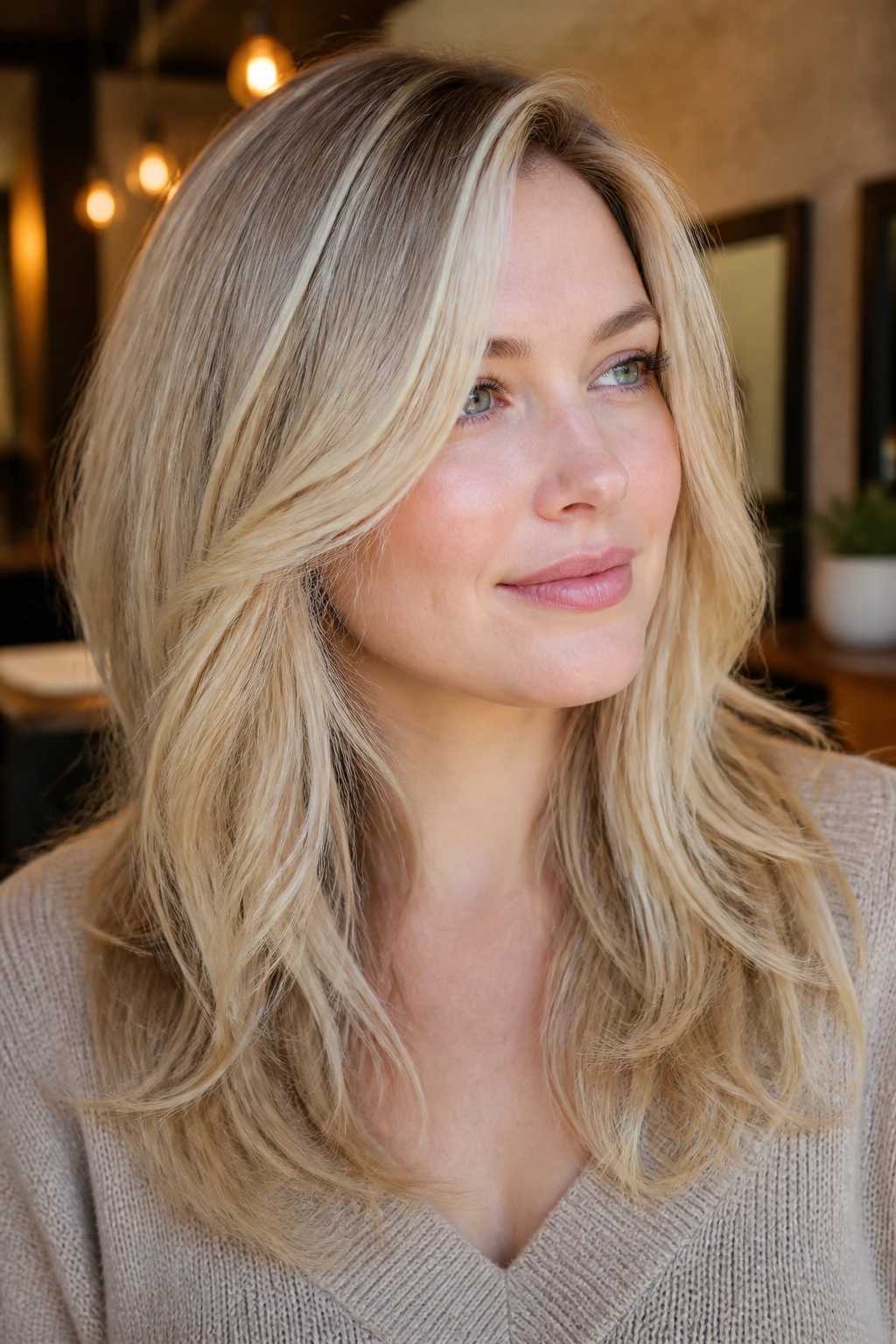
The whole game here is line and contrast. A round face already has gentle curves, so the hair should give it some direction. That doesn’t mean harsh angles or severe cuts. It means choosing a shape that pulls the eye up, down, or diagonally instead of letting it sit in one circular loop.
Soft blonde helps because it brightens the skin without competing with the face. On fair skin, a blonde that is too flat can drain color from the complexion, while a blonde that is too yellow can look heavy around the cheeks. Beige, pearl, butter, vanilla, champagne, and honeyed tones work because they feel light but still have enough depth to frame features. I like a little root shadow in most cases. It gives the color somewhere to land.
Layers matter more than people think. A face-framing layer that starts at the cheekbone can widen a round face if it’s too short, but the same layer starting below the cheekbone can slim the face and give it movement. That tiny difference changes the whole result. So does parting. A side part, even a soft one, breaks the symmetry that makes round faces look fuller.
The Tools That Make These Looks Easier
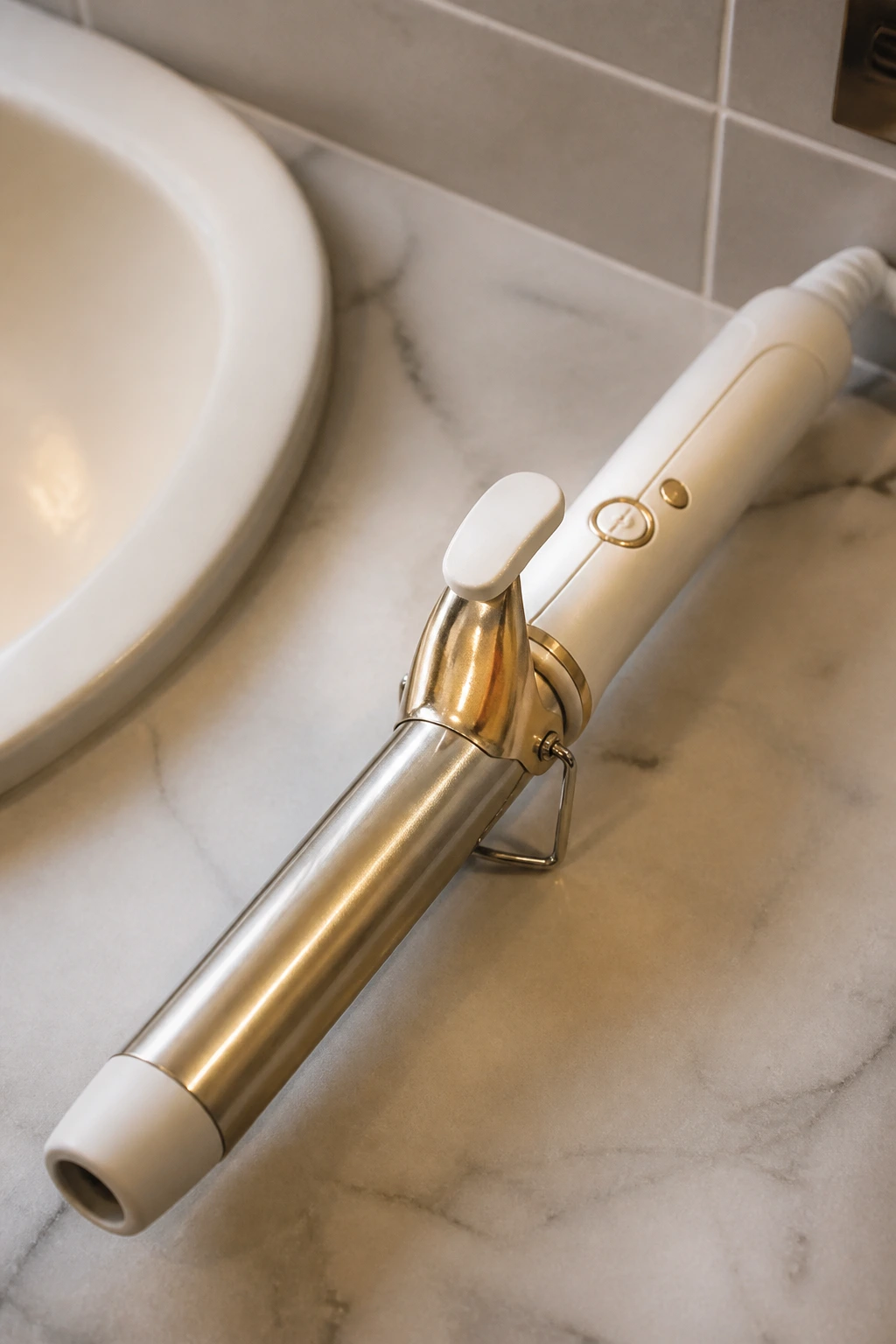
- 1-inch curling iron or wand: Best for soft bends, curtain bangs, and brushed-out waves without tight ringlets.
- 1.5- to 2.5-inch round brush: Good for blowouts, crown lift, and shaping the ends away from the cheeks.
- Blow-dryer with concentrator nozzle: Helps you direct the hair instead of letting it puff out.
- Tail comb: Handy for clean parts and precise sectioning around bangs and face-framing pieces.
- Light mousse or root lift spray: Useful for fine hair that falls flat at the crown.
- Heat protectant spray: Non-negotiable if you’re using hot tools more than once a week.
- Texture spray: Helps bobs, shags, and wolf cuts keep their separation.
- Shine cream or serum: A tiny amount smooths the ends on lobs and long layers.
- Wide-tooth comb: Better than a brush for breaking up curls and waves without turning them frizzy.
- Color-safe shampoo: Keeps blonde tones from fading into dull brass or gray.
Choosing the Right Blonde Tone for Fair Skin
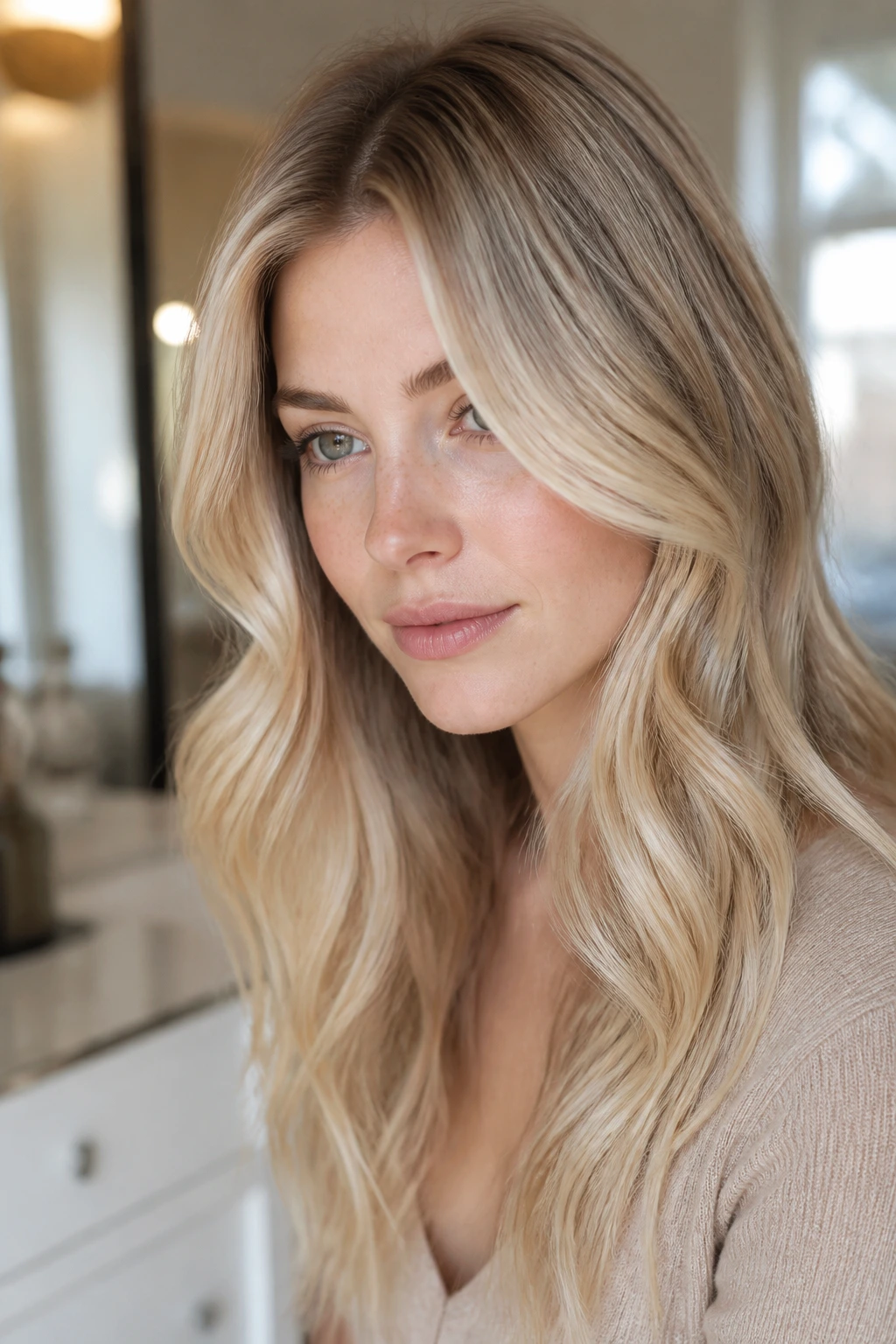
Fair skin is not one single thing. That’s where a lot of blonde advice falls apart. Some fair skin leans pink, some leans peach, some sits almost neutral, and each one reacts to blonde differently. The most useful question is not “Should I go warm or cool?” It’s “What tone keeps my skin looking alive instead of pale or tired?”
If your skin is rosy or cool, beige, pearl, vanilla, and soft champagne usually behave well. If your skin has peach or golden notes, butter, honey beige, and toasted vanilla can look more natural. Very pale icy blondes can work, but they need careful toning and enough depth at the root or they can wash the face out. I’m not against icy blonde. I just think it’s easy to get wrong.
Ask for dimension instead of one flat color. A few lowlights around the interior and lighter ribbons near the front give the hair movement and stop the head from becoming one sheet of color. That is especially useful on a round face because contrast helps define shape. If you want a low-maintenance grow-out, keep the root a half-step darker than the mids. It looks softer and buys you more time between salon visits.
How to Wear These Styles Day to Day
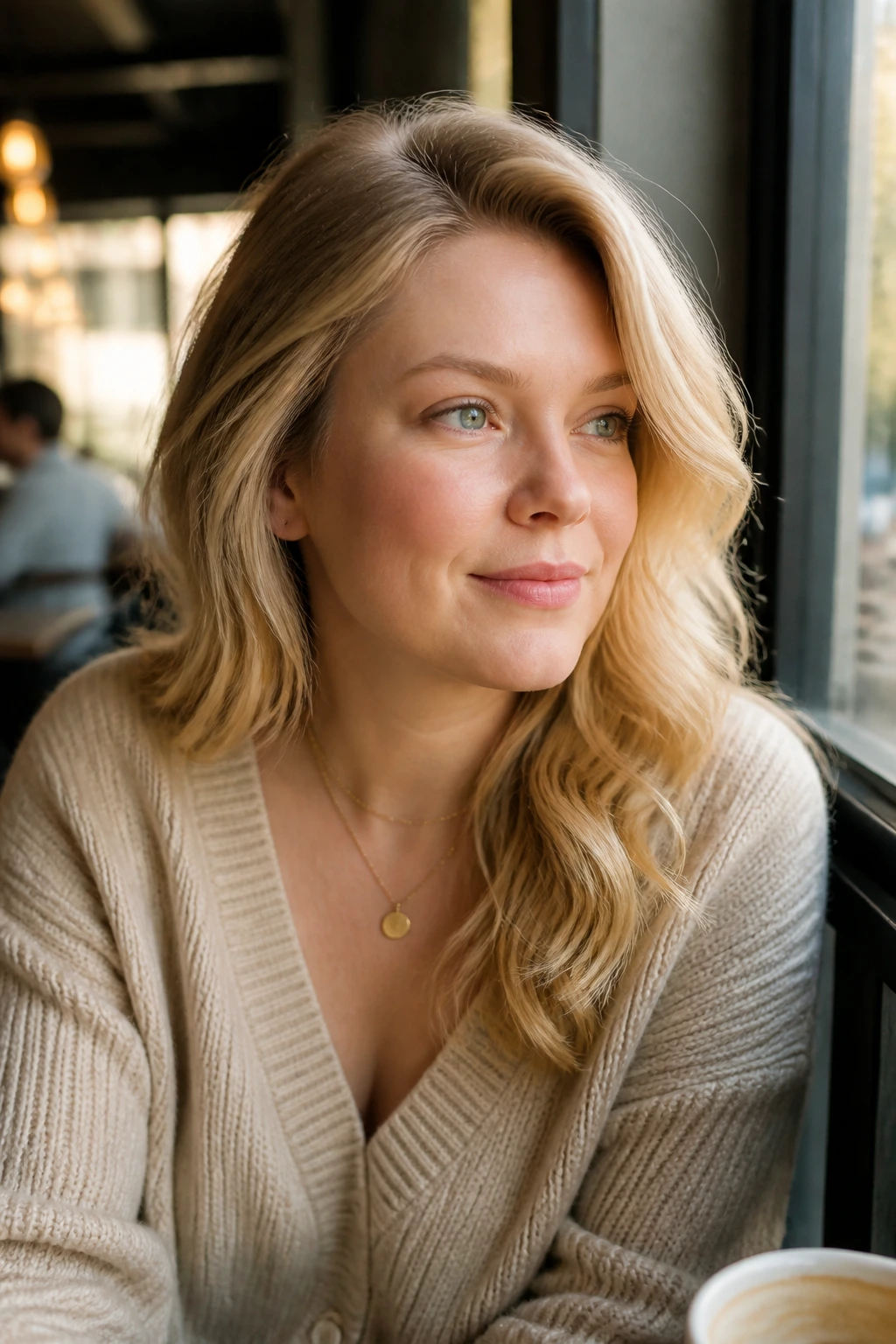
Parting: A side part shifted about 1 to 2 inches off center is the easiest way to add length to a round face. A center part can still work, but it usually needs long layers or curtain bangs to keep the face from reading too wide.
Styling Pairings: Round faces usually do well with height at the crown and softness near the jawline. That can mean a rounded blowout, a side-swept fringe, or loose waves that start below the cheekbone. Flat roots and puffy sides cancel each other out, so choose one direction and commit.
Accessory Pairing: Small clips, thin headbands, and tucked-behind-the-ear styling work better than big heavy accessories that sit at cheek level. If you wear earrings, longer lines are better than tiny studs because they echo the lengthening effect of the haircut.
Best For: These looks fit everyday wear when they can move. A little bend, a little separation, and a little root depth go a long way. The styles here are meant to look touched, not shellacked.
Extra Shine, Lift, and Shape Tricks
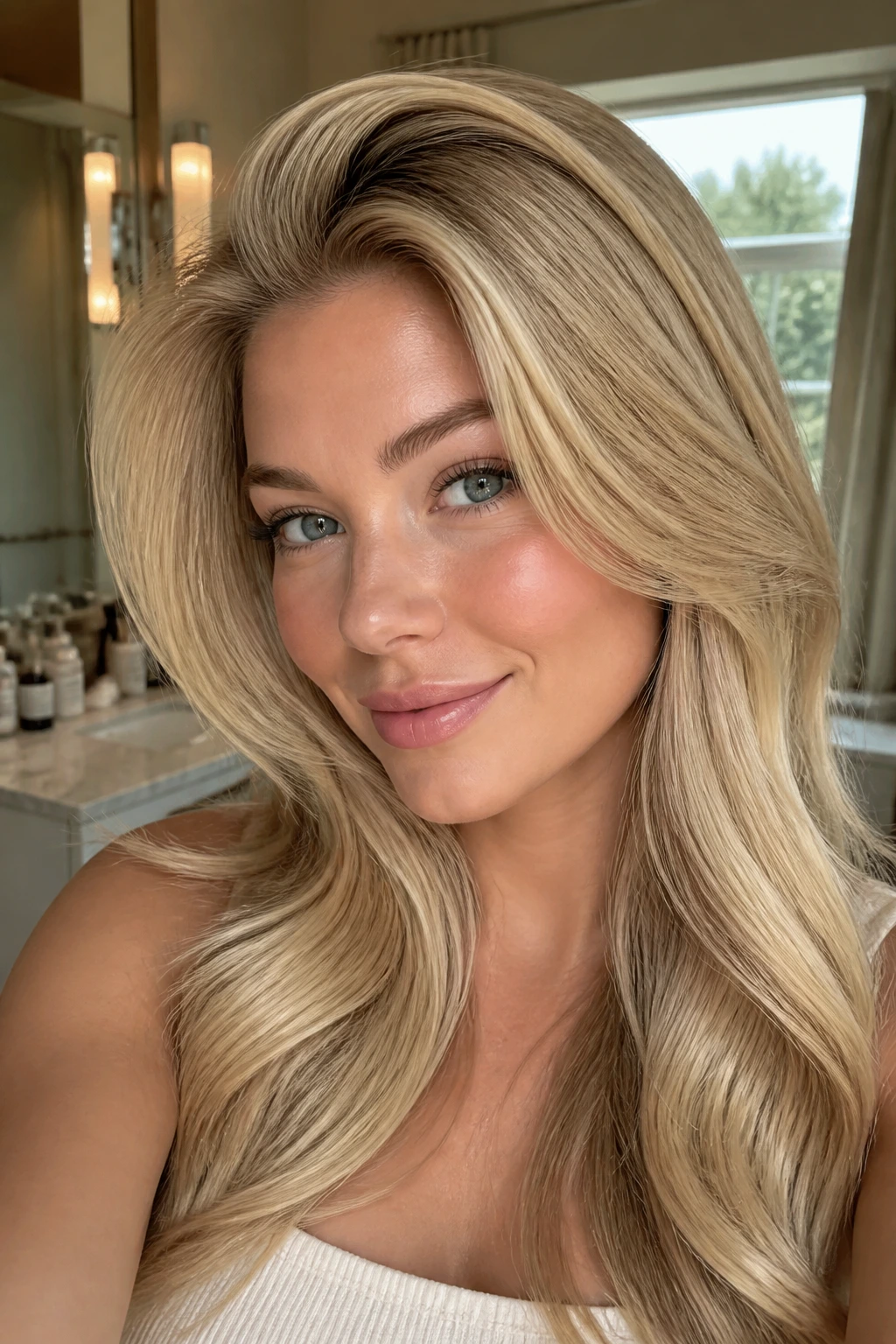
Gloss Boost: A clear or beige gloss every 4 to 6 weeks keeps blonde from going dull, especially if your water is hard and leaves a rough feel on the hair. It also helps fair skin look fresher because the blonde reflects light in a cleaner way.
Root Lift: If your hair falls flat at the crown, spray a small amount of root lift onto damp roots and blow-dry upward with your fingers first, then with a brush. That bit of lift changes the face shape more than people expect.
Texture Control: On bobbed cuts and shags, use less product than you think. A pea-sized amount of cream or paste is enough. Too much makes the ends collapse, and then the haircut loses its air.
Tone Balance: If your blonde starts looking too yellow, use a purple shampoo only once every one to two weeks. More than that can make fair skin look gray or stale. I’d rather see a soft beige blonde than a dingy silver one.
Make-It-Yours: If you like a little edge, ask for a slightly darker root. If you prefer softer makeup-friendly hair, keep the contrast low and ask for micro-babylights around the face. Tiny decisions. Big difference.
Common Mistakes That Flatten a Round Face
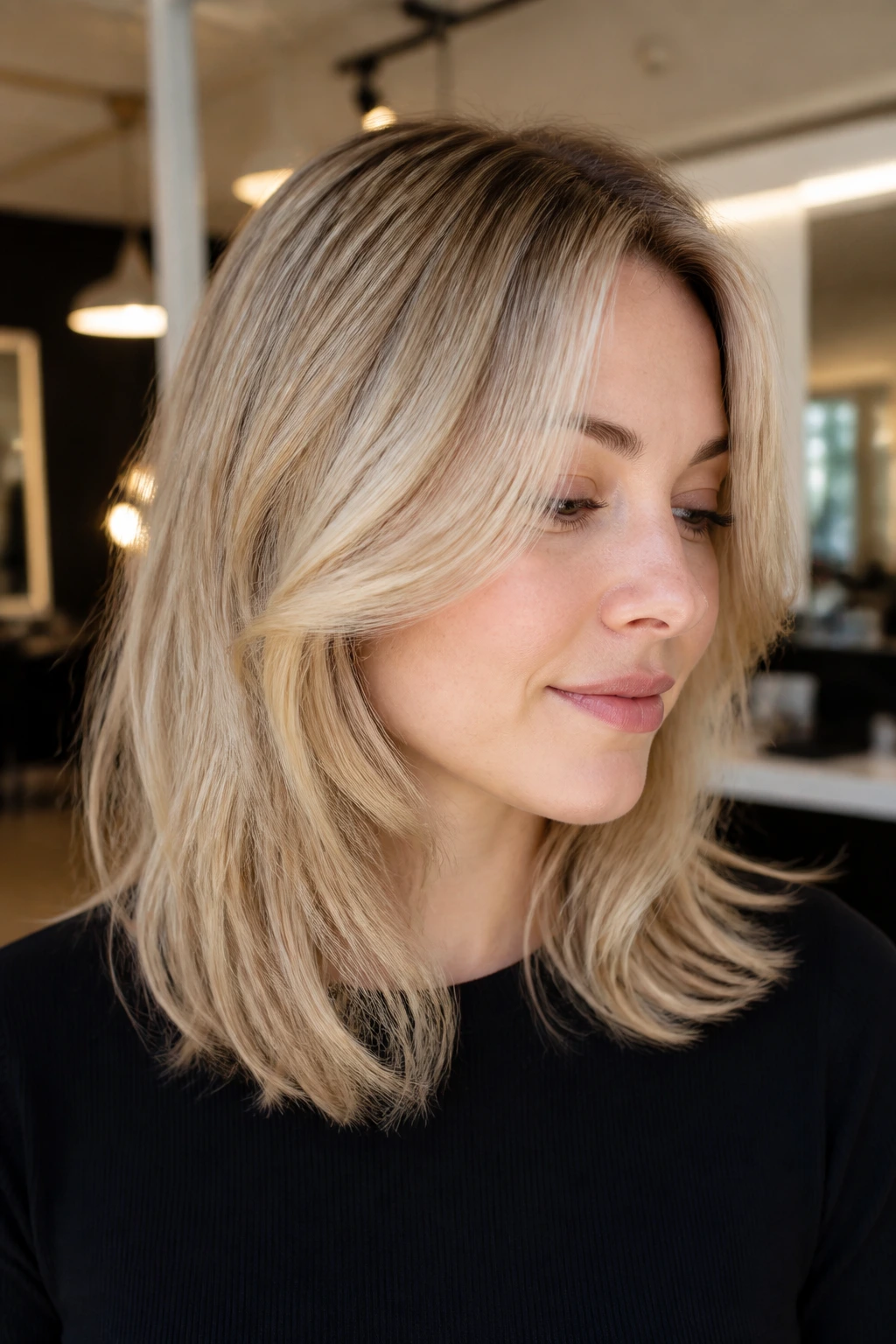
The first mistake is cutting too short at the widest part of the face. A bob that ends right at the jaw or cheek often makes the face look broader than it is. If you want short hair, leave the front longer or add asymmetry. That little shift matters.
The second mistake is going too pale, too fast. Very icy blonde on fair skin can look washed out if the eyebrows, eyelashes, and lips are also soft. A little beige or champagne in the mix keeps the face from disappearing. Pure white tends to be harsher than people expect.
The third mistake is too much volume on the sides. Big width at cheek level makes a round face look rounder. Put volume at the crown instead, and keep the sides soft or broken up with texture. That’s a cleaner shape.
The fourth mistake is fringe that stops in the wrong place. Straight bangs that hit the middle of the forehead or sit exactly at the cheekbone can shorten and widen the face at once. Curtain bangs, curved fringe, or side-swept pieces usually work better because they angle the eye.
The fifth mistake is over-toning. Hair that has been purple-shampooed into a flat gray can look lifeless on fair skin. If the blonde loses warmth and shine, back off the toner and add a gloss instead.
Variations and Adaptations to Try
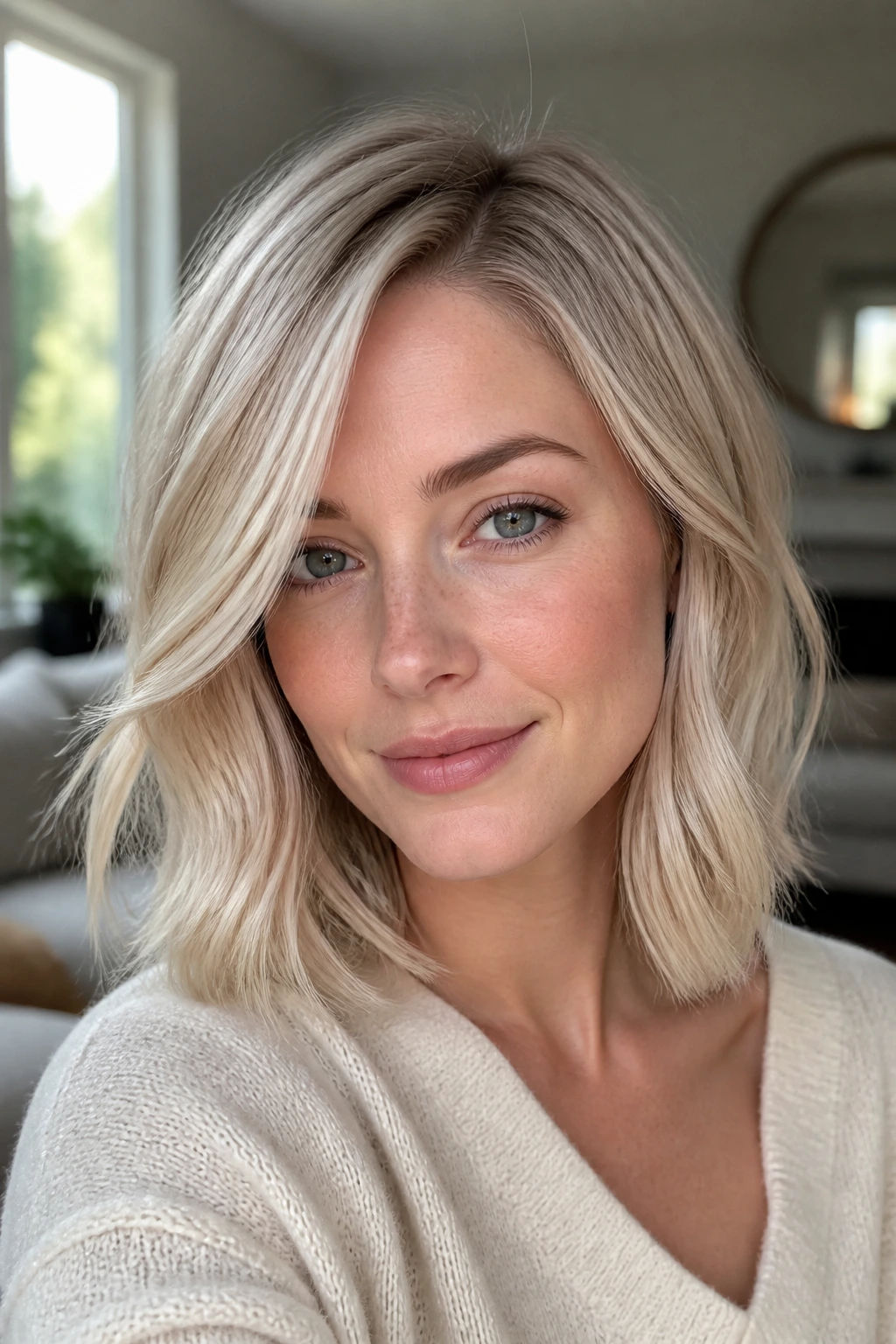
The Cool Pearl Edit: Choose pearl, ivory, and soft champagne tones if your skin runs pink or rosy. Keep the cut airy and avoid heavy gold, which can fight the complexion. This version looks especially good on bobs and lobs with a side part.
The Warm Vanilla Edit: If your skin leans peach or golden, vanilla, butter, and honey beige bring warmth without turning orange. Ask for soft ribbons around the face and a root shadow one level deeper than the mids. That blend looks easy, not striped.
The Fine-Hair Lift: For hair that collapses by noon, keep the layers long and use a root spray plus a 1.5-inch brush blowout. Short choppy layers can make fine hair look thinner at the ends. A soft lob or rounded bob usually behaves better.
The Thick-Hair Softening Cut: Thick hair needs weight removed from the inside, not just the surface. A U-shape, butterfly cut, or feathered lob keeps the width under control while preserving length. Beige or sandy blonde dimension helps break up the bulk.
The Low-Maintenance Grow-Out: Ask for balayage, shadow roots, and face-framing brightness only around the front. The grow-out stays softer, and you can stretch salon visits without the color line becoming obvious. This is the version I’d choose if you hate constant toner appointments.
Washing, Toning, and Keeping the Shape Fresh
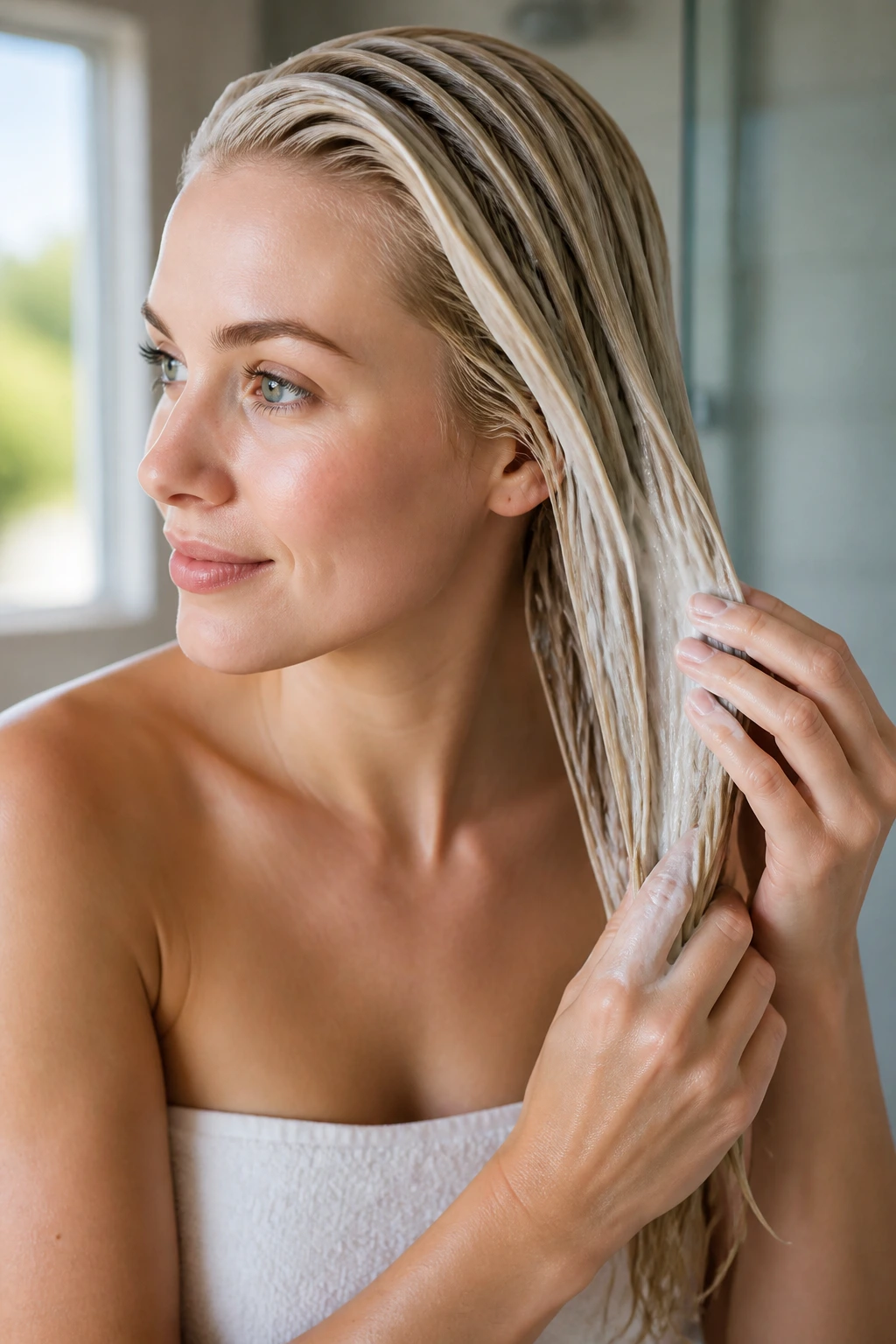
Blonde hair on fair skin can look tired fast if it gets dry or muddy. Use a color-safe shampoo and keep full washing to 2 to 4 times a week unless your scalp runs oily. Too-frequent washing strips the soft blonde tones and makes the hair rough, which is not kind to a layered cut.
Purple shampoo is useful, but it’s easy to misuse. Use it sparingly, usually every 1 to 2 weeks, and leave it on only as long as needed to cancel brass. If the hair starts looking smoky or dull, switch to a hydrating mask and skip toner for a while. A blonde that still has shine looks better on fair skin than one that is technically “cool” but looks dead.
For shape, plan trims every 6 to 10 weeks depending on the cut. Pixies and chin-length bobs need more regular cleanup. Lobs and long layers can stretch a bit longer, but the face-framing pieces will still lose their shape if you wait too long. On styling days, use heat protectant every time, and if you air-dry, scrunch in a little cream only at the ends so the roots don’t go flat.
Questions People Ask Before Booking the Cut
Will blonde hair wash out fair skin?
It can, if the tone is too pale or too flat. Beige, champagne, butter, and pearl tones usually flatter fair skin better than one-note platinum because they keep some warmth and depth around the face.
Can a round face wear a chin-length bob?
Yes, if the bob has asymmetry, texture, or a side part. A blunt bob that lands exactly at the jaw is the version that causes trouble. Length, angle, and parting make the difference.
Are bangs a bad idea for round faces?
No. Straight, heavy bangs can shorten the face, but curtain bangs, curved fringe, and soft side-swept bangs can actually help by creating vertical lines and cheekbone framing.
What blonde shade is easiest to wear with fair skin?
Champagne, beige, and vanilla are usually the easiest starting points. They give brightness without the icy or brassy extremes that often cause problems.
Do these styles work on curly hair too?
They do, as long as the cut respects the curl pattern. Shoulder-skimming curls, layered lobs, and soft shags work especially well because they let the curls drop without spreading sideways.
How often do I need salon maintenance?
Color touch-ups usually land around 6 to 12 weeks, depending on how much root shadow you keep. Short haircuts need trims faster, often every 4 to 6 weeks, while long layers can wait longer.
What if my hair is very fine and blonde looks flat?
Keep the base slightly deeper and use layered cuts that preserve lift at the crown. Too much pale blonde on very fine hair can erase the shape. A little root shadow and a soft bend in the ends usually fixes that.
Can I do this look with a center part?
Yes, but the cut has to do more work. Long layers, curtain bangs, or face-framing pieces below the cheekbone help a center part stay flattering on a round face.
The Shape That Makes Blonde Feel Intentional
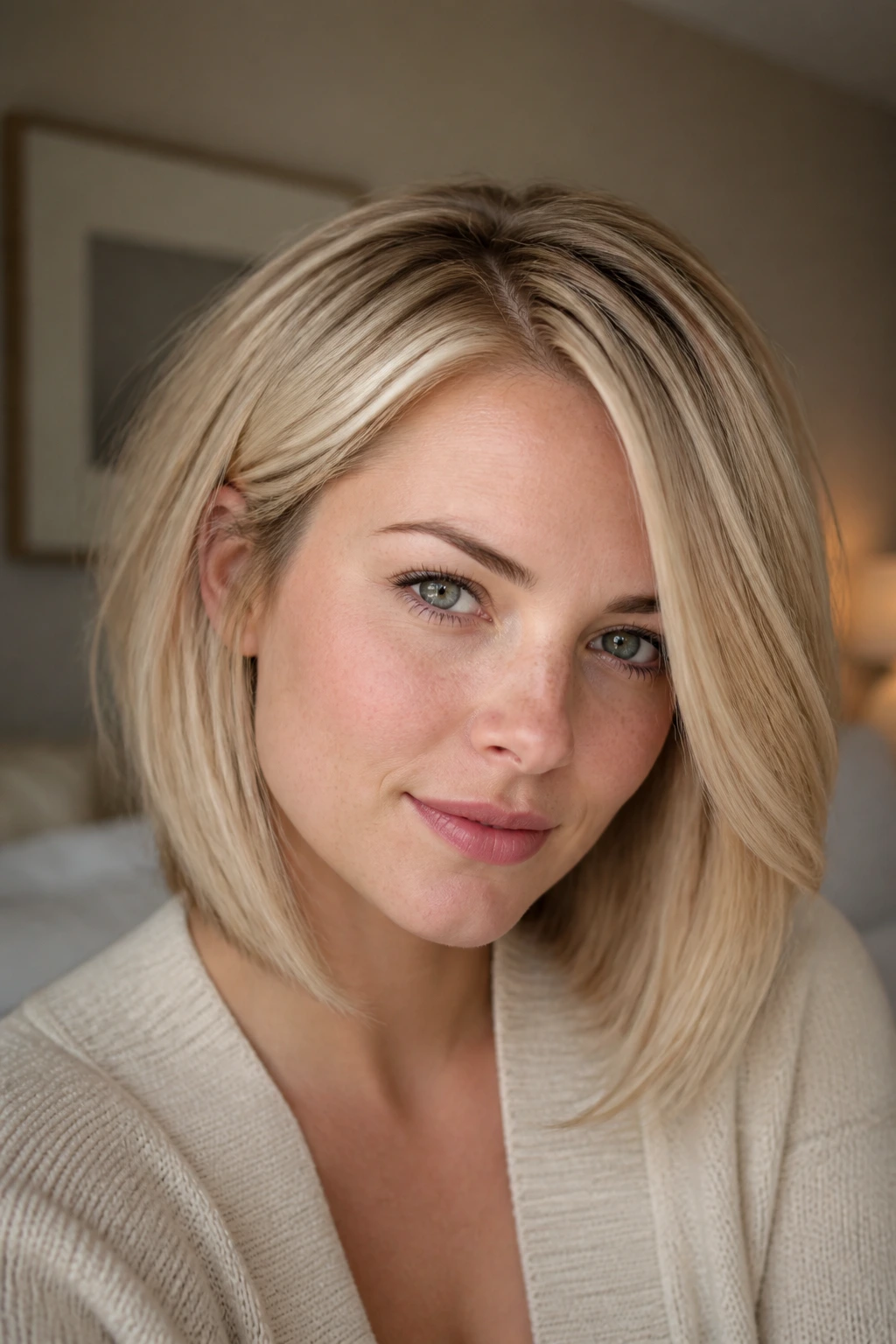
The best soft blonde hairstyle is not the lightest one, and it’s not the trendiest one either. It’s the one that gives a round face a little more length, a little more angle, and a blonde tone that keeps fair skin looking fresh instead of drained. That’s a small difference on paper. In a mirror, it’s huge.
If you’re choosing between two looks, pick the one with better shape first and better color second. The right cut can save a shade that’s only decent. The wrong cut can ruin a gorgeous blonde. That’s the honest part nobody says loudly enough.
And once you find the balance—soft color, smart length, a side part that knows what it’s doing—the whole thing settles in. Quietly. Like it was always meant to be there.