



Thick hair has a habit of looking polished one minute and puffed-out the next. The shape holds. The body holds. Sometimes, too much holds. That’s why older blonde hairstyles for women with thick hair work best when they carve out movement instead of piling on more volume at the sides and ends.
The smartest blonde shades for dense hair are rarely the brightest ones in the bowl. Honey, beige, champagne, pearl, soft ash, and rooted blonde all do something thick hair needs badly: they break up the surface so the cut looks lighter without actually making the hair feel sparse. A flat, single-process blonde on a lot of hair can turn into a solid block. Add dimension, though, and the same head of hair suddenly has swing.
There’s also the age piece, and it matters more than beauty blogs usually admit. As hair changes, the crown can get a little softer while the mid-lengths and ends stay stubbornly full, which means the same old cut can start sitting too heavy or too triangular. The right shape fixes that. Not by pretending volume is the enemy, but by putting it where it flatters the face, the neckline, and the way thick hair actually behaves.
Why These Styles Work So Well on Thick Blonde Hair
-
Weight gets moved, not erased: Thick hair needs shape cut into the inside of the section, not a dramatic thinning that leaves the ends stringy and weak.
-
Blonde dimension shows movement: Beige, honey, champagne, and silver-blonde reflect light at different depths, so layers read as texture instead of bulk.
-
Soft edges flatter mature features: Hair that starts bending near the cheekbone or jawline keeps thick hair from pulling the face straight down.
-
Grow-out stays kinder: Root shadow, balayage, and blended highlights stretch the time between color appointments and keep regrowth from looking harsh.
-
Daily styling gets simpler: A cut that already understands thick hair will usually need less brush work, fewer hot-tool passes, and far less product.
1. Soft Shoulder-Length Layers with Honey Blonde Dimension
This is the cut I reach for first when someone wants movement without losing length. Shoulder-grazing layers keep thick hair from sitting like a shelf, and honey blonde ribbons soften the whole shape so it doesn’t read heavy around the jaw.
The key is where the layers begin. Ask for them to start below the cheekbone, not up near the temples. Too many short layers near the top make thick hair balloon; longer layers let the ends bend while the top stays smooth.
Style note: A 2.5-inch round brush or a large roller set gives this shape a soft bend that lasts past lunch. If you’ve got gray coming through at the temples, honey blonde blends the transition without screaming for attention. Good haircut. Quiet color. That’s the point.
2. Chin-Length Feathered Bob in Beige Blonde
A chin-length bob can look crisp on thick hair, but only if the edges are feathered, not chopped blunt. Beige blonde keeps the shape soft, which matters when the cut sits right at the jaw and every line is visible.
Why It Flatters Thick Hair
Feathered ends stop the bob from turning boxy. They also let the hair flip inward instead of kicking out at the corners, which is the part that usually makes a short bob feel too wide.
What to Ask For
- Length at the chin or a half-inch below it.
- Soft point cutting at the perimeter, not razor-thinning through the whole head.
- A side part if you want lift at the crown.
- Beige highlights around the face so the skin doesn’t lose warmth.
This one looks sharp with earrings, glasses, or a little bit of wave through the front. It’s neat without being stiff. And that balance is harder to get than people think.
3. Side-Parted Layered Lob with Champagne Highlights
A side part does half the work here. It gives thick hair a little asymmetry at the root, so the top doesn’t sit flat while the sides puff out. Champagne highlights then catch the movement in the mid-lengths instead of turning the whole style into one bright sheet.
This is the lob for women who like a little swing around the shoulders. The layers should be long enough to keep the outline clean, but not so long that the hair becomes a triangle when it air-dries. I like this shape because it survives real life. Wind. Rain. A long day in a car. It holds.
A 1.25-inch iron makes loose bends that feel softer than curls. Keep the front pieces a touch brighter than the back, and the cut reads lifted even when you’ve done very little to it.
4. Curtain-Bang Shag with Buttery Blonde Ribbons
If your thick hair has a wave in it, the shag may be the smartest move in the room. Curtain bangs split the forehead softly, while the layers around the crown and cheeks remove enough bulk to keep the hair from sitting like a helmet.
Buttery blonde ribbons fit this cut because they highlight the motion. You want a shade that looks warm and dimensional, not streaky. Thick hair shows color in bigger chunks, so the highlights need to look blended when the hair moves, not striped when it doesn’t.
A shag works especially well when you want to keep a little attitude in the cut. Not edgy for the sake of it. Just a shape with some air in it. Let the front pieces hit around the cheekbones, then keep the rest of the layers long enough to move instead of spike out.
5. Silver-Blonde Pixie with a Longer Crown
A pixie on thick hair needs a plan. No random snipping. No aggressive thinning. What you want is a longer crown, tight nape, and enough texture on top that the cut can breathe.
Silver-blonde is a smart tone here because it blends naturally with gray and keeps regrowth from looking harsh. Pearl blonde works too if your skin likes a little more softness around the face. Either way, the short shape gives thick hair a break from all that weight.
The crown length is the important part. Too short, and the hair stands up like a cap. A little extra length on top lets you push it to one side, smooth it back, or give it a piecey finish with a dab of styling paste. Clean. Sharp. Not fussy.
6. Collarbone Waves with Face-Framing Balayage
Collarbone length is one of the most forgiving lengths for thick hair. It gives you enough weight to keep the ends from frizzing, but it doesn’t drag down the neckline the way longer lengths can. Face-framing balayage adds brightness where it matters most: around the eyes, cheeks, and mouth.
This is a good choice if you still like some softness around the face but don’t want long hair hanging everywhere. The trick is to start the brightest pieces around the cheekbone, then let them melt into a deeper blonde through the lower lengths. That creates depth without a harsh stripe effect.
Loose waves are enough here. You do not need a full curly finish. A large-barrel iron or even bend-through-the-ends with a flat iron will give the style movement while keeping the thickness under control.
7. Rounded Layered Bob in Toasted Almond Blonde
A rounded bob is one of the nicest answers to thick hair because it controls width without making the style flat. The outline stays curved, the interior layers take out bulk, and the whole thing sits close to the head in a way that still feels soft.
Toasted almond blonde is a lovely tone for this cut. It has enough warmth to keep older skin from looking drained, but it’s muted enough to stay elegant instead of loud. The color should be blended through the mid-lengths and front, not packed into chunky blocks.
This is a good bob for women who like structure. You can blow it smooth with a round brush and a small amount of smoothing cream, or you can let the ends bend naturally. Either way, the rounded shape keeps thick hair from spreading outward at the sides.
8. Long Layers with Pearl Blonde Ribbons
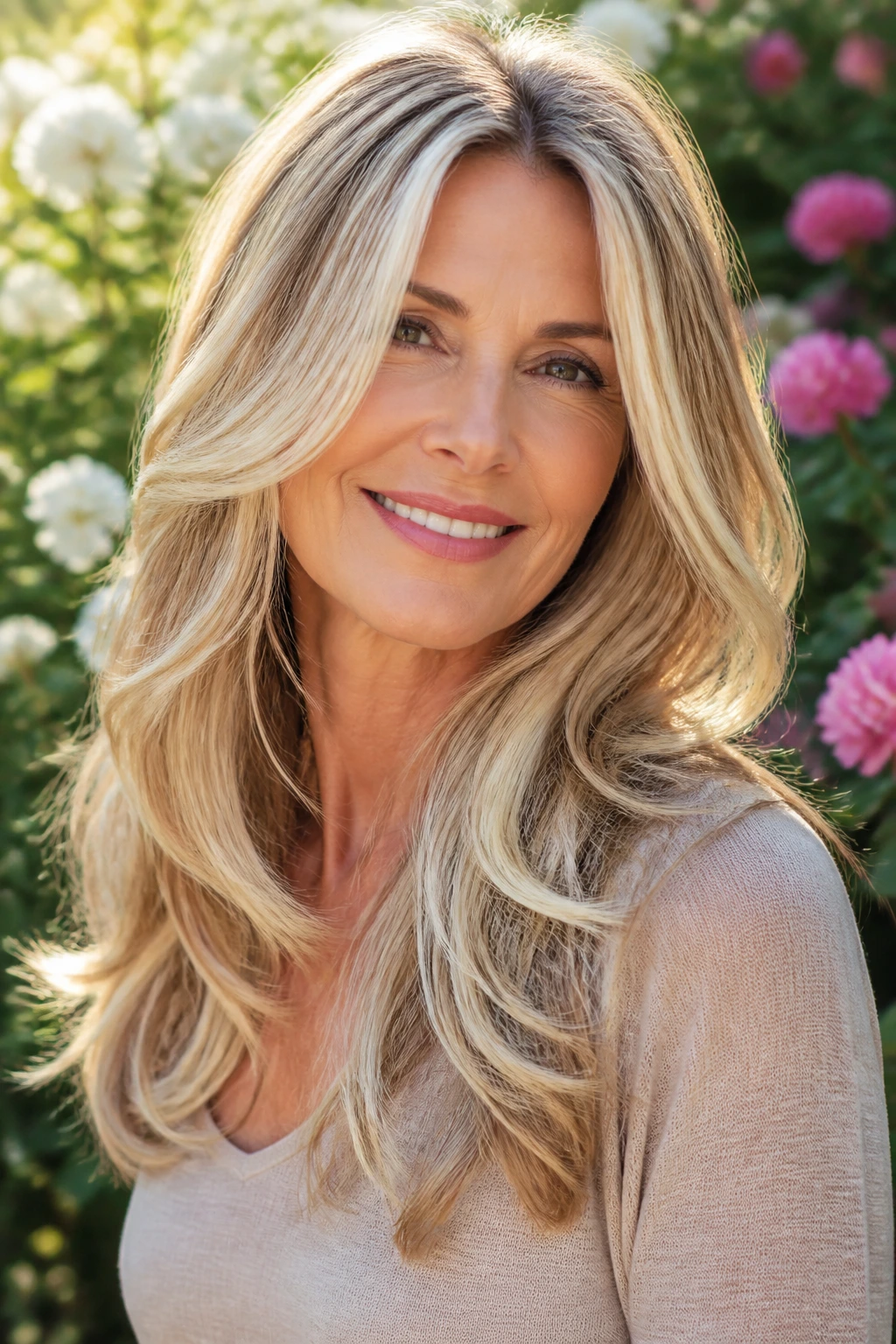
Long hair can still work beautifully on thick strands, but only if the layers are doing real work. Long layers remove weight from the inside of the shape so the hair falls instead of standing out. Pearl blonde ribbons keep the surface bright and show movement through the lengths.
This style is for the woman who does not want to chop her hair off just because it’s dense. Fine. Keep the length. Just be honest about the maintenance. Long thick hair needs a shape at the bottom, and it needs brightness that isn’t limited to the roots.
The best version starts the shortest layers below the chin and keeps the ends just heavy enough to settle. If you curl only the bottom half of the hair with a 1.5-inch iron, the style gets a soft wave instead of a pageant curl. Much better.
9. Tapered Pixie with an Icy Crown
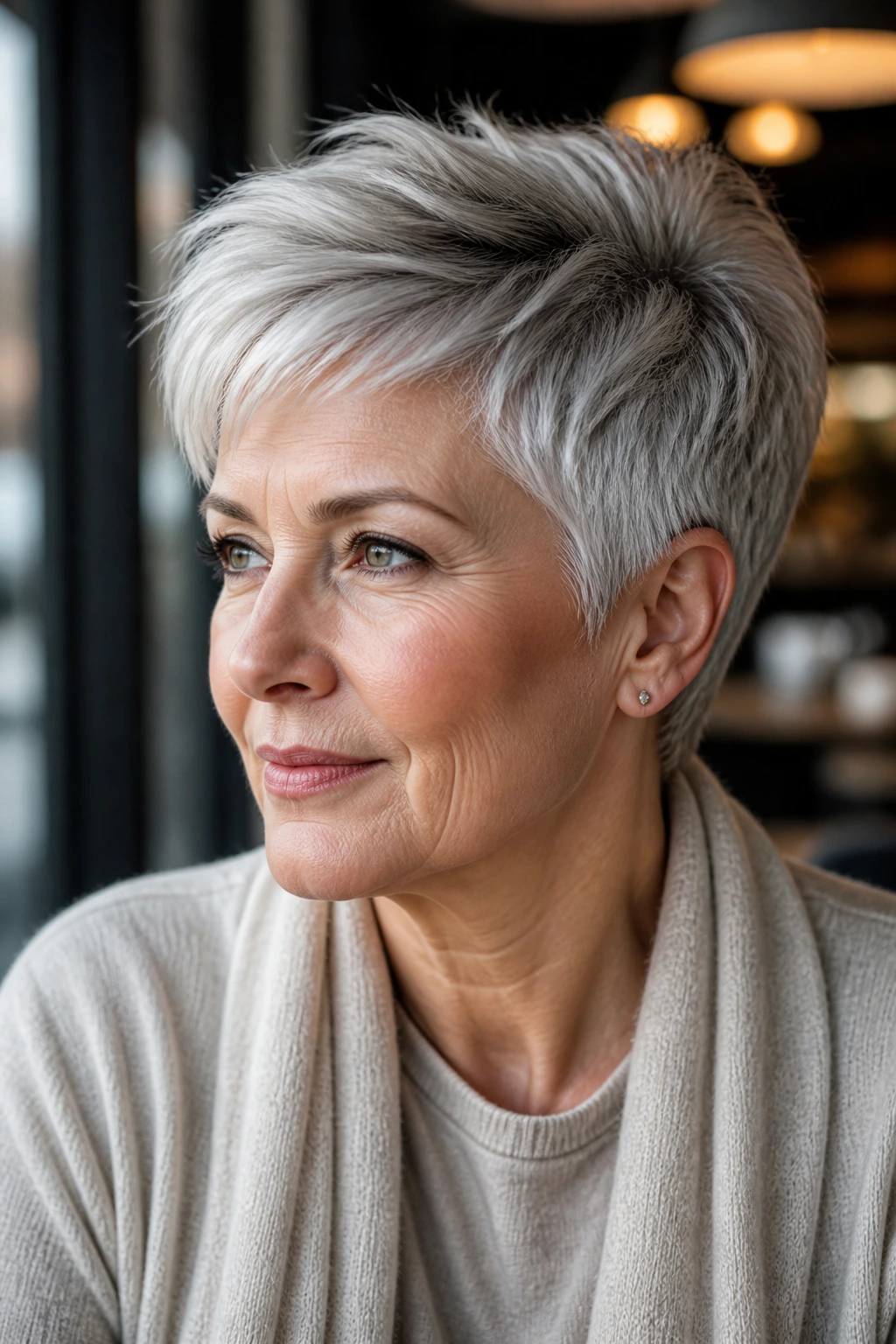
A tapered pixie is a sharper, cleaner take on short hair. The nape and sides are closely shaped, while the crown keeps enough length to move. That contrast matters on thick hair, because it prevents the cut from looking round and bulky all over.
Icy highlights at the crown give the top a little lift, and the cooler tone makes the shape feel crisp. If your natural color is gray, this can be especially flattering because the blonde and silver blend without a hard line.
This cut needs regular trimming. There’s no way around that. Every four to six weeks keeps the nape neat and the top from getting too heavy. A pea-sized amount of paste or cream is enough for styling; more than that just makes the short hair collapse.
10. Angled Bob with Soft Blonde and Deeper Lowlights
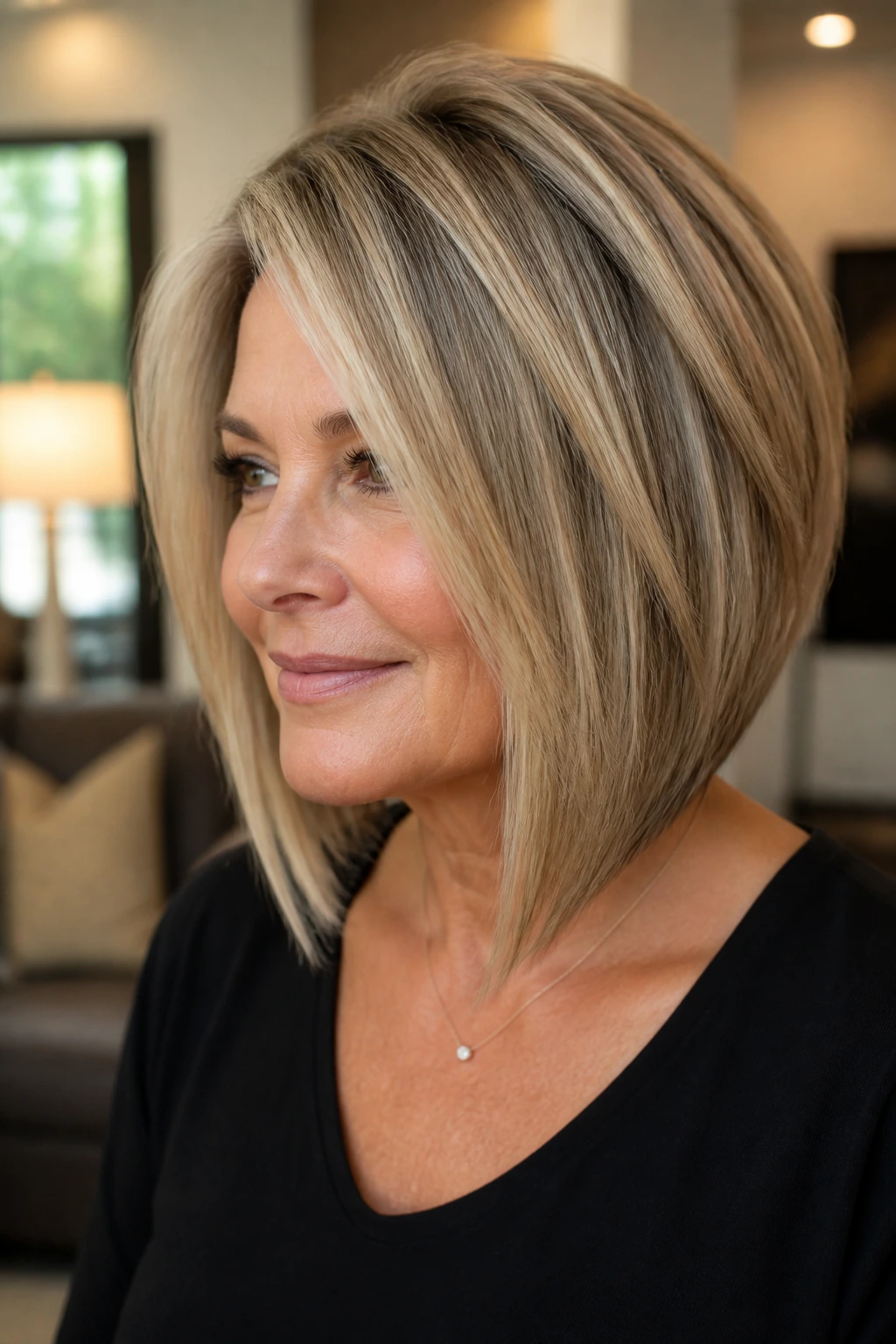
The angled bob is one of the best optical tricks for thick hair. Shorter in the back, longer in the front, it creates a clean line that narrows the face and keeps the back from puffing. Add soft blonde with deeper lowlights, and the whole thing looks richer, not stripey.
I like this cut for women who want a little drama without going short. The front pieces can skim the collarbone while the back stays tucked up and controlled. That contrast does a lot of visual work.
The lowlights are not decoration. They matter. Thick hair can look flat if every strand is the same shade, and lowlights build depth so the blonde pieces actually pop. Without them, the cut can read as one wide shape.
11. Shoulder-Grazing Blowout with Creamy Blonde Ends
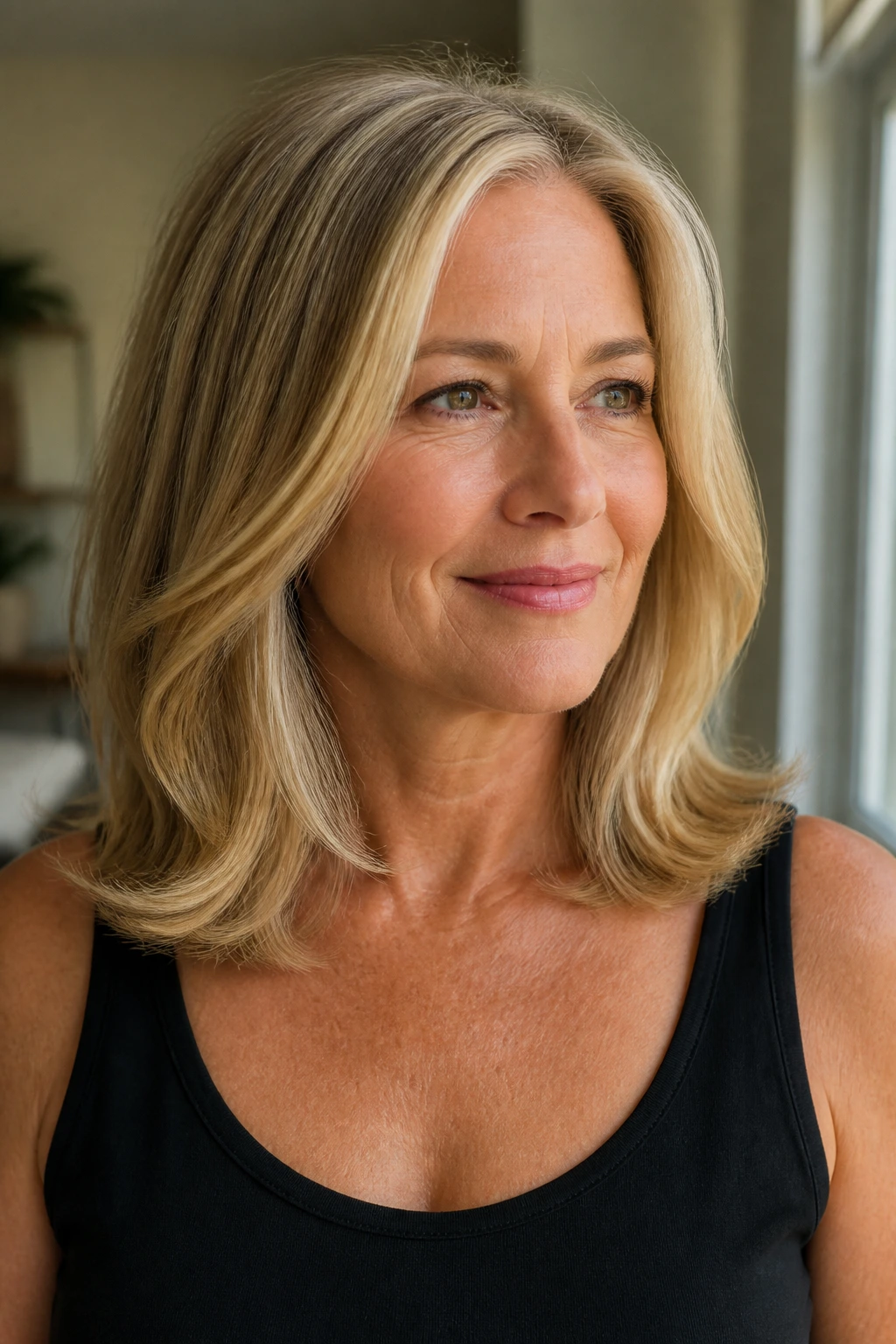
This is the style for hair that likes to be dried with a brush. Thick hair holds a blowout well, which is one of its nicest traits, and shoulder-grazing length gives you enough movement for that swingy, polished finish.
Creamy blonde ends keep the shape light. I’d rather see brightness focused through the lower third than packed at the root. That way the ends look lifted instead of heavy, and the cut feels softer around the shoulders.
A round brush, a blow dryer with a nozzle, and a heat protectant are the whole game here. Smooth the top, bend the ends under just a touch, and let the layers frame the face. It’s simple. But simple done well looks expensive.
12. Textured French Bob in Wheat Blonde
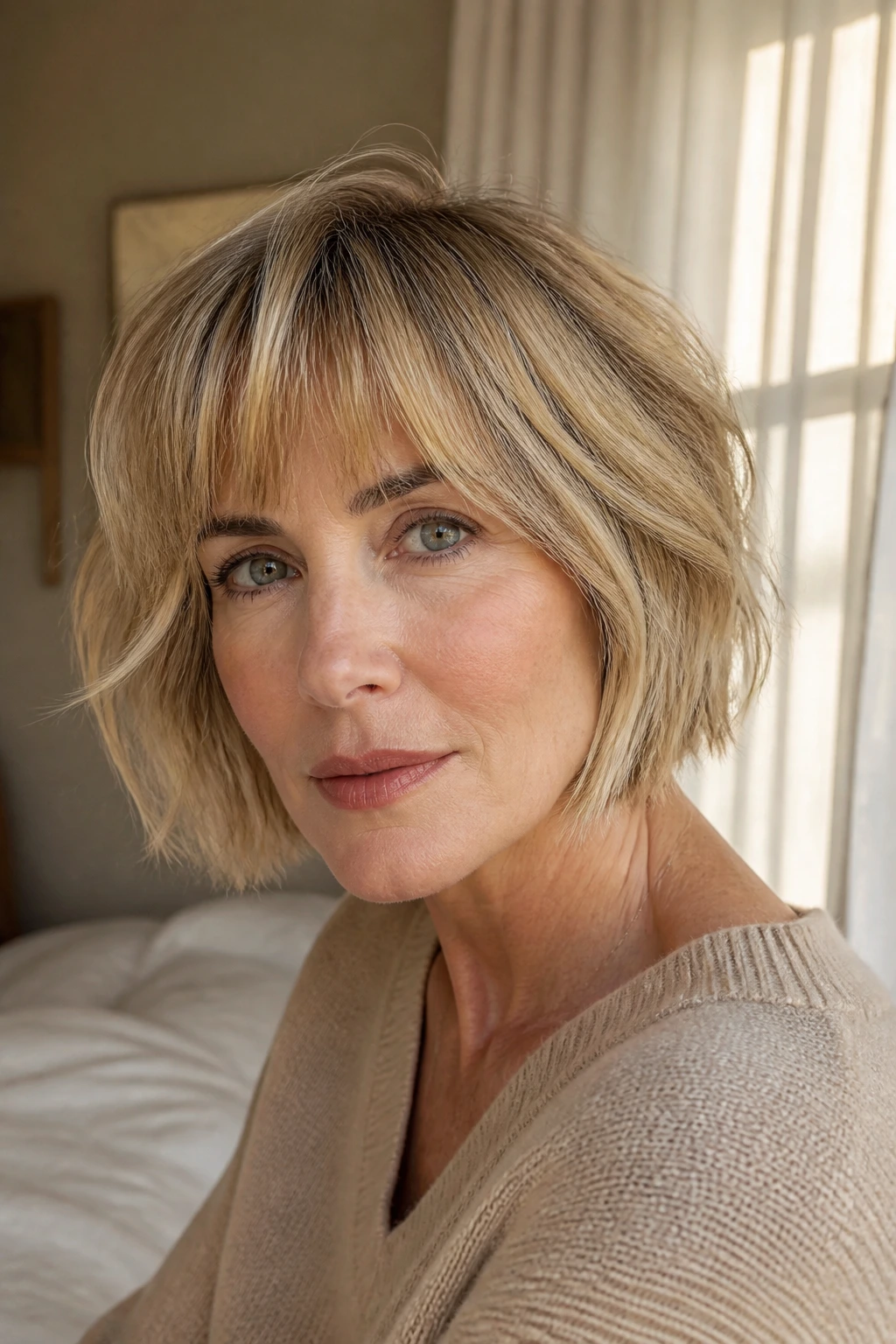
A French bob can be sharp and chic, but on thick hair it needs texture so it doesn’t become too square. Keep it around the jaw, add soft movement through the ends, and choose a wheat blonde that feels muted and natural rather than high-contrast.
This one has a little attitude. Not aggressive. Just neat, compact, and self-assured. If your hair sits straight or has only a small wave, the shape holds beautifully with a quick blow-dry and a touch of styling cream.
The fringe should graze the brows or split slightly in the middle. A heavy straight-across bang can weigh this cut down fast. Lightness around the front makes the whole look more wearable.
13. Crown-Lifted Layer Cut with Buttercream Balayage
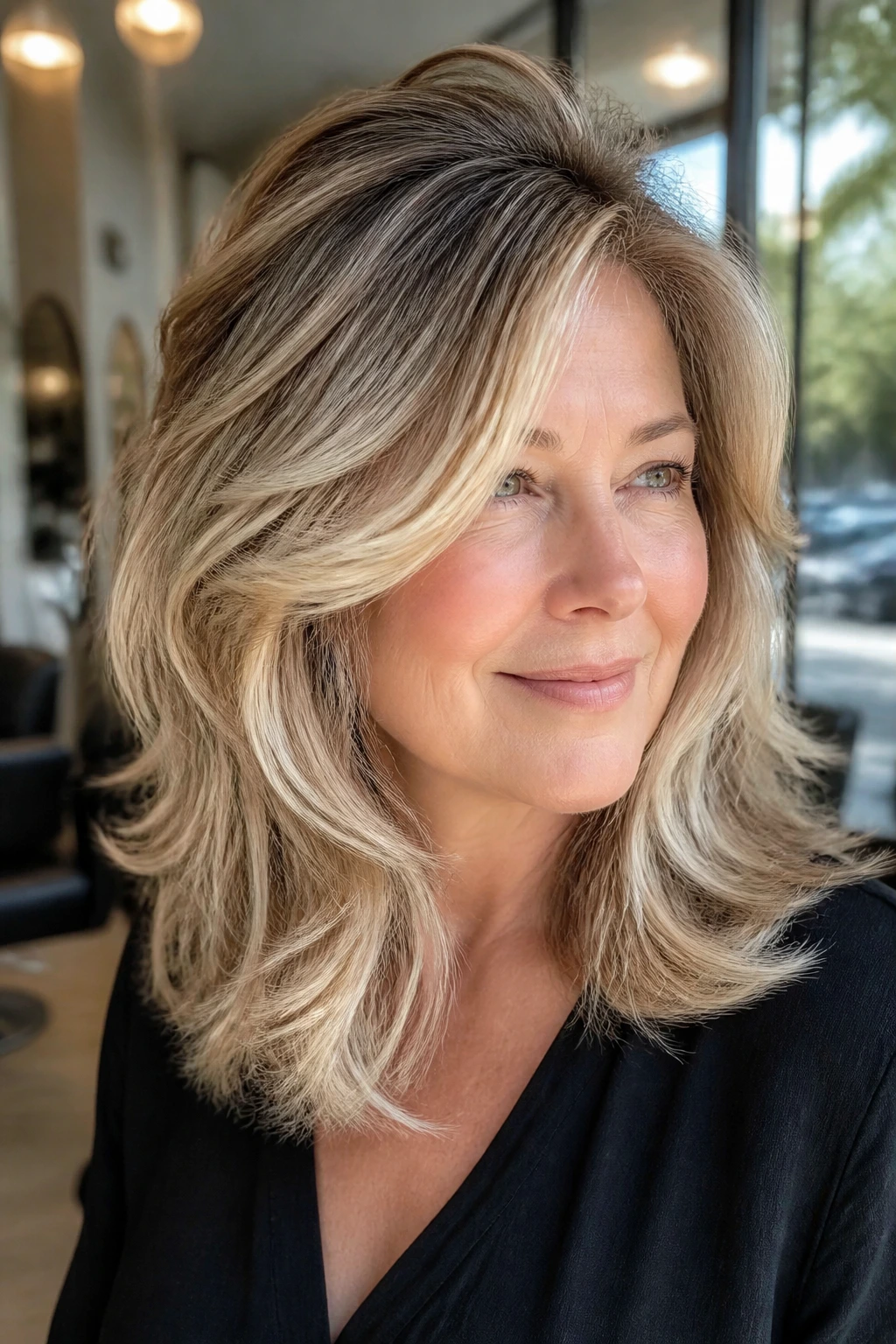
Here’s the deal: if thick hair falls flat at the roots but piles up through the lengths, the crown needs its own plan. A crown-lifted layer cut gives the top some air while keeping the lower sections controlled, so the hair doesn’t form a bell shape.
Buttercream balayage helps the lift show. Brightness around the crown and front pieces creates the illusion of height, which is useful if the top has softened over time. The shade should stay creamy and warm, not yellow.
A root-lifting mousse at the scalp and a cool shot from the blow dryer make a real difference here. Clip the crown up while it cools if you want more shape. Small things. Big payoff.
14. Loose Half-Up Twist for Thick Blonde Lengths
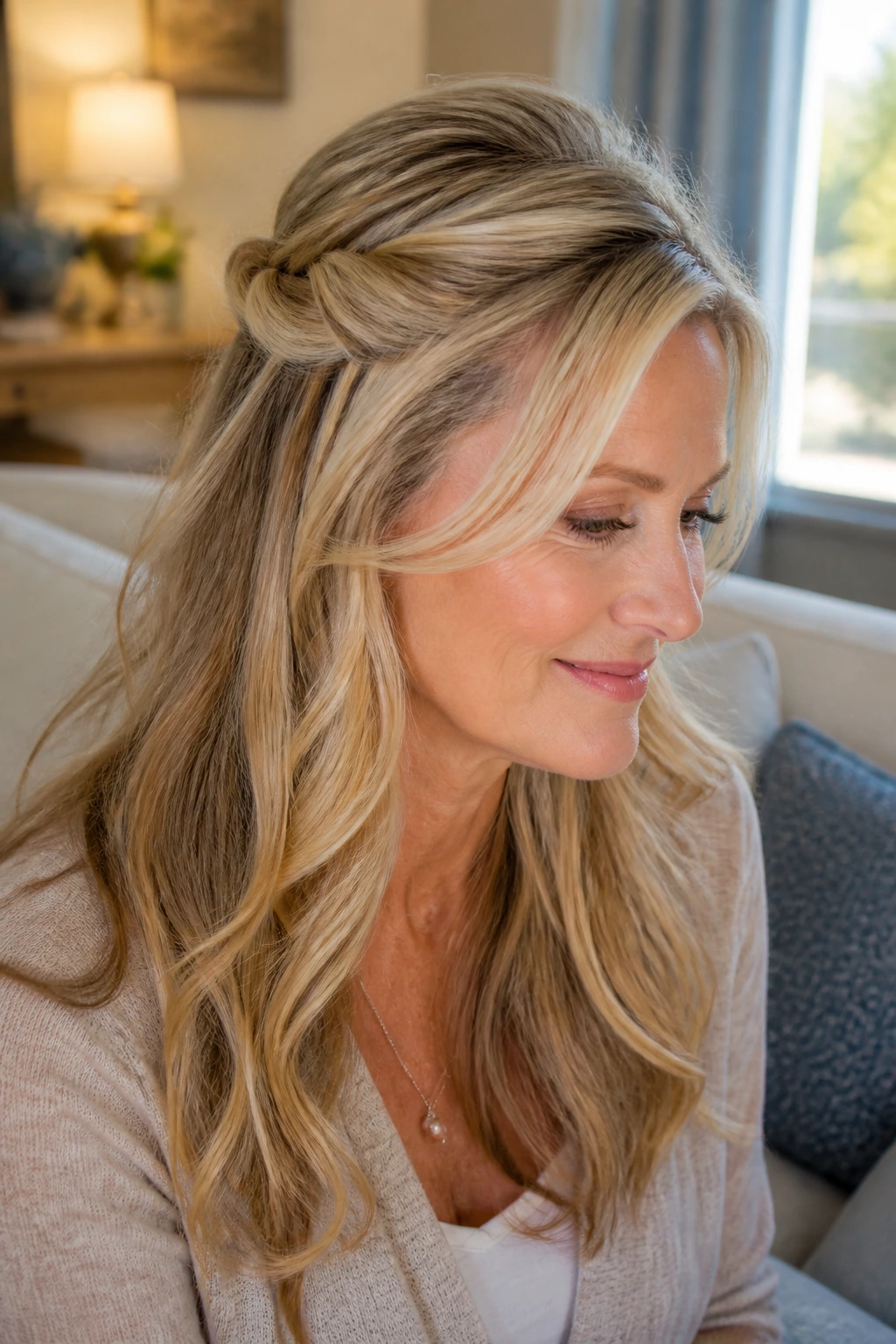
Not every great style is a cut. Some days you just need a way to get the weight off your neck without putting thick hair in a tight ponytail. A loose half-up twist does that, and it shows off blonde dimension at the same time.
This works especially well when the hair is second-day textured. Take two front sections, twist them back, and pin or clip them at the back of the crown. Leave a few face-framing pieces out so the style doesn’t get severe.
A little dry shampoo at the roots gives the twist more grip, and a textured spray through the ends keeps the lengths from slipping. The result looks casual, not messy. That’s the line you want.
15. Braided Crown with Dimensional Blonde Pieces
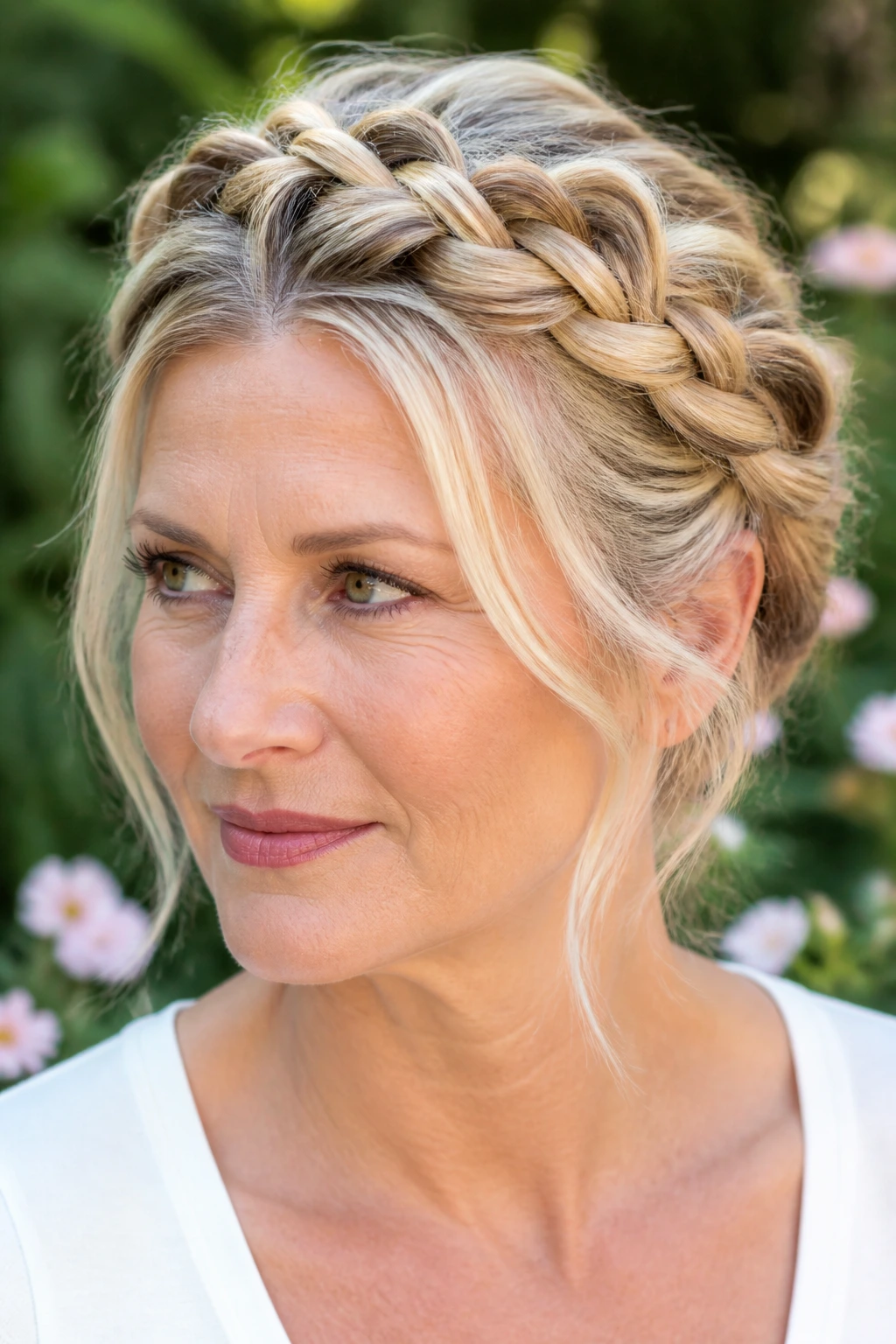
Braids on thick hair are satisfying because the hair actually has something to grab. A braided crown keeps everything off the face and turns dense length into structure instead of bulk. It’s especially nice when the blonde is multi-tonal, because the braid shows off every shade.
The trick is to leave a few soft pieces around the temples and ears. Too tight, and the whole look can feel severe. You want the braid to sit like a frame, not a bandage.
This style is good for events, lunches, or any day when you need your hair out of the way but still want it to look done. It also lets root shadow and lowlights do their work; the braid reads deeper and more layered when the color has contrast.
16. Low Chignon with Warm Blonde Depth
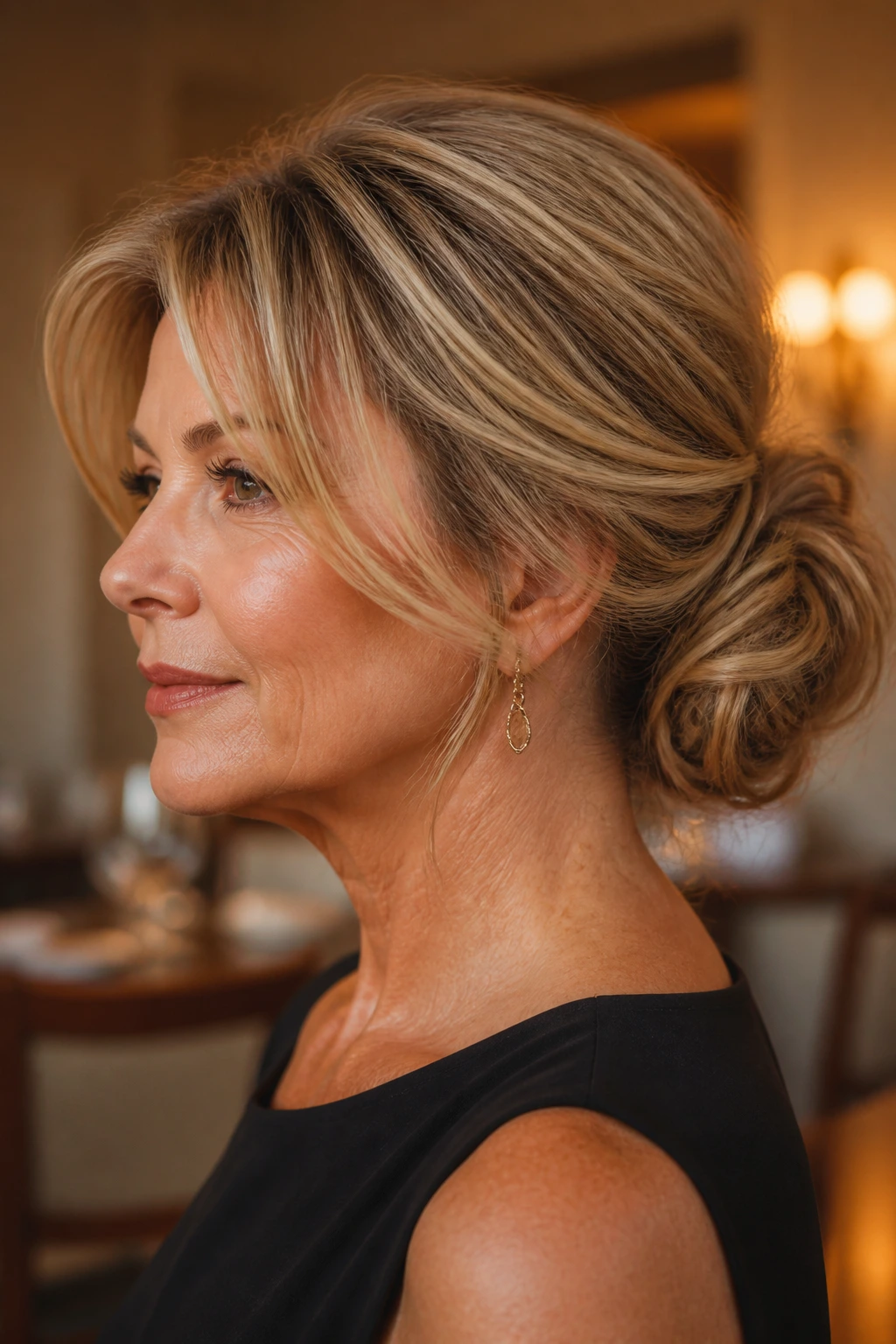
A low chignon is one of the few updos that can handle really thick hair without fighting back. The mass of hair gives the bun body, and a warm blonde tone keeps the style from looking washed out under indoor light.
I prefer a slightly loose chignon over a hard, shellacked one. Pull the hair back low, twist it into a coil, and pin it in a way that leaves the nape soft. A few bent pieces around the face make the whole thing feel less formal.
Use smoothing cream at the hairline and a light mist of hairspray, not a helmet of product. Thick hair already brings structure. You do not need to force it.
17. Blunt Shoulder Cut with Hidden Internal Layers
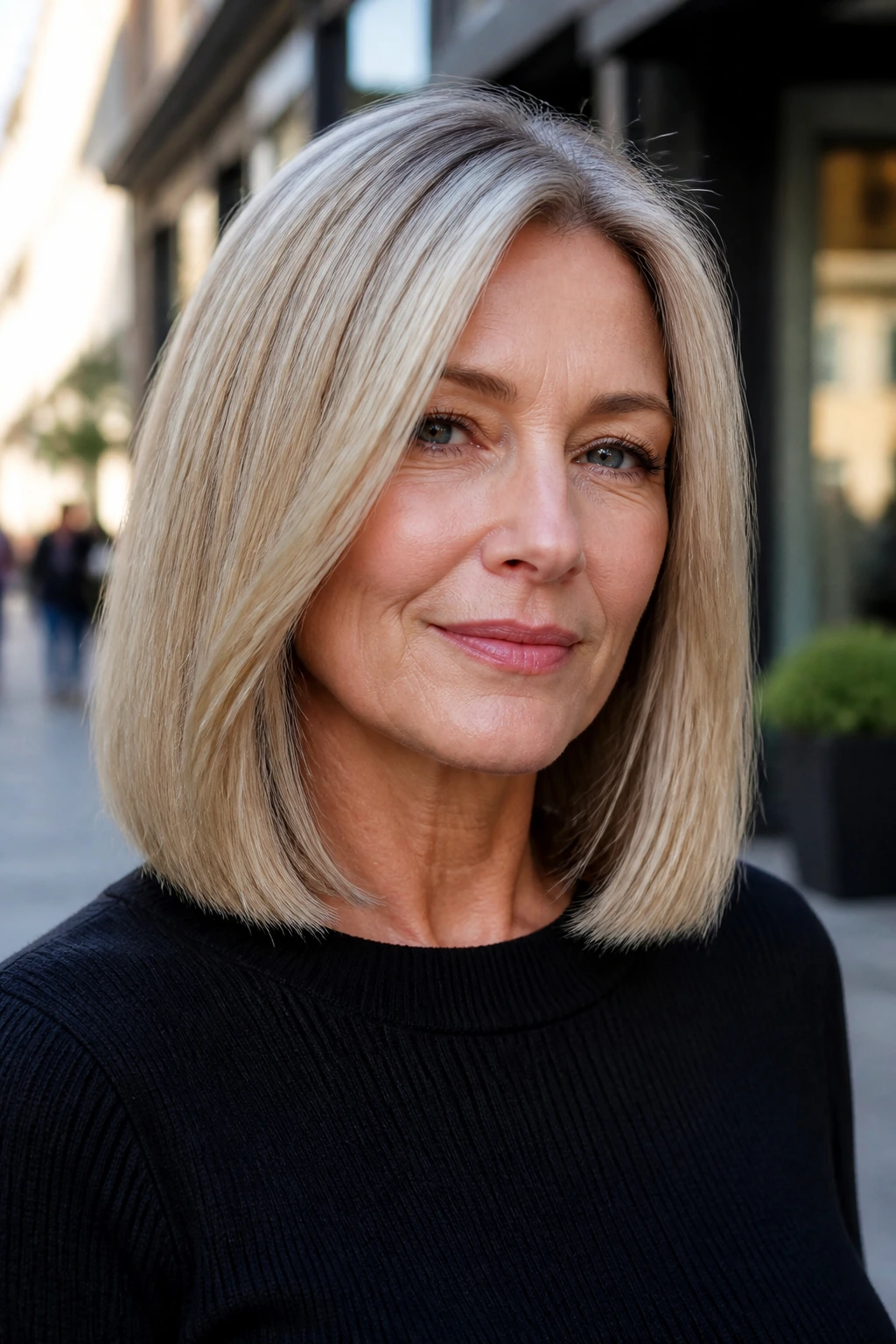
A blunt cut can be a trap on thick hair if it’s too solid from root to end. But a shoulder-length blunt line with hidden internal layers is different. It keeps the clean edge while removing enough bulk inside the shape so the style moves.
Ash blonde or soft pearl blonde works well here because the clean line of the cut looks more modern with a cooler tone. If you want a sleek finish, this is one of the best options in the whole list.
The internal layers should never show in the outline. They exist to help the hair lie flat and swing, not to turn the shape choppy. That’s the whole art of it. Blunt on the outside, lighter on the inside.
18. Long V-Cut with Golden Beige Waves
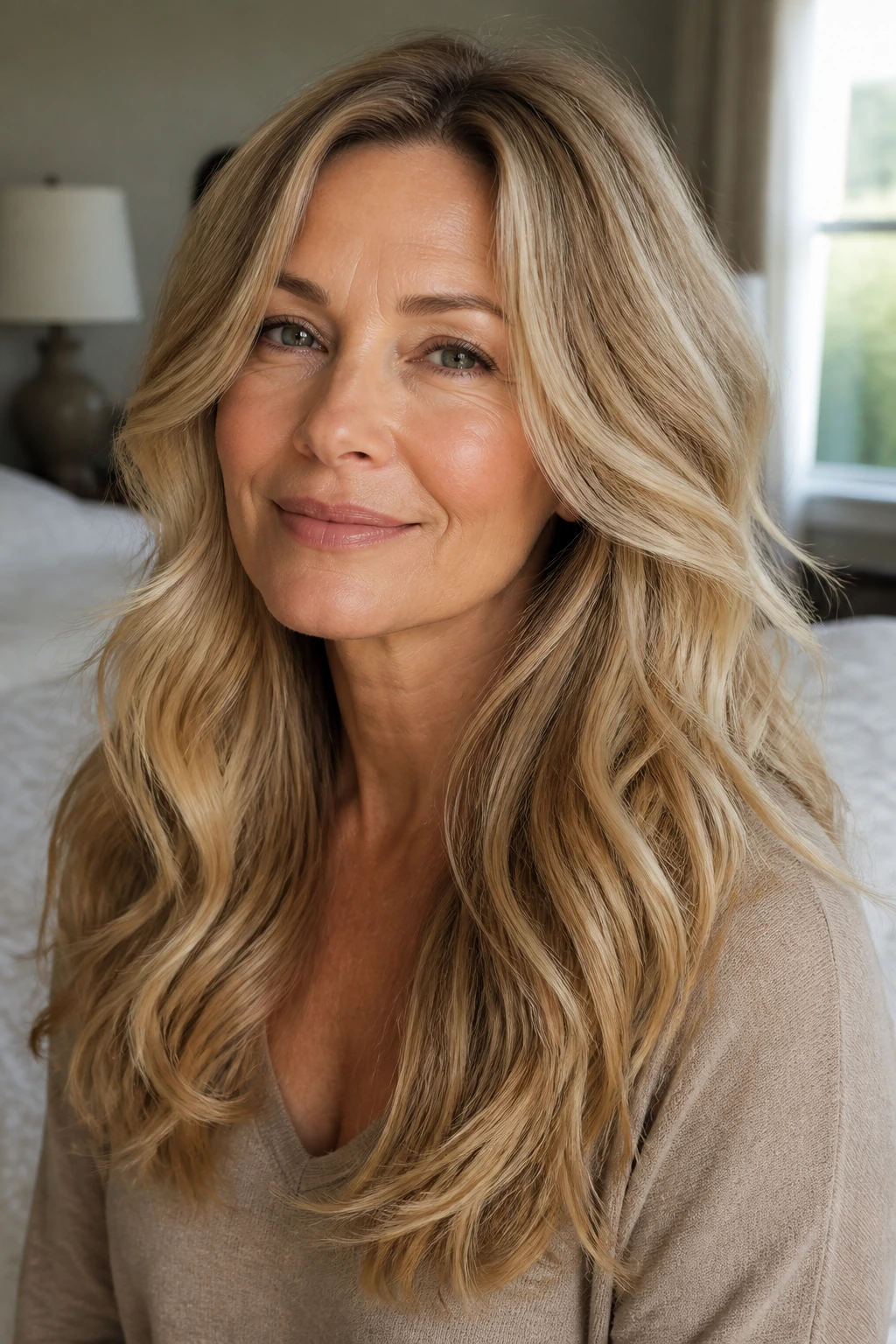
If you love long hair and are not ready to let it go, the V-cut gives thick hair a better bottom edge. The point at the back keeps the style from looking boxy, and the longer side lengths let the hair drape instead of spreading out.
Golden beige highlights are a nice match because they show the curves of the V and bring warmth near the face. Thick long hair can get dull fast if the color is too even; dimension keeps it alive.
Loose waves work best here. Not tight curls. Just enough bend that the layers show. A curling iron around 1.25 to 1.5 inches is plenty. And yes, you’ll still need a trim routine, because long thick hair punishes neglect fast.
19. Stacked Inverted Bob with Champagne Ribbons
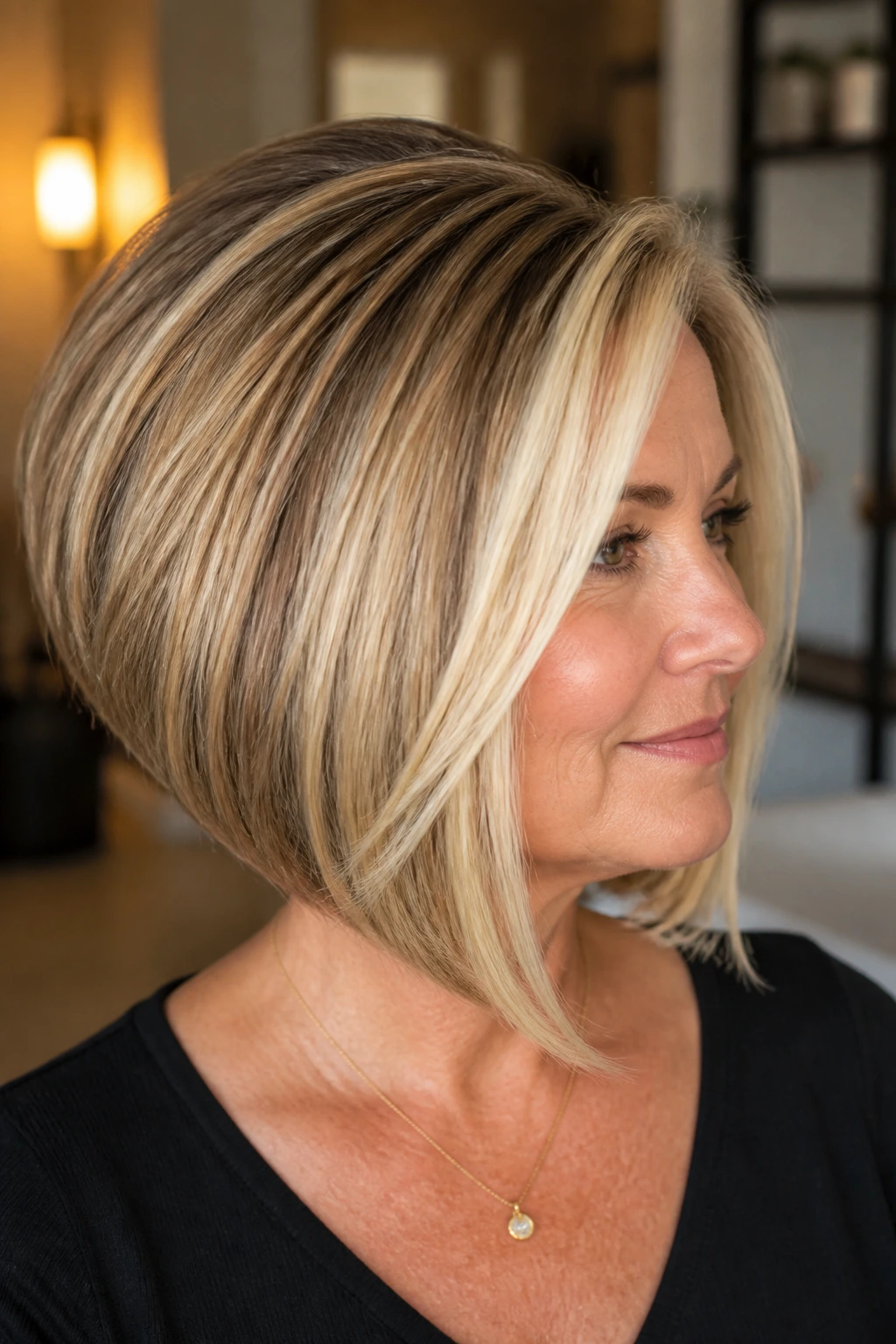
A stacked inverted bob is for the woman who likes a haircut with shape. The back is shorter and fuller at the crown, the front stays longer, and the whole silhouette feels lifted. Thick hair is perfect for it because the stack has enough density to hold.
Champagne ribbons through the front and top sections keep the cut bright where the eye lands first. I’d avoid chunky highlights under the back unless you want the shape to look busy. The front is the star.
This bob is at its best when it’s blow-dried smooth with a slight bend under the chin line. If you want a little edge, tuck one side behind the ear and let the other side fall. Small asymmetry keeps it from feeling too formal.
20. Soft Curly Bob in Sandy Blonde
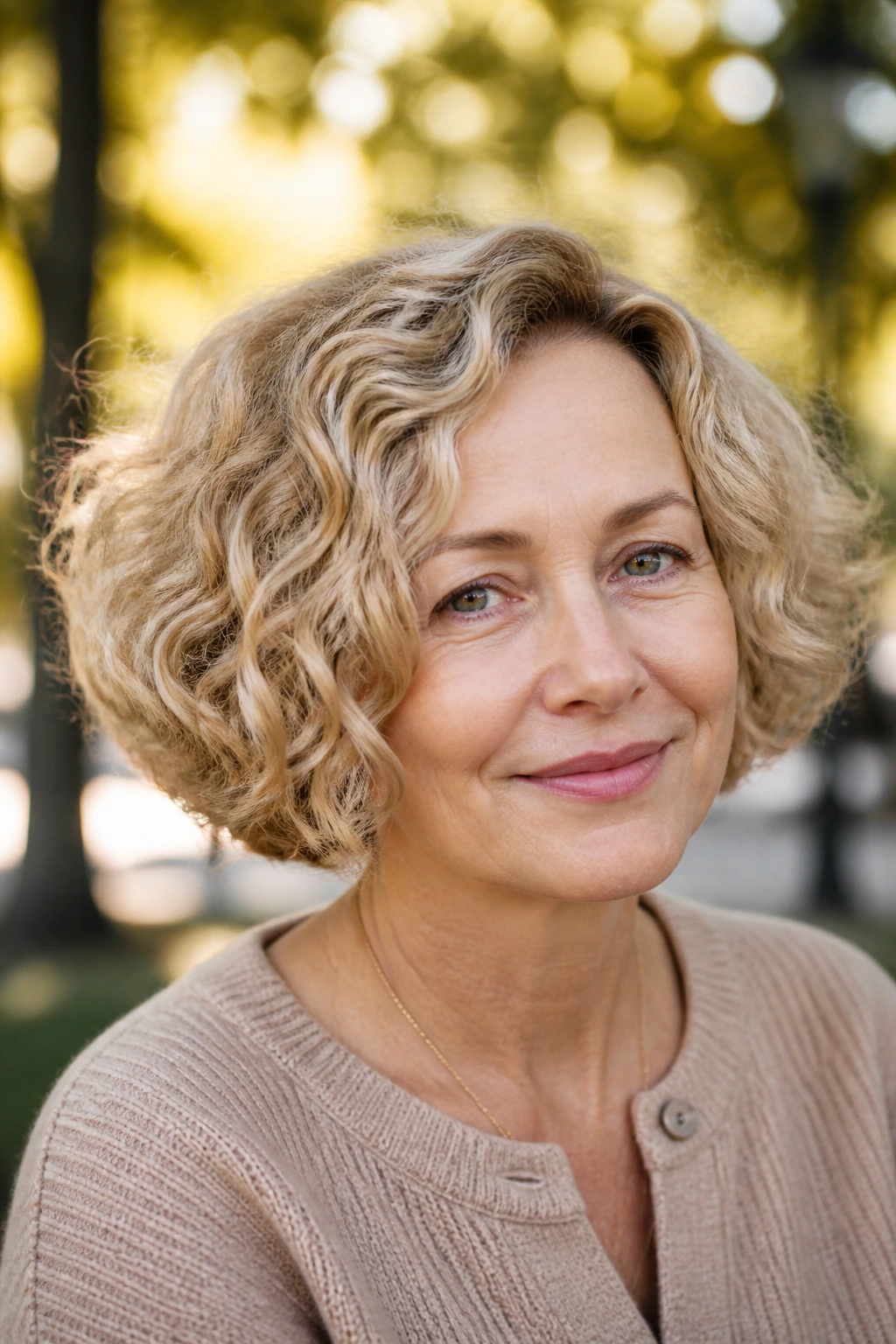
Curly thick hair needs a different kind of respect. The shape should follow the curl pattern, not bulldoze it. A soft curly bob that lands around the jaw or upper shoulder gives the curls room to spring without creating too much width.
Sandy blonde is a smart color choice because it shows the curl pattern without making every curl look separated and crispy. Too much contrast can make curly thick hair look busy; a soft blonde keeps it calm.
Diffuse on low heat or air-dry with curl cream if that’s what your texture likes. The goal is definition, not perfect ringlets. And if you’ve spent years fighting your curl pattern, this cut can feel like a truce.
21. Bottleneck Bangs with a Layered Medium Cut
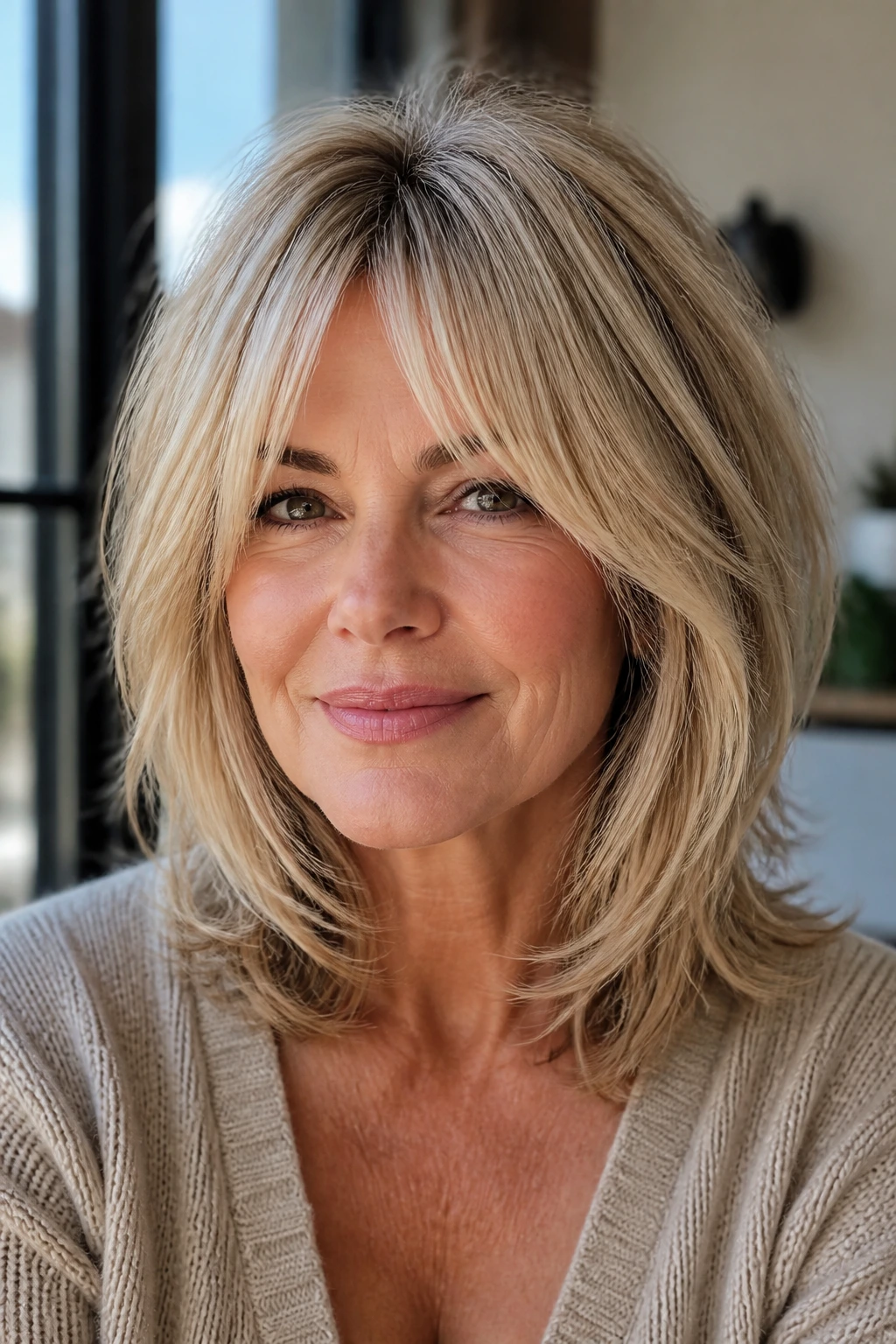
Bottleneck bangs are useful because they start narrow in the center and open out near the cheekbones. On thick hair, that shape keeps the fringe from feeling heavy on the forehead while still giving you coverage.
Pair them with a layered medium cut and the whole look softens fast. Beige or nude blonde works especially well because it keeps the bangs from reading too dense. If the color is too dark under the fringe, the front can feel weighty.
A small round brush or a roller set helps the bangs curve away from the face. The trick is not to make them too perfect. A little movement keeps the style modern. Too stiff, and the bangs start working against you.
22. Claw-Clip Updo with Bronde-Blonde Blend
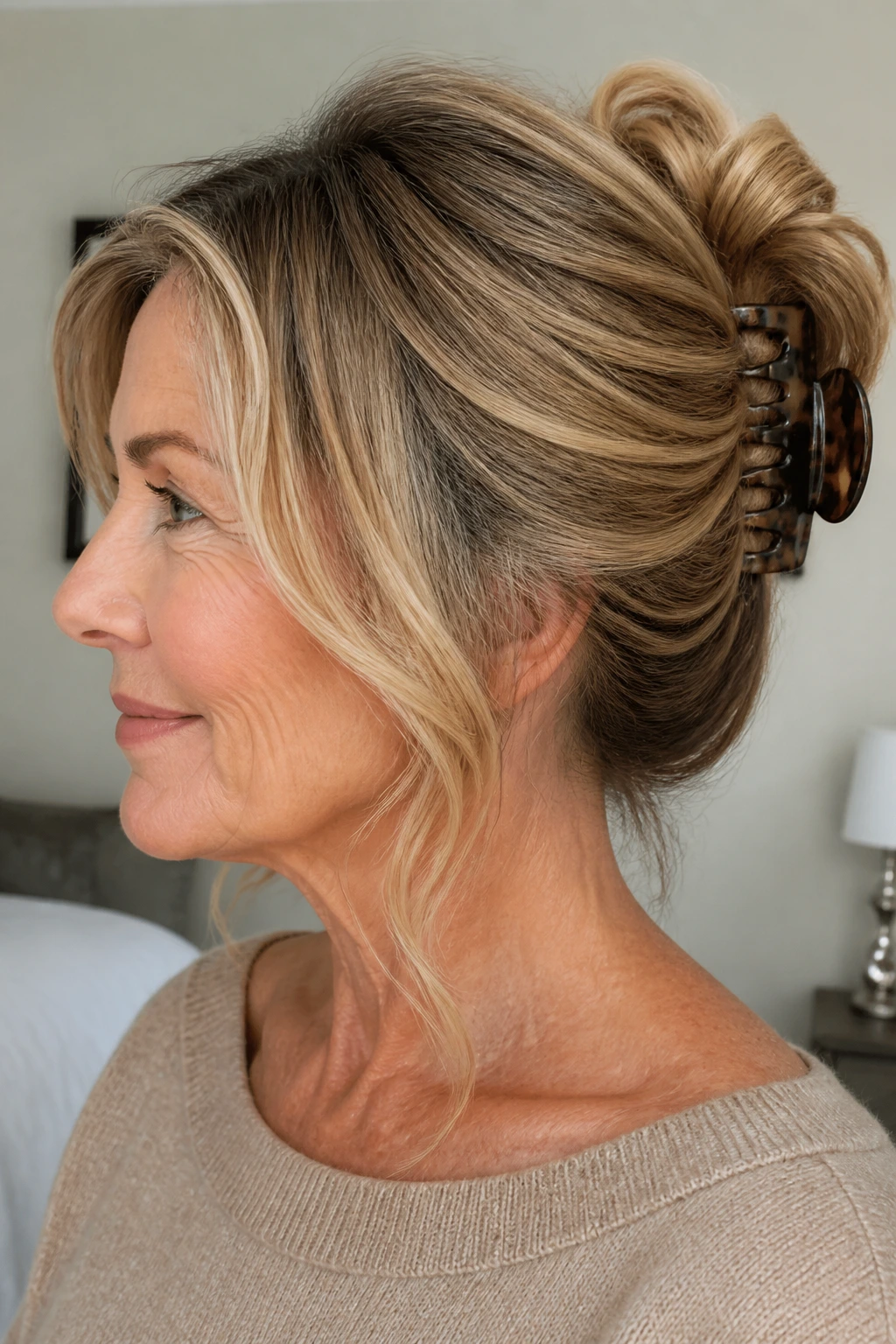
Sometimes the best hairstyle is the one you can do in 30 seconds and still leave the house looking put together. A claw-clip updo works beautifully on thick hair because the clip has enough hair to hold onto, and the loose twist keeps the shape airy.
Bronde-blonde blending helps here because the mix of deeper and lighter tones makes the clipped sections look dimensional. If all the hair is one pale shade, the updo can flatten out. A little contrast gives it life.
Leave out a few pieces around the face and at the nape. That keeps the style soft. And if the clip is visible, so what? Let it be a good one. Matte, sturdy, and not too tiny.
23. High Ponytail with Wrapped Base and Sunny Ends
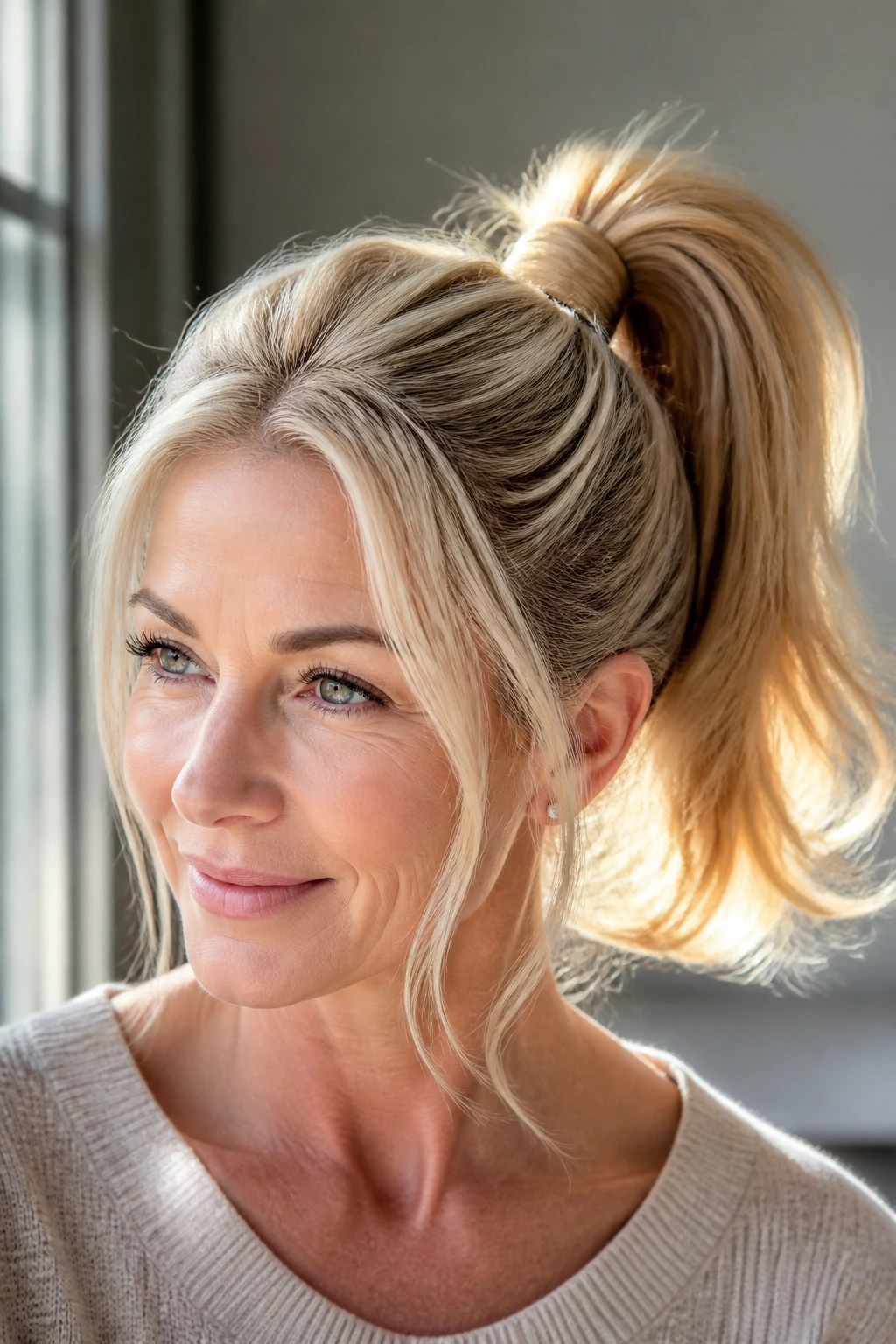
A high ponytail on thick hair is not a backup plan. It’s a statement when it’s done right. The weight gives the ponytail shape, and the wrapped base keeps the elastic hidden so the style looks clean instead of rushed.
Sunny blonde ends are the fun part. They show movement as the ponytail swings and make the whole thing look brighter without needing extra color near the roots. If your hair is layered, the shorter pieces around the face soften the lift.
Use a boar-bristle brush or smoothing brush at the hairline so the top looks tidy, then secure the pony with a strong elastic. Wrap one section around the base and pin it underneath. Simple. Sharp. Done.
24. Collarbone Cut with Multi-Tone Blonde and Underlayers
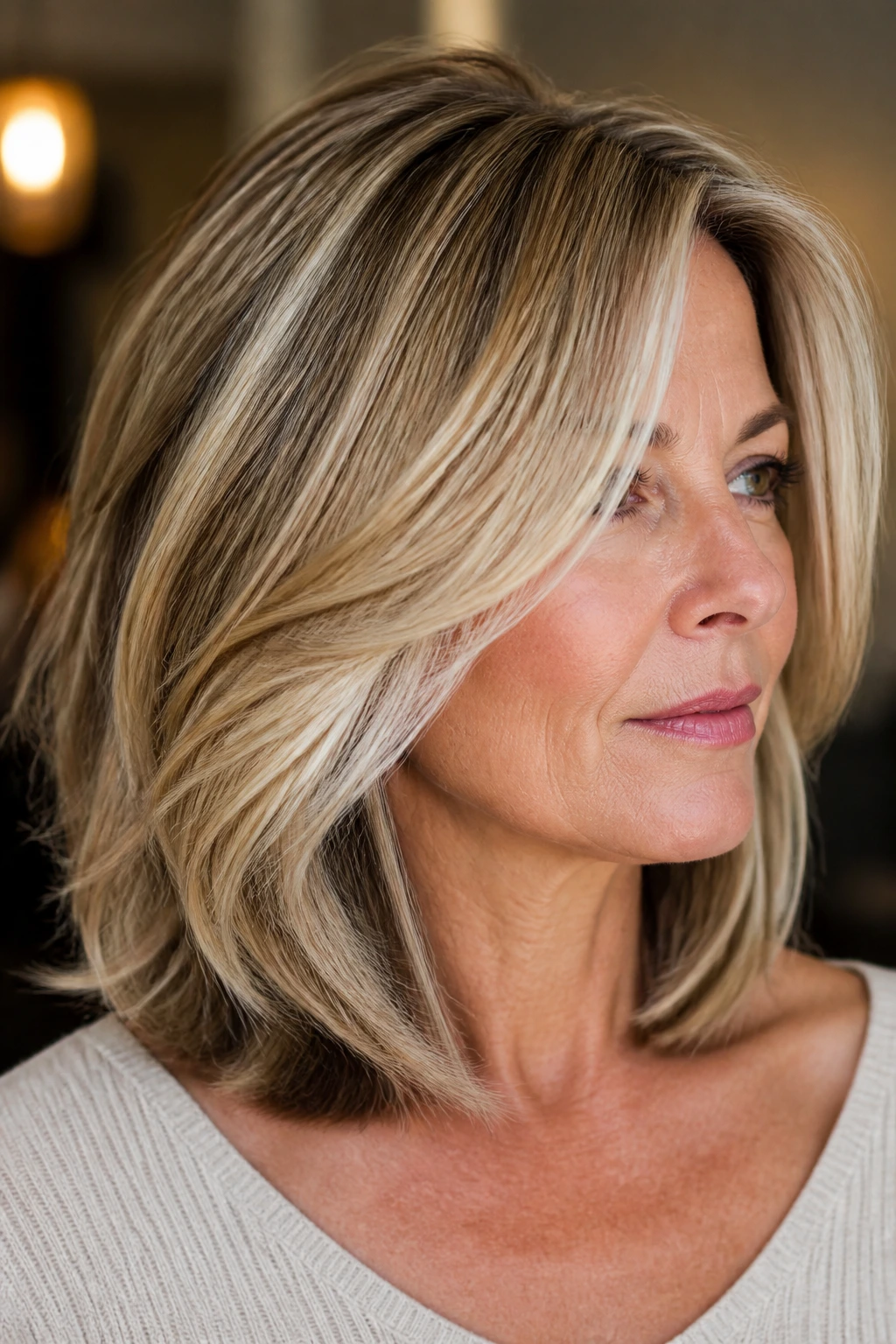
This is one of the most practical styles on the list. The collarbone length keeps thick hair manageable, the underlayers remove bulk, and the multi-tone blonde keeps the surface from going flat. It’s a smart middle ground for women who want shape without a dramatic chop.
I like this cut because it can be worn polished, bent, or air-dried. The underlayers do the hidden work, while the blonde tones—beige, honey, pearl, or a touch of ash—keep the visible layers moving. You get control without stiffness.
If your hair has a mind of its own, this shape usually cooperates better than a pure blunt cut. It sits well with a center part or a soft side part, which gives you room to change the mood without changing the haircut.
25. Textured Lob with Ends Turned Under and Cream Blonde
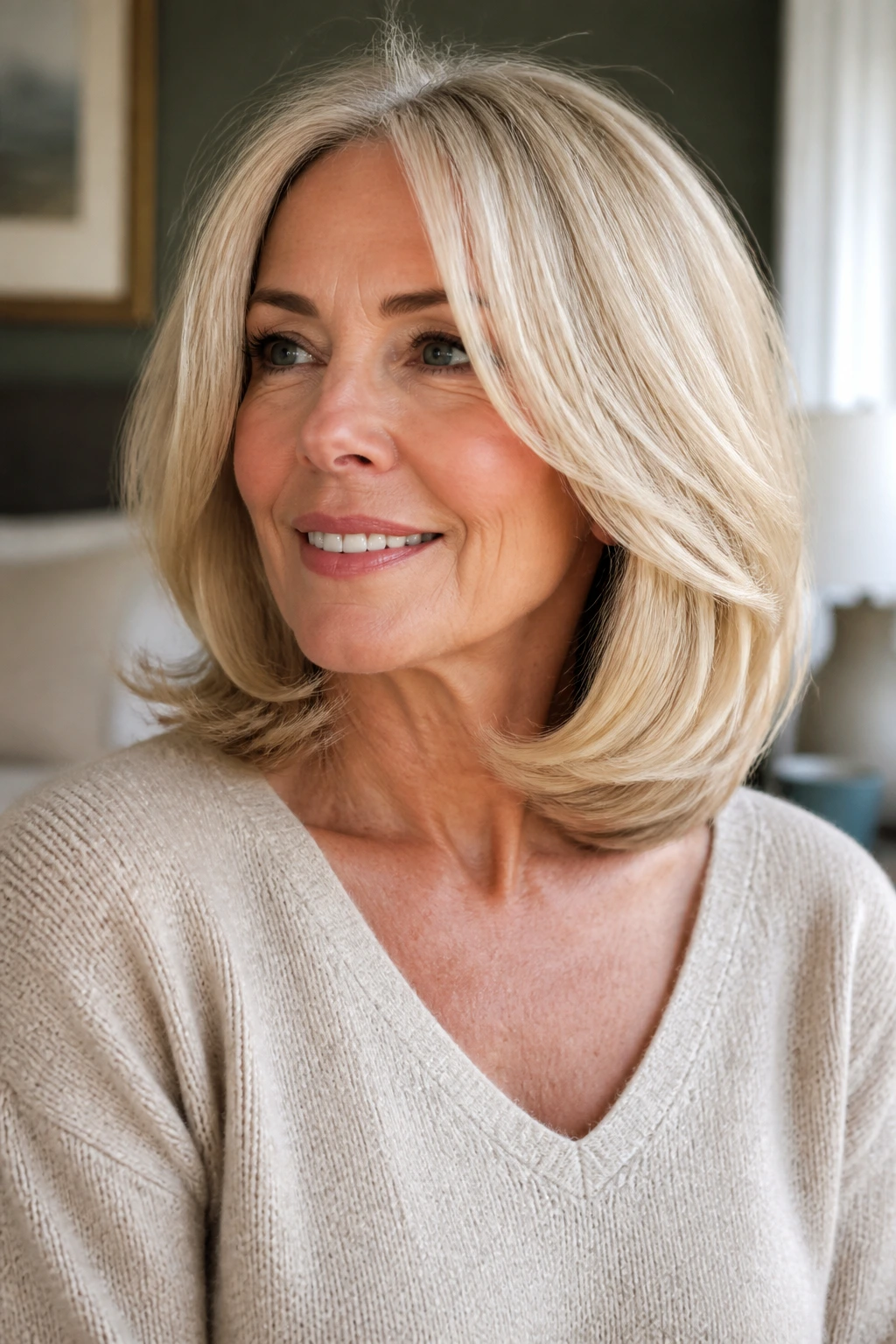
A textured lob is the quiet workhorse of thick-hair styling. It’s long enough to feel feminine and short enough to behave, and the turned-under ends keep the outline neat instead of wide. Cream blonde gives the whole style a soft glow that reads gentle, not icy.
The texture should live inside the cut, not only on the surface. That means the hair moves when you turn your head, but it still lands cleanly around the collarbone. If you’ve ever had thick hair that looked puffy at the ends, this shape is the correction.
A round brush and a little heat will make it sit nicely, but it also works with air-dried texture if your hair bends naturally. Good sign when a haircut can do both.
Why Thick Hair Changes the Blonde Playbook
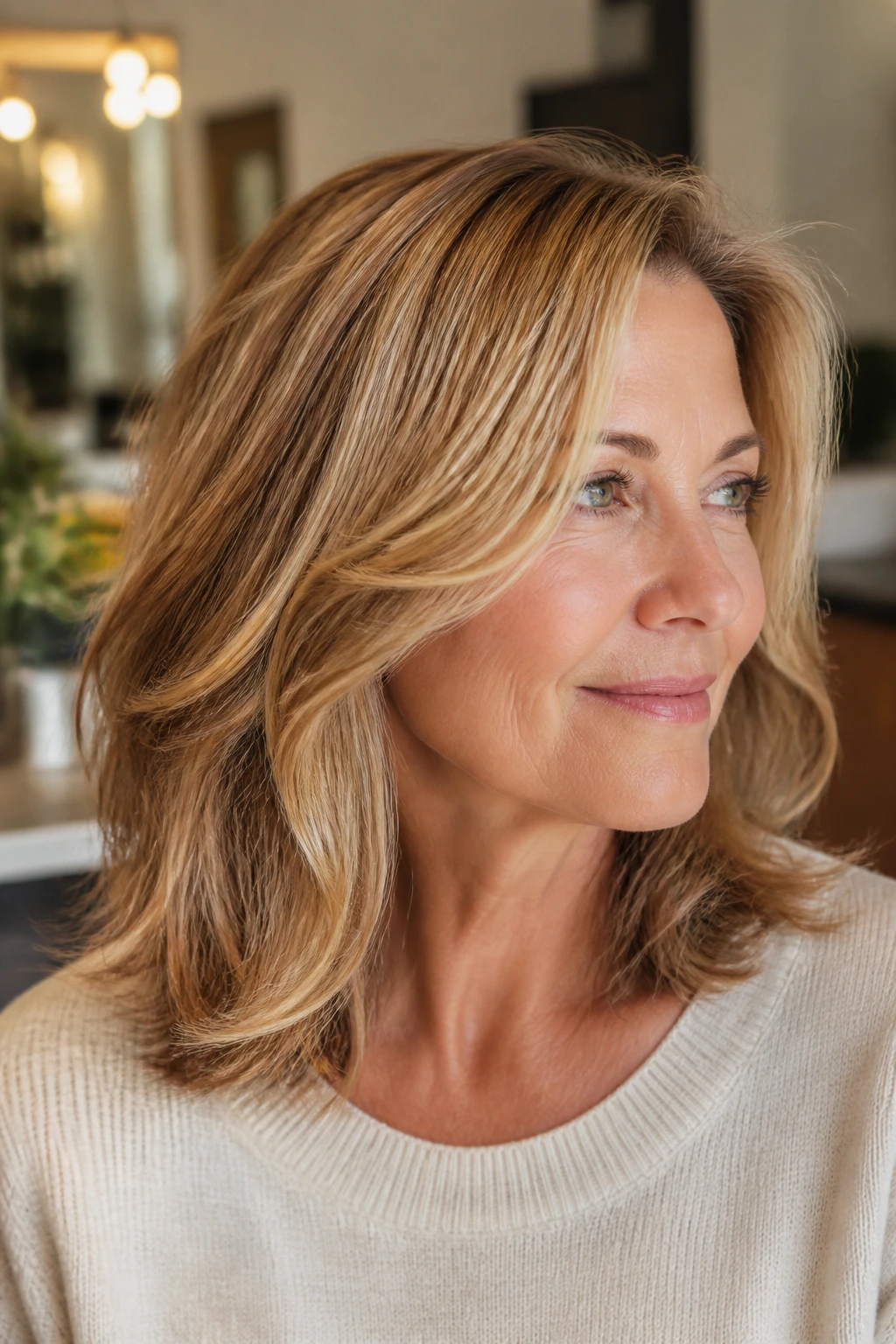
Thick hair has two personalities. One shows up at the crown, where the hair may feel a little softer than it used to. The other lives through the mid-lengths and ends, where density can stay stubborn for years. That split is why old rules about one-length cuts or one-shade blonde often fail here.
A heavy blunt line can make dense hair look wider, not sleeker. A very pale all-over blonde can make the cut lose depth, which is a shame because thick hair actually gives colorists something lovely to work with: surface area. Highlights can sit in layers. Lowlights can tuck underneath. Root shadow can keep the top from flashing too bright.
The most useful shades on thick hair are the ones that don’t fight the cut. Honey warms the face. Beige softens the transition into gray. Champagne lifts the front. Pearl and silver-blonde make short cuts feel crisp, while ash tones cool down stronger red undertones. Good blonde isn’t about one shiny finish. It’s about the way the shade moves across a lot of hair.
Shorter at the crown. Longer at the edge. That balance is the whole trick.
Tools That Keep These Cuts from Puffing Out
-
A 2.5-inch round brush: Big enough to smooth shoulder-length and longer cuts without creating tiny, dated curls at the ends.
-
A blow dryer with a concentrator nozzle: Directs airflow so thick hair dries smoother and faster instead of ballooning around the head.
-
Sectioning clips: Thick hair falls apart if you try to dry or curl it all at once; clean sections make the finish last longer.
-
Heat protectant spray: Use it on damp hair before any blow-dryer or iron work, especially on blonde hair that’s already been lightened.
-
Lightweight root-lift mousse: A little at the crown gives shape without the sticky, crunchy feel that heavier mousses can leave behind.
-
Purple shampoo: Best for ash, pearl, silver, or beige blondes that start drifting warm; use it sparingly so the hair doesn’t look dull.
-
Smoothing cream or serum: Keep the amount small. Thick hair loves to drink up product, and then it turns flat around the face.
-
1.25-inch curling iron or wand: The sweet spot for soft bends and waves on medium-length styles.
-
Large Velcro rollers: Handy for setting a blowout while the hair cools. They help the crown stay lifted.
-
Wide-tooth comb: Better than yanking through wet, thick hair with a fine brush, which can pull and frizz the cuticle.
How to Ask for the Cut and Color at the Salon
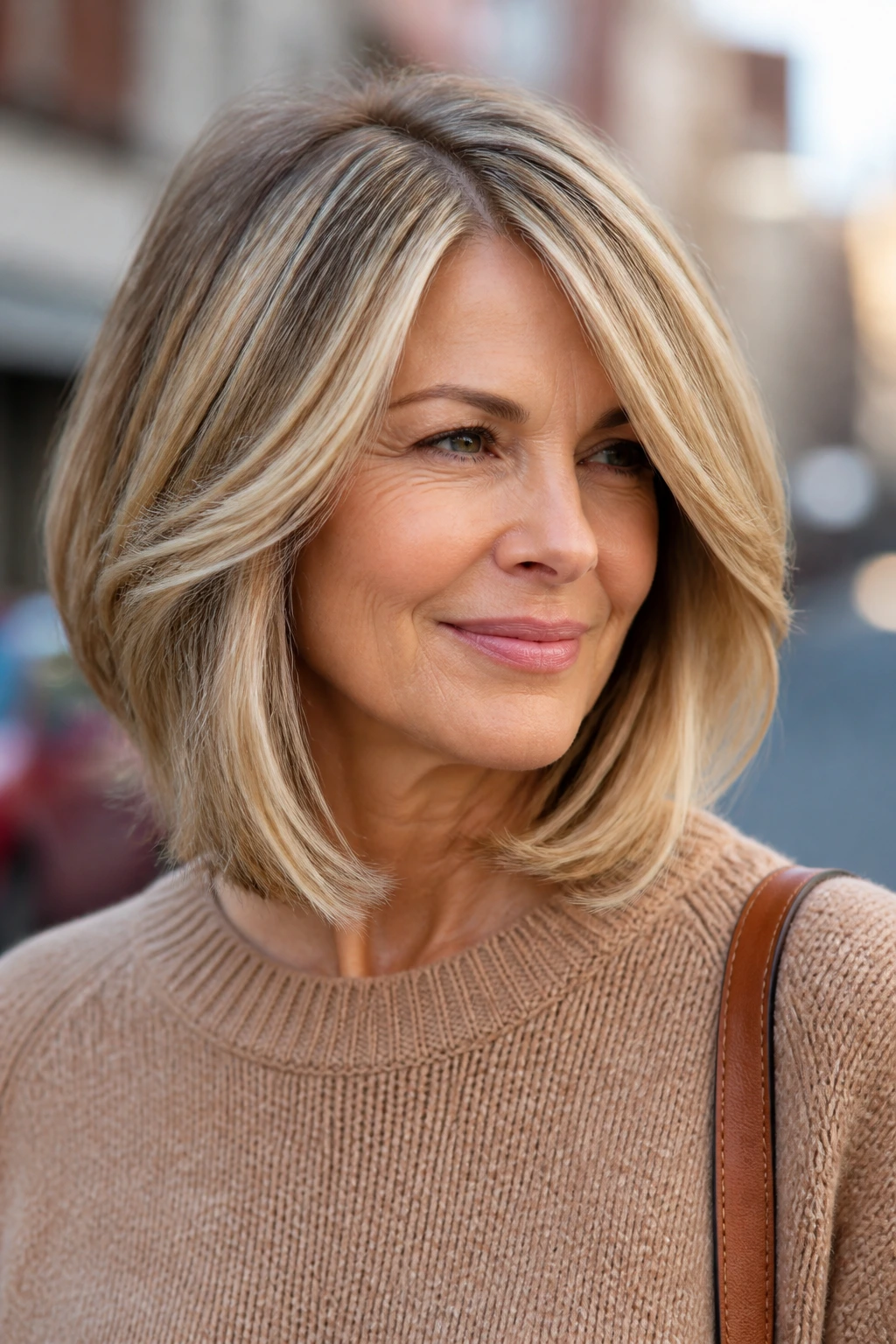
For the cut
Bring photos, yes, but bring the right photos. Show one picture from the front, one from the side, and if you can, one from the back. Thick hair changes shape from every angle, and a good stylist wants to know where the bulk sits when you turn your head.
Say what the hair does on a normal day. Does it puff at the sides? Go flat at the crown? Kick out at the neckline? That detail matters more than saying you want “movement.” Ask for internal layers, not just face-framing, if the weight is through the body of the hair. And if you wear glasses, mention it. Bangs and temples need to cooperate with the frames, not fight them.
For the blonde tone
If you want low-maintenance color, ask for a rooted blonde with beige or honey ribbons. If you want something cooler, ask for pearl, silver-blonde, or ash through the top and face frame. The important part is not the label; it’s the depth. A root shadow one or two levels deeper than the lightest pieces usually makes grow-out calmer on thick hair.
For the finish
Tell the stylist whether you wear your hair smooth, wavy, or air-dried. That changes where the layers should land. A cut built for a round-brush finish will look different from one built for natural texture, and your day-to-day life should decide that, not a salon photo alone.
Smart Maintenance for Thick Blonde Hair
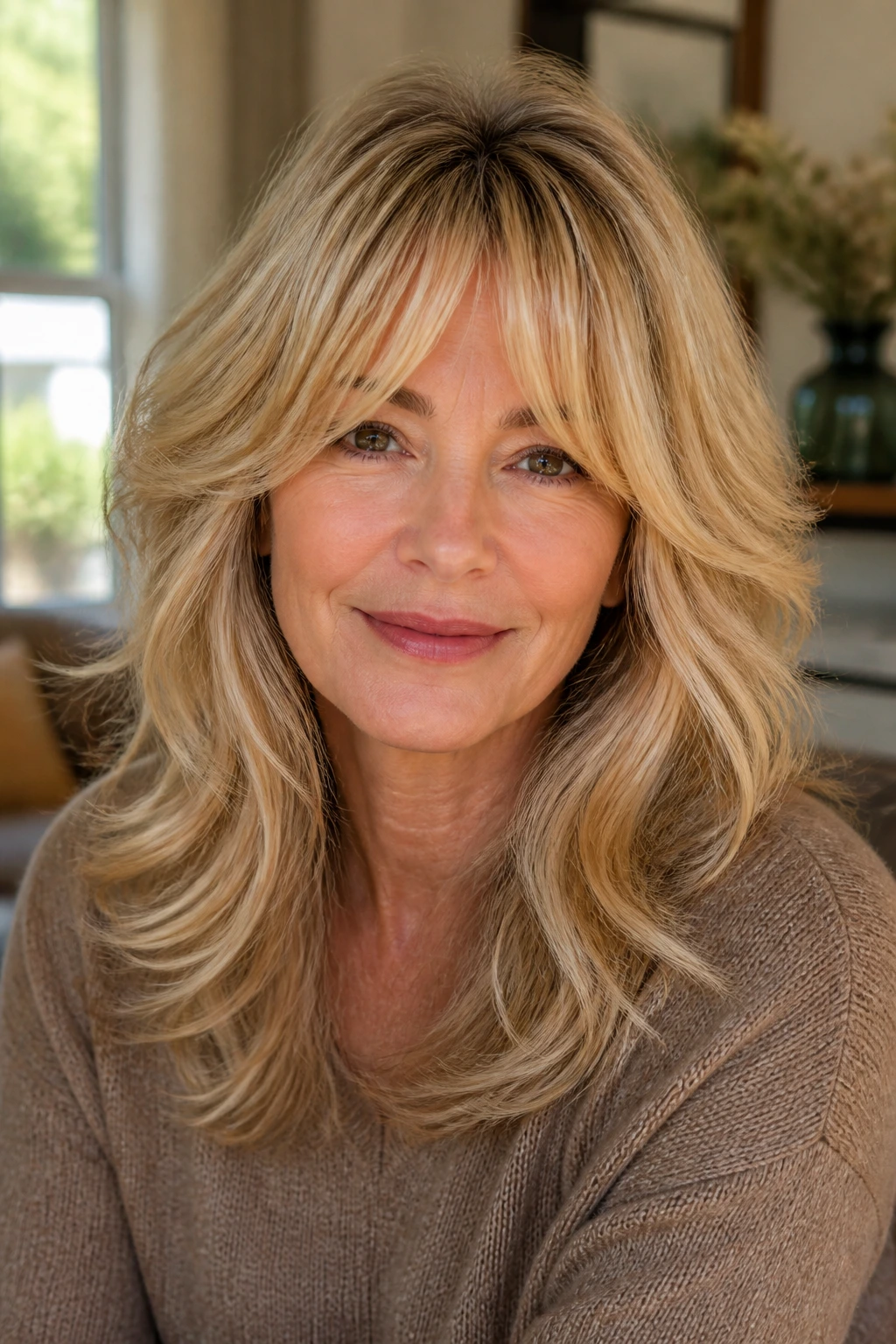
Thick blonde hair can take a bit more heat, a bit more color, and a bit more time between washes than fine hair, but that does not mean it likes to be ignored. If anything, it punishes buildup. Product sits on the surface. Dry shampoo collects at the crown. Blonde can start to look muddy fast if the routine gets sloppy.
Wash every two to three days if your scalp likes that rhythm. Use a color-safe shampoo, then condition only the mid-lengths and ends so the roots stay light. Once every week or two, use a purple shampoo if brass starts creeping in. Don’t leave it on forever. A few minutes is usually enough, and overdoing it can make blonde go flat and chalky.
Deep condition every one to two weeks, especially if the hair has been highlighted. Blonde lightening opens the cuticle, and thick hair may hide dryness until the ends start feeling rough. A bond-building mask helps if the hair has been lightened several times. On styling days, keep heat around 300°F to 330°F for curl work if the hair is already fragile, and always let the hair cool before touching the finished shape.
At night, a loose braid, a silk pillowcase, or a soft clip can save you from waking up with a halo of frizz. No glamour there. Just fewer bad hair mornings.
Small Tweaks That Keep the Shade Bright
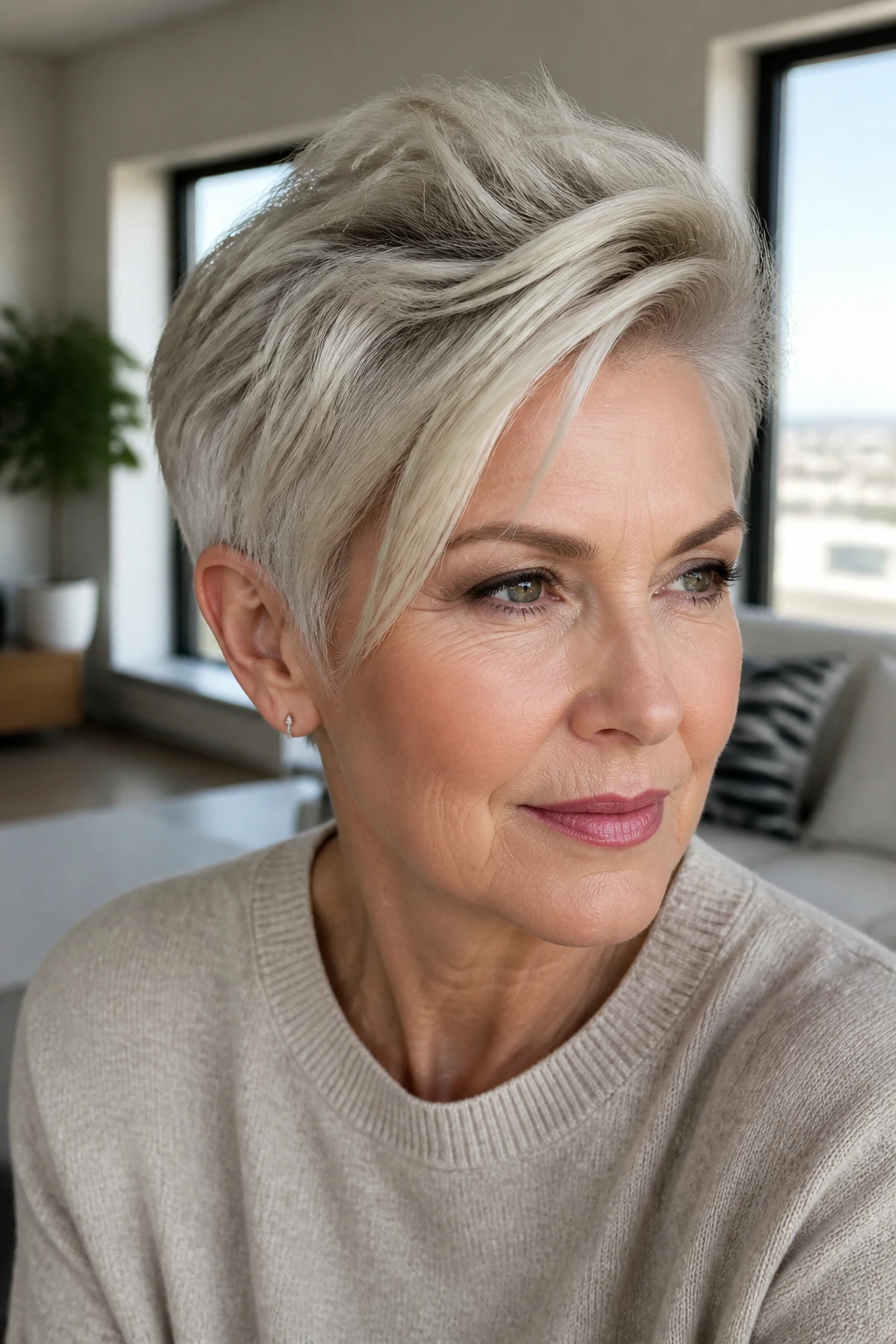
Face-Framing Brightness: Keep the brightest pieces around the cheekbone, temple, and jaw, where the skin actually needs light. That makes the blonde work harder than blasting the whole head with the same brightness.
Tone Control: Beige and champagne keep thick blonde hair soft; pure ash can flatten the shape if it goes too cool. If the color starts looking dull, a gloss or toner refresh often fixes it faster than adding more highlights.
Lift at the Crown: A clip at the crown while the hair cools can keep the roots from collapsing. I like this trick on blowouts because it gives a little height without a lot of teasing.
Frizz Control: Put serum only on the last two to three inches of the hair. Thick hair is greedy with product, and if the top gets coated, you lose the movement that makes these styles work.
Quick Refresh: If a style feels heavy on day two, switch the part, mist the roots lightly with water or a styling spray, and hit just the front pieces with a brush or iron. You do not need to redo the whole head.
Common Mistakes That Make Thick Hair Look Heavy
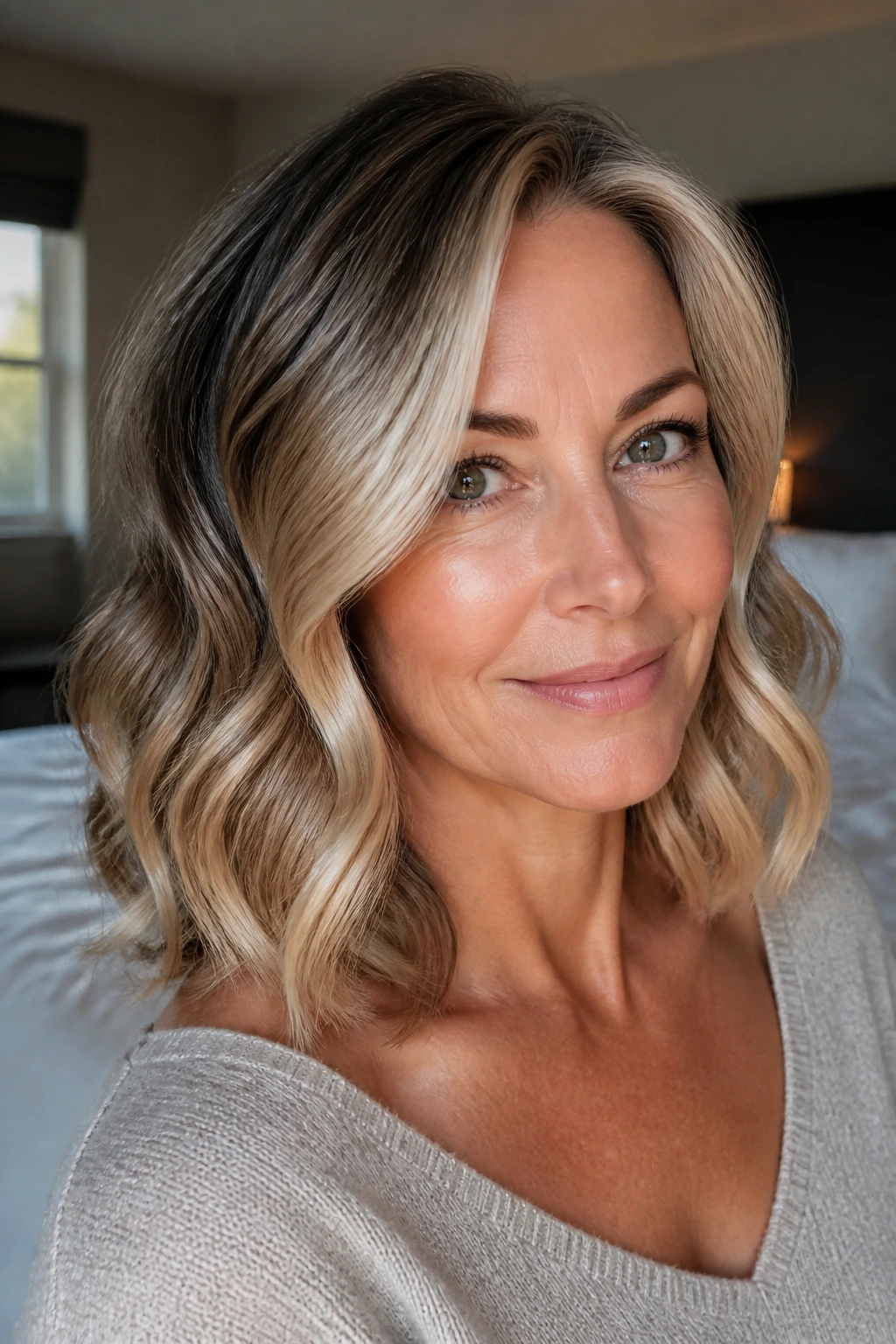
-
Cutting the whole head one length: That’s how thick hair turns into a wide block. The fix is internal layering or a shaped perimeter, not more length.
-
Over-thinning with a razor: The ends go wispy while the bulk still lives underneath, which is an ugly split. Ask for strategic point cutting or weight removal inside the cut instead.
-
Choosing blonde that’s too flat or too ash: On mature skin, a dead-cool blonde can drain the face and make the hair look dry. Beige, honey, pearl, or rooted blonde usually reads kinder.
-
Putting brightness only at the top: Thick hair needs dimension through the body, not just a lighter root line. Mix in lowlights or mid-length ribbons so the cut has depth.
-
Using too much oil or serum: The hair can turn limp around the face and greasy at the crown by midday. Start with a pea-sized amount and add only if the ends still feel rough.
-
Ignoring the neckline: A great front can hide a bad back for a while, but thick hair eventually shows the shape around the nape. Keep the back trimmed into the cut or it starts looking boxy.
Variations and Alternatives for Different Textures
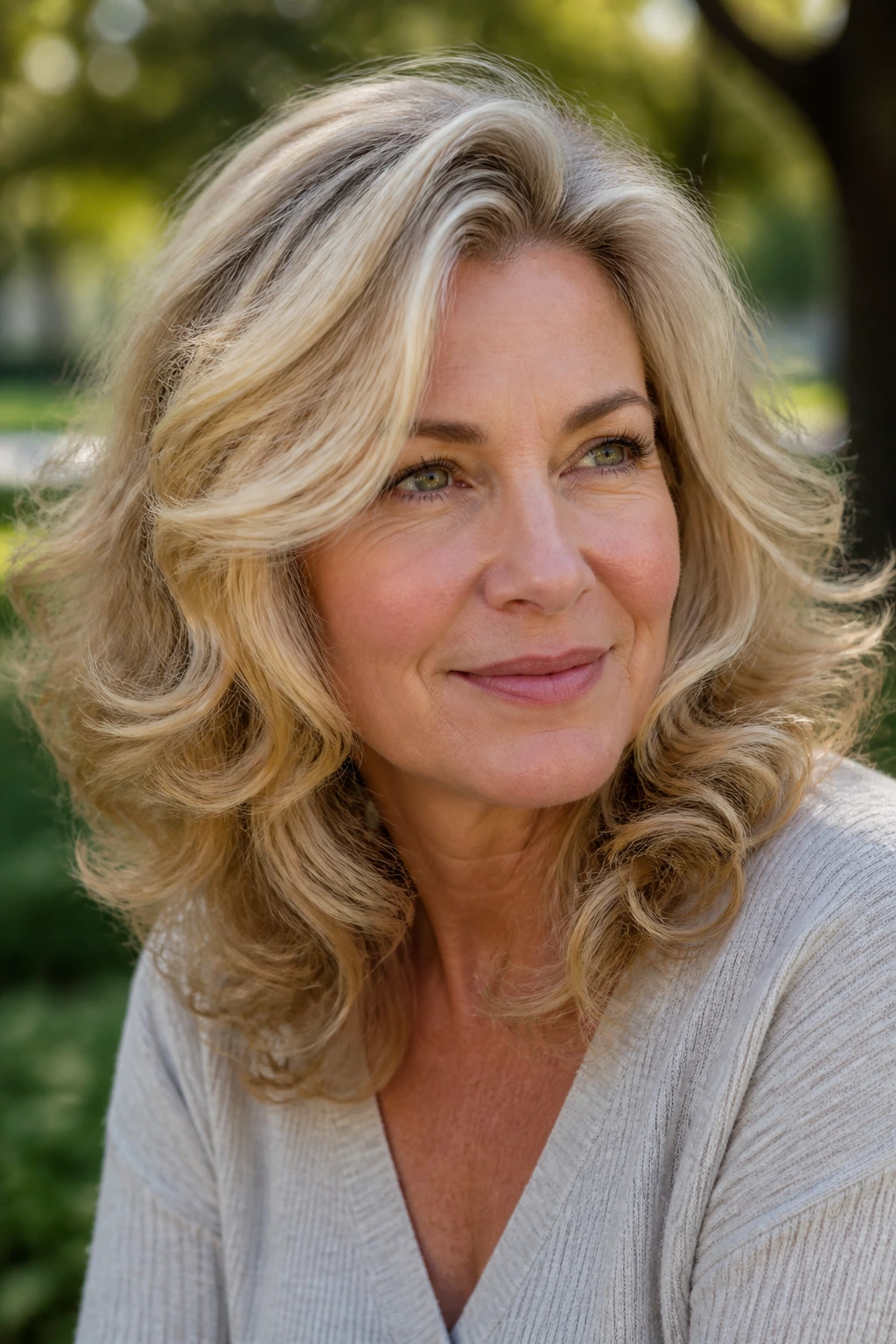
Gray-Blend Blonde: If you’re in the middle of a gray transition, ask for a rooted beige or silver-blonde blend with fine babylights. The grow-out is softer, and you won’t need to chase every inch of regrowth.
Curly-Friendly Shape: For thick curls, keep the perimeter a little longer and let the layers follow the curl pattern instead of fighting it. The shape should support the curl spring, not carve it into a triangle.
Very Straight Hair Version: Straight thick hair benefits from internal layers plus bent ends. Without some movement at the bottom, the style can look too neat and too heavy at the same time.
Low-Maintenance Blonde: Go with a deeper root, soft highlights, and a glossy beige finish. It’s the easiest version if you don’t want a lot of salon upkeep.
Short-Crop Alternative: If you want to go shorter than a bob, choose a pixie with length at the crown and softness around the ears. A blunt short cut with thick hair can feel harsh fast; a longer crown keeps it wearable.
Frequently Asked Questions
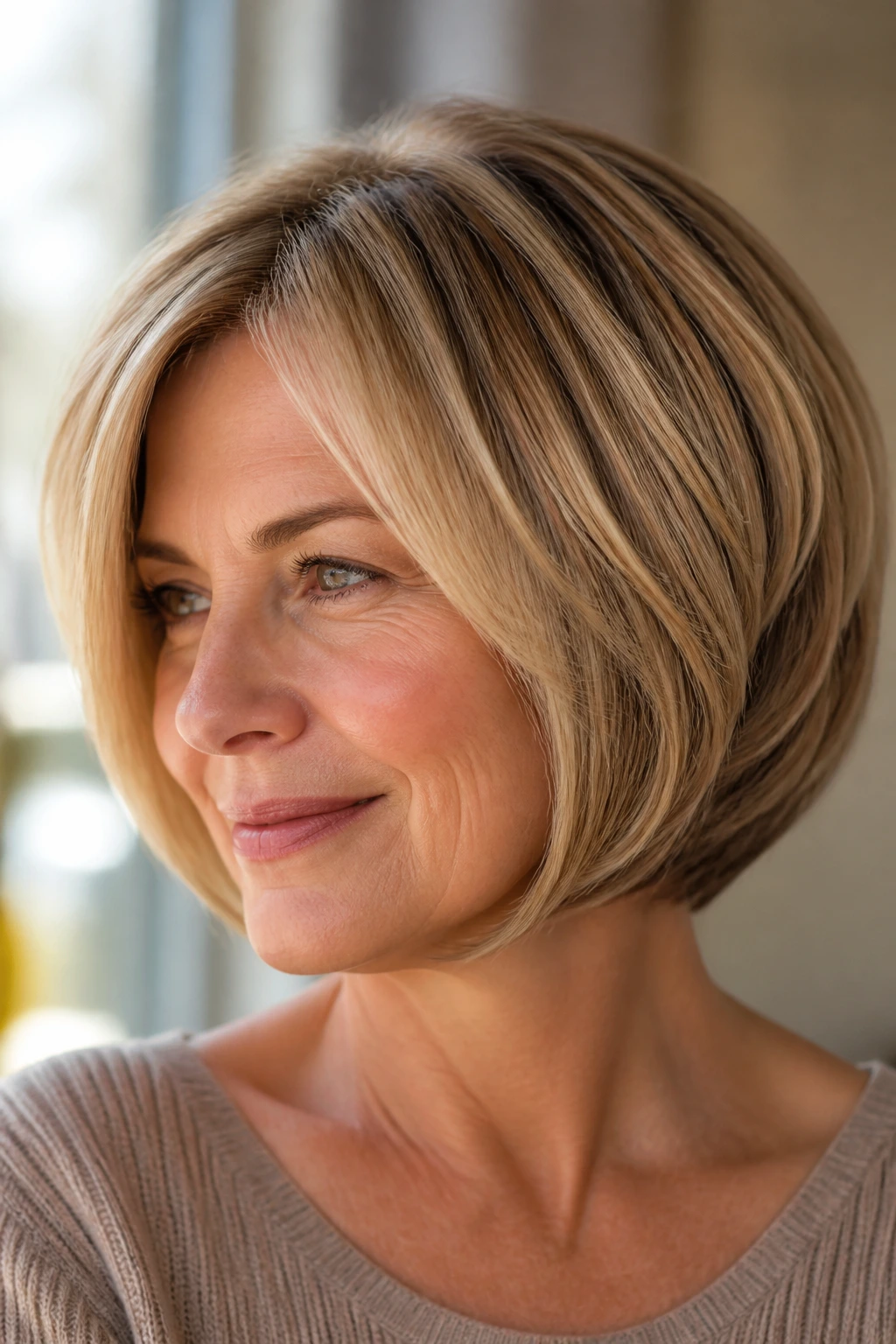
Which blonde shade is most flattering for older women with thick hair?
Beige, honey, champagne, and soft pearl blonde tend to be the easiest to wear because they add light without draining the face. If you’re covering gray, a rooted blonde with lowlights usually looks calmer than a one-process light blonde.
Can thick hair wear a blunt bob?
Yes, but only if the interior has some weight removed. A blunt line with hidden layers can look sleek; a blunt line with no shape often turns into a triangle by the end of the day.
Are bangs a bad idea on thick hair?
Not at all, but the wrong bangs can be a mess. Bottleneck bangs, curtain bangs, or a soft fringe that breaks up near the cheekbones work better than a dense wall of hair across the forehead.
How often should blonde highlights be touched up?
That depends on how rooted you want the look to be, but many thick-haired clients do well with highlights every eight to twelve weeks and a gloss in between if brass starts showing. Rooted techniques can stretch that longer.
What if my thick hair also gets frizzy?
Keep the cut layered enough to remove bulk, then use smoothing cream only on the lower half of the hair. Blow-dry with a nozzle or air-dry with a curl cream; rough-drying frizzy thick hair usually makes the puff worse.
Is a side part or middle part better for thick blonde hair?
A side part gives the crown a little lift and can soften a strong jaw or fuller cheeks. A middle part can still work if the haircut has face-framing layers, but it does show bulk more clearly if the cut is too heavy.
Can I go very light if my hair is already thick?
You can, but the more pale the blonde, the more you’ll need to care for tone and moisture. A rooted or dimensional blonde is usually easier to live with, especially if you want movement instead of a flat bright sheet.
What if my ends keep flipping out?
That usually means the perimeter is too blunt for your texture or the length sits at an awkward point on the shoulder. Ask for a slight bevel or a softer edge, and use a larger brush so you bend the ends in the same direction.
A Softer Finish That Still Has Body
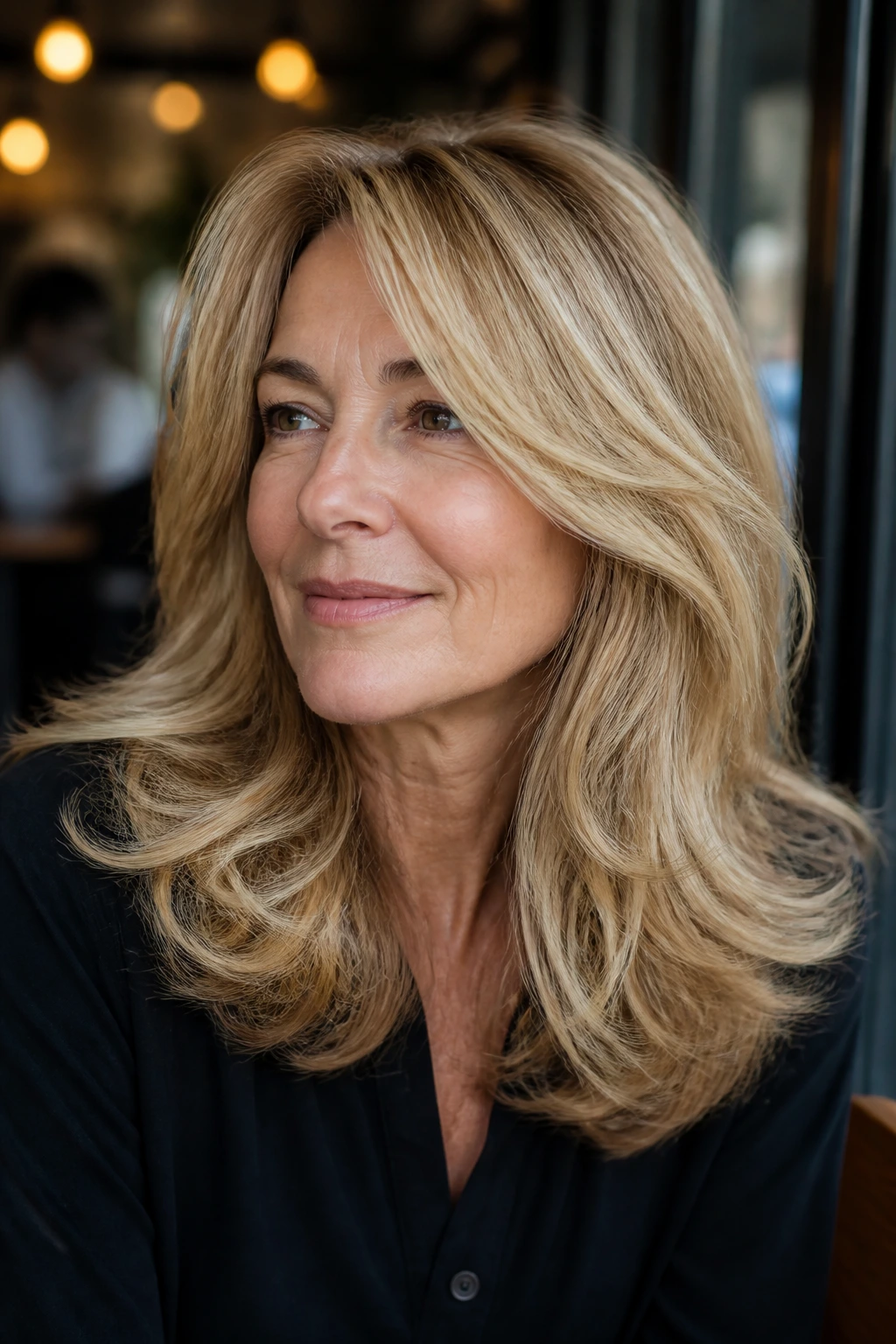
Thick hair doesn’t need to be tamed into boredom. It needs a shape that lets it move without turning into a puffball at the sides or a heavy curtain around the face. The right blonde shade helps, but the cut does the real work. That’s the part people notice when it’s good and can’t quite explain.
Save the styles that fit your real life, not just the mirror for five minutes after a salon blowout. Then ask for the length, the layer placement, and the blonde tone that suit how your hair actually grows. That one conversation does more than a stack of trend photos ever will.