



Ash blonde on deep skin can look razor-sharp, smoky, and expensive—or flat and chalky, depending on where the lightness sits and how much depth you leave behind. That’s the part a lot of people miss. Ash blonde hair color ideas for deep skin tones work best when the blonde is treated like an accent, not a blanket.
The most flattering versions usually keep some darkness at the root, use beige or mushroom tones through the mids, and save the brightest pieces for the places that move: the cheekbone, the ends, the curl pattern, the part line. Once the blonde starts to float away from the face and the crown, it can look disconnected. Keep the contrast close to the skin, and it suddenly makes sense.
I’ve always liked ash blonde more on rich skin than on very pale skin, honestly. On deep complexions, the cool tone has something to push against. It shows up. The trick is choosing the right kind of cool—silver, mushroom, beige ash, pearl, taupe—and putting it in the right place, because a single flat toner bath is how good color goes strangely gray.
Why These Ash Blonde Looks Belong on Deep Skin
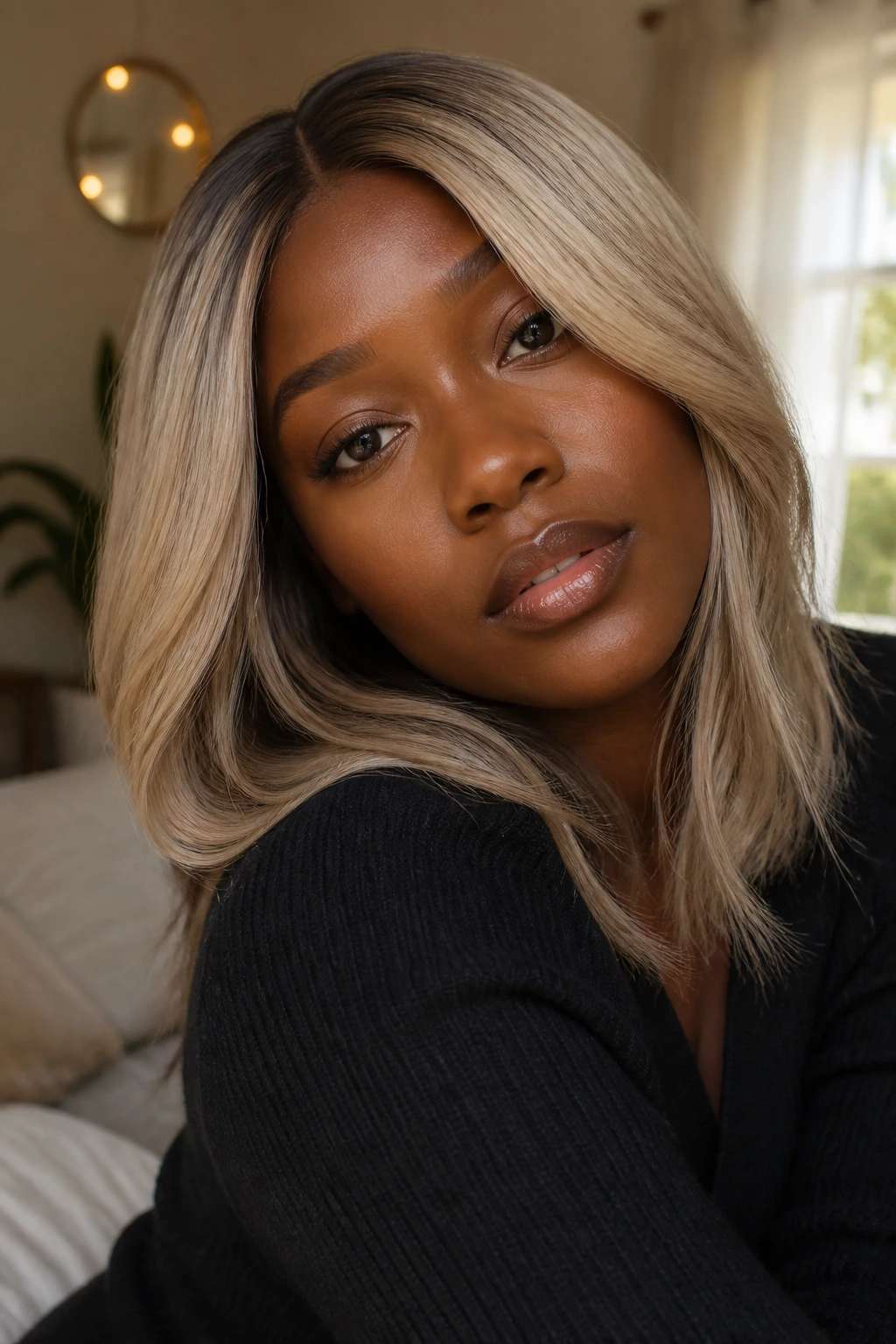
Depth, not dilution: The strongest looks here leave the base rich and dark, which keeps the blonde from flattening out against deep brown or ebony skin.
Cool tones, handled carefully: Beige ash, mushroom blonde, pearl ash, and smoky champagne tend to read smoother than a stark blue-silver on deeper complexions.
Style range: You’ll see ideas for curls, silk presses, pixies, bobs, braids, and long layers, so the color doesn’t depend on one haircut.
Salon-friendly language: These shades are easy to describe with level numbers, placement notes, and toner families instead of vague “make me blonde” requests.
Maintenance options: Some looks need a gloss every 4 to 6 weeks. Others stretch well because the root stays dark and the blonde lives mostly in the mids and ends.
Why Ash Blonde Looks Richest When the Root Stays Deep
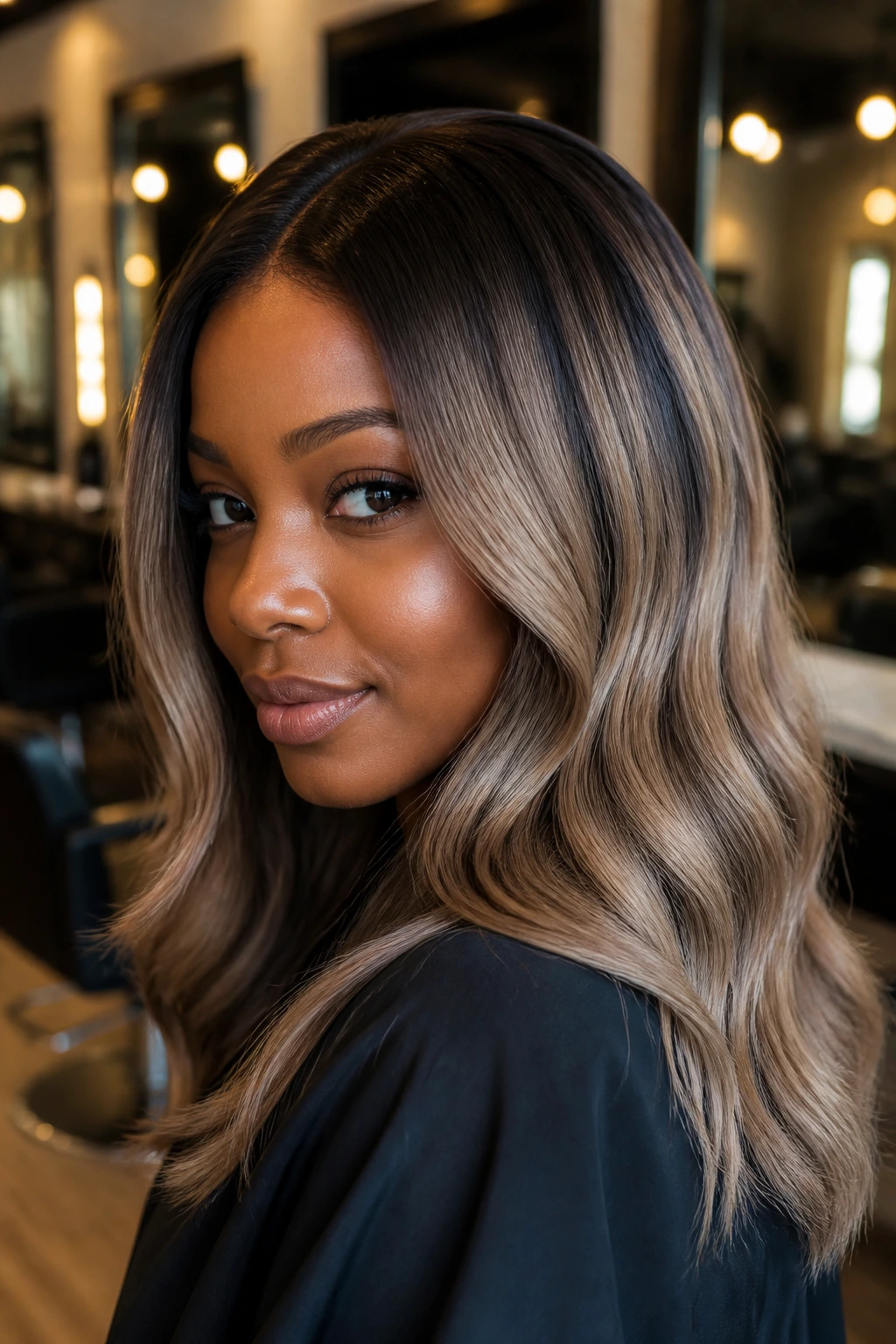
Ash blonde can go wrong fast on deeper skin when every strand gets pushed to the same pale level. The eye loses the shape of the cut, and the blonde starts reading as one big cool block. Leave a root shadow, though, and the color suddenly has rhythm. The dark base acts like an outline.
That’s why mushroom blonde, beige ash, smoky champagne, and pearl-beige blends show up so often in the best versions. They’re cooler than caramel, but they still carry a little softness. On warm or golden undertones, that softness matters. Straight silver can look icy and stylish on some people, yet on others it pulls the whole face toward gray. Beige gives you breathing room.
Texture changes the whole story, too. Curls catch ash highlights in little flashes. Straight hair shows every line, so the toner has to be cleaner. Braids and locs need a different kind of thinking altogether; the blonde effect often comes from extension color, not bleach. Same family of shade. Different job.
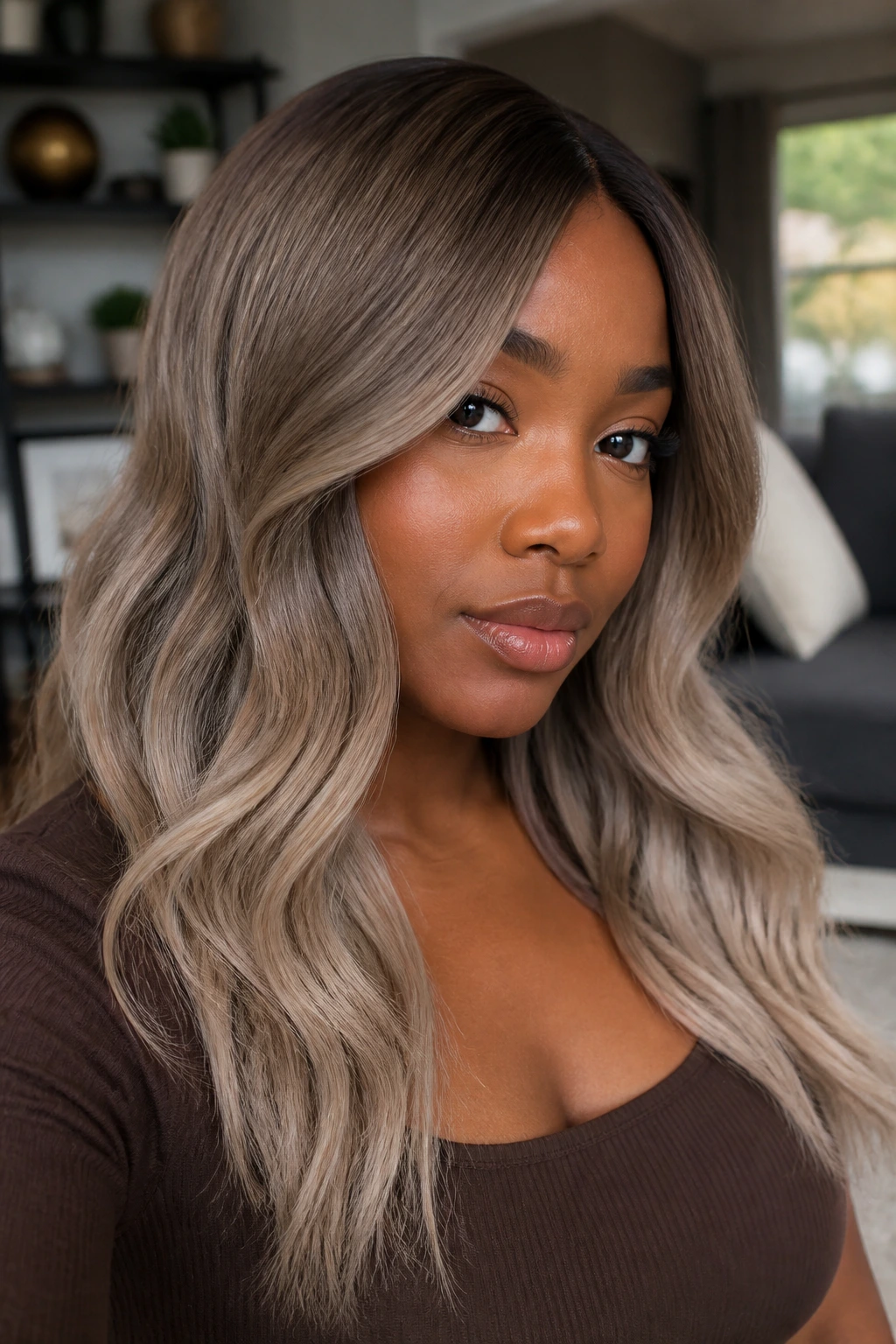
1. Midnight-Root Ash Blonde Balayage
A dark root with cool beige ribbons is the safest place to start, and I mean that in the best way. The richness at the scalp keeps the blonde from floating away from deep skin, while the lighter pieces sit where they can move—around the face, through the mid-lengths, and at the ends.
Why it works
Balayage gives you a softer grow-out line, which matters if you want ash blonde without a constant salon countdown. Ask for a level 4 or 5 root shadow and level 7 to 8 beige-ash ribbons. That combination reads smoky, not yellow, and it keeps the texture of the haircut visible.
- Best on: Wavy or coily textures, long layers, and shoulder-length cuts.
- Ask for: A soft melt, not chunky stripes.
- Toner note: Beige ash usually looks gentler than a blue-heavy silver toner.
- Maintenance: Gloss every 6 to 8 weeks if you want the cool tone to stay clean.
The whole look has a little night-sky energy to it. Dark at the top, lighter where the hair catches the light.
2. Mushroom Blonde Melt
Mushroom blonde is one of those shades people underestimate until they see it on deep skin. It lives in the space between brown and blonde, which is exactly why it works. The tone carries taupe, beige, and a faint smoky cast, so it never yells “bleach job.”
On deep complexions, mushroom blonde feels earthy instead of loud. It flatters warm undertones especially well because it doesn’t fight the skin’s natural richness. Ask your colorist for a root melt that stays one to two levels deeper than the mids, then a neutral-ash gloss through the ends. That keeps the color soft and wearable.
This is the shade I’d hand to someone who wants blonde but hates brass, hates stripes, and hates looking like they spent three hours chasing a toner problem. It’s calm. It’s polished. It also grows out beautifully, which is more useful than people admit.
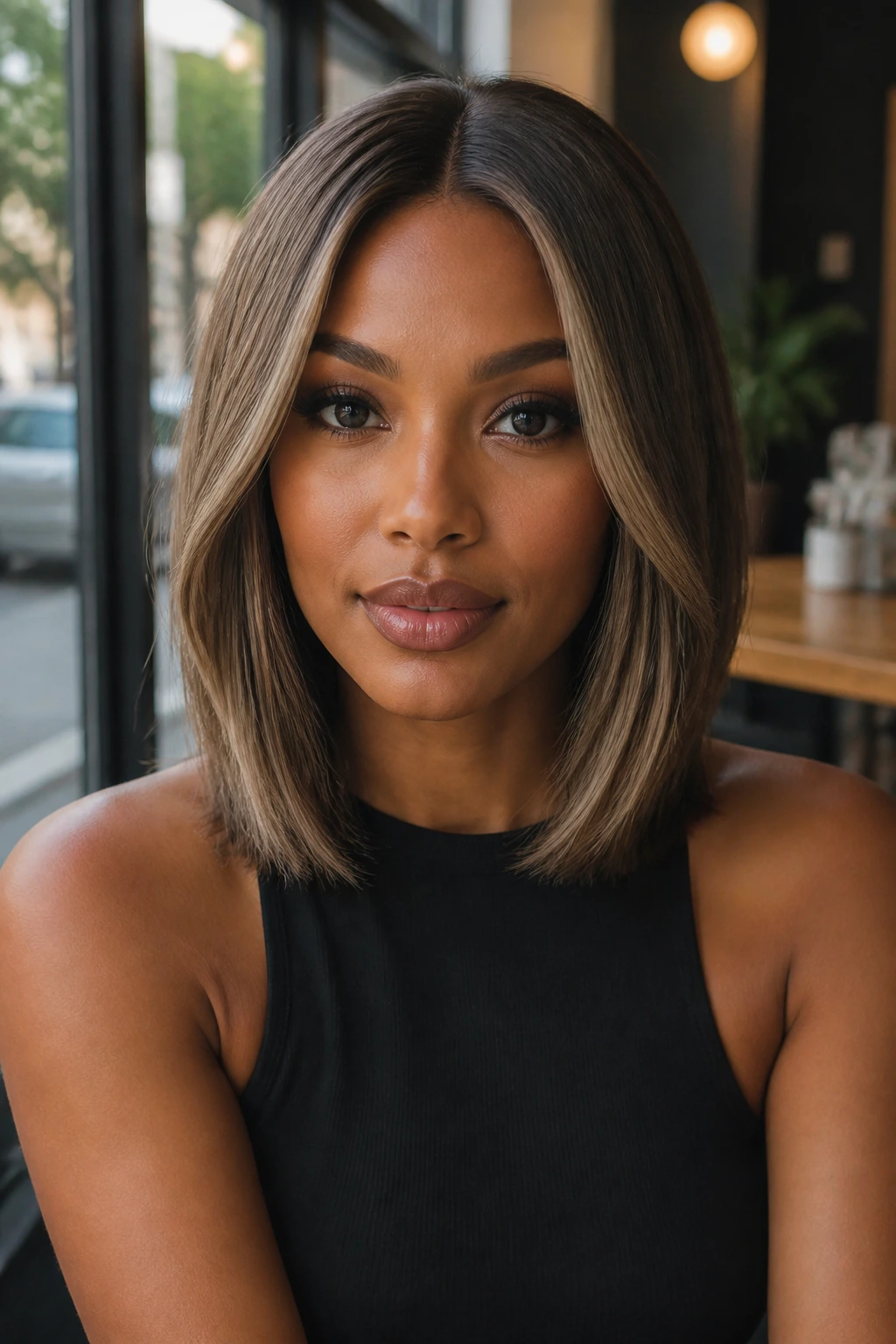
3. Smoky Beige Lob with Ribbon Highlights
Why does a lob make ash blonde feel cleaner on deep skin? Because the blunt hem gives the color a shape to sit in. On longer hair, blonde can drift. On a collarbone lob, those cool ribbons stay organized, especially if you place them around the cheekbones and the outer edge of the cut.
What to ask for
- Fine ribbon highlights, not wide panels.
- A level 7 to 8 beige-ash toner.
- A root that stays at least one shade deeper than the lightest pieces.
- A blunt or barely layered finish to keep the line sharp.
The result is a smoky frame around the face, not a blonde cloud. It’s especially good if you wear glasses or like a middle part, because the front pieces draw the eye without overwhelming the rest of the hair. On deep skin, that controlled contrast looks expensive in a way that no amount of blunt social-media language ever could.
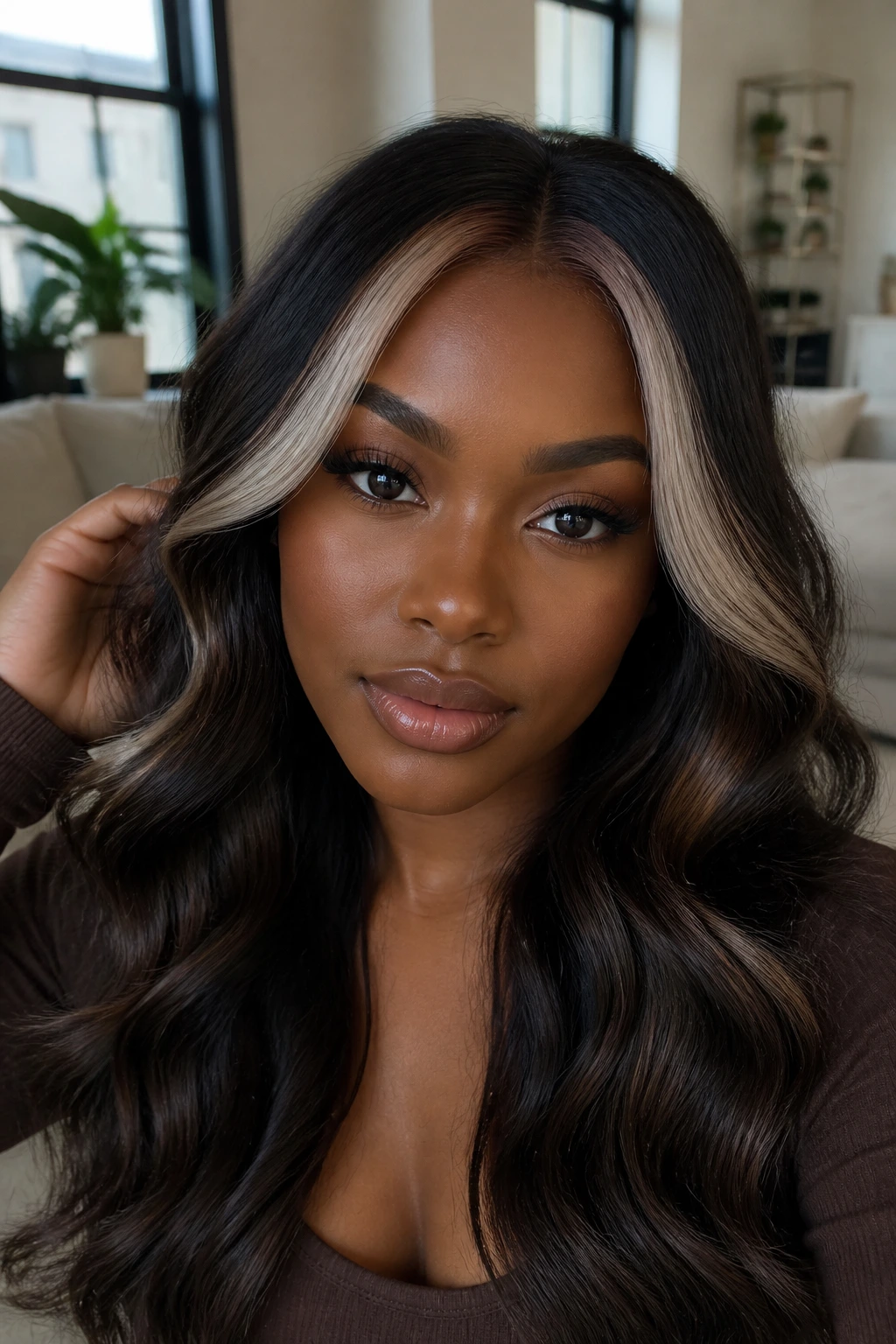
4. Icy Money Piece on Deep Brunette Waves
If you want a blonde change without bleaching the whole head, this is the one that changes the face fastest. Two bright pieces right at the front—sometimes a little wider than you’d expect—can completely shift how the cut reads, especially on loose waves.
The money piece should be icy, yes, but not white. On deep skin, the smartest version stays in the beige-silver lane so it doesn’t turn harsh against the forehead and temples. Ask for the brightest lift at the front hairline, then let the rest of the hair stay a rich brunette. That contrast makes the blonde feel like a feature, not a takeover.
I like this most on people who wear a lot of lip color or strong brows. The color has a little edge to it, and it wants the rest of the face to keep up. Easy, though. Not fussy.
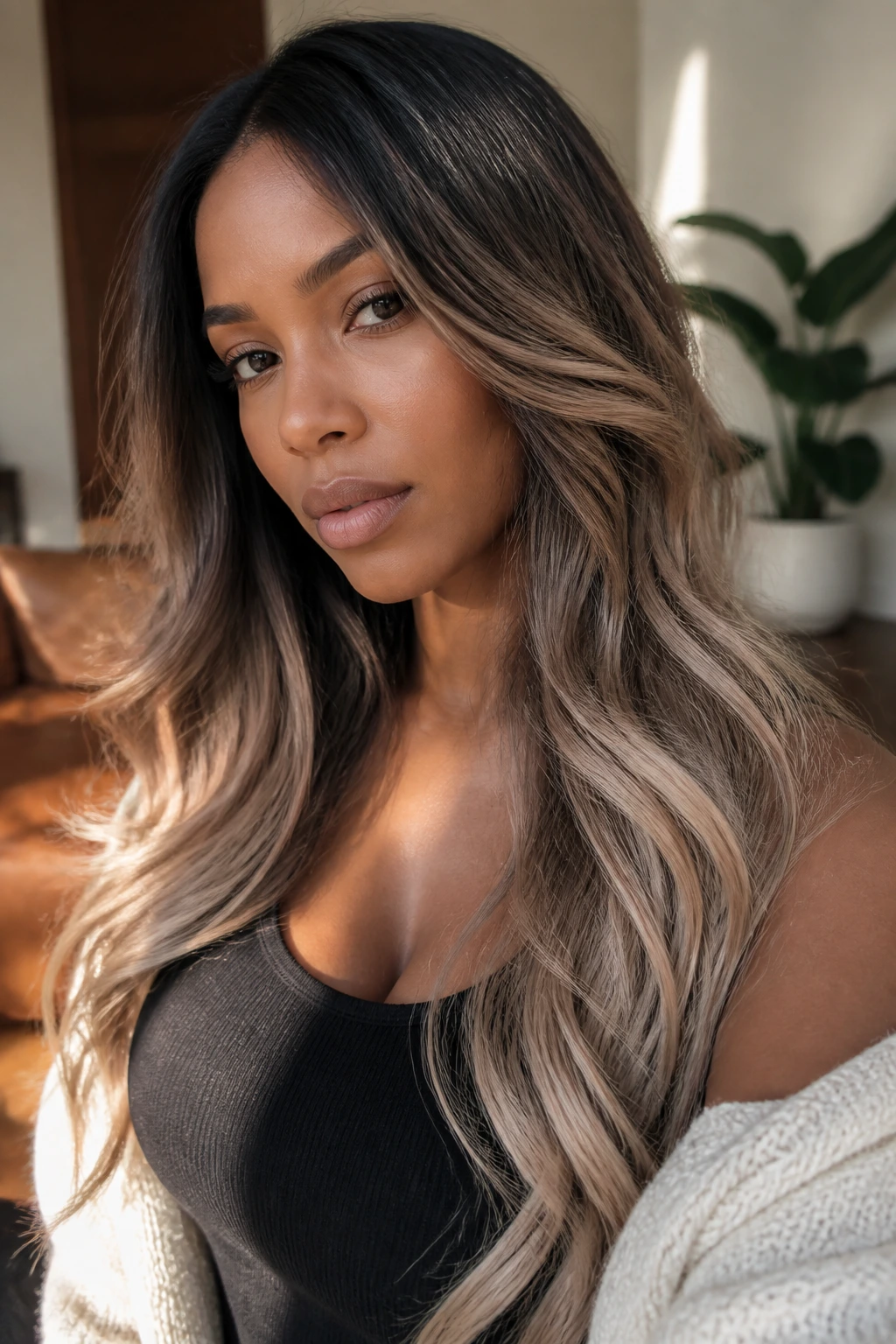
5. Espresso-to-Ash Ombré
The most flattering cool blonde on deep skin often starts with a dark story and ends with the ash. That’s ombré. The roots stay espresso, the mids soften into smoky brown, and the ends get lifted into beige ash or mushroom blonde. No need to pretend the whole head is light.
That dark-to-light sweep works especially well on long hair because the fade has room to breathe. Short hair can look choppy with ombré if the transition is rushed. Long waves, by contrast, show the gradient clearly. If your undertone is warm, this is one of the easiest ash-blonde ideas to wear, because the brown base keeps the look grounded.
It’s also kind to growth. The root can grow a bit and the style still holds together. That’s not glamorous advice, but it matters. Hair that looks good for more than three weeks is worth paying attention to.
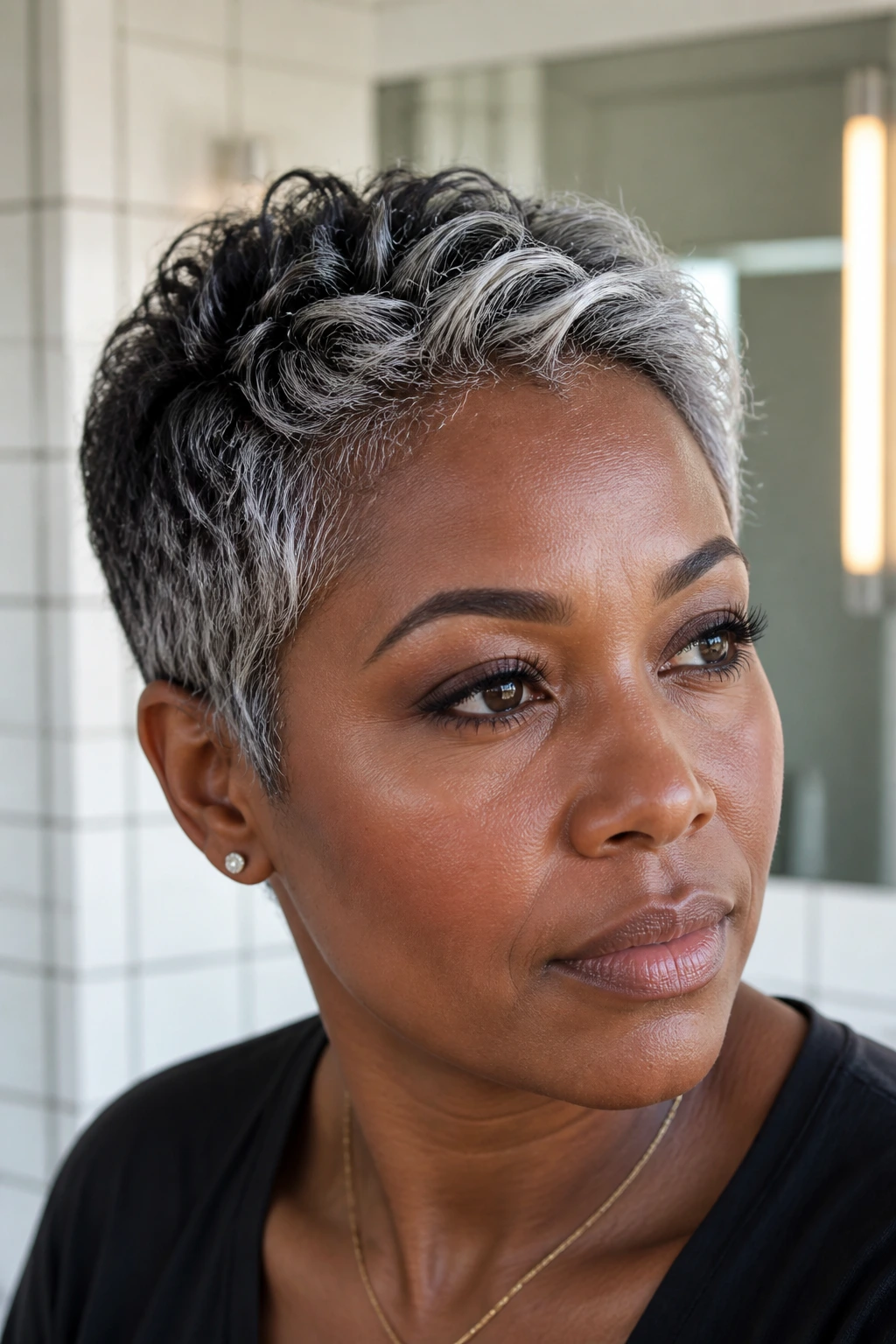
6. Silver-Threaded Pixie Cut
Short hair can handle more contrast than people think. A pixie cut with silver-threaded ash highlights has a crisp, tailored feel that looks especially sharp on deep skin because the shape does half the work for you. Every piece shows.
How to ask for it
Request micro-highlights on the top, crown, and temple area instead of a full silver blanket. A soft ash glaze over a darker base keeps the look from turning frosty in a bad way. If the hair is textured, the highlights should follow the direction of the curl or bend, not sit in obvious straight lines.
This is a good option if you like a precise cut, strong brows, and earrings that do some talking. It is not the lowest-maintenance shade on the list, though. Short blonde shows regrowth fast. The payoff is that the shape stays neat, and the color never gets lost in length.
7. Cool Champagne Curls
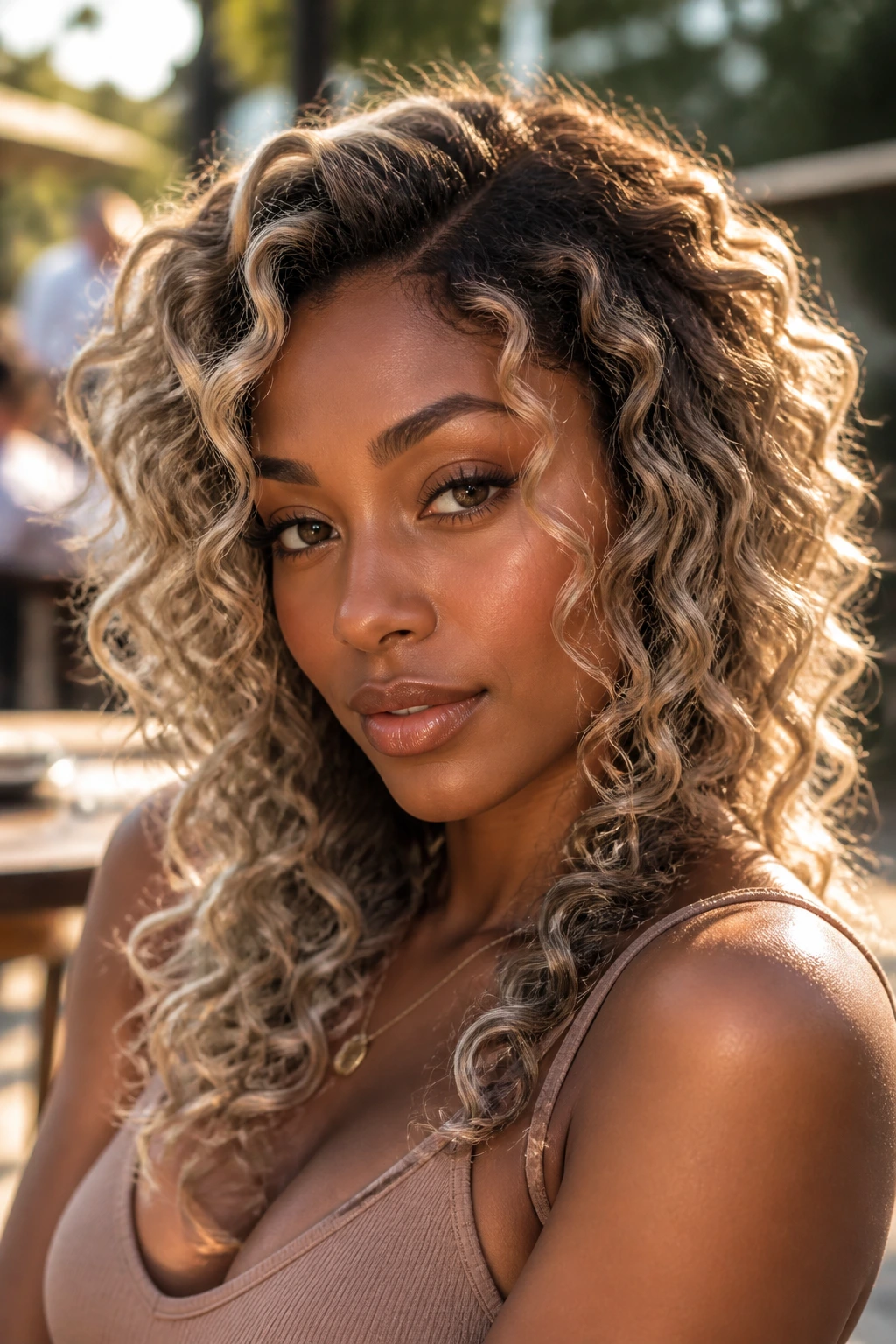
Can ash blonde still feel soft? Absolutely—if champagne is in the mix. Champagne blonde sits between beige and pearl, which gives deep skin a little warmth without tipping into yellow. On curls, that matters even more, because the shape itself already creates enough movement.
The best champagne ash curls are not sprayed all over. They’re painted into the outer ringlets, the front tendrils, and the ends where the curl opens up. That way the tone flashes when the hair moves. Flat curls with all-over toner can go matte fast, and matte is not the same thing as rich.
I’d recommend this shade to someone who wants a blonde look but doesn’t want to look washed out under indoor lighting. Champagne catches both daylight and warm bulbs without getting weird. That’s harder to do than people think.
8. Beige Ash Bob with Micro-Babylights
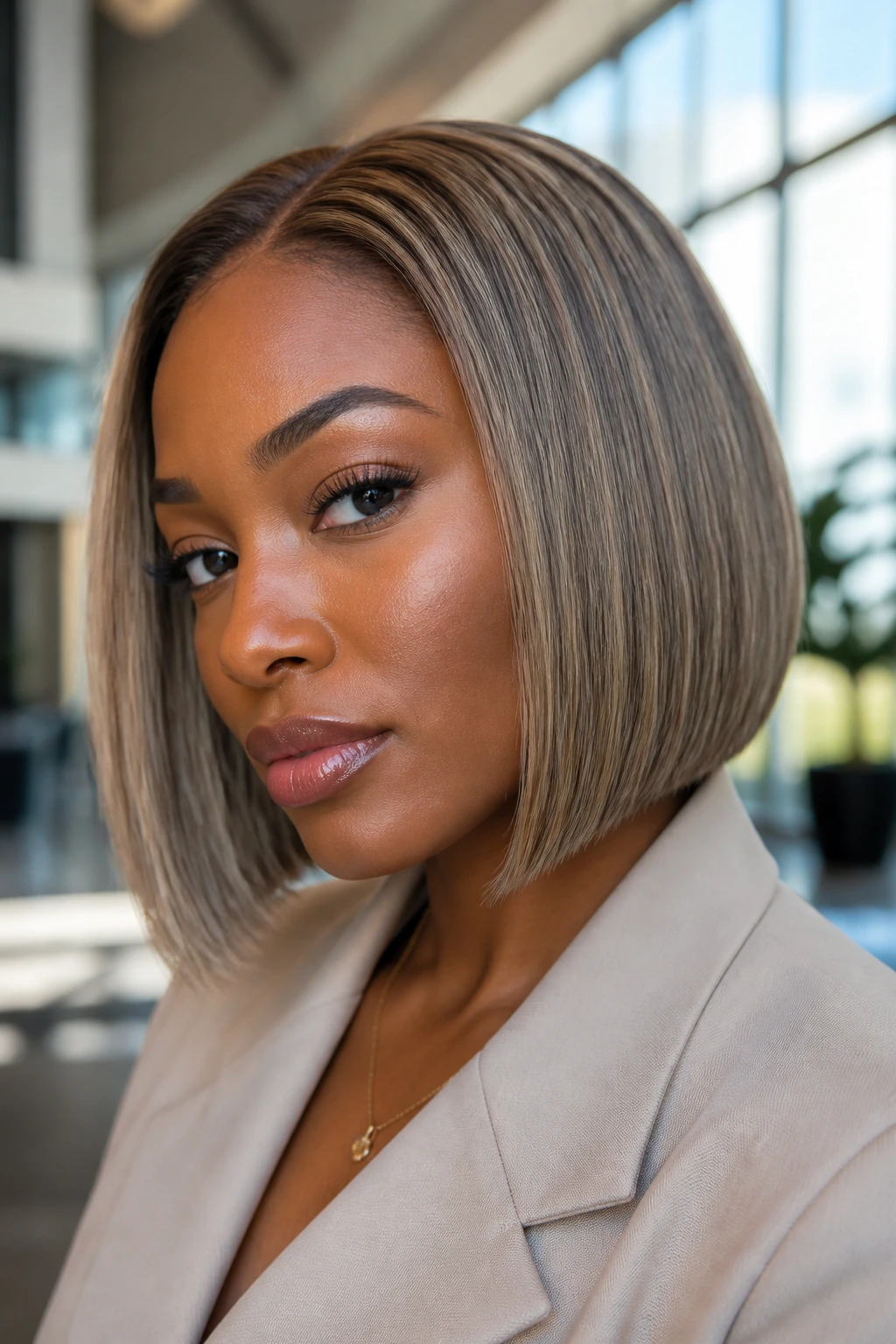
A bob with tiny babylights is one of the cleanest ways to wear ash blonde on deep skin. The small pieces never fight the haircut, and they don’t create those thick stripes that can look a little loud on a short shape. Everything stays fine and precise.
Micro-babylights are especially good if you like sleek styling. Blow it out, tuck one side behind the ear, and the color reads like a soft glow rather than a highlight pattern. Beige ash, not silver-white, is the move here. That tone keeps the color dimensional without draining the face.
This one is a favorite for people who need polish. It works in offices, on date nights, and on days when you want your hair to look intentional with almost no extra effort. Clean lines. Small pieces. No drama for the sake of drama.
9. Dusty Platinum Crop with Shadow Root
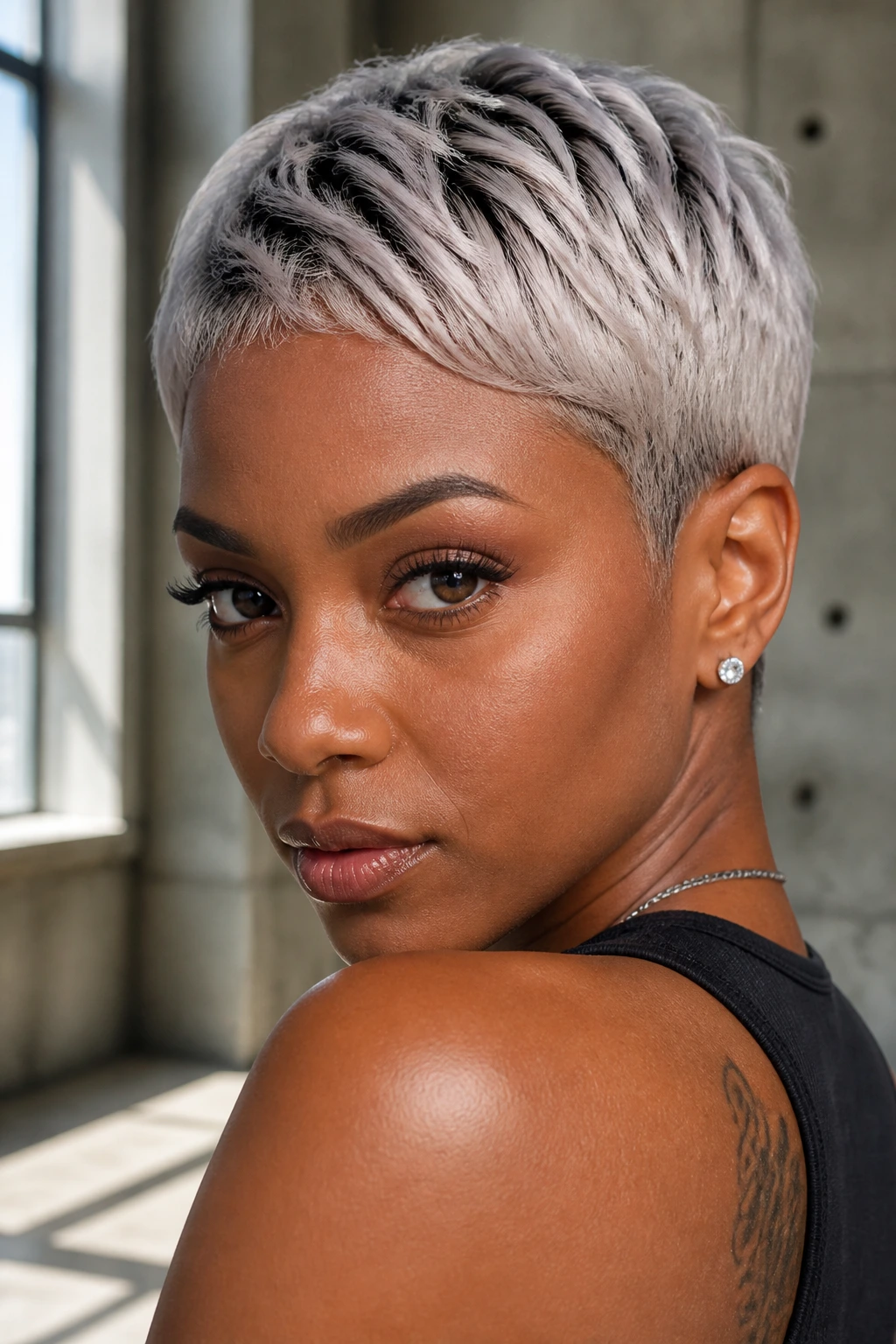
A dusty platinum crop is the boldest idea in the set, and it does ask for maintenance. Still, on deep skin, the contrast can be electric when the root is shadowed properly. The dark base gives the platinum somewhere to land. Without that anchor, the whole look can go flat and chalky.
This is the style for someone who likes sharp edges and doesn’t mind booking toning appointments. The crop keeps the bright hair concentrated, so the platinum reads as a statement rather than a sea of lightness. Ask for a root shadow at least one shade deeper than your natural base, plus a pale beige-platinum toner instead of a blue-white one.
It’s best on healthy hair. No shortcuts here. If the strands are already dry or overprocessed, this shade will expose it immediately.
10. Ash Bronde Layers with Toffee Lowlights
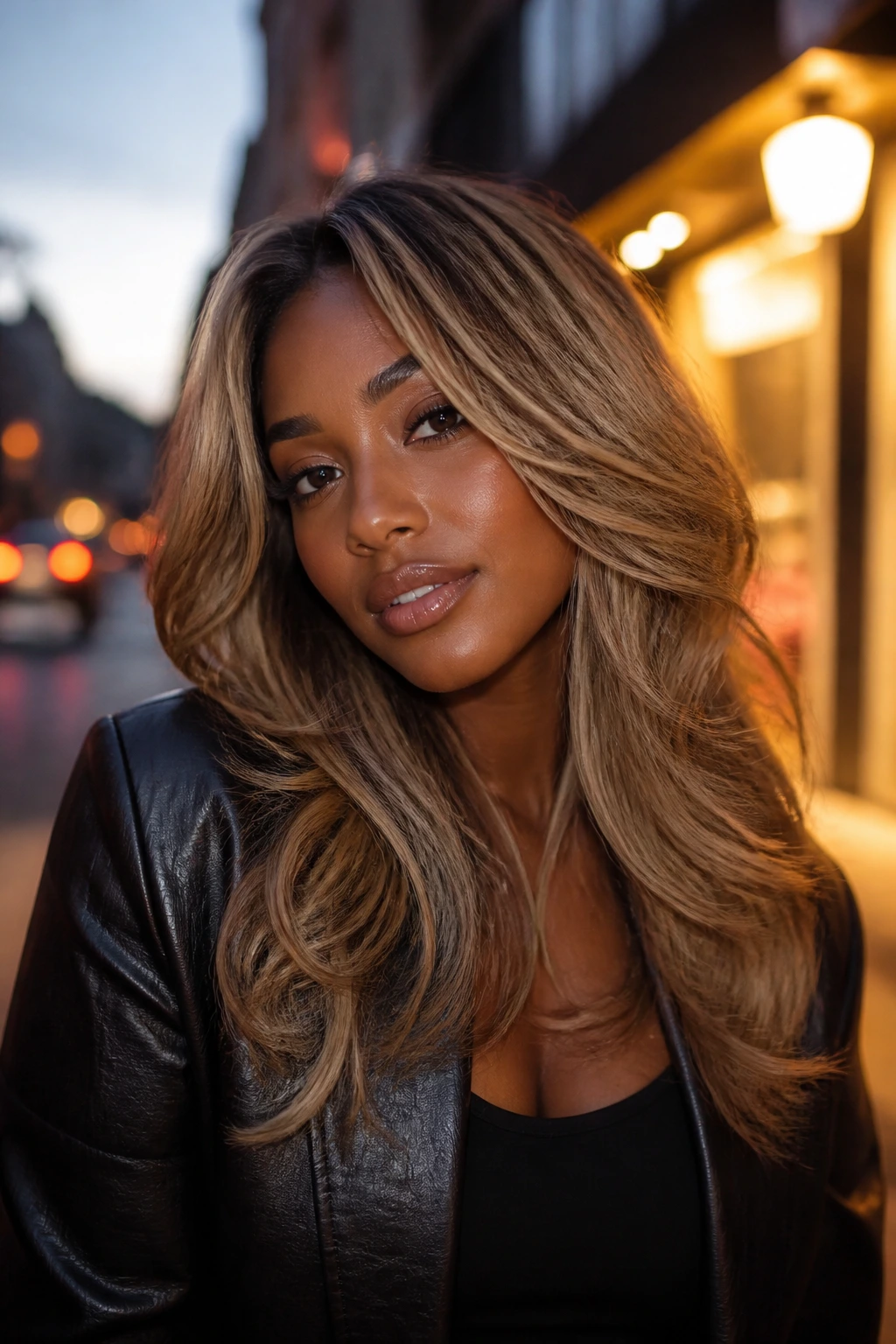
Ash bronde is the friendliest cousin in the blonde family. It keeps enough brown in the picture that deep skin still has contrast, and the toffee lowlights stop the whole thing from leaning too cold. That mix matters on thick layers, where flat ash can disappear into itself.
What makes it different
Unlike full ash blonde, bronde lets the darker pieces stay visible. That’s a relief if you like dimension and hate one-note color. The toffee lowlights aren’t there to warm things up too much; they’re there to keep the light pieces from looking pasted on.
This shade is easy to wear in waves, curls, or a simple blowout. It’s also one of the best choices if you’re nervous about looking too blonde too fast. The brown stays in the conversation. Blonde gets to be the accent.
11. Pearl Ash Face-Framing Layers
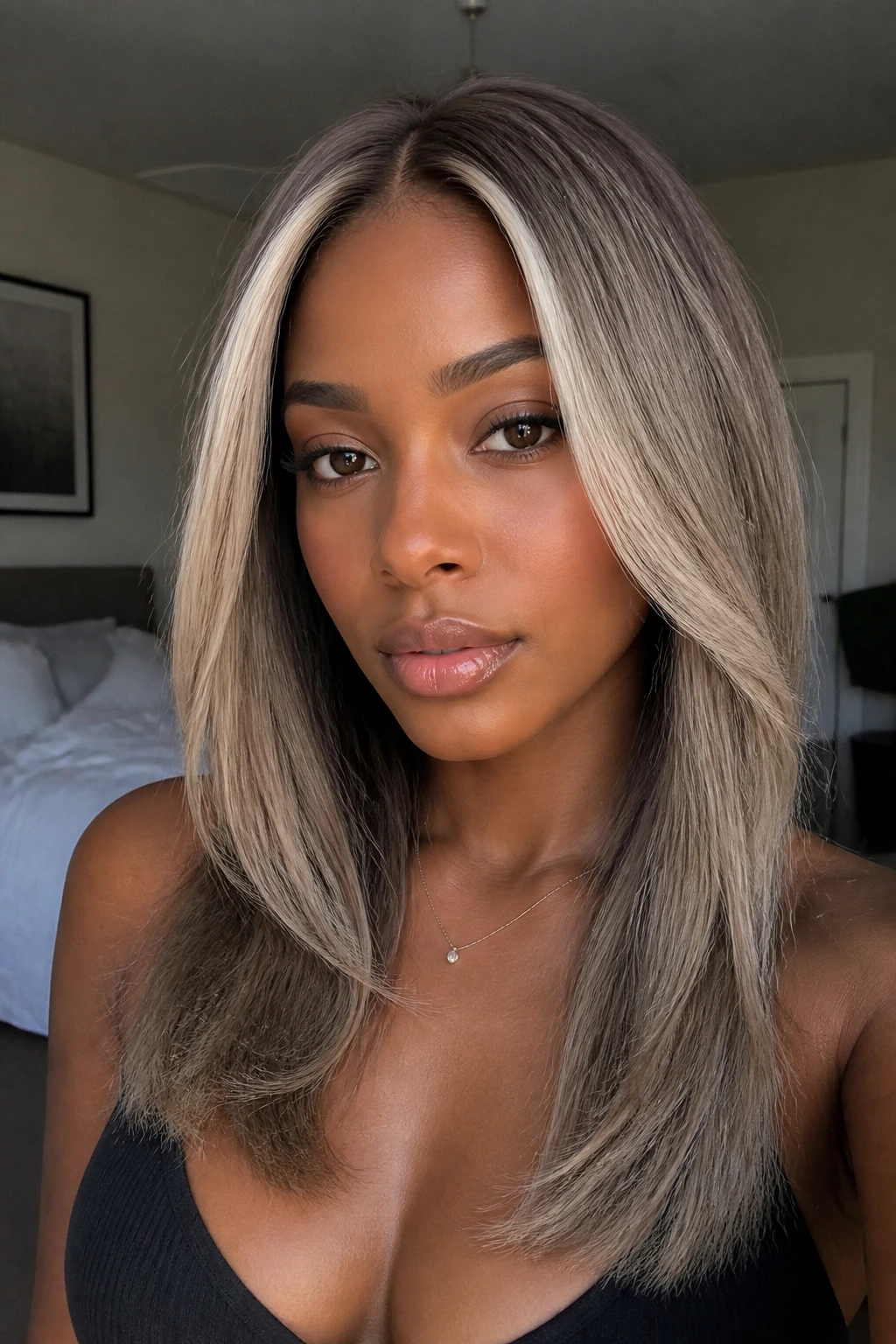
Face-framing layers give pearl ash a place to do its best work. The brightest pieces sit around the cheekbones, then taper into softer, cooler blonde through the length. On deep skin, that little halo effect can make the features look more defined without bleaching everything in sight.
Where the brightness should sit
Keep the pearl tone closest to the face and the top layer, then fade into a deeper ash-beige through the rest of the hair. That gives you brightness where it matters and depth everywhere else. The result is elegant, but not in a stiff way. More like careful than precious.
This shade looks especially good with a middle part and smooth styling. Straight hair shows the pearl clearly, while soft waves break it up a little. Either way, the front pieces carry the look.
12. Soft Frosted Silk Press
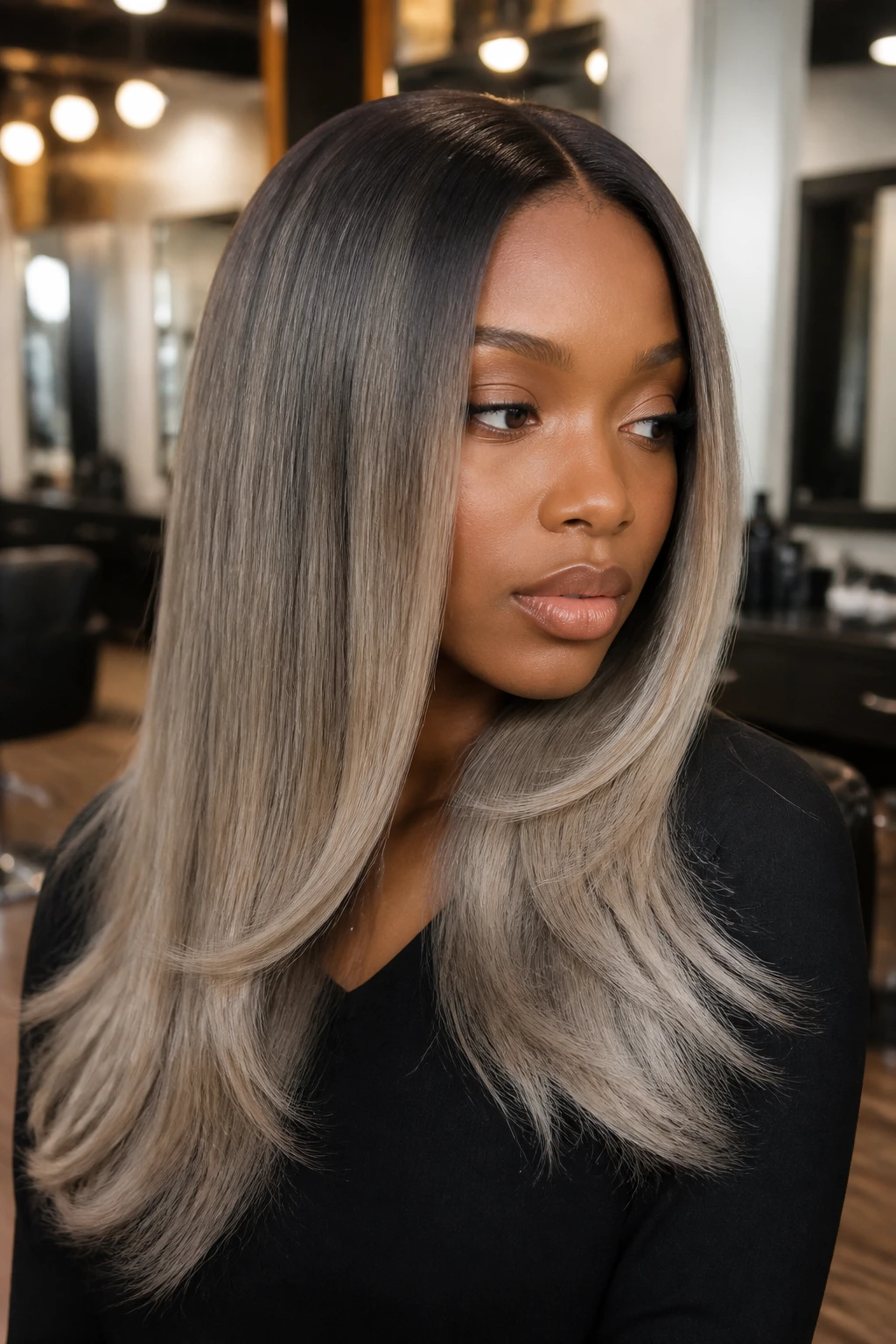
A silk press with frosted ash ends is one of the prettiest ways to wear cool blonde on textured hair. The press gives you shine, which stops ash tones from looking dull, and the frosted blonde lives mainly on the ends and outer layers so the style still feels glossy.
This isn’t the place for heavy, blocky lightening. On a silk press, the finish has to stay smooth. Ask for a beige-ash glaze rather than a stark silver toner, especially if your skin has warmth in it. That keeps the hair looking polished instead of powdery.
Heat protectant matters here. So does wrapping the hair at night. A silk press can look stunning on day one and tired by day four if the care is sloppy. The color is only half the job.
13. Sandy Ash Lob with Center Part
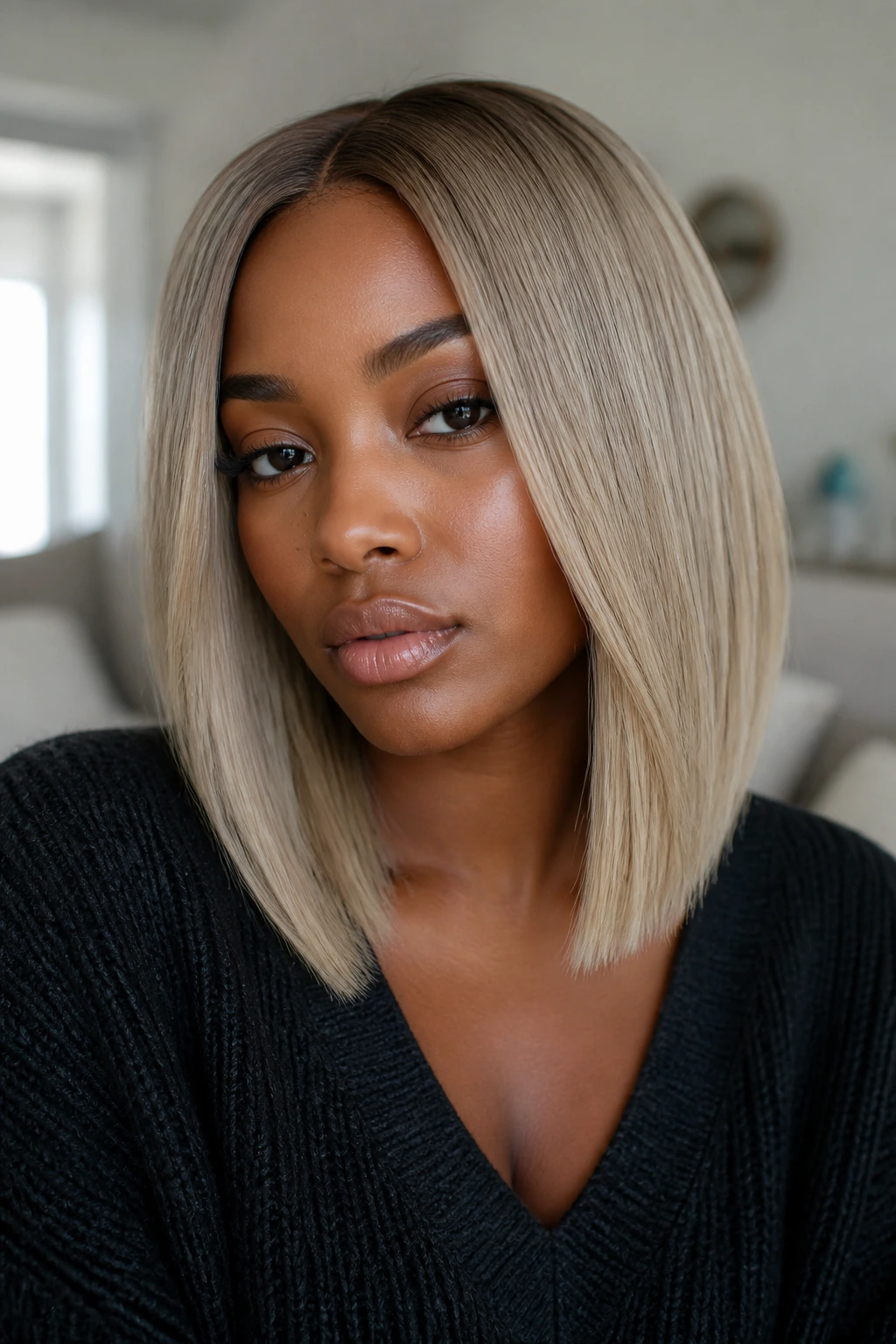
Sandy ash is softer than silver and less moody than mushroom blonde. It has a muted, beachy feel, but without the yellow that can sneak into warmer blondes. On deep skin, that muted finish reads as calm light, not as a bleach experiment.
A center part helps the symmetry. Both sides fall evenly, which lets the color do a gentle frame around the face. This is a good pick if you want a cool blonde that doesn’t shout from across a room. It’s quieter than platinum, and that’s the point.
Why it works
- The sandy base keeps the tone from going gray.
- The center part shows the symmetry of the lob.
- The color still has movement when the ends are lightly bent under.
If you’re after subtle, this is one of the smartest options on the list.
14. Smoke-and-Mirror Curly Highlights
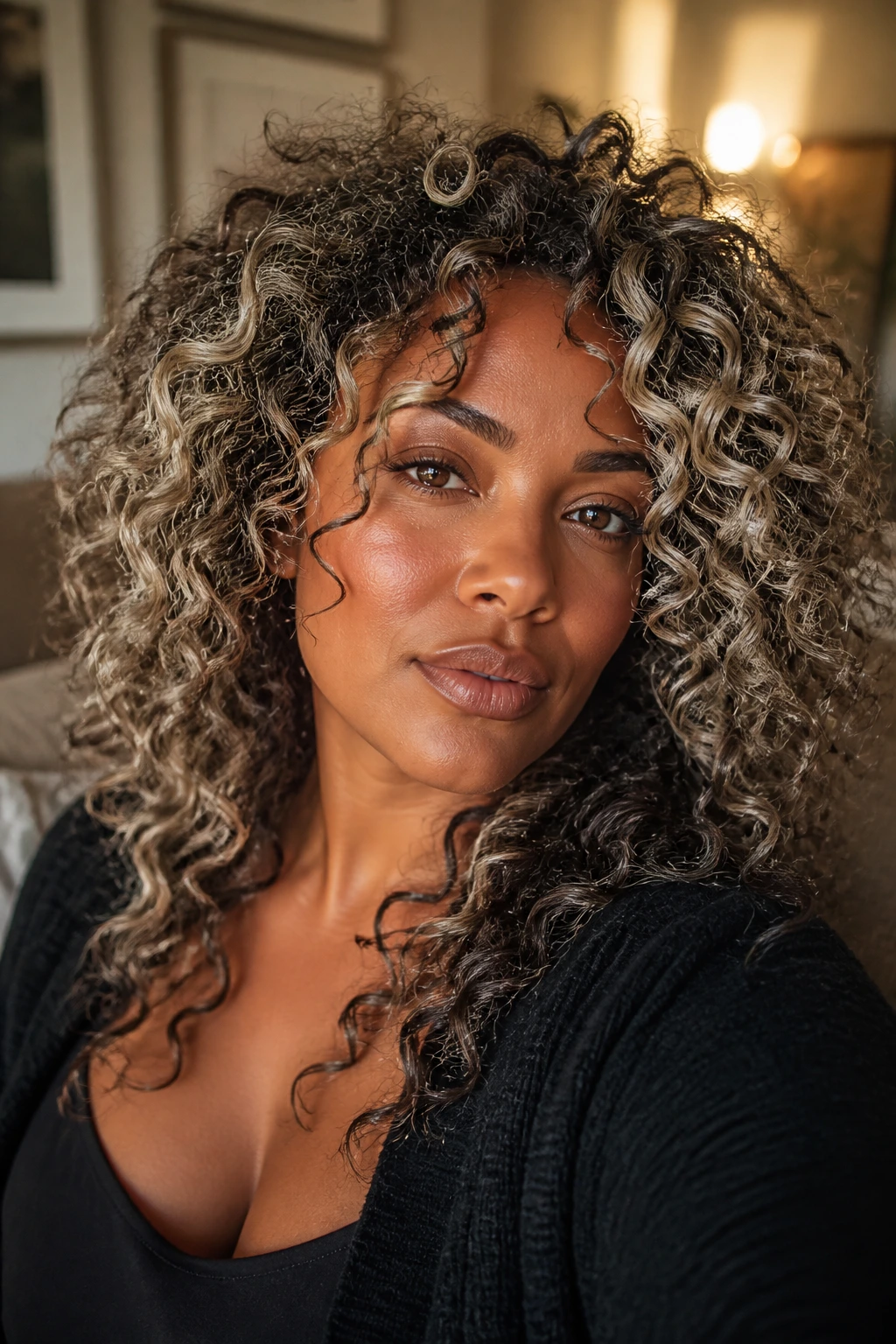
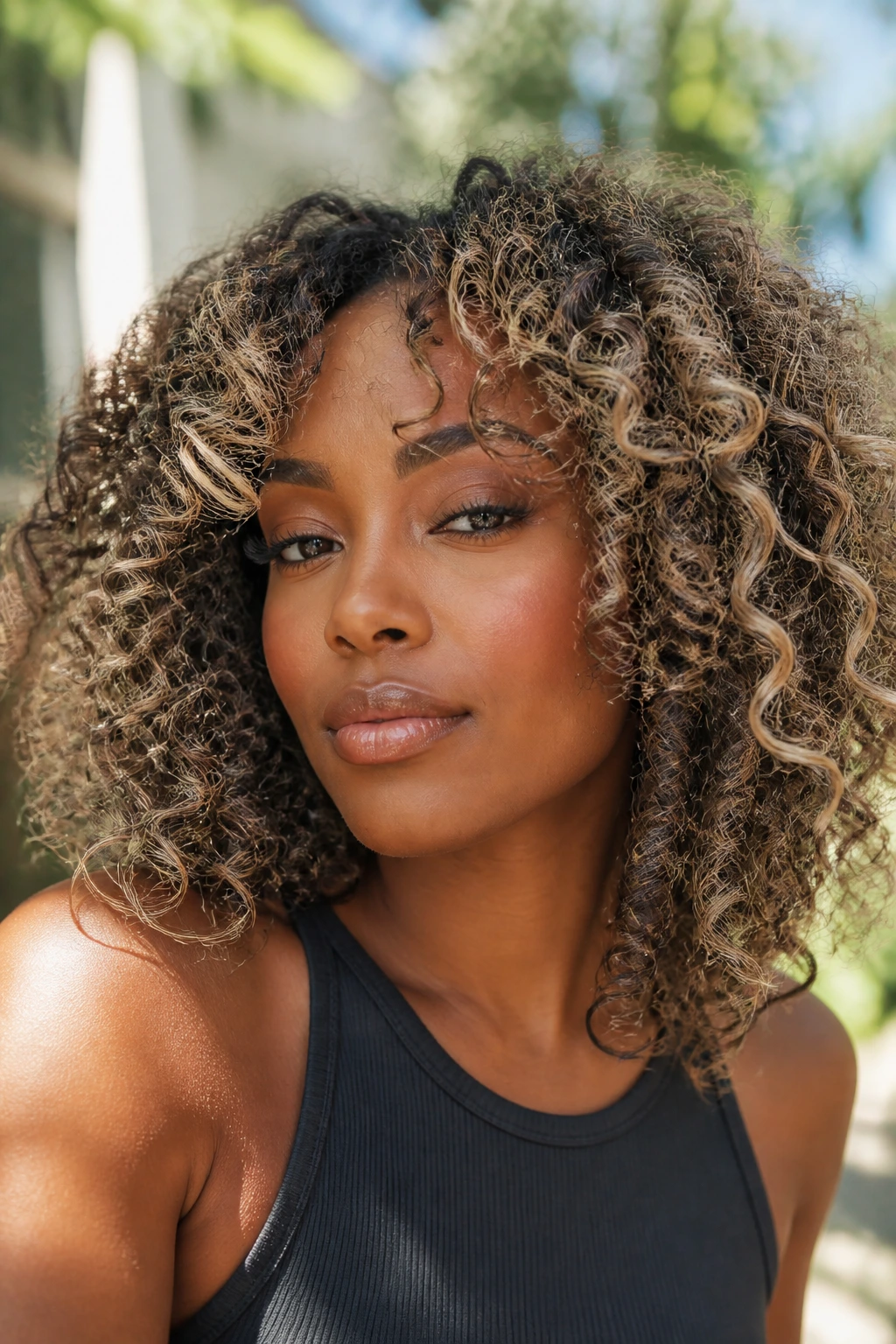
Curly hair changes the whole math of blonde placement. Straight foil lines often disappear once the curl shrinks, so the highlight pattern has to follow the curl clusters. Smoke-and-mirror highlights do that well. They scatter ash blonde through the outer ringlets, then leave plenty of depth underneath.
The look is dramatic in motion and softer at rest, which is exactly why it suits deep skin so well. The base stays rich enough to hold the shape, while the cool pieces catch light only where the curls open. Ask for ribbons rather than slabs, and keep the toner on the beige side if your hair is porous.
This one rewards a good diffuser and a little patience. Once styled, the dimension shows up from every angle. That’s a nice payoff for all the careful placement.
15. Vanilla Ash Blonde Butterfly Layers
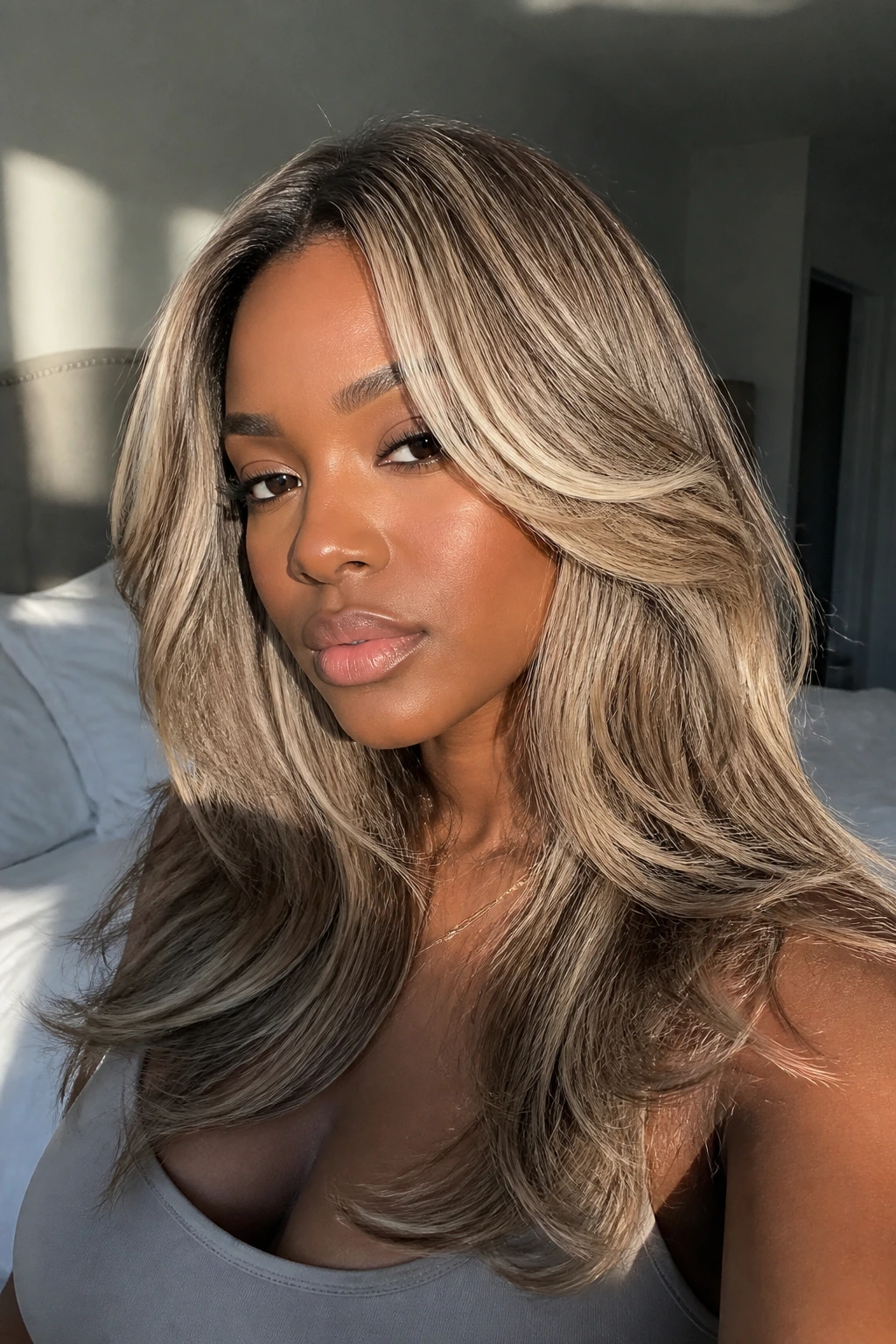
Butterfly layers already bring movement, so vanilla ash is the right kind of blonde to thread through them. The shade sits between creamy beige and cool blonde, which keeps it soft enough for deep skin while still giving you that lighter, airy finish around the face and ends.
This works because the layers create different surfaces. The shorter front pieces catch a slightly brighter blonde, while the long back layers can stay a shade deeper. That contrast keeps the haircut from looking blocky. It also gives you options: wear it blown out for a fuller effect, or in loose waves when you want the ash pieces to separate a bit more.
I’d choose this if you like hair that moves when you turn your head. It’s not a stiff color. It sways.
16. Chai Ash Blonde Melt
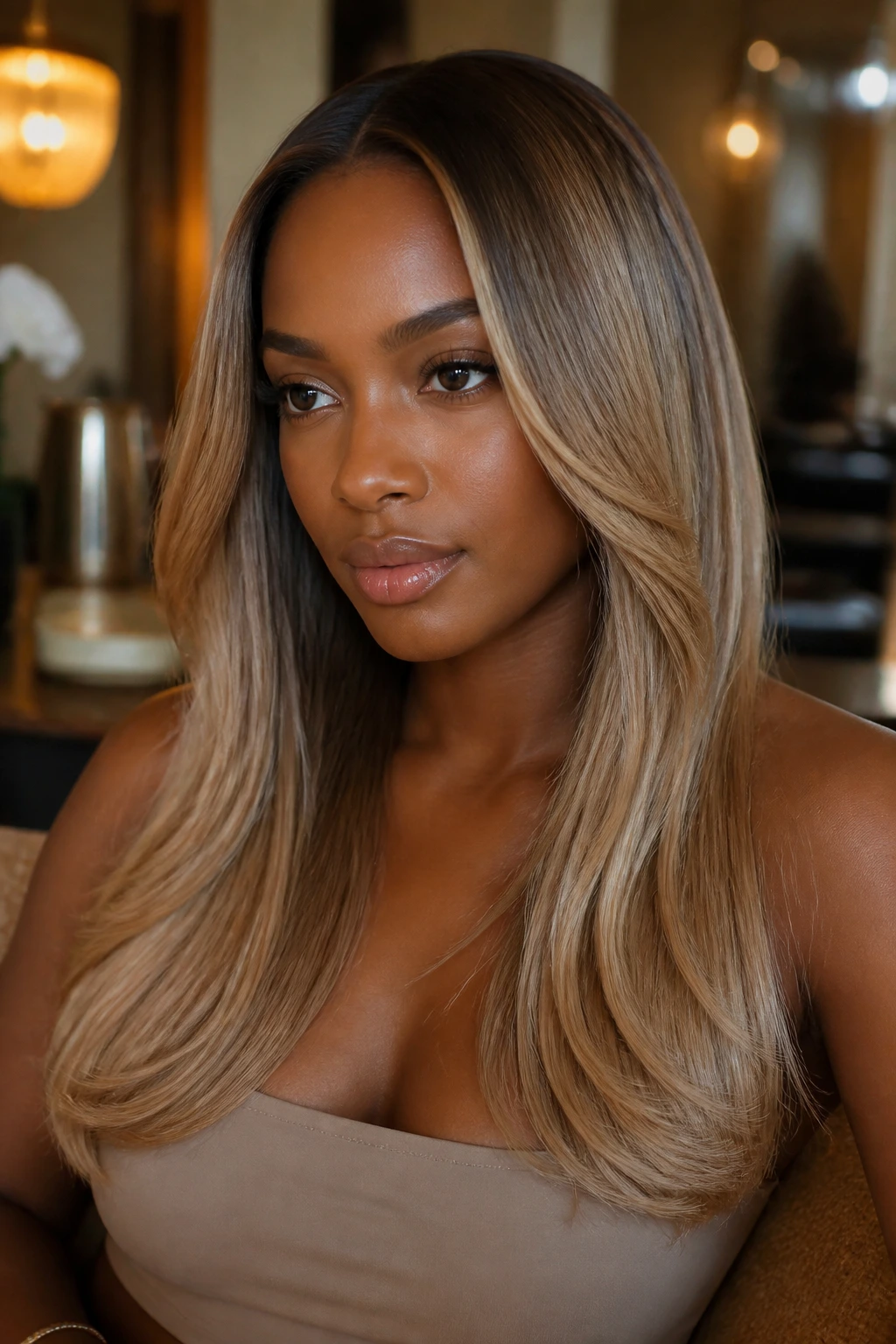
Chai ash blonde has a little spice in it, and that’s the reason it flatters deep skin so well. The tone mixes beige, taupe, and a faint golden note, so the blonde doesn’t crash into warm or neutral undertones. It lands in the middle and stays there.
The logic behind it
This is the shade to ask for when you want ash but not frost. A true icy toner can go gray on some deep complexions. Chai keeps a creamy softness, especially when it’s blended from a darker root into lighter mids. It’s also forgiving on hair that doesn’t lift evenly, because the color family already has depth.
The best styling choice is loose bends or soft curls. They separate the tone and keep the whole look from turning muddy. Straight hair works too, but it shows every shift in tone, so the gloss has to be clean.
17. Cool Honey Ash Blonde with Dark Roots
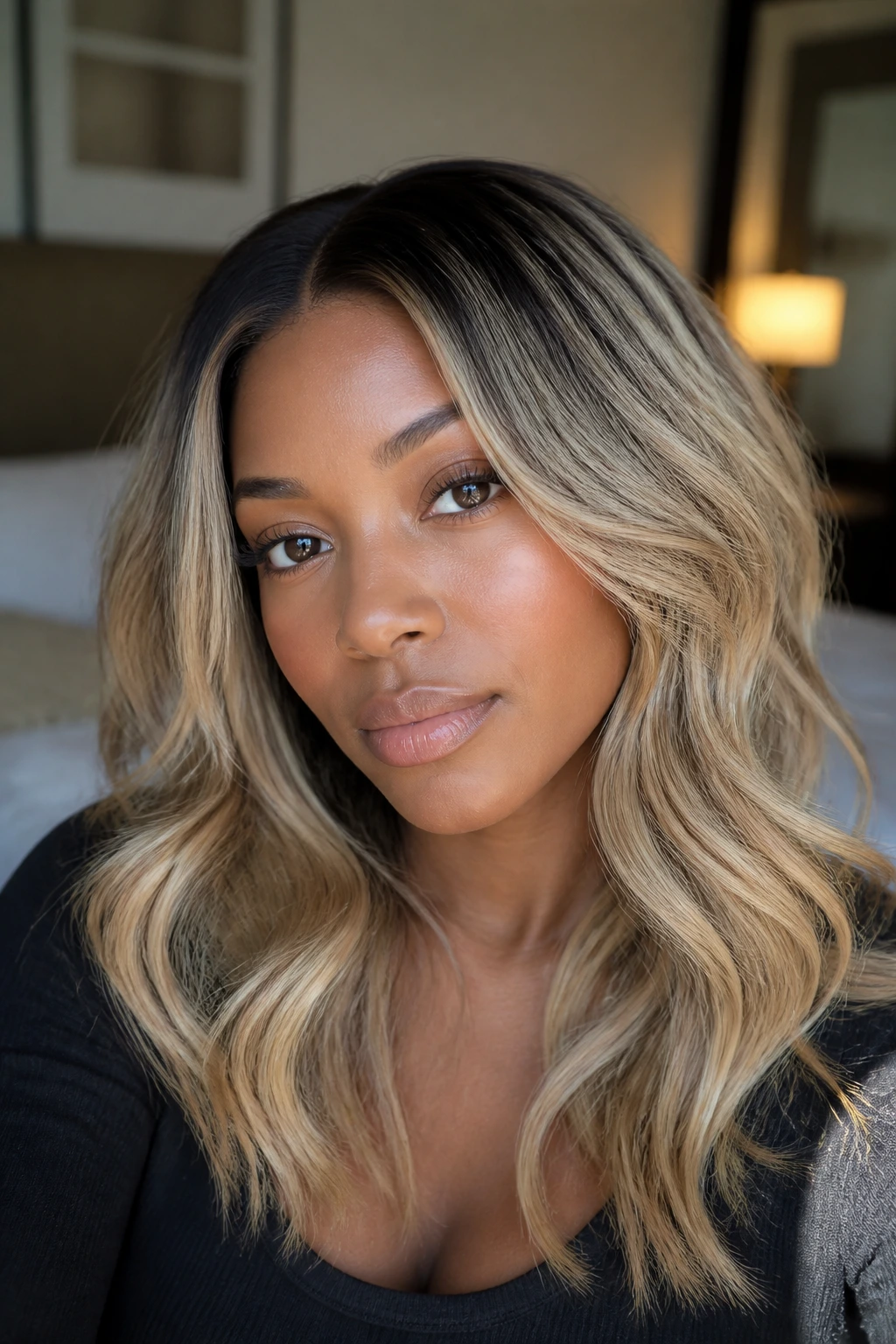
Honey blonde is usually warm, and that warmth can be lovely on deep skin. The problem is when it goes too gold and starts fighting with the rest of the face. A cool honey ash version fixes that by keeping the root dark and glazing the blonde with a smoky toner.
The result is soft, not brassy. You still get that richer golden feel, but the ash pulls it back before it turns orange. This is a smart choice if full beige ash feels too quiet on you. It has a little glow.
It looks especially good on wavy hair and layered cuts, because the darker roots and cooler mids create movement. If your skin leans golden or olive, this may be the most wearable blonde on the list.
18. Glacier Ash Peekaboo Panels
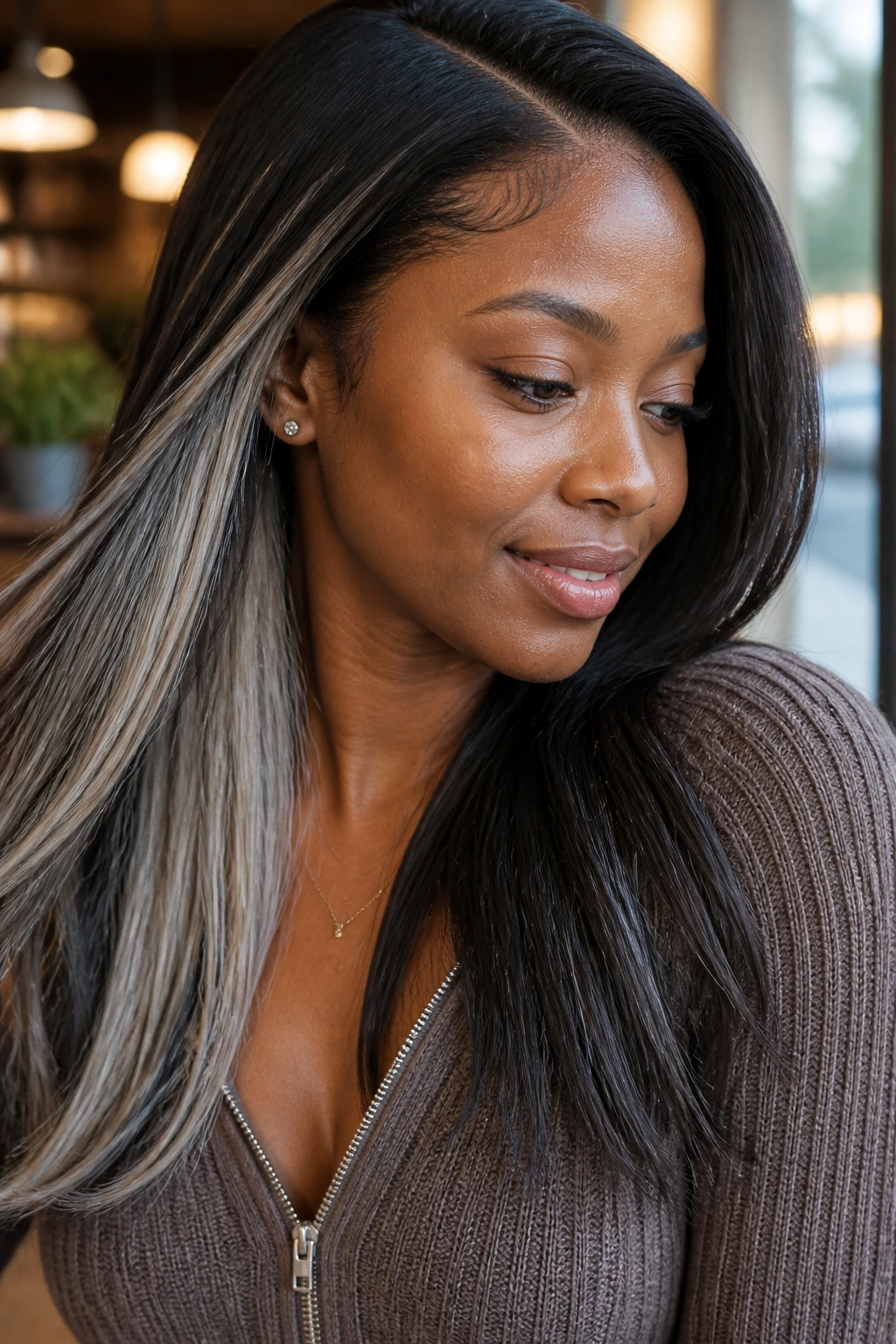
Peekaboo panels are for people who like surprise. The lightest ash sits underneath the top layer, so you see it when the hair moves, flips, or gets pinned up. On deep skin, that hidden placement keeps the blonde from overwhelming the face while still giving the color some bite.
The glacier tone should be cool but not icy-white. A silver-beige panel looks more expensive than a flat white stripe, and it grows out with less visual noise. I like this on straight styles, blunt bobs, and shoulder-length cuts where the hidden blonde has room to peek out.
It’s a good compromise if you work in a more conservative setting or just don’t want the whole room to know your business every time your hair shifts. Private drama. That’s the appeal.
19. Mushroom Ash Afro Puff
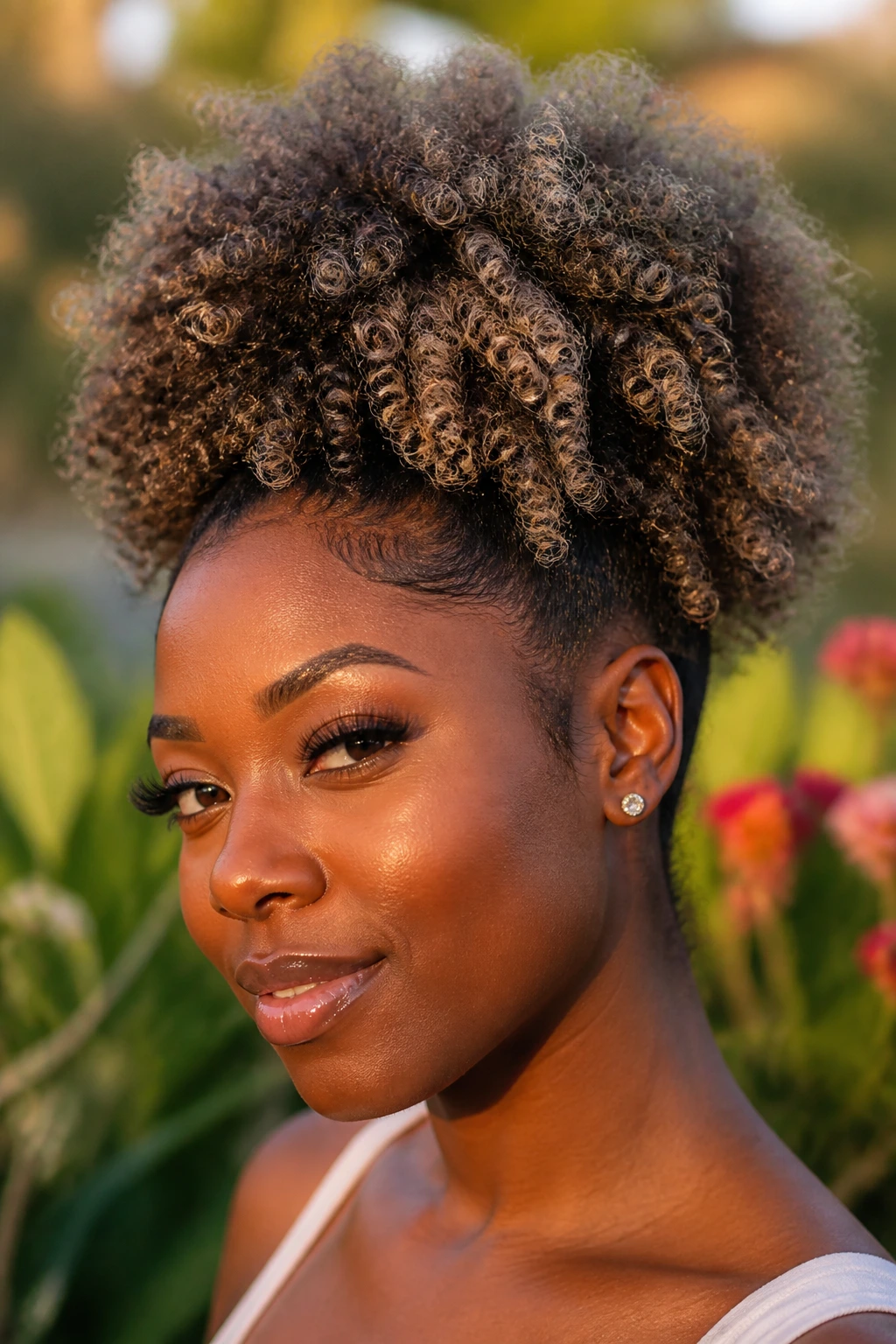
A puff gives ash blonde a halo effect when the color sits on the outer surface and the ends. That’s the trick. Keep the root rich, let the blonde live on the top layer and the tips, and the shape stays full instead of dusty.
How to place it
- Keep the base deep and healthy.
- Paint the outer halo with mushroom or taupe ash.
- Let the brighter pieces sit where the puff lifts naturally.
- Use a gloss, not a harsh toner, if the hair already leans porous.
This is one of the most flattering ideas for coily hair because the puff itself adds shape. The color doesn’t have to do all the work. It just needs to catch the eye when the curls expand.
20. Silver-Beige Blunt Bob
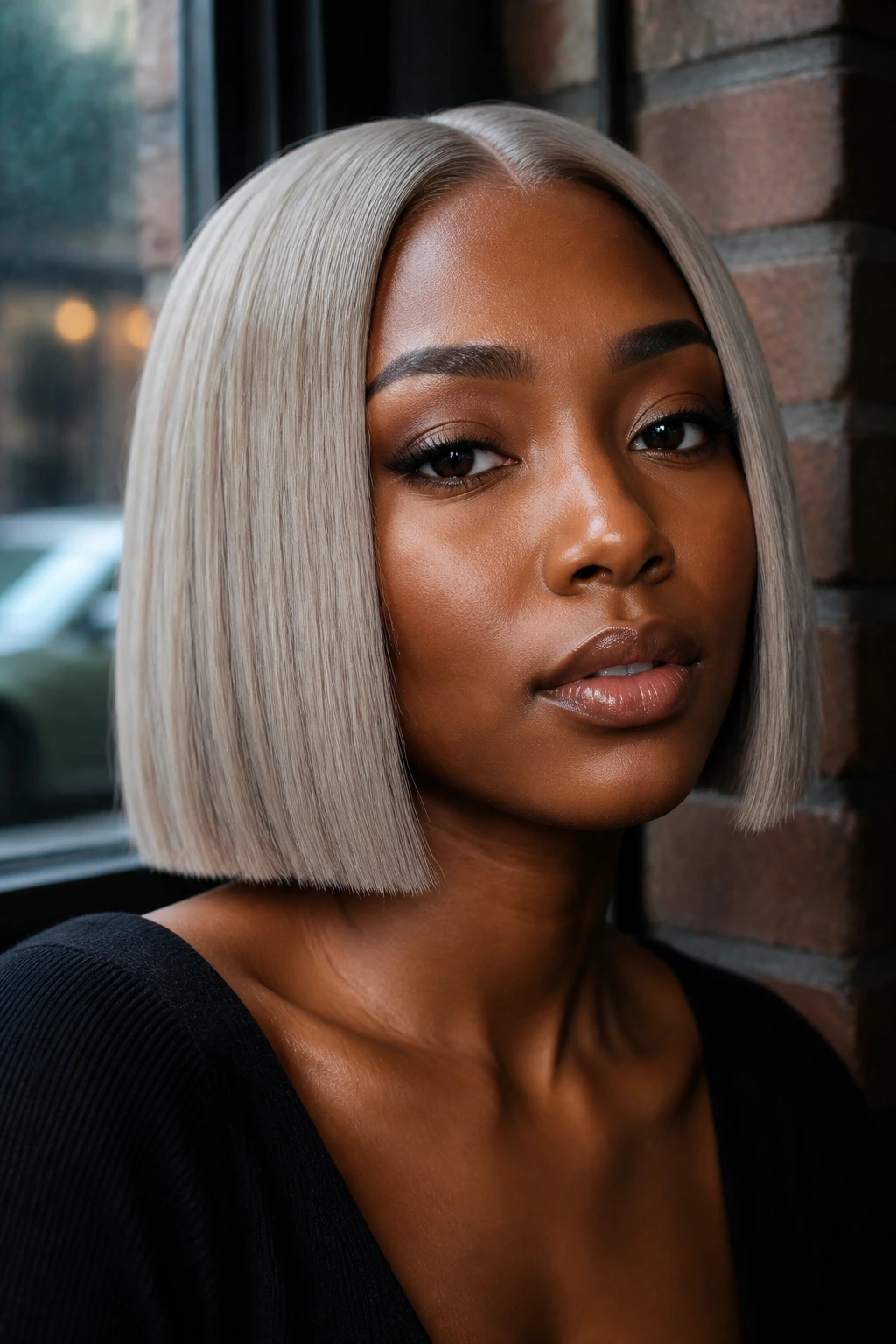
A blunt bob with a silver-beige glaze has a sharp, almost architectural feel. On deep skin, that strong line works because the haircut gives the color a frame. Every edge matters. Every inch shows.
The shade should be silver-beige, not flat silver. Pure silver can go a little cold against deeper complexions unless the makeup and styling are doing something on purpose. Beige softens the finish and keeps the bob from looking frosty in an unflattering way. I’d keep the ends clean and the shape trimmed often, because blunt lines make regrowth obvious.
If you like structured clothing, bold earrings, and smooth styling, this one belongs on your shortlist. It’s neat. It’s crisp. It has no patience for sloppy toner.
21. Taupe Ash Knotless Braids
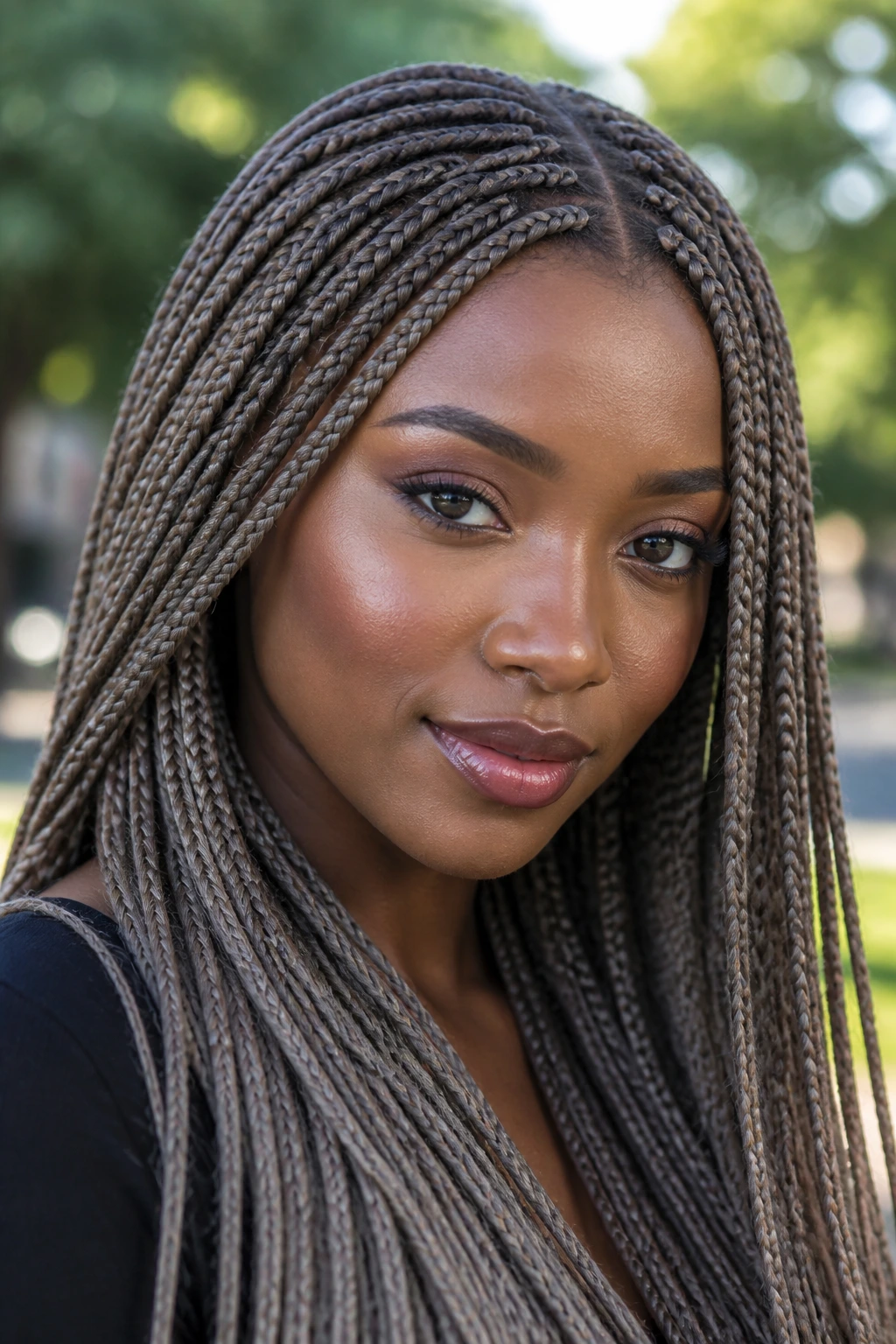
Braids don’t need bleach to read blonde. Taupe ash knotless braids can give you the whole smoky-blonde effect while keeping your natural hair protected underneath. On deep skin, the dark-rooted feed-in section is what sells it. Without that depth, the blonde can look disconnected from the face.
How the color shows up in braiding hair
Choose extension hair with a muted taupe or beige-ash finish, not a bright yellow-blonde. The taupe reads smoother next to richer skin and tends to look less synthetic under daylight. If you want a little more dimension, mix in a few darker strands near the root area.
This is one of the easier ways to wear ash blonde if your hair is resting or recovering. You get the look without the lift. That alone makes it worth knowing about.
22. Platinum Beige Undercut
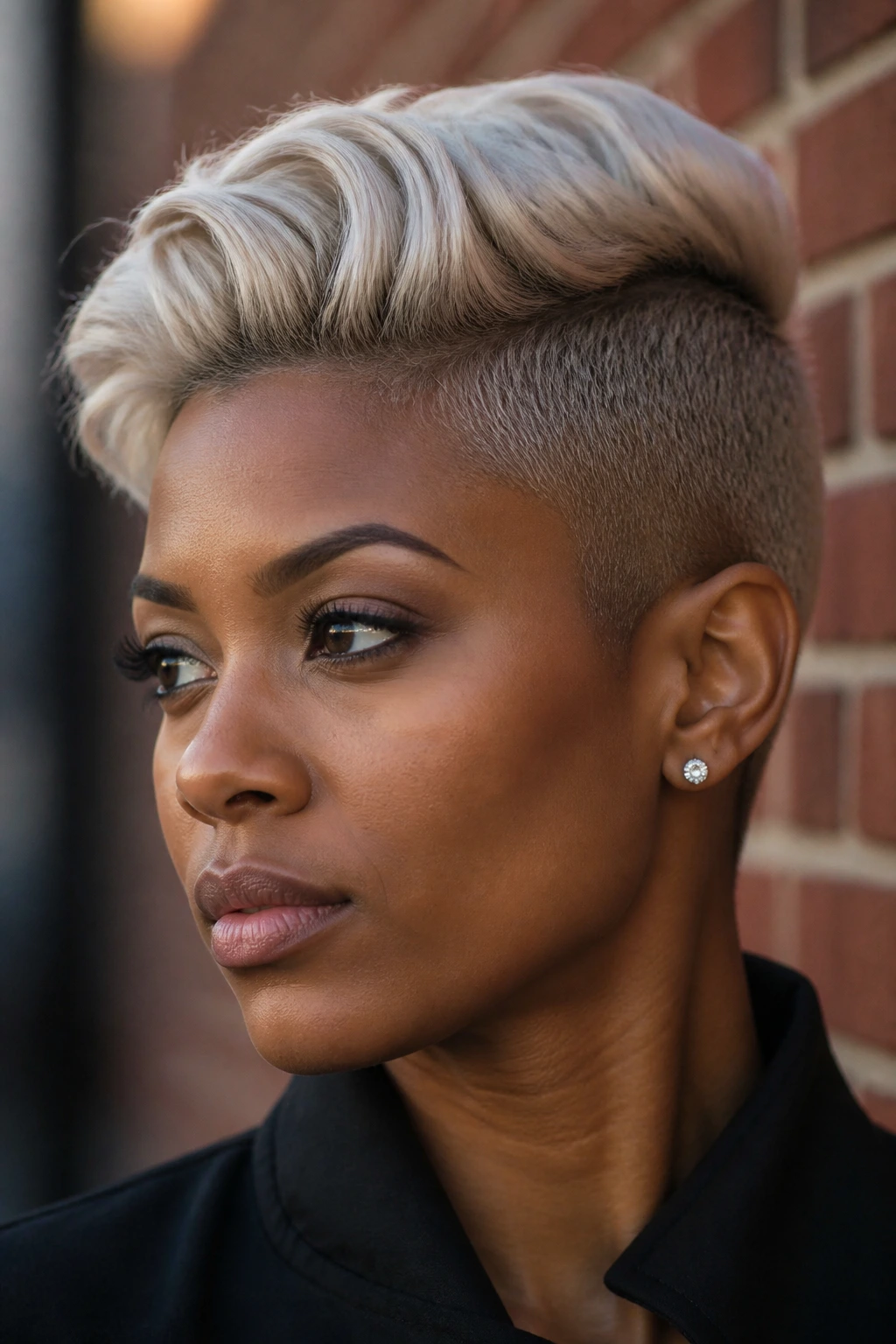
An undercut changes the maintenance game. Because the lightened area is smaller, you can push the blonde brighter without turning the whole head into a weekly project. On deep skin, that means a platinum-beige top section can look bold and still stay somewhat manageable.
The undercut also sharpens the silhouette. Shaved or closely cropped sides make the brighter top feel deliberate. I’d keep the platinum-beige tone slightly soft, not white-white, so it doesn’t clash with the depth elsewhere on the head. This is a cut that likes clear lines and strong contrast.
It’s not for everyone. But if you like a little edge and don’t want the upkeep of a full platinum head, this is a very good trade.
23. Charcoal-and-Ash Split-Dye Panel
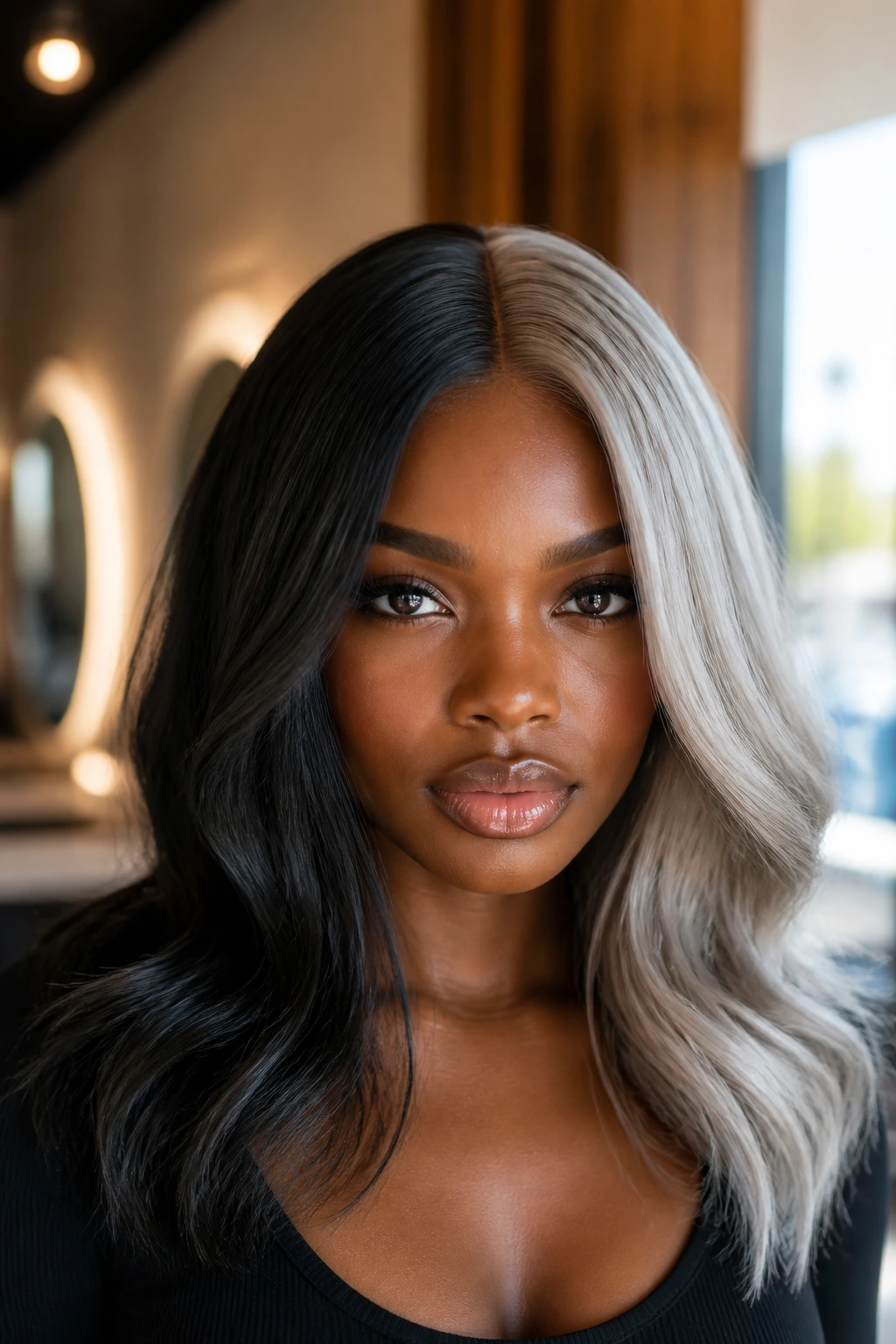
A split-dye panel is the loudest option here, and it works because the charcoal side keeps the color grounded. On deep skin, that dark half stops the ash blonde from looking disconnected. The lighter panel then hits with purpose instead of chaos.
This style looks best when the part line is clean and the two sides are styled with intention. Smooth blowout, sleek braid-out, flat twists, or a pressed finish will all show the split clearly. If the hair is fluffy in every direction, the line can blur and the point gets lost.
Best if you want:
- A graphic, high-contrast look.
- A color that changes how the cut reads.
- Something that plays well with bold makeup or sharp tailoring.
It’s dramatic. That’s the whole point.
24. Frosted Curls with Root Shadow
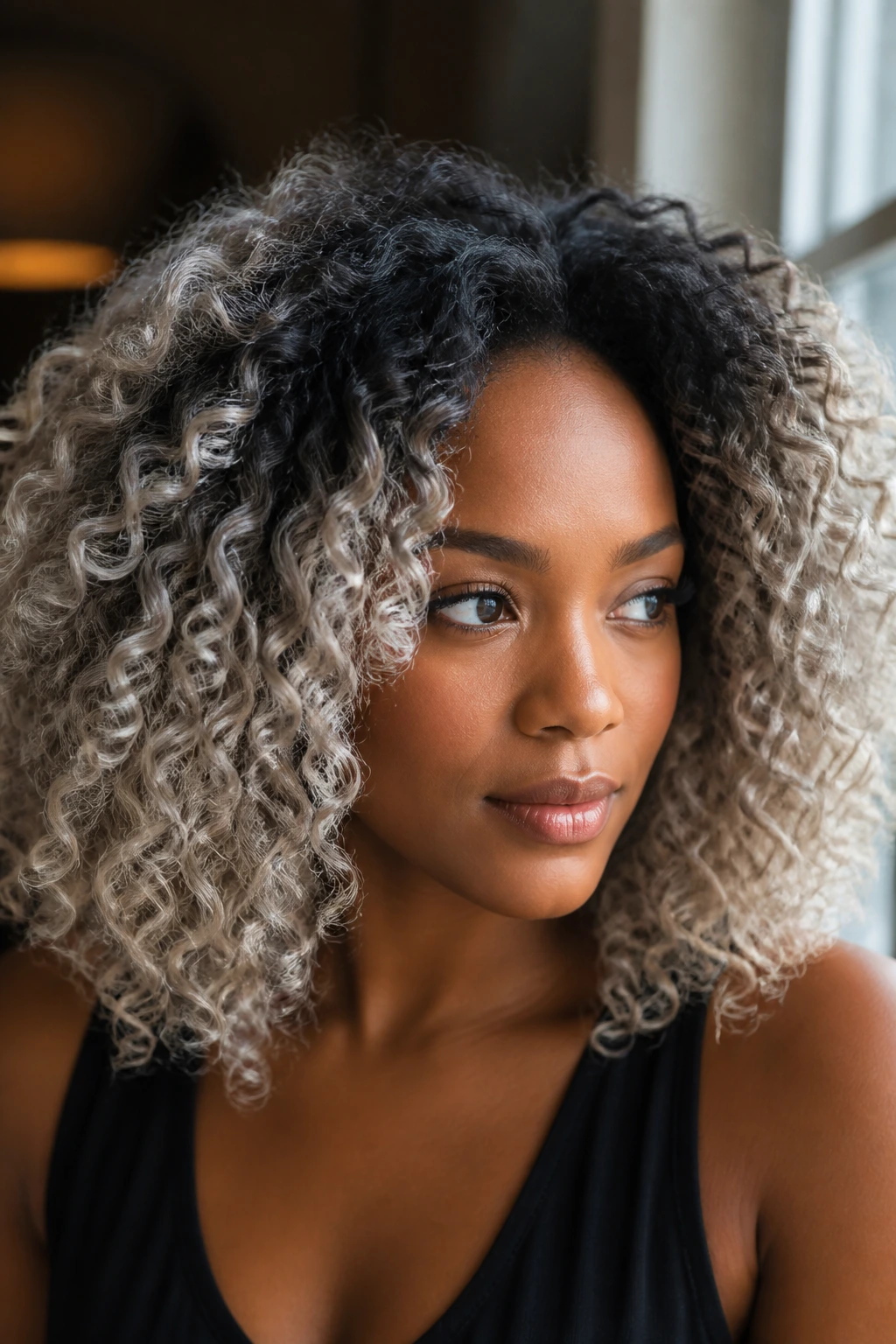
Can curls wear ash blonde without losing their softness? Yes, if the root stays dark and the blonde is frosted onto the ends and outer curl pattern. That little bit of shadow at the scalp keeps the whole style from reading powdery.
The curl shape matters more than people think. The lightest pieces should sit where the curls expand, not where they collapse against the neck. That way the blonde flashes when the hair moves instead of sitting in one flat patch. Use a beige or pearl toner if the hair lifts warm, and be careful with over-toning porous ends.
This is one of those looks that gets better once the curls are fully dry and separated. Wet hair hides the dimension. Dry hair shows the whole argument.
25. Soft Ash Blonde Butterfly Bob
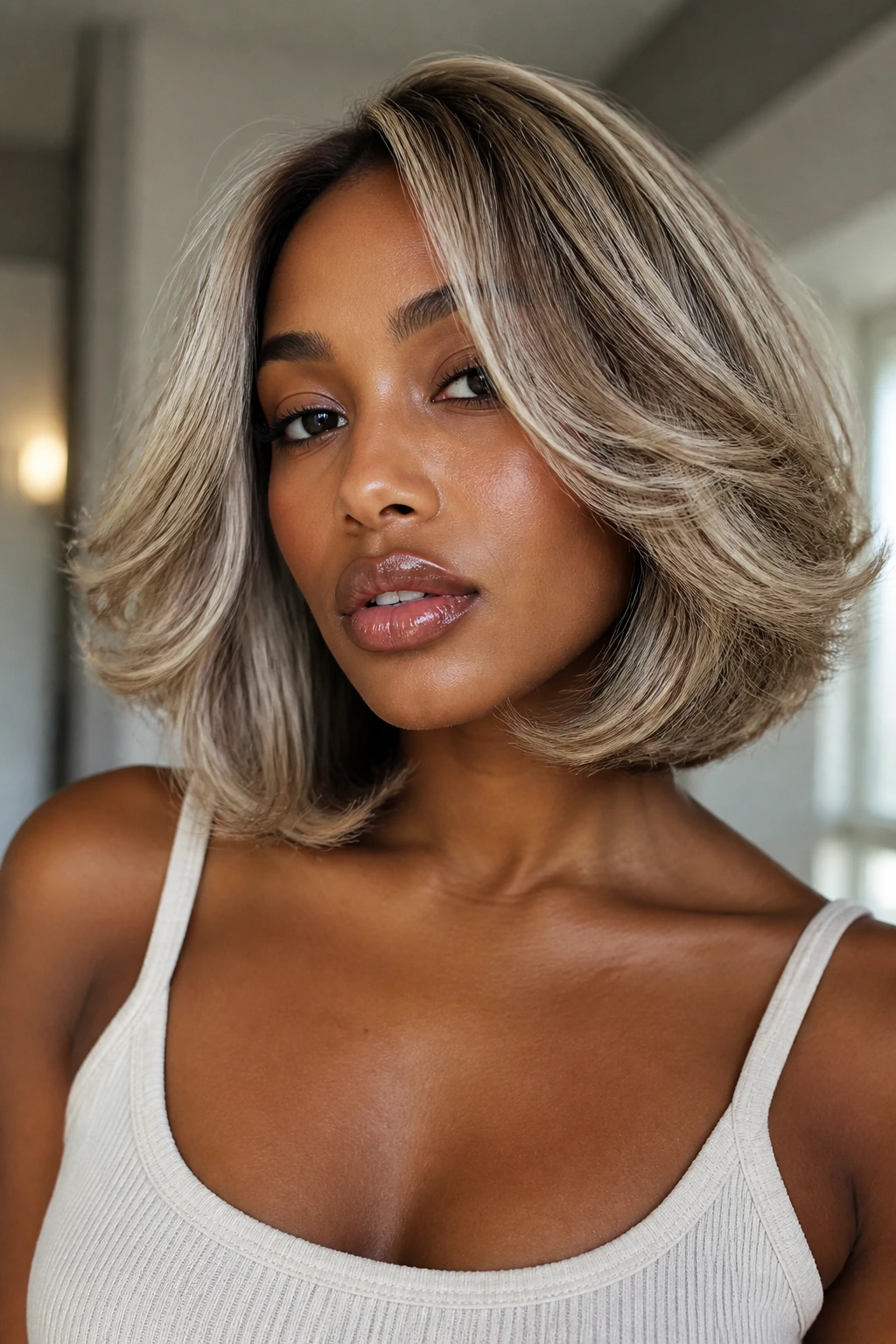
A butterfly bob is a nice way to end this list because it gives you movement without asking you to go all the way to platinum. The shorter layers around the face create a lift, while the longer pieces underneath keep enough depth for deep skin to look balanced. Add soft ash blonde ribbons through the top, and the haircut suddenly has shape.
I like this version for first-time blondes. It’s lighter than mushroom, softer than silver, and easier to live with than a bright all-over blonde. The bob keeps the maintenance in check, and the layered cut stops the color from sitting in one heavy block.
If you want something fresh but not too precious, this is the one I’d show a colorist first.
The Placement Rule That Makes Ash Blonde Work
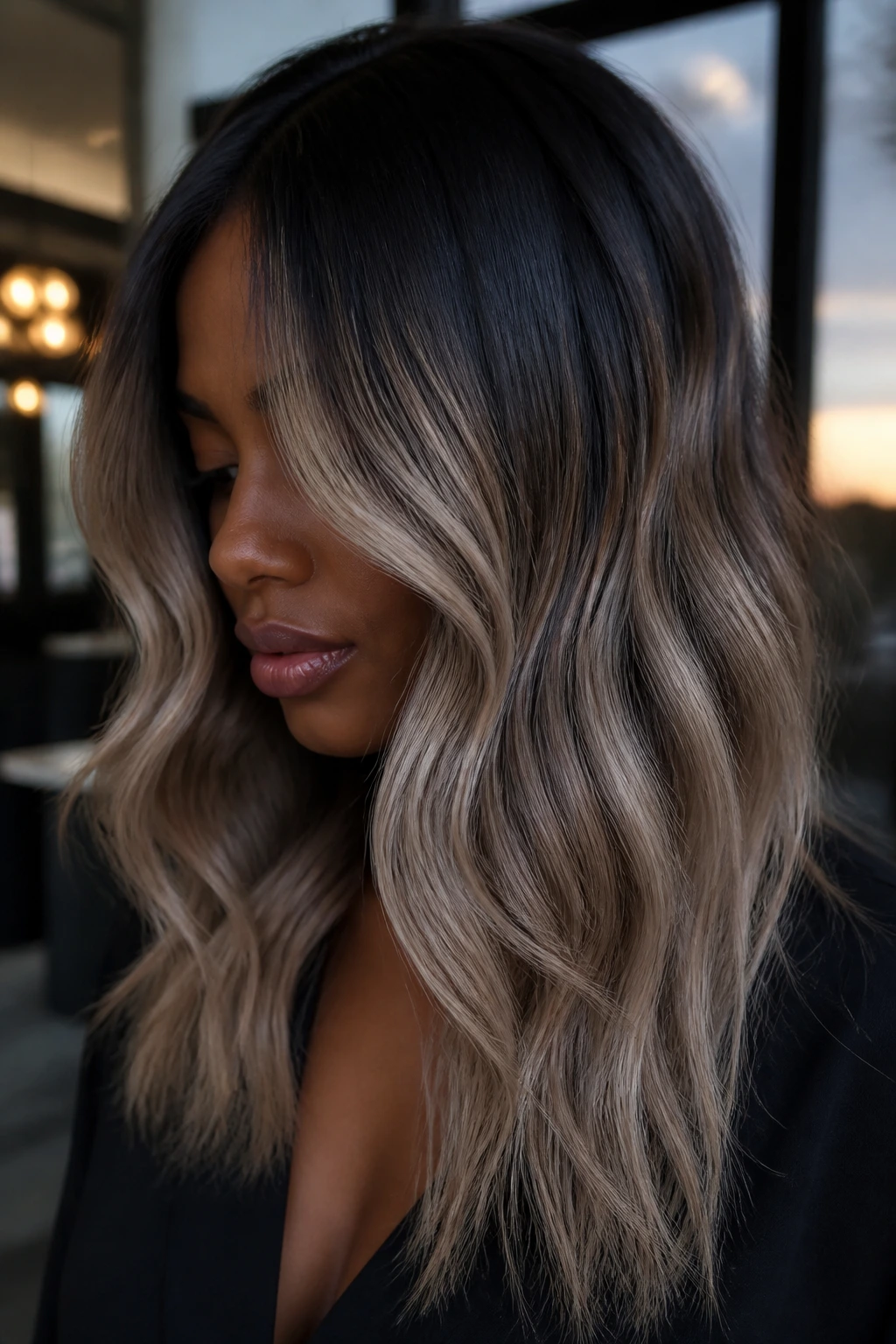
A good ash blonde on deep skin is never just “make it lighter.” That’s how you get a flat blonde cap with no depth and no shape. The better approach is to decide where the light should live before you decide how pale it should be. Around the face. On the ends. Through the top layers. In the braid feed-ins. Wherever movement happens.
The level matters, but placement matters more. A level 8 beige ash balayage can look richer than a level 10 platinum block if the contrast is smarter. That’s one reason I keep coming back to shadow roots and root melts. They’re not a crutch. They’re part of the design.
Deep skin gives ash blonde something to lean against. Use that. Don’t fight it.
Tools and Products That Make These Shades Easier to Keep
- Reference photos in daylight: Screens can lie, and filtered photos lie harder. Bring pictures shot outdoors so the toner family is visible.
- Sectioning clips: These help with at-home styling and make it easier to see where the blonde sits when you’re checking a part or a braid line.
- Purple shampoo: Use this sparingly on pale ash ends to keep yellow from creeping in, especially on level 8 through 10 pieces.
- Blue shampoo: Handy if your darker base starts throwing orange at the mids, though it should never be used like a weekly religion.
- Color-safe sulfate-free shampoo: Strong cleansers strip toner fast. A gentler wash keeps the cool finish from fading so quickly.
- Bond-repair treatment: Bleached hair needs help holding together, especially if you’ve lifted curls, coils, or previously colored hair.
- Deep conditioner or mask: Ash blonde shows dryness fast. A weekly moisture mask keeps the ends from getting fuzzy and dull.
- Heat protectant: Non-negotiable if you use a silk press, blowout, or curling iron.
- Satin bonnet or pillowcase: This keeps color-treated hair smoother at night and cuts down on rough ends.
- Shower filter, if your water is hard: Mineral buildup can make ash tones go dull or brassy faster than you’d expect.
How to Choose the Right Ash Blonde Shade for Your Undertone
Bring photos, yes, but bring the right photos. A filtered platinum selfie from someone with a much lighter complexion won’t help you much. What you want are reference shots on people with similar depth and a similar undertone—golden, neutral, olive, or cool. That one detail saves a lot of bad toner choices.
If your skin leans warm or golden, beige ash, mushroom blonde, and chai ash usually play nicest. They carry enough softness to keep the face from looking drained. If your skin is cooler or more neutral, silver-beige, pearl ash, and icy face-framing pieces can work beautifully. The important part is keeping some richness in the base.
One more thing people skip: porosity. If your hair already grabs color fast because it’s been lightened before, ask for a gentler toner and a gloss-first plan. If it’s resistant, a colorist may need more lift before the ash shade shows correctly. Same blonde family. Very different starting point.
How to Wear These Shades So They Flatters Deep Skin
Presentation: Soft waves make ash ribbons show up in motion, while straight styles sharpen every line of the color. On deep skin, I usually like a little bend at the ends because it keeps the blonde from looking like a sheet of paint. Center parts feel clean with blunt cuts; side parts soften a bolder money piece or platinum crop.
Accompaniments: Gold hoops, bronze blush, berry lipstick, and clean brow shape all help ash blonde look intentional on deeper complexions. Jewel tones—emerald, sapphire, plum—also give the hair a richer frame. Black and crisp white work too, but they need good contrast from the makeup or jewelry so the whole look doesn’t flatten out.
Portions: If you want a small change, keep the blonde close to the face and ends. If you want more impact, spread the ash through the top layers and mids, but leave at least one deeper level in the base. That little darkness is what makes the color look expensive instead of over-processed.
Lighting: Natural daylight shows the cool tone most honestly. Warm indoor bulbs can make beige ash look slightly honeyed, which is fine if that’s the goal and annoying if it isn’t. Check the shade in both.
Additional Styling Tweaks and Glow Boosters
Gloss Boost: A clear or beige gloss every 4 to 8 weeks keeps the ash blonde from turning dusty. On porous hair, this matters even more than the highlight pattern itself.
Customization: Want softer contrast? Ask for more mushroom and beige. Want a stronger face frame? Add a money piece in level 8 ash-beige. Want less upkeep? Keep the root darker and push the blonde toward the ends.
Serving Suggestions: Soft waves show ribbon highlights best. A sleek silk press shows the tone cleanly. Braids and protective styles need braid hair in the right taupe or ash family so the finish doesn’t turn yellow against deep skin.
Make-It-Yours: Warm undertones usually look best with beige ash or chai blonde. Neutral undertones can handle pearl and silver-beige. Cool undertones can go a touch icier, especially in pixies, undercuts, and sharp bobs.
Common Mistakes That Make Ash Blonde Look Flat
The first mistake is going too pale too fast. A full head of icy blonde on deep skin can look striking for about five minutes, then the lack of depth starts to show. Keep some shadow at the root, and the whole color gains shape.
Another problem is over-toning. People chase brass so hard they end up with gray, green, or a strange hollow cast. That usually happens when violet shampoo or a blue-heavy toner gets used too often. Fix it by switching to beige, mushroom, or champagne gloss instead of trying to bleach the tone into obedience.
Porous ends are another trap. The lighter parts grab toner faster than the root, so one section goes muddy while another stays warm. A colorist who understands porosity will tone in stages, not all at once. At home, a moisturizing mask and a lighter hand with purple shampoo help a lot.
Skipping maintenance is the last big one. Ash fades faster than warm blonde because the cool pigments are small and stubborn in a different way. If you don’t refresh it, it loses its edge and turns dull instead of warm. Those are not the same thing.
Variations and Adaptations to Try
The Beige-Bias Reset: If a cool ash shade feels too gray on you, ask for a beige gloss over the blonde pieces. That keeps the tone soft and creamy while still reading cool in the sun. It’s a smart fix for warm undertones.
The Root-Shadow Stretch: Keep the roots deeper by one or two levels and let the blonde live from the mids down. This lowers maintenance and gives deep skin a richer frame, especially on waves and layered cuts.
The Curly Placement Edit: On curls and coils, ask for highlights that follow the curl pattern instead of straight foils. The blonde shows up in the movement instead of fighting the shape.
The Protective-Style Swap: Use ash-blonde braiding hair, faux loc extensions, or wig units in mushroom, taupe, or silver-beige. You get the shade without bleaching your natural strands.
The High-Contrast Statement: If you like sharper color, try a bright money piece, platinum-beige top section, or a split panel. Keep the rest dark so the blonde has something to contrast against.
Keeping Ash Blonde Clean Between Appointments
Ash blonde does not forgive neglect. A beige or mushroom toner can start to fade after a few washes, especially on porous ends or highly lifted pieces, so a little routine care makes a big difference. Wash with a sulfate-free shampoo most of the time, then bring in purple shampoo only when the yellow starts to creep back on pale sections. If you use it every wash, the hair can go dull and brittle-looking.
Glossing matters more than people expect. For balayage, balayage-like melts, and money pieces, a salon gloss every 4 to 8 weeks keeps the tone smooth. Bright pixies, platinum crops, and silver-beige bobs usually need attention sooner because regrowth is visible fast and the toner shows more clearly on short hair.
Heat is the other thing to watch. A silk press, a curled bob, or a wave-set ash blonde looks sleek only if the cuticle stays calm. Heat protectant, low to medium heat, and a satin bonnet at night are the basics. If you’re bleaching curls or coils, bond repair and weekly moisture masks aren’t extra—they’re the cost of keeping the color from frizzing out.
Common Questions About Ash Blonde on Deep Skin
Will ash blonde wash me out if my skin is deep?
Not if the shade keeps some depth. Beige ash, mushroom blonde, champagne ash, and root-shadowed looks usually flatter deep skin better than a flat icy blonde because they hold contrast around the face.
Is beige ash better than silver ash for deeper complexions?
For most people, yes. Beige ash is softer and easier to wear, especially if your undertone is warm or neutral. Silver ash can look beautiful, but it needs a strong haircut, good makeup, or a little extra darkness at the root.
Can curly and coily hair wear ash blonde well?
Absolutely, but the placement has to follow the texture. Curly and coily hair usually looks best with ribbons, frosted ends, or halo highlights rather than straight, chunky stripes that ignore the curl pattern.
Do I need bleach to get these looks?
For natural hair, usually yes if you want actual blonde lightness. Protective styles are the exception because ash-blonde braiding hair or extension pieces can give you the color without lifting your own strands.
How do I keep ash blonde from turning brass?
Use color-safe shampoo, limit heat, and don’t over-wash. If brass shows up, a beige gloss or a light purple shampoo session usually fixes it faster than reaching for another round of toner.
Is ash blonde better as highlights or all-over color?
On deep skin, highlights and balayage often look easier to wear because they keep the base rich. All-over ash blonde can work, but it takes more upkeep and more careful toner choice to avoid a flat, cool block of color.
Can I ask for ash blonde without knowing salon level numbers?
You can, but level numbers make the conversation better. Asking for “beige ash at a level 7 to 8 with a darker root” gives a colorist something precise to work with.
What if my hair is already damaged?
Start softer. A money piece, peekaboo panel, or ash gloss over lighter ends is kinder than a full platinum transformation. Healthy hair holds ash tone better anyway, so the slower route usually looks better.
The Cool Blonde That Still Has Depth
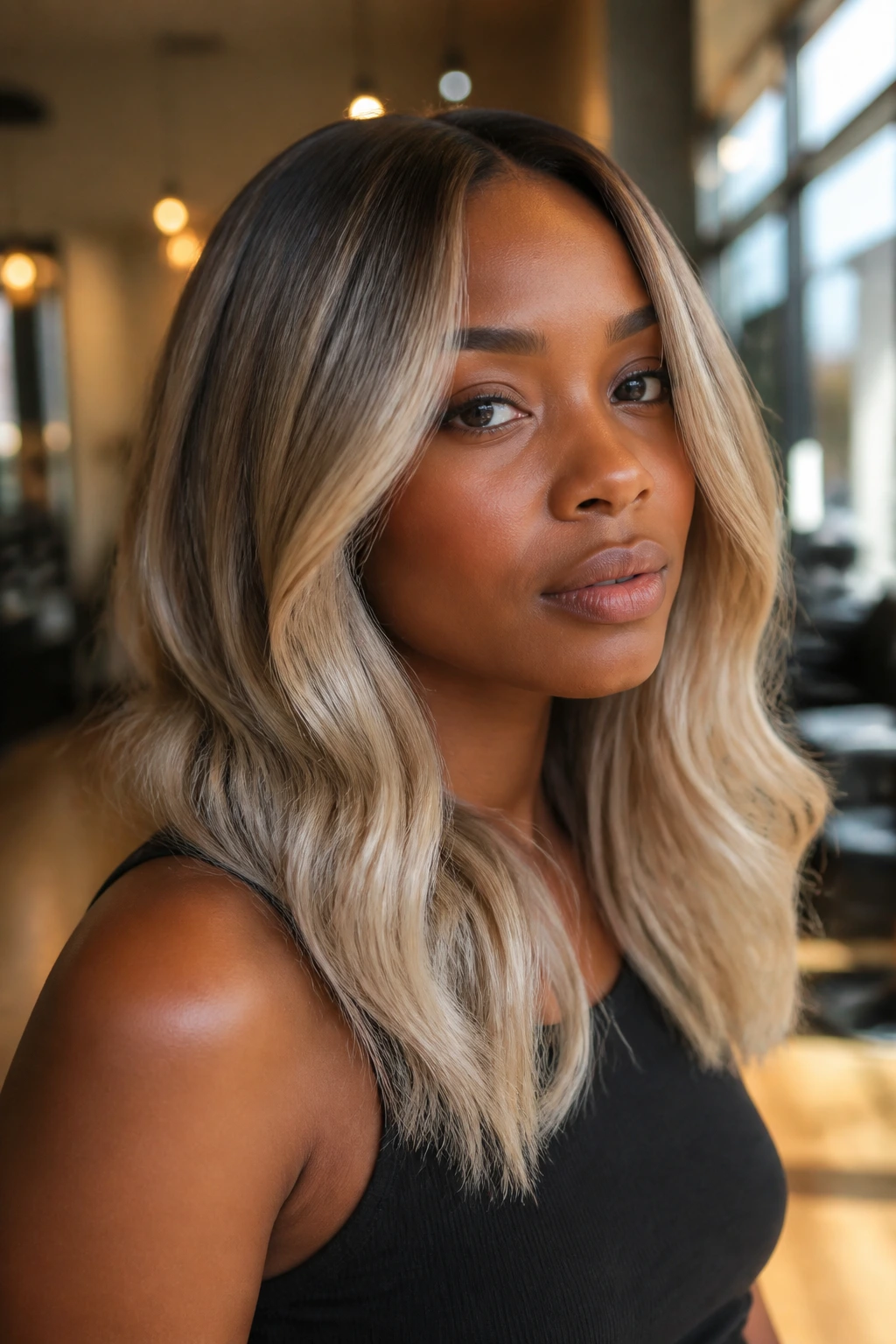
The prettiest ash blonde on deep skin rarely looks like one flat color. It keeps a little darkness at the root, a little softness in the middle, and just enough cool light at the ends to make the whole head feel deliberate. That balance is what separates smoky, rich blonde from the tired, chalky version people regret after two weeks.
If you’re choosing between shades, start with the mood you want. Soft and earthy points you toward mushroom, beige ash, and chai. Sharp and dramatic points you toward silver-beige, platinum crops, money pieces, and split panels. Either way, the same rule keeps showing up: depth first, blonde second.
Bring the right reference photo, keep the base honest, and let the ash live where the hair moves. That’s the version that stays flattering, even when the light changes.