



Platinum blonde hair color ideas for pale skin can look razor-bright, soft-focus, or downright eerie, depending on the tone you pick. That’s the whole game. On very fair skin, a platinum that leans too blue or too white can erase the face; a platinum with a whisper of pearl, champagne, beige, or silver can make the skin look clearer, fresher, and somehow more awake without trying too hard.
The best versions don’t shout. They sit close to the skin’s undertone and give it somewhere to go. A pale face with pink undertones needs a different kind of blonde than porcelain skin with blue undertones. Freckles change the equation. So do brows, eye color, haircut, and how much makeup you actually like wearing on an ordinary Tuesday.
That’s why the most useful platinum looks are never just “platinum.” They’re icy champagne, pearl bob, smoky root melt, silver pixie, white-blonde blunt cut, beige blend, and a dozen other variations that each solve a slightly different problem. Some make pale skin look luminous. Some keep it from going flat. Some buy you a little maintenance breathing room. The good ones have personality. The bad ones look like a strip-light in a bathroom mirror.
Why These Platinum Shades Work on Pale Skin
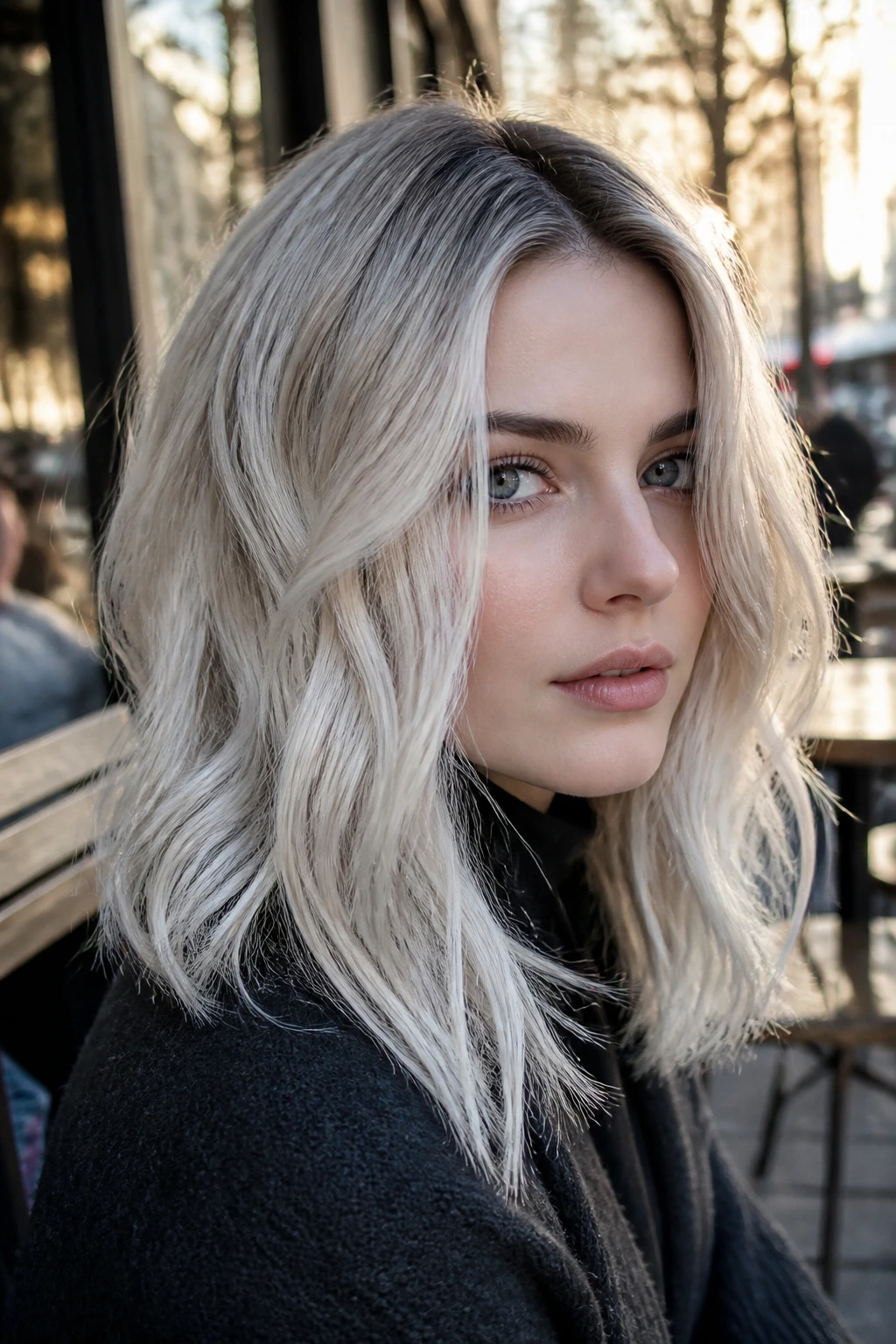
Rosy skin needs softness, not more cold. A pale face with pink or red undertones can get overwhelmed by a flat ash toner, so the better move is a pearl, champagne, or beige-platinum finish that cools the brass without turning the whole head chalky.
Cool skin can handle more white. If your skin leans blue, pink, or porcelain, a near-white blonde can look crisp instead of severe. The trick is keeping the brows defined and the cut clean, because the hair itself is doing less of the visual work.
Neutral pale skin gets the widest lane. You can go icy, smoky, pearly, or soft beige and still keep the face balanced. That freedom is nice, but it also means you need to be more deliberate; a half-step too far into silver can make the skin look tired.
Texture matters more than people think. A blunt bob, a shag, a pixie, and long waves all change how platinum sits on the face. The same toner can look delicate on one cut and glaring on another.
A little dimension saves the day. Root shadow, lowlights, or a face frame keep pale skin from disappearing into the hair. Tiny contrast. Big payoff.
1. Icy Champagne Platinum With a Root Melt
A straight-up white platinum can be brutal on pale skin if there’s no shadow near the scalp. The champagne root melt solves that by leaving the root a shade deeper, then cooling the mids and ends with a pale pearl-beige glaze. It looks bright, but it doesn’t read like a sheet of paper under fluorescent lights.
Why the root melt helps
The soft root gives your eye a place to stop, which makes the face look less washed out. That matters most on porcelain skin with pink undertones, where all-over white can make every bit of redness show up louder than it should.
- Best for: pale skin with rosy or neutral undertones
- Tone to ask for: level 10 lengths with a beige-champagne gloss
- Maintenance: easier than a solid white blonde because the root grows in softer
- Looks best with: lob cuts, long layers, or a blunt bob
A little warmth in the glaze keeps the finish from turning icy in a bad way. Not gold. Just enough softness to stop the hair from looking like it belongs to a mannequin.
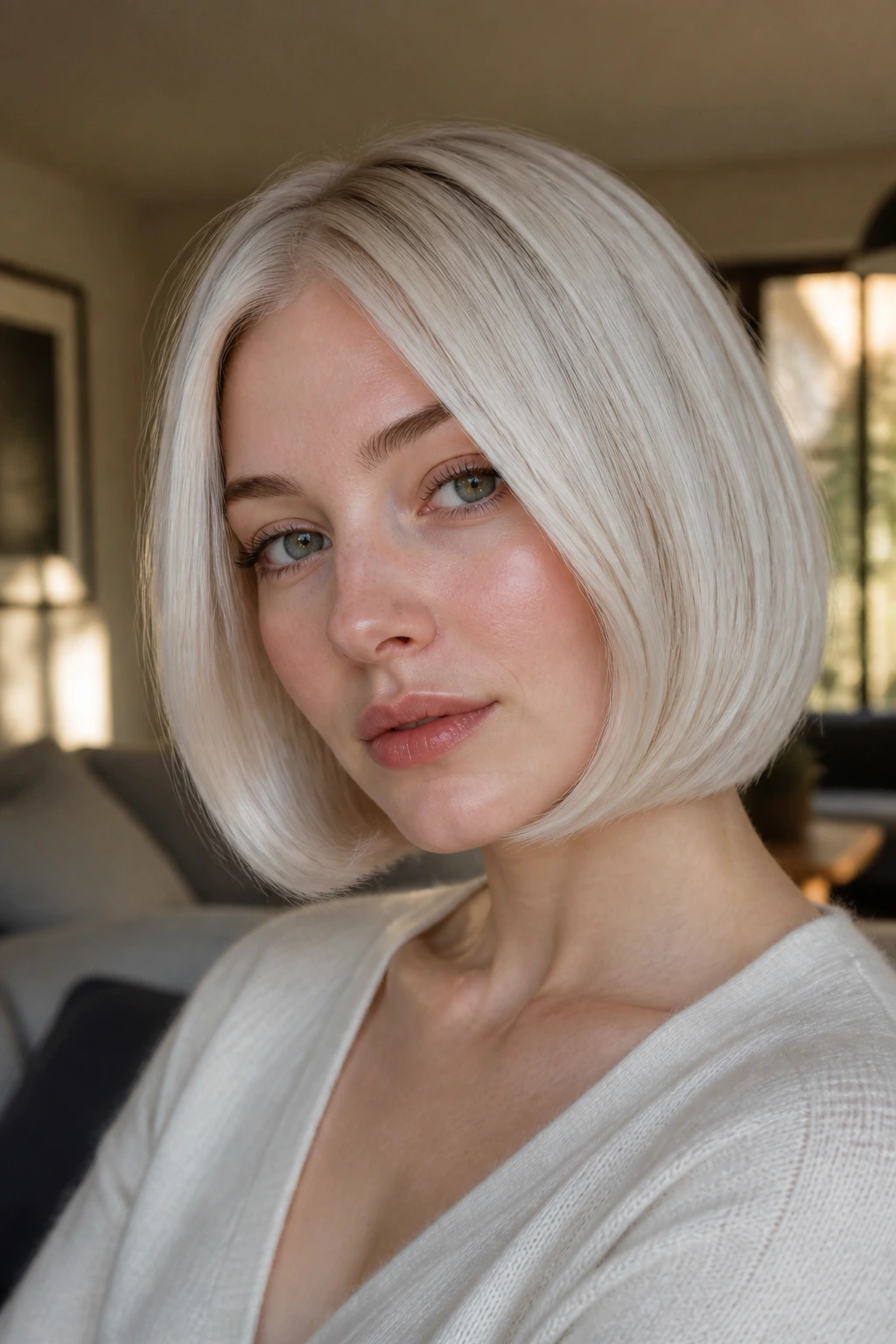
2. Pearl-Platinum Bob With Rounded Ends
A pearl-platinum bob has a way of making pale skin look rested. The pearl tone sits between silver and beige, so it reflects light without turning the whole face pale in the wrong way. Rounded ends help too; they soften the line at the jaw so the color doesn’t feel severe.
This is the blonde I reach for when someone wants brightness but not drama. The shape does a lot of the talking, which means the tone can stay delicate and clean. On fair skin with green or hazel eyes, the result is especially pretty because the hair doesn’t compete with the face. It frames it.
The only catch is toning. Pearl can drift dull if it’s overcorrected with too much violet shampoo. Keep the finish soft, not gray. If the bob is chin-length or just above the shoulder, it reads polished without feeling stiff.
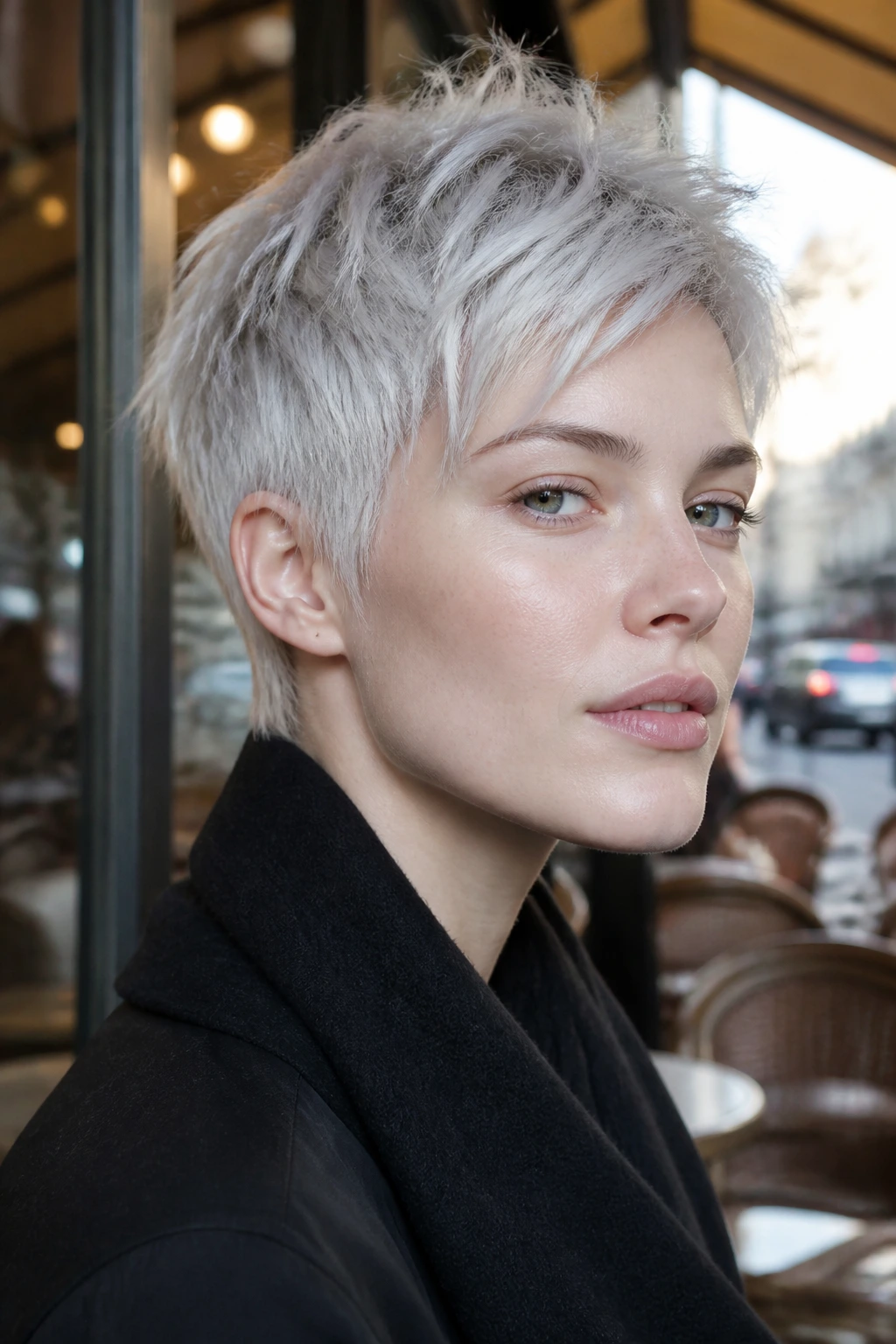
3. Silver-Platinum Pixie With Piecey Texture
Want the coolest possible blonde without losing definition? A silver-platinum pixie does the job. The short length lets the color go almost metallic, and the piecey texture keeps it from looking like a helmet.
How to wear it
A pixie like this loves a matte paste or a tiny bit of styling cream worked through the ends. Don’t drown it in product. You want separation, not slickness. On pale skin with blue undertones, the silver tone can look striking in a way that long hair sometimes can’t pull off.
The important part is the cut line. If the fringe is too soft and the sides are too fluffy, the blonde loses its edge. Keep the perimeter crisp and let the top move. That contrast is what makes the shade feel intentional instead of accidental.
It’s also one of the better platinum options for people who hate spending half the morning on their hair. Short hair shows color fast. It also shows damage fast, so bond care matters here more than almost anywhere else.
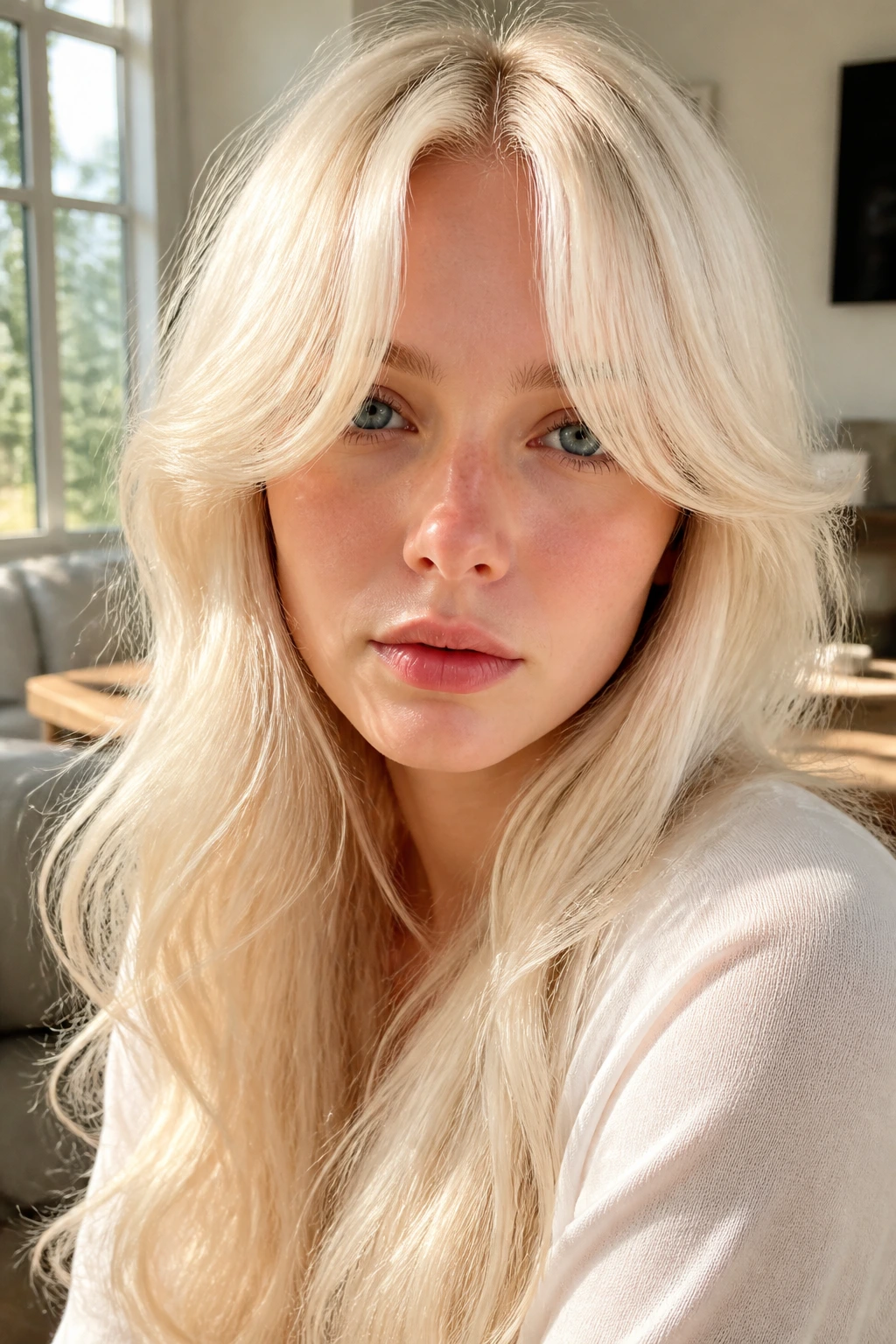
4. Vanilla Platinum With Curtain Bangs
A touch of vanilla in platinum changes the whole mood. Instead of looking stark, the blonde gets this creamy edge that can be lovely on pale skin with pink or freckled undertones. Curtain bangs help because they break up the brightness around the face.
The best vanilla platinum is not yellow. It’s a whisper of warmth, the kind that keeps cheeks from looking flat under indoor light. That tiny shift matters more than people expect. Pale skin often looks better beside hair that has a little softness in it, especially when the hair falls around the cheeks and temples.
Curtain bangs are the quiet hero here. They give you movement right where you need it, and they stop the color from becoming one big pale block around the face. If you wear minimal makeup, this is one of the easiest blondes to live with.
5. Smoky Platinum With Shadow Root
Smoky platinum is the answer for anyone who likes cool tones but hates how flat pure white can look. The smoke comes from a taupe-ash toner, and the shadow root keeps the brightness from starting right at the scalp. That extra depth is everything.
Unlike a cleaner icy blonde, smoky platinum gives pale skin more dimension. The face looks brighter because the hair isn’t equally bright from root to tip. Weirdly, a slightly darker root can make the ends look lighter. Contrast does that.
This shade works especially well if your natural hair is dark blonde or light brown, because the grow-out can blend instead of screaming for attention. It also looks good with blunt cuts and shoulder-length waves, where the color has room to show its smoky layers. If you want white-silver hair but with a little less sharpness, this is the smarter lane.
6. Scandinavian Bright Blonde With Clean Lengths
Scandinavian blonde is what happens when you want platinum to look crisp, not smoky. The tone is bright, pale, and close to level 10, with almost no visible warmth. On very fair skin, that clean brightness can look gorgeous, especially if your undertone is cool or neutral.
The catch is simple: the hair has to be healthy enough to carry the look. Any breakage, frizz, or uneven porosity shows fast when the color is this light. You need smooth lengths and a careful toner, because the whole point is a clean surface.
This is one of those shades that likes restraint. Straight styling, a neat middle part, and soft brows usually beat big beach waves here. The color is the statement. Everything else should get out of its way.
7. Platinum Lob With Face-Framing Ribbons
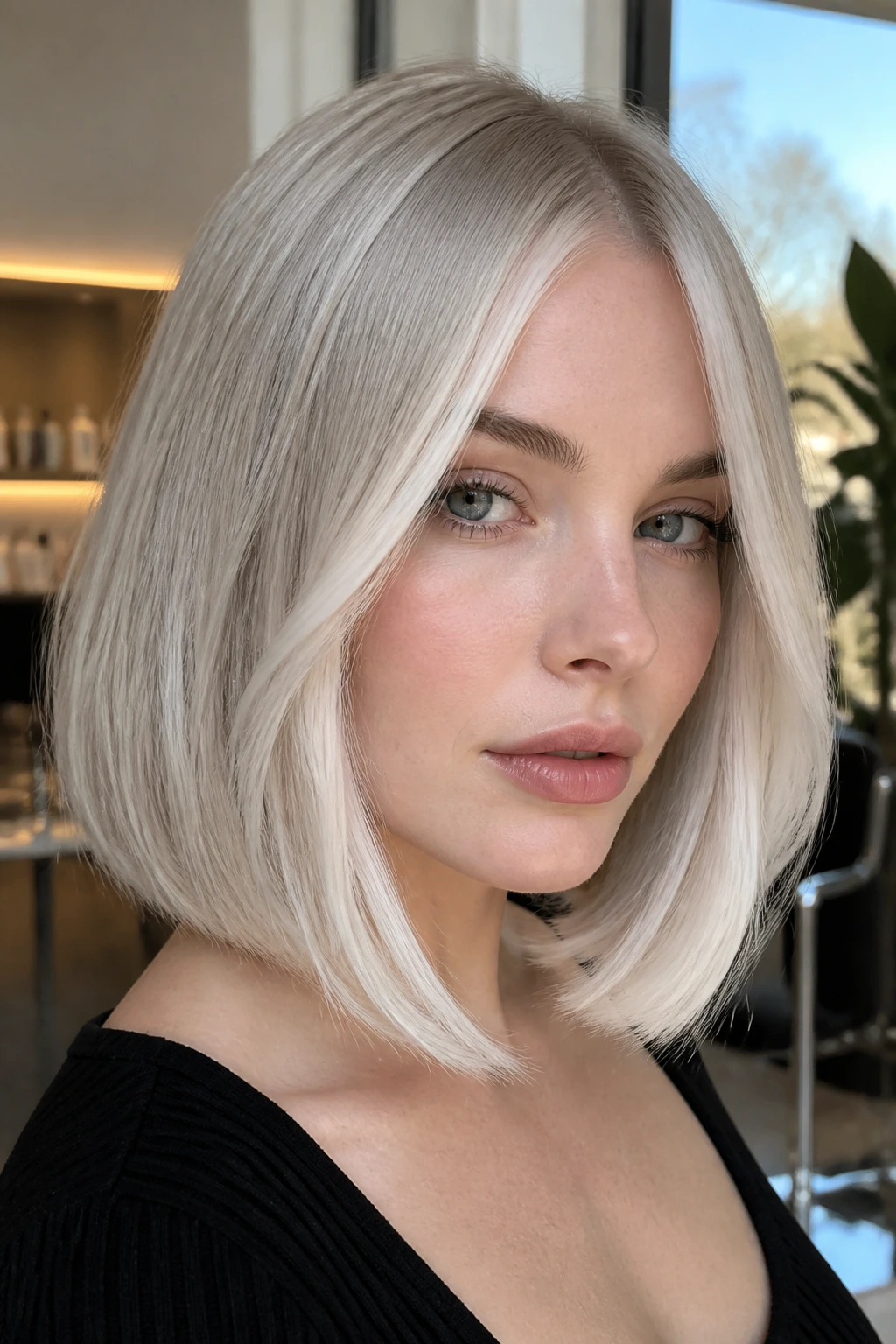
A platinum lob is one of the easiest ways to wear bright blonde on pale skin without looking overdone. The longer bob gives the color movement, and the face-framing ribbons pull the light right where you want it: around the eyes, cheekbones, and jaw.
What makes it different
The base can stay slightly deeper than the face frame, which keeps the overall look from turning washed out. That small shift matters on fair skin because it adds a bit of contrast without turning the blonde into obvious highlights.
A lob also gives you room to play with tone. You can go cooler through the mids and ends, then keep the front ribbons more pearly so they brighten the face. That mix works nicely if your skin is pale but not paper-flat; freckles, faint redness, and natural blush all show better with this setup.
It’s one of my favorite options for people who want platinum but still want hair that moves.
8. Frosted Platinum Waves
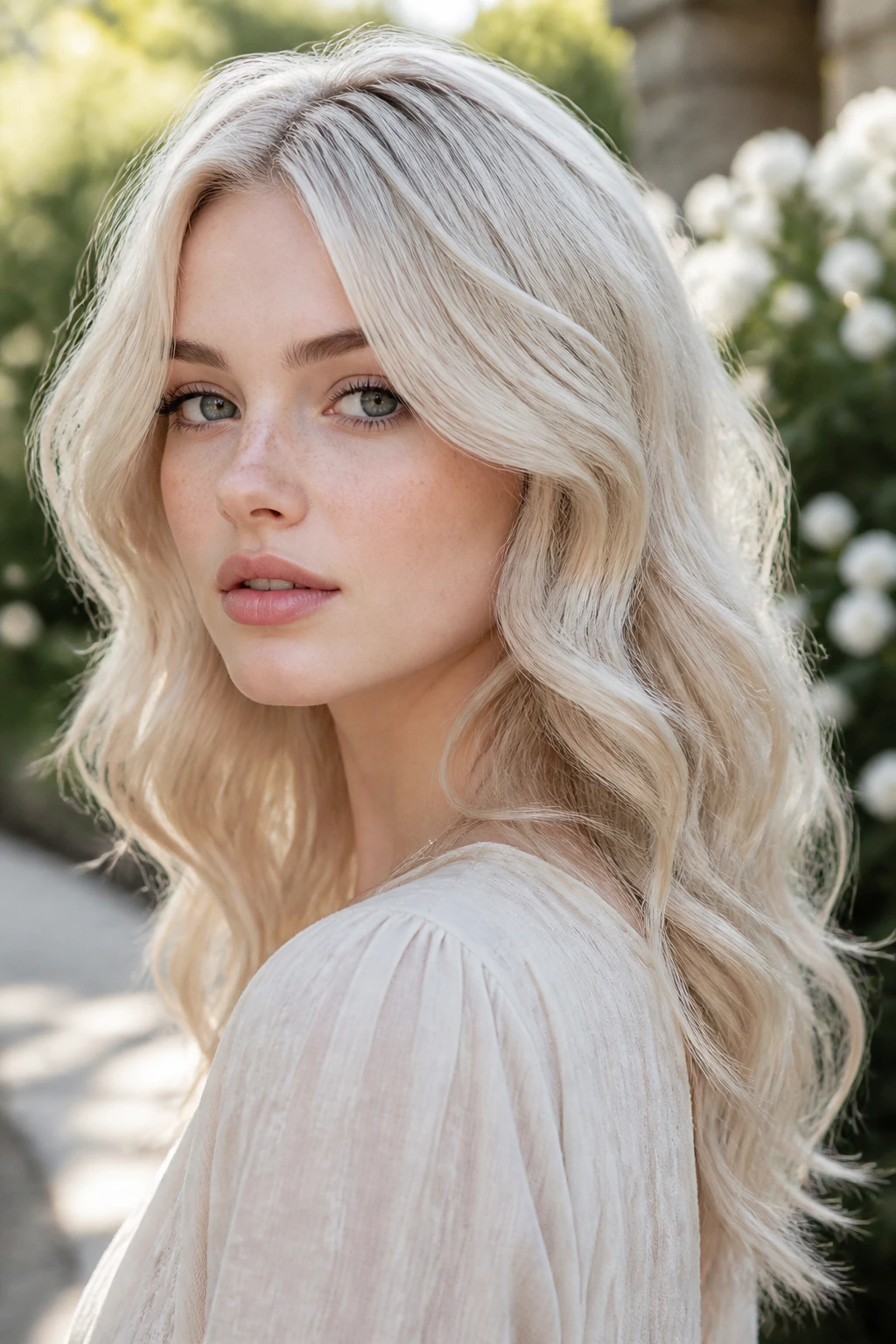
Frosted platinum waves are less about the color alone and more about how the color catches on texture. Soft waves break the blonde into light and shadow, which keeps pale skin from looking flattened by a single tone.
This shade loves a silvery gloss with a very light beige undertone. Too much violet and the waves can go icy in a way that feels distant. Too much beige and the frost disappears. The sweet spot is a finish that looks cold at first glance, then a little softer once the hair moves.
If your hair naturally bends or holds a wave well, this is an easy one to wear. The movement makes the platinum feel less severe. It also gives you a little forgiveness if your toner fades unevenly, because the wave pattern hides small shifts better than stick-straight hair does.
9. Beige-Platinum Blend
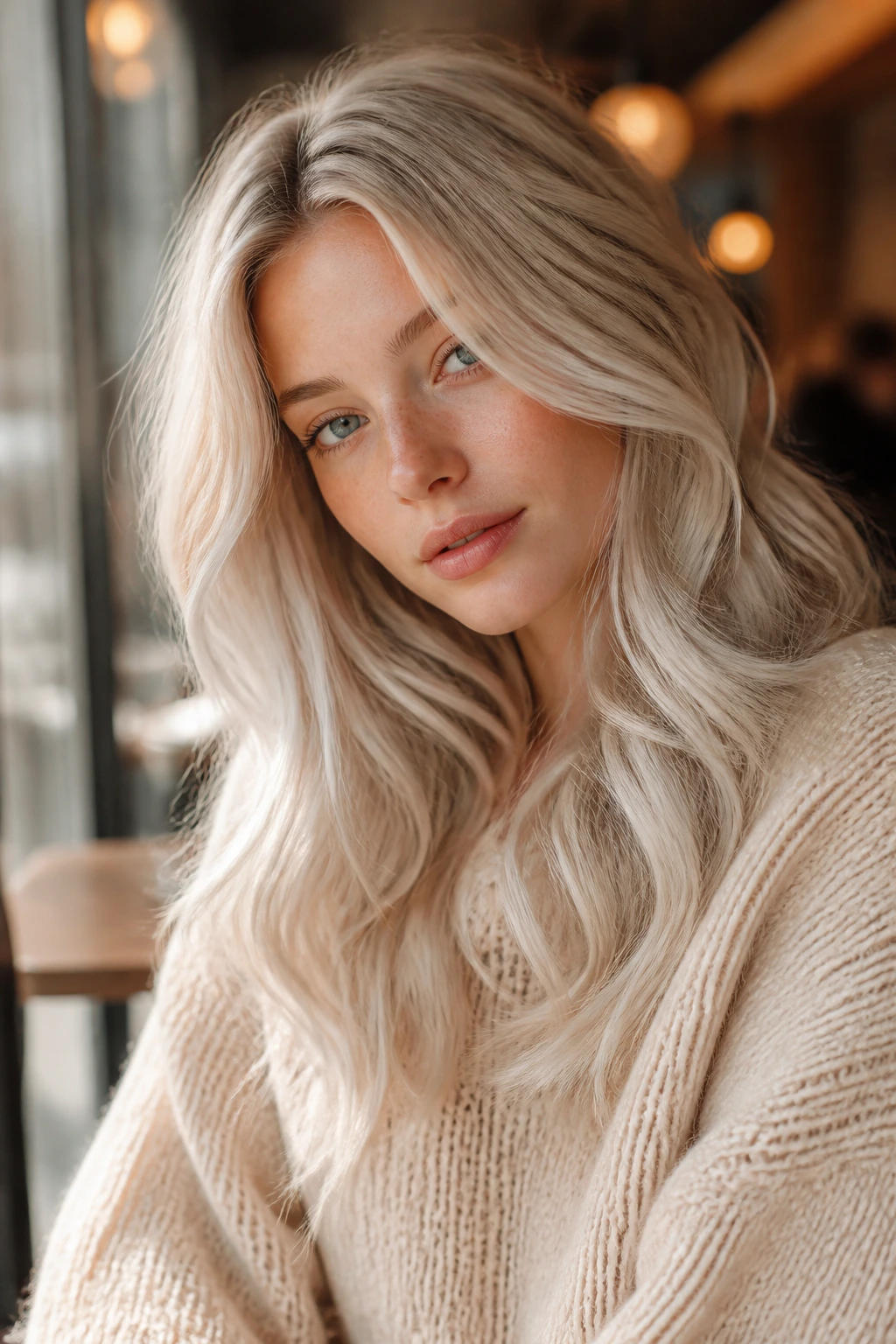
What if you want platinum, but your skin goes chalky beside pure silver? Beige platinum is the safer bet. It keeps the brightness, then warms the tone just enough to stop the face from looking drained.
That beige note is especially useful for pale skin with freckles or a hint of peach in the undertone. The color doesn’t fight the skin. It sits beside it. And because the blend still stays very light, you get the platinum feel without the cold, almost blue edge that can make under-eye circles look louder than they are.
This shade is also kinder when you wear softer makeup. Cream blush, nude lip color, brushed-up brows — all of that sits well with beige platinum. If you like the idea of white-blonde hair but want something a little more forgiving, this is the version to ask for.
10. Platinum Money Pieces Around the Face
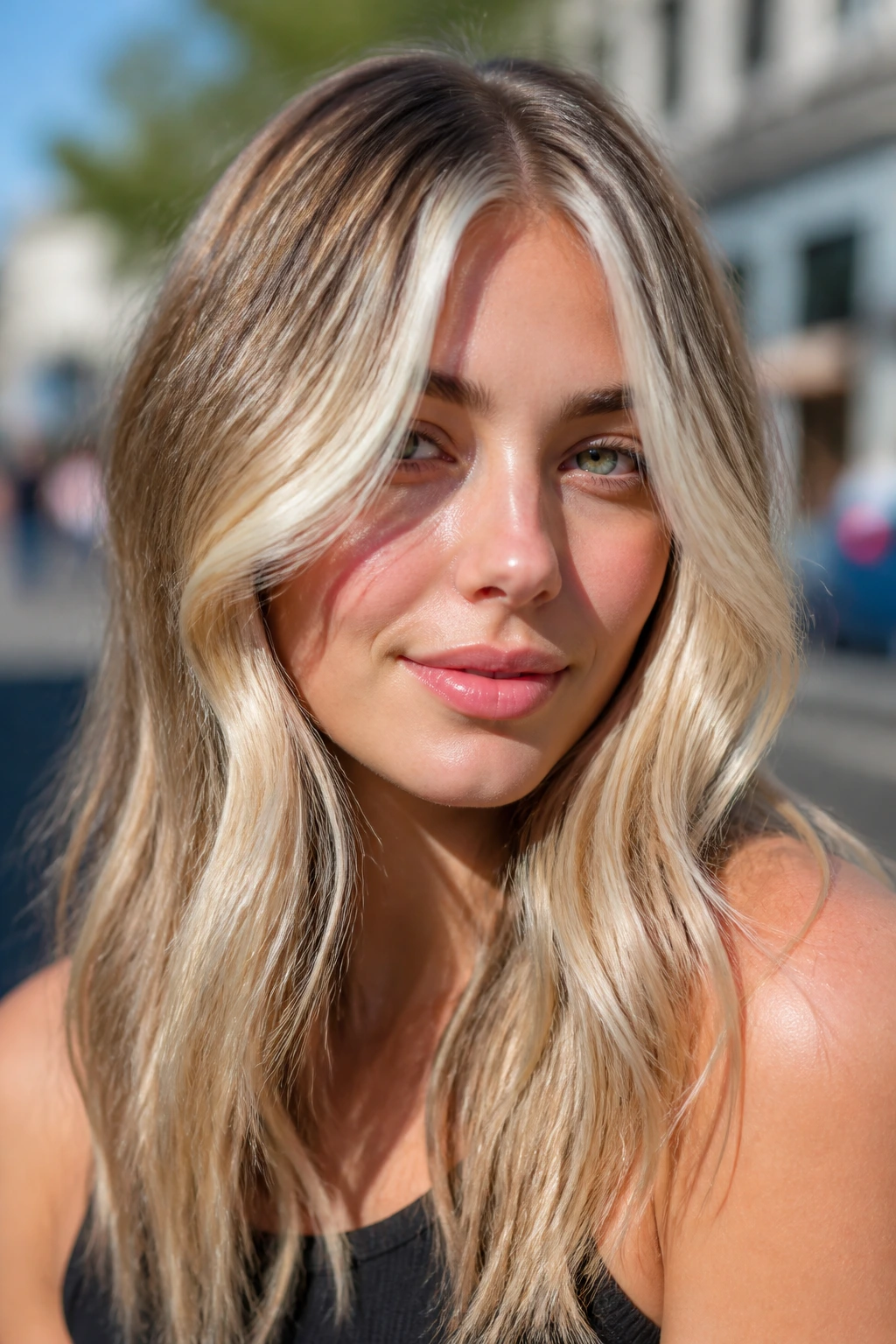
Platinum money pieces are the easiest way to test the waters if you’re not ready for a full head of lightness. Keep the base slightly deeper, then make the front pieces bright enough to light up the face. On pale skin, that contrast can look expensive without being loud.
The nice thing about money pieces is that they give you control. If you love the brightness, you can eventually spread it through the rest of the hair. If not, you still have a strong face frame and a lower-maintenance base. Tiny commitment. Real payoff.
This works especially well with medium-to-dark blondes who want a platinum note without bleaching every strand. It’s also useful if your hair is fine, because you can keep more of the density at the back and sides. Bright around the face. Less stress everywhere else.
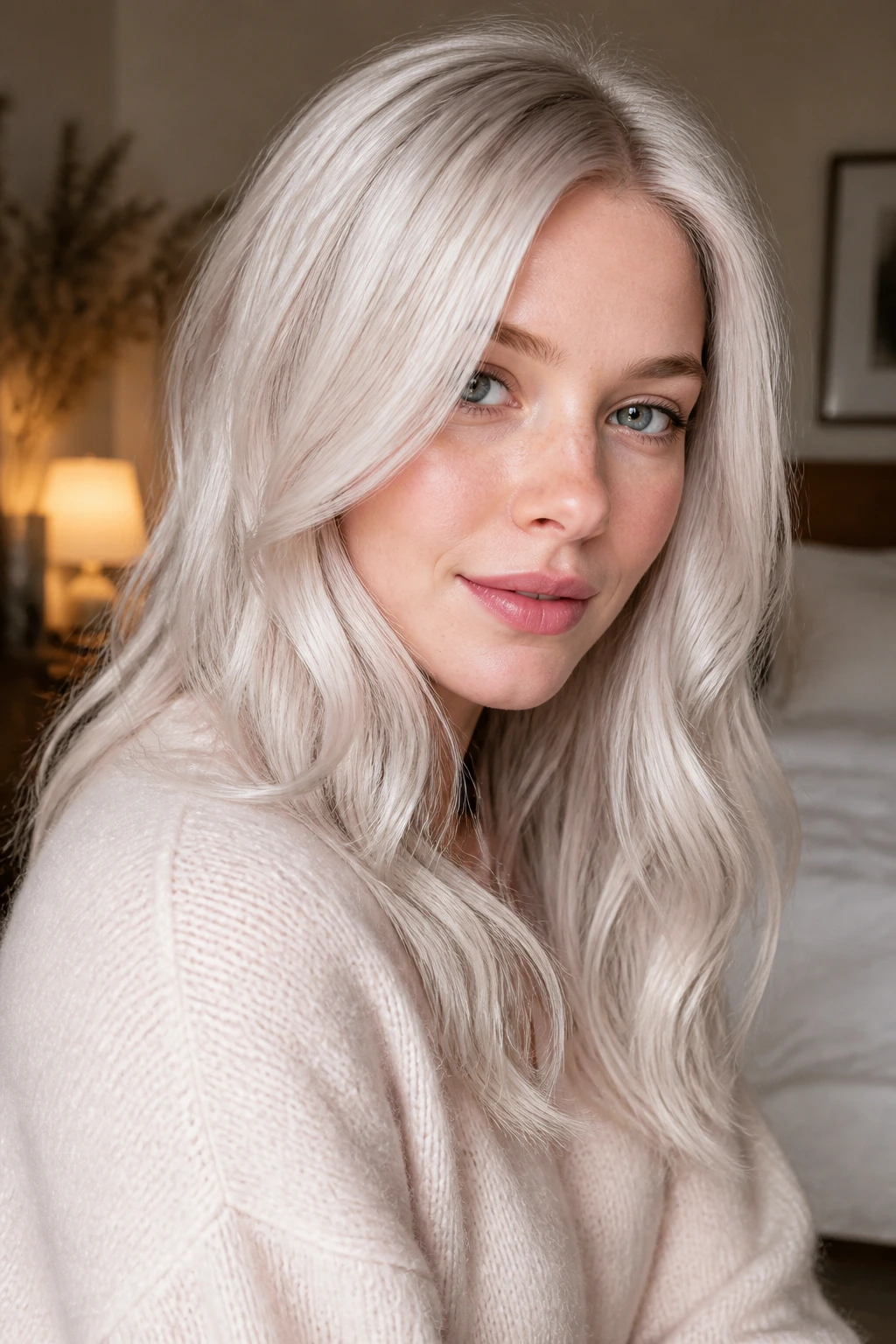
11. Cream-Platinum Long Layers
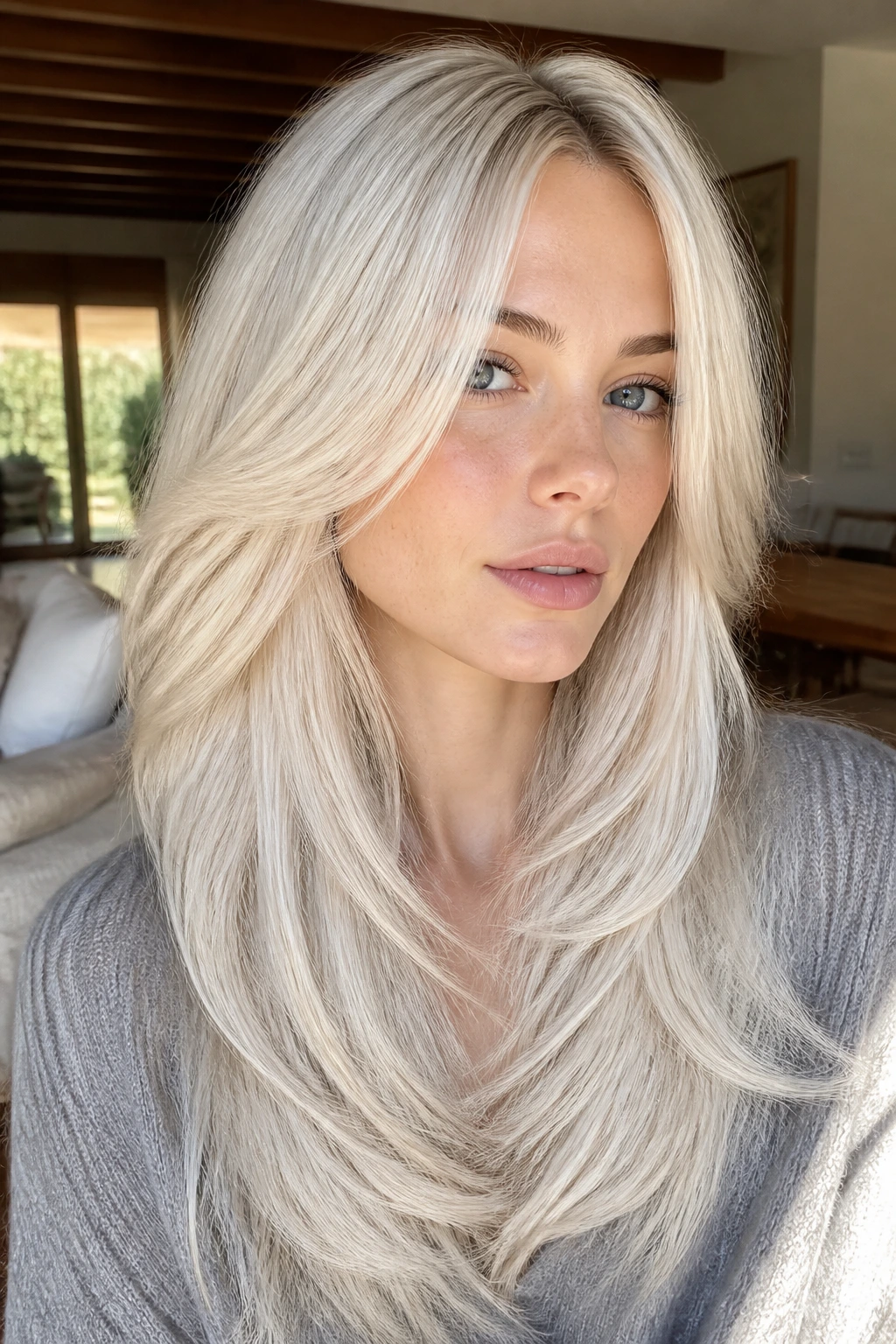
Cream-platinum long layers soften the whole look. The tone sits between vanilla and pearl, which keeps pale skin from going gray under a hard white blonde. Long layers help because they let the color fall in soft panels instead of one heavy sheet.
I like this shade for pale skin that leans a little warm or neutral. The cream note gives the complexion a bit of life without pushing the hair into gold territory. It’s one of those shades that looks expensive in real life because it catches light in a gentle way, not a blunt one.
The layering matters more than people expect. If the ends are too blunt, the cream tone can feel heavy. With movement, the color reads airy and soft. That’s the whole point here.
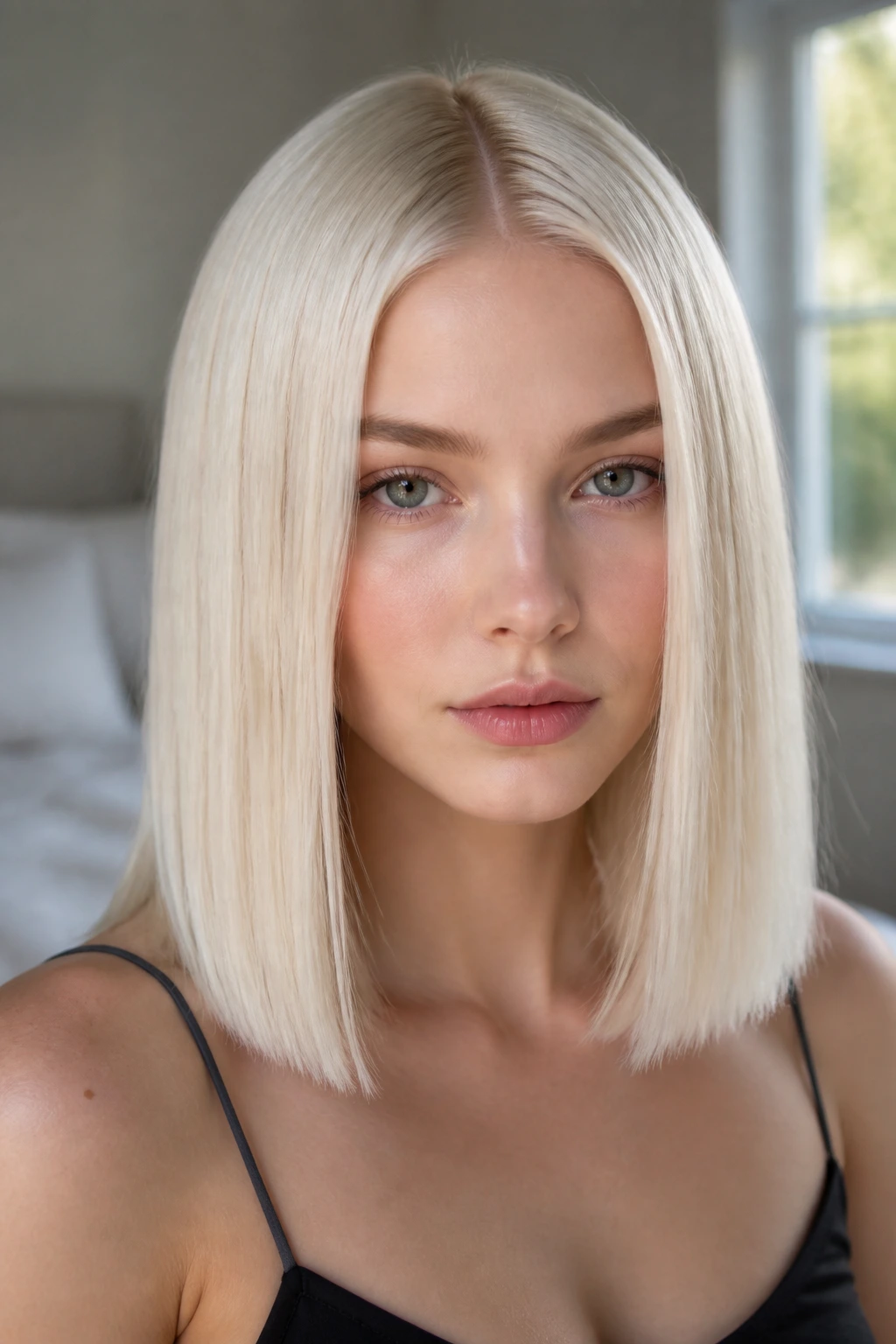
12. White Blonde With a Glossy Bob
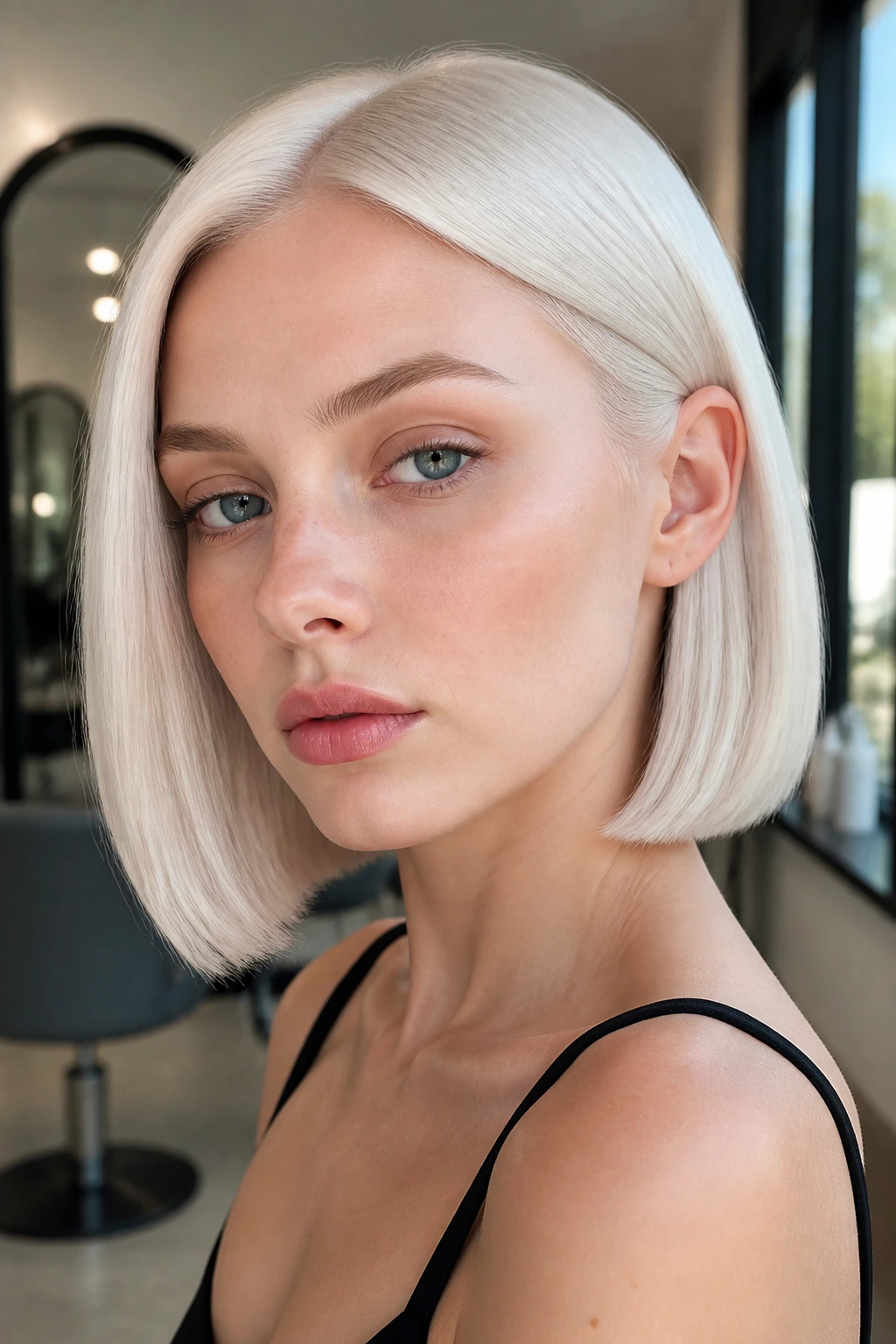
A glossy white-blonde bob is the bluntest, clearest version of platinum on pale skin. There’s no camouflage here. The shape is sharp, the color is nearly white, and the shine has to be clean or the whole thing falls flat.
This look is best when the cut is doing the heavy lifting. Think a one-length bob, a tucked-behind-the-ear style, or a neat chin-length shape with a precise edge. On cool porcelain skin, the contrast can look striking in a good way. On warmer pale skin, it can look a bit severe unless the gloss carries a trace of pearl.
I’d call this an editorial blonde. It wants confidence, good condition, and regular toner refreshes. If you like your hair to look crisp and intentional, there’s not much else like it.
13. Mushroom-Platinum With Cool Depth
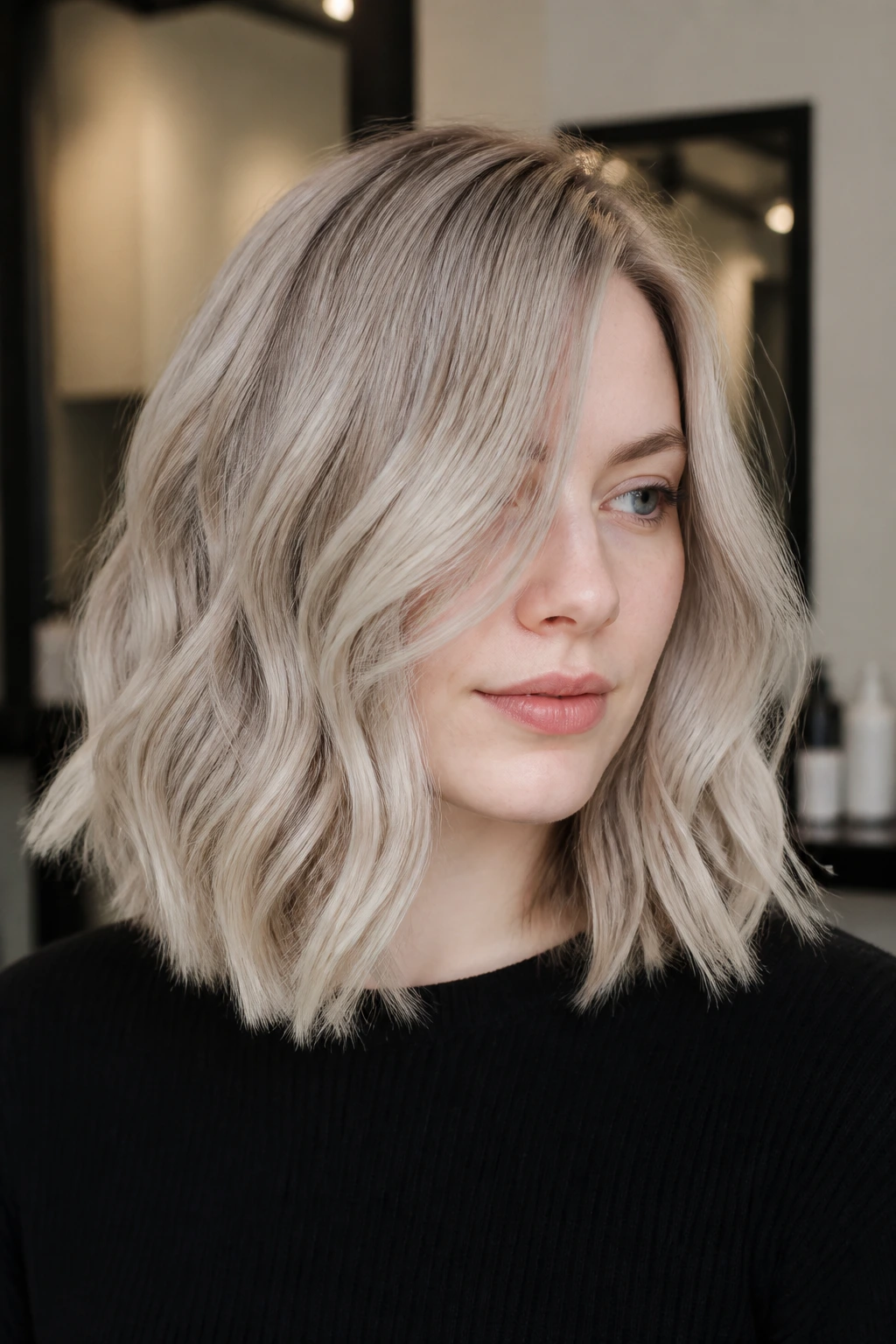
Mushroom platinum sits in that smoky zone between ash and beige, with just enough depth to keep the blonde from becoming flat. On pale skin, especially skin that has a lot of cool or neutral pigment, it brings shape back into the face.
This is a nice choice if pure silver makes you look a little drained. The taupe base gives the hair a small amount of shadow, and that shadow helps the complexion read softer. It also grows out in a friendlier way than a stark white blonde, which is never a bad thing.
A mushroom-platinum finish looks especially good on waves, lobs, and shaggy cuts. The color already has dimension; the cut should help it move. If you’re someone who likes cool hair but hates how icy blondes can feel one-note, this one is worth a hard look.
14. Champagne Platinum With Rosy Warmth
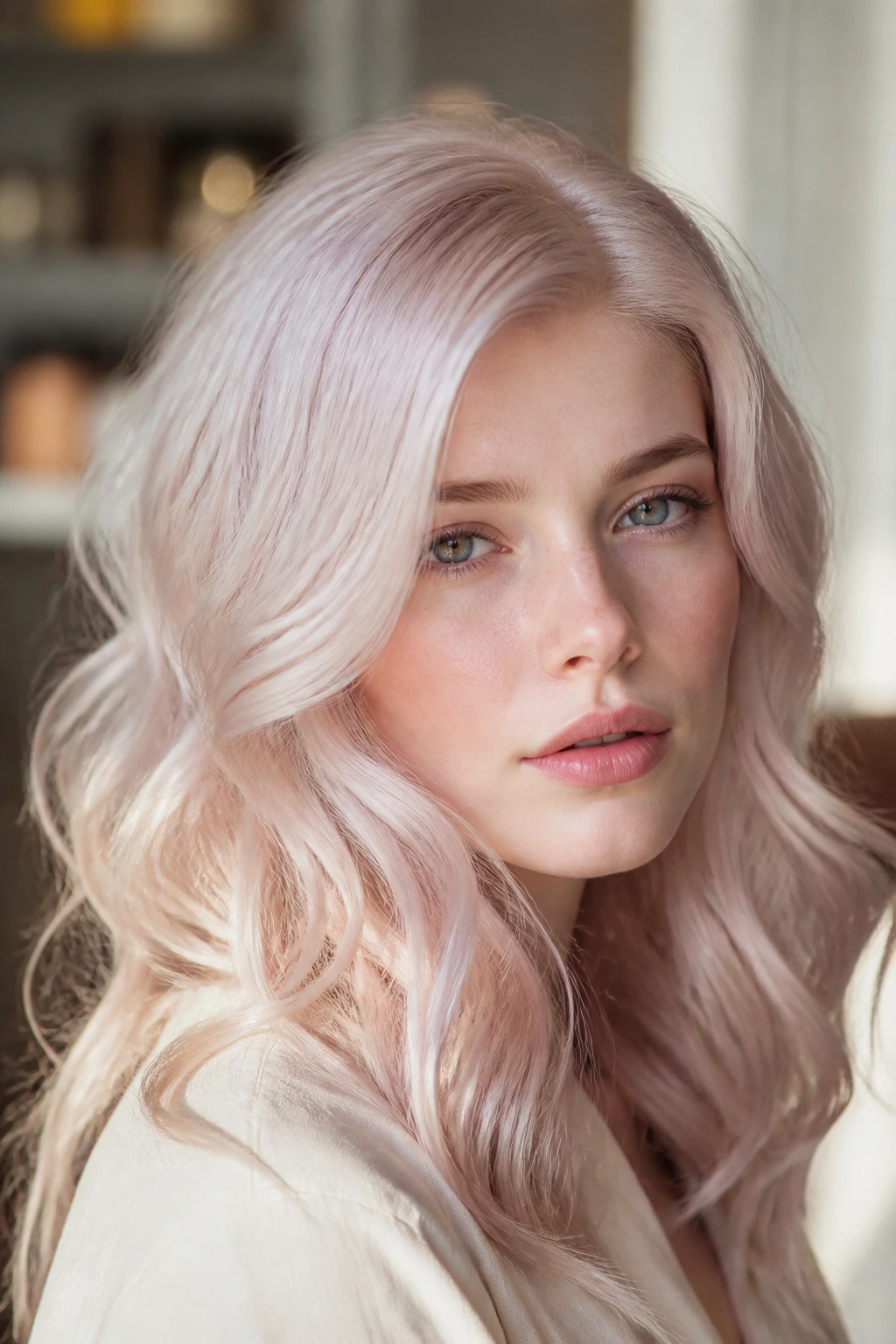
Can platinum blonde work on pale skin with pink undertones? Absolutely — if you let it lean champagne. The faint warmth keeps the face from looking too red, too gray, or too sharp. It gives the blonde a soft glow that feels much friendlier than a flat ash toner.
Where it shines
Champagne platinum looks best when the hair is very light but not blank. You want the ends pale, the mids luminous, and the overall tone close enough to silver that it still counts as platinum. That little bit of warmth is what makes it wearable.
This shade is especially pretty with soft curls, brushed-out waves, or a side part. The warmth reflects a little light back into the face, which can make pale skin look less tired under strong indoor lighting. It’s a small adjustment, but it matters.
If you wear blush, this is one of the blondes that lets the rest of your makeup stay easy.
15. Arctic Platinum Blunt Cut
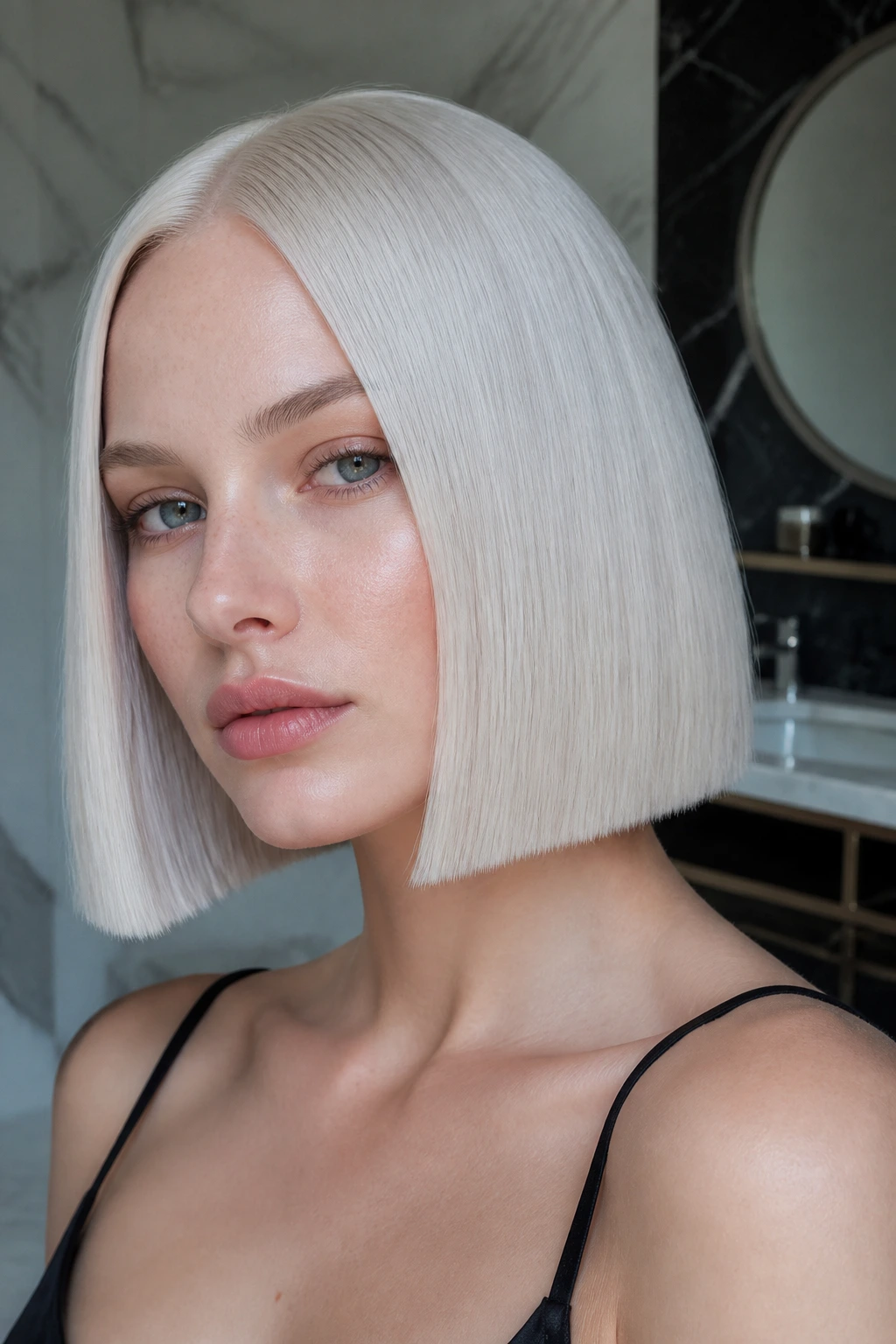
Arctic platinum is the coldest, starkest version on the list. The color is nearly white with a sharp silver edge, and the blunt cut gives it a graphic shape that keeps the whole look from drifting into costume territory.
On very cool pale skin, this can be stunning. The trick is precision. If the cut is uneven or the tone goes muddy at the ends, the whole effect falls apart. A blunt line keeps the eye moving in a straight path, which makes the hair look cleaner and the skin look brighter.
This is not the low-key option. It’s the one that asks for crisp brows, smooth ends, and a bit of upkeep. But if you like your blonde clean, angular, and almost metallic, it’s one of the strongest looks on the list.
16. Platinum Balayage on Fine Hair
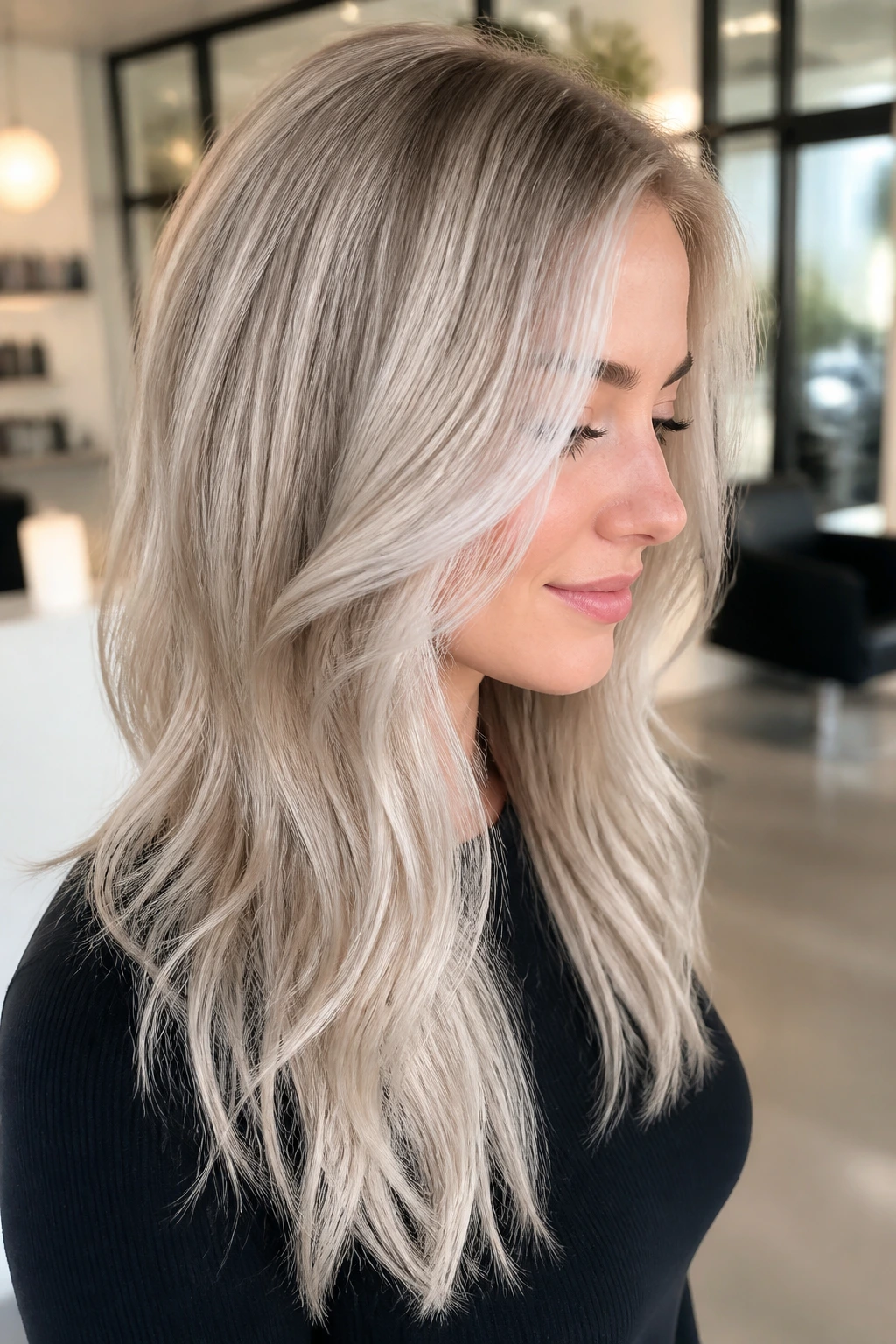
Fine hair doesn’t always love all-over platinum, and balayage is a smarter way to get the effect without making the hair feel sparse. The lighter pieces lift the face, while some depth stays underneath so the hair still has body.
That mix is especially useful on pale skin because you get brightness near the face without turning the whole head into one flat tone. The lighter ribbons catch the eye; the darker spaces keep the style from disappearing. It’s a more forgiving formula, and fine hair usually appreciates that.
Balayage also lets you control damage better. You’re not pushing every strand through the same level of lift, which matters when the hair is already delicate. If your dream is platinum but your strands are thin, this is the version I’d suggest first.
17. Ice-Queen Lengths With Soft Ends
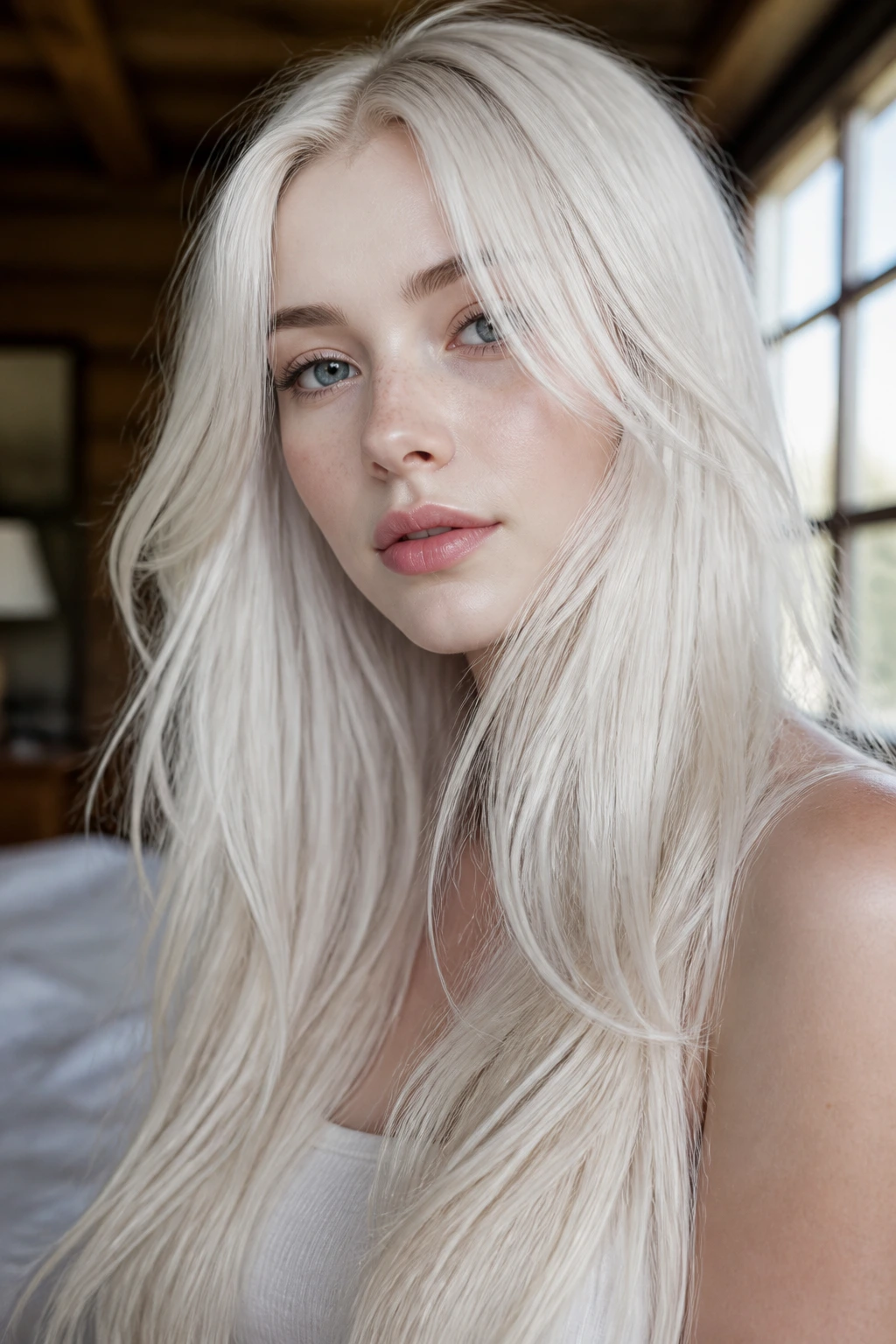
Long platinum hair can go flat fast if every strand is the same brightness. Soft ends fix that. They keep the lengths airy so the color moves instead of hanging there like a curtain.
This look works best when the top is bright and the ends are just a touch more diffused. That tiny difference gives pale skin a frame. It also keeps the blonde from looking overly harsh against a fair face, which is a real problem when the hair is long and all one tone.
There’s a reason this style keeps showing up in salon chairs: it’s dramatic without needing a wild cut. Long lengths let the platinum breathe. Add a slight bend through the mid-lengths and the whole thing stops looking severe.
18. Baby Platinum With Micro Root Shadow
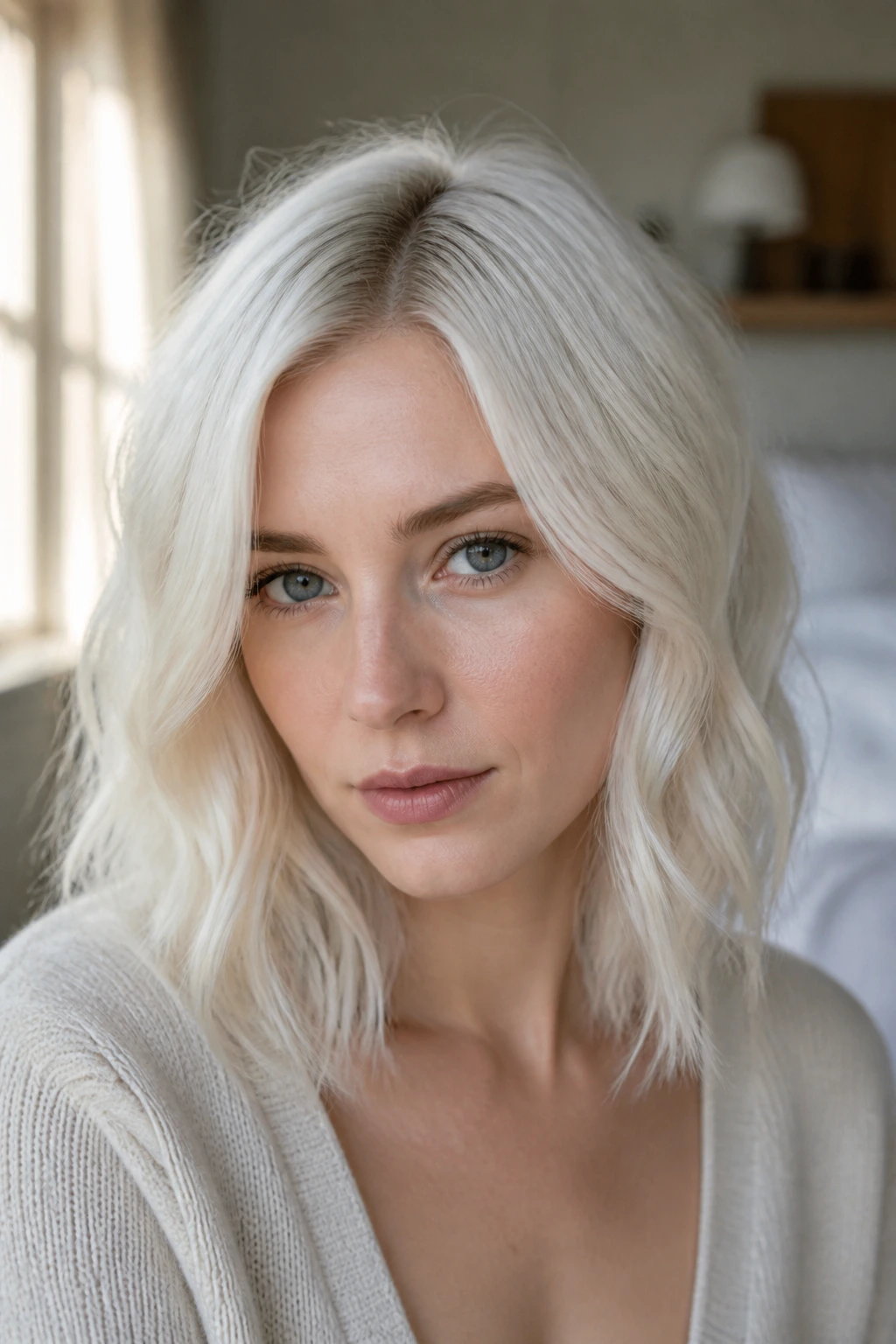
Baby platinum is the version you choose when you want to go bright but keep the grow-out soft. The micro root shadow is barely there — just enough to blur the scalp line and stop the blonde from looking pasted on.
This is one of the friendliest looks for pale skin because it keeps contrast in the right places. The face stays bright. The root stays believable. And the little bit of shadow adds dimension without becoming obvious.
I like this on shoulder-length hair, blunt bobs, and soft waves. It’s also useful if you don’t want to be in the salon every few weeks. The color still looks deliberate when it grows, which is more than you can say for many ultra-light blondes.
19. Metallic Platinum With Silver Glaze
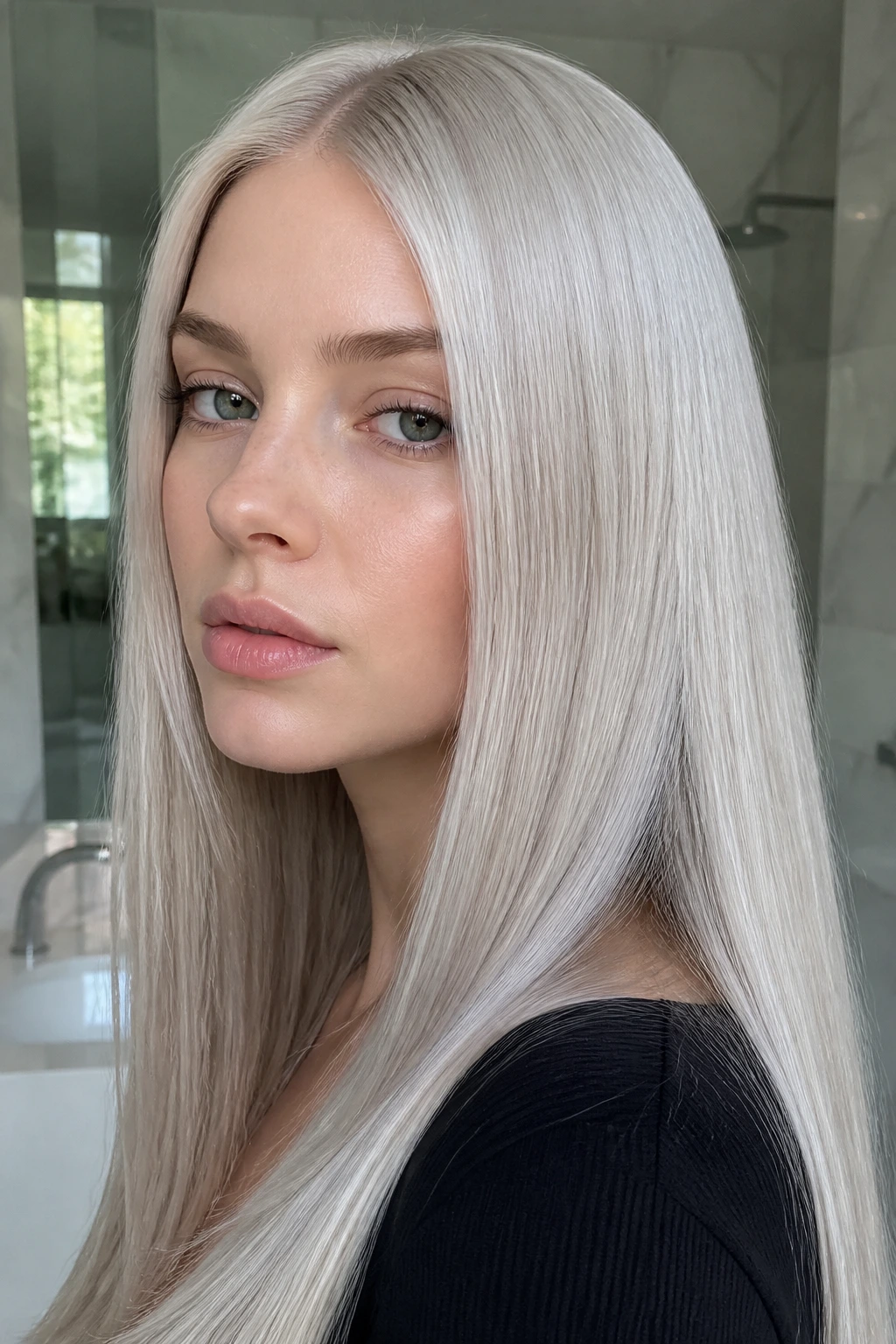
Metallic platinum lives somewhere between mirror-white and silver. It has a polished sheen that works best when the hair is smooth, because texture can break up the reflective surface and make the tone look uneven.
On pale skin, a silver glaze can sharpen the whole face in a nice way, especially if the undertone is cool. The effect is cleaner than beige platinum and less stark than pure white. It catches light without turning brassy or yellow, which is really the point.
This shade likes sleek blowouts, straight styles, or tucked styles that show off the shine. If you love cool-toned makeup, dark liner, or a minimalist wardrobe, metallic platinum can make the whole look feel connected.
20. Cool Beige Platinum With Curtain Bangs
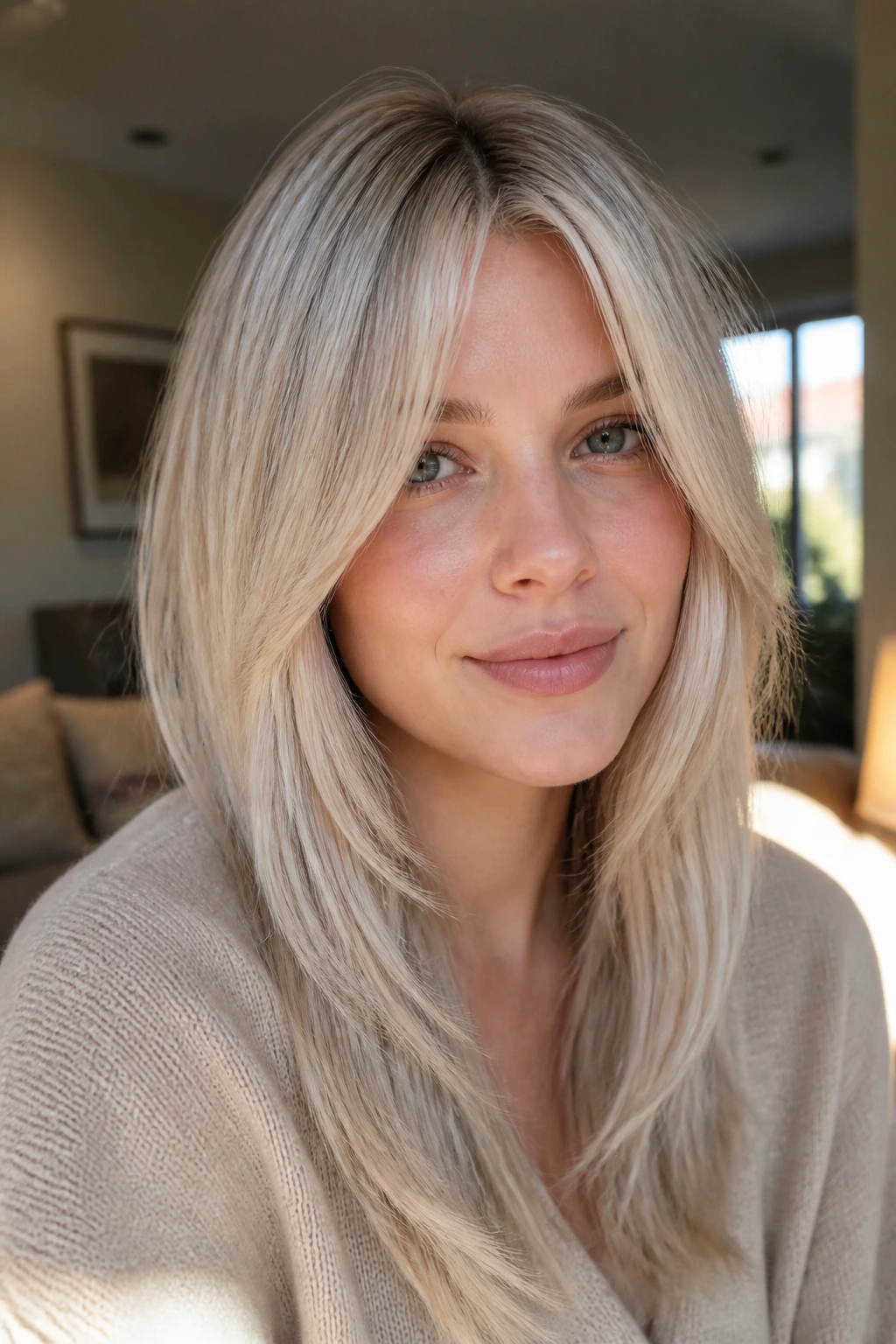
Cool beige platinum sits in the middle lane, and that’s why so many people can wear it. It has enough softness to keep pale skin from looking pale on pale, but enough ash in it to stop the blonde from going gold.
Curtain bangs are the useful part here. They soften the center of the face, which is where platinum can get a little harsh if you have very fair skin. The bangs let the color fall around the eyes in a gentler way, and they make the style feel more lived-in.
This is one of the more forgiving options if you’re testing platinum for the first time. It’s bright, but not icy. Soft, but not dull. The balance is the whole attraction.
21. Platinum Shag With Choppy Texture
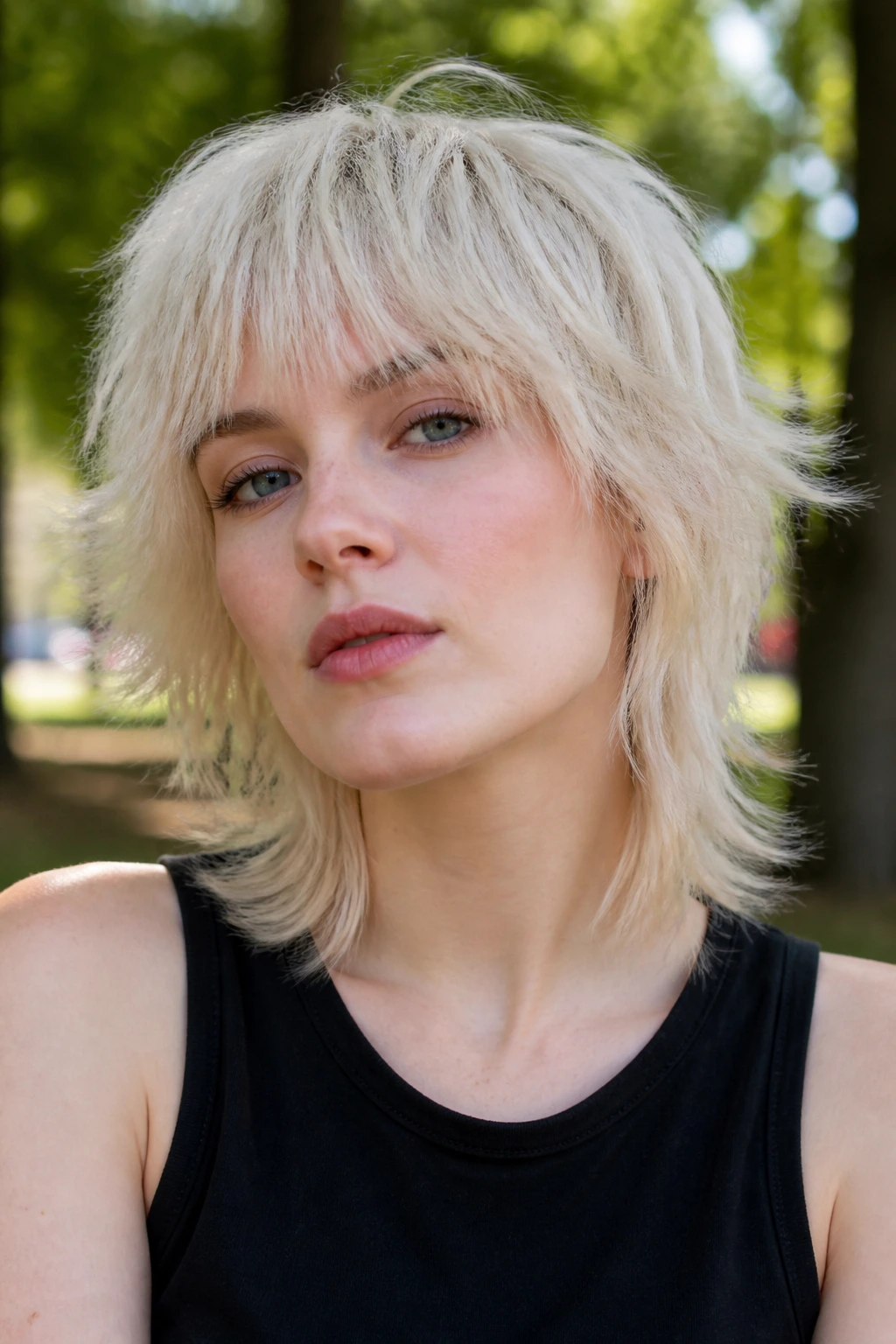
A platinum shag is the antidote to hair that looks too neat, too smooth, or too severe. The choppy layers break the color up, which gives pale skin a little movement and keeps the blonde from feeling like one big bright surface.
This style works because it looks better when it’s not perfect. The rougher the texture, the more the platinum feels relaxed. On very fair skin, that’s a good thing; too much polish can make the hair and face blend together in a strange, washed-out way.
If your hair has some natural wave or you like using a diffuser, this shape does a lot of work for you. The cut keeps the blonde from getting precious. I always think that’s a relief.
22. Vanilla Cream Platinum on Curls
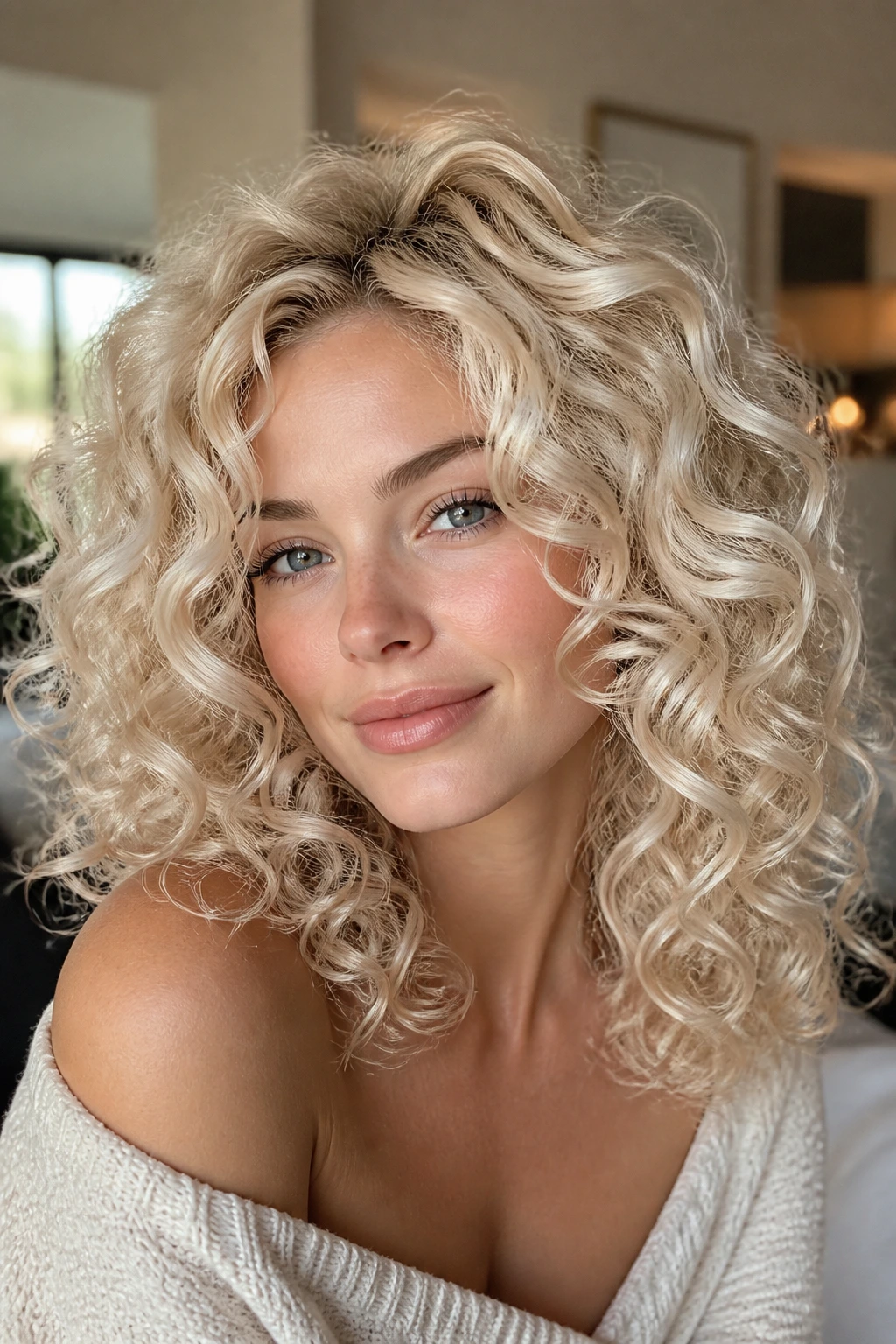
Curly hair can wear platinum blonde, but the tone has to be handled with care because curls reflect light in tight little pockets. Vanilla cream gives the hair enough softness that the curls still look plush instead of brittle.
Why this shade suits curls
The cream note keeps pale skin from getting overpowered by too much white brightness. It also helps the curl pattern read as shape, not frizz, which is a common problem when hair gets lifted to a very light level.
Curls need moisture here. A lot of it. If the hair is dry, any platinum tone will look harsher than it really is. The color can be lovely, but the texture has to stay supple or the whole thing starts to feel fragile.
This shade is a strong choice if you want brightness with a softer face-framing effect. It’s gentler than silver, but still light enough to count as platinum.
23. Platinum With Delicate Lowlights
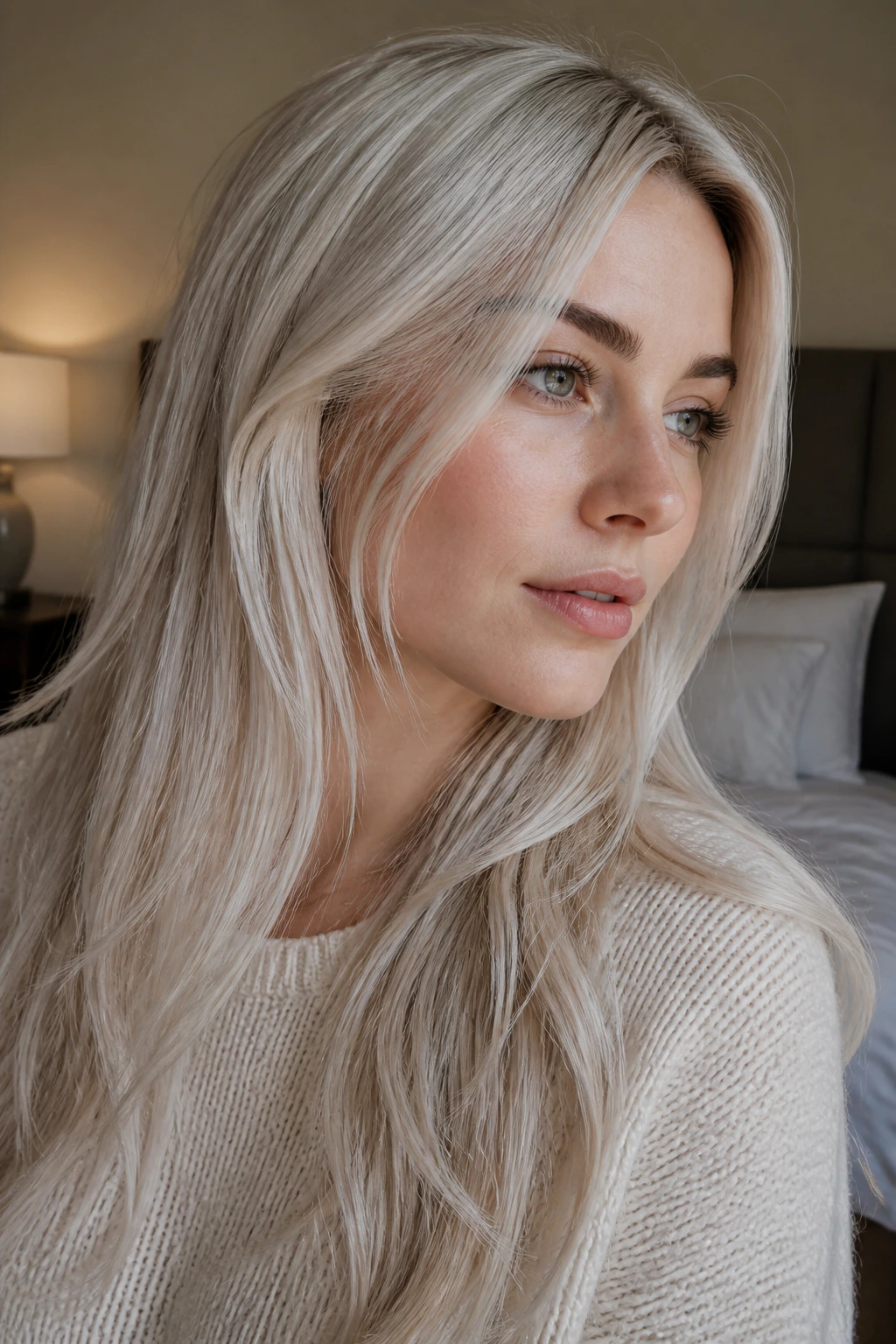
A few delicate lowlights can change platinum from flat to dimensional in a single appointment. On pale skin, that tiny bit of depth stops the face from blending into the hair. You see the shape again. That matters more than people realize.
The lowlights should be subtle — pale beige, sandy ash, maybe a whisper of mushroom brown. Nothing chunky. Nothing stripey. The point is to create air around the face and through the lengths, not to make the blonde look heavy.
I like this version on long hair, but it also works on bobs and lobs if the tone feels too uniform. If every strand is the exact same platinum, the result can look thin or overprocessed. Delicate lowlights fix that fast.
24. Near-White Platinum Pixie Crop
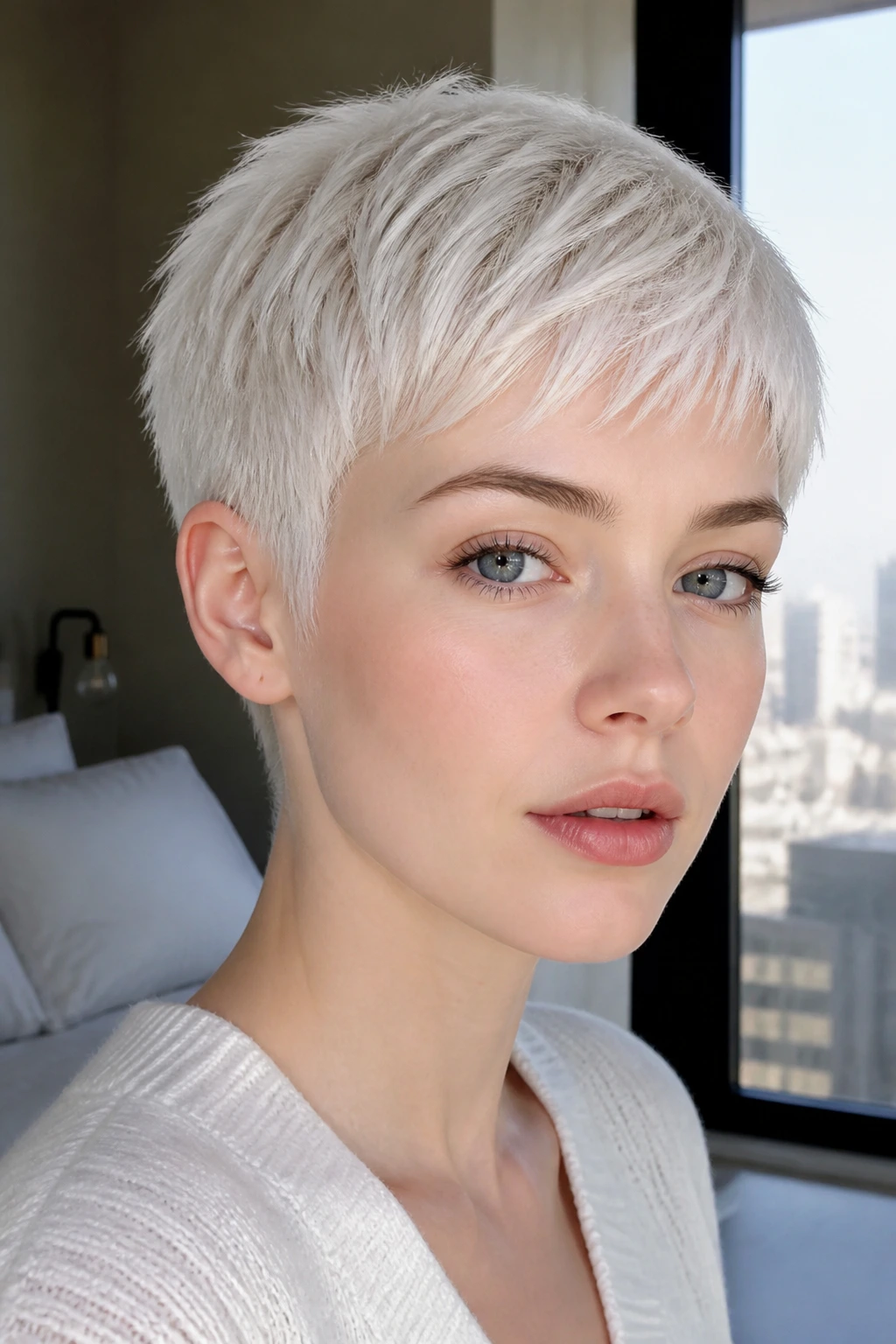
A near-white pixie crop is sharp, bold, and unapologetically light. The short length makes the color feel clean rather than overwhelming, which is why this works better than you might think on very pale skin.
The pixie gives the face structure. The near-white color gives it glow. Put them together and you get a style that looks almost sculpted. It is not low maintenance, though. Short hair means quick touch-ups matter, because even a few weeks of regrowth can change the whole read.
If your brows are strong and your features are defined, this shade can look razor-fresh. If you like contrast, it’s one of the best ways to wear platinum without needing waist-length hair to support it.
25. Satin Platinum With a Soft Root Melt
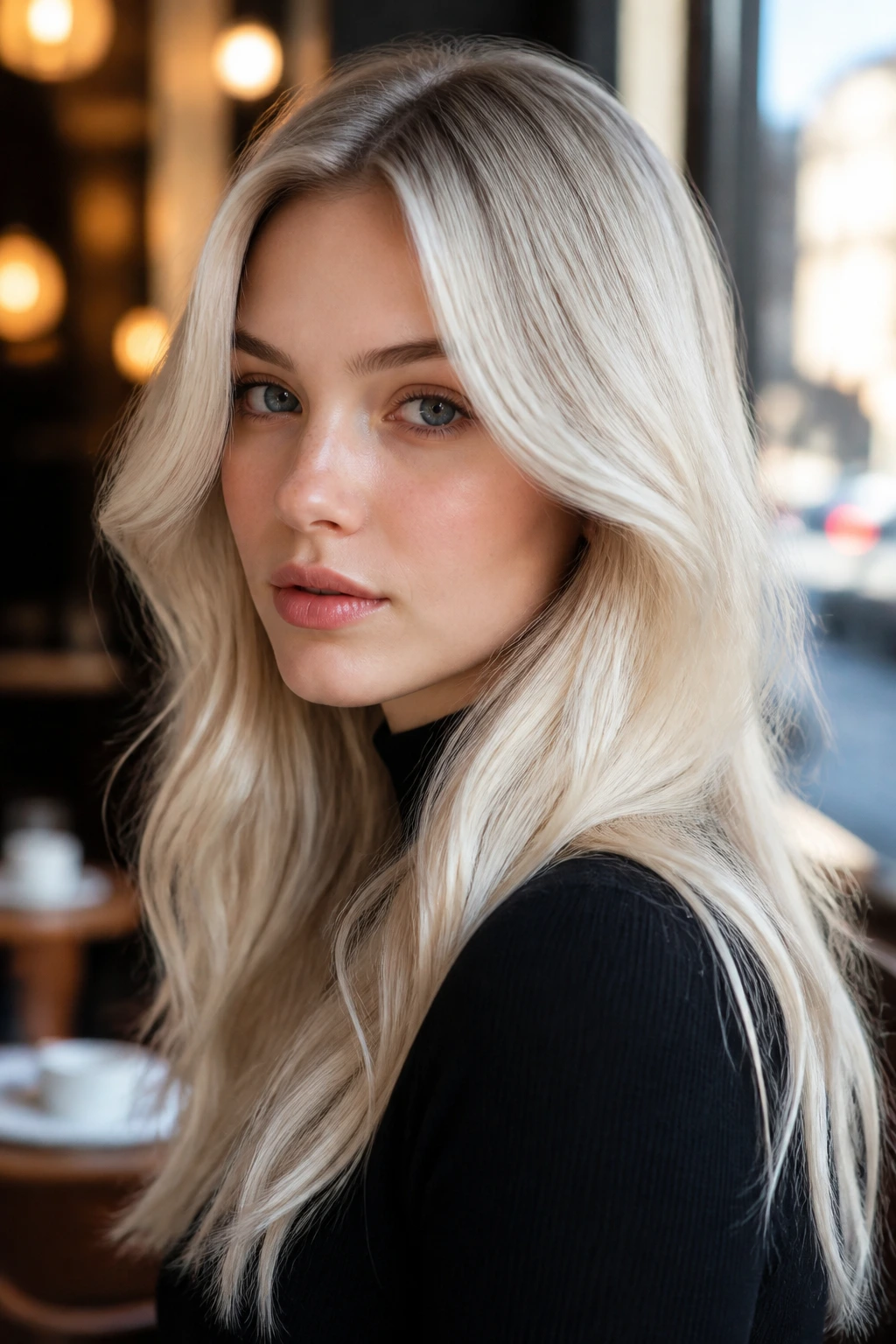
Satin platinum is my favorite kind of wearable bright blonde: smooth, luminous, and just soft enough at the root to stay believable on pale skin. The finish has a gentle sheen rather than a hard shine, which keeps the face from looking pale in a drained way.
The root melt is doing a lot here. It blurs the grow-out, adds shape, and gives the color some depth near the scalp. On porcelain or neutral skin, that small shadow can make the whole face look more balanced. On pinker skin, it stops the blonde from getting too stark.
This is the one I’d point to if you want platinum but not the coldest possible version of it. It feels clean. It feels modern. And it still leaves room for your skin to do its own thing.
Why Platinum Blonde Can Look So Good on Fair Skin
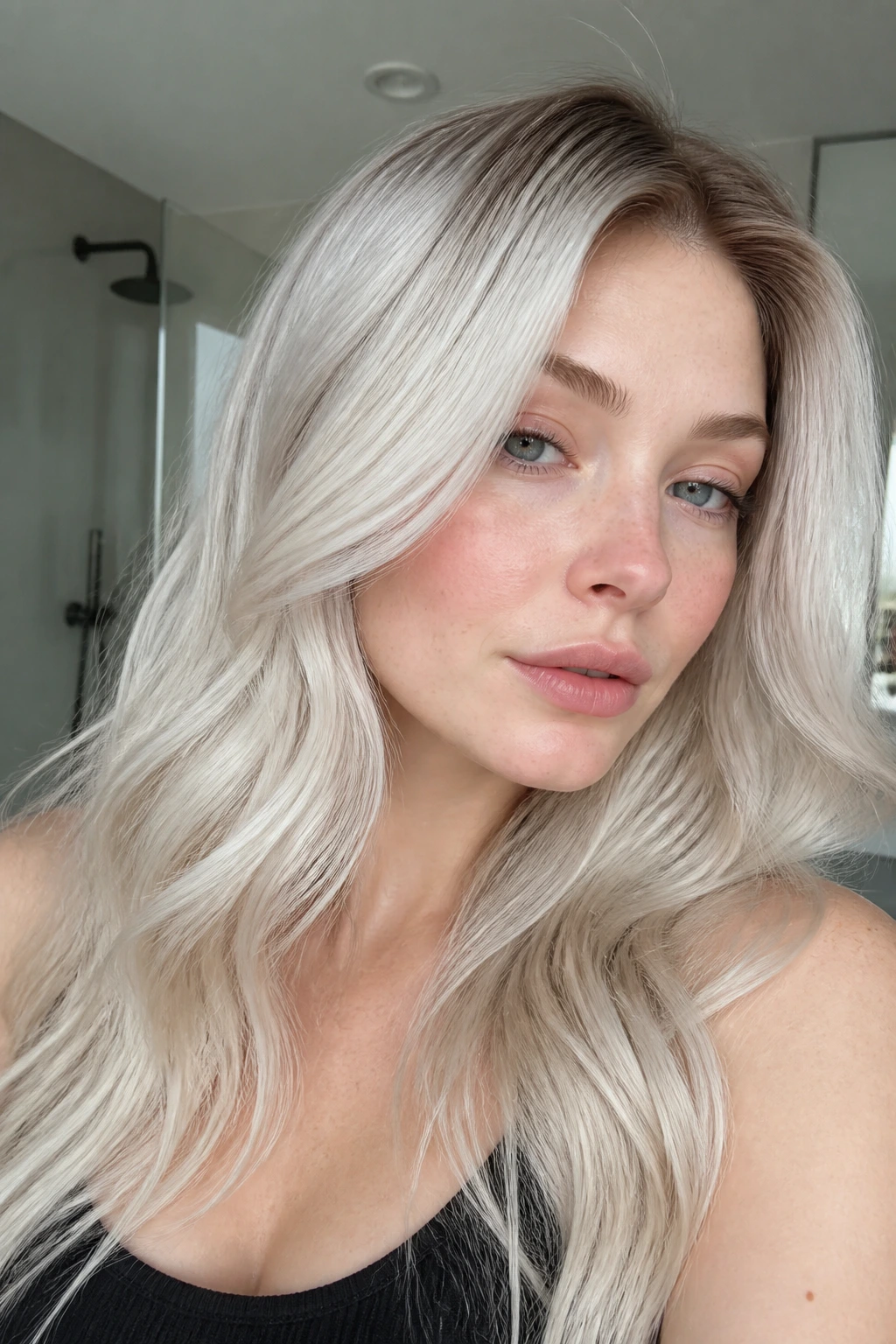
The real trick with platinum blonde on pale skin is not chasing the lightest possible shade. It’s choosing the one that gives your face some shape. Pale skin can look lovely beside white, silver, pearl, beige, or champagne blonde — but each tone changes the mood. One can sharpen the face. Another can soften redness. Another can make freckles stand out in a good way.
That’s why the best platinum blonde hair color ideas for pale skin are never one-size-fits-all. They’re little adjustments: a root melt here, a pearl gloss there, a bob instead of long blank lengths, a face frame instead of all-over brightness. Small moves. Big effect.
Tools and Products That Keep the Shade Honest
You do not need a bathroom shelf full of special bottles, but a few specific tools make platinum easier to live with.
- Purple shampoo: Use it sparingly, usually once a week or less, so the blonde stays bright without turning dull lavender-gray.
- Color-safe conditioner: A moisturizing conditioner keeps bleached ends from feeling rough or straw-like after washing.
- Bond-building treatment: This helps fragile, lightened hair stay stronger between salon visits, especially if you went all the way to level 10.
- Heat protectant spray: Platinum hair shows heat damage fast, so every blow-dry or hot-tool session should start with protection.
- Microfiber towel: It cuts down on rough friction, which matters when the hair is porous and delicate.
- Wide-tooth comb: Better for detangling wet platinum hair than a fine brush that yanks at softened strands.
- Gloss or toner mask: Useful when the shade starts to feel a little tired or yellowed.
- Shower filter: Not required, but very useful if your water runs hard or metallic.
Keeping Platinum Blonde Bright Between Appointments
Platinum does not stay clean by accident. It stays clean because you treat tone like part of the haircut, not an afterthought.
Wash with lukewarm water instead of hot water when you can. Hot water opens the cuticle and can make the color feel rougher and fade faster. Use purple shampoo only when the blonde needs it, not every single wash. Too much violet product can leave pale hair looking dusty.
Root touch-ups depend on how much contrast you have, but most platinum shades need some attention within a few weeks if the base is dark. Glosses are the quiet hero here. A clear or lightly tinted gloss every 4 to 6 weeks can keep the hair from drifting yellow, beige, or flat. If the ends feel dry before the tone fades, the problem isn’t always color; sometimes it’s porosity showing through.
Common Mistakes That Flatten the Face
Going too ash, too fast. That’s the mistake that makes pale skin look gray or bruised. If the toner is all violet and no softness, the face can lose warmth. The fix is simple: ask for pearl, beige, or champagne to be mixed in instead of pure ash.
Leaving the brows out of the conversation. Platinum with invisible brows can look unfinished, especially on very fair skin. You do not need harsh brows. You need brows that are softly defined so the face still has structure.
Choosing one flat tone from root to ends. It sounds clean, but it can make the hair look like a wig cap. A root shadow, lowlights, or a brighter face frame adds shape and keeps the skin from disappearing into the blonde.
Ignoring porosity. Bleached ends grab toner differently from healthier roots. If the mids turn muddy and the ends go hollow, the color formula may be fine, but the hair is acting like two different surfaces. Pre-toning treatment and careful application help.
Chasing white at the cost of the hair. If the hair is stretchy, snapping, or gummy when wet, stop pushing lift. Broken platinum is still broken hair. And broken hair does not look expensive. It looks tired.
Variations When You Want Less or More Contrast
Pearl Veil Blonde
This version uses a soft pearl glaze instead of a colder silver finish. It’s a smart pick if your pale skin has pink undertones and you want the blonde to brighten the face instead of sharpening every edge.
Mushroom Frost Blonde
A cooler, smokier take with a taupe base and pale ends. It gives pale skin more depth and works well if pure white blonde has ever made you look drained.
Glass White Platinum
This is the high-contrast, near-white choice for people who like a crisp, editorial result. It works best on precise cuts and cooler undertones, because the color is doing a lot of the visual lifting.
Rooty Soft Platinum
A deeper root melt and lighter mids make the grow-out gentler and the face look a little more framed. It’s one of the easiest platinum versions to keep looking good between appointments.
Champagne Frost
A whisper of warmth keeps the blonde from turning icy in a flat, chalky way. It’s a good middle ground if you want brightness but still want your skin to look alive under indoor light.
Frequently Asked Questions About Platinum Blonde on Pale Skin
Does platinum blonde wash out pale skin?
It can, if the tone is too flat or too white with no depth. A little pearl, beige, or root shadow usually fixes that by giving the face some contrast.
What toner shade works best for pale skin?
Pearl, champagne, beige, and soft silver are the most forgiving starting points. Pure ash is riskier because it can make the skin look gray if the undertone is already cool.
Can I go platinum if my hair is naturally dark?
Yes, but it usually needs more than one lightening session if you want to keep the hair in decent shape. A staged lift with bond care is safer than rushing to white in one appointment.
How often will I need toner refreshes?
Many platinum shades need toning every 4 to 6 weeks, sometimes sooner if the water is hard or the hair grabs warmth fast. If the blonde starts looking yellow before that, a gloss or purple conditioner can help in between.
Should my brows be lightened too?
Not always. Brows should balance the hair, not disappear into it. Softly filled brows usually look better than fully bleached ones on pale skin.
Is platinum better on short hair or long hair?
Short hair is easier to keep crisp and healthy, while long hair gives the color more movement. If you want a stark, icy look, short cuts make it easier. If you want softness, long layers or waves help.
What if my platinum turns brassy fast?
That usually means the hair needs a stronger toner schedule, gentler washing, or less heat. A shower filter and a bond-building mask can help too, especially if your water is hard.
Can pale skin wear warm platinum tones?
Yes, if the warmth is controlled. Champagne and cream-blonde versions can look better than icy silver on some fair faces, especially if the skin has pink or freckled undertones.
Keeping the Blonde Bright Without Losing Your Face
The best platinum shades for pale skin don’t try to overpower the complexion. They work with it. That might mean a root melt, a pearl gloss, a blunt bob, a shag, or a near-white pixie crop with strong brows and a clean cut line. Small choices, all of them. That’s the difference between a blonde that looks painted on and one that looks like it belongs to you.
If you’re choosing between two shades, pick the one with a little more depth rather than the one that looks brightest under a salon light. Real life is not a salon mirror. Real life has daylight, phone screens, dry shampoo, and the occasional tired morning. The platinum that survives all of that is usually the one with a little nuance built in.