



Pale skin and brunette hair can look icy, sharp, muddy, or expensive in a matter of inches. That sounds dramatic because it is. The difference usually isn’t the brown itself so much as the cut, the placement of the depth, and the way the waves break up the color so the hair never reads like one flat helmet.
Brunettes hairstyles for pale skin with wavy hair work best when the brown has some breathing room. A level 4 espresso can look severe if it’s cut blunt and worn pin-straight, but the same shade looks rich once you add cheekbone-length layers, a soft side part, or a bend that catches light on the mid-lengths. Fair skin tends to show contrast fast, which is exactly why the wrong brunette can feel harsh. The right one makes the eyes look clearer, the cheekbones a little stronger, and the whole face less washed out.
Waves help here more than people give them credit for. They throw shadows, they keep dark hair from turning into a single block of color, and they make caramel ribbons, ash pieces, and chestnut gloss look more expensive than they do on straight hair. The list below favors brunette shades and haircuts that keep that movement alive instead of crushing it.
Why These Brown Waves Keep Paying Off
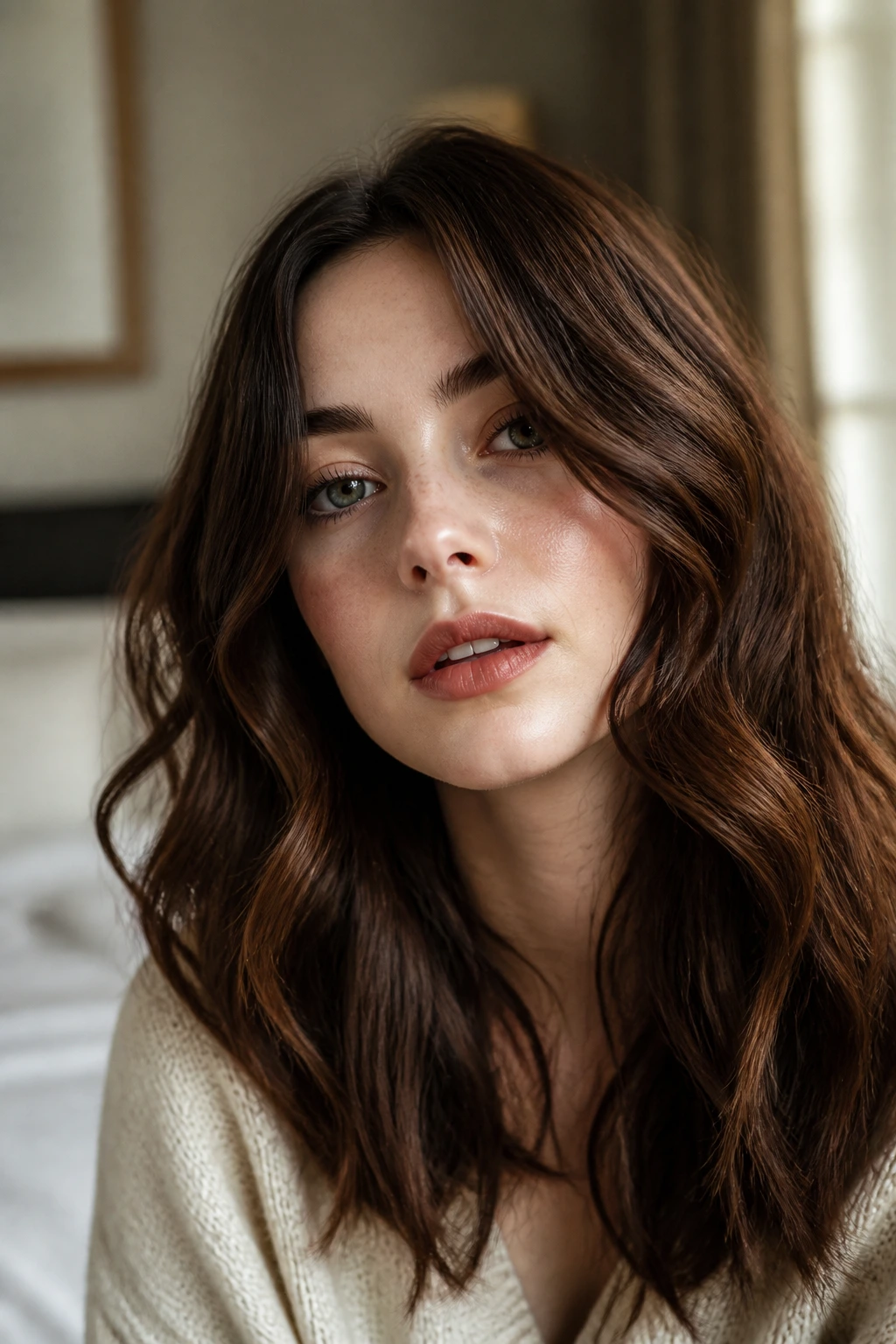
- Contrast Without Dragging the Face Down: A brunette that sits in the level 4-6 range usually gives pale skin enough frame without making the features look wiped out.
- Wave-Friendly Dimension: Wavy hair breaks up dark color naturally, so even one-tone brunette looks better when the ends move instead of hanging straight.
- Undertone Control: Chestnut, mocha, mushroom, espresso, and caramel all solve different skin-tone problems, which means you can choose a brown that flatters your undertone instead of fighting it.
- Soft Grow-Out: Balayage, root shadow, and face-framing pieces blur regrowth, which matters if you do not want a hard stripe at the scalp.
- Easy to Adjust: The same base idea can go sleek, shaggy, glam, or undone. That flexibility is the whole appeal.
1. Chestnut Curtain Layers
Chestnut is one of those shades that behaves better on fair skin than it gets credit for. It has enough warmth to keep pale complexions from looking drained, but it stops short of the coppery territory that can turn brassy under certain light. Add curtain bangs and wavy layers, and you get a shape that opens the face instead of boxing it in.
Why it works: The bangs start soft at the cheekbone, which is the sweet spot for pale faces that need a little lift. The chestnut tone warms the skin without reading red, and the loose wave pattern keeps the cut from looking too sweet or too polished. Ask for a level 5 chestnut base with face-framing pieces that begin around the cheekbone and drop a little longer toward the jaw.
Best if you want: A brunette that feels lighter around the face but still looks rich through the ends.
Styling note: Blow the fringe away from the face with a round brush, then bend the mid-lengths with a 1-inch iron so the layers stay soft instead of flipping out.
2. Soft Espresso Lob With Broken Waves
Want contrast without going nearly black? This is the answer. A lob that lands right at the collarbone, paired with broken waves, gives pale skin a clean outline and keeps wavy hair from ballooning at the sides.
Why it works: Espresso has depth, but the broken wave pattern cuts the heaviness. The lob length is long enough to swing, short enough to feel tidy, and blunt enough at the perimeter to stop the ends from looking wispy. If your waves are loose and you like a little polish, this cut gives you shape without requiring a pile of styling products.
What to ask for: A collarbone-length lob, minimal layering, and a soft internal bend rather than tight curl.
Small detail that matters: Keep the front slightly longer than the back by a half inch or so; it stops the hair from kicking out at the shoulders in that awkward triangle shape.
- Works well with a center part or a slight off-center part.
- Looks strongest with a glossy finish, not matte texture.
- Needs a heat protectant if you bend the ends with a flat iron.
3. Mushroom Brown Shag With Air-Soft Ends
Mushroom brown is the cooler, quieter cousin in the brunette family, and on pale skin it can look extremely clean when the cut has movement. The trick is not to make it muddy. Keep the shag feather-light, and the gray-brown tone suddenly looks modern instead of flat.
Unlike a chestnut-heavy brunette, mushroom brown leans ashy and neutral, which is useful if your skin is pink, porcelain, or prone to flushing. The shag shape lifts the crown and keeps wavy hair from collapsing at the sides. I like this one on people who want texture first and color second.
What to ask for
- A neutral-to-ash brown base at about level 5.
- Soft, disconnected layers through the crown.
- End texturizing, but not so much that the wave pattern gets stringy.
Watch for this: If the stylist takes too much out of the ends, the hair can frizz instead of wave. Keep the perimeter thick enough to hold shape.
4. Caramel-Ribbon Long Layers
This is the brunette that looks like it got sunshine without pretending to be blonde. On pale skin, thin ribbons of caramel through a dark brown base add warmth exactly where the eye wants it: around the temples, cheekbones, and the front edge of the hairline.
The long layers matter more than the highlights. Without them, caramel can look stripey. With them, the lighter pieces sink into the wave pattern and show up only when the hair moves. That’s the sweet spot.
If your hair is thick, ask for layers that start below the chin so the top doesn’t puff. If your hair is finer, keep the layering softer and let the color do more of the work. Either way, this look tends to read expensive without being loud, which is one of the few phrases I’m willing to use here because it’s accurate.
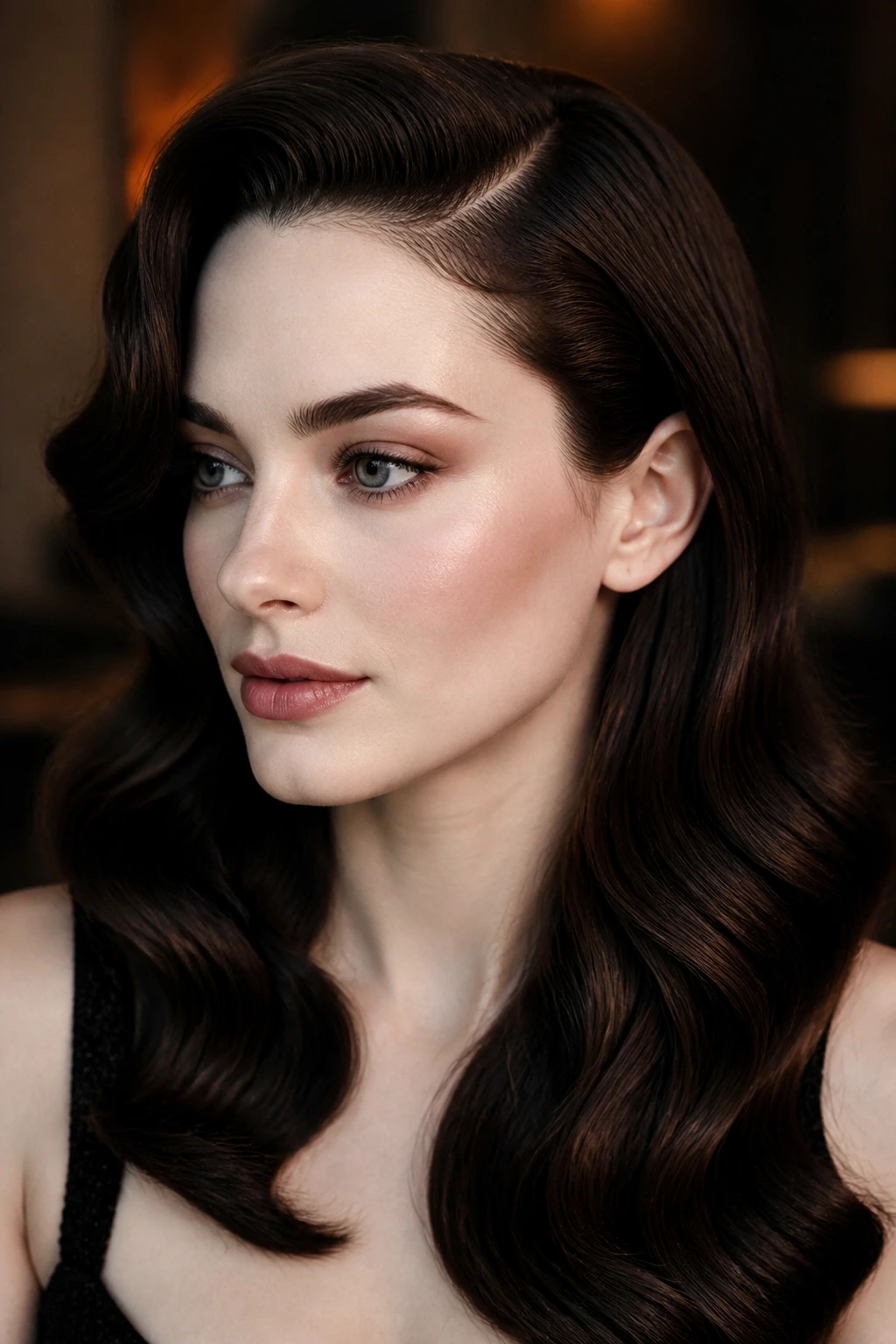
5. Side-Part Hollywood Waves In Deep Brunette
A deep side part changes the whole mood. It gives brunette hair a sweep and a little drama, and on fair skin it creates a strong line that makes the eyes and brow bone stand out more. With big, brushed-out waves, the result feels old-school in the best sense.
The thing people miss is that this style is less about curl and more about shape. You want the wave to curve from the mid-lengths, not from the roots, or it starts to look too formal. Keep the root area smooth, then brush the waves into one continuous bend. The brunette color should be glossy enough that the side part catches light along the ridge.
Best for evenings, events, or any day you want your hair to do a little more talking than usual.
If your hair is very wavy already, set it with large rollers or a 1.25-inch iron, then let it cool completely before brushing. That cooling step is the difference between soft wave and fluff.
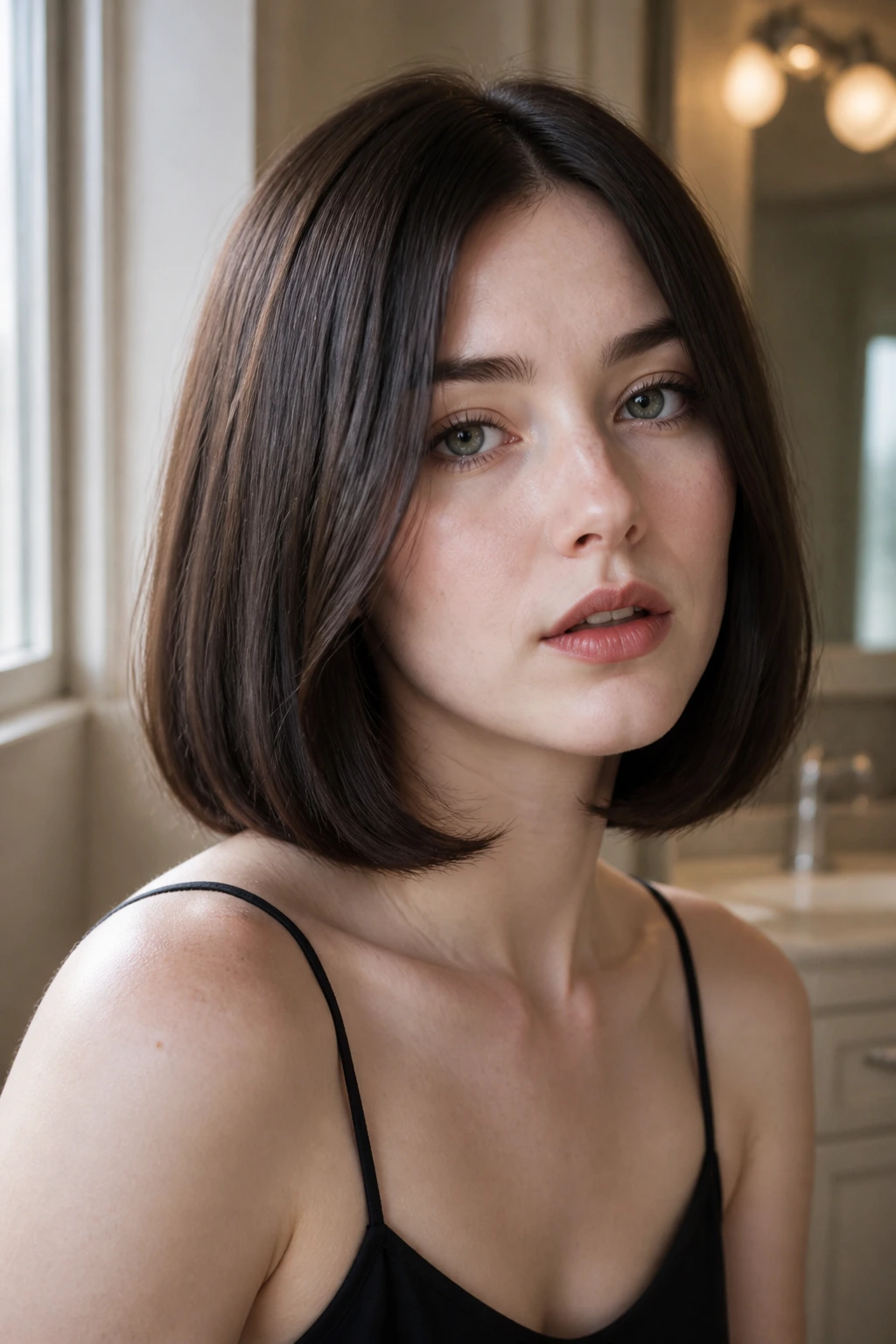
6. Glossy One-Length Lob With Bent Ends
One-length cuts get a bad reputation with wavy hair, and half the time that reputation is deserved. But if your waves are loose and you want a cleaner line, a blunt lob can be excellent. The secret is the bend at the ends — not a curl, not a flip, just enough movement to stop the cut from feeling blocky.
Why it works: Pale skin benefits from the crisp edge of a blunt cut because it gives the face a frame. The brunette color can stay deeper and richer when the ends are all at one level, especially if you finish with a shine spray or a very light serum. Ask for the perimeter to sit just above the collarbone and keep the interior layering minimal.
Tip: This is one of the best choices if your hair is fine and you lose volume fast. The blunt edge makes the ends look denser, which matters more than people think.
What to avoid: Too much texturizing at the bottom. It makes a nice lob look tired.
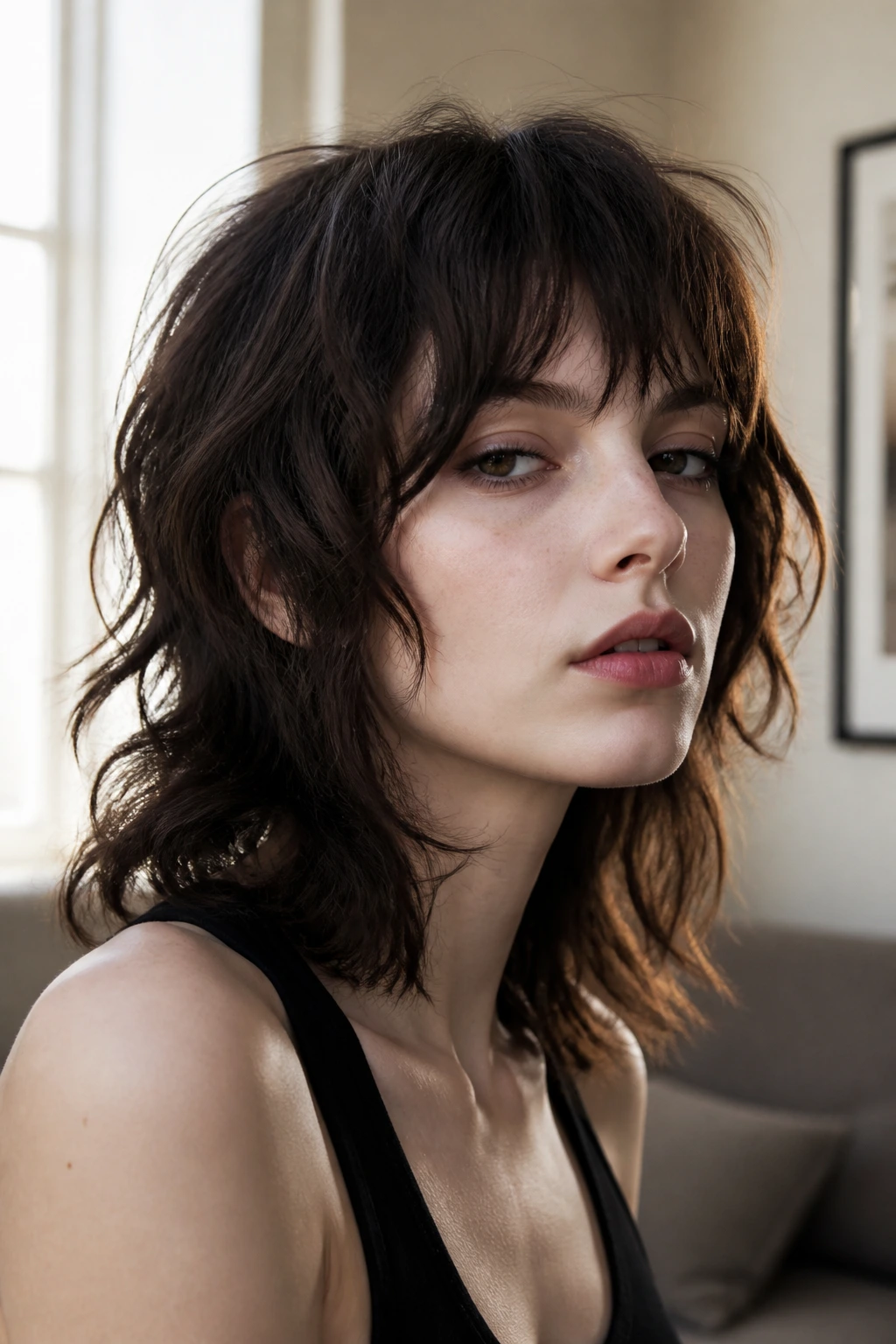
7. Wavy Wolf Cut With Piecey Fringe
The wolf cut is the bratty cousin in the brunette group, and I mean that as a compliment. It takes a darker brown and turns it into something piecey, lifted, and a little unpredictable — which works beautifully when your hair already has some wave.
On pale skin, the wolf cut can look either edgy or unfinished. The difference is the fringe and the crown layering. Keep the fringe broken and slightly wispy, not heavy. Keep the layers concentrated enough to build shape, but not so aggressive that the hair sticks out like feathers. The brunette shade itself can be espresso, walnut, or smoky brown; all three read well when the cut has that lived-in texture.
If you like low-effort styling, this is one of the better options on the list. Scrunch in mousse, rough-dry, and finish with a dab of texture cream on the ends. Done. Not polished. Better.
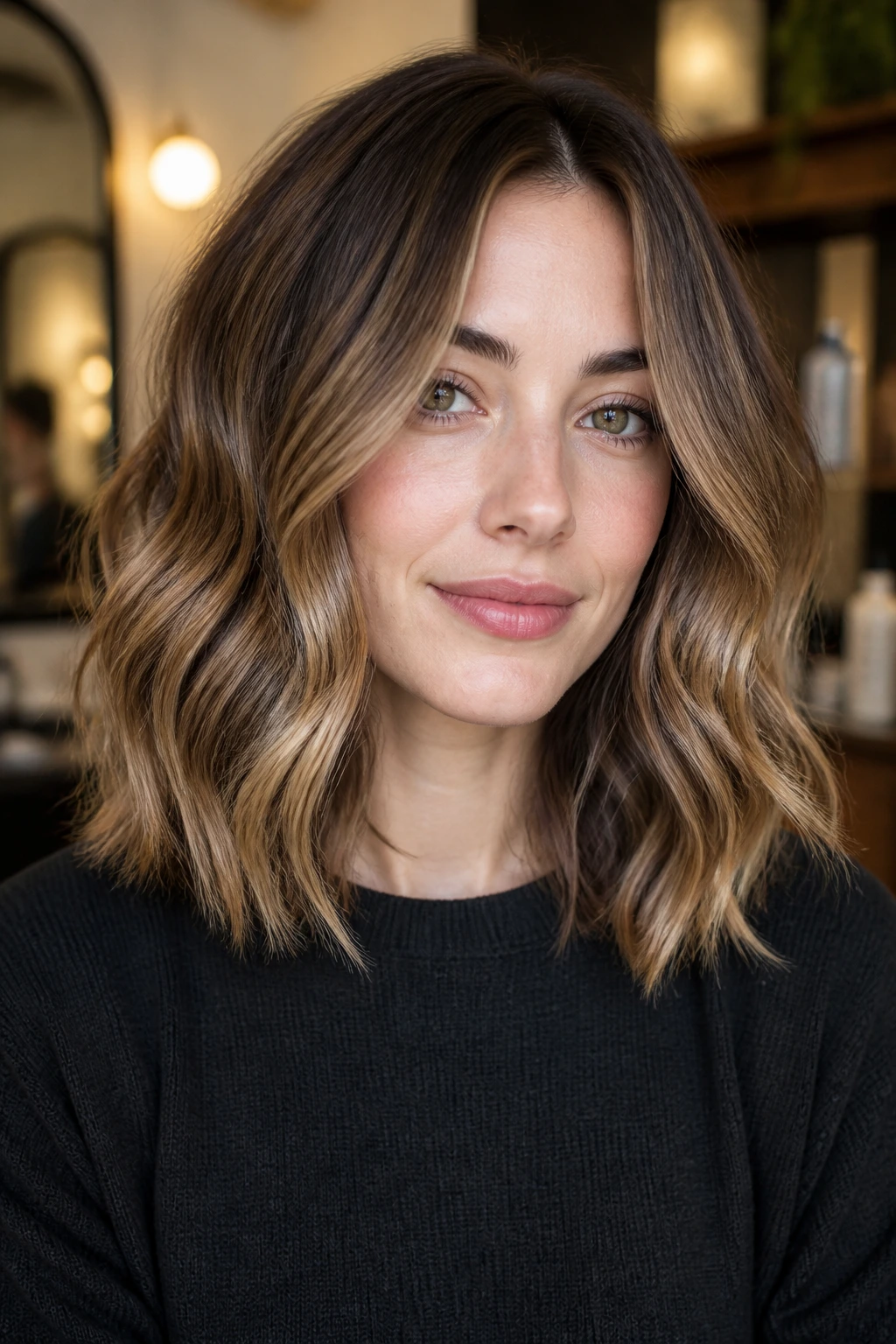
8. Bronde Balayage With Shoulder-Skimming Waves
Bronde sits in that useful middle ground between brunette and blonde, and on very fair skin it can be the easiest way to keep warmth near the face without losing the brunette identity. The shoulder-skimming length helps the waves fan out instead of bunching at the ends.
This is the style I’d pick for someone who says they want brunette, but not too brunette. The balayage pieces should be soft enough that you can’t spot a hard line when the hair moves. Around the face, keep the lighter ribbons one to two shades lighter than the base, not five. That way the effect stays dimensional instead of stripey.
The cut itself should be lightly layered, with the shortest pieces falling around the collarbone. That gives the wave enough shape to look airy and keeps the lighter pieces from sitting in one obvious band.
9. French Fringe And Soft Shoulder Waves
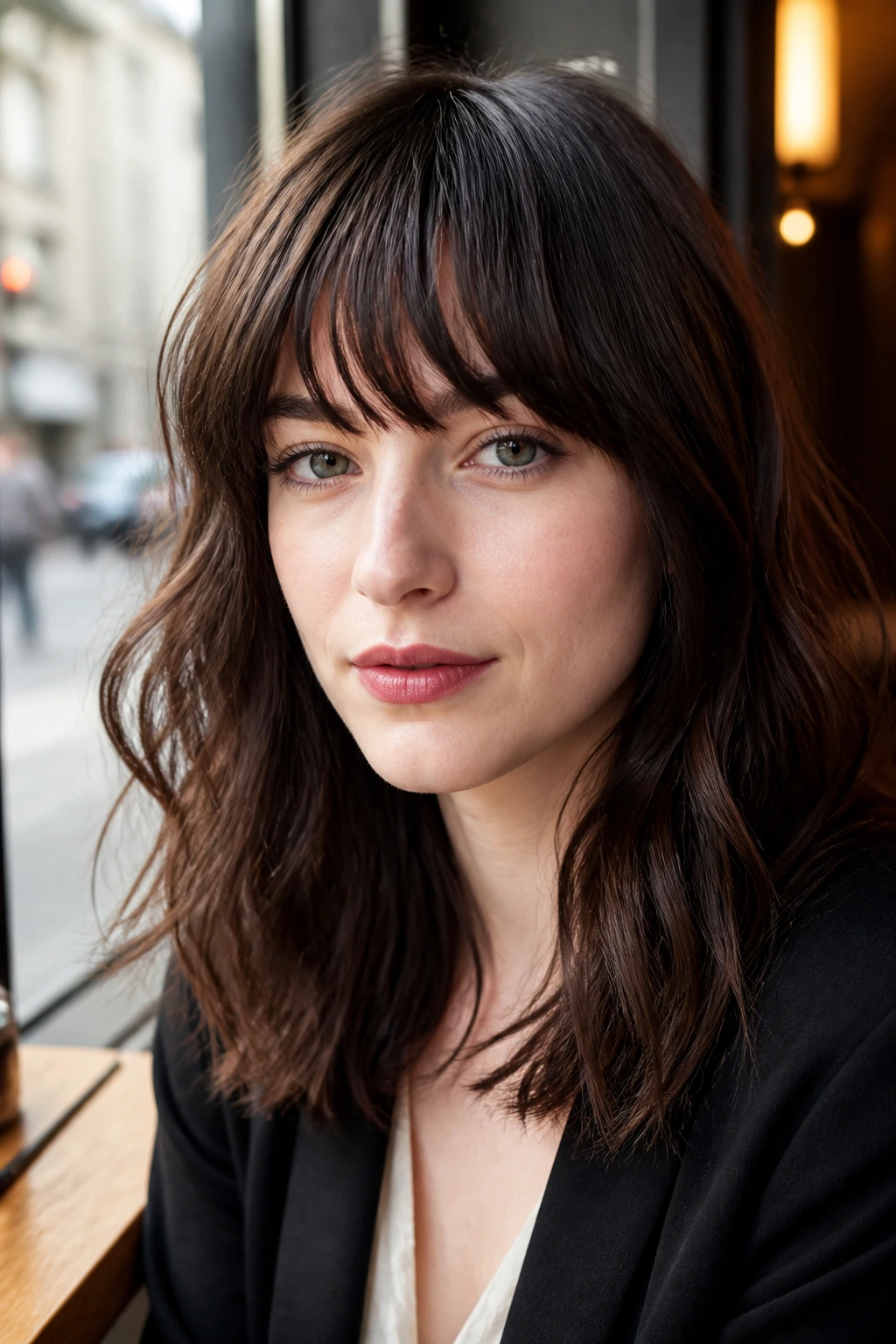
A French fringe on pale skin can be gorgeous, but only if the fringe is soft enough to breathe. Harsh bangs on fair features can feel severe fast. Keep them a touch longer at the temples and pair them with shoulder waves that don’t fight the face.
Ask your stylist for a fringe that skims the brows, then melts into side pieces near the cheekbones. The brunette shade can be cool chestnut or neutral mocha; both keep the look calm. This is one of those styles where the bangs do the talking, so the rest of the hair should stay looser and slightly undone.
Best details to request
- Fringe point-cut at the ends, not bluntly cut across.
- Shoulder-length layers that support the bangs.
- A gloss, not a heavy dye, if your color is already brown.
If you wear glasses or heavy brow makeup, this one is especially good. The fringe gives the face a frame without swallowing it.
10. Deep Mocha Long Layers With A Smooth Middle Part
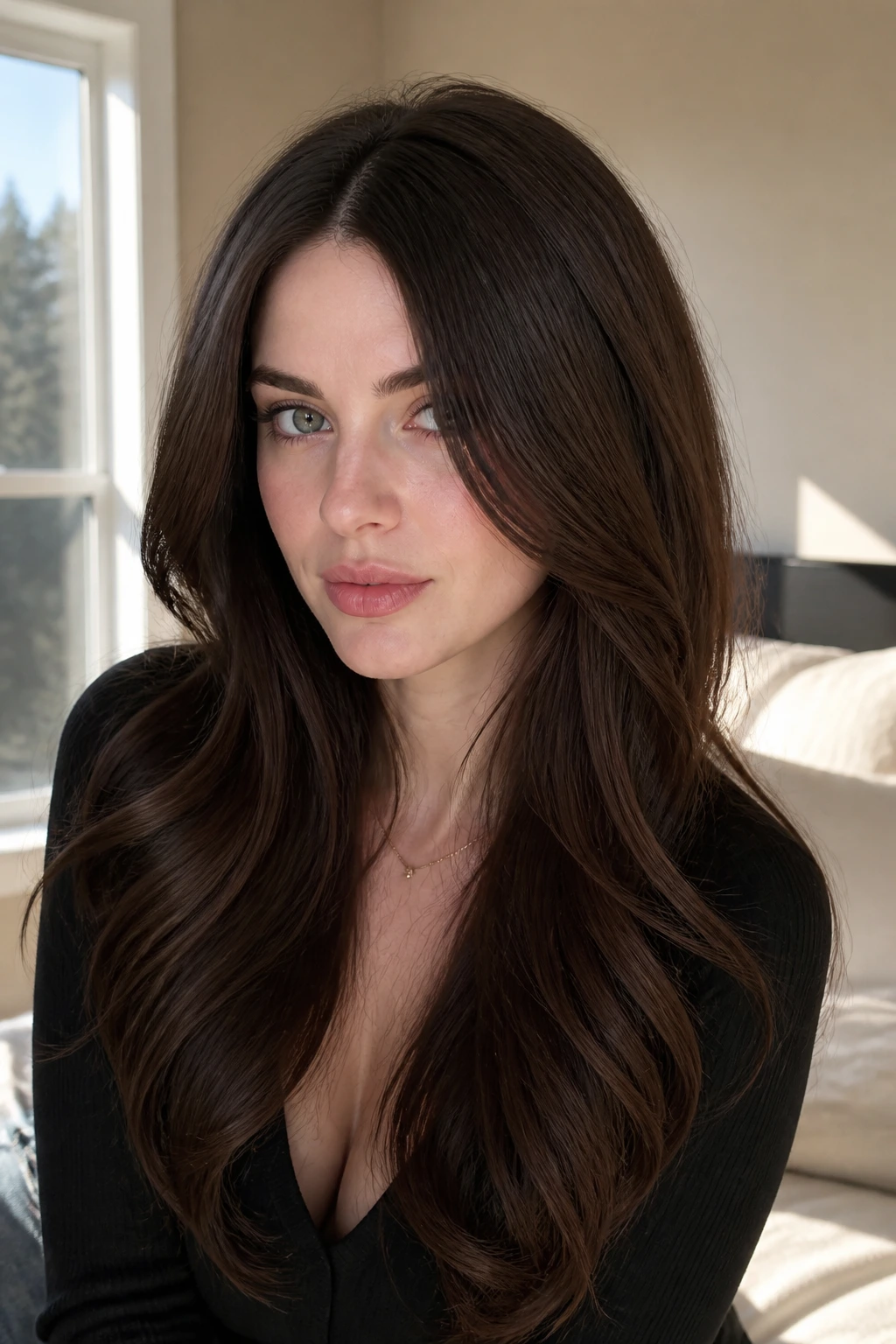
Deep mocha is a strong brunette choice for pale skin when you want elegance instead of softness. The middle part keeps the look symmetrical, and the long layers stop the color from falling into a single dark sheet.
This style works because the waves are allowed to curve gradually. No tight bends. No crunchy texture. Just smooth movement from the cheekbones down. If your hair is thick, long layers remove bulk without wrecking the wave pattern. If your hair is finer, keep the layers longer and use a volumizing mousse at the roots so the style doesn’t collapse.
I like this one for people who wear simple makeup and clean necklines. A black tee, a white shirt, or a narrow square neckline makes the mocha shade read richer. A deep brown next to pale skin can be striking, but the smooth part and the layered ends keep it from getting harsh.
11. Cocoa Bob With Tucked Ends
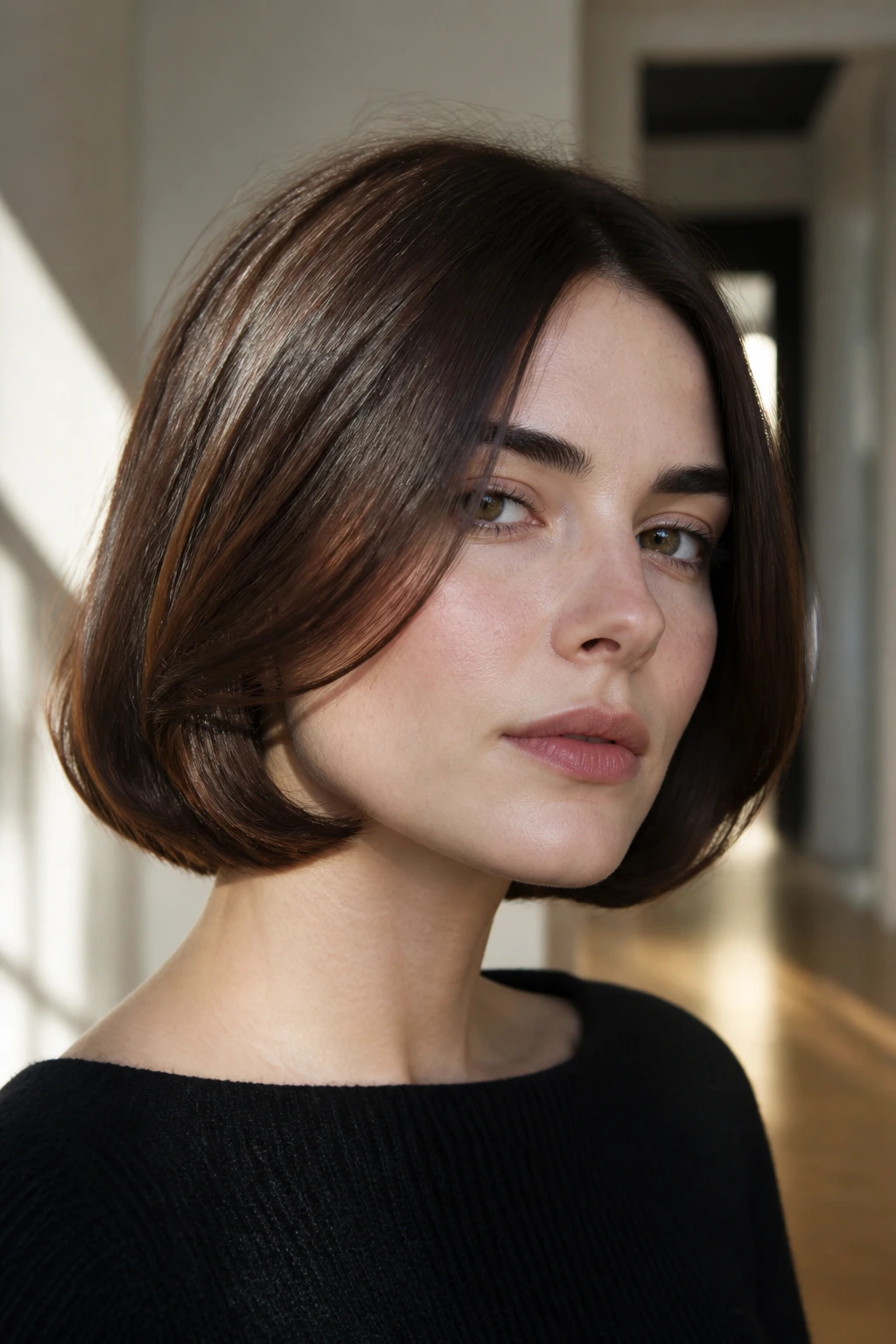
A bob that lands at the jaw or just below it can be a very smart move on pale skin. It sharpens the jawline, and if the brunette shade is cocoa instead of black-brown, the result stays soft. Tucked ends — the kind that bend inward a little instead of flaring out — give the cut a neat finish.
This style is cleaner than a shag and less formal than a blunt lob. It works especially well if your waves are loose and your hair likes to swing around your face. Keep the line slightly rounded at the bottom so the ends curve rather than sit stiffly. That little detail stops the bob from feeling boxy.
If you want a cut that looks intentional on day one and still behaves on day three, this is a good bet. Use a smoothing cream before drying, then tuck the ends under with a round brush or a flat iron just at the last inch. Nothing fancy. Just enough.
12. Walnut Shag With Soft Bangs
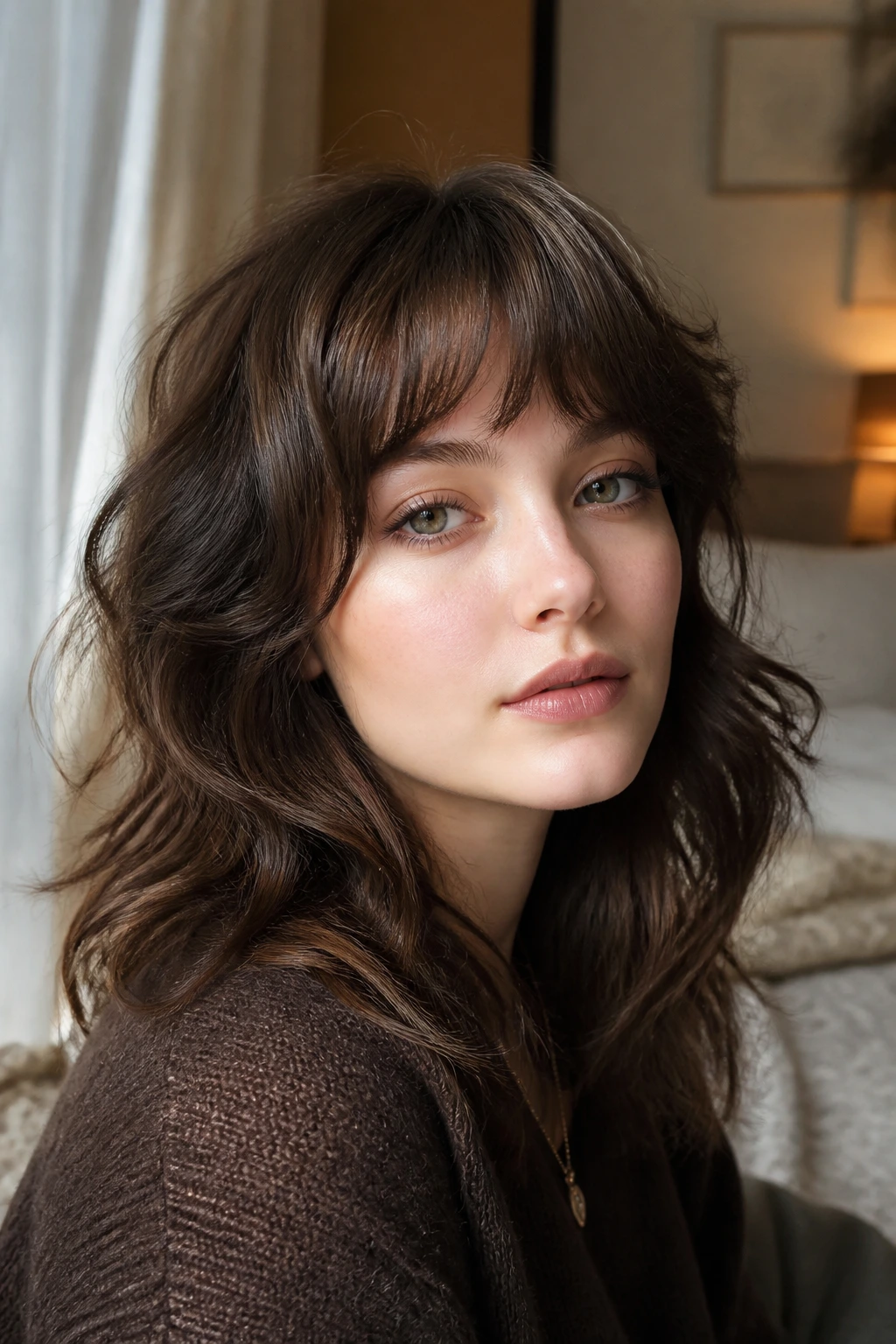
Walnut brown is one of the better neutral brunettes for fair skin because it doesn’t lean too red or too gray. The shag shape gives it movement, and the soft bangs make the cut feel less heavy around the forehead.
The nice thing about this style is that it suits naturally wavy hair without asking it to become something else. If your waves are medium to thick, the shag removes bulk where you need it. If your waves are finer, keep the layers a little longer so the hair doesn’t look hollow at the ends. The bangs should skim, not sit like a wall.
I’d call this a good middle-road haircut. Not flashy. Not timid. It gives pale skin a frame and keeps the brunette shade from looking flat in overhead light, which is where a lot of brown hair goes wrong.
13. Ash Brunette Money Pieces Around The Face
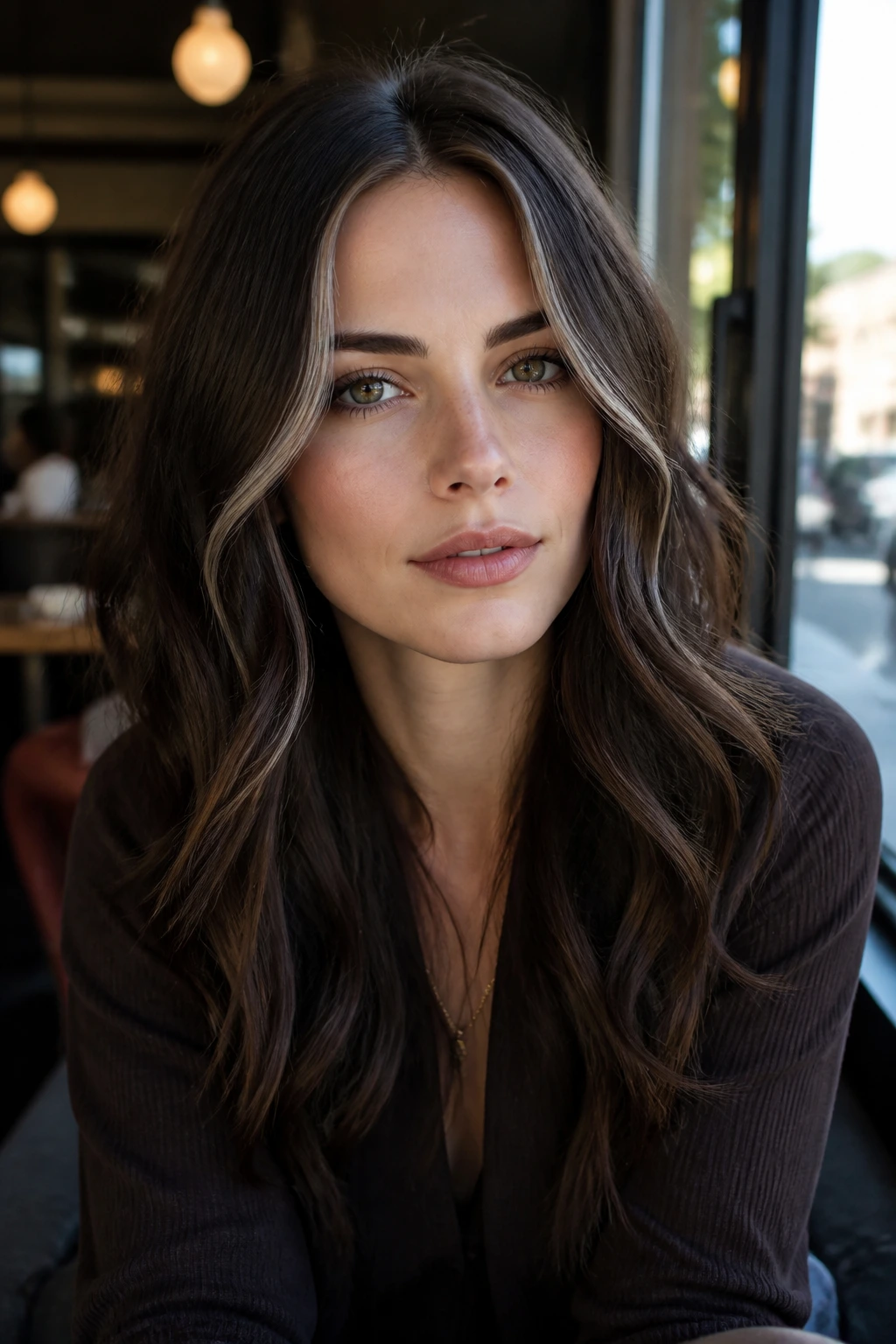
Need contrast without warmth? This is the move. Ash brunette money pieces can brighten pale skin in a cleaner, cooler way than caramel, especially if your complexion leans pink or you prefer cool-toned makeup.
The key is restraint. Two to four front pieces, no wider than a finger or two, are usually enough. They should sit around the temple and cheekbone, not start too high at the hairline or they’ll look obvious. The rest of the hair can stay a deeper ash brown, which gives the front pieces room to do their job.
How to wear it
- Keep the waves loose and brushed out a little.
- Use a cool brown gloss so the base doesn’t turn red.
- Pair it with a center part if you want a stronger contrast, or a soft side part if you want more lift.
This style can look expensive quickly, but it can also go stripey if the highlights are too broad. Narrow is better.
14. Romantic Long Waves With Root Shadow
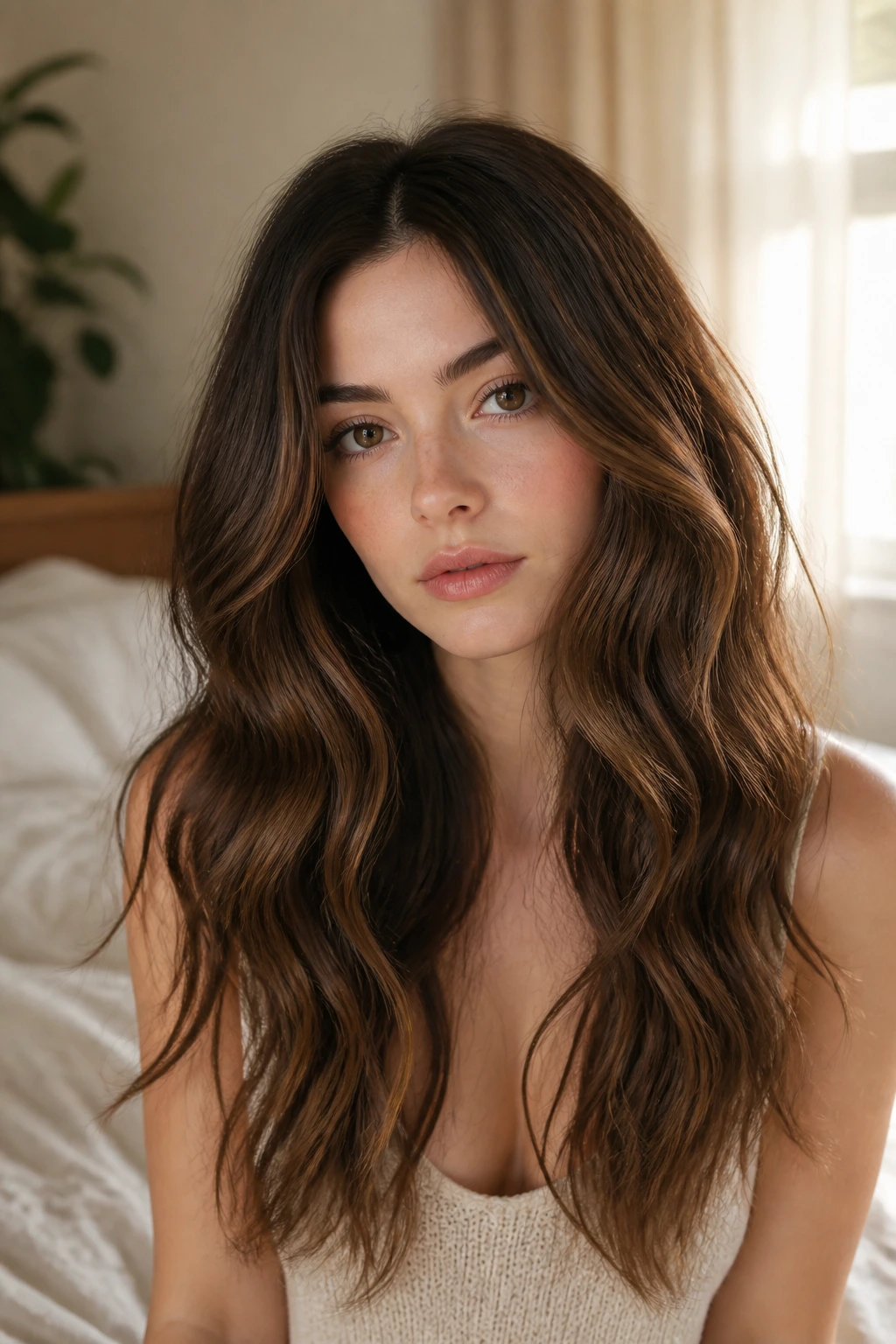
A root shadow sounds like a technical thing, but in practice it just means the roots stay a little deeper so the color grows out smoothly. On pale skin, that depth near the scalp keeps the face from looking disconnected from the hair, especially if the mid-lengths and ends are a softer brunette or bronzed brown.
Long waves make the whole style feel romantic without turning it into costume hair. Keep the bends loose and the layers long enough that the ends can move. A root shadow also helps if you do not want to babysit your color every few weeks; the darker root softens the regrowth line and gives the hair a more natural slope.
Why it works: The shadow at the crown frames the face, while the lighter lengths add movement through the ends. It’s one of the easier brunette looks to live with because you are not fighting a harsh line every time the roots grow out a quarter inch.
15. Collarbone Lob With A Gentle S-Bend
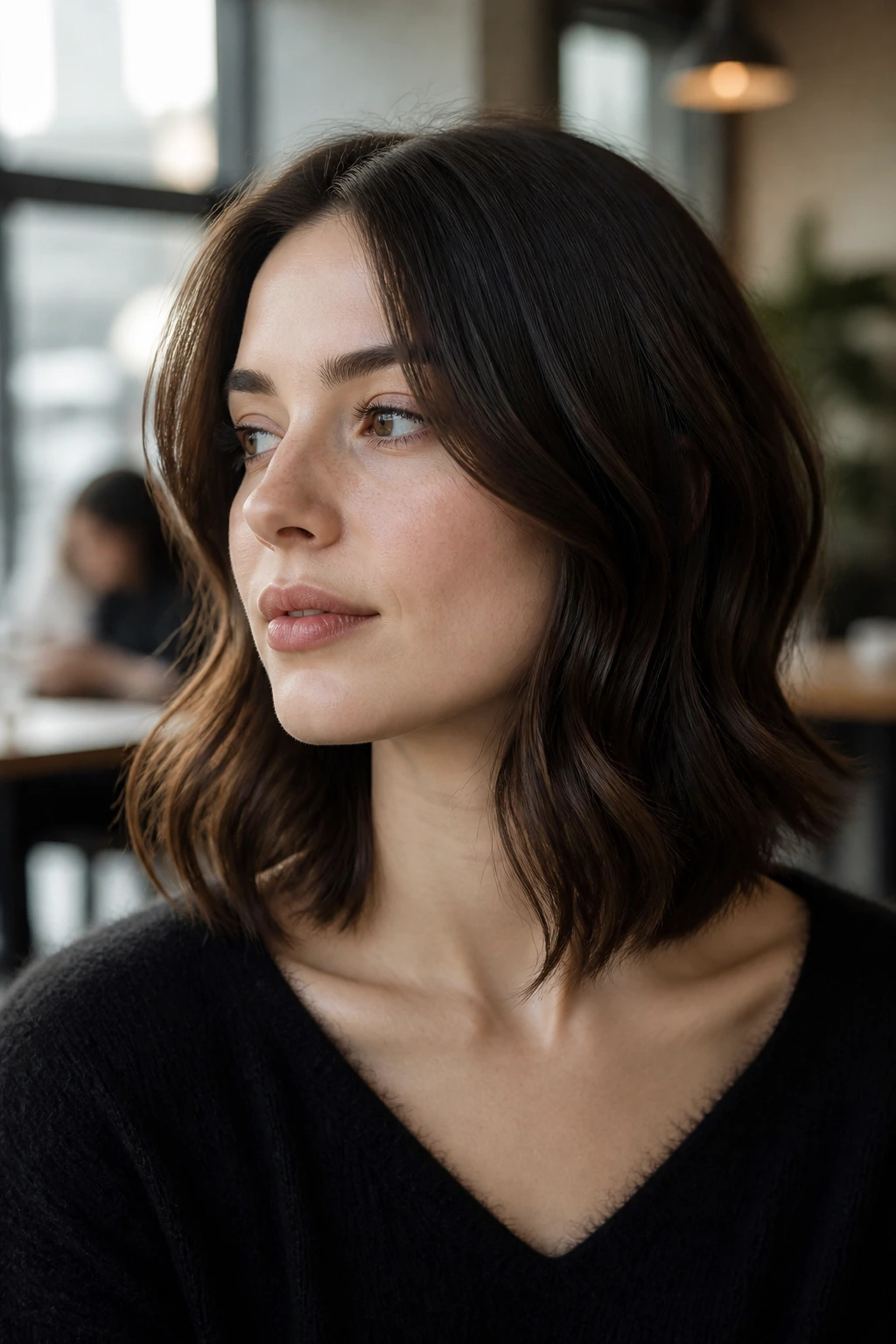
The collarbone lob is one of the least fussy brunette cuts going, and the S-bend makes it look deliberate rather than sleepy. On pale skin, that subtle wave keeps the shape soft while the brunette color does the framing.
This is the cut I’d hand to someone who wants something they can wear to work, to dinner, and back to the grocery store without restyling it completely. Ask for a line that sits right at the collarbone, with soft face-framing pieces and very little bulk removed from the ends. Then use a flat iron or large curling wand to make an S-shape through the mid-lengths.
The S-bend matters because wavy hair can sometimes get fluffy at the sides when it’s cut too blunt. A gentle bend keeps the silhouette smooth and prevents the hair from sticking straight out at the shoulders. Small thing. Big difference.
16. Chocolate Buttercream Balayage On Medium Waves
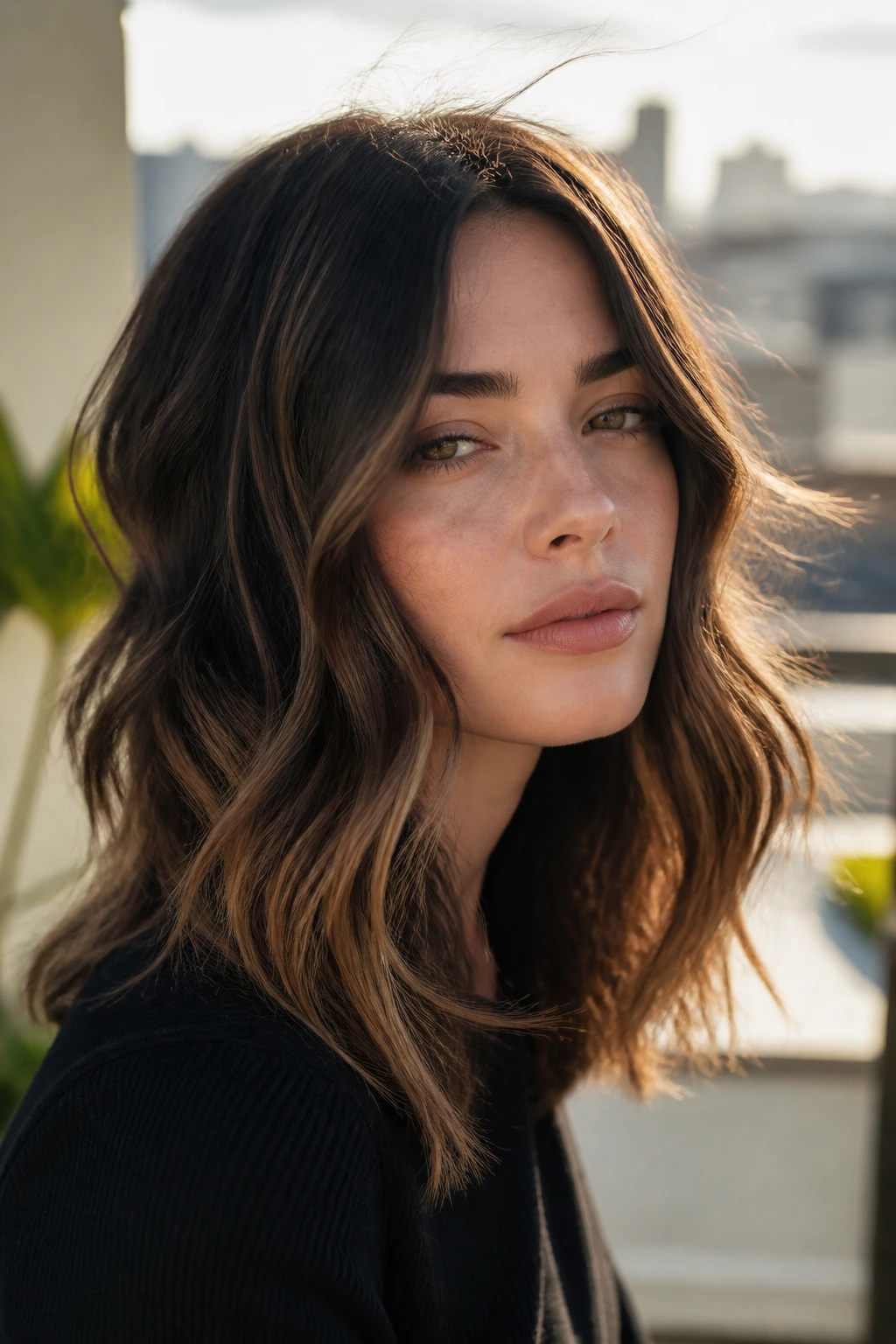
Chocolate buttercream balayage sounds indulgent, but the idea is simple: dark brunette base, creamier ribbons through the mids, and soft waves that connect the two. On pale skin, that mix gives you brightness without crossing all the way into blonde territory.
I like this look on medium-length hair because there’s enough surface area for the balayage to show. If the hair is too short, the dimension gets lost. If it’s too long and heavy, the lighter pieces can hide in the bulk. Medium waves are the sweet spot. They let the color move.
What makes it different: The lighter ribbons should not start at the root. Keep them lower and softer, then let the waves carry the contrast. That gives the style an easy grow-out and keeps the brunette base strong near the face, which is what makes pale skin pop.
17. Long Invisible Layers For Heavy Wave Patterns
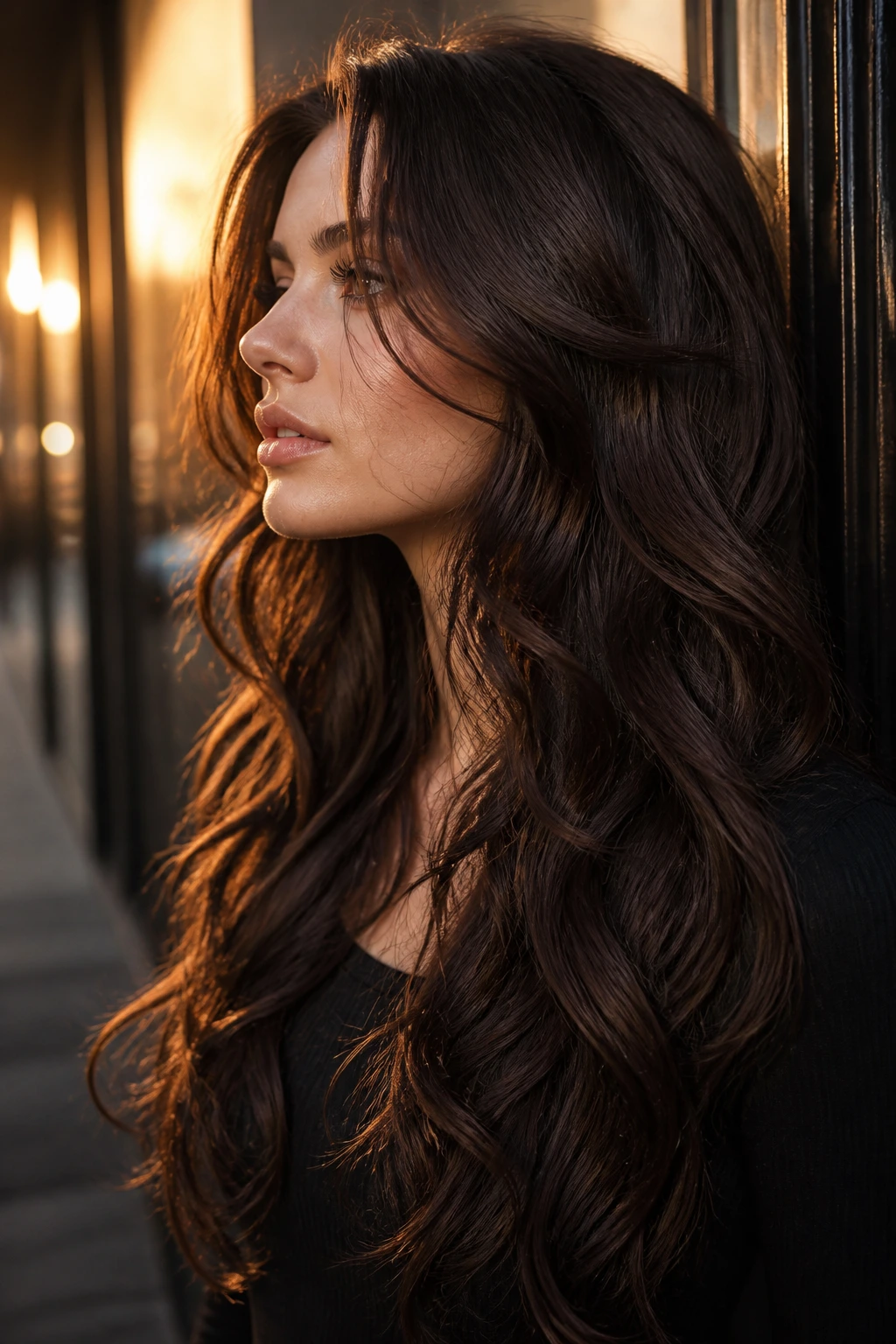
Invisible layers are the answer when you want to keep length but stop the hair from feeling like a curtain. For pale skin, that matters because long brunette hair can overwhelm features if it hangs too heavily. Invisible layers remove weight without creating a choppy outline.
This cut is especially good if your waves are thick or if your hair gets wider at the sides. The layers should be internal, not obvious from the outside, so the hair still looks full but moves better. A deep mocha, chestnut brown, or even a cooler mushroom tone can all work here depending on your undertone.
The big win is movement. The hair still looks long and lush, but the wave pattern can show instead of getting trapped under itself. If you’ve ever had long wavy hair that looked better wet than dry, this is the kind of cut that fixes it.
18. Tousled Pixie-Bob In Warm Brunette
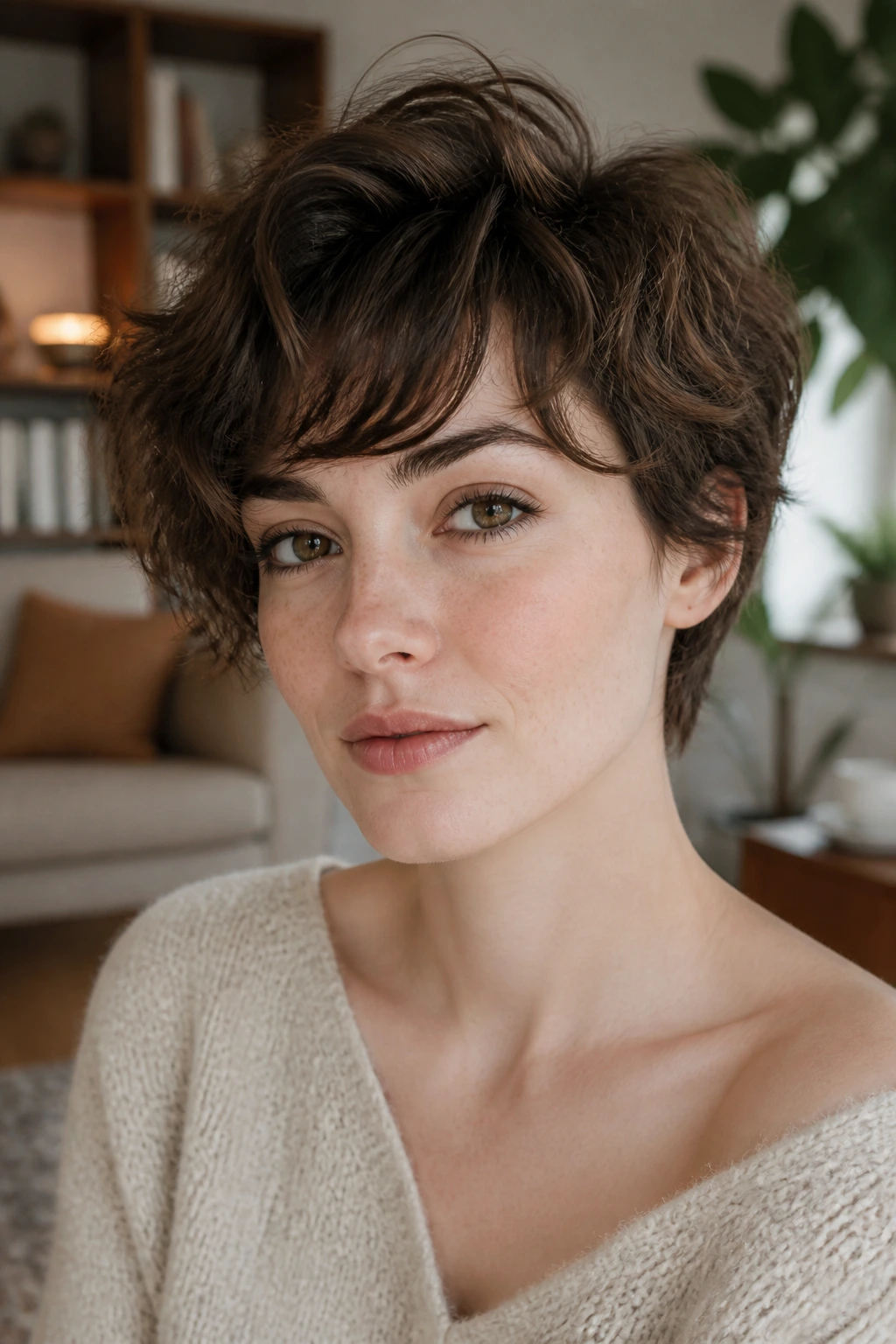
Short hair can be fantastic on pale skin when the brunette shade has enough warmth to keep the face from looking stark. A pixie-bob gives you that cropped energy without going all the way to a pixie, and the tousled finish keeps it from feeling severe.
The warm brunette tone is the key. Think walnut, toasted chestnut, or soft cocoa rather than near-black. You want the texture to show. With wavy hair, this cut can fall into place with very little effort — a little cream, a quick scrunch, and you’re done. If your hair is dense, ask for the sides to be kept close and the top slightly longer so the shape doesn’t puff.
This is a good style for people who are tired of dragging long hair around. It opens the neck, puts the focus on the eyes, and gives pale skin a crisp frame without depending on length for drama.
19. Smoky Brunette With S-Curves
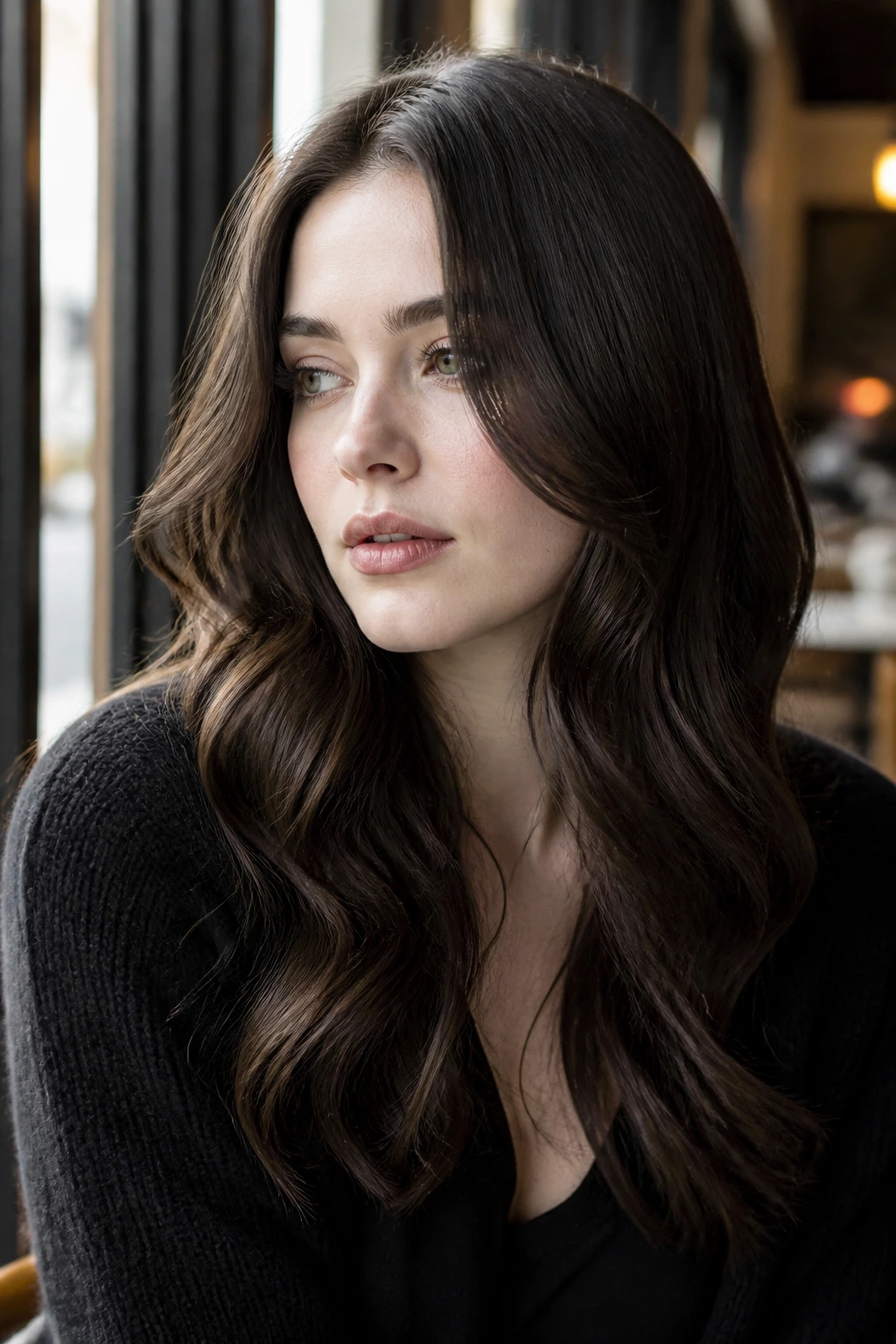
Smoky brunette sits between ash and soft brown, which makes it a smart choice if warm tones tend to turn orange on you. Paired with S-curves, the shade looks cool, glossy, and a little moody — in the best way.
The curve pattern matters more than the length here. S-curves are softer than beach waves and cleaner than curls, so the color doesn’t get lost. They also sit nicely against fair skin because they create movement without too much volume. If your hair is medium thick, this style is easy to wear. If your hair is fine, keep the bends large and the layers long.
I’d call this a quiet style with a sharp eye. It doesn’t shout, but it doesn’t disappear either. On pale skin, smoky brunette often looks strongest when the makeup stays simple — brushed brows, a little blush, maybe a berry lip if you want a bit of contrast.
20. Center-Parted Mid-Length Cut With Airy Volume
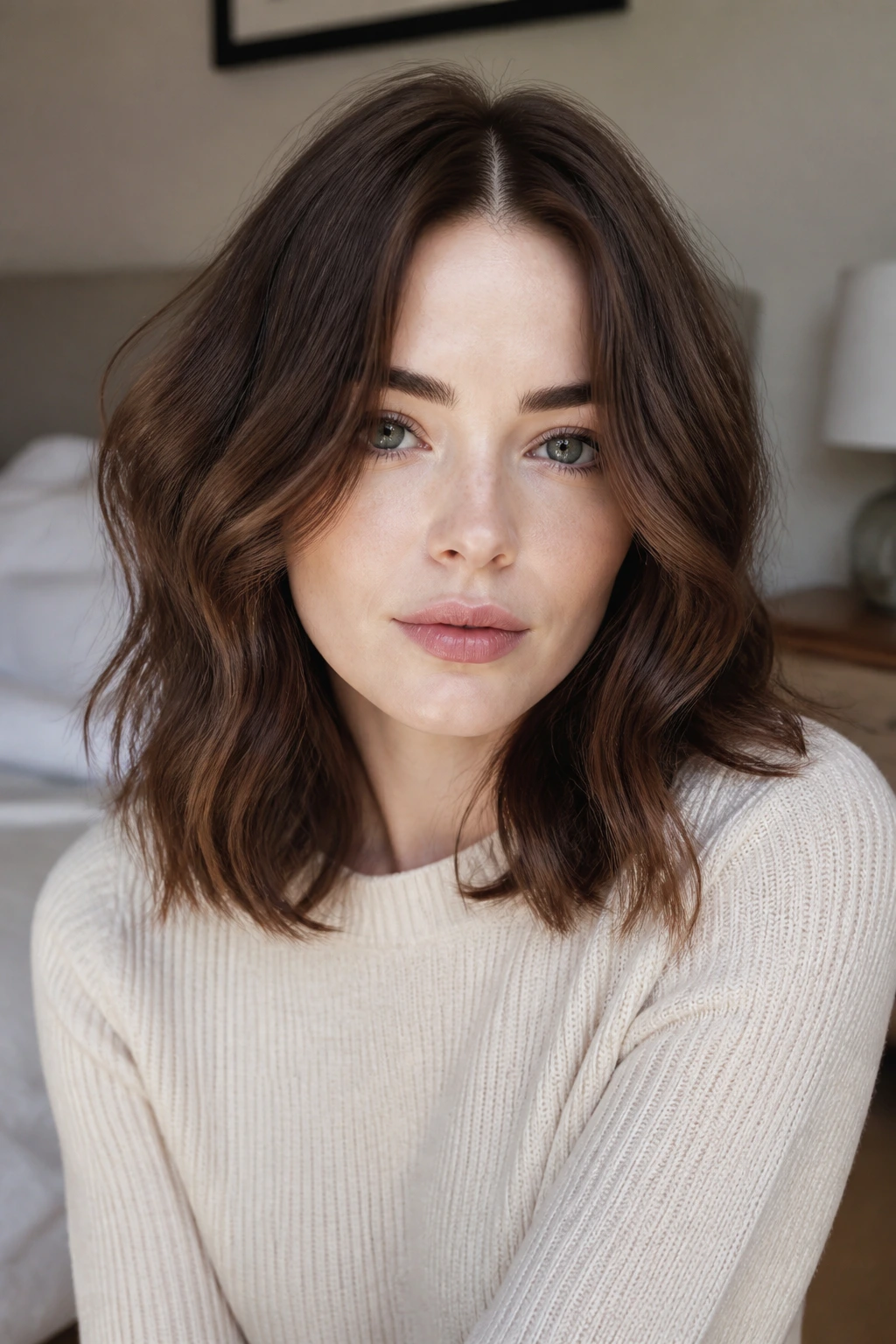
A center part can be brutally honest on the wrong haircut. On this one, it works because the mid-length cut and airy volume give the face some structure instead of leaving it exposed. The brunette shade can be neutral mocha or chestnut; both read cleanly with pale skin.
What keeps it from feeling plain is the way the wave sits through the sides. You want volume that starts around the cheekbones, not at the temples, so the face gets lifted where it matters. If your hair is slightly flat at the crown, root clips while drying can help. If it’s too full at the sides, ask for gentle internal layering.
This is one of the most wearable brunette looks in the bunch. It can be dressed up with a round brush and a shine spray, or worn rough-dried and a little loose. The middle part gives it symmetry, and the airy shape keeps it from looking stern.
21. Bronze-Infused Brunette Waves
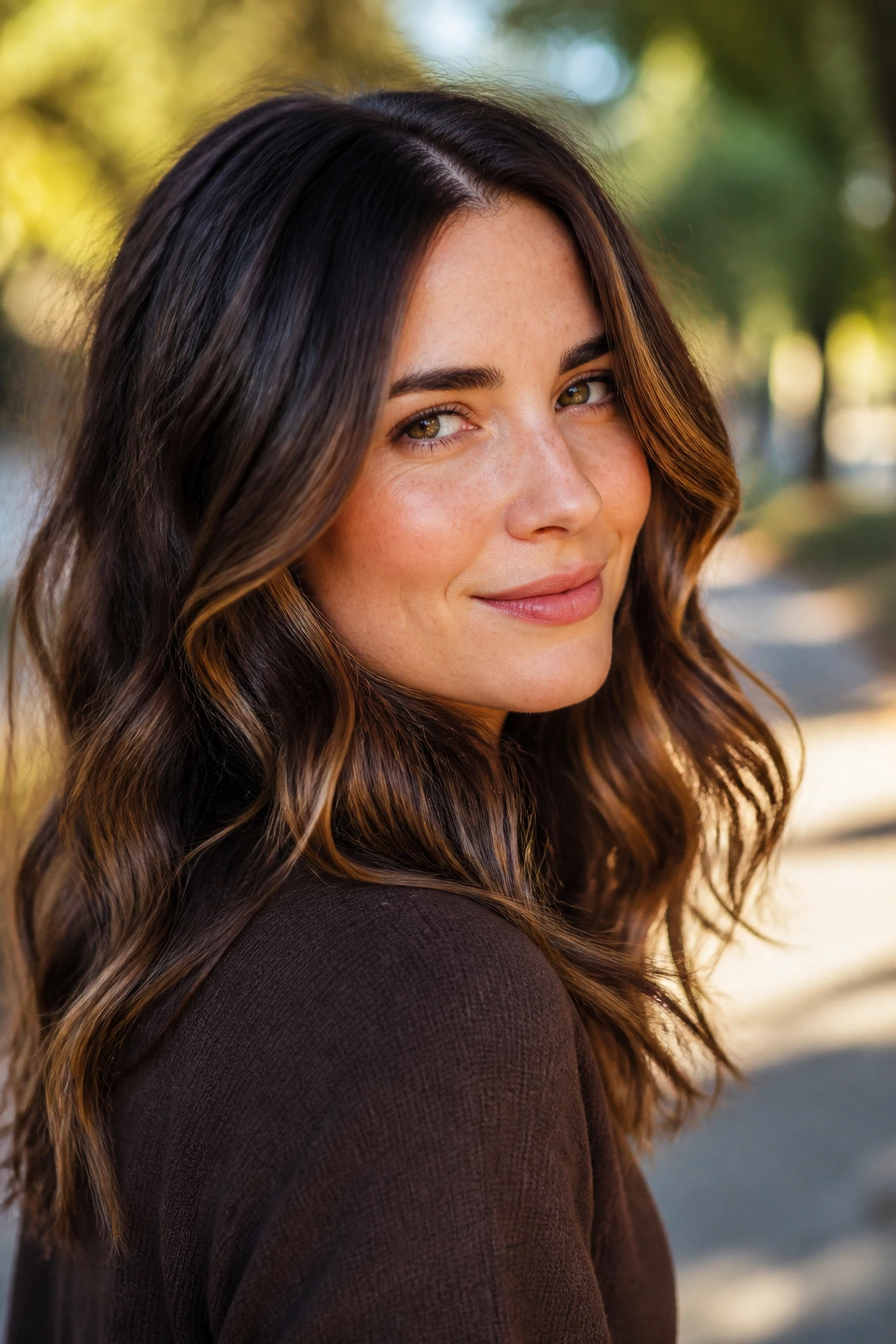
Bronze is underrated on fair skin. It adds warmth without sliding into orange, and when it’s woven through brunette waves it gives the hair a kind of soft gleam that works especially well in daylight. This is not a blonde style pretending to be brunette. It is brunette with a warm edge.
The base should stay brown enough to anchor the face. Then the bronze pieces can sit through the mid-lengths and around the front. The wave pattern makes the metallic warmth look dimensional rather than brassy. If your skin is neutral or peachy, this is one of the easiest shades to wear.
Best for: People who want brunette that looks sunlit, not dark.
Styling tip: Keep the waves broad and smooth. Tight texture can make bronze read too busy, and nobody needs that.
22. Feathered Medium Cut With Flipped Ends
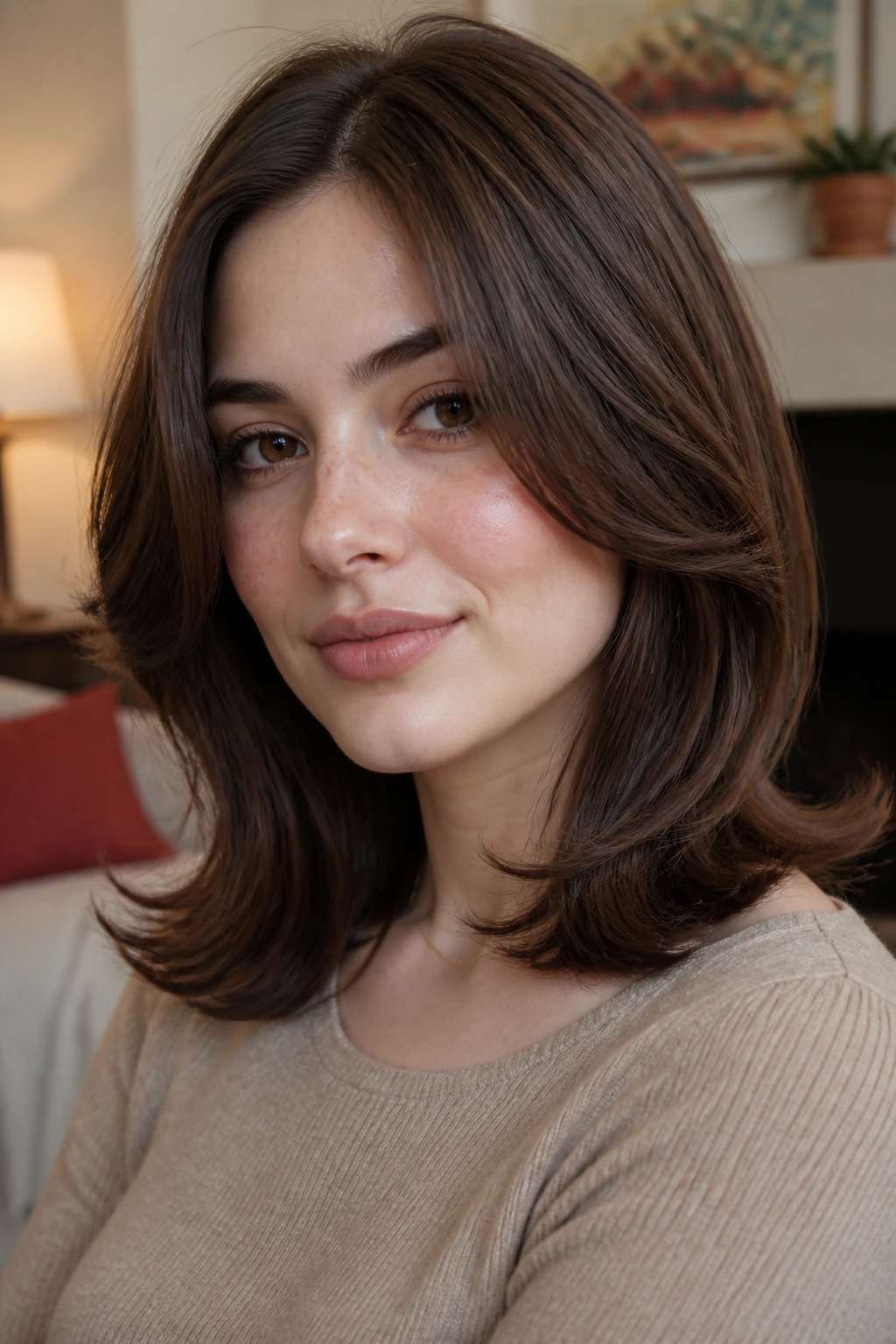
Feathered layers are having the last word here because they still work. On pale skin, a feathered medium cut can soften a strong brunette shade and keep the face from looking boxed in. The flipped ends give it a little retro shape without turning it into a costume.
This cut is especially good if your waves are fine to medium and you want more movement at the ends. The feathering takes weight out of the sides, which helps the brunette color breathe. A chocolate or walnut tone works well, though a cooler mocha can be just as good if your skin runs pink.
Good things to ask for
- Medium length that brushes the collarbone.
- Feathering through the front and side pieces.
- Ends that flip under or out just a touch, not in tight curls.
The cut has enough shape to look styled even on low-effort days, which is always a win.
23. Half-Up Wavy Style With Loose Face-Framing Pieces
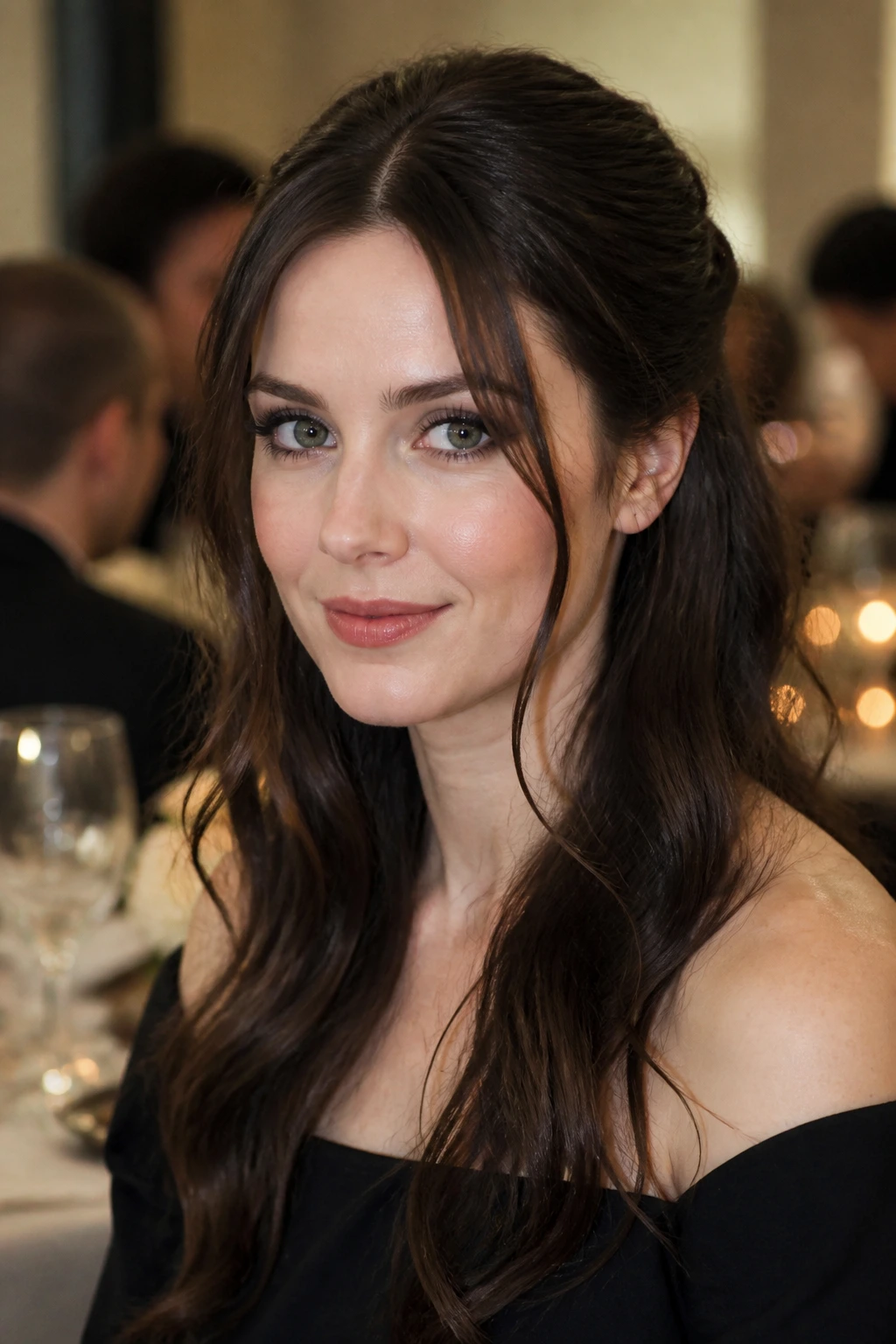
Sometimes the hairstyle is less about the cut and more about how you wear it. A half-up style with loose waves and a few face-framing strands can make brunette hair look softer on pale skin because it lifts the crown and keeps the contrast from crowding the jawline.
This is one of the easiest ways to show off dimension in darker hair. Pulling the top half back lets the lighter ribbons and the wave pattern around the front do the work. Leave two slim pieces out around the cheeks; they stop the style from looking too severe. If your hair is thick, clip the top half loosely so the crown doesn’t flatten. If it’s fine, tease the crown a little before pinning.
Good for dinners, weddings, or second-day hair that needs a little rescue. It also gives you a quick test of whether you prefer your brunette hair framed around the face or fully open.
24. Dark Mocha Glam Waves
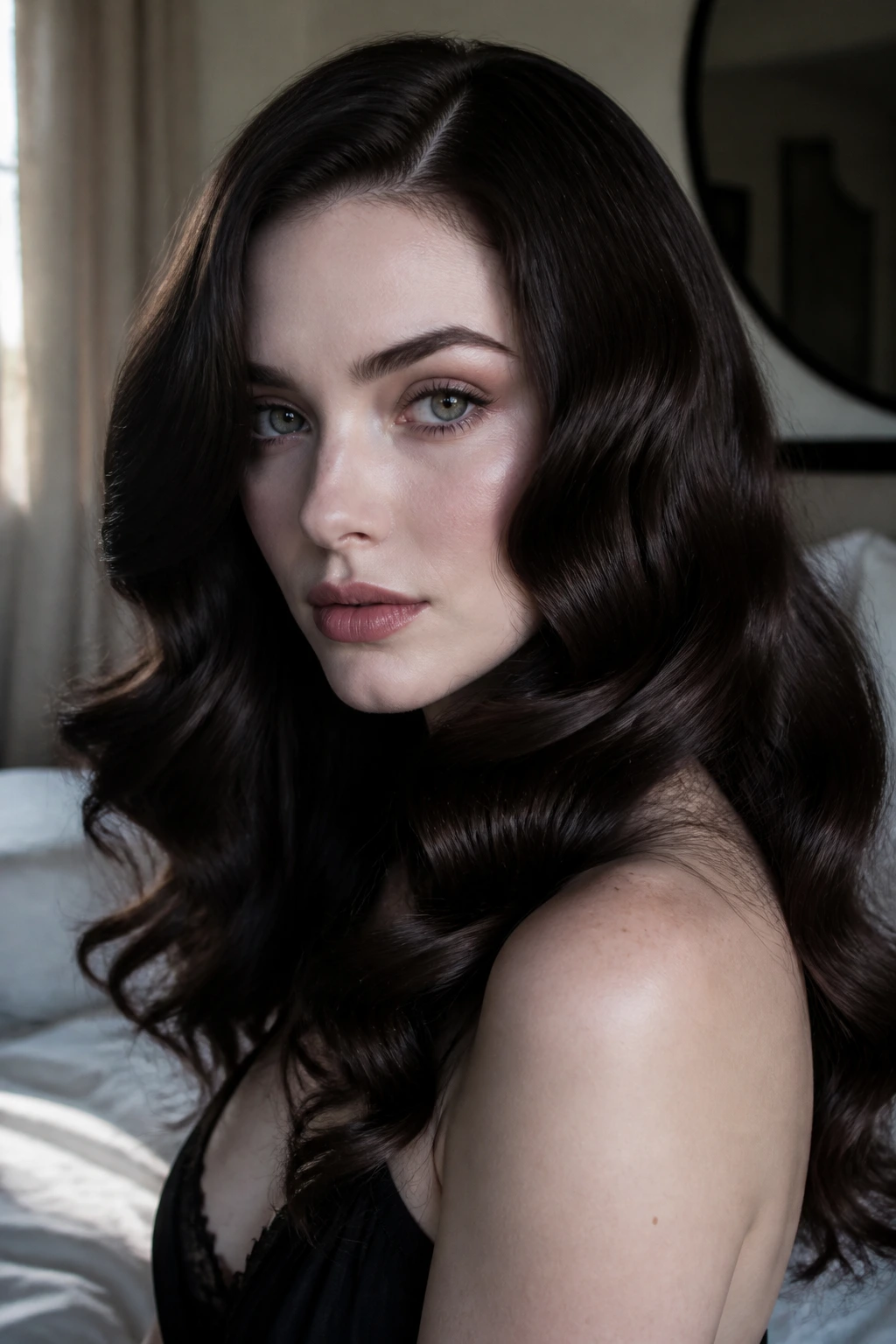
Dark mocha waves lean formal, rich, and a little dramatic. On pale skin, they create strong contrast, which can be a good thing when the waves are large and glossy. This is not a casual beach style. It’s smoother, cleaner, and a touch more old-Hollywood.
The key is shine. Dark mocha without shine can look flat. Dark mocha with shine looks expensive in the old-fashioned sense — polished, deep, and precise. Use a large barrel iron or hot rollers, then brush the waves out so they sit in one broad sweep. The finish should look smooth enough to reflect light along the ridge of each wave.
Best when you want your hair to read as a deliberate part of the outfit. It pairs well with simple clothing and strong brows. If your makeup is soft, this hair color can carry the whole look.
25. Dimensional Cocoa Balayage With Long Flowing Layers
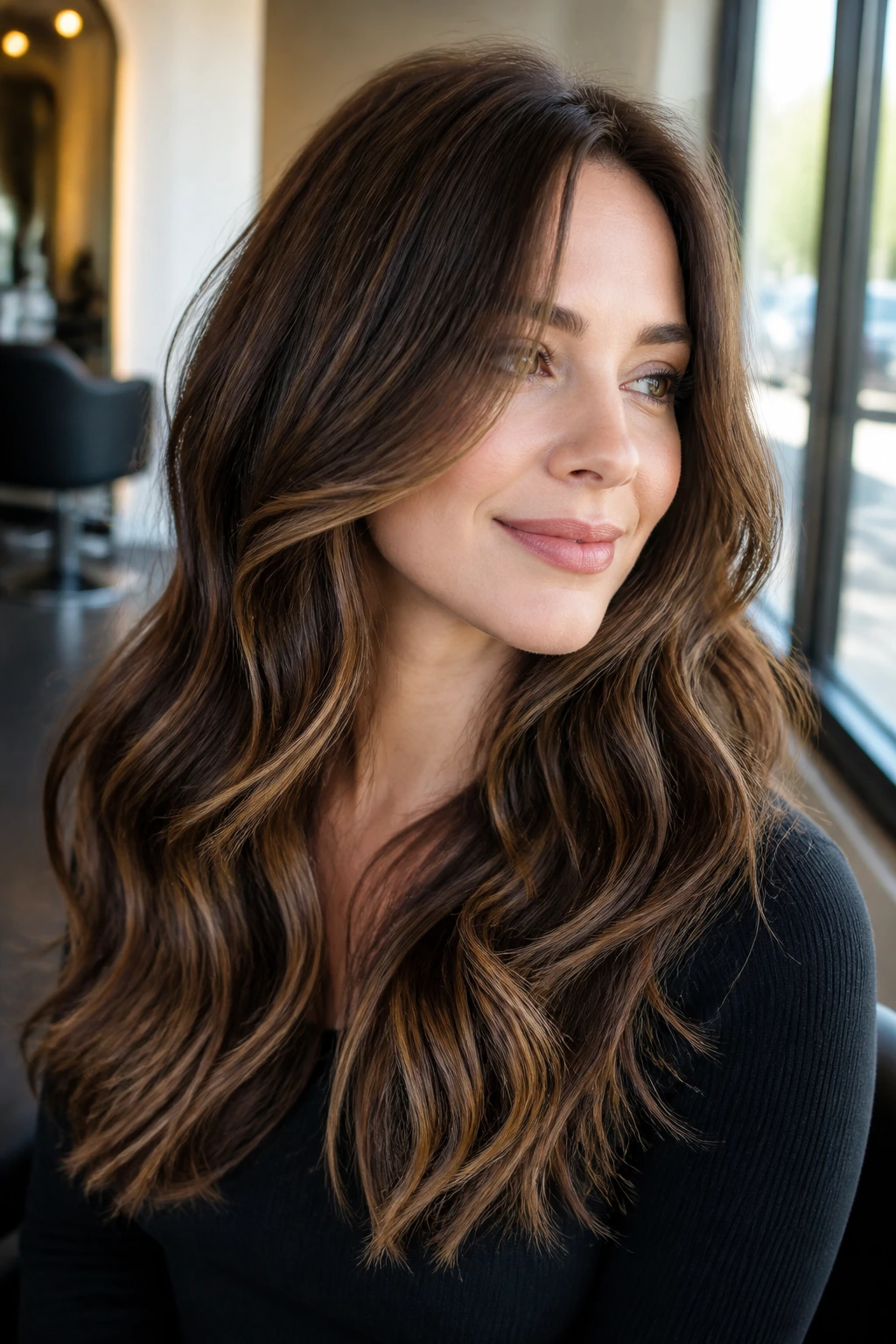
This is the one I’d hand to someone who wants brunette richness, wave movement, and low-maintenance grow-out all in the same haircut. Dimensional cocoa balayage keeps the base deep enough for fair skin to register the contrast, while the layered ribbons stop the color from going flat.
Long flowing layers are what make the balayage feel alive. The lighter pieces should come in softly through the mid-lengths and ends, then disappear back into the brunette base. That keeps the look from turning striped. The wave pattern matters, too — loose, brushed-out bends show the dimension better than tight curls ever will.
If you want one brunette style that can live through office days, weekends, and the occasional dress-up night without feeling like three different heads of hair, this is the safest bet on the list. It’s also one of the easiest to grow out without resentment, which is worth a lot more than people admit.
Why Brunette Waves Need Dimension Instead of Flat Color
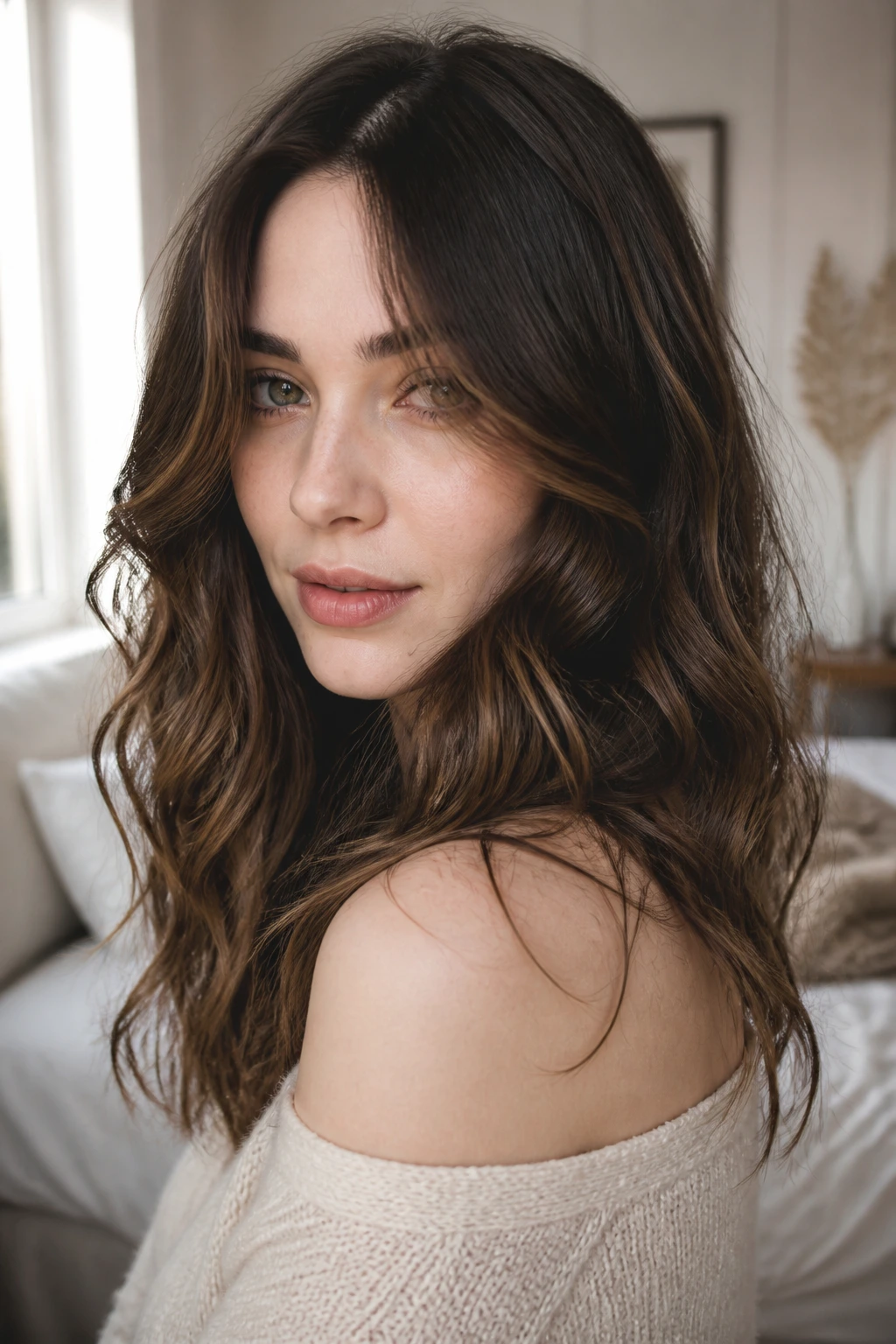
Flat brunette color is the quickest way to make fair skin look tired. That sounds harsh, but it’s true enough that colorists spend a lot of time correcting it. Pale skin needs either contrast, warmth, or movement — and wavy hair is already giving you the movement part, so the color should help, not fight.
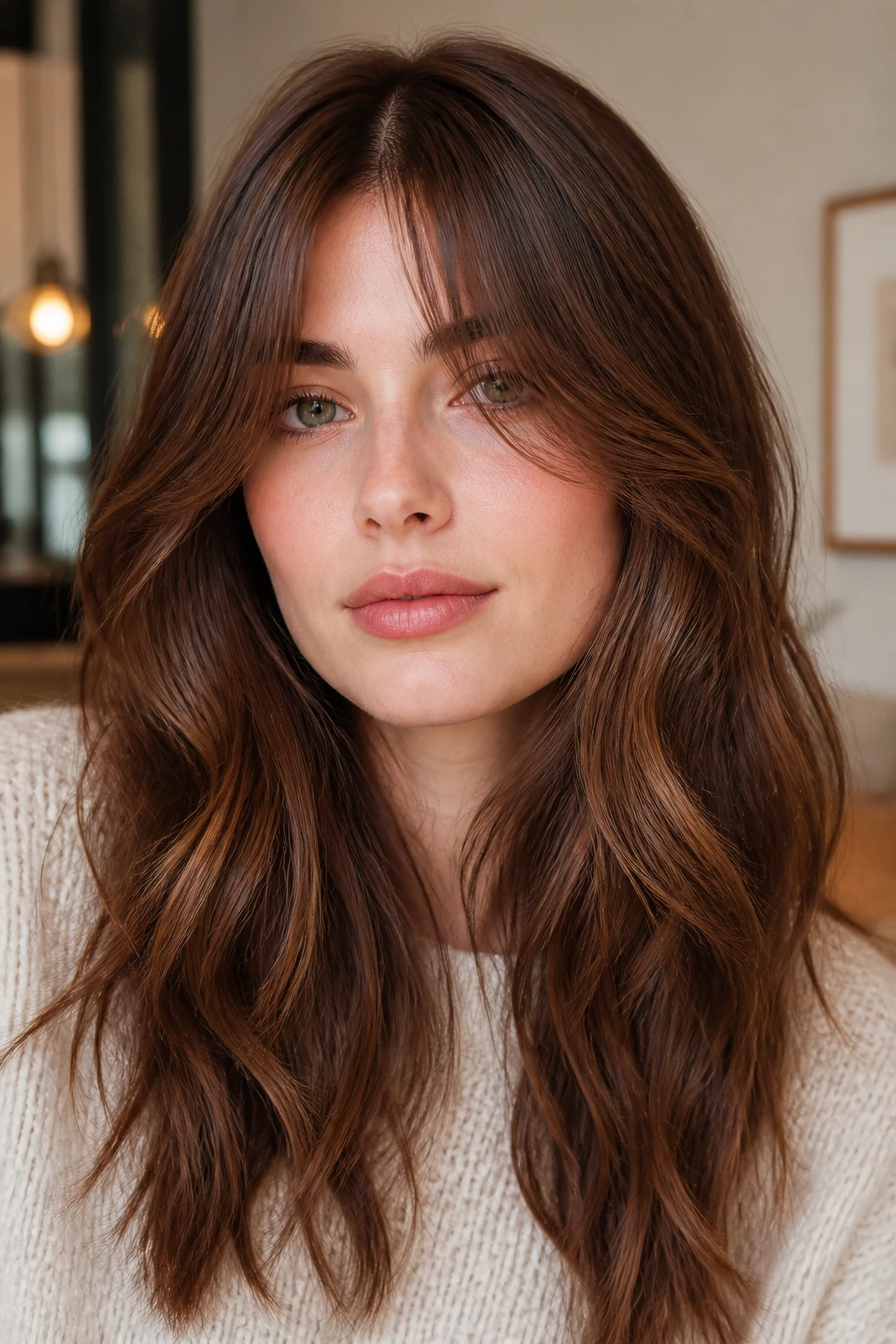
The sweet spot is usually somewhere around level 4 to 6, depending on how light or cool your complexion is. Level 4 espresso gives more contrast. Level 5 chestnut or mocha softens the face. Level 6 bronde or bronze-brown adds a little brightness if your skin is very light or freckled. A root shadow, a gloss, or a few face-framing pieces often matters more than going several shades lighter.
Waves change the math. Straight hair shows every ounce of depth in one sheet. Wavy hair throws soft shadow and light across the surface, so the brunette reads richer when the cut lets the ends move. That’s why blunt edges, over-layering, and color stripes all tend to fail in this category. They interrupt the wave instead of supporting it.
The Tools That Make These Styles Easier
- 1-inch curling iron or wand: Best for making waves that look bent rather than curly; keep the clamp or wrap loose.
- Large-barrel curling iron or hot rollers: Good for Hollywood waves, brushed-out bends, and smoother glam looks.
- Heat protectant spray: Use it before any hot-tool pass, especially on colored brunette hair that can dull at the ends.
- Round brush: Helps with curtain bangs, side parts, and the soft bend on lobs and bobs.
- Sectioning clips: They keep top layers out of the way so the wave pattern stays clean.
- Mousse or wave cream: Gives fine or soft waves enough hold without turning them crunchy.
- Texture spray: Adds grip at the mids and ends; a little goes a long way.
- Shine serum or lightweight oil: Best on the ends only, especially for mocha and espresso shades that can look flat if they’re dry.
- Wide-tooth comb: Better than a brush for breaking up curls without turning them into frizz.
- Silk pillowcase or bonnet: Helps the wave pattern survive overnight, which matters more than most people think.
How to Choose Brunette Hairstyles for Pale Skin with Wavy Hair by Undertone
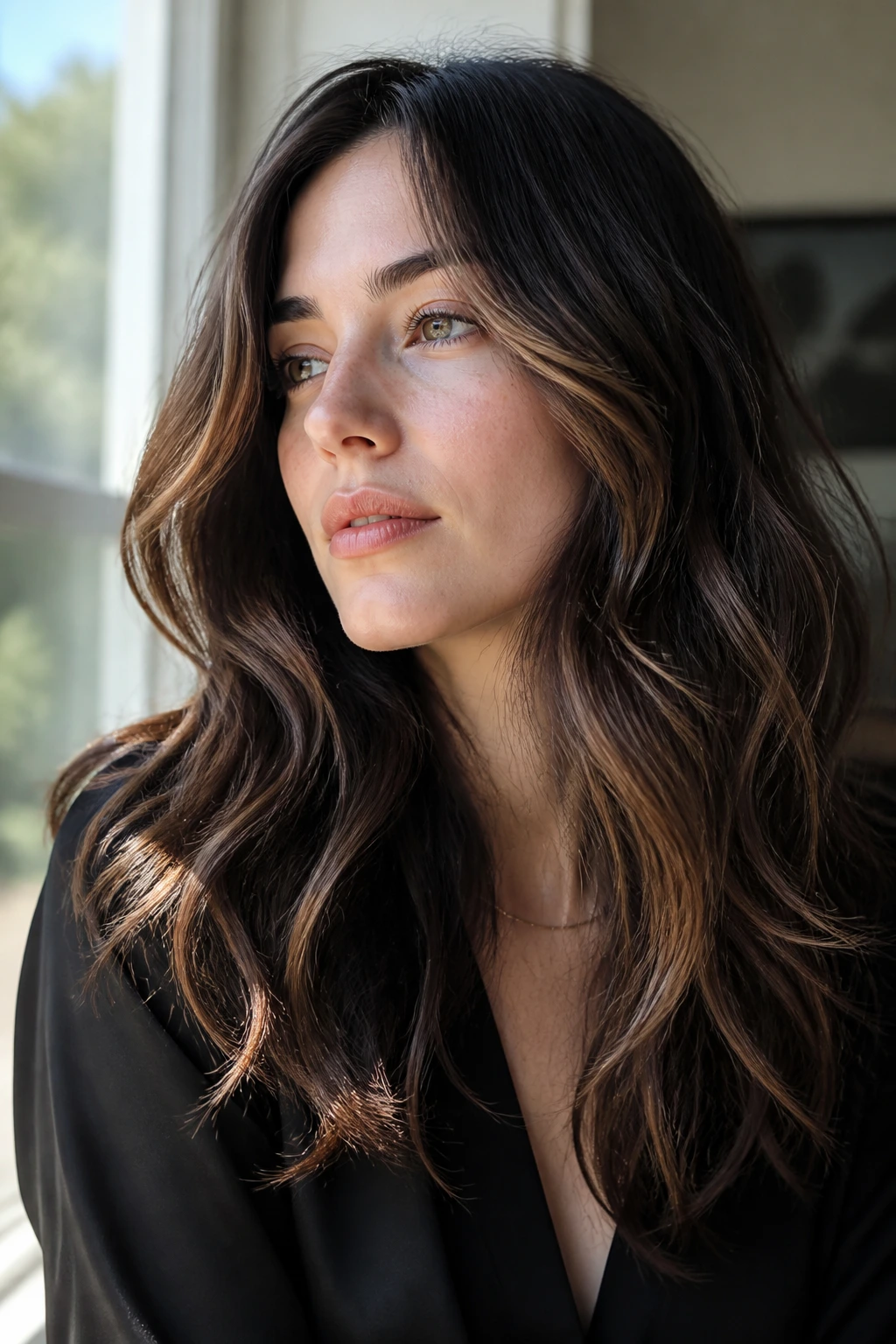
The undertone is the part people skip, and then they wonder why the brown looked great in the chair and strange at home. If your skin leans pink, cool, or porcelain, ash brown, mushroom brown, smoky brunette, and cooler espresso shades usually behave best. They give contrast without turning the skin redder.
If your complexion is peachy, golden, or freckled, chestnut, mocha, bronze-brown, and caramel ribbons tend to feel warmer and kinder. They keep the face from looking drained and make pale skin look less washed out. Neutral undertones have the easiest path: you can wear either camp, but the hair usually looks best when the cut has some dimension around the face.
Hair density matters too. Fine waves usually do better with blunt lobs, collarbone cuts, or one-length-ish shapes that keep the hair looking full. Thick waves often need invisible layers, shags, or feathering so the bulk doesn’t sit like a shelf at the sides. If you do not know which camp you’re in, stand in bright window light and look at where your hair naturally swells. That tells the truth fast.
How to Wear These Brunette Styles Without Fighting Your Outfit
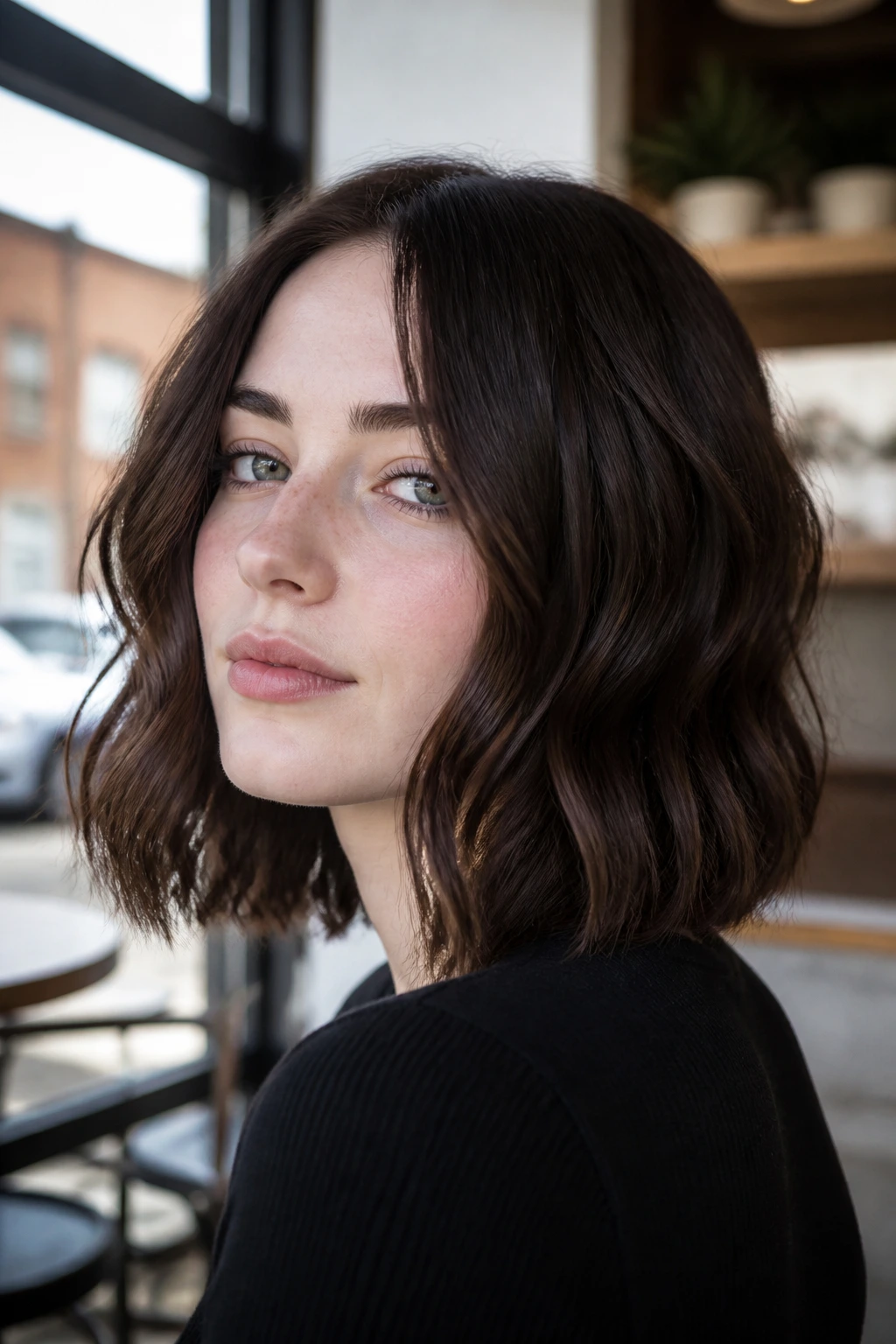
Frame: Center parts make strong brow and cheekbone lines look cleaner, while side parts soften a long face or a stronger jaw. Curtain bangs and cheekbone pieces are the easiest way to direct attention where you want it.
Pairing: Dark brunettes love crisp necklines — square necks, boat necks, and open collars keep the hair from feeling too heavy. Softer waves also look good with earrings that move a little, because the hair and jewelry share the same rhythm.
Scale: If your hair is fine, keep the layers longer and the finish glossier. If it’s dense, ask for internal weight removal so the wave doesn’t sit too wide at the shoulders. Shorter cuts — lobs, bobs, pixie-bobs — usually need more shape in the perimeter. Longer cuts need more support through the mids.
Finish: A polished brunette reads more formal, while a matte or slightly piecey wave feels casual. Neither is right for every day. Pick the finish that matches the clothes you actually wear, not the one that only looks good in a salon mirror.
Extra Shine, Contrast, And Texture Tricks
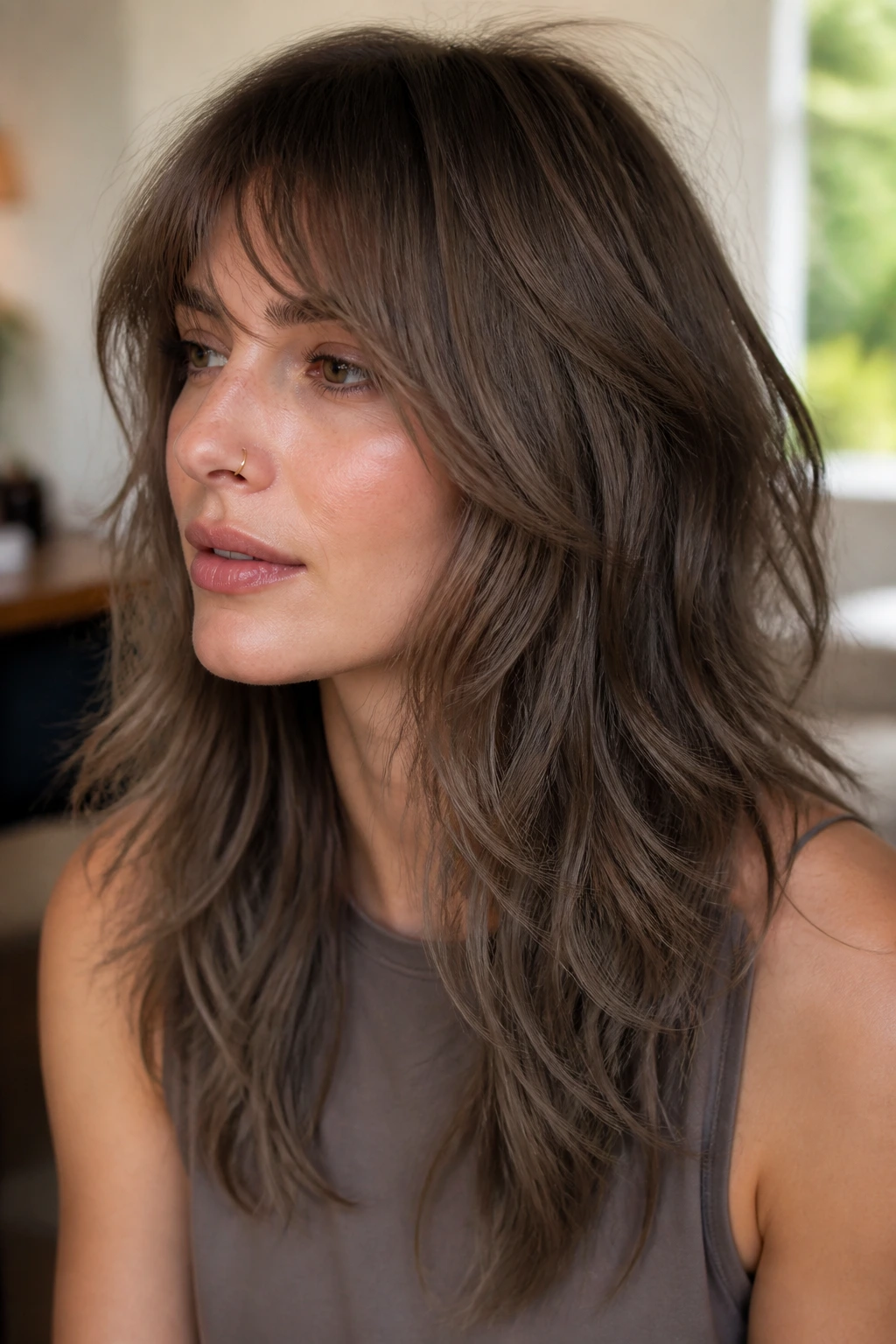
Gloss Boost: A clear brunette gloss, or one tinted a half-shade warmer or cooler than your base, can freshen the color every few weeks without a full dye session. It’s one of the fastest ways to keep dark brown from looking dull next to pale skin.
Contrast Boost: If the face feels flat, add a narrow money piece or one slightly lighter ribbon near the temples. If the hair feels too busy, deepen the root and let the ends stay a little softer. Small changes beat dramatic striping almost every time.
Texture Boost: For loose waves, mousse at the roots and a wave spray through the mids usually gives more shape than heavy cream. For smoother styles, blow-dry cream plus a round brush will keep the bend clean and the brunette glossy.
Make-It-Yours: Warm it up with chestnut or bronze, cool it down with mushroom or ash, or keep it neutral and let the cut do the work. If you want the least upkeep, choose a root shadow and soft face-framing layers. If you want the most contrast, keep the base deeper and the front pieces slightly lighter.
Keeping The Color And Waves Fresh Between Salon Visits
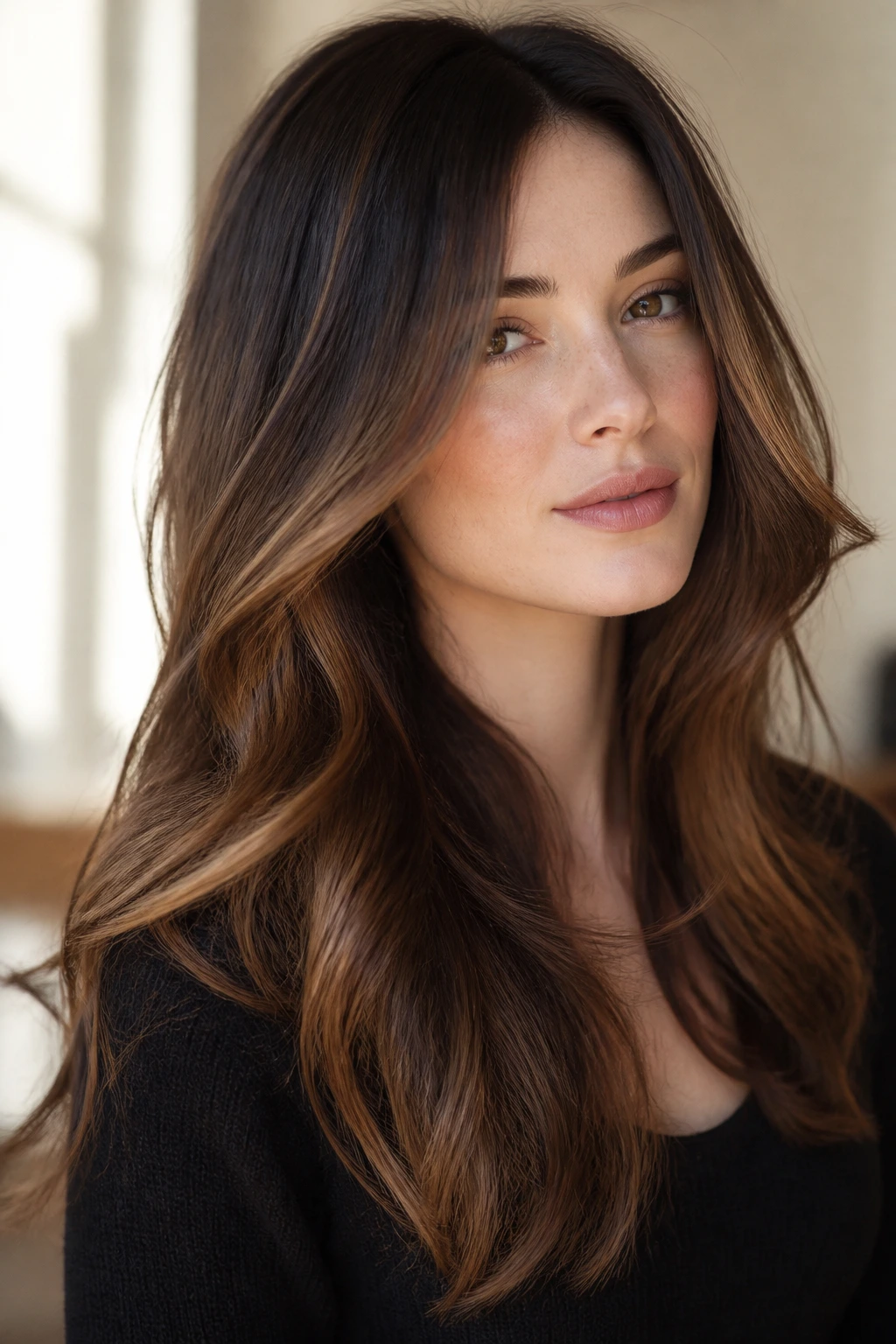
Brunette color on pale skin tends to look best when it still has shine and some visible dimension. That does not mean constant washing. In fact, washing too often can make brunette hair lose that glossy depth fast, especially if the ends are lightened. Two to four washes a week is a reasonable range for many people, with dry shampoo filling the gap if your roots get oily.
If your hair is colored, a color-safe shampoo and conditioner are worth the drawer space. Use purple or blue-toned shampoo only when the hair starts leaning too warm or brassy; overusing it can make chestnut and mocha shades look flat. For wavy hair, a lightweight leave-in or a tiny bit of cream on the mids is enough after washing. Heavy products at the roots flatten the wave before it gets a chance to show up.
Heat styling needs some discipline. Most colored brunette hair does best with tools in the 300-340°F range, and you can go a little higher only if the hair is healthy and fully protected. Trim bangs every 4-6 weeks if you wear them, and tidy long layers every 8-10 weeks so the wave pattern does not split apart. Glosses and toner refreshes every 6-8 weeks keep the brown clean. Sleep on a silk pillowcase, or braid the hair loosely before bed; otherwise, the wave will frizz into a shape that has no respect for your morning plans.
Variations And Adaptations To Try
Soft-Contrast Brunette: Keep the base around level 5 chestnut or mocha and skip heavy highlights. This version is good if you want your hair to flatter pale skin without looking striped or overdone.
High-Drama Espresso: Go deeper at the root and keep the length glossy and dark. Add a side part or big waves if you want the contrast to feel deliberate instead of severe.
Air-Dry Brunette: Use wave cream, scrunch, and let the texture do the work. This works best on naturally wavy hair that already forms loose bends without a fight.
Fine-Hair Brunette: Choose a blunt lob, shoulder cut, or one-length perimeter with minimal layers. That keeps the ends looking full and prevents the brunette shade from reading see-through.
Thick-Wave Brunette: Ask for invisible layers, feathering, or a shag so the wave pattern can move. Thick hair on pale skin can look heavy if it sits too wide, so shaping matters as much as color.
Copper-Kissed Brunette: Add a whisper of warm copper or bronze through the mids if your skin is peachy or golden. Keep the front pieces soft, though — too much warmth near the face can push the color into orange territory fast.
Common Mistakes That Make Brown Hair Feel Heavy
- Going too dark too fast: A level 2 or 3 brown can swallow fair skin if the cut is blunt and the finish is flat. The fix is either a touch more warmth, a little dimension, or a cut that moves.
- Over-layering fine waves: If the hair gets too thin at the ends, it starts looking ragged instead of airy. Keep the perimeter fuller and remove weight inside the shape instead.
- Choosing the wrong warmth: Too much gold can turn brassy on pink skin, while too much ash can make peachy skin look dull. Match the undertone, not the trend.
- Curling waves too tightly: Tight spirals can make brunette hair look busy and puffy, especially on shoulder-length cuts. Use large tools and leave the last inch out when you wrap.
- Skipping gloss or toner: Brunette color fades into plain brown faster than people expect. A gloss refresh keeps the shade from going muddy.
- Putting serum at the roots: That’s how you flatten wavy hair before lunch. Keep shine products on the mids and ends only.
Frequently Asked Questions About Brunettes Hairstyles for Pale Skin with Wavy Hair
Which brunette shade is best for very fair skin?
Chestnut, mocha, mushroom brown, and soft espresso all work, but the best one depends on undertone. If your skin is pink or cool, ashier brunettes usually look cleaner. If your skin is peachy or freckled, a warmer chestnut or bronze-brown often feels easier to wear.
Do ash brunettes make pale skin look washed out?
They can if the hair is too flat or the complexion is already low in contrast. The fix is usually a better cut, a little shine, or a very small amount of face-framing warmth so the style still gives the face some shape.
Do I need highlights to wear brunette hair on pale skin?
No. You can get plenty of dimension from layers, a root shadow, or a gloss with different tones. Highlights help when you want more brightness around the face, but a strong cut can do a lot of the work on its own.
What’s the easiest brunette cut to maintain with wavy hair?
A collarbone lob, a blunt-ish one-length lob, or a medium cut with long layers usually wins on upkeep. These shapes let the wave settle naturally and do not need a full restyle every time you wash.
How do I stop brunette waves from going frizzy?
Use a leave-in or wave cream on damp hair, then dry with low heat or diffuse gently. Too much brushing while dry is usually the culprit. If you need to break up a cast, use your hands, not a paddle brush.
Can I wear bangs if my skin is very pale?
Yes, but keep them soft. Curtain bangs, French fringe, or wispy brow-skimming bangs are easier than blunt heavy bangs because they let light in around the face.
How often should brunette color be refreshed?
Glosses and toners usually look best every 6-8 weeks if you want the color to stay clean and shiny. If you’re covering gray or maintaining a stronger contrast, you may need a slightly tighter schedule around the roots.
What if my brunette color looks flat in daylight?
That usually means the shade needs either a touch more dimension or a better finish. Ask for a gloss, a few face-framing pieces, or subtle lowlights, and make sure the waves are being styled with some movement instead of being blown straight.
The Brown That Plays Nice With Your Face
The best brunette on pale skin is not the darkest one and not the warmest one. It’s the one that gives your face shape without bulldozing it. Waves help more than people realize, but they work best when the cut respects them — soft layers, smart length, and color that has somewhere to move.
If you’re choosing between two options, go with the one that gives the hair more motion near the face. That’s usually the difference between brown hair that sits there and brown hair that actually flatters. And once you find the right one, it has a habit of making the rest of your routine easier too.