



Grey hair color ideas for natural hair with lowlights work best when the color has somewhere to live. On coils, curls, and kinks, grey can look chalky or strangely detached if it sits on top of the texture like a coating. Add shadow in the right places, though, and the same shade turns smoky, dimensional, and far more believable.
That’s the part people miss. Natural hair doesn’t behave like a flat swatch. It bends, shrinks, catches light in little ridges, and changes mood depending on whether it’s stretched, twisted, or worn in a wash-and-go. A grey tone that looks soft in a bowl can turn harsh once it dries if the lowlights are too pale, too even, or too warm.
The range here is wider than most people expect. Some of these looks lean icy and clean; others are mushroomy, peppery, or almost gunmetal. A few are subtle enough to blend with existing silver strands, and a few are bolder by design. The common thread is the lowlight work — the darker pieces that keep grey from floating away from the hair.
Why You’ll Love These Grey Hair Color Ideas
-
The lowlights give grey shape: On natural hair, a darker strand here and there keeps curls from reading like one flat sheet of silver.
-
Grow-out is softer than a solid color: Shadow at the roots and underlayers makes regrowth look intentional instead of obvious.
-
There’s a shade for every texture: Tight coils, loose curls, twist-outs, locs, and short crops all carry grey differently, and the ideas below respect that.
-
You can steer the mood fast: Mushroom, graphite, pewter, steel, and charcoal all shift the same grey base in very different directions.
-
It works with real-life hair, not just photo hair: Several of these ideas are built for porosity, shrinkage, and the fact that natural hair rarely sits still.
-
The color can be subtle or sharp: You can keep it whisper-soft with veils and glosses, or go full metallic with higher contrast and deeper shadow.
How Grey Hair Color Ideas for Natural Hair with Lowlights Sit Inside Coils, Curls, and Kinks
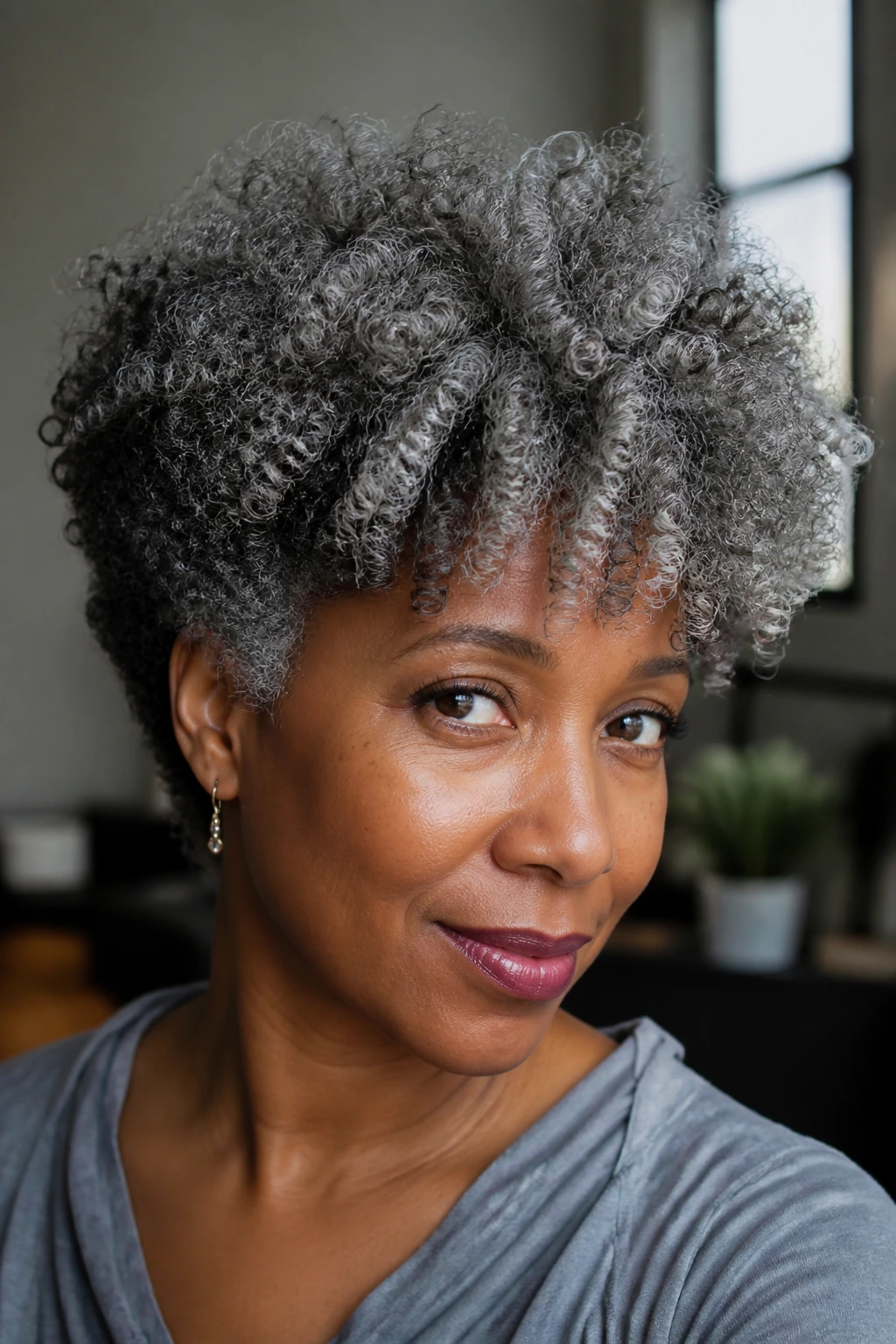
Grey needs shadow on textured hair. Without it, the tone can read airy in the wrong way — thin, chalky, or disconnected from the curl pattern. With lowlights, grey stops looking pasted on and starts behaving like part of the shape.
That’s because natural hair shrinks and stacks on itself. A piece of color that looks broad when wet can disappear into a tight coil after drying, while a tiny weave may vanish completely. I usually prefer slightly wider ribbons on dense curls and softer veils on looser textures, because the finish survives the shrink.
Where the darker pieces usually belong
The crown, nape, and the area just under the part line are the first places I’d darken. Those spots take the most friction, the most sun, and the most visual exposure. Keep the lightest silver near the face or in the top layers, and the whole head keeps its structure.
What happens when the balance is off
Too much pale grey everywhere, and the hair starts to look dusty. Too much deep lowlight, and the curl pattern can look chopped up. The sweet spot is a shade mix that lets the texture breathe while still giving the eye a clear path through the color.
That balance is the whole trick.
1. Smoky Charcoal Root Melt
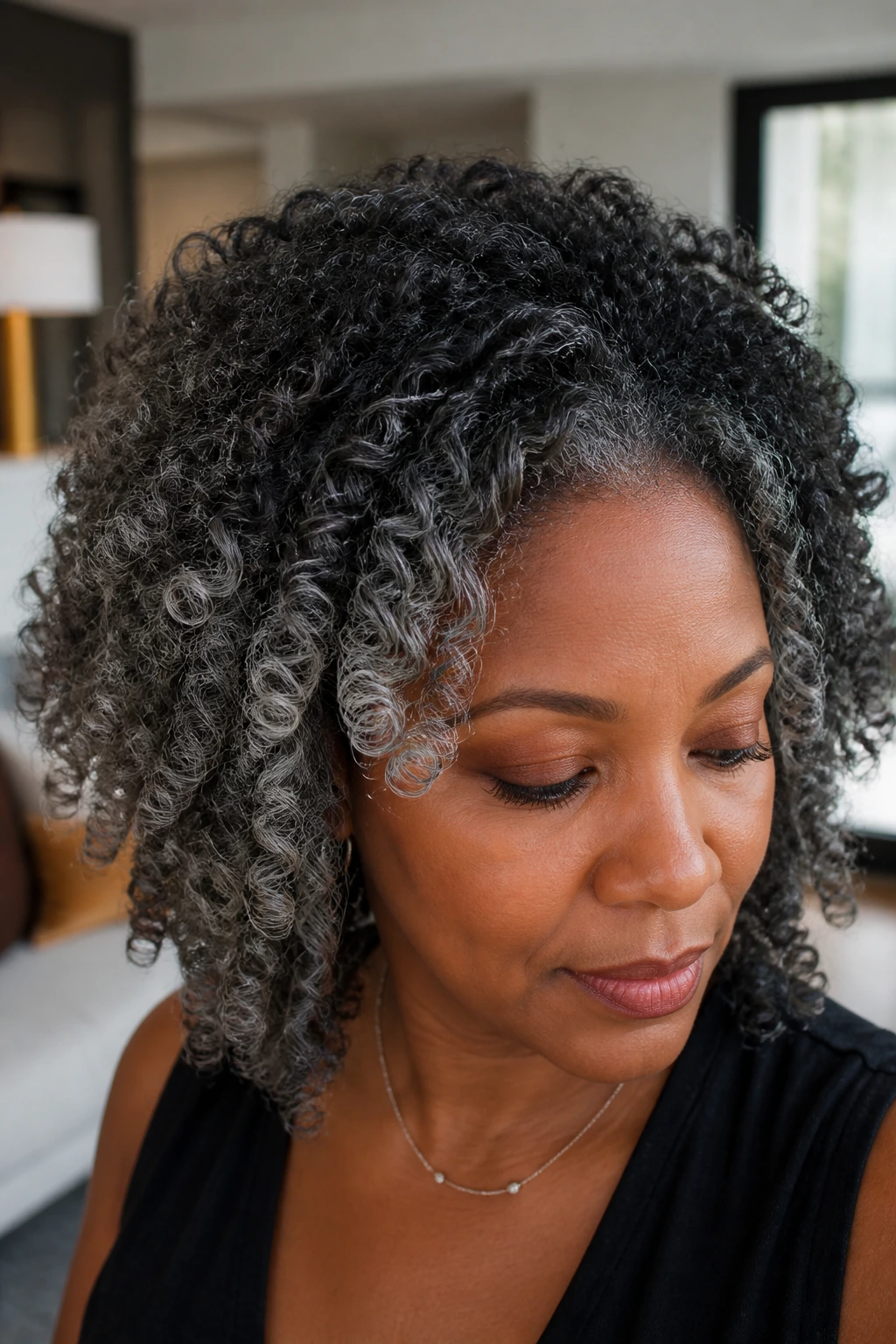
A charcoal root melt is one of the cleanest ways to wear grey on dark natural hair without losing the shape of the coils. The root stays deep — think level 2 or 3 — then the silver creeps down through the mids like smoke sliding across a window. It feels deliberate, not loud.
Why it works
The dark crown buys you grow-out time, and that matters when your texture already creates visual movement. On dense curls, the charcoal makes the silver look brighter by contrast, even after shrinkage. The result is less “painted grey” and more “smoke over stone.”
- Ask for a level 2-3 charcoal shadow at the root.
- Keep the silver-grey concentrated around the face and top layers.
- Leave the nape one shade deeper so the silhouette still feels full.
Pro tip: Judge the melt only after the hair is fully dry in its natural curl pattern. Wet curls lie.
2. Mushroom Brown and Silver Veils
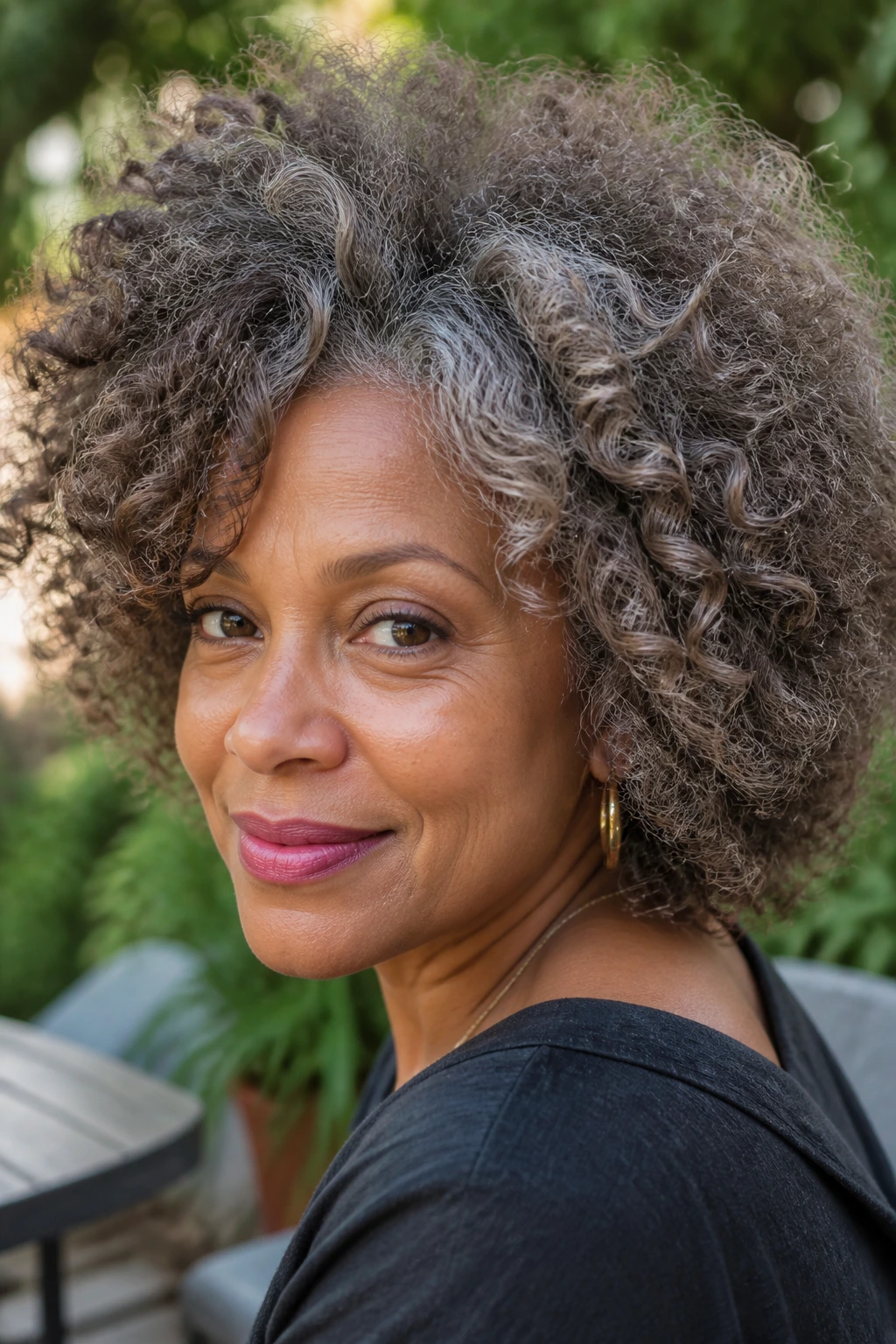
Mushroom brown with silver veils is my pick when someone wants grey but does not want that frosted, high-contrast finish. The brown sits in the taupe family, so it stays cool enough to work with silver, but soft enough to keep the whole head from looking flat.
It’s a smart choice on warm or neutral skin undertones, and it’s forgiving on porous ends. Instead of big bright streaks, the grey sits in thin veils over the mushroom base. That movement is subtle in a mirror and more visible in daylight, which is exactly where this shade shines.
Best for: medium-to-deep natural bases that need a softer entry into grey.
Ask for: fine balayage pieces, then a demi gloss in mushroom, taupe, or pewter over the mids.
3. Espresso Lowlights with Pewter Ribbons
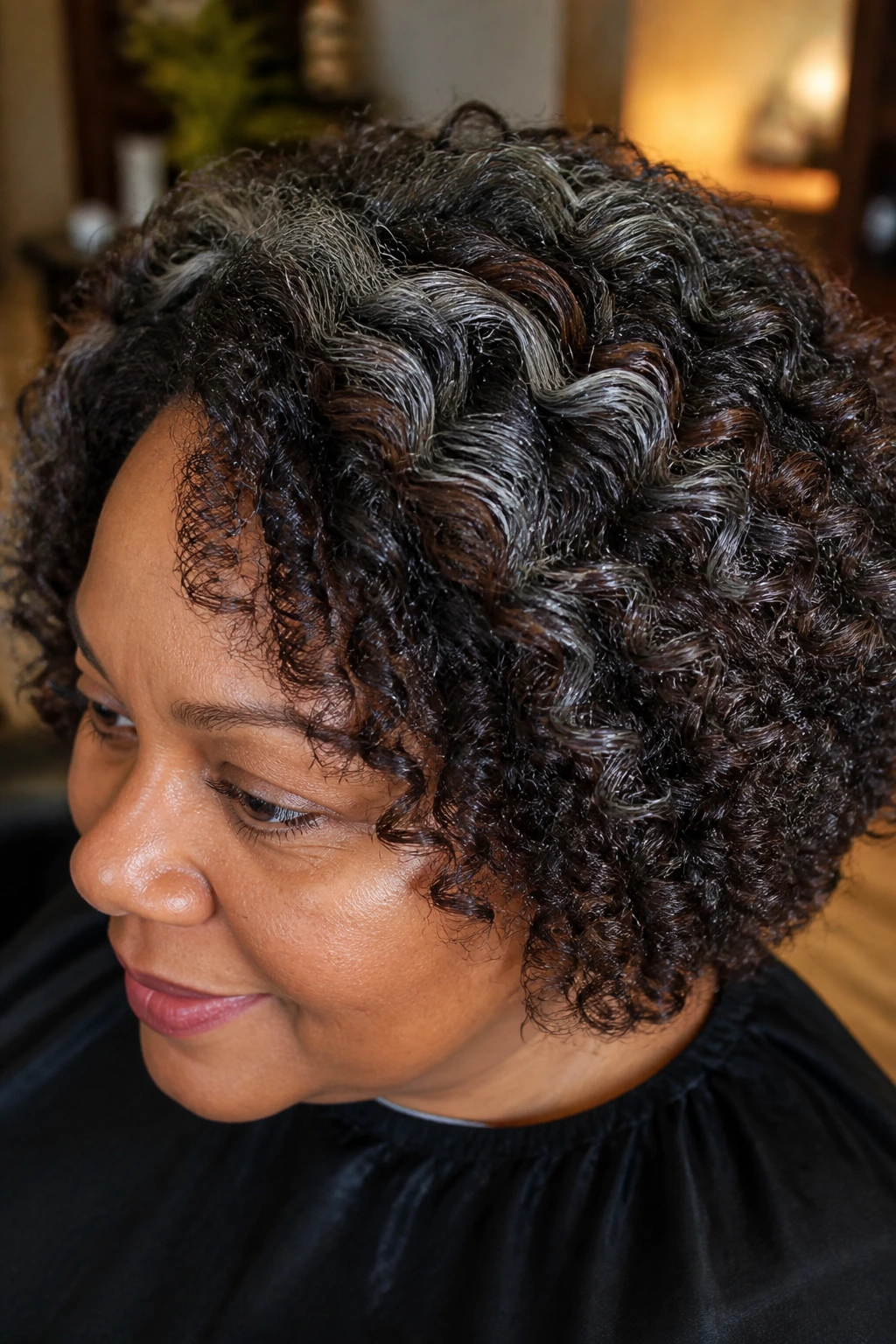
Why does this one work so well on thick coils? Because espresso gives the grey a floor. Without that darker base, pewter can look washed out. With it, the silver reads deliberate, and the curl edges stay crisp.
This is especially good for 4A to 4C textures where small foils can disappear once the hair dries. Bigger, ribbon-like placements survive shrinkage better and give the style more room to move. I also like that espresso lowlights don’t fight with existing depth around the roots.
- Pair espresso lowlights under the top layer.
- Make the pewter ribbons a little wider around the crown.
- Skip inky black; soft espresso or charcoal brown is enough.
Watch for: if your hair grabs ash fast, stop at pewter. Too much toner turns the finish dusty.
4. Ash Beige Grey with Soft Cocoa Lowlights
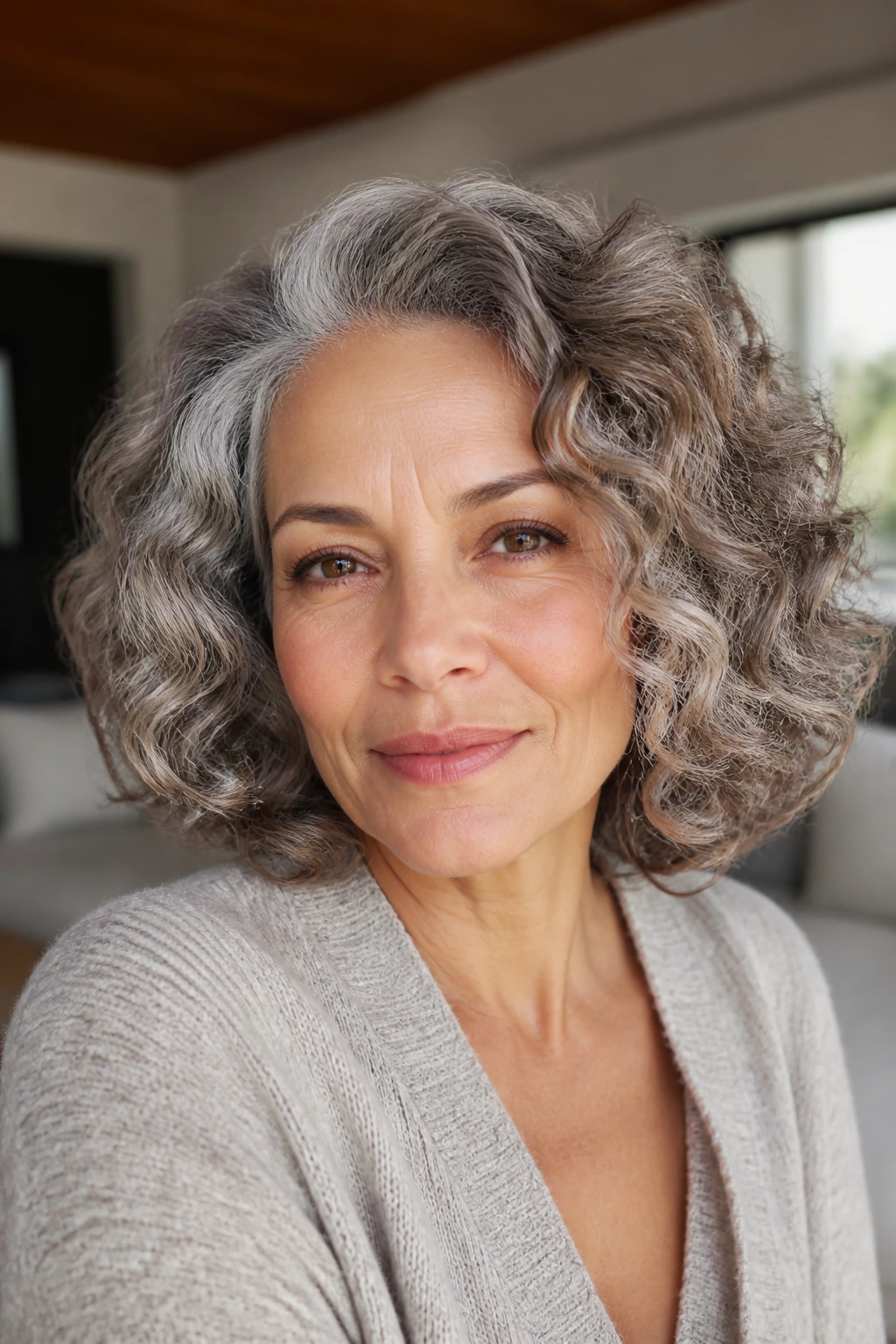
This is the quieter cousin of pure silver, and honestly, it’s underrated. Ash beige grey gives you a cool base without the chalky edge, while cocoa lowlights keep the color from slipping into a pale wash. The mix feels soft, but not bland.
I like this on medium-length curls that need movement more than drama. The color shifts a little depending on the light: more beige indoors, more silver outdoors, with the cocoa pieces anchoring the bends in the hair. If your hair has a little natural warmth left in the midlengths, this combo handles it instead of fighting it.
Best for: people who want grey to read polished, not icy.
Best placement: cocoa lowlights around the underlayer, ash beige on the top and outer curls.
5. Graphite Face-Framing Pieces
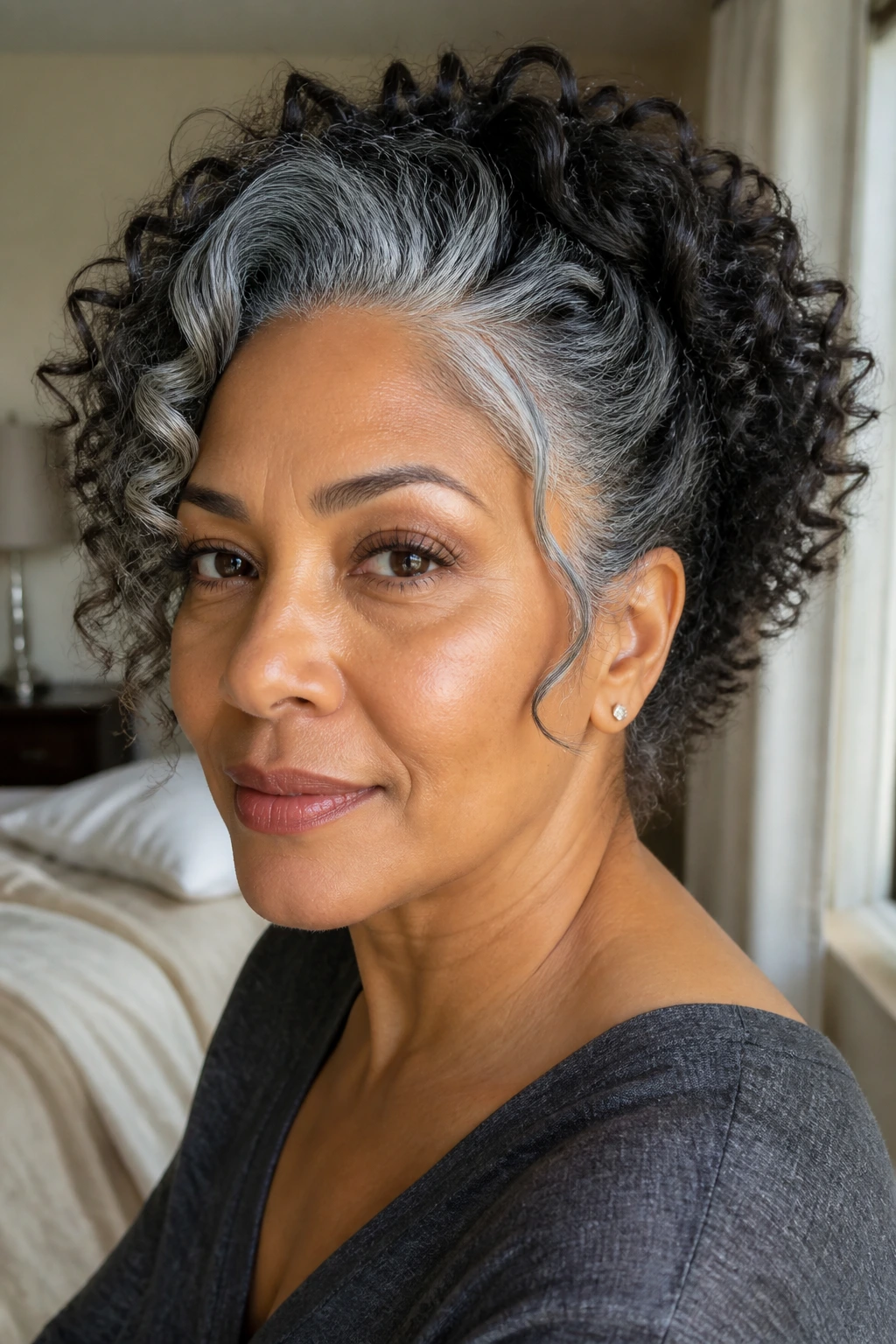
If you want the grey to show up around the face first, graphite is the sharpest move. A few well-placed pieces at the temples, hairline, and first curl clump can change the whole read of the style without turning the entire head silver. It contours the face in a way that feels cleaner than wide highlights.
This works beautifully on natural hair because the curl pattern makes graphite look softer than it sounds. The bends break up the depth, so you don’t get a hard, helmet-like stripe unless the color is placed too evenly. Keep the front pieces slightly brighter, and let the rest of the hair stay smoky and grounded.
What to ask for
- Thin graphite pieces at the temples and crown.
- A deeper base through the back and nape.
- A soft gloss over the front so the pieces don’t turn flat.
A little goes a long way here.
6. Salt-and-Pepper Halo Blend
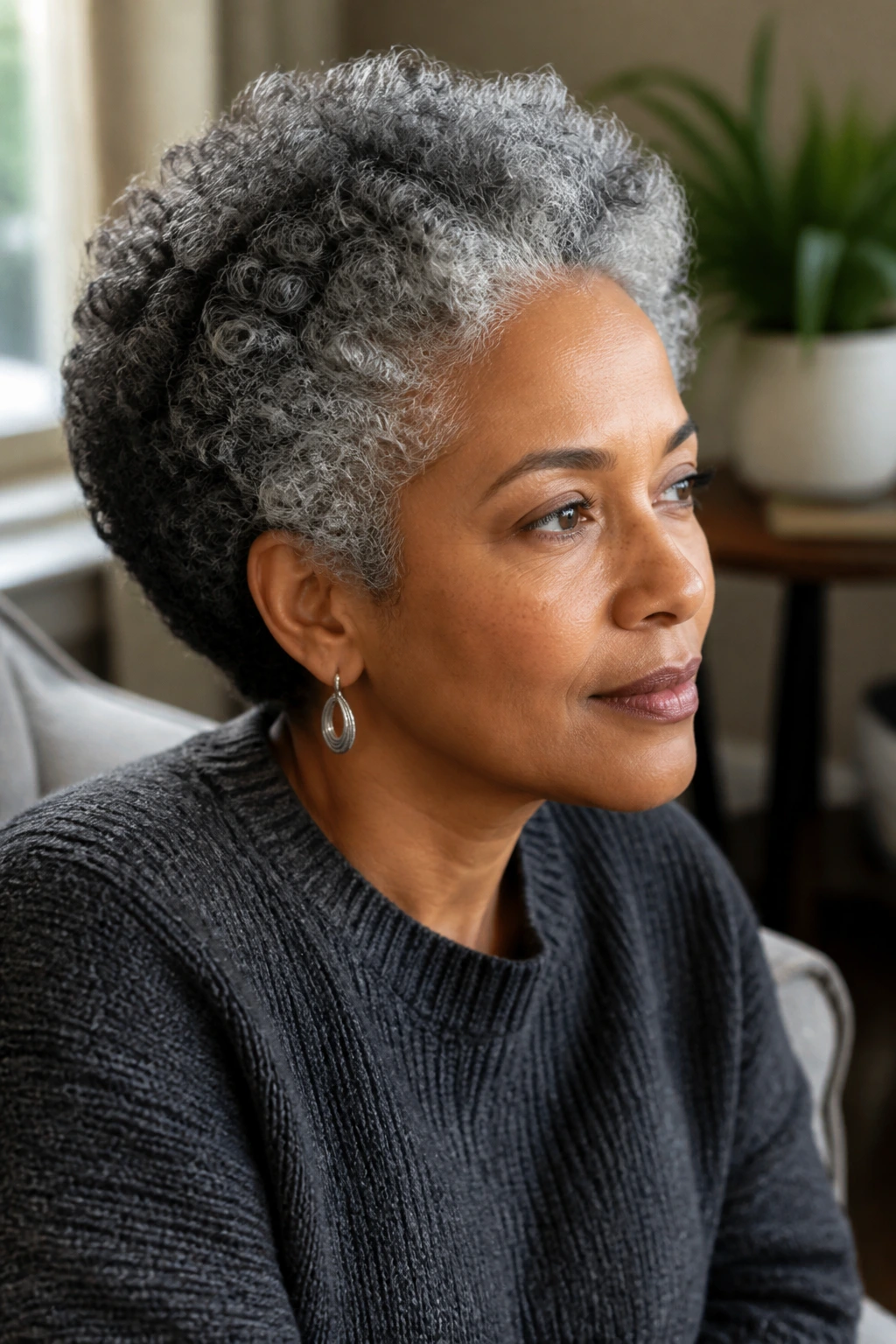
This is the closest thing to a polished version of natural grey growth. The temples, crown, and outer curls carry a mix of silver and charcoal, while the center back stays a shade deeper. It looks like the grey belongs there, which is the whole point.
I like this most on people whose natural hair already has silver coming in at the front or around the part. Instead of fighting the pattern, you extend it. The effect is softer than all-over silver, and it ages well because the grow-out just becomes part of the story.
Works best on: coily or curly hair with some real salt-and-pepper already showing.
Tip: keep the darkest pieces under the halo line, not through the front edge, or the whole look loses its glow.
7. Steel Blue Grey on Defined Twists
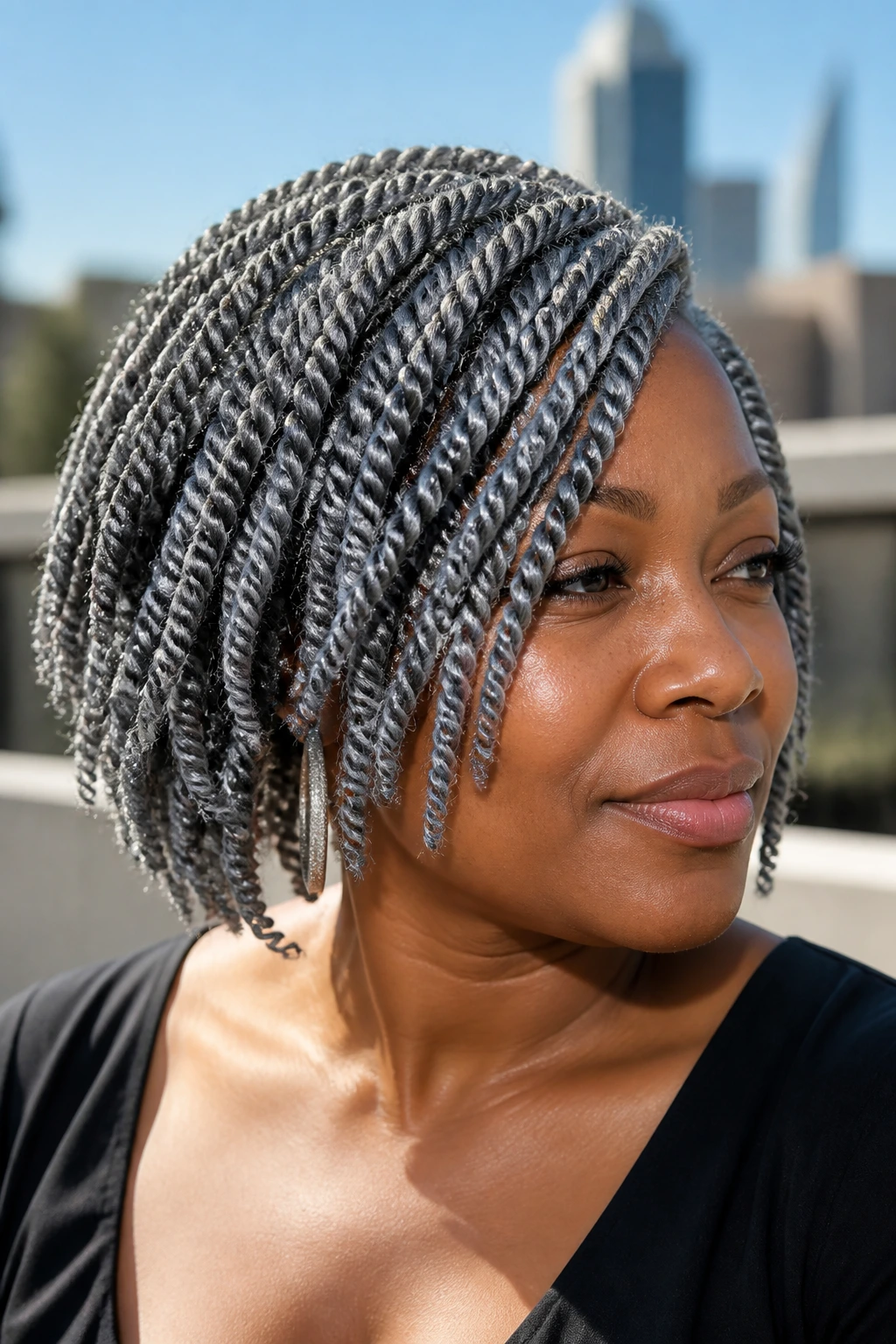
Steel blue grey has a colder cast than pearl or mushroom, and twist-outs make that cast flicker in a nice way. The twist pattern breaks the color into little shifts, so the blue note shows up in movement instead of sitting flat on the hair. It’s a sharper, more modern read.
This is a strong choice if your natural hair is already defined with twists, braid-outs, or stretched sets. The color looks metallic when the hair is elongated, then smoky when it shrinks back up. Both versions work.
A tiny blue-black lowlight under the crown keeps the steel from drifting too pale. Without that anchor, the finish can look washed out after the first few washes.
8. Pearl Grey Bob with Cocoa Shadows
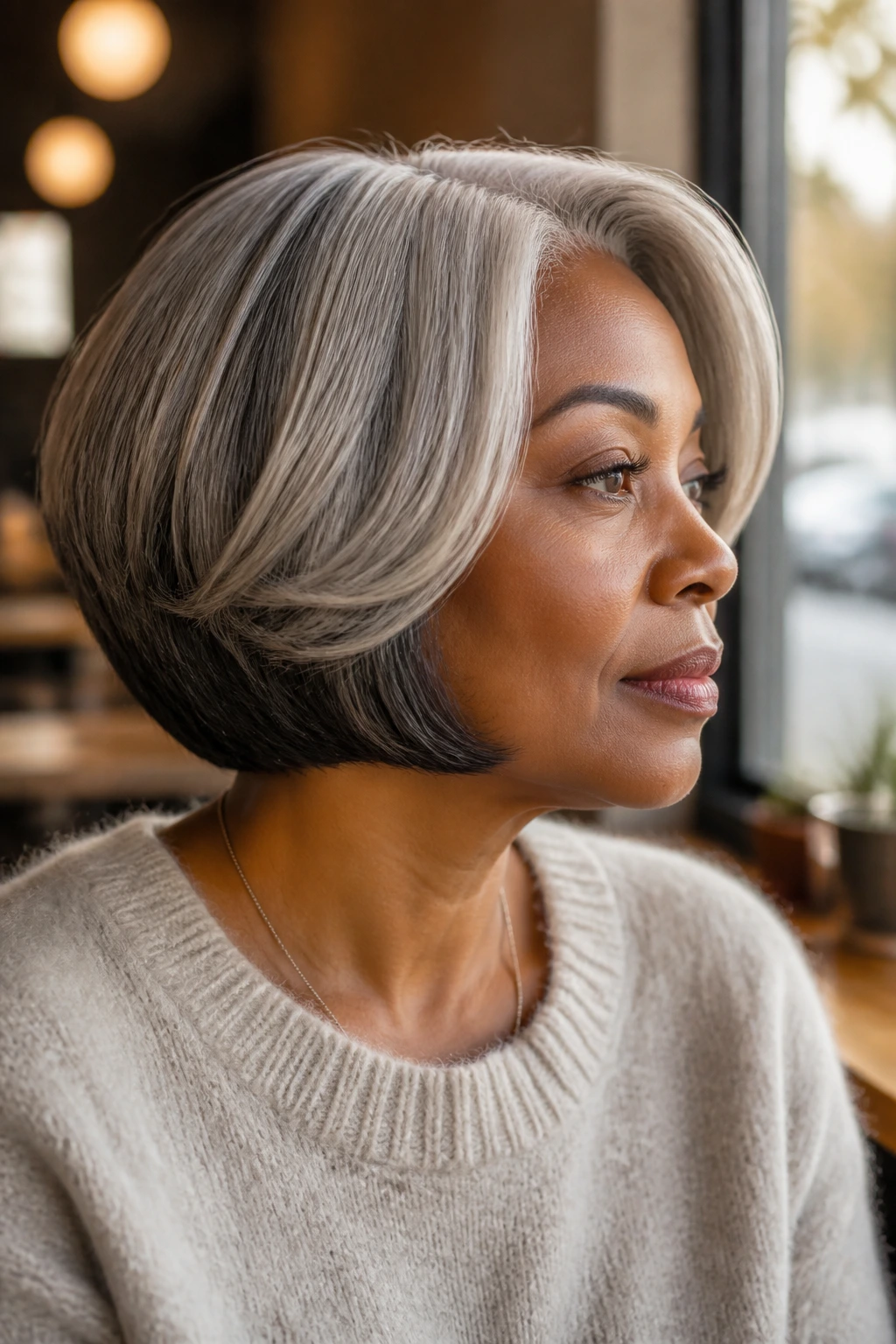
A bob changes everything. The cut gives grey a cleaner edge, and the cocoa shadows underneath stop the style from floating away from the jawline. Pearl grey on top reads crisp; the darker base gives it weight.
This one works especially well if you like a shape that sits close to the head. The color is light enough to feel bright, but the cocoa underlayer keeps the nape and interior from looking hollow. I’d choose this over pure silver for most short natural cuts, because the contrast is more useful than brightness alone.
Best styling match: finger coils, soft bends, or a stretched bob with ends tucked under.
Look for: pearl on the outer layer, cocoa at the nape and under the ears.
9. Silver Ash Balayage on a Tapered Fro
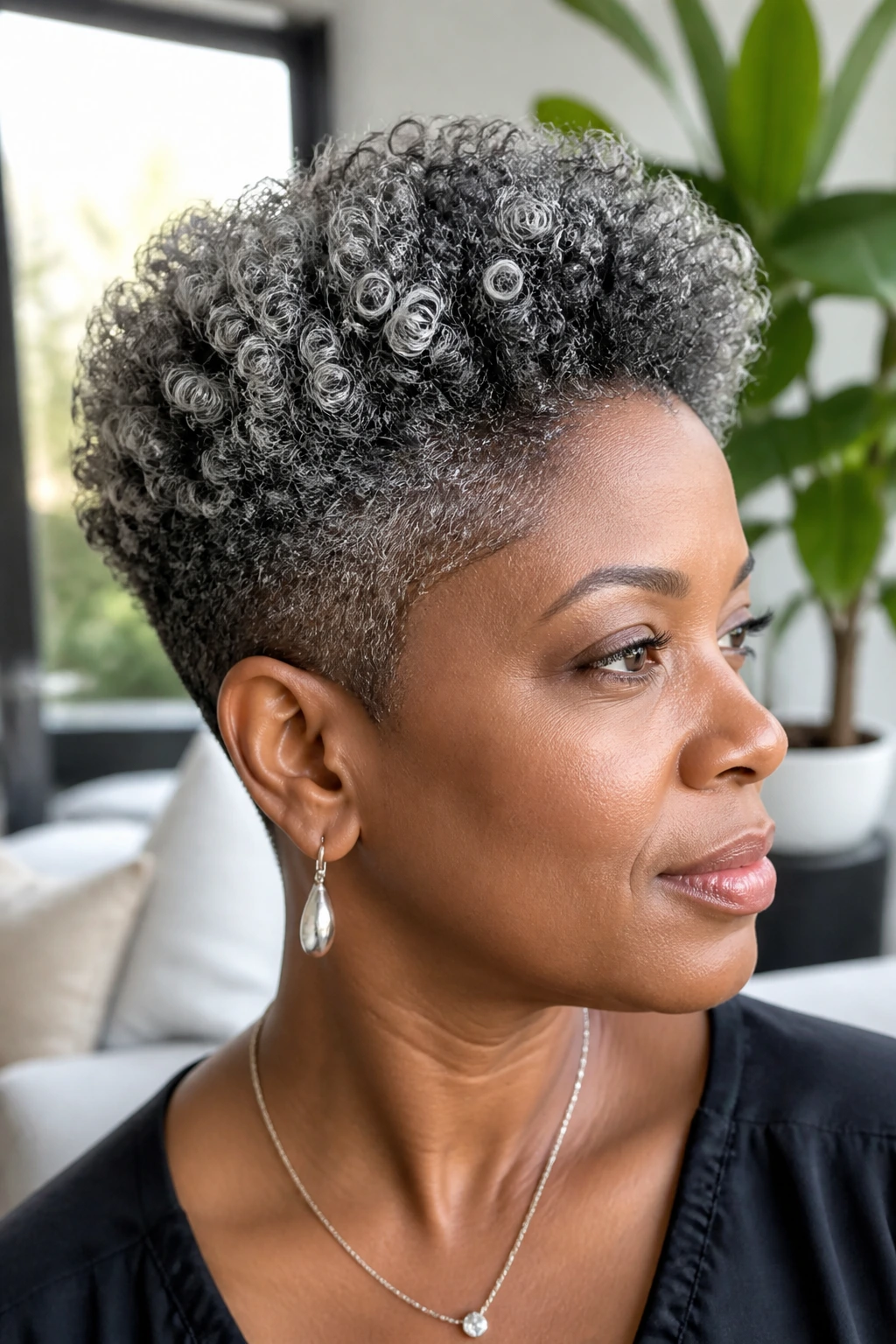
Balayage on a tapered fro is about placement, not blanket coverage. The hand-painted silver ash should sit on the outer curves of the shape — the crown, the top sides, the edges that catch light first. Leave the interior a shade deeper and the whole cut reads fuller.
That’s the part people forget. On a tapered fro, the silhouette matters as much as the color. Silver ash on the outer layer gives you brightness; a darker underlayer keeps the cut from going chalky.
Best for
- Short to medium natural hair with a clean taper
- People who want movement more than uniformity
- Hair that can handle a subtle lift before toning
One note: if your curls are tight, ask for broader painted sections. Tiny balayage pieces disappear fast once the hair shrinks.
10. Denim Grey Wash-and-Go with Onyx Underpaint
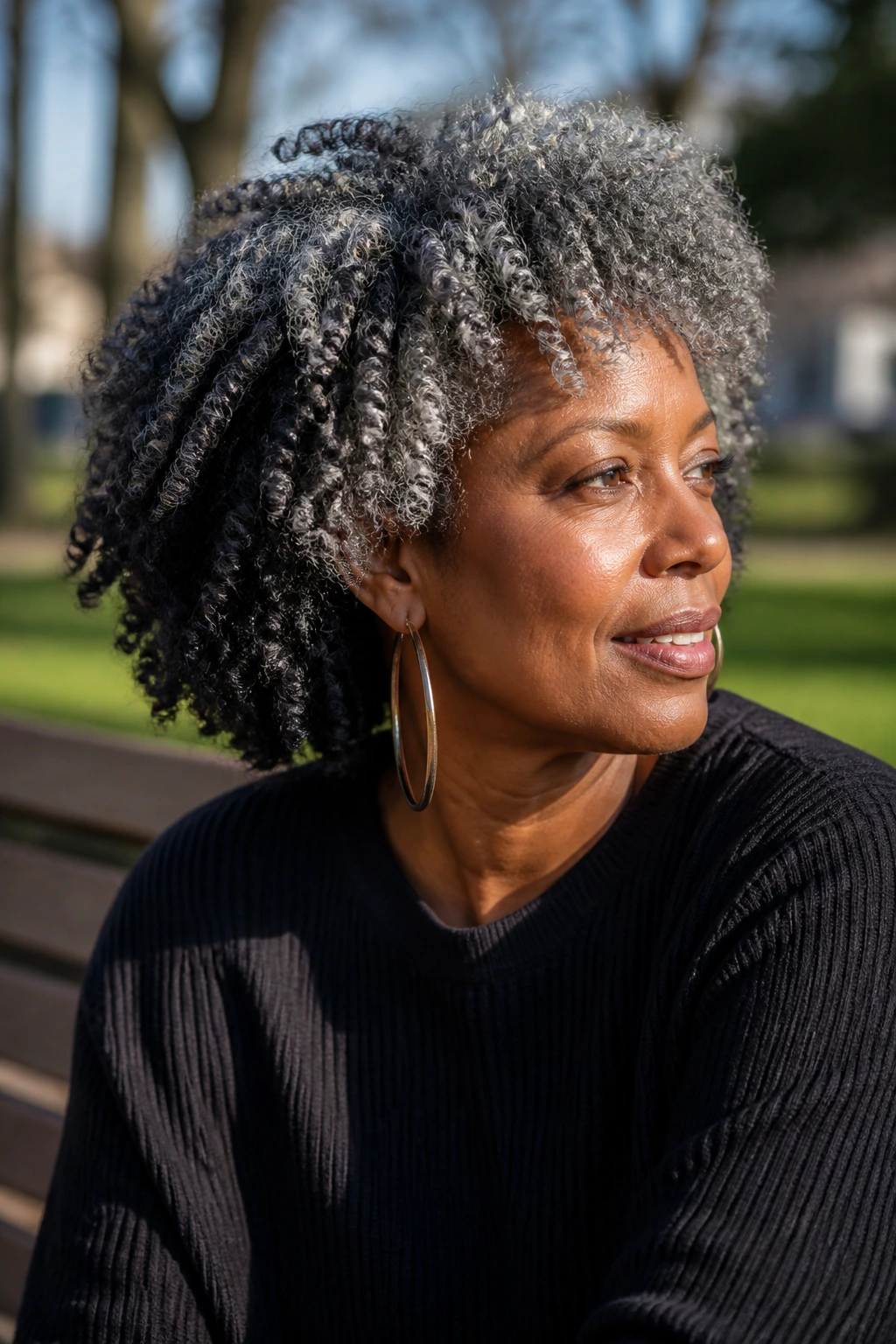
Denim grey has a cool, lived-in edge that looks especially good on a wash-and-go. The top layer reads soft blue-grey, while the onyx underpaint holds the shape and makes the lighter pieces pop when the curls separate.
It’s a nice option for someone who likes a little attitude without going full fashion shade. The underpaint only flashes when the hair moves, so you get surprise, not overload. On wet curls, it can look more blue; on dry curls, it settles into smoky grey.
If your hair tends to frizz at the ends, keep the onyx a touch deeper there. The contrast makes the shape look intentional instead of busy.
11. Taupe Grey on Long Coils
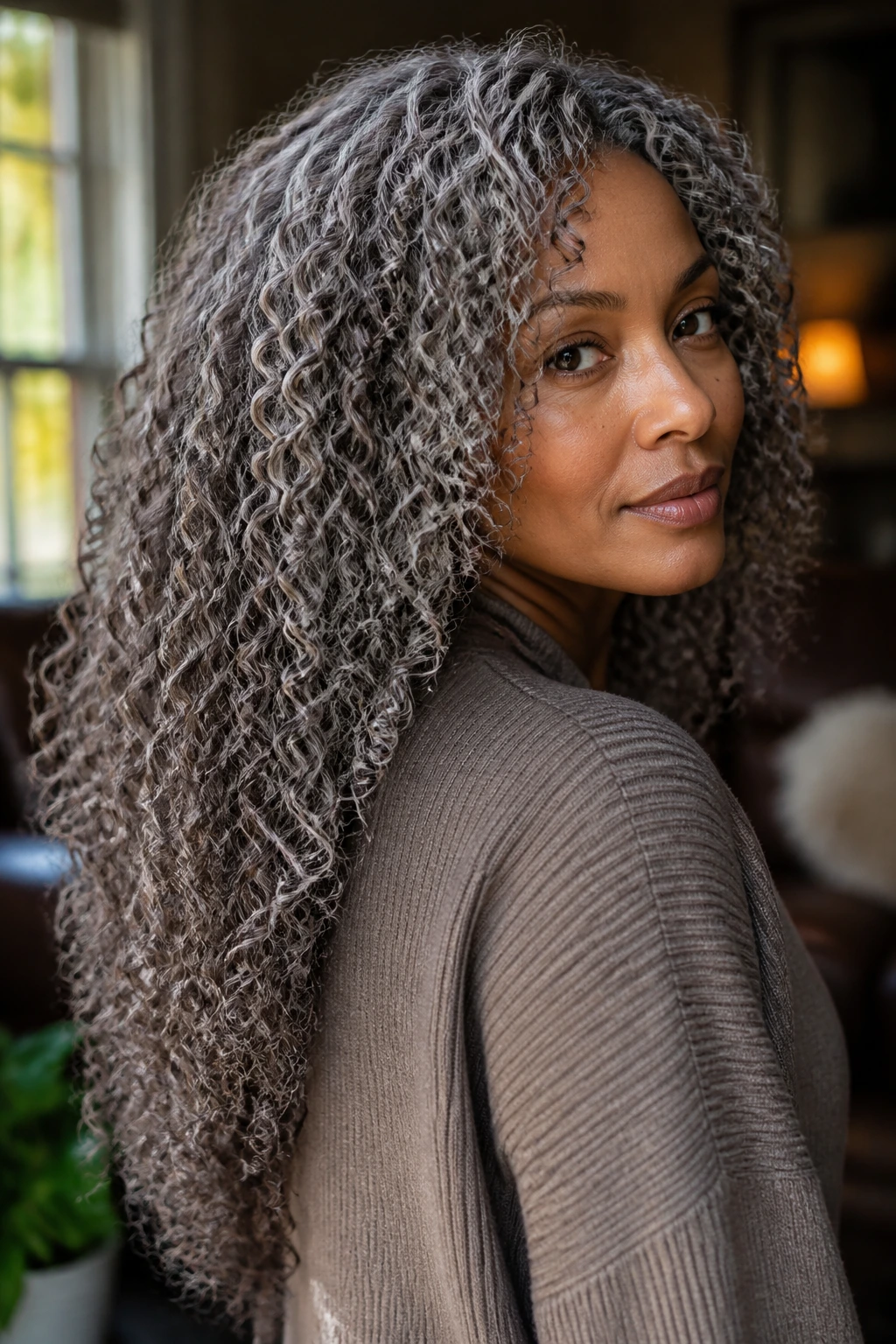
Long coils need a shade that can travel with the length, and taupe grey does that better than stark silver. It softens the whole profile, especially when the curls stack up at the shoulders or mid-back. I like this tone because it gives length without looking heavy.
Taupe also plays well with natural warmth left in the hair. If you’ve got pieces that are lighter from sun or old color, the shade helps them blend instead of shouting. The lowlights should sit in the interior and around the lower half of the length, where the coils need the most structure.
Good match for: long 3C to 4B curls, stretched blowouts, or twist-outs that hang with some weight.
The best version feels smoky, not beige.
12. Gunmetal Pixie with Deep Lowlights
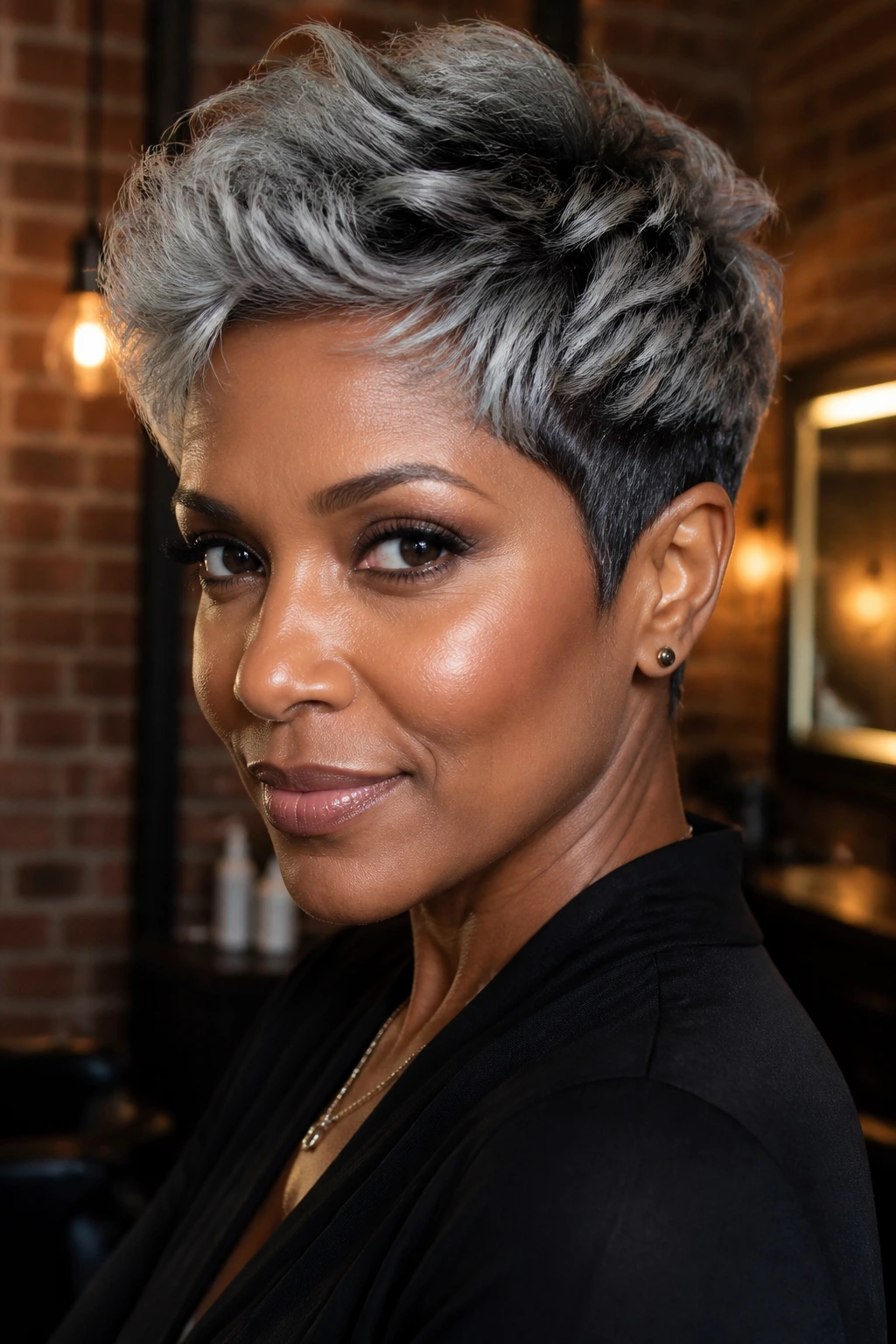
A pixie can take more contrast than people think. Gunmetal on top with deep lowlights under the crown gives the cut a little armor, and that suits short natural hair very well. The finish is sharp, but not harsh.
This is a strong choice if you like clean edges and don’t want the hair to look too sweet. The dark lowlights at the temples and nape make the silver sit higher on the head, which adds lift. That’s useful on short cuts where volume has to be created by color as much as shape.
Who should try it: anyone with a tapered pixie, tight coils, or a short cut that needs more edge.
What to avoid: a silver that is too pale all over. On a short cut, that can look dusty fast.
13. Smoky Lilac Grey for Cool Undertones
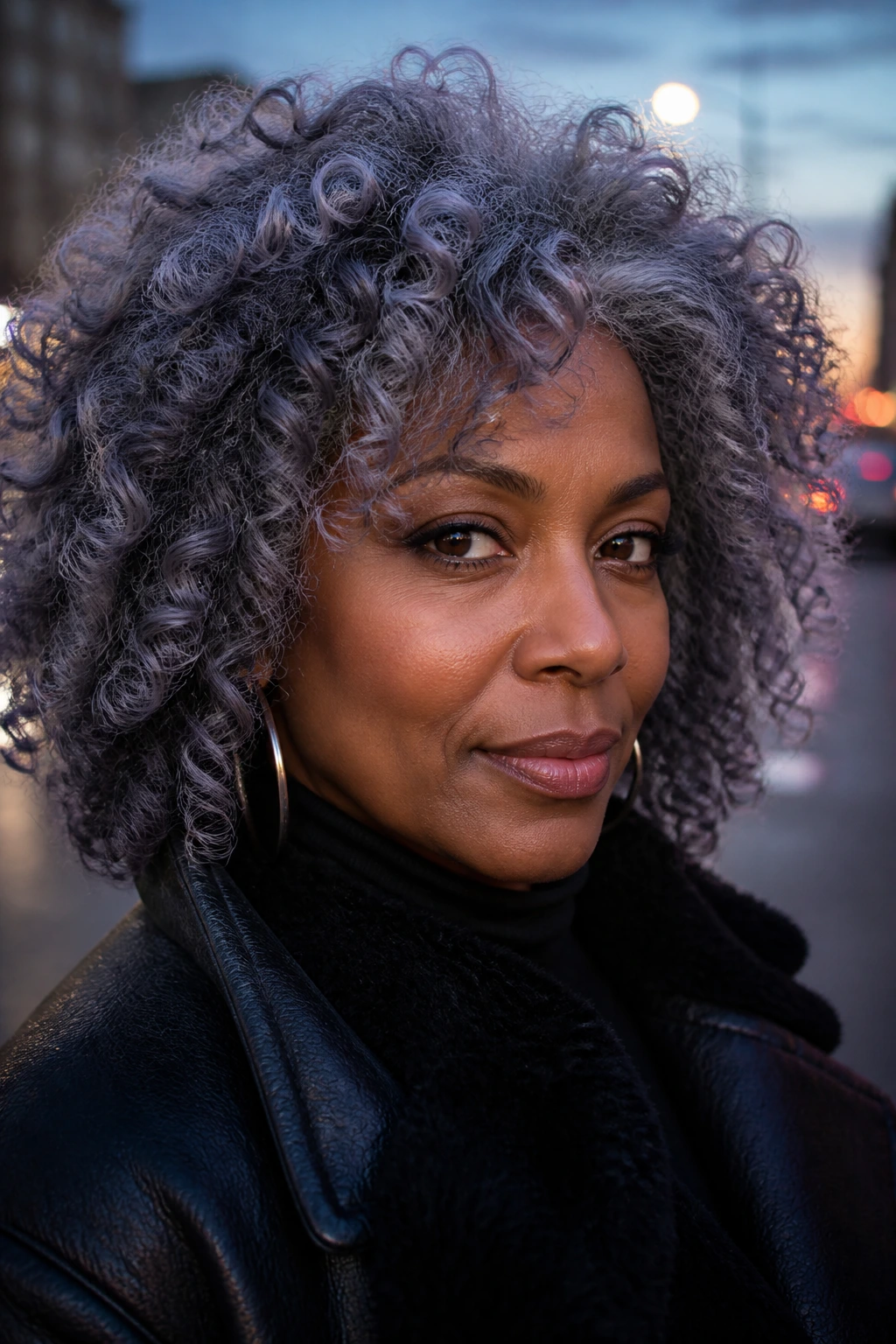
Smoky lilac grey is grey with a whisper of lavender, not a loud pastel. The lilac softens the steel and keeps the color from looking cold in a flat way. On cool undertones, it can look almost pearly; on neutral skin, it reads smoky and modern.
I like this best when the lowlights are charcoal or blue-black, because those deep pieces keep the lilac from drifting into mauve. It’s a subtle fashion color — enough to catch a second glance, not so much that it overpowers the texture.
Best styling match: wash-and-gos, loose curls, or finger coils that separate a little.
Color note: if your hair is porous, keep the violet toner light. Too much pigment can make the grey look dull instead of soft.
14. Mink Brown and Silver Ribboning
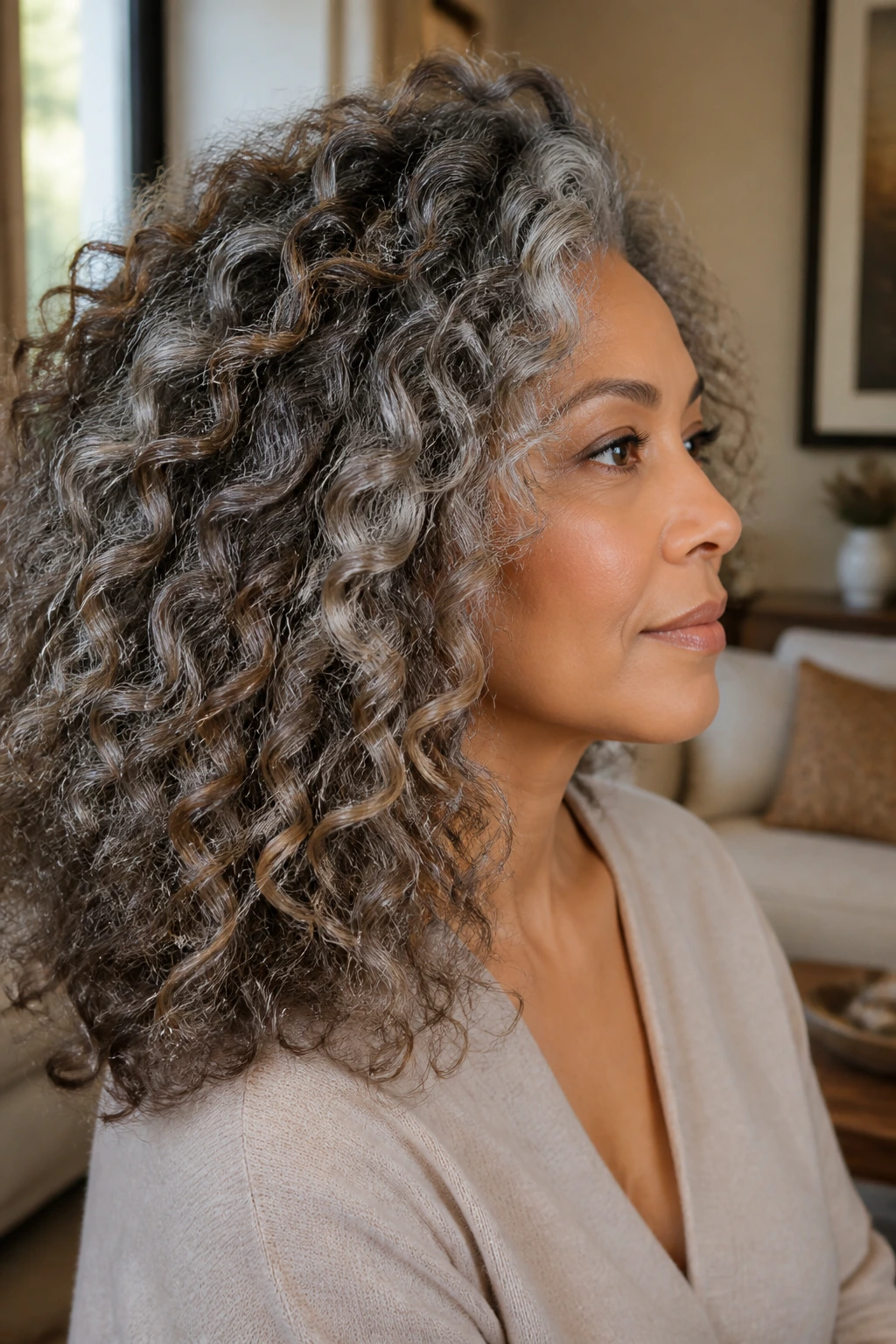
Mink brown is one of those shades that quietly does the job. It’s deep enough to ground silver, but soft enough to avoid the hard black line that so many lowlight jobs fall into. Ribboned through grey curls, it gives the color body.
This is a strong middle ground if you’re not ready for full silver or full charcoal. The ribbons should be visible when the hair moves, not everywhere at once. That little break in color helps the eye read the curl pattern.
A clean version of this can look expensive without trying too hard. That sounds vague, I know, but what I mean is this: the shade mix leaves the texture as the focus, not the dye.
15. Ice Grey Twist-Out with Dark Roots
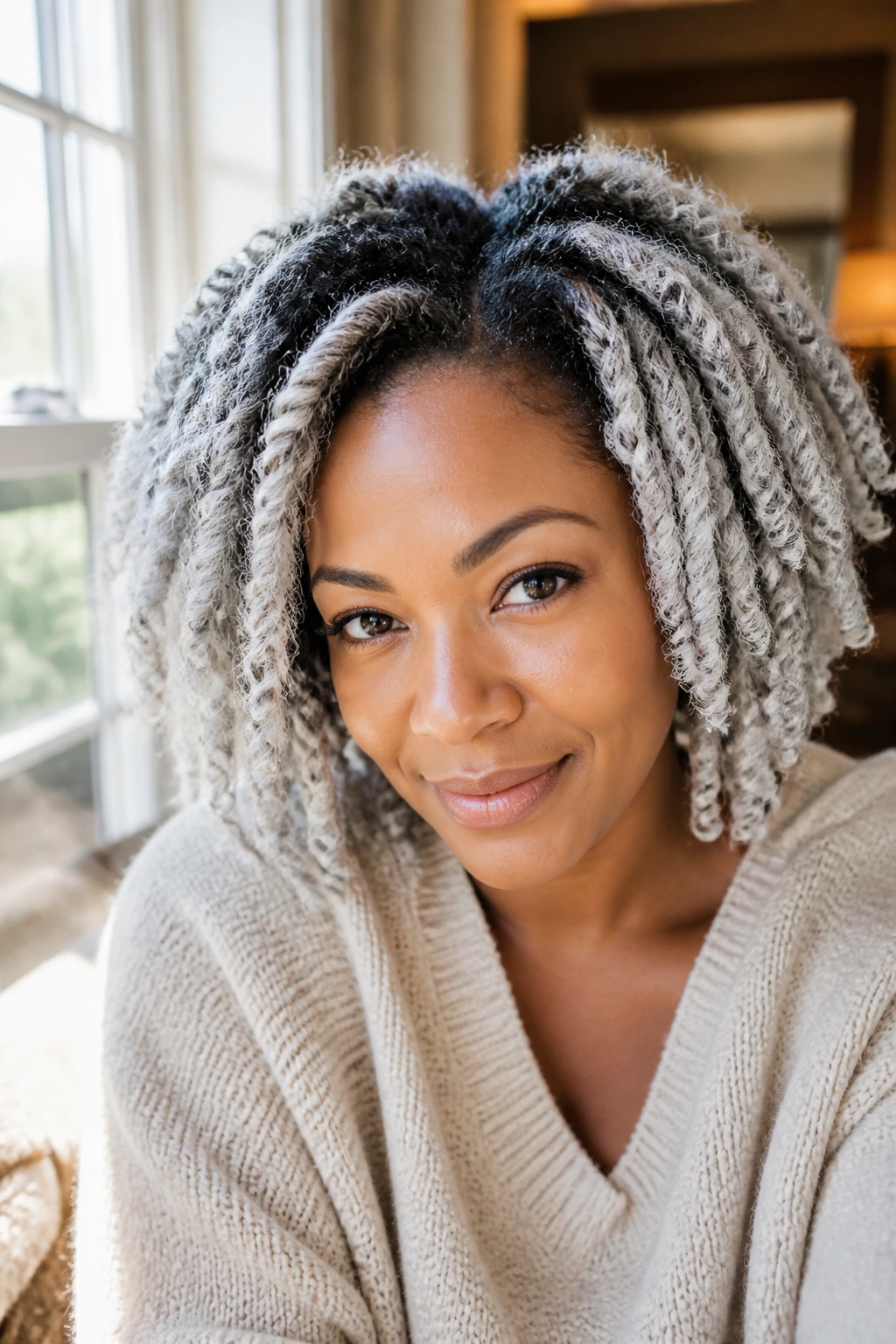
Ice grey can be gorgeous on a twist-out because the pattern gives the pale color something to cling to. But it needs a dark root shadow, or the whole thing starts looking like a wig cap on top of the head. The contrast is what keeps it believable.
This works best if you like bright silver but still want the root area to feel practical. Keep the first inch or so darker, then let the ice grey bloom through the mids and ends. On stretched hair, it reads crisp; on a twist-out, it looks airy.
Good to know: very pale grey shows breakage fast. If your ends are weak, leave them a shade deeper than the mids.
16. Urban Slate Locs with Dark Lowlights
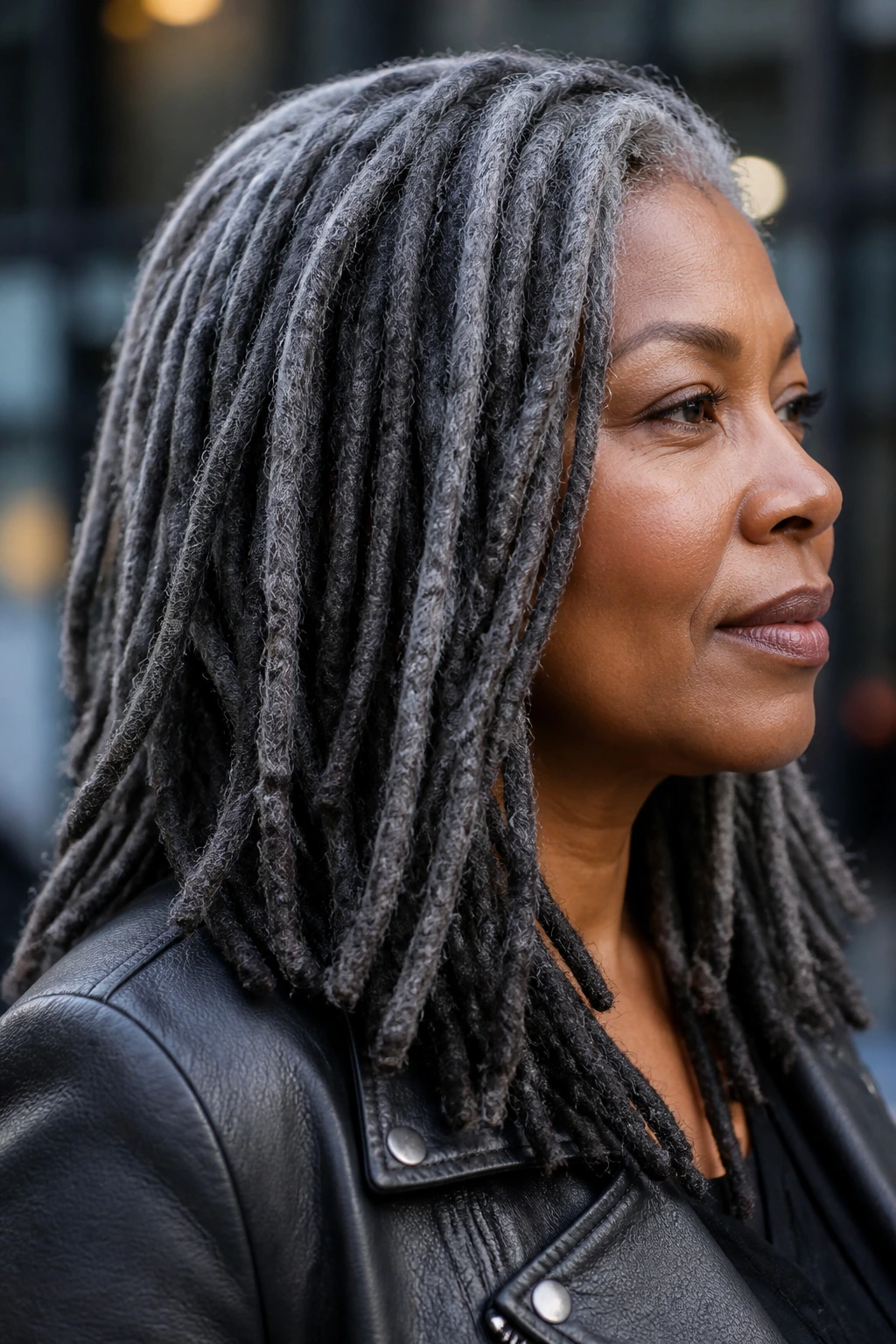
Locs take grey in a way that feels strong rather than soft. Urban slate — a cool, muted grey with a darker base — works because the loc structure already gives the color dimension. The lowlights can sit at the roots, between sections, or in a few deeper bands through the length.
I like this because it respects the shape of the locs instead of trying to turn them into one flat tone. A little darkness at the root and base keeps the style looking dense. The slate grey above it catches light in the neat, cylindrical way that locs do.
Best placement: under the top row, at the parting, and in any thicker locs that need weight.
If your locs are already lightened, go slow. Slate is better than bright silver here; it looks cleaner and usually ages better.
17. Smoke Brown Puff with Grey Ends
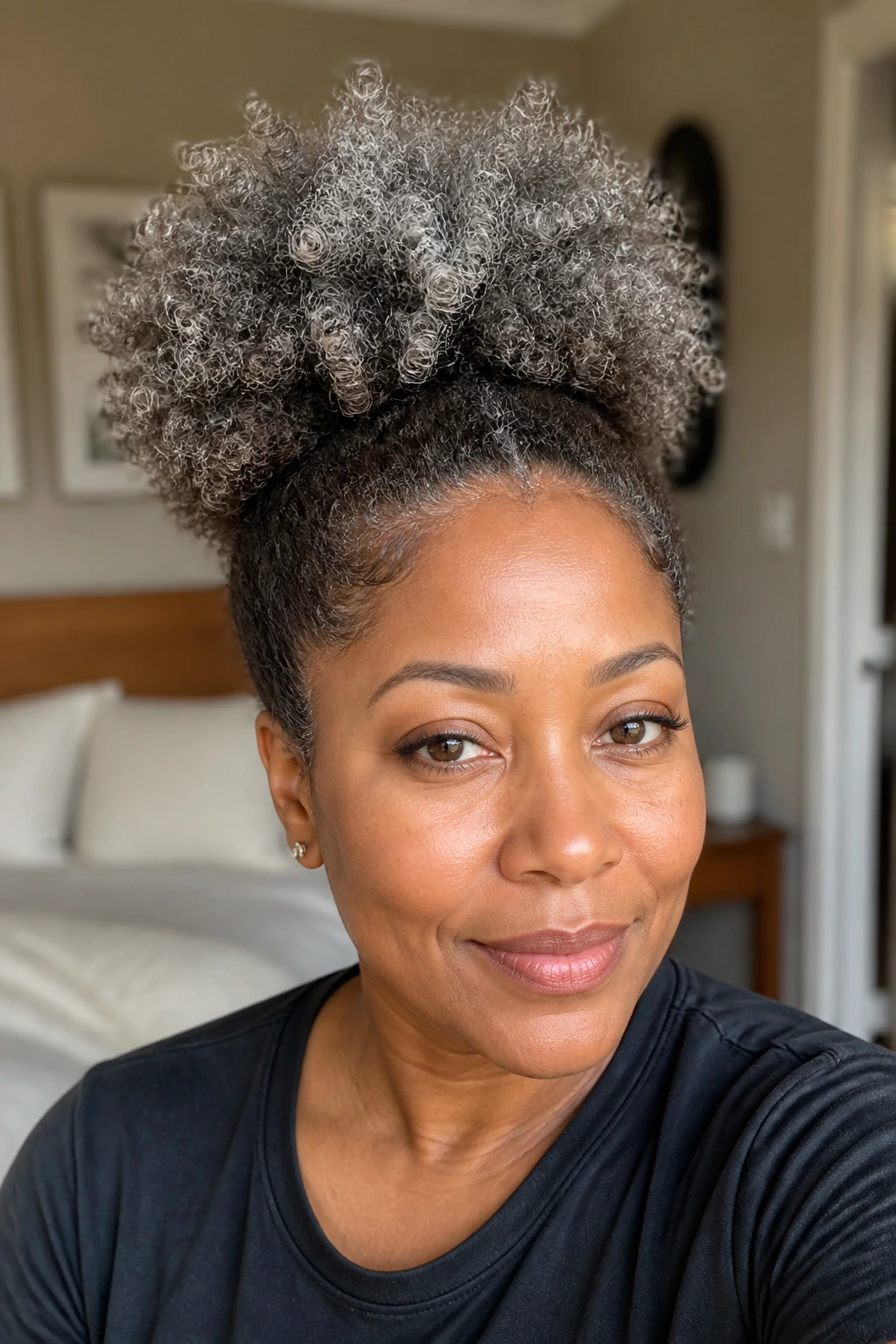
A puff gives grey a stage. The roots stay smoke brown, the ends carry the cooler grey, and the whole shape looks lively because the contrast sits where the hair naturally gathers. It’s one of the easiest ways to wear grey without overcomplicating the placement.
This is a good answer for people who want movement without bleach-heavy brightness all over the head. The puff itself does the styling work, so the color only has to support it. Keep the ends a touch lighter than the midsection, and the eye reads the puff as fuller.
Tip: use a satin scrunchie or gentle band. A hard elastic can crush the shape and make the grey ends look frayed.
18. Platinum Mist on Coily Layers
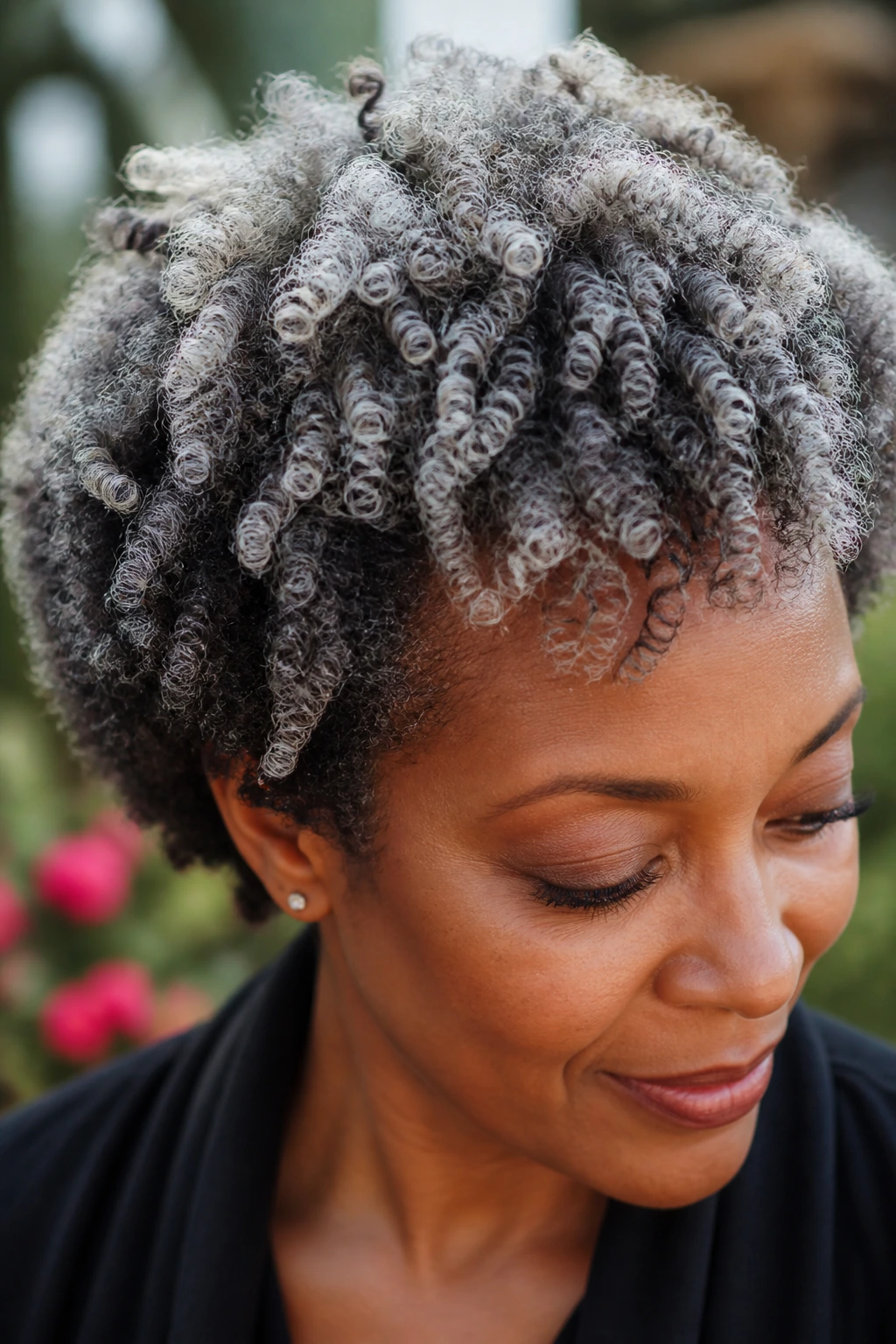
Platinum mist is not flat white. It should feel airy, with enough pale silver on the surface to read bright, and enough shadow underneath to keep the coils from disappearing into one color mass. That hidden depth matters more on coily layers than on straighter textures.
I’d save this for hair that can handle a careful lift and a patient toner. The look is strongest when the brightest pieces sit where the curls naturally separate — around the face, on top, and along the outer layer. The underlayer stays cooler and a bit deeper, which keeps the whole thing from going hollow.
Nope, this is not the low-maintenance option. But if you want pale grey with structure, this is the lane.
19. Greige Crop with Caramel-Charcoal Depth
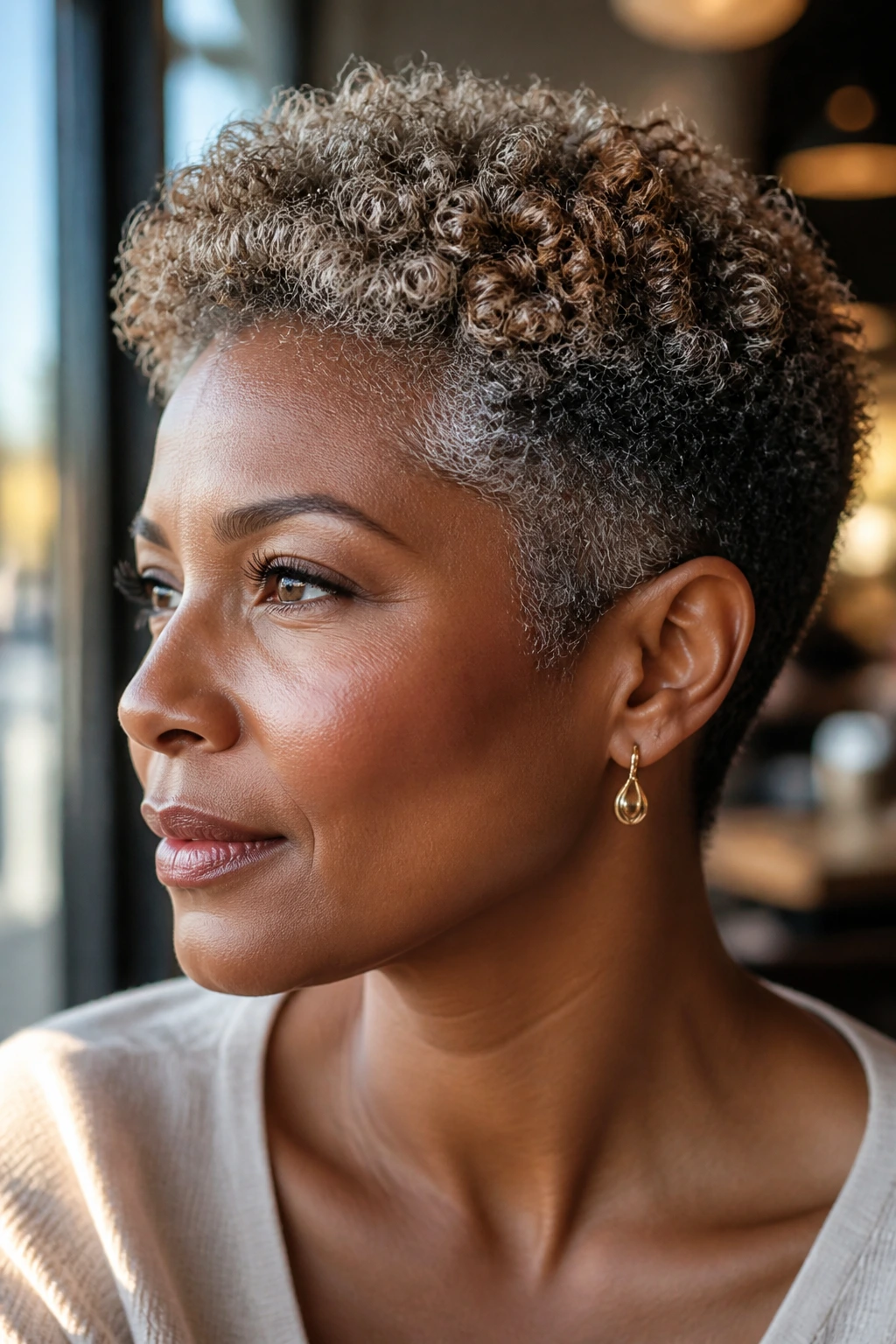
Greige is one of the easiest grey-adjacent shades to wear because it straddles warm and cool. Add caramel-charcoal depth underneath, and you get a crop that has enough softness for daytime and enough contrast to keep the cut from falling flat.
This is a quiet choice, but not a boring one. The caramel keeps the greige from looking icy, while the charcoal pieces sharpen the outline of the crop. I like it on short natural hair where the silhouette is already doing a lot of work.
Best for: people who want grey influence without committing to a pure silver finish.
Styling note: a little curl cream and a side part can make the depth read much better than heavy gels.
20. Brushed Titanium on a TWA
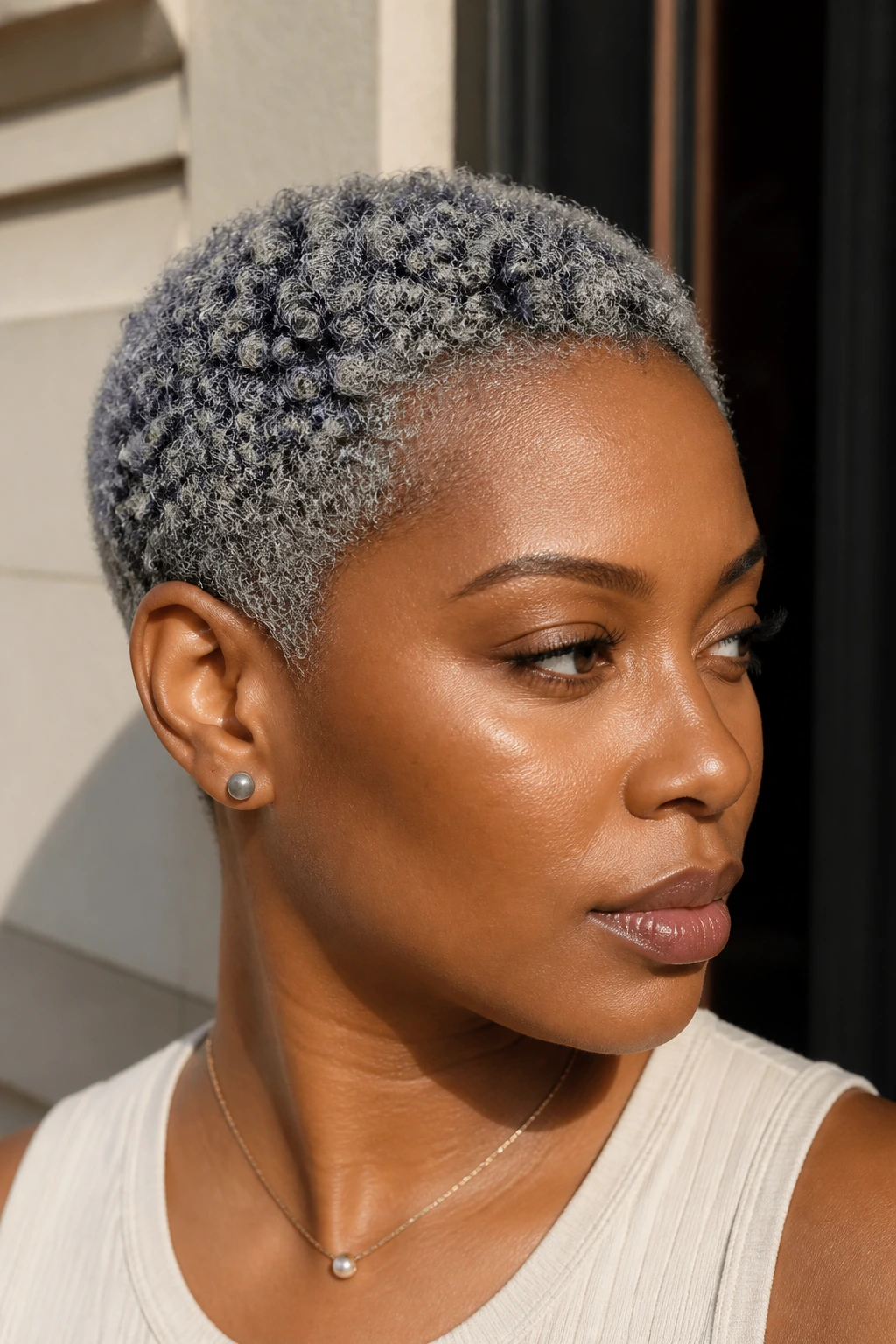
A TWA can wear metallic color better than most people expect, and brushed titanium is a strong example. The shade should feel sleek, but not mirror-bright. A few graphite pieces near the crown keep the titanium from washing out the cut.
The beauty of this look is its simplicity. There’s no long length to distract the eye, so the color has to carry the shape. On a tiny natural cut, that means the lowlights matter even more — the darker pieces create contour, and the silver fills the open space.
Ask for: a pale metallic grey with subtle depth at the temples and crown.
Watch for: if the grey turns too blue or too flat, the toner was pushed too far.
21. Silver Fox Blend with Cocoa Lowlights
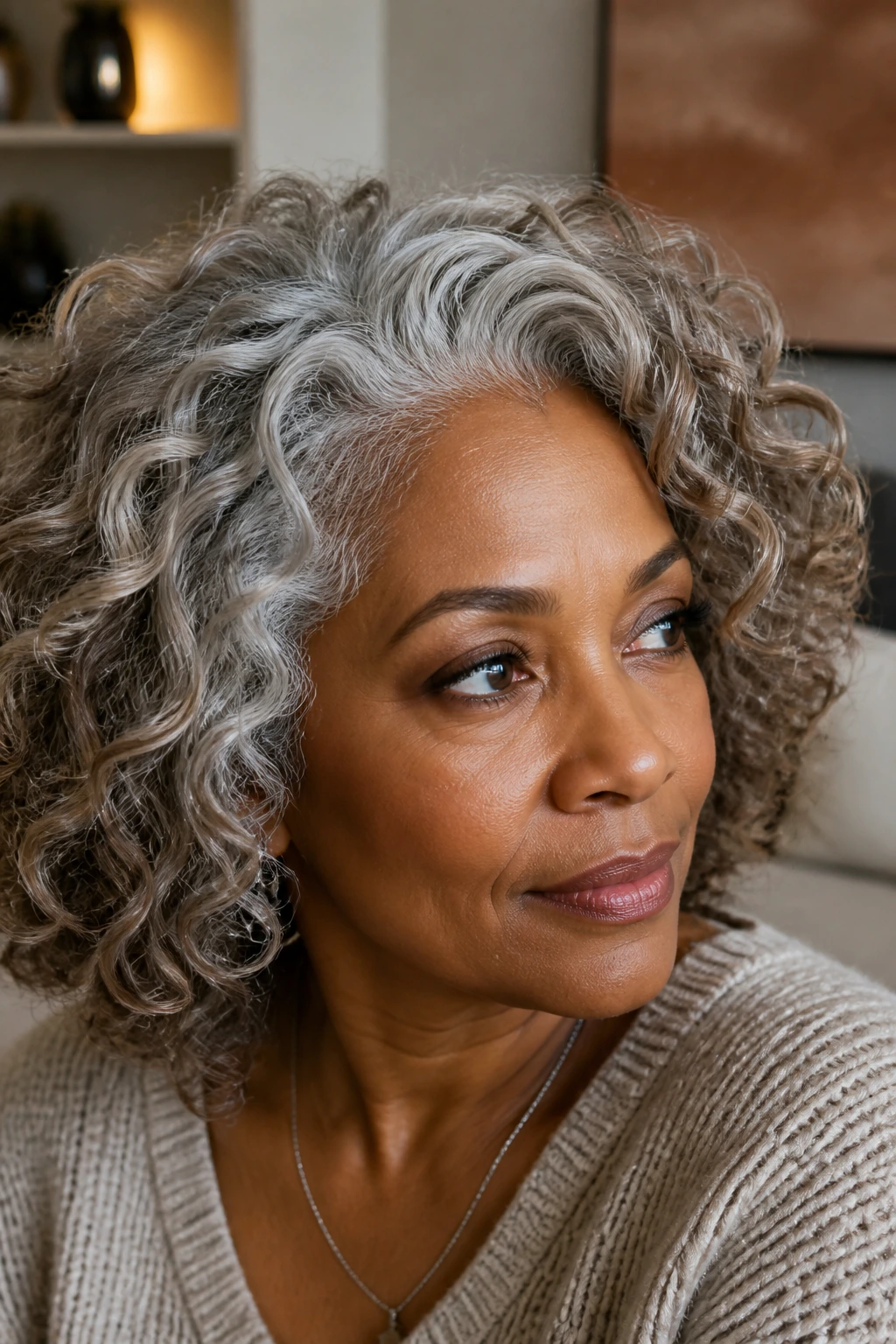
This is the polished version of natural grey. Silver fox blend works when you want the hair to look mature, rich, and fully intentional, not overprocessed. Cocoa lowlights keep the silver from reading cold, and they soften the transition between natural regrowth and dyed lengths.
It’s especially good if your grey strands are already spreading through the front and crown. Instead of trying to erase them, the blend makes them part of the design. That approach tends to look better on textured hair anyway, because the curl pattern already gives you movement.
I’d call this one quietly elegant, but that phrase gets abused. Better to say this: it looks expensive because the contrast is controlled.
22. Quartz Grey with Black Underlayers
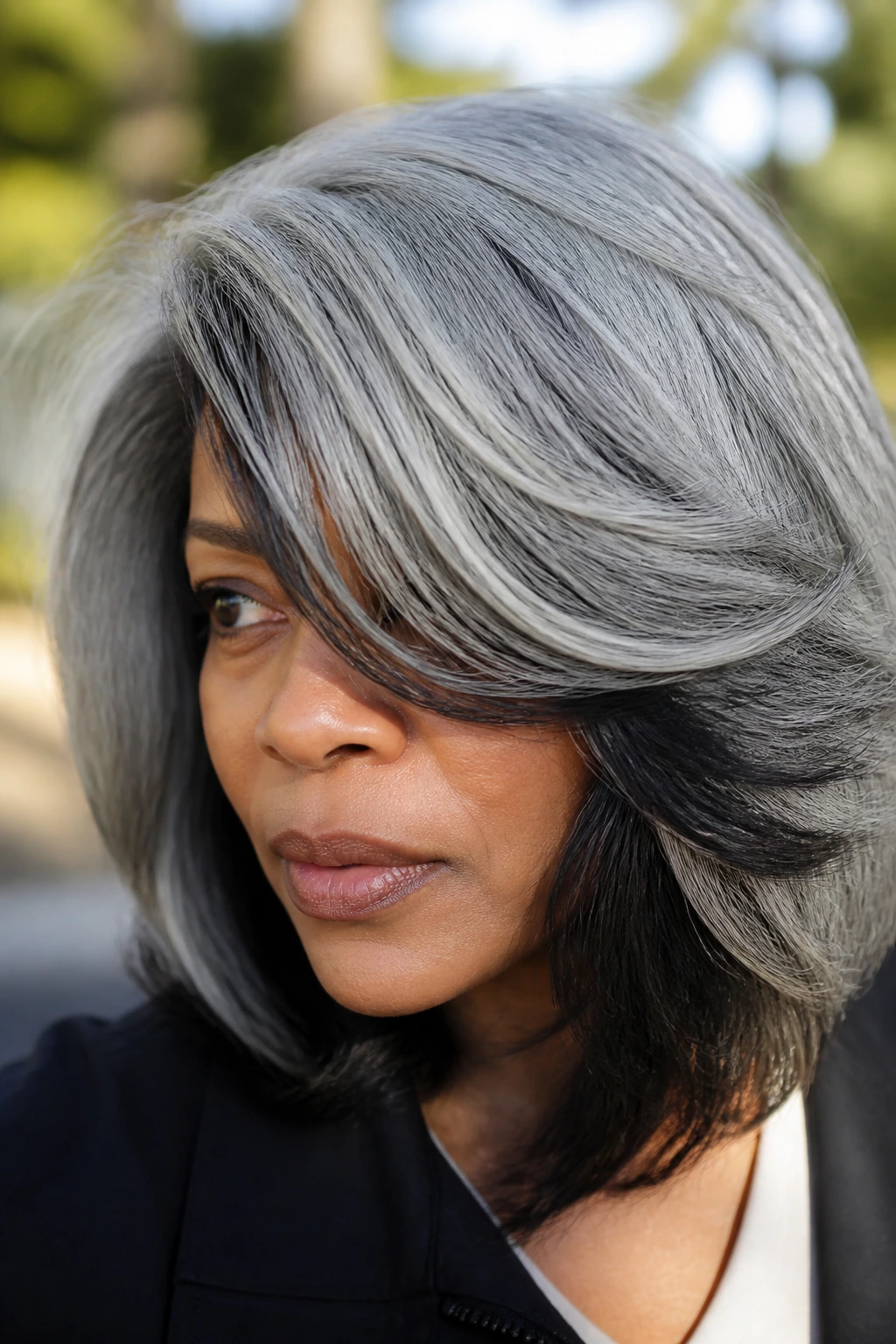
Quartz grey sits in that pale, stony middle ground between silver and pearl. Black underlayers make it read sharper without turning the whole style severe. When the hair moves, the hidden darkness underneath flashes through and gives the color a bit of edge.
This is a smart choice if you like a clean top layer but don’t want to commit to all-over platinum. The underlayers do the heavy lifting. They keep the look from going too airy, and on layered cuts they give the ends some weight.
Best for: curls that are cut in layers or shaped with visible interior movement.
Important: black underlayers should still be soft black — blue-black or charcoal-black — not ink-heavy box color.
23. Hazy Lavender Grey on Natural Curls
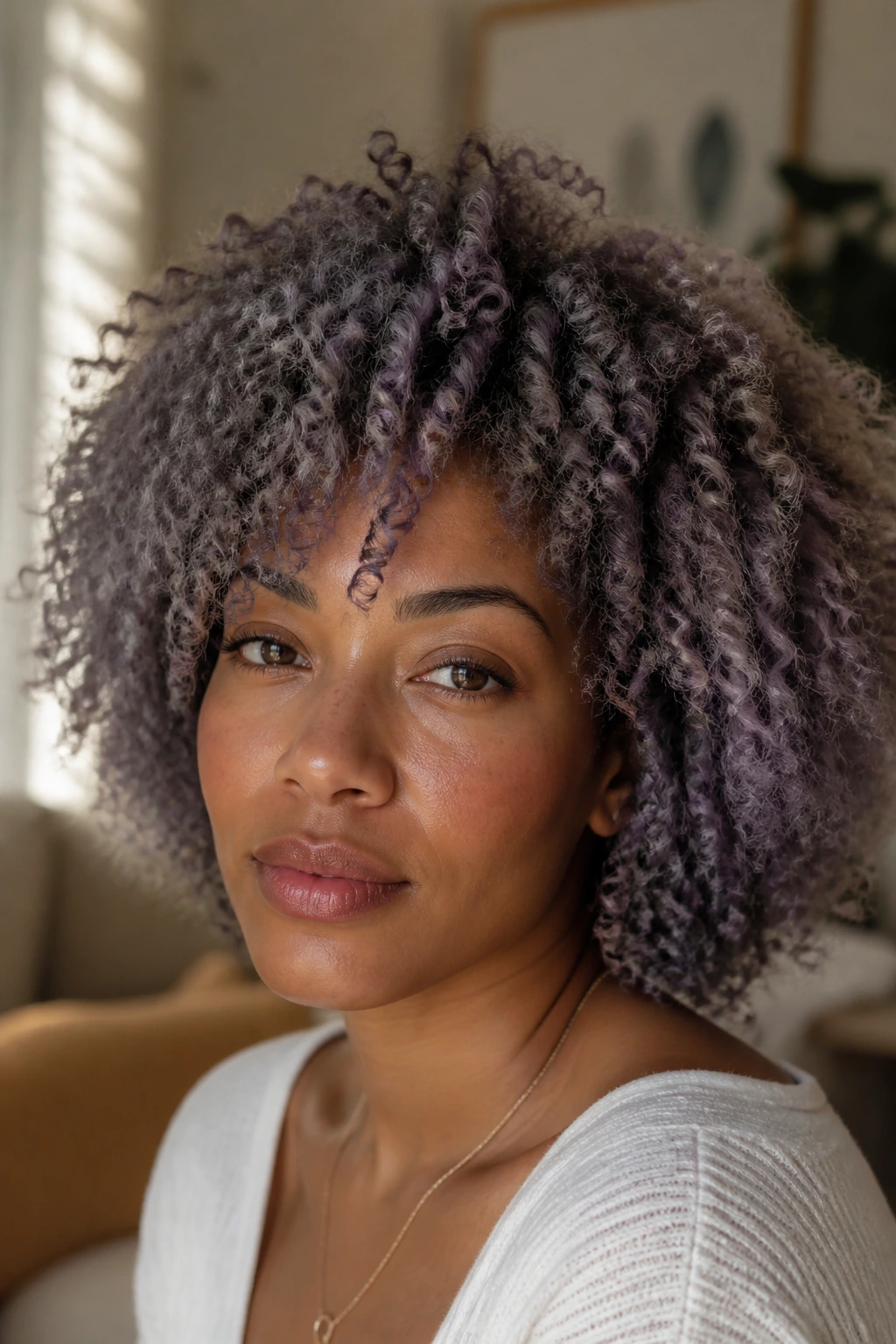
Hazy lavender grey lives in the softest part of the grey family. The lavender is there to blur the edge, not to shout. On natural curls, that haze looks especially good because the curl clumps break up the pastel and keep it from reading flat.
I like this when someone wants something a little dreamy but still wearable. The lowlights should stay muted — slate, charcoal, or deep taupe — so the lavender doesn’t drift into cartoon territory. A curl pattern with plenty of separation helps.
Best styling partner: air-dried curls or a light diffuser finish.
If your hair is very porous, keep the lavender glaze light. Too much pigment can turn the whole head smoky in a dull way.
24. Charcoal Paneling for Bold Contrast
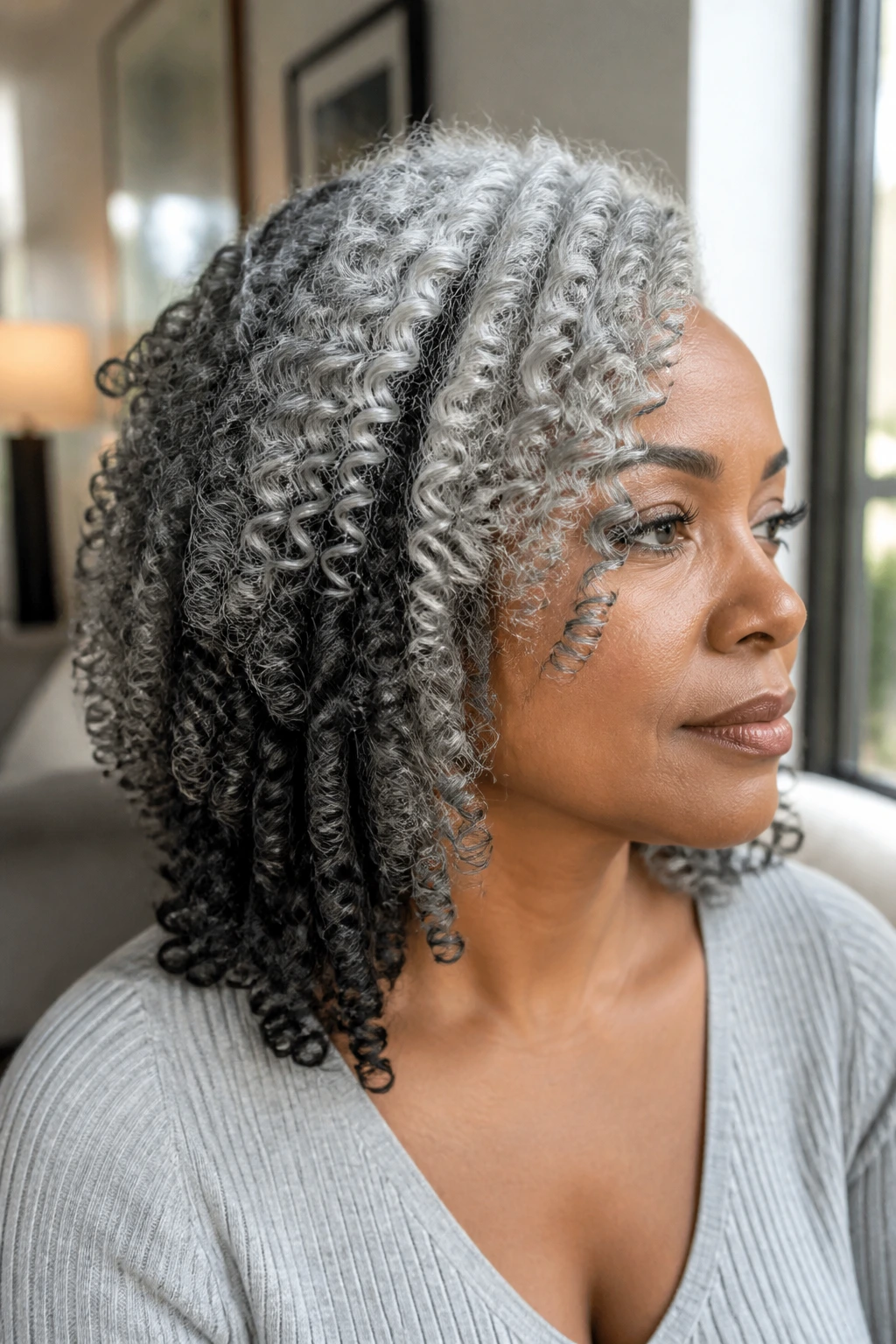
Charcoal paneling is for someone who wants the grey to have structure you can almost see in sections. Instead of scattering dark pieces evenly, the lowlights are grouped into panels underneath the brighter grey. On textured hair, that creates a bold, graphic finish.
The trick is not to overdo it. The panels should support the curl pattern, not fight it. A few cleaner bands near the crown, the back, and one side of the head are usually enough. More than that, and the look can start to feel heavy.
Who it suits: layered cuts, asymmetrical shapes, and people who like their grey with a little edge.
What makes it work: the contrast should feel planned, not random.
25. Porcelain Grey with Onyx Shadows
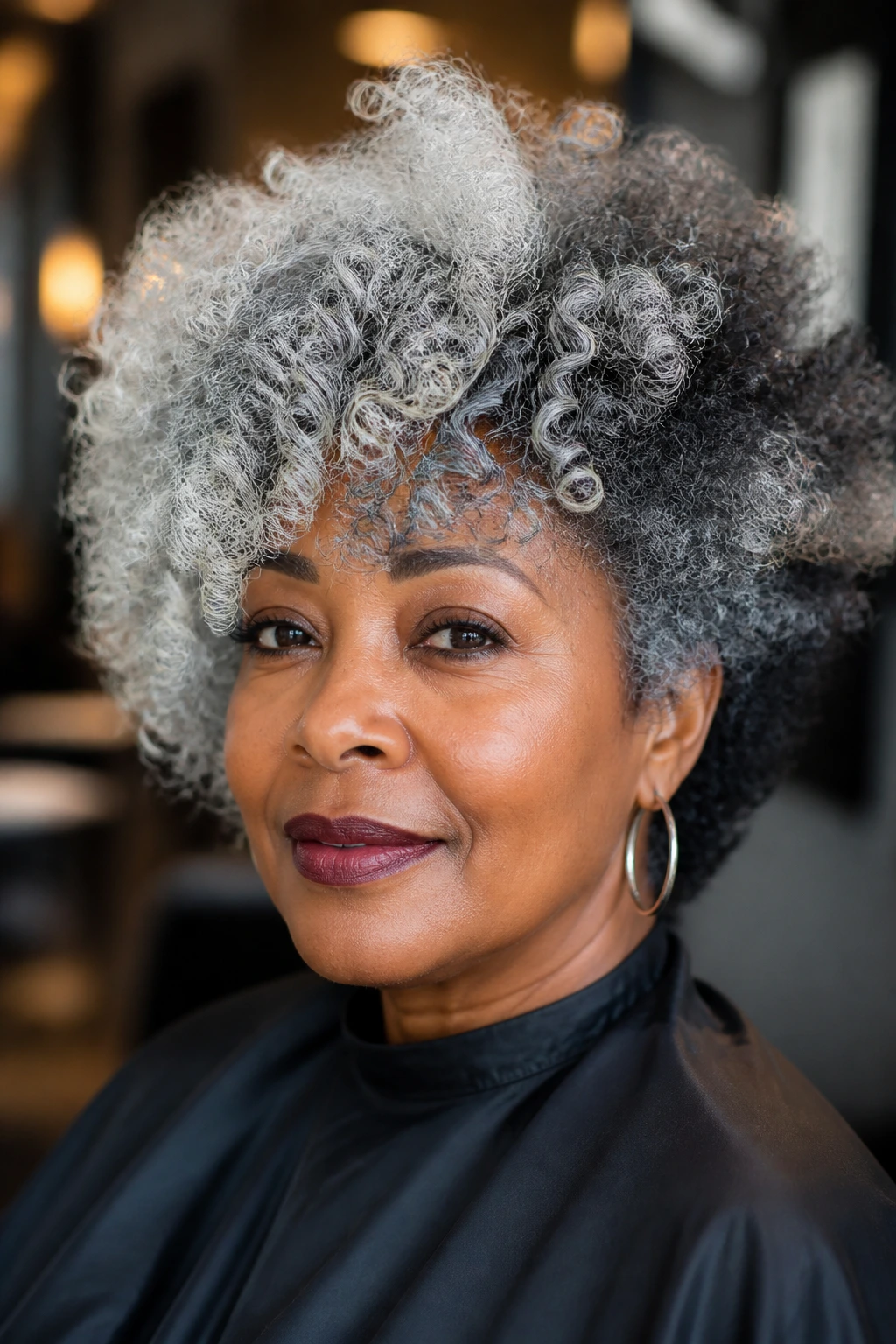
Porcelain grey is pale, cool, and clean, but it needs onyx shadows or it can look washed thin on natural hair. The dark shadow should hide in the underlayer and around the root area, while the porcelain sits on top where the curls catch light.
This is one of the most fragile-looking shades in the group, which is exactly why the lowlights matter so much. The deeper underpieces stop the pale grey from floating away from the texture. If the curls are tight, keep the porcelain to the outer layer and the face frame.
It’s a striking finish. Just not a forgiving one.
Choosing Grey Hair Color Ideas for Natural Hair with Lowlights by Undertone
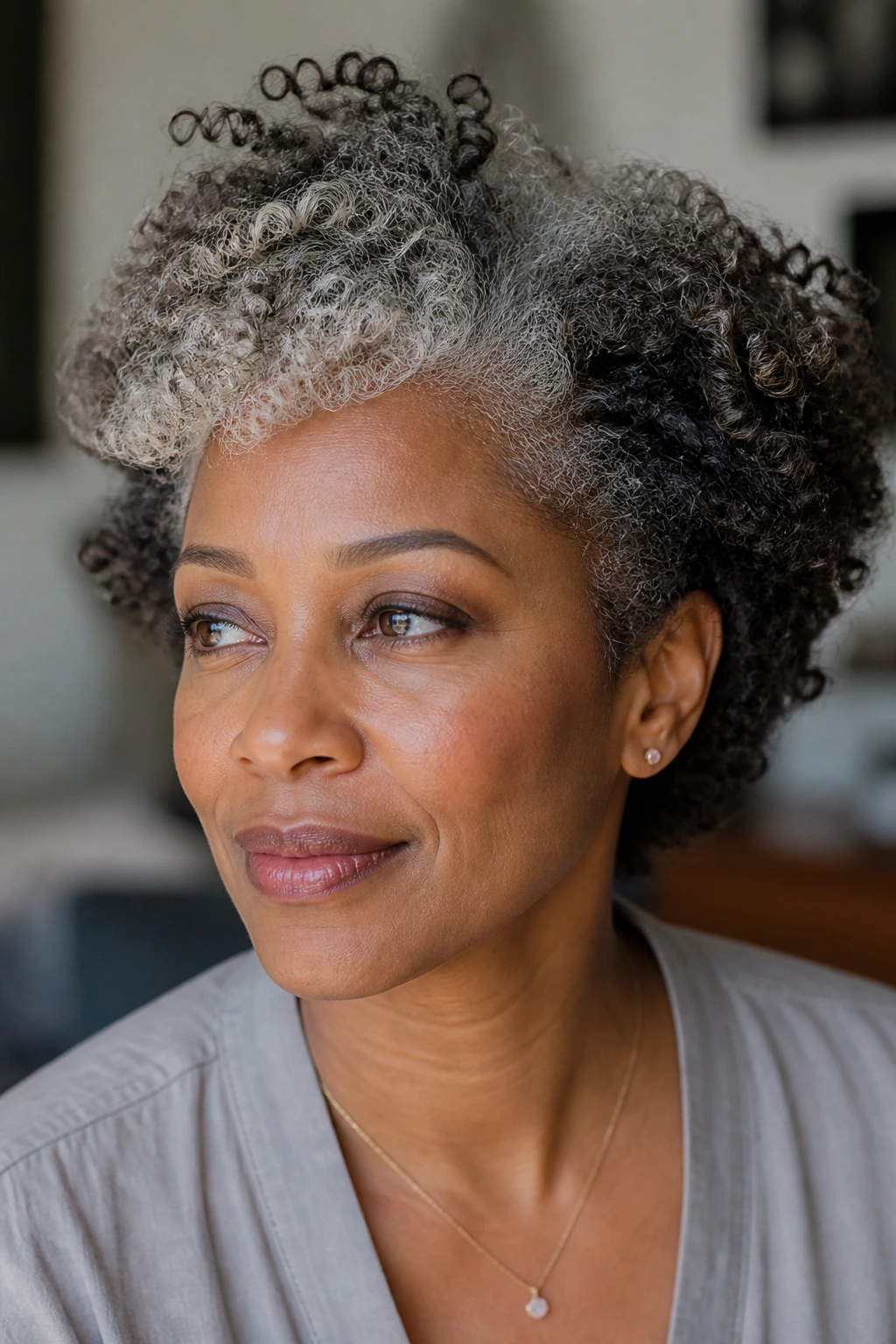
Warm, cool, and neutral greys do not behave the same way. Cool shades — silver, steel, graphite, blue-grey — tend to look crisp and bright, but they can go flat fast if the base is too pale or too porous. Warm-leaning greys like mushroom, taupe, and smoke brown are easier on hair that still has golden or red undertones left in it.
Neutral shades sit in the middle, and that’s where a lot of the wearable looks live. Greige, pewter, quartz, and pearl don’t fight your base as hard. On natural hair, that matters because the curl pattern already adds enough movement; you rarely need the color to do everything.
A simple way to narrow it down
- Choose cooler greys if you like steel, silver, or graphite and your hair is already lifted evenly.
- Choose neutral greys if you want softness and fewer tone shifts between the roots and the ends.
- Choose warmer greys if your hair still carries gold, copper, or old color warmth that refuses to leave.
If your hair is high-porosity, I’d lean neutral before I’d lean icy. Pure ash can turn muddy fast on porous curls, and nobody needs that headache.
Essential Tools for Grey Color Work at Home or in the Salon
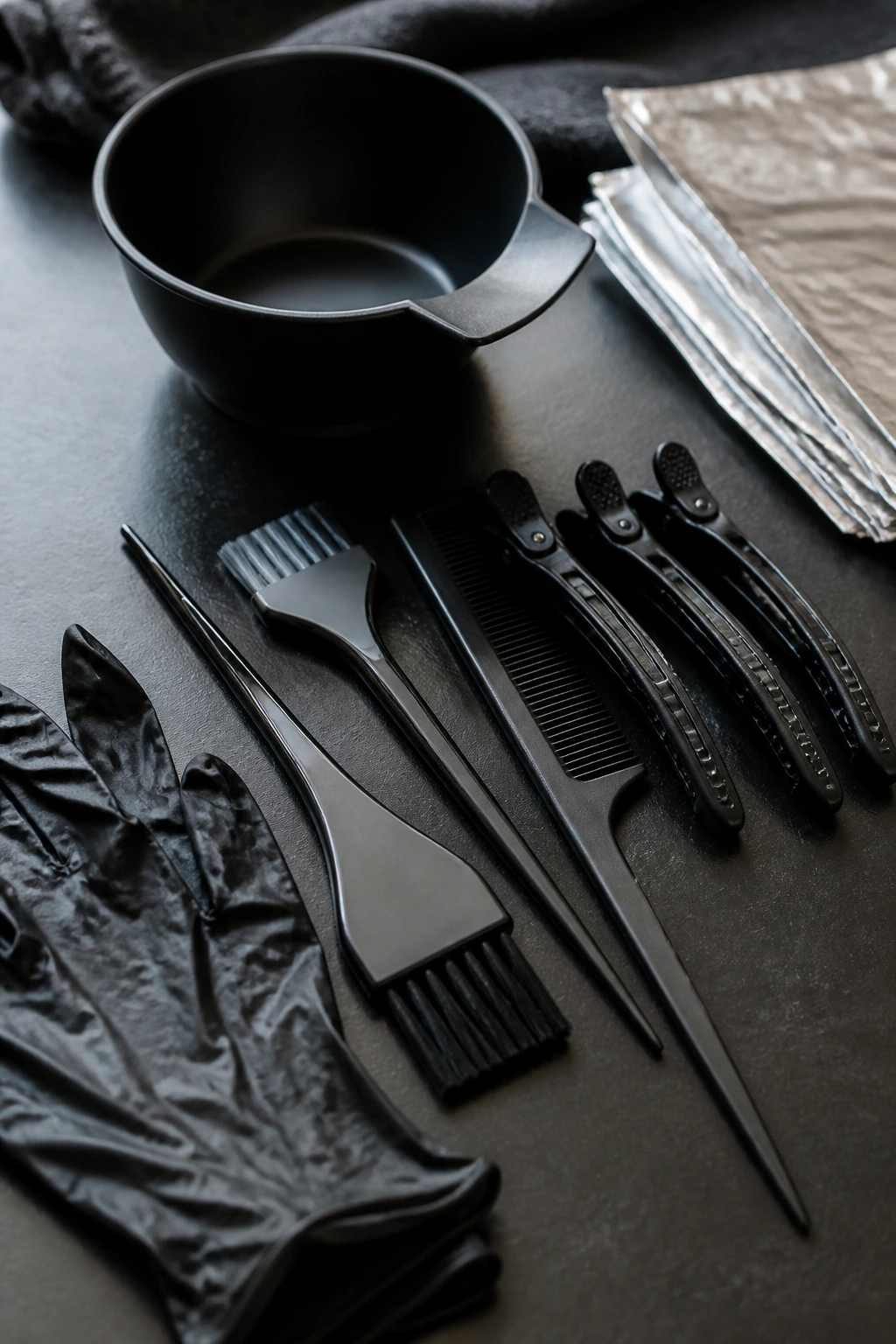
A good grey service starts with the right tools, and no, that does not mean buying every bottle on the shelf. It means choosing the pieces that give you control over placement, tone, and timing.
-
Tint bowl and color brush: Essential for mixing glosses and lowlight formulas; the brush helps you place color in curl-friendly ribbons.
-
Tail comb: Useful for weaving fine sections and keeping the parting clean.
-
Sectioning clips: Natural hair needs clean sections or the lowlights blur together.
-
Nitrile gloves: Better grip, less mess, and less dye on your hands.
-
Foils or processing papers: Helpful when you want the grey pieces to stay separate and cool evenly.
-
Timer: Grey can go from soft to muddy fast if you lose track of the processing time.
-
Cape and dark towel: Dye shows up everywhere, and lighter towels never forgive you.
-
Bond builder: Optional, but worth it if you’re lifting the hair before toning.
-
Deep conditioner: Not part of the color itself, but absolutely part of the process.
-
Wide-tooth comb: Gentle detangling before and after the service keeps the curl pattern intact.
Smart Shopping and Product Tips for Grey Tones
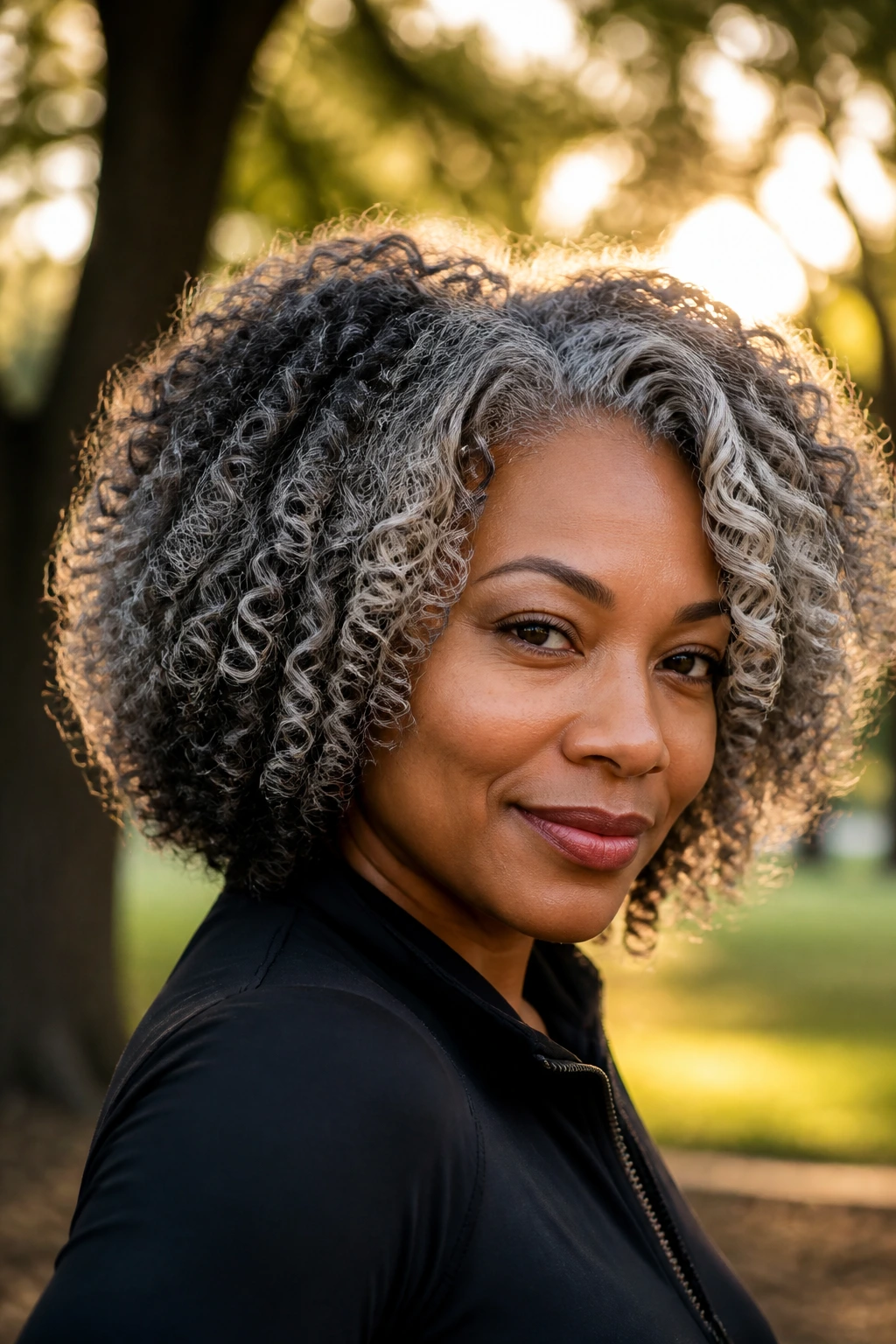
When you shop for grey color, read the undertone on the label first. Words like smoke, pewter, mushroom, taupe, and graphite usually point to a softer result than anything labeled pure silver. Pure silver can be pretty, but on natural hair it often needs more support from lowlights than people expect.
For depositing shadow, I prefer demi-permanent color over permanent color when the goal is depth and tone, not heavy coverage. Demi formulas sit gentler on textured hair and fade more softly. If you need lift first, a low-volume developer — usually 10-volume — is the cleaner place to start. Twenty-volume can be necessary for darker bases, but it comes with more dryness, so use it only when the hair can tolerate it.
What to look for on the shelf
- Demi-permanent formulas: Best for lowlights, glossing, and soft grey transitions.
- Blue-violet or violet base toners: Useful for neutralizing yellow, but easy to overdo on porous curls.
- Bond-building additives: Smart if you’re lifting natural hair at all.
- Color-safe, sulfate-free shampoo: Keeps grey from fading brassy too fast.
- Deep conditioners with slip: Grey work often dries the hair out, so plan for moisture right away.
If the label says “silver” but gives no hint about the base tone, treat it carefully. That kind of formula can go streaky or dull depending on the hair underneath.
Practical Tips for Making Grey Read Cleanly on Natural Hair
Consultation: Bring photos of the shade on textured hair, not just straight hair. The same tone can look two shades darker once the curl pattern shrinks, and the placement needs to respect that.
Placement: Put the darkest pieces under the crown, around the nape, and beneath the front hairline. That keeps the silhouette full and stops the grey from floating at the surface.
Texture check: Always look at the hair dry, not just wet. A curl clump changes the read of the color, and wet hair lies in a way that can fool even a good eye.
Style test: Try the color in at least two states — stretched and fully shrunk. A grey blend that looks perfect in a twist-out may read too pale in a wash-and-go, or the other way around.
Maintenance mindset: If you hate upkeep, choose shadow roots, greige, mushroom, or halo blends. Save the pure silver and porcelain finishes for when you’re willing to refresh tone more often.
Common Mistakes That Flatten Grey on Textured Hair
Using jet black instead of charcoal: Black lowlights can look like marker lines in curls. Charcoal, espresso, or blue-black usually gives the same depth with less drama.
Lifting too far in one session: Trying to push dark natural hair straight to pale silver in a single round often leaves the ends dry and the tone uneven. Build the color in stages if the hair needs it.
Placing the lowlights too evenly: Uniform placement makes the hair look striped or helmet-like. Cluster darker areas where the hair needs weight and leave some zones lighter so the curl pattern can breathe.
Ignoring porosity: Porous ends drink up toner fast, then turn dull or muddy. Treat the ends separately, shorten the processing time, or leave them a shade deeper.
Letting ash toner sit too long: Grey that starts sleek can turn flat or greenish if the toner overprocesses on a warm base. Check the hair before the clock says you’re done.
Skipping the dry-down test: The color can look fine in the chair and weird once the curls settle. Dry one section fully before you decide the tone is right.
Variations and Alternative Approaches to Try
Gloss-First Grey: If you want the softest version of the look, start with a grey gloss and only a few deeper lowlights. It gives you depth without a hard commitment. This is the move for someone testing the waters.
Shadow-Root Silver: Keep the root area dark and let the silver bloom through the mids and ends. It softens grow-out and works well on dense curls that need a stronger outline.
Hidden Underpaint: Place the grey underneath and keep the top layer darker. The color flashes only when the hair moves, which makes the whole look feel more private and less obvious.
Blue-Black Cool Down: If your grey keeps drifting warm, add blue-black lowlights instead of pure black. The blue pigment cools the tone without making the hair look inky.
Money-Piece Smoke: Brighten just the face frame and keep the rest deeper. It’s a good shortcut if you want the grey to read around your eyes and cheekbones without a full head of light color.
Maintenance for Grey Hair Color Ideas for Natural Hair with Lowlights
Grey and silver tones fade faster on porous hair than most people expect. A cool demi gloss may stay crisp for about 4 to 6 weeks on the mids, but the ends can soften sooner if they’ve been lightened before. That’s normal. What matters is having a refresh plan instead of hoping the tone will stay frozen.
Use a purple or blue-violet shampoo sparingly — usually every second or third wash if the hair starts to yellow. Too much violet on porous curls can make the grey look dull or slightly dusty, and that’s not the same thing as toned. Follow with a rich conditioner, then a leave-in that gives slip without coating the hair in wax.
A simple upkeep rhythm
- After coloring: deep condition the same day or the next wash.
- Weekly: use moisture-focused care, especially on lightened ends.
- Every 4-6 weeks: refresh the gloss or toner, depending on how fast your grey fades.
- Every wash day: use heat protectant if you diffuse or stretch with heat.
- At night: sleep in a satin bonnet or on a satin pillowcase to keep the cuticle smooth.
If you’re touching up a root shadow, stay gentle. The goal is to keep the depth, not repaint the whole head every time.
Frequently Asked Questions About Grey Hair Color on Natural Hair
Can grey lowlights work on very dark natural hair without bleaching everything first?
Yes, but the result depends on how much visible grey you want. If your base is very dark, lowlights alone will give you smoke, shadow, and contrast; true silver usually needs some lift first.
Will grey color make my natural hair look dry?
It can if the hair is over-lightened or toned too hard. The fix is not to avoid grey altogether — it’s to use bond care, keep the lowlights soft, and treat the ends like they need extra moisture.
What’s the difference between grey highlights and grey lowlights on natural hair?
Highlights brighten the hair and raise the overall lightness, while lowlights deepen sections and make the brighter grey stand out. On curls and coils, lowlights often work better because they preserve the shape of the hair.
How often do I need to refresh a grey gloss?
Usually every 4 to 6 weeks, sometimes sooner if your hair is porous or washed often. If the tone starts to look beige or yellow, that’s your cue.
Can I get these looks on locs, twists, or braids?
Yes, especially the rooted, slate, halo, and shadow styles. The safest approach is to color the hair before the protective style goes in, then keep the lowlights concentrated where the hair is exposed.
Why did my grey turn green or muddy?
Usually because the toner was too ash-heavy for the base underneath. A strand test on dried hair would have caught that, which is why I never skip it on porous textures.
Can I use box dye for this?
I wouldn’t, not for a dimensional grey look on natural hair. Box color is too blunt for subtle lowlights and too unpredictable on porous curls. A demi formula or salon gloss gives you more control.
What if I want grey but I’m not ready for full silver?
Choose mushroom, greige, smoky brown, or a rooted melt. Those shades give you the mood of grey without the maintenance of a pale metallic finish.
A Grey Blend That Still Feels Like Hair
The best grey on natural hair does not look sprayed on. It looks placed. The lowlights hold the texture together, the cooler pieces catch the light, and the curl pattern still gets to be the main event.
That’s why mushroom blends, charcoal roots, graphite face frames, and smoky halo styles keep showing up in strong grey work. They let the color breathe. And when the hair can breathe, the shade stops fighting the texture and starts living inside it.
If you’re trying one of these looks, start with the version that matches your base and your upkeep tolerance, not the one that looks brightest on a screen. The right grey is the one that still looks good after the first wash, the first twist-out, and the first week of real life.